Nicholas II in the NEWS – June 2020

0275

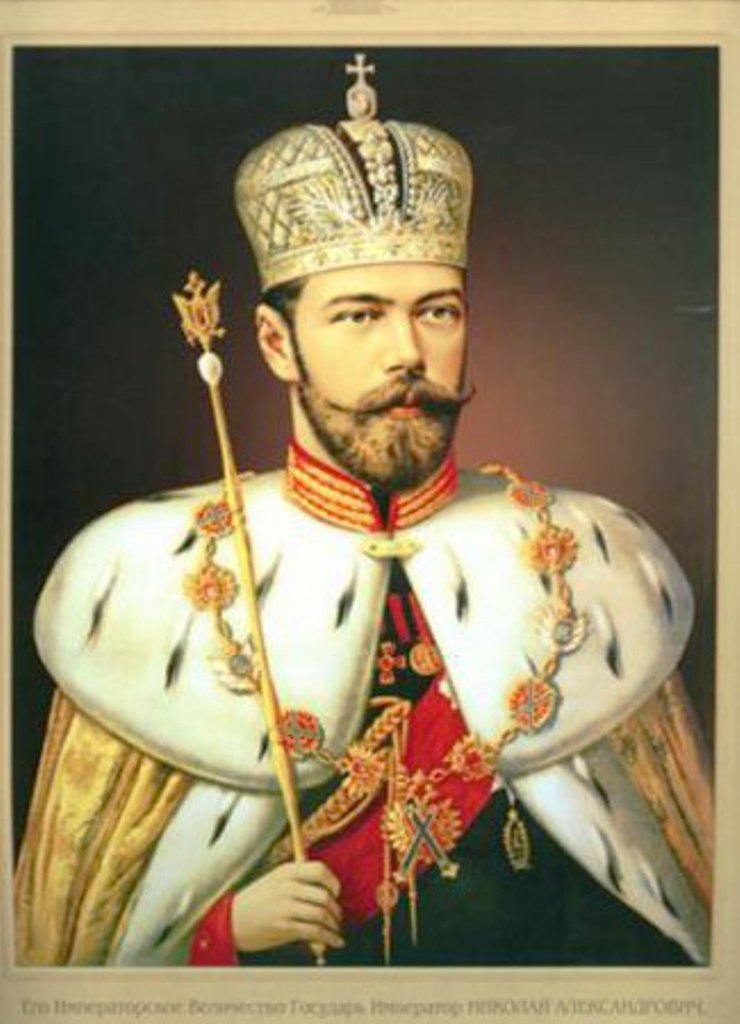
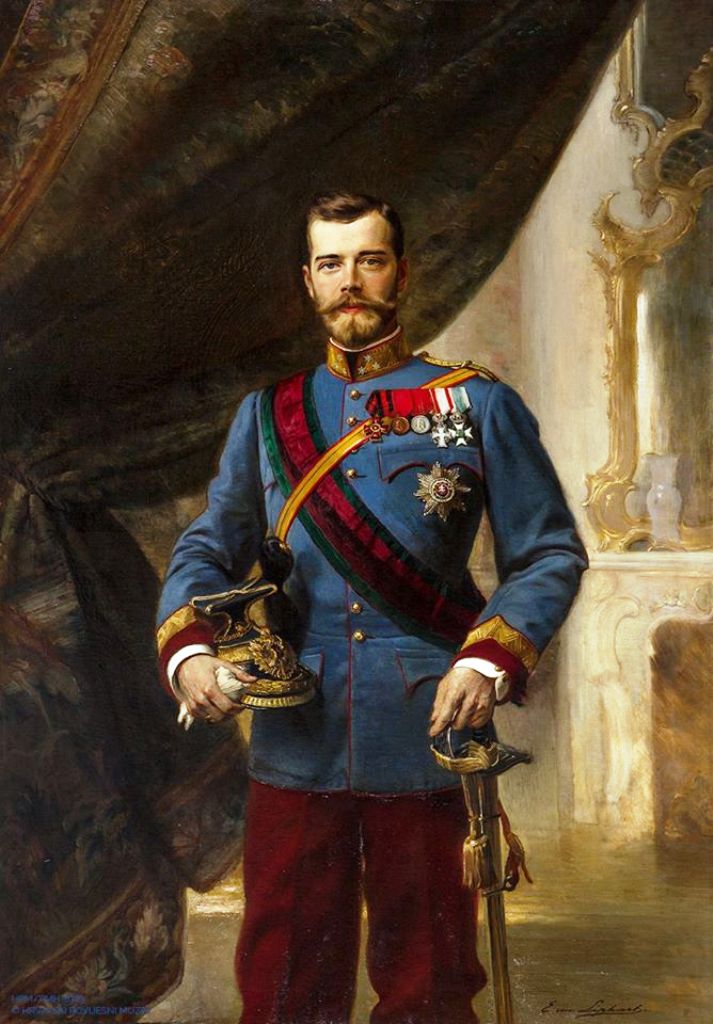
PHOTO: Portrait of Emperor Nicholas II in the uniform of colonel of the Austro-Hungarian 5th Uhlan regiment, painted in 1899 by Artist: Ernst Friedrich von Liphart (1847-1932)

From the Collection of the Hrvatski povijesni muzej / Croatian History Museum in Zagreb, Croatia

At the end of each month I will post links to noteworthy articles about Nicholas II from English language media sources, complemented with photos and videos.

Please click on the titles (highlighted) below to read each respective article:

0275e

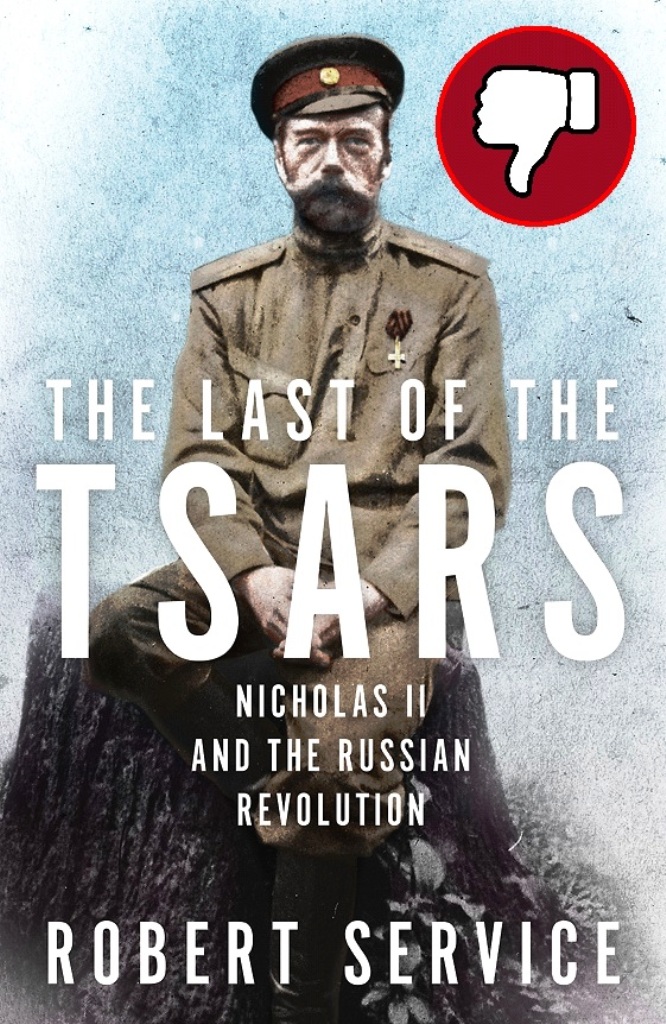
On the Russian Revolution and Today (Do not be a Robert Service) by John Mark N. Reynolds. Published in Patheos on 29th June 2020

John Mark N. Reynolds writes probably the most honest assessment to date of what has to be one of the WORST books ever written about Nicholas II.

I am referring to ‘The Last of the Tsars: Nicholas II and the Russian Revolution‘ written by the “Sovietologist” Robert Service and published in 2017 by Macmillian..

Reynolds writes: “Service thinks the last Tsar mentally inflexible . . . but Service does nothing to prove this is so” . . . Nicholas II was “intellectually inflexible, but Robert Service does not prove that fact” . . . etc., etc.

Reynolds rightly notes that ‘The Last of the Tsars: Nicholas II and the Russian Revolution‘ is a “throw away book”, and I could not agree more!

0275b

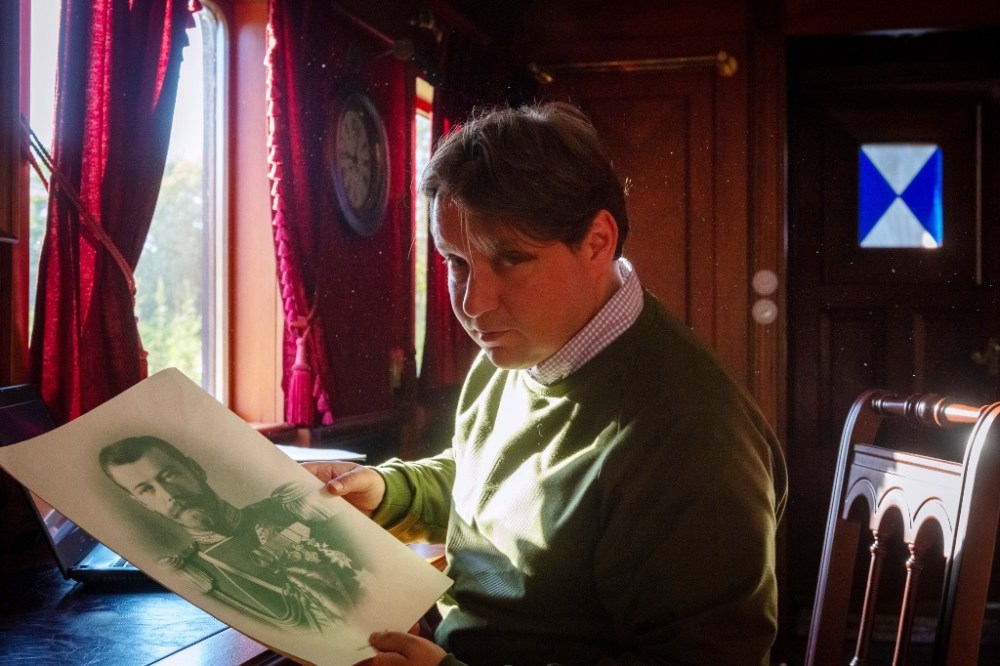
Alex Webber visits Carska

Tsar Trek by Alex Webber. Published in THEfirstNEWS on 25th June 2020

Alex Webber writes in the Polish-English language newspaper THEfirstTIMES about Nicholas II and his former hunting palace Białowieża.

While the hunting palace has not survived, the former elegant private station for the Imperial family has! A visionary benefactor has revived the rotting station as a Tsarist-themed hotel named Carska.

Perched on a disused railway siding sit four saloon wagons, each lovingly reinvented as an opulent suite. [It is important to note that these are NOT part of the Imperial Train, the last wagons of which were destroyed at Peterhof in 1941 – PG]

“The magical world of Carska is not unlike waking up trapped in the pages of a novel by Tolstoy,” says Webber. “This is not a hotel, I think to myself, but a portal to another time.”

0275c

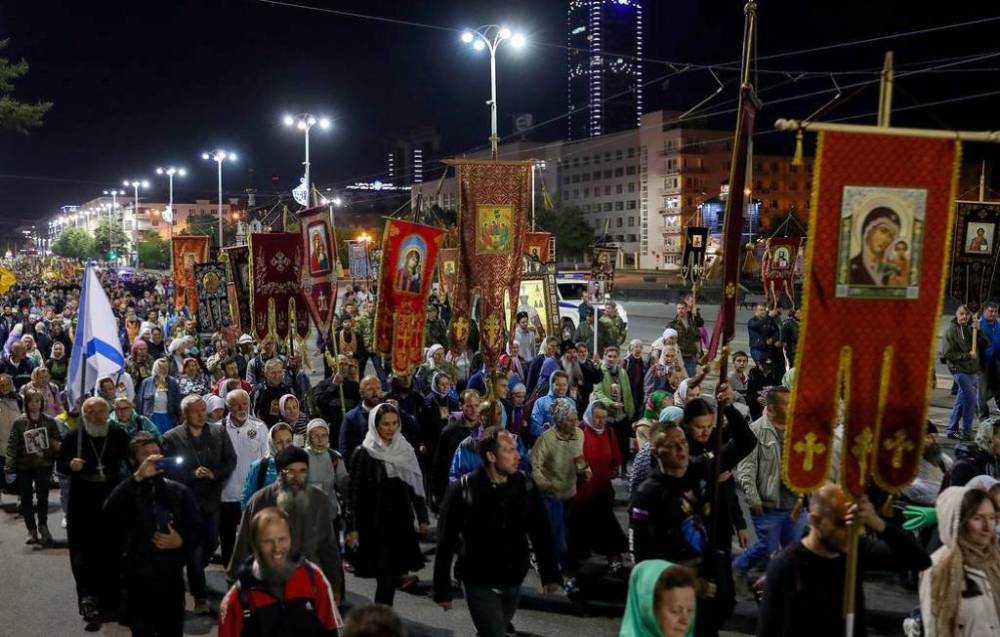
The cross procession in Ekaterinburg is held annually on 17th July

Church Hopes to Hold Annual Royal Martyrs Procession in Ekaterinburg Despite Coronavirus. Published in Orthodox Christianity on 24th June 2020

Preparations are underway in the Ekaterinburg Diocese of the Russian Orthodox Church for the annual Royal Days celebrations in honor of the holy Royal Martyrs, who were brutally murdered in Ekaterinburg on the night of July 16-17, 1918.

0275d

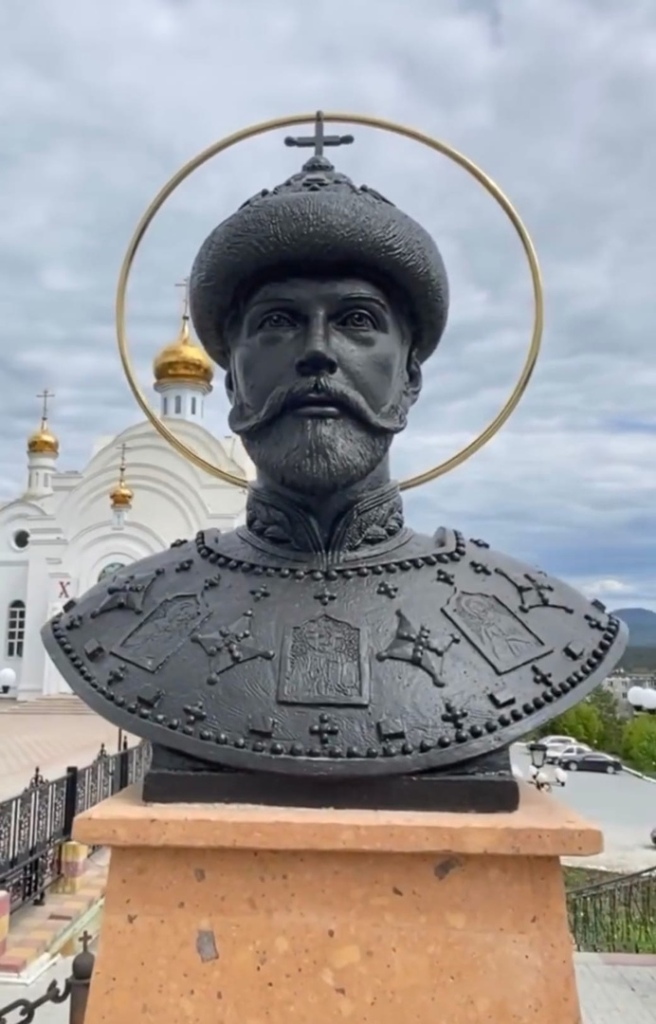
Monument to Tsar-Martyr Nicholas II in Zlatoust

Tsar Nicholas II Monument Defaced on Cathedral Grounds in Urals. Published in Orthodox Christianity on 18th June 2020

It seems that the toppling and vandalizing of monuments has become the “norm” in today’s society.

A monument to Tsar-Martyr Nicholas II in the Russian city of Zlatoust is the latest target

*** 

VIDEO OF THE MONTH: Laying the Foundation Stone Ceremony and Feast of the Feodorovsky Sovereign Cathedral at Tsarskoye Selo on 2 September (O.S. 20 August) 1909

Much of this historic newsreel is new to me! Please take a few moments to watch Emperor Nicholas II and members of his family laying foundation stones for the cathedral which served as the family church during their residency in the nearby Alexander Palace.

At 2:05 we see the Emperor greeting dignitaries and other guests, presenting each with a small icon.

From the Russian State Documentary Film & Photo Archive (RGAKFD). Duration: 3 minutes, 5 seconds

© Paul Gilbert. 30 June 2020

Nicholas II: Recommended CDs

0277a

For those of you who share an interest in Russia’s last emperor and tsar, I highly recommend these CDs, both of which feature music honouring his life and reign.

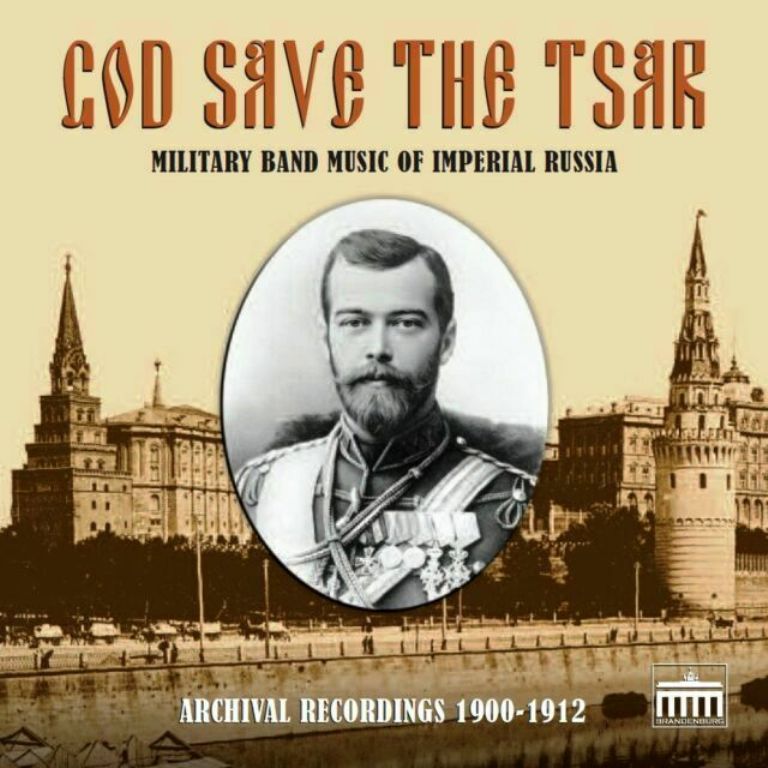
The first, God Save the Tsar. Military Band Music of Imperial Russia (2013) features 25 archival recordings from 1900 to 1912. Of particular note are 2 versions of ‘God, Save the Tsar!’ assorted regimental marches which include ‘Tsesarevich Nikolai Alexandrovich March of 6 May 1892’, among others.

This CD includes an illustrated 36 page booklet, which includes the following 3 essays: The Last Tsar; Military Music in Imperial Russia; Russian Military Music in the Reign of Nicholas II; as well as notes on each of the 25 recordings featured on this excellent CD.

0277b

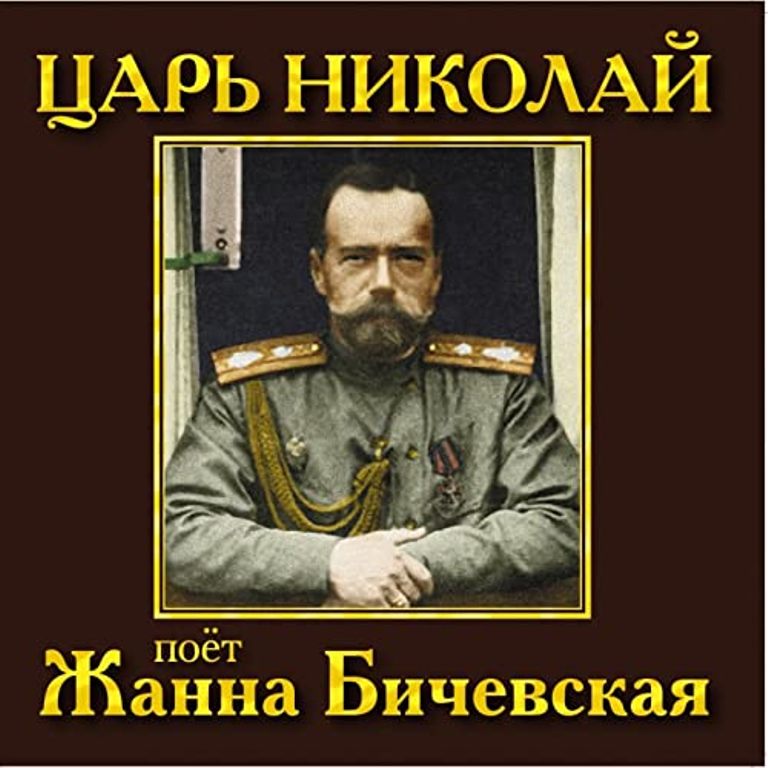
The second, Царь Николай / Tsar Nikolai (1999) features 12 recordings by the prominent Russian singer and folk musician. Zhanna Bichevskaya (born 1944).

Her voice, her words touch one’s soul. Some critics have dubbed her the Russian Joan Baez. Her unique style of music is often described as Russian country-folk. She performed a series of White Guard officer’s songs, as well as a series of patriotic, monarchist and religious songs, including songs dedicated to the Romanov Holy Martyrs. One does not need to understand Russian to be touched by these beautiful songs.

NOTE: this CD can also be ordered from online shops that specialize in CDs imported from Russia, some of which are located in the United States.

Of particular note on this CD is the haunting title track Царь Николай (Tsar Nikolai) – click on the video below to listen to his beautiful melody. The video features vintage film footage of Nicholas II and his family.

© Paul Gilbert. 29 June 2020

Monument to the Imperial Family installed in Tyumen

A new monument to the Holy Royal Martyrs was installed last month in the Siberian city of Tyumen. The monument depicting Emperor Nicholas II and his family was erected in the garden of the Mother of God-Nativity Convent, which is under the administration of the Tobolsk Diocese. The sculptor Irina Makarova posted a video (above) on YouTube on 31st May, which captures the process of production and installation of the monument. She noted that the Tobolsk Diocese had requested the order. The monument was made last summer in the town of Zhukovsky near Moscow.

“We took as a basis an existing monument to the Tsar’s family which was established in 2017 at the Holy Trinity-Saint Seraphim-Diveyevo Monastery. On the initiative of the head of the Tobolsk Diocese Vladyka Demetrius, an old Russian boat was added to the monument – this is a symbol of Tyumen. Inscribed on the side of the boat is “Русь“ (Rus) This is no coincidence as Nicholas II and his family were taken from Tyumen to Tobolsk  on the steamboat Rus,” said the sculptor.

0270a

0270b

According to Makarova, the monument was planned to be erected in Tobolsk, where the Romanov family were held under house arrest from August 1917 to April 1918, however “the locals were against it.” Therefore, they decided to install the monument on the grounds of the monastery, next to the former Tura railway station, where the Imperial family arrived by train from Tsarskoye Selo. The Tsar’s Pier Museum now stands next to the place from where the Imperial family were sent into exile to Tobolsk

She added that they had planned to open the monument on 8th June of this year, but because of the coronavirus pandemic, the official opening and consecration has been postponed indefinitely. The monastery notes the possibility of opening on 17th July, the day marking the death and martyrdom of Nicholas II and his familyy.

In August 1917, two trains arrived at the Tura station in Tyumen, carrying Nicholas II, his family, servants and other retainers, all of which were accompanied by Red Army soldiers. Here the last Russian emperor made a stop on his way into exile. The Imperial family did not spend long in the city, and on the morning of 5th August they set off on the steamer Rus to Tobolsk, where they lived under house arrest until April 1918. It was then that they were moved to the Ural city of Ekaterinburg. Nicholas II along with his family and four faithful retainers were shot on the night of 16/17 July 1918 in the Ipatiev House in Ekaterinburg.

© Paul Gilbert. 10 June 2020

All Around Me I See Treason, Cowardice and Deceit!

0268

The following editorial was published in the 11th March 2010 edition of
International Affairs. Click HERE for the original editorial

There are times when the human soul is filled from within with such an overbearing and unassailable feeling of evil and gloom that it requires inhuman power, some extraordinary exploit to overcome it … This is when the person prone to suicide shouts faint-heartedly: “I don’t want to live, and I’m not going to live,” while the long sufferer beseeches: “I can’t live, but I yearn for Life.” This is akin to the Agony in the Garden, when Jesus prayed in such earnest that it was as if great drops of blood were falling to the ground, when he prayed for this cup to pass him by.. .so that the light would not be engulfed by darkness. And not somewhere remote, in far-off galaxies, but right here in the heart, and only then in the galaxies, which, compared with the human heart, are nothing but dust and ashes… “All around me I see treason, cowardice and deceit” are not only the words Emperor Nicholas II used to reproach his contemporaries for forsaking him, they express the agony he felt for them, “for they know not what they do.” Had he not felt this agony, the Sovereign’s daughter would not have written, “He forgave everyone…,” which was the message of reconciliation he asked her to give everyone who hadremained faithful to him. He also forgave us, only do we really “not know what [we] do…”? After the toxic gas of the revolutionary propaganda evaporated, after the whole of Soviet historiography had insulted and spit in the face of the royal family, after the archives were opened for public perusal, after the letters, diaries, memoirs, and eye-witness accounts were published, and after we became free to take sober account of the tragedy of the royal family’s murder, we suddenly hear from the television screens and from the incompetent historian: “The empress was a idiot.” While another philosophizing TV anchorman, primping and preening, would say sneeringly: “I am not one of those who believes Nicholas II was a man of strong will.” These people cannot “not to know”; they simply do not want to know. 

The world is quicker to defend its villains than its saints. A few stal-wartly souls would try to break their way into Tsarskoe Selo to defend the family to whom they had given their oath of allegiance. And these were not the high-ranking generals who unanimously advised the emperor to abdicate from the throne, who saw, like no one else in Russia, how much effort, mind, and soul the Sovereign had invested in rectifying the situation in the army. “Holding victory in his hands, he fell to the earth alive…” Winston Churchill wrote in his book World Crisis, 1916-1918, London, 1927, Volume 1, p. 476, about Emperor Nicholas II. This is how people fall when struck perfidiously from behind.

One young cornet was lucky enough to find his way into the palace. The abdication had been announced, but the emperor was not at court. Fear for his life and the future of his children were growing with each passing hour. “With a single gesture, the empress bade me to stand; her magnificent eyes were even more sunken from sleepless nights and anxiety and expressed the unbearable torment of her long-suffering heart.

What unearthly beauty and stateliness emanated from this eminent imperial figure!” But Alexandra Feodorovna did not feel sorry for or try to comfort herself. “I am very grateful that you have come to see me and not abandoned me on this difficult and dreadful day! I would really like you to stay with me, but that, to my immense regret, is impossible. I know and understand how hard this is for you… I ask you to please take off my insignia, because I could not bear it if some drunken soldier tore them away from you in the street! I believe that you will continue to wear them in your heart!” she said to the cornet, comforting him. And this Sovereign, Her Majesty, no, she was simply a Woman in the true meaning of this word, was being called an “idiot” throughout the country. Why? Well, you see, Count Witte had once been summoned to Her Majesty, whereby she compassionately expressed her surprise that there were so many poor and impoverished people in Russia and almost demanded that he stop this disgrace. “Oh! What naivety!” Yes, what treasured naivety!

While filming a movie about Grand Duchess Elizabeth Feodorovna, our film crew worked in Darmstadt, the home town of the two imperial sisters. Everyone was amazed at the attention Alix and Elizabeth’s family gave to the impoverished, orphans, and all the needy citizens in this modest duchy of their father, the size of which could, naturally, in no way compete with Russia’s expanses. Of course, the Grand Duchy of Hesse was a European province. At first, the empress could not and, I think, was unable her entire life to reconcile herself to that fact that what could be done in her former Homeland was impossible in her new, boundless Homeland, which she came to love with all her heart. Who can reproach her for this? “I love those who yearn for the impossible,” said the great Goethe.

Incidentally, Alexandra Feodorovna received the cornet wearing a white nurse’s gown. From the very beginning of the war, she and her daughters had been caring for the wounded, and the entire family had donated large sums of their own money to set up hospitals, equip hospital trains, and purchase medication, equipment, and clothing for the frontline soldiers.

On the eve of the war, no other European government did more to defend peace than the government in St. Petersburg. In November 1921, at the Washington Naval Conference, the U.S. President would say that the proposal to limit arms by reaching an agreement among the nations was nothing new. It was enough to recall the noble strivings expressed 23 years ago in an Imperial Rescript from His Majesty the Emperor and Autocrat of all the Russias. This was followed by an extensive quote from Nicholas IPs note, in which he appeals to the whole world to convene an international conference in order to curb the arms race and develop mechanisms for preventing wars in the future. The world was surprised that this proposal did not come from a weak, defenseless state, but from a vast and omnipotent empire. All the great powers ignored this proposal. Kaiser Wilhelm II said that in practice he would continue to rely only on God and his sharp sword. England, which had the strongest navy in the world, refused to go for any reductions.

Japan, which was hatching its own plans in the Far East, ignored the Russian note. Russian Foreign Minister Count Muraviev figuratively noted that the people reacted enthusiastically and the governments distrustfully. Anyone else would have given up, but Nicholas II continued his efforts. A repeat note followed, and the Hague Peace Conference was indeed convened in 1899 under the chairmanship of the Russian ambassador to London. A whole series of extremely important decisions was made, including on the non-use of poison gases and explosive bullets, conditions were drawn up regarding the upkeep of prisoners-of-war, as well as principles for peacefully settling conflicts, and the International Court that functions to this day in The Hague was founded. Were these not rather too many achievements for a “weak-willed” and “weak-minded” czar, before the perseverance and foresight of whom stubborn Europe was bowing? The main ideas of the Russian initiative were more fully realized in the creation of the League of Nations, which later passed the baton on to the United Nations. It is no accident that the original document calling on the states to take part in The Hague Peace Conference of 1899 signed by Nicholas II is exhibited in the UN building in New York.

Alexandra Feodorovna, as we know, was the granddaughter of British Queen Victoria. In his letters, the heir to the Russian throne wholeheartedly called her “my dearest grandmother,” since she played an important role in their marriage. After breaking the resistance of his father, about the “staunch will” of whom the entire world had no doubt and who was not in favor of the heir marrying a Darmstadt princess, the enamored crown prince came up against another obstacle. The protocol demanded that the future empress convert to Russian Orthodoxy. This created a serious bone of contention for the young couple, and it was Queen Victoria who managed to persuade her granddaughter to agree to this step. Nicky’s letters were full of genuine warmth and gratitude toward his “dearest grand-mother” for her inestimable service. However, in one letter she scolded the young czar with respect to the anti-British articles that appeared in Russian newspapers. To which she received the following reply: “I must say that I cannot prohibit people from openly expressing their opinions in the press. Don’t you think I have not been upset myself by the rather frequent unfair judgments about my country in the English newspapers? Even the books I am constantly being sent from London give a false account of our actions in Asia, our domestic policy, and so on.”

Several months later, the young couple expressed their joy over Queen Victoria’s consent to be godmother to their first child, Grand Princess Olga. Being accustomed to the European sound of the royal family’s names, Queen Victoria was evidently rather puzzled over the Russian emperor’s choice of name for his daughter. “We chose the name Olga because it has already been used several times in our family and it is an age-old Russian name,” Nicky wrote in November 1895. But in the very next letter sent from Darmstadt, Queen Victoria, his “dearest grandmother,” was in for a rude awakening when she tried to put pressure on Nicky in the interests of British policy in the East. “As for Egypt, dear Grandmother, this is a very serious issue that affects not only France, but also all of Europe. Russia is very interested in its shortest routes to Eastern Siberia being free and open. Britain’s occupation of Egypt is a constant threat to our sea routes to the Far East; for it is clear that whoever controls the Nile valley also controls the Suez Canal. This is why Russia and France do not agree with Britain’s presence in this part of the world and both countries wish for real integrity of the canal.”

March, which saw the murder of Alexander II and the abdication of Nicholas II, was a fateful month for the Romanov dynasty … “Perhaps when we throw them the Romanov crown, the people will have mercy on us; General Headquarters, [Commander-in-Chief] Alexeev, and the generals have long been in favor of the idea of a state coup,” mumbled Alexander Guchkov, Duma’s Chairman, “deathly pale with a trembling chin” in those days to a handful of frightened State Duma deputies.

So, whose side are we on? On their side, or on the side of he who, after removing his crown, said: “If Russia needs a sacrifice for its salvation, I will be that sacrifice!”

© International Affairs. 4 June 2020
Reopening of the Alexander Palace now delayed to end of 2020
0265

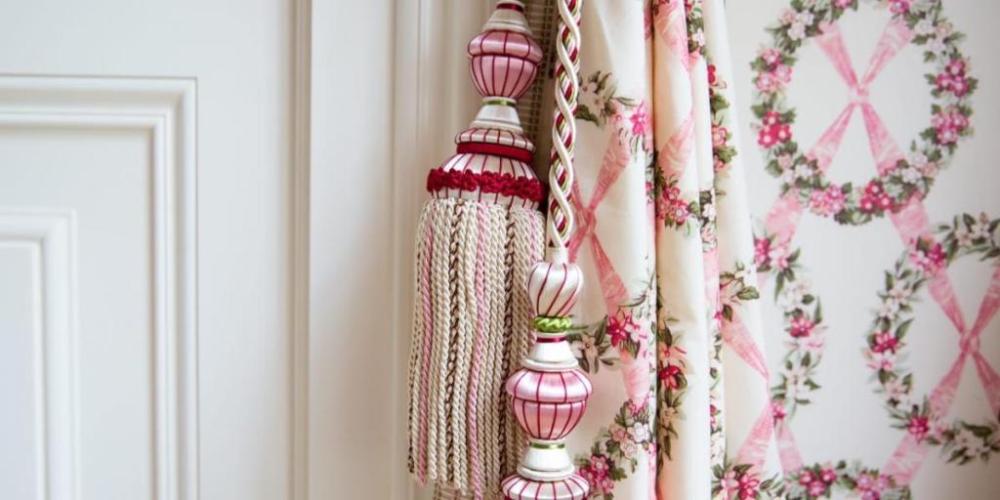
Curtains featuring a pattern of pink ribbons entwined with green wreaths set
with flowers on a white background have been recreated for the Imperial Bedroom

The Director of the Tsarskoye Selo State Museum Olga Taratynova, announced in Russian media yesterday, that the long awaited reopening of the Alexander Palace has been further delayed due to restrictions made by the coronavirus. Russia remains one of the hardest nations hit by the pandemic with more than 362,000 cases reported to date.

The Alexander Palace, the last residence of Emperor Nicholas II, was scheduled to open to the public on 20th August, however, Taratynova has now confirmed that the reopening of the palace to the public has been delayed until the end of 2020 – although the exact date has yet to be confirmed.

“As for the Alexander Palace, unfortunately, there is a ban on restoration work, including the transfer of museum items during the quarantine. At first we thought that we could open the first eight restored rooms in the summer months, unfortunately, however, work has come to a standstill due to strict quarantine measures. The recreation of the historical interiors is done, but we now need to prepare each room for the exposition. Once our experts have decorated the rooms with objects of applied art, the interiors can then be showcased to visitors in all their glory,” said Taratynova.

The Alexander Palace in Tsarskoye Selo was built by the Italian architect Giacomo Quarenghi on the orders of Catherine II for her eldest grandson Alexander, the future Emperor Alexander I. From 1905, it became the permanent residence of Emperor Nicholas II and his family. It was from the Alexander Palace that the Imperial Family were sent into exile to Tobolsk on 14 August (O.S. 1), 1917. After the October Revolution, the palace housed a sanitarium for NKVD employees and later an orphanage. In 1951 the building was transferred to the Navy of the USSR, and the palace collection was transferred to Pavlovsk Museum. In 2009, the palace was transferred to the authority of the Tsarskoye Selo State Museum-Reserve.

The palace has been undergoing restoration since 2011, which includes reconstruction work, the installation of internal engineering networks, and restoration of interiors. The Pavlovsk State Museum  have agreed to return “some items” for the exposition; while furniture for the halls has been recreated according to original samples and archival materials.

The first eight interiors to open in the eastern wing of the palace include: the Reception of Nicholas II, Working Study of Nicholas II, Moorish Bathroom of Nicholas II, Pallisander (Rosewood) Living Room, Mauve (Lilac) Boudoir, Imperial Bedroom, Alexandra’s Corner Reception Room, and the New Study of Nicholas II.

In the future, the Alexander Palace will become a memorial museum of the Romanov family – from Catherine the Great to Nicholas II, showcasing the private, domestic life of the Russian monarchs who used the palace as an official residence. The eastern wing of the palace will be known as the Museum of the Russian Imperial Family.  The multi-museum complex is scheduled for completion no earlier than 2022.

Click HERE to review more articles, news, photos and videos of the history and restoration of the Alexander Palace

© Paul Gilbert. 26 May 2020

“It is important for our society to reconsider Nicholas II” – Metropolitan Kirill

0262

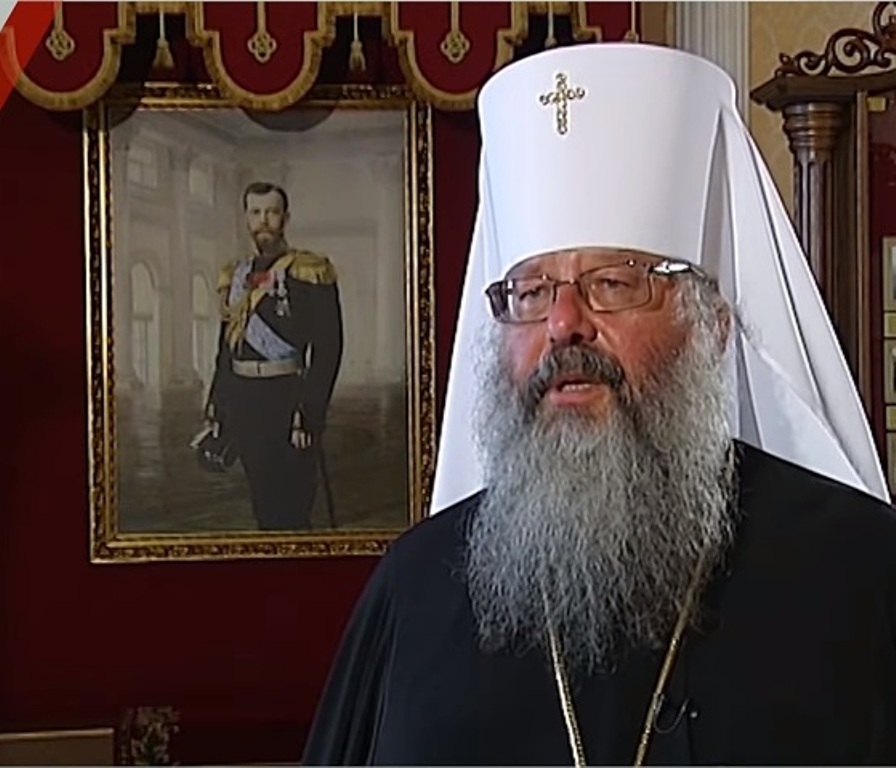
Metropolitan Kirill of Yekaterinburg and Verkhoturye

On 19th May 2020, the day marking the 152nd anniversary of the birth of Emperor Nicholas II, Metropolitan Kirill of Yekaterinburg and Verkhoturye, gave a sermon at the Church on the Blood, urging Russian society to make a fresh assessment of Russia’s much slandered Tsar.

Emperor Nicholas II was born on the day of the Righteous Job the Long-suffering, and his memory is celebrated by the Church on 6th May in the old calendar or on 19th May according to a new style.

* * *

The birthday of Saint Tsar Nicholas Alexandrovich on 19th May almost always falls during the days of Pascha, the feast of the Resurrection of our Lord Jesus Christ. In the Church on Blood in the Ural city of Ekaterinburg, on the Russian Golgotha, the memory of the Holy Tsar Martyr, born 152 years ago, on the day of memory of the Righteous Job the Long-suffering, and who was martyred 102 years ago in Ekaterinburg, who suffered for Christ, is especially celebrated. for the Orthodox faith and for Holy Russia.

In Ekaterinburg, the earthly life of a great, very kind and decent man, the anointed of God, whom we revere with love today, has ended. Today, the veneration of the Tsar-Martyr is strong among believers, however, Bolshevik myths and lies about the “weak-willed ruler Nicholas the Bloody” remain embedded in our modern-day secular society.

If we use the language of images that is inherent in modern society, whom are less and less inclined to read and think for themselves, one can weigh the enormity of the atrocity without words, it is enough to compare the photographs of the victims and the executioners. On the one hand is a photograph of the Holy Family: Tsar Nicholas, Tsarina Alexandra and their five children, and on the other is a photograph of their killers. Two very different worlds are clearly reflected In this “mirror”: light, mercy and kindness, almost heavenly beauty, on the one side, anger and black-hearted hatred, on the other.

We must understand that the people who committed the massacre of the Imperial Family and their followers for decades ruled the Russia in which we live today. The ideologists of Bolshevism needed to justify the murder of the Tsar’s family and their loyal subjects, to justify their brutal reprisals and repressions, which were committed during their reign of terror. Having launched their campaign of murder and oppression, the Bolsheviks and later the Soviets completely erased from the textbooks of history and public consciousness the large-scale achievements and great achievements of Nicholas II’s reign.

This glaring contradiction in many respects affects our contemporaries today who cannot understand and accept a Christian life and the Orthodox worldview of the Holy Tsar Nicholas. And he was truly a Christian – sincere, kind, decent, warm-hearted, pious and honourable. Therefore, for us, this date is the day of our constant and pure repentance for the atrocity committed by our ancestors …

Repentance is a change of consciousness. In relation to the Tsar’s family, this is a rethinking of the role of the Tsar Martyr in Russia’s history, a change in our attitude towards him. Yes, this activity is ongoing, but its scope is extremely modest in the absence of state ideology.

But in a world where the image of the Holy Tsar still remains slandered and distorted, and the streets, squares, and even entire regions bear the names of murderers, to this day there is no repentance. Is spiritual healing of our society possible without such a change? Is it any wonder today when among us there are those who draw the swastika, raise their hands in a Nazi salute, try to include Nazi photographs in the Immortal Regiment, putting the murderers and those killed in the memorial march? These are people brought up on the very contradictions of our public and state life.

Therefore, until sincere repentance occurs, we are doomed to suffer from the lack of spirituality of modern society, having Victory Day as the only national holiday, forgetting the Kulikovo Field, the Battle of Borodino and many other glorious victories of the Russian soldier, Russian people, sanctified by Orthodox prayer and faith. Until then, people will continue to desecrate the churches of the Fatherland, for whom there is nothing sacred in this life, because it was destroyed a century ago, when Russian history was swept into an abyss, the Russian state, including here in Ekaterinburg, where a memorial church stands today on the sight of the Ipatiev House, where on the night of 16/17 July 1918, the blood of the Holy Royal Martyrs was spilled. This seal of regicide lies today in the city where the atrocious crime took place. It’s regrettable, but much less attention is paid to preserving the memory of the Holy Tsar than the memory of their monster killers,

Therefore, today, living here, on the site of Russian Calvary, we have a great and special responsibility before God, before the Holy Church, before our Russian Motherland and before the memory of the Holy Royal Martyrs. If others around us do not repent, we must do this all the time. The memory of the Holy Tsar and the fact that the last days of his holy life passed here in Ekaterinburg, that it was here that he accepted his martyrdom – this is our personal responsibility to the Holy Church and to all those future generations of people who, hopefully, have something they can change within their own environment and our region will not bear the name of any of the men who participated in regicide.

And while we are serving the Divine Liturgy at the Tsar’s Altar, while we honour the memory of the Holy Martyr Tsar Nicholas and all the new martyrs who were killed for the Orthodox faith and for our Holy Fatherland, until then we can still hope for God’s mercy. We will pray to God and meekly, humbly – like the Holy Tsar himself – to wish salvation to everyone who lives among us, who is our compatriot, and who today does not know or does not want to know the feat of the Holy Tsar and all the new martyrs and confessors of the Russian Church – who to this day they stand for Holy Russia, they protect us and do not let everything that has been gathered in our Fatherland for centuries and that today is held by some special Divine power, preserving our people, our country on this earth in peace and prosperity .

Since the fall of the Soviet Union in 1991, great efforts by historians and the Russian Orthodox Church to research and establish a fresh and honest reassessment of the last Russian Tsar, but in the absence of a state ideology and a clear position on this issue, all this is but a small fraction.

It was in Ekaterinburg in May 2018, on the eve of the 150th anniversary of the birth of the last Russian Emperor, on the initiative of the World Russian People’s Cathedral and the Double-Headed Eagle Society, that a public forum was held to preserve the heritage of Tsar Nicholas II. Scientists and members of the public raised the issue of preserving the historical memory of the Sovereign, gathered to recognize the merits of Nicholas II on the development of the Russian state and public assessment of the murder of the Tsar’s family, committed a century ago. Today, the results of this forum require further development.


© Paul Gilbert. 26 May 2020

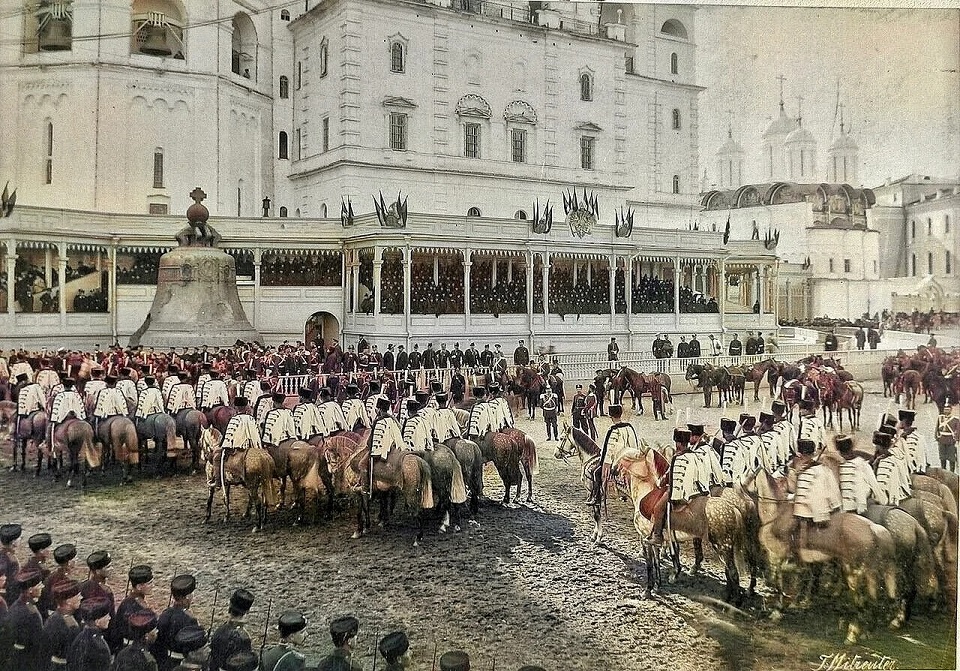
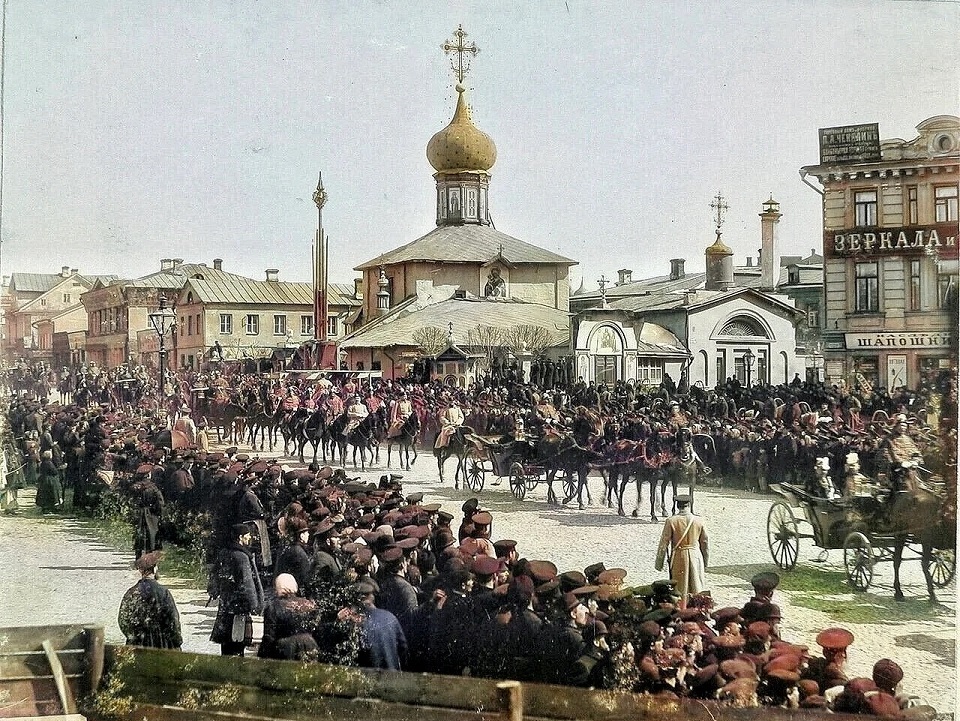
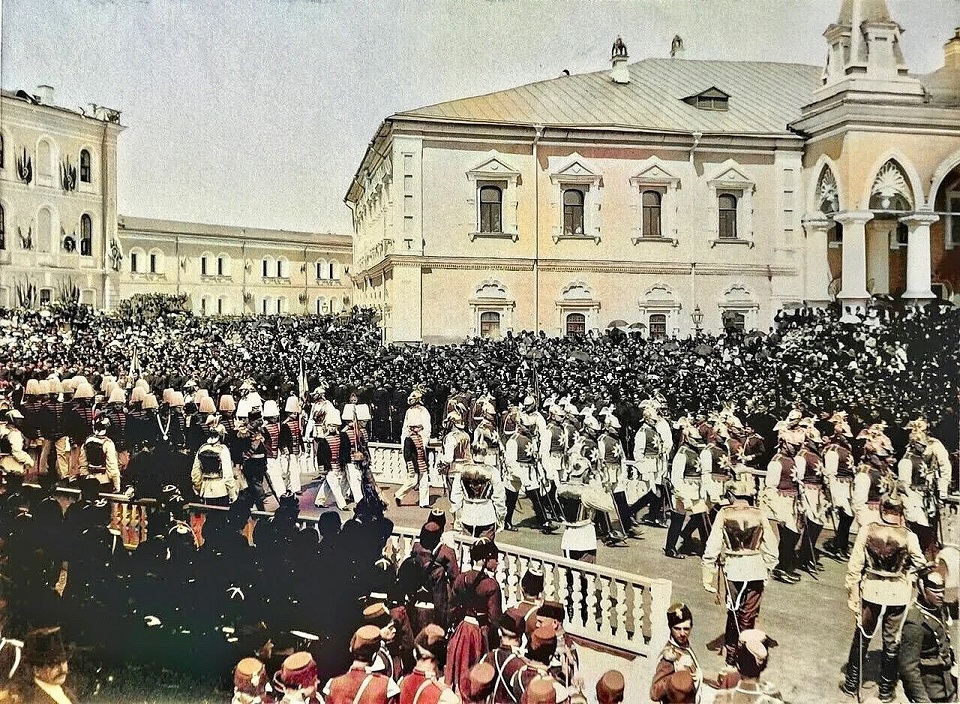
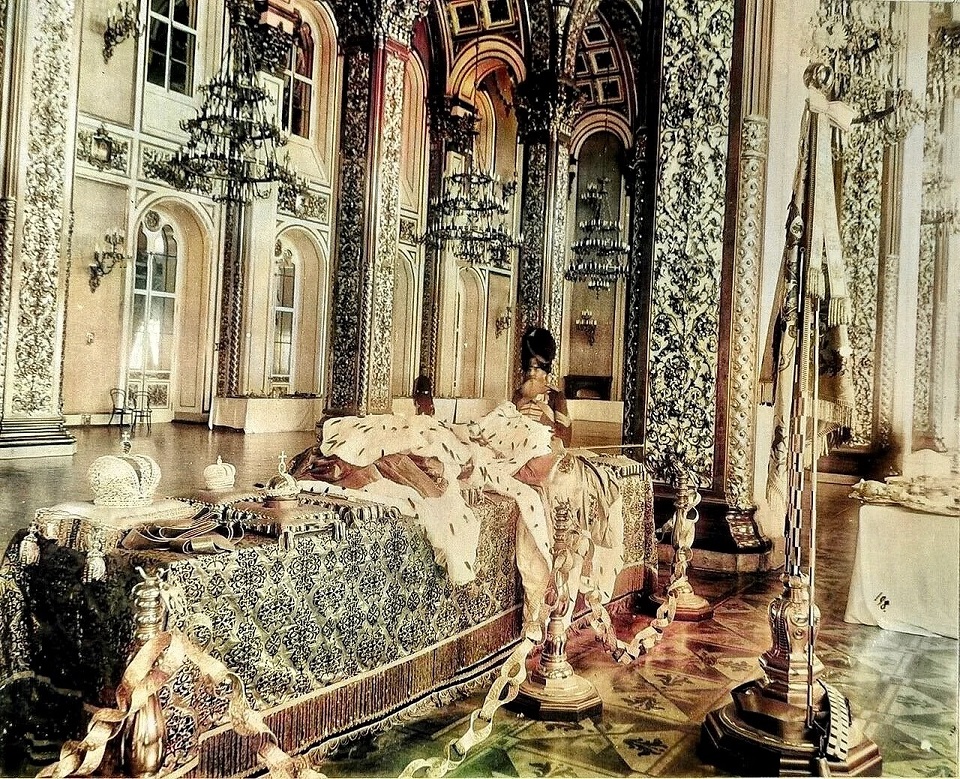
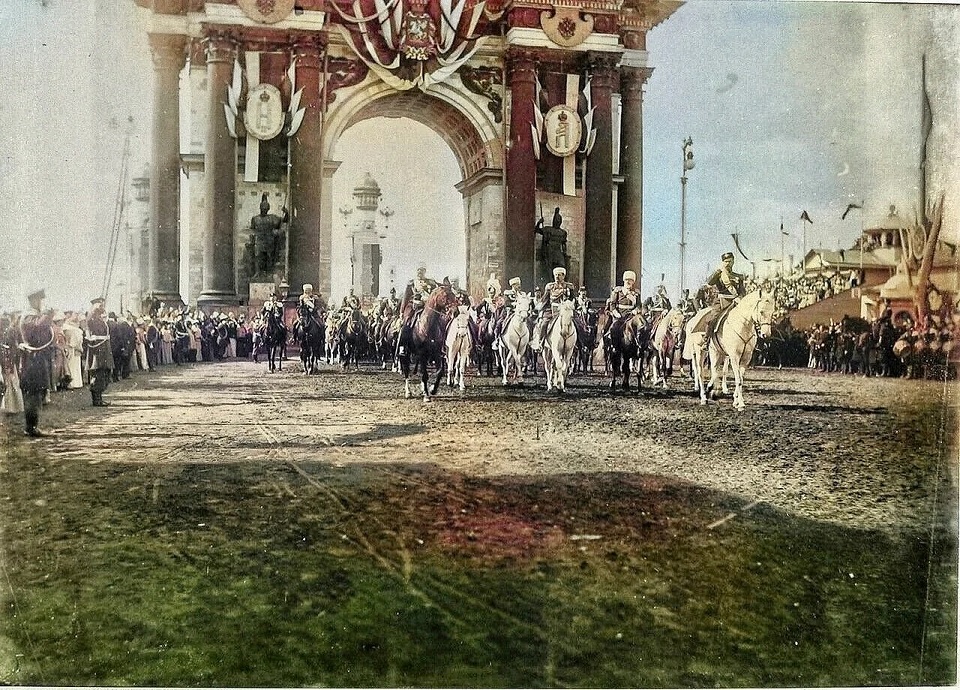
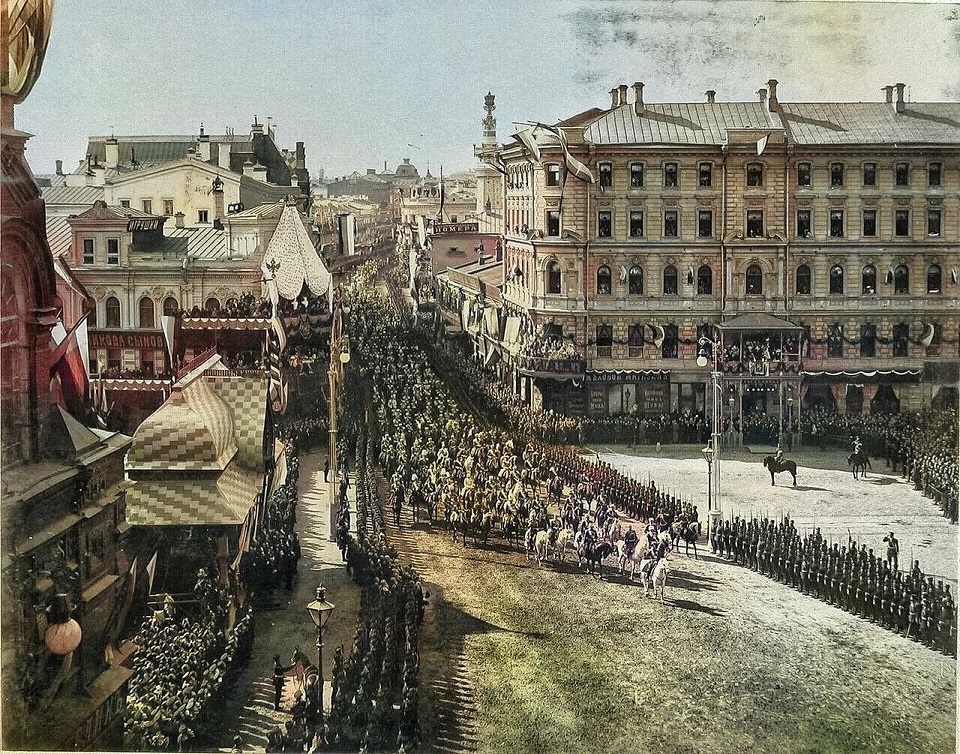
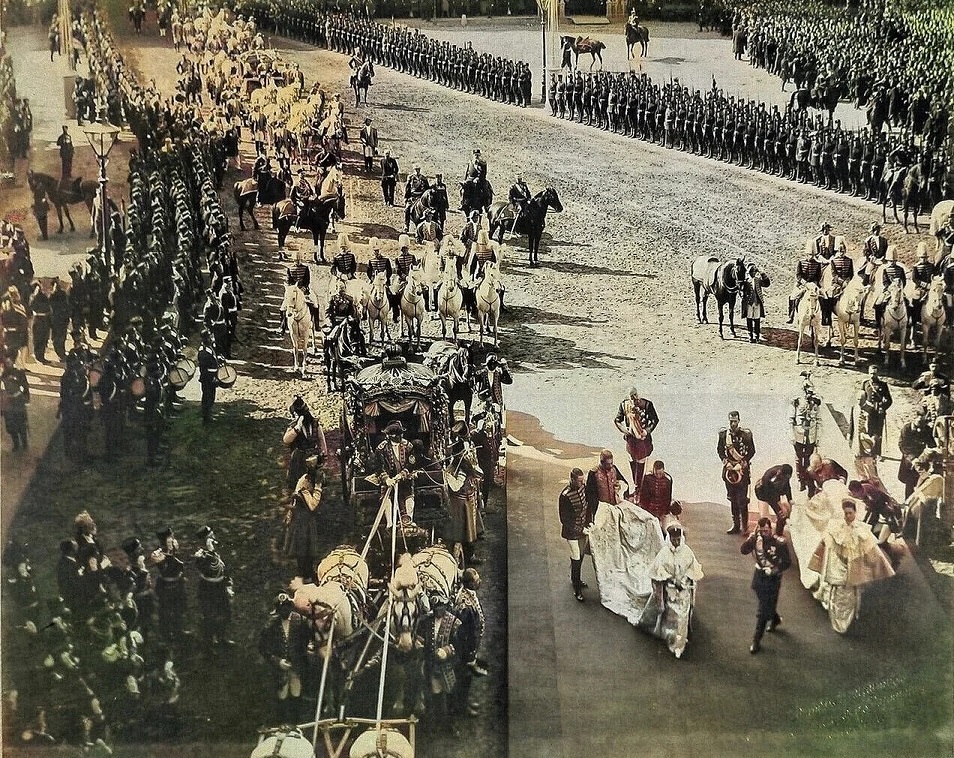
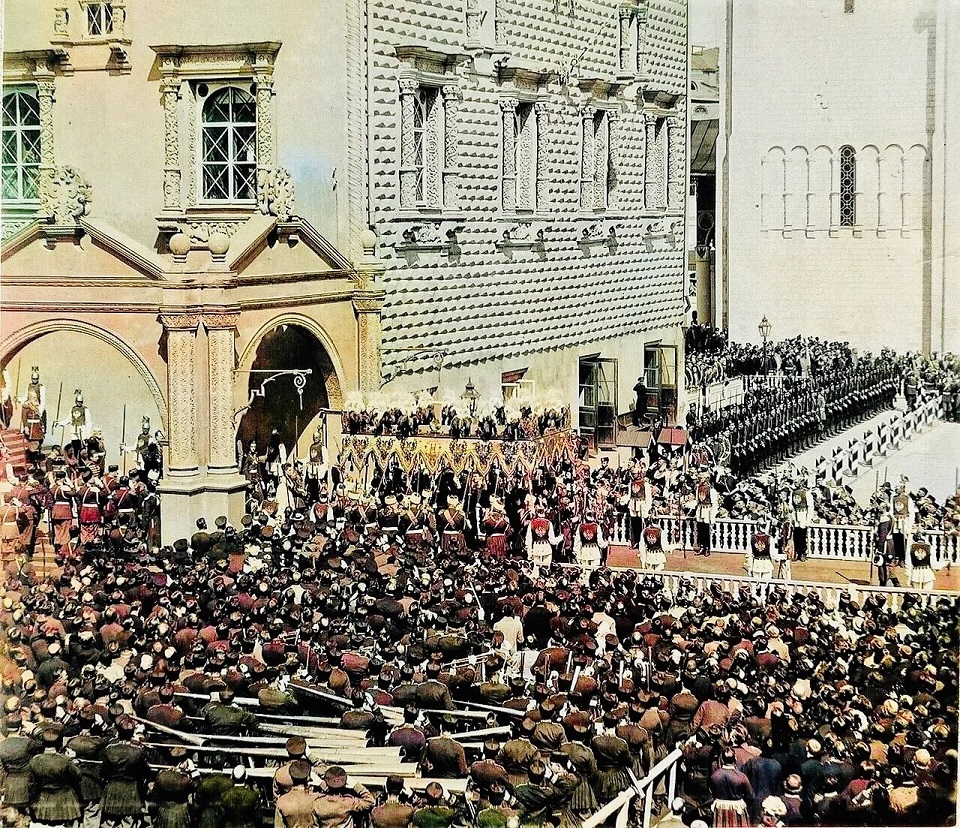
COLOUR photos of the Coronation of Nicholas II

cor19

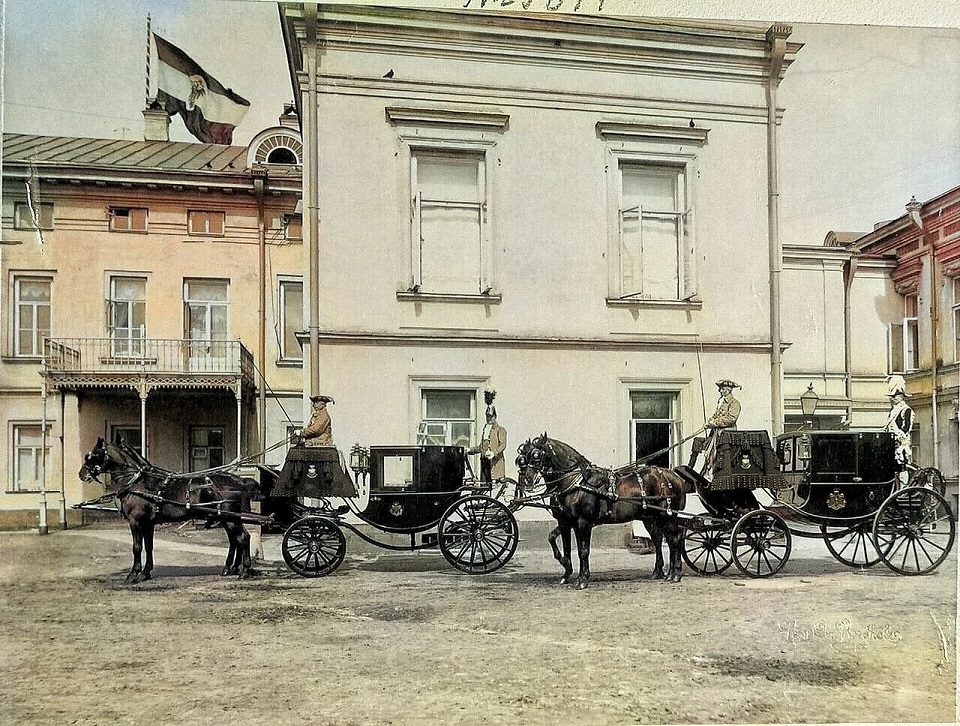
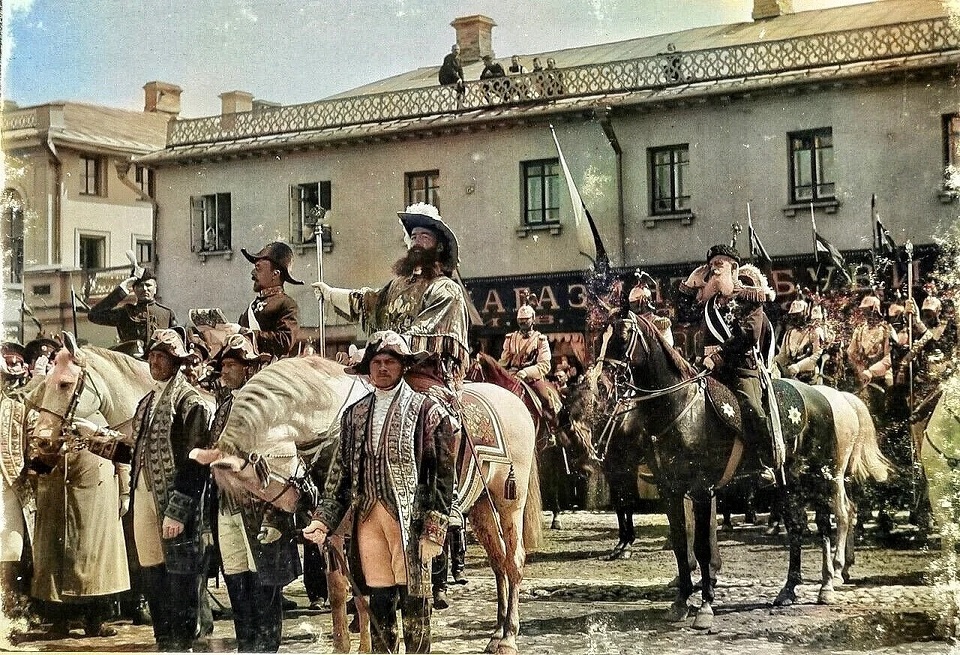
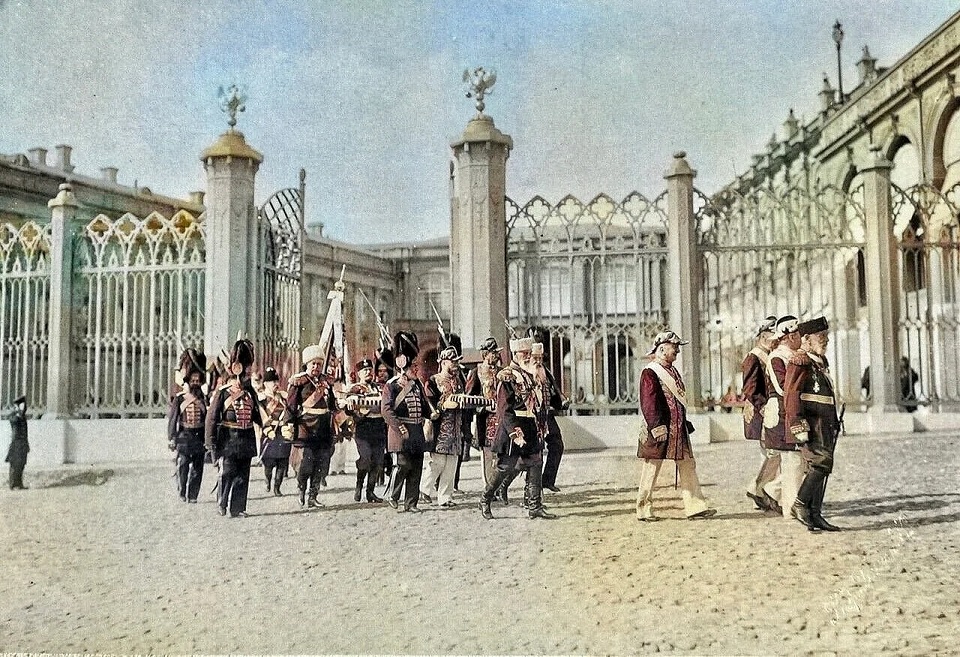
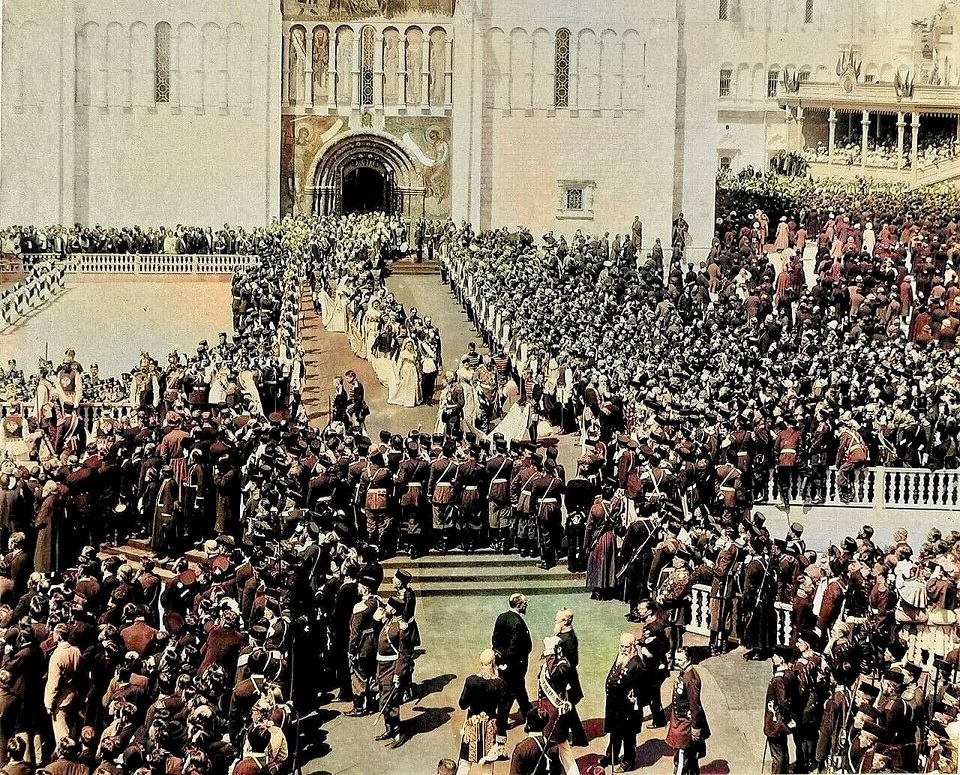
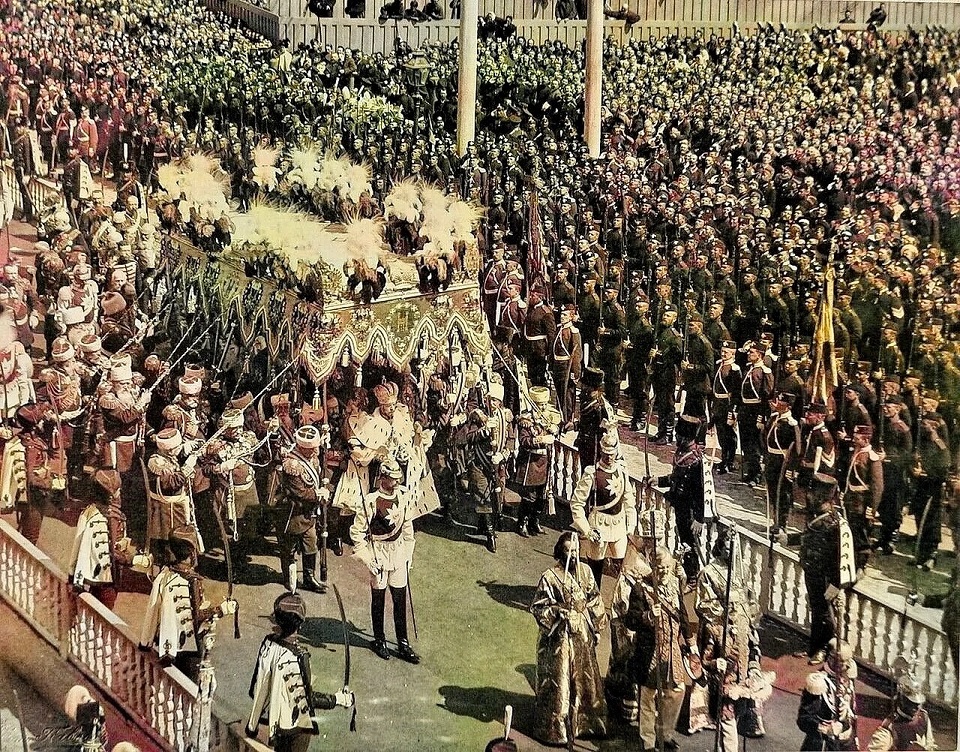
On this day – 27 May (O.S. 14 May) 1896, Russia’s last emperor and tsar Nicholas II was crowned in Moscow

The following text is a short introduction of the preparations and ceremony, to prepare readers for the wonderful colour photographs of the Coronation of Russia’s last emperor which follow – PG

Preparations

On 13 January (O.S., 1 January) 1896, the manifesto “On the upcoming Holy Coronation of Their Imperial Majesties” was published, according to which the coronation ceremony was to be held in May, and inviting the Government Senate in Moscow, and other representatives of the Russian Empire, to attend. Responsibility for organizing the ceremony was assigned to the Ministry of the Imperial Court, on the basis of which the Coronation Commission and the Coronation Office were organized.

From 6 May to 26 May 1896 was the official coronation period, with 25 May being the birthday of Empress Alexandra Feodorovna. On 26 May, a manifesto was published that expressed the gratitude of the monarch to the inhabitants of Moscow.

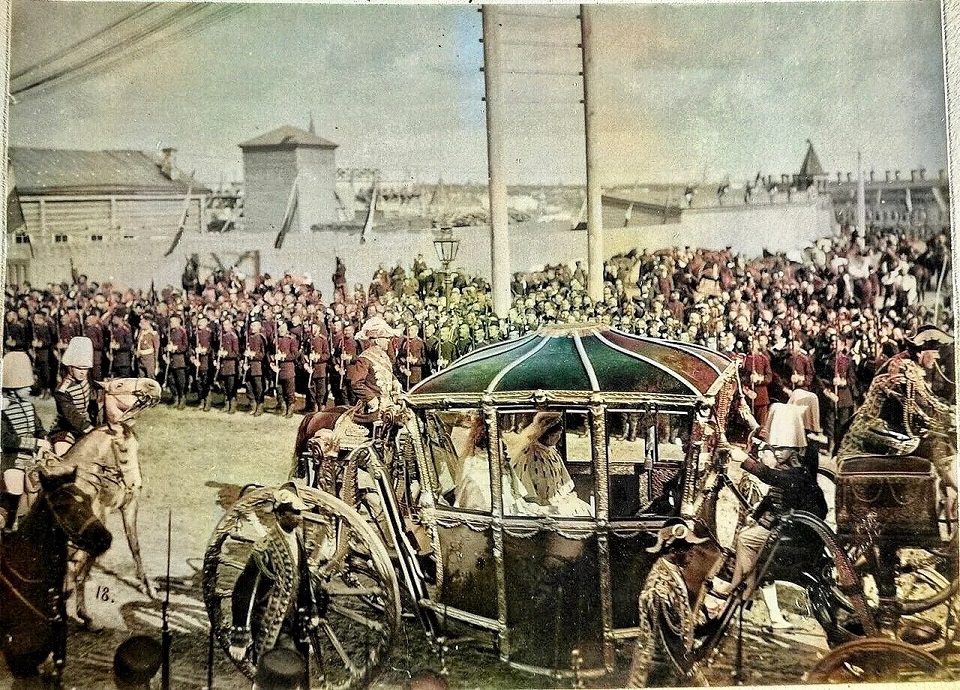
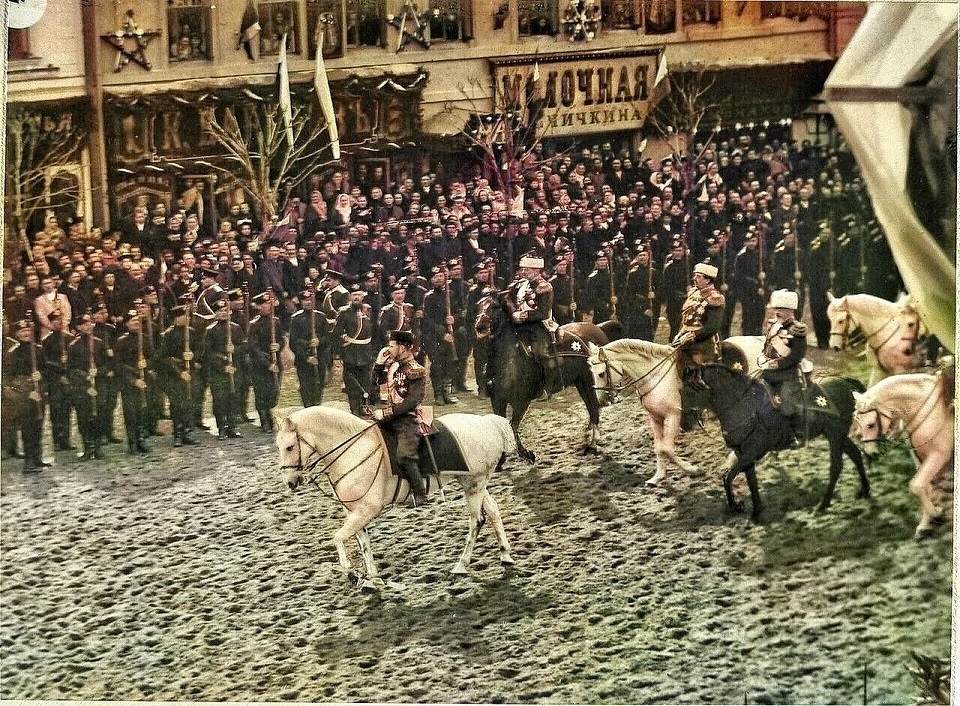
It was proposed that all persons participating in the 9 May ceremonial entrance of the imperial couple to Moscow arrive in Moscow no later than 5 May. The ceremonial entry was to be from the Petrovsky Palace on Petersburg Highway and further along Tverskaya-Yamskaya and Tverskaya streets.

Preparations for the celebrations were the responsibility of the Minister of the Imperial Court Count I. I. Vorontsov-Dashkov. The High Marshal was Count K. I. Palen; the supreme master of ceremonies was Prince A. S. Dolgorukov. The duties of the herald were performed by E. K. Pribylsky, an official of the Senate. A coronation unit was formed from 82 battalions, 36 squadrons, 9 hundreds, and 28 batteries, under the command of the Grand Duke Vladimir Alexandrovich, under whom was a special headquarters with the rights of the General Staff led by Lieutenant General N.I. Bobrikov. Vladimir Alexandrovich arrived in Moscow and took command on 3 May 1896.

Coronation ceremony

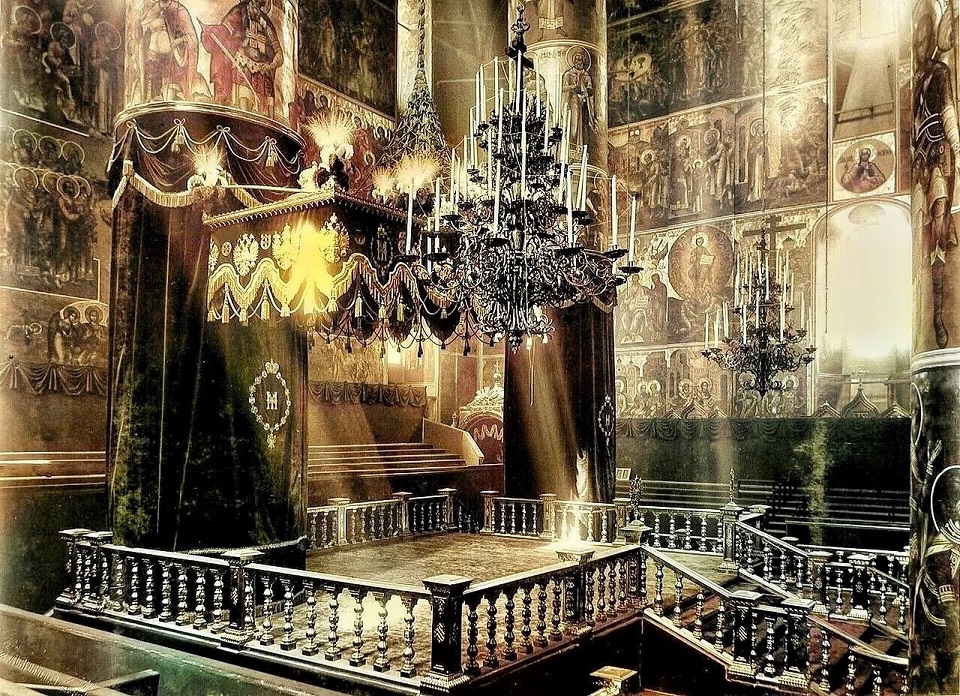
The coronation of Emperor Nicholas II and his wife, Empress Alexandra Feodorovna was the last coronation during the Russian Empire. It took place on 26 May (O.S. 14 May) 1896, in the Assumption Cathedral in the Moscow Kremlin.

On 26/14 May, the day of the Coronation, the liturgy was read and prayers of thanksgiving recited in all the churches in St. Petersburg. The metropolitan cathedrals could not accommodate all the worshippers, in view of which prayers were also recited in the squares near a number of cathedrals and some churches, as well as in the Horse Guards.

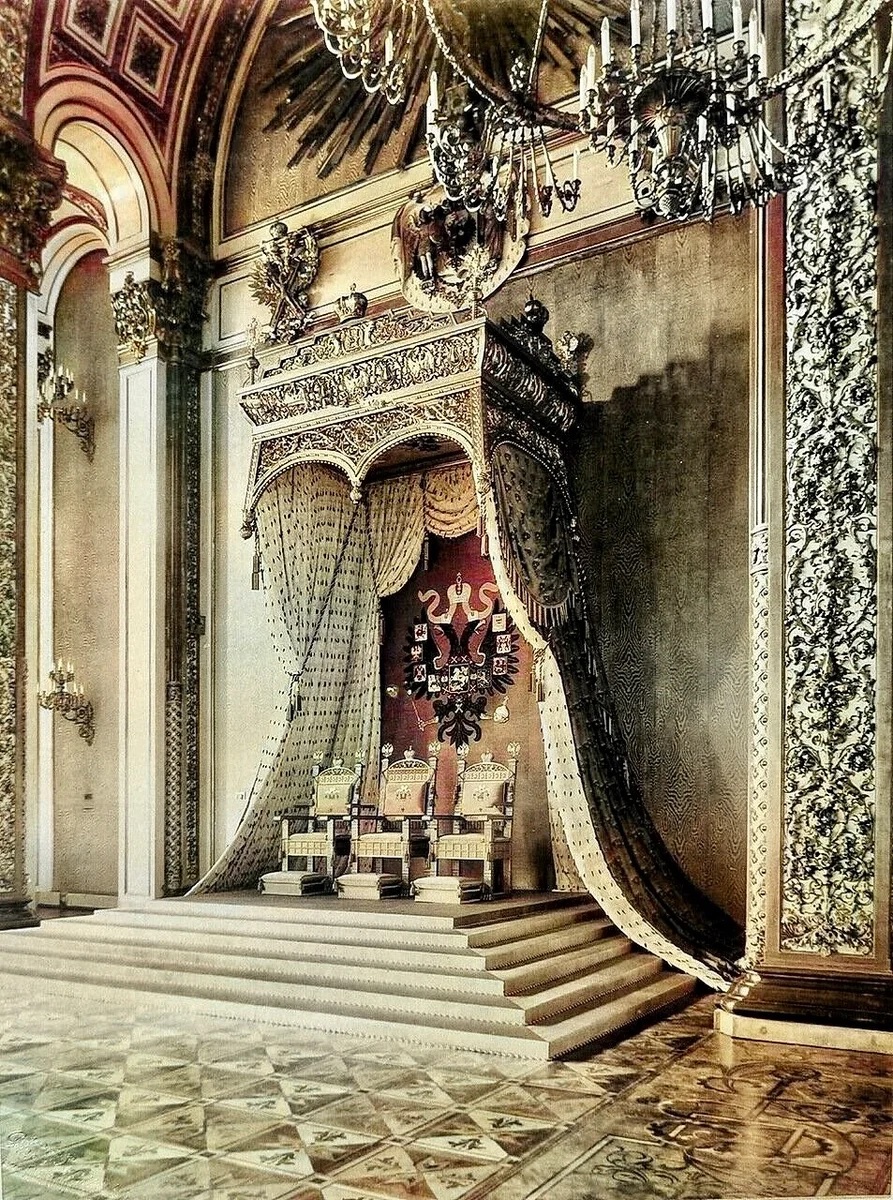
The coronation ceremony began at 10 am, with the emperor, his mother, and his wife seated on thrones on a special raised platform installed in the middle of the cathedral. The emperor sat on the throne of Tsar Mikhail Feodorovich, Empress Maria Feodorovna on the throne of Tsar Alexy Mikhailovich Tishayshy, and Empress Alexandra Feodorovna on the throne of Grand Prince Ivan III.
The ceremony was presided over by Metropolitan Palladium, of St. Petersburg, the pre-eminent member of the most Holy Synod (the Synod at the time of the coronation having been transferred to Moscow). During the liturgy, the metropolitan con-celebrated with the metropolitans of Kiev, Ioanikiy (Rudnev), and of Moscow, Sergius (Lyapidevsky). At the end of the liturgy the emperor and empress were anointed and then took communion of the Holy Mysteries at the altar. In the ministry of the liturgy, among others, John of Kronstadt also took part.

cor1

cor2

cor3

cor4

cor5

cor6

cor7

cor8

cor9

cor10

cor11

cor12

cor13

cor14

cor15

cor16

cor17

© Paul Gilbert. 26 May 2020

Those Who Served the Tsar: General Count Alexander Nikolaevich Grabbe (1864-1947)

0264a

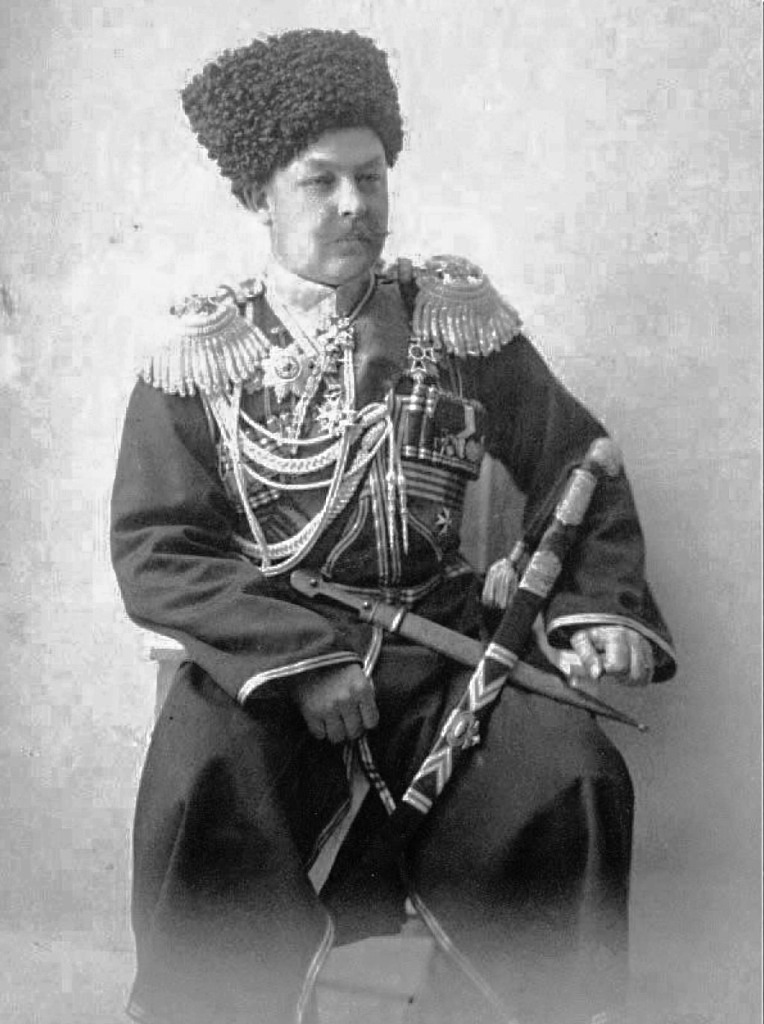
General Count Alexander Grabbe, Commander of His Imperial Majesty’s Own Convoy,
in parade uniform (1917)

General Count Alexander Grabbe (1864-1947), served as Major-General of His Imperial Majesty’s Own Convoy from 1914 to 1917

Alexander Nikolaevich Grabbe was born in the Caucasus on 12th February 1864. The son of Count Nikolai Pavlovich Grabbe (1832-1896) and Countess Alexandra Feodorovna Orlova-Denisova (1837-1892).

In 1901, he was allowed to add the name of his grandmother Elisaveta Alekseevna Nikitina (1817-1898), who was the only daughter of the cavalry general Alexei Petrovich Nikitin, to his last name and became known as Count Alexander Nikolaevich Grabbe-Nikitin.

Like many other members of his family, he attended the prestigious military academy, the Corps des Pages, quartered in the Vorontsov Palace in St. Petersburg, where he graduated in 1887. It was the custom to select outstanding students in their final year to serves as pages to members of the Imperial Family on state occasions, of whom Grabbe was among those chosen. 

Grabbe had wanted to study engineering, but his wealthy grandmother, the Countess Elizabeth Orlov-Denisov, insisted that he join her husband’s Cossack regiment. As he had no means of his own, he had no choice.

Between 1889-1891, Grabbe served as an adjutant to the Grand Dukes Alexander (1866-1933) and Sergei Mikhailovich (1869-1918). They embarked on a world cruise, where Grabbe met Tsesarevich Nicholas Alexandrovich (future Nicholas II) in Ceylon. From June 1897 to 1910 he served as adjutant to Grand Duke Mikhail Nikolaevich (1832-1909).

0264f

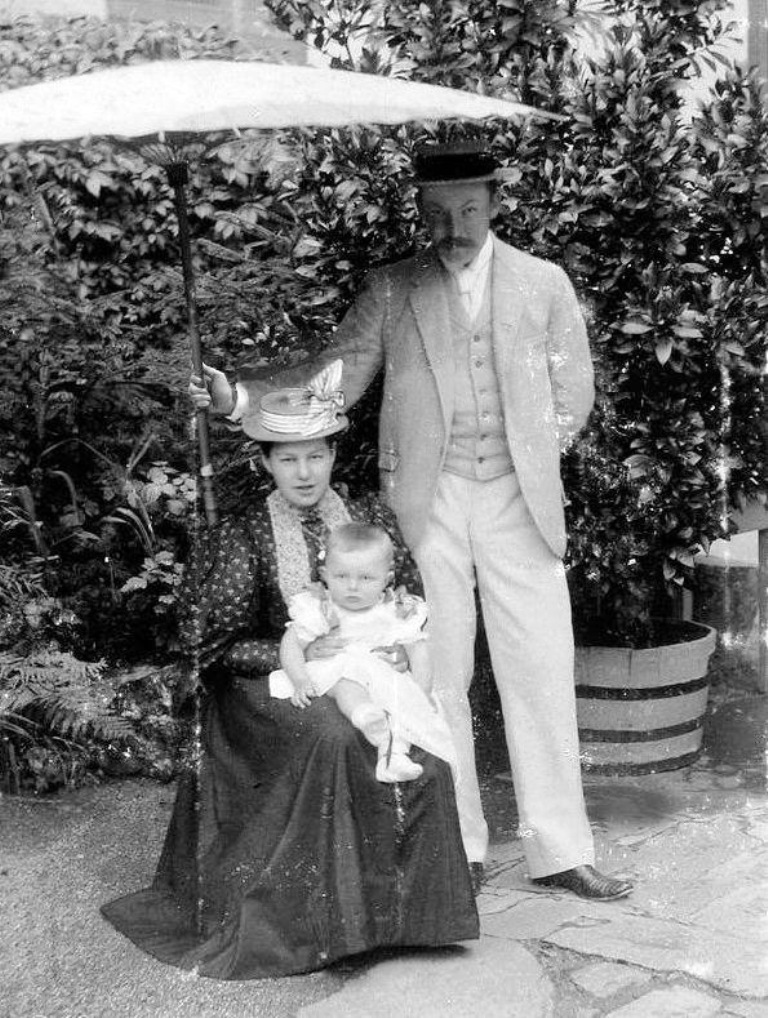
Alexander with his wife Maria and their son George

In 1893 he married Maria Nikolaevna Bezak (1864-1951), a lady-in-waiting to the Empress, and daughter of a cabinet minister of Tsar Alexander III. The couple had three sons: George (1895), Nicholas (1897) and Paul (1902).

In 1911, following the death of the grand duke, he was promoted aide-de-camp to Tsar Nicholas II with the rank of colonel. During the following years he was invited to accompany the Imperial Family to the Crimea and cruised with them on the Imperial yacht Standart in the Finnish Skerries.

On 2 January 1914, he was promoted to Major General, appointed commander of His Imperial Majesty’s Own Convoy – the Cossack unit which served as the Tsar’s elite guard. He served the Emperor until the Tsar’s abdication on 15 March 1917.

According to Romanov historian Margarita Nelipa, Grabbe abandoned Nicholas II immediately after the abdication to wait for Grand Duke Nicholas Nikolaevich (1856-1929) to return as Supreme Commander.

During the February Revolution, fearing arrest, Grabbe left for the Caucasus. On 22 March 1917, he was dismissed from service due to illness with a uniform and pension. He went into exile, eventually immigrating to the United States in 1940.

General Count Alexander Grabbe who served as the last Commander of His Imperial Majesty’s Own Convoy, died on 5th July 1947 in the United States. He was buried at the Congregational Church Cemetery, in Kent, Litchfield County, Connecticut.

264b

Alexander Grabbe with Nicholas II at Kozmodemyansk in Crimea. 1914

Paul Alexandrovich Grabbe (1902-1999) writes about his father: “Father lasted as long as he did at an intrigue-ridden court because the Tsar appreciated his abilities as a raconteur and his tact. Significantly, he never proffered advice. My brother Nicholas, four years older than I, was aware of some of the difficulties our father encountered, and told me about them: a growing coolness in Father’s relations with the Empress Alexandra, his disapproval of the governments’ use of Cossack troops to quell disorders and to repress minorities. Father’s greatest difficulty was remaining neutral in a politically charged atmosphere. He served the Tsar until his abdication on March 15, 1917.”

Protopresbyter Georgy Ivanovich Shavelsky (1871-1951) shares a very different impression of Grabbe in his memoirs: Воспоминания последнего протопресвитера Русской армии и флота (Memoirs of the last Protopresbyter of the Russian Army and Navy), published in 1954:

“From his appearance, Convoy commander Count Alexander Grabbe betrayed himself. A face swollen with fat, small, cunning disagreeable eyes; a smile that almost never left his face; with a special manner of speaking – as if in a whisper. Everyone knew that Grabbe liked to eat and drink, and he was not at all platonic. I heard that his favorite readings were self-effusive novels, and I personally watched how he, at any convenient and inconvenient occasion, translated the words into spicy conversations. The Sovereign was his favorite partner in the game of dice. Of course, he could entertain the Tsar. But he could hardly have turned out to be a good adviser in serious matters, for this he had neither the necessary intelligence, nor experience, nor interest in state affairs. In addition to a narrow personal life and meeting the needs of the “flesh,” his attention was always riveted on his Smolensk estates, the management of which he gave a lot of care.”

0264d

In 1984, his youngest son Paul and his wife Beatrice Grabbe published ‘The Private World of the Last Tsar’ – a stunning pictorial, based on the private photographs and notes of Paul’s father.

The book is an extraordinary collection of some 200 never-before-published photographs of Tsar Nicholas II and his family during the last years of the Russian monarchy. It is the only collection of pictures taken by a single individual. General Count Alexander Grabbe was one of Imperial Russia’s early amateur photographers. His candid photographs – taken with a Kodak Brownie box camera –  together with pertinent notes from his journal add dimensions to a period important to us even today.

A brief historical introduction sets the stage,. We then see the Tsar and his family in those informal settings that only a very few intimates of the Imperial Family were privileged to observe: relaxing in the Crimea, sailing on the Imperial yacht, vacationing off the Finnish coast. We see the last years of the Romanov dynasty through the eyes of Count Grabbe as he travels with Nicholas II to the Eastern Front and to Army Headquarters at Mogliev, where he was present for the dramatic days leading up to the abdication. This is a poignant, fascinating, and human glimpse of Nicholas, Alexandra, and their children during the last years of their lives.

Identification of persons, places and dates derives from Count Grabbe’s notes accompanying the negatives. His own eyewitness comments were recorded in his diary and later in his journal. Captions and historical background have been added by the editors. It is interesting to note that Count Grabbe was able to include himself in many of the photos by using a rubber tube that worked the camera shutter. 

Nearly 40 years after its publication The Private World of the Last Tsar remains one of the finest pictorials published to date on the Imperial Family. Prior to the year 2018, the year marking the 150th anniversary of Nicholas II, I approached the original publisher Little, Brown & Company with the idea of issuing a reprint of the book. Sadly, however, they showed no interest. The book has been out of print for decades, but second-hand copies are easy to find on eBay, Amazon, Alibris, Bookfinder, etc. – PG

Paul Grabbe is also the author of Windows on the River Neva, published in 1977.

0264e

General Count Alexander Grabbe (1864-1947)

© Paul Gilbert. 24 May 2020

The myth that Nicholas II was a drunkard

0263b

1917 caricature depicting Nicholas II as a drunk

During the latter years of Nicholas II’s reign, myths and lies about his private life filled the parlour rooms of St. Petersburg, and fueled the propaganda of revolutionaries. Among the most outrageous lies, were that the Tsar was a drunkard and even took drugs.

When censorship was abolished, the Tsar’s enemies wasted little time in their vicious attacks. Forbidden topics, such as writing about Nicholas II, were now fair game. Slanderous criticisms and demeaning caricatures poured into the Russian press, and quickly became “hype”. They were believed not only be readers, but also by the journalists themselves. Anti-monarchist themes were the most popular. They were published by humorous journals, the yellow press, and even respected publications.

In particular, people discussed the betrayal of Russia by Nicholas II, due to his alleged alcoholism. Numerous publications published insulting caricatures depicting the Tsar in an inebriated state. Of course, none of this was true, as can be attested by the reliable eyewitness accounts of two persons who observed the Tsar on a regular basis.

General Alexandré Spiridovitch (1873-1952) who served as personal security chief to Nicholas II from 1906-1916 noted in his memoirs:

“As for wines, he [Nicholas II] only drank port at table. Since the Japanese war, the Tsar had given up spirits; it was only when he traveled by sea that he would take (and very rarely at that) one or two small glasses before dinner.”

He further noted: “The Emperor was seated in the place of honour. Before him was a bottle of a special Port, the gift of the King of England, and a small, golden goblet. He never drank more than one goblet of this wine, and never tasted any other.”

In his memoirs, Semyon Fabritsky, an Aide-de-Camp to Nicholas II, further addressed the stubborn gossip which persisted about the Tsar’s alleged drunkenness:

“I personally can attest to the fact that these tales were both false and malicious” he wrote. “At most, the Emperor would sometimes drink one or two shots of vodka before dinner and a glass of his favorite port during the meal (or one goblet of champagne at gala dinners).”

Even at regimental dinners, Fabritsky notes, “When the Emperor attended such dinners, he did not change his custom of drinking very little. He would sit there all evening — and once in awhile all night — nursing a single glass of champagne, delighting in the joyful faces of the young officers whom he adored, and in whom he had so much faith.”

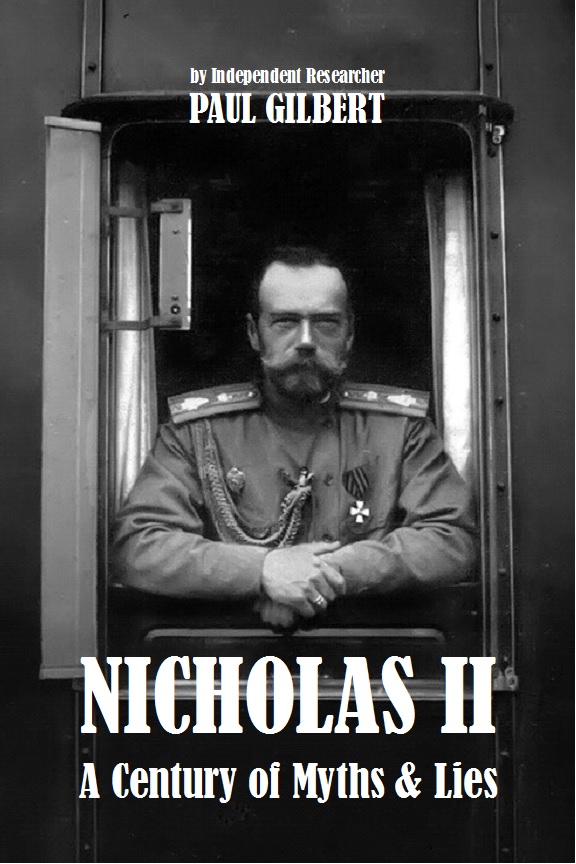
This post is an abridged excerpt from my forthcoming book Nicholas II: A Century of Myths and Lies – scheduled for publication sometime in 2021

0273b

© Paul Gilbert. 22 May 2020

Frozen in Time: 5 Iconic Photos of Nicholas II

258

On this day 19 May (O.S. 6 May) 1868, Tsesarevich and Grand Duke Nicholas Alexandrovich was born in the Blue Boudoir of his mother Grand Duchess Maria Feodorovna (the future Empress Maria Feodorovna) in the Alexander Palace at Tsarskoye Selo. 

The following 5 images of His Imperial Majesty Sovereign Emperor Nicholas II, are among my personal favourites. As if frozen in time, the photographer has captured a moment in his 22+ year reign as Emperor and Tsar of All the Russias.

PHOTO No. 1 (below)

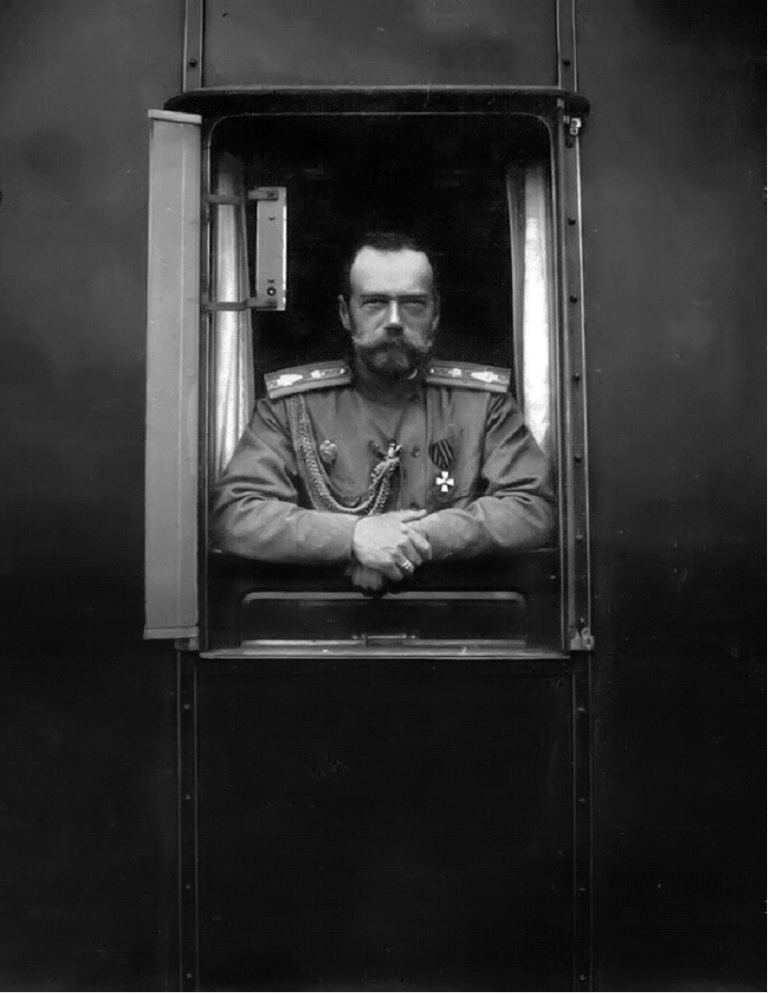
This photograph of Nicholas II, standing at the window of the Imperial train is one of the most popular images of Russia’s last sovereign. It has been published in countless books and web pages, but is quite often misidentified at Pskov, after signing his abdication in “1917”. This is incorrect.

The photograph, is one of a series taken at the Stavka military headquarters at Mogilev in 1915, by one of his daughters. It does not depict a man who has just signed over his throne, but that of a very well-composed Emperor and Tsar.

258b

PHOTO No. 2 (below)

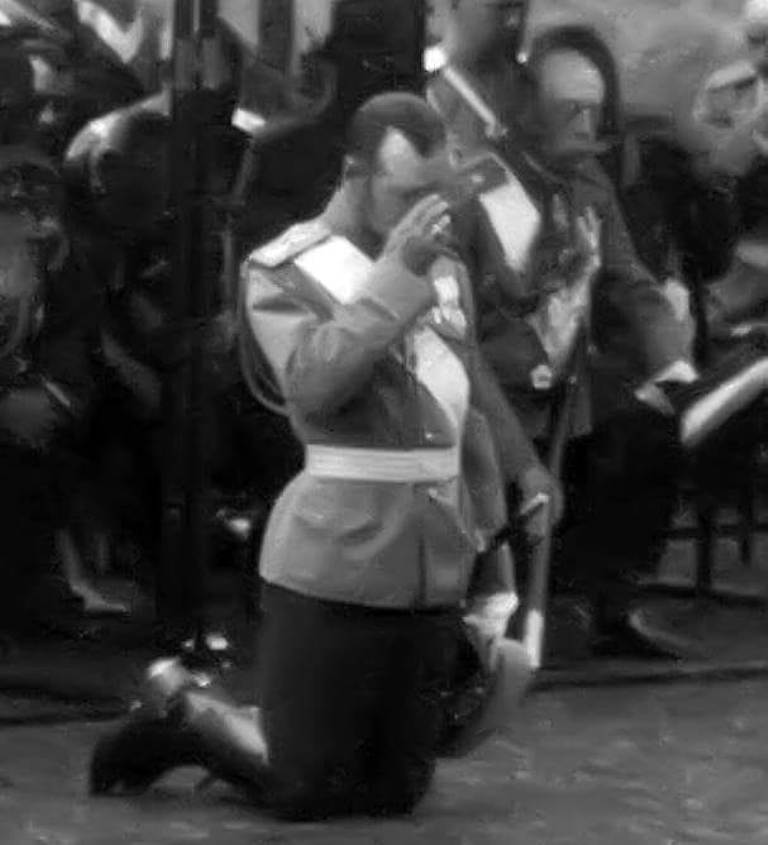
Unlike many of his predecessors, Emperor Nicholas II was devoted to the Russian Orthodox Church and considered himself a Christian monarch, one who regarded his political activity as a religious duty. He strove to live and to rule in accordance with the Orthodox faith. To the end of his days, Nicholas II believed himself to be anointed by God, selected to be more than an Orthodox ruler, and more than a Russian emperor.

His official biographer, Major-General Andrei Georgievich Elchaninov wrote “not one day, not one act is started by him without turning with prayer to God.”

Nicholas prayed several times per day, often with his wife and children in the mornings and evenings. Nicholas used this time to ponder his role within the country as well as seek religious guidance from God. Additionally, Nicholas spent time daily studying the Bible and its teachings. The tumultuous events of his 22 year reign did not weaken his faith, but rather, made him more devout. 

258d

PHOTO No. 3 (below)

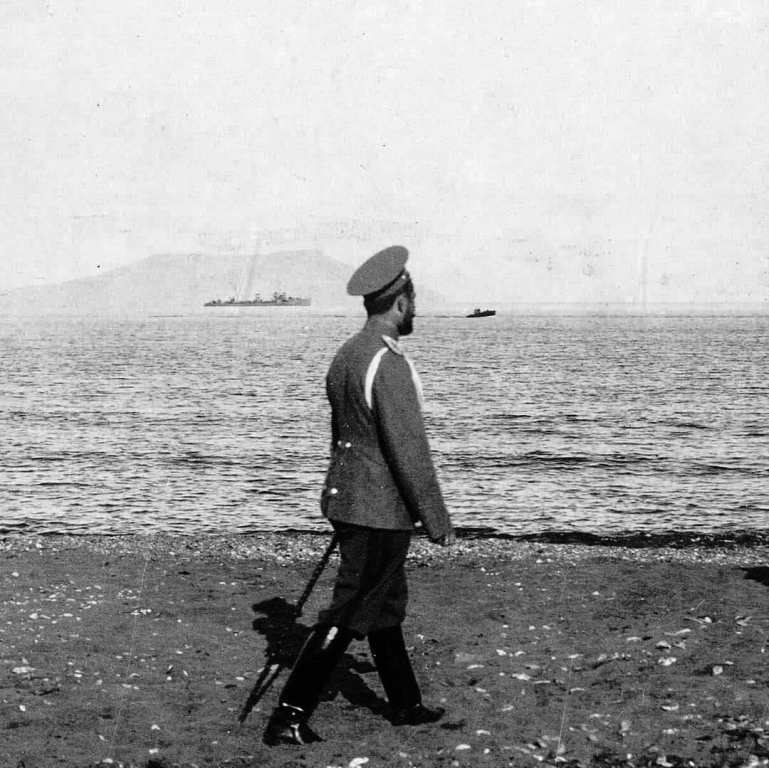
In 1905, twelve years before Emperor Nicholas II’s abdication and three years from his own repose, St. John of Kronstadt (1829-1909), spoke these prophetic words:

“We have a Tsar of righteous and pious life. God has sent a heavy cross of sufferings to him as to His chosen one and beloved child, as the seer of the destinies of God said: ‘Whom I love, those I reproach and punish’ (Rev. 3.19). If there is no repentance in the Russian people, the end of the world is near. God will remove from it the pious Tsar and send a whip in the person of impure, cruel, self-called rulers, who will drench the whole land in blood and tears.”

Nicholas himself made a similar observation about his fate when speaking to his Prime Minister Pyotr Stolypin (1862-1911). In his diary, Stolypin noted with some degree of incredulity that Nicholas spoke these words without any hint of alarm or distress.

“I have a premonition. I have the certainty that I am destined for terrible trials, but I will not receive a reward for them in this world… Perhaps there must be a victim in expiation in order to save Russia. I will be this victim. May God’s will be done!”

258a

PHOTO No. 4 (below)

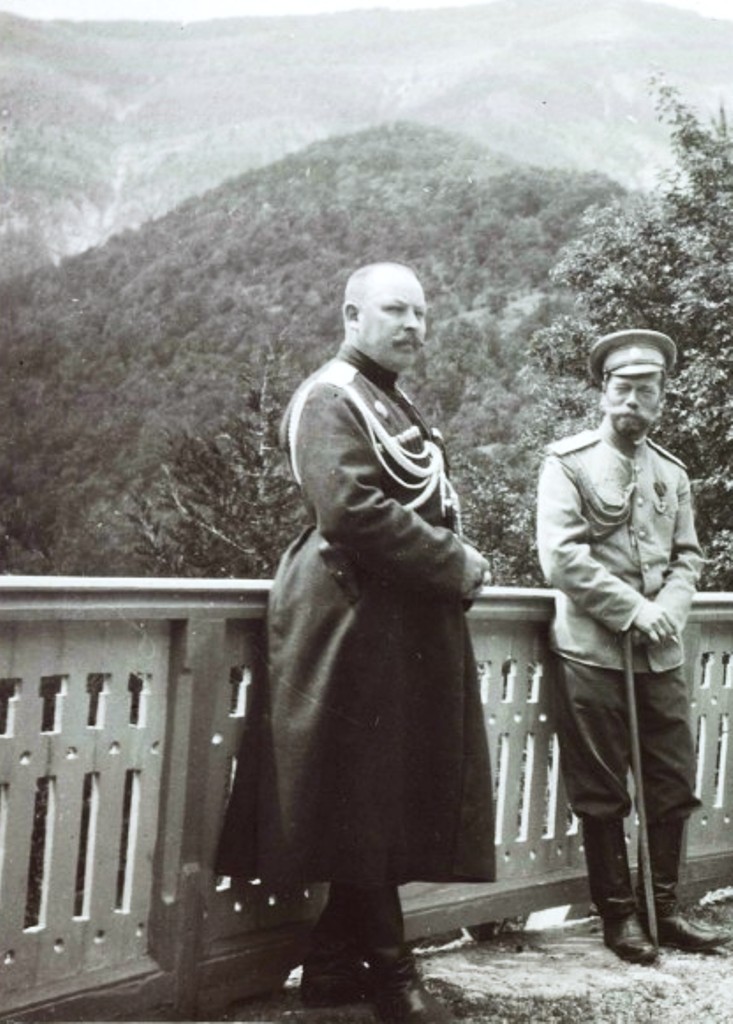
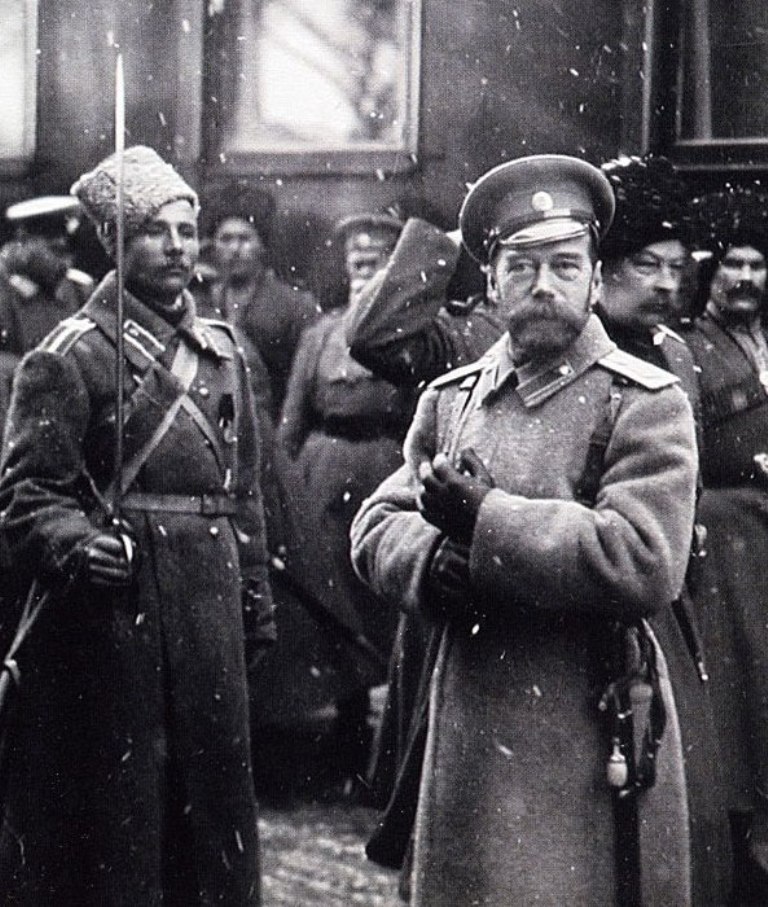
As Emperor Nicholas II steps off the Imperial Train at the station of Dvinsk, near the Northwestern Front, he is caught off guard by a waiting photographer. 30th January 1916.

Standing over the Tsar left shoulder is General Count Alexander Grabbe (1864-1947), who served as Major-General of His Imperial Majesty’s Own Convoy – the Cossack unit which served as the Tsar’s elite guard – from 1914 to 1917.

In 1984, his son Paul Grabbe produced ‘The Private World of the Last Tsar’ – a stunning pictorial, based on the private photographs and notes of his father.

Photo: Central State Archive of Film and St. Petersburg (Санкт-Петербурга (ЦГАКФФД СПб)

258e

PHOTO No. 5 (below)

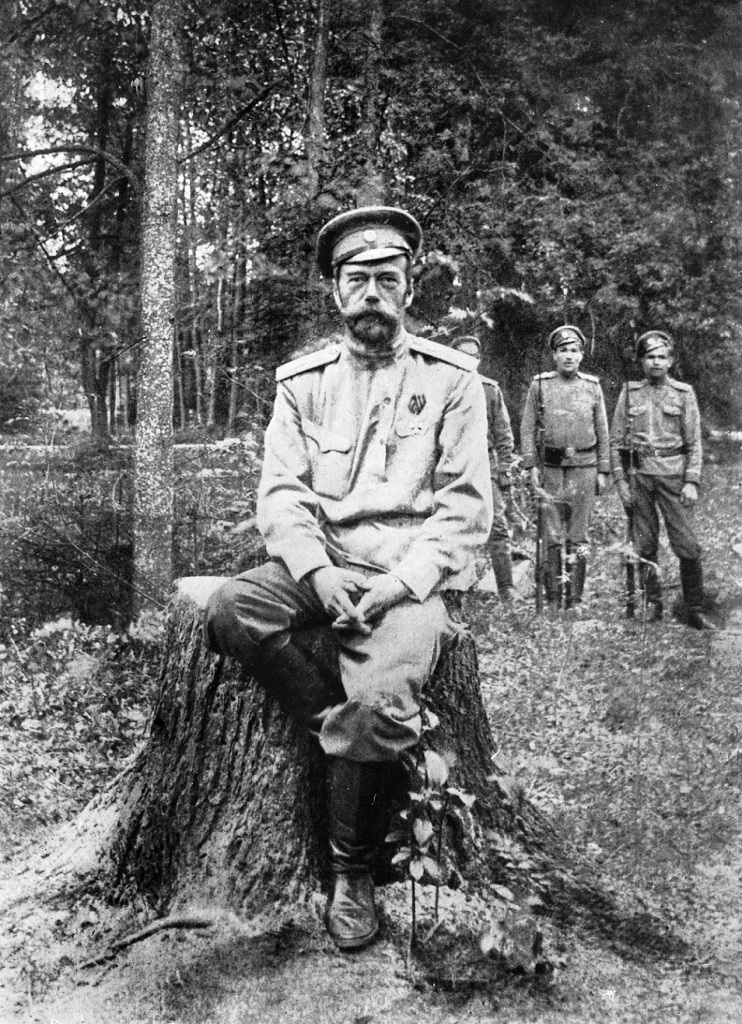
On 15th March (O.S. 2nd March) 1917 – Russia’s last emperor abdicated, bringing an end to more than 300 years of the Romanov dynasty and the monarchy in Russia.

The Emperor abdicated in the heartfelt belief that his abdication would save the honour of the army, prevent civil war and keep Russia in the war against Germany.

Sadly, it did not. In his diary, Nicholas wrote: “I am surrounded by betrayal, cowardice, and deceit.”

Nicholas II was an anointed Tsar, sealed by the grace of the Holy Spirit during the Sacrament of his Coronation in the Dormition (aka Assumption) Cathedral of the Moscow Kremlin, on 26 May (O.S. 14 May) 1896.

As God’s Anointed, Nicholas II could not be displaced during his lifetime. Since the will of God was nowhere manifest, neither in the naming of his brother Grand Duke Michael to the throne, nor in the Tsar’s signing of the instrument of abdication, his status as Tsar remained inviolate and unassailable.

What God performs cannot be undone; therefore, Nicholas II remained the anointed Tsar to his martyr’s death in the Ipatiev House in Ekaterinburg on 17 July 1918.

258c

© Paul Gilbert. 19 May 2020