The Emperor’s Family: The Museum of Holy Royal Passion-Bearers in Moscow

NOTE: All of the articles pertaining to Nicholas II and his family which were originally published in my Royal Russia News blog, have been moved to this Nicholas II blog. This article was originally posted on 14 April 2018 in my Royal Russia News blog – PG

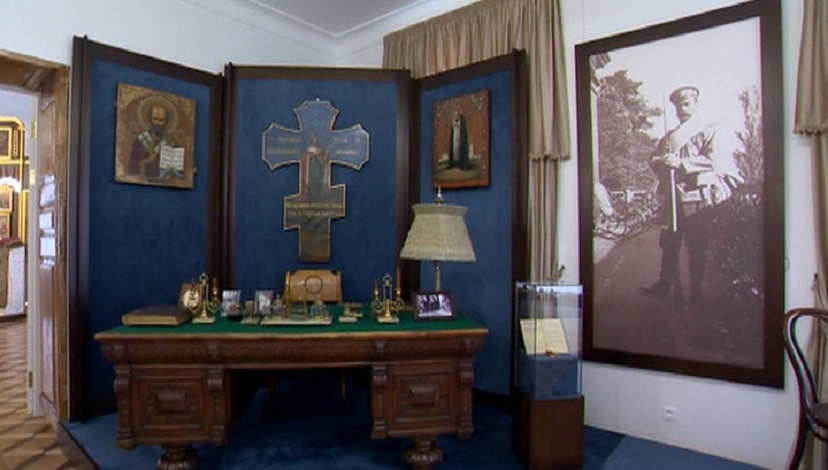
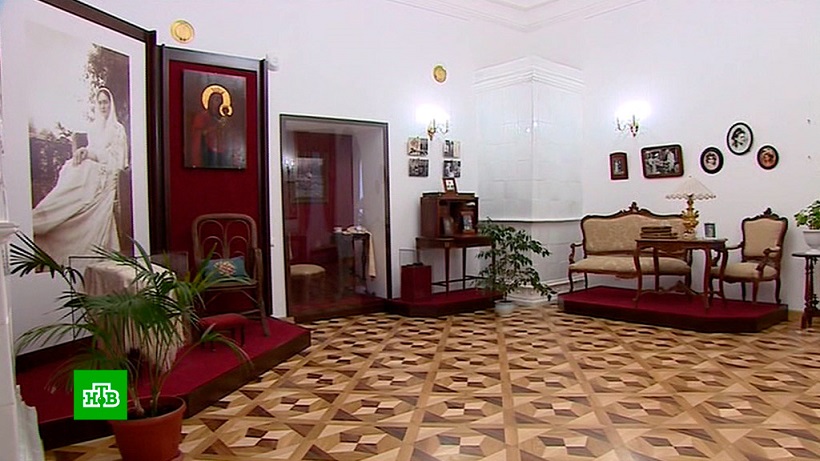
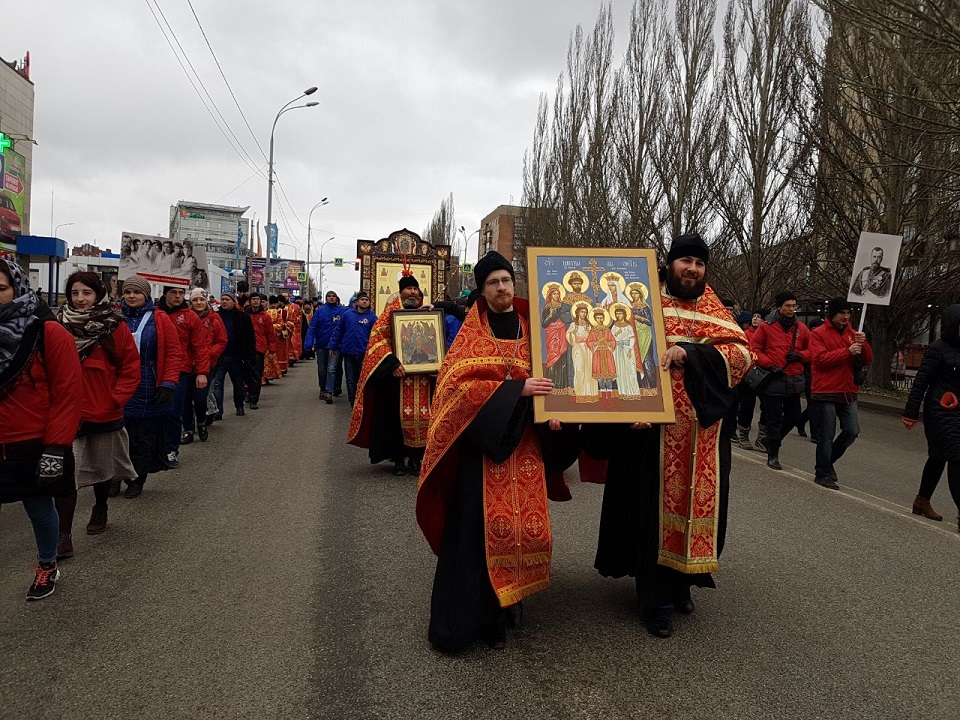
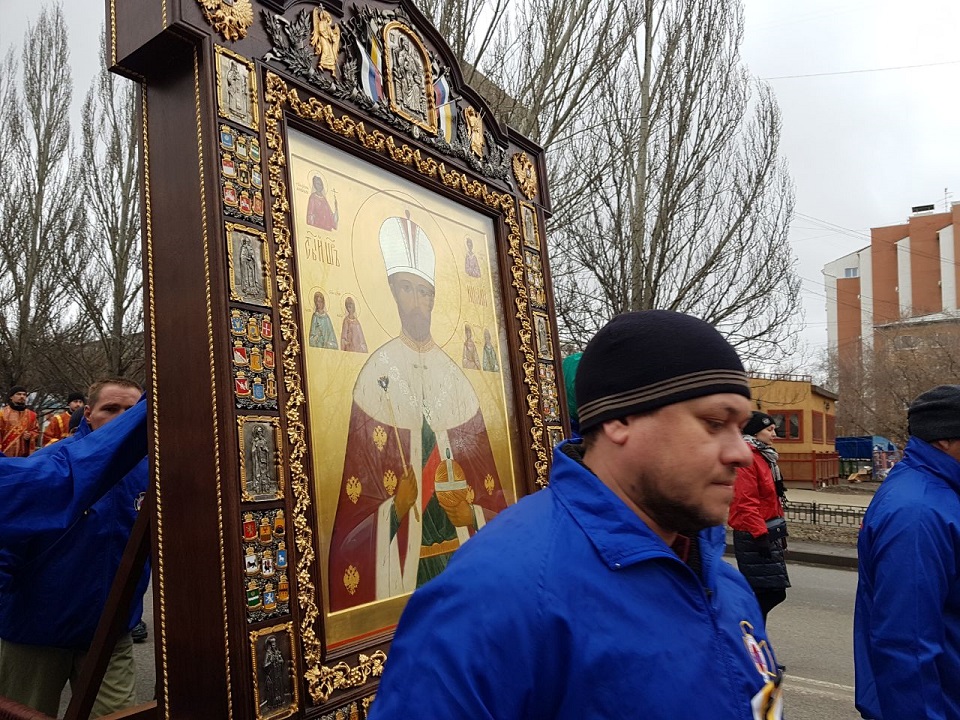
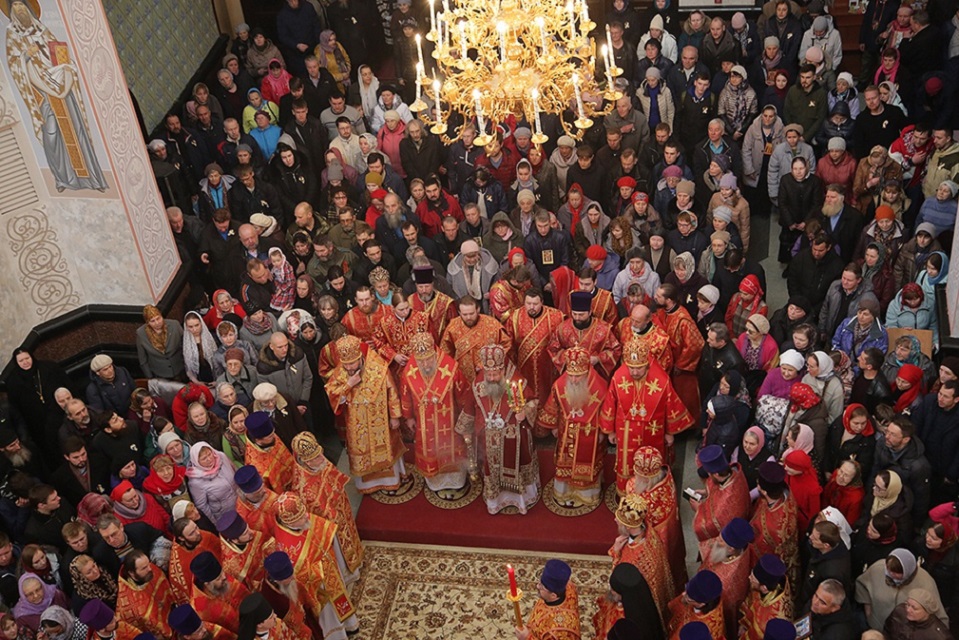
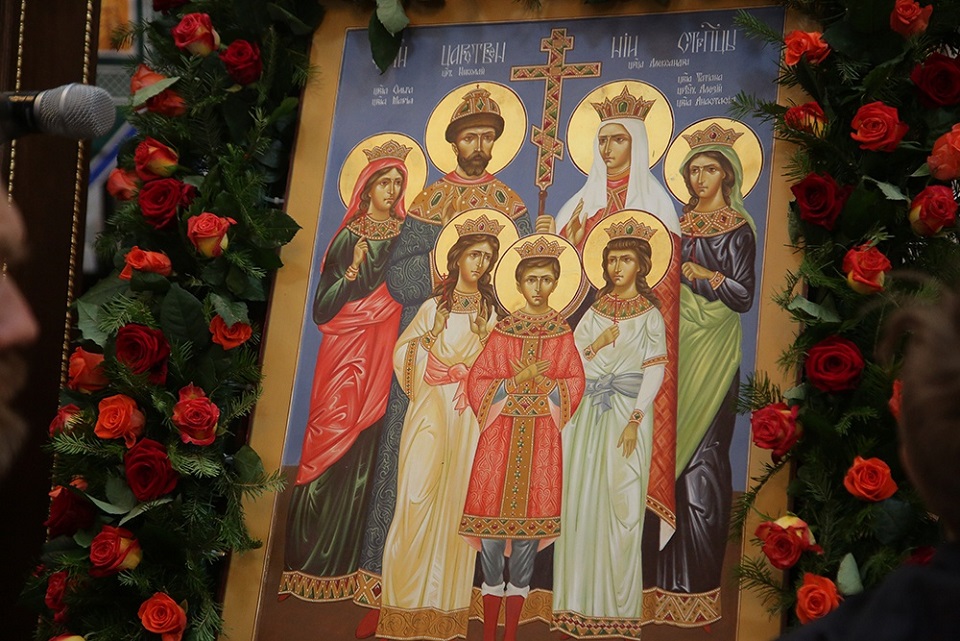
On 10th April 2018, the Museum of Holy Royal Martyrs opened in the Museum of Russian Art in Moscow. The permanent exhibit Family of the Emperor includes personal items, historical relics, photographs and other exhibits which reflect the life of the last Russian Emperor Nicholas II and his family. Many exhibits are presented to visitors for the very first time.

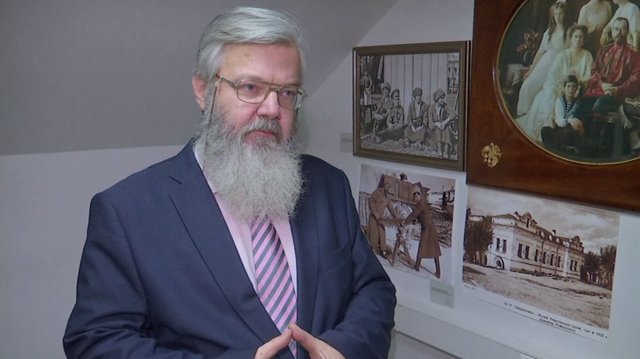
“There are a lot of personal items here of the Emperor Nicholas II and his family, including an icon, a napkin, photographs, and more. Not only are they historical artifacts, they have a cardinal value for Orthodox people, like any object of a loved one who has left us” – said Konstantin Kapkov.

193a

Konstantin Kapkov. Photo: TV channel “Tsargrad”

The exposition features items from the private collection of the famous Moscow artist-restorer Alexander Vasilyevich Renzhin, who over the past few decades has reverently collected everything connected with the memory of Nicholas II, his family and his ancestors. Renzhin is a collector, artist, icon painter, art historian, researcher, restorer, and an expert of the Ministry of Culture of the Russian Federation in the field of paintings and church art. He is the Founder and head of the icon painting workshops Kupina (1987) and Kanon (since 1995).

193b

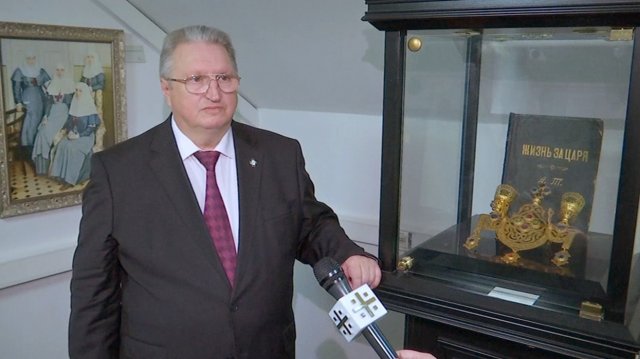
Vladimir Lavrov. Photo: TV channel “Tsargrad”

Doctor of Historical Sciences, and member of the Council of the Double-Headed Eagle Society Vladimir Lavrov notes:

“The year marking the 100th anniversary of the murder of the last Tsar and his family should be a year of historical memory. We must live it with honour, and it is very important that a center, a museum of spiritual and moral education, centered on the fate and reign of Nicholas II, be created. It is of great importance that the museum be Russian, Orthodox, and in Moscow … “

As a convinced monarchist, the creator of the exposition is convinced that this year will be the beginning of the revival of the historical form of government in Russia. Just as it happened in 1613 after the feat of the national hero Ivan Susanin. The feat, glorified in Mikhail Glinka’s opera Life for the Tsar, which sounded, including, at the last coronation in 1896.

193c

Alexander Renzhin. Photo: TV channel “Tsargrad”

Alexander Renzhin shared with his aspirations about Russia’s future with Russian television network Tsargrad:

“We placed Glinka’s score with in our exposition, and in front of it sits a double-lamp, which was specially made for the coronation of the Emperor Nicholas II and the Empress Alexandra Feodorovna, held in Moscow in May 1896. But now the lamp lies unlit. But it is my hope, that in Russian patriotic circles, we will find opportunities to revive not only Orthodoxy in it’s highest form during the era of Nicholas II, but we will revive autocracy and relight this lamp!”

The permanent exhibition Family of the Emperor is open daily, except Monday, in the Museum of Russian Art in Moscow.

© Paul Gilbert. 12 December 2019

Round-Table Forum on Nicholas II Held in Moscow

192a

Konstantin Malofeev (second from left), chairman of the Double-headed Eagle Society

NOTE: All of the articles pertaining to Nicholas II and his family which were originally published in my Royal Russia News blog, have been moved to this Nicholas II blog. This article was originally posted on 17 April 2018 in my Royal Russia News blog – PG

“The context of the important dates of the country’s history, related to the last Russian Sovereign Nicholas II, can not but influence the development of the country.”

That is why a fair interpretation of the events connected with the downfall of the Russian Empire and its last sovereign contributes to a more intensive spiritual and political development of the country.

In 2018, Russia marks the 150th anniversary of the birth of Russia’s last emperor and tsar Nicholas II, and the 100th anniversary of the massacre of members of the Imperial family.

The act of villainous execution, of course, requires additional comprehension and discussion by historians, politicians, journalists and public figures.

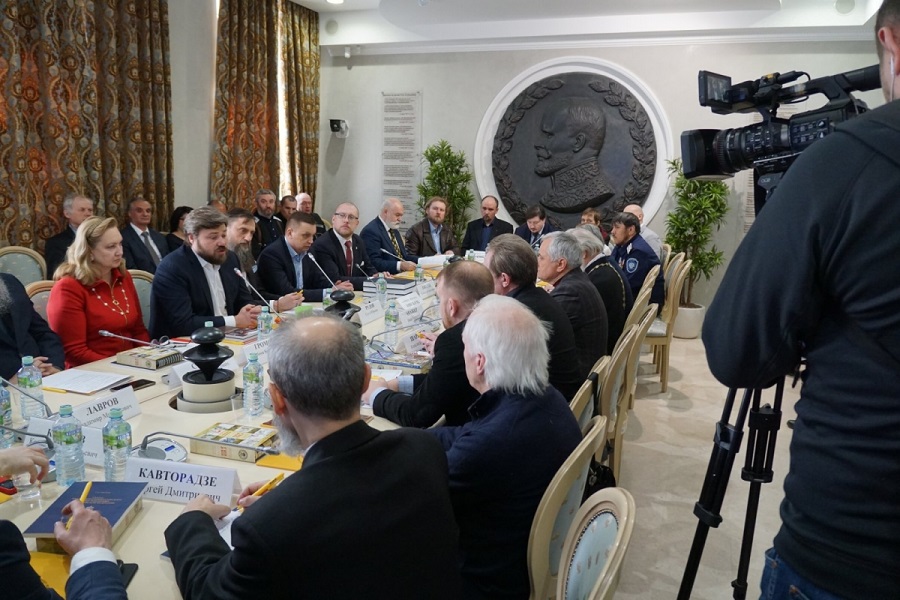
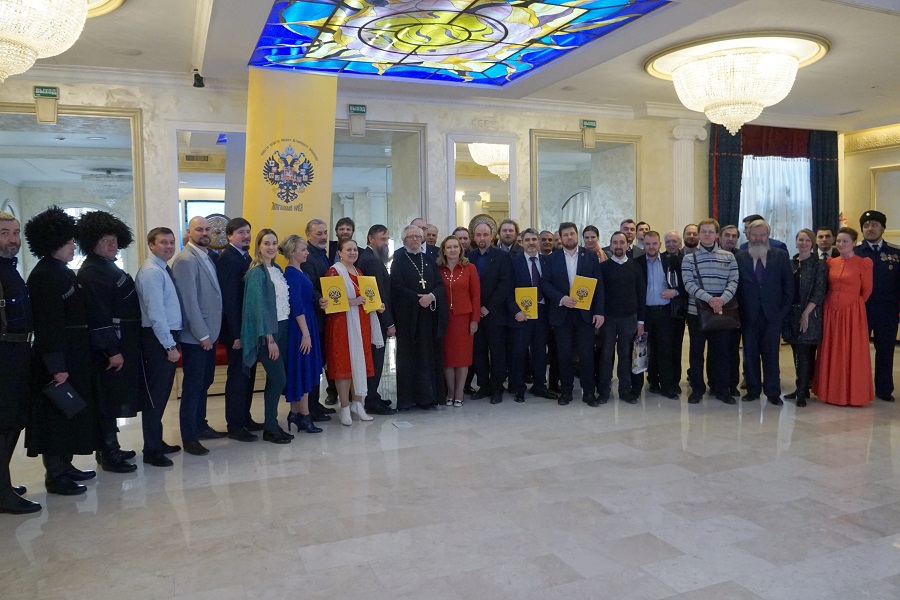
This was guided by the Double-Headed Eagle Society and the Public Chamber of the Russian Federation, who held a joint round table forum in Moscow on 11th April 2018: “Nicholas II: to the 150th Anniversary of his Birth and the 100th Anniversary of the Massacre.”

The event, organized by the Double-Headed Eagle Society, with the assistance of the Public Chamber, included representatives from Moscow, Tula, Nizhny Novgorod, and Stavropol.

The Terek Cossack Host was represented at the forum, as well as the Union of Cossacks of the Warriors of Russia and Abroad (SKVRZ). The round table was moderated by Konstantin Malofeev, chairman of the Double-Headed Eagle Society.

192b

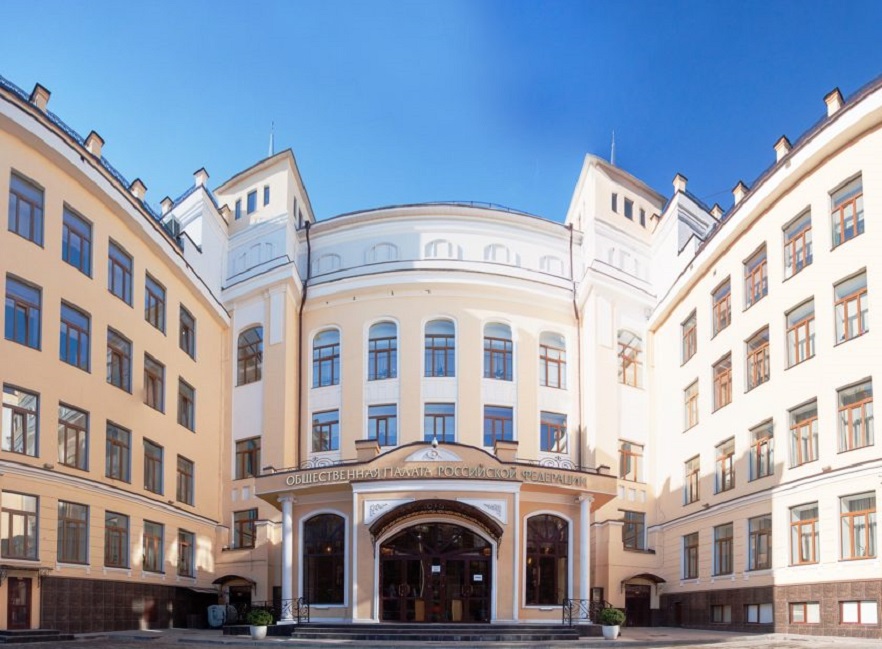
Public Chamber of the Russian Federation in Moscow

The round table was opened by the welcoming speech of Alexander Tkachenko, Chairman of the Commission on Philanthropy, Civic Education and Social Responsibility of the Public Chamber of the Russian Federation.

This was followed by the welcome speech of the member of the Commission on charity, civic education and social responsibility of the Society S. Rudov.

The first report “Emperor Nicholas II and his influence on the historical and political processes in the world” was made by the chairman of the Double-Headed Eagle Society Konstantin Malofeev.

This was followed by “Preserving the historical memory of the Imperial family: the experience of cooperation of state, church and social organizations”, presented by Anna Gromova, candidate of historical sciences, the chairman of the supervisory board of the Elisavetinsky-Sergievsky Educational Society.

Then the floor was given to Alexander Zakatov, the director of the office of the Head of the Russian Imperial House. He made a presentation on the topic “Orthodox veneration of St. Emperor Nicholas II and his family and the legal protection of their memory in modern conditions.”

Deputy editor-in-chief of the Tsargrad television channel, Mikhail Smolin, Ph.D. in History, gave a detailed account of the influence of monarchical consciousness on Russian statehood. In his report, attention was focused on the advantages of a monarchic system of government.

Doctor of Historical Sciences, Chief Researcher of the Institute of Russian History of the Russian Academy of Sciences Vladimir Lavrov made a presentation on “The reign of Nicholas II and the present: what remains relevant?”

192c

Delegates at the round-table forum on Nicholas II held on 11th April in Moscow

And the next Russian historian and writer Konstantin Kapkov spoke about the spiritual world of Emperor Nicholas II and his family, while candidate of historical sciences, presenter of the television channel “Tsargrad” Pyotr Multatuli spoke on “Emperor Nicholas II. Tragedy of the Unaccounted Autocrat.”

The final report at the round table was made by Alexander Muzafarov, director of information and analytical programs of the Fund for Historical Perspective. He drew the attention of the forum participants to the nature of the last emperor and spoke about the need to further study the personality of Nicholas II .

The free discussion was attended by Evgeny Tsybizov , the head of the Novosibirsk regional branch of the Double-headed Eagle Society, Filip Mosvitin, Honored Artist of Russia , the co-chairman of the International Ilyinsky Committee, the writer A. Sharipov and several other participants.

In the near future, the Double-Headed Eagle Society will present the public with a resolution of the round table forum, for the preparation of which a special editorial group will be created.

© Paul Gilbert. 12 December 2019

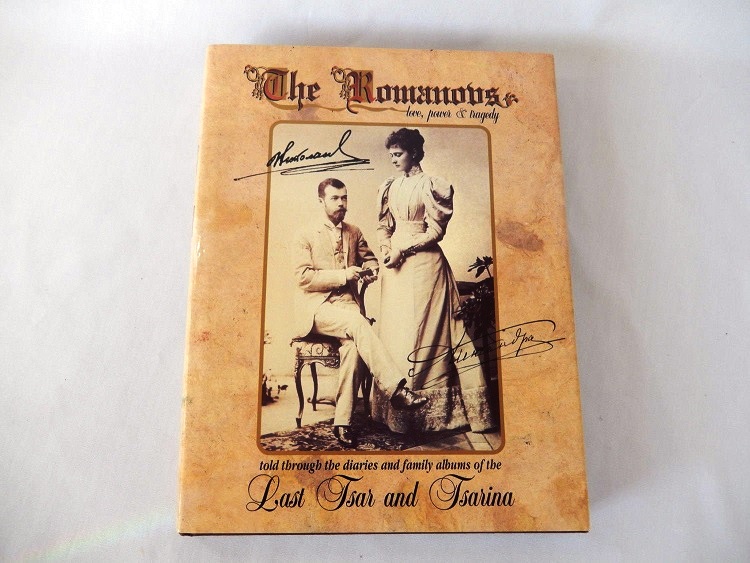
The Romanovs. Love, Power & Tragedy – 25th Anniversary

191a

NOTE: All of the articles pertaining to Nicholas II and his family which were originally published in my Royal Russia News blog, have been moved to this Nicholas II blog. This article was originally posted on 18 April 2018 in my Royal Russia News blog – PG

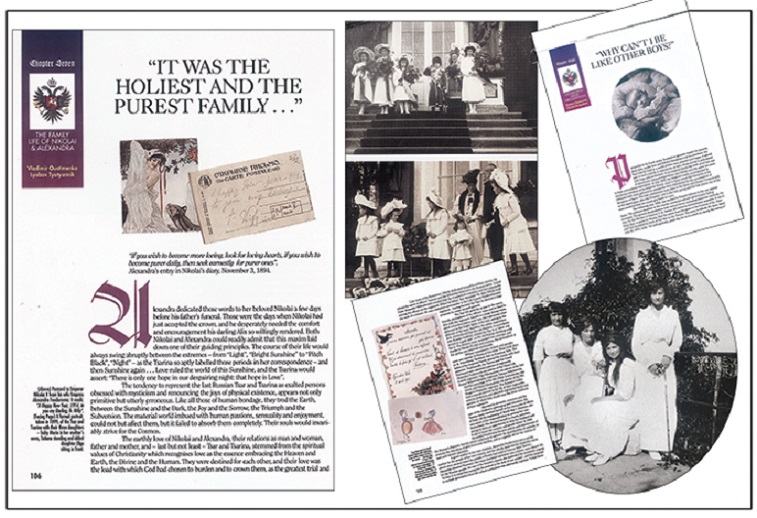
The year 2018 marked the 25th anniversary of the publication of The Romanovs: Love, Power & Tragedy, the first of Royalty Magazine’s (Leppi Publications) historic publishing collaborations.

The timing of it’s publication in 1993 was unprecedented. Combining the extraordinary source material with the highest production values and some of the finest and most beautiful photographic reproduction, The Romanovs, Love, Power & Tragedy was an immediate success, hailed as a unique work which brought the story of the last Tsar and his family to life as never before.

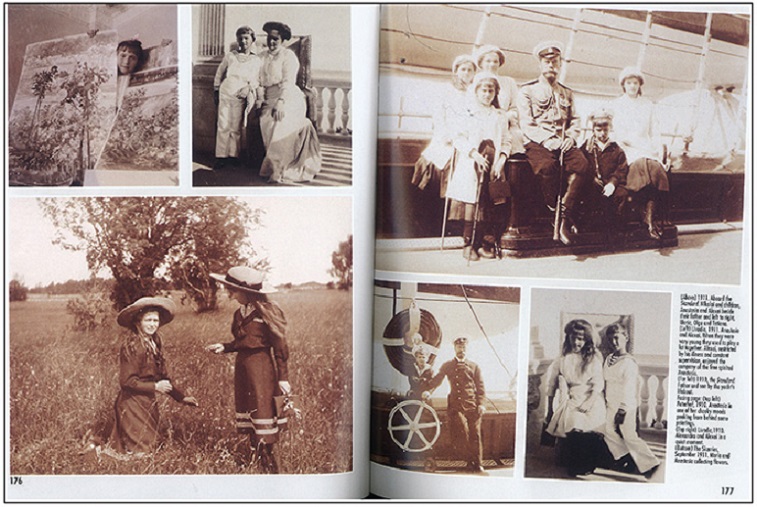
This coffee-table sized book tells the story of Russia’s last Imperial family through their private diaries and family photograph albums. It features 320 pages, and richly illustrated throughout with HUNDREDS of unique historic colour / black and white / and sepia photographs.

191b

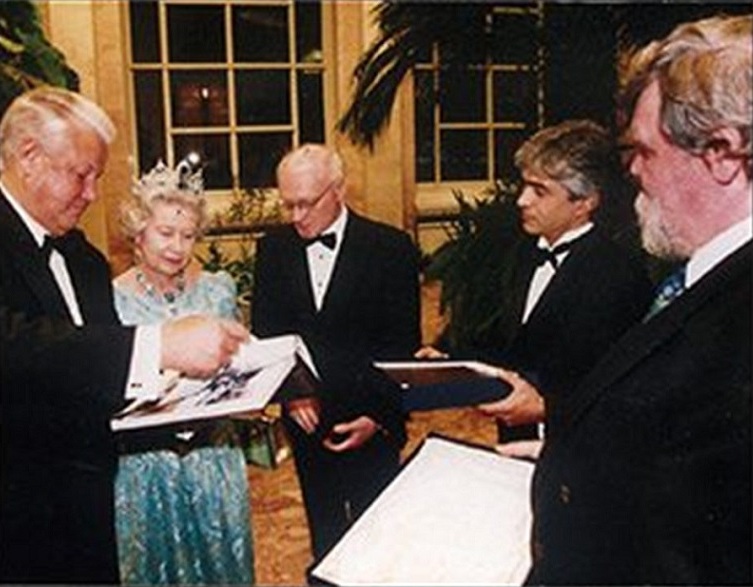
A copy of the book is presented to HM Queen Elizabeth II in Moscow, October of 1994

The official presentation of The Romanovs, Love, Power & Tragedy (above) was made to Her Majesty Queen Elizabeth II in Moscow during her first visit to Russia in October of 1994. To Her Majesty’s left is President of Russia, Boris Yeltsin, and (right) Royalty Magazine Founding Editor Bob Houston.

With the collapse of the Soviet Union in 1991, the hitherto unseen Romanov archives were opened and Royalty Magazine was given world exclusive access to the complete collection. It soon became clear that it was an historic moment – the Soviets were meticulous in their record keeping – and called for a project that would do justice to the historic photographs, letters and family albums kept hidden during seven decades of communist rule.

191c

191d

Researching the Romanov archive was the first step in a project that took three years to complete. Working with the state archivists every photograph, letter and document was photographed and catalogued.

The book is divided into 14 chapters, each with a carefully researched article by Romanov experts and historians: four Russian and one German:

Alexander Bokhanov (1944-2019) is a Professor of History, a specialist in 19th and 20th century Russian history. He is the author of more than 30 books and 200 articles. A graduate of Moscow University, he is a leading scientific researcher of the Institute of Russian History of the Russian Academy of Sciences. After the collapse of the Soviet Union, he began to adhere to monarchical views. He was also the first historian in post-communist Russia to publish a series of books about the fate of Emperor Nicholas II, and has since become one of Russia’s leading experts on the life and reign of Russia’s last emperor and tsar. In September 2013, Alexander Bokhanov suffered a double stroke, but after treatment, has returned to writing about Russian history.

191e

Alexander Nikolayevich Bokhanov (1944-2019)

Zinaida Peregudova has worked in the State Archives of the Russian Federation since graduating from Moscow University in 1957. Head of the Archives’s Russian History Department, she has written numerous books and articles on Russian revolutionary movements in Tsarist Russia.

Lybov Tyutyunnik has worked at the State Archives since graduating from Moscow University in 1972. Currently she is Chief of Depository of its Personal Funds and Archival Collections; and author of several publications on political development in Tsarist Russia.

Vladimir Oustimenko is a graduate of Kiev University, taught Marxim-Leninism in Moscow before taking a post-graduate course in the subject between 1988-90. Since 1990, he is the director of Stop-Kadr which organizes exhibitions of Russian and Soviet history.

Dr Manfred Knodt served as a pastor of the Lutheran City Church in Darmstadt and chaplain to the Grand Ducal family of Hesse. A specialist in Hessian ducal history and biographer of the last Grand Duke, Empress Alexandra’s brother Ernst Ludwig, he served as chaplain in German POW camps in Britain between 1945-48. He served as Chairman of the Hessian Family History Association from 1984-1995. He died on 29th October 1995.

An introduction is written by Professor of History and Director of the State Archives of the Russian Federation Dr Sergei V. Mironenko. The entire book has been beautifully translated into English by Lyudmila Xenofontova.

For many Romanovphiles and collectors – myself included – The Romanovs: Love, Power & Tragedy remains the classic title on the life of Russia’s last Tsar and Tsarina.

© Paul Gilbert. 12 December 2019

Exhibition: Icons from the Era of Nicholas II

190

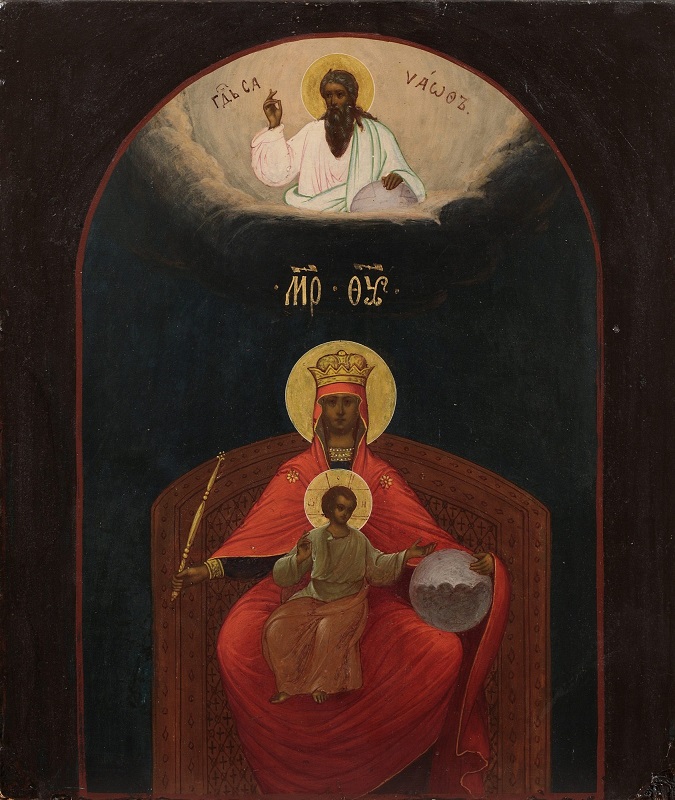
Icon of the Mother of God “The Sovereign”

The following exhibition ran from 18th July to 9th September 2018

On 18th July 2018, in the year marking the 100th anniversary of the martyrdom of Emperor Nicholas II and his family, an exhibition will open in the Andrei Rublev Museum of Ancient Russian Art in Moscow, presenting a look at the development of the Russian icon during the more than 22-year reign of the last Russian emperor.

Russian icon painting developed in a single cultural space along with literature, music and theatrical art, experiencing an extraordinary rise during the reign of Nicholas II (1894-1917). This flourishing activity was achieved through a number of icon painting and jewelry workshops, which received the title “Supplier of the Imperial Court”. The Imperial manifesto of 1905 on the toleration and the opening of the Old Believers altars attracted wide acceptance of church art by the Old Believers’ and the creation of new works oriented to the art of pre-Petrine time.

The exhibition will feature a wide range of icons from museum and private collections, including items with memorial inscriptions, from the time of Emperor Alexander III’s death in 1894 to the fall of the Russian monarchy in 1917.

The Icon of the Mother of God “the Sovereign” – pictured above – has a unique place in Russian history. It appeared in the Kolomenskoye village near Moscow on 2 March 1917, the very day that Emperor Nicholas II abdicated the throne. Until 1812 the icon belonged to a convent in Moscow, but in the year of Napoleon’s invasion of Moscow it was hidden in the Kolomenskoye village and forgotten there for 105 years, until the time came for the icon to be revealed in accordance with God’s will. The icon was found among other old icons in the cellar of the Church of Ascension, after the peasant woman Yevdokiya Adrianova was twice instructed in a dream to go to the Kolomenskoye village and search there for a special icon of the Mother of God. After being cleaned of centuries-old dust and grime, the icon revealed an image of the Theotokos sitting on a throne, with the Infant Christ on Her knees, extending His hand in blessing. The Holy Virgin held a scepter in one hand and an orb in the other, and had a crown on Her head. With Her regal air and unusually stern visage, Her appearance was divine.

Significantly, the icon revealed itself at a time when the Russian Empire embarked on its apocalyptic course of destruction, while out of its depths came Holy Russia to gain the crown of martyrdom. The Theotokos’ red robe reflected the color of blood, while the icon’s appearance on the day of the abdication of the last Tsar, and the Theotokos’ regal air with all the attributes of royal power signified that the Mother of God Herself took sovereigny over the Russian people who had just lost their monarch.

The exhibitions Icons from the Era of Nicholas II runs from 18 July 9 September 2018 at the Andrei Rublev Museum of Ancient Russian Art in Moscow

© Paul Gilbert. 12 December 2019

Museum of the Family of Emperor Nicholas II in Tobolsk

189g

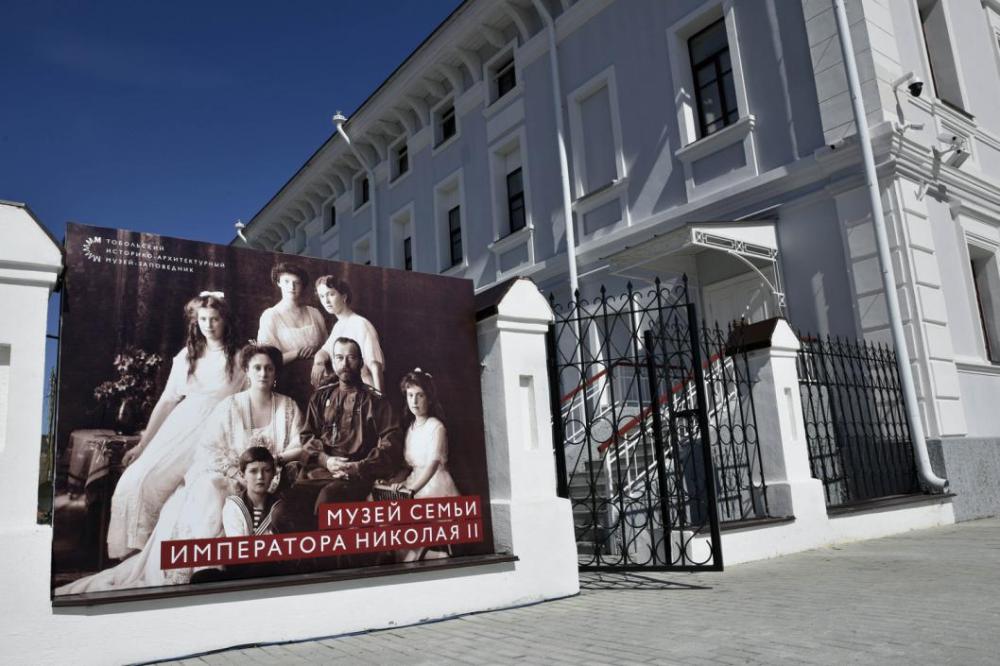
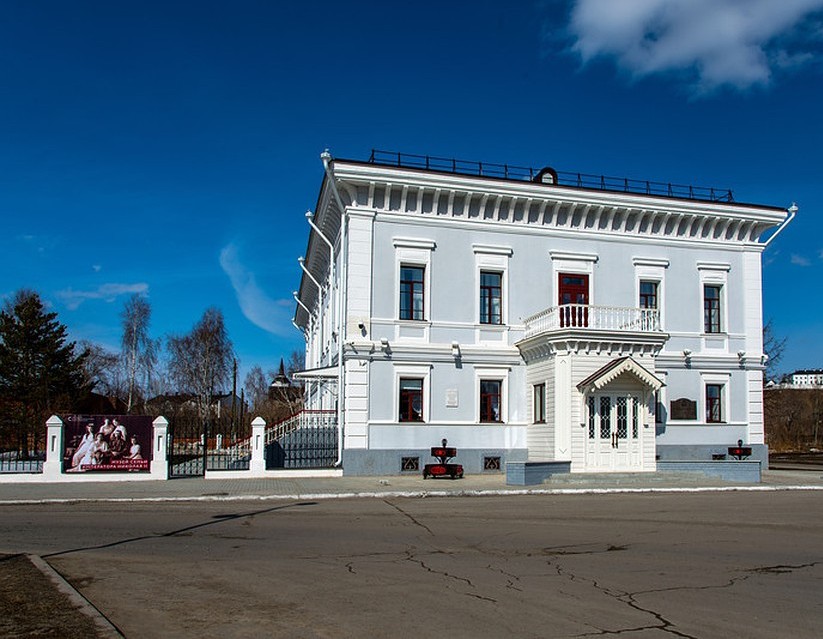
The Museum of the Family of Emperor Nicholas II opened in Tobolsk on 26 April 2018

On 26th April 2018, the long awaited Museum of the Family of Emperor Nicholas II opened its doors in the Siberian city of Tobolsk. Governor Vladimir Yakushev called the event “significant not only for the region, but for the whole of Russia.”

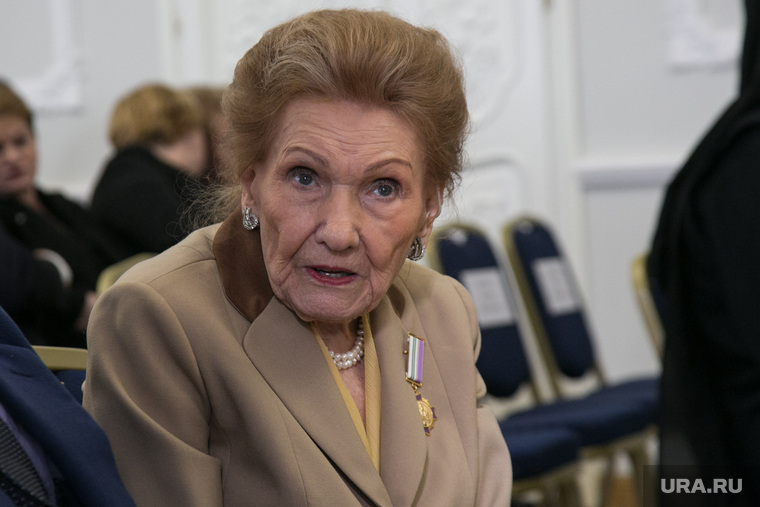
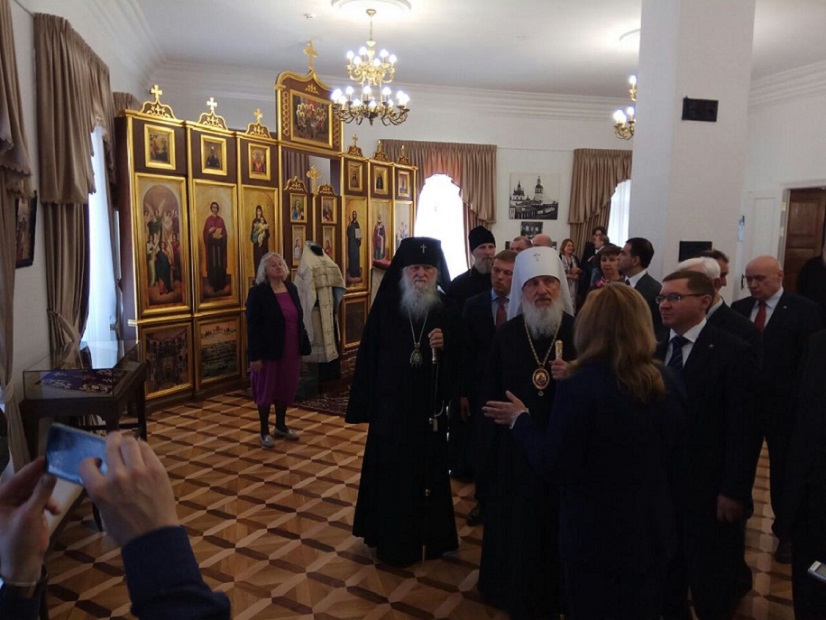
The guest of honour at the opening of the museum was Mrs Olga Nikolaevna Kulikovsky, a well-known Russian public figure, and widow of Tikhon Nikolayevich Kulikovsky, the eldest son of Grand Duchess Olga Alexandrovna, nephew of Nicholas II and grandson of Alexander III. In addition, descendants of the tutors of the Tsesarevich Alexei, who accompanied the Imperial family to Tobolsk, arrived from France and Switzerland.

189b

Mrs Olga Nikolaevna Kulikovsky

Mrs Kulikovsky said that she liked the museum, and noted the excellent work of its employees. According to her, it is impossible, however, to add the original atmosphere of the time when the family of Nicholas II lived in the house, Olga Nikolaevna, undoubtedly the museum was made with love. When asked what kind of feeling the museum created for her, she said: “Longing for the times when the Imperial family lived here.”

The museum is the first museum in Russia, dedicated entirely to the family of Emperor Nicholas II. The museum is housed in the former governor’s house, where the Imperial family lived from 6th August, 1917 to 13th April, 1918. The mansion became a prison for the Imperial family before the Bolsheviks sent everyone to them all to their deaths in Ekaterinburg.

189c

189d

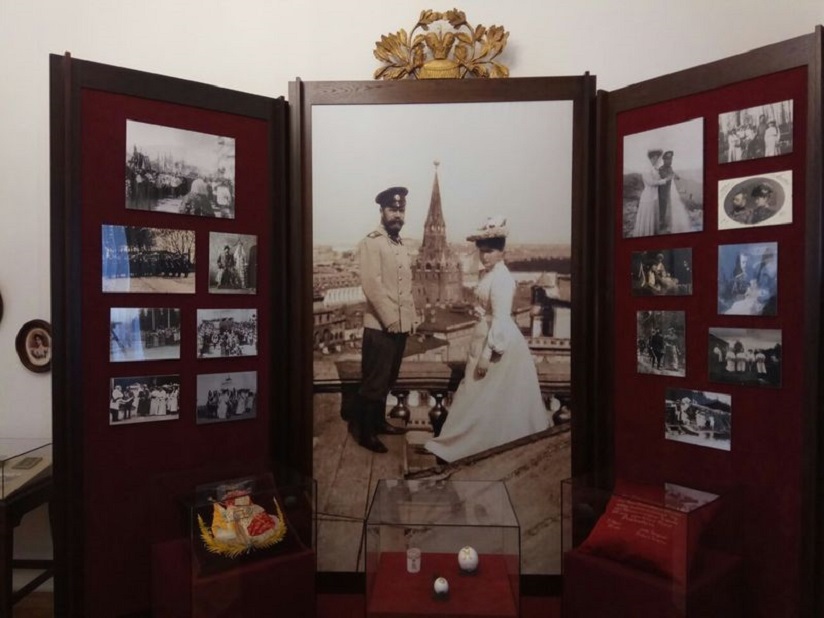
During the past year historians have collected their personal belongings: furniture, icons, Alexandra Feodorovna’s gospel, and Alexei’s “magic lantern” – the prototype of a modern projector. In addition, the new museum will temporarily feature exhibits from the Central Museum of the Armed Forces of the Russian Federation and the Russian National Museum of Music, which include porcelain Easter eggs of 1912 with the monograms of Nicholas II and Alexandra Feodorovna, and a balalaika made in the studio of the court master Franz Paserbsky.

After the Revolution, the Governor’s house was renamed the “House of Freedom”. During the last 50 years, the former Governor’s mansion at Ulitsa Mira, 10 was occupied by the district administration. Historians had argued for many years that a building with such a history should be utilized as a museum dedicated to the Imperial family.

189e

189f

In the museum’s exposition there are unique items related to the period of the Imperial family’s 8-month residency: Imperial porcelain, napkins with monograms, silver appliances. One of the most precious exhibits is Empress Alexandra Feodorovna’s silk shawl. The Empress gave the shawl to the wife of the doctor in gratitude, who had treated the Tsesarevich Alexei.

189a

The Museum of the Family of Emperor Nicholas II in the former Governors Mansion, Tobolsk

© Paul Gilbert. 12 December 2019

First tourist group visits Lower Dacha of Nicholas II in Peterhof

187a

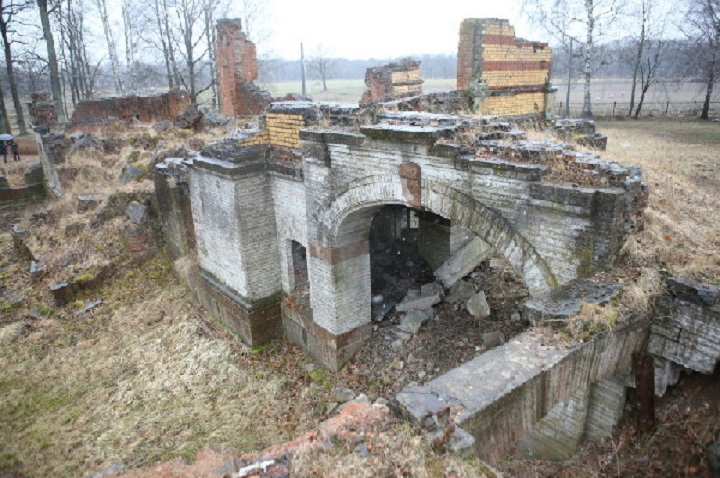
The ruins of the Lower Dacha, Alexandria Park, Peterhof

NOTE: All of the articles pertaining to Nicholas II and his family which were originally published in my Royal Russia News blog, have been moved to this Nicholas II blog. This article was originally posted on 2 May 2018 in my Royal Russia News blog – PG

Click HERE to watch a video (in Russian). Please note that the video is in two parts – the first part of the video shows the group visiting the ruins of the Lower Dacha, while the second part shows them visiting the interiors of the Farm Palace (opened in 2010), which is also situated in the Alexandria Park – PG

***

On 25th April, more than 50 participants of the Open City Project, which promotes cognitive walks around the sights of St. Petersburg, which are inaccessible to the general public, were the first group allowed to visit the Lower Dacha, situated in the Alexandria Park of Peterhof. Here they learned about the history of the park, about the life of its August residents, and the tragic fate of the Lower Dacha

Together with the Chief Architect of the Peterhof State Museum Preserve Sergey Pavlov, the group visited the ruins of the Lower Dacha, which is currently in the process of restoration. The complex of the Lower Dacha, the favorite summer residence of the family of Nicholas II, suffered considerably during the Great Patriotic War. In the 1960s, the remaining ruins were blown up. The possibility of restoring this unique monument of history and culture has been discussed for several decades.

In 2016, the Peterhof State Museum received approval for the concept of restoration of the Lower Dacha, combining the conservation of the original fragments of the ruins with a partial reconstruction of the building. The first stage of the concept realization, the historical foundations and the preserved part of the first floor, are currently protected by a special ventilated canopy.

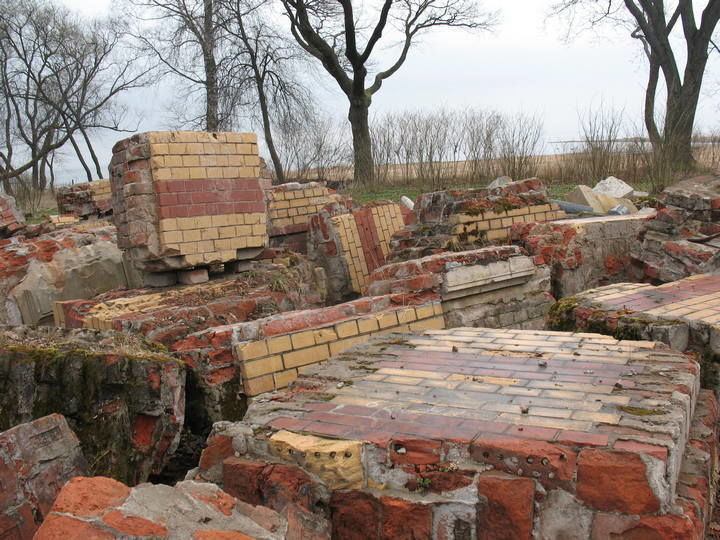
Recent archaeological surveys have uncovered unique items related to the period of the occupation of Peterhof in 1941-1943. Pavlov notes that excavations have already uncovered details of the building and its interiors, including original tile floors, iron grille work, fragments of pottery, carved stone decorations, all of which will be carefully preserved and become part of the new permanent exhibition.

***
187b

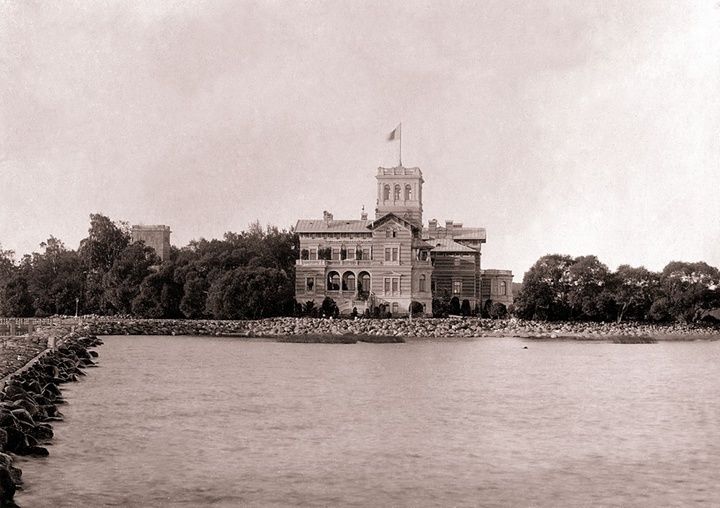
Early 20th century view of the Lower Dacha

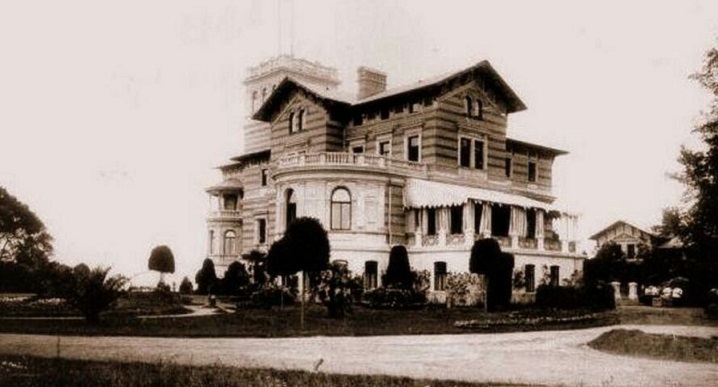
The Lower Dacha – also known as the Lower Palace – was erected in the mid-1880s for the Tsesarevich Nicholas Alexandrovich (future Emperor Nicholas II) by the architect Anthony Osipovich Tomishko (1851-1900), the famous architect who also designed the famous Kresty Prison in St. Petersburg.

“The sovereign [Emperor Alexander III – Ed.] gave Tomishko carte blanche with the project – permitting the architect with spending, hiring contractors, and monitoring its construction – while making additional adjustments made by the emperor and especially his wife the Empress Maria Feodorovna. Despite this, Tomishko did not see the implementation of his project,” – said the chief architect of the Peterhof State Museum-Preserve Sergei Pavlov.

Despite all the difficulties, a four-story building made of bi-coloured bricks – yellow and red – was created on the shore of the Gulf of Finland in the Alexandria Park resembling an elegant Italian villa in the Neo-Renaissance style.

The remoteness of the Lower Dacha from Peterhof, which was completely inaccessible to outsiders made it a favorite residence for the emperor and his family. “The main beauty of the whole house is it’s proximity of the sea” – the Emperor wrote in his diary.

After their marriage in 1895, it was here that Nicholas II and Alexandra Feodorovna spent their first summer together. It was also here that three of their *five children were born, two daughters: Maria (1899), Anastasia (1901), as well as their only son and heir to the Russian throne, Tsesarevich Alexei Nikolaevich (1904). It was also at the Lower Dacha that in 1914, Nicholas II signed the Manifesto of Russia’s entry into the First World War. [*Olga (1895) was born in the Alexander Palace at Tsarskoye Selo; Tatiana (1897) was born in the Farm Palace at Peterhof – PG]

After the birth of their children in the 1890s, the house became too small and a second block was added to the original building, where children’s rooms were located.
187c

Early 20th century view of the Lower Dacha

***

According to Sergei Pavlov, the fate of the Lower Dacha was met by tragedy and destruction during the 20th century. This is confirmed by the history of the palace.

Shortly after the Revolution, the Lower Dacha was opened as a museum, in which the personal items of the Imperial family, including furnishings and children’s toys were displayed.

The anti-monarchist attitude of this museum and it’s Soviet caretakers is best described by the museum’s first director Nikolai Arkhipov, who referred to himself as “the keeper of the royal underpants.”

It is clear that such a museum could not exist for long, and in 1936 a recreation center for members of the NKVD (People’s Commissariat for Internal Affairs) was opened in the Lower Dacha. Then came the Great Patriotic War (1941-1945) and the occupation and destruction of the area by the Nazis.
187d

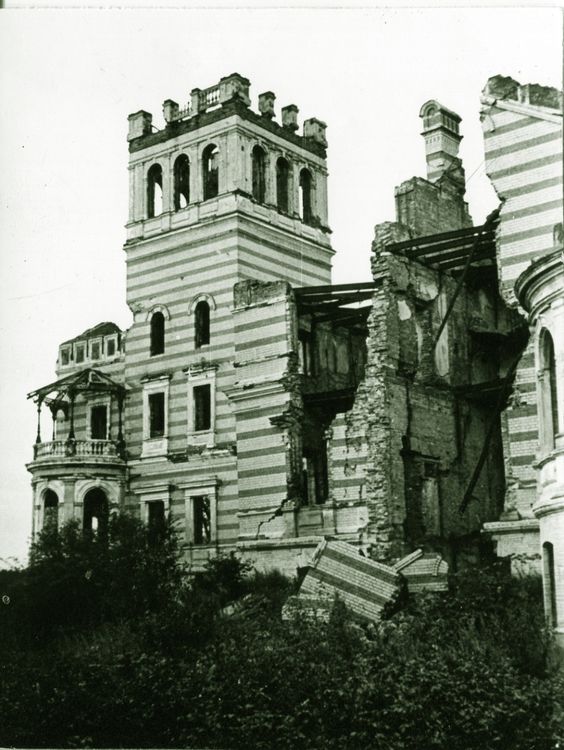
The Lower Dacha as it looked after the Great Patriotic War 1941-45

During the war, the Nazis used the former Imperial residence as a base for its coastal defence. The building survived the war, and stood until 1961 when it was blown up by the Soviets – the Lower Dacha was left in ruins.

Who and why the imperial summer residence was destroyed still remains a mystery. Documents in the archives have not been preserved.

According to a local legend, one of the sons of the then military hierarchy broke a leg while climbing on the ruins of the dacha. His angry father ordered that the building be “blown off the face of the earth.” Another popular theory was that the site had become popular with local Orthodox Christians and monarchists, who would often hold memorials at the ruins with candles and prayers.

There is also a more prosaic version. Many museum workers believe that the whole thing was based on Soviet ideology, who were alien to any relics associated with the last Tsar. As the museum experts note, the explosion was carefully orchestrated, one which could only be carried out by professionals.

***
187e

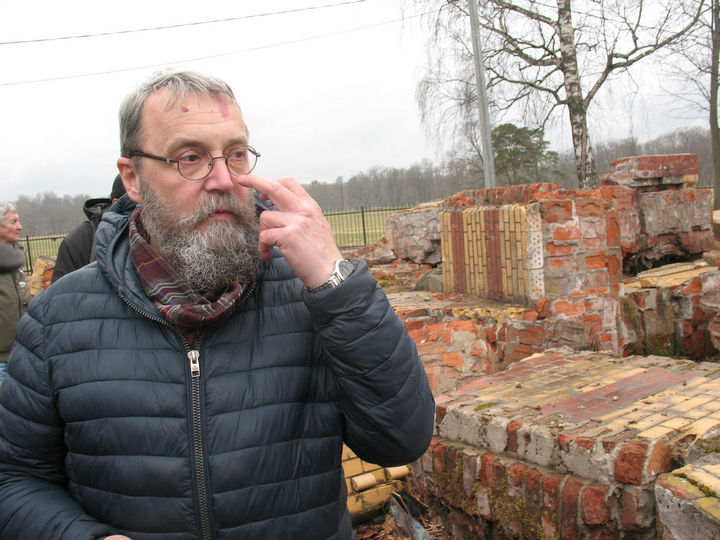
Chief Architect of the Peterhof State Museum Sergey Pavlov at the ruins of the Lower Dacha

“Then the question arose: what to do next?” – recalls Sergei Pavlov.

According to him, several options for the restoration of the monument were considered. The first suggested a complete historic recreation of the Lower Dacha, based on plans, documents and photographs which have been preserved in the archives.

“But when we analyzed this proposal further, we understood two fundamental problems. First, we had little to work with when compared to the ruins of the Great Palace – of which 60-70% of the building had survived, but only 7-10% of the Lower Palace had survived. So, how can this be recreated?” Sergei Pavlov asks.

Further, since the palace, although called imperial, in fact was very small, with modest rooms and narrow halls, which excludes all sightseeing activities by visitors and tour groups. In addition, there would be a problem with filling the exposition.

“There is a legend that Peterhof has a lot of things from the Lower Dacha. I can tell you that this is incorrect. In fact, we have in our collections, only 14 pieces of furniture and about 35 additional items from the dacha. To fill them all the exhibition space of the palace is simply impossible,” – explained the chief architect of Peterhof.

Another option considered was the conservation of the ruins. However, this idea was considered difficult to implement, simply based on the harsh conditions of the St. Petersburg climate. “We took a rather difficult, hard-won decision. We agreed to combine the preservation of the surviving fragments of the ruins to become incorporated into the partial reconstruction of the dacha,” explained Sergei Pavlov.

***
187f

The ruins of the Lower Dacha

There are plans for a reconstruction of the study of Nicholas II on the upper floor, in which we will fill with genuine items and objects of everyday life of that era. The lower floor will be used for both permanent and temporary exhibitions.

“In this way, we can utilize all the necessary living spaces, which we desperately need. For instance, we do not have a conference room, or a room for scientific study, nor is there is a laboratory, are library. All of these will be implemented into the new building, “- said Sergei Pavlov.

According to Pavlov, the first priority in the recreation of the Lower Dacha will be a memorial place to the family of Nicholas II. Secondly, the building will host an historical and cultural center, where there will be exhibitions and concerts, reflecting the spirit of this place.

The new multi-museum complex will preserve the unique panorama of Peterhof and the silhouette of the coastline, the reconstruction of which will be the second stage of a larger project.

Surviving fragments of boulder fortification and a boat canal through which a small yacht transferred the Imperial family to the Imperial yacht Standart (which was unable to dock at the pier, due to the shallow bay), will all be restored.
187g

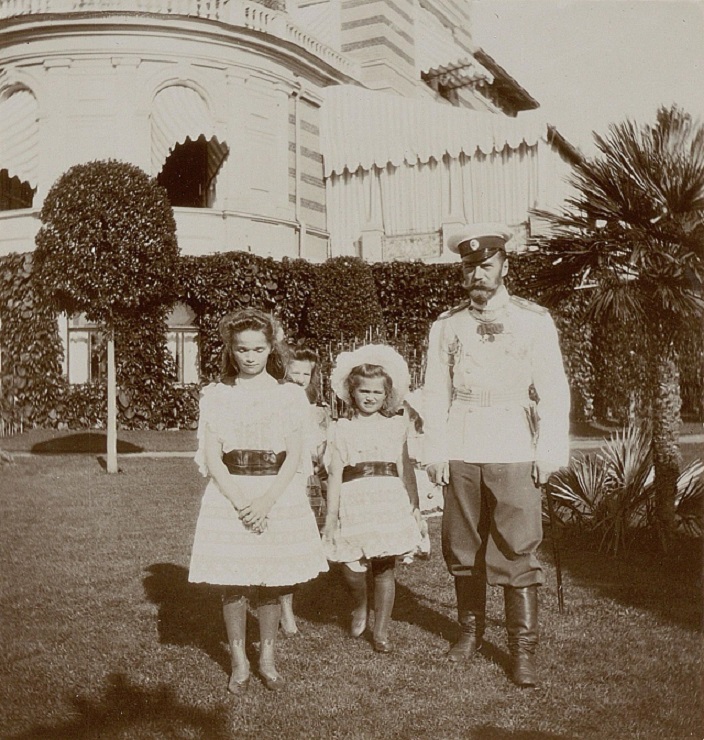
Nicholas II with his three eldest daughters at the Lower Dacha, 1905

Complete work on the reconstruction of the Lower Dacha is expected to be completed in 2025. And then the historical landscape of Alexandria Park will be fully restored.

© Paul Gilbert. 11 December 2019
Procession Marks 100th Anniversary of Nicholas II’s Arrival in Ekaterinburg

NOTE: All of the articles pertaining to Nicholas II and his family which were originally published in my Royal Russia News blog, have been moved to this Nicholas II blog. This article was originally posted on 30 April 2018 in my Royal Russia News blog – PG

The above VIDEO is an announcement for the procession, which highlights the route known as the Path of Sorrow of the Holy Royal Passion-Bearers immortalized by the Russian Orthodox Church with churches in Ekaterinburg.

In the early morning of 30th April 2018, a religious procession took place in Ekaterinburg marking the 100th anniversary of the arrival of Nicholas II and members of his family from Tobolsk. More than 1,500 people took park in the prayer procession, which passed from the Memorial Cross in the area of the Shartash Railway Station to the Church on the Blood – built on the site of the former Ipatiev House, where Nicholas II, his consort Alexandra, their five children, and four faithful retainers were all murdered on the night of 16/17 July 1918 by members of the Ural Soviet.

188a

Emperor Nicholas II, Empress Alexandra Feodorovna, and their daughter Grand Duchess Maria Nikolaevna were transferred from Tobolsk, and handed over to the Ural Soviet on 30th April 1918. They were accompanied by the Tsar’s aide Prince Vasily Dolgorukov, the family’s physician Dr. Eugene Botkin, and three servants. The rest of the family: Grand Duchesses Olga, Tatiana, Anastasia, and Tsesarevich Alexei were brought to Ekaterinburg in May 1918.

The procession was headed by the bishops of the Ekaterinburg Diocese: Metropolitan Kirill of Yekaterinburg and Verkhoturye, Bishop of Kamensk and Alapaevsky Methodius, Bishop of Sredneuralsky Eugene, vicar of Ekaterinburg diocese, Bishop of Serov and Krasnoturinsky Alexy.

188b

The procession was attended by numerous clergy and monastics, Cossacks, monarchists, as well as students of the Ekaterinburg theological seminary, nurses and volunteers of the Orthodox Relief Service, representatives of Orthodox brotherhoods, employees and volunteers of the Nika Charity Fund, representatives of youth parish clubs, members of the Youth Cossack organization of the Sverdlovsk region, activists of the youth department of the diocese, as well as numerous parishioners of the churches of the Ekaterinburg diocese.

Crusaders dressed in red jackets carried banners, icons, as well as images of Emperor Nicholas II and the Holy Royal Family, thereby emphasizing the importance of the year of marking the 100th anniversary of the death and martyrdom of the Holy Royal Passion-Bearers.

188c

The column of believers began its memorable procession, dedicated to the 100th anniversary of the arrival of Nicholas II and members of his family in Ekaterinburg from Tobolsk, from the Memorial Cross and the foundation stone, which are located near Shartash Railway Station (in 1918 – Yekaterinburg-II Station), on the future site of the Church in Honour of the Icon of the Mother of God “Valaam” – one of the three miraculous icons, revealed during the reign of Nicholas II.

The arrival and the route known as the “Path of Sorrow of the Holy Royal Passion-Bearers” are immortalized by the Russian Orthodox Church with churches in Ekaterinburg.

188d

The procession passed through Ulitsas (streets) Kuibyshev, East, Chelyuskintsev, Sverdlov, Karl Liebknecht, Tsarskoy, stopping at the Church of the Icon of the Mother of God Port Arthur and the Church of the Icon of the Mother of God “Derzhavnaya”.

The memorial procession ended at the Church on the Blood, where Metropolitan Kirill, delivered a Divine Liturgy.

The above VIDEO shows the cross procession and the episcopal Divine Liturgy held in memory of the arrival in Ekaterinburg from Tobolsk of Nicholas II and members of his family on 30th April 1918. The Divine Liturgy was performed in the Church on the Blood, by Metropolitan Kirill of Yekaterinburg and Verkhoturye and the bishops of the Ekaterinburg Diocese.

© Paul Gilbert. 11 December 2019
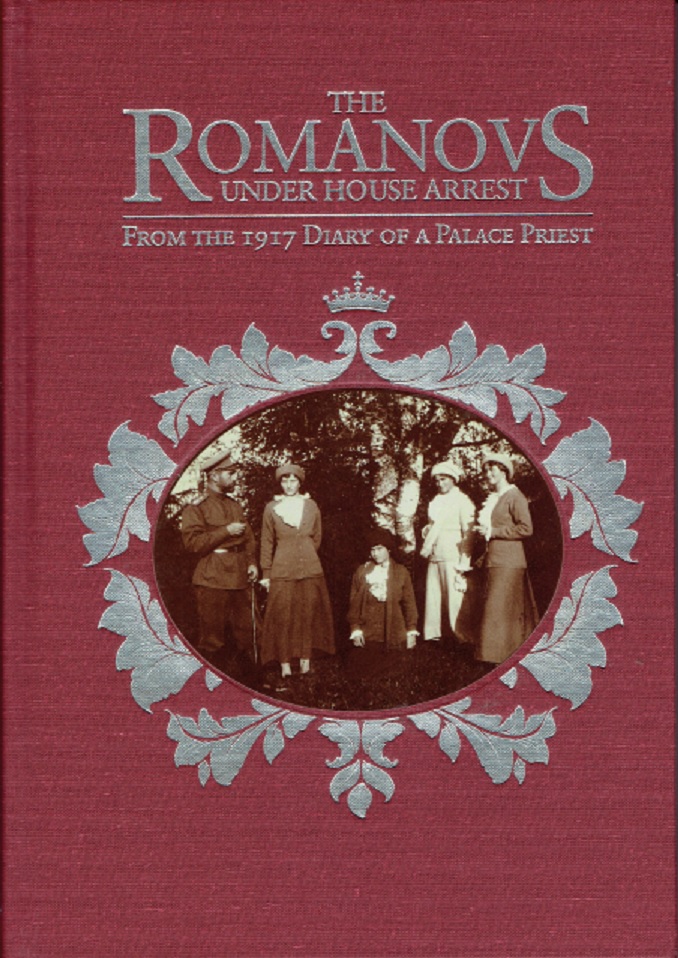
The Romanovs Under House Arrest: From the 1917 Diary of a Palace Priest

184a

CLICK HERE TO ORDER YOUR COPY

Archpriest Afanasy Belyaev served as priest and confessor to the former Russian Imperial family. On the occasion of the Tsarevich’s thirteenth birthday in July 1917, he wrote this description of their faith and piety:

. . . for the last time the former rulers of their own home had gathered to fervently pray, tearfully, and on bended knee, imploring that the Lord help and intercede for them in all of their sorrows and misfortunes.

184b

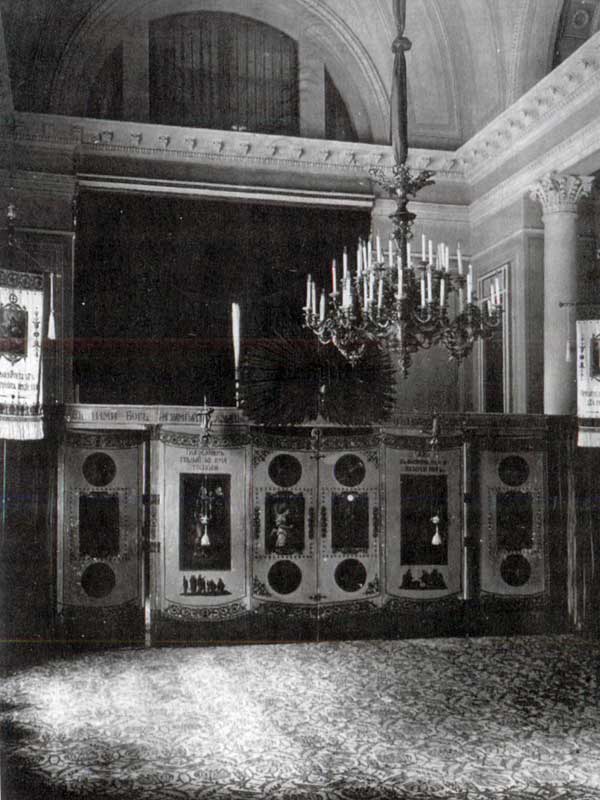
PHOTO: The home church of the Imperial Family in the Alexander Palace (1930s)

These selected excerpts from the chaplain’s diary open a window into the souls of the now sainted Romanov family and vividly recall the struggles they endured during the first five months of their confinement following the abdication of Tsar Nicholas II. One sees the love and independence of a family whose life was centered on Christ; whose very existence was bound up with the defense of the Orthodox Faith. In the spirit of the Gospel the Tsar conveyed to the Russian people from his captivity “that it is not evil which conquers evil, but only love . . .”

Of particular interest are Fr Afanasy’s personal impressions of Nicholas II, members of his family and retinue, all of whom were under house arrest in the Alexander Palace. Fr Afanasy not only served as priest and confessor to the Imperial family, but also had opportunities to chat with the Tsar. This first English translation of Fr Afanasy’s diary is of immense historic value. It presents his personal observations of the Imperial family’s daily life during their house arrest at Tsarskoye Selo.

Russian cultural historian Marilyn Pfeifer Swezey sets Fr Afanasy’s diary in its historical context and offers an epilogue to complete the story of the Romanov’s journey to martyrdom at the hands of a Bolshevik firing squad in a Siberian basement in July 1918. Also included is a short life of Fr Afanasy and biographical information regarding the various persons appearing in the work. This anniversary edition has been illustrated throughout with colour and black and white photos (some rarely or never published before) as well as charts and maps.

An excerpt from the diary is also available at Orthodox Life or click HERE to order your copy of The Romanovs Under House Arrest 136 pages, $29.95 USD, published by Holy Trinity Publications, Jordanville, NY.

184c

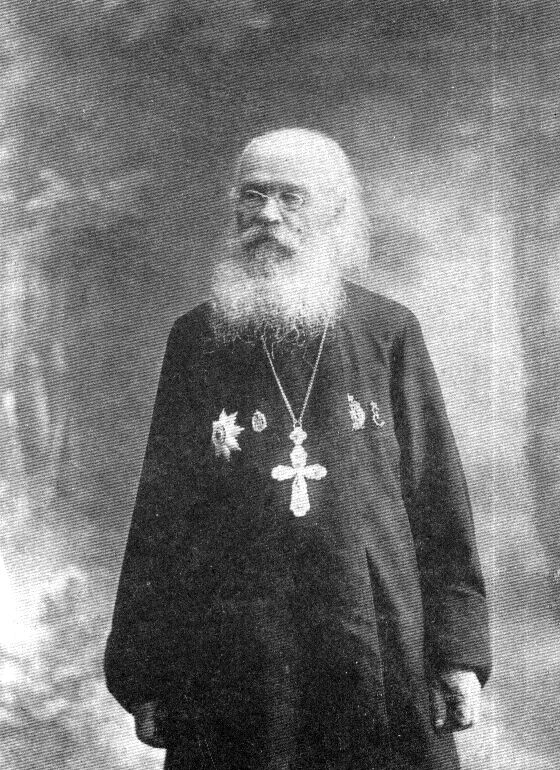
PHOTO: Archpriest Afanasy Ivanovich Belyaev 1845-1921

Archpriest Afanasy Ivanovich Belyaev was the scion of a St Petersburg priestly family who became the rector of the Tsar’s Feodorovsky Cathedral at Tsarskoye Selo, and subsequently the father confessor of the Russian Imperial family during their first five months of confinement following Nicholas II’s abdication in early 1917.

Marilyn Pfeifer Swezey is a specialist in Russian cultural history and decorative arts. Her previous works include The Romanov Family Album, Fabergé Flowers and museum exhibitions At Home With the Last Tsar and His Family and The Tsar and the President, Alexander II and Abraham Lincoln.

Director of Holy Trinity Publications Nicholas Chapman sat down with Russian cultural historian Marilyn Swezey, editor and contributor to the new release, The Romanovs Under House Arrest: From the 1917 Diary of a Palace Priest. Watch the 15-minute interview below!

© Holy Trinity Publications, Jordanville, NY / Paul Gilbert. 11 December 2019

Duma Deputy Proposes Monument to Nicholas II for Central Moscow

183a

NOTE: All of the articles pertaining to Nicholas II and his family which were originally published in my Royal Russia News blog, have been moved to this Nicholas II blog. This article was originally posted on 19 May 2018 in my Royal Russia News blog – PG

The first deputy chairman of the Duma Committee for Public Associations and Religious Organizations, Ivan Sukharev, has prepared a request to Moscow mayor Sergey Sobyanin for permission to establish a life-size monument to Nicholas II in the center of the Russian capital.

Sukharev believes that perpetuating the memory of the last Russian emperor will help restore historical justice. The parliamentarian noted that a monument was installed in the center of Belgrade in November 2014, while in central Moscow there is not even a memorial plaque [Note: this is not entirely correct, please see my list of monuments to Nicholas II in Moscow and surrounding region at the bottom of this article – PG].

In turn, the Moscow Monumental Art Commission announced that they are ready to consider the proposal to install a monument to Nicholas II in Moscow, if the artist of the initiative can prepare the necessary documents for the Commission to evaluate.

Meanwhile, the head of the Commission on Culture and Mass Communications, Yevgeny Gerasimov believes that a monument to Nicholas II should be established in St. Petersburg instead of Moscow.

“I do not see any significant place in Moscow for this monument, from my point of view, it might be possible to establish it in St. Petersburg,” Gerasimov told RIA Novosti. He noted that the Moscow City Duma had not yet applied for the installation of the monument to Nicholas II in the capital.

Nikolai Svanidze, member of the commission of the Human Rights Council under the President of the Russian Federation for Freedom of Information and Journalists’ Rights, publicist and journalist, also supports the initiative to establish a monument to the last Russian emperor, but noted that it would be more logical to do this in St. Petersburg.

“Nicholas II had no ties to Moscow, but to the capital St. Petersburg. Nicholas II and Moscow are bound only by the Khodynka Field. This is the tragic connection between the two.” Svanidze, however, agrees that Nicholas II, deserves a monument in his honour, even despite the controversy which haunts his reign.

Meanwhile, the monuments has already angered the leaders of radical left-wing groups, such as the Left Front and Yabloko, who spoke out against the idea of ​​perpetuating the memory of the last tsar, who make the absurd comparison towards sympathizers of Nicholas II as “Nazi collaborators”.

There are currently four outstanding monuments to Nicholas II in the Moscow region, they include a magnificent equestrian monument to Nicholas II on the Frunze Embankment (center); another at the Novospassky Monastery (below); and two monuments established in suburban Moscow: at Mytishchi in the north (top left) and Podolsk in the south (top right). There are also a number of busts to Nicholas II: the Petrovsky Palace, the Church of the Outpouring of the Holy Spirit at the former Lazarev Cemetery, the Church of St. Nicolas, Saint Nicholas Berlyukovsky Monastery, situated on the outskirts of Avdotyino, and the Armenian Center in Moscow.

183e

© Paul Gilbert. 11 December 2019
State Duma drafts statement condemning the murder of the Tsar’s family

182a

NOTE: All of the articles pertaining to Nicholas II and his family which were originally published in my Royal Russia News blog, have been moved to this Nicholas II blog. This article was originally posted on 19 May 2018 in my Royal Russia News blog – PG

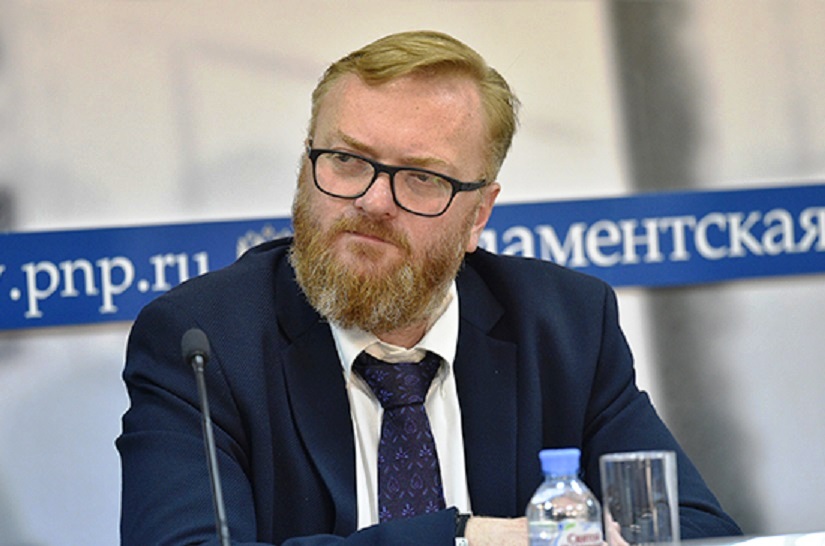
Earlier this week, Russian State Duma deputy Vitaly Milonov told a press conference that a statement had been drafted in the Lower House of the State Duma, condemning the murder of the Tsar’s family by the Bolsheviks in July 1918 as an “unacceptable and unjustifiable crime.”

The deputy said that the shooting of the Imperial family was “an act of unjustified violence, when people were being murdered due to their political beliefs.” According to Milonov, Tsar Nicholas II and his family did not pose any danger to the new Soviet power. “I think it was demonstrative political action, unjustified in its cruelty. But Russia is not built on blood, and today must show – we have the courage, strength, greatness to admit our own mistakes. Not for crucifying ourselves, but for ascertaining a sober assessment of our own history,” added Milonov.

The legislator told the Parliamentary Newspaper (Парламентская газета) that the draft statement will be submitted to the State Duma in the very near future. “I hope that a decision can be made before July 17th, that is, the date marking the centenary of the deaths of the Imperial family,” said Milonov.

182b

Russian State Duma deputy Vitaly Milonov

In Milonov’s opinion, “one can not deny the miscalculations of some of the Emperor’s policies, however, Nicholas II was canonized by the Church not the government. He suffered throughout his reign, endured deprivation and humiliation during his captivity, thus preserving the dignity of his faith.”

Political scientist Leonid Polyakov believes that the draft’s proposal in Russia’s parliament is symbolic – “it was the State Duma in its time that effectively deprived the tsar of power, while violating the laws of the Russian Empire. This should be remembered, and do not be afraid to address it.”

It should be noted that ten years ago, in 2008, the year marking the 90th anniversary of the murders of the Imperial family, a similar draft prepared by Deputy of the Lower House Igor Barinov, was presented to the State Duma. Sadly, the draft was not passed.

In January 2016 Russian President publicly denounced Lenin and his government for brutally executing Russia’s last tsar along with all his family and servants, killing thousands of priests.

© Paul Gilbert. 10 December 2019