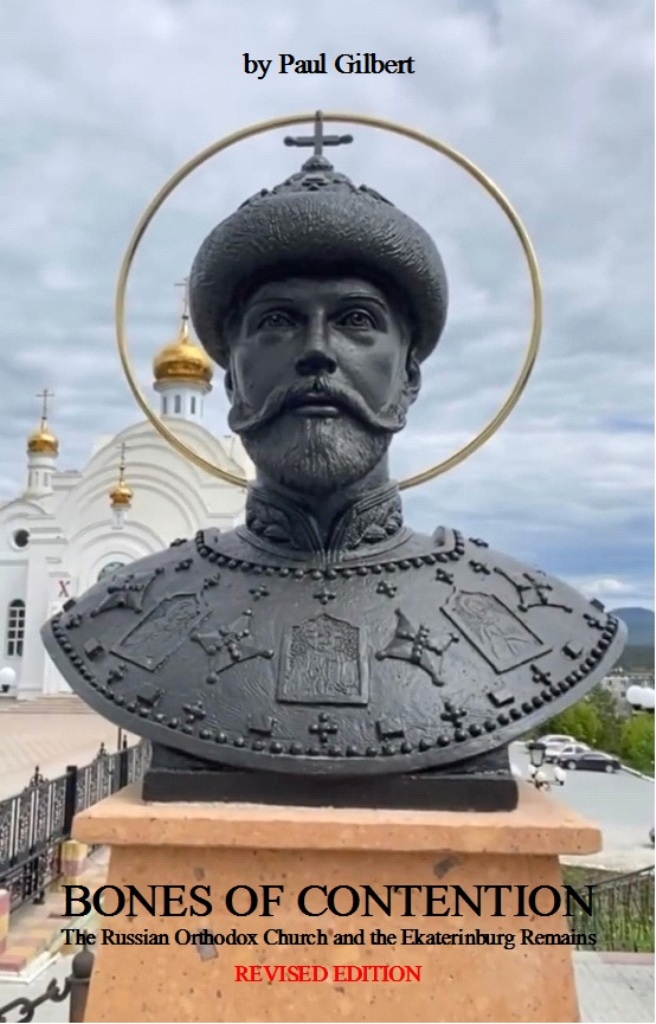
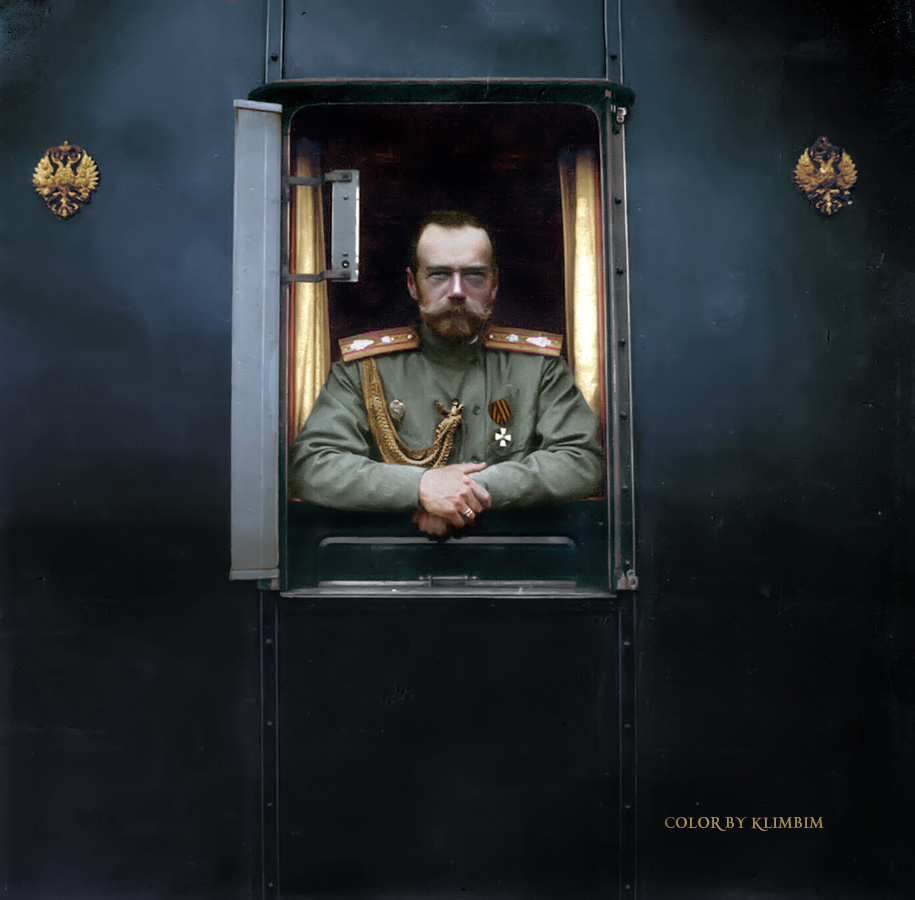
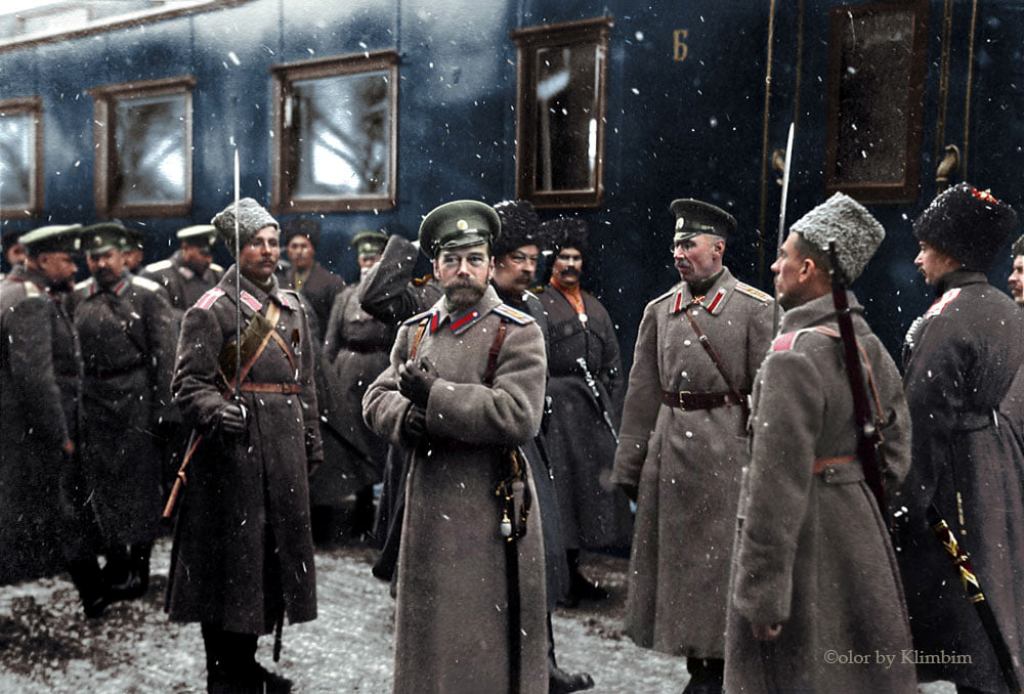
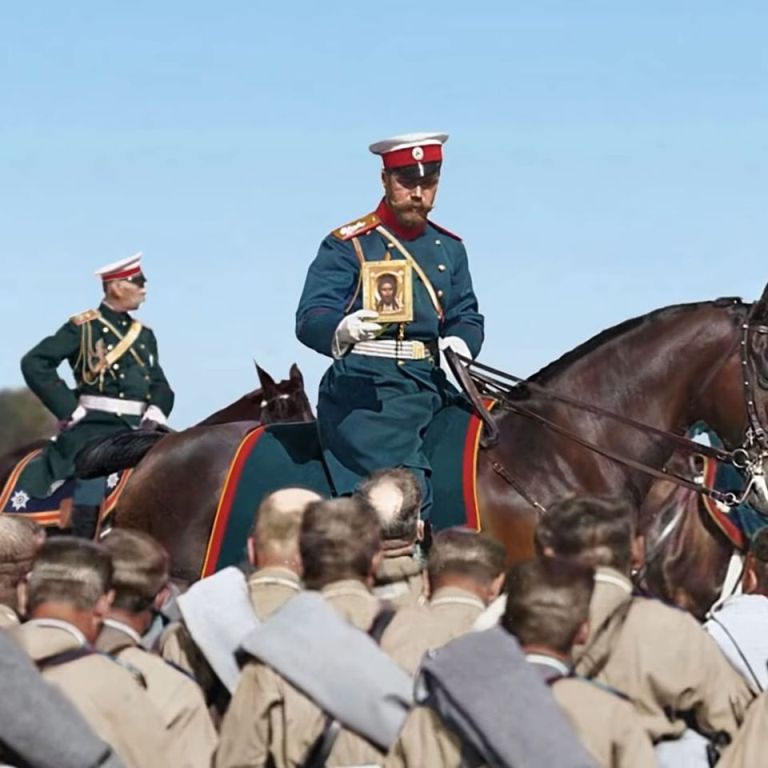
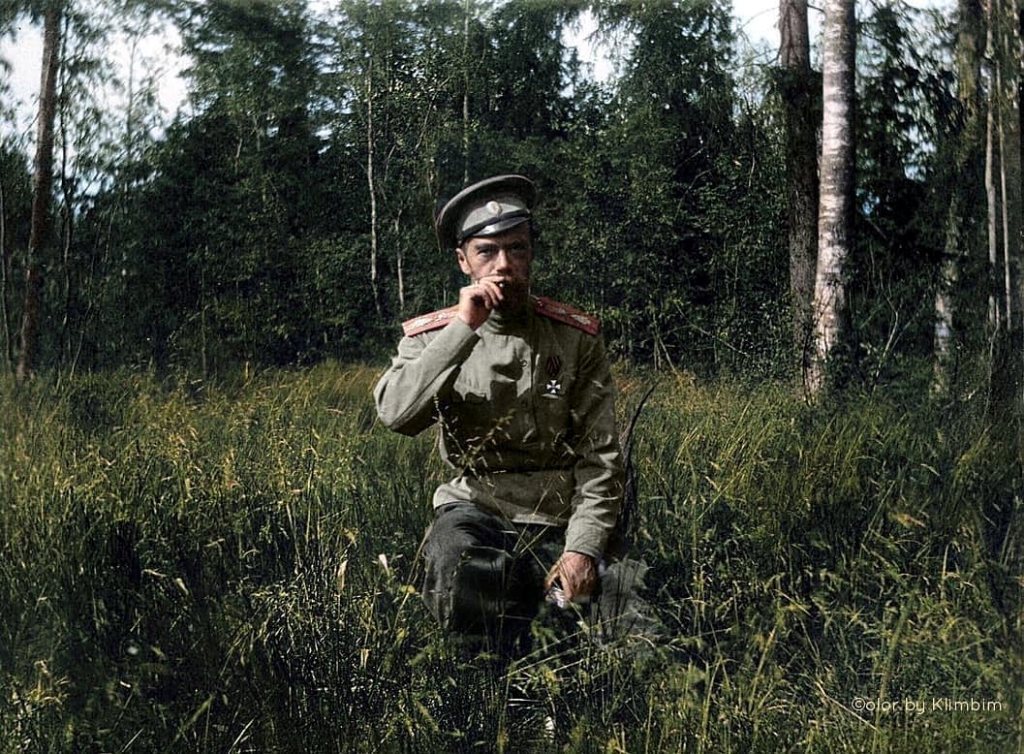
Bust of Nicholas II (temporarily) installed in Uryupinsk

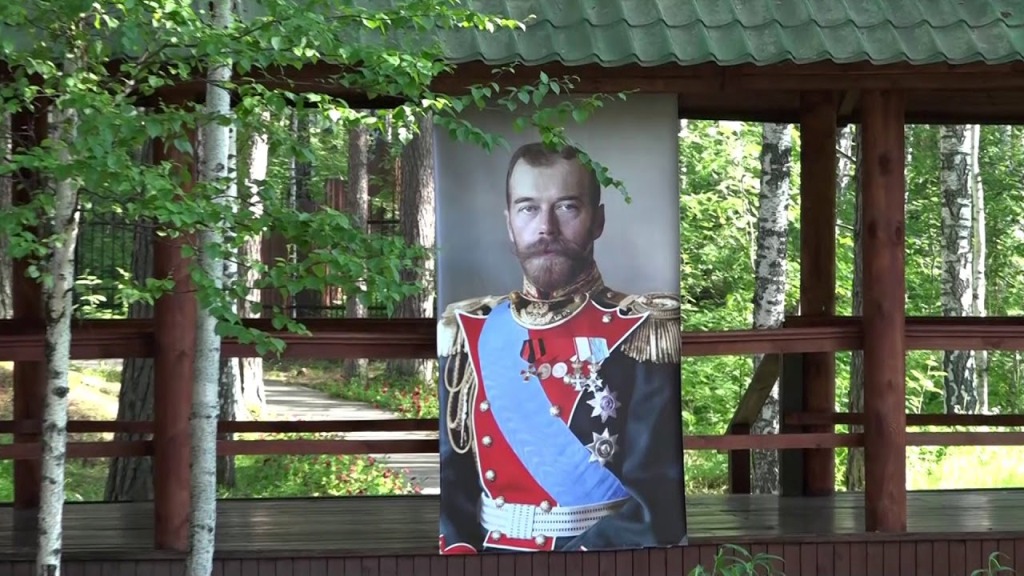
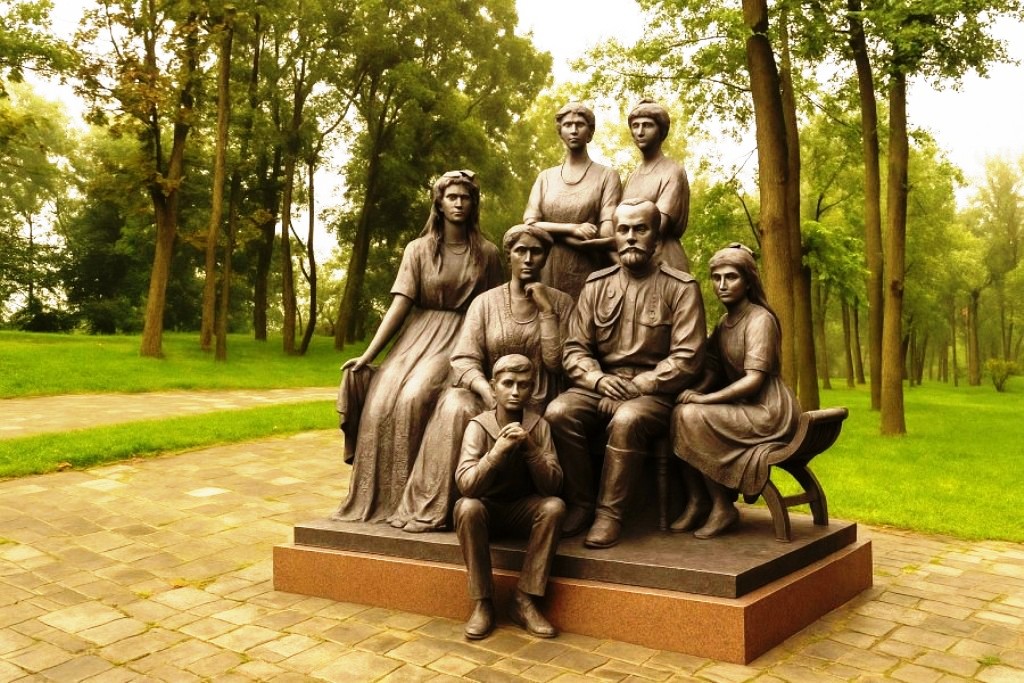
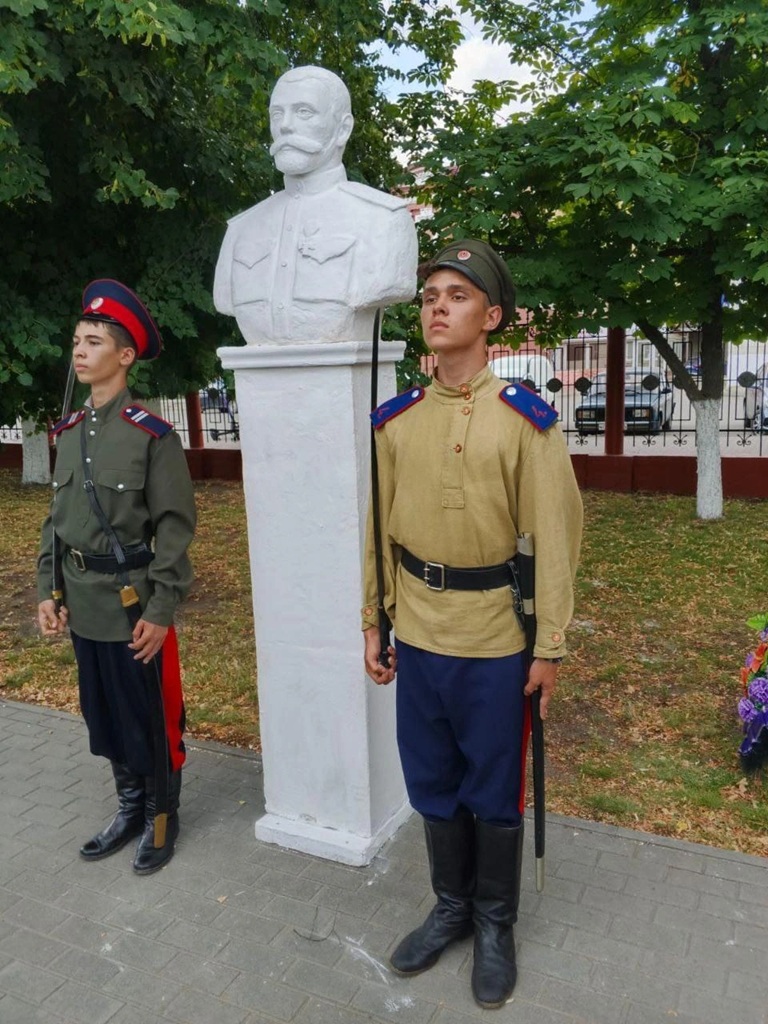
On 17th July 2025, busts of Emperor Nicholas II and Tsesarevich Alexei Nikolaevich (sorry, no photo available) were temporarily installed in the Russian town of Uryupinsk (Volgograd region), during a commemorative event marking the 107th anniversary of the death and martyrdom of Russia’s last Tsar and his family.

Plaster busts on pedestals were installed on the Square of the Fallen Heroes by members of the Union of Cossacks of Russia. Representatives of several Cossack organizations and the clergy of the local diocese held a prayer service and laid flowers.

After the ceremony, the busts were dismantled. According to the ataman of the local Cossack society in Uryupinsk, Dmitry Popolitov, a search is currently underway for a permanent place to install bronze busts of Nicholas II and Alexei Nikolaevich.

The event was organized by the Union of Cossacks of Russia, members of the 4th Don Cossack Regiment named after Count Platov, with the support of the Khoper Cossack District and the Uryupinsk Diocese.

It is interesting to note, that the plaster busts and pedestals were placed on the exact spot, where a monument to Soviet dictator Joseph Stalin stood during the Soviet period.

Recall that the monument to Joseph Stalin was erected in the Uryupinsk square of the Komsomol in 1948. Later, the square was renamed after Stalin. With the coming to power of Nikita Khrushchev in 1953, the monument to Stalin disappeared without a trace and was considered lost.

In 2000, a local resident, who wished to remain anonymous, told the authorities where the monument was buried. The monument of Joseph Stalin was found covered with earth on the territory of the former Khoper district prison. It was excavated and placed in the Uryupinsk Museum of Local Lore in an exposition dedicated to the defeat of Nazi troops near Stalingrad.

According to the Union of Cossacks of Russia, events such as this are important for preserving historical memory and preventing the recurrence of tragic events of the past.

© Paul Gilbert. 24 July 2025

Tsar’s Days in Ekaterinburg – 16/17 July 2025

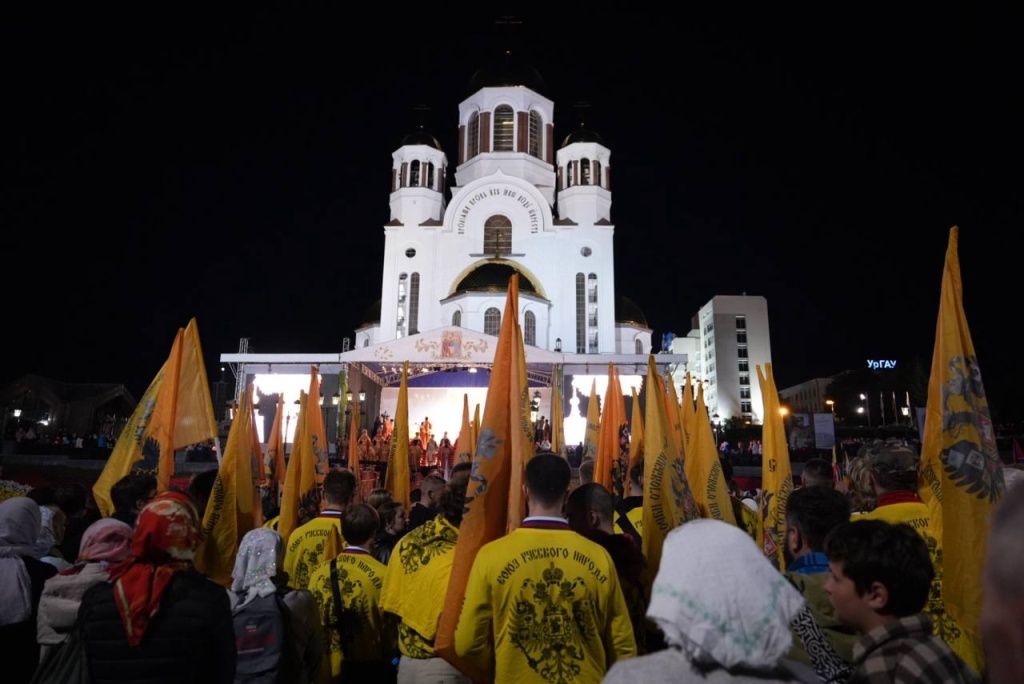
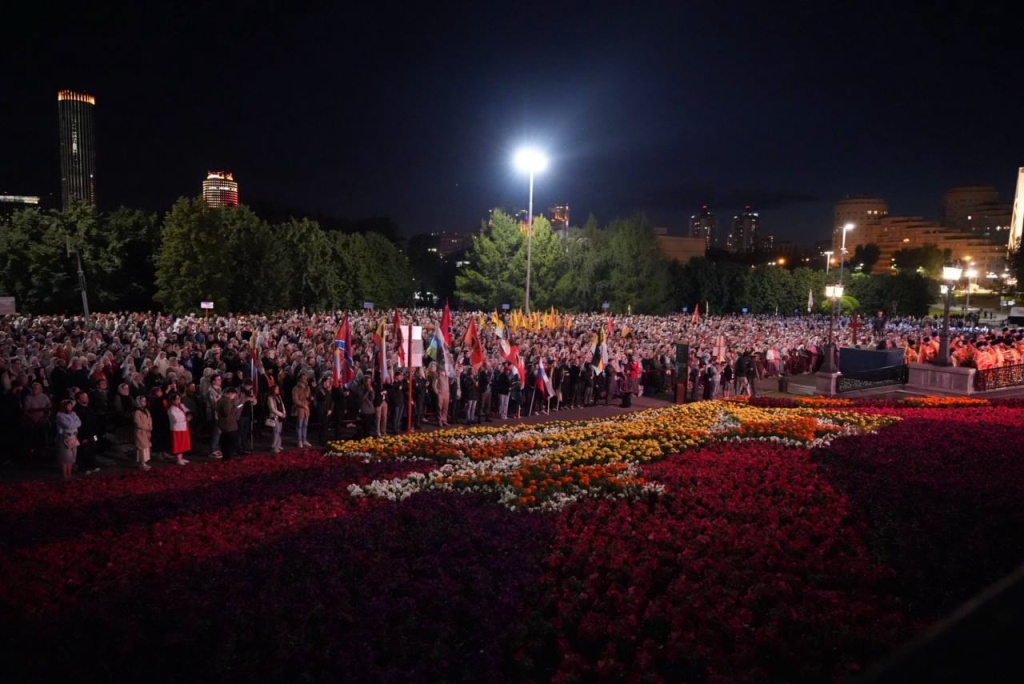
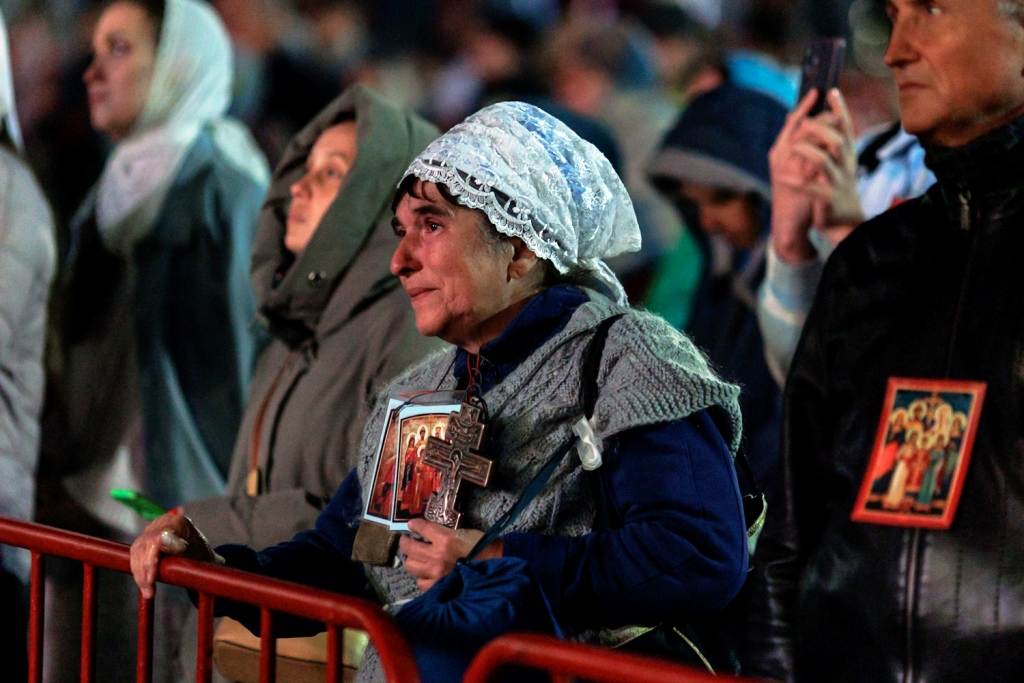
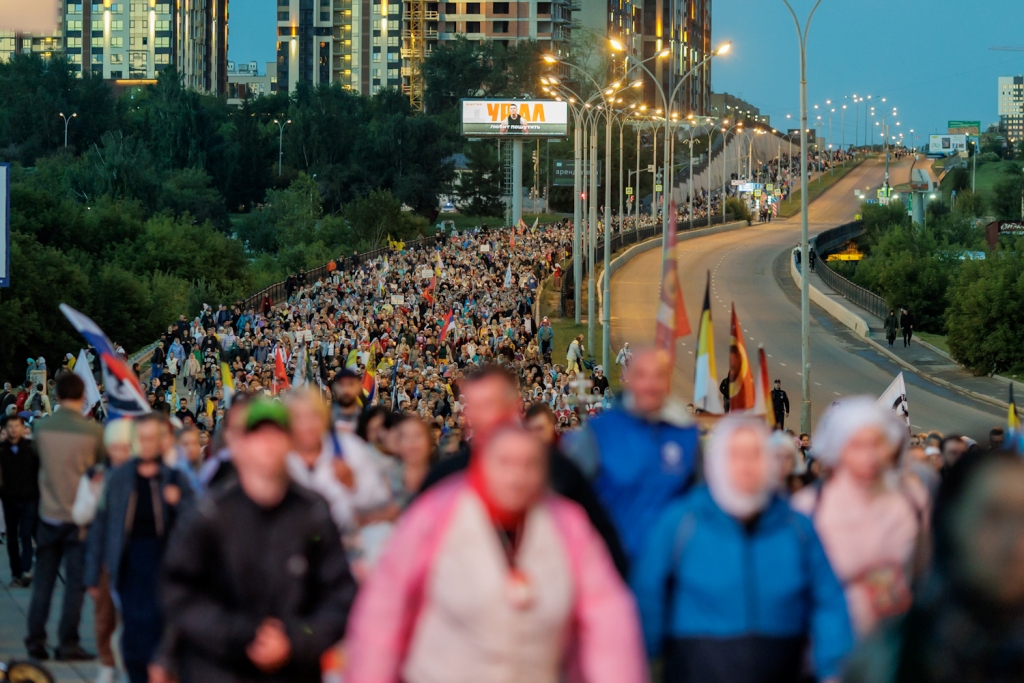
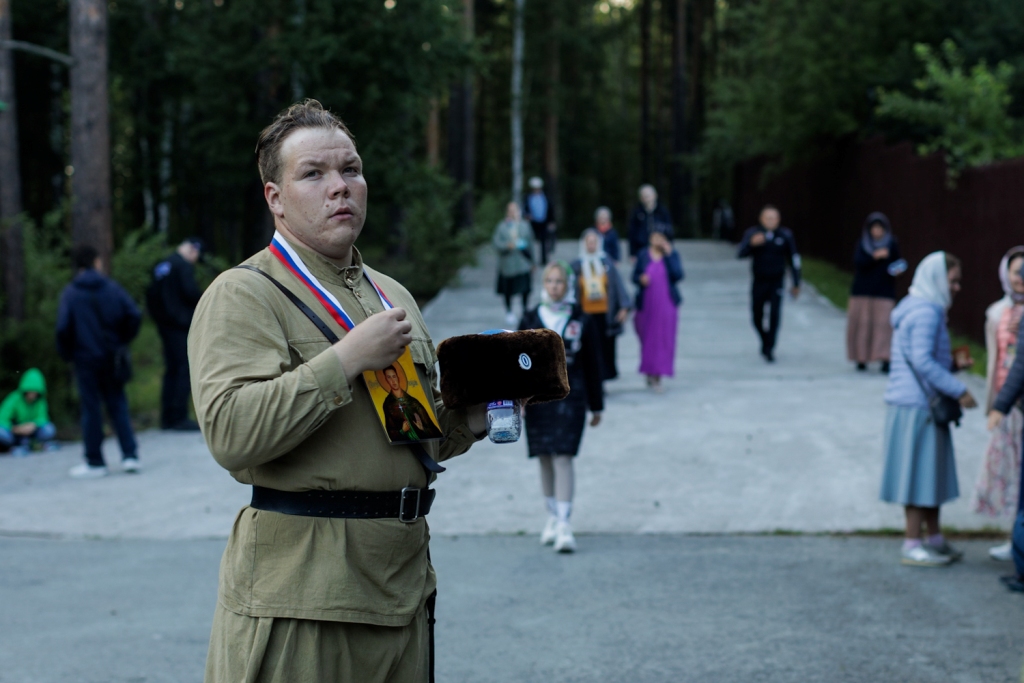
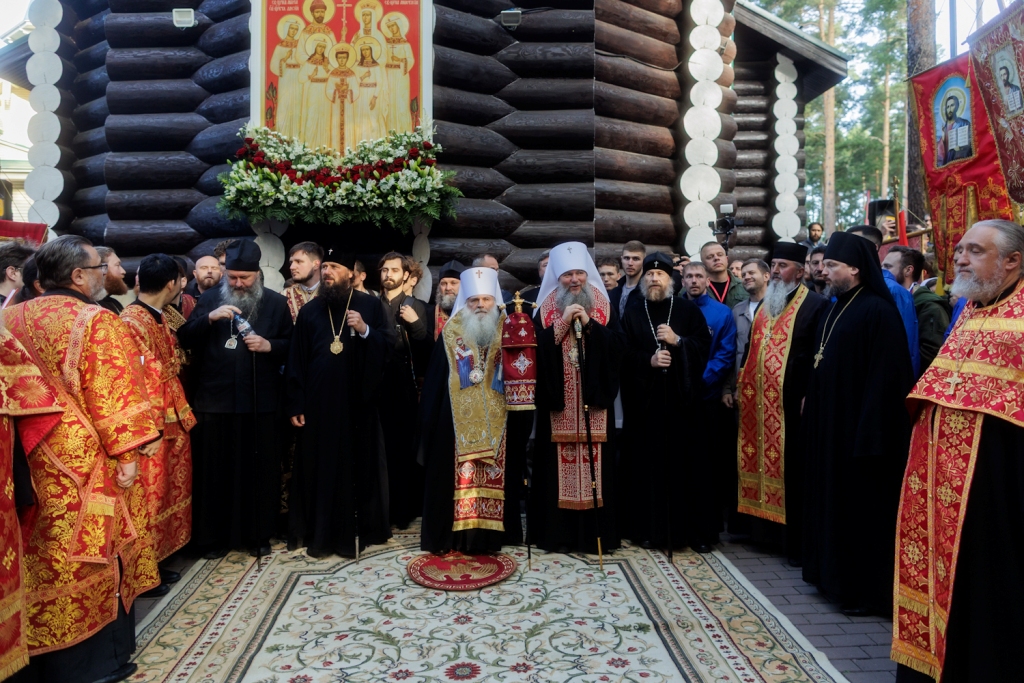
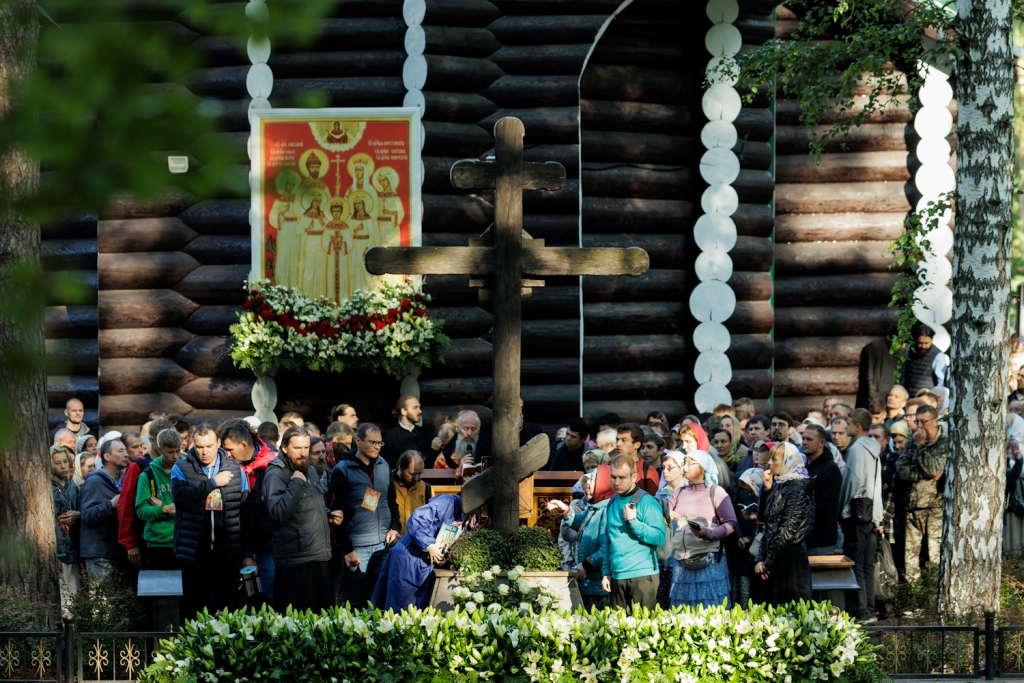
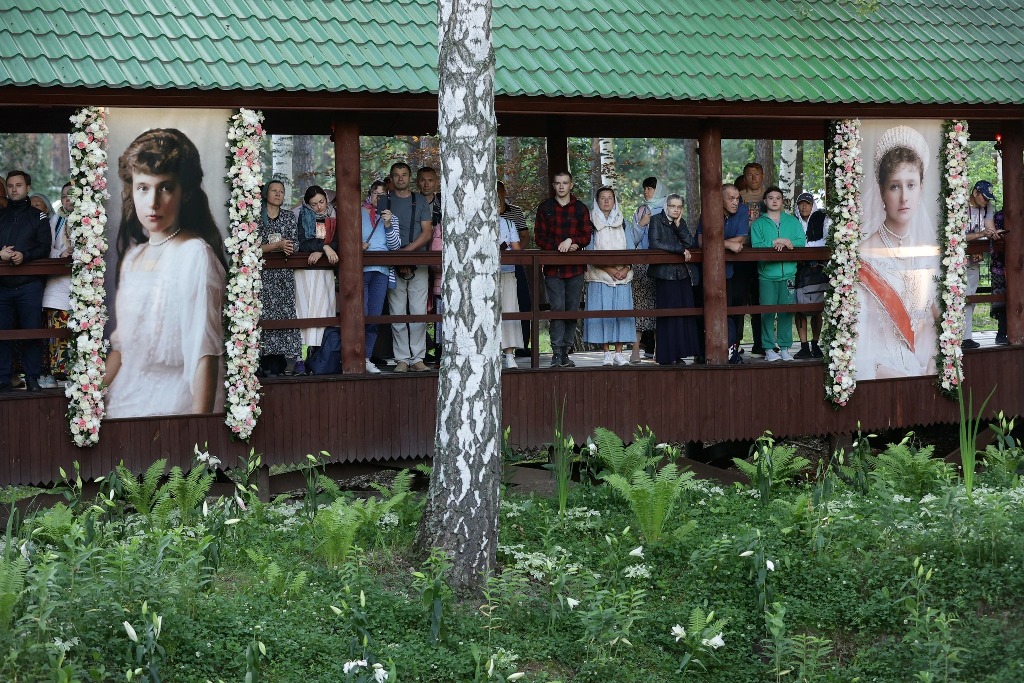
On the night of 16/17 July 2025, tens of thousands of pilgrims, clergy and believers from across the Russian Federation and abroad, took part in the Divine Liturgy on the square in front of the Church on the Blood in Honour of All Saints Resplendent in the Russian Land in Ekaterinburg.

This year marks the 107th anniversary of the death and martyrdom of Emperor Nicholas II, his wife, their five children, and four faithful retainers, who were all brutally murdered in the Ipatiev House in the early morning hours of 17th July 1918.

According to the press service of the Ekaterinburg Diocese, this year’s Tsar’s Days was attended by residents of Ekaterinburg and the Sverdlovsk region, but also residents of different regions of Russia. In addition, were pilgrims from the Czech Republic, Uzbekistan, Serbia, Italy and other countries.

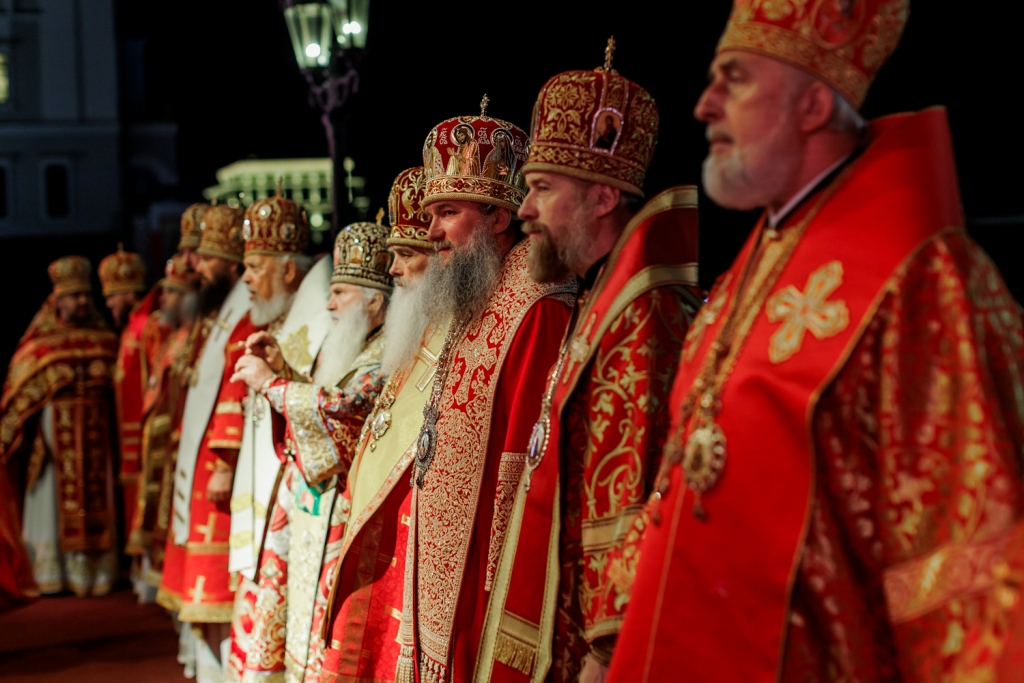
This year’s Divine Liturgy was led by 12 bishops of the Russian Orthodox Church, headed by Metropolitan Evgeny of Ekaterinburg and Verkhotursky. Communion of the Holy Mysteries of Christ was performed from 100 Chalices. The service was broadcast live by the First Orthodox TV channel “Soyuz” on YouTube, and Rutube-channels. 

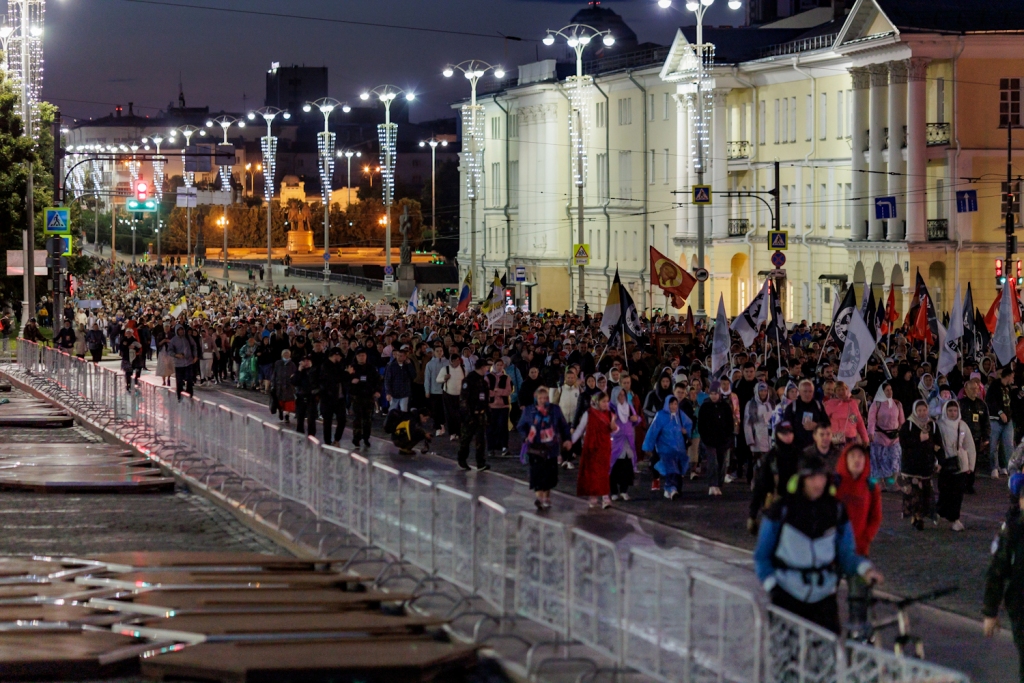
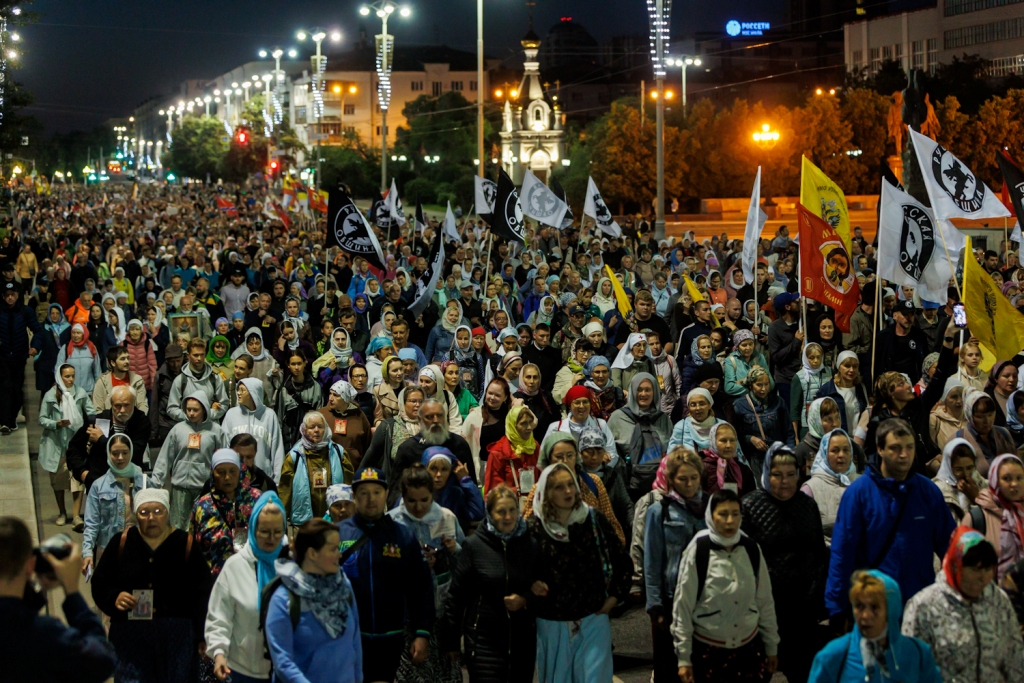
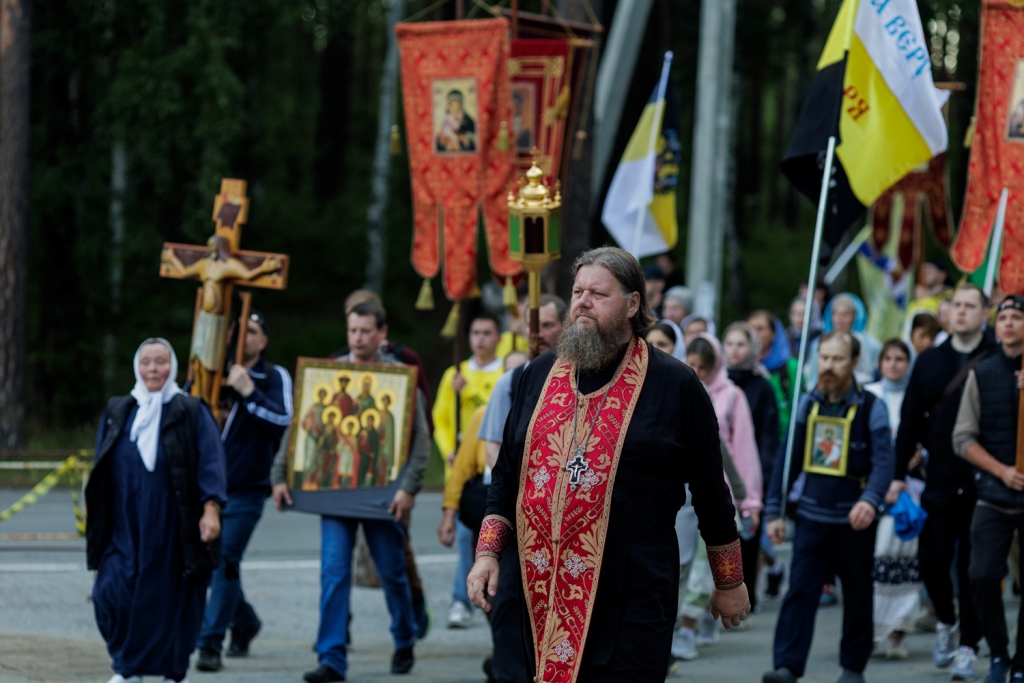
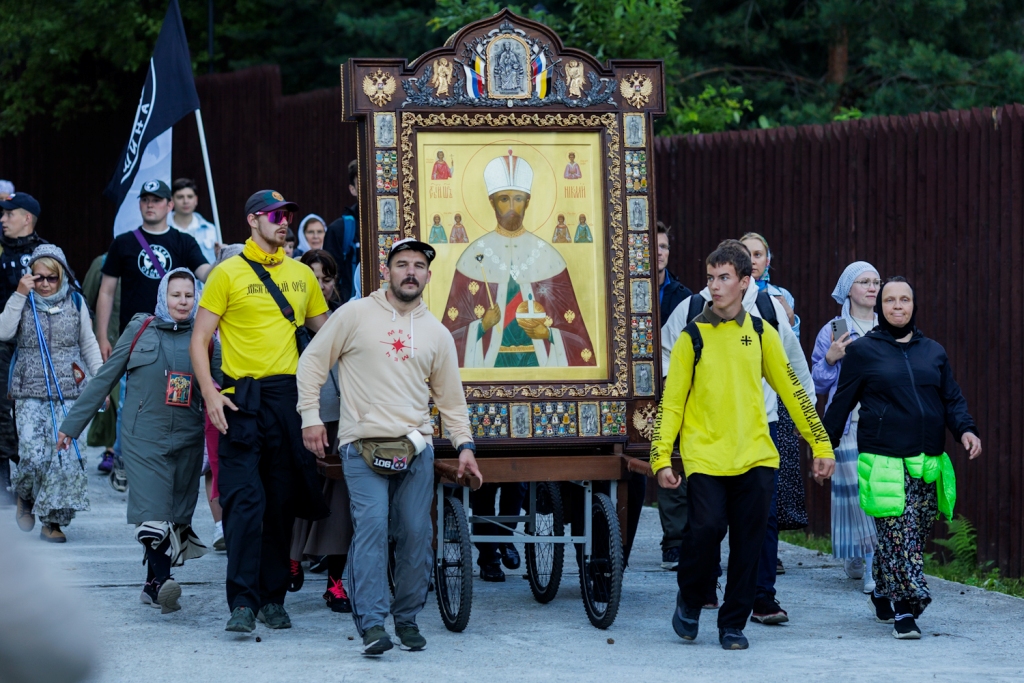
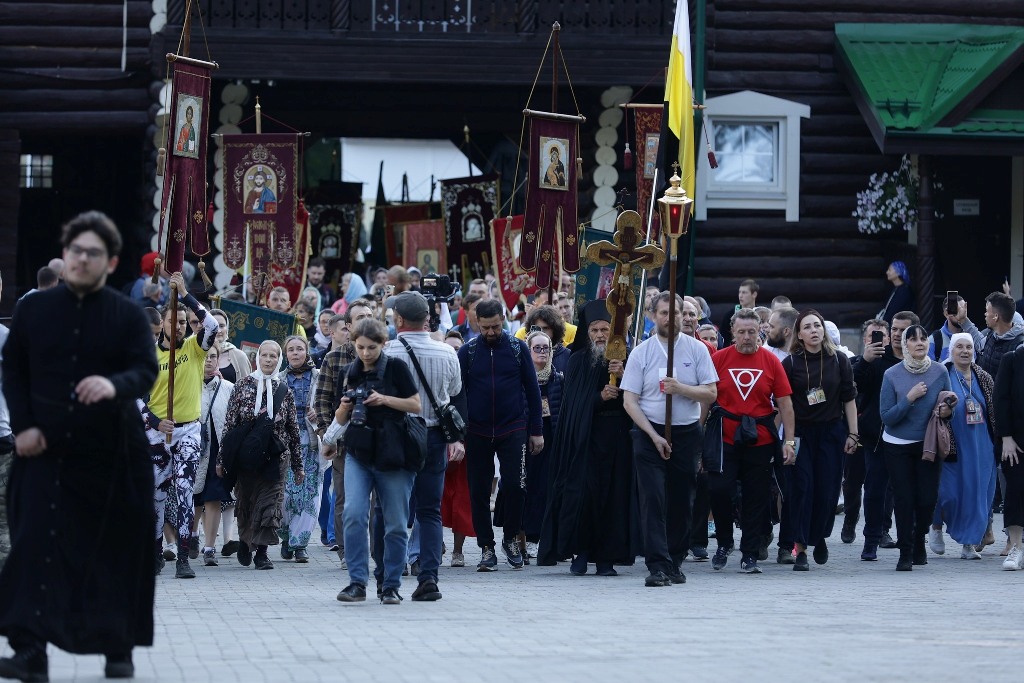
This was followed by a 21-km (13 mile) Cross Procession from the Church on the Blood to the Monastery of the Holy Royal Martyrs at Ganina Yama, in which 40,000 people took part. The procession, which began in the early morning hours of 17th July, took about 4 hours to complete on foot.

“There is no such religious procession, peaceful Christian movement in either Russia, or any where else in the world,” proclaimed Doctor of Historical Sciences Pyotr Multatuli, a noted historian and author, who is considered Russia’s foremost authority on the life and reign of Nicholas II.

The Cross Procession concluded with a moleben [a liturgical service of supplication or thanksgiving] to the Holy Royal Passion-Bearers at Mine No. 7, which is now sacred ground of the Monastery of the Holy Royal Passion-bearers at Ganina Yama.

Tsar’s Days are traditionally held with the support of the Sverdlovsk regional government, the Ekaterinburg city administration and the St. Catherine’s Foundation, which helps in organizing the celebration and supporting pilgrims with water, food, and transport.

Divine Liturgy – Church on the Blood, Ekaterinburg

21-km (13 mile) Cross Procession to Ganina Yama

Monastery of the Holy Royal Passion-Bearers, Ganina Yama

Tsar’s Days

Recall that the first Cross Procession in memory of the Holy Royal Martyrs, headed by Metropolitan of Ekaterinburg and Verkhoturye Kirill, took place in 2002, in which more than 2 thousand pilgrims and about 100 clerics participated. It has been held annually in the Ural capital ever since.

In 2018, the year marking the 100th anniversary of the death and martyrdom of the Imperial Family, more than 100, 000 people from across Russia and around the world attended the historic event, including the author of this article, who travelled from Canada to take part.

© Paul Gilbert. 20 July 2025

The Great Imperial Crown of the Russian Empire

PHOTO: the Great Imperial Crown of the Russian Empire is in the Collection
of the Diamond Fund of the Russian Federation in the Moscow Kremlin

The Great Imperial Crown of the Russian Empire was made for the coronation of Empress Catherine II in 1762. The last Russian monarch who wore the Imperial Crown was Emperor Nicholas II, on the day of his Holy Coronation in Moscow, on 27th May (O.S. 14th May) 1896.

The Imperial Crown is a joint creation of a large number of craftsmen, but the main creators were two jewelers – the Frenchman Jérémie Pauzié (1716-1779) and the Swiss Georg Friedrich Eckart. The coronation of Catherine II was scheduled for 22nd September 1762, so there were only two and a half months for it’s preparation.

According to the surviving reports of the Diamond Workshop, it was Eckart who was given 3.96 pounds of gold and 20 pounds of silver for the manufacture of the crown and orb. A request, however, was made to Pauzié to draw a sketch of the proposed crown. The Frenchman’s version strongly resembled the crown of Empress Anna Ioannovna (1730) and looked like “an Orthodox church with its side gables and a raised central part crowned with an onion dome.” The diameter of the lower rim and the upper part of the hemispheres was almost the same, which gave the crown a bulky cylindrical shape. The arc connecting the hemispheres ended with a cross, on which a giant spinel was attached with the wide side down.

When Eckart saw the sketch, he “tore it up in anger.” The Swiss wrote a petition to Catherine with a complaint that the Frenchman’s drawing did not agree with the image of an Imperial Crown at all and was too reminiscent of a church in shape. Eckart created his own sketch of the crown, more elegant and harmonious: “the ellipsoidal hemispheres are strongly curved at the base and spread apart, making the crown look more compact. The dividing arc recessed between the hemispheres carried a cross and a giant spinel, turned wide side up. Due to the fact that Eckart made the frame openwork slotted, the finished crown turned out to be quite light in weight.”

When the frame was finished and it was time to inlay the stones, this work was entrusted to Pauzié. In preparation for the inlay, Pauzié used his original method: he made a wax model of Eckart’s slotted frame and tried different options for the arrangement of stones on it. Such a study made it possible to place each diamond in the most advantageous way, hide defects and emphasize the advantages. Pauzié was assisted in his work by six jewelers from Austria and one from France. Also involved in the creation of the crown were three Russian masters: Ivan Estifeev, Ivan Lipman and apprentice Ivan Nikiforov.

The crown was completed on time. All the masters received cash bonuses in addition to their salaries, Eckart was paid 700 rubles. Pauzié personally placed the finished crown on the head of the Empress, for fitting. Catherine II was “very pleased with it” and said she was confident that she would “somehow be able to hold the crown’s weight” on her head during the four hour coronation ceremony.

PHOTO: the Great Imperial Crown of the Russian Empire (left), among the Imperial Regalia is laid out on a table in the Grand Kremlin Palace, in preparation for the Holy Coronation of Emperor Nicholas II in May 1896

Design of the Imperial Crown

The image of the Imperial Crown is inspired by Byzantine symbolism, each element of the decoration has a certain meaning. The two hemispheres embody the connection of East and West. At the bottom, the grid of the hemispheres is encircled by laurel branches, a symbol of power and glory, and in the garland drawing, oak leaves and acorns are placed between the hemispheres as an image of the inviolability of the monarchy.

The Great Imperial Crown reflects the change of stylistic eras: it is decorated in the spirit of early Classicism, but also bears traces of the Baroque that preceded it. During the reign of Empress Elizabeth Petrovna (1741-1762), massive Baroque jewelry with large precious stones of bright colors was in fashion. To give the diamonds a certain shade, a thin layer of colored foil was placed under them. From the 1760s, under Catherine II, court jewelry fashion began to change – the natural beauty of the stone began to be valued more highly, jewelry was made in more concise and restrained forms.

I selected the most suitable materials, and since the Empress wanted not to change the crown after the ceremony, I preferred the largest stones, which were no longer in fashion, and so I created one of the most expensive jewels that ever existed in Europe. Despite the difficult task of making the crown as light as possible, using only the most necessary materials to secure the stones, it still weighed five pounds.”

– Jérémie Pauzié

A total of 5012 stones were used to decorate the crown: 75 pearls weighing 763 carats and 4936 diamonds, their total weight is 2858 carats. The height of the crown with the cross was 27.5 cm, the length of the lower circumference was 64 cm. The total weight of the jewelry is 1993.80 grams. In addition to materials from melted down jewelry from the Imperial Treasury, the work required an additional pound of gold and twenty pounds of silver for a total of 86 thousand rubles. The cost of the finished crown at the time of manufacture was estimated at 2 million rubles!

PHOTO: Emperor Nicholas II, wearing the Great Crown of the Russian Empire
on the day of his Holy Coronation in Moscow, on 27th May (O.S. 14th May) 1896

After Catherine

The new crown became the main part of the Russian Imperial Regalia and the main symbol of power, it was worn only on the most solemn occasions, and the image was used on all heraldic signs. Following the established ceremony, the Great Imperial Crown was placed on the heads of all subsequent rulers of Russia, from Emperor Paul I (1797) to Nicholas II (1896). For each of the monarchs, the crown was adjusted to personal standards, this work was entrusted only to outstanding jewelry masters. The Great Imperial Crown was an integral attribute of imperial power and was used in solemn ceremonies – holidays, receptions, even funeral processions. The last time the Great Imperial Crown was worn by Nicholas II, was in 1906, during the opening ceremony of the first State Duma on 10th May (O.S. 27th April) 1906.

After the 1917 Revolution

In 1914, the Imperial Regalia, including the Great Imperial Crown, were evacuated from Petrograd [St. Petersburg] to the Armoury Chamber of the Moscow Kremlin. Because of the 1917 Revolution and the ensuing Civil War, the jewels were temporarily forgotten. Only in 1920 was the Gokhran, which collected jewels from the Romanovs, the Armoury, the Russian Orthodox Church, as well as valuables confiscated from private individuals. Many of these items were later sold abroad. In 1921, an official decision was made to use the “jewelry potential” for the benefit of the Communist Party, although the first secret deals date back to 1919. Between 1922 and 1938, the Soviet government auctioned off most of the jewelry that was not recognized as “valuable” to mostly British and American buyers.

It is interesting to note that in 1920, the estimated value of the Great Imperial Crown of the Russian Empire was a staggering $52 million USD! 

Secret attempts to sell the Great Imperial Crown have been reliably confirmed, when, under the leadership of the Chekist Yakov Yurovsky (1878-1938), the Imperial Regalia and the main treasures of the Romanovs were taken from Moscow to Chita in 1923. The accidental publicity of the future deal created headlines in the international press and served as an impetus to stop the sale of crown jewels. It was this incident, which prompted Josef Stalin to issue a personal decree in 1934, ordering that the “tsar’s trinkets” were no longer to be sold and exported abroad, so as not to harm the reputation of the Communist Party.

PHOTO: “Comrade” Robert Yanovich Karklin (1892-1938) wearing
the Great Imperial Crown of the Russian Empire, Chita. 1923

In the photo above, Bolshevik thugs amuse themselves, as “Comrade” Robert Yanovich Karklin (1892-1938) – an authorized representative of the People’s Commissariat of Finance of the RSFSR under the Far Eastern Revolutionary Committee – poses with the Imperial Regalia. Karkin is seen wearing the Great Imperial Crown of the Russian Empire, while holding the Imperial Orb and Sceptre.

Up until a few years ago, this photograph, taken in 1923 in Chita, had never been published, it was kept by Karklin’s daughter Victoria, in the family’s private archive.

Today, the Great Imperial Crown of the Russian Empire is in the Collection of the Diamond Fund of the Russian Federation in the Moscow Kremlin. According to Article No 7 of Federal Law No 41-F3 of 26th March 1998, it is part of an indivisible collection of unique jewelry in federal ownership and is not subject to alienation in any form. The Ministry of Finance of Russia is responsible for the safety of the fund, exclusion from the fund is possible only by personal decree of the president. All exhibits can only be used for exhibition and scientific activities exclusively on the territory of the Moscow Kremlin. The current value of the Great Imperial Crown of the Russian Empire is too great to be calculated or estimated.

PHOTO: replica of the Great Imperial Crown of the Russian Empire, recreated in 2012

Replica of the Great Imperial Crown

The idea of creating a modern interpretation of the Great Imperial Crown of the Russian Empire, belongs to Kristall-Smolensk – an enterprise with a world reputation, and leader of diamond processing in Russia. In tandem with its subsidiary, the Smolensk Diamonds Jewellery Group, famous for the perfect cut and impeccable setting of its jewellery.

The replica of the Russian Imperial Crown was made in 2012, to commemorate the 400th anniversary of the Romanov dynasty and the 250th anniversary of the original crown.

PHOTOS: two views of the replica of the Great Imperial
Crown of the Russian Empire, recreated in 2012

More than 60 Smolensk craftsmen worked on the creation of a replica of the Great Imperial Crown for six months. It is made of white gold, encrusted with more than 11,000 diamonds of perfect cut and the highest quality. The sparkle of diamonds is accentuated by the matte brilliance of 74 natural large white sea pearls. Instead of spinel, the product contains a unique natural rubellite weighing almost 384 carats.

The creation and presentation of the Great Imperial Crown in a modern interpretation is a great opportunity to demonstrate the leading world position of the jewellery art of Russia. And two memorable historical dates were excellent occasions – 250 years since the coronation of Empress Catherine the Great (1762) and the four hundredth anniversary of the Romanov dynasty (1613).

CLICK on the image above to watch a short 2-minute VIDEO

This author has viewed both the original Great Imperial Crown of the Russian Empire in the Diamond Fund of the Moscow Kremlin, and the replica, which was on display in The Mint, located in the SS Peter and Paul Fortress, St. Petersburg. Both are exquisite works of jewellery art in their right.

© Paul Gilbert. 14 July 2025

Unique icons associated with the Romanovs to be exhibited in Ekaterinburg

Emperor Nicholas II is well known for his piety and devotion to the Russian Orthodox Church. As part of the Tsar’s Days-2025, a collection of rare icons of the 17th to early 20th centuries, which are stored in church and private collections, will be brought to Ekaterinburg. The exhibition presents icons of the patron saints of the Romanov dynasty, which were commissioned by the Russian emperors.

The icons will be on display at the exhibition “Heavenly Patrons of the House of Romanov” which opens on 15th July 2025, to the Museum of the Holy Tsar’s Family, situated on the second floor of the Patriarchal Compound of the Church on the Blood.

This event was organized by the Altai Diocese together with the Ekaterinburg and Altai branches of the Imperial Orthodox Palestine Society and the Russian Academy of Arts. This is the first time that the Ural capital has hosted such an exhibition.

The organizers of the exhibition shared the history of the exposition:

For more than three hundred years, Russia was under the rule of the Romanov dynasty. The Romanovs’ coming to power is associated with a prayer at the Miraculous Icon of the Mother of God “Feodorovskaya” and was marked by the overcoming of the Time of Troubles. Under the Romanovs, the country acquired the status of an Empire, profound political transformations were carried out, feudalism was replaced by capitalist relations, the peasantry gained freedom, economic and social reforms were implemented, and the population increased. The reign of the Romanovs ended with another time of troubles, in 1917. On 15th (O.S. 2nd) March 1917, the day of the abdication of Nicholas II , the Reigning Icon of the Mother of God was revealed to a peasant woman in Kolomenskoye. Many believe the reappearance of the icon was an indication that the Virgin Mary was displeased with Russia for dethroning Tsar Nicholas II during the February 1917 Revolution.

PHOTO: The original Reigning Icon of the Mother of God in the
Church of Our Lady of Kazan, Kolomenskoye (near Moscow)

According to Byzantine origins, the life of the Imperial Family in Russia was largely determined by Orthodox traditions. The Russian monarchs, following the Byzantine ones, were called God’s anointed. There was a corresponding rite of enthronement, which was performed in the main Assumption Cathedral of the Moscow Kremlin. Solemn events, anniversaries and other holidays of the Emperor’s family were interwoven into the church rites. In churches, Diving Liturgies, public prayers and bell ringing were performed. For these occasions, special icons were ordered, on which the patron saints of representatives of the Imperial Family were painted. Such icons were made for the birth of grand dukes, for the wedding of heirs to the throne, enthronement and anniversaries. If an assassination attempt or accident occurred, and the respective member(s) of the Imperial Family were spared, then praise was given to God throughout the country, thanksgiving prayers were served, chapels and churches were built, or appropriate icons with selected saints were ordered. Moreover, for most people, the tsar was God’s anointed, and therefore, there was a prayer for the well-being of the tsar and his family members. And what is prayer without an icon? This is how new images were born.

After 1917, the Church and the monarchy became the main enemies of the new Bolshevik and later Soviet governments. The heritage of Russia was destroyed with special zeal, and it is not surprising that today such icons have become a rarity, which makes the exhibition a unique event for the spiritual life of the Sverdlovsk region – once a bastion of Bolshevism – and for Russia. The exhibition encourages a new look at the pages of the history of the ruling House of Romanov, which has so significantly influenced the history and modernity of Russia.

In addition, visitors will see the icons of the Most Holy Trinity of the late 19th and early 20th centuries, selected saints, the Intercession of the Most Holy Theotokos, the image of Prince Vladimir Equal-to-the-Apostles of 1888, the version of which was painted specifically for the 900th anniversary of the Baptism of Rus. Particular attention should be paid to the long-suffering Job – he could have been a personal icon of the last Russian Tsar Nicholas II.

The exhibition “Heavenly Patrons of the Imperial House of Romanov” runs from 15th July to 31st August 2025, at the the Tsarsky Cultural and Educational Center, situated in the Patriarchal Compound of the Church on the Blood.

© Paul Gilbert. 11 July 2025

Emperor Nicholas II Foundation in Moscow prepares for Tsar’s Days

The Emperor Nicholas II Foundation in Moscow has prepared a program of events marking Tsar’s Days, 17th and 18th July 2025.

On 17th July – the day marking the death and martyrdom of the Imperial Family – at 08:00, a Divine Liturgy will be performed in the Church of the Ascension of the Lord on the Gorokhovoye Field, built in 1788-1793.

At 10:15 and 18:00 – a guided tour of the Museum of Emperor Nicholas II.

At 19:15 – a screening of the 2023 documentary film by historian and director K.G. Kapkov Великое паломничество императора Николая II 15-28 мая 1913 г / The Great Pilgrimage of Emperor Nicholas II.

Click HERE the above image to watch the documentary film “The Great Pilgrimage of Emperor Nicholas II“. Language: English. Duration: 1 hour

On 18th July – the day marking the death and martyrdom of Grand Duchess Elizabeth Feodorovna – at 08:00, a Divine Liturgy will be performed in the Church of the Ascension of the Lord on Gorokhovoye Field, built in 1788-1793.

At 18:00 – a guided tour of the Museum of Emperor Nicholas II.

At 19:30 – a screening of the 2016 documentary film directed by Elena Belova Белый ангел / White Angel – about the life and death of Grand Duchess Elizabeth Feodorovna.

FURTHER READING:

Emperor Nicholas II Foundation marks 4th anniversary + PHOTOS

Video tour of the Museum of Emperor Nicholas II in Moscow + VIDEO and PHOTOS

© Paul Gilbert. 9 July 2025

Nicholas II’s menu: culinary preferences of Russia’s last Tsar

NOTE: the dishes highlighted in red below feature a link to a dozen recipes, and while they may not be the exact recipe enjoyed by the Tsar, it will give you an idea of his favourite dishes. If you know of a more authentic traditional Russian recipe for any of the dishes noted below, please email me at royalrussia@yahoo.com – PG

The kitchens for the Alexander Palace were located in a separate building, situated a few hundred feet away from the palace, on Dvortsovaya [Palace] Street. Meals were prepared in this building, and taken to the palace through an underground tunnel, built in 1902 – see original plan.

The kitchen building itself was a two-story, U-shaped structure with distinct architectural features on each floor. This building contained numerous rooms, including kitchens, linen room, a copper pantry, and a rooms for the cooks.

The purpose of having the kitchens in a separate building was likely due to fire safety and sanitation concerns, as was common practice for Russian palaces.

PHOTO: The former Kitchen Building of the Alexander Palace at Tsarskoye Selo, as it looks today

Meals were brought to the palace via a tunnel and served in one of the rooms, usually the Semi-Circular Hall. When Nicholas and Alexandra dined alone, they dined in a more intimate setting, such as the Pallisander [aka Rosewood] Drawing Room [see photo below] or in the Empress’s Corner Reception Room.

The Palisander Drawing Room, was a cozy space with rosewood paneling and a fireplace. It was the room where Nicholas II and Alexandra Feodorovna spent time with their children and enjoyed family dinners. 

The Imperial family often invited close family members, trusted courtiers, and sometimes foreign dignitaries to dine with them. The Imperial children usually dined separately from their parents in their own dining room, situated on the second floor of the eastern wing of the palace.

For larger gatherings, the Semi-Circular Hall was the preferred space. It was in this interior, that a long table in the shape of a squared off U was used on more formal occasions. It was described as a room with a glittering chandelier, where guests could dine at round tables while listening to music.

While the Alexander Palace did not have a dedicated dining room, these two spaces served as the primary locations for meals, both casual and more formal. 

PHOTO: Emperor Nicholas II and Empress Alexandra Feodorovna, taking tea in the Pallisander [aka the Rosewood] Drawing Room, in the Alexander Palace

***

Royalty is often associated with luxurious living and dining. Throughout history the early Russian tsars, tsarinas, emperors and empresses dined lavishly. One has only to visit the elegant Baroque Style Hermitage Pavilion at Tsarskoye Selo for evidence of the grand scale in which the Empresses Elizabeth and Catherine the Great dined and entertained their guests.

Despite the opulent surroundings of the Russian Imperial Court, Emperor Nicholas II was known for his love of simple, traditional Russian food, and unlike his ancestors and some of Europe’s royal family’s, avoided excessive luxury in food. He preferred a straightforward approach to dining, even when elaborate menus were prepared. Evidence of Nicholas II’s culinary preferences are indeed, often found in the surviving menus of that time.

Nicholas II started the day with rye bread with butter, boiled eggs and some sort of sliced meat, such as ham or bacon. 

Among his favorite breakfast dishes was Dragomirovskaya porridge – named after the Russian military general Mikhail Ivanovich Dragomirov (1830-1905). Historian of Russian cuisine Pavel Syutkin explains that “Dragomirov porridge is… Buckwheat with mushrooms! However, there are a few secrets in the recipe. First, cook porridge by adding cream. Secondly, it is served in layers, like a pie. And thirdly, an indispensable addition to porridge is wild mushroom sauce.”

Lunch was the main meal of the day, and began with soup, such as solyanka [a thick and sour soup], ukha [fish soup] or shchi [cabbage soup]. Nicholas also had a fondness for cold Russian soups, like Botvinya, made with kvass, spinach, sorrel, and beetroot leaves. Soup was served with small vol-au-vents [small round pastry shells filled with a creamy mixture of meat or fish], rasstegai [small pies with fish or meat] or small croutons with cheese. 

Nicholas also enjoyed pelmeni [meat dumplings] and vareniki [types of dumplings]. On the Imperial Yacht Shtandart, he often ate pan-fried dumplings.

Then came fish [pike perch or trout], roast [wild game or chicken], vegetables, Other favorites were Yalta-style Roasted Suckling Pig served with buckwheat stuffing and horseradish on the side, Mikhailovsky cutlets [later known as chicken Kiev] or Skobelev meatballs [Swedish meatballs], served with white sauce.

It is known that Nicholas II loved potatoes. Once in Crimea, he saw one of the officials carrying a sack of new potatoes from the market, and asked to sell him his purchase. In his youth, Nicholas II baked potatoes with his brothers and sisters in the Anichkov Palace park in St. Petersburg, and later with his son Tsesarevich Alexei in the Alexander Park.

It is interesting to note, that unlike many Russians, Nicholas did not like caviar. The officers of the Imperial Yacht Shtandart noted that “the Tsar was very fond of appetizers, except for caviar, salmon and salted fish.” There was a simple explanation for this – once while returning from the East in 1891, Nicholas was traveling along the Siberian route. At the stations, he was greeted with the traditional bread and salt, salted fish and caviar. The excessive summer heat coupled with all the salt, made him all the more thirsty. Needless to say, he developed a dislike for salted fish and caviar.

Dessert consisted of fruits, sweets, ice cream, jam, honey, as well as dishes such as pears in sherry or pie with rice porridge and lingonberries could be served. Lunch as a rule ended with delicious coffee.

PHOTO: сладости из империи / Sweets from the Empire

Nicholas II’s love of ice cream deserves special note in this article. Ice cream was especially popular at table of the last Emperor and his family. The recipe for “Romanov ice cream”, which was invented specifically for Nicholas II, has been preserved to this day. It included sugar, 10 egg yolks, heavy cream, whipping cream and vanilla. “I remember ice cream, the like of which I have never eaten anywhere else,” wrote the daughter of Grigorii Rasputin, Maria (1898-1977).

As far as alcohol, Nicholas was known as a teetotaler, despite the false allegations that he was a drunkard. As for wines, he only drank port at table. At first, the Emperor had his port brought from Portugal, but after he tried Crimean port wine, he switched. He rarely drank vodka and champagne.

At the same time, wines were served at the ceremonial dinners hosted in the palace, including Madeira, sherry, Bordeaux and Chablis wines, as well as Crimean wines, all from the well stocked cellars of the Alexander Palace.

FURTHER READING:

Imperial Dining – History of Court Dining: Dining with the Tsars

An Imperial Lunch in the Crimea

© Paul Gilbert. 7 July 2025

***

Paul Gilbert’s Romanov Bookshop on AMAZON

Please CLICK on the BANNER or LINK above to review my current selection of titles in hardcover, paperback and ebook editions. Listings provide a full description for each title, pricing and a Look inside feature.

Nicholas II in the News – Spring 2025

Russia’s last Emperor and Tsar Nicholas II, his family, the Romanov dynasty and the history of Imperial Russia, continue to be the subject of books, exhibitions and documentaries. In addition, the continue to generate headlines in the media.

The following articles were published by American and British media services, in April, May and June 2025. Click on the title [highlighted in red] below and follow the link to read each respective article:

This Exiled Romanov Princess Fled Bolshevik Russia and Reinvented Herself as a Fashion Icon + PHOTOS

A new exhibition spotlights Natalia Pavlovna Paley (1905-1981), the daughter of a Grand Duke Paul Alexandrovich and his morganatic wife Princess Olga Paley. She built a new life for herself in France and the U.S., appearing in films and on the pages of glossy magazines.

Source: Smithsonian Magazine. 13th June 2025

The Cossack Museum opens in Moscow + PHOTOS

The new Central Museum of the Russian Cossacks is a branch of the State Historical Museum. It is located in an old 18th-century mansion on Bolshoi Levshinsky Lane and its exhibition covers the entire history of the Cossacks in Russia – from the 16th century to the present day, featuring more than 800 items.

Source: Gateway to Russia. 25th June 2025

Banquet at the Kremlin 1912 + PHOTOS

On 12th June (O.S. 30th May) 1912, Her Imperial Majesty the Dowager Empress Maria Fyodorovna, hosted a lavish dinner at the Grand Kremlin Palace in Moscow. The banquet was in honour of the unveiling and consecration of the monument to Emperor Alexander III, on the grounds of Christ the Saviour Cathedral.

Source: Royal Menus. 22 June 2025

The Russian Time of Troubles, 1905–1907 + PHOTOS
Part 1. On the “First Russian Revolution” and Terrorism

The present essay was born during the writing of the novel The Gapon Case, written by Archpriest Vladimir Vigilyansky, Olesya Nikolaeva, and co-authored with his wife, Olesya Nikolaeva. In their work on the novel, they relied on numerous historical sources. They read hundreds of historical books and studies, archival materials, and memoirs. Fictional prose is quite different from journalistic narrative; its meanings and ideas are usually revealed through artistic imagery—through the actions and words of its characters.

Source: Orthodox Christianity. 18th June 2025

St. Anastasia of Kiev (1838-1900): A Slandered Righteous Woman of Royal Blood + PHOTOS

Grand Duchess Alexandra Petrovna (born Duchess Alexandra Frederica Wilhelmina of Oldenburg, 1838-1900), married Grand Duke Nicholas Nikolaevich of Russia (1831–1891). She is the mother of Grand Dukes Nicholas (1856–1929) and Peter Nikolaevich (1864–1931). In November 1889, Alexandra became a nun, as Sister Anastasia. Up until her death, she worked at a hospital in Kiev performing nursing duties.

Source: Orthodox Christianity. 12th June 2025

How the Romanov descendants lived in the Soviet Union + PHOTOS

After the Bolsheviks came to power in Russia, many members of the Imperial House were murdered by the Bolsheviks or fled the country. But, not all of them. Boris Egorov writes about Natalia and Kirill Iskander, the last of two members of the male line of the House of Romanov to remain alive in the Soviet Union following the Revolution and its aftermath.

Source: Gateway to Russia. 5th June 2025

25 PHOTOS of Tsar Nicholas II you “may” have never seen before

Alexander Yagelsky was a photographer at the Imperial Court of Nicholas II and cameraman for more than 20 years. He took thousands of priceless photos of the last Russian emperor, following him on all his trips, be it yachting, hunting or summer vacationing in the Finnish Skerries or Crimea. This article contains some of these rare shots.

Source: Gateway to Russia. 24th April 2025

How Russian sailors rescued Italians during a horrific earthquake + PHOTOS

“In six days, you have done more in Italy than all of my diplomacy during the years of my reign.” These are the words Emperor Nicholas II greeted Rear Admiral Vladimir Litvinov in 1909 after his return from the Mediterranean campaign. Recall that in 1908, the Emperor ordered ships of the Russian Imperial Navy to Sicily, following a devastating 7.1 magnitude earthquake, which almost completely destroyed the cities of Messina and Reggio Calabria.

Source: Gateway to Russia. 11th April 2025

How the French perfumed all of Tsarist Russia + PHOTOS

Alphonse Rallet’s perfume factory in Moscow, was founded back in the mid-19th century. Its founder and his successors not only supplied fragrances to the Imperial Court, but also created the largest production facility, which is still in operation today. They also gave the world the legendary Chanel No. 5 perfume.

Source: Gateway to Russia. 1st April 2025

© Paul Gilbert. 30th June 2025

***

Paul Gilbert’s Romanov Bookshop on AMAZON

Please CLICK on the BANNER or LINK above to review my current selection of titles in hardcover, paperback and ebook editions. Listings provide a full description for each title, pricing and a Look inside feature.

Nicholas II: the amateur photographer

Shortly after his Coronation at Moscow in May 1896, Emperor Nicholas II acquired a new camera, for which he began photographing himself and his family. It was also at this time that he began placing his snapshots of family members in his diaries and compiled his first photo album.

Among the many albums of Romanov family photographs held in the Russian archives, at least two of them were Emperor Nicholas II’s personal photo albums, in which he personally selected and pasted the photos.

Nicholas II was a keen amateur photographer. It is widely known that his wife and children all shared his passion, but it is thanks to him that we can enjoy such a vast collection of photographs taken by the Emperor himself and by members of his family, in addition to those taken by official photographers. These photographs not only give us an official portrait of Russia’s last Emperor and Tsar, but also a pictorial record of his private life and reign.

Nicholas II took pictures throughout his life, leaving to posterity a collection of photographs astonishing in their breadth and variety. It is a collection which allows us to study him in all his guises: Emperor, husband and father. As GARF managing director and researcher Alia Iskhakovna Barkovets notes: “Everyone who looks at these photographs will see the last Tsar of Russia in their own way. One feeling, however, unites us: these photographs attract us because in them we see a human life. And regardless of the time and tragedy that separates us from that life, we can comprehend it and identify with it.”

In 1925, the enormous archive of documents and photographs of Nicholas II and his family were transferred to the New Romanov Archive, which formed the basis of the Archive of the October Revolution, and was renamed The Department of the Fall of the Old Regime. It was Joseph Stalin who ordered the Romanov archives closed and sealed. They were even off limits to historians, unless for propaganda purposes. Up until the fall of the Soviet Union in 1991, these private documents and photographs lay effectively untouched.

While it is known that Nicholas II started to take amateur photographs, it is not known where and when the Emperor acquired his first camera, but his personal accounts for November 1896 contain an entry about a payment to the firm ‘London Stereoscopic & Photographic Co,’ for photographic accessories amounting to £9 British pound sterling. In December of the same year an invoice from the owner of a warehouse for photographic and optical accessories in St. Petersburg was paid for 25 roubles to cover photographic work, two boxes of film and a camera cover.

PHOTO: a page from the diary of Nicholas II, dated 31st December 1913, featuring two photos of his eldest daughters Olga and Tatiana, wearing their respective regimental uniforms. 

That Nicholas himself glued photographs into albums is shown by a diary entry 29th October 1896: “Fussed with some photographs, singling them out for gluing into the big album”. It is apparent that he among the members of his family was mostly concerned with their presentation, also ensuring that each photograph was captioned with date and place, all handwritten by the Emperor himself.. This favourite pastime “calmed him and brought him into a state of mental equilibrium,” says Barkovets. 

Beginning in 1896, small amateur photographs began to appear in the pages of his diary alongside the entries. In almost every diary after this year the Emperor illustrated various entries with his own photographs.

Nicholas II’s private album for 1900-1901 is particularly interesting as it highlights the growing confidence of his skills as a photographer. Nicholas had obtained a special camera which allowed panoramic pictures to be taken. The Emperor’s passion for taking panoramic photographs included those of ships, his beloved Standart, and above all, the Crimean countryside and the architecture of Livadia Palace. Although the artistic merit of these photographs is questionable, their historic significance is undeniable.

In August 1917, when the Imperial Family was exiled from Tsarskoye Selo to Tobolsk and later Ekaterinburg, they took with them a camera of the ‘panorama company Kodak from the Karpov shop . . . along with instructions, and two boxes containing 33 negatives’.  These items were found after the murder of the Imperial Family in Ekaterinburg at the apartment of Mikhail Letemin, the guard for the Ipatiev House, during a search by the investigator Alexei Nametkin on 6th August 1918. As well as the items found at the Ipatiev House, three reels of Kodak film were recovered from the stoves and rubbish at the Popov house, where the guards of the Imperial Family were accommodated. So, what were these photos? Who took them? Why were they destroyed? Perhaps they contained the last photographic images of the final days of the Imperial Family, or were they destroyed to conceal evidence which the murderers did not want to fall into the hands of monarchists, the Whites or the Western press? Sadly, we will never know!

In conclusion, Alia Barkovets adds: “the photographs from the Tobolsk period of the family’s house arrest are missing from the State Archive, but a few pictures survive in private collections. There are no known photographs of the Imperial Family during their house arrest in Ekaterinburg. If we believe the evidence of of the guard Mikhail Letemin, Nicholas’s camera was stolen by him from the Ipatiev House after the murder of the Imperial Family. Whether or not it contained film we can only surmise.”

***

Nicholas II was among a handful of famous Russians, who took “selfies”.

The first ‘selfie’ in history was taken by American photographer Robert Cornelius – he took a photo of the reflection of himself in a storefront. That happened in 1839, but the process of taking photos then was very different from the modern one.

A polished silver plate, treated with iodine vapors, was put into a camera obscura and then developed over hot mercury and dipped into a solution of salts – not the easiest of processes.

The tides turned with the emergence of Kodak cameras, designed to be used by non-professionals. Photography didn’t require serious training anymore and gradually turned into a mass hobby. The amount of ‘selfies’ rose dramatically. Russians were also involved.

In this photo, we see the Tsar posing for a “selfie” with his Kodak camera, much to the amusement of his mother Dowager Empress Maria Feodorovna seen seated behind him in this [sadly] grainy image. Year and location unknown.

© Paul Gilbert. 19 August 2022 [Updated 24 June 2025]

Nicholas II monument planned for Lugansk

A new monument to Emperor Nicholas II, will be installed in Lugansk, a city with a population of nearly 400,000 people, situated in the Donbass region.

A local Lugansk sculptor, the author of many works, is currently preparing a model of the life-sized sculpture in his studio. The completed monument will stand more than 2 meters [more than 6 ft., including the base] in height.

The monument to the Holy Passion-Bearer Nicholas II is the sole initiative of Lugansk believers. Of the required 2 million rubles [$25,000 USD], they have already collected 330 thousand [more than $4,000 USD].

According to Russian social media, a meeting was recently held with the sculptor, to discuss the correct recreation of the uniform and awards. A decision on the exact location of the monument is expected to be announced shortly, although it is believed that it will be installed on the grounds of a local Orthodox Church in Lugansk.

The Lugansk monument will now make a total of three new monuments to Nicholas II – which are known to this author – that will be installed in various Russian cities within the next year, the others include, one in the Ural city of Verkhneuralsk, the other in St. Petersburg.

© Paul Gilbert. 13 June 2025

NEW BOOK – Sovereign No. 15 (Summer 2025)

*You can order this title from most AMAZON outlets, including
the United States, United Kingdom, Canada, Australia,
France, Germany, Spain, Italy, Netherlands, Poland, Sweden and Japan
*Note: prices are quoted in local currencies

CLICK HERE TO ORDER THE PAPERBACK EDITION @ $20.00 USD

English. Large format 8-1/2″ x 11-1/2″. 130 pages. 131 Black & White photos

The No. 15 Summer 2025 issue of SOVEREIGN features more than 20 articles about Russia’s last Tsar, his family, the Romanov dynasty and the history of Imperial Russia. These articles have been researched and written by independent historian and author Paul Gilbert. His works are based on new research from Russian archival and media sources.

In an effort to preserve his 30+ years of research, the author has reproduced a selection of the nearly 900 articles he has written for his blog. They are made available in a printed format for the first time. The author has updated many of the articles in this issue with additional information and photos. In addition, this issue features one new First English translation.

The No. 15 issue features the following 23 articles:

[1] Film Review: Nicholas and Alexandra

[2] Smoking: the Tsar’s bad habit

[3] St. Catherine’s Chapel. The Final Resting Place of Nicholas II

[4] What were Lenin’s plans on Nicholas II’s fate?

[5] The “Imperial Palace” of Emperor Nicholas II in Paris – October 1896

[6] The hidden wealth of the Bolshevik devil Yakov Sverdlov

[7] In 1897 Nicholas II approved the Winter Palace to be painted red

[8] Romanov archives of Charles Sydney Gibbes

[9] The Tsar’s Railway Pavilion in Nizhny Novgorod

[10] Ministers of Foreign Affairs During the Reign of Nicholas II

[11] Nicholas II’s little known third brother: Alexander (1869-1870)

[12] Nicholas II’s Diaries 1894-1918

[13] God, Save the Tsar! Боже, Царя храни!

[14] Emperor Nicholas II Foundation Marks 4th Anniversary

[15] Serov Portrait of Nicholas II to be exhibited in London

[16] Faithful to the Tsar and His Family: Pierre Gilliard (1879-1962)

[17] Portrait of Nicholas II returned to Russia from America

[18] What is Nicholas II’s correct date of birth?

[19] New museum dedicated to Nicholas II and his family opens in Pskov region

[20] Reconstruction of the Imperial Train Pavilion at Tsarskoye Selo

[21] The human side of the Tsar

[22] Father Vasiliev: Confessor to the Imperial Family

[23] Obituary: Zurab Konstantinovich Tsereteli (1934-2025)

***

Back issues of SOVEREIGN

No. 14 Winter 2025

No. 13 Summer 2024

No. 12 Winter 2024

NOTE: back issues of Nos. 1 to 12 are now out of print.
Second-hand copies are available on AMAZAON eBay
.

© Paul Gilbert. 1 June 2025