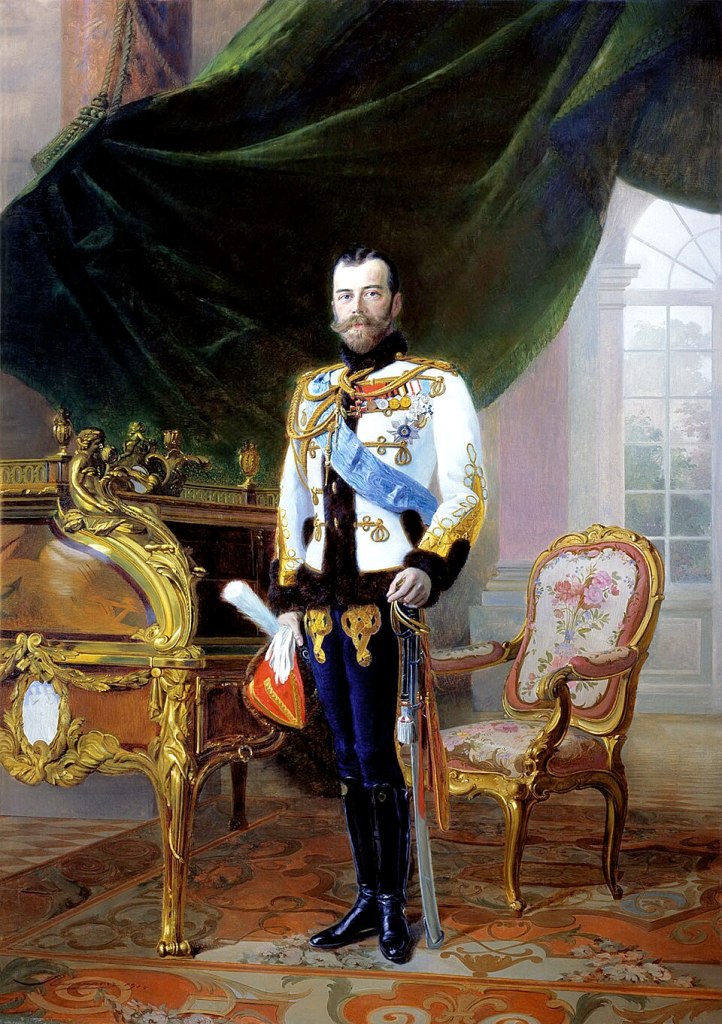
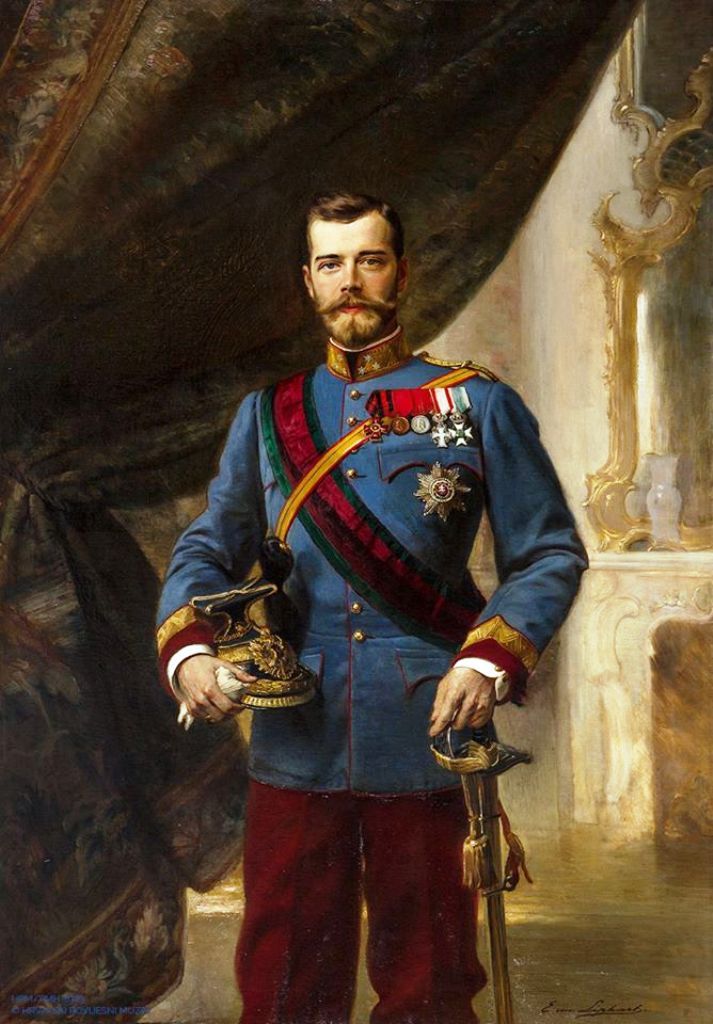
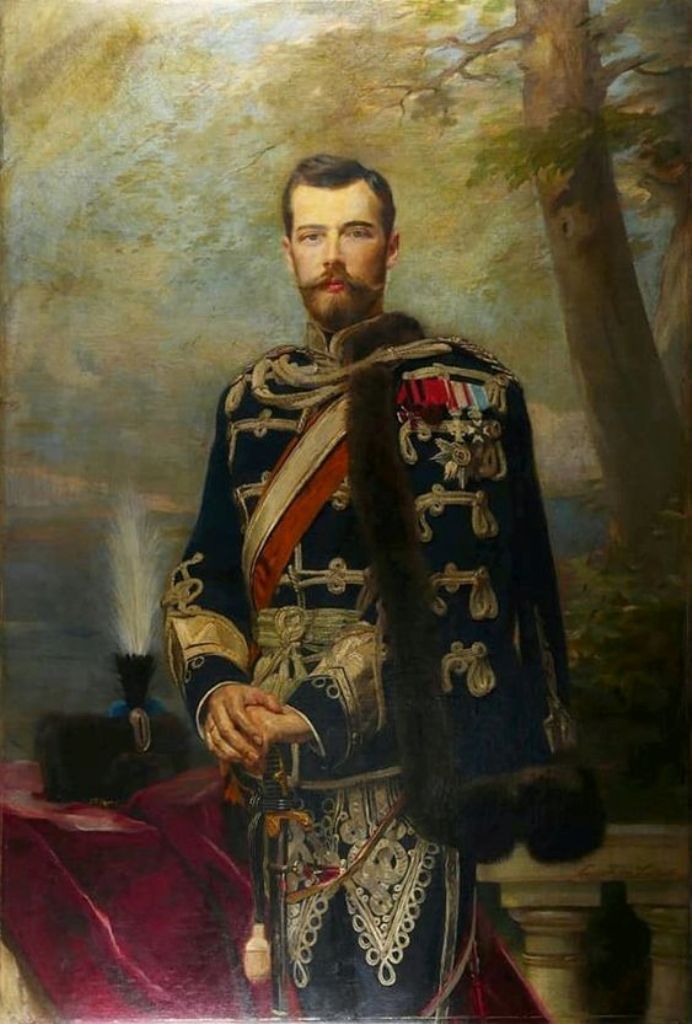
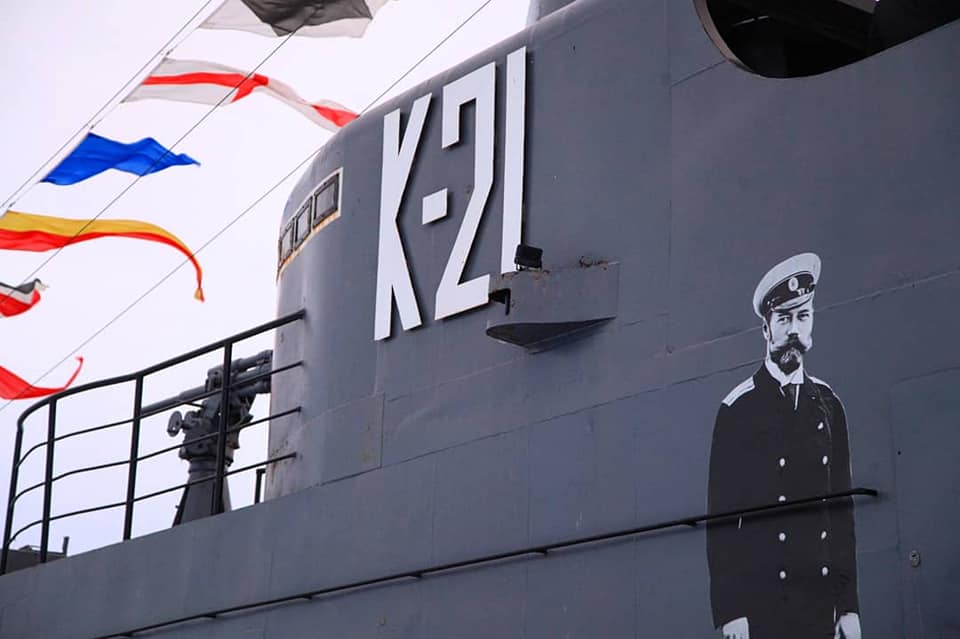
Is the myrrh-streaming icon of Nicholas II predicting a terrible omen for Russia?

Whether you are a believer or not, the following is just one of many miracles reported since the regicide in Ekaterinburg in July 1918 . . .

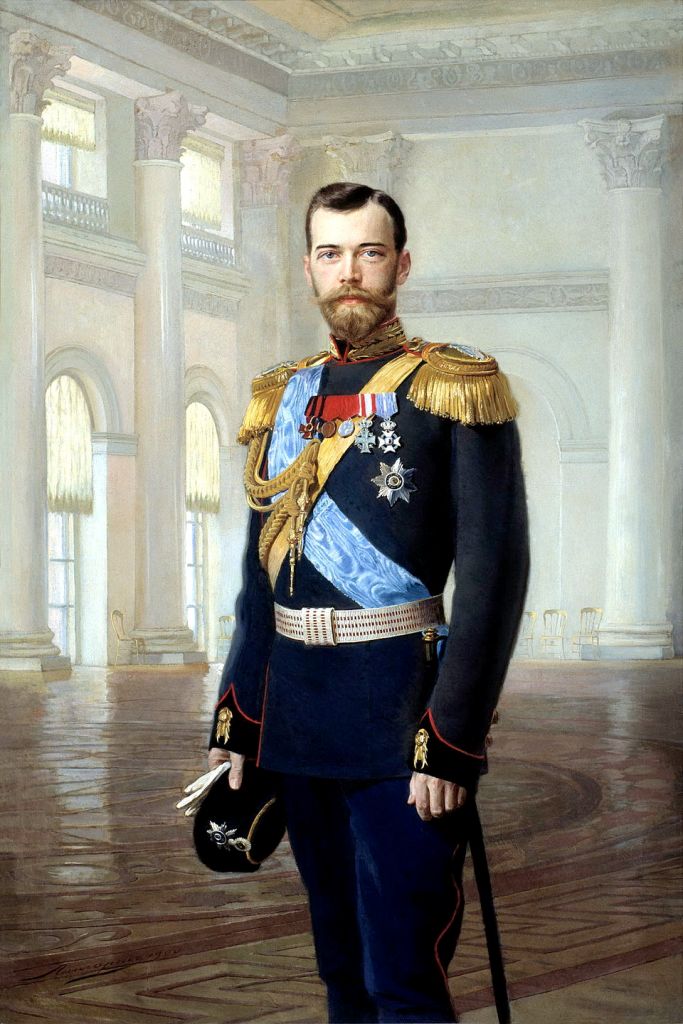
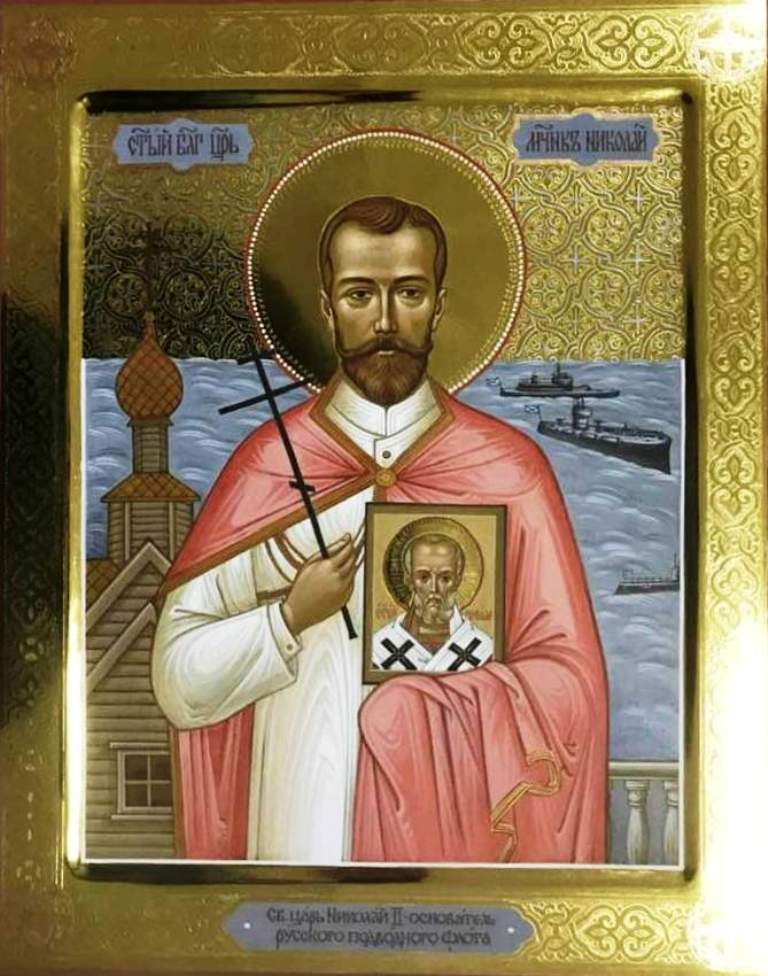
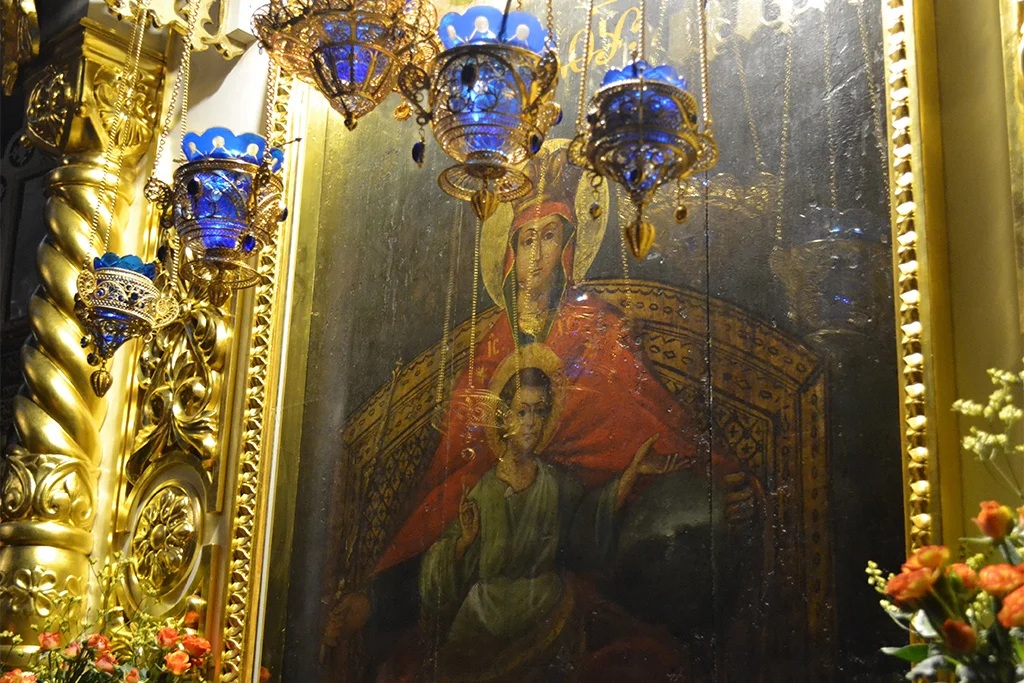
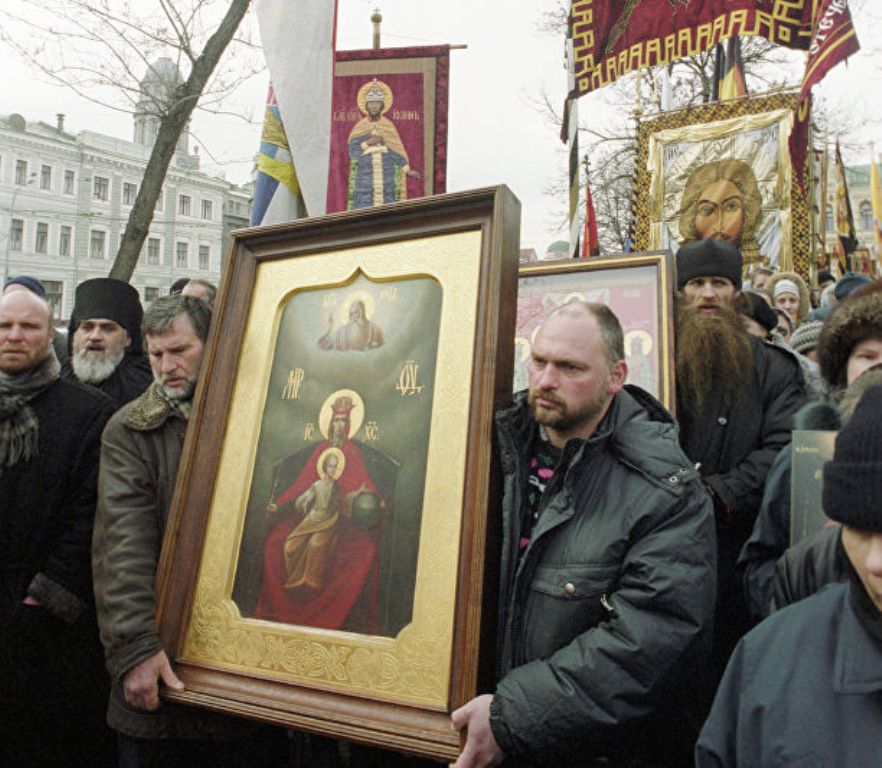
Last week, a case of myrrh streaming[1] from the icon of the Tsar-Passion-Bearer Nicholas II was recorded in the Church of the Nine Martyrs of Kizichesky in Moscow. The Orthodox community is now discussing the event which many believers and clergy interpret as an alarming omen.

Archpriest Anthony Serov commented on the event, “fragrant oil, myrrh, appeared on the surface of the icon, which is in a special, hermetically sealed case.” According to him, the design of the kiot[2] completely excludes any possibility of external influence or forgery. The myrrh-streaming of the icon has been confirmed by Life.ru[3].

“The icon is placed in a protected case, which excludes any outside interference,” Archpriest Anthony Serov emphasized. “Nevertheless, we have witnessed myrrh streaming from the icon. This, in my opinion, is of great spiritual importance.”

In the Orthodox tradition, the streaming of myrrh from icons is considered a miracle and a special sign of grace. However, myrhh streaming from the face of the saint [Nicholas II] which is enclosed in a protective case, is another matter.

Archpriest Serov regards the incident as a warning addressed not only to Orthodox believers, but to Russian society as a whole. He drew parallels with historical events when such phenomena preceded significant changes and upheavals, such as the 1917 Revolution and the First World War.

“The history of our country [Russia] has experienced examples of the streaming of myrrh from icons became a harbinger of revolutionary events, military conflicts and other difficult trials and tribulations,” the rector of the church explained. “It is necessary to comprehend what happened and learn from them.”

Over the centuries, such cases have been repeatedly recorded in Orthodox monasteries and churches in Russia. As a rule, believers see this as a call to repentance and prayer, especially when the images of the Royal Passion-Bearers “weep”.

Earlier, journalists turned to religious scholar Konstantin Mikhailov for comment of the recent myrrh-streaming incident near Moscow. The confessor said that such events are not uncommon and in most cases have a natural explanation. According to the expert, scientists have always found logical reasons for the appearance of moisture on icons.

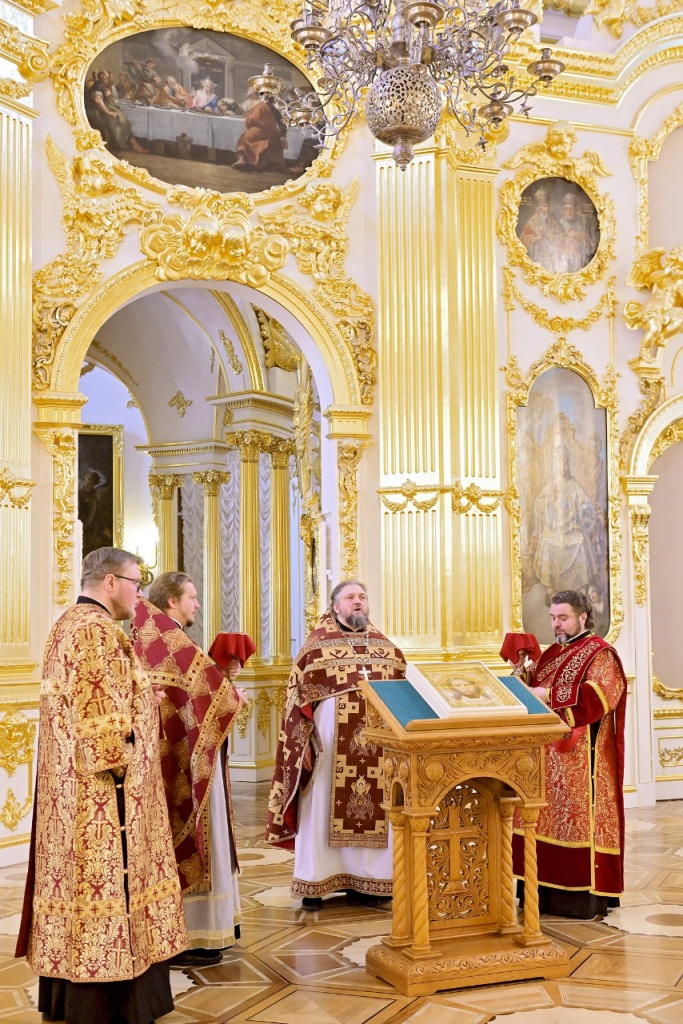
In the meantime, parishioners and believers from all over Moscow are coming to the Church of the Nine Martyrs of Kizichesky to personally see the myrrh-streaming icon and pray.

NOTES:

[1] In the Orthodox tradition, myrrh-streaming is one of the most mysterious and controversial phenomena. On the one hand, the Church recognizes the fact of the outflow of fragrant myrrh from icons, relics and crosses as one of the manifestations of God’s grace. On the other hand, each such case is carefully checked by church commissions in order to exclude any possibility of forgery or natural causes.

[2] A kiot is a decorated case or frame used in Orthodox Christianity to protect and display religious icons. It serves to safeguard the icon from environmental factors such as temperature fluctuations, dust, and humidity, ensuring the icon’s preservation over time.

[3] A prominent Russian information portal and news agency.

FURTHER READING:

Myrrh-streaming icon of Tsar Nicholas II brought to Ekaterinburg for Tsar’s Days’ + PHOTOS and VIDEO

My [Paul Gilbert’s] cancer journey and prayers for the intercession of Tsar-Martyr Nicholas II

© Paul Gilbert. 23 November 2025

The church where Nicholas II and his family worshiped in Tobolsk

PHOTO: Church of the Annunciation of the Blessed Virgin, Tobolsk. 1910

During their eight month stay in Tobolsk [August 1917-April 1918], Nicholas II and his family were held under house arrest in the former Governor’s Mansion [renamed the “House of Freedom” by the Bolsheviks]. Their movements were restricted, as they had been at Tsarskoye Selo from March 1917 to the end of July 1917. Several weeks after their arrival in Tobolsk, they were permitted to worship in the nearby Church of the Annunciation of the Blessed Virgin up until January 1918, after which services were restricted to the confines of the “House of Freedom”.

The brick church was built between 1735-1758. A two-story quadrangle, completed with an octagon, on which five decorative domes were placed, with a two-aisled refectory and a three-tiered bell tower. The refectory included the chapels of Procopius and Ioann of Ustyug and the Great Martyr Catherine.

For more than three centuries, the Church of the Annunciation of the Blessed Virgin served as a spiritual center of life for hundreds of parishioners. The church featured a library, an almshouse, and a parochial school.

Pierre Gilliard recalls: “Finally, on September 21st, the festival of the Nativity of the Virgin, the prisoners were allowed for the first time to go to the church. This pleased them greatly, but the consolation was only to be repeated very rarely. On these occasions we rose very early and, when everyone had collected in the yard, went out through a little gate leading on to the public garden; which we crossed between two lines of soldiers. We always attended the first Mass of the morning, and were almost alone in the church, which was dimly lighted by a few candles; the public was rigorously excluded. While going and returning I have often seen people cross themselves or fall on their knees as Their Majesties passed. On the whole, the inhabitants of Tobolsk were still very attached to the Imperial family, and our guards had repeatedly to intervene to prevent them standing under the windows or removing their hats and crossing themselves as they passed the house.”

Empress Alexandra Feodorovna wrote in her diary: “During the services, officers, the commandant and the commissar stand beside us so that we do not dare to speak”.

PHOTO: drawings of the Church of the Annunciation of the Blessed Virgin, Tobolsk

On 8th September 1917, the Empress wrote in her diary: “We went to the service in the Cathedral of the Annunciation on foot, I was in my [wheel]chair, through the city garden, the soldiers were stationed all the way, the crowd stood where we had to cross the street. It is very unpleasant, but, nevertheless, I am grateful for being in a real church for [for the first time] in 6 months ”.
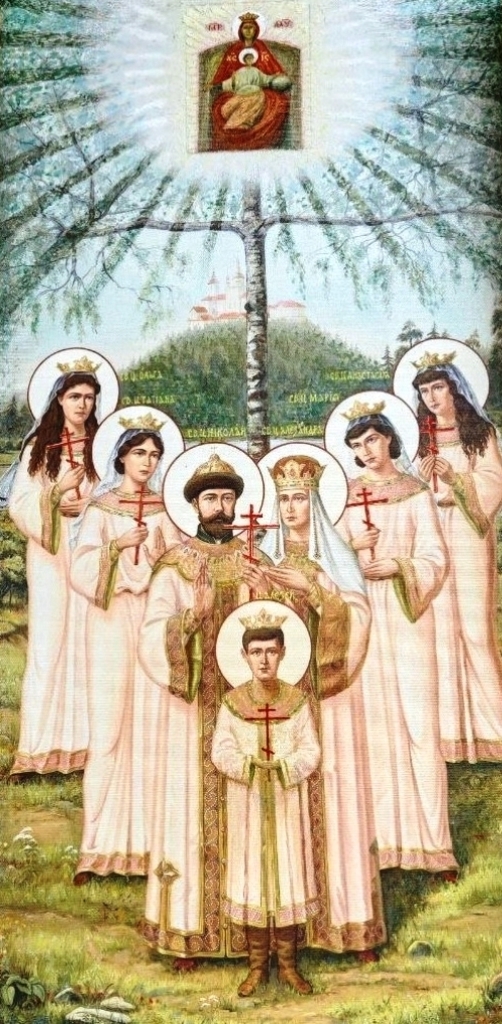
Commissar Vasily Pankratov described this event as follows: “Nicholas Alexandrovich was informed that tomorrow a Liturgy would be performed in the church, and that it was necessary to be ready by 8 o’clock in the morning. The prisoners were so pleased with this news that they got up very early and were ready by 7 o’clock. When I arrived at 7:30, they were already waiting. About 20 minutes later, the duty officer informed me that everything was ready. It turned out that Alexandra Feodorovna decided not to walk, but to ride in a chair, as her legs hurt. Her personal valet quickly wheeled the chair out to the porch. The whole family went out, accompanied by their retinue and servants, and we proceeded to the church. Nicholas II and his children, walking in the garden, looked around in all directions and talked in French about the weather, about the garden, as if they had never seen it. In fact, this garden was located just opposite their balcony, from where they could observe it every day. But it is one thing to see an object from a distance and, as it were, from behind a lattice, and another to walk through it freely. Every tree, every twig, bush, bench acquires charm … From the expressions on their faces, from their movements, one could assume that they were experiencing some special euphoria. As she was walking through the garden and not watching where she was going, Anastasia even fell. Her sisters laughed, even Nicholas himself was amused with this awkwardness of his daughter. Alexandra Feodorovna’s face remained motionless. She sat majestically in her chair and was silent. On leaving the garden, she got up from the chair, from where we crossed the street to enter the church. Outside stood a double line of soldiers, [a chain of riflemen was also placed in the garden along the entire route] and behind them stood curious onlookers. Upon entering the church, Nicholas and his family took their place on the right, their retinue closer to the middle. Alexandra Feodorovna knelt down, Nicholas and the four grand duchesses followed her example. After the service, the whole family received a prosphora [a small loaf of leavened bread used in Orthodox liturgies], which for some reason they always passed to their servants”.

The prisoners were allowed to visit the church again – on 14th September, the feast of the Exaltation of the Cross. On 18th September, Grand Duchess Tatiana Nikolaevna wrote to her aunt Grand Duchess Xenia Alexandrovna: “We were twice in church. You can imagine what a joy it was for us after 6 months, because do you remember how uncomfortable our camp church in Tsarskoye Selo was? The church here is good. One large summer room in the middle, where they serve for the parish, and two winter ones on the sides [referring to the side-chapels]. The right side-chapel is reserved for us”.

PHOTO: View of Tobolsk and the Church of the Annunciation of the Blessed Virgin

The family managed to visit the church for a third time on 1st October – on the feast of the Protection of the Most Holy Theotokos. Then again on 22nd October, the day marking the anniversary of the accession of Nicholas II to the throne and the feast of the Kazan Icon of the Mother of God. The entire family received communion on this day of the Holy Mysteries of Christ. “What a spiritual consolation in the time we are going through!” – the Emperor wrote in his diary that day. In addition, the Imperial family were allowed to attend church on 26th November, 3rd and 10th December, and 19th January.

Pierre Gilliard again writes: “The next day, Christmas Day, we went to church. By the orders of the priest the deacon [Fr Vasiliev] intoned the Mnogoletie [the prayer for the long life of the Imperial family] This was an imprudence which was bound to bring reprisals. The soldiers, with threats of death, demanded that the prayer should be revoked. This incident marred the pleasant memories which this day should have left in our minds. It also brought us fresh annoyances and the supervision became still stricter.”

Following the incident involving Fr Vasiliev, the Imperial family were no longer permitted to attend church. Instead, an improvised chapel was set up in the ballroom of the mansion, which consisted of a folding iconostasis and an altar, decorated with the Empress’s bed-spread, which served as an altar cloth. The local priest was invited to perform services for the Imperial family and their retinue up until April 1918, when they were transferred to the Ipatiev House [renamed the “House of Special Purpose”] in  Ekaterinburg, where they were subsequently murdered by members of the Ural Soviet on 17th July.

The Church of the Annunciation of the Blessed Virgin was closed by the Soviets in 1930, the building demolished in 1956 – the same year that the author of this article was born.

On 8th November [Siberia Day] 2025, a 1.4 m [4 ft. 6 in.] bronze 3D model of the Church of the Annunciation of the Blessed Virgin, was installed in its historical place – at the intersection of Ulitsas Mira and Ershov.

More information about the history of the church can be found on the audio guide using the QR code found on the information plate of the model.

The outdoor 3D model is part of the ‘Lost Churches of Tobolsk’ project, designed to remind residents and visitors to Tobolsk of the city’s rich spiritual history. It is a shame, that the church was not reconstructed.

NOTES:

[1] Siberia Day was established by Emperor Alexander III, on 8th November 1881, marking the 300th anniversary of the annexation of Siberia to the Russian State. Siberia Day honours the history and cultural significance. The holiday was abolished during the Soviet period, and revived in the 1990s.

© Paul Gilbert. 8 January 2021 – UPDATED on 9 November 2025

Russia’s ambassador to Britain laid flowers at the monument to Nicholas II on the Isle of Wight

PHOTO: Russia’s Ambassador to the UK Andrei Kelin
at the monument to Nicholas II on the Isle of Wight

On 4th November 2025 – on the occasion of National Unity Day – Russia’s Ambassador to the UK Andrei Kelin laid flowers at the monument to Nicholas II and his family on the Isle of Wight.

The granite monument with bronze relief portraits of the Imperial Family, was unveiled on 7th July 2018, by the Grand Duchess Elizabeth Romanov Society. The monumetn stands in Jubilee Green in East Cowes, close to Queen Victoria’s residence, Osborne House on the Isle of Wight, which is situated just off the southern coast of England.

The monument marking the 100th anniversary of the death and martyrdom of Emperor Nicholas II and his family was created by the renowned Moscow sculptor Elena Bezborodova. At its base there is a capsule with soil from the site, where the Imperial Family’s remains were found near Ekaterinburg.

“The Isle of Wight has a special connection with Russian history: Empress Alexandra Feodorovna and her sister Elizabeth Feodorovna spent time here as children with their grandmother, Queen Victoria. Nicholas II first visited the island in 1884 and visited it again in 1909, staying at the Barton estate,” said the Russian ambassador.

National Unity Day has been celebrated in Russia annually, on 4th November since 2005. The holiday commemorates the popular uprising which ended the Polish-Lithuanian occupation of Moscow in November 1612, and more generally the end of the Time of Troubles and turning point of the Polish intervention in Russia.

FURTHER READING:

Britain’s first memorial to the Russian Imperial Family + PHOTOS

© Paul Gilbert. 5 November 2025

Emperor Nicholas II on Facebook

CLICK HERE to be redirected to my Nicholas II Facebook page

In April 2016, I launched a Facebook page dedicated to the life and reign of Emperor Nicholas II, which do not appear on this blog. In addition are posts about his family, the Romanov Dynasty and the history of Imperial Russia.

Each day, I create up to a dozen new posts, featuring news – translated into English from Russian archival and media sources – plus, contemporary and vintage photos – to date, there are more than 5,000 colour and black & white photos on my Nicholas II Facebook page!

In addition are videos and newsreels, as well as new book announcements, new monuments, portraits, and exhibitions in Russia, which are not covered in English social media and news outlets.

I currently have 5,000 Facebook friends – the maximum that FB will allow – plus, an additional 4,500+ followers, from all over the world. Friends are allowed to comment on posts and engage in discussions with others. My FB page has become a perfect “watering hole” for those of us who share an interest in Russia’s last Tsar, his family, the Romanov dynasty, and the history of Imperial Russia.

Please note, that as I have already reached the maximum number of friends that Facebook will allow me, you can still become a “FOLLOWER” of my FB page.

Simply CLICK on the LINK above, which will redirect you to my FB page, whereupon you CLICK on the FOLLOW button. This will ensure that you receive instant updates on all new posts, however, you will not be able to comment on them. You always have the option to send a FRIEND REQUEST at a later date.

Please join me today, in celecrating the life, reign and
era of Russia’s last Emperor and Tsar! remains concise

CLICK HERE to be redirected to my Nicholas II Facebook page

© Paul Gilbert. 1 November 2025

Imperial Family photo-exhibition opens in Vyselki

NOTE: click on the above image to enlarge and see in greater detail

On 22nd October 2025, the photo-exhibition ‘The Tsar’s Family. Love and Mercy‘, opened in the Church of St. Nicholas the Wonderworker in the village of Vyselki, Krasnodar Territory.

The exhibition is showcased in the central alley of the Church, where large photographs of Emperor Nicholas II and his family are displayed on the walls. The exhibition is FREE to all.

The exhibit tells the story of the Nicholas II’s family, who unselfishly served others during the First World War and the traditions of nursing in Russia at the turn of the 19th – early 20th centuries.

Recall that when World War I broke out, Empress Alexandra Feodorovna and her two eldest daughters Grand Duchesses Olga and Tatiana became Red Cross nurses. Together, from 1914 to 1917, they cared for wounded soldiers in a private hospital on the grounds of Tsarskoye Selo, until the family were placed under house arrest, following the Tsar’s abdication 15th March (O.S. 2nd March) 1917.

PHOTO: 3rd grade students of school No. 2 in Vyselki together with their teacher visit the photo-exhibition ‘The Tsar’s Family. Love and Mercy’

The exhibition has already been visited by 3rd grade students of school No. 2 in Vyselki together with their teacher Irina Fostenko.

The children listened with interest to the story told by Father Alexander about the service of the Imperial Family to the Fatherland, and about Nicholas II’s family, helping soldiers, the poor and the sick during the war years.

The photo project The Tsar’s Family: Love and Mercy was created in 2016 by the Sretensky Monastery in Moscow. The travelling exhibition has already been presented in Serbia, Germany, Italy, Canada, Argentina, New Zealand, South Africa, Romania, Croatia, Montenegro, Bosnia and Herzegovina, Macedonia, and the Czech Republic.

***

*As I have noted in previous posts, I support any initiative – big or small – to help keep the memory of Nicholas II and his family alive in 21st century Russia – PG

© Paul Gilbert. 30 October 2025

Vintage train from Ekaterinburg, tells the story of Nicholas II’s last days

PHOTO: a pin – depicting the image of Nicholas II
– worn by conductors on the vintage train from Ekaterinburg.

In December 2022, a vintage train journey was initiated from Ekaterinburg, which tells passengers, the story of the last days of Nicholas II and his family in the Urals. The train runs from Ekaterinburg to the Shuvakish station and back, on Friday evenings, and also on Saturday and Sunday mornings.

The locomotive (see photo below) is not from the Imperial times, but a 1963 steam engine, made in Czechoslovakia. The interiors, however, have been remodeled to resemble that of an early 20th century Russian train.

Passengers travelling on the vintage train are greeted on the platform by hospitable conductors wearing uniforms of early 20th century Imperial Russia-style, and white gloves (see photo below).

The train has four wagons: First Class, Economy Class, a dining car (see photo below) and a sightseeing car, which operates during the summer months. One compartment is decorated with framed photographs of the Imperial Family.

During the 3-hour train journey, passengers can sit back, relax and enjoy the view, while listening to an audio-guide, which tells the story of the last days of Russia’s last Tsar, his family and their four faithful retainers.

The audio begins with the Imperial Family’s train journey from Tsarskoye Selo to Tyumen, then by boat to Tobolsk, where they were held under house arrest in the former Governor’s House, from August 1917 to March 1918.

The story continues, with the transfer of the Imperial Family to Ekaterinburg, where they were held under house arrest in the Ipatiev House, from March to July 1918. The audio-guide further tells of their fate, their burial at what is today known as Ganina Yama, and the discovery of their remains, almost 100 years later on the Old Koptyaki Road.

Tea is served to passengers from a traditional samovar. Conductors bring the tea in beautiful faceted glasses in iron cup holders, on which the Double-Headed Eagle of the Russian Empire is depicted.

The train stops at Shuvakish Station (Zheleznodorozhny district), where passengers are free to disembark the train to a wooden platform, decorated with benches, a bell and a manual semaphore signal. The stop lasts a little more than an hour.

Inside the wooden pavilion, passengers can enjoy music, which includes a variety of waltzes and melodies from the repertoire of Alexander Serov.

Passengers can also try on the uniforms of the White Guards, take photos, and enjoy a cup of hot tea, bagels and local berries.

PHOTO: tea is served at Shuvakish Station

***

*As I have noted in previous posts, I support any initiative – big or small – to help keep the memory of Nicholas II and his family alive in 21st century Russia – PG

© Paul Gilbert. 19 October 2025

Nicholas II monuments in and around Ekaterinburg

Since the fall of the Soviet Union in 1991, more than 100 monuments, busts and memorials have been installed in cities and towns across in Russia – six of which have been installed in Ekaterinburg. Recall that it was here, in the Ural capital, where the last Tsar and his family were held under house arrest and subsequently murdered.

Once a bastion of Bolshevism, Ekaterinburg has slowly shed its status as the “capital of atheism”. Since the fall of the Soviet Union in 1991, the Urals has experienced a revival of faith, with Ekaterinburg as the center of Orthodox Russia in the region.

It is important to add, that Ekaterinburg has done more to honour Russia’s last Tsar and his family than any other city in Russia. It is home to the Church on the Blood [built on the site of the Ipatiev House, where the Imperial Family were murdered]; the Monastery of the Holy Royal Martyrs at Ganina Yama; the Romanov Memorial at Porosenkov Log; three museums and no less than six monuments, dedicated to the Imperial Family.

Church on the Blood, Ekaterinburg

The Church on the Blood in Ekaterinburg, was built in 2000-2003m on the site of the Ipatiev House, where the Imperial family and their faithful retainers were all brutally murdered by members of the Ural Soviet on 17th July 1918.

The monument to Emperor Nicholas II and his family, created by the sculptor Konstantin Vasilievich Grunberg was installed in 2003 on the grounds of the Church on the Blood in Ekaterinburg. The Tsar is depicted carrying the invalid Tsesarevich Alexei in his arms.

The staircase on the left represents the 23 steps the Imperial Family and their four faithful retainers descended to their death and martyrdom in the Ipatiev House in the early morning hours of 17th July 1918.

The door seen in the lower right is the entrance to the Lower Church, sanctified in honour of the Holy Royal Martyrs in the Church, where the Imperial Room – built on the site of the murder room.

PHOTOS: two views (above and below) of the bust-monument to Emperor Nicholas II, in the Patriarchal Compound of the Church on the Blood

Several years back, a bronze bust on a marble pedestal of Emperor Nicholas II was installed at the top of the staircase leading to the Museum of the Holy Royal Family in the Tsarsky Cultural and Educational Center, situated in the Patriarchal Compound of the Church on the Blood.

In July 2023, the bust was replaced with a similar bust of the Tsar’s son and heir Tsesarevich Alexei Nikolaevich. The bust of the Emperor was temporarily moved to the new permanent exhibition The Romanovs in the Urals, located at the Poklevsky-Kozell House Museum of the Sverdlovsk Regional Museum of Local Lore in Ekaterinburg.

PHOTO: the bust-monument to Tsesarevich Alexei Nikolaevich, in the Patriarchal Compound of the Church on the Blood

Ekaterinburg museums

PHOTO: Bust of Emperor Nicholas II on display at the Hermitage-Ural Museum in Ekaterinburg – a branch of the State Hermitage (St. Petersburg)

PHOTO: a copy of the “The Night at the Ipatiev House” sculptural composition by Russian sculptor Zurab Tsereteli (1934-2025), greets visitors to the permanent exhibition ‘The Romanovs in the Urals‘ located in the Poklevsky-Kozell House Museum in Ekaterinburg.

***

Monastery of the Holy Royal Martyrs, Ganina Yama

Ganina Yama is the site of the Four Brothers mine situated near the village of Koptyaki, 15 km north from Ekaterinburg. It was here that in the early morning hours of 17th July 1918 the bodies of Tsar Nicholas II, his family and four servants were secretly transported to Ganina Yama and thrown into a 9′ deep pit. The murderers returned the following day, exhumed the remains and reburied them in two unmarked graves at Porosenkov Log, which is situated 3.8 km away.

In 2001, the Russian Orthodox Church constructed the Monastery of the Holy Royal Martyrs at the site in 2001. Between 2008-2011, three monuments to the Holy Royal Martyrs were installed on the grounds of the monastery:

The bronze bust (above) of Emperor Nicholas II was installed and consecrated on 19th (O.S. 6th) May 2008, the day marking the sovereign’s 90th birthday. A bas-relief (below) depicting Empress Alexandra Feodorovna and her five children, is located on the lower section of the monument to Emperor Nicholas II

The bronze monument (above) to Empress Alexandra Feodorovna was installed and consecrated in 2011.

The bronze monument (above) of Grand Duchesses Olga, Tatiana, Maria, Anastasia and Tsesarevich Alexei, was installed and consecrated on the grounds of the Monastery of the Holy Royal Martyrs at Ganina Yama in 2011.

Sredneuralsk, Sverdlovsk Oblast

The Sredneuralsky Convent in Honour of the Icon of the Mother of God “The Conqueror of Bread”, is an Orthodox convent located on the outskirts of the city of Sredneuralsk, 15 km northwest of Ekaterinburg.

In 2014, the Trinity Church was consecrated in the monastery, which was built based on the ancient Russian architecture of the era of the formation of the Moscow kingdom. It is dedicated to the family of the last Russian Tsar Nicholas II. The basement of the Ipatiev House – where the Imperial Family were shot – was recreated in the lower part of the church. A large Poklonny cross dedicated to the Imperial Family, and a bust of Tsar Nicholas II were installed on the grounds of the monastery.

© Paul Gilbert. 13 October 2025

New Book – Thirteen Years at the Russian Court

*This title is available from AMAZON in the USA, UK, Canada, Australia,
France, Germany, Spain, Italy, Netherlands, Poland, Sweden and Japan

CLICK HERE TO ORDER THE HARD COVER EDITION @ $25.00 USD

CLICK HERE TO ORDER THE PAPERBACK EDITION @ $20.00 USD

Available in Hard cover and Paperback edtions.
294 pages. With photographs and Notes

Originally published in 1921, this new edition of ‘Thirteen Years at the Russian Court’, features a new 32-page introduction by Romanov historian Paul Gilbert

A Personal Record of the Last Years and Death
of the Emperor Nicholas II. and his Family

Thirteen Years at the Russian Court is a personal record by Pierre Gilliard, a Swiss author and academic who served as the French language tutor to Russian Emperor Nicholas II’s five children.

The book, first published in 1921, offers a unique perspective on the final years of the Romanov dynasty through Gilliard’s personal experiences as a tutor to the August children of Russia’s last Tsar.

The memoir blends historical narrative with personal eye-witness anecdotes, providing an intimate look into the opulence and decline of Imperial Russia. Gilliard’s recollections are not merely memoirs but vital historical documents that bridge the gap between the glamour of Court life and the impending doom of a centuries-old regime.

Gilliard’s memoir serves as an invaluable resource for anyone interested in Russia’s last Tsar, Russian history, monarchy, or the complexities of life at the Russian Imperial Court during the early 20th century.

PIERRE GILLIARD (1879-1962)

Pierre Gilliard was a Swiss academic and author, best known as the French language tutor to the five children of Emperor Nicholas II of Russia from 1905 to 1918. In 1920, he returned to his native Switzerland, where he wrote his memoirs, Thirteen Years at the Russian Court, about his time with the Russian Imperial Family.

© Paul Gilbert. 29 September 2025

Armchair recreated for Nicholas II’s Working Study

Photo © Tsarskoye Selo Restoration Workshop

The Tsarskoye Selo State Museum continue to recreate items lost from the Alexander Palace during the Second World War . . . the Tsarskoye Selo Restoration Workshop are currently recreating the armchair for the large desk in the Working Study of Emperor Nicholas II.

The chair is being recreated from a vintage 1917 photograph by masters of the Tsarskoye Selo Restoration Workshop, who during the past few years recreated other items of furniture for this interior, as well as other interiors in the recreated Private Apartments of Emperor Nicholas II and Empress Alexandra Feodorovna, located in the Eastern Wing of the Alexander Palace.

Furniture items which have been recreated for the Working Study of Emperor Nicholas II include a large table with a lamp; in June 2023, a beautiful Ottoman and a large Persian Farahan carpet was recreated to upholster the Large Ottoman sofa; in December 2024, a table and chair, among other pieces. Upon completion, each piece was returned to it’s original historic place in the Study.

PHOTO: Nicholas II seated in the armchair (currently being recreated) in 1901

Recall that the Alexander Palace closed in the Autumn of 2015 for an extensive restoration, which saw the reconstruction of the Private Apartments of Emperor Nicholas II and Empress Alexandra Feodorovna, situated in the Eastern Wing of the palace. Work on the project took 6 years to complete. The Alexander Palace reopened it’s doors to visitors in August 2021.

According to the TASS News Agency, the Western Wing of the Alexander Palace at Tsarskoye Selo is now scheduled to open to the public in late 2025.

© Paul Gilbert. 23 September 2025

Nicholas II wanted reforms, Lenin wanted revolutions: who was right?

The question of whether Nicholas II was right with his desire for reform or Vladimir Lenin with his revolutionary ideology is at the heart of the debate about the fate of Russia in the early 20th century. Emperor Nicholas II, tried to modernize the country through gradual reforms, preserving its traditional foundations and monarchical system. Lenin, on the other hand, advocated a radical breakdown of the old order and the construction of a socialist society through revolution.

In this article, I argue that Nicholas II’s reform-based approach was more correct and patriotic, as he sought stability and prosperity for Russia, while Lenin’s revolutionary ideas led to chaos, civil war, and tragedy, including the deception and murder of the Imperial Family.

Nicholas II: Reforms for the Sake of Stability and Prosperity

Nicholas II, who ascended the throne in 1894, inherited an empire that faced the challenges of modernization, social tensions, and domestic and external threats. His reign was far from perfect, but the Tsar sincerely sought reforms that would strengthen Russia, preserving its national identity and unity.

Economic and social reforms

Under the leadership of Nicholas II, Russia experienced significant economic growth. At the beginning of the 20th century, the country was one of the world’s leaders in industrialization. The construction of the Trans-Siberian Railway linking the east and west of the Russian Empire was completed, promoting trade and mobility for Russians. Industrial production doubled, and Russia became the largest exporter of grain. These achievements show that the Tsar saw the future of the country in economic development and modernization.

The key reform was Pyotr Stolypin’s agrarian reform, which began in 1906. It was aimed at creating a class of independent peasant landowners, which would strengthen agriculture and social stability. Nicholas II supported these measures, realizing that a strong economy and a satisfied peasantry were the basis of a stable state. The reforms were gradual to avoid upheavals, which testifies the foresight of the Tsar.

Political transformations

Nicholas II, despite his commitment to autocracy, made political concessions after the revolution of 1905. The Manifesto of 17th October 1905 introduced the State Duma, laying the foundations of a constitutional monarchy. Although the Duma had limited powers, it was a step toward democratization, showing the Tsar’s willingness to adapt to new realities. His reforms were aimed at preserving the unity of the country, avoiding radical upheavals that could split society.

Protection of traditions and faith

Nicholas II saw Orthodoxy and traditions as the basis of Russian identity. He supported the construction of churches and monasteries, strengthening the spiritual unity of the people. His reforms did not seek to destroy the historical heritage, but on the contrary, used it as a foundation for modernization. This made his approach patriotic, as he cared about preserving the culture of Russia.

Peacekeeping

Nicholas II initiated the Hague Conference of 1899, which was the first step towards international norms of warfare. This demonstrated his desire for peace and stability, which was especially important in the context of growing global conflicts. His efforts earned him a nomination for a Nobel Peace Prize in 1901. Even during the First World War, the Tsar personally participated in the management of the army, showing devotion to duty and country.

Lenin: Revolution for the Sake of Utopia

Vladimir Lenin, on the contrary, advocated a radical destruction of the existing order. His Marxist ideology demanded a revolution that would destroy the monarchy, the church, and capitalism, replacing them with the dictatorship of the proletariat. However, his actions led to disastrous consequences, proving that the revolutionary path was wrong.

Destruction instead of creation

The October Revolution of 1917, led by Lenin, overthrew the Provisional Government and led to a civil war (1917-1922) which claimed millions of lives. The nationalization of industry and collectivization destroyed the economy, causing hunger and poverty. Unlike the reforms of Nicholas II, which strengthened the economy, Lenin’s policy led to devastation. For example, the surplus-appropriation plundered peasants, which caused mass discontent and uprisings, such as the Kronstadt uprising in March 1921.

Red Terror and deception

Lenin sanctioned the first Red Terror, aimed at the destruction of “class enemies.” Thousands of innocent civilians, were executed or sent to gulags. Nicholas II, on the contrary, sought to avoid mass repressions, even during the February 1905 Revolution. Moreover, Lenin played a key role in the tragedy of the last Tsar and his family. The Imperial Family were held under house arrest and then shot in Ekaterinburg in 1918 on the direct order of Lenin. In the Bolshevik leader’s mind, as long as the Tsar, or any member of his family were left alive, they posed a threat to the new order and their reign of terror and repression.

Loss of territories

The Brest-Litovsk Peace Treaty of 1918, signed by Lenin, was humiliating for Russia. Huge territories, including Ukraine and the Baltic states, were given to Germany, which weakened the country. Nicholas II, even during the First World War, fought to preserve territorial integrity. When he took command of the Russian armed forces in August 1915, no further Russian territories were lost to the enemy. Lenin, on the other hand, sacrificed national interests for the sake of preserving his power, which can hardly be called patriotic.

Destruction of traditions

Lenin, as an atheist, declared war on Orthodoxy, destroying churches and persecuting and murdering thousands of members of priests, monks and nuns. This undermined the spiritual foundations of Russia, which Nicholas II defended. Lenin’s revolution rejected the historical legacy, replacing it with a utopian ideology that did not take into account the cultural and national characteristics of the country.

Who was right?

Nicholas II’s reform-based approach was correct, as he sought to modernize Russia without destroying its foundations. His reforms in the economy, agriculture, and politics (among others) were aimed at gradual development that could have led to prosperity had it not been for the revolutionary upheavals of 1917 and 1918.

The Tsar cared about the people, traditions and international prestige of the country, which makes his actions patriotic. His love for Russia was so deep, that he abdicated the throne, in order to save both his family and Russia from further bloodshed. His actions clearly emphasized his sacrifice.

Lenin, on the other hand, chose the path of revolution, which turned into chaos, civil war and the death of millions of innocent victims. His policies destroyed the economy and culture, and the deception and murders of the Imperial Family became symbols of his immoral approach. Popular support for Nicholas II frightened Lenin, as it threatened his power, which led to the regicide in Ekaterinburg.

Lenin, by destroying everything for the sake of a utopian idea, led Russia to disaster. Blackmail, deception and murder of Russia’s last Tsar only confirm that his methods were not only erroneous, but also immoral. History has shown that Nicholas II’s reforms could have made Russia stronger.

© Paul Gilbert. 16 September 2025