The following exhibition ran from 18th July to 9th September 2018
On 18th July 2018, in the year marking the 100th anniversary of the martyrdom of Emperor Nicholas II and his family, an exhibition will open in the Andrei Rublev Museum of Ancient Russian Art in Moscow, presenting a look at the development of the Russian icon during the more than 22-year reign of the last Russian emperor.
Russian icon painting developed in a single cultural space along with literature, music and theatrical art, experiencing an extraordinary rise during the reign of Nicholas II (1894-1917). This flourishing activity was achieved through a number of icon painting and jewelry workshops, which received the title “Supplier of the Imperial Court”. The Imperial manifesto of 1905 on the toleration and the opening of the Old Believers altars attracted wide acceptance of church art by the Old Believers’ and the creation of new works oriented to the art of pre-Petrine time.
The exhibition will feature a wide range of icons from museum and private collections, including items with memorial inscriptions, from the time of Emperor Alexander III’s death in 1894 to the fall of the Russian monarchy in 1917.
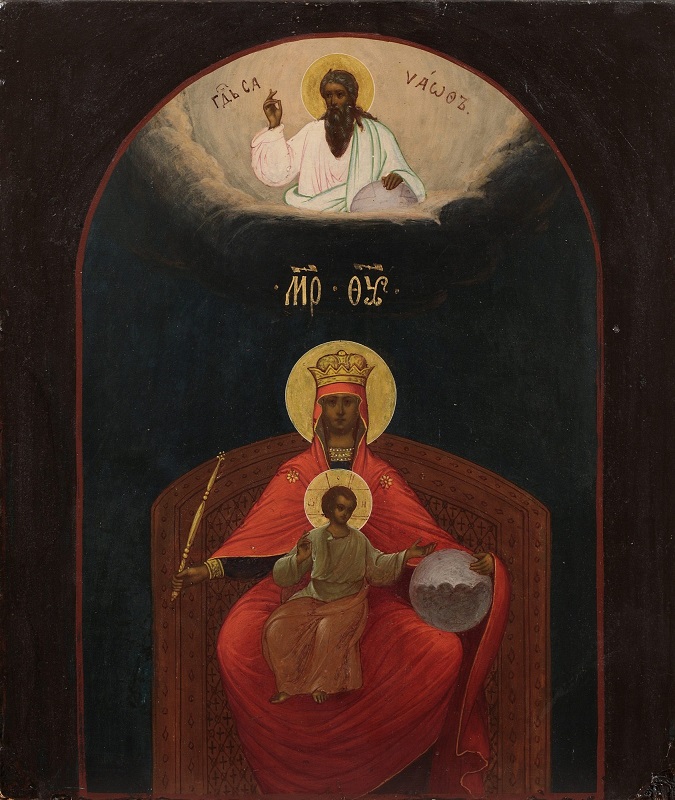
The Icon of the Mother of God “the Sovereign” – pictured above – has a unique place in Russian history. It appeared in the Kolomenskoye village near Moscow on 2 March 1917, the very day that Emperor Nicholas II abdicated the throne. Until 1812 the icon belonged to a convent in Moscow, but in the year of Napoleon’s invasion of Moscow it was hidden in the Kolomenskoye village and forgotten there for 105 years, until the time came for the icon to be revealed in accordance with God’s will. The icon was found among other old icons in the cellar of the Church of Ascension, after the peasant woman Yevdokiya Adrianova was twice instructed in a dream to go to the Kolomenskoye village and search there for a special icon of the Mother of God. After being cleaned of centuries-old dust and grime, the icon revealed an image of the Theotokos sitting on a throne, with the Infant Christ on Her knees, extending His hand in blessing. The Holy Virgin held a scepter in one hand and an orb in the other, and had a crown on Her head. With Her regal air and unusually stern visage, Her appearance was divine.
Significantly, the icon revealed itself at a time when the Russian Empire embarked on its apocalyptic course of destruction, while out of its depths came Holy Russia to gain the crown of martyrdom. The Theotokos’ red robe reflected the color of blood, while the icon’s appearance on the day of the abdication of the last Tsar, and the Theotokos’ regal air with all the attributes of royal power signified that the Mother of God Herself took sovereigny over the Russian people who had just lost their monarch.
The exhibitions Icons from the Era of Nicholas II runs from 18 July 9 September 2018 at the Andrei Rublev Museum of Ancient Russian Art in Moscow
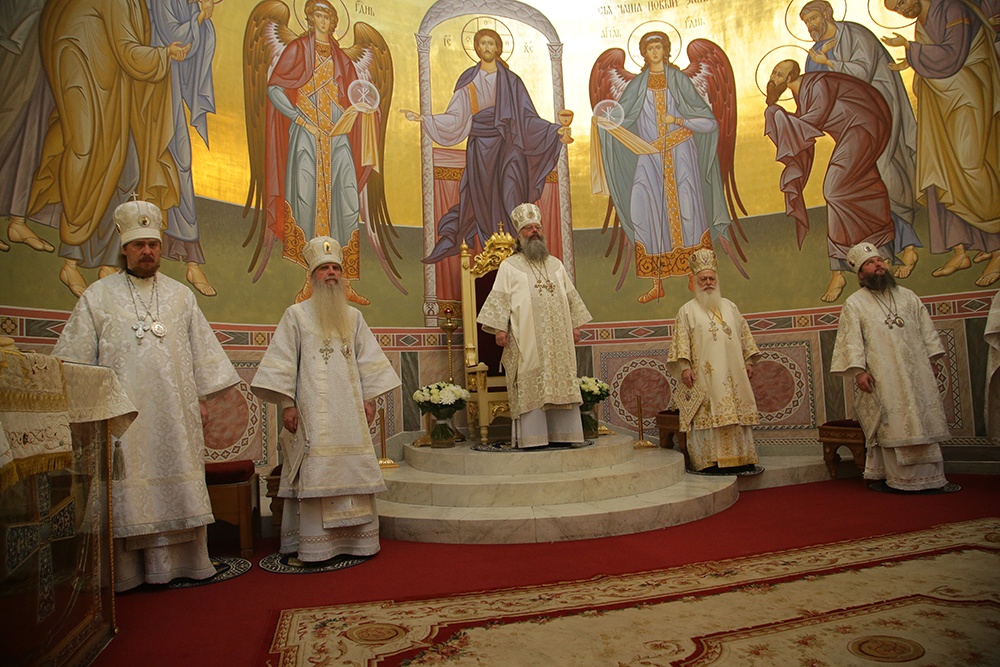
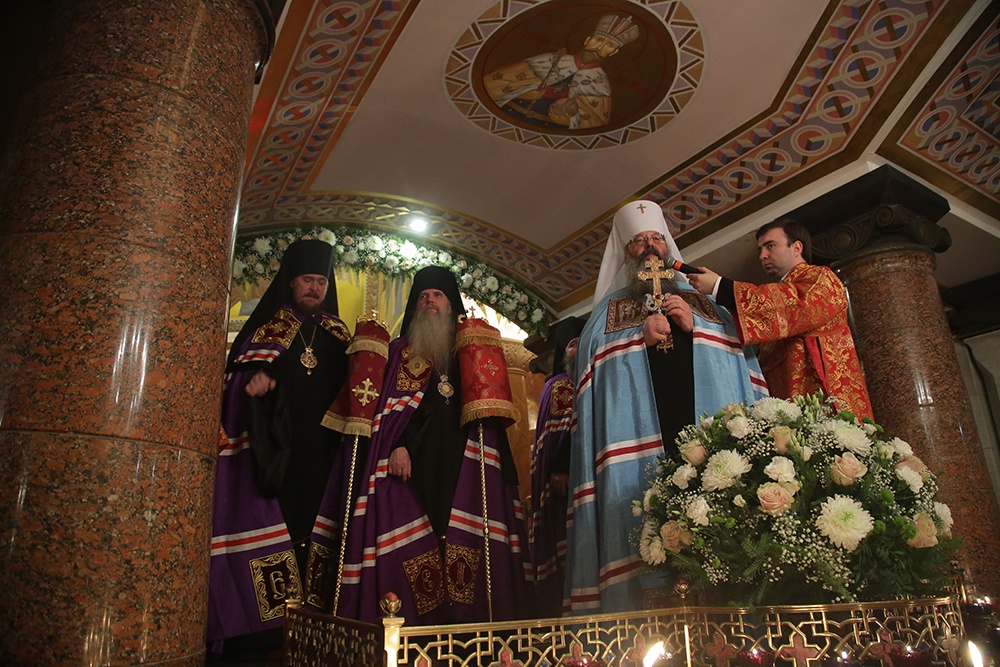
Bishop’s gather for a Divine Liturgy in the Church on the Blood in Ekaterinburg
NOTE: All of the articles pertaining to Nicholas II and his family which were originally published in my Royal Russia News blog, have been moved to this Nicholas II blog. This article was originally posted on 19 May 2018 in my Royal Russia News blog – PG
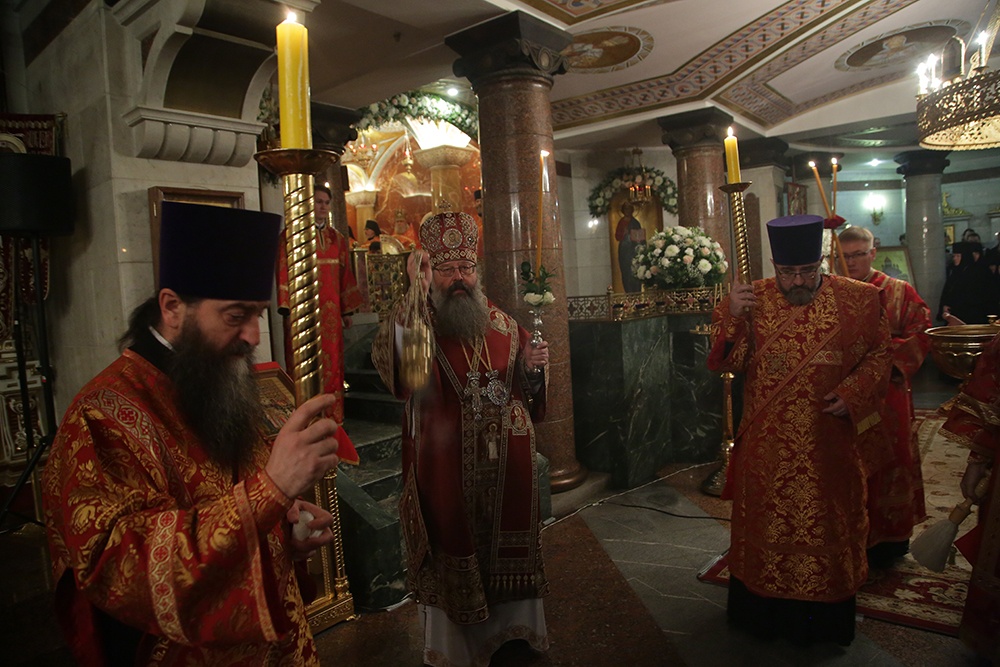
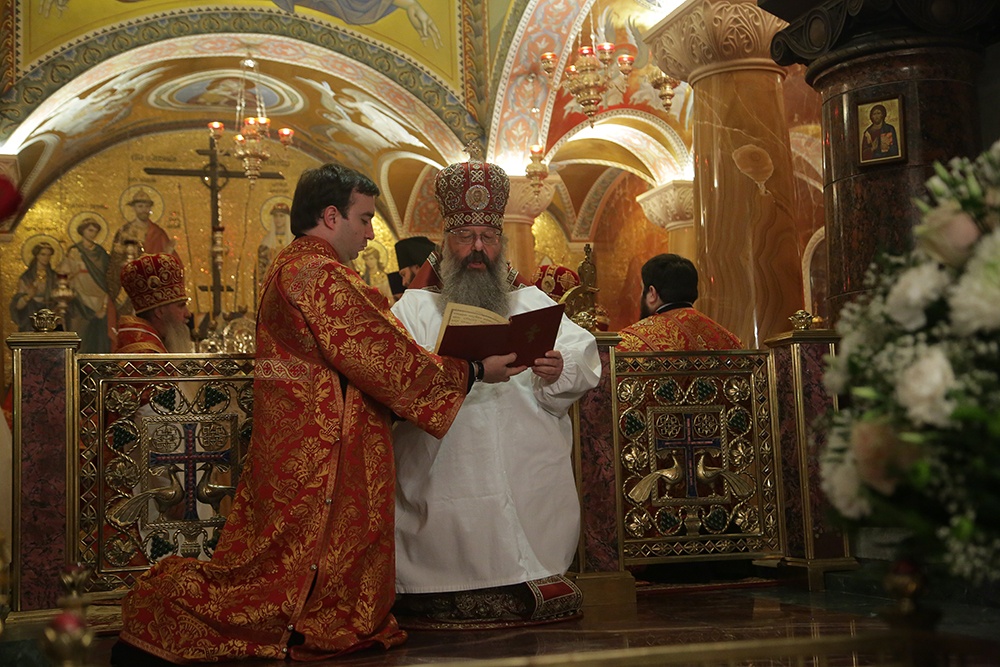
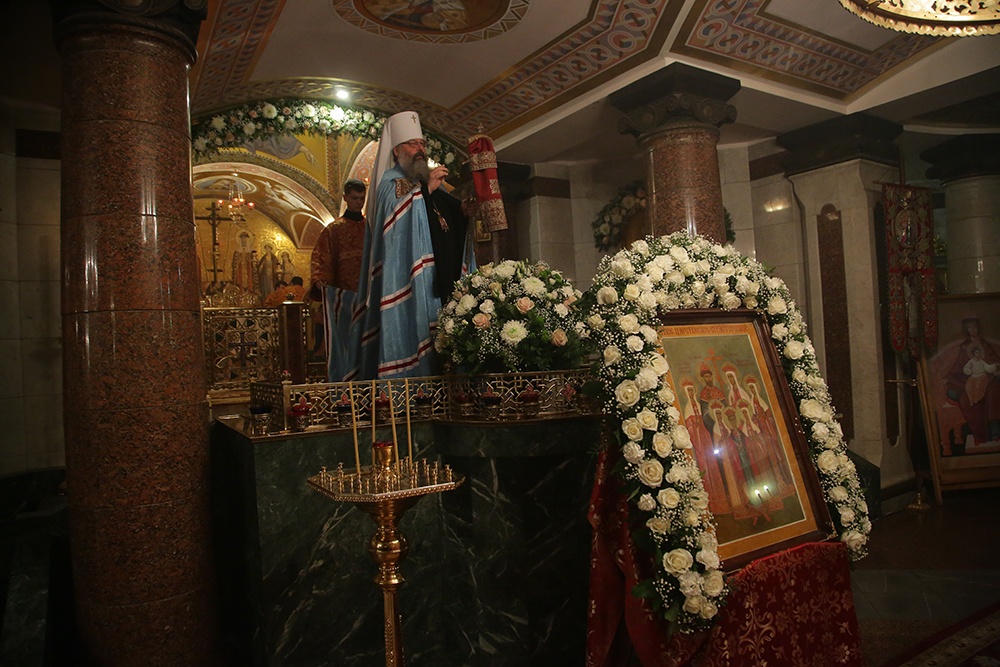
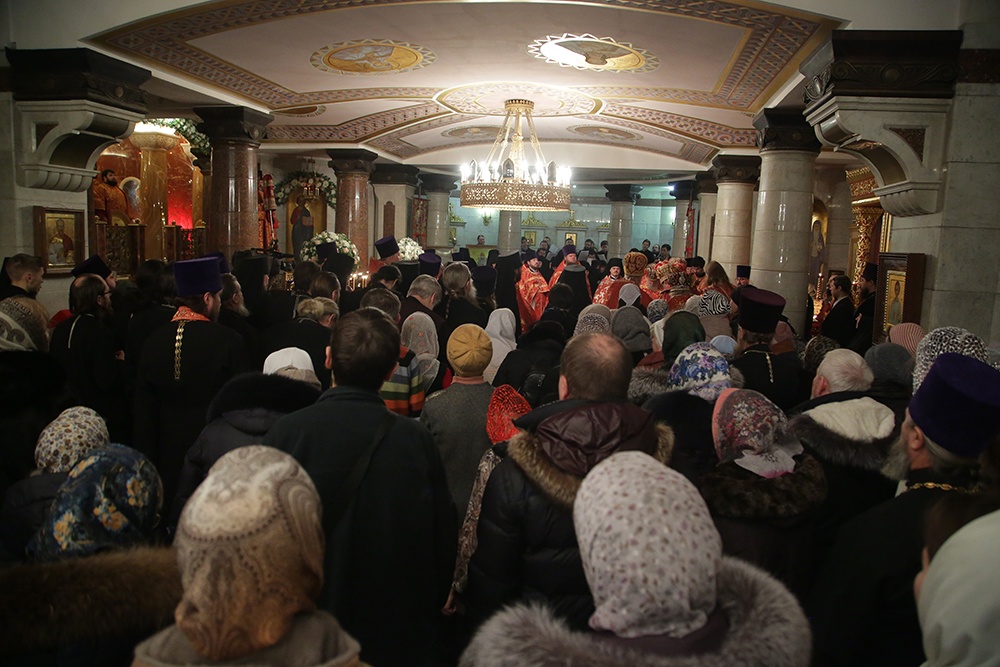
On 19th May 2018, on the day marking the 150th anniversary of the birth of Emperor Nicholas Alexandrovich, a festive Bishop’s Divine Liturgy was held in the Church on the Blood in Ekaterinburg.
The Divine Liturgy was headed by the Metropolitan of Pereleimon (Greek Orthodox Church), Metropolitan of Pereleimon (Greek Orthodox Church), and also by the bishops of the Ekaterinburg Metropolis: Metropolitan Kirill of Yekaterinburg and Verkhoturye, Bishop Mefody of Bishop of Kamen and Alapayev, Bishop of Nizhny Tagil and Nevyansky Eugene, Bishop of Serov and Krasnoturinsky Alexis. The Most Reverend Bishops were served by numerous clergy of the Ekaterinburg Diocese.
Metropolitan Petyeleimon of Berea arrived in the Ekaterinburg Diocese from Greece, specially to celebrate the 150th anniversary of the birth of the Emperor. Prayers and hymns in Greek were heard during the service.
Hymns for worship were performed by the choir of the Sretensky Monastery, who travelled from Moscow to the Ural capital to pay tribute to the memory of the Holy Tsar-Martyr.
Participants of a public forum dedicated to Nicholas II, held in the Cosmos Theater also took part in the Divine Liturgy, including the famous historian and author Petr Valentinovich Multatuli, representative of the Russian Academy of Sciences historian Vladimir Mikhailovich Lavrov, among others.
A sacramental verse, a sermon about the holy Tsar-Passion-Bearer was read by senior priest of the Church on the Blood, Protopriest Maxim Miniyailo. Fr Maxim noted that the birthday of the sovereign, which was always a public holiday in the Russian Empire. He spoke about the personality of the sovereign himself, reminding the Faithful that Nicholas II was “our Heavenly patron and an example to each of us in faith, in service to the Lord and Fatherland , in relation to his family and neighbor, on the anniversary of the Sovereign as an occasion to think about salvation.”
The number of parishioners in attendance at the Divine Liturgy filled the Church on the Blood to capacity, with the number of faithful spilling out onto the church’s porch, and into the street.
Vladyka Metropolitan congratulated everyone on the occasion of the 150th anniversary of the birth of the Emperor, thanking those who travelled to Ekaterinburg to pay tribute to the memory of the Holy Tsar Martyr, including guests from Greece, Serbia and Bulgaria; thanked the bishop of Vera Panteleimon; thanked the Sretensky Choir for the wonderful concert that took place the day before, and for today’s participation in the Diving Liturgy.
VIDEO of the entire Forum (in Russian only) – duration 2 hours, 20 minutes
NOTE: All of the articles pertaining to Nicholas II and his family which were originally published in my Royal Russia News blog, have been moved to this Nicholas II blog. This article was originally posted on 20 May 2018 in my Royal Russia News blog – PG
On 18th May 2018, on the eve of the 150th anniversary of the birth of the last Russian emperor, a public forum was held in Ekaterinburg to preserve the heritage of Tsar Nicholas II.
Scientists, historians and authors, along with representatives of the public, gathered to discuss the urgent issues of preserving the historical memory of the sovereign, including recognizing the merit of Nicholas II for the development of the Russian state and an assessment of the murder of the Tsar’s family committed a hundred years ago.
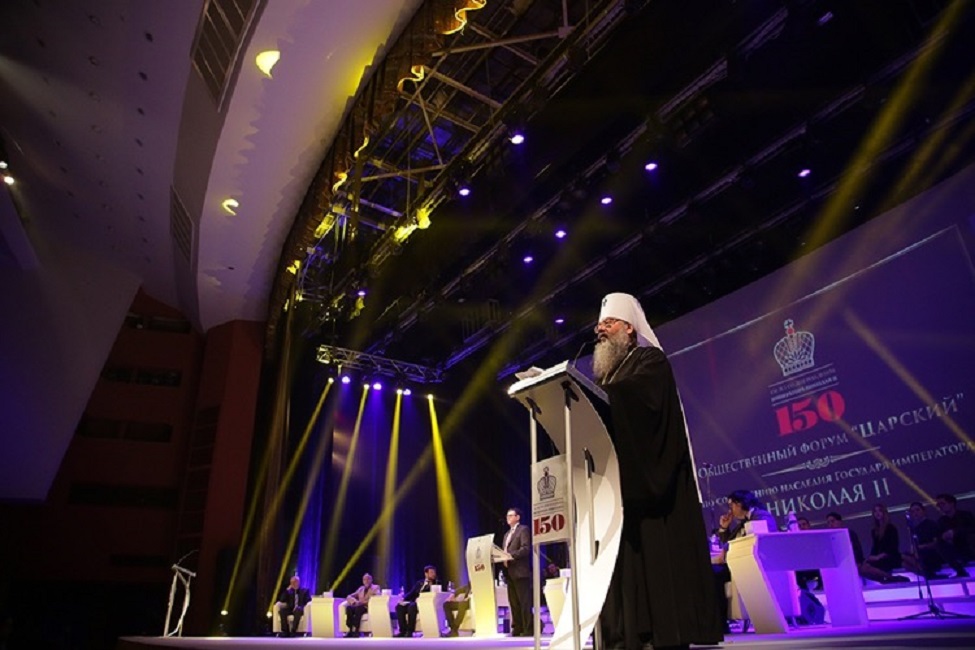
Metropolitan Kirill of Ekaterinburg and Verkhoturye
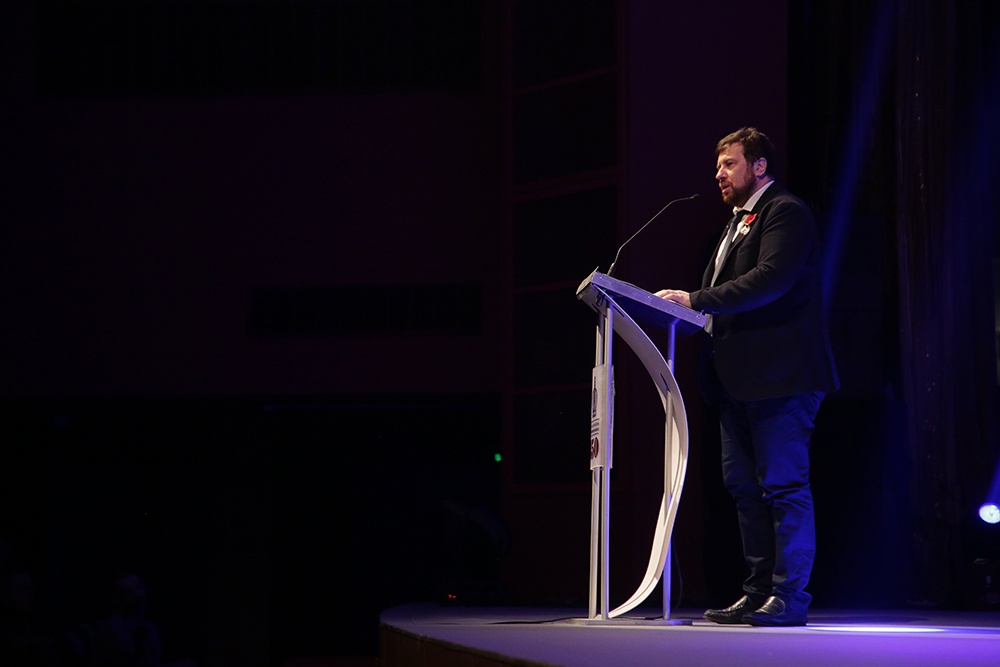
Opening the forum was Metropolitan Kirill of Ekaterinburg and Verkhoturye, who noted that Ekaterinburg “has become a symbol of the tragedy of the Tsar’s family and, together with her, our Motherland.”
“Since these tragic events, which took place 100 years ago, tragedy befell Russia and it’s people. It is here, on the 150th anniversary of the birth of Emperor Nicholas Alexandrovich, that our holy cause is to gather and reflect on what the Russian Empire was during his reign, what was good about our great country, and what should we take from the past, what lessons, what edifications should we learn for our own lives” – said His Eminence.
The special guest of the forum – the Chairman of the Double-Headed Eagle Society the media group Tsargrad Konstantin Valerievich Malofeev, noted “the triumph of the reign of Emperor Nicholas II, is unparalleled in the thousand-year history of Russia.
“During the history of the Russian Empire, it was the most powerful, the largest, the happiest during the reign of Nicholas II. We should not forget this, and our forum is dedicated to this, which we, the society of historical enlightenment Double-Headed Eagle Society, proudly hold together with the Ekaterinburg Metropolis where our local branch is working under the guidance of Metropolitan Kirill.”
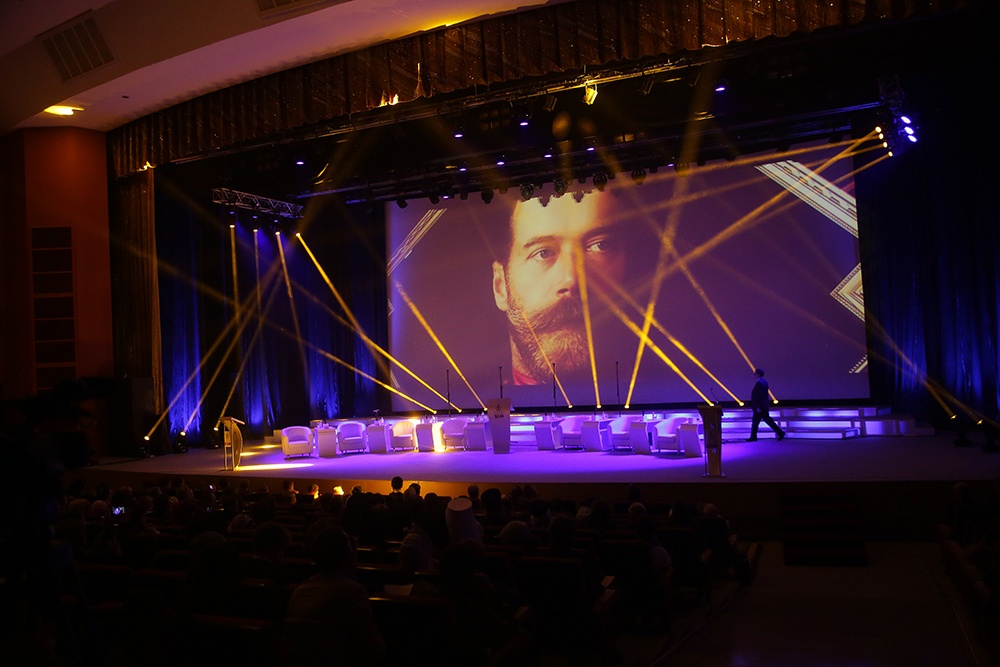
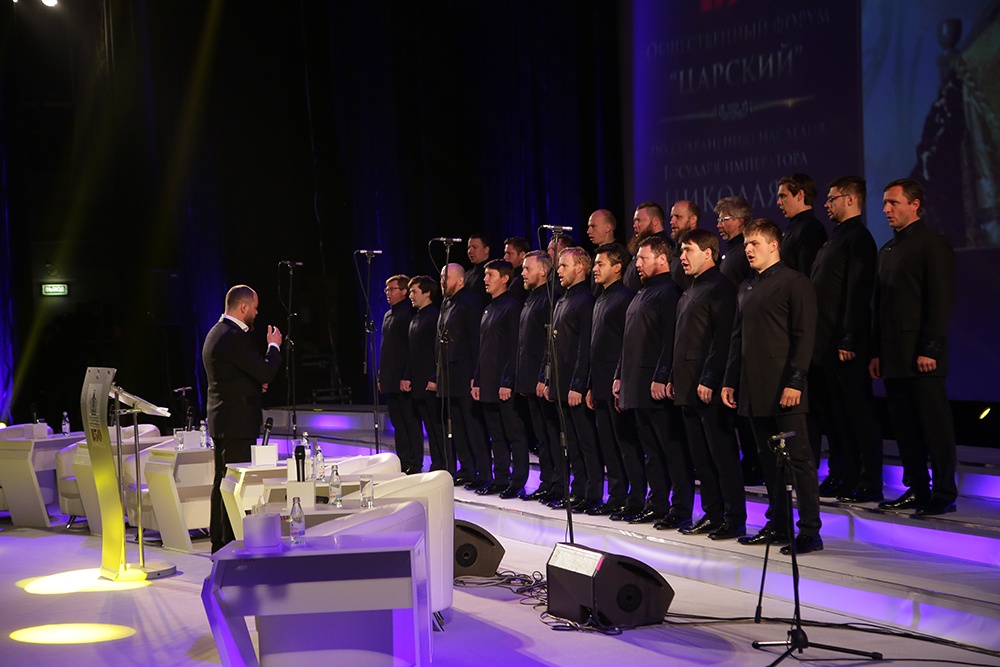
The stage is set for the Nicholas II Forum, held at the Cosmos Theater, Ekaterinburg
The forum was also attended by Bishop Evgeny of Nizhny Tagil and Nevyansky, Bishop of Serov and Krasnoturinsky Alexy, Minister of Education of the Sverdlovsk Region Yury Biktuganov, First Deputy Minister of Culture of the Sverdlovsk Region Vladimir Manturov, as well as representatives of the Double-Headed Eagle Society, the World Russian People’s Council, the Imperial Palestinian Orthodox Society, arriving from various regions of Russia.
Historians, philosophers, theologians, public figures from Russia (among them also experts from Moscow and St. Petersburg), Serbia and Bulgaria discussed issues related to the restoration and preservation of the historical memory of Nicholas II.
Within the framework of the forum, experts assessed the era of the reign of the last Russian emperor as a time, providing great breakthroughs in the development of the state and creating the foundations of socio-economic, including technological development for decades to come. Experts came to the conclusion that Nicholas II was one of the most effective Russian rulers and issued a number of initiatives to perpetuate the memory of Emperor Nikolai Aleksandrovich as an outstanding statesman.
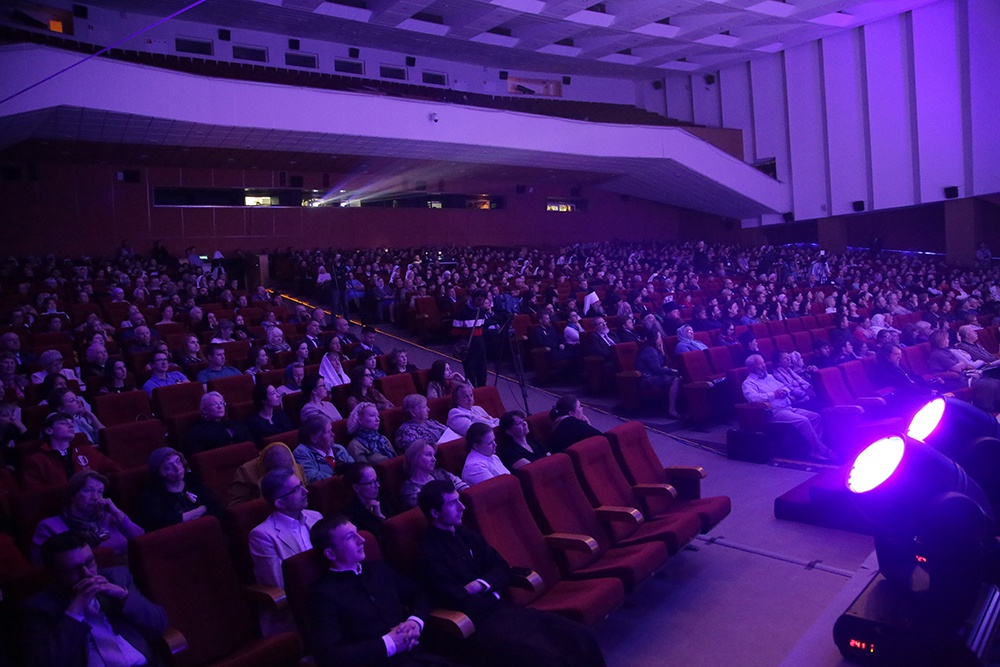
More than 2,000 people attended the Nicholas II Forum on 18th May
Among the proposals included in the final document of the forum is the need for a large-scale federal information and enlightenment campaign on Russia’s achievements in the era of Nicholas II, the development of textbooks and other scientific and educational literature on the basis of reliable scientific information on era, the state order for quality works of art in various fields of culture and art; importance of historical archival research and public dialogue among the scientific community and citizens interested in history; installation in the cities and towns of Russia monuments to the sovereign – an initiative put forward by a member of the Regional Public Chamber, chairman of the Ural branch of the Union of Russian Paratroopers Yevgeny Teterin.
An important topic of the forum was the discussion of the need for public evaluation of the murder of the Imperial Family and their faithful servants, which occurred a century ago in the Ipatiev House in Ekaterinburg. The tragedy of 1918, crowned with the feat of the Holy Royal Passion-Bearers, has not yet been properly evaluated at the state level.
The experts of the forum supported the initiative of Moscow colleagues – participants of a recent round-table hosted by the Parliamentary Newspaper (Парламентская газета) where representatives of the Russian Orthodox Church, State Duma deputies, jurists and political scientists condemned the murder of the Tsar’s family as an unacceptable and unjustifiable crime.
Russia’s leading expert on Nicholas II, historian and author Pyotr Valentinovich Multatuli
During the forum on May 18, in Ekaterinburg, experts presented their views on the sovereign and the era at the forum by:
– Pyotr Valentinovich Multatuli, Russia’s leading expert on the life and reign of Nicholas II, candidate of historical sciences, member of the Council of the Society for the Development of Russian Historical Education of the Double-Headed Eagle Society, and regular commentator of the television channel “Tsargrad”;
– Vladimir Mikhailovich Lavrov, Doctor of Historical Sciences, Member of the Council of the Russian Historical Education Development Society of the Double-Headed Eagle Society, Academician of the Russian Academy of Natural Sciences, Chief Researcher of the Institute of Russian History of the Russian Academy of Sciences;
– Konstantin Valerievich Malofeev, chairman of the Society for the Development of Russian Historical Education of the Double-Headed Eagle Society.
– Yegor Stanislavovich Kholmogorov, publicist, blogger, editor-in-chief of the Russian Observer and New Chronicles sites, author and presenter of the 100 books website;
– Nikola Tanasich, teacher of the Faculty of Philosophy, Belgrade State University;
– Georgi Dimov, Doctor of Science, Senior Researcher of the Bulgarian Academy of Sciences;
– Dmitry Borisovich Grishin, chairman of the Sergievsky Memorial Society (Moscow).
Other participants of the forum were Vladislav Nikolayevich Mayorov, military journalist, expert on the history of Nicholas II and author of the “Royal Calendar”; Vladimir Ilyich Bolshakov, Doctor of Philosophy, Vice-Rector for Research of the Russian Academy of Painting, Sculpture and Architecture Ilya Glazunov (Moscow), as well as members of the Urals Association in Moscow and other experts.
The Sretensky Monastery Choir
The Forum came to close with the singing of God, Save the Tsar and Glory! and A Life for the Tsar, performed by the Sretensky Monastery Choir – please take a moment to watch/listen at the end of the video posted at the top of this post – PG.
The Forum on the preservation of the historical heritage of the Emperor Nicholas II was held in the Kosmos Theater in Ekaterinburg. More than 2,000 people participated in the historic Forum. The event, which became a significant public event, was covered by the leading federal and regional media and was broadcast by the Orthodox television channel Soyuz to 82 countries with a multi-million audience.
View of the Church on the Blood on the night of 16/17 2018
NOTE: All of the articles pertaining to Nicholas II and his family which were originally published in my Royal Russia News blog, have been moved to this Nicholas II blog. This article was originally posted on 25 July 2018 in my Royal Russia News blog – PG
In 2018, the Russian Orthodox Church celebrated the centenary of the martyrdom of the last Imperial family of Russia with numerous events held throughout Russia, with the celebrations culminating in a Patriarchal Divine Liturgy in Ekaterinburg and all-night cross procession in their honor.
On the night of 16/17 July 2018, more than 100,000 Orthodox Christians, monarchists, among others gathered in Ekaterinburg for the liturgical celebrations. The faithful came from all corners of Russia and around the world, including Azerbaijan, Australia, Austria, Belarus, Bulgaria, Canada, Great Britain, Germany, Kazakhstan, Kyrgyzstan, China, Lithuania, Moldova, Netherlands, New Zealand, Serbia, USA, Tajikistan, Turkmenistan, Uzbekistan, Ukraine, France, Estonia, South Korea, and Japan.
The first Tsar’s Days procession took place in 1992, with the participation of but a few dozen faithful.
The event began with the Divine Liturgy celebrated on the square in front of the Church on the Blood in Ekaterinburg, built on the site where the Ipatiev House once stood, where the family was murdered. The service was headed by His Holiness Patriarch Kirill with more than 35 hierarchs and multiple clergy concelebrating.
The entire service was broadcast live on the Orthodox TV station “Union:”
A special platform was erected for the Liturgy in front of the gates of the lower church, where the “Imperial Room” is located—a chapel in honor of the Royal Martyrs, built on specific site of their martyrdom.
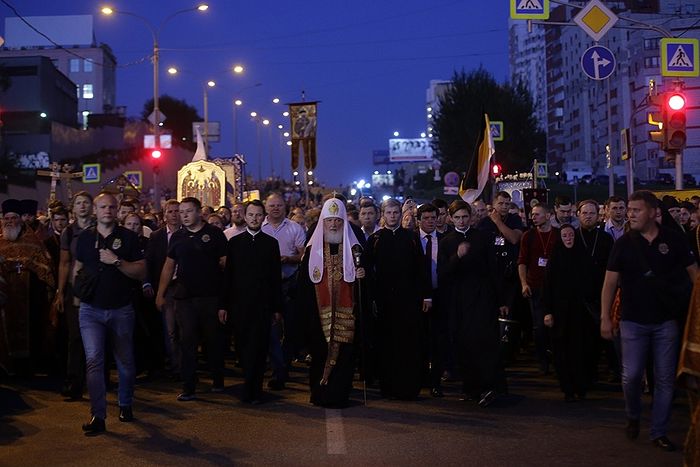
Following the Liturgy, the patriarch led the traditional Royal Cross Procession from the place of martyrdom of the holy Royal Martyrs and their servants to the Monastery of the Holy Royal Martyrs at Ganina Yama ravine, covering a distance of 21 km (13 miles).
His Holiness leads the Cross Procession to Ganina Yama
The Cross Procession nears the Monastery of the Holy Royal Martyrs at Ganina Yama
According to law enforcement agencies, more than 100,000 took part in the procession.
According to tradition, the faithful carried banners and icons in the procession, including a 6.5-ft. icon of the Tsar-Martyr, painted in 2017 for the Church of the “Reigning” Icon of the Mother of God at Ganina Yama. Together with the kiot, the icon weighs 330 lbs. A special bier on wheels was made to move the heavy icon.
The procession was also accompanied by 25 mobile groups from an Orthodox charity service, consisting of clergy, representatives of the Dormition Orthodox Brotherhood of Ekaterinburg, sisters of mercy, and volunteers, who provided assistance to those who could not walk the entire route of the procession. Field kitchens and tests were also set up at the Monastery of the Holy Royal Martyrs for the pilgrims to rest.
His Holiness and the procession arrived at the monastery in the morning, where the patriarch served a moleben to the Royal Martyrs in front of the memorial cross erected at Mine #7, where the bodies of the Royal Martyrs were abused and disposed of. His Holiness Patriarch Alexei II (1929-2008) thus referred to Ganina Yama as “a living antimens, permeated with particles of the burnt holy relics.”
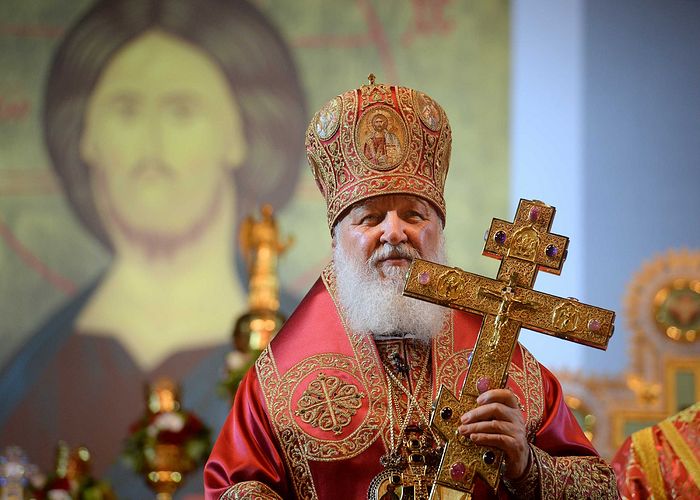
His Holiness Patriarch Kirill of Moscow and All Russia
His Holiness then addressed the sea of faithful with a primatial word:
In the name of the Father and of the Son and of the Holy Spirit!
Your Beatitude Metropolitan Onuphry of Kiev and All Ukraine! Fellow archpastors! Dear brothers and sisters, gathered in a multitude this night before the place where one hundred years ago was committed a terrible crime—wholly innocent people, who had committed their lives to the service of their Motherland, were killed by the evil will of man!
This atrocity still chafes our conscience, still causes us to mentally return to that time and try to understand what happened to our country and to our people. Where did this insanity, this attack come from? Looking from a distance of one hundred years, even if we want to we cannot see all the nuances of the national life of our people, which fade from memory and are missed by even the most penetrating gaze. But such crimes, as were committed here, cannot be accidental. Something stood behind this crime; behind it is the collective guilt of our people, a turn in the historical life of Holy Rus’, which led the people into a heavy, terrible impasse.
What happened to our people? After all, the country was covered with churches and monasteries, an absolute majority of the people were baptized, and the churches were filled with people. Why did it happen? Why did the murderers squeeze the trigger, without trembling at what they were doing? It means not everything was favorable. It means the sunlight reflected in the gilded domes was not always refracted into human hearts to strengthen faith in the Lord in them. And we know how over the course of at least 200 years preceding the tragedy of the Ipatiev House some changes occurred in the people’s consciousness that gradually but steadily led many to a departure from God, neglect of the commandments, and a loss of spiritual connection with the Church and the centuries-old spiritual tradition.
Why did this happen to our people? Why did they at some point become like a train whose engineer didn’t calculate its speed and heads into a steep turn, rushing towards an imminent catastrophe? When did we as people start this turn? We entered when alien thoughts, alien ideals, and an alien worldview, formed under the influence of philosophical and political theories, having nothing in common either with Christianity or our national tradition and culture, began to be perceived by the intelligentsia and aristocracy and even part of the clergy as advanced thoughts by which it was possible to change the people’s lives for the better.
Indeed, the idea of changing the life of the people for the better arises whenever there is a plan to abruptly change the course of history. We know that the worst and bloodiest revolutions have always occurred in view of people’s aspirations for a better life. The leaders of these revolutions instilled in the people that there is no other way to make life better—only by blood, only through death, only through the destruction of the existing way of life. And at some point, having abandoned their spiritual birthright, having lost their true connection with the Church and God, the intelligentsia, aristocracy, and even, as I have already said, part of the clergy were darkened in mind and infected with the thought of the need to drastically change the course of our national history and to try to build as quickly as possible a world where justice reigns, where there is no bygone separation according to material indicators, where people live peacefully and happily. As a result, many of those captured by this idea reach the point of committing crimes.
A question arises: “Is it possible through crime, through blood, through violence, and through the destruction of holy sites to build a happy life?” History clearly testifies: It is impossible! And, perhaps, the first and most important lesson that we should learn today from the tragedy of a century ago is that no promises of a happy life, no hope for help from outside, from some supposedly more educated and advanced people should seduce our people. We must remember the tragedy of the past. We must develop an immunity to any call to attain to human happiness through the destruction of that which is.
Hardly did anyone who called for the destruction of the people’s lives destroy their own lives, renouncing their own wellbeing. But with what fury they proposed to do it to everyone! And the people absorbed this lie; and the crowning act of departure from the most sacred and valuable that they had was the hideous execution of the Royal Family—innocent people who had not violated the law. And what kind of law could we even be talking about if it was necessary to kill the Tsar and his family to build a happy life? We know that nothing turned out well, and taught by bitter experience, we must build a robust rejection of any ideas and any leaders who propose to strive for some obscure “happy future” through the destruction of the life of the people, our traditions, and our faith.
Today, gathered here in such a great number, we remember the tragedy of the Ipatiev House. We have lifted up prayers to the Lord, we have prayed to the Emperor and Passion-Bearer Nicholas and those who suffered with him, that they would pray in Heaven for our earthly Fatherland and for our people and strengthen the Orthodox faith in every subsequent generation of Russians; that faithfulness to God and love for the Fatherland would accompany the lives of the youth and subsequent generations, and that no tragedy of this kind would ever happen again in our land.
May the Lord preserve our Russian land and the Russian people who today live in various countries; and although they are called by various names, are the same people who came out of the Kievan baptismal font, and passing though the most severe historical circumstances, have retained the Orthodox faith until today. May God’s blessing be upon our people, upon our Fatherland, and upon our martyric Russian Orthodox Church. May the life of our people be transfigured by the prayers of the New Martyrs and Confessors of the Russian Church—without any upheavals or blood, but upon the firm foundation of faith and hope that God is with us! May the Lord save us all by the prayers of the holy Royal Passion-Bearers and all the New Martyrs!
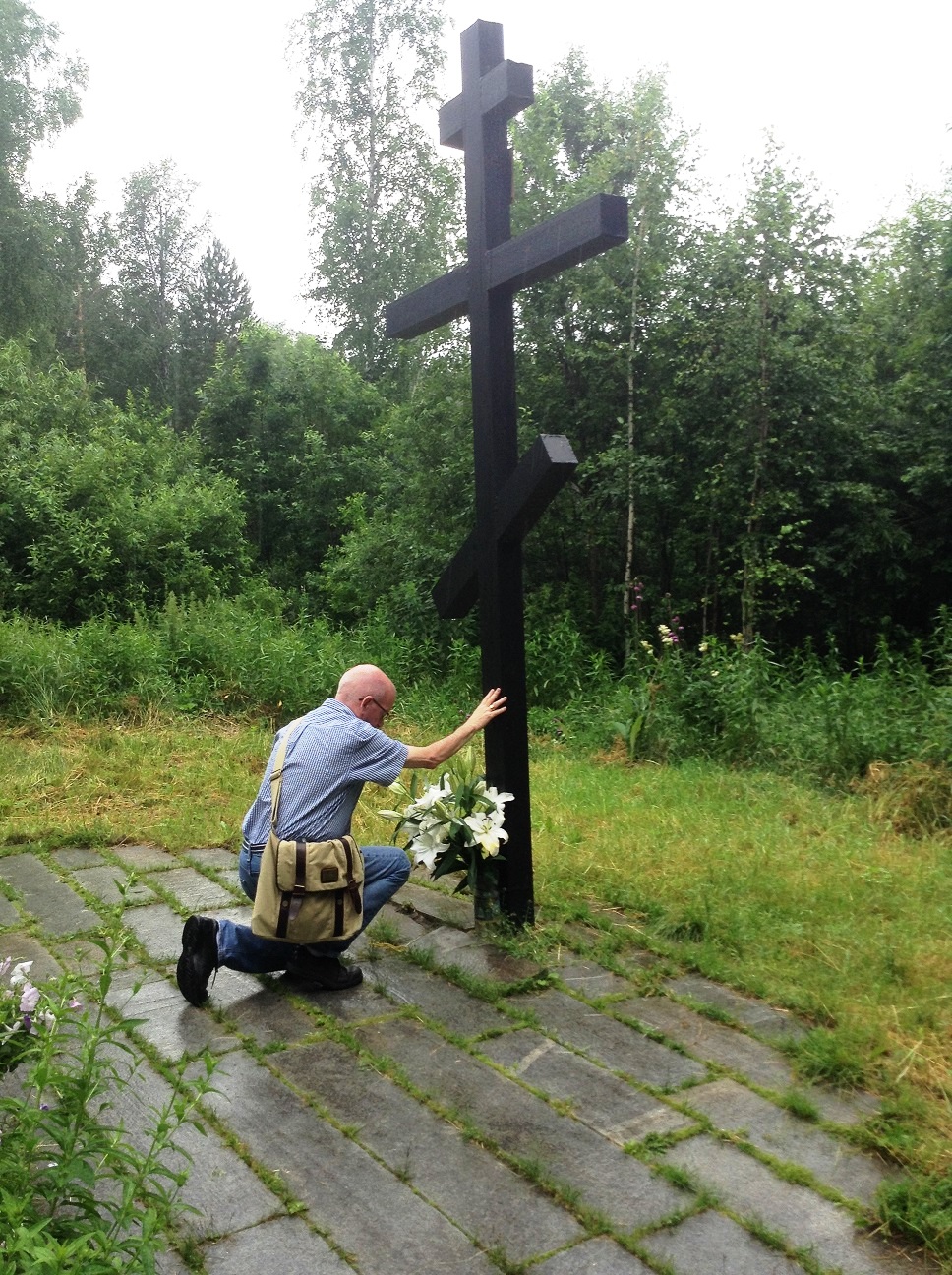
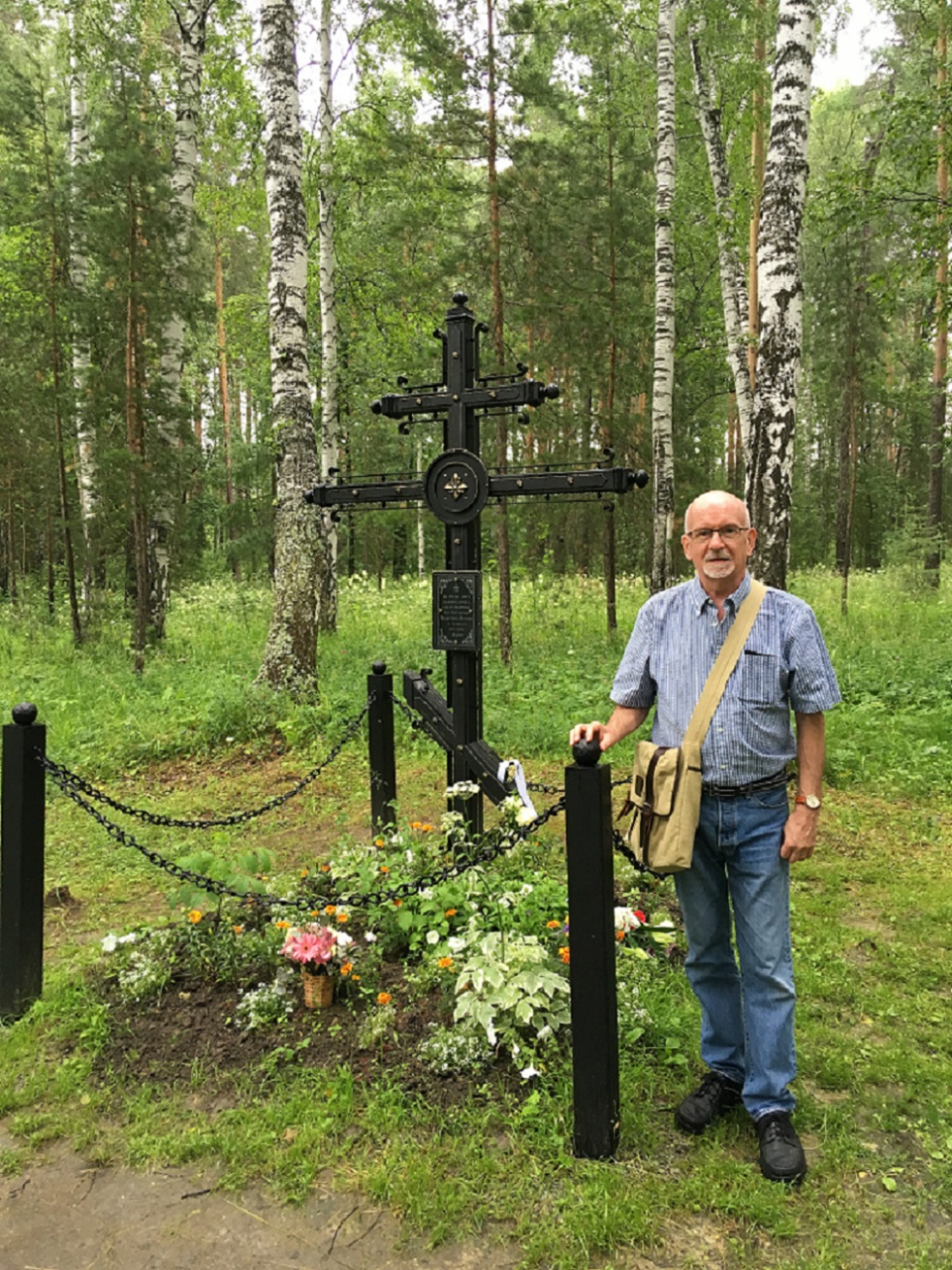
At Porosenkov Log, during my visit to Ekaterinburg, July 2018
Back in March 2016, I reported that Metropolitan Kirill of Yekaterinburg and Verkhoturye had made a request to the Sverdlovsk regional government to transfer the land in and around Porosenkov Log (3.7 hectares) to the Ekaterinburg Diocese. The territory is simultaneously claimed by the Sverdlovsk Regional Museum of Local History in Ekaterinburg. My report was followed up by a second article on the dispute in July 2017 (see links below for both articles – PG).
Since the events marking the 100th anniversary of the death and martyrdom of Emperor Nicholas II and his family last month, the subject is again making headlines in the Urals media.
According to a document signed by the head of the regional forestry department Oleg Sandakov, as early as 2016, Metropolitan Kirill of Yekaterinburg and Verkhoturye made a request to the regional government to transfer Porosenkov Log to the diocese “for gratuitous urgent use for religious activities.” Scans of the relevant documents (see below) were published last week on the Memorial of the Romanovs Facebook page.
In June 2014, a request was made to recognize Porosenkov Log as a cultural heritage site. Then, the regional ministry of culture planned to transfer the Romanov Memorial site to the Sverdlovsk Museum of Local History. The official opening of the memorial was planned to coincide with the 100th anniversary of the deaths and martyrdom of the Holy Royal Martyrs in July 2018.
In 2016, however, the Ekaterinburg Diocese began to interfere with the plans. In February of the same year, Metropolitan Kirill of Ekaterinburg and Verkhoturye sent an appeal to the Governor of the Sverdlovsk Region Evgeny Kuyvashev, in which he asked to declare invalid the document on the transfer of the site to the museum. The governor granted the Metropolitan’s appeal, with the regional ministry of culture subsequently putting the project on hold.
“Due to the historical and spiritual significance of the territory, and in order to avoid any disagreements between secular and religious parties, an official note was sent to the governor of the Sverdlovsk region on the expediency of organizing a discussion on the development of the territory as a cultural heritage site with all interested parties,” said the head of the regional department of forestry Oleg Sandakov.
At the second grave where the remains of Alexei and Maria where discovered in 2007
On the eve of the Tsar’s Days held in Ekaterinburg last month, the Russian Investigative Committee confirmed that genetic examinations on the remains found at Porosenkov Log belong to the murdered Imperial family. It was hoped that Patriarch Kirill would officially recognize the remains during his visit to Ekaterinburg, however, this did not happen. An estimated 100,000 people took part in the pilgrimage from the Church on the Blood to the Monastery of the Holy Royal Martyrs at Ganina Yama, where once again the final prayer service was held, which is still considered by the ROC to be the final burial place of the bodies of the royal martyrs. Porosenkov Log was not included in the pilgrimage.
Despite the fact that the authenticity of the “royal remains” has not been recognized by the ROC, the Ekaterinburg Diocese is unlikely to back away from its plans. It can not be ruled out that the dispute over the site will be put on hold until the time when the church changes its position.
It is believed that not “if” but “when” the Moscow Patriarchate officially recognize the “Ekaterinburg remains”, that a new monastery in honour of the Holy Royal Martyrs, similar to the one situated 3.8 km down the road at Ganina Yama, will be constructed at Porosenkov Log.
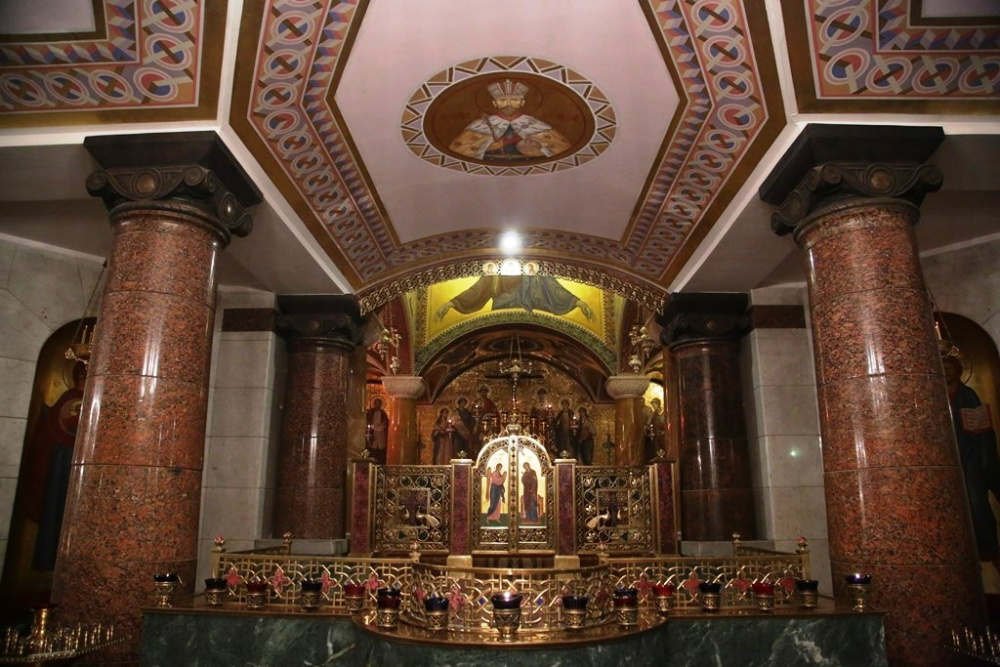
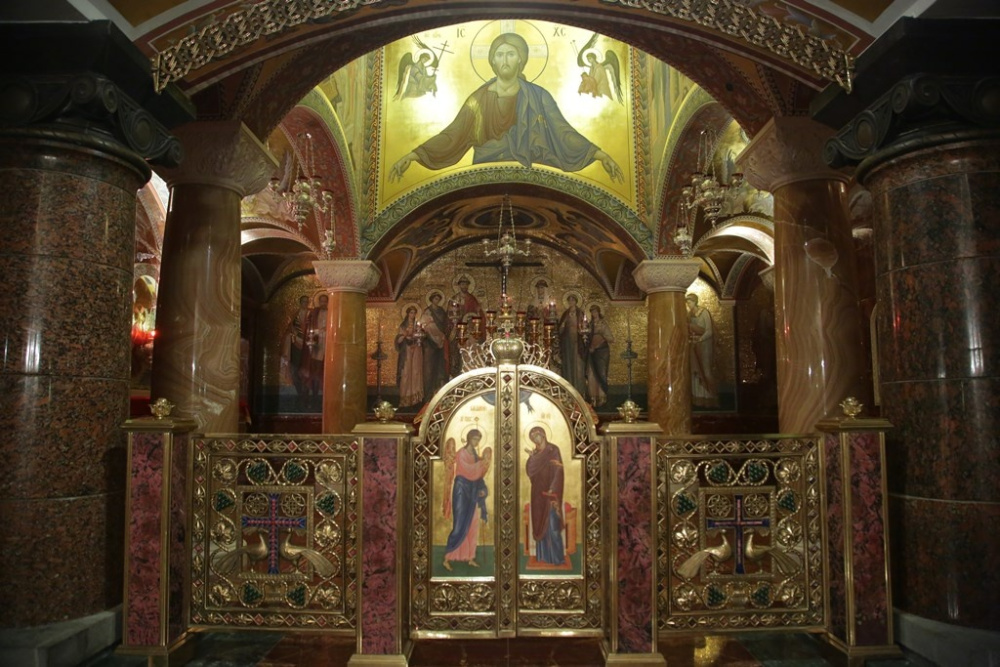
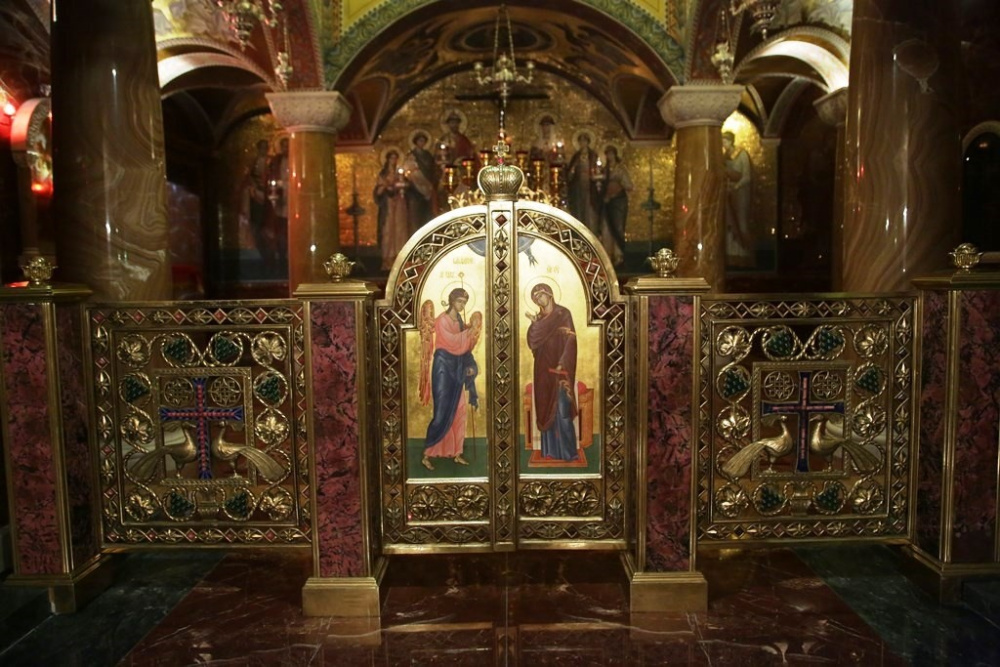
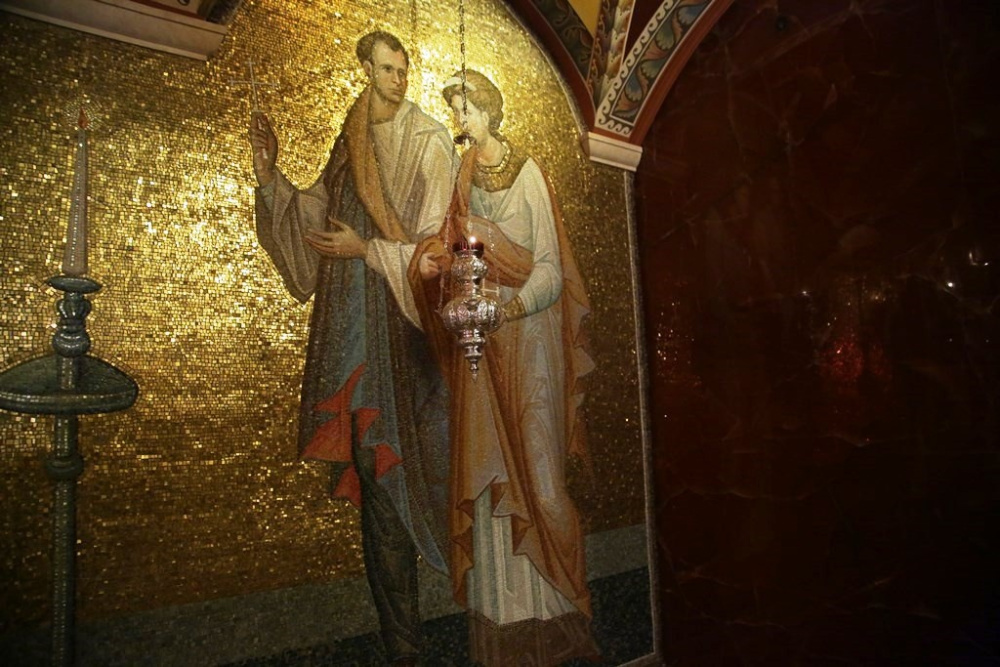
On 20th June 2018, representatives of the media were granted a first look at the Imperial Room, in the Church on the Blood in Ekaterinburg. The altar of the Imperial Room is situated in the lower church sanctified in honor of the Holy Royal Martyrs. It was established on the site of the room located in the basement of the Ipatiev House, where Emperor Nicholas II, his family, and four retainers were all brutally murdered on the night of 16/17 July 1918. The decoration of the room received the blessing of the Metropolitan of Ekaterinburg and Verkhoturye Kirill to mark the centenary of this tragic event.
The new design, the reconstruction of the altar, along with additional work in the Imperial Room, was carried out during the past year,the senior priest of the Church on Blood Achpriest Maxim Minailyo told journalists.
Father Maxim noted that the decoration of the Imperial Room was conducted by masters from Moscow and Belarus. Above the paintings worked talented Moscow icon painters led by Alexei Vronsky, and the mosaic was done by specialists of the mosaic workshop at the Holy Elizabethan Monastery of Minsk under the guidance of the icon painter Dmitry Kuntsevich. The work was supervised by nuns of the Novo-Tikhvin Convent in Ekaterinburg, known for their skill in restoring and decorating Orthodox churches.
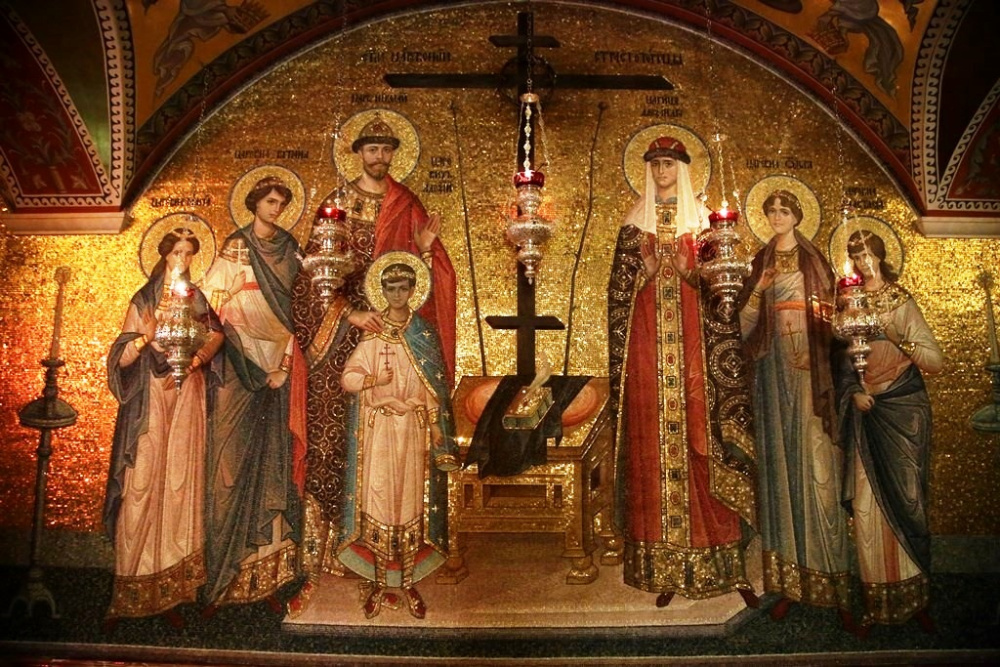
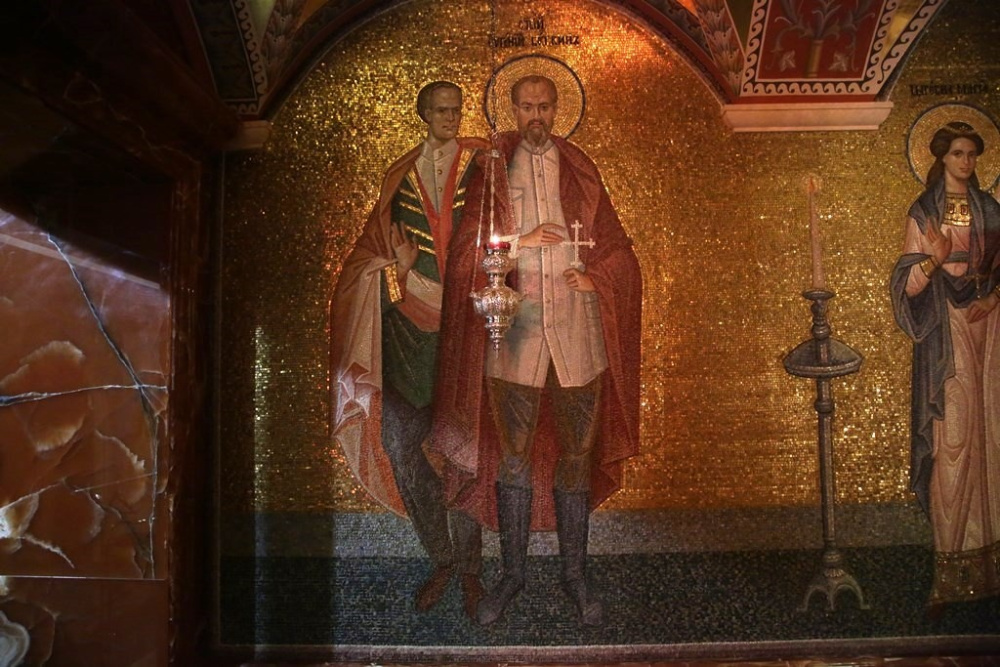
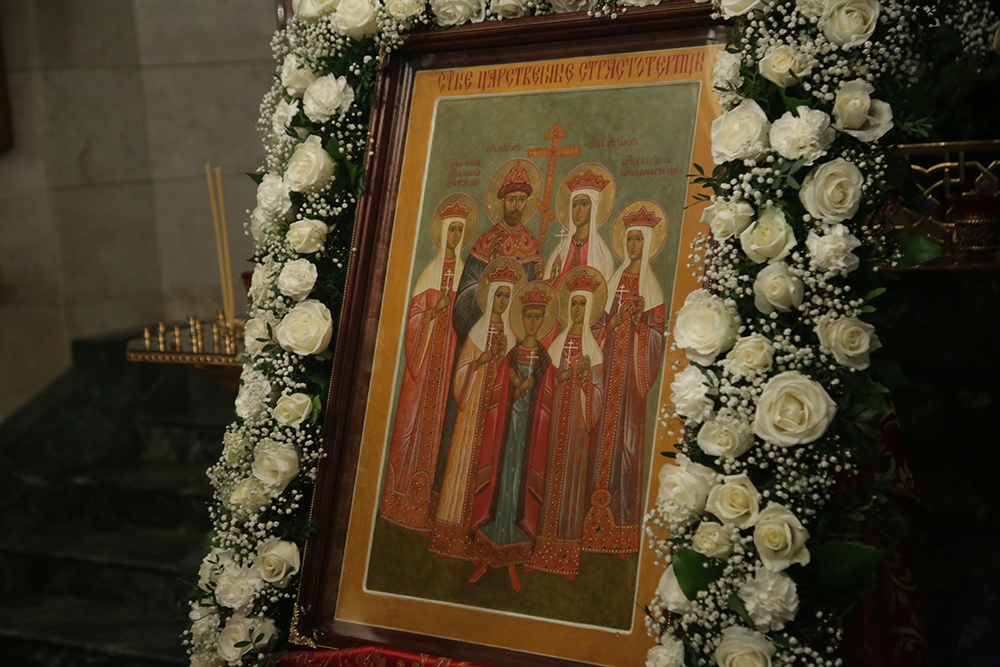
Representatives of the media saw a unique mosaic panel which occupies the central part of the altar depicting the Holy Royal Passion-Bearers and their faithful retainers who suffered with them: Emperor Nicholas Alexandrovich, Empress Alexandra Feodorovna, Tsesarevich Alexei, Grand Duchesses Olga, Tatyana, Maria, Anastasia, Saint Yevgeny Botkin, Alexey Trupp, Ivan Kharitonov and Anna Demidova.
As the priest said, the mosaic reflects the position of the Royal Passion-Bearers at the time of their martyrdom. They stood with their backs to the east, facing west, as it is now depicted in the altar.
Above them rises the Feodorovskaya Icon of the Mother of God, which is the heavenly patroness of the House of Romanov.
On the western vault depicts the Sovereign Icon of the Mother of God, which was revealed on the very day when the Emperor was forced to abdicate the throne, and the saints glorified during the reign of Emperor Nicholas Alexandrovich: St. Theodosius of Chernigov, St. Seraphim of Sarov, St. Princess Anna Kashinskaya, St. Joasaph Belgorod, St. Hermogen of Moscow, St. Pitirim of Tambov, and St. John of Tobolsk.
The creation of the paintings and mosaics took almost a year to complete. The creation of mosaic works was a particularly complex project, as the iconography of all the members of the Imperial Family and their faithful retainers had to be intricately created.
The walls and the floor around the altar are lined with red onyx, which is very symbolic, because the red color on one side symbolizes the martyrs blood shed by the Imperial family, and on the other hand, red is the color of the royal scarlet, porphyry, regal color. This color depicts very well the feat of the Royal Passion-bearers, who in both imperial majesty and in humiliation showed rare piety and great spiritual heights.
On the right side of the throne in a special reliquary containing fragments of the Ipatiev House: a brick and a balustrade.
At the end of the media presentation, the senior priest of the church thanked the journalists for the meeting, noting the great importance of this holy place in the church.
– “We must understand that this is the main sacred place of our city. And this room is the holy of holies in this church,” the father pointed out. – “This place today inspires us to move on and create such unique architectural and religious monuments to which our children, visitors, pilgrims will be drawn, because creating such a diverse national architecture, we lay the foundation for future generations to be proud of our country, including our cultural, religious and architectural heritage.”
CONSECRATION
NOTE: This article was originally published on 20 December 2018 in my Royal Russia News blog – PG
On 12th December 2018, Metropolitan Kirill of Ekaterinburg and Verkhotursk performed the rite of Great Consecration of the renovated side-chapel in the name of the Holy Royal Passion-Bearers of the Church on the Blood in Ekaterinburg. His Eminence was served by the hierarchs of the Ekaterinburg Metropolis: Bishop Method Kamensky and Alapaevsky, Bishop Evgeny of Nizhny Tagil and Nevyansky, and Bishop Serov and Krasnoturyinsky Alexy.
At the end of the service, Metropolitan Kirill recalled in his archpastoral talk that the year 2018 – the Imperial or Royal Year – the year marking the 100th anniversary of the deaths and martyrdom of the Imperial family, was widely celebrated in the Ural city. He recalled that on the night 16/17 July, an estimated 100,000 people participated in the Divine Liturgy at the Church on the Blood and the subsequent cross procession, both of which were headed by His Holiness Patriarch Kirill of Moscow and All Russia. According to the ruling bishop, it was truly a “nationwide prayer celebration.”
And completing this year, the consecration of the renewed side-altar in the name of the Holy Royal Passion-Bearers was performed in the Church on the Blood.
Metropolitan Kirill noted that a Divine Liturgy is performed once a week, on the night of Tuesday/Wednesday, in memory of the Holy Royal Passion-Bearers, whose murder occurred on the night of Tuesday/Wednesday 16/17 July 1918. In addition, once a month, on the night of the 16/17, a night liturgy is also celebrated. Metropolitan Kirill reached out to Orthodox Christians asking them to attend the night service and pray to the Holy Royal Passion-Bearers.
– “Here you have this feeling – a special reverence for the Royal Family and our martyrs, the new confessors of the Russian Church, one which will enter the soul, even if the soul is cold. All this love and achievement will melt away any callousness and any coldness. And the more we pray, the more we pay attention to the memory of the Holy Royal Martyrs, to their feat – the feat of meekness, humility, purity, the feat of absolute love for their God and for their homeland, until then our country will stand, and no evil power will be able to disturb her. Therefore, today we especially thank God for the feat of our Regal martyrs, our holy martyrs, all those who have defended our Homeland and our Church, and thanks to whom we today live on this earth,” Metropolitan Kirill said.
The ruling bishop also thanked the senior priest of the Church on the Blood, Archpriest Maxim Minyaylo, for his work in this church, and also thanked Abbess Domnik (Korobeinikova) and the sisters of the Novo-Tikhvinsky Convent, who “very strongly and powerfully helped create this chapel.”
The altar of the Imperial Room is situated in the lower church, sanctified in honor of the Holy Royal Martyrs. It was established on the site of the room located in the basement of the Ipatiev House, where Emperor Nicholas II, his family, and four retainers were all brutally murdered on the night of 16/17 July 1918. In the summer of 2018, with the blessing of Metropolitan Kirill of Ekaterinburg and Verkhoturye, the altar of the Imperial Chapel of the Holy Royal Passion-Bearers – the so-called Royal Room – was redesigned and decorated for the Tsar’s Days held in Ekaterinburg. The interior of the room has completely changed: like the Cuvuclia in the Church of the Holy Sepulcher in Jerusalem.
The central place is occupied by a unique mosaic panel. in the central part of the altar, depicting the Holy Royal Martyrs and their loyal subjects: Emperor Nicholas Alexandrovich, the Empress Alexandra Feodorovna, Tsesarevich Alexei, Grand Duchesses Olga, Tatiana, Maria, Anastasia, St. Eugene Botkin, Alexei Trupp, Ivan Kharitonov and Anna Demidova. The mosaic reflects the position of the Royal Passion-Bearers at the time of their martyr’s death: standing with their backs to the east, facing west, as is now depicted in the altar.
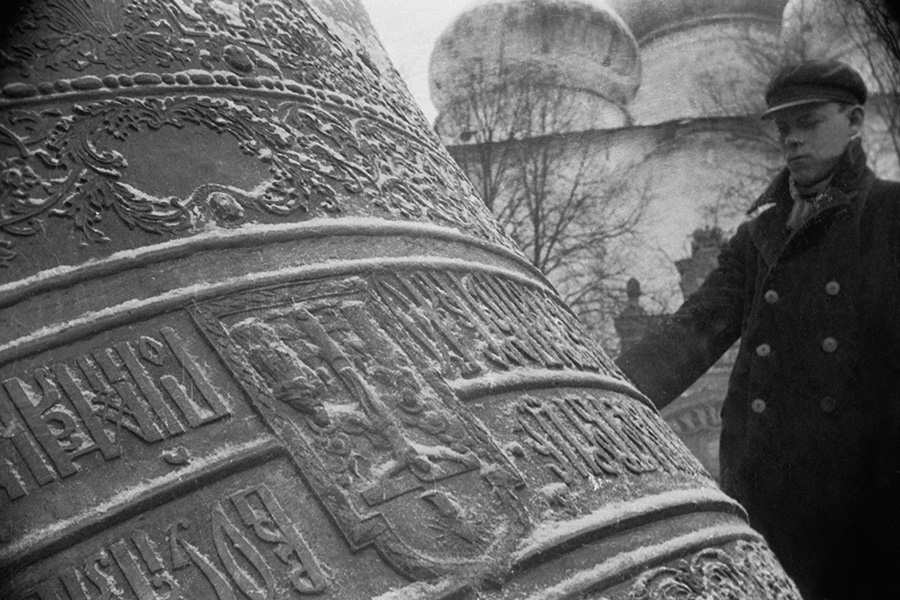
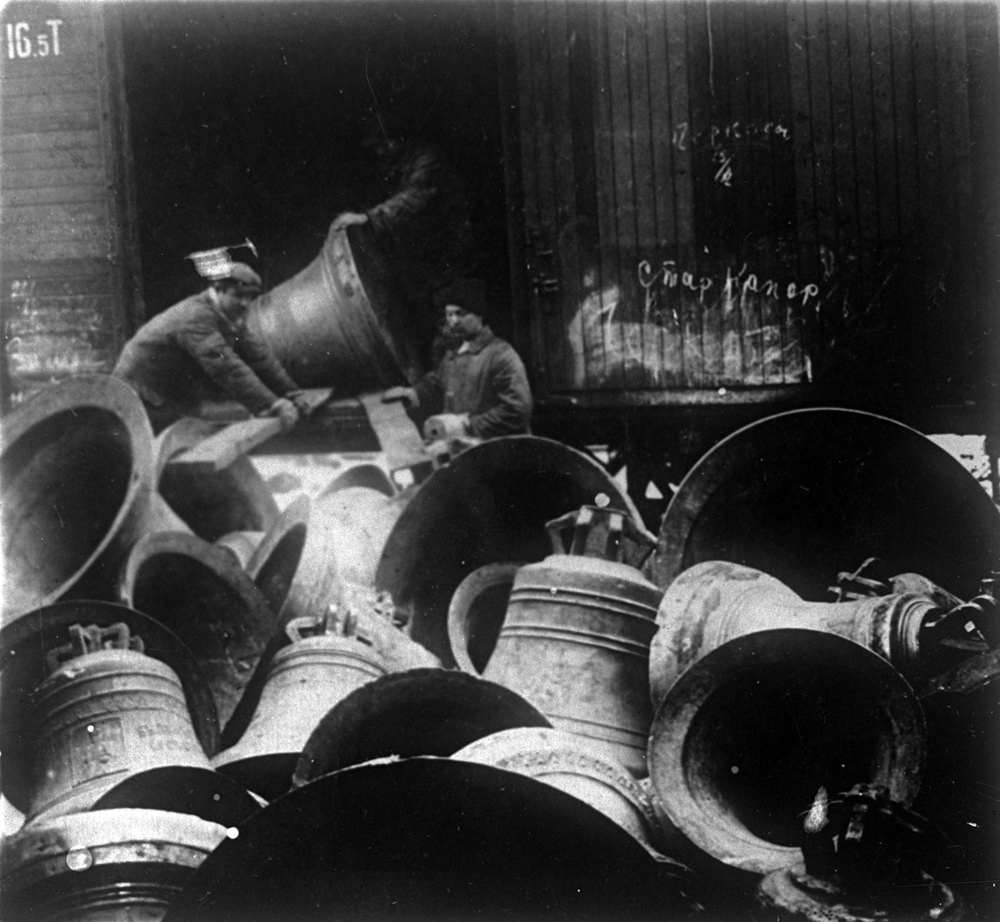
A young boy inspects one of the bells felled by the Bolsheviks
Prior to the 1917 Revolution, more than 1 million bronze bells rang in churches, cathedrals and monasteries throughout the Russian Empire.
After the October Revolution of 1917, church bells were especially despised by the new Bolshevik order. Bell ringing went against the party’s anti-religious campaign, and by the beginning of the 1930s all church bells had been silenced. Under Soviet law, all church buildings, as well as bells, were placed at the disposal of the Local Councils, which “based on state and public needs, used them at their own discretion.” In 1933, at a secret meeting of the All-Russian Central Executive Committee, a plan for the procurement of bell bronze was initiated. Each republic and region received a quarterly quota for their respective procurement of bell bronze. Within a few years, in a well organized campaign, nearly everything which represented Orthodox Russia was destroyed.
The closure of more than 20 specialized bell factories led to the loss of skills in this ancient craft, and the professional knowledge, handed down by many generations of Russian foundry workers, was lost. The bell manufacturers in the city of Valdai, worked longer than others, but by 1930, they ceased to exist.
Until now, no one can say even approximately how many bells have been destroyed over the past century. Some of them were lost when churches were demolished, some were destroyed intentionally, while others destroyed “for the needs of industrialization.” Even the bells cast by glorified masters for some of Russia’s oldest and most famous Orthodox places of worship did not escape this fate. They included the Ivan the Great Bell Tower (Moscow), Christ the Saviour (Moscow), and St. Isaac’s Cathedrals (Leningrad); the Solovetsky, Valaam, Simonov, Savvino-Storozhevsky monasteries; along with thousands of chapels, churches, cathedrals, and monasteries throughout the former Russian Empire. In 1929, a 1,200-pound bell was removed from the Kostroma Assumption Cathedral. In 1931, many bells of the Savior-Euthymius, Rizopolozhensky, Pokrovsky monasteries of Suzdal were sent for remelting. There were no bells left in Moscow.
The story of the destruction of the famous bells (19 bells with a total weight of 8,165 pounds) of the Trinity-Sergius Lavra was particularly tragic – they were handed over to the Rudmetalltorg (the Metal Scrap Trust in Moscow). In his diary about the events in the Trinity-Sergius Lavra, the writer M. Prishvin wrote: “I witnessed the death … the majestic bells of the Godunov era were felled – it was like a spectacle of public execution.”
The spoils of revolution and Soviet dogma
Most church bells were destroyed. A small number of bells, which were of artistic value, were registered with the People’s Commissariat of Education, which disposed of them based on “state needs.” Other bells seized were sent to large construction sites of Volkhovstroy and Dneprostroy for technical needs, such as the manufacture of boilers for dining rooms! The Moscow authorities found one peculiar use of some of the Moscow bells in 1932. Bronze high reliefs cast from 100 tons of church bells were used for the construction of the Lenin Library.
To eliminate the most valuable bells, it was decided to sell them abroad. “The most appropriate way to eliminate our unique bells is to export them abroad and sell them there on a par with other luxury goods …”, wrote the ideological atheist Gidulyanov.
The bells of the Danilov Monastery were sold to Harvard University in the United States, while the unique bells of the Sretensky Monastery were sold to England. A large number of bells went to private collections.
The gateway 30-meter bell tower of the Church of Simeon Stolpnik in Moscow, was demolished on the eve of World War II, fearing it as a possible landmark for enemy air raids. Holy Russia was silenced, depriving it of a single ringing bell.
On the night of 31 August/1 September the monument to Emperor Nicholas II and his family, in front of the Church on the Blood in Ekaterinburg was vandalized. An unknown woman with a black marker defaced the pedestal of the monument, but she has been detained by law enforcement officials
The woman wrote several insulting inscriptions against the Russian Orthodox Church and the United Russia Party on the pedestal. The inscriptions included words such as “Masons” and “Illuminati.” A police spokesman confirmed that the vandal was arrested at the crime scene. She was a woman born in 1971, and is known to Ekaterinburg police for previous offences.
The Ekaterinburg diocese has confirmed the act of vandalism, who also added that the insulting inscriptions on the monument platform were erased that very morning.
The Church on the Blood was constructed on the site of the Ipatiev House, where the Imperial family and their four faithful retainers were all brutally murdered by the Bolsheviks on 17th July 1918
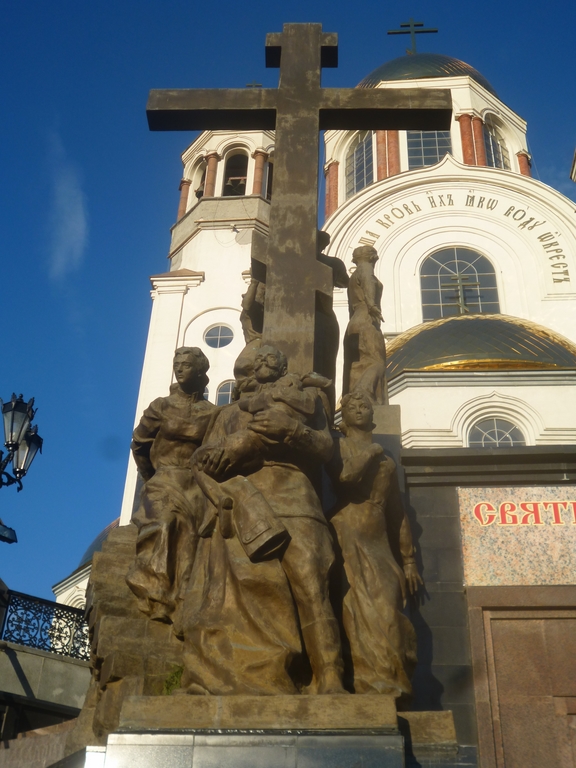
On 28th May 2003, a monument to Nicholas II, his wife and their five children was established at the entrance to the Lower Church. The seven-figure composition represents the tragic moment of the descent of Nicholas II and his family into the basement of the “House of Special Purpose” for execution.
The monument is bordered by a spiral staircase from the Upper Church to the Lower Church. According to the sculptors, the 23 granite steps of this staircase, which correspond to the 23 steps into the basement of the Ipatiev House, should remind visitors of the last journey of the emperor and his family
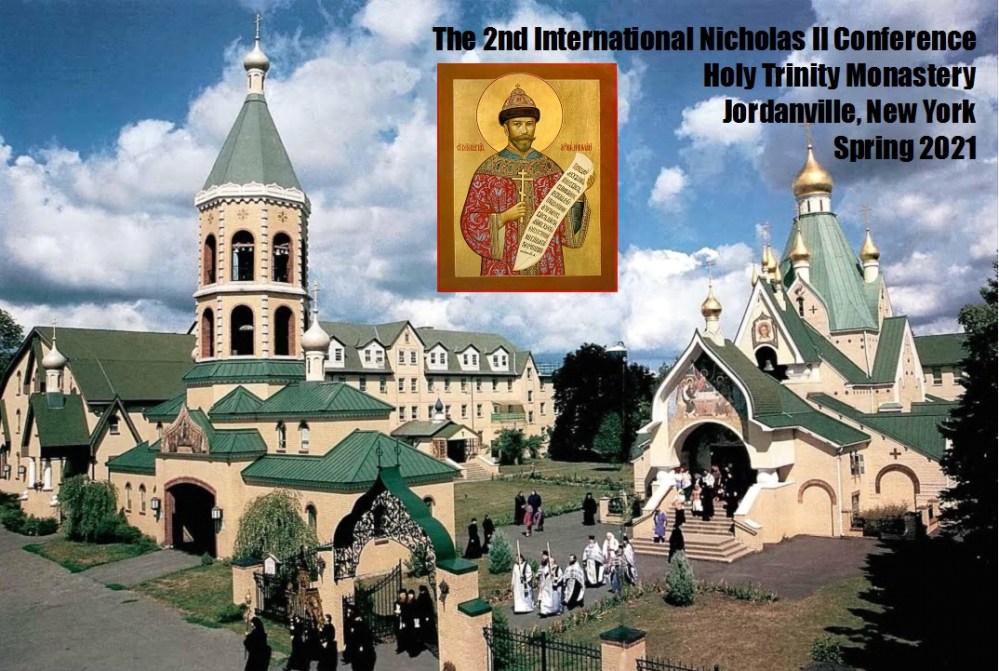
Today, I have received the blessing of His Grace Bishop Luke of Syracuse, Abbot of Holy Trinity Monastery, to host the 2nd International Nicholas II Conference at the Holy Trinity Monastery in Jordanville, New York in the Spring of 2021.
A number of historians and writers have already expressed interest in speaking at the Conference. I hope to confirm the actual date within the next few weeks.
Truly, my prayers have been answered. I am so pleased that we can now honour Tsar-Martyr Nicholas II at the Holy Trinity Monastery in Jordanville.
While the event is still more than a year away, I wanted to share this wonderful news with all of you! I will continue to keep you posted of any new developments.
The Icon of the Mother of God, “Of the Three Hands” belonged to Nicholas II and his family
On 11th July 2019, on the feast day of the Icon of the Mother of God, “Of the Three Hands”, Mrs. Olga Nikolaevna Kulikovsky, chairman of the Grand Duchess Olga Alexandrovna Charitable Foundation, attended a Divine Liturgy in the Church on the Blood in Ekaterinburg.
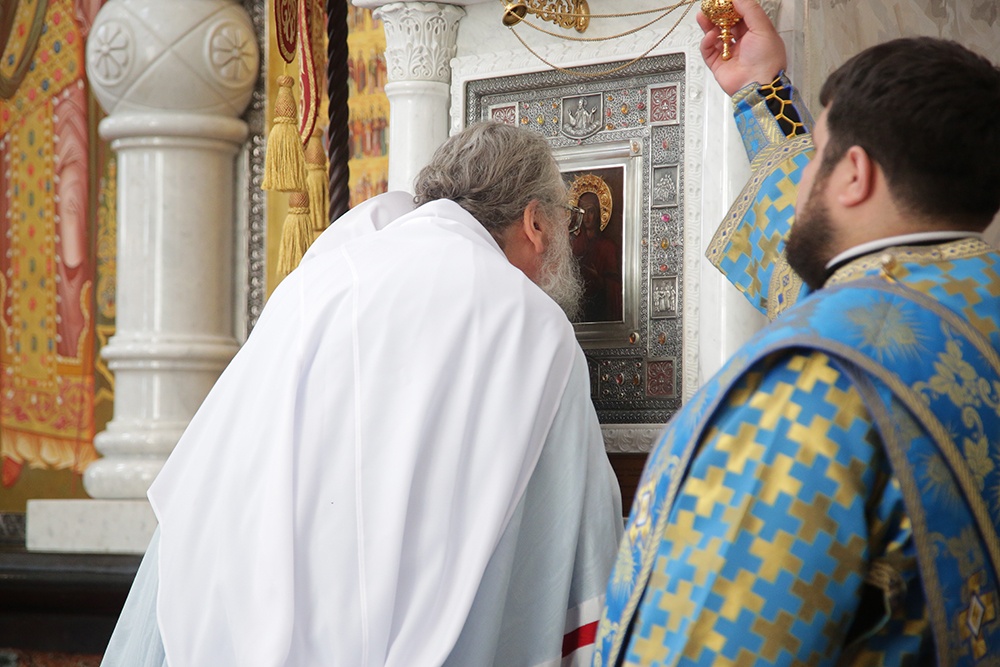
The Divine Liturgy was led by Metropolitan Kirill of Ekaterinburg, in front of the Icon of the Mother of God, “Of the Three Hands.” The icon belonged to the Imperial Family, who venerated the icon, during their imprisonment in the Ipatiev House in 1918. The icon was found in the basement of the house after the murder of the Tsar and his family on the night of 16/17 July 1918. In the early 1920s, through the efforts of officers loyal to the Sovereign, the icon was smuggled out of Bolshevik Russia to Denmark, and presented to Nicholas II’s mother – the Dowager Empress Maria Fedorovna. After her death in 1928, the icon was bequeathed to her youngest daughter Grand Duchess Olga Alexandrovna, who took it with her when she emigrated to Canada in 1948.
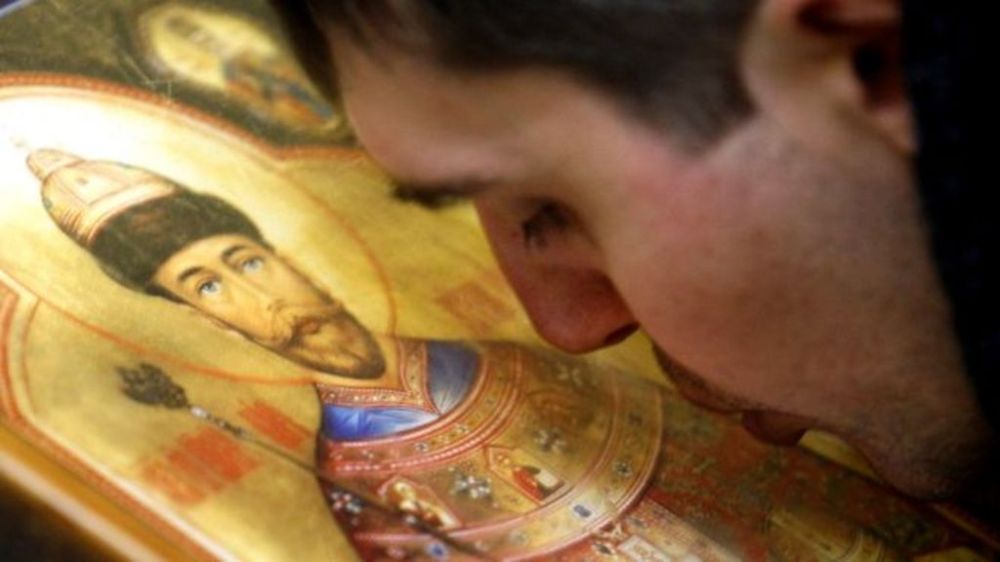
Metropolitan Kirill of Ekaterinburg, kisses the Icon of the Mother of God, “Of the Three Hands”
In 1991, when Tikhon Nikolaevich Kulikovsky, the eldest son of Grand Duchess Olga Alexandrovna, learned that Russia was discussing the construction of a Memorial Church on the site of the Ipatiev House in Ekaterinburg, he addressed a letter to His Holiness Patriarch Alexy II of Moscow and All Russia, in which he noted that upon completion of construction, he intended to transfer the icon to the newly established church. However, Tikhon Nikolayevich was not able to fulfill his wish during his lifetime – he died on 8th April 1993. His widow Olga Nikolaevna Kulikovsky, however, carried out her husbands wish, and presented the Mother of God, “Of the Three Hands” during the solemn consecration of the Church on the Blood in 2003.
After the service, Metropolitan Kirill congratulated everyone on the holiday and the beginning of the Tsar’s Days, noting that this day marks the beginning of “Passion Week” dedicated to the memory of the Holy Royal Martyrs. His Eminence thanked Olga Nikolaevna, to whom the Church on the Blood and the Ekaterinburg Diocese acquired “a special significant icon – the image of God’s blessing on the Holy Tsar’s Family.”
Today, the icon is kept in the Upper Church of the Church on the Blood in Ekaterinburg.
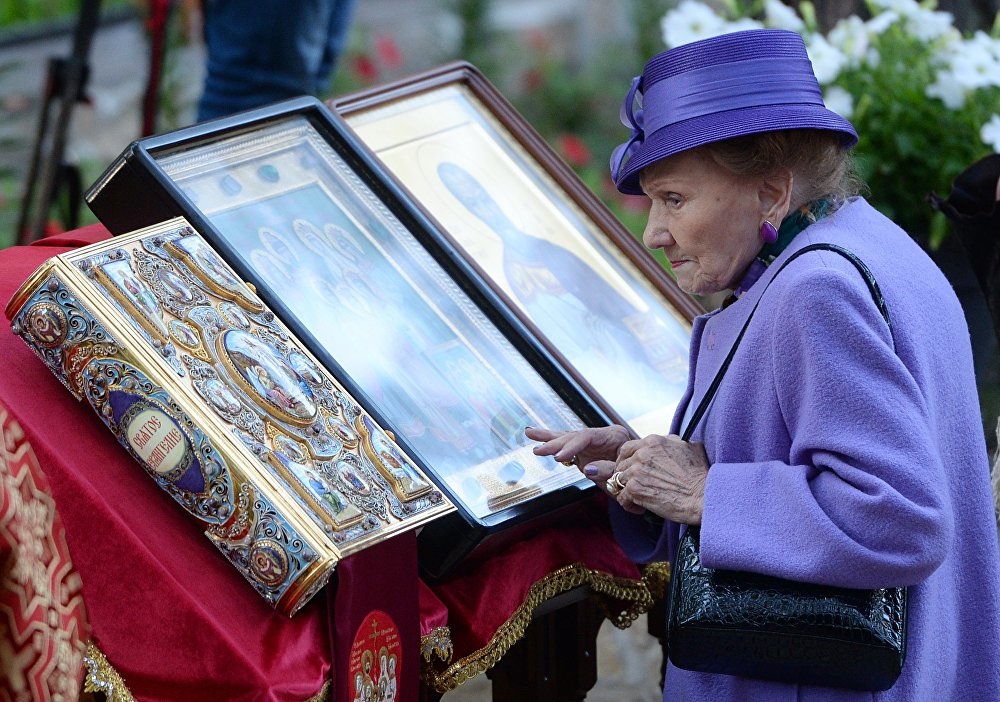
Mrs. Olga Kulikovsky
It should be noted, that Mrs. Olga Kulikovsky (now 93 years old), has dedicated many years to charitable activities in the name of her mother-in-law Grand Duchess Olga Alexandrovna. Despite her age, she continues to work actively to help clear the name of Russia’s much slandered Tsar and his family. She travels to Ekaterinburg each year to take part in the Tsars Days events, culminating with the Divine Liturgy at the Church on the Blood on the night of 16/17 July, and in Ganina Yama.











 Nicholas II
You must be logged in to post a comment.