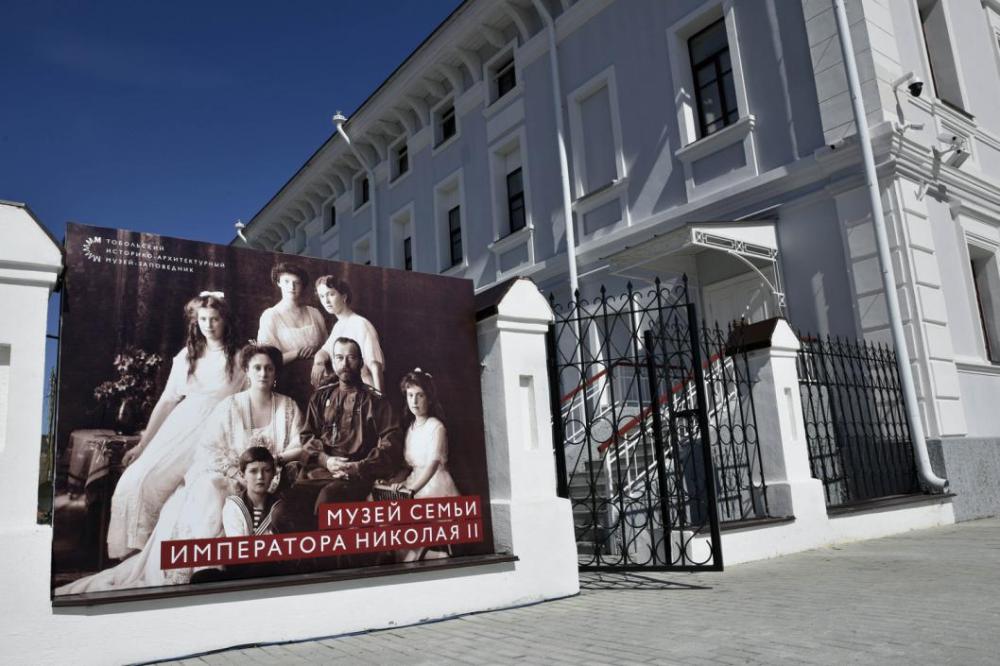
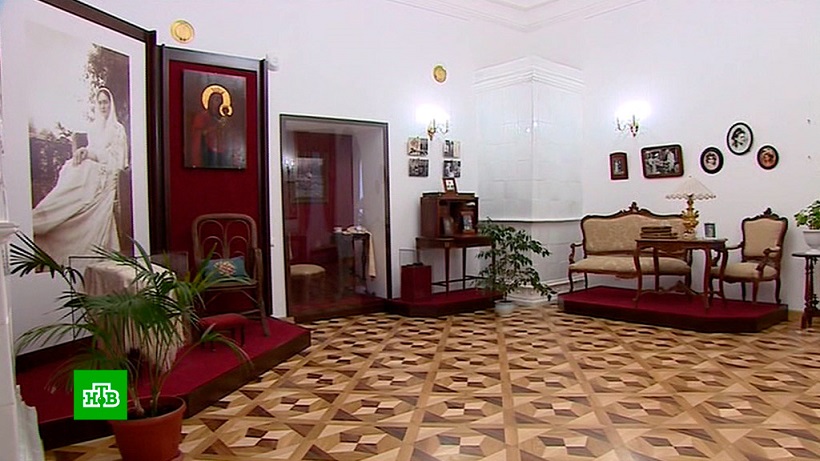
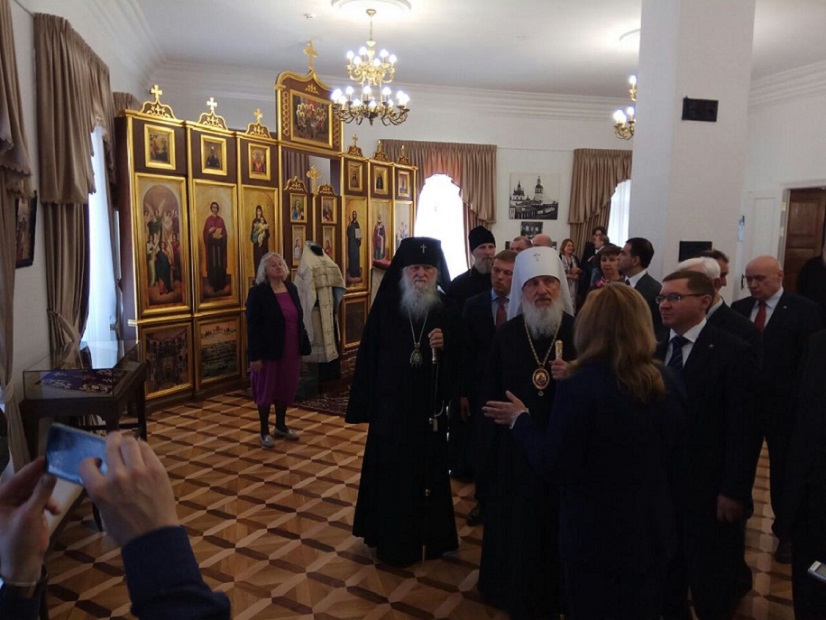
The Museum of the Family of Emperor Nicholas II opened in Tobolsk on 26 April 2018
On 26th April 2018, the long awaited Museum of the Family of Emperor Nicholas II opened its doors in the Siberian city of Tobolsk. Governor Vladimir Yakushev called the event “significant not only for the region, but for the whole of Russia.”
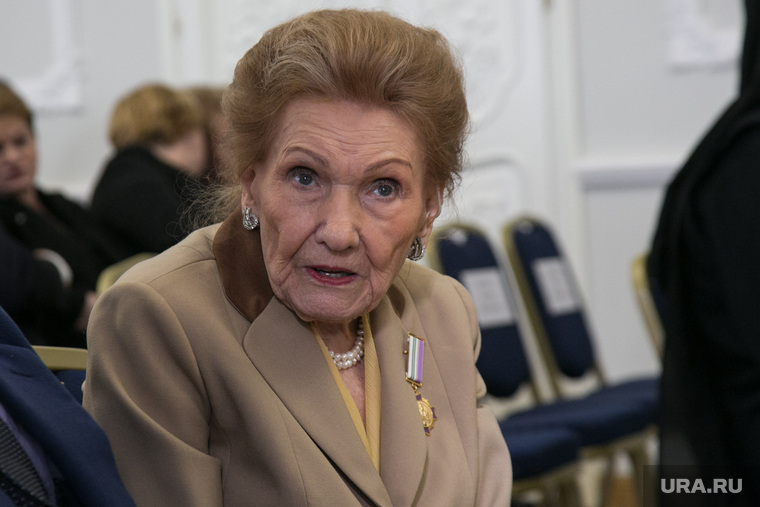
The guest of honour at the opening of the museum was Mrs Olga Nikolaevna Kulikovsky, a well-known Russian public figure, and widow of Tikhon Nikolayevich Kulikovsky, the eldest son of Grand Duchess Olga Alexandrovna, nephew of Nicholas II and grandson of Alexander III. In addition, descendants of the tutors of the Tsesarevich Alexei, who accompanied the Imperial family to Tobolsk, arrived from France and Switzerland.
Mrs Olga Nikolaevna Kulikovsky
Mrs Kulikovsky said that she liked the museum, and noted the excellent work of its employees. According to her, it is impossible, however, to add the original atmosphere of the time when the family of Nicholas II lived in the house, Olga Nikolaevna, undoubtedly the museum was made with love. When asked what kind of feeling the museum created for her, she said: “Longing for the times when the Imperial family lived here.”
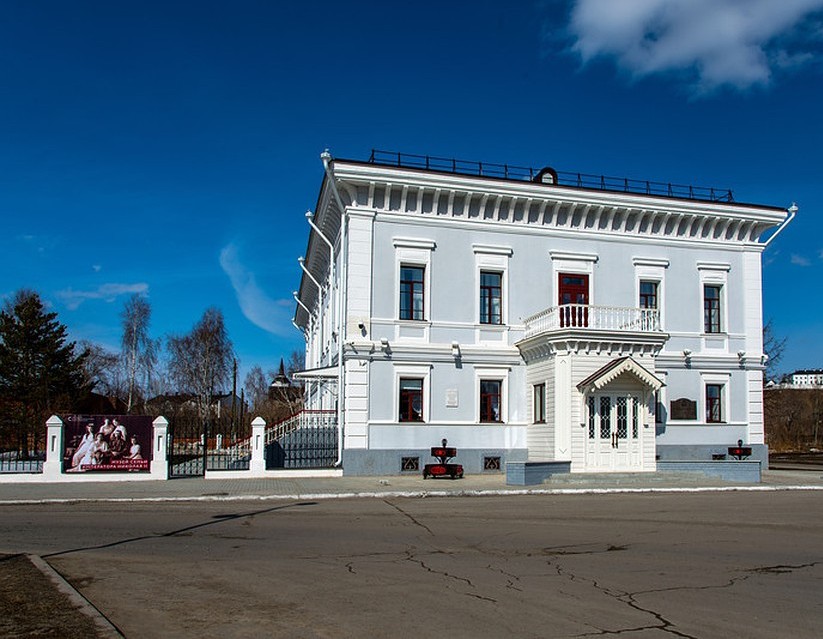
The museum is the first museum in Russia, dedicated entirely to the family of Emperor Nicholas II. The museum is housed in the former governor’s house, where the Imperial family lived from 6th August, 1917 to 13th April, 1918. The mansion became a prison for the Imperial family before the Bolsheviks sent everyone to them all to their deaths in Ekaterinburg.
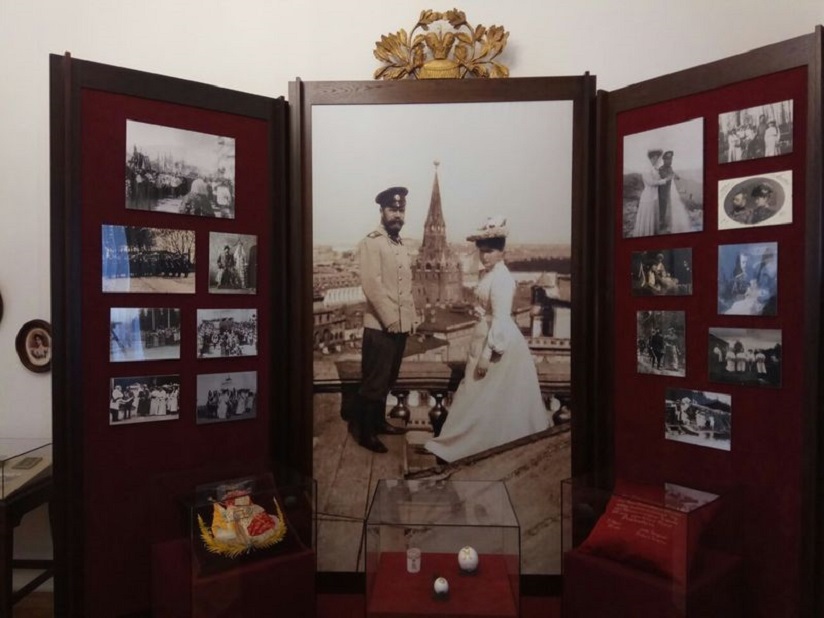
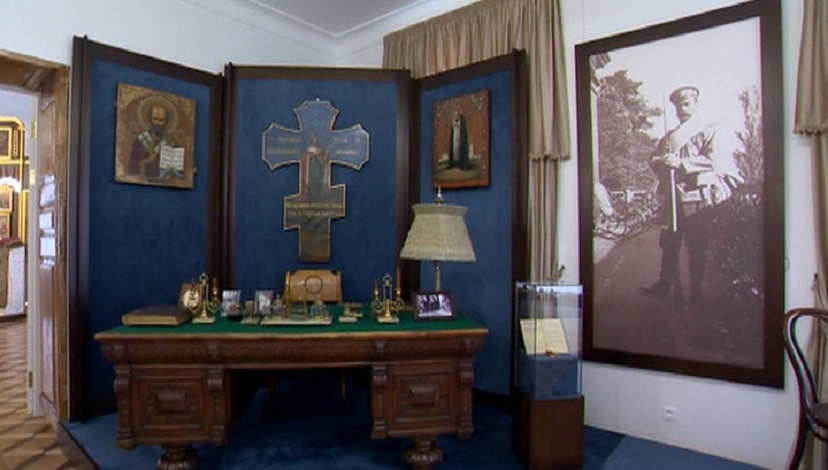
During the past year historians have collected their personal belongings: furniture, icons, Alexandra Feodorovna’s gospel, and Alexei’s “magic lantern” – the prototype of a modern projector. In addition, the new museum will temporarily feature exhibits from the Central Museum of the Armed Forces of the Russian Federation and the Russian National Museum of Music, which include porcelain Easter eggs of 1912 with the monograms of Nicholas II and Alexandra Feodorovna, and a balalaika made in the studio of the court master Franz Paserbsky.
After the Revolution, the Governor’s house was renamed the “House of Freedom”. During the last 50 years, the former Governor’s mansion at Ulitsa Mira, 10 was occupied by the district administration. Historians had argued for many years that a building with such a history should be utilized as a museum dedicated to the Imperial family.
In the museum’s exposition there are unique items related to the period of the Imperial family’s 8-month residency: Imperial porcelain, napkins with monograms, silver appliances. One of the most precious exhibits is Empress Alexandra Feodorovna’s silk shawl. The Empress gave the shawl to the wife of the doctor in gratitude, who had treated the Tsesarevich Alexei.
The Museum of the Family of Emperor Nicholas II in the former Governors Mansion, Tobolsk
NOTE: All of the articles pertaining to Nicholas II and his family which were originally published in my Royal Russia News blog, have been moved to this Nicholas II blog. This article was originally posted on 30 April 2018 in my Royal Russia News blog – PG
The above VIDEO is an announcement for the procession, which highlights the route known as the Path of Sorrow of the Holy Royal Passion-Bearers immortalized by the Russian Orthodox Church with churches in Ekaterinburg.
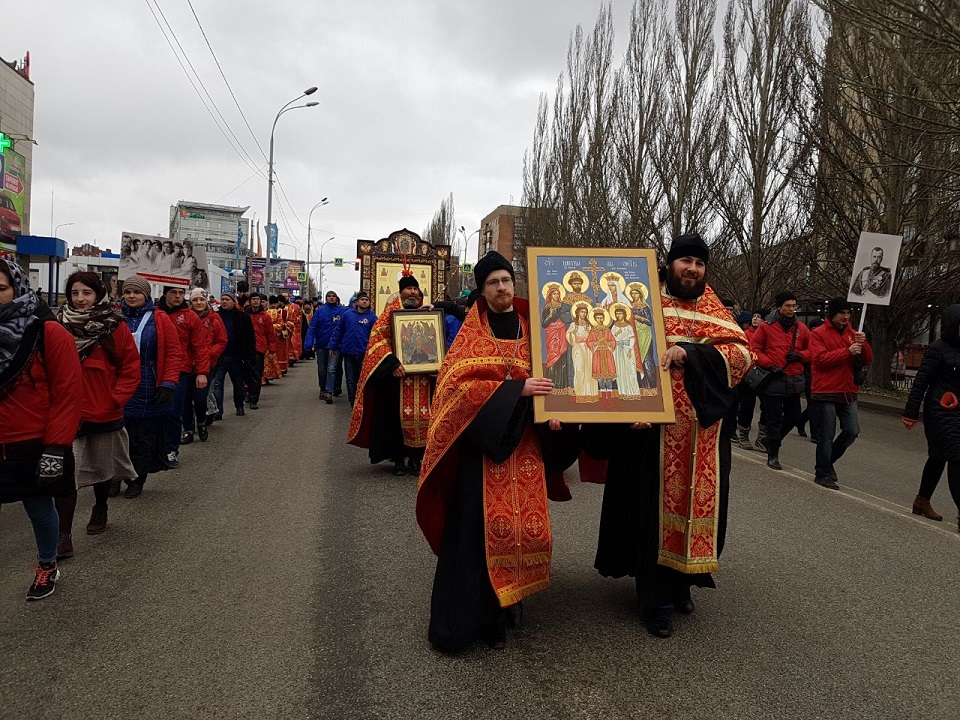
In the early morning of 30th April 2018, a religious procession took place in Ekaterinburg marking the 100th anniversary of the arrival of Nicholas II and members of his family from Tobolsk. More than 1,500 people took park in the prayer procession, which passed from the Memorial Cross in the area of the Shartash Railway Station to the Church on the Blood – built on the site of the former Ipatiev House, where Nicholas II, his consort Alexandra, their five children, and four faithful retainers were all murdered on the night of 16/17 July 1918 by members of the Ural Soviet.
Emperor Nicholas II, Empress Alexandra Feodorovna, and their daughter Grand Duchess Maria Nikolaevna were transferred from Tobolsk, and handed over to the Ural Soviet on 30th April 1918. They were accompanied by the Tsar’s aide Prince Vasily Dolgorukov, the family’s physician Dr. Eugene Botkin, and three servants. The rest of the family: Grand Duchesses Olga, Tatiana, Anastasia, and Tsesarevich Alexei were brought to Ekaterinburg in May 1918.
The procession was headed by the bishops of the Ekaterinburg Diocese: Metropolitan Kirill of Yekaterinburg and Verkhoturye, Bishop of Kamensk and Alapaevsky Methodius, Bishop of Sredneuralsky Eugene, vicar of Ekaterinburg diocese, Bishop of Serov and Krasnoturinsky Alexy.
The procession was attended by numerous clergy and monastics, Cossacks, monarchists, as well as students of the Ekaterinburg theological seminary, nurses and volunteers of the Orthodox Relief Service, representatives of Orthodox brotherhoods, employees and volunteers of the Nika Charity Fund, representatives of youth parish clubs, members of the Youth Cossack organization of the Sverdlovsk region, activists of the youth department of the diocese, as well as numerous parishioners of the churches of the Ekaterinburg diocese.
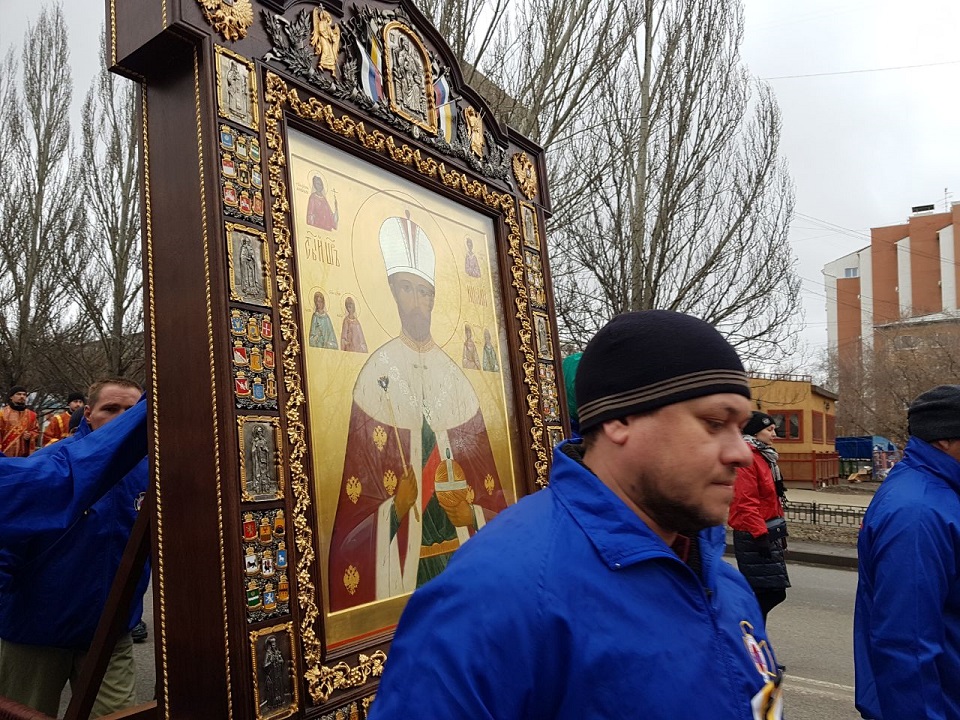
Crusaders dressed in red jackets carried banners, icons, as well as images of Emperor Nicholas II and the Holy Royal Family, thereby emphasizing the importance of the year of marking the 100th anniversary of the death and martyrdom of the Holy Royal Passion-Bearers.
The column of believers began its memorable procession, dedicated to the 100th anniversary of the arrival of Nicholas II and members of his family in Ekaterinburg from Tobolsk, from the Memorial Cross and the foundation stone, which are located near Shartash Railway Station (in 1918 – Yekaterinburg-II Station), on the future site of the Church in Honour of the Icon of the Mother of God “Valaam” – one of the three miraculous icons, revealed during the reign of Nicholas II.
The arrival and the route known as the “Path of Sorrow of the Holy Royal Passion-Bearers” are immortalized by the Russian Orthodox Church with churches in Ekaterinburg.
The procession passed through Ulitsas (streets) Kuibyshev, East, Chelyuskintsev, Sverdlov, Karl Liebknecht, Tsarskoy, stopping at the Church of the Icon of the Mother of God Port Arthur and the Church of the Icon of the Mother of God “Derzhavnaya”.
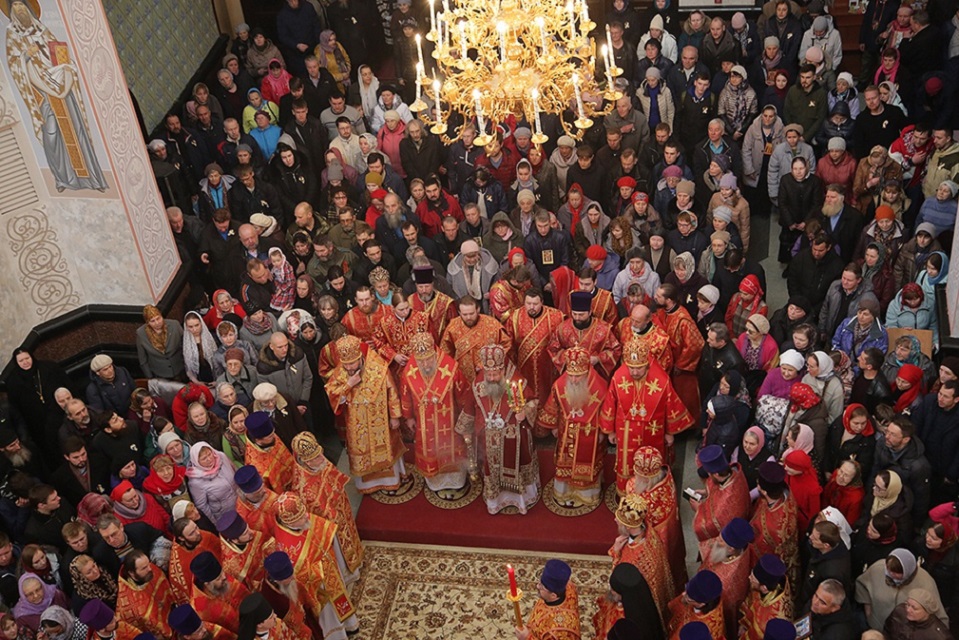
The memorial procession ended at the Church on the Blood, where Metropolitan Kirill, delivered a Divine Liturgy.
The above VIDEO shows the cross procession and the episcopal Divine Liturgy held in memory of the arrival in Ekaterinburg from Tobolsk of Nicholas II and members of his family on 30th April 1918. The Divine Liturgy was performed in the Church on the Blood, by Metropolitan Kirill of Yekaterinburg and Verkhoturye and the bishops of the Ekaterinburg Diocese.
Archpriest Afanasy Belyaev served as priest and confessor to the former Russian Imperial family. On the occasion of the Tsarevich’s thirteenth birthday in July 1917, he wrote this description of their faith and piety:
. . . for the last time the former rulers of their own home had gathered to fervently pray, tearfully, and on bended knee, imploring that the Lord help and intercede for them in all of their sorrows and misfortunes.
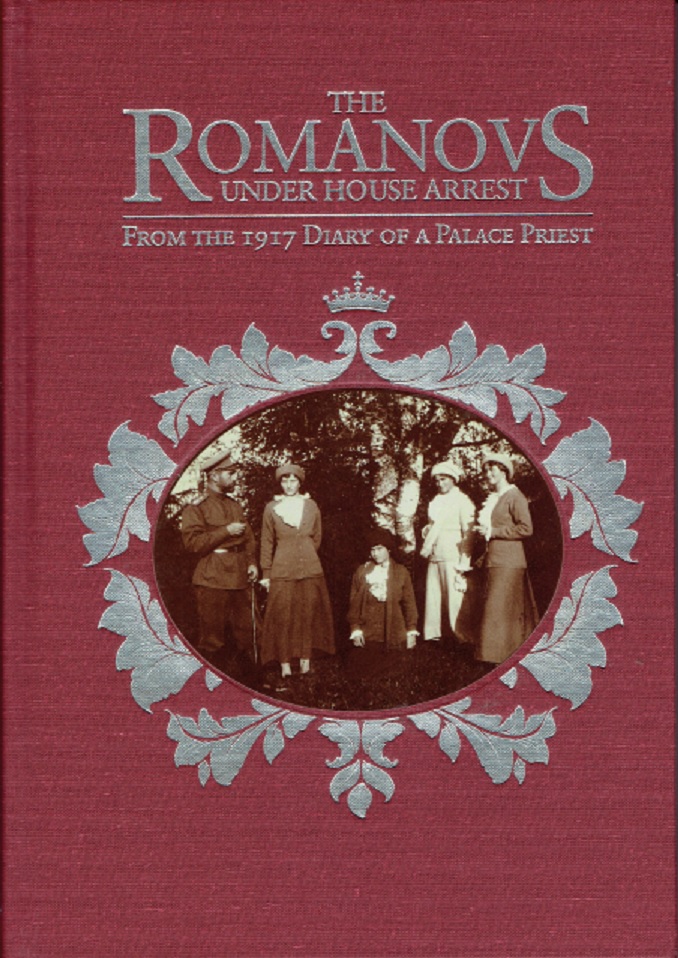
These selected excerpts from the chaplain’s diary open a window into the souls of the now sainted Romanov family and vividly recall the struggles they endured during the first five months of their confinement following the abdication of Tsar Nicholas II. One sees the love and independence of a family whose life was centered on Christ; whose very existence was bound up with the defense of the Orthodox Faith. In the spirit of the Gospel the Tsar conveyed to the Russian people from his captivity “that it is not evil which conquers evil, but only love . . .”
Of particular interest are Fr Afanasy’s personal impressions of Nicholas II, members of his family and retinue, all of whom were under house arrest in the Alexander Palace. Fr Afanasy not only served as priest and confessor to the Imperial family, but also had opportunities to chat with the Tsar. This first English translation of Fr Afanasy’s diary is of immense historic value. It presents his personal observations of the Imperial family’s daily life during their house arrest at Tsarskoye Selo.
Russian cultural historian Marilyn Pfeifer Swezey sets Fr Afanasy’s diary in its historical context and offers an epilogue to complete the story of the Romanov’s journey to martyrdom at the hands of a Bolshevik firing squad in a Siberian basement in July 1918. Also included is a short life of Fr Afanasy and biographical information regarding the various persons appearing in the work. This anniversary edition has been illustrated throughout with colour and black and white photos (some rarely or never published before) as well as charts and maps.
An excerpt from the diary is also available at Orthodox Life or click HERE to order your copy of The Romanovs Under House Arrest 136 pages, $29.95 USD, published by Holy Trinity Publications, Jordanville, NY.
Archpriest Afanasy Ivanovich Belyaev was the scion of a St Petersburg priestly family who became the rector of the Tsar’s Feodorovsky Cathedral at Tsarskoye Selo, and subsequently the father confessor of the Russian Imperial family during their first five months of confinement following Nicholas II’s abdication in early 1917.
Marilyn Pfeifer Swezey is a specialist in Russian cultural history and decorative arts. Her previous works include The Romanov Family Album, Fabergé Flowers and museum exhibitions At Home With the Last Tsar and His Family and The Tsar and the President, Alexander II and Abraham Lincoln.
Director of Holy Trinity Publications Nicholas Chapman sat down with Russian cultural historian Marilyn Swezey, editor and contributor to the new release, The Romanovs Under House Arrest: From the 1917 Diary of a Palace Priest. Watch the 15-minute interview below!
VIDEO of the entire Forum (in Russian only) – duration 2 hours, 20 minutes
NOTE: All of the articles pertaining to Nicholas II and his family which were originally published in my Royal Russia News blog, have been moved to this Nicholas II blog. This article was originally posted on 20 May 2018 in my Royal Russia News blog – PG
On 18th May 2018, on the eve of the 150th anniversary of the birth of the last Russian emperor, a public forum was held in Ekaterinburg to preserve the heritage of Tsar Nicholas II.
Scientists, historians and authors, along with representatives of the public, gathered to discuss the urgent issues of preserving the historical memory of the sovereign, including recognizing the merit of Nicholas II for the development of the Russian state and an assessment of the murder of the Tsar’s family committed a hundred years ago.
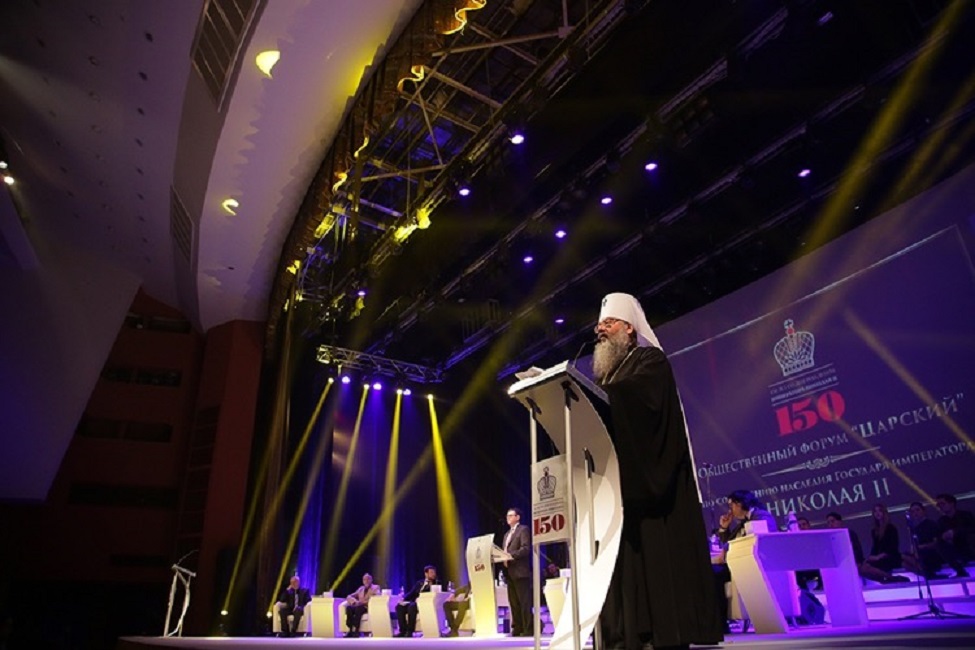
Metropolitan Kirill of Ekaterinburg and Verkhoturye
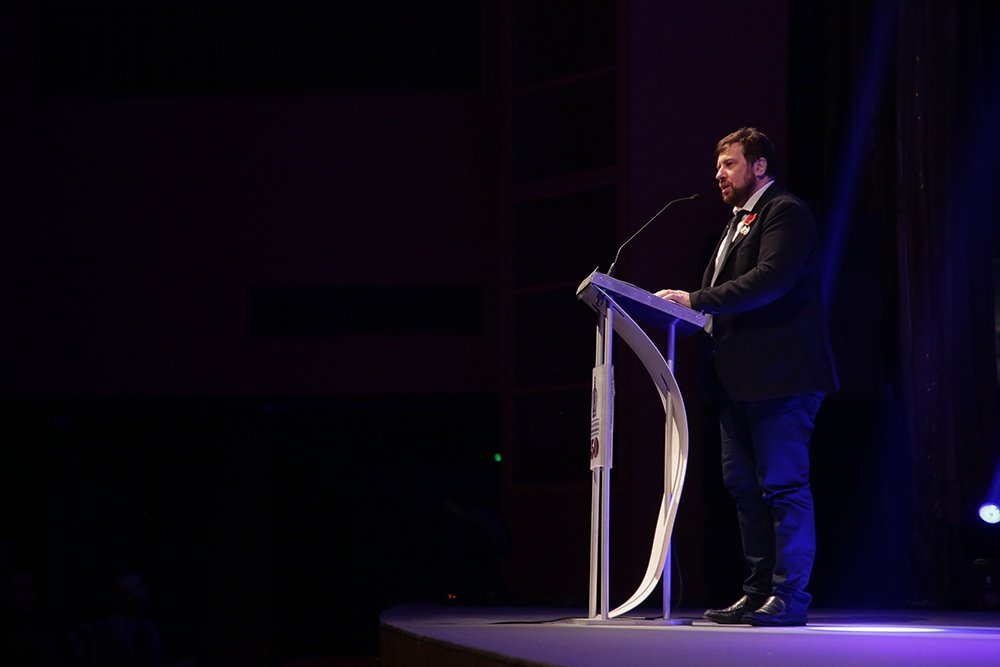
Opening the forum was Metropolitan Kirill of Ekaterinburg and Verkhoturye, who noted that Ekaterinburg “has become a symbol of the tragedy of the Tsar’s family and, together with her, our Motherland.”
“Since these tragic events, which took place 100 years ago, tragedy befell Russia and it’s people. It is here, on the 150th anniversary of the birth of Emperor Nicholas Alexandrovich, that our holy cause is to gather and reflect on what the Russian Empire was during his reign, what was good about our great country, and what should we take from the past, what lessons, what edifications should we learn for our own lives” – said His Eminence.
The special guest of the forum – the Chairman of the Double-Headed Eagle Society the media group Tsargrad Konstantin Valerievich Malofeev, noted “the triumph of the reign of Emperor Nicholas II, is unparalleled in the thousand-year history of Russia.
“During the history of the Russian Empire, it was the most powerful, the largest, the happiest during the reign of Nicholas II. We should not forget this, and our forum is dedicated to this, which we, the society of historical enlightenment Double-Headed Eagle Society, proudly hold together with the Ekaterinburg Metropolis where our local branch is working under the guidance of Metropolitan Kirill.”
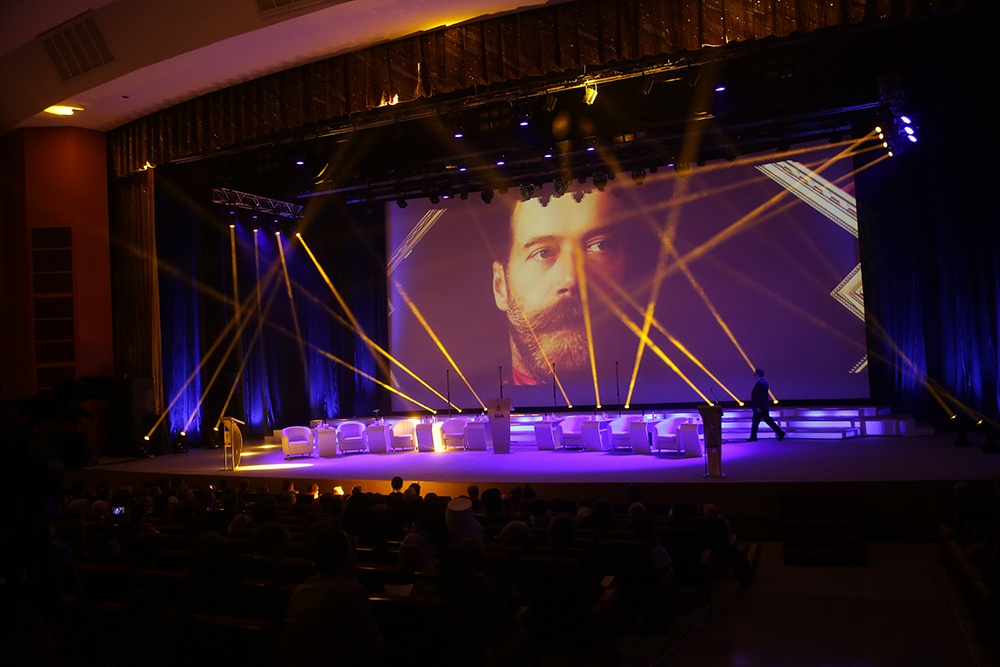
The stage is set for the Nicholas II Forum, held at the Cosmos Theater, Ekaterinburg
The forum was also attended by Bishop Evgeny of Nizhny Tagil and Nevyansky, Bishop of Serov and Krasnoturinsky Alexy, Minister of Education of the Sverdlovsk Region Yury Biktuganov, First Deputy Minister of Culture of the Sverdlovsk Region Vladimir Manturov, as well as representatives of the Double-Headed Eagle Society, the World Russian People’s Council, the Imperial Palestinian Orthodox Society, arriving from various regions of Russia.
Historians, philosophers, theologians, public figures from Russia (among them also experts from Moscow and St. Petersburg), Serbia and Bulgaria discussed issues related to the restoration and preservation of the historical memory of Nicholas II.
Within the framework of the forum, experts assessed the era of the reign of the last Russian emperor as a time, providing great breakthroughs in the development of the state and creating the foundations of socio-economic, including technological development for decades to come. Experts came to the conclusion that Nicholas II was one of the most effective Russian rulers and issued a number of initiatives to perpetuate the memory of Emperor Nikolai Aleksandrovich as an outstanding statesman.
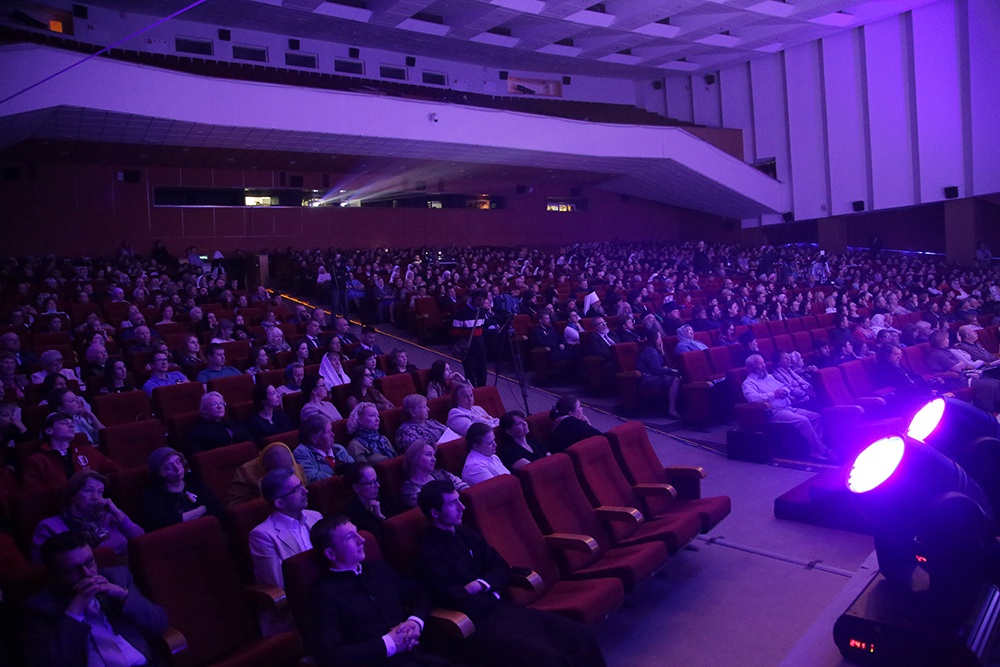
More than 2,000 people attended the Nicholas II Forum on 18th May
Among the proposals included in the final document of the forum is the need for a large-scale federal information and enlightenment campaign on Russia’s achievements in the era of Nicholas II, the development of textbooks and other scientific and educational literature on the basis of reliable scientific information on era, the state order for quality works of art in various fields of culture and art; importance of historical archival research and public dialogue among the scientific community and citizens interested in history; installation in the cities and towns of Russia monuments to the sovereign – an initiative put forward by a member of the Regional Public Chamber, chairman of the Ural branch of the Union of Russian Paratroopers Yevgeny Teterin.
An important topic of the forum was the discussion of the need for public evaluation of the murder of the Imperial Family and their faithful servants, which occurred a century ago in the Ipatiev House in Ekaterinburg. The tragedy of 1918, crowned with the feat of the Holy Royal Passion-Bearers, has not yet been properly evaluated at the state level.
The experts of the forum supported the initiative of Moscow colleagues – participants of a recent round-table hosted by the Parliamentary Newspaper (Парламентская газета) where representatives of the Russian Orthodox Church, State Duma deputies, jurists and political scientists condemned the murder of the Tsar’s family as an unacceptable and unjustifiable crime.
Russia’s leading expert on Nicholas II, historian and author Pyotr Valentinovich Multatuli
During the forum on May 18, in Ekaterinburg, experts presented their views on the sovereign and the era at the forum by:
– Pyotr Valentinovich Multatuli, Russia’s leading expert on the life and reign of Nicholas II, candidate of historical sciences, member of the Council of the Society for the Development of Russian Historical Education of the Double-Headed Eagle Society, and regular commentator of the television channel “Tsargrad”;
– Vladimir Mikhailovich Lavrov, Doctor of Historical Sciences, Member of the Council of the Russian Historical Education Development Society of the Double-Headed Eagle Society, Academician of the Russian Academy of Natural Sciences, Chief Researcher of the Institute of Russian History of the Russian Academy of Sciences;
– Konstantin Valerievich Malofeev, chairman of the Society for the Development of Russian Historical Education of the Double-Headed Eagle Society.
– Yegor Stanislavovich Kholmogorov, publicist, blogger, editor-in-chief of the Russian Observer and New Chronicles sites, author and presenter of the 100 books website;
– Nikola Tanasich, teacher of the Faculty of Philosophy, Belgrade State University;
– Georgi Dimov, Doctor of Science, Senior Researcher of the Bulgarian Academy of Sciences;
– Dmitry Borisovich Grishin, chairman of the Sergievsky Memorial Society (Moscow).
Other participants of the forum were Vladislav Nikolayevich Mayorov, military journalist, expert on the history of Nicholas II and author of the “Royal Calendar”; Vladimir Ilyich Bolshakov, Doctor of Philosophy, Vice-Rector for Research of the Russian Academy of Painting, Sculpture and Architecture Ilya Glazunov (Moscow), as well as members of the Urals Association in Moscow and other experts.
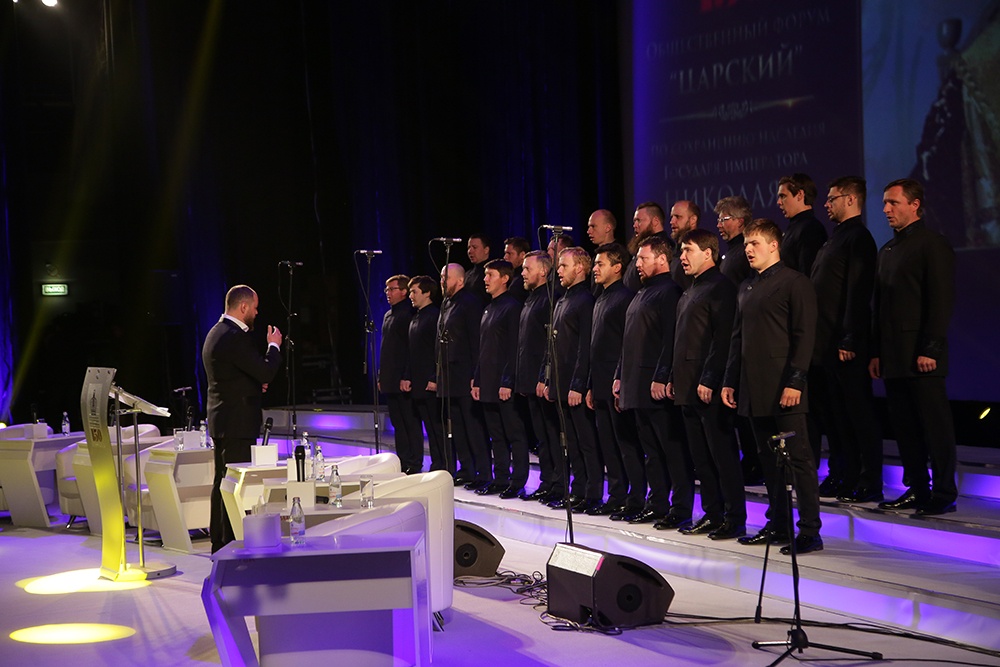
The Sretensky Monastery Choir
The Forum came to close with the singing of God, Save the Tsar and Glory! and A Life for the Tsar, performed by the Sretensky Monastery Choir – please take a moment to watch/listen at the end of the video posted at the top of this post – PG.
The Forum on the preservation of the historical heritage of the Emperor Nicholas II was held in the Kosmos Theater in Ekaterinburg. More than 2,000 people participated in the historic Forum. The event, which became a significant public event, was covered by the leading federal and regional media and was broadcast by the Orthodox television channel Soyuz to 82 countries with a multi-million audience.
NOTE: All of the articles pertaining to Nicholas II and his family which were originally published in my Royal Russia News blog, have been moved to this Nicholas II blog. This article was originally posted on 21 May 2018 in my Royal Russia News blog – PG
On 19th May 2018, members of the All-Russian public movement “National Idea of Russia” and the Kuban Cossacks laid flowers at the monument to Emperor Nicholas II in the village of Taininskoye (Mytishchi), which is situated about 19 km northeast of Moscow.
Like the fate of the Sovereign, the monument has a tragic history, being blown up twice by extremists. However, the monuments’ scupltor Vyacheslav Mikhailovich Klykov (1938-2006) restored it each time.
The monument to Emperor Nicholas II was installed in the suburban village of Taininskoye, on the site of the royal road in May 1996.
The opening of the monument was timed to coincide with the 100th anniversary of the coronation of the last Russian Tsar (held in Moscow on 26 May (O.S. 14 May) 1896. This is one of several monuments to Nicholas II in Moscow and region. The inscription on the monument read: “To the Emperor Nicholas II from the Russian people with repentance”.
Sadly, it did not stand for long: on 1st April 1997, the monument was blown up by the left-wing extremists of the group “Revolutionary Military Council”. Their reason, was their opposition to the removal of Lenin’s corpse from the mausoleum in Red Square.
In November 1998, the monument was restored, however, in the winter of the same year it was again blown up.
Then the sculptor of the monument Vyacheslav Klykov created for the third time a new copper monument, which was unveiled in August 2000. The crowned emperor stands proudly, dressed in an ermine mantle, holding a scepter in one hand, mantel in the other. The sculpture represents him at his highest triumph – his ascension to the Russian throne.
After the second explosion, Klykov donated money from his own pocket to help finance the restoration of his monument to Nicholas II.
He noted at the unveiling: “If in days gone by, the Russian people could not protect their tsar, now, believe me, we can do it.”
The ceremony was timed to coincide with the day of the canonization of the Imperial family by the Moscow Patriarchate on 15 August 2000.
Since the fall of 2004, believers from all over the Russian Land have been drawn to the village of Taininskoye. And the appeal of the Russian people “To the Russian Emperor Nicholas II Russian people with repentance”, seemingly destroyed along with the first monument, turned out to be prophetic! The explosion, which was to erase the very idea of repentance before the Emperor Nicholas II, could not change the Providence of God.
So on 19th May 2018, many Orthodox Christians and monarchists came to the monument to pray, lay flowers, unfurl Tsarist-era flags, all in preparation for the procession. The Kuban Cossacks brought with them the Cossack penitential icon of the holy martyr Tsar Nicholas.
Thanks to the talented Russian sculptor Vyacheslav Mikhailovich Klykov, we have the opportunity to honor the memory of the Emperor. Forgive us, Sovereign!
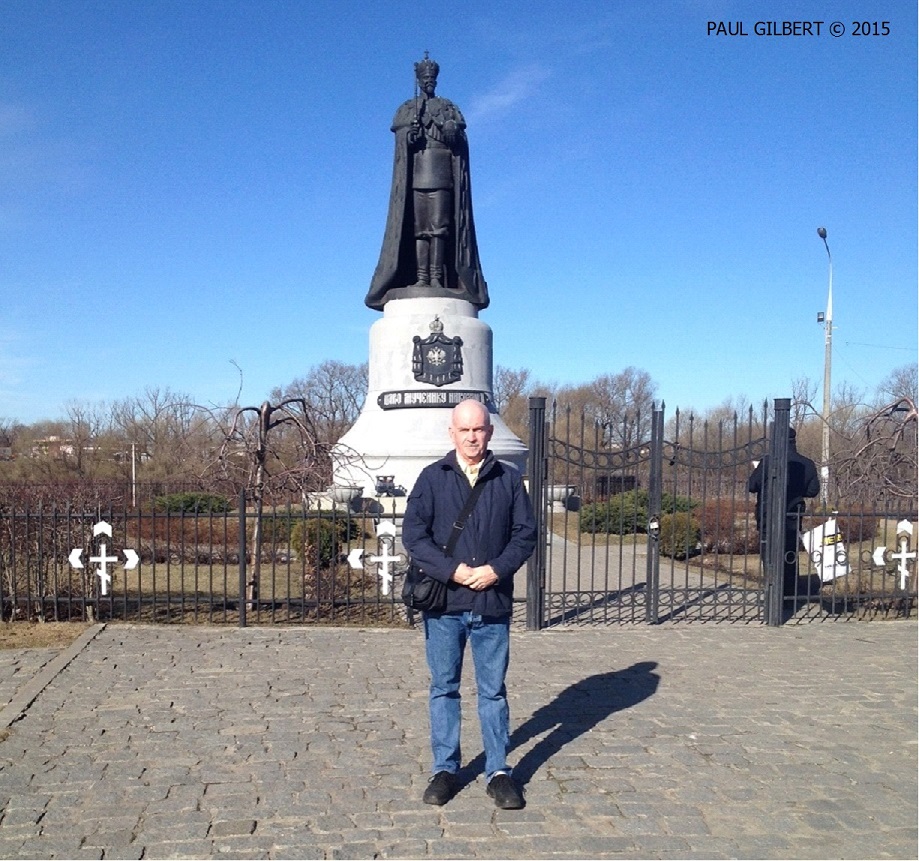
Paul Gilbert visiting the monument to Emperor Nicholas II in the village of Taininskoye (Mytishchi) in March 2015
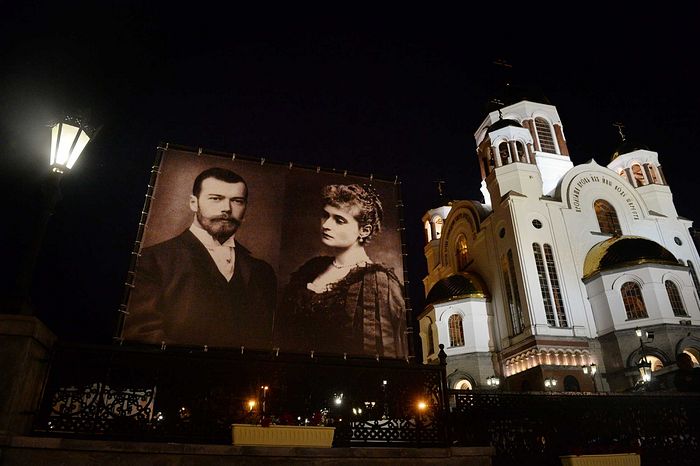
View of the Church on the Blood on the night of 16/17 2018
NOTE: All of the articles pertaining to Nicholas II and his family which were originally published in my Royal Russia News blog, have been moved to this Nicholas II blog. This article was originally posted on 25 July 2018 in my Royal Russia News blog – PG
In 2018, the Russian Orthodox Church celebrated the centenary of the martyrdom of the last Imperial family of Russia with numerous events held throughout Russia, with the celebrations culminating in a Patriarchal Divine Liturgy in Ekaterinburg and all-night cross procession in their honor.
On the night of 16/17 July 2018, more than 100,000 Orthodox Christians, monarchists, among others gathered in Ekaterinburg for the liturgical celebrations. The faithful came from all corners of Russia and around the world, including Azerbaijan, Australia, Austria, Belarus, Bulgaria, Canada, Great Britain, Germany, Kazakhstan, Kyrgyzstan, China, Lithuania, Moldova, Netherlands, New Zealand, Serbia, USA, Tajikistan, Turkmenistan, Uzbekistan, Ukraine, France, Estonia, South Korea, and Japan.
The first Tsar’s Days procession took place in 1992, with the participation of but a few dozen faithful.
The event began with the Divine Liturgy celebrated on the square in front of the Church on the Blood in Ekaterinburg, built on the site where the Ipatiev House once stood, where the family was murdered. The service was headed by His Holiness Patriarch Kirill with more than 35 hierarchs and multiple clergy concelebrating.
The entire service was broadcast live on the Orthodox TV station “Union:”
A special platform was erected for the Liturgy in front of the gates of the lower church, where the “Imperial Room” is located—a chapel in honor of the Royal Martyrs, built on specific site of their martyrdom.
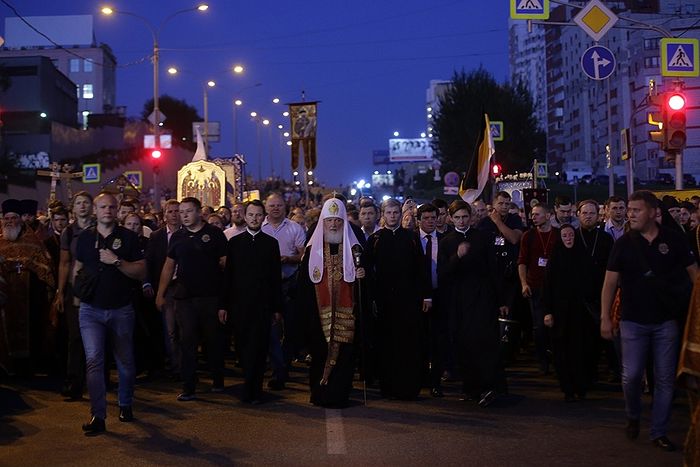
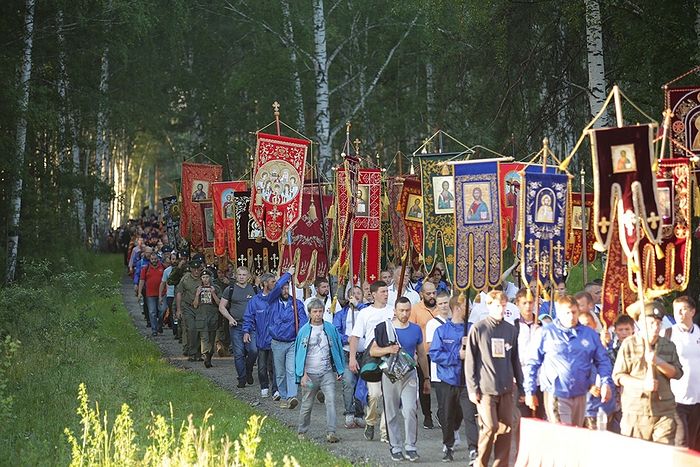
Following the Liturgy, the patriarch led the traditional Royal Cross Procession from the place of martyrdom of the holy Royal Martyrs and their servants to the Monastery of the Holy Royal Martyrs at Ganina Yama ravine, covering a distance of 21 km (13 miles).
His Holiness leads the Cross Procession to Ganina Yama
The Cross Procession nears the Monastery of the Holy Royal Martyrs at Ganina Yama
According to law enforcement agencies, more than 100,000 took part in the procession.
According to tradition, the faithful carried banners and icons in the procession, including a 6.5-ft. icon of the Tsar-Martyr, painted in 2017 for the Church of the “Reigning” Icon of the Mother of God at Ganina Yama. Together with the kiot, the icon weighs 330 lbs. A special bier on wheels was made to move the heavy icon.
The procession was also accompanied by 25 mobile groups from an Orthodox charity service, consisting of clergy, representatives of the Dormition Orthodox Brotherhood of Ekaterinburg, sisters of mercy, and volunteers, who provided assistance to those who could not walk the entire route of the procession. Field kitchens and tests were also set up at the Monastery of the Holy Royal Martyrs for the pilgrims to rest.
His Holiness and the procession arrived at the monastery in the morning, where the patriarch served a moleben to the Royal Martyrs in front of the memorial cross erected at Mine #7, where the bodies of the Royal Martyrs were abused and disposed of. His Holiness Patriarch Alexei II (1929-2008) thus referred to Ganina Yama as “a living antimens, permeated with particles of the burnt holy relics.”
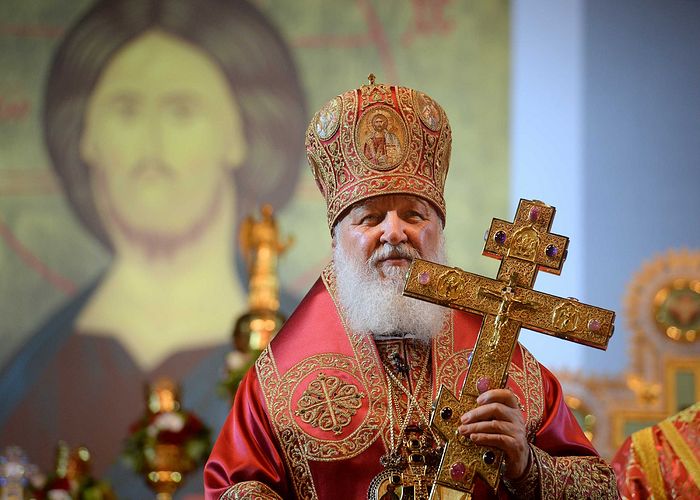
His Holiness Patriarch Kirill of Moscow and All Russia
His Holiness then addressed the sea of faithful with a primatial word:
In the name of the Father and of the Son and of the Holy Spirit!
Your Beatitude Metropolitan Onuphry of Kiev and All Ukraine! Fellow archpastors! Dear brothers and sisters, gathered in a multitude this night before the place where one hundred years ago was committed a terrible crime—wholly innocent people, who had committed their lives to the service of their Motherland, were killed by the evil will of man!
This atrocity still chafes our conscience, still causes us to mentally return to that time and try to understand what happened to our country and to our people. Where did this insanity, this attack come from? Looking from a distance of one hundred years, even if we want to we cannot see all the nuances of the national life of our people, which fade from memory and are missed by even the most penetrating gaze. But such crimes, as were committed here, cannot be accidental. Something stood behind this crime; behind it is the collective guilt of our people, a turn in the historical life of Holy Rus’, which led the people into a heavy, terrible impasse.
What happened to our people? After all, the country was covered with churches and monasteries, an absolute majority of the people were baptized, and the churches were filled with people. Why did it happen? Why did the murderers squeeze the trigger, without trembling at what they were doing? It means not everything was favorable. It means the sunlight reflected in the gilded domes was not always refracted into human hearts to strengthen faith in the Lord in them. And we know how over the course of at least 200 years preceding the tragedy of the Ipatiev House some changes occurred in the people’s consciousness that gradually but steadily led many to a departure from God, neglect of the commandments, and a loss of spiritual connection with the Church and the centuries-old spiritual tradition.
Why did this happen to our people? Why did they at some point become like a train whose engineer didn’t calculate its speed and heads into a steep turn, rushing towards an imminent catastrophe? When did we as people start this turn? We entered when alien thoughts, alien ideals, and an alien worldview, formed under the influence of philosophical and political theories, having nothing in common either with Christianity or our national tradition and culture, began to be perceived by the intelligentsia and aristocracy and even part of the clergy as advanced thoughts by which it was possible to change the people’s lives for the better.
Indeed, the idea of changing the life of the people for the better arises whenever there is a plan to abruptly change the course of history. We know that the worst and bloodiest revolutions have always occurred in view of people’s aspirations for a better life. The leaders of these revolutions instilled in the people that there is no other way to make life better—only by blood, only through death, only through the destruction of the existing way of life. And at some point, having abandoned their spiritual birthright, having lost their true connection with the Church and God, the intelligentsia, aristocracy, and even, as I have already said, part of the clergy were darkened in mind and infected with the thought of the need to drastically change the course of our national history and to try to build as quickly as possible a world where justice reigns, where there is no bygone separation according to material indicators, where people live peacefully and happily. As a result, many of those captured by this idea reach the point of committing crimes.
A question arises: “Is it possible through crime, through blood, through violence, and through the destruction of holy sites to build a happy life?” History clearly testifies: It is impossible! And, perhaps, the first and most important lesson that we should learn today from the tragedy of a century ago is that no promises of a happy life, no hope for help from outside, from some supposedly more educated and advanced people should seduce our people. We must remember the tragedy of the past. We must develop an immunity to any call to attain to human happiness through the destruction of that which is.
Hardly did anyone who called for the destruction of the people’s lives destroy their own lives, renouncing their own wellbeing. But with what fury they proposed to do it to everyone! And the people absorbed this lie; and the crowning act of departure from the most sacred and valuable that they had was the hideous execution of the Royal Family—innocent people who had not violated the law. And what kind of law could we even be talking about if it was necessary to kill the Tsar and his family to build a happy life? We know that nothing turned out well, and taught by bitter experience, we must build a robust rejection of any ideas and any leaders who propose to strive for some obscure “happy future” through the destruction of the life of the people, our traditions, and our faith.
Today, gathered here in such a great number, we remember the tragedy of the Ipatiev House. We have lifted up prayers to the Lord, we have prayed to the Emperor and Passion-Bearer Nicholas and those who suffered with him, that they would pray in Heaven for our earthly Fatherland and for our people and strengthen the Orthodox faith in every subsequent generation of Russians; that faithfulness to God and love for the Fatherland would accompany the lives of the youth and subsequent generations, and that no tragedy of this kind would ever happen again in our land.
May the Lord preserve our Russian land and the Russian people who today live in various countries; and although they are called by various names, are the same people who came out of the Kievan baptismal font, and passing though the most severe historical circumstances, have retained the Orthodox faith until today. May God’s blessing be upon our people, upon our Fatherland, and upon our martyric Russian Orthodox Church. May the life of our people be transfigured by the prayers of the New Martyrs and Confessors of the Russian Church—without any upheavals or blood, but upon the firm foundation of faith and hope that God is with us! May the Lord save us all by the prayers of the holy Royal Passion-Bearers and all the New Martyrs!
The Conspiracy Against Nicholas II is a short seven minute interview with researcher Paul Gilbert, produced by the Monastery of St John the Forerunner Mesa Potamos in Cyprus.
Paul speaks about the Emperor’s abdication on 15th March [O.S. 2nd March] 1917, and the ‘treachery, cowardice and deceit’ which surrounded him.
He further discusses the main plots which aimed to overthrow Nicholas II from his throne, by his ministers, and even members of his own family. He then discusses some of the myths regarding Nicholas’ II alleged weakness as a ruler, and allegations that his death was met with indifference by the Russian people.
The video includes coloured pictures of the Romanovs and other historical figures, by acclaimed Russian colourist Olga Shirnina, from the forthcoming book The Romanov Royal Martyrs: What Silence Could Not Conceal, published in 2019.
The Conspiracy Against Nicholas II is the fifth of a special multi-episode tribute featuring exclusive interviews with Mesa Potamos Monastery research colleagues: Helen Azar, Helen Rappaport, Nicholas B.A. Nicholson and Paul Gilbert. Click HERE to view ALL six episodes.
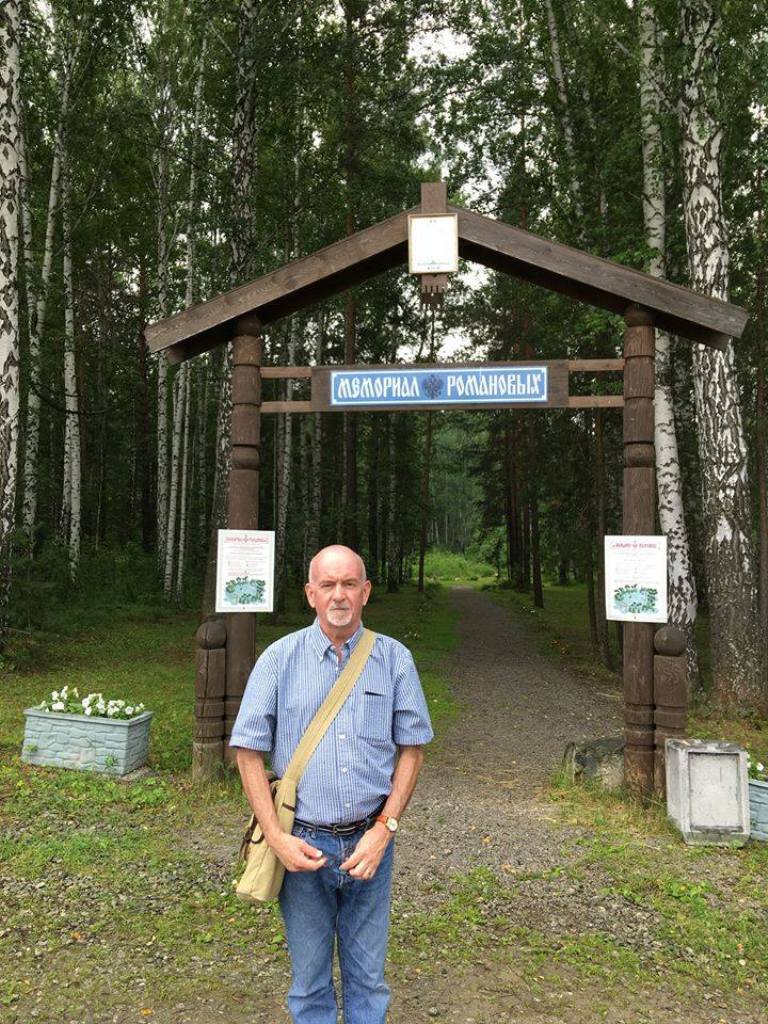
PHOTO: Paul Gilbert at the Romanov Memorial, Porosenkov Log. July 2018.
Paul Gilbert is an independent researcher specializing in the life, reign and era of Emperor Nicholas II, and who is dedicated to clearing the name of Russia’s much slandered Tsar through his news blog Nicholas II. Emperor. Tsar. Saint., his semi-annual journal Sovereign, and Conferences. The 1st International Nicholas II Conference was held on 27th October 2018, in St. John of Shanghai Church in Colchester, England.
“We have shown all the stage of the investigation of the Royal Family’s murder” – Elena Chavchavadze on the new Russian language documentary, Цареубийство. Следствие длиною в век / Regicide. A Century of Investigation.
In 2015, a new investigation was launched into the murder of Tsar Nicholas II, Tsarina Alexandra, and their children and servants. This was instigated by the “Ekaterinburg remains”, which some are convinced are those of the Royal Martyrs. The Russian Orthodox Church has not yet come to a final conclusion, and the detective work goes on.
The new documentary, Regicide. A Century of Investigation, premiered in the evening of November 24, 2019, on the “Russia” TV channel. Its creator, Elena Nikolaevna Chavchavadze, talked to Yegor Andreev on what this film is about, how it was created and what revelations it has led to.
At the end of the interview, Chavchavadze is asked, “In conclusion, what would you wish to the viewers who will watch the film? How should they watch it? What should they get ready for?”
“Watch it without bias” – she replies – “If you feel your responsibility before God, then you shouldn’t pass any judgment before you are convinced of the truth yourself and hear the voice of the Church in this case. This is something we are waiting for, too.”
On a personal note, I would like to add that this is a very interesting interview, and a MUST for those of you who are following the ongoing investigation of the Ekaterinburg remains, and awaiting its conclusion by the Russian Orthodox Church – PG
Click HERE to read Yegor Andreev’s interview (in English) with documentary creator Elena Chavchavadze, translated from Russian by Dmitry Lapa, and published on the Pravoslavie.ru web site 5th December 2019.
You can watch the documentary Цареубийство. Следствие длиною в век / Regicide. A Century of Investigation by clicking on the image above. The video’s duration is 1 hour, 42 minutes and is in Russian only:
Click on the image above to watch the English version of the film in it’s entirety. Duration: 1 hour, 40 mins.
The Assassin of the Tsar is a 1991 Soviet drama film, starring the English actor Malcolm McDowell and the Soviet/Russian actor Oleg Yankovsky (1944-2009). It was entered into the 1991 Cannes Film Festival. There are two versions. One is filmed in English which later was dubbed over the Russian actors, and one in Russian.
Timofyev (Malcolm McDowell) is a patient in an asylum who claims to be the man who assassinated Tsar Alexander II in 1881, and his grandson Tsar Nicholas II in 1918. Doctor Smirnov (Oleg Yankovsky) decides to apply a peculiar therapeutic method on him, but things go in an unexpected way.
A good portion of the film depicts the last days of the Russian Imperial Family in Ekaterinburg, largely narrated by Timofyev’s voice-over from the perspective of Yakov Yurovsky, the chief guard and ultimately executioner of the family. In the scenes, Yurovsky is impersonated by Timofyev (McDowell) and Tsar Nicholas II by Dr. Smirnov (Yankovsky). Other members of the family function merely as background, with few or no lines.
PHOTOS: Soviet/Russian actor Oleg Yankovsky as Tsar Nicholas II; the Imperial family in Crimea; and Malcolm McDowell as Yakov Yurovsky
The cast includes:
Oleg Yankovsky — Dr.Smirnov / Tsar Nicholas II Malcolm McDowell — Timofyev / Yakov Yurovsky Armen Dzhigarkhanyan — Alexander Yegorovich, Smirnov’s superior Olga Antonova — Empress Alexandra Dariya Majorova — Olga Nikolaevna Evgeniya Kryukova — Tatiana Nikolaevna Alyona Teremizova — Maria Nikolaevna Olga Borisova — Anastasia Nikolaevna Aleksei Logunov — Alexei Nikolaevich Yury Belyayev — Alexander II of Russia Anastasiya Nemolyaeva — nurse Anzhelika Ptashuk — Marina, Smirnov’s mate
Of particular interest in this film are the recreation of the facade and the haunting interiors of the Ipatiev House, where the Imperial family where all murdered on the night of 16/17 July 1918, by a Bolshevik firing squad.
PHOTOS: The facade and interiors of the Ipatiev House were recreated for this film
NOTE: All of the articles pertaining to Nicholas II and his family which were originally published in my Royal Russia News blog, have been moved to this Nicholas II blog. This article was originally posted on the First World War in Film web site by Ron van Dooperen. It was reposted on 12 September 2018 in my Royal Russia News blog – PG
In December 1918, a photographic team of the U.S. Signal Corps led by Captain Howard Kingsmore arrived in Yekaterinburg, Russia, where they filmed inside the house where Tsar Nicholas II and his family was brutally murdered. Against all odds, we recently found Kingsmore’s personal story on this photographic assignment, as well as part of these historic films.
The execution of the last Russian Tsar and his family hardly needs an introduction. After the Bolsheviks had taken over power the Romanov family was moved to a so-called ‘House of Special Purpose’ in Yekaterinburg. The Imperial family was kept in strict isolation within the walls of a sinister heavily guarded building that was surrounded by a palisade. The Bolsheviks initially wanted to put the Tsar on trial, but in the summer of 1918 anti-Communist forces were at the gates of Yekaterinburg, and the Reds feared their captives would fall into enemy hands. As a result, death to the Romanovs was declared. Tsar Nicholas II, his wife Tsarina Alexandra and their five children Olga, Tatiana, Maria, Anastasia, and Alexei were shot, bayoneted and clubbed to death on the night of 16-17 July 1918. Their bodies were disposed of in a most gruesome manner.
The Cameramen
Howard P. Kingsmore was the photographic officer of a U.S. Signal Corps camera team that recorded the operations of the American Expeditionary Army in Siberia. Born in 1886, Kingsmore started his photographic work for the Philadelphia Inquirer, covering the burial of President McKinley, the coal strikes of 1901-1902 and the 50th anniversary of the Civil War battle of Gettysburg. Around 1907 Kingsmore became chief photographer for the Philadelphia Evening Ledger. For this newspaper he covered the civil war in Mexico, as well as the Punitive Expedition by General Pershing into that country in 1916. When the United States entered World War I he applied for a commission in the U.S. Signal Corps as a photographic officer. He was commissioned as a Lieutenant in September 1917, appears to have made mostly training pictures while he was in America and in Augustus 1918 was promoted to Captain, when a photographic section was set up for the Siberian Expedition. After the First World War Kingsmore became a cameraman for Fox News.
The Ipatiev House in Ekaterinburg. 1918
Interview with Kevin Brownlow
Judging from the production file of the films that were made by Kingsmore and his camera team, they filmed across Siberia between November 1918 and February 1919, covering various operations by the Expeditionary Force that was trying to push the Red Army out of Russia. We have described this Signal Corps footage from Russia in more detail in a previous weblog. Five men were selected for this photographic team, including two movie camera operators. One of Kingsmore’s men, Philip Tannura, was interviewed by Kevin Brownlow for his book The War, the West and the Wilderness. Tannura was among Kingsmore’s cinematographers and in the interview with Brownlow Tannura mentioned how he accompanied Kingsmore while they visited the place where the Tsar and his family were executed. “We couldn’t find out whether they had actually been killed or not”, Tannura said. “We photographed all the rooms.”
Kingsmore said he boarded a Red Cross freight train in Vladivostok in November 1918. The trip across Siberia took about nine weeks. The accommodation on the train was of a most primitive nature. The American cameramen traveled in box cars that were originally built for cattle. Arriving in Yekaterinburg, the cameramen found the city controlled by Czech forces. These had taken Yekaterinburg shortly after the Tsar and his family were murdered. Kingsmore was told the Romanovs were subjected to many indignities by the Communist soldiers who guarded them. It should be noted here that at the moment when Kingsmore and Tannura arrived in Yekaterinburg an official investigation was still being carried out on the mysterious disappearance of the Imperial family. As far as the Kremlin was concerned, they had simply vanished into thin air and the Communists denied any allegation they had killed the Romanovs.
Photographic Evidence of the Romanov Execution
Kingsmore’s and Tannura’s pictures indicate this was a fabricated lie. One of their still photographs shows the cellar where the Romanovs were executed. Bullets were dug out of the wall by the Bolsheviks to destroy evidence of the crime, but the holes still remained and were clearly visible. Their pictures also demonstrate how the Tsar’s children had to sleep on the floor, as well as the search by the investigating committee for further proofs of the execution. Kingsmore also appears to have talked with eye witnesses. One told him the Romanovs were on their knees begging for mercy while they were executed in the basement of the house.
Part of the footage that was shot at Yekaterinburg has been retrieved and identified by the authors in the film collection of the National Archives in Washington, D.C. These scenes were probably taken by Tannura and show an exterior of the Czech military headquarters, the house the Romanovs lived in, as well as shots of the Czarina’s room and the room that was occupied by the Tsar’s daughters. We edited these historic scenes into a short clip that has been posted on our YouTube channel.






 Nicholas II
You must be logged in to post a comment.