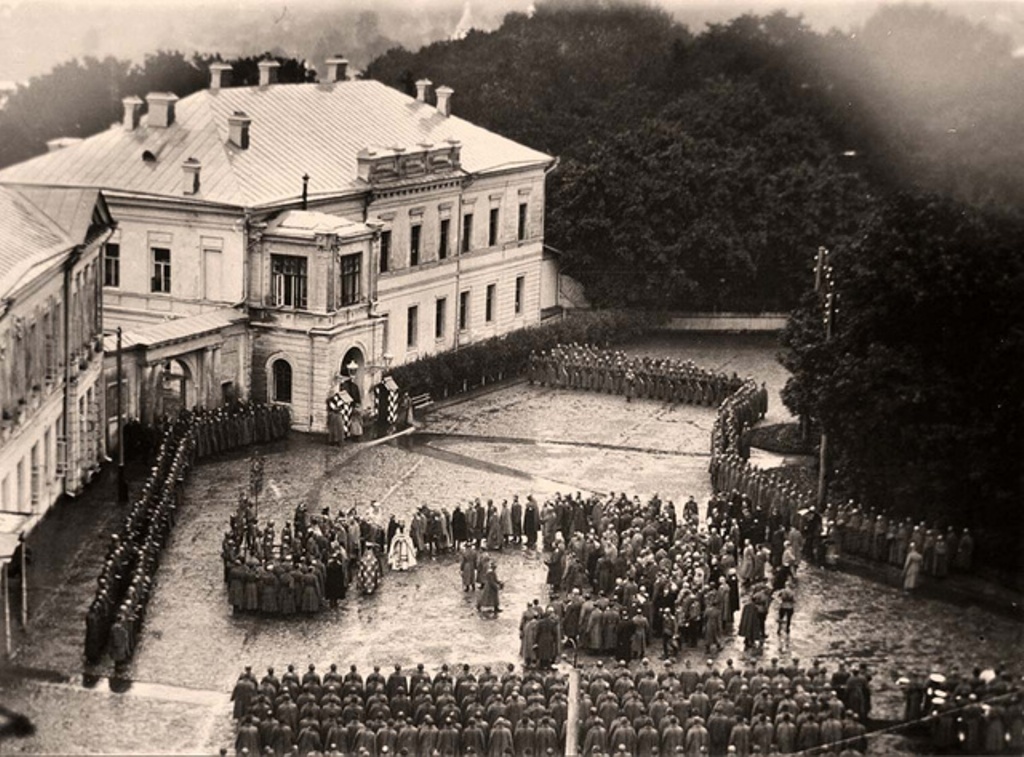
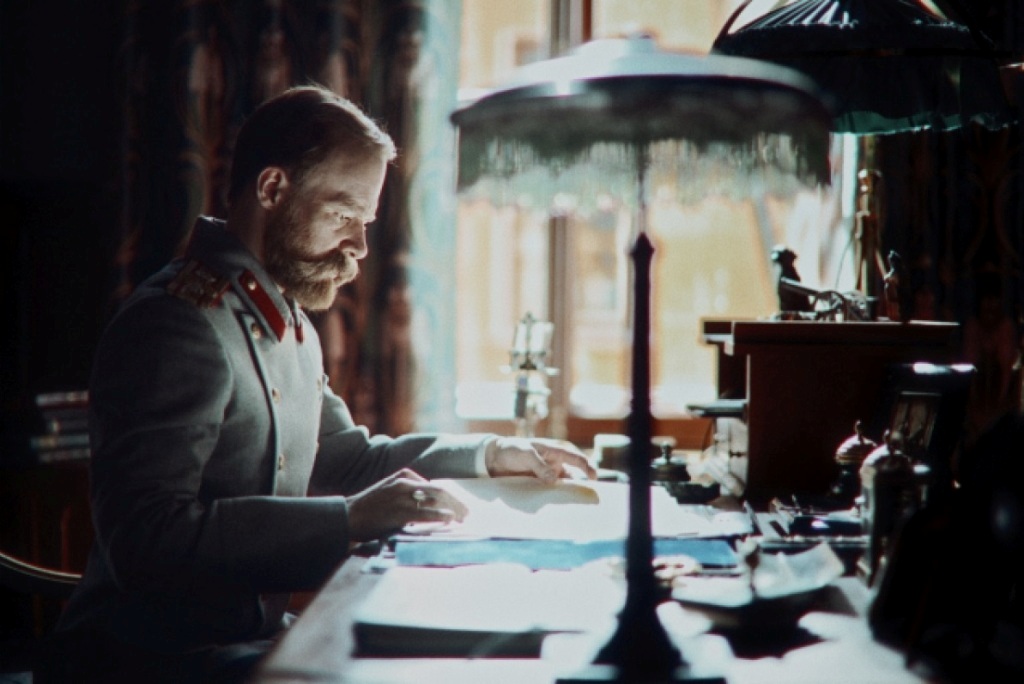
The fate of four faithful retainers of the Imperial Family
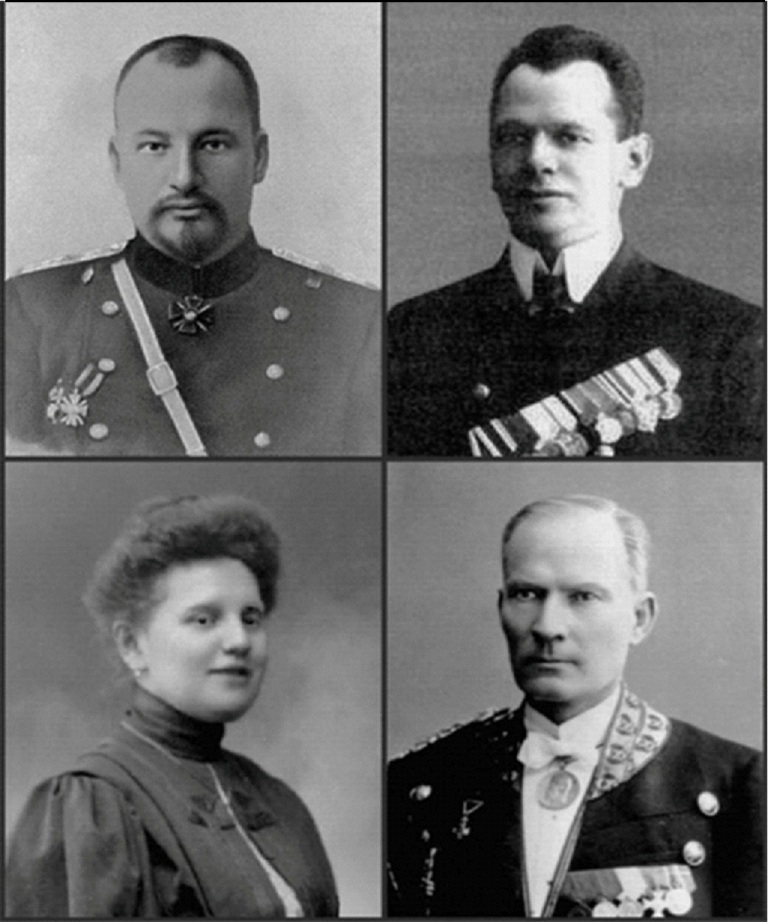
On the night of July 16/17, 1918, a tragic event took place in Ekaterinburg that marked the final fall of Russia into the hellish abyss of devastation and the ensuing Civil War. In the basement of the Ipatiev House, the last Russian Emperor Nicholas II, was shot dead by a gang of Bolshevik criminal thugs. His entire family and four faithful servants, who voluntarily followed the Imperial Family into exile and, later, shared the same fate.

While the lives of Emperor Nicholas II, Empress Alexandra Feodorovna and their five children have been studied in detail, but that of the four faithful retainers remain in the shadows of history. This article provides brief bios of the lives of the Imperial Family’s physician Dr. Eugene Botkin (1865-1918); the maid Anna Demidova (1878-1918); the valet Aloise (Alexei) Trupp (1856-1918); and the cook Ivan Kharitonov (1872-1918).

In 1981, the four faithful retainers, along with the Imperial Family, were canonized as a New Martyr by the Russian Orthodox Church Outside of Russia (ROCOR). In 2016, the Bishop’s Council of the Russian Orthodox Church (Moscow Patriarchate) canonized Dr. Botkin as a righteous passion bearer. They did not canonize the other three servants.

The Canonization Commission, headed by Metropolitan Yuvenaly, considering the issue of the canonization of the the other three faithful servants, noted that:

“… it is not possible to make a final decision on the existence of grounds for the canonization of this group of laymen, who, in accordance with the duty of their Court service, accompanied the Imperial Family during the period of their imprisonment and accepted a violent death. … the most appropriate form of veneration for the Christian podvig[1] of the faithful servants of the Imperial Family, who shared their tragic fate, today can be the perpetuation of this feat in the lives of the Royal Martyrs.”

Святы Царственные мученики, молите Бога о нас!
Holy Royal Martyrs, pray to God for us!
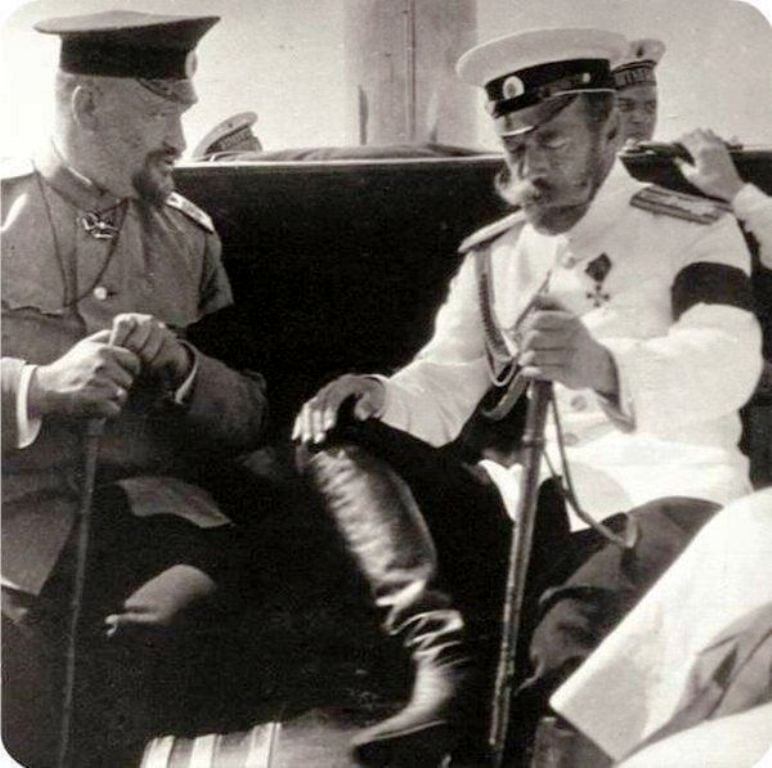
PHOTO: in happier times – Dr. Botkin with Emperor Nicholas II

Evgeny (Eugene) Botkin – Family Physician

Evgeny (Eugene) Sergeevich Botkin was the son of the famous physician Sergei Botkin (1832-1889), who served as one of the  the Court physicians for Emperors Alexander II and Alexander III. Since childhood, Evgeny followed in his father’s footsteps and pursued a career as a doctor. At the beginning of the 20th century, he worked in a hospital for the poor and at the same time lectured to students of the Imperial Military Medical Academy in St. Petersburg. Despite the fact that his dissertation was devoted to the narrow topic of blood composition, in his lectures he covered the very broad aspects of the medical profession, in particular, paying special attention to the psychological aspects of a doctor’s work, instructing future doctors that the patient should be treated with respect and dignity.

In 1904, when the Russo-Japanese War began, Botkin rushed to the Front to head the medical unit of the Russian Red Cross Society. Later he said that he could not remain indifferent to the misfortune that befell his country. Despite the fact that he went to the Front with “the most bloodthirsty feelings”, the war taught him to treat all people, even his enemies: he was equally willing to help both the Russian and Japanese wounded. Evgeny Sergeevich was a deeply religious person, his faith helped and sustained him during this period. He returned home with six military awards, and the impressions of what he saw on the fronts of the Russo-Japanese War formed the basis of a book on the subject.

It was this book that became, perhaps, the main reason that Empress Alexandra Feodorovna chose him as a personal physician for the Imperial Family. In the autumn of 1908, Botkin and his family moved to Tsarskoye Selo. The doctor’s younger children became friends with the Tsesarevich and the Grand Duchesses, and often assisted their father in his work, carrying out simple tasks.

In August 1917, when Botkin went into exile with the Imperial Family, his son Gleb and daughter Tatyana followed their father, but only reached Tobolsk – they were not allowed to go to Ekaterinburg (later both emigrated). In exile, Botkin became a kind of intermediary between the Imperial Family, the guards and the inhabitants of the city: he arranged a visit by a priest to the Governor’s House, arranged hour and a half walks for the Imperial Family, petitioned for a tutor for the Tsesarevich, taught the Russian language and biology to the Tsar’s children, while providing medical services to the residents of Ekaterinburg. Evgeny Sergeyevich never complained either about his health (which was not good) or about the conditions of detention – his letters reflect a positive or at least stoic attitude to all the trials and tribulations that fell to his lot. Only in the last letter, which was never sent, did Botkin admit that he had already “… died, but not yet buried, or buried alive.”

On the fateful night of July 16/17 1918, the guards woke up Botkin and ordered him to wake up all the inhabitants of the Ipatiev House, saying that they were allegedly being transported to another place, since the city was restless. Having gathered everyone in the basement, the executioner-commandant Yakov Yurovsky announced their execution, to which the bewildered Botkin managed to answer only with a question: “So they aren’t taking us anywhere?” The doctor’s body was burned along with the bodies of the Imperial Family. During the excavations, his artificial jaw, a broken pince-nez and a brush for his beard and mustache were found. 

Evgeny Sergeevich Botkin was the only person among the four faithful servants who was canonized by the Moscow Patriarchate of the Russian Orthodox Church. On 3rd February 2016, the Bishop’s Council of the Russian Orthodox Church canonized Botkin as Righteous Passion-Bearer Yevgeny the Physician.

On 16th October 2009, the Prosecutor General’s Office of the Russian Federation decided to rehabilitate 52 close associates of the Imperial Family who had been subjected to repression, including the four faithful servants who perished with the Imperial Family.

On 25th March 2016, on the grounds of the Moscow City Clinical Hospital No 57, Bishop Panteleimon of Orekhovo-Zuevo consecrated the first church in Russia in honor of Righteous Evgeny Botkin.

Anna Demidova – maid

Anna Stepanovna Demidova was born into a bourgeois family in Cherepovets. She learned several foreign languages, played the piano well, was well educated and erudite, but her strong point was always embroidery. In fact, this talent helped her find the main work of her life: the Empress admired Demidova’s embroidery so much that she invited her to serve in the Imperial Family as a maid. Usually, the “room girls” were mainly engaged in helping the Empress with her wardrobe and help her get dressed, but Anna’s main duty was to teach the Tsar’s daughters needlework. Anna Demidova won over the grand duchesses so much so that she became something like another nanny for them. Anastasia loved her most of all, calling her “dear Nyuta” in her letters. Demidova never had her own family and children, as the “room girls” were not supposed to get married. Once she was proposed to hand and heart, but Demidova refused, deciding to stay with the Imperial Family.

In Tobolsk, and later in Ekaterinburg, Demidova took care of the household: she repaired clothes and bed linen, sewed new things, helped the Empress to always look and dress like a lady, as much as possible in such straitened circumstances. On the night of the shooting, Demidova went down to the basement, carrying several pillows with her – everyone thought that they would really be taken somewhere, so they took the necessary things with them. These pillows, however, only prolonged Demidova’s horrific death – during the shooting, the bullets got stuck in the dense down of the pillows. Thinking that it was all over, the maid shouted, “Thank God! God saved me!” Unfortunately, her execution was just beginning. Realizing that the maid was still alive and not even wounded, the executioner Yakov Yermakov stabbed her several times in the chest with a bayonet. Demidova was one of the last to die, her final memories being witness to the violent and bloody deaths of those whom she loved most.
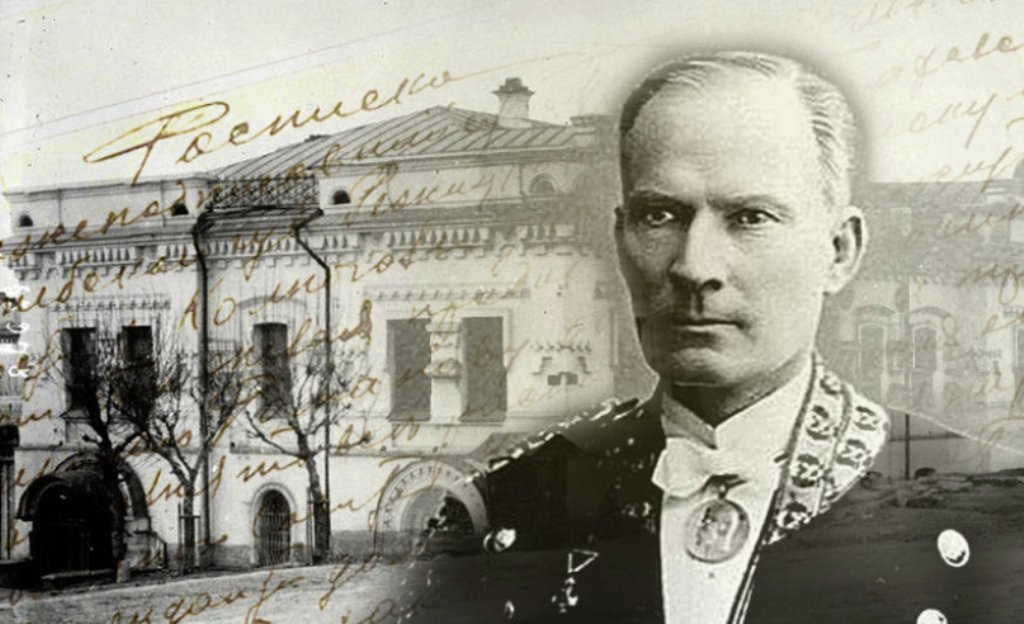
Aloise (Alexei) Trupp – valet

Aloise (Alexei) Trupp came from an ordinary Latvian peasant family. At the age of 18, young Aloise went to serve in the army, where the young handsome Latvian was enlisted in the Life Guards. There he rose to the rank of a non-commissioned officer and was retired on 23rd March 1883. It is believed that he was noticed by Empress Maria Feodorovna, who invited him into the service of the palace as a footman. Aloise enjoyed the trust of the Imperial Family, accompanied them on trips, and watched over the Emperor’s children as if they were his own (he never had children of his own). He also looked after the Emperor’s wardrobe and helped him get dressed. While in the service of Nicholas II, the Tsar had difficulty parting with old clothes, preferring darned to new, but he adored military uniforms – hundreds of different uniforms hung in his closets.

Trupp never forgot about his native land, always giving large sums to help the poor and those suffering from crop failures. He also donated money for the construction of a church in his homeland. While still imprisoned in Tsarskoye Selo, a drunken officer shouted to him and other servants: “You are our enemies. We are your enemies. You are all corrupt here.” In the last months of his life, the “corrupt” servant Trupp served the Emperor free of charge.

In the Ipatiev House, Trupp lived in the same room with the cook Ivan Kharitonov. Despite Trupp’s Catholic faith, he participated in Orthodox services: he sacrificialized[2], carried a candle, and lit and brought censers. One day, while among the guards of the “House of Special Purpose” was his nephew, with whom he spoke his native Latvian. Unlike some of his fellow Latvians, who took part in the execution of the Imperial Family, Trupp remained with the Master of the Russian Land until the very end. On the fateful night of 16/17 July, Trupp and Kharitonov were standing against the wall when the shooting began. “A woman’s squeals and moans… A footman leaning against the wall,” one of the killers would later say.
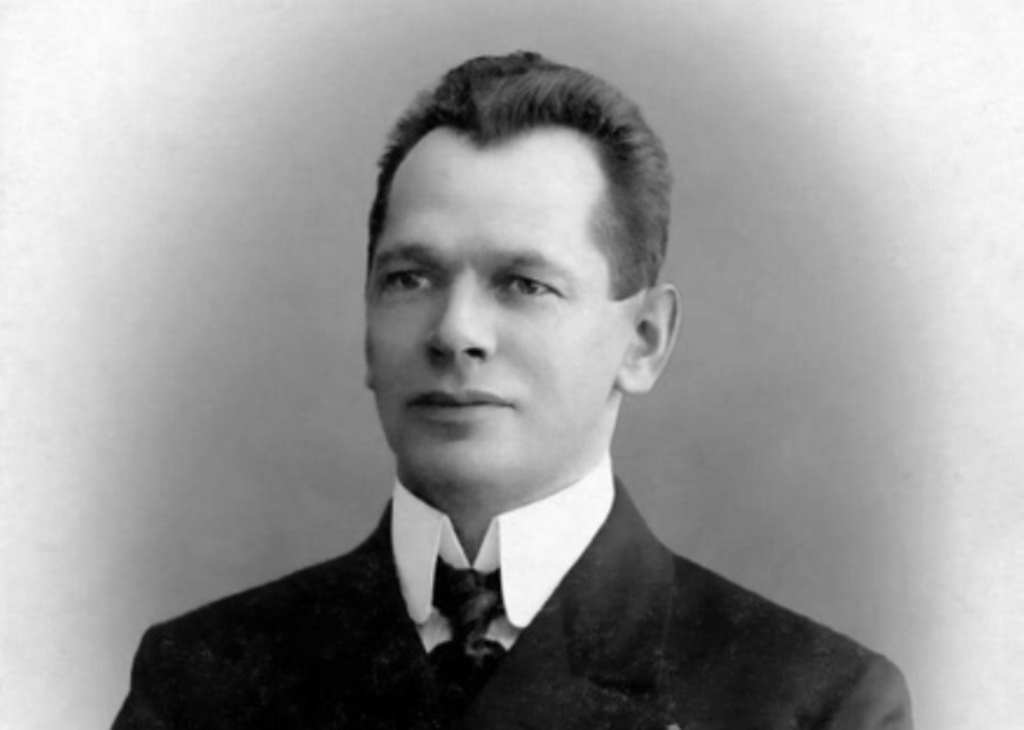
Ivan Kharitonov – cook

Ivan Mikhailovich Kharitonov was born on 14th June (O.S.) 1870 in St. Petersburg. In 1882, he was encouraged by his father to study cooking, and went to Paris in order to improve his skills, eventually becoming a soup specialist, he even invented a recipe for puree soup made from fresh cucumbers. Kharitonov knew the culinary traditions of different countries, understood Lenten cuisine, and came up with new recipes. In 1888, he was appointed to the Imperial Court as an apprentice cook, and then as a cook. In the period from 1891 to 1895, Kharitonov served in the Russian Imperial Navy. After his service ended, he returned to the Imperial Court, where he was appointed senior cook of the Imperial Kitchen. He had the title of Honourary Hereditary Citizen[3], a result of which he was awarded many orders and medals.

After the February 1917 Revolution, the head waiter Kuba left the service of the Imperial Family, he was replaced by Ivan Kharitonov. Previously, the Imperial Family loved picnics, Emperor Nicholas II would sometimes bake potatoes in ashes himself, but in exile they had to get used to simple food on a regular basis. Nevertheless, Ivan Kharitonov managed to cook exquisite dishes from affordable products, which were becoming more and more scarce. The commandant of the Ipatiev House, Yakov Yurovsky, suddenly “cut off” the supply of fresh food to the captives from sympathetic townspeople and the Ekaterinburg monasteries, saying that it was time for the Imperial Family to get used to eating like prisoners. Despite all the difficulties, Kharitonov managed to make delicious dishes from available products. Dishes such as rasstegai[4], pasta pie, potato dumplings, beetroot salad, and tangerine jelly were prepared, much “to the great joy of everyone”, as Nicholas II wrote in his diary. The last apprentice cooks for Kharitonov were the grand duchesses who helped him in the kitchen, and he taught them how to bake bread.

On the fateful night of 16/17 July, Kharitonov stood in the basement by the wall next to the valet Trupp. The cook was one of the first to die from the shots fired by the firing squad. Ivan Kharitonov was happily married and had 6 children. The family tried to follow their father into exile, but only reached Tobolsk, they were not allowed to join him in Ekaterinburg. This allowed them to survive during the Civil War and the establishment of Soviet power.

The great-grandson of Ivan Kharitonov, Candidate of Historical Sciences Pyotr Valentinovich Multatuli is recognized as one of Russia’s foremost authorities on the life and reign of Nicholas II. He has written numerous books on the subject and lectures in cities across the Russian Federation.

NOTES:

[1] Podvig is defined as an action taken not for one’s own sake, but for the sake of something greater, such as an idea or one’s homeland, often involving significant risks, including the potential for sacrifice. It is also described as a “spiritual struggle” within the context of Orthodoxy, serving as a means to draw closer to Christ on the path of salvation.

[2] In the Orthodox Christian tradition, the term “sacrificialized” refers to the concept of the Eucharist, which is often described as a “bloodless sacrifice.” This means that during the Eucharist, the bread and wine become the Body and Blood of Jesus Christ through the descent and operation of the Holy Spirit, rather than through the shedding of blood. The Eucharist is considered a propitiatory sacrifice offered on behalf of both the living and the dead, symbolizing Christ’s sacrifice for humanity. The Orthodox Church emphasizes that the Eucharist is a true sacrifice, not merely a symbol, and it represents the completion of all other sacraments and the source of all Church doctrines.

[3] The title of Honourary Hereditary Citizen in Russia was established by the Emperor Nicholas I in 1832. This title was granted to individuals who had made significant contributions to the state and society, such as merchants, professionals, and artists. The privileges associated with this title included exemption from corporal punishment, the ability to own gardens and country estates, and the right to ride in a carriage in pairs or quadruplets. The title was hereditary, and children of hereditary honoured citizens received the title from birth. The establishment of this title was part of the imperial state’s effort to create a middle class and stabilize the social structure of Russian towns.

[4] Rasstegai is a traditional Russian dish made from a pastry crust that is filled with a variety of ingredients, such as fish, meat, liver, rice, or mushrooms. The dish features a hole in the center, which is used to add broth to the filling. Rasstegai is known for its flaky pastry crust and has been a popular choice in Russian cuisine, especially during the Tsarist era.

© Paul Gilbert. 14 September 2025

***

I am committed to clearing the name of Russia’s much slandered Tsar. In exchange for this 18-page booklet, please consider making a small $5 or $10 donation in aid of my research. These donations are of great assistance in helping me offset the cost of obtaining and translating documents from Russian archival sources, which are often paid for out of my own pocket. It is these documents which help present new facts and information on the life and reign of Nicholas II. In addition, my research continues to debunking many of the myths and lies which exist more than a century after his death and martyrdom.

Please note, that there is NO obligation, thank you for your consideration!
CLICK HERE TO MAKE A DONATION

Update on the proposed Nicholas II museum complex in Mogliev

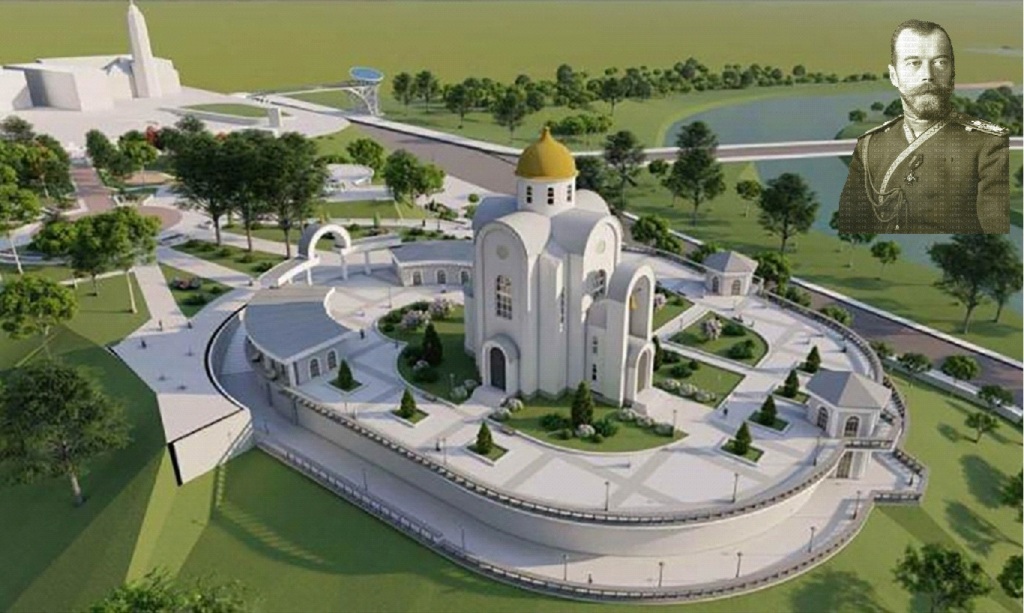
PHOTO: artist’s concept for the Emperor Nicholas II
museum complex proposed for Mogliev

On 3rd July 2024, I reported that a new museum complex dedicated to Emperor Nicholas II was being planned for Mogliev in Belarus. The complex was to be constructed on a hill in Gorky Park, next to the Church of the Holy Royal Passion-Bearers. Unfortunately, the proposal was met with protests from locals, who were opposed to the demolition of a 16th-century castle to make way for the new museum complex.

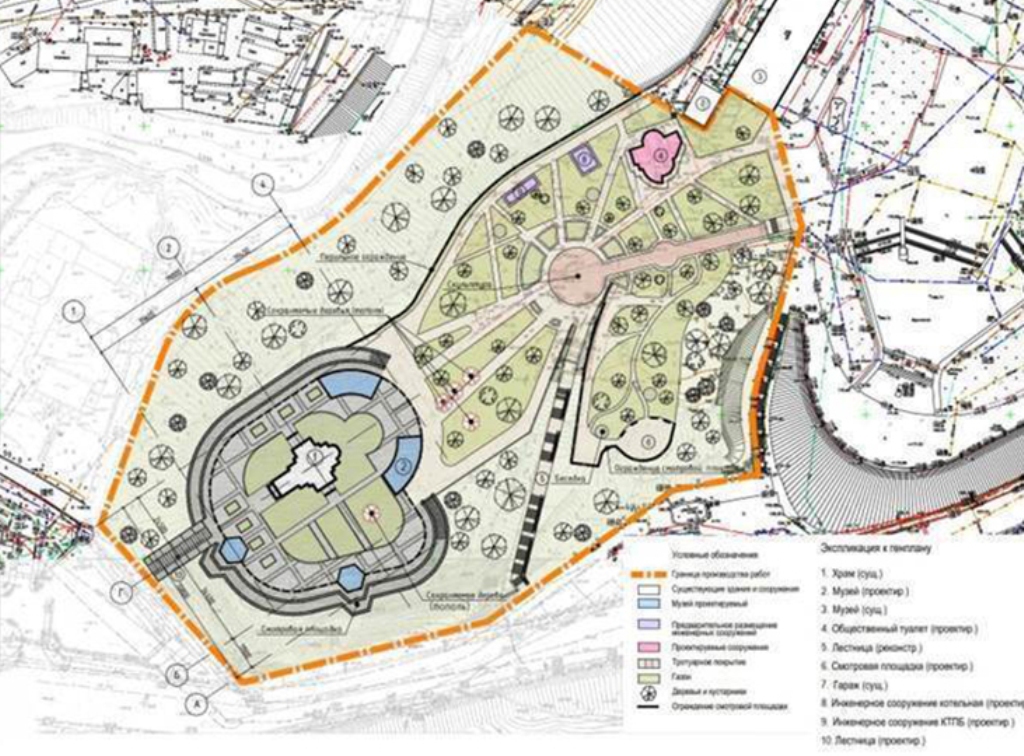
A new place for the museum complex was chosen in the historical heart of Mogliev. As specified in the OJSC “Institute “Mogilevgrazhdanproekt”, the museum complex will be located on the Square of Glory[1], on the site of the former building of the General Headquarters of Emperor Nicholas II, situated in the southwestern part of the adjacent Gorky Park. The museum complex will form a single architectural ensemble within the framework of the Church of the Holy Royal Passion-Bearers.

PHOTO: artists concept for the proposed Emperor Nicholas II museum complex in Mogliev (above), and map showing it’s location in the in the southwestern part of the adjacent Gorky Park

The new museum will be dedicated to the events of the early 20th century: the First World War, the Headquarters of the Supreme Commander-in-Chief of the Russian Imperial Army, the stay of of Emperor Nicholas II in Mogliev, the Knights of St. George, and the February Revolution of 1917.

Walking paths will stretch throughout the park, observation decks, sculptural compositions, small architectural follies, and beautifully landscaped flower beds. The concept of the project provides for the improvement of Gorky Park from the central entrance group of the museum complex to the existing Regional Museum of Local Lore.

The realization of the proposed Nicholas II museum complex is of course is pending approval. Town hall meetings will be held in Mogliev, in which citizens will have an opportunity to have their say.

***

PHOTO: the former Governor’s House and
later General Headquarters in Mogilev. 1915

On 8th August 1915, the Headquarters (Stavka)  of the Supreme Commander-in-Chief of the Armed Forces of the Russian Empire was transferred from Baranovichi to Mogilev. From August 1915 to March 1917, Emperor Nicholas II, served as Commander-in-Chief[2], and the city assumed the role of Military Capital of the Russian Empire.

The Tsar travelled back and forth on the Imperial Train, from Tsarskoye Selo to Mogilev, where he settled in the Governor’s House, situated on Governor’s Square. He was often accompanied by his son and heir Tsesarevich Alexei Nikolaevich.  

The official historiographer in the retinue of Nicholas II, Dmitry Dubensky, describes the Emperor’s quarters as follows:

“The Emperor’s rooms were located on the 2nd floor of the Governor’s House. His Majesty’s office had two windows overlooking the square. It was decorated modestly furnished with simple provincial furniture, a sofa and a small desk, which the Tsar kept some of his papers. Adjacent to this room was the bedroom of His Majesty and Heir with iron camp beds, a washbasin, a dressing table, and several chairs. On the walls over the beds, there were many Orthodox crosses, many of which were gifts from family members.

“From the hall to the left is a dining room, quite large, decorated with simple ordinary furniture. There are two additional rooms for the Minister of the Imperial Court Count Vladimir Borisovich Frederiks (1838-1927) and one for Major-GeneralVladimir Nikolaevich Voeikov (1868-1947).

“In addition, there were small rooms for five or six servants, the Tsar’s valet, cooks, and others.”

Sadly, the former Governor’s House, which housed the General Headquarters was destroyed during the Nazi invasion of 1941-45. In the years following the Great Patriotic War, the Soviets showed no interest in reconstructing the historic building. The only building which survived to the present is the former District Court House, which today houses the Mogilev Regional Museum of Local Lore, which features permanent exhibition rooms dedicated to the stay of Nicholas II in Mogilev, from 1915 to 1917.

NOTES:

[1]  The 16th century square, originally named as Torgovaya Square, was situated on a high hill at the confluence of the Dubrovenka and Dnieper rivers. After the annexation of Mogilev to Russia in 1772, Torgovaya Square was named Governor’s Square. In 1919, the square was named Sovetskaya, and in 2014, the year marking the 70th anniversary of the liberation of Belarus from the Nazi invaders, it was renamed Square of Glory.

[2] On 5th September (O.S. 23rd August) 1915, Emperor Nicholas II assumed personal command of the Russian Imperial Army, after dismissing his cousin, Grand Duke Nicholas Nikolaevich (1856-1929) from the post.

© Paul Gilbert. 14 September 2025

Lord Louis Mountbatten’s letter regarding Anna Anderson

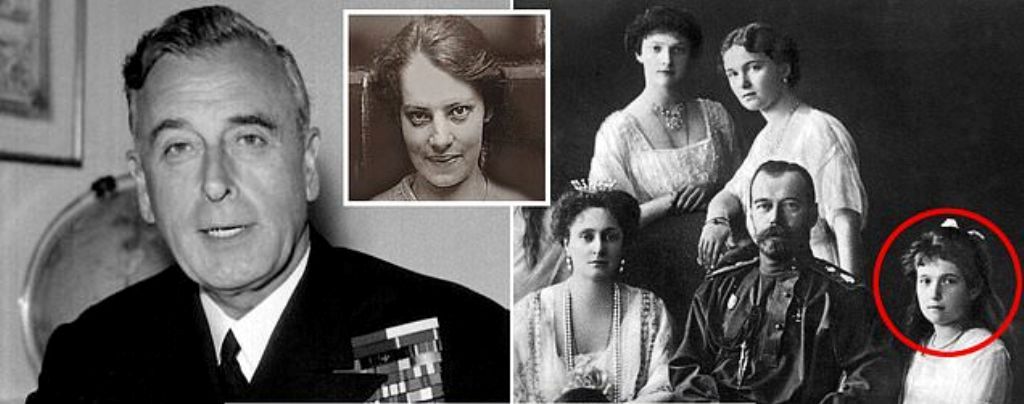
PHOTO: Lord Louis Mountbatten, Anna Anderson,
the Imperial Family and Grand Duchess Anastasia Nikolaevna

The story of the death of the last Russian emperor and his family gave rise to one of the most tenacious legends of the 20th century – the myth of the miraculous salvation of Grand Duchess Anastasia Nikolaevna. Against this background, dozens of impostors tried to pass themselves off as one of the surviving Romanovs, but none of them caused more of a stir than that of Anna Anderson. And none of the relatives of the Imperial Family fought against her claim as fiercely as did Lord Louis Mountbatten (1900-1979), the nephew of Empress Alexandra Feodorovna and maternal uncle of Prince Philip, Duke of Edinburgh (1921-2021).

Epidemic of imposters following the regicide in Ekaterinburg

Recall that on the night of 16/17 July 1918, the Emperor Nicholas II and his family were brutally murdered by a group of deranged Bolshevik thugs in the basement of the Ipatiev House in Ekaterinburg. For many decades following the regicide, the fate of their remains remained a mystery: the first official excavations began only in 1991, and the remains of two children – Maria and Alexei – were discovered years later, in 2007.

This veil of secrecy was to become fertile ground for myths and conspiracy theories. Throughout the 20th century, as historians note, dozens of “false Alexei’s”, “false Olga’s”, “flase Maria’s” and “false Anastasia’s” appeared. One of the most famous, however, was a certain Anna Anderson, who declared herself the youngest daughter of Nicholas II who had miraculously survived the regicide.

Anastasia or Franziska?

Anna Anderson, who at one time was a patient of a psychiatric hospital in Berlin. According to Anderson’s version, given in the publication ’50 Famous Mysteries of the History of the Twentieth Century’ by V. M. Sklyarenko, I. A. Rudycheva and V. V. Syadro, Anderson, claimed that during the shooting in the Ipatiev House, she lost consciousness, and was saved by a Red Army soldier Alexander Tchaikovsky. Together they fled to Bucharest, Roumania. The book claims that Anderson gave birth to a child from Tchaikovsky. The book further claims that the child was immediately taken from the mother and given to an orphanage. Subsequently, the Red Army soldier was killed in a street fight, and Anna ended up in Germany.

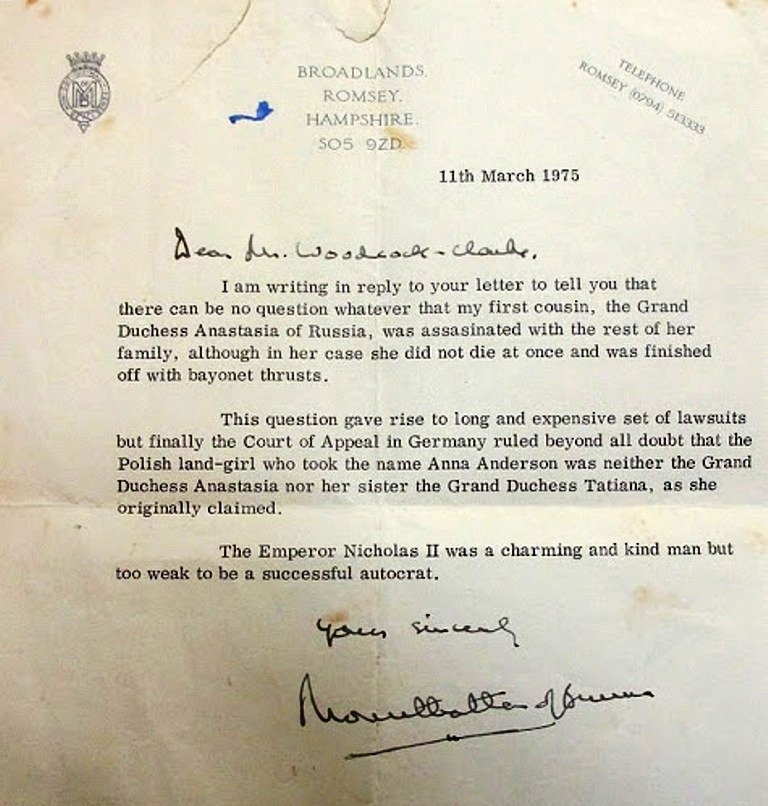
PHOTO: letter from Lord Louis Mountbatten to Mr. Woodcock-Clark,
dated 11th March 1975

Many White Russian emigrants gladly believed in Anna Anderson’s story and supported this “false Anastasia” in every possible way. So, according to Viktor Kuznetsov, the author of the book ‘Russian Golgotha’, the “Grand Duchess” in Anna Anderson was recognized by Gleb (1900-1969) and Tatiana (1898-1986) Botkin – the son and daughter of the Tsar’s personal physician, Dr. Evgeny Botkin (1865-1918). The siblings support empowered Anderson: she desperately defended her relationship with the Romanovs in various European courts for more than one decade.

It was only after the DNA analysis did everything fall into place. It turned out that Anna Anderson, or rather Franziska Schanzkovskaya, was not related to the last Russian Imperial Family. However, there are those who even today doubt the results of the scientific evidence of the DNA analysis and continue to believe that Szankowska was really the youngest daughter of Nicholas II.

The Empress’s Nephew vs. False Cousin

According to Anthony Summers and Tom Mangold, the authors of the book ‘The File on the Tsar’ (published in 1976), one of Anderson’s main opponents was the nephew of Empress Alexandra Feodorovna, Louis Mountbatten. Mountbatten took an active part in gathering evidence to expose Anderson as an imposter. He spent thousands of pounds on legal costs, challenging the claims of the pseudo-Anastasia. Anna Anderson lost in the courts, but thanks to litigation, she became famous. However, Mountbatten tried to prevent Anderson’s fame as well. In 1958, he successfully persuaded the BBC to refuse an interview with her.

Some historians maintain that some of the surviving Romanovs in exile and their British and European royal relatives, who believed Anna Anderson’s claim, but simply did not want to accept “Anastasia” into their circle. However, a letter written by Lord Mountbatten, dated 11th March 1975, puts an end to the controversy regarding the identity of Anna Anderson, and also refutes other conspiracy theories.

In this letter (seen in full, in the above photo), addressed to a certain Mr. Woodcock-Clark a collector from Nottingham, England, but about whom little else is known, Mountbatten stated: “There can be no doubt that my cousin Anastasia was murdered with the rest of her family. However, unlike the others, she did not die immediately, but was finished off with bayonets.”

The letter, according to The Daily Mail, the letter was found among the possessions of the late collector. It sold for £200 GBP [$270 USD] including fees at Unique Auctions of Lincolnshire. in October 2020. Terry Woodcock, auctioneer at Unique Auctions, said: ‘It was a fantastic piece of history and we are pleased it has found a new home. . . . This letter is a useful insight into this facet of his momentous life’

‘Anastasia was Mountbatten’s first cousin and he had stayed with the Tsar and his family in the summer of 1908. Their murder in July 1918 deeply shocked him and he carried out extensive correspondence with investigators and writers on the subject throughout his life.

Lord Mountbatten was known to have a particular soft spot for Anastasia’s sister Maria – the third daughter of Nicholas II – and kept a photo of her all his life.

He and his family, especially his mother Princess Victoria of Hesse and by Rhine (1863-1950), who was a sister of both Empress Alexandra Feodorovna (1872-1918) and Grand Duchess Elizabeth Feodorovna (1864-1918), felt great bitterness that the Nicholas II and his family had been allowed by their Allies to perish and he held strong views about the Bolsheviks as a result.

In 1975 – the same year he wrote the letter – he visited Russia. He later wrote: ‘I was over-powered by the emotion of going back to a country I had known fairly well as a child, where so many of my closest family had lived in such tremendous splendour, and then been murdered in this ghastly way. ‘I felt it all the way through, and I was quite exhausted when I came back.’

FURTHER READING:

The ghost of Anna Anderson continues to haunt us + PHOTOS

Louis Mountbatten on his Romanov relatives

© Paul Gilbert. 13 September 2025

***

I am committed to clearing the name of Russia’s much slandered Tsar. In exchange for this 18-page booklet, please consider making a small $5 or $10 donation in aid of my research. These donations are of great assistance in helping me offset the cost of obtaining and translating documents from Russian archival sources, which are often paid for out of my own pocket. It is these documents which help present new facts and information on the life and reign of Nicholas II. In addition, my research continues to debunking many of the myths and lies which exist more than a century after his death and martyrdom.

Please note, that there is NO obligation, thank you for your consideration!

CLICK HERE TO MAKE A DONATION

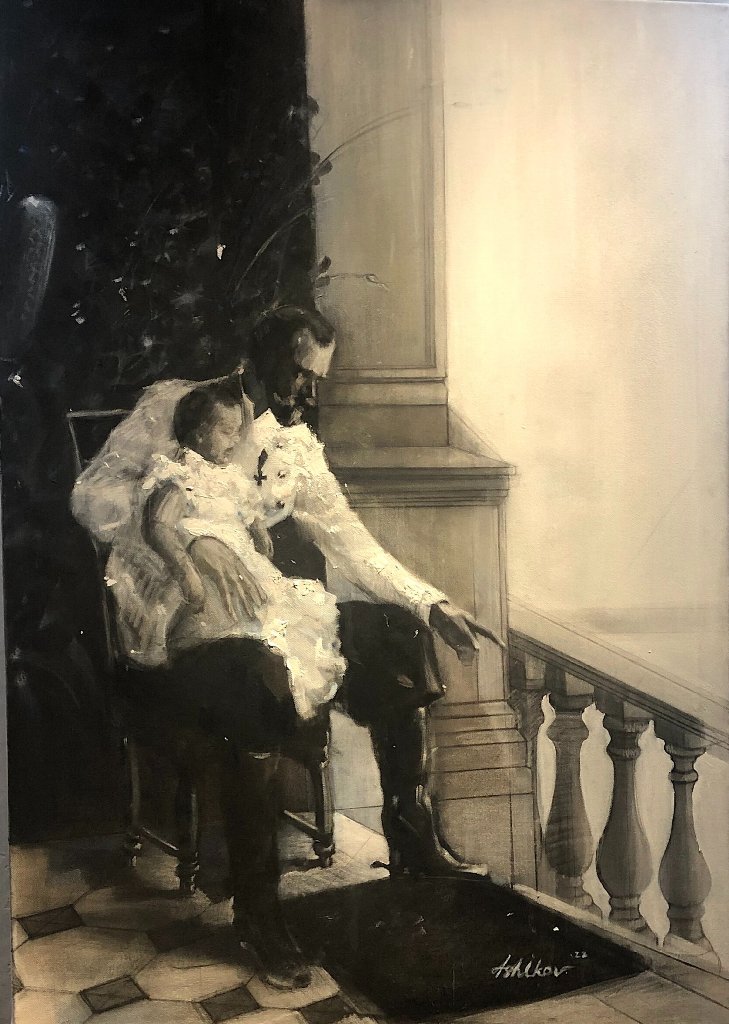
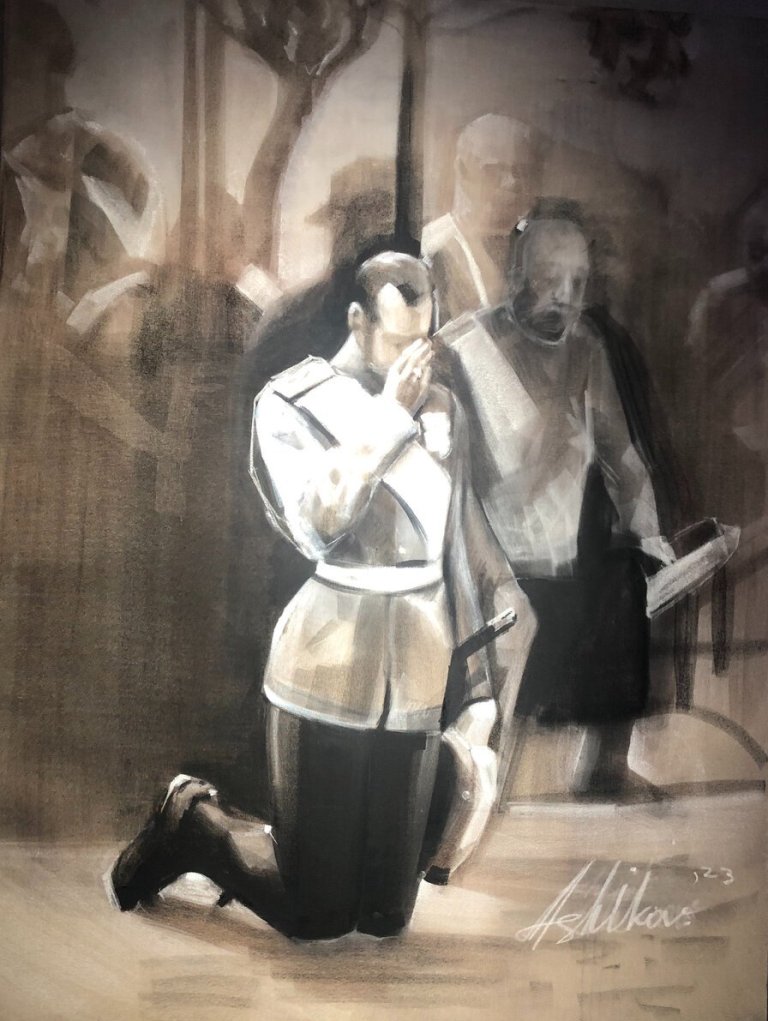
Portraits of Nicholas II by the contemporary Russian artist Yuri Ashikov

It is very rare for a new Romanov exhibition to escape my notice, however, I only just recently learned of a very interesting exhibition of a contemporary Russian artist’s portraits of Emperor Nicholas II, which was held in Moscow in the Spring of 2024.

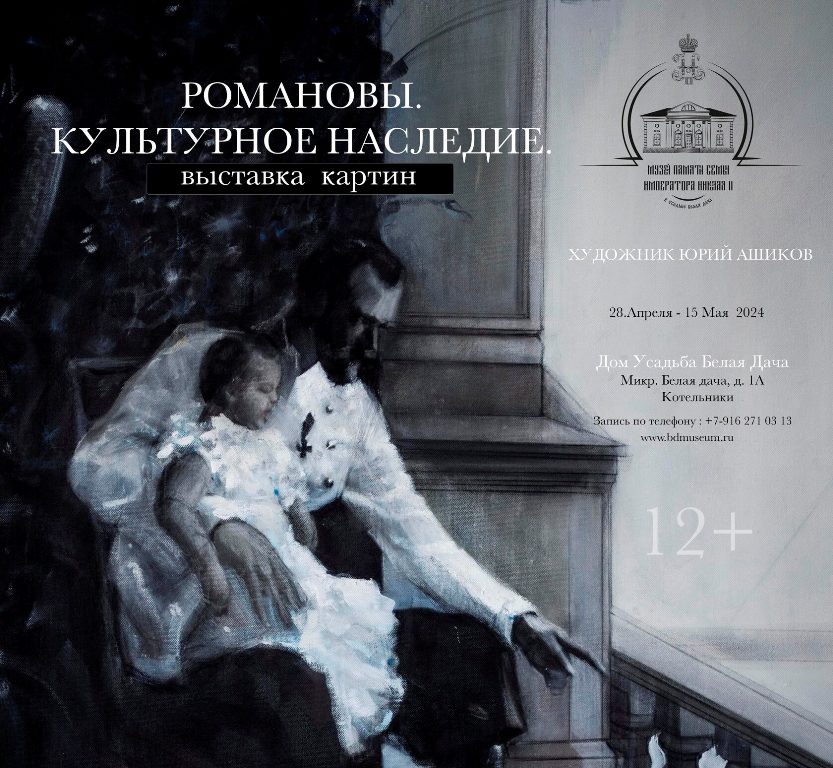
The Romanovs. Cultural Heritage exhibition showcased portraits of the last Tsar by Yuri Ashikov, a contemporary artist, who is virtually unknown of in the West. The exhibition was held from 28th April to 15th May 2024, in the Museum of Emperor Nicholas II in Moscow.

On display were the artist’s portraits of members of Emperor Nicholas II and his family, painted or drawn in the revived and almost lost, rare school of Russian realism in the portrait class, made popular during the late 19th and early 20th century by the famous Russian artist Valentin Alexandrovich Serov (1865-1911).

It is significant that Valentin Serov was the last artist to paint Emperor Nicholas II. In Yuri Ashikov’s paintings and drawings, you see the whole essence and beauty of the School of Russian Realism in a modern interpretation.

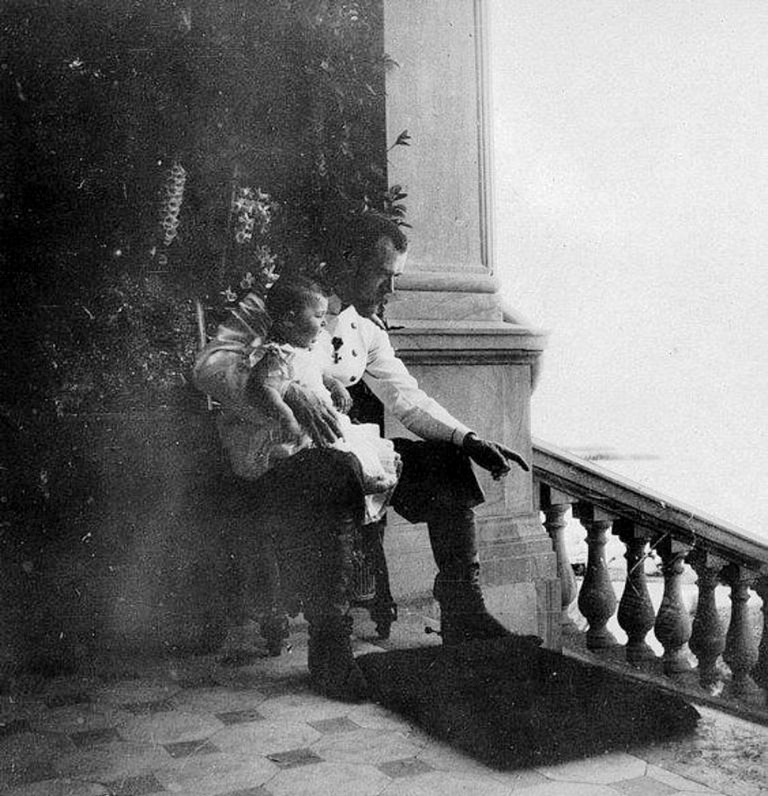
The culture of the late 19th century is directly and very closely related to the style in which the artist’s works are painted. Ashikov has managed to capture his August subject from iconic vintage photographs and paintings of the Tsar and his family. For instance, the portrait used for the exhibition poster (seen above) is based on a 1905 photograph of Nicholas II holding his infant son Alexei on his lap (see photo below) – it is truly beautiful beyond words!

I posted the above photo on my Facebook page several years ago, it was one of a series of four or five similar photos (though there are probably others?), but this one in particular, touched my heart.

This endearing image shows the Emperor Nicholas II seated on the porch of the Lower Dacha, Peterhof, while holding his infant son and heir Tsesarevich Alexei, c. 1905.

The Emperor is seen as a ‘proud papa’ pointing at something which has caught his eye in the garden, and he wants to share with Alexei.

Tsesarevich Alexei Nikolaevich was born in the Lower Dacha at Peterhof on 12th August (O.S. 30th July) 1904. He was named Alexei – in honour of St. Alexius of Moscow (1296–1378).

About the artist – Yuri Ashikov

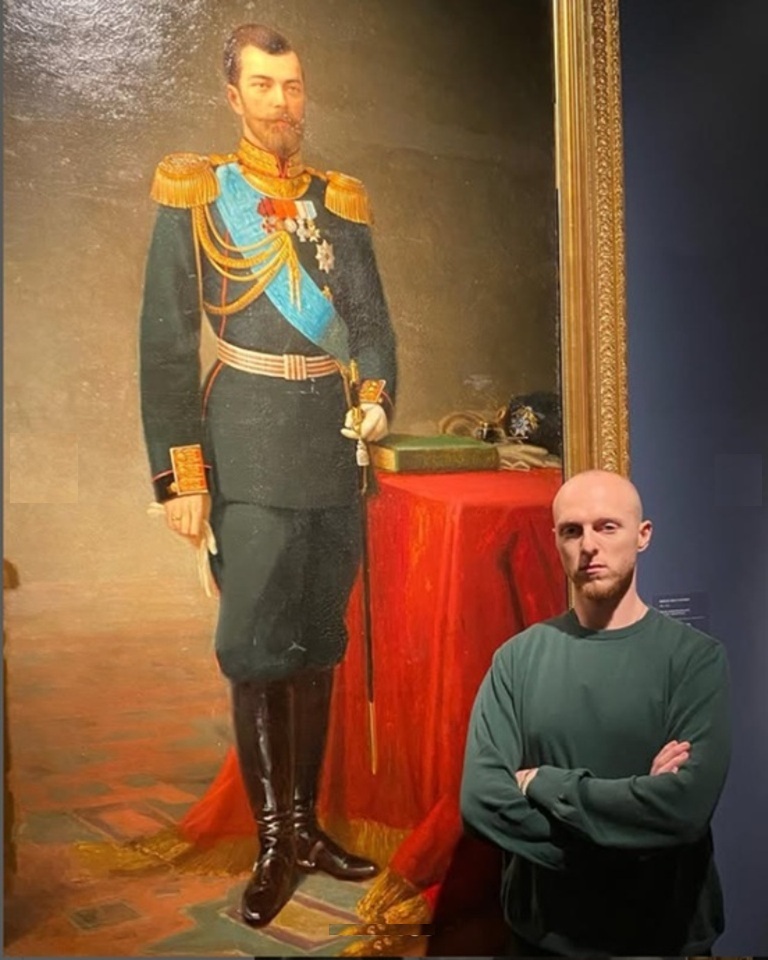
PHOTO: the contemporary Russian artist Yuri Ashikov visiting his “favourite museum”, while posing in front of a portrait of Emperor Nicholas II

Born in 1994, Yuri Ashikov is a contemporary Russian painter, photographer, sculptor, architect and art designer. He graduated, from the Stroganov School Faculty of Design in Moscow, trained in London and Japan, Latvia and Italy, studying not only drawing, but also design and architecture.

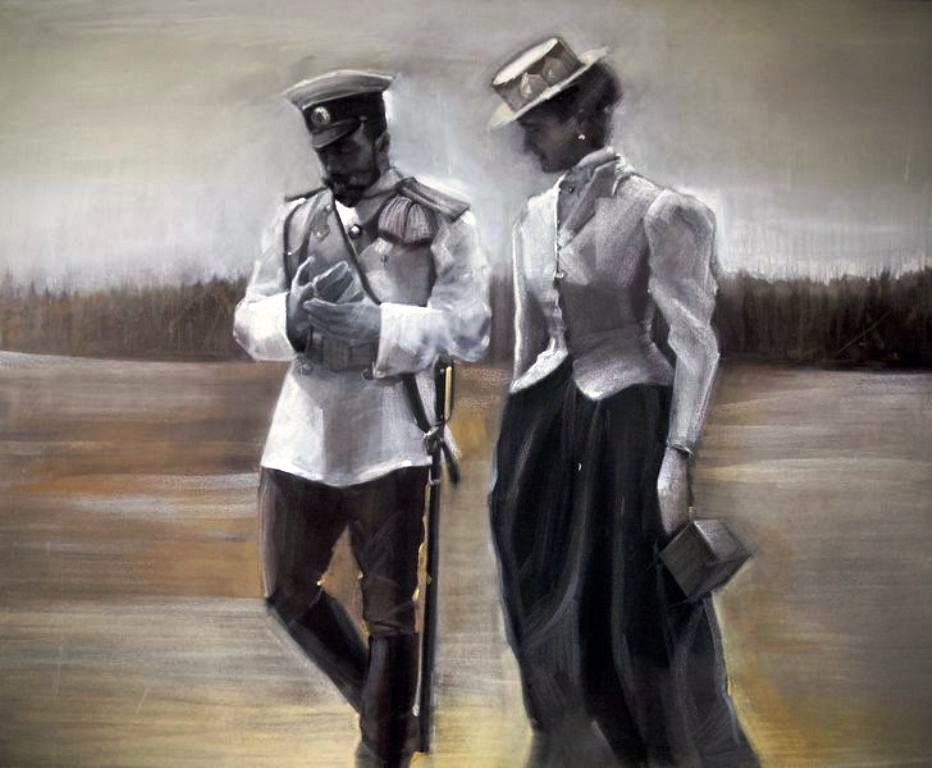
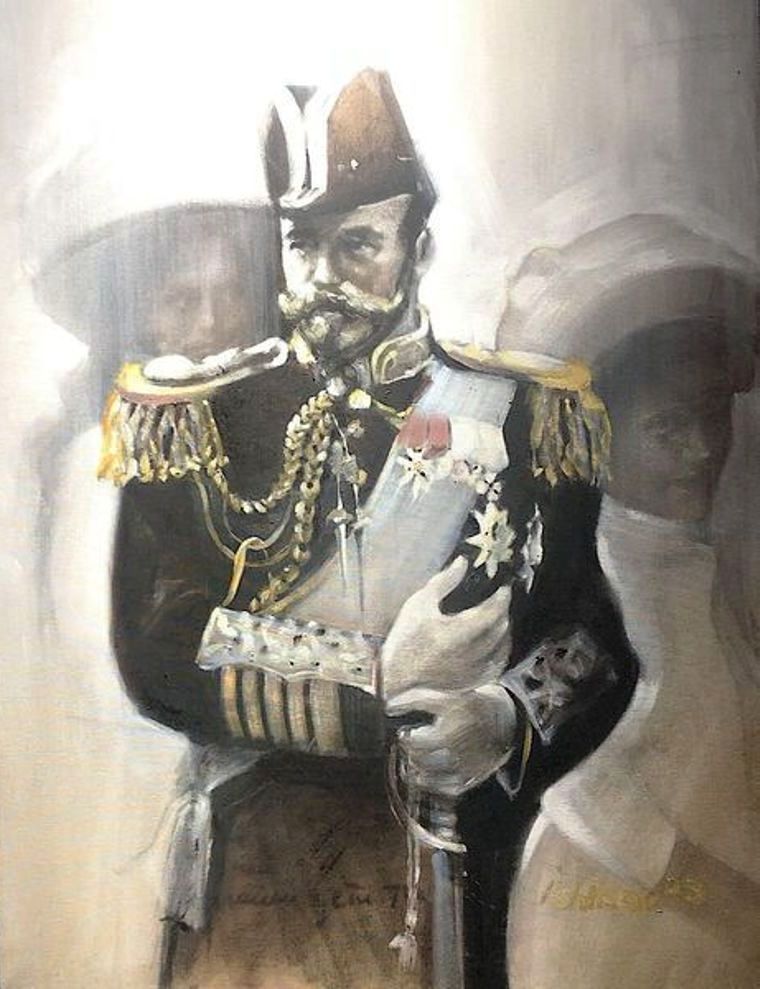
For three years, the artist worked on the “Romanov project”, creating a number of both paintings and charcoal drawings of the Tsar, his wife and children. Yuri wrote: “… I want the paintings to be alive, and each work to evoke emotions in the person… Each new project sets its own style, technique and materials. But most of my work I start in the traditional style – with charcoal.”

His exquisite paintings, which are recreated from iconic photographs and paintings of Russia’s last Tsar. They have been exhibited in cities across the Russian Federation, including Moscow and St. Petersburg.

Below, are some of Yuri Ashikov’s portraits of Emperor Nicholas II . . .

© Paul Gilbert. 11 September 2025

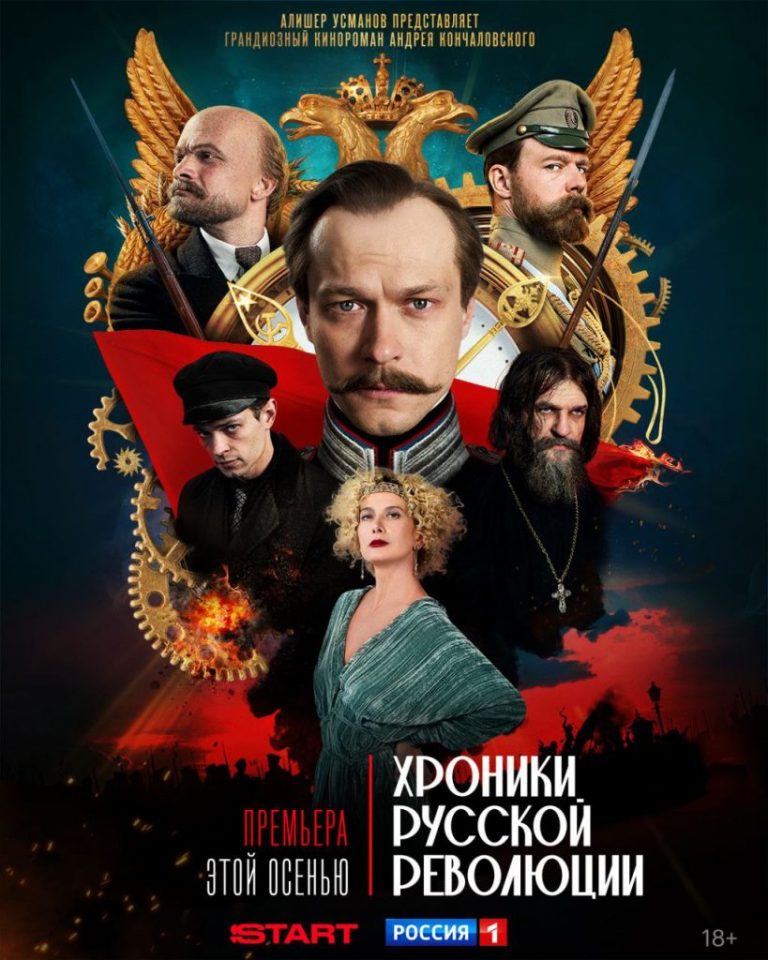
New film-series: Chronicles of the Russian Revolution

The premiere of the new Russian historical film-series Телесериал рассказывает о событиях / Chronicles of the Russian Revolution will take place in October 2025. The series will be aired on the Russian television Россия-1 / Russia-1 and the START streaming service. The project is the work of Russian director Andrei Sergeevich Konchalovsky [b.1937, Moscow].

The 16-episode series is the most ambitious work of Konchalovsky’s career. The Russian-language series explores historical events beginning with Bloody Sunday and the First Russian Revolution in 1905 to Lenin’s death and Stalin’s rise to power in 1924. Filming began in September 2022 and lasted almost a year in August 2023.

The script was written on a documentary basis, which required an in-depth study of archival materials. But rather than a detailed reproduction of historical events, the director instead has focused on the human destinies during a critical period of Russian history.

PHOTO: Nikita Efremov as Emperor Nicholas II

As Konchalovsky himself notes: “This film-series is an attempt to understand something about early 20th century Russia, about those who moved the revolution, and about those whom it swept away. Both had the right to be wrong. It is very important for me that the historical figures in this film evoke an emotional response: not the Emperor or Lenin as a leader and tribune, but simply as people with human weaknesses, dreams and hopes. But it was not easy, because there are many patterns, stereotypes, archetypes attached to each.”

“Nicholas II seemed to know that death awaited him.” And it is very interesting to look at a person through this prism” Konchalovsky added.

The main characters (both fictional), Mikhail Prokhorov played by Yura Borisov, a young officer of the security department, who is on duty trying to unravel the tangle of conspiracies against the Tsar, and the central female role of Ariadne played by Yulia Vysotskaya, a society lady and revolutionary. Among the main real-life characters are Emperor Nicholas II played by Nikita Efremov, the leader of the revolution Vladimir Lenin played by Yevgeny Tkachuk, Joseph Stalin played by Timofey Okroev.

CLICK on the image above to watch the Russian-language trailer
Duration: 1 minute 30 seconds
NOTE: click on auto-translate and CC (close captioning) for English subtitles

© Paul Gilbert. 9 September 2025

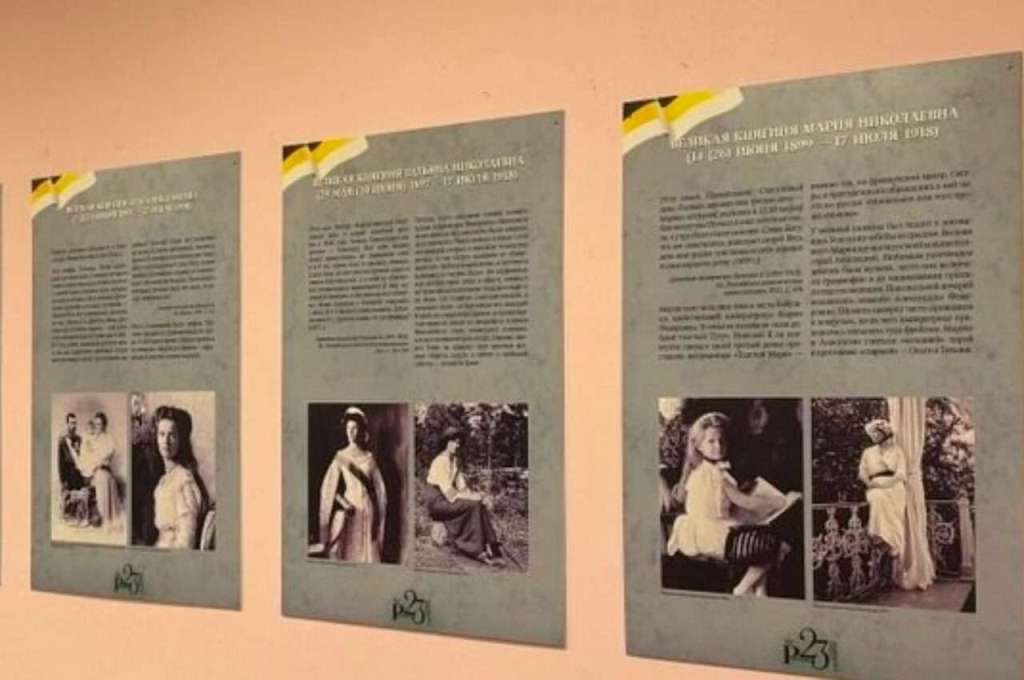
Photo exhibition “Romanovs: 23 Steps to Immortality” opens in Karabash

On 5th September 2025, a travelling photo exhibition The Romanovs: 23 Steps[1] to Immortality, opened at the Central City Library in the town of Karabash, situated in the south Urals. The collection of photographs of the Imperial Family was provided from the funds of the State Historical Museum of the South Urals. The exposition is timed to coincide with the 107th anniversary of the death and martyrdom of Russia’s last Tsar and his family.

On the night of 16/17 July 1918, Emperor Nicholas II, his wife Alexandra Feodorovna, Grand Duchesses Olga, Tatiana, Maria, Anastasia, Tsesarevich Alexei, as well as four servants were murdered in the basement of the Ipatiev House in Ekaterinburg.

The exhibition presents unique photographs of members of the Imperial Family, diary entries of Nicholas II, anecdotes from the memoirs of people who knew the Imperial Family intimately, as well as materials related to the abdication of the Emperor in March 1917, their private life in the Alexander Palace at Tsarskoye Selo, Tobolsk and Ekaterinburg. The exposition tells not only about the Romanov family, but also includes notes and memoirs of regicides, which allows visitors to look at the events from different angles.

The travelling exhibition The Romanovs: 23 Steps to Immortality was initially launched in 2018, the year marking the 100th anniversary of the death and martyrdom of Emperor Nicholas II and his family. It has since, toured towns and cities in the Urals, as well as other cities in the Russian Federation.

NOTES:

[1] Referring to the staircase – which consisted of 23 steps – in the Ipatiev House, in which, on the night of 16/17 July 1918, the Imperial Family and their four faithful retainers descended to their death and martyrdom in the Ipatiev House in Ekaterinburg.

There is a monument which depicts the Imperial Family descending 23 steps on the grounds of the Church on the Blood in Ekaterinburg.

***

*As I have noted in previous posts, I support any initiative – big or small – to help keep the memory of Nicholas II and his family alive in 21st century Russia – PG

© Paul Gilbert. 8 September 2025

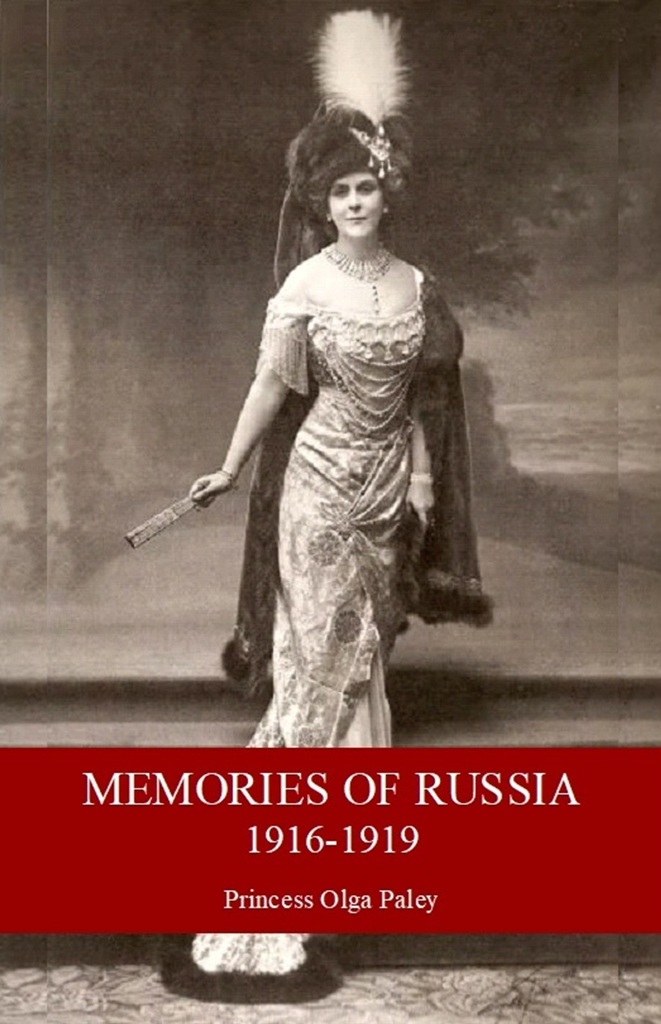
New Book – Memories of Russia 1916-1919

*This title is available from AMAZON in the USA, UK, Canada, Australia,
France, Germany, Spain, Italy, Netherlands, Poland, Sweden and Japan

CLICK HERE TO ORDER THE PAPERBACK EDITION @ $20.00 USD

CLICK HERE TO ORDER THE EBOOK EDITION @ $12.99 USD

Paperback and eBook editions. 304 pages

Originally published in 1924, this new edition of ‘Memories of Russia 1916-1919’, features a new introduction by Romanov historian Paul Gilbert

Every victim of the Bolshevik Revolution of 1917 had a story to tell. One of the most tragic was that of Princess Olga Valerianovna Paley (1865-1929) the morganatic second wife of Grand Duke Paul Alexandrovich (1860-1919).

Born in 1865, she married an officer of the Russian Imperial Guard, Erich Augustinovitch von Pistohlkors, the couple had four children.

Grand Duke Paul Alexandrovich, a long-time friend of Pistohlkors, often spent his evenings with the Pistohlkors couple in Tsarskoye Selo; where he became smitten with Olga’s beauty, elegance, and her worldly and lively spirit. Their affair resulted in the birth of a son, Vladimir

Their affair created a scandal at Court and the Emperor forbid his uncle to marry Olga. Following her divorce from Pistolkors, Olga and Paul defied Nicholas II, resulting in their expulsion from Russia. They married in Livorno, Italy, and settled in an elegant mansion built in Boulogne-sur-Seine, France for several years. It was here that Olga gave birth to two more daughters,

In 1904, Prince-Regent Leopold of Bavaria titled Olga Countess of Hohenfelsen, and upon their return to Russia, the Tsar created the title of Princess Paley for her and their children.

During the revolution, her husband the Grand Duke and their son Vladimir were arrested and subsequently murdered by the Bolsheviks. Olga and her daughters escaped to Finland and then returned to Paris, where she died in 1929.

© Paul Gilbert. 1 September 2025

The assassination attempt on Lenin’s life by Fanny Kaplan

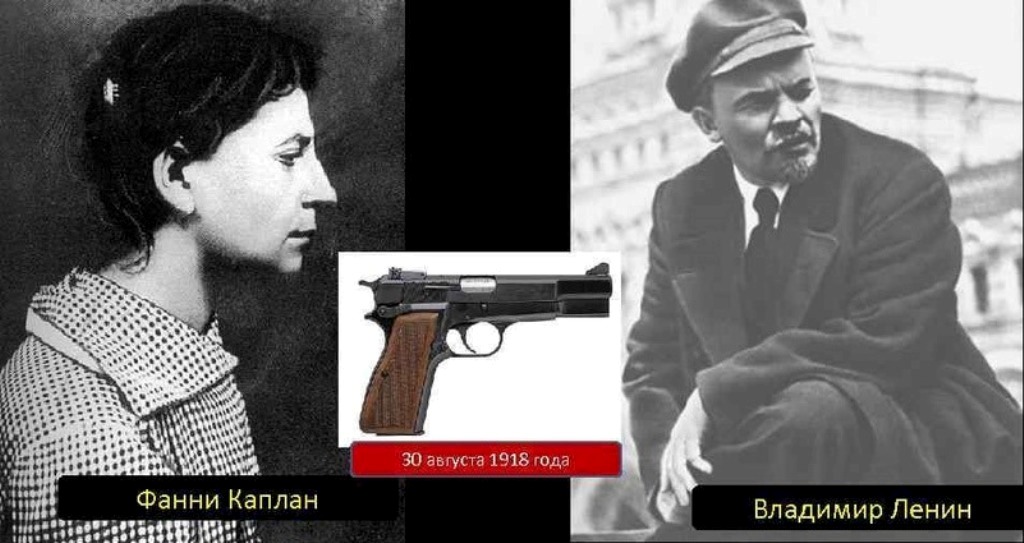
Several attempts are known to have been made on the life of Bolshevik leader Vladimir Lenin (1870-1924). The most famous of them was committed on 30th August 1918, by the Socialist Revolutionary Party member Fanny Kaplan [her real name was Feiga Haimovna Roytblat, 1890-1918], as a result of which Lenin was seriously wounded.

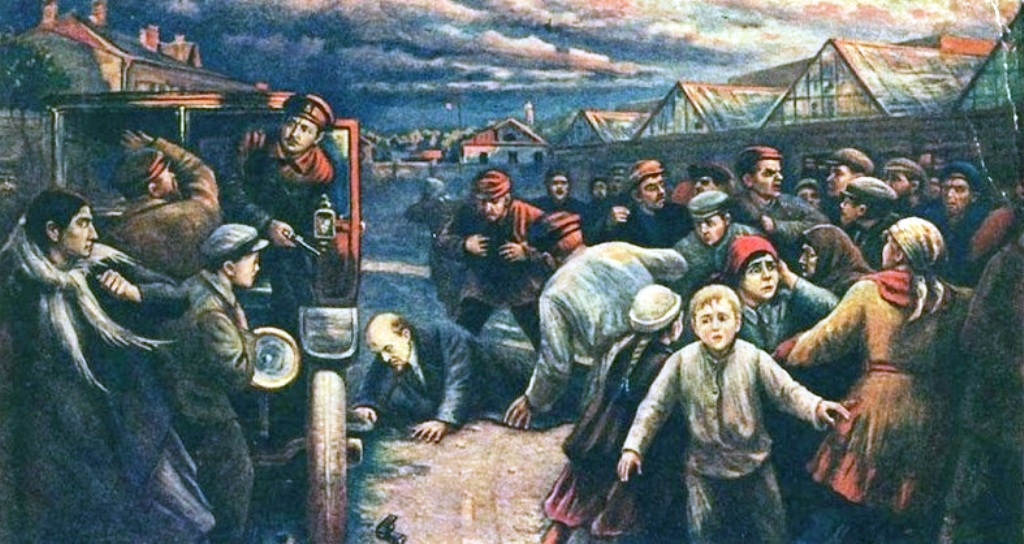
It was on that day, that Lenin gave a speech to workers at the Hammer and Sickle, a Michelson arms factory in south Moscow. As he was leaving the building and before he entered his motorcar, Kaplan called out to him. When Lenin turned towards her, she fired three shots with a Browning pistol. One bullet passed through Lenin’s coat, the other two struck him: one passing through his neck, puncturing part of his left lung, and stopping near his right collarbone; the other lodging in his left shoulder.

Lenin was taken back to his living quarters at the Kremlin. He feared there might be other plotters planning to kill him and refused to leave the security of the Kremlin to seek medical attention. Doctors were brought in to treat him but were unable to remove the bullets outside of a hospital. Despite the severity of his injuries, Lenin survived. However, Lenin’s health never fully recovered from the attack and it is believed the shooting contributed to the strokes that incapacitated and eventually killed him in 1924.

PHOTO: Soviet painting depicting the assassination attempt (1927)
Artist: Vladimir Nikolayevich Pchelin (1869-1941) 

Kaplan was arrested by the Cheka, during interrogation, she made the following statement:

My name is Fanya Kaplan. Today I shot Lenin. I did it on my own. I will not say from whom I obtained my revolver. I will give no details. I had resolved to kill Lenin long ago. I consider him a traitor to the Revolution. I was exiled to Akatuy for participating in an assassination attempt against a Tsarist official in Kiev. I spent 11 years at hard labour. After the Revolution, I was freed. I favoured the Constituent Assembly and am still for it.

Kaplan was executed in the Alexander Garden, which stretch along all the length of the western Kremlin wall, between the building of the Moscow Manege and the Kremlin. The order was carried out by the commander of the Kremlin, the former Baltic sailor Pavel Dmitrievich Malkov (1887-1965) and a group of Latvian Bolsheviks, on 3rd September 1918 with a bullet to the back of the head. Her corpse was bundled into a barrel, and set alight. The order came from Yakov Sverdlov who, just six weeks before, had ordered the murders of the Tsar and his family.

© Paul Gilbert. 30 August 2025

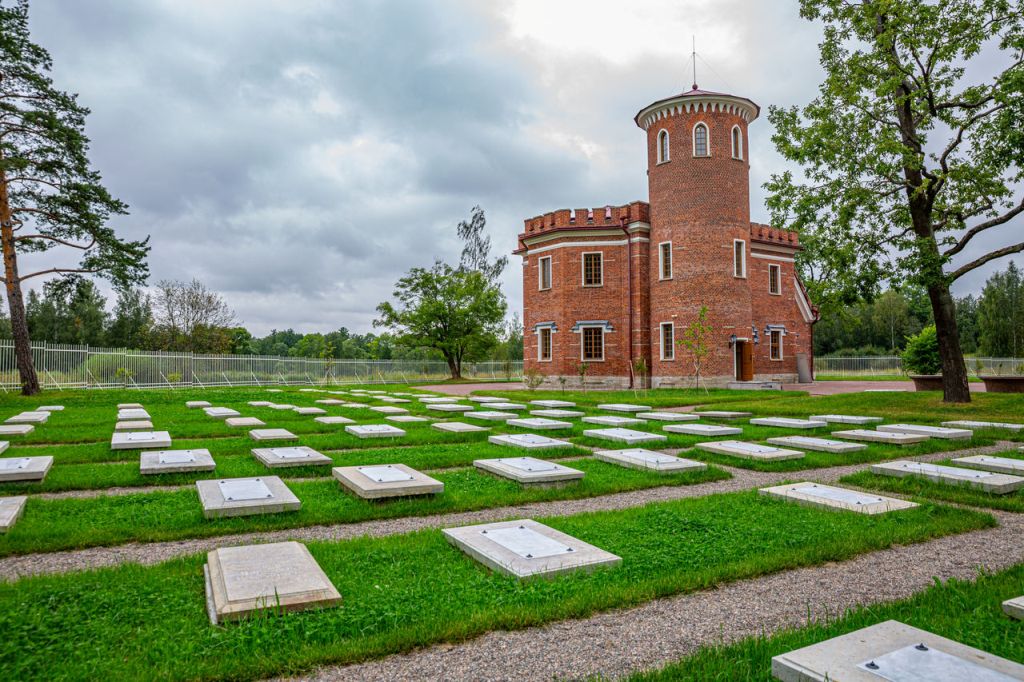
Restoration of the Horse Cemetery at Tsarskoye Selo completed

PHOTO: Pensioner’s Stable Pavilion and Horse Cemetery at Tsarskoye Selo

The Tsarskoye Selo State Museum-Reserve has announced the completion of restoration work in the Pensioners’ Stable Pavilion and the adjacent 19th-century cemetery, where more than 120 horses of the Russian emperors are buried.

Click HERE to read my article Pensioner’s Stable Pavilion and Horse Cemetery at Tsarskoye Selo to open end of 2025, which includes photos and drawings, published on 24th May 2025

Guided tours (in Russian only) of the complex will be offered to visitors beginning 30th August, on weekends only. The route includes a talk on the history of the Pensioner’s Stable Pavilion, followed by a rour of the world’s first Imperial Horse cemetery and the nearby Imperial Farm [Note: restoration was completed in January of this year].

The restoration work has been ongoing since 2019 at the expense of the museum’s extra-budgetary funds. During this time, the general layout of the site was restored, the bases of the tombstones were restored and the gravestones were returned to their historical places. According to archival data, the museum staff established the names of the horses buried in each grave, and craftsmen recreated the lost plates with inscriptions.

In the building of the Pensioner’s Stable, façade and general construction work was carried out, utilities were laid and carpentry fillings were restored. The museum has begun work on the creation of a permanent exhibition dedicated to imperial horses, which is scheduled to open in the spring of 2026. Among the exhibits is a decorative harness for Tsesarevich Alexei Nikolaevich’s favourite donkey, presented by King Victor Emmanuel III to Emperor Nicholas II, during the latter’s visit to Italy in October 1909.

The Pensioner’s Stable was built in 1827-1830 according to the project of the architect and landscape designer Adam Menelaws (1753-1831), to serve as a “retirement home” for horses that had left the service of their Imperial masters “due to old age and illness”.

The first burial dates back to 1834, the last to 1915. Horses of the emperors of the 19th century are buried in the adjacent cemetery, including animals from the stables of Emperors Alexander I, Nicholas I, Alexander II and Alexander III.

The horses belonging to Emperor Nicholas II, which are buried in the cemetery, include his gray gelding “Serko“, presented to Tsesarevich Nikolai Alexandrovich (future Emperor Nicholas II) in 1890. In 1901, Emperor Nicholas II’s favourite horse “Bluebell”, from 1875, died at the age of 30. After her death, Nicholas II issued an edict for “Bluebell” to be buried in the Imperial Horse Cemetery. 

During the Great Patriotic War, the Pensioner’s Pavilion was slightly damaged, but in the following decades it fell into a terrible state of neglect and disrepair, as did the Imperial Horse Cemetery. The repair of individual slabs on the graves was carried out in the early 2000s with the financial support of the French writer and horse specialist Jean-Louis Gouraud [b.1943]. Restoration work was interrupted during the COVID pandemic. The museum has since carried out comprehensive restoration at its own expense.

© Paul Gilbert. 25 August 2025

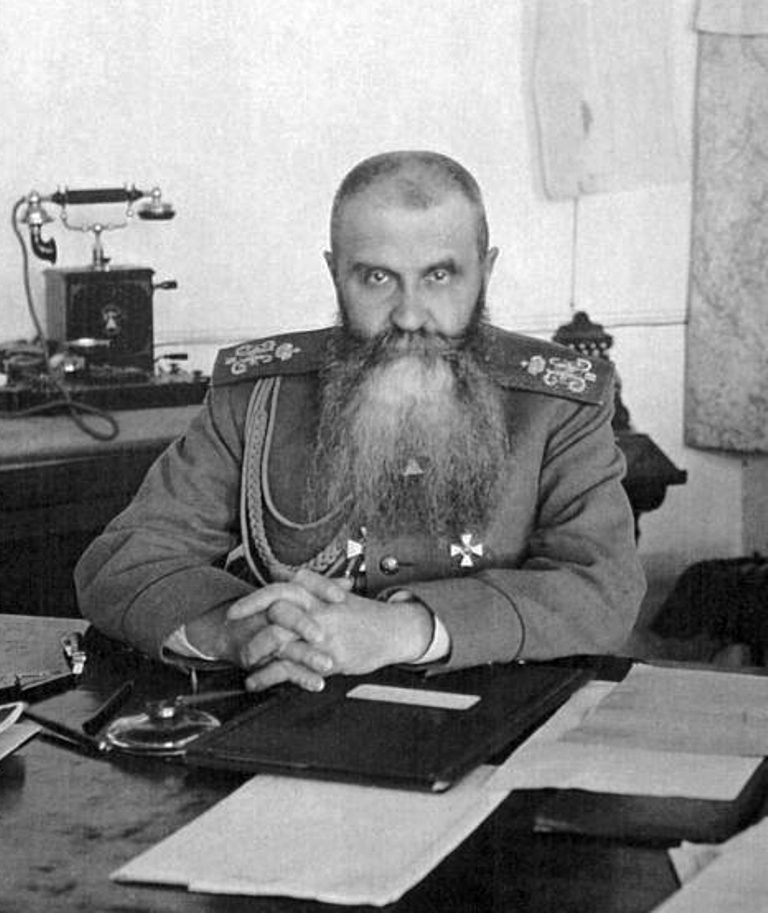
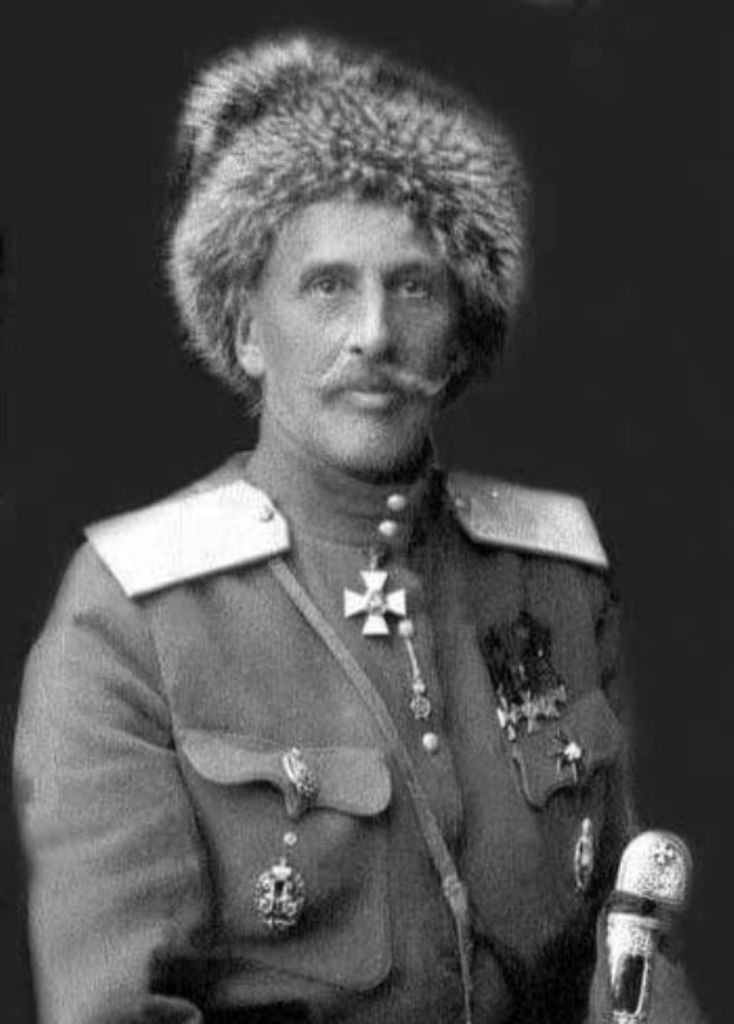
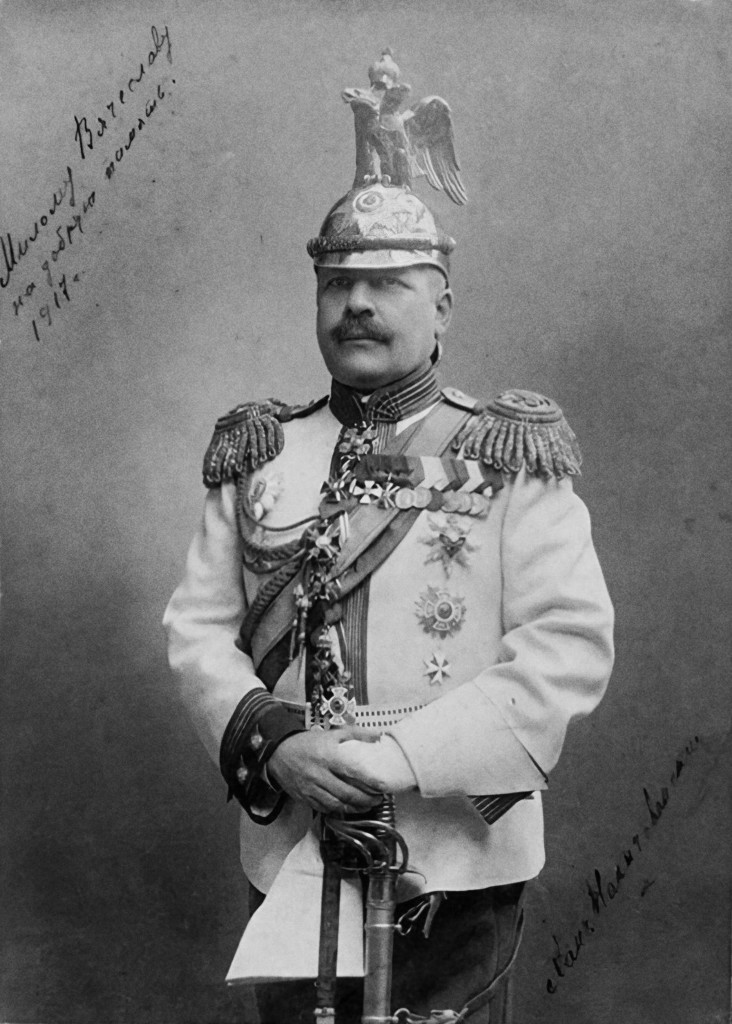
“They did not betray their oath” – the fate of the generals who remained loyal to Nicholas II

PHOTO: Generals Nikolai Ivanov, Fyodor Keller and Huseyn Khan Nakhchivanski

The abdication of Nicholas II, continues to be shrouded in controversy, myths and lies. Modern day academically lazy historians continue to spread the century old myth that the Tsar was betrayed by all of his generals in the days leading up to his abdication. This is not true!

During the February 1917 Revolution, while most all of Russia’s top military leaders agreed with the position of the chief of staff of the General Headquarters (Stavka) of the Russian Imperial Army, General Mikhail Alexeev, that Emperor Nicholas II must abdicate the throne. Among them, was the Tsar’s first cousin Grand Duke “Nikolasha” Nikolaevich (1856-1929).

A fact, which is often overlooked by today’s historians and authors, is that there were in fact three generals who remained loyal to their oath to the Emperor: Nikolai Iudovich Ivanov (1851-1919), Fyodor Arturovich Keller (1857-1918), and Huseyn Khan Nakhchivanski (1863-1919). All three generals had distinguished military careers and highly decorated with orders and medals for their service, duty and bravery.

It was during the February 1917 Revolution, that these generals offered the Tsar the services of their troops to suppress the revolution. And when the Tsar abdicated, and it was time to swear allegiance to the new Provisional Government, these same three generals defiantly refused.

Sadly, the lives of these generals ended tragically. None of them survived the Civil War, and yet they remained loyal to Emperor Nicholas II until the end of their days.

Memory Eternal! Вечная Память!

Nikolay Ivanov

The origin of Nikolai Iudovich Ivanov (1851-1919) origin remains a subject of debate, some sources say that he came from a noble family from the Kaluga Governorate, but other sources claim that he was the son of a cantonist[1]. Despite all of these sources, the origin of where Ivanov’s family came from, remains a mystery.

After graduating from the military gymnasium, Nikolai Ivanov continued his military education and became an artillery officer. He served in the 3rd Guards and Grenadier Artillery Brigade, he then participated in the Russo-Turkish War of 1877-1878. During the Russo-Japanese War of 1904-1905, he commanded a corps and repeatedly showed personal bravery, for which he was awarded the Order of St. George 3rd and 4th Class and a Gold Sword for Bravery. In 1908, Ivanov received the highest rank of general of the branch of the armed forces (artillery) at that time.

During the First World War, Ivanov commanded the troops of the South-Western Front. Later at the end of 1915, he conducted a failed operation by the 11th Army against the enemy’s forces. And in March 1916, he was replaced by General Aleksei Brusilov as the commander-in-chief of the Southwestern Front. Ivanov he was then appointed a member of the State Council, and adjutant to Emperor Nicholas II.

On 27th February 1917, the Emperor received disturbing reports about the civil and social unrest in Petrograd, and that the garrison of the capital refused to obey their superiors. Ivanov was appointed commander of the Petrograd Military District with extraordinary powers and subordination of all ministers to him. The Georgievsky Battalion (aka Knights of St. George), were reinforced by two machine-gun companies, which were placed at his disposal. In addition, Ivanov was to be sent two cavalry and infantry regiments from the Northern and Western Fronts.

The Emperor instructed Ivanov and ordered him to go to Tsarskoye Selo to ensure the safety of the Empress and her children. Military units loyal to the Tsar sent from the Fronts were also supposed to arrive there. Ivanov was to take command of them all at Tsarskoye Selo and from there to march on Petrograd to quell the unrest.

Now it is known that the chief of staff of the General Headquarters (Stavka) of the Russian Imperial Army at Mogilev, General Mikhail Alexeev (1857-1918), and the commanders of the Fronts sabotaged the Emperor’s order on the allocation of troops.

After Ivanov learned about the Tsar’s abdication, he went back to the Headquarters at Mogilev, but was arrested and taken to Petrograd. By order of the Minister of Justice of the new Provisional Government Alexander Kerensky (1881-1970), Ivanov was released. In 1918, General Pyotr Krasnov (1869-1947) of the White Army, appointed Ivanov commander of the Special Southern Army, consisting of the Voronezh, Astrakhan and Saratov corps.

On 29thJanuary 1919, after a short but serious illness (from typhus), the former commander-in-chief of the Southern Army, General of Artillery Nikolai Iudovich Ivanov died in Odessa. 

Fyodor Keller

Fyodor Arturovich Keller (1857-1918) came from a military family of Russified Germans, many members of which were generals. In 1877, he volunteered for the Russo-Turkish War and awarded the St. George’s Cross 1st and 2nd Class for bravery.

In 1906, Keller survived two attempts on his life by revolutionaries. In 1907, he was awarded the rank of Aide-de-Camp and in July of the same year, he was promoted to major general with enrollment in His Imperial Majesties Retinue.

In August 1914, while commanding the 10th Cavalry Division, he won a number of victories over the enemy, for which in 1916 Emperor Nicholas II awarded him a golden sword. In addition, for services in battle he was awarded the Order of St. George 3rd and 4th Classes.

The news of the abdication of the Emperor found Keller in the post of commander of the 3rd Cavalry Corps. On 6th March 1917, he sent a telegram to Nicholas II, in which he begged him not to leave the throne and offered his troops to suppress sedition. The telegram never reached the Emperor, having been intercepted by supporters of the Provisional Government.

Keller refused to take the oath of allegiance to the new Provisional Government, and was dismissed from his position on 15th March. He left for Kharkiv, where his family lived at that time.

Keller was not happy with the White movement, as it refused to put forward monarchist agenda. He moved to Kiev, where on 19th November 1918 he was appointed by the puppet pro-German “Hetman of Ukraine” Pavlo Skoropadskyi, to lead the armed forces formed from the Russian officers in Kiev, who were there to protect the city from Symon Petliura’s[2] followers.

Skoropadskyi needed the support of Russian monarchists, but Keller understood the appointment as the beginning of his own dictatorship. Keller instituted a five-member Council of the State Defense, composed entirely of the monarchist politicians, and stated that he served one Russian state. Skoropadskyi dismissed Keller on 26th November for “overstepping his authorities”.

Sadly, the events which unfolded in Kiev turned out to be fatal for Keller. When Petliura’s followers entered the city, Keller was in hiding in the St. Michael’s Golden-Domed Monastery. He had categorically rejected the Germans’ proposal to hide in their units, changing the Russian uniform for the German one.

Finally, on 21st (O.S. 8th) December 1918, Petliura’s followers captured and shot Keller along with two of his adjutants (December 21, 1918). His golden sword was presented to Petliura.

Keller’s body was buried under a false name in the Holy Intercession Monastery in Kiev. His grave has not been preserved, his body never found.

Huseyn Khan Nakhchivanski

Huseyn Khan of Nakhichevan (1863-1919) came from a family of hereditary khans of Nakhichevan, who took Russian citizenship in 1828. From this family came a number of Muslim generals, which was rare in the Russian Imperial Army. After graduating from the Corps of Pages with honours, Huseyn Khan regularly participated in the solemn receptions of foreign monarchs in St. Petersburg.

During the Russo-Japanese War, Huseyn Khan served as commander of the 2nd Dagestan Volunteer Cavalry Regiment. During the war the regiment distinguished itself, and Huseyn Khan himself received seven decorations. On 27th January 1907, he was decorated with the Order of St George 4th Class and the Golden Saint George Sword for launching a successful cavalry onslaught to save an encircled Russian infantry unit.

At the very beginning of the First World War, Huseyn Khan was appointed commander of the Combined Cavalry Corps and participated in the offensive against East Prussia. From 19th October 1914 he was commander of the 2nd cavalry corps and on 22nd October 1914, he was decorated with the Order of St George 3rd Class, which was presented to him personally by Emperor Nicholas II. In June 1915, he was appointed General-Adjutant of His Imperial Majesty and became the only Muslim to hold that position.

The news of the February 1917 Revolution found Huseyn Khan as the commander of the reserve Guards Cavalry Corps. On 3rd March 1917, he sent a telegram to General Alexeev at Mogilev, in which he expressed his readiness to die for the Tsar. His telegram, like Keller’s was not handed over by Alexeev to the Emperor.

Huseyn Khan refused to swear allegiance to the Provisional Government. As a result, Huseyn Khan was officially dismissed from the army on 16th April. His chief of staff, Major General Baron Alexander Wienen, shot himself.

Huseyn Khan returned to Petrograd, where he lived with his family. He was one of the few Azeri figures who did not support the newly formed Azerbaijan Democratic Republic, remaining a staunch Russian monarchist.

Following the October 1917 Revolution and the assassination of the head of Petrograd Cheka, Moisei Uritsky (1873-1918) in August 1918, Nakhchivanski together with some other prominent citizens of Petrograd was taken hostage by the Bolsheviks. He was held in the Shpalernaya Prison along with the Grand Dukes Paul Alexandrovich, Nicholas Mikhailovich, George Mikhailovich and Dmitry Konstantinovich. Also in the same prison was Prince Gabriel Constantinovich, who used to serve under the command of Huseyn Khan and who later managed to escape, and who mentioned in his memoir that he met Huseyn Khan during their walks in the prison yard.

The Grand Dukes were executed in the Peter and Paul Fortress on 29th January 1919. It is presumed by a number of Russian historians that Huseyn Khan was executed together with the Grand Dukes. However, the exact circumstances of his death and his burial place still remain unknown.

NOTES:

[1] A cantonist refers to Jewish boys conscripted into military service in the Russian Empire, particularly during the reign of Emperor Nicholas I (1825-1855). They were educated in special cantonist schools, where they were subjected to harsh conditions and pressure to adopt Christianity. The system began in 1827, and by 1857, it was abolished due to public and international criticism, highlighting the inhumane treatment of these young conscripts.

[2] Symon Vasyliovych Petliura (1879-1926) was a Ukrainian politician and journalist. He served as the Supreme Commander of the Ukrainian People’s Army (UNA) and led the Ukrainian People’s Republic during the Ukrainian War of Independence, a part of the wider Russian Civil War.

© Paul Gilbert. 22 August 2025

***

I am committed to clearing the name of Russia’s much slandered Tsar. In exchange for this 18-page booklet, please consider making a small $5 or $10 donation in aid of my research. These donations are of great assistance in helping me offset the cost of obtaining and translating documents from Russian archival sources, which are often paid for out of my own pocket. It is these documents which help present new facts and information on the life and reign of Nicholas II. In addition, my research continues to debunking many of the myths and lies which exist more than a century after his death and martyrdom.

Please note, that there is NO obligation, thank you for your consideration!
CLICK HERE TO MAKE A DONATION