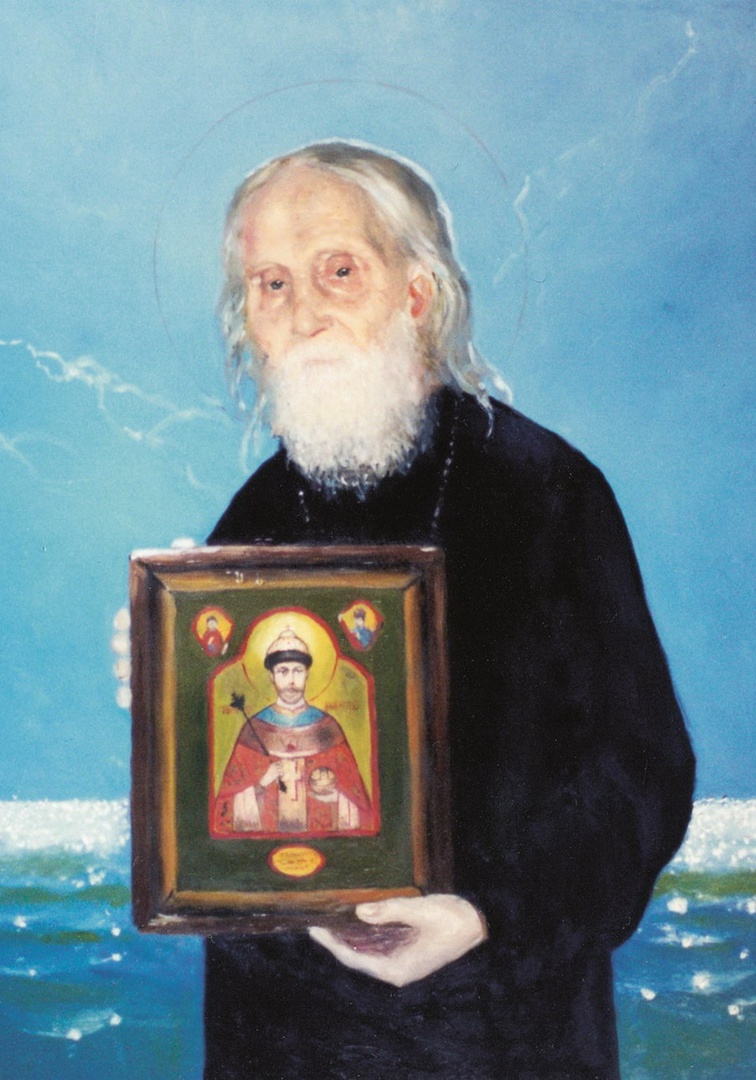
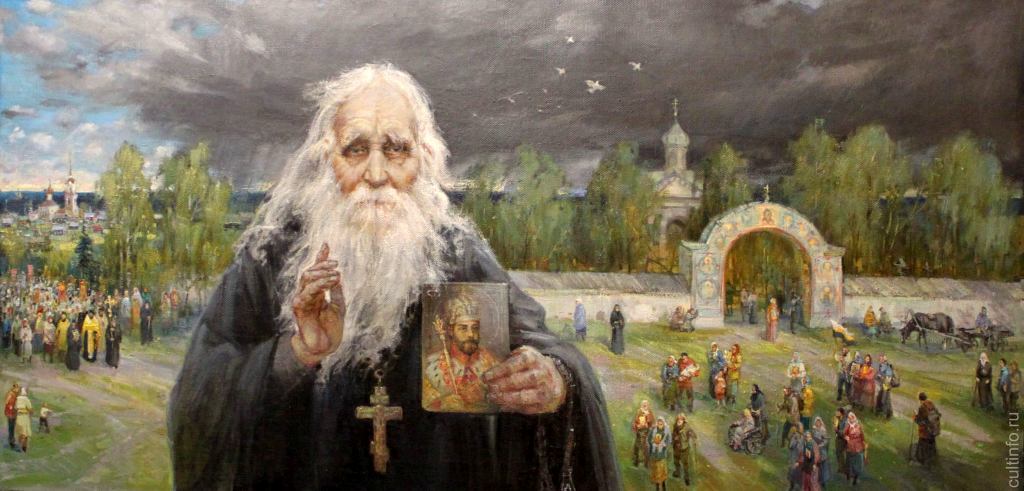
PHOTO: Father Nikolai (Guryanov), holding a portrait of Tsar Martyr Nicholas II, painted in 2017 by the contemporary Russian artist Vladimir Latyntsev
“Whoever loves the Tsar and Russia loves God” – Father Guryanov
Nikolai Alekseevich Guryanov (1909-2002), is regarded as one of the most revered elders of the late 20th – early 21st centuries. He is greatly respected by Orthodox Christians and Russian Monarchists for keeping the memory of Emperor Nicholas II alive, during the Soviet years.
He was born on 24th May 1909, into a peasant family in Chudskiye Zakhody (now the village of Zakhody), a village situated in the Gdovsky District of the Pskov Oblast. Nikolai’s father, Alexei Ivanovich Guryanov, was the regent of the church choir, died in 1914. The elder brother, Mikhail Alekseevich Guryanov, taught at the St. Petersburg Conservatory; younger brothers, Peter and Anatoly, also had musical abilities. All three brothers died in the First World War (1914-18). Nikolai’s mother, Ekaterina Stepanovna Guryanova, helped her son in his labours for many years.
Nikolai’s father died in 1914. His mother lived a long life, she died on 23rd May 1969, and was buried in the cemetery on Zalit Island, situated on the Zalitsky Islands, located in the south-eastern part of Lake Pskov, 25 km northwest of Pskov.
From childhood, Nicholas served at the altar in the church of Michael the Archangel. As a child, Metropolitan Veniamin (Kazan) visited the parish . Father Nikolai recalled this event in the following way: “I was still a boy. Vladyka served, and I held his staff. Then he hugged me, kissed me and said: “How happy you are that you are with the Lord …“.
Teacher, prisoner, priest
From 1958, Father Nikolai served as rector of St. Nicholas Church for 44 years, until his death in 2002. Orthodox Christians came from all over the country for spiritual support.
Next to the church stands a cross erected in memory of the service Nikolai Guryanov provided to the Russian Orthodox community.
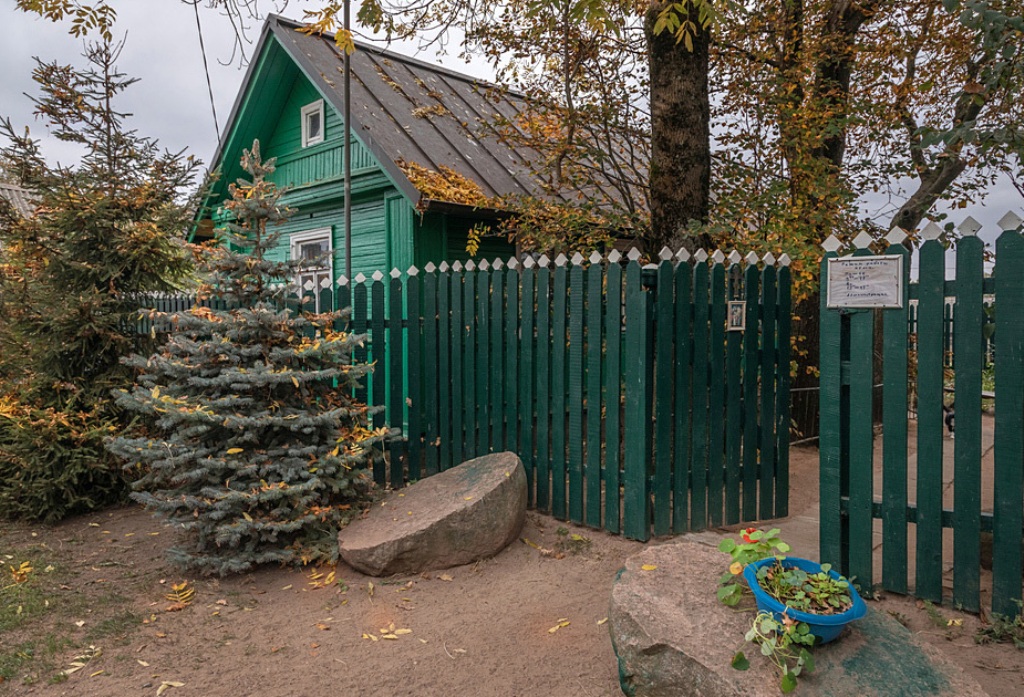
PHOTO: the home of Father Nikolai (Guryanov) in Ostrov-Zalit, on the island of Talabsk
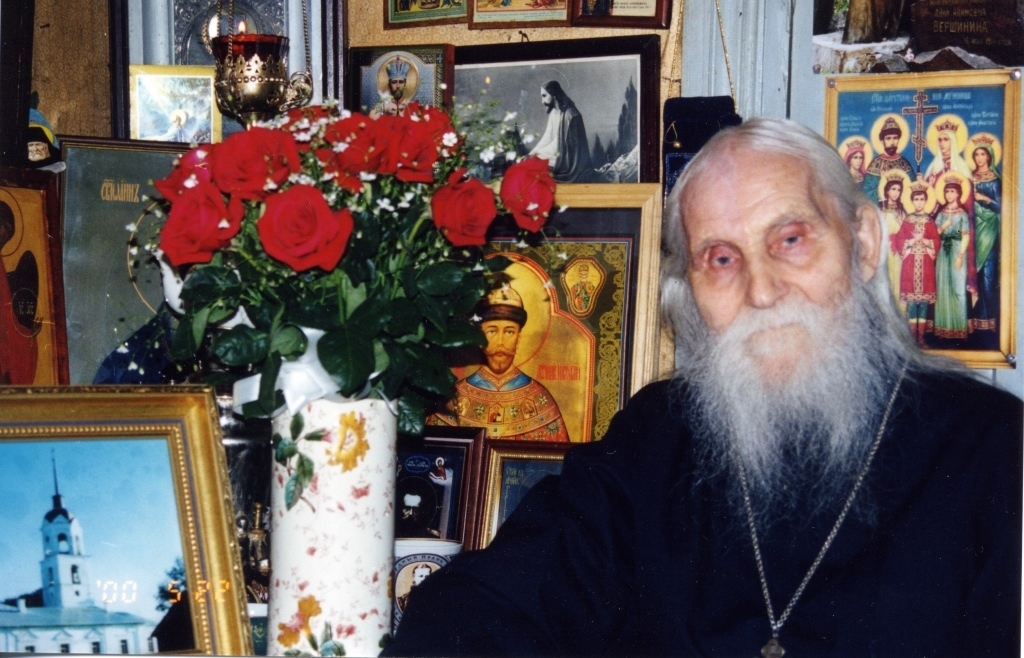
PHOTO: Father Nikolai (Guryanov) at his tiny home in Ostrov-Zalit
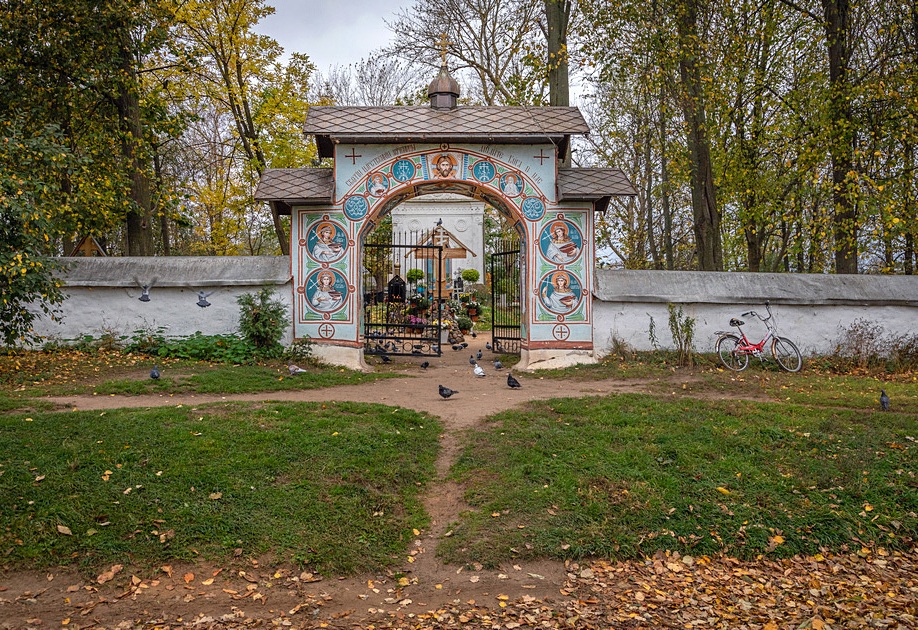
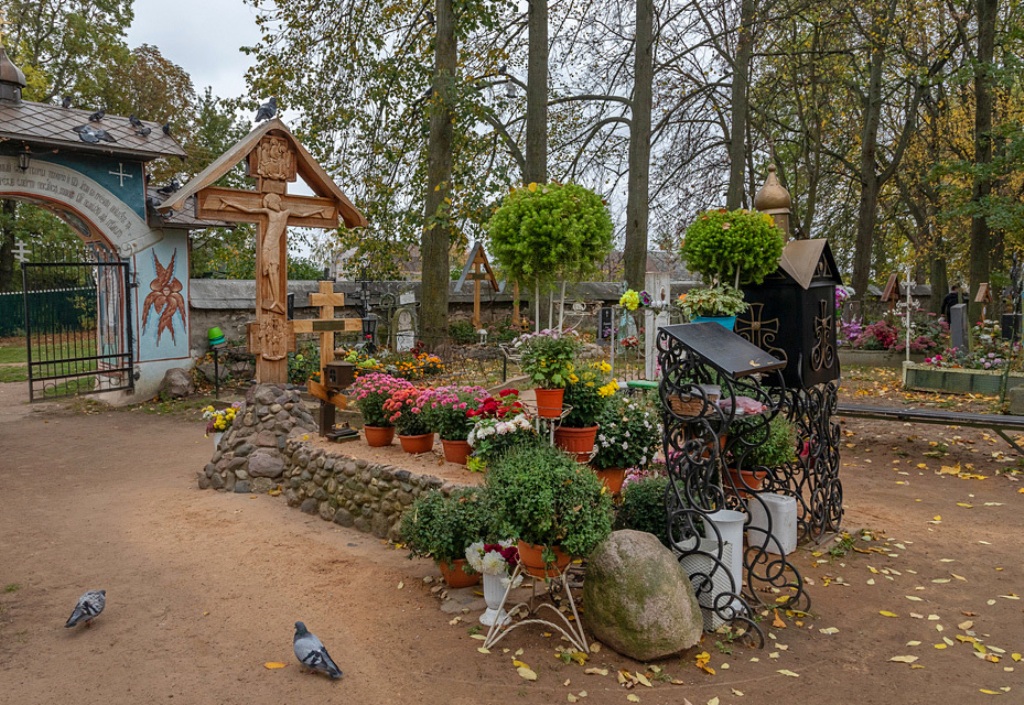
PHOTO: the cemetery in Ostrov-Zalit, on the island of Talabsk, where Father Nikolai (Guryanov) is buried
PHOTO: the grave of Father Nikolai (Guryanov), at the cemetery in Ostrov-Zalit, on the island of Talabsk
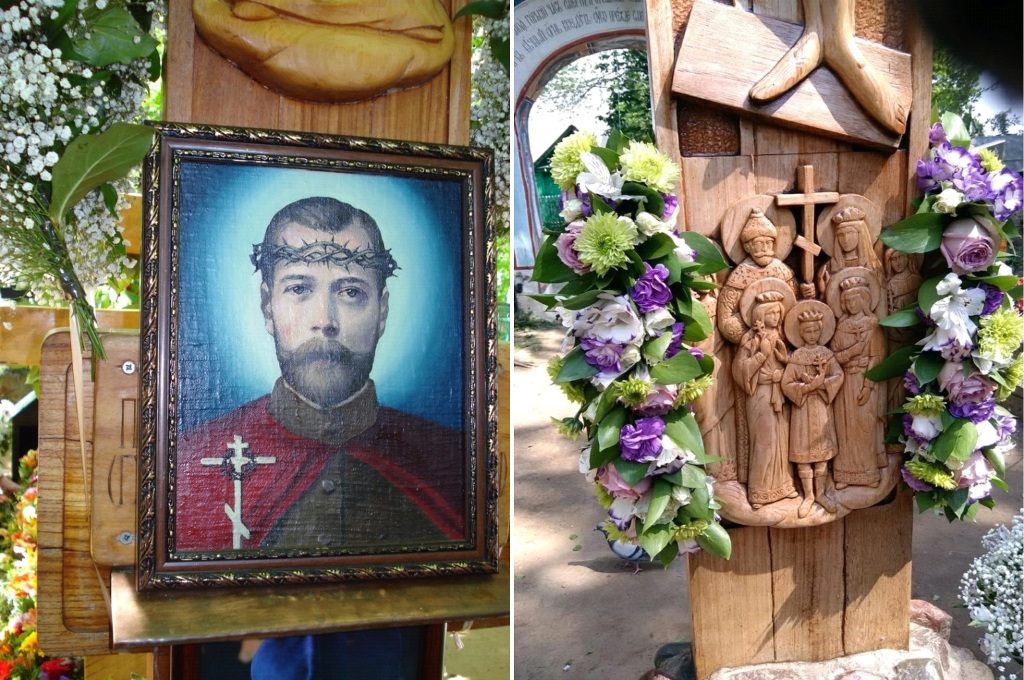
PHOTO: a framed portrait of Tsar-Martyr Nicholas II wearing a crown of thorns, and a wooden carving depicting the Holy Royal Martyrs, adorn the grave of Father Nikolai (Guryanov)
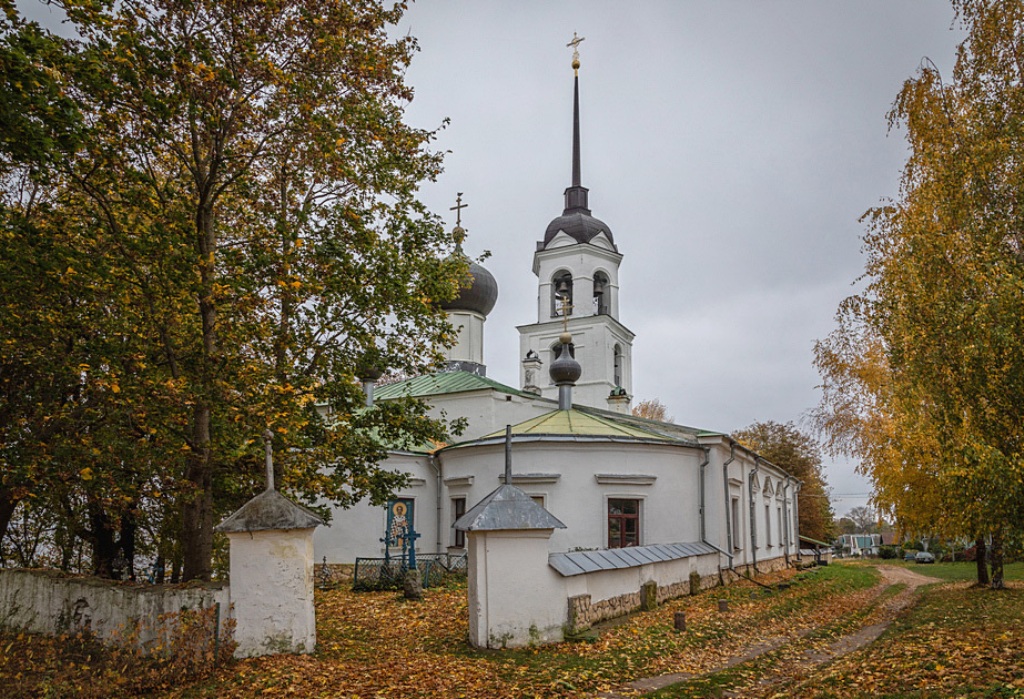
PHOTO: the 18th century Church of St. Nicholas the Wonderworker, in Ostrov-Zalit, on the island of Talabsk, where Father Nikolai (Guryanov) served as rector for 44 years
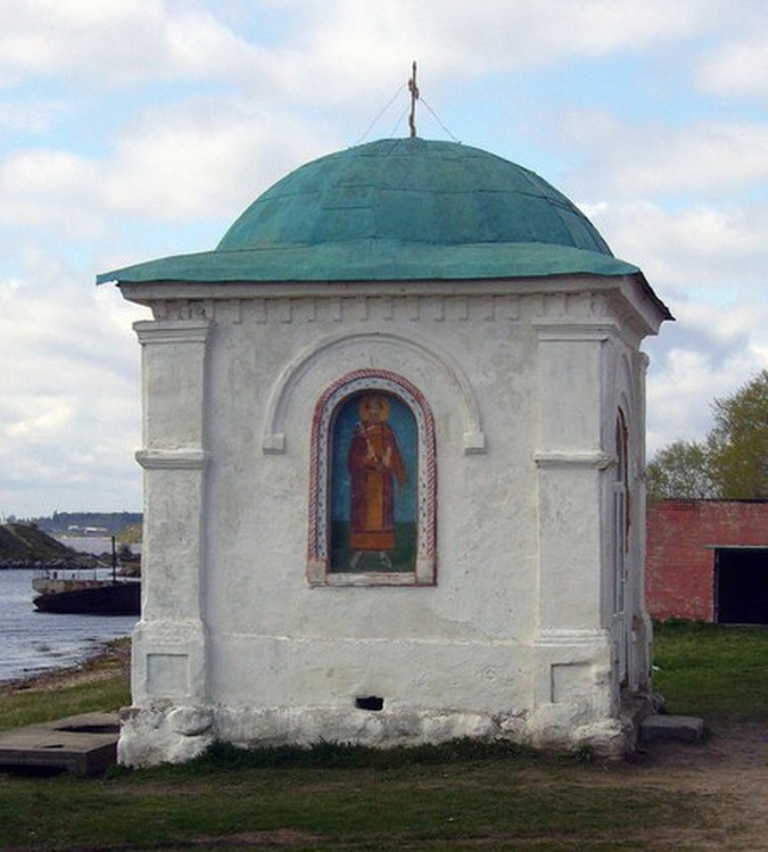
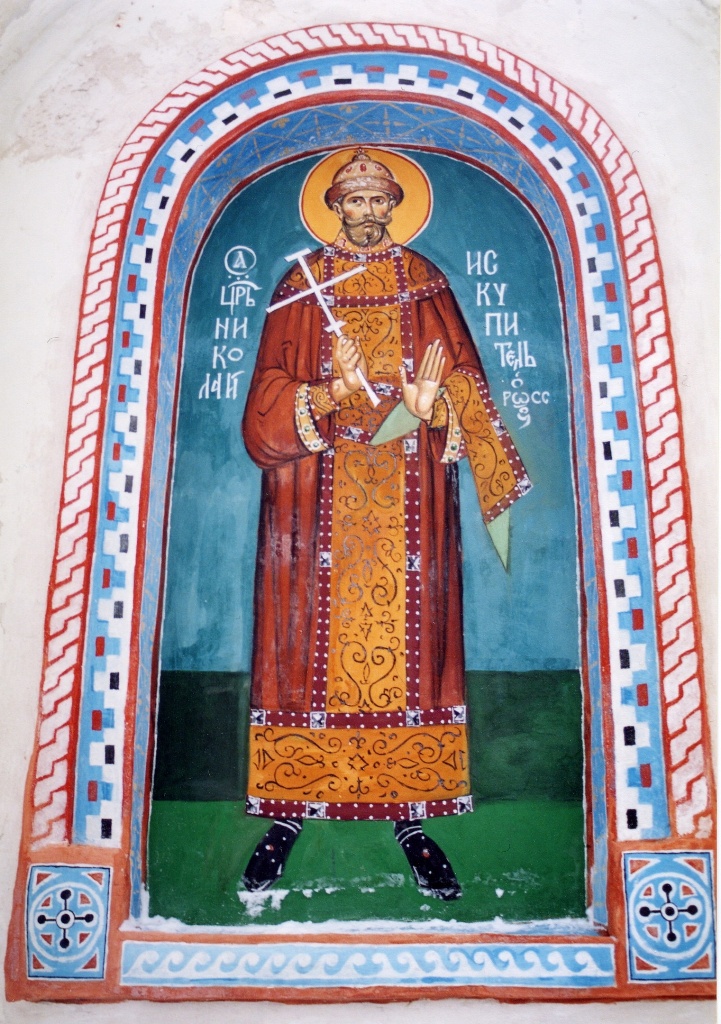
PHOTO: the Chapel of St. Nicholas depicting the fresco (below) Tsar-Martyr Nicholas II – Redeemer of Russia
PHOTO: Fresco depicting Tsar-Martyr Nicholas II – Redeemer of Russia – located on the façade of the Chapel of St. Nicholas.
Veneration of the Holy Royal Martyrs
During his life, Father Guryanov’s room was filled with photos and images of Nicholas II and family. He kept albums, films, and documentaries about the last Russian Tsar. Guryanov also honoured Grigori Rasputin.
Father Nikolay had the gift of foresight: not only did he predicted the collapse of communism, he also predicted the canonization of Emperor Nicholas II and his family by the Russian Orthodox Church.
According to Father Guryanov, Nicholas II said The Jesus Prayer to himself daily: “Lord Jesus Christ, Son of God, have mercy on me, a sinner.”
“The sword of a terrible war constantly hangs over Russia, and only our prayers to the Holy Tsar-Martyr Nicholas will take away the wrath of God from us. We must ask the Tsar that there should be no war. He loves and pities Russia. If only you knew how He cries for us!” – Father Nikolai (Guryanov) – 1909-2002
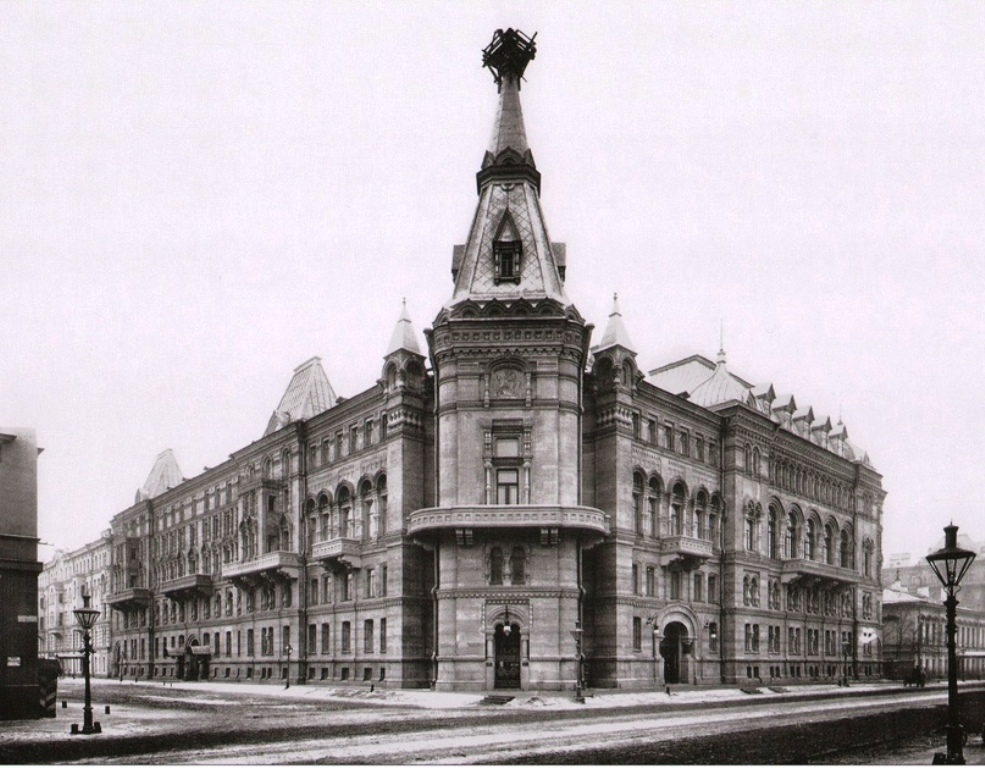
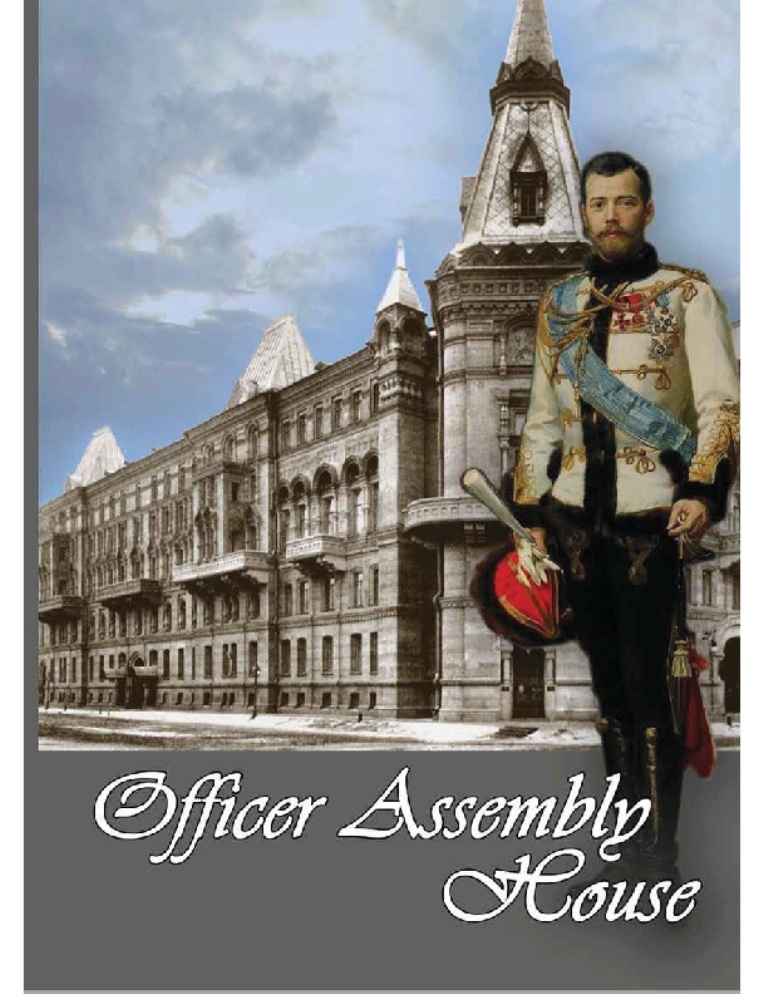
PHOTO: view of the Officers’ Assembly Building of the Russian Imperial Army and Navy, St. Petersburg, the military capital of the Russian Empire. 1898
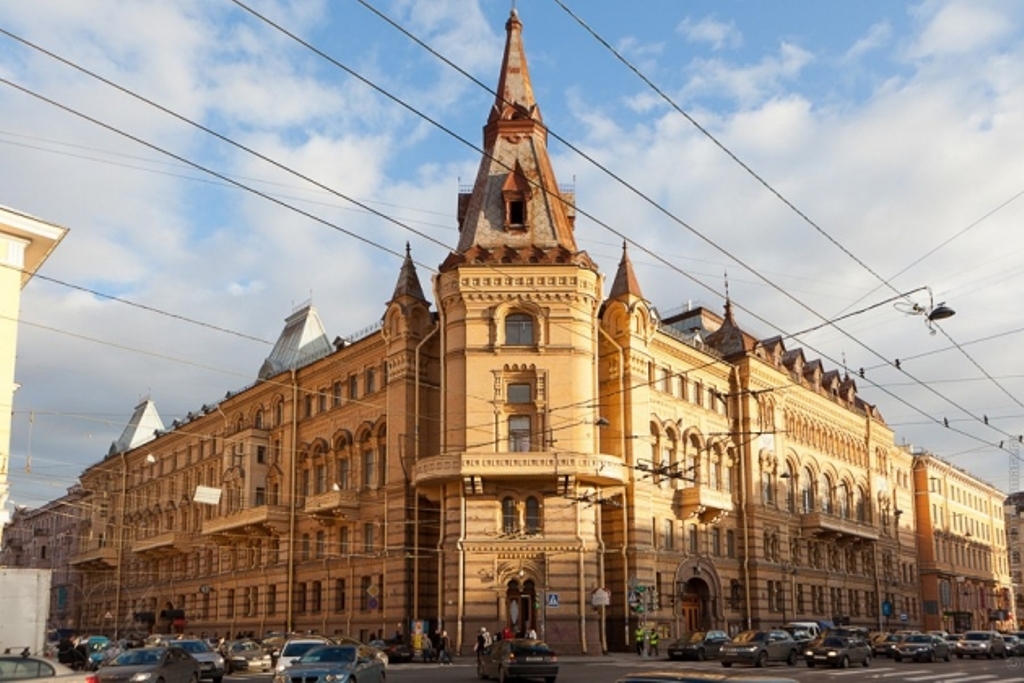
Situated in the very heart of St. Petersburg, on the corner of Liteyny Prospekt and Kirochnaya Ulitsa, stands a majestic building with an elegant facade and an impressive high corner tower. It is the former Officers’ Assembly Building of the Russian Imperial Army and Navy, an architectural gem of Tsarist Russia and the reign of Emperor Nicholas II, which has survived to the present day.
“Russia has only two allies: the Army and the Navy.”
– Emperor Alexander III (1845-1894)
During his short 13-year reign, Emperor Alexander III (1881-1894), 114 new warships were built and launched, and the Russian Imperial Navy took third place in the world after England and France. The army and the military department were also put in order after their disorganization during the Russian-Turkish war of 1877-1878. A dream of the “Tsar-Peacemaker” was the unification of the officer corps of the Russian Empire and the construction of the first Officers’ Assembly Building of the Russian Imperial Army and Navy in St. Petersburg.
Sadly, the life of Alexander III was cut short when he became ill with terminal kidney disease (nephritis), he died on 20th October (2nd November) 1894.
It was now up to his son and heir to the throne, Nicholas II, who committed himself to carrying out his father’s plans. The young Tsar decreed that no expense should be spared for the building’s construction – the Officers’ Assembly should amaze visitors with its splendor and symbolize the power and strength of the Russian army. The young emperor immediately signed all the papers for the allocation from the treasury of the enormous amount of 1,345,000 rubles, while demanding weekly reports on the building’s progress.
Sketches of the building were prepared by a talented architect, teacher of the Stieglitz State Academy of Art and Design Alexander Ivanovich von Gauguin (1856-1914) and professor of the Nikolaev Academy of Engineering Viktor Mikhailovich Ivanov (1846-1919). The detailed development of the project was carried out by military engineers Wilhelm Karlovich Gauger and Alexander Donchenko, who were advised by two great architects, both members of the Academy of Arts Leonty Nikolaevich Benois (1856-1928) and Antony Osipovich Tomishko (1851-1900).
The land at the corner of Liteiny Prospekt and Kirochnaya Street – which belonged to the military department – was chosen for the buildings’ construction. The old wooden carriage house was demolished, the site was cleared and prepared by an engineer-colonel, a graduate of the artillery academy in St. Petersburg and the military academy in Freiburg, Germany, Vladimir Smirnov.
In September 1895, the construction of the building of the Officers’ Assembly began. Here is an eyewitnesses account of this event:
“The day before, a large, beautiful tent was erected,in front of the construction site, in which there were tables laden with light snacks and drinks. The event was attended by Enperor Nicholas II and members of the Imperial Family, in addition to representatives from the military ministry, the guards and the St. Petersburg military district, members of the clergy, and the city’s nobility. When the Emperor arrived, he was given a tour around the construction site. He was then presented with a silver tray bearing a brick and a silver trowel.
“Having accepted the tray, the Emperor proceeded to the erected foundation of the building and laid the first brick for the new Officers’ Assembly. According to an old Russian legend, silver and copper coins were laid in the foundation “for the happiness and prosperity of the Officers’ Assembly.”
A grand dinner was held that day to mark the occasion, attended by Nicholas II, who was accompanied by his wife Empress Alexandra Feodorovna, his mother Dowager Empress Maria Feodorovna, and his uncle Grand Duke Vladimir Alexandrovich.
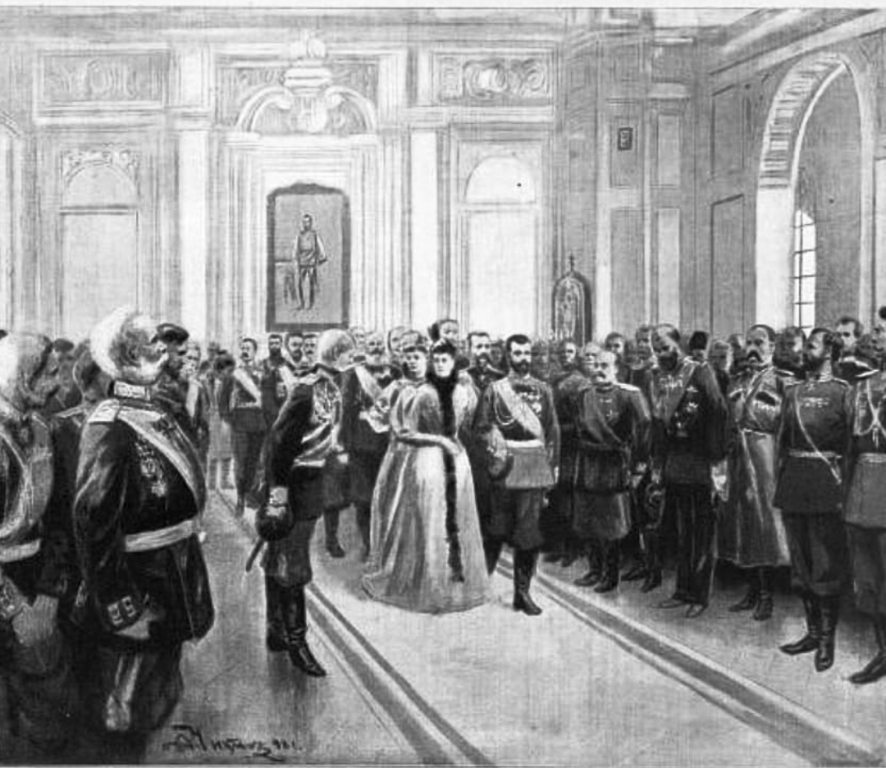
PHOTO: Emperor Nicholas II and Empresses Maria Feodorovna and Alexandra Feodorovna arrive for the gala opening of the building of the Officers’ Assembly Building of the Russian Imperial Army and Navy, 1898
On the morning of 22nd March 1898, the building of the Officers’ Assembly of the Russian Imperial Army and Navy was decorated with numerous flags. At one o’clock in the afternoon, the naval presbyter performed a conciliar illumination of all the rooms. At two o’clock, Emperor Nicholas II arrived, where he was greeted at the entrance by members of the committee who oversaw the construction and decoration of the building. The Emperor toured the halls and rooms and later compiled the Imperial Rescript, which stated:
“Having examined in detail the premises of the new Officers’ Assembly today, I am completely satisfied with the buildings’ external appearance, the convenience of its interior furnishings and the general landscaping given to this institution. From the bottom of my heart I wish that the new Officers’ Assembly develop in the spirit of its aspirations and, contributing to the establishment of comradely communication between officers, serve for the benefit of the army and naval officer family, which is so dear to my heart.”
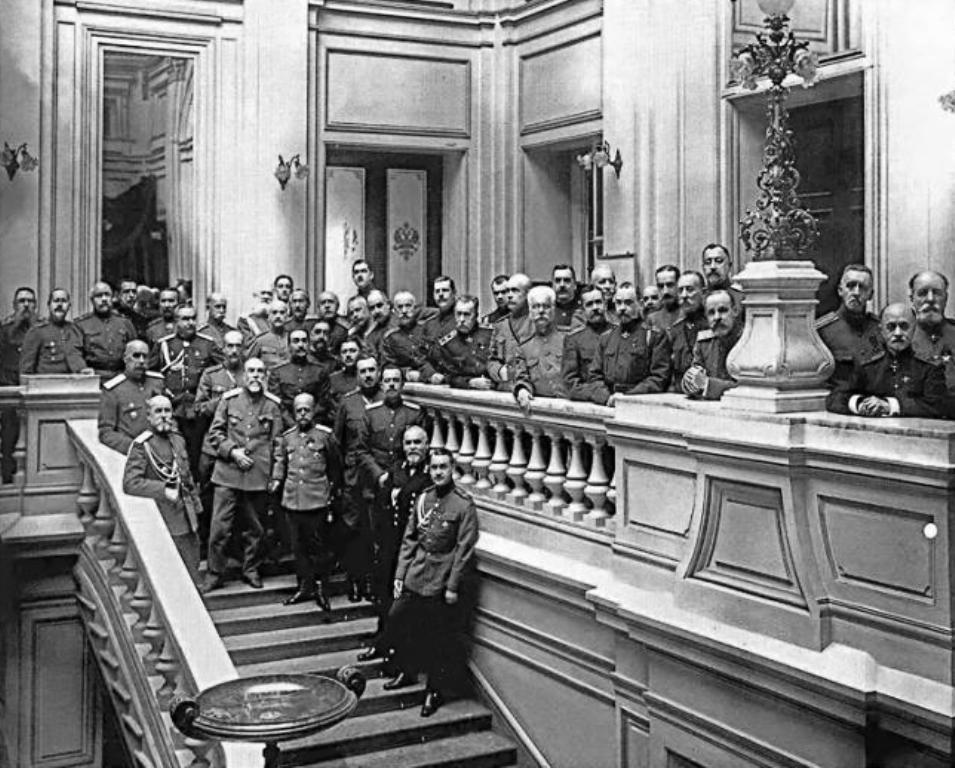
PHOTO: a group of officers pose at the top of the grand staircase of the Officers’ Assembly Building of the Russian Imperial Army and Navy
The Bolshoi [Large] Hall initially served as a luxurious concert hall with choir stalls. A large portrait of Emperor Nicholas II in a stucco frame topped with an Imperial crown hung at the far end of the hall. Musicians and a choir played and sang in the upper galleries, which surrounded the entire perimeter of the hall. The width of the galleries measured about four and a half meters and were supported by columns. The entrance to the galleries was from the top floor, and the hall itself occupied the space of three floors in height. Five large windows overlooked Liteiny Prospekt and the courtyard, and 24 smaller windows were placed above the choir stalls. A large summer balcony also overlooked Liteiny Prospekt.
In addition to concerts and balls, large meetings and conferences were held in the building, their organizers arranged chairs both in the hall itself and in the upper galleries. This made it possible to accomodate more participants: 560 in the hall, another 70 in the upper galleries. The walls and ceiling of the Bolshoi [Large] Concert Hall were decorated with rich stucco decoration of a military theme. Gilded electric chandeliers with crystal shades descended from the ceiling. The large central chandelier consisted 90 bulbs, while the side chandeliers consisted of 30 bulbs each.
Near the hall were men’s and ladies’ restrooms, in which the ladies and their gentlemen could refresh themselves, which was especially important during balls. Ladies could fuss over their hair, clothes, jewelry, apply makeup and perfume. The men sweating after dancing could take off their cloth uniforms, catch their breath, change their undershirts, and spray themselves with cologne. The men’s room had its own smoking room, the ladies’ room was a cozy corner, furnished with bent wood furniture and upholstered in tripe (a fine woolen fabric).
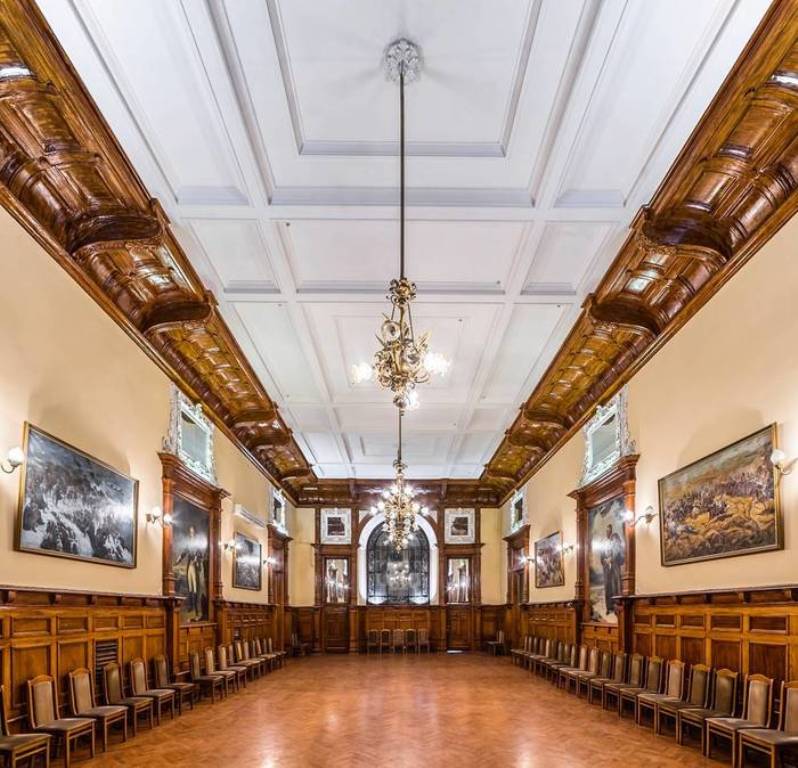
The Bolshoi [Large] Concert Hall is one of the many interiors of the building which has survived to this day. In 1934, a stage appeared in the newly refurbished 700-seat hall, the choir stalls were dismantled, and a film booth to show films was installed on the wall opposite the stage. The Emperor’s portrait and the large central chandelier, both disappeared without a trace.
PHOTO: view of the former Officers’ Assembly Building of the Russian Imperial Army and Navy, as it looks today.
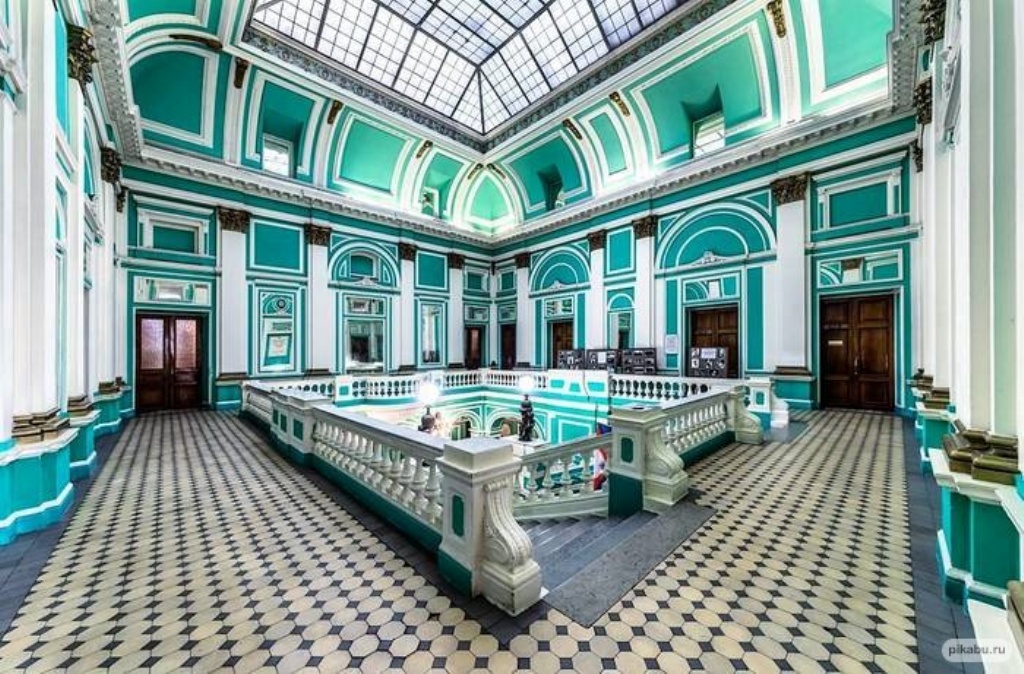
Today, the former Officers’ Assembly Building is home to the House of Officers of the Western Military District, a library, and the Road of Life United Veterans Council. Many of the buildings’ original interiors and elements have been preserved to the present day.
PHOTO: Many of the buildings’ original interiors and elements have been preserved to the present day.
PHOTO: Many of the buildings’ original interiors and elements have been preserved to the present day.
The author has compiled a history of this magnificent building, and richly illustrated with vintage black and white photos, complimented with full colour photos of the building and its interiors, as they look today.
Book review by Mikhail Smirnov, published on Russian Faith
A Great Book for those Interested in Orthodox Culture
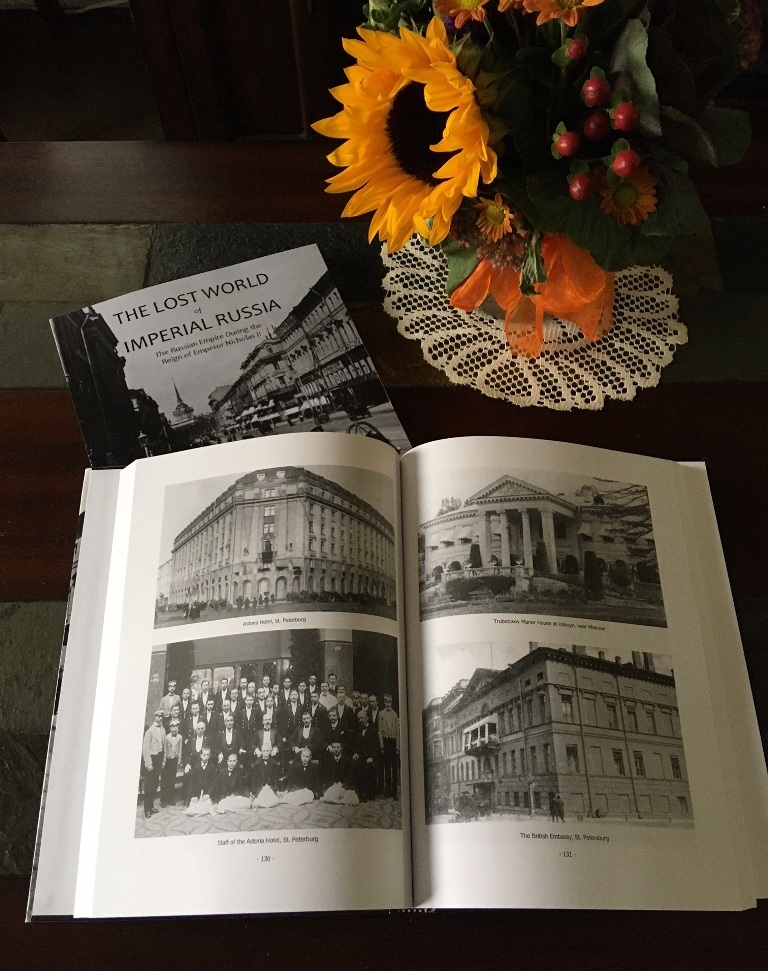
I had the opportunity to review the new book, “The Lost World of Imperial Russia“, by Russian historian, Paul Gilbert. This book is available at Amazon for a decent price and I do recommend it for your Orthodox library. There are indeed a number of illustrated books on Russia, but this one is from a purely Orthodox perspective, that captures key elements of the Orthodox empire of Russia. Saints such as John of Kronstadt, and many others, are displayed in the book. Many churches and ecclesial events are also displayed…pictures that are very hard to find and very helpful for those who research Russia and plan on visiting Russia. I intend to bring this book the next time I visit, primarily because, again, it is most purely Orthodox.
It’s certainly a good coffee table book, but the more I look at it the more I see it as a travel book. It’s approximately 8.5×11, so it’s not too big, and not very heavy. Most importantly it has the right stuff in it for those who really want to experience Russia in the way we believe it should be experienced.
On that note of experiencing Russia, I would like to add that what Paul reveals here is foundational for Orthodox Christians or those seeking Orthodoxy, but from my experience, the more miraculous experiences happen from how you “live and leave” these areas. Many of these places are holy sites, where saints dwelled and worked, and where angels still dwell and work. So, locating the right place, as you can find in this book, and then praying and maybe even spending time at these places will enable you to experience the grace of God when you need it in everyday life.
Get the book, not necessarily to see nice pics, but to begin your journey to Holy Russia. The war will clear soon and it will be relatively easy to travel there. Open the book, pray to God, and then go!
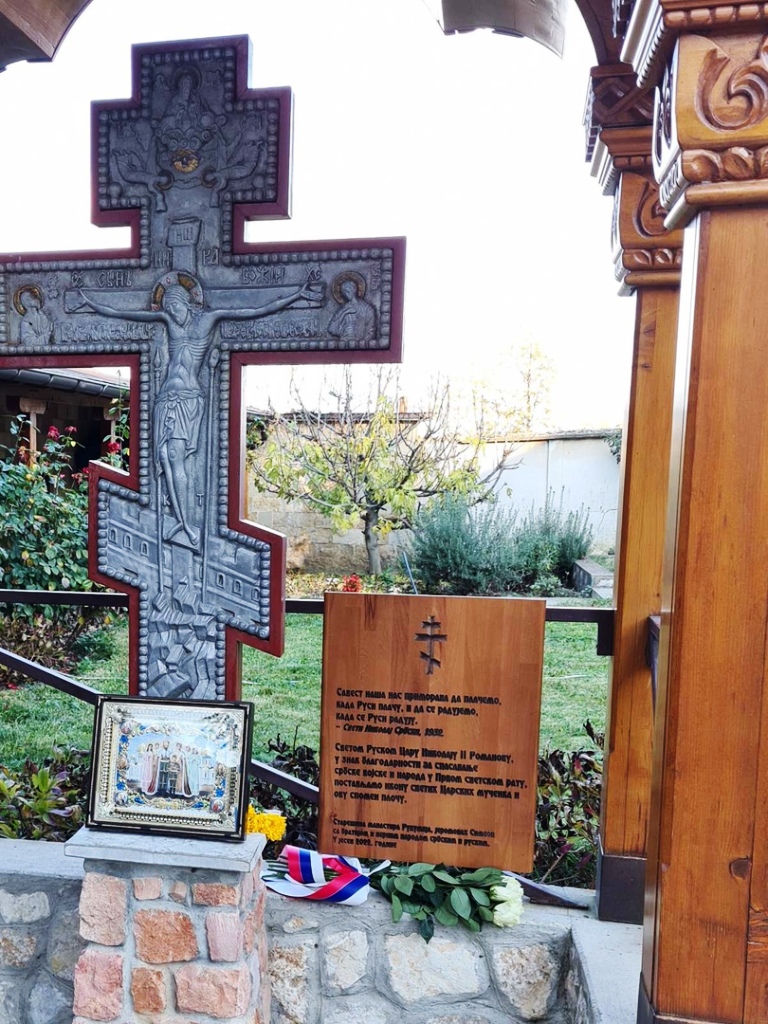
PHOTO: plaque to Emperor Nicholas II and an icon of the Holy Royal Martyrs was unveiled and consecrated on the grounds of the Rukumija Monastery
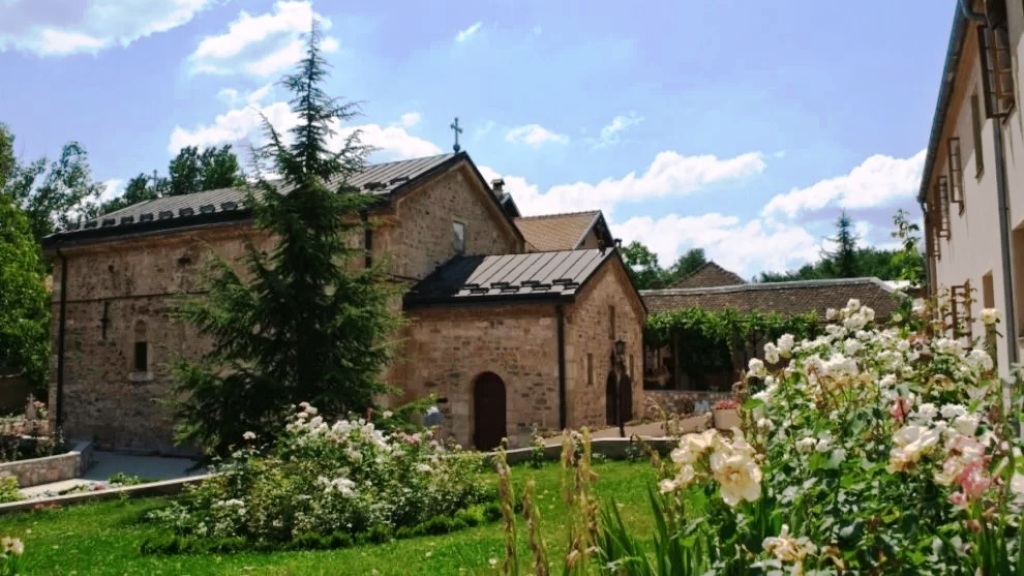
On 12th November, a simple wooden plaque to Emperor Nicholas II and an icon of the Holy Royal Martyrs was unveiled and consecrated on the grounds of the Rukumija Monastery, near the town of Pozharevac in Serbia. The installation of the plaque is in gratitude for the Russian Emperor’s efforts to come to the aid of Serbia during the First World War.
The ceremony began with the singing of the Russian and Serbian national anthems, then the choir performed the “Song to the Holy Tsar Nicholas“. This was followed by the consecration ceremony performed by the rector of the monastery Heiromonk Simeon, in the presence of parishioners and distinguished guests from the Russian Embassy in Belgrade (Vladlen Zelenin), the Russian House in Belgrade (Georgy Engelgart) and the Foundation for the Unity of Orthodox Peoples (Natalya Kotseva).
Zelenin thanked the Serbian people for honouring the memory of Tsar Nicholas II. In turn, Engelhardt noted that the gratitude and love of the Serbian people for the last Russian Tsar could serve as an example for the Russian people themselves.
PHOTO: the Rukumija Monastery, near the town of Pozharevac in Serbia
For Serbians, Emperor Nicholas II is revered both as a saint and as a statesman. For many Serbs, the image of the Russian Tsar is a symbol of loyalty, honesty and devotion to one’s word. The Serbian people remember that it was for the sake of saving Serbia that Nicholas II entered the First World War.
For more information on Serbia’s reverance for Emperor Nicholas II, please refer to the following articles, researched from Russian and Serbian sources by Paul Gilbert:
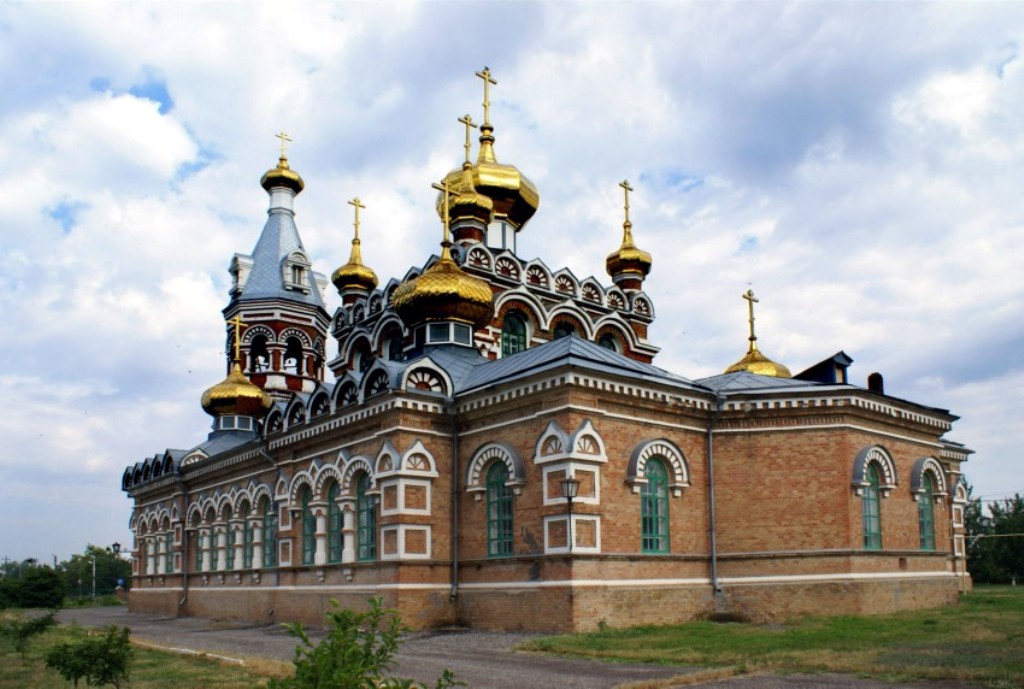
PHOTO: view of the Holy Trinity Church, built in the Neo-Russian style in the village of Bolshaya Martynovka
The beautiful Holy Trinity Church, in the village of Bolshaya Martynovka, Rostov Oblast, was built in the Neo-Russian style[1], it is the only church in Russia constructed in honour of the Coronation of Emperor Nicholas II, held in Moscow on 27th May (O.S. 14th) May 1896.
The Holy Trinity Church was built on the site of the original wooden church, built in 1799, which consisted of a parish school, a hostel for pilgrims, a priest’s house, as well as service and outbuildings. In May 1895, the inhabitants of Bolshaya Martynovka decided to demolish the old wooden church, and in its place build a new stone church.
The site of the new church was consecrated on 14th (O.S.) May 1896, on the day of the Coronation of Emperor Nicholas II. The first stone of the buildings foundation was laid the next day.
For the construction of the new church, the inhabitants made 300 thousand baked bricks, collected 3 thousand measures of grain and raised about 15 thousand rubles, which was then an impressive amount. Unfortunately, this money was not enough and in 1900, the residents were forced to turn to the diocesan authorities with a request to allow them to collect additional donations. Their request was granted and by 1902, the additional funds had been collected, which allowed construction to resume.
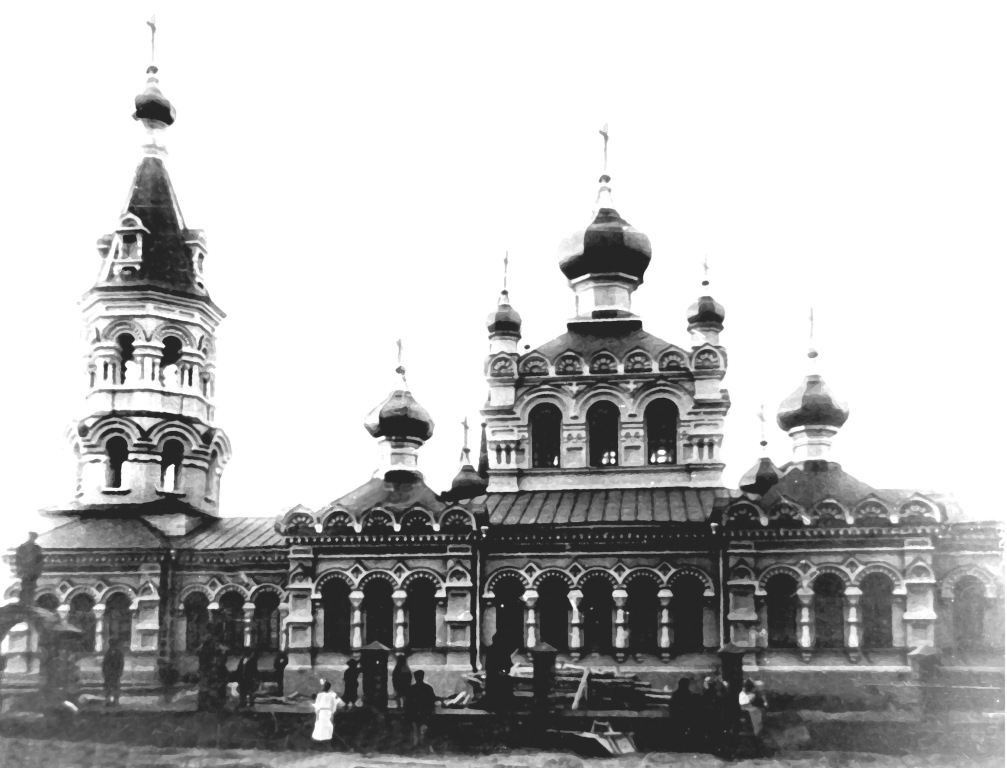
PHOTO: early 20th century view of the Holy Trinity Church in the village of Bolshaya Martynovka
The Holy Trinity Church was completed in 1904. It consisted of three chapels: the central one – in the name of the Holy Trinity, the right one – in the name of the Holy Tsarina Alexandra[2], the left – in the name of St. Nicholas the Wonderworker[3].
According to local residents, the renowned Russian opera singer Feodor Chaliapin (1873-1938) visited Bolshaya Martynovka on two separate occasions. The first time was in 1904, shortly after the consecration Holy Trinity Church. It was during this visit that Chaliapin sang along with the church choir. His second visit occurred during the Russian Civil War, when he came to visit the local landowner Suprunov. It was during this visit that Chaliapin was almost shot, having been mistaken for a bourgeois, due to his attire, which included a luxurious fur coat and hat. A singer of the church choir recognized the opera singer and saved him from execution.
In 1930 the Soviets ordered the Holy Trinity Church closed. Local residents recall how Bolshevik thugs broke the iconostasis, destroyed the domes, removed the bells and threw them in the river, and plastered over the unique frescoes made by the icon painter Elisey Grigoryevich Cherepakhin (1837-1922). In the years which followed, the former church housed a granary, a convoy and an MTS workshop, and from 1951, a utility warehouse.
When the building was returned to the Russian Orthodox Church in 1991, the artists who began the restoration discovered bullet holes made by drunken Bolsheviks some 60 years earlier.
In 1991, the Holy Trinity Church was returned to the Russian Orthodox Church and restoration began, which was completed in 2004. In 2013, the windows of the church were replaced and heating installed, while a beautiful garden was planted on the grounds surrounding the church. According to Father Vladimir, additional restoration work is ongoing.
Situated near the church is a small brick chapel commemorating the martyrdom of Emperor Alexander II[4].
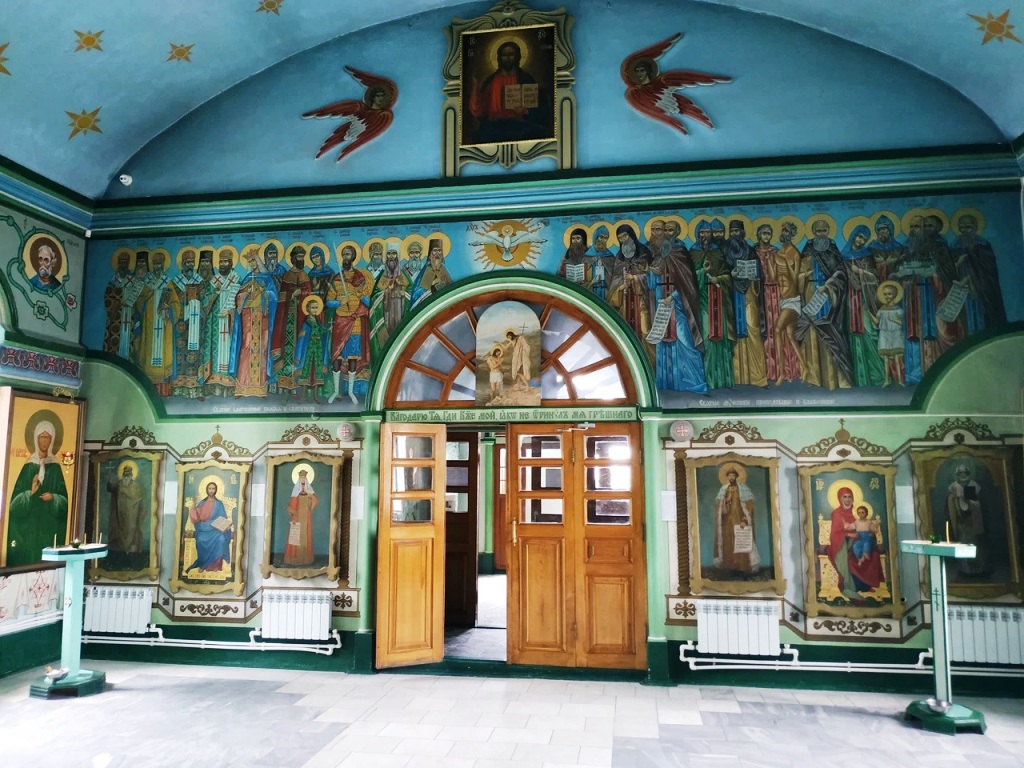
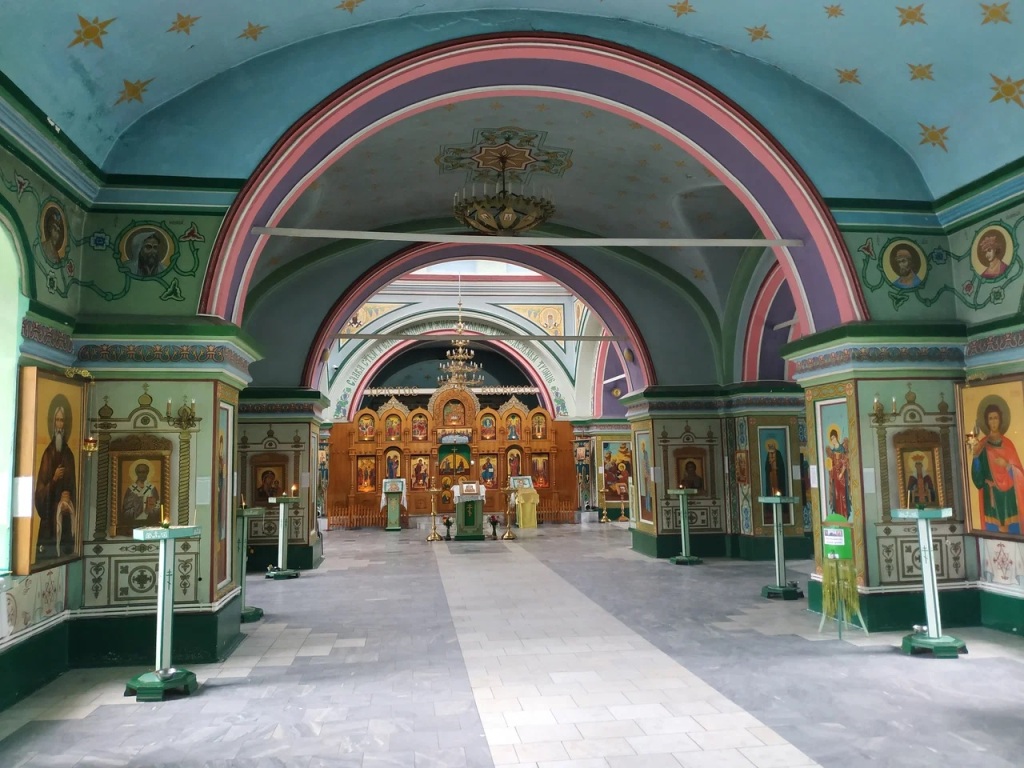
PHOTO: views of the interior of the Holy Trinity Church, showcasing it’s frescoes and icons (above) and view of the main iconostasis of main central chapel(below)
The Holy Trinity Church exists today only thanks to donations, which, unfortunately, are not enough and the abbot has to ask for financial assistance for the upkeep of the church from local business representatives. Today, the church is once again open to locals for prayer and worship, but there are few parishioners who attend. About 50 people attend the service on weekends. The relics of Paul of Taganrog, the Great Martyr Timothy and the Matrona of Moscow are even kept in the church.
Despite the fact that the Holy Trinity Church in Bolshaya Martynovka is recognized as a historical and cultural monument of the 19th century, the rector of the church Father Vladimir notes that church is virtually unknown to pilgrims and tourists visiting the region, as it is not even listed in any tourist guide. In addition, the village Bolshaya Martynovka [pop. 6,000] has no hotels or places where one could eat and rest.
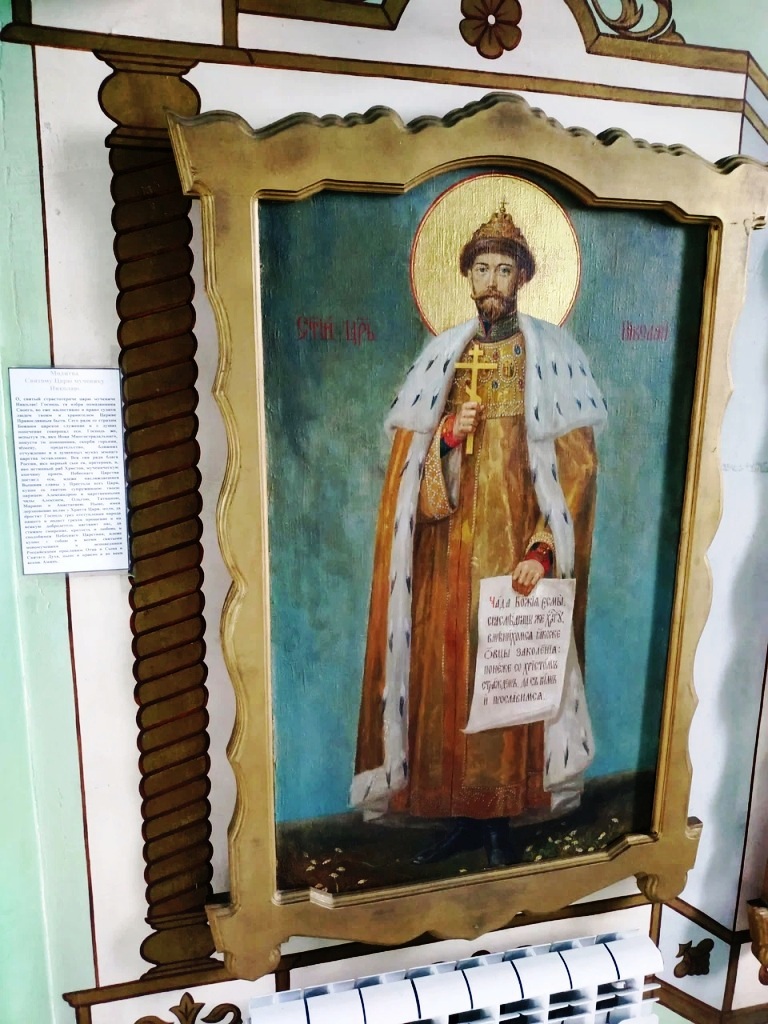
PHOTO: icon depicting the Holy Tsar-Martyr Nicholas II, located in the chapel of of St. Nicholas the Wonderworker, located in the Holy Trinity Church, in Bolshaya Martynovka
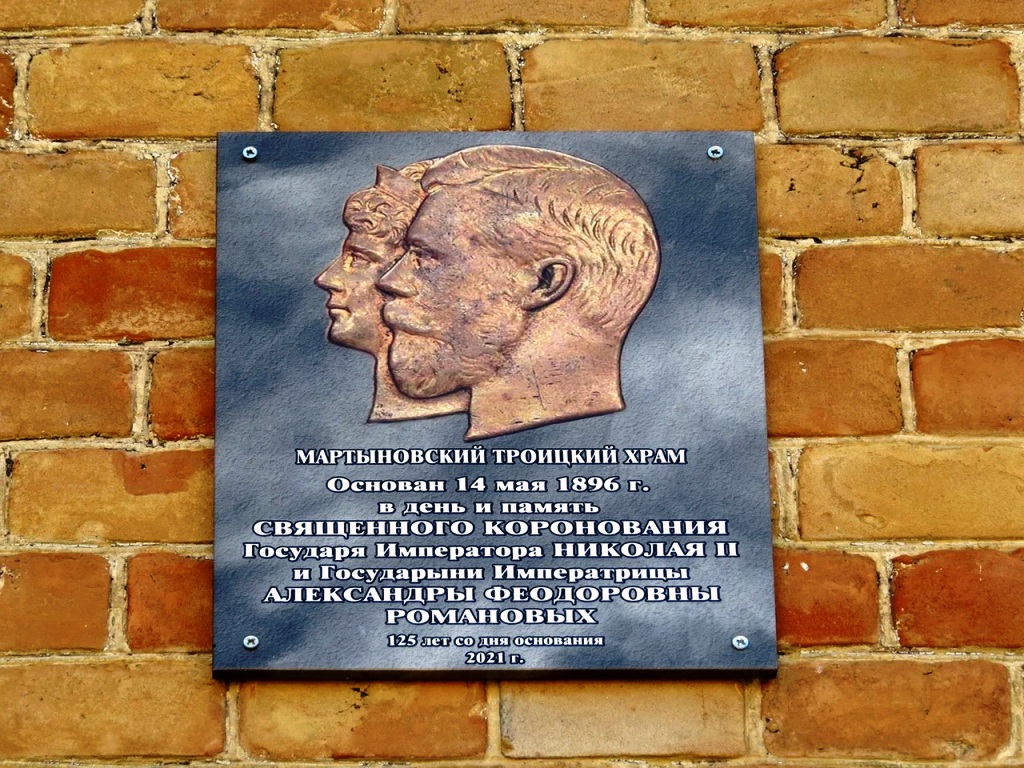
On 14th May 2021, a memorial plaque (above) was installed on the facade of the Holy Trinity Church, bearing the images of Emperor Nicholas II and Empress Alexandra Feodorovna. The plaque marks the 125th anniversary of the founding of the church and the historic Coronation in 1896. The inscription reads:
The Holy Trinity Church was founded on 14 May 1896 on the day and memory of the sacred coronation of Sovereign Emperor Nicholas and Sovereign Empress Alexandra Feodorovna Romanov 125 years from the date of foundation 2021
[1] Neo-Russian style is also referred to as Russian Revival, Pseudo-Russian, or Russian Byzantine style: a number of different movements within Russian architecture that arose in the second quarter of the 19th century and was an eclectic melding of Byzantine elements and pre-Petrine (Old Russian) architecture.
CLICK on the above image to watch this video. ENGLISH. Duration: 43 minutes
This documentary prepared by the Museum in Memory of Emperor Nicholas II’s Family features rare footage, made from 98 fragments of film from 1896-1916 shot in Moscow, Kiev, St. Petersburg, Tsarskoye Selo, Livadia, Chisinau, Yevpatoria, Kostroma, Odessa. Yalta, Nizhny Novgorod, Borodino, Diveyevo, Rostov the Great, Tallinn, Mogilev, Oreanda, and Sevastopol. The material used in the film is from the Russian State Film and Photo Archive, the Russian State Archive of Phonodocuments, and private collections. The music is comprised of fragments from the favorite works of Emperor Nicholas II.
While many people are familiar with photographs of Nicholas II participating in solemn and gala events in cities and towns throughout the Russian Empire, this documentary features some unique vintage footage of Russia’s last Emperor and Tsar.
03:51 – Nicholas II and the grand dukes carry the coffin with the relics of St. Serephim
06:40 – the foundation of the Feodorovsky Sovereign Cathedral in Tsarskoye Selo
07:40 – the Emperor and his family visiting the St. Petersburg Mosque
09:33 – the Emperor and his family taking part in a procession at the Pechersk Lavra Caves Monastery in Kiev
15:10 – Nicholas II and his family at the Chapel of the Iveron Icon of the Mother of God in Moscow
26:08 – the Imperial Children in matching outfits, playing on the deck of the Imperial Yacht Standart
33:15 – Tsesarevich Alexei playing with his dog Joy
33:55 – Nicholas II and his family embarking on a boat ride on the Dnieper River, near Mogilev, August 1916
41:50 – Nicholas II at the celebration of His Majesty’s Imperial Guard on 4th October 1916, the last film of the Imperial Family before the Tsar’s abdication the following year
· · ─── ·•· ─── · ·
VIDEO CHAPTERS and HIGHLIGHTS
· · ─── ·•· ─── · ·
00:00 Intro
00:27 Part 1: Spiritual Life
this part focusts on the piety of Emperor Nicholas II, it includes film footage of the Tsar and his family attending religious ceremonies in various parts of the Russian Empire, the laying of the foundations for new Orthodox churches, visits to monasteries and churches, attending molebens, and more.
19:34 Part 2: His Majesty’s Vacationing
includes film footage of Nicholas II kayaking in the Finnish skerries; playing tennis at Livadia including footage of Empress Alexandra Feodorovna taking part; hunting; motoring in the Tsar’s favourite Delauney-Belleville; sailing on the Imperial Yacht Standart; the Grand Duchesses taking part in games with junior officers; Tsesarevich Alexei playing with his friends, under the watchful eye of his boatswain Derevenko; among others.
35:39 Part 3: Emotional Characteristics
includes an interesting examination of the facial expressions, movements and nervous habits of Nicholas II, which include his constant stroking of his moustache; smooths and adjusts his uniform, touches his cap or crumples his gloves; Empress Alexandra Feodorovna is seen constantly bowing her head low with particular respect to those around her; the Grand Duchesses smiling often and sweetly; various scenes of the Tsar receiving the tradtional bread and salt.
This video is produced as part of the project for the book “The Romanov Royal Martyrs”, which is an impressive 512-page book, featuring nearly 200 black & white photographs, and a 56-page photo insert of more than 80 high-quality images, colorized by the acclaimed Russian artist Olga Shirnina (Klimbim) and appearing here in print for the first time.
English.8-1/2″ x 5-1/2″ format, 336 pages, illustrated
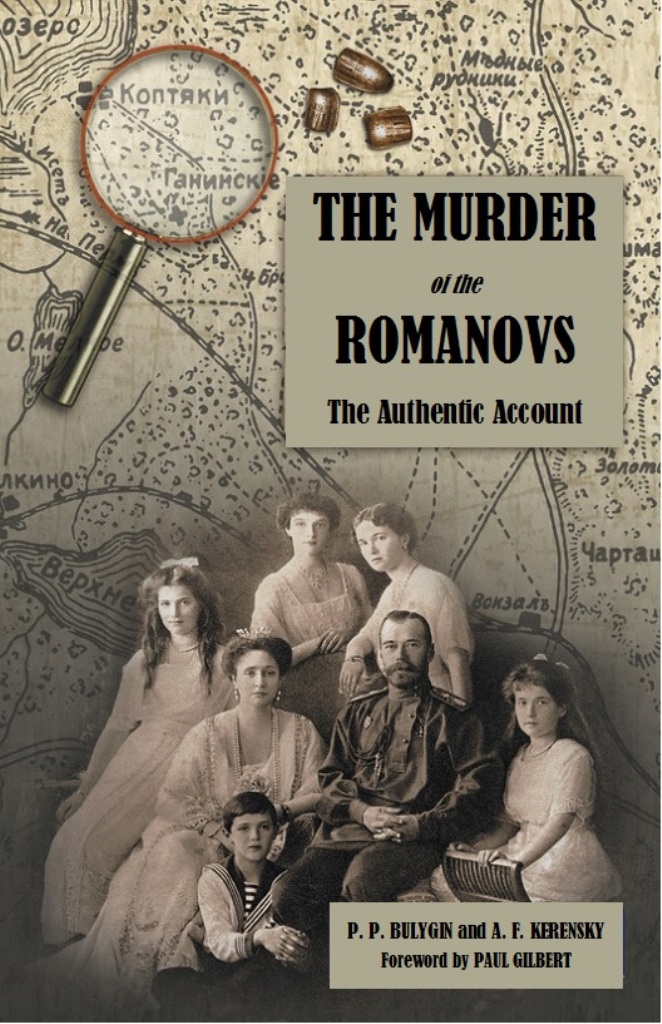
Bulygin’s memoirs are of great historical importance, providing details of the last days of Emperor Nicholas II and his family, and the investigation into their murder, which continues to this day. Originally published in 1935, this is the first English-language edition in nearly 90 years!
This book falls into two parts: the first by Alexander Fyodorovich Kerensky (1881-1970), the second by Captain Paul Petrovich Bulygin (1896-1936). Both Bulygin and Kerensky write from personal experience and eye-witness accounts.
In the first part, Provisional Party leader Alexander Kerensky offers a firsthand account of the events leading to the downfall of the Russian monarchy in February 1917. Kerensky outlines the background, and the steps leading to the regicide. He explains in his own words, his personal impressions of Nicholas II, his family and his entourage. He goes on to discuss why he chose to send the Tsar and his family into exile to Tobolsk. The main body of his memoirs, however, is a first hand account of the murder, of the abortive attempts to forestall it, and attempts to rescue the Imperial Family, told with a fervour and horror that time has failed to erase.
In the second part, Captain Paul Bulygin recalls the last months and death of Emperor Nicholas II and his family. Bulygin, who was a member of the Imperial Guard, reconstructs his role in an attempt to rescue the Imperial Family, during their captivity in Ekaterinburg, between April to July 1918.
Paul Bulygin served as an officer in the Russian Imperial Army, formerly in command of the personal guard of Nicholas II’s mother the Dowager Empress Maria Feodorovna. In 1919, he assisted Nikolai Sokolov, in his investigation of their death in Ekaterinburg.
Bulygin argues that the order to murder the Tsar and his family came directly from Lenin.
I have published more than 30 titles to date through AMAZON – featuring one of the largest selections of books on Nicholas II, the Romanov dynasty and the history of Imperial Russia. These include both new titles and reprints of titles which have out of print for years.
Please CLICK on the BANNER or LINK above to review my current selection of titles in hardcover, paperback and ebook editions. Listings provide a full description for each title, pricing and a Look inside feature.
PHOTO: Tsesarevich and Grand Duke Nicholas Alexandrovich. 1894
On this day – 2nd November[1] [O.S. 20th October] 1894, Tsesarevich and Grand Duke Nicholas Alexandrovich ascended the throne as Russia’s last emperor and tsar.
It was on this historic day, that Nicholas Alexandrovich inherited the throne from his father Alexander III (1845-1894), who ruled Russia for only 13 years. Government officials, courtiers and troops of the Imperial Russian Army, among others, all took an oath of allegiance to their new emperor.
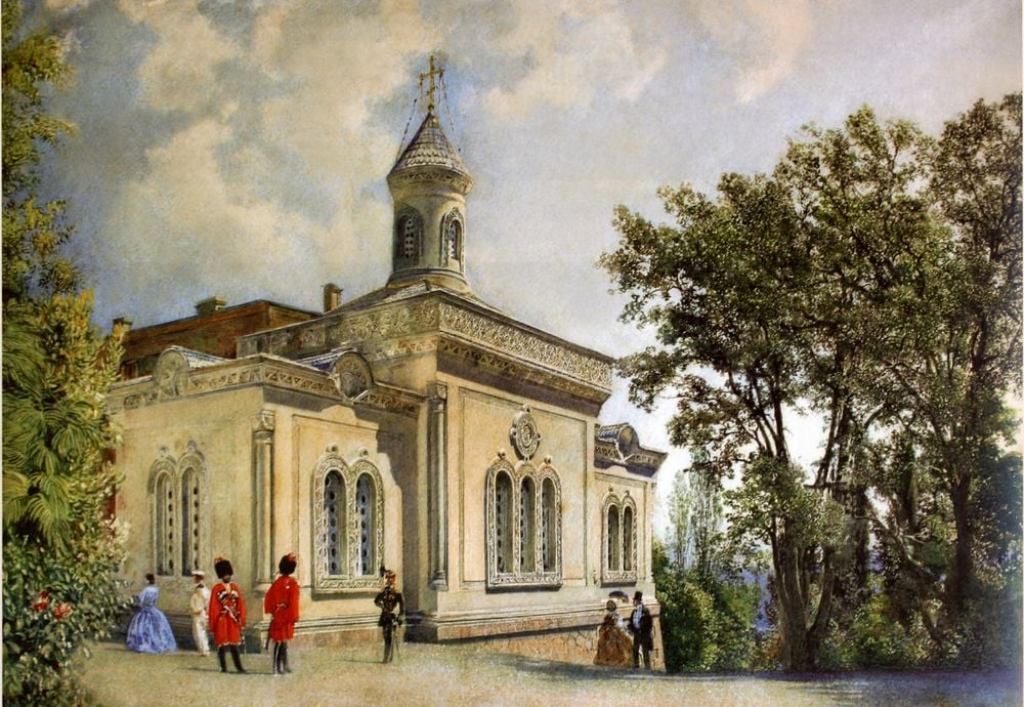
In the Church of the Exaltation of the Cross [adjacent to Livadia Palace], Nicholas pledged his oath of allegiance to Russia solemnly promising to protect the autocracy firmly and unswervingly, like his late father.
It was also in the Church of the Exaltation of the Cross, that the holy righteous John of Kronstadt anointed Princess Alix of Hesse, who became the Orthodox faithful Grand Duchess and future Empress Alexandra Feodorovna.
Though Nicholas Alexandrovich was heir-apparent to the throne, his father failed to prepare him for his future role as Tsar. He attended meetings of the State Council; however, as his father was only in his forties, it was expected that it would be many years before Nicholas succeeded to the throne. Alexander’s assumptions that he would live a long life and had years to prepare Nicholas for becoming Tsar proved wrong, as by 1894, Alexander’s health was failing.
Russia’s finance minister, Count Sergei Yulyevich Witte (1849-1915), suggested to the Tsar that Nicholas be appointed to the Siberian Railway Committee. According to Witte, Alexander argued that Nicholas was not mature enough to take on serious responsibilities. Witte stated that if Nicholas was not introduced to state affairs, he would never be ready to understand them.
Nicholas was only 26 years old when his father died suddenly after a long and serious illness, at the age of 49.
PHOTO: the Church of the Exaltation of the Cross [adjacent to Livadia Palace]
On 27th (O.S. 14th) November 1894, Nicholas Alexandrovich married Grand Duchess Alexandra Feodorovna (future Empress Alexandra Fedorovna). Their nuptials fell on the birthday of the Dowager Empress Maria Feodorovna, and court mourning could be slightly relaxed. The ceremony was held in the Grand Church (the home church of the Imperial Family) of the Winter Palace in St. Petersburg.
A respectable period of mourning was the reason his coronation was postponed for a year and a half. The Holy Coronation of Emperor Nicholas II and Empress Alexandra Feodorovna, took place on 27th (O.S. 14th) May 1896 in the Assumption Cathedral of the Moscow Kremlin. It would be the last coronation of a Romanov Tsar.
During the reign of Nicholas II, Russia made considerable progress in all areas of life, while experiencing tremendous growth in its economy. Under his reforms, the Russian Empire reached an unprecedented level of economic development. However, this time was also marked by the growth of revolutionary sentiments.
His Imperial Majesty Sovereign Emperor Nicholas II reigned over the Russian Empire for more than 22 years. He abdicated on 15th March 1917 (O.S. 2nd March) 1917.
Some historians argue that the act of abdication was invalid for two reasons: one, because it was signed in pencil, violating all the necessary legal and procedural methods and format, and thus had no legal force; and two, because the instrument of abdication was never officially published by the Imperial Senate.
Regardless, as God’s Anointed, Nicholas II could not be displaced during his lifetime. Since the will of God was nowhere manifest, neither in the naming of his brother Grand Duke Mikhail Alexandrovich to the throne, nor in the Tsar’s signing of the instrument of abdication, his status as Tsar remained inviolate and unassailable. He remained Emperor until the day of his death and martyrdom on 17th July 1918. Ot was on this day, that the Russian Imperial House ceased to exist.
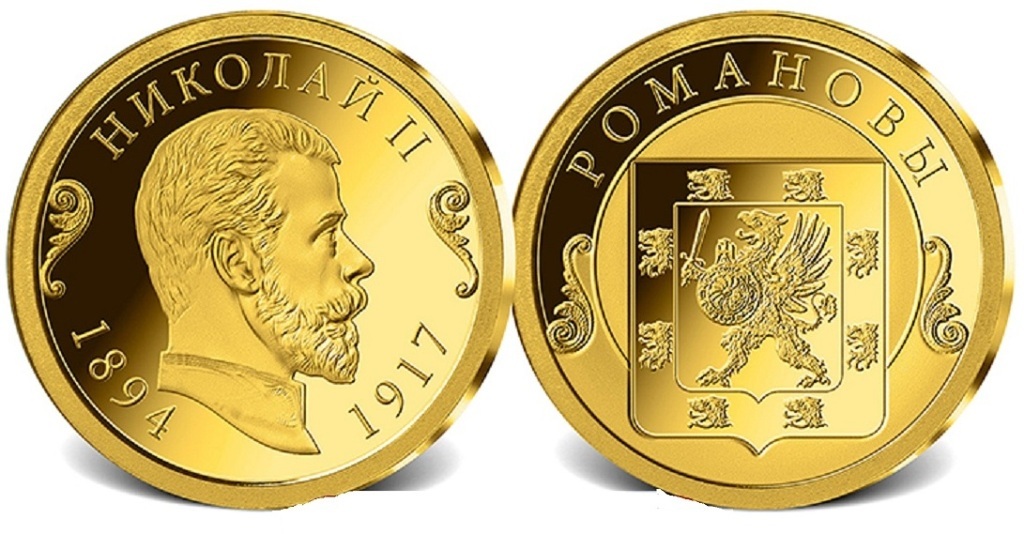
In 2018, a commemorative medal was issued, marking the 124th anniversary of Nicholas II’s ascension to the throne in 1894. The medal was the first of The Romanovs. Golden Collection to be minted by the Imperial Mintin Moscow.
NOTES:
[1] In recent years there has been much confusion by non-Orthodox Christians and Westerners with regard to the correct dates of important events (births, deaths, marriages, etc.) among members of the Russian Imperial Family, according to the New Style calendar.
As an example, is the date marking the death of Alexander III and the accession to the throne of Nicholas II. This happened on the day of Saint Artemius the Great Martyr and the righteous youth Artemiy, on 20th October (2nd November). And if this day is celebrated on 1st November or 3, then we are not commemorating the memory of these saints. Do not rely on any dates on Wikipedia which often provide the incorrect dates of the Gregorian calendar for the late 19th and early 20th centuries.
With the passage of every leap day that is on the Julian (Old Style) Calendar but not on the Gregorian Calendar, the difference between the two calendars grows another day. Currently, the Gregorian Calendar is thirteen days ahead of the Julian Calendar. Beginning on 14th March 2100 (29th February 2100 Julian), the difference will be fourteen days.
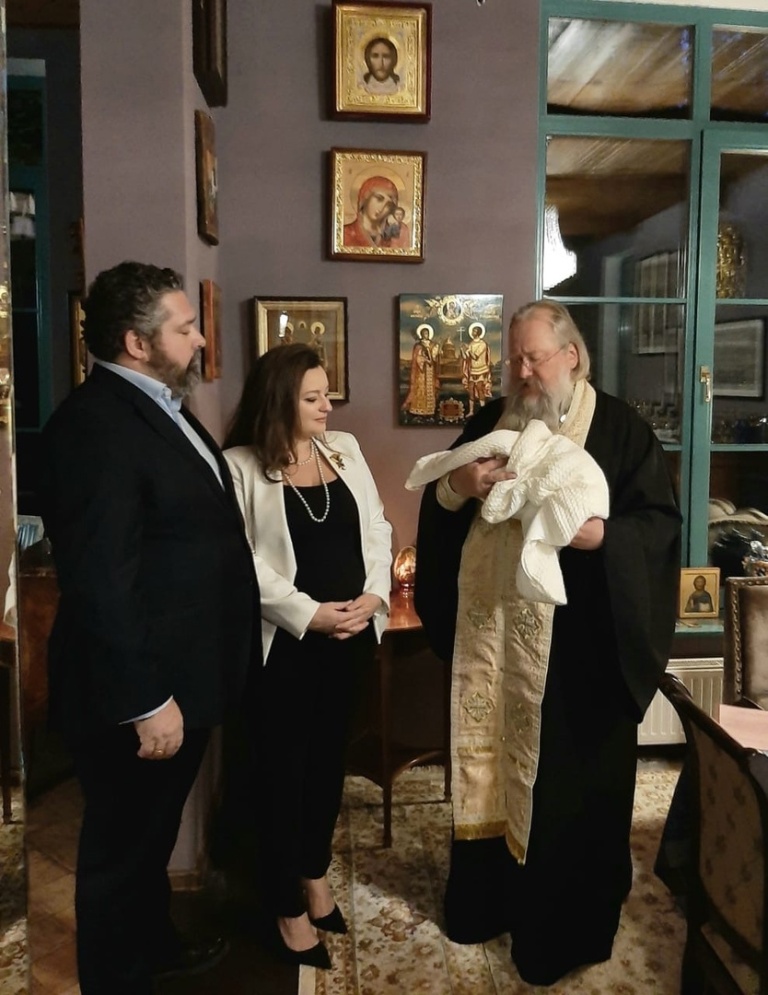
PHOTO: Prince George of Prussia, his wife Victoria, née Rebecca Bettarini, and Father Nikon (Belavenets), holding the recently born Prince Alexander of Prussia
On Thursday, 27th October 2022, the ROMANOFF FAMILY ASSOCIATION issued the following statement, regarding Prince Alexander of Prussia, who was born on 21st October to Prince George of Prussia, and his wife Victoria, née Rebecca Bettarini:
The ROMANOFF FAMILY ASSOCIATION has been informed that on Friday, 21st October 2022 His Royal Highness Prince George of Prussia, and his wife Victoria, née Rebecca Bettarini, have welcomed a son, Prince Alexander of Prussia.
The Romanoff Family Association has already officially and firmly expressed its position on the illegitimate claims of Her Serene Highness Princess Maria Vladimirovna and her son, His Royal Highness George of Prussia to be members of the Russian Imperial Family and to bear the titles of Grand Duchess and Grand Duke of Russia. [cf. Annexes 1 and 2]
The Romanoff Family Association sends its best wishes to the newborn prince of Prussia who, being a descendant of the tsars of Russia by female and unequal lineage, cannot rightfully be considered a member of the Russian Imperial Family according to the Fundamental Laws of the Russian Empire and the Statutes of the Russian Imperial Family.
Princess Olga Andreevna President ROMANOFF FAMILY ASSOCIATION
Prince Rostislav Rostislavovich Vice-President ROMANOFF FAMILY ASSOCIATION
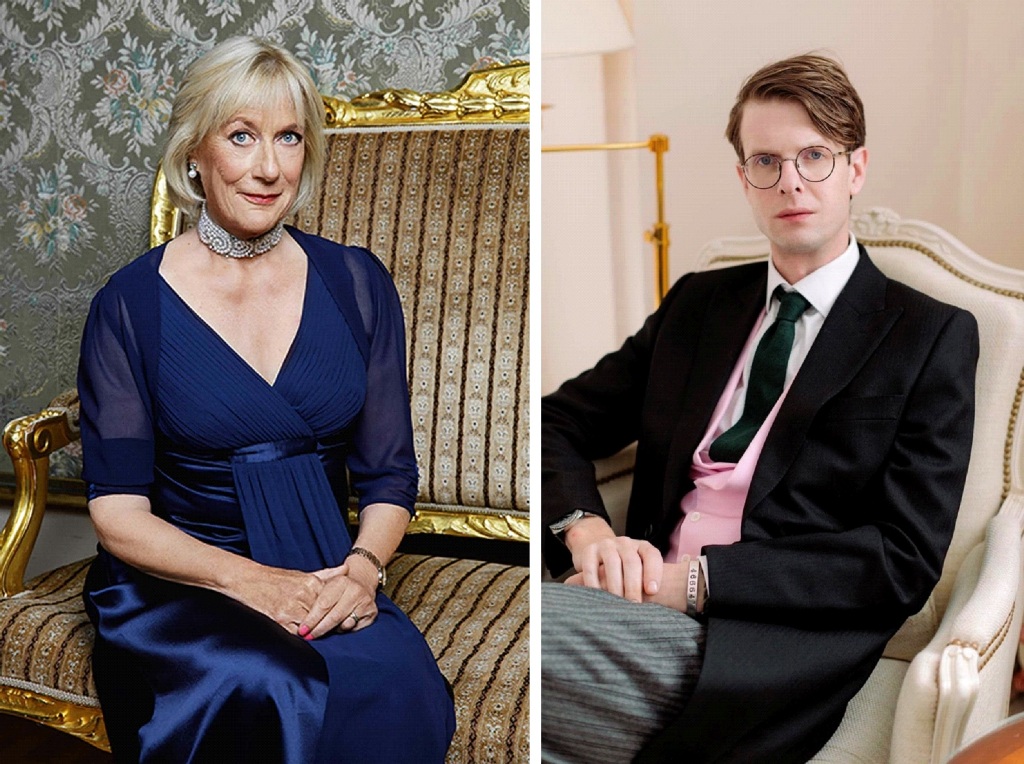
PHOTO: Princess Olga Andreevna and Prince Rostislav Rostislavovich
Annexe 1 : declaration of 1970. Annexe 2 : declaration of 1981.
Annexe 1: April 1970 Declaration by the princes Vsevolod, Roman and Andrew of the House of Russia. As representatives of the three lines of the Imperial House of Russia, we wish to declare our attitude towards certain “proclamations”, recently published by prince Vladimir Kirillovitch, who is known as Grand Duke and Head of the Imperial House of Russia.
Prince Vladimir’s wife has the same status as the wives of all the other Princes of the Blood Imperial of Russia.
It follows that we do not recognize the right of Prince Vladimir’s wife to the title of Grand Duchess.
It also follows that we do not recognize her daughter Maria as a Grand Duchess and that we regard the proclamation of Princess Maria Vladimirovna as future “Guardian of the Throne of Russia” and eventual “Head of the House of Russia” as an arbitrary and illegal act.
Annexe 2: 25 March 1981 Declaration The Romanoff Family Association has been informed that Her Serene Highness Princess Maria Vladimirovna, wife of His Royal Highness Prince Franz Wilhelm of Prussia, has given birth to a son, His Royal Highness Prince Georgiy of Prussia.
Keeping well in mind that all matters of dynastic importance can only be resolved by the great Russian people, on Russian territory, the Romanoff Family Association wishes to remind that in autumn 1976 at the time of the wedding of Her Serene Highness, the Princess Maria Vladimirovna, Their Highness the Princes Roman Petrovitch, Andrey Alexandrovitch, Dmitri Alexandrovitch, Rostislaw Alexandrovitch and Vassili Alexandrovitch issued and signed the following statement:
“We the members of the Imperial Family, born before the abdication of the Emperor Nicholas II, protest against the willful unwarranted act of Prince Vladimir Kirillovitch who gave to the husband of his daughter Maria Vladimirovna the illegal title of Grand Duke of Russia.
We also protest against the decision of Prince Vladimir Kirillovitch to declare his daughter Maria Vladimirovna the sole heiress to the throne, foreseeing the beginning of a new dynasty of Hohenzollern – Romanoff.
We consider such intentions to be an infringement on the rights of the members of the Romanoff Family, which we must protect”.
The Romanoff Family Association keeping the above document in mind states that the happy event in the Royal House of Prussia does not concern the Romanoff Family Association as the newborn Prince is neither a member of the Imperial House of R ussia, nor is he a member of the Romanoff family.
Prince Vassili Alexandrovitch President, Romanoff Family Association.
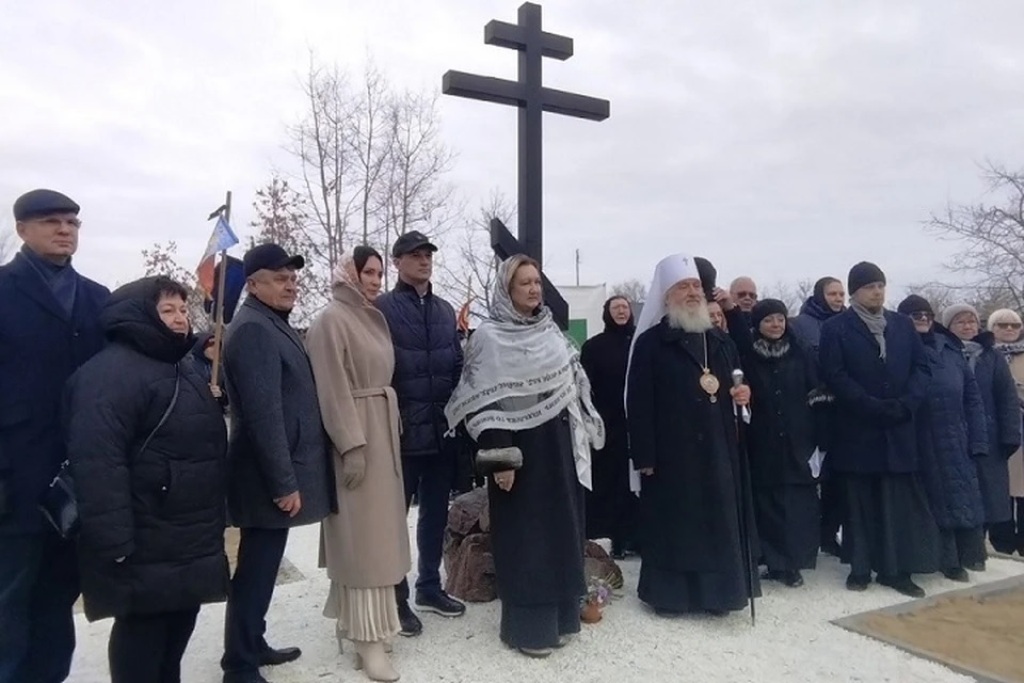
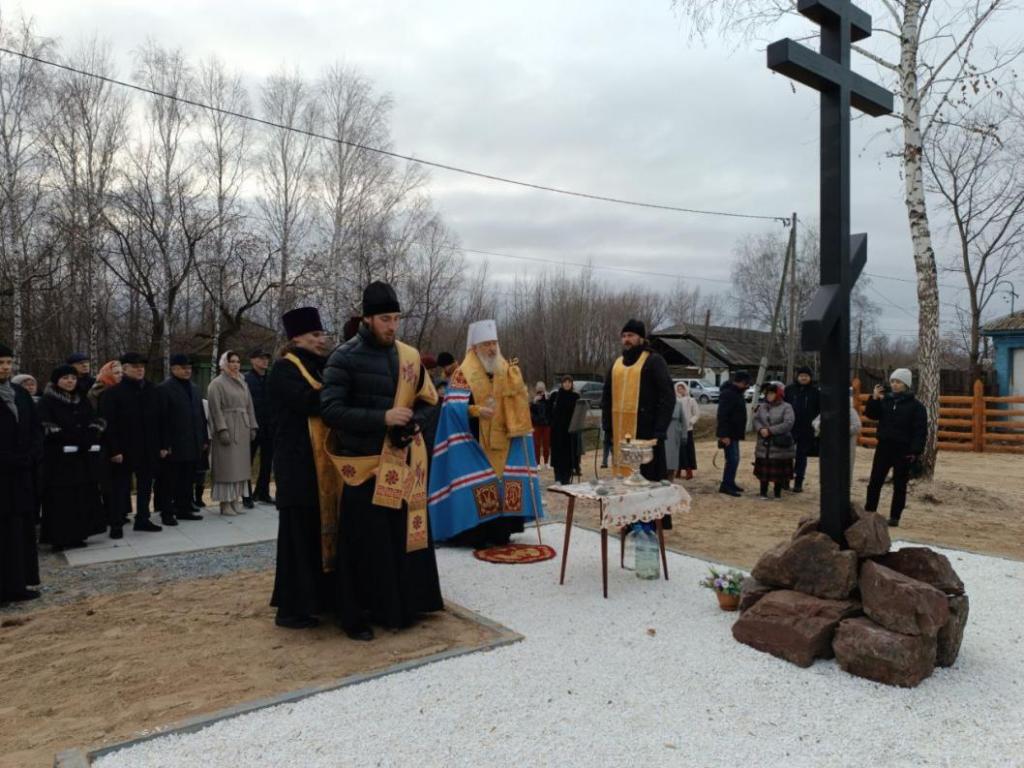
PHOTO: Chairman of the Elisabeth-Sergei Educational Society Foundation (ESPO) Anna Gromova and Metropolitan Dimitry of Tobolsk and Tyumen pose with parishioners, in front of the memorial cross in the village of Ievlevo
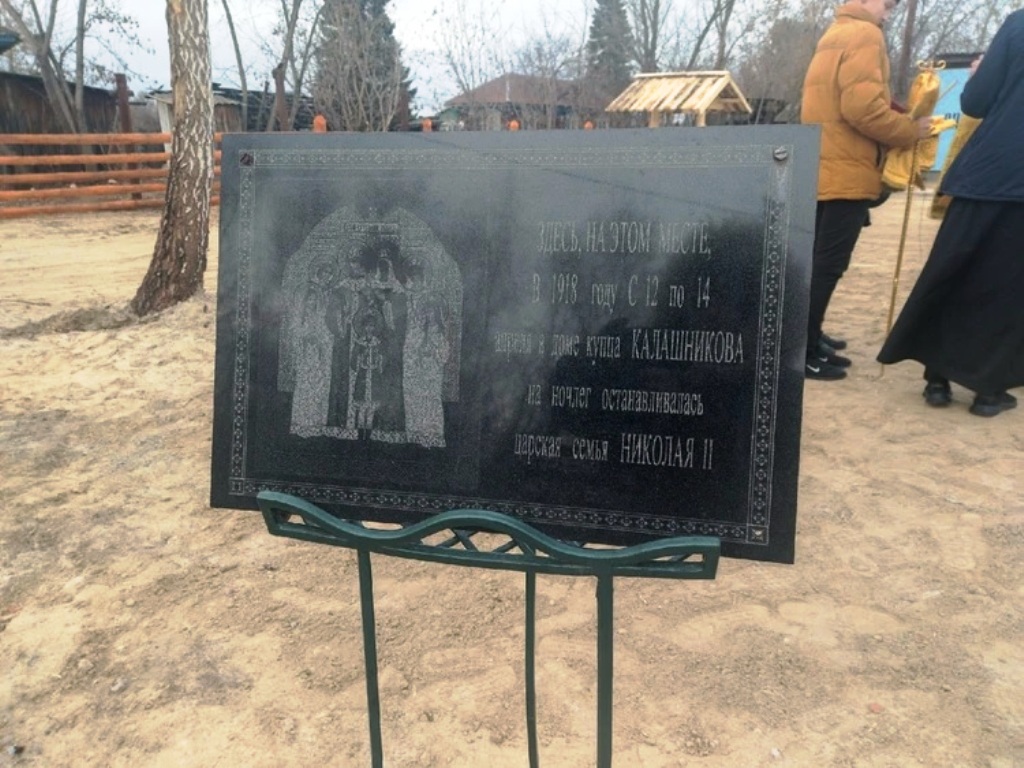
At 4 am on 26th (O.S. 13th) April 1918, Emperor Nicholas II, Empress Alexandra Feodorovna, along with their daughter Grand Duchess Maria Nikolaevna, and several retainers departed Tobolsk for their journey to Ekaterinburg. Their first stop enroute was at the village of Ievlevo, where they spent the night under the watchful gaze of a convoy of Bolshevik convicts and thugs.
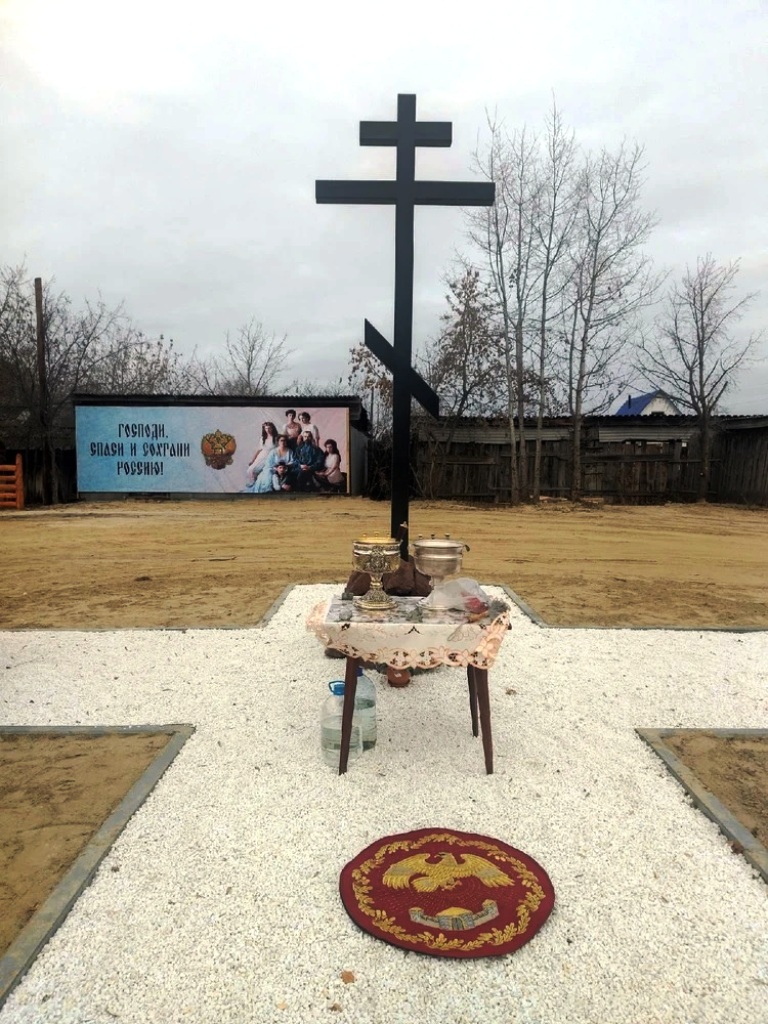
On 31st October 2022, a memorial cross was installed and consecrated in the village of Ievlevo, situated in the Yarkovsky district near Tyumen. The consecration of the cross was performed by Metropolitan Dimitry of Tobolsk and Tyumen.
The cross and metal plaque were installed on the grounds of the future Church of the Archangel Michael, which is currently under. construction. Once completed, the Elisabeth-Sergei Educational Society Foundation (ESPO), has pledged to create a museum and a spiritual and educational pilgrimage center. The memorial cross and future museum will become part of the Imperial Route.
According to Deputy Governor of the Tyumen Region Andrey Panteleev, when Anna Gromova began work on the Imperial Route, Tyumen and Tobolsk were designated as the main locations, and the Museum of the Family of Nicholas II (opened in April 2018) became the pearl of the Imperial Route in the Tyumen Region.
“It is very important that the Imperial Route should include the places associated with the Holy Royal Martyrs were. Many regions across Russia are taking part in this unique project, which will allow both Russians and foreigners to learn about the life and times of the last Tsar and his family”, – added Panteleev.
The Tyumen Region currently features a number of museums and monuments to Emperor Nicholas II and his family: including the Monument to the Holy Royal Martyrs, established in Tyumen in 2017; and the Tsar’s Pier Museum, which includes one room dedicated to the Imperial Family, which includes photos, letters and more.
PHOTO: church utensils used for the consecration of the cross memorial
PHOTO: Metropolitan Dimitry of Tobolsk and Tyumen performs the consecration of the cross memorial
***
It was on 17th (O.S. 4th) August 1917, that the Imperial Family arrived in Tyumen, after being sent into exile from the Alexander Palace at Tsarskoye Selo, on 14th (O.S. 1st( August.
It was on this day that the two trains carrying Nicholas II, his family, and servants arrived in the evening at Tyumen. The following day, they sailed up the rivers Tur, Tobol and Irtysh on the steamer ‘Rus’, to Tobolsk.
Nicholas wrote in his diary: “We advanced unbelievably slowly, in order to reach Tyumen late at night. There the train went right up to the jetty, so that we were able to get straight onto the steamer.
“Ours is called ‘Rus’! They started loading our things, which took all night. God only knows when poor Alexei got to bed again? The bustle and noise went on all through the night and prevented me from getting to sleep. We left Tyumen at about 6 o’clock.”
Upon arrival in Tobolsk, the Imperial family were placed under house arrest in the former governors house until April 1918. On 30th (O.S. 17th) April 1918, Emperor Nicholas II, Empress Alexandra Feodorovna and Grand Duchess Maria were handed over to the Ural Soviets in Ekaterinburg.
PHOTO: a metal plaque informs pilgrims and visitors that the Tsar and his family stopped here for one night in April 1918, on their journey to Ekaterinburg, where they would meet a martyr’s death on 17th July




 Nicholas II
You must be logged in to post a comment.