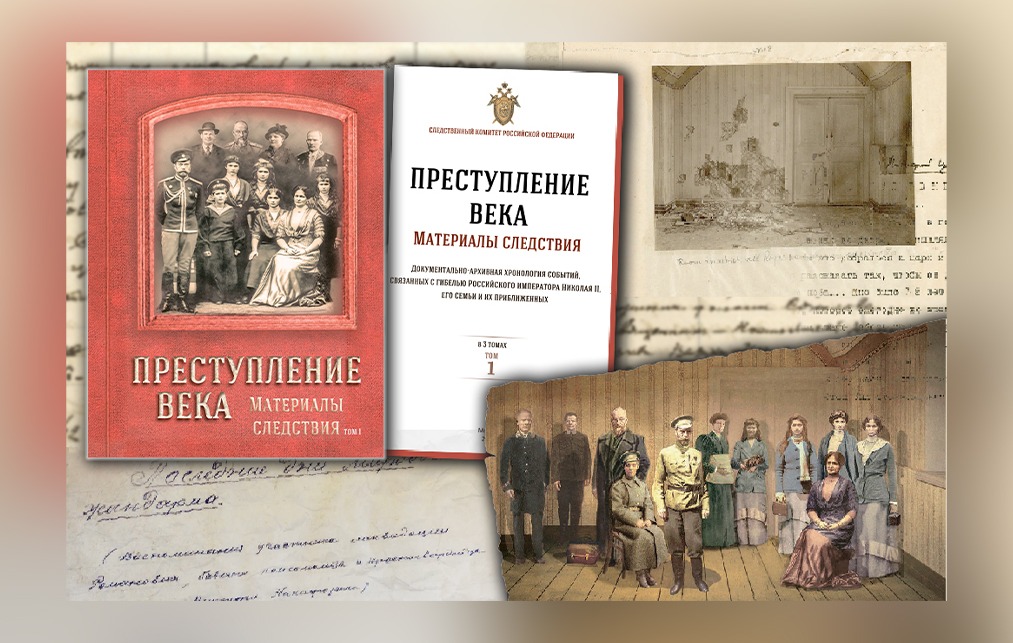
The murder of the Imperial Family on 17th July 1918, remains one of the most mysterious and controversial crimes of the 20th century. The events of more than a century ago are now presented for the first time in a three-volume Russian language edition based strictly on documentary evidence and reliable archival sources. In chronological order, episode by episode, the book describes the tragic events associated with the murder of the Imperial Family and the Bolshevik and Soviet attempts to conceal their remains.
The three volumes will explore the investigative work done in the years 1918 to 1924, the early 1990s, to the present day. The final volume explores the current results of the investigation in the criminal case, resumed by the Investigative Committee of the Russian Federation in 2015, which managed to recreate an objective picture of those distant days and fill in the previously existing gaps.
According to the Chairman of the Investigative Committee of the Russian Federation A.I. Bastrykin: “modern 21st century science and expert research have allowed us to delve much deeper into the essence of the tragic events of 1917 in more detail, permitting us to draw impartial and well-grounded conclusions.”
“Scientific and technological progress has made it possible to conduct unique forensic examinations, including medico-forensic (anthropological). An important role was played by the work of cartographers, thanks to which 3D models of the murder room in the Ipatiev House. In addition, the schemes of the Koptyakovskaya road were recreated. Photos, archives, diaries, memoirs, audio recordings – all helped to form the basis of this unique publishing project”, he added.
This 3-volume book is the result of a joint effort of investigators of the Investigative Committee of the Russian Federation, which includes scientists, researchers, and other experts. It remains the most complete and up-to-date study into the investigation of a century-old crime, which remains one of the darkest pages in the history of 20th century Russia.
The Bishops’ Council of the Russian Orthodox Church (ROC) is scheduled to meet in Moscow from 15th to 18th November 2021, where they will review the findings of the Investigative Commission and deliver their verdict on the authenticity of the Ekaterinburg Remains.
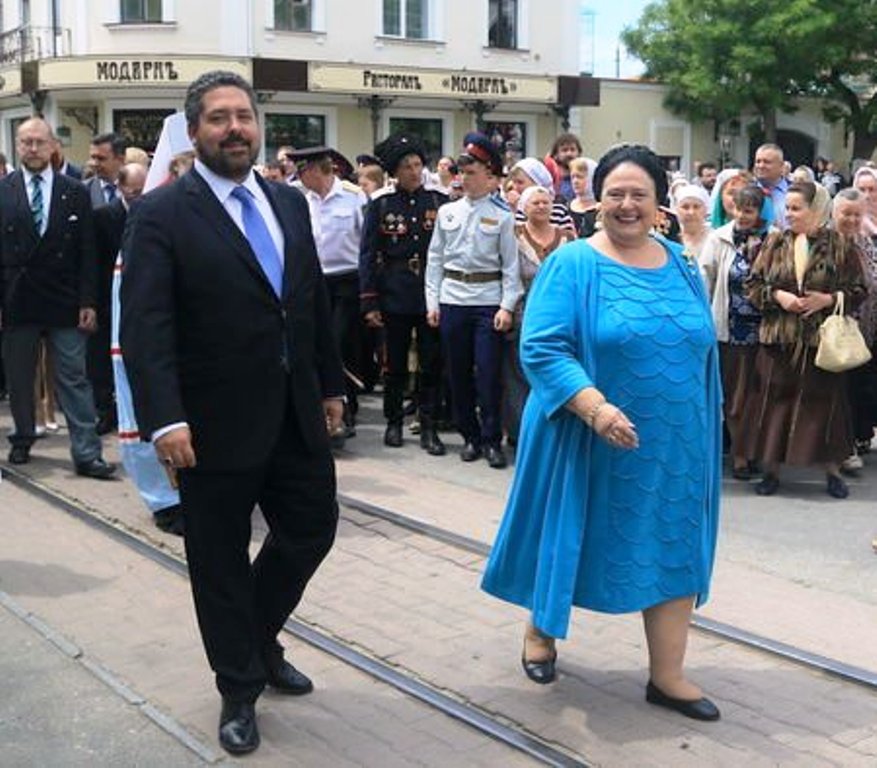
PHOTO: Prince George Mikhailovich and Princess Maria Vladimirovna
On 1st October, a descendant of the Romanov dynasty, Prince George Mikhailovich, will marry the daughter of an Italian diplomat Rebecca Bettarini in St. Isaac’s Cathedral in St. Petersburg. The couple’s upcoming nuptials have generated much attention by Russia’s media, one of which hailed the event as the “wedding of the century”, which of course is utter nonsense.
The announcement of the couple’s marriage in January of this year, once again reopened the century long debate about the Kirillovich branch of the Romanov family and their hotly disputed claim to the non-existent Russian throne, and restoration of the monarchy.
According to historian Alexander Chausov, “the practical implementation of the idea of the revival of the Russian monarchy seems extremely doubtful. In modern times, the return of the monarchy to any country entails a change in the entire logic of the work of the institutions of power. Even if it is a constitutional monarchy. No matter how we relate to Russia, it is today a democratic republican state,” – says Alexander Chausov.
The historian believes that religion in any monarchy is an essential component. Monarchy is the legitimization of power through the sacred, that is, through religious attributes. How in Russia, where freedom of conscience and religion is declared at the constitutional level with the legally enshrined equality of confessions and religious movements, will they choose the religious denomination that should perform the rite of anointing this particular monarch? It is clear that Russia is a country with an strong Orthodox culture, and George Romanov himself is Orthodox. But if the ceremony is performed by the Russian Orthodox Church, not only will it cause dissatisfaction with other religious confessions, but also with political factions [the Communist Party in particular] of the country. “The tsar in the state is the bishop for earthly affairs, as the Byzantine emperors were called. When introducing a monarchy, one will have to forget that in Russia the church is separated from the state,” noted Chausov.
In addition, the historian is sure that for the revival of the monarchy in Russia, it will be necessary to return the class division of society. In order to establish a monarchy in Russia, it is necessary to hold a nationwide referendum. If the absolute majority votes in favor, it will be necessary to hold a certain Zemsky Sobor – by analogy with the one at which Mikhail Romanov was elected tsar in Russia in 1613 . Now the right of the descendants of the Kirillovich branch of the Romanov family to occupy any throne seems very doubtful. But the Zemsky Sobor is not a referendum; it presupposes, at least, the division of the estate of society and the official revival of the nobility. Modern society is simply not motivated by the processes of the revival of the monarchy, the historian is sure.
The idea of restoring monarchy in post-Soviet Russia is not popular with most Russians. In the summer of 2019, a poll conducted by REGNUM of some 35,000 Russian citizens showed that only 28% supported the idea of restoring the monarchy, more than half (52%) of which would NOT support placing a “Romanov” on the throne!
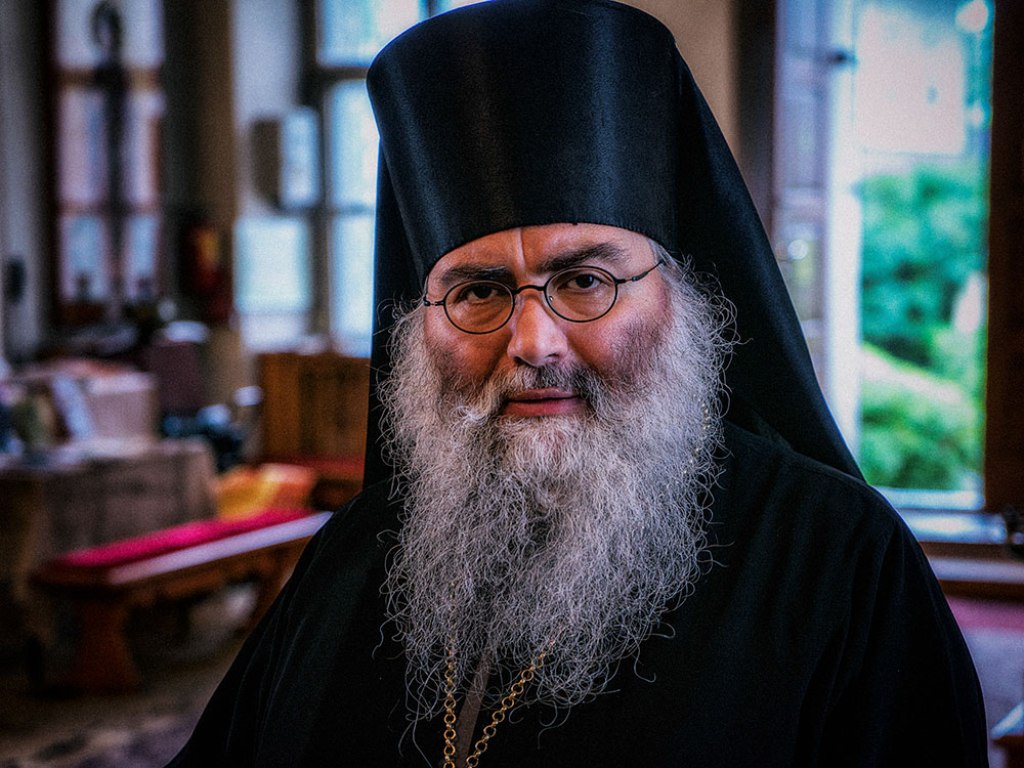
PHOTO: Father Afanasy Selichev
Has no right to the throne
According to the abbot of the Archangel Michael Monastery of the Alexander Diocese of the Russian Orthodox Church, Father Afanasy Selichev, there were cases of morganatic marriages in the history of the Kirillovichs [among other male members of the Imperial Family during the reign of Nicholas II], and this deprived George Romanov of the right to occupy any throne.
George’s great-grandfather, the Grand Duke Kirill Vladimirovich (1876-1938), lost his right to succession to the throne when he entered into an incestuous marriage [forbidden by the Russian Orthodox Church] with his first cousin Princess Victoria-Melita of Saxe-Coburg and Gotha (1876-1936), the daughter of the Duke of Edinburgh (1844-1900) and Grand Duchess Maria Alexandrovna (1853-1920). According to the Russian Orthodox Church, his marriage deprived him and his descendants of any rights to the Russian throne. During the February 1917 Revolution, Kirill Vladimirovich, commanding a guards naval crew in Petrograd, recognized the Provisional Government and walked around with a red bow. “His record says something,” – said Father Afanasy.
In addition, Kirill’s son Vladimir (1917-1992) in 1948 secretly entered into a morganatic marriage with the divorced Mrs. Kirby, nee Princess Leonida Georgievna Bagration-Mukhranskaya (1914-2010). This marriage, according to the laws of the Russian Empire, denied any rights to the throne to his offspring.
“At best, they are the lordly princes. Moreover, the last Romanov is not Romanov at all: he is Hohenzollern. He was given a Russian passport by President Boris Yeltsin, added the priest.
Georg Hohenzollern or George Romanov?
George is the son of the Prussian Prince Franz Wilhelm of Hohenzollern and legitimately a German prince. But George, albeit very conditional, is still Romanov on the female side, it is absolutely unrealistic to imagine that Russia, would accept him.
George Romanov is the great-grandson of Emperor Wilhelm II, and has much more rights to the German throne than that of Russia. Thanks to the efforts of his mother Maria Vladimirovna, he is currently part of her public relations blitz to make her son more familiar and likeable to the Russian people.
According to Alexander Chausov, George has repeatedly stated that he never wanted to become a Russian tsar, they say, this is all my mother’s idea.
According to historian Mikhail Diunov, the wedding of George to Rebecca Bettarini may affect his right to take any throne. Bettarini is not of a ruling house, which is the basic condition for marriage under the 1797 succession law, she is not even a noblewoman.
“Earlier this year, Maria Vladimirovna made a cunning move,” says Mikhail Diunov – “Rebecca’s father, diplomat Roberto Bettarini, was “awarded” the Order of St. Anne of the First Degree and thanks to this formally became a nobleman of the Russian Empire. But everyone understands that this is nothing more than a farce.”
It is very important to note, that Maria Vladimirovna never had or has any authority to hand out titles or awards as she is not and never has been a ruling monarch. Despite this, Maria actively, and completely illegally distributes orders, medals and even titles of the Russian Empire. While many orders and awards of the Russian Empire have been officially restored in the modern Russian Federation, an ordinary civilian, and not a representative of the state, distributes the same order in appearance and name to her supporters on behalf of the “Imperial House”!
According to Diunov, having chosen Rebecca Bettarini as his wife, George eliminated his offspring from among those who may be eligible to the succession to the throne in the event of a theoretical revival of the monarchy in Russia.
We are now just weeks away before the Russian Orthodox Church delivers its verdict on the authenticity of the Ekaterinburg Remains.
The Bishops’ Council of the Russian Orthodox Church (ROC) is scheduled to meet in Moscow from 15th to 18th November [now delayed until 26th to 29th May 2022], where they will review the findings of the multitude of examinations – requested by the ROC’s Investigative Committee – and carried out in different laboratories around the world. These included various examinations (molecular-genetic, physical-chemical, trace evidence, ballistic, handwriting, historical-archival, soil science, forensic, anthropological studies, and more).
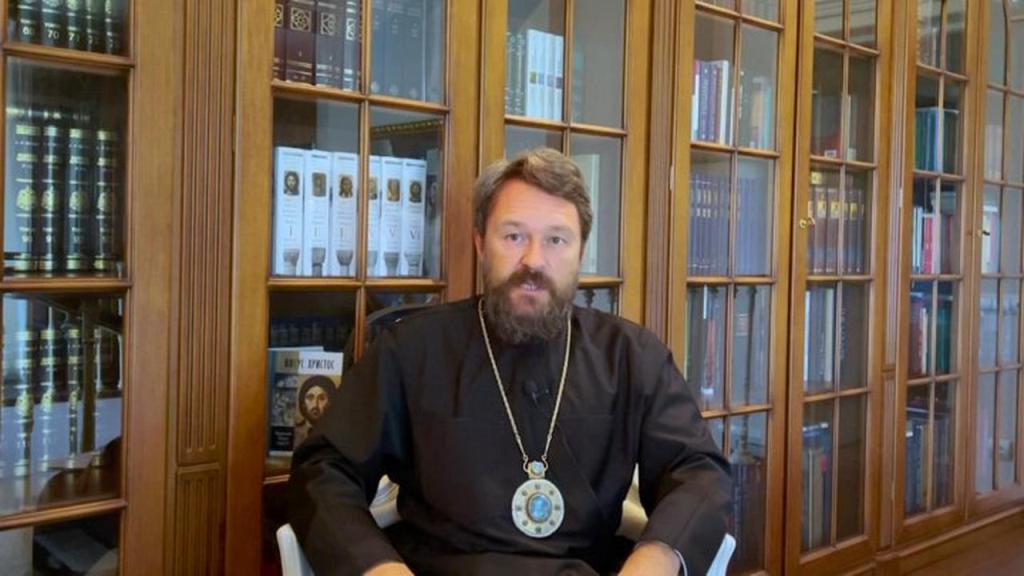
Some members of the Moscow Patriarchate have expressed optimism, such as Metropolitan Hilarion (Alfeyev), the head of the Synodal Department for External Church Relations, who believes that the “Ekaterinburg remains will be recognized as genuine”.
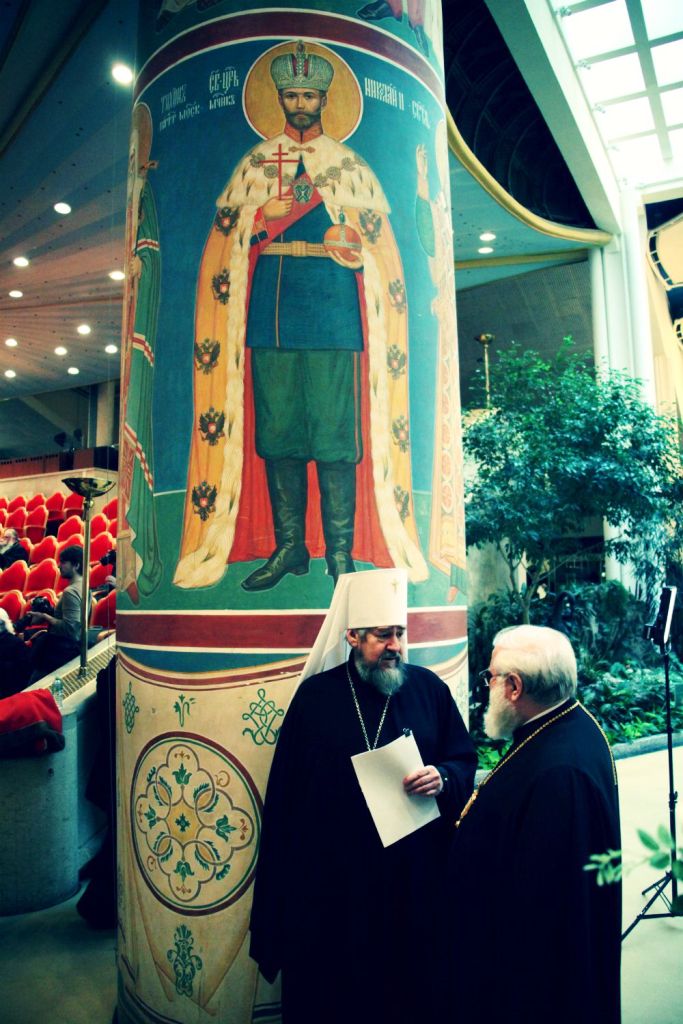
PHOTO: Image of Tsar Martyr Nicholas II in the Hall of Church Cathedrals of the Cathedral of Christ the Savior in Moscow. It is here that the Bishops’ Council of the Russian Orthodox Church will meet in November, to (hopefully) confirm the authenticity of the Ekaterinburg remains.
“The examinations that have been carried out prove that the remains found near Ekaterinburg are indeed the remains of the Tsar and his family. But for the Church to recognize such, it is necessary that all bishops familiarize themselves with the results of the examinations,” he said.
The Metropolitan urged believers not to rush and not to anticipate events. “Bishops should have complete freedom to review to the information they receive,” emphasized. Hilarion. According to him, at the moment the members of the Holy Synod of the Russian Orthodox Church have familiarized themselves with the results of the examinations, it is then that a final decision on the recognition of their authenticity of the remains rests with the Bishops’ Council of the church as the supreme governing body.
Whatever decision the Bishops’ Council makes, it is sure to cause a schism among Believers who are divided on the authenticity of the remains. Many still adhere to Nikolai Alekseevich Sokolov’s (1882-1924) theory that the bodies of the Imperial Family were completely destroyed with fire and acid at the Four Brothers Mine.
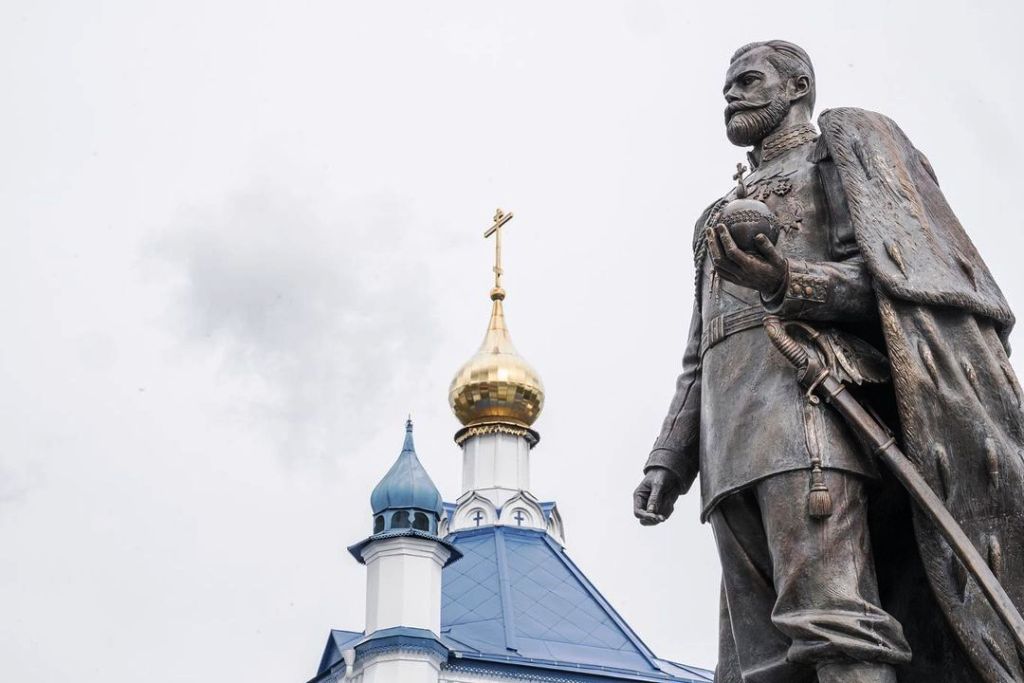
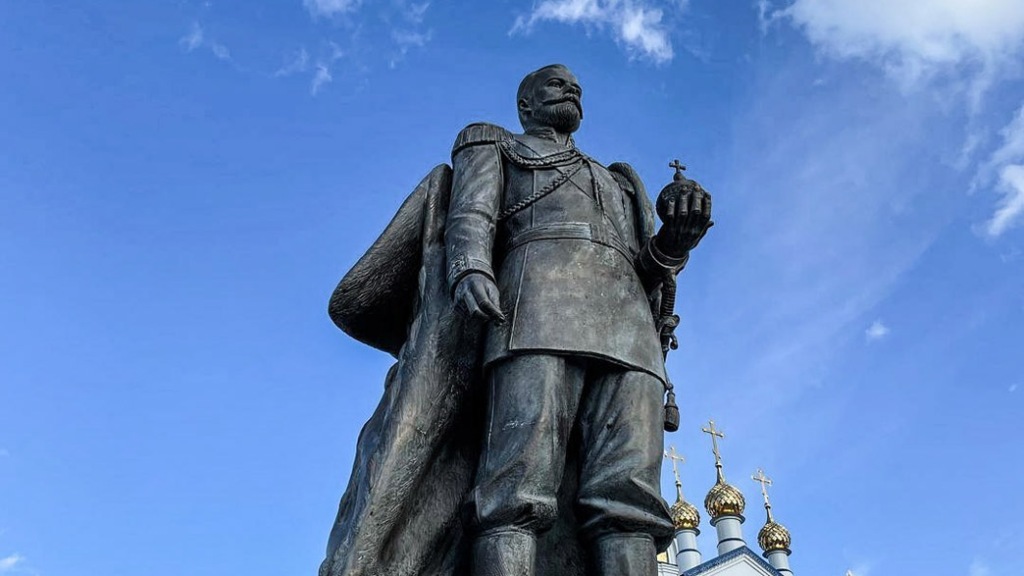
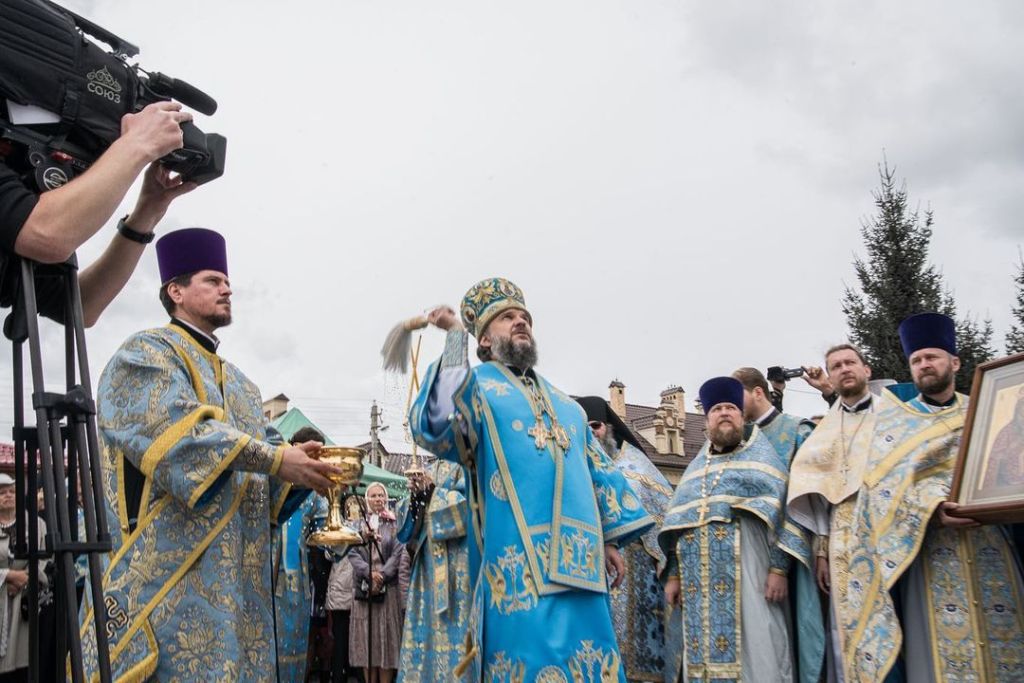
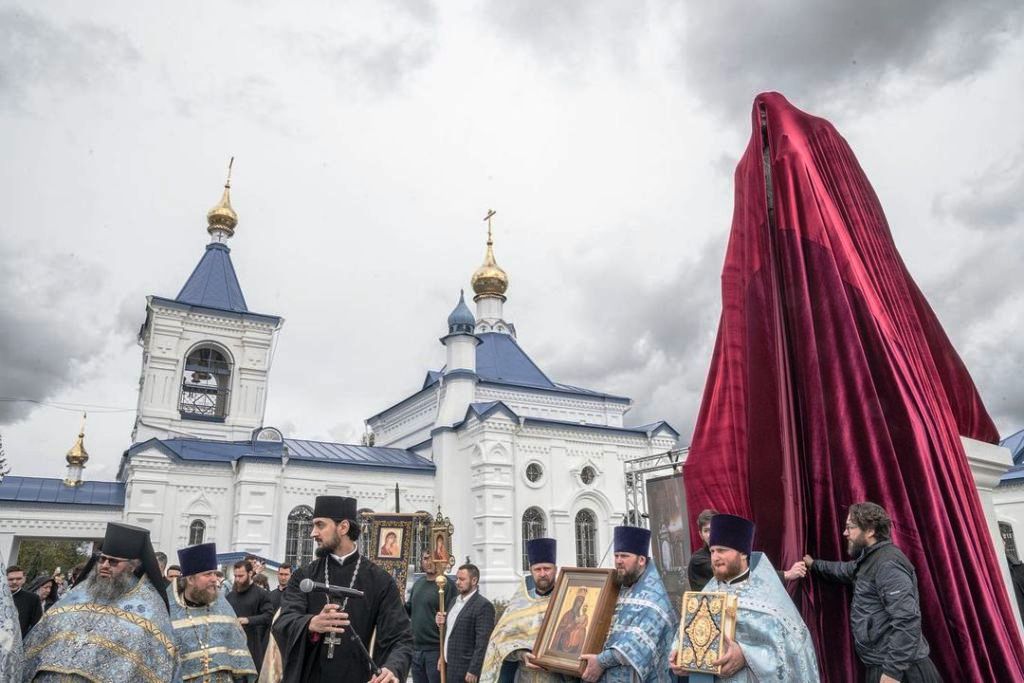
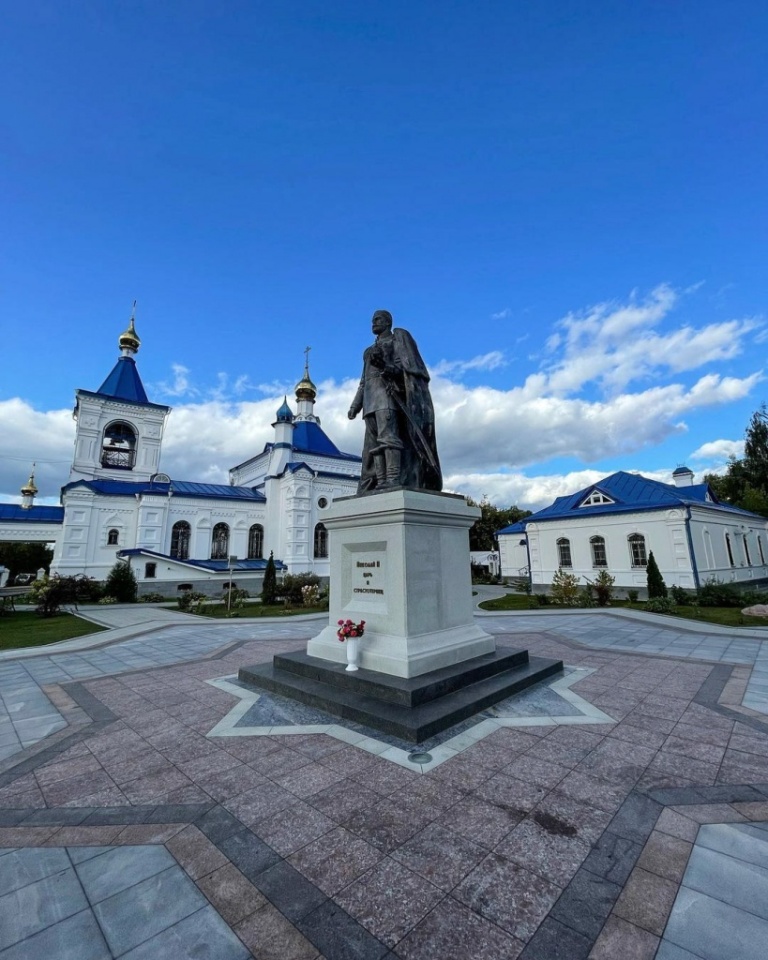
On 14th September, a new monument to Emperor Nicholas II was opened in the Russian village of Sanino, situated in the Petushinsky District of the Vladimir Region. The new monument is the first in the Vladimir region, and the country’s second largest monument to Russia’s last Tsar.
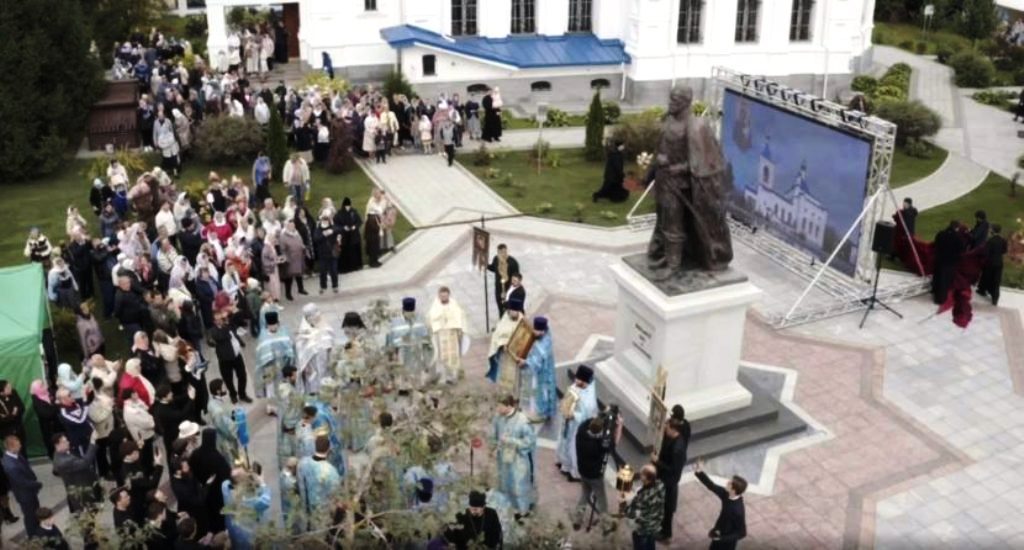
The bronze monument was made by the Moscow sculptor Rovshan Rzayev. It was installed on the grounds of the Church of the Chernigov Icon of the Mother of God in the village of Sanino. The opening of the monument was timed to coincide with the patronal feast day. A Divine Liturgy was led by Metropolitan Ambrose of Tver and Kashin. About 500 people took part in the service, procession, unveiling and consecration of the monument.
PHOTO: Metropolitan Ambrose of Tver and Kashin performs the act of consecration
PHOTO: more than 500 people attended the unveiling and consecration ceremony
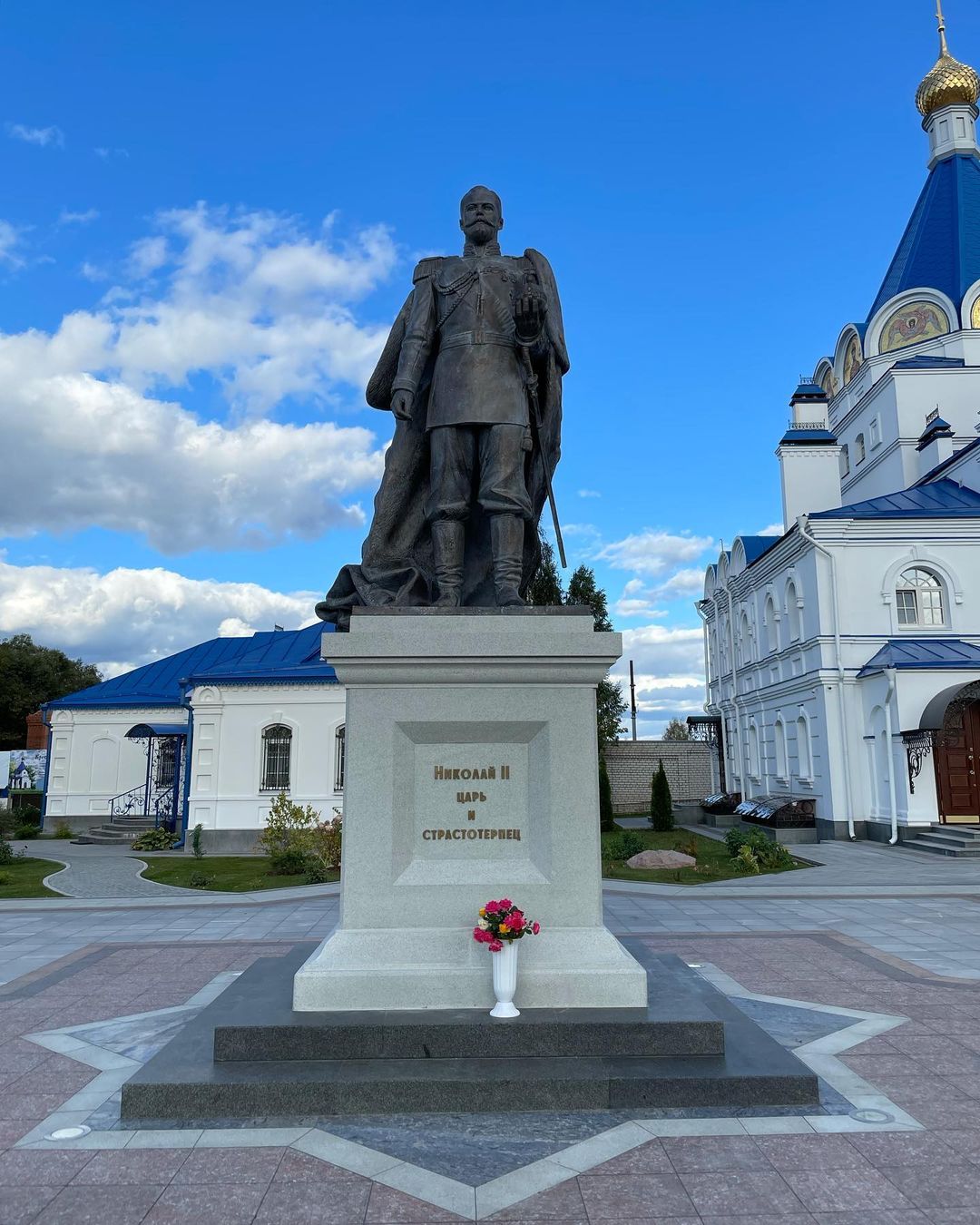
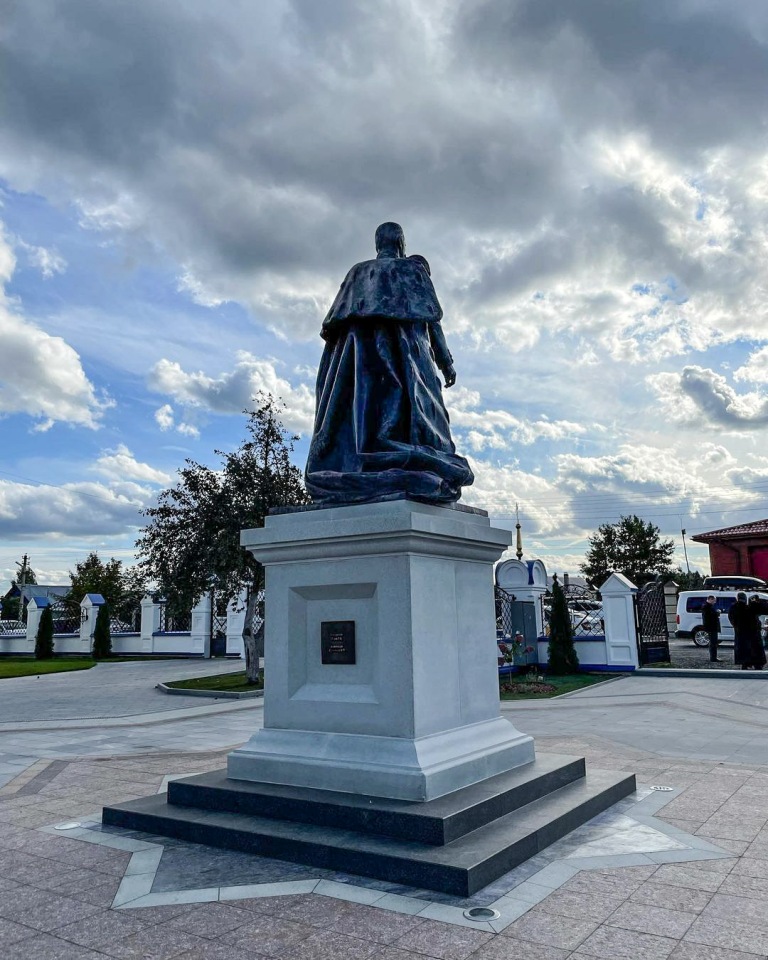
The height of the monument [with pedestal] is 3 meters [nearly 10 ft.]. The Tsar is depicted in uniform, wearing his coronation mantle, a sword on his left side. He is holding an orb in his left hand, while the fingers of his right hand are poised to make the sign of the cross. The figure stands on a massive pedestal with the inscription “Nicholas II Tsar and Passion-Bearer.”
PHOTO: “Nicholas II. Tsar and Passion-Bearer.”
PHOTOS: front and rear views of Russia’s second largest monument to Nicholas II
During the Soviet years, Nicholas II was vilified and forgotten. Not a single memorial of any kind existed in the Soviet Union, however, during the last 30 years more than 100 monuments, busts and memorials in honour of Nicholas II have been erected in more than 30 regions of the country.
I am pleased to offer 5 additional Romanov titles on AMAZON in both PAPERBACK and EBOOK editions. The bulk of these titles are books which I published in paperback editions about 20 years ago, and have been out of print for some time. I decided to repackage each with new covers, and updated with prefaces and introductions. In addition, are also new titles.
Please note that some of these titles are available in both paperback and eBook editions, while others are available in either just paperback or eBook editions at the present time.
Prices for eBooks start at $9.99 USD, paperback editions start at $12.99 USD. Each title offers a FREE Look Inside feature.
All of these books are available from any AMAZON site in the world and are priced in local currencies [CLICK on any of the following links]: Canada, United Kingdom, Germany, France, Spain, Italy, Netherlands, Japan, India, Brazil, Mexico and Australia
Please refer to the links provided below to view this month’s selection – PG
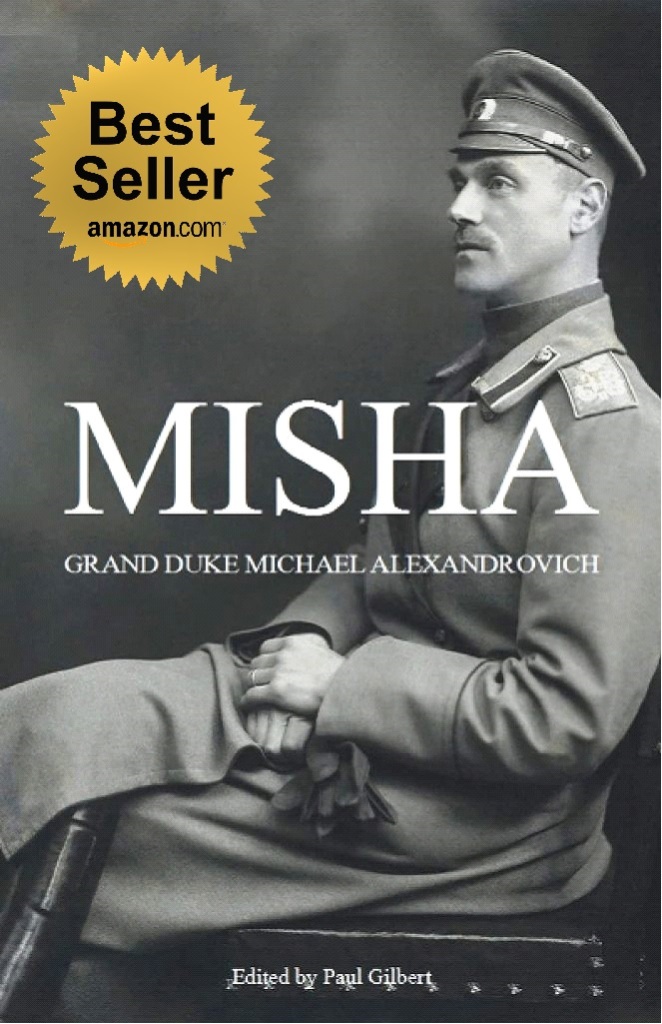
MISHA: GRAND DUKE MICHAEL ALEXANDROVICH Compiled and Edited by Paul Gilbert
AMAZON’S #1 New Release in Historical Russia Biographies
Grand Duke Michael Alexandrovich (1878-1918) was the youngest son of Emperor Alexander III and Empress Maria Feodorovna, and the younger brother of Russia’s last emperor Nicholas II.
This book explores the milestones in the life of Grand Duke Michael in a series of essays by four distinct authors, and complemented with 50 black and white photographs.
Among them are the memories of Princess Olga Pavlovna Putyatina, who in February 1917, offered refuge to the grand duke at her flat on Millionnaya Street in Petrograd.
Independent researcher Paul Gilbert offers two fascinating essays: the first reviews an album of some 200 photographs taken by Grand Duke Michael, during his stay at Knebworth House in Hertfordshire. England, 1913-1914 . The album sold at auction for more than 2 million rubles ($34,000 USD).
The final essay examines the myth that Michael was the last Tsar of Russia, he was not. Nicholas II remained Emperor and Tsar of Russia until the day of his death and martyrdom on 17th July 1918.
Grand Duke Mikhail Alexandrovich and his Secretary Nikolai Nikolaevich Johnson, were both murdered by the Bolsheviks near Perm on 13 June 1918. Their remains have never been found.
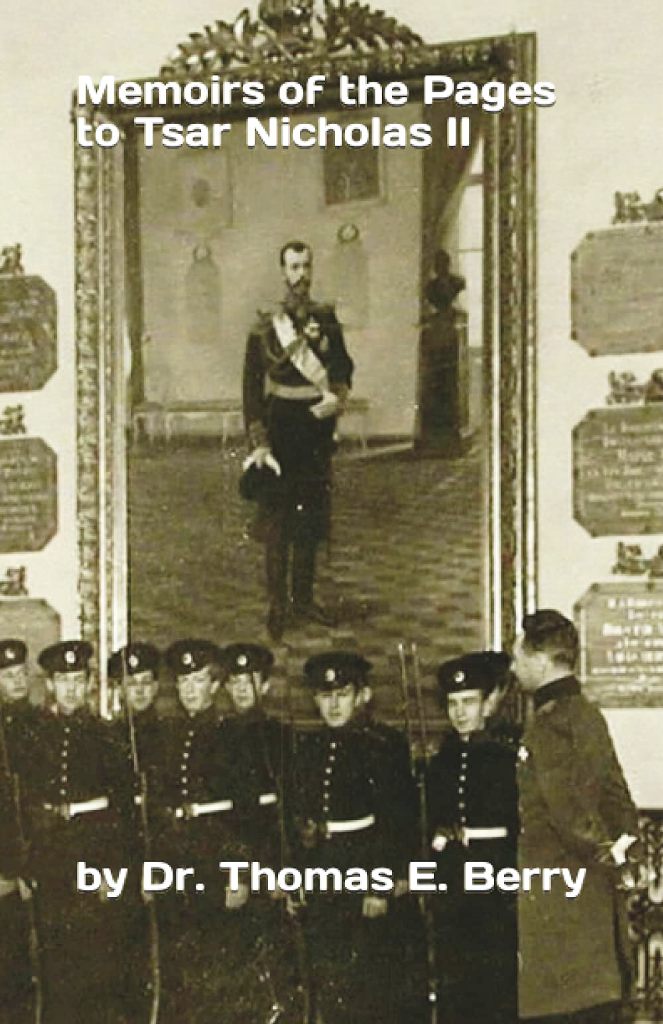
MEMOIRS OF THE PAGES TO TSAR NICHOLAS II by Dr. Thomas E. Berry
The history of the Corps des Pages in Russia dates back to the days of Peter the Great. Each of his successors made changes or improvements up until the end of the monarchy in 1917.
The Corps des Pages was both a military and a Court institution which prepared young men to serve the Tsar and his family at Court. Many would also go on to serve in the military or enter into the diplomatic or civil service of the Russian Empire. The chief among the Pages of the Chamber was ipso facto the Page of the Chamber of the Tsar. The Tsarina and each member of the Imperial Household had a Page of the Chamber assigned to them, as did all the Grand Dukes and Grand Duchesses. As a rule, Pages of the Chamber and Pages were invited to participate in many Imperial Court events.
These memoirs provide eyewitness accounts of their education and training at the Vorontsov Palace in St. Petersburg. From here, these young men went on to serve the Russian Imperial family. Their recollections of the elegance of the Russian Court as well as many, new intimate details of Emperor Nicholas II, provide us with a rare glimpse into his private world.
The memoirs also tell of the sadness and heartache felt as the First World War swept them, their country and monarchy into history. Some lived to tell of the destruction brought on by war and the revolution and reflect on a world lost forever.
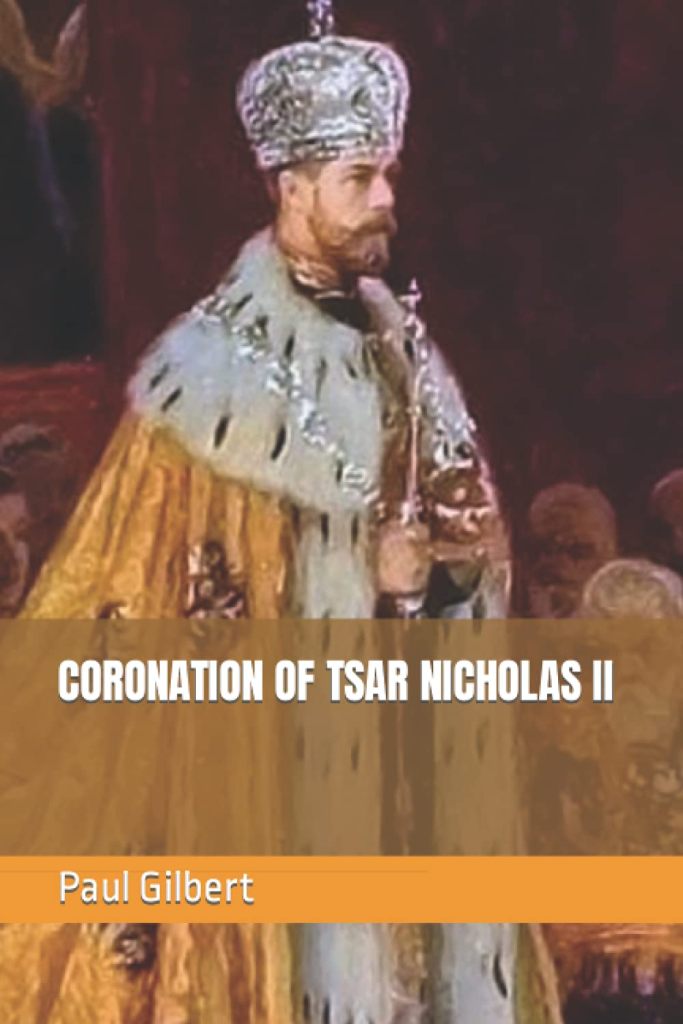
Six eyewitness accounts of the crowning of Russia’s last tsar with more than 200 rare vintage photographs & illustrations
The pomp and pageantry surrounding the Coronation of Nicholas II is told through the eye-witness accounts of six people who attended this historic event at Moscow, held over a three week period from 6th (O.S.) to 26th (O.S.) May 1896.
The authors came from all walks of life and different nations: Francis W. Grenfell and Mandell Creighton, Bishop of Peterborough (Great Britain); John A. Logan, Jr., Kate Koon Bovey and Richard Harding Davis (United States); and Boris Alexandrovich Engelgardt (Russia).
Historians have left us only brief descriptions of this historic event, but it is thanks to the authors of this unique book that we are grateful. They recorded their observations in diaries and letters, leaving to posterity a first-hand record that allows modern-day readers to relive the crowning of Russia’s last tsar and the splendour and opulence of a world that is gone forever.
These exceptional memoirs offer a wealth of information that include the preparations and events leading up to and during the coronation festivities, the tsar’s entry into Moscow, the procession to the cathedral, the crowning of the tsar and the celebrations that followed. No two memoirs are alike; each of the authors guides the reader through this historic event through his or her own eyes.
Paul Gilbert is an independent researcher specializing in the study of the life and reign of Emperor Nicholas II. He has committed his research to clearing the name of Russia’s much slandered Tsar.
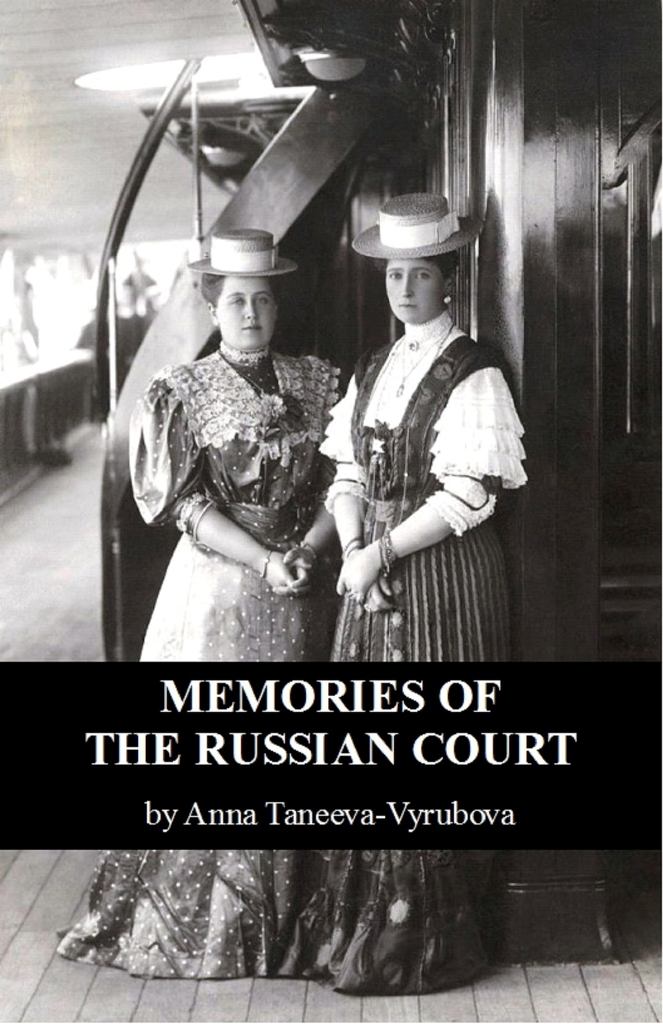
MEMORIES OF THE RUSSIAN COURT by Anna Taneeva-Vytrubova
Due to her privileged position at the Court of the last Russian Tsar and her close association to the Imperial Family, Anna Vyrubova’s memoirs are highly regarded by those who share a special interest in Nicholas II and his family.
From the summer of 1905 on, Anna Vyrubova centered her life on the Empress Alexandra and became a part of the Tsar’s family. In order to be closer to the family, Anna moved into a summer home at Tsarskoye Selo, just two hundred yards from the Alexander Palace, and her telephone was connected directly to the palace switchboard.
Her memories provide a rare peek into the private world of the Imperial Family, sharing many intimate details and personal impressions. She sailed with them on the Imperial Yacht ‘Standart’ to the Finnish islands and Livadia in Crimea.
In 1920 Anna escaped to Finland and lived quietly at Vyborg. There she wrote these remarkable memoirs which offer a unique eyewitness testimony of the life and character of Empress Alexandra, Emperor Nicholas II and their five children. Vyrubova describes a diverse array of incidents in the life of the Imperial family which collectively attest to the sincere and loving nature of the often misunderstood Empress.
Anna took vows as a Russian Orthodox nun but was permitted to live in a private home because of her physical disabilities. She died in 1964 at the age of 80, in Helsinki, where her grave is located in the Orthodox section of Hietaniemi cemetery. This book was first published in 1923.
MEMORIES OF RUSSIA 1916-1919 by Princess Olga Paley
Every victim of the Bolshevik Revolution of 1917 had a story to tell. One of the most tragic was that of Princess Olga Valerianovna Paley (1865-1929) the morganatic second wife of Grand Duke Paul Alexandrovich (1860-1919).
Born in 1865, she married an officer of the Imperial Guard of Russia, Erich Augustinovitch von Pistohlkors, the couple had four children.
Grand Duke Paul Alexandrovich, a long-time friend of Pistohlkors, often spent his evenings with the Pistohlkors couple in Tsarskoye Selo; where he became smitten with Olga’s beauty, elegance, and her worldly and lively spirit. Their affair resulted in the birth of a son, Vladimir
Their affair created a scandal at Court and the Emperor forbid his uncle to marry Olga. Following her divorce from Pistolkors, Olga and Paul defied Nicholas II, resulting in their expulsion from Russia. They married in Livorno, Italy, and settled in an elegant mansion built in Boulogne-sur-Seine, France for several years. It was here that Olga gave birth to two more daughters,
In 1904, Prince-Regent Leopold of Bavaria titled Olga Countess of Hohenfelsen, and upon their return to Russia, the Tsar created the title of Princess Paley for her and their children.
During the revolution, her husband the Grand Duke and their son Vladimir were captured and murdered by the Bolsheviks. Olga and her daughters escaped to Finland and then returned to Paris, where she died in 1929.
Princess Olga Paleys memories are a poignant, often harrowing account of the ‘last happy days’ before the disintegration of the empire, and the Tsar’s abdication. She records in stark detail the actions of the revolutionary officials, the increasing humiliation and cruelty that she and her husband, who was already in poor health, suffered under the new order, the ‘reign of blackguardism’ as they gradually requisitioned or destroyed her property and that of the other Romanovs, and how they responded to each gesture of brutality with dignity during ‘the dreadful calvary of 1918’. It is a moving document by one who survived, while so many of those closest to her did not.
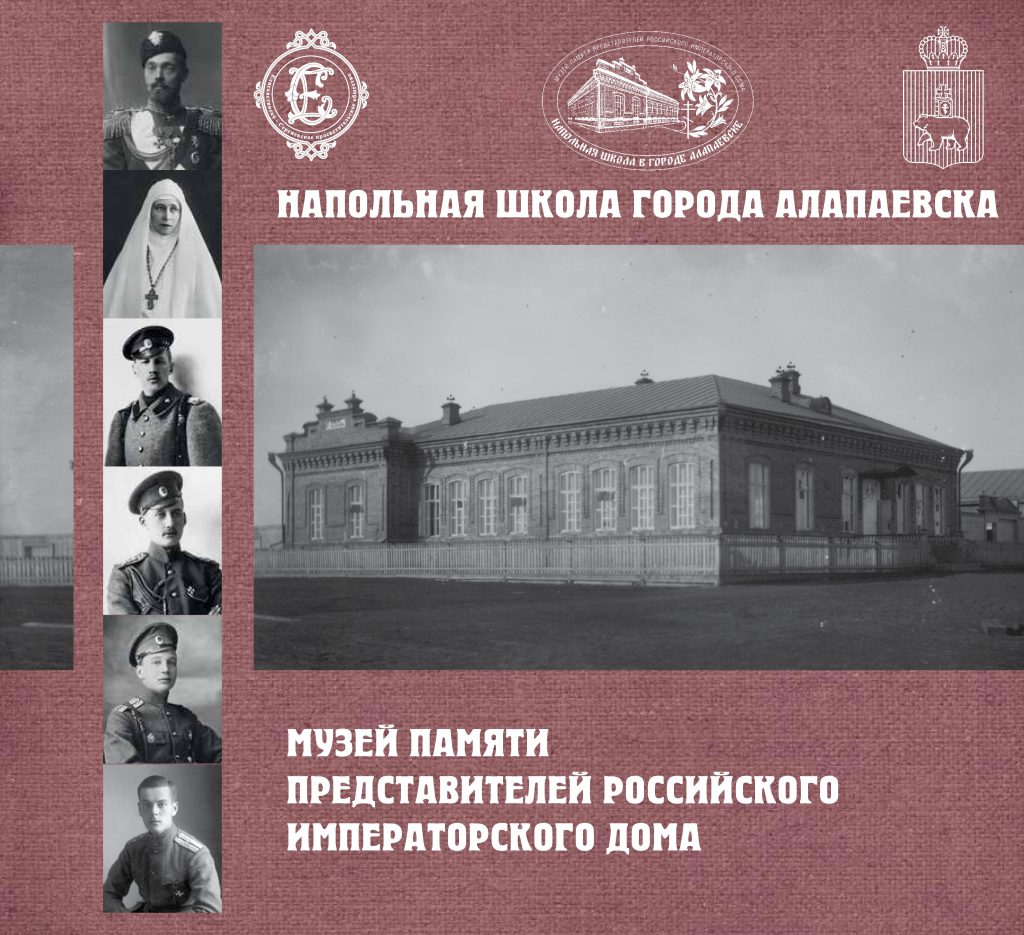
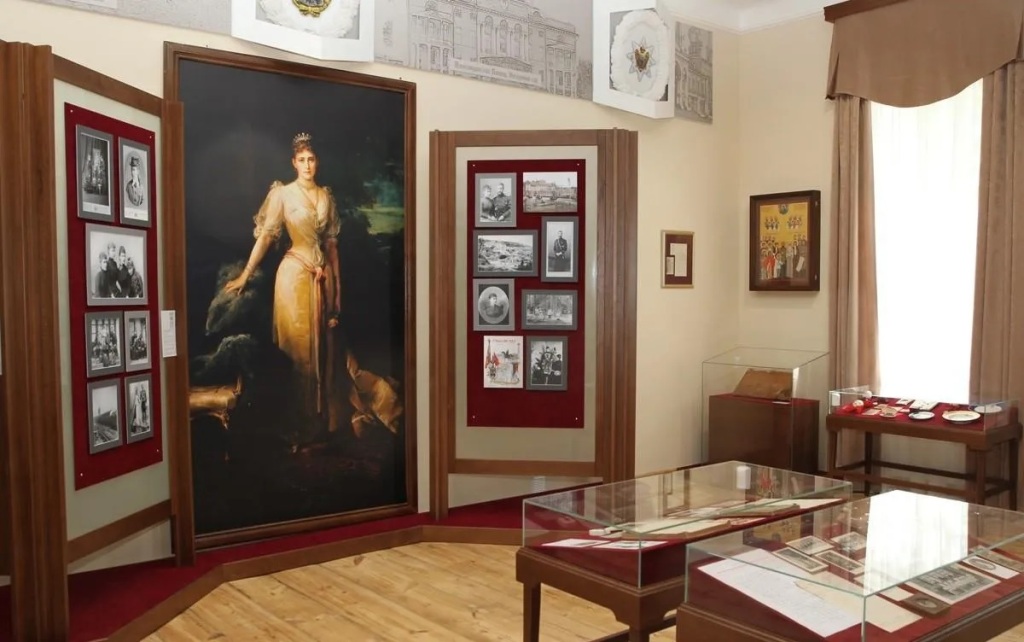
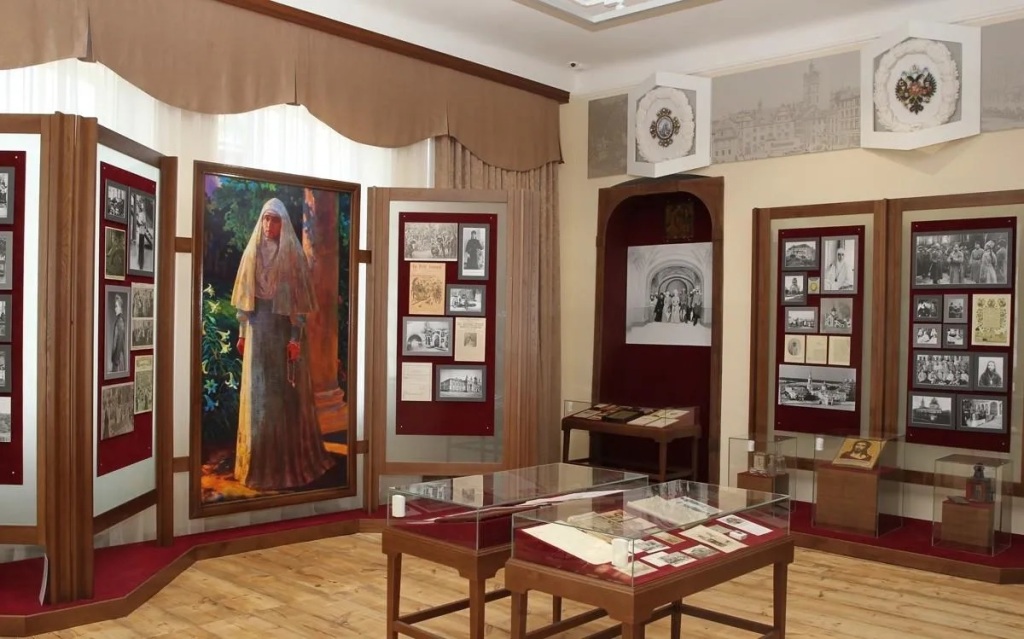
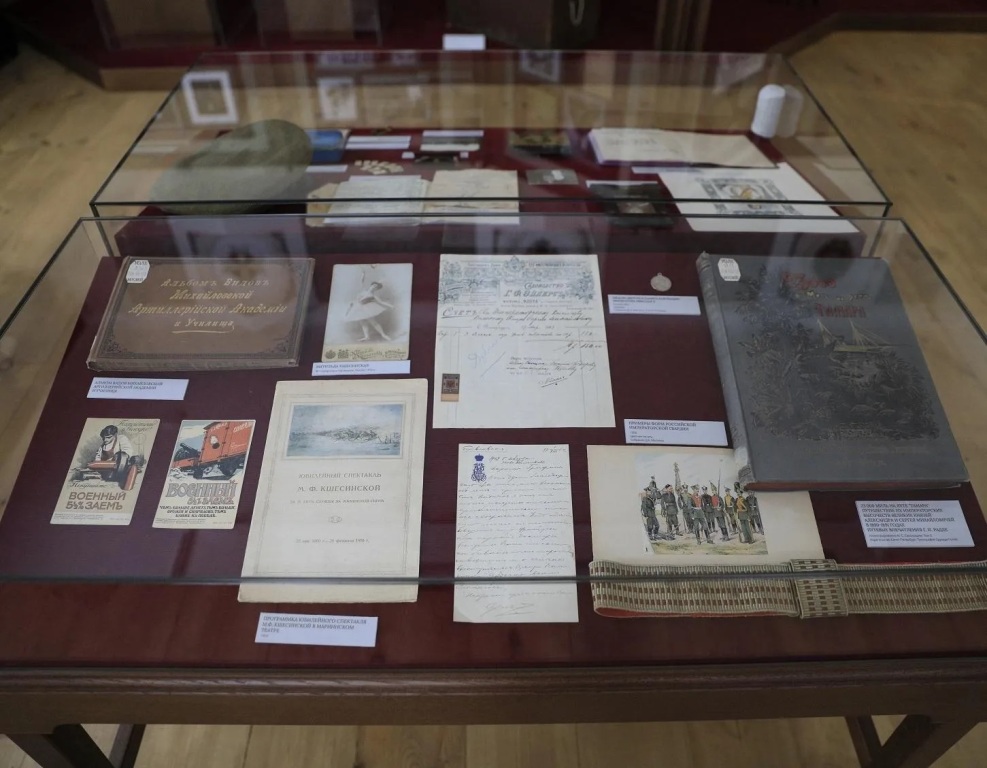
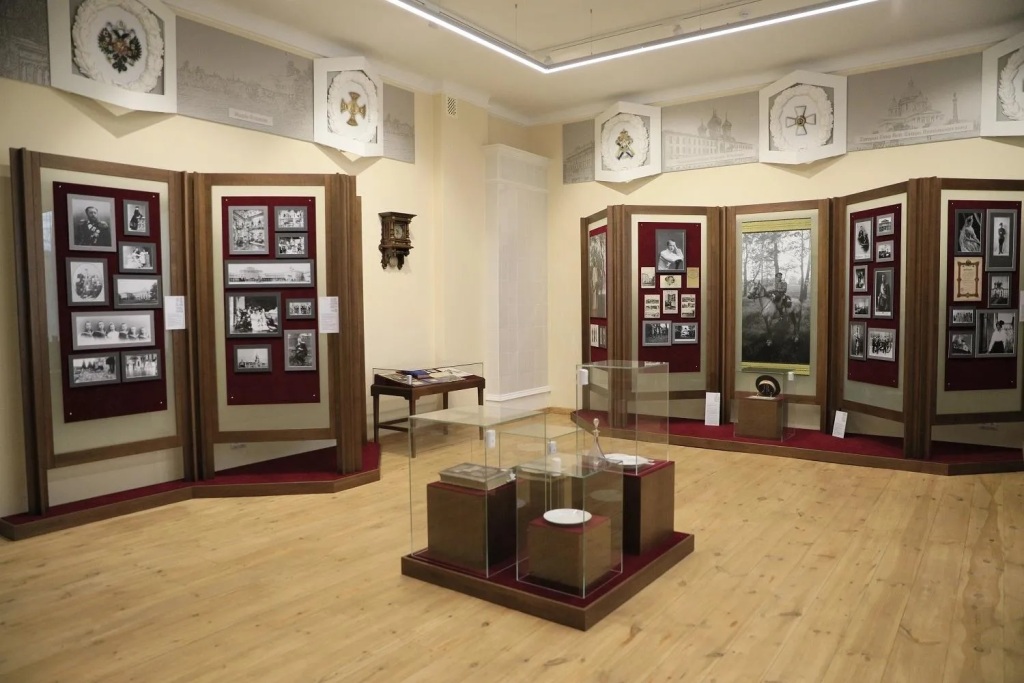
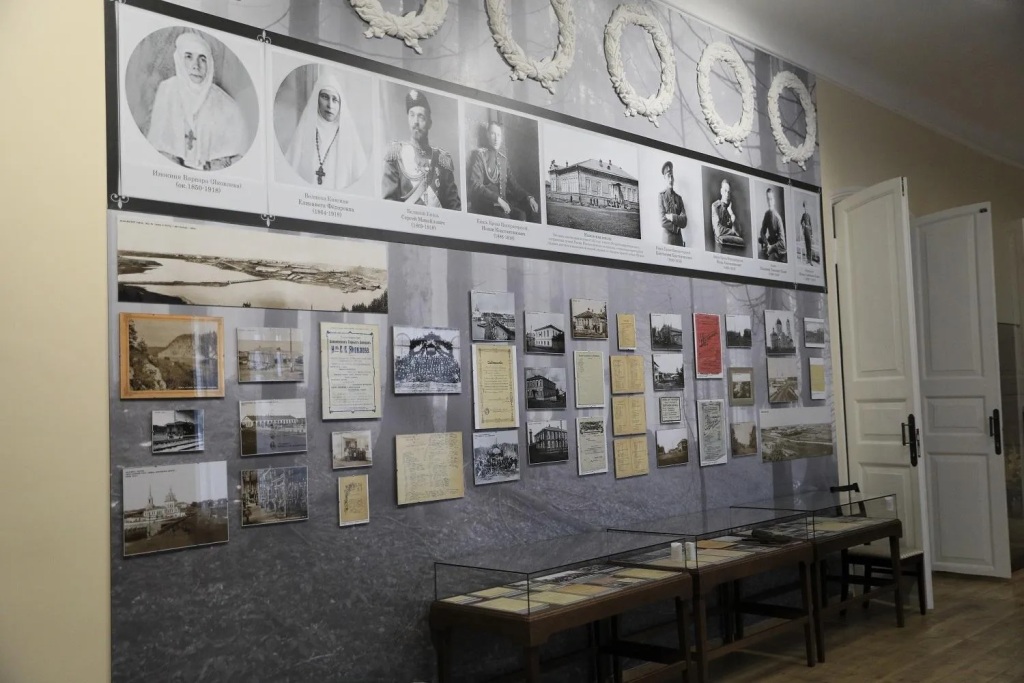
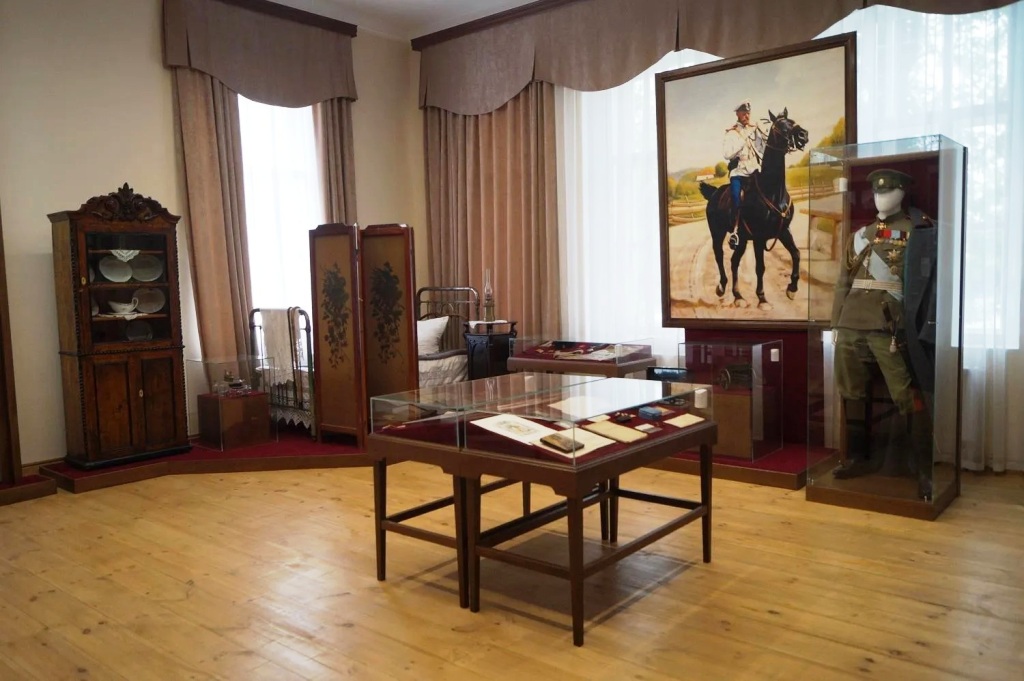
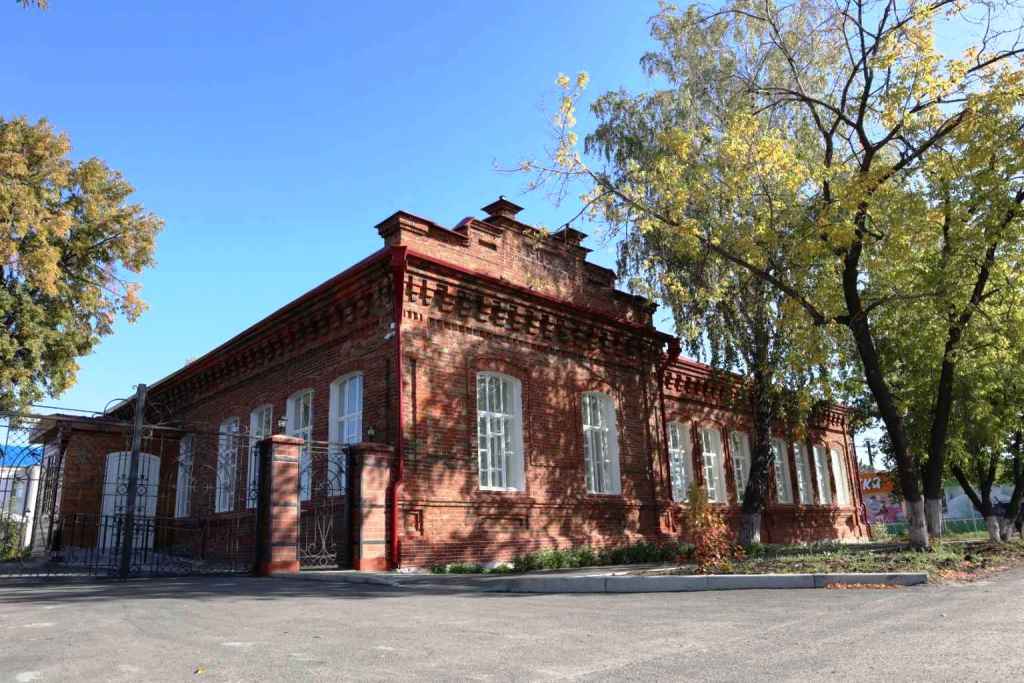
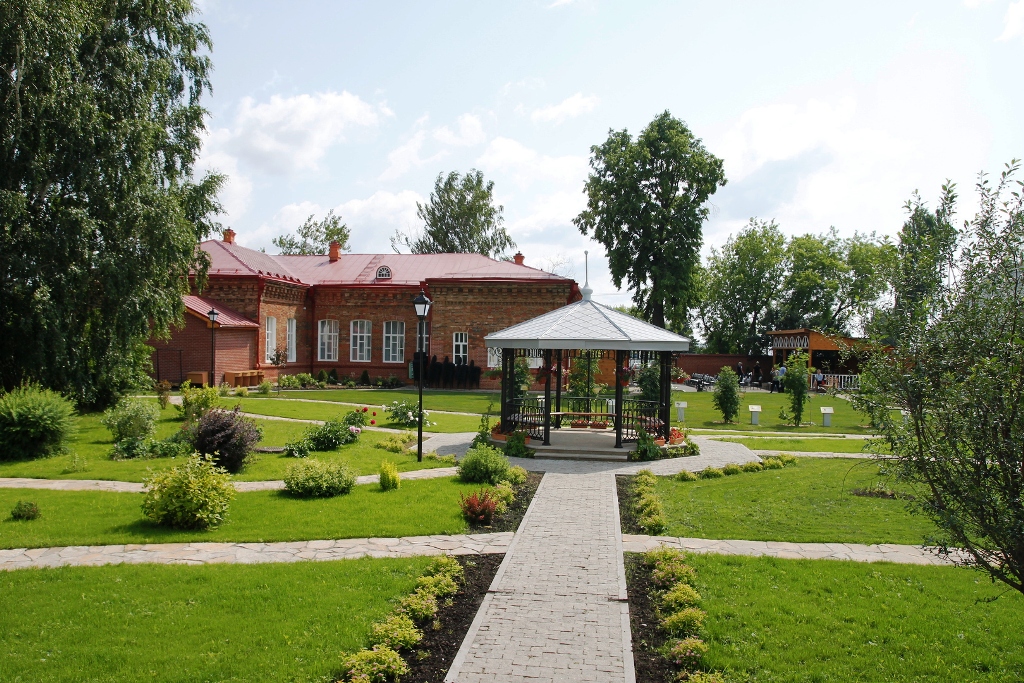
On 17th July 2018, the day marking the 100th anniversary of the death and martyrdom of Emperor Nicholas II and his family, a new permanent exhibition opened in the Napolnaya school in the Ural city of Alapaevsk. The one-storey red brick schoolhouse was built in 1913-1915, on the outskirts of the city.
It was on 20th May 1918, that members of the Russian Imperial Family and their retainers were brought to Alapaevsk: Grand Duchess Elizabeth Feodorovna, Grand Duke Sergei Mikhailovich, Princes of the Imperial Blood Ioann, Konstantin and Igor Konstantinovich, Prince Vladimir Paley (son of Grand Duke Paul Alexandrovich), and two faithful servants: sister of the Marfo-Mariinsky Convent Varvara Alekseevna (Yakovleva), and Fyodor Semyonovich (Mikhailovich) Remez, secretary of the Grand Duke Sergei Mikhailovich.
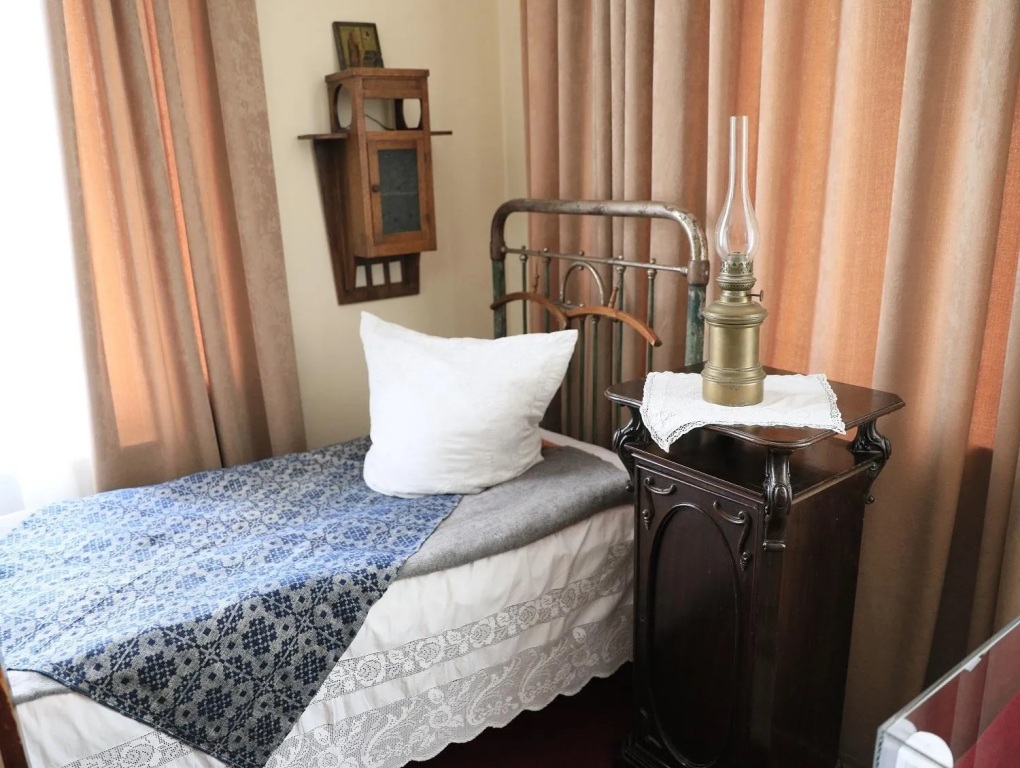
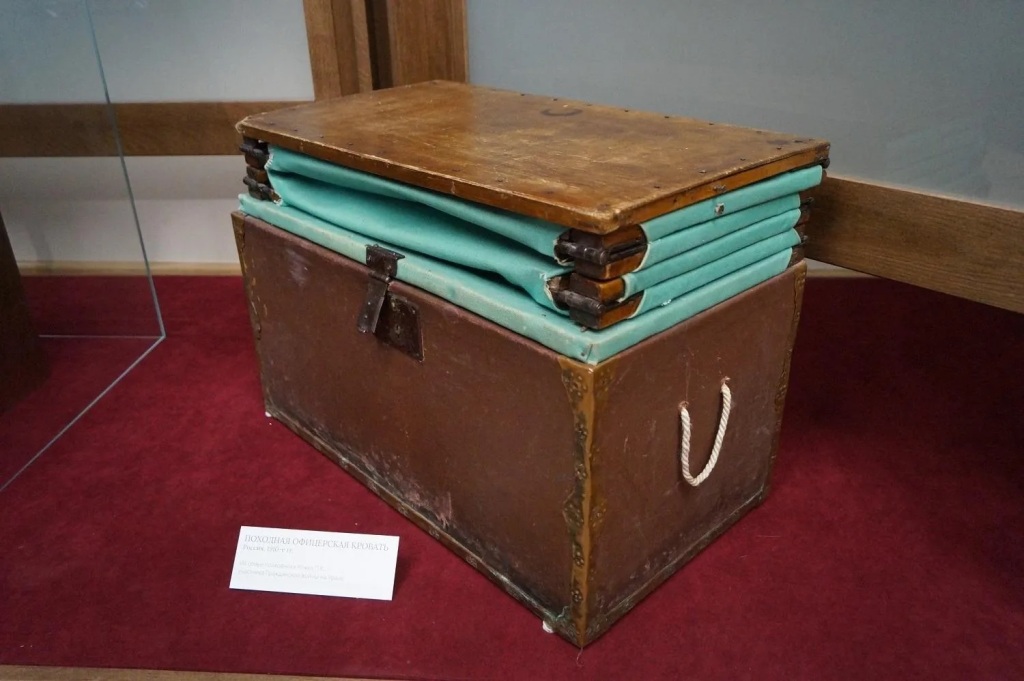
The prisoners were imprisoned in the hastily vacated schoolhouse. They were given three rooms with iron beds, modest tables and chairs. Two smaller rooms were set aside for the kitchen and servants’ quarters.
On the night of 18th July 1918, they were taken out along the factory road towards Verkhnyaya Sinyachikha. It was here that their Bolshevik captors threw the prisoners into a deep abandoned mine, where they subsequently died.
Throughout the Soviet years to the present day, the building has retained its original appearance and interior layout of the premises. Up until November 2017, it housed an elementary school.
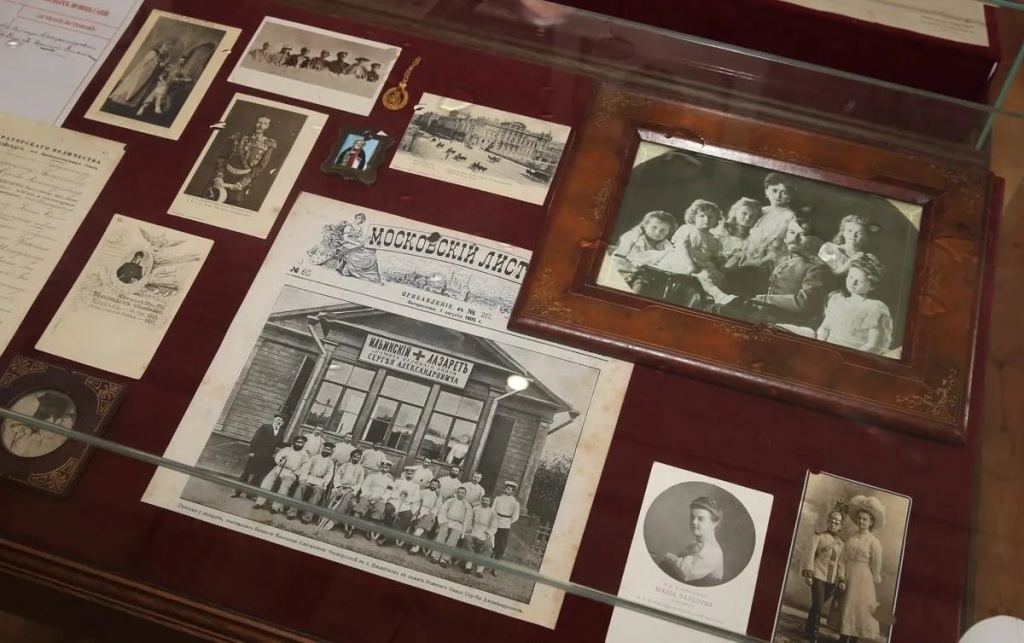
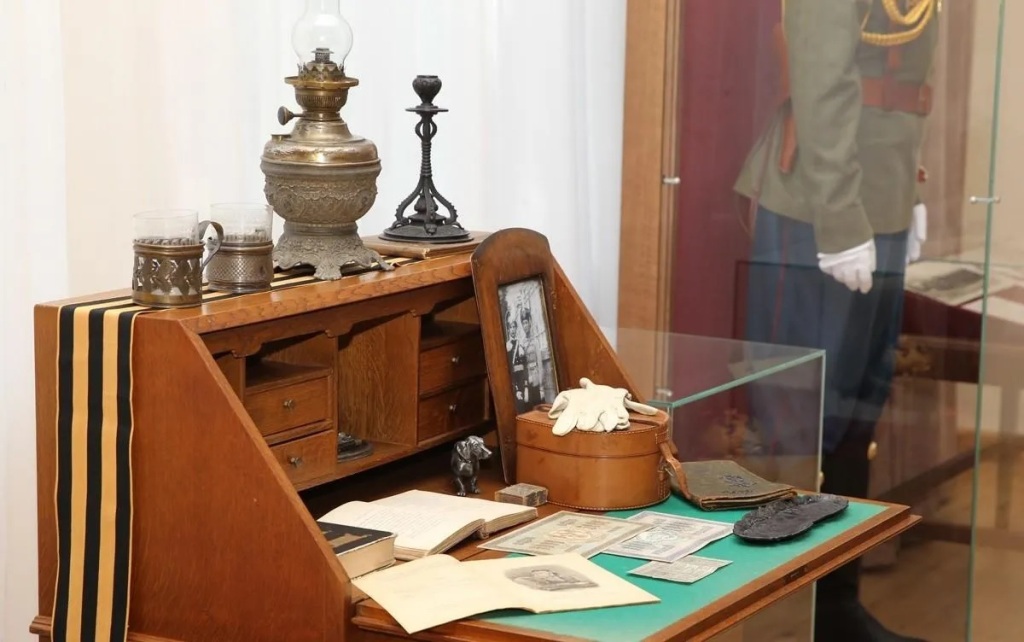
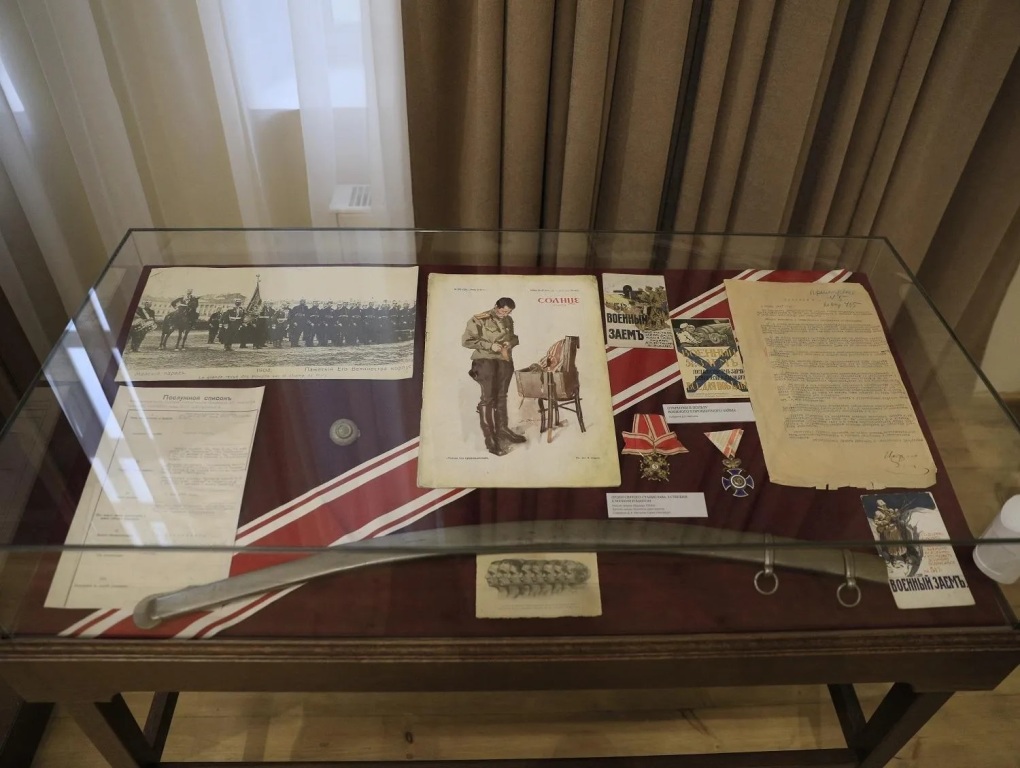
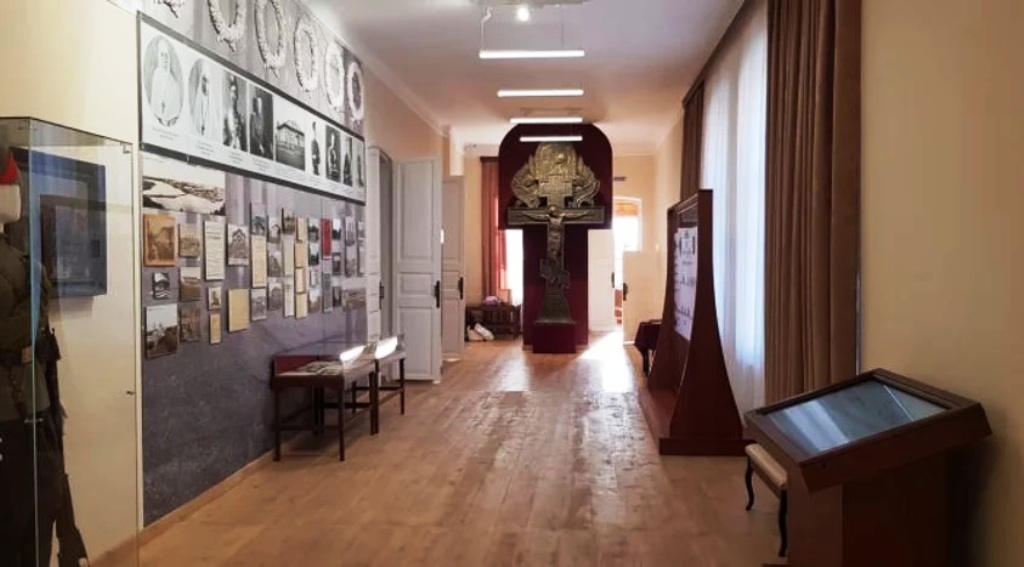
Today, it houses a museum consisting of five rooms, with a permanent exhibition dedicated to the Alapaevsk. Here you can see historical photographs, documents and materials of the investigation into their murders, some of their personal belongings, household items, weapons, and awards of the era.
I am pleased to offer copies of my 2022 calendar, dedicated to Emperor, Tsar and Saint Nicholas II, with a limited printing of only 200 copies!
Each month features a full-page black and white photograph of Russia’s last monarch, printed on quality glossy stock.
Nearly 70 major holidays in the United States, Canada, Great Britain, Australia and Russia are featured, with room to write in your own special dates and events.
Also featured, are the birth dates of members of Nicholas II, Alexandra Feodorovna, and their five children, as well as important dates in the reign of Russia’s last tsar.
The entire net sales from this calendar assist me with my research, but also with translation costs, the maintenance costs of my web site and news blog, as well as the organization and promotion of events.
The price of each calendar is $10 + postage (rates are noted on the order page, link below). I can ship to any country by Canada Post
NOTE: the postage rates quoted are for SINGLE copies ONLY! If you want to order more than one calendar, then please contact me by email at royalrussia@yahoo.com
Payment can be made securely online with a credit card or PayPal or by personal check, money order or cash – click HERE to download and print a mail order form
Thank you for your support of my research and dedication to clearing the name of Russia’s much slandered tsar
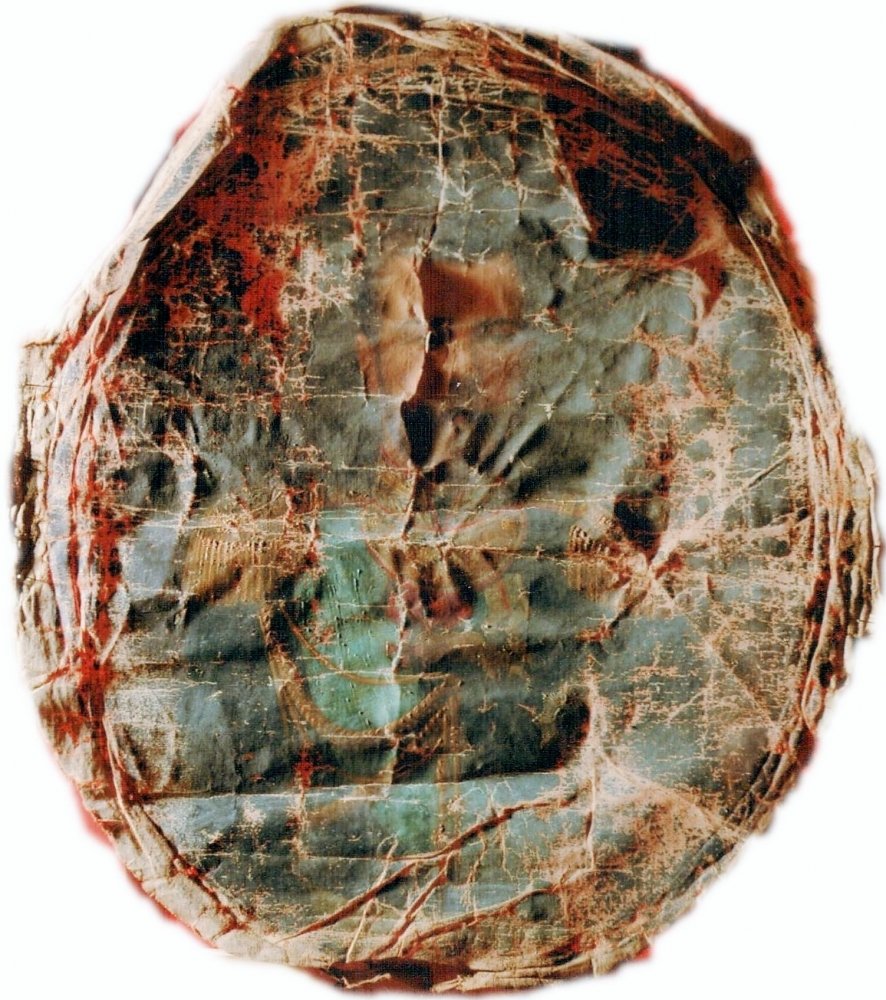
PHOTO: “as if in a misty haze, one could discern the face of Emperor Nicholas II”
In 2018, the State Hermitage Museum in St. Petersburg in cooperation with the Russian-American Cultural and Educational Society ‘Rodina’, embarked on a joint project headed by Candidate of Cultural Studies Viktor Faibisovich, on the restoration of a little-known portrait of Russia’s last tsar.
In 2004, a Moscow collector brought the portrait from the United States to the State Hermitage Museum, after discovering it in the Russian-American Cultural and Educational Society Museum.
The Rodina Society was founded in 1954 by Russian émigrés in Lakewood, New York. The head of Rodina, O.M. Krumins, noted that the portrait was brought from Paris in the late 1950s among other rarities of the Life Guards of the Semyonovsky, Izmailovsky and Pavlovsky regiments, the Nikolaevsky cavalry and the Konstantinovsky artillery schools.
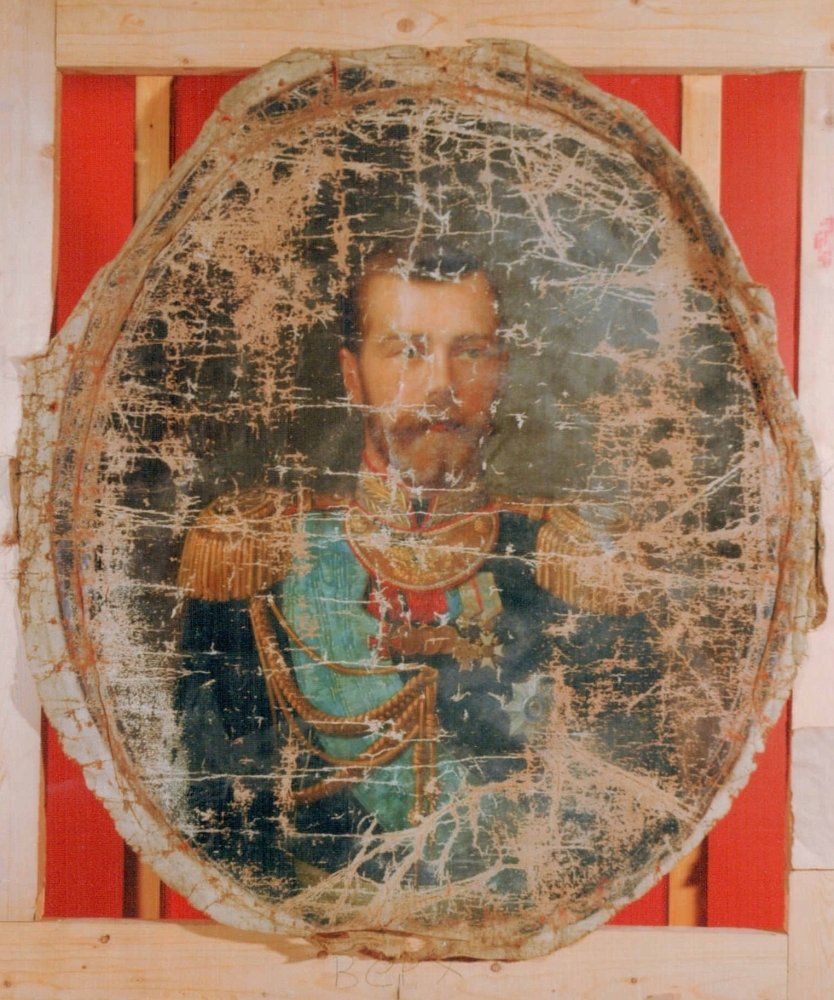
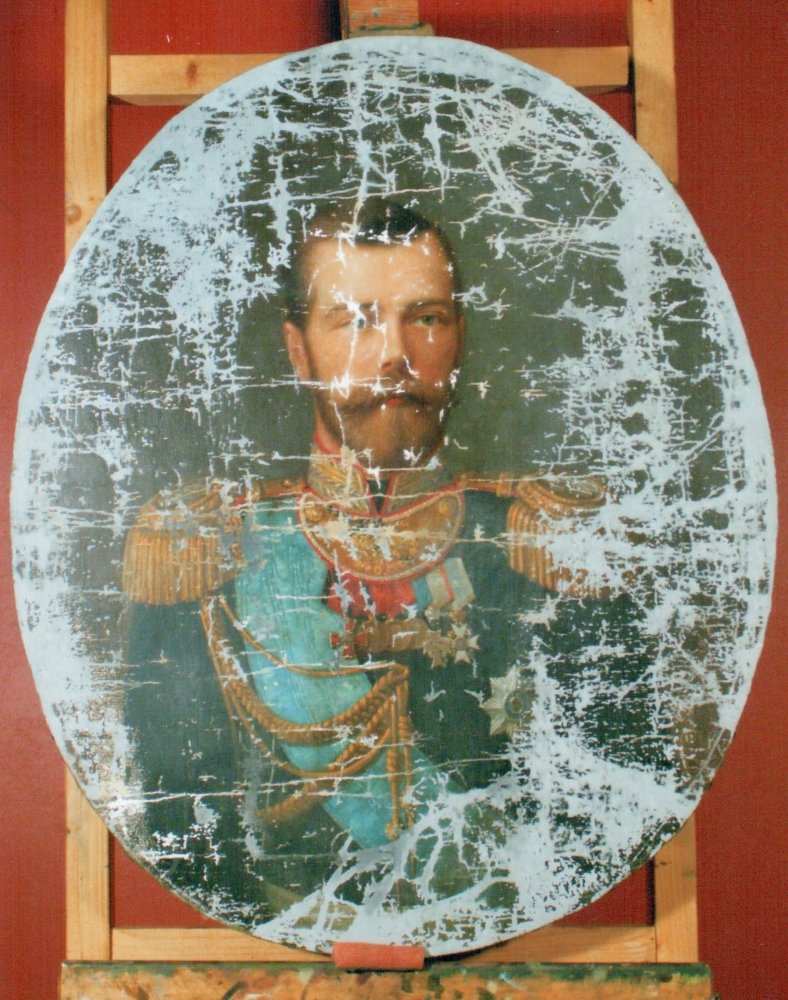
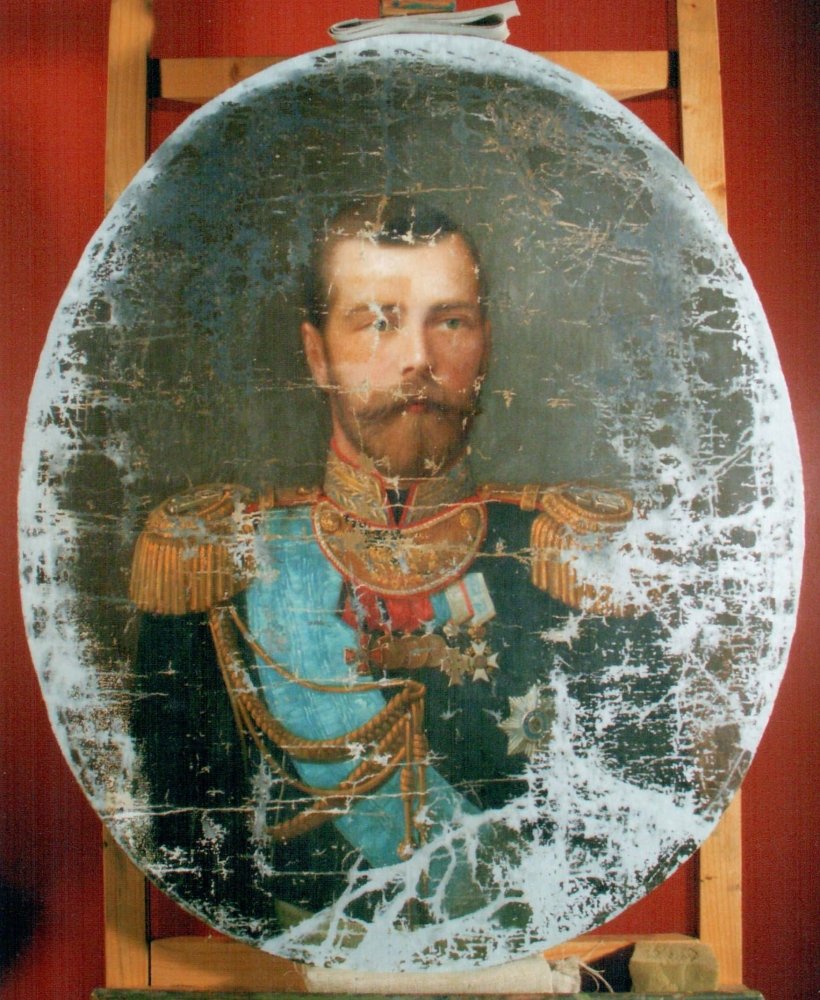
The portrait was in a terrible state, nearly destroyed after years of neglect. Within the remnants of the layer of paint, covered with numerous craquelures [a network of fine cracks in the paint or varnish of a painting], as if in a misty haze, one could discern the face of Emperor Nicholas II, distorted by a deep vertical fracture. But the portrait was in such a terrible state as the canvas had remained rolled up for almost half a century.
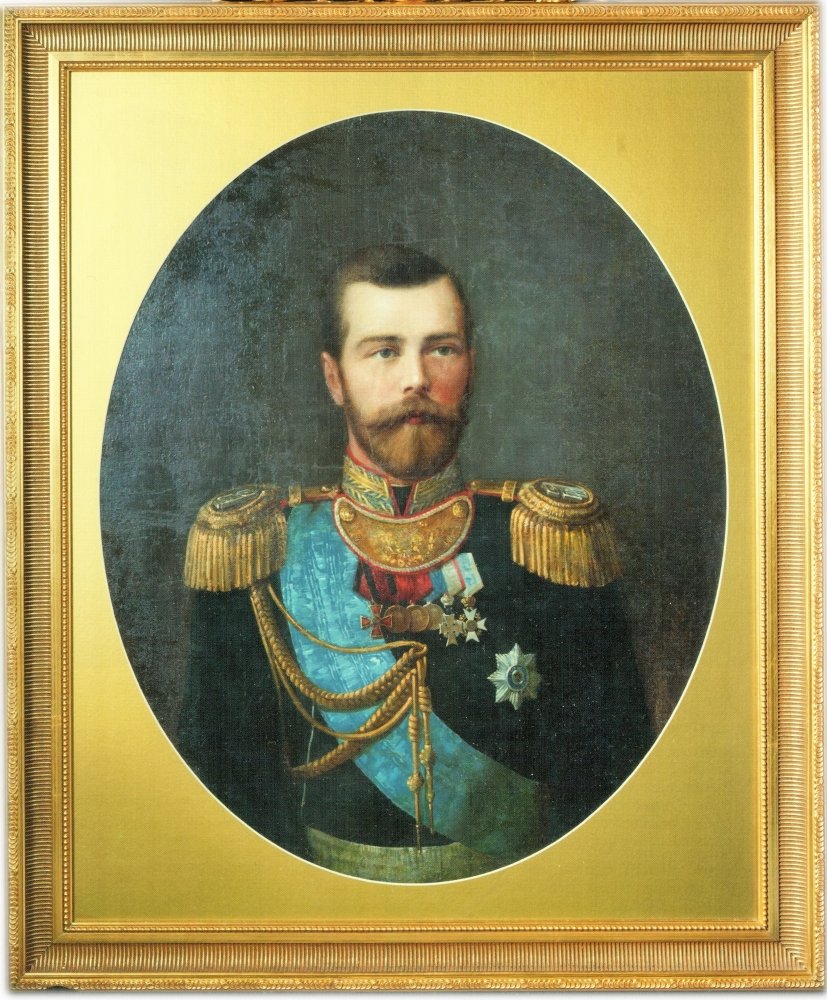
The restoration was entrusted to the masters of the Russian Academy of Painting, Sculpture and Architecture in St. Petersburg . It was established that Nicholas II was depicted in the ceremonial uniform of the Semenovsky Life Guards Regiment. The emperor was appointed chief of this regiment in 1894. Scrupulous attribution made it possible to establish that the portrait was made no earlier than 1896.
But how did it end up in Paris in the middle of the 20th century?
The photos show the various stages of restoration of the portrait
Semenovsky order
The portrait was commissioned by the officers of the Semyonovsky Life Guards Regiment, and hung in the dining room of the officers’ Assembly Hall. A certificate to confirm this was left by an officer of the regiment Yu.V. Makarov: “This dining room, the largest room in the Assembly, was so large that it could accommodate 130-150 diners. On the wall opposite from the entrance, right in the middle, hung a large half-length portrait of the sovereign founder of the regiment, Emperor Peter the Great, in dark oak In a quadrangular frame, the emperor was depicted in a green caftan, with a blue Semyonov collar. Two smaller portraits of Emperor Nicholas II in our uniform and Empress Alexandra Feodorovna in oval gold frames were positioned on either side of Peter’s portrait.”
The officers’ Assembly Hall was the center of regimental life. It was from here that in August 1914 the Semyonovsky Life Guards Regiment set out for battle. During the First World War, the regiment lost 48 officer. Then, in March 1917, the regiment lost its sovereign chief Nicholas II. In April, Colonel Alexander Vladimirovich Popov (1880-1963) was appointed the last Commander of the Semenovsky Life Guards Regiment.
It is to him that we owe the preservation of the portrait of Nicholas II.
PHOTO:Colonel Alexander Vladimirovich Popov (1880-1963) Last Commander of the Semenovsky Life Guards Regiment
In December 1917, the Semyonovsky Life Guards regiment was disbanded. All military ranks, in accordance with the Decree of the Soviets of Workers ‘and Soldiers’ Deputies on the destruction of estates and civilian ranks, were ordered to remove their shoulder straps and hold elections for commanding officers in the new Semyonovsky Guards Regiment. Popov refused to participate in the elections, and transferred the interim duties of commander to Colonel N.K. von Essen (1885-1945). On 10th December 1917 left for Petrograd, taking with him the portrait of Emperor Nicholas II.
The photos show the various stages of restoration of the portrait
Preserved memory
Popov was one of the initiators of the formation of guards units in the White movement. The revived Semyonovsky Life Guards Regiment fought in the South of Russia. Alexander Vladimirovich carried the portrait of the last sovereign chief through the entire Civil War.
In 1919 he emigrated to France and lived in Paris, where he headed the Association of the Semyonovsky Life Guards Regiment in France, was a member of the Union of Zealots in memory of Emperor Nicholas II, the Society of Lovers of Russian Military Antiquity, the Union of Russian Cadet Corps, and an honorary member of the Union of Transfiguration. Popov also served as director of the regimental museum, in which he sacredly kept the portrait of Nicholas II. In the late 1950s, when it became more and more difficult to preserve museum exhibits, they were transferred to the United States.
A few years later, 82-year-old Colonel Popov passed away. In the magazine Sentinel under the heading “Unforgotten graves” was placed a modest mention: “On March 28, 1963, the chairman of the Association of the Semenovsky Life Guards Regiment, the last commander of the regiment, Colonel Alexander Vladimirovich Popov, died in Paris.”
He was buried in the Sainte-Genevieve-des-Bois Cemetery in Paris.
PHOTO: the portrait of Nicholas II, after restoration
After the death of the collector who brought the portrait of Nicholas II to Moscow, the portrait was donated to the Museum of the Russian Guard in the General Staff Building [across from the State Hermitage Museum] in St. Petersburg.
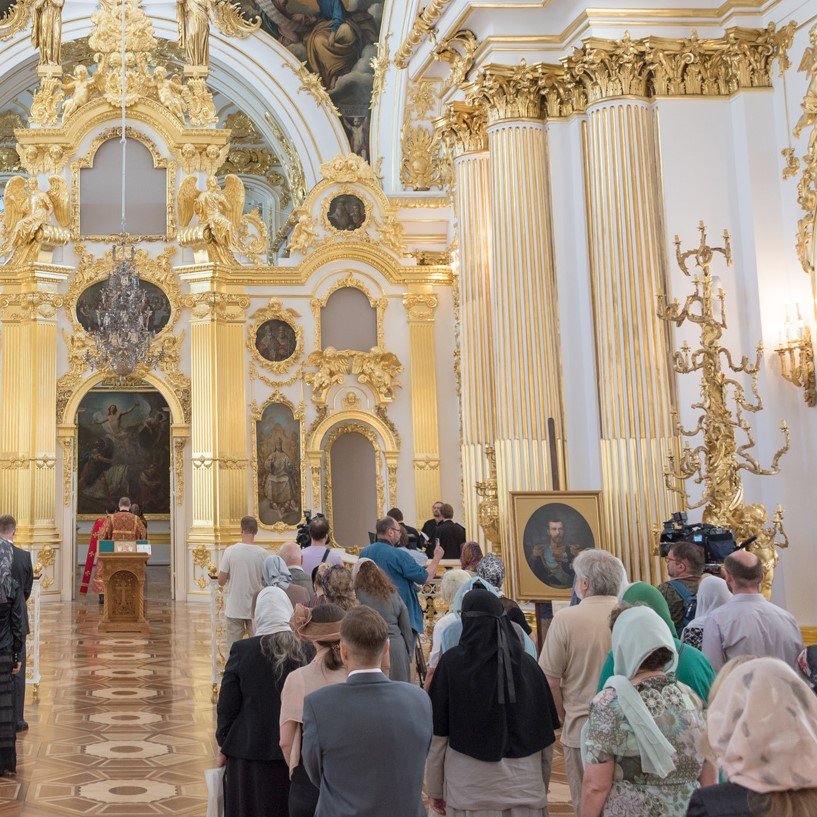
PHOTO: the restored portrait of Nicholas II displayed in the Winter Palace in 2018
On 17th July 2018, the day marking the 100th anniversary of the death and martyrdom of Russia’s last emperor and tsar, a Divine Liturgy was performed in the Church of the Savior Not Made by Hands [the home church of the Imperial Family] in the Winter Palace, led by the rector of the Prince Vladimir Cathedral, Archpriest Vladimir Sorokin. The restored portrait of Nicholas II by an unknown artist of the late 19th-early 20th centuries was displayed in the cathedral. Popov would have been pleased.
I am pleased to offer 4 Romanov titles on AMAZON in both PAPERBACK and EBOOK editions. These are books which I published in paperback editions about 20 years ago, and have been out of print for some time. I decided to repackage each with new covers, and updated with prefaces and introductions.
Please note that these titles are only available in eBook editions at the present time, paperback editions are in the works, and will be announced as they become available.
Prices for eBooks start at $9.99 USD, paperback editions start at $12.99 USD. Each title offers a FREE Look Inside feature.
NOTE: the book covers depicted below are the eBook editions! The book covers for the paperback editions are different. Please refer to the links provided below to view – PG
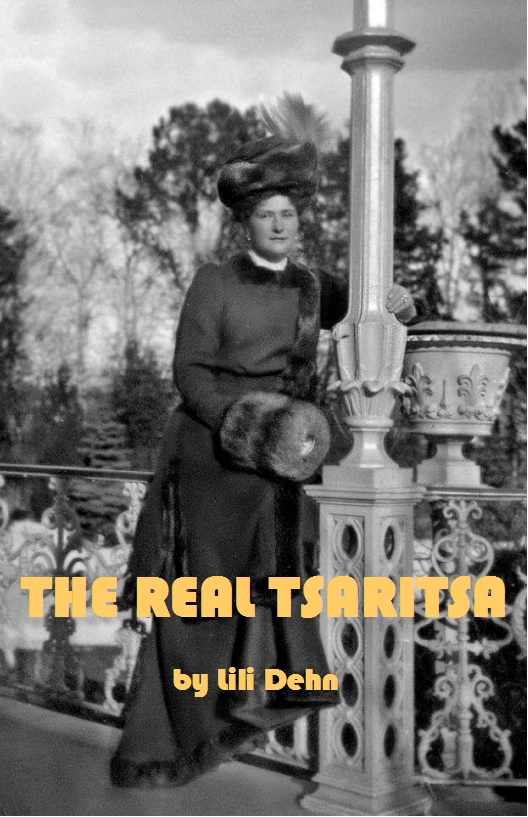
Rumour was busy in her lifetime with amazing tales about the late Empress of Russia; how much or little truth lay behind such rumours was known only to her few closest friends, and one of the few was Lili Dehn (1888-1963).
Great-granddaughter of Prince Koutousoff, the famous defender of Moscow against Napoleon I, Lili Dehn was admitted, after her presentation at Court, into the home circle of the Tsaritsa, and a great friendship grew up between them. Her study of the Empress’s personality, habits, views, life as she led it, is intimate and illuminating. Here is the truth about Rasputin, with new light on the legend of his power over the Royal Household, the inner reason for the scandalous reports circulated concerning him and the Empress, and a grim, enthralling account of his death and burial. Lili Dehn was the first person to whom the Empress came with the news of the Tsar’s abdication, and she witnessed his return after that supreme humiliation.
There are dramatic elements in the narrative of the early days of the Revolution; life at Tsarskoe Selo while the Tsar and his family were under arrest; and in the record of the writer’s own imprisonment and adventurous escape. The interest of the book is intensified by the often deeply pathetic letters written to Lili Dehn by the Tsaritsa from captivity. This revelation at first hand of the whole tragedy of the Empress, as a wife and a mother, and of all that led to the downfall of a great dynasty, makes a profoundly human appeal.
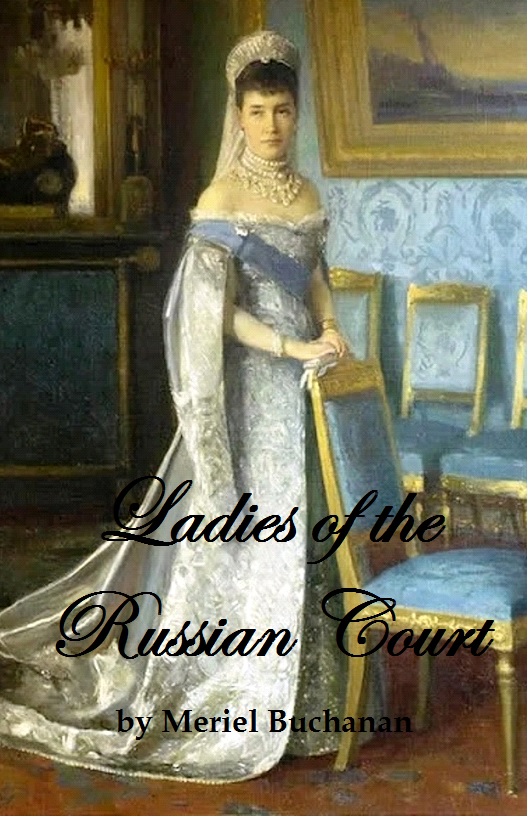
The daughter of Sir George Buchanan (1854-1924), British Ambassador at St. Petersburg in the First World War, lived among the Russian Imperial Court amid the fading glories of an age now past.
The stories which make up these six portraits are drawn from her own memories, stories of women whose lives were lived in the bright light that shines on royalty, many of whom she knew in their everyday existence.
In this gallery of portraits are included the Dowager Empress Marie Feodorovna, wife of Emperor Alexander III and mother of Emperor Nicholas II; the Grand Duchess Marie Pavlovna, the wife of Grand Duke Vladimir Alexandrovich; the Grand Duchess Elizabeth Feodorovna, the wife of the Grand Duke Sergei Alexandrovich and sister of Empress Alexandra Feodorovna; the Grand Duchess Victoria Feodorovna, the wife of the Grand Duke Cyril Vladimirovich; the Grand Duchess Olga Nicholaievna, eldest daughter of Emperor Nicholas II; and finally, Princess Zenaide Yousoupoff, the mother of the infamous Prince Felix Yousoupoff.
In dealing with these ladies of the Russian Court, the author evokes all the mystery, fascination, splendour, and elegance of Tsarist Russia. Ms Buchanan writes with a charm and ease most fitting to the characters she describes.
LAST DAYS AT TSARSKOE SELO by Count Paul Benckendorff
Count Paul Benckendorff (1853-1921), belonged to the closest circle of Emperor Nicholas II. Following the collapse of the monarchy in 1917, Benkendorff and his wife shared the captivity of the Imperial Family at Tsarskoe Selo.
After the end of the First World War, he was accepted into court service: Adjutant General (1905). General of the Cavalry (1912). Ober-marshal of the Imperial Court. Benckendorff was also a Member of the State Council of the Russian Empire and the Imperial Yacht Club.
Benkendorff’s narrative provides a detailed eye-witness account of the Tsar’s abdication, his transfer to Tsarskoe Selo and his daily life in the Alexander Palace, where he was held under house arrest from February to August 1917.
Throughout his memoirs, Benckendorff characterizes Nicholas II and his wife Alexandra Feodorovna as courageous, gracious, and poised despite their obvious concern for their family.
Due to his age and poor health, Benckendorff was unable to follow the Emperor and his Imperial Family’s into exile to Tobolsk. One of the very few who were faithful, he parted with his Sovereign for the last time on 14th (O.S. 1st) August 1917.
This short biography was originally published in 1913, to coincide with the 300th anniversary of the Romanov dynasty. The author served as a major-general in the Tsar’s suite, and a professor of military art in the General Staff Academy in St. Petersburg.
Many contemporary historians claim that Nicholas II was not fit to rule the Russian Empire. Elchaninov, however, rebukes these claims based on first-hand experience.
The first chapters describe Russia’s last Tsar as a caring, devoted and loving husband and father. The remaining focus on his relationship with his government, the church, the army, the Russian people, and the policies which he pursued during the first 18 years of his reign.
Written before the First World War and the 1917 Revolution. Elchaninov writes in glowing patriotic language portraying Nicholas II as an indefatigable “Imperial worker” in the service of Russia’s best interests and the “Sovereign father” of the Russian people.
This new expanded edition features an introduction by independent researcher Paul Gilbert, and two detailed appendices: a chronology of events during the reign of Nicholas II (1894-1917); and 100 facts about Nicholas II and the many reforms he made during his reign.
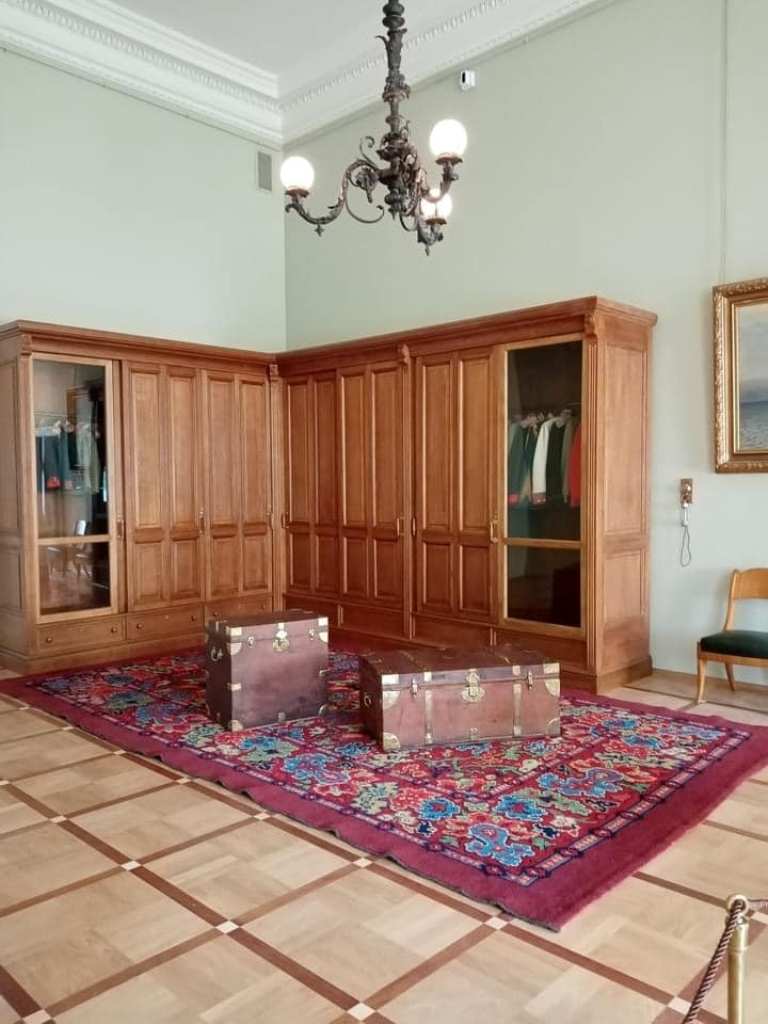
On 13th August, the Russian media were invited to tour the recreated apartments of Emperor Nicholas II and Empress |Alexandra Feodorovna, located in the eastern wing of the Alexander Palace at Tsarskoye. The palace welcomed its first visitors the following day, 14th August.
The first stage of the Alexander Palace restoration project is the result of the colossal work of hundreds of people, including designers, architects, restorers, museum workers and dozens of organizations.
The designers include “Studio 44 Architectural Bureau” (general design organization), “PSB“ ZhilStroy ”(general contractor organization); “Geoizolu” (deepening the basements), Tsarskoye Selo Amber Workshop (recreation of furniture sets); “Renaissance” workshops for the restoration of ancient monuments (production of fabric decoration); “Art-Corpus” (reconstruction of ceramics and coffered ceiling in the Moorish Bathroom); “Pallade” (reconstruction of the ceramic tile for the fireplace in the Mauve (Lilac) Boudoir), Stavros Decor company (reconstruction of wood trim and built-in furniture), “Restro” (reconstruction of a sofa in the Maple Drawing Room), “Studio NB. Yuzhakova “(mirrors, reconstruction of the stained glass frame, and restoration of chandeliers).
Large-scale works began in 2012, which included the three State Halls, situated in the central part of the palace. The Alexander Palace was closed to visitors in the autumn of 2015. The restoration was carried out mainly at the expense of funds allocated by the Ministry of Culture of the Russian Federation. Thirty-four percent of funding was allocated by the Tsarskoye Selo State Museum and charitable donations. According to the Director of the Tsarskoye Selo State Museum Olga Taratynova, that despite the COVID-19 pandemic, work on the Alexander Palace continued unabated. She further noted that the tab for the restoration and reconstruction project cost 2.2 billion rubles [$30 million USD].
The opening ceremony was attended by Director of the Department of Museums and External Relations of the Ministry of Culture of the Russian Federation Alexander Voronko, Vice Governor of St. Petersburg Boris Piotrovsky, and the Director of the Tsarskoye Selo Museum-Reserve Olga Taratynova.
The Alexander Palace is a significant architectural monument in Russian history, the last home of the last Russian emperor Nicholas II and his family, who lived here permanently from 1905 to 1917. Thus, at the beginning of the 20th century, the Alexander Palace became the center of state life in Russia.
Visitors will now have an opportunity to see 13 recreated interiors [30 colour photos + 2 videos]: the New Study of Nicholas II, Moorish Bathroom of Nicholas II, Working Study of Nicholas II, Reception Room of Nicholas II, the Valet’s Room, PLUS the Maple Drawing Room, Pallisander (Rosewood) Living Room, Mauve (Lilac) Boudoir, Alexandra’s Corner Reception Room, the Imperial Bedroom, the Small and Large Libraries and the Marble/Mountain Hall.
“For us, the opening of the first stage of the Alexander Palace is an epoch-making event. This place is associated with turning points in history, the fate of several generations of the Romanovs. In recent years, all our strengths, aspirations and dreams have been associated with the restoration of the palace. This is a project of incredible complexity and now, finally, we can breathe out a little – the first stage has been completed,” said Olga Taratynova.
The Western wing is scheduled for completion no earlier than 2024. After the completion of the work, the Alexander Palace will become a multifunctional museum complex, which will include exhibition halls, halls for temporary exhibitions, halls for research work and conferences, as well as a library and a children’s center. The basement floor will house a ticket booth, a museum shop, a café, a cloakroom, a tour desk, as well as technical and ancillary facilities.
CLICK on the above image to watch a VIDEO of the reconstructed interiors of the private apartments of Emperor Nicholas II and Empress Alexandra Feodorovna, situated in the eastern wing of the Alexander Palace
Restoration and reconstruction
Some of the interiors of Nicholas and Alexandra’s private apartments have miraculously retained their historical decoration, including both the New Study and Reception Room of Nicholas II, Alexandra’s Corner Reception Room, and the Large and Small Libraries. In preparation of the opening of the Alexander Palace, additional restoration work was carried out in these interiors.
The restorers relied on amateur photographs taken by Nicholas II and members of his family from the state archives, colour autochromes taken in 1917, as well as additional archival documents. During the restoration, all the original elements of the interior decoration have been preserved, including oak wall panels, wood-clad ceilings and ceramic tiles.
According to the samples of fabrics that are kept in the collections of the Tsarskoye Selo and Pavlovsk State Museum-Reserves, it was possible to recreate decorative fabrics. For instance, in the Imperial Bedroom, the walls, furniture, alcove are upholstered in chintz [printed multicoloured cotton fabric with a glazed finish, used especially for curtains and upholstery], it is also used for window and door draperies. The fabric of the Imperial Bedroom required almost 350 sq. meters of fabric. It took two years to recreate the fabric and draperies of this interior – from the preliminary design to the installation. The Mauve (Lilac) Boudoir is finished with silk. Curtains, including those in the Moorish Bathroom (batiste with appliqués), have been recreated from historical samples and photographs; The Working Study of Nicholas II (jacquard with images of hyacinths); in the Maple Drawing Room (jacquard with birds). Decoration of numerous interiors is replete with trimmings (braid, fringe, cords, lace).
Recreation of decorative elements
Furniture decoration: in total, more than 60 pieces of furniture – beech, walnut, rosewood, maple – will be presented in the Mauve (Lilac) Boudoir, Maple Drawing Room, Pallisander (Rosewood) Living Room, the Imperial Bedroom and the Working Study of Nicholas II (the furniture in this interior is under construction and has not yet been installed). The mezzanine in the Maple Drawing Room was recreated, as well as the wall panels in the Pallisander (Rosewood) Living Room and the Working Study of Nicholas II.
Fireplaces: in the Palisander (Rosewood) Living Room and Maple Drawing Room, the Working Study of Nicholas II and Mauve (Lilac) Boudoir, and the Moorish Bathroom of Nicholas II. The fireplace in the Reception Room of Nicholas II and two fireplaces in the Working Study of Nicholas II have been restored.
Carpets: the colour, pile height, density of the base structure were recreated on the basis of photographs and analogs – a total of almost 550 square meters. meters. Stitched New Zealand wool rug in the Maple living room measuring 182 sq. meter weighs 400 kg.
Discoveries
During dismantling work in the Moorish Bathroom of Nicholas II, craftsmen discovered the basin of the pool under the floor, and in it they found fragments of the original Metlakh ceramic on the walls. These tiles aided experts with the recreation of the original interior decoration of the Moorish Bathroom, with the aid of black-and-white photographs taken in the 1930s.
In 2019, during the clearing in the New Study of Nicholas II, the discovery of the original colour and a fragment of the stencil painting that framed the fireplace portal, made it possible to restore the historical colour of the walls. The discovery of the surviving samples of English tiles made it possible to recreate the lining of the fireplace inserts and fireplaces.
While recreating the stucco decoration of the Maple Drawing Room, the restorers discovered in the opening between the two mezzanines – from the Maple Drawing Room to the New Study of Nicholas II – a small fragment of the original decoration of the drawing room, which answered questions about the shade of pink and the nature of the stucco relief depicting roses.
Exhibition
Prior to the outbreak of the Great Patriotic War in 1941, the Alexander Palace housed more than 52.5 thousand items, of which more than 44.8 thousand items were lost during the war from 1941 to 1945. From the 7.7 thousand items which survived, a significant part of the items are currently in the collection of other museums in Russia. Among these were 5,615 items moved from the Alexander Palace to he Pavlovsk State Museum Reserve. Of these, nearly 200 pieces were originally from the Alexander Palaces’ three ceremonial halls: the Portrait, Semi-Circular and Marble Halls. These include 39 pieces of porcelain, 41 paintings, 73 decorative bronze pieces, and 28 pieces of furniture.’
More than 6 thousand items from the collections of the Tsarskoye Selo State Museum-Reserve will be displayed in the reconstructed interiors of the Alexander Palace. It is interesting to note that the Pavlovsk State Museum Reserve “temporarily loaned” nearly 200 items from its collection to the Alexander Palace [these items actually belong to the Alexander Palace]. The Central Museum of Contemporary History of Russia in Moscow handed over the keys to the palace, which entered the museum collection from the assistant commandant of the palace immediately after the revolution.
Assistance in the creation of the exhibition was provided by the History of the Fatherland Foundation, State Archives of the Russian Federation (GARF), the Peter the Great Central Naval Museum, the State Hermitage Museum, the Russian Museum, the Gatchina State Museum-Reserve, the Russian National Library, the Livadia Palace Museum, the Pushkin Museum of Fine Arts. A.S. Pushkin, Novosibirsk State Art Museum, Rostov Regional Museum of Fine Arts, Memorial History and Art Museum-Reserve of V.D. Polenov, Research Museum of the Russian Academy of Arts, private gallery Galerie Christian Le Serbon (Paris), and the British Museum.
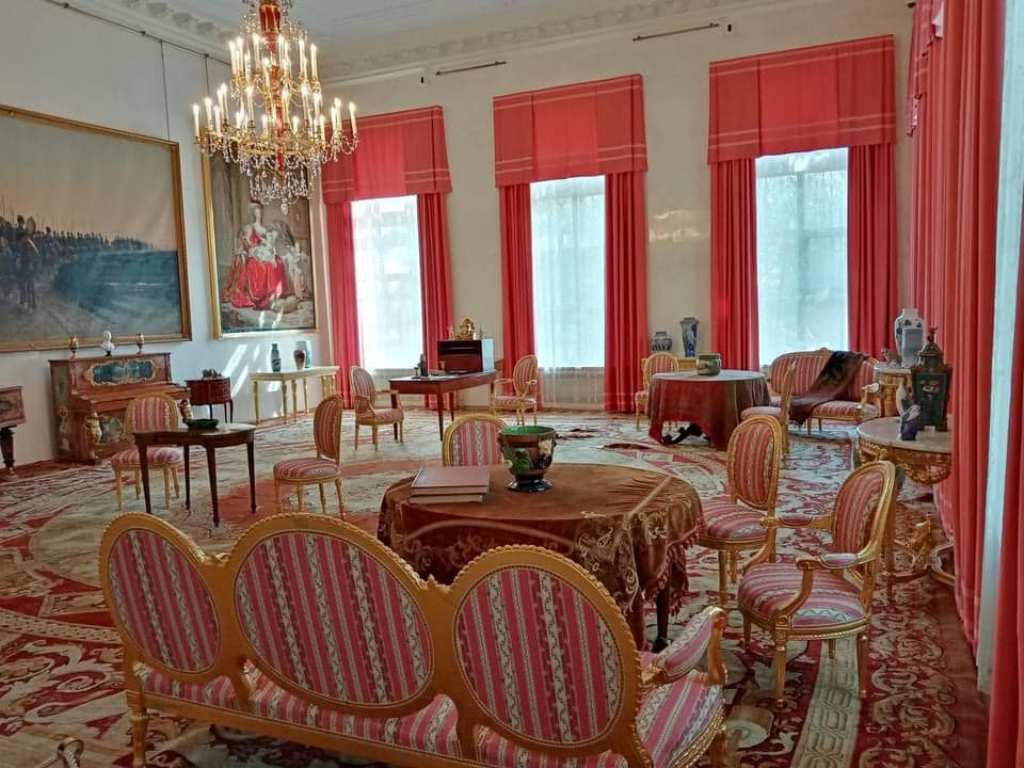
PHOTO: Empress Alexandra Feodorovna’s Corner Reception Room
Work carried out in the interiors
Corner Reception Room
It was in this room that Nicholas II received the ambassadors of foreign states. Here, in May 1902, French President Loubet, who was on an official visit to Russia, was received. He presented Alexandra Feodorovna with a large tapestry portrait of Marie-Antoinette with her children, based on the original portrait by Vigee-Lebrun (1787). During the Russo-Japanese War and the First World War, it was in this room, that the Empress received the leaders of the charitable organizations which she patronized. The family often arranged breakfasts and dinners here, gathered during home concerts, in which the stars of the St. Petersburg opera company, including Fyodor Chaliapin, often took part.
It was also in the Corner Reception Room, on 20th August 1915, the historic meeting of the Cabinet of Ministers was held, at which Nicholas II announced that he would assume command of the army and navy.
Works: artificial marble, parquet, moulding, recreation of furniture, curtains and window fillings recreated.
Maple Drawing Room
Its architectural design with its Art Nouveau style and forms stands out sharply against the background of the rest of the interiors. The main architectural accent is the spacious mezzanine, where the Empress painted and made handicrafts.
Here Alexandra Feodorovna received people close to her and trusted visitors. During the First World War, when Nicholas II was in the army, the empress heard reports from ministers here.
Works: mezzanine, furniture, carpet, decorative moulding, recreation of fireplaces.
Pallisander (Rosewood) Living Room
This interior was designed by Roman Melzer in 1896-1897. The architect chose rosewood as the main finishing material – expensive wood that was delivered from abroad. In the first years of their residency in the palace, Nicholas II and Alexandra Fedorovna often spent time in solitude in this particular room. Then the living room became a place for breakfast and dinner for the Imperial family.
The Empress kept things in this room which reminded her of her homeland – the Grand Duchy of Hesse, situated in southern Germany – landscapes, watercolours, and portraits. With the help of two telephones, the empress could use the local St. Petersburg network and communicate directly with the Headquarters in Mogilev, where Nicholas II spent a long time during the First World War. It was in this room that on 8th March 1917, General Lavr Georgiyevich Kornilov placed Alexandra Feodorovna and her children under house arrest at the Alexander Palace.
Works: the upholstery of the walls, curtains, carpets, as well as panels and a fireplace made of rosewood, decorated with a fabric insert and mirrors with a facet (special processing of edges and the outer edge of the glass), a stucco frieze were recreated according to historical samples.
Mauve (Lilac) Boudoir
During the more than two decades of Alexandra Feodorovna’s life in Russia, the Mauve (Lilac) Boudoir – her favourite room in the Alexander Palace – was never redesigned. The mauve silk was ordered from the Parisian firm of Charles Bourget. In this room, the emperor and empress, along with their children often drank coffee after breakfast and gathered for evening tea. Alexandra Feodorovna spent a lot of time here writing letters and reading.
According to the memoirs of contemporaries, the Empress usually sat in a chaise lounge, reclining on lace pillows. Behind her was a draft-proof glass screen, and a lace shawl covering her legs.
Works: the fabric upholstery of the walls, curtains, furniture, carpet, wood panels, a fireplace, a picturesque frieze were all recreated.
Imperial Bedroom
Entry to the Imperial Bedroom could be made through the Pallisander (Rosewood) Living Room and the Mauve (Lilac) Boudoir. To wake the emperor and empress each morning, one of the footmen knocked three times on the door of the Mauve (Lilac) Boudoir with a silver staff. By this time, Nicholas was usually already awake and already at work at his desk, while Alexandra often got up late, and if she was not feeling well, did not leave her private rooms.
From 1905, the Alexander Palace became the main imperial residence, and therefore the center of the country’s state life. The officials who arrived for an audience with the emperor first went to the Reception Room, where they were received by the adjutant wing, who was on duty.
Works: restoration of oak panels, parquet, fireplace, ceiling paneling and fabrics, upholstery of a built-in sofa, restoration of a chandelier.
Large and Small Libraries
According to the pre-war museum inventory, there were almost 19 thousand volumes in the library halls of the palace and 6 thousand volumes were in private rooms. The Large and Small Libraries today exhibit more than 5 thousand volumes.
Here the emperor received ministers every day, heard reports, and reviewed official documents. The interior consisted of a table, chairs, walnut cabinets and a large ottoman upholstered in the fashion of a Persian rug. Nicholas II rested on it when work dragged on until nightfall or when he returned to Tsarskoye Selo from St. Petersburg late and preferred not to disturb his family.
The study also contained the personal library of Nicholas II, which consisted of about 700 volumes of military, historical literature, books on state issues, fiction and periodicals. The decoration was destroyed during the Nazi occupation.
Works: reconstruction of curtains, fireplace, panels, built-in walnut furniture, carpets. It is assumed that the recreated ottoman, a desk with a desk, a lamp, and armchairs will also return to the interior.
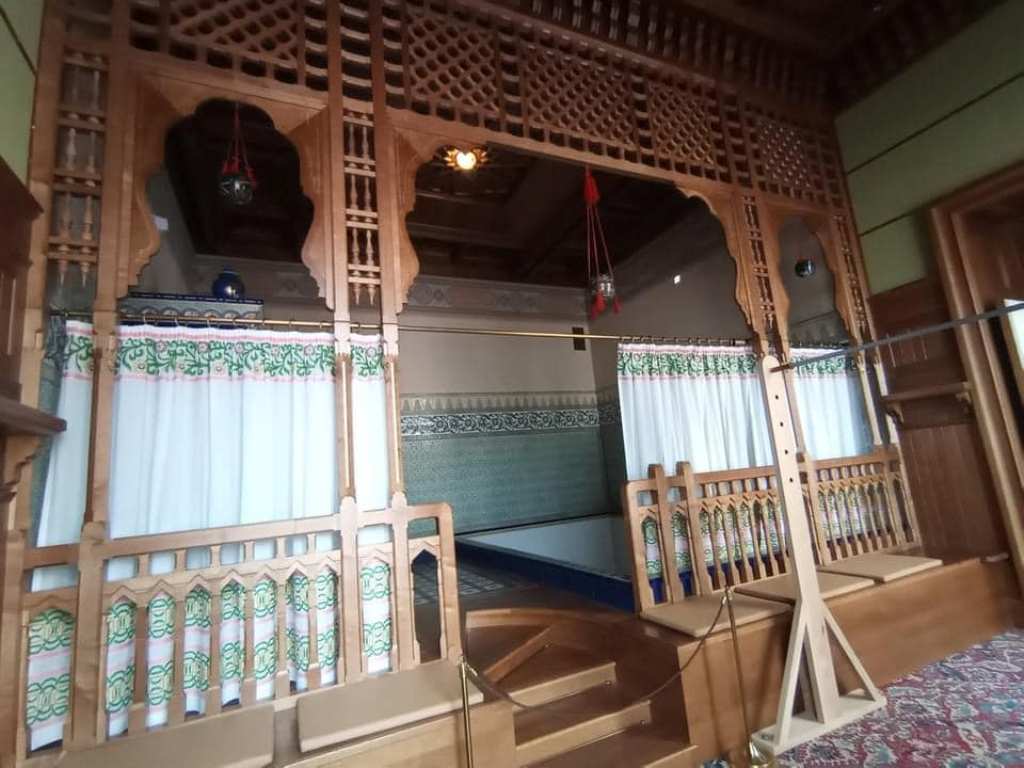
PHOTO: Moorish Bathroom of Nicholas II
Moorish Bathroom
Built in the Moorish style, the emperor’s bathroom was decorated with a swimming pool with a capacity of about a thousand buckets of water. The pool was filled with water at the required temperature in a few minutes. On the platform facing the pool there was a fireplace surrounded with oriental style tiles. The pool and the entire bathroom were designed and supervised by the architect and engineer Nicholas de Rochefort. The decoration was lost during the Great Patriotic War.
Works: recreated fireplace, pool, partition, fabrics, carpet, curtains, horizontal bar, ceiling, and a picturesque frieze.
PHOTO: Valet’s Room
Valet’s Room
Under Nicholas II, the Cloakroom and Kamerdinerskaya, separated by partitions, were located here.
Works: due to the lack of iconographic material, it was decided to leave this interior in its current state; the walls were plastered and painted, and the historical modeling was preserved.
New Study of Nicholas II
The interior was designed in the Art Nouveau style. A wooden staircase leads to a mezzanine which connects to the Maple Drawing Room mezzanine. During the First World War, maps of military operations were laid out and fateful decisions were made in the New Study of Nicholas II.
Works: restored fireplaces, parquet, ceiling, stairs to the mezzanine; the found samples were used to recreate the wall paintings (the discovered fragments were preserved), the curtains and partly furniture were recreated.
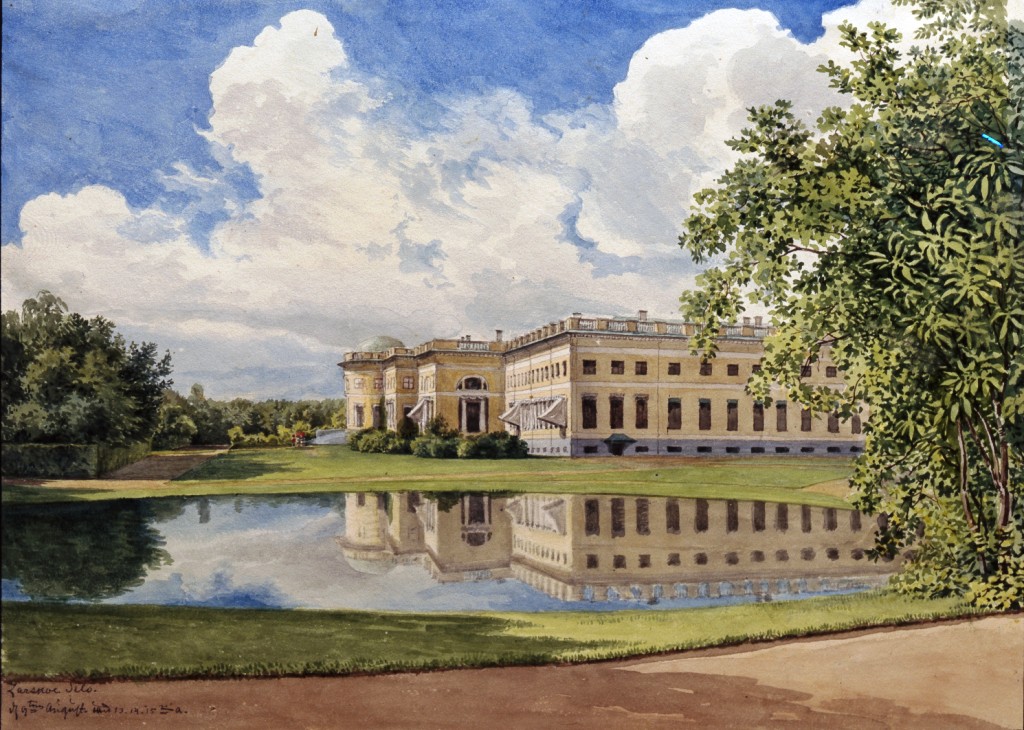
PHOTO: watercolour of the Alexander Palace as it looked in 1831
Historical reference
In 1792, the Alexander Palace was built by the Italian architect Giacomo Quarenghi by order of Empress Catherine II. The palace was a wedding gift for her beloved grandson – Grand Duke Alexander Pavlovich (future Emperor Alexander I) with Grand Duchess Elizabeth Alekseevna.
The private apartments of Nicholas II and his wife Alexandra Feodorovna were placed in the eastern wing of the Alexander Palace. Alterations were carried out from 1894 under the leadership of Alexander Vidov and Alexander Bach. After the death of Vidov, he was replaced by Silvio Danini, who, in turn, was replaced by Roman Melzer.
From 1905, the palace became the permanent residence of Emperor Nicholas II, who was born here in 1868. It was here that the Emperor spent the last 12 years of his reign. It was from the Alexander Palace on 1st August 1917, that the Imperial family were sent into exile to Tobolsk in Siberia.
In 1918, the Alexander Palace was opened to visitors as a state museum. Later, a recreation center for NKVD employees was located in the west wing of the palace. An orphanage was opened in the former rooms of the Nicholas II’s children on the second floor of the east wing.
During the Nazi occupation of the city of Pushkin [Tsarskoye Selo], the German headquarters and the Gestapo were located in the Alexander Palace, in the basements there was a prison. The square in front of the palace was turned into a cemetery for SS officers.
After the war, the palace was mothballed and in 1946 transferred to the USSR Academy of Sciences for keeping the collections of the Institute of Russian Literature. The building was being prepared for a large-scale exhibition dedicated to the 150th anniversary of the famous Russian poet Alexander Pushkin. As a result, restoration work on the palace began in 1947-1949: it was planned to restore the preserved interiors of Quarenghi and the surviving fragments of the decoration of the late 19th – early 20th centuries. During the work, many elements of the decoration of the Maple Drawing Room and the Pallisander (Rosewood) Living Room, as well as the Moorish Bathroom, were destroyed.
In 1951, the palace was transferred to the Naval Department, and the palace collection, which was part of the evacuated items in the Central Depository of Museum Collections of Suburban Palaces-Museums, were transferred to the Pavlovsk Palace State Museum.
The palace was transferred into the jurisdiction of the Tsarskoye Selo Museum-Reserve in October 2009. In June 2010, during the celebration of the 300th anniversary of Tsarskoye Selo, three State Halls of the Central were solemnly opened after restoration.







 Nicholas II
You must be logged in to post a comment.