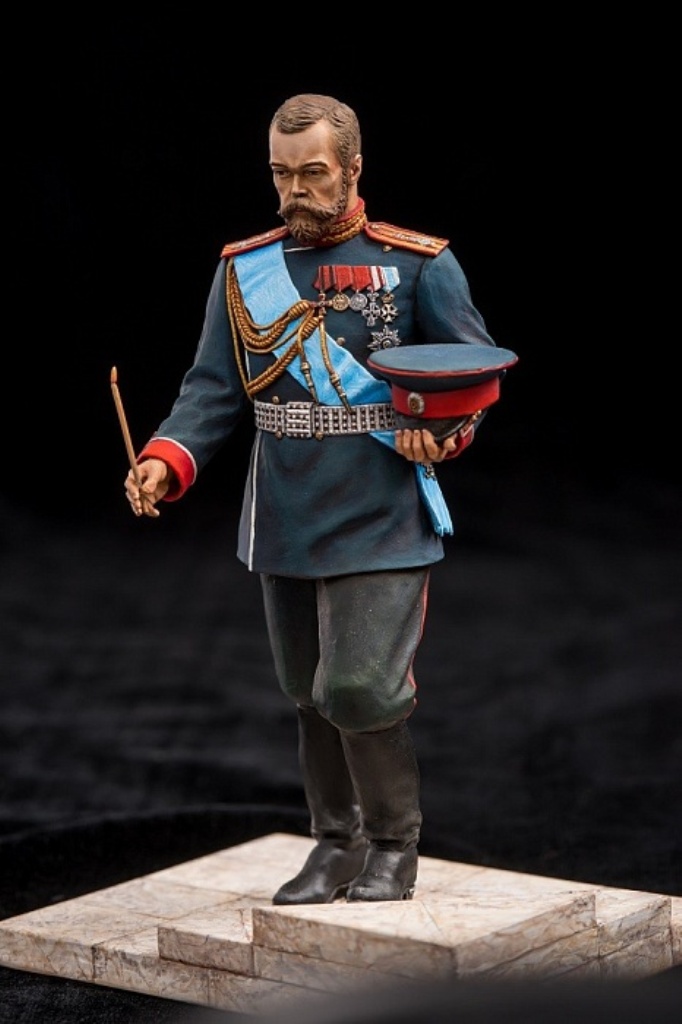
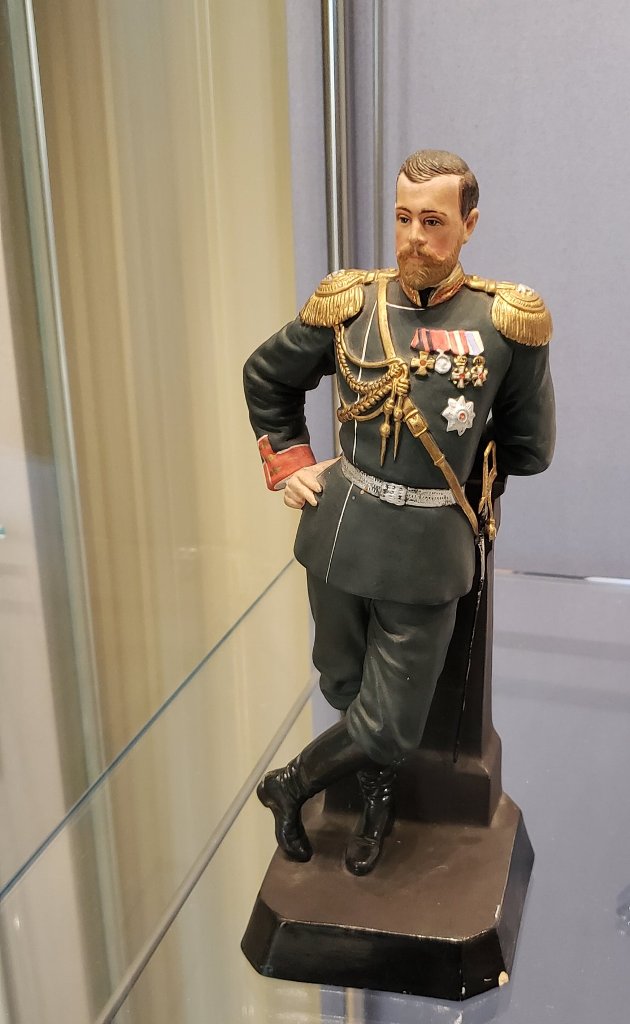
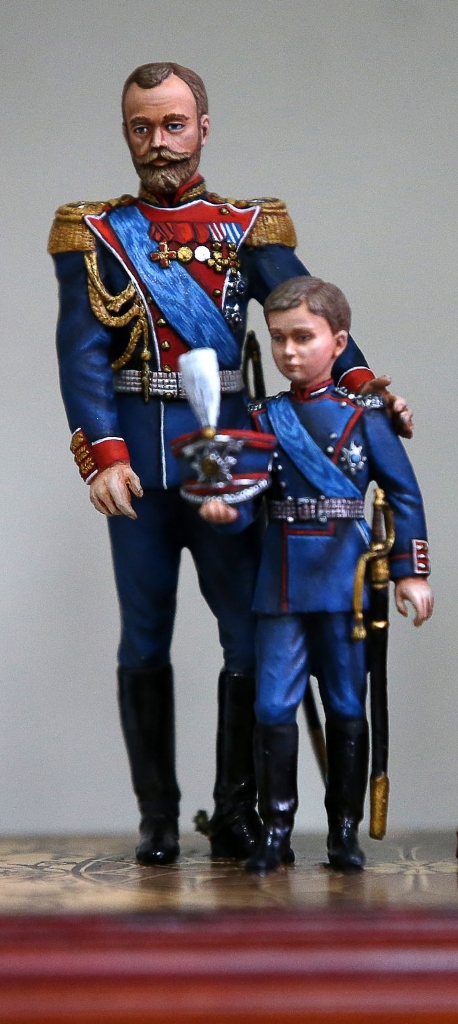
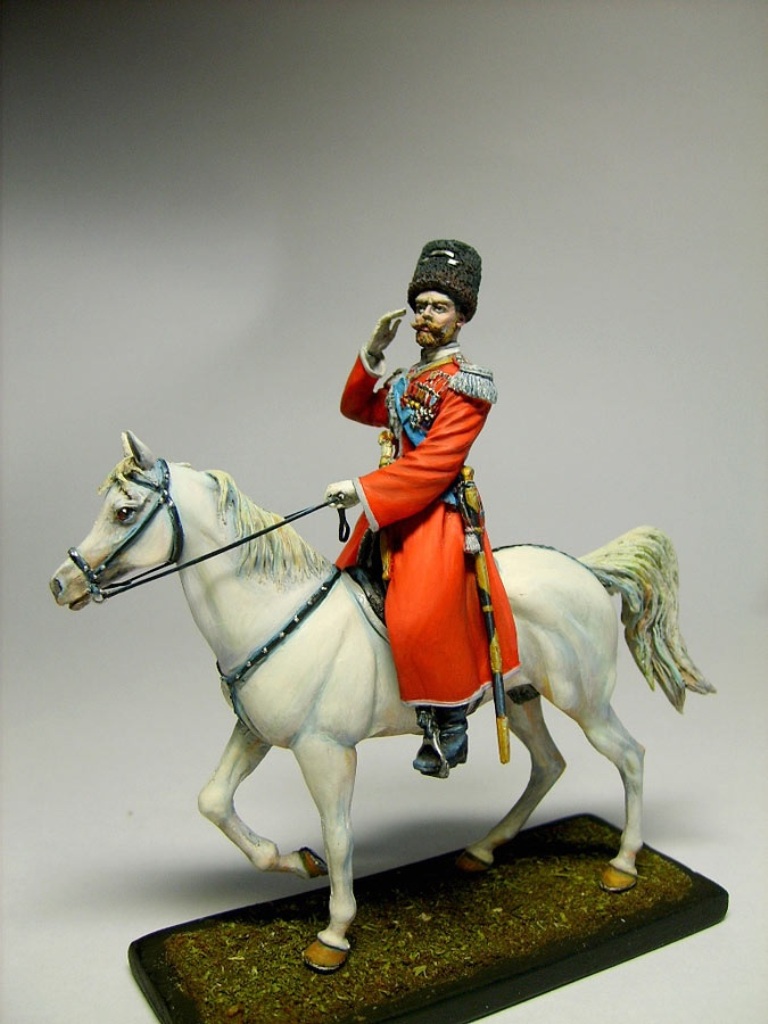
New book on military uniforms during the reign of Nicholas II

On 18th February, a new Russian language book Униформа русской императорской армии конца XIX — начала XX века. История. Дизайн. Материалы. Технологии [Uniforms of the Russian Imperial Army of the Late 19th – Early 20th Centuries. Story. Design. Materials. Technologies], was presented in St. Petersburg.

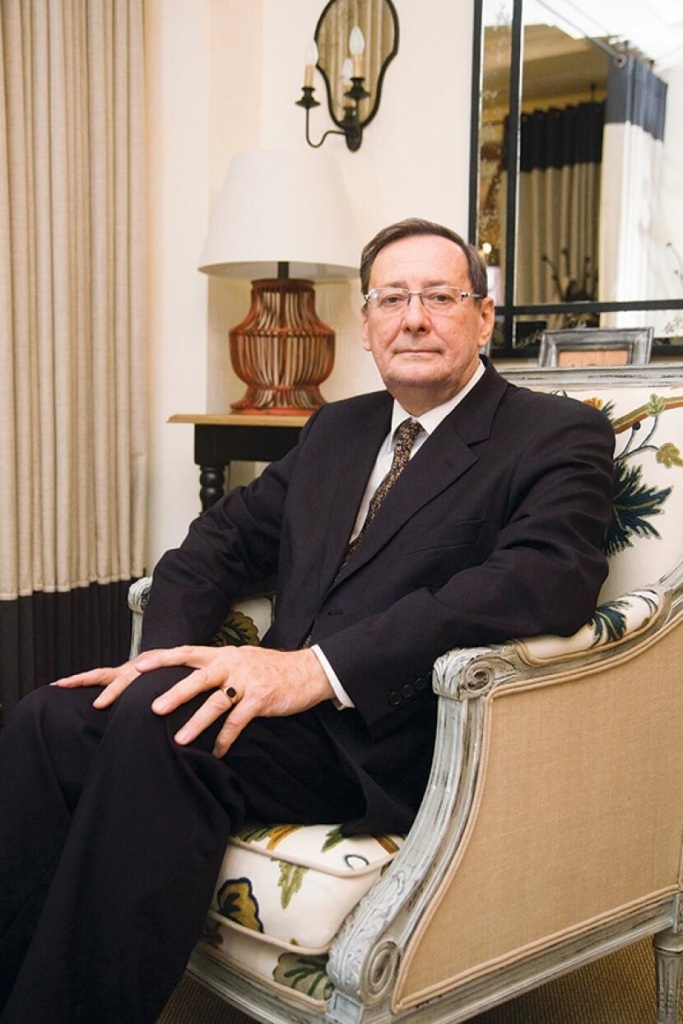
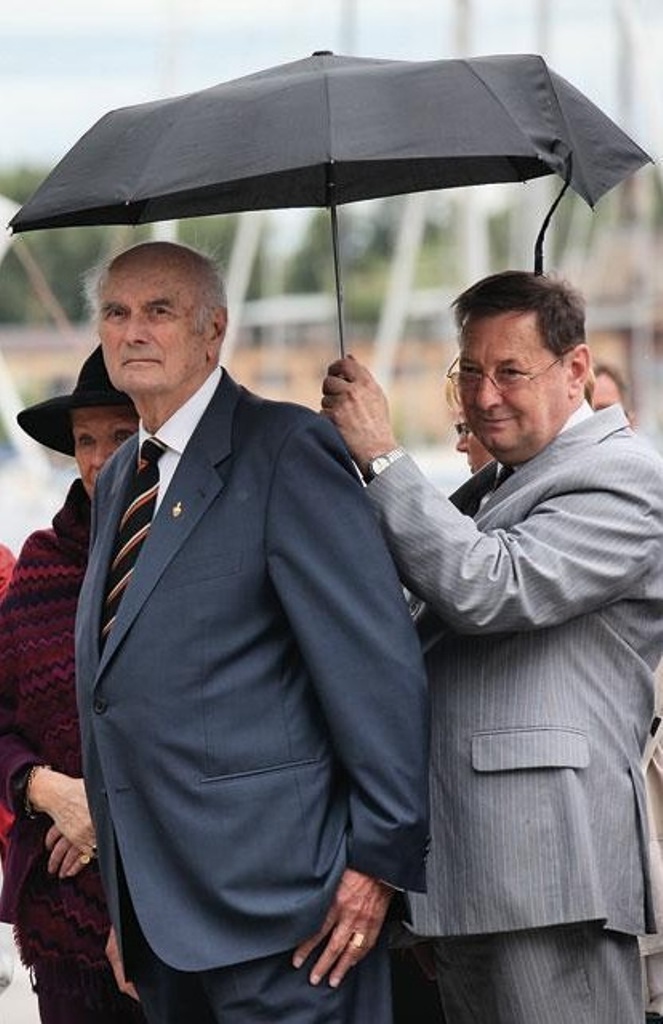
The presentation took place in the concert hall of the Russian National Library, situated on the Fontanka River Embankment, researched and written by Doctor of Historical Sciences Alexei Aranovich and Vladimir Bezrodin.

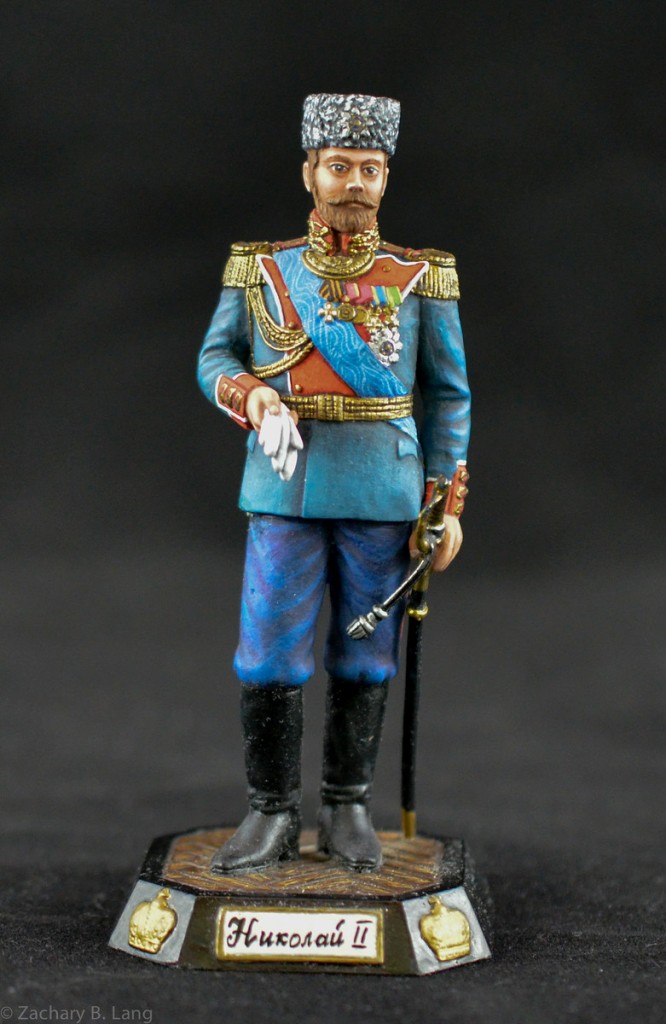
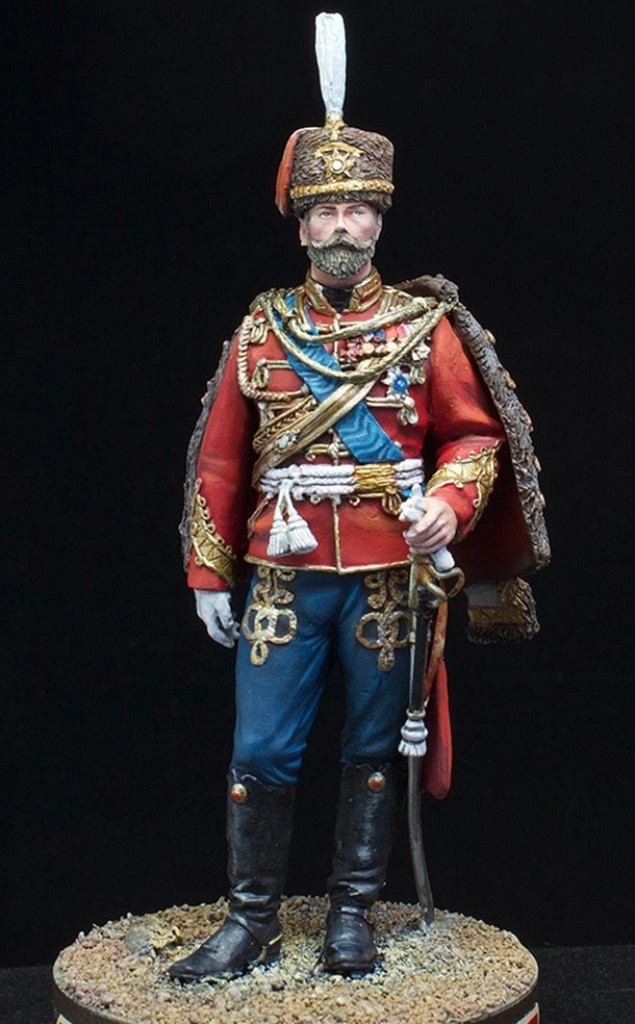
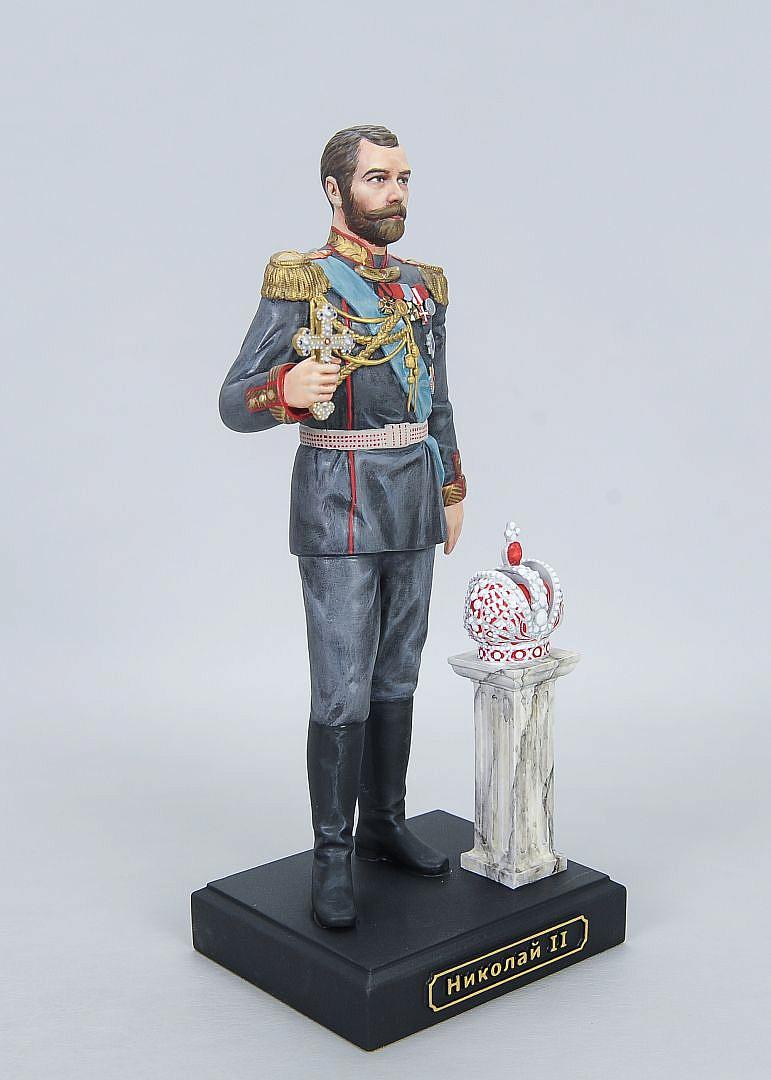
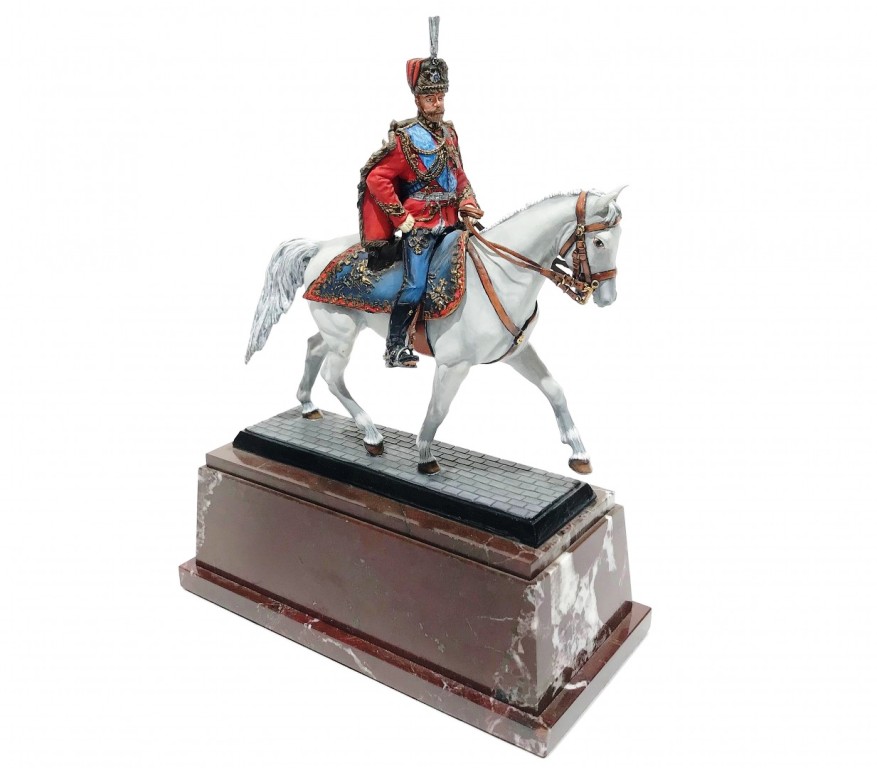
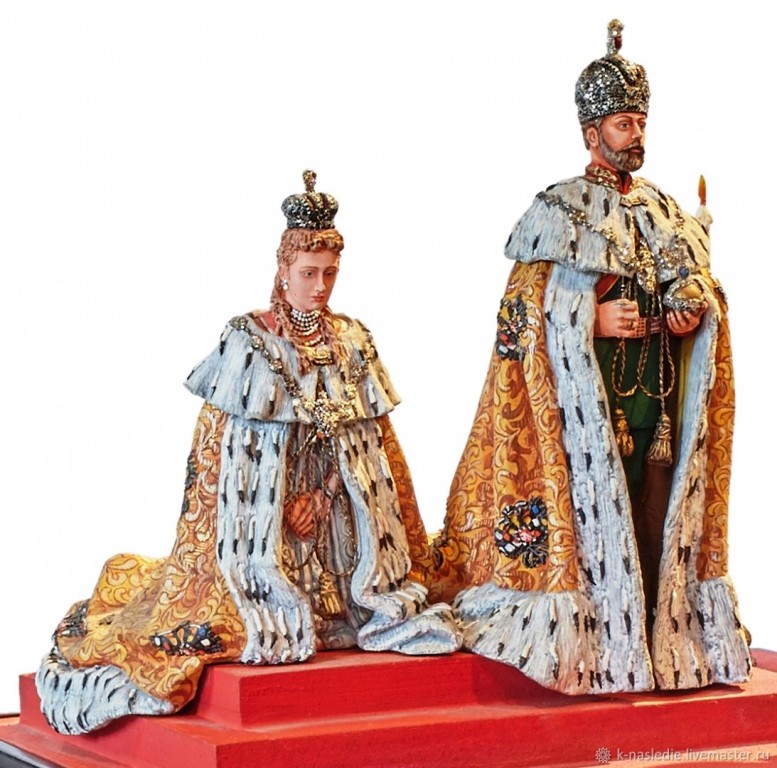
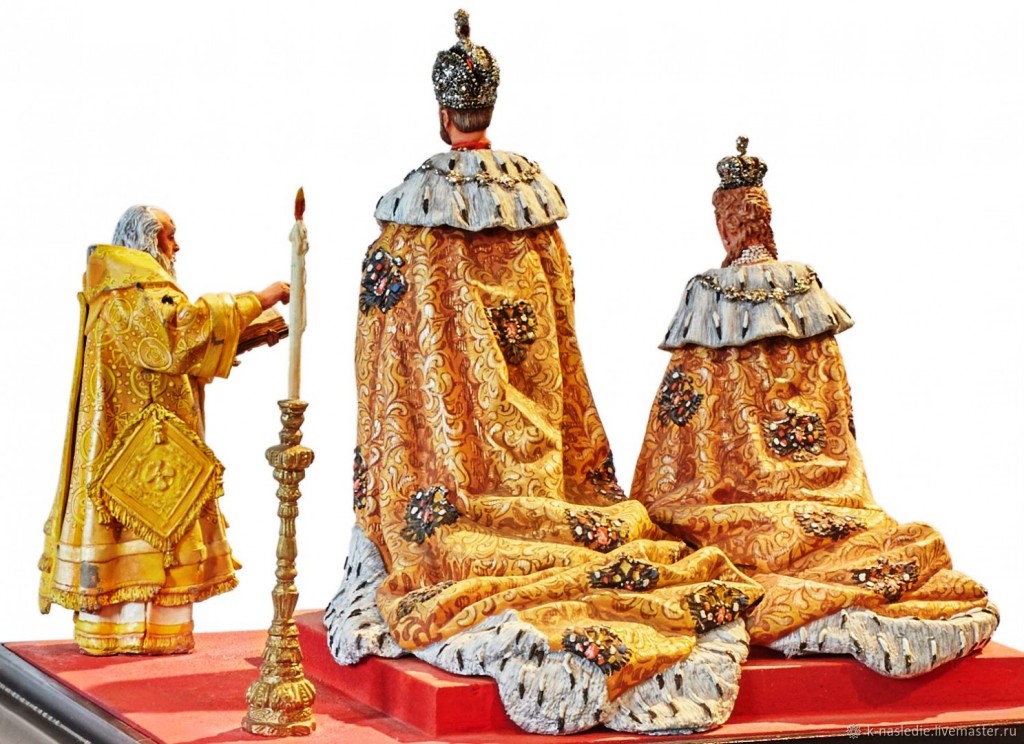
Various ceremonial and field uniforms of officers and lower ranks of the military costume of the Imperial Russian Army were presented. They uniforms included: Life Guards of the Preobrazhensky, Semenovsky, Finland, Volynsky and Cossack regiments, the Gendarme squadron, the Marine Guards crew. All of the uniforms were created based on the original patterns and technology of the late 19th to early 20th centuries.

President of the St. Petersburg Military Historical Society Professor Alexei Aranovich, noted that his comprehensive work is the first of its kind dedicated to the study of the uniforms of the Russian Imperial Army, during the reign of Emperor Nicholas II (1894-1917).

The Russian language book not only presents the uniforms, but also the technologies used for their design. Military costume of the late late 19th to early 20th centuries are greatly admired for their historical and artistic values, as well as their design and technological aspects. The book is richly illustrated and supplemented with facts and information from Russian archival sources.

The publication will definitely be in demand by specialists in various fields – theater and film artists, historians and art historians, stylists and decorators, as well as designers working in the fashion industry. These materials are relevant both when creating replicas of historical costumes for feature films and documentaries, and in specialized educational institutions.

© Paul Gilbert. 19 February 2021

“The Russian Imperial House ended with the murder of Nicholas II”


Earlier this month, I announced that I was severing ties with the Russian Imperial House. My post on Facebook generated nearly 700 “LIKES” and more than 200 comments, and remains the No. 1 most widely read post on my Nicholas II blog for 2021. In addition, I received dozens of emails in support of my decision. One letter in particular stood out amongst all the rest. It came from a descendant of the Galitzine family, one of the largest noble houses of Russia. 

Dear Mr. Gilbert,

I always admired your many articles and pictures that you have shared over the years with your readers, but it was a problem for me for a long time in regard to your former stance on Princess Maria Vladimirovna. The whole Kirillichivi line committed acts of treason against the late Emperor Nicholas II from the start. Even during the reign of Emperor Nicholas II, that branch of the family was malicious and constantly fetching plots to undermine the Emperor. After the revolution, the disgraceful actions of the Kyrillichi continued. My mother’s great uncle, Prince Dimitri Galitzine Mouravline who was very close to Emperor Nicholas II, initially supported Grand Duke Kirill, but eventually broke all ties with this family line. In the European emigration, the larger half of the Russian emigrants did not support the Kirillichi. No other Grand Duke or Prince pretended to be heir to the Russian throne. They lived their lives humbly and normally.

You are absolutely correct to say that the Russian Imperial House ended with the murder of Emperor Nicholas II, and there are absolutely no eligible candidates alive today to ascend to the non-existent Russian throne. Should Russia decide to elect a new monarch, they will need to convene a new Zemsky Sobor as was done in 1613 and find a suitable candidate. Emperor Nicholas II had the authority to change the Pauline Laws of Succession, but he chose not to. Thus, to recognize these self serving nobodies as claimants to the throne is like casting a stone against the sainted Emperor Nicholas II. This is a bad farce that is being perpetuated by simple con artists, and it is so sad to say that Maria Vladimirovna was nee a Romanova.

Maria Vladimirovna never had or has any authority to give out titles or awards as she is not and never was a ruling monarch. According to the Pauline Laws, no woman could ascend to the throne in Russia. After Emperor Peter the Great, the Romanov line ended. The Holstein-Gottrop line commenced with Emperor Peter III, and annexed the Romanov name to continue the “legitimate claim” for the throne. However, due to the disputed paternal identities of who fathered who in those days, the only thing that can be ascertained for sure is that the DNA indicates a direct descendant relationship from Emperor Nicholas I to Emperor Nicholas II.

According to stories of those who witnessed the trip of Emperor Nicholas II and his family to Diveevo, the Emperor received a letter from St. Seraphim of Sarov that was written over a 100 years before the last Imperial Family’s visit. The letter foretold of the demise of Russia and of their fate. The family was very saddened and depressed after having read the letter. They lived in fear for many years prior to the revolution, but Emperor Nicholas II (regardless of his short comings or what people said of him) never left Russia or abandoned his post. He met his fate head on and died for his people. He demonstrated great strength and courage to be martyred as did his family. He was a very kind person and I know of things that he did for people near him that showed his compassion and love for them. He also viewed himself as being morally responsible for his family and relatives and as such he exiled and or punished his relatives periodically, but eventually forgave them. This was perceived to be a “weakness” for which certain family members and people mocked him. He was a fun loving, gentle soul who feared God. He did not possess a personality that would have rendered him a despot, so he stayed true to his faith while others took advantage of him.

Being Orthodox and having knowledge about the rulers of Russia, I can say that the 2 key words that best describe the last Russian monarch are “atonement” and “forgiveness”. Emperor Nicholas II believed he had a responsibility to atone to God for the sins of his people and forgive those who would bring harm to him and his people. Most people do not understand this. There could not be a better last Emperor who will remain a Russian Emperor in Eternity other than St. Emperor Nicholas II. This is not to say that he was perfect or was loved by all, or accepted as a martyr, because he like all of us, was a sinner and had many weaknesses. However, God chose him to show His favor on him. God allowed him to be martyred and that says it all.

People are delusional and short-sighted. This is the sad case of Maria Vladimirovna. May God have mercy on her! All must be done for the Glory of God, not for self-serving purposes. Her actions reveal who she really is. Congratulations to you on seeing the Truth.

For privacy reasons, I have withheld the writer’s name – PG
© Paul Gilbert. 17 February 2021

First iconostasis in Russia dedicated to the Tsar’s family

PHOTO: Russia’s first iconostasis to the Holy Royal Martyrs
© Вести / Vesti News Agency

The first iconostasis in Russia dedicated to the Holy Royal Martyrs is being erected in the church of the St. Elisabeth Convent in the village of Priozerye, situated 120 km from Kaliningrad.

Within the walls of the church of the convent, preparations are underway for the installation of an icon depicting Tsesarevich Alexei Nikolaevich. A prayer is said as the image takes its place in the iconostasis.

The convent is dedicated to the Holy Royal Martyr Grand Duchess Elizabeth Feodorovna, but Tsar-Martyr Nicholas II and his family are especially revered in the convent.

PHOTO: Entrance to St. Elisabeth Convent ;
monument to Holy Royal Martyr Grand Duchess Elizabeth

Nun Anastasia, Sister of the St. Elizabeth Convent, spoke to the Vesti News Agency this week, and stated the following:

“The iconostasis that is installed in our convent is dedicated to the Imperial Family and all the royal martyrs. It is unique in its kind for the whole of Russia. There is no such iconostasis anywhere else in Russia, only in our church.

“Once completed, the iconostasis will be in the shape of a cross. The images are distinguished by a special subtlety of writing. The colours of the elements: red, blue and gold stand out. The works were specially made for the convent by an artist from Kaliningrad.

“The top of the iconostasis will feature an icon of the Archangel Michael, then the icon of the Alapaevsk Martyrs, then Job the Long-Suffering. In the center are Tsarina Alexandra, Tsesarevich Alexei, and Tsar Nicholas II.

Once assembled, this unique iconostasis will stand as tall as a three-story building. It will become one of the main decorations of the convent cathedral.

At the base of the royal iconostasis will be an icon of the Most Holy Theotokos Theodorova, patroness of the Romanov family.”

© Paul Gilbert. 14 February 2021

Commission created to preserve memory of Imperial Family in Sverdlovsk region

Earlier this week, a new commission to preserve the historical memory of members of the Russian Imperial Family, who were murdered in the Urals was initiated in Ekaterinburg.

The decree was signed by the Governor of the Sverdlovsk Region Yevgeny Kuyvashev. The 22-member commission headed by the vice-governor of the Sverdlovsk region Sergey Bidonko, includes the heads of regional ministries and municipalities, representatives of universities, museums and the Russian Orthodox Church.

The commission will be engaged in preserving the memory of those members of the Russian Imperial Family, who were murdered in the Urals, through excursions, lectures, exhibitions and other events, as well as the promotion of the “Imperial Route” project, which is being implemented by the Elisabeth-Sergius Educational Society Foundation. The route includes Tyumen, Tobolsk, Ekaterinburg and Alapaevsk, among numerous other cities in Russia – see below.

Let us hope and pray that the commission will make changing the name of regional name “Sverdlovsk” their first order of business!

***

In 2019, plans were announced for the “Imperial Route” project in 20 regions of Russia. The aim of the route is to unite the historic places related to the life of Emperor Nicholas II and his family.

The route includes St. Petersburg, Moscow, Omsk, Tyumen, Tobolsk, Sverdlovsk / Ekaterinburg, Tomsk, Kostroma, Kaluga, Novgorod, Pskov, Kirov, Bryansk, Orel, Voronezh regions, Perm, Novosibirsk, Stavropol territories, Tatarstan and Crimea.

The project includes palaces, museums, churches, and other places, is a wonderful opportunity for both Russians and foreigners to learn the truth about the private world of Russia’s Imperial family.

© Paul Gilbert. 13 February 2021

The History and Restoration of the New Study of Nicholas II in the Alexander Palace

PHOTO: view of the New Study of Nicholas II, as it looked in 1917

In 1902–1904, Roman Feodorovich Meltser’s (1860-1943) firm carried out the construction, decoration and furnishing of the New Study of Emperor Nicholas II in the Alexander Palace. The work had to be carried out according to precise calculations and drawings, which were submitted for consideration by the Technical Committee organized under the Cabinet of His Imperial Majesty.

The emperor’s spacious four-window study had a mezzanine with marble columns, made by the German company Duckerhoff & Neumann (Nassau, Rhineland-Palatinate, Germany), which was connected to the mezzanine of the Maple Drawing Room on the opposite side of the eastern wing of the palace. The interior was heated by fireplaces ordered from Vienna. Several types of electric lamps were specially made to illuminate the office, based on the best technological achievements of Russian scientists Alexander Ladygin and Werner von Bolton, as well as the developments of General Electric. Meltzer decorated the lamps with Tiffany style shades with variegated glass. These cylindrical coloured glass “tulip lanterns” have not survived, but are clearly visible in historic photographs, which will allow restorers to recreate them exactly to their original.

PHOTO: view of the staircase leading to the mezzanine, which connected the New Study of
Nicholas II with the Maple Drawing Room, as it looked in 1917 (above); and in 1944 (below)

The ceiling in the Emperor’s study was made of mahogany, including the trim. The walls were painted with a deep blue-green mastic paint and stencilled with ornamental friezes around the tile cladding above the fireplace and a niche behind the table. The walls of the mezzanine were painted in light yellow tones with the same stencil ornament.

An important decorative element of the decoration of the rooms of the Alexander Palace during the late 19th to early 20th centuries, including the New Study were the beautiful oriental carpets. The New Study of Nicholas II, was decorated with large Persian carpets, on top of a seamed crimson carpet.

A pool table occupied the space along the northern wall of the New Study, with a fireplace decorated with blue relief tiles. The pool table was made according to Russian standards, developed and produced by the St. Petersburg manufacturer Adolf Freiberg. A large corner sofa was placed next to the table.

Near the opposite wall was a large desk with an upper shelf and an attached electric lamp on a block. The desk, was covered with many family photographs, writing instruments and other accessories and small memorabilia. Near the window on a high mahogany curb stone stood a plaster bust of Emperor Alexander II by the Italian sculptor Pietro Canonica (1869-1959). It is known that Canonica made a modified bronze copy of the sculpture, which was approved by Nicholas II. A copy of this bust is preserved in the collection of the Museum of Pietro Canonica in Rome, therefore, it will be possible to recreate the lost sculpture based on a historical analogue.

In the central part of the New Study was a large round table, armchairs and chairs, a soft sofa and an armchair with an oval tea table between them. The table, armchair and chair have been preserved and are today in the collection of the Pavlovsk Museum-Reserve. The first meeting in the New Study is noted in the diary of Nicholas II on 3rd May 1903.

The New Study of Nicholas II was filled with works of Danish and Russian porcelain, family photographs, books, and memorabilia. In the bookcases, in addition to works on history, politics and religion, there were the collected works of Shakespeare and Tennyson, works of Byron, Merimee, Gaultier, Hugo, Tolstoy, Chekhov, Merezhkovsky among many others.

The New Study is one of the few interiors of the Alexander Palace, the decoration of which partially survived the Great Patriotic War of 1941-45: the ceiling lining with brass overlays, a mahogany door, two fireplaces, and columns on the mezzanine have all been preserved.

PHOTO: the New Study of Emperor Nicholas II, as it looked between 1997-2015

The interior of the New Study of Emperor Nicholas II was partially restored in 1997 for the opening of the Memories in the Alexander Palace exhibition. Several years later, the interior decoration was reconstructed, which included built-in wardrobes, sofas, chairs, a desk, lighting fixtures, draperies on the windows, made from photographs of the 1930s and inventory drawings of the Tsarskoye Selo Artistic and Historical Commission of 1918. These items were made in 2000 for the filming of Gleb Panfilov’s film The Romanovs. Crowned Family

The current restoration of the interior began in 2015. In 2019, restorers discovered the original color and a fragment of the stencil painting that framed the fireplace portal, which made it possible to restore the historic color of the cabinet walls. The discovery of surviving samples of English tiles made it possible to recreate the cladding of the fireplace inserts and fireplaces.

PHOTO: the restored fireplace in the New Study (above); and a detail of the tile (below)

Furniture lost during the war will be recreated for the New Study. A corner sofa for the billiard table has already been made, a display cabinet, bookcases, wall sconces with Tiffany lanterns and other lighting fixtures are being recreated; work is underway to restore the writing table and billiards, matched by analogy. One future project, is a plan to restore the window frames with cathedral (stained-glass) glass based on information from archival sources.

The Russian company “Tissura” together with the Swiss company Fabric Frontlain, have recreated the silk fabric decorated with hyacinths for the window decoration based on historical samples preserved in the Collection of the Tsarskoye Selo State Museum. The window curtains will be made by the St. Petersburg firm “Le Lux”.

PHOTO: the current look of the restored New Study of Emperor Nicholas II

Specialists from the Studio 44 architectural bureau, will soon begin work on the reconstruction of the lost pieces of furniture and lighting fixtures for the New Study.

Paintings, porcelain, and interior sculptures which have been preserved in the Pavlovsk State Museum-Reserve, will be returned to the Alexander Palace. Among them – paintings, sculptures, busts, Danish porcelain, etc. Following the completion of the restoration of the New Study, these items will be returned to their historical places in the Alexander Palace.

© Paul Gilbert. 10 February 2021

Nicholas II visits Gagra, 1912

PHOTO: Emperor Nicholas II and Prince Alexander Petrovich Oldenburg, Gagra 1912

During his visit to Crimea in the spring of 1912, Emperor Nicholas II visited Abkhazia, at the insistence of Prince Alexander Petrovich Oldenburg (1844-1932).

While visiting the region In 1904, Prince Alexander Oldenburg, saw the potential of the region’s sub-tropical climate and decided to build a magnificent high-class resort and the Gagripsh Restaurant there. Having raised a large sum of money – 100 thousand gold rubles – from the government, he constructed a number of other buildings in an eclectic variety of architectural styles from around Europe. A park was laid out with tropical trees and even parrots and monkeys imported to give it an exotic feel.

Prince Oldenbrug also built a palace for himself and his wife Princess Eugenia Maximilianovna of Leuchtenberg (1845-1925) who was paralyzed and therefore moved in a large three-wheeled chair with a white donkey harnessed to it, led by a Cossack. In August 1901, their only son Duke Peter Alexandrovich Oldenburg (1868-1924) married Nicholas II’s younger sister Grand Duchess Olga Alexandrovna (1882-1960).

PHOTO: early 20th-century postcard depicting Oldenburg’s resort and restaurant

On Tuesday, 15th May 1912, Nicholas II departed Yalta on the Imperial Yacht Standart, and sailed towards the Caucasian coast. The sea was calm and the weather warm. The Tsar’s yacht was escorted by the Russian cruiser Almaz and four destroyers of the Russian Imperial Navy.

During his voyage along the coast, the Tsar wrote in his diary: “before and after breakfast I admired the panorama of the mountains passing by”. On 16th May, the Standart arrived in Gagra Bay at 3 o’clock in the afternoon.

PHOTO: Emperor Nicholas II and Prince Alexander Petrovich Oldenburg,
on the deck of the Imperial Yacht Standart. 1912

Prince Oldenburg, dressed in full military uniform and orders, arrived at the imperial yacht on a launch and climbed up the steps onto the deck, where he was greeted by the commander-in-chief in the way befitting an officer. Nicholas II, his four daughters, and Oldenburg travelled by launch to the pier, where the Imperial Family and their entourage were met by the prince’s wife, Princess Eugenia Maximilianovna.

The streets were lined with hundreds and hundreds of people, all of whom had long awaited the appearance of the sovereign emperor. The distinguished guests, led by the Prince Oldenburg, went to the ancient church, where a solemn liturgy was held in honour of the arrival of the Imperial Family in Gagra.

PHOTO: Emperor Nicholas II with his four daughters and retinue in Gagra. 1912

In honour of the Tsar’s visit to the region, the Church of St. Hypatius – situated in Abaata Fortress – was restored, at the expense of the Princess Eugenia Maximilianovna. The restoration strictly preserved the buildings’ original appearance, including the decoration of the roof of the church with stone crosses. The famous Russian artist Mikhail Nesterov (1862-1942), was invited to Abkhazia from St. Petersburg, to decorate the walls of the church interior with icons.

Representatives of the Abkhaz aristocracy, together with Alexander Grigorievich Shervashidze- Chachba, the mayor of the city of Sukhum, who took an active part in the preparation of these celebrations, met the emperor with the traditional bread and salt.

PHOTO: Emperor Nicholas II is greeted with the traditional bread and salt. 1912

The guests proceeded to the Gagripsh Restaurant [the restaurant has survived to the present day, its interiors virtually unchanged from the Tsarist period-PG], where they talked over tea with the prince and representatives of the Abkhaz nobility. They then drove in cars and went out into the park, where a grandiose dinner was held. A large regimental orchestra dressed in white Circassians and the same white hats, was playing in the park.

PHOTO: Emperor Nicholas II arriving at the Gagripsh Restaurant in Gagra. 1912

Roasted bulls and lambs, were brought to long tables, covered with white tablecloths, set amongst a vast clearing. Prince Alexander Petrovich Oldenburg proclaimed a toast in honour of Tsar Nicholas II, welcoming him, on behalf of himself and local residents. In response, Nicholas II also raised a toast to the owner of the estate and to the health of the residents of Gagra. Here, at an impromptu concert, the Abkhaz dance was performed for the emperor.

PHOTO: The Tsar raises a toast to Prince Oldenburg and the people of Gagara. 1912

Towards evening, the emperor, his daughters and their retinue bid farewell to the prince and the townspeople, and returned to Crimea on the Imperial Yacht. “It was raining in Gagra,” Nicholas II wrote that evening in his diary.

© Paul Gilbert. 9 February 2021

1896 Coronation uniform of Emperor Nicholas II


PHOTO: The 1896 Coronation uniform of Emperor Nicholas II 

During his coronation, which took place on 27th May (O.S. 14th) May, 1896, the last Russian emperor Nicholas II appeared before his subjects in the uniform of a colonel of the Preobrazhensky Life Guards Regiment – the first of the two oldest regiments of the Russian Imperial Guard, founded by Tsar Peter I in 1691.

Like his grandfather Alexander II (1818-1881) and great-grandfather Nicholas I (1796-1855), Nicholas II preferred the uniform of this regiment – in which he served in military service – to all others.

By the time of his accession to the throne, he served in the rank of colonel of the Preobrazhensky Regiment, and when he became emperor, he felt a special sense of pride from the fact that “he remained a simple colonel”.

His coronation uniform was made of dark green cashmere; with silk trimming, red collar with white piping and cuffs; embroidered with gilded threads with a pattern that is complex in composition and virtuoso in technique of execution, distinguishing the shape of the Preobrazhensky Regiment. The uniform is adorned with epaulettes bearing the monogram of his father Emperor Alexander III (1845-1894) and gilded aiguillettes, a flap on the chest, which the emperor himself unfastened during the coronation ceremony to perform the sacrament of Chrismation. Nordenstrem ordered the buttons for the uniform from a well-known supplier in the capital.

PHOTO: brothers Nikolai and Karl Nordenshtrem

It is known that the entire uniform for Nicholas II’s coronation was ordered from the workshop of N.I. Nordenstrem – the famous “king of Russian military tailors,” who specialized in military dress. Nikolai Ivanovich Nordenshtrem (1838-1903) was “a true artist in his field,” and the uniforms cut by him “bore the imprint of strict grace and good taste.” Nordenstrem was appointed Supplier to the Imperial Court, and for eighty years, he served four Russian emperors – Nicholas I, Alexander II, Alexander III and Nicholas II.

Nicholas II placed orders for all his military uniforms from Nordenstrem, whose shop was located at 46 Nevsky Prospect in St. Petersburg. The famous atelier also received orders from Their Imperial Highnesses the Grand Dukes Alexei, Sergei and Pavel Alexandrovich; Konstantin and Dmitry Konstavtinovich; Nikolai and Peter Nikolaevich; George and Alexander Mikhailovich; Kirill, Boris and Andrey Vladimirovich; Alexander and Konstantin Petrovich Oldenburgsky; Prince Peter Alexandrovich of Oldenburg; Duke Eugene Maximilianovich Leuchtenberg; as well as many Russian and foreign dignitaries.

PHOTO: Coronation uniform of Emperor Nicholas II and Coronation dress of Empress Alexandra, on display in the Armoury Chamber of the Moscow Kremlin

The Coronation regalia – the textiles, religious vestments and court livery – were preserved in the Moscow Armoury, they survived the upheaval of the Bolshevik Revolution in 1917. The Coronation uniform of Emperor Nicholas II is on permanent display in the Armoury Chamber of the Moscow Kremlin – Hall 6, Showcase 45.

FURTHER READING:


THE CORONATION OF TSAR NICHOLAS II
Compiled and Edited by Paul Gilbert

CLICK ON THE LINK BELOW TO ORDER FROM AMAZON

HARD COVER EDITION – PRICE $29.99

PAPERBACK EDITION – PRICE $18.99

BOOK DESCRIPTION

Six eyewitness accounts of the crowning of Russia’s last tsar with more than 200 rare vintage photographs & illustrations

The pomp and pageantry surrounding the Coronation of Nicholas II is told through the eye-witness accounts of six people who attended this historic event at Moscow, held over a three week period from 6th (O.S.) to 26th (O.S.) May 1896.

Hard cover and paperback editions, with 456 pages + more than 200 black & white photographs

© Paul Gilbert. 8 February 2021

On this day in 1919: Nikolai Sokolov launched his investigation into the deaths of the Imperial Family

PHOTO: Nikolai Alekseevich Sokolov (1882-1924)

On this day – 7th February 1919 – Nikolai Alekseevich Sokolov (1882-1924) launched his investigation into the deaths of Emperor Nicholas II and his family in Ekaterinburg.

Sokolov was a lawyer, and investigator for important cases of the Omsk District Court. It was the Supreme Ruler Admiral Alexander Kolchak (1874-1920), who appointed Sokolov with the task of investigating the murder of members of the Russian Imperial Family in Ekaterinburg and Alapaevsk.

Sokolov loved Russia and would not accept the changes brought about by the Bolshevik Revolution in 1917. As a staunch Orthodox monarchist, he accepted his appointment with a deep sense of reverence and responsibility.

This image has an empty alt attribute; its file name is n.-a.-sokolov-and-gen.-m.-k.-dieterichs.-1919..jpg

PHOTO: Nikolai Sokolov and General Mikhail Dieterichs searching for the remains of the Imperial Family near the Four Brothers Mine, near Ekaterinburg. 1919

Between May and July of 1919, working without rest from morning until late at night, Sokolov managed to collect a vast amount of material evidence, conducted dozens of examinations and interviewed hundreds of witnesses, including several members of the Romanov entourage in February 1919, notably the Swiss tutor, Pierre Gilliard (1879-1962), his wife and nanny to Grand Duchess Anastasia, Alexandra Tegleva (1884-1955) and the English tutor to the Tsesarevich Alexei, Charles Sydney Gibbes (1876-1963).

Sokolov discovered a large number of the Imperial Family’s’ belongings and valuables that were overlooked by the chief executioner of the Imperial Family Yakov Yurovsky (1878-1938) and his men in and around the mineshaft where the bodies were initially disposed of in the Four Brothers Mine, at what is today known as Ganina Yama.

The impending return of Bolshevik forces on 15th July 1919, forced Sokolov to abandon his investigation, thus failing to find the concealed second burial site on the Koptyaki Road. He evacuated Ekaterinburg, bringing with him the box containing the relics he recovered. Today, the box is stored in the Russian Orthodox Church of Saint Job in Uccle, Brussels.

PHOTO: French edition of Sokolov’s investigation, published in 1924

Sokolov fled from Russia to Harbin, China, where in 1920, with the help of the head of the Commander of the Czechoslovak Legion, the French General Maurice Janin (1862-1946), Sokolov left Harbin for France, taking with him the material evidence and documents, which consisted of eight volumes of photographic and eyewitness accounts. Sokolov continued his work on interviewing witnesses and examining materials in exile, until his death.

The French edition of his investigation Enquête judiciaire sur l’assassinat de la famille impériale russe [Judicial investigation into the assassination of the Russian imperial family], was published by Payot (Paris) in 1924, and reissued in 1926 and 1929. It was published in Russian in 1998. No full English translation of Sokolov’s investigation has yet been published.

Sadly, Nikolai Sokolov did not live to bring his investigation to an end – he was found dead in the garden of his house on 23 November 1924, having suffered a heart attack at the age of 42. He died leaving a widow aged 23 and two young children, a daughter Nathalie (1920-2002) and a son Alexis (1923-1980). He is buried in the cemetery of Salbris, France.

PHOTO: Sokolov’s grave in the cemetery of Salbris, France

To this day, the Russian Orthodox Church still officially adheres to Sokolov’s theory that the bodies of the Imperial Family were completely destroyed at the Four Brothers Mine. A century later, we now know that this was not so.

Sokolov was a man who made an enormous contribution in gathering evidence about the last days of the Imperial Family in Ekaterinburg, and no one should belittle the significance of his works for history.

PHOTO: memorial plaque to Nikolai Sokolov in Mokshan, 2018

On 25th December 2018, a memorial plaque honouring Nikolai Sokolov was unveiled in Mokshan, the town where he was born on 21st May 1882.

The plaque was mounted on the wall of the Mokshan Administration Building. It was here – from 1908 to 1910 – that Sokolov worked as an investigator at the Mokshan District Court.

On 23rd November 2024. a bronze bust of Sokolov was consecrated at the Monastery of the Holy Royal Passion-Bearers at Ganina Yama. Click HERE to read my article ‘Nikolai Sokolov honoured at Ganina Yama‘ + PHOTOS and VIDEO.

© Paul Gilbert. 7 February 2021

Paul Gilbert cuts ties with Russian Imperial House

PHOTO: Maria Vladimirovna and her son George Mikhailovich

NOTE: this article was updated with additional information on 12th February 2021 – PG
For the record, I hereby announce that I am cutting all ties with the Russian Imperial House. I no longer support Maria Vladimirovna and her son George Mikhailovich. Further, I am severing all ties with the Russian Legitimists and their cause.

Today, I have returned by mail the Order of St. Stanislaus 3rd Class (2013), and the Order of St. Anna 3rd Class (2016), and also withdraw my oath of allegiance to Maria and her son, dated and signed 03/14/16.

During the February Revolution of 1917, Maria’s grandfather Grand Duke Kirill Vladimirovich (1876-1938), marched to the Tauride Palace in Petrograd at the head of the Naval Guards bearing a red armband and swore allegiance to the Russian Provisional Government. In 1926, Kirill proclaimed himself emperor-in-exile, but his claims were contested by a number of grand dukes, grand duchesses, princes and princesses of the Imperial Blood in exile, as well as monarchists in a division that continues to this day.

Many monarchists (including myself) and those faithful to the memory of Tsar-Martyr Nicholas II, believe that Kirill’s act of treason in 1917, should eliminate the Vladimir branch of the Russian Imperial Family from any further consideration.  

I no longer wish to involve myself in the dynastic squabbles which continue to this day between Legitimists and those monarchists who dispute Maria’s claim as Head of the Russian Imperial House.

While I am a devout monarchist, I do not recognize any person as the claimant to the now defunct throne of Russia. I believe that the Russian monarchy ceased to exist upon the abdication of the Sovereign Emperor Nicholas II on 15th (O.S. 2nd) March 1917 and the murder of both the Tsar and his family on 17th July 1918. If the monarchy is ever to be restored in 21st century Russia, it is up to the citizens of Russia to make that decision, no one else.

I will continue to devote my time to researching and writing about the life and reign of Nicholas II, and committing myself to clearing his much slandered name.

© Paul Gilbert. 5 February 2021

Paul Gilbert’s Royal Library for Sale

PHOTO: a partial view of my collection of books on the life, reign and era of Nicholas II

Four years ago, I decided that I would move back to England to take up permanent residence. Having been born in England, and lived and worked in London in the 1980s, my love for my homeland has never waned. I continue to go back “home” each year to explore new regions of this beautiful country. I recently received my new British passport, so that is one more item checked off my list of things to do before I retire in the UK..

Many of you have asked “when” I will be moving back to England, and “where” I will live once I get there. I just want to clarify that my move is still 3-4 years away, as I still have much that needs to be attended to here in Canada. I can, however, safely say that my move back home to England will be before the next US presidential election!

I will be making my new home in Northumberland, England’s most northern and least populated county, which lies on the Scottish border. This way, I have the best of two beautiful countries at my doorstep!

In preparation for my move, I am forced to sell the bulk of my personal library, which consists of more than 2,000 new, rare and second-hand titles on the royal houses of Britain, Europe and Russia, among other topics: history, art, biographies, travel, photography, etc.

The ONLY books that I will be taking with me to England, are my collection of titles on the life, reign and era of Nicholas II.

I have created a separate online bookshop for the sale of my collection. The titles listed are all one-of-a-kind, there are no duplicates! Books will be sold on a first come, first serve basis. The condition of each book varies and is noted with each listing. Titles are available in a variety of languages: English, French, German and Russian. Please check individual listings before ordering.

In addition, I will be selling off the remaining stock from my other online shop, which opened for business in 1994. These include books and back issues of Royal Russia and Sovereign, published by the publishing division of Royal Russia, published between 1994 to 2020. 

Please NOTE, that ALL prices are in US dollars! Payment can be made securely online with a credit card or PayPal. I will also accept payment by personal check or money order in USD. Shipping rates are for Canada and United States order ONLY. Please contact me by email – royalrussia@yahoo.com – for details about bulk shipping and ALL overseas orders. ALL sales are FINAL.

I have already begun listing the titles for sale, which include beautiful pictorials, biographies, historical studies, guidebooks, and much more. My collection is so vast that it is going to take me a couple of years to select, scan and list all of them.

New books will be added every week, so please bookmark or check back for new listings. If you have any questions or concerns, please do not hesitate to contact me by email – royalrussia@yahoo.com

© Paul Gilbert. 3 February 2021