104 years on, Orthodox Church still split over murdered tsar’s remains
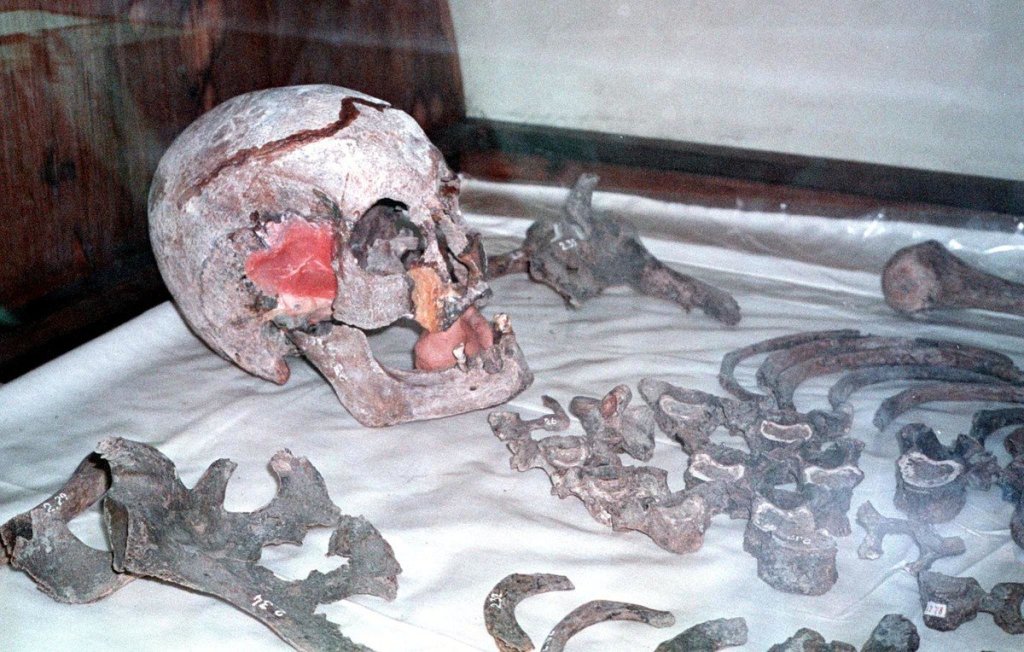
PHOTO: remains of Nicholas II, the last Tsar of Russia, Ekaterinburg 1998

In 2018, the centenary of the murder of Russia’s last tsar reignited a long-running conflict between the state and the Russian Orthodox Church (ROC) over what to do with the remains of the murdered Russian Imperial Family.

On the night of 16/17 July 2018, His Holiness Patriarch Kirill of Moscow and All Rus’, led a cross procession in Ekaterinburg marking 100 years since the Bolsheviks shot dead Tsar Nicholas II, his family and four faithful retainers.

But the ROC — dominated by hard-liners — still remains divided over the authenticity of the remains of the family, whose members were all canonized by the Moscow Patriarchate on 20 August 2000 [Nicholas II and his family were canonized by the Russian Orthodox Church Outside Russia on 1 November 1981].

Sadly, the Russian state failed to make any official commemorations of what is surely one of the darkest pages in 20th century Russian history. It was not until the following year, on 17th July 2019, that Russia’s State Duma for the first time observed a minute of silence in memory of the last Russian emperor Nicholas II and all those killed in the Civil War (1917-1922).

In 1998, then-president Boris Yeltsin’s government buried bone fragments, first found in 1979, that were identified as those of Nicholas II, his wife Alexandra Feodorovna and three of their daughters: Olga, Tatiana and Anastasia. The burial, attended by more than 50 Romanov descendants, took place in St. Catherine’s Chapel [a side chapel in the SS Peter and Paul Cathedral] in St. Petersburg. But 23 years later, the ROC still refuses to accept DNA tests confirming their authenticity.

The ROC also does not recognize the remains of the tsar’s other children Alexei and Maria, whose bodies were separated from the others and found in 2007. The government has failed to reach an agreement with the ROC on burying them. For years, the boxes containing 44 bone fragments remained on dusty shelves in the Russian State Archives. In December 2015, their remains were transferred to the Novospassky Monastery in Moscow, where they remain to this day.

The ROC maintains that the Bolsheviks put the burnt bodies of their 11 victims in a pit in a forest in the Urals region, where the ROC has built a large monastery complex: the Monastery of the Holy Royal Martyrs at Ganina Yama.

In 1998, the late Patriarch Alexei II (1929-2008) snubbed a state funeral for Nicholas II’s bones in the Peter and Paul Fortress in St. Petersburg. He sent a bishop to bury them as “unknown remains” instead.

Officially, the Patriarchate said there was not enough evidence to accept DNA test results and accused the government of sidelining the Church.
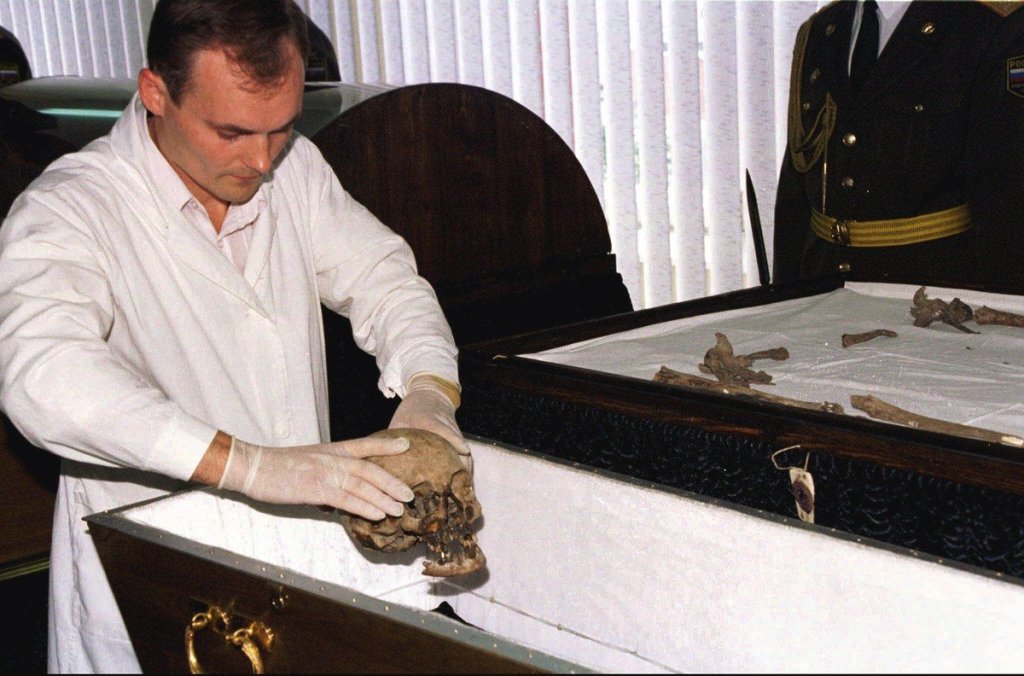
PHOTO: An unidentified specialist places the skull of Nicholas II in a coffin, on 15th July 1998, in Ekaterinburg

“Nobody really knows what happened because everyone who was involved is no longer here,” said Ksenia Luchenko, an expert on the Russian Orthodox Church, commenting on the dispute.

She speculates that tensions could stem from a “personal conflict” between the ROC and state officials.

Liberal-leaning priest Andrei Kurayev noted that the ROC opted to believe a version of the killings favoured by anti-Bolshevik forces during the Civil War in the wake of the revolution.

“Over 20 years, it grew into a huge conspiracy theory,” Luchenko said.

One version says that Soviet Union founder Vladimir Lenin kept Nicholas II’s head in his office, another that the tsar’s youngest children, Alexei and Maria, somehow survived and lived abroad.

Tikhon Shevkunov — the senior cleric put in charge of the ROC investigation who is reportedly close to President Vladimir Putin — raised the possibility of a “ritual killing,” implying that Jews murdered the ex-tsar. He denied anti-Semitism.

Father Kurayev said such interpretations are common inside a Church now dominated by ultra-conservatives.

“Church circles that had good relations with science were sidelined after the Pussy Riot scandal” in 2012, he said, referring to Russia’s jailing of two punk activists over an anti-Putin stunt in a Moscow church.

The case was a huge boost for the ROC, and its radical wing has been growing stronger “by the day” since, said Kurayev.

Patriarch Kirill is “scared” of recognizing the remains, fearing a backlash from ultra-conservatives, many of whom have not forgiven him for shaking hands with Pope Francis in 2016, Kurayev said.

Church issues — including the question of Nicholas II’s remains — have become “politicized” under Patriarch Kirill, said Roman Lunkin, a religion expert at the Russian Academy of Sciences.

In 2017, “Matilda,” a Russian feature film about Nicholas’s pre-marital love affair with a ballerina, sparked a violent backlash from radical Orthodox activists.
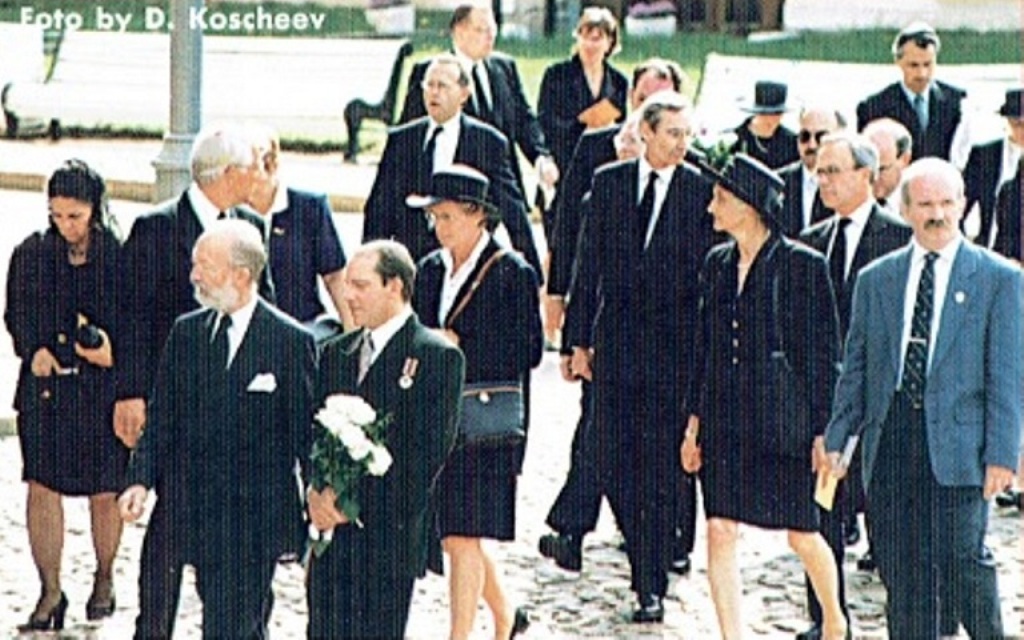
PHOTO: Paul Gilbert (far right) joins 50 Romanov descendants, at the funeral of Nicholas II, in St. Petersburg on 17th July 1998

“It showed that Nicholas II is a figure who can divide Orthodox society,” something the Patriarch wants to avoid, Lunkin said.

Luchenko said that Russian President Vladimir Putin is “less interested” in burying the ex-imperial family’s remains while his predecessor Yeltsin saw it as “personal repentance.”

Putin “does not worship Nicholas II. His heroes are Alexander III and Alexander Nevsky,” she said, referring to Nicholas II’s father and a 13th-century leader.

Nonetheless, she called the dispute an “uncomfortable situation” for Putin, who has positioned himself as a close ally of the ROC.

“It somehow frustrates (the Kremlin),” she said, adding that authorities want to “draw a line under this situation.”

In 2015, at the Church’s request, Russia reopened its criminal investigation into the remains of the Imperial Family, which included the exhumation of the remains of Emperor Alexander III.

Ahead of the centenary in 2018, some Russian newspapers were asking when Patriarch Kirill would finally recognize the remains.

On the eve of the centenary of the regicide, the Investigative Committee of the Russian Federation concluded that the so-called Ekaterinburg Remains, where indeed those of Nicholas II, his family and their retainers.

But six years on, the ROC have remain silent. “The ROC has not formulated a position on the results of the investigation,” Patriarch Kirill said.

Father Kurayev accused the Church of not wanting to make the results public, suggesting they match previous tests.

“They made a mistake with the science and now they are reluctant to take a step back,” he concluded.

Click HERE to read 7 additional articles and interviews about the Ekaterinburg Remains

© Paul Gilbert. 6 April 2021
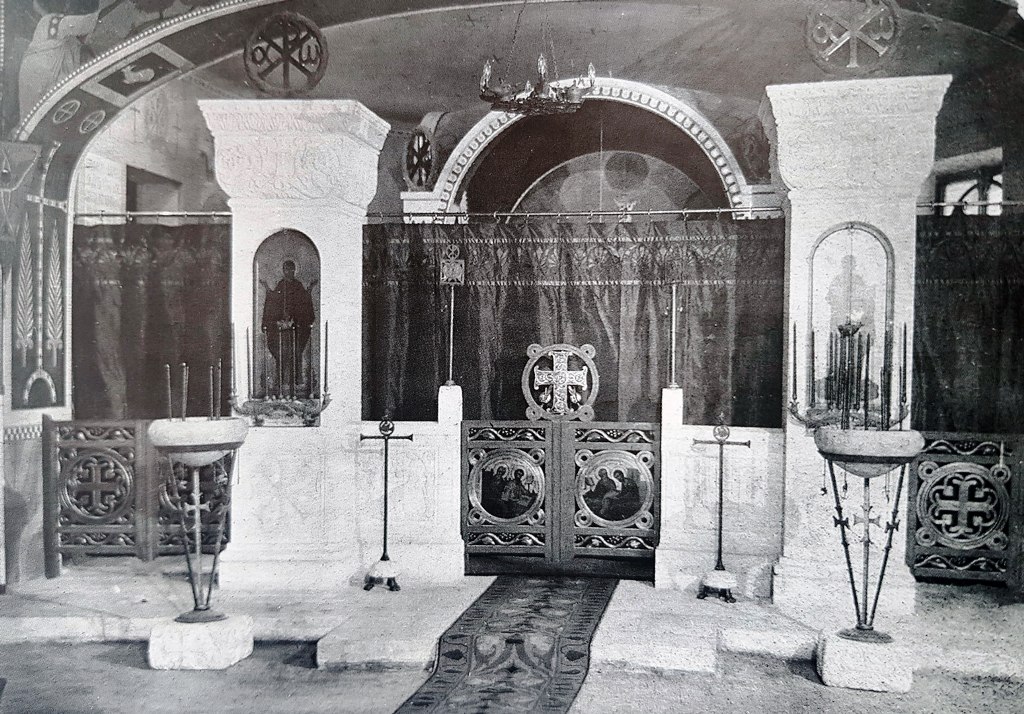
The fate of the Tsarskoye Selo Palace Hospital cave church

PHOTO: The cave church at the Palace Hospital, Tsarskoye Selo

In March 1915, the churches at the Palace Hospital at Tsarskoye Selo: the upper one – the Church of Sorrow (in the name of the icon of the Mother of God) and the lower one – Church of Tsar Constantine and Helena – were transferred from the diocesan department to the Court, in which they remained a part of until 1917.

Work on the construction of the unique lower church at the Palace Hospital began in the summer of 1913. Its creation was made possible thanks to a donation of 10,000 rubles by the St. Petersburg Orthodox merchant of French origin Jacob Rode.

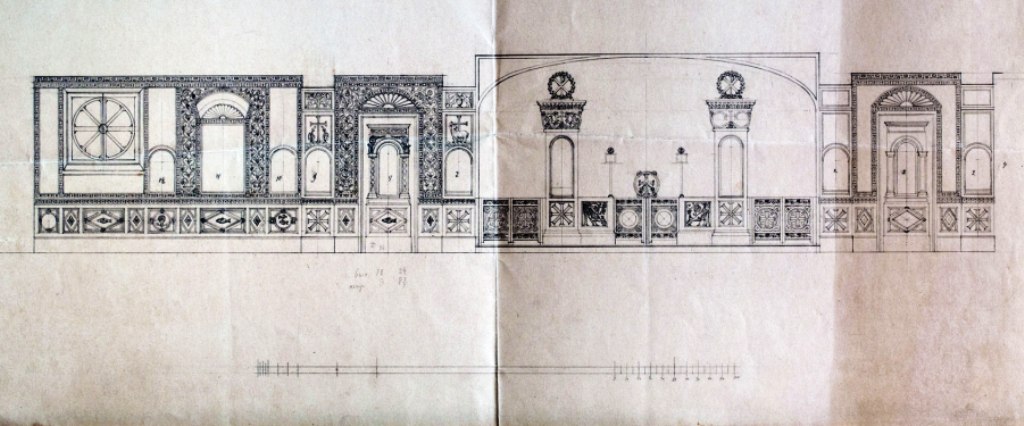
According to the decision of the Construction Committee, the church was planned in the style of the ancient “cave” churches of the 5th-6th centuries. The Russian Court architect Silvio Danini (1867-1942) and Sergei Nikolayevich Vilchkovsky (1871-1934) received permission from the director of the Imperial Hermitage, Count Dmitry Ivanovich Tolstoy (1860-1941), to familiarize themselves with the literature, photographs and art samples of early Christian buildings in the imperial library to carry out their work.

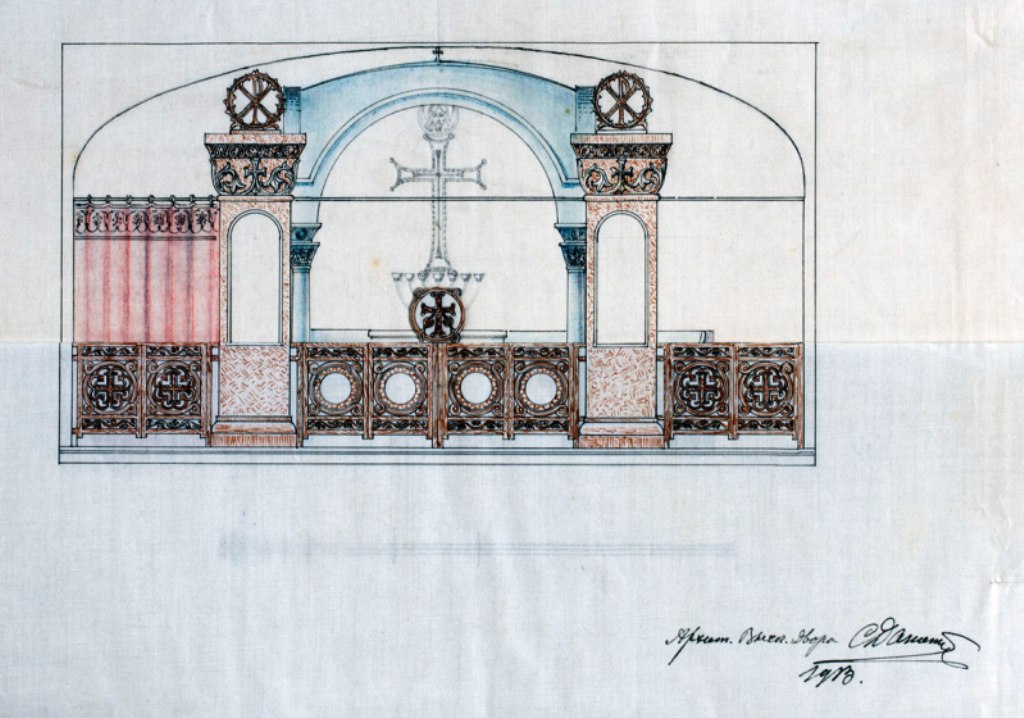
The main feature of the cave church was the unusual altar barrier, which replaced the iconostasis. Two marble pillars, which displayed the icons of the Saviour and the Mother of God, had low latticed doors. Behind them, across the entire width of the vault, was a purple curtain with embroidered ornaments of yellow silk in two tones. The sketches of the utensils were ordered from Sergei Vashkov, the icons from Nikolai Emelyanov, both in Moscow.

PHOTO: Architect’s drawing of the Altar barrier (above); and
cross section of the cave church (below). 1913

An altar cross made of gilded metal with multi-coloured stones was inserted into the wall, and the head of Christ was depicted above it. From the northern part of the barrier in front of the apse there was an altar, from the southern – a paralytic (teaching chapel), in which the Byzantine queens listened to the liturgy in ancient times. In the paralytic there was an armchair for the empress; near the apse arch were armchairs for the emperor and the patriarch.

Empress Alexandra Feodorovna wrote on 21st October 1914 to Nicholas II: “We went to inspect the small cave church located under the old palace hospital, there was a church there in the time of Catherine II. It was arranged to commemorate the 300th anniversary [of the Romanov dynasty]. The church is absolutely charming. Everything in it was selected by Vilchkovsky in the purest and most ancient Byzantine style, perfectly sustained. You must see it. The consecration will take place on Sunday at 10 o’clock, and we will take there those of our officers and soldiers who can already move independently. There are tables with the designation of the names of the wounded, who died in all our Tsarskoye Selo hospitals, as well as the officers who received the St. George’s Crosses or the Golden Weapon for Bravery.”

The consecration of the church, however, did not take place until 26th October 1914.

On the eve of this event, before the all-night vigil, Vilchkovsky presented the empress with a report describing the cave church. At the same time, Alexandra Feodorovna “… ordered to turn the lower church into a monument to the heroic deeds of mercy, treatment and charity of those soldiers wounded during the war and to record on the walls with the inscribed names of all the soldiers who passed through the hospitals of the Tsarskoye Selo region and were awarded for military distinctions as well as the wounds of the deceased.”

During the First World War, a pavilion was built in the garden of the hospital according to Danini’s project, for 30 wounded officers of Her Majesty’s Own Infirmary No. 3, paid out of the empress’s personal funds. Until her arrest in February 1917, the empress worked as an operating nurse in the infirmary, assisting the surgeon Vera Giedroyc, with the assistance of her two eldest daughters Grand Duchesses Olga and Tatiana Nikolaevna.

PHOTO: A plaque dedicated to Empress Alexandra and her daughters, Grand
Duchesses Olga and Tatiana Nikolaevna for their contribution from 1914-1917

The church was closed in 1933. Today, practically nothing remains of it, most of its of the interior decoration and contents, have been lost. Only individual elements have survived, in particular, a lamp, an icon lamp and candlesticks, which are today in the collection of the Museum of the History of Religion in St. Petersburg.

During Soviet times, the hospital was renamed the city hospital No. 38 named after N. A. Semashko. In recent years, a plaque honouring Empress Alexandra Feodorovna, Grand Duchesses Olga and Tatiana Nikolaevna was erected on the grounds of the hospital. Sadly, the church has not been restored.

© Paul Gilbert. 3 April 2021

Roman Melzer: architect and designer of the Alexander Palace interiors


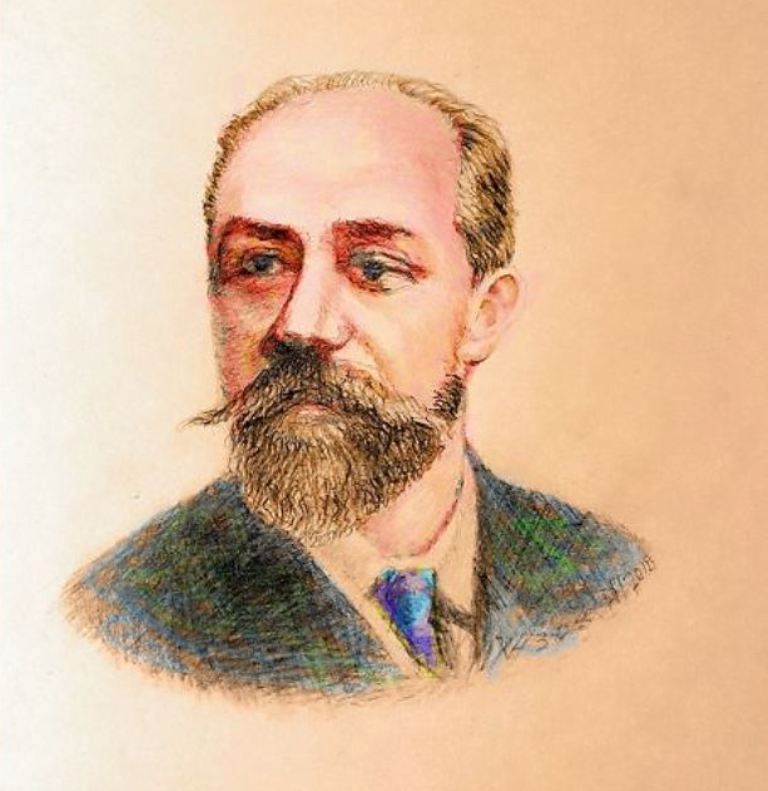
PHOTO: Roman Fedorovich (Robert Friedrich) Melzer (1860-1943)

Roman Fedorovich (Robert Friedrich) Melzer was born in St. Petersburg, on 1st April (O.S. 30th March) 1860. He was the eldest son of the coachman Johann Friedrich Meltzer (1831-1923), who later became the owner of his own furniture factory, and Sophie Christine Meltzer – nee Tatzky (1837-1915).

At the age of thirteen, Roman Meltser entered the St. Petersburg Commercial School, after graduation he continued his studies at the Academy of Arts. In 1888 he received the title of class artist of the first degree in architecture. One of his early projects was the front gate and ramp fences of the Winter Palace, created in collaboration with Nikolai Alexandrovich Gornostaev. In the late 1890s – early 1900s, Melzer worked on the construction of the Emmanuel Nobel (1801-1872) mansion in St. Petersburg.

In 1900 he was appointed chief architect of the Russian exhibition pavilions at the World Exhibition in Paris. The main building, the Pavillon des Confins Russes, looked like an old Russian town, complete with a bell tower. The architecture resonated with the images of the Moscow Kremlin. This ensemble, unusual for a European capital, was located just fifty meters from the Trocadero Palace.

Roman Melzer took part in the decoration of the interiors of numerous imperial palaces: the Winter Palace and Anitchkov Palace in St. Petersburg; Livadia Palace in Crimea; and the Cottage Palace in Peterhof. Among the buildings created according to his designs, included his own dacha on Kamenny Island (1901-1904), the building of the Orthopedic Institute (1902-1906), the palace of the Grand Duke Mikhail Alexandrovich (1910-1913), the complex of buildings of the Psychoneurological Institute (1910-1913), among many others.


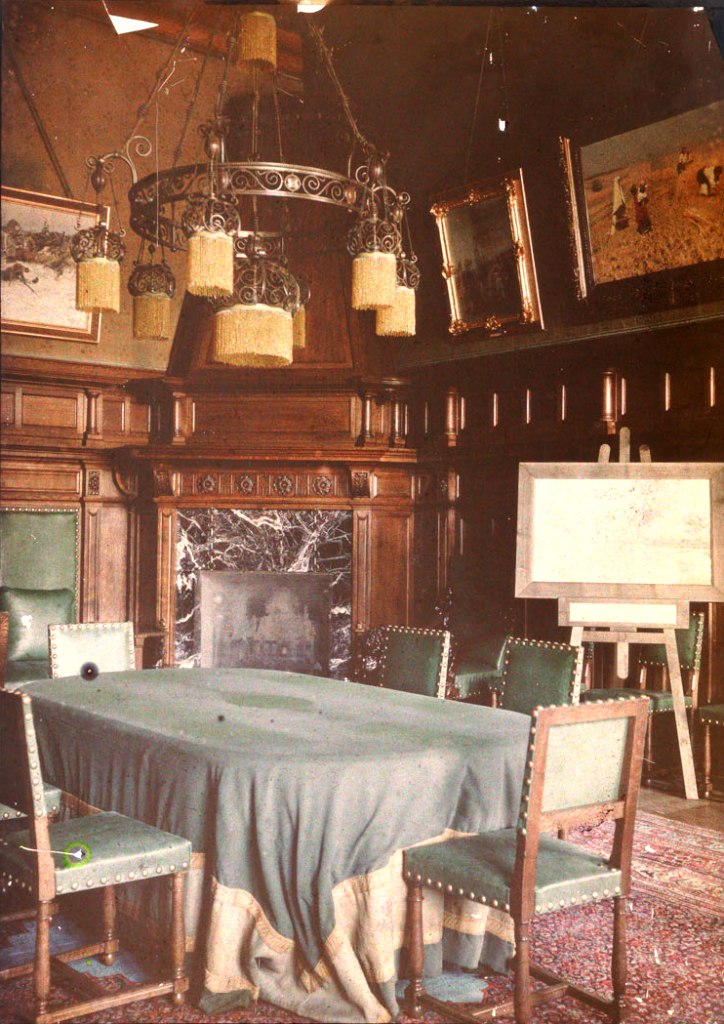
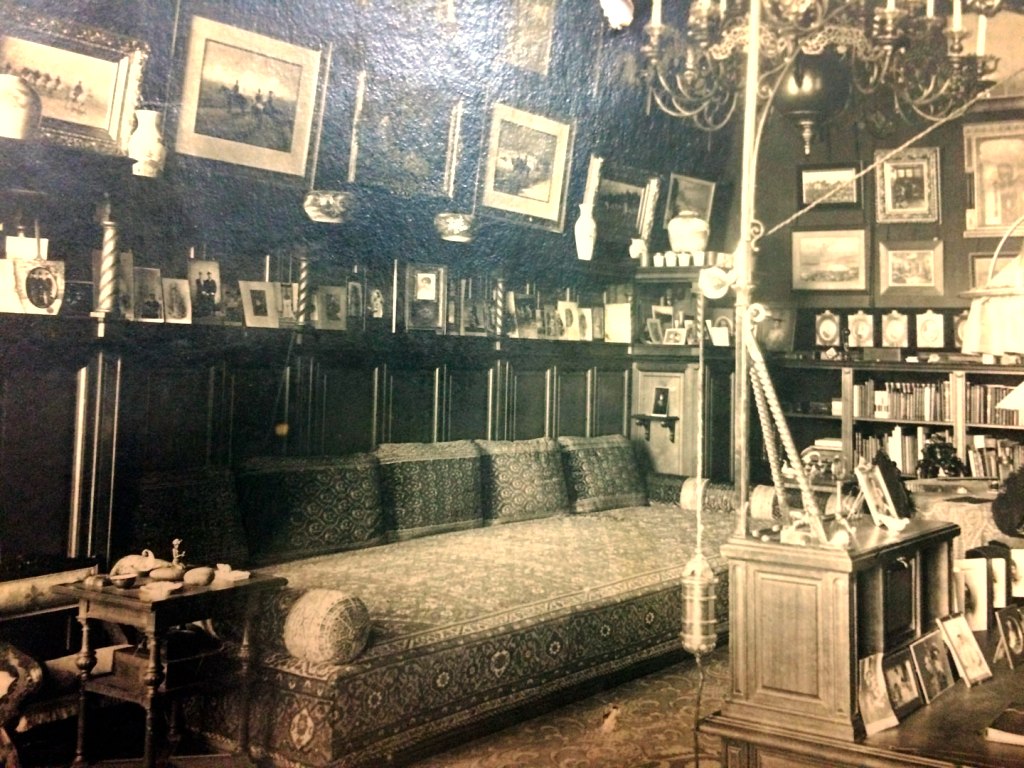
PHOTO: Colour autochrome of the Emperor’s Reception Room taken in 1917

At the end of 1894-1895, the renovation of the interiors of the Alexander Palace in Tsarskoye Selo began. Roman Melzer was invited to prepare the personal apartments of Emperor Nicholas II and Empress Alexandra Feodorovna in the eastern wing of the building. The work took place in several stages. The first interiors created were: the Dining Room (later known as the Reception Room) and the Working Study on the Emperor’s half of the wing, as well as the Imperial Bedchamber, the Mauve (Lilac) Drawing Room and the Pallisander (Rosewood) Drawing Room on the Empress’s half.

In the Emperor’s Reception Room, the walls were decorated with oak panels, and above they were covered with printed fabric. The interior decoration included a corner fireplace made of oak, trimmed with dark green marble. In the upper part of the windows, the architect used stained glass. The F. Meltzer & Co. in St. Petersburg, which was co-owned by Roman Melzer, produced a set of furniture for the room, which included a sofa with two folding tables, a round table for tea, a dining table consisting of a table and twenty-four chairs, a serving table, and a snack table.


PHOTO: the Working Study of Nicholas II

At the same time, the Working Study of Nicholas II was in progress. The interior was designed in the English style, with walls painted in dark red at the top and walnut panels on the bottom. The room featured a large ottoman, in imitation of the cabinet of Alexander III, as well as an L-shaped writing table.

The Imperial Bedchamber was also renovated according to the architect’s project. The furniture, which was preserved from the previous decoration (a bedroom prepared in 1874 for the marriage of Alexander II’s daughter Grand Duchess Maria Alexandrovna to the Duke of Edinburgh), was repainted in white and draped with English chintz, and a pattern of wreaths of small pink flowers and ribbons. The same fabric was also used to make the curtains and alcove curtains for the room.

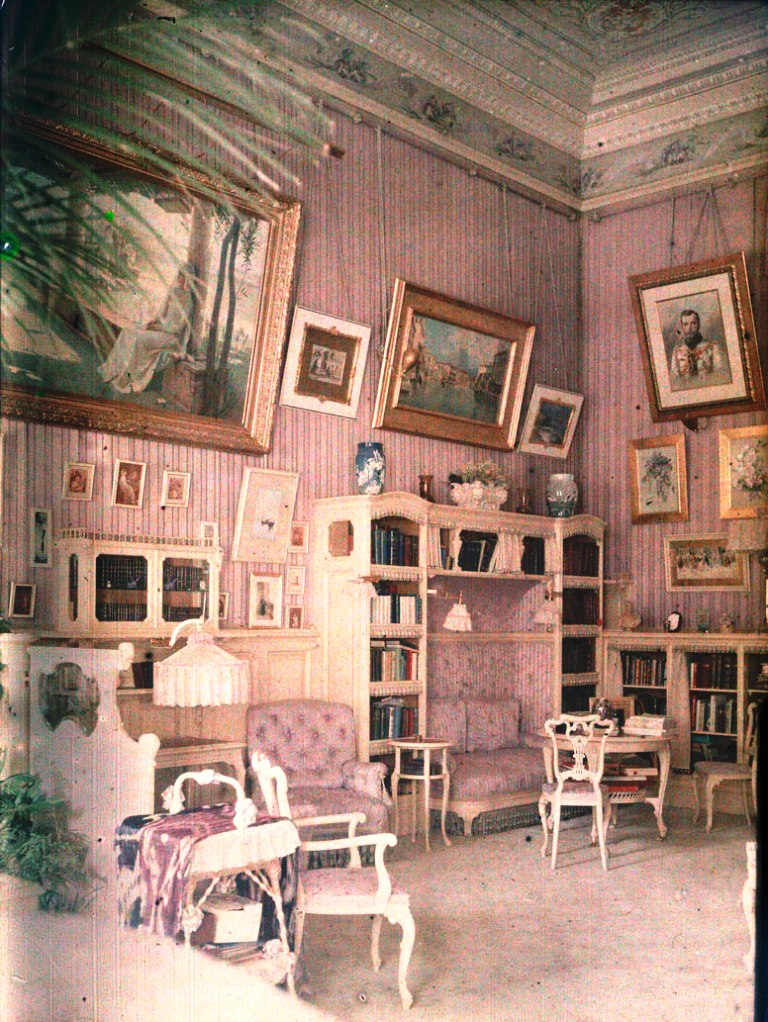
Roman Melzer also created the interior for the Mauve (Lilac) Drawing Room, which was to become one of the Empress’s favorite interiors. Here the walls were upholstered in mauve silk and crowned with a frieze bearing an iris flower pattern, furniture and a piano painted with ivory enamel paint. Some of the pieces of furniture were built-in, connected to the panels, forming comfortable corners.


PHOTO: Colour autochrome of the Mauve (Lilac) Drawing Room taken in 1917

Melzer was engaged in the creation of the Pallisander (Rosewood) Drawing Room, which was located next to the Mauve (Lilac) Drawing Room. Rosewood was chosen for decorating the wall panels and fireplace. The upper part of the walls was covered with a simple yet elegant yellowish silk fabric.

During this period, the children’s half on the second floor began to take shape, as the emperor’s family gradually grew and the “august children” needed their own bedrooms and classrooms.

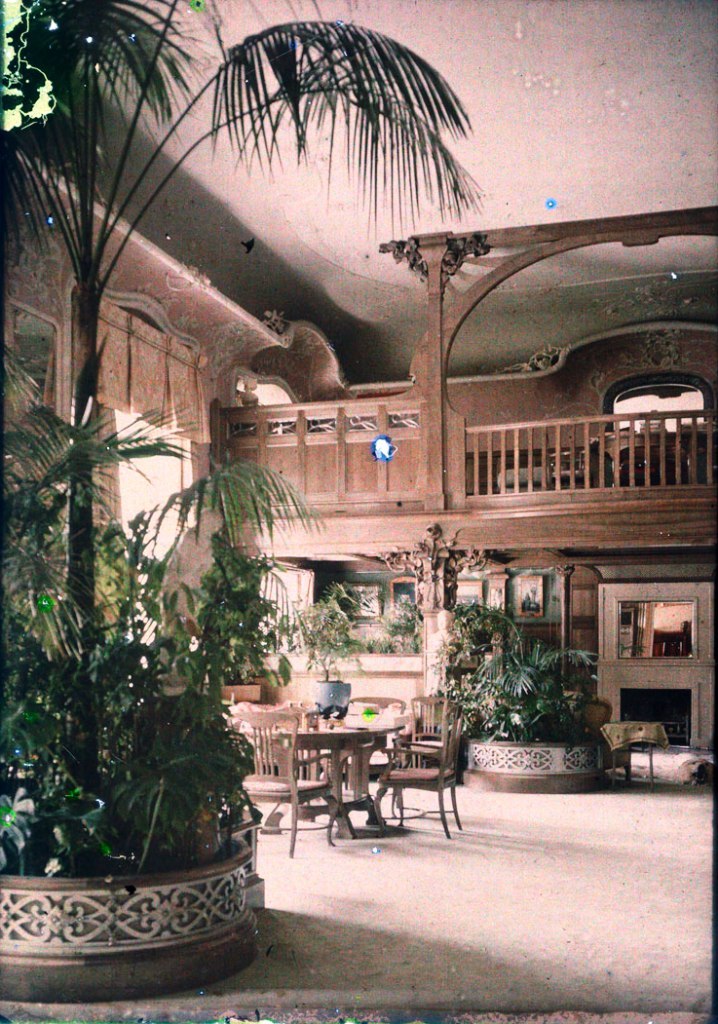
Between 1898–1902, there were no major changes to the interiors of the Alexander Palace. In 1902, however, the decision was made to demolish the double-height Concert Hall and create in its place the Emperor’s New Study and the Empress’s Maple Drawing Room. Roman Melzer’s firm carried out not only the construction, but also the finishing and furnishing of these interiors. A mezzanine was also added, which connected the New Study with the Maple Drawing Room.


PHOTO: Colour autochrome of the Maple Drawing Room taken in 1917

Thanks to Melzer, the interiors of the Alexander Palace underwent a stunning transformation, one which provided a cozy residence for the Emperor and his family. A far cry from the luxurious and ostentatious interiors of the nearby Catherine Palace, the redesigned interiors of the Alexander Palace reflected the simple tastes of Nicholas and Alexandra.

After the 1917 Revolution, Roman Melzer left Russia, and lived for several years in Germany, from there in 1921 he moved to the United States, where he died in 1943.

In 2020, the square at the corner of Bolshoy Sampsonievsky Prospekt and Nobelsky Lane began in St. Petersburg, was renamed Meltserovsky Ploschad – in memory of the court architect. His work reflected the new trends of the turn of the late 19th to early 20th centuries, the emergence of the Art Nouveau style, which was becoming fashionable at the time.

© Paul Gilbert. 2 April 2021
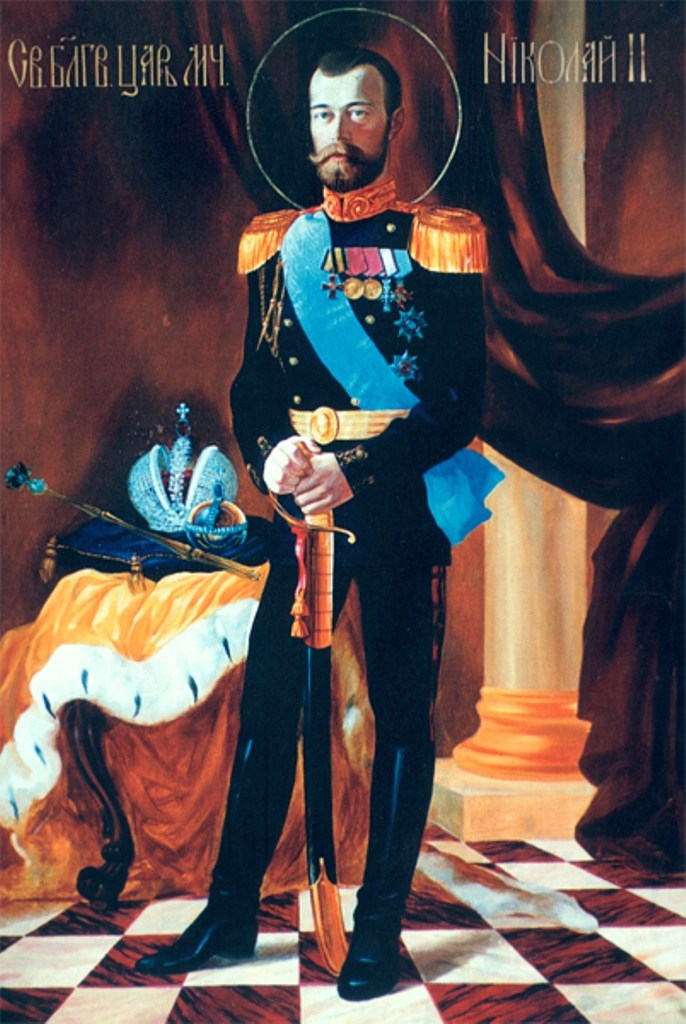
Ceremonial portrait of Nicholas II found in Mogilev, now a holy icon


PHOTO: Ceremonial portrait of Nicholas II. Artist and year unknown.

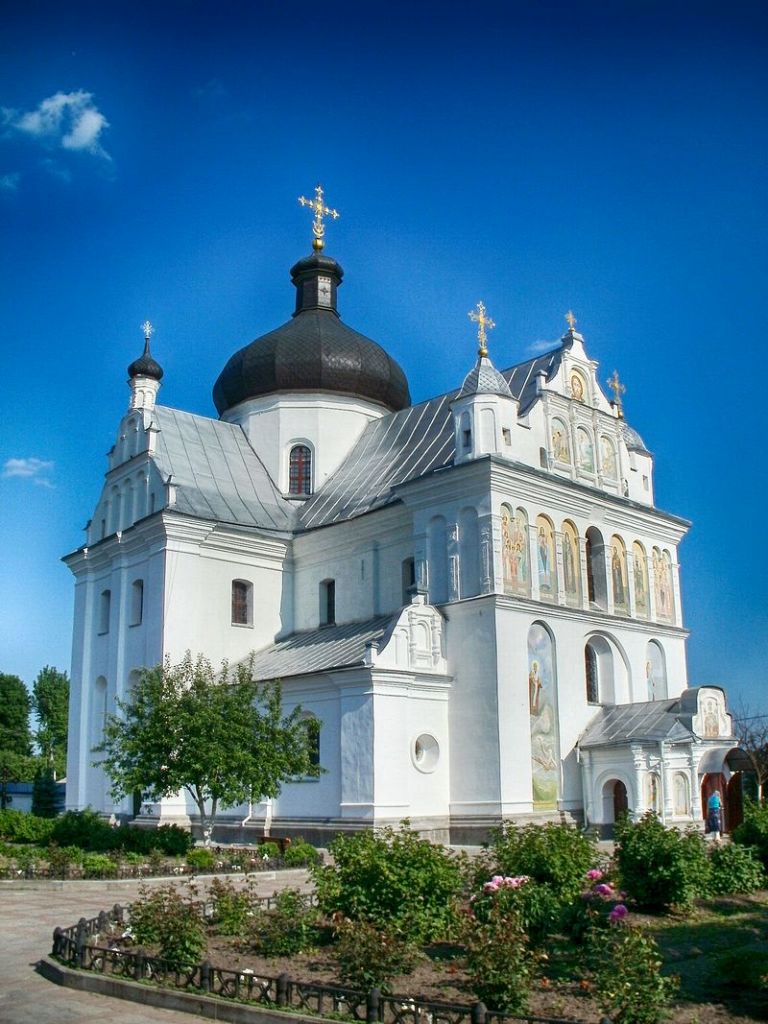
This year marks 30 years since the revival of the St. Nicholas Monastery in Mogilev. This Orthodox monastery is one of the oldest – the first mentions of the monastery appears in the annals of 1522 – and most famous spiritual centers in eastern Belarus, its history is closely connected with Emperor Nicholas II.

The pearl of the monastery is a unique wooden carved iconostasis, made in a special technique of Belarusian carving of the 17th century. Only three such iconostases have survived in the world: in the Novodevichy Convent in Moscow, in the Assumption Cathedral in Smolensk and in the St. Nicholas Monastery in Mogilev. The first abbess of the revived monastery, Abbess Evgenia Voloshchuk and her sisters worked hard during the restoration of the St. Nicholas Monastery.

Difficult fate

St. Nicholas Convent operated from 1637 to 1719, and then was transformed into a male monastery, which existed until 1754. Later, the St. Nicholas Cathedral became the parish church.

Like all Orthodox places of worship, the monastery shared a similar fate – during the years of persecution of the Russian Orthodox Church during the Soviet years, the church’s icons and other contents were confiscated, the iconostasis was destroyed. In 1934, with the death of the priest Mikhail Pleshchinsky, St. Nicholas Cathedral was closed. In 1937, the Mogilev diocese ceased to exist.

In 1937, St. Nicholas Cathedral was used as a transit prison (closed in 1941). In 1991, during the restoration of the monastery, numerous human remains were discovered – most likely victims of Stalinist repressions.

It was not until 1989, that the Mogilev Diocese was restored. It was at this time, that the reigning archbishop of Mogilev and Mstislavsky Maxim (Krokha) began the revival of the St. Nicholas Monastery.

On 28th March 1991, the St. Onufrievsky Church was consecrated. On 18th June of the same year, the monastery was visited by His Holiness Patriarch Alexy II (1929-2008) of Moscow and All Russia.


PHOTO: St. Nicholas Cathedral, St. Nicholas Monastery in Mogilev

Monastery and the Romanov family

The history of the monastery is closely connected with the last Tsar and his family. Between 1915-1917, the headquarters of the Supreme Commander-in-Chief of the Russian Armed Forces was located in Mogilev. During that time, Nicholas II and his family often attended Divine Liturgies held in St. Nicholas Cathedral.

During the canonization by the Russian Orthodox Church of the New Martyrs and Confessors of Russia of the 20th century in the summer of 2000, a ceremonial portrait of the emperor was miraculously found in the niche of an old wall of one of the houses in Mogilev. Local Orthodox Christians, believing the discovery as a miracle and turned the portrait into an icon, transferring it to the St. Nicholas Cathedral.

The icon hangs today, on the left side-altar of the church consecrated in memory of the Holy Royal Martyrs. A five-ruble gold coin is also attached to the icon, which was once presented to the boy Simeon Khalipov by Emperor Nicholas II during a visit to the monastery.

© Paul Gilbert. 28 March 2021
UPDATE on the reopening of the Alexander Palace

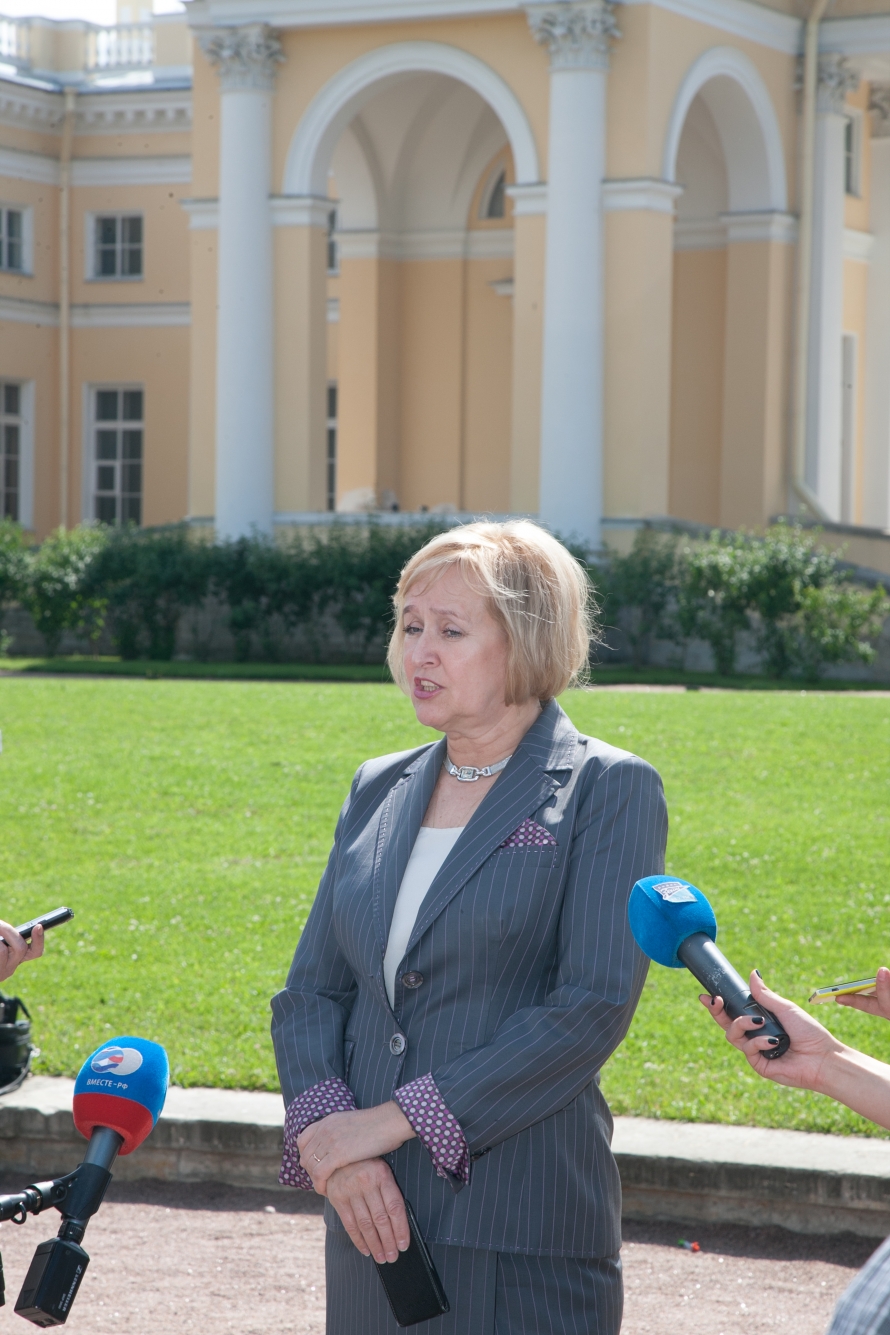
PHOTO: Director of the Tsarskoye Selo State Museum-Reserve Olga Taratynova

According to the Director of the Tsarskoye Selo State Museum-Reserve Olga Taratynova, the Alexander Palace will receive its first visitors in late May – early June 2021.

“The first stage, which includes 15 interiors of the private rooms of Emperor Nicholas II and Empress Alexandra Feodorovna is nearing completion, and I hope that within the coming weeks, we will be able to confirm the opening date. Once open to visitors again, we will organize tours for small groups, since the interiors themselves are small. The private life of Nicholas II and his family will be shown from a completely different perspective,” noted Taratynova.

More than 2 billion rubles ($26 million USD) were allocated for the first stage of the restoration of the Alexander Palace, which include the fifteen interiors situated in the eastern wing of the palace. The recreated interiors include the New Study of Nicholas II, Moorish Bathroom of Nicholas II, Working Study of Nicholas II, Reception Room of Nicholas II, Pallisander (Rosewood) Living Room, Mauve (Lilac) Boudoir, Maple Drawing Room, Alexandra’s Corner Reception Room, the Imperial Bedroom, among others.

Taratynova noted, that the second phase of the restoration of the palace will take about three more years. “We assume that the second stage will be approximately 2.5-3 years. Work on the second stage is already underway”.

The restoration of the Alexander Palace began in 2010, in which three State Halls were opened to visitors  marking the 300th anniversary of Tsarskoye Selo. In August 2015, the palace was closed for a comprehensive restoration and reconstruction project.

In the future, the Alexander Palace will become a memorial museum of the Romanov family – showcasing the private, domestic life of Nicholas II and his family, who used the palace as an official residence from 1905. The eastern wing of the palace will be known as the Museum of the Russian Imperial Family.

The restoration of the Alexander Palace, which includes the Western wing is scheduled for completion no earlier than 2024. After the completion of the work, the Alexander Palace will become a multifunctional museum complex, which will include exhibition halls, halls for temporary exhibitions, halls for research work and conferences, as well as a library and a children’s center. The basement floor will house a ticket booth, a museum shop, a café, a cloakroom, a tour desk, as well as technical and ancillary facilities.

© Paul Gilbert. 23 March 2021
***

Dear Reader: If you enjoy my articles on the history and restoration of the Alexander Palace, then please help support my research by making a donation in US or Canadian dollars to my project The Truth About Nicholas II – please note that donations can be made by GoFundMePayPal, credit cardpersonal check or money order. The net proceeds help fund my work, including research, translations, etc. Thank you for your consideration – PG


ROC Metropolitan blames Nicholas II for February 1917 Revolution

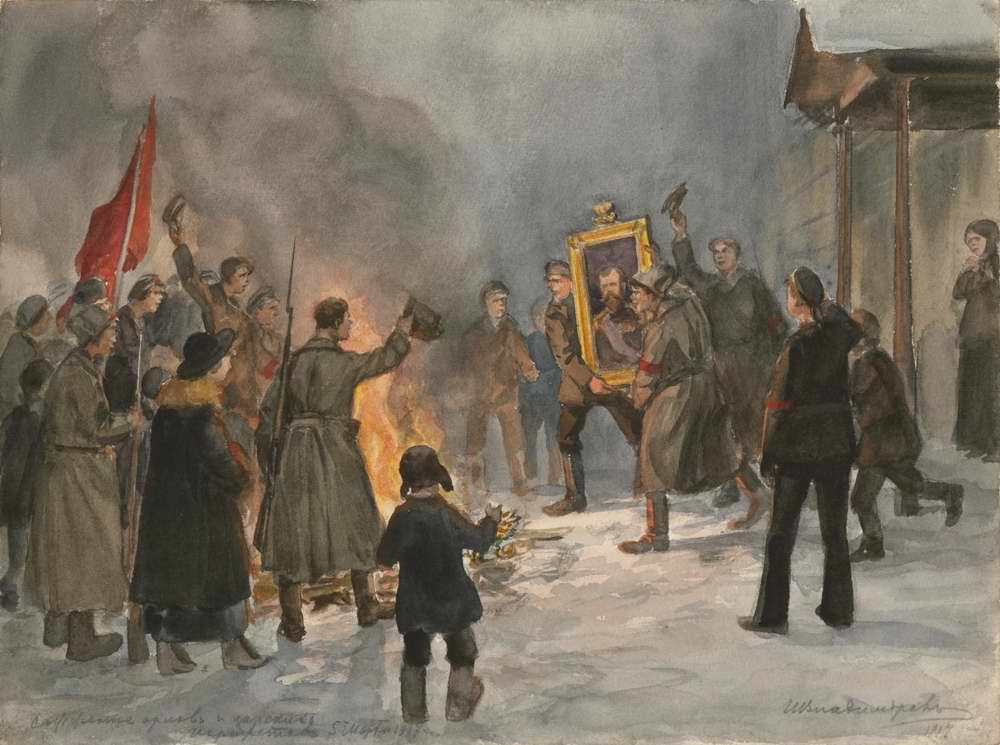
PHOTO: Revolutionaries burning a portrait of Nicholas II on 5th March 1917
Artist: Ivan Alekseevich Vladimirov (1869-1947)

On 23rd February (O.S.) 1917, workers unrest and mass demonstrations began in the capital of the Russian Empire, Petrograd. Thus began the February Revolution, which brought an end to the monarchy and lead the country into chaos.

On 2nd March (O.S.) 1917, Russia’s last emperor Nicholas II, betrayed by the elites, members of his inner circle, generals and even members of his own family abdicated the throne. Although historians continue to argue about the authenticity of the renunciation manifesto, it was then, at the Pskov railway station, that the Imperial Family’s journey to Golgotha ​​began.

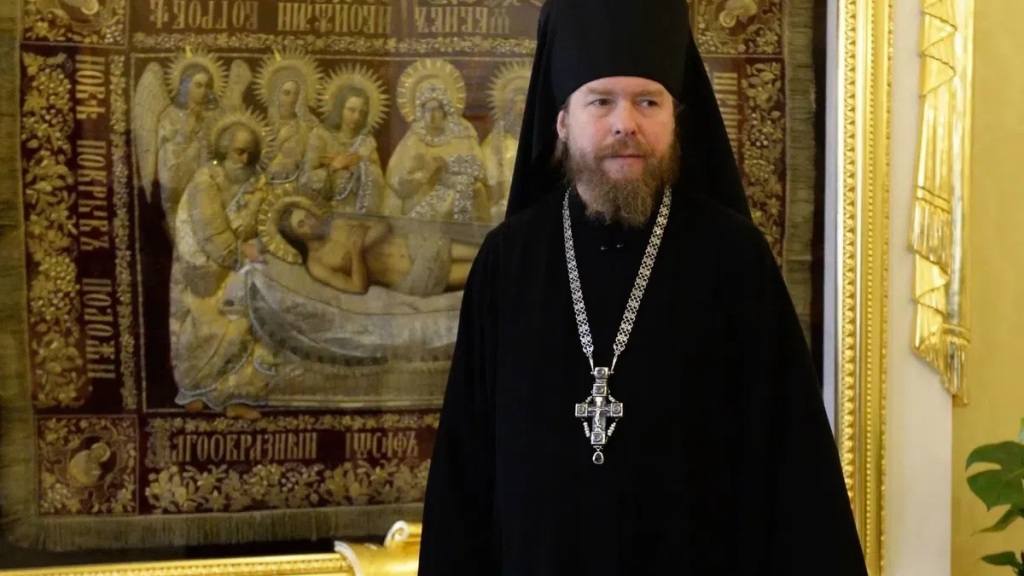
On the recent 104th anniversary of the events which proved fatal for Russia, Metropolitan of Pskov Tikhon (Shevkunov)¹ talked about the drama and lies of the Russian Revolution during a discussion on the YouTube channel “Seraphim”.

Metropolitan Tikhon said that the last Russian emperor Nicholas II was responsible for the February Revolution of 1917, since he was the supreme ruler of the country and failed to discern the impending threat.

“The first person is always to blame for the troubles that befall the country. Always!” – said Tikhon. He explained that Nicholas II was glorified in the person of the saints in a special way – as a passion-bearer², in connection with the tragic circumstances of the deaths of the Imperial family.

At the same time, Tikhon recalled an article by Winston Churchill (1874-1965) in the Illustrated Sunday Herald about the revolutionary events in Russia, where the British politician spoke positively about Nicholas II and emphasized the inevitability of the victory of the Russian Empire in World War I, if not for the revolutionary events.

PHOTO: Metropolitan of Pskov Tikhon (Shevkunov)

“Nicholas II was one of the most successful and yet one of the most tragic leaders of our state,” said Metropolitan Tikhon, referring to the rapid growth of the empire’s population, the economic and industrial boom during the reign of the last emperor. “This is evidence of his caring for the Russian people and the ever-increasing standard of living,” he added.

According to Metropolitan Tikhon, during his 22 year reign, although he was a decent and even selfless person, Nicholas II “bored” Russian society, and “could not see the terrible situation which was developing”. He went on to say that “the aristocratic and noble monarchy,” played a fatal role in the fate of the Russian Empire.

NOTES

¹ Tikhon is the Metropolitan of Pskov and Porkhov and Bishop of the Russian Orthodox Church. He is often referred as the personal confessor of Russian President Vladimir Putin.

² Nicholas II was glorified as a saint by the ROCOR in 1981, and as a passion-bearer by the Moscow Patriarchate in 2000

© Paul Gilbert. 23 March 2021

***

Dear Reader

If you enjoy my articles, news stories and translations, then please help support my research by making a donation in US or Canadian dollars to my project The Truth About Nicholas II – please note that donations can be made by GoFundMePayPal, credit cardpersonal check or money order. Thank you for your consideration – PG

The Imperial Route: in the footsteps of Nicholas II

PHOTO: the Imperial Route helps to keep their memories alive

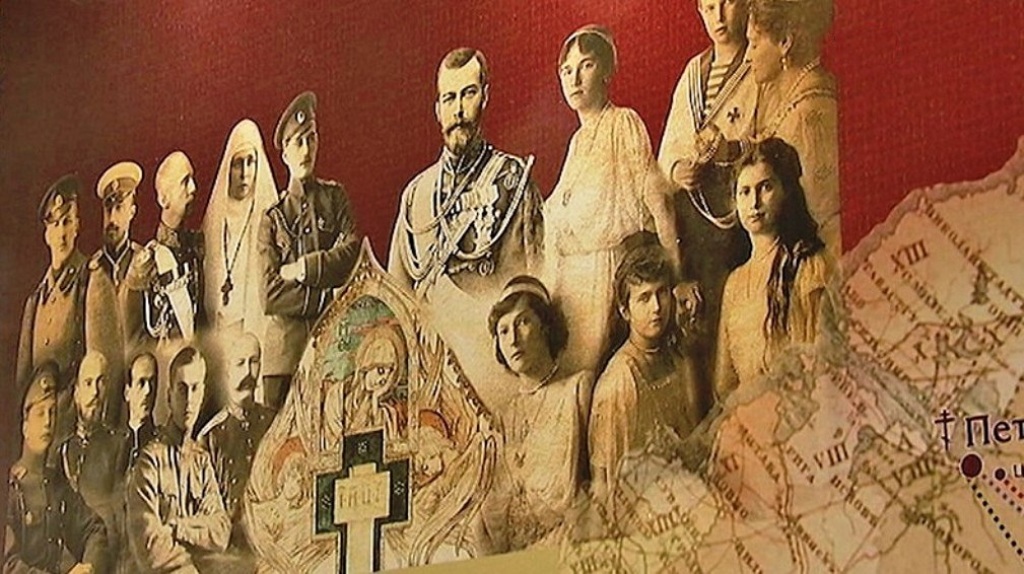
In 2017, the Imperial Route Project was developed by the Elisabeth-Sergius Educational Society Foundation (ESPO), with the support of the Ministry of Culture of the Russian Federation. The implementation of the project was launched in 2018, the year marking the 100th anniversary of the martyrdom of the Emperor Nicholas II, his Family and other members of the Russian Imperial House.

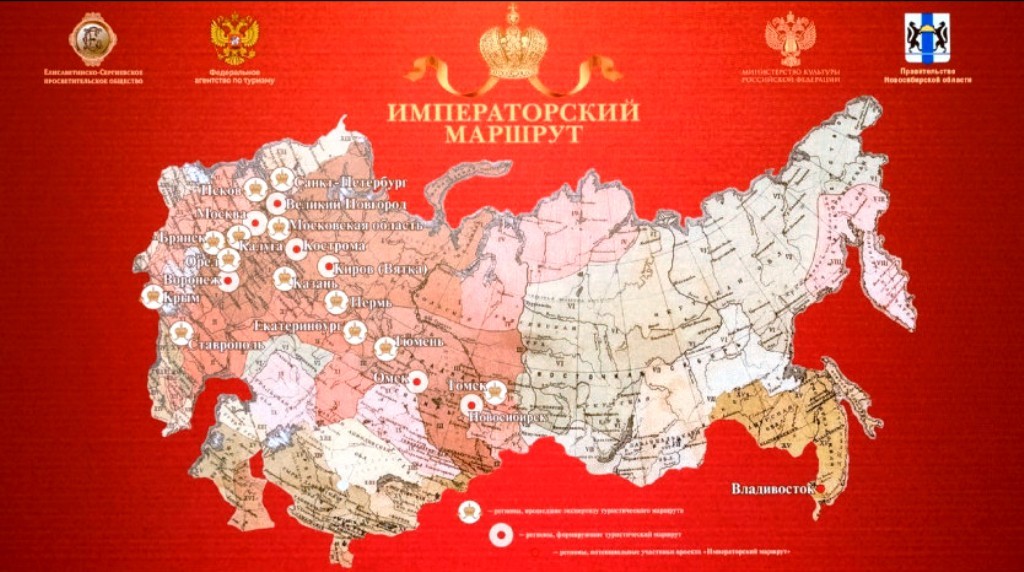
In 2018, the Imperial Route united 10 regions of Russia: St. Petersburg, Moscow, Tyumen, Sverdlovsk, Omsk, Tomsk, Pskov, Kirov and Perm. A year later, another 9 Russian regions expressed their desire to participate in the national historical and cultural tourism project.

PHOTO: map of the Imperial Route, showing the 19 participating regions

The 19 participating regions include: St. Petersburg, Moscow, Moscow region, Pskov region, Kirov region, Perm region, Omsk region, Tomsk region, Sverdlovsk region, Tyumen region, Oryol Region, Kostroma region, Kaluga region, Republic of Crimea, Novgorod region, Bryansk region, Republic of Tatarstan, Stavropol region, Voronezh region, and Novosibirsk region.

The participating regions signed a trilateral agreement on the development of the Imperial Route Project. The head of the Federal Agency for Tourism of the Russian Federation Zarina Valerievna Doguzova noted that “the Imperial Route will provide a new impetus for the development and preservation of Russia’s historical and cultural heritage and the implementation of new educational programs aimed at the continuity of historical memory”.

PHOTO: the Russian Agency for Tourism promoting the Imperial Route

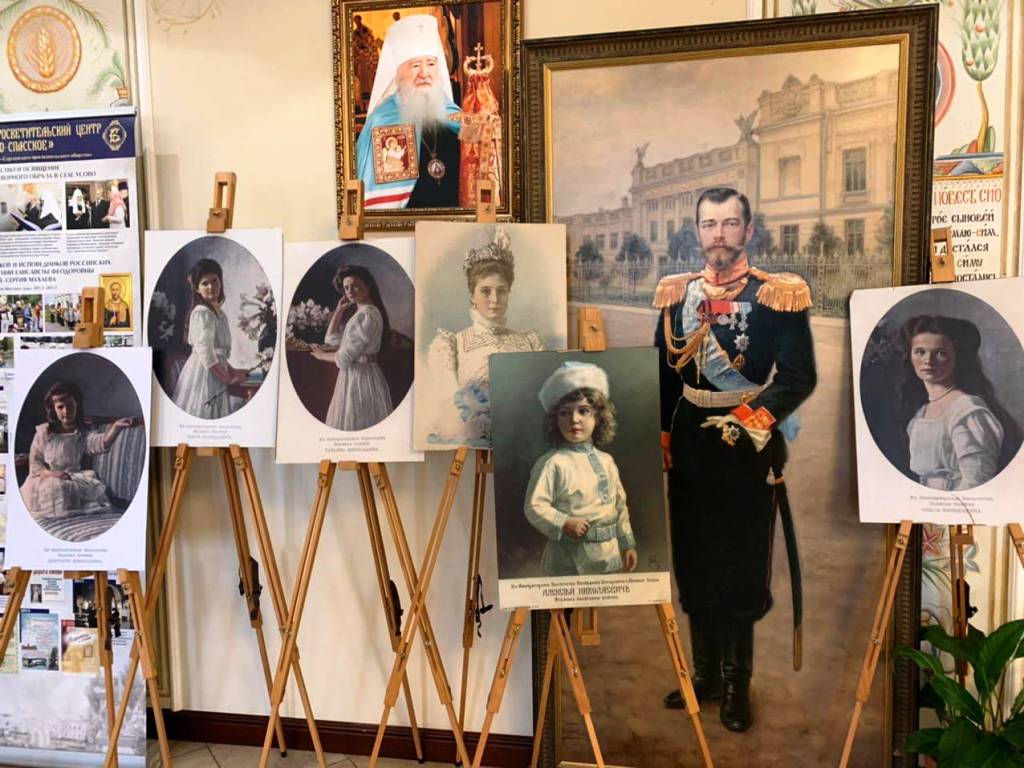
The goal of the Imperial Route Project is to revive the foundations of the historical, cultural and spiritual component of Russia, during the 300 year reign of the Romanov Dynasty. In particular, the route will focus on Russia’s last Emperor Nicholas II and his family: their residences, how they lived, places they visited, how they kept their high traditions of piety, etc. The project will also include those members of the Imperial family who were murdered at Alapaevsk, Perm, Petrograd, etc.

The participants of the project, were informed about the stages of the formation of the Imperial Route, the scientific and educational, museum and exhibition work that was carried out by the ESPO Foundation who have worked with historians, ethnographers, and archivists since 2011. The head of the ESPO Foundation Anna Vitalievna Gromova noted that the task of the project is to acquaint both Russians and foreigners with the achievements of the Imperial House of Romanov, between 1613-1917.

PHOTO: promoting the Imperial Route Project

ESPO have been closely involved in a series of major projects that reflect the history of Imperial Russia and the Romanov dynasty, including the Museum of the History of the Imperial Orthodox Palestinian Society in Moscow, the Cross-monument at the site of the death of Grand Duke Sergei Alexandrovich in the Kremlin, the Museum of the Family of Emperor Nicholas II in Tobolsk and the Museum of Memory of the Representatives of the Russian Imperial House in Alapaevsk.

One of the main goals of the Imperial Route is the creation of new museums. The next stages of the development of the project cover places which involved visits and pilgrimages by Nicholas II and his family. Other projects include the revival of estates and residences, such as the Imperial Estate Ilyinskoye-Usovo in the Moscow region, which belonged to the Empress Maria Alexandrovna, and after her death the residence of Grand Duke Sergei Alexandrovich and Grand Duchess Elizabeth Feodorovna, the Grand Duke Konstantin Konstantinovich’s estate in Ostashevo near Moscow, the estate of Grand Duke Mikhail Alexandrovich in the village of Lokot, Bryansk Region, places of visits and pilgrimages in the Kaluga region – the revival of the Sergius Skete, created by the Grand Duchess Elizabeth Feodorovnaof the Orthodox Society in memory of her husband Sergei Alexandrovich, who was assassinated in February 1905. The ESPO Foundation together with the Ministry of Culture of the Russian Federation plans to create up to 10 museums and exhibition spaces along the Imperial Route.

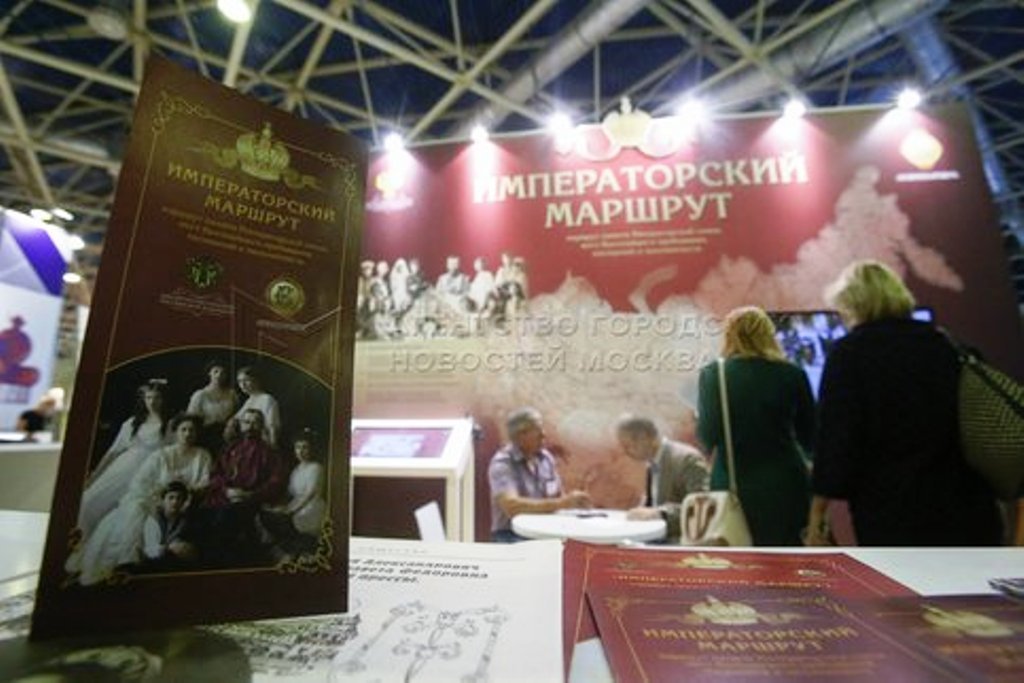
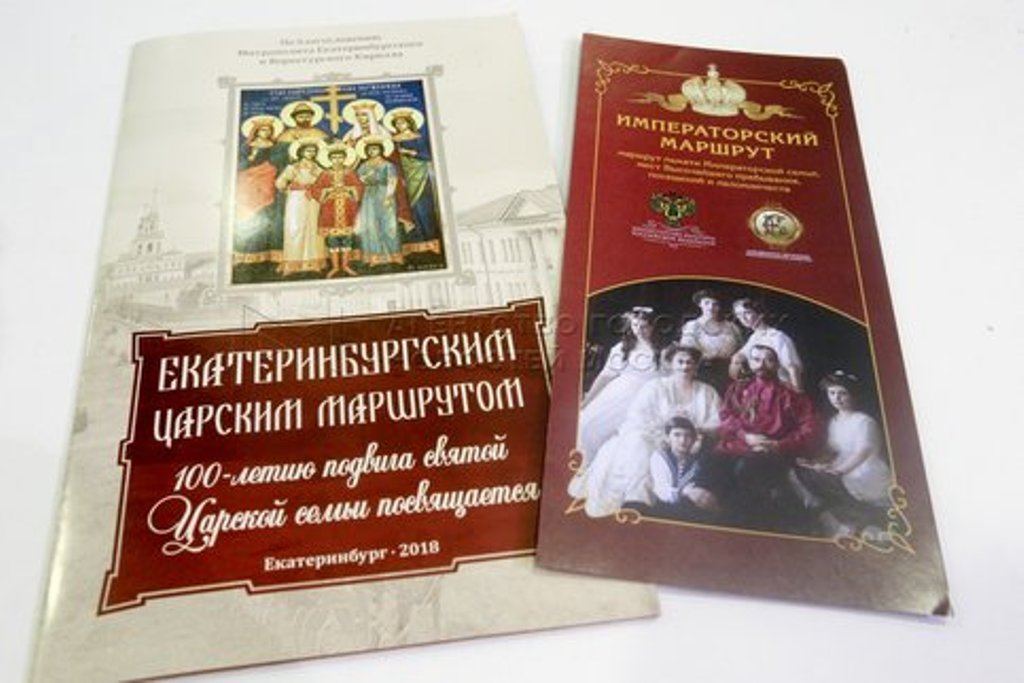
PHOTO: information brochures published by the Imperial Route Project

Each region is responsible for implementing commemorative signs at sites participating in the Imperial Route Project, and working with local tourism agencies to promote former Imperial residences, museums, exhibitions, churches, etc., that have a historic connection to the Romanovs. *Tour operators from Germany, Italy, France, Serbia have already shown great interest in this new tourism initiative, which will draw more visitors to Russia, those who wish to learn about the last Tsar and members of his family.

*Once the pandemic is behind us, and travel from the West resumes, tour operators will also offer their services to English speaking visitors from the United States, Canada, Australia and Great Britain.

The National Historical and Cultural Tourism Project The Imperial Route provides an opportunity to take a fresh look at Russia’s history and introduce the younger generation to the nations’ chain of historical events. “We want to preserve the memory of the 300-year history of Imperial Russia which is famous for its military exploits, scientific achievements, and successes in cultural development. On the Imperial Route everyone will be able to find something of interest, which will not only set examples of the achievements made by members of the Russian Imperial Family, but also to inspire them to live and work for the good of the Fatherland,” said Anna Vitalievna Gromova.

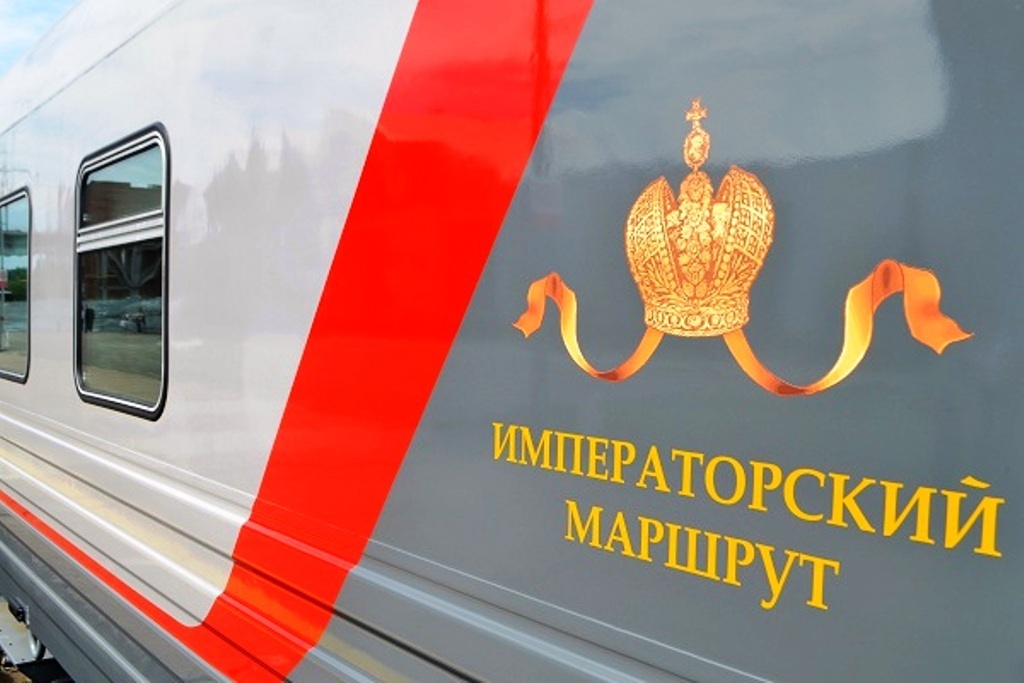
PHOTO: the Imperial Route train now runs between Tyumen
and Tobolsk, as well as Ekaterinburg and Alapaevsk

In the coming years, the Imperial Route will continue to develop new incentives and places of interest. For instance, on 20th February of this year, a special “Imperial Route” train running between Ekaterinburg and Alapayevsk was launched on the Sverdlovsk Railway (a branch of Russian Railways). The first Imperial Route train was initiated in 2018, between Tyumen and Tobolsk.

This new service is part of the Russian tourist project “Imperial Route,” which allows visitors to the Urals to acquaint themselves with places associated with the period – August 1917 to July 1918 – that the Imperial Family were held in Ekaterinburg and Alapaevsk.

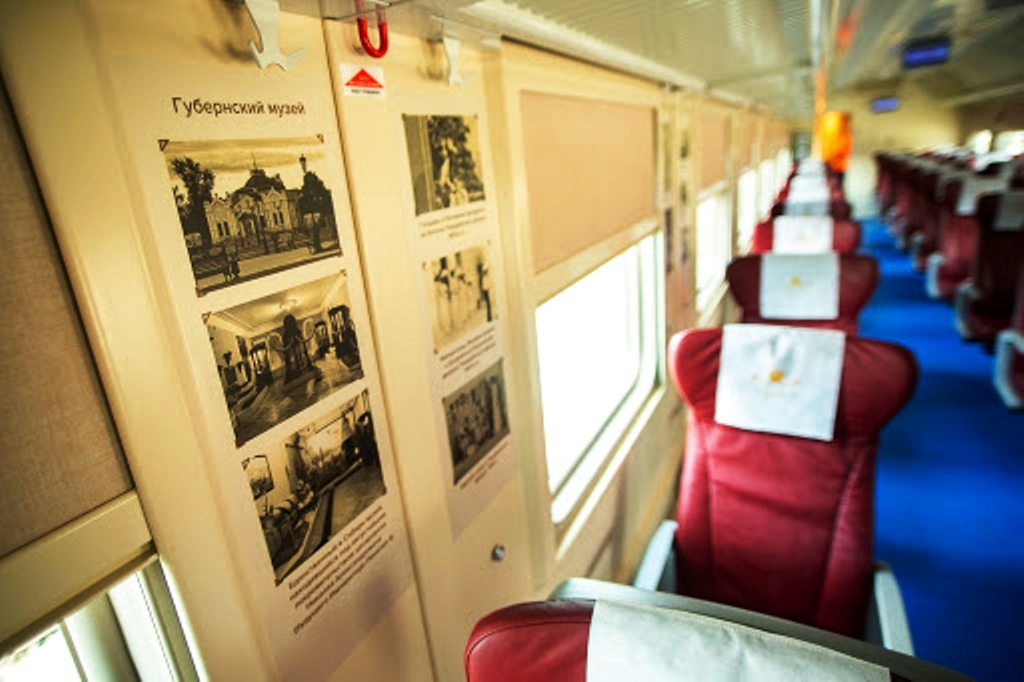
The train making the three-hour journey is equipped with an Imperial Family-themed wagon, complete with information boards and video monitors. The train will run on weekends on a special schedule.

Upon arriving in Alapaevsk, visitors are taken by bus to places of importance in the lives of those members of the Imperial Family who were murdered there on 18th July 1918 – the day after Emperor Nicholas II, his family and four faithful retainers were brutally murdered in Ekaterinburg.

In Alapaevsk, 6 members of the Imperial Family, along with 2 faithful servants met a brutal death being thrown down a mineshaft near Alapayevsk by the Bolsheviks. The victims included Grand Duchess Elizabeth Feodorovna, nun Varvara Yakovleva, Grand Duke Sergei Mikhailovich, his secretary Fyodor Remez, Princes of the Imperial Blood Ioann, Konstantin and Igor Konstantinovich and Prince Vladimir Pavlovich Paley.

© Paul Gilbert. 19 March 2021

Filming the Coronation of Emperor Nicholas II in 1896

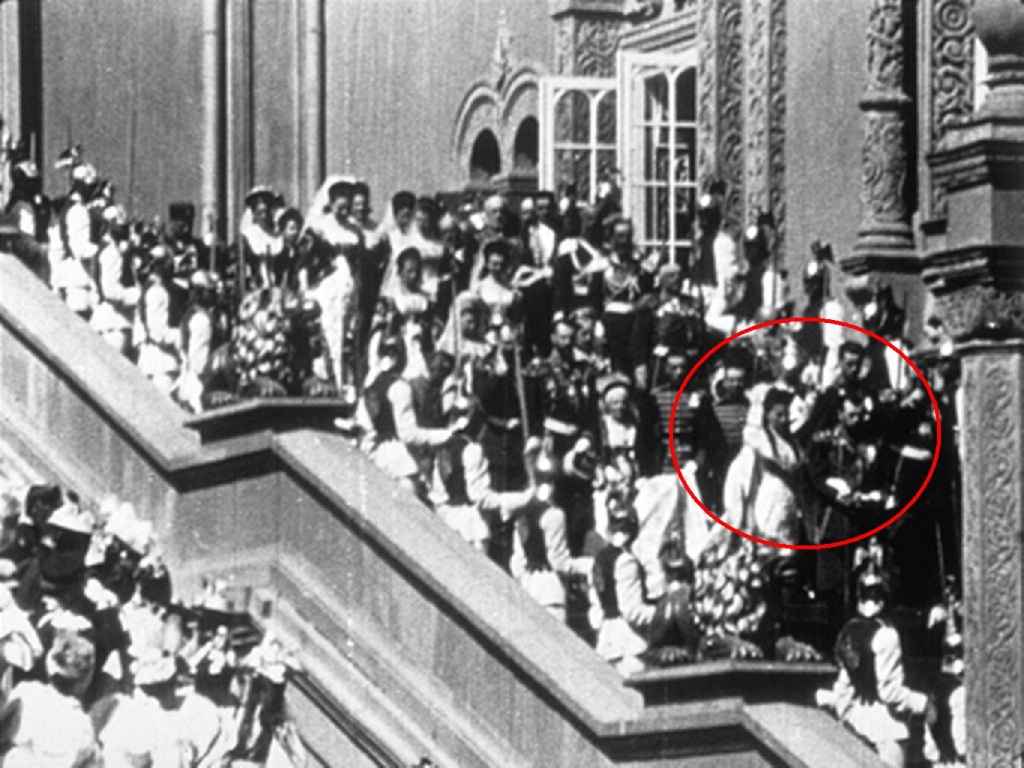
PHOTO: still from the Lumiere Bros. film documenting the 1896 Coronation.
Emperor Nicholas II, Empress Alexandra Feodorova and their retinue
are seen slowly descending the Red Staircase of the Moscow Kremlin

The Russian State Archive of Film and Photo Documents RGAKFD is the world’s largest and oldest public repository of audiovisual documents. In 2019, the archive celebrated its 100th anniversary.

To date, it holds more than 45,000 titles of film documents, more than one and a half million original photographic documents from 1850 to the present: these include daguerreotypes, ferrotypes, and albums, including those belonging to the Imperial Family, and negatives on glass and film, and modern digital photographic images.

The existing collection of film documents of pre-revolutionary Russia, stored in the RGAKFD, was formed from newsreel-documentary materials requisitioned by the Soviet authorities during the nationalization of the film industry from the warehouses of film factories and film companies.

In total, the archive currently contains about 960 pre-revolutionary newsreels, including the first full-length documentary-film made in Russia – the Coronation of Emperor Nicholas II in 1896.

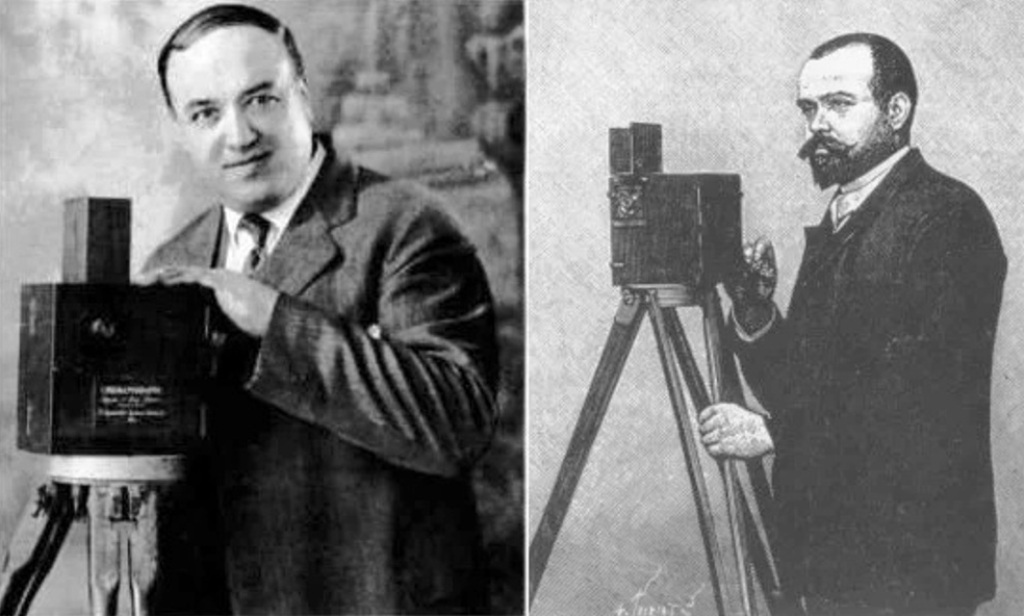
PHOTO: Lumiere Brothers: Auguste (1862-1954) and Louis (1864-1948)

In May 1896, French cameramen from the Lumiere Brothers (Paris) company arrived in Moscow, to film the coronation ceremony of Emperor Nicholas II. On 5th May 1896, the Moscow newspaper Новости дня [News of the Day] wrote: “among the correspondents who have arrived in the city is Camille Cerf for the coronation of Nicholas II. Sent to Moscow on behalf of Louis Lumière, he is armed with a very interesting device – a cinematograph … He will film the entire solemn procession of the route on a special moving belt, on which the pictures will, however, be so microscopic that only after enlarging them can they can be seen. But, in any case, all parts of the tuple and all of its moments will be reproduced in this way with documentary accuracy.” The coronation celebrations in the Kremlin were captured in great detail.

PHOTO: cinematographers Charles Moisson and Francis Dublier

The “Lumiere Brothers Cinematography” catalogue, released in France for the 100th anniversary of cinema, names four cameramen who filmed “The Coronation of Emperor Nicholas II” – Francis Dubliet, Camille Cerf, Charles Moisson and Alexandre Promio.

PHOTO: Belgian cinematographer Camille Cerf (1862-1936)

A copy of the film of the coronation celebrations was presented by Lumiere to Emperor Nicholas II and, apparently, met with his approval. In any case, it laid the foundation for a special kind of pre-revolutionary Russian newsreel, the so-called “Tsarist Chronicle”, which was filmed in Russia systematically from 1896 to 1917, mainly by Russian cameramen, for distribution to the growing commercial cinema network across the Russian Empire.

The Lumiere Bros. film The Coronation of Emperor Nicholas II was filmed in 35 mm, duration 1 hour 33 min. The video below shows only 1 minute and 40 seconds of it. More than a decade ago, a Ukrainian historian announced plans to restore the entire film. Sadly, he was unable to acquire funding for this important historical project.

The following is a list of the highlights of the video:

1. NDP 1.4m “Coronation of Sovereign Emperor Nicholas II Alexandrovich” May 14, 1896

2. Common. 10.1 m On the streets of Moscow, ceremonial gilded carriages, accompanied by their retinue, pass. In the first carriage sits Empress Alexandra Feodorovna, (removed from the building of the Historical Museum). Cinematographer Francis DOUBLIER . CL No. 1329.

3. Common. 4.8m Emperor Nicholas II and Empress Alexandra Feodorovna, accompanied by the courtiers, walk up the stairs of the Red Porch, down to Ivanovskaya Square to the Assumption Cathedral, (filmed from the side of the Annunciation Cathedral from the height of the roof of the temporary stands).
Operator Charles MOISSON . CL No. 1330.

4. Common. 7.8 m Emperor Nicholas II and Empress Alexandra Feodorovna leave the Archangel Cathedral, join the solemn procession and under a canopy, accompanied by the courtiers, walk towards the porch of the Annunciation Cathedral. Cinematographer Francis DOUBLIER . CL No. 1331.

5. Wed 9.2 m The solemn procession goes towards the Annunciation Cathedral.
Cinematographer Francis DOUBLIER . CL No. 1331.

6. Common. 6.6m Representatives of various nationalities are passing by.
Operator Charles MOISSON . CL No. 1328.

7. Common. 5.1 m A carriage drives up to the porch of the house, dignitaries sit in it.
Operator Charles MOISSON . CL No. 1325.

8. Common. 2.9m The dignitaries sit in the carriage.
Operator Charles MOISSON . CL No. 1326.

***

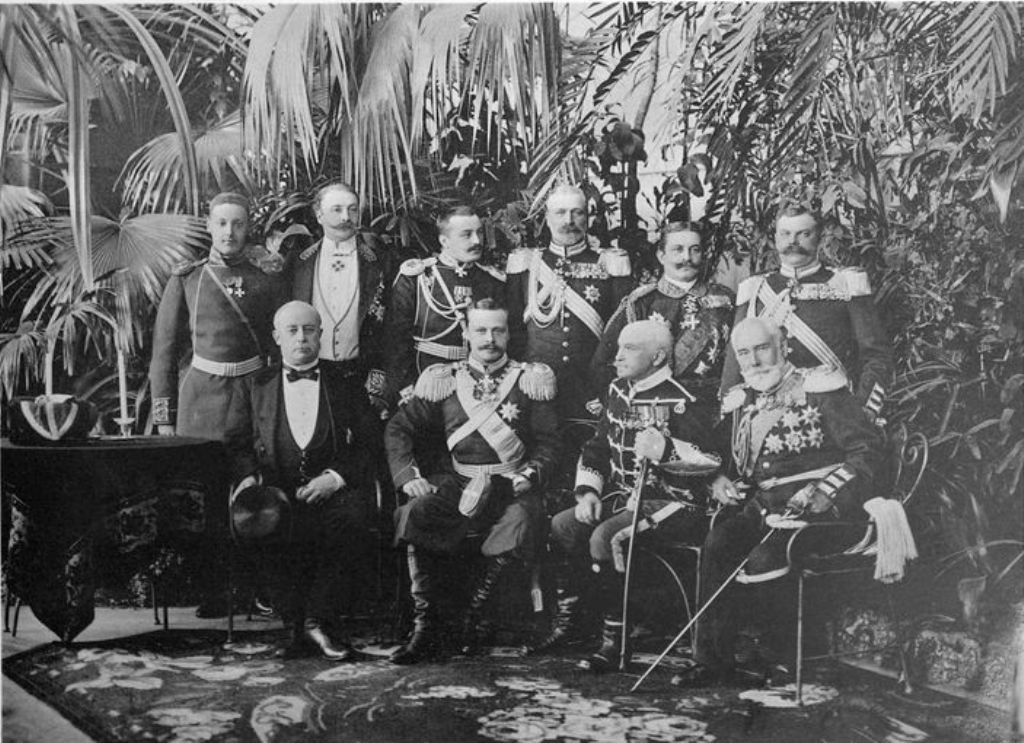
PHOTO: Ernest Louis, Grand Duke of Hesse (seated center) with members
of the Hessian delegation, who attended Nicholas II’s Coronation in May 1896

The Empress’s brother, Ernest Louis, Grand Duke of Hesse (1868-1937), who was present at the coronation ceremony, provides a vivid description of the event:

“The coronation in Moscow on May 26, 1896 was the most splendid ceremony I have ever seen. It was almost eastern in style and lasted 10 days. In Moscow, the cathedral was full of images of saints on a gold background, and all the priests were wore golden vestments, decorated with embroidery and precious stones. In all the ceremonies, there was a deep mystical meaning and Byzantine traditions. The Anointed Emperor and Empress became God’s Anointed ones. The emperor, like a priest, receives communion at the altar. After that, in front of the throne, he takes off the crown from his head, kneels down and prays aloud with a wonderful prayer for his people. Then they say a prayer for the emperor, and he rises, and at that moment he is the only non-kneeling person in the entire Russian Empire. The procession of people entering and leaving the cathedral passes along the elevation, which is at the level of the heads, standing around, so you can see everyone who takes part in the ceremony. The procession seems to consist only of people in full dress, everything glitters in gold and silver, the emperor and empress in gold and ermine robes stand under a huge canopy, all the grand duchesses are strewn with jewels. Everything happens as in a magical dream, because everything is illuminated by the bright radiance of the sun.”

© Paul Gilbert. 16 March 2021

Putin’s negative assessment of Nicholas II

Putin’s attitude to Nicholas II

During his presidency, Vladimir Putin has spoken negatively about Nicholas II on more than one occasion, describing his role as a ruler “erroneous” and “absurd”. Putin believes that Nicholas II ruled the country incorrectly, made many mistakes, which is why Russia lost the Russo-Japanese War (1904-05) and later lead Russia unprepared into the First World War. Putin further believes that during the war, Nicholas II personally made a number of errors of judgment and policy, which forced his highest ranking military officers to seek his removal from the throne by forcing the Tsar to abdicate. The main conspirators were mainly military leaders and self-serving politicians of the Duma.

Vladimir Putin has also publicly referred to Russia’s last tsar as “Bloody Nicholas” on more than one occasion. His negative attitude towards Nicholas II, however, does not reflect his assessment of other Russian monarchs, including the Emperors Peter I, Nicholas I, Alexander II, and Alexander III.

“Nicholas the Bloody”

A video has been circulating on YouTube for some years now, in which Putin is caught on camera making an insult towards Nicholas II. Entering his Kremlin office (probably on the day of his first inauguration on 7th May 2000), Putin responds to these words spoken by one of his aides: “From this roof [Grand Kremlin Palace], Nicholas II looked out over Moscow.”

“Well, he had nothing to do, so he ran across the roofs,” Russia’s new President remarked contemptuously.

During a meeting with members of construction teams in Sochi in the summer of 2011, Putin referred to the Tsar as “Nicholas the Bloody”. This epithet runs counter to both the position of the Russian Orthodox Church, which canonized Nicholas II on 20th August 2000, and with the ideology of the Russian authorities during the past 20 years.

Then, on 4th March 2014, during a press conference in Novo-Ogaryov on the events in Ukraine and the annexation of Crimea, Vladimir Putin once again, used the Soviet propaganda epithet “Nicholas the Bloody”. He was responding to a question by a journalist of the Interfax news agency, Putin said the following: “A simple Ukrainian citizen, a Ukrainian man suffered both under Nicholas the Bloody and under [Leonid] Kravchuk …”.

Then again, on 15th March 2014, the day marking the anniversary of the bloody February coup of 1917, in which Emperor Nicholas II  was forcibly removed from the throne, and who accepted a martyr’s crown on 17th July 1918, Putin during a press conference boorishly insulted the popularly revered Tsar-Martyr, referring to him as “Nicholas the Bloody”.

PHOTO: The inauguration of Russian President Vladimir Putin is held in the Andreevsky Hall of the Grand Kremlin Palace in Moscow. The thrones of Emperor Nicholas II, Empresses Alexandra Feodorovna and Maria Feodorovna, can be seen in the background.

Why is Putin negative about Nicholas II?

Vladimir Putin probably has a negative attitude towards Nicholas II, because he grew up in Soviet times, where, in principle, Nicholas II was presented as an unambiguously negative character, who refused to progress and generally failed any undertakings. It was during the Soviet years, that Russia’s last tsar was more often than not, referred to as “Bloody Nicholas” – old habits die hard.

During the Stalin era, documents and photographs which depicted the last tsar were seized and destroyed, as they were deemed as “ideologically harmful”. It was Joseph Stalin who ordered the Romanov archives closed and sealed. They were even off limits to historians, unless for propaganda purposes. Up until the fall of the Soviet Union in 1991, these private documents and photographs effectively lay untouched.

Russian historian Pyotr Multatuli notes: “Stalin forbade any mentioning of the hideous crime in Ekaterinburg, because he was well aware that it was working against his regime.

“Stalin, too, was building his empire, but it was an empire that did not have anything in common with the Russian Empire. Stalin’s empire did not pursue the interests of the Russian people. What was the nature of the Russian monarchy? There was God, the Tsar as the father of the people, and the people were his children, whom he loved, but whom he could also punish.”

Perhaps the key to unravelling Putin’s negative attitude towards Nicholas II lies in his words, spoken during a press conference on 22nd December 2010, when Putin served as Prime Minister of Russia under President Dmitry Medvedev:

“And, frankly speaking, he was not an important politician. Otherwise, the empire would have survived. Although this is not only his fault.”

Putin believes, that Nicholas II, as an autocrat, bears the main responsibility for what happened during his 22+ year reign, which resulted in the collapse of both the monarchy and the Russian Empire.

Putin is the only top Russian official who speaks out negatively against Nicholas II. The rest of the top officials, for example Prime Minister Dmitry Medvedev, and Russia’s former Minister of Culture Vladimir Medinsky, have both only spoken positively about the last Tsar.

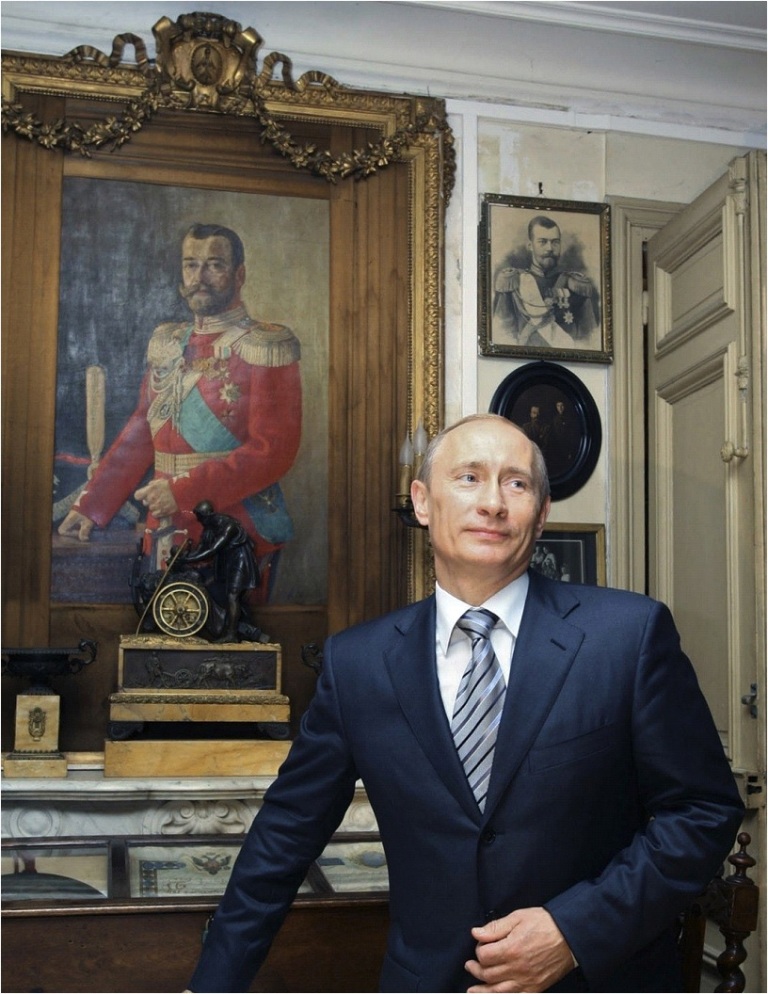
PHOTO: President Vladimir Putin posing in front of a portrait of Nicholas II, in the Museum of His Majesty’s Lifeguards Cossack Regiment in Courbevoie, France in 2008.

The Russian clergy evaluate Putin’s epithet

Putin’s criticisms of Nicholas II have offended both Orthodox Christians and monarchists over the years, however, Archpriest Valery Rozhnov of the Russian Orthodox Church Outside Russia (ROCOR), issued the following statement dated 7th March 2014:

“Since the words of the president in Russian political culture are often perceived as political truth, the phrase about the “Nicholas the Bloody” can have far-reaching consequences.

“As you know, the epithet was part of Soviet propaganda, which was based on many human lives during the reign of the last Russian emperor. However, after the collapse of the USSR, the rhetoric changed, and Nicholas II began to be presented as a victim of circumstances and a tragic figure. It was only when the Russian Orthodox Church canonized the tsar as a saint, that the authorities began to reassess Nicholas II. President Boris Yeltsin, for example, even participated in the burial of the tsar’s remains in the Peter and Paul Cathedral [17th July 1998].

“Through Putin’s words, Soviet rhetoric once again returned to official discourse. This can have serious consequences both for the Russian Orthodox Church and for Ekaterinburg, where Nicholas II became a figure of meaning. Ekaterinburg as a place of the execution of the royal family and a place of repentance for this crime has become a center of pilgrimage and tourism. There is a monument to the imperial family in the city; a church and a monastery were built in their honour. If Nicholas II is again declared “Bloody” and not saint, then this entire industry may be called into question.

“Whether the phrase dropped by Putin is yet another sign of the return of Soviet propaganda clichés, or is this just his personal opinion, which does not claim any ideological status, the position will become clear in the future. In particular, the rhetoric of Russian officials in relation to Nicholas II and tsarist Russia in general will be of particular interest, especially given the century since the beginning of the First World War.”

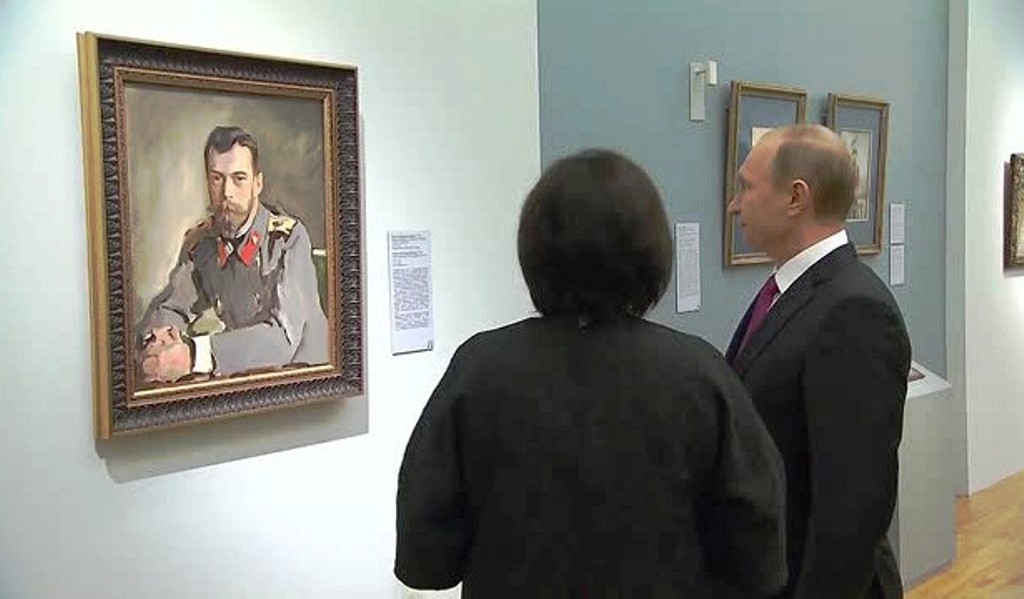
PHOTO: In 2016, Putin visited an exhibition dedicated to the 150th anniversary of the artist Valentin Serov, held at the State Tretyakov Gallery in Moscow. He was photographed admiring Serov’s iconic portrait of Emperor Nicholas II (1900).

Putin denounces Lenin for murder of Nicholas II

Since Putin’s rise to power, the head of the Russian Orthodox Church has proclaimed the last tsar, his wife and children, as saints, which was viewed with fear in a country where the Imperial family are still victims of a century of myths and lies, much of which are based on Bolshevik propaganda. In addition to canonization, the Church also decided to build a grand church on the site where the family was murdered in Ekaterinburg on 17th July 1918. In 2003, during a visit to the Urals, President Putin visited the Church on the Blood in Ekaterinburg.

Despite the negative comments made by Putin, he has also made a number of positive gestures regarding Nicholas II, which left many people surprised. During a state visit to France in 2008, Putin visited the Museum of His Majesty’s Lifeguards Cossack Regiment in Courbevoie, where he posed in front of a portrait of the tsar.

On 25th January 2016, while speaking at an inter-regional forum of the All-Russia People’s Front, Vladimir Putin denounced Bolshevik leader Vladimir Lenin, for “brutally executing Russia’s last Tsar along with all his family and servants”. Putin further criticized Lenin, accusing him of placing a “time bomb” under the state, and sharply denouncing brutal repressions by the Bolshevik government, murdering thousands of priests and innocent civilians.

In the weeks leasing up to the 100th anniversary of the death and martyrdom of Nicholas II, rumours in the Russian media speculated that Putin would attend the Patriarchal Liturgy, to be performed by His Holiness Patriarch Kirill on the night of 16/17 July 2018. Sadly, this was not to be, instead, he flew to Helsinki, where he met with US president Donald Trump. More than 100,000 people from across Russia and around the world descended on the Ural capital to honour the memory of the Holy Royal Martyrs.

Putin’s presence on the eve of the centenary, would have indeed been an historic event, one which perhaps would further seal post-Soviet Russia’s condemnation of the Bolsheviks for committing regicide, but also shedding the century of myths and lies, which perpetuated during the Soviet years.

Sadly, the 100th anniversary of the Romanovs’ deaths passed with little notice in Russia. The Russian government ignored the anniversary, as it surprisingly did the year before, when Russia marked the 100th anniversary of the 1917 October Revolution. No prominent state museums or venues hosted events to mark the anniversary. The few exhibitions and other events organized were tellingly modest.

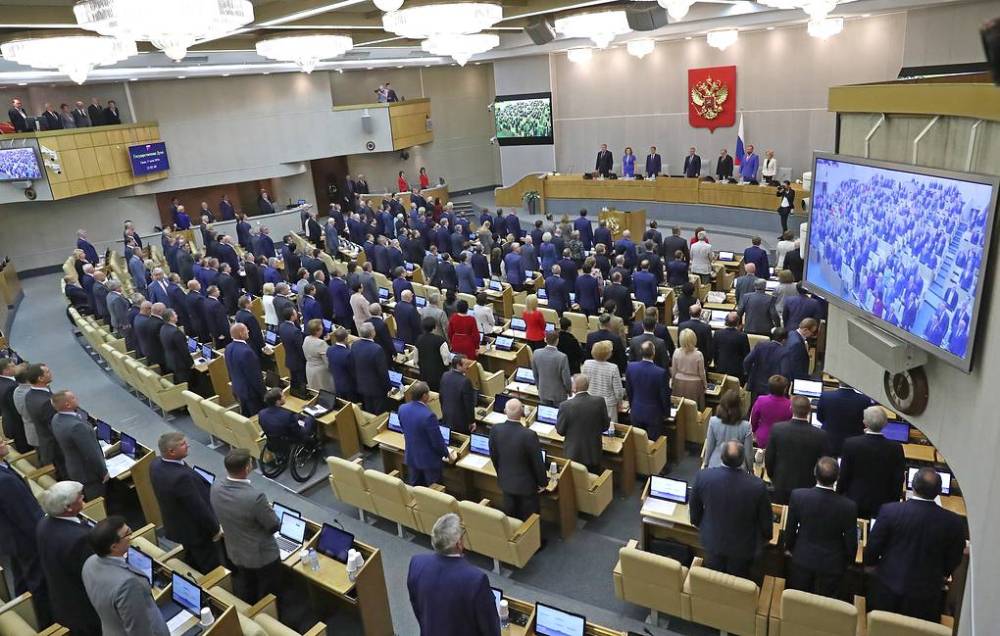
PHOTO: On 17th July 2019, members of the State Duma for the first time observed a minute of silence in memory of the last Russian emperor Nicholas II, and all those killed in the Civil War (1917-1922)

On a more positive note, on 17th July 2019 – Russia’s State Duma for the first time observed a minute of silence in memory of the last Russian emperor Nicholas II and all those killed in the Civil War. (1917-1922)

According to Duma Speaker Vyacheslav Volodin, “reconciliation begins when we all understand that this cannot be repeated and this is unacceptable.”

“Today we are making a proposal to honour the memory of the last Russian tsar, to honour the memory of the innocent victims – all those who died in the crucible of the Civil War,” the speaker addressed his colleagues, who after these words, rose from their seats.

It should come as no surprise that members of the Communist Party of the Russian Federation, did not comply with the moment of silence.

The fact that this is the first time in the history of Russia’s State Duma, that they honoured the memory of Nicholas II is truly unprecedented! The minute of silence was repeated in 2020 and will be repeated each year from hereon.

Also, in 2019, in an unprecedented move, the Russian media reported that President Putin had urged the Russian Orthodox Church to “reach a verdict soon” on the Ekaterinburg Remains.  

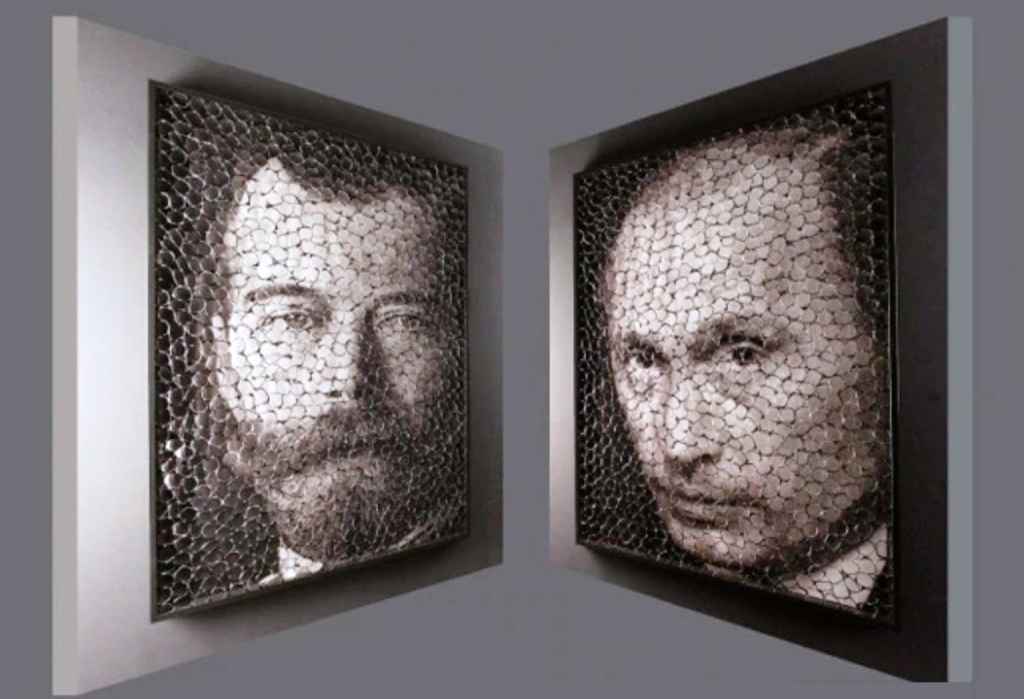
PHOTO: portraits of Nicholas II and Vladimir Putin, by the contemporary Georgian artist David Datuna

© Paul Gilbert. 15 March 2021

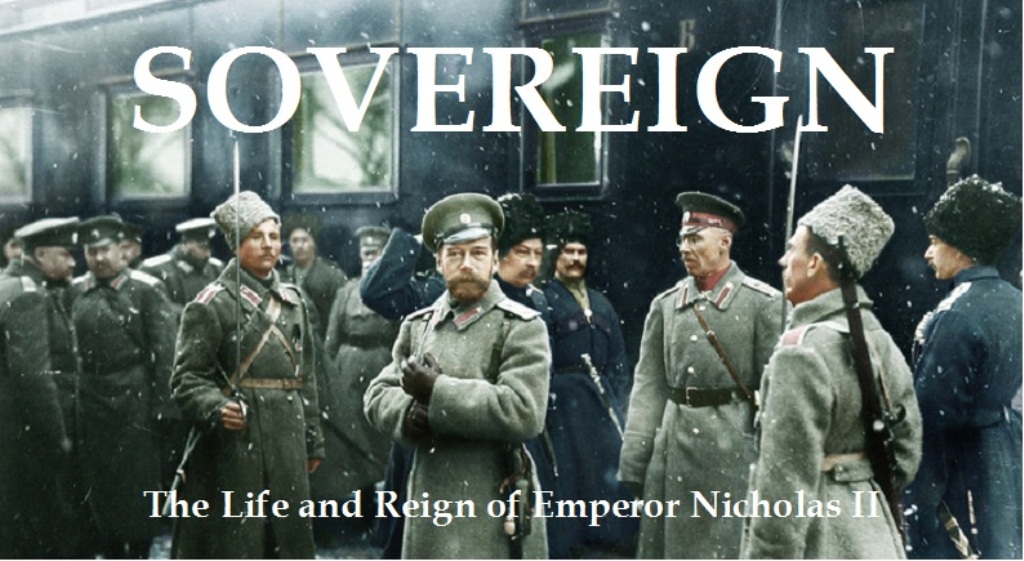
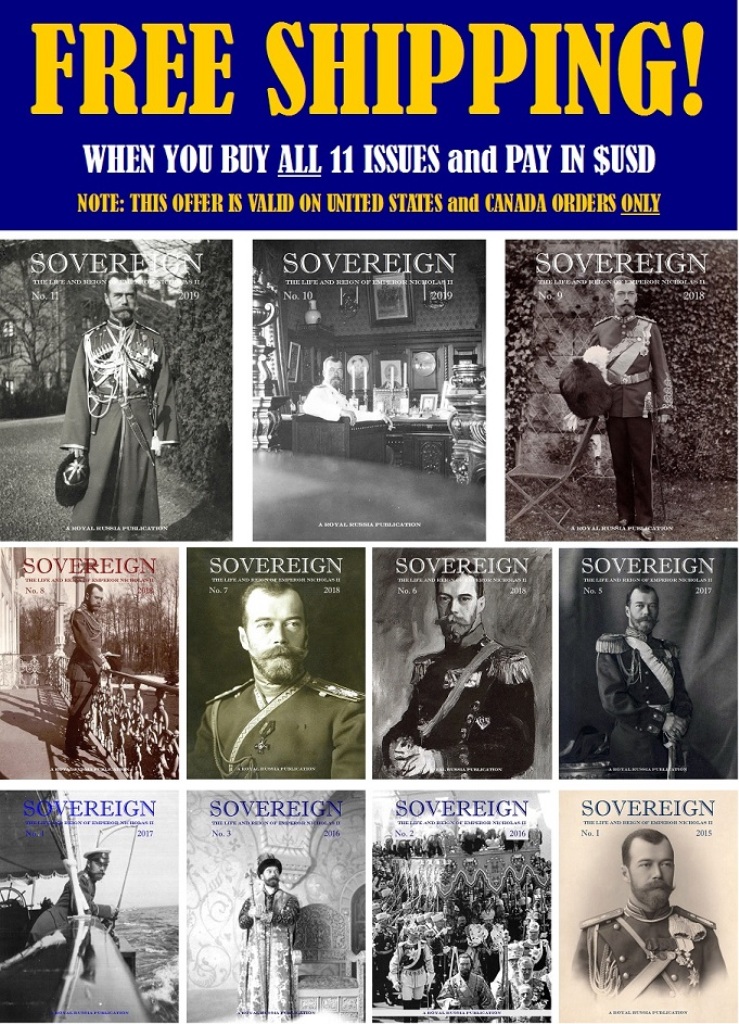
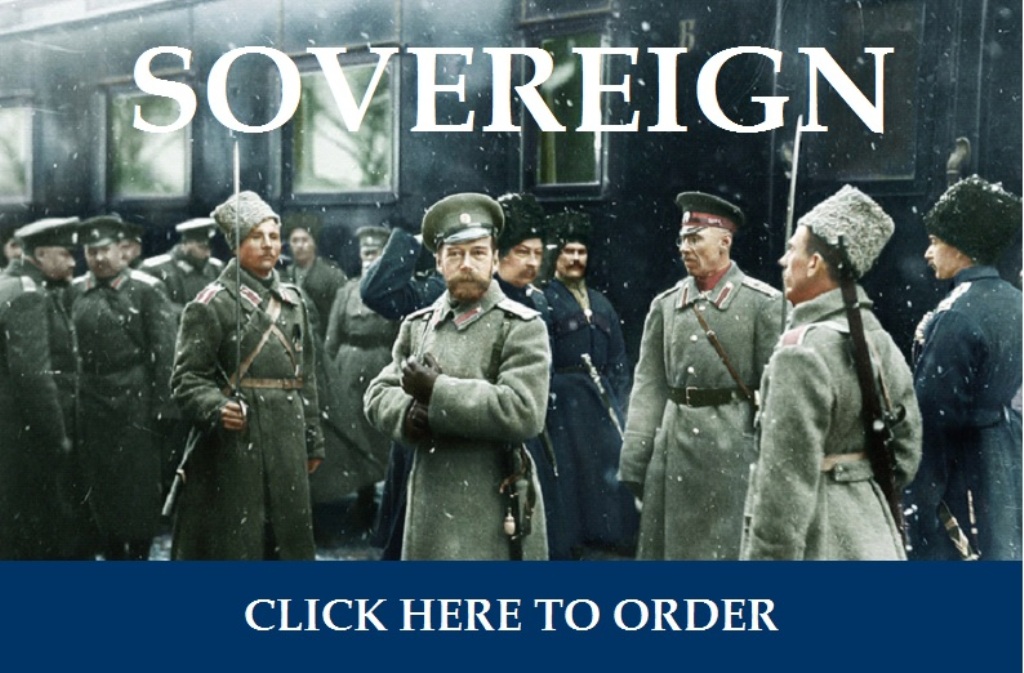
SOVEREIGN: The Life and Reign of Emperor Nicholas II

There are few monarchs in history about whom opinion has been more divided than the last emperor and tsar of Russia Nicholas II.

Myths about the “weak-willed”, “stupid”, “bloody” tsar, created on the basis of gossip, slanderous fabrications and Bolshevik propaganda in the early twentieth century, remain deeply rooted in the minds of both Westerners and the Russian people even to this day. Modern-day historians and biographers prefer to focus on Nicholas II’s failures, and seldom reflect on the many accomplishments he made during his reign. It was these very myths and lies, which compelled me to launch SOVEREIGN in 2015.

The articles featured in SOVEREIGN are not a rehash of everything which has been written about his life and reign over the past century. There are no conspiracy theories, nor does SOVEREIGN attempt to sweep history under the rug, or whitewash Russia’s last emperor and tsar.

Instead, SOVEREIGN features many first English language works by Russian historians and experts, based on new archival documents discovered since the fall of the Soviet Union in 1991.

Thanks to this new generation of post-Soviet historians, we can now review the life and reign of Russia’s last emperor and tsar through the research of Russian historians – their time has come! In their works, they successfully challenge and put to rest many of the lies and myths presented over the past century by their Western counterparts.

SOVEREIGN was launched in 2015, and has published a total of eleven issues. 

FREE SHIPPING when you buy ALL eleven issues
NOTE: This offer is valid on CANADA and US orders ONLY!
PRICE: $275.00 USD. PAY by CREDIT CARD or PAYPAL
*Payment can also be made by personal check or money order

Earlier this year, I announced that after 26 years, I would be retiring from publishing. I am now pleased to present the following SPECIAL OFFER on a complete set – 11 issues – of this unique publication.

Each issue features first English translations of articles, researched by Russian historians and experts, based on NEW documents from archival sources. The price of each issue is $25 + postage, so the savings on postage are substantial.

NOTE: I have a limited number of copies of issues No. 1, 7 and 9 left in stock, therefore, if you want to add a complete set of this publication to your personal library, this may be your last chance!

© Paul Gilbert. 14 March 2021