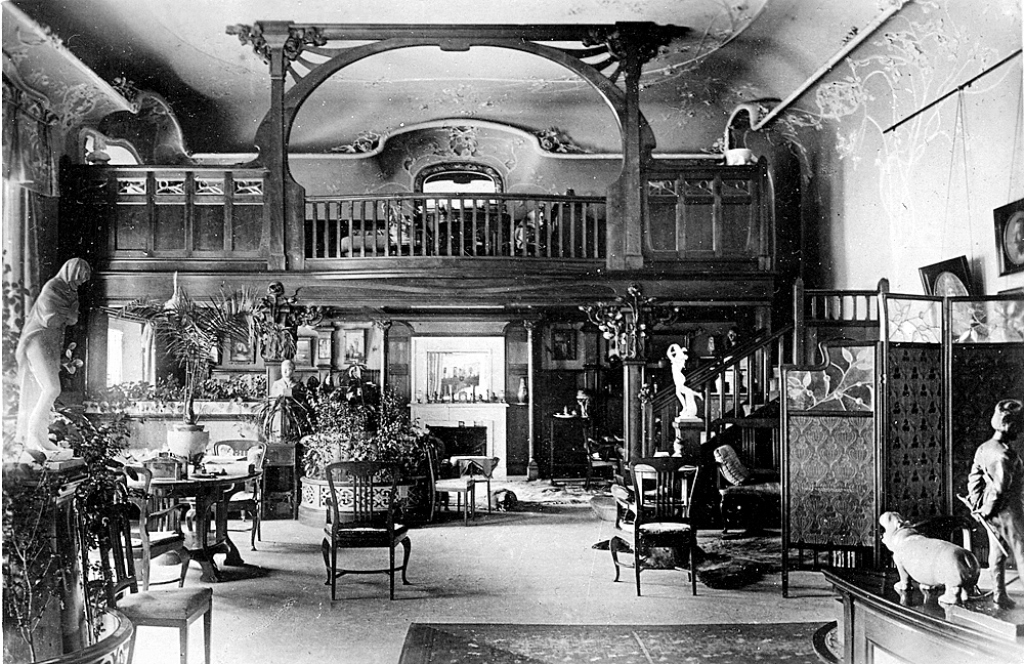
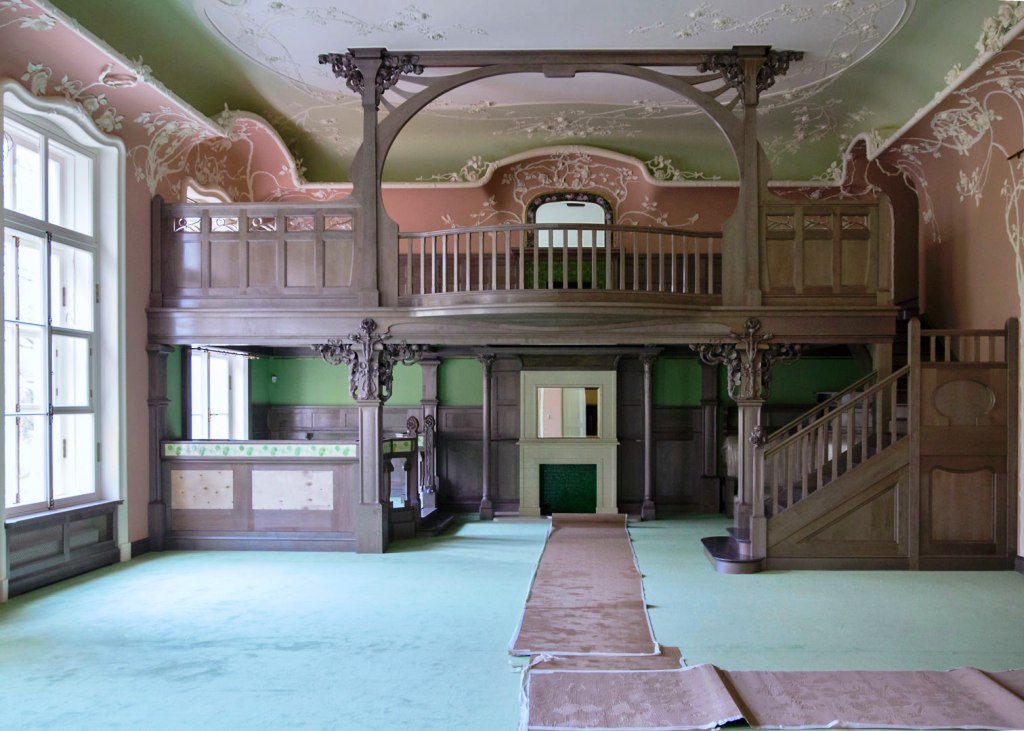
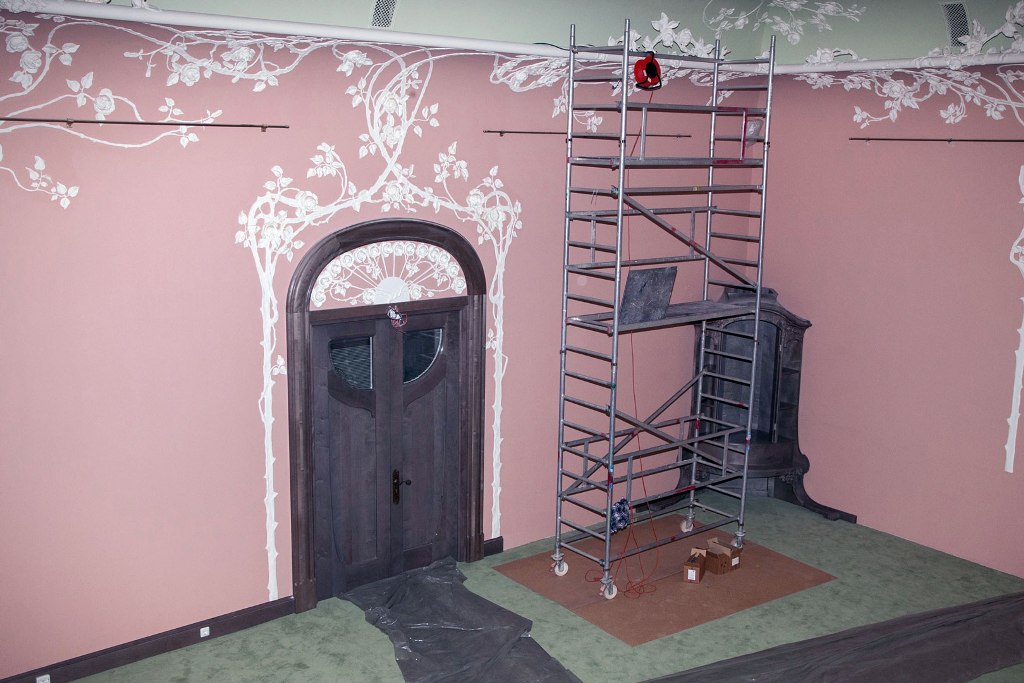
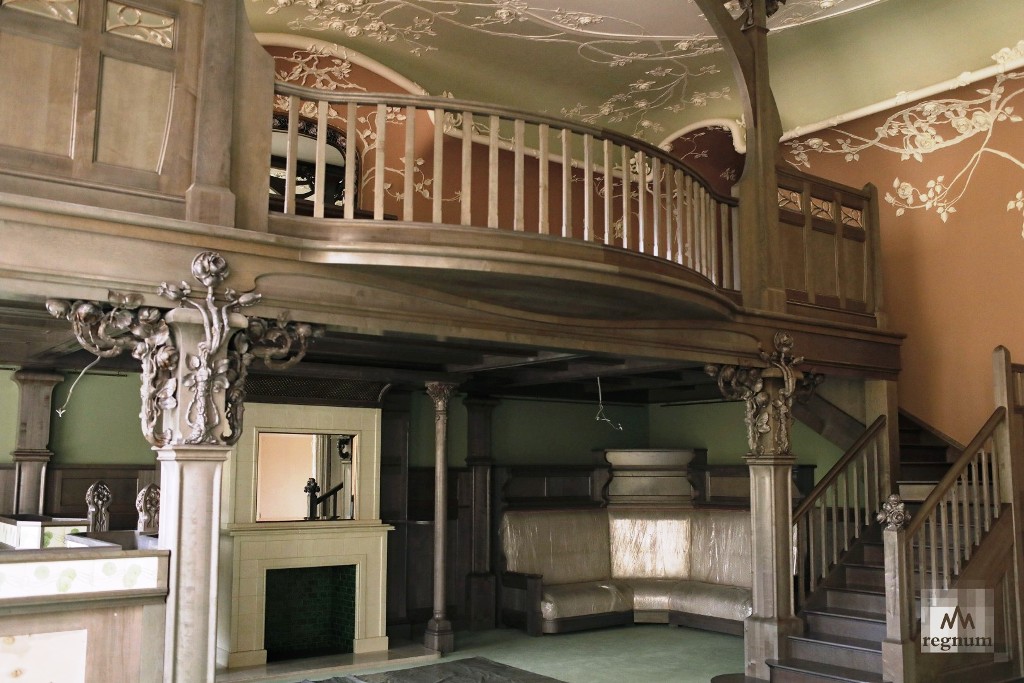
Russian media provide a first look at the progress of the recreation of the historic interiors in the Alexander Palace

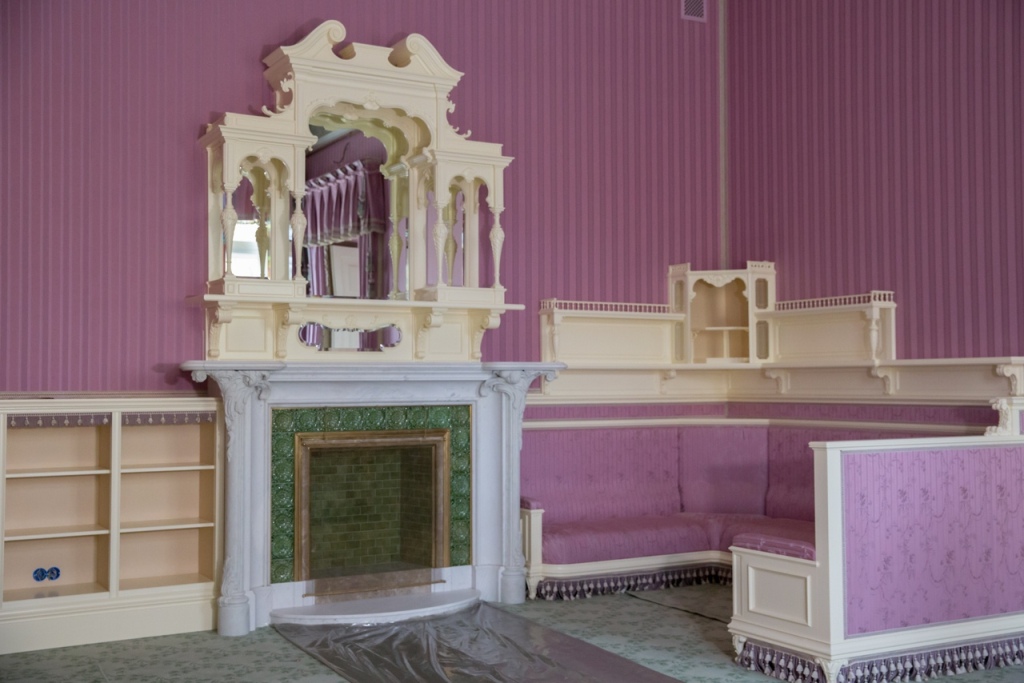
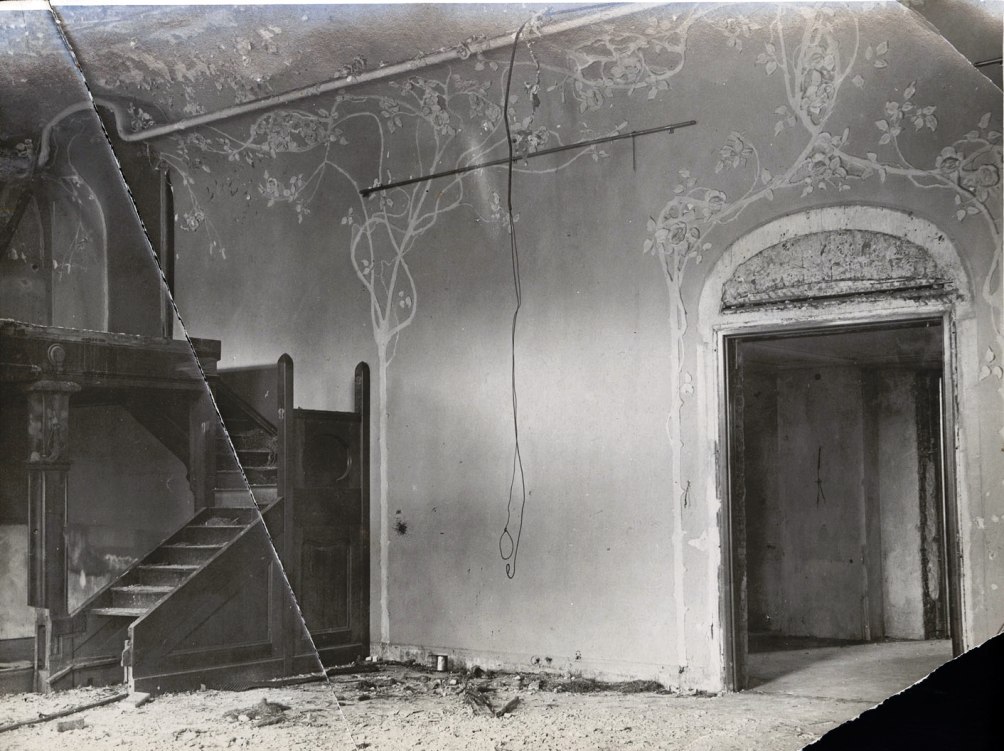
On 7th October, the Tsarskoye Selo State Museum Reserve invited Petersburg journalists to the Alexander Palace, where they were shown the progress of the restoration and recreation of the historic interiors of the last residence of Emperor Nicholas II and his family.

Ongoing restoration works have been carried out since 2012, and the palace was closed in the autumn of 2015 to embark on the large-scale recreation of the private apartments of Nicholas II and Alexandra Feodorovna in the eastern wing of the palace.

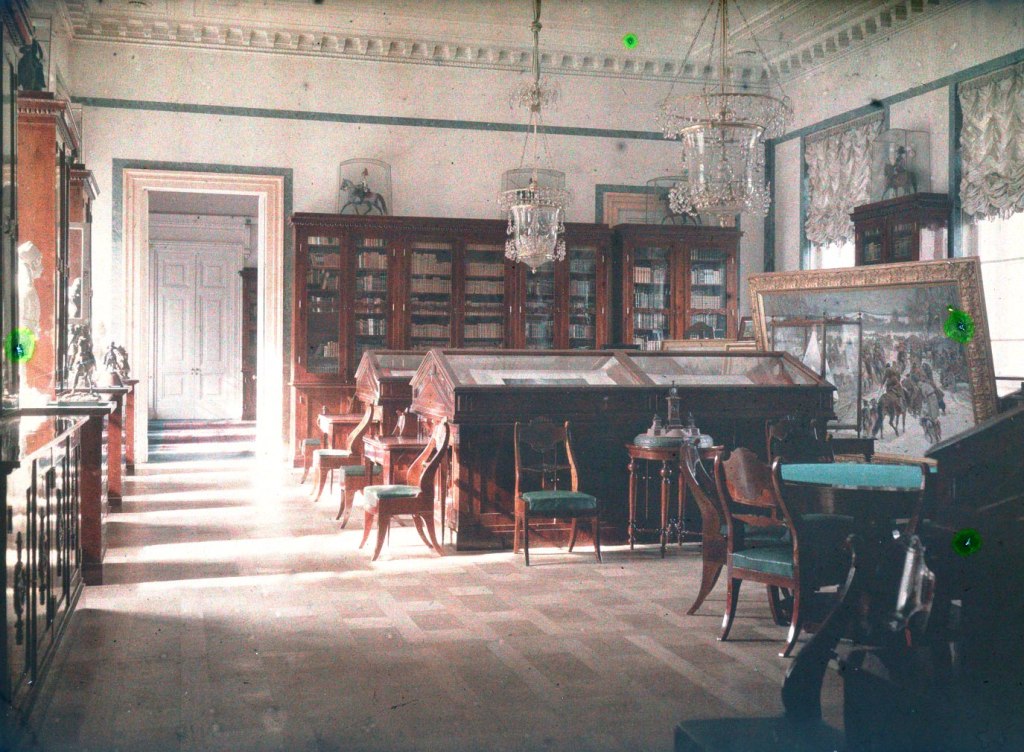
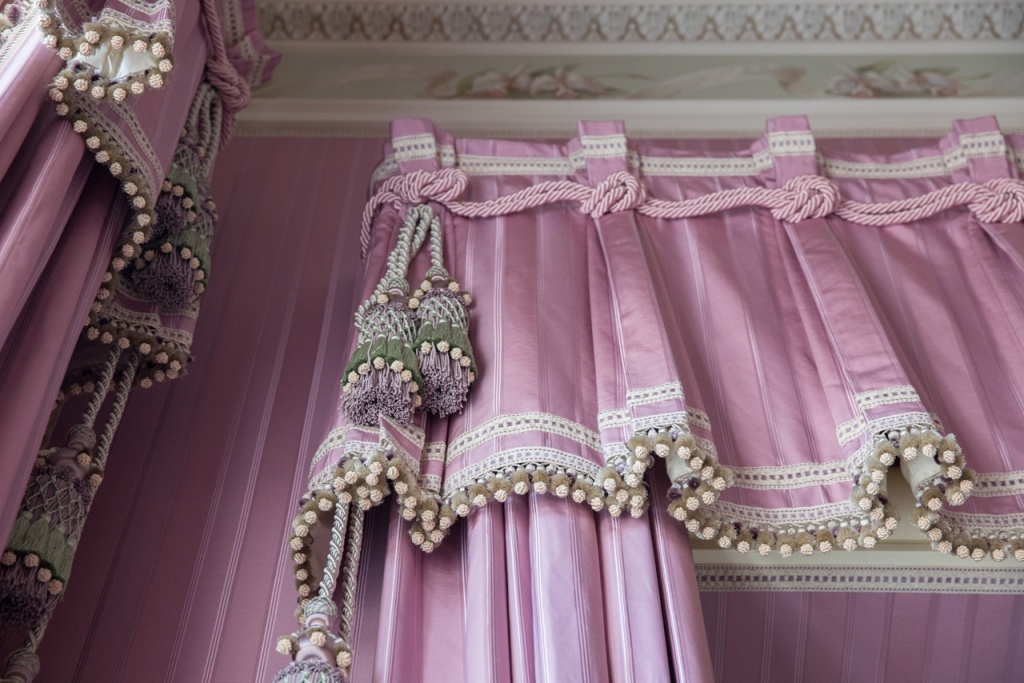
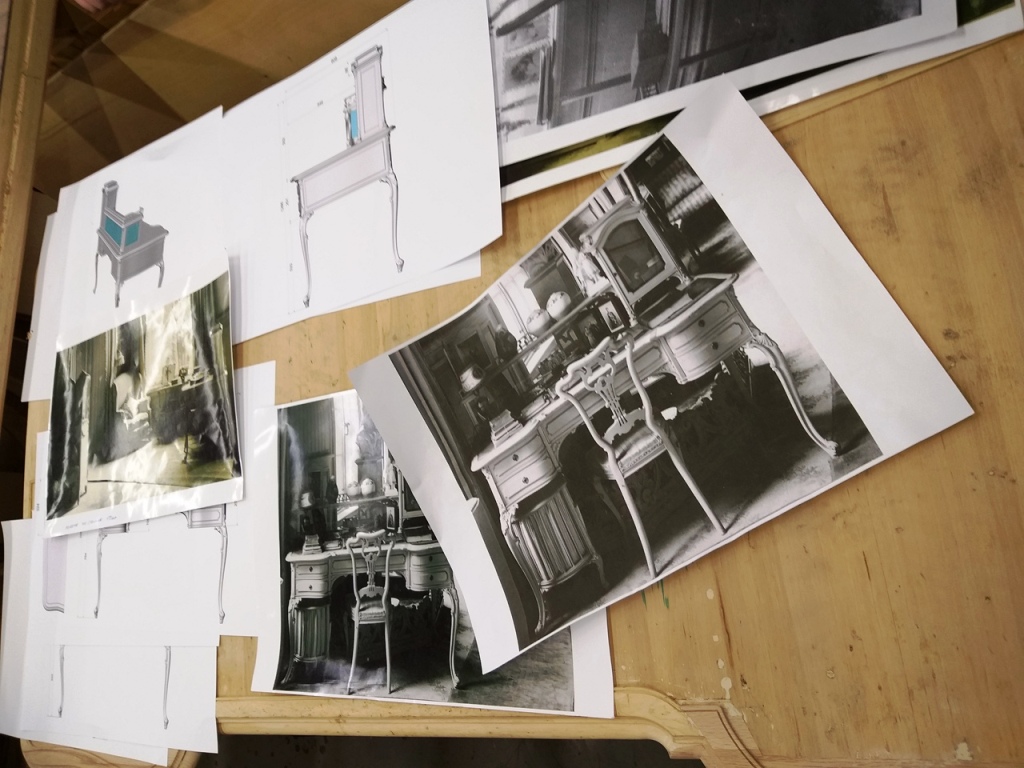
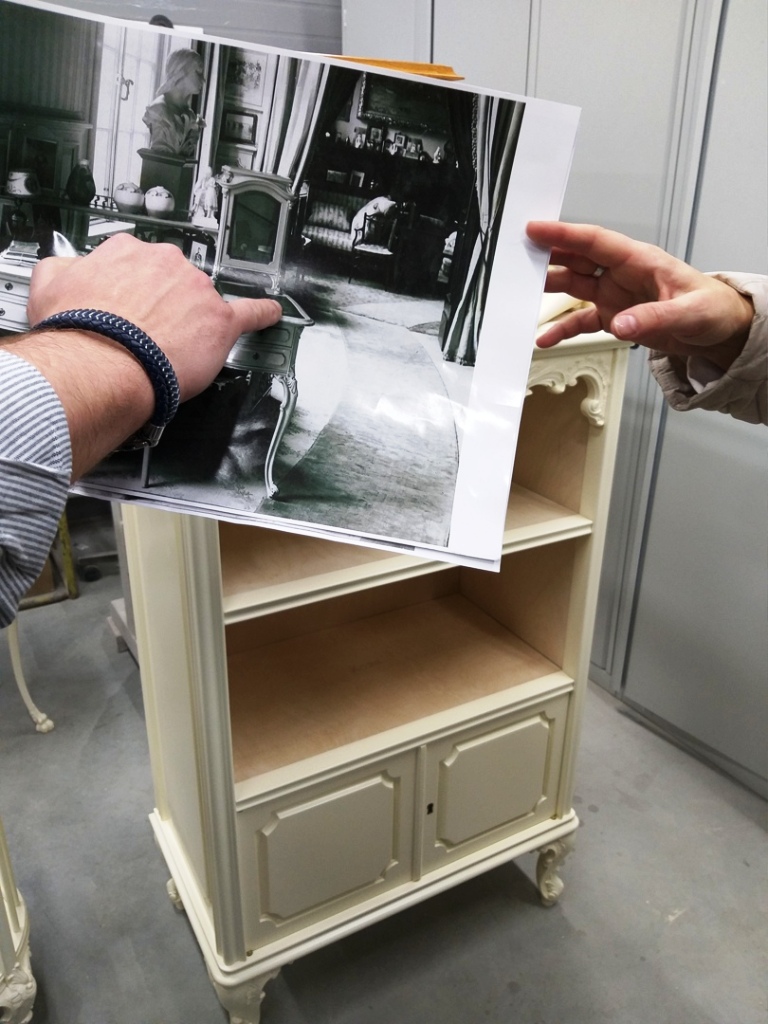
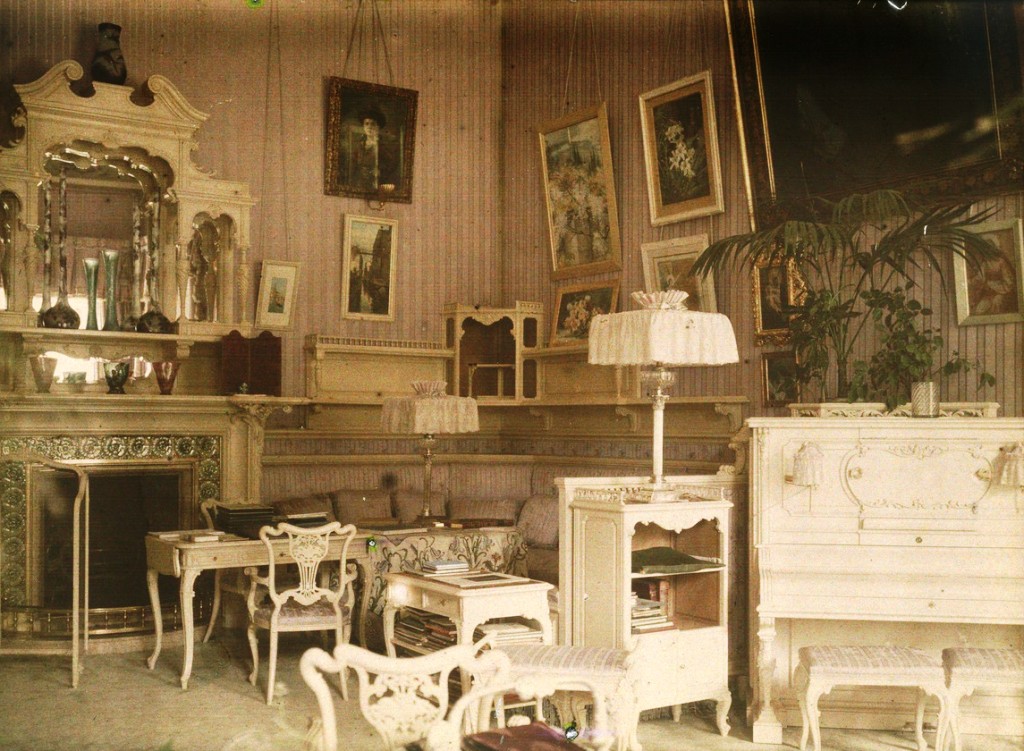
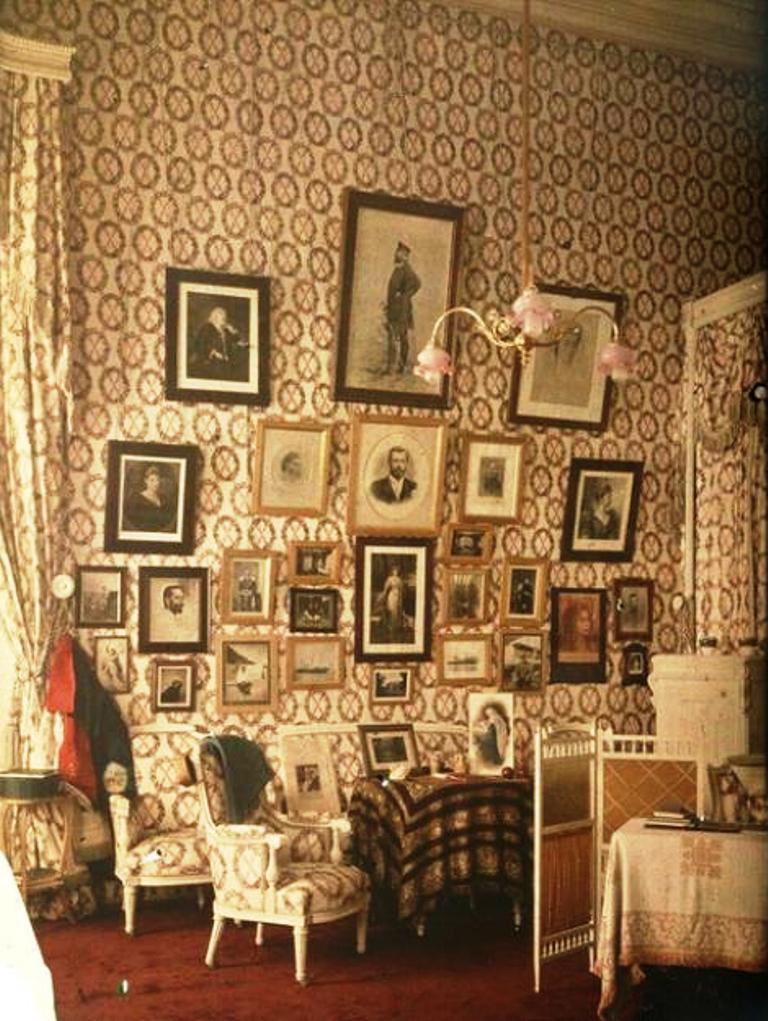
The project was developed by Nikita Yavein’s Studio-44. The restorers relied on amateur photographs taken by members of the Imperial family, autochromes from 1917, and design drawings to recreate the interiors.

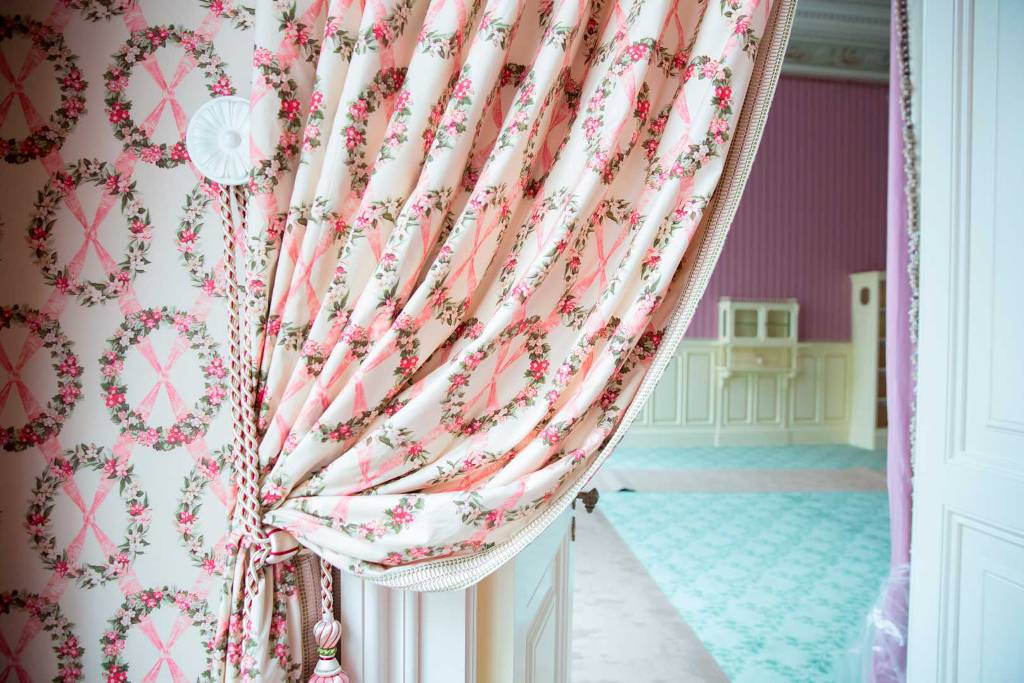
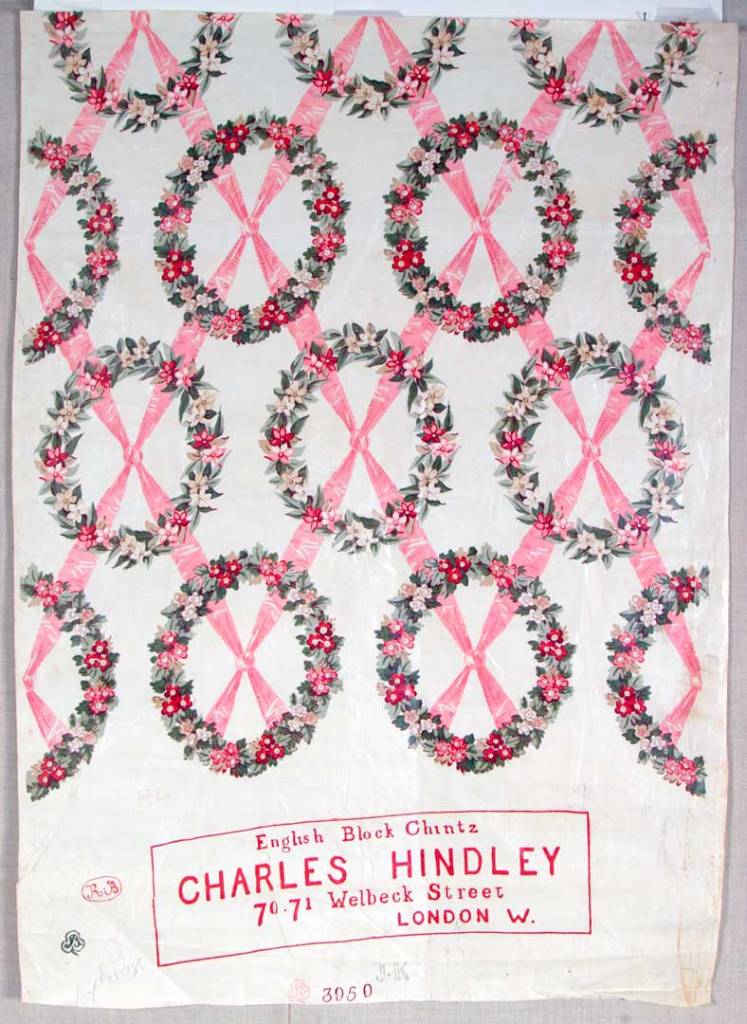
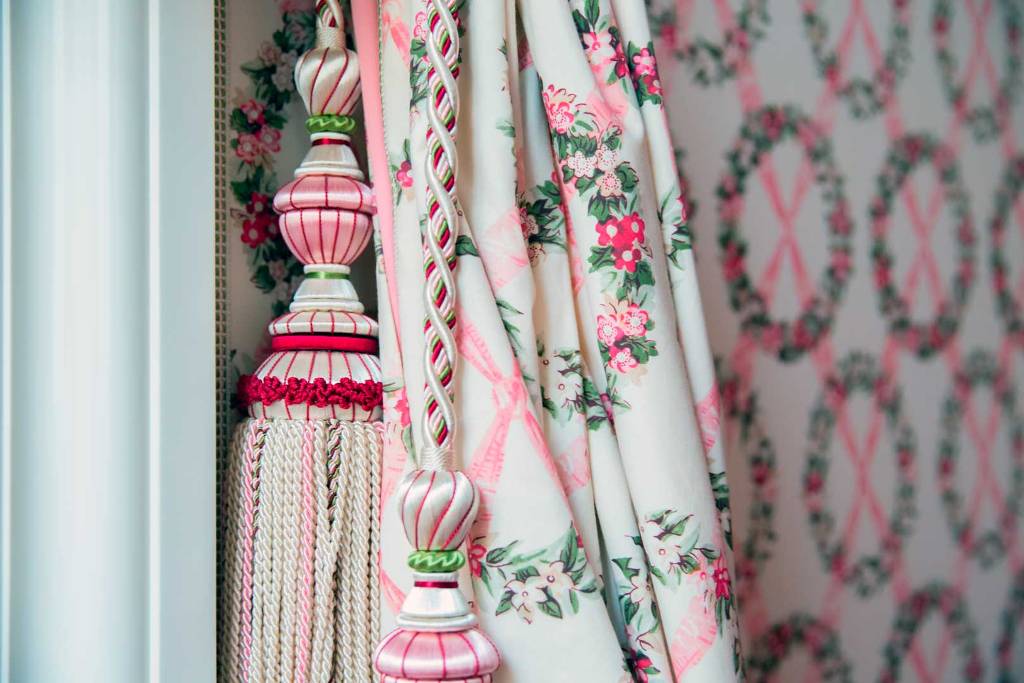
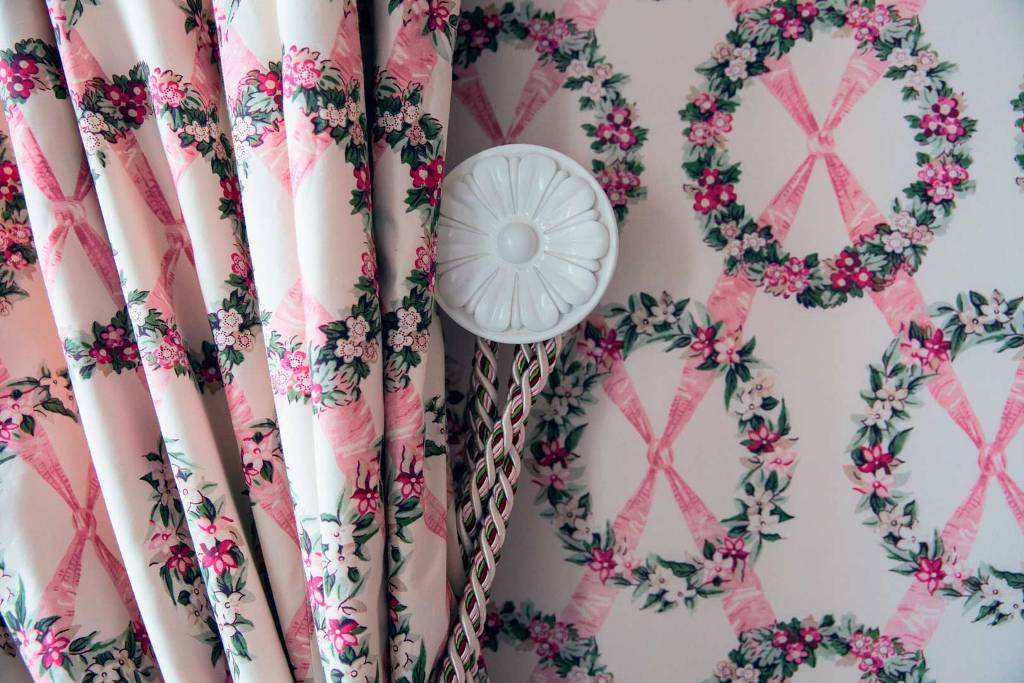
In addition, the Tsarskoye Selo and Pavlovsk State Museums had stored original samples of fabrics, which were used to recreate the decoration of some interiors – Chintz (waxed cotton fabric with a printed pattern) in the bedroom, silk in the Lilac office, reps (a cotton or silk fabric formed by weaves) in the Rosewood living room, etc.

During the restoration, elements of the historical interior decoration were preserved, including oak wall panels, coffered wooden shades and ceramic tiles.

NOTE: the following images are from different Russian media sources, and are not in any particular order. They are presented to give you an idea of the tremendous amount of work and dedication which has gone into the recreation of these historic interiors, thus breathing new life into the Alexander Palace – PG 

On 7th October 2020, the Tsarskoye Selo State Museum Reserve (GMZ) announced that the opening of the Alexander Palace – originally scheduled for December 2020 – would be further delayed. A press release from the GMZ reported that a total of 15 rooms will now open to the public in 2021, in the Museum of the Russian Imperial Family located in the eastern wing of the palace.
© Paul Gilbert. 8 October 2020

Delays . . . delays . . . and more delays with the opening of the Alexander Palace

It may come as no surprise to any one that the opening of the Alexander Palace at Tsarskoye Selo has been delayed yet again.

Eight of the reconstructed private rooms of Nicholas II and Alexandra Feodorovna, were due to open in December of this year, however, the opening date of the palace has been further extended..

According to Russian media sources, a total of 15 rooms will now open to the public in 2021, in the Museum of the Russian Imperial Family located in the eastern wing of the palace

“At the moment, the Alexander Palace is our everything. Everything is aimed at its early completion. We have divided the restoration into two stages in order to open the most important rooms to visitors. Fifteen historic interiors of Nicholas II. and his family six months from now,” – said Olga Taratynova, Director of the Tsarskoye Selo State Museum Reserve.

According to Taratynova, the cost of the work is 2.7 billion rubles. Currently, 1.7 billion have been spent. The balance will go to the second stage of the restoration project.

“The second stage will take another three years. Thus, we will open the entire western wing of the palace,” she added.

© Paul Gilbert. 7 October 2020

Appeal launched to return the name of Nicholas II to the Severnaya Zemlya archipelago

PHOTO: The Taimyr and Vaygach near the Land of Emperor Nicholas II (Severnaya Zemlya)
Artist: Evgeny Valerianovich Voishvillo (1907-1993)

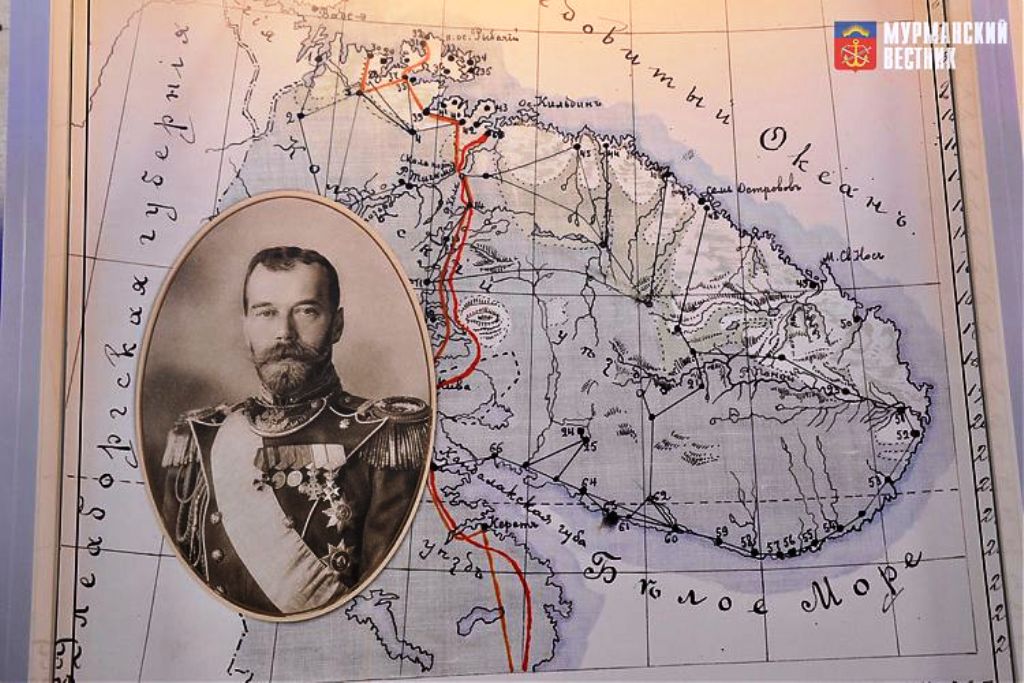
The archipelago was discovered on 4th September 1913. In 1914 it was named Emperor Nicholas II Land, one of the islands was named in honour of Tsesarevich Alexei Nikolaevich.

On 1st October, a letter was sent to the authorities of the Krasnoyarsk Territory with a proposal to return the historic name of Nicholas II to the Severnaya Zemlya (Bolshevik name) archipelago situated in the Russian high Arctic. It lies off Siberia’s Taymyr Peninsula, separated from the mainland by the Vilkitsky Strait. This archipelago separates two marginal seas of the Arctic Ocean, the Kara Sea in the west and the Laptev Sea in the east.

Among the signatories are the explorer and traveler Fyodor Konyukhov; Irina Tikhomirova, the granddaughter of Boris Vilkitsky who discovered the islands; State Duma deputy from the Krasnoyarsk Territory Viktor Zubarev, among others.

The archipelago was not put on the map until the 1913–1915 Arctic Ocean Hydrographic Expedition of the icebreakers Taimyr and Vaygach. The chief organizer and first captain of the Vaygach was Aleksandr Vasiliyevich Kolchak (1874-1920) of the Imperial Russian Navy. The expedition was privately financed and launched in 1910, being led by Boris Andreyevich Vilkitsky (1885-1961) on behalf of the Russian Hydrographic Service. This venture accomplished its goal of exploring the uncharted areas of the continental side of the Northern Sea Route in what was seen as the culmination of the Great Northern Expedition, an ambitious enterprise initially conceived by emperor Peter I the Great in order to map the whole of the northern coast of Russia to the east.

On 4th September 1913 (O.S. 22 August 1913), members of Vilkitsky’s expedition landed on what is now known as Cape Berg on October Revolution Island. They raised the Imperial Russian flag on the shore and named the new territory Tayvay Land, after the first syllable of their icebreakers’ names. During the days that followed Vilkitsky’s expedition charted parts of the Laptev Sea coast of what they believed to be a single island. Barely six months later in early 1914, by order of the Secretary of the Imperial Navy, the new discovery was renamed Emperor Nicholas II Land, in honour of the ruling emperor Nicholas II.

In 1926, the Presidium of the Central Executive Committee of the USSR renamed the archipelago renamed Severnaya Zemlya (Northern Land), and the Tsesarevich Alexei Nikolaevich Island was renamed Maly Taimyr.

Severnaya Zemlya comprises four major islands – October Revolution, Bolshevik, Komsomolets, and Pioneer – and around 70 smaller islands, covering a total area of about 37,000 km2 (14,300 sq mi).

With regard to the current appeal, Zubarev noted: “Such a letter has been addressed to the head and parliament of the region. We hope that state authorities the regions will accept our arguments and take measures to restore historical justice”.

© Paul Gilbert. 3 October 2020

The History and Restoration of the Reception Room of Nicholas II in the Alexander Palace

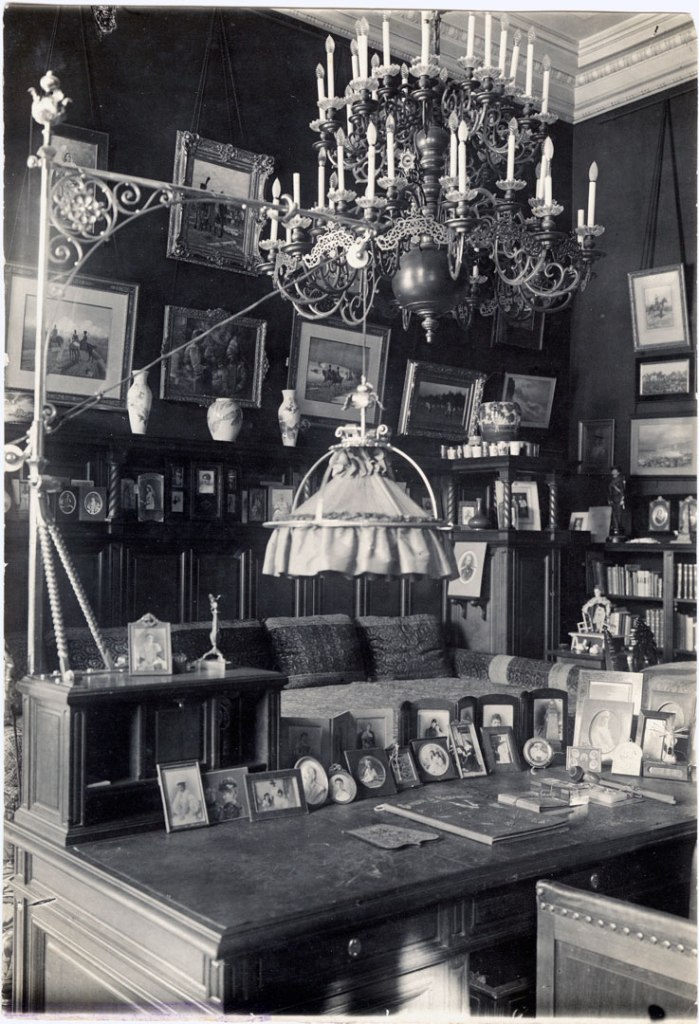
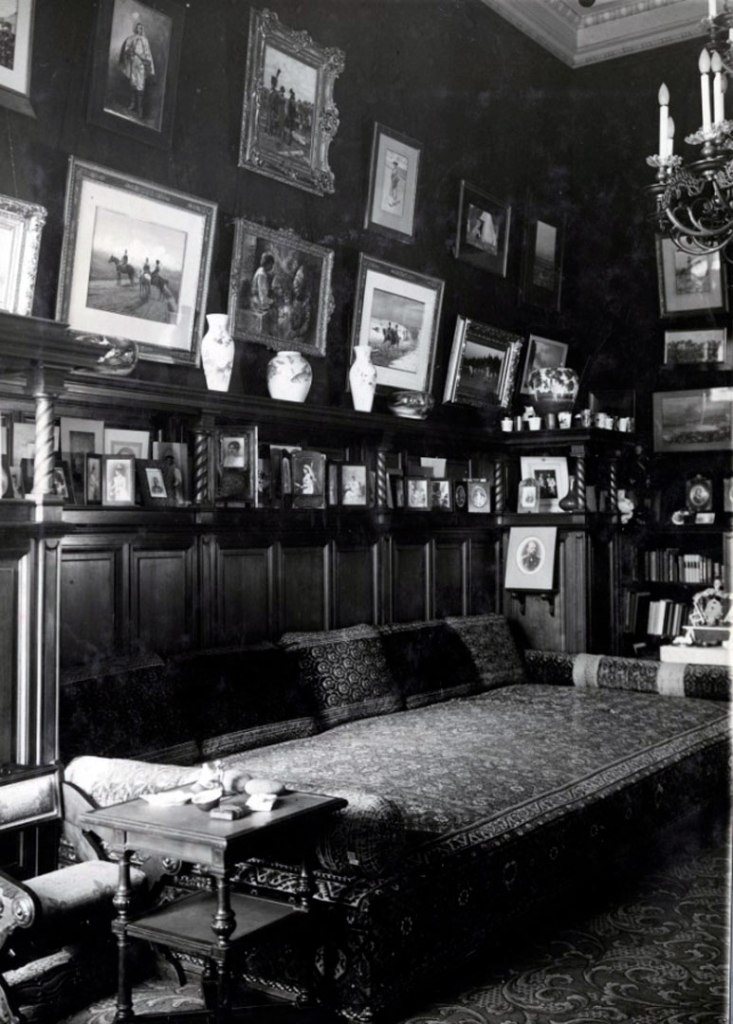
PHOTO: the Reception Room of Nicholas II as it looked in the 1930s

The Alexander Palace served as the home and official residence of Russia’s last emperor from 1894 to the summer of 1917. By the end of 1894, in the eastern wing of the palace, work was alreay underway on finishing the apartments for the young imperial couple, who had married on 27th November (O.S. 14th November). This part of the building was divided by a corridor into two enfilades: the rooms of Nicholas II, facing the courtyard, and the rooms of Alexandra Feodorovna, with windows to the park.

The first room in the Emperor’s half was the Dining Room (later the Reception Room). The renovation of this interior was carried out in 1895-1896 by architect Roman Feodorovich Meltser (1860-1943). For the wall decoration, a “high panel around the room with a seasoned shelf” was installed, above the panels, the walls were covered with printed fabric. On the ceiling there is a “wooden plafond” with a cornice. The interior decoration features a corner fireplace of oak wood, trimmed with dark green marble. The architect decorated the upper part of the two windows with square cathedral (stained-glass) glass.

PHOTO: the Reception Room of Nicholas II as it looked in the 1930s

The furniture was made by F. Meltzer & Co., which included a sofa with two folding tables, a round table for drinking tea, a dining table and 24 chairs, a serving table, and a table “for snacks”. The set of furniture included a fireplace screen, covered with fabric, decorated with mirrored glass with a facet in the upper part.

Subsequently, this room, preceding the Emperor’s Working Study, was used as a Reception Room. Despite the change in the purpose of the interior, its furnishings remained almost unchanged until 1917. Only a few items were added, giving the room a more businesslike character.

PHOTO: This lovely portrait of the Empress Alexandra Feodorovna (1896) by A. Muller-Norden, which originally hung in the Reception Room of the Alexander Palace (seen in the 2nd photo), is currently in the collection of the Pavlovsk State Museum.

It is just one of more than 5,000 items moved to Pavlovsk in 1951. The return of the items to the Alexander Palace remains a bone of contention between the two palace-museums. Click HERE to read my article Controversy over portrait of Empress Alexandra Fedorovna in Pavlovsk, published on 20th August 2019.

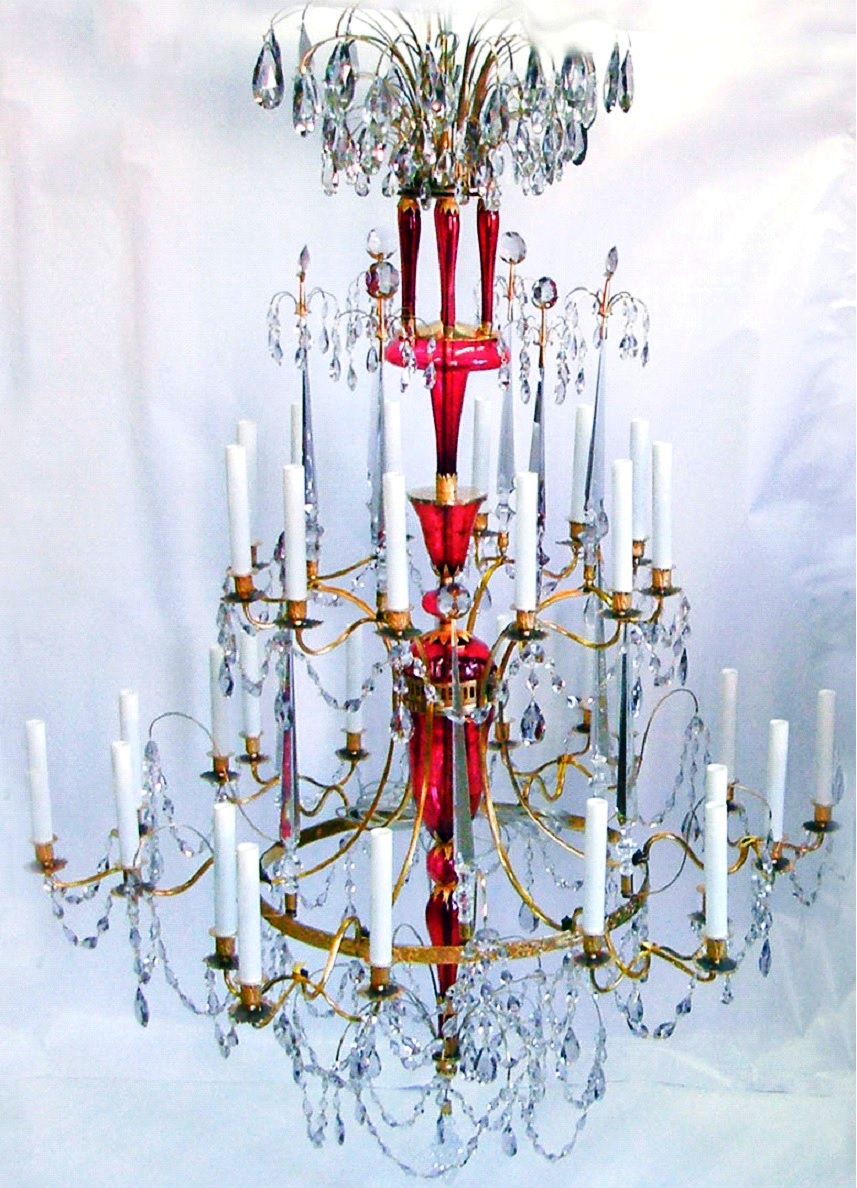
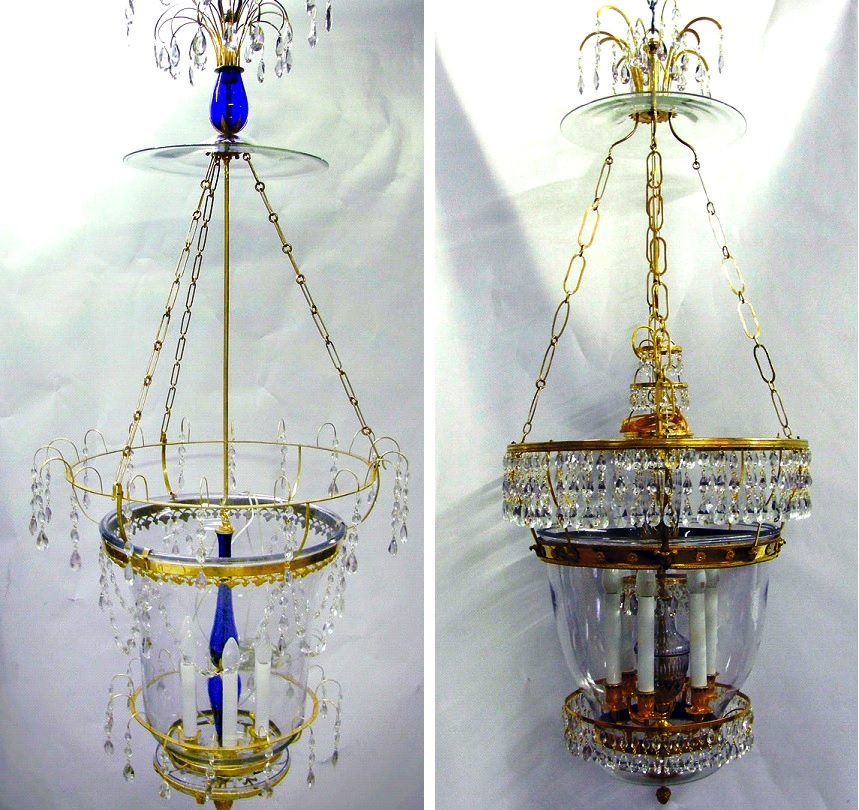
Unlike many interiors of the Alexander Palace, the decoration of the Reception Room practically remained intact during the Great Patriotic War (1941-45), which greatly facilitated the current restoration work in this room. Here are preserved wall and ceiling panels, a fireplace and a chandelier, which was installed by Melzer in 1899 and cost 2,275 rubles. Sadly, the furniture, curtains, and cathedral glass windows were all lost.

The interior was restored in the 1950s. In 1997, the exhibition “Memories in the Alexander Palace” opened in the eastern wing of the palace, the museum designated the room as the Reception Room. The room contained corresponding furniture of the late 19th – early 20th centuries from the museum’s collection: two tables, oak chairs, a chest, and a carpet. Memorial items were also exhibited in the Reception Room – in their historical places there was a chandelier and a model of the monument to Peter I by Ivan Schroeder.

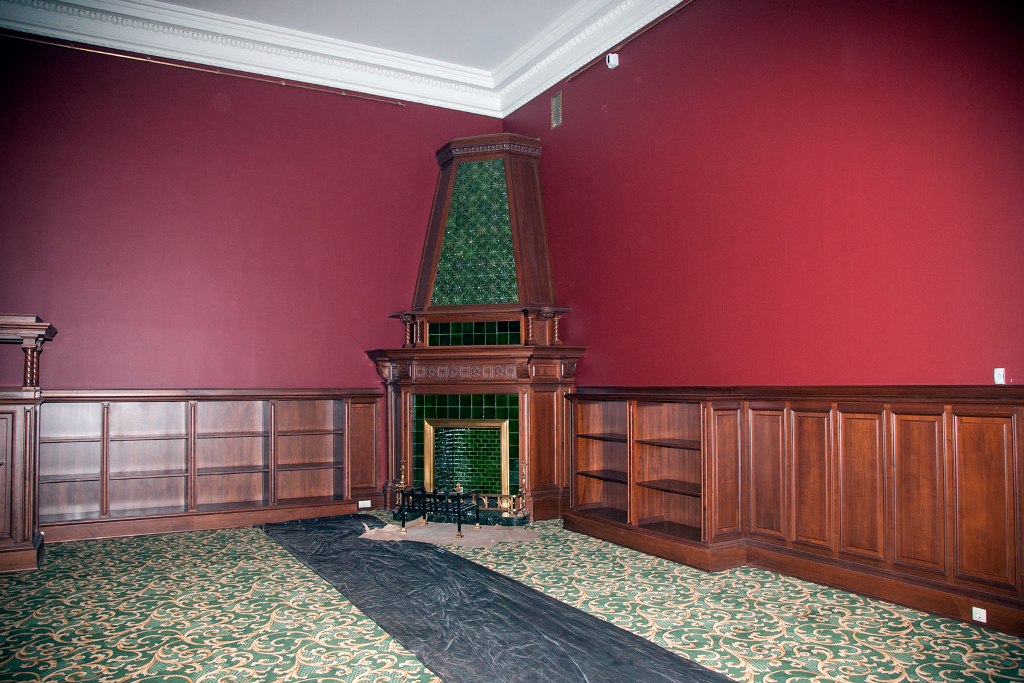
PHOTO: the Reception Room of Nicholas II as it looks

In the course of recent restoration work in the Reception Room, the oak walls and ceiling decoration, fabric on the walls, parquet and a fireplace have been beautifully preserved. In the process of working with the fireplace, it was discovered that the monogram preserved on the frieze differs from that recorded in historical photographs. These inaccuracies have been corrected.

During the restoration, the fabrics from the walls were dismantled and sent to the restoration workshops, where a method of dry cleaning of the fabric with its subsequent conservation was developed.

PHOTO: the Reception Room of Nicholas II as it looks today

From the surviving photographs, a built-in sofa upholstered in olive leather, a fireplace grate and an openwork metal mesh of the fireplace insert have been recreated. The restoration of the historic chandelier, the only surviving piece of the Reception Room interior, has also been completed.

At present, work continues on the design based on historical photographs of some pieces of furniture: an oak table and chairs are being made for the sofa, as well as a lattice-stand for banners; the elbows of the sofa will be supplemented with folding table shelves. Subsequently, there are also plans to recreate the stained glass in the Reception Room windows.

***

The Reception Room of Nicholas II is one of eight interiors to open in the eastern wing of the palace, scheduled to open in December 2020. The other interiors include: the Moorish Bathroom of Nicholas II, Working Study of Nicholas II, Pallisander (Rosewood) Living Room, Mauve (Lilac) Boudoir, Imperial Bedroom, Alexandra’s Corner Reception Room, and the New Study of Nicholas II.

In the future, the Alexander Palace will become a memorial museum of the Romanov family – from Catherine the Great to Nicholas II, showcasing the private, domestic life of the Russian monarchs who used the palace as an official residence. The eastern wing of the palace will be known as the Museum of the Russian Imperial Family. The multi-museum complex is scheduled for completion no earlier than 2022.

© Paul Gilbert. 2 October 2020

Then they repented of slandering the Tsar …

Historians and media sources continue to rehash revolutionary myths and slander about the Emperor Nicholas II. Meanwhile, many former revolutionaries and liberals who slandered the Tsar repented in the years which followed the 1917 Revolution.

With the exception of Fondaminsky, who died at Auschwitz in 1942, the men and women featured in this article – all of whom supported the overthrow of Nicholas II and the monarchy in Russia – died in exile.

Ivan Fedorovich Nazhvin (1874-1940)

Author of numerous novels in which he denounced the monarchical state system

“In the days of my youth, the role of a “conscious personality” and “struggle for the people” was demanded from every young man. At that time, not only representatives of the bourgeoisie, like me – we all know the names of the Ryabushinskys, Tretyakovs, Konovalovs, Savva Morozov, etc. – joined the ranks of these – alas! personalities, but also aristocrats, like Prince. P.A. Kropotkin, Count Leo Tolstoy, princes Shakhovsky, Khilkov, Chertkov, Chicherin, etc….

The red stupor grew by leaps and bounds; while the Russian man demanded for himself “the sky in diamonds”. I also suffered from this social disease. I also wanted the sky in republican and socialist diamonds. Entering public life as a writer, I did not hesitate, of course, that only the “leaders”, can steer Russia’s affairs, and everything that is alien to us is subject to anathema and must be thrown into the historical rubbish heap … The first revolution of 1905 cooled my revolutionary aspirations, and the second in 1917 completely extinguished them forever. But I was still possessed by the “old regime” and I looked upon its leaders with much dislike. To my great regret, Tsar Nicholas II was among them.

When I began to examine Russia’s past for my novels, I became more and more convinced that the Tsar was not at all “stupid or weak-willed”. He was “stupid” only because he did not share our delusions, and we imagined him to be “weak-willed” because he did not possess our main and serious vice – over self-confidence (“we know everything”), but on the contrary, he was infinitely modest. My frequent conversations with L.D. Korsakov, who observed the Tsar’s life at close hand, finally convinced me that we, “social activists”, were impassable mules and that we are responsible for the death of the unfortunate Imperial family, who had been persecuted by all of us.

I dedicated a whole volume to this terrible tragedy. But someday it will be published in our time of troubles! And death does not wait: I am already 65; and therefore, without postponing matters, I consider it my duty of conscience to repent of my gross and cruel social error now: it was not the Tsar who was to blame before us, but we before him, who suffered for us.

We suffered severely for our mistake, but still there is no suffering with which we could completely atone for our criminal frivolity and wash away the blood of our victims, the poor Emperor and his loved ones from our hands and souls.

I very much ask my readers, if they come across in my volumes harsh reviews about the deceased Tsar, Tsarina and their loved ones, to interpret these my sins in the light of this letter to “everyone”: I am guilty of this terrible mistake and am ready to atone for it again and again.”

25th April 1939

(Quoted from: “Sentinel”. 1951. No. 304; “Bulletin of the Temple-Monument”. 1981. No. 241)

Ilya Isidorovich Bunakov-Fondaminsky (1880-1942)

One of the leaders of the terrorist organization of the Socialist Revolutionaries

Moscow statehood rested not on strength and not on subjugation by the power of the people, but on the loyalty and love of the people for the bearer of power. Western republics rest on popular recognition. But no republic in the world has been so unconditionally recognized by its people as the autocratic monarchy. The left-wing parties portrayed tsarist power, as the Bolsheviks are now portrayed. They assured us that “despotism” led Russia to decline. I, an old militant terrorist, say now, after the lapse of time – it was a lie! No power can last for centuries based on fear. Autocracy is not violence, its basis is love for kings. After all, Russia is a state of the East. The monarchy was a theocracy. The Tsar is God’s Anointed One. And there were never any uprisings against the Tsar. Not during the Muscovy period, but also the imperial period – the Tsar was almost God.”

(From the speeches at the meetings of the newspaper “Days”, the society “Green Lamp” and the socialist immigrants in Paris in 1927-1929 – Quoted from: “The Two-Headed Eagle”. 1929. No. 25. S. 1186.)

***

Let us conclude this collection with the confessions of several prominent “Februaryists” for their anti-monarchist revolution. Their words refute the popular opinion of liberal democrats that the Bolsheviks “distorted the gains of progressive freedom-loving February.”

Sergei Petrovich Melgunov (1879-1956)

Member of the Organizing Committee of the People’s Socialist Party, appointed by the Provisional Government Commissioner for the survey of archives and the development of political affairs

“After everything that has now been published in recent years, the assessment of ​​Nicholas II has to be changed. Undoubtedly, the idea of ​​the completely exclusive political influence of the “Friend” [Rasputin] is also greatly exaggerated. The right-wing public menacingly instilled that tsarist power would be shaken and that Russia, torn apart by party strife, would perish. Alas! so far, this has largely turned out to be right, just as the Narodnoye resident [L.A. Tikhomirov] was right, after he wrote in his diary: “The monarchy is heading towards destruction, and without the monarchy an inevitable slaughter lasting 10 years will follow.”

No element can justify those who, in a revolutionary storm, have undertaken to navigate the state ship. At first, they all, consciously or unconsciously, indulged the elements and fanned the flames of the great bloodless revolution. The disorganized coup, not organized victory.”

(Melgunov S. On the way to the palace coup. Paris. 1931. S. 61-63, 225).

Prince Georgy Yevgenyevich Lvov (1861-1925)

First Minister-Chairman of the Provisional Government

Until the very end he [Lvov] blamed himself for everything: “After all, it was I who made the revolution, I killed the tsar and everyone … all because of me” … he said in Paris to his childhood friend Ekaterina Mikhailovna Lopatina-Yeltsova. ”

(Quoted from: Stepun F. The Past and the Unfulfilled. New York. 1956. Vol. II. P. 32).

Pavel Nikolaevich Milyukov (1859-1943)¹

Leader of the Cadet Party, Minister of the First Provisional Government

After his removal from the Provisional Government in the spring of 1917, he said in an address to his associates:

“In response to your questions, how I look at the revolution we have accomplished, I want to say that what happened, we certainly did not want. We believed that power would be concentrated and remain in the hands of the first cabinet, that we would stop the enormous devastation in the army quickly, if not with our own hands, then with the hands of the allies, we would achieve victory over Germany, we would pay for the overthrow of the tsar with only some delay in this victory. We must confess that some, even from our own party, pointed out to us the possibility of what happened next. Of course, we must acknowledge that the moral responsibility lies with us.

You know that we made a firm decision to use the war to carry out a coup soon after the start of the war, you also know that our army had to go on the offensive, the results of which would fundamentally stop all hints of discontent and cause an explosion of patriotism in the country and jubilation. You understand now why I hesitated at the last minute to give my consent to the coup, you also understand what my inner state should be like at the present time. History will curse the leaders of the so-called proletarians, but it will also curse us, who caused the storm.

What to do now, you ask. I don’t know, that is, inside we all know that the salvation of Russia lies in the return of the monarchy, we know that all the events of the last two months clearly prove that the people were not able to accept freedom, that the mass of the population, not participating in rallies and congresses, were disposed to the monarchy, and that many, many who voted for a republic did so out of fear. All this is clear, but we cannot admit it. Recognition is the collapse of the whole business, our whole life, the collapse of the entire worldview, of which we are representatives.”

(Quoted from: PN Milyukov’s letter of repentance // Russian Resurrection. Paris. 1955. April 17, p. 3).

Fyodor Avgustovich Stepun (1884-1965)

After the February Revolution, he was the head of the Political Directorate of the War Ministry

In his later memoirs, he describes how he, along with other revolutionaries, was placed in the rooms of the Grand Palace: “My soul was vague and unwell: I was ashamed being in the royal chambers, as if I had robbed someone and did not know how to hide stolen goods in order to forget about the theft … ” Whose fault before Russia is harder – ours, the people of “February”, or the Bolshevik – a difficult question … “.

(Stepun F. The Past and the Unfulfilled. New York. 1956. T. II. S. 154, 7).

Ariadna Vladimirovna Tyrkova-Williams (1869-1962)

One of the organizers of the Cadet Party, participant in the February Revolution

“When the crown fell, many noticed with amazement that it ended, the central vault of Russian statehood was supported on it. The cadets were unable to fill the devastation.”

(Quoted from: “Grani”. 1980. No. 130. P. 118).

Click HERE to read my article The myth that Nicholas II’s death was met with indifference by the Russian people, published on 19th June 2020

© Paul Gilbert. 24 September 2020
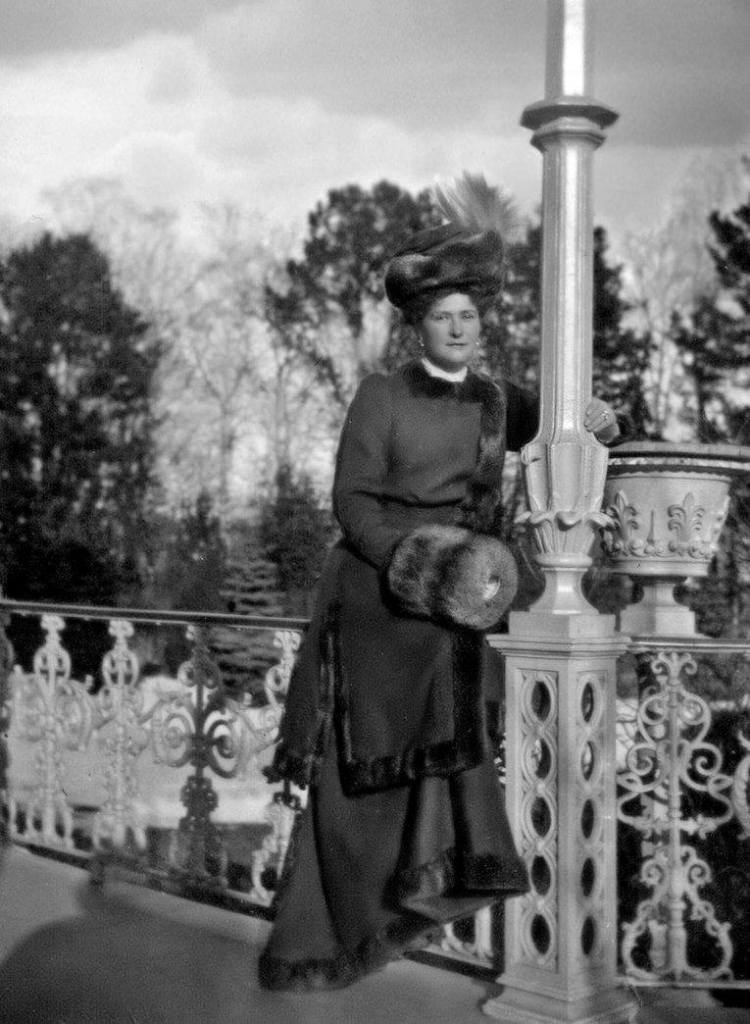
¹ On 1st November 1 1916, liberal politician and the leader of the Constitutional Democratic Party (known as the Kadets) in the Russian Provisional Government, Pavel Nikolayevich Milyukov delivered the famous speech in the State Duma, which, according to many historians, launched the dramatic process of the revolutionary demolition of the government in force at that time.

Judicial reforms of Emperor Nicholas II

PHOTO: Portrait of Nicholas II hangs in the District Court Hall.
Tver province, Kashinsky district. 1909-1911

As noted by Russian historian Sergei Viktorovich Kulikov: “It fell to Nicholas II to complete, as in the case of the agrarian reform, the judicial reforms of Alexander II.”

Indeed, judicial reform was the most liberal of all the great reforms of Emperor Alexander II. However, its implementation stretched over 35 years, during which the judicial statutes were adapted to the existing state and political system of the Russian Empire. Siberia was one of the last regions to which the judicial statutes of 1864 were extended. In December 1895, noted in a report of the Minister of Justice Nikolai Valerianovich Muravyov (1850-1908) Nicholas II wrote: “God grant that Siberia in two years will receive much-needed justice, on a par with the rest of Russia.”

By the middle of 1899, the Tsar’s wish was fulfilled: Judicial regulations were introduced in the Arkhangelsk and Vologda provinces, in the Steppe and Trans-Caspian regions, in Siberia and Turkestan. Thus, by the beginning of the 20th century. The judicial reforms were firmly established throughout the Empire. On 1st July, 1899, in a rescript addressed to Muravyov, the Sovereign pointed out: “Upon my accession to the throne, I paid special attention to the need to expand the scope of the Judicial Charters of Emperor Alexander II, so that in all, even the most remote areas of Russia, there would be speedy and impartial justice for all people. Today, within the Russian Empire there is no longer a locality which does not enjoy the benefits of the eternal principles of truth, mercy and equality of all before the law inherent in these Statutes.”

Nicholas II also contributed to the gradual humanization of the penitentiary system. In 1895 he transferred the Main Prison Administration from the Ministry of Internal Affairs to the jurisdiction of the Ministry of Justice. The Emperor especially thanked the Head of the Main Prison Administration Alexander Petrovich Salomon (1855-1908) “for the humane treatment” to students who participated in student riots in St. Petersburg and subsequently arrested. On 10th June, 1900, the Tsar abolished exile to Siberia, and between 1903-04, he abolished corporal punishment.

On 22nd March, 1903, the Tsar approved a new Criminal Code, which was considered one of the most advanced in the world. The new Criminal Code had been spearheaded by the outstanding Russian lawyer, criminologist and statesman Nikolai Stepanovich Tagantsev (1843-1923), who had been appointed a member of the Commission for the development of a new Criminal Code under the Ministry of Justice.

The Code provided a definition of a criminal act, a classification of the severity of a crime; for the first time in Russian legislation, the concept of age-related insanity, necessary defence, and attempt to commit a crime was introduced. The death penalty could not be applied to persons under 21 years of age or over 70 years of age. Also, the legislator introduced a ban on holding public office for persons sentenced to hard labour, exile or imprisonment in a correctional house. Juvenile convicts, from 14 to 17 years old, were held in general prisons, but separately from adults. Criminal punishment was introduced not only for a woman who had an abortion, but also for the doctor who performed it. Crimes against the Faith and the Church (blasphemy, sacrilege, being in dangerous heretical sects, etc.) were especially distinguished.

The implementation of the Criminal Code was put into effect gradually, and was interrupted for a year during the revolution of 1905-1907. In the personalized Supreme Decree of 22nd March, 1903, it stated the following: “We are firmly convinced that this law, delimiting the area of ​​what is forbidden and what is permitted and counteracting criminal encroachments, will serve to maintain civil order and to strengthen the sense of legality among the people, which should be the permanent leader of everyone both in the circle of his personal activities, and in the aggregate composition of estates and societies.”

© Paul Gilbert. 22 September 2020

The History and Restoration of Nicholas II’s Moorish Bathroom in the Alexander Palace

The Moorish Bathroom of Nicholas II as it looked in the 1930s

The Tsarskoye Selo State Museum Reserve have announced that the restoration of the Moorish Bathroom – one of the most unique interiors in the private apartments of Nicholas II in the Alexander Palace – is nearing completion.

The Moorish (also called the Emperor’s Toilet, Basseinaya) acquired its original appearance in 1896-1897 when the interior was redesigned by the Russian architect Count Nikolai Ivanovich de Rochefort (1846-1905). The most famous project of Count Rochefort is the Bialowieza Palace, an imperial hunting residence, built in Poland between 1889-1894. His innovative interior included a bathroom with a small bathing pool, which served as a model for designing the Moorish Bathroom for Nicholas II in the Alexander Palace.

The interior harmoniously combined bright oriental-style tiles that adorned the fireplace and walls around the pool, metlakh tiles, which were used for the floor in front of the pool, a coffered ceiling, an openwork maple partition and a Japanese reed mat on the walls. The floor was covered with a colourful carpet. Masters of the Meltzer Trading House made the furniture for the bathroom, which included a sofa upholstered in leather, with pillows and bolsters, two types of Oriental style stools, a table with a trellis, a washbasin on the underframe, a horizontal bar for gymnastic exercises, and stands for walking sticks and hunting rifles.

The main part of the Moorish Bathroom was a bathing pool that could hold 7 thousand buckets of water, and lined with white tiles, which gave the second name to the interior – Basseinaya. Its design in the Alexander Palace featured Charcot shower jets for massage.

For the functioning of the pool, the architect created a complex engineering system, it consisted of water and waste pipes, a water-heating boiler with accessories, three water tanks located in a special room on the ground floor of the palace, located directly under the Basseinaya.

There was also a toilet located outside the door at the edge of the corridor wall.

The Moorish Bathroom’s interior decoration was lost during the Great Patriotic War (1941-45). In the summer of 1997, a permanent exhibition was opened in the eastern wing of the palace dedicated to the imperial family. The former bathroom was used as an exhibition space with parquet floors, painted walls and a white ceiling. Therefore, the restoration of the Moorish Bathroom began practically from scratch.

Photo © Tsarskoye Selo State Museum Reserve

In 2017, when dismantling the room, craftsmen discovered the Tsar’s bathing pool under the floor, and in it – a significant number of fragments of ceramic wall tiles, Metlakh tiles, belonging not only to the decoration of the Moorish, but also to other interiors of the residential half of the palace. The fragments provided restorers with the colour schemes of the interior decoration, which were reconstructed from black and white photographs taken in the 1930s. Thanks to this remarkable discovery, the restorers were able to recreate the wall cladding of the with the utmost precision.

Several fragments of the original tiles have been incorporated in the reconstructed Moorish Bathroom’s decoration; while the bathing pool and the steps leading into it have retained some of their historic tiling.

Also found during the restoration, several small fragments of the original frieze were revealed, which made it possible to clarify the colour scheme of the decorative painting, the drawing of which was determined from the black and white pre-war photographs.

In 2018–2019, the architectural elements of the interior decoration were recreated: wooden wall panels and ceiling cladding, wall tiles, a Moorish-style fireplace with decorative niches (they originally contained Faberge lamps, which were transferred to the Russian Museum in 1956), and a carved partition. The decoration of the toilet room has also been recreated. Curtains and a large carpet were made according to the historical documents and photos.

Thanks to the assistance of the Japanese Consulate General in St. Petersburg, an original mat similar to the one that adorned the walls of the Moorish Bathroom will soon be purchased in Japan.

At the moment, on the basis of existing museum inventory descriptions of 1938-1940, the design of non-preserved pieces of furniture and plumbing equipment (taps and mechanisms for introducing water into the pool) is currently underway.

Photo © Tsarskoye Selo State Museum Reserve


Photo © Tsarskoye Selo State Museum Reserve


Photo © Tsarskoye Selo State Museum Reserve


Photo © Tsarskoye Selo State Museum Reserve

Click HERE to read my article Reconstruction of Nicholas II’s bathroom in the Alexander Palace + 13 PHOTOS, published on 16th June 2019

* * *

The Moorish Bathroom of Nicholas II is one of eight interiors to open in the eastern wing of the palace, scheduled to open in December 2020. The other interiors include: the Reception of Nicholas II, Working Study of Nicholas II, Pallisander (Rosewood) Living Room, Mauve (Lilac) Boudoir, Imperial Bedroom, Alexandra’s Corner Reception Room, and the New Study of Nicholas II.

In the future, the Alexander Palace will become a memorial museum of the Romanov family – from Catherine the Great to Nicholas II, showcasing the private, domestic life of the Russian monarchs who used the palace as an official residence. The eastern wing of the palace will be known as the Museum of the Russian Imperial Family. The multi-museum complex is scheduled for completion no earlier than 2022.

© 16 September 2020. Paul Gilbert

Nicholas II and the Boer War

PHOTO: Postcard depicting Transvaal President Paul Kruger and Tsar Nicholas II of Russia

I am wholly preoccupied with the war between England and the Transvaal,” Nicholas II wrote to his sister Grand Duchess Xenia Alexandrovna at the outbreak of the Boer War. “Every day I read the news in the British newspapers from the first to the last line . . . I cannot conceal my joy at . . . yesterday’s news that during General White’s sally two full British battalions and a mountain battery were captured by the Boers!”

Britain’s hold on South Africa was significant for the Russians partly because the route to India lay via the Cape, and as Governors of the Cape were only too aware, Russia had its own designs on India. In 1896, President Paul Kruger (1825-1904), sent the Russian émigré financier Benzion Aaron to represent the Transvaal at Nicholas’s coronation in Moscow, which led Russia to establishing diplomatic relations with the Transvaal.

Nicholas was, in fact, quite carried away. ‘You know, my dear,’ he told his sister Xenia Alexandrovna, ‘that I am not arrogant, but it is pleasant for me to know that I and I only possess the ultimate means of deciding the course of the war in South Africa. It is very simple – just a telegraphic order to all the troops in Turkestan to mobilize and advance towards the [Indian] frontier. Not even the strongest fleet in the world can keep us from striking England at this her most vulnerable point.’ Such was Nicholas’s ‘dearest dream’ but it came to nothing.

For their part the British made some effort to accommodate Russia. On 31st August 1899 London agreed to accept a Russian consul in Bombay, thus for the first time permitting official access to India which the British had preserved so carefully from Russian influence.

Xenia replied from Ai-Todor [Crimea] on 11th October 1899: “We are terribly interested in the war in the Transvaal, and are right behind the Boers and wish them every success in the war. I think there can be no one (except the English!) who isn’t on their side!.”

The Boer War found Nicholas and his mother the Dowager Empress Maria Feodorovna taking different sides.

In a letter written to her son from Bernstorff Palace [Denmark] on 7th November, 1899, Maria writes: “We are following the news of the war in the Transvaal with great interest here. It does seem more than surprising that the English had so little information about the Boers being so well prepared for war: for a long time ago, four years, they ordered 150,000 rifles of the best pattern from Krupps, and many guns as well. The losses of the English are terrible, and the position they’re in is most depressing. What a terrible deathroll! How awful it all is! I am sure there is not one family in England which has not lost one or several of its members. What a sad place it must be now! And what sorrow for poor Queen Granny at the end of her days!”

Nicholas replied from the Alexander Palace [Tsarskoye Selo] on 9th November, 1899: “The Anglo-Boer War interests me terribly; I wish all possible success to those poor people in this unequal and unjust war. Almost unbelievable sympathy is shown all over Europe to the Boers, even ordinary folk take the greatest interest in their fate.”

The enthusiasm of the Russian public for the Boer cause knew no constraints. Books, articles, poems, plays and pamphlets about the Boers poured out, orchestras played ‘Transvaal, Transvaal, My Country’ over and over again, money was collected and sent, prayers were offered up in church for a speedy victory against the British and pictures of the Boers were everywhere.

Russian conservatives were pro-Boer not only for the usual nationalist, anti-British reasons but because they thought the Boers were like the best sort of Russians – conservative, rural, Christian folk resisting the invasion of their land by foreign (especially Jewish) capitalists. ‘The deep historical meaning of this war,’ wrote one conservative Moscow paper, ‘is that faith, patriotism . . . the patriarchal family, primordial tribal unity, iron discipline and the complete lack of so-called modern civilization have . . . become such an invincible force that even the seemingly invincible British have begun to tremble.’ 

PHOTO: Russian Boer general Lt Col Yevgeny Maximov
on his return from the Anglo-Boer War

Several hundred Russians – including some Russian aristocrats and two medical units – came out to fight for the Boers. One of the most famous was ‘the Russian Boer General’, Lt-Col. Yevgeny Maximov (1849-1904), who seems to have had such extraordinary influence with Kruger and his generals that he is thought to have arrived in South Africa on a secret mission from the Russian Government. And even after Kruger was exiled to Holland after the war, he remained in touch with Maximov, thanking him for his bravery. Maximov was the real thing: a professional soldier, a wonderful horseman, an almost miraculously good shot (on one occasion he shot a springbok at 800 metres from a moving train) – the sort of man who fought on despite his wounds when most of his unit had been wiped out. (He returned from that engagement a hero and was personally thanked by Smuts.) Like most of the Russians, he left via Mozambique once it became clear that the Boer cause was lost.

On 22nd May 1901, Nicholas wrote to King Edward VII of Great Britain: “Pray forgive me for writing to you upon a very delicate subject, which I have been thinking over for months, but my conscience obliges me at last to speak openly. It is about the South African war and what I say is only said as by your loving nephew.

“You remember of course at the time when war broke out what a strong feeling of animosity against England arose throughout the world. In Russia the indignation of the people was similar to that of the other countries. I received addresses, letters, telegrams, etc. in masses begging me to interfere, even by adopting strong measures. But my principle is not to meddle in other people’s affairs: especially as it did not concern my country.

“Nevertheless all this weighed morally upon me. I often wanted to write to dear Grandmama [Queen Victoria] to ask her quite privately whether there was any possibility of stopping the war in South Africa. Yet I never wrote to her fearing to hurt her and always hoping that it would soon cease.

“When Misha [Grand Duke Mikhail Alexandrovich] went to England this winter I thought of giving him a letter to you upon the same subject: but I found it better to wait and not to trouble you in those days of great sorrow [death of Queen Victoria on 22nd January 1901]. In a few months it will be two years that fighting continues in South Africa—and with what results?

“A small people are defending their country, a part of their land is devastated, their families flocked together in camps, their farms burnt. Of course in war such things have always happened and will happen, but in this case, forgive the expression, it looks more like a war of extermination. So sad to think that it is Christians fighting against each other!

“How many thousands of gallant young Englishmen have already perished out there! Does not your kind heart yearn to put an end to this bloodshed? Such an act would be universally hailed with joy.”

On 26th November 2019, a plaque (above) commemorating the sacrifice of more than 270 Russians who fought with the Boers in the Anglo-Boer War against the British was unveiled at the Green Point Common Memorial at Fort Wynyard [Cape Town, South Africa]. The event was attended by Russian Ambassador to South Africa Ilya Rogachev and members of the Russian Navy who were participating in military exercises in the region.

Rogachev, along with members of the Cape’s Russian community and military veterans, laid wreaths at the plaque in memory of the Russian lives lost in the war that stretched from 1899 to 1902.

© Paul Gilbert. 16 September 2020
“As if the door had just closed behind them” – Anastasia Timina on the restoration of the Alexander Palace

PHOTO: Studio 44 architect-restorer Anastasia Timina

Any museum restoration and reconstruction requires the expertise of specialists: researchers, curators, architects and designers. In particular is the restoration of the iconic Alexander Palace at Tsarskoye Selo, which began in the autumn of 2015 and is not expected to be completed no earlier than 2022.

Anastasia Timina, an architect-restorer of the Studio 44 architectural bureau, a graduate of the Stieglitz Academy, and leading architect of the Alexander Palace restoration project.

What is the difference between an architect and an architect-restorer?

The work of an architect mainly affects modern buildings and structures, but we are dealing with history, with monuments of cultural significance which need to be preserved, reconstructed and at the same time treated with the utmost care. This involves certain restrictions and additional responsibilities.

The architects of our bureau are developing a project for the reconstruction of the Alexander Palace as a multi-museum complex for modern use, filling it with modern engineering networks and communications. The main task of the bureau’s restoration department is to reconstruct the interiors of the private rooms of Emperor Nicholas II and Empress Alexandra Feodorovna and to restore their historic interiors.

The restoration of the lost interiors is almost complete. At the moment, our department is engaged in the design of free-standing pieces of furniture for the restored interiors of the Alexander Palace based on historical photographs, descriptions and surviving samples. Fortunately, a table from the Mauve Boudoir and a chair from the Imperial Bedroom have survived, which have become standards for the manufacture of other items.

How long have you been working on the project to recreate the interiors of the Alexander Palace?

My participation began in 2014 from the stage of a detailed design. At that time I came to Studio 44 from the oldest design and restoration organization in St. Petersburg – Lenproektrestavratsiya.

The project for the reconstruction of eight interiors, which I was assigned to work on, included detailed drawings for wall decoration, built-in wall furniture, as well as sketches for the recreation of curtains for window and doorways.

The development of design documentation is divided into several stages: first, a draft design is created, showing the development of a general view and the main concept, followed by a detailed design – this is the most detailed documentation, including types of products, fragments, details, nodes at a scale of 1:1, specifications taking into account the volume and nature of the materials used.

In 2013, a draft design was completed, but having studied all the iconographic material in detail, I came to the conclusion that the working documentation required significant changes. I worked as part of a large team of architects-restorers, under the leadership of Oleg Arnoldovich Kuzevanov – the chief architect of the restoration project of the Alexander Palace. From 2016 to the present, I have been supervising the recreation of the interiors.

PHOTO: The eastern wing of the palace (highlighted on the left)
will become the Museum of the Russian Imperial Family

It is clear that this is a very complicated process. What is the most difficult task?

The most difficult task is to recreate an interior “from scratch”, to work on the project only on the basis of black and white historical photographs, often of poor quality. In the pictures, only part of the room can be seen, a complex angle is taken, there are no frontal views of the walls and interior details. Based on these images, it is necessary to understand how the space in the photograph is distorted, and to calculate the real dimensions and proportions of the projected objects. In such work, any genuine detail that has survived to our time helps, for example, fragments of fabrics. Having measured the size of the rapport and the details of the drawing, we can scale the photo and calculate the dimensions of the interior details surrounding the fabric.

Of course, we would be happy to have more historical photographs at our disposal, but we try to use all available interior images. For example, to a non-specialist, the image of the Empress against the background of a fragment of a chair (possibly out of focus), a table or curtains will seem useless from a restoration point of view, but we can visualize the necessary detail that is hidden in photographs of the interior. Even if a photo is blurry, of poor quality, and seems useless, it can, oddly enough, also be of invaluable design help. By the way, in our work we are also utilizing items from the Alexander Palace, which have been kept in the Pavlovsk Palace Museum-Reserve since the 1950s.

When restoring lost interiors, there is nothing more important than complete information and a large number of historical images in order to achieve maximum authenticity. Therefore, when new details (photos, inventories) and even small details appear, it is necessary to correct the project. We do this all the time.

What discoveries and interesting finds took place during the restoration work?

The most significant discovery is the original pieces of interior decoration found under the flooring of the Moorish Bathroom of Nicholas II.

This is a very complex interior full of different elements, including Metlakh tiles on the floor, a tiled fireplace and tiles covering the walls and sides of the pool. In this interior, there are more than 40 different types of tiles that do not repeat in pattern, relief, and most importantly, in colour. But neither the inventory nor the archival data gave us a detailed idea of ​​the colour scheme of the interior. All historical photographs are black and white, the only assistant was a watercolour by the architect Bezverkhny. During the construction work, when opening the floors of the first floor, genuine fragments of ceramic tiles and Metlakh tiles, marble were found in the layers of construction dust. A large bathing pool was also found with preserved tiles and two steps leading to the pool. Until this moment, we had no idea it had survived.

This discovery in September 2016 was a real miracle for us. We have revised and supplemented the project documentation, we have already restored the missing fragments of the tile pattern from historical photographs. In addition, small fragments of ceramic tiles for the fireplace facings in the Working Study of Nicholas II and the Maple Drawing Room were also found.

The second significant discovery concerns the found fragments of alfrey painting. During the clearing of the Soviet plaster layer, a historical plaster layer was discovered on the lime mortar with traces of tempera painting. A picturesque frieze ran along three sides of the Moorish Bathroom, but, unfortunately, only small, but still very valuable fragments of it have survived, as they display to us the true color scheme – both for the frieze and for the smoothly painted wall. Fragments of the murals on the walls of the lobby of the eastern wing were also found.

A very valuable find – a fragment of a historical plaster layer with a plastered “rose” molding that once adorned the walls and the archway, found during the opening of the historic opening connecting the mezzanines of the Empress’s Maple Drawing Room and the New Study of Nicholas II. This allowed us to restore the stucco decoration, and the true color of the walls.

Is the restoration of interior decoration carried out using traditional materials or with the help of modern technologies?

The problem is precisely how to achieve historical similarity using modern technologies.

Of course, when restoring interiors, traditional materials are used – precious woods (walnut, rosewood, maple, oak), lime mortar plaster, oak parquet flooring, etc. Ceramic tiles are made by hand and in ovens. In the preserved interiors (the New Study and the Reception Room of Nicholas II), restoration work is carried out in compliance with the restoration methods.

The situation is more complicated in the restored interiors. More than a hundred years have passed, technologies have greatly advance, but, unfortunately, the skill of manual labor has almost been lost, finishing materials (varnishes, enamels, glazes) have changed significantly, wooden carved parts are made on CNC machines, only slightly modified by hand.

The Alexander Palace is the favorite home of the last Russian emperor Nicholas II and his family, a place with a special energy. Do you feel a special responsibility?

The responsibility is colossal. It is quite clear that this is not a private, closed residence, but a museum, in which thousands of visitors will want to visit. I wanted to create a unique atmosphere for the presence of representatives of the Imperial family, to convey the spirit of a lost era. As if the door had just closed behind them.

The first eight interiors are now scheduled to open at the end of 2020.

© Paul Gilbert. 9 September 2020

Nicholas II and “Aunt Miechen”

PHOTO: Nicholas II with Aunt Miechen (Maria Pavlovna)

On 6th September 1920 – Grand Duchess Maria Pavlovna died in France. She was the last Romanov to leave Russia and the first Romanov to die in exile.
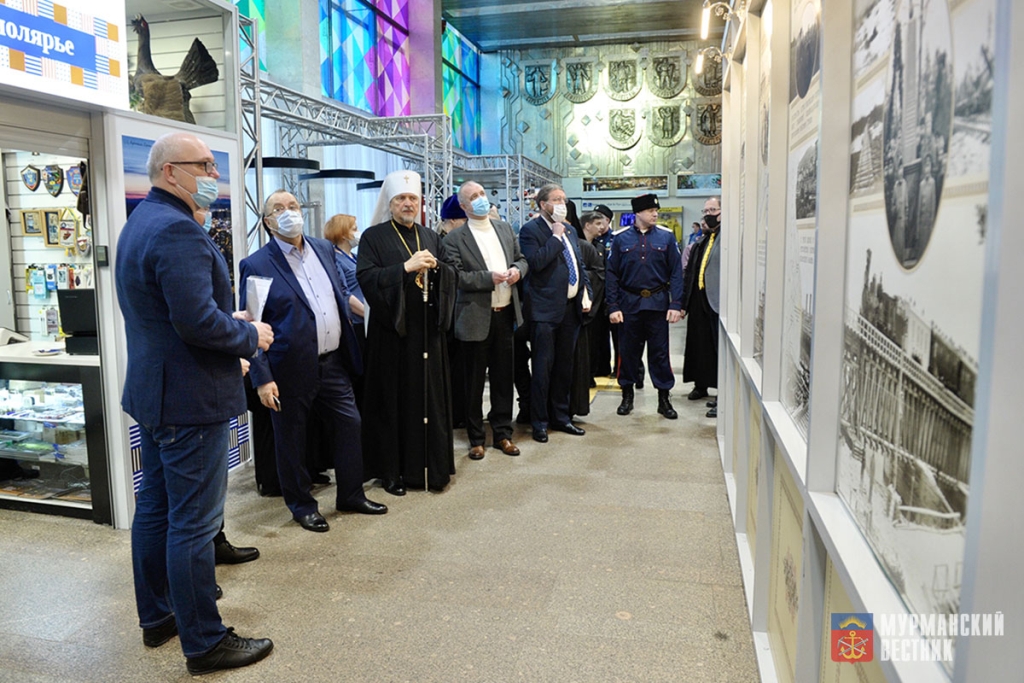
Grand Duchess Maria Pavlovna the Elder (née Duchess Marie Alexandrine Elisabeth Eleonore of Mecklenburg-Schwerin;), was born in Ludwigslust Palace on 14 May 1854,

On 29 August (O.S. 16 August) 1874, Duchess Marie married Grand Duke Vladimir Alexandrovich (1847-1909) in St. Petersburg. The couple had 5 children: Grand Duke Alexander (1875-1877), Grand Duke Kirill (1876-1938), Grand Duke Boris (1877-1943), Grand Duke Andrei (1879-1956), Grand Duchess Elena, Princess of Greece and Denmark (1882-1957).

PHOTO: chapel in France, where Grand Duchess Maria Pavlovna was buried in 1920
PHOTO: the tomb of Grand Duchess Maria Pavlovna (1854-1920)

Grand Duchess Maria Pavlovna escaped Russia in late February 1920, she died on 6th September 1920 at Contrexeville, a town in France, poised on the Vosges river where she had been a regular before the fall of the Russian Empire. She is buried in the Orthodox chapel that she had built there before the revolution. year.

Grand Duchess Maria Pavlovna the Elder is the great-grandmother of Princess Maria Vladimirovna [b. 1953], one of the current pretenders to the non-existant Russian throne. I note the following from the official web site of the current Russian Imperial House:

“She was critical of some aspects of the official political course, but she always retained her loyalty and love for Emperor Nicholas II and Empress Alexandra Feodorovna. She was subjected to slanderous persecution by the court intriguers, who sought to sow discord within the Imperial Family.”

What utter nonsense!!

Following her marriage to Grand Duke Vladimir Alexandrovich in 1874, Maria Pavlovna became a prominent hostess in St Petersburg, she was known as the “grandest of the grand duchesses.” Socially ambitious, the German born Maria Pavlovna saw herself as the “Second Empress” holding her own “Court” at the sumptuous Vladimir Palace, situated on the Palace Embankment on the Neva River in Sr. Petersburg. 

Known as “Miechen” within the Romanov family, she was well known for her acid tongue and spiteful demeanour, responsible for spreading much malicious gossip about both Emperor Nicholas and his wife Empress Alexandra Feodorovna.

She was also very crafty, she remained Lutheran throughout most of her marriage, but it was not until April 1908, that she adopted Holy Orthodoxy, believing it would give her son Grand Duke Kirill Vladimirovich a better chance at the throne.

The power hungry Grand Duchess Maria Pavlovna had an open rivalry with both her sister-in-law the Empress Maria Feodorovna (wife of Emperor Alexander III) and Empress Alexandra Feodorovna (wife of Emperor Nicholas II), the latter of which Maria Pavlovna was notorious for plotting against and spreading malicious gossip at her “powerful Court” which tended to influence all of St. Petersburg’s high society.

The treachery and deceit which emanated from the Vladimir Palace was not restricted to the senior grand ducal couple, but also to their eldest son Grand Duke Kirill Vladimirovich and his wife Grand Duchess Victoria Feodorovna [aka “Ducky”]. Maria Pavlovna along with her sons were even plotting to overthrow Nicholas II, and have Alexandra sent to a convent. [please refer to video, link provided at the end of this post].

It is widely speculated that along with her sons, Maria Pavlovna contemplated a coup against the Emperor in the winter of 1916–17, that would force the Tsar’s abdication and replacement by his son Tsesarevich Alexei, with her son, Grand Duke Kirill or Grand Duke Nicholas Nikolaevich, as regent.

During the February Revolution of 1917, Kirill marched to the Tauride Palace at the head of the Garde Equipage (Marine Guard) to swear allegiance to the new Provisional Government, wearing a red band on his uniform. He then authorized the flying of a red flag over his palace on Glinka Street in Petrograd. It is probable that he had hoped that by ingratiating himself with the Provisional Government he would be declared regent or tsar after Nicholas II was forced to abdicate.

“All around me I see treason, cowardice and deceit” – Emperor Nicholas II

Please take a few moments to listen to my interview ‘The Conspiracy Against Nicholas II,’ on YouTube, in which I talk about the members of the Imperial family who were plotting against Nicholas II, including the Grand Dukes Nicholas Nikolaevich and Nicholas Mikhailovich, and the Vladimirovich branch of the family, led by the power hungry Grand Duchess Maria Pavlovna.

© Paul Gilbert. 6 September 2020