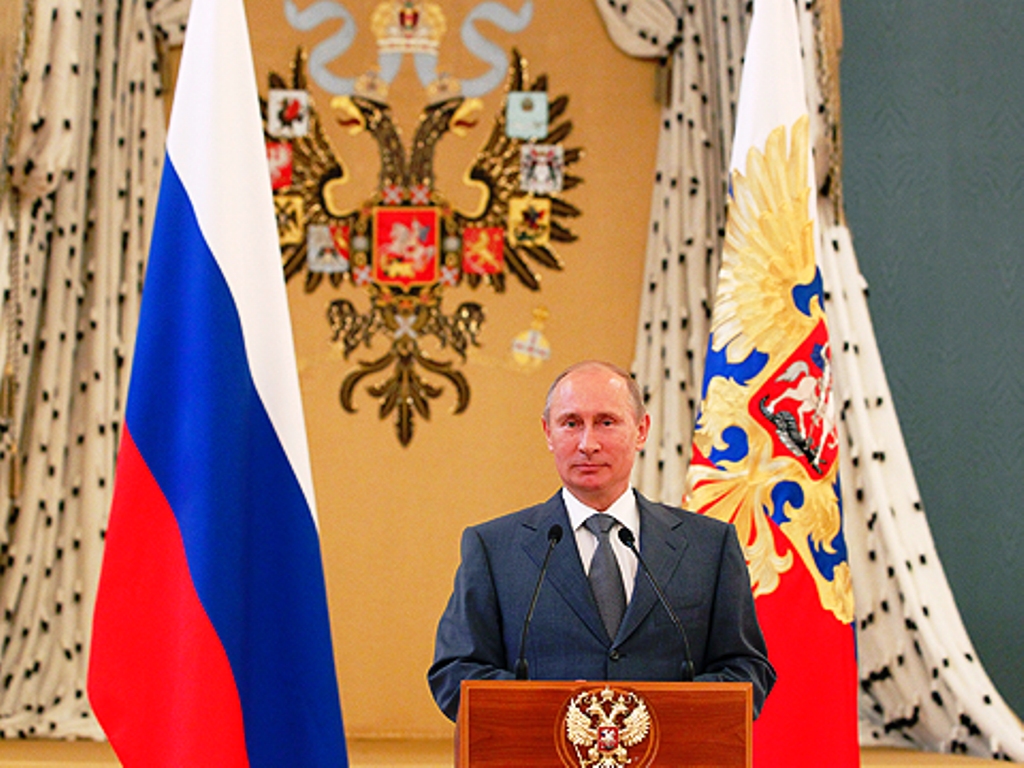
Russian President Vladimir Putin
Since coming to power in 1999, Russian President Vladimir Putin has embraced the Russian Orthodox Church and the symbols of Imperial Russia
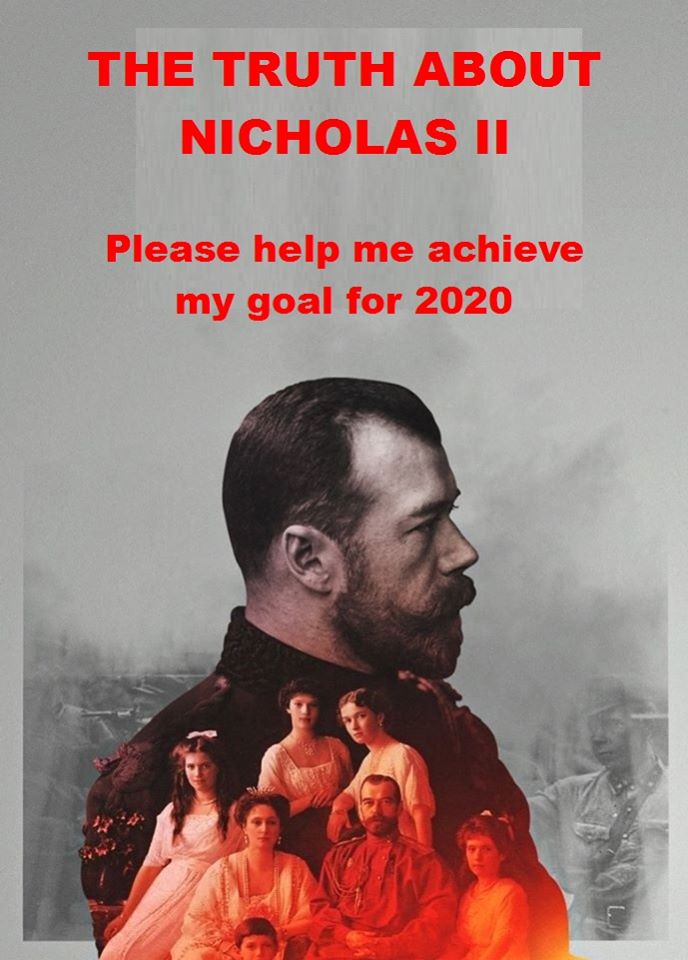
Today, the Romanovs are the subject of a rather unusual debate between two powers that have reconciled in Putin’s Russia: the Church and the State.
For more than two decades, the heads of the Russian Orthodox Church (ROC) – Patriarch Alexei II (1929-2008) and Patriarch Kirill (2009-present) – both refused to recognize the remains found in the vicinity of Ekaterinburg as those belonging to the Imperial family.
Even after successive DNA tests, the ROC prevented the bones of Tsesarevich Alexei and his sister Grand Duchess Maria from being buried with the rest of the their family in the Cathedral of St. Peter and St. Paul in St. Petersburg.
The issue made headlines again in July, when the Russian Investigative Committee, the country’s top criminal investigation body, confirmed that, after 37 new forensic analyzes, it was possible to conclude – again – that the bones belonged to members of the Imperial family.
“Based on the numerous findings of the experts, the investigation came to the conclusion that the remains belong to Nicholas II, his family and their retainers,” said a committee spokesperson.
But why does Russia’s leading criminal investigation body continue to reconfirm facts related to a homicide that happened more than a century ago?
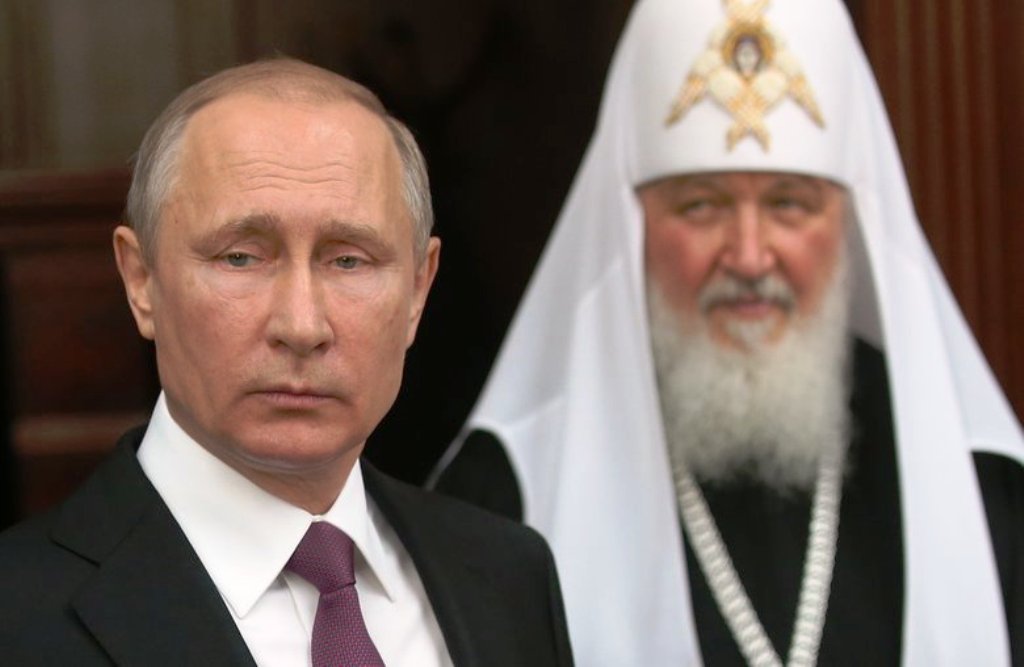
President Vladimir Putin and Patriarch Kirill of Moscow and All Russia
A long way
The whereabouts of the remains of the Imperial family were one of the best kept secrets during the Soviet period.
Only in 1979 did a geologist with an amateur detective streak, Alexander Avdonin, discover the first bones in the vicinity of Porosenkov Log, near Ekaterinburg.
Citing fear of reprisals from the regime, he reburied them where he found them and kept them there until 1991, after the Soviet Union disintegrated.
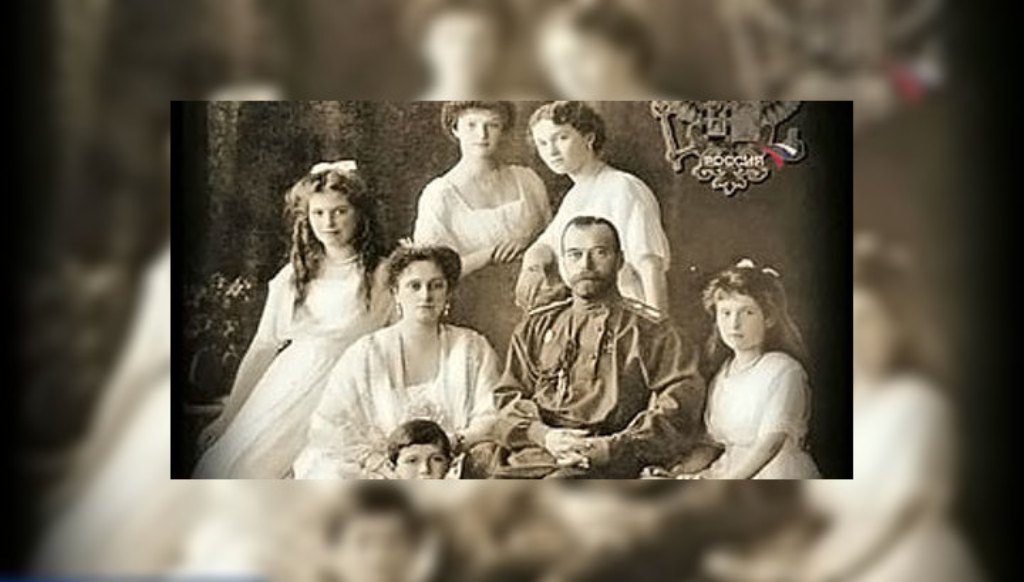
An extensive investigation and a series of DNA tests (for which even Prince Philip donated blood) proved that the bones belonged to Nicholas II, his wife, three of their five children and four retainers who were also murdered with the Imperial family.
One of the big questions Russia was asking at the time was where were the remains of the Imperial couple’s other two children. Anastasia’s whereabouts were also cause for speculation, but evidence has since proven that she died along with her family.
“In 1998, after a five-year investigation, the Russian government decided to bury the bones in the Romanovs family tomb in St. Peter and St. Paul’s Cathedral in St. Petersburg, as a political gesture of reconciliation and atonement for the crimes committed in the Soviet period”, says Marina Alexandrova, a professor at the University of Texas, in the United States.
The Holy Synod, the governing body of the Orthodox Church, however, opposed the decision and called for a more thorough investigation before the burial.
“Due to the political motivation of the event and the absence of consultation with the Russian Orthodox Church, the patriarch did not participate in the ceremony and rejected the test results,” says the professor.
The country’s president at the time, Boris Yeltsin, challenged the Church and gave the green light for the funeral. The act was the background of great friction that marked the Yeltsin government and the head of the Orthodox Church – at the time still weakened by decades of Soviet oppression.
Yeltsin would resign shortly afterwards, on the night of December 31, 1999, leaving the post in the hands of his then prime minister, a former KGB agent who had become his discreet shadow: Vladimir Putin.
A new stage in the relationship between State and Church then began.
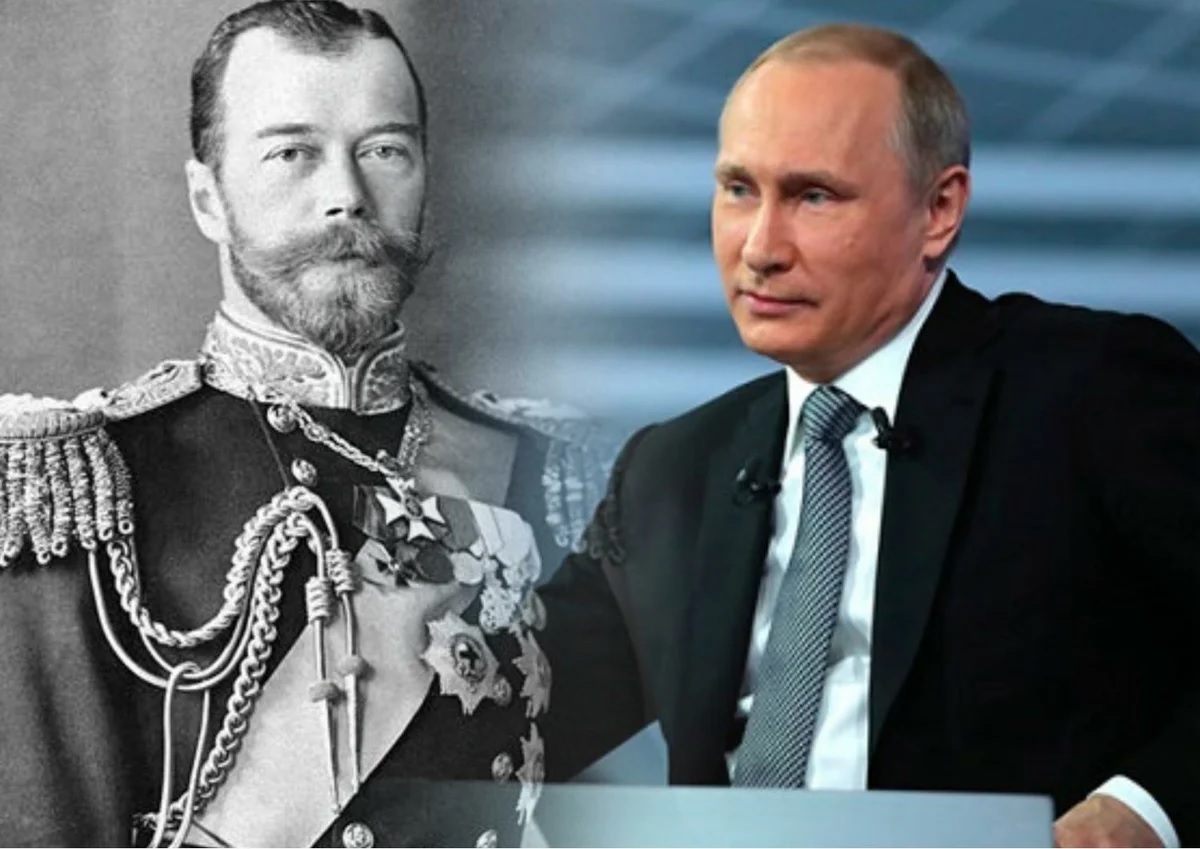
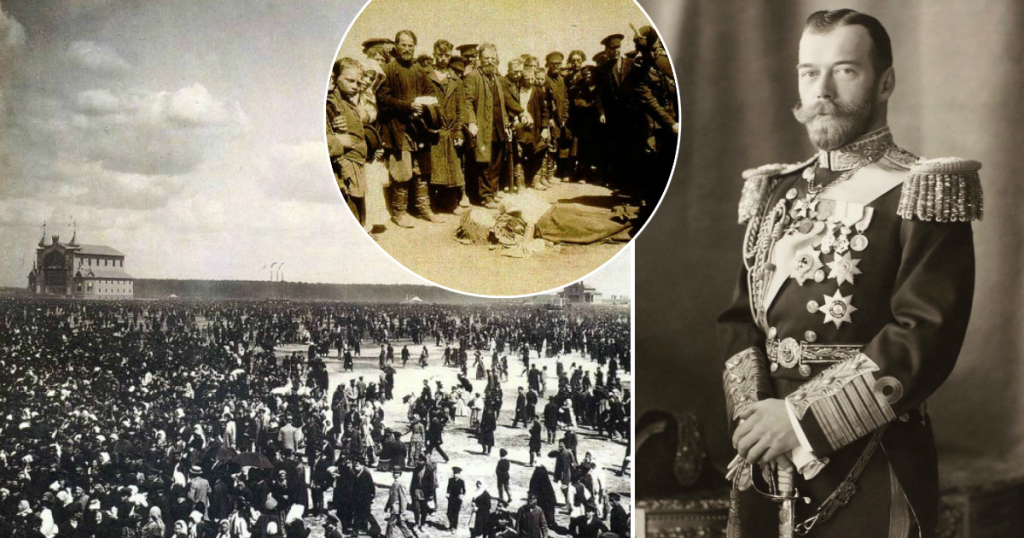
Emperor Nicholas II and Russian President Vladimir Putin
Putin, the Church and the last tsar
As Pablo de Orellana, professor at King’s College London, UK, explains, the beginning of Putin’s government marked a new phase, of “rescuing” the Romanov dynasty, which went beyond the golden double-headed eagles and other symbols of Imperial Russia.
“In his administration, some traditions of Tsarist Russia were re-instituted,” he points out, “But I believe that one of the most important elements in this regard is the rebirth of the Orthodox Church, which has returned to being as powerful as before and is now recognized as the country’s official religion.”
In a referendum held in June to determine whether Putin would remain in power until 2035, Russians also voted Orthodoxy the country’s official religion, which was seen as a consolidation of relations between the Moscow Patriarchate and the Kremlin.
And it is in this new context that the Romanovs become key figures for the powers. “The Russian Imperial family is vital for the current regime and for the nationalist narrative that drives it, because it is the connection between Russia’s past and present, between the before and after of the Soviet regime,” says De Orellana.
“For the Church, the Romanovs’ theme is central, because the Russian Orthodox Church is part of the Imperial family and the Imperial family is part of the Church.”
Since Putin’s rise to power, the head of the Russian Orthodox Church has proclaimed the last tsar, his wife and children, as saints, which was viewed with fear in a country where the Imperial family are still victims of a century of myths and lies, much of which are based on Bolshevik propaganda.
In addition to canonization, the Church also decided to build a grand church on the spot where the family was murdered in Ekaterinburg.
But one theme remained an obstacle: the authenticity of the remains of the last tsar.
“The Russian Church has been reluctant to recognize the bones as belonging to the Romanov family since they were officially exhumed in 1991 near Ekaterinburg,” says Alexandrova.
“And although multiple DNA tests and forensic analyzes in Russia and other countries have shown that they do indeed belong to the Imperial family, their doctor and three faithful servants, the issue remains controversial to this day.”

Alexei and Maria
The remains of the tsar’s two other children who were not found with the family were not discovered until many years later, in 2007.
“DNA tests carried out both inside and outside Russia have confirmed that they are the remains of Alexei and Maria,” says the professor at the University of Texas.
“The Russian Orthodox Church, however, again refused to acknowledge the discovery and denied the burial in the family tomb.”
In the years that followed, the boxes containing 44 bone fragments remained on dusty shelves in the Russian State Archives. In December 2015, their remains were transferred to the Novospassky Monastery in Moscow, where they remain to this day.
“Their remains have not yet been buried, which, ironically, runs counter to orthodox tradition in general.”
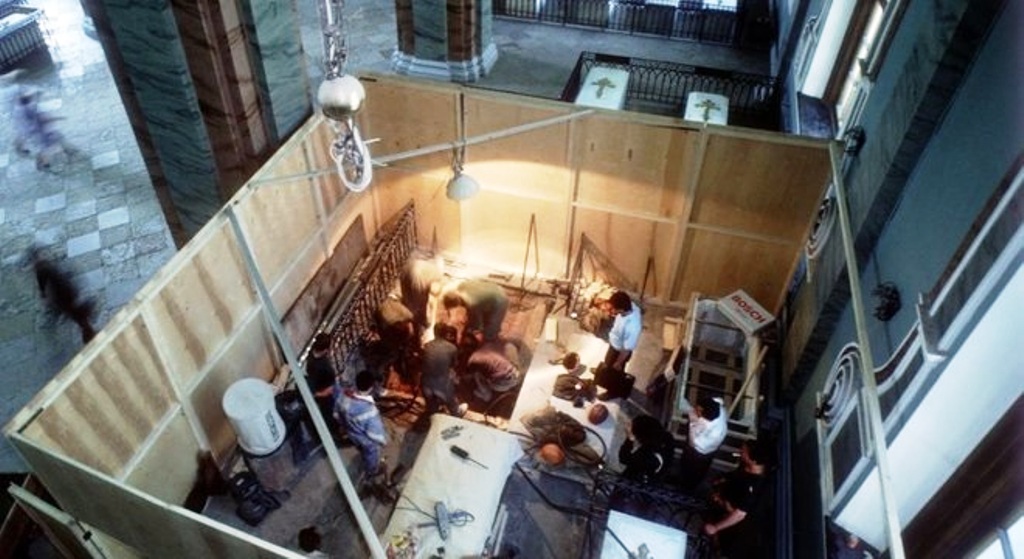
Members of the Imperial family were exhumed so that new DNA tests could be performed
New investigations
In 2008, the Russian Supreme Court officially rehabilitated the Imperial family and recognized that Nicholas II and his family were victims of political repression.
Two years later, another Russian court ordered the investigation into the murder to be reopened, which was in charge of the country’s top criminal investigation body.
In 2015, as determined by instances of the Orthodox Church, the remains of the Imperial family were once again exhumed and subjected to DNA tests, which confirmed again that it was the Tsar and his family – including Alexei and Maria.
The funeral of the last Romanovs was scheduled to take place in October of this year, but the Church asked to postpone the ceremony again to conduct an investigation of its own. “To date, no results have been announced,” says Alexandrova.
On the eve of the centenary of the massacre in 2018, the Russian government announced that the new investigation had once again confirmed that the bones belonged to the Romanovs. This year, again on a date close to the anniversary, they again released the findings.
The reasons for the debate
According to De Orellana, the dispute over the authenticity of the remains found in Ekaterinburg shows how, during the Putin government, the Church once again became a “legitimizing institution” – and that, therefore, “also legitimizes what one wants to tell about history. “.
“We see this in how the Church on several occasions had the final say, as in the question of where the bodies will be”, he points out.
In this sense, the expert believes that the position of the church in the case of the Romanovs generates a delicate political conflict.
“The Putin government needs to end the story, it needs the bodies to be ‘found’ also symbolically, ‘to bring them home’ and to have a place where they can be celebrated.”
“All this reconstruction is important, because Putin reinvented Russian nationalism based on the same nationalist theories as the tsars. In other words, it is not just an obsession to demonstrate that the bones actually belong to the last Tsar and his family, but an effort to establish continuity between the past and today’s Russia”, he adds.
Roman Lunkin, director of the Center for the Study of Religion and Society, a state organization, assesses that both the government and the Church are involved in a mutual process of revisionism of the history of Tsarism for “their own benefit”.
“The Russian Church does not want to recognize that the remains belong to the Imperial family, because there is a risk of internal division as a consequence of this,” he ponders.
According to Alexandrova, according to orthodox beliefs, it is a serious sin to pray before “false images”. The church, for its part, is reluctant to accept the result of the investigations carried out until today on the grounds that it was not invited to participate in the process.
There are still some people who believe that members of the Imperial family had managed to escape and live in secrecy in Europe and the United States.
“They think that what happened in 1918 was a ritual murder by Bolsheviks of Jewish origin. There is also a movement that sees Nicholas II as a Christlike figure who died for the sins of the Russians.”
Even if these movements are not really popular, he says, they would be strong enough to cause repercussions in the media, something that the head of the Church would certainly like to avoid.
“For the Church, the murder of the Imperial family is a symbol of all the evil of the Soviet period, of Satanism and of Marxist ideology. For the State, however, the Soviet period is also a period of victories – and the last tsar is not an example of a strong leader, “says Lunkin.
“So it is evident that the glorification of the Imperial family means different things for both the state and the church.”
© Paul Gilbert. 10 August 2020



You must be logged in to post a comment.