NOTE: All of the articles pertaining to Nicholas II and his family which were originally published in my Royal Russia News blog, have been moved to this Nicholas II blog. This article was originally posted on 5 June 2018 in my Royal Russia News blog – PG
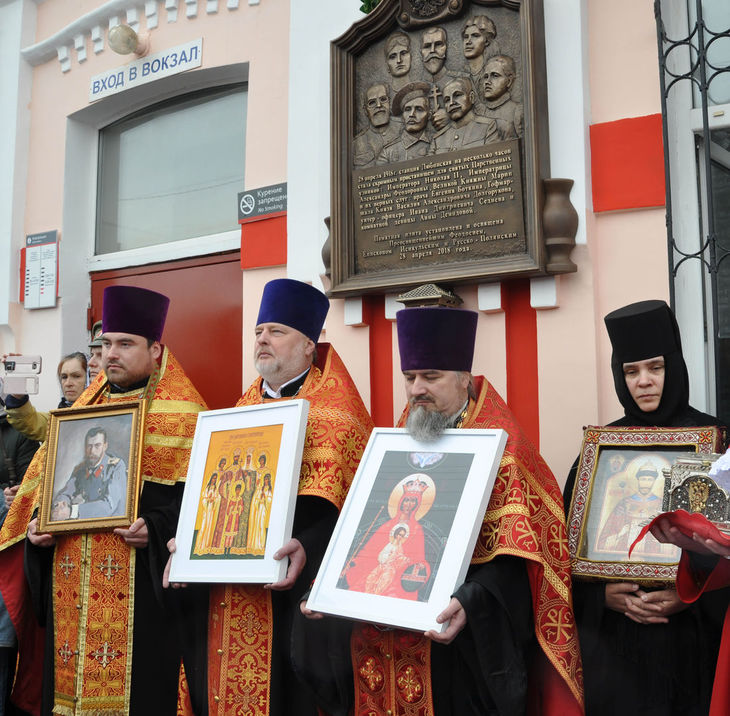
On 28th April, a bronze plaque was unveiled at the Lubinskaya railway station (situated on the Omsk-Ishim-Tyumen Line in Siberia), marking the brief stay of Emperor Nicholas II and members of his family and entourage on the same date a century before.
In the spring of 1918, the Bolsheviks had ordered that the Imperial Family be taken from Tobolsk. Due to the illness of the children, the move was made in two stages. The first included Emperor Nicholas II, along with members of his family and entourage, who made their way from Tobolsk to Tyumen, where they boarded a train originally headed towards Ekaterinburg. Accompanying them was the Commissar of the Central Executive Committee Vasily Yakovlev. It was during the journey, however, that Yakovlev unexpectedly changed the route and quickly ordered the train in the opposite direction to Omsk. Why he changed the route is still a mystery, one which historians continue to debate to this day.
The Tsar’s train almost reached Omsk, stopping at Lubinskaya station. Laying ahead was Kulomzinskaya station, from which it was impossible to turn to the railway line leading to Chelyabinsk, bypassing Ekaterinburg. Kulomzinskaya was blocked by a special revolutionary detachment. The train could not go any further, so Yakovlev went to negotiate with the Omsk Revolutionary Committee.
Meanwhile, Nicholas II and members of his family and entourage spent the next several hours in the train at Lubinskaya Station. At Omsk, Yakovlev received an order from Yakov Sverdlov in Moscow ordering him to proceed to Ekaterinburg. The last hope of salvation had disappeared.
On the bronze memorial is written: “On April 28, 1918, Lubinskaya Station for a few hours became a modest haven for the Holy Royal prisoners: Emperor Nicholas II, Empress Alexandra Feodorovna, Grand Duchess Maria and their faithful servants: the physician Evgeny Botkin, Hofmarshal Prince Vasili Alexandrovich Dolgorukov , non-commissioned officer Ivan Dmitrievich Sednev and maid Anna Demidova.”
The solemn ceremony was part of the city’s Imperial Days in Omsk. The memorial plaque was consecrated by His Eminence Theodosius, Bishop of Isilkul and Russko-Polyansky.
NOTE: All of the articles pertaining to Nicholas II and his family which were originally published in my Royal Russia News blog, have been moved to this Nicholas II blog. This article was originally posted on 6 June 2018 in my Royal Russia News blog – PG
The following exhibition ran from 5th June to 23rd September 2018
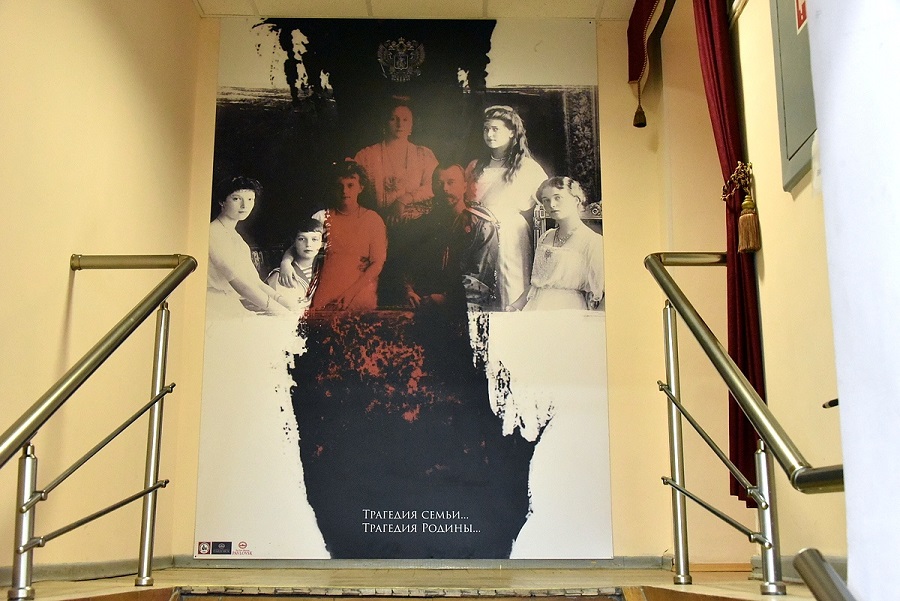
The exhibition project The Tragedy of the Family … The Tragedy of the Motherland, dedicated to the Romanov family, opened on 5th June 2018 in the Ural city of Ekaterinburg.
The venue for the exhibition is the Poklevsky-Kozell House – a branch of the Sverdlovsk Regional Museum. The exhibit is a joint historical and art project with the Pavlovsk State Museum-Reserve, and the Elisavetinsky-Sergievskoe Enlightenment Society.
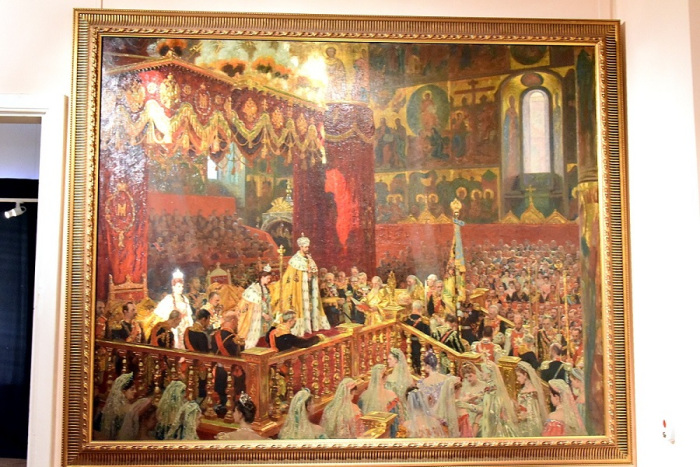
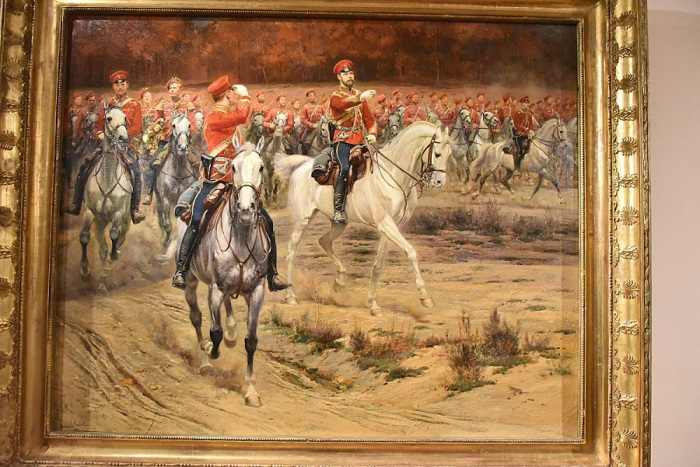
Visitors to the exhibition can acquaint themselves with the private life of members of the Imperial family in the palaces of St. Petersburg, Tsarskoye Selo, Peterhof and Pavlovsk. The exhibition presents more than 150 unique items, including examples of fine and applied art, watercolours and amateur photographs, lovely trinkets from private collections and priceless gifts to the emperor, the Empress and their children.
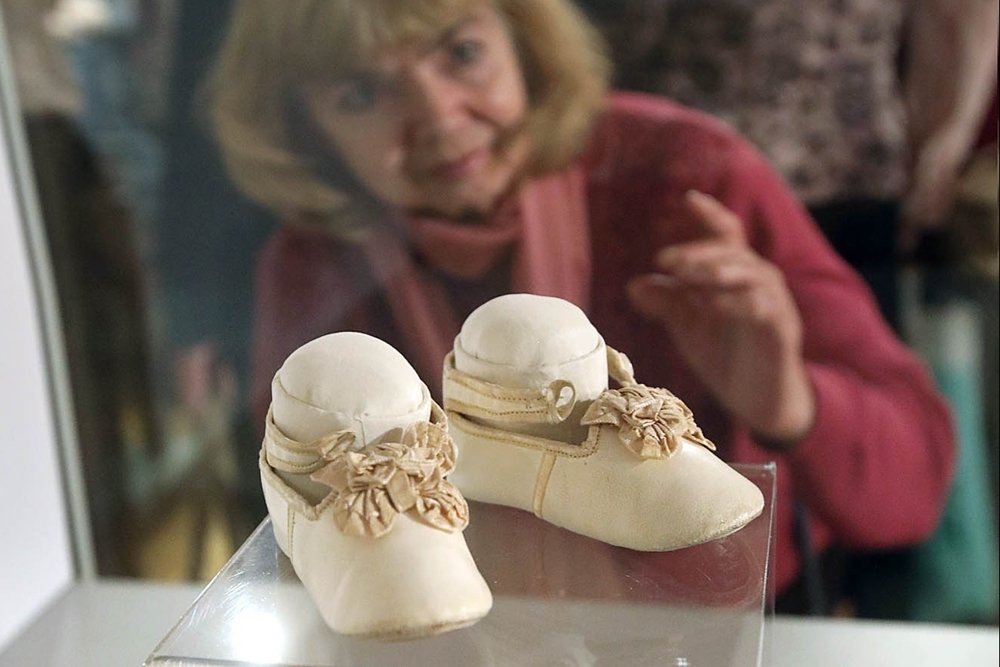
For the first time in the Urals, numerous well-executed original photographs taken by court photographers are exhibited: a portrait of a young Tsesarevich Alexei, ordered by the Empress herself. The photograph in an elegant frame, accompanied Alexandra Feodorovna from Tsarskoye Selo first to Tobolsk, then to Ekaterinburg, and now stored in the collection of the Pavlovsk State Museum-Reserve. Also among the exhibits are the beautifully preserved children’s shoes of Grand Duchess Olga Nikolaevna and a house dress of the last empress, in which only the closest people saw her; two silver cigarette case of Nicholas II, one of which he had with him during his internment in the Ipatiev House. Also on display – for the first time – is a unique, rare banner with the Romanov emblem, made for the 200 year anniversary celebrations of 1913.
The exhibition The Tragedy of the Family … The Tragedy of the Motherland ran from 5th June to 23rd September 2018, in the Poklevsky-Kozell House in Ekaterinburg.
NOTE: All of the articles pertaining to Nicholas II and his family which were originally published in my Royal Russia News blog, have been moved to this Nicholas II blog. This article was originally posted on 11 June 2018 in my Royal Russia News blog – PG
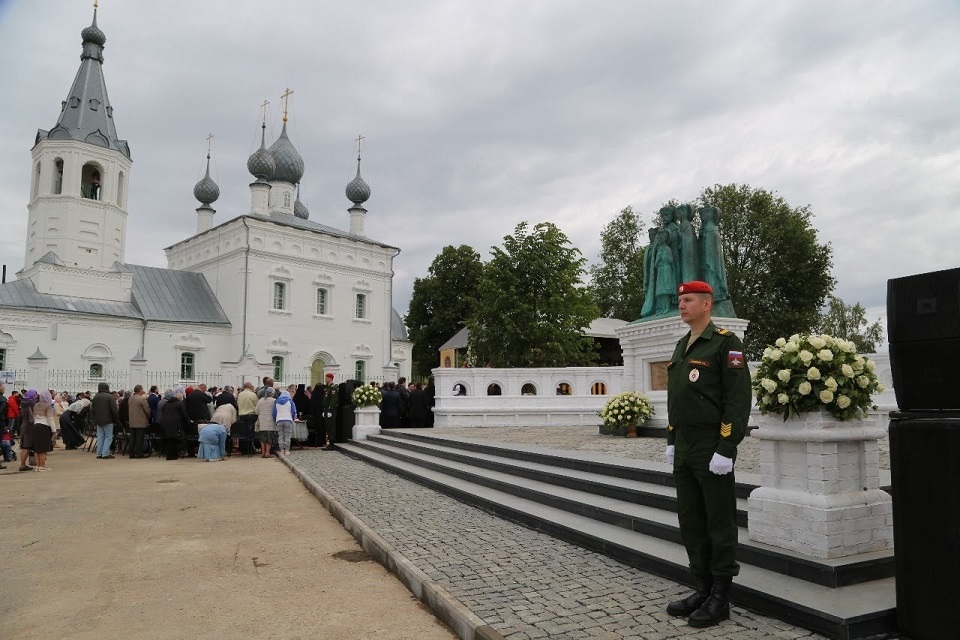
On 11th June 2018, a new monument of the Royal Passion-Bearer – Tsar Nicholas II and his August family, was established and consecrated in the courtyard of the Pereslavlskiy Nikolskiy Convent in the village of Godenovo – situated 140 km NE of Moscow.
The initiative to install monuments to Tsar Nicholas II in Russian cities and towns was made by the participants of the Forum for the Preservation of the Heritage of Emperor Nicholas II, which was held on 18th May in Ekaterinburg. Experts and forum participants supported the initiative, put forward by member of the Regional Public Chamber, chairman of the Ural branch of the Union of Russian Paratroopers Yevgeny Teterin. The initiative received the blessing of Metropolitan Kirill of Ekaterinburg and Verkhoturye.
The Monument to the Royal Passion-Bearers in the village of Godenovo, was established on the initiative of Abbess of Eustolia (Afonina) of the Pereslavlskiy Nikolskiy Convent, with the blessing of Bishop of Pereslavl and Uglich Theodore.
The monument represents a picture of Russian history in which the August family led by Nicholas II – the last Emperor and Tsar of the Russian Empire – ascended on a pedestal under a precious crown that embraced Russia, and his children, whose faces are designed to embody the best ideals of the Motherland during their times.
The Tsar’s Alley – situated behind the monument – of the Pereslavlskiy Nikolskiy Convent, was decorated with 26 banners depicting photographs and biographies of the Holy Royal Passion-Bearers.
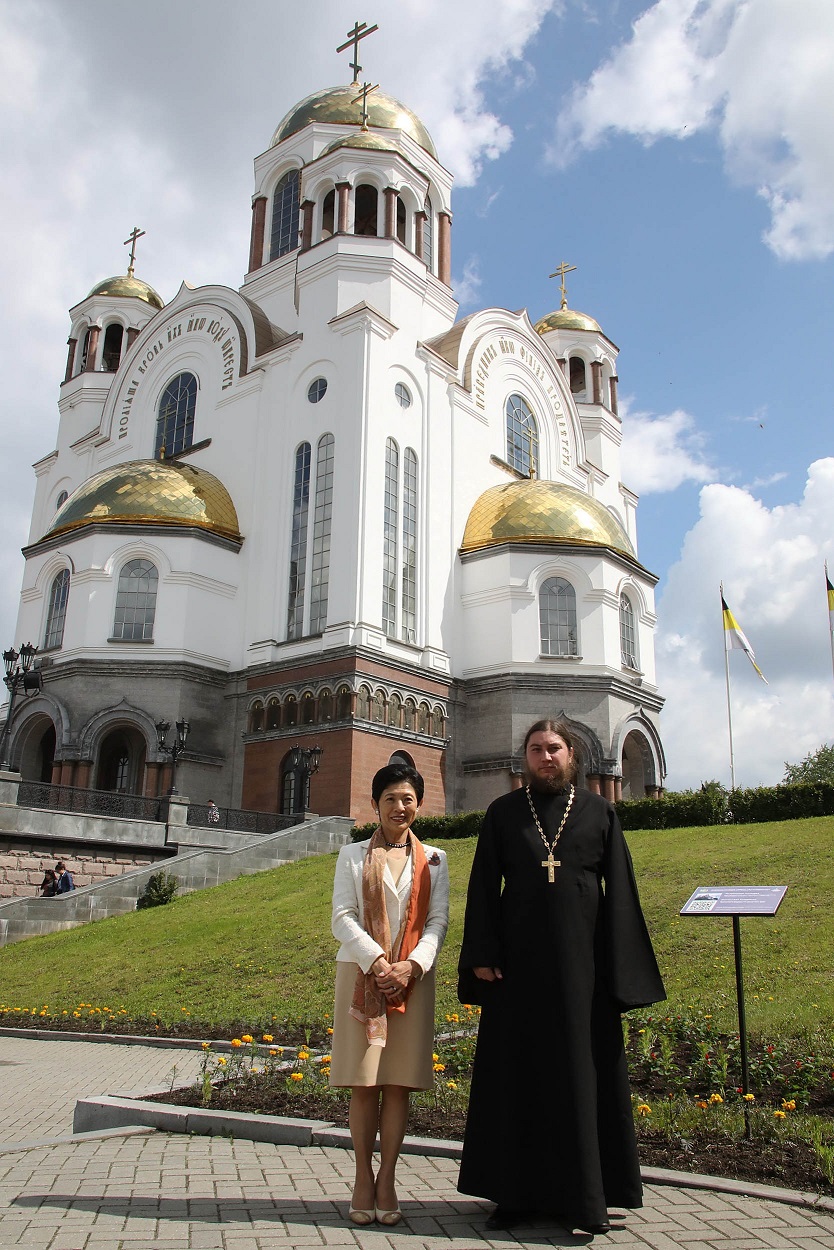
Princess Hisako Takamado standing outside the Church on the Blood, Ekaterinburg
NOTE: All of the articles pertaining to Nicholas II and his family which were originally published in my Royal Russia News blog, have been moved to this Nicholas II blog. This article was originally posted on 23 June 2018 in my Royal Russia News blog – PG
On 23rd June 2018, Japanese *Princess Hisako Takamado visited the Church on the Blood and the Tsarsky Spiritual and Educational Center during her official visit to Ekaterinburg. She is the first member of Japan’s Imperial family to visit Russia since 1916, the Kyodo news agency reported.
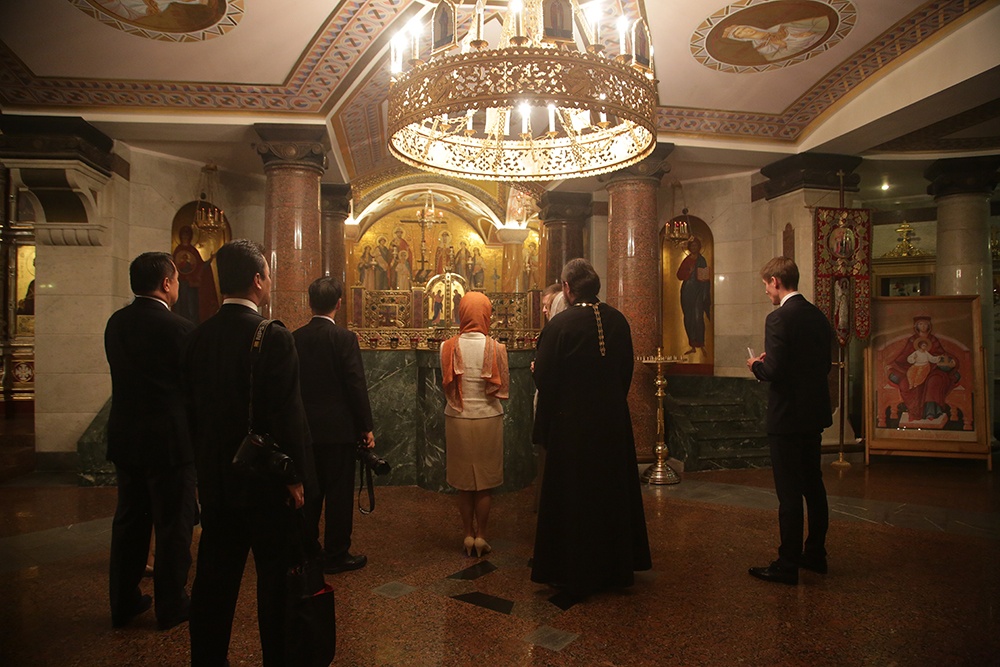
Princess Hisako was shown the renewed Imperial Room in the Lower Church
Her Highness was given a tour of the church, where she was told the story of the Imperial family’s last days in the city in 1918. Princess Hisako was shown the renewed Imperial Room in the Lower Church – altar chapel in honour of the Holy Royal Passion-Bearers, built on the site of the room where Emperor Nicholas II and his family were all murdered on the night of 16/17 July 1918. Special attention was drawn to the unique mosaic panel in the central part of the altar, depicting the Holy Royal Passion-Bearers and their faithful retainers who suffered with them: Emperor Nikolai Alexandrovich, Empress Alexandra Feodorovna, Tsesarevich Alexei, Grand Duchesses Olga, Tatyana, Maria, Anastasia, Saint Eugene Botkin, Alexei Trupp, Ivan Kharitonov, and Anna Demidova. The altar is adorned to the memorable date of the century of the feat of the Royal Family with the blessing of Metropolitan Kirill of Ekaterinburg and Verkhoturye.
Her Highness visited the upper church in the name of All Saints in the Russian Land
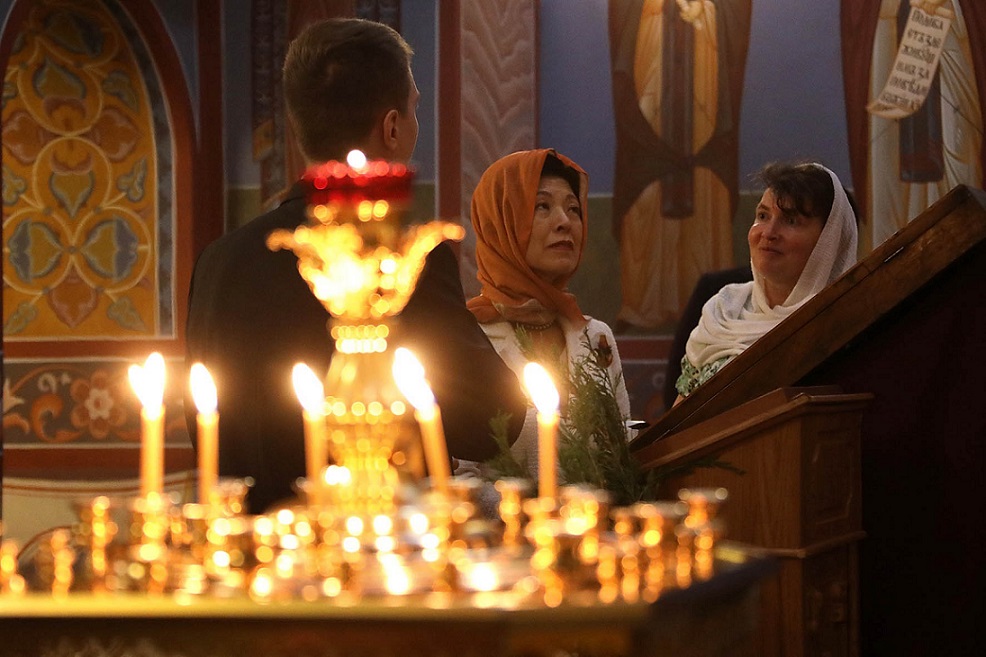
After viewing the exhibition dedicated to the Holy Royal Passion-Bearers and the Alapaevsk martyrs – Saint Grand Duchess Elizabeth Feodorovna and the nun Varvara, Her Highness visited the upper church in the name of All Saints in the Russian Land. Here Princess Hisako, delighted with decoration of the cathedral, took up her camera, taking pictures of the vault and frescoes, on which the scenes of the life of the Passion-Bearer Tsar and his family are depicted.
Princess Hisako inside the Patriarchal Compound
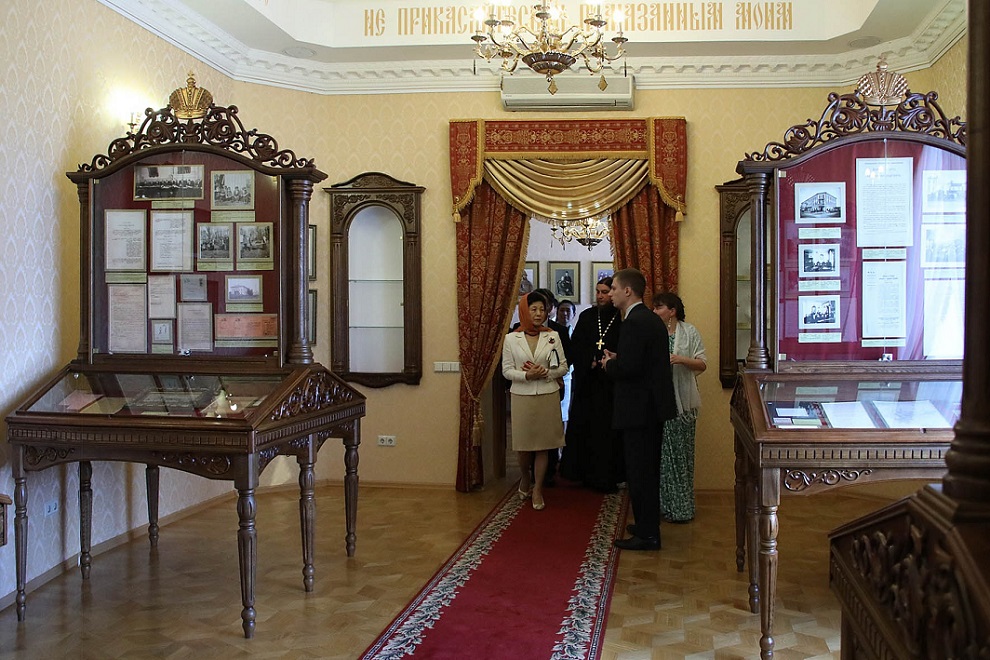
Her Highness and her entourage then visited the Patriarchal Compound on the opposite side of the courtyard. Here, she visited the Tsarsky Spiritual and Educational Center, the Museum of the Holy Royal Martyrs, the Church of St. Nicholas the Wonderworker, the exhibition of the Ural artists Alexei Efremov and Alexander Remezov. Her Highness also took great interest in the legendary grand piano of Empress Alexandra Feodorovna, which she took with her when the Imperial family had gone into exile.
Princess Hisako visits the Church of St. Nicholas the Wonderworker
At the end of the visit, Her Highness signed the Visitors’ Book, thanking her hosts for the inspirational journey through Russian history and noting the great importance of the preservation of the heritage of churches in the Urals.
Upon leaving the Patriarchal Compound, the Japanese princess thanked the representatives of the Ekaterinburg Diocese for their warm welcome, and speaking in Russian with special cordiality, she said: “This is a special place.”
Her Highness visits the Museum of the Holy Royal Martyrs
Princess Hisako Takamado of Japan arrived in the Ural capital on 22nd June. During her stay, she plans to attend a FIFA match between Japan and Senegal, which will be held on 24th June.
*Born on 10 July 1953, Princess Hisako Takamado is a member of the Japanese Imperial Family as the widow of Norihito, Prince Takamado (1954-2002). Prince Takamado was the third son of Takahito, Prince Mikasa and Yuriko, Princess Mikasa. He was a first cousin of Emperor Akihito, and was seventh in line to the Chrysanthemum Throne.
Princess Hisako stops to take a photo after leaving the Patriarchal Compound
Recent poll shows Nicholas II as the most popular figure in the 20th century Russian history
NOTE: All of the articles pertaining to Nicholas II and his family which were originally published in my Royal Russia News blog, have been moved to this Nicholas II blog. This article was originally posted on 26 June 2018 in my Royal Russia News blog – PG
Public attitudes towards Nicholas II have undergone several shifts since the collapse of the Soviet Union in the early 1990s, with the most recent studies carried out during the last few years showing an increase in appreciation of the monarch. This is partially due to the the efforts of the Russian Orthodox Church, and research by post Soviet Russian historians. Both have worked diligently by challenging the negative assessments of the life and reign of Russia’s last emperor and tsar, disproving the lies and myths which continue to be popular to this day, particularly by Western historians and biographers.
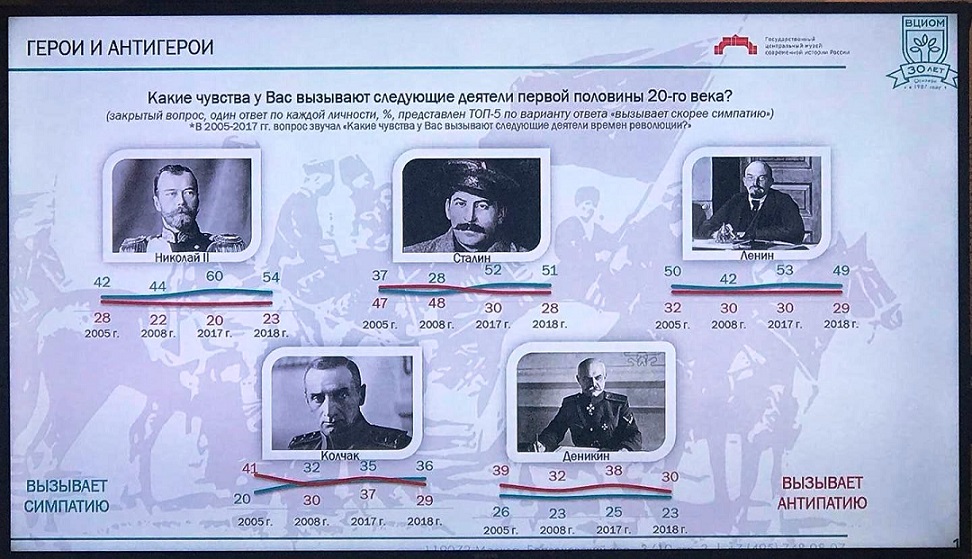
According to the most recent poll, Emperor Nicholas II, Soviet dictator Joseph Stalin, and Bolshevik leader Vladimir Lenin are the most popular figures among Russians from the 20th century.
Research conducted by the Russian state-run public opinion center VTSIOM showed that the last Russian emperor is now the most popular of all historical figures throughout the volatile 20th century – 54 percent of respondents said that they sympathize with the monarch. Joseph Stalin was second with 51 percent and the head of the Bolshevik party and the mastermind behind the 1917 revolution, Vladimir Lenin, was on the third place with 49 percent. Leader of the White Movement during the Russian Civil War, Alexander Kolchak was in fourth place with 36 percent, while general of the White Movement during the Russian Civil War Anton Denikin came in fifth place with 30 percent.
The share of respondents who told researchers that the feeling they had towards these people was strongly negative was 23 for Nicholas II, 28 for Stalin and 29 for Lenin. Most of the other prominent figures of the period, both among the revolutionaries and on the Tsarist sides, cause neither good nor bad emotions in the Russian public, research revealed.
Results of the poll show Nicholas II more popular among Russian than both Stalin and Lenin
The least liked figures were the leader of the Ukrainian anarchists Nestor Makhno, and the founder of the Red Army Leon Trotsky. 58 and 46 percent of Russians described their attitude to them as negative and only 12 and 20 percent confessed to sympathizing with them.
In the same poll researchers asked the Russian public what sources they used to get information about the October Revolution and the Civil War. 79 percent of respondents named schools and universities, 48 percent said they got information from books and 30 percent mentioned films and television series.
A different poll conducted by VTSIOM in late 2017, in connection with the 100th anniversary of the Russian Revolution, revealed that 92 percent of Russians wanted similar events prevented at any cost, up from 78 percent five years ago. Only 5 percent of respondents told researchers that they considered a new revolution necessary (13 percent in 2012). 3 percent of respondents said that they had no opinion on the issue.
Still, 46 percent of the public agreed with the statement that the 1917 revolution was in the interests of the majority of Russians. 13 percent hold that the revolution benefited a minority and 33 percent said that only a small group of people managed to gain anything from the events of 1917.
38 percent of Russians currently think that the 1917 Revolution was a major stimulus for the social and economic development of the country. 23 percent agreed that the revolution “had opened a new era in Russia’s history.” At the same time, 14 percent of the poll participants said that the revolution had seriously impeded the development of Russia and 13 percent called the events a total disaster. 12 percent remained undecided over the role that the revolution had played in the Russian history.
NOTE: All of the articles pertaining to Nicholas II and his family which were originally published in my Royal Russia News blog, have been moved to this Nicholas II blog. This article was originally posted on 6 July 2018 in my Royal Russia News blog – PG
The State Historical Museum in Moscow have announced that the portrait of Emperor Nicholas II by Léon Bakst, has been returned from their restoration workshop.
After the 1917 Revolution, the portrait was hidden in the museum funds. In September, the portrait will be presented for the first time at an exhibition dedicated to Nicholas II and his family, the first time it has been displayed in more than a century.
Léon (Lev) Nikolaevich Bakst – born as Leyb-Khaim Izrailevich (later Samoylovich) Rosenberg, (1866-1924) was a Russian painter and scene and costume designer. He was a member of the Sergei Diaghilev circle and the Ballets Russes, for which he designed exotic, richly coloured sets and costumes.
During his years in St Petersburg, he taught painting to the children of Grand Duke Vladimir Alexandrovich. In 1902, Nicholas II commissioned Bakst to paint The Meeting of Russian Sailors. In 1914, Bakst was elected a member of the Imperial Academy of Arts.
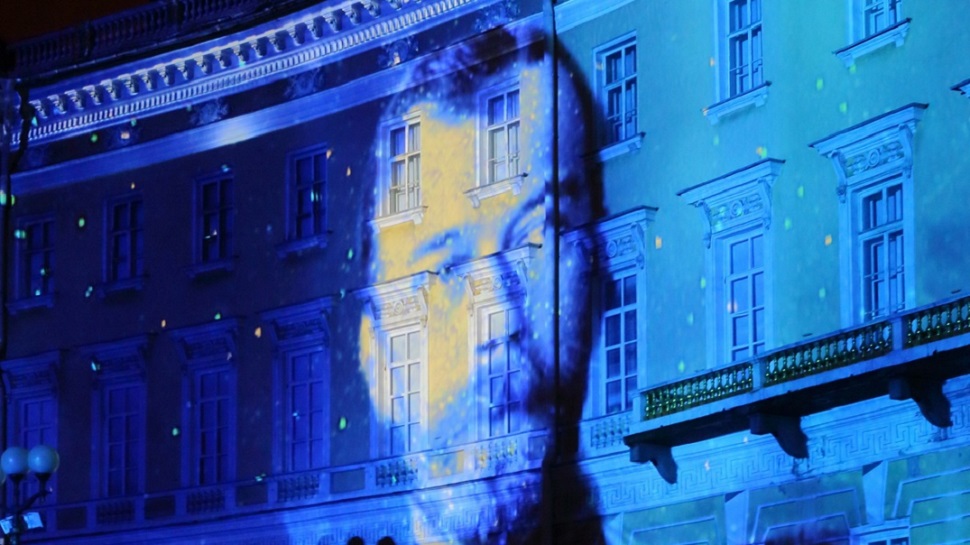
View of the Church on the Blood on the night of 16/17 2018
NOTE: All of the articles pertaining to Nicholas II and his family which were originally published in my Royal Russia News blog, have been moved to this Nicholas II blog. This article was originally posted on 25 July 2018 in my Royal Russia News blog – PG
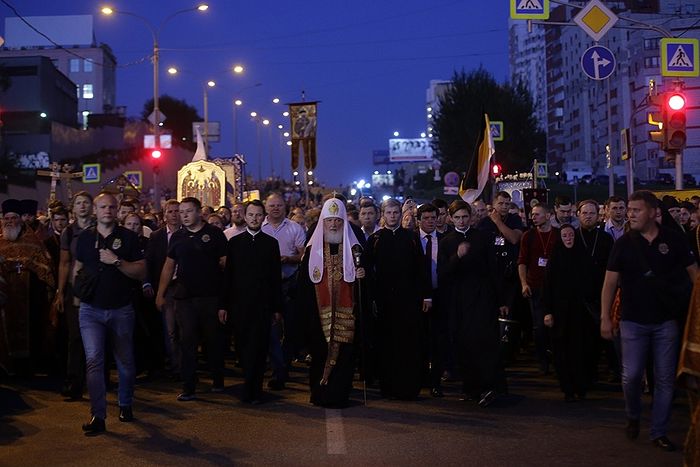
In 2018, the Russian Orthodox Church celebrated the centenary of the martyrdom of the last Imperial family of Russia with numerous events held throughout Russia, with the celebrations culminating in a Patriarchal Divine Liturgy in Ekaterinburg and all-night cross procession in their honor.
On the night of 16/17 July 2018, more than 100,000 Orthodox Christians, monarchists, among others gathered in Ekaterinburg for the liturgical celebrations. The faithful came from all corners of Russia and around the world, including Azerbaijan, Australia, Austria, Belarus, Bulgaria, Canada, Great Britain, Germany, Kazakhstan, Kyrgyzstan, China, Lithuania, Moldova, Netherlands, New Zealand, Serbia, USA, Tajikistan, Turkmenistan, Uzbekistan, Ukraine, France, Estonia, South Korea, and Japan.
The first Tsar’s Days procession took place in 1992, with the participation of but a few dozen faithful.
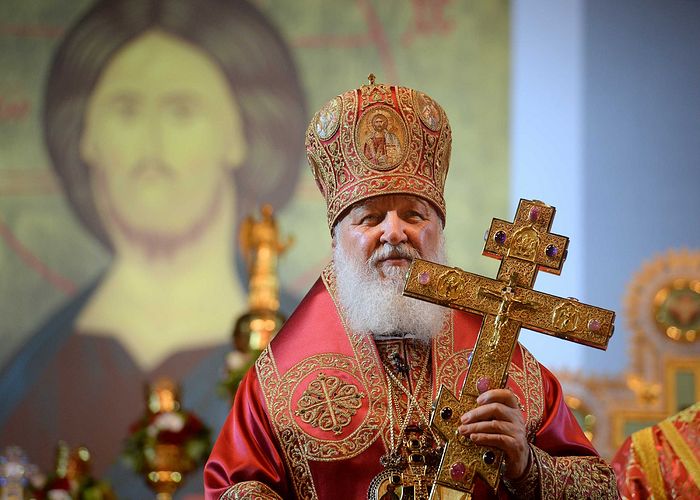
The event began with the Divine Liturgy celebrated on the square in front of the Church on the Blood in Ekaterinburg, built on the site where the Ipatiev House once stood, where the family was murdered. The service was headed by His Holiness Patriarch Kirill with more than 35 hierarchs and multiple clergy concelebrating.
The entire service was broadcast live on the Orthodox TV station “Union:”
A special platform was erected for the Liturgy in front of the gates of the lower church, where the “Imperial Room” is located—a chapel in honor of the Royal Martyrs, built on specific site of their martyrdom.
Following the Liturgy, the patriarch led the traditional Royal Cross Procession from the place of martyrdom of the holy Royal Martyrs and their servants to the Monastery of the Holy Royal Martyrs at Ganina Yama ravine, covering a distance of 21 km (13 miles).
His Holiness leads the Cross Procession to Ganina Yama
The Cross Procession nears the Monastery of the Holy Royal Martyrs at Ganina Yama
According to law enforcement agencies, more than 100,000 took part in the procession.
According to tradition, the faithful carried banners and icons in the procession, including a 6.5-ft. icon of the Tsar-Martyr, painted in 2017 for the Church of the “Reigning” Icon of the Mother of God at Ganina Yama. Together with the kiot, the icon weighs 330 lbs. A special bier on wheels was made to move the heavy icon.
The procession was also accompanied by 25 mobile groups from an Orthodox charity service, consisting of clergy, representatives of the Dormition Orthodox Brotherhood of Ekaterinburg, sisters of mercy, and volunteers, who provided assistance to those who could not walk the entire route of the procession. Field kitchens and tests were also set up at the Monastery of the Holy Royal Martyrs for the pilgrims to rest.
His Holiness and the procession arrived at the monastery in the morning, where the patriarch served a moleben to the Royal Martyrs in front of the memorial cross erected at Mine #7, where the bodies of the Royal Martyrs were abused and disposed of. His Holiness Patriarch Alexei II (1929-2008) thus referred to Ganina Yama as “a living antimens, permeated with particles of the burnt holy relics.”
His Holiness Patriarch Kirill of Moscow and All Russia
His Holiness then addressed the sea of faithful with a primatial word:
In the name of the Father and of the Son and of the Holy Spirit!
Your Beatitude Metropolitan Onuphry of Kiev and All Ukraine! Fellow archpastors! Dear brothers and sisters, gathered in a multitude this night before the place where one hundred years ago was committed a terrible crime—wholly innocent people, who had committed their lives to the service of their Motherland, were killed by the evil will of man!
This atrocity still chafes our conscience, still causes us to mentally return to that time and try to understand what happened to our country and to our people. Where did this insanity, this attack come from? Looking from a distance of one hundred years, even if we want to we cannot see all the nuances of the national life of our people, which fade from memory and are missed by even the most penetrating gaze. But such crimes, as were committed here, cannot be accidental. Something stood behind this crime; behind it is the collective guilt of our people, a turn in the historical life of Holy Rus’, which led the people into a heavy, terrible impasse.
What happened to our people? After all, the country was covered with churches and monasteries, an absolute majority of the people were baptized, and the churches were filled with people. Why did it happen? Why did the murderers squeeze the trigger, without trembling at what they were doing? It means not everything was favorable. It means the sunlight reflected in the gilded domes was not always refracted into human hearts to strengthen faith in the Lord in them. And we know how over the course of at least 200 years preceding the tragedy of the Ipatiev House some changes occurred in the people’s consciousness that gradually but steadily led many to a departure from God, neglect of the commandments, and a loss of spiritual connection with the Church and the centuries-old spiritual tradition.
Why did this happen to our people? Why did they at some point become like a train whose engineer didn’t calculate its speed and heads into a steep turn, rushing towards an imminent catastrophe? When did we as people start this turn? We entered when alien thoughts, alien ideals, and an alien worldview, formed under the influence of philosophical and political theories, having nothing in common either with Christianity or our national tradition and culture, began to be perceived by the intelligentsia and aristocracy and even part of the clergy as advanced thoughts by which it was possible to change the people’s lives for the better.
Indeed, the idea of changing the life of the people for the better arises whenever there is a plan to abruptly change the course of history. We know that the worst and bloodiest revolutions have always occurred in view of people’s aspirations for a better life. The leaders of these revolutions instilled in the people that there is no other way to make life better—only by blood, only through death, only through the destruction of the existing way of life. And at some point, having abandoned their spiritual birthright, having lost their true connection with the Church and God, the intelligentsia, aristocracy, and even, as I have already said, part of the clergy were darkened in mind and infected with the thought of the need to drastically change the course of our national history and to try to build as quickly as possible a world where justice reigns, where there is no bygone separation according to material indicators, where people live peacefully and happily. As a result, many of those captured by this idea reach the point of committing crimes.
A question arises: “Is it possible through crime, through blood, through violence, and through the destruction of holy sites to build a happy life?” History clearly testifies: It is impossible! And, perhaps, the first and most important lesson that we should learn today from the tragedy of a century ago is that no promises of a happy life, no hope for help from outside, from some supposedly more educated and advanced people should seduce our people. We must remember the tragedy of the past. We must develop an immunity to any call to attain to human happiness through the destruction of that which is.
Hardly did anyone who called for the destruction of the people’s lives destroy their own lives, renouncing their own wellbeing. But with what fury they proposed to do it to everyone! And the people absorbed this lie; and the crowning act of departure from the most sacred and valuable that they had was the hideous execution of the Royal Family—innocent people who had not violated the law. And what kind of law could we even be talking about if it was necessary to kill the Tsar and his family to build a happy life? We know that nothing turned out well, and taught by bitter experience, we must build a robust rejection of any ideas and any leaders who propose to strive for some obscure “happy future” through the destruction of the life of the people, our traditions, and our faith.
Today, gathered here in such a great number, we remember the tragedy of the Ipatiev House. We have lifted up prayers to the Lord, we have prayed to the Emperor and Passion-Bearer Nicholas and those who suffered with him, that they would pray in Heaven for our earthly Fatherland and for our people and strengthen the Orthodox faith in every subsequent generation of Russians; that faithfulness to God and love for the Fatherland would accompany the lives of the youth and subsequent generations, and that no tragedy of this kind would ever happen again in our land.
May the Lord preserve our Russian land and the Russian people who today live in various countries; and although they are called by various names, are the same people who came out of the Kievan baptismal font, and passing though the most severe historical circumstances, have retained the Orthodox faith until today. May God’s blessing be upon our people, upon our Fatherland, and upon our martyric Russian Orthodox Church. May the life of our people be transfigured by the prayers of the New Martyrs and Confessors of the Russian Church—without any upheavals or blood, but upon the firm foundation of faith and hope that God is with us! May the Lord save us all by the prayers of the holy Royal Passion-Bearers and all the New Martyrs!
NOTE: All of the articles pertaining to Nicholas II and his family which were originally published in my Royal Russia News blog, have been moved to this Nicholas II blog. This article was originally posted on 26 July 2018 in my Royal Russia News blog – PG
Most Russians believe the murder of the last Russian tsar, Nicholas II, and his family members in 1918 had no justification, describing it as a monstrous crime rather than an act of retribution, a poll conducted by the Russian Public Opinion Research Center ahead of the centenary of the murders of the Imperial family showed earlier this month.
“Most Russians (57%) believe that the murders of the Imperial family is a heinous unjustified crime (this number is bigger among people aged 35+ than among the younger generation aged between 18 and 34). Another 29% said the last Russian emperor paid too high a price for his mistakes. Nevertheless, young people believe that he had to be punished for them, with 46% among those aged between 18 and 24 more often expressing this point of view. Just 3% of those polled were certain that the Imperial family’s execution was the public’s just retribution for the emperor’s blunders,” the pollster said.
That said, Russians generally see Nicholas II in a positive light (43%). This viewpoint was expressed most often by people aged 45 (45-46%).
On the other hand, 22% tend to think of him negatively. Young people aged between 18 and 24 often said they disliked the last Russian emperor. However, 7% of the respondents stressed they were indifferent to Nicholas II, while 4% said they felt empathy for him.
“By now, the Soviet narrative, which claimed the murders of the Tsar’s family by their Bolshevik captors near Ekaterinburg during [Russia’s] Civil War was a necessary and fair act of revenge for the blunders and crimes committed by the Romanov family, has finally exhausted its credibility. Regardless of their political views and relations towards the tragic events that occurred a century ago, Russians consider that a crime, which has no justification whatsoever. Amid this sentiment, the last tsar, whatever his accomplishments or failures, is seen by today’s public as a nice person who deserves compassion, at the very least,” the pollster’s Director General Valery Fyodorov noted.
The survey was conducted by the Russian Public Opinion Research Center on July 11, 2018, with 1,600 people aged 18 and above interviewed over the phone. The margin of error does not exceed 2.5% with a probability of 95%.
NOTE: All of the articles pertaining to Nicholas II and his family which were originally published in my Royal Russia News blog, have been moved to this Nicholas II blog. This article was originally posted on 26 July 2018 in my Royal Russia News blog – PG
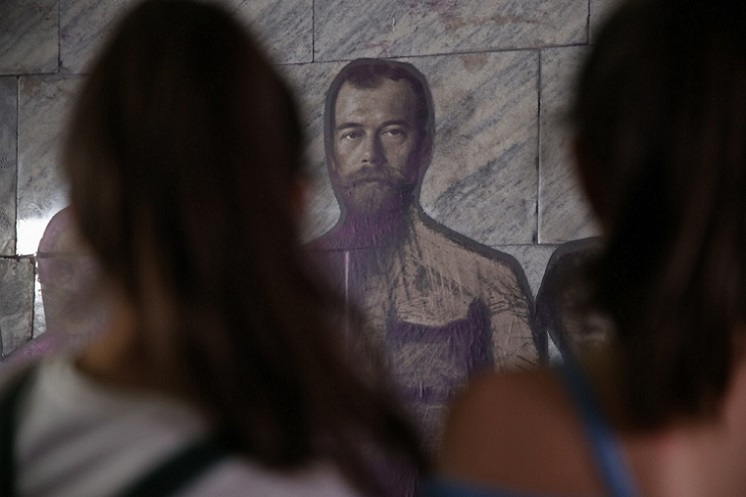
Unique street art in memory of the Russian Imperial Family has been created in an underground passage in the center of Ekaterinburg. The work entitled “Point of no return” depicts two groups of people on opposite walls of the passage.
On one side are depicted: Emperor Nicholas II, his wife Empress Alexandra Feodorovna, their five children, and four faithful retainers – all of whom were murdered on the night of 16/17 July 1918 in the basement of the Ipatiev House in Ekaterinburg.
On the other side the murderers: the Ural Chekists and the guard of the “House of Special Purpose”, the participants in the murders of the Romanovs. Between the two images on the floor is a red circle – Точка невозврата (Point of no return), standing on which, one gets a sense of being in the line of fire.
The appearance of the street art is timed to the 100th anniversary of the deaths of the Imperial Family in Ekaterinburg. The underground passage is located in close proximity to the Church on the Blood, built on the site of the Ipatiev House.
The executor of the work was the GREAT Advertising Group (St. Petersburg), and the ZNAK Information Agency.
“The idea belongs to the GREAT Advertising Group. We liked it, and immediately accepted it. This work is a desire to recall the tragedy of the shooting in the basement of the Ipatiev House, which included the murder of innocent children and servants. It became a symbol of the tragedy of all Russia, a great tragedy of the twentieth century. This shooting really became a ‘point of no return’ for Russia. We believe it is important that a person can feel this point, literally stand on it, even for a moment,” said Dmitry Kolezev, deputy editor-in-chief of Znak.com.
“We wanted to create something without any gadgets and technologies, something with simple and affordable means, which would allow people to get a sense of what it must have felt to face the murderers. To try to literally immerse yourself in a tragic moment, to become a part of it, to stand between the defenseless Imperial family and their murderers with revolvers,” said the creators from the GREAT Advertising Group.
Sadly, the work was only temporary for the 100th anniversary marking the regicide – the artwork was not done with paint, but with a film, making it easy to remove, and leaving the transition walls clean.
NOTE: All of the articles pertaining to Nicholas II and his family which were originally published in my Royal Russia News blog, have been moved to this Nicholas II blog. This article was originally posted on 29 July 2018 in my Royal Russia News blog – PG
Tsar Nicholas II was “one of the greatest rulers and tsars of Russia in his moral and spiritual qualities,” the Serbian patriarch said.
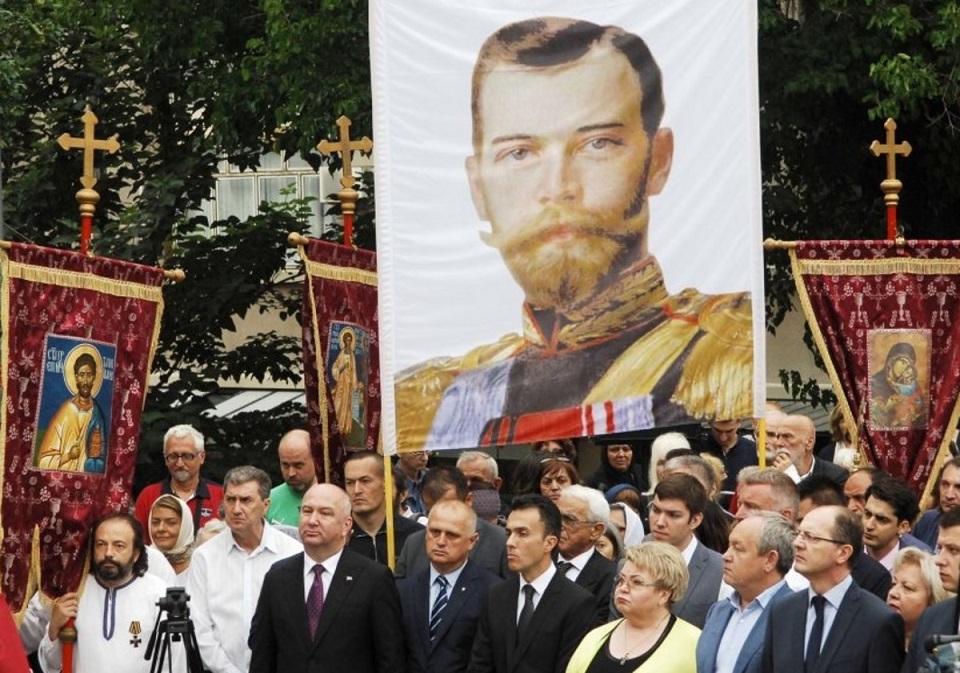
While 100,000 Orthodox faithful gathered in Ekaterinburg on the night of 16/17 July 2018 to honor the 100th anniversary of the Royal Martyrs, they were honored with another Divine Liturgy and procession in Belgrade the following morning.
During the events, His Holiness Patriarch Irinej of Serbia praised Tsar Nicholas as one of the greatest Russian rulers, of high moral and spiritual character.
The day began with the Hierarchical Divine Liturgy in the courtyard of the Russian Church of the Holy Trinity in Belgrade, after which a festive procession passed through the capital city’s central streets.
The procession was announced in all Belgrade churches last Sunday, and according to police estimates, the procession gathered about 10,000 faithful, including clergy, representatives of Russian-Serbian friendship organizations, and citizens of Serbia and Russia participated in the march. As the procession moved past the Serbian Parliament building, the choir sang “God Save the Tsar.”
Serbs gather in Belgrade to honour Nicholas II
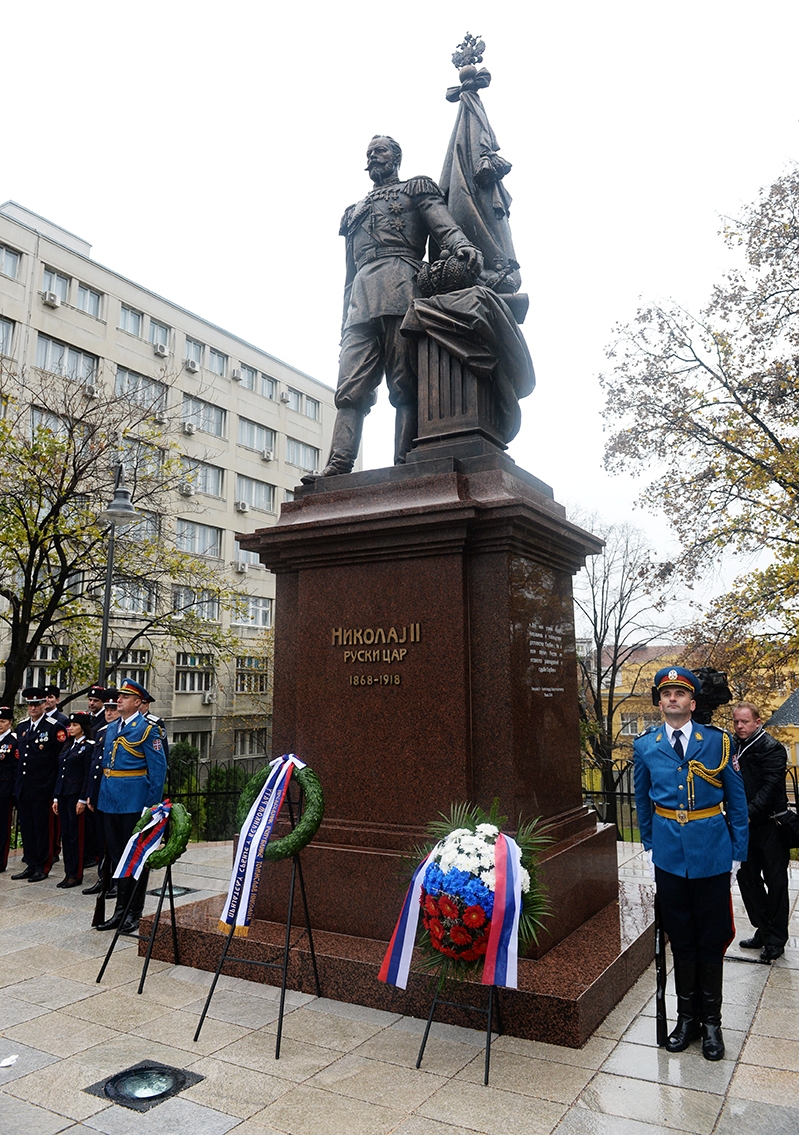
The procession came to an end at Belgrade’s monument to the slain Russian Tsar, where Pat. Irinej celebrated a festive moleben and addressed the gathered faithful, in which he referred to the Tsar-Martyr’s Orthodox character.
“All his life, he was accompanied by distrust, slander, and underestimation of his personality. And this happened, if we look at the time when tsarist Russia had numerous enemies, as it does now,” the Serbian primate said. In his words, the entire Romanov family behaved in a “deeply Christian manner” to the very end.
“No one knows what would have happened with Serbia and the Serbian people if he had not entered into the First World War,” the patriarch also added.
Then wreaths were laid at the monument to Tsar Nicholas II, with the participation of representations from the Russian embassy, Serbian politicians, priests, and public figures.
Monument to Emperor Nicholas II in Belgrade
The monument to Tsar Nicholas was unveiled in November 2014 by His Holiness Patriarch Kirill and former President Tomislav Nikolic. On the pedestal is quoted in Russian and Serbian Tsar Nicholas’ telegram to King Alexander of Serbia, saying, “All my efforts will be directed towards maintaining the dignity of Serbia… In any case, Russia will not remain indifferent to Serbia’s fate.”

















 Nicholas II
You must be logged in to post a comment.