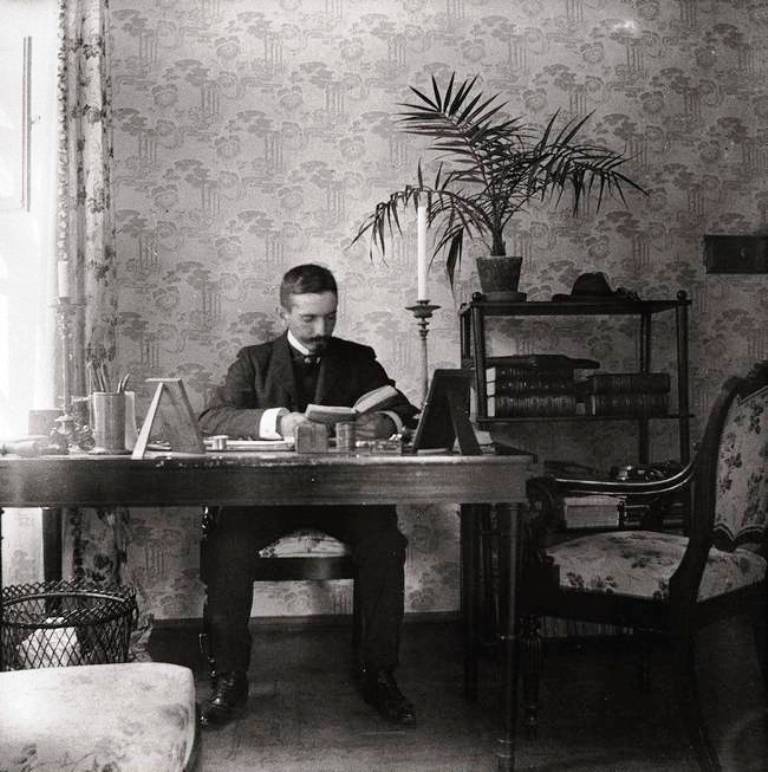
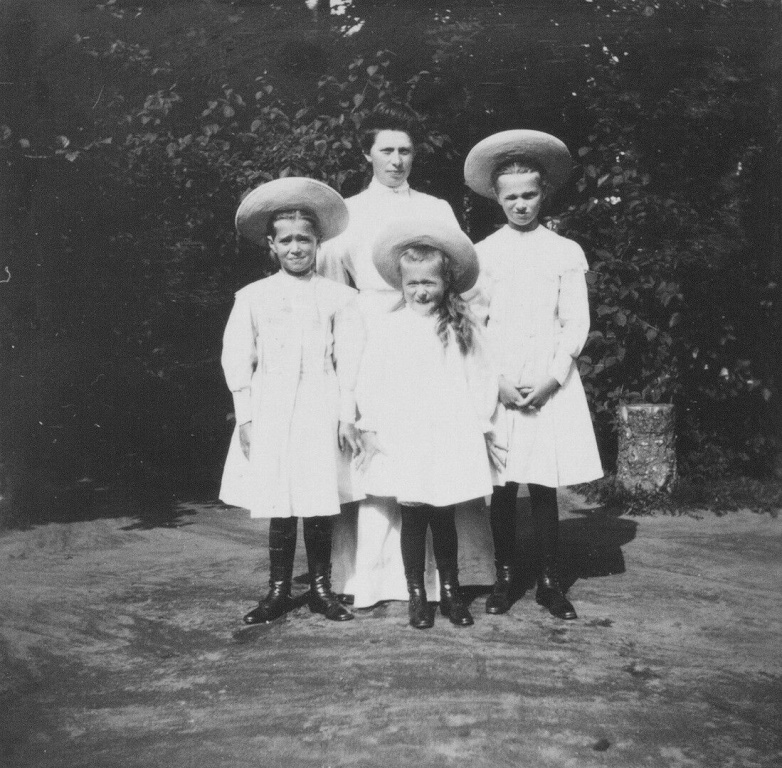
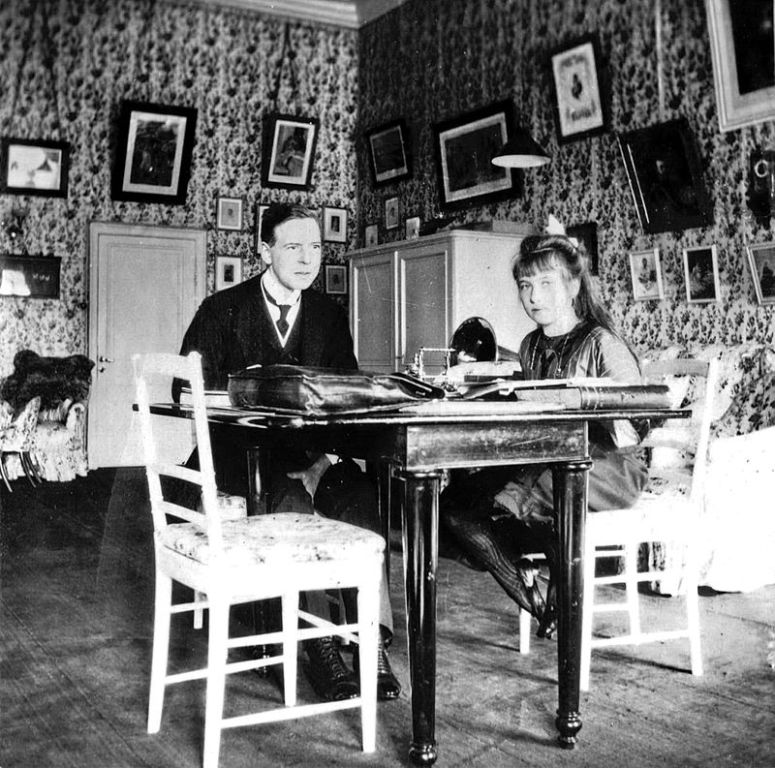
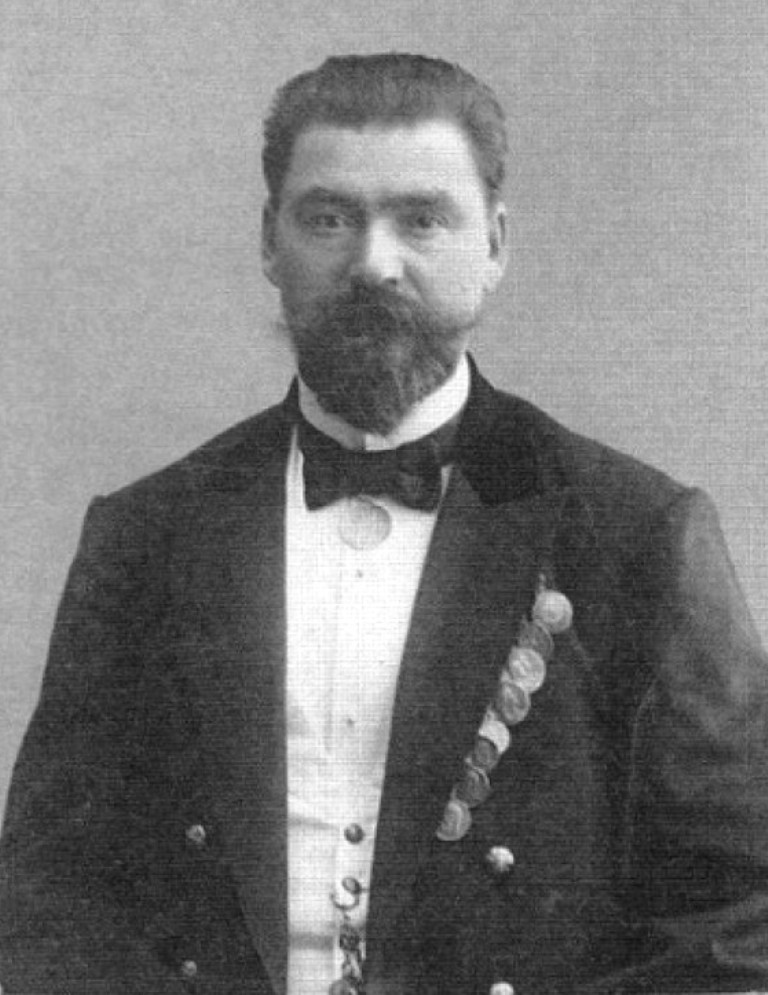
Nicholas II in the news – Spring 2023

Russia’s last Emperor and Tsar continues to be the subject of news in Western media. For the benefit of those who do not follow me on my Facebook page, I am pleased to present the following 8 full length articles and news stories published by American and British media services, in addition to videos and articles about Nicholas II’s relatives and faithful retainers.

Below, are the articles published in April, May and June 2023. Click on the title [highlighted in red] and follow the link to read each respective article:

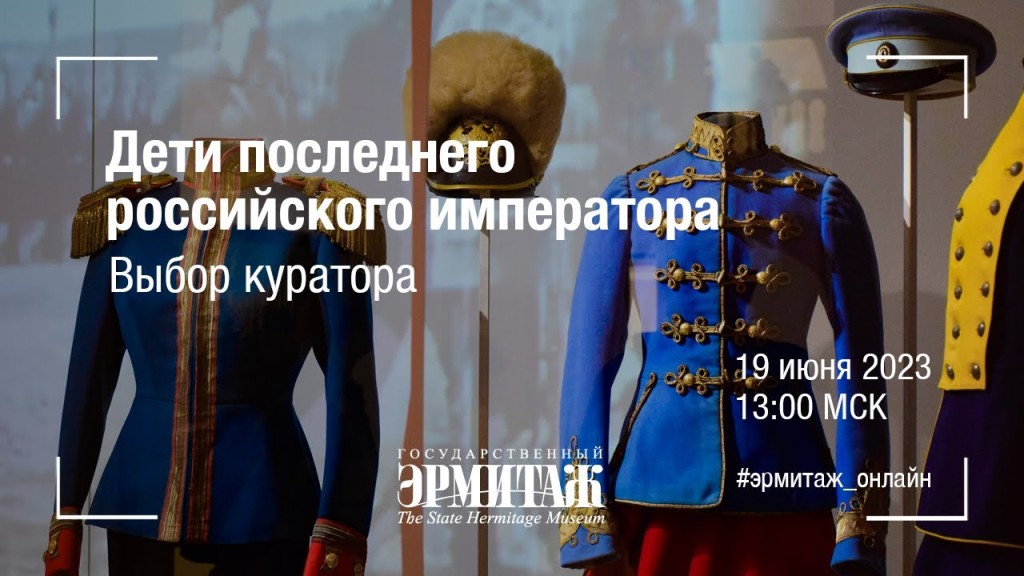
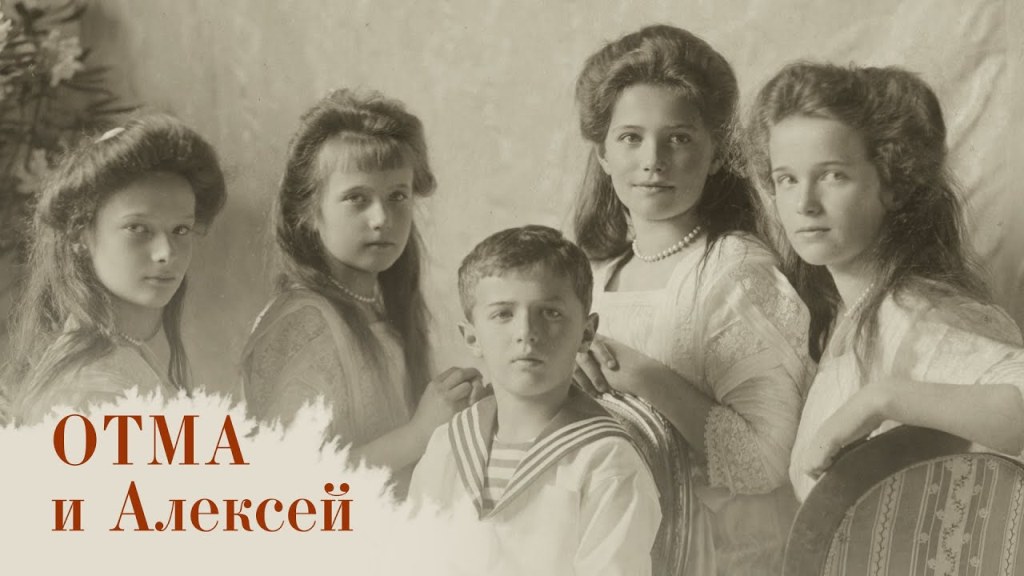
Children of the last Russian emperor. Curator’s Choice + VIDEO

Yulia Plotnikova, a leading researcher at the Department of the History of Russian Culture, takes us on a guided tour of the exhibition ‘OTMA and Alexei. Children of the Last Russian Emperor’, which is currently running at the State Hermitage Museum in St. Petersburg.

The exhibit features more than 300 items, including Alexei’s regimental uniforms, as well as Court dresses and other accessories worn by the Grand Duchesses from the State Hermitage Museum’s Costume Collection. In addition are many personal items of the August children. Duration: 26 minutes, 5 seconds. Russian.

Source: State Hermitage Museum. 19 June 2023

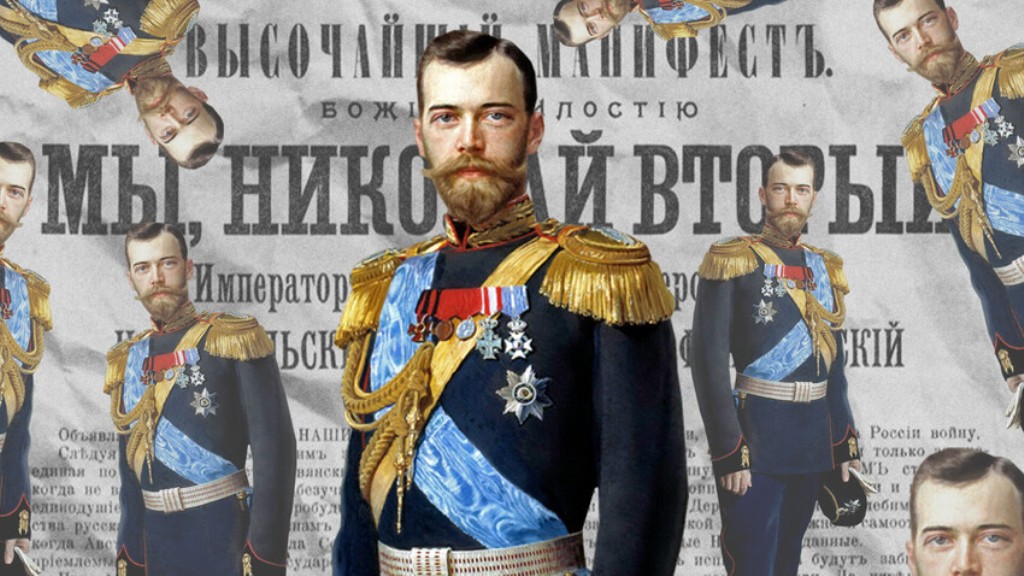
Why did the Russian emperors call themselves “we”?

The phrase “We, Nicholas II” is used only ironically. However, monarchs did call themselves “we” instead of “I,” which was the tradition.

Source: Russia Beyond. 19 June 2023

Birthday of Emperor Nicholas II + VIDEO

In honour of the 155th anniversary of the birth of Nicholas II on 19th (.S. 6th) May, a Russian history channel has prepared the following VIDEO – with musical background – featuring photos reflecting the life and reign of Russia’s last Tsar. Duration: 2 minutes, 24 seconds

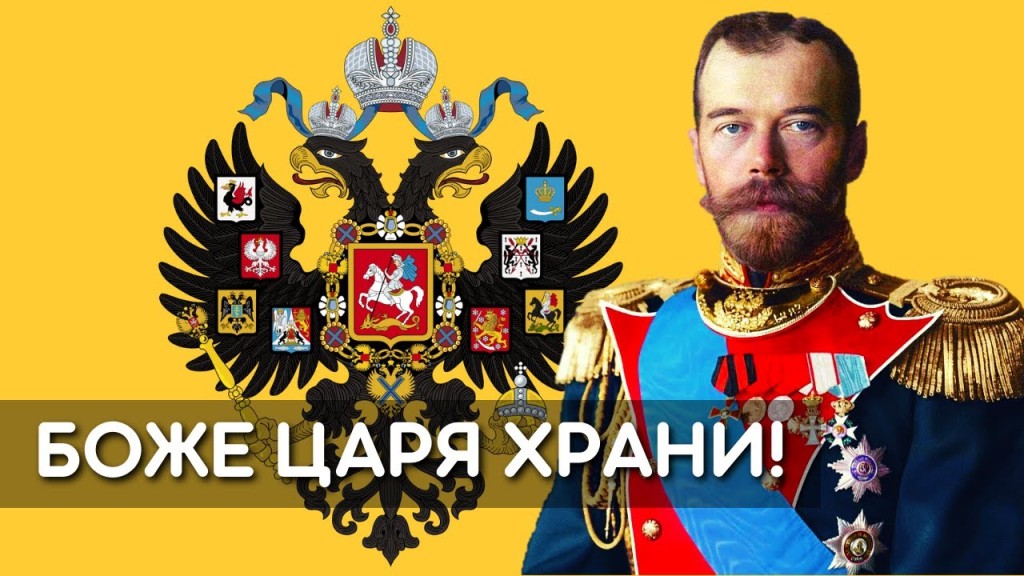
Why was Russia’s first anthem ‘copied’ from the British? + VIDEO

The Russian Empire did not have an official anthem until 1816. It was Emperor Alexander I – an “Anglophile” – who decided to establish a new, unified anthem. It remained Russia’s national anthem until 1833, when, by order of Emperor Nicholas I, composer Alexei Lvov (1798-1870) wrote new music and Vasily Zhukovsky slightly changed his original text – thus, the anthem ‘God Save the Tsar!’ appeared, which was used until 1917.

Source: Russia Beyond. 17 June 2023

Children of the last Russian emperor. Pages of life + VIDEO

The State Hermitage Museum presents a short film created for the exhibition ‘OTMA and Alexei. Children of the Last Russian Emperor‘, which runs until 10th September 2023, in the Manege of the Small Hermitage, in St. Petersburg. Duration: 16 minutes, 46 seconds. Russian.

Source: State Hermitage Museum. 30 May 2023

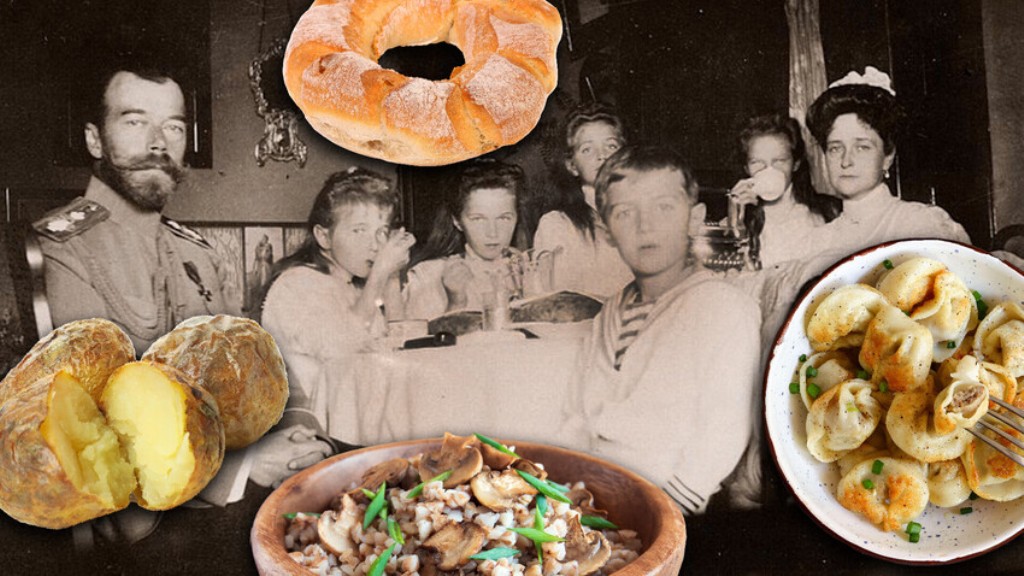
Favorite dishes of Nicholas II and his family + 13 PHOTOS

The last Russian emperor liked chicken roast but couldn’t stand caviar; while his spouse, Alexandra Feodorovna, didn’t eat meat at all.

Source: Russia Beyond. 21 May 2023

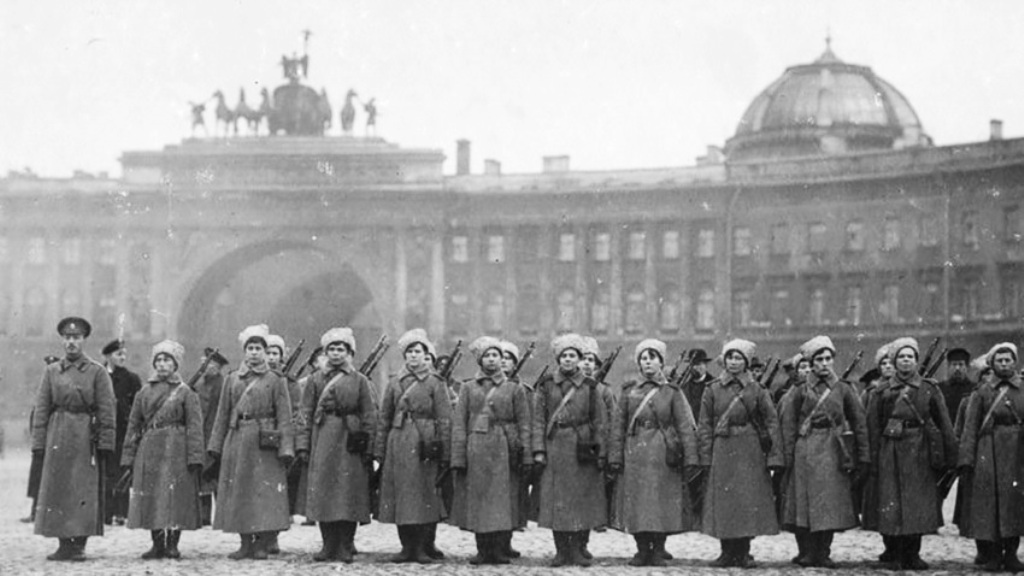
What St. Petersburg looked like during the 1917 revolutions + 29 PHOTOS

The city that used to be known as Petrograd was undergoing a very tumultuous period, filled with political unrest and violence.

Source: Russia Beyond. 11 May 2023

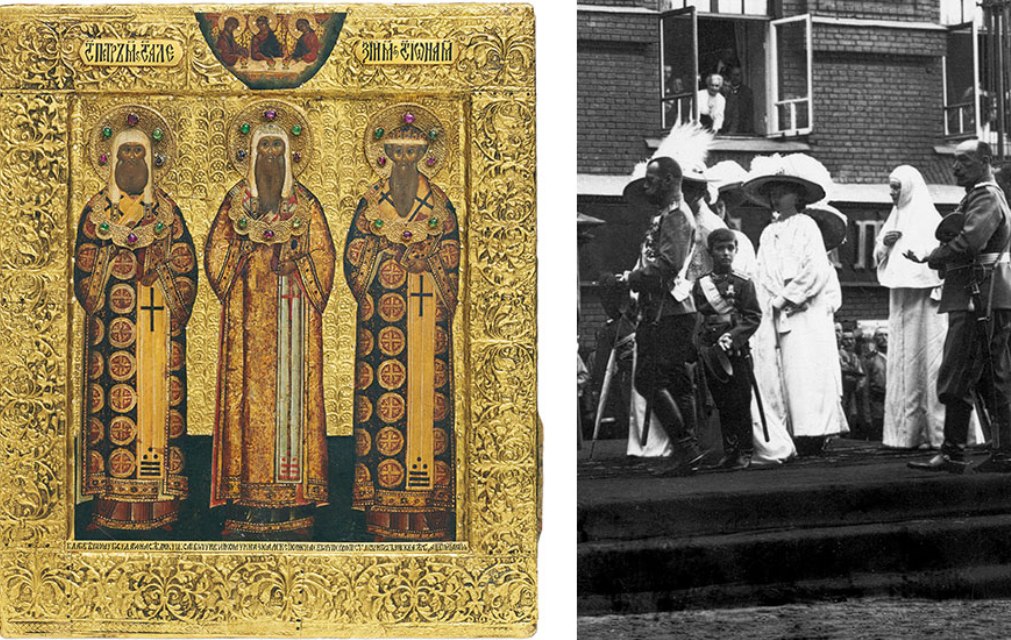
Uncovering the story of an icon given to the son of the Tsar

Originally published in 2016, this article describes the four-month process to establish the true significance of a 17th-century icon and its links to Tsesarevich Alexei Nikolaevich (1904-1918). The extremely rare icon was offered in Christie’s (London) Russian Art sale on 28 November 2016.

Source: Christie’s (London). 28 November 2016

***

For MORE articles, please refer to the following links:

Nicholas II in the news – Winter 2023
9 articles published in January, February and March 2023

Nicholas II in the news – Autumn 2022
7 articles published in October, November and December 2022

Nicholas II in the news – Summer 2022
12 articles published in July, August and September 2022

Nicholas II in the news – Spring 2022
7 articles published in April, May and June 2022

Nicholas II in the news – Winter 2022
6 articles published in January, February and March 2022

Paul Gilbert’s Romanov Bookshop on AMAZON – UPDATED with NEW titles!!

I have published more than 30 titles to date through AMAZON – featuring one of the largest selections of books on Nicholas II, the Romanov dynasty and the history of Imperial Russia.

Please CLICK on the BANNER or LINK above to review my current selection of titles in hardcover, paperback and ebook editions. Listings provide a full description for each title, pricing and a Look inside feature.

© Paul Gilbert. 30 June 2023

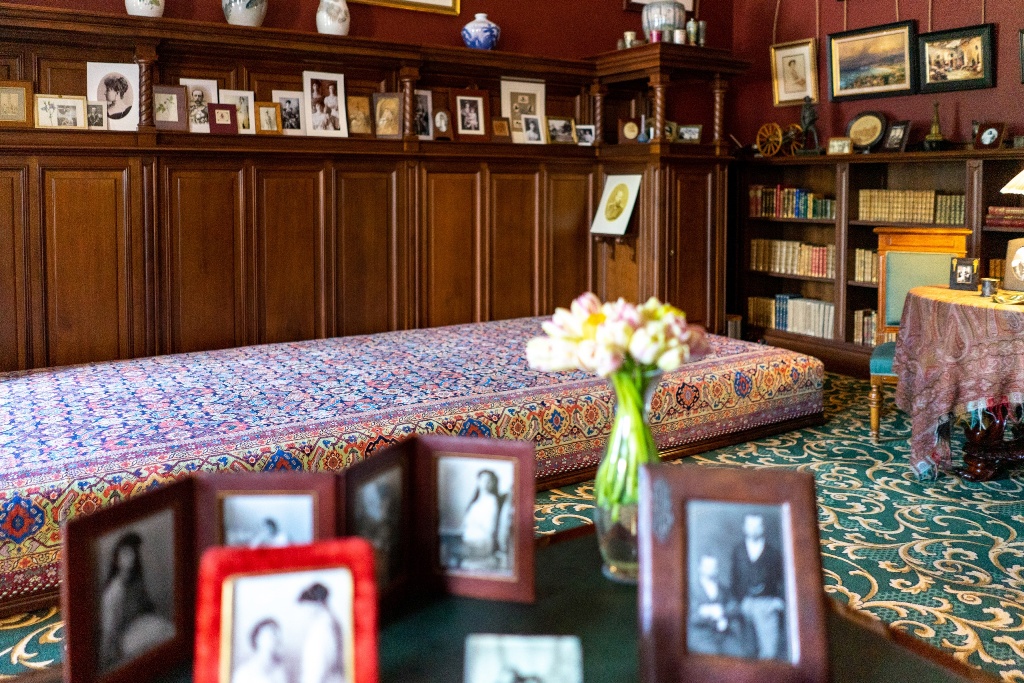
Ottoman recreated for Working Study of Emperor Nicholas II in the Alexander Palace

PHOTO: view of the ottoman recreated for the Working Study of Emperor Nicholas II in the Alexander Palace. Photo © Tsarskoye Selo State Museum Reserve

The Tsarskoye Selo State Museum continue to recreate items lost from the Alexander Palace during the Second World War . . . the latest addition is the beautiful ottoman, recreated for the Working Study of Emperor Nicholas II.

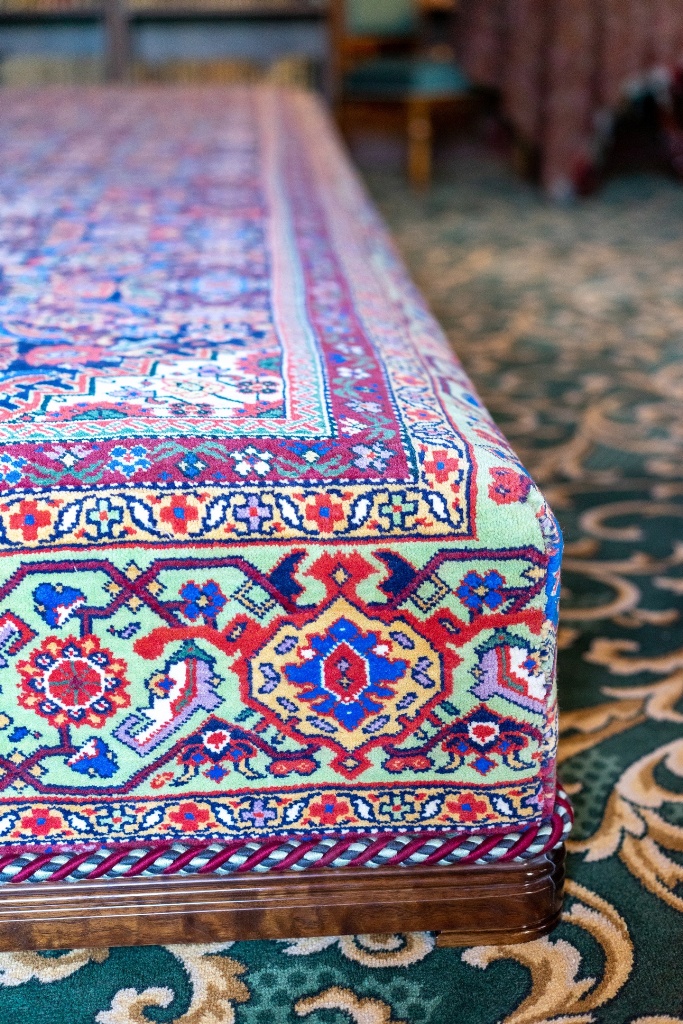
The large Persian Farahan carpet has been recreated by modern Iranian craftsmen using traditional technologies. The soft velvet upholstery features a variegated pattern of stylized plants on a dark blue background in the middle, and a border along the edge, with variegated figured medallions and stylized flowers on a light green background; edged along the plinth with a variegated cord. This description has been preserved in the museum’s inventory records.

PHOTO: detail of the ottoman recreated for the Working Study of Emperor Nicholas II in the Alexander Palace. Photo © Tsarskoye Selo State Museum Reserve

The recreation of the ottoman was made possible by archival photographs dating back to the 1930s, when the Alexander Palace was a museum. In the photographs, however, the details of the pattern of the central part of the carpet are not clearly visible, which made it difficult to recreate. Anna Tarkhanova, a senior researcher at the Tsarskoye Selo State Museum, conducted a study, the result of which it became obvious that a Farahan carpet made in the 1880s was used to upholster the ottoman of Nicholas II in 1896. Thus, a historical analogue for making a copy was of a carpet from the collection of Muranovo, the country estate of the famous Russian poet and diplomat Fyodor Ivanovich Tyutchev (1803-1873).

According to this museum model, a copy for the Alexander Palace was made in accordance with the traditional Persian technology of hand weaving. The order of the Farahan carpet made in Iran, was organized by Janusz Szymaniak, General Director of the Renaissance Restoration Workshops for the Reconstruction of Ancient Monuments, a long-time partner of the Tsarskoye Selo State Museum.

Persian carpets, which were usually presented as diplomatic gifts, traditionally decorated the interiors of the Alexander Palace. In addition, Russian Oriental style carpets based on Caucasian and Turkmen designs, also decorated the palace.

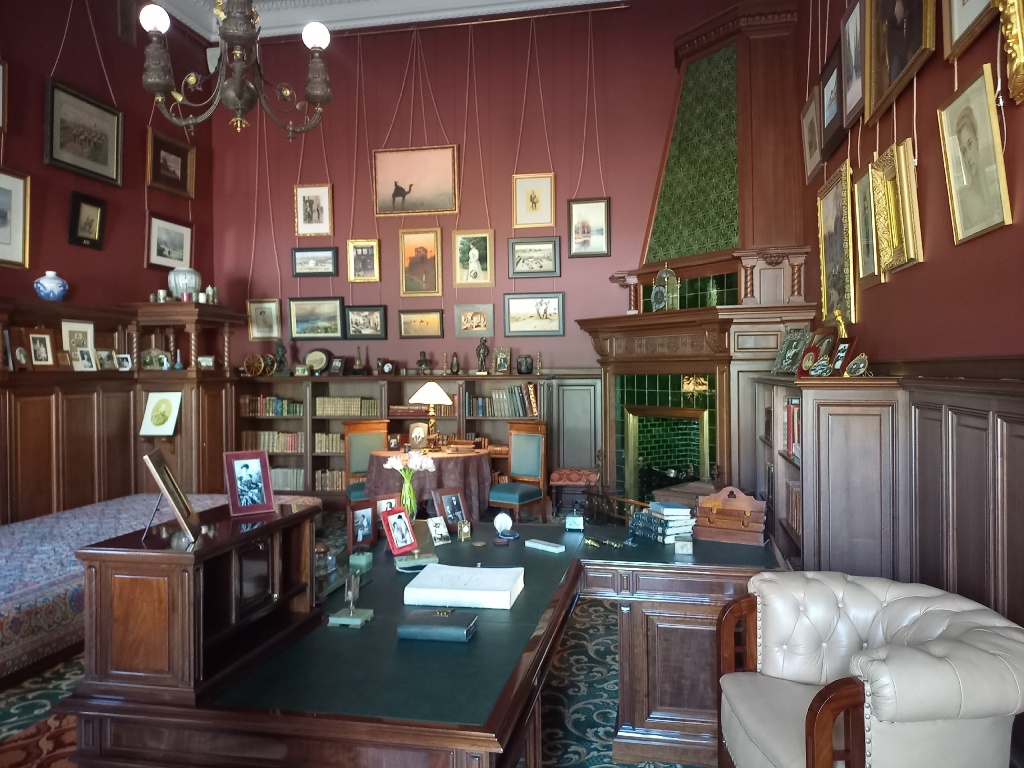
PHOTO: view of the Working Study of Emperor Nicholas II in the Alexander Palace as it looks today – the recreated ottoman can be seen on the left

The Farahan district of Persia, which has a long history of carpet weaving, is located in the central part of Iran, about 580 km south of Tehran. Active production of carpets was established in the region of Saruk, famous for its craftsmen. The export of Farahan carpets to Europe began in the 19th century. Similar Persian carpets are now represented in the largest Russian and foreign museum collections.

Until now, Farahan carpets are made by hand, by knotted weaving (160,000 knots per square meter) from woolen threads dyed with natural paints of mineral origin. This allows you to achieve identity when copying old samples.

When creating the carpet for the Alexander Palace, Iranian craftsmen used sheep wool with the addition of camel, from natural dyes – oak bark, fruit trees, lemon leaf, dates.

Among connoisseurs, such carpets are highly valued for their rich dark blue background and green shades of pattern elements resembling green copper. This colour is is represented in the carpet which has been recreated for the ottoman in the Working Study of Emperor Nicholas II.

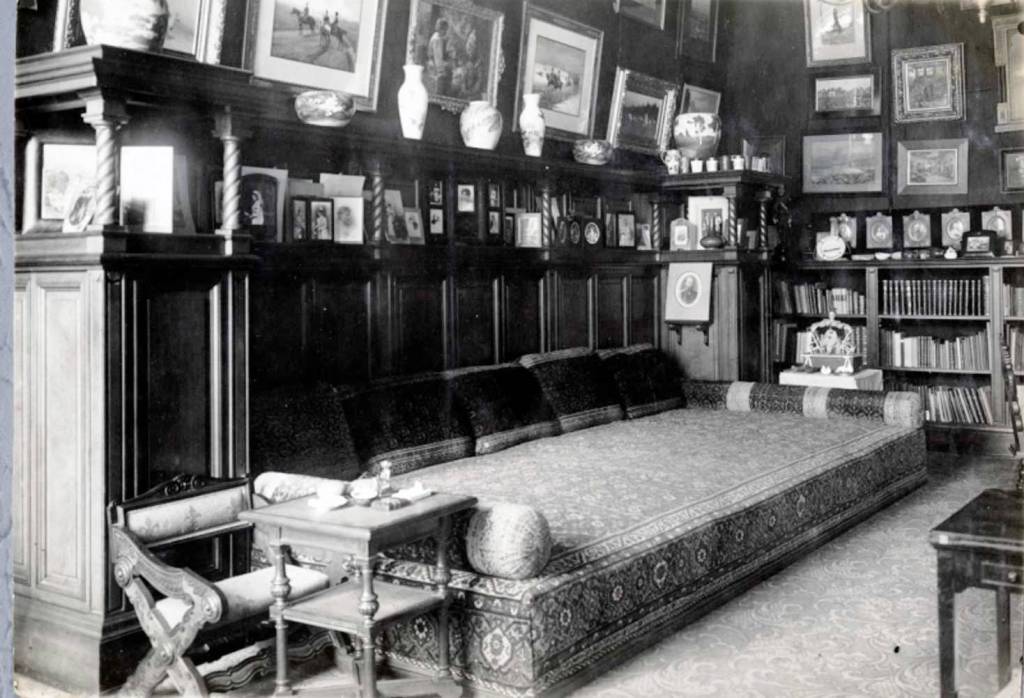
PHOTO: view of the original ottoman in the Working Study of Emperor Nicholas II in the Alexander Palace, c. 1930s

Nicholas II often used the ottoman to rest when his work dragged on until nightfall or when he returned to Tsarskoye Selo from St. Petersburg late and preferred not to disturb his family.

Click HERE to read my article The History and Restoration of the Working Study of Nicholas II in the Alexander Palace, published on 2nd December 2020

© Paul Gilbert. 28 June 2023

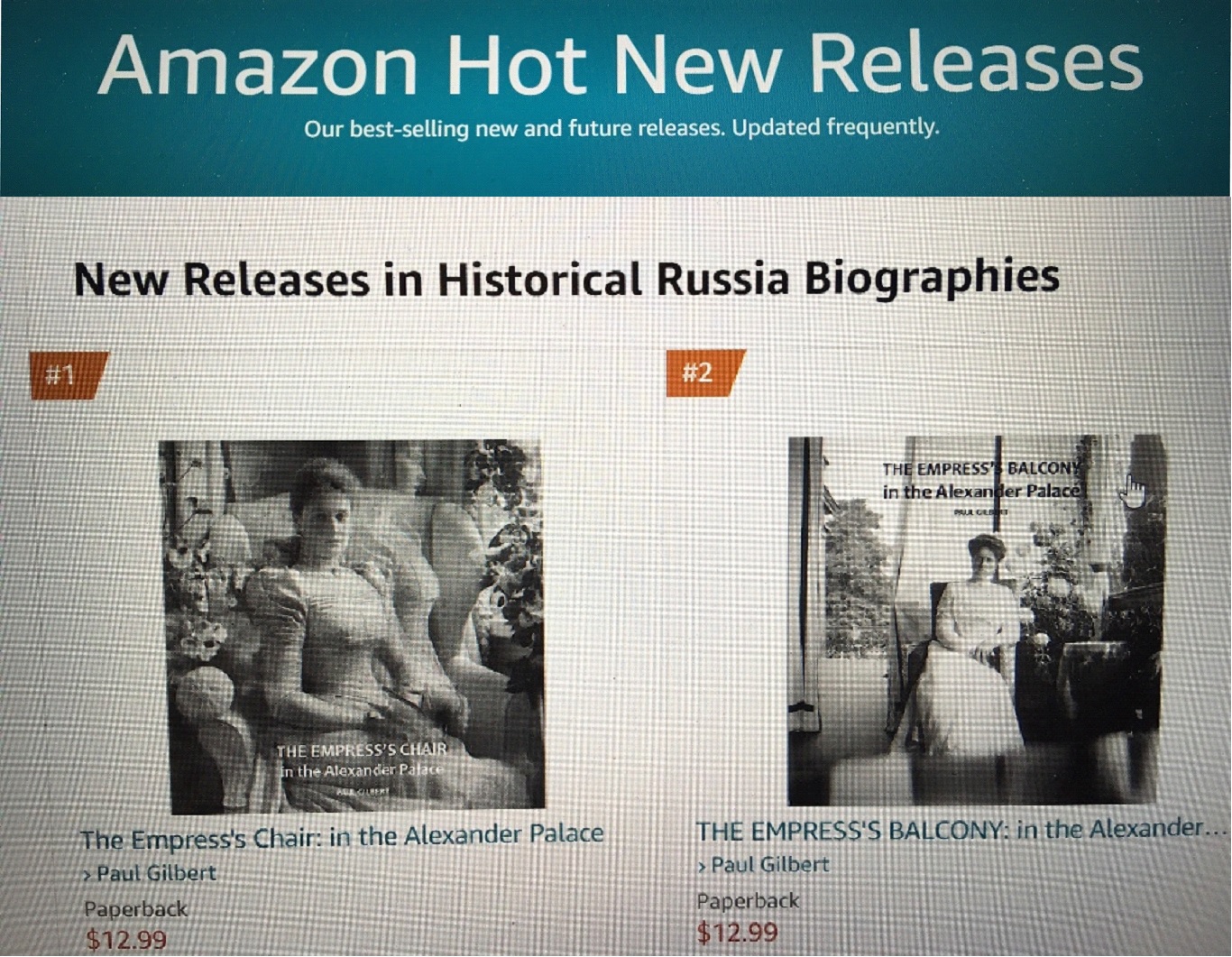
‘The Empress’s Balcony’ and ‘The Empress’s Chair’ become bestsellers on AMAZON

On 16th June 2023, ‘The Empress’s Balcony in the Alexander Palace‘ and ‘The Empress’s Chair in the Alexander Palace‘ claimed the No. 1 and No. 2 positions on Amazon’s ‘New Releases in Historical Russia Biographies’ Bestseller list. My two latest books held these spots for 10 consecutive days in a row – setting a new record for any of my previously published books.

Based on the number of posts on my Facebook page, both titles have been well received and enjoyed by readers from all over the world. One Australian reader wrote: “Who would have thought a chair and balcony could be the subject of a book, but you did it!”

Each richly illustrated pictorial features a new 8-1/2″ x 8-1/2″ paperback format with glossy cover. The price is $12.99 USD, both titles are available from AMAZON in the United States, Canada, Great Britain, Australia, France, Germany, Italy, Spain, Netherlands, Sweden, Poland and Japan.

The Empress’s Balcony – 110 pages – is a unique pictorial dedicated to the famous balcony where the Imperial Family spent so much time together and a favourite spot for family photographs.

The text on pages 3 to 14 explores the history and restoration of the Maple Drawing Room, which led out onto the balcony. It explains the construction of the iron grille balcony in 1896, and why it was dismantled between 1947-49 by the Alexander Palace’s new Soviet caretakers. The selection of nearly 100 vintage photographs presented in this album, are all we have left of this once happy and peaceful sanctuary for the Imperial Family while they were in residence at Tsarskoye Selo. Click HERE to order.

The Empress’s Chair – 120 pages – explores yet another iconic spot found in Empress Alexandra Feodorovna’s favourite room: the Mauve Boudoir.

The text on pages 3 to 14 explores the history and restoration of the Mauve Boudoir. More than 100 black and white photographs record nearly 30 members of the Imperial Family, their relatives and guests, all posing in the iconic corner chair. Neither the Mauve Boudoir of the Empress’s chair survived, however, both have recently been recreated. Click HERE to order.

© Paul Gilbert. 28 June 2023

Faithful to the End: Klimenty Nagorny and Ivan Sednev 

170a

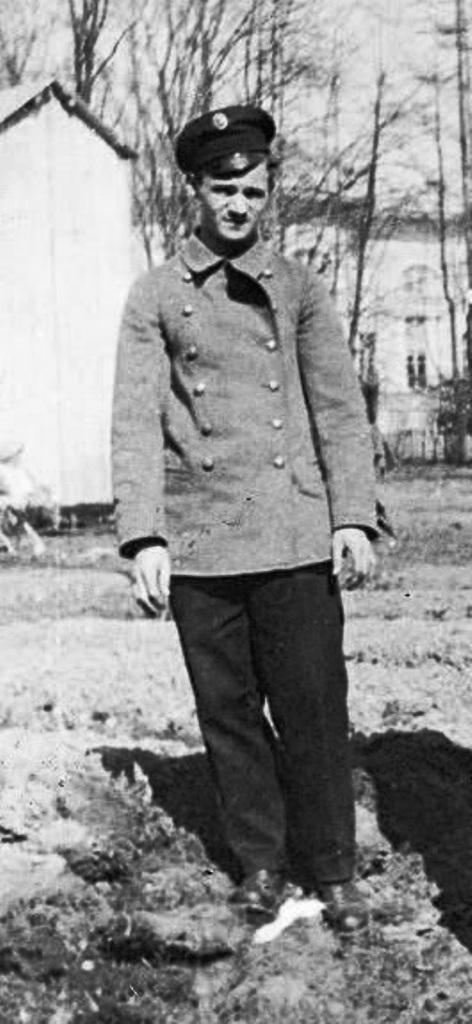
Klimenty Grigorievich Nagorny (left). and Ivan Dmitriyevich Sednev (right)

On this day – 28th June 1918 – two faithful servants to Emperor Nicholas II and his family – Klimenty Grigorievich Nagorny and Ivan Dmitriyevich Sednev – were murdered by the Bolsheviks in Ekaterinburg. 

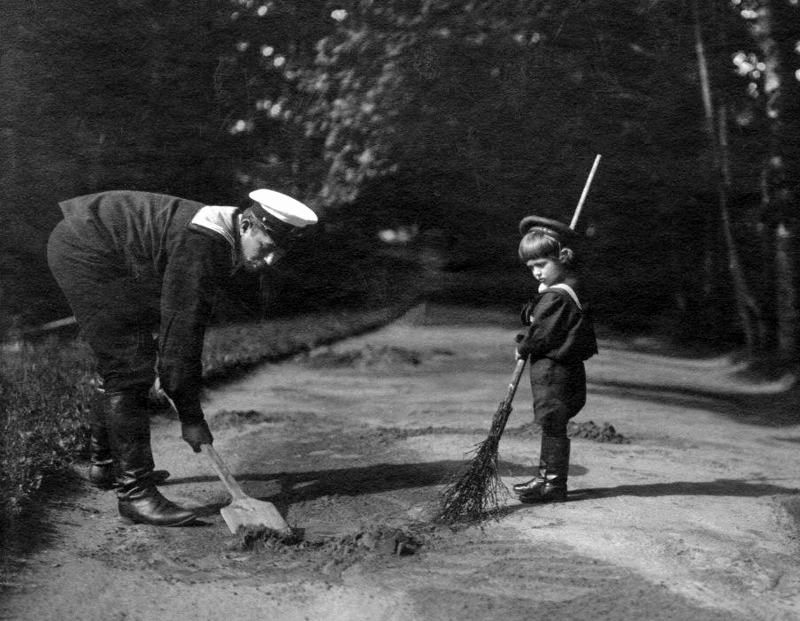
Klimenty Nagorny and Ivan Sednev selflessly served the Tsar’s children. Nagorny in particular, lay the great responsibility of protecting the Tsesarevich, even the slightest injury could put the heir to the Russian throne in danger, due to his hemophilia. Alexei was very fond of Nagorny, who in turn showed complete devotion to the Tsesarevich, faithfully sharing with him all the joys and sorrows.

170b

Nagorny and Tsesarevich Alexei in Tsarskoe Selo, 1907

Klimenty Nagorny and Ivan Sednev voluntarily stayed with the Tsar’s family during their house arrest in Tsarskoe Selo, and then followed them to Tobolsk, where Nagorny shared a room with the Tsesarevich, serving him day and night. Together with the Imperial family, Nagorny also attended all the divine services, and the only member of the family’s retinue who was a member of the choir organized by the Empress: he sang and read for the Imperial family during services held in the house church.

In the spring of 1918 Nagorny and Sednev once again, voluntarily followed the Imperial family to Ekaterinburg. They spent only a few days in the Ipatiev House, and then were separated from the Imperial prisoners. They were arrested and imprisoned, their sole crime had been their inability to hide their indignation on seeing the Bolshevik commissaries seize the little gold chain from which the holy images hung over the sick bed of the Tsesarevich.

On 28th June 1918, they were shot in the back by the Bolsheviks, in a small wooded area behind the Yekaterinburg-2 railway station (modern name – Shartash). Nagorny and Sednev were “killed for betraying the cause of the revolution” – as indicated in the resolution on their execution. The murderers left their bodies unburied.

When Ekaterinburg was occupied by the Whites, the the half-decayed bodies of Nagorny and Sednev, were found and solemnly buried near the Church of All the Afflicted (demolished). Witnesses at the funeral recall that the graves of the former sailors of the Imperial Yacht Standart were strewn with white flowers. Their graves were not preserved – they were destroyed when the Soviet authorities built a city park on the site of the cemetery.

Both Nagorny and Sednev were canonized by the Russian Orthodox Church Outside Russia (ROCOR) on 14 November 1981, and both rehabilitated by the Prosecutor General’s Office of the Russian Federation on 16 October 2009. They have yet to be canonized by the Moscow Patriarchate. 

Memory Eternal! Вечная Память!

170c

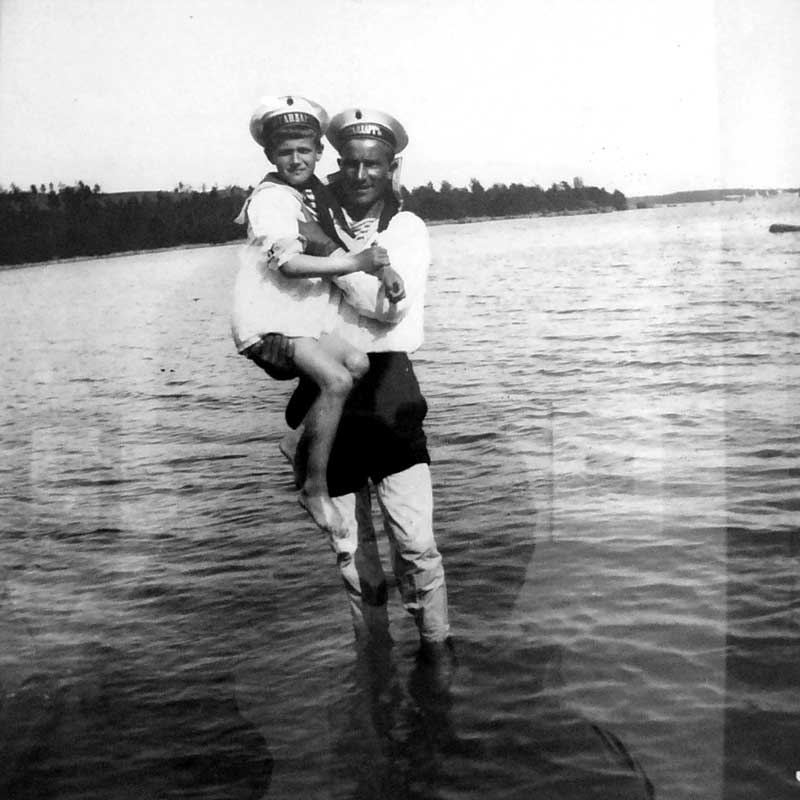
Sednev and Alexei Nikolaevich, in the Finnish skerries, 1914 

Nagorny, Klementy Grigorovich (1887—1918) – from 1909, he served on the Imperial yacht Standart and appointed as a footman to the imperial children. He received the Court title Garderobshik (wardrobe keeper) in 1909 and accompanied the Imperial family on every tour. In November 1913, he was appointed assistant dyadka to guard the Imperial children. He travelled with the Tsesarevich Alexei to Mogilev during 1914-16. After the Tsar’s abdication, he lived under detention with the Imperial family in Tsarskoe Selo, Tobolsk and Ekaterinburg.

Sednev, Ivan Dmitrievich (1881—1918) – was recruited into the Russian Imperial Navy in 1911, where he began as a machinist on the Imperial Yacht Polyarnaya Zvezda (Polar Star) then transferred onto the Imperial yacht Standart. By invitation he became a Lakei (liveried footman) to the Grand Duchesses, and subsequently to the Tsesarevich. Ivan lived under detention with the Imperial family in Tsarskoe Selo, Tobolsk and Ekaterinburg.

579-4

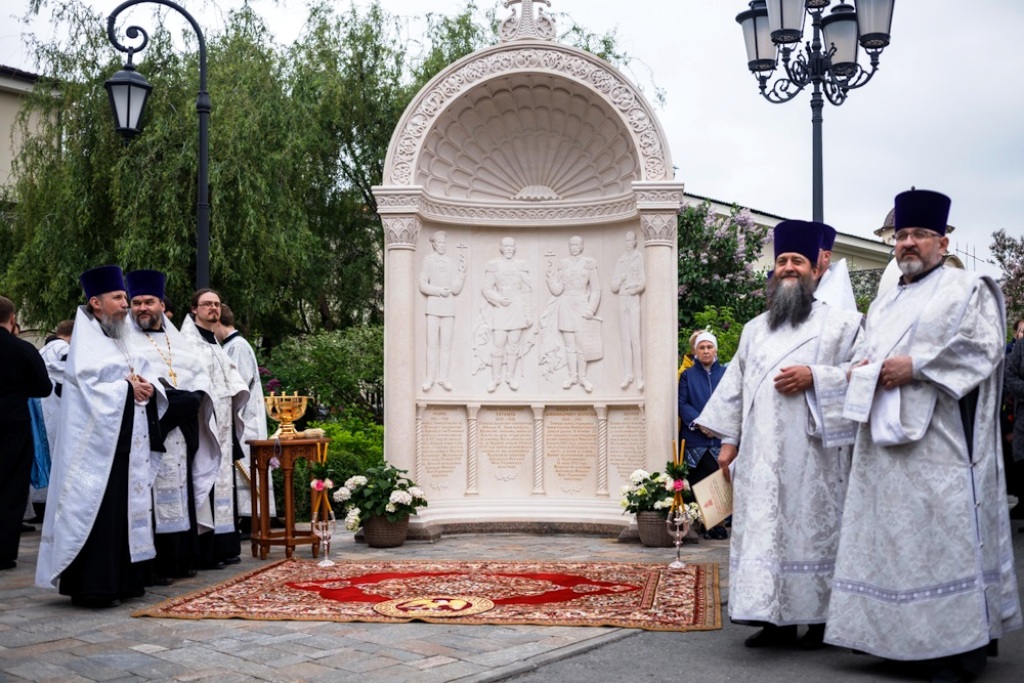
On 13th June 2022, a new monument (seen in above photo) to four faithful servants – including Nagorny and Sednev – of Emperor Nicholas II, was installed and consecrated on the grounds of Novo-Tikhvin Convent in Ekaterinburg.

© Paul Gilbert. 28 June 2023

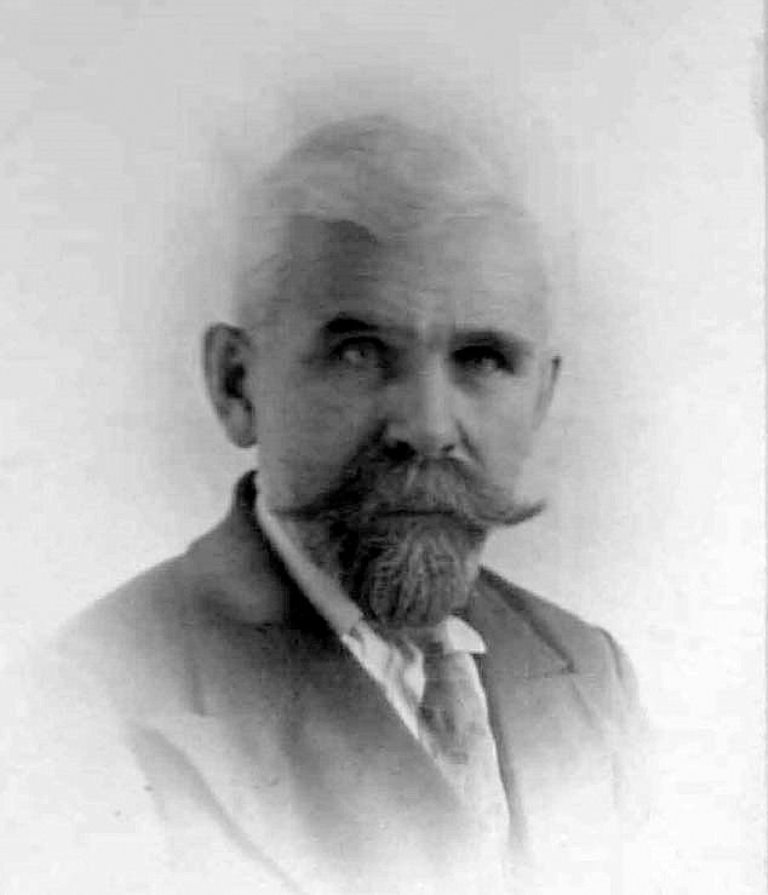
Vsevolod Yakovlev: first curator of the Alexander Palace

PHOTO: Vsevolod Alexandrovich Yakovlev (1884-1950)

Between April and July 1918, Emperor Nicholas II and his family were living under deplorable conditions in the Ipatiev House in Ekaterinburg. It was during the final days of the their house arrest in the Ural city, that their favourite residence, the Alexander Palace was opened to the public as a museum.

The palace was opened in two stages: the first on 23rd June 1918, when the State Halls were opened to visitors; the second, five years later, in 1923, when the private apartments of Emperor Nicholas II and Empress Alexandra Feodorovna became part of the museum.

The first curator of the Alexander Palace was Vsevolod Alexandrovich Yakovlev (1884-1950), a noted Russian and Soviet architect, artist, art critic, and museum worker.

Yakovlev was born in St. Petersburg on 21st January (O.S.) 1884. In 1901 he graduated from the drawing school of the Imperial Society for the Encouragement of Artists. In 1904 he entered the architectural department of the Higher Art School at the Imperial Academy of Arts in St. Petersburg. In 1912 he was awarded the title of artist-architect.

From 1914 he worked as an architect in St. Petersburg and Tsarskoye Selo. In 1918 he was appointed director of the Museum of Palaces and Parks of the Detskoye (Children’s) Selo (formerly Tsarskoye Selo), a position he held until 1931.

Yakovlev, a man of great enthusiasm and energy, carried out his duties during the most difficult of the post-revolutionary years. It was thanks to his efforts that the contents of the Alexander Palace were not destroyed by the Bolsheviks.

“We will fulfill our duty only when we make superhuman efforts to save these exceptional monuments in the name of progress, in the name of a beautiful and happy future not only for the citizens of great Russia, but also for the peoples of the world,” Vsevolod Alexandrovich wrote.

During his tenure as director, Yakovlov meticulously catalogued every item in the Alexander Palace. Not only did he save thousands of pieces of objects d’art, furniture, artwork, porcelain, books and documents from destruction, he also helped to lay the foundations for the future of the Tsarskoye Selo palace-museums.

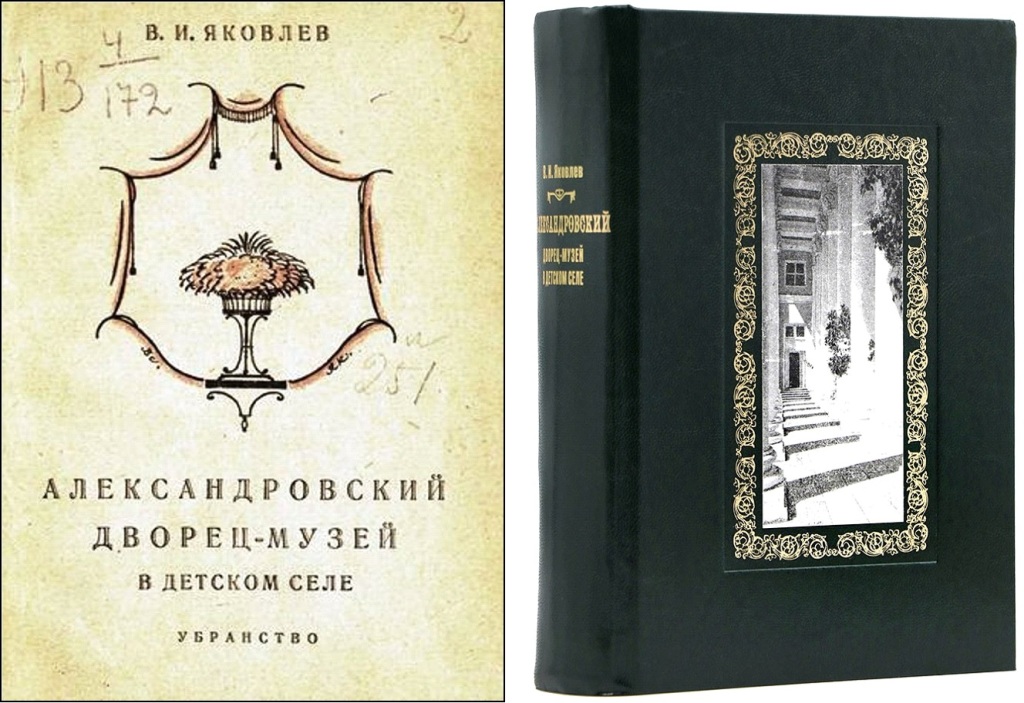
Yakovlev was the author of a number of Russian-language books, including Охрана царской резиденции (Protection of the Tsar’s Residences (1926) – 169 pg.

His most popular work, however, is лександровский дворец-музей в Детском селе (Alexander Palace-Museum in the Children’s Village (1927) – 211 pg. [above left]. The following year, he published a companion volume, dedicated to the palace interiors – 560 pg., which featured a comprehensive catalogue of the interiors and the thousands of items of each room of the Alexander Palace. In the 1990s, both titles were reissued in a handsome one-volume hard cover edition – 794 pg., with the original photographs and illustrations [above right].

In addition he wrote numerous articles for Soviet magazines and newspapers, on the history of architecture, providing detailed descriptions of the interiors, art collections and valuables stored in the palaces of Tsarskoye Selo, Pavlovsk and Peterhof. 

In 1931, he was arrested,  but thanks to the intercession of George Kreskentievich Lukomsky (1884-1952), chairman of the Commission for the Acceptance and Registration of Property of the Tsarskoye Selo Palace Administration, he was released a month later. He was not permitted to return to his old job, so from 1931 to 1933, he worked as an architect of GIPROGor in Leningrad. He then switched to pedagogical work in Leningrad. In 1947 he was awarded the degree of Doctor of Architecture.

In the autumn of 1949, Vsevolod Alexandrovich Yakovlev was diagnosed with terminal cancer. He died on 10th June 1950, aged 66, and was buried at the Volkovskoye cemetery in Leningrad (St. Petersburg).

***

Upon the outbreak of the Great Patriotic War in 1941, the Alexander Palace Museum was closed. Sadly, a number of the palace’s interiors were lost during the Nazi occupation of Pushkin (Tsarskoye Selo).

In the spring of 1946, the Leningrad Executive Committee issued an order for the transfer of the Alexander Palace to the Institute of Russian Literature of the USSR Academy of Sciences. This provided the palace with some degree of protection from being abandoned or demolished.

In 1947–1949 the Alexander Palace became a literary museum and a repository of the priceless manuscript collection of the Pushkin House. It was during this time that a number of changes were made to the interiors, including the removal of Empress Alexandra Feodorovna’s famous balcony. In addition the Maple Drawing Room was divided into two rooms.

In 1951, by a government decree, the Alexander Palace was transferred to the Ministry of Defense. The Naval Department used the building as a top-secret, submarine tracking research institute of the Baltic Fleet. As a result, the former palace would be strictly off-limits to visitors for the next 45 years.

It was not until October 2009, according to the order of the Federal Property Management Agency, that the Alexander Palace was placed under the administration of the Tsarskoye Selo State Museum Reserve.

In 1997, the first museum exposition “Memories in the Alexander Palace” was opened in the east wing of the Alexander Palace. Since almost all the historic interiors of Nicholas II and his family were lost, large floor to ceiling photos depicting the original look of each room, served as backdrops, against which items of furniture were displayed.

In 2009, the Alexander Palace was transferred to the administration of the Tsarskoye Selo State Museum-Reserve. In June 2010, the year marking the 300th anniversary of Tsarskoye Selo, the Portrait, Semi-Circular and Billiard Halls were opened to the public after an extensive restoration.

The Alexander Palace reopened to visitors on 14th (O.S. 1st) August 2021, marking the 104th anniversary since the Imperial Family left the palace for the last time. Visitors can now see thirteen reconstructed and restored interiors of the private apartments of Emperor Nicholas II and Empress Alexandra Feodorovna located in the eastern wing of the palace.

© Paul Gilbert. 27 June 2023

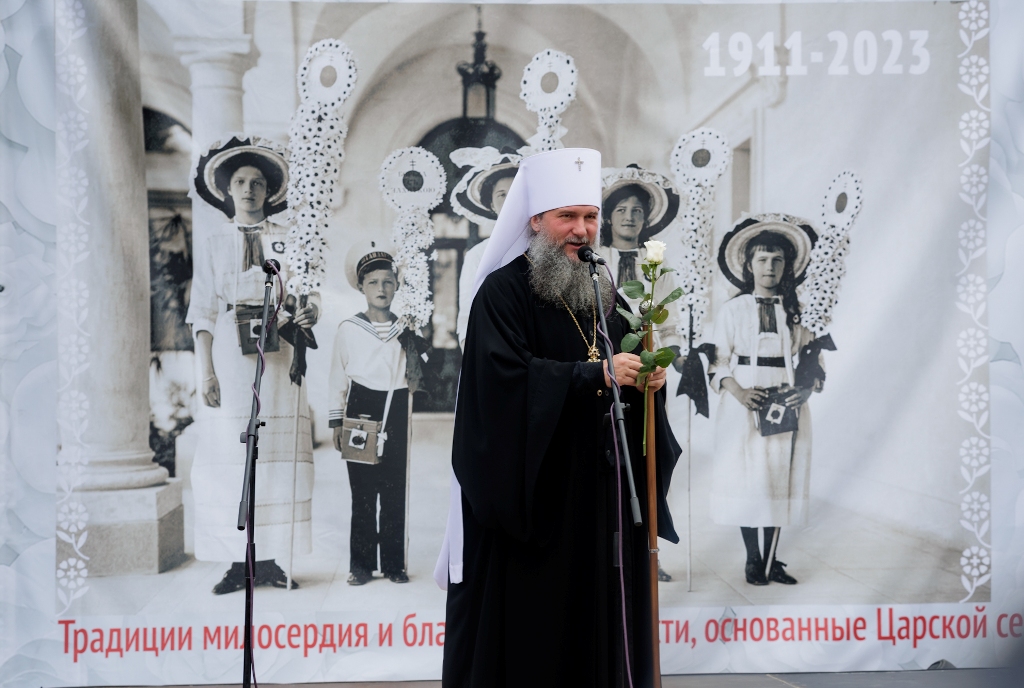
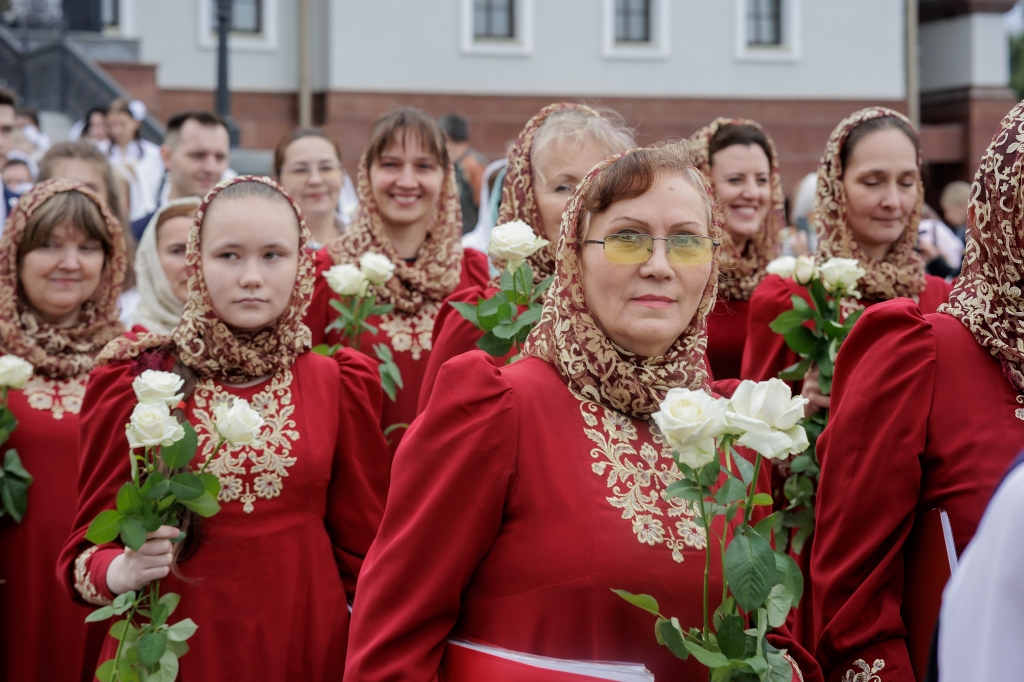
Ekaterinburg celebrates White Flower Day in honour of the Imperial Family

PHOTO: Metropolitan Yevgeny of Yekaterinburg and Verkhotury opens the White Flower Festival on the square in front of the Church on the Blood

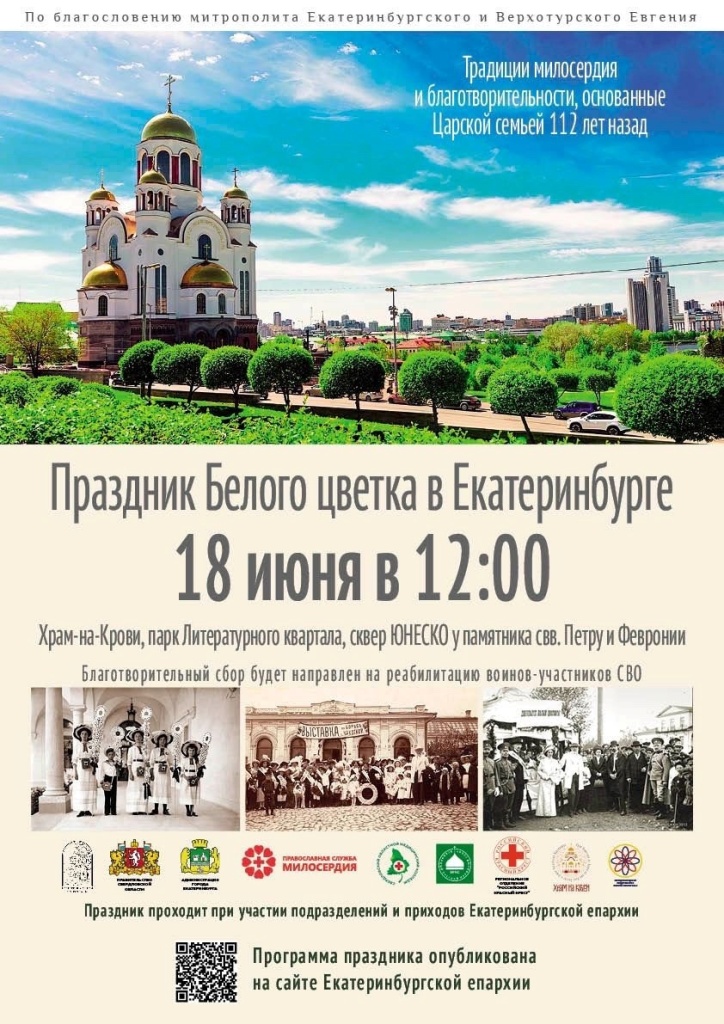
On 18th June 2023, with the blessing of Metropolitan Yevgeny of Yekaterinburg and Verkhoturye, the 10th annual White Flower Day Festival, founded 112 years ago by the Imperial Family, was held in Ekaterinburg. The festival was celebrated annually until the 1917 Revolution, but was revived in the Ural capitial in 2013.

This year marks the 300th anniversary of Ekaterinburg. In honour of this historic date, this year’s festival took on a special meaning, receiving the support of the regional government and the city administration. Festival organizers include the Ekaterinburg Diocese, the regional branch of the World Russian People’s Council, the Sverdlovsk Regional Medical College, the Orthodox Mercy Service, the Ekaterinburg branch of the Russian Red Cross, the Tsarsky Cultural and Educational Center, the St. Catherine’s Ring Community and the regional branch of the Imperial Orthodox Palestinian Society (IOPS).

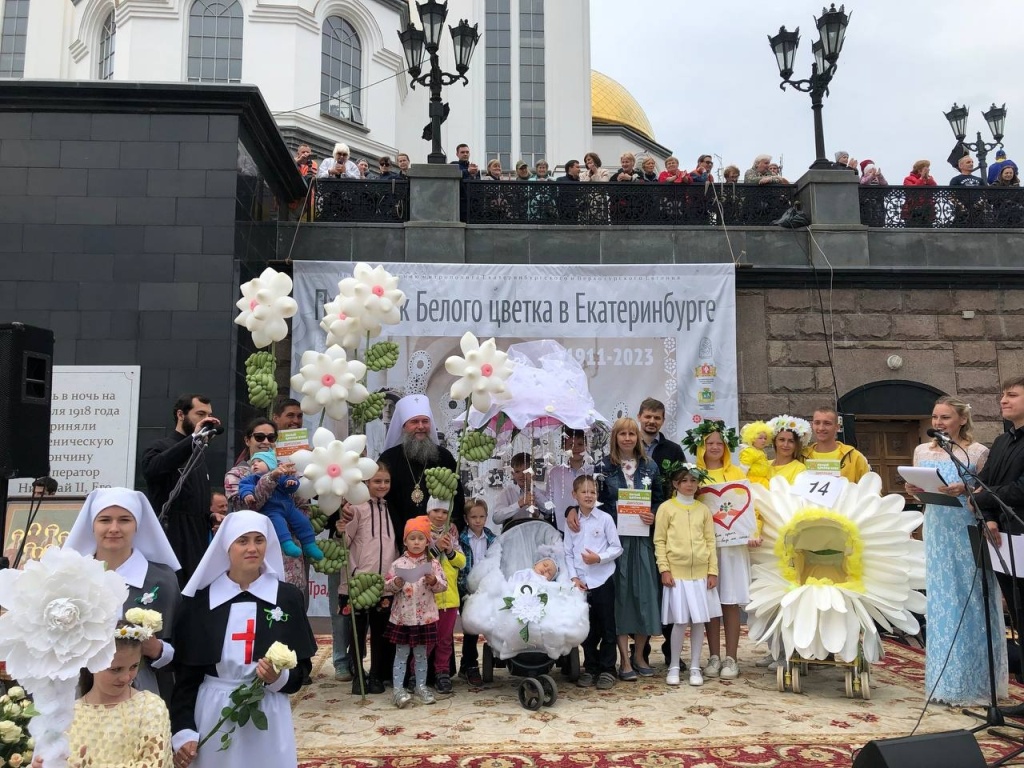
PHOTO: the 10th annual White Flower Day Festival was held in Ekaterinburg on 18th June 2023

The organizers emphasized that the festival honours the Holy Royal Martyr Family. “It is our mission to restore the historical memory of the Imperial Family in Ekaterinburg, and to follow the traditions of mercy and charity which they shared,” said one of the organizers.

This year’s program included the opening ceremony featuring the Alexander Pavlov Orchestra and the regional Children’s Philharmonic, a musical procession, a parade of baby carriages decorated with white flowers, a choral festival of sacred music, the “Waltz of Flowers” dance marathon, concerts, charity fairs and master classes. At the end of the festival, the combined choirs sang “God Save the Tsar“.

PHOTO: more than 150 volunteers helped organize this year’s White Flower Day in Ekaterinburg

In this jubilee year for the Ural capital, festive events were held at three venues in the city – on the square in front of the Church on the Blood, on the square near the Monument to the Holy Blessed Princes Peter and Fevronia, as well as in the Park of the Literary Quarter. Policing at the sites was provided by members of the Orenburg Cossack Military Society.

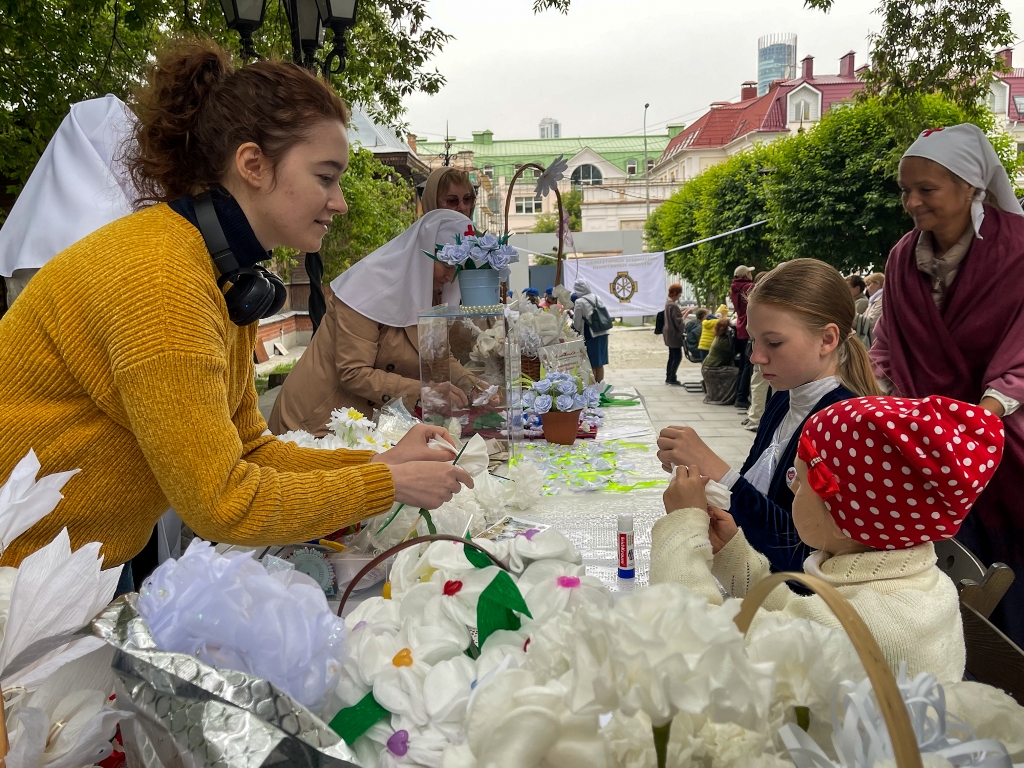
It is on this day that city residents and visitors can make a donation by purchasing white flowers made in advance by parishioners, volunteers and sisters of mercy, as well as handicrafts from the “From Heart to Heart” project. All proceeds from the sale of the white flowers are distributed to help in the fight against cancer, tuberculosis and other diseases.

PHOTO: a volunteer demonstrates to children how the white flowers are made out of paper and satin ribbons

Addressing the guests of the holiday with a welcoming speech, Metropolitan Yevgeny (Eugene) told how the residents of the city appreciated this good tradition 112 years ago:

“I was told that when the first White Flower Festival was held in 1911, the population of Ekaterinburg was only 70 thousand people. Some 50,000 white flowers were made and distributed. Not only does the white flower symbolize mercy – it is also a reminder of the of acts of charity which the Holy Royal Martyrs held so dear to their hearts.

“I would like there to be love in our city of Ekaterinburg, so that children are brought up in good traditions. And so that the bearers of the white flower and the goodness that this flower symbolizes become greater with each passing year,” he added.

***

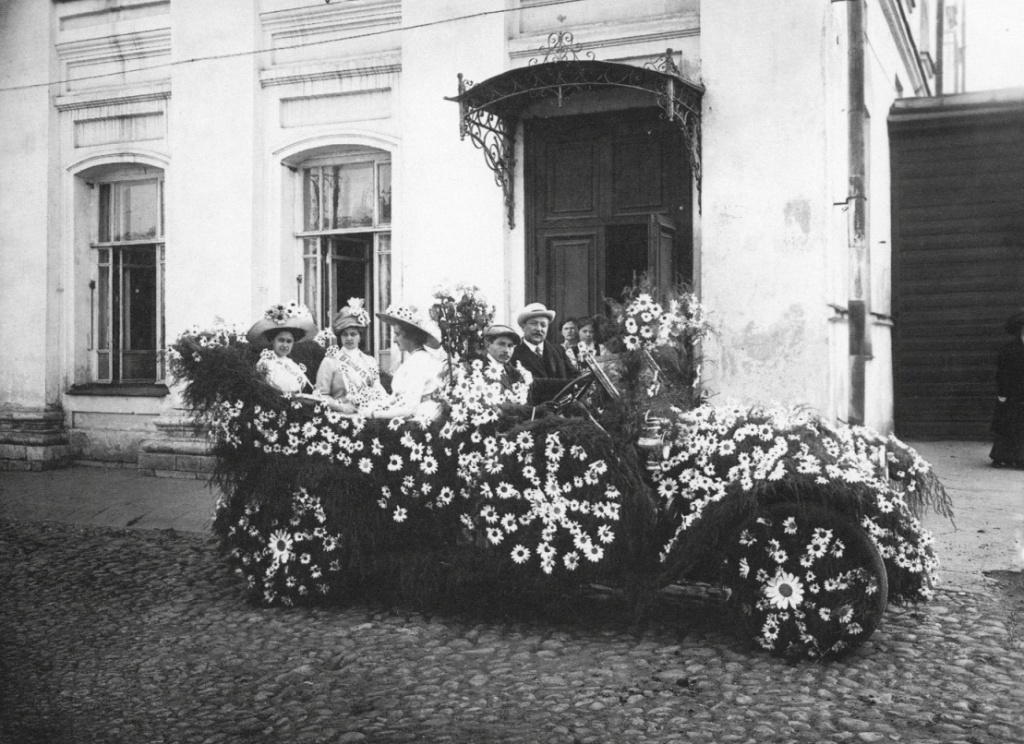
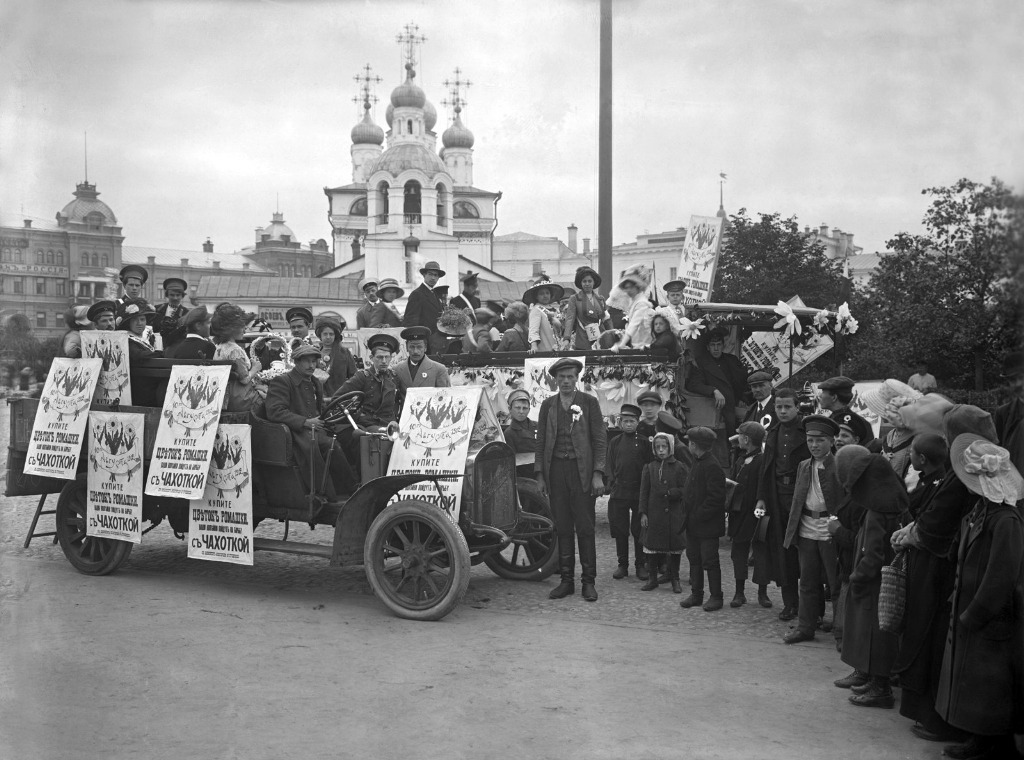
PHOTO: a procession of motorcars and carriages adorned with white flowers pass through Ekaterinburg in 1911

In 1910, on the initiative of Emperor Nicholas II, a branch of the European League for the Fight Against Consumption was created by the Red Cross in Russia. As a result, the first White Flower Day was held in St. Petersburg on 20th April (O.S.) 1911. Following the example of the capital, residents of the Ural city wished to take an active part in the fight against tuberculosis. The first White Flower Festival was held in Ekaterinburg on 21-22 May (O.S.) 1911.

 A description of the event in the Ural capital has been preserved in the archives: “The holiday began with a Divine Liturgy on the square in front of St. Catherine’s Cathedral [demolished in 1930], which was served by His Grace Mitrofan, Bishop of Yekaterinburg and Irbit. After the liturgy, Dr. A.M. Spassky spoke about the significance of the holiday. Then the ladies began selling the flowers. The sale was brisk. By evening, it was impossible to meet a single person who did not have at least one flower pinned. The net collection of the holiday amounted to 7,443 rubles 13 kopecks.”

PHOTO: a motorcar adorned with white flowers, Ekaterinburg 1911

It was also in 1911, at Livadia in Crimea, members of the Imperial Family made white flowers with their own hands. The Romanov children eagerly participated in the event, walking through Yalta receiving donations and handing out flowers in return. The proceeds of which were used to build hospitals for tuberculosis patients.

Within the first few years, the festival was celebrated in 104 cities across the Russian Empire, including Ekaterinburg. In the first year, some 50,000 white flowers were made and distributed in the Ural capital, however, according to the Yekaterinburg Vedomosti newspaper, “it was not enough – many people wanted to contribute to this great and worthwhile charitable effort”.

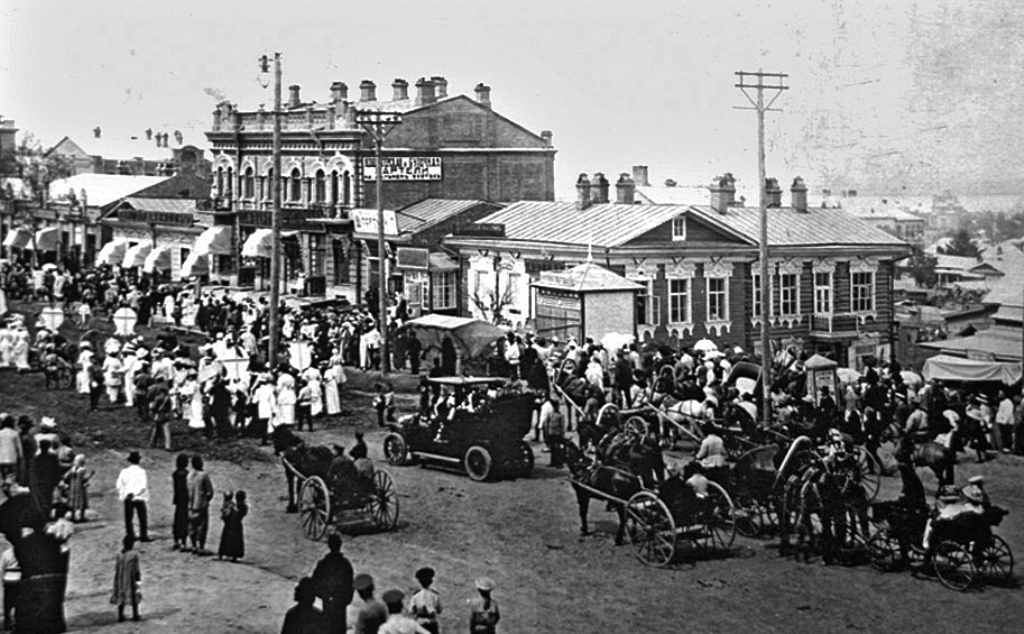
PHOTO: up until 1917, White Flower Day became a favorite holiday of the townspeople in Ekaterinburg

During the first White Flower Day in Ekaterinburg in 1911, a procession was held on the city’s streets, in which motorcars and carriages were adorned with white flowers. In addition the townspeople pinned them to their clothes. The proceeds were used to fight tuberculosis and help the poor in the city. The charity holiday became one of the favorite of the townspeople and was celebrated in Ekaterinburg until the revolution of 1917.

Following the dissolution of the Soviet Union in 1991, the White Flower Festival was revived. In recent years, the festival has made a comeback, and today the White Flower Day is held in many cities across Russia, including Ekaterinburg, which revived the festival in 2013.

© Paul Gilbert. 19 June 2023

Zhanna Bichevskaya marks her 81st birthday

074

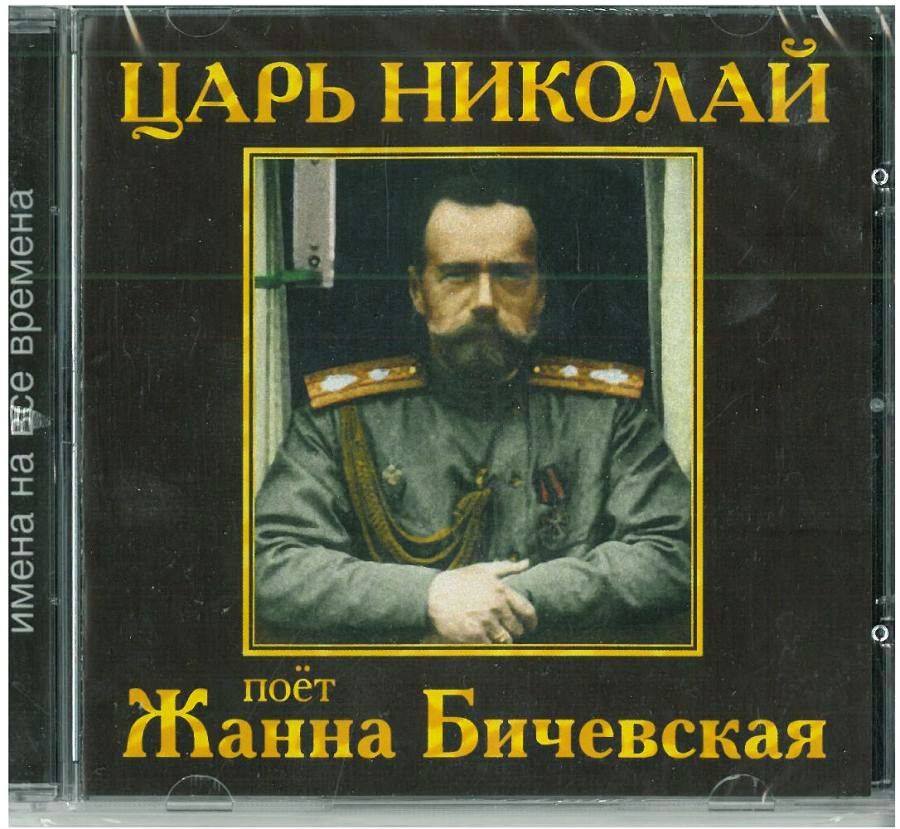
Cover of Zhanna Bichevskaya;s CD Царь Николай (Tsar Nikolai)

A very happy 81st birthday to Russian folk singer Zhanna Vladimirovna Bichevskaya, who was born in Moscow on 17th June 1944.

Известной певице Жанне Владимiровне Бичевской исполнилось 79 лет!!! Мы сердечно поздравляем её с Днём рождения!!!

074b

Zhanna graduated as a classical guitarist from a Moscow music school. She was a teacher of music in Zagorsk (Sergiev Posad). In the 1970s, Zhanna started to perform Russian folk songs and romances.

Zhanna refers to her bard-style singing as “Russian country-folk”. Her repertoire includes several hundred works – songs of spiritual and social content, Russian folk songs, romances, as well as songs based on poems of Russian poets of the Silver Age. Her records have sold millions of copies in more than 40 countries around the world. She has performed to sell out crowds at the prestigious Olympia Hall in Paris, on eight occasions. 

In the late 1980s and early 1990s, Zhanna Bichevskaya’s songs began to have more political, nationalist and spiritual themes, she is a staunch defender of the Holy Emperor Nicholas II and his family.

In 1999, Zhanna also became the host of her own show on Voice of Russia radio station. She was awarded People’s Artist of the RSFSR

CLICK on the links below to listen to two of her most haunting melodies:

[1] Царь Николай / Tsar Nikolai [Duration: 9 mins], which features vintage film footage of Russia’s last tsar:

[2] Святым Царственным мученикам / To the Holy Royal Martyrs [Duration: 7 mins., 34 sec.], which is much more a prayer than a song:

© Paul Gilbert. 17 June 2025

Ekaterinburg: the Survivors

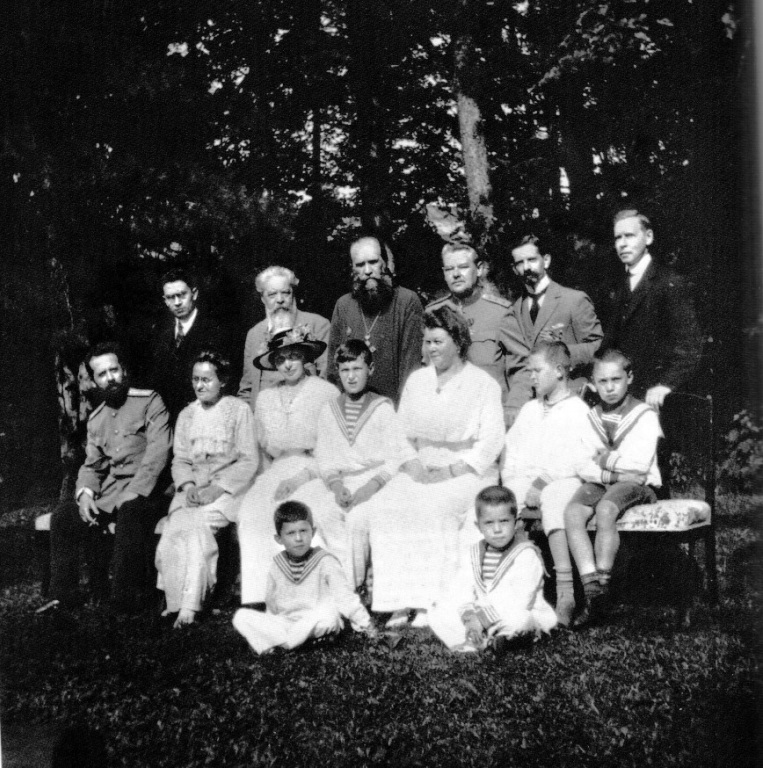
PHOTO: a number of those who survived the Ekaterinburg massacre are depicted in this photo taken at Tsarskoye Selo in 1916, including Terentiy Chemodurov (2nd from left, back row); Pierre Gilliard (2nd from right, back row: Charles Sydney Gibbes (far right, back row); and Alexandra Tegleva (3rd from left, front row and seated next to Tsesarevich Alexei Nikolaevich)

Following the transfer of the Imperial Family to Ekaterinburg in the Spring of 1918, the remaining servants and retainers living in the Kornilov House in Tobolsk were free to leave. A number of them, however, wanted to make the journey to Ekaterinburg with the hope of reuniting with the Tsar and his family. Their captives warned them that any one who went with the former Tsar and his family to Ekaterinburg would remain at liberty, at worse, they would not even be permitted to live in the same house with the Imperial Family but tossed in the local jail.

Despite the warning, a number of faithful retainers made the journey to the Ural capital, and, sure enough were imprisoned and later murdered by the Bolsheviks. Among them were Prince Vasily Dolgorukov, Ilya Tatishchev, Ekaterina Schneider, Anastasia Hendrikova, Klimenty Nagorny and Ivan Sednev

In addition, let us not forget the four faithful retainers, who remained with the Imperial family who followed the Imperial Family to their deaths in the Ipatiev House, on 17th July 1918: Dr. Eugene Botkin (1865-1918), the maid Anna Demidova (1878-1918), the cook Ivan Kharitonov (1872-1918), and the valet Aloysius Trupp (1856-1918).

As foreign nationals, the Swiss tutor Pierre Gilliard, along with his Russian born wife and nursemaid to the Tsar’s children Alexandra Tegleva and the English language tutor Sydney Gibbes were set free. So were a number of others with no explanation and amid rumours that they had abandoned the Imperial Family, sold a few secrets and begged for their lives.

The Empress’s Lady-in-Waiting Baroness Sophie Buxhoeveden attributed her unexpected release by the Bolsheviks to her “foreign” surname – it was Danish by origin – however, the even more foreign name of “Catherine Schneider” did not prevent the poor woman from being shot.

It was nothing short of a miracle that Nicholas II’s valet Terentiy Ivanovich Chemodurov; Assistant cook Leonid Ivanovich Sednev – not to be confused with his uncle with his uncle Ivan Dmitrievich Sednev – and the valet Alexei Andreyevich Volkov managed to escape from being shot by the Bolsheviks.

These men and women must never be forgotten for remaining faithful to Emperor Nicholas II and his family. Below, is a brief summary of each of them, and their respective fates following the regicide in Ekaterinburg:

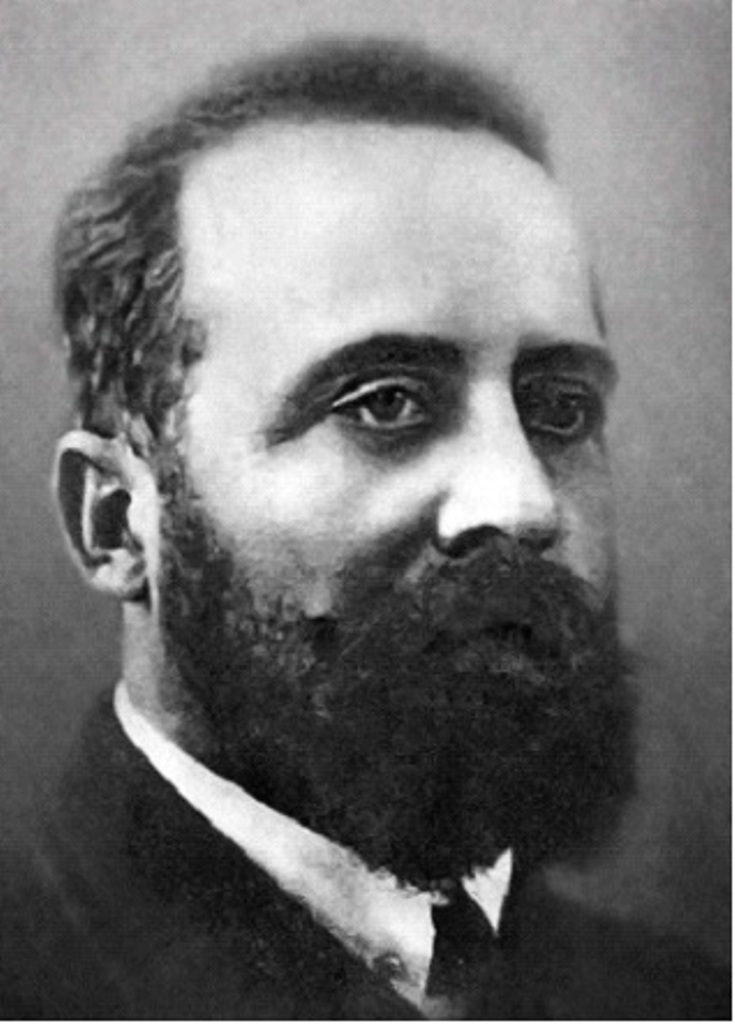
Pierre Gilliard (1879-1962)

Pierre Gilliard was a Swiss academic who initially came to Russia in 1904 as a French tutor to the family of Duke George of Leuchtenberg, a cousin of the Romanov family. From 1905 to 1918 he served as the French language tutor to the children of Emperor Nicholas II.

He grew fond of the Tsar and family and followed them into exile to Tobolsk, Siberia, following the October 1917 Revolution. The Bolsheviks prevented Gilliard from joining his pupils when they were moved to the Ipatiev House in Ekaterinburg in May 1918.

Gilliard remained in Siberia after the murders of the family, for a time assisting White Movement investigator Nicholas Sokolov. In 1919, he married Alexandra Alexandrovna Tegleva, who had served as a nursemaid to the Tsar’s children.

Gilliard and Tegleva fled Bolshevik Russia in early November 1919, arriving in Vladivostok in early April 1920. They then travelled on an American ship to San Francisco, and from there travelled by ship along the Pacific coast, through the Panama Canal, across the Atlantic Ocean and the Mediterranean Sea to Trieste. From here, they travelled through Italy to Switzerland, and in August 1920 they reached his parents’ home in Fiez, which Gilliard had left 16 years before.

He became a French professor at the University of Lausanne and was awarded the French Legion of Honour. In 1921, he published a book entitled Thirteen Years at the Russian Court, which described the last days of the Tsar and his family, and the subsequent investigation into their deaths.

In 1958, Gilliard was severely injured in a car accident in Lausanne. He never fully recovered and died four years later on 30 May 1962.

Alexandra Alexandrovna Tegleva (1884-1955)

Alexandra Alexandrovna Tegleva was a Russian noblewoman who was educated at the Smolny Institute of Noble Maidens in St Petersburg. Tegleva served as a nursemaid and governess to Grand Duchesses Olga, Tatiana, Maria and Anastasia Nikolaevna, and Tsesarevich Alexei Nikolaevich. While many of the attendants in the service of the Empress spoke English, Tegleva was instructed to speak Russian with the children.

Following the Imperial Family’s house arrest in 1917, she lived with the family in the Alexander Palace at Tsarskoye Selo. In August of that year, she followed them into exile in Tobolsk, but was ultimately prevented from staying with them during their house arrest in Ekaterinburg. Tegleva was detained with Pierre Gilliard, Charles Sydney Gibbes, and Baroness Sophie Buxhoeveden in a separate residence from the imperial family in Yekaterinburg. She was almost killed by the Bolsheviks in Tyumen but was freed by the White Army.

In exile in Switzerland, Tegleva worked with her husband to investigate and debunk the claims made by Anna Anderson, a Romanov impostor who pretended to be Grand Duchess Anastasia Nikolaevna. Following two personal meetings with Anderson, Tegleva and her husband believed Anderson to be a fraud.

Alexandra Alexandrovna Tegleva died in Switzerland on 21 March 1955.

Charles Sydney Gibbes (1876-1963)

In 1901 Charles Sydney Gibbes travelled from England to St Petersburg, as tutor to the Shidlovsky family and then the Soukanoff family. By 1907 he was qualified as vice-president and committee member of the St Petersburg Guild of English Teachers. He came to the attention of Empress Alexandra Feodorovna and in 1908 was invited as a tutor to improve the English accents of the Grand Duchesses Olga and Tatiana; and subsequently Maria and Anastasia. In 1913 he became tutor to Tsesarevich Alexei.

Gibbes voluntarily followed the Imperial Family into exle, arriving in Tobolsk in October 1917, shortly before the Provisional Government fell to the Bolsheviks. In May 1918 the Imperial family was moved to the Ipatiev House in Ekaterinburg, and neither Gibbes, nor most other servants were allowed to enter. A number of servants stayed in the railway carriage which had brought them to the city.

After the fall of Ekaterinburg to the White Army on 25th July. Gibbes and Gilliard were early visitors to the scene of the regicide at the Ipatiev House and were both involved in the subsequent enquiries carried out by Ivan Alexandrovich Sergeiev and later by Nicholas Alexievich Sokolov.

In January 1919, he retreated eastwards as Siberia was captured by the Red Army. In Harbin, China on 25th April 1934 he was received into the Orthodox church by Archbishop Nestor (Anisimov) of Kamchatka and Petropavlovsk who was there in exile. Gibbes took the baptismal name of Alexei in honour of the former Tsesarevich. He was tonsured a monk on 15th December, ordained deacon on 19th December and priest on 23rd December, taking the name Nicholas in honour of the former Tsar. In March 1935 he became an Abbot. He again returned to England in 1937 and was established in a parish in London.

At the time of the Blitz he moved to Oxford where in 1941 he established an Orthodox chapel in Bartlemas. In 1949 he bought a house at 4 Marston Street, subsequently known as the Saint Nicholas House.

Gibbes died at St Pancras Hospital, London, on 24 March 1963. His open coffin was displayed in the cellar (or crypt) of Saint Nicholas House before his funeral. He is buried in Headington cemetery, Oxford, Oxfordshire, England.

Terenty Ivanovich Chemodurov (1849-1919)

From 1891 to 1908, Terenty Ivanovich Chemodurov served in the Guards Crew. On 14th (O.S. 1st) December 1908, he was appointed personal valet to Emperor Nicholas II. He resided in the Alexander Palace at Tsarskoye Selo, where he received an annual salary of 360 rubles, as well as room and board.

In August 1917 he voluntarily followed the Imperial Family into exile, first to Tobolsk and then to Ekaterinburg. He lived in the Ipatiev House until 24th May (O.S. 11th) 1918, from where he was removed due to illness and transferred to a prison hospital in Ekaterinburg. He was replaced by the footman Alexei Troupe. Nicholas II wrote in his diary that day: “I decided to let my old man Chemadurov go for a rest and take on Troupe during his absence.”

Despite the fact that the Tsar released Chemodurov from service, the local Soviet authorities arrested him. As it turned out, the person in the next cell turned out to be another servant – Alexei Andreevich Volkov – the valet of Empress Alexandra Feodorovna.

It is believed while that in prison he was forgotten by the Chekists and on 25th July 1918, he was released by the Czechoslovaks who occupied Ekaterinburg. In 1919, he was involved as a witness in the case of the murder of the Imperial Family.

Chemodurov himself explained his salvation from execution by a miracle – according to him, a list of persons to be shot was sent to the prison. The list was large and did not fit on one page, which is why Chemodurov’s surname was written on the back of the sheet. Due to the negligence of the prison authorities, who failed to check the additional inscriptions on the back of the page, Chemodurov was not summoned from his cell to be shot. He was subsequently rescued from prison by the Czechs, who liberated Ekaterinburg from the Red Army.

In exile, Chemodurov spoke of the Emperor in the following way: “During my almost 10-year service under the Sovereign, I had opportunity to study his habits and inclinations in his private life, and in good conscience I can say that the Tsar was an excellent family man.” With regard to the last days of the Imperial Family, Chemodurov said: “He [the Tsar] seemed to be petrified but did not betray his fears, the Empress, however, suffered and prayed fervently”.

Leonid Ivanovich Sednev (1903-1941)

Leonid Ivanovich Sednev was a chef’s assistant who, together with his uncle Ivan Dmitriyevich Sednev, served Emperor Nicholas II and his family during their exile in Tobolsk and Ekaterinburg from 1917 to 1918.

Six hours before the Imperial family and their four retainers were murdered in the cellar of the Ipatiev House on the night of 16/17 July 1918, Sednev was taken to a neighboring house, where he was held until 20th July. Officials from the Ural Regional Soviet then shipped him off to live with relatives in Kaluga.

In her final diary entry on 16th July 1918, Empress Alexandra Fedorovna noted: “… Suddenly Lenka [Leonid’s nackname] Sednev was fetched to go and see his uncle and flew off – wonder whether it’s true and we shall see the boy back again! …”

There are conflicting accounts of his ultimate fate; according to one report, he was shot in 1929 in Yaroslavl on charges of participating in a counter-revolutionary conspiracy, while other evidence suggests that he was killed during the Battle of Moscow in 1941; however, according to the obd-memorial.ru (CAMO) web site, he was executed on the verdict of the tribunal of the Bryansk Front for an unspecified crime on 17 July 1942, exactly 24 years to the day the Tsar and his family were murdered.

In 2004, author Robert Alexander wrote The Kitchen Boy, an historical novel which recreates the final days of the Tsar and his family as seen through the eyes of Leonid Sednev.

Alexei Andreyevich Volkov (1859-1929)

As a young man, Alexei Andreyevich Volkov entered the Russian Imperial Army and rose through the ranks. He was on guard and witnessed the assassination of Emperor Alexander II in 1881. Later he served as a military instructor to the future emperor Nicholas II. From 1886, he was in service to Grand Duke Paul Alexandrovich. In 1910 he was appointed valet at the court of Nicholas II. In addition, he was Empress Alexandra Feodorovna’s personal servant and often pushed her wheelchair.

In August 1917, Volkov followed the Tsar and his family into exile to Tobolsk, but was later separated from them at Ekaterinburg and imprisoned at Perm. There, he heard that the Emperor had been murdered by the Bolsheviks, though he was unaware that the Empress and their children had also been shot.

On 4th September 1918, he was taken from his prison cell in the middle of the night and led to the prison office, where he saw lady-in-waiting Anastasia Hendrikova and the elderly tutor Catherine Schneider. They were joined by eight other prisoners, and an escort of twenty-two guards.

Volkov asked a guard where they were being taken and was told they were being taken “to the house of arrest.” Hendrikova, who had been in the washroom, asked a guard the same question when she came out. She was told they were being taken “to the central prison.” Hendrikova asked him, “and from there?” The guard replied, “Well! to Moscow.” Hendrikova repeated this conversation to her fellow prisoners and made the sign of the cross with her fingers. Volkov took her gesture to mean “they will not shoot us.”

The prisoners were lined up in the street in rows of two, the men in front and the women in back. The group walked all the way to the edge of town and onto the Simbirsk road. Volkov asked another prisoner where the central prison was and was told they had long passed it. Volkov realized they were being taken into the woods to be shot. He broke from the group and ran for his life at the first opportunity. A bullet whizzed past his ear. Behind him he heard gunshots as the other prisoners in the group were shot and killed.

Volkov eventually joined other refugees at the White Army headquarters in Omsk and made his escape from Russia through Vladivostok and the Far East. In 1922, he settled in Estonia. He later lived in Denmark, where he was highly respected in the émigré community because of his lifelong loyalty to the Tsar and his family.

During his years in exile, he wrote his memoirs about his time at the Court of Nicholas II and his escape. These include his experience of events such as the Khodynka Tragedy.

Alexei Andreevich Volkov died on 27th February 1929, in Yuryev (Tartu), Estonia.

Baroness Sophie Buxhoeveden (1883-1956)

Sophie Freiin von Buxhoeveden, also known as Baroness Sophie Buxdoeveden, was the daughter of Baron Karlos Matthias Konstantin Ludwig Otto von Buxhoeveden (1856-1935), the Russian minister in Copenhagen, Denmark during World War I.

In her youth, Sophie was a part of the social life of St. Petersburg. In 1904, she was chosen as an honorary Lady in Waiting to Empress Alexandra Feodorovna, and became an official Lady in Waiting in 1913. She often accompanied the Empress and her four daughters to official duties.

She followed the Imperial Family into exile to Tobolsk. After being refused permission to join the Imperial family in the Ipatiev house, Sophie, along with the foreign tutors, tried to find a way to help the family.

Sophie spent many months on the run across Siberia, with other members of the Imperial household. She was only allowed safe passage out of Russia when she made it to Omsk, with the help of the British military, namely General Alfred Knox, who got her safe passage on a military train.

In exile, Buxhoeveden lived first in Copenhagen with her father, then at Hemmelmark in northern Germany, before finally settling in England, where she faithfully served as lady-in-waiting to Empress Alexandra Feodorovna’s older sister Victoria, Marchioness of Milford Haven.

During her years in exile, the Baroness wrote three books that are considered to give one of the best accounts of the Romanov family’s life and final days. They were Life and Tragedy of Alexandra Feodorovna (1928); Left Behind: Fourteen Months in Siberia During the Revolution (1929); and Before the Storm (1938).

Baroness Sophie Buxhoeveden died in England on 26 November 1956, in grace and favor rooms granted to her by th the Queen.

Dr. Vladimir Nikolaevich Derevenko (1879-1936)

Vladimir Derevenko was born on 28th (O.S. 15th) July 1879, into the family of the Russian nobleman Nikolai Dmitrievich Derevenko and his wife Varvara Ivanovna Badimo. After graduating from the 1st Chisinau Gymnasium in 1899, he entered the Imperial Military Medical Academy. In 1904, he completed his studies, earning a doctor’s diploma with honours.

In 1904-05 he was called up for active military service during the Russo-Japanese War, of which he served as junior doctor of the Kerch Fortress Artillery and head of the eye and venereological departments of the Kerch Infirmary. He also participated in hostilities at the Front, providing assistance to the wounded.

In October 1912, Derevenko was summoned to Spala to assist with Tsesarevich Alexei’s near fatal injury, as a result of his haemophilia. It was following the heir’s recovery that Dr. Derevenko was appointed Alexei’s personal physician. His son Kolya, became Alexei’s playmate.

During the First World War, Derevenko participated in the daily work of the infirmaries which had been founded by the Empress Alexandra Feodorovna in Tsarskoye Selo.

After the February 1917 Revolution, and the Tsar’s abdication, the Imperial Family were held under house arrest in the Alexander Palace at Tsarskoye Selo. The Provisional Government issued an order to the family’s servants and retinue to choose between staying with the prisoners or leaving them. Both physicians, V. N. Derevenko and E. S. Botkin, opted to stay with the Imperial Family.

Derevenko and his family followed the Imperial Family into exile to Tobolsk, where they settled in the Kornilov House, situated opposite the Governor’ House, where the Tsar and his family were held under house arrest. Derevenko was permitted access to the latter to administer any necessary medical treatment.

When the Bolsheviks came to power in October 1917, the situation for the captives changed. In April 1918, the Bolshevik commissar Yakovlev arrived in Tobolsk, and took charge. The Imperial Family and their faithful retainers were transported to Ekaterinburg in two groups. Dr. Derevenko remained with the second group in Tobolsk to attend to Alexei who was ill. Following the heir’s recovery in May 1918, they were sent Ekaterinburg to be reunited with the rest of the family.

During the Ekaterinburg period of Derevenko’s life, he was admitted to the Ipatiev House, but only to provide medical treatment to Alexei, whose health was deteriorating. During such visits, the doctor was forbidden to speak with any member of the Imperial Family.

Derevenko was fortunate to have survived the massacre in the Ipatiev House. In December 1918, the doctor and his family moved to Perm, which was occupied at the time by the Whites. It was here that he began to work in the surgical clinic of Perm University. When the Red Army units approached Perm in July 1919, together with some of the teachers, staff and students of Perm University, Derevenko was evacuated to Tomsk, where he worked as a surgeon in the Tomsk military hospital, where he continued working after the establishment of Soviet power in the region in December 1919.

In 1920, he returned to Perm and headed the Department of the Surgical Clinic of Perm University. In 1923, he was elected professor and head of the General Surgery Clinic of the Ekaterinoslav University.

Derevenko later moved to Dnepropetrovsk, where in January 1931, he was arrested on charges of attempting to overthrow the Soviet government by armed force and participating in the secret counter-revolutionary organization Union for the Liberation of Russia. He pleaded guilty, for which he was sentenced to 5 years of “restriction of liberty”, but was not subjected to imprisonment. After serving his sentence, he was exiled to Lugansk, where he worked as a doctor.

In 2003, shortly before his death, in his only interview, Derevenko’s son Nikolai said that his father died in the spring of 1936 in Dnepropetrovsk (now Ukraine) and was buried at the Sevastopol Cemetery.

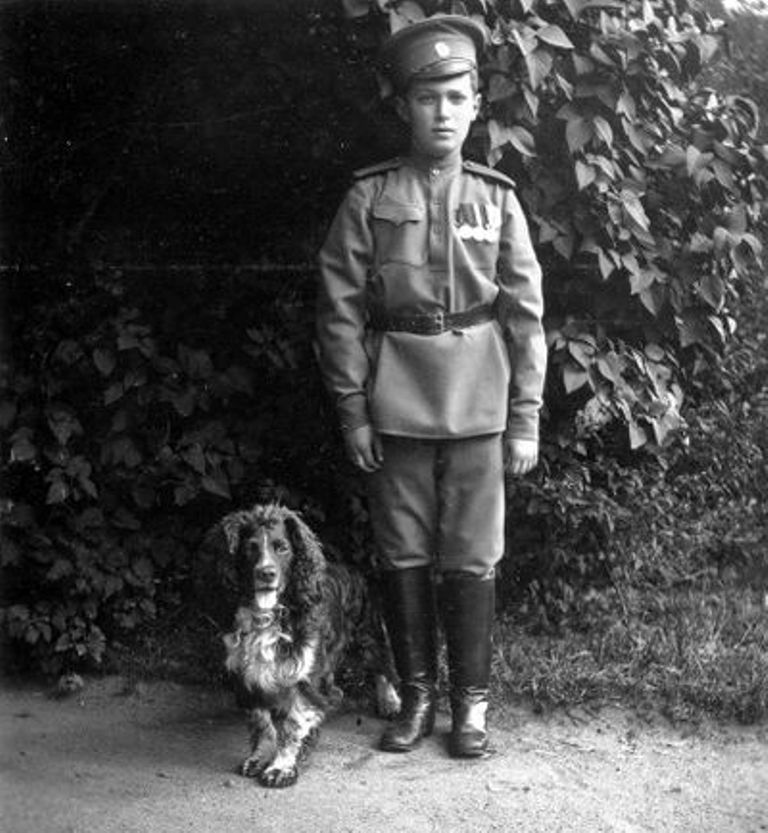
JoyTsesarevich Alexei’s spaniel

The faithful canine companion to Tsesarevich Alexei Nikolaevich was the only member of the Imperial Family who survived the massacre which took place in the Ipatiev House on the night of 16/17 July 1918.

“The Czechs [Czechoslovak Corps in the Russian Army], seizing Ekaterinburg, found a poor little animal, half-starved, running around the yard of the Ipatiev House. The dog seemed to be looking for his master all the time and his absence made him so sad and depressed that he barely touched his food, even when he was affectionately cared for,” wrote Baroness Sophie Buxhoeveden in her memoirs.

Alexei’s beloved King Charles spaniel Joy was taken by General Mikhail Dieterikhs, head of the White Army investigation into the death of the Tsar and his family. Joy was eventually homed with Colonel Pavel (Paul) Rodzianko, who was serving with the British Expeditionary Force in Siberia.

The British were expelled from Russia by the Bolsheviks and Rodzianko had grown so fond of Joy that he took him back to England.

Joy died at Windsor, however not at the royal court, but at Colonel Rodzianko’s small estate of Sefton Lawn, whose park adjoined the royal park.

“Every time I walk past my garden at Windsor, I think of the little dog’s grave in the bushes with the ironic inscription ‘Here rests Joy’. For me, this little stone marks the end of the empire and way of life,” Pavel Rodzianko wrote in Tattered Banners.

Sadly, both the garden and Joy’s modest grave is now believed to have been concreted over as a car park. 

© Paul Gilbert. 14 June 2023

***

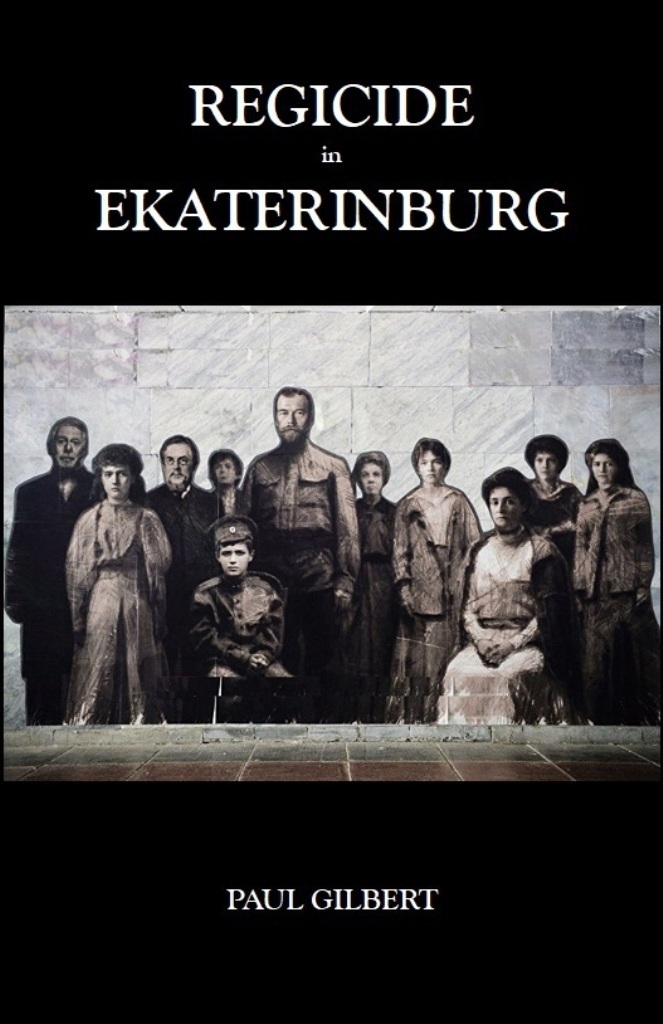
The following NEW title was compiled and edited by independent researchers and Romanov historian Paul Gilbert was published in August 2024. 

This fascinating new study features 14 chapters on this tragic event, which include the memoirs of a British intelligence officer and journalist, and two First-English translations. In addition, 11 chapters were written by Paul Gilbert, based on new documents sourced from Russian archival and media sources over the past decade.

Please refer to the link provided for further details about the content of this new title . . .

CLICK HERE TO READ MORE ABOUT THIS TITLE
Olga: Nicholas II’s younger sister

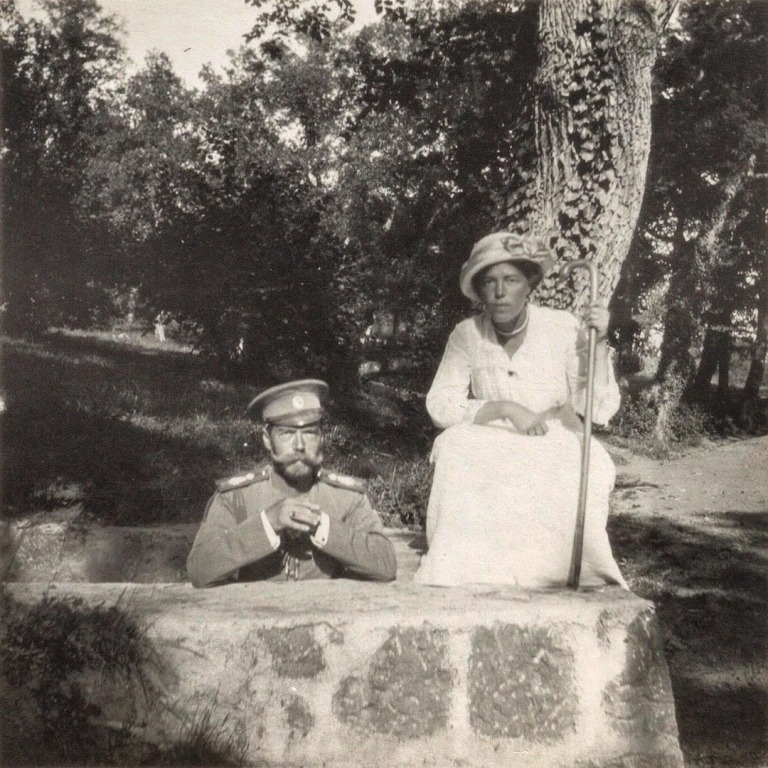
PHOTO: Emperor Nicholas II with his younger sister Grand Duchess Olga Alexandrovna in the lower Massandra Park, Crimea in the Autumn of 1913

On this day – 13 June (O.S. 1 June) 1882, Grand Duchess Olga Alexandrovna was born in the Cottage Palace, situated in the Alexandria Park at Peterhof. Olga was the youngest of six children born to Emperor Alexander III and the Empress Marie Feodorovna. Growing up, she spent much of her childhood in the family’s 900 room palace at Gatchina, 40 miles (63 km) outside of St. Petersburg. Her father had been in power a little over a year when she was born, having succeeded his father Alexander II, who had been assassinated while travelling along the Catherine Canal on 13 March (1 March OS), 1881. His assassins were brought to trial and hung for their vicious crime.

Olga and her siblings, Nicholas (the future Emperor Nicholas II), born 1868; George, born 1871; Xenia, born 1875; and Michael “Misha,” born 1878, did not attend school, but were taught Russian and other languages [they were fluent in English, French and Danish], literature, mathematics, history, and art by various tutors within the confines of the palace. One other brother, Alexander, born in 1869, died in infancy. They had an English governess, Elizabeth “Nana” Franklin, whom Olga adored.

THE RUSSIAN YEARS

PHOTO: Olga with her siblings: from left to right: Grand Duke Mikhail Alexandrovich, Grand Duchess Olga Alexandrovna, Emperor Nicholas II and Grand Duchess Xenia Alexandrovna. Year unknown

Olga considered her childhood years growing up at Gatchina as the happiest time of her life. She took a great interest in playing the violin and painting. Unlike many royal children, Olga and her siblings lived a modest, spartan life in which the strictest of discipline was required by their tutors, governesses, and parents. They slept on firm beds with hard, flat pillows and very narrow mattresses. A modest rug covered the floor. Straight-backed wicker chairs, the most ordinary of tables and bookshelves, needlework and toys, made up the only furnishings. A single precious object sat in one corner of their rooms: a silver-framed icon of the Blessed Mother of God, studded with pearls and other precious stones. Of all her siblings, she was closest to Michael or “Misha” as she preferred to call him. They spent hours running and playing from room to room and through the vast halls of the palace lined with priceless vases.

It is generally believed that Olga had a strained and distant relationship with her mother for most of her life. On the other hand, she was very close to her father. They enjoyed their time together, taking walks and playing games in the vast Gatchina park, and sharing secrets. Olga was only 12 years old, when her father died suddenly in 1894. His death left the young grand duchess grief stricken, but she kept his memory alive by not forgetting what he had taught her: the simple way in which he preferred to life, care and respect for others, and appreciation for the natural beauty around her. Olga has been described as being indifferent to both dazzling jewellery and the strict etiquette that were symbolic of the Russian Court.

In August of 1901, she married Duke Peter Alexandrovich of Oldenburg. Two years later, she attended a review of her brother Michael’s regiment at nearby Pavlovsk. It was there that she first set eyes on “God Apollo” as his fellow junior officers called him. Colonel Nikolai Kulikovsky, age 22, was a close friend of Michael’s and she persuaded her brother to seat her next to Nikolai during lunch, which he did. Before the meal was over Olga was in love. Soon after, Olga wanted to divorce Peter and marry Nikolai, but neither her husband, Peter, or her brother, Nicholas II would permit it. However, the marriage remained unconsummated, both Olga and Peter were unhappy, their marriage was finally officially annulled by the Emperor in 1916.

On 14 November 1916, she married Nikolai Kulikovsky in the Church of St. Nicholas in Kiev. As a result of marrying a commoner, Grand Duchess Olga’s descendants from her marriage to Nikolai were excluded from succession to the Russian throne.

The following year, the political atmosphere went from bad to worse in Russia and her brother abdicated on 2 March 1917. On 12 August 1917, Olga and Nikolai’s first child, a son, Tikhon, was born.

Less than a year later, on 17 July 1918, her brother, Nicholas and his family were brutally murdered by the Bolsheviks in the Ipatiev House at Ekaterinburg and the Romanov dynasty came to an end. The new regime headed by Vladimir Lenin placed a bounty on the heads of any surviving members of the Romanov family. Olga and Nikolai had to flee Russia shortly after their second son, Guri, was born on 23 April 1919.

IN EXILE
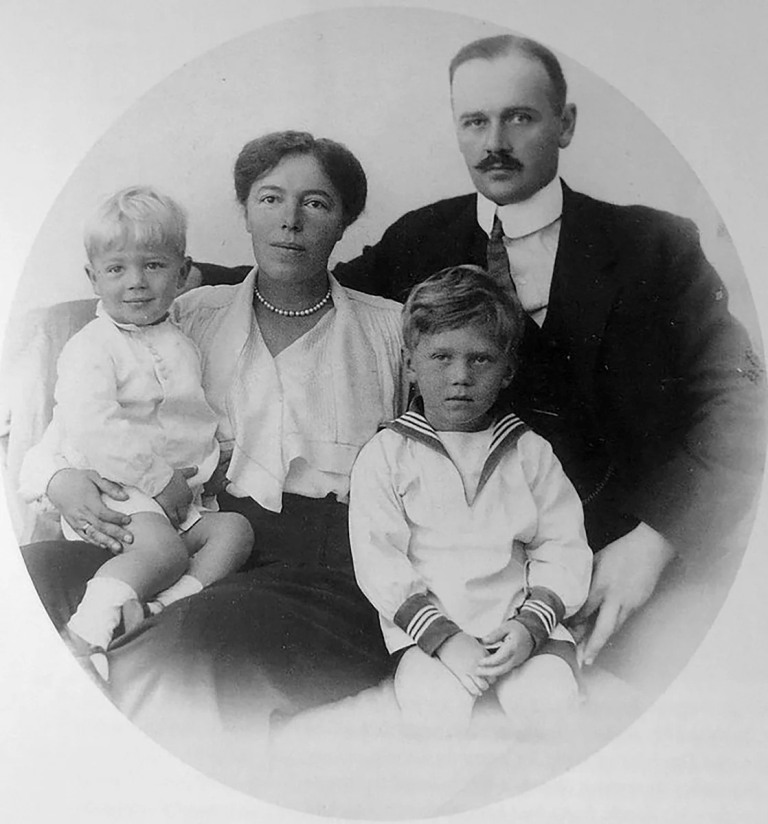
PHOTO: Grand Duchess Olga, her husband, Nikolai Kulikovsky, and their two sons, Guri (left) and Tikhon (right)

In 1920 they travelled by train to Novorossiysk and took shelter in the Danish Consulate. A month later, they went by ship to Dardanelles, a barge to the Island of Prinkipo, then on to Constantinople and Belgrade, where they met Regent Alexander Karageorgevich [later King Alexander I of Yugoslavia]. Her mother and sister, Xenia, went on a British ship to Malta and then on to England, where cousin King George V provided them with assistance. He was very supportive to Olga and her family during their exile in Denmark. In 1919, Dowager Empress Maria Feodorovna took up residence at her summer villa, Hvidore, in Denmark. Olga was reunited with her mother on Good Friday, in the Amalienburg Palace in Copenhagen. Olga, Nikolai, and their two sons then went to live at Hvidore. Her mother, the last living Empress of all the Russias, passed away on 13 October 1928. After the death of her mother, the royal estate of Hvidore was sold and the Grand Duchess and her family were able to purchase with her portion of the inheritance Knudsminde Farm, situated several miles outside of Copenhagen, Denmark.

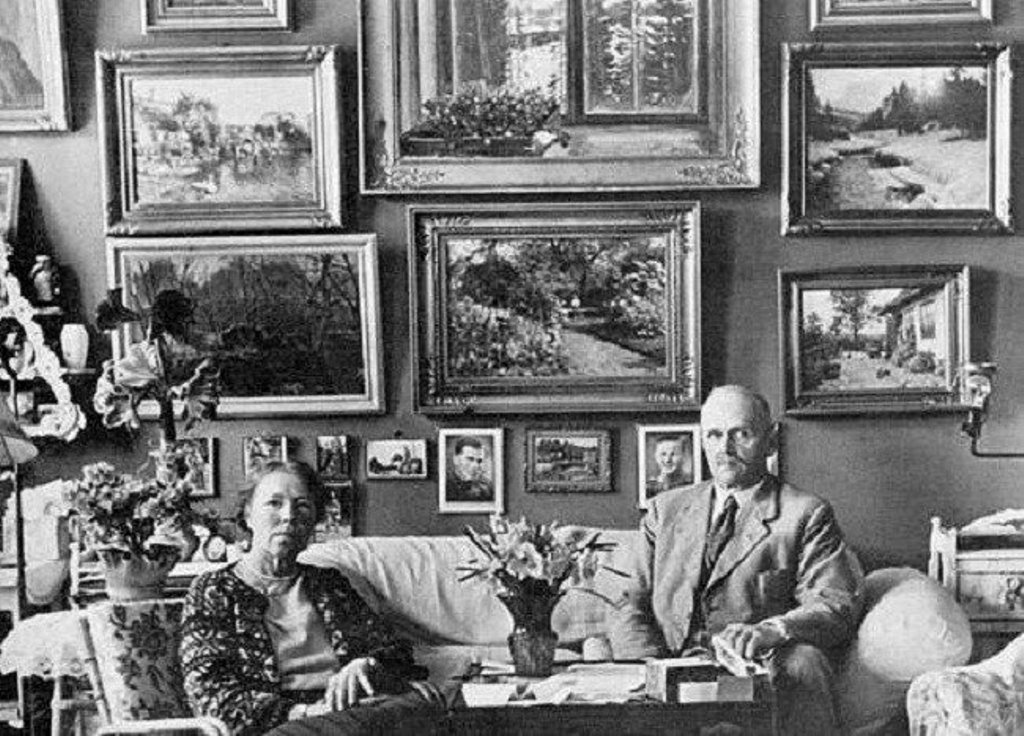
PHOTO: Olga and Nikolai at their home in Knudsminde, Denmark in the 1930s. The wall behind them is covered with some of the grand duchess’s watercolours

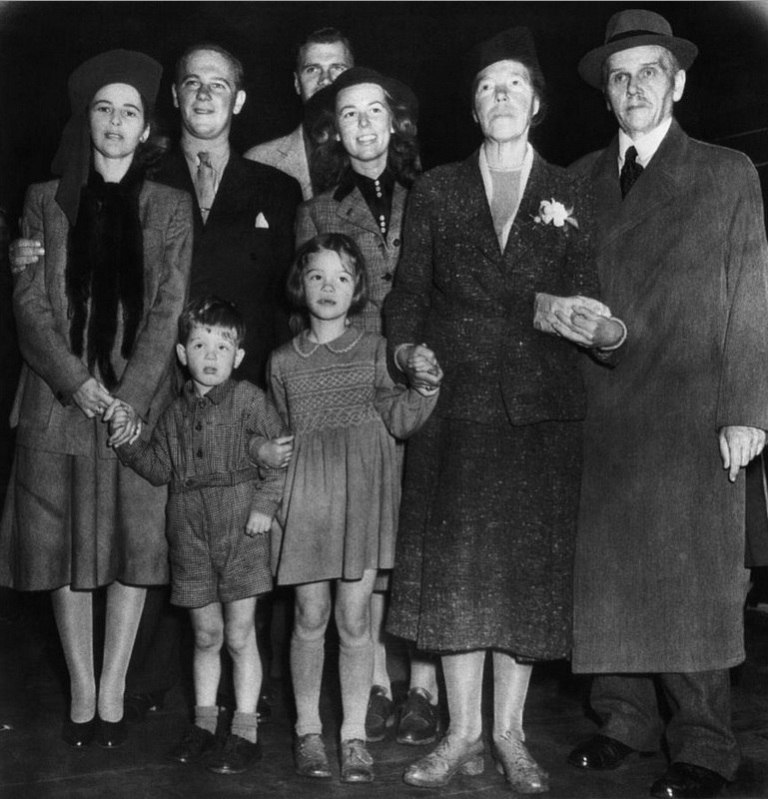
Europe once again became a battlefield during World War II (1939-1945). Son Guri was married in May, 1940, and Tikhon in April 1942. When Denmark was liberated on 5 May 1945, Olga and her family could not return to their homeland as they would most certainly be arrested and executed. Following World War II, Stalin’s propaganda machine declared that Grand Duchess Olga had conspired with Germany against Russia during the war. In 1948, King Frederik IX could no longer guarantee their safety and Olga faced exile for the second time in her 66 years.

Her second cousin King George VI enquired about their finding asylum in Canada. Arrangements were made through A.H. Creighton, president of the Canadian Pacific Railway and District Superintendant of the Department of Immigration and Agriculture Development, for relocation to Canada. The Agent General for Ontario, Canada, J.S. Armstrong, stationed in England, handled the arrangements for the departure of the Russian Grand Duchess and her family to depart for the safety of rural Canada. In May 1948, the Kulikovskys travelled to London by Danish troopship. They were housed in a “grace and favour” apartment at Hampton Court Palace while arrangements were made for their journey to Canada as agricultural immigrants. On 2 June 1948, Olga, Nikolai, Tikhon and his Danish-born wife Agnete, Guri and his Danish-born wife Ruth, Guri and Ruth’s two children, Xenia and Leonid, and Olga’s devoted companion and former maid Emilia Tenso (“Mimka”) departed Liverpool for Canada on board the Empress of Canada. of eight to sail on the Empress of Canada, for their new adopted homeland.

THE CANADIAN YEARS
PHOTO: the Kulikovskys’ in England, just prior to sailing to Canada in 1948

They arrived in Montreal on 10 June, and took a train to Union Station in Toronto. Their first night in Toronto was spent in a massive suite in the Royal York Hotel, but after two days Olga felt uncomfortable in such opulent accommodations and accepted an offer to stay with a local Russian family in their home. The Evening Telegram headline read: “Sister of Last of the Czars Arrives in Ontario to Farm.” Creighton found them a 100 acre (40 ha) farm in Campbellville with a 10 room, two and a half storey red brick house for $14,000. They settled in with their sons, daughters-in-law, Agnete and Ruth, grandchildren, Leonid and Xenia, and 81 year old companion Mimka. With them were trunks filled with furniture, clothes, paintings, Faberge pieces and picture frames, her mother’s traveling case and many other family mementos, not to mention Olga’s jewels that Mimka had managed to smuggle out of their house in Kiev and kept secure all those years.

After they were settled, Olga and her family became active members of the Toronto parish of the Russian Orthodox Church. They attended services at the Christ the Saviour Cathedral, which was then located at 4 Glen Morris Street [the cathedral moved to its present location at 823 Manning Avenue in the summer of 1966]. Together, Olga and Nikolai took a great interest in the well-being of both the church and its parish.

Olga’s portrait hangs in the Cathedral, today, and her works as an artist embellish the beautiful interior iconostasis. She had created icons for the second level of iconostasis as well as the image of the Mother of God for the ancient (16th century) Greek “passage”, which was donated to the church by the management of Royal Ontario Museum. It was installed in the church on the right side from the altar (near the holy water tank). The main quality of Olga Alexandrovna was her attitude towards the people around her. Her unselfish kindness for everyone she met, her openness and welcoming heart were to leave a deep imprint in the memory of the parishioners of Christ the Saviour Cathedral. After her death in 1960, the parish school was named in her honour.

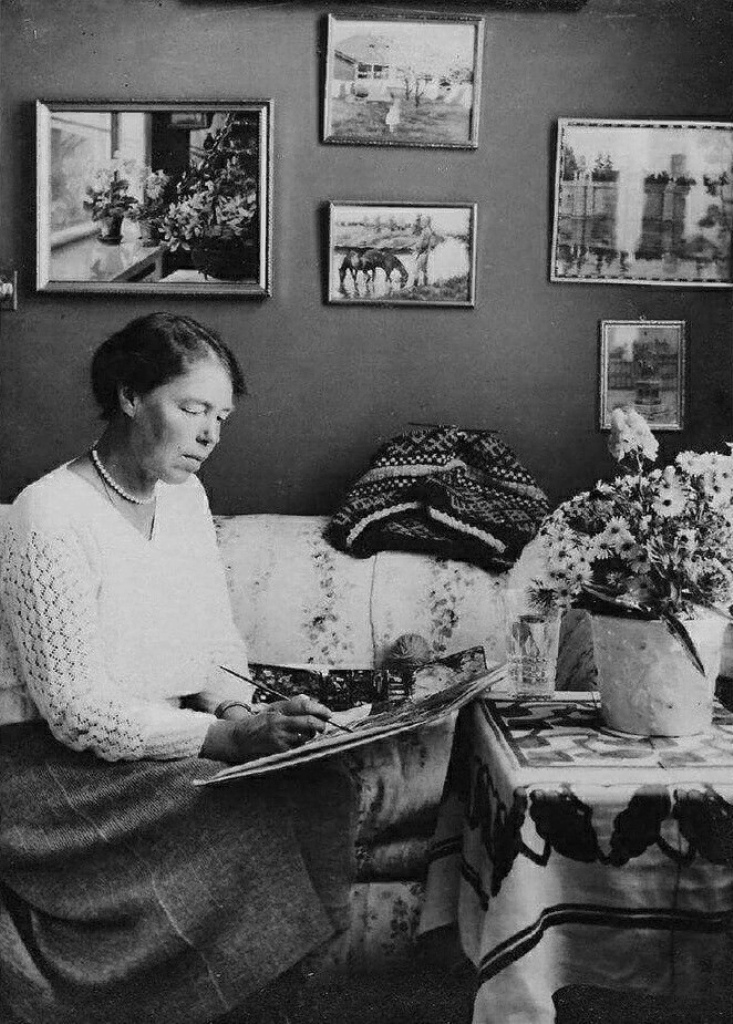
PHOTO: Grand Duchess Olga produced over 2,000 paintings during her lifetime

Olga, who had painted since residing in Denmark in the 1930s, began to paint still life and landscapes in watercolours. In October 1951, she had a showing at the Eaton’s Art Gallery, in Toronto, where her son, Tikhon was employed. She produced over 2,000 paintings in her lifetime. The sale of her paintings provided a source of income for her and her family. Works by Grand Duchess Olga are today in the private collections of HM Queen Elizabeth II, HRH the Duke of Edinburgh, HM King Harald of Norway, the Ballerup Museum, Denmark, and private collections in the United States, Canada, and Europe. Her paintings are highly sought after by collectors, each one fetching a hefty sum at auction.

By the end of 1951, Nikolai’s health was failing and he could no longer manage the work the farm entailed. So they sold the farm to Wolfgang von Richthofen, a relative of the WWI German flying ace, the Red Baron. They moved to 2130 Camilla Road in Cooksville, a suburb of Toronto [now amalgamated into the city of Mississauga] in 1952. Neighbours and visitors to the region took interest in the rumours of the last surviving Romanov grand duchess living in Canada, and visited her often.

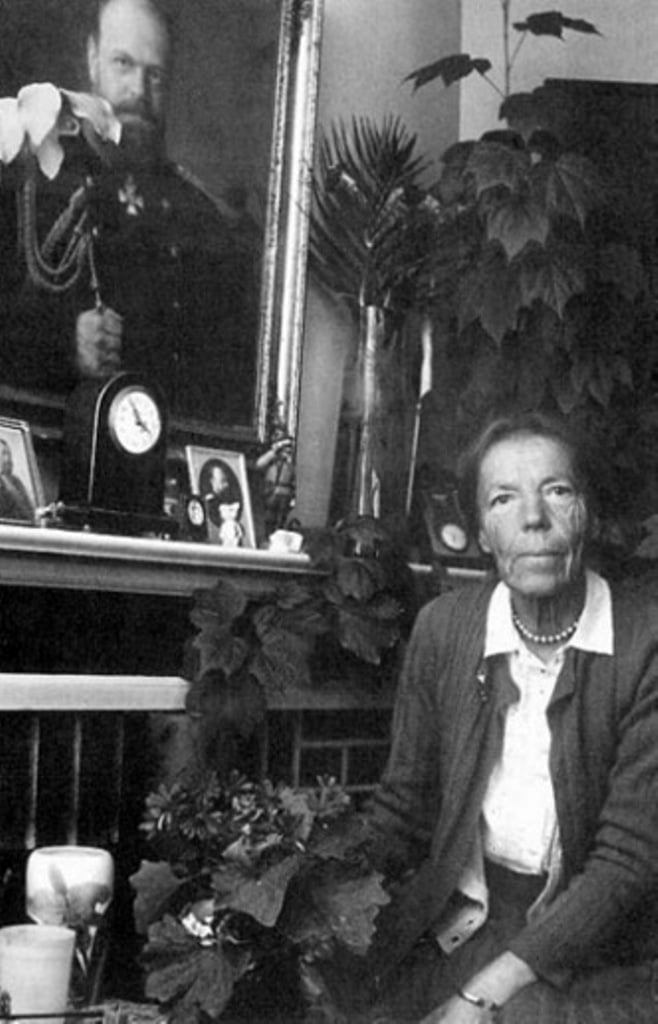
PHOTO: Grand Duchess Olga Alexandrovna poses in front of a portrait of her father Emperor Alexander III, which hung in her modest home on Camilla Road in Cooksville, Ontario, Canada

Their home was situated a half a mile (0.8 km) north of the thoroughfare named for King George’s wife, Elizabeth, the Queen Elizabeth Way (QEW). The Grand Duchess became good friends with Colonel Thomas Kennedy and it has been said that he took good care of her during her later years. In 1954, when Olga’s cousin Princess Marina of Kent [the daughter of Grand Duchess Elena Vladimirovna of Russia] came to visit, Camilla, a gravel road at the time, was paved from the QEW to Olga’s driveway for the royal visitor’s black limousine, which caused quite a stir in the neighbourhood. No doubt a lovely gesture from the Colonel.

Princess Marina of Kent was not the only royal who visited Grand Duchess Olga at her Cooksville home. Other royal guests included Princess Tatiana Konstantinovna of Russia, His Highness Prince Vassily Alexandrovich, Louis Mountbatten, 1st Earl Mountbatten of Burma, and his wife, Edwina Mountbatten, and Countess Mountbatten of Burma.

Grand Duchess Olga kept in touch with the Russian émigrés to the end of her life. Members of her old Akhtyrsky Hussar Regiment [she had been appointed honourary Commander-in-Chief of the 12th Akhtyrsky Hussar Regiment in 1901]. were now scattered all over the world, but she had not forgotten them. She had a remarkable memory and remembered many of the officers and men not only by their name and surname. In 1951, former officers and members of the famed Akhtyrsky Regiment gathered at her home to celebrate the 300th anniversary of the founding of the Royal Regiment. Thereafter, she became the patroness of the Association of Russian Cadets of Toronto.

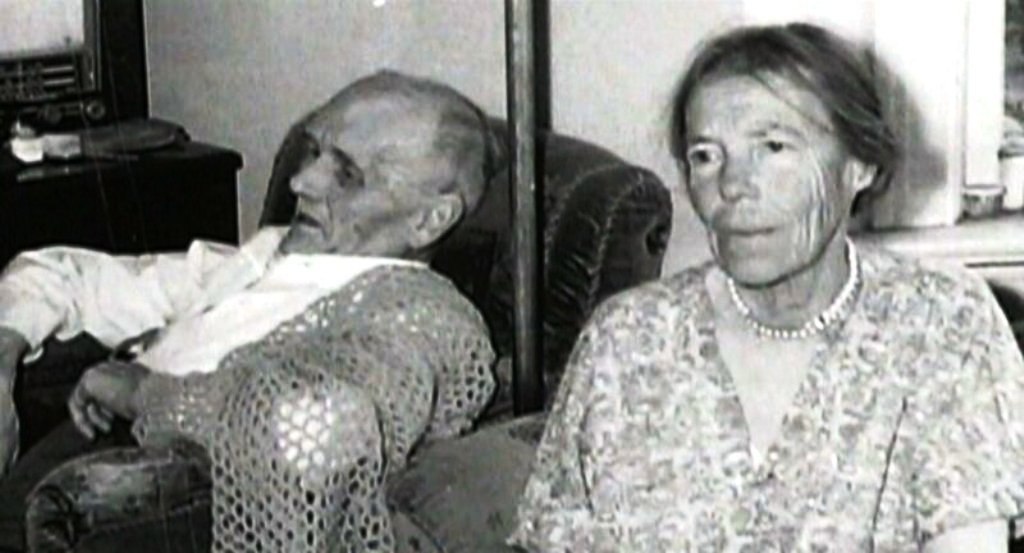
PHOTO: the last known photograph of Olga and Nikolai before his death in 1958. Olga outlived her husband by a little more than two years

By 1958, Nikolai was virtually paralysed, and on the morning of August 11, 1958, Olga woke to find that he had died in his sleep.

Prince Alexis Troubetzkoy spent the summer of 1959 in Hamilton, Ontario, where he had been commissioned as an officer with the Royal Canadian Navy (Reserve). He telephoned the Grand Duchess who graciously invited him to tea one Saturday afternoon. For days, he was nervous about meeting the youngest daughter of Emperor Alexander III. When he arrived at her home, he walked up the driveway to her modest bungalow, grasping a bouquet of roses with perspiring hands. Nervously, he knocked on the door and was greeted by “a little old lady dressed in a scruffy, unpretentious dress”, whom he assumed was the maid.

“Is the Grand Duchess at home?” he asked in Russian.
“And what do you want with the Grand Duchess?” came the woman’s reply.
“Well, I have an appointment with her” he said, now somewhat irritated.
“Well”, said the woman gravely, looking at him with feigned suspicion, “I don’t know. . .”. She paused, flashed a warm smile, and threw her arms around him, exclaiming with delight, “I am she!”

PHOTO: Grand Duchess Olga Alexandrovna, wearing the plain blue and white cotton dress and little blue straw hat, which she picked out specially for Queen Elizabeth II’s luncheon on the Royal Yacht Britannia, in June 1959

Prince Troubetzkoy visited the Grand Duchess several times that summer. It was during this time that the St. Lawrence Seaway was officially opened. The Royal Yacht Britannia brought Queen Elizabeth II and Prince Phillip to Canada. Olga, along with Tikhon were invited to a private luncheon on board the Britannia, which was docked in the Toronto Harbour. Olga was King George V’s first cousin, and thus a cousin to both Elizabeth, and her sister, Margaret. She knew both sisters well when they were small children.

The following day, Prince Troubetzkoy called on the Grand Duchess to find out how things went and what her impressions of the royal luncheon were.

“Ah”, she said, “it was a cozy evening, and it was great fun to have seen Elizabeth once again, after these many, many years”. Eyes glistening and bubbling with excitement, the Grand Duchess went on to tell the details of the evening and to give impressions of the now grown-up Elizabeth. She spoke of the two sisters as small girls and she carried vivid memories of them, one of whom she found “considerably less serious and playful” and the other “pensive and perhaps a bit less warm”. The Grand Duchess commented on a table which stood in one of the salons; it was taken from the Russian Imperial Yacht Standart and presented to King George V for the Royal Yacht. She remembered it.

What impressed Prince Troubetzkoy most of all was that Grand Duchess Olga had not been forgotten by the Queen. At the time of the Revolution, Olga together with her mother, the Dowager Empress, and sister, Xenia, found themselves safe in Denmark. The Empress died there in 1928 and Xenia settled in England at Hampton Court, living under the protection of King George V in a “grace and favour” residence. Olga’s life, however, evolved considerably less comfortably. She was married to a commoner and the couple made their way to Canada to begin life afresh as farmers. At the time of Prince Troubetzkoy’s visits, Olga was already a widow. In the years that lapsed between her visits with the child Elizabeth, no substantive contact had been maintained between the Court and the exiled Grand Duchess. But, despite the many years which had lapsed, it was family once more.

Grace Fraser Hancock also remembers Grand Duchess Olga. In 2004, she recalls, “I met Grand Duchess Olga shortly after she moved across the street from us in Cooksville. She was a very proud lady. I remember that she hated hats, and the year she was going to visit Queen Elizabeth and Prince Philip, she had to buy a hat. So I took her to Dixie Plaza and we bought a pale blue hat. When she got home, she told me that as she was leaving the royal yacht, she tossed her hat into the lake. She always wore pearls. She said that you had to wear them all the time because the pearls absorbed the oil from your skin and gave them a lustre. She took in stray dogs and always took them for walks and she wore rubber boots without socks and her feet used to get blue, so I bought her a pair of workmen’s socks to wear.”

DEATH & LEGACY

PHOTO: one of the last photographs of Grand Duchess Olga, with her biographer Ian Vorres (1924-2015) – The Last Grand Duchess: Her Imperial Highness Grand Duchess Olga Alexandrovna (1964)

Grand Duchess Olga became ill in 1960 and was diagnosed with cancer. After a brief stay in the Toronto General Hospital, she was taken in by her friends, Colonel Konstantin and Galina Martemianoff, who lived at 716 Gerrard Street in Toronto’s east end. Grace Fraser Hancock recalls, “I had heard that she was ill, so my friend Erma Large and I drove into Toronto to see her. She was living over a hairdressing salon. The lady she was staying with took us upstairs and she was lying on a small cot and she was very frail. We sat and talked to her for awhile and left.” Grand Duchess Olga died on 24 November 1960, in the tiny room of the Martemianoffs’ second floor flat with a picture of her husband by her side. This scenario gave rise to the rumour that Olga died penniless, but such was not the case.

VIDEO: click on the image above to watch a newsreel of Grand Duchess Olga Alexandrovna’s funeral in Toronto – duration: 45 seconds

On 30 November Grand Duchess Olga lay in state in Christ the Saviour Cathedral in Toronto. The Union Jack and Russian imperial standard hung from each corner of the platform where the coffin sat. Her funeral was attended by more than 500 mourners. Wreaths were sent by King Frederik IX and Queen Ingrid of Denmark, King Olav V of Norway and Queen Elizabeth II of Great Britain; imperial guardsmen from the 12th Hussars Ahtyrsky Regiment were the pallbearers. She was buried next to her husband Nikolai, in the Russian Section of York Cemetery. The Grand Duchess’ friend, Bishop John of San Francisco, sprinkled Russian earth on her grave. The Grand Duchess was the soul and the heart of the Toronto parish, and her death in 1960 created a void within the Russian community, leaving none of the parishioners untouched and felt by many as a personal tragedy.

PHOTO: The final resting place of Grand Duchess Olga Alexandrovna in York Cemetery, Toronto, Canada

After her death, her sons closed down her house on Camilla Road and sold it and all her possessions that she treasured from her days in Russia. Her estate was estimated to be worth around $200,000. The combined worth of the items that Olga managed to smuggle out of Russia in today’s dollars would have been estimated at more than $1.2 million. Guri died in 1984 and Tikhon in 1993.

A bronze plaque was unveiled on August 25, 1996, at her grave site in York Cemetery, in Toronto, in dedication of her memory, while more than 200 family members, friends and newsmen looked on. It is interesting to note, that Mimka, Olga’s devoted companion and former maid is buried in a simple grave nearby.

PHOTO: Olga Alexandrovna – the last Gand Duchess of Russia

During her life in exile, Grand Duchess Olga never lived with any delusions of grandeur or dreams of a Romanov return to power. She lived a remarkable life, enduring more than her share of personal heartaches. She experienced an attempted assassination of her brother Nicholas in 1891, the death of her dear father in 1894, the death of her brother George in 1899, a war between Russia and Japan between 1904-1905, adultery in 1906, a nervous breakdown in 1913, the death of her governess also in 1913, separation and divorce in 1916, serving as a nurse in an Army hospital in Kiev during World War I (1914-1918), an attempted assassination on her own life, a Revolution that brought an end not only to her brothers reign as Emperor, but also an end to the monarchy in her beloved homeland, exile from both Russia and Denmark, the murders of both her brother Michael and Nicholas and his entire family in 1918, the death of her mother in 1928, the death of her beloved husband, Nikolai in 1958 and the death of her sister Xenia in April 1960. Her final tragedy was the cancer that took her life eight months later in November 1960. Despite a lifetime of relentless tragedy that followed her during her 78 years, she endured each with noble fortitude. She was once and always, a Grand Duchess of Russia.

***

COMING SOON!

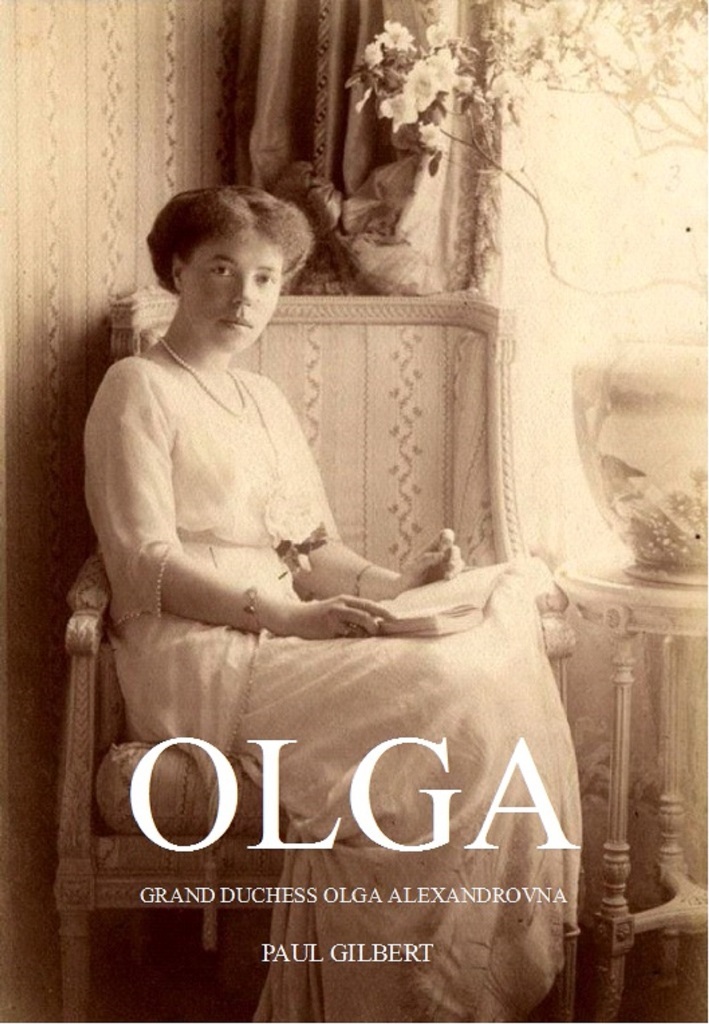
OLGA: GRAND DUCHESS OLGA ALEXANDROVNA

Paperback. 148 pages. Richly illustrated with more than 100 black and white photos

This book is a tribute to one of the most beloved and respected members of the Russian Imperial Family: Grand Duchess Olga Alexandrovna (1882-1960).

The first part explores her Russian, Danish and Canadian years respectively; the second part explores her love of painting – Olga painted more than 2,000 in her life; the third is about her work and dedication as a nurse during WWI; the fourth is an interview with her daughter-in-law Olga Kulikovsky-Romanoff (1926-2020), who shares her husband Tikhon’s anecdotes and details about his mother: the Grand Duchess of Russia.

NOTE: This title will be made available on AMAZON in 2023, publication date yet to be announced.

© Paul Gilbert. 13th June 2023

Memorial plaque to Empress Alexandra Feodorovna installed in Istra

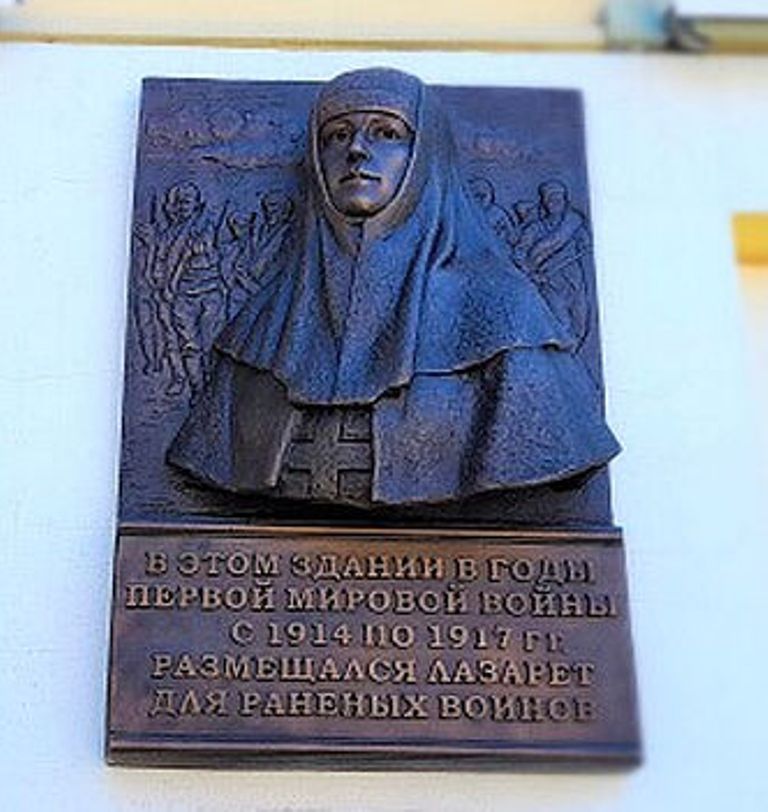
PHOTO: view of the bronze memorial bas-relief of Empress Alexandra Feodorovna

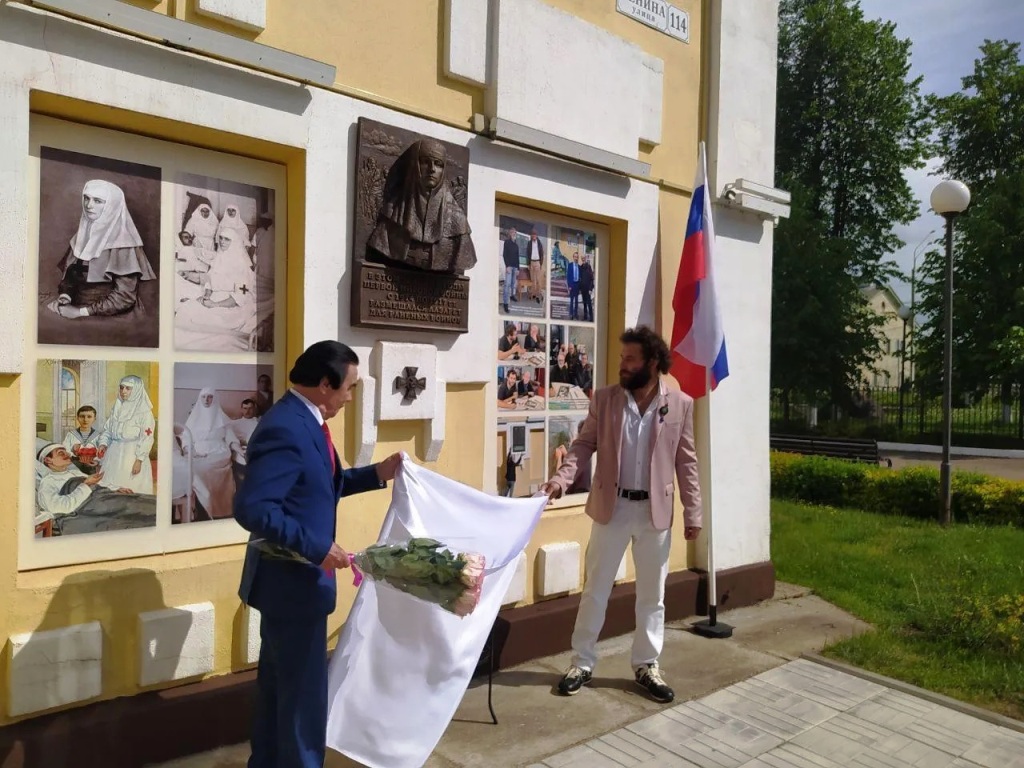
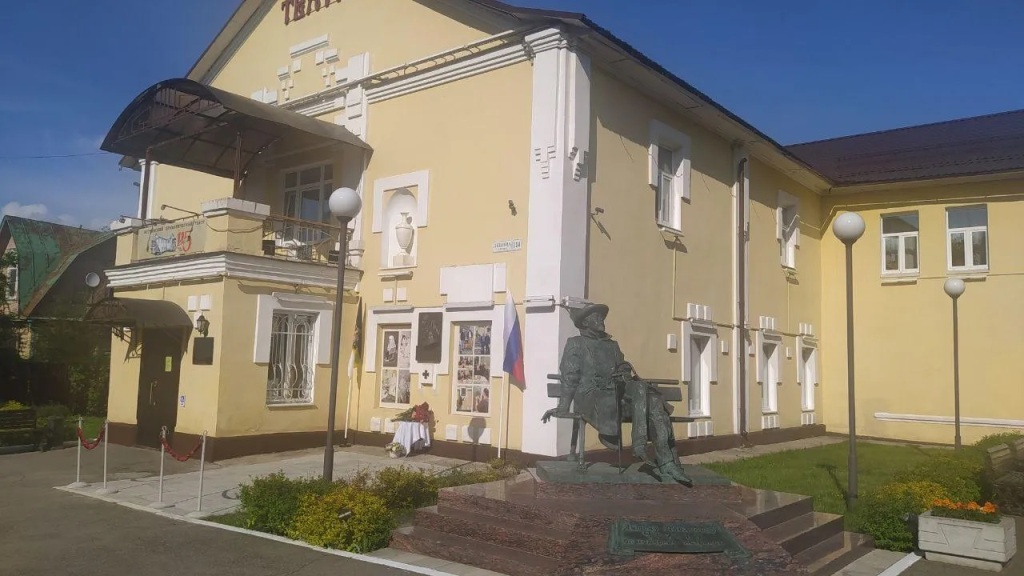
On 25th May 2023, a bas-relief plaque depicting Empress Alexandra Feodorovna was installed on the façade of the Drama Theatre, in Istra, situated 40 km northwest of Moscow.

During the First World War, the building served as an infirmary for wounded Russian soldiers, from September 1914 to the end of 1917.

The bronze bas-relief was made by Moscow sculptor Philip Trushin, and financed by the academician and philanthropist Vladimir Yatsuk.

PHOTO: Moscow sculptor Philip Trushin (right) unveils his bas-relief of Empress Alexandra Feodorovna

The rite of consecration of the memorial plaque was performed by the clergyman of the Resurrection New Jerusalem Stavropegic Monastery, Father Paisius.

The memorial plaque, depicts Empress Alexandra Feodorovna, dressed in the uniform of a sister of mercy, set against the background of soldiers of the Russian Imperial Army.

During the First World War, Alexandra Feodorovna organized a whole network of infirmaries, which included 85 institutions for wounded soldiers in Tsarskoye Selo, Pavlovsk, Peterhof, Sablin and other places. Many of the infirmaries were built at the Empress’s own expense.

PHOTO: view of the former infirmary for wounded Russian soldiers in Istra

© Paul Gilbert. 12 June 2023