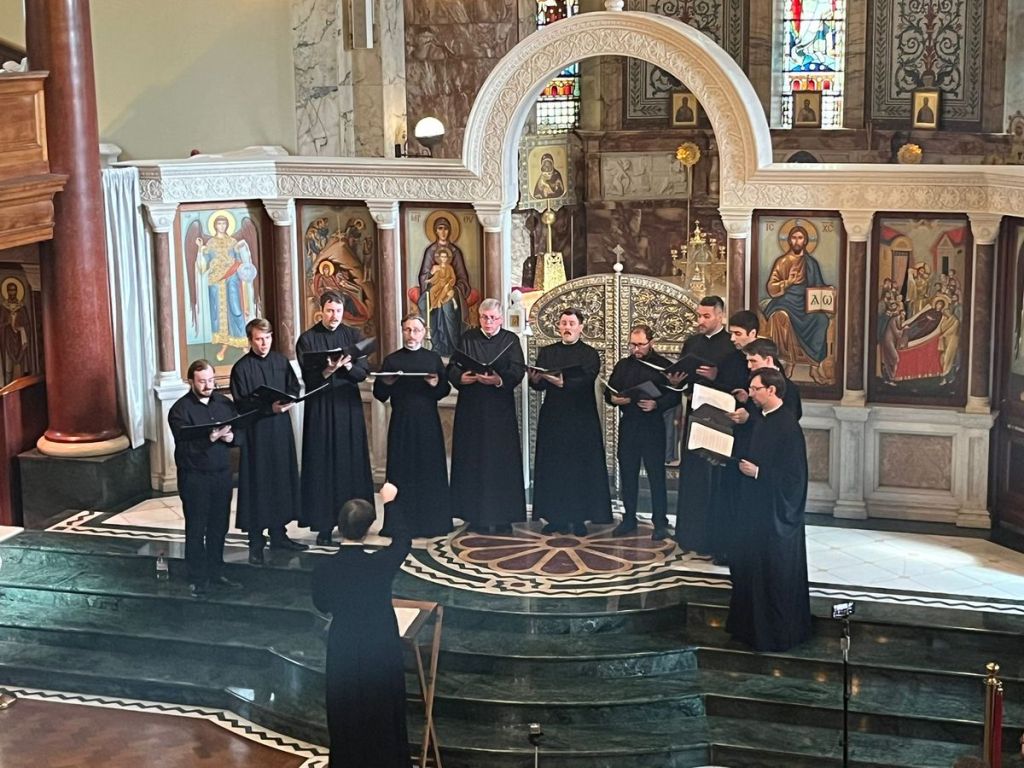
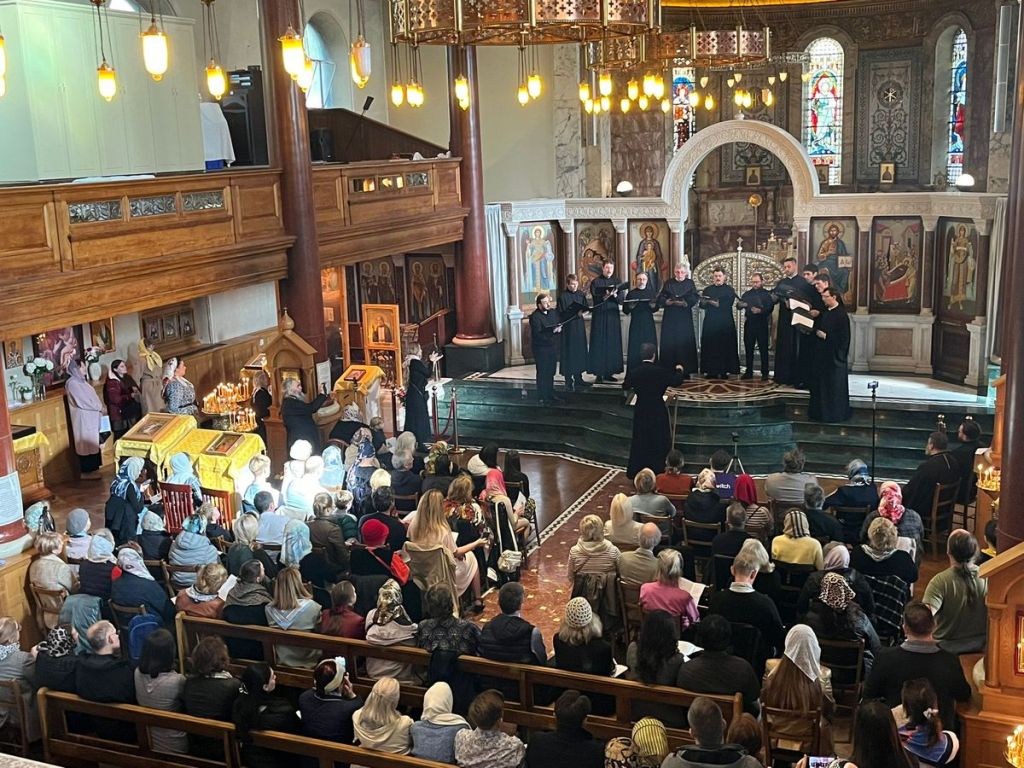
On 24th October 2024, with the blessing of Bishop Matthew of Sourozh, the Tsar Nicholas II Men’s Choir performed a concert of sacred music at the Cathedral of the Dormition in London, England.
The creative team under the direction of Adrian Fekula unites choir directors and singers from the USA, France and Great Britain. The choral ensemble aims to preserve the heritage and traditions of Russian Orthodox music abroad, focusing on the works of Russian church composers of the 20th century.
During the Divine Liturgy, which was celebrated by the Secretary of the Diocese of Sourozh, Archpriest Dimitry Nedostupenko, assisted by Priest Vasily Gandzyuk, Protodeacon Vadim Santsevitch, Protodeacon Ioan Sîlnic and Deacon Alexander Kapustin, a mixed group of singers sang, which included the choir of the Dormition Cathedral and the singers of the Tsar Nicholas II choir. The choirmaster was Dmitry Tugarinov.
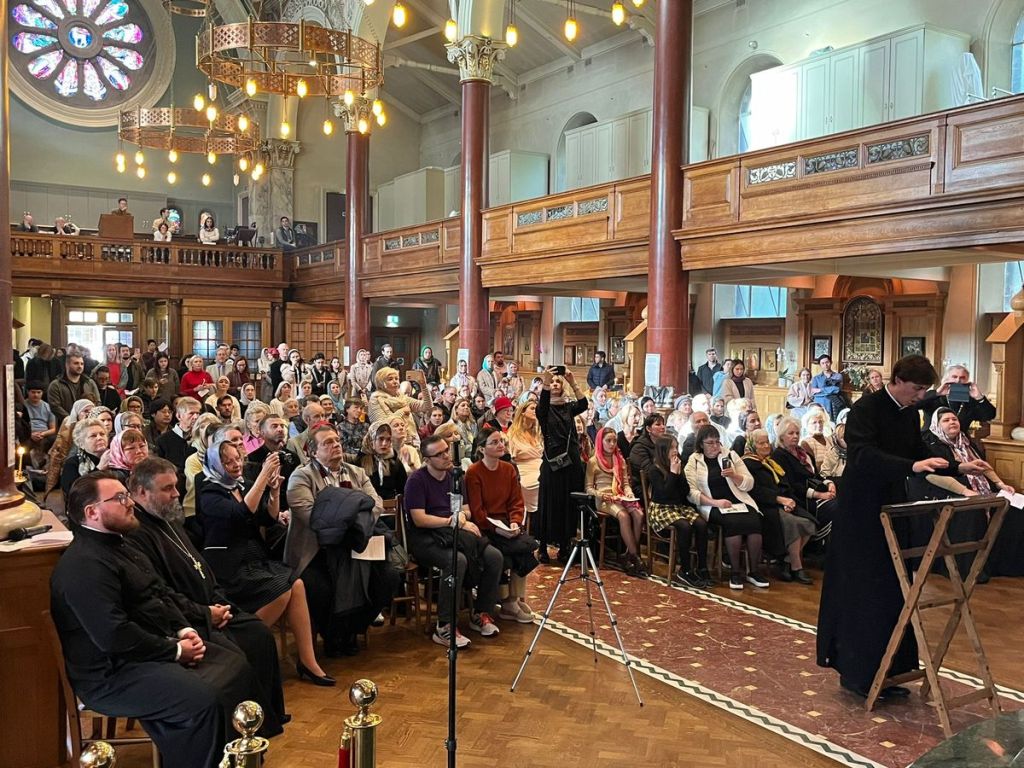
After the divine service, a concert was held in the church. Archpriest Dimitry Nedostupenko, addressing the participants of the performance, warmly greeted the guests on behalf of the Rector of the Dormition Cathedral, His Grace Bishop Matthew of Sourozh, and thanked them for the opportunity to hear the masterpieces of the Russian church singing, reports the diocesan website.
The choir’s program included works by famous Russian church composers B. Ledkovsky, S. Taneyev, M. Ippolitov-Ivanov, A. Nikolsky, N. Cherepnin, N. Golovanov, P. Chesnokov, N. Kedrov, S. Trubachev, N. Rimsky-Korsakov, and A. Kastalsky.
The concert was attended by parishioners of the London Cathedral and parishes of the Diocese of Sourozh, who came from various cities of Great Britain. Among those gathered were a large number of British people interested in Russian sacred music.
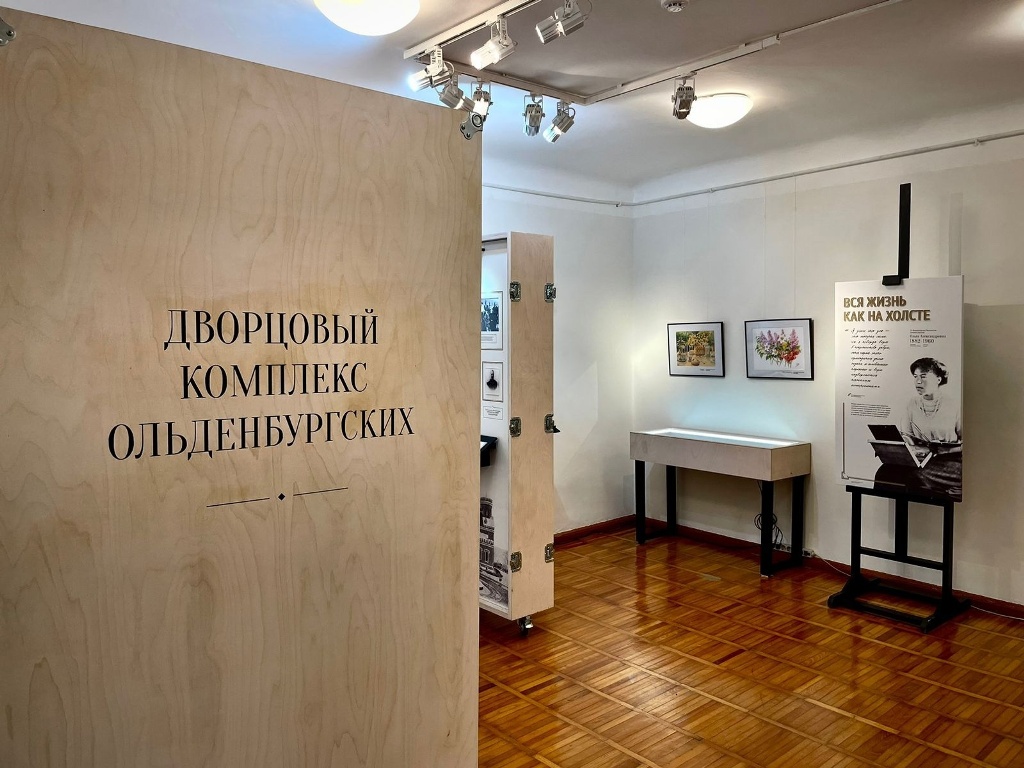
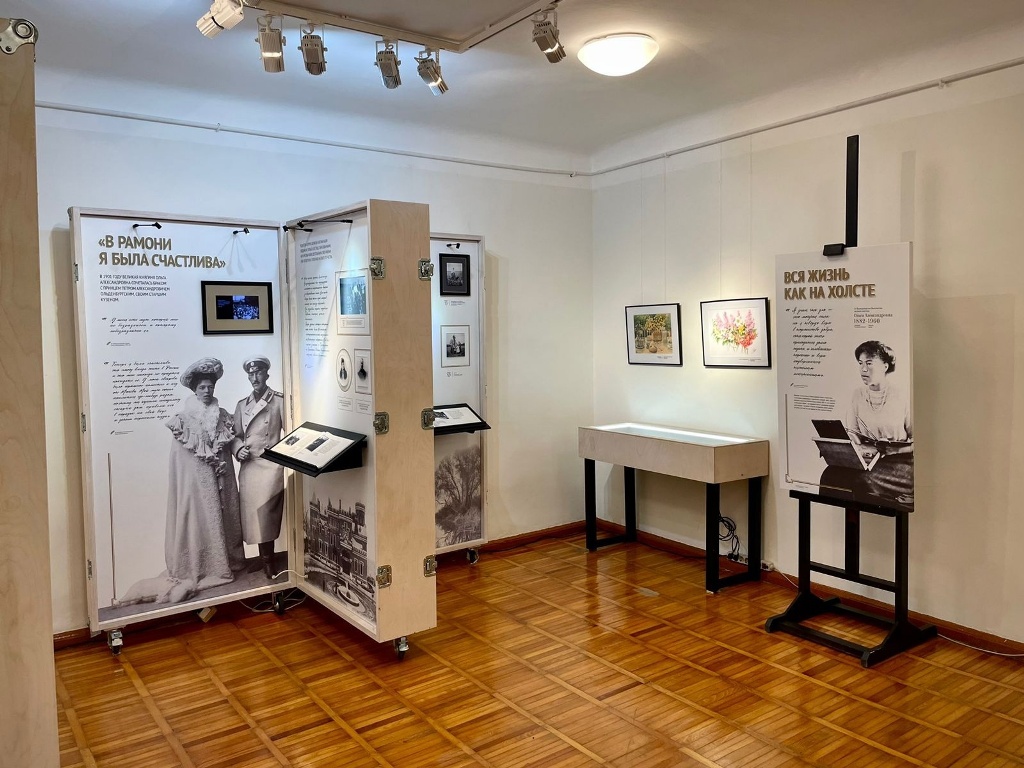
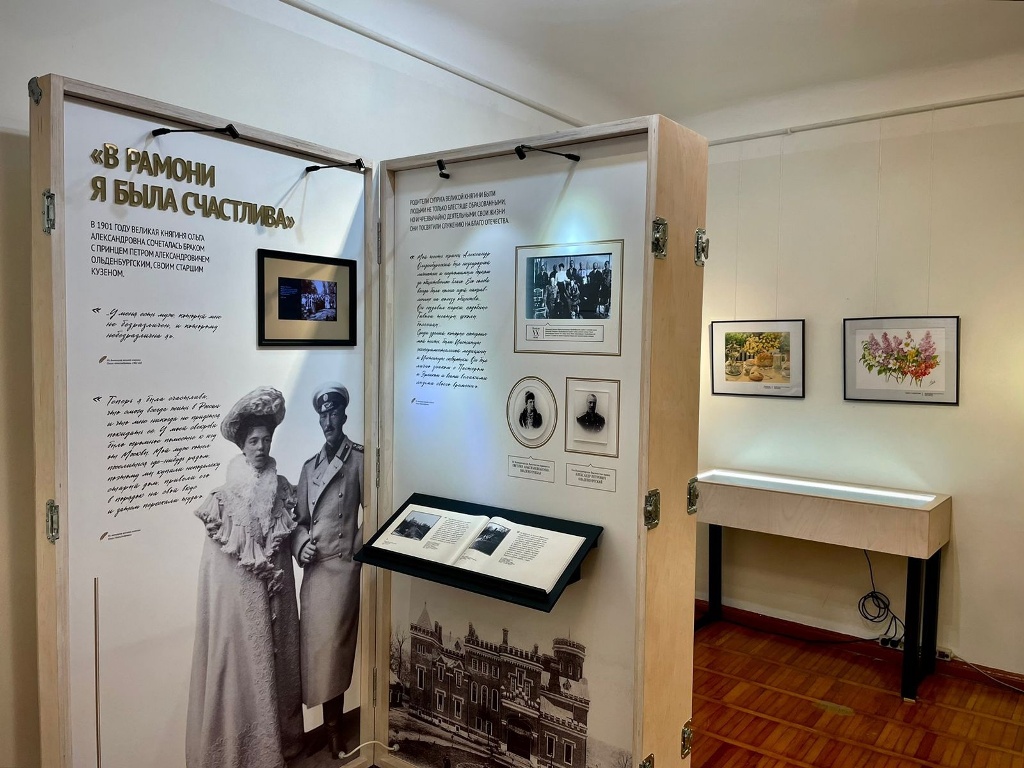
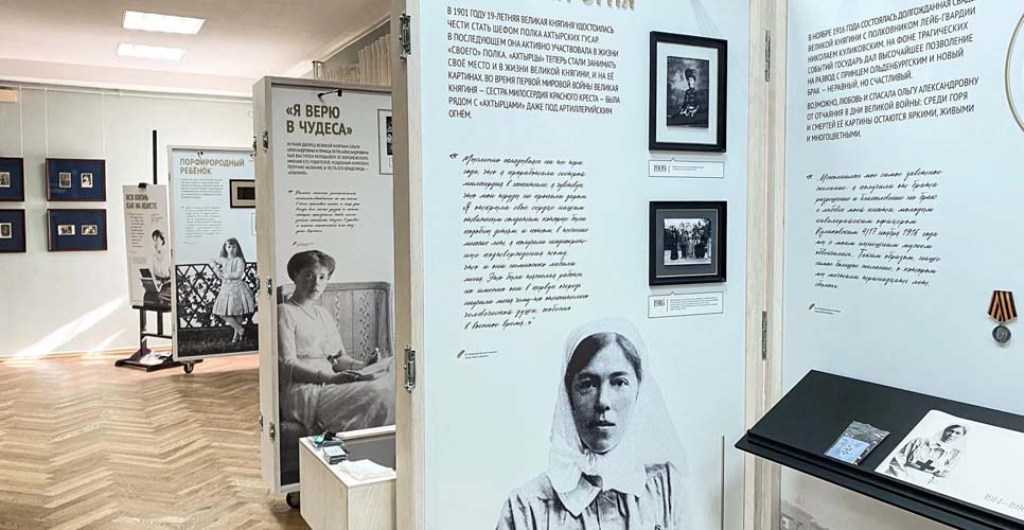
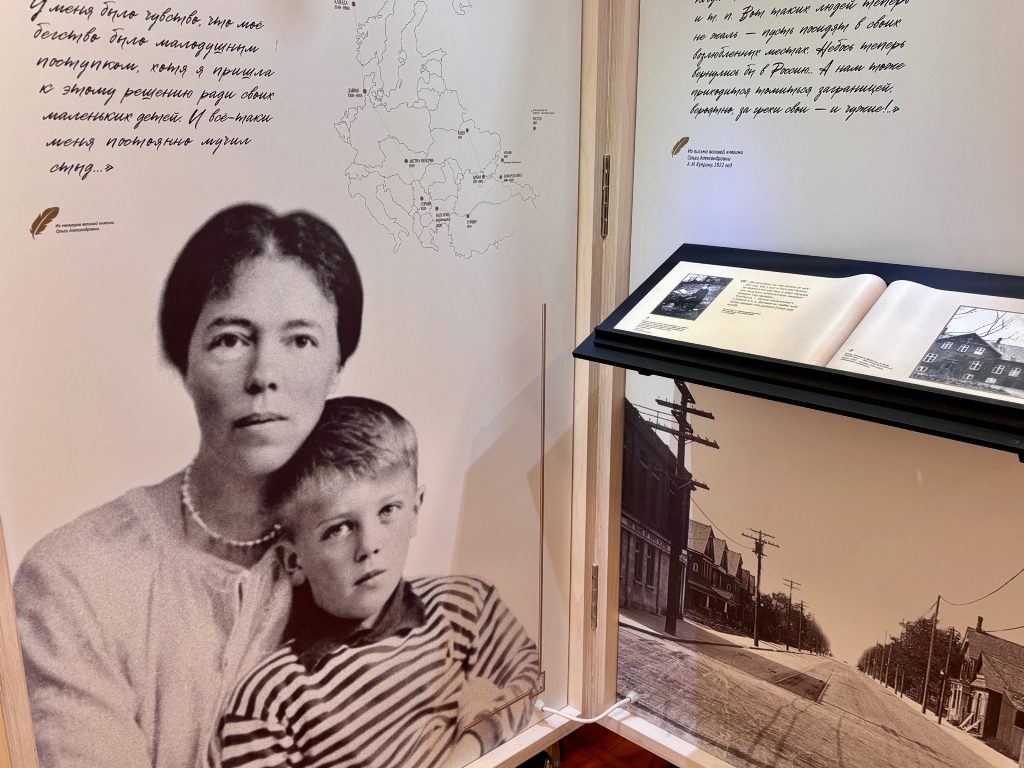
On 24th October 2024, a travelling exhibition dedicated to Grand Duchess Olga Alexandrovna, opened at the Pozhalostin Art Museum in Ryazan[1]. The exhibition is timed to the 140th anniversary of the birth of the last grand duchess of Russia, who was born on 13th June (O.S. 1st June) 1882, in the Cottage Palace, situated in the Alexandria Park at Peterhof.
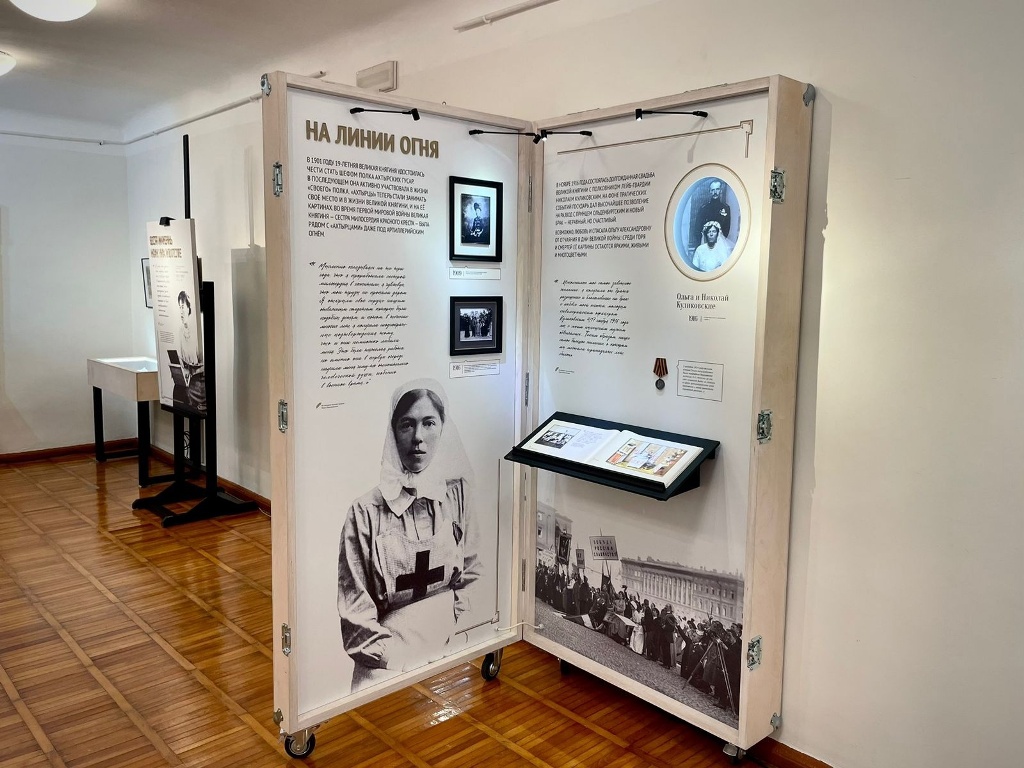
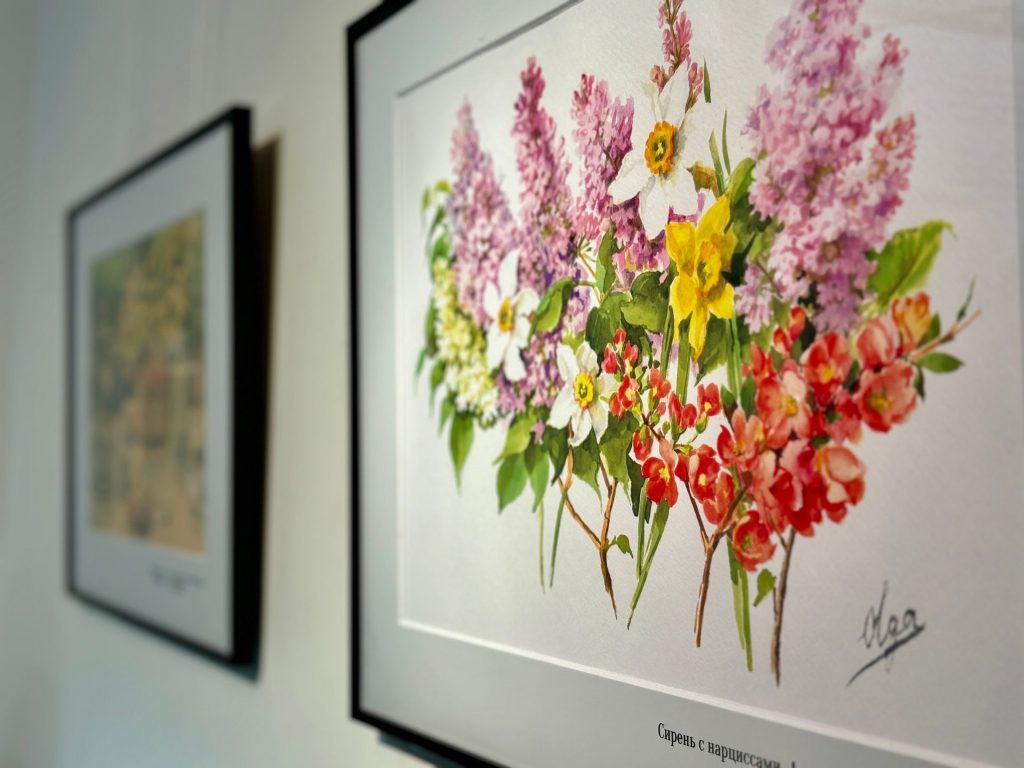
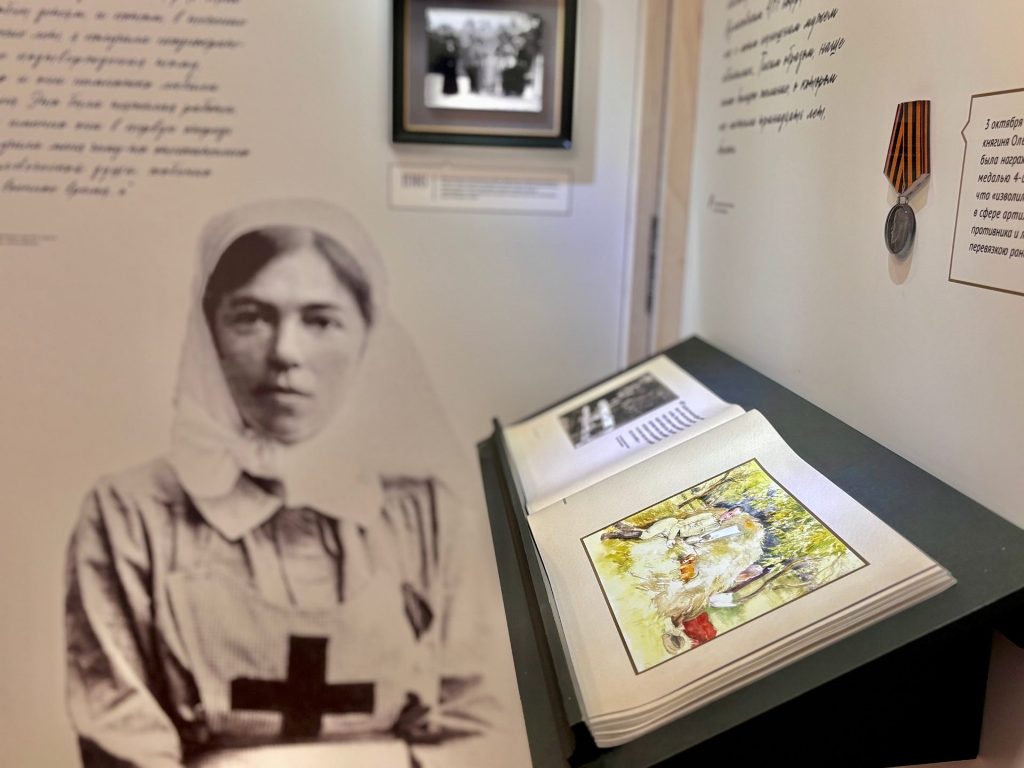
The youngest daughter of Emperor Alexander III and Empress Maria Feodorovna, Grand Duchess Olga Alexandrovna was a philanthropist of numerous schools and hospitals, during the First World War she went to the front as a nurse. In addition, she was a gifted artist. Throughout her life, she painted more than 2000 watercolours.
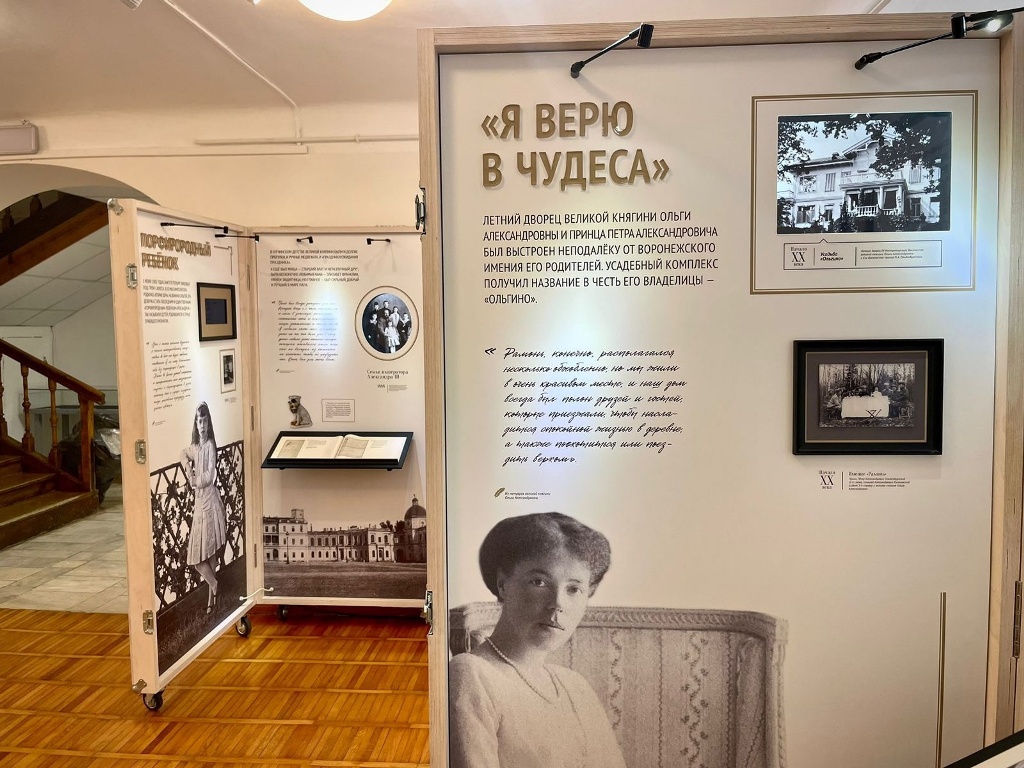
Some of the grand duchess’s watercolours are on display at the exhibition, painted in different years of her life. These are complemented by photographs, letters, diary entries and memoirs from the family’s personal archive. Among her letters on display, are those written to her brothers: Grand Duke Mikhail Alexandrovich and Emperor Nicholas II. The exhibits are from the funds of the Historical and Cultural Center of the Oldenburg Palace Complex, located in the village of Ramon[1], Voronezh Region.
The traveling exhibition has already visited the cities that were dear to the heart of the grand duchess. Among them are Gatchina (where Olga spent her childhood), Borovichi (a place close to the estate of her first husband Peter Alexandrovich[2]), Livadia in the Crimea (where Olga lived with her mother after the February 1917 Revolution), as well as the Mirsky Castle in Belarus (the Imperial Family was in close contact with the family of princes Svyatopolk-Mirsky).
The exhibition runs at the Pozhalostin Art Museum in Ryazan until 1st December 2024.
NOTES:
[1] Grand Duchess Olga Alexandrovna has a close connection with Ryazan and Ramon. It was here, near the Oldenburg Estate, “Ramon” (in the Voronezh region), that she had her own villa, called “Olgino” after the local town. She subsidised the village school out of her own pocket, and established a hospital. Sadly, the villa has not survived to the present day.
[2] On 27th July 1901, Grand Duchess Olga Alexandrovna (1882-1960) married her first husband Duke Peter Alexandrovich of Oldenburg (1868-1924), in the family church in Gatchina Palace. In 1915, the couple separated; Olga had no children from this marriage. On 27th August 1916, Emperor Nicholas II approved the definition of the Holy Synod, which recognized her marriage to Prince of Oldenburg dissolved.
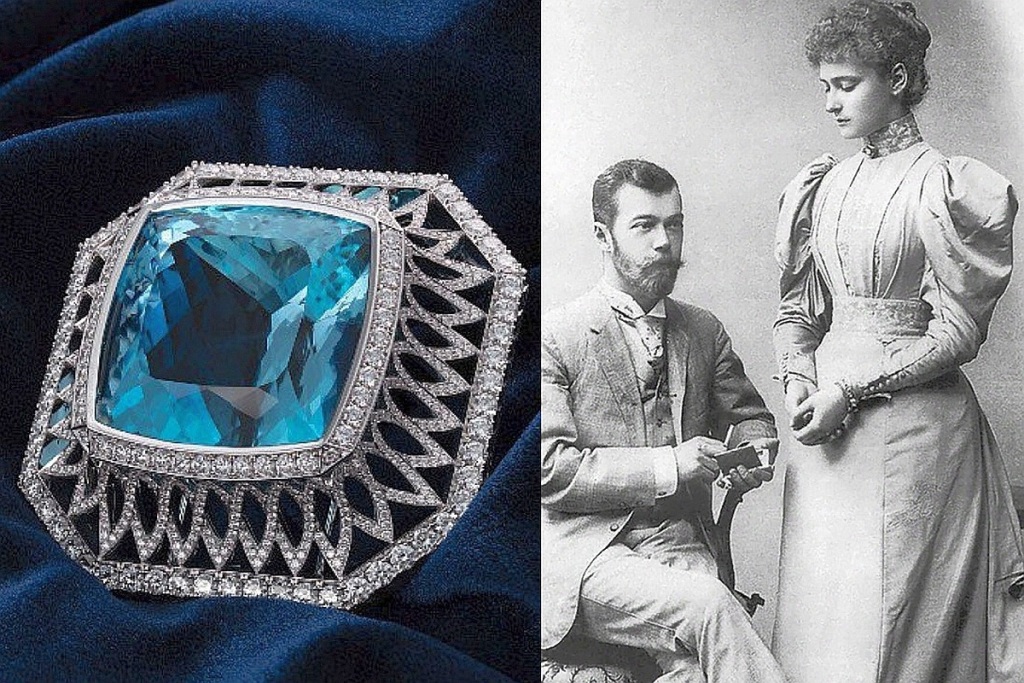
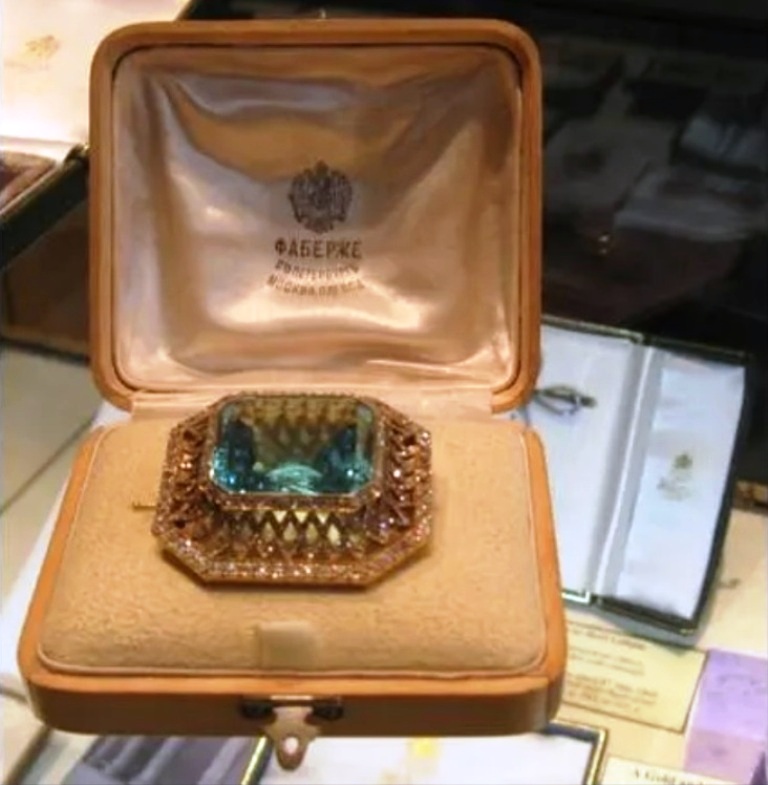
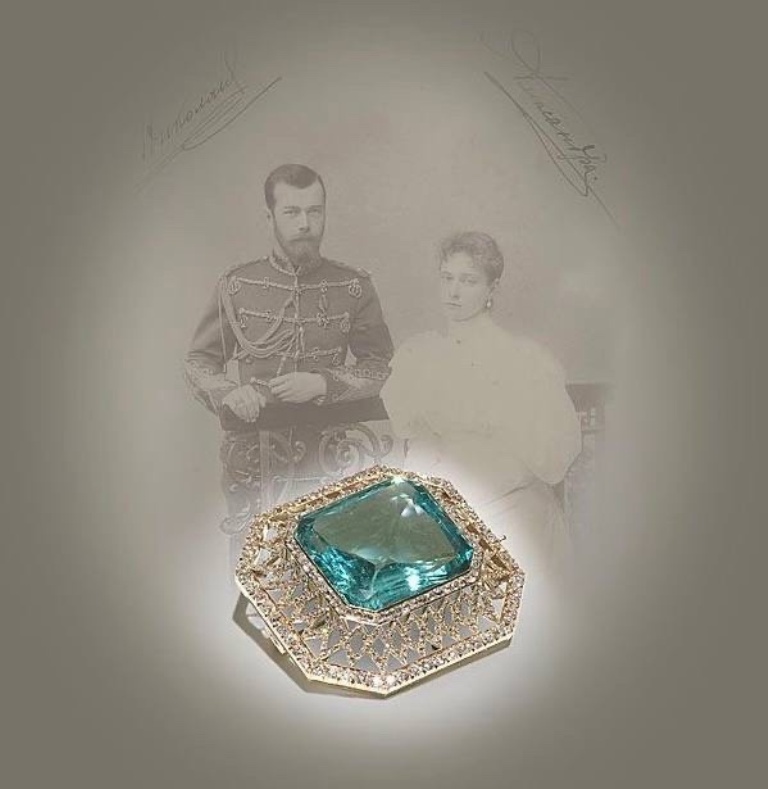
On 18th October 2024, a diamond aquamarine brooch originally created by Carl Fabergé, and recently recreated by the Russian jewelery firm CHAMOVSKIKH, was presented at the Investing in Jewelry Art and Collectibles exhibit at the Moscow Financial Forum. The brooch is dedicated to the 130th anniversary of the wedding of Nicholas II and Alexandra Feodorovna in 1894.
The famous Russian jeweler has recreated a historical piece of jewelry — a brooch with a 114-carat Siberian aquamarine with a trellis border of rose diamonds, that Tsesarevich Nicholas Alexandrovich (future Emperor Nicholas II) purchased from Carl Fabergé as a wedding gift for his bride Grand Duchess Alexandra Feodorovna (née Princess Alix of Hesse and by Rhine, future Empress Alexandra Feodorovna).
The receipt and the date of purchase have been preserved – 10 August, 1894, (three months before their wedding), for 1100 rubles. The receipt was signed by Henrich Wigström (1862-1923), one of Fabergé’s most important workmasters.
The brooch was presented to Princess Alix on 10th August 1894. The wedding was held on 27th (O.S. 14th) November 1894. The ceremony took place in the Grand Church (the home church of the Imperial Family) of the Winter Palace in St. Petersburg, the service was presided over by the Archpriest Ioann Yanyshev (1826-1910).
Plans for the wedding, had originally been set for the spring of 1895, however, the death of Emperor Alexander III put an end to such plans. Due to court mourning, there was no reception, nor honeymoon.
During the Soviet years, the Empress’s favourite brooch was sold to a foreign buyer (see below), repeating the fate of many other Russian-made jewelry masterpieces.
The following video explores the history of Fabergé’s diamond brooch with Siberian aquamarine and it’s recreation by modern-day masters of the CHAMOVSKIKH Jewelery House.
CLICK on the above image to watch the VIDEO Duration: 3 minutes, 4 seconds. Language: Русский / Russian
The brooch was later purchased by the famous British jeweller Emanuel Snowman (1886-1970) during a trip to Moscow during the Soviet years, and it is among the Tsars’ confiscated treasures. Apparently sewn into clothing, it accompanied the Tsar and his family when they were sent to Yekaterinburg. After the murder of the Romanovs, the brooch, along with pieces of jewelry, was on the list of personal effects found with the bodies.
For a long time, nothing was known about Alexandra Feodorovna’s aquamarines. But in 2014, the Empress’s aquamarine tiara surfaced at Christie’s closed auction. The organizers of the auction kept the names of the seller and the buyer secret, it was only indicated that the jewelry was the property of one of the European noble families. And the original brooch was bought and stored in the British Wartski Gallery.
Following the jewelry exhibition in Moscow, the brooch with a 114-carat Siberian aquamarine with a trellis border of rose diamonds was handed over to the Gokhran of the Russian Federation.
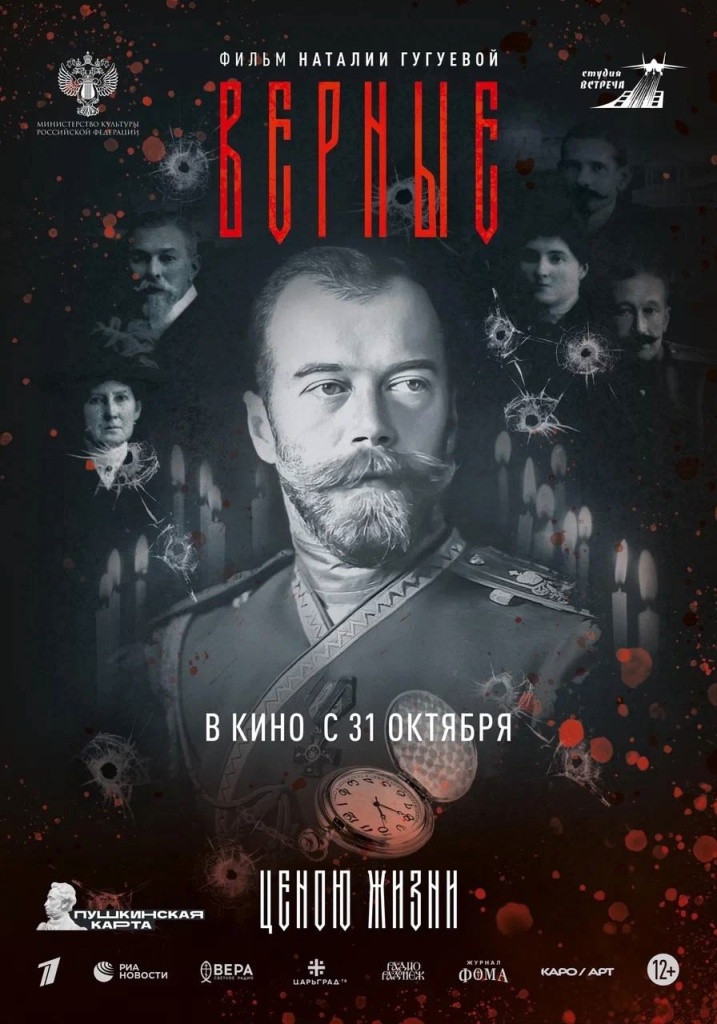
On 29th October 2024, the premiere of the documentary-film «Верные» / The Faithful will take place at the Oktyabr Cinema, located on Novy Arbat in Moscow. This fascinating new 70-minute Russian language documentary explores the lives and fates of the faithful retainers who followed the Imperial Family into exile.
The first part of the film, directed by Natalia Gugueva, presents a chronicle of the life of Emperor Nicholas II and his family, based on materials from the Russian State Archives and the personal photo archives of the descendants of the Imperial Family’s retainers. In addition, rare film footage taken outside the Ipatiev House in Ekaterinburg, will be seen for the first time.
Loyal to the Tsar, faithful to the oath, true to themselves
When Tsar Nicholas II abdicated in March 1917, 43 people voluntarily followed him into exile. Among them there was not a single relative of the Tsar and Tsarina.
All 43 loyal subjects were dissuaded, and more than once, from their stubborn decision to remain with the Tsar and his family, first in the Alexander Palace, then into exile to Tobolsk, and then Ekaterinburg. Not only did they share the trials and tribulations of the Imperial Family, many of them paid for their choice with their lives.
The fate of the retainers of Nicholas II is told by their descendants, as well as the descendants of the Bolshevik guards in the Ipatiev House, where the brutal murder of the Imperial Family and four of those loyal to them took place. Others were murdered in other locations in the Urals.
CLICK on the above image to watch the TRAILER Duration: 1 minute. Language: Русский / Russian
The film «Верные» / The Faithful, was created by the Vstrecha Studio with the support of the Ministry of Culture of the Russian Federation and Channel One JSC and with the assistance of the Yekaterinburg Diocese.
The film has already received an award at the 35th Open Documentary Russian Film Festival. The documentary-film will be released in 200 cinemas in more than 40 cities across Russia on 31st October 2024.
NOTE: Sadly, the sanctions imposed by Western nations against Russia have also affected cultural exchanges, including exhibitions, films and documentaries, book rights, ballet and opera events, etc. As a result, it may be some time before an English language version of this documentary is made available. Perhaps, it will made available on YouTube, with English subtitles? It certainly looks like it will be an interesting documentary, one of immense historic importance – PG.
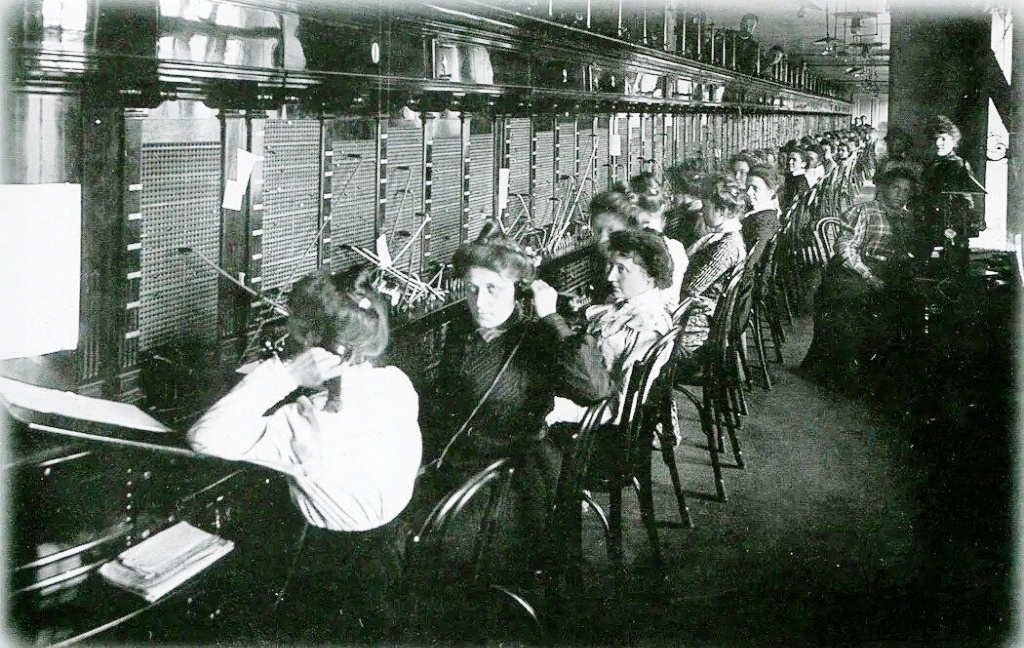
PHOTO: St. Petersburg City Telephone Exchange, 1914
During his 22+ year reign (1894-1917), Emperor Nicholas II attached great importance to the development of all forms of communication within Russia. This included the rapid development of postal, telegraph and telephone communications, all of which he believed contributed to economic development of the Russian State.
In 1892 – two years before Nicholas II ascended the throne – there were only 1,250 telephone subscribers in the Russian Empire, and by 1913, there were more than 244,000 subscribers! Some 71.3% of subscribers lived in cities, primarily St. Petersburg and Moscow, the remaining 28.7% lived in suburban and rural areas.
Telephone communications were being developed in cities and towns, which was a great boon for local businesses. In addition, internal telephone networks were being developed, long-distance and international lines were laid.
In 1906, the length of telephone wires in the Russian Empire was 236,000 km, and by 1913, the length had increased to over 1 million km. Thus, between the period from 1906 to 1913, more than 800,000 km of telephone wires had been laid throughout the Russian Empire.
In 1897, the first telephone factory opened in Russia, which produced thousands of telephones and several hundred switchboards annually. During the same year, telephone communication appeared in Vladikavkaz, in 1904 – in Omsk, in 1906 – in Novonikolaevsk (Novosibirsk). The development continued after 1910. In 1911, telephone communication came to Yakutsk and Asian Bishkek.
By 1910, a total of 314 cities located in various regions of the Russian Empire, from the Asian deserts and the Caucasus Mountains to the central regions and the Far North, were receiving telephone service.
Telephones in the Imperial Residences
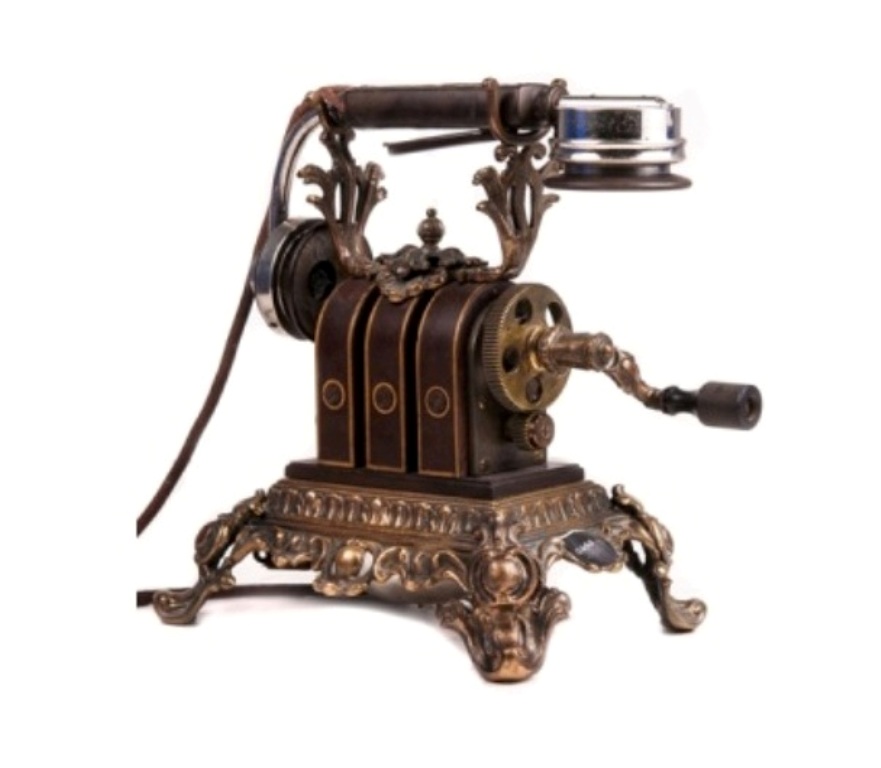
PHOTO: Mix & Genest, model No 5672. Germany. 1900s. Belonged to Empress Alexandra Feodorovna, wife of Nicholas II.
The Alexander Palace, Tsarskoye Selo
In the 1890s, a telephone cable was laid into the Alexander Palace. Two rooms located in the basement of the palace were allocated for the palace telephone exchange.
Officers of the Palace Police were on duty at the telephone exchange, they listened to all telephone conversations. In addition, there were two telephone booths for personnel in the basement.
In total, there were about two dozen telephones in the Alexander Palace during the reign of Nicholas II. It is interesting to note that there were no telephones in either the Working Study and New Study of Nicholas II. The only telephone set in the Tsar’s chambers was in the valet’s room, which was located on the mezzanine, above the Emperor’s private rooms.
Empress Alexandra Feodorovna had several telephones – two in the Rosewood (aka Pallisandar) Drawing Room and one each in the Lilac (aka Mauve) Drawing Room and the Imperial Bedroom. The telephones in the Rosewood Drawing Room, were installed on a cabinet near the back wall.
The Empress could use the local St. Petersburg Telephone Exchange (see photo at top of page) to communicate directly with the Headquarters in Mogilev, where Nicholas II spent a long time during the First World War. It was in this room that on 8th March 1917, General Lavr Georgiyevich Kornilov placed Alexandra Feodorovna and her children under house arrest at the Alexander Palace.
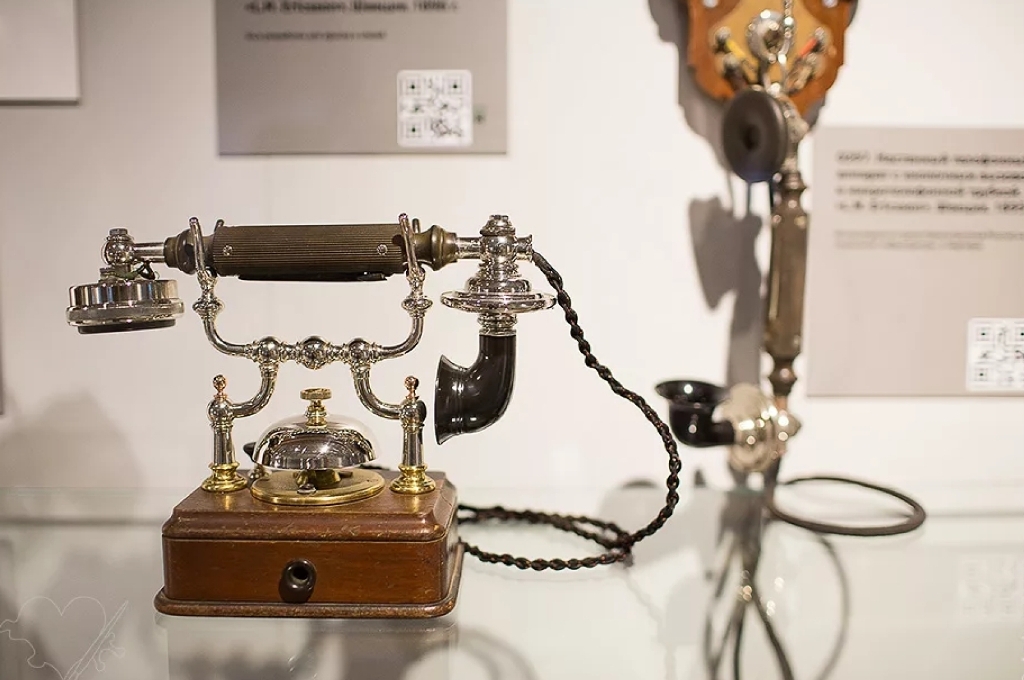
On the second floor of the Alexander Palace, there was only one telephone, located in the passage hall leading to the children’s rooms. This telephone featured a bas-relief of a small child holding a phone on the receiver device. In 1917, the telephone was taken abroad by one of the courtiers of the Imperial Family.
In addition, telephones were installed in the Adjutant’s Wing, and the Commander of the Combined Guards Regiment. This indicates that great attention was paid to the issues of operational communication in the palace.
In 1904, the Pavilion on the Children’s Island, situated in a small lake near the Alexander Palace, was wired for electricity, a telephone was installed with a direct line to the palace.
With the outbreak of World War I, the Imperial Train became both a travelling residence for the Emperor, as well as a military field office, equipped with telephone and telegraph communications. A telephone network was installed for communication between all cars, each carriage having it’s own telephone.
From the summer of 1905 on, Anna Vyrubova centered her life on the Empress Alexandra and became a part of the Tsar’s family. In order to be closer to the family, Anna moved into a summer home at Tsarskoye Selo, just two hundred yards from the Alexander Palace, which included a telephone, which was connected directly to the palace switchboard.
The Grand Kremlin Palace, Moscow
Nicholas II, like his father preferred the old Russian capital to the new capital. According to French historian Marc Ferro (1924-2021): “Nicholas II preferred Moscow to St. Petersburg because the old city embodied the past, whereas St. Petersburg represented modernity, the Enlightenment and atheism.”
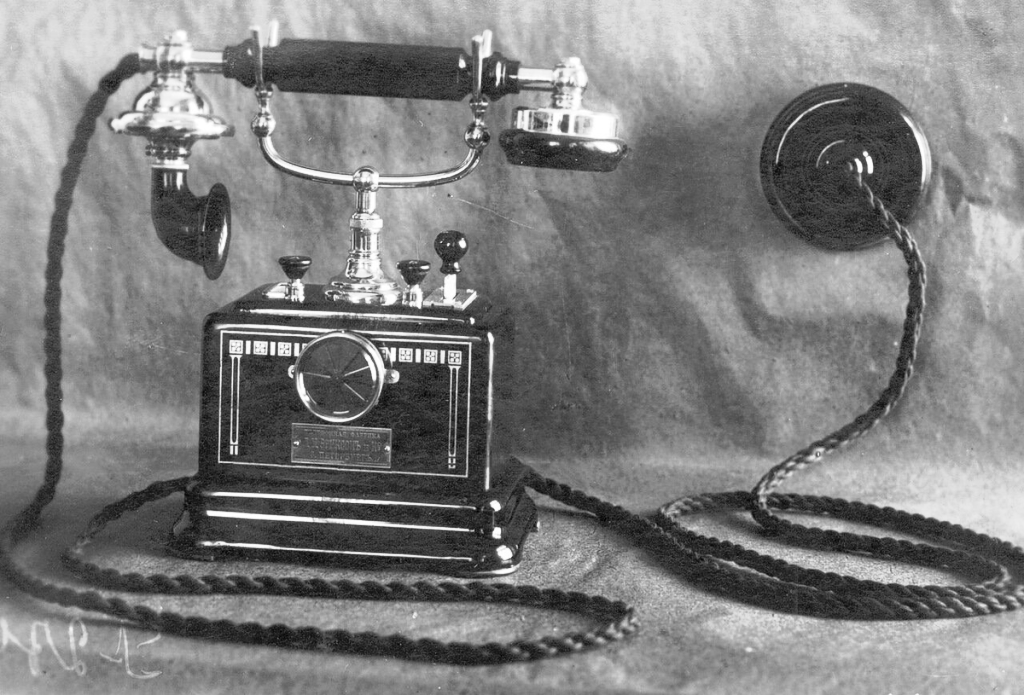
In 1903, a pleasant surprise was prepared for Nicholas II’s arrival: the Swedish company of Mars Magnus Eriksson brought a telephone to Moscow. A switchboard for several dozen numbers was installed in the Grand Kremlin Palace, the Tsar’s official residence when he was visiting the old capital. It was here, that the Emperor was presented with a telephone set decorated with gold and ivory.
Subsequently, Ericsson reigned supreme in Russia almost unchallenged by other European or American firms, although after the revolution, Ericsson’s factory in Petrograd was nationalized and named “Red Dawn”.
Nicholas II’s mobile phone sold at auction for $2 million
In March 2023, the Russian news agency Interfax reported that Sotheby’s had completed the “Romanov Week” auction, during which more than 100 items belonging to members of the Russian Imperial Family were auctioned.
The most expensive lot was a telephone belonging to Emperor Nicholas II, which sold for a staggering 2 million US dollars, almost five times over the estimate.
“This unique device was manufactured at the Russo-Baltic Carriage plant in Petrograd, in 1915. It was presented to the Tsar, who used it for communicating with his wife and children during his trips to the front,” said Sotheby’s representative Robert Jefferson.
After the February 1917 Revolution, the was seized by order of the Provisional Government from and handed over to the head of the Petrograd garrison “for safekeeping”.
In the course of riots that swept the capital of the Russian Empire in July 1917, the device was stolen, and after the Civil War, it was secretly taken to Europe.
I have published nearly 30 titles to date through AMAZON – featuring one of the largest selections of books on Nicholas II, the Romanov dynasty and the history of Imperial Russia.
Please CLICK on the BANNER or LINK above to review my current selection of titles in hardcover, paperback and ebook editions. Listings provide a full description for each title, pricing and a Look inside feature.
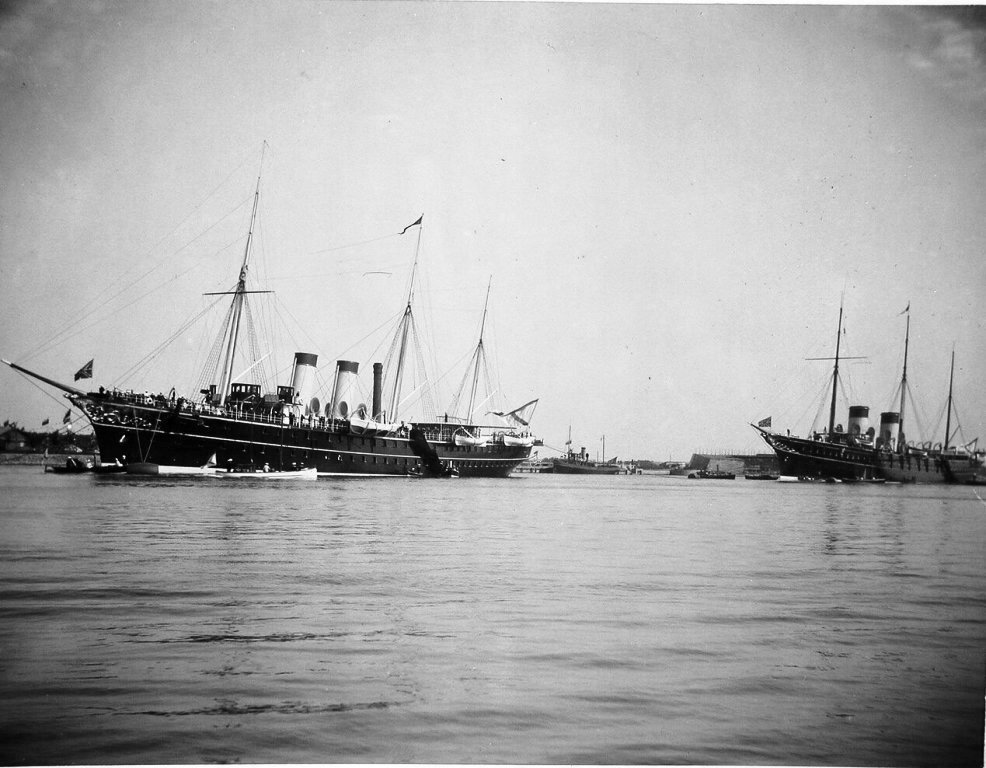
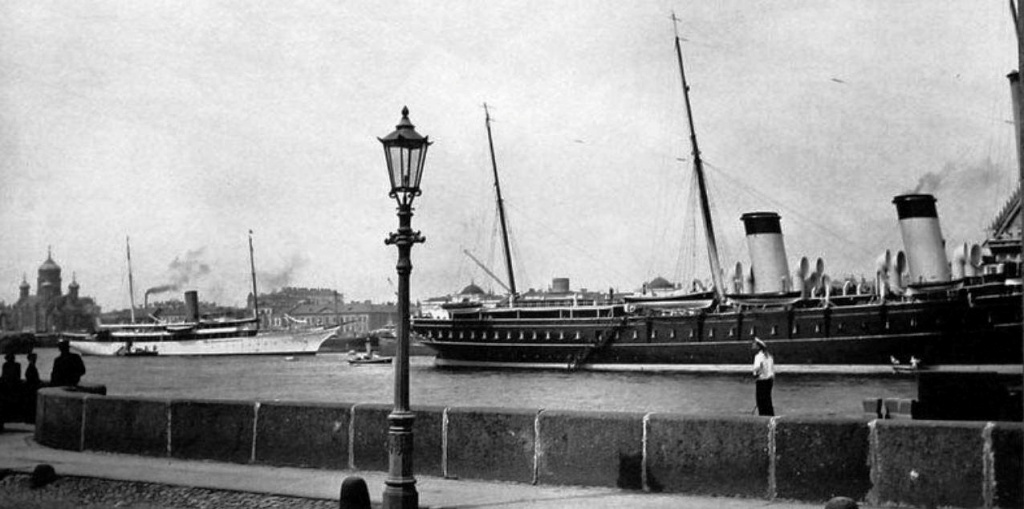
PHOTO: a rare view of the Imperial Yachts ‘Polar Star‘ (left) and ‘Standart‘ (right), docked at Libau (renamed Liepāja in 1920), located in Latvia on the Baltic Sea. August 1903.
The ‘Polar Star / Полярная звезда’ and ‘Standart / Штандарт’ are easily distinguished by two different features: their funnels and the double-headed eagle figurehead, located on the bow of each vessel.
The two funnels of the ‘Polar Star / Полярная звезда’ are closer together, whereas those of the ‘Standart / Штандарт’ are placed wider apart.
The magnificent carved double-headed figurehead of the ‘Standart / Штандарт’ is much more elaborate than that of the ‘Polar Star / Полярная звезда’.
Imperial Yacht ‘Polar Star‘ / Полярная звезд‘
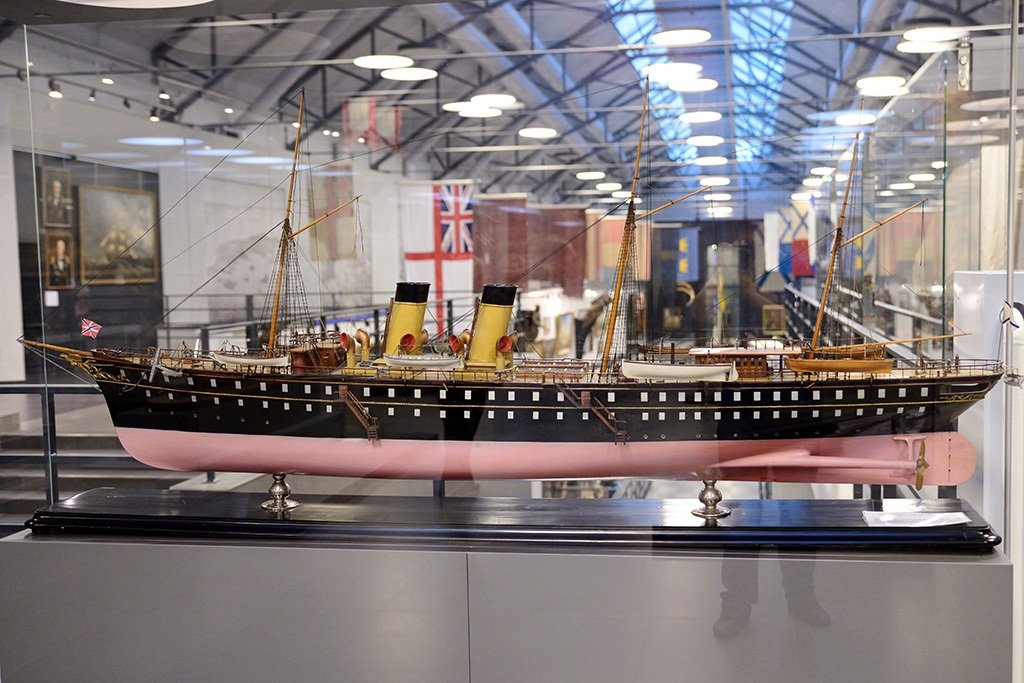
PHOTO: Scale models of the Russian Imperial Yacht Polar Star / Полярная звезда from the Collection of the Central Naval Museum in St. Petersburg
The Imperial Yacht ‘Polar Star / Полярная звезда’ was built by order of Emperor Alexander III at the Baltic Shipyard on 20th May 1888. She was launched on 19th May 19 1890, and came into service in March 1891. It later served the Dowager Empress Maria Feodorovna, who used it annually to sail to Denmark and England.
During the First World War, the yacht was docked in Petrograd, and in early June 1917 moved to Helsingfors. In 1920, the ‘Polar Star’ was mothballed.
In the early 1930s, the former Imperial Yacht was converted to a floating submarine base for the Soviet Navy. Numerous changes were made to the yacht’s exterior, but the interior decoration of many rooms were preserved. On 20th August 1936, the naval flag of the USSR was hoisted on the former Imperial yacht.
In 1954 the Polar Star was converted back into a floating ship, in 1961 as a target ship for testing anti-ship missiles. In November 1961, the ‘Polar Star’ was sunk in the Gulf of Riga, after being hit during a naval exercise. The final fate of the former Imperial Yacht remains unknown, although according to some reports, it was scrapped in the early 1970s.
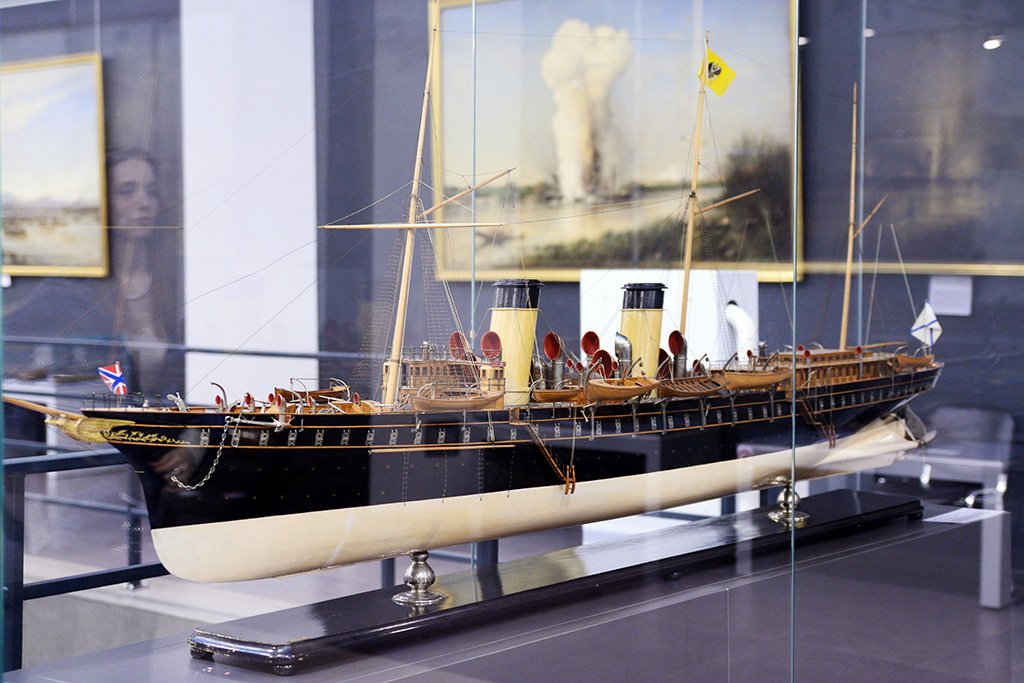
PHOTO: Scale model of the Russian Imperial Yachts Standart / Штандарт , from the Collection of the Central Naval Museum in St. Petersburg
The Imperial Yacht ‘Standart / Штандарт’ [pronounced “Shtandart”] was built by order of Emperor Alexander III, and constructed at the Danish shipyard of Burmeister & Wain, beginning in 1893. She was launched on 21st March 1895 and came into service early September 1896. It later served Emperor Nicholas II and his family.
In 1917, the ‘Standart’ was seized by Revolutionary sailors, and took part first in the February and then in the October Revolution.
The ‘Standart’ was then stripped down and pressed into naval service. It was renamed three times: ‘18 Marta’ (‘18 March,’ from 1918-1936), and later ‘Marti’ (in honour of André Marty, from 1936-1948), and ‘Oka’ (from 1948-1963). She was scrapped at Tallinn, Estonia, in 1963.
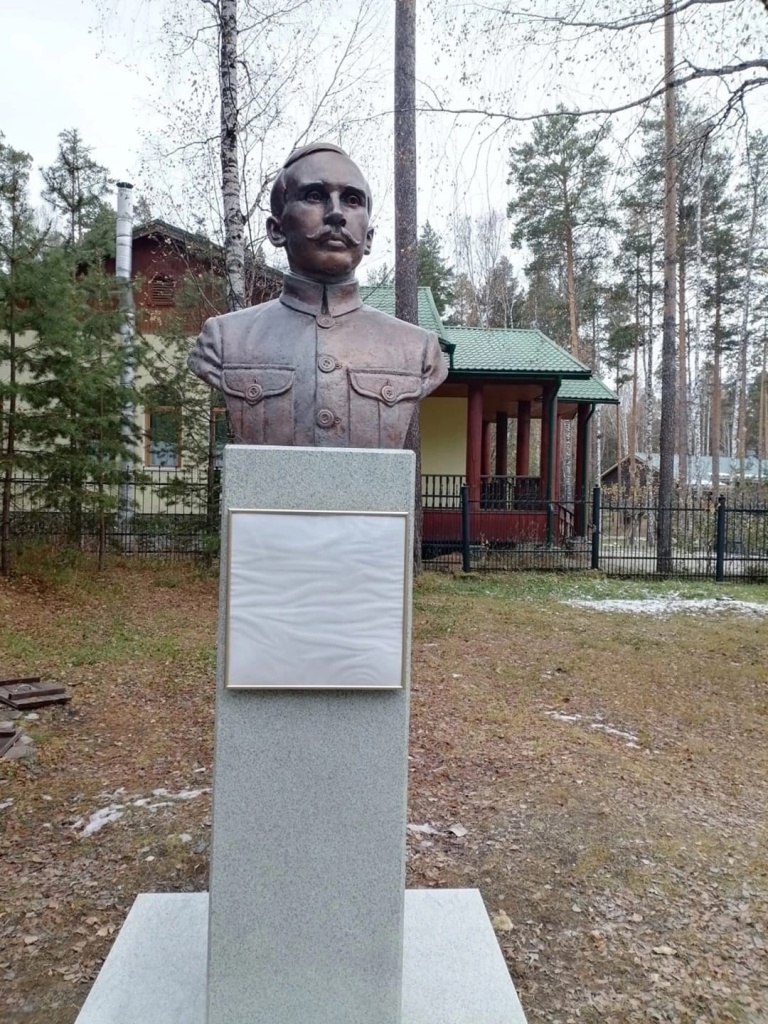
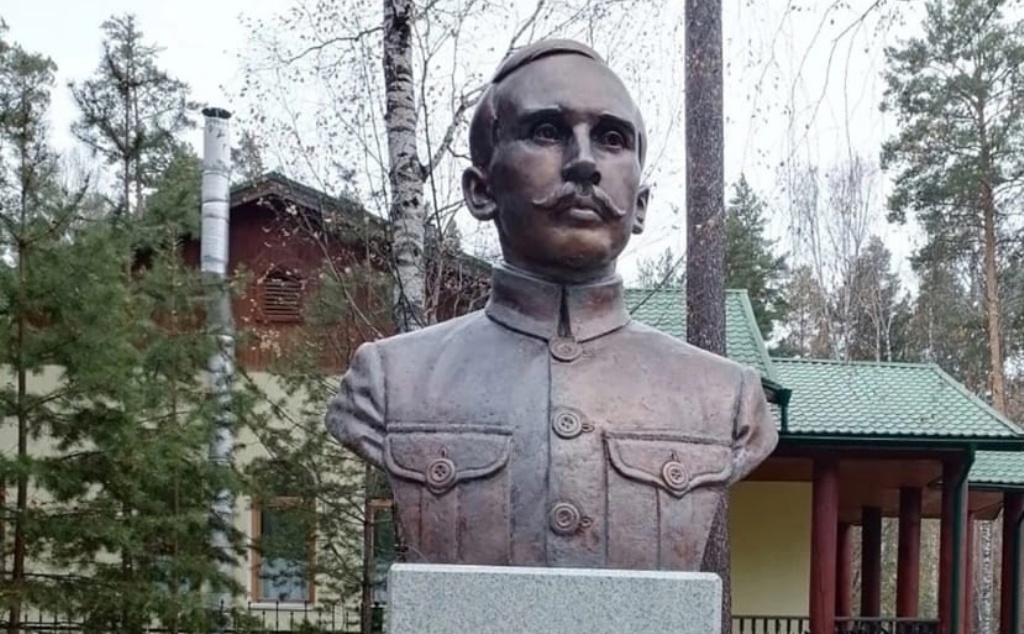
A bust of the investigator Nikolai Alekseevich Sokolov (1882-1924) was installed over the weekend, on the grounds of the Monastery of the Holy Royal Passion-Bearers at Ganina Yama, situated near Ekaterinburg.
As you can see from the photographs, the pedestal is not yet finished. This is because the *grand opening is scheduled for 23rd November 2024, the day marking the 100th anniversary of Sokolov’s death. *I will be posting details and photos of the ceremony next month – PG.
Before the 1917 Revolution, Sokolov served as a lawyer, and investigator for important cases of the Omsk District Court. In February 1919, the Supreme Ruler Admiral Alexander Kolchak (1874-1920), appointed Sokolov with the task of investigating the murder of members of the Russian Imperial Family in Ekaterinburg and Alapaevsk.
Sokolov loved Russia and would not accept the changes brought about by the Bolshevik Revolution in 1917. As a staunch Orthodox monarchist, he accepted his appointment with a deep sense of reverence and responsibility.
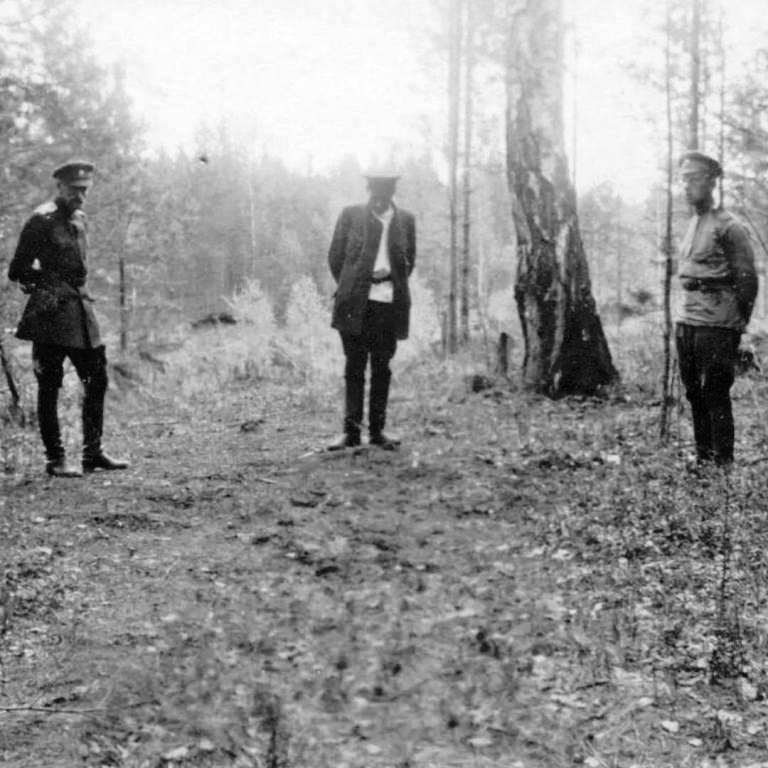
PHOTO: Nikolai Sokolov and General Mikhail Dieterichs searching for the remains of the Imperial Family near the Four Brothers Mine, near Ekaterinburg. 1919
In July 1919, Sokolov’s investigation was cut short after the return of Bolshevik forces, forcing him to evacuate Ekaterinburg to Harbin (China). He lived out the rest of his life in exile in France, where he died five years later. He is buried in the cemetery of Salbris, France.
***
In 2001, the Monastery of the Holy Royal Passion-Bearers was built around the Four Brothers Mine at Ganina Yama. It was here, in 1919, that Sokolov carried out his investigation, one in which he discovered evidence that the Tsar and his family had been murdered, and their killers efforts to hide their crime.
To this day, the Russian Orthodox Church still officially adheres to Sokolov’s theory that the bodies of the Imperial Family were completely destroyed at the Four Brothers Mine. A century later, we now know that this was not so.
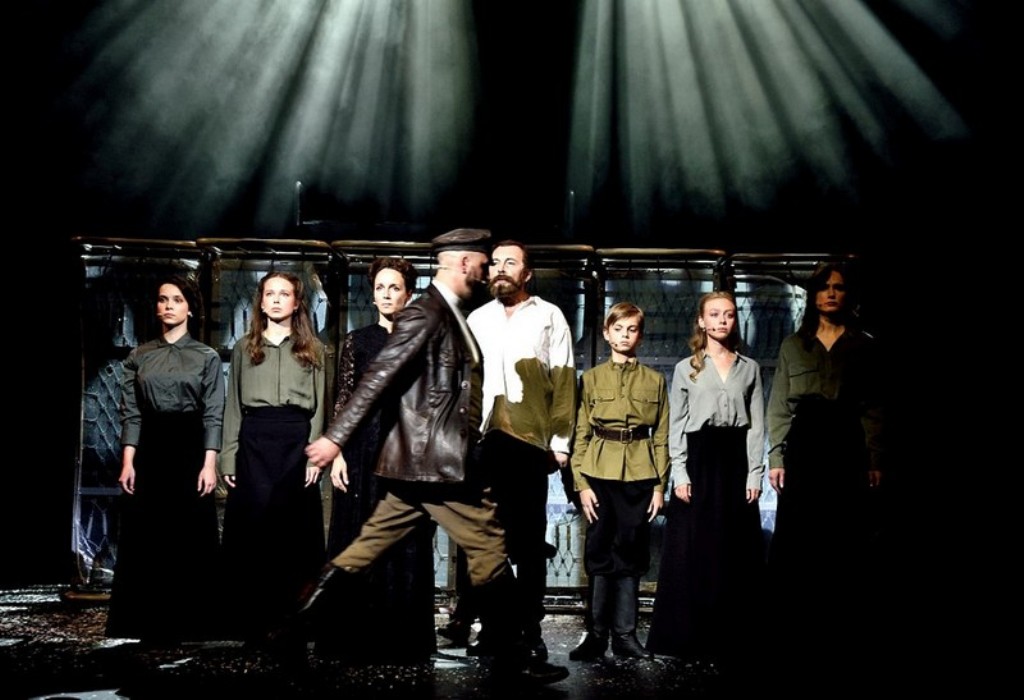
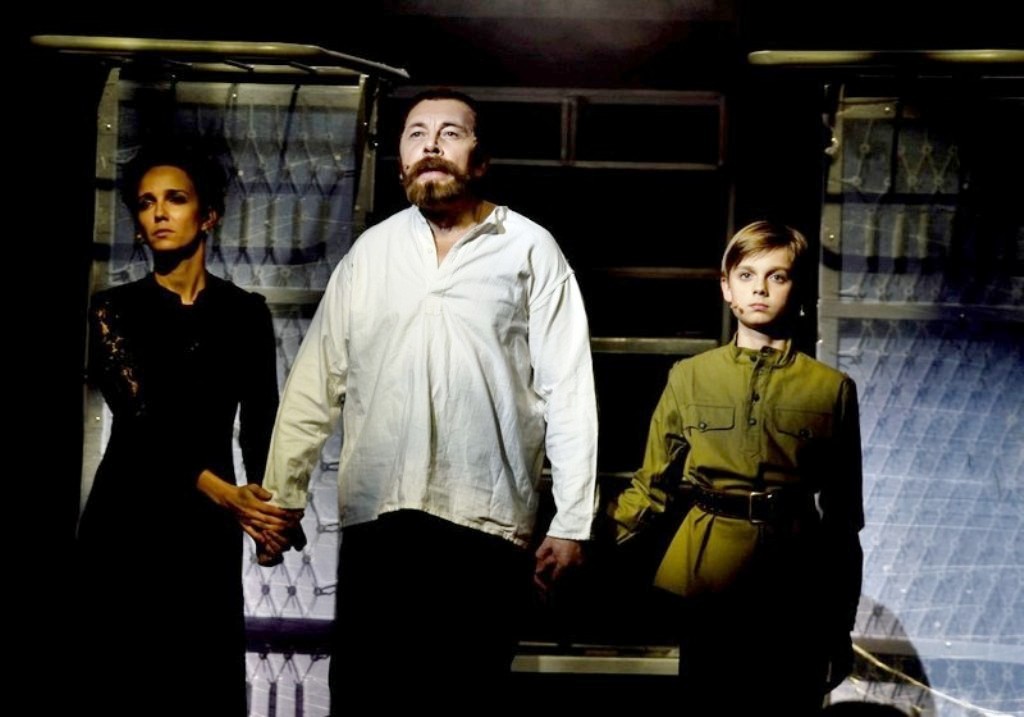
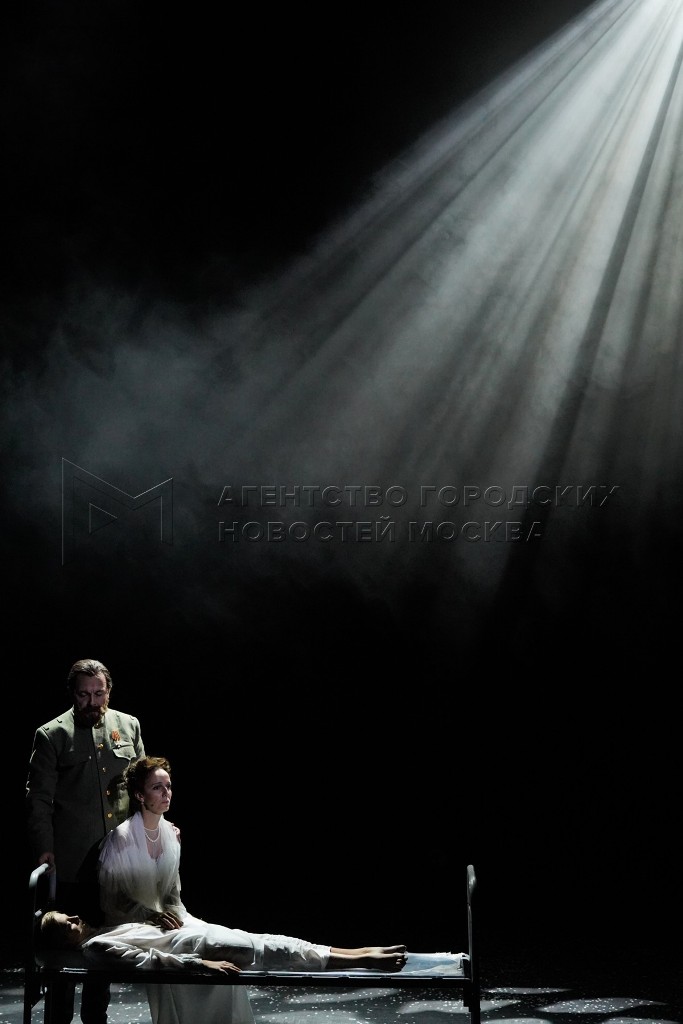
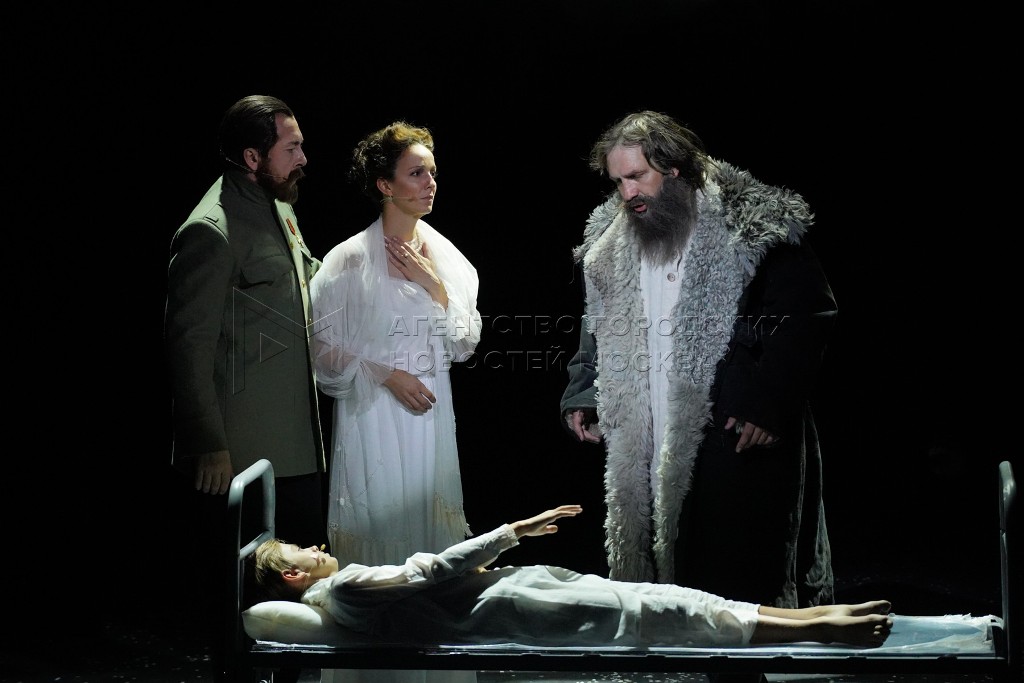
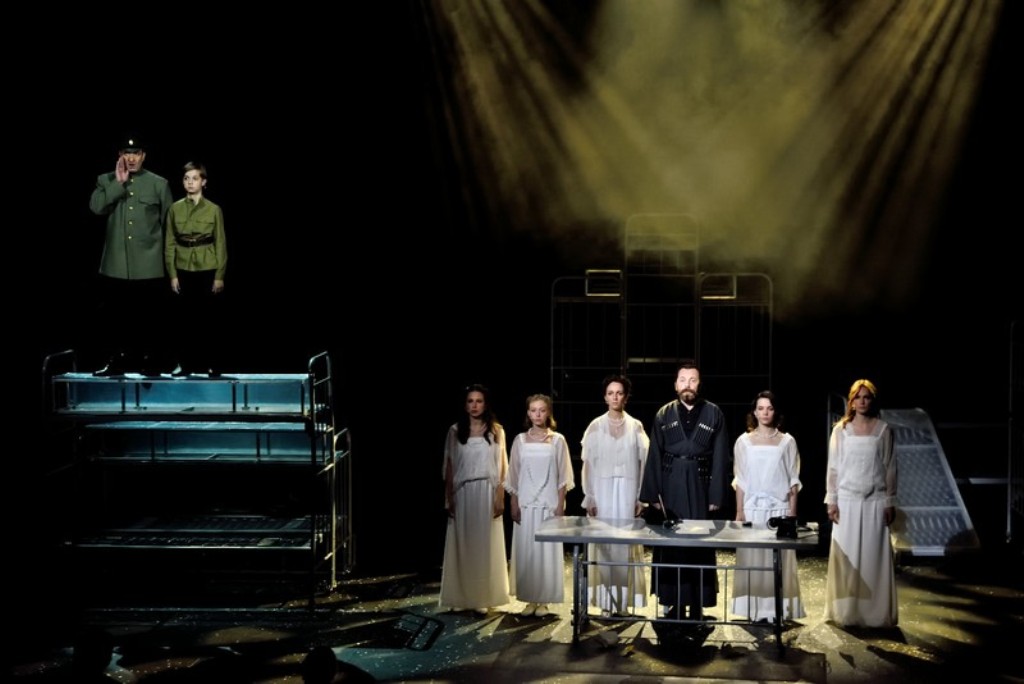
On 2nd October 2024, a new musical drama The Last Romanoff premiered at the International House of Music in Moscow. The intriguing plot of the production is based on real events of Russia’s last Tsar, the causes of the revolution and its consequences.
The creator of the libretto, composer and director is Alexander Ragulin. The main roles in the production are performed by popular stars of Russian musicals, as well as theater and film actors.
The Last Romanoff is not for those who love rock music, contemporary, impressive scenery, or musical comedy shows. Instead, this musical-drama takes an historical turn, one which focuses on the horrific events that took place in Russia in 1918, events which plunged the Russian Empire, the monarchy and the Imperial Family into an abyss.
The musical tells, and most importantly, shows the story of the tragic fate of the last Russian emperor, Nicholas II, who was shot along with his family and faithful retainers in the Ipatiev House in Ekaterinburg on 17th July 1918. As it should be in this genre, music dominates, the vocals reveal the character of the Tsar and his family, and other characters, which “transmit” to the audience the story that turned the world upside down.
Without colourful background scenery and special effects, it is music which present the plot of this drama. The acting, the dynamics of the performance, the mood of the characters, all set against the backdrop of a dark, gloomy, dimly lit stage, help in telling the story.
Actor, composer, vocalist, producer and director Alexander Ragulin (who plays the role of Rasputin) has assembled an amazing cast: Igor Balalaev, Valeria Lanskaya, Alexander Marakulin, Yaroslav Bayarunas and others – a total of 12 artists.
The Imperial Family: Nicholas II, his wife, four daughters, the sick Tsesarevich Alexei – and further down the list all the famous historical figures: Rasputin, Kerensky, Yusupov… The emperor’s daughters work in the hospitals and wonderful singing are all featured in this production.
The musical drama The Last Romanoff runs until 24th December 2024 at the International House of Music in Moscow.
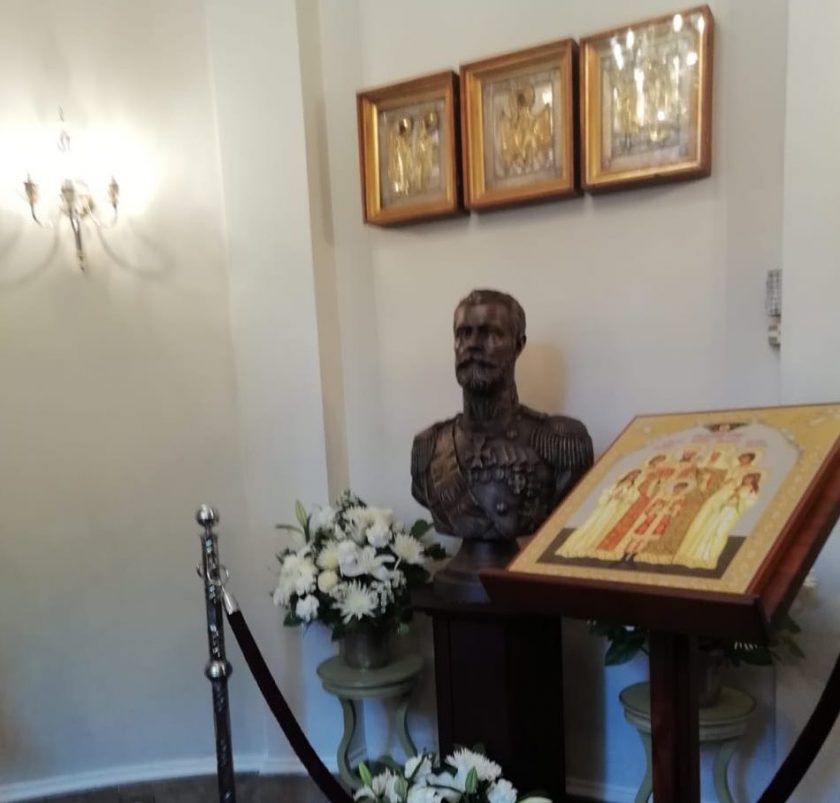
PHOTO: this bust is considered the most faithful to the likeness of Emperor Nicholas II
NOTE:this article was originally published on 7 December 2019, it was revised and updated on 4th October 2024 – PG
On 17th July 2018, the feast day of the Holy Royal Passion-bearers, a bust of Tsar-Martyr Nicholas II, was installed and consecrated in the Synodal Cathedral of Our Lady of the Sign in New York City. The bronze bust is considered to be the most faithful to the likeness of Emperor Nicholas II.
The bust was donated to the Russian Orthodox Church Outside Russia (ROCOR) by the head of the Foundation “Under the Protection of the Mother of God” Eugene (Evgeny) Korolev, with the organizational participation of the head of the Military Orthodox Mission, Igor Smykov.
Attending the divine services were parishioners and faithful of various parishes, representatives of the Romanov family, and Cossack delegates.ners and faithful of various parishes, representatives of the Romanov family, and Cossack delegates.
Upon completion of the service, Fr. Tikhon read aloud Metropolitan Hilarion’s Epistle on the occasion of the 100th anniversary of the martyrdom of the holy and right-believing Royal Passion-bearers: Emperor Nicholas II, Empress Alexandra Feodorovna, Tsesarevich Alexei, and Grand Duchesses Olga, Tatian, Maria and Anastasia.
His Eminence and the clergy served a short moleben [service of intercession] before icons of the Royal Passion-bearers and other holy relics housed at the Synodal cathedral: a reliquary with the right hand of the Holy Nun-Martyrs Elizabeth and Barbara.
Metropolitan Hilarion then thanked all those who prayerfully honored this day with their presence, and gave the floor to the general director of the Russian National Creative Workshop “Art-Project,” LLC, and the International Foundation for Mutual Development & Strengthening of Spiritual Unity and the Religious & Historical Values of Russian Orthodoxy in the Homeland & Abroad “Under the Protection of the Theotokos,” Eugene (Evgeny) Korolev. It was these organizations that presented the cathedral a gift: a bust of the Tsar-Martyr Nicholas II.
CLICK on the above image to watch a VIDEO of the consecration of the bust. DURATION: 3 minutes, 30 seconds. LANGUAGE: Russian
“This image was first made before the revolution, out of stone. During Perestroika in the Soviet Union, vandals desecrated it,” Korolev explained. “After the fall of the USSR, in 1993, the bust was brought from Crimea to Moscow, to the workshop of Russian national artist Vyacheslav Klykov. They created a mold of the bust and poured it in bronze. Unfortunately, we do not know the identity of the original artist who created this marvelous work. But we do know that this monument is considered the most faithful to the likeness of Emperor Nicholas II. I would like to offer my respect to Vyacheslav Mikhailovich Klykov (1938-2006) for granting new life to this work of art.
“In Russia they are currently celebrating the ‘Tsar’s Days,’ and I think the most important thing for us is to learn lessons from this tragedy and never repeat them.”
Korolev congratulated everyone on the occasion of the feast, and presented Metropolitan Hilarion with a dove prepared in the workshop, as well as pouches with soil from the holy sites of Yekaterinburg, where Emperor Nicholas II, Empress Alexandra, and their children were held captive, and where they were all murdered.
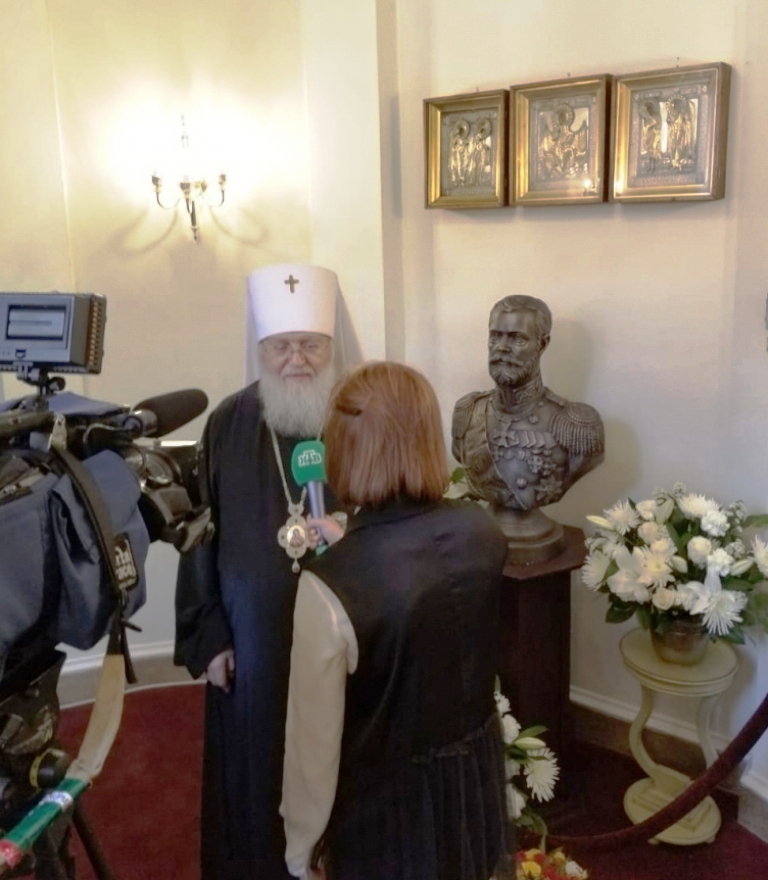
Flanked by clergy, the First Hierarch proceeded to the entrance to the cathedral, where the bust of the Tsar-Passionbearer Nicholas II had been installed, and blessed it.The festivities concluded with a banquet in the cathedral hall.
PHOTO: Metropolitan Hilarion (1948-2022) of Eastern America and New York, talks with members of the media in the Synodal Cathedral of the Sign in New York City.

 Nicholas II
You must be logged in to post a comment.