Romanov exhibit opens in Djulber Palace, Crimea

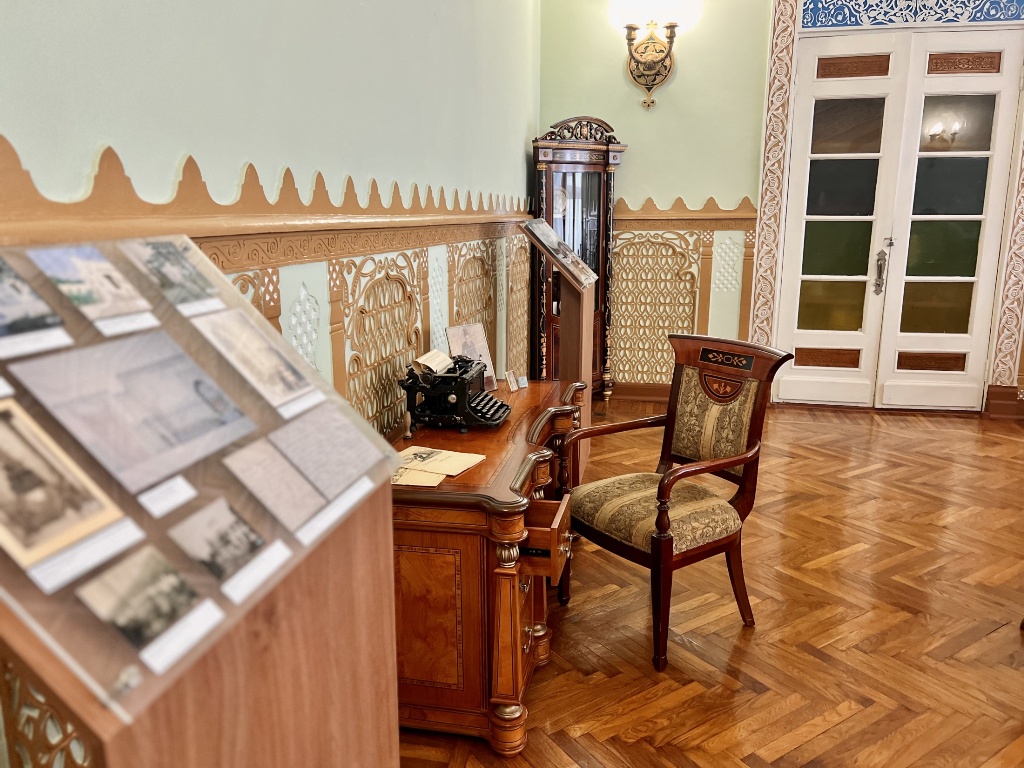
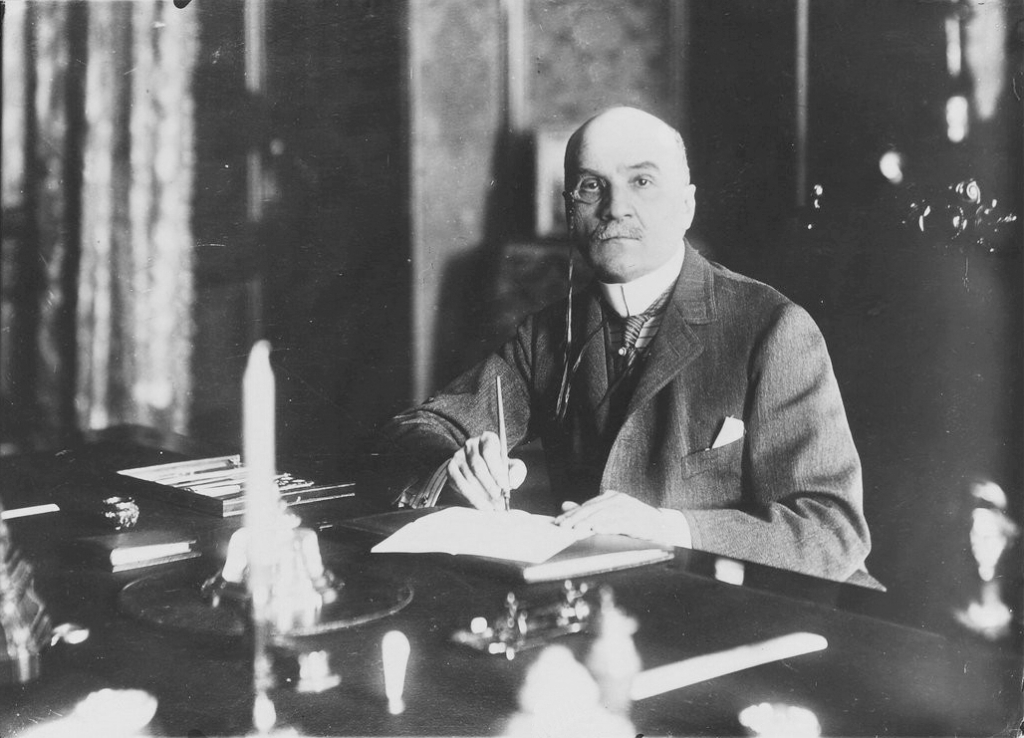
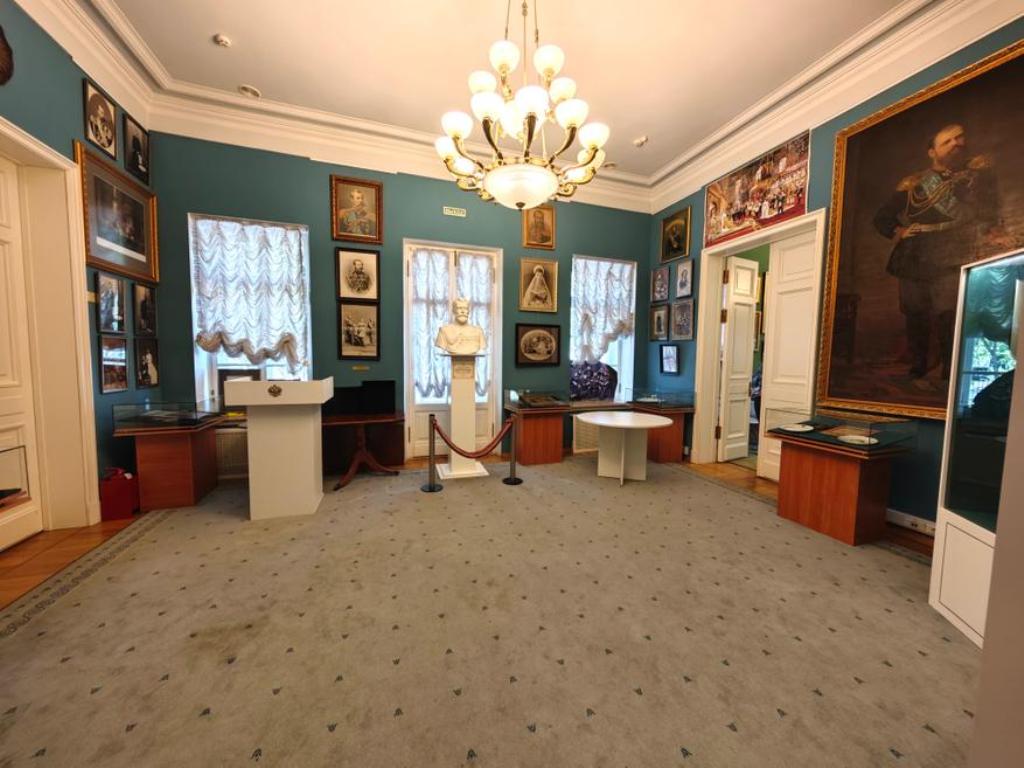
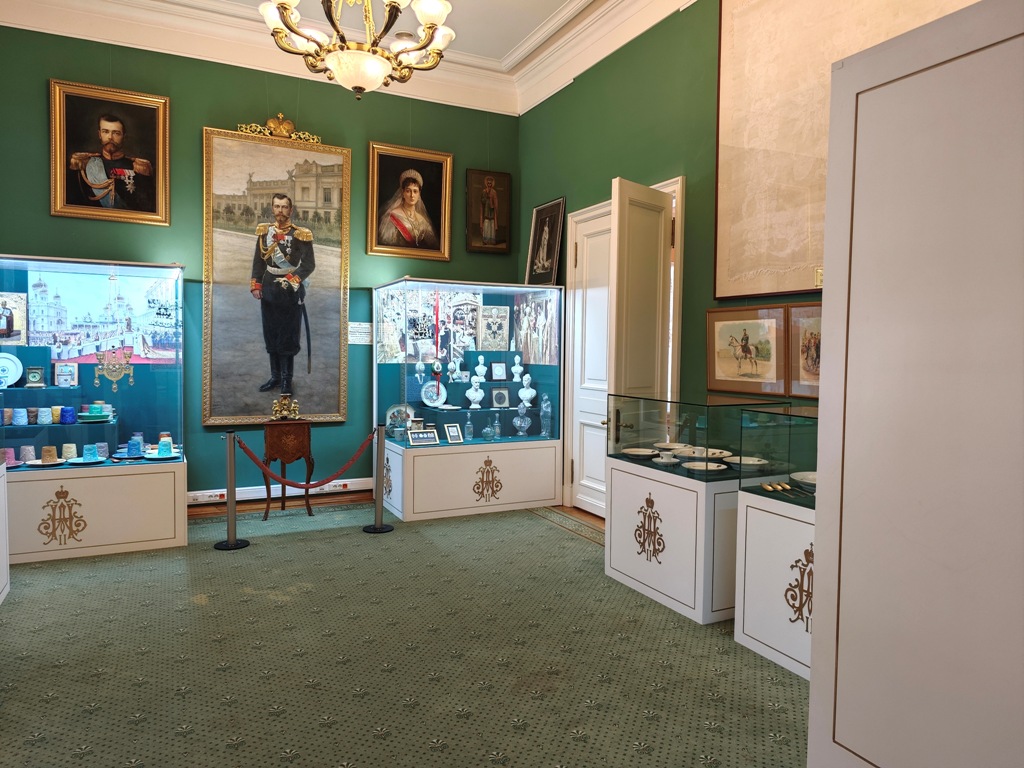
On 8th May 2024, a permanent exhibit opened in Djulber (aka Dulber) Palace, the former Crimean residence of Grand Duke Peter Nikolaevich. The exhibit is dedicated to the history of the palace and the events of the Russian Civil War, when members of the Imperial Family were being held there under house arrest.

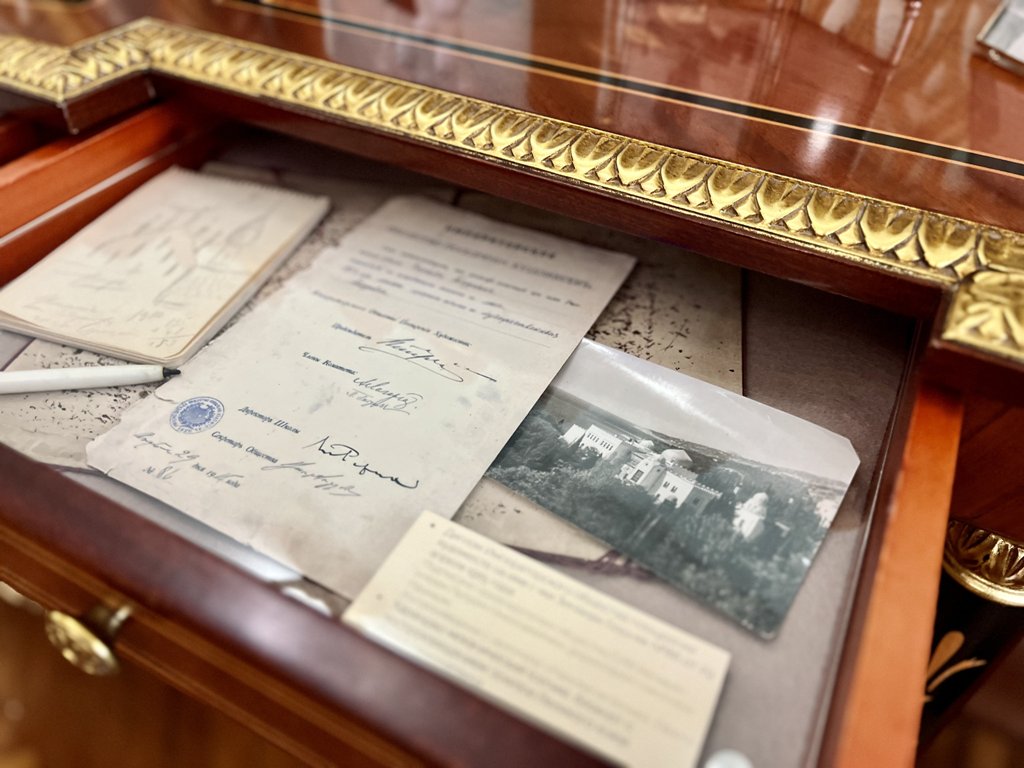
In preparation of the exhibit, materials were studied, in order to preserve the history of Djulber, which includes unique historic documents and photographs, as well as artifacts from private collections.

The exhibit is a joint project of the State Archive of the Russian Federation (GARF), the Russian State Naval Archive, the Ministry of Culture of the Republic of Crimea, as well as the Vorontsov and Livadia Palaces, the Anton Chekhov House-Museum in Yalta and the Yalta Historical and Literary Museum.

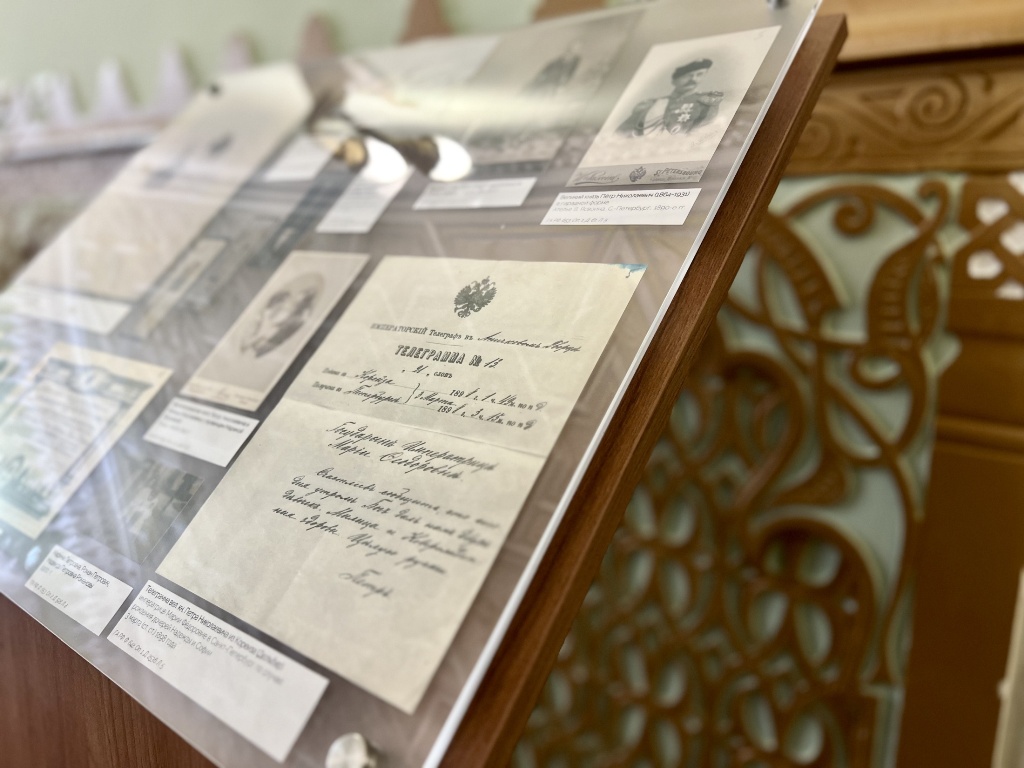
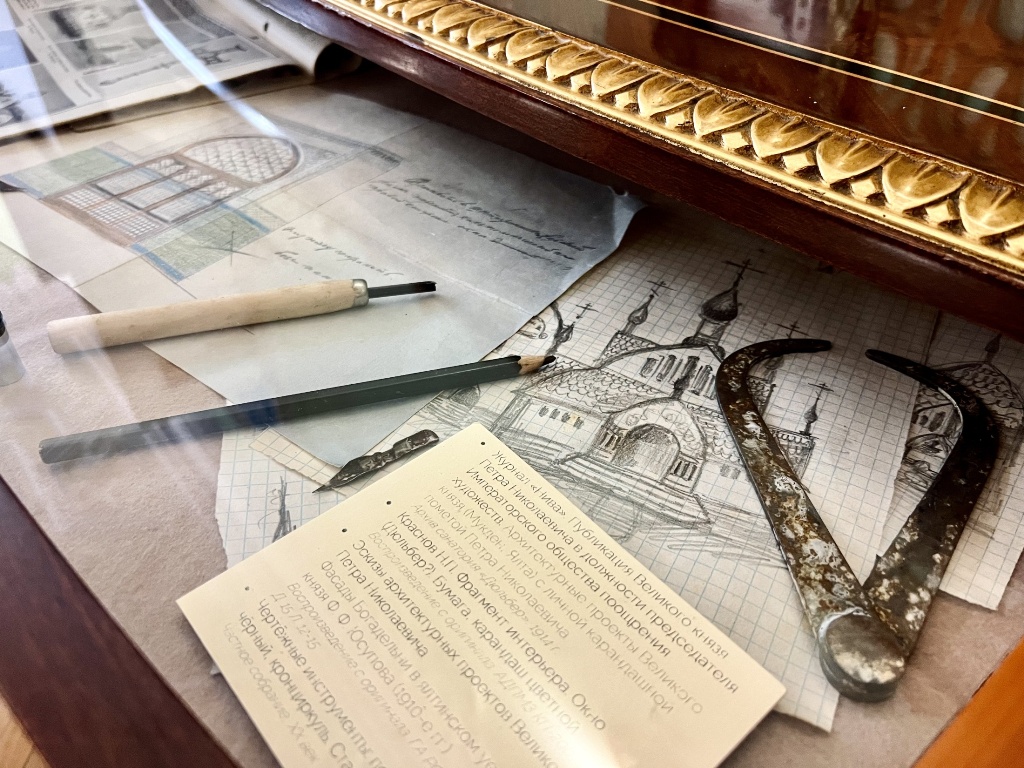
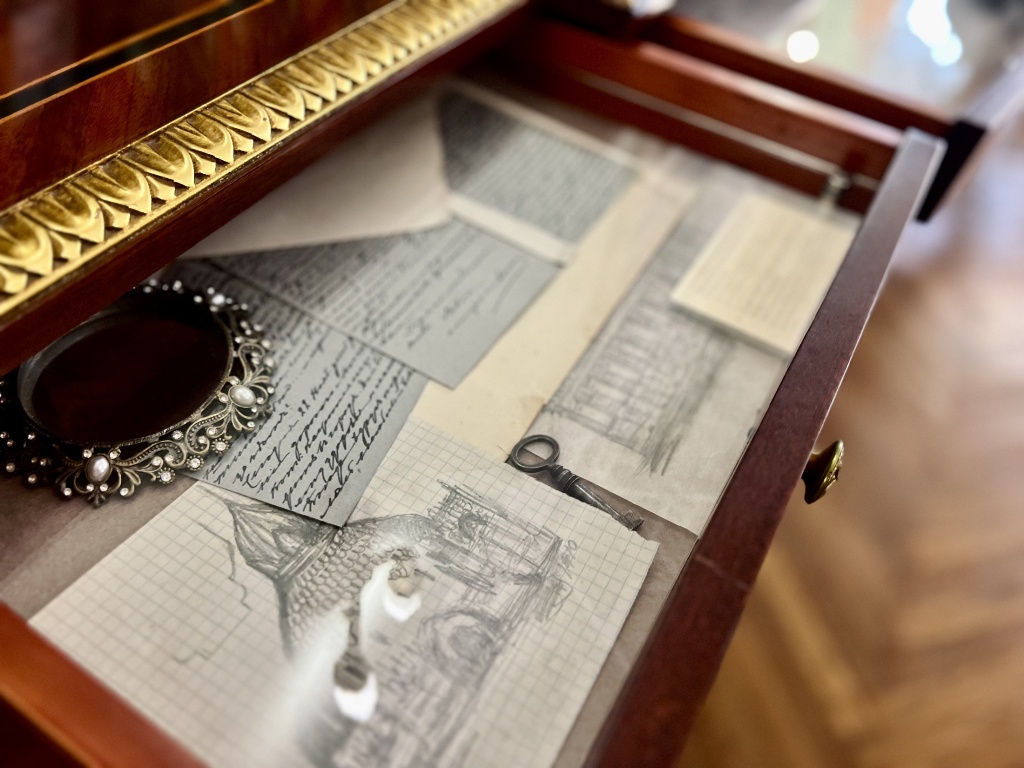
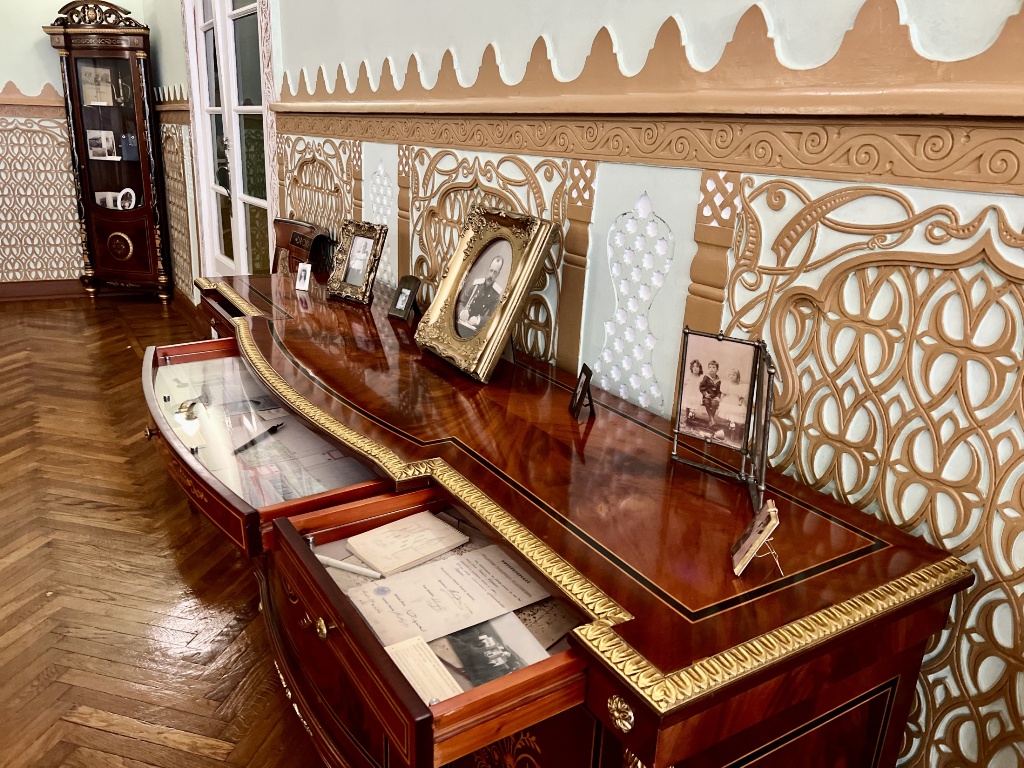
The exhibit also presents copies of watercolors by Nikolai Krasnov, rare archival photographs of Grand Duchess Xenia Alexandrovna taken at Ai-Todor, letters, telegrams, pre-revolutionary newspapers, architectural plans and sketches of the palace by Grand Duke Peter Nikolaevich.

Rare documents on the imprisonment of members of the Imperial Family are exhibited in glass showcases. For example, the protocols of searches in the grand ducal estates, with the personal signatures of the Romanovs and arrest orders, which were sealed and stamp “CONFIDENTIAL”.

The opening of the exhibit is timed to the 10th anniversary of the reunification of Crimea with the Russian Federation in 2014. The exhibit was implemented, thanks to the assistance of the Ministry of Culture of the Republic of Crimea

The exhibition curators are already searching for new artifacts to add to the museum. They also have plans to expand the current exhibit, which will explore the activities and merits of the Grand Dukes Peter Nikolaevich and Alexander Mikhailovich

Today, Djulber is a popular sanitorium and health resort, however, the museum is open from Tuesday to Sunday.

***

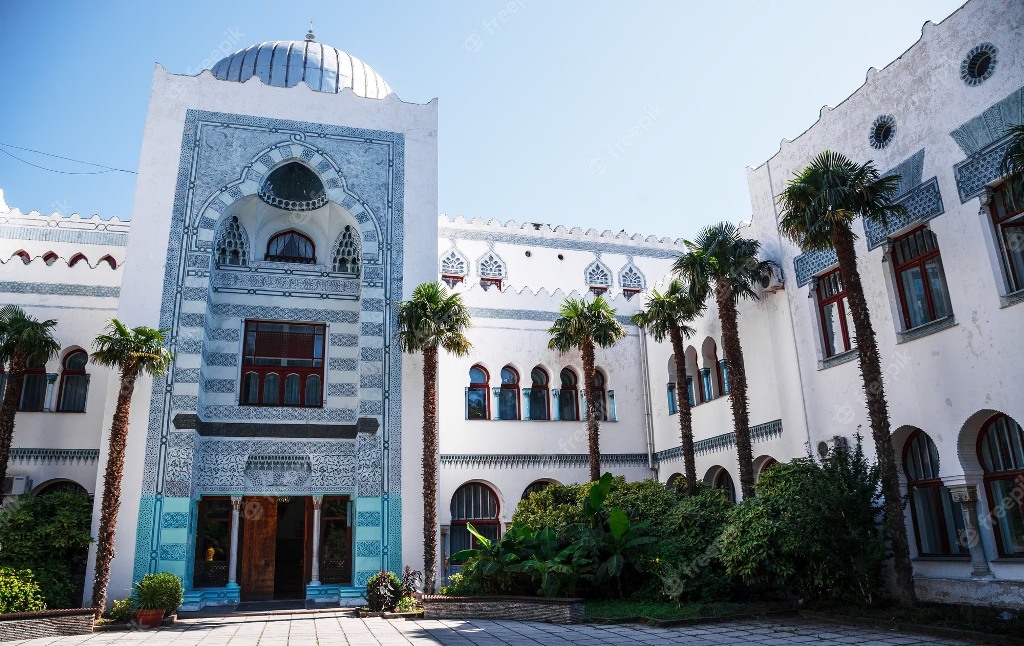
The Djulber or Dulber Palace was built between 1895 to 1897, in the village of Koreiz, located on the southern coast of Crimea, by order of Grand Duke Peter Nikolaevich (1864-1931), the younger brither of Grand Duke Nikolai “Nikolasha” Nikolaevich (1856-1929), and cousin of Emperor Nicholas II. The palace was built in the Moorish Revival Style by the famous Yalta architect Nikolai Krasnov, who also designed and built Livadia Palace.

Djulber or dülber is Crimean Tatar for “beautiful”, originally from Persian, del-bar “heart-stealing”, “beloved or beautiful”. It is an “asymmetrical architectural extravaganza” with crenellated walls, silver domes, and more than 100 rooms, inspired by the Mameluk architecture of 15th-century Cairo.

The Moorish style elements of the palace, include domed towers, decorated with Eastern ornaments. Above the entrance is a saying from the Koran written in Arabic script, “blessing all those who enter”. Despite this, the palace was consecrated according to Orthodox canons.

The palace had strong high walls that could withstand a military assault. Little did Peter know, that these walls would protect both him, his family and relatives in 1919, when Djulber provided a temporary safe haven the Romanovs.

Following the February 1917 Revolution, the Provisional Government allowed close relatives of Emperor Nicholas II to go to the Crimea, where many of them maintained beautiful estates doted along the Black Sea coast. Among them were the Dowager Empress Maria Feodorovna, Grand Dukes Peter Nikolaevich, Alexander Mikhailovich, Nikolai Nikolaevich and their respective families. Following the October 1917 Revolution, which ushered in Lenin the Bolsheviks, anti-Romanov sentiment on the peninsula grew at an alarming pace, their lives were now in grave danger.

In 1919, the Romanovs were transferred to Djulber Palace under the protection of the Commissar of the Sevastopol Council Philip Zadorozhny and a detachment of sailors of the Black Sea Fleet. They were preparing for an assault, by the Yalta Bolsheviks, who were thirsty for the blood of the Imperial Family. Machine guns were installed on the roof of the palace. The Romanovs were imprisoned, which eventually saved their lives. In April 1919, members of the Imperial Family left Russia for good, after being rescued by the British battleship HMS Marlborough.

During the years of Soviet power, Djulber, like the other Romanov palaces in Crimea, were used for recreation and health purposes, Djuler was turned into a health resort for high-ranking government officials only, and off limits to workers and peasants. Djulber remains a remains a popular sanitorium to this day,

© Paul Gilbert. 22 May 2024

New bust-monument to Nicholas II installed in Volgograd region

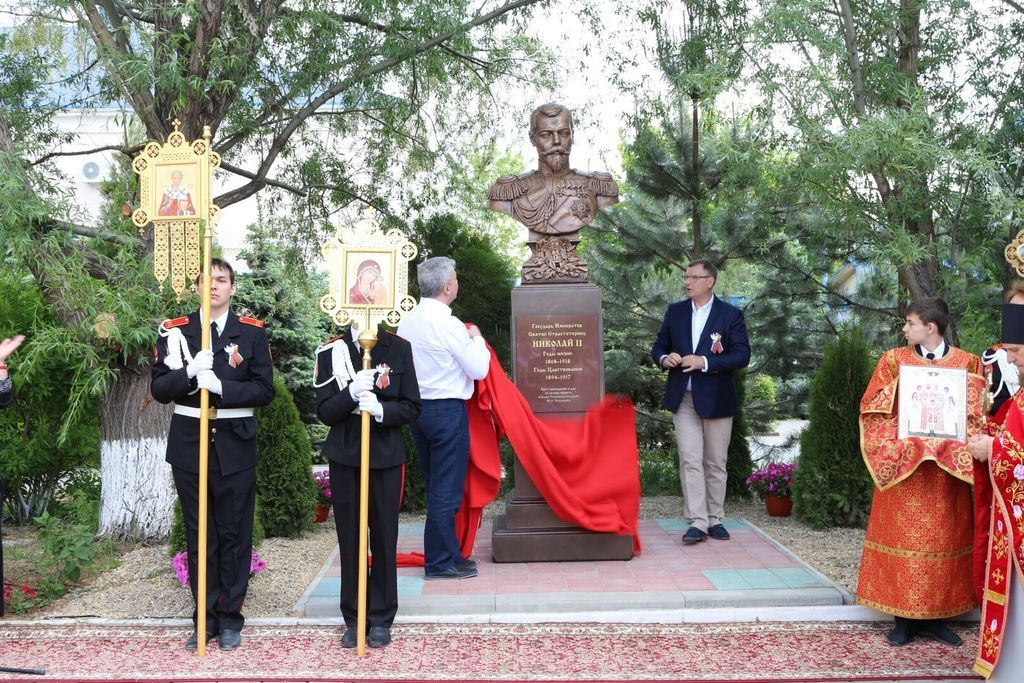
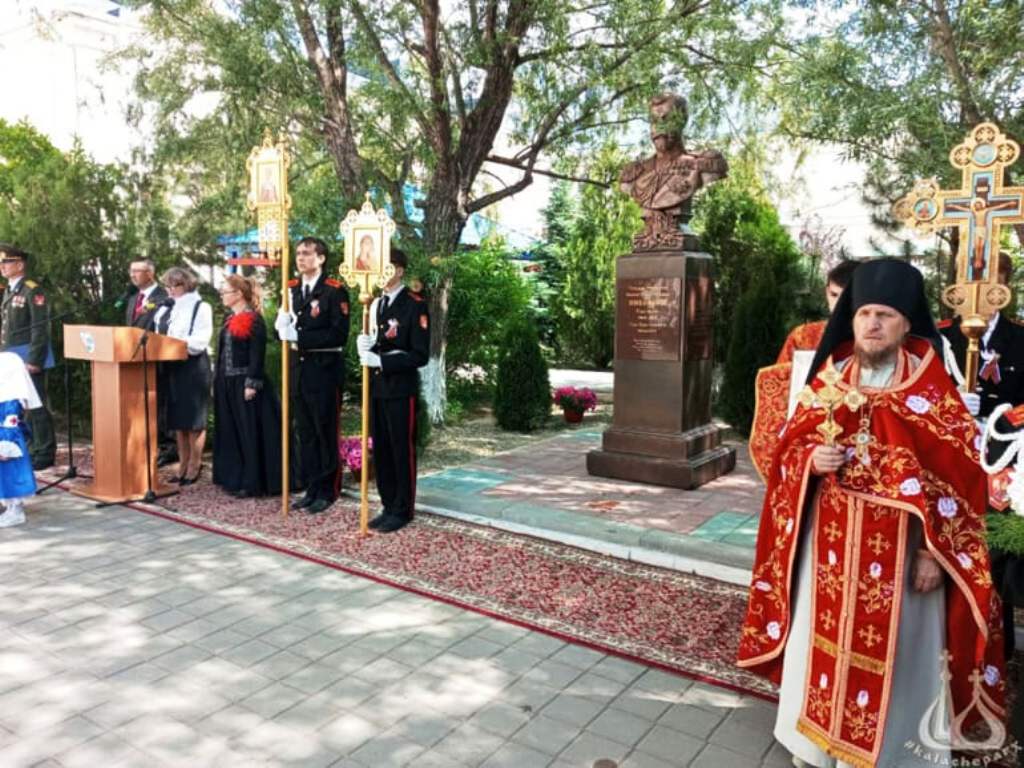
On 18th May, the eve of the 156th anniversary of the birth of Emperor Nicholas II, a new bust-monument to Russia’s last Tsar, was installed and consecrated on the grounds of the Orthodox Cultural Center in the village of Zaplavnoye, Leninsky district, Volgograd region.

The solemn ceremony was attended by the founder and head of the Volga-Rast group of companies Igor Vitalievich Kapitanov, philanthropist Andrey Yurievich Morozkin, First Vice President of Gazprombank JSC, as well as guests from Moscow, Saratov, Voronezh and Lubansk.

The opening ceremony began with a solemn parade, led by cadets dressed in ceremonial uniforms. Pupils of the Cadet Corps, along with local high school students and toddlers of the Orthodox Kindergarten, followed behind the cadets through the square, which was decorated with Russian flags.

The bust-monument was consecrated by the rector of the St. Nicholas Church in the village of Zaplavnoye, Hieromonk Nikita (Sergeev).

The installation of the bust-monument to Emperor Nicholas II was made possible by the All-Russian Alley of Russian Glory Project, the purpose of which is to perpetuate the memory of notable Russians who glorified the Fatherland and the Orthodox faith.

***

NOTE: since the fall of the Soviet Union in 1991, more than 100 monuments, busts and memorial plaques to Emperor Nicholas II have been installed in cities, towns and villages across the Russian Federation. In addition, are a number of churches dedicated to him.

© Paul Gilbert. 22 May 2024

Books on the life and reign of Emperor Nicholas II (1868-1918)

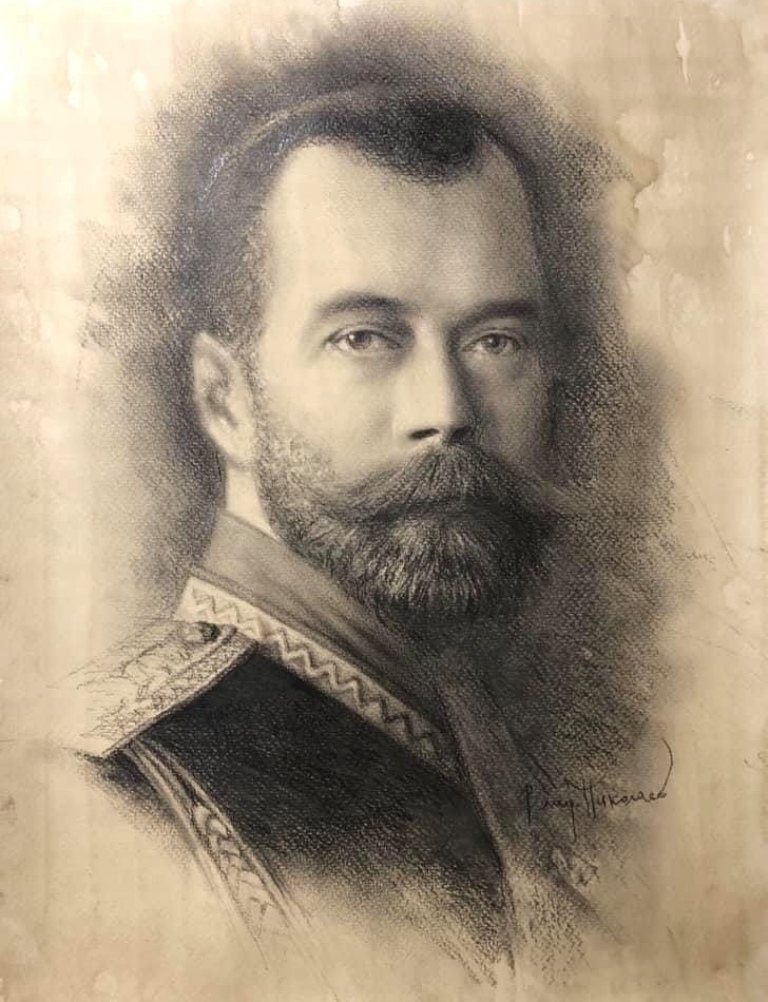
PHOTO: Portrait of Emperor Nicholas II, by Russian artist Vladimir Nikolaev 

On this day – *19th (O.S. 6th) May 1868 – Emperor Nicholas II was born in the Alexander Palace at Tsarskoye Selo. * the New Style Gregorian calendar is now 13 days ahead of the Old Style Julian calendar.

On Sunday 19th May 2024, the Russian Orthodox Church marks the 156th anniversary of the birth of Tsesarevich and Grand Duke Nicholas Alexandrovich, who was born on the day of Job the Long-suffering.

In honour of this historic date, I am pleased to offer 18 books about the life and reign of Nicholas II. Each of them reflect my personal mission to clear the name of Russia’s much slandered Tsar.  * This page will be updated as new titles become available.

Please note, the entire proceeds from the sale of each book, help fund my research, including the costly expense of translating documents from Russian archival and media sources.

Thank you for your interest and support of my work.

PAUL GILBERT (Retired)

***

BOOKS BY PAUL GILBERT

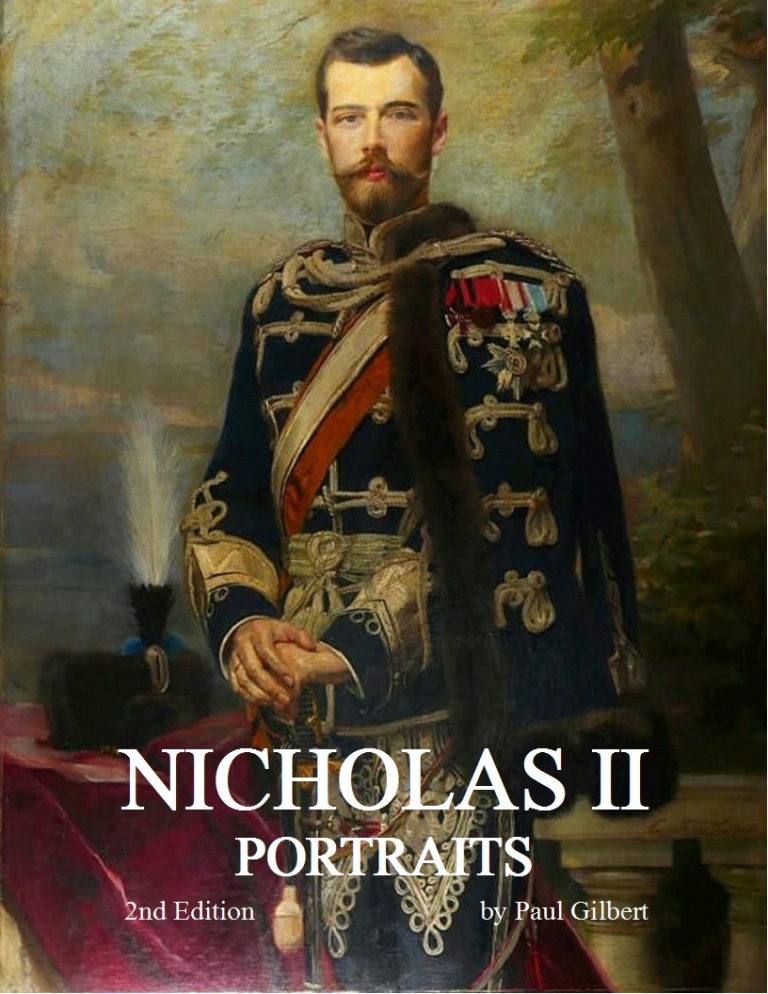
NICHOLAS II. PORTRAITS
by Paul Gilbert

CLICK ON THE LINK BELOW TO ORDER FROM AMAZON

HARD COVER EDITION – PRICE $50.00

PAPERBACK EDITION – PRICE $40.00

BOOK DESCRIPTION

Nicholas II. Portraits explores a century of portraits of Russia’s last emperor and tsar, through the eyes of pre-revolutionary and contemporary Russian, and foreign artists.

Originally published in 2019, with 140 pages with 175 black and white photos, this new expanded edition features more pages and more photographs: 180 pages + more than 200 photos, including 185 FULL COLOUR and 30 black & white! The colour photographs really bring the many ceremonial portraits of Nicholas II to life.

In addition, are many portraits painted during his reign by both Russian and foreign artists, as well as those by contemporary Russian artists. My book also features a small section of portraits of the Tsar with his family.

Large format 8-1/2″ x 11″ hard cover and paperback editions, with 178 pages + richly illustrated with more than 200 Colour and black & white photographs.


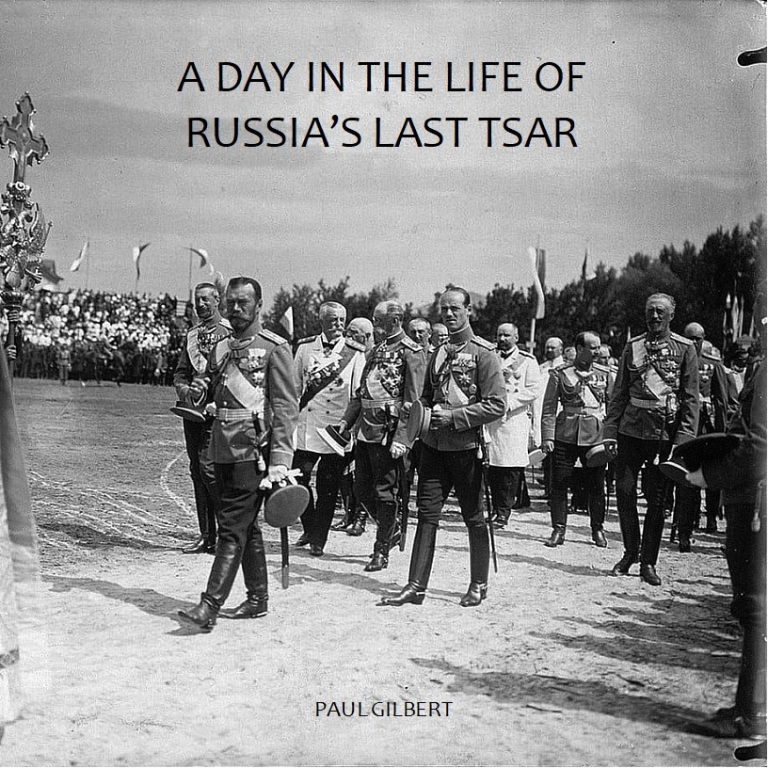
A DAY IN THE LIFE OF RUSSIA’S LAST TSAR
by Paul Gilbert

CLICK HERE TO ORDER THE PAPERBACK EDITION @ $25.00 USD

English. 242 pages with 225 black & white photos

Aside from his many duties as God’s anointed Emperor and Tsar of All the Russia’s, Nicholas II took on many other roles from one day to the next: a dutiful husband and loving father, a devoted son and brother, a friend, a sportsman, a diplomat, an ambassador, a dedicated military leader, a devout Orthodox Christian, among others.

This richly illustrated pictorial explores the day-to-day duties of Russia’s last monarch. It is divided into six sections: the Tsar and His Family; Sports, Leisure and Holidays; the Tsar and the Church; the Tsar and Russia; the War Years; and the Tsar Under House Arrest. Each section features full-size historic images which reflect his day to day duties and activities. In total, this unique album includes more than 200 photographs from the author’s private collection.

*The publication of this album is timed to coincide with the 155th anniversary of the birth of Emperor Nicholas II on 19th May [O.S. 6th May] 1868 and the 105th anniversary of the death and martyrdom [17th July 1918].


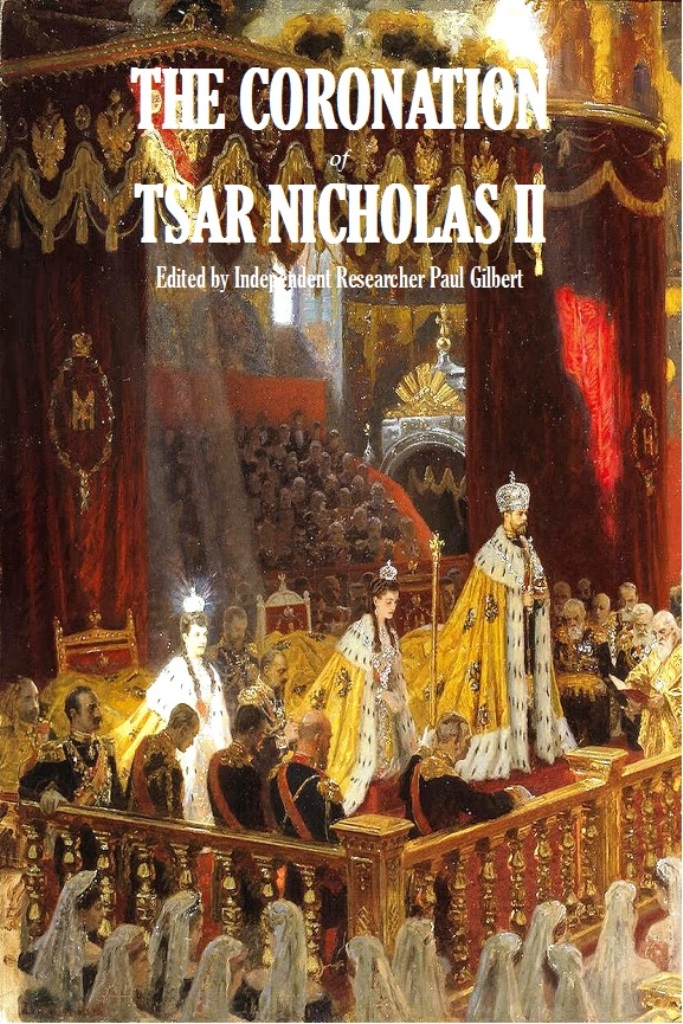
THE CORONATION OF TSAR NICHOLAS II
Compiled and Edited by Paul Gilbert

CLICK ON THE LINK BELOW TO ORDER FROM AMAZON

HARD COVER EDITION – PRICE $29.99

PAPERBACK EDITION – PRICE $18.99

BOOK DESCRIPTION

Six eyewitness accounts of the crowning of Russia’s last tsar with more than 200 rare vintage photographs & illustrations

The pomp and pageantry surrounding the Coronation of Nicholas II is told through the eye-witness accounts of six people who attended this historic event at Moscow, held over a three week period from 6th (O.S.) to 26th (O.S.) May 1896.

Hard cover and paperback editions, with 456 pages + more than 200 black & white photographs


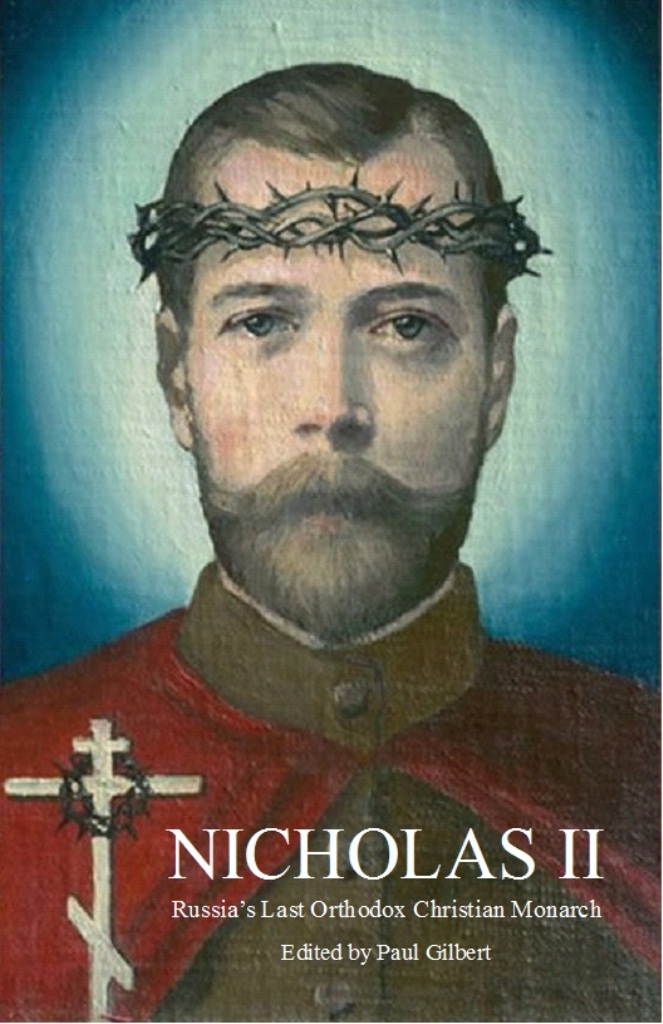
NICHOLAS II: RUSSIA’S LAST ORTHODOX CHRISTIAN MONARCH
Edited by Paul Gilbert

CLICK ON THE LINK BELOW TO ORDER FROM AMAZON

PAPERBACK EDITION – PRICE $9.99

E-BOOK EDITION – PRICE $9.99

BOOK DESCRIPTION

This book is not only for Orthodox and non-Orthodox persons, but for any one who shares an interest in the life, death, and martyrdom of the Holy Tsar-Martyr Nicholas II.

An illustrated Introduction by independent researcher Paul Gilbert explores the piety of Nicholas II, and his devotion to the Russian Orthodox Church, which reached its fullest development and power, during his 22-year reign.

This book further examines the trials and tribulations the Tsar endured, which later led to his canonization by the Russian Orthodox Church.

Paperback edition, with 134 pages + 23 black & white photographs


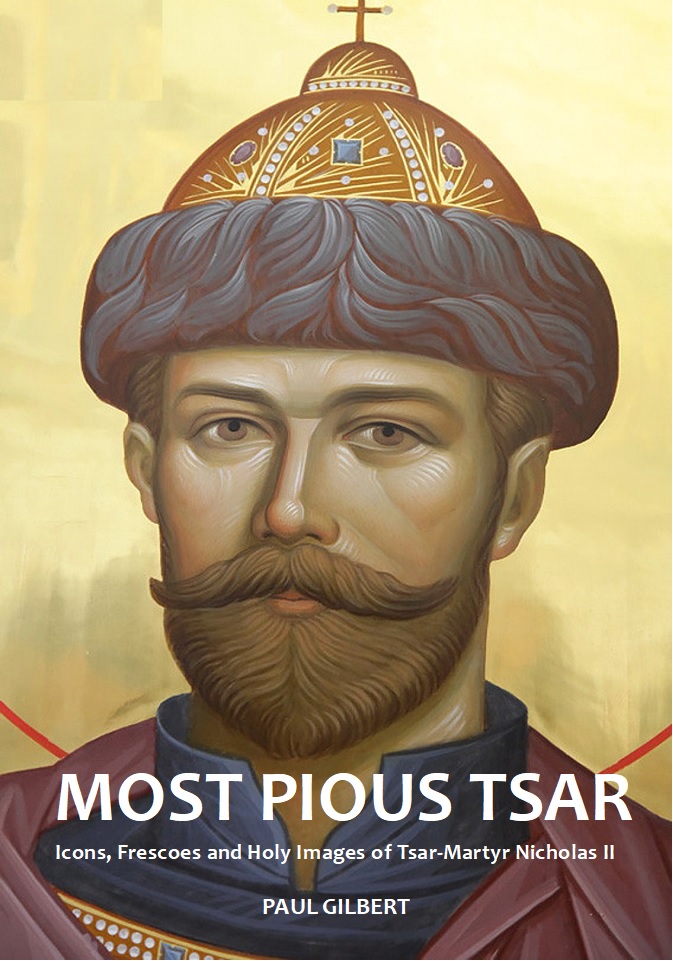
MOST PIOUS TSAR
Icons, Frescoes and Holy Images of Tsar-Martyr Nicholas II
by Paul Gilbert

CLICK HERE TO ORDER THE HARD COVER @ $50.00 USD

CLICK HERE TO ORDER THE PAPERBACK EDITION @ $40.00 USD

English. Large 7″ x 10″ format. 162 pages with 132 photos in FULL COLOUR

In 1938, Russia’s last tsar Nicholas II was canonized by the Serbian Orthodox Church. On 1st November 1981, he was canonized as a new martyr by the Russian Orthodox Church Outside Russia (ROCOR). On 20th August 2000, after 8 years of study, he was canonized as a passion bearer by the Moscow Patriarchate, although the people had already been venerating him as a saint for a long time, and this canonization was simply a confirmation of a fact that already existed by itself.

Since these historic dates, icons of Russia’s last Tsar have been installed in Orthodox churches across Russia and around the world. In addition home icons have been mass produced and sold for veneration by Orthodox Christians.

This book will not only appeal to Orthodox and non-Orthodox persons, but for any one who shares an interest in icons and iconography. This book also includes a Prayer and Akathist to the Holy Martyred Tsar. The highlight of this book, however, are the 130+ colour photographs of icons, frescoes and holy images depicting the Holy Royal Martyr Nicholas


NICHOLAS II
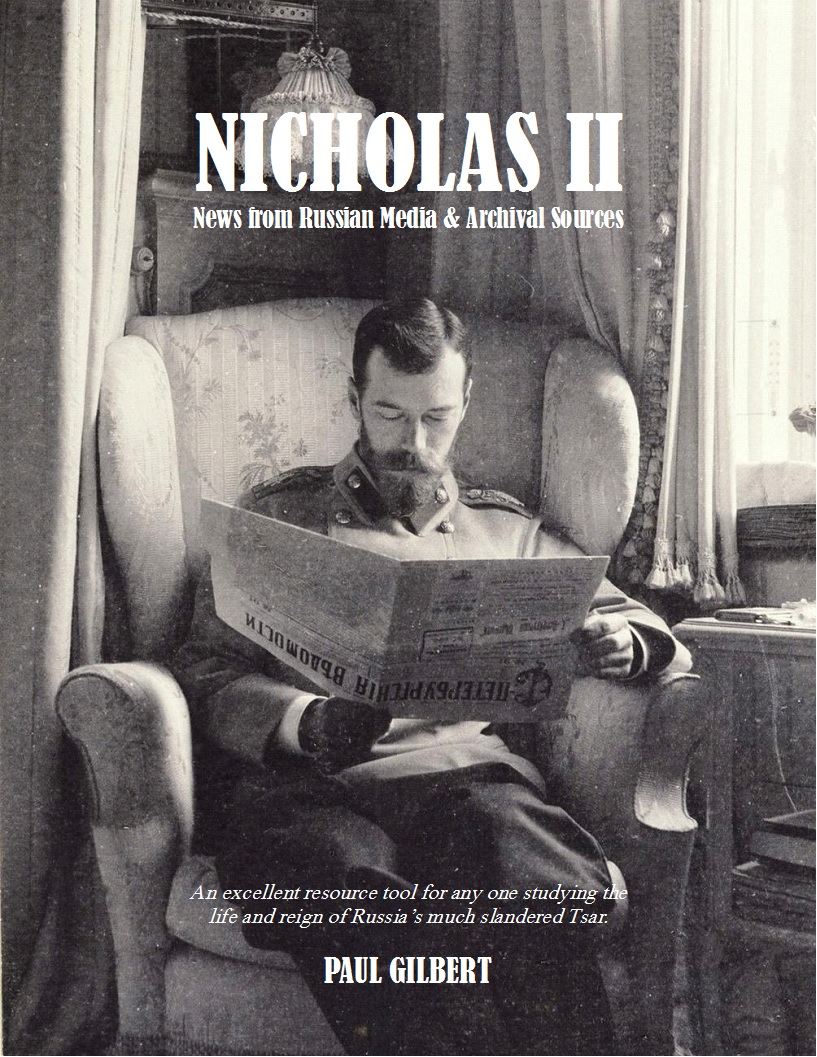
News from Russian Media & Archival Sources
by Paul Gilbert

CLICK HERE TO ORDER THE PAPERBACK EDITION @ $20.00 USD

English. Large 8-1/2″ x 11″ format, 256 pages, 300+ black & white photos

In this book, you will find more than 130 articles and news stories about exhibitions, new monuments, portraits, polls on Nicholas II’s popularity in post-Soviet Russia, updates on the restoration of the Alexander Palace, events marking the 150th anniversary of the birth of Nicholas II and the 100th anniversary of his death and martyrdom, the Russian Orthodox Church and the Ekaterinburg remains and much more.

These articles and news stories were originally published in Sovereign (2015-2020) and Royal Russia (2011-2020). Both of these periodicals are no longer published, the back issues out of print, therefore, I am pleased to offer these important materials in one concise volume. They are complemented with more than 300 black and white photographs, many of which have never been published in any Western newspaper, magazine or book. Each article has been sourced from Russian media and archival sources, and translated into English.

While this collection of articles and news stories, may not appeal to every one, it will prove a valuable research tool for those studying the life and reign of Nicholas II, particularly as he is perceived in modern-day Russia.


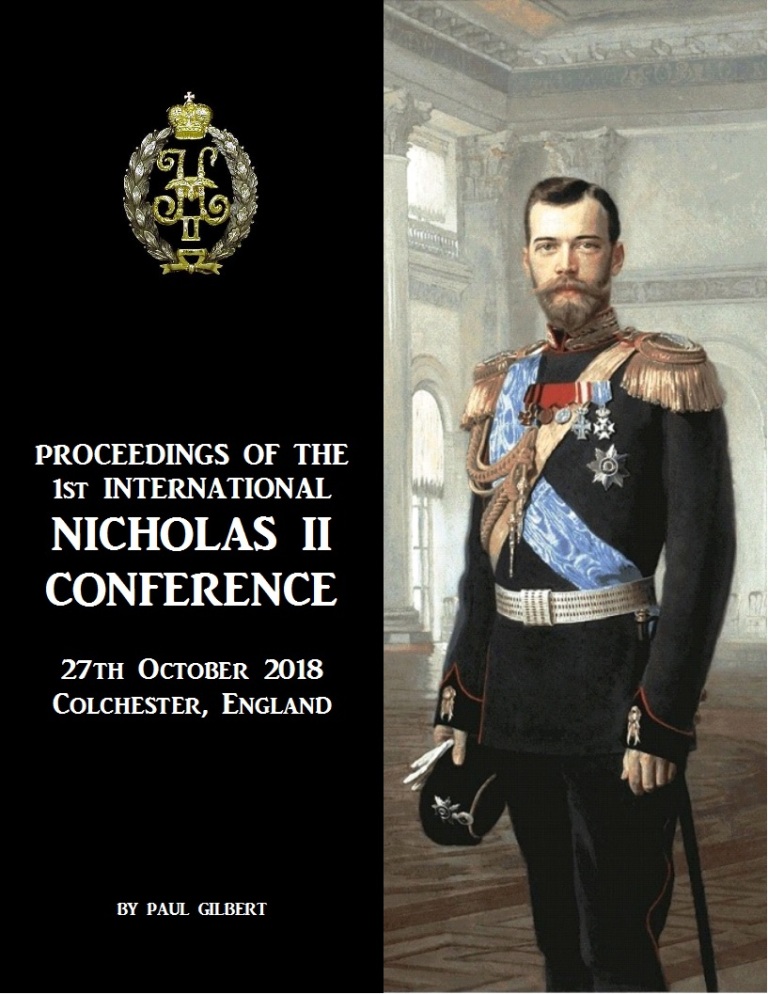
Proceedings of the 1st International Nicholas II Conference
by Paul Gilbert

CLICK HERE TO ORDER THE PAPERBACK EDITION @ $30.00 USD

CLICK HERE TO ORDER THE HARD COVER EDITION @ $40.00 USD

BOOK DESCRIPTION

In the autumn of 2018, people from nearly a dozen countries gathered in Colchester, England for a conference marking the 150th anniversary of the birth and the 100th anniversary of the death martyrdom of Russia’s last tsar Nicholas II.

Five speakers, including Paul Gilbert, Archpriest Andrew Philips (ROCOR), Nikolai Krasnov, authors Frances Welch and Marilyn Swezey presented seven papers on Nicholas II.

Topics included “A Century of Treason, Cowardice and Lies,” “Why Nicholas II is a Saint in the Russian Orthodox Church,” “Nicholas II and the Sacredness of a Monarchy,” “Nicholas II in Post-Soviet Russia,” and several more.

The original edition of these proceedings published in 2018 is now out of print. This new revised and updated edition of include three additional articles, plus a comprehensive bibliography featuring more than 100 English-language titles on the life, reign and era of Russia’s much slandered Tsar.

Large format 8-1/2″ x 11″ hard cover and paperback editions, 136 pages +50 COLOUR and black & white photos


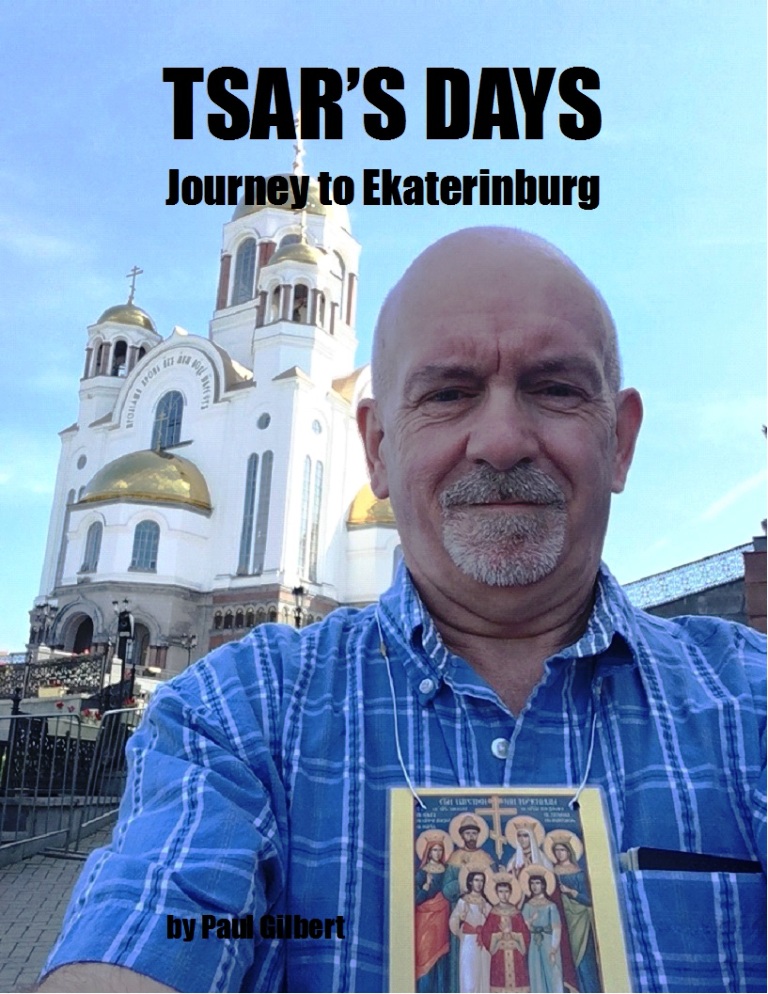
TSAR’S DAYS: JOURNEY TO EKATERINBURG
by Paul Gilbert

CLICK ON THE LINK BELOW TO ORDER FROM AMAZON

HARD COVER EDITION – PRICE $40.00

PAPERBACK EDITION – PRICE $25.00

BOOK DESCRIPTION

On 17th July 2018, independent researcher and writer Paul Gilbert travelled to Ekaterinburg, to take part in the events marking the 100th anniversary of the Tsar’s death and martyrdom.

In his own words and photographs, the author shares his experiences and impressions of this historic event, which include visits to the Church on the Blood, Ganina Yama, Porosenkov Log, the Patriarchal Liturgy, exhibitions, and much more.

Gilbert’s solemn journey to the Urals allowed him to experience history in the making, and to honour the memory of the Holy Royal Martyrs, a century after their death and martyrdom.

Large format 8-1/2″ x 11″ hard cover and paperback editions, 152 pages + 200 COLOUR PHOTOS, 65 of which were taken by the author.


SOVEREIGN No. 12 WINTER 2024
by Paul Gilbert

CLICK HERE TO ORDER THE PAPERBACK EDITION @ $20.00 USD

English. Large format 8-1/2″ x 11-1/2″. 130 pages. 114 Black & White photos

I am pleased to offer the first issue of my popular magazine Sovereign: The Life and Reign of Emperor Nicholas II, to be published in 5 years! Sovereign No. 12 – the Winter 2024 issue is now available through AMAZON outlets around the world.

The No. 12 issue, features 17 articles, and richly illustrated with more than 100 photographs, English text. The following articles have been reproduced from my blog, and presented in a printed format for the very first time:

[1] How Boris Yeltsin justified the demolition of the Ipatiev House

[2] Doomed to Resurrection: Is it Possible to Resurrect the Ipatiev House?

[3] The Fate of Nikolai Nikolaevich Ipatiev (1869-1938)

[4] Then they repented of slandering the Tsar . . .

[5] The myth of Nicholas II’s indifference to the Khodynka tragedy

[6] Nicholas II’s Private Apartments In the Winter Palace

[7] Nicholas II, the Union of the Russian People and the Black Hundreds

[8] Imperial Railway Pavilion at Tsarskoye Selo is being restored

[9] The ghost of Anna Anderson continues to haunt us

[10] Nicholas’s national education Project for Russia

[11] The Russian Imperial Award System 1894-1917

[12] How the Orthodox Church supported The overthrow of the monarchy

[13] “There are still many conjectures surrounding the death of Grand Duchess R+Elizabeth”

[14] Lost and found: Romanov family photo album found in Siberia

[15] The Charity of the Holy Tsar Nicholas II

[16] Russia’s last Tsar through Serbian eye

[17] Russia after Putin: Would he restore the monarchy?

NOTE: The No. 13 ussye of Sovereign is schdeduled for publication in July 2024


BOOKS BY OTHER AUTHORS

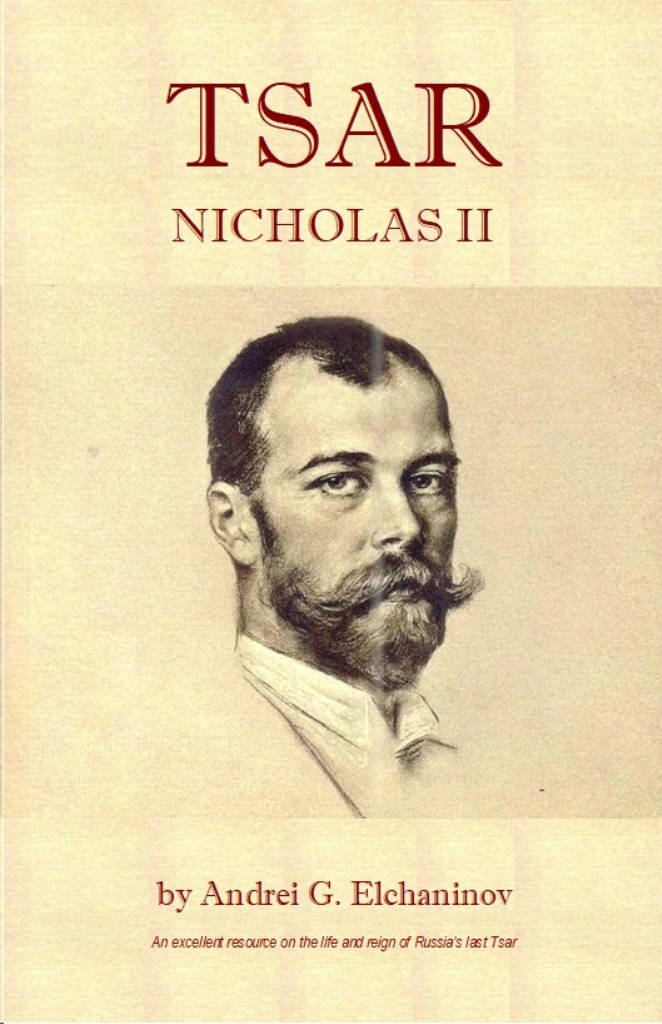
TSAR NICHOLAS II
by Andrei G. Elchaninov

CLICK HERE TO ORDER THE PAPERBACK EDITION @ $14.99 USD

English. 5-1/2″ x 8-1/2″ format. 194 pages with 25 photos

This authorized account of Emperor Nicholas II by Major-General Andrei Georgievich Elchaninov (1868-1918), is an unprecedented biography of a living tsar. It was originally published in 1913, to coincide with the 300th anniversary of the Romanov dynasty. The author served as a professor of military art in the General Staff Academy in St. Petersburg, he later served in the suite of Tsar Nicholas II.

Nicholas II reviewed and corrected the proofs himself in January 1913. He made changes to the text, and requested the removal of sentences describing the Tsesarevich Alexei’s illness.

Elchaninov gathered considerable material for the twelve chapters about Nicholas II’s personal life based on observations and impressions. The first chapters describe Russia’s last Tsar as a caring, devoted and loving husband and father. The remaining chapters focus on his relationship with his government, the church, the army, the Russian people, and the policies which he pursued during the first 18 years of his reign.

Written before the First World War and the 1917 Revolution. Elchaninov writes in glowing patriotic language portraying Nicholas II as an indefatigable “Imperial worker” in the service of Russia’s best interests and the “Sovereign father” of the Russian people.

In addition to Elchaninov’s biography on the Tsar, this new edition features an expanded introduction by independent researcher Paul Gilbert, 25 black and white photographs, and three comprehensive appendices: a chronology of events during the reign of Nicholas II (1894-1917); 100 facts about Nicholas II and the many reforms he made during his reign, and a bibliography of more than 100 English language books written over the past century on Russia’s last Tsar.

This book is an excellent resource tool for any one interested in Russia’s last Tsar!


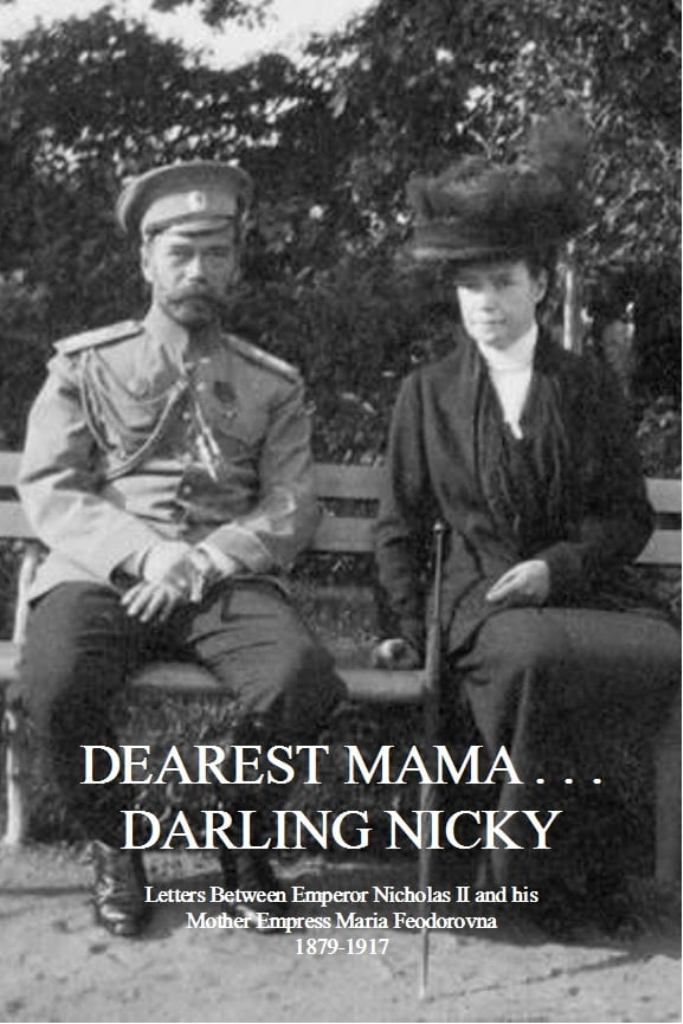
DEAREST MAMA . . . DARLING NICKY:
Letters Between Emperor Nicholas II and His Mother
Empress Maria Feodorovna 1879-1917

CLICK ON THE LINK BELOW TO ORDER FROM AMAZON

PAPERBACK EDITION – PRICE $13.99

BOOK DESCRIPTION

Written between the years 1879, when Nicky was a little boy, and 1917, after his abdication, this collection of more than 200 letters are a revelation of the personalities of the Emperor and his Empress mother. They were never part of the imperial archives but the cherished possession of both correspondents, carried with them wherever they went. At the outbreak of the revolution, the letters were confiscated by the Soviets.

Paperback edition. 246 pages.


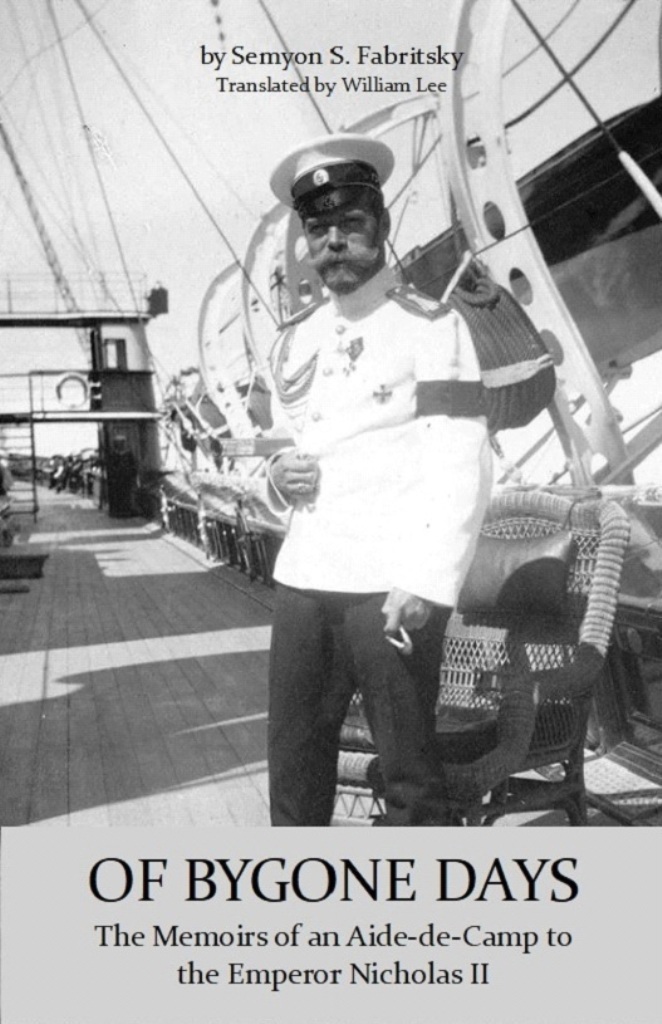
OF BYGONE DAYS
Letters Between Emperor Nicholas II and His Mother
The Memoirs of an Aide-de-Camp to
the Emperor Nichoas II
by Sergei S. Fabritsky

CLICK HERE TO ORDER THE PAPERBACK EDITION @ $20.00 USD

English. 214 pages, 10 black & white photos

First English translation with introduction and notes by William Lee

NOTE: The first Russian-lanaguage edition of Fabritsky’s memories was published in Berlin in 1926. The first English-language edition of Fabritsky’s memoirs was published in Canada in 2016. This title has been out of print for many years, so I am delighted to offer this new edition.

The time I spent with Their Majesties – over the course of many years and under varied circumstances – will always be the source of my most precious memories, and I am very happy to be able to share those memories now with a wide public. I hope at least to give an absolutely truthful account of what I saw and heard” – Semyon S. Fabritsky. 1926

Semyon Semyonovich Fabritsky (1874-1941) had a fascinating career during the twilight years of Imperial Russia. He began his naval career in the very first days of the reign of Emperor Nicholas II.

In 1909, Fabritsky was personally appointed Aide-de-Camp by the Emperor himself, a position he served with immense pride and devotion.

During his service to Nicholas II, Fabritsky earned both the trust and friendship of the Emperor. Through his often uninterrupted contact with Russia’s last sovereign and observing him at all hours and under a variety of conditions, Fabritsky was able to form a clear picture of Nicholas II and his family, through his own personal eye-witness observations.

He also served aboard the Imperial yachts, partaking in holidays with the Emperor and his family to the Crimea and the Finnish skerries. He shares interesting details and anecdotes about the AlexandriaPolar Star, and Standart.

This book will also be of great interest to any one with an interest to the Russian Imperial Yachts and the Russian Imperial Navy.

Fabritsky provides great insight to the treachery, cowardice, and deceit which prevailed every where. He acknowledges ministers and generals who were either unworthy of their posts or unfit for them. Sadly, it was these men who surrounded Nicholas II during his 22+ year reign, who contributed to the downfall of monarchy and the destruction of the Russian Empire in 1917.


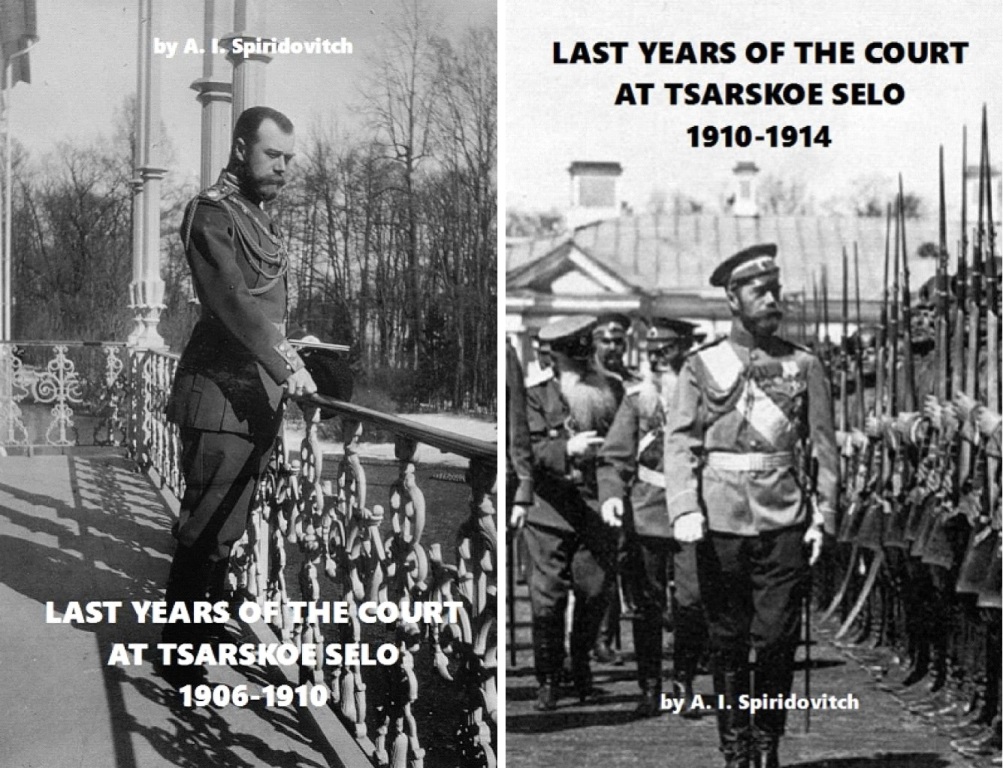
LAST YEARS OF THE COURT AT TSARSKOE SELO – 2 Volumes
by Alexander Spiridovitch

CLICK ON THE LINK BELOW TO ORDER FROM AMAZON

VOLUME I – 1906-1910. PAPERBACK EDITION – PRICE $18.99

VOLUME II – 1910-1914. PAPERBACK EDITION – PRICE $18.99

BOOK DESCRIPTION

Originally published in French in 1928, this is the FIRST ENGLISH LANGUAGE EDITION of both volumes – a MUST read for any one interested in the life and reign of Emperor Nicholas II.

Alexander Ivanovich Spiridovitch (1873-1952) was handpicked by Emperor Nicholas II to serve as his personal security chief from 1906-1916. He was also responsible for the security of the tsar’s residences.

Volume I – 1906-1910, with 458 pages + 59 black & white photographs

Volume II – 1910-1914, with 480 pages + 65 black & white photographs


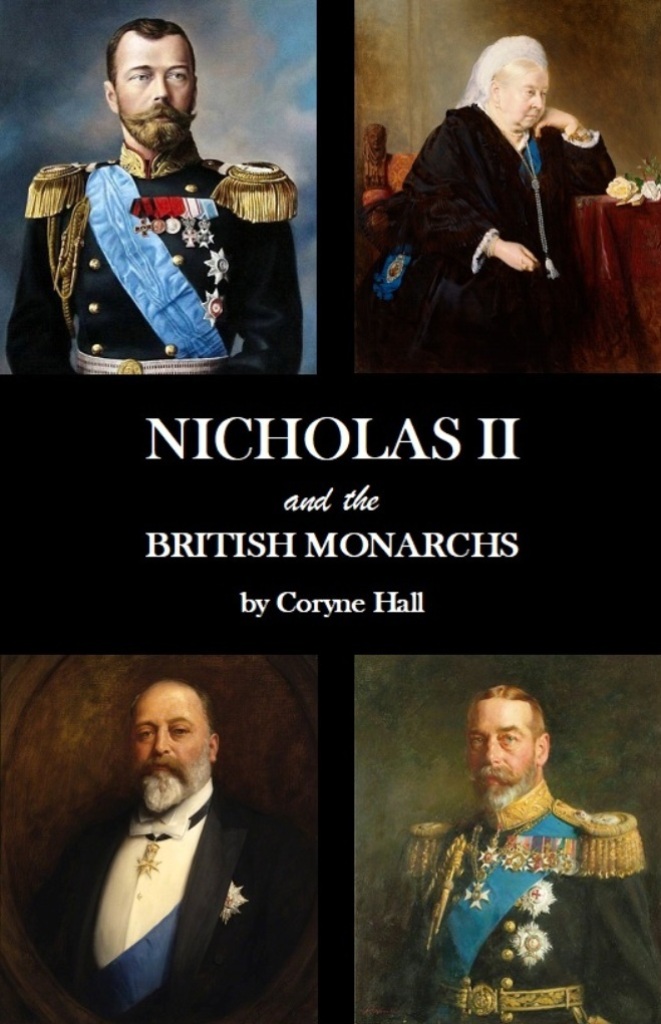
NICHOLAS II and the BRITISH MONARCHS
by Coryne Hall

CLICK HERE TO ORDER THE PAPERBACK EDITION @ $20.00 USD

English. 164 pages, 36 black & white photos

Romanov historian and royal expert Coryne Hall writes about the relationships between Emperor Nicholas II with the three British monarchs who ruled during his 22-year reign.

The author has researched the relationships between Russia’s last Tsar with those of Queen Victoria – from 1894 to 1901; King Edward VII – from 1901 to 1910; and King George V – from 1910 to 1917. Her research is complemented with letters, diary entries and photographs.

The four essays presented in this volume were originally published in four successive issues of Sovereign, the semi-annual publication dedicated to the study of the life and reign of Emperor Nicholas II. They are presented here for the first time in one volume.


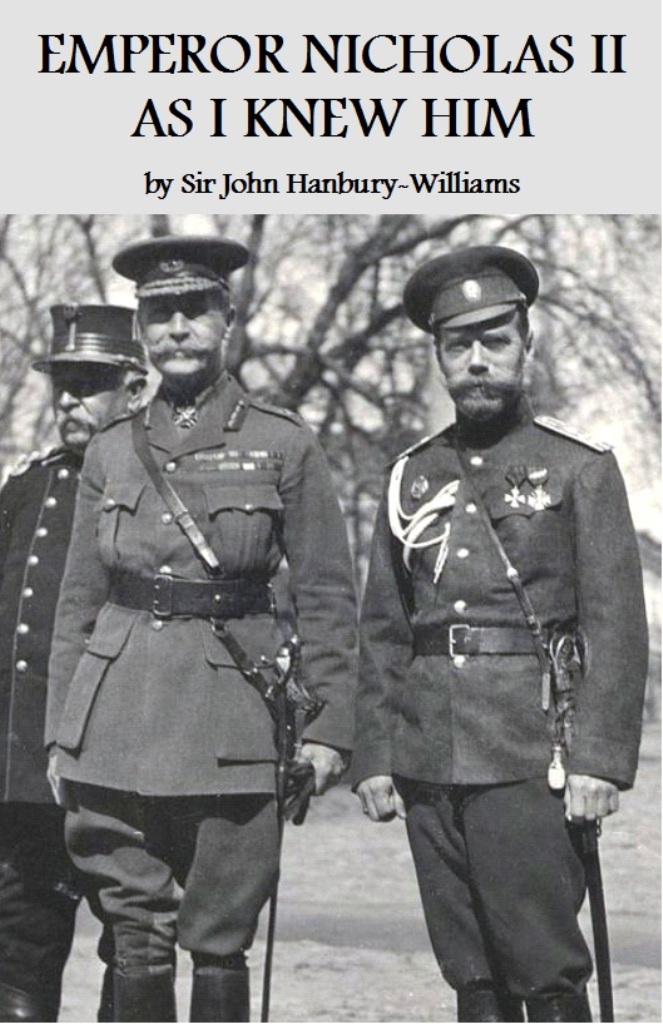
EMPEROR NICHOLAS II AS I KNEW HIM
by Sir John Hanbury Williams

CLICK ON THE LINK BELOW TO ORDER FROM AMAZON

PAPERBACK EDITION – PRICE $12.99

BOOK DESCRIPTION

In this compelling and intimate series of diary entries, originally published in 1922, Major-General Sir John Hanbury-Williams (1859-1946) depicts Nicholas II “not as history knows him, but as he knew him.”

Paperback edition. 196 pages.


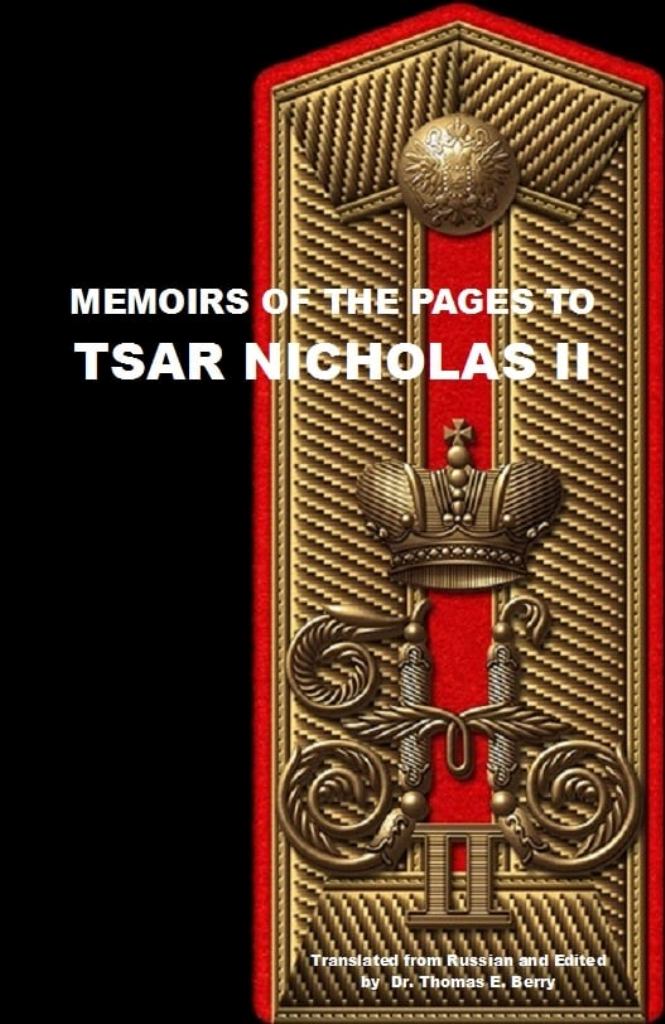
MEMOIRS OF THE PAGES TO TSAR NICHOLAS II
by Dr. Thomas E. Berry

CLICK ON THE LINK BELOW TO ORDER FROM AMAZON

HARDCOVER EDITION – PRICE $22.99

PAPERBACK EDITION – PRICE $14.99

BOOK DESCRIPTION

The young men of the Corps des Pages, served Nicholas II and his family. This collection of 18 memoirs give eyewitness accounts of weddings, baptisms, Court functions and other events at the Imperial Court between 1894-1917. The last part of the book is devoted to the sad events of the Revolution and the end of the Corps des Pages.

Hardcover and Paperback editions. 258 pages


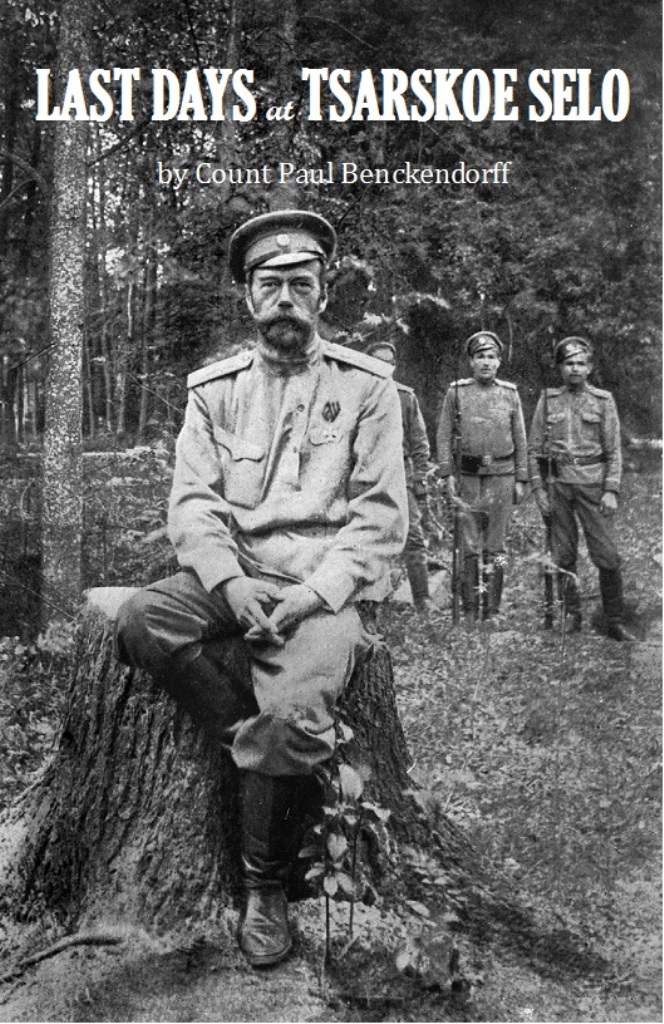
LAST DAYS AT TSARSKOE SELO
by Count Paul Benckendorff

CLICK ON THE LINK BELOW TO ORDER FROM AMAZON

E-BOOK EDITION – PRICE $9.99

PAPERBACK EDITION – PRICE $12.99

BOOK DESCRIPTION

Count Paul Benckendorff (1853-1921), belonged to the closest circle of Emperor Nicholas II. Following the collapse of the monarchy in 1917, Benkendorff and his wife shared the captivity of the Imperial Family at Tsarskoye Selo.

Benkendorff’s narrative provides a detailed eye-witness account of the Tsar’s abdication, his transfer to Tsarskoe Selo and his daily life in the Alexander Palace, where he was held under house arrest from February to August 1917.

Throughout his memoirs, Benckendorff characterizes Nicholas II and his wife Alexandra Feodorovna as courageous, gracious, and poised despite their obvious concern for their family.

Due to his age and poor health, Benckendorff was unable to follow the Emperor and his Imperial Family’s into exile to Tobolsk. One of the very few who were faithful, he parted with his Sovereign for the last time on 14th (O.S. 1st) August 1917.

Paperback and eBook editions. 168 pages + 40 black & white photographs

© Paul Gilbert. 19 May 2024
‘Nicholas II: I am Responsible for Everything’

NOTE: this post is for information purposes only. I regret that I do not know how to obtain copies of this book from Russia, or if we will ever see an English edition publishedPG

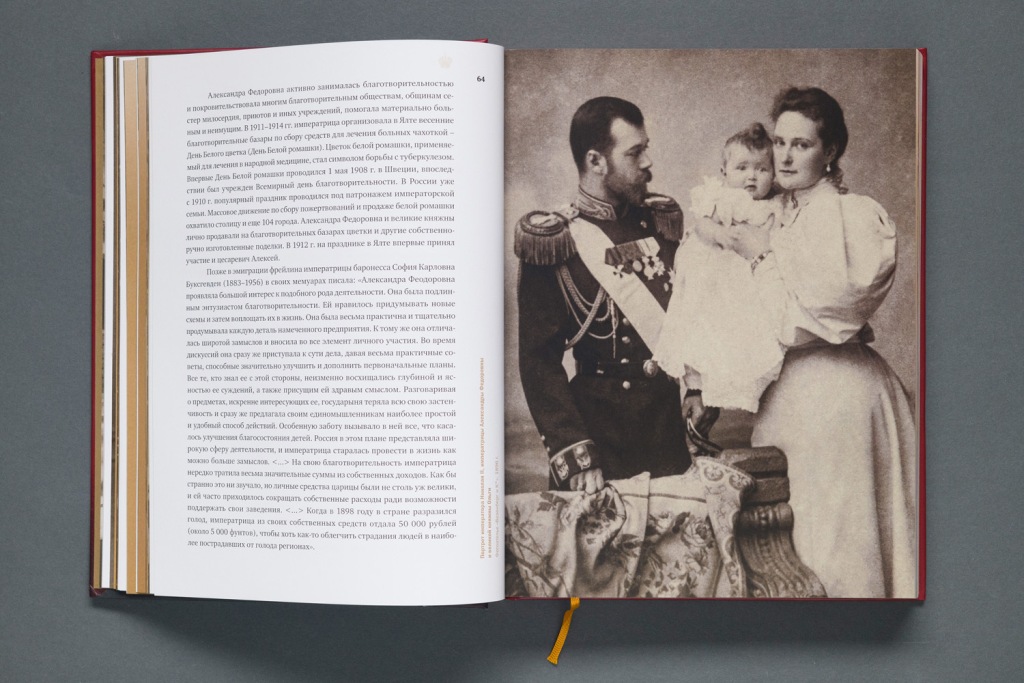
During the last 30+ years, hundreds of new books on the life and reign of Emperor Nicholas II, have been published in Russia. Sadly, very few (if any) will ever find a Western publisher, who is willing to have them translated into English. The current economic sanctions imposed against Russia only complicate things further.

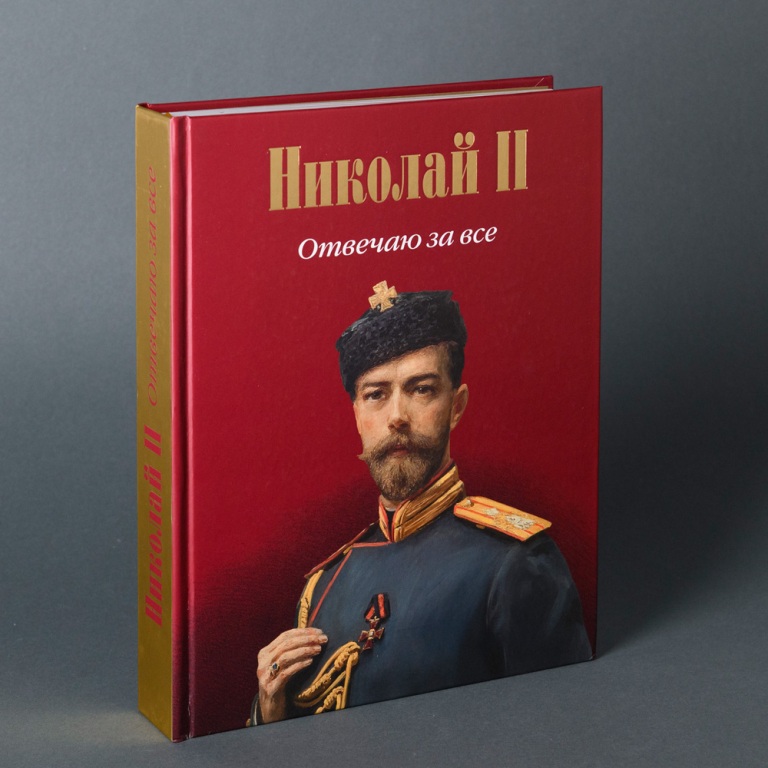
One new title ‘Николай II: Отвечаю за все‘ / ‘Nicholas II: I am Responsible for Everything‘, which was published in June 2023, really stands out among the others. It is a large format hard cover, with 456 pages, and richly illustrated throughout. Language: Russian only

The author of the book is Fyodor Gaida, Doctor of Historical Sciences, Associate Professor of the Department of 19th-20th Centuries Russian History of the Faculty of History of Moscow State University.

Gaida’s book explores the tragic fate of the last Russian Tsar, whose 22-year reign continues to evoke a wide range of opinions in modern Russian and Western society. It explores events related to the most controversial and crucial period of Russian history – the First World War and the 1917 Revolution.

Nicholas II is presented not only as an autocrat, but also as an ordinary man with deep religious and political convictions, which he carried throughout his life.

The book tells the life story of the Emperor and his family in the context of the historical and political events that took place between 1894 to 1917, fragments of his personal correspondence, and testimonies of contemporaries.

The publication presents rare photographs and documentary materials, as well as unique items from the collections of the State Historical Museum, the Moscow Kremlin Museums, the State Hermitage Museum, the Peterhof State Museum, and the Museum of Political History of Russia.

© Paul Gilbert. 19 May 2024
New bust-monument to Nicholas II installed in St. Petersburg

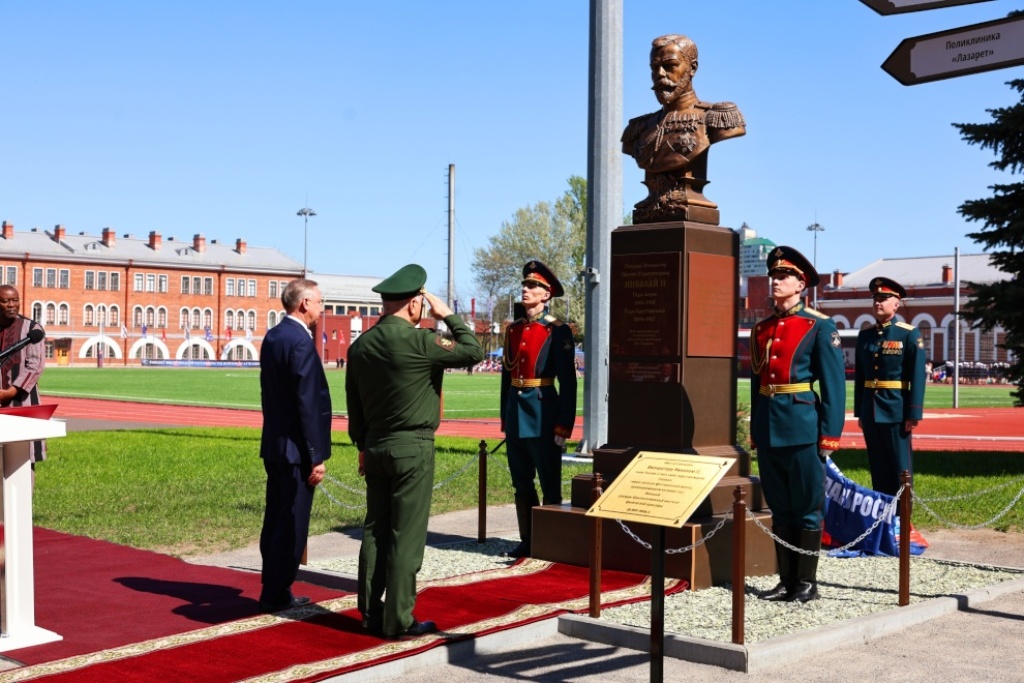
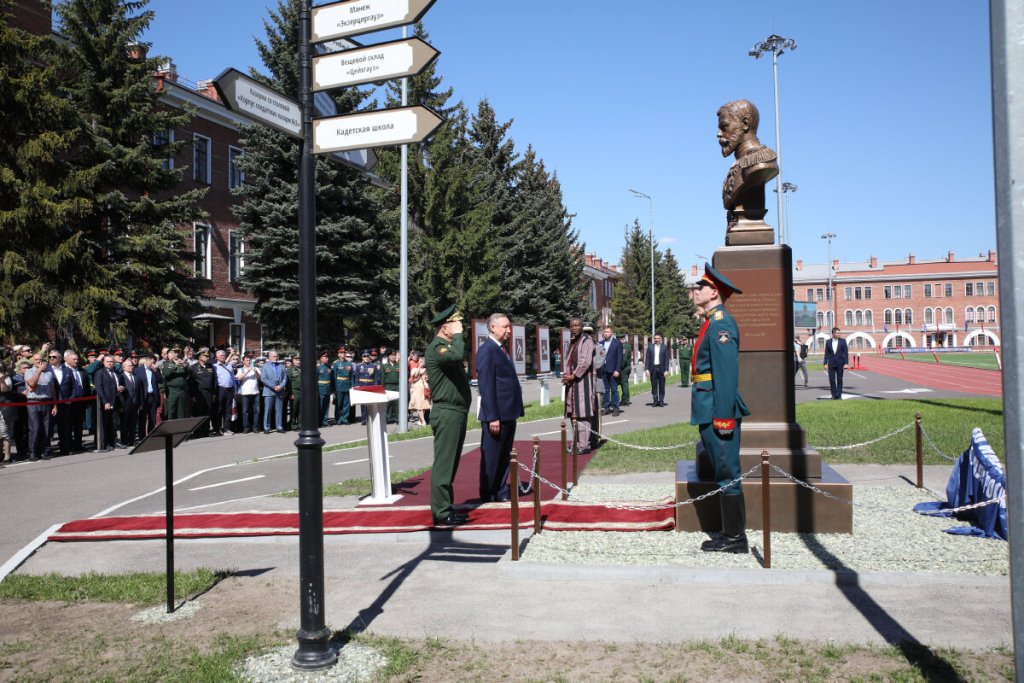
On 19th May 2024 – the day marking the 156th anniversary of the birth of Emperor Nicholas II – a new bust-monument of him was installed on the grounds of the Military Institute of Physical Culture (VIFK), in St. Petersburg.

The event was part of the celebrations marking the 115th anniversary of the Military Institute of Physical Culture (VIFK). The event was attended by St. Petersburg Governor Alexander Beglov and State Secretary and Deputy Minister of Defense of the Russian Federation Nikolai Pankov, both of whom took part in the unveiling and dedication of the bust-monument of Emperor Nicholas II.

On 17th (O.S. 4th) May 1909, Emperor Nicholas II formally granted the provisional regulations for military sports education, which were the basis for the formation of the current institute. The school opened its doors on 14th (O.S. 1st) October 1909 in St Petersburg as the Main Gymnastics and Fencing School, which reported to the Commander of the Imperial Guard/Commanding General, of the St. Petersburg Military District and whose first cadets were military personnel of the Guards units and personnel of the district.

The Military Institute of Physical Culture is the only and one of the oldest military educational institutions in Russia, which provides training and retraining of specialists in the field of physical culture and sports for ministries and departments of the Russian Federation.

In his dedication speech, Governor Alexander Beglov noted: “Nicholas II was the most athletic emperor in Russia’s history. He was a passionate tennis player, he enjoyed all forms of phsical activity, such as cycling, hiking, swimming and rowing, he was excellent at shooting, skiing. He supported sports in Russia. By his example, he brought sports and physical activity to the masses. In addition, it was Nicholas II who brought the rules of *ice hockey to Russia. Now it is a national sport and a favorite game of millions of Russians. * Nicholas II enjoyed playing hockey.

“As our President has repeatedly emphasized, continuity is also important in sports. We must not forget our worthy ancestors. The Institute embodies this wish of the President,” said Alexander Beglov.

Governor Alexander Beglov further added that the bust of Nicholas II will remind contemporaries of the Tsar’s econtribution to the development of sports and sporting societies in Russia, and to the creation of a system of physical training for officers of the Russian army.

***

NOTE: since the fall of the Soviet Union in 1991, more than 100 monuments, busts and memorial plaques to Emperor Nicholas II have been installed in cities, towns and villages across the Russian Federation. In addition, are a number of churches dedicated to him.

© Paul Gilbert. 19 May 2024
Nicholas II’s interest in the cinematograph

On this day -18th May 1896 – Russia’s first cinema opened at No. 46 Nevsky Prospekt (now the Neva restaurant is located here), in St. Petersburg.

One of the spectators wrote:

“Today, we visited Nevsky … The electric light goes out, the hiss of the cinematograph is heard in the hall, and a moving photograph appears on the screen in front of the eyes of the audience… The scenes we have seen, were an approaching train, a quarrel between two men and their struggle, a game of cards, workers leaving the Lumière factory, a group of children quarreling, and an acrobat playing with a ribbon.”

From 1900 to 1918, Russian cinema developed rapidly, and was very widespread and popular in many large cities, including St. Petersburg, Moscow, Kiev, Odessa, Nizhny Novgorod, Baku, Tiflis, and Yekaterinburg; foreign cinema was also popular.

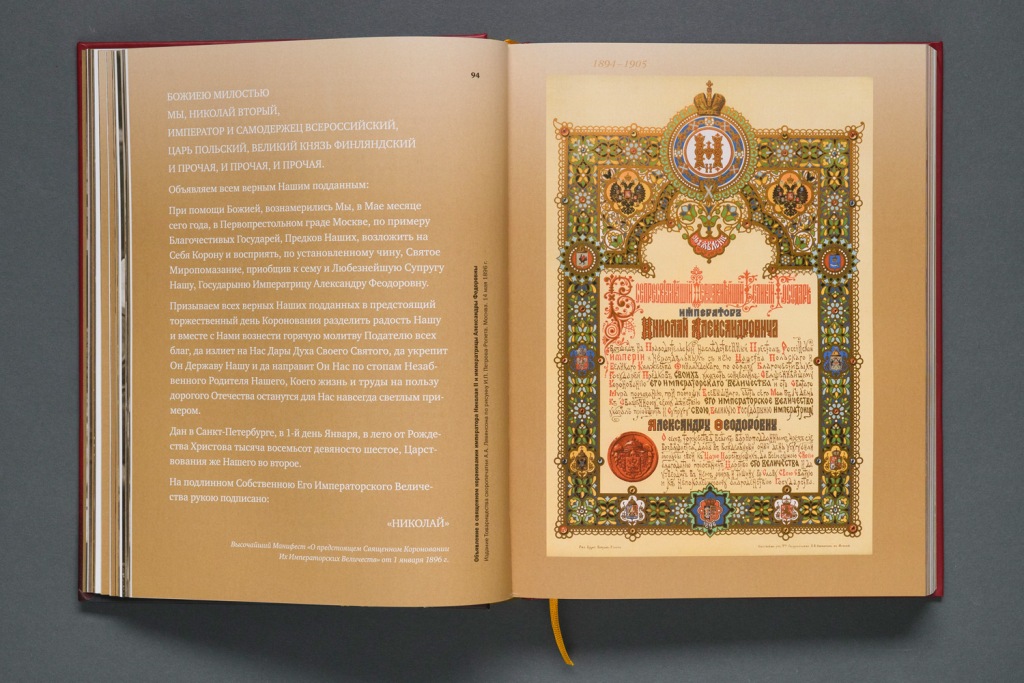
It is interesting to note that the Holy Coronation of Emperor Nicholas II also took place in Moscow in May 1896. The entire solemn procession was captured on film, by French cameramen from the Lumiere Brothers in Paris. The 1 hour and 33 minute documentary became the first documentary film shown in cinemas across the Russian Empire. A copy of the film was presented by Lumiere to Emperor Nicholas II.

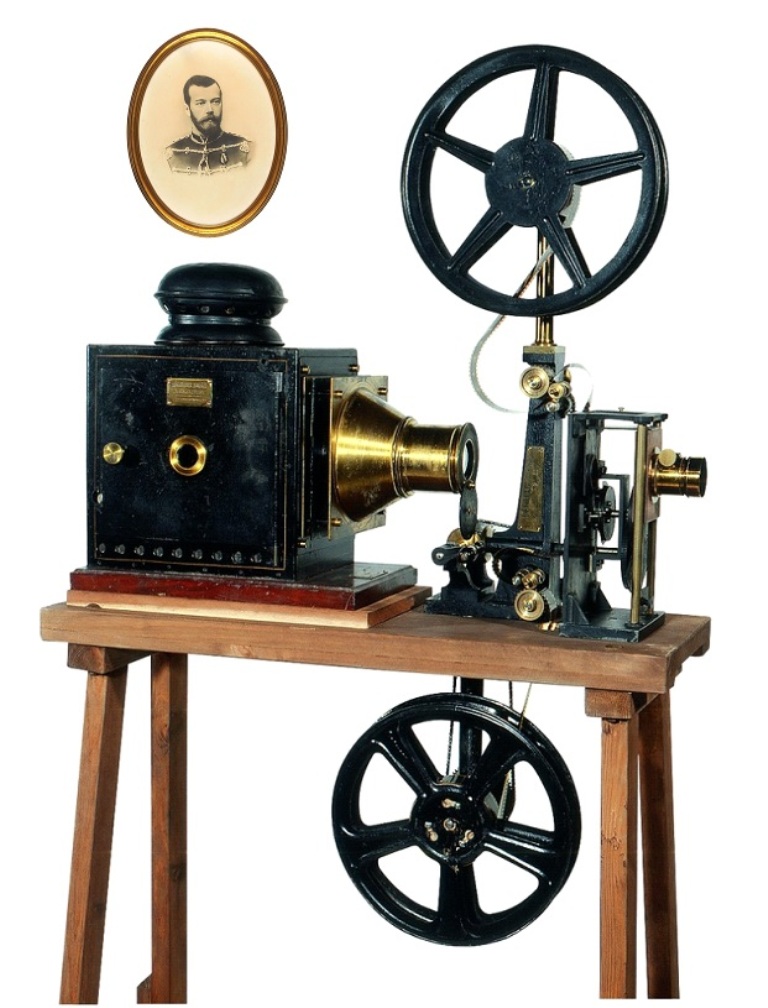
The cinema with it’s “moving pictures” became very popular in Russia, therefore, it should come as no surprise, that Emperor Nicholas II took a keen interest in the cinematograph [an early motion picture projector].

During Nicholas II’s reign, the Alexander Palace underwent many modern upgrades:  it was wired for electricity, and equipped with telephones and a cinematograph. A “screening booth” was built in the Great Library where the Imperial Family gathered to watch films. The Tsar even wrote down his favorite “cinematic pictures” in his diary.

As a rule, film screenings were held once a week, and Empress Alexandra Feodorovna selected the films as follows: first, they showed newsreels shot by the court photographers during the week, then an educational film, and finally a comedy for children.

Nicholas II enjoyed English and French newsreel films about the First World War, as well as documentary films about officers, service in the navy and daily life in the armed forces. The Tsar also paid particular attention to foreign news, which he watched with great interest, even taking notes. Interestingly, the Tsar himself, was often the central figures in many of these foreign newsreels.

He later equipped the Imperial Yacht Shtandart with a cinematograph. In 1913, the Tsar noted in his diary, that he had watched a Russian documentaries “The Tercentenary of the Reigning House of Romanov” and “The Heroic Feat of Private Vasily Ryabov”, as well as an Italian production “Ballerina from the Odeon”.

PHOTO: Maurice Paléologue (1859-1944)

On one occasion, the French ambassador to Russia Maurice Paléologue was invited to the Alexander Palace, to watch a film with the Emperor and Empree. That evening, he recorded the event in his diary: 

“I arrived at Tsarskoye Selo at five o’clock. The cinema was installed in a large round hall [the Semi-Circular Hall]; three chairs were placed in front of the screen; there were a dozen chairs around them. Almost immediately the Emperor and Empress came out with the Grand Duchesses and the Heir Tsesarevich, accompanied by the Minister of the Court Fredericks and his wife, the Oberhoffmeister Count Benckendorff and his wife, Colonel Naryshkin, Madame Buxhoevden, the tutor of the heir Gilliard and several officials of the palace administration. In all the doors, stood maids and palace servants, all crowded and peeping out. The Emperor is dressed in a marching uniform; the Empress and the Grand Duchesses wore simple woollen dresses; the other ladies in day dresses.

“Before me is the Imperial Court in all the simplicity of its everyday life. The Emperor seats me between himself and the Empress. The lights are turned off, and the film begins.”

© Paul Gilbert. 18 May 2024
‘The Emperor on Vacation’ – Set of 3 photo albums


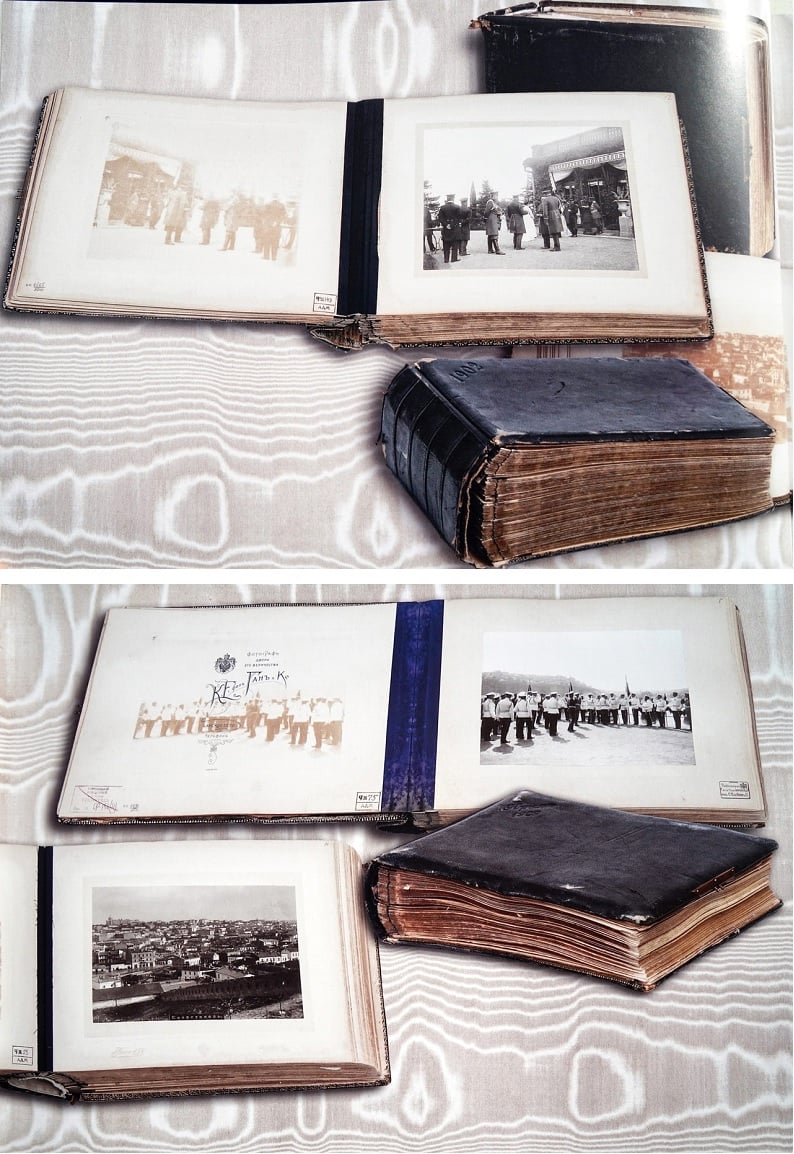
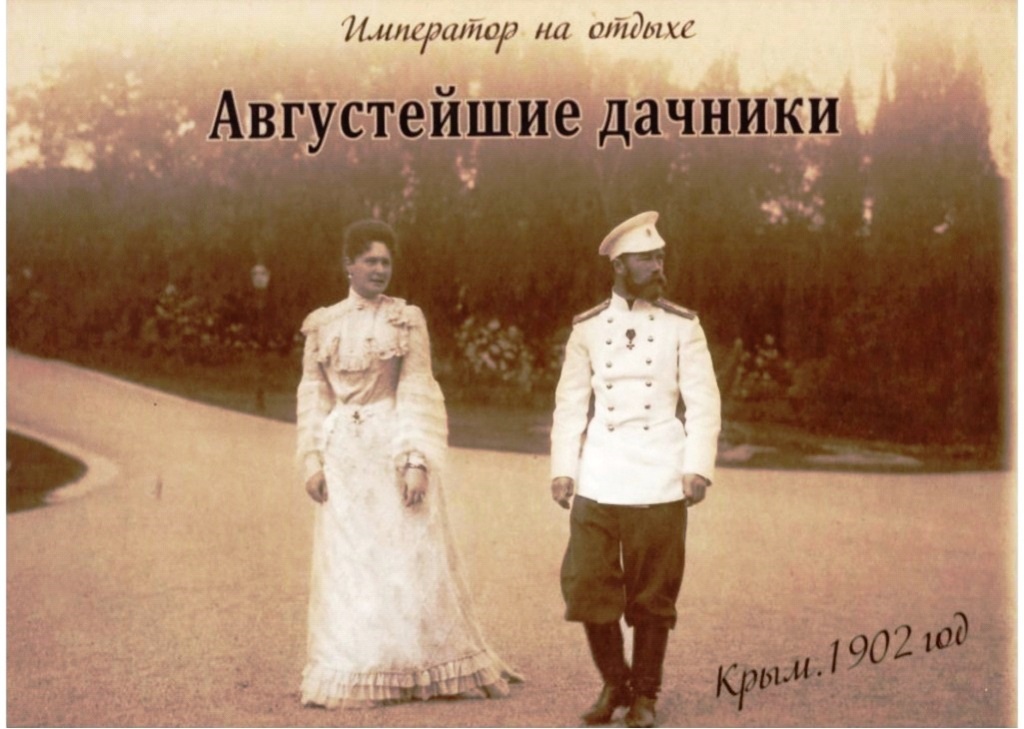
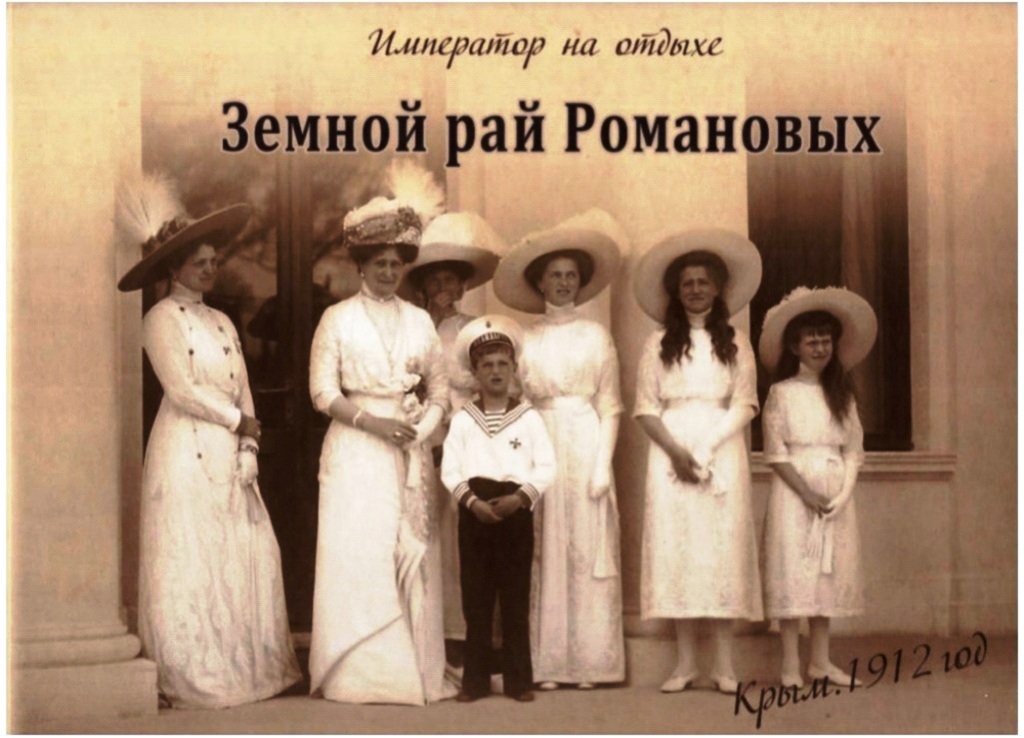
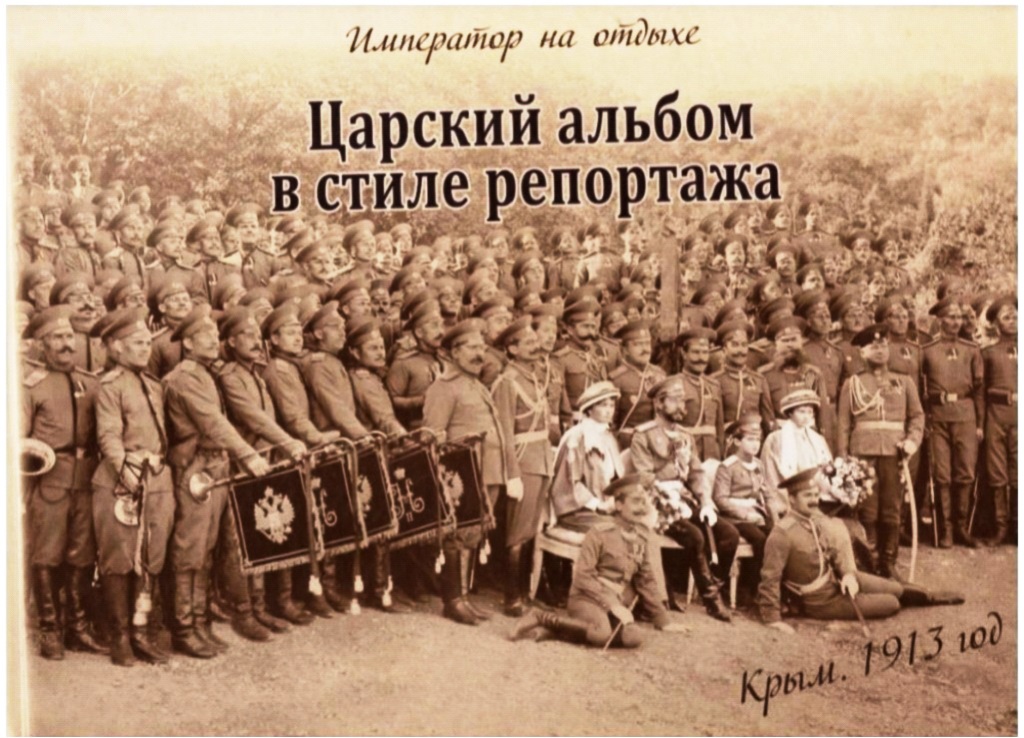
PHOTO: three photo albums from the family of Emperor Nicholas II at Livadia, during the years 1902, 1912 and 1913. From the Collection of Historical and Literary Museum in Yalta, Crimea.

 One of the most prized titles in my private collection of more than 300+ books on the life and reign of Emperor Nicholas II, is a 3-volume set of photo albums, which I purchaed from a Russian publisher in Crimea in 2020.

The photographs in these books have been reproduced from three little known family albums of Emperor Nicholas II during their visits to Livadia in various years during the early 20th century.

The albums had been tucked away for decades in the dusty archives of the Historical and Literary Museum in Yalta, Crimea. They were found in Livadia Palace following the 1917 Revolution, and seized by the regional Soviet after the Imperial residences were nationalized by the Bolsheviks.

I was made aware of the existence of these family albums of the Imperial Family during my visit to Yalta and Crimea in October 2000, however, it was not possible to view them at the time.

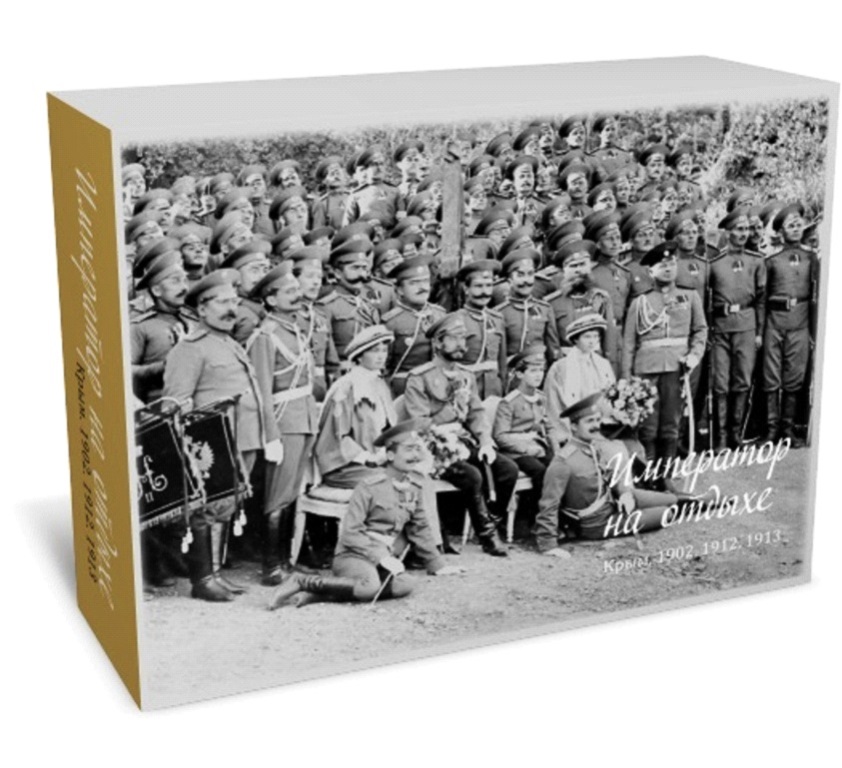
The albums were reproduced in 2019 by the N. Orianda Publishing House in Simferopol, Crimea under the title Император на отдыхе / The Emperor on Vacation in three handsome hard cover volumes. Each album is filled with high quality photographs of the Imperial family during their stay in Crimea in 1902, 1912 and 1913 respectively. The albums are packaged in a handsome slip case. Text and captions are in Russian.

This collection of photographs are indeed special, as there are no staged portraits, they reflect the private, home life of the Imperial Family: walks, picnics, excursions, family and friendly meetings, etc. – all set against the backdrop of picturesque Crimean nature, and the region’s historical and architectural monuments. Also included are a few images taken during official meetings and parades. In addition, are photos of the old wooden palaces at Livadia, and the Imperial Yacht Standart, docked in Yalta.

These albums will be indispensable to historians and any one interested in the life of Russia’s last Tsar and his family. The photographs have not been published in any of the pictorials published by Western publishers over the past decades – they are new to us!

It is interesting to note that that only 100 sets were printed! The price for the entire set was 10,000 rubles ($150 USD). After placing my order, I shared the information on my Facebook page, and within a few days, the remaining sets were sold out! I do know if a reprint was ever issued, and even if it was, it would be impossible to order these albums, due to the economic sanctions imposed by the West against Russia in 2022.

The 3-volume set of albums is encased in a handsome slipcase

Volume I (1902) Августейшие дачники / August Summer Residents
128 pages with 60 full-page black and white photos


Volume II (1912) Земной рай Романовых / Romanovs Earthly Paradise
224 pages with 112 full-page black and white photos


Volume III (1913) Царский альбом в стиле репортажа
88 pages with 40 full-page black and white photos

Published by the N. Orianda Publishing House in Simferopol, Crimea.
LanguageL Russian only. ISBN: 9785604293164

© Paul Gilbert. 14 May 2024
Video tour of the Museum of Emperor Nicholas II in Moscow

CLICK on the image above to watch the VIDEO

Duration: 2 minutes, 57 seconds. Language: Russian

For English subtitles: please click on the closed captioning button [cc] and then use translate [i.e. Google]

NOTEl: at the beginning of the video, please note the bust of Emperor Nicholas II on a pedestal, situated to the left of the museum.

***

Situated in a quiet side street in the Basmanny district, situated in northeastern Moscow, is a small museum dedicated to Russia’s last Tsar. The Museum of Emperor Nicholas II, which is part of the Nicholas II Cultural Foundation was established in April 2018.

The Foundation was created to support the Museum of Emperor Nicholas II and his family, as well as other initiatives to restore and disseminate the historical truth about the life and reign of Emperor Nicholas II.

Both the Foundation and the Museum were fojnded by the famous Russian art historian Alexander Vasilyevich Renzhin. It was during the 1990s that Renzhin began to collect, bit by bit, everything related to Emperor Nicholas II and his family. During that time, he managed to amass a collection of more than 3,000 authentic items which reflect on the private lives of the Imperial Family from 1868 to 1918.

The museum’s collection includes sacred relics and unique icons that belonged to the Imperial Family: church utensils; rare books; ceremonial portraits of Emperors Alexander II, Alexander III, and Nicholas II; more than 500 original photographs; authentic autographs; state documents; porcelain and glassware; personal items of Nicholas II and Alexandra Feodorovna; memorial items of the Romanov dynasty; a complete set of state awards established by Nicholas II; postcards; chromolithographs; engravings and much more.

Of particular note is unique memorabilia from the Holy Coronation of Emperor Nicholas II in May 1896: earthenware glasses and plates decorated with the coats of arms and monograms H II [Nicholas II] and AF [Alexandra Feodorovna], miraculously preserved fine crystal glasses with engravings and paintings, cups, plates and saucers from the service with the new coat of arms introduced in 1856.

In the spring of 2008, Renzhin donated his collection as a gift to the Nikolo-Ugreshsky Monastery.

In February 2021, the Museum of Emperor Nicholas II was forced to close its doors, due to the COVID-19 pandemic, and the museum’s mounting debt of almost 9 million rubles (more than $13,000 USD) in arrears of rent.

A Russian oligarch Konstantin Malofeev, and founder of the Tsargrad TV channel, came to the rescue by providing Renzhin’s rare collection with a new venue in which to display his vast collection. The Museum of Emperor Nicholas II re-opened in the Museum of Russian Art, the former manor house of Nikolai Eremeevich Struisky (1749-1796) – situated in Moscow’s historical district – on 10th February 2021.

FURTHER READING:

The Great Pilgrimage of Emperor Nicholas II in 1913 + VIDEO

Museum of Emperor Nicholas II in Moscow + VIDEO

Museum of Emperor Nicholas II re-opens in Moscow + PHOTOS

© Paul Gilbert. 7 May 2024
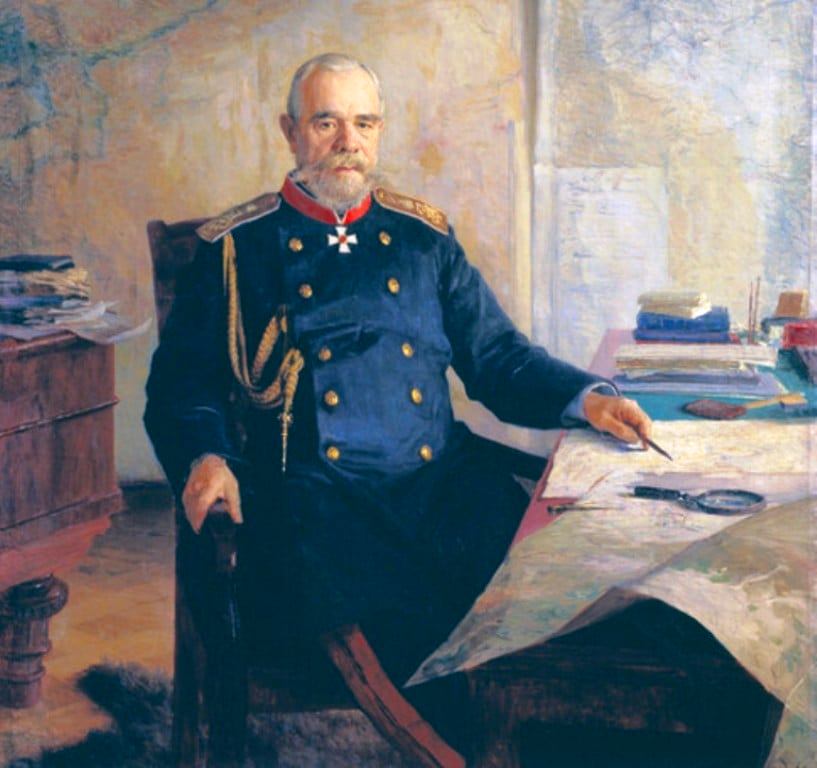
Tutor to Nicholas II reflects on his August student

Portrait of Adjutant General Nikolai Nikolayevich Obruchev (1830–1904)
Artist: Nikolai Alexandrovich Yaroshenko (1846-1898)

Adjutant General Nikolai Nikolayevich Obruchev (1830–1904), tutor to Tsesarevich Nikolai Alexandrovich, reflects on the future Emperor Nicholas II

“Tsar Nicholas II was of average height – 5 feet and 7 inches (about 170 cm). His slender figure was impeccable in proportion to his build, shone with the exceptional elegance of his innate grace, which, combined with a military bearing, athletic perfection, and the gentle smoothness of the Sovereign’s movements, was the outward appearance of his Imperial majesty and Royal simplicity …

“The Tsar’s hair was golden-reddish in colour; somewhat darker than his always carefully trimmed, well-groomed beard. The features of his beautiful elongated face, which often shone with a charming smile, were his blue eyes. All who had the honour of ever seeing the Emperor up close, were struck by the bottomless depth of these wonderful eyes, in which, as in a mirror, his beautiful soul was reflected. His physical appearance was a worthy frame for his bright soul …

“I was always impressed with the mind and the wonderful spiritual qualities of my student and the ability of the Heir Tsesarevich to quickly grasp the essence of the subject being presented and his phenomenal memory. His English tutor said about his student: “He was very curious and diligent, causing even good-natured ridicule from others, and was overly keen on reading, spending most of his free time reading a book.” At the end of his education, the Heir Tsesarevich retained an interest in books throughout his life and continued to improve his knowledge by reading and talking with competent and outstanding people of his time and amazed them with his extensive knowledge on various subjects …”

The portrait of General N. N. Obruchev was painted in 1897 by the Russian artist of Ukrainian origin Nikolai Alexandrovich Yaroshenko (1846-1898)

After the revolution, the portrait of General Obruchev ended up in the collection of the Pavlovsk Palace Museum. In 1966, it was transferred to the N. A. Yaroshenko Memorial Museum-Estate in Kislovodsk.

© Paul Gilbert. 7 May 2024
***

CLICK HERE TO REVIEW THE CATALOGUE

Cross procession in memory of the Holy Royal Martyrs held in Ekaterinburg

PHOTO: “Transfer of the Romanov family to the Ural Soviet”. 1927. Artist Vladimir Nikolaevich Pchelin (1869-1941). From the Collection of the Sverdlovsk Regional Museum of Local Lore in Ekaterinburg.

On 30th April 2024, a Cross Procession along the “Path of Sorrows” honouring the memory of Emperor Nicholas II, Empress Alexandra Feodorovna, and their daughter Grand Duchess Maria Nikolaevna was held in Ekaterinburg. The day marked the 106th anniversary of their arrival in the Ural capital from Tobolsk.

Accompanying them were a number of servants: Dr. Evgeny (Eugene) Sergeyevich Botkin, Prince Vasily Alexandrovich Dolgorukov, maid Anna Stepanovna Demidova, valet Terentiy Ivanovich Chemodurov and boatswain Ivan Dmitrievich Sednev.

Every year on this day, the Ekaterinburg Diocese prayerfully celebrate the memory of the Holy Royal Martyrs. In churches, prayers are made to the Holy Imperial Family, and people also honour them by taking part in the Cross Procession along the “Ekaterinburg’s Path of Sorrow”, to the places associated with them on the day of their arrival in the Ural capital.

The clergy of the Ekaterinburg Diocese lead the Cross Procession along the “Ekaterinburg Cross Procession”, they are joined by Orthodox Christians, monarchists and other adherent’s to the last Tsar and his family. Together they prayfully walk the Path of Sorrows, walking in the footsteps of the Tsar, his family and their faithful servants, expressing their love and reverence for them.

The “Ekaterinburg Path of Sorrows” begin at the place where Emperor Nicholas II, Empress Alexandra Feodorovna and Grand Duchess Maria Nikolaevna disembarked from the train on 30th April 1918. Here, near the Shartash Railway Station (in 1918 – Yekaterinburg-II Station), a Memorial Cross and foundation stone were installed. A church in honour of the Valaam Icon of the Mother of God, one of the three miraculous icons that appeared during the reign of Nicholas II, will be constructed on this site.

The Cross Procession then proceeds along Vostochnaya Street, where the Church of the Icon of the Mother of God “Port Arthur” was erected at the intersection with Shevchenko Street. Here, according to the historical version, on 23rd May 1918, Tsesarevich Alexei Nikolaevich, Grand Duchesses Olga, Tatiana and Anastasia Nikolaevna arrived by train, placed under arrest, and then taken to the Ipatiev’s House.

In 2008, a memorial stone was laid at the site, and in 2017, the construction of the Church of the Icon of the Mother of God “Port Arthur” was completed, the consecration of the church was performed by Metropolitan Kirill of Yekaterinburg and Verkhoturye.

Not far from the railway station, in Nevyansky Lane, stands the Church in Honour of the Reigning Icon of the Mother of God. It was consecrated in 2011 by Metropolitan Kirill of Yekaterinburg and Verkhoturye. In 1918, the Yekaterinburg-I Station was located here, and it was here on 30th April 1918, that the train carrying the Tsar, his family and their servants stood for several hours. An angry mob had gathered at the station, forcing the train to travel to the Yekaterinburg-II Station.

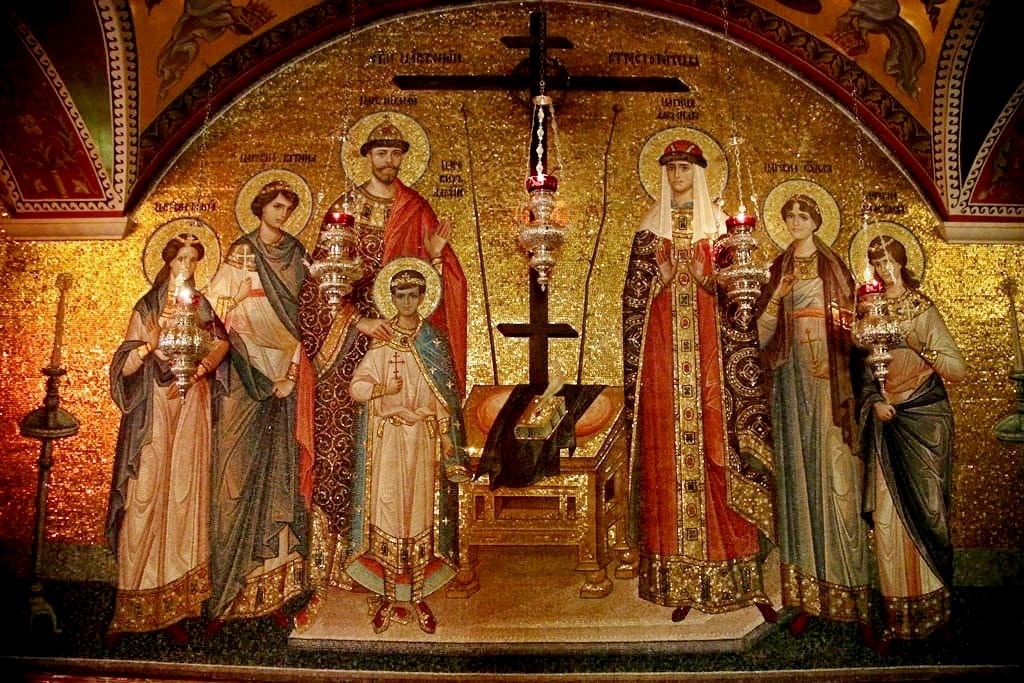
PHOTO: view if the mosaic panel depicting the Holy Royal Martyrs, situated in the Imperial Room, a side-chapel located in the Lower Church of the Church on the Blood

The Cross Procession along the Path of Sorrows ends at the Church on the Blood on Tsarskaya Street. The Memorial Church was constructed on the site of the Ipatiev House, demolished in 1977. It was here, in the early morning hours of 17tj July 1918, that the Imperial Family and four faithful servants met their violent deaths at the hands of a firing squad and their martyrdom. Situted in the Lower Church there is the “Tsar’s Room” aka as “The Imperial Room” – the altar of the side-chapel in honour of the Holy Royal Martyrs, which was erected on the site of the murder room, with the blessing of Metropolitan Kirill of Yekaterinburg and Verkhoturye for the Tsar’s Days 2018.

© Paul Gilbert. 6 May 2024