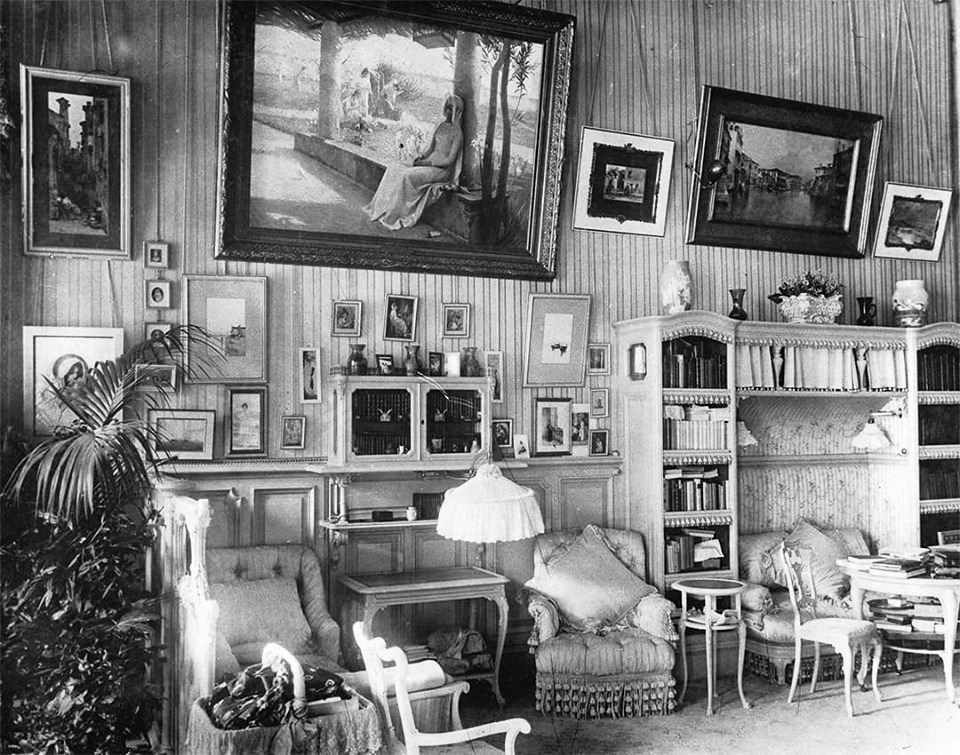
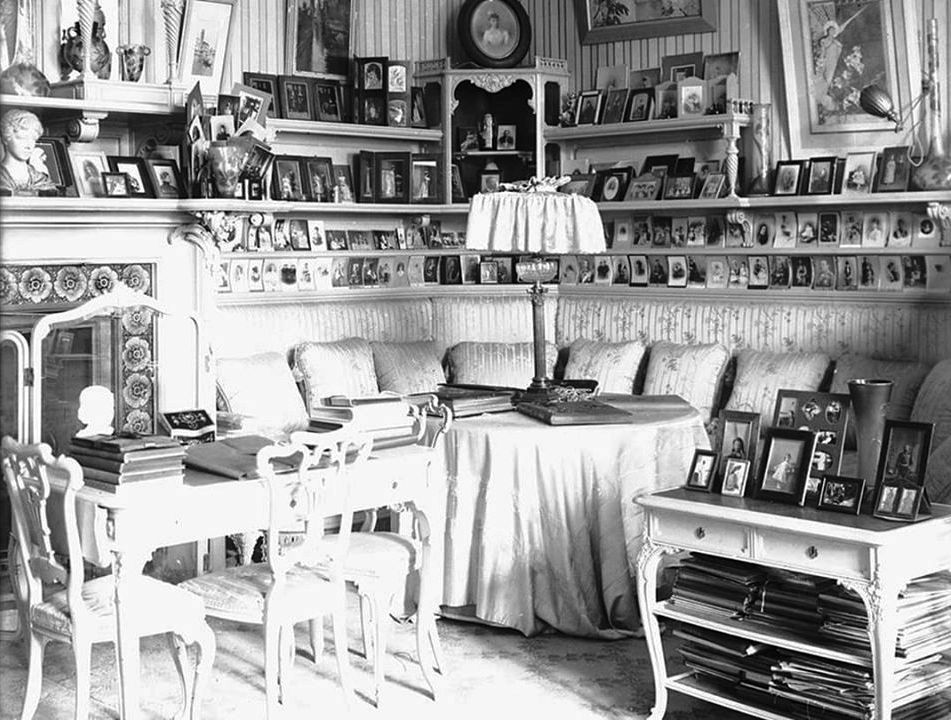
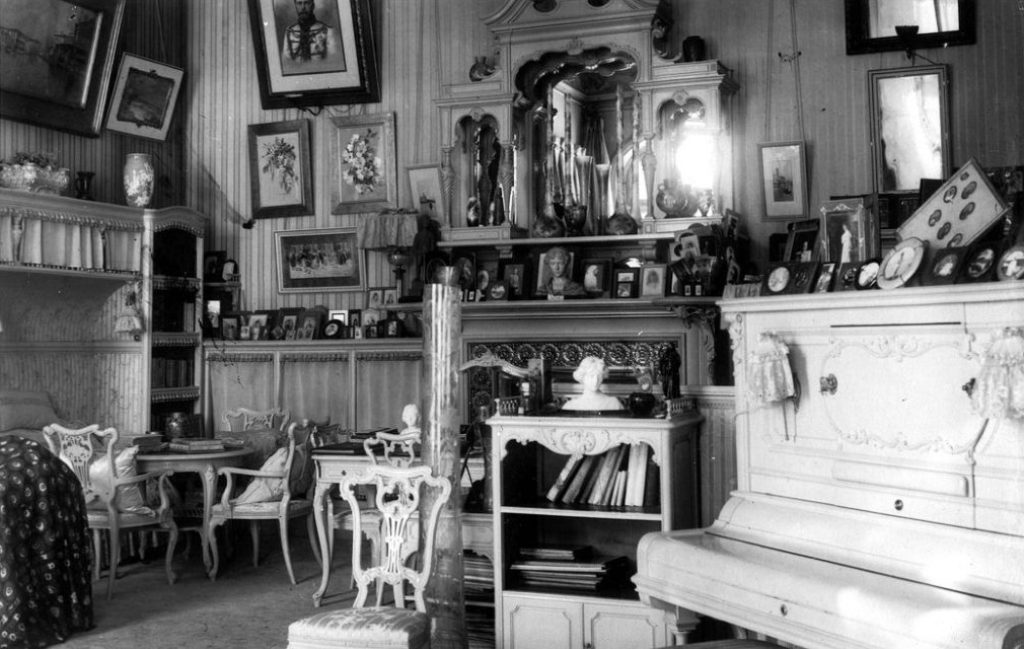
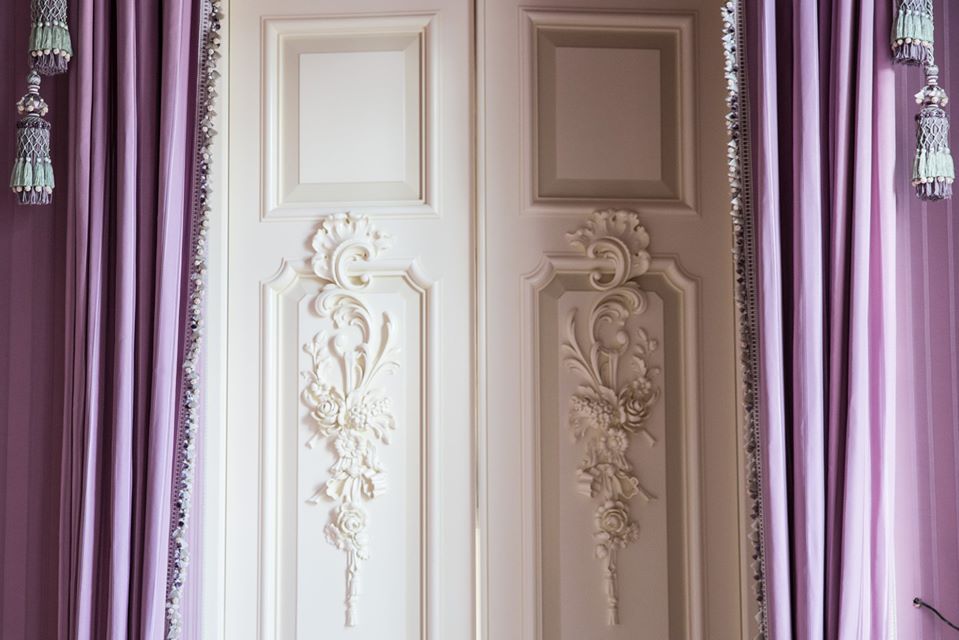
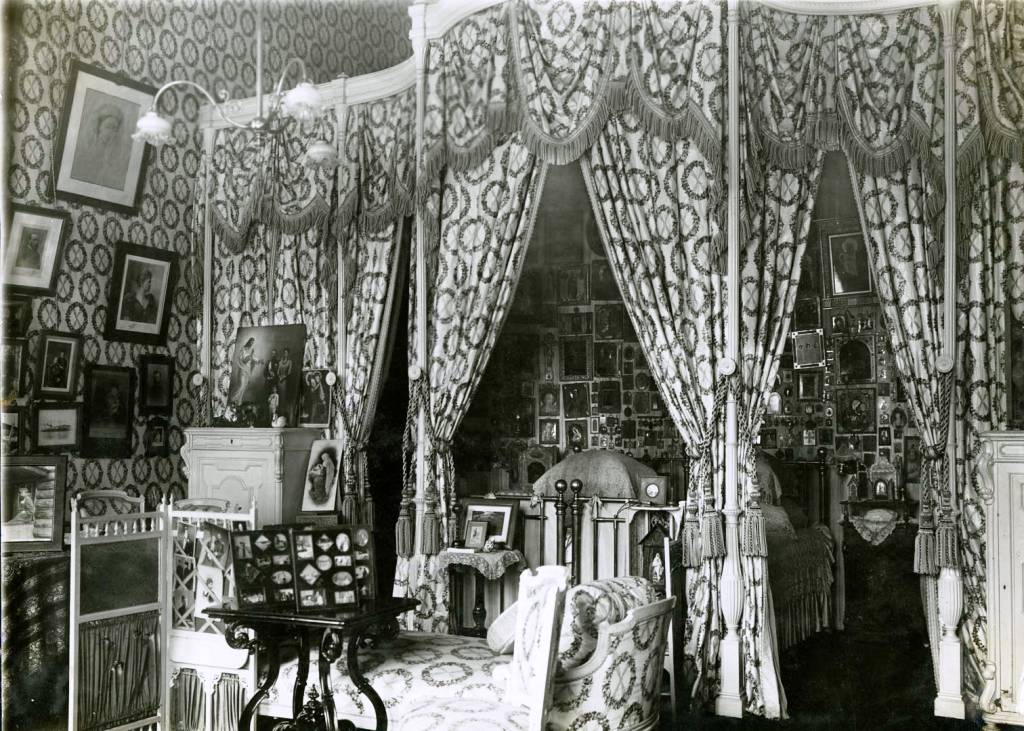
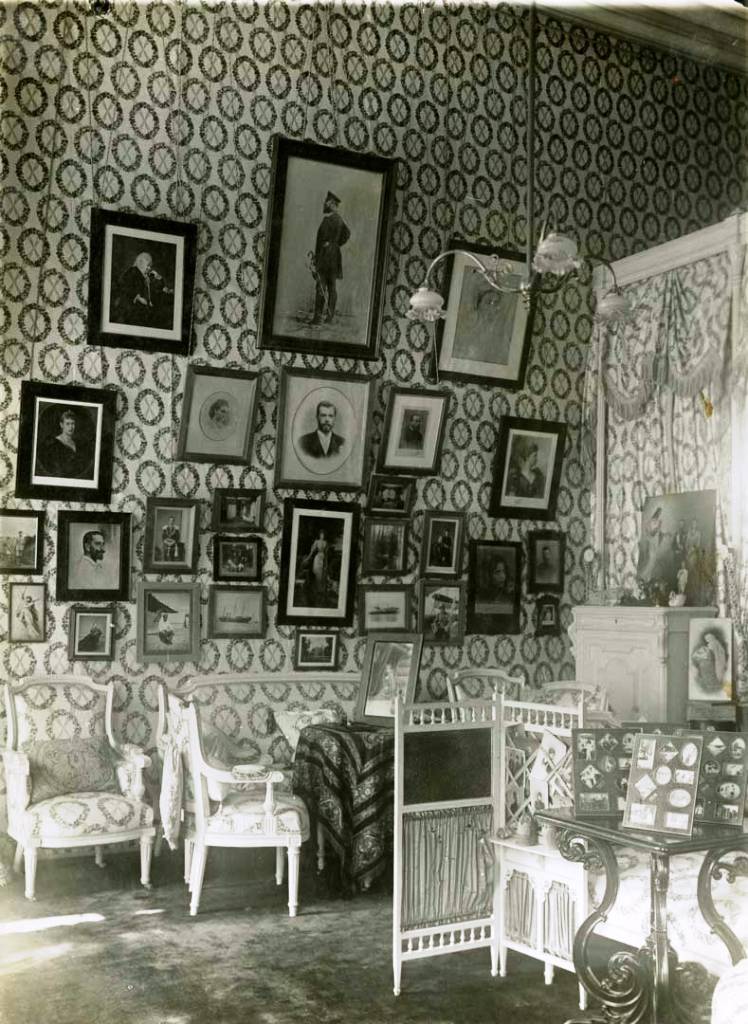
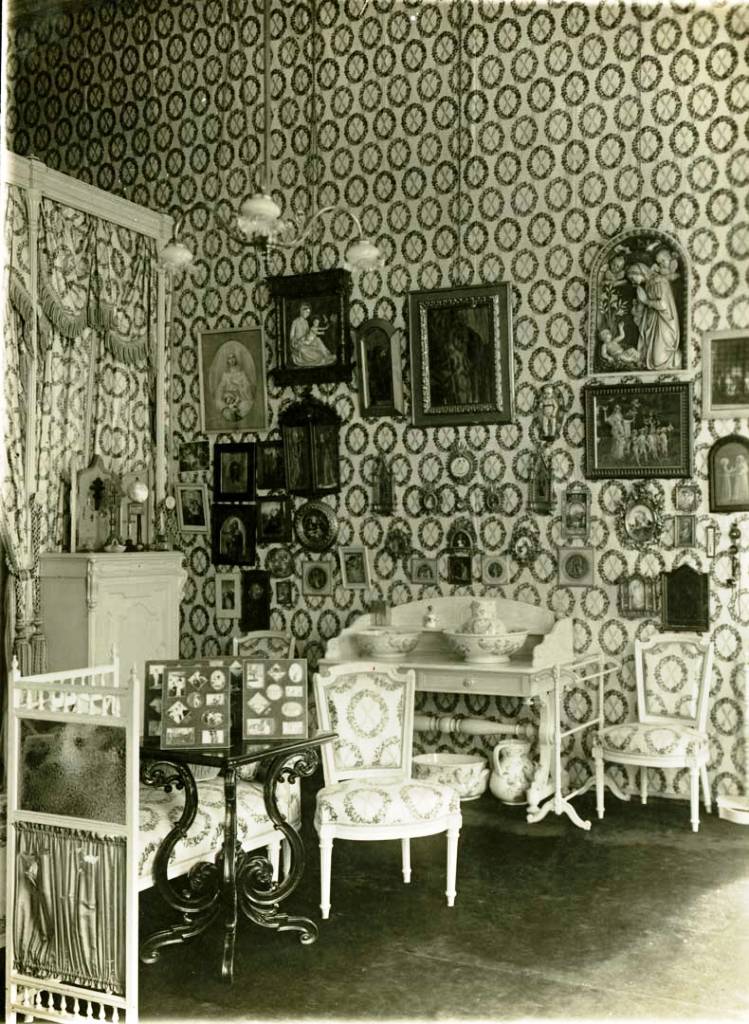
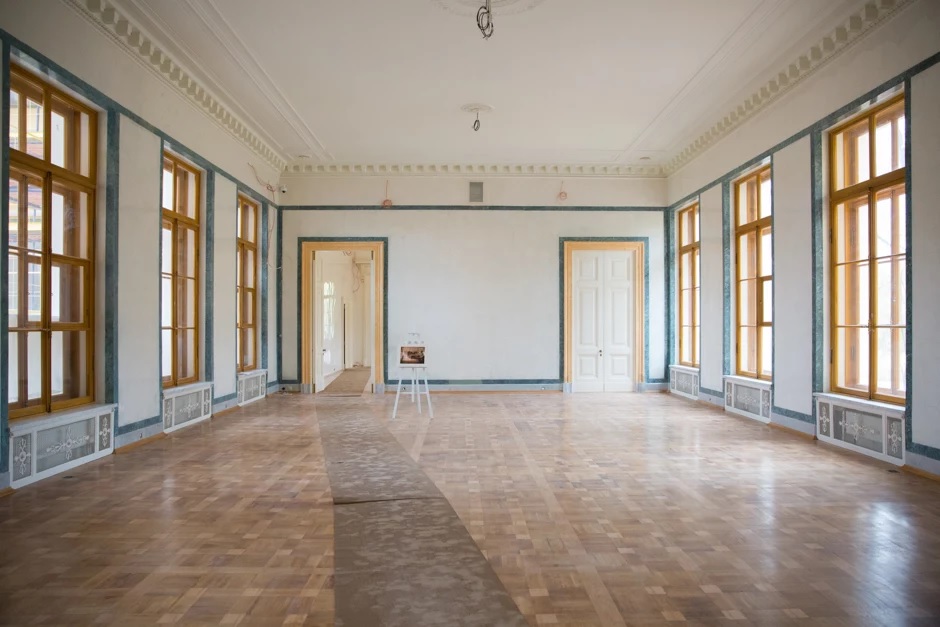
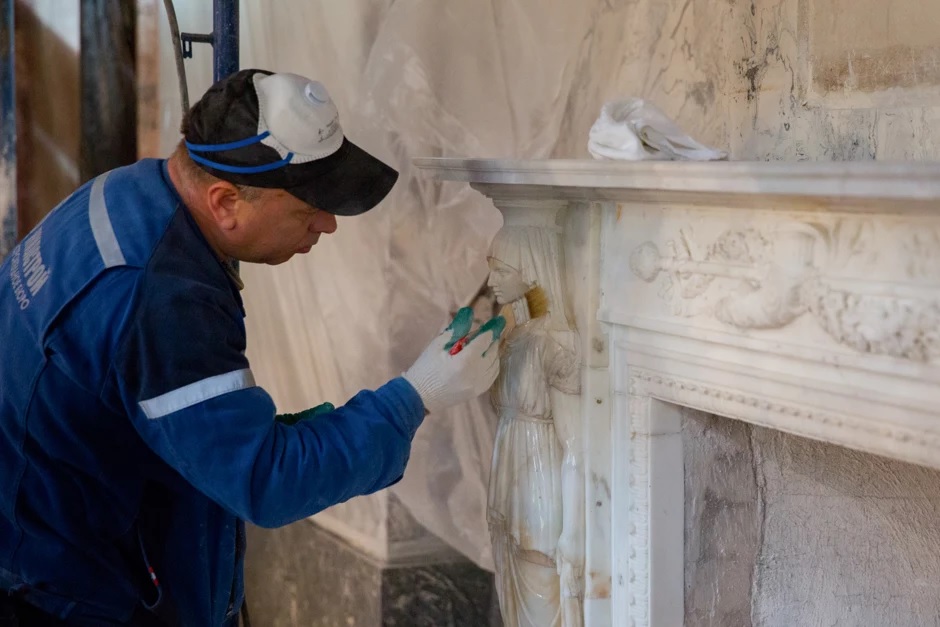
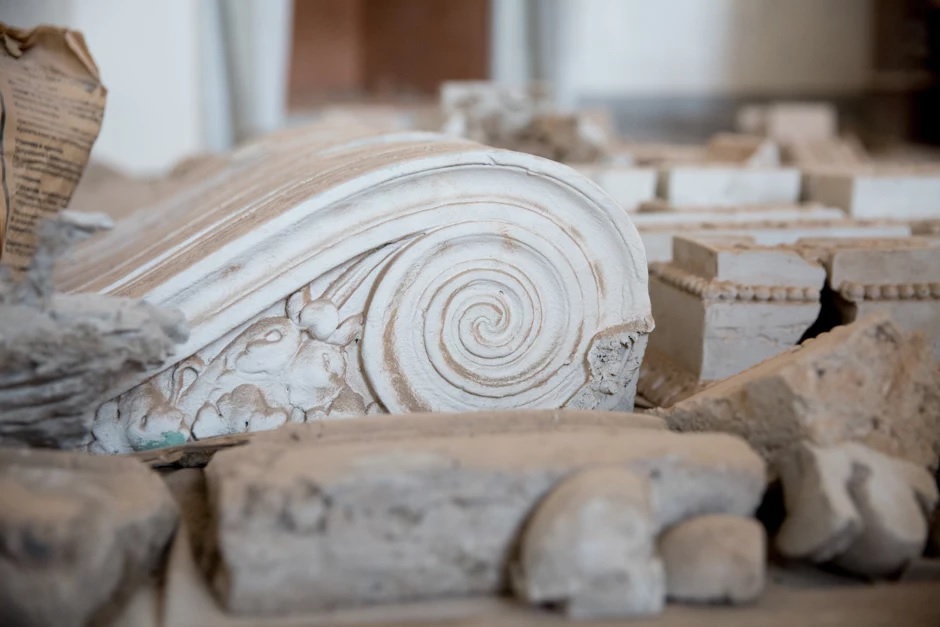
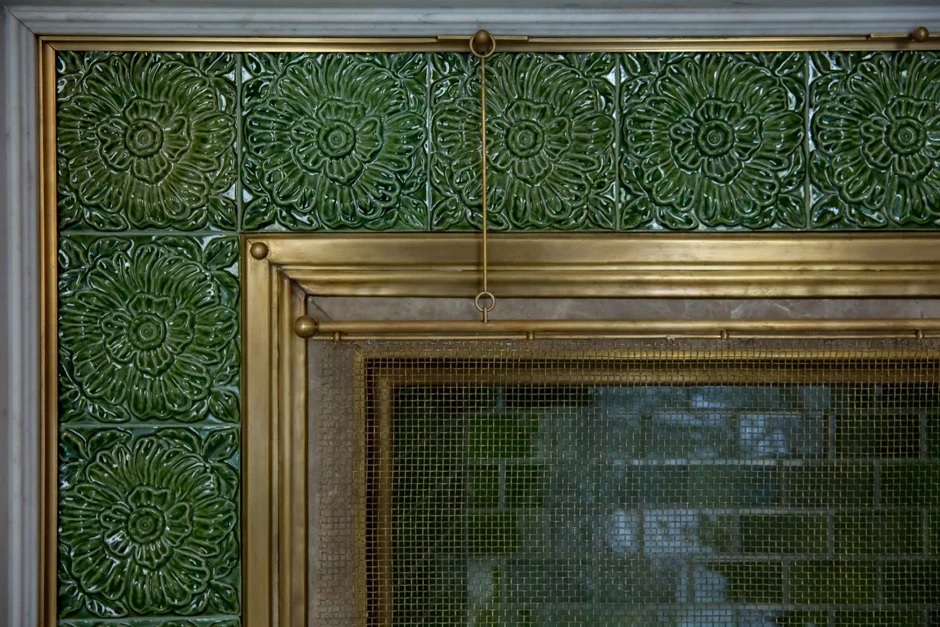
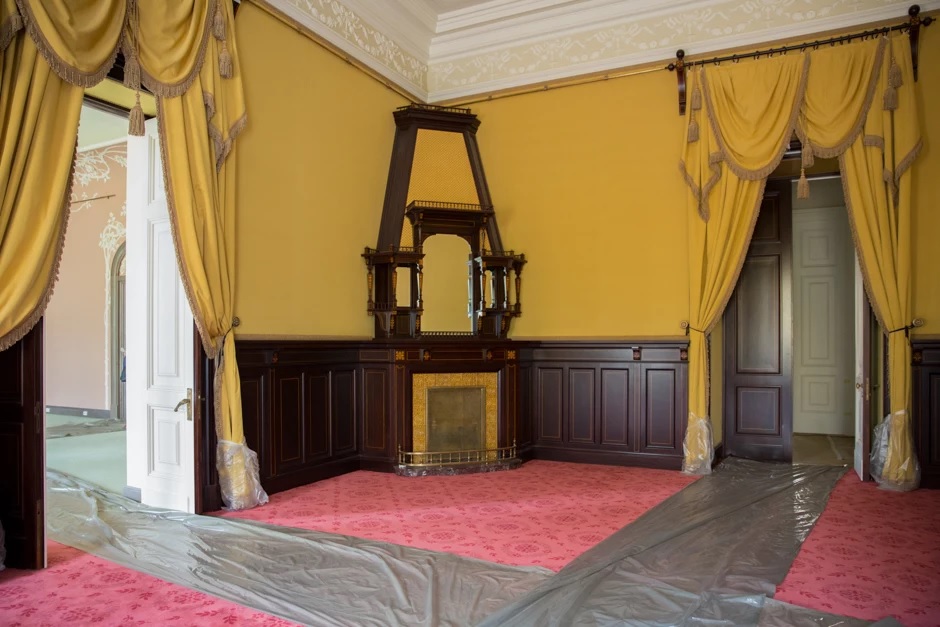
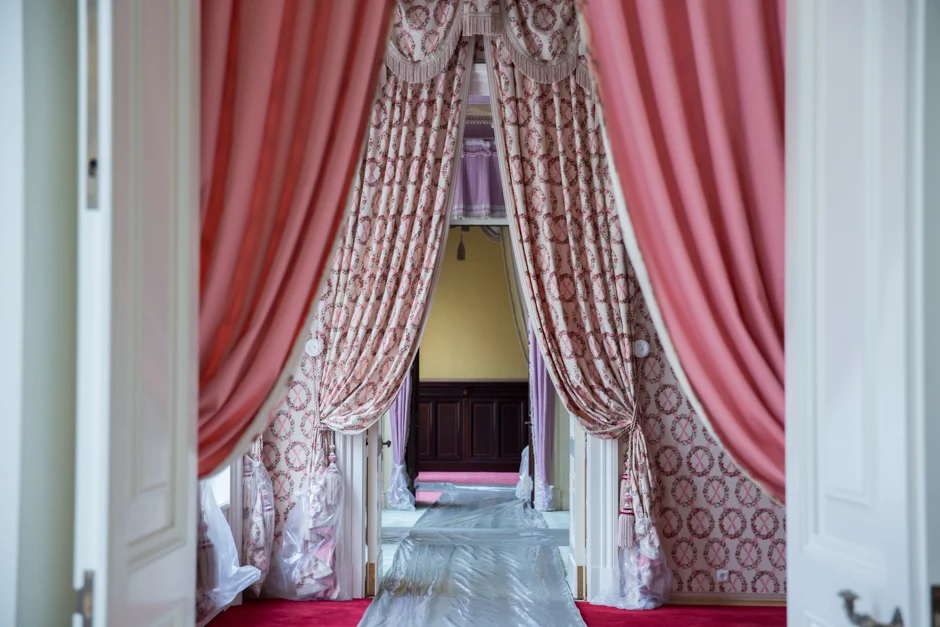
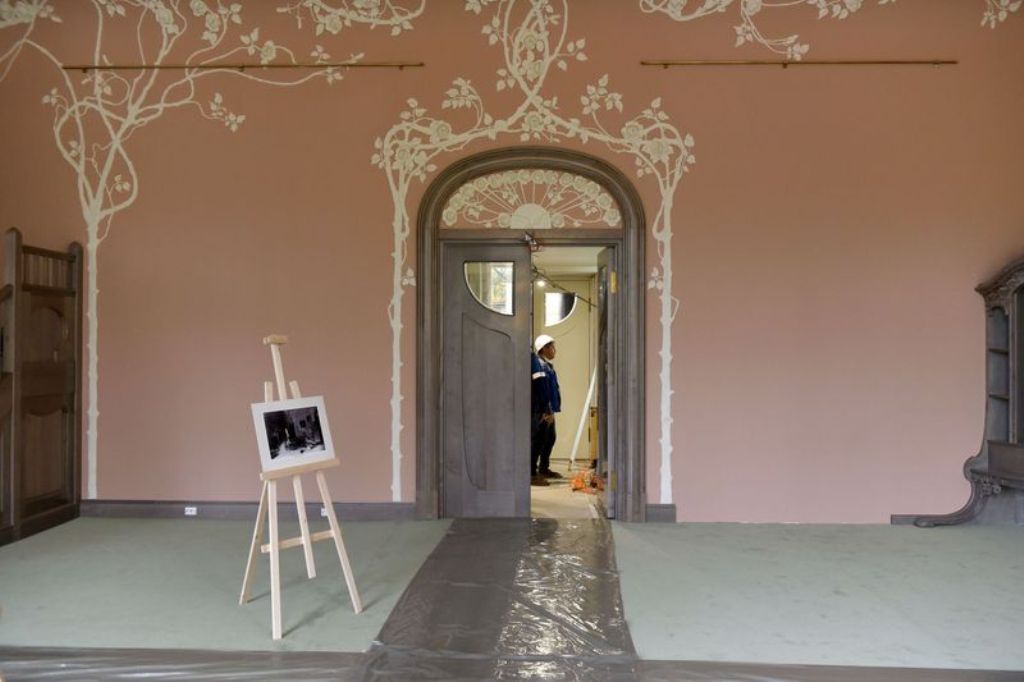
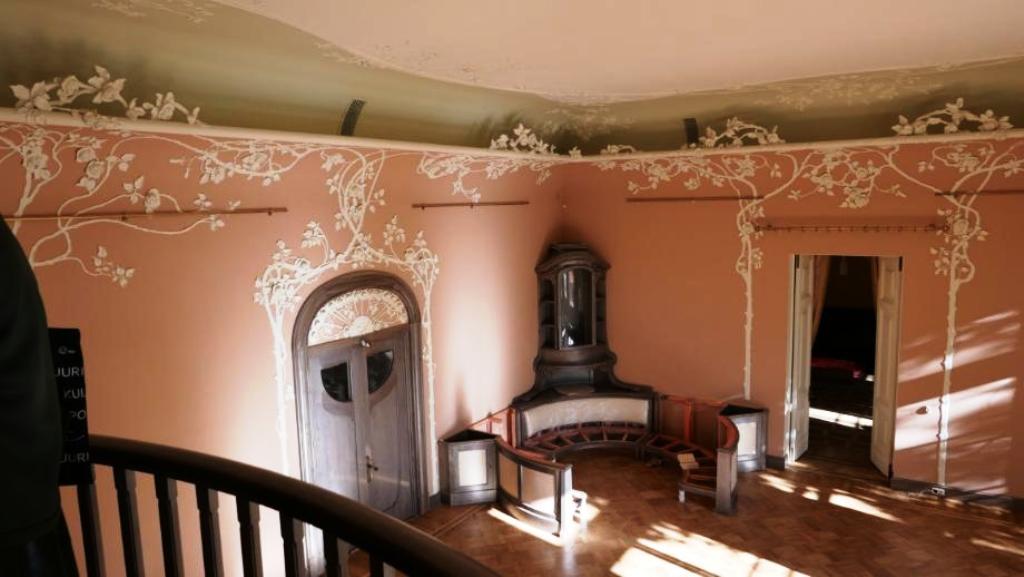
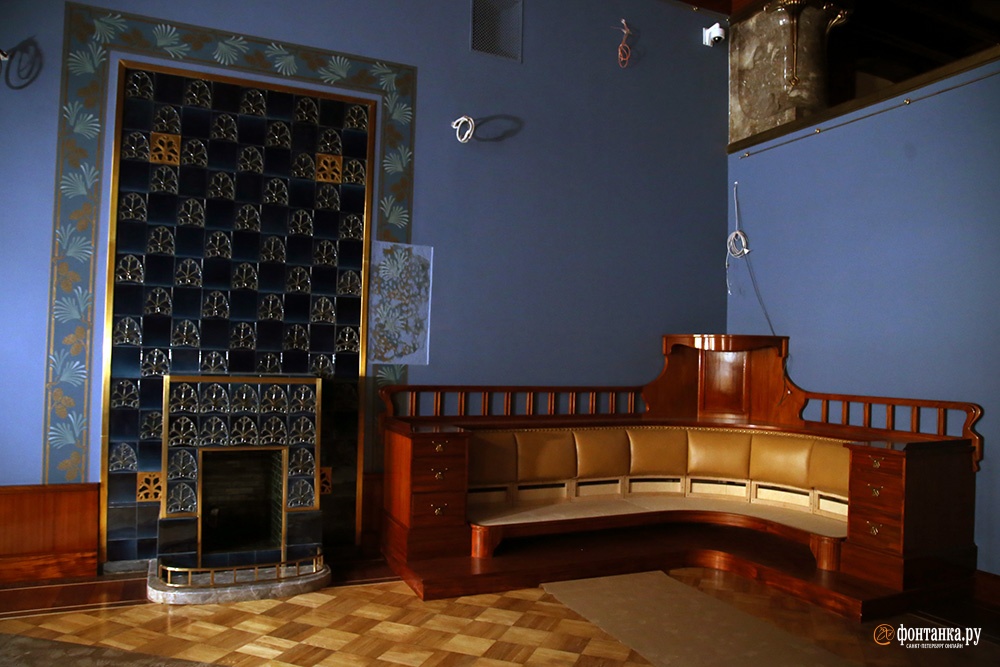
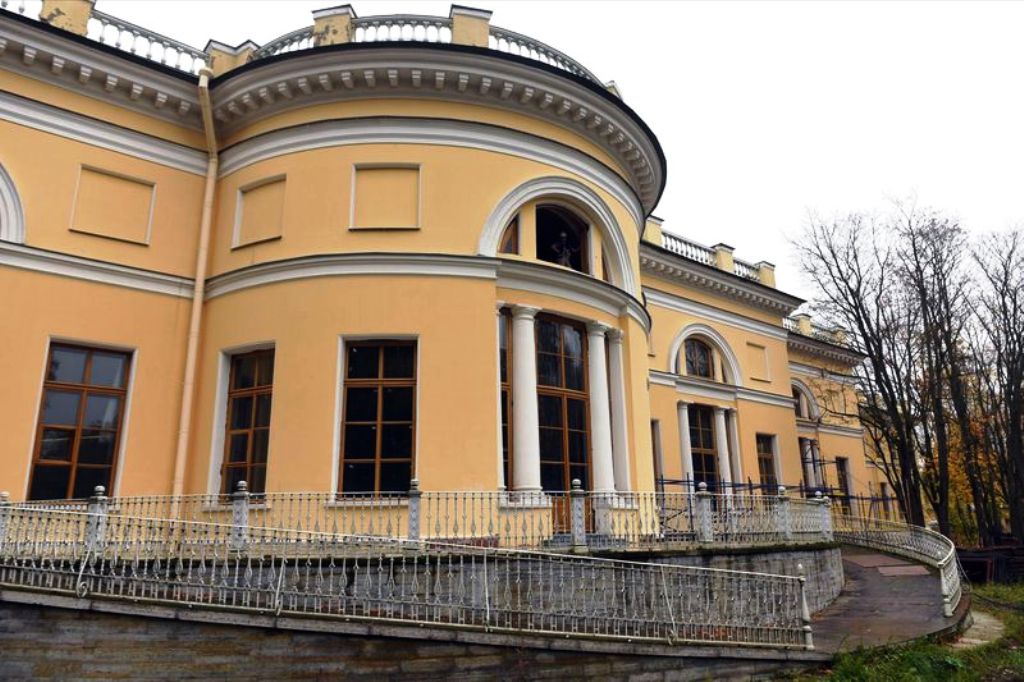
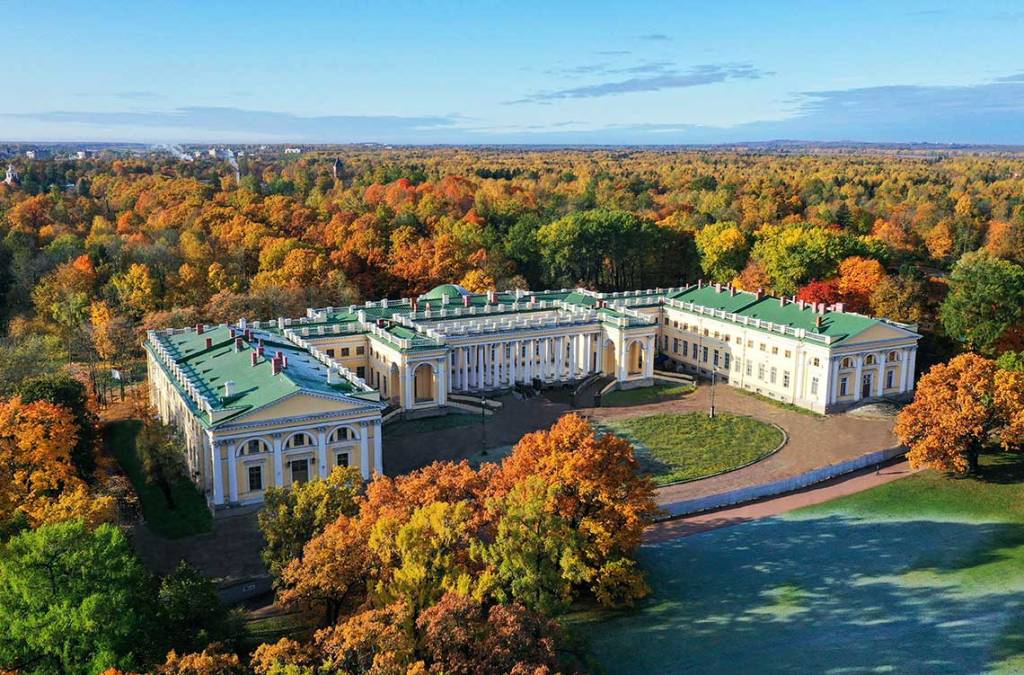
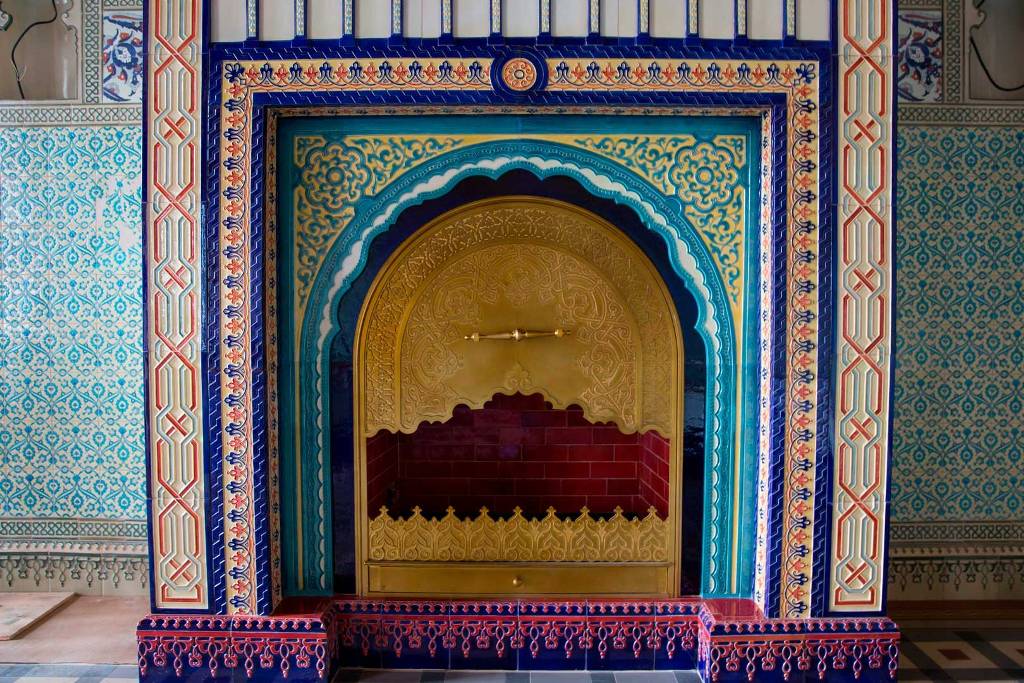
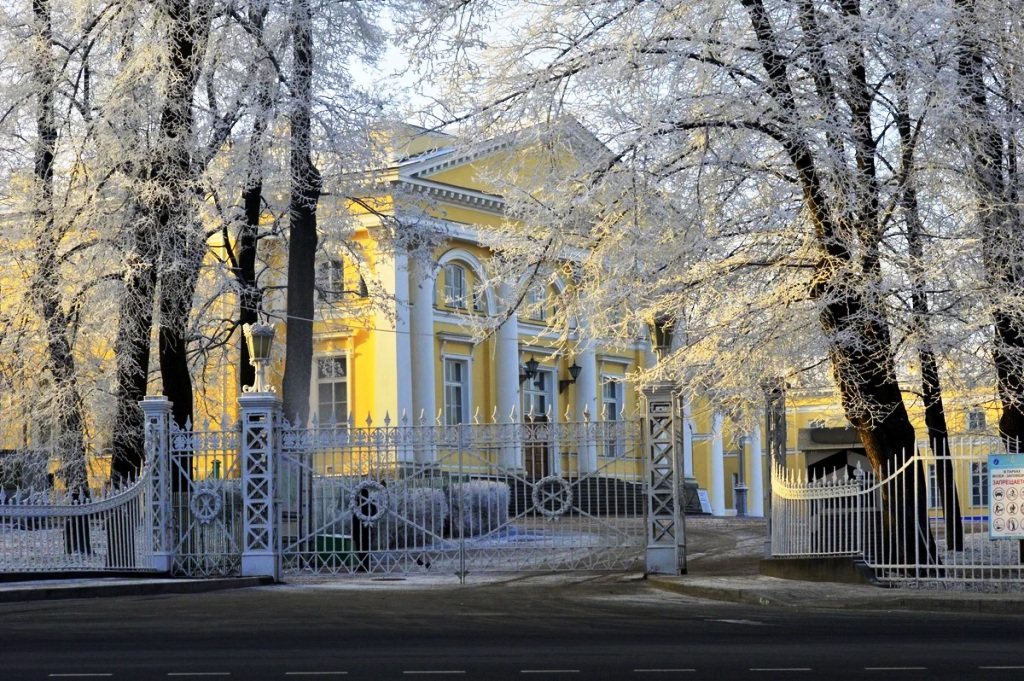
Russian media provide a first look at the progress of the recreation of the historic interiors in the Alexander Palace

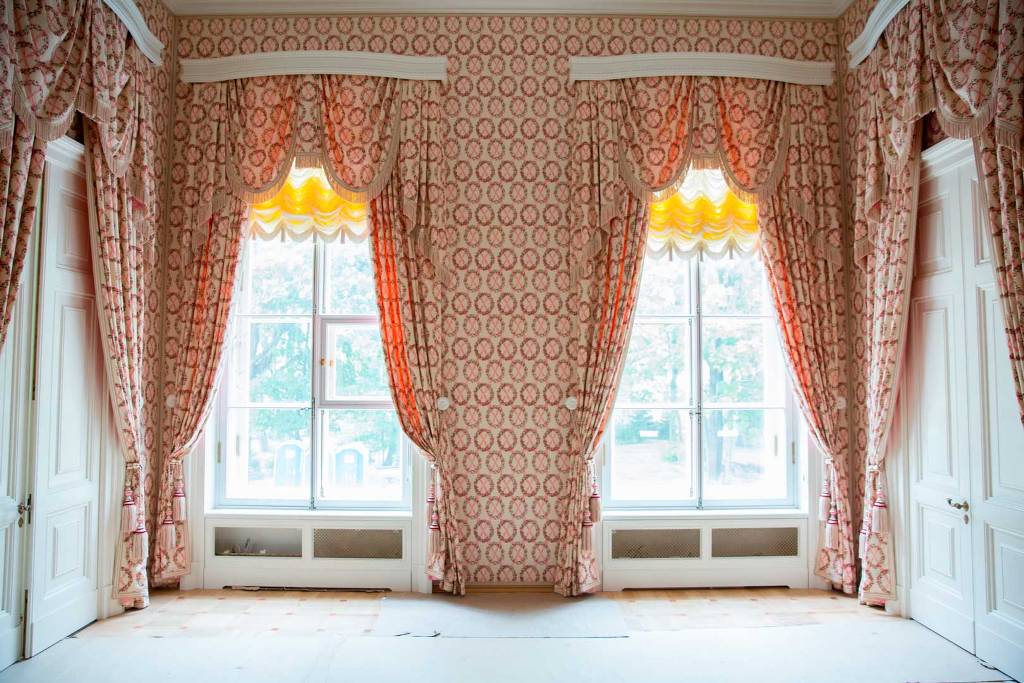
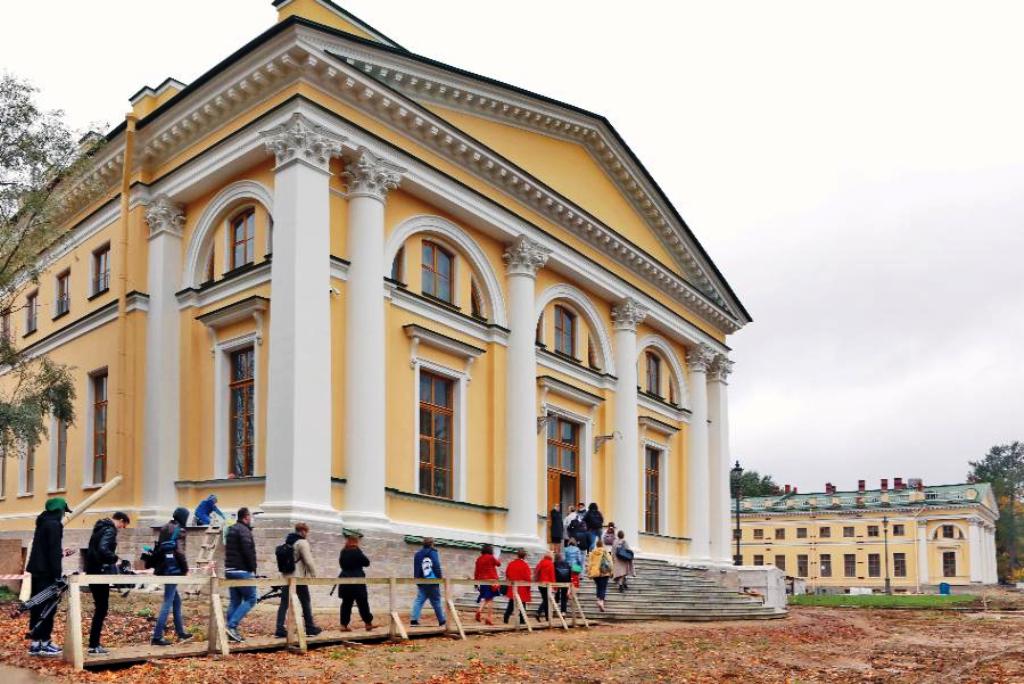
On 7th October, the Tsarskoye Selo State Museum Reserve invited Petersburg journalists to the Alexander Palace, where they were shown the progress of the restoration and recreation of the historic interiors of the last residence of Emperor Nicholas II and his family.

Ongoing restoration works have been carried out since 2012, and the palace was closed in the autumn of 2015 to embark on the large-scale recreation of the private apartments of Nicholas II and Alexandra Feodorovna in the eastern wing of the palace.

The project was developed by Nikita Yavein’s Studio-44. The restorers relied on amateur photographs taken by members of the Imperial family, autochromes from 1917, and design drawings to recreate the interiors.

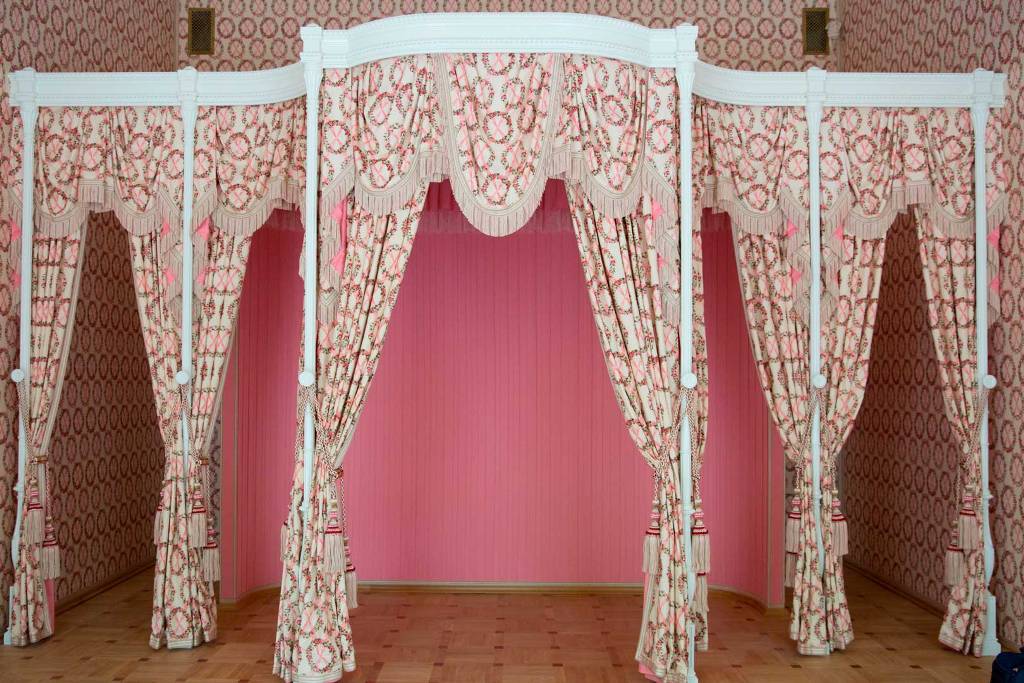
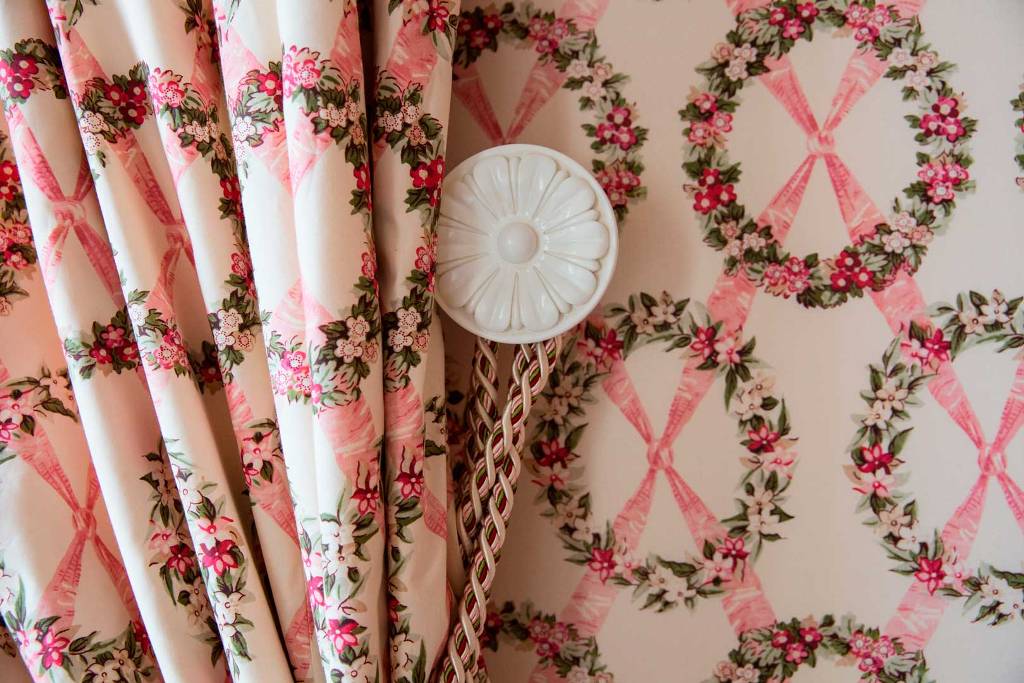
In addition, the Tsarskoye Selo and Pavlovsk State Museums had stored original samples of fabrics, which were used to recreate the decoration of some interiors – Chintz (waxed cotton fabric with a printed pattern) in the bedroom, silk in the Lilac office, reps (a cotton or silk fabric formed by weaves) in the Rosewood living room, etc.

During the restoration, elements of the historical interior decoration were preserved, including oak wall panels, coffered wooden shades and ceramic tiles.

NOTE: the following images are from different Russian media sources, and are not in any particular order. They are presented to give you an idea of the tremendous amount of work and dedication which has gone into the recreation of these historic interiors, thus breathing new life into the Alexander Palace – PG 

On 7th October 2020, the Tsarskoye Selo State Museum Reserve (GMZ) announced that the opening of the Alexander Palace – originally scheduled for December 2020 – would be further delayed. A press release from the GMZ reported that a total of 15 rooms will now open to the public in 2021, in the Museum of the Russian Imperial Family located in the eastern wing of the palace.

© Paul Gilbert. 8 October 2020

Delays . . . delays . . . and more delays with the opening of the Alexander Palace

It may come as no surprise to any one that the opening of the Alexander Palace at Tsarskoye Selo has been delayed yet again.

Eight of the reconstructed private rooms of Nicholas II and Alexandra Feodorovna, were due to open in December of this year, however, the opening date of the palace has been further extended..

According to Russian media sources, a total of 15 rooms will now open to the public in 2021, in the Museum of the Russian Imperial Family located in the eastern wing of the palace

“At the moment, the Alexander Palace is our everything. Everything is aimed at its early completion. We have divided the restoration into two stages in order to open the most important rooms to visitors. Fifteen historic interiors of Nicholas II. and his family six months from now,” – said Olga Taratynova, Director of the Tsarskoye Selo State Museum Reserve.

According to Taratynova, the cost of the work is 2.7 billion rubles. Currently, 1.7 billion have been spent. The balance will go to the second stage of the restoration project.

“The second stage will take another three years. Thus, we will open the entire western wing of the palace,” she added.

© Paul Gilbert. 7 October 2020

The History and Restoration of the Reception Room of Nicholas II in the Alexander Palace

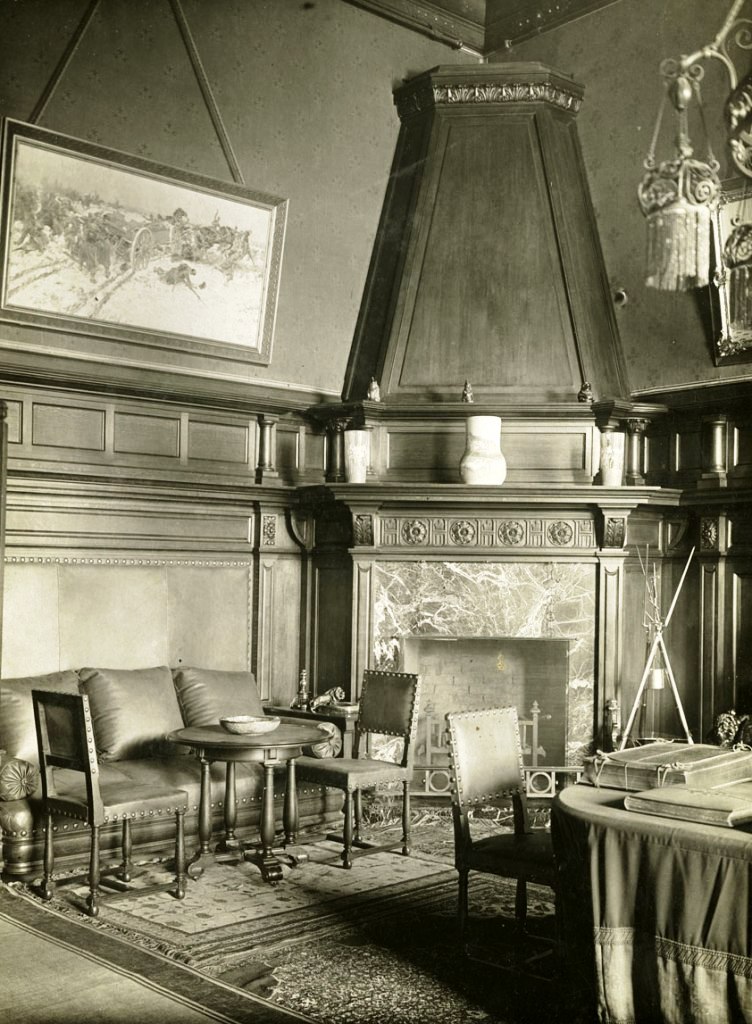
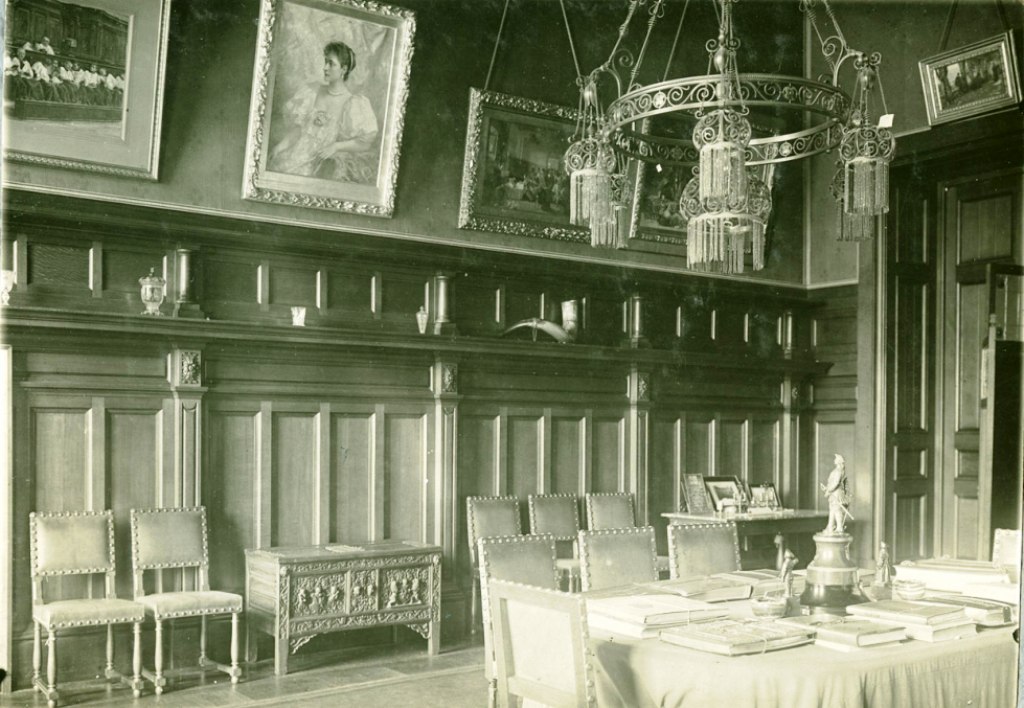
PHOTO: the Reception Room of Nicholas II as it looked in the 1930s

The Alexander Palace served as the home and official residence of Russia’s last emperor from 1894 to the summer of 1917. By the end of 1894, in the eastern wing of the palace, work was alreay underway on finishing the apartments for the young imperial couple, who had married on 27th November (O.S. 14th November). This part of the building was divided by a corridor into two enfilades: the rooms of Nicholas II, facing the courtyard, and the rooms of Alexandra Feodorovna, with windows to the park.

The first room in the Emperor’s half was the Dining Room (later the Reception Room). The renovation of this interior was carried out in 1895-1896 by architect Roman Feodorovich Meltser (1860-1943). For the wall decoration, a “high panel around the room with a seasoned shelf” was installed, above the panels, the walls were covered with printed fabric. On the ceiling there is a “wooden plafond” with a cornice. The interior decoration features a corner fireplace of oak wood, trimmed with dark green marble. The architect decorated the upper part of the two windows with square cathedral (stained-glass) glass.

PHOTO: the Reception Room of Nicholas II as it looked in the 1930s

The furniture was made by F. Meltzer & Co., which included a sofa with two folding tables, a round table for drinking tea, a dining table and 24 chairs, a serving table, and a table “for snacks”. The set of furniture included a fireplace screen, covered with fabric, decorated with mirrored glass with a facet in the upper part.

Subsequently, this room, preceding the Emperor’s Working Study, was used as a Reception Room. Despite the change in the purpose of the interior, its furnishings remained almost unchanged until 1917. Only a few items were added, giving the room a more businesslike character.

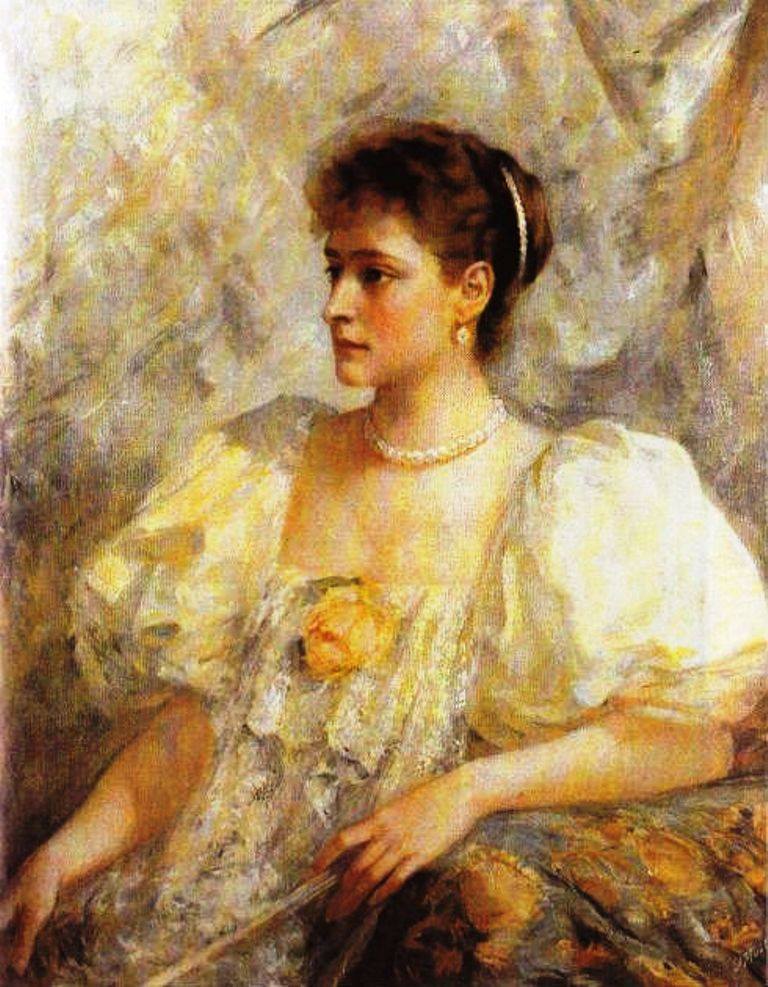
PHOTO: This lovely portrait of the Empress Alexandra Feodorovna (1896) by A. Muller-Norden, which originally hung in the Reception Room of the Alexander Palace (seen in the 2nd photo), is currently in the collection of the Pavlovsk State Museum.

It is just one of more than 5,000 items moved to Pavlovsk in 1951. The return of the items to the Alexander Palace remains a bone of contention between the two palace-museums. Click HERE to read my article Controversy over portrait of Empress Alexandra Fedorovna in Pavlovsk, published on 20th August 2019.

Unlike many interiors of the Alexander Palace, the decoration of the Reception Room practically remained intact during the Great Patriotic War (1941-45), which greatly facilitated the current restoration work in this room. Here are preserved wall and ceiling panels, a fireplace and a chandelier, which was installed by Melzer in 1899 and cost 2,275 rubles. Sadly, the furniture, curtains, and cathedral glass windows were all lost.

The interior was restored in the 1950s. In 1997, the exhibition “Memories in the Alexander Palace” opened in the eastern wing of the palace, the museum designated the room as the Reception Room. The room contained corresponding furniture of the late 19th – early 20th centuries from the museum’s collection: two tables, oak chairs, a chest, and a carpet. Memorial items were also exhibited in the Reception Room – in their historical places there was a chandelier and a model of the monument to Peter I by Ivan Schroeder.

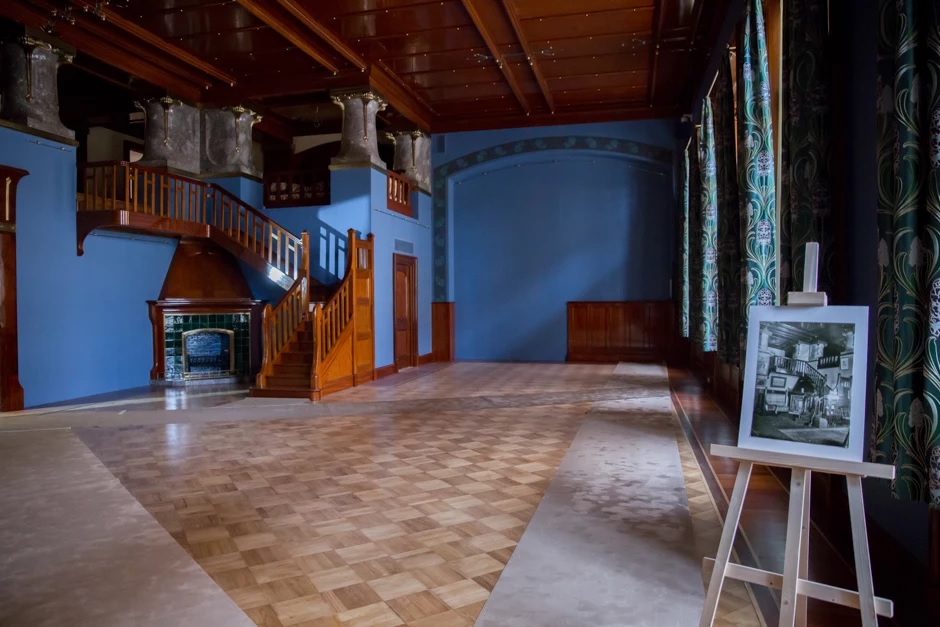
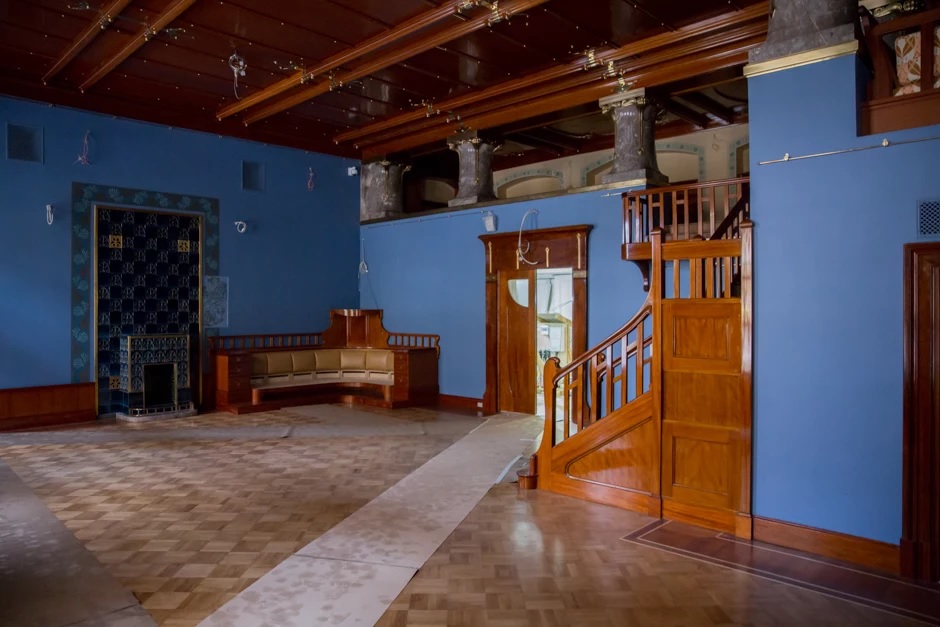
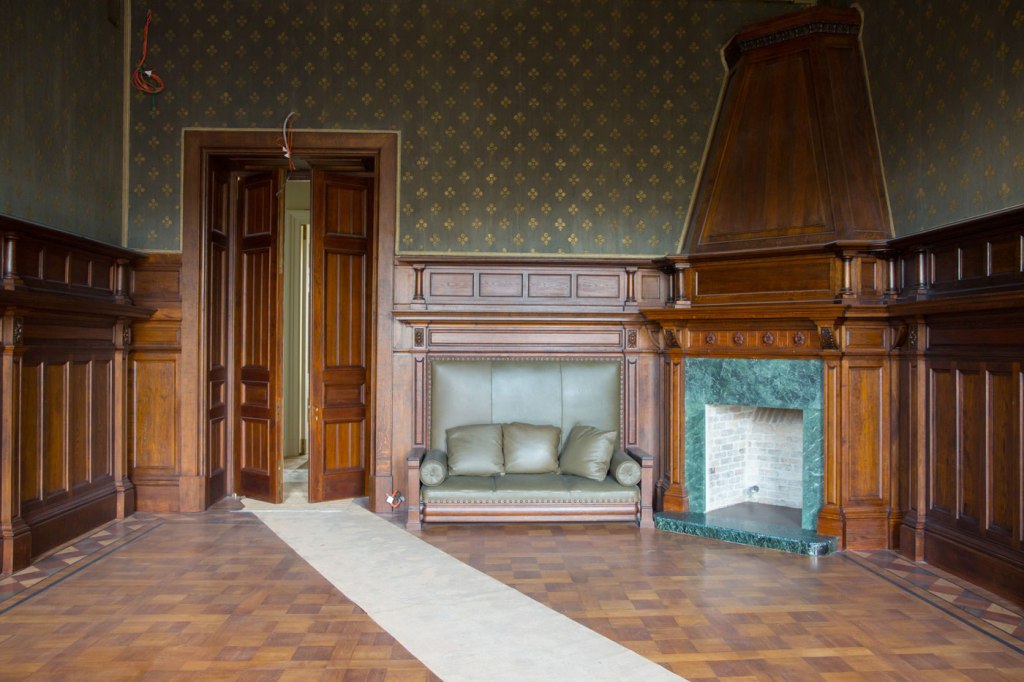
PHOTO: the Reception Room of Nicholas II as it looks

In the course of recent restoration work in the Reception Room, the oak walls and ceiling decoration, fabric on the walls, parquet and a fireplace have been beautifully preserved. In the process of working with the fireplace, it was discovered that the monogram preserved on the frieze differs from that recorded in historical photographs. These inaccuracies have been corrected.

During the restoration, the fabrics from the walls were dismantled and sent to the restoration workshops, where a method of dry cleaning of the fabric with its subsequent conservation was developed.

PHOTO: the Reception Room of Nicholas II as it looks today

From the surviving photographs, a built-in sofa upholstered in olive leather, a fireplace grate and an openwork metal mesh of the fireplace insert have been recreated. The restoration of the historic chandelier, the only surviving piece of the Reception Room interior, has also been completed.

At present, work continues on the design based on historical photographs of some pieces of furniture: an oak table and chairs are being made for the sofa, as well as a lattice-stand for banners; the elbows of the sofa will be supplemented with folding table shelves. Subsequently, there are also plans to recreate the stained glass in the Reception Room windows.

***

The Reception Room of Nicholas II is one of eight interiors to open in the eastern wing of the palace, scheduled to open in December 2020. The other interiors include: the Moorish Bathroom of Nicholas II, Working Study of Nicholas II, Pallisander (Rosewood) Living Room, Mauve (Lilac) Boudoir, Imperial Bedroom, Alexandra’s Corner Reception Room, and the New Study of Nicholas II.

In the future, the Alexander Palace will become a memorial museum of the Romanov family – from Catherine the Great to Nicholas II, showcasing the private, domestic life of the Russian monarchs who used the palace as an official residence. The eastern wing of the palace will be known as the Museum of the Russian Imperial Family. The multi-museum complex is scheduled for completion no earlier than 2022.

© Paul Gilbert. 2 October 2020

The History and Restoration of Nicholas II’s Moorish Bathroom in the Alexander Palace

The Moorish Bathroom of Nicholas II as it looked in the 1930s

The Tsarskoye Selo State Museum Reserve have announced that the restoration of the Moorish Bathroom – one of the most unique interiors in the private apartments of Nicholas II in the Alexander Palace – is nearing completion.

The Moorish (also called the Emperor’s Toilet, Basseinaya) acquired its original appearance in 1896-1897 when the interior was redesigned by the Russian architect Count Nikolai Ivanovich de Rochefort (1846-1905). The most famous project of Count Rochefort is the Bialowieza Palace, an imperial hunting residence, built in Poland between 1889-1894. His innovative interior included a bathroom with a small bathing pool, which served as a model for designing the Moorish Bathroom for Nicholas II in the Alexander Palace.

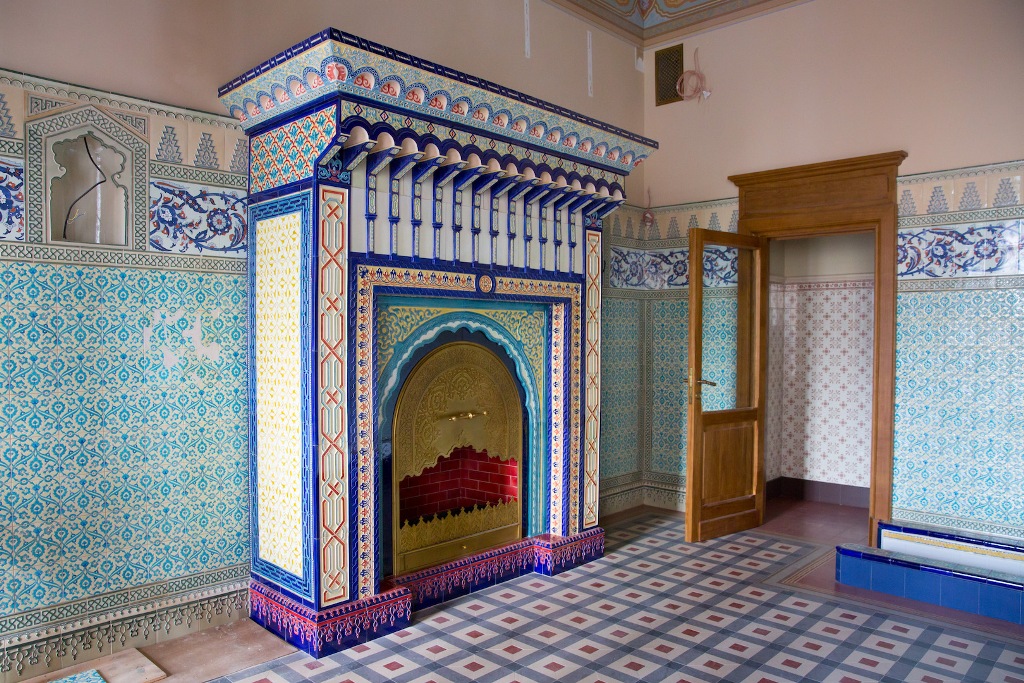
The interior harmoniously combined bright oriental-style tiles that adorned the fireplace and walls around the pool, metlakh tiles, which were used for the floor in front of the pool, a coffered ceiling, an openwork maple partition and a Japanese reed mat on the walls. The floor was covered with a colourful carpet. Masters of the Meltzer Trading House made the furniture for the bathroom, which included a sofa upholstered in leather, with pillows and bolsters, two types of Oriental style stools, a table with a trellis, a washbasin on the underframe, a horizontal bar for gymnastic exercises, and stands for walking sticks and hunting rifles.

The main part of the Moorish Bathroom was a bathing pool that could hold 7 thousand buckets of water, and lined with white tiles, which gave the second name to the interior – Basseinaya. Its design in the Alexander Palace featured Charcot shower jets for massage.

For the functioning of the pool, the architect created a complex engineering system, it consisted of water and waste pipes, a water-heating boiler with accessories, three water tanks located in a special room on the ground floor of the palace, located directly under the Basseinaya.

There was also a toilet located outside the door at the edge of the corridor wall.

The Moorish Bathroom’s interior decoration was lost during the Great Patriotic War (1941-45). In the summer of 1997, a permanent exhibition was opened in the eastern wing of the palace dedicated to the imperial family. The former bathroom was used as an exhibition space with parquet floors, painted walls and a white ceiling. Therefore, the restoration of the Moorish Bathroom began practically from scratch.

Photo © Tsarskoye Selo State Museum Reserve

In 2017, when dismantling the room, craftsmen discovered the Tsar’s bathing pool under the floor, and in it – a significant number of fragments of ceramic wall tiles, Metlakh tiles, belonging not only to the decoration of the Moorish, but also to other interiors of the residential half of the palace. The fragments provided restorers with the colour schemes of the interior decoration, which were reconstructed from black and white photographs taken in the 1930s. Thanks to this remarkable discovery, the restorers were able to recreate the wall cladding of the with the utmost precision.

Several fragments of the original tiles have been incorporated in the reconstructed Moorish Bathroom’s decoration; while the bathing pool and the steps leading into it have retained some of their historic tiling.

Also found during the restoration, several small fragments of the original frieze were revealed, which made it possible to clarify the colour scheme of the decorative painting, the drawing of which was determined from the black and white pre-war photographs.

In 2018–2019, the architectural elements of the interior decoration were recreated: wooden wall panels and ceiling cladding, wall tiles, a Moorish-style fireplace with decorative niches (they originally contained Faberge lamps, which were transferred to the Russian Museum in 1956), and a carved partition. The decoration of the toilet room has also been recreated. Curtains and a large carpet were made according to the historical documents and photos.

Thanks to the assistance of the Japanese Consulate General in St. Petersburg, an original mat similar to the one that adorned the walls of the Moorish Bathroom will soon be purchased in Japan.

At the moment, on the basis of existing museum inventory descriptions of 1938-1940, the design of non-preserved pieces of furniture and plumbing equipment (taps and mechanisms for introducing water into the pool) is currently underway.

Photo © Tsarskoye Selo State Museum Reserve


Photo © Tsarskoye Selo State Museum Reserve


Photo © Tsarskoye Selo State Museum Reserve


Photo © Tsarskoye Selo State Museum Reserve

Click HERE to read my article Reconstruction of Nicholas II’s bathroom in the Alexander Palace + 13 PHOTOS, published on 16th June 2019

* * *

The Moorish Bathroom of Nicholas II is one of eight interiors to open in the eastern wing of the palace, scheduled to open in December 2020. The other interiors include: the Reception of Nicholas II, Working Study of Nicholas II, Pallisander (Rosewood) Living Room, Mauve (Lilac) Boudoir, Imperial Bedroom, Alexandra’s Corner Reception Room, and the New Study of Nicholas II.

In the future, the Alexander Palace will become a memorial museum of the Romanov family – from Catherine the Great to Nicholas II, showcasing the private, domestic life of the Russian monarchs who used the palace as an official residence. The eastern wing of the palace will be known as the Museum of the Russian Imperial Family. The multi-museum complex is scheduled for completion no earlier than 2022.

© 16 September 2020. Paul Gilbert

“As if the door had just closed behind them” – Anastasia Timina on the restoration of the Alexander Palace

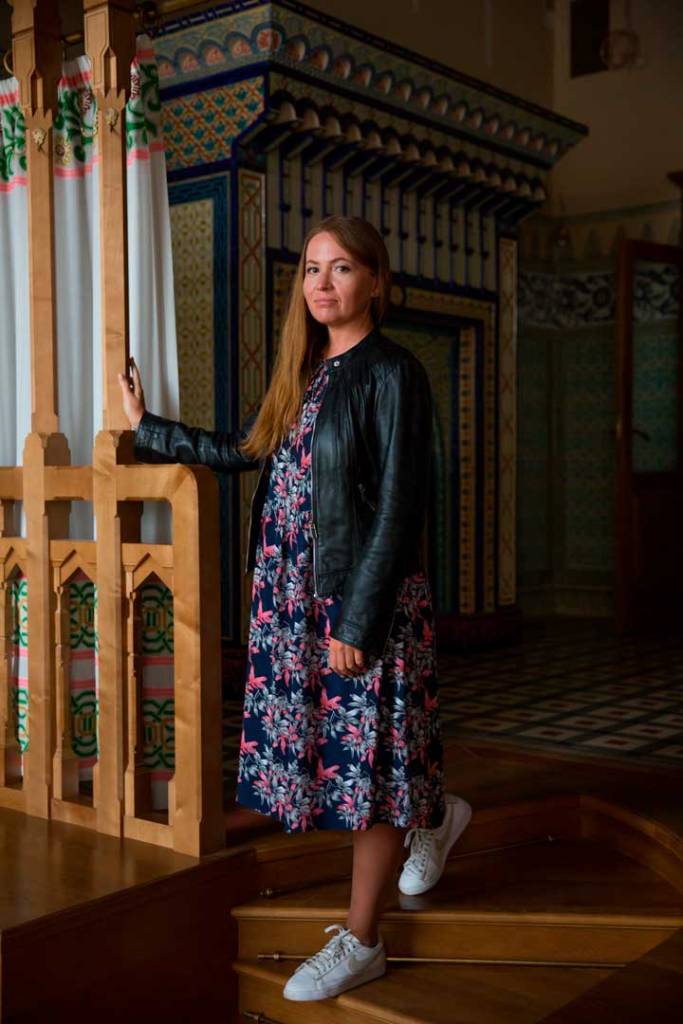
PHOTO: Studio 44 architect-restorer Anastasia Timina

Any museum restoration and reconstruction requires the expertise of specialists: researchers, curators, architects and designers. In particular is the restoration of the iconic Alexander Palace at Tsarskoye Selo, which began in the autumn of 2015 and is not expected to be completed no earlier than 2022.

Anastasia Timina, an architect-restorer of the Studio 44 architectural bureau, a graduate of the Stieglitz Academy, and leading architect of the Alexander Palace restoration project.

What is the difference between an architect and an architect-restorer?

The work of an architect mainly affects modern buildings and structures, but we are dealing with history, with monuments of cultural significance which need to be preserved, reconstructed and at the same time treated with the utmost care. This involves certain restrictions and additional responsibilities.

The architects of our bureau are developing a project for the reconstruction of the Alexander Palace as a multi-museum complex for modern use, filling it with modern engineering networks and communications. The main task of the bureau’s restoration department is to reconstruct the interiors of the private rooms of Emperor Nicholas II and Empress Alexandra Feodorovna and to restore their historic interiors.

The restoration of the lost interiors is almost complete. At the moment, our department is engaged in the design of free-standing pieces of furniture for the restored interiors of the Alexander Palace based on historical photographs, descriptions and surviving samples. Fortunately, a table from the Mauve Boudoir and a chair from the Imperial Bedroom have survived, which have become standards for the manufacture of other items.

How long have you been working on the project to recreate the interiors of the Alexander Palace?

My participation began in 2014 from the stage of a detailed design. At that time I came to Studio 44 from the oldest design and restoration organization in St. Petersburg – Lenproektrestavratsiya.

The project for the reconstruction of eight interiors, which I was assigned to work on, included detailed drawings for wall decoration, built-in wall furniture, as well as sketches for the recreation of curtains for window and doorways.

The development of design documentation is divided into several stages: first, a draft design is created, showing the development of a general view and the main concept, followed by a detailed design – this is the most detailed documentation, including types of products, fragments, details, nodes at a scale of 1:1, specifications taking into account the volume and nature of the materials used.

In 2013, a draft design was completed, but having studied all the iconographic material in detail, I came to the conclusion that the working documentation required significant changes. I worked as part of a large team of architects-restorers, under the leadership of Oleg Arnoldovich Kuzevanov – the chief architect of the restoration project of the Alexander Palace. From 2016 to the present, I have been supervising the recreation of the interiors.

PHOTO: The eastern wing of the palace (highlighted on the left)
will become the Museum of the Russian Imperial Family

It is clear that this is a very complicated process. What is the most difficult task?

The most difficult task is to recreate an interior “from scratch”, to work on the project only on the basis of black and white historical photographs, often of poor quality. In the pictures, only part of the room can be seen, a complex angle is taken, there are no frontal views of the walls and interior details. Based on these images, it is necessary to understand how the space in the photograph is distorted, and to calculate the real dimensions and proportions of the projected objects. In such work, any genuine detail that has survived to our time helps, for example, fragments of fabrics. Having measured the size of the rapport and the details of the drawing, we can scale the photo and calculate the dimensions of the interior details surrounding the fabric.

Of course, we would be happy to have more historical photographs at our disposal, but we try to use all available interior images. For example, to a non-specialist, the image of the Empress against the background of a fragment of a chair (possibly out of focus), a table or curtains will seem useless from a restoration point of view, but we can visualize the necessary detail that is hidden in photographs of the interior. Even if a photo is blurry, of poor quality, and seems useless, it can, oddly enough, also be of invaluable design help. By the way, in our work we are also utilizing items from the Alexander Palace, which have been kept in the Pavlovsk Palace Museum-Reserve since the 1950s.

When restoring lost interiors, there is nothing more important than complete information and a large number of historical images in order to achieve maximum authenticity. Therefore, when new details (photos, inventories) and even small details appear, it is necessary to correct the project. We do this all the time.

What discoveries and interesting finds took place during the restoration work?

The most significant discovery is the original pieces of interior decoration found under the flooring of the Moorish Bathroom of Nicholas II.

This is a very complex interior full of different elements, including Metlakh tiles on the floor, a tiled fireplace and tiles covering the walls and sides of the pool. In this interior, there are more than 40 different types of tiles that do not repeat in pattern, relief, and most importantly, in colour. But neither the inventory nor the archival data gave us a detailed idea of ​​the colour scheme of the interior. All historical photographs are black and white, the only assistant was a watercolour by the architect Bezverkhny. During the construction work, when opening the floors of the first floor, genuine fragments of ceramic tiles and Metlakh tiles, marble were found in the layers of construction dust. A large bathing pool was also found with preserved tiles and two steps leading to the pool. Until this moment, we had no idea it had survived.

This discovery in September 2016 was a real miracle for us. We have revised and supplemented the project documentation, we have already restored the missing fragments of the tile pattern from historical photographs. In addition, small fragments of ceramic tiles for the fireplace facings in the Working Study of Nicholas II and the Maple Drawing Room were also found.

The second significant discovery concerns the found fragments of alfrey painting. During the clearing of the Soviet plaster layer, a historical plaster layer was discovered on the lime mortar with traces of tempera painting. A picturesque frieze ran along three sides of the Moorish Bathroom, but, unfortunately, only small, but still very valuable fragments of it have survived, as they display to us the true color scheme – both for the frieze and for the smoothly painted wall. Fragments of the murals on the walls of the lobby of the eastern wing were also found.

A very valuable find – a fragment of a historical plaster layer with a plastered “rose” molding that once adorned the walls and the archway, found during the opening of the historic opening connecting the mezzanines of the Empress’s Maple Drawing Room and the New Study of Nicholas II. This allowed us to restore the stucco decoration, and the true color of the walls.

Is the restoration of interior decoration carried out using traditional materials or with the help of modern technologies?

The problem is precisely how to achieve historical similarity using modern technologies.

Of course, when restoring interiors, traditional materials are used – precious woods (walnut, rosewood, maple, oak), lime mortar plaster, oak parquet flooring, etc. Ceramic tiles are made by hand and in ovens. In the preserved interiors (the New Study and the Reception Room of Nicholas II), restoration work is carried out in compliance with the restoration methods.

The situation is more complicated in the restored interiors. More than a hundred years have passed, technologies have greatly advance, but, unfortunately, the skill of manual labor has almost been lost, finishing materials (varnishes, enamels, glazes) have changed significantly, wooden carved parts are made on CNC machines, only slightly modified by hand.

The Alexander Palace is the favorite home of the last Russian emperor Nicholas II and his family, a place with a special energy. Do you feel a special responsibility?

The responsibility is colossal. It is quite clear that this is not a private, closed residence, but a museum, in which thousands of visitors will want to visit. I wanted to create a unique atmosphere for the presence of representatives of the Imperial family, to convey the spirit of a lost era. As if the door had just closed behind them.

The first eight interiors are now scheduled to open at the end of 2020.

© Paul Gilbert. 9 September 2020

Reopening of the Alexander Palace now delayed to end of 2020
0265

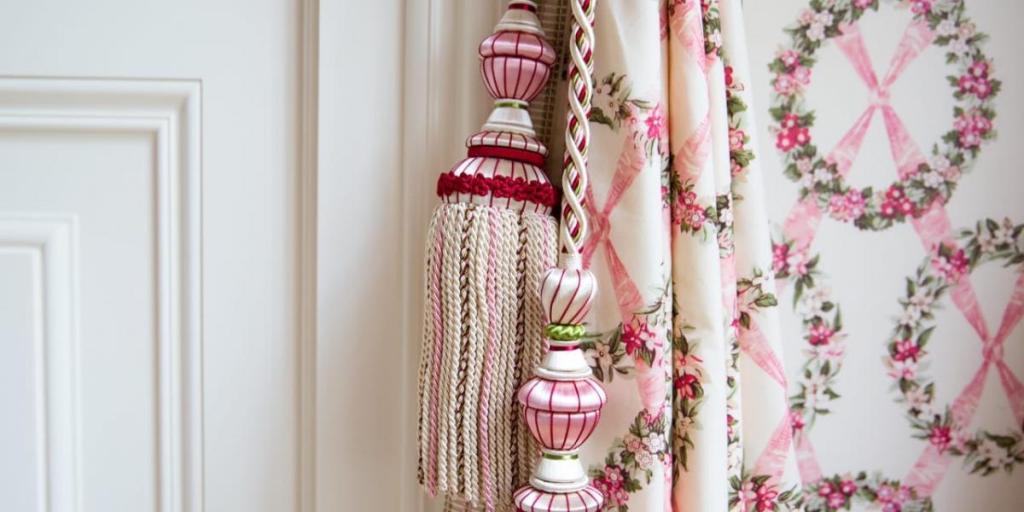
Curtains featuring a pattern of pink ribbons entwined with green wreaths set
with flowers on a white background have been recreated for the Imperial Bedroom

The Director of the Tsarskoye Selo State Museum Olga Taratynova, announced in Russian media yesterday, that the long awaited reopening of the Alexander Palace has been further delayed due to restrictions made by the coronavirus. Russia remains one of the hardest nations hit by the pandemic with more than 362,000 cases reported to date.

The Alexander Palace, the last residence of Emperor Nicholas II, was scheduled to open to the public on 20th August, however, Taratynova has now confirmed that the reopening of the palace to the public has been delayed until the end of 2020 – although the exact date has yet to be confirmed.

“As for the Alexander Palace, unfortunately, there is a ban on restoration work, including the transfer of museum items during the quarantine. At first we thought that we could open the first eight restored rooms in the summer months, unfortunately, however, work has come to a standstill due to strict quarantine measures. The recreation of the historical interiors is done, but we now need to prepare each room for the exposition. Once our experts have decorated the rooms with objects of applied art, the interiors can then be showcased to visitors in all their glory,” said Taratynova.

The Alexander Palace in Tsarskoye Selo was built by the Italian architect Giacomo Quarenghi on the orders of Catherine II for her eldest grandson Alexander, the future Emperor Alexander I. From 1905, it became the permanent residence of Emperor Nicholas II and his family. It was from the Alexander Palace that the Imperial Family were sent into exile to Tobolsk on 14 August (O.S. 1), 1917. After the October Revolution, the palace housed a sanitarium for NKVD employees and later an orphanage. In 1951 the building was transferred to the Navy of the USSR, and the palace collection was transferred to Pavlovsk Museum. In 2009, the palace was transferred to the authority of the Tsarskoye Selo State Museum-Reserve.

The palace has been undergoing restoration since 2011, which includes reconstruction work, the installation of internal engineering networks, and restoration of interiors. The Pavlovsk State Museum  have agreed to return “some items” for the exposition; while furniture for the halls has been recreated according to original samples and archival materials.

The first eight interiors to open in the eastern wing of the palace include: the Reception of Nicholas II, Working Study of Nicholas II, Moorish Bathroom of Nicholas II, Pallisander (Rosewood) Living Room, Mauve (Lilac) Boudoir, Imperial Bedroom, Alexandra’s Corner Reception Room, and the New Study of Nicholas II.

In the future, the Alexander Palace will become a memorial museum of the Romanov family – from Catherine the Great to Nicholas II, showcasing the private, domestic life of the Russian monarchs who used the palace as an official residence. The eastern wing of the palace will be known as the Museum of the Russian Imperial Family.  The multi-museum complex is scheduled for completion no earlier than 2022.

Click HERE to review more articles, news, photos and videos of the history and restoration of the Alexander Palace

© Paul Gilbert. 26 May 2020
Tender issued for next stage of reconstruction of the Alexander Palace

236

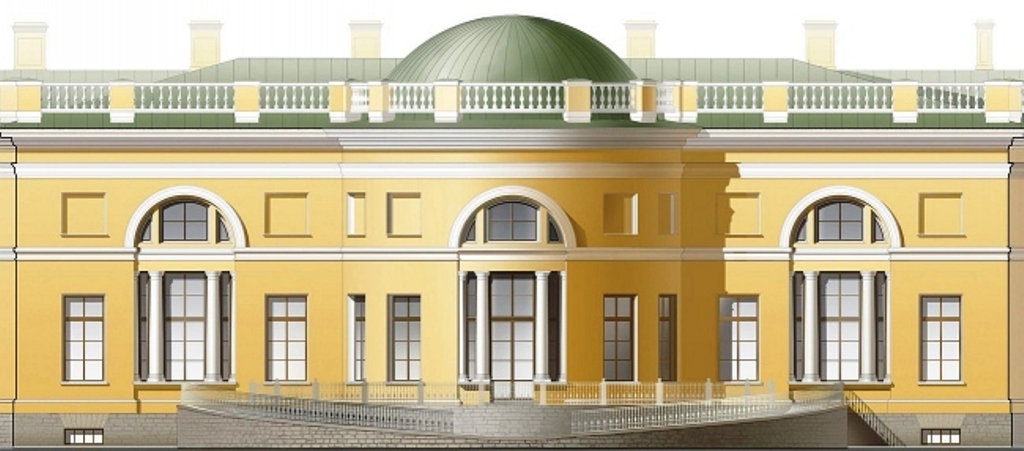
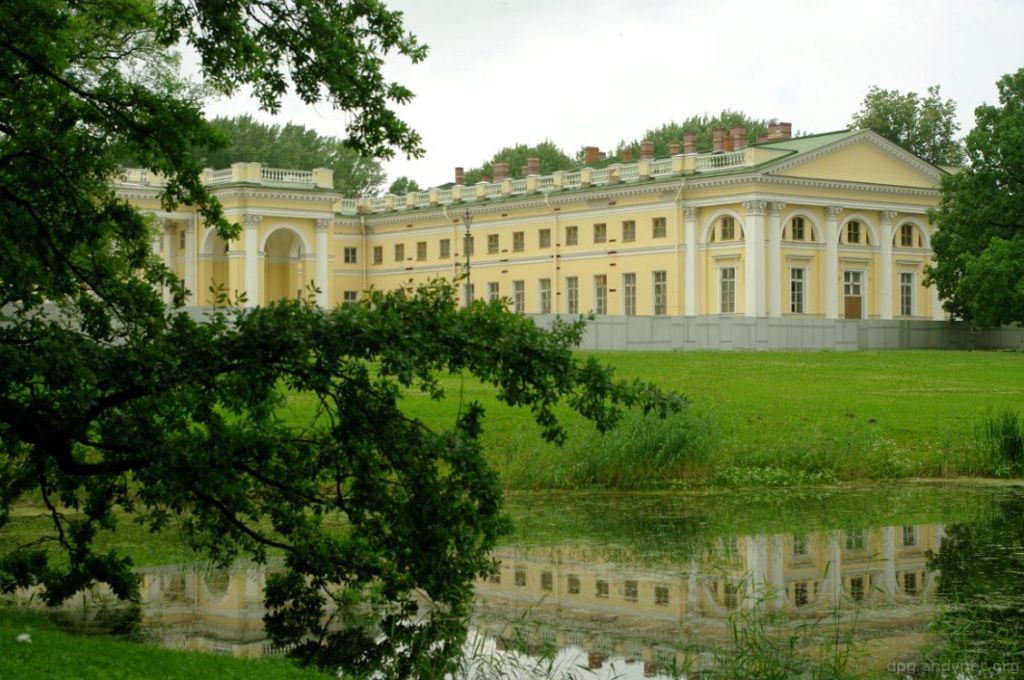
The western wing of the Alexander Palace

The Tsarskoye Selo State Museum-Reserve has issued a tender for the next stage of reconstruction of the Alexander Palace, the initial (maximum) price of the contract was announced at 778 million rubles ($11.6 million USD).

The project in two phases are envisaged for the western wing of the palace. Note: the restoration of the private apartments of Nicholas II and Alexandra Feodorovna, are located in the eastern wing of the palace.

The list of works includes, general construction work, restoration of floors, doorways and facades, installation of engineering networks, installation and commissioning of security systems and other equipment, including elevators, installation of plasterboard walls inside the building and the installation of a terrace.

The contract requires that work must be completed before 1st December 2021. The funding of 778 million rubles will come from the federal budget. Applications for participation in the tender will be accepted until 23rd March, consideration of proposals is planned for 25th March and 2nd April 2020.

The Alexander Palace was built in 1792-1796 near the Catherine Palace and was intended for the grandson of Empress Catherine II – Alexander Pavlovich (future Emperor Alexander I). It became the permanent residence of Emperor Nicholas II and his family in 1905. The restoration of the palace began in 2012, and has been closed to visitors since autumn 2015.

The first 8 of total of 14 rooms, which will be known as the Museum of the Russian Imperial Family are scheduled to open on 18th August 2020.

Upon completion of the restoration work – sometime in 2022 – the Alexander Palace will become a multi-functional museum complex, which will include exhibition halls, temporary exhibition halls, rooms for research and conferences, as well as a library and a children’s center. On the ground floor there will be a cafe, lobbies with ticket offices, a coat check, a tour desk, a museum store, as well as technical and auxiliary rooms.

© Paul Gilbert. 28 February 2020
Alexander Palace will officially open on 18th August 2020
231

The Tsarskoye Selo State Museum Preserve announced today, that the Alexander Palace will officially open on 18th August 2020.

They note that Russian President Vladimir Putin will attend the opening. Also, effective 19th August 2020, the museum will charge a separate entrance fee to tour the Alexander Park.

Eight rooms of Nicholas II and Alexandra Feodorovna, located on the first floor of the east wing of the Alexander Palace will open to visitors – the result of almost five years of work, including the Reception of Nicholas II, Working Study of Nicholas II, Moorish Bathroom of Nicholas II, Pallisander (Rosewood) Living Room, Mauve (Lilac) Boudoir, Imperial Bedroom, Alexandra’s Corner Reception Room, and the New Study of Nicholas II.

A total of 14 rooms will be restored in the eastern wing of the Alexander Palace, which will be known as the Museum of the Russian Imperial Family in the Alexander Palace. All work in the palace will be completed by 2022.

Click HERE to review 15 additional articles on the history and restoration of the Alexander Palace, which include more than 110 photos + 2 videos

© Paul Gilbert. 22 February 2020

Original works of art will decorate recreated rooms in the Alexander Palace

213b

The Rosewood (Pallisander) Drawing Room in the Alexander Palace in the 1930s. ‘The Annunciation
can be seen to the left of the mirror, and ‘The Madonna and Child’ to the right of the mirror.
Photo © Tsarskoye Selo State Museum-Reserve

The Tsarskoye Selo State Museum-Reserve has announced that they will recreate picture frames for paintings, that originally hung in the interiors of the Alexander Palace. The project of creating the frames, will be based on historic photographs and inventory descriptions.

The first two paintings will be The Annunciation by Susanna Renata Granich and The Madonna and Child by Paul Tuman. Both canvases will be placed in the Rosewood (Pallisander) Drawing Room, where they originally hung before the Imperial Family were sent into exile in 1917. The Rosewood Drawing Room is among first eight rooms of Nicholas II and Alexandra Feodorovna, which will open to visitors in the summer of 2020.

The frames for the two paintings from the Rosewood Drawing Room were made by the specialists of the Rokail workshop of Pavel Yankolovich (The Annunciation) and Svetlana Fedorova (The Madonna and Child). Photographs taken in the 1930s from the museum’s collection and descriptions from the 1939 Inventory Book helped in the reconstruction of the picture frames, including the sizes, material, and decor technique. The recreated frames are made of two types of wood – beech and pine, ornament – using the technique of mastic moulding.

The Rosewood Drawing Room of the Alexander Palace was decorated by Roman Meltzer in 1896–1897. The architect chose rosewood as the main finishing material – an expensive wood, which was imported from abroad. High wall panels with a shelf, framing of a fireplace installed in a corner and furniture were also made of rosewood. In the first years of their life in the palace, Nicholas II and Alexandra Feodorovna often spent time in this room. It was here that the Imperial family took breakfast and dinner together. In recent months, the Rosewood Drawing Room has been transformed into its historic original, including wall finishes, drapes, panels and a rosewood fireplace.

The selection and acquisition of porcelain, household items, and paintings to replace those that were lost during the Great Patriotic War (1941-45) is currently underway.

In addition to the two frames recreated for the Rosewood Drawing Room, the museum’s collection was replenished in 2019 with seven additional paintings: six were purchased from their owners along with a seventh painting, which was presented with a photograph.

© Paul Gilbert. 9 January 2020

Olga Taratynova on the restoration of the Alexander Palace

209a

Director of the Tsarskoye Selo State Museum Olga Taratynova

According to the Director of the Tsarskoye Selo State Museum Olga Taratynova, historic documents and photographs have been extremely useful resources for restorers in the recreation of the private apartments of Emperor Nicholas II and Empress Alexandra Feodorovna in the Alexander Palace.

In the summer of 2020, eight rooms located on the first floor of the east wing of the Alexander Palace will open to visitors – the result of almost five years of work. The building was seriously damaged not so much from the Great Patriotic War (1941-45), but as a result of the destruction of the palace during the Soviet years. Experts are currently attempting to restore the interiors as close to their historic original as possible.

As Olga Taratynova, noted during a recent interview with The Art Newspaper Russia, almost 90% of the private apartments of Emperor Nicholas II and Empress Alexandra Feodorovna will be recreated. The scrupulous use of all available iconographic material has been utilized to aid restorers to bring the project to fruition. “It was decided to restore the interiors as they looked at the beginning of the 20th century,” said Olga Taratynova. “We hope that the Alexander Palace will become as popular as the Catherine Palace in Tsarskoye Selo.”

The Alexander Palace was commissioned by the Empress Catherine II in the early 1790s for her beloved grandson, Tsearevich and Grand Duke Alexander Pavlovich (the future emperor Alexander I), by the architect Giacomo Quarenghi. In 1905, Nicholas II made the palace his permanent residence, and it was then that the interiors underwent major changes – they were adapted for life in accordance with the fashion of their time, sadly little of the early 20th century interiors have been preserved.

In August, immediately after the Imperial Family were sent into exile to Tobolsk, the famous art historian Georgy Lukomsky took numerous photographs of the interiors – black and white and color, the so-called auto-chromes. These along with newsreels taken during the Soviet years, have provided restorers the basic material for their work.

209f

The eastern wing will house the Museum of the Russian Imperial Family in the Alexander Palace

Not long after the departure of the Imperial Family for Siberia, a museum was established within the Alexander Palace. It operated until the beginning of the Great Patriotic War (1941-45). From 1951, the Ministry of Defence occupied the building until 2009, when the palace was transferred to the Tsarskoye Selo State Museum Preserve.

In the autumn of 2015, the palace was completely closed for restoration. The project of reconstruction, technical re-equipment and adaptation was the studio of Nikita Yavein Studio 44, the general contractor was LLC PSB ZhilStroy.

According to the Chief Architect of the Tsarskoye Selo State Museum Maria Ryadova, the project for reconstructing the interiors had to be adjusted after the Lukomsky autochromes were acquired for the museum at an auction in Paris in 2012. “When we saw these colour photographs, we saw for the first time, exactly how the apartments actually looked in 1917,” said Maria Ryadova. “Unfortunately, the ceiling lights and floors were not visible in them, therefore, we left them the way they were.”

Aside from the numerous photographs of the interiors, were the preserved albums with samples of fabrics for decorating walls and furniture. This made it possible to recreate the upholstery as accurately as possible. The room-by-room inventories made by Vsevolod Yakovlev, the keeper of the palace, have also survived to this day. Restorers had many doubts about the Moorish Bathroom of Nicholas II (after the military vacated the palace in 2009, only the plastered walls remained). But when work began on the room, excavation of the floor revealed fragments of ceramics. A vintage Soviet newsreel showed the general appearance of the room. As a result, the interior of this room has been restored in all its beauty and with historical authenticity.

The first eight rooms are now scheduled to open to visitors in the summer of 2020. A total of 14 rooms will be restored in the eastern wing of the Alexander Palace, which will be known as the Museum of the Russian Imperial Family in the Alexander Palace. All work in the palace will be completed by 2022.

Click HERE to review 14 additional articles on the history and restoration of the Alexander Palace, which include a total of 110 photos + 2 videos

© Paul Gilbert. 5 January 2020