His Imperial Majesty’s Suite during the reign of Emperor Nicholas II, 1894 to 1917

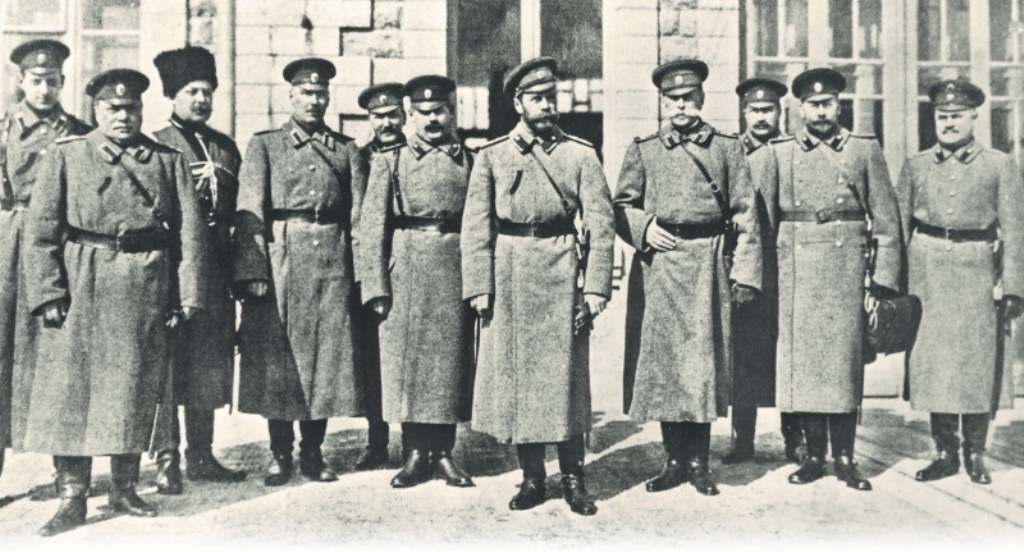
PHOTO: the retinue of His Imperial Majesty Emperor Nicholas II, Tsarskoye Selo, 1916. From left to right: Grand Duke Dmitry Pavlovich; Admiral Konstantin Dmitrievich Nilov; Count Alexander Nikolaevich Grabbe; Colonel Anatoly Alexandrovich Mordvinov; Colonel Kirill Anatolievich Naryshkin; Major General Vladimir Nikolaevich Voeikov; Emperor Nicholas II; Count Vladimir Borisovich Frederiks; Prince Vasily Alexandrovich Dolgorukov; and Sergey Petrovich Federov

* * *

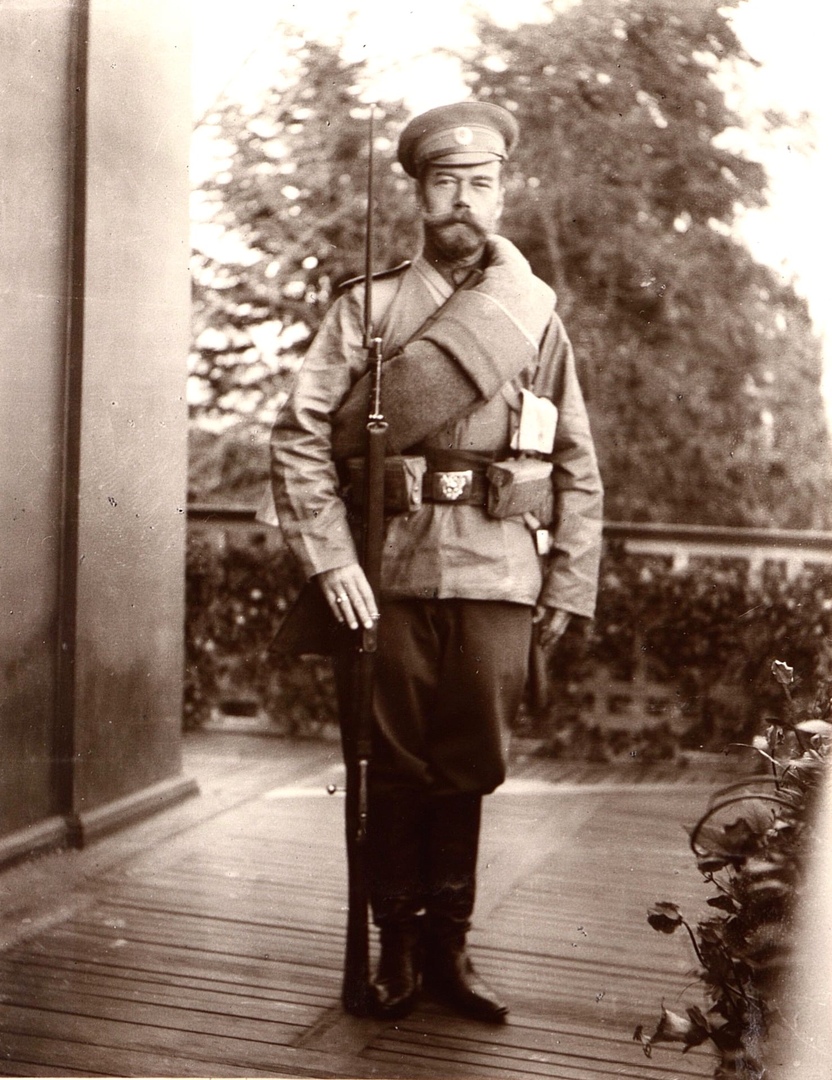
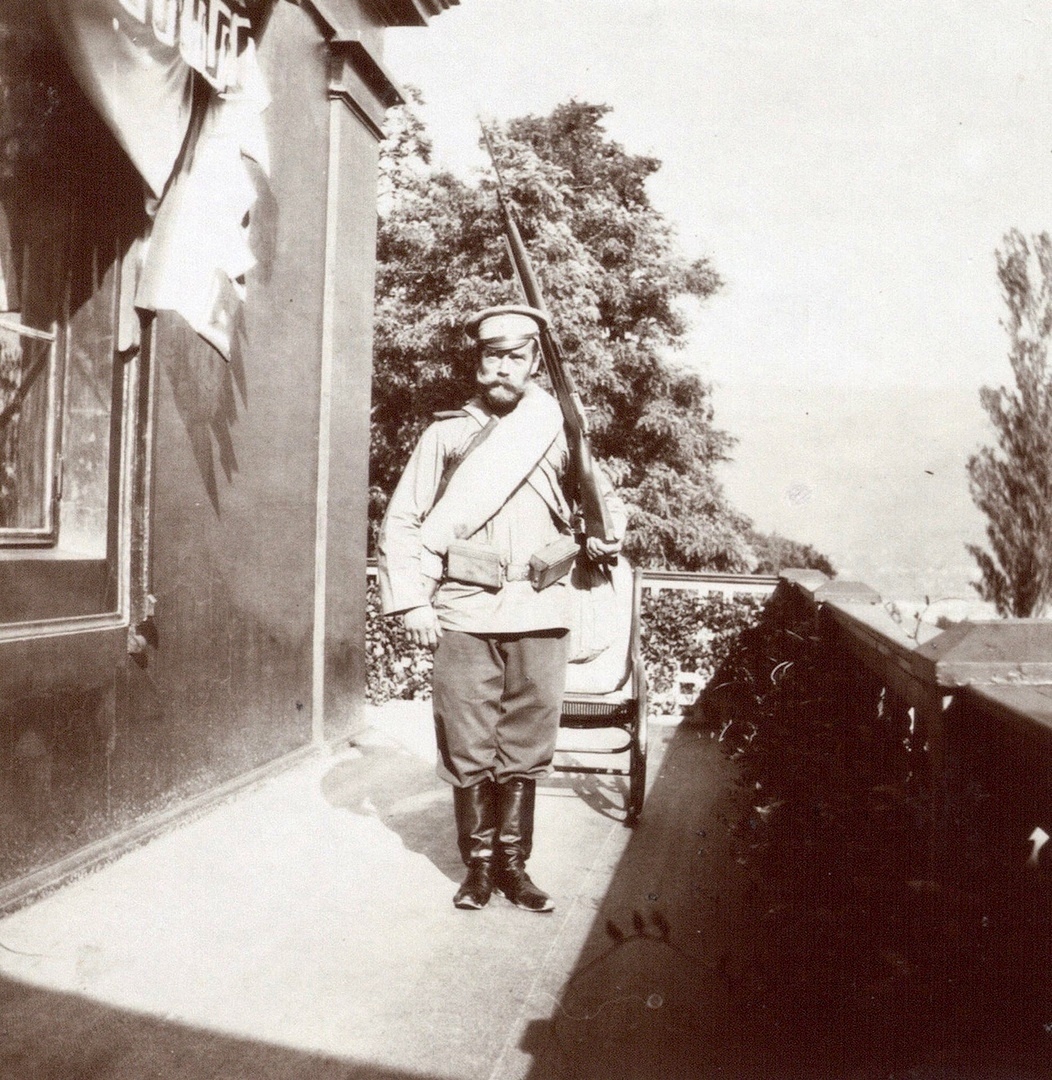
His Imperial Majesty’s Suite was a retinue unit of personal aides to Emperor Nicholas II, who reigned for 22+ years, from the death of his father on 2nd November (O.S. 20th October) 1894 to his abdication on 15th (O.S. 2nd) March 1917.

History

According to the Table of Ranks, established by decree of Emperor Peter I on 24th January 1722, the title of Adjutant General of the Russian Empire was originally a military rank. The title of His (Her) Imperial Majesty ‘s Adjutant Wing, was introduced in 1775 by Empress Catherine II.

In 1827, Emperor Nicholas I formally created the Retinue of His (Her) Imperial Majesty was established. From 1843 it was part of the Imperial Main Headquarters, an organization within the military administration of the Russian Empire that was tasked with carrying out the personal military commands from the Emperor.

The aides to the Tsar generally consisted of officers of the Army or the Guards units. The retinue consisted of persons granted the highest honors, who enjoyed the special confidence of the reigning Emperor. They were assigned the honorary title of Adjutant; used in parallel with the existing personal military, court or civil rank as defined in the Table of Ranks.

Emperor Nicholas I introduced a title of Major General of the His Imperial Majesty’s Suite. In 1841, a special title of Ajdutant General of the Emperor’s Person was created.

His Imperial Majesty’s Suite during the reign of Nicholas II

From 1894 to 1914, His Imperial Majesty’s Suite included the following number of aides:

  • 51 x adjutant generals to His Imperial Majesty;
  • 64 x Retinues of His Majesty Major General and Rear Admiral;
  • 56 x adjutant wing of His Imperial Majesty

Adjutant generals of the Russian Empire in as of 1894-1917 wore the following distinctive insignia on their retinue uniform:

  • gold general’s epaulettes (and later shoulder straps ) with the monogram of the reigning emperor;
  • gold aiguillettes of the adjutant general;
  • a white sheepskin hat with a red bottom and gold galloons located crosswise on the bottom (during the reign of Alexander III and Nicholas II ).

His Imperial Majesty’s Suite also included Grand Dukes and Princes of the Imperial Blood[1] of the Russian Imperial Family, each of whom served as aides to Emperor Nicholas II. Among these, included the Emperor’s brother Grand Duke Mikhail Alexandrovich, and his first cousin Grand Duke Kirill Vladimirovich, the latter who committed an act of treason against the Emperor during the February 1917 Revolution.

In addition, His Imperial Majesty’s Suite included notable figures, many of whom will be familar to persons who are more acquainted and well-read on the reign of Nicholas II, including:

Count Pavel (Paul) Konstantinovich Benckendorff; Emir of Bukhara Sayyid Mir Muhammad Alim Khan; Vladimir Nikolaevich Voeikov; Alexander Nikolaevich Grabbe; Vladimir Fyodorovich Dzhunkovsky; Prince Vasily Alexandrovich Dolgorukov; Count Fyodor Arturovich Keller[2]; Carl Gustaf Emil Mannerheim; Duke Georg Alexander of Mecklenburg-Strelitz; Alexander Alexandrovich Mosolov; Huseyn Khan Nakhchivanski[2]; Konstantin Dmitrievich Nilov; Duke Peter Alexandrovich of Oldenburg[3]; Prince Vladimir Nikolayevich Orlov; Prince Felix Feliksovich Yusupov, Count Sumarokov-Elston; Count Ilya Leonidovich Tatischev; and Dmitri Feodorovich Trepov; among others.

Their duties included carrying out special assignments of the Emperor (for example, investigating civil unrest), escorting foreign monarchs and delegations, and being on duty with the Emperor. In the middle of the 19th century, each retinue officer had an average of one watch every two months. The retinue title came with a number of privileges: the right of free passage to the Imperial residence, the right to file reports addressed to the Emperor, etc.

The Revolution and the end of His Imperial Majesty’s Suite

The ranks of adjutant generals, generals of the retinue and adjutant wing were abolished by order of the military department of the new Provisional Government on 21st March 1917.

Many of these men were noble and honourable, who remained faithful to Emperor Nicholas II, while others were self serving and traitors. Many of them managed to escape Bolshevik Russia, while others lived out their remaining years in Bolshevik and Soviet Russia. Sadly, for some of these men, their loyalty to their Sovereignwere tortured and subsequently exectuted, their crime in the eyes of their murderers, was .

© Paul Gilbert. 3 October 2022

NOTES:

[1] Under the new Family Law promulgated in 1886 by Emperor Alexander III, only the children and male-line grandchildren of a Tsar would be styled Grand Duke or Grand Duchess with the style of Imperial Highness—great-grandchildren and their descendants would be styled either “Prince” or “Princess of the Imperial Blood” with the style of Highness. The revised Family Law was intended to cut down on the number of persons entitled to salaries from the Imperial treasury.

[2] Commander of the Third Cavalry Corps of the Russian Imperial Army, General Count Fyodor Arturovich Keller (1857-1918) and Commander of the Guard Cavalry Corps Huseyn Khan Nakhchivanski (1863-1919), were the only two Tsarist generals, who remained loyal to the Russian Orthodox emperor Nicholas II and refused to swear allegiance to the Provisional Government.

[3] Duke Peter Alexandrovich of Oldenburg (1868-1924), was the first husband of Nicholas II’s sister Grand Duchess Olga Alexandrovna (1882-1960). The couple married on 27th July 1901 in the Gatchina Palace Church. In 1915, the couple separated; Olga had no children from her first marriage. On 27th August 1916, Emperor Nicholas II approved the definition of the Holy Synod, which recognized her marriage to Prince of Oldenburg dissolved

Nicholas II in the news – Summer 2022

Russia’s last Emperor and Tsar continues to be the subject of news in Western media. For the benefit of those who do not follow me on my Facebook page, I am pleased to present the following 12 full length articles, news stories and videos published by American and British media services, in addition, are several articles about Nicholas II’s family and faithful retainers.

Below, are the articles published in July, August and September 2022. Click on the title [highlighted in red] and follow the link to read each respective article:

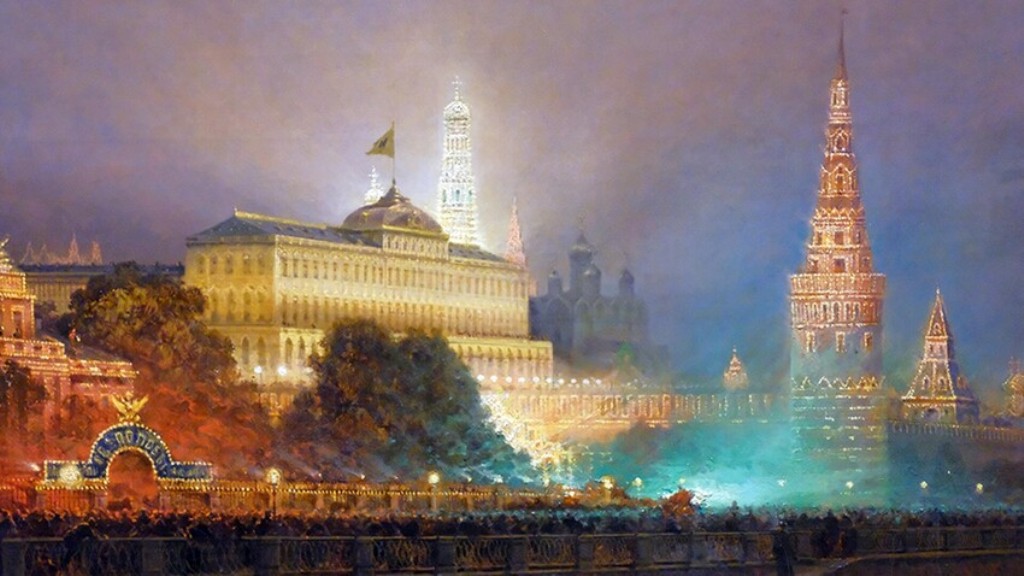
How Moscow lit up on Nicholas II’s coronation day + PHOTOS

“Light with no fire” and a little sun – those were the names Russians first gave with astonishment to electrical lighting appliances. It hadn’t even been a quarter of a century since the appearance of the first light bulb in Russia when electricity sparked interest in the Winter Palace.

Source: Russia Beyond. 22 September 2022

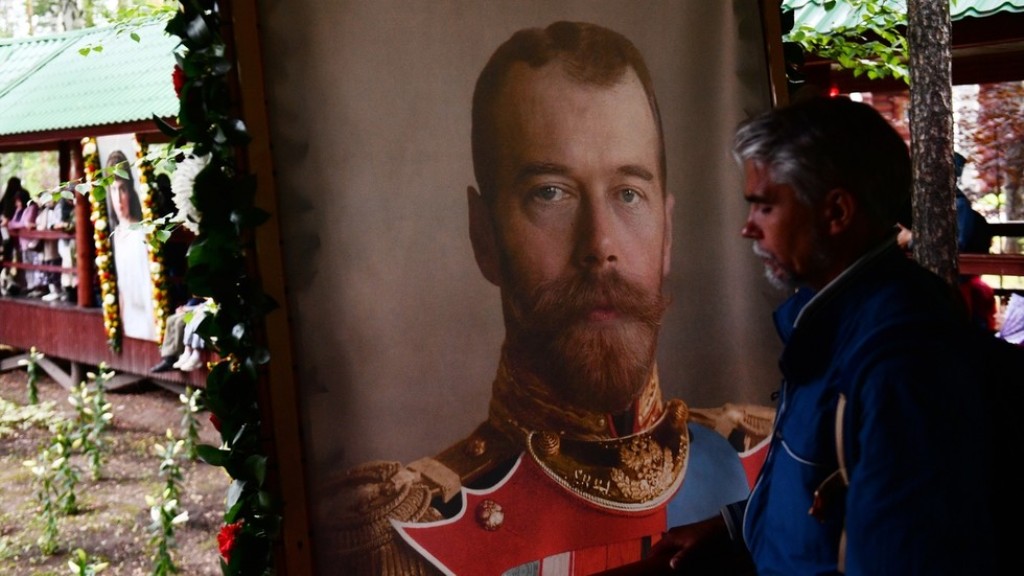
The last Tsar: How Russia commemorates the brutal communist murder of Emperor Nikolai II’s family + PHOTOS

An RT correspondent learned the story of this extra judicial massacre and talked to pilgrims about their attitude to the Holy Royal Passion-Bearers in Russia today.

Source: Russia Today. 14 August 2022

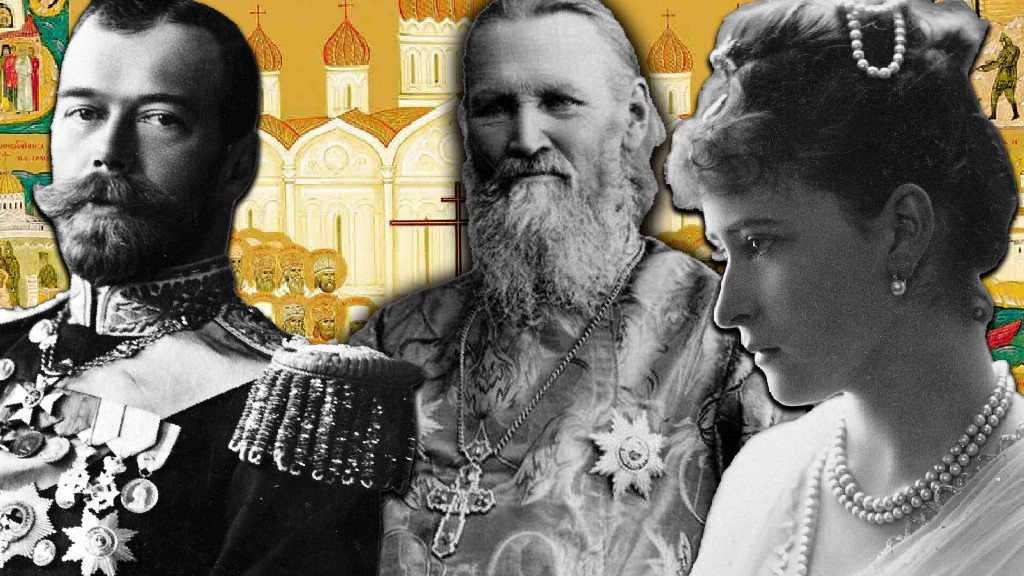
The newest saints of the Russian Orthodox Church + PHOTOS

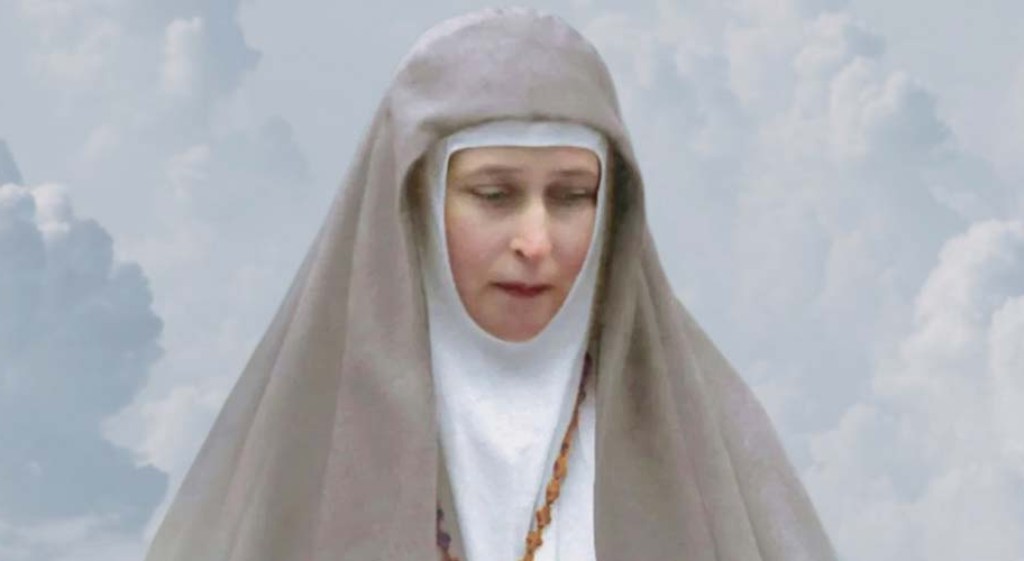
After the collapse of the USSR the resurgent Orthodox Church, among its other actions, canonized new saints. By and large, these were individuals who had suffered for their faith at the hands of the Communists – but not exclusively. Among them are Patriarch Tikhon, John of Kronstadt, Nicholas II and his family, Grand Duchess Elizabeth Feodorovna . . .

Source: Russia Beyond. 29 August 2022

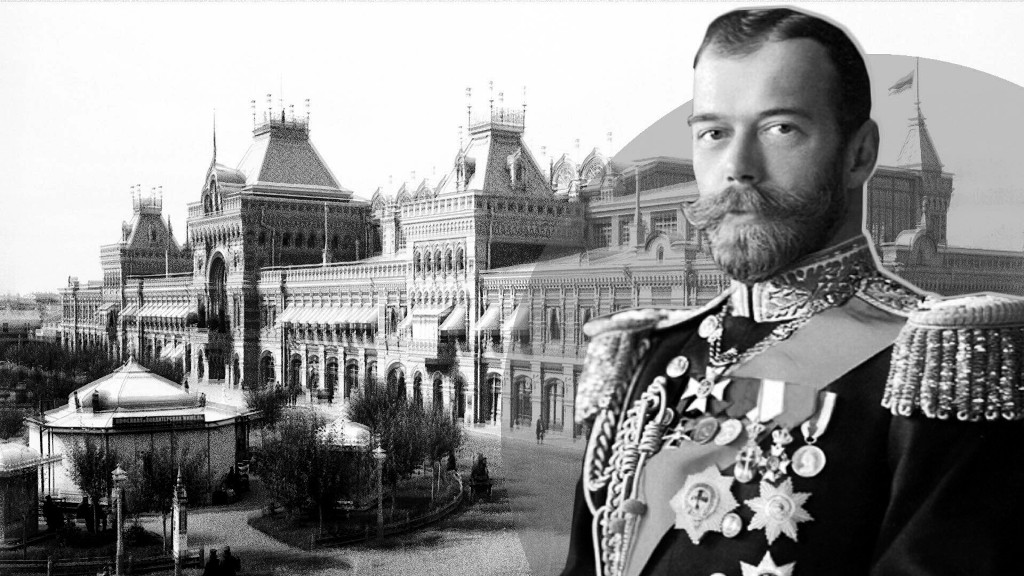
The Russian Empire’s largest ‘EXPO’ + 21 PHOTOS

In 1896, the biggest industrial and art exhibition in the history of Tsarist Russia was held in Nizhny Novgorod, the country’s main trading city. Here is what it was like.

Source: Russia Beyond. 20 August 2022

Betrayed by All and Blessed by God. A Homily for the Feast of the Royal Martyrs

July 17th is a special, extraordinary day for all of us. It is on this day, that we glorify a man who was slandered, debased, subjected to scorn, misunderstood, and betrayed like none other in all of Russian history.

Source: Orthodox Christian. 26 May 2022

‘The Heart of a Saint: Holy Royal Martyr Elizabeth Feodorovna’ by Sophie Law

Letters have always been a mirror to the hearts of the saints, especially when these letters are addressed to people close to them. Grand Duchess Elizabeth Feodorovna’s correspondence with Tsar Nicholas II are very revealing.

Source: Orthodox Christian. 20 July 2022

‘Those who remained faithful’ by Oksana Garkavenko

July 17th is the feast of the holy Royal Martyrs—the family of the last Russian Emperor St. Nicholas II. While commemorating them, let us remember those who walked the path of the Cross with them and remained faithful in the days when betrayal became the norm.

Source: Orthodox Christianity. 19 July 2022

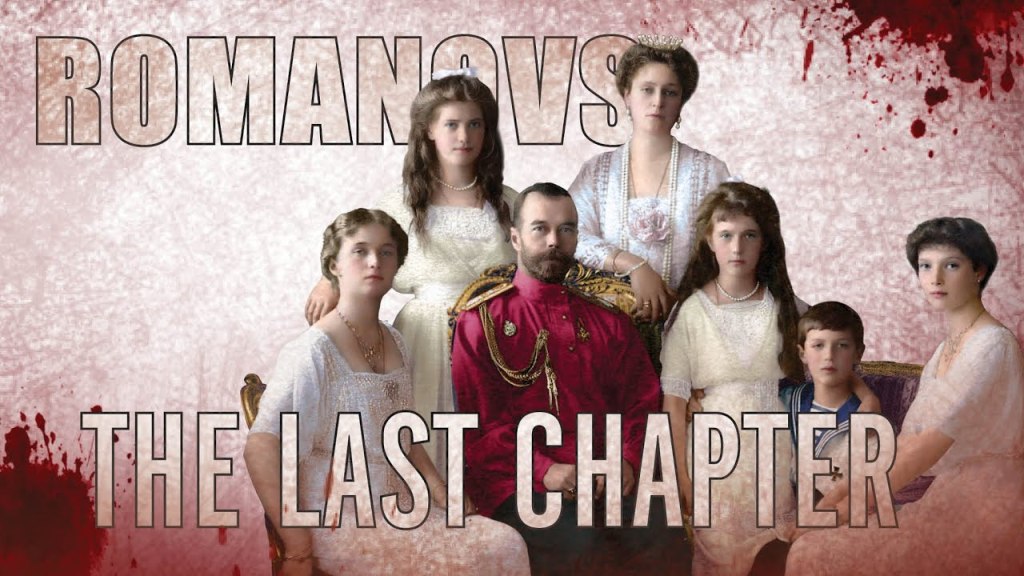
The Romanovs: The Last Chapter (VIDEO)

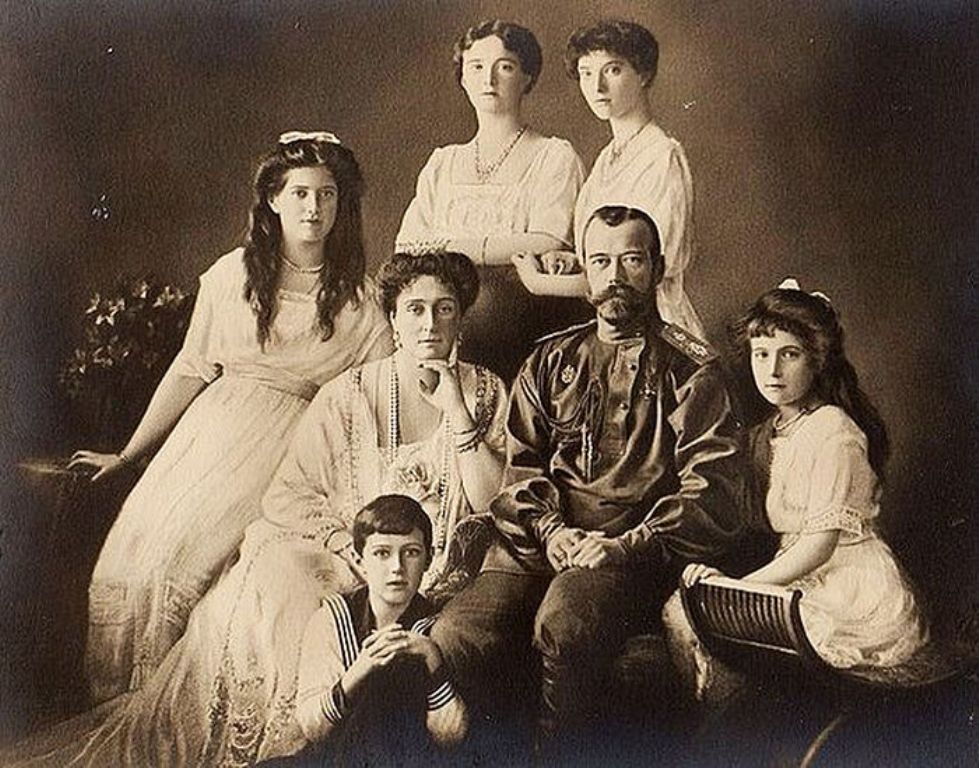
The Russian Imperial Romanov family, Nicholas II of Russia, his wife Alexandra Feodorovna, and their five children: Olga, Tatiana, Maria, Anastasia, and Alexei, were shot and bayoneted by Bolshevik revolutionaries under Yakov Yurovsky on the orders of the Ural Regional Soviet in Yekaterinburg on the night of 16–17 July 1918.

Source: The Romanov Royal Martyrs Project. 16 July 2022

‘About the Imperial Family’ by Bishop Basil (Rodzianko)

Vladyka Basil (1915-1999) recalls his memories of Fr. Nicholas (Gibbes), tutor to Nicholas II’s children, who later converted to Orthodoxy and was tonsured a monk with the name of Nicholas, in memory of His Majesty the Emperor.

Source: Orthodox Christianity. 16 July 2022

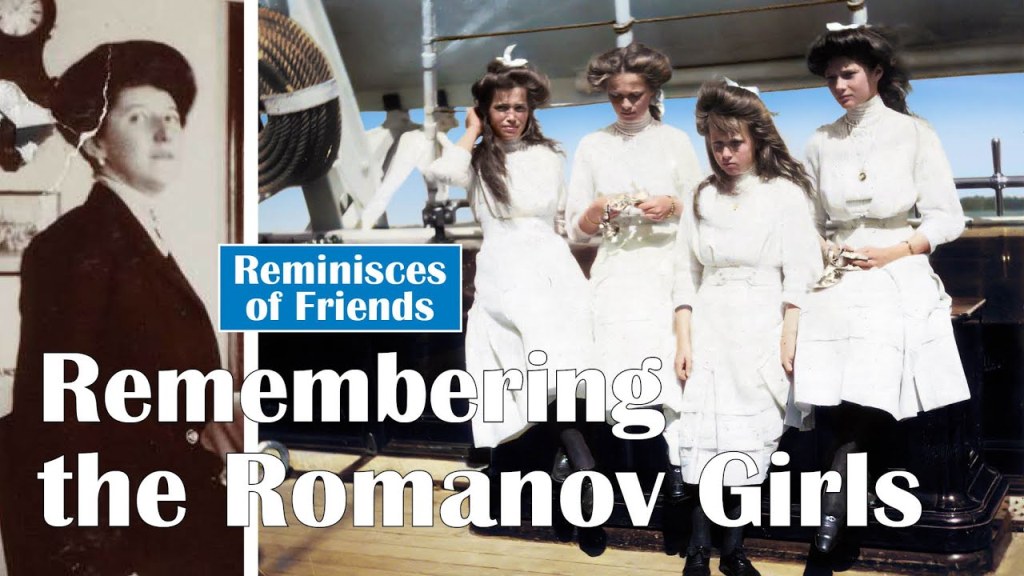
Remembering the Romanov Girls (VIDEO)

This account about the four Romanov girls was written by Lili Dehn, a close friend of the last Empress of Russia, Alexandra Feodorovna. She witnessed many of the most important events, of the sunset years of the Romanov Dynasty. Her words consist an intimate first-hand account, from the perspective of a palace insider, and close friend of Alexandra.

Source: The Romanov Royal Martyrs Project. 15 July 2022

Crown Jewels: The Romanov Children (VIDEO)

The Romanov children were extraordinary in their ordinariness. Despite being born in one of the highest and most enviable positions in the world, and having access to all possible worldly goods, they lived and were brought up like ordinary children. Even more amazingly, despite being surrounded by a court environment made up of the entirely secular and godless aristocracy, the children grew up to be God-fearing and endowed with all manner of Christian virtue.

Source: The Romanov Royal Martyrs Project. 6 July 2022

Archimandrite Nicholas Gibbes: From the Russian Orthodox Church in Exile to the Moscow Patriarchate by Nicolas Mabin

An archive-based study of Charles Sydney Gibbes (1876-1963), a figure well-known as a tutor to Tsesarevich Aleksei Nikolaevich, but quite obscure in his capacity of a ROCOR clergyman.

Source: ROCOR Studies. February 2020

For MORE articles, please refer to the following links:

Nicholas II in the news – Spring 2022
7 articles published in April, May and June 2022

Nicholas II in the news – Winter 2022
6 articles published in January, February and March 2022

Paul Gilbert’s Romanov Bookshop on AMAZON – UPDATED with NEW titles!!

I have published 30 titles to date through AMAZON – featuring one of the largest selections of books on Nicholas II, the Romanov dynasty and the history of Imperial Russia.

Please CLICK on the BANNER or LINK above to review my current selection of titles in hardcover, paperback and ebook editions. Listings provide a full description for each title, pricing and a Look inside feature.

© Paul Gilbert. 30 September 2022

Act of historical justice: restored bust of Nicholas II returned to Livadia

PHOTO: the restored bronze bust of Emperor Nicholas II, installed and consecrated on 27th September 2022, on the grounds of the Church of the Exaltation of the Cross, Livadia

On the morning of 27th September, a restored bronze bust of Emperor Nicholas II was unveiled and consecrated on the grounds of the Church of the Exaltation of the Cross – the home church of the Russian Imperial Family, at Livadia Palace in Crimea. The event is dedicated to the 111th anniversary of the Grand Livadia Palace.

The sculptural image was discovered at Livadia in 1994 by Oleg Anatolyevich Permyakov, a representative of the Foundation for Slavic Literature and Culture. Due to the extensive damage, which consisted of mold and bullet holes, Permyakov was unaware of the identity of the bust, however, he was convinced that it was that of an important statesman from the Tsarist era.

He contacted People’s Artist of Russia Vyacheslav Mikhailovich Klykov (1939-2006) who, after conducting a comparative analysis of historic photographs and portraits of the Russian Imperial Family from the late 19th to early 20th centuries, Klykov came to the conclusion that this was a bust of the last Russian Emperor Nicholas II.

The restoration of the bust was financed by the Russian philanthropist, and honorary member of the board of trustees of the Public International Foundation for Slavic Literature and Culture Sergei Kozubenko. Klykov removed the mold and repaired the damage inflicted by Bolshevik bullets.

PHOTO: detail of the restored bronze bust of Emperor Nicholas II, installed and consecrated on 27th September 2022, on the grounds of the Church of the Exaltation of the Cross, Livadia

In 2003, a new bust was cast from the restored bust, and installed on the grounds of the Church of the Holy Martyrs Faith, Hope, Love in Kursk. The bust marked the historic visit and stay of Emperor Nicholas II and members of the Imperial Family at the large military maneuvers, held on the outskirts of the city in August-September 1902.

A plaster copy of the bust was also installed in the central columned hall of the Fund for Slavic Literature and Culture in Moscow.

According to the restoration plan of the sculptor Vyacheslav Klykov, the bust had to return to its’ historical place, the Livadia Palace, the residence of Emperor Nicholas II, situated on the southern coast of Crimea. This return was supposed to symbolize the restoration of the connection between the generations of Russians, broken as a result of the revolution and the Civil War. To become a symbol of repentance and the return of modern Russia to its historical roots, the origins of its cultural identity.

Sadly, the great sculptor did not live to see the realization of his plan. Klykov’s idea was implemented by his friend, Sergey Pavlovich Kozubenko, who organized the return of the bust to Livadia Palace.

PHOTO: Sergei Kozubenko (left), and Oleg Anatolyevich Permyakov (second from right), at the unveiling of the restored bust of Emperor Nicholas II on the grounds of the Church of the Exaltation of the Cross, Livadia,

The opening ceremony was attended by the Minister of Culture of the Republic of Crimea Tatyana Manezhina , noting the importance of a respectful attitude to the historical and cultural heritage of the country.

“Each monument of history and culture embodies a tangible connection between the past and the present, which allows for the study of national history for future generations. It is especially important and significant that public organizations and individuals take part in the preservation and popularization of Russia’s cultural heritage. I am sure that our joint efforts will contribute to the preservation of the traditions and rich spiritual heritage of Russia,” the minister stated.

PHOTO: view of the Church of the Exaltation of the Cross, which is connected by a gallery to the palace

Tatyana Manezhina also expressed her gratitude to the staff of the Republican Museum, representatives of the Public International Fund for Slavic Culture and Literature, personally to Sergei Kozubenko for his initiative and assistance in finding and restoring the lost and damaged sculptural image of the former owner of the Livadia Palace, Emperor Nicholas II.

The consecration of the bust was performed by Nestor Bishop of Yalta. The event was attended by Sergey Kozubenko, Head of the Yalta city administration Yanina Pavlenko , local government officials, members of the clergy, and the general public.

PHOTO: view of the restored bronze bust of Emperor Nicholas II on the grounds
of the Church of the Exaltation of the Cross, Livadia, as it looks today – 10 July 2025

A total of four monuments to Emperor Nicholas II have now been installed in Crimea: two on the grounds of Livadia Palace, one in Evpatoria and one in Alushta.

© Paul Gilbert. 27 September 2022

Nicholas II and Tsesarevich Alexei to be featured in monument in Grozny, Chechnya

PHOTO: information stand about the Caucasian Native Cavalry Division,
formed by order of Emperor Nicholas II, in 1914

A unique exhibit dedicated to the Caucasian Native Cavalry Division, is currently on display at the Akhmat Kadyrov Museum, in Grozny, Chechnya. The Heritage of the Empire exhibit is a project of the Grozny branch of the Union of Historical and Educational Societies.

In the center of the exhibit is a model of the future monument to the Caucasian Native Cavalry Division, to be installed in the Chechen capital of Grozny. The sculptural composition includes the figures of Emperor Nicholas II, his son Tsesarevich Alexei Nikolaevich – both of whom visited the regiment during World War I – and Grand Duke Mikhail Alexandrovich.

An information stand featuring photos, archival documents, and list of horsemen of the regiment is also presented, prepared by the senior researcher of the museum, candidate of historical sciences Isa Saidovich Khamurzaev.

PHOTO: model of the future monument to the Caucasian Native Cavalry Division

PHOTO: detail of Emperor Nicholas II, his son Tsesarevich Alexei Nikolaevich
and Grand Duke Mikhail Alexandrovich of the sculptural composition

The Caucasian Native Cavalry Division, also known as the “Savage Division” was a cavalry division of the Imperial Russian Army.

On 23rd August, Emperor Nicholas II ordered the formation of the Caucasian Native Cavalry Division, simultaneously appointing his younger brother Grand Duke Mikhail Alexandrovich as its commander. The Grand Duke’s appointment gave the unit an elite status and many foreigners in Russian service as well as Russian and Caucasian noblemen sought to join it.

On 6th March, Mikhail Alexandrovich personally led the division in an offensive on Tlumach, defeating two Austrian battalions and seizing the town. He was later awarded the Saint George Sword for the action.

The division consisted of three brigades, broken into six regiments, each of which numbered four sotnias. The 1st Brigade incorporated the 2nd Dagestan and Kabardin Regiments.

PHOTO: Grand Duke Mikhail Alexandrovich (center),
commander of the Caucasian Native Cavalry Division

Ninety percent of the personnel were Muslim volunteers from the Caucasus, the rest belonged to various nationalities from across the Russian Empire; totaling over 60 different nationalities. Each regiment numbered 22–24 officers, 480–500 riders and 121–141 support personnel. The regiment took part in World War I, distinguishing itself in numerous engagements, including the Brusilov and Kerensky Offensives.

The February Revolution and the subsequent Abdication of Nicholas II did not negatively affect the division’s morale. In the middle of June 1917, the division joined the 12th Army Corps at Stanislavov in preparation of the Kerensky Offensive. On 8th July, the division launched an offensive on Kalush and Dolyna. On 12th July, the 1st Brigade and the 3rd Caucasus Cossack Division thwarted a German counter-offensive at Kalush.

During the course of the war, approximately 7,000 people served in the ranks of the division, 3,500 of whom received varying degrees of the Order of St. George and the Medal of St. George. Initially, non-Christians were awarded a different version of the order, which replaced St. George with the Imperial double-headed eagle. However upon the request of the riders the jigit was restored in the place of the “bird”. During the period of its operation the regiment did not record a single incident of desertion, while capturing a number of prisoners four times its own size. During the course of the Russian Civil War, many veterans of the Kabardin Regiment joined the ranks of the White Movement’s Volunteer Army. In contrast, veterans of the Ingush Regiment enlisted into the army of the Mountainous Republic of the Northern Caucasus en masse.

© Paul Gilbert. 11 September 2022

Proceedings of the 1st International Nicholas II Conference

*This title is available from AMAZON in the USA, UK, Canada, Australia,
France, Germany, Spain, Italy, Netherlands, Poland, Sweden and Japan

CLICK HERE TO ORDER THE PAPERBACK EDITION @ $30.00 USD

CLICK HERE TO ORDER THE HARD COVER EDITION @ $40.00 USD

I am pleased to offer the proceedings of the 1st International Nicholas II Conference, in both hard cover and paperback editions, available exclusively from AMAZON.

The original edition of these proceedings published in 2018 is out of print. This NEW edition, has been revised and updated, featuring three additional articles, plus a comprehensive bibliography featuring more than 100 English-language titles on the life, reign and era of Russia’s much slandered Tsar.

In addition, this new edition also features full-colour photographs of the event, illustrated with 50 colour and black and white photographs.

* * * * *

In the autumn of 2018, people from nearly a dozen countries gathered in Colchester, England for a conference marking the 150th anniversary of the birth and the 100th anniversary of the death martyrdom of Russia’s last Tsar.

Five speakers, including Paul Gilbert, Archpriest Andrew Philips (ROCOR), Nikolai Krasnov, authors Frances Welch and Marilyn Swezey presented seven papers on Nicholas II.

Lectures included “A Century of Treason, Cowardice and Lies,” “Why Nicholas II is a Saint in the Russian Orthodox Church,” “Nicholas II and the Sacredness of a Monarchy,” “Nicholas II in Post-Soviet Russia,” among others.

The Grand Duchess Elizabeth Romanov Society UK were kind enough to provide 10 exhibit banners from the society’s mobile exhibition Romanovs During the First World War: Charity and Heroism. Click HERE to read a short summary of the Nicholas II Conference, held in Colchester, England on 27th October 2018.

The conference was timed to coincide with two exhibitions, held in London: The Last Tsar: Blood and Revolution at the Science Museum and Russia: Royalty and the Romanovs at the Queen’ Gallery, Buckingham Palace.

© Paul Gilbert. 6 September 2022

Nicholas II’s apartments in the Winter Palace

CLICK on the IMAGE above to watch a VIDEO about the Imperial Apartments
in the Winter Palace. Duration: 12 minutes, 53 seconds. English subtitles

Please note that this article focuses on specific interiors of Emperor Nicholas II’s private apartments in the Winter Palace, it is part of a larger publishing project I am currently working on, that will feature a more comprehenvive study of this Imperial residence during the reign of Russia’s last Tsar – PG

On his accession, Nicholas II was keen to return to the Winter Palace residence in the capital. The palace architect, Alexander Feodorovich Krasovsky (1848-1918), was entrusted with creating private rooms for the Emperor and his wife, Alexandra Feodorovna. In December 1895 they moved into the Winter Palace and lived there permanently in the winter. Following the events of Bloody Sunday [22nd January (O.S. 9th) 1905], the Imperial Family moved to the Alexander Palace at Tsarskoye Selo, visiting the Winter Palace only for formal ceremonies, banquets and receptions.

Receptions and balls became rare events. The most famous ball held in the Winter Palace during the reign of Russia’s last Tsar was the luxurious Costume Ball, held in two stages on 11th and 13th February 1903. All the visitors dressed in bejeweled 17th-century style costumes. Nicholas II wore the costume of Tsar Alexei Mikhailovich (1629-1676); while the Empress Alexandra Feodorovna wore the costume of his first wife Tsarina Maria Ilyinichna Miloslavskaya (1624-1669).

It was in 1897, that Emperor Nicholas II approved the project for a new colour of the facades of the Winter Palace. A brick-red hue was chosen, to match the red sandstone colour of the new fence of Her Majesty’s Own Garden. The Emperor’s decision was carried out in 1901 after the construction of the fence of the garden was completed.

PHOTO: view of the north-western corner block of the Winter Palace and Her Majesty’s Own Garden. The door in the center is the Saltykov Entrance, which led to the private apartments of Nicholas II and Alexandra Feodorovna, located on the 2nd floor

The personal apartments of Nicholas II and his wife were created in the second floor of the north-western corner block, beyond the Malachite Room that was among the state rooms of the palace whose historical appearance was preserved. The rooms which Alexander Bryullov (1798-1877) had decorated for Empress Alexandra Feodorovna (1798-1860) in 1838-39, were converted for Russia’s last Emperor and Empress.

The rooms were a self-enclosed complex, a separate apartment, designed to embody the young couple’s domestic ideal, a cosy, welcoming home. The Emperor’s diaries show that they both devoted much attention to the fitting out of their new apartments. Many of the rooms belonging to Nicholas II were small, narrow, dark and awkward in design, especially the Emperor’s narrow study.

Krasovsky, showed himself to be a master with immense erudition and superb taste. The combination of brilliant historical stylization with Moderne (Art Nouveau) elements made the apartments of the last Russian Emperor’s family a unique work of art. Each room that Krasovsky created was an elegant paraphrasing of the style of a particular historical era.

The second enfilade overlooked the Admiralty, which included the Imperial Bedroom, Nicholas II’s Study, the Gothic Library, the Billiard Room, Nicholas II’s private bath, a drawing room, lavatory and a small Checkpoint at the Saltykov staircase. A private garden was created beneath the windows of the Imperial apartments on the site of a former parade ground, surrounded by a high wall topped with decorative iron-grille railings.

PHOTO: view of the Imperial Bedroom

PHOTO: the bed which Nicholas and Alexandra shared, and the icon case

The Imperial Bedroom featured an alcove highlighted by two white stucco columns. The walls were decorated with cretonne, a heavy English cotton fabric featuring red flowers and green leaves. The wall panels and furniture were made of Karelian birch.

A small living room was created in front of a large folding screen which separated it from the alcove. It featured a number of pieces of furniture, including a comfortable sofa and chairs. In addition, where wicker furniture for the children. Alexandra Feodorovna spent many hours here, relaxing on the sofa with a book or needlework, while her children played nearby.

In the alcove, separated from the rest of the room by a folding screen was a large bed – unlike most sovereigns of the day, Nicholas II and his wife shared a bedroom. A large folding icon case – covered with icons – was situated against one wall.

PHOTOS: two views of Emperor Nicholas II’s Study

Nicholas II’s Study was arranged in the English Gothic style, decorated with oak. The beauty of the wood was enhanced by the matte surface of the upper part of the walls, painted in an oak colour and the rich green and yellow silk draperies which decorated the double-windows of the interior. The wall between the two arches was decorated with a huge fireplace, the upper part decorated with coloured tiles.

All the details of the interior and the furniture were enhanced with Gothic-style carvings. An important element in in this interior was the Gothic fireplace embellished with griffons and lions, heraldic figures from the arms of the Romanov House and the Hesse-Darmstadt House, to which the Empress belonged.

The Emperor’s desk was decorated with small busts of his grandfather Emperor Alexander II and great-grandfather Nicholas I, and numeroud framed family photographs. The walls were decorated with portraits of Nicholas II’s ancestors. In another part of room stood a piano, which the Imperial couple often played four hands. In the evenings, after returning from the theater, they often had dinner in front of the fireplace.
PHOTO: Emperor Nicholas II’s bath, located next to his Study. 1930s

A large marble bath was installed next to the Emperor’s Study. A small staircase connected to the Emperor’s dressing room and his Valet’s room. The pool was a rectangular recess with a marble staircase consisting of 9 steps. There was also an open shower niche and a water closet with a separate door.

In 1898, the size of the pool was increased to a size of 387 [152 in.] x 385 cm [151 in.] and a depth of 159 cm [63 in.]. The architect, Nikolai Ivanovich Kramskoy (1865-1938), who carried out the renovation managed to preserve the original marble wall cladding and frieze design seen in the photo above.

In 1938, Nicholas II’s bath was closed. While some parts of the decoration have been preserved, including the ceiling decoration with the original 19th lamp. It is difficult to ascertain what other elements have been preserved, as this room is today filled from floor to ceiling with shelves on which part of the Hermitage drawing fund is stored.

It is not known, if the bath itself was filled in during the 1930s, or whether it was covered with boards and flooring, just like they did to Nicholas II’s bath in the Alexander Palace at Tsarskoye Selo.

PHOTO: Emperor Nicholas II’s Gothic Library

The Gothic library was the largest room of the suite refurbished for Nicholas II by Krasovsky, who used the same English medieaval style used in the Emperor’s Study. The two-tiered interior, which included the ceiling, the bookcases, the stairs and upper gallery were trimmed with wax-polished walnut. They were decorated with ornaments characteristic of the Gothic style. The walls between the cabinets and the upper gallery were covered with embossed leather. This magnificent decoration was made at the worskhop of Nikolai Fedorovich Svirsky (1851-1915) – supplier to His Majesty’s Imperial Court.

A huge white stone fireplace, reminiscent of a Gothic portal with a frieze dominated the interior. Nicholas and Alexandra liked to spend their evenings reading in front of the fireplace.
Furniture was made in the Gothic style, according to Nabokov’s drawings, which included several tables, the Emperor’s desk in front of the fireplace, chairs and a lectern. A unique smoking table, decorated with gold and diamonds, with a well stocked selection of cigarettes and cigars was a unique addition. In this interior, reminiscent of a medieval hall, the Emperor often received officials.

The interior of the Gothic Library has survived, click HERE to read more about this interior.

PHOTO: Emperor Nicholas II’s Billiard Room

Nicholas II, like many of his predecessors and relatives loved billiards. Sometimes he played a game or two with his adjutant wing on duty, whose post was in the adjoining Reception Room.

The interior of the Billiard Room was designed in the Neo-Classical style. The doors were framed in the form of portals with pilasters topped with a entablature and acroterium. The classic styled white marble fireplace was decorated with a frieze depicting cupids in chariots. Wall panels, doors and furniture were made of polished mahogany and decorated with copper inserts. Paintings and vases collected by Nicholas II during his Far Eastern journey in 1891-92, decorated the walls and shelves. The parquet floor from the Pompeian Dining Room, created by Alexander Pavlovich Bryullov (1798-1877) in 1838-39, was transferred to this interior.

PHOTO: the Small Dining Room

Formerly known as the Pompeian Dining Room, the Small Dining Room was redecorated in 1894–95, by Krasovsky. A rococo plaster-work style was chosen to frame 18th-century St Petersburg tapestries. It was in this room, that Nicholas and Alexandra and their guests gathered for meals. The crystal chandelier was made in England in the 1760s, it was electrified during Nicholas II’s reign.

The hands of the clock on the mantle [seen on the far wall in the photo above] are stopped at 2.10, the time when the ministers of the Provisional Government were arrested in this room, during the early morning hours on 26th October 1917.

The Winter Palace had been the seat of the Provisional Government since July 1917. It’s leader Alexander Kerensky (1881-1970) wasted little time in acquisitioning the Emperor’s Gothic Library for his own personal use.

Following the Government’s arrest in the Small Dining Room, an eyewitness account records a systematic destruction of the apartments by the Bolsheviks:

“The Palace was pillaged and devastated from top to bottom by the Bolshevik[s]…Priceless pictures were ripped from their frames by bayonets. Packed boxes of rare plate and china…were broken open and the contents smashed or carried off. The library….was forced open and ransacked…..the Tsaritsa’s salon, like all other rooms, was thrown into chaos. The colossal crystal lustre, with its artfully concealed music, was smashed to atoms. Desks, pictures, ornaments—everything was destroyed.”

On 30th October 1917 the Military Revolutionary Committee of the government of the Russian Republic declared the palace “a state museum on a par with the Hermitage”. The palace was given over to the administration of the museum in 1922. In 1923 a programme was initiated under the direction of the architect Alexander Vladimirovich Sivkov (1890-1968) to convert the palace ensemble into a museum complex. This programme included the reconstruction of the Winter Palace that in the post-revolutionary period became known as the Palace of the Arts.

For a brief period following the revolution, the private apartments were open to the public to display the life of the former rulers, as this was the area of the palace where entry had been gained by the revolutionaries, and as a consequence, much had been destroyed so it is hard to know how accurate the depiction of the imperial private lives could have been.

In time the state rooms of the former imperial residence came to be used for exhibitions, while the living rooms and service premises were converted into display rooms, losing their decorations. In 1926, the “Historical Rooms of Emperor Nicholas II” were closed, dismantled and given over to exhibition use.

The only historic interiors which have survived from the time of Nicholas II are the Gothic Library and the Small Dining Room. Sadly, the remaining interiors have not survived and today we only have photographs, architect’s drawings and archive documents which preserve the memory of the former private apartments of Russia’s last emperor and tsar.

© Paul Gilbert. 30 August 2022

Paul Gilbert’s Romanov Bookshop on AMAZON

I have published more than 50 titles to date through AMAZON – featuring one of the largest selections of books on Nicholas II, the Romanov dynasty and the history of Imperial Russia.

Please CLICK on the BANNER or LINK above to review my current selection of titles in hardcover, paperback and ebook editions. Listings provide a full description for each title, pricing and a Look inside feature.

22nd anniversary of the Canonization of Nicholas II and his family

0301

Bas-relief on the wall of the Chapel of the Royal Passion-Bearers in Kostroma

On this day – 20th August 2000 – after much debate, Emperor Nicholas II and his family were canonized as passion bearers by the Moscow Patriarchate

The Moscow Patriarchate canonized the family as passion bearers: people who face death with resignation, in a Christ-like manner, as distinguished from martyrs, the latter historically killed for their faith. Proponents cited the piety of the family and reports that the Tsarina and her eldest daughter Olga prayed and attempted to make the sign of the cross immediately before they died.

The term “passion-bearer” is used in relation to those Russian saints who, “imitating Christ, endured with patience physical, moral suffering and death at the hands of political opponents. In the history of the Russian Church, such passion-bearers were the holy noble princes Boris and Gleb (1015), Igor of Chernigov (+ 1147), Andrei Bogolyubsky (+ 1174), Mikhail of Tverskoy (+ 1318), Tsarevich Dimitri (+ 1591). All of them, by their feat of passion-bearers, showed a high example of Christian morality and patience.
Despite their official designation as “passion-bearers” by the August 2000 Council, Nicholas II and his family are referred to as “martyrs” in Church publications, icons, and in popular veneration by the people.
NOTE: The family was canonized on 1st November 1981 as new martyrs by the Russian Orthodox Church Outside Russia (ROCOR).
This bas-relief (above) also depicts their servants, who had been killed along with the Imperial family. They were also canonized as new martyrs by the ROCOR in 1981 The canonized servants were Yevgeny Botkin, court physician; Alexei Trupp, footman; Ivan Kharitonov, cook; and Anna Demidova, Alexandra’s maid. Also canonized were two servants killed in September 1918, lady in waiting Anastasia Hendrikova and tutor Catherine Adolphovna Schneider. All were canonized as victims of oppression by the Bolsheviks.

On 3 February 2016, the Bishop’s Council of the Russian Orthodox Church (Moscow Patriarchate) canonized Dr. Botkin as a righteous passion bearer. They did not canonize the servants, two of whom were not Russian Orthodox: Trupp was Roman Catholic, and Schneider was Lutheran.

© Paul Gilbert. 20 August 2022

“For us, Serbs, Nicholas II will be the greatest and most revered of all saints.”

PHOTO: fresco depicting the image of Tsar-Martyr Nicholas II by Stepan Kolesnikov

On 11th August 1927, newspapers in Belgrade reported a miracle witnessed by the Russian artist Stepan Fedorovich Kolesnikov (1879-1955).

Kolesnikov had been invited to paint the frescoes in a new church in the ancient monastery of St. Naum. The master depicted the faces of fourteen saints, while leaving the fifteenth empty. He returned to the church at dusk, and unexpectedly saw that at the very place where he was supposed to draw another saint, the face of Nicholas II appeared.

Kolesnikov, who had met the Emperor on several conversations at exhibitions and remembered his face well. But the vision was so vivid that night Stepan Fedorovich seemed to be working from nature. Having finished the fresco, he wrote below: “All-Russian Emperor Nicholas II, who accepted the martyr’s crown for the prosperity and happiness of the Slavs.”

A few days later, the commander of the Bitolsky military district, General Rostich, arrived at the monastery. For a long time he stood in silence in front of the fresco of the Russian emperor, and then quietly said to Kolesnikov: “For us, Serbs, he will be the greatest and most revered of all saints.”

PHOTO: the Monastery of Saint Naum

The Monastery of Saint Naum is an Eastern Orthodox monastery in North Macedonia, named after the medieval Bulgarian writer and enlightener Saint Naum who founded it. It is situated along Lake Ohrid, 29 kilometres (18 mi) south of the city of Ohrid.

The monastery was established in the Bulgarian Empire in 905 by St Naum of Ohrid himself. St Naum is also buried in the church.

Since the 16th century, a Greek school had functioned in the monastery. The area where the monastery of St Naum lies belonged to Albania for a short period from 1912 until June 28, 1925, when Zog of Albania ceded it to Yugoslavia as a result of negotiations between Albania and Yugoslavia and as a gesture of goodwill.

Today, the Monastery of Saint Naum, is under the jurisdiction of the Macedonian Orthodox Church – Archdiocese of Ohrid, although many Serbs claim that the monastery is under the jurisdiction of the Serbian Orthodox Church.

Click HERE to read my article Nicholas II through Serbian eyes, published on 13th October 2020

© Paul Gilbert. 11 August 2022

1917 Bible belonging to Nicholas II preserved in Pskov church museum

PHOTO: copy of the Old Testament with personal notes made by Emperor Nicholas II. On the right, is a small casket containing a milk tooth of Tsesarevich Alexei Nikolaevich

Tucked away in the Church of St. Alexander Nevsky in Zavelichye (Pskov), is a tiny little known museum. The museum was created by Archpriest Oleg Teor (born 1944), who over the years has collected and preserved numerous items and documents of historic value and significance of the diocese.

The museum’s most interesting item is a copy of the Old Testament belonging to Emperor Nicholas II, found on the Imperial Train in March 1917, which includes notes made in the margins, written in pencil. The sacred text lies in a special wooden box under glass. Sitting next to it, is a small casket containing a milk tooth of Tsesarevich Alexei Nikolaevich.

Recall that it was on on the night of 15th (O.S. 2nd March 1917, in a wagon of the Imperial train, stationed in the ancient Russian city of Pskov, Nicholas II, Emperor and Autocrat of All the Russias, in the forty eighth year of his life and the twenty third of his reign, surrendered the crown that his forebears had held since 1613.

PHOTO: Church of St. Alexander Nevsky in Zavelichye (Pskov)

How did the sacred text end up in Pskov?

The Church of St. Alexander Nevsky was built in 1907-1908, for the 96th Omsk Regiment. The church was closed by the Bolsheviks in 1918. In 1992, it was returned to the Russian Orthodox Church. Following an extensive restoration, the church was reconsecrated on 12th June 1995, new bells were consecrated on 2nd December 2008, marking the 100th anniversary of the church.

There are several theories among the parishioners, as to how the copy of the Old Testament ended up in Church of St. Alexander Nevsky. Some say that the Old Testament was donated to the church by an elderly woman from Pskov, while others claim that the donor was a man who wished to remain anonymous. Allegedly, he went into the church, placed the Bible on the table and, saying that it belonged to the Tsar, disappeared in an unknown direction. The most intriguing theory, however, the book was miraculously found in a looted imperial train car and passed to the woman for safekeeping from relatives.

According to Archpriest Oleg Teor, however, the Old Testament was given to him by the nephew of a veteran of the Great Patriotic War, who later took the clergy. “I know this man very well, and while still a boy, he came to visit his uncle and asked about the book. His uncle replied that it belonged to Tsar Nicholas II. Either the Emperor himself, who prior to his abdication was on the Imperial Train, or one of his aides handed the book to a relative of his uncle with the words “take it and safeguard it.” The uncle then gave the sacred text to his nephew, who some years later gave me the copy of the Old Testament repeating the words of his uncle “take it and safeguard it“. . .

The Old Testament contains two notes in the margins inscribed in a “sharp-edged graphite pencil” on pages 220 and 237. In addition, it contains many underlined passages. Perhaps the Tsar looked for answers to many of his questions in the Holy Scriptures? Perhaps the Old Testament, helped the Tsar put his thoughts and feelings in order and make the difficult decision to abdicate?

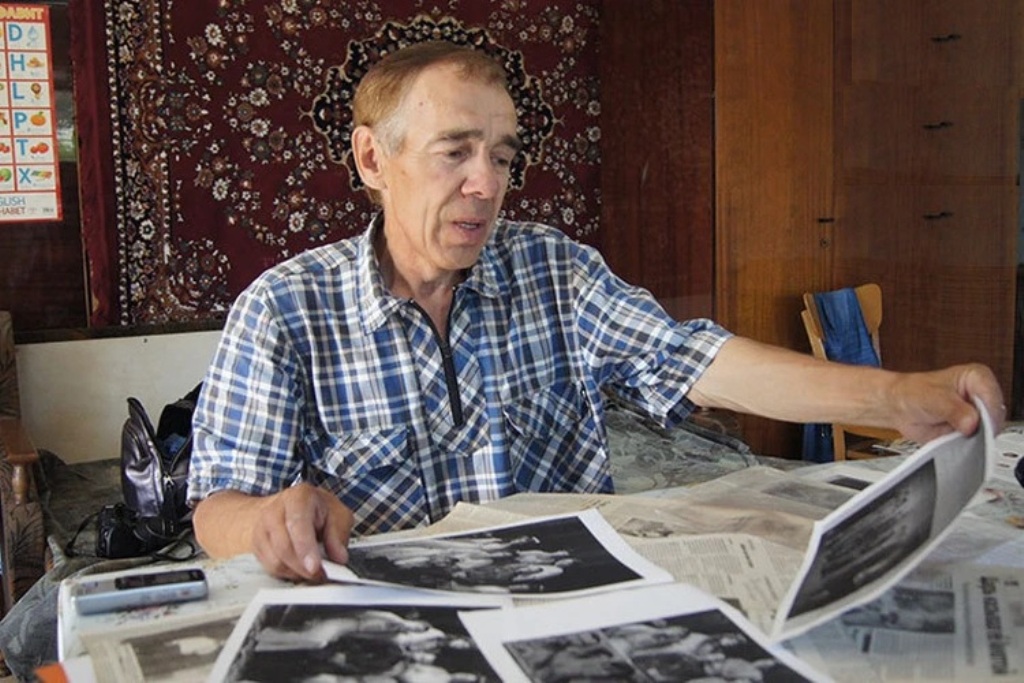
PHOTO: Archpriest Oleg Teor shows the sacred text, which lies in a special wooden box under glass

Forensic examination

In February 1997, Archpriest Oleg Teor met with Alexander Bogdanov, a forensic expert of the Internal Affairs Directorate of the Pskov Region, who was instructed to conduct an examination of the Old Testament, and establish whether the notes were indeed made by Nicholas II just before that fateful night in Pskov.

Bogdanov went to the State archives in Moscow, where he sorted through and examined Nicholas II’s documents, including the emperor’s notes, a notebook for playing dominoes and cards, as well as letters and diaries. Many of the documents contained brief alphabetic and digital notes made with a graphite pencil… the same type of pencil used in the margins of the Old Testament.

Bogdanov examined each document meticulously, then made copies with the use of a digital camera. He then took these documents back to the forensic center for further examination. But this was only the beginning of a great work that lasted several months. At the second stage, Valery Ivanov, a leading specialist in the field of handwriting, joined Bogdanov.

“Now the criminalists had to examine and compate the handwriting of the pencil notes found in the margins of the Bible with the handwriting of Emperor Nicholas II,” recalls Yuri Yashin, a colleague of Bogdanov and Ivanov, who oversaw the examination. To do this, it was necessary to identify a certain set of general and particular features of handwriting. As a result of the handwriting examination, a set of matching general and particular features was established.

Researchers of the Pskov State Historical and Architectural Museum-Reserve, who examined the book dated it to the 1870s 1890s. The sacred text shows signs of repairs of the book, probably made in the 20th century by an amateur bookbinder. Putting all the pieces of the puzzle into a single picture, Alexander Bogdanov and Valery Ivanov and their team of forensic experts came to a categorically positive conclusion. “The two handwritten texts found on pages 220 and 237, of the Old Testament were executed by the All-Russian Autocrat Emperor Nicholas II”.

PHOTO: the Old Testament which belonged to Emperor Nicholas II, is today preserved in a special wooden box under glass in the Church of St. Alexander Nevsky in Zavelichye (Pskov)

NOTE: There remains some speculation that it is highly unlikely that the Emperor himself, of his own free will, parted with his personal Bible. Based on the inventory of icons, shrines and spiritual books left after the regicide, it is clear that the Imperial Family treasured such books and carried them everywhere with them.

Known, for example, is a Bible belonging to Nicholas II, which was presented to him by his mother – Empress Maria Feodorovna, when he was Tsesarevich. It was this Bible that accompanied the Tsar, first to Tobolsk, and then to Ekaterinburg. Following the regicide, it was discovered by the Whites in the deserted Ipatiev House, and then, among with other personal items which belonged to the Imperial family, the Bible was given to the Emperor’s sister, Grand Duchess Xenia Alexandrovna, who later donated it to the Russian Orthodox Church of Saint Job in Uccle, Brussels.

The milk tooth of Tsesarevich Alexei Nikolaevich

The milk tooth of Tsesarevich Alexei Nikolaevich was first kept in the Winter Palace in St. Petersburg, where Nicholas II and his family lived until they moved to Tsarskoye Selo in 1905, then a small apartment in France and, finally, Orthodox Church of St. Nicholas in Saint-Louis, France [just one kilometer from the Swiss border].

The milk tooth of the innocently murdered Tsesarevich was carefully kept by his nurse-nanny Alexandra Alexandrovna Tegleva [wife of the Imperial children’s tutor Pierre Gilliard]. Both Tegleva and Gilliard accompanied the Imperial family into exile to Tobolsk in August 1917.

When the Empress was transferred to Ekaterinburg in April 1918, she passed her jewellery to the nanny and Alexei’s three milk teeth.

Having miraculously escaped execution, Alexandra Teglina fled Bolshevik Russia, eventually settling in Switzerland. Until her death on 21st March 1955, she carefully kept the precious box with the gifts of the Empress. After her death, her nephew gave the casket containing the Tsesarevich’s milk teeth to the Church of St. Nicholas in Saint-Louis.

The rector of the French parish of St. Nicholas ordered three icons of the Holy Royal Martyrs with three absolutely identical reliquaries for each tooth. A request was made by a member of the Russian clergy, who asked that one of these icons be sent to Russia, so that as many Orthodox as possible could see it.

One of these icons was given to the Church on the Blood in Ekaterinburg, built on the site of the Ipatiev House, where Nicholas II and his family met their death and martyrdom on 17th July 1918.

Another of these icons was given to Archpriest Oleg Teor by his friend the rector of the Orthodox church in Saint-Louis Vladimir Shibaev. According to Father Oleg, Father Vladimir requested that the milk tooth of the murdered Tsesarevich should be “returned home to Russia“.

To learn more about this sacred text and the Tsar’s alleged abdication, please refer to pages 62-83 of my book Nicholas II: Russia’s Last Orthodox Christian Monarch (2022), available from AMAZON in paperback and eBook editions.

© Paul Gilbert. 10 August 2022

Monument to Nicholas II consecrated in Ivanovo region

The unveiling and consecration of a new bust-monument to Emperor Nicholas II took place on 5th August, on the grounds of St. George’s Church, situatedin the village of Vali (the formerly Georgievskoye), situated in the Kineshma district of the Ivanovo region.

The consecration of the bust-monument was performed by the former rector of St. George’s Church, and now Bishop Methodius of Kamensky and Kamyshlovsky.

The bust-monument was installed in memory of Emperor Nicholas II’s visit here during the events marking the 300th anniversary of the Romanov dynasty. It was on 18th May 1913, that the last Russian Tsar with the August family, while traveling on the steamship Mezhen from Nizhny Novgorod to Kostroma, made an unscheduled stop here. He was so taken by the beauty of the village and its church, that he left gifts, including an icon of the Mother of God “Joy of All Who Sorrow”.

PHOTO: final touches were made on the installation of the bust-monument last week

The bust was made by craftsmen from the Kursk region with funds raised by parishioners and sponsors. St. George’s Church was built at the beginning of the 19th century on the left bank of the Volga River. During the Soviet era, the church was not closed, nor was it subjected to desecration. To this day, the church has maintained its original decoration intact.

PHOTO: the consecration of the bust-monument to Nicholas II was performed on 5th August, on the grounds of of St. George’s Church, situated in the Kineshma district of the Ivanovo region

© Paul Gilbert. 6 August 2022