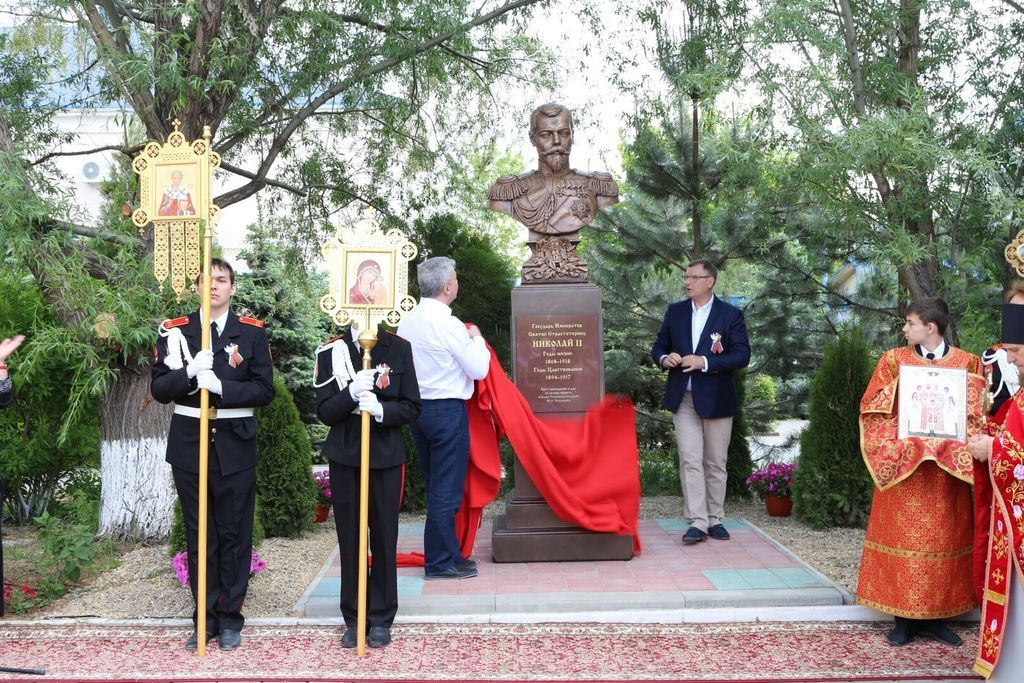
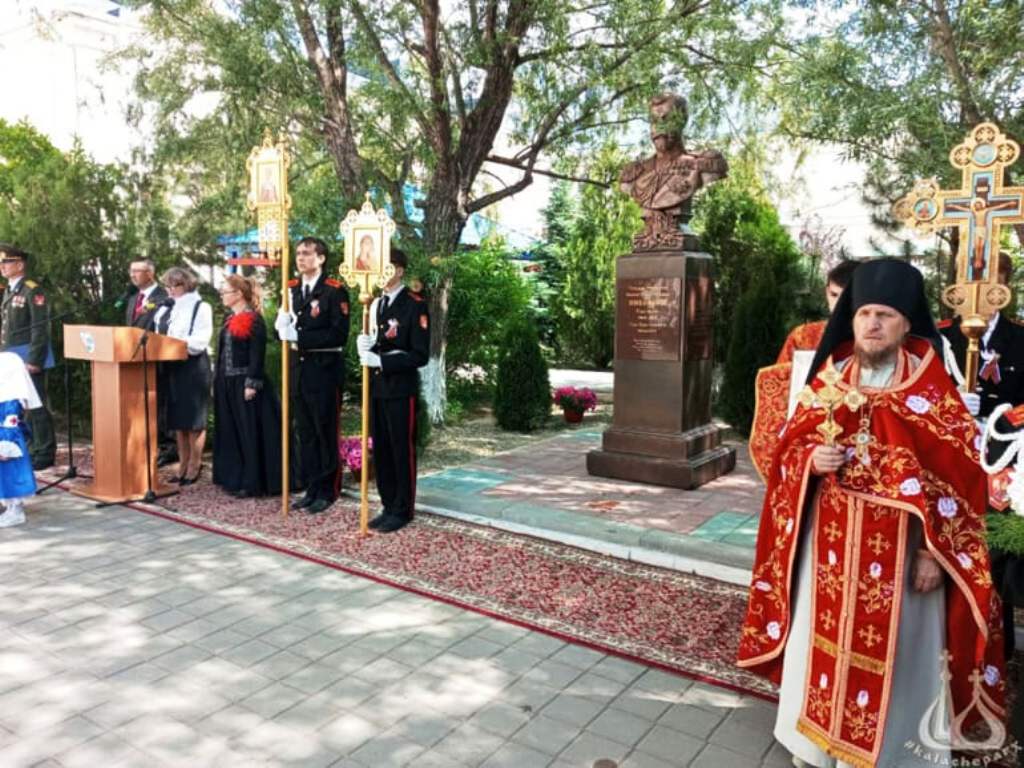
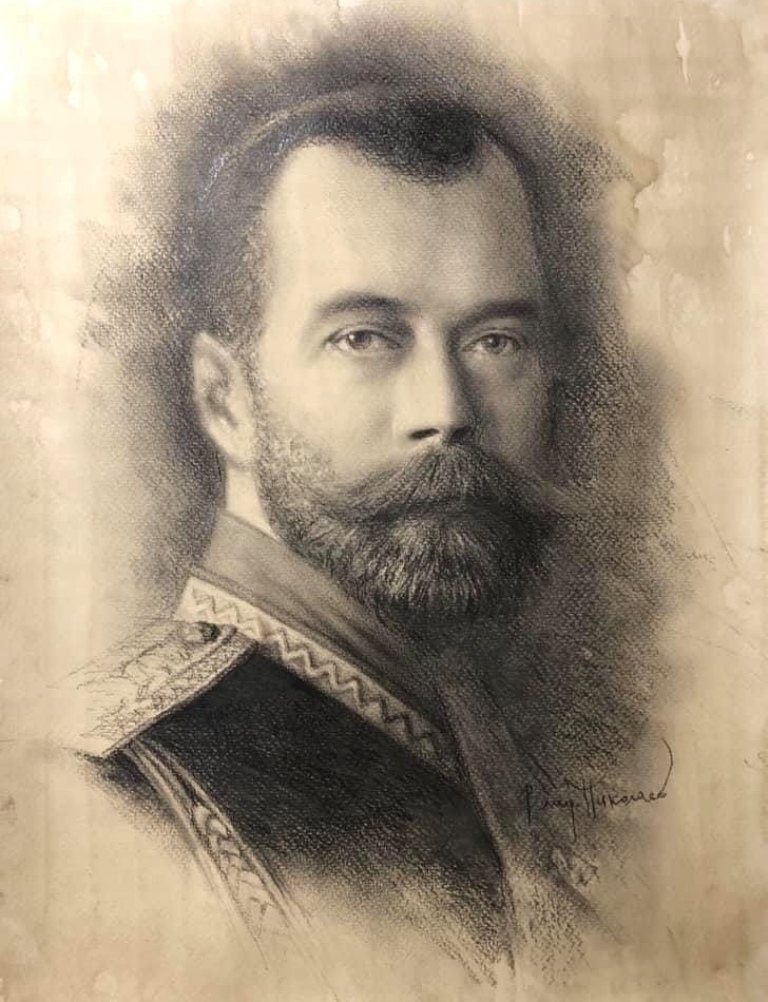
Ekaterinburg Diocese celebrates the 155th anniversary of the birth of Emperor Nicholas II

The anniversary of the birth of Russia’s last Tsar has been celebrated in the Ural capital of Ekaterinburg for many years.

On 19th May 2023, with the blessing of Metropolitan Evgeny of Yekaterinburg and Verkhoturye, a series of events will be held dedicated to the memory of the last Russian emperor, the Holy Tsar-Martyr Nicholas II.

On the morning of 19th May, a Divine Liturgy will be celebrated at 8:00 a.m., in the Church on the Blood, built on the site of the Ipatiev House, where the Imperial Family and their four faithful retainers met their deaths and martyrdom.

A liturgy will also be celebrated at the Monastery of the Holy Royal Martyrs in Ganina Yama, followed by a Cross Procession  celebrating the patronal feast day in the name of the Righteous Job the Long-Suffering [on whose feast day Nicholas was born].

In addition, Divine services in memory of the last Russian emperor will be held in many churches of the Ekaterinburg diocese, including the Cathedral of St. Alexander Nevsky at the Novo-Tikhvin Convent, whose history is closely connected with the last Tsar and his family.

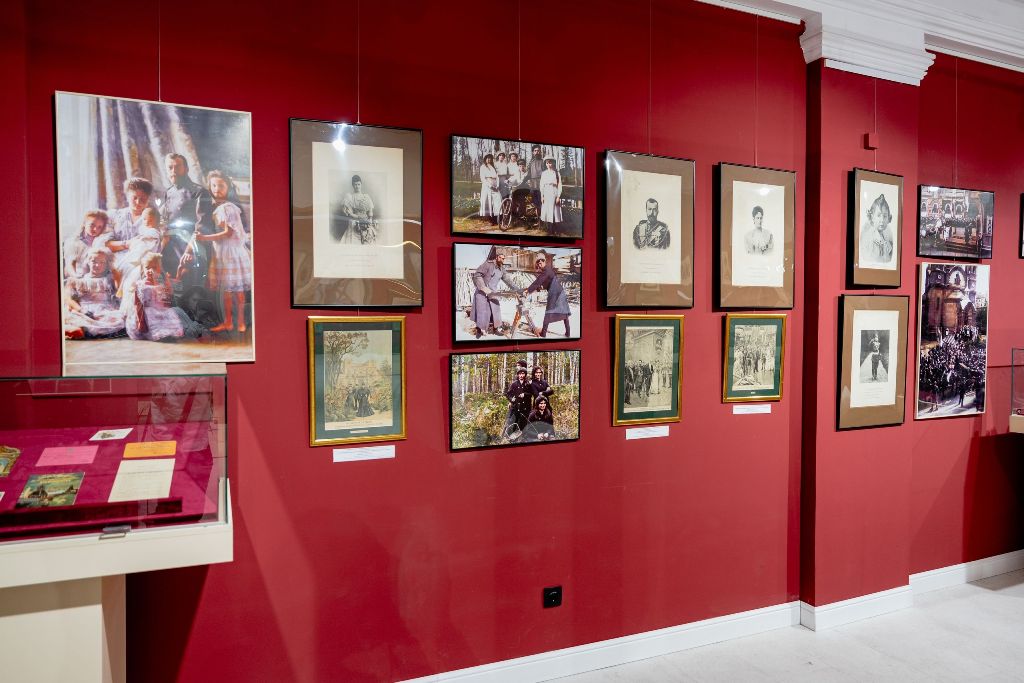
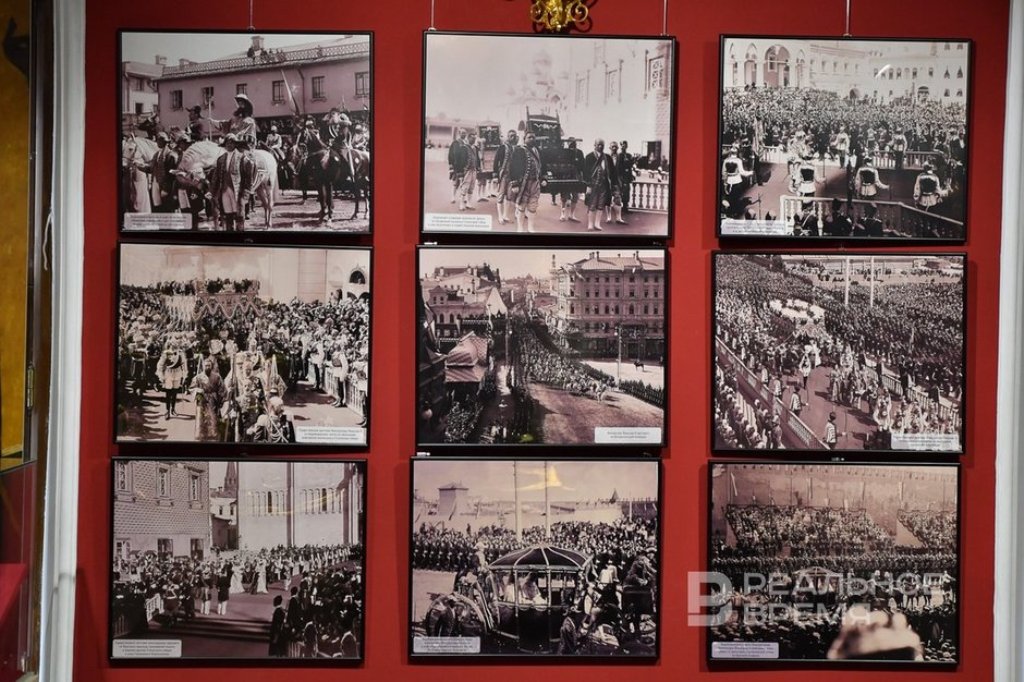
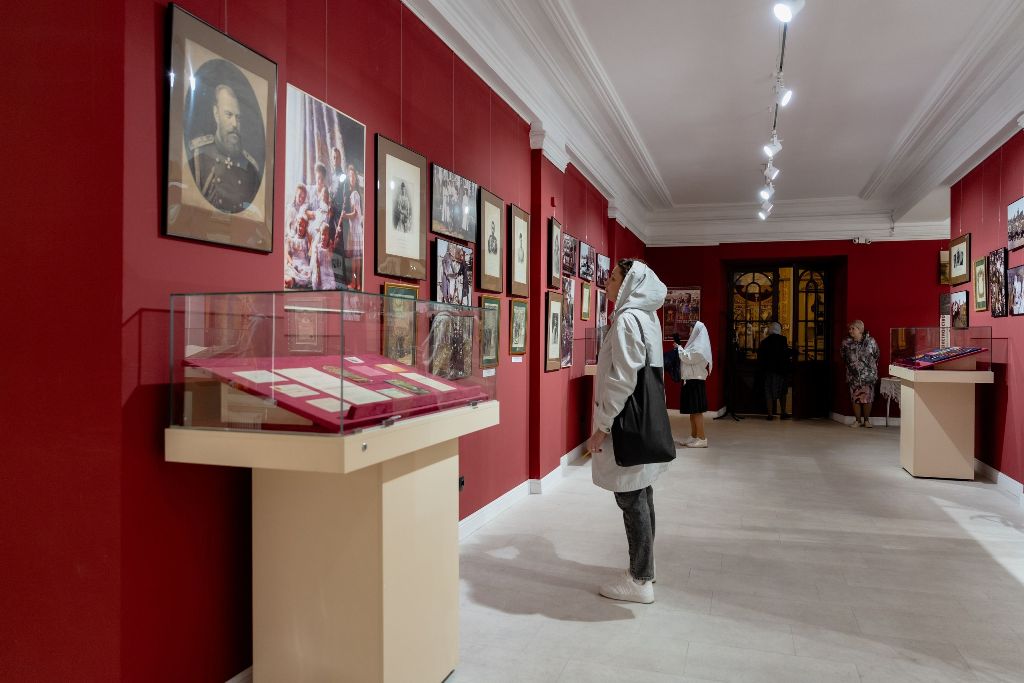
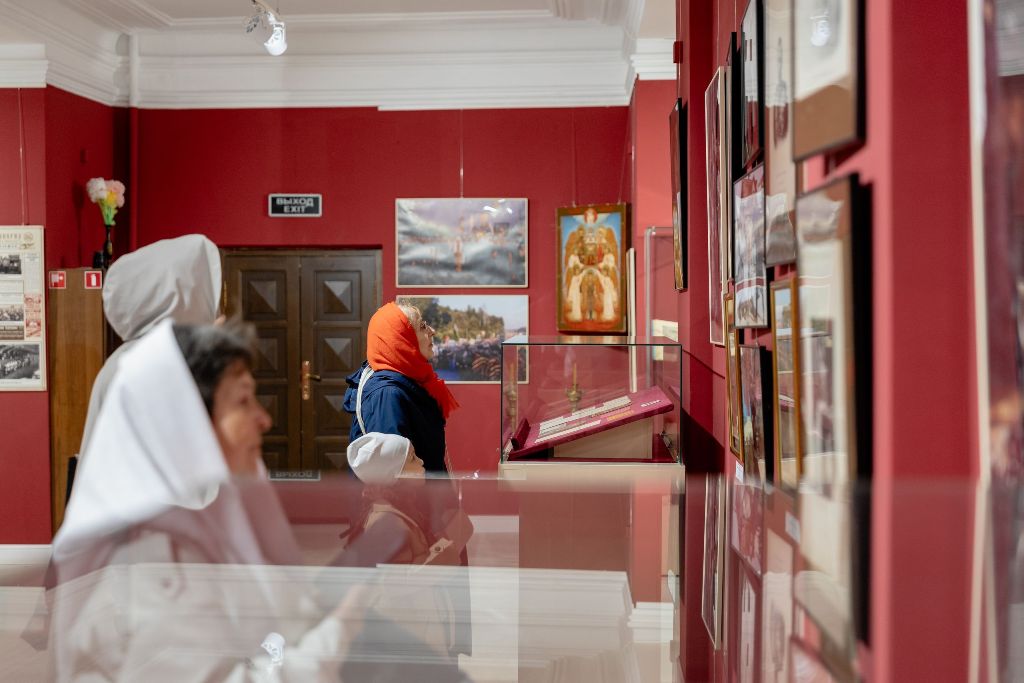
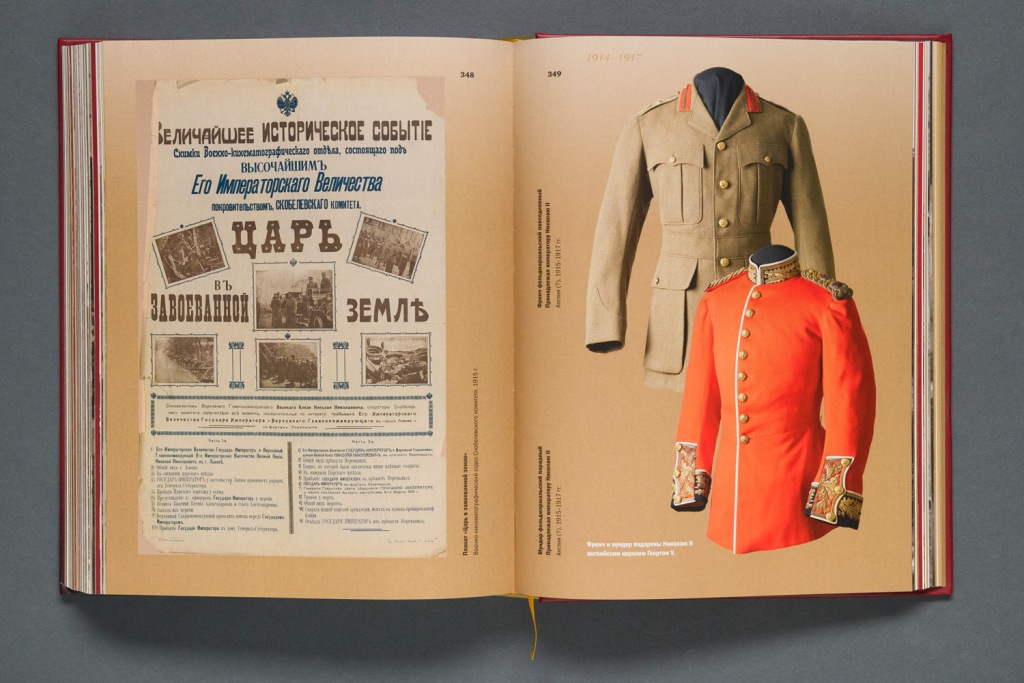
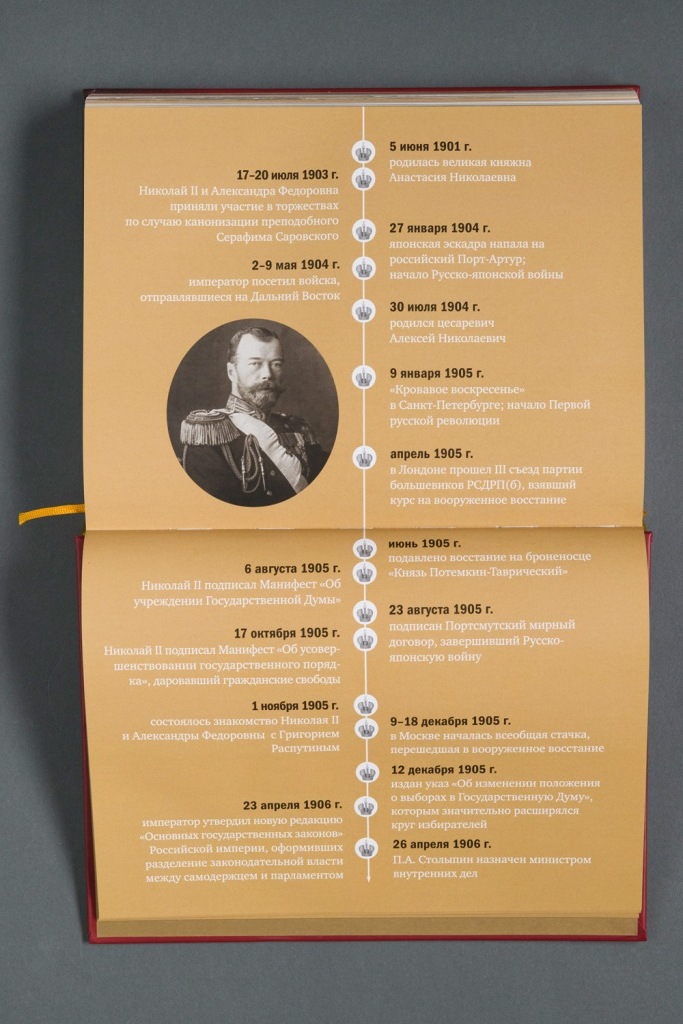
At 12:00 p.m., the Tsarsky Cultural and Educational Center [situated across the square from the Church on the Blood] will host the opening of Emperor Nicholas II During the First World War, an exhibition timed to coincide with the 155th anniversary of the birth of Nicholas II and the 105th anniversary of the end of the First World War. The exhibition runs until 31st August 2023.

At 1:30 p.m., a Liturgy will be performed in the Church of St. Nicholas the Wonderworker at the Ural State Mining University of Emperor Nicholas II, followed by a festive concert at 14:00 in the Tsar’s Hall of the USMU.

In addition, the Blue Line of Ekaterinburg will be launched. The route connects a dozen sights of the city, each of them, in one way or another are associated with the final days Nicholas II and his family during their house arrest in the Ural city, from April to July 1918.

© Paul Gilbert. 19 May 2023

Bikers hold rally in memory of Nicholas II

On 17th May, members of the Tyumen Motorcycle Club began a 6-day a motorcycle rally – “The Way of the Cross of the Tsar’s Family” – dedicated to Emperor Nicholas II. 

The small group of Harley Davidson enthusiasts began their rally on 17th May at the Abalak Znamenski Monastery (located 20 km east of Tobolsk) and finish at the Monastery of the Holy Royal Martyrs at Ganina Yama (near Ekaterinburg).

PHOTO: bikers at the monument to the Imperial Family in Tyumen

The route will pass along the route taken by the Emperor, his wife Alexandra and their daughter Grand Duchess Maria, when they were transferred from Tobolsk to Ekaterinburg in April 1918. The route was recreated by local historians from the diaries of Nicholas II and Alexandra Feodorovna, as well as archival documents.

Along the entire route, motorcyclists will ride with the flags of the club, the flag depicting the image of Nicholas II and the flag of Russia. The participants will also bring icons consecrated at the Abalak Znamenski Monastery with the face of St. Nicholas the Wonderworker and the Holy Royal Martyrs. The latter will be presented to the Monastery of the Holy Royal Martyrs in Ganina Yama.

PHOTO: bikers at the Monastery of the Holy Royal Martyrs at Ganina Yama

The entire 6-day route will cover some 2610 km, passing0 through Tobolsk, Tyumen, Omsk and Ekaterinburg. Bikers arrived in Tyumen on 18th May, where they made a stop at the city’s monument to the Imperial Family created by the Russian sculptor Irina Makarova, installed in June 2020.

The rally is timed to coincide with the 155th anniversary of the birth of Emperor Nicholas II on 19th May [O.S. 6th May] 1918, as well as the 105th anniversary of the death and martyrdom of the Imperial Family and their four faithful retainers on 18th July 1918.

© Paul Gilbert. 19 May 2023

Nicholas II. Family and Throne exhibition opens in Tula

On Friday 21st April, a new exhibition “Nicholas II. Family and Throne”, opened in the Tula branch of the State Historical Museum.

The exhibit marks the 155th anniversary of the birth of Emperor Nicholas II on 19th May [O.S. 6th May] 1868 and the105th anniversary of the death and martyrdom [17th July 1918].

The exhibition will give visitors an opportunity to “look” at the life of the Russian ruler and his family through the impartial lens of the camera. The exposition is emphatically documentary: rare photographs from the collection of the State Historical Museum which depict the private life of the Russian monarch.

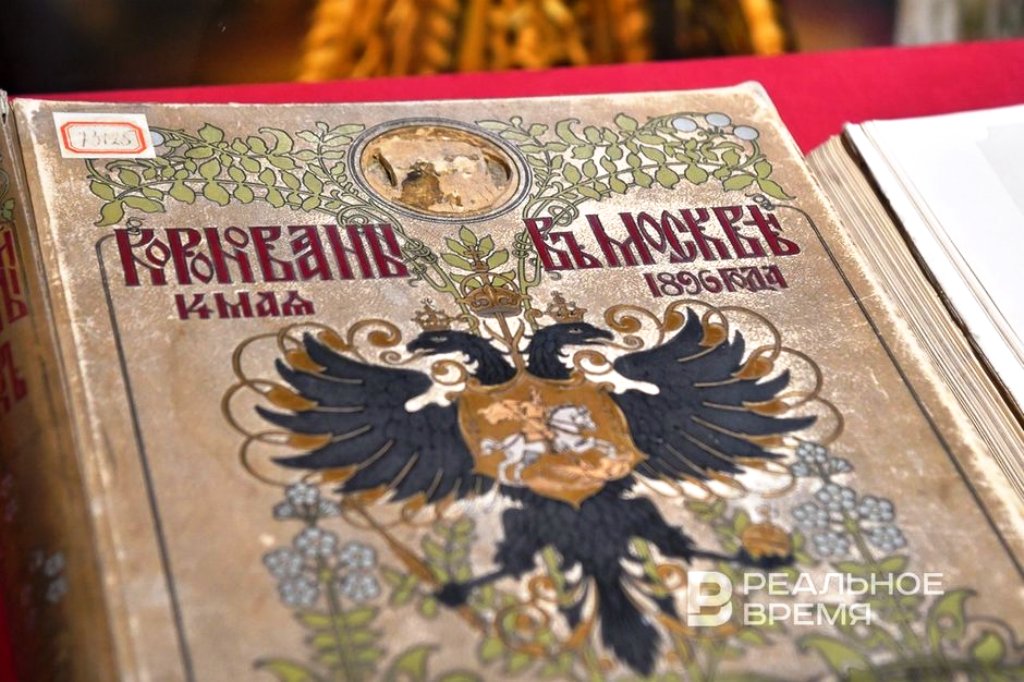
PHOTOS: the director of the State Historical Museum (Moscow) and curator of the exhibition Evgeny Lukyanov discusses watercolours (above) and photographs (below) depicting the Coronation of Emperor Nicholas II in Moscow, May 1896

The Emperor and members of his family were all avid photographers: they all had cameras and took pictures of each other, family events and their relatives. The Emperor was almost always accompanied by professional Court photographers who photographed the Emperor almost every day of his reign (among the most notable being “K. E. von Hahn and Co.” and its owner, and the Court photographer A. K. Yagelsky). The museum’s collection contains more than 750 photographs from the life of Nicholas II. A number of photographs come from the Tsar’s favourite residences: the Alexander Palace at Tsarskoye Selo, the Lower Dacha at Peterhof, and Livadia Palace in Crimea, depicting the private world of the Imperial Family.

The exhibit focuses on two topics: “Nicholas II as the head of the Russian Empire” and “Nicholas II as the head of the Imperial Family”.

The first – official – section shows photographs depicting the Emperor during meetings with foreign heads of state (King Edward VII of Great Britain, Emperor Wilhelm II of Germany, French Presidents Felix Faure and Armand Falier); celebrations on the occasion of the 200th anniversary of St. Petersburg and the 100th anniversary of the Patriotic War of 1812; parades, reviews and regimental holidays; consecration of churches and monuments; as well as during the Russo-Japanese War and the First World War. A significant place is given to the display of two major dynastic events – the coronation of Emperor Nicholas II (1896) and the celebration of the 300th anniversary of the House of Romanov (1913).

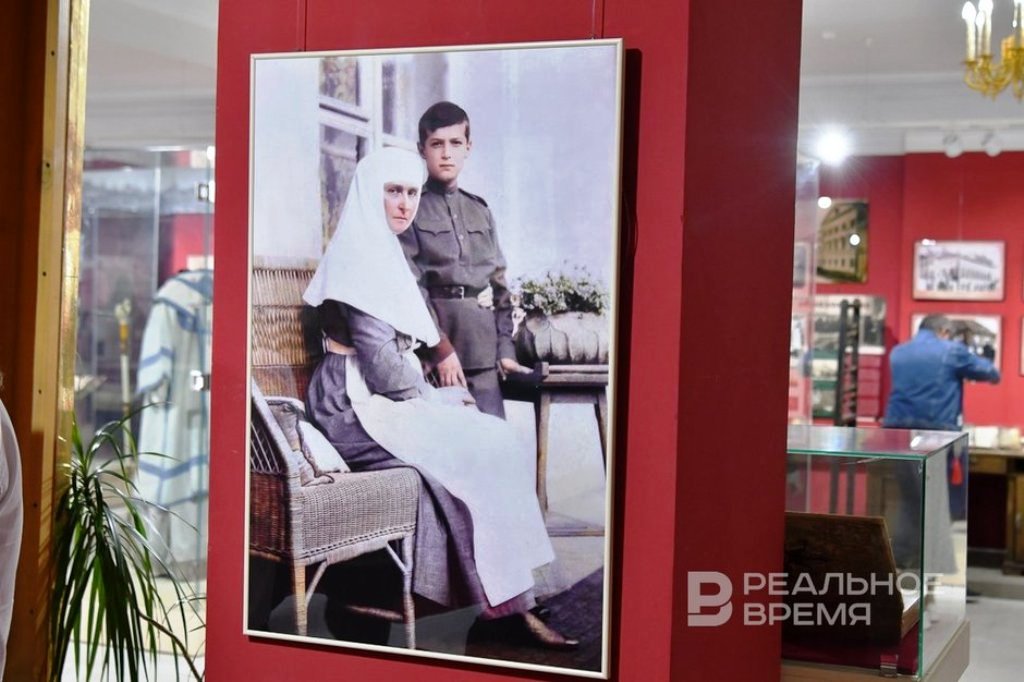
The second – family – section of the exhibition presents photographs related to the personal life of Emperor Nicholas II and Empress Alexandra Feodorovna. The central place is given to the August children – Grand Duchesses Olga, Tatiana, Maria, Anastasia and Tsesarevich Alexei. Of particular note in this section, are unique photographs depicting the stay of Emperor Nicholas II and his family in Livadia in 1911, 1912 and 1913 respectively.

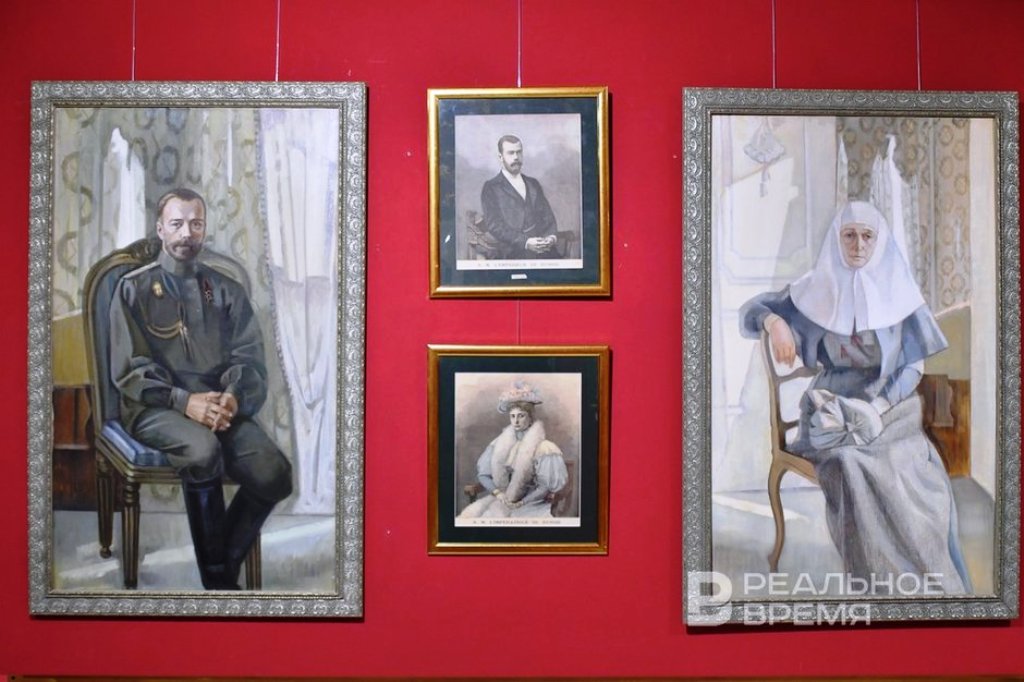
In addition to the hundreds of photographs, are portraits of Nicholas II and Alexandra Feodorovna, watercolours depicting episodes from the life of the Imperial Family, drawings of Empress Alexandra Feodorovna, unique historical documents, including autographs of the last Romanovs, are all on display.

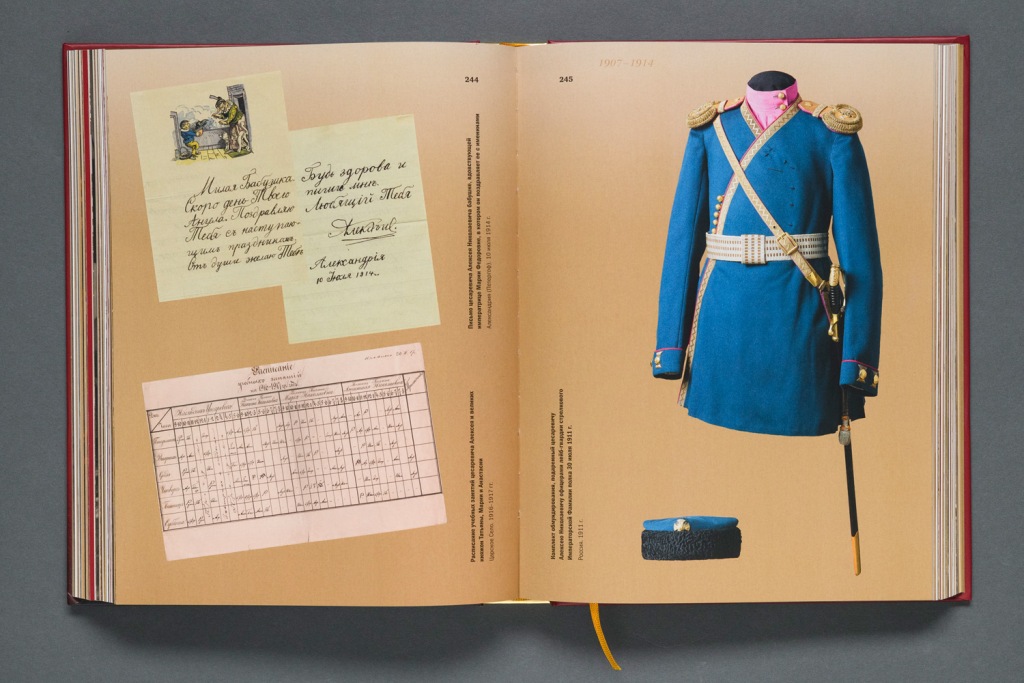
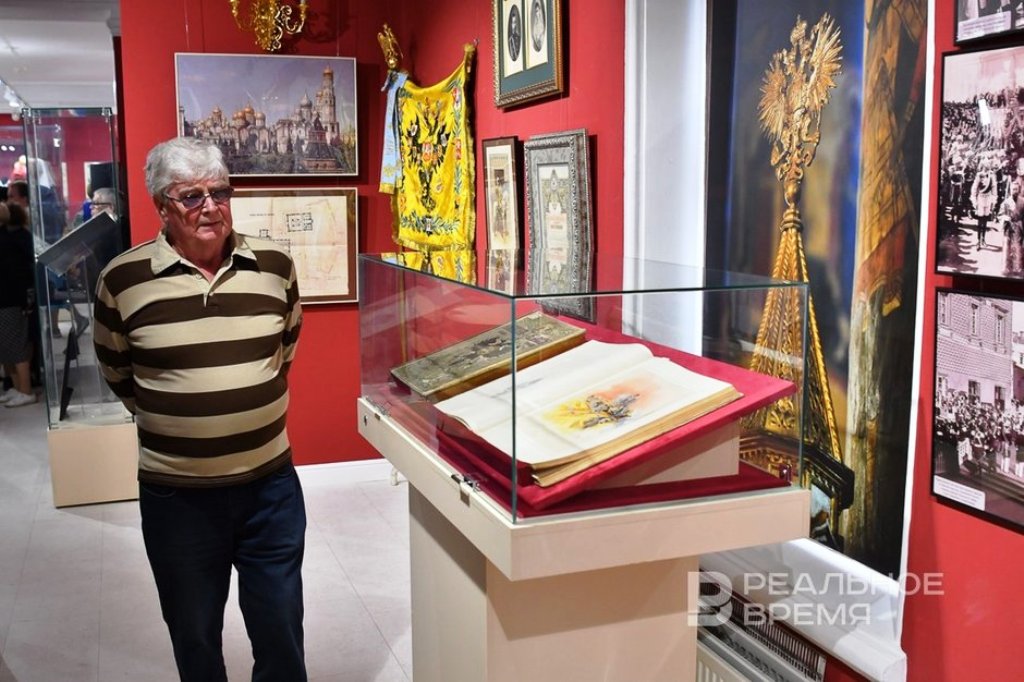
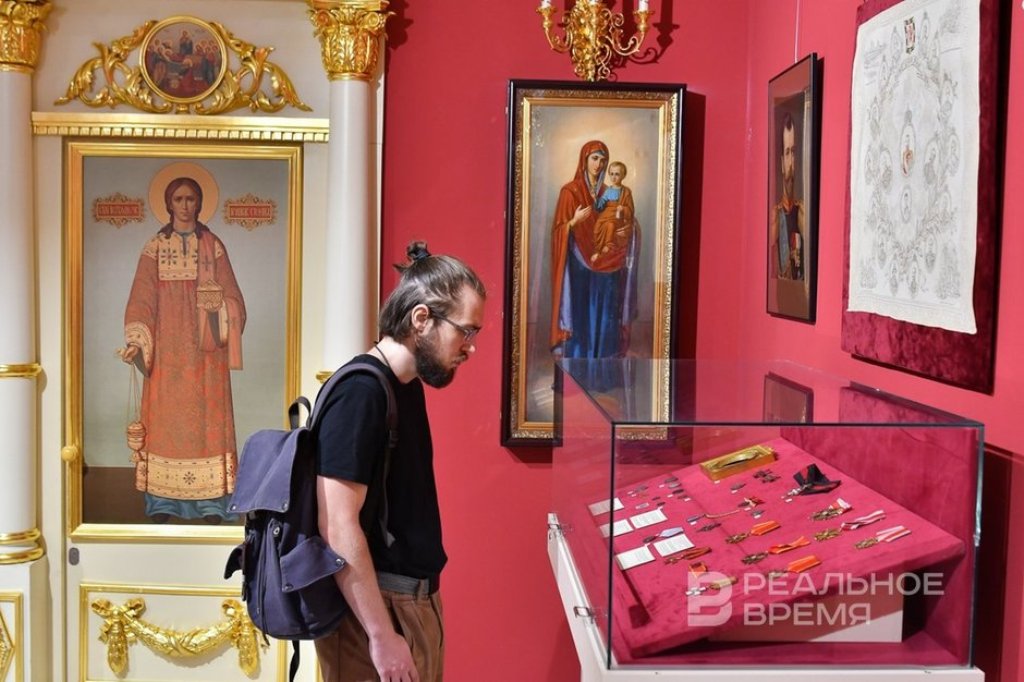
The exhibition also includes uniforms worn by Nicholas II and his son Tsesarevich Alexei, as well as precious orders presented to Nicholas II from the collection of the State Historical Museum in Moscow. “These precious orders from European and Asian countries, stored in the collection of the numismatics department of the museum, rarely leave the walls of the fund,” said Director Alexey Levykin.

The exhibition presents Russian Orders awarded to Nicholas II[1], in addition to those given by Great Britain, Prussia, France, Austria-Hungary, Japan, Thailand and other European and Asian countries[2]. Many orders are being exhibited for the first time.

“The orders were made of silver and gold and decorated with precious stones. Each exhibit outstanding craftsmanship, utilizing various jewelry techniques: gold embroidery, filigree, various types of enameling, engraving, and casting,” he added.

PHOTOS: memorial hall (above) to Emperor Nicholas II and his family. On display in the foreground is a reliquary frame with a portrait of Tsesarevich Alexei Nikolaevich and a lock of his hair (below).

The last hall of the exhibition resembles a basement or crypt, where there are seven stelae each depicting photographic portraits of Emperor Nicholas II, Empress Alexandra Feodorovna, and their five children, who were murdered in the Ipatiev House in Ekaterinburg on the night of 16/17 July 1918. In the center of this miniature memorial hall is a unique item – a reliquary frame with a portrait of Tsesarevich Alexei Nikolaevich and a lock of his hair.

The exhibition is supplemented by excerpts from the diary of Emperor Nicholas II and quotes from contemporaries who knew the Emperor and his family closely: Grand Duke Alexander Mikhailovich, Grand Duchess Olga Alexandrovna, the Swiss tutor Pierre Gilliard, Prince Felix Yusupov, French Ambassador to Russia Maurice Paléologue, Chief Hofmeisterina of the Imperial Court E.A. Naryshkina, Head of the Chancellery of the Ministry of the Imperial Court A.A. Mosolov, Minister of Foreign Affairs S.D. Sazonov, maid of honour of Empress Alexandra Feodorovna Anna Vyrubova.

The director of the Tula branch of the State Historical Museum notes: “Understanding all the inconsistency and ambiguity of the personality of Emperor Nicholas II, we do not presume to judge his role and place in the history of our country, but provide such an opportunity for visitors to the exhibition, who will be able to “look” at the life of the Russian monarch and his family through the lens of a camera. We hope that the exposition in the branch of the Historical Museum in Tula will be a worthy occasion to honour the memory of the last Russian sovereign, who was martyred more than a century ago.”

The State Historical Museum in Moscow, opened the first regional branch in Tula at the end of September 2020 as part of the celebration marking the 500th anniversary of the Tula Kremlin.

The “Nicholas II. Family and Throne” Exhibition runs until 11th September 2023 at the Tula branch of the State Historical Museum. A Russian-language illustrated catalogue has been prepared for the exhibition.

NOTES:

[1] Nicholas II was the recipient of 7 national honours

[2] Nicholas II was the recipient of 51 foreign honours from 35 countries, duchies, etc

©  Paul Gilbert. 22 April 2023

Odessa city council orders removal of icon of Tsar-Martyr Nicholas II

On Monday 3rd April, Ukrainian nationalists hung a large black banner denouncing the Moscow Patriarchate [photo above], across the facade of the Chapel in Honour of the Miraculous Image of the Lord Jesus Christ in Odessa. In addition, two icons depicting Fyodor Fyodorovich Ushakov (1745-1817) [1] and the Holy Tsar-Martyr Nicholas II were dismantled.

Up until recently a sculpture of the famous Russian general Alexander Suvorov (1730-1800) stood in front of the chapel. The sculpture is a copy of the historical original made in 1911. The current monument was opened in 2012.

Behind the monument is a semicircular wall depicting six mosaic icons of Orthodox saints.

On 30th November 2022, deputies of the Odessa City Council ordered that the monument to the “Founders of the City”, better known as the “Monument to Catherine II”[2], as well as the monument to Suvorov be dismantled. As a result, in December 2022, the monument to Catherine II was dismantled, and the monument to Suvorov was removed and transferred to the art museum in Odessa.

PHOTO: mosaic icon of the Holy Tsar-Martyr Nicholas II has been dismantled from the façade of the chapel – it’s whereabouts unknown

In addition, the deputies ordered the dismantling of the icons of Ushakov and Nicholas II, the latter of whom they referred to as “Nicholas the Bloody”.

Since Russia’s invasion of Ukraine in February 2022, Ukrainian authorities have been going to great lengths to destroy their Imperial Russian past. In July 2022, vandals destroyed a monument to Emperor Alexander III in the village of Pershotravneve, located in the Kharkiv region of Ukraine. The bust of the “Tsar-Peacemaker” was knocked to the ground, while the plaque, which included Putin’s name was also removed from the front of the pedestal. The bust-monument was erected in 2013 on the occasion of the 400th anniversary of the Romanov dynasty and the 125th anniversary of the Borki Train Disaster[3] in October 1888.

Heaven forbid that Crimea should ever fall into the hands of Ukraine again, where numerous monuments to Emperors Nicholas II and Alexander III would surely suffer the same fate, not to mention that of Livadia Palace.

PHOTO: the places where the icons of Ushakov (left) and Tsar-Martyr (right) originally hung are now empty

NOTES:

[1] Fyodor Fyodorovich Ushakov (1745-1817) served as commander of the Black Sea Fleet. On 7th August 2001 the Russian Orthodox Church glorified him as a Saint and declared him the patron of the Russian Navy. His relics are enshrined in Sanaksar Monastery, Temnikov, Russia.

[2] The original monument was installed in Odessa in 1900, dismantled by the Bolsheviks in 1920, and restored in 2007.

[3] On 29th October 1888, the Imperial Train carrying Tsar Alexander III and his family from Crimea to St Petersburg derailed at high speed at Borki.

© Paul Gilbert. 3 April 2023

Nicholas II in the news – Winter 2023

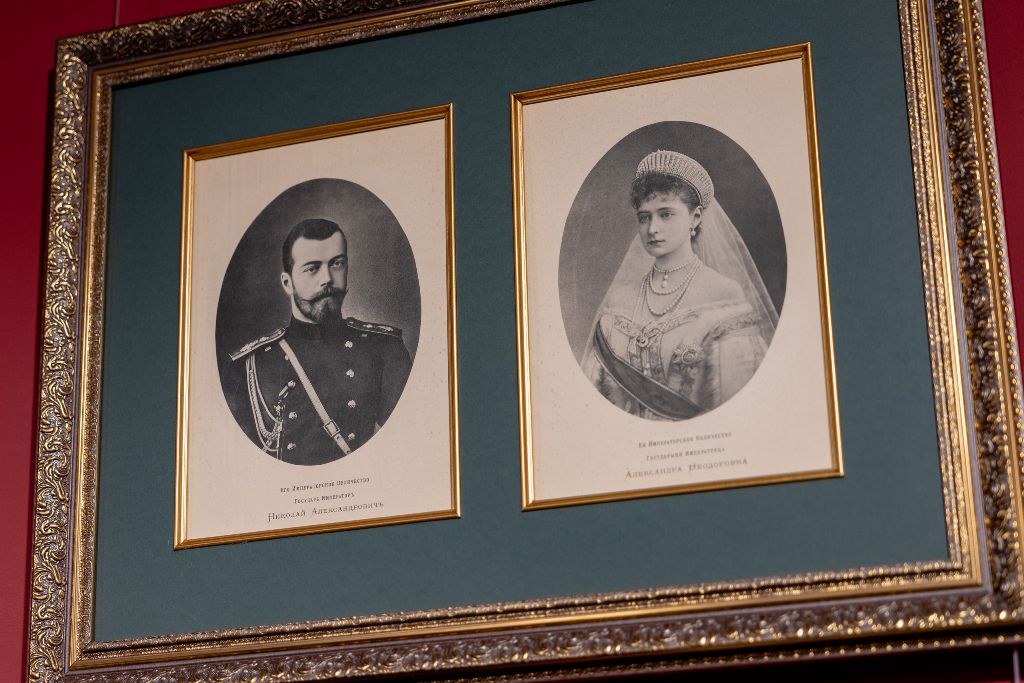
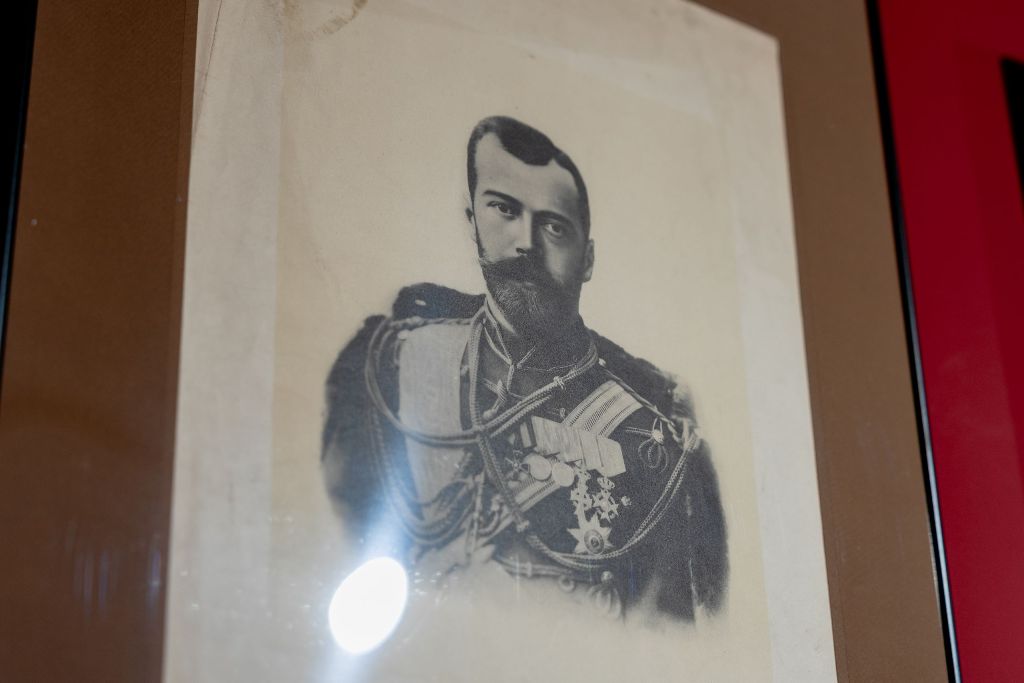
PHOTO: framed photograph of Emperor Nicholas II from the Collection of the Museum of Emperor Nicholas II in Moscow

Russia’s last Emperor and Tsar continues to be the subject of news in Western media. For the benefit of those who do not follow me on my Facebook page, I am pleased to present the following 9 full length articles, news stories and videos published by American and British media services, in addition, are several articles about Nicholas II’s family and faithful retainers.

Below, are the articles published in January, February and March 2023. Click on the title [highlighted in red] and follow the link to read each respective article:

What did Nicholas II’s children wear? + 22 PHOTOS

The children of the last emperor were raised modestly and the same could be said about their wardrobe. The younger daughters sometimes wore the clothing of the older ones, while Alexei almost always wore a military uniform.

Source: Russia Beyond. 20 March 2023

Joy, the last dog of the Romanovs + PHOTOS

This dog is the only one that survived the murders of the Imperial Family. Joy ended his days as a pet of Edward VIII’s riding instructor.

Source: Russia Beyond. 15 March 2023

Why do the Royal Scots Dragoon Guards consider the Russian Tsar Nicholas II their guardian angel? + PHOTOS

An icon depicting the monarch hangs in the regiment headquarters in Edinburgh and accompanies it during military operations, while the band of this military unit plays the anthem of the Russian Empire, ‘God Save the Tsar!’, at ceremonial events. So, what is the connection between the Russian tsar and the elite British soldiers?

Source: Russia Beyond. 27 February 2023

PHOTOS of the last ball hosted by the Romanov royal family + 17 PHOTOS

One hundred and twenty years ago, the Romanov royal dynasty hosted the most extravagant and eccentric costume ball in the history of the Russian Empire. It was also the last. This article features beautiful photos colourized by KLIMBIM.

Source: Russia Beyond. 24 February 2023
How tsar Nicholas II and his family were murdered + 11 PHOTOS

Tsar Nicholas II and his family were massacred on July 17, 1918, in Yekaterinburg. There was no formal trial and the Bolsheviks tried to cover up their gruesome crime.

Georgy Manaev writes in ‘Russia Beyond’ about the 10 most important things one should know about the murder of the Russian royal family.

Source: Russia Beyond. 21 February 2023

Tsar Nicholas II’s children: What we know about them + 34 PHOTOS
The last Russian tsar had five children. All of them were assassinated along with their father and mother in July 1918 and, later, canonized by the Russian Orthodox Church. This article features 34 PHOTOS, including many colourized by KLIMBIM.

Source: Russia Beyond. 7 February 2023

What Russia was like in 1913 + 34 VINTAGE PHOTOS!!

Take a look at Imperial Russia in 1913, the year which the Romanov Dynasty celebrated it’s 300th anniversary.

Source: Russia Beyond. 23 January 2023

The Last Russian Emperor: Archival Footage of Nicholas II, a Canonized Saint + VIDEO

I am pleased to see this article – based largely on an article I wrote – published today on the Global Orthodox web site. Thank you to the editors!

Source: Global Orthodox. 14 January 2023

What Russia was like in 1903 + 24 PHOTOS

MORE vintage photos of Imperial Russia! Let’s take a look at the absolutely stunning photos depicting the country that no longer exists – the life of the tsar, peasants, horse traffic and many more!

Source: Russia Beyond. 12 January 2023

***

For MORE articles, please refer to the following links:

Nicholas II in the news – Autumn 2022
7 articles published in October, November and December 2022

Nicholas II in the news – Summer 2022
12 articles published in July, August and September 2022

Nicholas II in the news – Spring 2022
7 articles published in April, May and June 2022

Nicholas II in the news – Winter 2022
6 articles published in January, February and March 2022

Paul Gilbert’s Romanov Bookshop on AMAZON – UPDATED with NEW titles!!

I have published more than 30 titles to date through AMAZON – featuring one of the largest selections of books on Nicholas II, the Romanov dynasty and the history of Imperial Russia.

Please CLICK on the BANNER or LINK above to review my current selection of titles in hardcover, paperback and ebook editions. Listings provide a full description for each title, pricing and a Look inside feature.

© Paul Gilbert. 31 March 2023

On this day – 22nd March 1917 – Nicholas II and family are placed under house arrest in the Alexander Palace

243c

Iconic image of Emperor Nicholas II in the Alexander Park at Tsarskoye Selo

On this day – 22nd March (O.S. 9th March) 1917 – the Provisional Government decreed that Emperor Nicholas II, his wife and five children should be held under house arrest in the Alexander Palace at Tsarskoye Selo.

At eleven in the morning, the Imperial Train pulled into the Imperial Railway Pavilion at Tsarskoye Selo. Nicholas emerged wearing a Caucasian fur cap and soldier’s greatcoat. Behind him the members of his suite began to jump off the train – like rats abandoning a sinking ship – and run down the platform. Not looking back – they fled.

According to Count Paul Benckendorff (1853-1921), the Emperor’s motorcar arrived at the gate of the Alexander Palace and was stopped by the sentry, who summoned the Commandant. The Commandant went down the steps and asked in a loud voice who was there. The sentry cried out, ‘Nicholas Romanov’. ‘Let him pass,’ said the officer.

During his captivity, the Tsar was subject to constant harassment and humiliation from the soldiers – most of whom were thugs – stationed in and around the Alexander Palace.

According to Pierre Gilliard: “The Emperor accepted all these restraints with extraordinary serenity and moral grandeur. No word of reproach ever passed his lips.”

243d

Nicholas II and Alexandra Feodorovna sitting in the Alexander Park, June 1917

On Alexander Kerensky’s order, Nicholas and Alexandra were kept apart in the palace for a period of 18 days. They were permitted to see each other only during meals, and only in the presence of soldiers. It was during this time that Kerensky conducted an investigation of the Imperial couple’s documents and letters. He failed to find any evidence which would incriminate either of them.

Kerensky interviewed Alexandra regarding her involvement in state affairs and Rasputin’s involvement in them through his influence over her. She answered that as she and her spouse kept no secrets from each other, they often discussed politics and she naturally gave him advice to support him; as for Rasputin, he had been a true holy man of God, and his advice had been only in the interest of the good of Russia and the imperial family. After the interview, Kerensky told the Tsar that he believed that Alexandra had told him the truth and was not lying.

243b

Nicholas II working in the vegetable garden behind the Alexander Palace in 1917

The Imperial Family had total privacy inside the palace, but walks in the grounds were strictly regulated. Members of their domestic staff were allowed to stay if they wished and culinary standards were maintained.

Even in the Alexander Park, their movements were restricted. The photo below, show the prisoners at the frontier of their domain. They were not permitted to cross the bridge which led them to the big park, to the outside world and freedom.

Colonel Eugene Kobylinsky was appointed to command the military garrison at Tsarskoye Selo, which increasingly had to be done through negotiation with the committees or soviets elected by the soldiers.

243a

Nicholas II and his family under guard in the Alexander Park, August 1917

The Imperial Family were held under house arrest until 14th (O.S. 1st) August 1917, it was on this day that Nicholas II and his family left the Alexander Palace for the last time. They exited from the Semicircular Hall of the palace, and travelled by car to the Alexandrovskaya Station where they were sent into exile to Tobolsk. 

For an eye witness account of Nicholas II and his family under house arrest in the Alexander Palace, please refer to the following book The Romanovs Under House Arrest: From the 1917 Diary of a Palace Priest, the memories of Archpriest Afanasy Belyaev, who served as priest and confessor to the Russian Imperial family.

© Paul Gilbert. 22 March 2023

Nicholas II’s telephone sold at auction for $2 million USD

On Friday 10th March, a telephone belonging to Emperor Nicholas II was sold at a Sotheby’s auction. The Romanov Week auction featured more than 100 items belonging to members of the Russian Imperial Family.

The most expensive lot was a telephone belonging to Emperor Nicholas II, which sold for a staggering 2 million US dollars, almost five times over the estimate.

“It’s a unique device made in 1915 at the Russian-Baltic Wagon factory in Petrograd. The telephone was presented it to the Tsar during the First World War, who used it for communicating with the Empress at Tsarskoye Selo during his trips to General Headquarters (Stavka) at Mogilev,” said Sotheby’s representative Robert Jefferson.

Following the February 1917 Revolution the telephone was confiscated on the order of the Provisional Government and transferred to the custody of the chief of the Petrograd garrison.

Following the riots that swept the capital in July 1917, the telephone was later stolen during the Russian Civil War and smuggled to Europe.

NOTE: In 1896, the Swedish manufacturer of telecommunications equipment Ericsson, installed the first telephone for Emperor Nicholas II in the Grand Kremlin Palace in Moscow.

© Paul Gilbert. 11 March 2023

Museum of Emperor Nicholas II in Moscow

PHOTO: Museum of Emperor Nicholas II in Moscow

In the spring of 2008, art historian Alexander Vasilyevich Renzhin donated his collection dedicated to Emperor Nicholas II, as a gift to the Nikolo-Ugreshsky Monastery. It was during the 1990s that Renzhin began to collect bit by bit everything related to Emperor Nicholas II and his family. During that time, he managed to amass a collection of more than 3,000 items: postcards and photographs, books and portraits, personal belongings and household items – which reflect on the private lives of the Imperial Family and their tragic deaths in July 1918.

In 1913, Russia solemnly celebrated the 300th anniversary of the House of Romanov. Renjin’s collection features many unique items created for the anniversary. Among them is a carved decorative panel with portraits of Tsar Mikhail Feodorovich, Emperor Nicholas II, Empress Alexandra Feodorovna, and their son Tsesarevich Alexei Nikolaevich and the date 1613-1913. The scene of the election of Mikhail Feodorovich Romanov in 1613 is depicted on a woven woolen carpet made by the Zavidov carpet factory. Candy boxes produced for the anniversary by the Einem confectionery factory with portraits of the Romanovs have been preserved.

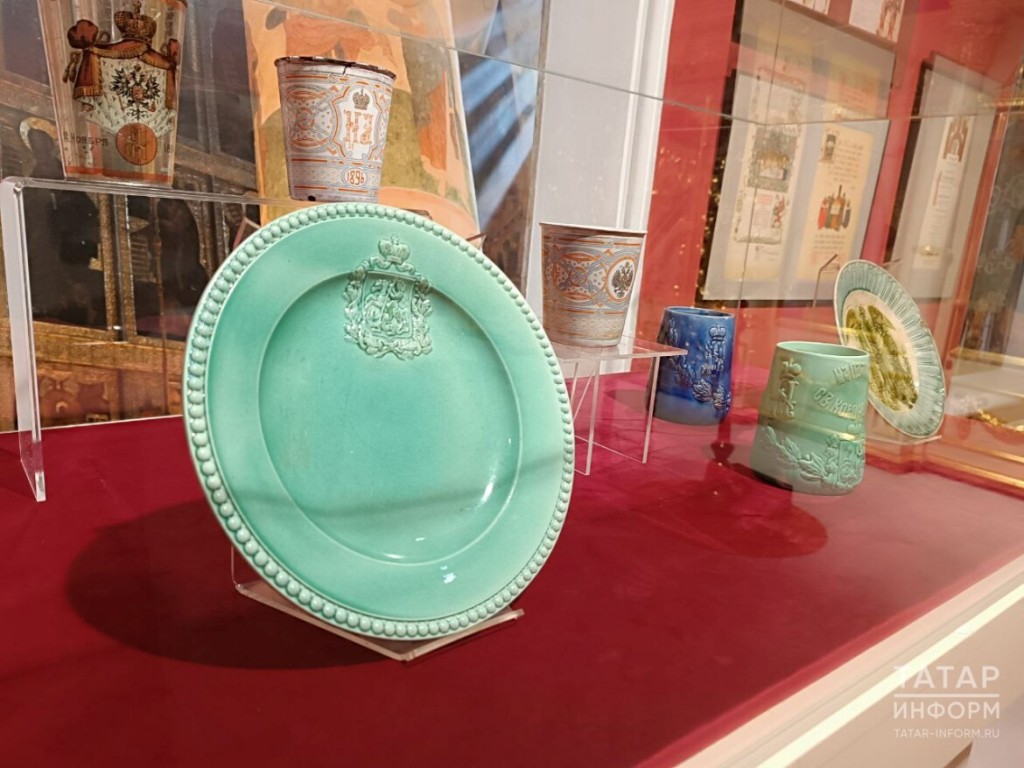
Of particular interest are coronation memorabilia: earthenware glasses and plates decorated with the coats of arms and monograms H II [Nicholas II] and AF [Alexandra Feodorovna], miraculously preserved fine crystal glasses with engravings and paintings, cups, plates and saucers from the service with the new coat of arms introduced in 1856.

VIDEO: click on the image above to watch a 3-minute video tour of the museum at the Nikolo-Ugreshsky Monastery, before it was closed in February 2021, and moved to its current location in central Moscow

This service, made at the Imperial Porcelain Factory in St. Petersburg in 1882 specifically for the coronation of Emperor Alexander III, consisted of 19 thousand pieces. For the coronation of Emperor Nicholas II, the service was repeated, consisting of 47 thousand pieces. According to tradition, the Imperial table for the coronation dinner was served with a gold service, bearing the coat of arms. The service was complemented by snow-white damask linen napkins with the personal coat of arms and monogram of Nicholas II. The most important part of Renzhin’s collection are icons of St. Nicholas the Wonderworker and St. Alexandra – the heavenly patrons of the Emperor and Empress – painted for the coronation in1896.

In 1896, some 300 icons were ordered from the famous workshop of Osip Chirikov, of which Nicholas II and Alexandra Feodorovna presented to the most honoured guests at the coronation celebrations in the Kremlin.

Of particular value are historic documents bearing autographs collected by Renzhin: the petition of the Empress Maria Feodorovna addressed to the Minister of War V.A. Sukhomlinov dated March 10, 1914 on the transfer of the building of the Main Directorate of Military Educational Institutions to the Museum of Old Petersburg; a note from Empress Alexandra Feodorovna to Adjutant General F.V. Dubasov and a prayer memorandum signed by her to a soldier walking on the battlefield. Numerous photographs, postcards, prints, books testify to life in peacetime and during the First World War.

In February 2021, the Museum of Emperor Nicholas II was forced to close its doors, due to the COVID-19 pandemic, and almost 9 million rubles (more than $13,000 USD) in arrears of rent.

A Russian businessman Konstantin Malofeev, and founder of the Tsargrad TV channel, came to the rescue by providing Renzhin’s rare collection with a new venue in which to display his collection. The Museum of Emperor Nicholas II re-opened in the Museum of Russian Art, the former manor house of Nikolai Eremeevich Struisky (1749-1796) – situated in Moscow’s historical district – on 10th February 2021.

The Museum of Emperor Nicholas II is open daily to visitors.

© Paul Gilbert. 1 March 2023

Imperial Yacht Standart: Nicholas II’s Palace on the Seas

Elegant style yachts were once the norm among many of the world’s most important rulers. The British, the Royal Houses of Europe, and even the Americans have all at one time or another provided their leaders with beautifully appointed yachts that served for both recreational as well as official purposes. But few of these highly specialized ships can compare with the Imperial Yacht Standart, reserved exclusively for the use of Russia’s last emperor Nicholas II.

This handsome “ship of state” was a graceful seagoing vessel and was considered the most perfect ship of her type in the world. She was named after the famous frigate of Peter the Great, launched in 1703. Built to the Tsar’s own specifications, she was constructed in Copenhagen in 1895 by the Danish firm Burmeister-Wain. The shipyard still maintains a thriving existence but the plans no longer exist for the Standart due to the destruction of the shipyard brought on by two world wars.

Across the North Sea, however, a copy of the plans for the former Imperial Yacht are held in the archives of the National Maritime Museum in Greenwich, England. After a visit to Cowes, the future King Edward VII asked for the plans of the Standart. The plans had been preserved in 1895 by the Admiralty Office when plans for a new British royal yacht were under construction.

PHOTO: plans for the Imperial Yacht Standart

The Standart was a superb, black-hulled 5557-ton yacht measuring 401 feet in length and 50 feet wide, making it the largest private ship in the world. She was much larger and faster than that of the other Imperial Yacht’s, the Alexandria and the Polar Star reaching speeds of up to 21.18 knots. Anchored in a Baltic cove or tied up at Yalta, the Standart was as big as a small cruiser. She had been designed with the graceful majesty of a great sailing ship. She combined elegance and comfort and met all the requirements of a floating palace. A large gilded bowsprit in the shape of a double-headed eagle, lunged forward from her bow and three tall masts towered above her two white funnels. White canvas awnings stretched over smooth decks shielding the passengers from the sun, while informal wicker furniture on the main deck invited relaxation. Also on the main deck was a large dining saloon that could seat up to seventy-two guests at one long table for luncheon or dinner.

PHOTO: the Imperial Yacht Standart at Yalta (above), and Sebastopol (below)

Below deck was found a formal reception salon and drawing rooms panelled in mahogany, polished floors, brass and elegantly hung crystal chandeliers and velvet drapes. The Imperial Yacht even had its own chapel for the private use of the Imperial Family.

The Tsar’s Private Study was furnished in dark leather and simple wooden furniture. The Tsarina’s drawing room and boudoir were done in her favourite English chintz. On the walls could be found the indispensible icons or “windows to heaven” along with many photographs of her relatives and family.

Today there are hundreds of photographs in existence of the Standart taken by the Tsar and his family, their relatives and aides, whom at the time were making the most of the latest craze of Russia’s upper classes–photography.

PHOTO: a large bowsprit, covered with gold leaf, lunged forward from her bow

PHOTO: view of the deck of the Imperial Yacht Standart

Many of these photographs were family photos and never meant for public viewing. They were stuck neatly in old family albums and memory books. Since the fall of the Soviet Union in 1991, hundreds of these “windows on the past” have been published in handsome coffee-table books. To date, the most luxurious of these books has to be Русские императорские яхты каталог 17-20 век (Russian Imperial Yachts: 17th-20th Century) containing nearly 400 photographs [published in 1997, this Russian language book is now out of print].

Among these “pioneer” photographers was General Count Alexander Grabbe, who was often asked to accompany the Imperial Family when they sailed on the Standart to the Crimea and the islands of the Finnish archipelago. A selection of his photographs of the Imperial Yacht were published in 1984 by his son Paul Grabbe in The Private World of the Last Tsar: The Photographs and Notes of General Count Alexander Grabbe. A keen photographer, Grabbe’s photographs show the Tsar and his family onboard the Standart as a happy and carefree family, relaxing, playing games, dining with royalty, roller-skating and dancing.

Just before sailing and prior to the arrival of the Imperial Family, the ship was polished and cleaned from top to bottom. Sailors busied themselves above and below deck, checking the lifeboats and adjusting the awnings on the main deck. Officers and crew assembled on deck, all of whom saluted the Tsar as he came on board.

PHOTO: Nicholas II’s study (above) and chapel (below)

On the Standart, Tsar Nicholas II followed a daily routine. Early each morning he came on deck to check the weather. He also liked to make the rounds of the ship’s company as well as greet the Imperial Yacht’s warrant officers. It was not uncommon to see the young Tsesarevich Alexis, wearing a sailor’s uniform, accompany his father during these rounds. The Tsar was interested in navigation and he liked to discuss this subject with his Flag Captain, Admiral Nikov or as well as checking the yacht’s course with Captain Zelenetsky. The Tsar worked for two days each week while at sea, receiving and sending dispatches by the courier boats that arrived daily from the mainland.

When the Standart sailed, she was a glorious and spirited vessel and she attracted attention wherever she went. When the Tsar and his family were on board, a large household staff of footmen, stewards, butlers and cooks attended to their every need, in total she carried a crew of 275. The yacht was manned by a crew from the Russian Imperial Navy. Also on board was a platoon of marines as well as a brass band and a balalaika orchestra. In order to communicate with the mainland and other ships of the Russian Imperal Navy, the Standart was also equipped with radio, a novelty in 1912.

“This relationship of the Imperial Family to its entourage was very friendly and informal,” Count Grabbe recalls. “They were especially cordial with the officers of the Standart. These young men were exemplary–charming, modest, possessed of a great deal of dignity and tact, and incapable of intrigue.”

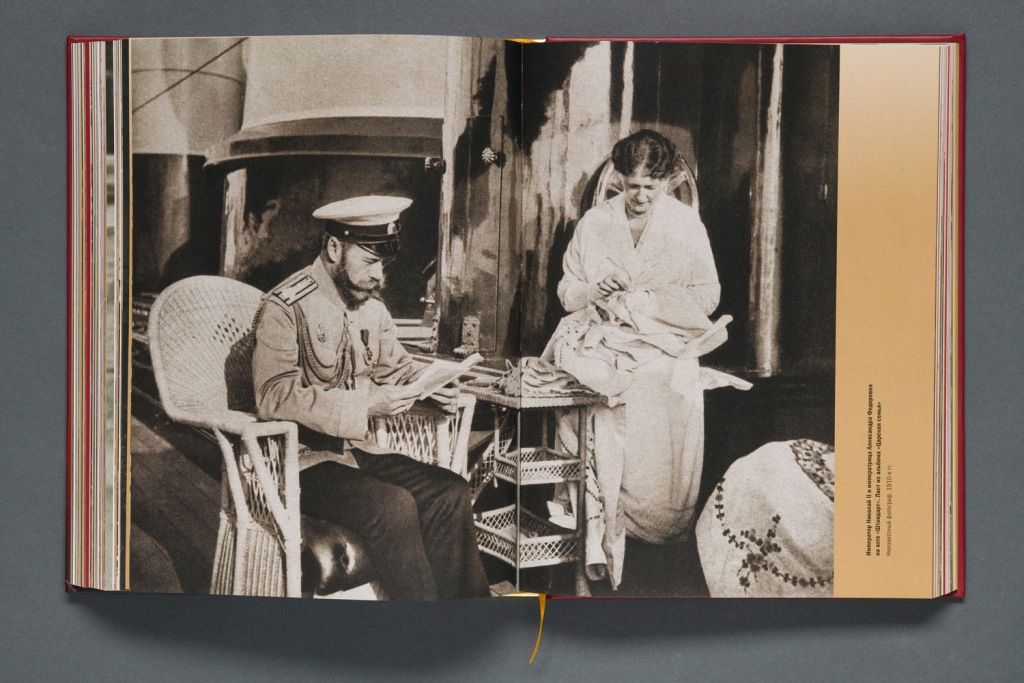
PHOTO: Nicholas II and Alexandra Feodorovna relaxing on the deck of the ‘Standart

PHOTO: the Imperial Family in the dining room of the Imperial Yacht ‘Standart

The yacht was commanded by Rear-Admiral Lomen, who was responsible for the safety of the Tsar from the moment Nicholas II set foot on board any vessel, whether a yacht, a dreadnought or a launch. “The whole of the naval administration stood in mortal fear of the Admiral,” recalls A.A. Mossolov. “It is true that he asked a great deal, and if he was annoyed he could be extremely rude. He claimed that onboard the yacht the Tsar himself was under his orders! Off duty he was pleasant and sociable.”

The actual Commanding Officer of the Standart was Captain Tchaguin, and the second in command, Commander Nikolai Sablin. Both had the satisfaction of being thought of very highly by Their Majesties. In the letters which she wrote to the Tsar when he was at General Headquarters, the Tsarina frequently mentions Sablin.

Life at sea seemed to bring the best out in all the members of the Imperial Family. A.A. Mossolov recalls in his memoirs, “The Empress herself grew gay and communicative onboard the Standart. She joined in the children’s games, and had long talks with the officers.”

PHOTO: Empress Alexandra with her four daughters on the deck of the ‘Standart

PHOTO: Minister of the Imperial Court (1897-1917) Count Vladimir Frederiks with
Tsesarevich Alexei Nikolaevich, on the deck of the Imperial Yacht ‘Standart’. 1911

The officers were certainly in an exceptional situation. Almost daily, the Tsar invited these officers to dinner and after the meal liked to play billiards with them or enjoy a game of dominoes. In return the Imperial Family accepted invitations to tea in the mess. On such occasions the Empress usually sat nearby, sewing, the Tsesarevich ran about with his playmates, while the Grand Duchesses, surrounded by all the young men, scattered throughout the yacht. “We form a united family,” the Empress used to remark on these memorable and happy voyages.”

The family vacations to the Crimea and their cruises on the Standart were a welcome change for the children in particular.

When the Imperial Family went onboard the Standart, each of the five children was assigned a diadka, a sailor charged to watch over the the child’s personal safety. The children played with these diadkas, played tricks on the them and teased them. Gradually the young officers of the Standart joined in the children’s games. As the Grand Duchesses grew older, the games changed into a series of flirtations, all very innocent of course. “I do not, of course, use the word ‘flirtation’ quite in the ordinary sense of the term,” remarks Mossolov, “the young officers could better be compared with the pages or squires of dames of the Middle Ages. Many a time the whole of the young people dashed past me, but I never heard the slightest word suggestive of the modern flirtation.” Moreover, the whole of these officers were polished to perfection by one of their superiors, who was regarded as the Empress’s squire of dames. As for the Grand Duchesses, even when the two eldest had grown up into real women, one might hear them taking like little girls of ten and twelve.

PHOTO: Nicholas II relaxing on the deck of the Imperial Yacht ‘Standart

“The girls loved the sea,” Count Grabbe comments, “and I well remember their joyful anticipation of these cruises on the Standart, which opened broader horizons for them, brought them new contacts, and permitted an intimacy that was other wise impossible. To be at sea with their father–that was what constituted their happiness.”

The Tsesarevich Alexis also loved the excursions on the Standart as well. He enjoyed accompanying the Tsar while he carried out his duties on board the Imperial Yacht. He loved to play games such as shuffleboard. On sunny afternoons it was not uncommon to find an exhausted Alexis stretched out and fast asleep under one of the many lifeboats on the main deck. At times, his haemophilia restricted his movements severely and photographs show the young Tsesarevich walking with the aid of a cane. Due to his illness, a favourite sailor was assigned to watch over Alexis. At first it was the sailor Andrei Derevenko who for some time was patient and conscientious in watching over his Imperial charge; his behaviour toward Alexis, however, became excessively mean after the Revolution. Fortunately, the Tsesarevich also had another sailor-attendant–the loyal Klimenty Nagorny. This sailor was later killed by the revolutionary army that overran Russia after World War I.

PHOTO: view of the Imperial Yacht Standart

PHOTO: the Imperial Yacht Standart on the Neva, St. Petersburg

So it was, that when the warm months of the summer rolled around that the Tsar and his family set sail on the Standart for their vacation off the coast of southern Finland. For the Tsar, there was no greater relaxation than these restful, seaborne excursions on his beloved Standart. Here his family and found a secluded bay surrounded by small islands where they could relax and enjoy their time together away from the palaces and rigid rules that governed the Russian court. This charming spot was such a favourite of Nicholas II and his family, that they returned to it every year and the children even nicknamed it the “Bay of Standart.”

While anchored in the bay, the Imperial Family lived on board the Standart but every day they would get into small launches and head for their chosen island. The island was uninhabited, which offered them complete freedom to picnic, relax, and enjoy the out-of-doors without fear of being observed by prying eyes. It was also on this little island that a tennis court was built for the Imperial Family, tennis being a favourite of the entire Imperial household.

PHOTO: “the wreck of the Standart“, 1907

In 1907, an unfortunate incident took place that was later known as “the wreck of the Standart.” The incident occurred on a fine day in the Finnish fjords when all of a sudden the Imperial yacht was shaken by a jolt at a moment when there was not the slightest reason for expecting anything of the sort. Immediately afterwards the yacht was heeled over. It was impossible to tell what might be coming next. The Empress rushed over to her children. She found them all expect the Tsesarevich, who was nowhere to be seen. The anguish of the two parents may only be imagined; they were both beside themselves. It proved impossible to move the yacht. Motor-boats started off towards her from every direction.

The Emperor hurried up and down the yacht, and gave the order for everybody to go in search of the Tsesarevich. It was only after some time that he was discovered safe and sound. At the first alarm his diadka, Derevenko, took him in his arms and very sensibly rushed to the “hawse-pipes,” since they offered the best chance of saving the boy if the vessel should be a total loss.

The panic subsided, and all onboard descended into the boats. An inquiry followed. The whole responsibility fell on the pilot, an old Finnish sea-dog, who was in charge of the navigation of the vessel at the moment of the disaster. Charts were hurriedly consulted and showed beyond any possible question that the rock on which the yacht had grounded was entirely uncharted.

There remained His Majesty’s Flag Captain, who was responsible in principle for the safety of the Imperial Family. At the time of the accident the post was held by Admiral Nilov, the only master, under God, of the fate of the yacht.

He was in such a state of mind after the accident that the Tsar felt bound to go to him in his cabin. Entering without knocking, the Tsar saw the Admiral bending over a chart, with a revolver in his hand. The Emperor tried to calm him. He reminded the Admiral that under naval regulations he would have to go before a court of inquiry, but, the Tsar added, there could be not a shadow of doubt that he would be acquitted, for the accident was entirely unforeseeable. The Tsar carried away the Admiral’s revolver.

“There was an immediate conspiracy of silence at Court about the wreck of the Standart, recalls Mossolov. “Everybody knew that the slightest criticism of the officers of the yacht would have brought down punishment on the head of anyone who ventured to utter it.”

“The officers were chosen for special gifts; their task was to create an atmosphere of a fairytale, a charming idyll. It may be that in technical knowledge they were not absolutely up-to-date.”

Many a royal personage was made welcome on board the Standart, including Queen Alexandra, sister of the Dowager Empress Marie, accompanied by her husband, King Edward VII, King Gustav of Sweden and Kaiser Wilhelm II of Germany.

Despite the relaxed atmosphere of the excursions on the Standart, the safety and protection of the Imperial Family was still a top priority. The Tsar was so fearful of assassination that he had several cruisers accompany the yachts at all times. A warning, published in a Finnish newspaper in 1911, reads as follows;

“Notice to all mariners concerning seafaring regulations when the Russian Imperial Yacht is in Finnish waters: Fire will be opened on all commercial shipping and all yachts–whether motor, sail or steam-that approach the line of guard ships. All ships wishing to put to sea must seek permission not less than six hours in advance. Between sundown and sunrise, all ships underway may expect to be fired upon.”

Early in June 1914, as usual at this time of the year, the Tsar and his family went on a voyage to the Finnish fjords. The weather was hot, and stifling heat was interspersed with pouring rain. This year, Tsar Nicholas II was not to enjoy the picturesque landscape and relax with the serene joys of family life; since the end of June one piece of bad news had followed another. The assassination of the Austrian Archduke Francis Ferdinand–whom Nicholas and Alexandra had known very well–and the attempt on the life of Rasputin, disrupted the mental equilibrium of the Imperial couple. Within weeks, war was declared and the Standart, by order of the Tsar was placed in dry-dock, and he never again returned to the tranquility of the Finnish or Crimean coastline’s.

After the Revolution, the former Imperial Yacht was destined to be stripped of all its former elegance. In 1917, the Standart was renamed Vosemnadtsate Martza. In 1932, she was renamed Marti. Between then and December 1936, she was refitted as a drab, grey minelayer at the Marti Yard in Leningrad for service in the Soviet Navy. The heavy gun armament was fitted, as were mine rails. There were 4 rails on the mine deck, and 2 more on the upper deck. The mine deck could carry 580 mines, and 200 could be accommodated on the upper deck.

With the German invasion of Russia, the Marti laid some 3159 mines, and bombarded shore positions near Leningrad. On 23rd September 1941, Marti was damaged in an air attack at Kronstadt, but was quickly repaired to resume action on the 26th of the same month. In autumn 1941, some of her guns were used ashore at Leningrad.

After the war, Marti was refitted and converted to a training ship, renamed Oka. During the refit, the steam engines were replaced by diesels. She was scrapped at Tallinn in Estonia in 1963.

sea1

PHOTO: Nicholas II looking out to sea from the deck of the Imperial Yacht ‘Standart

FURTHER READING + additional photos and videos:

The Soviet Navy’s use of the Imperial Yacht “Standart” during WWII

The Fates of the Russian Imperial Yachts ‘Standart’ and ‘Polar Star’

125th anniversary of the first voyage of the Imperial Yacht “Standart”

© Paul Gilbert. 28 February 2023

New monument of Imperial Family to be installed at Murmansk airport

PHOTO: artist concept of new monument to the Imperial Family at the Nicholas II-Murmansk Airport (above); and the monument of Emperor Nicholas II and his family by the Russian sculptor Semyon Platonov (below)

In June 2019, Russian President Vladimir Putin announced that the airport in the Russian arctic city of Murmansk would be renamed in honour of Emperor Nicholas II. Murmansk, Russia’s first ice free port was founded in 1916 by Nicholas II and named Romanov-on-Murman.

In the autumn of 2018 a nationwide online poll was held in which the Russian people could cast votes to rename 42 major airports across Russia. More than 5.5 million people took part in the ‘Great Names of Russia’ poll. More than 140,000 people in the Murmansk region took part in the poll on the renaming of Murmansk Airport. The names of Ivan Papanin and Boris Safonov were among the candidates, however. Russia’s last Tsar received 68,260 votes or 48% of the total votes tallied.

In December 2019, the head of the Kola District Administration announced plans to expand and modernize the Nicholas II-Murmansk Airport, which includes construction of a second terminal for flights within Russia began in 2021. The name of Nicholas II will be placed on the facades of each of the two terminals.

In addition is the reconstruction of the square in front of the main air terminal, of which several projects were considered. Initially, a bust-monument of Nicholas II was proposed, however, this idea has now been shelved.

In November 2020, a permanent photo exhibition dedicated to Emperor Nicholas II has opened in the terminal building of Murmansk Airport.

PHOTO: artist concept of the square in memory of Emperor Nicholas II at Murmansk Airport (above); and view of the of new monument to the Imperial Family to be installed in the center of the square (below)

On 26th January 2023, the architecture and landscaping firm Хмель in St Petersburg, published an artist’s concept by architect Marina Khmel of the new square in front of the Nicholas II-Murmansk Airport, the highlight of which will be a major sculptural composition of the last Russian Imperial Family.

The square in memory of Emperor Nicholas II will feature landscaped gardens with flowerbeds and trees, as well a place for holding events, information stands and temporary outdoor exhibitions. The square will also include a quiet space for travelers to rest, and a platform for boarding and disembarking from buses and cars.

In the center of the park will be a monument of Emperor Nicholas II and his family by the Russian sculptor Semyon Platonov. The sculptural composition is based on a famous photograph from 1913, which depicts Nicholas II and Alexandra Feodorovna surrounded by their five children – Olga, Tatiana, Maria, Anastasia and Alexei.

© Paul Gilbert. 28 January 2023