Exhibition: In Memory of the Last Emperor. Relics of the Emigrant Museum in Belgrade

149a

NOTE: All of the articles pertaining to Nicholas II and his family which were originally published in my Royal Russia News blog, have been moved to this Nicholas II blog. This article was originally published on 13 September 2018 in my Royal Russia News blog – PG

The following exhibition ran from 12 July to 10 September 2018

The State Historical Museum in Moscow is currently hosting an exhibition dedicated to the memory of the last Russian Emperor Nicholas II. The exposition, which opened on 12th July, features a unique collection of items from the Museum of the Memory of Emperor Nicholas II, which was opened in the Russian House in Belgrade in 1936.

Many of the exhibits presented at the exhibition are being displayed for the first time to the public. These unique items connected to Nicholas II and his family members were collected Russian emigres who settled in Yugoslavia after the Revolution. The items entered the Historical Museum in 1947 – after Yugoslavia became a socialist nation. Visitors to the exhibition will be able to see dozens of artifacts that have never before left the Historical Museum.

149b

Copy of telegram from Queen Marie of Roumania on the news of Nicholas II’s abdication

The exposition includes letters from members of the Imperial family, diaries, rare photographs, newsreel footage – which reflect the ordinary everyday life of the Romanovs.

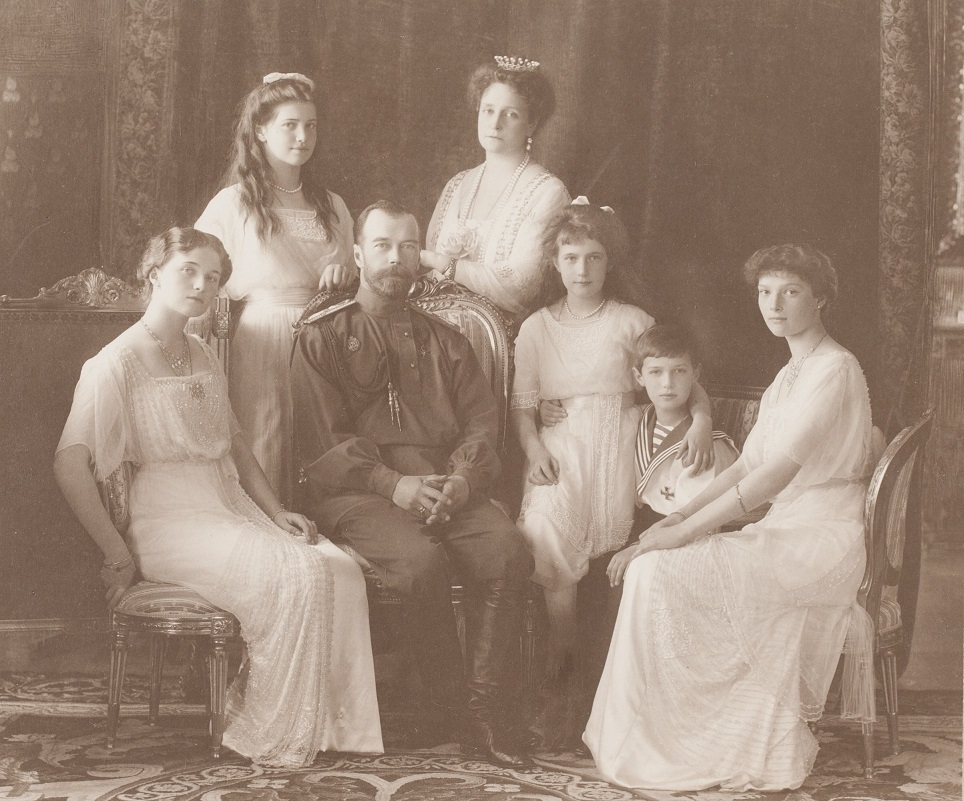
In one of the photographs, the four daughters of Nicholas II are depicted – the Grand Duchesses Olga, Tatiana, Maria, Anastasia. They often signed photos and letters – OTMA, an acronym based on the first letters of their respective names. This photo was presented to the Belgrade Museum by Pierre Gilliard, the tutor of the Tsesarevich Alexei Nikolaevich. In addition, among the exhibits – the academic plan for the Imperial children in 1916-1917, as well as letter from the Tsesarevich Alexei to his grandmother the Dowager Empress Maria Feodorovna, dated 16 April 1916, congratulating her on Easter.

The exhibition ran from 12 July to 10 September 2018 at the State Historical Museum in Moscow

© Paul Gilbert. 3 December 2019

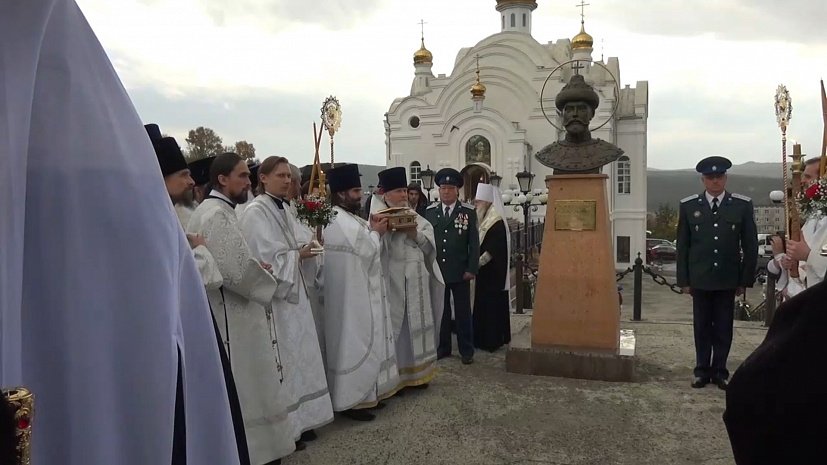
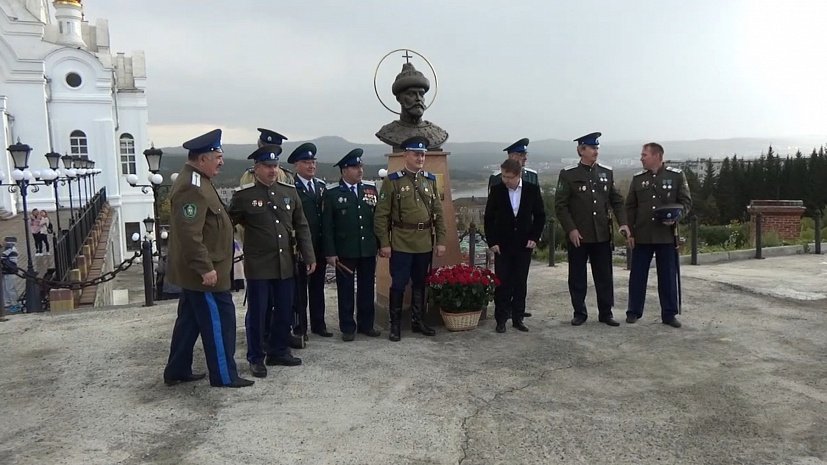
Monument to Nicholas II consecrated in Zlatoust

146a

NOTE: All of the articles pertaining to Nicholas II and his family which were originally published in my Royal Russia News blog, have been moved to this Nicholas II blog. This article was originally published on 19 September 2018 in my Royal Russia News blog – PG

On 19th September 2018, the World Russian People’s Council met in the Ural city of Zlatoust. The event was timed to coincide with the 100th anniversary of the founding of the Chelyabinsk Diocese, as well as the year marking the 100th anniversary of the death of the Imperial family, and the 150th anniversary of the birth of Nicholas II.

146b

146c

A monument to Emperor Nicholas II was installed in the courtyard of the Cathedral of St. Seraphim in Zlatoust. The monument by the sculptor Alexander Sadovsky, was consecrated, followed by prayers and hymns sung by the church choir. In addition, the relics of St. Andrew the First-Called were brought to Zlatoust.

© Paul Gilbert. 2 December 2019

London Exhibit Features Unique Items on the Last Tsar

145a

The following exhibition ran from 21 September 2018 to 24 March 2019

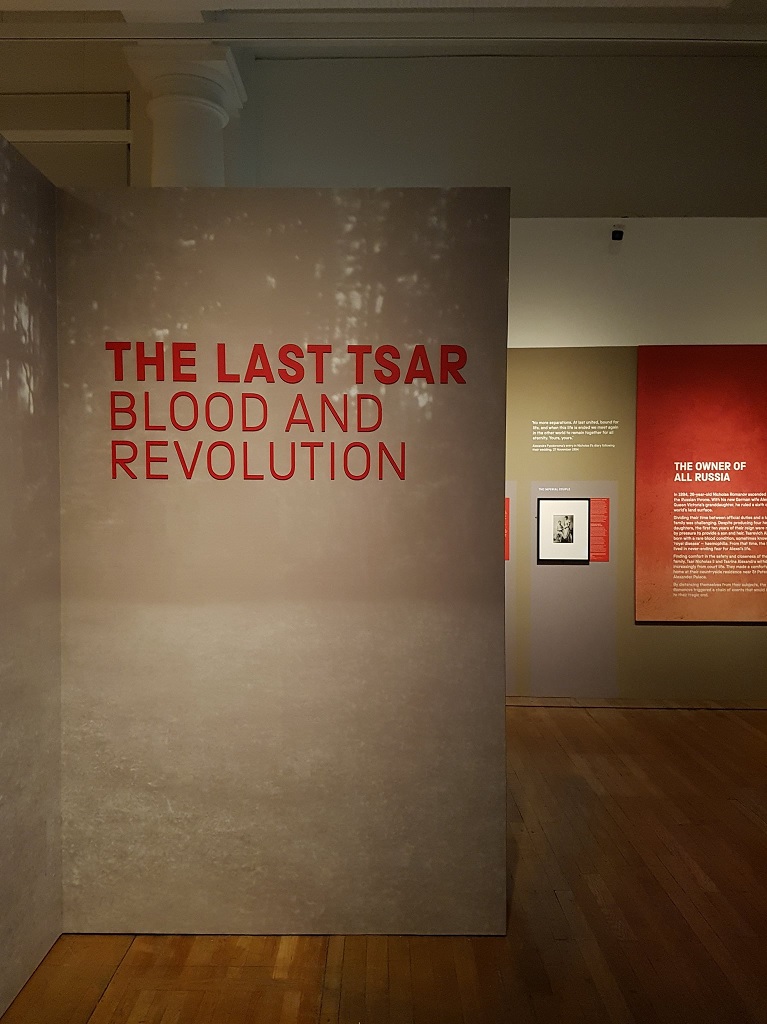
The Last Tsar: Blood and Revolution exhibition opened on Friday 21st September at the Science Museum in London, England. The exhibition marks 100 years since the death of Russia’s last ruler of the Romanov Family, Emperor Nicholas II (1868-1918).

The exhibition presents rare artefacts from collections in the United Kingdom, Russia, and the United States, including the family’s personal diaries, private possessions, such as the Empress Alexandra’s 1904 maternity dress, jewellery.

145b

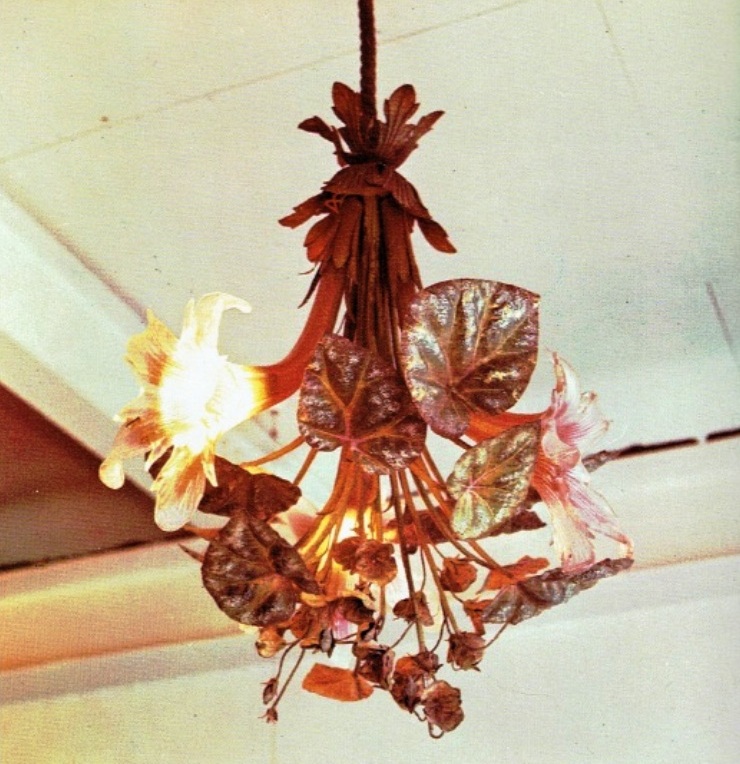
The glass chandelier from the Grand Duchesses bedroom in the Ipatiev House

Also on display is a Murano glass chandelier from the Grand Duchesses bedroom in the Ipatiev House. The chandelier was brought to England by the English tutor to the Tsesarevich Alexei Sydney Gibbes, where it was on display in Luton Hoo for many years. It is now in the private collection of the Butters Family in England.

145c

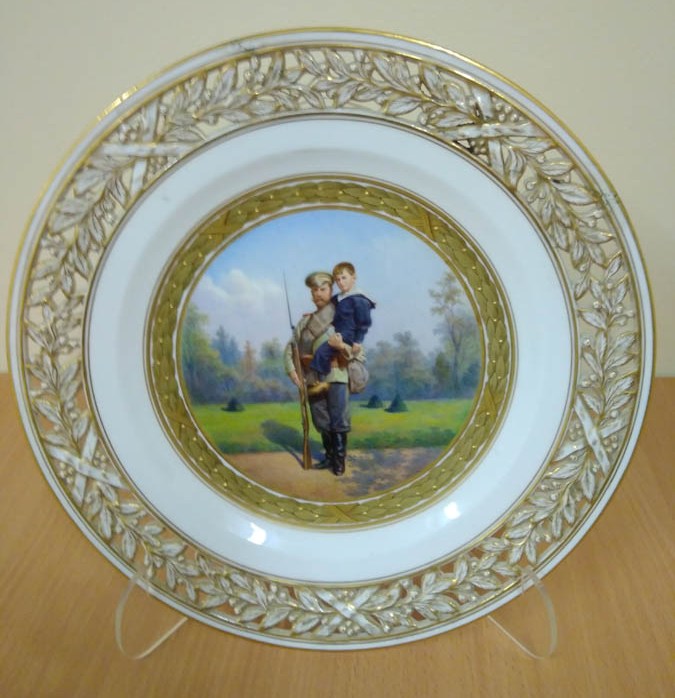
Meissen porcelain plate depicting Nicholas II and his son Alexei
Photo © Tsarskoye Selo State Museum-Reserve

145d

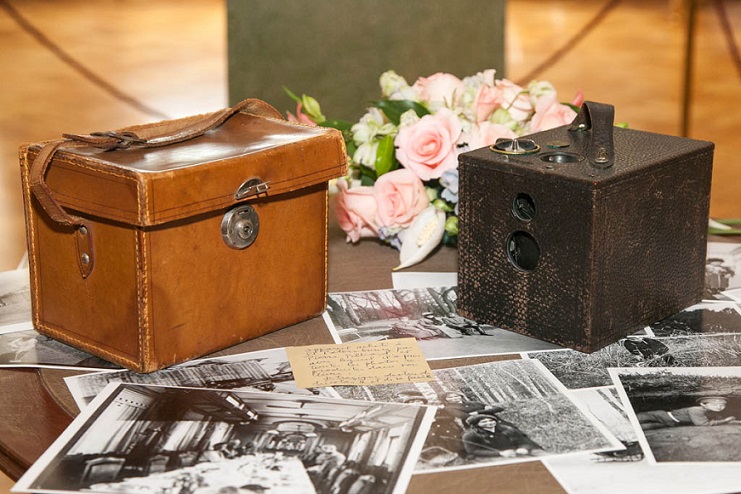
Pierre Gilliard’s Kodak Brownie Camera
Photo © Tsarskoye Selo State Museum-Reserve

The Tsarskoye Selo State Museum-Reserve have loaned 44 items from their collections, including portraits of Nicholas II and Alexandra Fedorovna, a cherkeska (ceremonial Circassian coat) – from the uniform of an officer of HM Own Convoy, a kokoshnik, and Pierre Gilliard’s Kodak Brownie camera.

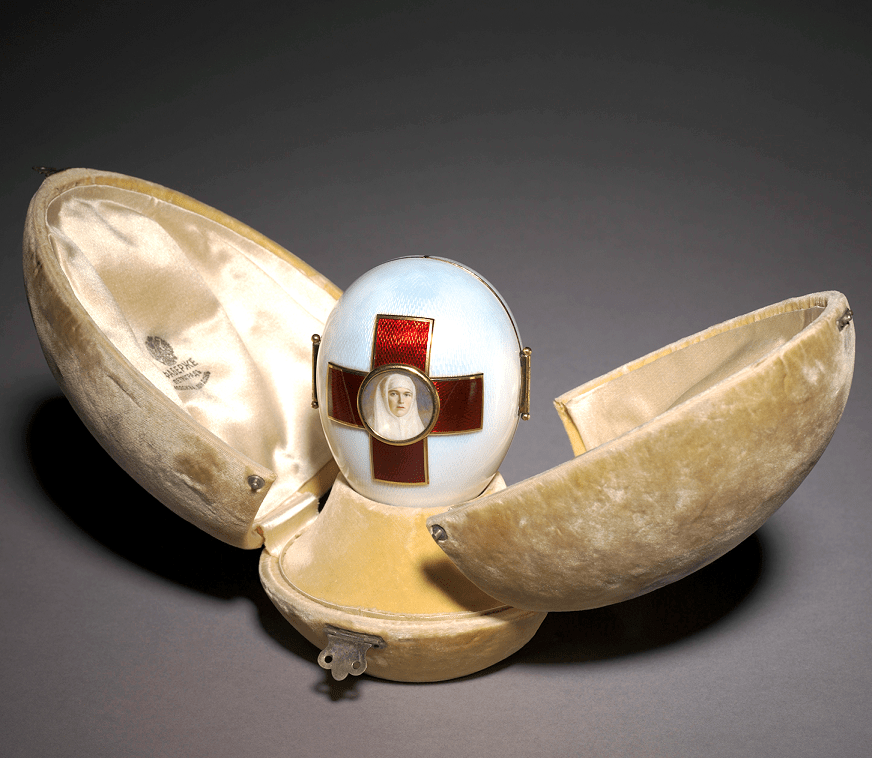
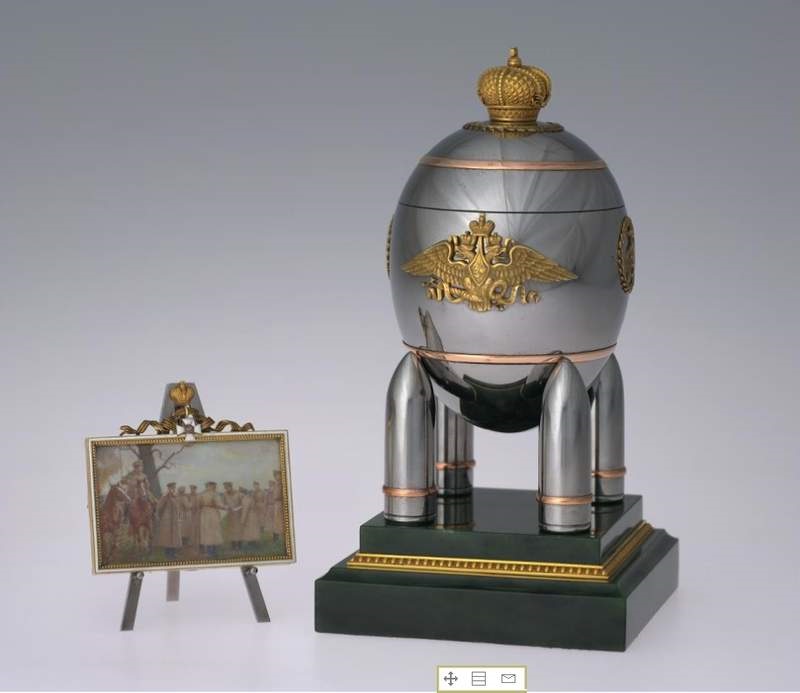
The exhibition also features two Fabergé Imperial Easter Eggs: the Red Cross Triptych Egg from 1915, honouring Empress Alexandra Feodorovna and her two eldest daughters, the Grand Duchesses Olga and Tatiana Nikolaevna, for their war efforts for the Red Cross; and the Steel Military Egg from 1916, sent to Alexandra by Nicholas when he was at the Russian front.

145e

Fabergé Red Cross Triptych Egg (1915)
Photo © Cleveland Museum of Art

145f

Fabergé Steel Military Egg (1916)
Photo © Kremlin Armoury Museum

Of particular note, are annotated photo albums created between 1908 and 1918 by Herbert Galloway Stewart (1866-1960), an English tutor who was invited by the Grand Duchess Ksenia Alexandrovna (1875-1960) to teach her son – Prince of the Imperial Blood Andrei Alexandrovich (1897-1981). The albums, which are now part of the Science Museum Group collection will be on display for the first time. These albums offer a fascinating glimpse into the lives of the Romanovs – from boating trips and picnics, to sledging in the snow-covered grounds of the Alexander Palace at Tsarskoye Selo.

The photographs were discovered by Natalia Sidlina, who found 22 albums packed inside a champagne crate from Harrods, in the archives of the Science and Media Museum in Bradford, England.

All Photos © Science Museum Group Collection

The exhibition retraces the lives of Nicholas II and Alexandra Feodorovna as they navigated their roles as autocratic rulers of Russia, while caring for their young son and heir, who was born with haemophilia B. The royal household faced a turbulent backdrop of social upheaval and war between 1900 and 1918, but we’ll be focusing on the significant influence of medicine on the private lives of the imperial family. Over 70 years after their sudden disappearance, advances in medicine and forensic science transformed the investigation into their fate and solved one of the greatest mysteries of the 20th century.

The exhibition consists of six sections: “Russia at the Turn of the Century”, “Deprivation of Liberty: Palaces and Prisoners”, “Doctors and Healers at Court”, “Sisterhood. The Empress and the Grand Duchesses”, “The Revolution and the Overthrow of the Romanov Dynasty”, and “The Investigation Which Lasted a Century”.

Explore the extraordinary lives and deaths of Tsar Nicholas II and his family and go behind the scenes to uncover the science behind one of the greatest mysteries of the 20th century in this FREE exhibition.

The Last Tsar: Blood and Revolution Exhibition ran from 21 September 2018 to 24 March 2019, at the Science Museum in London, England.

© Paul Gilbert. 2 December 2019

Exhibition: ‘Family Album’ in Kaluga

144a

NOTE: All of the articles pertaining to Nicholas II and his family which were originally published in my Royal Russia News blog, have been moved to this Nicholas II blog. This article was originally published on 25 September 2018 in my Royal Russia News blog – PG

The following exhibition ran from 15 September to 4 November 2018

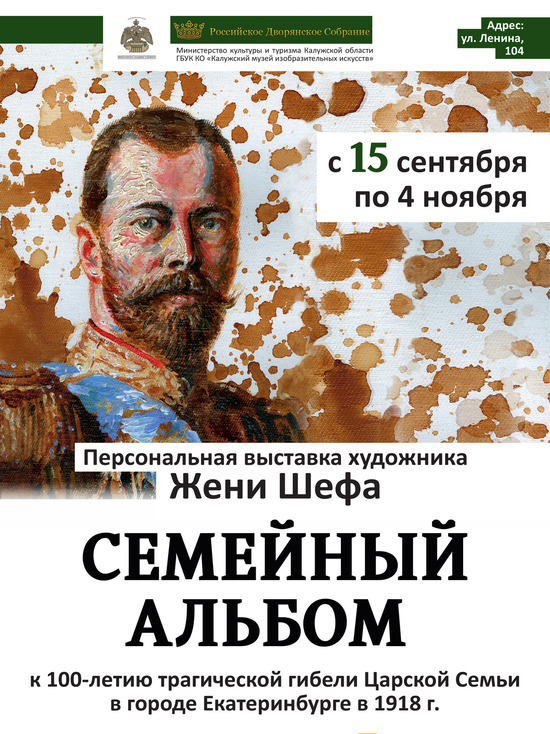
On September 15 a solo exhibition entitled Family Album opened at the Kaluga Museum of Fine Arts, presenting the works of the Honorary Academician of the Academy of Arts Evgeny Sheffer, known to the general public under the pseudonym ‘Zhenya Shef’.

The exhibition is dedicated to the centenary of the tragic death of Emperor Nicholas II and his family and the centennial anniversary of the Kaluga Museum of Fine Arts. The artist who now lives in Germany marked the terrible events that occurred in July 1918 in the basement of Ipatiev House in Ekaterinburg by a series of paintings.

His work presented in Kaluga – portraits of the Imperial family – were previously shown at the Venice Biennale in 2013, the year marking the 400th anniversary of the House of Romanov. The exhibition is organized by the Russian Noble Assembly with the support of the Ministry of Culture and Tourism of the Kaluga Region.

The chairman of the Kaluga branch of the Imperial Orthodox Palestine Society (IOPS) Vitaly Gorokhovatsky, opened the exhibition with a welcoming speech. He then awarded Honorary Deeds to the artist Evgeny Sheffer and the director of the Kaluga Museum of Fine Arts Natalia Marchenko for their excellent organization of the exhibition.

The opening ceremony was attended by the head of the Russian Nobility Assembly Oleg Shcherbachev, the head of the Department of Culture of the Kaluga diocese, priest Nikolai Zherzdev, the human rights commissioner for the Kaluga region Yuri Zelnikov , the president of the Russian Union of Philocratists Arsen Meltonyan among others.

In honour of the exhibition, the Russian postal service issued a special set of postcards featuring paintings presented at the exhibition. The artist took part to autograph them for guests at the exhibition.

The opening ceremony was followed by a concert, at which the Russian composer, pianist and violoncellist Victor Agranovich performed. His performance, a musical work was performed on the verses of Nina Kartasheva from the cantata Voices from the Skies, dedicated to the centenary of the tragic death of the Tsar’s family.

The Family Album Exhibition ran from November 4, at the Kaluga Museum of Fine Arts, and then in Novosibirsk, Tver and other Russian cities.

© Paul Gilbert. 2 December 2019

“A lie undermines our society” – Paul Kulikovsky

142

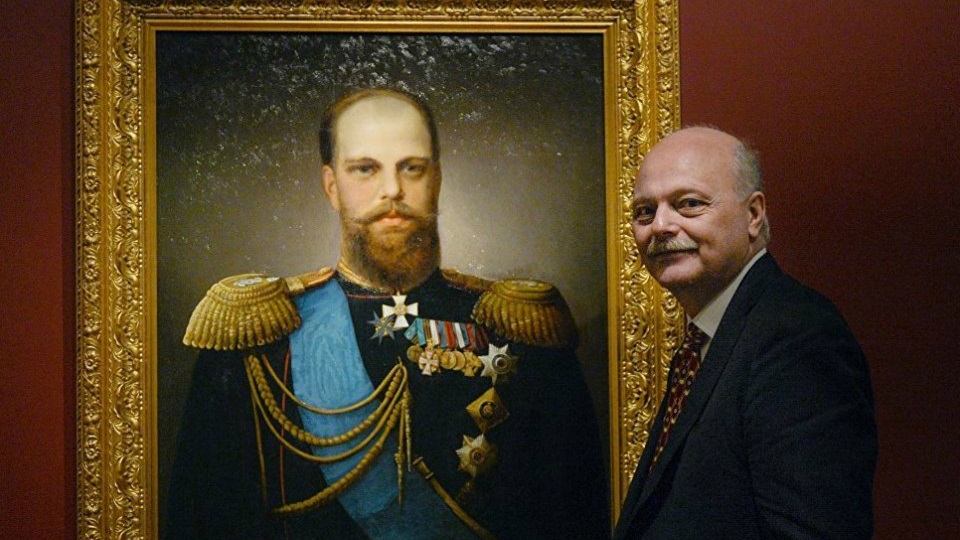
Paul Kulikovsky stands in front of a portrait of his great-great- grandfather Emperor Alexander III

NOTE: All of the articles pertaining to Nicholas II and his family which were originally published in my Royal Russia News blog, have been moved to this Nicholas II blog. This article was originally published on 18 October 2018 in my Royal Russia News blog – PG

A descendant of the Russian Imperial family, the great-great-grandson of Emperor Alexander III, Paul Kulikovsky, is convinced that there is a lack of reliable information about the last Russian emperor and the epoch of his rule for both Russians and foreigners. Kulikovsky believes that the new English version the Tzar-family.com website will help foreigners have a better understanding of the life and reign of Russia’s last emperor and tsar.

AiF-Ural: How important is this project today in the work of the Church for the return of the good name of the sovereign Nikolai Alexandrovich and the restoration of the historical memory of society?

Paul Kulikovsky: I think that the Tzar-family.com web site is very important for a variety of reasons. First, I would note that in modern society, people are trying to get information quickly and easily, by accessing the Internet, not books, magazines, newspapers, etc. Therefore, the Church must be represented on the Internet to be one of the sources, and be part of the learning process. They must make it interesting and attractive, and by offering something which other sources do not offer. I also find it important to attract young people. Many young people do not go to church, therefore, in order to reach them, you need to find another way. Some may be attracted to history, others like stories about princes and princesses, and some are looking for role models. As soon as they find something of interest to them, they will find such information on the site.

A more serious reason is that there is so much false information, direct lies, myths, propaganda and half-truths about Emperor Nicholas II and his family making it is very difficult to find material which contains the truth.

These massive repetitions of false information over the past 100 years have made people think that these old stories are true. But, as many of us know, a lie will not be true, no matter how much you repeat it.

It could be assumed that this would cease when the godless Soviet regime collapsed. But nothing like this happened. Twenty seven years later, the Communists and their supporters continue this senseless repetition of false information. Therefore, it is absolutely necessary to have a site that not only provides the truth, but is well known and respected as a reliable source.

You can deceive people for a long time, but not infinitely. Sooner or later the truth will prevail. One step in this struggle is to give people the opportunity to learn the truth, and this is, I think, what this site is doing – both in relation to Emperor Nikolai Alexandrovich and to restore the historical memory of society.

AiF-Ural: This project is dedicated to the royal family, which is a model of relations both between family members as well as their relations with their neighbors and their Fatherland. How relevant is this family example for modern society?

Paul Kulikovsky: I think that in terms of family relations, the imperial family is in many ways a model for modern society.

What, in essence, is the task of any family? I believe that it is this social institution that gives the new generation the best chances for family happiness, that is, creating their own family. It is in the family that children must learn to love and care, understand what is right and wrong, and how to become responsible adults.

In this, the imperial family can be a source of inspiration. Members of this family were associated with wonderful relationships based on love and respect. In everything they did, they were guided by Christian family values. They cared very much about each other, and about other people. They considered charity not as a debt, but as something natural.

Over the past 50 years, the family, as an institution, has undergone dramatic changes, a transformation. The traditional family is being destroyed not only in Russia, but throughout the world.

For many, happiness now lies in having more and more things. Family time and energy is spent on the acquisition of wealth and less – on relationships and spiritual values.

An increasingly secularized society dilutes fundamental Christian values ​​and makes it difficult for people to understand the difference between what is right and wrong. In a sense, people have lost their sense of proportion. Moral standards are changing.

Having learned about the imperial family, they will see an alternative, perhaps they will change their life both within their family and in relation to their neighbors and society as a whole.

AiF-Ural:  On 14th October, the English version of the web site was launched. Why is this necessary for a foreign audience?

Paul Kulikovsky: There is a great interest in the royal passion bearers outside Russia, but for the most part people abroad do not know Russian, so the English version of the site will help those who are looking for reliable information.

In addition to the learning aspect, there are also materials on the site which elicit an emotional response — diaries, letters, and memories — and this can inspire some. Foreigners, too, need it.

I also think that it would be really good if foreigners could learn more about Russia and, in particular, the history of the reign of Emperor Nicholas II. I think it would be fair to say that in the West many historical books and textbooks are colored by communist propaganda. This English web site will present a different perspective on the reign of Nicholas II, and some people may be surprised by all the successes that have been achieved thanks to him and his character. This can change their perception of the personality of Nicholas II, Russian history and, ultimately, Russia.

Finally, I think that the English site will present a positive image of Russia.

AiF-Ural: Information about the members of the House of Romanov is an important component of the restoration of historical justice in relation to the Russian tsars in Russia. What else do you think should be done to eliminate the “white” spots in the history of the country?

Paul Kulikovsky: I think this problem has two aspects. One of them is the real “white” spots, when information about something is simply not available in the public forum, but it can exist. You just need to conduct research, and then publish the results.

In the year of the 100th anniversary of the murders of the imperial family, one “white” spot was studied. The question was whether it was possible to save the imperial family after the abdication of Emperor Nicholas II, and did anyone try to do this? At least two books in English were published on this issue, and this gap was unexpectedly filled.

What else needs to be done? I would like representatives of the Church to compile a list of gaps in history and begin a research program. Perhaps different groups of historians, students, and the church community can explore these white spots and report at the end of the year. Perhaps a competition could be announced, during which a prize would be awarded and, of course, their work could be published in the future.

Another problem with the “white” spots, is that some are actually painted in black. This is information that someone decided that the public should not know or remember. This happens when events are distorted by propaganda and lies, and the real facts disappear from people’s memory.

The Bolsheviks and the Communists have accomplished this in Russia, during the last 100 years.

Here I see a real problem, because if society is based on myths and lies, in the end it’s very difficult to understand what is right and what is wrong. People create life based on the concepts of interconnections and come to an opinion on the basis of false ideas. And this can undermine our whole society.

That is why it is so important to fill in the “white” spots. Provide people with the truth.

And this also happens with the participation of the Church. The difficulty is to encourage people to absorb and accept this information. As the old saying goes, “you can lead a horse to water, but you can’t make it drink.”

And this is a real challenge. How to make people recognize that their knowledge of a particular subject is not 100% correct and perceived new information.

Maybe it is also necessary to provide training for journalists to reveal these myths, lies or fake news and urge them to reveal this or that as a lie every time it appears in the media.

Of course, a web site like Tzar-family.com can be used to refute lies and propaganda against Emperor Nicholas II and his family.

Click HERE for more information about the Tzar.family.com English-language web site

© Information Agency of the Yekaterinburg Diocese / Paul Gilbert. 2 December 2019

New English Language Web Site Dedicated to Nicholas II Launched

143a

NOTE: All of the articles pertaining to Nicholas II and his family which were originally published in my Royal Russia News blog, have been moved to this Nicholas II blog. This article was originally published on 14 October 2018 in my Royal Russia News blog – PG

A new web site Tzar-family.com dedicated to the last Russian emperor and his family was officially launched on 14th October 2018 in the Ural city of Ekaterinburg. The new English site was prepared by the Ekaterinburg branch of the Imperial Orthodox Palestine Society

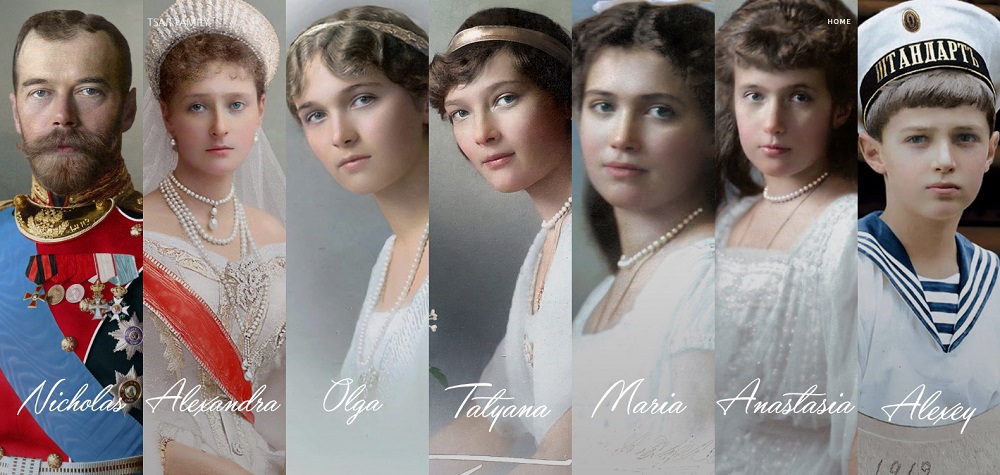
The site offers reliable information about the last Russian emperor and the era of his rule in English. It chronicles the lives of Emperor Nicholas II, Empress Alexandra Feodorovna, and their five children – Grand Duchesses Olga, Tatiana, Maria, Anastasia, and Tsesarevich Alexei.

The creators of the English version, including professional translators, historians, journalists and priests, note that the translation of materials into English was conceived a year ago when they launched the Russian language website of Tsarskaya-Semya.RF. The subsequent appeals about the need for such a site for an English speaking audience, many of whom took part in the Tsar’s Days in the year of the centenary marking the death of Nicholas II and his family, convinced the creators of the demand for reliable English language resources.

The great-great-grandson of Emperor Alexander III Paul Kulikovsky noted the relevance of truthful information about the sovereign Nicholas II and his family not only for Russian society, but also for foreign audiences, who lack reliable information about the latest Russian the emperor and the era of his rule.

143b

“There is a great interest in the Nicholas II and his family outside of Russia, where the majority do not understand Russian, so the English version of the site will greatly help those who are looking for the truth about the Imperial Family,” said Kulikovsky.

“I also think that it will be very useful if, thanks to the site, English readers can learn more about Russia and, in particular, about the history of the reign of Emperor Nicholas II. Many, I believe, will be surprised at the achievements of Russia in the era of his rule. Perhaps this will change their perception of the Tsar, Russian history and Russia as a whole,” he added.

The first visitors to the portal, while operating in test mode, were citizens of Great Britain. The parishioners of a number of English Orthodox churches highly appreciated the new resource and are confident that it will be in demand by an English-speaking audience.

The creators of the site note that the portal Tzar-family.com , as well as earlier the site Tsarskaya-Sem.RF , will be updated with new information on a regular basis. The English site will continue to operate in a test mode up until Christmas. Working with foreign experts, articles will be updated, while additional documents will be translated and published.

143c

The Russian language site Tsarskaya-Sem.RF , was created in October 2017 with the blessing of Metropolitan Kirill of Yekaterinburg and Verkhoturye. It receives about 30,000 unique user visits per month.

According to users, the project is interesting because of the diaries, documents and eyewitness accounts about the Imperial family. The visitor enters into a dialogue with each member of the family by reading their respective diary entries and letters. A special section of the site is dedicated to the achievements of Russia during the reign of the last Russian emperor.

The project is generously illustrated with photographs, creative works of members of the imperial family – materials provided by the Ekaterinburg Museum of the Imperial Family, public and private archives, Orthodox Internet resources. Since its opening, the site has been updated with new materials every week.

The main page of the site features a full-color image of all the members of the Imperial family. The “colorization” of the illustrations will continue with the support of specialists, in particular, the Moscow photo artist Olga Shirnina; the works of her historical photo-reconstruction “The Tsar’s Family in Color: the Image Disclosure” were recently exhibited in Ekaterinburg at the May Forum and in Tsar’s Days-2018.

Click HERE for the English version, and HERE for the Русская версия.

© Paul Gilbert. 2 December 2019
Summary of Nicholas II Conference in England – 27 October 2018

141a

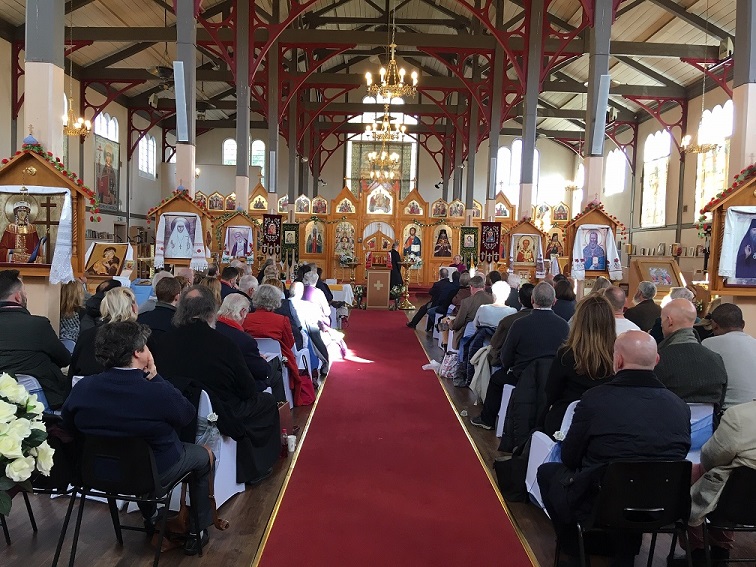
Archpriest Andrew Phillips and Paul Gilbert, St. John of Shanghai Orthodox Church

On Saturday 27th October, more than 100 people from 11 countries attended the 1st International Nicholas II. Emperor. Tsar. Saint. Conference in England.

The venue for the event was St. John of Shanghai Orthodox Church in Colchester, Essex, which is situated about an hour’s train journey from London. It was truly meaningful and appropriate that the conference should take place at the Church of St John of Shanghai, who did so much for the glorification of the Holy Royal Passion-Bearers.

This historic event brought people from no less than 11 countries: England, Wales, Ireland, the Netherlands, France, Denmark, Vatican City, Russia and from as far away as Canada, America and Australia.

141b

More than 100 people from 11 countries attended the Nicholas II Conference

Among the guests was Metropolitan Jonah (Paffhausen), who travelled from Washington, DC for the event. His Eminence is a retired American Orthodox bishop who served as the primate of the Orthodox Church in America (OCA) with the title The Most Blessed Archbishop of Washington, Metropolitan of All America and Canada from his election on November 12, 2008, until his resignation on July 7, 2012. Metropolitan Jonah was the first convert to the Orthodox faith to have been elected as the primate of the OCA.

On June 15, 2015, Metropolitan Jonah was released from the Orthodox Church in America in order for him to be accepted as a bishop of the Russian Orthodox Church Outside Russia.

Greetings for the conference and its attendees were received by letter from Vice-Chairman of the Department for External Relations of the Moscow Patriarchate Archimandrite Philaret; Head of the Russian Imperial House Her Imperial Highness Grand Duchess Maria Vladimirovna; and His eminence Archbishop Gregorios of Thyateira and Great Britain.

The conference featured 5 speakers, who presented 7 papers, some of which were dedicated to clearing the name of the much slandered tsar.

141c

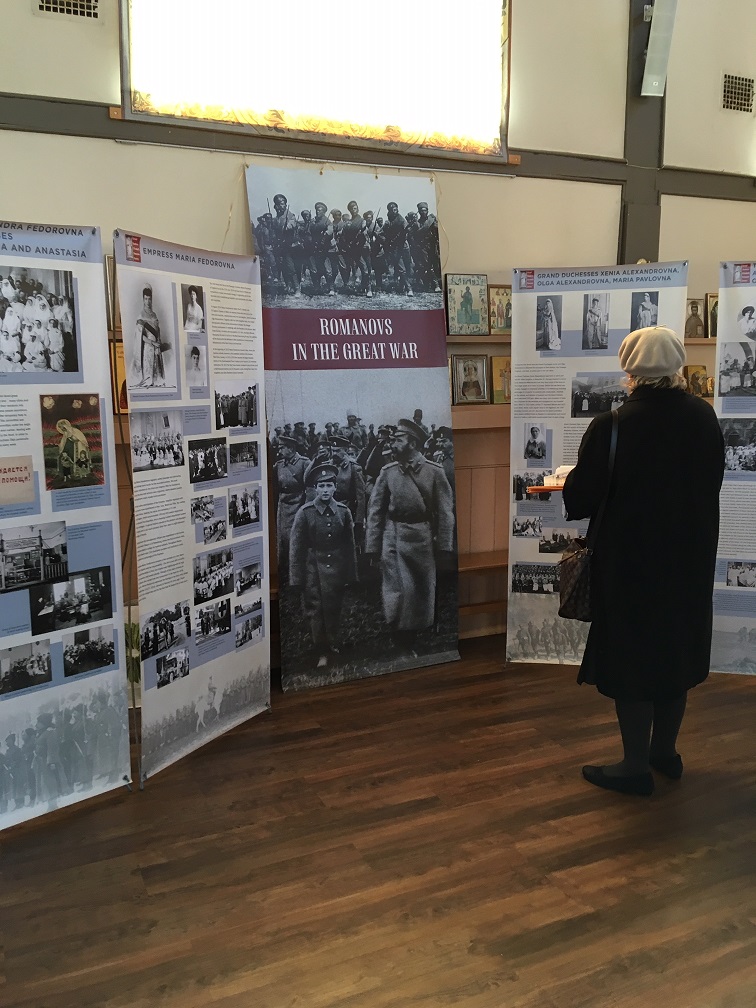
‘Romanovs During the First World War: Charity and Heroism’ exhibit

The Grand Duchess Elizabeth Romanov Society UK provided 10 exhibit banners from the society’s exhibition Romanovs During the First World War: Charity and Heroism. The exhibit featured photos, post cards and documents from the Russian archives and private collections. The exhibition was produced by GDER society, St Tichon’s Theological University, Moscow, and The Society of Card Collectors. All the information in English.

Holy Trinity Publications set up a table offering copies for sale of ‘The Romanovs’ Under House Arrest‘, co-authored by Marilyn Swezey, and ‘The Romanovs: Family of Faith and Charity‘, a children’s book by Maria Maximova.

Royal Russia Publications also set up a table offering copies of ALL current and back issues of ‘Sovereign: The Life and Reign of Emperor Nicholas II‘.

Special thanks to Father Andrew Phillips rector of St John of Shanghai Orthodox Church, for his enthusiasm and support of this event, and for the opportunity to use St John of Shanghai Church as the venue for this historic conference.

To my dearest friends Mike and Julia Carr, and David Clark for all their dedication and hard work in helping to set up the church and meeting hall, assisting with registration, book sales, lunch, teas and coffee, etc.

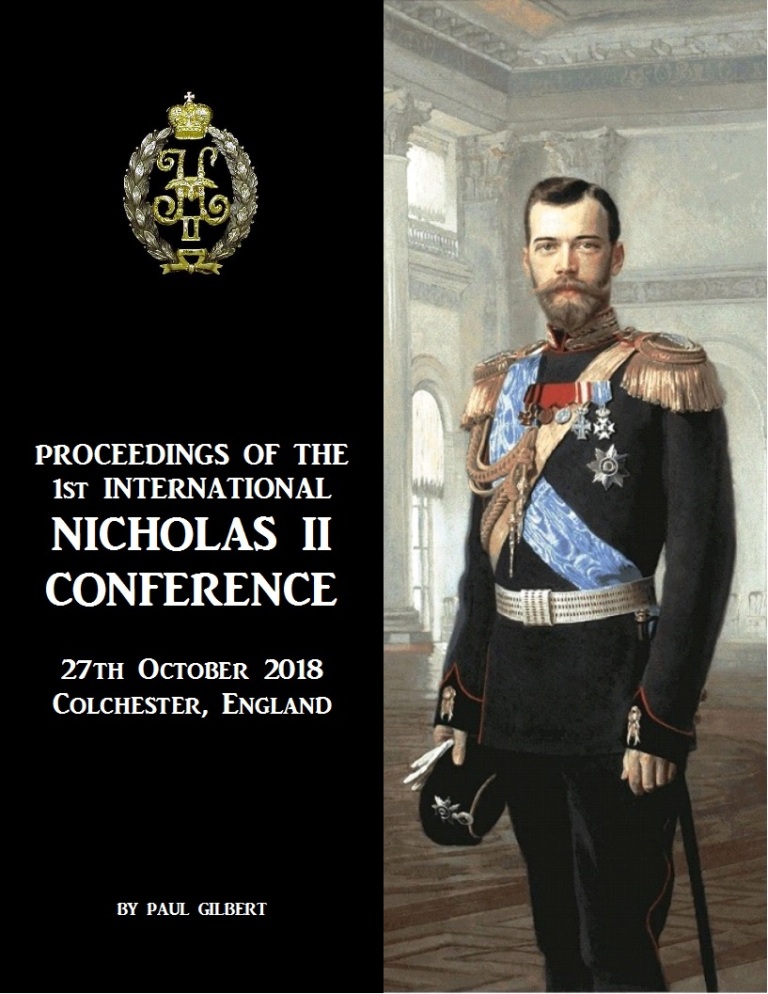
conference-cover

*This title is available from AMAZON in the USA, UK, Canada, Australia,
France, Germany, Spain, Italy, Netherlands, Poland, Sweden and Japan

CLICK HERE TO ORDER THE PAPERBACK EDITION @ $30.00 USD

CLICK HERE TO ORDER THE HARD COVER EDITION @ $40.00 USD

141e

© Paul Gilbert. 1 December 2019

Exhibition: ‘From the Imperial Wardrobe’

NOTE: All of the articles pertaining to Nicholas II and his family which were originally published in my Royal Russia News blog, have been moved to this Nicholas II blog. This article was originally published on 30 November 2018 in my Royal Russia News blog – PG

The following exhibition ran from 29 November 2018 to 28 February 2019

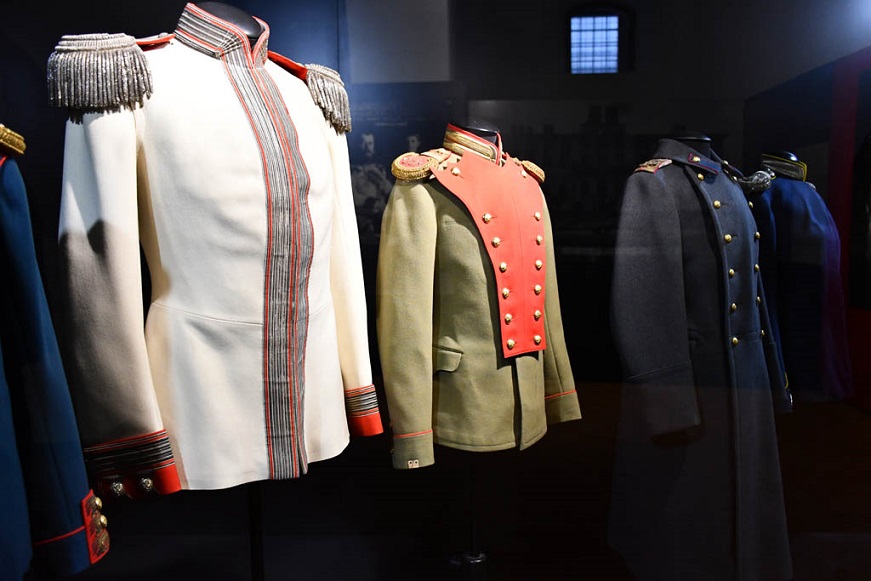
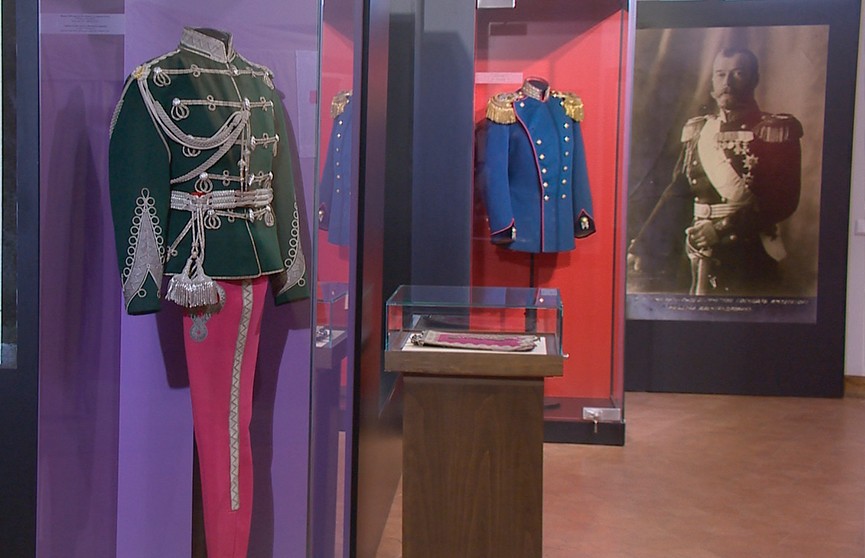
Military uniforms from the collection of the Tsarskoye Selo State Museum-Preserve are currently on display at a new exhibition From the Іmperial Wardrobe, in the Mir Castle Complex, a UNESCO World Heritage Site, situated 100 km from Minsk, Belarus.

The exhibition, which opened on 29th November is dedicated to the 100th anniversary of the end of the First World War. It is a joint international project of the Mir Castle Complex Museum, the Tsarskoye Selo State Museum-Preserve, the State Archives of the Russian Federation, the Grodno State Historical and Archaeological Museum, the Local Charitable Foundation “Brest Fortification” and the Lukskaya Secondary School.

The First World War changed the face of the Russian Empire, the way of life of people and families, including the imperial one. For a long time that war was in the shadow of the October Revolution, the Civil War and later the Great Patriotic War. The main purpose of the exhibition is to restore the historical memory of the war, drawing attention to the personality of Emperor Nicholas II and to military events related to Mir township and the surrounding villages.

138a

138b

The exhibition features a total of 39 military uniforms, including those belonging to Emperor Nicholas II and his son, Tsesarevich Alexei. After the tsar’s abdication, his uniforms survived the 1917 Revolution, and were preserved in the Alexander Palace. During the Great Patriotic War (1941-45), the uniforms were evacuated to Novosibirsk.

An interactive excursion has been prepared for the visitors, during which they will be able to learn about the features of uniforms and learn about the history of individual Life Guard regiments.

A separate unit presents weapons and military equipment from the First World War from the funds of Grodno State Historical and Archeological Museum, which are complemented by the items from the State Institution “Lukskaya secondary school” located on the territory of Korelichi district and on the basis of which the military-patriotic club “Vityaz” since 2001 has been operating.

An illustrative series of the exhibition is represented by photographs from the Tsarskoye Selo State Museum-Preserve, the collection of Major General Svity EI.V. Vladimir Fedorovich Dzhunkovsky State Archives of the Russian Federation, as well as photographs from the archive of local historian Leonid Kudin.

The thematic section on medical services during the First World War will be of particular interest. A military field hospital tent and medical instruments are on display at the exhibition thanks to the Local Charitable Foundation “Brest Fortification”.

The exhibition closed on 28 February 2019.

© Mir Castle / Tsarskoye Selo State Museum Preserve. 30 November 2019

Exhibition: ‘Nicholas II. Family and Throne’

137a

NOTE: All of the articles pertaining to Nicholas II and his family which were originally published in my Royal Russia News blog, have been moved to this Nicholas II blog. This article was originally published on 6 December 2018 in my Royal Russia News blog – PG

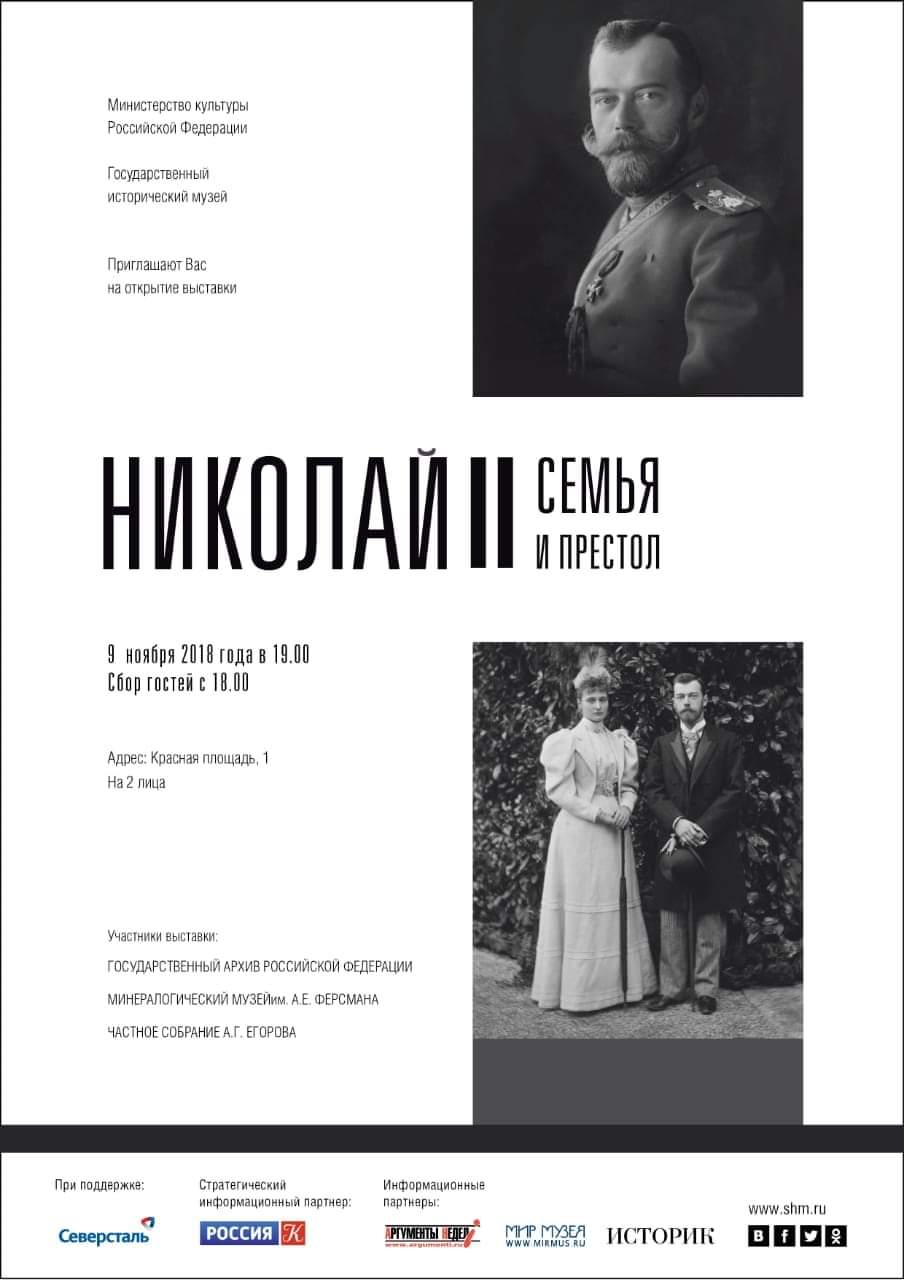
The following exhibition ran from 10 November 2018 to 15 April 2019

The State Historical Museum is currently the venue for an exhibition on the reign and family life of Nicholas Alexandrovich Romanov – the history of the Imperial family in photographs, paintings, diaries, personal items and other rare artifacts.

A significant part of the 750 photographs in the exhibit are from the funds of various archives and museums in Russia – including the State Archive of the Russian Federation (GARF), which contains a vast and unique collection of photo albums of members of the Imperial family.

Timed to the 150th anniversary of the birth and the 100th anniversary of the death of the last Russian emperor Nicholas II, the exhibition allows all visitors interested in history to create their own impression of one of Russia’s most controversial and misunderstood historical figures, which includes a look at the life of the Russian monarch and his family.

Photography, which is the basis of the exhibition, is of great historical importance, often fragile, requiring careful handling and protection. The photos submitted for the exhibit are 100 – 150 years old, and a considerable part of the photos were restored by professionals for presentation to the public in this exhibition.

As is known, the emperor and his family members took a great interest in photography: they all had cameras and enthusiastically photographed each other and and those close to them. Nicholas II was usually accompanied by a professional photographers who recorded his 23-year reign almost daily (the main merit belonged to the court photographer AK K. Yagelsky to the owner of the KE von Gan and Kº studio). Many photos come from Tsarskoye Selo and Peterhof palaces, and reflect the day to day lives in their private apartments of the Alexander Palace and the Lower Dacha.

The exhibition is divided into sections: family, official and memorial. The first sections testify to the two “functions” of Nicholas II: the head of the family and the ruler of a vast empire. It shows about 300 photographs taken in the 1870s – mid 1910s by leading Russian and foreign photo masters (K. K. Bulla, S. L. Levitsky, A. I. Saveliev, F. P. Orlov, M. I. Gribov, A. A. Otsup, K. A. Fisher, Atelier “Boissonna and Eggler”, “K. E. von Gan and Co.”, “J. Russell & Sons”, “W. & D. Downey “). Autographs and letters of Nicholas II are also on display, documents include a manifesto on the birth of Grand Duke Nicholas Alexandrovich, a lunch menu on the occasion of the coming of age of Tsesarevich Nicholas Alexandrovich, and an announcement of the coronation of Emperor Nicholas II and Empress Alexandra Feodorovna.

The family section of the exhibition is divided into the following topics: “Grand Duke. Tsesarevich. Emperor”, “Niki and Alix”, “Tsar’s Children. OTMA”, “Tsar’s Children. Alexei”, “In the Family Circle. Tsarskoye Selo. Livadia. Finland. Poland “. Particular emphasis is placed on the figure of Tsearevich Alexei Nikolaevich, the only son of Nicholas II, and heir to the throne, whose tragic fate left an imprint on the life of the entire imperial family.

137m

The official section of the exhibition shows photographs of Nicholas II during meetings with the heads of foreign countries (British King Edward VII, German Emperor Wilhelm II, Siamese King Rama V, French Presidents Armand Falier and Felix Faure) during the celebrations marking the 200th anniversary St. Petersburg and the 100th anniversary of the Patriotic War of 1812, during the opening of grand monuments and the consecration of churches, the holding of regimental holidays and parades, as well as during the First World War.

Two of the most important dynastic events in which Nicholas II was most directly involved – the coronation (1896) and the 300th anniversary of the Romanovs’ house (1913), are also featured.

137n

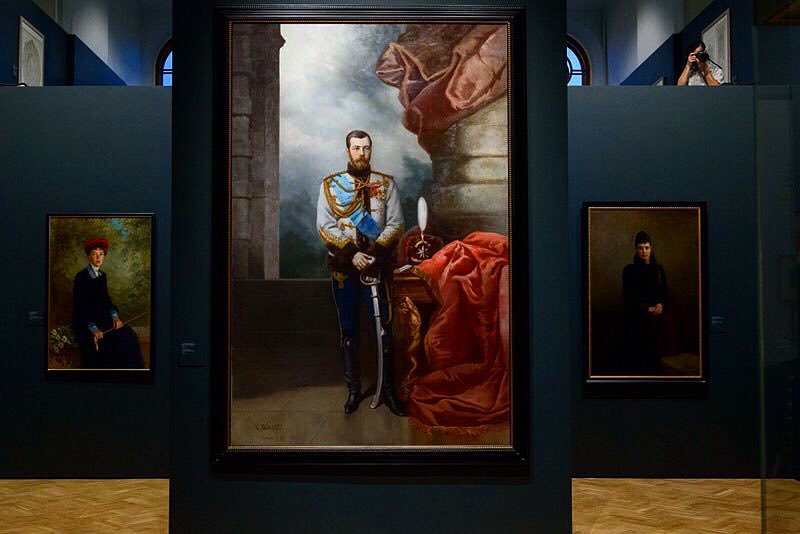
Ceremonial portrait of Nicholas II, by Léon Bakst, 1895

A large ceremonial portrait of Nicholas II, by the famous artist Léon Bakst (1895) in Paris is on display for the first time. The painting has never before been exhibited, and was specially restored for the exhibition. The exhibition also features pictorial portraits of Nicholas II and Alexandra Feodorovna by G.M. Manizer and A.V. Makovsky, and a series of watercolors by N.N. Karazin, N.S. Matveeva and A.I. Charlemagne.

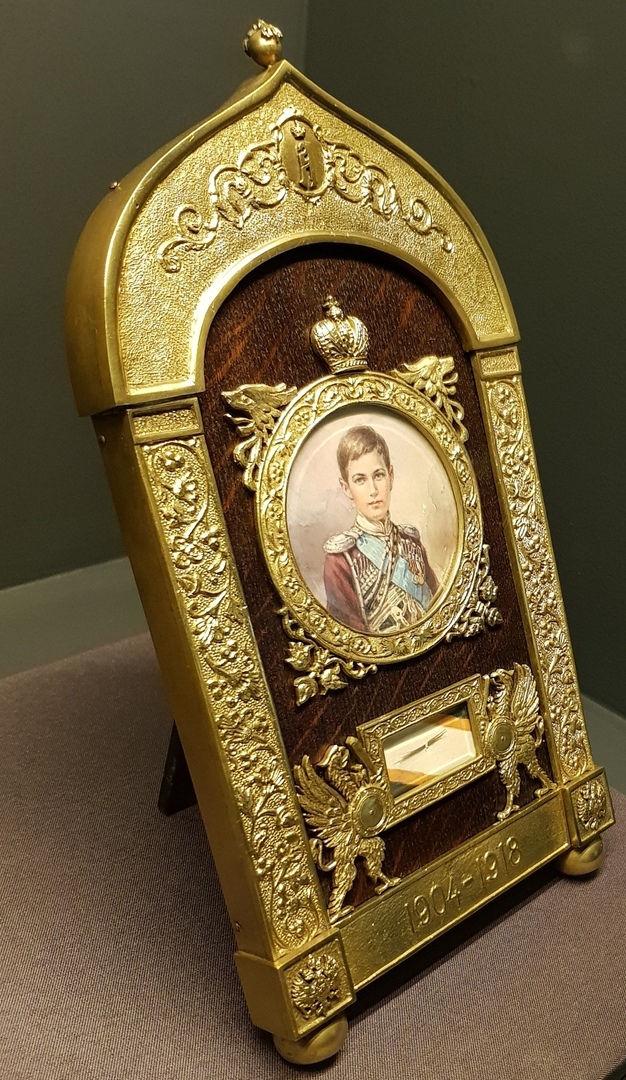
In addition to photos, the exhibition is filled with numerous items, both personal and memorial, associated with Nicholas II and his family – portraits, diaries, letters and more. For example, the uniforms of Nicholas II and Tsesarevich Alexei, the Imperial Constellation Easter Egg, made by Faberge for Alexandra Feodorovna Easter 1917, but not presented to the Empress, are shown a bronze frame with a watercolor portrait of Tsesarevich Alexei, a drawing, a watercolor portrait of Tsesarevich Alexei, and a drawing of Alexandra Feodorovna with their children.

One of the most unique artifacts on display is a curl of hair belonging to Tsesarevich Alexei, embedded in a watercolor portrait (see below), which was transferred during the post-war period to the Belgrade Museum in Serbia. In order to confirm its’ authenticity, the staff of the Historical Museum turned to the scientists of the N.I. Vavilova Institute of General Genetics, who confirmed a direct connection to the female line of Queen Victoria.

137o

Curl of hair belonging to Tsesarevich Alexei, embedded in a watercolor portrait

The exhibition is located in the renovated premises of the State Historical Museum, where there is also a small memorial hall with photographic portraits of members of the Romanov family and their personal belongings.

The end of the exhibition is a small hall, resembling a basement, where seven portraits are displayed of members of the Imperial family who were murdered in the basement of the Ipatiev House in Ekaterinburg on the night of July 16-17.

The exhibition Nicholas II. Family and Throne runs from 10 November 2018 to 15 April 2019 in the State Historical Museum in Moscow.

© Paul Gilbert @ Royal Russia. 30 November 2019

The Imperial Room in the Church on the Blood, Ekaterinburg

136a

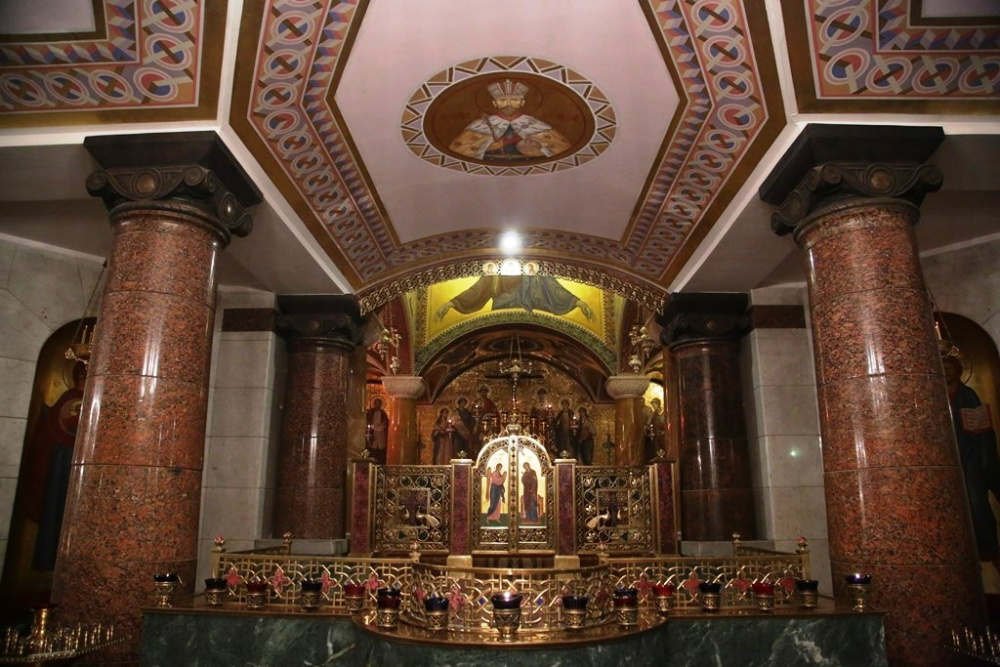
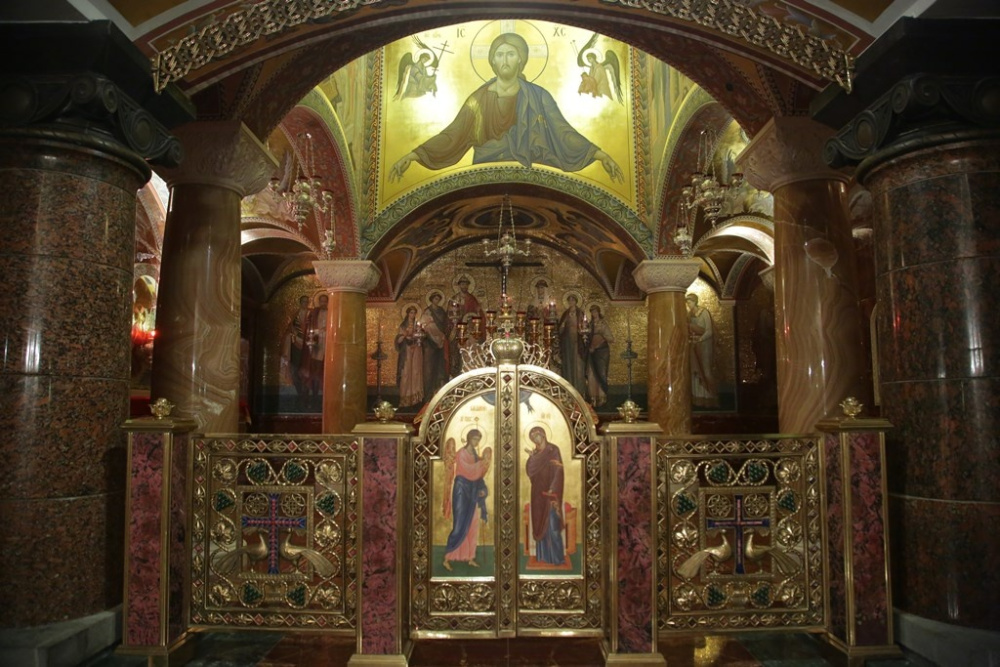
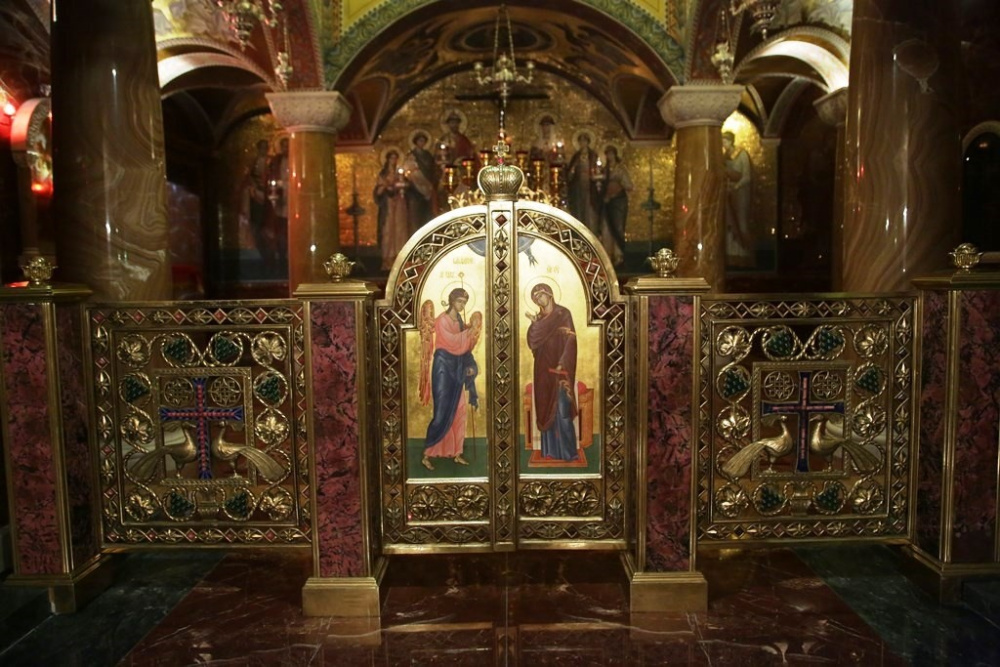
On 20th June 2018, representatives of the media were granted a first look at the Imperial Room, in the Church on the Blood in Ekaterinburg. The altar of the Imperial Room is situated in the lower church sanctified in honor of the Holy Royal Martyrs. It was established on the site of the room located in the basement of the Ipatiev House, where Emperor Nicholas II, his family, and four retainers were all brutally murdered on the night of 16/17 July 1918. The decoration of the room received the blessing of the Metropolitan of Ekaterinburg and Verkhoturye Kirill to mark the centenary of this tragic event.

136b

136c

The new design, the reconstruction of the altar, along with additional work in the Imperial Room, was carried out during the past year,the senior priest of the Church on Blood Achpriest Maxim Minailyo told journalists.

Father Maxim noted that the decoration of the Imperial Room was conducted by masters from Moscow and Belarus. Above the paintings worked talented Moscow icon painters led by Alexei Vronsky, and the mosaic was done by specialists of the mosaic workshop at the Holy Elizabethan Monastery of Minsk under the guidance of the icon painter Dmitry Kuntsevich. The work was supervised by nuns of the Novo-Tikhvin Convent in Ekaterinburg, known for their skill in restoring and decorating Orthodox churches.

136d

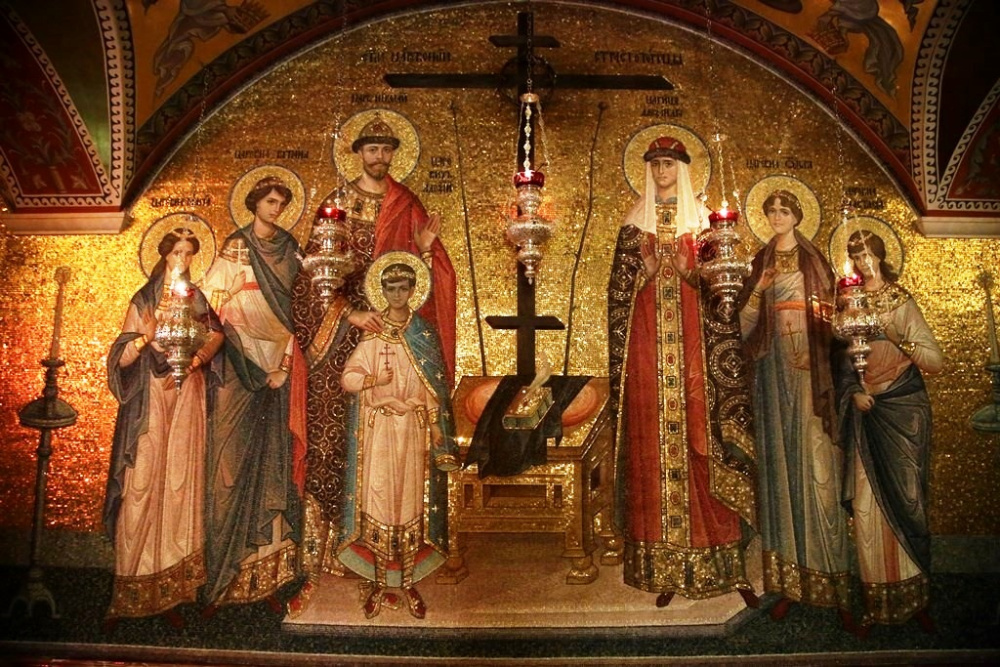
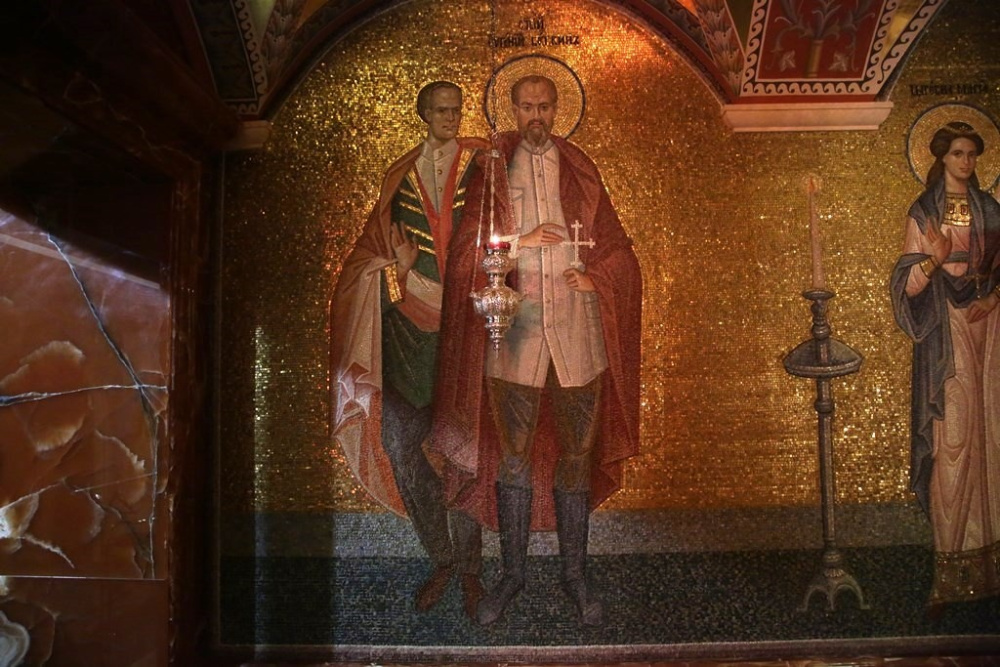
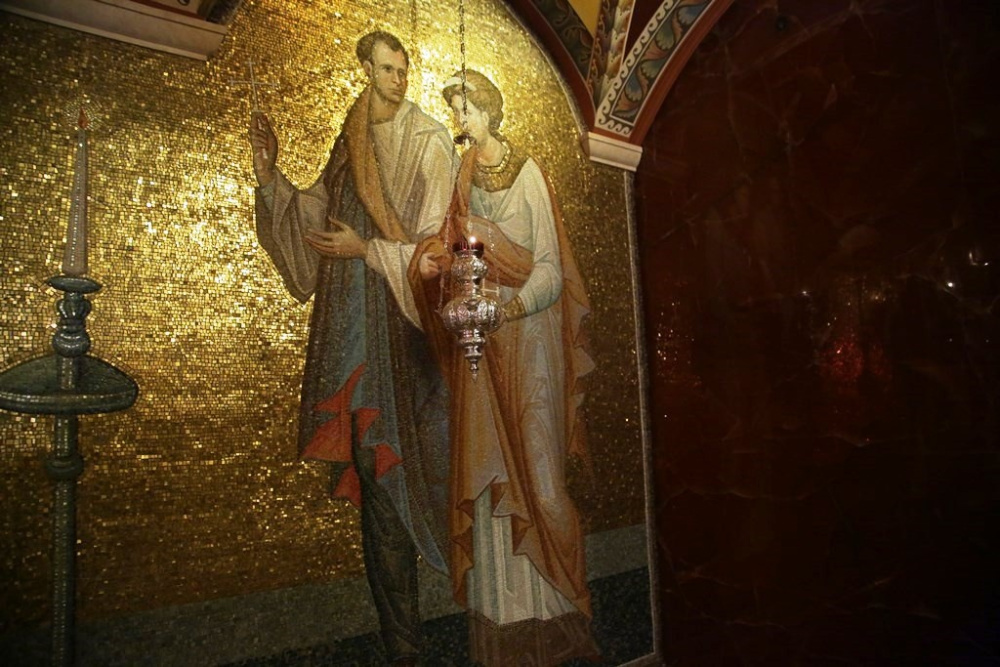
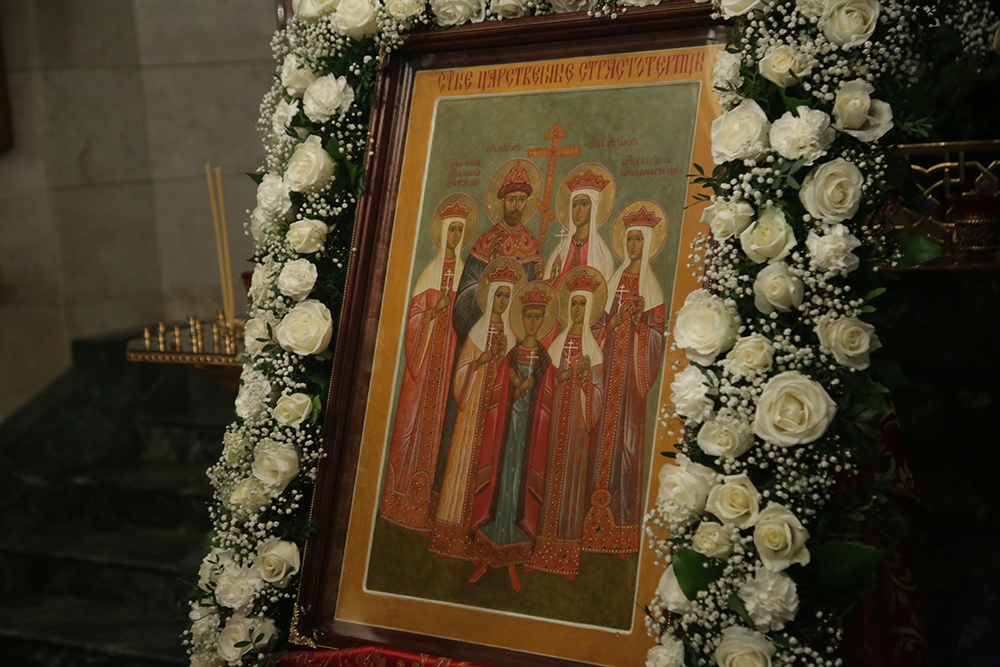
Representatives of the media saw a unique mosaic panel which occupies the central part of the altar depicting the Holy Royal Passion-Bearers and their faithful retainers who suffered with them: Emperor Nicholas Alexandrovich, Empress Alexandra Feodorovna, Tsesarevich Alexei, Grand Duchesses Olga, Tatyana, Maria, Anastasia, Saint Yevgeny Botkin, Alexey Trupp, Ivan Kharitonov and Anna Demidova.

136e

136f

As the priest said, the mosaic reflects the position of the Royal Passion-Bearers at the time of their martyrdom. They stood with their backs to the east, facing west, as it is now depicted in the altar.

Above them rises the Feodorovskaya Icon of the Mother of God, which is the heavenly patroness of the House of Romanov.

On the western vault depicts the Sovereign Icon of the Mother of God, which was revealed on the very day when the Emperor was forced to abdicate the throne, and the saints glorified during the reign of Emperor Nicholas Alexandrovich: St. Theodosius of Chernigov, St. Seraphim of Sarov, St. Princess Anna Kashinskaya, St. Joasaph Belgorod, St. Hermogen of Moscow, St. Pitirim of Tambov, and St. John of Tobolsk.

The creation of the paintings and mosaics took almost a year to complete. The creation of mosaic works was a particularly complex project, as the iconography of all the members of the Imperial Family and their faithful retainers had to be intricately created.

The walls and the floor around the altar are lined with red onyx, which is very symbolic, because the red color on one side symbolizes the martyrs blood shed by the Imperial family, and on the other hand, red is the color of the royal scarlet, porphyry, regal color. This color depicts very well the feat of the Royal Passion-bearers, who in both imperial majesty and in humiliation showed rare piety and great spiritual heights.

On the right side of the throne in a special reliquary containing fragments of the Ipatiev House: a brick and a balustrade.

At the end of the media presentation, the senior priest of the church thanked the journalists for the meeting, noting the great importance of this holy place in the church.

– “We must understand that this is the main sacred place of our city. And this room is the holy of holies in this church,” the father pointed out. – “This place today inspires us to move on and create such unique architectural and religious monuments to which our children, visitors, pilgrims will be drawn, because creating such a diverse national architecture, we lay the foundation for future generations to be proud of our country, including our cultural, religious and architectural heritage.”

CONSECRATION

NOTE: This article was originally published on 20 December 2018 in my Royal Russia News blog – PG

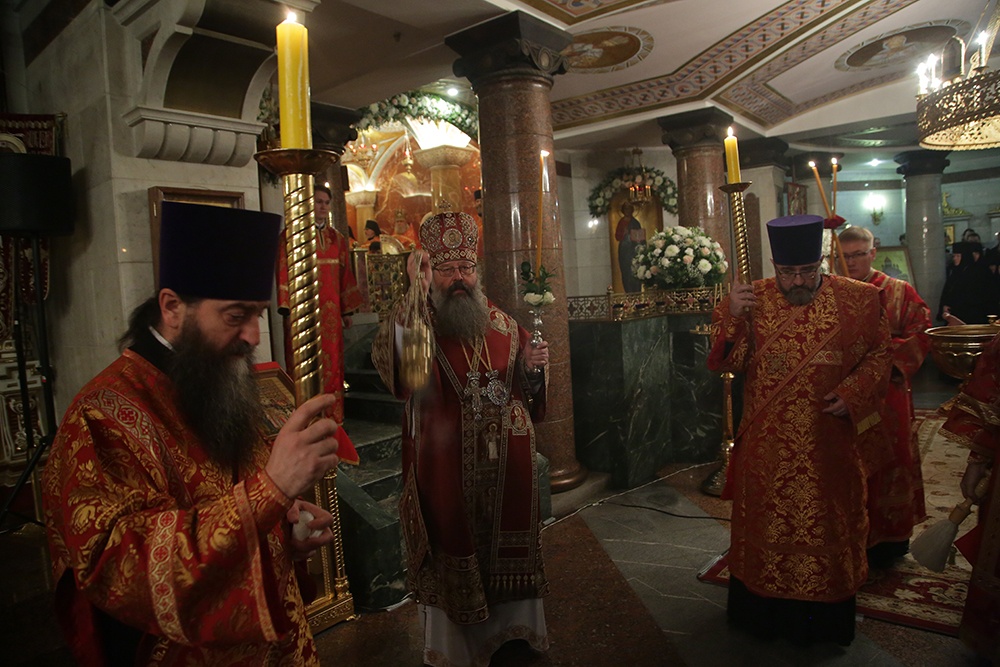
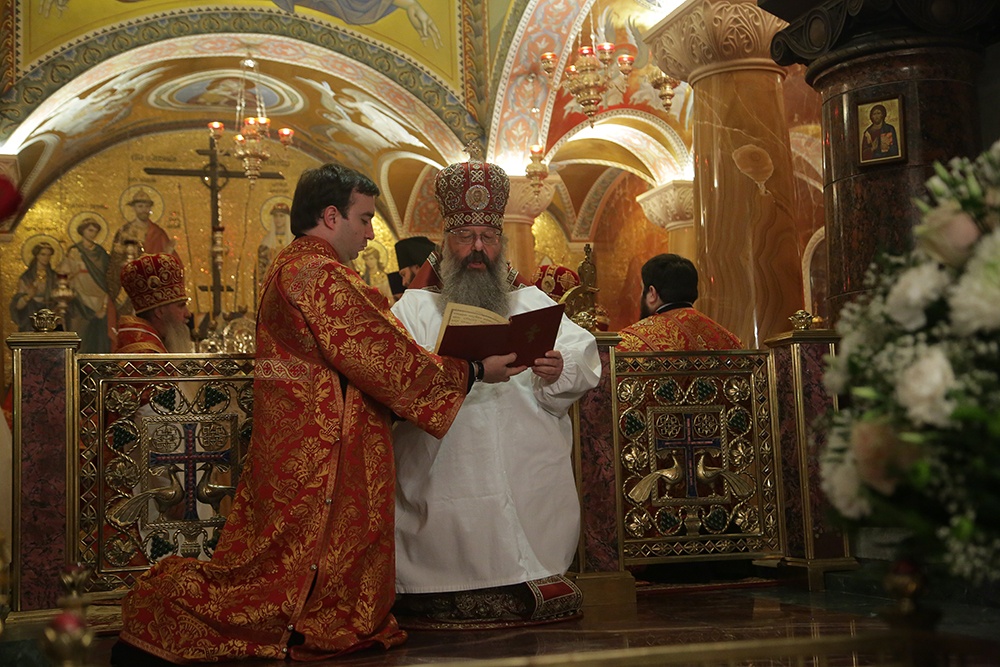
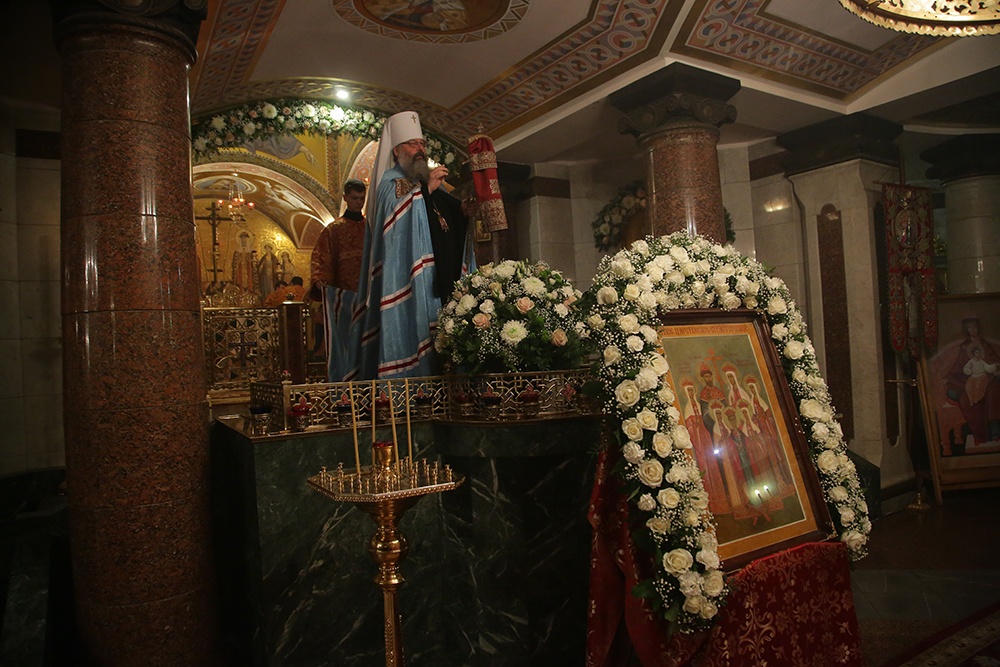
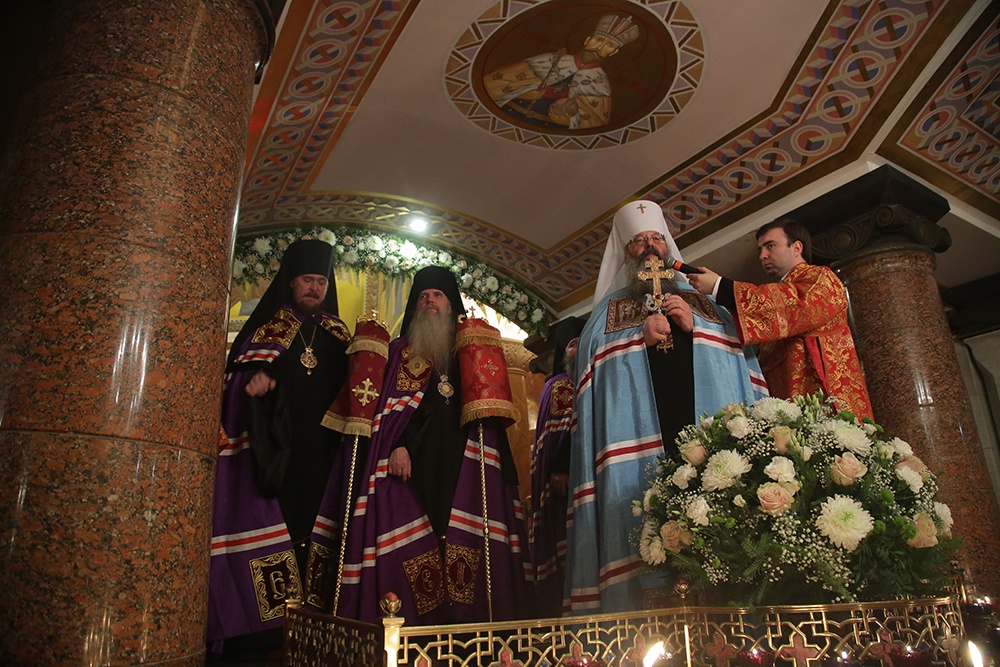
On 12th December 2018, Metropolitan Kirill of Ekaterinburg and Verkhotursk performed the rite of Great Consecration of the renovated side-chapel in the name of the Holy Royal Passion-Bearers of the Church on the Blood in Ekaterinburg. His Eminence was served by the hierarchs of the Ekaterinburg Metropolis: Bishop Method Kamensky and Alapaevsky, Bishop Evgeny of Nizhny Tagil and Nevyansky, and Bishop Serov and Krasnoturyinsky Alexy.

136l

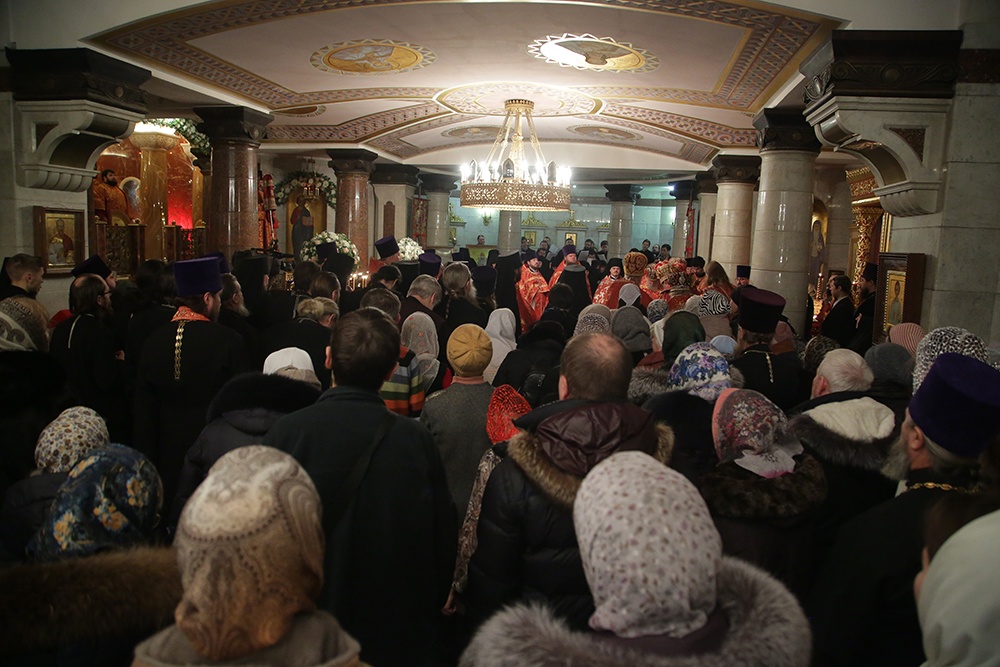
At the end of the service, Metropolitan Kirill recalled in his archpastoral talk that the year 2018 – the Imperial or Royal Year – the year marking the 100th anniversary of the deaths and martyrdom of the Imperial family, was widely celebrated in the Ural city. He recalled that on the night 16/17 July, an estimated 100,000 people participated in the Divine Liturgy at the Church on the Blood and the subsequent cross procession, both of which were headed by His Holiness Patriarch Kirill of Moscow and All Russia. According to the ruling bishop, it was truly a “nationwide prayer celebration.”

136m

And completing this year, the consecration of the renewed side-altar in the name of the Holy Royal Passion-Bearers was performed in the Church on the Blood.

Metropolitan Kirill noted that a Divine Liturgy is performed once a week, on the night of Tuesday/Wednesday, in memory of the Holy Royal Passion-Bearers, whose murder occurred on the night of Tuesday/Wednesday 16/17 July 1918. In addition, once a month, on the night of the 16/17, a night liturgy is also celebrated. Metropolitan Kirill reached out to Orthodox Christians asking them to attend the night service and pray to the Holy Royal Passion-Bearers.

136n

– “Here you have this feeling – a special reverence for the Royal Family and our martyrs, the new confessors of the Russian Church, one which will enter the soul, even if the soul is cold. All this love and achievement will melt away any callousness and any coldness. And the more we pray, the more we pay attention to the memory of the Holy Royal Martyrs, to their feat – the feat of meekness, humility, purity, the feat of absolute love for their God and for their homeland, until then our country will stand, and no evil power will be able to disturb her. Therefore, today we especially thank God for the feat of our Regal martyrs, our holy martyrs, all those who have defended our Homeland and our Church, and thanks to whom we today live on this earth,” Metropolitan Kirill said.

136o

The ruling bishop also thanked the senior priest of the Church on the Blood, Archpriest Maxim Minyaylo, for his work in this church, and also thanked Abbess Domnik (Korobeinikova) and the sisters of the Novo-Tikhvinsky Convent, who “very strongly and powerfully helped create this chapel.”

136p

The altar of the Imperial Room is situated in the lower church, sanctified in honor of the Holy Royal Martyrs. It was established on the site of the room located in the basement of the Ipatiev House, where Emperor Nicholas II, his family, and four retainers were all brutally murdered on the night of 16/17 July 1918. In the summer of 2018, with the blessing of Metropolitan Kirill of Ekaterinburg and Verkhoturye, the altar of the Imperial Chapel of the Holy Royal Passion-Bearers – the so-called Royal Room – was redesigned and decorated for the Tsar’s Days held in Ekaterinburg. The interior of the room has completely changed: like the Cuvuclia in the Church of the Holy Sepulcher in Jerusalem.

136q

The central place is occupied by a unique mosaic panel. in the central part of the altar, depicting the Holy Royal Martyrs and their loyal subjects: Emperor Nicholas Alexandrovich, the Empress Alexandra Feodorovna, Tsesarevich Alexei, Grand Duchesses Olga, Tatiana, Maria, Anastasia, St. Eugene Botkin, Alexei Trupp, Ivan Kharitonov and Anna Demidova. The mosaic reflects the position of the Royal Passion-Bearers at the time of their martyr’s death: standing with their backs to the east, facing west, as is now depicted in the altar.

© Paul Gilbert. 30 November 2019