‘The Holy Tsar in Crimea’ – vintage newsreels from Livadia, 1902-1914

117

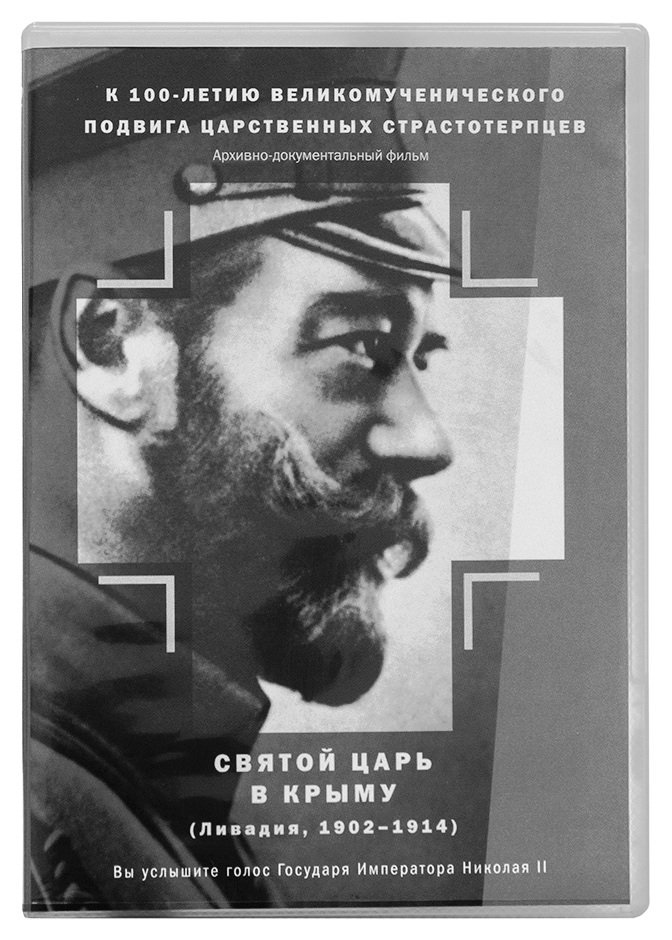
In 2018, a DVD entitled ‘Святой Царь в Крыму (Ливадия, 1902-1914)’ / Tr. ‘The Holy Tsar in Russia. Livadia, 1902-1914)’ was issued in Russia. The release of the DVD was timed to the 100th anniversary of the death of Emperor Nicholas II, on 17th July 1918.

The 36-minute DVD is a compilation of 24 newsreels, all filmed at Livadia, the Imperial estate and residence of the last Tsar and his family. All 24 newsreels are accompanied by pre-revolutionary marches and waltzes.

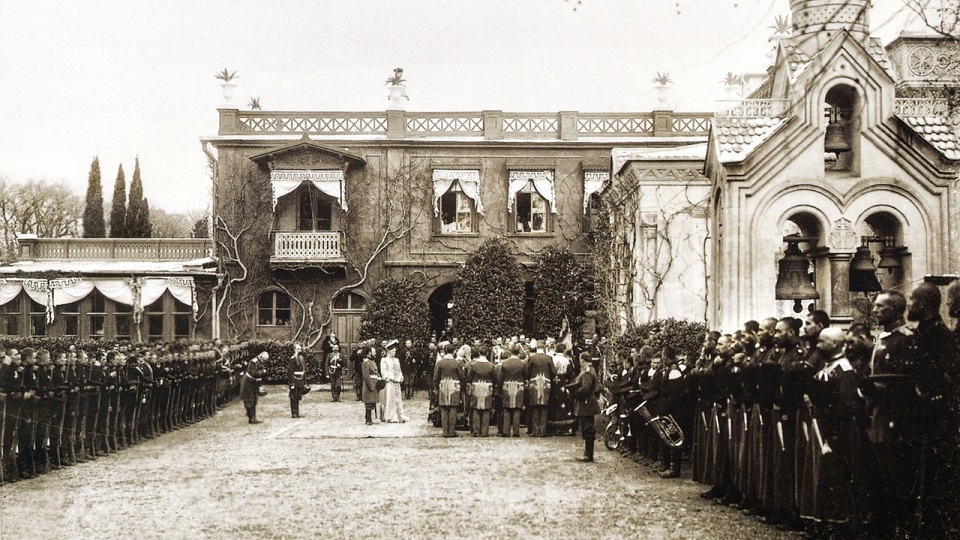
We see vintage newsreel footage of Emperor Nicholas II, Empress Alexandra Feodorovna, and their five children, set against the backdrop of the old wooden palaces in Livadia, and after 1911, set against the backdrop of Nikolai Krasnov’s elegant white Crimea granite palace Neo-Renaissance-style, which has survived to this day.

The vintage newsreels feature a variety of events at Livadia, including the celebration of the birthday of Empress Alexandra Fedorovna and Holy Easter, White Flower Day, parades and receptions. They are surrounded by officers, Court officials, and members of their extended family, including the Grand Dukes and Grand Duchesses, Count Frederiks, Anna Vyrubova, among many others.

The last time the family of Nicholas II visited in Livadia, was in the spring of 1914. They were due to return in the autumn, however, the outbreak of the First World War on 1st August put an end to this visit. 

‘The Holy Tsar in Russia. Livadia, 1902-1914)’ – Part I (duration 18 minutes

‘The Holy Tsar in Russia. Livadia, 1902-1914)’ – Part II (duration 18 minutes

© Paul Gilbert. 27 October 2019

Livadia Hosts Nicholas II Conference, 20-22 October 2019

114a

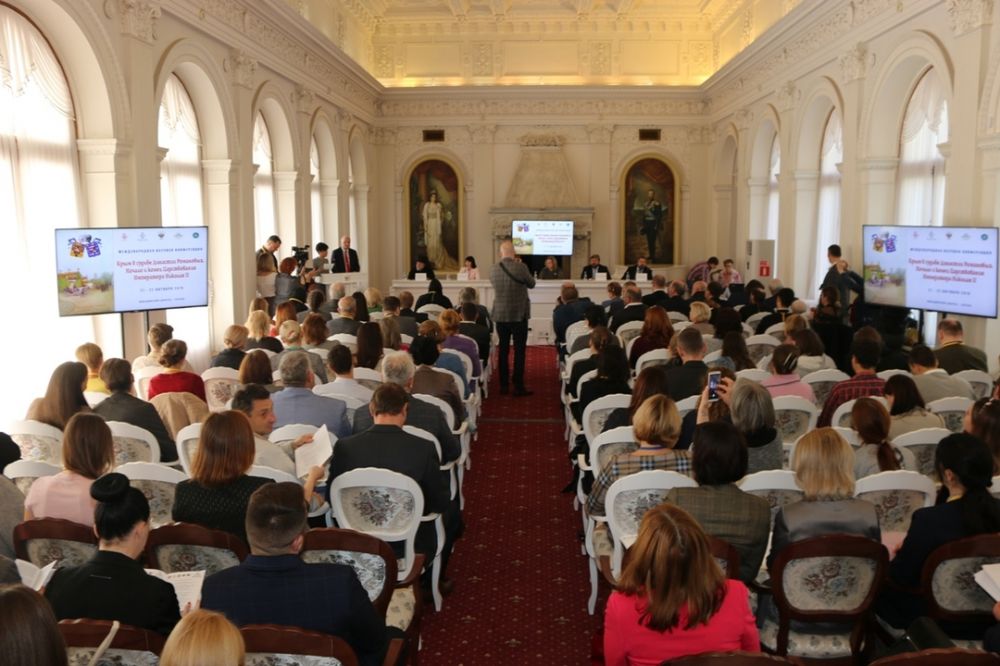
Earlier this week, Livadia Palace was the venue for the international conference ‘Crimea and the Fate of the Romanov Dynasty. The Beginning and End of the Reign of Emperor Nicholas II.’

114b

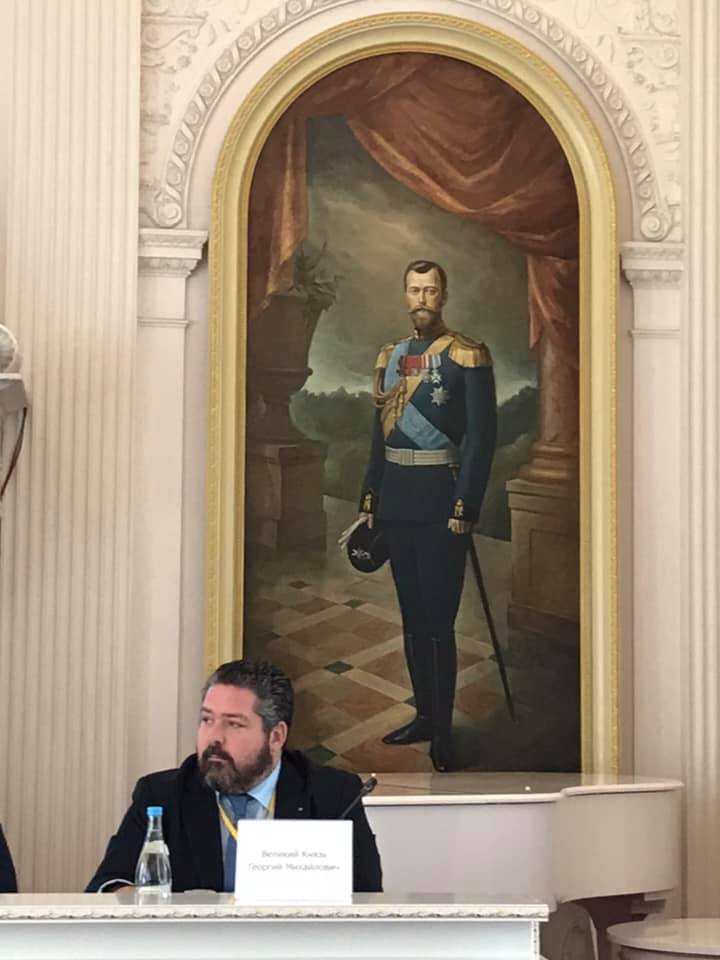
Prince George Mikhailovich seated under a portrait of Emperor Nicholas II

The conference was attended by leading Russian historians, publicists, archivists and writers. Several descendants of the Romanov dynasty were also present, including Prince George Mikhailovich.

The objective of the conference was to discuss the truth about the Tsar’s family and the and the achievements that Russia made during the reign of Nicholas II.

114c

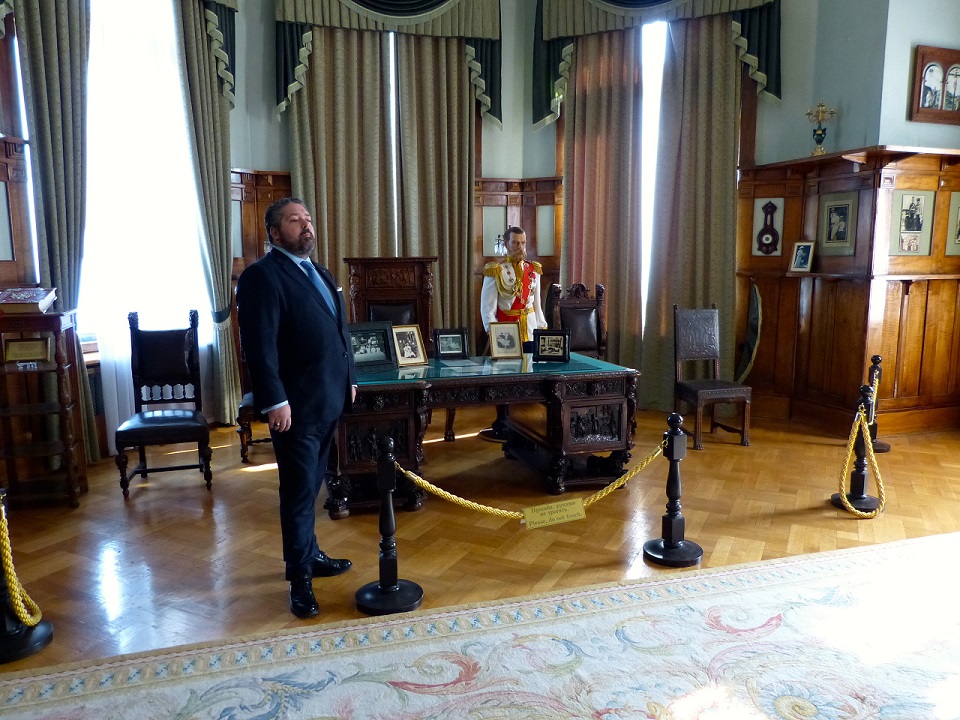
Prince George Mikhailovich in the Working Study of Nicholas II

The international conference was timed to the 125th anniversary of the accession to Orthodoxy of Princess Alix of Hesse-Darmstadt – the future Empress Alexandra Feodorovna and the 100th anniversary of the escape of members of the Russian Imperial House from Crimea.

114d

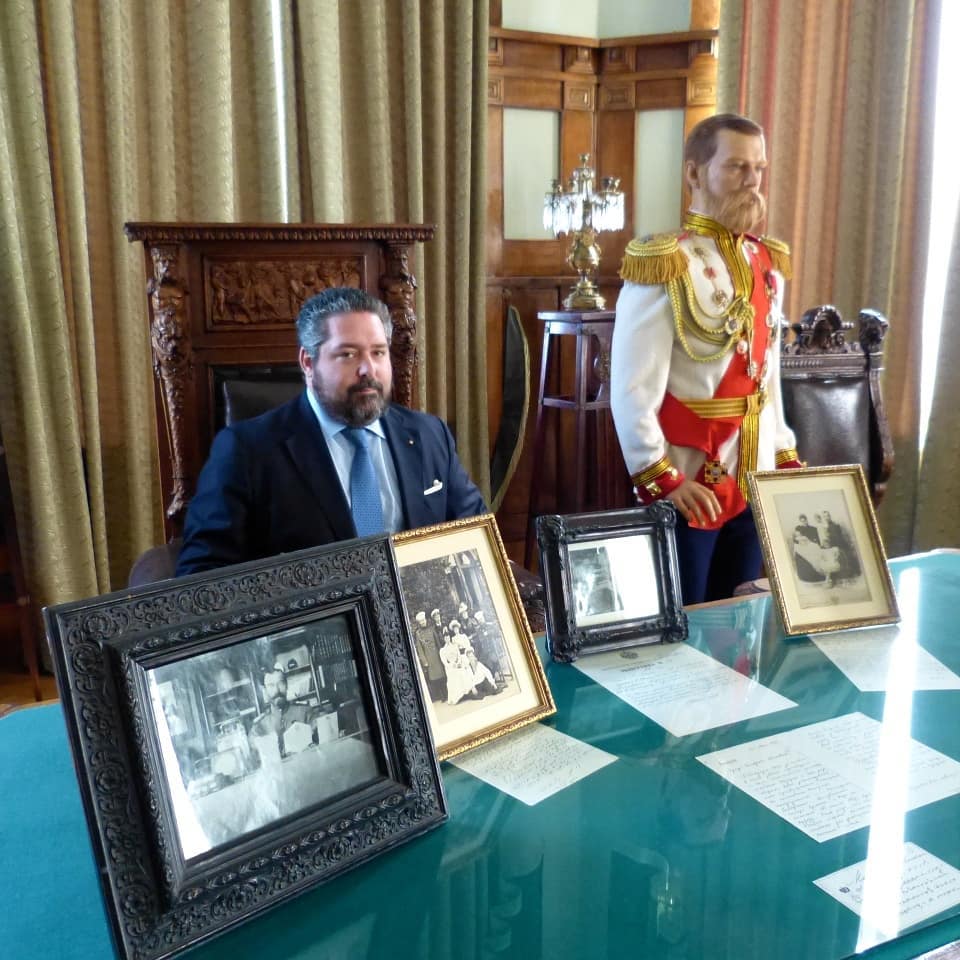
Prince George Mikhailovich seated at the desk of Nicholas II in the Tsar’s Working Study

In addition, this year marks 125 years since the death of Emperor Alexander III in Livadia. Crimea played a crucial role in the fate of the Romanovs, who played an important role in the development of the peninsula.

© Paul Gilbert. 24 October 2019

Imperial Railway Pavilions During the Reign of Nicholas II

113d

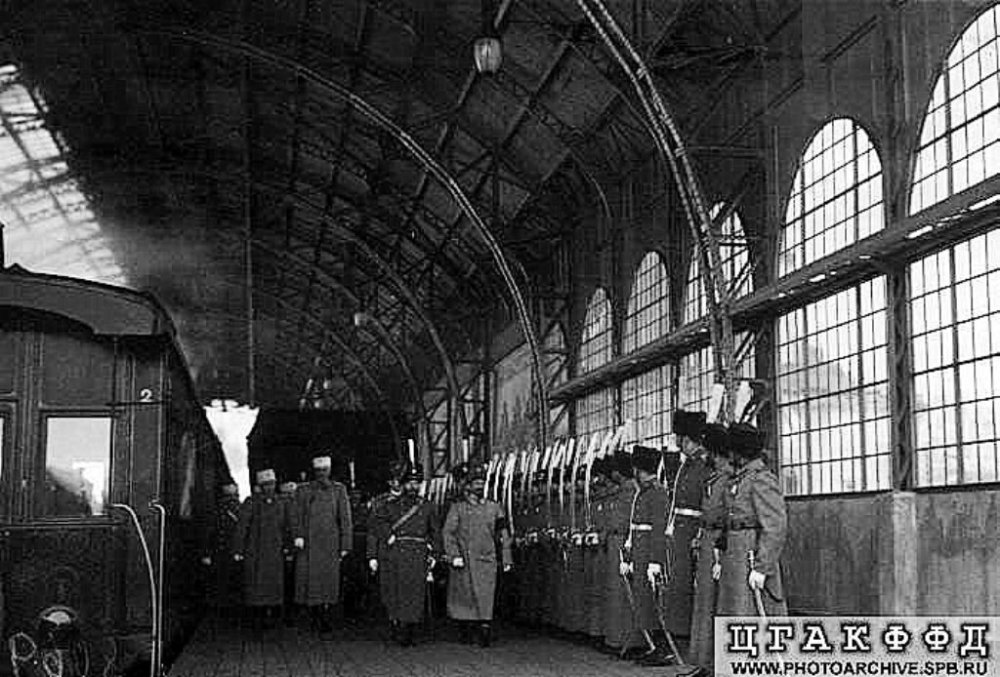
Nicholas II (center) arrives on the Imperial Train at the Imperial Pavilion in Tsarskoye Selo

During the reign of Russia’s last Emperor, three railway pavilions were constructed solely for the use of the Tsar and the Imperial Train: St. Petersburg, Tsarskoye Selo and Moscow.

All three Imperial Railway Pavilions have survived to this day.

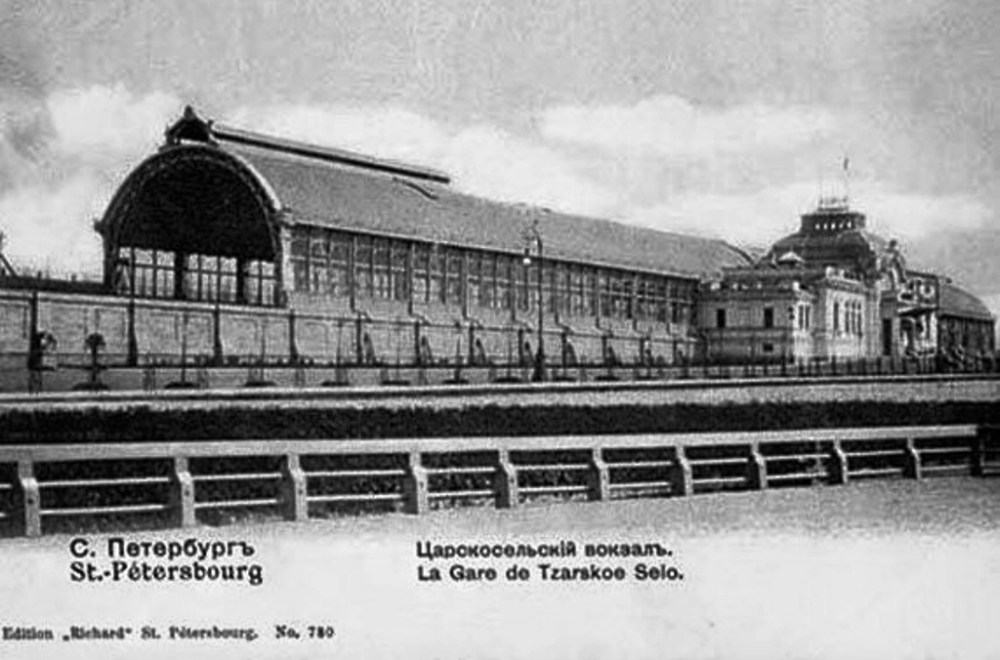
Imperial Railway Pavilion: St. Petersburg

113a

The Imperial Pavilion was constructed at the Vitebsk Station in 1900-1901, by the Russian architect S. A. Brzhozovsky. It had a separate track, in which the Imperial Train could transport the Emperor and his family to Tsarskoye Selo. The line was also used by his ministers, who travelled from the Imperial capital to Tsarskoye Selo, to have an audience with the Emperor, when he was in residence in the Alexander Palace.

Traffic on the Imperial branch of the railway was opened in 1902.

The lobby of the Imperial Pavilion was crowned with a glass dome, providing natural light. The right side of the pavilion was reserved for the Imperial chambers with a luxurious hall and lavatories, and the left side consisted of a hall for the retinue of Their Imperial Majesties and premises for administration. The platform and track was covered with a special canopy.

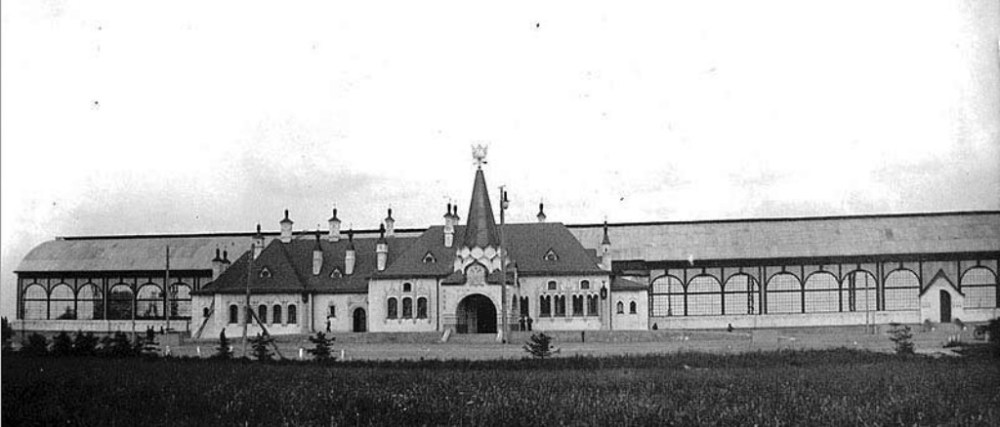
Imperial Railway Pavilion: Tsarskoye Selo

113b

The original Imperial Pavilion was constructed of wood in 1895, however, it was destroyed by fire on 25th January 1911. A new stone pavilion designed by architect V.A. Pokrovsky, was constructed in the same Neo-Russian style as the buildings of the nearby Feodorovsky Gorodok. It was here that the Emperor greeted many foreign dignitaries. A special road was laid from the station to the Alexander Palace.

The richly decorated interiors were stylized as chambers with heavy stone vaults. The rich decoration of the facades and interiors corresponded to the grand presentation of the station, being an example of a synthesis of architecture, monumental painting and decorative art, which successfully combined the forms of ancient Russian architecture of the 17th century. with construction technologies and materials characteristic of the modern era.

The imperial chambers of the station were painted by the artist M. I. Kurilko, reflecting the chambers of the beloved suburban palace of Tsar Alexei Mikhailovich.

In 1918, the station was renamed the Uritsky Pavilion, and was closed in the middle of the 20th century. The pavilion was badly damaged during the Great Patriotic War (1941-45). Sadly, it remains in a terrible state of disrepair. It has been mothballed, waiting for an investor.

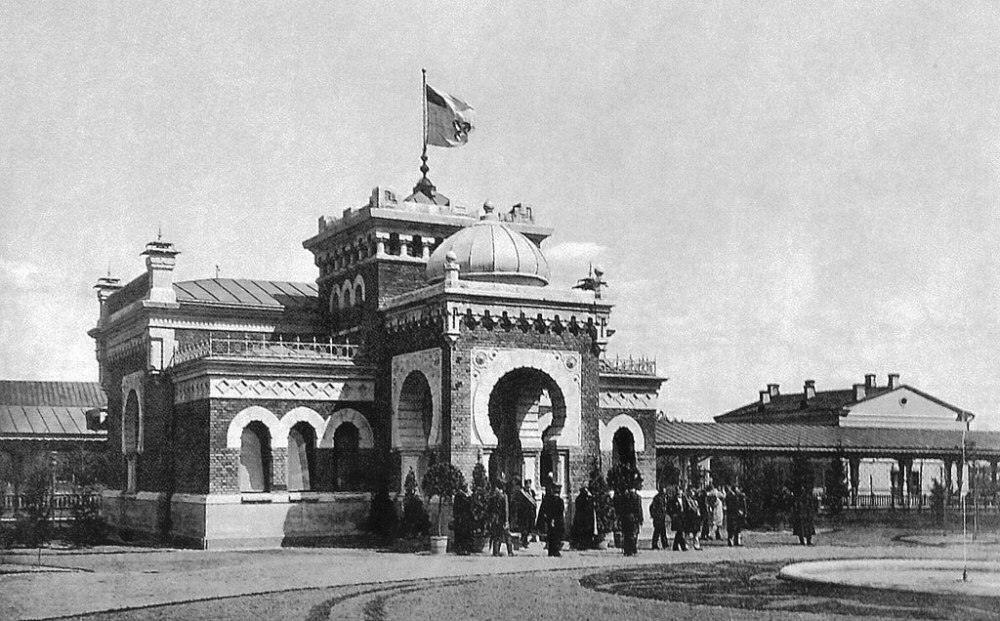
Imperial Railway Pavilion: Moscow

113c

The Imperial Railway Pavilion, also known as the Tsar’s Pavilion Building, was constructed in 1896 by the architect G.V. Voinevich.

The pavilion was designed specifically to receive the Imperial Train, carrying Emperor Nicholas II to Moscow for his Coronation in May 1896. It was built of beautiful facing bricks and decorated with Tarutino stone, crowned with a domed roof and a tower with a spire. The interior decoration and furniture were magnificent.

The plans, however, were changed – the coronation train from St. Petersburg arrived at the Brest Station (now Belorussky). Later, the Imperial Trains carrying the Emperor and his family still made stops at this station.

© Paul Gilbert. 23 October 2019

Paul Gilbert: “Yekaterinburg is my favorite Russian city”

112a

Paul Gilbert at the monument to Nicholas II, Ganina Yama

Last week, Russian journalist Olga Koshkina asked me for an interview, the article of which was published in the October 22nd 2019 issue of ‘Oblastnaya Gazeta,’ a daily newspaper published in Ekaterinburg.

Oblastnaya Gazeta’ is the official publication of state authorities of the Sverdlovsk Region, the founders of whom are the Governor and the Legislative Assembly of the Sverdlovsk Region.

112

Paul Gilbert at the Church on the Blood during Tsars Days 2018’in Ekaterinburg

Koshkina’s article ‘Пол Гилберт: «Екатеринбург – мой любимый российский город»’ – ‘Paul Gilbert: “Ekaterinburg – My Favourite Russian City,” describes my love of the Ural city, my interest in the Romanov dynasty, my efforts to clear the name of Nicholas II, and the ‘Imperial Route’ project.

NOTE: this article is only in Russian. If you use Google Translate, you can still get the gist of the article in English

© Paul Gilbert. 22 October 2019

The Fates of the Russian Imperial Yachts ‘Standart’ and ‘Polar Star’

111

Photograph by Gunnar Lönnqvist from the collection of the Helsinki City Museum

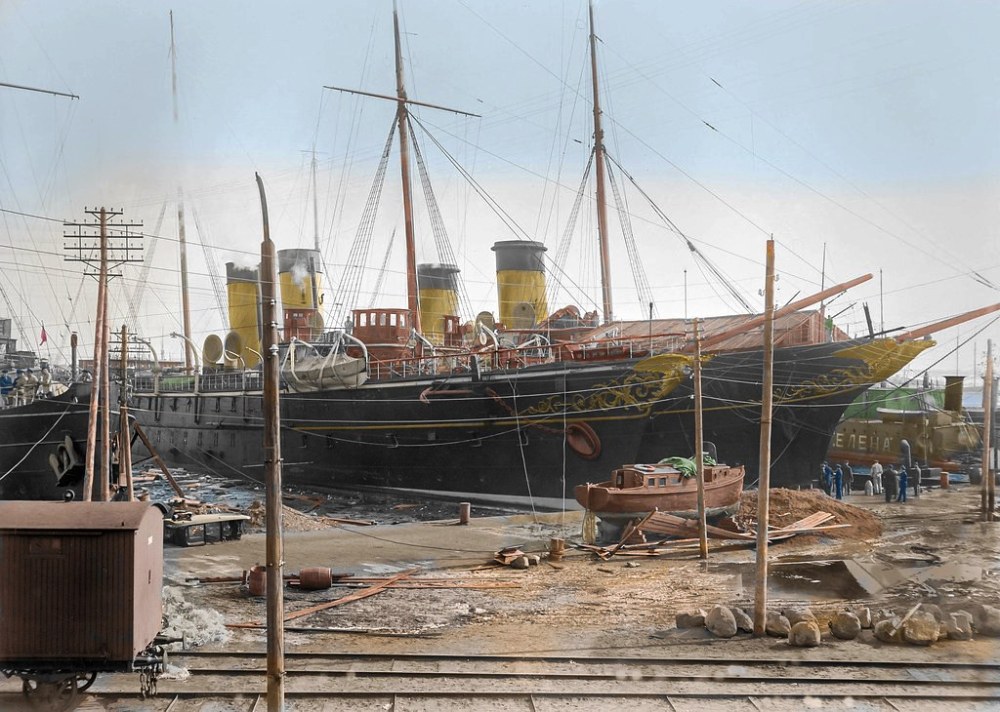
A rare photograph of the two former Imperial Yachts, ‘Polar Star / Полярная звезда’¹ (left) and ‘Standart / Штандарт’¹ (right) together in dry-dock in Helsingors (Helsinki) in early April, 1918.

With the outbreak of World War I, both yachts were placed in dry-dock. They left Helsingfors for Kronstadt, only days before the Germans attacked. The fates of both the ‘Standart’ and the ‘Polar Star’ are equally sad.

‘STANDART’

The Imperial Yacht ‘Standart’ was built by order of Emperor Alexander III, and constructed at the Danish shipyard of Burmeister & Wain,² beginning in 1893. She was launched on 21 March 1895 and came into service early September 1896. It later served Emperor Nicholas II and his family.

In 1917, the ‘Standart’ was seized by Revolutionary sailors, and took part first in the February and then in the October Revolution.

The ‘Standart’ was then stripped down and pressed into naval service. It was renamed three times: ‘18 Marta’ (‘18 March,’ from 1918-1936), and later ‘Marti’ (in honour of André Marty, from 1936-1948), and ‘Oka’ (from 1948-1963). She was scrapped at Tallinn, Estonia, in 1963.

‘POLAR STAR’

The Imperial Yacht ‘Polar Star’ was built by order of Emperor Alexander III at the Baltic Shipyard on 20 May 1888. She was launched on 19 May 19 1890, and came into service in March 1891. It later served the Dowager Empress Maria Feodorovna, who used it annually to sail to Denmark and England.

During the First World War, the yacht was docked in Petrograd, and in early June 1917 moved to Helsingfors. In 1920, the ‘Polar Star’ was mothballed.

In the early 1930s, the former Imperial Yacht was converted into a floating submarine base for the Soviet Navy. Numerous changes were made to the yacht’s exterior, but the interior decoration of many rooms were preserved. On 20 August 1936, the naval flag of the USSR was hoisted on the yacht.

In 1954 it was converted back into a floating ship, in 1961 as a target ship for testing anti-ship missiles. In November 1961, the ‘Polar Star’ was sunk in the Gulf of Riga, after being hit during a naval exercise. The final fate of the former Imperial Yacht remains unknown, although according to some reports, it was scrapped in the early 1970s.

© Paul Gilbert. 21 October 2019

NOTES

¹ The Imperial Yachts ‘Polar Star / Полярная звезда’ (left) and ‘Standart / Штандарт’ are easily distinguished by their funnels and the double-headed eagle figurehead, located on the bow of each vessel.

The two funnels of the ‘Standart / Штандарт’ are placed wider apart, whereas those of ‘Polar Star / Полярная звезда’ are closer together. The magnificent carved double-headed figurehead of the ‘Standart / Штандарт’ is much more elaborate than that of the ‘Polar Star / Полярная звезда’.

² Burmeister & Wain remain in business to this day, The blueprints for the Imperial Yacht ‘Standart’ have been preserved in the archives, a copy of which is also in the National Maritime Museum in Greenwich, England. 

Unique Photo of the Old Wooden Grand Palace, Livadia

110

Nicholas II and Alexandra Feodorovna, Grand Palace, Livadia. Autumn 1909

This vintage photo depicts Emperor Nicholas II and Empress Alexandra Feodorovna at Livadia in the early 20th century. It is set against the old wooden Grand Palace, built in 1861 for Emperor Alexander II and his family, by the architect Ippolit Antonovich Monighetti (1819-1878).

The Church of the Exaltation of the Cross (also by Monighetti) and bell tower can be seen to the right. A gallery connected the church to the palace. The church was small, because it was designed only for the imperial family, and was used by three respective emperors: Alexander II, Alexander III and Nicholas II.

It is known that the Imperial family arrived in Livadia with their children on 5th September 1909. It was during this visit, starting from 27th October, that Nicholas II and Alexandra Feodorovna met with the architect Nikolai Petrovich Krasnov (1864-1939) on numerous occasions, to discuss in detail the design of their new white palace, and the decoration of its halls and other rooms. The August couple approved the design on 12th December, just 4 days before leaving Livadia for St. Petersburg.

The old wooden Grand Palace was demolished in 1910, to make way for a new Italian Neo-Renaissance style stone palace, which would serve as the residence of Nicholas II and his family during their visits to Crimea. The Imperial family visited their new white palace in the fall of 1911 and 1913 and in the spring of 1912 and 1914.

© Paul Gilbert. 20 October 2019

Love of Nicholas II and Alexandra Feodorovna to be immortalized in Crimea

107

Tsesarevich Nikolai Alexandrovich and Princess Alix of Hesse and by Rhine

In 2020, a monument will be established in Alushta (situated 36 km from Yalta), at the site of the historic meeting between Tsesarevich Nikolai Alexandrovich and his future wife, Princess Alix of Hesse and by Rhine.

The St. Basil the Great Foundation has announced a competition for the best monument project commemorating the meeting of the future Emperor Nicholas II and Empress Alexandra Feodorovna in Alushta on 10th October 1894.

It was in the autumn of 1894, that Emperor Alexander III’s health began to further deteriorate. Nicholas obtained the permission of his dying father to summon Alix to the Imperial family’s Crimean palace of Livadia.

A stone laying ceremony will be held at the end of October, at the site of the future monument with a sign on which the historical background of the event 125 years ago will be indicated.

According to the organizer of the contest, the creation of such a monument should be a great cultural event for the Crimea and for the whole of Russia, bearing educational and moral significance, reflecting the of love of the August couple.

The results of the competition for the best design of the monument will be announced on 15th December 2019. The winner of the competition will be determined by a competition committee, headed by Grand Duke Georgy Mikhailovich.

© Paul Gilbert. 27 September 2019

NEW photos reveal progress of the reconstruction of historic interiors in the Alexander Palace

ap5

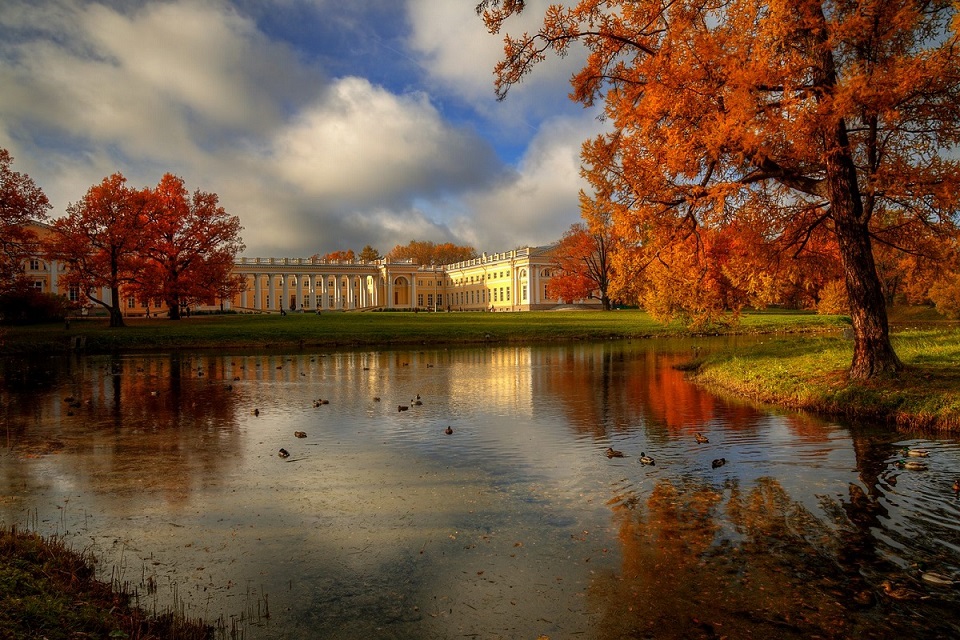
The Alexander Palace in Tsarskoye Selo surrounded by the colours of autumn

These are indeed exciting times for those of us, who share an interest in the last Russian Imperial Family. The recreation of the historic interiors of Nicholas II and Alexandra Feodorovna in the Alexander Palace, has to rank among the most exciting restoration projects since the fall of the Soviet Union in 1991.

The restoration and reconstruction of the Alexander Palace has generated tremendous interest since the palace-museum was closed in August 2015. There is much optimism that several historic interiors will be open to the public at the end of 2019, or early 2020. I for one, am looking forward to travelling to St. Petersburg next year, to see these rooms in all their glory.

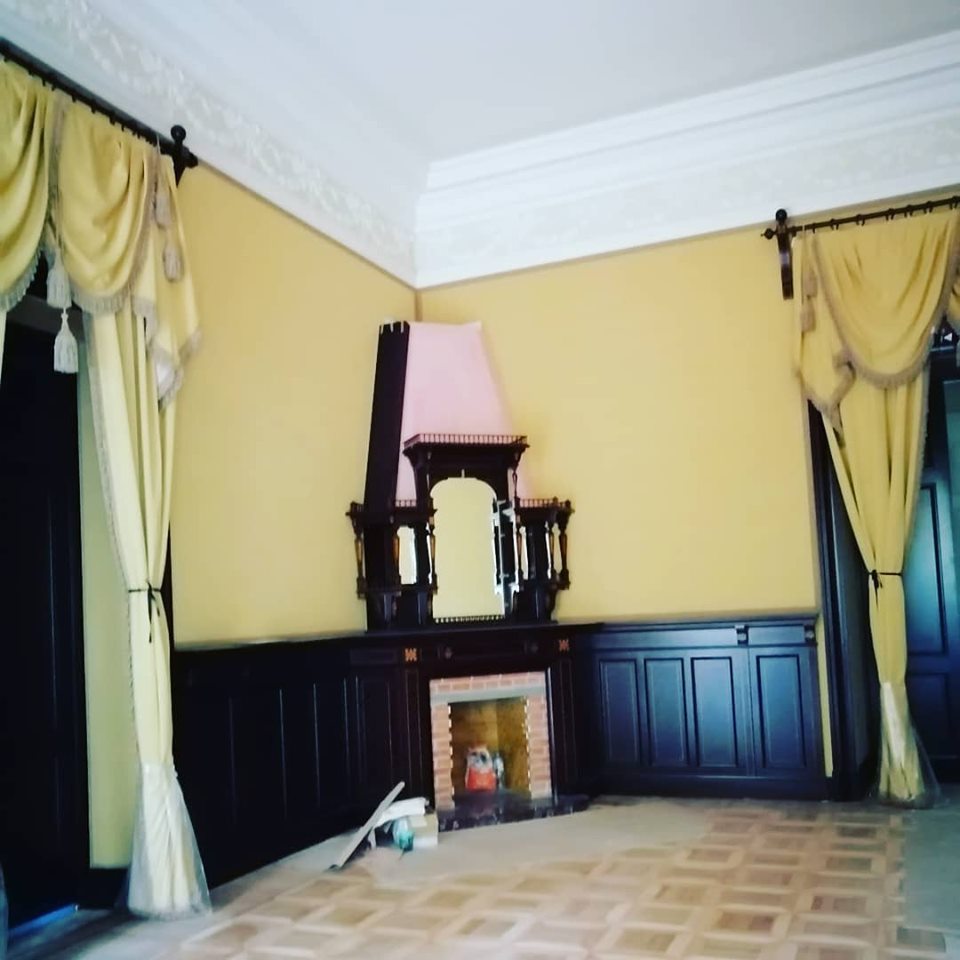
NOTE: these four photographs reveal the most recent results of the reconstruction of the Alexander Palace interiors, courtesy of 66salomon1986@Instagram

ap1

The curtains have been installed in the Imperial Bedroom in the Alexander Palace
PHOTO: 66salomon1986@Instagram

ap2

The corner fireplace in the Pallisander (Rosewood) Drawing Room in the Alexander Palace
PHOTO: 66salomon1986@Instagram

ap3

The corner fireplace in the Tsar’s Working-Study in the Alexander Palace
PHOTO: 66salomon1986@Instagram

ap4

Stunning view of Nicholas II’s Bathroom, includes the fireplace and bath in the Alexander Palace
PHOTO: 66salomon1986@Instagram

Click HERE to review more articles, news and photos about the history and restoration of the Alexander Palace from Nicholas II. Emperor. Tsar. Saint.

© Paul Gilbert. 26 September 2019

Moscow thanks US for return of historic documents related to Russia’s last tsar

104a

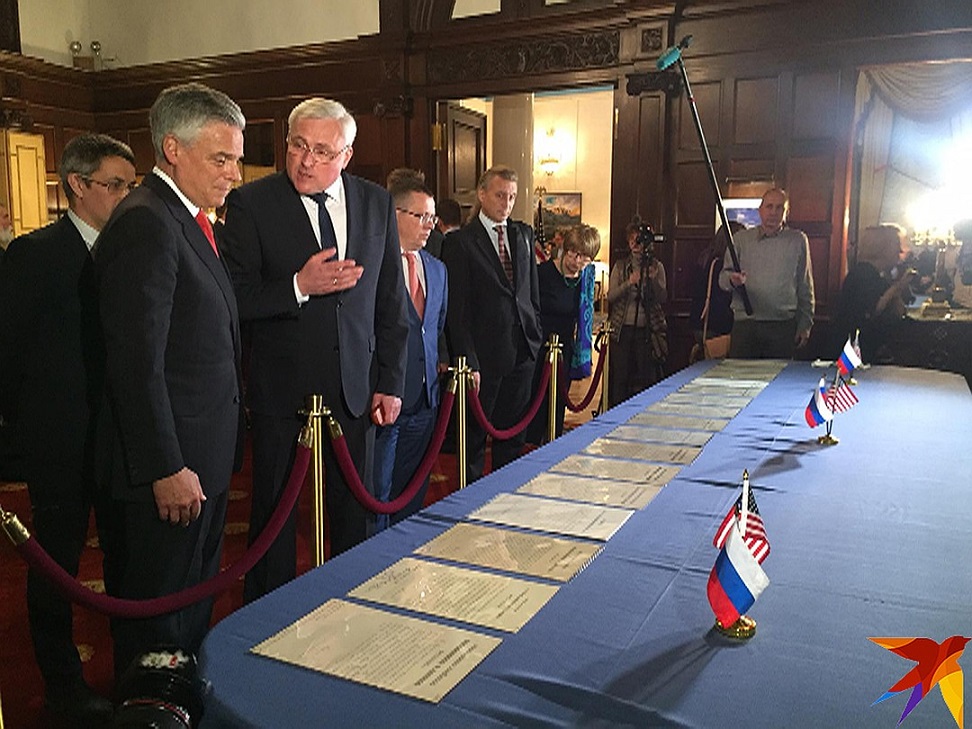
US Ambassador to Russia John Huntsman (left) with deputy head of the Rosarchive Andrei Yurasov (right), review the sixteen stolen documents returned to Russia

During a ceremony held on 18th September at Spaso House, the residence of U.S. Ambassador in Moscow, the Russian Foreign Ministry expressed its gratitude to the US Embassy in Russia and US law-enforcement agencies for the return of historic documents, dated from the reign of Tsar Nicholas II (1894-1917) and stolen from Russian archives in the 1990s.

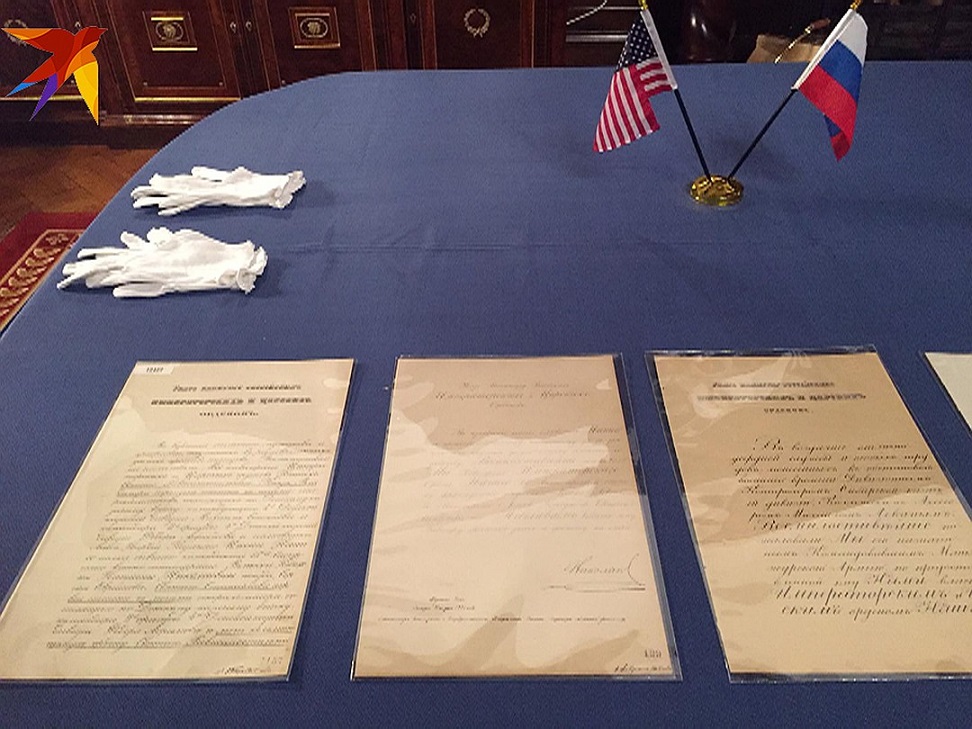
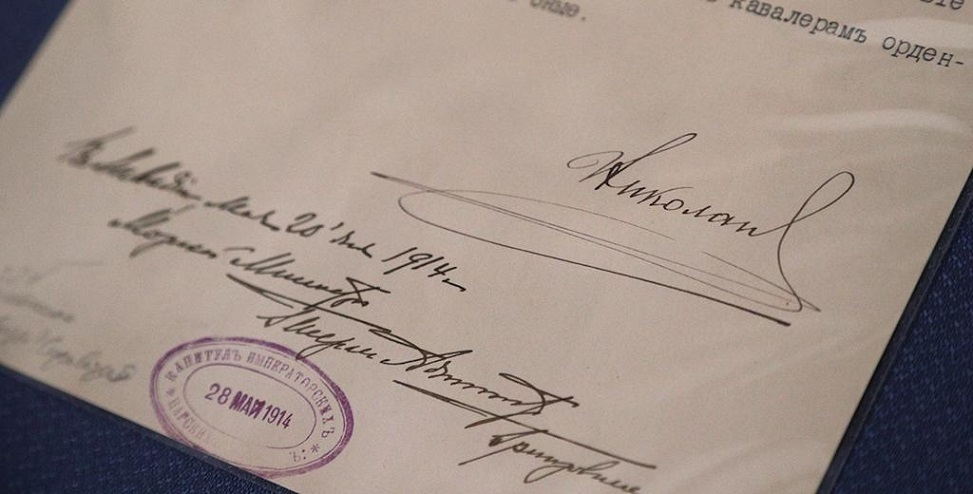
“The documents include sixteen original decrees, signed by Tsar Nicholas II on bestowing the Russian Empire’s state imperial and royal awards of 1905, 1913 and 1914,” the Russian Foreign Ministry said. “We express our gratitude to US law enforcement agencies and the US Embassy in Moscow for their contribution in restoring the historical justice.”

The documents were stolen from the Russian State Historical Archive of St. Petersburg in 1994, and surfaced 10 years later at an auction in the United States. At auction, a single document can sell for $3,000 USD or more.
104b

Stolen decrees bearing the signature of Nicholas II, were returned to Russia on 18th September, during an official ceremony hosted at Spaso House, the residence of U.S. Ambassador in Moscow

In 2014, US Department of Homeland Security received information from the Ministry of Culture of the Russian Federation that documents of historical importance were being sold by a US auction house. After an investigation was held, the documents were found to be genuine.

This is the fifth stolen document transfer ceremony to take place in the past 13 years, thanks to the US Department of Homeland Security. “These documents are of great importance for studying the history of Russia, the award system of the Russian Empire, biographies of state, military, public figures of the beginning of the 20th century,” said the deputy head of the Rosarchive Andrei Yurasov.

The looting of cultural property is one of the oldest types of crime that has spread around the world, said Katie Bay, the regional attache of the US Department of Homeland Security Investigation Service, promising to continue cooperation with Russia in the search for documents and memorabilia of historic significance, declared as missing from Russian archives and museums, which resurface on the US antiquarian market.

Katie Bey stated during a news conference that the US authorities suspect the theft of documents by Vladimir Weinberg, who is currently allegedly hiding from justice in Israel.

He is professionally interested in art, said Katie Bey. – He was already arrested in the 1980s by Russian law enforcement agencies and spent some time in prison. But immediately after his release, he took up the old. I believe that he had accomplices who provided him access to the archives, where he stole thousands of various documents.
104c

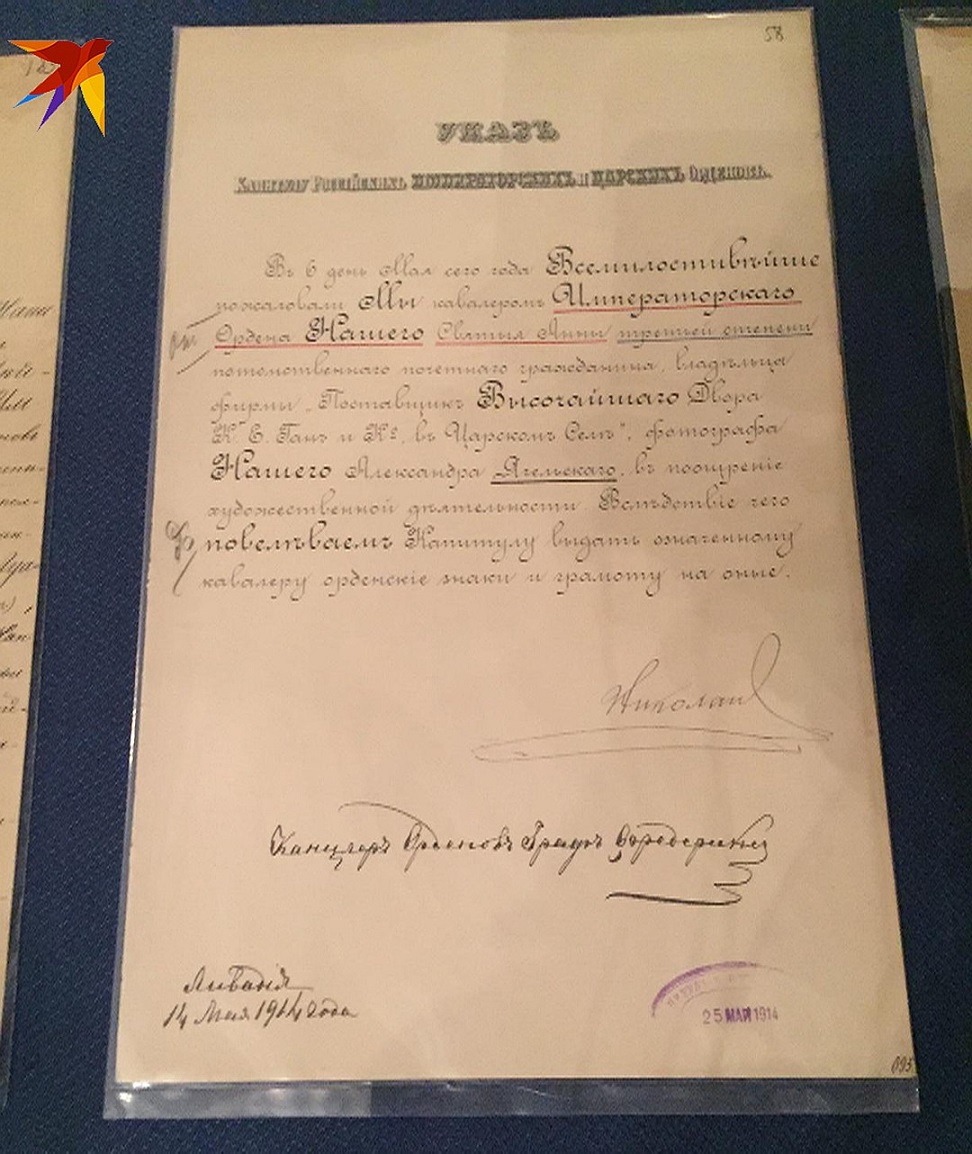
This *ukase bearing the signature of Nicholas II was one of sixteen stolen in the 1990s.
*A ukase, or ukaz, in Imperial Russia, was a proclamation of the tsar that had the force of law

The director of the Department of Museums of the Ministry of Culture Vladislav Kononov also added, that during the past 10 years of cooperation with the United States, more than 100 stolen items had been returned to Russia. In particular, were documents with authentic autographs of the Russian Emperors.

“The joint meticulous work between the two states’ relevant government agencies to locate missing valuables and return them to Russia shall continue for many years, thus demonstrating a great positive potential of a constructive approach to bilateral ties,” the ministry added.

Prior to transferring them back to the archive, US Ambassador to Russia John Huntsman was told in detail which figures were awarded the last Russian emperor. For example, he awarded the Order of St. Anne, 3rd Class to the photographer of the Imperial family Alexander Yagelsky.
104d

Ukase bearing the signature of Nicholas II was one of sixteen stolen in the 1990s.

At present, our relationship is undergoing a crisis of confidence. And there is no better way to take it to a new level than to take such steps. This confirms that there are areas where the United States and Russia can cooperate and truly cooperate. And our goal as diplomats is to create such trust. Today we are taking a small step in a positive direction, and I would be glad if we could take such steps every day. In that case, in a year we would have advanced far,” the US ambassador to Russia smiled.

According to Andrei Yurasov, in the 1990s, thousands of documents were stolen from Russian archives, many of which have not been recovered so far. But today the level of theft has been reduced to zero thanks to improved security systems, the establishment of control over the use of scripts in reading rooms and the digitization of the most requested documents. 

And Andrei Yurasov assured him that now the archive, where 6.5 million files are stored, is equipped with the most modern security systems – thieves shall not pass!

© Paul Gilbert. 26 September 2019
 

Monument to Nicholas II Established in Donetsk

103b

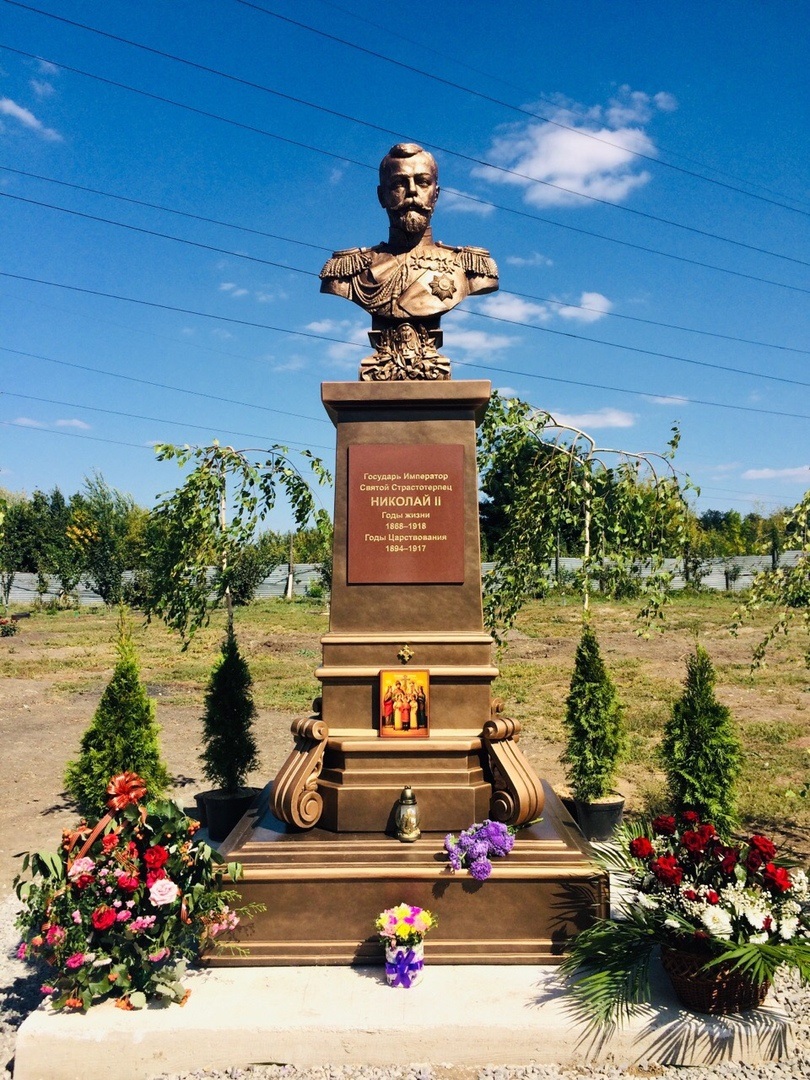
On 8th September 2019, a new monument to Tsar Nicholas II was installed in the Kuybyshevsky district of Donetsk.

The bronze bust was established on the grounds of the Church of the Holy Royal Martyrs in the village of Gornyak. The opening ceremony of the monument was attended by clergy, soldiers of the self-proclaimed Donetsk People’s Republic (DPR) and residents of the village.

103a

The newly built Church of the Holy Royal Martyrs is currently being constructed in honour of Nicholas II and members of his family, who were all murdered in July 1918 in Ekaterinburg.

103c

© Paul Gilbert. 9 September 2019