First General Census of the Population of the Russian Empire (1897)

On this day – 10th February (O.S. 28th January) 1897 – the First General Census of the Population of the Russian Empire took place.

Emperor Nicholas II took part in the First General Census of the Population of the Russian Empire (1897). He personally filled in the form, under name he wrote “Nicholas II Alexandrovich Romanov”. In the column “Occupation, position or trade” he wrote “Master of the Russian land.”

This important historical document [seen in the photo above], has been preserved to this day in a velvet cover. It is now in the funds of the State Archive of the Russian Federation (GARF) in Moscow.

Enumerators and organizers of the first general population census of the Russian Empire in 1897, who volunteered their time were awarded this bronze medal (29 mm). It was established on 3rd December (O.S. 21st November) 1896 by decree of Emperor Nicholas II.

The obverse of the medal [above] depicts the monogram of Nicholas II crowned with the Russian Imperial Crown in the center. Around the monogram there is a laurel wreath of two branches. Between the laurel wreath and the border, from the edge of the medal is an inscription along the circumference: “FIRST GENERAL CENSUS OF THE POPULATION”.

On the reverse side [seen above] there is a horizontal inscription in five lines:

ЗА ТРУДЫ
ПО ПЕРВОЙ ВСЕОБЩЕЙ
ПЕРЕПИСИ
НАСЕЛЕНІЯ
1897

FOR WORK
ACCORDING TO THE FIRST GENERAL
CENSUS
POPULATION
1897

The medal had to be worn on the chest. The ribbon of the medal is white-blue-red, in the colours of the flag of the Russian Empire.

The Minister of Internal Affairs, Ivan Logginovich Goremykin (1839-1917), was given the authority to determine the right of individuals to wear the medal. The awardees were issued a certificate for the right to wear the medal.

© Paul Gilbert. 10 February 2025

Film Review: Nicholas and Alexandra

The year 2021 marked the 50th anniversary of the release of the film adaptation of Robert K. Massie’s (1929-2019) classic book Nicholas and Alexandra. Published in 1967, it remained on the New York Times Bestseller List for 46 weeks, and has never gone out of print! Selling more than 4.5 million copies, it is regarded as one of the most popular historical studies ever published. Praised in The New York Times as a “long-needed and balanced account” of the last tsar and his family. In Massie’s study, Nicholas comes across not as the “stupid, weak or bloodthirsty” monarch, as he is often been portrayed by his Western counterparts.

The film version was released on 13th December 1971, and nominated for numerous awards. At the 44th Academy Awards (1972), Nicholas and Alexandra won two awards of six nominations; at the 25th British Academy Film Awards (1972), Nicholas and Alexandra received three nominations; at the 29th Golden Globe Awards (1972), Nicholas and Alexandra received three nominations; and at the 15th Annual Grammy Awards (1973), Richard Rodney Bennett was nominated for Best Original Score Written for a Motion Picture or a Television Special.

PHOTO: Michael Jayston as Nicholas II and Janet Suzman as Alexandra Feodorovna

The film featured a star-studded cast of notable British actors and actresses: Michael Jayston (1935-2024) as Nicholas II; Janet Suzman [b. 1939] as Alexandra Feodorovna; Irene Worth [1916-2022] as the Dowager Empress Maria Feodorovna; Tom Baker [b. 1934] as Grigori Rasputin; Jack Hawkins [1910-1973] as Count Vladimir Frederiks, the Minister of the Imperial Court; Timothy West [1934-2024] as Dr. Botkin, the court physician; Jean-Claude Drouot [b. 1938] as Pierre Gilliard, the children’s Swiss tutor; Laurence Olivier [1907-1989] as Count Witte, the Prime Minister; Michael Redgrave [1908-1985] as Sazonov, the Foreign Minister; Eric Porter [1928-1995] as Pyotr Stolypin, the Prime Minister after Witte; John McEnery [1943-2019] as Kerensky, leader of the Russian Provisional Government; Michael Bryant [1928-2002] as Lenin; Martin Potter [b. 1944] as Prince Felix Yusupov; Richard Warwick [1945-1997] as Grand Duke Dmitri Pavlovich; among many others.

Personally, I greatly disliked this film for a number of reasons. It is due to the popularity and cult-like status of this film which compelled me to address some of the many factual errors of this film, and that it will serve as a resource for those who have viewed it for the first time. 

 Aside from some terrible acting, such as Janet Suzman’s appalling portrayal of Empress Alexandra Feodorovnam the film is rife with historical inaccuracies. For instance, not a single scene was filmed in Russia. This of course is due to the fact that in 1971 Russia was still the Soviet Union, and the discussion or promotion of the last Tsar was still taboo. Instead, the film was shot entirely in Spain and Yugoslavia.

While I personally acknowledge that both Massie’s book and film inspired many people to learn more about Russia’s last Tsar, sadly, there are those who will actually base their own assessment of Nicholas II on this film, and that in itself sets a very damaging scenario.

While I acknowledge that while this is merely a film and not a documentary, I cannot overlook the fact that the producers have blurred the lines between historical accuracy and crude sensationalism. 

Below, are just four of the more notable historical inaccuracies, which I spotted in the film – I documented many others in my notes while watching the film:

na

PHOTO: Michael Jayston as Nicholas II and Harry Andrews as Grand Duke Nikolai Nikolaevich

[1] In an early scene, Nicholas II addresses Grand Duke Nikolai “Nikolasha” Nikolaevich – played by Harry Andrews [1911-1989] – as “uncle”, however, this is incorrect. Grand Duke Nikolai was a first cousin once removed of Emperor Nicholas II..

PHOTO: Tom Baker as Grigori Rasputin

[2] When Rasputin returns from Siberia, he enters a room where the Empress is waiting. He approaches her, she looks into his eyes adoringly, lifts the cross hanging around his neck and proceeds to kiss it.

Later in the film, upon being transferred from Tobolsk to Ekaterinburg, the entire family are seen leaving the  “House of Freedom” together. This scene is certainly not based on fact. It is well known that Nicholas, Alexandra and Maria left Tobolsk on 26th (O.S. 13th) April 1918, while Olga, Tatiana, Anastasia and Alexei left Tobolsk the following month.

Upon arrival at the Ipatiev House in Ekaterinburg, the Imperial Family are greeted at the door by Yakov Yurovsky, played by English actor Alan Webb [1906-1982]. This scene is historically inaccurate, as Yurovsky was not appointed to the Ipatiev House until 4th July 1918 – 13 days before the Imperial Family were murdered. I would like to add, that in July 1918, Yurovsky was only 40, whereas in the film, he is depicted as an elderly man. At the time of the making of the film, Webb was already 65. 

PHOTO: scene whereby the grand duchess allegedly exposes herself to a guard

[3] During their house arrest in Ekaterinburg, a guard enters the room of the grand duchesses where they are getting dressed for bed. One of the daughters (Tatiana) asks what he wants, and then opens her dressing gown to expose her naked body. The grand duchess cries that she is only 21 and desires to be wanted. 

What nonsense! The daughters of Nicholas II and Alexandra Feodorovna were all raised as decent Orthodox Christians. None of these pious and respectful young women would never have exposed themselves to such vulgar thugs! This would not be the first time that such a claim would be made . . . 

In their book The Fate of the Romanovs, American co-authors Greg King and Penny Wilson alleged that Grand Duchess Maria Nikolaevna had a “private moment” with Ivan Skorokhodov, one of the guards at the Ipatiev House. They continued in their claim that Maria slipped away with Skorokhodov for a private moment and they were discovered together in a compromising position. They further allege that both the Empress and her older sister Olga appeared angry with Maria in the days following the incident and that Olga avoided her company.

Sadly, British author Helen Rappaport also entertained this nonsense between Maria and Skorokhodov on page 30 of her book ‘Ekaterinburg. The Last Days of the Romanovs‘. King and Wilson’s claim has been widely dismissed as a myth based on “absolutely no first-hand evidence.”

PHOTO: the final scene in the murder room is missing three people

[4] On the night of 16/17 July 1918, the family enter the murder room where two chairs are depicted against the wall. This is incorrect, the room was empty, and it was the Empress who requested the chairs: one for herself, the other for Alexei. The most blatant error in this scene, however, is that only nine persons are in the room: the Imperial Family and Dr. Botkin. There were in fact eleven persons in the room on that fateful night! Missing are Alexei Trupp, footman; Ivan Kharitonov, cook; and Anna Demidova, Alexandra’s maid. In fact, the latter three are not to be seen in the entire film!

As new generations of film buffs discover Nicholas and Alexandra, I can only hope that they will watch it with both an open mind and heart. That in this day and age of masses of information at their fingertips, that the film will inspire them to embark on their own personal quest for the truth.

I hope that they will read Massie’s book, but also other books, articles and documentaries. It must be noted that when Massie was researching for his bestselling book in the 1960s, his resources were very limited, his “facts” based on the information available to him at the time. Massie did not have access to the invaluable Romanov Archives in Moscow. Recall that it was Stalin who had these archives sealed, they were even forbidden to Soviet historians, with the exception of course, for propaganda purposes. The archives were only unsealed in the 1990s, at which time Massie completed his sequel The Romanovs: The Final Chapter, published in 1996. 

The remaking of classic films seems to be all the rage these days, so perhaps a new film adaptation, one which will be worthy of Massie’s classic work. If so, the writers must refrain from adding fictitious nonsense to the script, relying on Massie’s research. And for authenticity, it must be filmed on location in Russia: in St. Petersburg, Tsarskoye Selo, Livadia, Tobolsk and Ekaterinburg.

© Paul Gilbert. 7 February 2025

Virtual exhibition of watercolours by Grand Duchess Olga Alexandrovna

Last autumn, a one-day exhibition of watercolours by Grand Duchess Olga Alexandrovna (1882-1960) and personal items that belonged to the family of Emperor Alexander III, was held at the Beloselsky-Belozersky Palace[1] in St. Petersburg. A virtual tour of the exhibition is now available – see link below.

The exhibition includes 45 works of art and 16 memorial items from the collection, which was donated to the State Russian Museum by the St. Catherine’s Foundation with the assistance of the ESPO Foundation in 2023.

The exhibition is a joint project of the Ministry of Culture of the Russian Federation, the State Russian Museum, and the Elisabeth-Sergius Educational Society Foundation (ESPO).

In April 2023, the Russian Museum received 180 watercolours painted by the Grand Duchess in different years, and 44 memorial items from the family of Emperor Alexander III, which included Fabergé and other interesting items. The collection was formerly in the possession of Olga Nikolaevna Kulikovsky-Romanov (1926-2020), the third wife of Grand Duchess Olga’s eldest son, Tikhon Nicholaevich Kulikovsky (1917-1993)

All the children of the imperial family knew how to draw, but among the children of Emperor Alexander III and Empress Maria Feodorovna, their youngest daughter Olga stood out. From a very early age, Olga proved herself as an artist. The Grand Duchess recalled: “Even during geography and arithmetic lessons, I was allowed to sit with a pencil in my hand, because I listened better when I drew corn or wild flowers.”

Grand Duchess Olga Alexandrovna was the patroness of many charitable societies and artistic associations of the Russian Empire, the chief of the 12th Hussar Akhtyrka Regiment. During the First World War she worked as a nurse, equipping a hospital in Kiev at her own expense.

The 3D tour is complemented by audio accompaniment dedicated to the life and work of the Grand Duchess, who during her lifetime painted more than 2,000 watercolours.

CLICK HERE TO VIEW THE VIRTUAL EXHIBITION

NOTES:

[1] Before the 1917 Revolution the palace was named the Sergei Palace, a Neo-Baroque palace at the intersection of the Fontanka River and Nevsky Prospekt in the capital. The palace served as the residence of Grand Duke Sergei Alexandrovich and Grand Duchess Elizabeth Feodorovna. Following Sergei’s assassination in February 1905, the palace then became the property of his widow who became a nun in 1909. She went to live at the Marfo-Mariinsky Convent in Moscow and willed the palace to her ward Grand Duke Dmitri Pavlovich.

© Paul Gilbert. 31 January 2025

Final scenes for ‘The Romanovs. Devotion and Betrayal ‘ shot in the Alexander Palace

PHOTO: a scene from the film, with actors portraying the Imperial Children playing on the slide in the Marble [aka Mountain] Hall in the Alexander Palace

On 24th January 2025, the final scenes for the upcoming Russian-language film Романовы: Преданность и предательство / The Romanovs. Devotion and Betrayal were filmed in the Alexander Palace and Park at Tsarskoye Selo. The film is based on the book of the same name by the Tyumen writer Sergey Kozlov.

The filming of the 12-part series began in Tobolsk in March 2024, and has since been filmed in places associated with Nicholas II and his family, including St. Petersburg, Perm and Tsarskoye Selo. Copies of Rasputin’s house and the Ipatiev House in Ekaterinburg were recreated for the film.

Crews began a 5-day shooting of the final scenes for the film in the Alexander Palace and Park on 24th January. Scenes were filmed in various rooms and halls of the palace.

According to the film’s director Vasily Chiginsky, editing and post-production are already underway, with the film expected to be complete by the end of the year.

PHOTO: early 20th century motorcars parked outside the Alexander Palace that were used during the filming of ‘The Romanovs. Devotion and Betrayal

NOTE: I have been following the progress of this large-scale historical project since it began filming in March of last year. I will continue to share any new developments, including more videos, as they become available – PG

© Paul Gilbert. 29 January 2025

Handwritten note by Nicholas II to be auctioned in Moscow

A handwritten note of Emperor Nicholas II, addressed to the Governor-General of St. Petersburg Dmitry Fedorovich Trepov in 1906 will go under the hammer next month at a Moscow auction. The auction will be held at the Litfond Auction House on 6th February, the list price is 75,000 Rubles [$760.00 USD].

Description: In a personalized envelope with a written signature “Nikolai”, the addressee is written in pencil on the envelope: “To D.F. Trepov”. The note is written on a sheet of 18×11.1 cm. writing paper with the stamp “Ца́рское Село́ / Tsarskoye Selo” in the upper lefthand corner.

A rough translation of the Tsar’s note to Trepov reads:

“I ask you, Dmitry Fyodorovich, to familiarize yourself with the enclosed files of the Council of Ministers and come to see me tonight at 10 1/2 o’clock, to discuss what you have managed to read of the report. Jan. 10. 06 g. N”.

PHOTO: Dmitry Fedorovich Trepov (1855-1906)

Major-General Dmitry Fedorovich Trepov (1855-1906) enjoyed a short, but impressive career – he was only 50 when he died. He served as Head of the Moscow police (from 1896). Then, taking advantage of the favour of Emperor Nicholas II: was a Major General (1900), Major General of the Retinue (1903), Governor-General of St. Petersburg (from 1905), as well as Deputy Minister of Internal Affairs. By the personal order of the Emperor he was settled on the first floor of the Winter Palace in St. Petersburg. He strongly believed that autocracy was the only way for Russia.

© Paul Gilbert. 24 January 2025

Churchill on Nicholas II

0288

 Today – 24th January 2025 – marks the 60th anniversary of the death of Sir Winston Churchill (1874-1965). In 1929, Winston Churchill wrote his assessment of Emperor Nicholas II, which, though not uncritical, is a much fairer one than that customarily given by Western historiography. They are among the most succinct and powerful English words in defense of Nicholas’ character — in part because Churchill does not depend upon the “well he was a good husband and father” strategy. He also addresses some of the questions that still exist in Russia today (democratize or hold firm). Many voices remain critical of Nicholas II’s refusal to democratize (although he did create the Duma, and think how long ago Magna Carta was written), herewith is Winston Churchill’s verdict:

“It is the shallow fashion of these times to dismiss the Tsarist regime as a purblind, corrupt, incompetent tyranny. But a survey of its thirty months’ war with Germany and Austria should correct these loose impressions and expose the dominant facts. We may measure the strength of the Russian Empire by the battering it had endured, by the disasters it had survived, by the inexhaustible forces it had developed, and by the recovery it had made. In the governments of states, when great events are afoot, the leader of the nation, whoever he be, is held accountable for failure and vindicated by success. No matter who wrought the toil, who planned the struggle, to the supreme responsible authority belongs the blame or credit.

“Why should this stern test be denied to Nicholas II? He had made many mistakes, what ruler has not? He was neither a great captain nor a great prince. He was only a true, simple man of average ability, of merciful disposition, upheld in all his daily life by his faith in God. But the brunt of supreme decisions centred upon him. At the summit where all problems are reduced to Yea or Nay, where events transcend the faculties of man and where all is inscrutable, he had to give the answers. His was the function of the compass needle. War or no war? Advance or retreat? Right or left? Democratize or hold firm? Quit or persevere? These were the battlefields of Nicholas II. Why should he reap no honour from them? The devoted onset of the Russian armies which saved Paris in 1914; the mastered agony of the munitionless retreat; the slowly regathered forces; the victories of Brusilov; the Russian entry upon the campaign of 1917, unconquered, stronger than ever; has he no share in these? In spite of errors vast and terrible, the regime he personified, over which he presided, to which his personal character gave the vital spark, had at this moment won the war for Russia.

“He is about to be struck down. A dark hand, gloved at first in folly, now intervenes. Exit Tsar. Deliver him and all he loved to wounds and death. Belittle his efforts, asperse his conduct, insult his memory; but pause then to tell us who else was found capable. Who or what could guide the Russian State? Men gifted and daring; men ambitious and fierce, spirits audacious and commanding – of these there were no lack. But none could answer the few plain questions on which the life and fame of Russia turned’.”

Source: Churchill Winston S., The World Crisis, 1916-1918, p. 695-7, London, 1929.

247a

On 16 December 2014, Russia’s Defense Minister Sergei Shoigu opened a sculptural composition dedicated to the heroes of World Wars I and II on the grounds of the Ministry of Defense on the Frunze Embankment in Moscow. The WWI monument features Nicholas II on horseback (above), recognizing and honouring his efforts during the Great War.

© Paul Gilbert. 18 July 2020

***

Paul Gilbert’s Romanov Bookshop on AMAZON

I have published nearly 50 titles to date through AMAZON – featuring one of the largest selections of books on Nicholas II, the Romanov dynasty and the history of Imperial Russia.

Please CLICK on the BANNER or LINK above to review my current selection of titles in hardcover, paperback and ebook editions. Listings provide a full description for each title, pricing and a Look inside feature.

Alexander Palace filled with the scent of lilacs

Lilacs in the Maple Drawing Room of the Alexander Palace
Photo © Tsarskoye Selo State Museum

In the middle of winter, the Alexander Palace at Tsarskoye Selo is again decorated with blooming lilacs. Their fragrant aroma fill the former interiors of Empress Alexandra Feodorovna, a beautiful reminder of the Imperial Family and their favourite Imperial Residence.

On 23rd January 2025, of the 16 lilac bushes in the greenhouses near the Alexander Palace, six were moved to the palace halls, the rest will be moved from the greenhouses in stages, as they bloom. The tradition of placing lilacs in the former rooms of the last Russian Empress began in 2022, the first time the aroma of her favourite flowers filled the interiors of the palace in more than 100 years.

Lilacs of the historical varieties, such as “Memories of Ludwig Späth” and “Sensation” are exhibited in the Mauve Boudoir and Corner Drawing Rooms. Five bushes form a luxurious “lilac cloud” with delicate pink and purple flowers. Lilacs were exposed at the peak of flowering, this year so their distinctive aroma is especially noticeable. Visitors can admire lilacs in the interiors of the Alexander Palace until April.

Lilacs in the Maple Drawing Room of the Alexander Palace
Photo © Tsarskoye Selo State Museum

“Documents have been preserved indicating that the Tsarskoye Selo greenhouses diligently carried out the task of creating a spring atmosphere during the gloomy winter months. In 1898, by order of the gardener Zort, lilacs, double-cherries, hydrangeas and lilies of the valley arrived in Tsarskoye Selo for the winter decoration of the palace. So flowers in the Alexander Palace are an integral part of the interior, and we are talking not only about the rich floral decoration of the walls – roses, orchids, dandelions, but also about the blooming flowers as well,” said Olga Filippova, the chief curator of the parks of the Tsarskoye Selo State Museum-Reserve.

Lilacs in the Mauve Boudoir of the Alexander Palace
Photo © Tsarskoye Selo State Museum

The process of preparing lilacs for “premature” flowering begins in the fall. In accordance with the methods from gardening books of the 19th century, the employees of the greenhouse complex plant bushes in special boxes, and in December they set the plants up for awakening. The care process is extremely painstaking: every forty minutes during the working day, staff need to perform the necessary manipulation. One of the main conditions is strict compliance with the temperature and humidity.

Lilacs in the Maple Drawing Room of the Alexander Palace
Photo © Tsarskoye Selo State Museum

Empress Alexandra Feodorovna loved flowers – the rooms in her private half were decorated with fresh flowers all year round. Floral themes were also present in the upholstery of the walls, furniture, as well as the stucco reliefs on the walls and ceilings. The Empress was especially fond of lilacs. It is no coincidence that in her Mauve Boudoir [aka Lilac Study] the furniture and walls were decorated with silk of lilac shades, Alexandra Feodorovna also preferred lilac tones in her clothes, and perfume with the aroma of lilac.

Recall that the first 13 interiors of the Alexander Palace – the private rooms of Nicholas II and Alexandra Feodorovna – opened to the public after restoration in August 2021, in February 2023 the restoration of the Marble Hall with a slide was completed. The interiors of the palace-museum are complemented all year round with decorative indoor plants and cut flowers.

© Paul Gilbert. 23 January 2025

The Tsar’s Chapel in Pskov, in memory of the Tsar’s abdication

In 2003, a memorial chapel in memory of the abdication of Emperor Nicholas II was constructed on the square in front of the modern-day railway station in Pskov. The Chapel of the Resurrection of Christ was officially opened and consecrated on 17th July 2003.

Recall that on the night of 14/15 (O.S 2/3) March 1917, in a carriage of the Imperial Train, which was detained at the Varshavsky Railway Station in Pskov, the last Russian autocrat signed the act of abdication from the throne. The monarchy and the Russian Empire ceased to exist.

The Varshavsky Railway Station was built 140 years ago (on 9th September 1863) in connection with the opening of the St. Petersburg – Warsaw Railway. The two-storey station building, was restored anew for the 1100th anniversary of the city in 2003.

The chapel’s architect Sergei Nikolaevich Kondratiev, wanted to construct the chapel to correspond with the station building. He chose the architectural style of Imperial Russia, based on the famous examples of St. Petersburg, Oranienbaum and Peterhof.

The tiny chapel stands 17 meters [56 ft.] in height, it is crowned with a dome and a small cupola on which a gilded cross is installed. The dome is covered with sheet copper, the dome and the cross are made of a special alloy made at one of the defense plants in Chelyabinsk. The single colour scheme of the chapel’s facade is a combination of golden-brown, green and white.

A marble plaque was installed on the side of the chapel, on which the inscription is engraved: “The Tsar’s Chapel was built in the year of the 1100th anniversary of Pskov as a repentance and deep sorrow of the people of Pskov over the tragic death of the last Russian Emperor Nikolai Alexandrovich Romanov.”

© Paul Gilbert. 23 January 2025

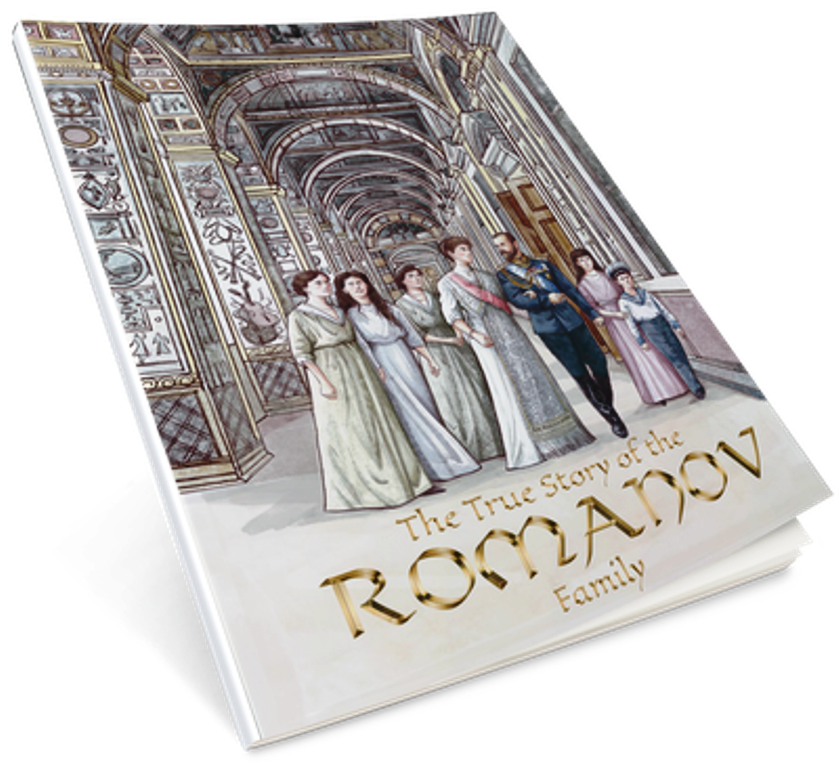
NEW BOOK: At the Court of the Last Tsar

*You can order this title from most AMAZON outlets worldwide, including
the United States and Canada
*Note: prices are quoted in local currencies

CLICK HERE TO ORDER THE PAPERBACK EDITION @ $20.00 USD

Language: English. 322 pagess

Following the October 1917 Revolution, many of those who served at the Imperial Court were able to flee Bolshevik Russia to a new life abroad. Amonth them was General Alexander Mossolov, whose memoirs have been out of print for years, are once again available in a new paperback editions.

General Alexander Mossolov, was head of the Court Chancellery from 1900 to 1916. His memoirs, published in 1935, are an important historical record on Russia’s last tsar Nicholas II, his wife Alexandra Feodorovna, their children, their relatives and their Court during those sixteen years.

Mossolov was impressed by the Tsar’s positive qualities as a faithful, loving husband and father; timid, courteous, even-tempered, thoughtful and affable towards all around him, with ‘an ingrained dislike of argument’, and with a touching concern for the fate of Russian soldiers wounded in wartime.

The Tsarina was very shy, devoid of social skills and with no appetite for ‘society talk’, yet an efficient organizer, particularly with regard to the installation of hospital trains, convalescent homes, and hospitals, and her ability to gather round her persons of ability and energy.

His pen portraits of Count Freedericksz, Minister of the Court, the Tsar’s aunt Maria Pavlovna, Grand Duchess Vladimir, and foreign royalty such as the German Emperor William II, and King Edward VII of England, are equally perceptive.

Mossolov’s memoirs are a kindly testimonial to the sovereign whose reign and life ended in tragedy, but remained to the end a conscientious and well-intentioned man.

***

Alexander Alexandrovich Mosolov (1854-1939), was Born in Ryazan, Russia. From 1901 he served as an aide-de-camp. From 1902 he was appointed to the Retinue of His Imperial Majesty. In 1900-1916 he held the position as head of the chancellery of the Ministry of the Imperial Court, and was in the close circle of Emperor Nicholas II. He fought against the Bolsheviks in the South of Russia; in emigration he lived in France and later in Bulgaria.

© Paul Gilbert. 20 January 2025

The favourite tunes of Nicholas II and his family – Part 2

This second video features another tune, which was apparently a favourite of Emperor Nicholas II and his Family. Click on the image above to listen to Я ехала домой / I was on my way home, a romanice, which tells us a short story through the eyes of Empress Alexandra Feodorovna’s heart. [Duration: 3 minutes, 11 seconds]

The romance “I Was on my way home”, composed by Marie Poiret in 1901 or 1905, is about the love and tenderness of a woman’s heart. The romance became very famous and was part of the repertoire of many performers of the time, including Alexander Vertinsky, Keto Dzhaparidze, Rada Volshaninova, Alla Bayanova among others.

Maria Yakovlevna Poiret (1864-1933) was a Russian dramatic actress, journalist, poet, writer and composer. Her fame has reached our time as the author of several romances, including “I was on my way home”. She also wrote the lyrics to such tunes as “Swan Song”, “I Don’t Want to Die”, as well as to the music of other composers.

NOTE: the translation is not perfect, but it will give you the gist of the lyrics – ENJOY!

I was going home, my soul was full

Unclear for myself, some kind of new happiness.

It seemed to me that everyone with such a fate,

They looked at me with such affection.

I was on my way home… Two-horned moon

I looked out of the windows of the boring car.

The distant annunciation of the morning bells

He sang in the air like a gentle string…

I was driving home, I was thinking about you,

My thought was anxiously both confused and torn.

A sweet slumber touched my eyes.

Oh, if only I had never woken up again…

Set against the background of this romance are a number of images depicting Empress Alexandra Feodorovna riding on the Imperial Train [these images have been photoshopped]. In addition are vintage photos of Nicholas and Alexandra. The vocals of this haunting romance is performed by the popular contemporary Russian singer Irina Krutova. The video was created by Irina Koroteeva (Moscow).

NOTE: Stay tuned for additional videos, featuring more favourite tunes of Nicholas II and his family.

More favourite tunes of Nicholas II and his family:

Part 1 – “Утро туманное” (Misty Morning)

© Paul Gilbert. 19 January 2025