“The Last Romanoff” musical drama opens in Moscow

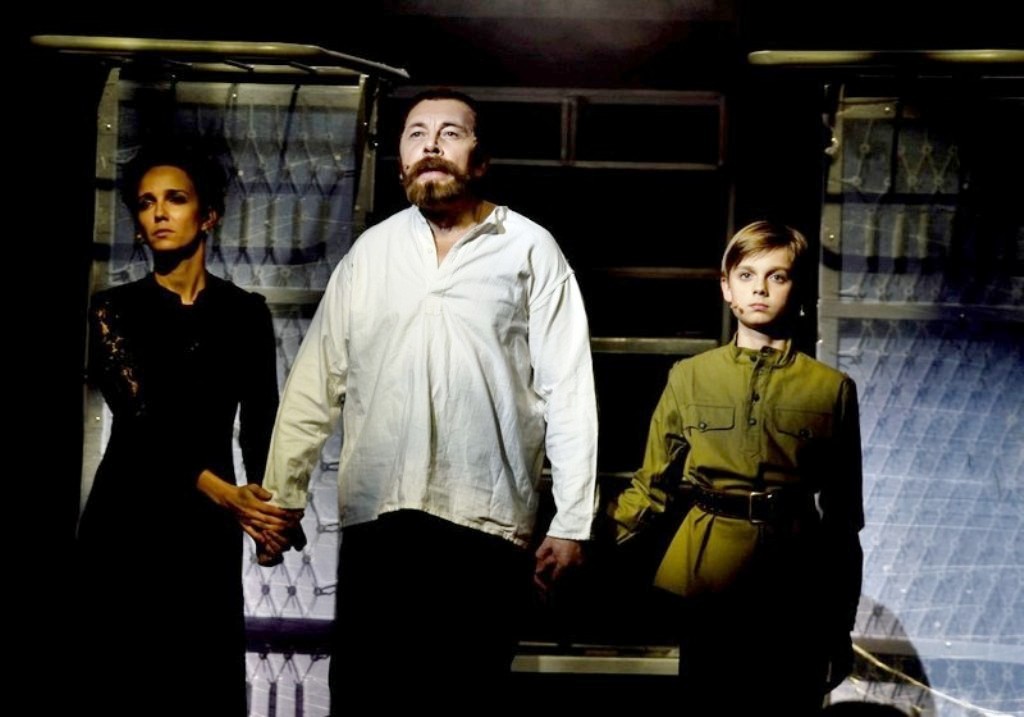
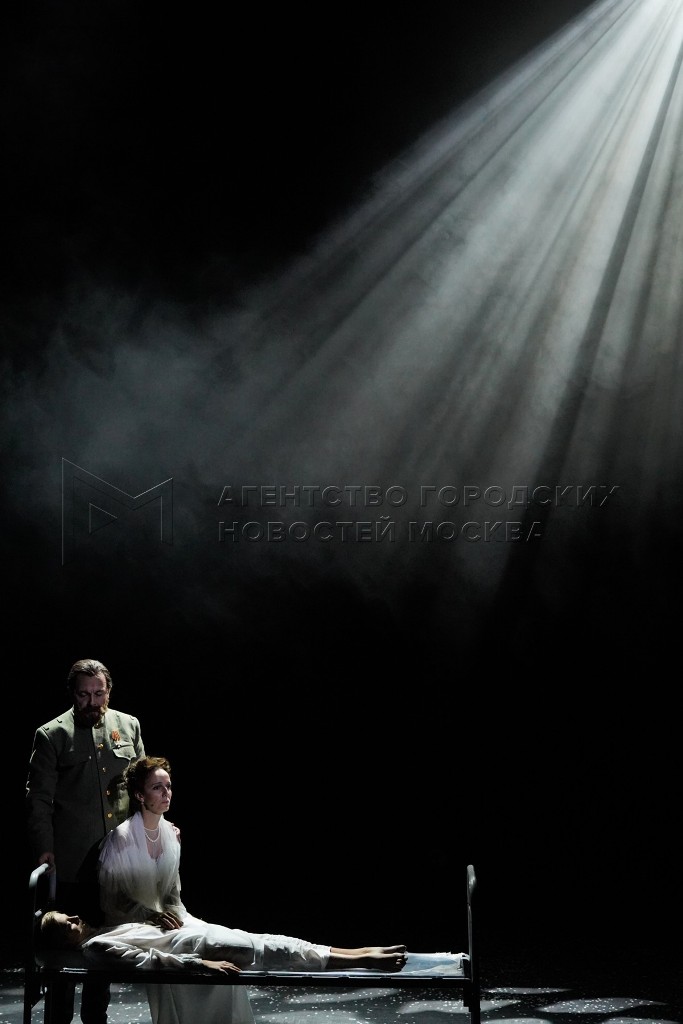
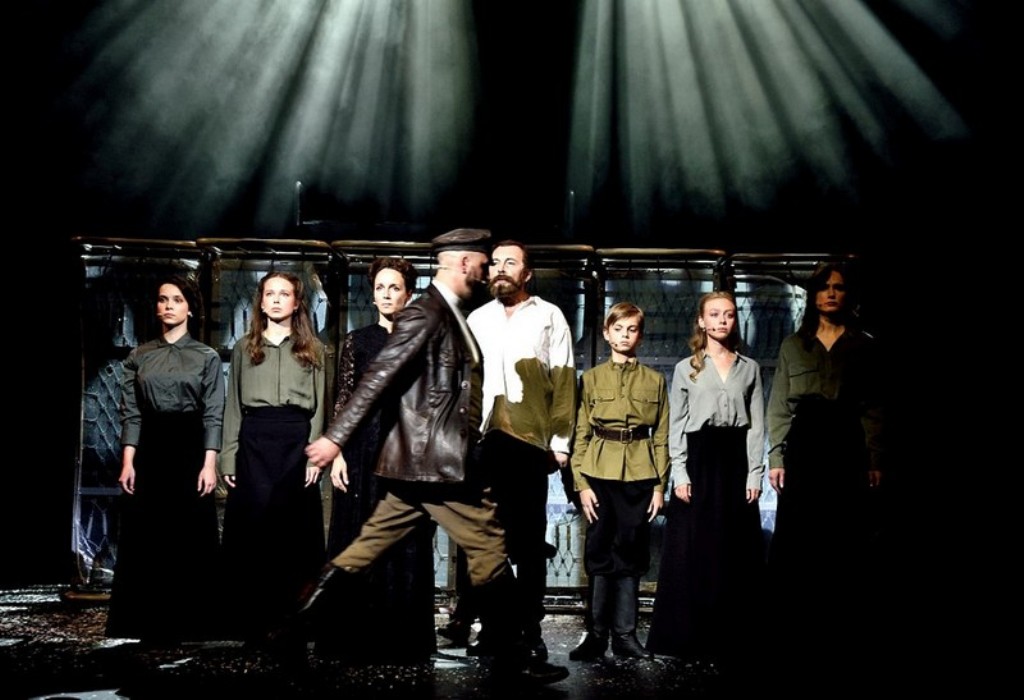
On 2nd October 2024, a new musical drama The Last Romanoff premiered at the International House of Music in Moscow. The intriguing plot of the production is based on real events of Russia’s last Tsar, the causes of the revolution and its consequences.

The creator of the libretto, composer and director is Alexander Ragulin. The main roles in the production are performed by popular stars of Russian musicals, as well as theater and film actors.

The Last Romanoff is not for those who love rock music, contemporary, impressive scenery, or musical comedy shows. Instead, this musical-drama takes an historical turn, one which focuses on the horrific events that took place in Russia in 1918, events which plunged the Russian Empire, the monarchy and the Imperial Family into an abyss.

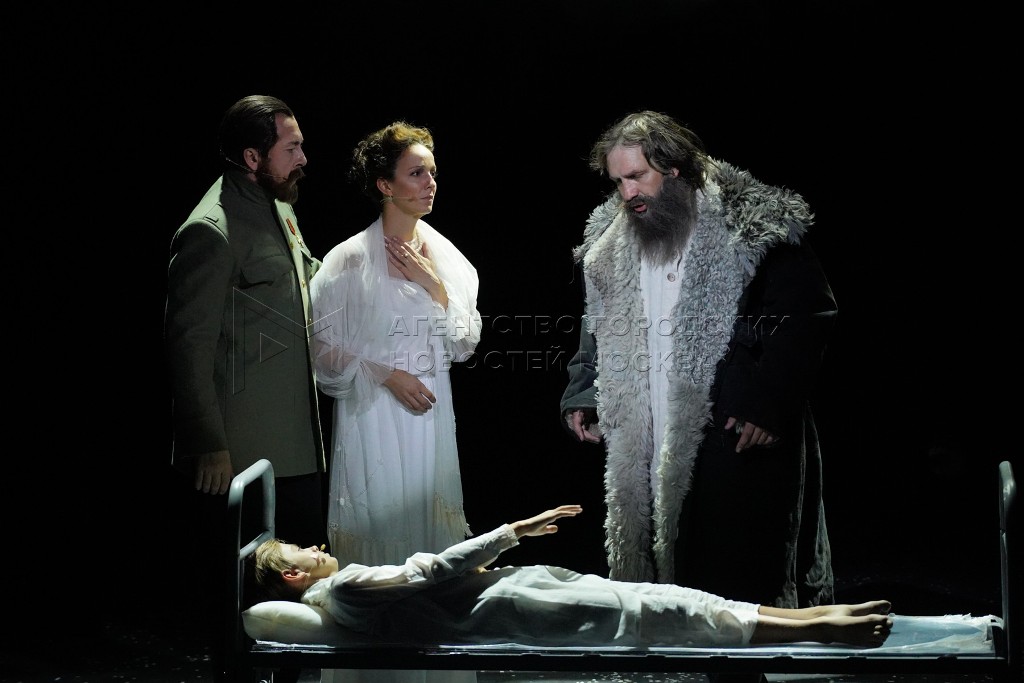
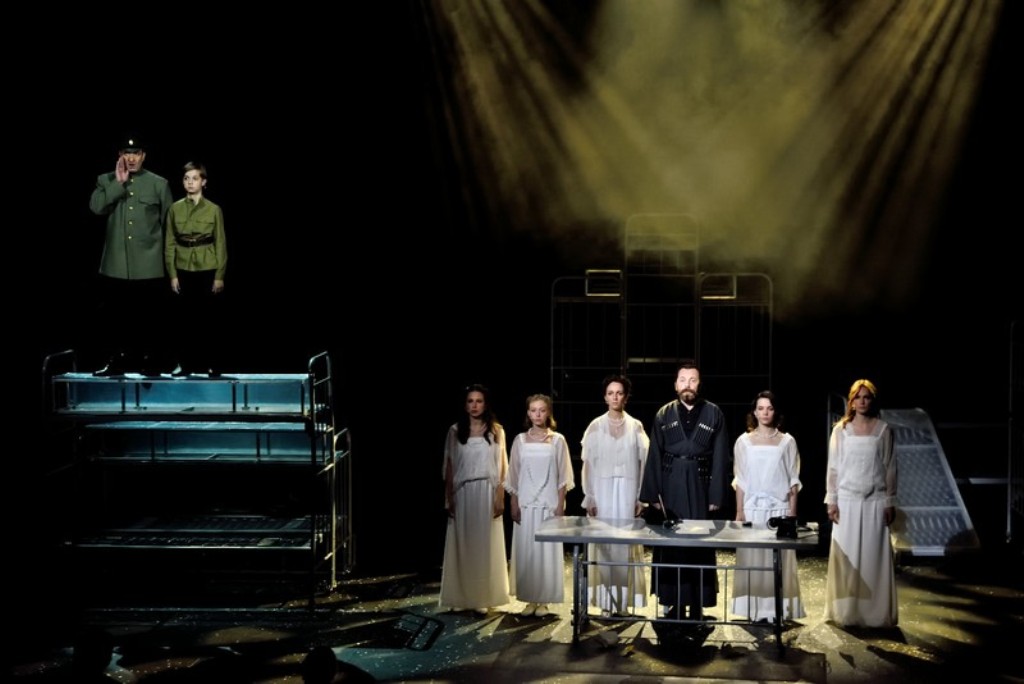
The musical tells, and most importantly, shows the story of the tragic fate of the last Russian emperor, Nicholas II, who was shot along with his family and faithful retainers in the Ipatiev House in Ekaterinburg on 17th July 1918. As it should be in this genre, music dominates, the vocals reveal the character of the Tsar and his family, and other characters, which “transmit” to the audience the story that turned the world upside down.

Without colourful background scenery and special effects, it is music which present the plot of this drama. The acting, the dynamics of the performance, the mood of the characters, all set against the backdrop of a dark, gloomy, dimly lit stage, help in telling the story.

Actor, composer, vocalist, producer and director Alexander Ragulin (who plays the role of Rasputin) has assembled an amazing cast: Igor Balalaev, Valeria Lanskaya, Alexander Marakulin, Yaroslav Bayarunas and others – a total of 12 artists.

The Imperial Family: Nicholas II, his wife, four daughters, the sick Tsesarevich Alexei – and further down the list all the famous historical figures: Rasputin, Kerensky, Yusupov… The emperor’s daughters work in the hospitals and wonderful singing are all featured in this production.

The musical drama The Last Romanoff runs until 24th December 2024 at the International House of Music in Moscow.

© Paul Gilbert. 5 October 2024

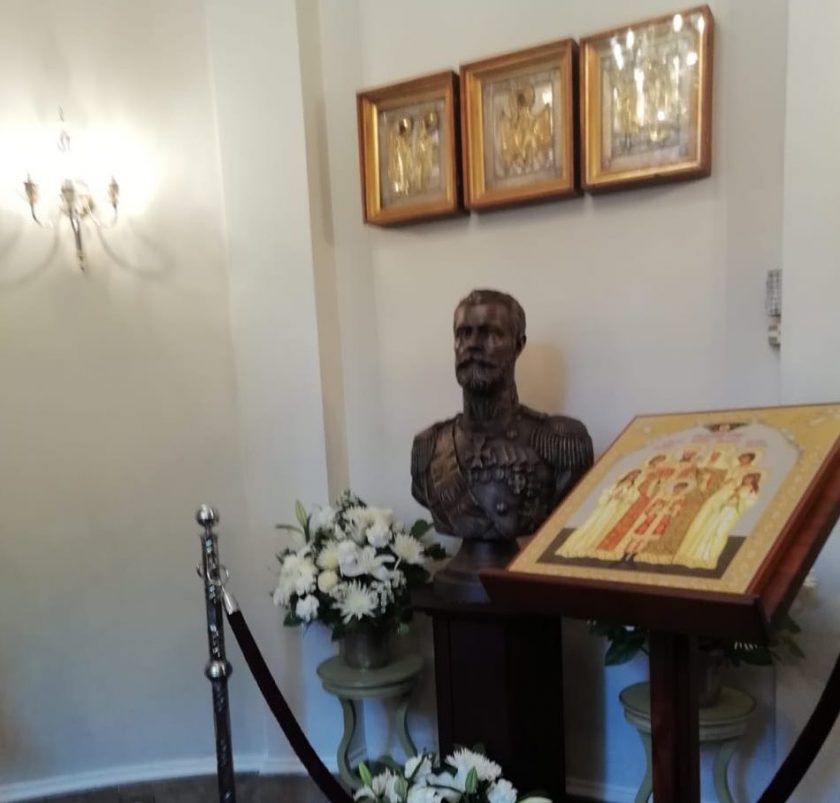
America’s first bust of Nicholas II was installed in New York City in 2018

163

PHOTO: this bust is considered the most faithful
to the likeness of Emperor Nicholas II

NOTE: this article was originally published on 7 December 2019,
it was revised and updated on 4th October 2024 – PG

On 17th July 2018, the feast day of the Holy Royal Passion-bearers, a bust of Tsar-Martyr Nicholas II, was installed and consecrated in the Synodal Cathedral of Our Lady of the Sign in New York City. The bronze bust is considered to be the most faithful to the likeness of Emperor Nicholas II.

The bust was donated to the Russian Orthodox Church Outside Russia (ROCOR) by the head of the Foundation “Under the Protection of the Mother of God” Eugene (Evgeny) Korolev, with the organizational participation of the head of the Military Orthodox Mission, Igor Smykov.

Attending the divine services were parishioners and faithful of various parishes, representatives of the Romanov family, and Cossack delegates.ners and faithful of various parishes, representatives of the Romanov family, and Cossack delegates.

Upon completion of the service, Fr. Tikhon read aloud Metropolitan Hilarion’s Epistle on the occasion of the 100th anniversary of the martyrdom of the holy and right-believing Royal Passion-bearers: Emperor Nicholas II, Empress Alexandra Feodorovna, Tsesarevich Alexei, and Grand Duchesses Olga, Tatian, Maria and Anastasia.

His Eminence and the clergy served a short moleben [service of intercession] before icons of the Royal Passion-bearers and other holy relics housed at the Synodal cathedral: a reliquary with the right hand of the Holy Nun-Martyrs Elizabeth and Barbara.

Metropolitan Hilarion then thanked all those who prayerfully honored this day with their presence, and gave the floor to the general director of the Russian National Creative Workshop “Art-Project,” LLC, and the International Foundation for Mutual Development & Strengthening of Spiritual Unity and the Religious & Historical Values of Russian Orthodoxy in the Homeland & Abroad “Under the Protection of the Theotokos,” Eugene (Evgeny) Korolev. It was these organizations that presented the cathedral a gift: a bust of the Tsar-Martyr Nicholas II.


CLICK on the above image to watch a VIDEO of the consecration of the bust.
DURATION: 3 minutes, 30 seconds. LANGUAGE: Russian

“This image was first made before the revolution, out of stone. During Perestroika in the Soviet Union, vandals desecrated it,” Korolev explained. “After the fall of the USSR, in 1993, the bust was brought from Crimea to Moscow, to the workshop of Russian national artist Vyacheslav Klykov. They created a mold of the bust and poured it in bronze. Unfortunately, we do not know the identity of the original artist who created this marvelous work. But we do know that this monument is considered the most faithful to the likeness of Emperor Nicholas II. I would like to offer my respect to Vyacheslav Mikhailovich Klykov (1938-2006) for granting new life to this work of art.

“In Russia they are currently celebrating the ‘Tsar’s Days,’ and I think the most important thing for us is to learn lessons from this tragedy and never repeat them.”

Korolev congratulated everyone on the occasion of the feast, and presented Metropolitan Hilarion with a dove prepared in the workshop, as well as pouches with soil from the holy sites of Yekaterinburg, where Emperor Nicholas II, Empress Alexandra, and their children were held captive, and where they were all murdered.

For his work with the Cossacks, Eugene Korolev presented Fr. Tikhon with the Order of Emperor Nicholas the Second.

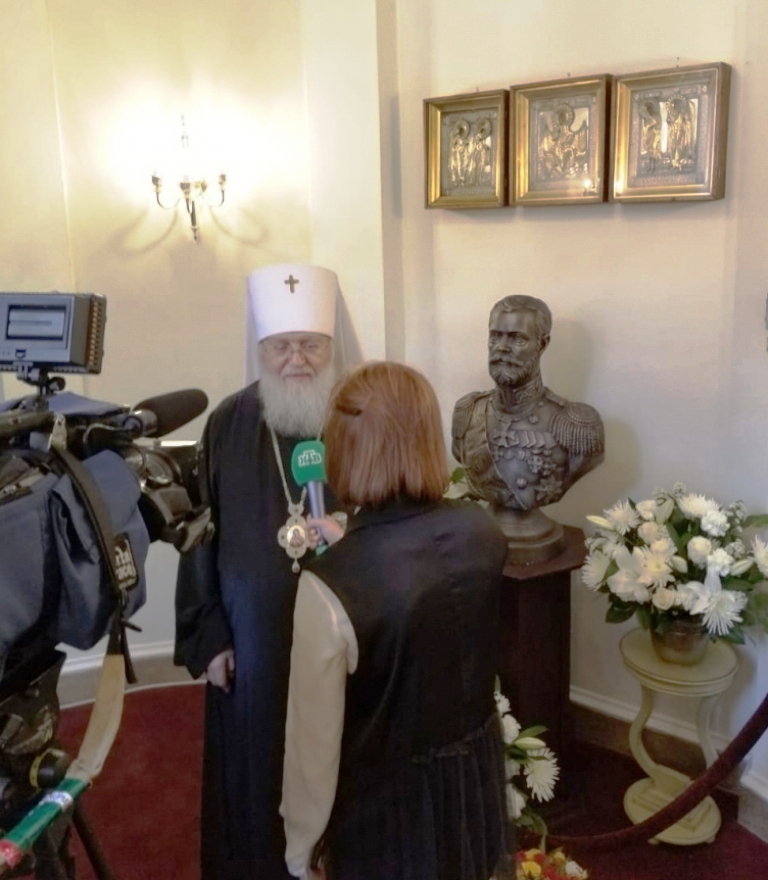
Flanked by clergy, the First Hierarch proceeded to the entrance to the cathedral, where the bust of the Tsar-Passionbearer Nicholas II had been installed, and blessed it. The festivities concluded with a banquet in the cathedral hall.

PHOTO: Metropolitan Hilarion (1948-2022) of Eastern America and New York, talks
with members of the media in the Synodal Cathedral of the Sign in New York City.

© Eastern American Diocese | Russian Orthodox Church Outside Russia. Originally published 7 December 2019 and Updated on 4 October 2024

Nicholas II in the news – Summer 2024

Russia’s last Emperor and Tsar Nicholas II, his family, the Romanov dynasty and the history of Imperial Russia, continue to be the subject of books, exhibitions and documentaries. In addition, they continue to generate headlines in the media.

The following articles were published by US and British media sources, in July, August and September 2024. Click on the title [highlighted in red] below and follow the link to read each respective article:

Holy Passion-Bearer Tsarevich Alexei (1904–1918). Part 1

Holy Passion-Bearer Tsarevich Alexei (1904–1918). Part 2

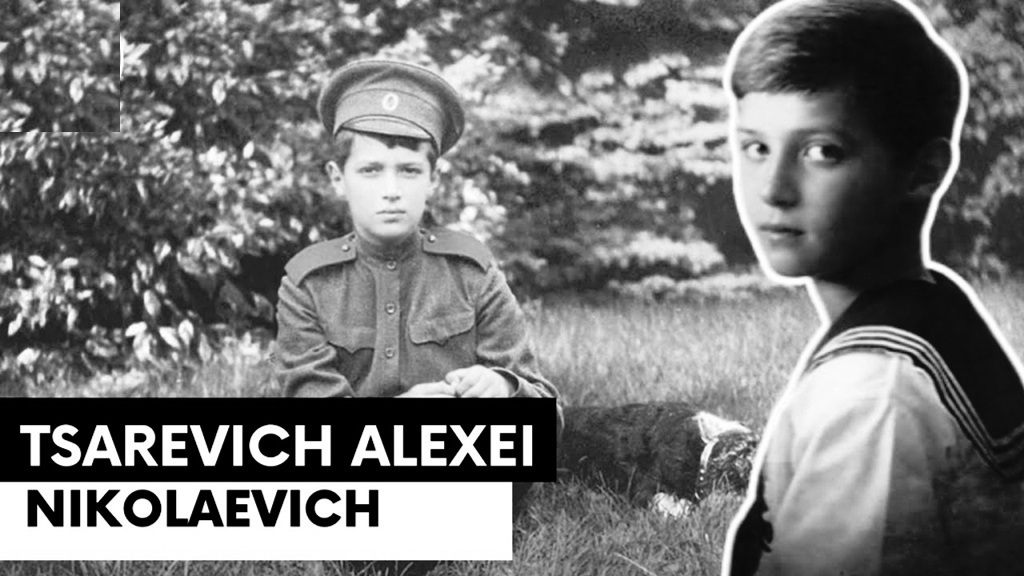
On August 12 (July 30) 1904, with a gun salute from the Peter and Paul Fortress in St Petersburg the birth of the Heir to the Throne, Tsarevich Alexei Nikolaevich, was announced to the world by Emperor Nicholas II and his consort Empress Alexandra Feodorovna. Maria Tobolova writes about his life, death and martyrdom.

Source: Orthodox Russia. 21 August 2024

Russia’s Repentance for the Romanov Regicide

Jonathon Van Maren is a contributing editor to The European Conservative returns to the Romanovs time and again, not just because of who those children might have become, but because of what Russia might have been if they had lived. A fascinating read!

Source: The European Conservative. 10 August 2024

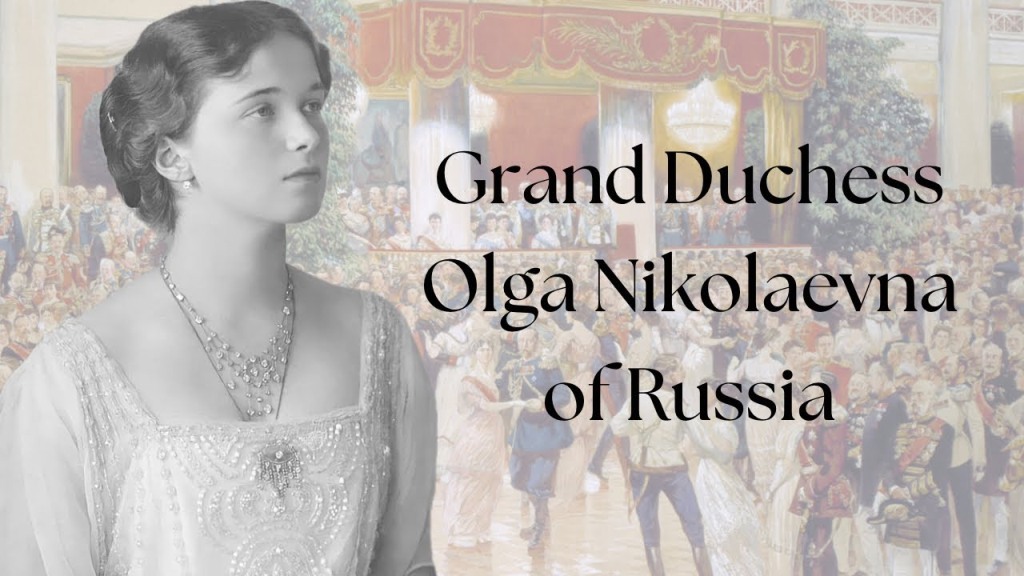
Holy Grand Duchess Olga Nikolaevna (1895-1918) + PHOTOS

On November 3/16, 1895, Emperor Nicholas II and his wife Alexandra Feodorovna were blessed with the birth of a daughter, Grand Duchess Olga Nikolaevna. The august parents were happy to have their firstborn. On the same day the Tsarina wrote to her sister, Princess Victoria of Hesse (1863–1950). Maria Tobolova writes about her life, death and martyrdom.

Source: Orthodox Russia. 22 July 2024

Anna Alexandrovna Taneyeva (Vyrubova)—Nun Maria (1884-1964)

Vyrubova… The mere mention of this surname, at least until recently, evoked disgust in our contemporaries, for the woman who supposedly caused the catastrophe that brought the godless Bolsheviks to power in Russia. The militant atheist Government blackened the name of Orthodox Russia and its three pillars: Orthodoxy, monarchy, and the people, and defamed the names and memory of all those who were connected with the Imperial Family. A special place among these people (perhaps more than others) belongs to the much-slandered Anna Taneyeva (Vyrubova).

Source: Orthodox Russia. 26 July 2024

A United Domestic Church

Sermon on the feast of the holy Royal Passion-Bearers Tsar Nicholas II, Tsarina Alexandra, Tsesarevich Alexei, Grand Duchesses Olga, Tatiana, Maria and Anastasia.

Source: Orthodox Russia. 17 July 2024

Tsar Nicholas II Came to my Father in a Dream and said, “You have forgotten me”

On July 17, the Russian Church honors the memory of the Royal Passion-Bearers—Emperor Nicholas II, Empress Alexandra, and their children. Archpriest Stephan Pavlenko, rector of the Church of All Saints Who Shone Forth in the Land of Russia in Burlingame, California, in an interview with the portal Pravoslavie.ru, recalled the process of glorification in the Russian Orthodox Church Outside Russia (ROCOR). He also shared how his father saw the Tsar up close in his youth, and years later, told us of an amazing dream.

Source: Orthodox Russia. 17 July 2024

Nominee for the First Nobel Peace Prize – Viktor Nemerovsky on Tsar Nicholas II as a Peacemaker Ahead of His Time

On October 20 (November 2), 1894, Emperor Alexander III, reposed in Livadia. The next day, October 21 (November 3), Emperor Nicholas II ascended the All-Russian throne, and Empress Alexandra Feodorovna was joined to the Orthodox Church. Unfortunately, not many know about Nicholas II as a peacemaker. This highly relevant topic is addressed in the book, The Peacekeeping Activities of Emperor Nicholas II (1894–1917) by Viktor Nemerovsky,.

Source: Orthodox Russia. 17 July 2024

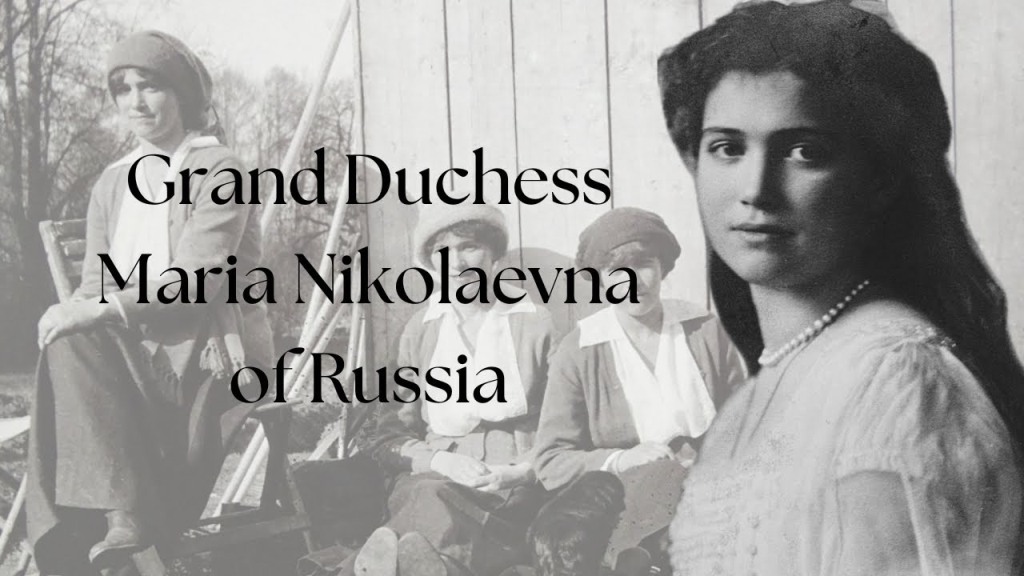
Holy Grand Duchess Maria Nikolaevna (1899-1918) + PHOTOS

June 27th (O.S. 14th June) marked the 125th anniversary of the birth of the third daughter of Emperor Nicholas II and Empress Alexandra Feodorovna—Grand Duchess Maria Nikolaevna. Maria Tobolova writes about her life, death and martyrdom.

Source: Orthodox Russia. 11 July 2024

© Paul Gilbert. 30 September 2024

Search for Grand Duke Mikhail Alexandrovich’s remains resumes near Perm

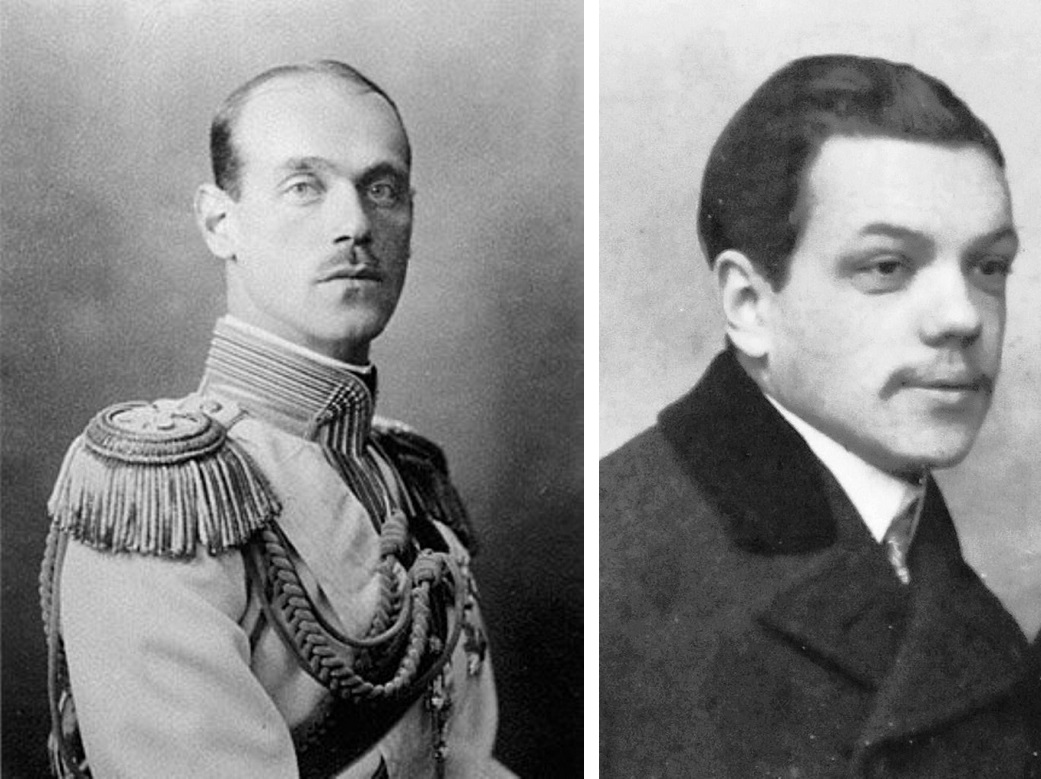
PHOTO: Grand Duke Mikhail Alexandrovich (1878-1918)
and his secretary Nikolai Nikolaevich Johnson (1878-1918)

On 18th September 2024, Russian media sources reported that the search for the remains of Grand Duke Mikhail Alexandrovich and his secretary Nikolai Johnson have resumed near Perm, where they were both murdered by the Bolsheviks on 13th June 1918. The circumstances surrounding the last days of their lives and their burial site remain unknown.

Recall that the search for the remains came to a halt in the summer of 2022, which resulted in the excavations having to to be postponed until the autumn of this year.

The new search-investigation has now shifted to a new location, to which the remains of Mikhail Alexandrovich and Nikolai Johnson could be buried at the confluence of the Gaiva and Kama Rivers, opposite the former village of Ust-Gaiva. It is noteworthy that wooden crosses which had been erected in 1918 at the grave site, have not survived to the present day.

The new site is based on information discovered by the search team while searching the State Archive of the Perm Region, which led them to the alleged burial site. The team acknowledged that the development of their investigation was aided by interviewing witnesses and local residents who had information about the installation of the crosses near Ust-Gaiva.

Following the murder of Grand Duke Mikhail Alexandrovich and Nikolai Johnson, the place of their burial turned out to be unknown. It was only until, a few years later, when the killers began to publish their memoirs, each of them describing the events of that night in their own words. One wrote that “after the murder we drove along the Solikamsk tract and turned right into the forest after 4 kilometers”, another wrote “they were shot either 200 or 300 meters from the road”. Neither killer provided any details about where the remains were buried.

The search for the grave of Mikhail Alexandrovich and Nikolai Johnson has been going on for more than a quarter of a century. At first, amateurs tried to find the burial place, which included Perm journalists and local historians. Then forensic investigators took up the case – as part of the investigation into the murder of Emperor Nicholas II and his family. For several years in a row, members of an international search expedition came to Perm, but their search yielded no results, because they were searching in the wrong place.

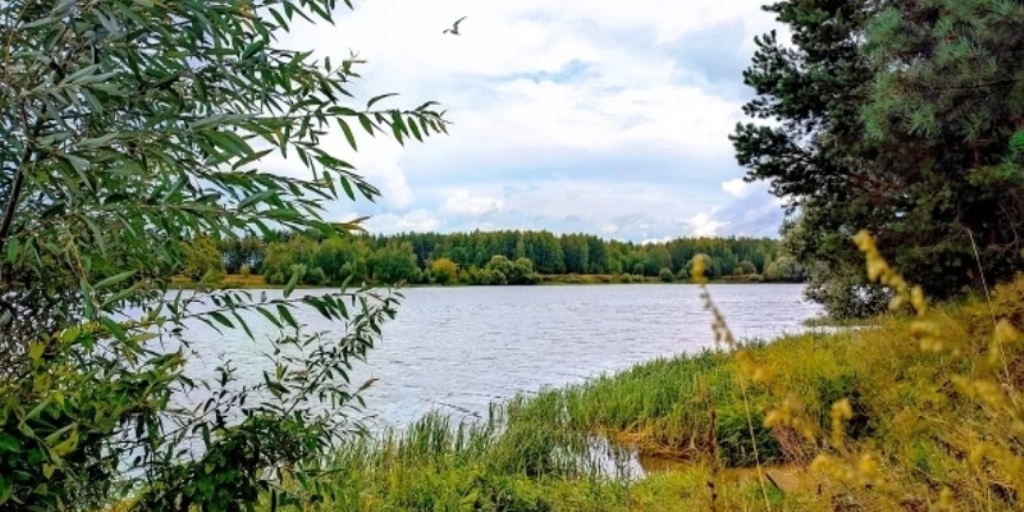
PHOTO: view of the confluence of the Gaiva River with the Kama, opposite the former village of Ust-Gaiva, where the remains of Grand Duke Mikhail and Nikolai Johnson are believed to be buried

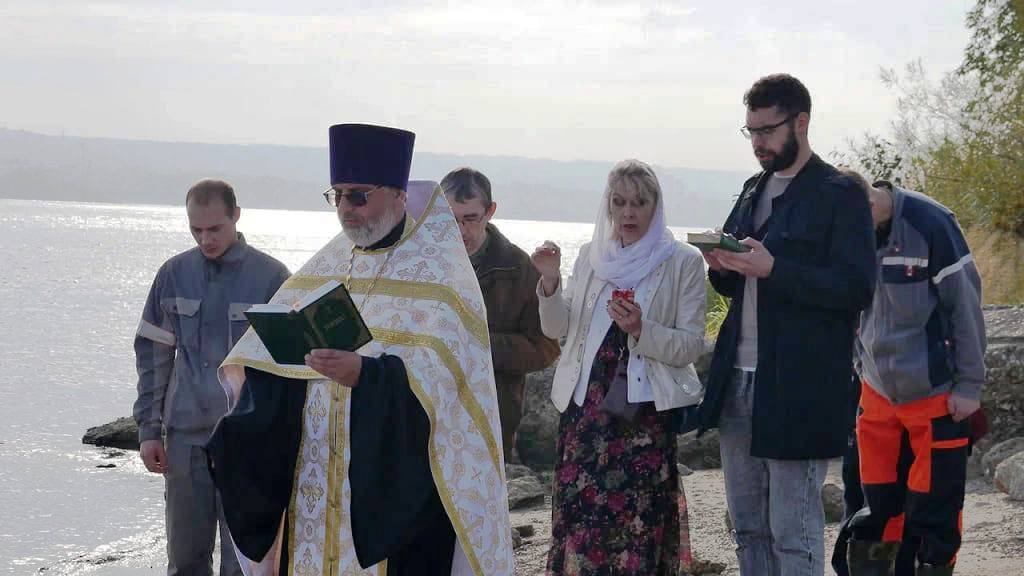
PHOTO: an Orthodox priest performs a panikhida [prayer for the dead] at the confluence of the Gaiva River with the Kama, opposite the former village of Ust-Gaiva, where the remains of Grand Duke Mikhail and Nikolai Johnson are believed to be buried

Gruesome eye-witness details

According to a member of the expedition, journalist Vyacheslav Degtyarnikov, the search team were contacted by “Natalia”, a resident of Ust-Gaiva. She said that in 1963, when she was 8 years old, her mother took her to the mouth of the Gaiva River [see photo above], to the place where it flows into the Kama, opposite the former village of Ust-Gaiva. There were two wooden crosses there. And her mother told Natalia that the brother of the last Russian tsar and his friend were buried here.

According to an eye-witness by the name of Trutnev, in June 1918, two phaetons arrived at his house, in one there were armed men, and in the other – two corpses. Trutnev claims that he recognized one of the bodies as that of the Grand Duke.

“Photos of Mikhail Alexandrovich were repeatedly published in Perm newspapers that year,” noted Vyacheslav Degtyarnikov. “The killers brought the corpses to Trutnev’s house, where they demanded a container to bury the remains. He showed them a large barrell-like container. Such containers were used at the Nobel factory, and the residents of Motovilikha took them home to ferment cabbages. Trutnev was forced to remove his cabbages and give the container to the killers. The corpses were dismembered and placed inside.

“Then Trutnev, accompanied by one of the killers, crossed the Kama River by a boat. At the mouth of the Gaiva there was already a grave dug, in which he buried the container with the remains. He returned to the site at a later date, and there he erected two wooden crosses and looked after the grave all his life. Before his death, he told Natalia’s grandfather about the site, and bequeathed him to take care of the grave and crosses”.

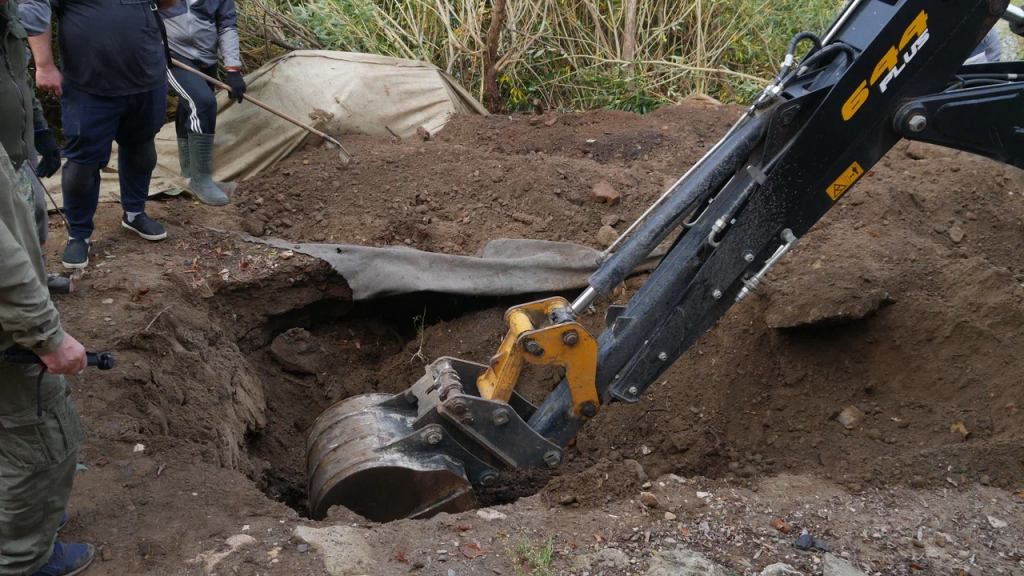
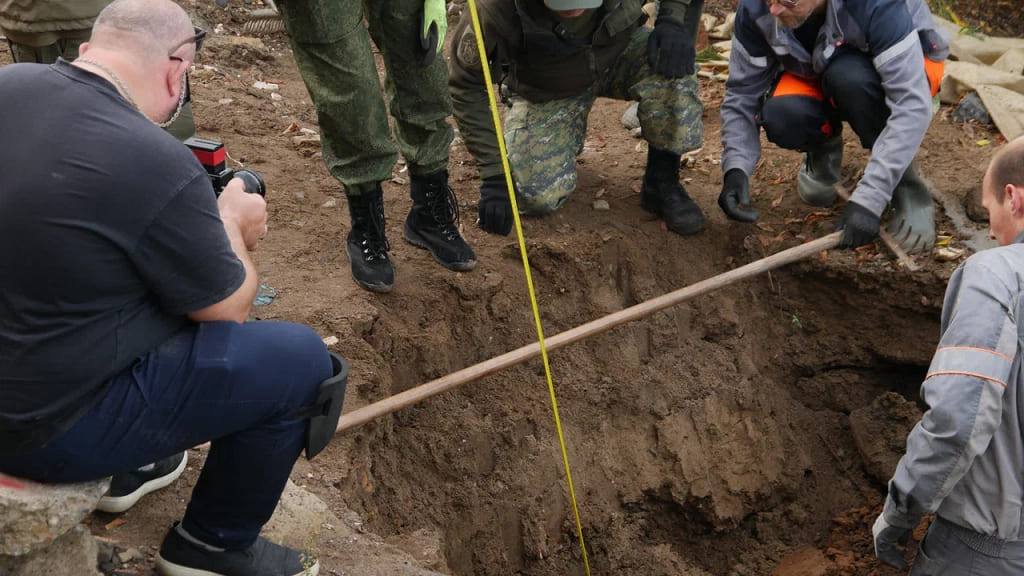
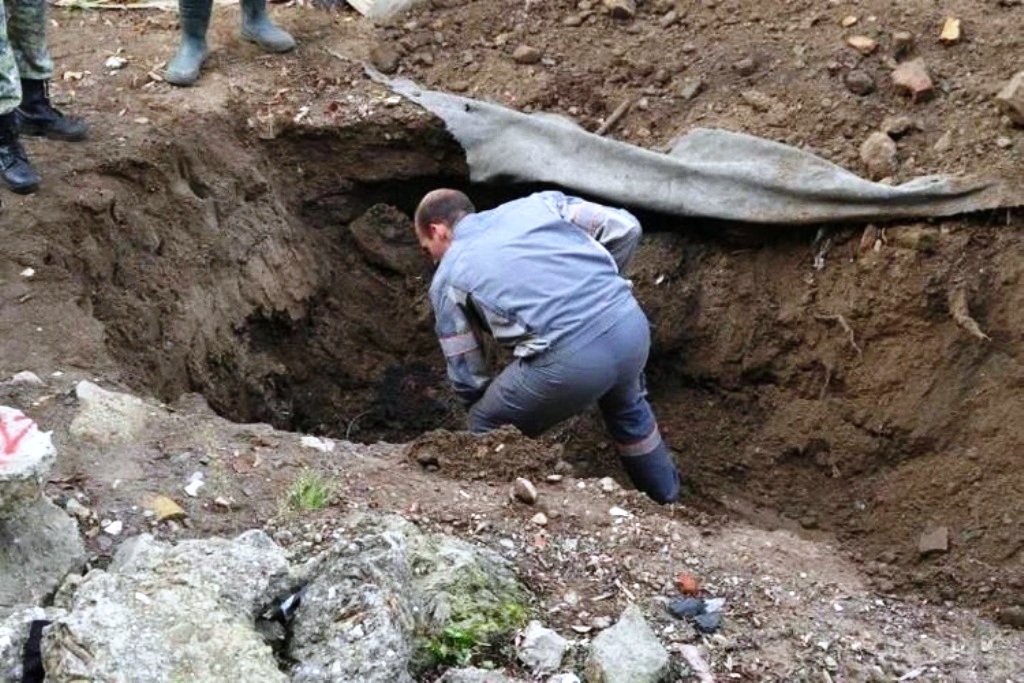
PHOTOS: excvations at the confluence of the Gaiva River with the Kama, opposite the former village of Ust-Gaiva, where the remains of Grand Duke Mikhail and Nikolai Johnson are believed to be buried

PHOTOS: excvations at the confluence of the Gaiva River with the Kama, opposite the former village of Ust-Gaiva, where the remains of Grand Duke Mikhail and Nikolai Johnson are believed to be buried

New information

As previously noted, the search for the remains of Grand Duke Mikhail and Nikolai Johnson, was supposed to begin in the summer of 2022. But the excavations had to be postponed. They resumed only in September of this year.

Previously, members of the Investigative Committee of the Russian Federation met with scientists and historians at the State Archive of the Perm Region, where they studied photographs with views of Perm and its environs, taken in the 1930s. But photo depicting the wooden crosses could not be found.

Excavations were carried out at the place calculated from the memories of the Perm woman. But the remains of the Grand Duke and his secretary could not be found. But a new eyewitness testimony has since come forward, which resulted in the search being shifted to a new site.

One of the oldest residents of Gaiva, 94-year-old Anna Ivanovna, recalled that she saw two wooden crosses. They were near the narrow-gauge railway running from the bridge over the Gaiva to the Kama. Now only sleepers remain from the old railway line. But where it ran is still clearly visible – a section 600 meters long along the riverbank. Unfortunately, the old woman could not recall the exact place where the crosses were located.

The existence of the wooden crosses near the Gaiva was also recalled at the end of the last century by the famous Perm scientist Georgy Chagin. Perm historian Lev Pereskokov also saw them more than once in his childhood.

“In the mid-1960s, my parents and I often drove by car from Zaprud, where we lived, through the Kama to Verkhnyaya Kurya,” he said. “At Sosnovy Bor there was a road covered with paving stones. I recall looking out of the window, and saw two old gray crosses in the gaps between the bushes. Once I even asked my father to stop the car, so that we could look at them, but there was no time”, he added.

“The search team are appealing to locals who perhaps remember exactly where the crosses were located opposite the old village of Ust-Gaiva, and any one who has preserved old photographs,” said Vyacheslav Degtyarnikov. “In any case, the search will continue”.

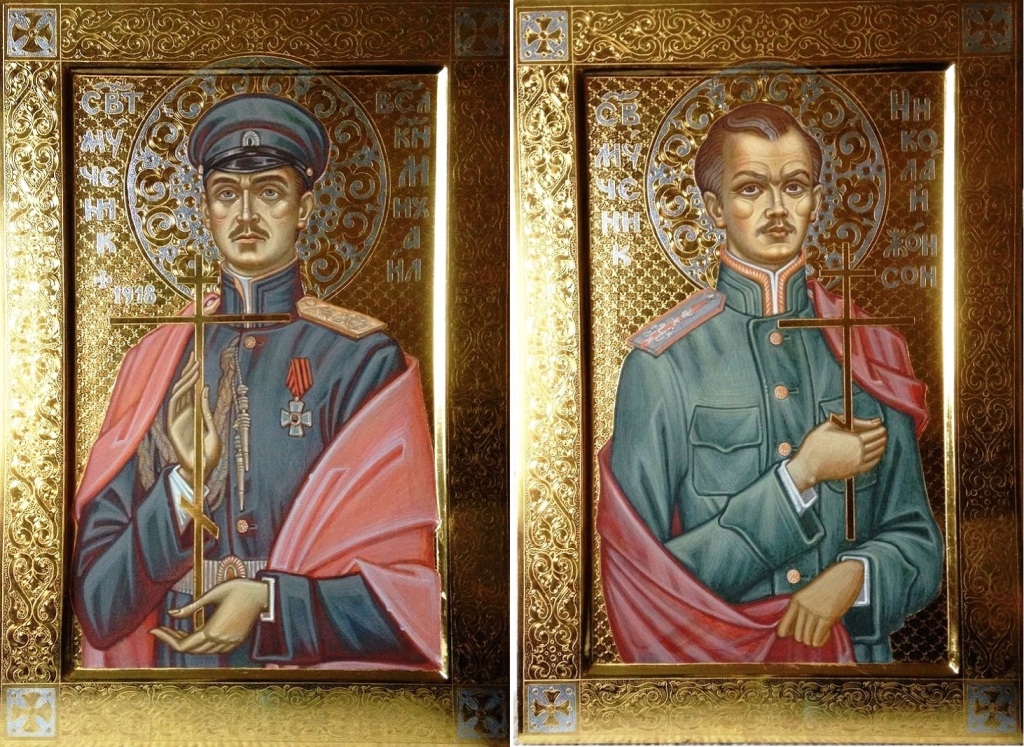
Icons depicting the Holy Royal Martyr Grand Duke Mikhail Alexandrovich (1878-1918) and Nicholas Nikolaevich Johnson (1878-1918). Canonized by the Russian Orthodox Church Outside of Russia (ROCOR) on 1st November 1981.

Memory Eternal! Вечная Память! ☦️

© Paul Gilbert. 28 September 2024
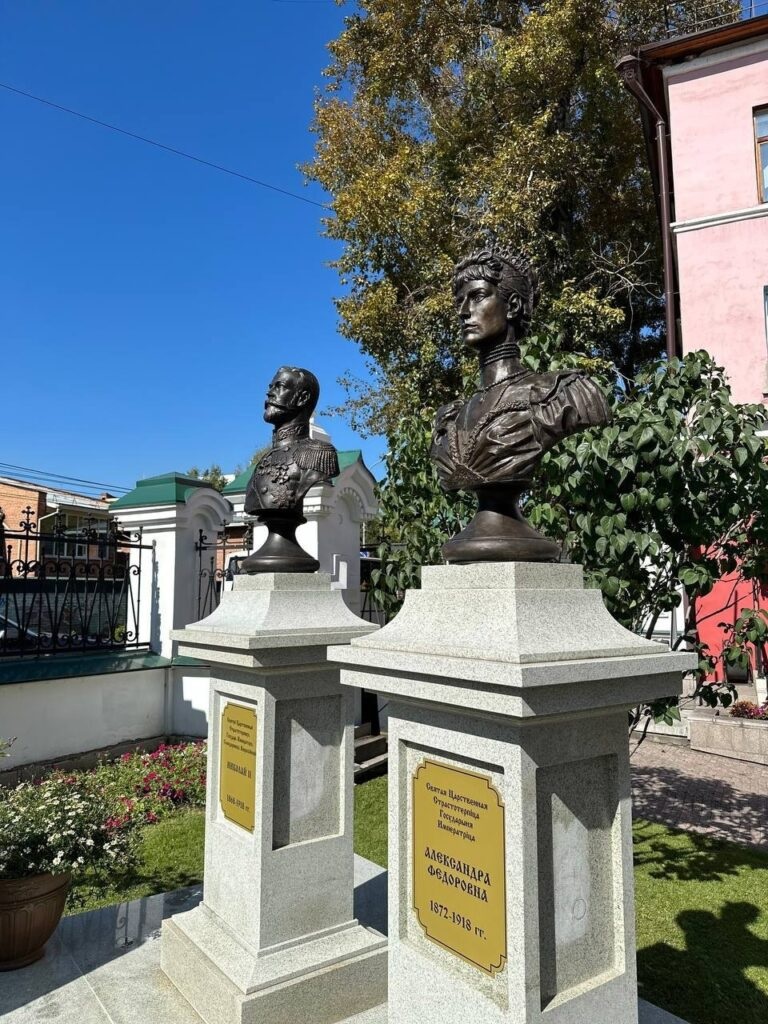
Bust-monuments of Nicholas and Alexamdra unveiled in Irkutsk

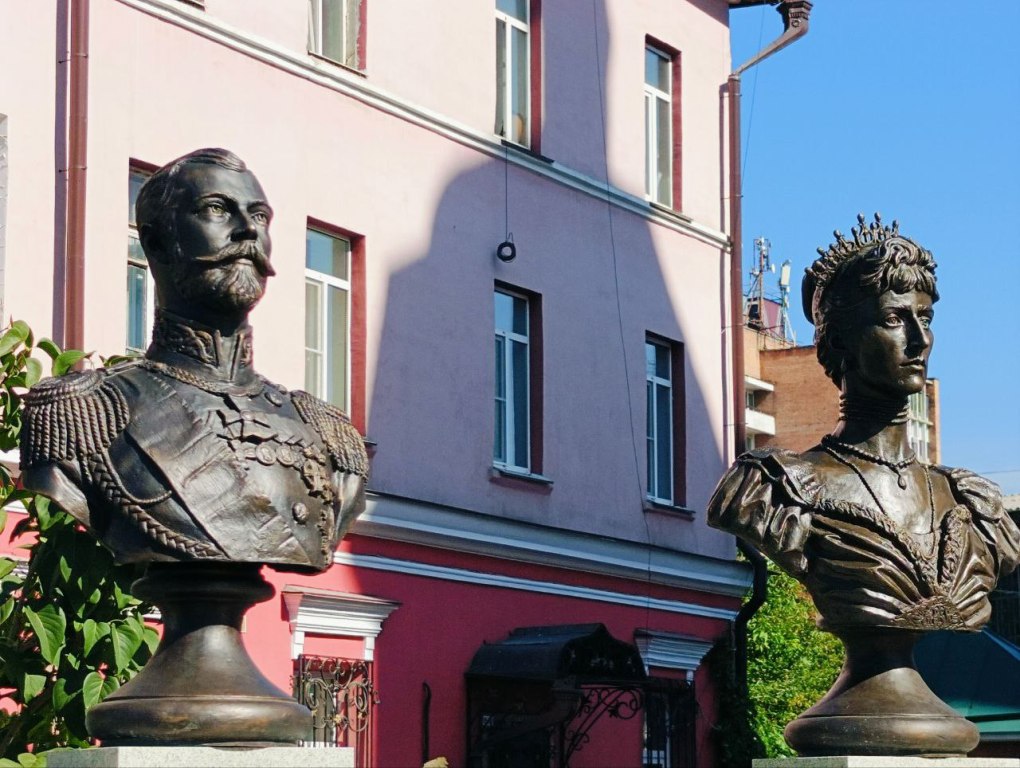
PHOTO: close up view of the bronze busts of Emperor Nicholas II and Empress Alexandra Feodorovna in the courtyard of St. Michael’s Archangel Kharlampievsky Church, Irkutsk

On 15th September 2024, a pair of bust-monuments of Emperor Nicholas II and Empress Alexandra Feodorovna were installed in the Siberian city of Irkutsk.

The monuments were installed in the courtyard of St. Michael’s Archangel Kharlampievsky Church, one of the oldest churches in the city. It was here in 1904, that the future Admiral Alexander Vasilyevich Kolchak (1874-1920) married Sofia Omirova (1876-1956).

The organizer of the installation of the busts is Irkutsk resident Mikhail Vladimirovich Arsentyev. The bust of Nicholas II, is based on the original – or what was left of it – which was found in the Crimea. It was restored by the famous Russian sculptor Vyacheslav Mikhailovich Klykov (1938-2006), who restored the parts which had been broken off by Bolshevik vandals following the October 1917 Revolution. It is believed that the original bust was made from life, around 1905.

he sculptor of the current busts of Nicholas II and Alexandra Feodorovna is the modern master Pavel Zhuravlev. Both busts are made of bronze, each weighing 100 kg, they were cast in a workshop in Moscow, where Vyacheslav Klykov worked during his lifetime.

PHOTO: Metropolitan Maximilian of Irkutsk and Angarsk performed the act of consecration of the bust-monuments in the courtyard of St. Michael’s Archangel Kharlampievsky Church, Irkutsk

Before the unveiling of the monuments, a Divine Liturgy was performed in the church, by three bishops (in the photo above from left to right): Bishop Alexy of Sitka and Alaska, Metropolitan Maximilian of Irkutsk and Angarsk and Bishop Konstantin of Bratsk and Ust-Ilimsk. Divine services were conducted in four languages: Church Slavonic, Greek, English and Aleut, which emphasized the atmosphere of unity of peoples.

The act of consecration of the busts was performed in the courtyard of the church by Metropolitan Maximilian of Irkutsk and Angarsk. It must be noted that there are few monuments to holy people in Irkutsk, and these bust-monuments of the Holy Royal Martyrs is one of the ways to teach residents and guests of the city about the last Russian tsar and his family.

PHOTO: view of the bronze bust-monuments of Emperor Nicholas II and Empress Alexandra Feodorovna in the courtyard of St. Michael’s Archangel Kharlampievsky Church, Irkutsk

© Paul Gilbert. 27 September 2024
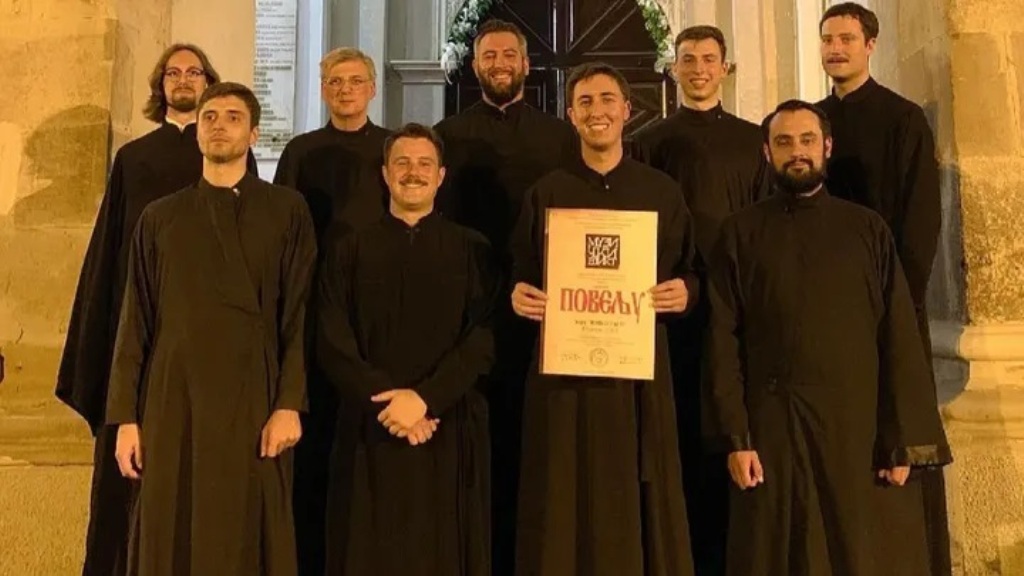
The Tsar Nicholas II Men’s Choir

The Tsar Nicholas II Choir is a men’s ensemble based in New York City, dedicated to performing Russian liturgical and secular music. The choir was founded in 2017 – the year marking the 100th anniversary of the fateful events of 1917: the Russian Revolution and the abdication of Nicholas II, Russia’s last Emperor. The choir’s name reflects that connection.

The Revolutions of February and October 1917, the abdication of the Tsar, and the subsequent Civil War sent untold numbers of Russians into exile. The ensemble is the direct inheritor of the religious and cultural traditions of these first emigres. Most members of the choir are of Russian, Ukrainian, or Belorussian descent. All members are Russian Orthodox, most speak Russian, and all hold Orthodoxy, and Russian culture and music dear to their hearts. The choir therefore views as its mission the preservation of old Russian traditions, and the maintenance of newer ones developed outside of Russia throughout the 20th and 21st centuries.

This commitment is reflected in the choir’s chosen repertoire; alongside folk songs and compositions of many celebrated Russian composers of the 18th-20th centuries are works written by Russian emigres and their descendants. The choir also works actively among the youth to keep these traditions and this music alive for posterity.

In 2017 the Tsar Nicholas II Men’s Choir made it’s first trip to the Russian Federation. The group toured St. Petersburg, singing the Divine Liturgy in St. Isaac’s Cathedral, and at the Trinity Cathedral of the city’s St. Alexander Nevsky Lavra, and performing several concerts. One of these concerts was held in the hall of the St. Petersburg Theological Academy. On more than one occasion, people who heard the choir perform asked what part of Russia the choir was from, not believing that such a choir could come from the United States.

Also in 2017 the choir had its first experience of the warm hospitality of the Serbian people. In 2019 the choir hosted another Russian men’s choir based in Australia, singing several joint concerts and services with the Russian Orthodox Male Choir of Australia.

The St. Nicholas II Choir is conducted by Adrian Fekula. Like all of the singers, Adrian is an amateur. He works in finance full-time, but studied music in high school and college, having studied conducting under Professor David Harris at the College of the Holy Cross in Massachusetts, where he was also the assistant conductor of the college choir. Adrian currently serves as the assistant conductor of the Metropolitan’s Choir of the Cathedral of the Sign in New York City – the center of the Russian Orthodox Church Outside of Russia.

Click HERE to watch and listen to the Tsar Nicholas II Men’s Choir
sing some of their most popular songs.

© Russian Orthodox Church Outside of Russia. 15 September 2024
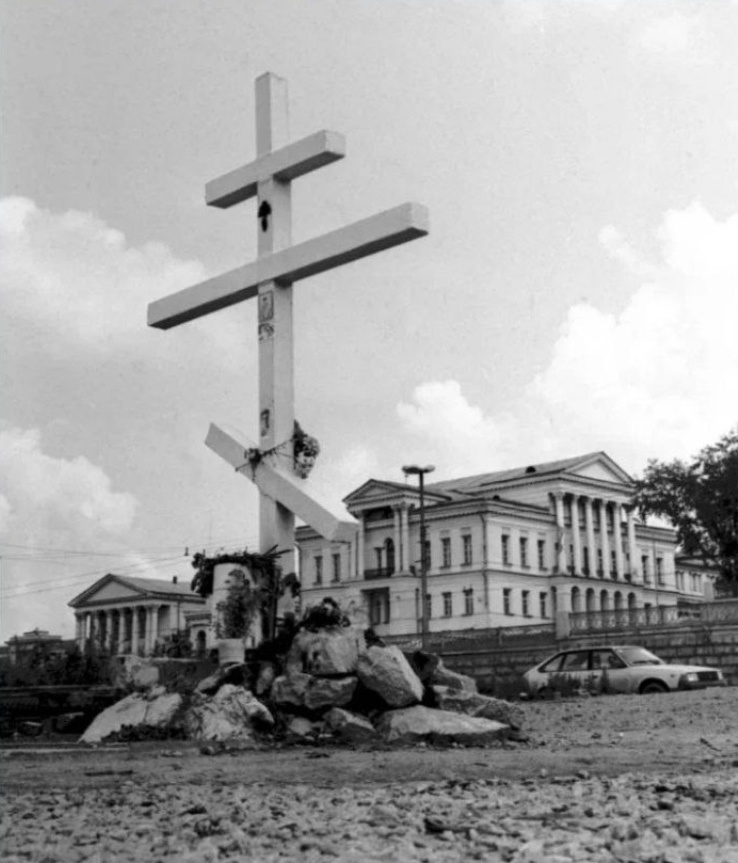
Cossack witnesses miraculous vision on the site of Ipatiev House in Ekaterinburg in 1990


PHOTO: a large metal Orthodox cross was installed
on the site of the Ipatiev House in 1990

In the autumn of 1990, a Cossack by the name of Vladimir claims to have witnessed a miraculous vision, during the installation of a large metal Orthodox cross, on the site where the Ipatiev House once stood – demolished on 22-23 September 1977.

Whether you are a believer or not, this is just one of many miracles reported since the regicide in Ekaterinburg in July 1918.

Here is Vladimir’s testimony . . .

“I want to tell you about the appearance (sign) at the moment of the installation of the cross on the site of the Ipatiev house, where the Tsar and his family were murdered.

On 5th October 1990, at about 11-12 noon , a metal cross was brought by truck, a hole was dug in advance for its installation, and crushed stone was brought.

The weather was gloomy. The entire sky was completely covered with dark clouds and it was snowing sparsely.

The cross was removed from the truck and placed on the ground, then installed in the hole, and one of the people present, a man named Alexei, stepped forward to see how the cross was installed and whether there was any deviation.

And suddenly, Alexei ran up toward the others present and yelled: “Look up!”

We all raised our heads at first trembling, and then fear passed through our bodies: above us, that is, directly above the cross, the sky parted, and from there a ray of light fell on the cross. The sun was not visible, and the hole in the clouds rotated to the right, and on the ground, that is, around the cross within a radius of 50-100 meters there was, as it were, an illumination from heaven by this bright beam of light, and on the ground a bright circle of light; and the snow did not fall within it.

All this lasted about 30-40 minutes, the time it took to install the cross and secured with concrete, then the hole in the clouds closed. The light disappeared. At the same time, up to 30 people were present, many of whom were non-believers at that time.

When we later asked the priest about this apparition, he replied that it was obviously a sign. Those of us non-beleivers present believed in God after this miracle.”

From the memoirs of a Cossack from the village of Kamenskaya,
Vladimir.

FURTHER READING:

The face of the Tsar-Martyr Nicholas II seen July 1919

“He will help you!” Stories of miraculous help of Tsar Nicholas II

My [Paul Gilbert] cancer journey and prayers for the intercession of Tsar-Martyr Nicholas II

© Paul Gilbert. 11 September 2024
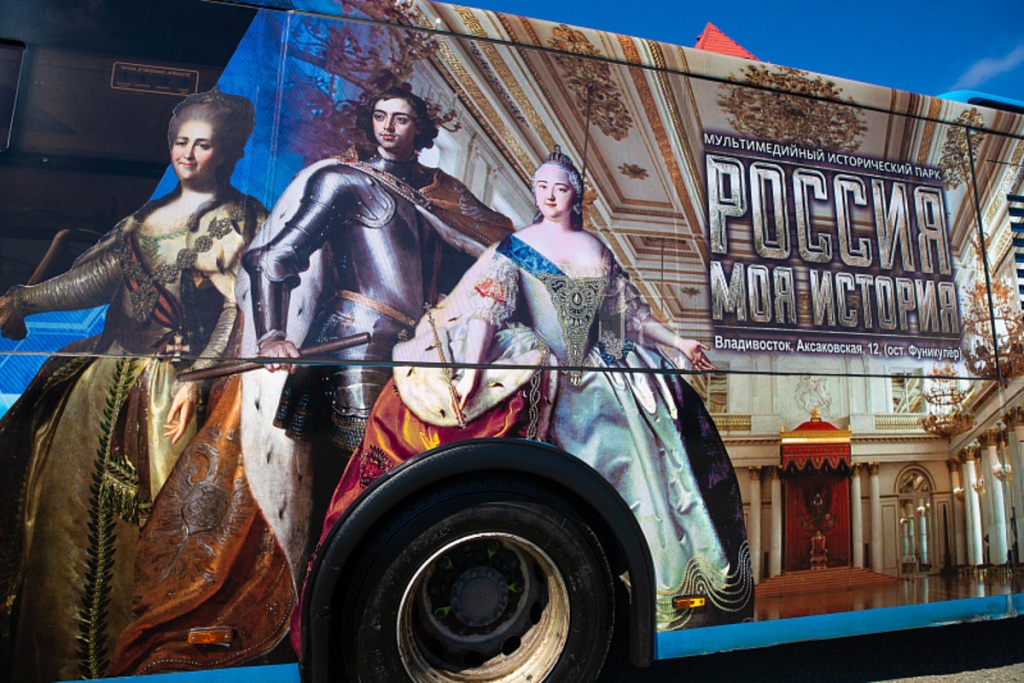
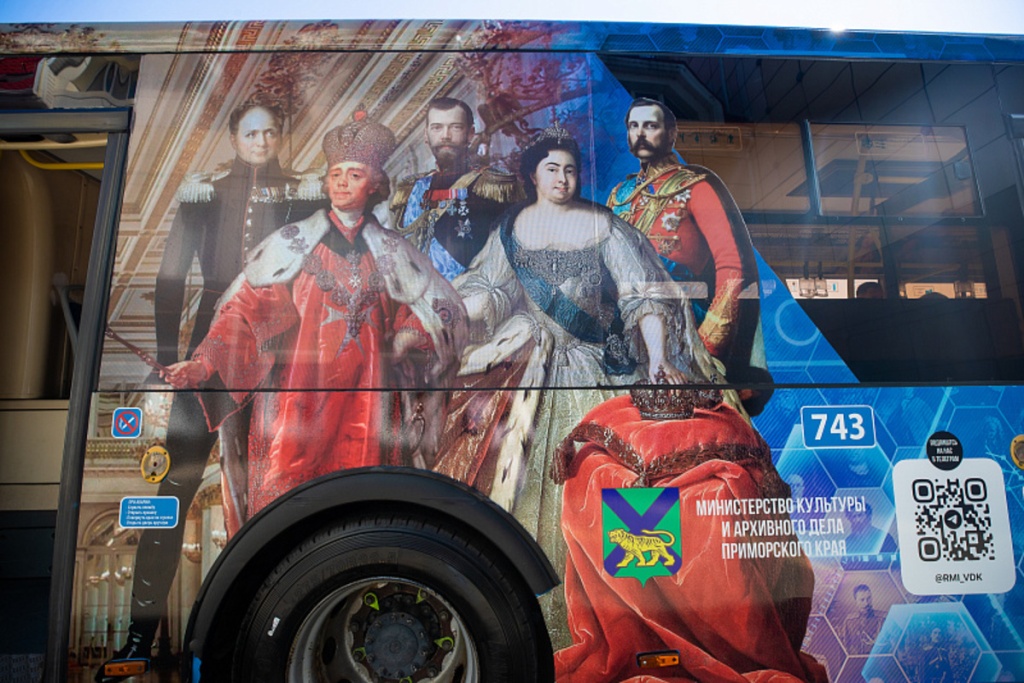
Vladivostock unveils bus dedicated to the Romanov dynasty

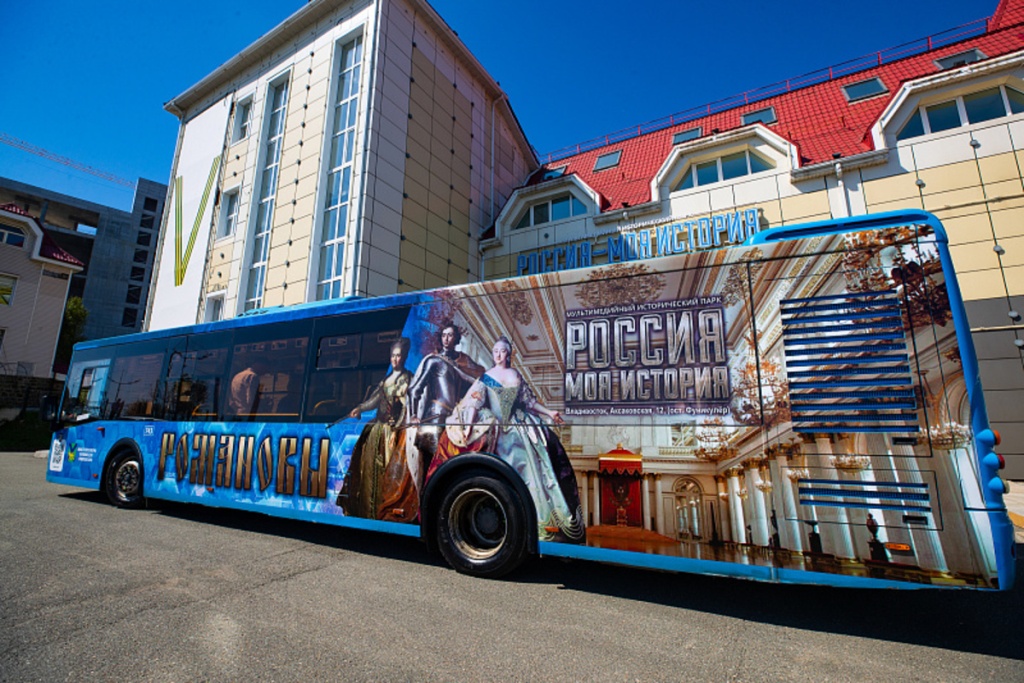
A new bus dedicated to the Romanov dynasty was unveiled this week in the Far Eastern Russian city of Vladivostok. Commuters can now learn about the Russian emperors and empresses from Peter I to Nicholas II, while they are going to work or school.

The outside of the bus depicts some of Russia’s most famous monarchs. For instance, depicted on the rear of the driver’s side of the bus are Empress Catherine II, Emperor Peter the Great and his daughter Empress Elizabeth. On the passenger side of the bus are Emperors Alexander I, Nicholas II, Alexander II, Paul I and empress Anna Ioannovna.

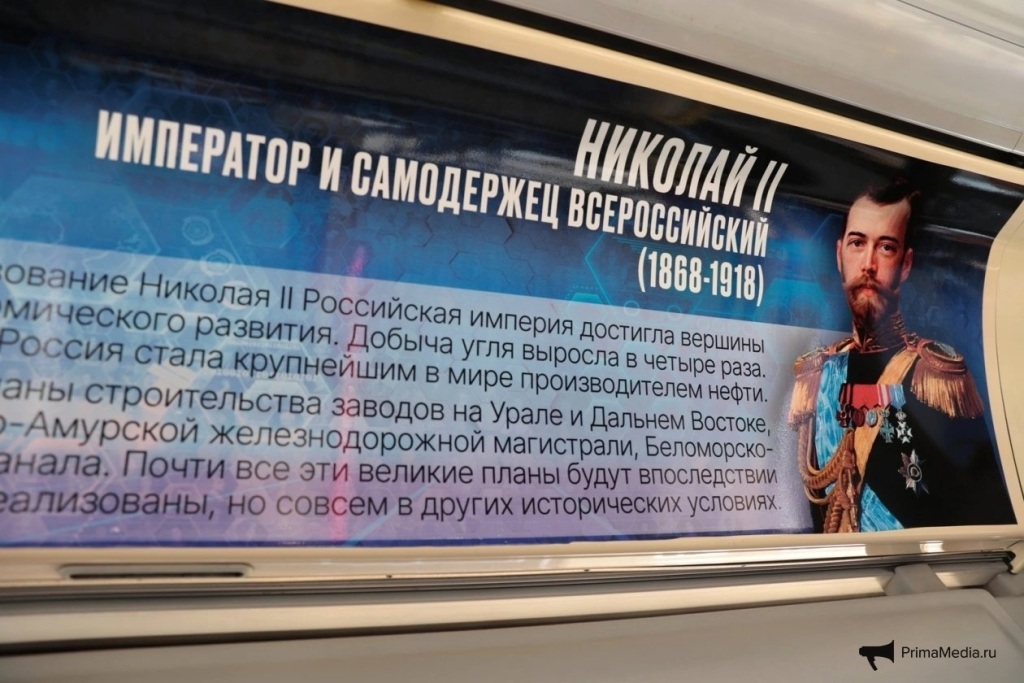
The interior of the bus features informative posters (see last photo on this post) which give commuters a brief summary of each respective emperor or empress.

“The appearance of such a recognizable bus attracts a lot of attention among both commuters and pedestrians with it’s impressive “Romanovs” inscription, reports IA Prima Media.

The bus which celebrates the Romanov dynasty, who ruled the Russian Empire for more than 300 years, is a joint project of the multimedia park Russia – My History and the municipal enterprise “VPOPAT No 1 with the support of the Ministry of Culture and Archival Affairs of the Primorsky Territory.

The historical materials placed on the bus are related to the Romanovs exhibition, which is presented in the multimedia park Russia – My History. The interior of the passenger bus is now a gallery of posters of Russian emperors – from Peter I to Nicholas II.

The idea of creating an educational route was iniated more than two years ago. In the last few years, similar buses have been unveiled in Vladivostock, which explore other historic events, including the 150th anniversary of Vladimir Klavdievich Arsenyev; the Khasan events; the Great Patriotic War; and the anniversary of the fire and rescue service. There are also plans to unveil a bus dedicated to another ruling Russian dynasty – the Rurik dynasty.

The new bus has been appointed to route No15 in Vladivostok. The choice of the route was for a reason. Route No15 is very long and runs from the center of Vladivostok to the Primorsky Oceanarium on Russian Island. Bus No 15 serves some of the largest universities in the city, so they are always full of young people.

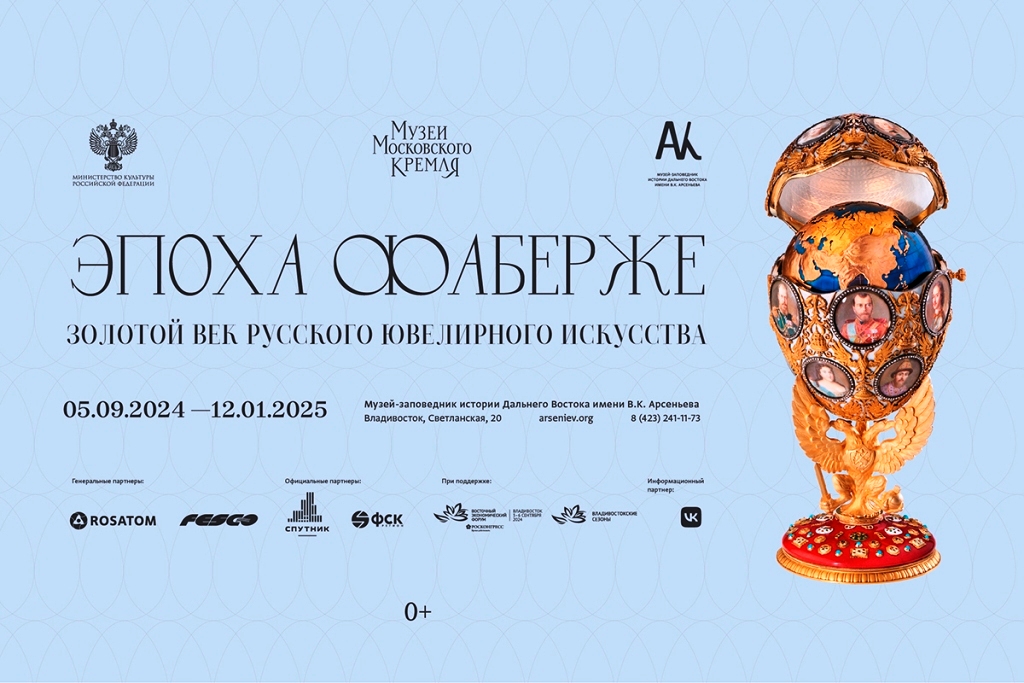
On 5th September 2024, a new exhibition The Age of Fabergé. The Golden Age of Russian Jewelry Art opened at the Arseniev Museum-Reserve of the History of the Far East, situated in Vladivostock.

© Paul Gilbert. 10 September 2024
Private Garden of the Alexander Palace to be restored

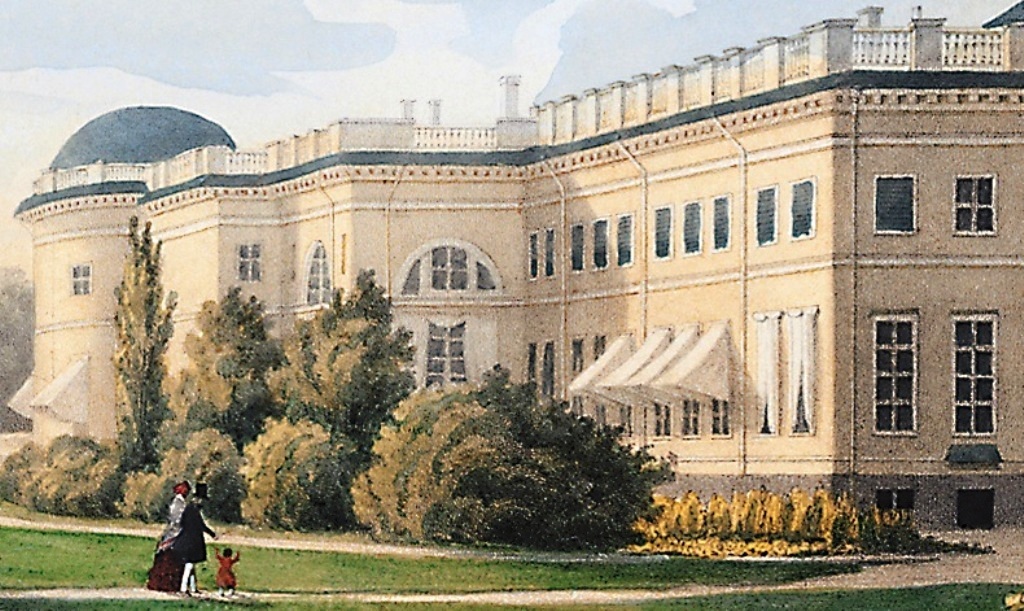
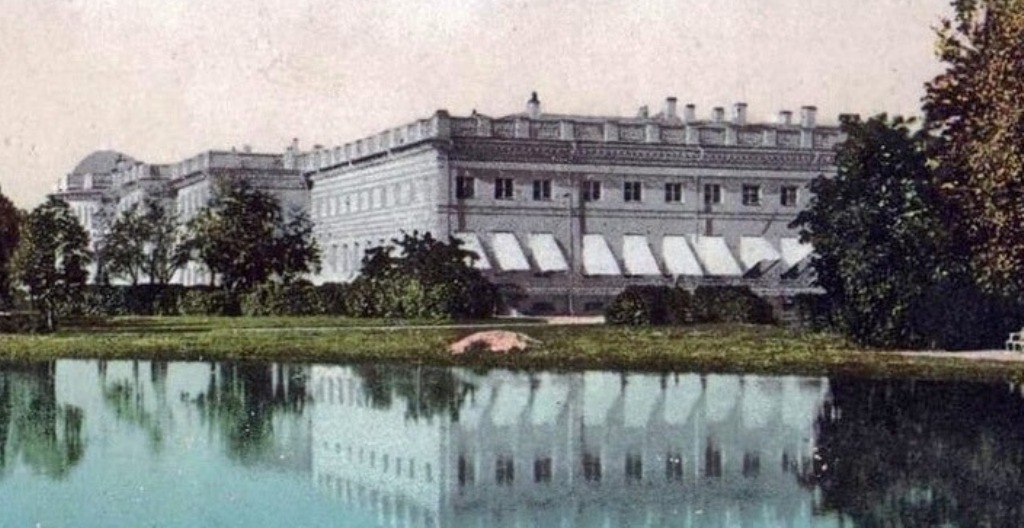
PHOTO: detail of the Alexander Palace and the Private Garden, from a lithograph (1845) by Johann Jacob Meyer. From the Collection of the Tsarskoye Selo State Museum

The restoration of the Alexander Palace at Tsarskoye Selo continues. Aside from the planned opening of the western wing of the palace next year, new projects include the restoration of the 18th century style Private Garden.

Experts who are now working on the recreation of the Private Garden fence, are reaching out to the public for help. The museum is appealing for photographs, preserved in home archives or im private collections of the fence and gates of the palace’s Private Garden, taken during the 1900s-1930s. The museum is especially interested in photos which show the lattice work of the fence.

The former Private Garden was situated on the corner of the eastern wing of the Alexander Palace. The Private Garden began with the creation of a small flower garden, which was fenced with a cast-iron fence with gates and wickets created according to a drawing by Giacomo Quarenghi (1744-1817), the famous Italian architect, who designed the Alexander Palace. In 1845-1846, the fence was replaced with a new one by Sebastian Cerfolio, whose original drawing of this lattice, among other documents on the manufacture of the fence, have been preserved in the archives of the Tsarskoye Selo State Museum.

In addition, several cast-iron elements of the lattice in the form of pine-cones have also been preserved in the archives. They are identical to those depicted in the drawing by Cerfolio. Photographs taken before the Great Patriotic War (1941-45) provide the most complete picture of what the fence looked like, and will allow experts to determine whether the fence underwent any changes since the middle of the 19th century.

If you have any photographs of the iron grille fence and gate of the Private Garden, taken during the 1900s-1930s, please send them by e-mail to the Tsarskoye Selo State Museum at the following email address: referent@tzar.ru

***

PHOTO: late 19th century postcard of the Alexander Palace
and the Empress’s balcony

During the reign of Emperor Nicholas II, the eastern wing of the Alexander Palace housed the Private Apartments of the Imperial Family. In 1895, the Emperor had the famous L-shaped iron grille balcony installed here for his wife Empress Alexandra Feodorovna, which was accessed via the Maple Drawing Room.

When completed, it wrapped around the corner of the palace, the same corner which is depicted in the colour lithograph above. Sadly, the balcony did not survive to the present day, it was was dismantled between 1947-49, by order of the palace’s new Soviet “caretakers”.

Despite the extensive restoration work on recreating the private apartments of Nicholas II and Alexandra Feodorovna, as they looked in the late 19th to early 20th centuries, the museum have no plans to recreate the Empress’s balcony, the reason being is that they want to preserve the palace’s original 18th century Neoclassical look – which many hail as “Quarenghi’s masterpiece”.

© Paul Gilbert. 9 September 2024
New Fabergé exhibition opens in Vladivostock

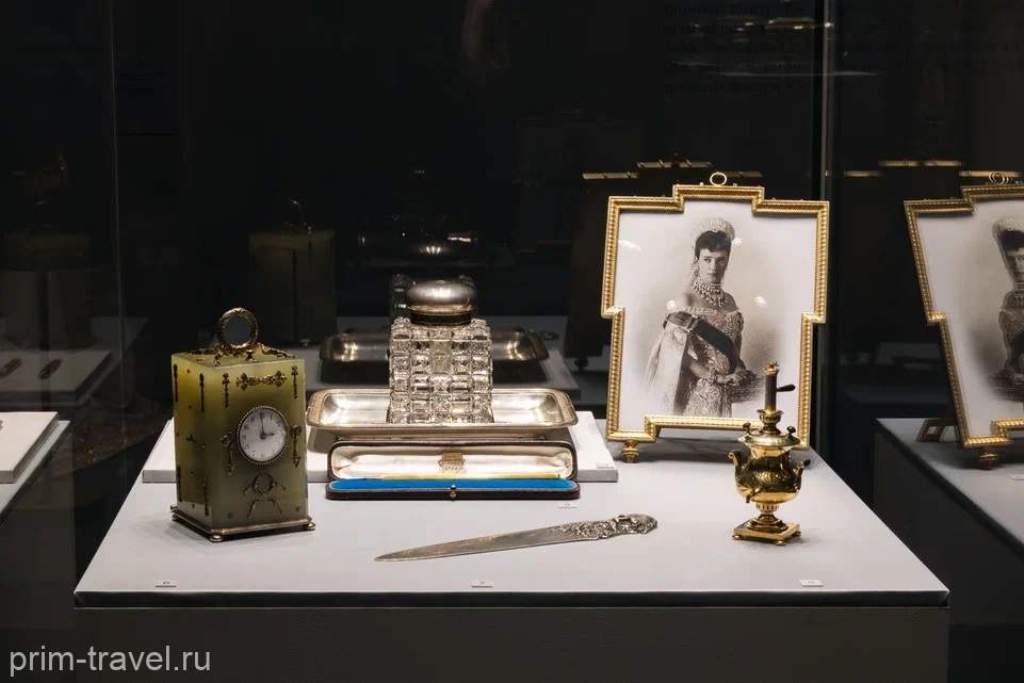
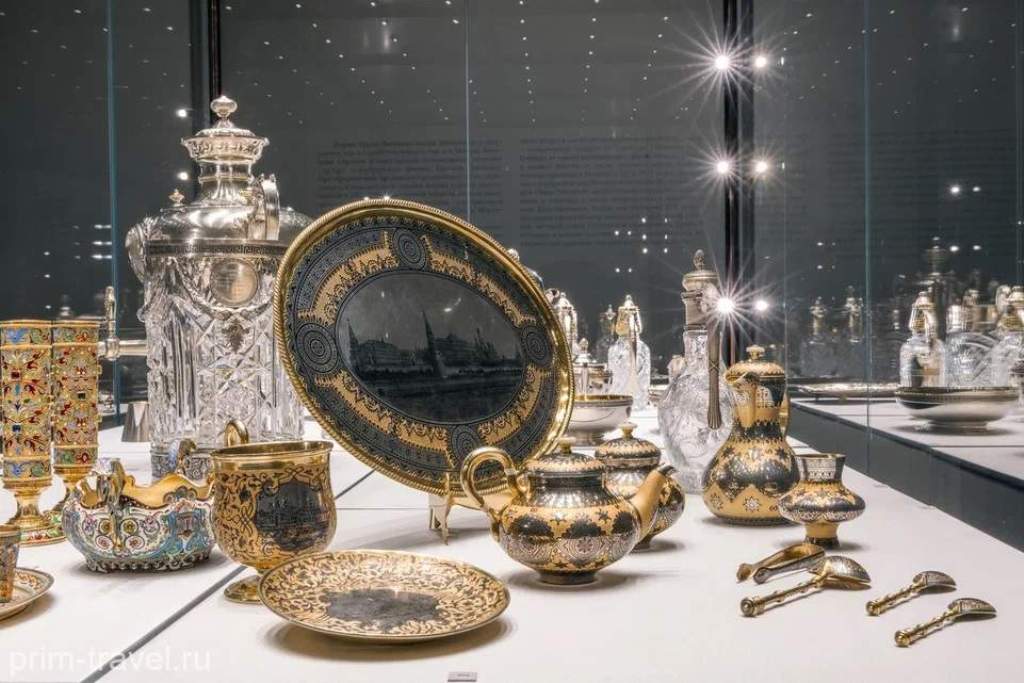
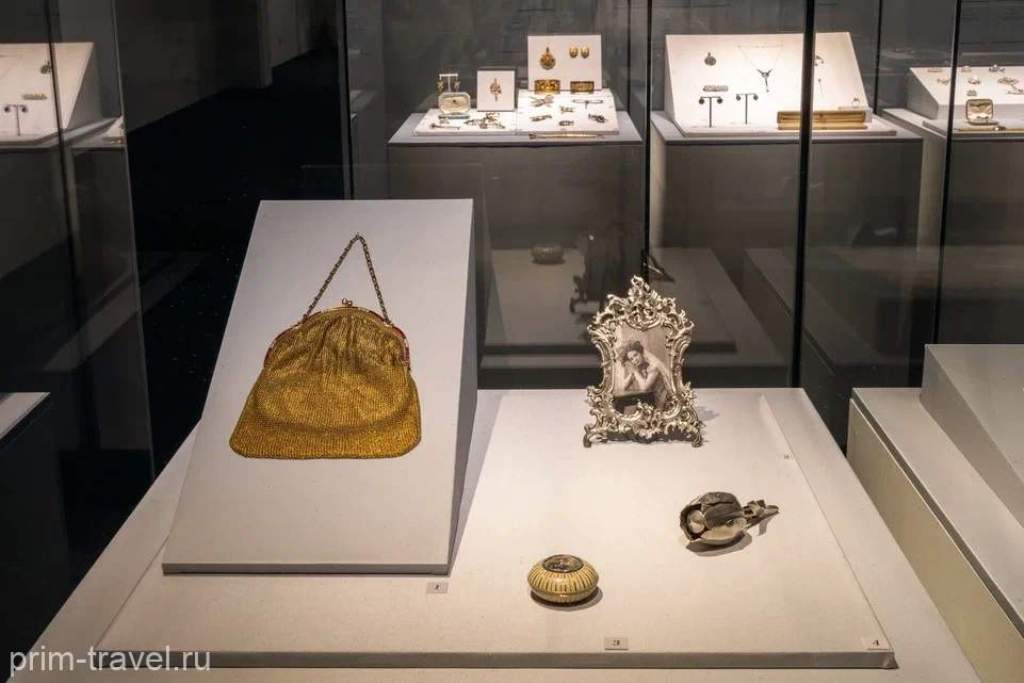
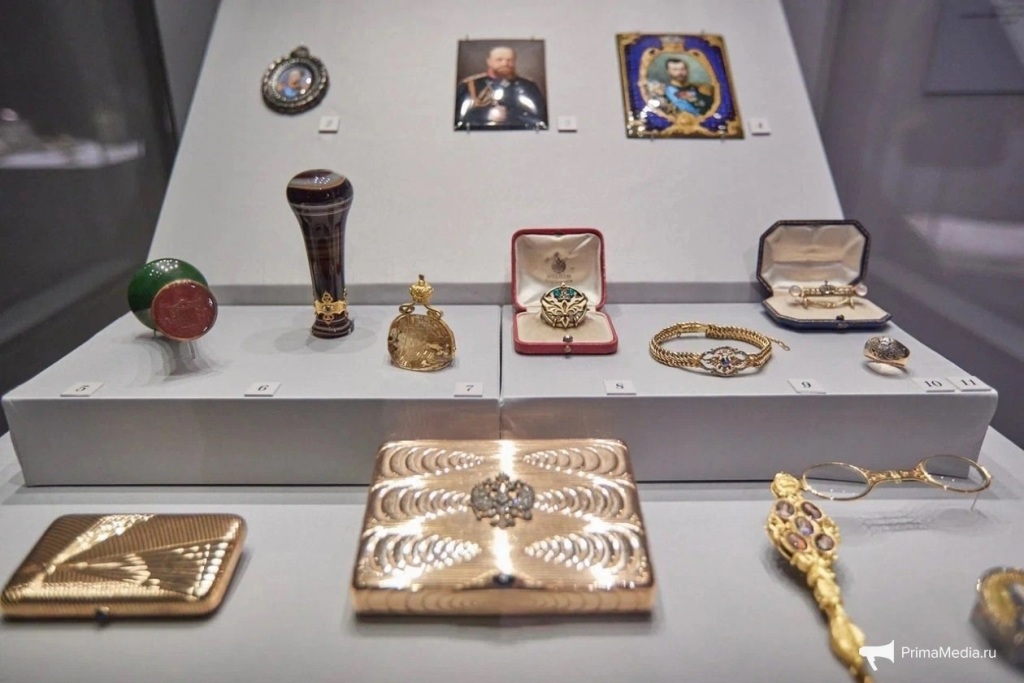
On 5th September 2024, a new exhibition The Age of Fabergé. The Golden Age of Russian Jewelry Art opened at the Arseniev Museum-Reserve of the History of the Far East, situated in Vladivostock. The exhibition is a joint project with the State Armoury Chamber Museum of the Moscow Kremlin.

Grandiose in terms of the number of valuable exhibits from the funds of the Moscow Kremlin Museums, the exhibition showcases about 300 items, including three Fabergé Imperial Easter Eggs commissioned by Emperor Nicholas II for his wife Empress Alexandra Feodorovna, for Easter in 1908, 1913 and 1916 respectively.

The Imperial Easter Eggs held in the Moscow Kremlin Museums are only ten Imperial Fabergé eggs that were not sold by the Bolsheviks in the 1920s, and are now held in the funds of the State Armoury Chamber Museum of the Moscow Kremlin. The Armoury Museum will be moving to a massive new museum complex, located on Red Square in 2024.

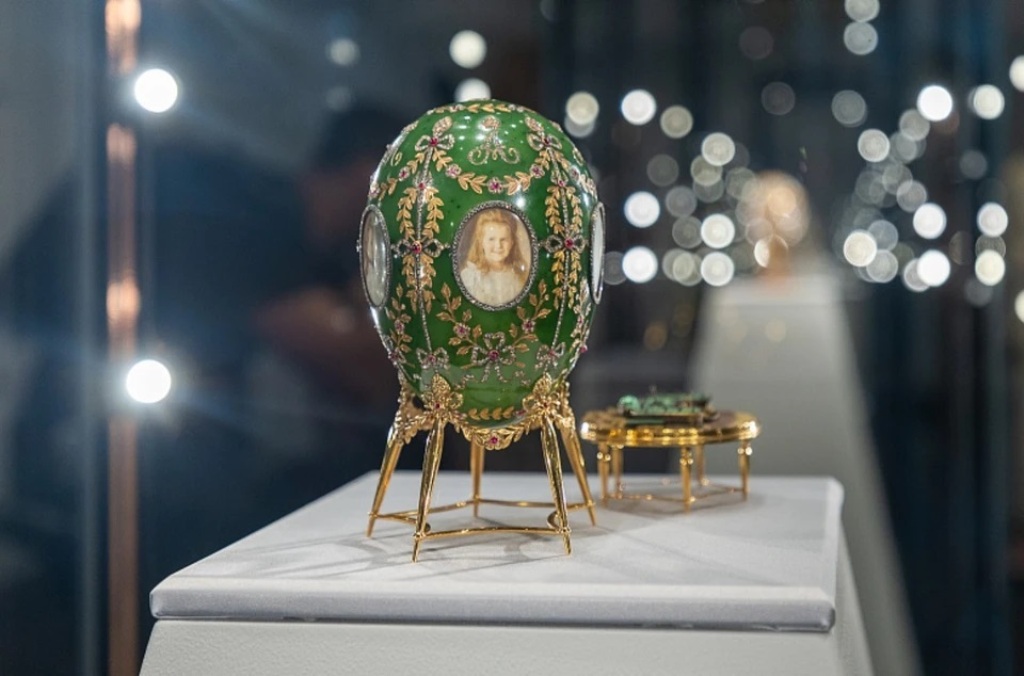
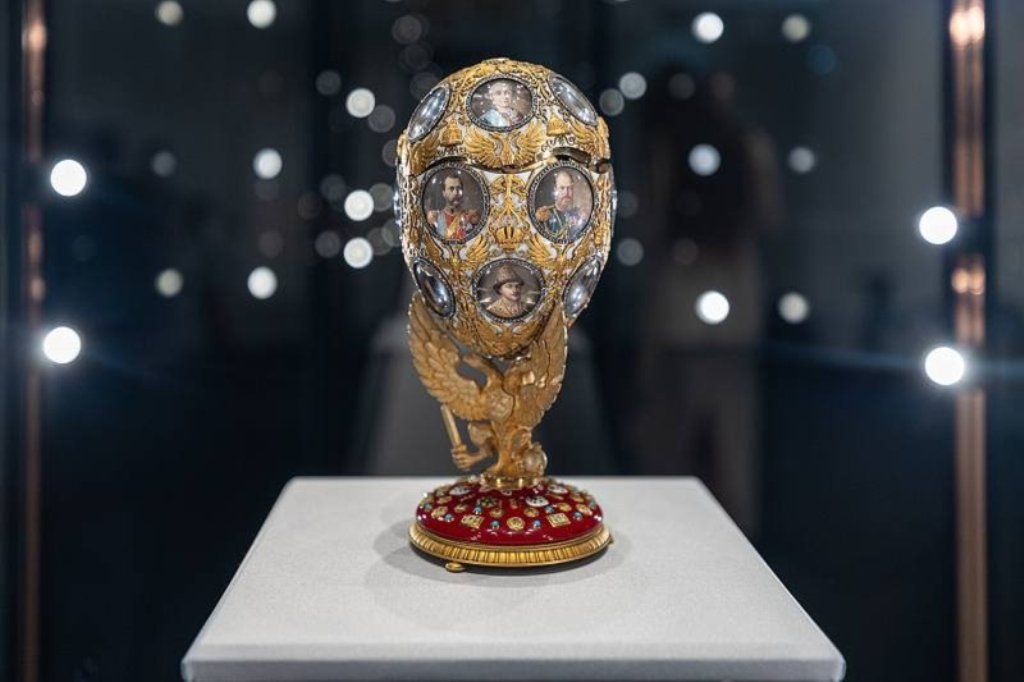
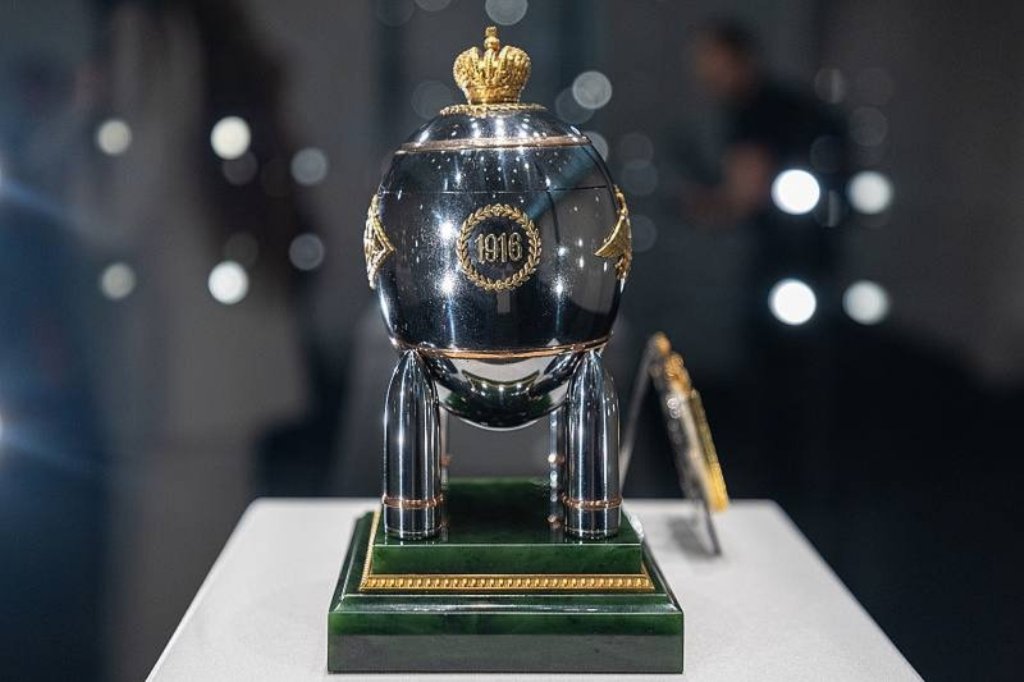
The famous Imperial Easter Eggs with intricate surprises, commissioned by Emperor Nicholas II, occupy a central place at the exhibition: the Alexander Palace Egg, gifted to Empress Alexandra Feodorovna (Easter 1908) ; the Romanov Tercentenary Egg, gifted to Empress Alexandra Feodorovna (Easter 1913); and the Steel Military Egg, gifted to Empress Alexandra Feodorovna (Easter 1916).

PHOTO: the Alexander Palace Egg (1908). Moscow Kremlin Museums

PHOTO: the Romanov Tercentenary egg (1913). Moscow Kremlin Museums

PHOTO: the Steel Military Egg (1916). Moscow Kremlin Museums

The exhibition showcases about 300 items, including masterpieces of the famous Russian firm of Carl Fabergé (1846-1920) as well as works of his contemporaries, including Suppliers of the Imperial Court I. Khlebnikov, P. Ovchinnikov, the Grachev brothers, F. Kechli, as well as other firms, factories, workshops and artels. The three Imperial Easter Eggs on display, were created by the chief jeweler of the Fabergé firm, Henrik Wigström (1862-1923).

In addition to exclusive and commissioned works, are gifts from the Guards to their august chiefs, seals with the coats of arms of members of the Romanov family, stone-cutting products of the Ekaterinburg Imperial Lapidary Factory bearing Imperial monograms, and precious church utensils for the Marfo-Mariinsky (Martha and Mary) Convent in Moscow, the abbess of which was Grand Duchess Elizabeth Feodorovna (1864-1918).

The Age of Fabergé. The Golden Age of Russian Jewelry Art exhibition runs until 12th January 2025 at the Arseniev Museum-Reserve of the History of the Far East in Vladivostock.

***

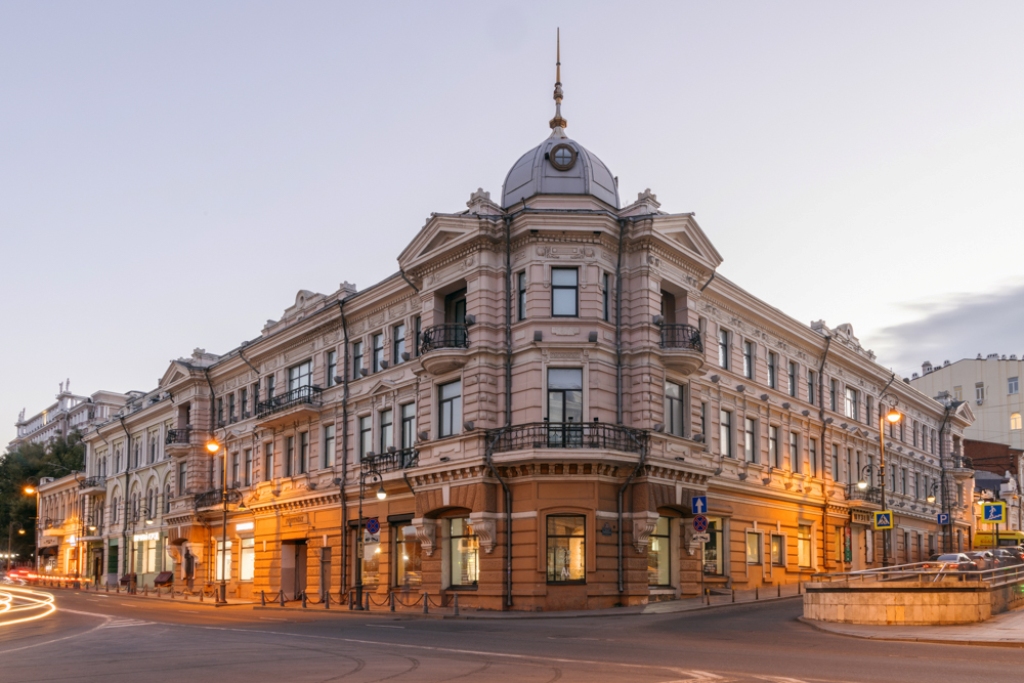
PHOTO: the Arseniev Museum-Reserve of the History of the Far East, situated in Vladivostock

The memorial house was built at the beginning of the 20th century. Vladimir Klavdievich Arsenyev (1872-1930) moved into apartment number 4 on the second floor in June 1929. He was a famous Russian traveler, geographer, ethnographer, local historian, writer, and explorer who made a significant contribution to the development of the Far East.
© Paul Gilbert. 5 September 2024