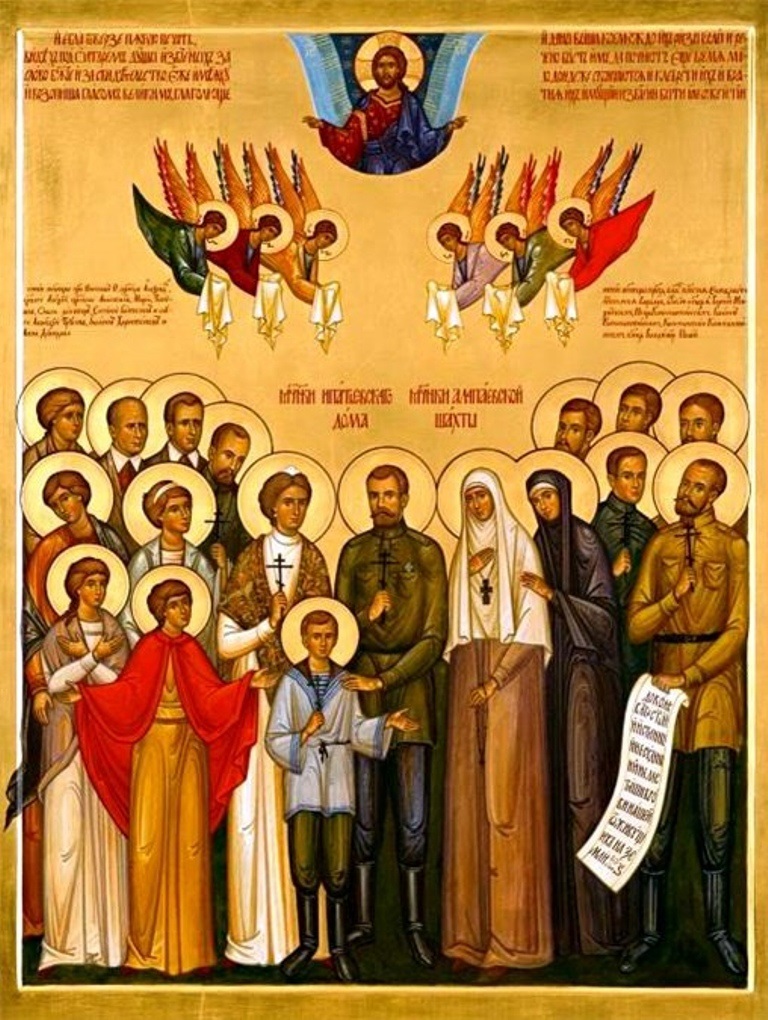
Prayer to the Holy Martyred Tsar Nicholas II

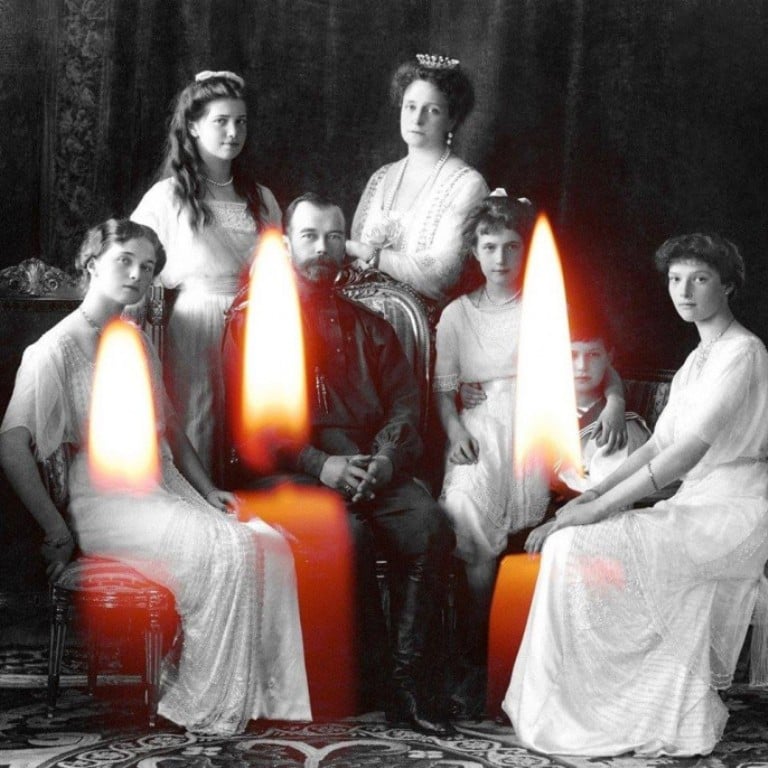
The night of 16/17 July 1918, marks the eve of the anniversary of the death and martyrdom of Emperor Nicholas II, Empress Alexandra Feodorovna, Grand Duchesses Olga, Tatiana, Maria, Anastasia Nikolaevna and Tsesarevich Alexei Nikolaevich.

Please remember to light a candle this evening in honour of their memory . . .

Prayer to the Holy Martyred Tsar Nicholas II

O holy martyred Tsar and passion-bearer Nicholas, the Lord chose thee as His anointed to be the preserver of the Orthodox realm and to judge thy people with mercy and justice.

And with the fear of God thou didst accomplish royal ministry and show care for souls.

And testing thee, like gold in a crucible, the Lord permitted bitter tribulations to assail thee, like Job the much-suffering, and afterwards He sent upon thee the deprivation of thy royal throne and a martyr’s death.

And all these didst thou meekly endure, as a true servant of Christ, and thou dost now delight in the glory which is on high at the throne of the King of all, together with the holy martyrs: the holy Tsaritsa Alexandra, the holy youth the Tsarevich Alexis, the holy Tsarevnas Olga, Tatiana, Maria and Anastasia, and thy faithful servants, as well as the holy martyred Princess Elizabeth and all the royal martyrs and the holy martyr Barbara.

But as thou hast great boldness before Christ the King, for Whose sake ye all suffered, pray with them, that the Lord forgive the sins of the people which did not hinder the murder of thee, the Tsar and anointed of God, that the Lord deliver the suffering land of Russia from the cruel godless ones who have been permitted to torment us for our sins and falling away from God, and that He restore the throne of Orthodox kings and grant us remission of sins, and instruct us in all the virtues, that we may acquire meekness, humility and love, which these holy martyrs showed forth, that we may be accounted worthy of the heavenly Kingdom, where with thee and all the holy new martyrs and confessors of Russia, we may glorify the Father, the Son and the Holy Spirit, now and ever, and unto the ages of ages.

Amen.

Holy Royal Martyrs
Tsar Nicholas II and Family
Pray Unto God For Us!
Glory Be To God For All Things!

3© Paul Gilbert. 16 July 2023

The Romanovs in the Urals exhibit opens in Ekaterinburg

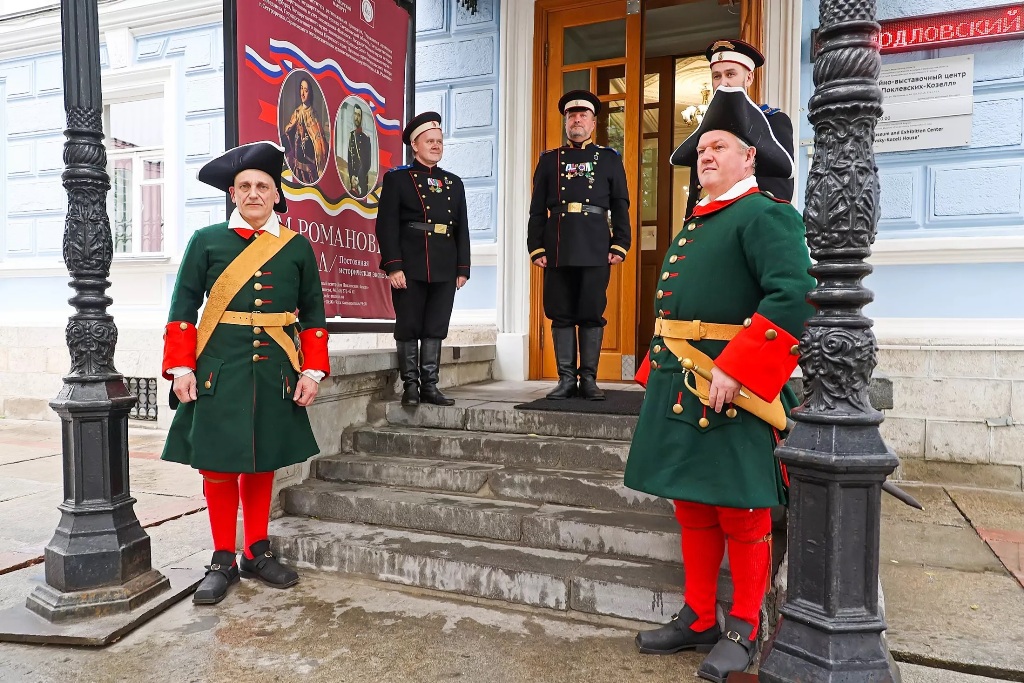
PHOTO: museum staff dressed in period costume were on hand to greet visitors to the grand opening of ‘The Romanovs in the Urals’ at the Poklevsky-Kozell House Museum

On 14th July 2023 a new permanent exhibition The Romanovs in the Urals opened at the Poklevsky-Kozell House Museum of the Sverdlovsk Regional Museum of Local Lore in Ekaterinburg.

The exhibition is timed to the 105th anniversary of the death and martyrdom of Emperor Nicholas II and his family in the Ural city on 17th July 1918, and the events marking the 300th anniversary of the founding of Ekaterinburg in 1723.

The exhibit was recently transferred from the Romanov Memorial Hall of the Museum of History and Archaeology of the Urals, and now occupies five newly renovated halls of the Poklevsky-Kozell House Museum, which is situated at Ulitsa Malysheva, 46. The museum previously hosted the exhibition The Tragedy of the Family … The Tragedy of the Motherland, which ran from 5th June to 23rd September 2018.

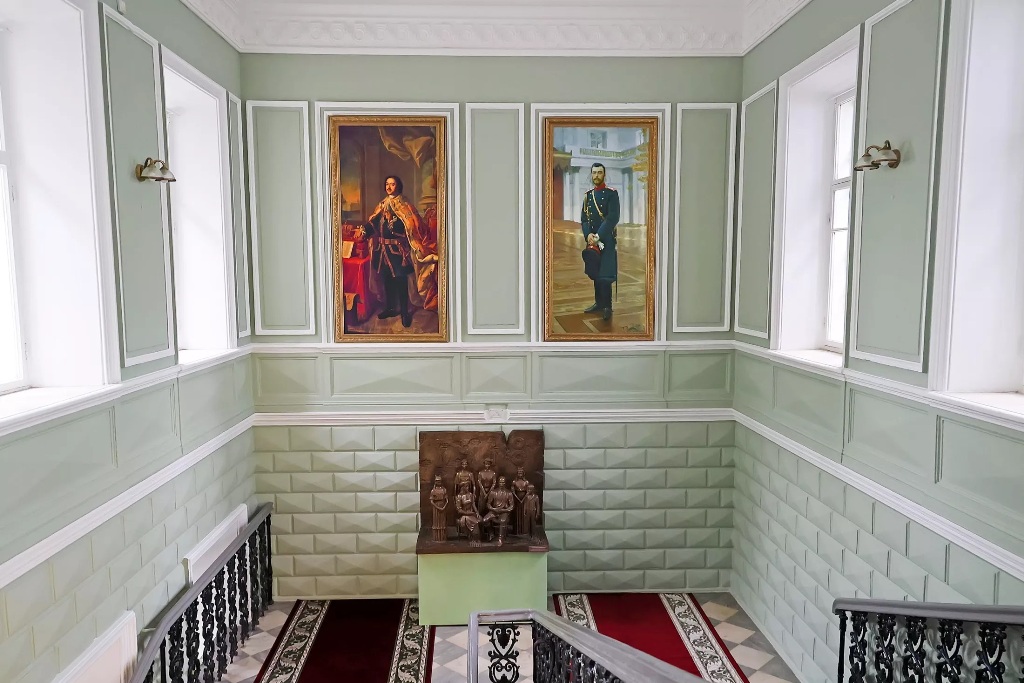
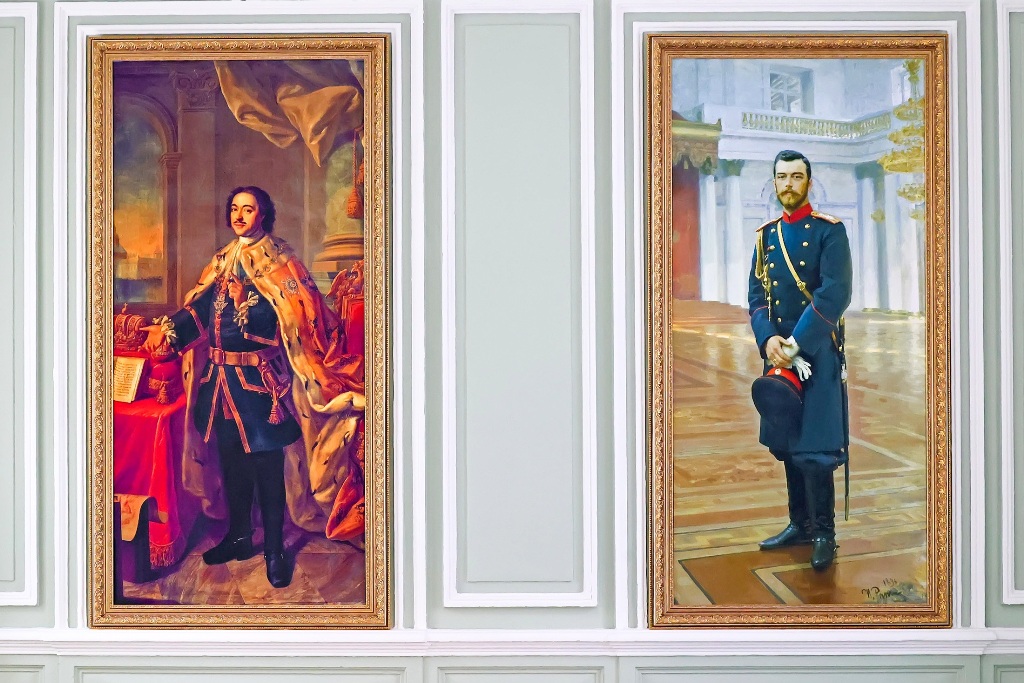
PHOTO: portraits of Peter the Great and Nicholas II are the centerpiece of the staircase leading to the exhibition

Finishing touches on the new exhibition space were carried out right up until the day before the grand opening. The newly renovated halls smelled of fresh paint, specialists fine tuned the multimedia equipment, caretakers brought shine to the display cases and windows, while researchers installed the last of the exhibits. Their activity aroused the curiosity of both museum workers and visitors, who peeked through the partially open door with the hope of get a glimpse of the Ural city’s latest exhibit.

Scientists, researchers, museum workers from across Russia, including Moscow, St. Petersburg, Perm, Tyumen, Tobolsk, Vologda, Voronezh, Ekaterinburg, and Alapaevsk gathered to discuss and help set up the exhibit which features hundreds of items.

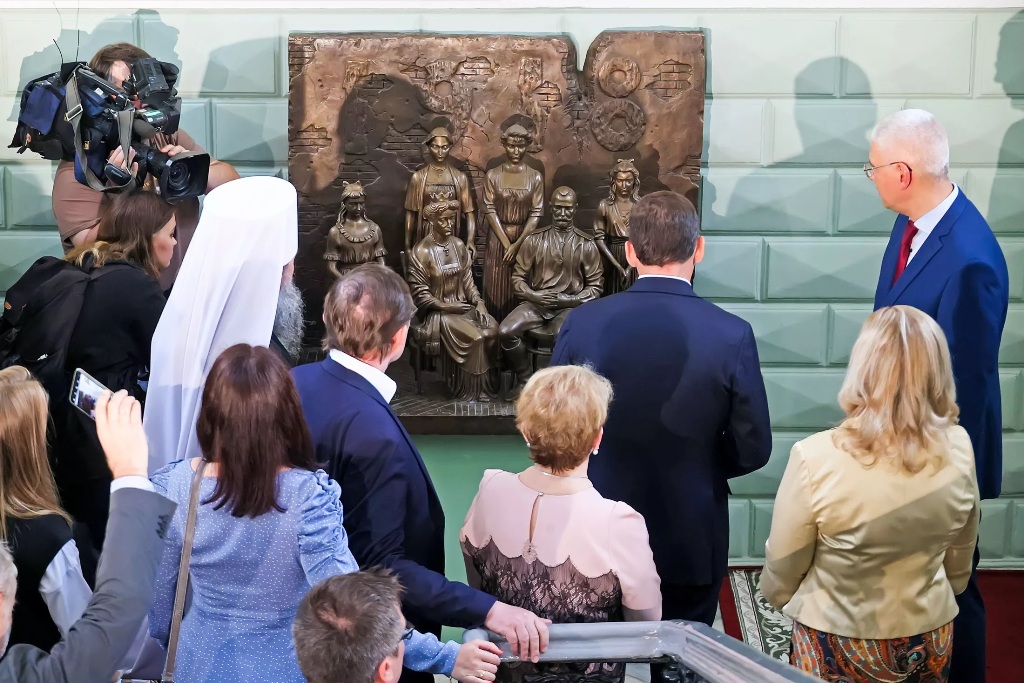
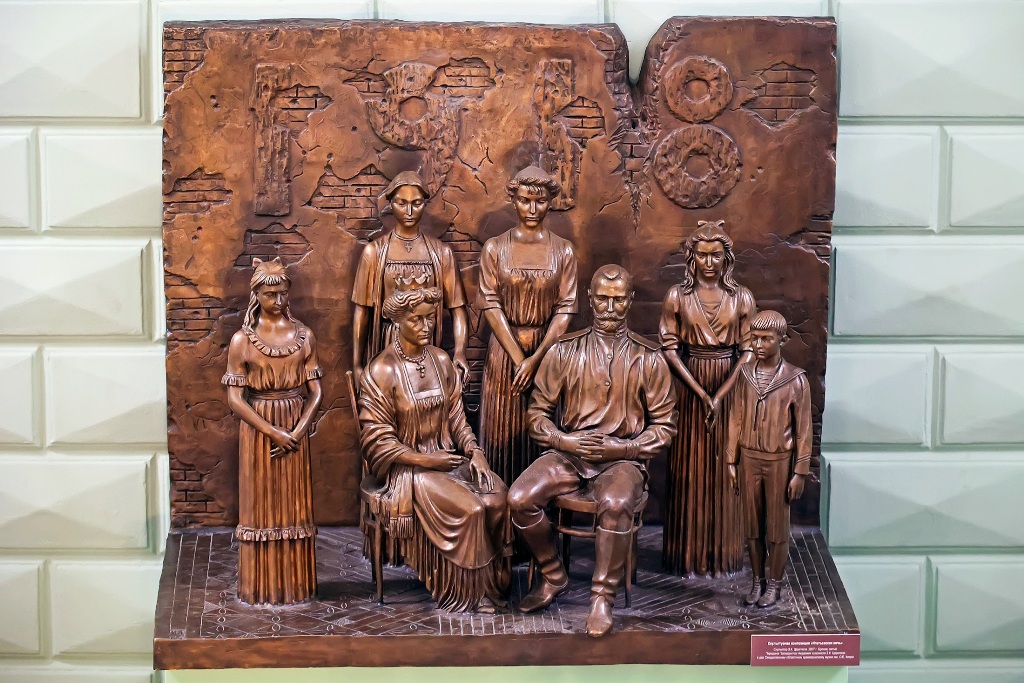
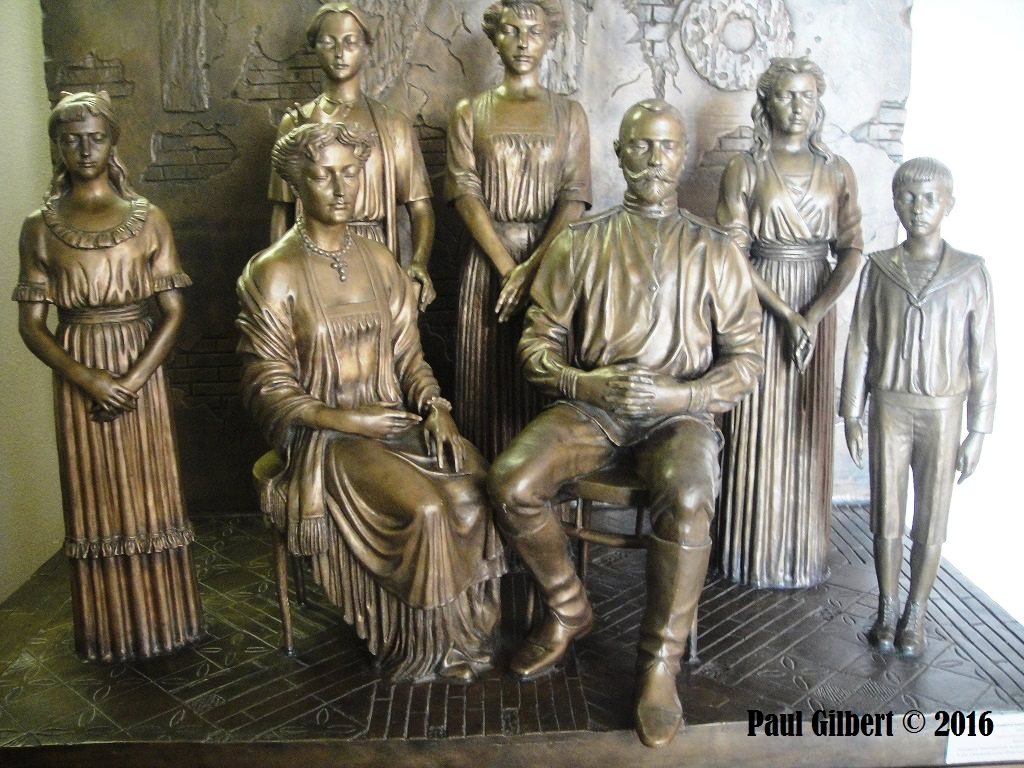
PHOTO: VIP guests stop to admire a miniature copy of Zurab Tsereteli’s sculpture, “Night at the Ipatiev House”, located in the staircase leading to the exhibit

The idea to move the Romanov Memorial Hall was proposed by the Chairman of the Elisabeth-Sergius Educational Society Foundation (ESPO) Anna Vitalievna Gromova, who is a Candidate of Historical Sciences, and Senior Researcher at the Institute of World History of the Russian Academy of Sciences.

Anna Gromova is recognized as one of the Russia’s most prominent adherents to keeping the memories of Emperor Nicholas II, his family, Grand Duchess Elizabeth Feodorovna, and other members of the Russian Imperial Family who were murdered by the Bolsheviks in 1918 and 1919. She is responsible for the founding and development of museums, exhibitions and conferences and is the mastermind behind the The Imperial Route.

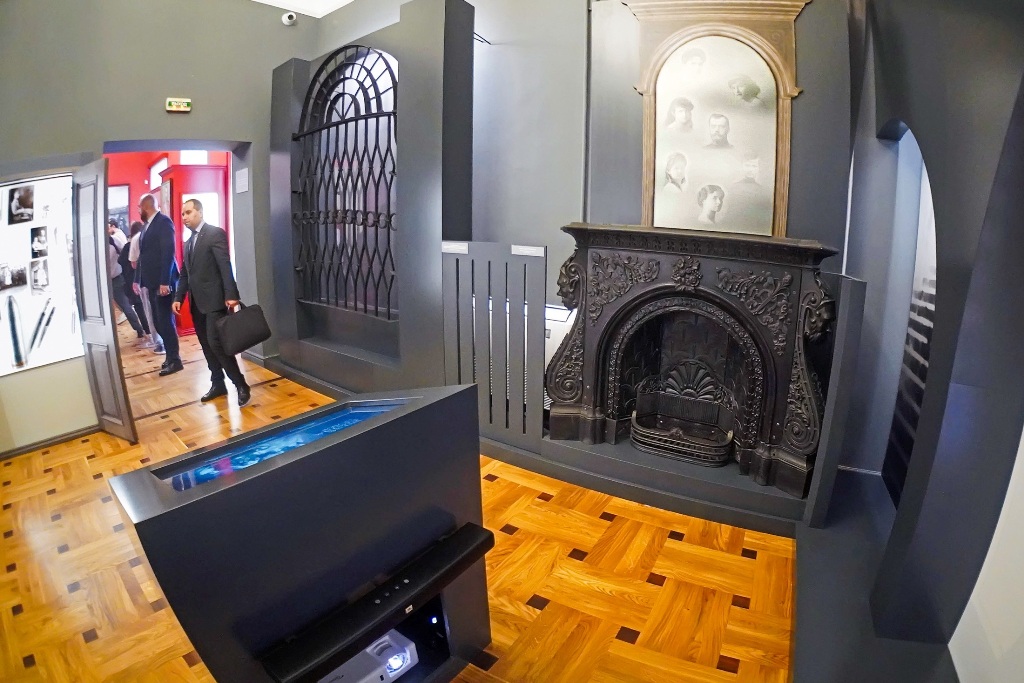
PHOTO: the original cast iron fireplace, salvaged from the dining room of the Ipatiev House before its demolition in September 1977

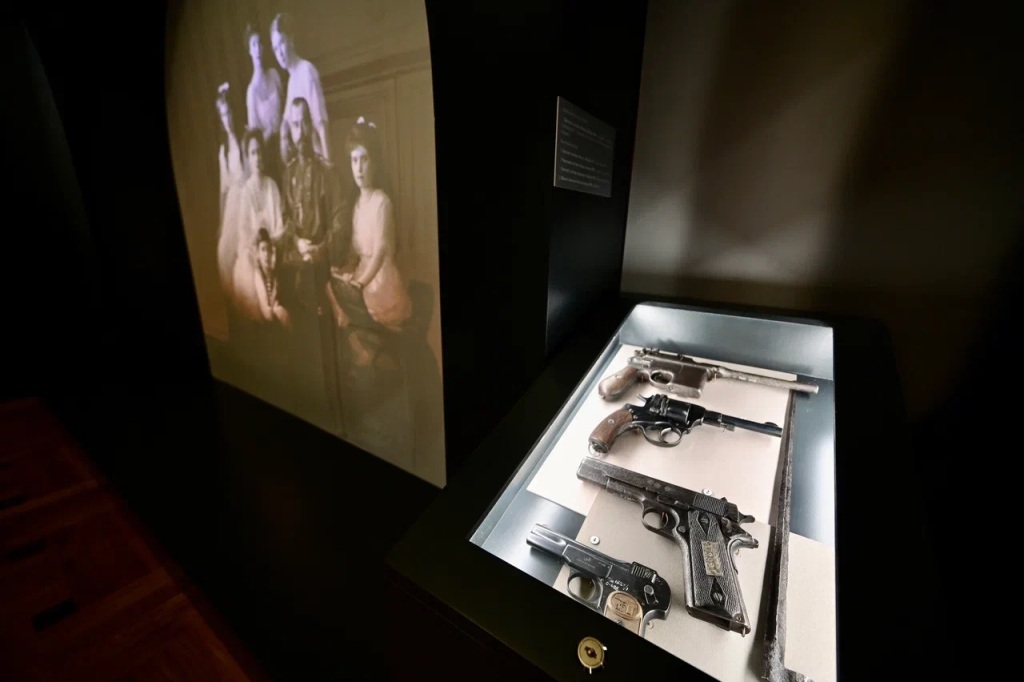
PHOTO: revolvers used by the regicides – including Peter Ermakov’s – to murder the Imperial Family in the Ipatiev House on 17th July 1918

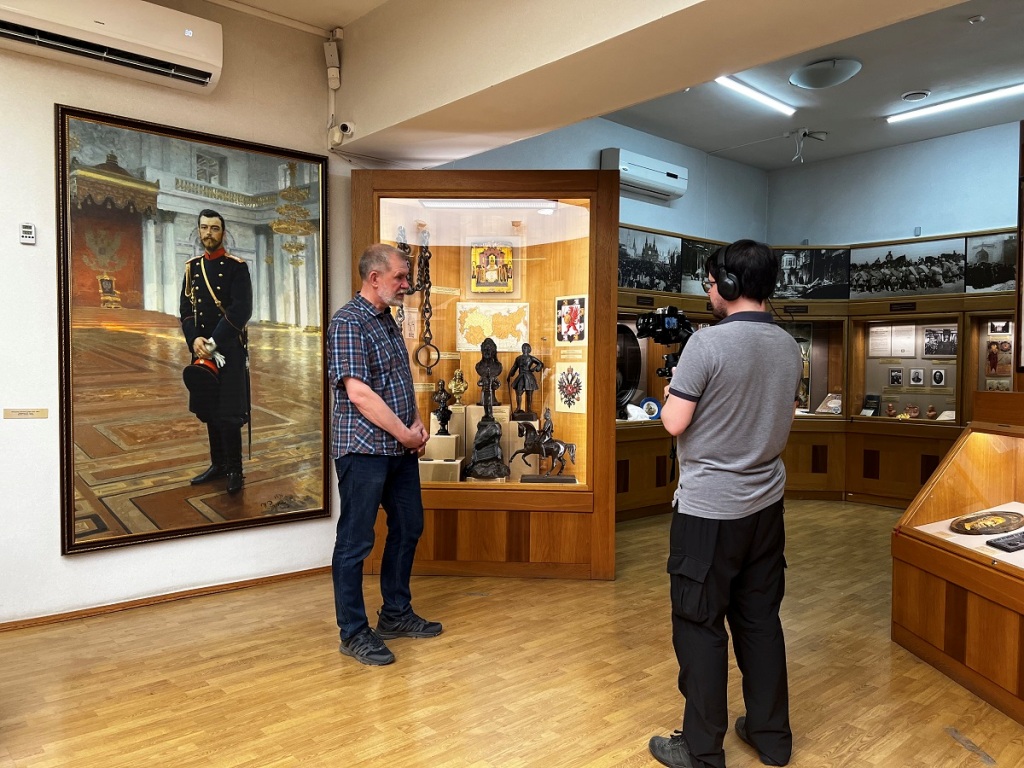
Upon entering the Poklevsky-Kozell House Museum, visitors ascend a newly renovated grand staircase, where they are greeted at the top by portraits of Peter the Great and Emperor Nicholas II. Recall that Ekaterinburg was founded on 18th November 1723 and named after Peter the Great’s wife, who after his death became Empress Catherine I, Yekaterina being the Russian form of her name. Underneath the portraits is a miniature copy of Zurab Tsereteli’s sculpture, “Night at the Ipatiev House” – the original is on display at the Zurab Tsereteli Museum in Moscow.

The five halls are decorated in the colours of the flag of the Imperial House of Romanov – black, gold, white. Each hall is decorated with unique exhibits and multimedia technologies, which together help to tell the story of the history of the dynasty in the Urals.

In the Golden Hall, are portraits from the era of the chairman of the State Council of the Russian Empire Grand Duke Mikhail Nikolaevich (1832-1909). The highly respected grand duke also served as the Honourary President of the Siberian-Ural Scientific and Industrial Exhibition in 1887, organized on the initiative of the Ural Society of Natural History Lovers (UOLE). When the members of the UOLE created a museum (from which the regional local history traces its history), his son Grand Duke Nikolai Mikhailovich (1859-1909), a famous Russian historian, became its patron. At the turn of the 20th century, six additional members of Russian Imperial House were made honourary members of the UOLE.

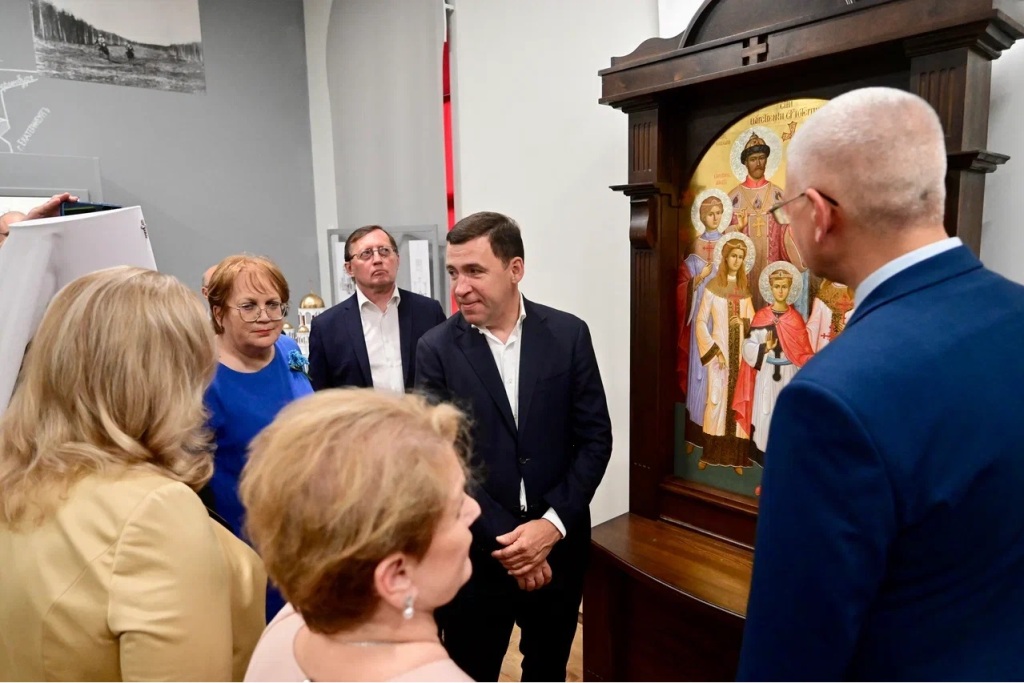
PHOTO: VIP guests stop to admire an icon of the Holy Royal Martyrs, painted by the nuns of the Novo-Tikhvin Convent in Ekaterinburg

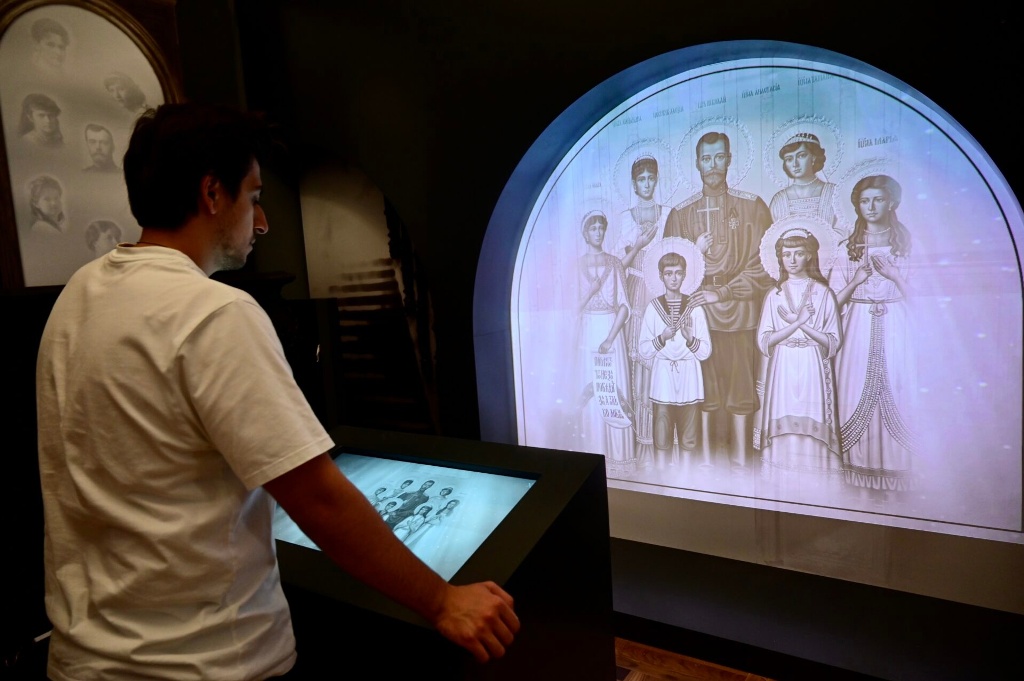
PHOTO: multimedia display which depicts the Holy Royal Martyrs, in whch they are depicted as saints, Nicholas II is holding a cross

The “black” halls of the exhibit take on a more sombre ambiance, with displays telling visitors about the house arrest and subsequent murders of Grand Duke Mikhail Alexandrovich and Nicholas Johnson at Perm on 13th June 1918; Emperor Nicholas II, his family and four faithful retainers at Ekaterinburg on 17th July 1918; and Grand Duchess Elizabeth Feodorovna along with and other members of the Russian Imperial Family and their faithful retainers at Alapaevsk on 18th July 1918.

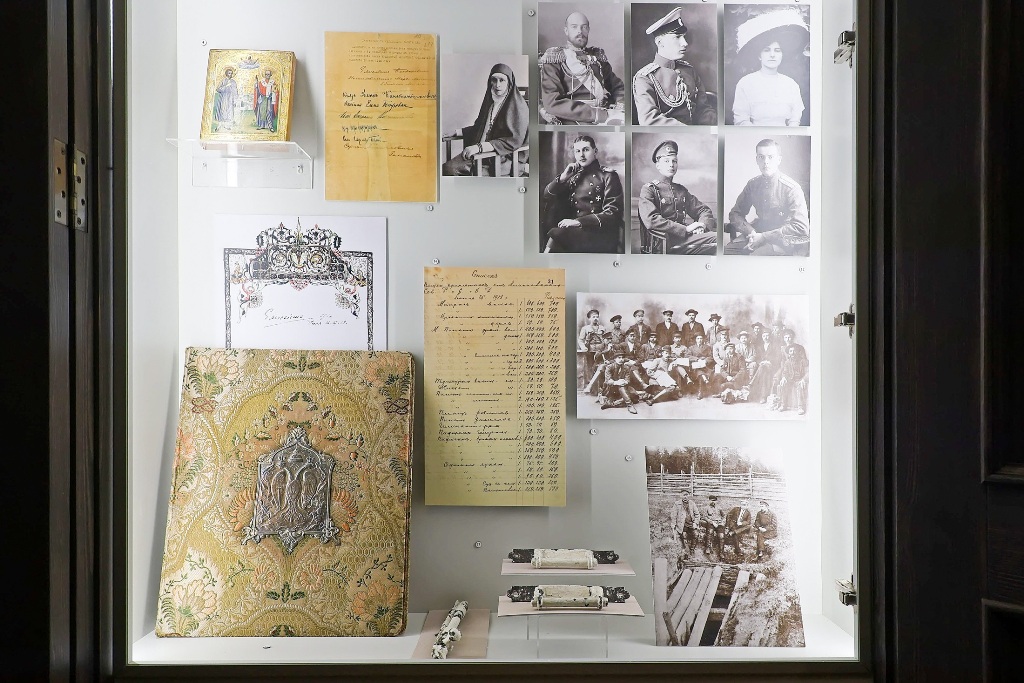
Some of the more interesting items on display include the ribbon of the Order of St. Andrew the First-Called, which belonged to Tsesarevich Alexei Nikolaevich and left behind in the Governor’s Mansion in Tobolsk, when the four children joined their parents and sister in Ekaterinburg in May 1918.

A number of pistols and revolvers are also on display, including the Mauser of the regicide Pyotr [Peter] Ermakov, who, according to him, shot and killed Nicholas II.

The sombre ambiance of this hall is offset by the bright and soothing icon of the Holy Royal Martyrs, painted by the nuns of the Novo-Tikhvin Convent in Ekaterinburg.

PHOTO: display about the murders of Grand Duke Mikhail Alexandrovich and Nicholas Johnson at Perm on 13th June 1918

PHOTO: display about the members of the Imperial Family – including Grand Duchess Elizabeth Feodorovna – at Alapaevsk on 18th July 1918

The Romanovs in the Urals also contains many elements of décor, decoration and fittings salvaged from the Ipatiev House before its demolition in September 1977, notably the cast iron fireplace from the dining room, and the iron grille from the window of the murder room.

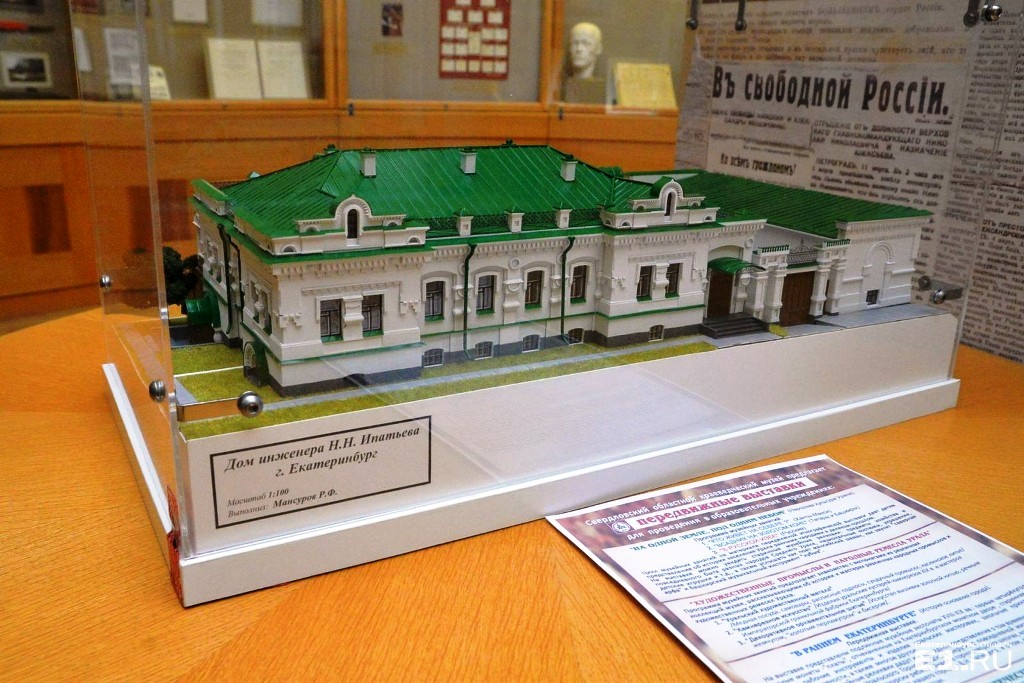
Aside from the items from the Ipatiev House, are many additional exhibits of interest, including a scale model of the Ipatiev House; the reconstructed model of Nicholas II’s head by Russian forensic expert Dr. Sergei Nikitin.

The exposition further explores the history of the investigation of the murder case of the last of the Romanovs in the Urals, which lasted more than 100 years.

© Paul Gilbert. 16 July 2023

Bust of Tsesarevich Alexei installed in Ekaterinburg

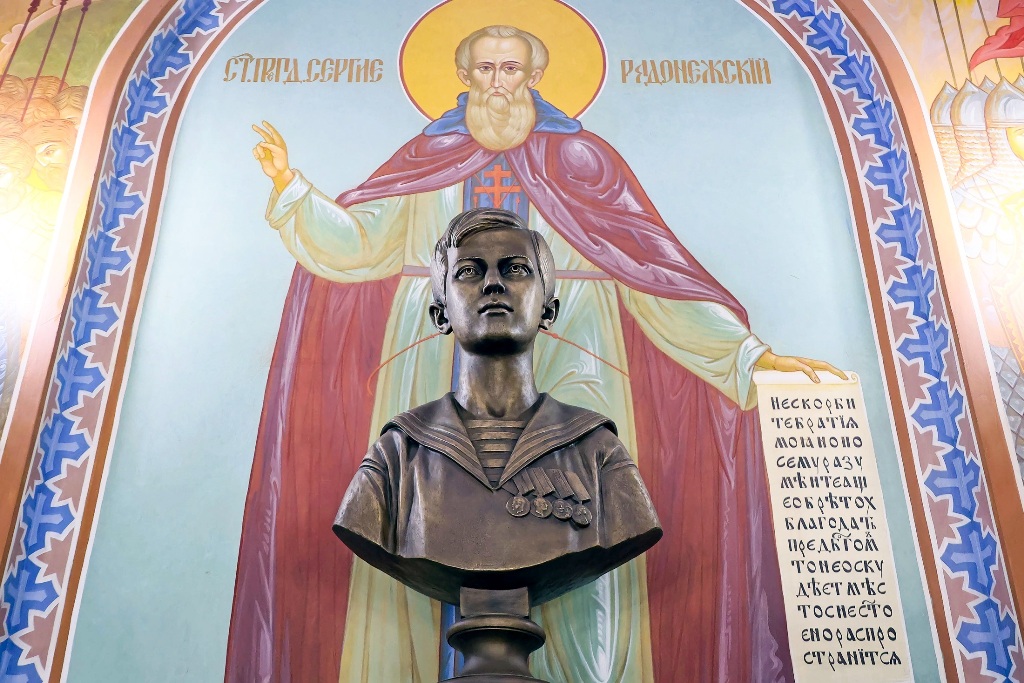
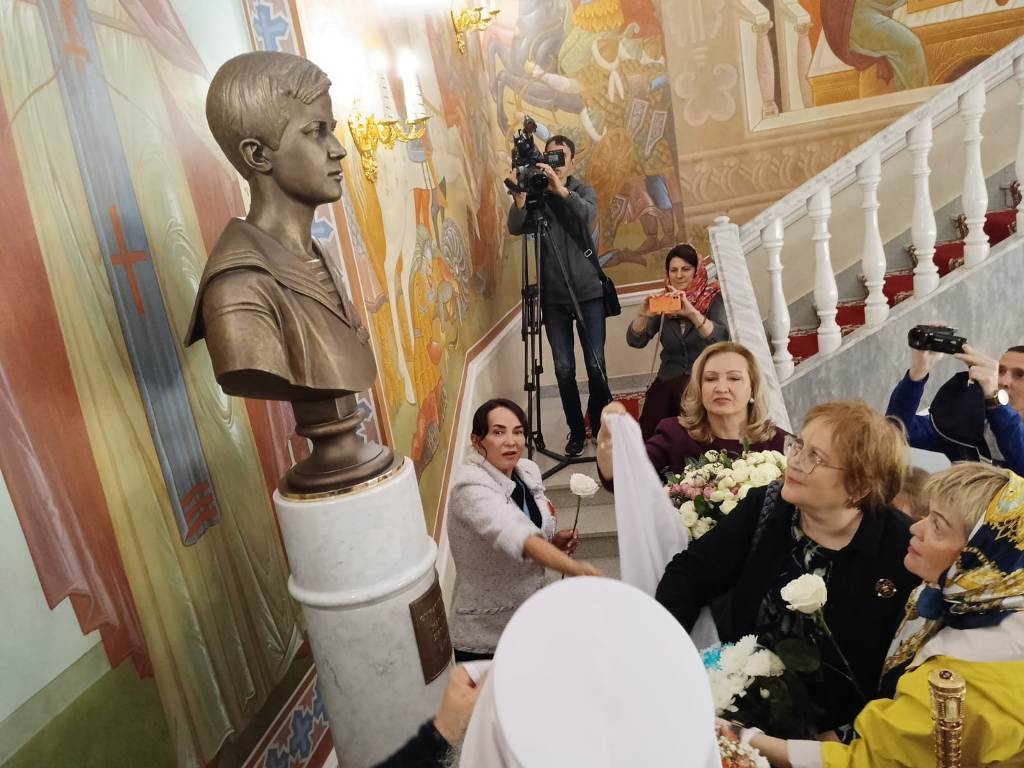
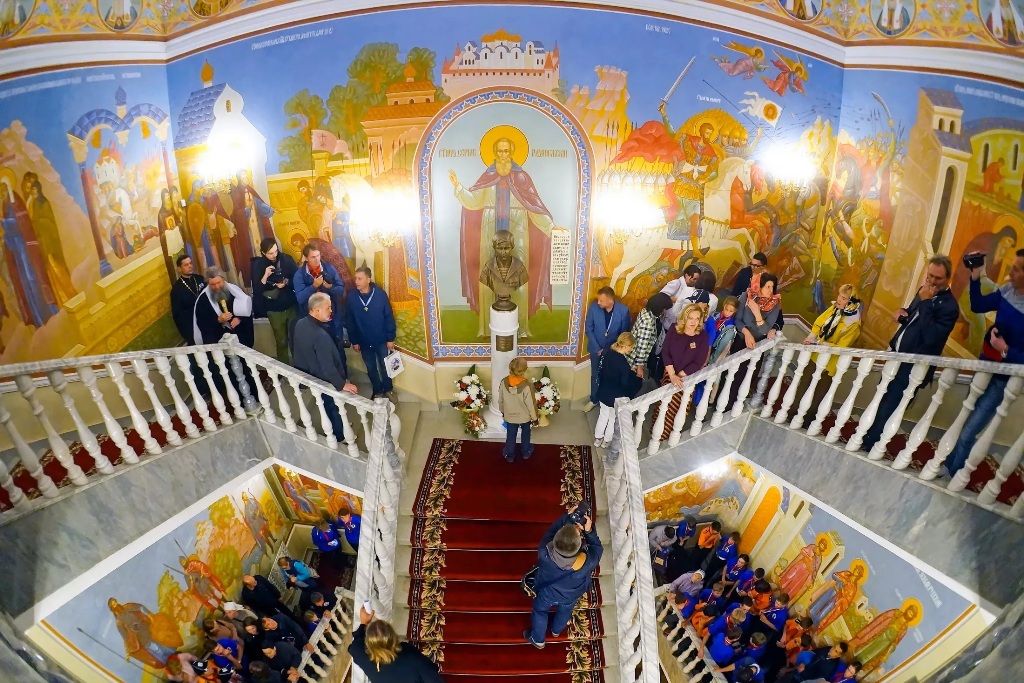
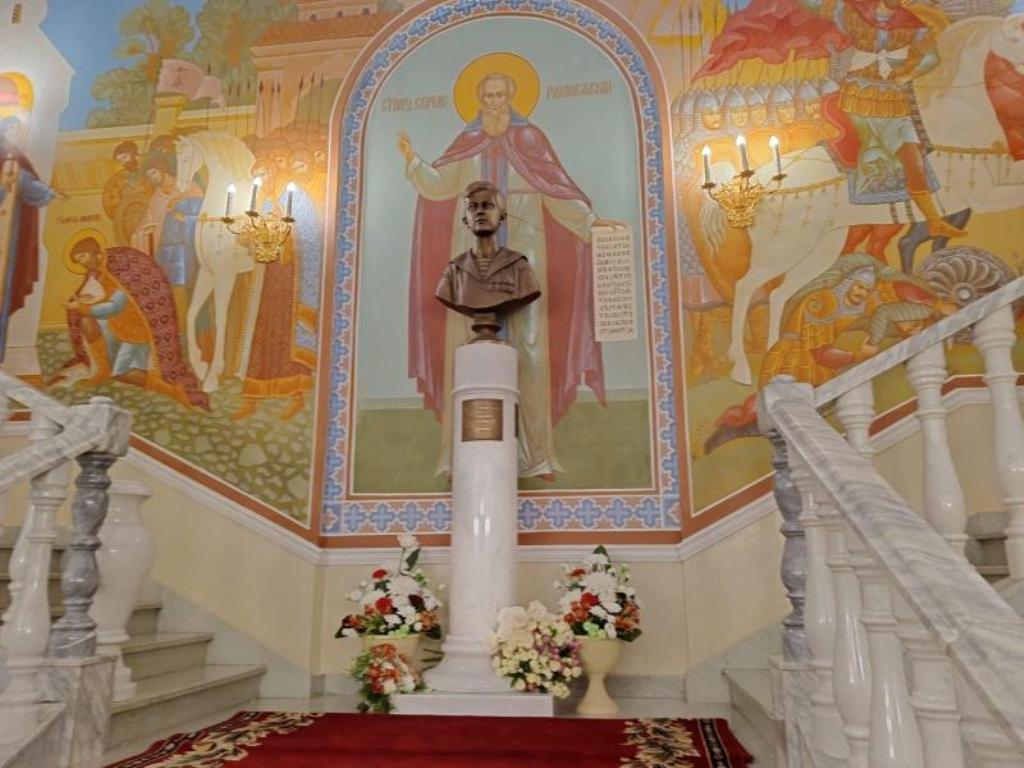
On 15th July 2023 a bust of Tsesarevich Alexei Nikolaevich was installed and consecrated in the Tsarsky Center, located in the Patriarchal Compound, across from the Church on the Blood in Ekaterinburg.

The bust was installed on a pedestal at the top of the main staircase in the Patriarchal Compound. It is one of numerous events being held in the Ural city this week, marking the 105th anniversary of the death and martyrdom of the Imperial Family on 17th July.

The unveiling ceremony was attended by Metropolitan Evgeny of Yekaterinburg and Verkhoturye and Chairman of the Elisabeth-Sergius Educational Society Foundation (ESPO) Anna Vitalievna Gromova.

For many years, this spot was occupied by a bust of Emperor Nicholas II, which has now been moved to the the Museum of the Holy Royal Family, located on the second floor of the Patriarchal Compound.

© Paul Gilbert. 15 July 2023

The restoration of Nicholas II’s favourite church at Tsarskoye Selo

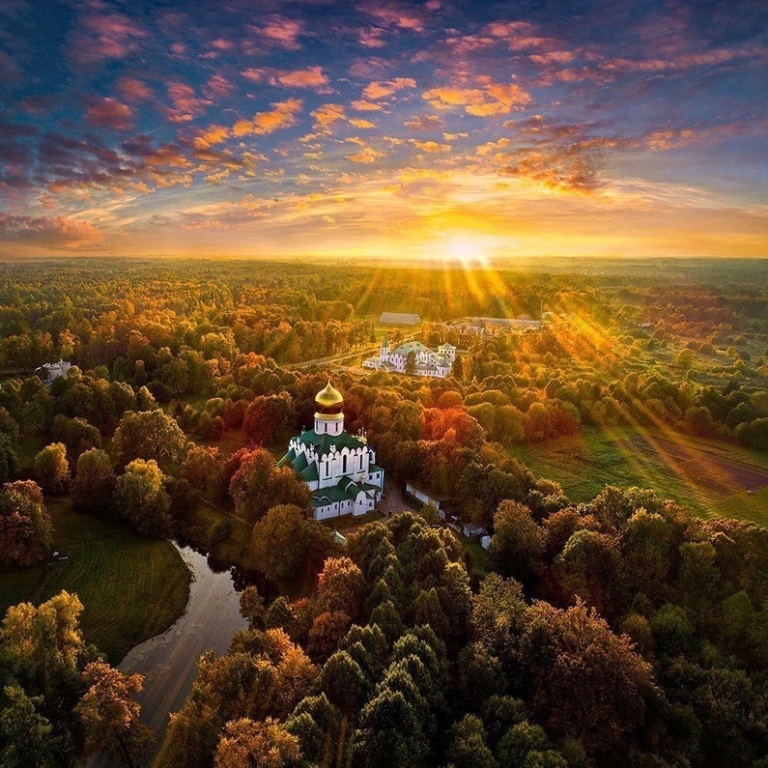
PHOTO: aerial view of the beautifully restored Feodorovsky Sovereign Cathedral at Tsarskoye Selo – the restoration took 20 years to complete. The buildings of the Feodorovsky Gorodok can be seen to the right of the cathedral’s cupola.

One of the greatest restoration projects carried out during the post-Soviet years has got to be that of the Feodorovsky Sovereign Cathedral at Tsarskoye Selo. The recreation of the Cathedral’s façade and interiors of both the Upper and Lower Churches, are nothing short of a miracle.

Situated a short walk from the Alexander Palace, I recall visiting the Feodorovsky Sovereign Cathedral for the first time in the early 1990s. I was shocked by the appalling state of neglect and disrepair this once beautiful house of worship had endured during the Soviet years. I returned to Tsarskoye Selo many times since, and have been witness to its slow, but magnificent restoration. Glory to God, for all things!

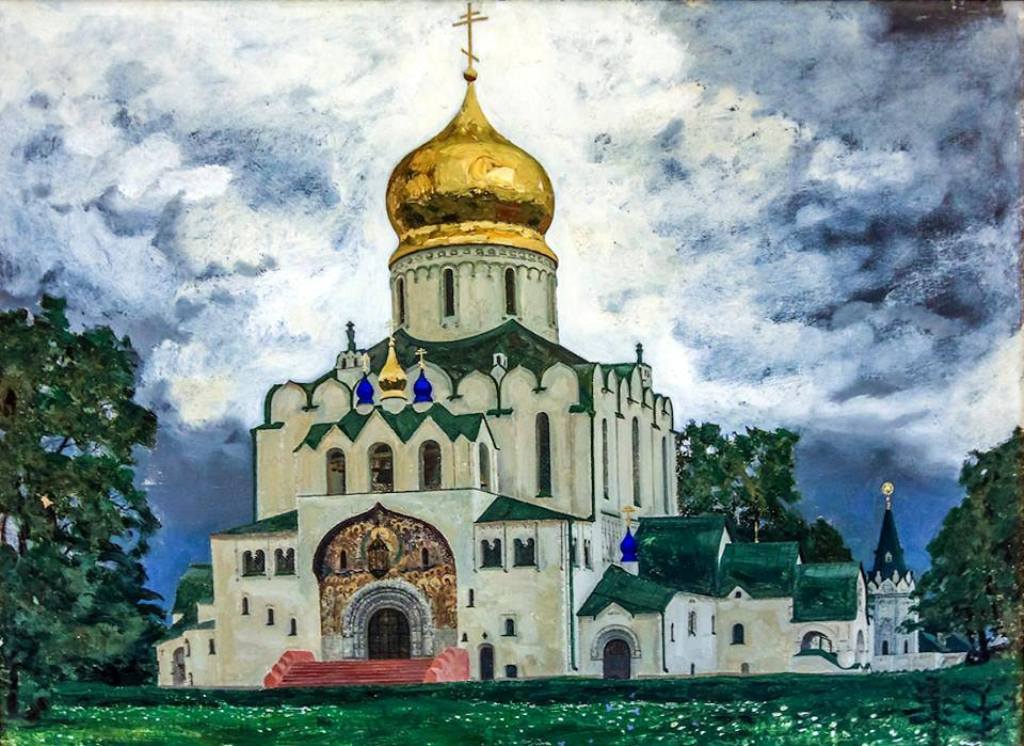
PHOTO: Watercolour of the Feodorovsky Sovereign Cathedral (1914). Artist: Gavriil Nikitich Gorelov (1880-1966)

Nicholas II’s favourite church

When Emperor Nicholas II and Empress Alexandra took up residence in the Alexander Palace in 1895[1], they were surprised that unlike other Imperial palaces, it did not contain a chapel. Therefore, in 1897, they had the Crimson Drawing Room converted into the home church of St. Alexander Nevsky. But this temporary church was clearly not enough, so the Emperor issued a decree for the construction of a new church in the vicinity of the palace.

Between 1908-1912, the Feodorovsky Sovereign Cathedral was built in the old Russian style – much favoured by the Tsar. It’s construction was financed by Nicholas II, who contributed 150,000 gold rubles from his own personal funds. The foundation of the Cathedral was laid on 2nd September (O.S. 20th August) 1909 in the presence of the Imperial family, each member beginning with the Tsar himself, placing a brick in the building’s foundation.

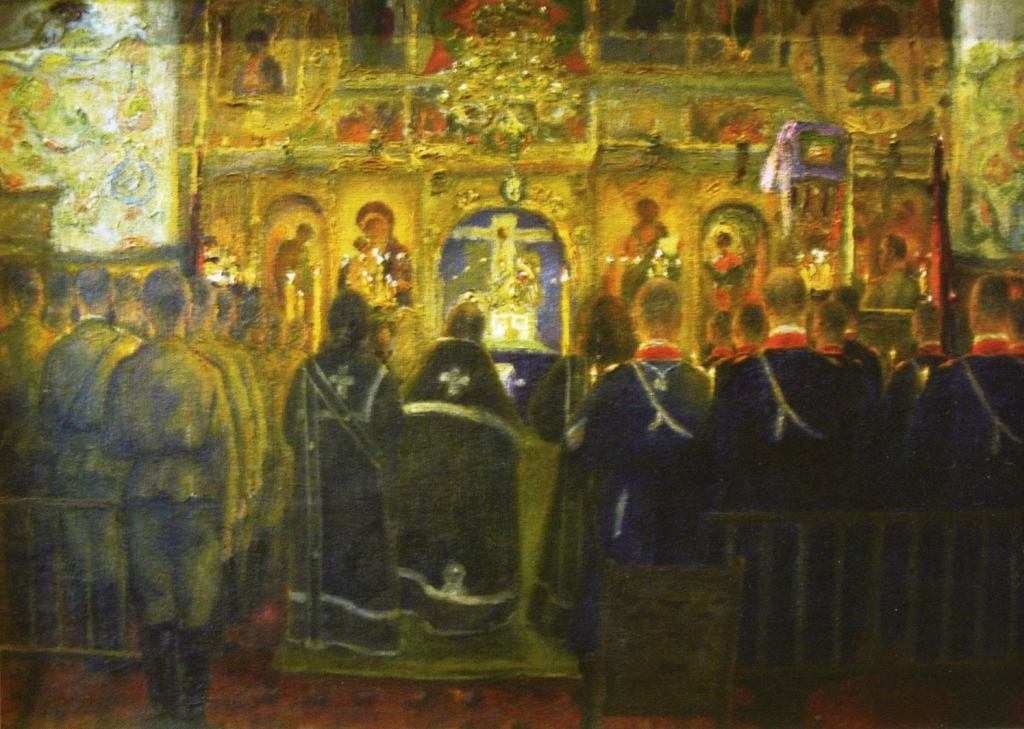
PHOTO: ‘A Liturgy in the Feodorovsky Sovereign Cathedral in the presence of Emperor Nicholas II’, by the Russian artist Michael Gerasimovich Kirsanov (1889–1958). In 1914, the artist worked on the creation of the ceremonial album ‘Feodorovsky Sovereign Cathedral in Tsarskoye Selo’.

The Feodorovsky Sovereign Cathedral served as the regimental church of both His Imperial Majesty’s Own Infantry Regiment and His Imperial Majesty’s Own Convoy. In addition, the cathedral served as the house church for the Imperial family, while they were in residence in the Alexander Palace.

Externally, the cathedral was simple, austere and majestic, with bright reflections of mosaics on the snow-white walls, crowned with a gilded cupola. The interior was striking in its height and magnificent decoration in the style of ancient Russian church architecture.

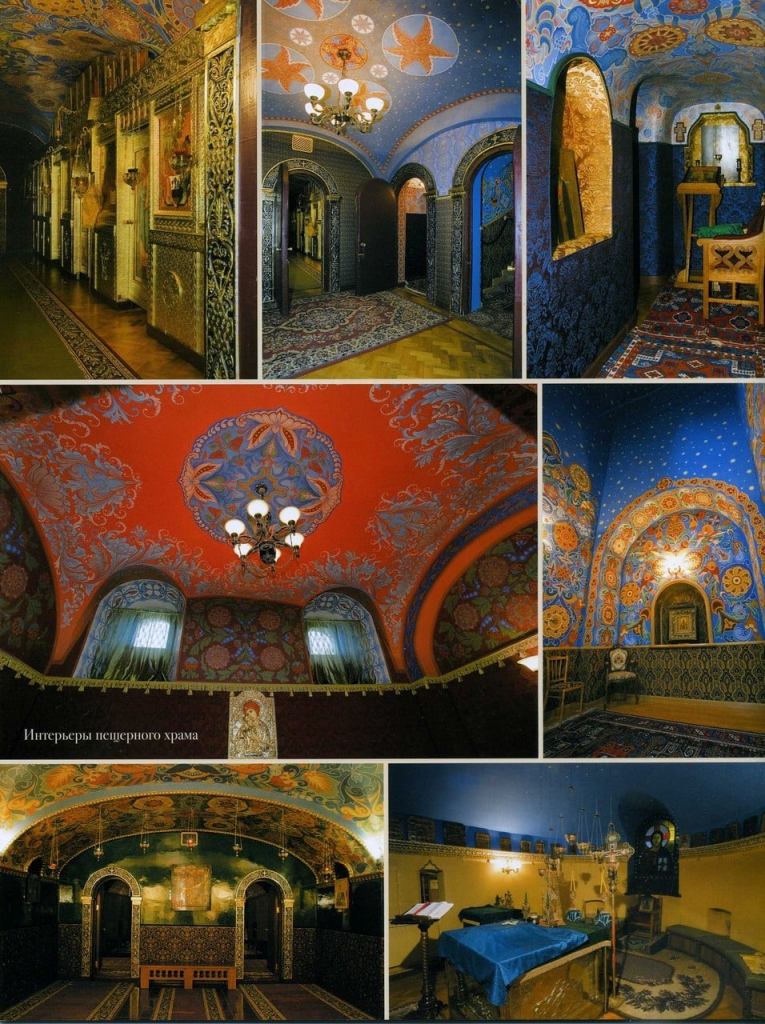
The Cathedral consisted of two churches – the Upper Church, with a capacity of up to 1000 people, with the main altar in the name of the Fedorovskaya Icon of the Mother of God, the patron icon of the Romanov family. The Upper Church included a side chapel in the name of St. Alexis, Metropolitan of Moscow (the completion and consecration of which by 1917 was never realized); and the Lower Church [aka the Cave Church] in the name of St. Seraphim of Sarov.

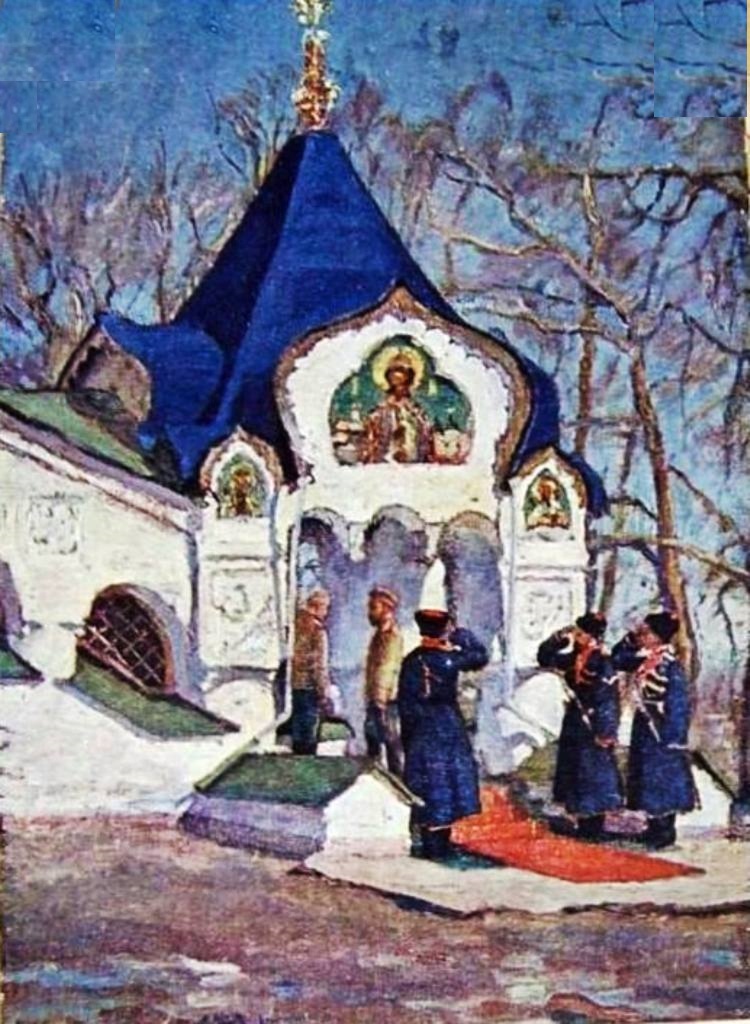
PHOTO: Early 20th century Russian postcard depicting Emperor Nicholas II entering the Feodorovsky Sovereign Cathedral via the Tsar’s Porch.

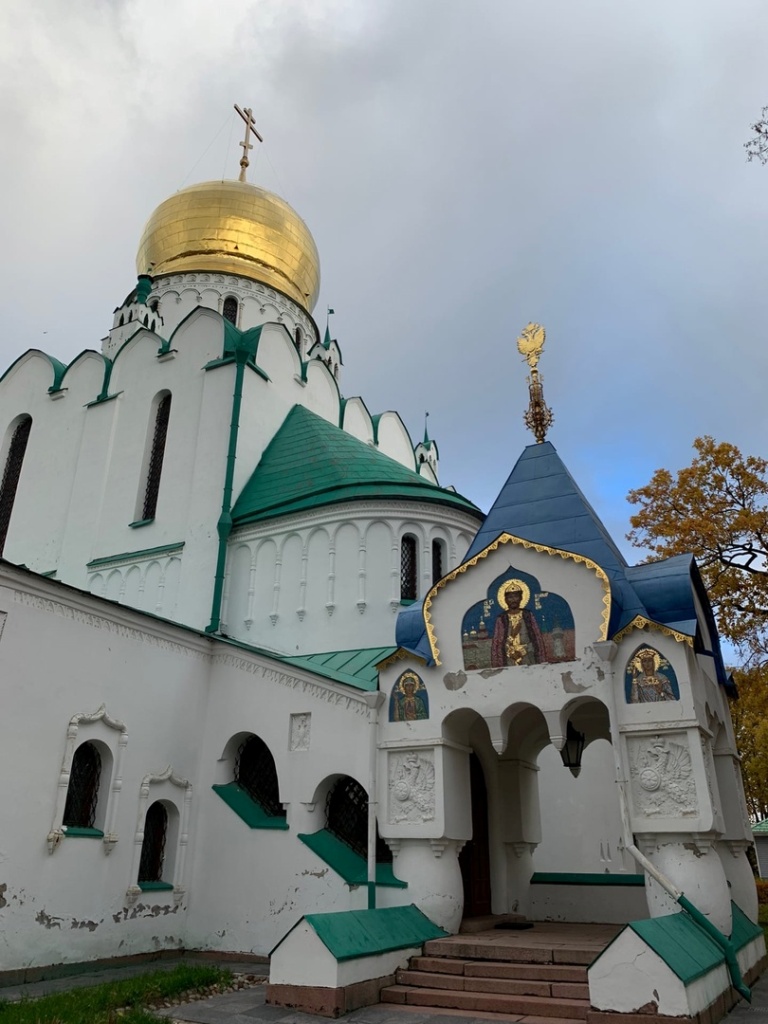
PHOTO: the restored Tsar’s Porch is located at the southeastern corner of the cathedral. It was through this entrance, that Emperor Nicholas II and his family, accessed the Cave Church, consecrated in memory of St. Seraphim of Sarov.

The solemn consecration of the Cathedral took place on 2nd September (O.S. 20th August) 1912 in the presence of the Imperial Family. The ceremony was performed by the protopresbyter of the military and naval clergy Georgy Shavelsky (1871-1951), who from 15th (O.S. 2nd) June 1913, served as honorary rector of the Cathedral.

A solemn Divine Liturgy was performed by His Grace Theophan, Bishop of Yamburg (1872-1940), attended by the Emperor and members of his family.

While the Imperial Family were in residence in the Alexander Palace, the Emperor and his family visited the Feodorovsky Sovereign Cathedral on holidays and Sundays. They entered the Cathedral via the Tsar’s Porch, which was located at the southeastern corner of the cathedral.

Empress Alexandra Feodorovna often came to pray in the Cave Church, of which she was particularly fond. A special room was arranged for her, which allowed her to retire in prayer privately. The chapel, a small room less than a meter wide, was installed to the right of the altar. It contained a mosaic icon of St. Seraphim of Sarov.

When in residence, Nicholas II did not miss a single Sunday and holiday service in the Feodorovsky Sovereign’s Cathedral. “The service was solemn and remarkably beautiful in our lovely church,” he wrote in his diary. Many laity wanted to pray with the sovereign, however, they were allowed only with tickets, which could be obtained from the palace commandant or the churchwarden.

PHOTO: the Feodorovsky Sovereign Cathedral, as it looked in the 1970s

The Soviet years

Shortly after the Tsar’s abdication in March 1917, the Feodorovsky Sovereign Cathedral was turned into an ordinary parish church. After the Bolsheviks nationalized churches and monasteries, they wasted little time in looting and pillaging the Cathedral. Between 1911 to 1934, members of the Cathedral’s clergy – including six abbots – were arrested and sent to concentration camps, never to be seen again.

In December 1933, the Cathedral was closed by the local Soviet, who argued that the town had too many churches – a total of five. The Cathedral’s property – including the icons – were transferred to the Russian Museum Fund, and later distributed among several museums in Leningrad. To this day, they remain in the collections of the State Russian Museum, the Kazan Cathedral, in the Catherine Palace, Pavlovsk Palace and elsewhere. Much, however, was lost, sold abroad for foreign currency or intentionally destroyed by the Soviets.

If that wasnt’ enough, the Upper Church was adapted for a cinema hall, the screen was placed in the altar space. The Lower Cave Church was turned into a warehouse and an archive of film and photo documents for the “Lenfilm” studios.

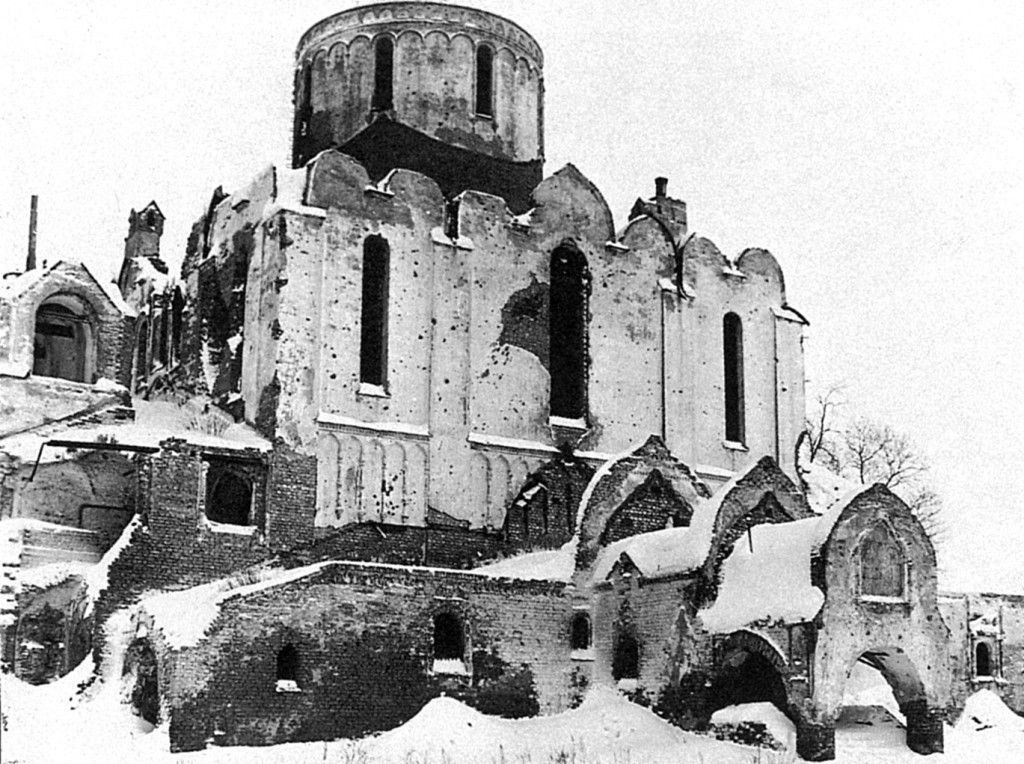
During the Nazi occupation of Pushkin (1941-44), the Feodorovsky Sovereign Cathedral was badly damaged. Given that the Cathedral was the tallest point in the town, it became an easy target for Nazi bombers. The walls of the northern façade and the right wing of the western side were partly destroyed. The vaults were also damaged, and the main dome was shattered by a shell.

During the post-war years, the Cathedral was left in a terrible state of ruin, until the 1980s.

After the fall of the Soviet Union in 1991 the Feodorovsky Sovereign Cathedral was returned to the Russian Orthodox Church. Extensive reconstruction and restoration work carried out over a 20 year period has restored it to its historic original.

Post-Soviet restoration

In the spring of 1991, the Cathedral was transferred to the Russian Orthodox Church. In the same year, the Feodorovskaya Icon of the Mother of God was found buried in one of the parks at Tsarskoye Selo. It was returned to the Cathedral and has since become one of its most revered shrines. On 1st March 1992, the first Divine Liturgy was held in the Lower Church, and on 29th August 1996, in the Upper Church.

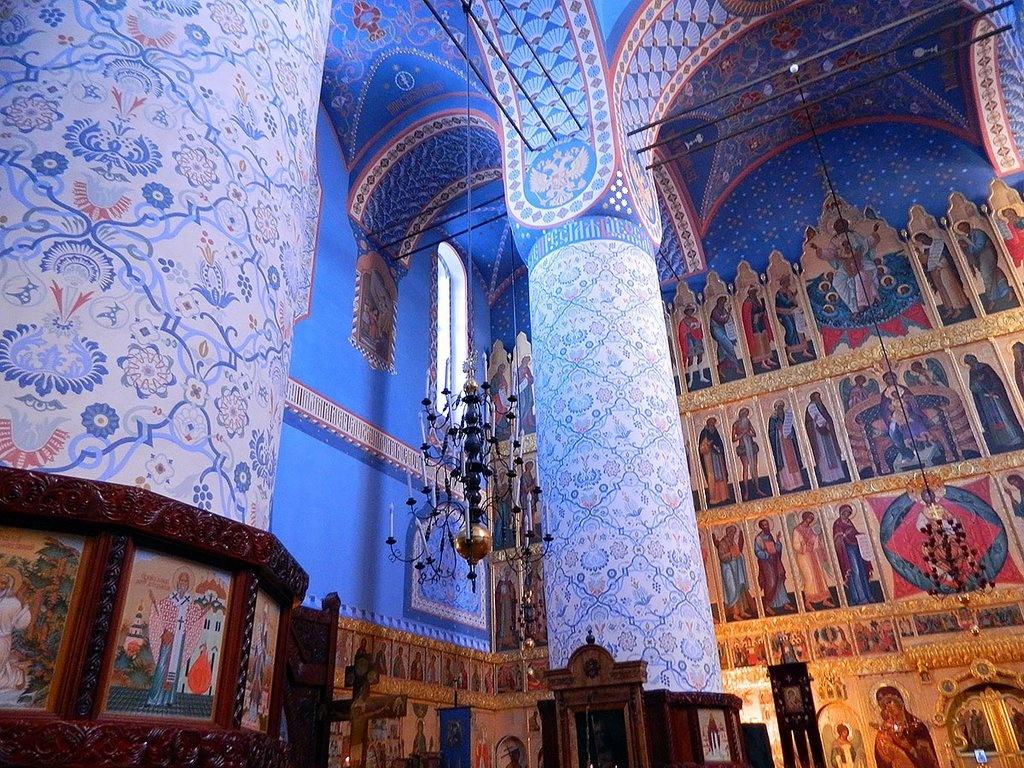
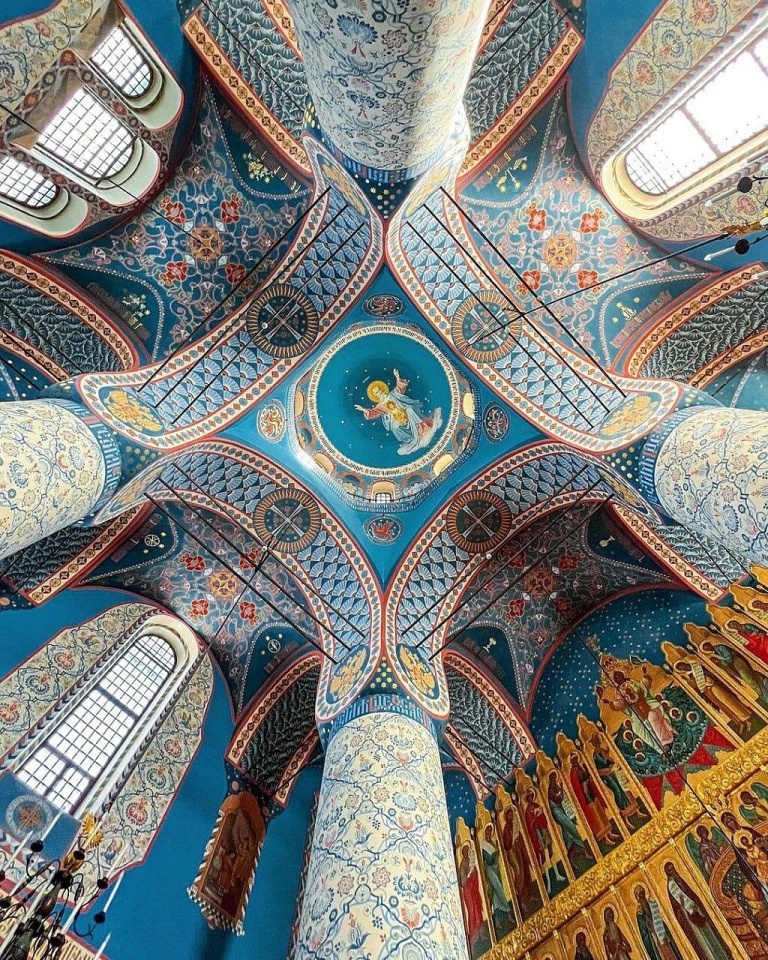
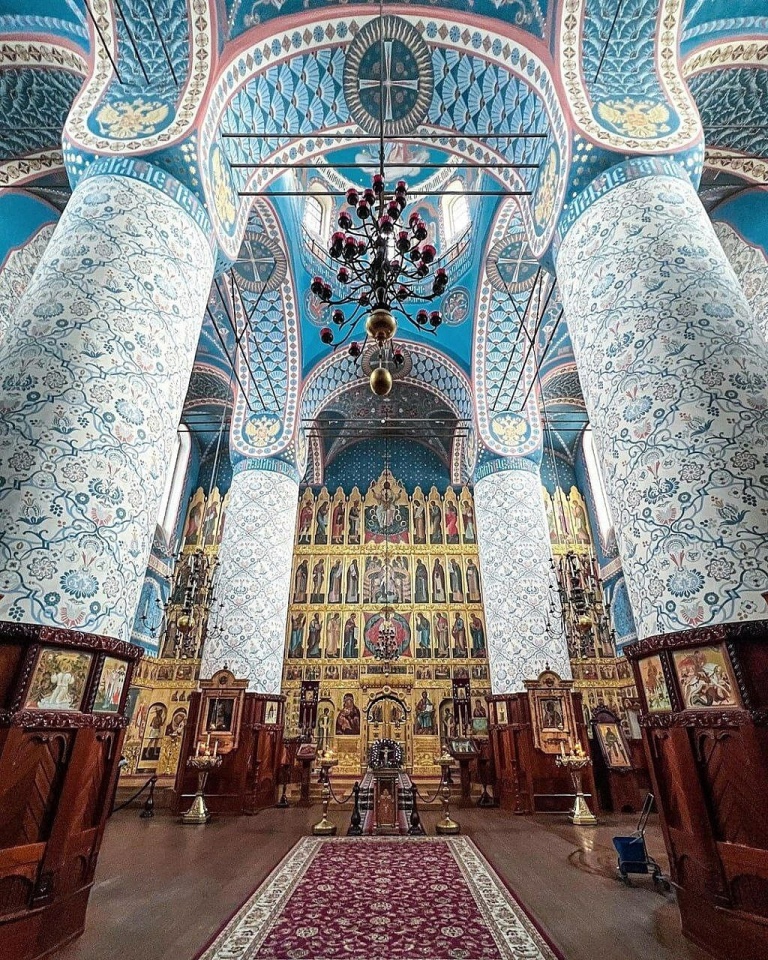
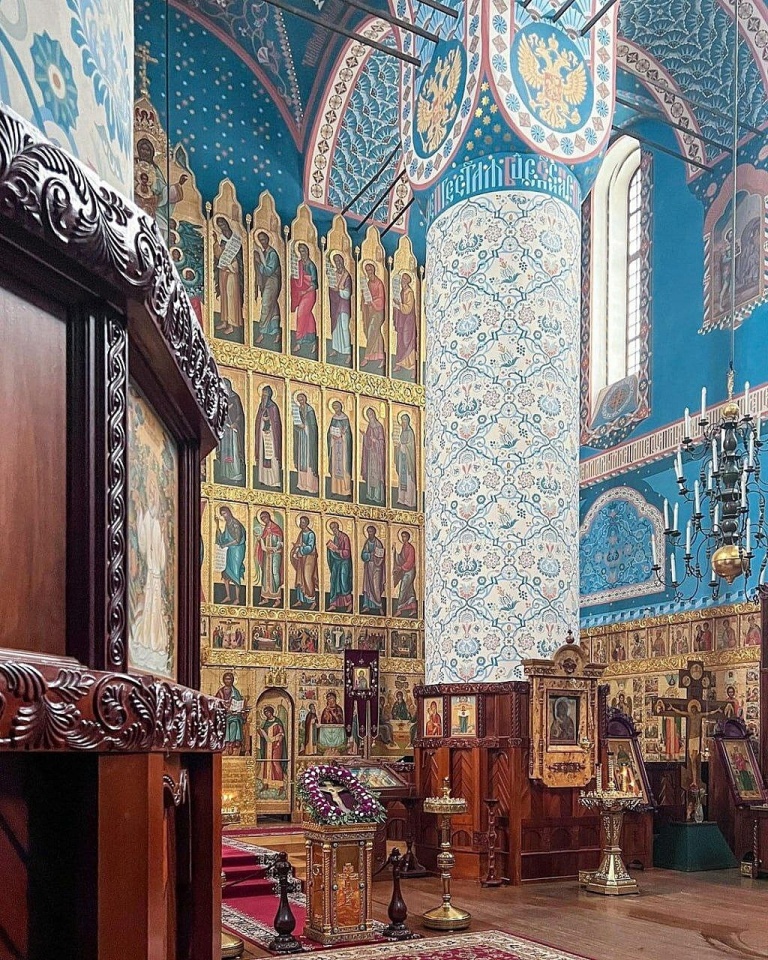
The restoration of both the façade and interiors of the Cathedral lasted 20 years. The dedication and painstaking efforts to restore Nicholas II’s favourite church by an army of artists, restorers and historians is much to be admired, as the photos below will attest:

PHOTO: partial view of the restored iconostasis in the Upper Church

PHOTO: view of the restored main dome of the Upper Church

PHOTO: view of the restored iconostasis in the Upper Church

PHOTO: partial view of the restored iconostasis in the Upper Church

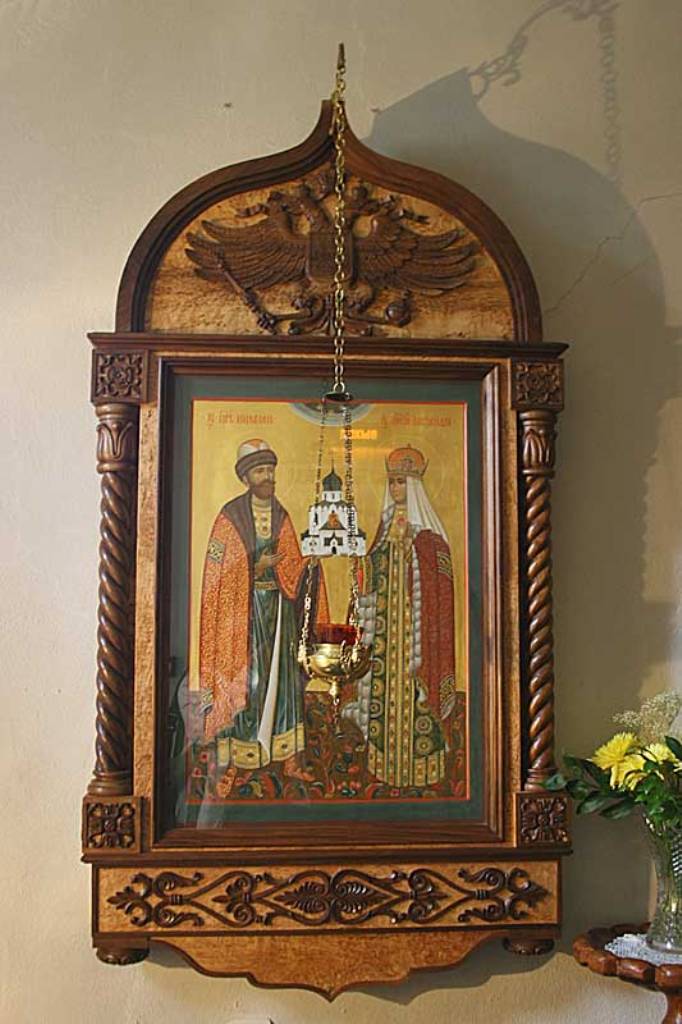
PHOTO: Icon of the Holy Royal Martyrs Nicholas II and Alexandra Feodorovna in the Upper Church

PHOTO: views of the restored Lower Church, where the Imperial Family came to pray

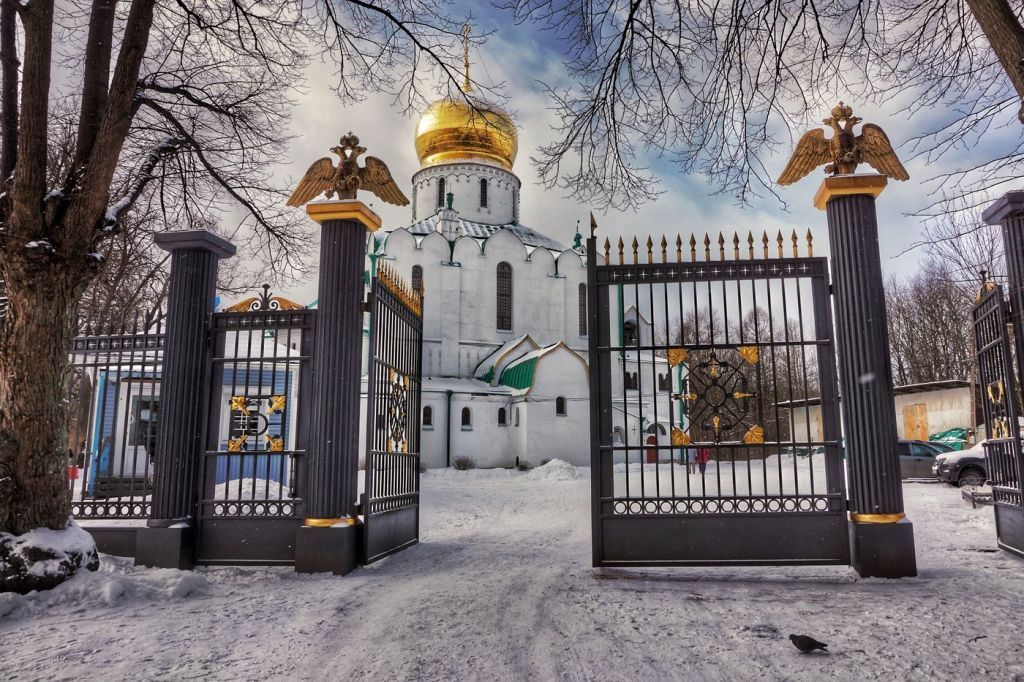
PHOTO: winter view of the Feodorovsky Sovereign Cathedral. Note the gilded double-headed eagles perched on the pillars of the main gate

On a final note . . .

There are some Orthodox Christians who have suggested that once the Russian Orthodox Church recognize the Ekaterinburg Remains as those of the Imperial Family, that the Feodorovsky Sovereign Cathedral at Tsarskoye Selo should be considered as the final resting place for the Imperial Family and their four faithful retainers that perished with them in Ekaterinburg. According to one source, such a decision would thus fulfil the wish of Nicholas II and Alexandra Feodorovna.

It seems only fitting that they should find eternal rest in a place which they held so near and dear to their hearts, one where they came to pray and find spiritual nourishment. Just a thought . . .

NOTES:

[1] Shortly after the events of Bloody Sunday in February 1905, Nicholas II made the Alexander Palace his permanent residence.

FURTHER READING

Cossacks visit the Feodorovsky Sovereign Cathedral in Tsarskoye Selo + PHOTOS

On this day in 1933 the Feodorovsky Sovereign Cathedral at Tsarskoye Selo was closed + PHOTOS

Nicholas II plants oak trees at the Feodorovsky Sovereign Cathedral, April 1913 + PHOTOS

© Paul Gilbert. 14 July 2023
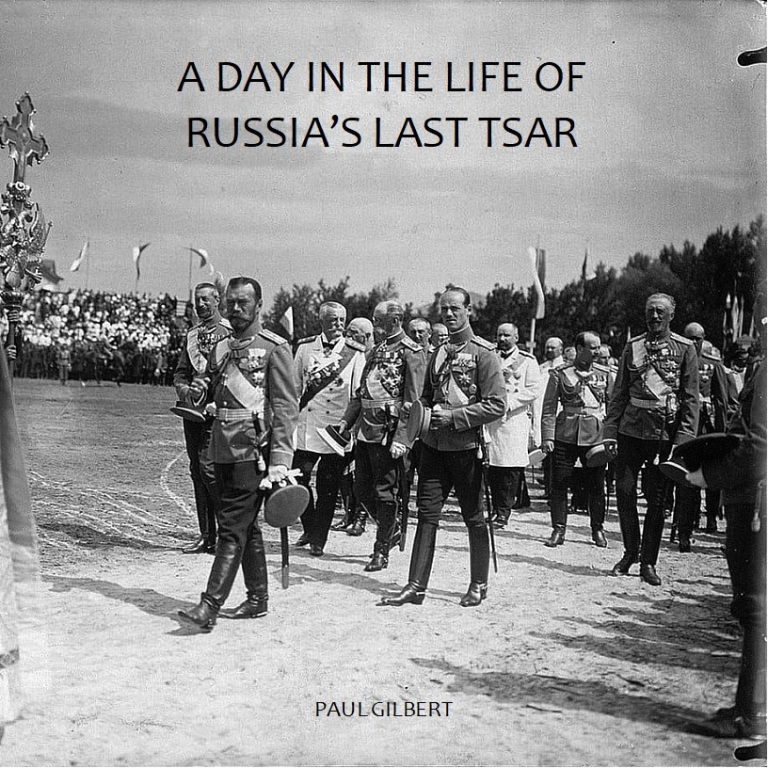
NEW BOOK: A Day in the Life of Russia’s Last Tsar

*This title is available from AMAZON in the USA, UK, Canada, Australia,
France, Germany, Spain, Italy, Netherlands, Poland, Sweden and Japan
*Note: prices are quoted in local currencies

CLICK HERE TO ORDER THE PAPERBACK EDITION @ $25.00 USD

English. 242 pages with 225 black & white photos

Aside from his many duties as God’s anointed Emperor and Tsar of All the Russia’s, Nicholas II took on many other roles from one day to the next: a dutiful husband and loving father, a devoted son and brother, a friend, a sportsman, a diplomat, an ambassador, a dedicated military leader, a devout Orthodox Christian, among others.

This richly illustrated pictorial explores the day-to-day duties of Russia’s last monarch. It is divided into six sections: the Tsar and His Family; Sports, Leisure and Holidays; the Tsar and the Church; the Tsar and Russia; the War Years; and the Tsar Under House Arrest. Each section features full-size historic images which reflect his day to day duties and activities. In total, this unique album includes more than 200 photographs from the author’s private collection.

The publication of this album is timed to coincide with the 155th anniversary of the birth of Emperor Nicholas II on 19th May [O.S. 6th May] 1868 and the 105th anniversary of the death and martyrdom [17th July 1918].

About the author

Paul Gilbert is a British born researcher and writer, specializing in the study of the life and reign of Emperor Nicholas II.

He has travelled extensively in Russia since 1986, visiting archives and historic sites associated with Russia’s last Tsar.

In 1998, he attended the Tsar’s funeral in St. Petersburg, and in 2018, he took part in the events marking the 100th anniversary of his death and martyrdom in Ekaterinburg.

©  Paul Gilbert. 14 July 2023
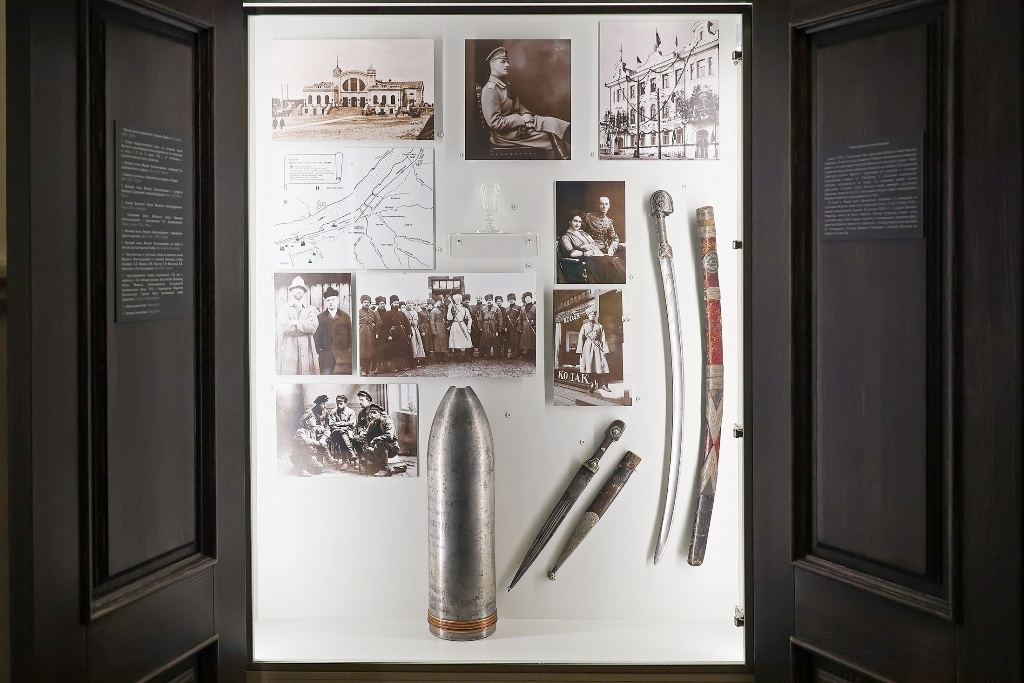
Photo album belonging to Tsesarevich Alexei Nikolaevich returned to Alexander Palace

Photo © Tsarskoye Selo State Museum

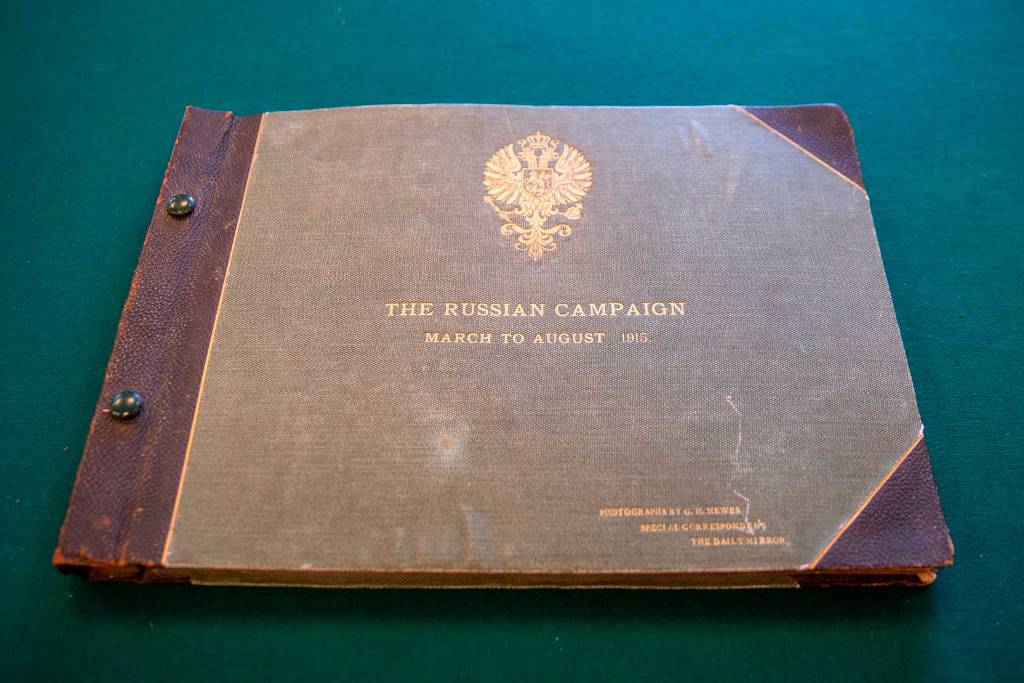
A rare photo album “The Russian Campaign. March to August 1915”, which belonged to Tsesarevich Alexei Nikolaevich and was kept in the Alexander Palace, has been returned to the Tsarskoye Selo State Museum.

The album was one of several rarities purchased at foreign auctions and donated to the museum by the philanthropist and long-term friend of the museum, Mikhail Karisalov. The other items include two paintings by Karl Friedrich Schultz, and a plate from the famous Raphael service, manufactured in 1903 at the Imperial Porcelain Factory. The paintings and plate were originally from the Catherine Palace.

In total, the museum’s collection now includes 226 items donated by Mikhail Karisalov or acquired with his financial support. It is thanks to the kindness and generosity of this man, that the museum has been able to recoup many of its treasures which were lost or stolen during the Nazi occupation of Pushkin [Tsarskoye Selo] in 1941-44. 

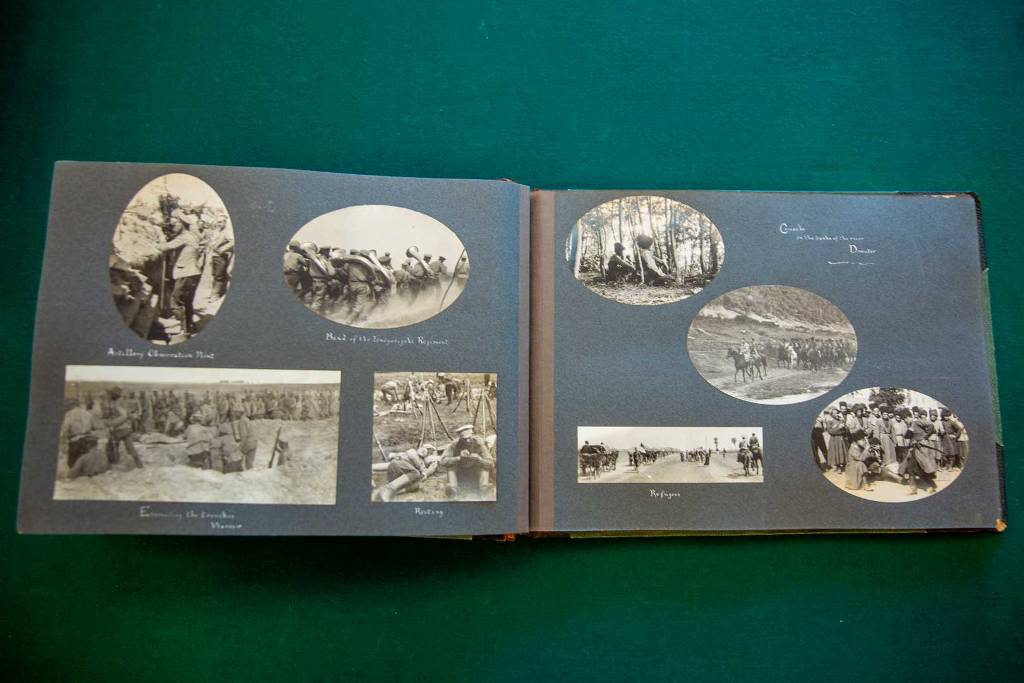
The photo album “The Russian Campaign. March to August 1915” consists of 168 photographs taken during the Russian campaign of the First World War – from March to August 1915. The photographs were taken by British photographer George H. Mewes, who was appointed official photographer to the Russian Imperial Army. Hewes took photographs for a number of prominent British newspapers and magazines, including The Daily Mirror, The Times History of the War, Field Notes from the Russian Front and The Russian Campaign.

Similar albums about the military campaigns of the Russian Imperial Army during the First World War were presented as gifts to Tsesarevich Alexei Nikolaevich, the son and heir of Emperor Nicholas II. Museum researchers believe that the albums were kept in the Tsesarevich’s Classroom, which was located on the second floor of the Eastern Wing of the Alexander Palace. “We can only assume that “The Russian Campaign. March to August 1915″ album, among many other items, was seized from the Alexander Palace during the 1930s or 1940s,” says Victoria Plaude, curator of the museum’s photograph fund.

On the flyleaf of the album is a museum label. The inscription in ink reads: “Alexander./palace/floor. nasl-ka/class/No. 683”. This clearly indicates that the photo album was in the Alexander Palace in Alexei’s Classroom. The label found on the album is identical to those on other items from the Alexander Palace, and now in the Collection of the Tsarskoye Selo State Museum.

Photo © Tsarskoye Selo State Museum

The photo album was made in London by Jonson & Sons. Photos of different sizes are pasted on sheets of gray cardboard. On the top cover of the album is an embossed gold inscription: “Photographs by G. H. Mewes, special correspondent of the Daily Mirror”.

The pictures are accompanied by captions in English. On the flyleaf of the album there is an inscription: “It has been the aim of the correspondent to illustrate for the British public the heroic part performed by their Russian Allies in the Great War”.

The photographs are only a small selection of about two thousand photographs taken by Mewes for the Russian Imperial Army, which were reproduced in illustrated magazines around the world.

British photographer George Mewes and American journalist Stanley Washburn were on the Russian front in 1914-1915. In addition to periodicals, these photographs were later featured in Washburn’s book “The Russian Campaign. April to August, 1915”.

© Paul Gilbert. 13 July 2023
Nicholas II’s love of bicycles and cycling

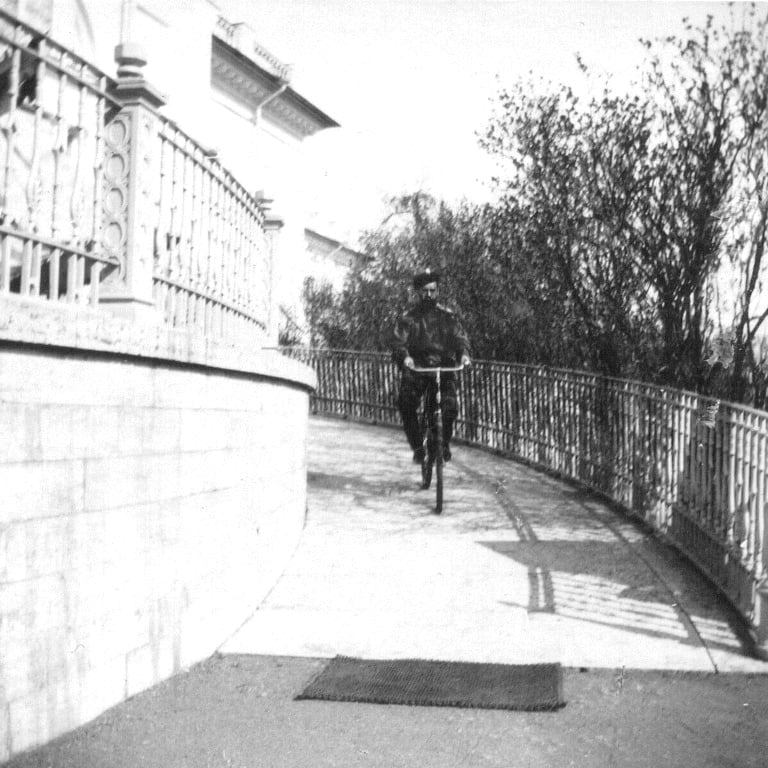
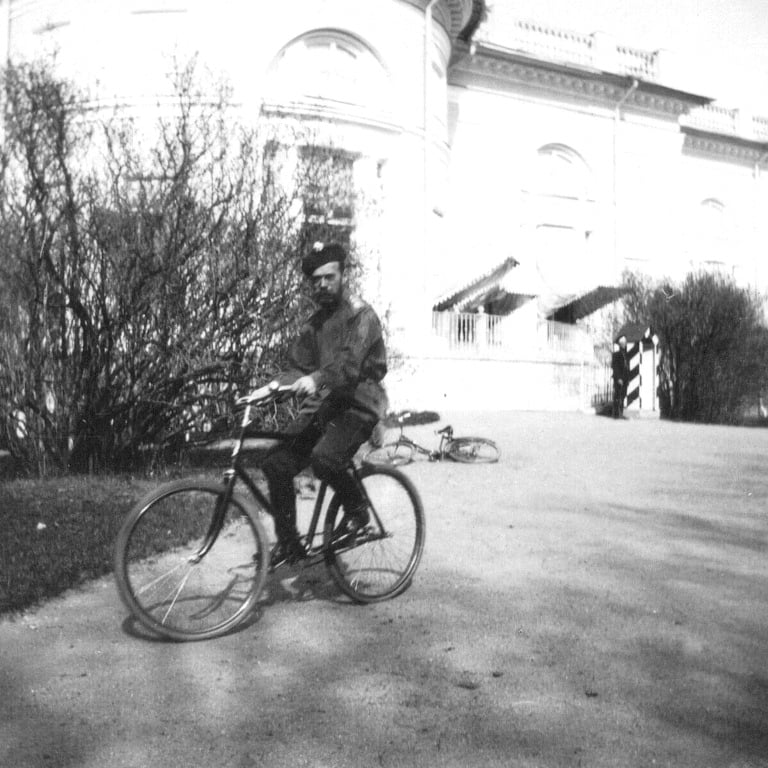
PHOTO: Nicholas II riding his American-made bicycle, purchased in July 1895, from the Pobeda Trading Company in St. Petersburg

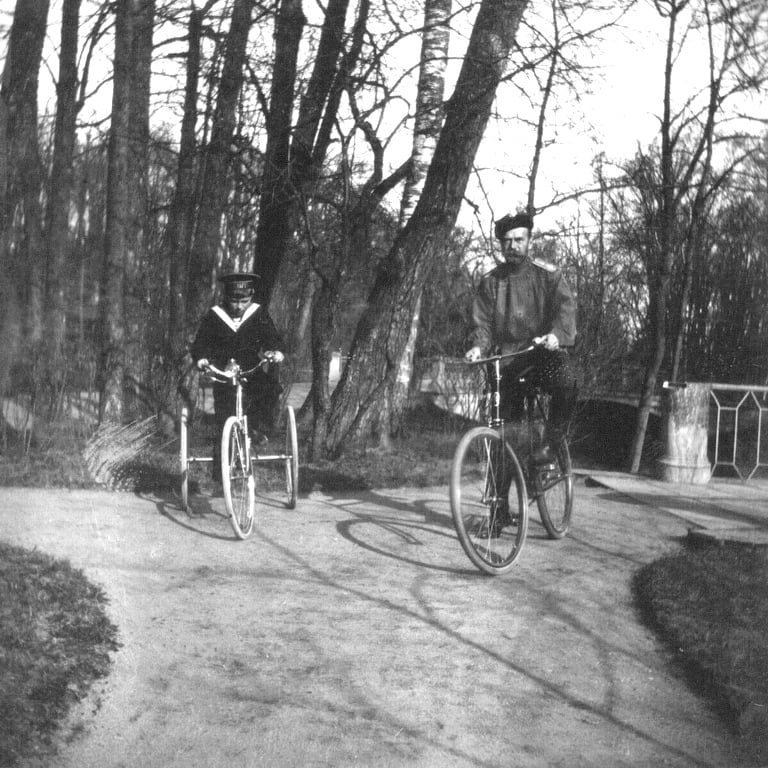
One of the many physical pastimes of Russia’s last Tsar was cycling, an exercise which he enjoyed with all of his children. Even his son Alexei partook in this activity, on a specially made three wheel bicycle.

In the late 19th century members of the Russian Imperial Family showed great interest in two-wheeled vehicles and bicycles, including Russia’s last Tsar, who began to ride a bicycle while still a teenager. Vintage photographs show Nicholas II riding bicycles with his Danish and Greek relatives, and later on the grounds of the Alexander Palace at Tsarskoye Selo.

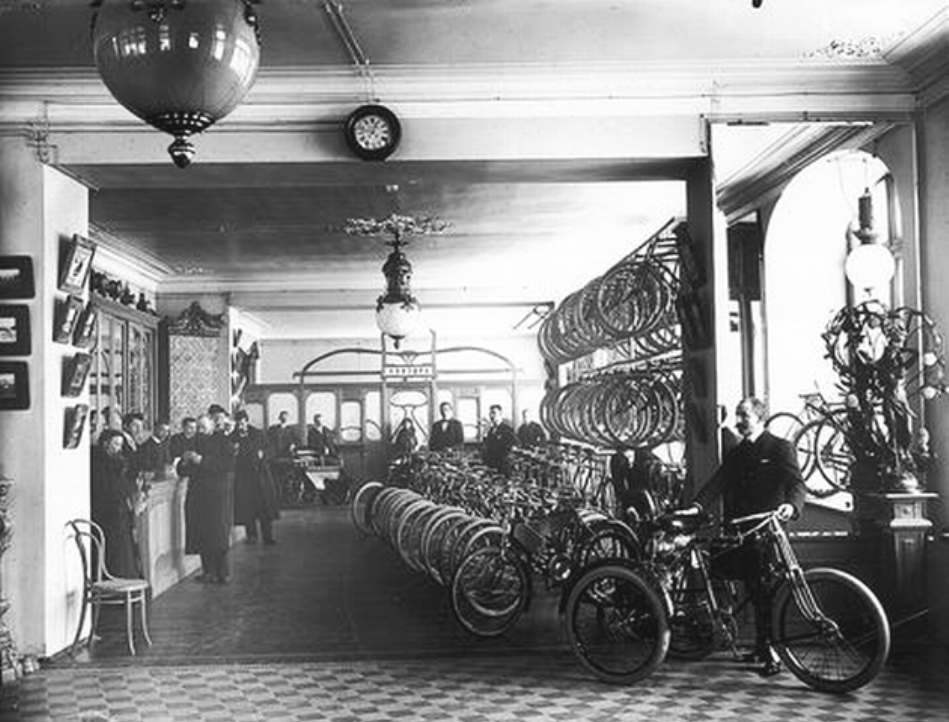
The first shop to offer bicycles in the Russian capital was the Pobeda Trading House, which was situated at 81 Morskaya Ulitsa (Street). In 1895, it received the status of a Supplier to the Imperial Court. It was here, in July 1895 that Nicholas II purchased for his own use a high-quality bicycle made by the American company Dayfon, at a cost of 253 rubles, a considerable sum at that time. The bicycle was equipped with a special seat, a lamp, a bell, and an air tube.

Surviving records of the Pobeda Trading House include invoices signed and paid by Nicholas II, which include delivery, cleaning and adjustment of his bicycle, as well as it’s upkeep and maintenance, in order to keep it in perfect order.

One invoice for 24 rubles, included: cleaning the bicycle, adjustments and delivery (10 rubles), a bicycle cover (8 rubles), a bicycle stand (5 rubles) and engine oil (1 rub.).

The following month, in August 1895, another invoice records that the Tsar paid for a new shift for changing gears for 10 rubles, a bicycle chain for 12 rubles and additional maintenance work for 5 rubles.

The shops accounts also indicate that the Tsar paid for a special weather-proof cover and storage for his bicycle stored during the winter months were also paid.

PHOTOS: view of the Pobeda Trading House at Morskaya Ulitsa (Street), 81 in St. Petersburg

PHOTOS: view of the Pobeda Trading House – Supplier to the Imperial Court

On 31st December of that year, the Tsar decided to have his bicycle fully enamelled for 15 rubles, and the “full nickel plating of the bike” for an additional 30 rubles. Additional maintenance on the bicycle including “turning the hulls, checking the wheels, cleaning and assembly” for 8 rubles, the purchase of spare “pneumatic tires” for 45 rubles, another bicycle cover for 8 rubles. and a bicycle pump for 2 rubles. 50 kopecks.

Thus, by the end of 1895, Nicholas II had spent 381 rubles on his bicycle and spare parts. All these purchases, as well as after-sales service, were carried out in the Pobeda Trading House. The storage conditions for the Tsar’s expensive toy is also noteworthy – at the “end of the season”, the Tsar’s bicycle was packed by specialists in special covers and moved to the shop for repair and storage until the new season began in the spring.

In later years, Nicholas II ordered other models of bicycles for his wife and children, complete with special enameling and nickel plating. Among them was a two-seater, which he shared with his wife – this bicycle has survived to the present day, and is now in the Collection of the Peterhof State Museum.

The last bicycle bill was signed by “Citizen Romanov” – during his house arrest at the Alexander Palace – on 10th May 1917, when he bought rubber glue and “bicycle valves” for a modest 4 rubles 80 kopecks.

PHOTO: Nicholas II riding his bicycle on the grounds of the Alexander Palace, 1914

PHOTO: Nicholas II riding his bicycle on the grounds of the Alexander Palace, 1914

PHOTO: Nicholas II and his son Alexei riding their bicycles in the Alexander Park, 1914

The Tsar’s passion for bicycles and cycling was shared by his children. Each of them had their own bicycle, all of which were serviced by specialists of the Pobeda Trading House. The grand duchesses had girls bicycles of the same model, only different sizes, based according to their age and height. The grand duchesses bicycles had a special protector on the chain, which prevented the hems of their skirts from getting caught in the bike’s chain as they peddled.

Due to his illness [haemophila], Alexei had a special three-wheel bicycle made, which afforded him protection from falling and hurting himself, as any injury could prove fatal. His doctors also maintained the cycling would be a good exercise for his sore leg.

In 2004, the Peterhof Museum-Reserve opened an Imperial Bicycle Museum, which presents 12 rare bicycles, including those which belonged to the last three emperors: Alexander II, Alexander III and Nicholas II.

In 2013 Nicholas II’s bicycle was presented at an exhibition marking the 2014 Olympic Games in Sochi.

© Paul Gilbert. 12 July 2023
Romanov Memorial Hall to be moved to new location in Ekaterinburg

PHOTO: view of the Romanov Memorial Hall in the Museum of History and Archaeology of the Urals, a branch of the Sverdlovsk Regional Museum of Local Lore in Ekaterinburg

In the days leading up to this years Tsar’s Days events the Romanov Memorial Hall – which is currently located in the Museum of History and Archaeology of the Urals – will be moved to the Sverdlovsk Regional Museum of Local Lore in Ekaterinburg.

On 14th July 2023, the museum will present a new permanent exhibition “The Romanovs in the Urals” dedicated to the stay of Emperor Nicholas II and his family during their house arrest in the Ural city from April to July 1918.

According to the head of the public relations department of the museum Tatyana Mosunova, items from the museum’s funds, one way or another connected with the Imperial Family, will be exhibited. Among them is a unique sculpture of Alexander III by Kasli Foundries, the last time this figure was exhibited was more than a hundred years ago.

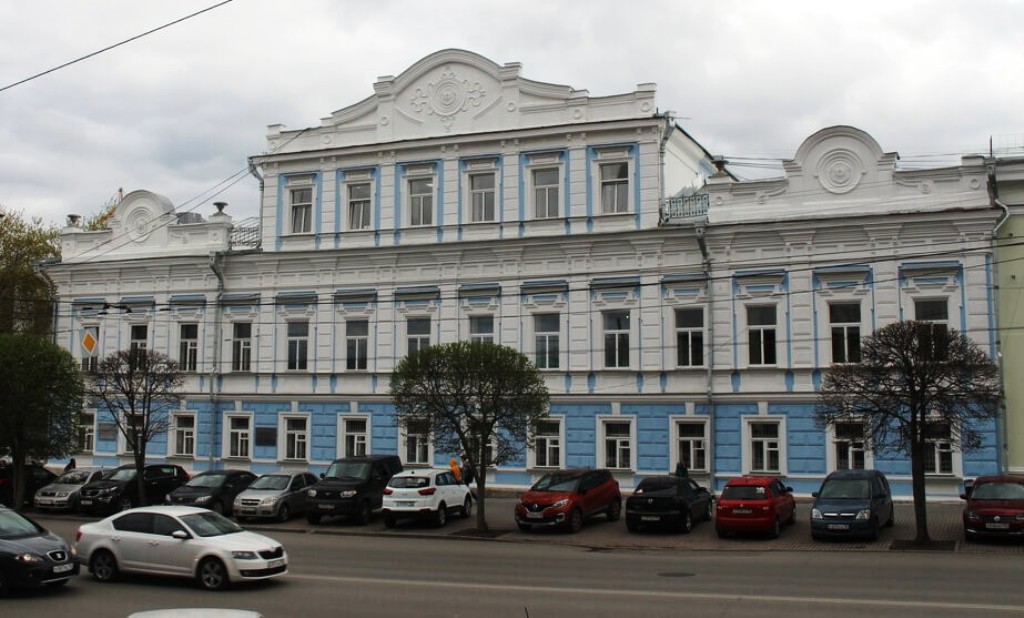
PHOTO: the former Poklevsky-Kozell mansion will be the new venue for the Romanov Memorial Hall in Ekaterinburg

According to Mosunova, the exhibition will be transferred to the 19th century Poklevsky-Kozell mansion on Malyshev Street. Local historians will help in creating an exhibition space, an agreement with the Ural State University based on the consultations of experts from the Museum of History and Archaeology of the Urals.

The General Director of the museum Alexander Emelyanov explained that the new exhibition will be extensive and will occupy five halls. The museum believes that the organization of the permanent exhibition will help both locals and visitors to the city to have a better understanding of the final days of Russia’s last Imperial Family in the Ural capital.

***

My Visit to the Romanov Memorial Hall in June 2016

PHOTO: a miniature copy of Zurab Tsereteli’s sculpture, “Night at the Ipatiev House” greets visitors to the Romanov Memorial Hall

Situated at Ulitsa Lenina 69/10 is the Museum of History and Archaeology of the Urals, a branch of the Sverdlovsk Regional Museum. From the street, the museum resembles one of the hideous buildings from the Soviet era – but if you blink, you may miss it! Admission is 200 rubles, an additional fee is charged if you want to take photographs. One must climb a steep circular staircase to reach the Romanov Memorial Hall on the 4th floor. The ascent is definitely worth it!

A miniature copy of Zurab Tsereteli’s sculpture, “Night at the Ipatiev House” greets visitors at the entrance to the hall.

The Romanov Memorial Hall was opened in 2006. The exposition tells of the Romanov dynasty during the reign of Emperor Nicholas II (1894-1917), the tragic events of 17 July 1918 and secret burial of the remains of the royal family.

This is a very interesting museum, as it contains personal items of Nicholas II, his family and their retainers, discovered in the Ipatiev House by the White Army. It also contains many elements of decor, decoration and fittings salvaged from the Ipatiev House before its demolition in September 1977, notably the cast iron fireplace from the dining room, and the iron grille from the window of the murder room.

PHOTO: scale model of the Ipatiev House -renamed House of Special Purpose by the Bolsheviks – on permanent display in the ‘Romanov Memorial Hall’

Aside from the items from the Ipatiev House, are many additional exhibits of interest, including a scale model of the Ipatiev House; the reconstructed model of Nicholas II’s head by Russian forensic expert Dr. Sergei Nikitin; the Mauser pistol which belonged to the murderer Pyotr Ermakov; a portrait of Princess Louise of Hesse-Kassel (the future Queen of Denmark), maternal grandmother of Nicholas II, which formerly hung in the study of Emperor Alexander III in the Anichkov Palace in St. Petersburg.

The exposition further explores the history of the investigation of the murder case of the last of the Romanovs in the Urals, which lasted more than 100 years.

It is interesting to note that the hundreds of exhibits on display in the glass display cases in the Romanov Memorial Hall include descriptions in both Russian and English – a rarity in Russian museums.

A small adjacent room contains a photo exhibit dedicated to Grand Duke Mikhail Alexandrovich and his secretary Brian Johnston. Efforts to locate their remains near Perm are ongoing by the S.E.A.R.C.H. Foundation.

© Paul Gilbert. 11 July 2023
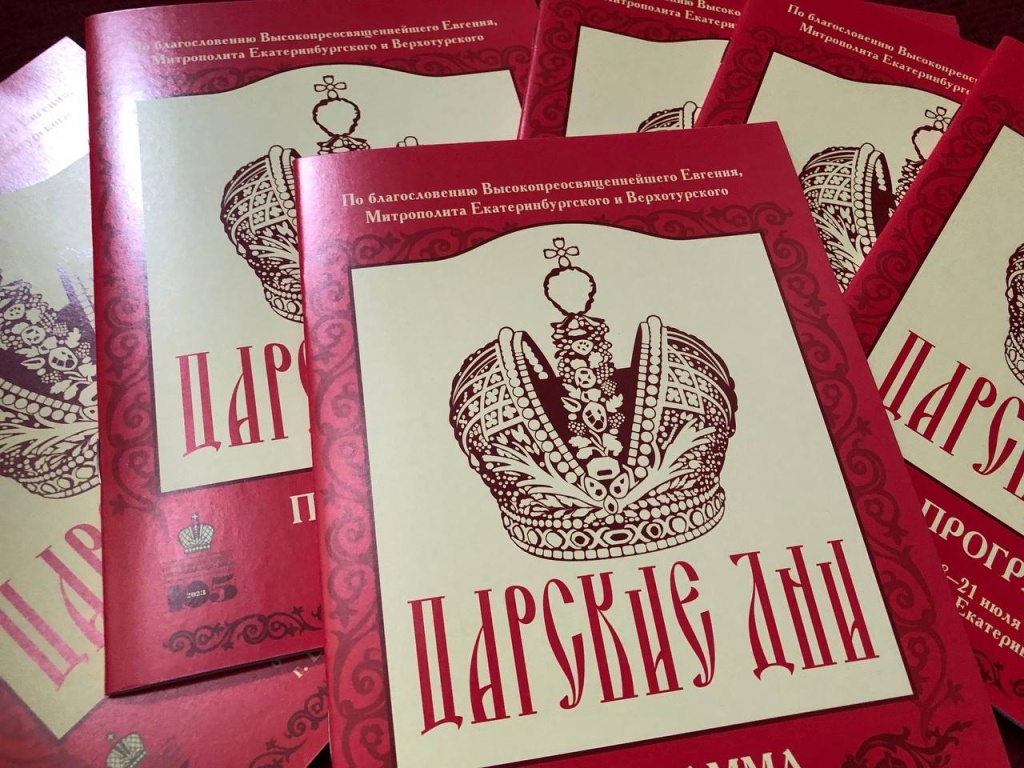
Program for the XXIII Tsar’s Days in the Urals – 2023

The 23rd annual Tsar’s Days will be held from 8th to 21st July 2023 in Ekaterinburg and Alapaevsk. The festival includes a series of solemn events [16th to 18th July] dedicated to Emperor Nicholas II and his family, who met their death and martyrdom in Ekaterinburg 104 years ago, on 17th July 1918.

The main events include the outdoor night Divine Liturgy, which will be performed n the square in front of the Church on the Blood, built on the site of the Ipatiev House, where members of the Imperial Family and their faithful subjects ended their earthly days, followed by the 21-km [13 miles] Cross Procession – led by Metropolitan Yevgeny of Yekaterinburg and Verkhoturye – to the Monastery of the Holy Royal Martyrs at Ganina Yama, on the site of which the regicides first disposed of the Imperial family’s remains, before returning the following day to exum thre remains and bury them in two separate graves at *Porosenkov Log.

On 18th July, similar events will be held in Alapaevsk, where 8 additonal members of the Romanov dynasty and their faithful servants [see below] met their death and martydom.

In addition, the XXII International Festival of Orthodox Culture will be held in Ekaterinburg from 12th-20th July. Aside from divine services and religious processions, the festival will feature many events in honour of the Holy Royal Martyrs, including concerts and musical evenings, attended by artists and musicians from various regions of Russia and neighboring countries. A number of conferences hosted by well-known historians, theologians and authors are also planned.

The extensive cultural and educational program includes exhibitions at the Museum of the Holy Royal Family [located in the Patriarchal Compund], the Museum of the Royal Monastery [Ganina Yama], the multimedia park “Russia My History”, the regional museum of local lore; and the XIX International Orthodox Exhibition and Forum “From Repentance to the Resurrection of Russia”.

As part of the Tsar’s Days, the Festival of Bell Ringing “Evangelize, the Ural Land!” will be held, as well as the V Children’s Sailing Regatta named after Crown Prince Alexy, in which more than 200 young yachtsmen of the Ural Federal District will take part; VI tournament “Russian Silometer” and other events.

The Ekaterinburg Martyrs – 11 victims

Emperor Nicholas II, Empress Alexandra Feodorovna, Grand Duchesses Olga, Tatiana, Maria, Anastasia, Tsesarevich Alexei Nikolaevich, and their four faithful retainers Dr. Eugene Botkin (court physician), Alexei Trupp (footman), Ivan Kharitonov (cook), and Anna Demidova (Alexandra’s maid).

The Alapaevsk Martyrs – 8 victims

Grand Duchess Elizabeth Feodorovna, Grand Duke Sergei Mikhailovich, Princes of the Imperial Blood Ioann, Konstantin and Igor Konstantinovich, Prince Vladimir Paley (son of Grand Duke Paul Alexandrovich), and two faithful servants: sister of the Marfo-Mariinsky Convent Varvara Alekseevna (Yakovleva), and Fyodor Semyonovich (Mikhailovich) Remez, secretary of the Grand Duke Sergei Mikhailovich.

PHOTO: icon depicting the Ekaterinburg and Alapaevsk Martyrs

SERVICE CALENDAR

Sunday 16th July

09:00 – Divine Liturgy at the altar of the Holy Royal Martyrs, situated in the Lower Church of the Church on the Blood in Ekaterinburg.

13:00 — Cross procession along the route in which the Holy Royal Martyrs travelled upon arriving in Ekaterinburg [from Tobolsk] on 30th April 1918, from the Shartash Train Station [Kuibysheva street, 149-a] to the Church on the Blood. Route: [Tsarskaya street, 10] along the route: railway station Shartash – Kuibyshev street – Vostochnaya street – Chelyuskintsev street – Sverdlov street – K. Liebknecht street).

15:00 – Small Vespers with Akathist to the Holy Royal Martyrs. Confession. In the Lower Church of the Church on the Blood.

16:30-20:00 – All-night vigil, on the square in front of the Church on the Blood.

17:00-20:00 – All-night vigil, at the Monastery of the Holy Royal Martyrs at Ganina Yama.

23:30-02:00 – Divine Liturgy, on the square in front of the Church on the Blood.

Monday 17th July

~ 02:30 – Traditional 21-km [13 miles] Cross Procession from the Church on the Blood to the Monastery of the Holy Royal Martyrs at Ganina Yama Route: Tsarskaya street, 10 – st. Tolmacheva – Lenin Ave. – V. Isetsky Boulevard – st. Kirov – st. Bebel – st. Technical – st. Reshetskaya – Railway forest park – pos. Shuvakish – Ganina Yama.

Upon the arrival of the procession, a Liturgy to the Holy Royal Martyrs will be performed at the Field kitchen.

06:00 – Divine Liturgy (early). Church on the Blood. In the Lower Church, altar at the site of the martyrdom of the Holy Royal Martyrs aka the Imperial Room [built on the site of the murder room, located in the basement of the Ipatiev House].

09:00 – Divine Liturgy (late). Church on the Blood, Upper Church

09:00 – Divine Liturgy. Monastery of the Holy Royal Martyrs at Ganina Yama.

17.00 – All-night vigil. Church of St. Sergius of Radonezh, at Ganina Yama.

17.00 – All-night vigil. Holy Trinity Cathedral (Alapaevsk).

Tuesday 18th July

00:00 – Divine Liturgy. Holy Trinity Cathedral, Alapaevsk.

02:30 – Procession from the Holy Trinity Cathedral to the Monastery in the Name of the Holy New Martyrs and Confessors of the Russian Church, Alapaevsk.

06.00 Arrival of the procession to the Monastery in the Name of the Holy New Martyrs and Confessors of the Russian Church, Alapaevsk. Diving Liturgy at the mine.

09:00 – Divine Liturgy with the Episcopal Rite. Monastery in the Name of the Holy New Martyrs and Confessors of the Russian Church, Alapaevsk.

Tsar’s Days in the 21st century

The first procession in memory of the Holy Royal Martyrs, headed by Metropolitan of Ekaterinburg and Verkhoturye Kirill, took place in 2002, in which more than 2 thousand pilgrims and about 100 clerics participated. In 2012, for the first time since the construction of the Church on the Blood in Ekaterinburg, an all-night vigil and Divine Liturgy were performed in the open air.

In 2017 an estimated 60,000 people took part; in 2019, 60 thousand participated; in 2020, 10 thousand people [due to COVID], and in 2021, 3 thousand people [once again, due to COVID]. In addition, up to 2 thousand people gathered an alternative religious procession of the schismatic and tsarist monk Sergius (Romanov) in the Sredneuralsk Convent in Honour of the Icon of the Blessed Virgin Mary.

In 2018, more than 100,000 Orthodox Christians, monarchists, among others from across Russia and around the world took part in the Patriarchal Liturgy and procession of the cross from the Church on the Blood to the Ganina Yama.

Click HERE to read my article What is Tsar’s Days? – published on 15th May 2021

*NOTE: due to the fact the Moscow Patriachate does not yet recognize the Ekaterinburg Remains as authentic, the Cross Procession does not stop at Porosenkov Log, where the remains of the Imperial family were unearthed in two separate graves in the late 1970s and 2007.

The Holy Synod of the Russian Orthodox Church (ROC) have confirmed that the Bishops’ Council, will meet in Moscow at at a future date, during which they will review the findings of the Investigative Commission and deliver their verdict on the authenticity of the Ekaterinburg Remains.

© Paul Gilbert. 9 July 2023

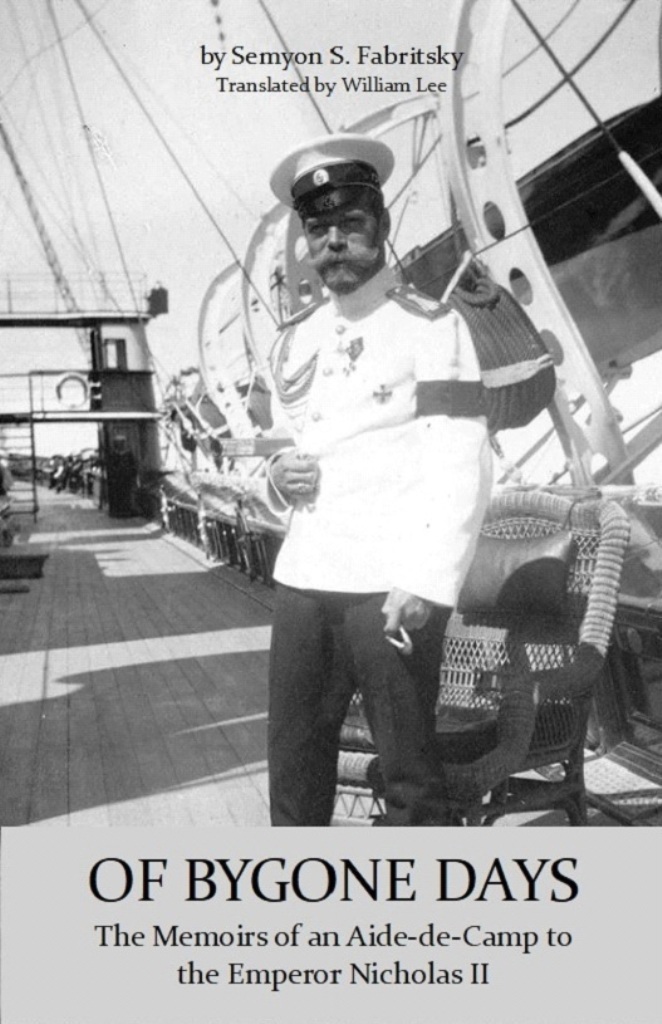
Of Bygone Days: The Memoirs of an Aide-de-Camp to the Emperor Nicholas II

*This title is available from AMAZON in the USA, UK, Canada, Australia,
France, Germany, Spain, Italy, Netherlands, Poland, Sweden and Japan
*Note: prices are quoted in local currencies

CLICK HERE TO ORDER THE PAPERBACK EDITION @ $20.00 USD

English. 214 pages, 10 black & white photos

First English translation with introduction and notes by William Lee

NOTE: The first Russian-lanaguage edition of Fabritsky’s memories was published in Berlin in 1926. The first English-language edition of Fabritsky’s memoirs was published in Canada in 2016. This title has been out of print for many years, so I am delighted to offer this new edition.

The time I spent with Their Majesties – over the course of many years and under varied circumstances – will always be the source of my most precious memories, and I am very happy to be able to share those memories now with a wide public. I hope at least to give an absolutely truthful account of what I saw and heard” – Semyon S. Fabritsky. 1926

Semyon Semyonovich Fabritsky (1874-1941) had a fascinating career during the twilight years of Imperial Russia. He began his naval career in the very first days of the reign of Emperor Nicholas II.

In 1909, Fabritsky was personally appointed Aide-de-Camp by the Emperor himself, a position he served with immense pride and devotion.

During his service to Nicholas II, Fabritsky earned both the trust and friendship of the Emperor. Through his often uninterrupted contact with Russia’s last sovereign and observing him at all hours and under a variety of conditions, Fabritsky was able to form a clear picture of Nicholas II and his family, through his own personal eye-witness observations.

He also served aboard the Imperial yachts, partaking in holidays with the Emperor and his family to the Crimea and the Finnish skerries. He shares interesting details and anecdotes about the Alexandria, Polar Star, and Standart.

This book will also be of great interest to any one with an interest to the Russian Imperial Yachts and the Russian Imperial Navy.

Fabritsky provides great insight to the treachery, cowardice, and deceit which prevailed every where. He acknowledges ministers and generals who were either unworthy of their posts or unfit for them. Sadly, it was these men who surrounded Nicholas II during his 22+ year reign, who contributed to the downfall of monarchy and the destruction of the Russian Empire in 1917.

©  Paul Gilbert. 4 July 2023