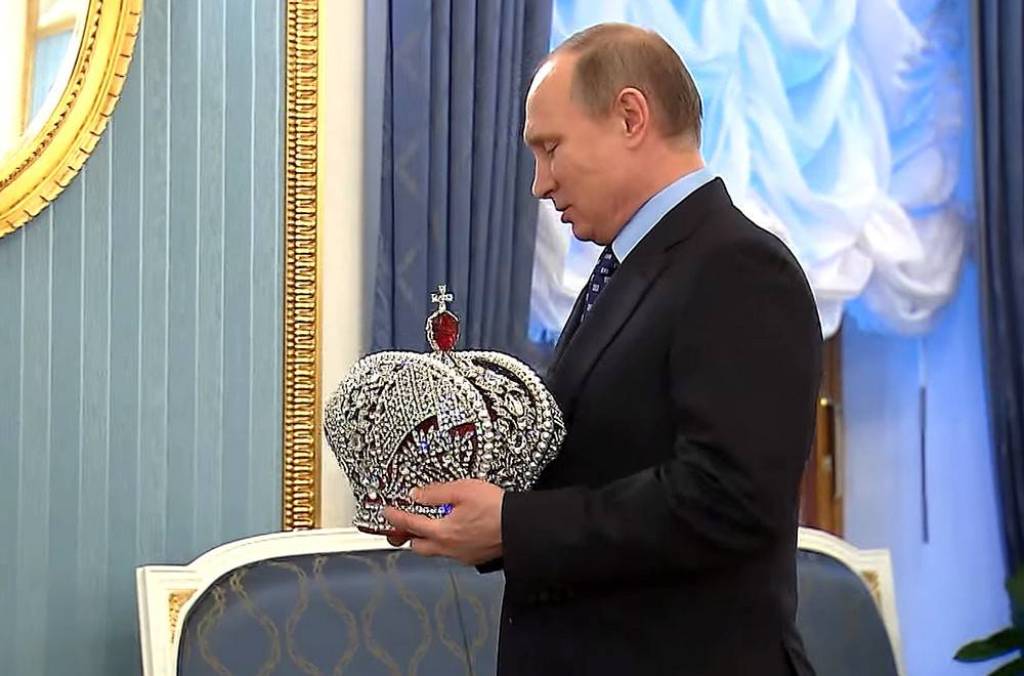
PHOTO: Russian president Vladimir Putin holding a replica of the of Imperial Crown of Russia
In the late 1960s, the aging Spanish dictator General Francisco Franco (1892-1975) decided to name a monarch to succeed him. In 1969, Franco formally nominated as his heir-apparent Prince Juan Carlos de Borbón [the grandson of King Alfonso XIII, the last king of Spain], who had been educated by him in Spain, with the new title of Prince of Spain. This designation came as a surprise to the Carlist pretender to the throne, Prince Xavier of Bourbon-Parma, as well as to Juan Carlos’s father, Juan de Borbón, the Count of Barcelona, who had a better claim to the throne, but whom Franco feared to be too liberal.
By 1973, Franco had surrendered the function of prime minister (Presidente del Gobierno), remaining only as head of state and commander in chief of the military.
Due to Franco’s declining health, Juan Carlos first began periodically acting as Spain’s head of state in the summer of 1974. Franco died in November of the following year and Juan Carlos became king on 22 November 1975, two days after Franco’s death, the first reigning monarch since 1931, although his exiled father did not formally renounce his claims to the throne in favor of his son until 1977.
Is it at all possible that a similar shift of power could occur in a post-Putin Russia? How popular is the idea of a restoration of the monarchy in Russia in the 21st century? Who are the contenders? Let’s take a closer look . . .
Russia after Putin
During the past year, Western media have fuelled speculation about President Vladimir Putin’s alleged declining health. Rumours of his physical well-being have been rife, with a range of theories from cancer to Parkinson’s. Some Western news outlets have even gone so far as to state that he will be dead by the end of 2024.
Given the current political situation between Russia and the West, coupled with stealth efforts to protect Putin, and a lack of reliable sources for these news reports, one must take them with a grain of salt, treating them as nothing more than Western propaganda.
Despite Western predictions of Russia’s pending economic collapse, the country appears to be adapting to sanctions imposed by the United States, Great Britain, and European Union. Growing demand for Russian energy imports has helped keep the country’s besieged economy afloat. China and India, Asia’s biggest and third-biggest economies, respectively, have been the biggest drivers of the trend. This includes crude oil, pipeline gas, liquefied natural gas and coal.
According to Fareed Zakaria: “Russia’s performance in the war has been poor, but it is doing better, especially at holding territory. Russia has also been able to stabilize its economy, which the IMF projects will do better this year than the UK’s or Germany’s. Russia is trading freely with such economic behemoths as China, and India, as well as neighbors like Turkey and Iran. Because of these countries and many more, outside of the advanced technology sector, it has access to all the goods and capital it lost through the Western boycott. There is now a huge world economy that does not include the West, and Russia can swim in those waters freely.”
In addition, the Russian ruble has gained against the dollar after collapsing immediately after the Ukraine invasion.
While Putin remains unpopular in the West, his popularity among his own people remains high. In January 2023, over 80 percent of Russians approved of activities of the Russian President Vladimir Putin. The popularity level saw an increase compared to September 2022, when it stood at 77 percent.
Contrary to Western media hype, President Vladimir Putin, now 70, looks remarkably healthy and shows no sign of stepping down any time soon . . . but, “what if” he decided to step down as president, “what if” he was forced from office or “what if” he died in office, who would succeed him? Would Putin repeat Franco’s historic decision, and restore the monarchy in modern day Russia?
Who are the contenders?
There are currently more than 50 Romanov descendants scattered around the world, however, only three of them are seeking to wear the Russian crown: the Spanish born Princess Maria Vladimirovna, her son Prince George Mikhailovich, and the German born Prince Karl Emich of Leiningen.
Princess Maria Vladimirovna (b. 1953)
PHOTO: Princess Maria Vladimirovna at St Isaac’s Cathedral, St Petersburg. September 2021
Princess Maria Vladimirovna Romanova was born in Madrid, Spain on 23rd December 1953, the only child of Prince Vladimir Kirillovich (1917-1992) and Princess Leonida Bagration-Mukhrani (1914-2010). She is a granddaughter of Grand Duke Kirill Vladimirovich (1876-1938) and Grand Duchess Victoria Feodorovna (1876-1936). Maria is a great-great-granddaughter in the male line of Emperor Alexander II (1818-1881).
Maria “Masha” Vladimirovna styles herself as a “Grand Duchess,” however, this is incorrect. The last grand duchess of Russia was Nicholas II’s younger sister Olga Alexandrovna, who died on 24th November 1960, in Toronto, Canada. Masha’s supporters style her as “Empress de Jure”.
On 23rd December 1969, Maria swore an oath of loyalty to her father, to Russia, and to uphold the Fundamental Laws of Russia which governed succession to the defunct throne. At the same time, her father issued a controversial decree recognising her as heiress presumptive and declaring that, in the event he predeceased other dynastic Romanov males, then Maria would become the “Curatrix of the Imperial Throne” until the death of the last male dynast. This has been viewed as an attempt by her father to ensure the succession remained in the Kirillovich branch of the Imperial Family, while the heads of the other branches of the Imperial Family, the Princes Vsevolod Ioannovich of the Konstantinovichi, Roman Petrovich of the Nikolaevichi and Prince Andrei Alexandrovich of the Mihailovichi declared that her father’s actions were illegal.
On 4th September 1976 (civil) in Dinard, France and at the Russian Orthodox Chapel in Madrid, Spain on 22nd September 1976 (religious), Maria married Prince Franz Wilhelm of Prussia [born 1943], of the defunct House of Hohenzollern. Franz Wilhelm is a great-grandson of Emperor Wilhelm II. Franz Wilhelm converted to the Eastern Orthodox faith prior to the wedding, taking the name Michael Pavlovich and receiving the title of Grand Duke of Russia from Maria’s father.
The couple separated in 1982, a year after the birth of their only child, George Mikhailovich. Following the divorce on 19th June 1985, Franz Wilhelm reverted to his Prussian name and style, and converted back to his Catholic faith.
Upon the death of her father on 21st April 1992, Maria “succeeded” him as head of the Russian Imperial Family, a move which was vehemently opposed by ALL the other living descendants of the Romanov family.
The Romanov Family Associations two successive presidents said of Maria’s claims: Prince Nicholas Romanovich, who maintained his own claims to dynastic status and to headship of the Romanov family, “Strictly applying the Pauline Laws as amended in 1911 to all marriages of Equal Rank, the situation is very clear. At the present time, not one of the Emperors or Grand Dukes of Russia has left living descendants with unchallengeable rights to the Throne of Russia,” and his younger brother, Prince Dimitri Romanovich, said of Maria’s assumption of titles, including “de jure Empress of all the Russias”, “It seems that there are no limits to this charade”.
Despite all the fuss over morganatic marriages within the Imperial Family – made by both herself and her father in the 20th and 21st centuries – in January 2021, Masha announced the morganatic engagement of her son to Rebecca Virginia Bettarini from Italy. Bettarini converted to Russian Orthodoxy and took the name Victoria Romanovna [named after Grand Duchess Victoria Feodorovna, wife of Grand Duke Kirill Vladimirovich]. Masha granted permission for the couple to marry. She decreed that Bettarini will have the title Princess, with the predicate “Her Serene Highness” and the right to use the surname Romanov.
It is important to emphasize, that Maria Vladimirovna never had or has any authority to hand out titles or awards as she is not and never has been a ruling monarch. Despite this, Maria actively, and completely illegally distributes orders, medals and even titles of the Russian Empire. While many orders and awards of the Russian Empire have been officially restored in the modern Russian Federation, an ordinary civilian, and not a representative of the state, distributes the same order in appearance and name to her supporters on behalf of the “Imperial House”.
Prince George Mikhailovich-Hohenzollern (b. 1981)
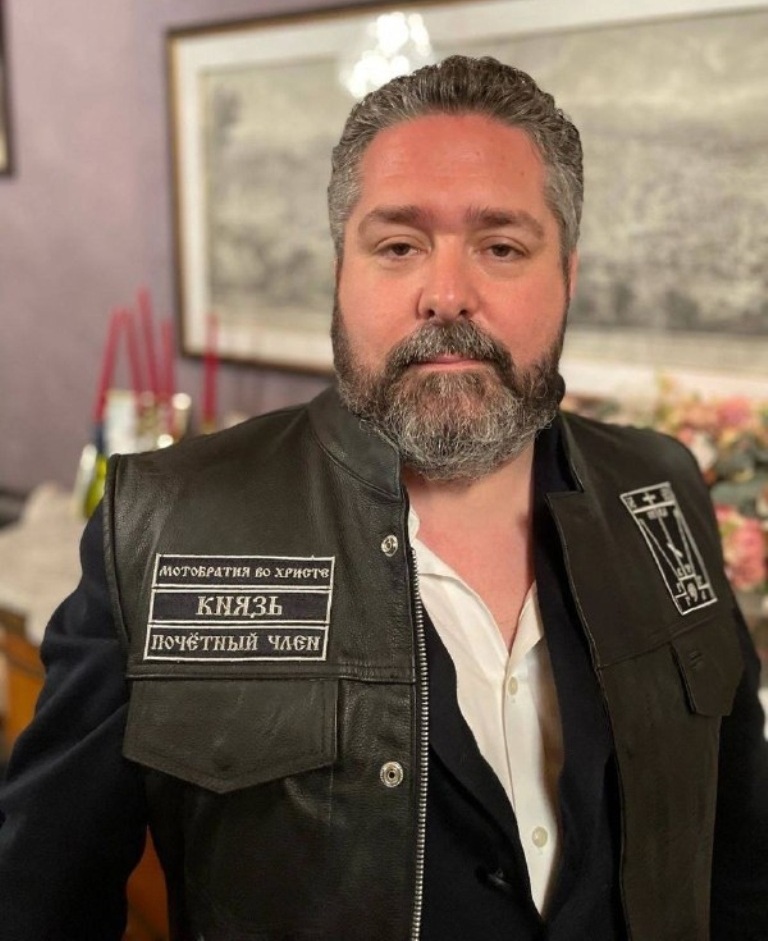
PHOTO: Gosha is an honourary member of the Brotherhood in Christ Motorcycle Association
Prince George “Gosha” Mikhailovich was born in Madrid, Spain on 13th March 1981, he is the only child of Princess Maria Vladimirovna and Prince Franz Wilhelm of Prussia.
Gosha styles himself as a “Grand Duke,” however, this is incorrect. The last grand duke of Russia was Grand Duke Andrei Vladimirovich, who died on 30th October 1956, in Paris, France. His mother attributes to him the title of Tsesarevich: heir apparent or presumptive in the Russian Empire, a title which no longer exists.
As the son of a cadet member of the branch of the House of Hohenzollern which formerly ruled the German Empire and Kingdom of Prussia, Gosha is legitimately a German prince, and has much more rights to the German throne than that of Russia. His father, who stopped using his Russian title after his separation, has said of his son, “I have his German passport right here; I always carry it with me. It says he is Prince George of Prussia”.
In 2013, Gosha established the Russian Imperial Foundation, whose director he later married. In 2019, George moved to Moscow, he is the only Romanov descendant currently living in Russia. He is a successful and wealthy businessman, and while thousands of his countrymen are being sent home in body bags, George and Victoria live in the lap of luxury in their sumptuous home in Moscow.
Despite all the fuss over morganatic marriages within the Imperial Family – made by both herself and her father in the 20th and 21st centuries – in January 2021, Masha announced the morganatic engagement of her son to Rebecca Virginia Bettarini from Italy. Bettarini converted to Russian Orthodoxy and took the name Victoria Romanovna [named after Grand Duchess Victoria Feodorovna, wife of Grand Duke Kirill Vladimirovich]. Masha decreed that her future daughter-in-law would have the title of Princess, with the predicate “Her Serene Highness” and the right to use the surname Romanova
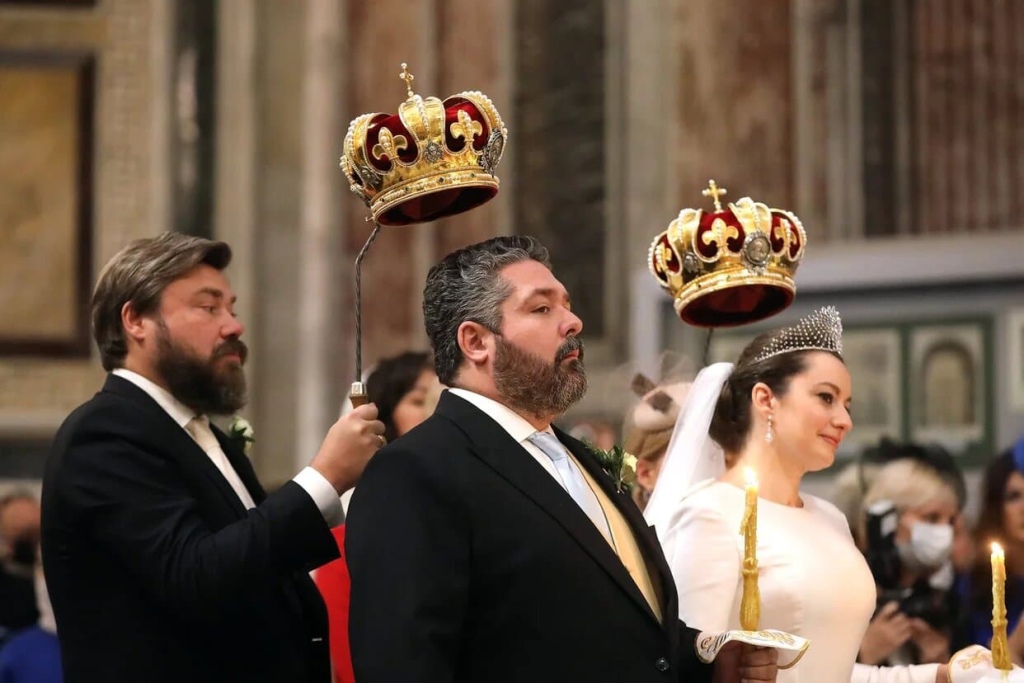
The couple married on 24th September 2021 in a civil ceremony in Moscow. The religious wedding took place on 1st October at Saint Isaac’s Cathedral in St Petersburg. The Russian and some Western media outlets hailed the event as both the Romanov “wedding of the century” and the “first Romanov to marry in Russia”, since the fall of the Romanov dynasty in 1917. Neither are correct. Around 1500 guests attended the lavish ceremony, including numerous members of various defunct royal houses of Europe.
In May 2022, the couple announced that Princess Victoria was expecting their first child. On 21st October 2022, a son was born in Moscow. Once again, Masha issued yet another title: her first grandchild would be called “His Serene Highness Prince Alexander Georgievich Romanov”.
On 1st November 2022, the Romanov Family Association issued a statement claiming that the new Romanov baby “cannot rightfully be considered a member of the Russian Imperial Family”.
Prince Karl Emich of Leiningen (b. 1952)
The German-born 70-year-old Prince Karl Emich of Leiningen, has an even more ridiculous claim to the non-existent Russian throne. Prince Karl is a grandson of Grand Duchess Maria Kirillovna (1907–1951), eldest child of Grand Duke Kirill Vladimirovich, who claimed the Russian crown while in exile in 1924. He is a great-great-grandson of Emperor Alexander II of Russia and grandnephew of Grand Duke Vladimir Kirillovich – father of Princess Maria Vladimirovna.
In 2013, the Monarchist Party of Russia declared him the primary heir to the Russian throne upon his conversion from Lutheranism to Eastern Orthodox Christianity, and in 2014 announced the formation of the Imperial Throne, wherein Karl Emich had agreed to assume imperial dignity as Emperor Nicholas III.
Prince Karl married three times: He married Princess Margarita of Hohenlohe-Öhringen on 8 June 1984. Princess Margarita died in 1989 in a car accident. His second marriage took place on 24 May 1991, whereby he married morganatically Gabriele Renate Thyssen. The couple divorced in 1998. On 8 September 2007, Prince Karl married his third wife Countess Isabelle von und zu Egloffstein. On 12 April 2010, they had a son, Prince Emich of Leiningen. The family lives at Kunreuth castle in Bavaria.
Karl Emich and his supporters argue that the marriage of Maria Vladimirovna’s parents was in contravention of the Pauline Laws. They maintain that the House of Bragation-Mukhrani – to whom her mother was born – did not possess sovereign status and was not recognized as equal by Nicholas II for the purpose of dynastic marriages at the time of the union of Princess Tatiana Konstantinovna and Prince Constantine Bragation-Mukhransky in 1911, thirty seven years prior to that of Princess Leonida and Prince Vladimir Kirillovich. Therefore, as the next of kin to Vladimir (in the exclusion of his daughter), the Russian Monarchist Party recognises Karl Emich as the heir to the Russian throne, since he and his wife converted on 1st June 2013, from Lutheranism to Eastern Orthodoxy, enabling his accession. The couple received Orthodox names of Nikolai Kirillovich and Ekaterina Fyodorovna.
Russian Monarchist Groups
Russian Monarchist Party
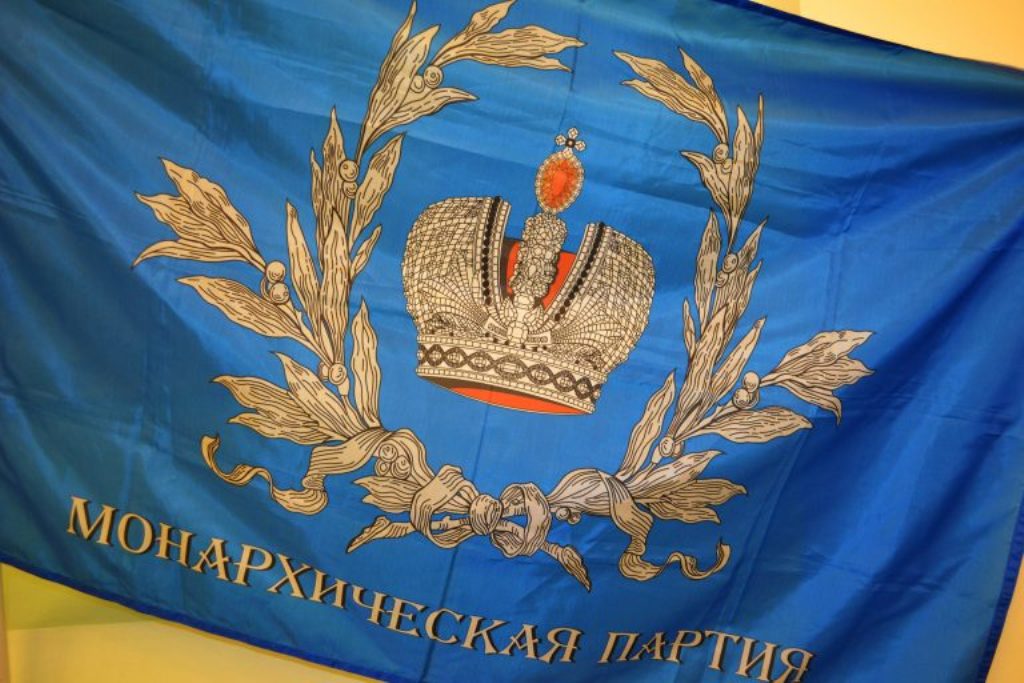
The Russian Monarchist Party was established in 2012, by Russian businessman and politician Anton Alekseyevich Bakov (born 29 December 1965), and its current Chairman. It is the largest of numerous monarchist organizations founded since the fall of the Soviet Union in 1991, which supports a return of monarchy in Russia, ousted in 1917. In 2013 the Russian Monarchist Party declared German Prince Karl Emich of Leiningen as heir to the Russian throne.
In 2015 Bakov announced the Party’s plans to run for the upcoming 2016 Russian State Duma elections. In early 2016 in an interview with RBK news agency, he confirmed this intention and stated that Anastasia would again become the front person of the planned campaign, and he personally would not run. However, the party did not end up participating, and has since failed to garner much support for a restoration of monarchy in Russia.
In early 2016 Bakov announced the Monarchist Party plans to organize a public trial for Lenin and Stalin, accusing them of killing millions of Russians and thus significantly slowing down the normal evolution of society and state.
Konstantin Malofeev (b. 1974)
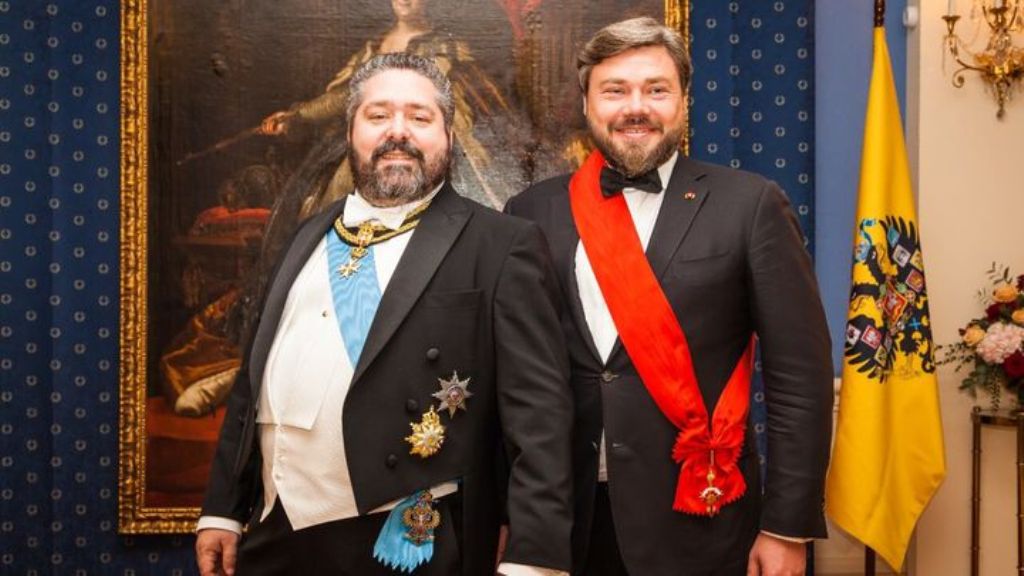
PHOTO: Russian oligarch Konstantin Malofeev (right) with his “good old friend” Prince George Mikhailovich (left)
Konstantin Valeryevich Malofeev (b. 1974) is a Russian businessman and chairman of non-government pro-monarchism organisation Society for the Development of Russian Historical Education Double-Headed Eagle. He is chairman of the board of directors of the media group Tsargrad dedicated to Russian Orthodox Christianity and support of President Vladimir Putin.
The Orthodox billionaire and philanthropist Konstantin Malofeev, a long-time friend of Princess Maria Vladimirovna and her son Prince George Mikhailovich. Malofeev served as “Guest of Honour” at the wedding of his “good old friend” George Mikhailovich, and Rebecca Bettarini, held in St. Petersburg on 1st October 2021.
PHOTO: Malofeev attended the wedding of Prince George Mikhailovich-Hohenzollern and Rebecca Bettarini in St. Petersburg
Since 2014, Malofeev and his companies are designated to the lists of individuals sanctioned by the European Union, United States, and Canada, during the 2014 pro-Russian unrest in Ukraine, accusing Malofeev of trying to destabilize and financing separatism in Ukraine.
In September 2019, the Bulgarian government banned him from entering the country for ten years over an alleged spying conspiracy aimed at turning the country away from its pro-Western orientation and further toward Moscow. In April 2022, the United States Department of Justice indicted Malofeyev on the charge of evading IEEPA sanctions.
While all of Malofeev’s initiatives in Ukraine were, formally, privately organized and funded, intercepted phone calls between him and his lieutenants on the ground in Ukraine, as well as hacked email correspondence, showed that he closely coordinated his actions with the Kremlin, at times via the powerful Orthodox priest Bishop Tikhon whom Malofeev and Putin (in their own words) share as spiritual adviser; at other times via direct coordination between Malofeev and Putin’s advisers, but also via Malofeev’s close collaboration with the Kremlin-owned Russian Institute for Strategic Studies (RIIS), chaired by former KGB/SVR General Leonid Reshetnikov.
Zemsky Sobor
The Zemsky Sobor of 1613 was a meeting of representatives of the Estates of the realm of the Tsardom of Russia, held for the election of a Tsar after the expulsion of the Polish-Lithuanian Occupiers at the end of the Time of Troubles. It was opened on 16th January 1613 in the Assumption Cathedral of the Moscow Kremlin. On 3rd March 1613, the Sobor elected Mikhail Feodorovich Romanov (1596-1645) as Tsar, establishing the House of Romanov. The coronation of Michael I is widely considered to be the end of the time of troubles.
In modern times, the Zemsky Sobor called itself the Congress of White Monarchists. They met in Vladivostok in the summer of 1922, issuing a proclaimation for the restoration of the Romanov Dynasty on the Russian throne. It was the only attempt to restore the monarchy in Russia during the civil war.
On 23rd July 1922, the Zemsky Sobor of the Amur region of the Provisional Priamurye Government was convened in Vladivostok, by Mikhail Konstantinovich Diterikhs (1874-1937). Diterikhs was a general of the White Army in the Russian Far East, who convened the assembly four years after the murder of Emperor Nicholas II and his family. He issued a proclaimation for a new monarchy, naming Grand Duke Nikolai Nikolaevich [1856-1929] as the Tsar of Russia, with Patriarch Tikhon of Moscow [1865-1925] as the honourary chairman of the Zemsky Sobor. Neither Nikolai or Tikhon were present at the assembly, and the plan was cancelled when the region fell to the Bolsheviks two months later.
Does the monarchy have a future in Russia?
It is Maria and George’s claims which garner the most publicity. They are supported by the Legitimists – a small group of zealots – most of whom are American, and have no say whatsoever in the monarchist debate in modern day Russia. They work tirelessly to promote their agenda to any one who will listen to them.
Despite what the Legitimists claim on their blog and social media, neither Maria Vladimirovna nor her pompous arrogant son George Mikhailovich, are very popular in post-Soviet Russia. This prompted Maria Vladimirovna to utilize a public relations firm to make her son more familiar and “likeable” to the Russian people. Most Russians – including monarchists – dismiss their claims as “pretenders” to the non-existent Russian throne.
It is interesting to note that Maria and her son George DO NOT recognize the Ekaterinburg Remains as those of Emperor Nicholas II and his family; nor did either one of them attended the Tsar’s interment in St Petersburg on 17th July 1998; both continue to “maintain good relations with Vladimir Putin”.
The idea of restoring monarchy in post-Soviet Russia is not popular with most Russians. In the summer of 2019, a poll conducted by REGNUM of some 35,000 Russian citizens showed that only 28% supported the idea of restoring the monarchy, more than half (52%) of which would NOT support placing a “Romanov” on the throne!
The latter is supported by the abbot of the Archangel Michael Monastery of the Alexander Diocese of the Russian Orthodox Church, Father Afanasy Selichev, who said: “If we carefully read the latest edition of the laws on succession to the throne, it becomes absolutely clear that the current Romanovs have no right to occupy the Russian throne.”
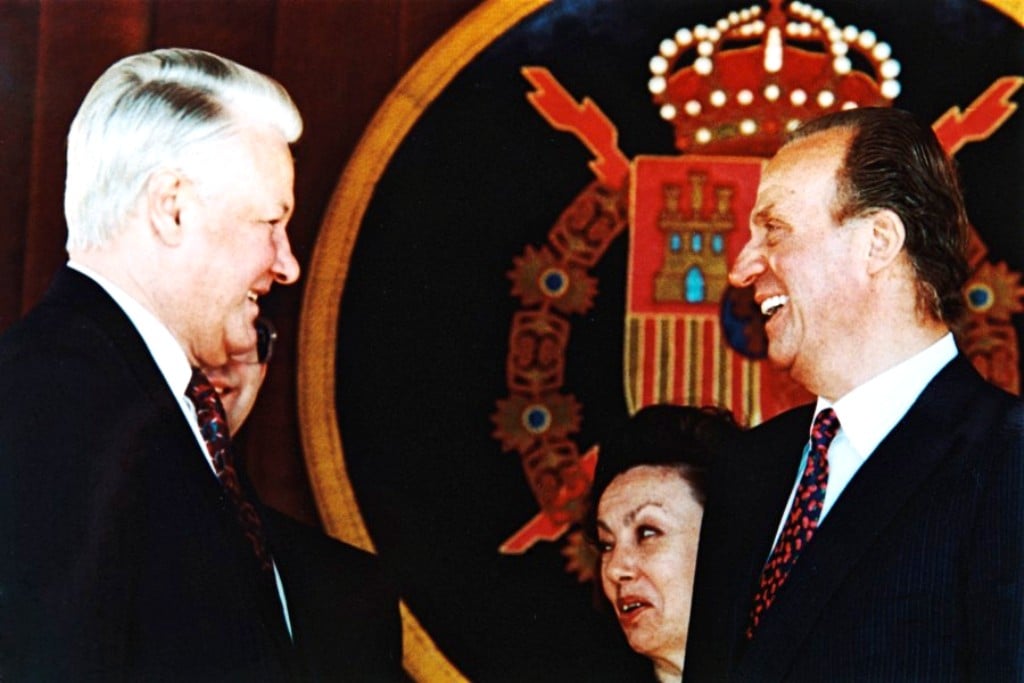
PHOTOS: former Russian president Boris Yeltsin with King Juan Carlos I
and Queen Sophia of Spain, during an official visit to Russia in 1997
In 1994, unconfirmed reports in the media suggested that Yeltsin also had plans to restore the monarchy in Russia. Such a plan would have put the Kirillovich branch of the Romanov dynasty on the throne. Thank God, Yeltsin was dissuaded from pursing the idea.
During his visit to Russia in 1997, King Juan Carlos I was asked by Russian president Boris Yeltsin what he thought about the possibility of restoring the monarchy in Russia. Juan Carlos replied the following:
′′Mr. President! I grew up in Spain, I know and love my people, I know the problems of my country and I feel entitled to speak on behalf of my people. As far as I know, none of the modern-day Romanovs have ever lived, nor been not born in Russia. They may love Russia, but they are detached from their roots. How can you run a foreign country?!”
And even if Russia opted to restore the monarchy, why would the Russian people want a European princess or prince to rule over them? A Zemsky Sobor would be the only logical option, whereby a new Tsar would be Russian born.
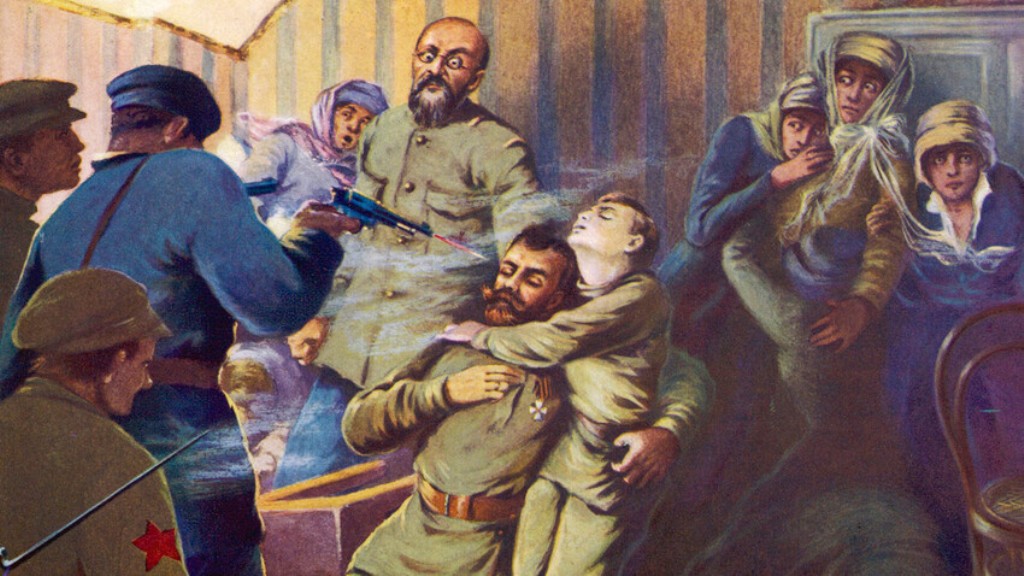
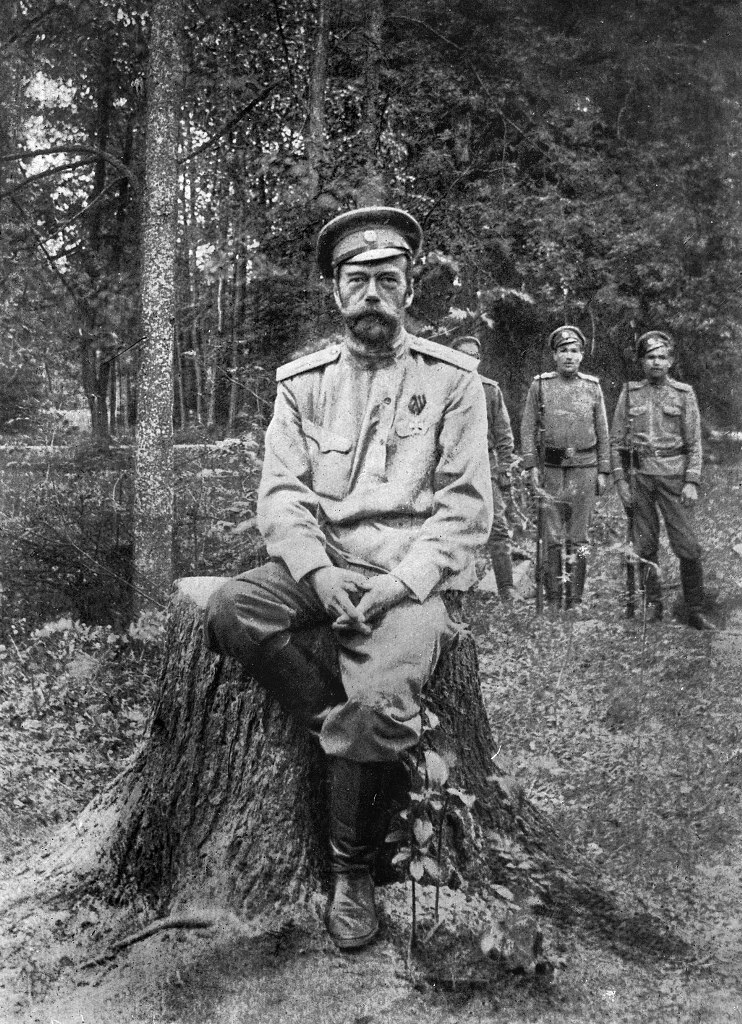
On a more personal note, while this author is a devout monarchist, I do not recognize any person as the claimant to the now defunct throne of Russia. I believe that the Russian monarchy ceased to exist upon the abdication of the Sovereign Emperor Nicholas II on 15th (O.S. 2nd) March 1917 and the murder of both the Tsar and his family on 17th July 1918.
If the monarchy is ever to be restored in 21st century Russia, it is up to the citizens of Russia to make that decision, no one else.
© Paul Gilbert. 23 March 2023









 Nicholas II
You must be logged in to post a comment.