Toys of Nicholas II’s children transferred to museum in Sergiev Posad in 1930s
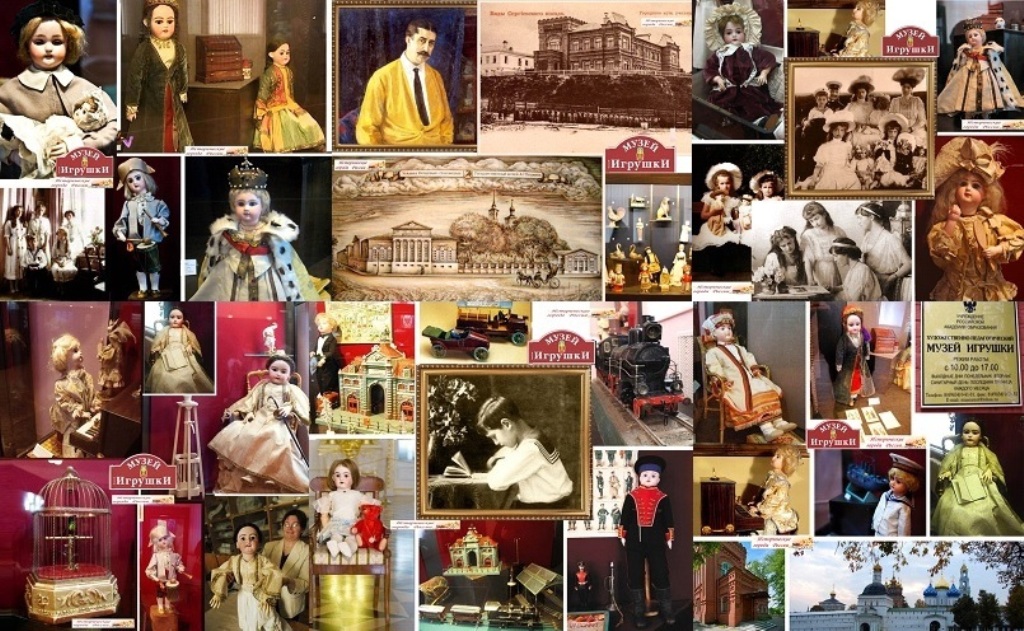
PHOTO: Overview of some of the Imperial Children’s toys from the collection of the Art and Pedagogical Toy Museum in Sergiev Posad, including a collection of porcelain dolls, once owned by the grand duchesses.

Situated 74 km [45 miles] northeast of Moscow is Sergiev Posad[1] the spiritual centre of Russia with its famous Holy Trinity St. Sergius Lavra[2], and home to over 300 monks. In 1993, the Trinity-Sergius Lavra which comprises a unique ensemble of more than 50 buildings was inscribed on the UN World Heritage List. In 2002 the monastery was recognized as a Cultural Heritage Site of the Russian Federation.

Sergiev Posad also has a long history of toy-making, the matryoshka doll known all over the world was born here. It seems only fitting that the town should claim to its fame the Art and Pedagogical Toy Museum, which is situated opposite the Trinity-Sergius Lavra. The museum is a unique repository of more than 150 thousand toys from Russia, Europe, Asia and America. The museum was founded in 1918 by Nikolai Dmitrievich Bartram (1873-1931)[3].

Bertram was a Russian illustrator, poster designer, art historian, and collector, who also studied the history of toys in Russia. From 1900 to 1903, he travelled throughout Europe; visiting toy shops and returning with suitcases of dolls, toy soldiers, and toy animals.

In 1912, he married the artist and collector, Yevdokia Ivanovna Loseva (1880-1936), who shared his interest in toys. In October 1918, as World War I was winding down, he and Yevdokia founded the Moscow Toy Museum, comprising of toys from his own private collection; although it was not opened to the general public until 1921. 

His collection was further enriched with toys from the Stroganov School in Moscow, as well as those from the noble estates, private collections and specialty shops, all of which had been nationalized by the Bolsheviks.

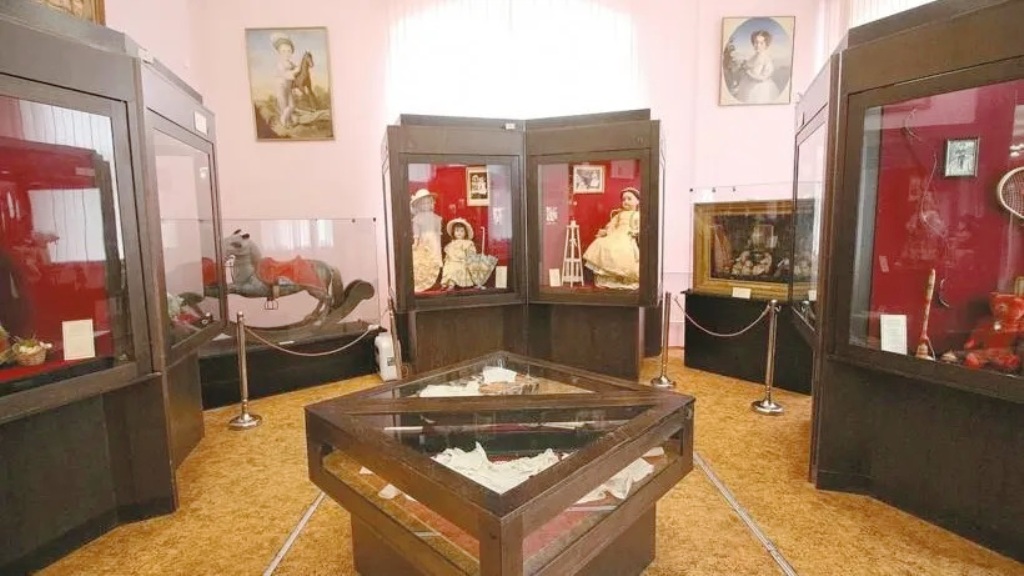
In the early 1930s toys that once belonged to the children of Emperor Nicholas II from the Alexander Palace in Tsarskoye Selo and the Livadia Palace in Crimea, were transferred to the museum’s collection.

The museum was first located in Bartram’s four-room apartment on Smolensky Boulevard in Moscow The one-storey mansion with a mezzanine, consisted of 250 square meters, 200 meters of which was allocated for his toy collection.
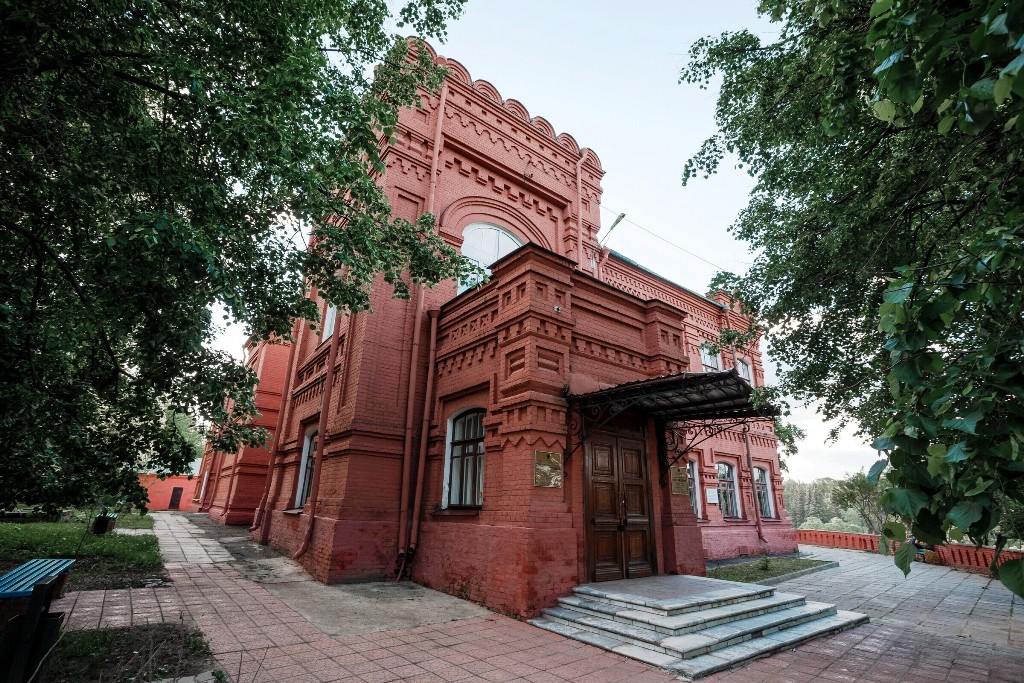
PHOTO: view of the Toy Museum (above), situated opposite the Holy Trinity St. Sergius Lavra in Sergiev Posad. The glass showcases (below) contain toys transferred from the Alexander Palace and Livadia Palace in the 1930s.
Officially founded on 17th October 1918, the museum was opened to visitors only in 1921, and three years later, in 1924, it moved to a new location – the former Khrushchev-Seleznevs mansion[4] on Kropotkinskaya Street in Moscow. It was here, that the Toy Museum was opened on 5th January 1921, expanding its exhibition space to 5 halls and 600 square meters to accommodate Bartram’s growing collection. Today the building is occupied by the Literary Museum of A. S. Pushkin.

In terms of attendance, the Museum of Toys was surpassed only by the Tretyakov Gallery. Nikolai Bartram remained at the head of the museum until his death in 1931.

In 1931, the Toy Museum was transferred from Moscow to Zagorsk[1] opposite – the Holy Trinity St. Sergius Lavra.
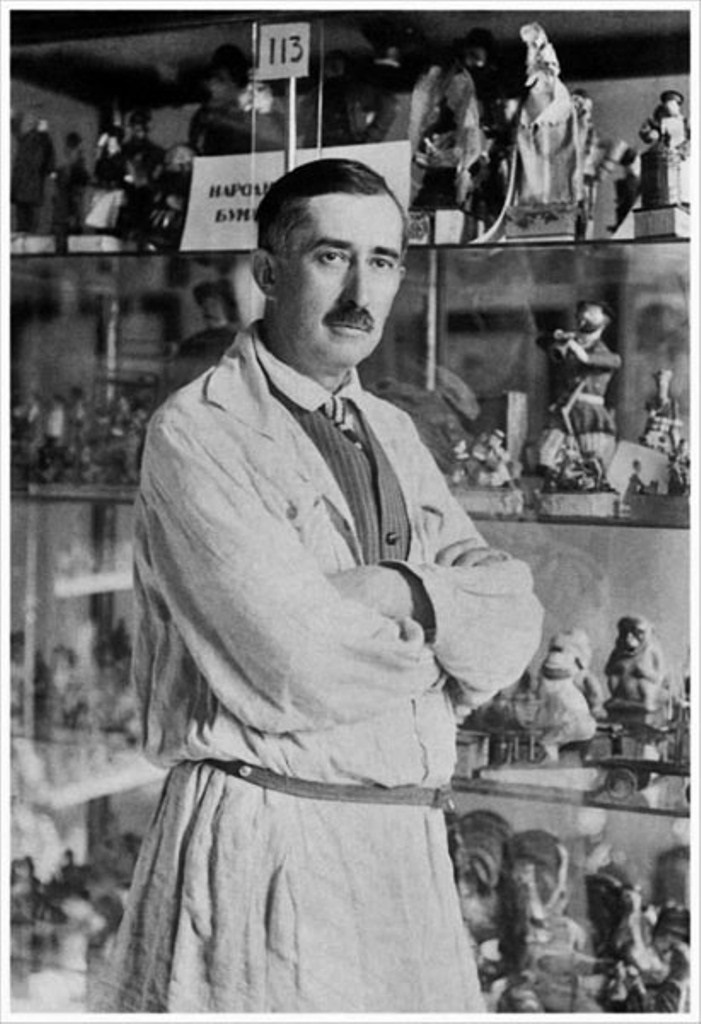
PHOTO: Toy Museum founder Nikolai Dmitrievich Bartram among his collection

The current Chief Curator of the Toy Museum Tamara Atyusheva explains the fate of the toys of the Tsar’s children, and how some of them came into the hands of the museum:

-“From 1918 to 1931 the Alexander Palace in Tsarskoye Selo was a museum, which included a permanent exhibition dedicated to the “Children’s Half”, which included the rooms of the Grand Duchesses and the Tsesarevich. These rooms were filled with the Imperial Children’s toys which were left after the Tsar and his family were sent into exile in August 1917.

“After 1931, the subject of everything Tsarist became a bone of contention among the Stalinists, one which did not fit into Soviet life. As a result the “Children’s Half” exhibition in the Alexander Palace was closed. Many of the toys and personal items of the Tsar’s children were distributed to orphanages and shelters. No records were kept of where the toys were distributed, and all traces of these toys have since been lost. The toys which were not lost, were transferred to our museum in in 1932. They were stored in the storerooms of the Research Institute of Toys in Zagorsk[1] located in the museum of the Lavra. They were stored without any indication that these items had any special significance. For instance, the Grand Duchesses collection of porcelain dolls were simply labeled “Nineteenth Century Dolls” and that’s it.

“It was during holidays – birthdays, name days, and Christmas – that the Imperial Children received expensive toys, many of which had been imported from Europe and Britain as gifts. In addition they received board games, which also acted as learning aids: for studying languages, geography, and royal dynasties, including one with “portraits of the Sovereigns of the Russian Land”.

“Interesting among the toys were those of Tsesarevich Alexei, who was brought up primarily as the future heir to the throne, and head of the Russian Imperial Army. He had everything a little warrior should have: a toy three-line Mosin rifle, toy sabers, a toy ship (“Battleship Sevastopol”), signal flags, a triangular red pennant with a white cross, and a collection of toy soldiers.

In addition the Heir had an electric train, which consisted of a huge steam locomotive, complete with stations and tunnels.

One of the highlights of the Imperial Children’s toys, was a collection of European made dolls of the Grand Duchesses Olga, Tatiana, Maria and Anastasia in national costumes, in addition to children’s furniture, dishes, books, sporting goods and portraits.

Today the Art and Pedagogical Toy Museum welcomes more than 30,000 visitors each year. Exhibits from their collection are routinely loaned out to other museums throughout Russia, the toys of the children of Emperor Nicholas II being the most popular. In 2011, some of the toys from the museum’s collection were put on display in former Children’s Half located on the second floor of the Alexander Palace at Tsarskoye Selo.

© Paul Gilbert. 10 January 2023

NOTES:

[1] Sergiev Posad was founded on 22nd March 1782, by decree of Empress Catherine II. The name is associated with the name of Sergius of Radonezh (1314-1392), the founder of the Trinity-Sergius Lavra, around which the posad was formed. In 1919, Sergiev Posad was renamed Sergiev. On 6th March 1930, the city was renamed Zagorsk, in honor of the Bolshevik revolutionary Vladimir Mikhailovich Zagorsky, who died in 1919.

On 23rd September 1991, by the decree of the Presidium of the Supreme Soviet of the RSFSR, the historical name was returned to the city – Sergiev Posad. At the walls of the Lavra was erected a monument to Sergius of Radonezh, made of bronze, the work of the sculptor Valentin Chukharkin. The monument was consecrated on 18th March 2000 by Patriarch Alexy II (1929-2008).

[2] After the 1917 Russian Revolution, the Soviet government closed the Lavra in 1920. Its buildings were assigned to different civic institutions or declared museums. In 1930, monastery bells, including the Tsar-Bell of 65 tons, were destroyed. Father Pavel Florensky (1882-1937) and his followers prevented the authorities from stealing and selling the sacristy collection but overall many valuables were lost or transferred to other collections.

In 1945, following Joseph Stalin’s temporary tolerance of the church during World War II, the Lavra was returned to the Russian Orthodox Church. On 16th April 1946 divine service was renewed at the Assumption Cathedral. The Lavra continued as the seat of the Moscow Patriarchate until 1983, when the patriarch was allowed to settle at the Danilov Monastery in Moscow.

[3] Nikolai Dmitrievich Bartram died on 13th July 1931. He was buried at the Novodevichy Cemetery in Moscow.

[4] Today the former Khrushchev-Seleznevs mansion houses the A. S. Pushkin State Museum (not to be confused with the Pushkin State Museum of Fine Arts).
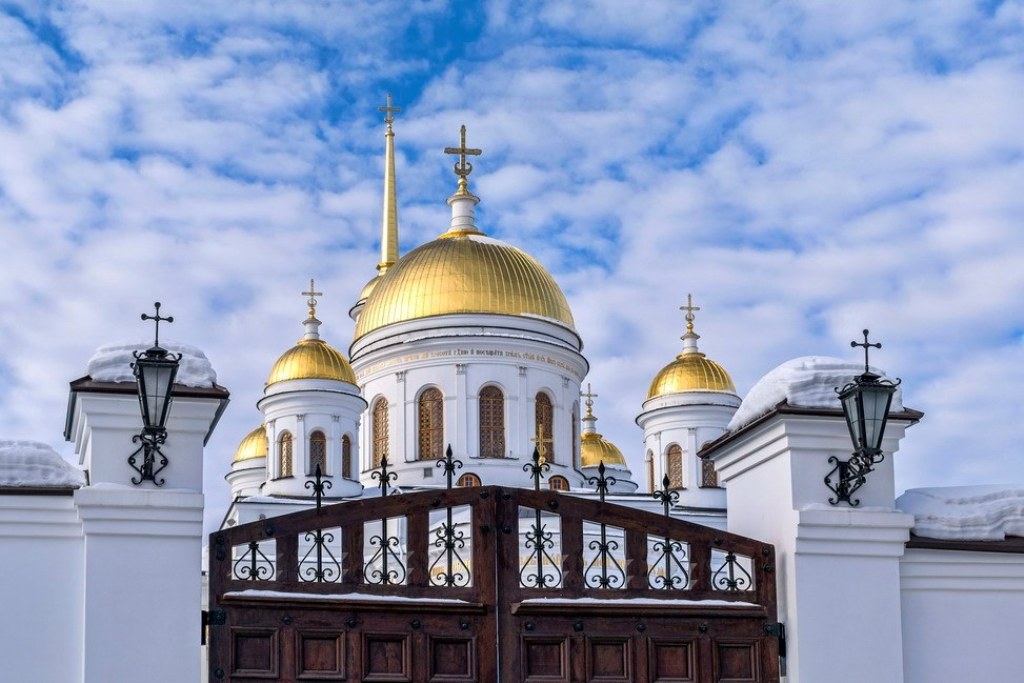
Beautiful winter views of the Novo-Tikvinsky Convent, Ekaterinburg

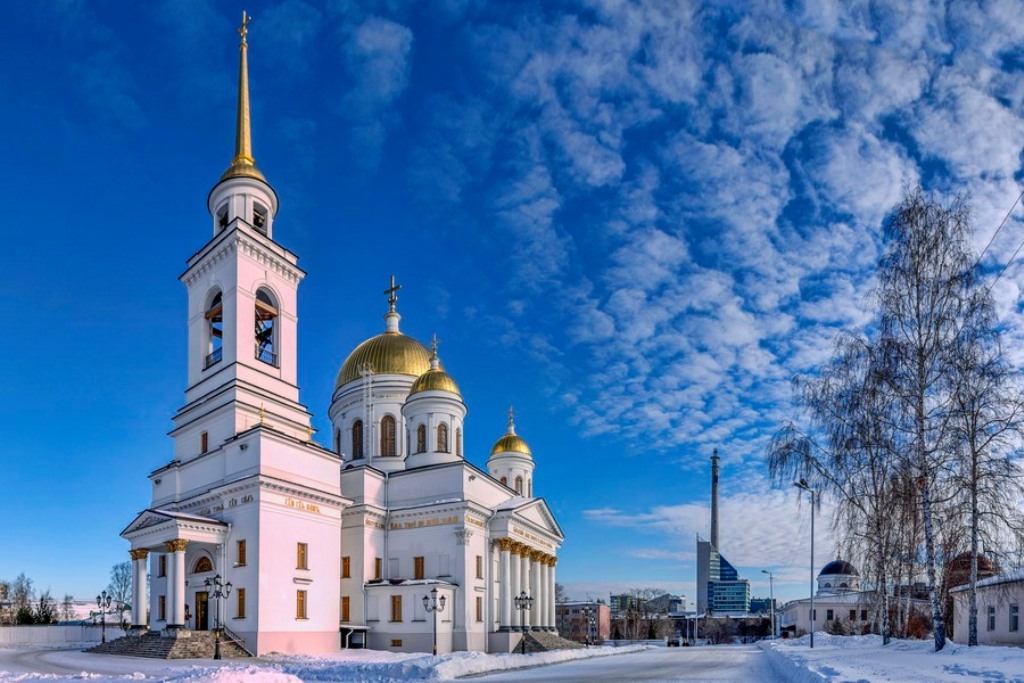
PHOTO: the Cathedral of St. Alexander Nevsky in the Novo-Tikvinsky Convent
© Ново-Тихвинский женский монастырь

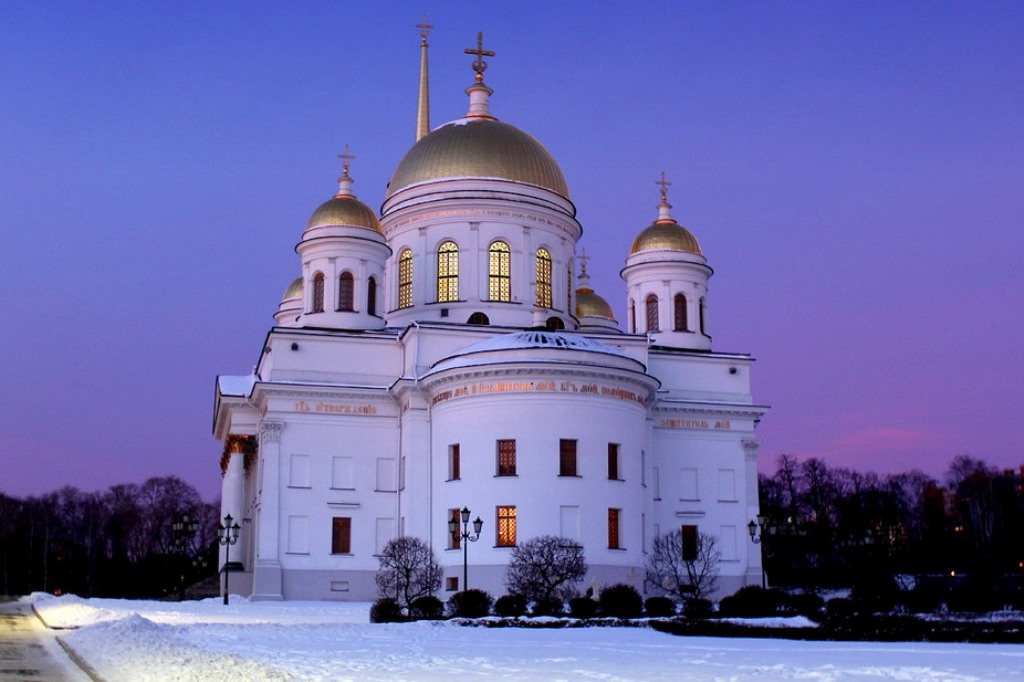
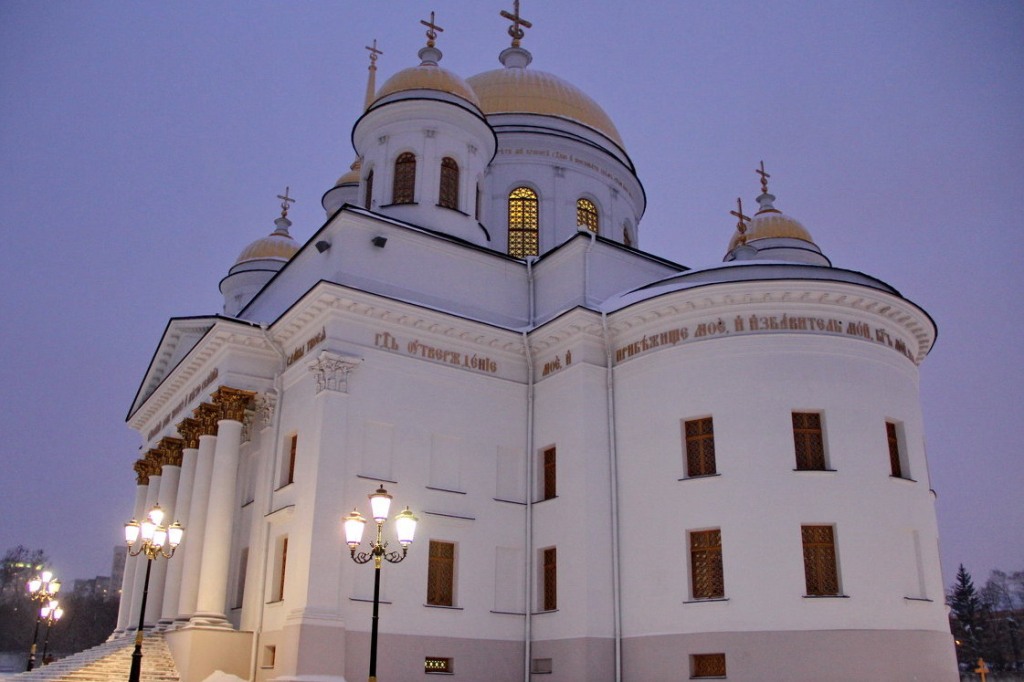
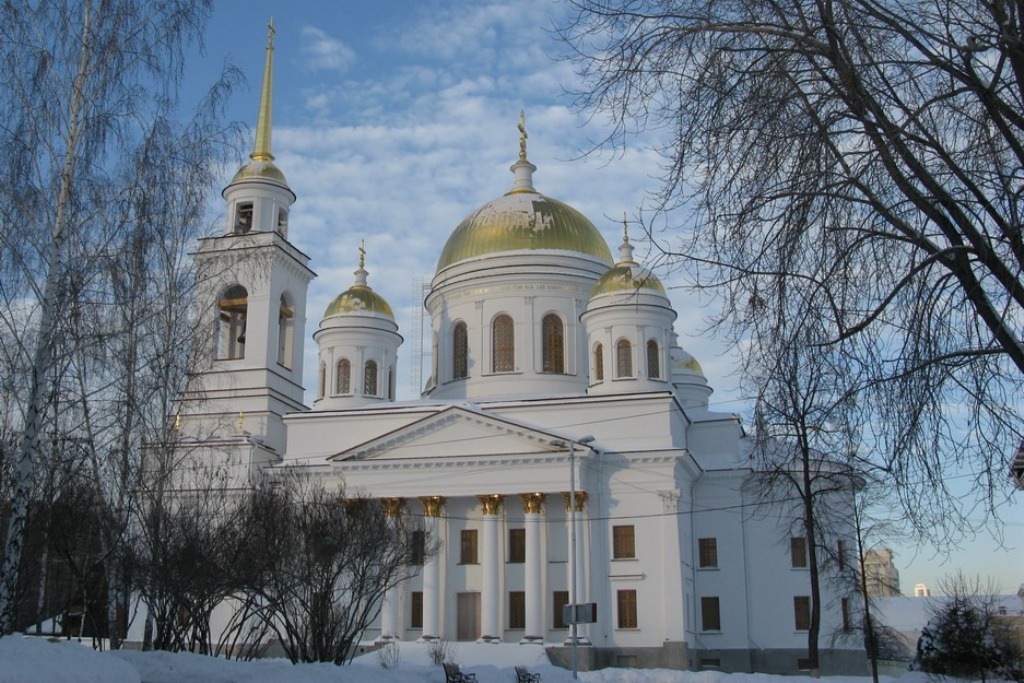
Snow-covered paths, trees covered in hoarfrost, early evening twilight reflect the silent beauty of winter which surrounds the Cathedral of St. Alexander Nevsky, depicted in these beautiful photos.

The Novo-Tikhvin Monastery is a community of female monastics. It was founded in the late 18th century, growing out of an alms-house at the cemetery church in Ekaterinburg. It is the home of the icon of the Tikhvin Mother of God. Closed in 1920 by the Bolsheviks, monastic life at the monastery was restored in 1994.

In 1918, when Nicholas II and his family were being held under arrest in the Ipatiev House, the nuns of the Novo-Tikhvinsky Convent were praying for them, asking God to relieve their sufferings,and to give them the strength to bear everything with Christian humility.

The sisters’ help came not only through prayer but also through deeds: disregarding their own safety, they supported the Tsar and his family by bringing various foods to them through the guards. On 18th June 1918, a month before their murder, Empress Alexandra Feodorvna made the following entry in her diary: “The kind nuns are now sending milk and eggs for Alexei and for us, as well as cream.”

I have spent many hours praying in the Cathedral of St. Alexander Nevsky, during my visits to the Ural city in 2012, 2016 and 2018 respectively. It was during my visit to Ekaterinburg in the summer of 2016, that my hotel was situated behind the convent, and I had a clear view of the cathedral from my window. I went every morning to the cathedral to pray, and every afternoon in the beautifully landscaped gardens which surround the Cathedral.

Click HERE to read why Ekaterinburg is my favourite Russian city.

PHOTO: the Cathedral of St. Alexander Nevsky in the Novo-Tikvinsky Convent
© Ново-Тихвинский женский монастырь

PHOTO: the Cathedral of St. Alexander Nevsky in the Novo-Tikvinsky Convent
© Ново-Тихвинский женский монастырь

PHOTO: the Cathedral of St. Alexander Nevsky in the Novo-Tikvinsky Convent
© Ново-Тихвинский женский монастырь

PHOTO: the Cathedral of St. Alexander Nevsky in the Novo-Tikvinsky Convent
© Ново-Тихвинский женский монастырь

PHOTO: the Cathedral of St. Alexander Nevsky in the Novo-Tikvinsky Convent
© Ново-Тихвинский женский монастырь

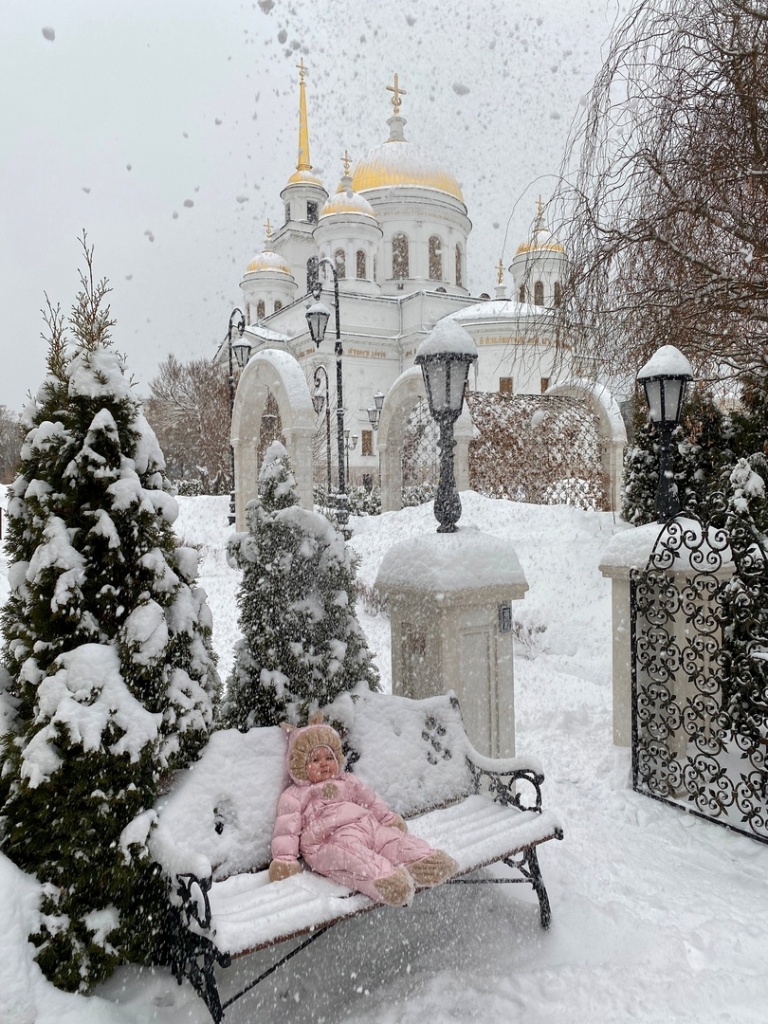
PHOTO: I simply could not resist sharing this photo . . . A mother takes a photo of her little one [who looks like a little angel] sitting on a bench in the garden of the Novo-Tikhvinsky Convent in Ekaterinburg. The magnificent Cathedral of St. Alexander Nevsky can be seen in the background. The snow simply enhances the beauty of this photo. © Ново-Тихвинский женский монастырь

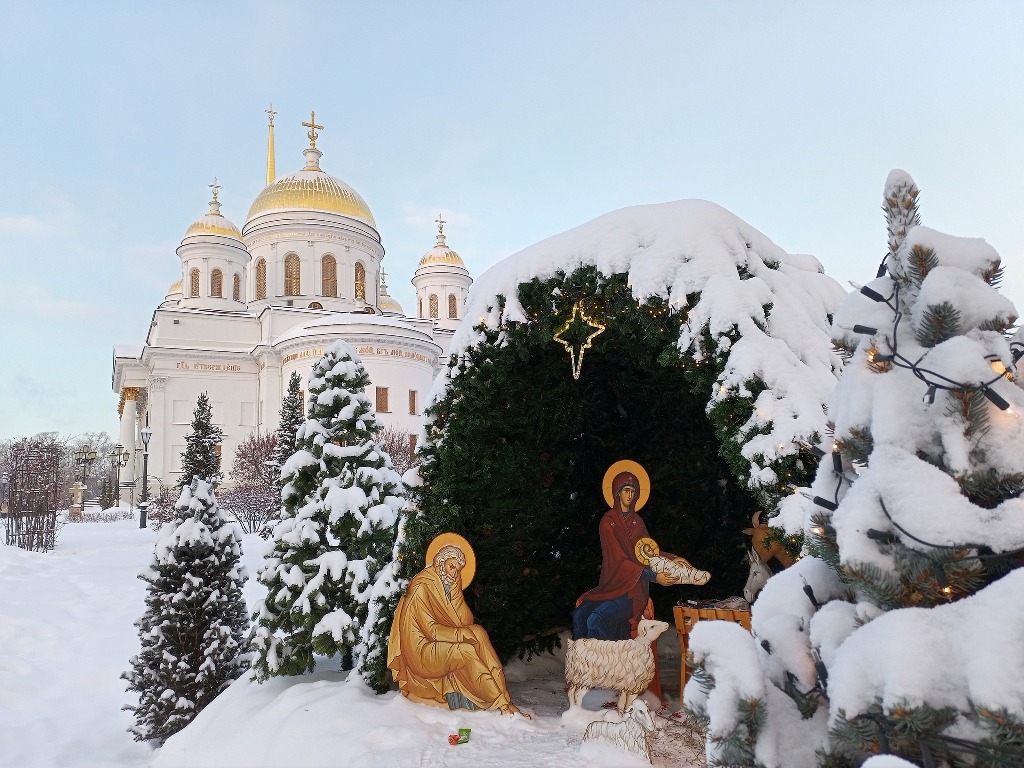
PHOTO: the Nativity set against the backdrop of the Cathedral of St. Alexander Nevsky at the Novo-Tikvinsky Convent, Ekaterinburg. © Ново-Тихвинский женский монастырь

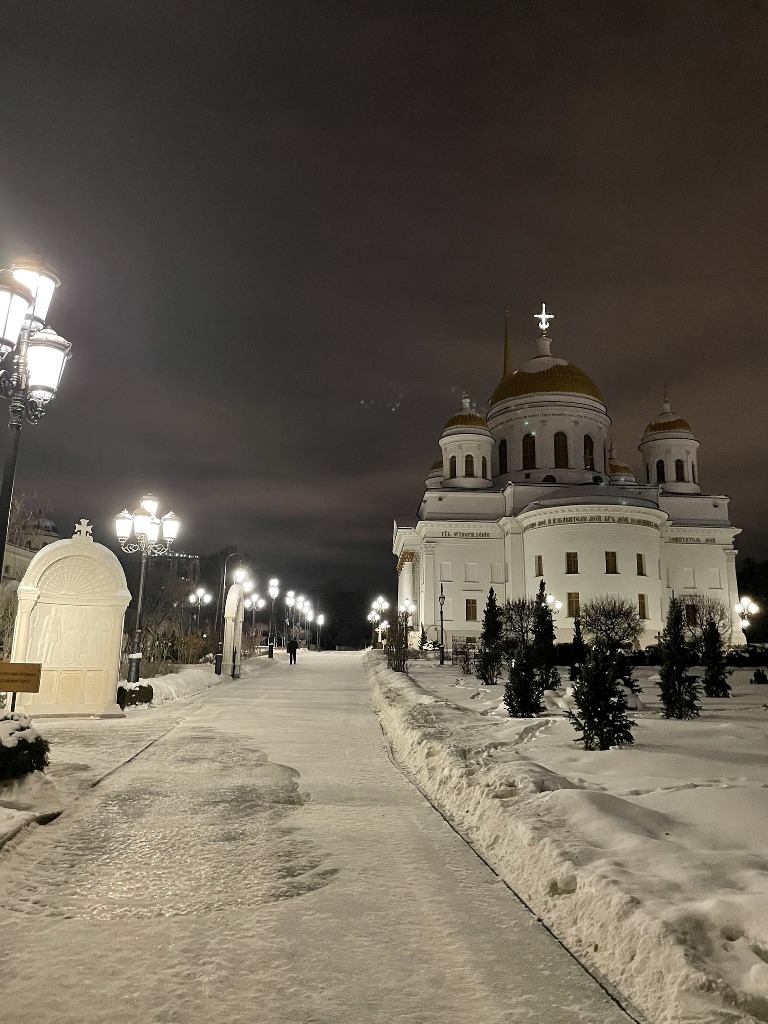
PHOTO: A lovely winters night view of St. Alexander Nevsky Cathedral at the Novo-Tikhvinsky Convent in Ekaterinburg. On the left, you can see the new monument to four faithful servants of Emperor Nicholas II, which was installed and consecrated this past summer, on the grounds of the Convent. © Ново-Тихвинский женский монастырь

© Paul Gilbert. 9 January 2023

The Imperial Family’s last Christmas in 1918

This article was written by Kate Baklitskaya, and published in the 7th January 2014 edition of The Siberian Times. I have taken the liberty of making some corrections and adjustments to her text – PG

NOTE: The Russian Orthodox Church observes Christmas Day on 7th January according to the Old Style Julian calendar, which is 13 days behind the Gregorian calendar used in the West.

During the winter of 1917-18 Emperor Nicholas II and his family were being held under house arrest in the former Governor’s Mansion in Tobolsk, in western Siberia, before being moved in the spring of 1918 to Yekaterinburg where they were murdered in July 1918. Their last Christmas – as they used the Julian calendar, took place on 7th January 1918 – was still full of joy and hopes for a better future, even though 1917 was the year when the Romanovs were toppled.

In exile the Emperor and his family continued to live as normal life as their situation would allow them, although they were forbidden to go into town or attend church, they were only allowed to leave the house to walk and play in the yard.

The Tsar was not afraid of simple manual work, spending his time chopping wood with his son Alexey following his example. The former Tsesarevich, then 13, took care of the poultry. 

The children continued their studies and the Emperor taught them a course of Russian history. Their mother Alexandra taught German to the children, perhaps surprisingly since World War One was still underway. As Christmas approached, the former Tsesarevich and his four sisters – the Grand Duchesses – were given a break. 

This is how Grand Duchess Olga described this period: ‘Everything is peaceful and quiet, thank God. We are all healthy and not losing hope. Today my sisters’ and brother’s vacation begun.  There is still not a lot of snow, the frost reaches -20C, and the sun shines almost all the time, it rises and sets bright and beautiful. …It’s so nice to go for walks. Mama works all day or draws and paints, keeps herself busy all the time and the time flies quickly.’

Their hope at the time was to be allowed to go into exile abroad to Britain, but this plan was vetoed in London amid fears their presence would stoke revolutionary sentiments. Ekaterina Schneider, their Russian language teacher, described Christmas Eve in her letters: ‘In the evening today we will go for overnight prayer… After we came home and had breakfast. There I was decorating a Christmas tree with candles – there were no other decorations, so tonight a small Christmas tree will be lit’. 

‘The trees here have a completely different smell, the tree smells of oranges …  Now it’s 4pm, I’ll go into the yard to help to make a snow mountain – tonight there was a lot of snow . It’s -7C degrees. By local standards it’s hot’.

The Empress started preparations for Christmas well in advance. Despite their difficult financial situation she still managed to prepare presents for all the family members, friends and retainers. Most of these presents were handmade.

Alexandra described their Siberian Christmas in her diary: ‘December 24. Sunday. Tobolsk. Christmas Eve. Preparing gifts. Breakfast downstairs. Decorated Christmas tree, laid out the gifts. Tea. Then I went to the guards from the 4th Infantry Regiment, all together 20 people’.

‘I brought them a small Christmas tree and some food, and a Bible each with a bookmark that I hand painted. Sat there with them. 7.30 pm. Had  dinner downstairs with everyone. 9pm Christmas celebration for our servants – for all our people.

‘9.30 pm. Evening service at the church: a large choir sang. The soldiers came as well.’

The Empress did her best to support her family in the difficult times and bring the Christmas spirit into the family celebration. Perhaps thanks to her effort Romanov family enjoyed their last Christmas.

In a letter to her lady in waiting Sophia Karlovna Buxhoeveden, the Empress wrote that love, hope and patience were her guides through these difficult times.

‘I gently kiss you and wish you all the best. May God send you health and peace of mind, which is the greatest gift. We should pray to God for patience, because it is so important for us in this world of suffering (and the greatest madness), for comfort, strength and happiness.

‘Perhaps the word ‘joyful Christmas’ sounds like a joke now, but after all this joy of the birth of our Lord. …. He will manifest His mercy when the time comes, and before that we have to wait patiently. We cannot change what is happening – we can only believe, believe and pray and never lose love for Him.’

© The Siberian Times. 6 January 2023

The Alexander Palace: Then and Now

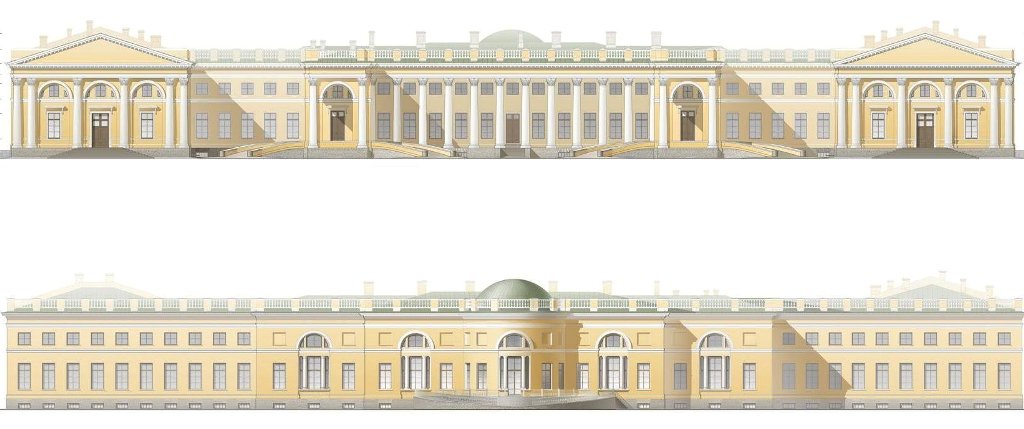
PHOTO: view of the front and rear facades of the Alexander Palace, Tsarskoye Selo

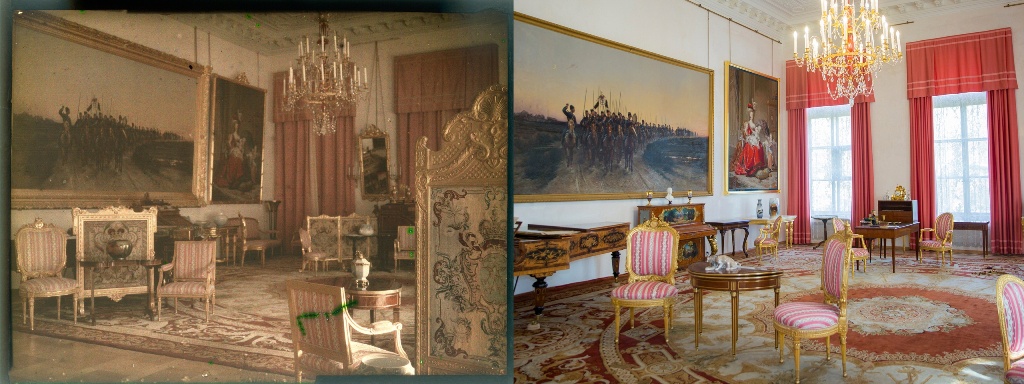
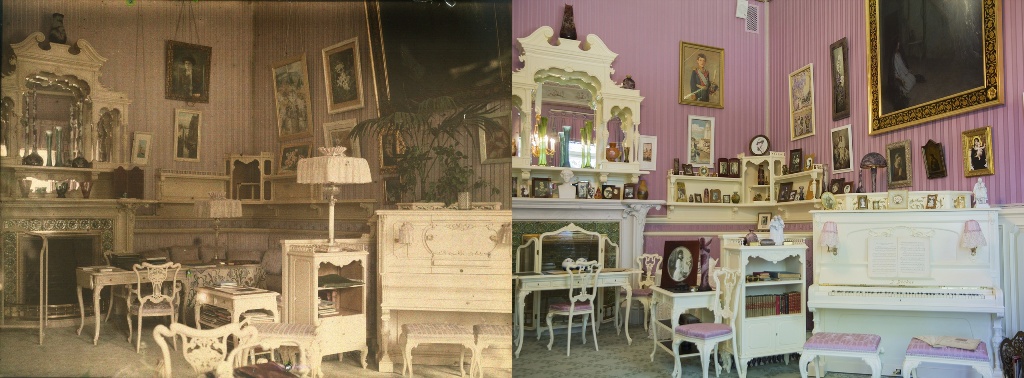
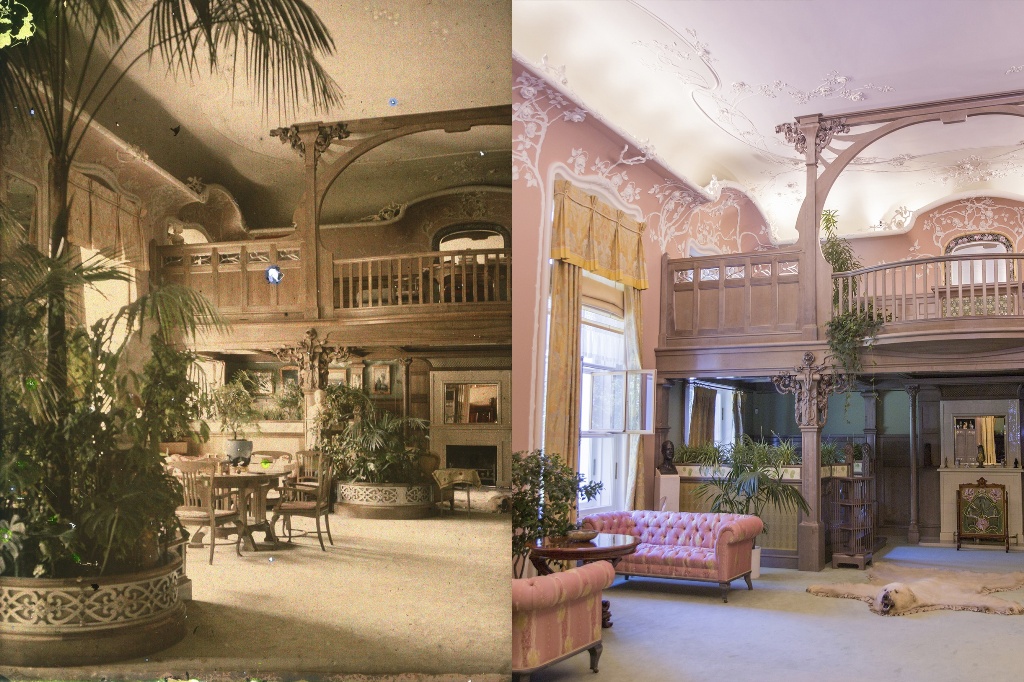
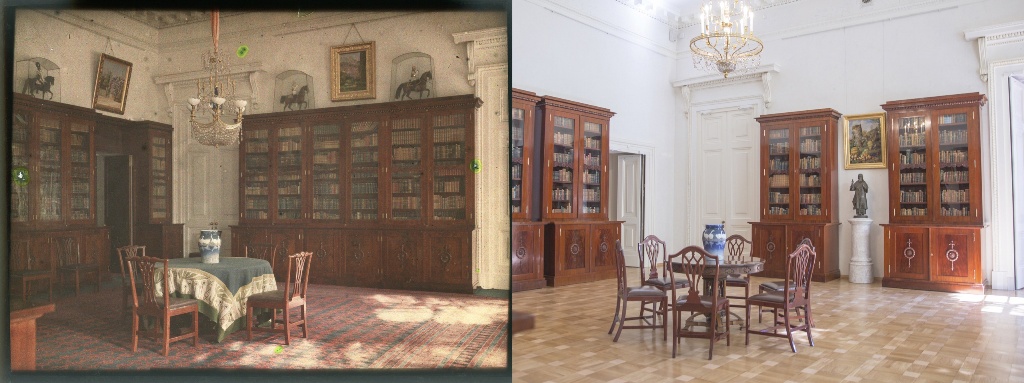
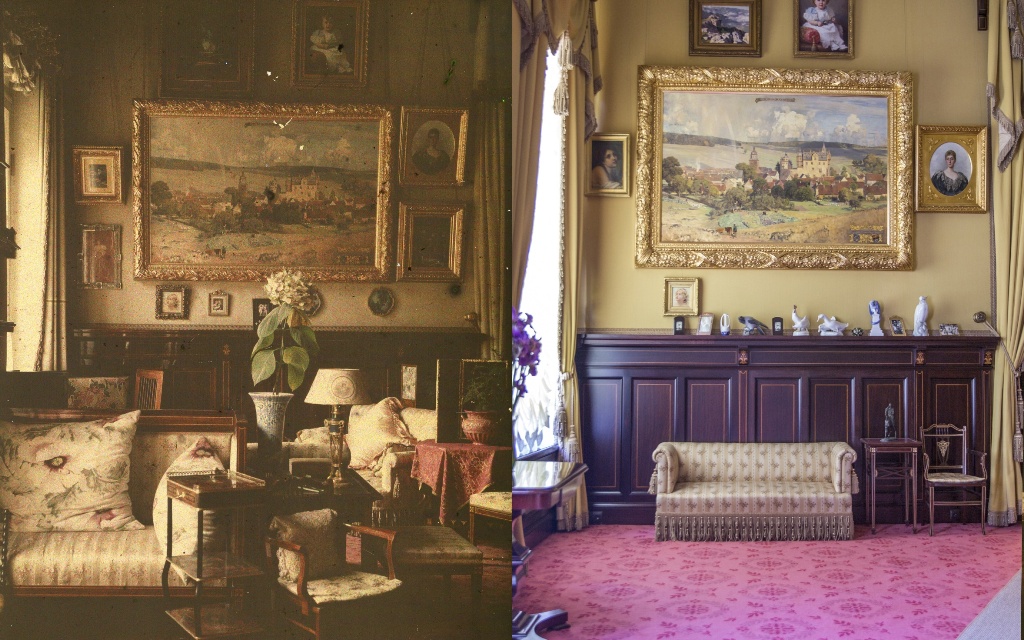
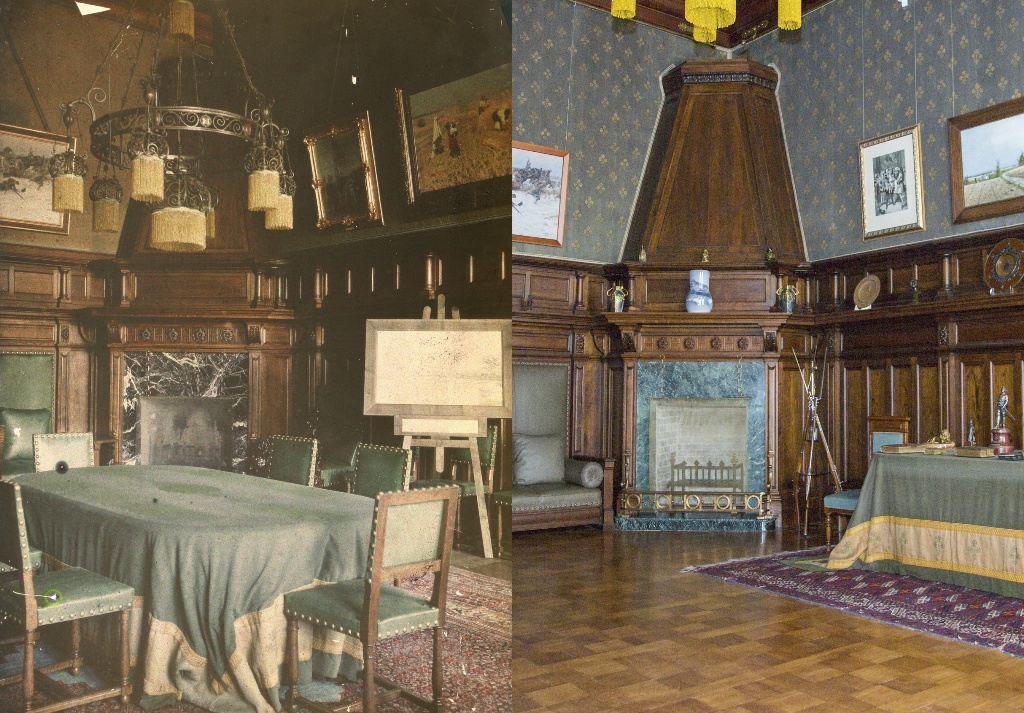
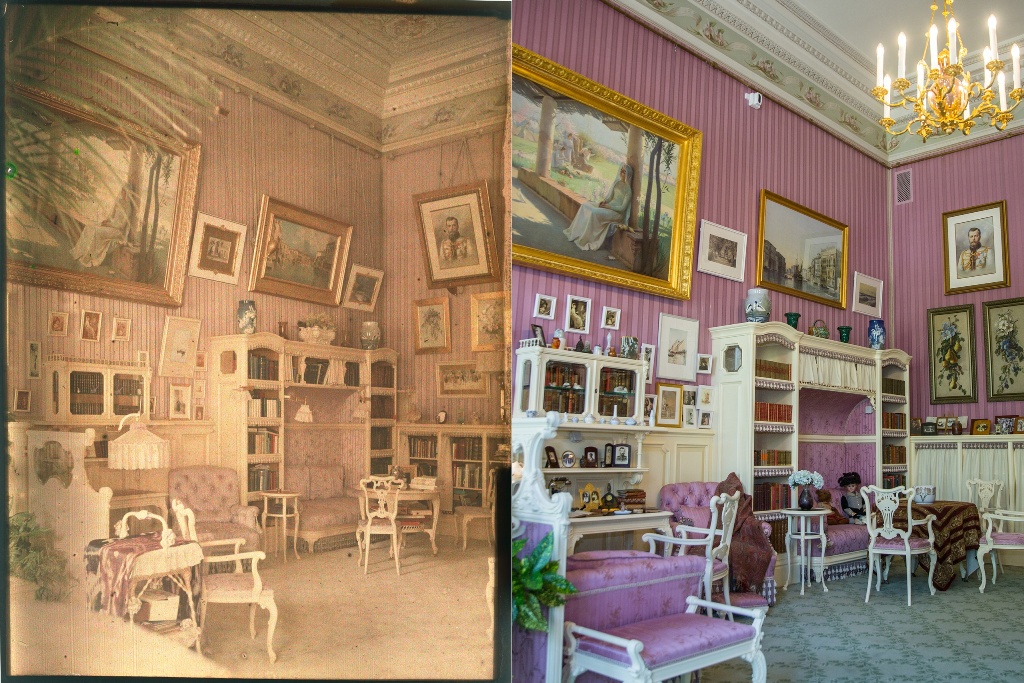
The Tsarskoye Selo State Museum Reserve have reissued a series of colour autochromes and photographs which allow us to compare some of the interiors of the Alexander Palace as they looked like in 1917 and how they look today, following a large-scale reconstruction and restoration project that began in the Autumn 2015.

Shortly after Emperor Nicholas II and his family were sent into exile to Tobolsk on 1st (O.S.) August 1917, George Kreskentievich Lukomsky (1884-1952), chairman of the Commission for the Acceptance and Registration of Property of the Tsarskoye Selo Palace Administration, arrived at the Alexander Palace, where he “methodically and consistently photographed” the interiors of the former Imperial residence.

Zehest had been commissioned by the art historian George Loukomski, Head of the Tsarskoye Selo Inventory Commission. A total of 140 colour auto-chromes were taken of the Alexander Palace. A collection of 48 auto-chromes, which were acquired at a Paris auction in 2012 have since proven to be of immense value with the restoration of the interiors of the Alexander Palace.

The Alexander Palace reopened to visitors on 14th (O.S. 1st) August 2021, marking the 104th anniversary since the Imperial Family left the palace for the last time. Visitors can now see thirteen reconstructed and restored interiors of the private apartments of Emperor Nicholas II and Empress Alexandra Feodorovna located in the eastern wing of the palace.

These include the New Study of Nicholas II, Moorish Bathroom of Nicholas II, Working Study of Nicholas II, Reception Room of Nicholas II, the Valet’s Room, PLUS the Maple Drawing Room, Pallisander (Rosewood) Living Room, Mauve (Lilac) Boudoir, Alexandra’s Corner Reception Room, the Imperial Bedroom, the Small and Large Libraries, and the Mountain Hall. In addition are the State Halls: the Portrait Hall, the Semi-Circular Hall and the Marble Drawing Room.

Please note that all the photos posted below are courtesy of the Tsarskoye Selo State Museum:

Empress Alexandra’s Corner Reception Room as it looked in 1917 and 2022.
Photo © Tsarskoye Selo State Museum

Pallisander (Rosewood) Living Room as it looked in 1917 and 2022.
Photo © Tsarskoye Selo State Museum

Mauve (Lilac) Boudoir as it looked in 1917 and 2022.
Photo © Tsarskoye Selo State Museum

Maple Drawing Room as it looked in 1917 and 2022.
Photo © Tsarskoye Selo State Museum

Small Library as it looked in 1917 and 2022.
Photo © Tsarskoye Selo State Museum

Pallisander (Rosewood) Living Room as it looked in 1917 and 2022.
Photo © Tsarskoye Selo State Museum

Reception Room of Emperor Nicholas II as it looked in 1917 and 2022.
Photo © Tsarskoye Selo State Museum

Mauve (Lilac) Boudoir as it looked in 1917 and 2022.
Photo © Tsarskoye Selo State Museum

The Western wing of the Alexander Palace is scheduled for completion no earlier than 2024. After the completion of the work, the Alexander Palace will become a multifunctional museum complex, which will include exhibition halls, halls for temporary exhibitions, halls for research work and conferences, as well as a library and a children’s center. The basement floor will house a ticket booth, a museum shop, a café, a cloakroom, a tour desk, as well as technical and ancillary facilities.

Please note that I have written more than 60 articles on the history and restoration of the Alexander Palace, which include 100s of photographs, illustrations and videos. Click HERE to review the articles in this category.

© Paul Gilbert. 4 January 2023

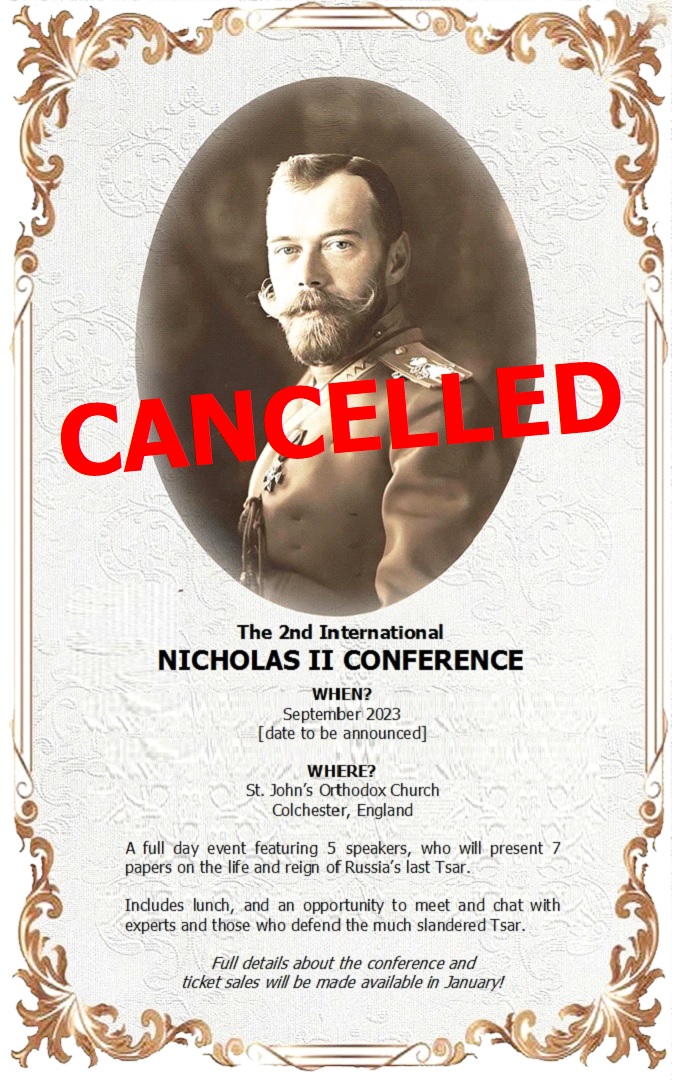
Nicholas II Conference cancelled . . . again!

How unfortunate that my first post for 2023 should be a negative one . . . it is with much disappointment that I find myself forced to cancel the Nicholas II Conference which I was planning for September of this year.

Shortly after announcing the event several months back, I began to receive hate-filled messages and emails from “Russophobes” in the UK, who threatened to “disrupt” the Conference. Most of these messages were generously peppered with profanity – which reflected their bigoted and hateful anti-Russian sentiment.

As if this wasn’t bad enough, the church – where the Conference was to be held – in Colchester, England had been targeted by anti-Russian thugs. The police even had to get involved!

The Conference had no political agenda, whatsoever, which begs the question “WHY” would thugs target an event dedicated to the study and appreciation of Russia’s last Tsar?

While I understand the anger towards Putin for ordering Russia’s invasion of Ukraine, I fail to understand any connection between Putin and Nicholas II, especially given that more than a century separates their lives.

After further discussion, Father Andrew Phillips and I have decided to postpone the September Conference for the time being. I was really looking forward to hosting this event, however, we will now have to be patient and wait until such time as it is deemed safe. What a sad world we live.

*Some readers may recall that I was planning a similar Conference to be held at the Holy Trinity Monastery in Jordanville, New York in 2020, however, I was forced to cancel this event due to COVID. Father Theophylact (Clapper-DeWell) and I both agreed that the health and safety of those planning to attend should be our priority.

© 3 January 2023

Paul Gilbert reflects on 2022

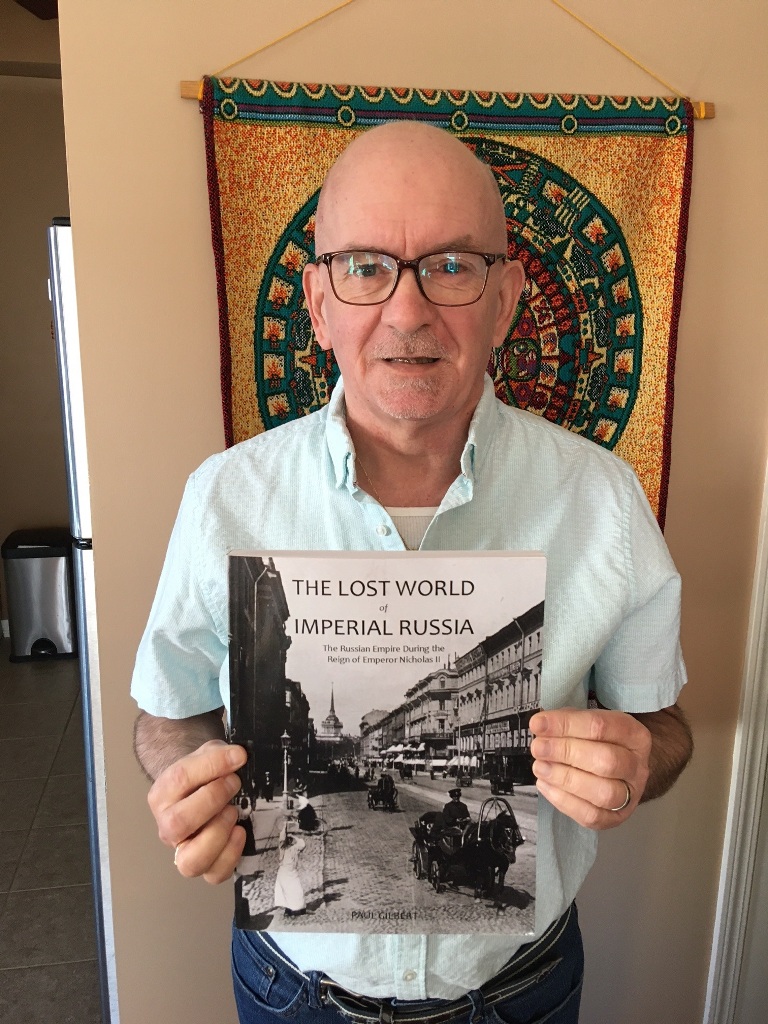
PHOTO: Paul Gilbert holding a copy of his book The Lost World of Imperial Russia: The Russian Empire During the Reign of Emperor Nicholas II, published in September – I am so proud of this publishing project!

No one will be happier to see this year come to end than myself. Without exaggerating, 2022 has been the worst year of my life. Every month seemed to present a fresh bombshell:

February – Russia’s declaration of war against Ukraine hit me very hard;
March – I was forced to cancel my September trip to Ekaterinburg and Tobolsk;
April – I was diagnosed with Stage-2 Colon Cancer;
May – I underwent surgery to remove a cancerous tumor;
June – post-surgery recovery at home;
July – I began 6-months of chemotherapy;
September – I experienced sadness and grief following the death of HM Queen Elizabeth II;
October – the death of my 16-year-old dog and faithful companion ‘Maggie’ was a profound personal loss;
December – I was forced to cancel the Nicholas II Conference (planned for September 2023) following threats from “Russophobes”

Despite the challenges that 2022 brought to my doorstep, I still managed to maintain a positive attitude. I am so very grateful that I had my books and writing to distract me during these challenging months. My commitment to clearing the name of the Russia’s much slandered Tsar gave me something positive to focus on, especially during my recovery and chemotherapy. I was still able to write articles for my blog and posts for my Facebook page from the comfort of my favourite chair.

Much of positive attitude I attribute to my faith. When I was diagnosed with cancer back in April, rather than give in to fear, I placed my health in God’s hands. My faith was empowered even further by the prayers and words of love and support that I received from the thousands of people around the world who follow my posts on Facebook every day.

My chemotherapy will end on January 12th, at which time I look forward to a healthier new year. Not only am I making plans to travel again, I have some very interesting new books planned for publication in 2023, including the revival of my semi-annual periodical SOVEREIGN.

Happy New Year! С Новым Годом!

© 31 December 2022

Nicholas II in the news – Autumn 2022

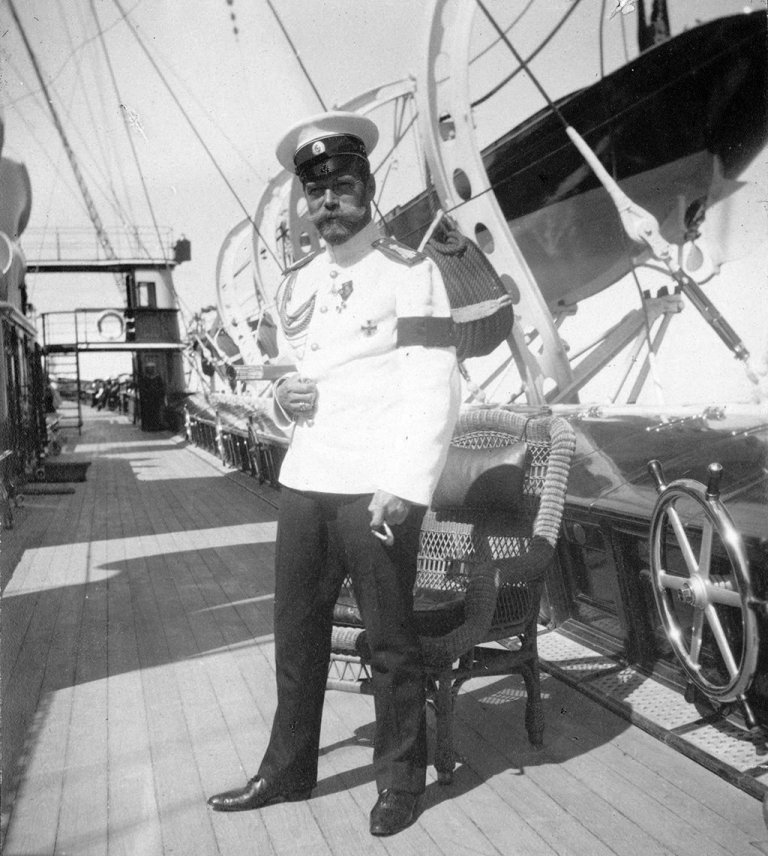
PHOTO: Emperor Nicholas II on the deck of the Imperial Yacht Standart

Russia’s last Emperor and Tsar continues to be the subject of news in Western media. For the benefit of those who do not follow me on my Facebook page, I am pleased to present the following 7 full length articles, news stories and videos published by American and British media services, in addition, are several articles about Nicholas II’s family and faithful retainers.

Below, are the articles published in October, November and December 2022. Click on the title [highlighted in red] and follow the link to read each respective article:

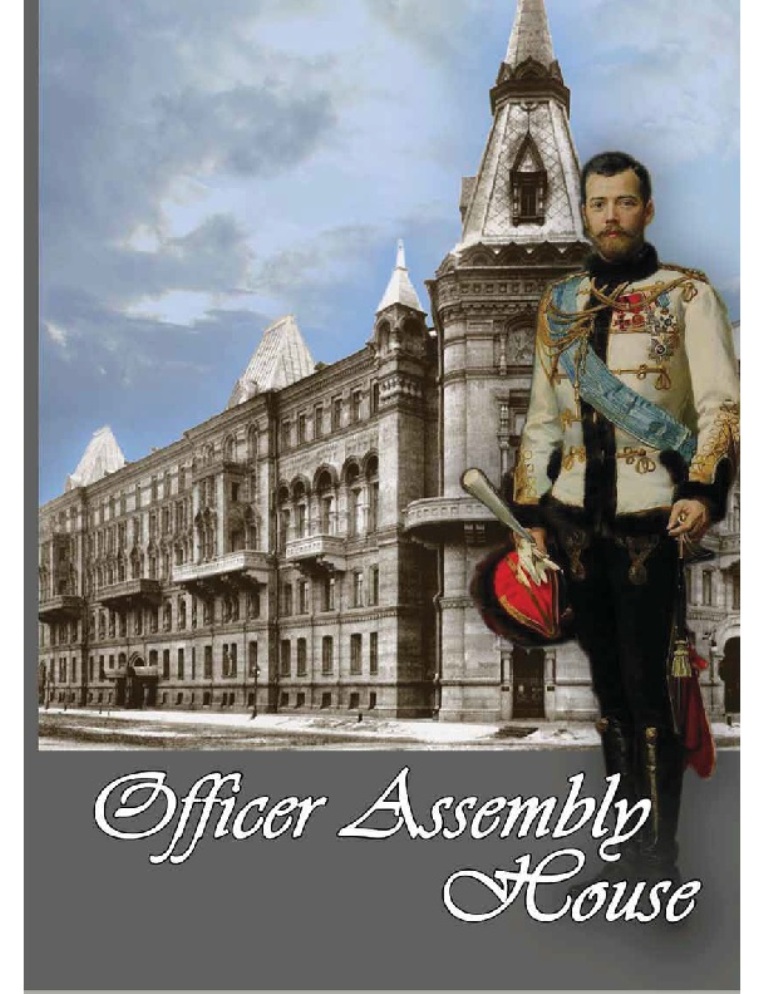
The Officers’ Assembly Building in St. Petersburg – FREE Book

Download, print and read a FREE 94-page English-language copy of Officer Assembly Building by S. Kononov (2018), or the Russian-language edition Дом офицеров Санкт-Петербург.
The author has compiled a history of this magnificent building, and richly illustrated with vintage black and white photos, complimented with full colour photos of the building and its interiors, as they look today.

Source: Russia Beyond. 19 November 2022

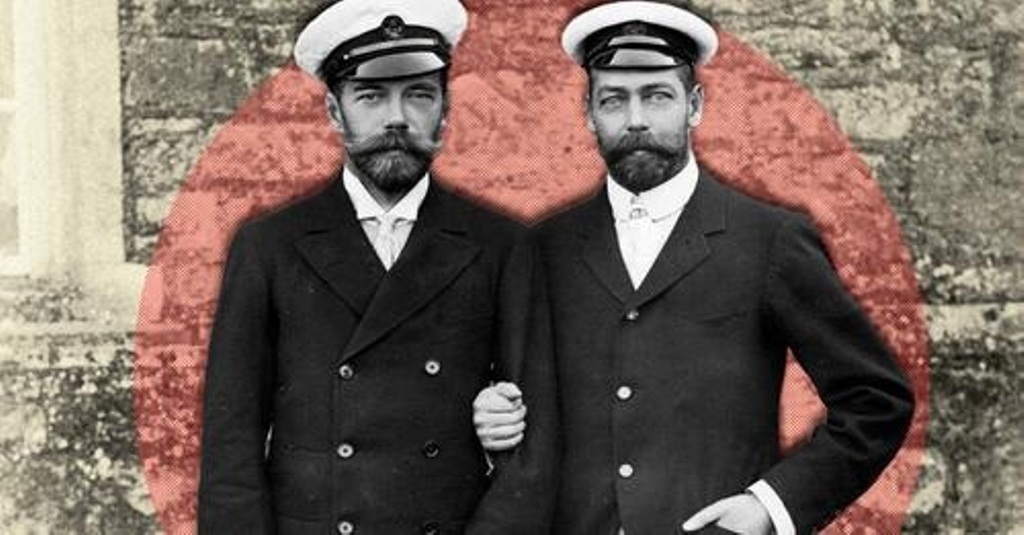
British royal family and the last Romanovs pictured together + PHOTOS

Nicholas II was almost a “twin” of King George V, while THE two families had very close relative ties.

Source: Russia Beyond. 17 November 2022

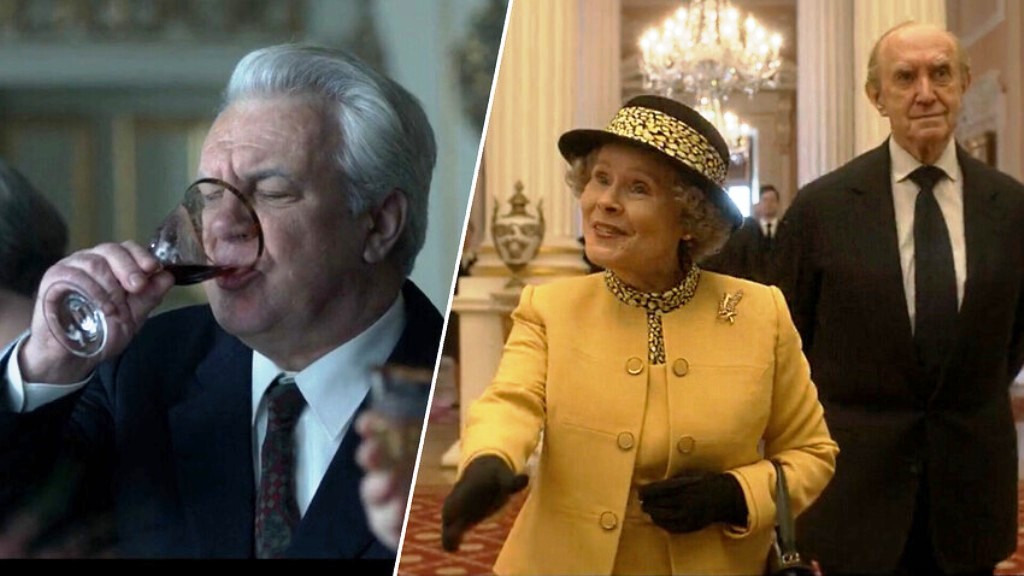
‘The Crown’ Season 5 on Netflix: Fact and fiction in the ‘Russian episode’

A key episode in the new season of ‘The Crown’ – ‘Ipatiev House’ – dwells on the centuries-long relations between Britain and Russia. Here is one account of what is true in it and what is simply artistic invention, something the current season is particularly good at.

Source: Russia Beyond. 14 November 2022

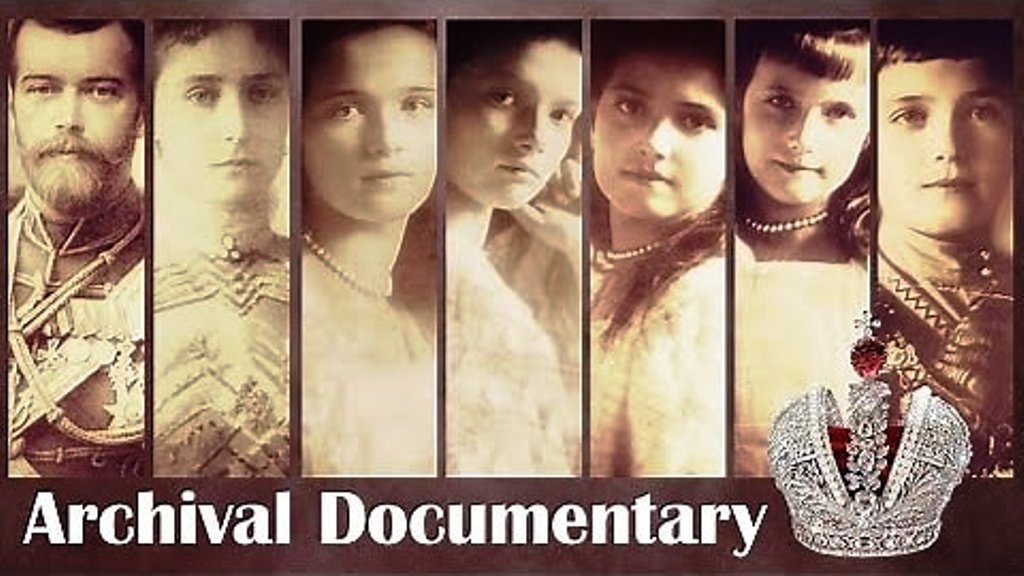
Archival Documentary of the Russian Royal Family (VIDEO)

I am pleased to share the following NEW documentary prepared by the Museum in Memory of Emperor Nicholas II’s Family, which features rare footage, made from 98 fragments of film from 1896-1916.

Duration: 43 minutes. ENGLISH with closed captioning for the hearing impaired.

Source: The Romanov Royal Martyrs Project. 16 July 2022

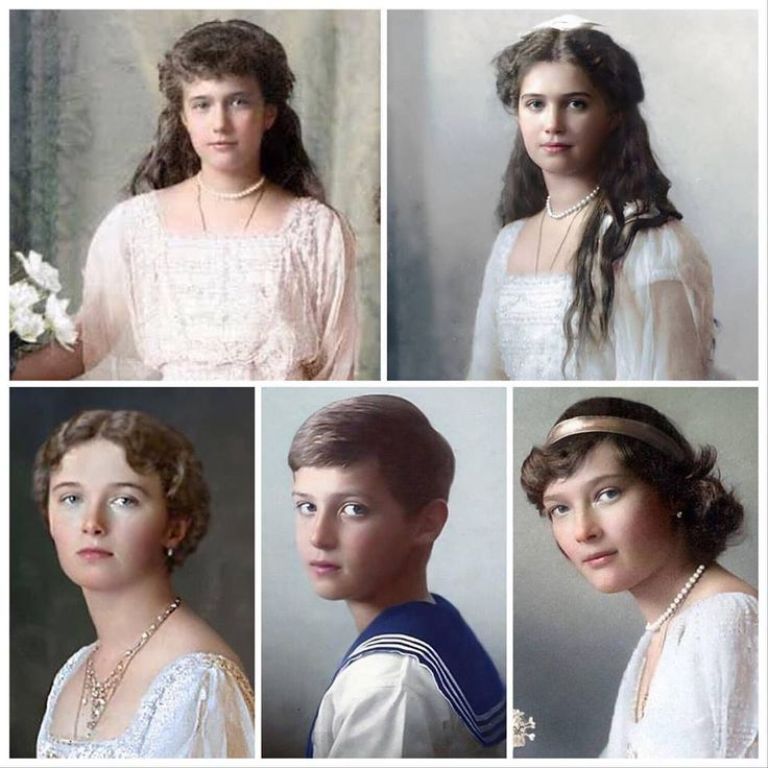
Remembering the Romanov Children (VIDEO)

The Romanov children were extraordinary in their ordinariness. Despite being born in one of the highest and most enviable positions in the world, and having access to all possible worldly goods, they lived and were brought up like ordinary children. They were beautiful not only in their outward appearance, which was striking but primarily in their inner qualities. From their father, they inherited the traits of kindness, modesty, simplicity, an unshakable sense of duty, and an all-consuming love for their homeland. From their mother, they inherited deep faith, straightforwardness, self-discipline, and strength of spirit.

Duration: 37 minutes. ENGLISH with closed captioning for the hearing impaired.

Source: The Romanov Royal Martyrs Project. 27 October 2022

5 urban legends about Rasputin – the ‘wizard’ of the Romanovs

Did Rasputin really predict the death of the Romanov dynasty and the Revolution? And did he really treat the sickly tsesarevich with prayer alone, as well as act as gray eminence to the tsar? We did a fact check on the last Russian Royal Family’s notorious spiritual advisor.

Source: Russia Beyond. 7 October 2022

‘Fear God and Honor the Emperor

Some Thoughts on the Passing of HM Queen Elizabeth, of Blessed Memory’ by the Very Reverend Archpriest Michael Protopopov, the parish priest of the Church of Our Lady’s Dormition, Dandendong, Australia.

“Our beloved Queen of blessed memory, understood that royal power is a gift of God and that her subjects need to be educated before they can understand the deep implications of a government instituted by God and which is a reflection of the Divine Kingdom of God.

“The Queen was a perfect sovereign reigning within the bounds of Christian principles and not on the desire for personal power and authority; and she had the understanding that a true monarchical structure is a divine partnership in which God, the sovereign and the people all have an important role to play.”

Source: Orthodox Christianity. 5 October 2022

***

For MORE articles, please refer to the following links:

Nicholas II in the news – Summer 2022
12 articles published in July, August and September 2022

Nicholas II in the news – Spring 2022
7 articles published in April, May and June 2022

Nicholas II in the news – Winter 2022
6 articles published in January, February and March 2022

Paul Gilbert’s Romanov Bookshop on AMAZON – UPDATED with NEW titles!!

I have published more than 30 titles to date through AMAZON – featuring one of the largest selections of books on Nicholas II, the Romanov dynasty and the history of Imperial Russia.

Please CLICK on the BANNER or LINK above to review my current selection of titles in hardcover, paperback and ebook editions. Listings provide a full description for each title, pricing and a Look inside feature.

© 31 December 2022

On this day in 1933 the Feodorovsky Sovereign Cathedral at Tsarskoye Selo was closed

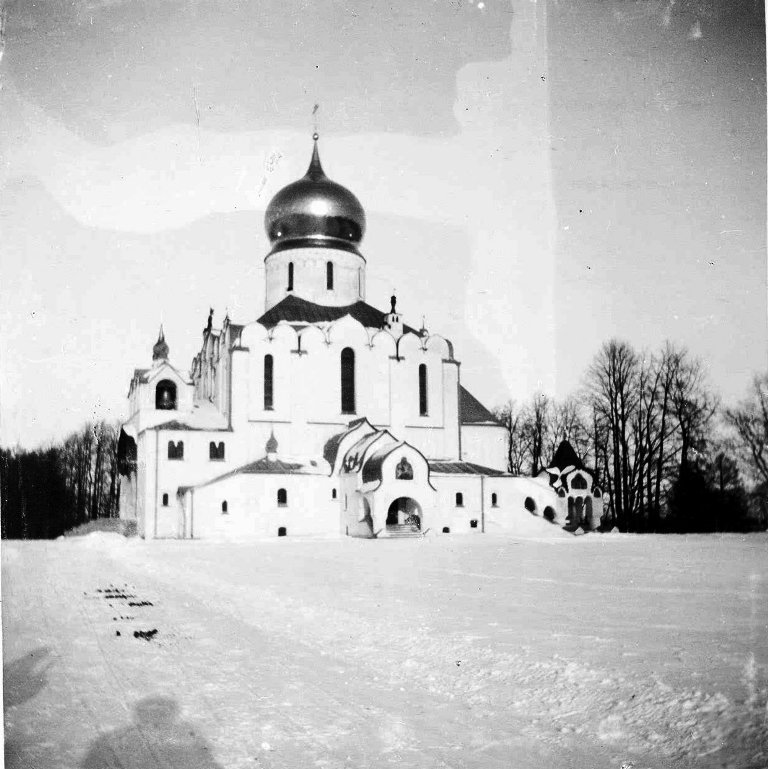
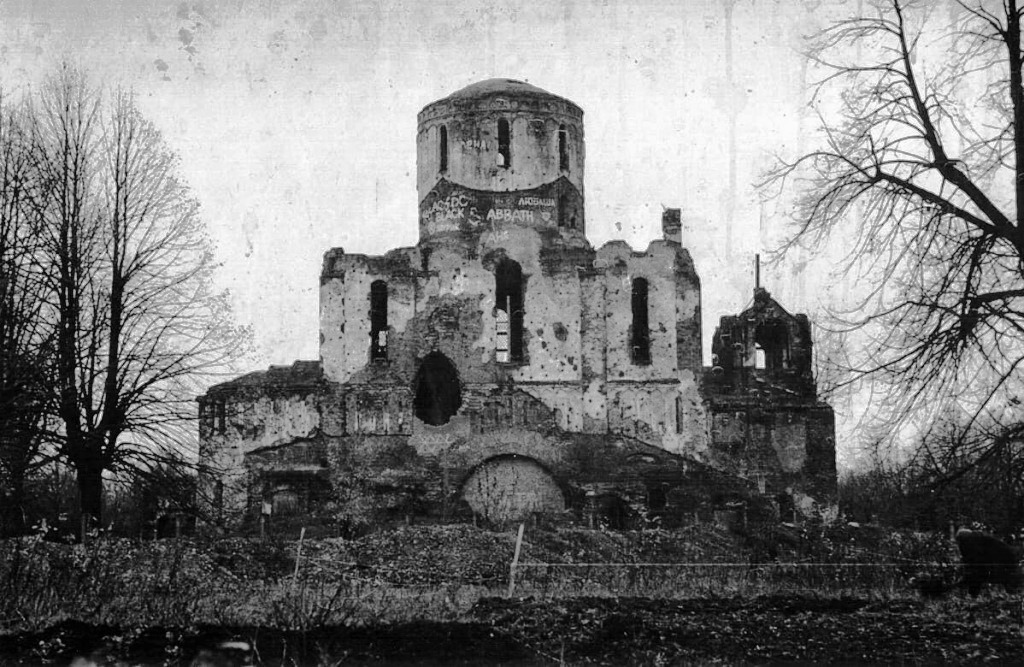
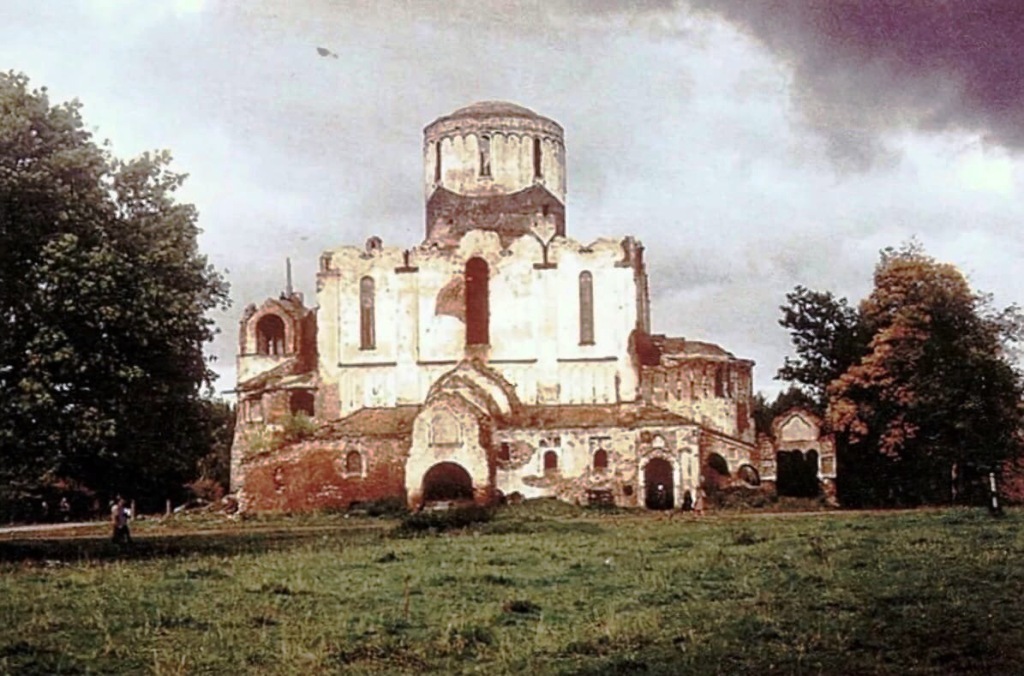
PHOTO: Early 20th century view of the Feodorovsky Sovereign Cathedral at Tsarskoye Selo

On this day – 27th December 1933, the Feodorovsky Sovereign Cathedral[1] at Tsarskoye Selo was officially closed by a resolution of the All-Russian Central Executive Committee[2].

The Cathedra’s Upper Church became a cinema hall, where a screen was placed right in the altar, while the Lower Cave Church[3] was turned into a warehouse and archive for film and film documents.

The Decree on the Separation of Church and State had been proclaimed by the Bolsheviks in January 1918. It declared all Church property to be the property of the state. Sanctioned by this license, squads of Bolshevik thugs went around the country desecrating and looting churches and monasteries, mocking religion and religious people unmercifully, even murdering priests, monks, nuns and other believers by the thousands.

The years between 1929-1939, the Russian Orthodox Church was subject to further rabid anti-church persecution. Thousands of cathedrals, churches and monasteries were desecrated and pillaged by the Bolsheviks, by order of Joseph Stalin.

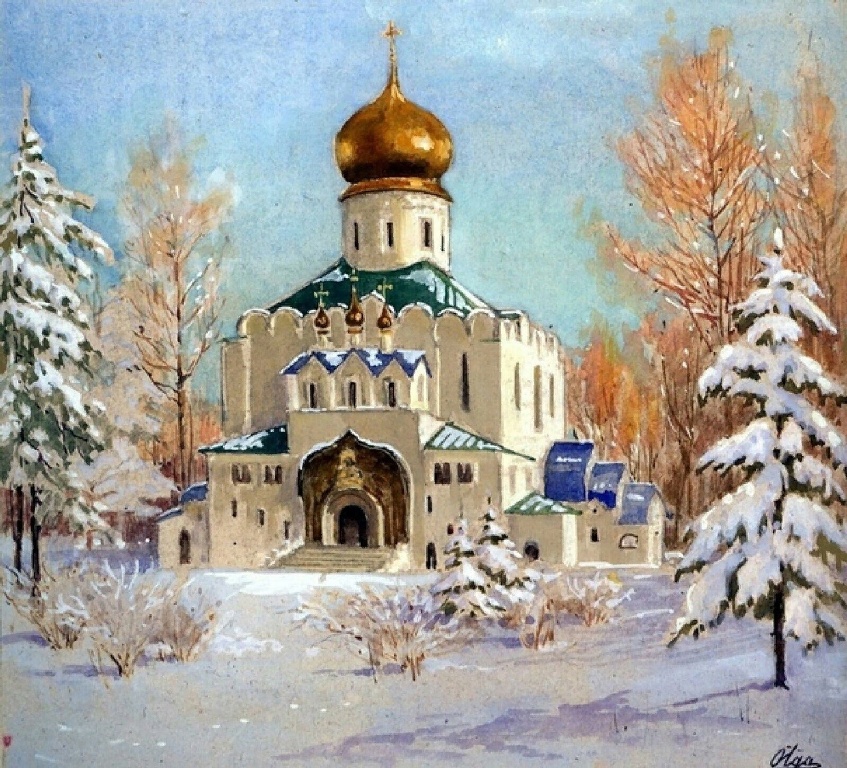
PHOTO: watercolour of the Feodorovsky Sovereign Cathedral (1917) by Grand Duchess Olga Alexandrovna

At first, during the collectivization process, many rural parishes were dissolved by local Soviet authorities, and on 9th August 1931, the Leningrad [St. Petersburg] City Council raised the question of closing all of the city’s churches.

The Bolsheviks anti-church campaign spread from parish to parish throughout the former Russian Empire. In Pushkin[4] the Feodorovsky Sovereign Cathedral[4] was desecrated and pillaged before it was finally closed in 1933.

In 1934, the Bolsheviks conducted an Anti-Easter campaign, which included Detskoye Selo[4]: “… in an attempt to distract parishioners from the churches, a carnival with music and dancing was arranged on the streets of the city… Against the backdrop of the Catherine Cathedral a screen was arranged on the wall of the City Council on which a film was shown.”

Between 1934 to 1935, a total of 361 churches were closed in the diocese, and many more churches could not function due to the absence of the repressed clergy.

PHOTO: the Feodorovsky Sovereign Cathedral in 1945

The Feodorovsky Sovereign Cathedral was badly damaged during the Nazi occupation of Pushkin (1941-44). During the Soviet years, the Feodorovsky Sovereign Cathedral was left in a terrible state of disrepair and neglect.
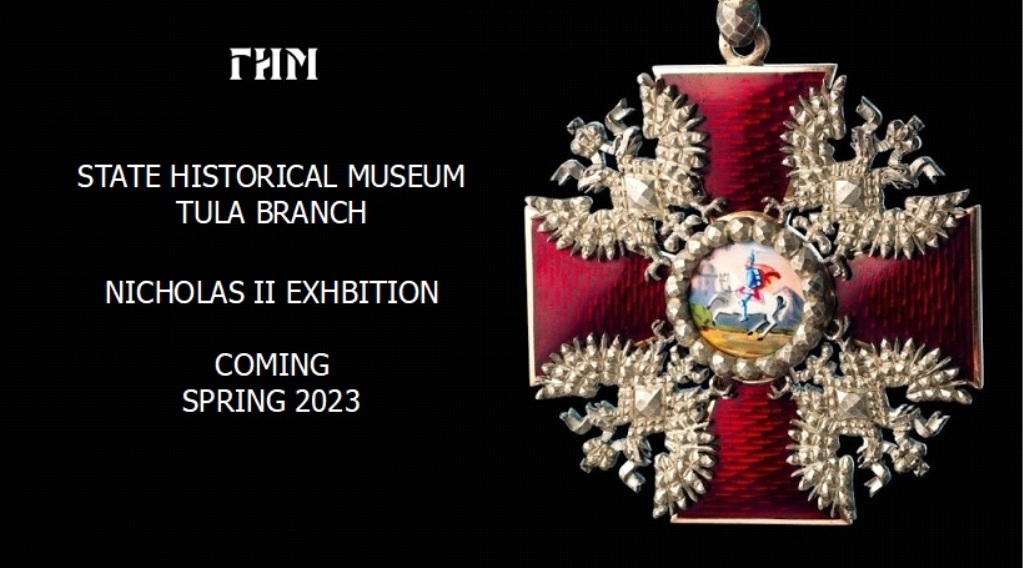
PHOTO: the Feodorovsky Sovereign Cathedral in 1977

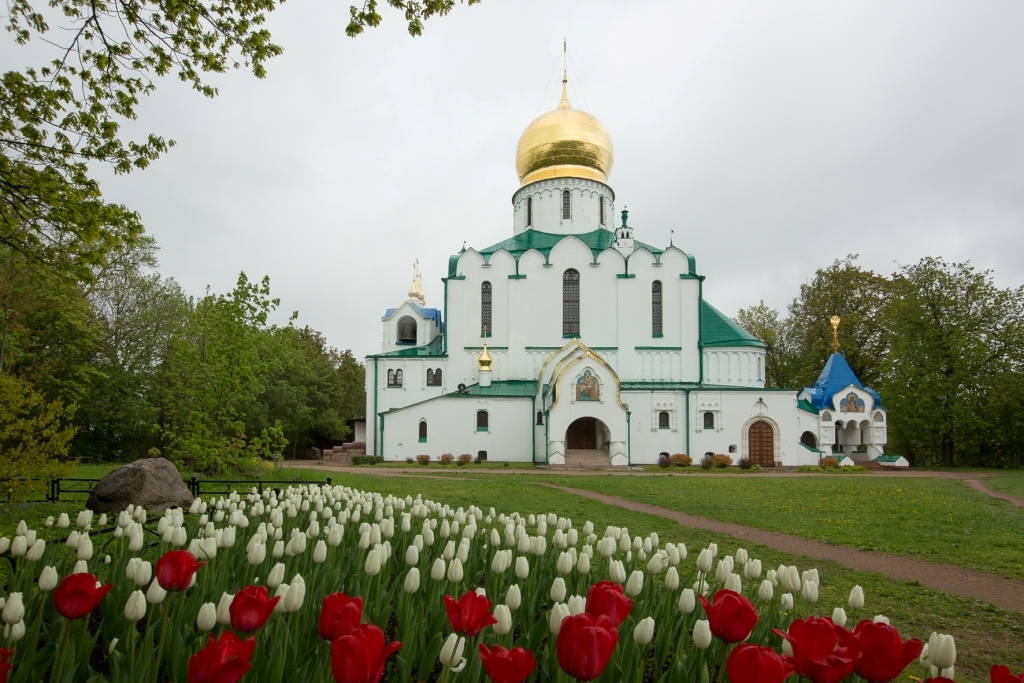
After the fall of the Soviet Union in 1991 the Feodorovsky Sovereign Cathedral was returned to the Russian Orthodox Church. The entire complex of buildings closely connected with the life of the last Russian Emperor was taken over by the Moscow Patriarchate, who allocated funds for the reconstruction and restoration work carried out over a 20 year period.

The Feodorovsky Sovereign Cathedral was reconsecrated on 29 February 1992. Regular liturgies are today carried out in the Upper Church, and the Lower Cave Church. In addition, Divine Liturgies are regularly conducted in memory of the murdered Emperor Nicholas II, Empress Alexandra Feodorovna, Grand Duchesses Olga, Tatiana, Maria, Anastasia Nikolaevna, and Tsesarevich Alexei Nikolaevich.

The Feodorovsky Sovereign Cathedral has become a popular pilgrimage site for Orthodox Christians from across Russia and around the world. In addition are monarchists, modern-day Cossacks and adherents of the Holy Royal Martyrs.

On 17th July 1993, Russia’s first monument to Emperor Nicholas II by the Russian sculptor V.V. Zaiko was established in the garden located in behind the Cathedral.

On 4th May (O.S. 21st April) 1913, Emperor Nicholas II and his family planted a group of oak trees on the grounds of the Feodorovsky Sovereign Cathedral. A total of seven trees were planted that day, with each member of the Imperial Family, beginning with the Tsar, planting a single oak tree. Of the seven trees planted, only four have survived to the present day, the other three were cut down during the Nazi occupation of Pushkin.

PHOTO: the Feodorovsky Sovereign Cathedral as it looks today. The blue tent-roof of the Royal or Tsar’s Porch – used by the Emperor and his family – can be seen to the right

NOTES:

[1] The Feodorovsky Sovereign Cathedral served as the regimental church of His Imperial Majesty’s Own Convoy. In addition, the cathedral served as the house church for the Imperial family, while they were in residence in the Alexander Palace. Construction of the Cathedral was financed by Nicholas II, who contributed 150,000 gold rubles from his own personal funds.

[2] The All-Russian Central Executive Committee (VTsIK) was the highest legislative, administrative and revising body of the Russian Soviet Federative Socialist Republic (Russian SFSR) from 1917 until 1937. Although the All-Russian Congress of Soviets had supreme authority, in periods between its sessions its powers were passed to VTsIK.

[3] Empress Alexandra Feodorovna was particularly fond of the Cave Church. A special room was arranged for her, which allowed her to retire in prayer. The chapel, a small room less than a meter wide, was installed to the right of the altar. It contained a mosaic icon of St. Seraphim of Sarov. The Cave Church has been fully restored and open to worshippers.

[4] On 7th November 1918 Tsarskoye Selo was renamed Detskoye Selo (Children’s Village). On 10th February 1937, it was renamed Pushkin, in honour of the great Russian poet, playright and novelist Alexander Pushkin (1799-1837). On 10th June 1939, the Catherine Cathedral was demolished by the Soviet authorities.

© Paul Gilbert. 27 December 2022

Christmas returns to the Alexander Palace

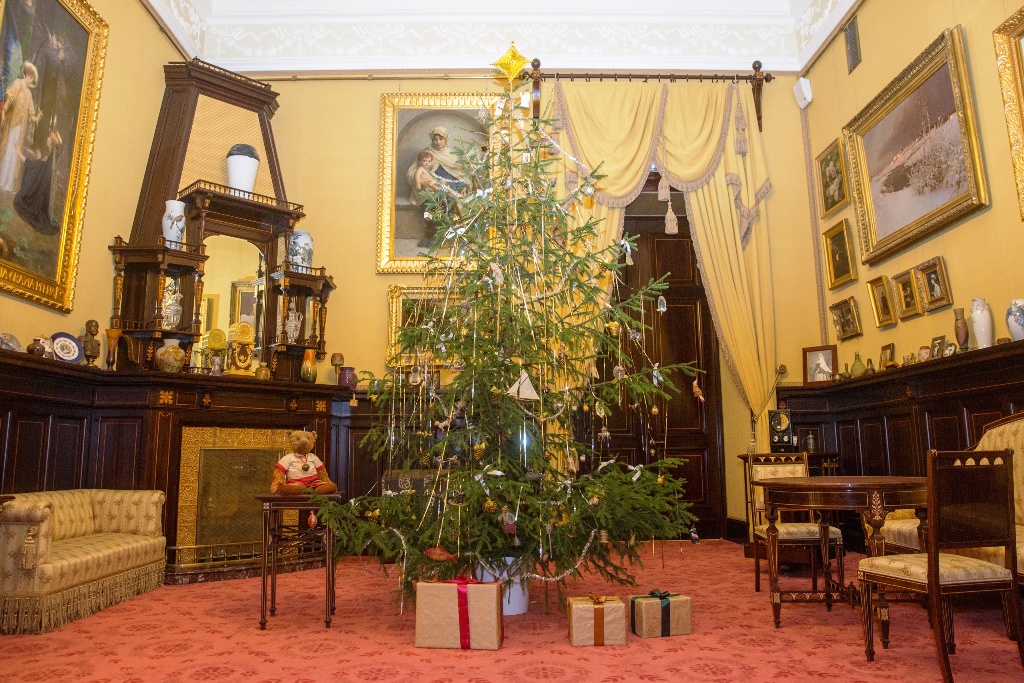
Christmas/New Year’s Tree in the Pallisander (Rosewood) Living Room
Photo © Tsarskoye Selo State Museum Reserve

In 2021, the Tsarskoye Selo State Museum restored the tradition of decorating a Christmas/New Year’s tree in the Alexander Palace. For the second year in a row, a live spruce tree was installed today in the Pallisander (Rosewood) Living Room and decorated with more than forty authentic toys from the early 20th century from the museum’s collection.

From 1905 to 1917, the Alexander Palace was the centre of Russian statehood, and the permanent residence of Emperor Nicholas II and his family. It was here that they celebrated the New Year holidays, which included Christmas – the Imperial Family and their close associates all took part in decorating the tree and gifts for it.

Nicholas II and Alexandra Feodorovna celebrated Christmas in the Alexander Palace for the first time in 1895. It became a favourite family holiday and was celebrated on a grand scale. According to eyewitnesses, at least eight trees were installed in the palace, and Empress Alexandra Feodorovna herself took part in the decoration of each of them. She also chose gifts for the entire palace staff, including lackeys, cooks and stokers, a separate Christmas tree was decorated for them and the children’s nanny.

It was not until 1915, that the Alexander Palace became the permanent residence of the Imperial Family, however, they celebrated their first Christmas at Tsarskoye Selo on 24th December 1904.

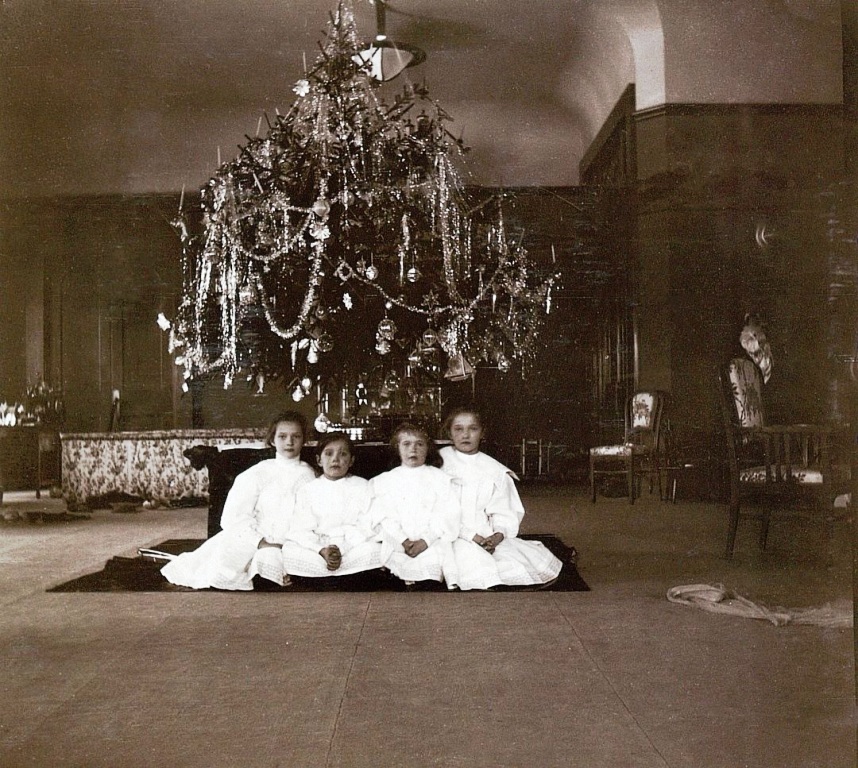
PHOTO: OTMA seated in front of a Christmas tree in the Alexander Palace

Each year, on the 24th, the children would dress up in their finery and decorate a Christmas tree on the second floor, where there private rooms were situated. The first floor was set aside for the main family holiday. That evening, the Emperor and his wife visited the Dowager Empress Maria Feodorovna in the Gatchina Palace. There they also attended the Christmas Vigil service. The imperial couple returned to Tsarskoye Selo at 11 o’clock in the evening and arranged their Christmas tree in the Empress’s new room (apparently referring to the Maple Drawing Room of Alexandra Feodorovna).

In subsequent years, the celebration of Christmas in the Alexander Palace took place according to that of previous years: a Christmas tree for the children on the second floor, the main family holiday on the first: several separate trees for servants and guards in the ceremonial halls, and in Alexandra Feodorovna’s rooms – a tree for the Emperor and Empress. The last tree decorated in the Alexander Palace was in December 1916.

The celebration of the New Year was significantly inferior in scale to that of Christmas. Throughout the entire reign of Nicholas II, December 31st was a festive day for the Emperor. The last day of the year stood out with a small festive tea party with the participation of family members, as well as a New Year’s prayer service, at which the Emperor was always present.

© Paul Gilbert. 21 December 2022

Tula museum to host Nicholas II exhibit in 2023

Next year marks the 155th anniversary of the birth [19th (O.S. 6th) May 1868] and 105th anniversary of the death [17th July 1918] of the last Russian Emperor Nicholas II. The Tula branch of the State Historical Museum in Moscow is now preparing a unique exhibition dedicated to these anniversaries.

The exhibition will give visitors an opportunity to “look” at the life of the Russian ruler and his family through the impartial lens of the camera. The exposition is emphatically documentary: rare photographs from the collection of the State Historical Museum which depict the private life of the Russian monarch. In addition, the exhibit will feature two topics: “Nicholas II as the head of the Russian Empire” and “Nicholas II as the head of the Imperial Family”.

In addition to photographs, portraits of Nicholas II and Akexandra Feodorovna, watercolors depicting episodes from the life of the Imperial Family, drawings of Empress Alexandra Feodorovna, unique historical documents, including autographs of the last Romanovs, will be exhibited.

In addition, the exhibition will include precious orders presented to Nicholas II from the collection of the State Historical Museum. “These precious orders from European and Asian countries, stored in the collection of the numismatics department of the museum, rarely leave the walls of the fund,” said Director Alexey Levykin.

The exhibition presents Russian Orders awarded to Nicholas II[1], in addition to those given by Great Britain, Prussia, France, Austria-Hungary, Japan, Thailand and other European and Asian countries[2]. Many orders are exhibited for the first time.

“The orders were made of silver and gold and decorated with precious stones. Each exhibit outstanding craftsmanship, utilizing various jewelry techniques: gold embroidery, filigree, various types of enameling, engraving, and casting,” he added.

The Nicholas II exhibition will open in May 2023, the museum is planning a Russian-language illustrated exhibition catalogue.

The State Historical Museum in Moscow, opened the first regional branch in Tula at the end of September 2020 as part of the celebration marking the 500th anniversary of the Tula Kremlin.

NOTES:

[1] Nicholas II was the recipient of 7 national honours

[2] Nicholas II was the recipient of 51 foreign honours from 35 countries, duchies, etc

©  Paul Gilbert. 19 December 2022