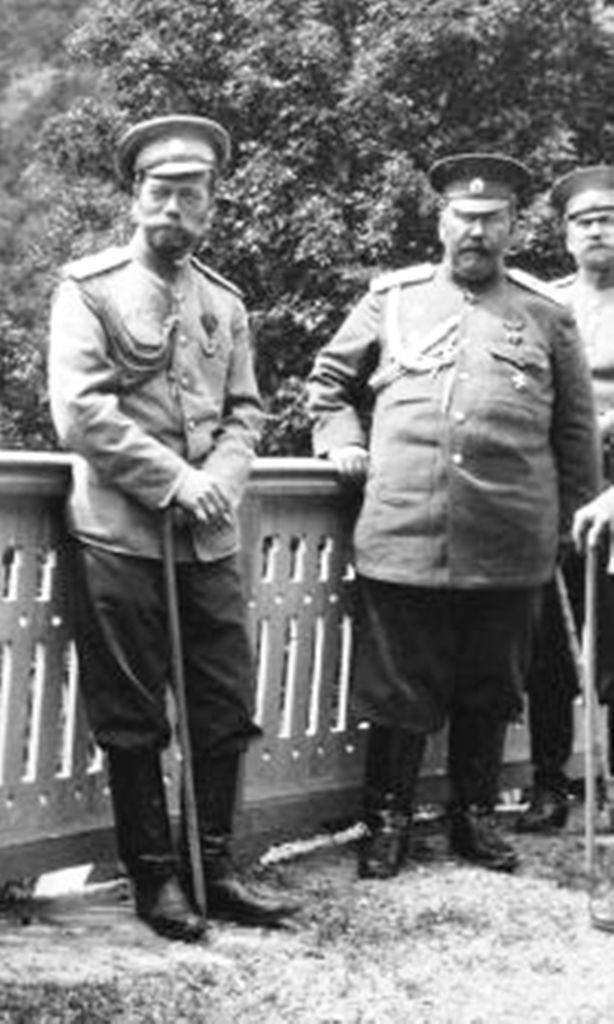
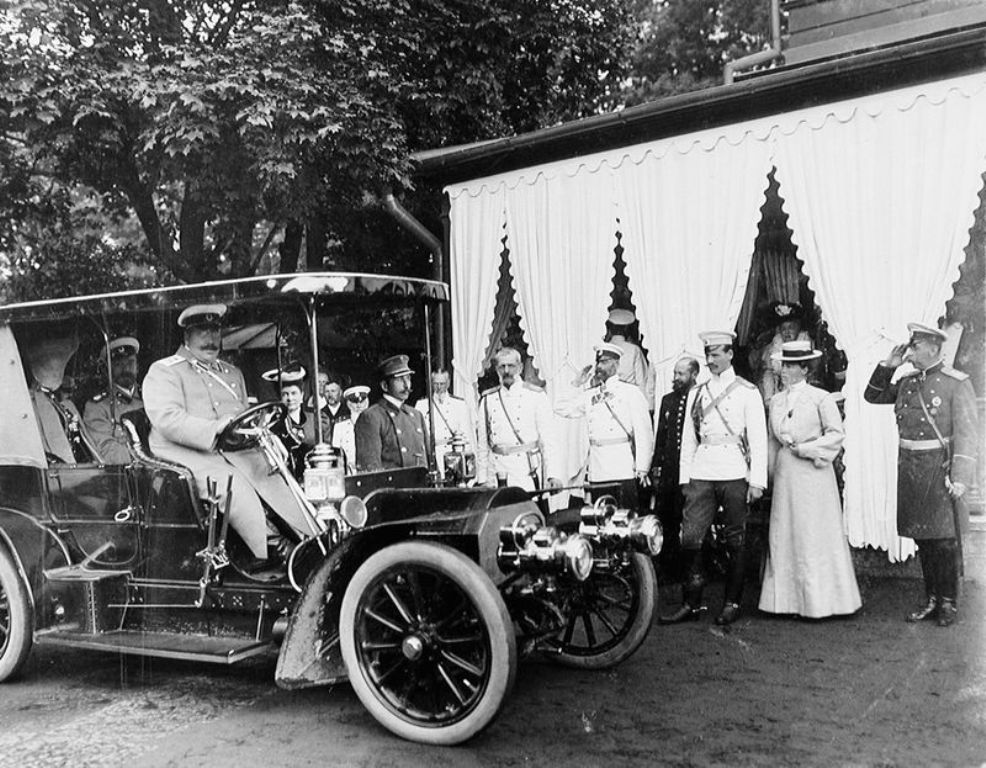
Nicholas II’s visit to Eriklik, Crimea in 1914

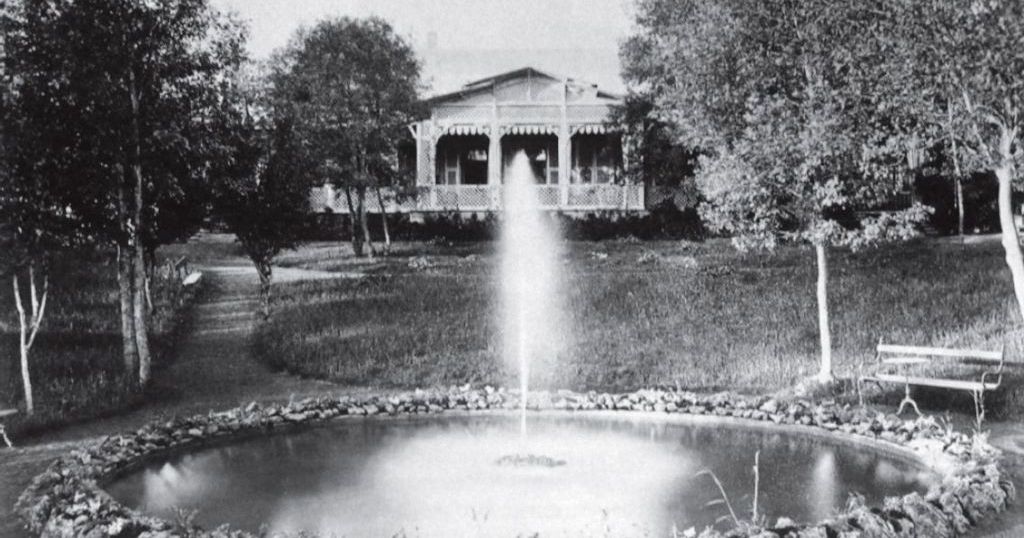
PHOTO: Eriklik, the dacha built for Empress Maria Alexandrovna near Livadia

Eriklik was the name of a dacha, built for Empress Maria Alexandrovna (1824-1880), wife of Emperor Alexander II (1818-1881), near Livadia in Crimea. The dacha was built on the advice of her physician Dr. Sergei Petrovich Botkin (1832-1889) [father of Dr. Eugene Botkin (1865-1918), who was murdered with Nicholas II and his family by the Bolsheviks on 17th July 1918] , who recommended that the Empress spend autumn and winter in the south, where the mountainous and coniferous air would benefit her declining health.

The construction of the dacha involved designer A.I. Rezanov and the famous architects A.G. Vincent , V.I.Sychugov, and was built between April-August 1872.

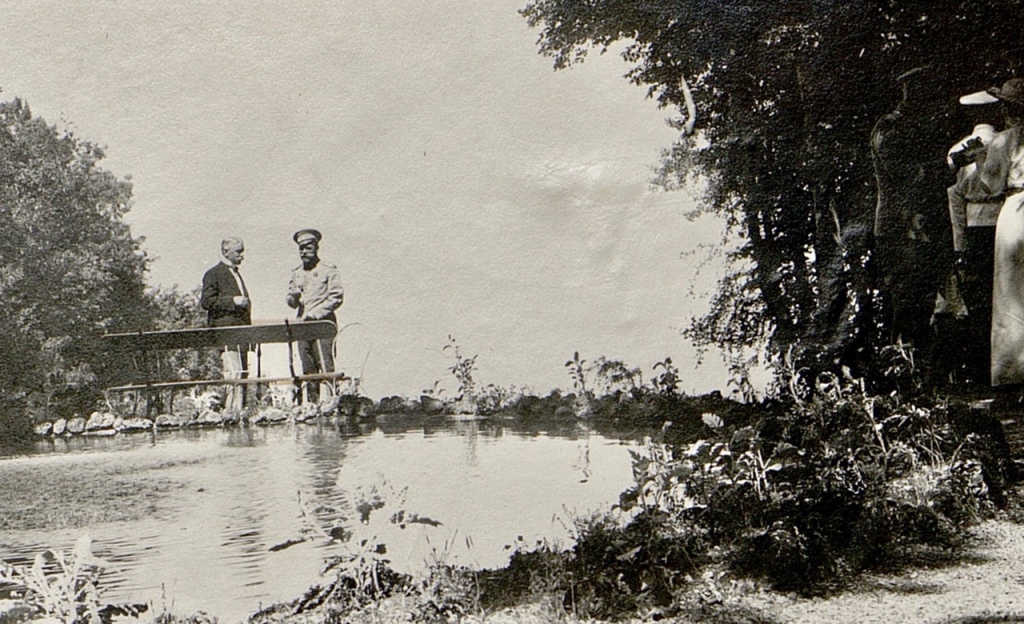
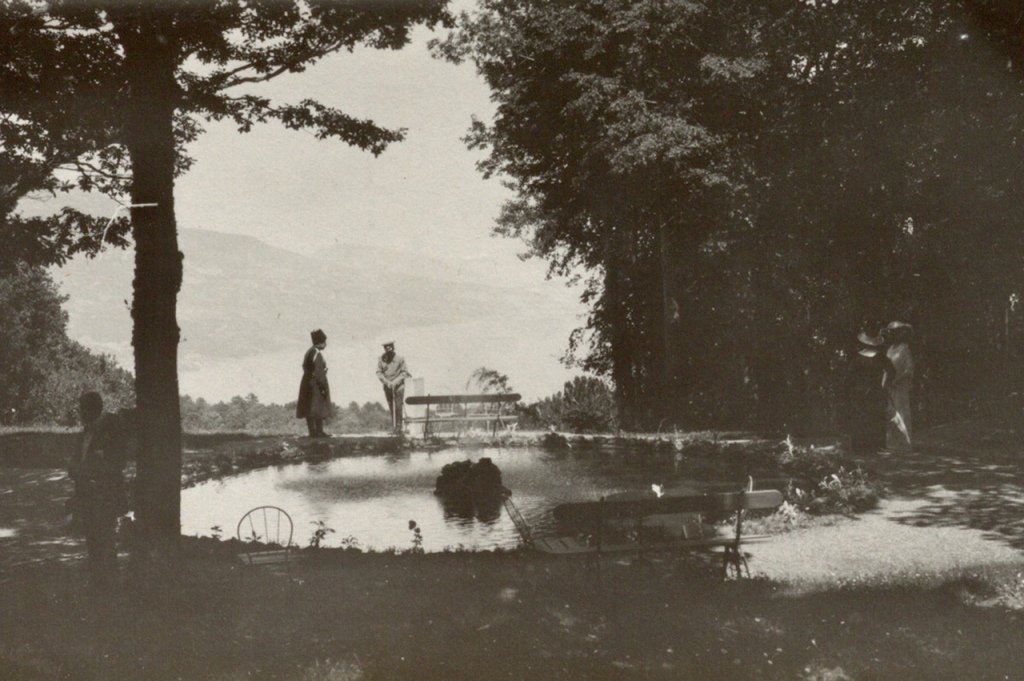
A beautiful park parterre with a system of paths and a round fountain were arranged in front of the dacha, the vegetation was cleared in order to maximize the panoramic view of the mountains and the Black Sea. The architectural complex was created by assimilating the nature of Crimea set against the symbolic views of the mountain landscape.

PHOTOS: Emperor Nicholas II at the fountain in the garden at Eriklik, 1914

The wooden one-story dacha, consisted of three wings, connected to each other and 8-10 rooms. The Empress’s rooms faced the most beautiful views, an adjoining room was reserved for the dining room, behind it were the rooms for Alexander II. The servants’ quarters were located behind the Empress’s rooms. The dacha had a wooden patio. The dacha also included a wooden veranda, a gazebo in the garden and several outbuildings.

After the death of Maria Alexandrovna, the palace remained empty. During their stays in Crimea, Nicholas II with his family, often visited Eriklik, where they enjoyed quiet walks and picnics.

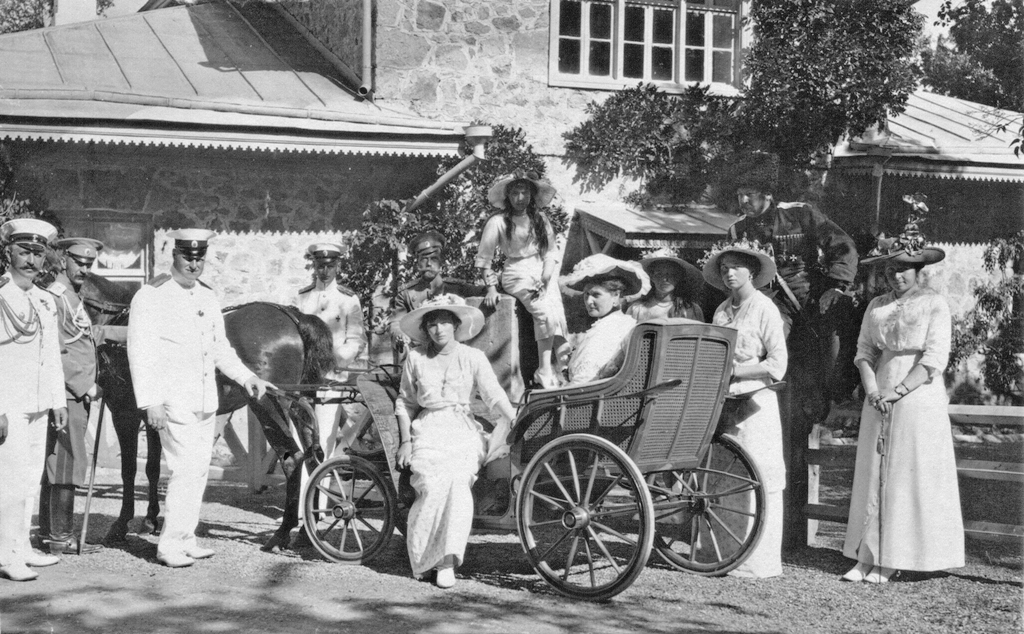
PHOTO: the Imperial Family  visits Eriklik in May 1914

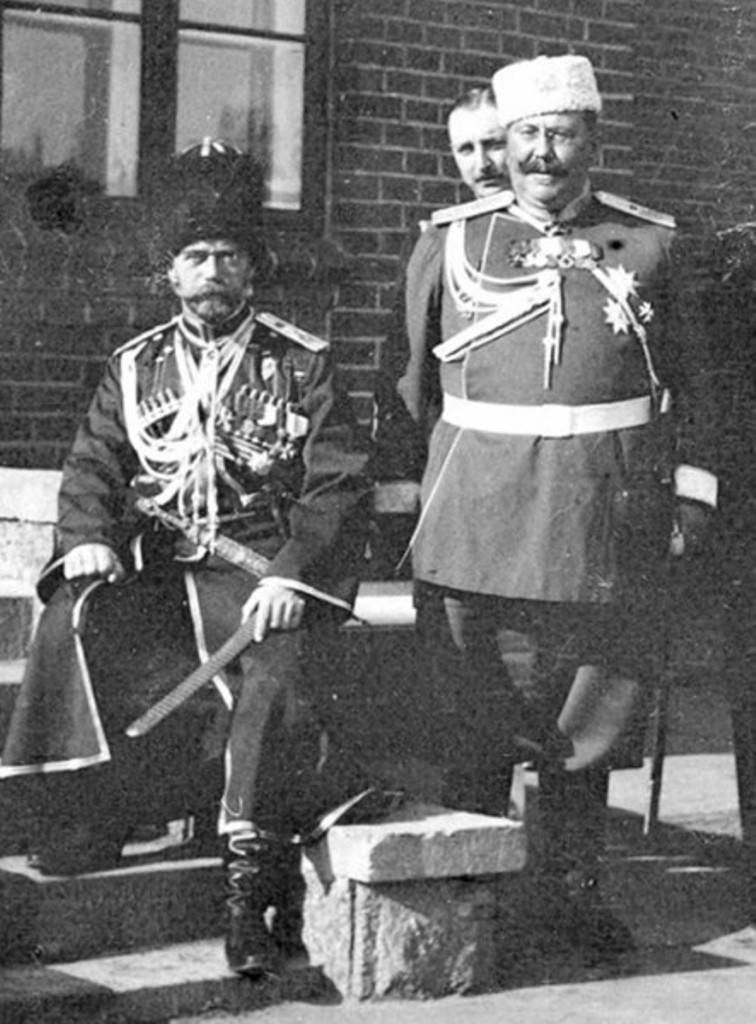
On 28th May 1914, three days before leaving the Crimea, the Tsar’s family arrived in Eriklik for breakfast. They were joined by other members of the Russian Imperial family who were staying at their respective Crimean residences at Ai-Todor, Kharax and Kichkine, as well as officers of the Imperial Yacht Standart. After breakfast, everyone walked together and relaxed in the garden. Grand Duchess Olga Nikolaevna noted in her diary that the day was “warm and sunny”. It was to be their last journey to Crimea.

Following the 1917 Revolution, a health resort for tuberculosis patients was opened in the dacha. At the beginning of the 20th century, the wooden dacha fell into decay, and in the middle of the 20th century was demolished.

© Paul Gilbert. 23 December 2020

***

Dear Reader

If you found this article interesting, then please help support my research by making a donation in US or Canadian dollars to my project The Truth About Nicholas II – please note that donations can be made by GoFundMe, PayPal, credit card, personal check or money order. Thank you for your consideration – PG

New museum in Moscow to showcase Nicholas II’s automobiles


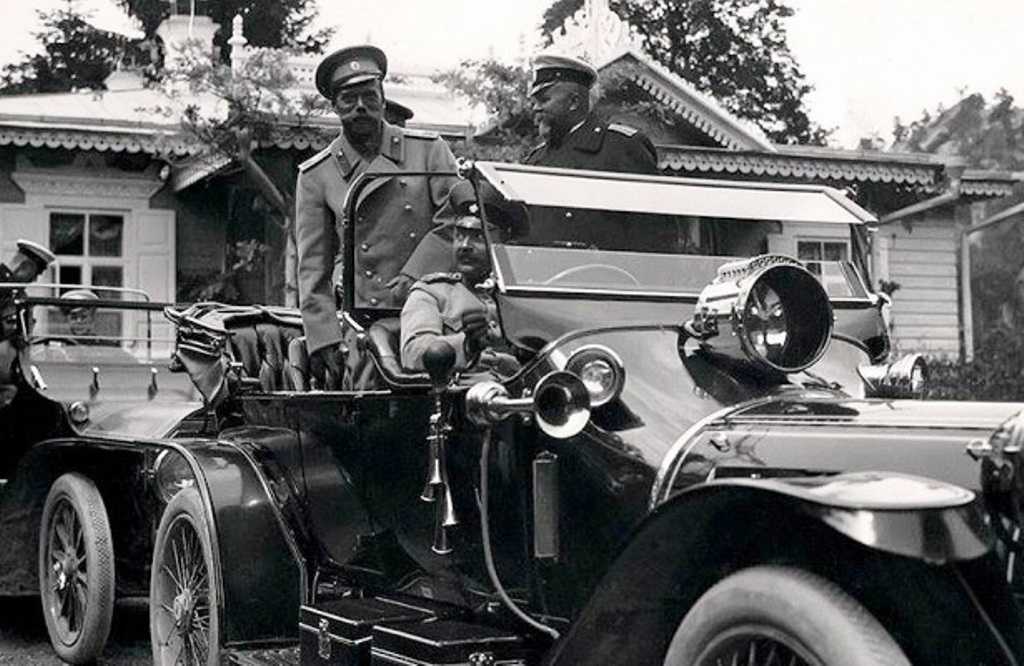
PHOTO: Nicholas II travelling in his French Delaunay-Belleville

Next year will mark the 100th anniversary of the Special Purpose Garage in Moscow. For its centenary, a multifunctional complex – the Special Purpose Garage Museum – will open in two pavilions at the All-Russian Exhibition Center (VDNKh) in Moscow.

Simulators and interactive exhibits are now being installed in Pavilion No. 54, where visitors can learn about the technical characteristics of automobiles and road safety. The main highlight of the new permanent museum will be in Pavilion No. 53, which will showcase historical automobiles of Soviet leaders, and more importantly those of Russia’s last emperor Nicholas II, who was a keen collector of fine automobiles.

Note: it is not known at this time, how many of Nicholas II’s autos will be on display, nor which automobiles will be on display. I will update this article when I have more details – PG.

The Special Purpose Garage Museum is scheduled to open in early 2021.

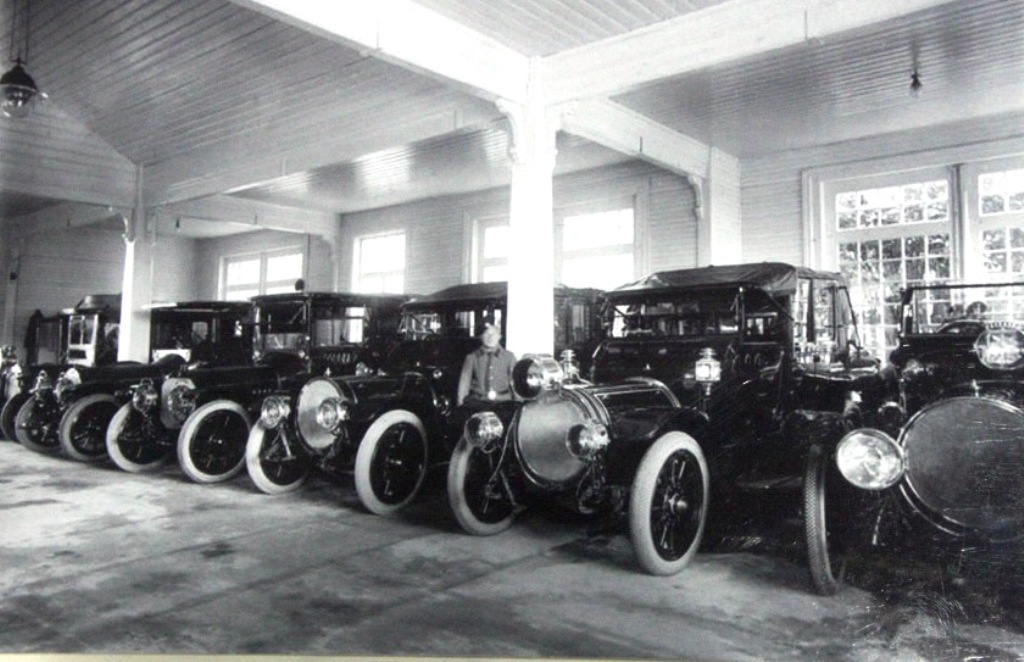
PHOTO: His Imperial Majesty’s Own Garage, Tsarskoye Selo

Facts about His Imperial Majesty’s Own Garage

* The “founding fathers” of His Imperial Majesty’s Own Garage were the Minister of the Imperial Court, Count Vladimir Fredericks (1838-1927), and the Adjutant Wing Prince Vladimir Orlov (1868-1927). The first automobile appeared in Tsarskoye Selo at the beginning of 1906: the French Delaunay-Belleville with a triple phaeton body, and soon complemented with four Mercedes.

* In mid-1906, the Imperial Driver School was opened at the garage. In fact, it was the first driving school in Russia. Empress Alexandra Feodorovna herself attached great importance to the uniforms worn by drivers and mechanics. She created sketches with her own hand, designing uniforms based on a footman’s livery adorned with gold cords.

* Drivers, mechanics and “soapmen” (car washers) did not appreciate being treated like lackeys and servants, but were forced to wear their uniforms. Their struggle continued, and in the end, the drivers won. In 1910, their new uniform – approved by the Emperor – resembled the uniforms of military officials: khaki colours, lace-up leather boots, leggings.

* Court chauffeurs in fur hats could easily be mistaken for senior officers and they were paid well. The senior driver received 2,600 rubles a year (for comparison: the annual salary of a university professor was 3,000 rubles), a third-class driver – 780 rubles a year.

* On March 2, 1917, Emperor Nicholas II signed his abdication. This ended the story of His Imperial Majesty’s Own Garage. All property of the imperial family passed into the disposal of the Provisional Government, including the garage. In addition to a change in management, the garage managed to avoid significant personnel changes.

* As a result of the October Revolution of 1917, the Autobase of the Provisional Government was nationalized and transferred to the disposal of the Bolsheviks. Lenin himself wasted little time in taking first pick from the Tsar’s collection of fine automobiles. His first trip in a Turcat-Méry automobile took place on 27th October 1917. Many employees of the Imperial Garage and the Autobase of the Provisional Government continued to work for the Bolsheviks.

***

Dear Reader

If you found this article interesting, then please help support my research by making a donation in US or Canadian dollars to my project The Truth About Nicholas II – please note that donations can be made by GoFundMe, PayPal, credit card, personal check or money order. Thank you for your consideration – PG

© Paul Gilbert. 22 December 2020

New monument to Nicholas II opens in Murmansk Region

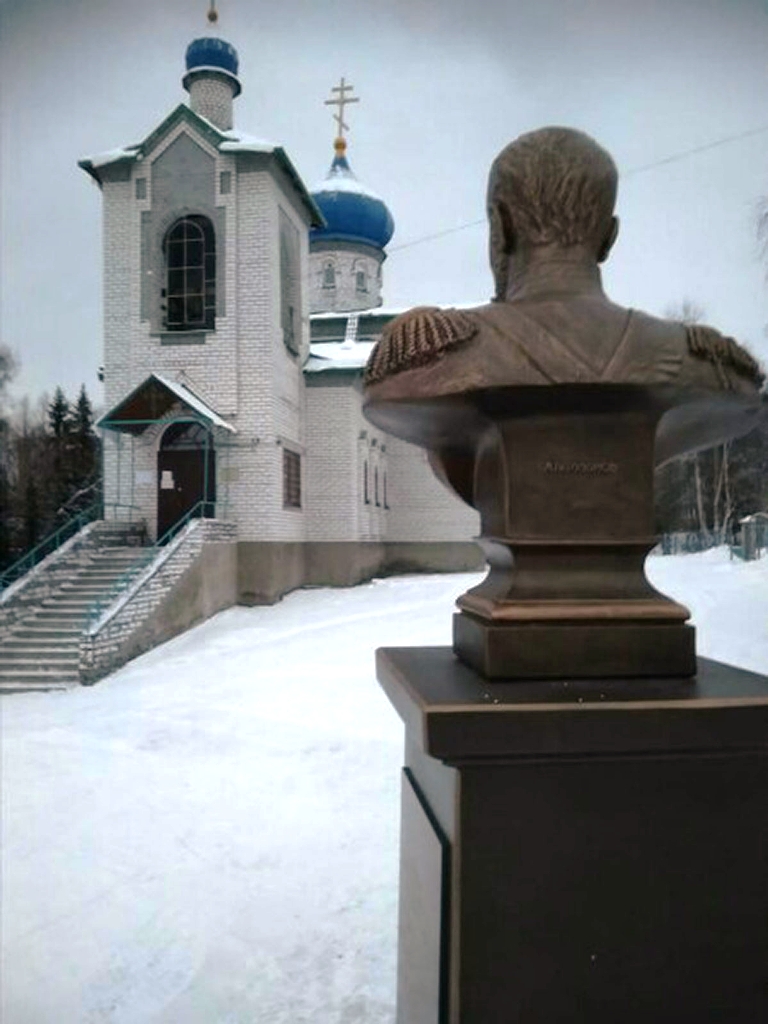
PHOTO: Monument to Nicholas II in the city of Kovdor, Murmansk Region

On 19th December 2020, a new monument-bust to Nicholas II was unveiled in the Murmansk region. The proposal to install the monument was approved only last week, after a vote by local residents with 512 participants in favour, and 38 against.

The bronze bust was established on the grounds of the Church of the Assumption of the Blessed Virgin Mary in the city of Kovdor, which is situated about 300 km south of Murmansk.

The bust weighs 300 kilograms, and the marble pedestal weighs about two tons, and is planned to be erected in early 2021.

The idea of ​​erecting the monument is that of members of the Tsar’s Cross Movement in June 2020. The local church parish raised the necessary funds for the pedestal, and the bronze bust itself was donated by the Alley of Russian Glory sculptural workshop situated in Kropotkin, Krasnodar Krai region.

The purpose of erecting the monument to the Tsar-Martyr is to emphasize the contribution of Nicholas II to the development of the Murmansk region in the early 20th century.

Nicholas II is the founder of the city of Romanov-on-Murman, which was renamed Murmansk by the Bolsheviks in April 1917. In June 2019, the local airport was renamed after the Emperor; and on 20th November 2020, a permanent photo exhibition dedicated to Nicholas II was opened in the terminal building of the airport.

PHOTO: Church of the Assumption of the Blessed Virgin Mary, Kovdor

***

Since the fall of the Soviet Union in 1991, more than 70 monuments, busts and memorials to Nicholas II have been established in more than 30 regions across Russia. Click HERE to review more than 30 of them in my Nicholas II Monuments category

© Paul Gilbert. 21 December 2020

VIDEO: ‘The Lost Life of Alexei Romanov’ with Jonathan Jackson

The Lost Life of Alexei Romanov’ is the latest in a series of videos produced by the Mesa Potamos Publications, publishers of ‘The Romanov Royal Martyrs: What Silence Could Not Conceal’ – my personal choice for Romanov Book of the Year in 2019.

Of particular note in this 38 minute English language video are the following images and newsreels:

Compare the image of Alexandra holding her newborn son at 1:39 with that of the haunting image at 4:46—what a shocking difference. Poor Alexandra looks tired, worn out both physically and emotionally from watching over and caring for her sick son. Click HERE to read my article “Judge Not Lest Ye Be Judged” – In Defence of Empress Alexandra Feodorovna, published on 20th July 2020.

The newsreel footage of the 5 children laughing and playing on the deck of the Imperial Yacht ‘Standart’ from 5:37 to 6:43 made me laugh and smile. Both, however, faded into sadness, knowing the horrific fate which awaits them.

At 11:00 we see the children marching around the well, situated in the Italian Courtyard at Livadia Palace in Crimea, carrying their flowered banners for the White Flower Day festivities, and each wearing a Kodak camera around their necks.

At 20:21 we see a mischievous Alexei throwing a snowball at his tutor Pierre Gilliard, only to turn around and realize that his prank has been caught on camera, forcing him to laugh and run off.

At 23:16 Jonathan Jackson reads a letter written by Alexei to his friend Nikolai Vladimirovich Derevenko nicknamed “Kolya” (1906-2003), which was discovered after the murders in the Ipatiev House. Alexei concludes the letter with the prophetic words “The END”. This is followed by a very moving interview many years later with Kolya.

The most poignant moment in the video, however, has to be at 25:58. We see Alexei seated in a motorcar with Minister of the Imperial Court Count Vladimir Frederiks (1838-1927). At 26:11, Alexei turns around smiles and nods at the camera. It is a most fitting ending.

Narrator Jonathan Jackson offers a heartfelt chat at the end. A devout Orthodox Christian, Jackson shares with viewers his love for the Holy Royal Martyrs. His words will reflect those of many viewers, regardless of their respective faith or beliefs.

Personally, I was profoundly moved by this video about Tsesarevich Alexei. The exceptional newsreel footage brings the heir to the throne to life. This combined with the black and white archival photographs, the astounding colourizations by Olga Shirnina, and narration by Jonathan Jackson make this one of the finest videos produced by the Mesa Potamos Publications to date.

Holy Royal Martyrs, pray to God for us!

This video is produced as part of the project for the book The Romanov Royal Martyrs, which is an impressive 512-page book, featuring nearly 200 black & white photographs, and a 56-page photo insert of more than 80 high-quality images, colorized by the acclaimed Russian artist Olga Shirnina (Klimbim) and appearing here in print for the first time. EXPLORE the book / ORDER the book.

© Paul Gilbert. 16 December 2020

Restoration of Lighting Fixtures for the Alexander Palace

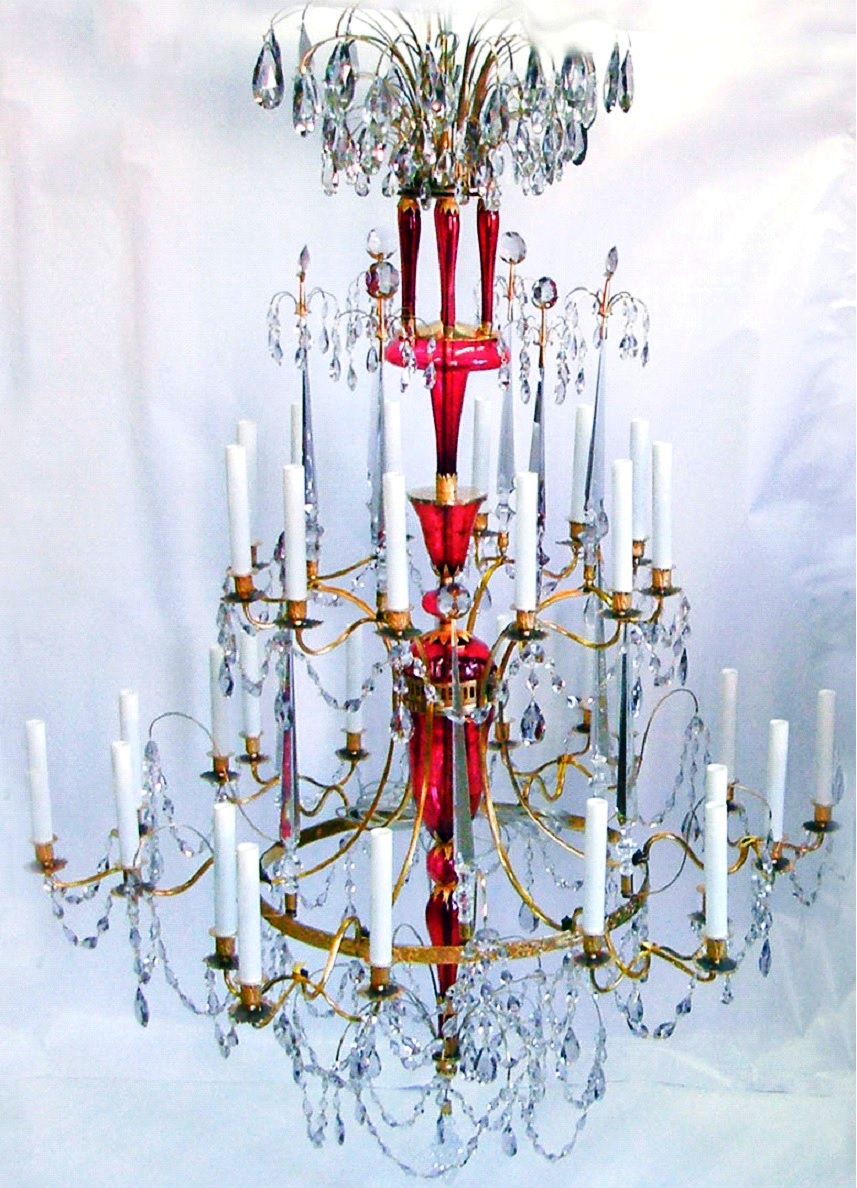
PHOTO: Chandelier for Empress Alexandra Feodorovna’s Corner Reception Room

The restoration of two chandeliers and three lanterns for the Alexander Palace has been completed. They will decorate Empress Alexandra Feodorovna’s Corner Reception Room, as well as the Small and Large Libraries.

PHOTO: Colour autochrome of the Corner Reception Room, taken in 1917

In the Corner Reception Room, visitors will see a 30 candle chandelier made of ruby-coloured ​​glass, which had been preserved from the historical collection of the Alexander Palace, but kept in Pavlovsk. Originally, two identical chandeliers were located in the Concert Hall (demolished), a spacious two-story room designed by Giacomo Quarenghi (1744-1817) in the east wing of the palace. At the beginning of the 20th century, during the reconstruction of the hall, one of the chandeliers was moved to the Empress’s Corner Reception Room. The second chandelier was used to decorate the Mirror Study, which was part of the private apartments of Empress Catherine II, located in the Zubov Wing of the nearby Catherine Palace. After the completion of the restoration of the Alexander Palace, this elegant chandelier will be returned to take its original place. The deep ruby red colour of the glass elements of the chandelier perfectly match the soft pink tint of the imitation marble walls of the Corner Reception Room.

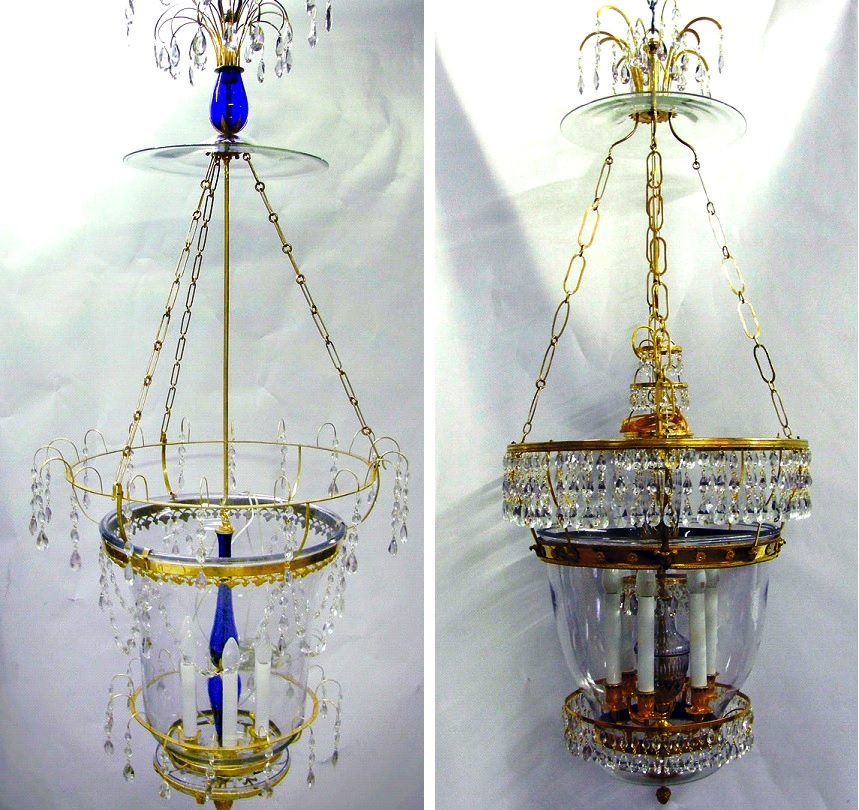
PHOTO: restored lighting fixtures for the Small and Large Libraries

For the Small Library, an eight candle chandelier has also been restored. It is decorated with glass vases-balusters, decorating the central rod, pyramids of cut crystal and a crowning cobalt vase with a fountain made of almond-shaped pendants.

An earlier type of pendant lamps, which were used in palace interiors, were lanterns, consisting of a conical body of glass in a mount of gilded bronze and a crystal set in the form of garlands with pendants. The candlestick was placed inside the flask; such lanterns reliably protected the oscillating flame from constant drafts.

PHOTO: Colour autochrome of the Large Library, taken in 1917

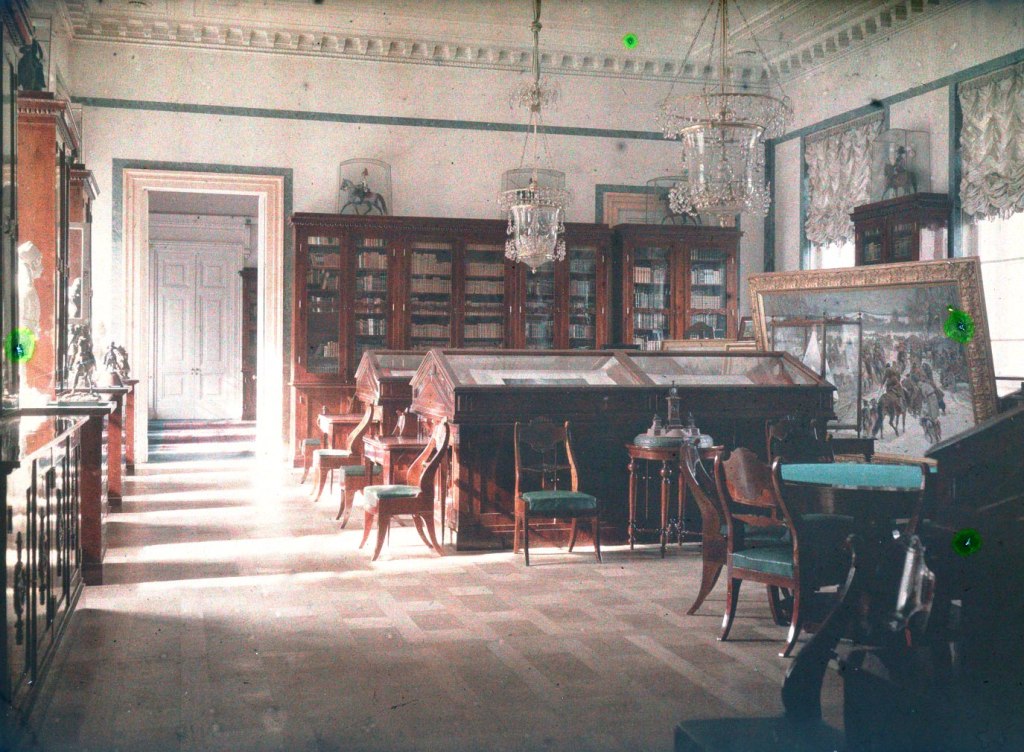
From 1796 to 1941, the Large Library (originally the Dining Room) was lit by three large lanterns with six candles each (now used in the lobby of the Pavlovsk Palace). The Large Library of the Alexander Palace will be lit by three 18th century lanterns, one of which comes from the historical collection, the other two purchased.

During the restoration process, the craftsmen removed dirt from the lighting fixtures, carried out the restoration of the crystal pendant, recreated the lost parts from glass and bronze with subsequent galvanic gilding, and installed new electrical wiring.

The restorers also managed to almost completely recreate one of the lanterns using the existing analogue, adding an 18th century glass flask. The original piece is the only thing that has survived from a hanging or table lamp. For many years, the flask was kept in the museum’s funds, it was intended to be used for such a restoration.

The restoration work which lasted four months was carried out by the Yuzhakova Studio (St. Petersburg) with the participation of masters Alexei Gvozdev, Vyacheslav Gizimchuk and Dmitry Rosenthal.

NOTE: all photos © Tsarskoye Selo State Museum-Reserve

© Paul Gilbert. 16 November 2020

New Metropolitan of Ekaterinburg confirms: “ROC in no hurry to recognize Ekaterinburg remains”

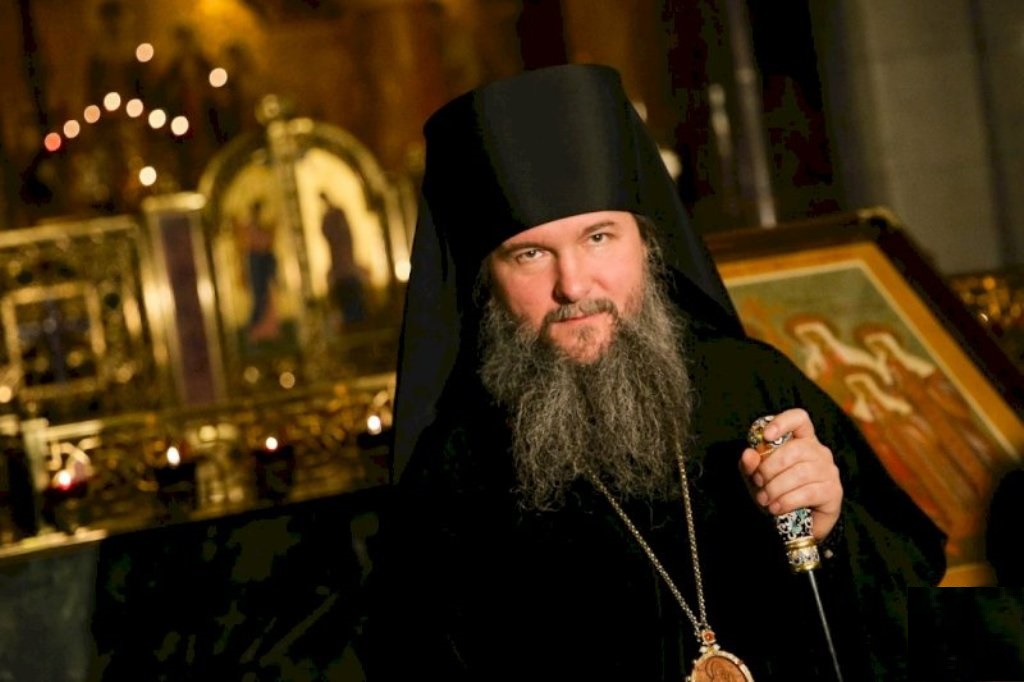
PHOTO: Bishop Evgeny of Ekaterinburg and Verkhotursky

According to Bishop Evgeny of Ekaterinburg and Verkhotursky the Russian Orthodox Church ( ROC ) will not rush to recognize the Ekaterinburg remains – those of Emperor Nicholas II and his family. The newly appointed metropolitan made the comments during a press conference held on Saturday, 12th December in Ekaterinburg. On 8th December 2020, by the decision of the Holy Synod, Vladyka Evgeny was appointed Metropolitan of the Ekaterinburg Diocese.

“I had an opportunity to communicate with those on the commission who investigated the remains … there are many arguments and evidence that these are indeed the remains of the Tsar and his family. But at the same time, there are still many questions that have not yet been answered. His Holiness Patriarch Kirill of Moscow and All Russia stated that the ROC is not in any hurry to complete their investigation by a certain date. We will wait for answers to these questions. This is not some kind of artifact … For us it is a matter of principle, these are holy passion-bearers, these are people who have played a significant role in the spiritual life of our people, and in the state, so the church is in no hurry, fulfilling the words of the holy patriarch,” added Vladyka Evgeny.

“The church will recognize the remains only if there is not an ounce of doubt. If doubts remain, then we will not rush, we will wait. We do not want to offend their memory by making hasty decisions,” he added.

In the summer of 2018, the official representative of the Investigative Committee, Svetlana Petrenko, said that a repeated comprehensive study confirmed the authenticity of the remains of Emperor Nicholas II and his family, who were shot on 17th July 1918 in Ekaterinburg.

Earlier, Evgeny Pchelov, associate professor of the Historical and Archival Institute of the Russian State Humanitarian University, who took part in the research, told journalists about the completion of the historical and archival examination, which, according to him, confirmed the authenticity of the “Ekaterinburg remains.” According to Pchelov, thanks to a comprehensive analysis of primary sources, it was possible to recreate a fairly complete picture of what happened in the days leading up to the deaths of the Imperial family, and the subsequent days which followed the brutal murder. He emphasized that some specific  questions remained unclear, but “the main picture was clarified.”

On 16th July 2018, the eve of the 100th anniversary marking the deaths of Nicholas II and his family, the Investigative Committee of the Russian Federation reported that since the resumption of the investigation in 2015, investigators carried out a wide range of new tests, including 37 different forensic examinations. In total, more than two thousand historical sources were analyzed.

The Investigative Committee stated that “on the basis of numerous expert examinations, the committee concluded that the remains belong to Nicholas II, his family and their four retainers.” At the same time, the committee noted that, “excluding the possibility of ambiguous interpretation of certain circumstances associated with the murders, other examinations necessary for the investigation shall continue.”

In addition, the investigation into the murder of Nicholas II and members of his family intends to identify all those involved in the execution and qualify their actions in accordance with the Criminal Code of the Russian Federation. This part of the investigation is extremely important! Should the *regicides be found guilty of their heinous crime, then lawmakers and historians will be forced to rewrite history. It is a well known fact that after the murders of the Tsar and his family, that many of the *murderers [Yurovsky, Ernakov, etc.] enjoyed a “celebrity” status among the Bolsheviks and revolutionaries. To now find them guilty of their crime a century later, this then clears the way for the names of streets, squares and buildings named in their “honour” of these criminals to be changed, and the removal of any monuments and memorials from the Russian landscape.

*For more information on the regicides, please read my article: The fate of the regicides who murdered Nicholas II and his family, published on 28th October 2020 – PG

Human remains, presumably belonging to the Imperial family, were found in July 1991 on the Old Koptyakovskaya road near Ekaterinburg. The remains of nine people were found in the grave. Forensic studies confirmed the identity of the remains as those of Nicholas II, his wife Alexandra, three of their five children and their four retainers.

In July 2007, during archaeological excavations south of the site of the first burial, the remains of two more people were found, presumably Tsesarevich Alexei and his sister Maria. Forensic studies concluded the identity of the remains as those of Alexei and Maria.

In 2000, the Moscow Patriarchate canonized Nicholas II and his family members as passion-bearers. After the opening of the burial near Yekaterinburg, the remains of members of the imperial family were buried in St. Catherine’s Chapel of the Peter and Paul Cathedral in St. Petersburg. However, the Church did not recognize these remains as genuine due to a lack of evidence. In the fall of 2015, the investigation into the death of the Imperial family was reopened.

Holy Royal Martyrs, pray to God for us!
Святы Царственные мученики, молите Бога о нас!

***

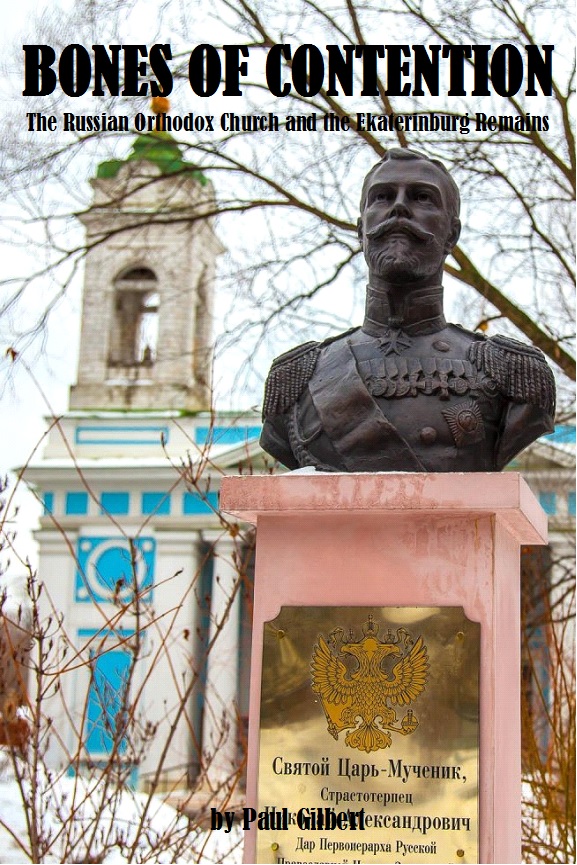
CLICK on the IMAGE above or the LINK below to order my book
‘Bones of Contention: The Russian Orthodox Church and the Ekaterinburg Remains’
Published 2020. 156 pages + 55 illustrations. Price: $20 + postage

© Paul Gilbert. 13 December 2020

The Charity of the Holy Tsar Nicholas II

Since the time of Christ and the Apostles, Christians have selflessly served people, carried out charity work, cared for the sick and the needy, observing the Lord’s commandment “love thy neighbour.” As a true Christian, Tsar Nicholas II, adhered to the centuries-old tradition of mercy, considering it his sacred duty to help his subjects in need.

The financial affairs of the Russian Emperor were handled by the Cabinet of His Imperial Majesty [housed in the Anitchkov Palace, situated on the corner of the Nevsky Prospekt and the Fontanka in St. Petersburg] which was part of the Ministry of the Imperial Court, whose officials kept records of the receipts and expenses of all members of the House of Romanov. The Cabinet annually released 200 thousand rubles from the State Treasury for the personal needs of the Emperor. From this amount, some 20 thousand rubles was spent on wardrobe and other personal expenses. The Tsar’s income was further supplemented by income from his estates.

PHOTO: The Cabinet of His Imperial Majesty in 1894

As Tsesarevich he received an inheritance of 4 million rubles in gold, from his great-grandmother [Empress Alexandra Feodorovna, born Princess Charlotte of Prussia, 1798-1860] of which, he spent most of it on helping the starving during the Russian famine of 1891-1892. At that time he headed the “Special Committee of the Heir Tsesarevich Nicholas Alexandrovich” for the fight against hunger.

By the time of his coronation, Nicholas II had 1,320,000 rubles in his account. Not wanting to burden the state treasury, the Emperor paid for almost his entire coronation at his own expense (898 thousand rubles).

The first act published on his behalf after his accession was a rescript addressed to the Moscow Governor-General Grand Duke Sergei Alexandrovich (1857-1905): 15 thousand rubles for distribution, “among the residents of Moscow who most needed help.” In addition, several hundred thousand rubles were distributed to the victims of the Khodynka Tragedy [30th (O.S. 18th) May 1896]. The sovereign “ordered the issue of 1000 rubles for each orphaned family, and that the funeral expenses be paid.” The families of the victims received annual state benefits until February 1917.

Most of the Emperor’s personal money went to donations, pensions, the maintenance of boarders, hospitals, educational institutions, charitable organizations, for benefits, gifts and monetary awards. The courtiers received expensive gifts from the Tsar twice a year. Gifts were also distributed to the heads of the railways, the chiefs of the gendarme units who ensured the protection of the Imperial family, the gamekeepers after the end of a hunt in Białowieża or Spala, etc.

One of the long-standing myths spread by revolutionary circles and aimed at discrediting the tsarist dynasty was that of “Romanov capital” stashed in foreign banks. The legend has it that Nicholas II had over 600 million gold rubles in the Bank of England. 

Emperor Alexander III (1845-1894), in fact, deposited his personal capital (about 90 million gold rubles) in the Bank of England, which he inherited from his father Emperor Alexander II (1818-1881). Emperor Nicholas II, however, did not want to keep this money in England. He found it necessary to transfer the funds to Russia and place them in Russian loans. This transaction, however, was hampered with great difficulties: in an effort to keep the vast fortune in Britain, the Bank of England put up all sorts of obstacles to stop the funds from being returned to Russia. It took the exceptional tact of the Head of the State Bank of the Russian Empire Eduard Pleske (1852-1904), who was forced to personally travel to London to resolve the matter. The money was transferred to Russia, and from that time the Tsar did not have any capital abroad. This helps explain the difficult financial situation of the members of the Russian Imperial family, who managed to flee after the revolution and settle abroad.[ 1 ]

The proceeds from the Bank of England were spent on charity. According to Russian historian and writer Ivan Lukyanovich Solonevich (1891-1953), the tsar had a civil list of 30 million rubles a year. These funds helped to offset a variety of projects, including funding Russia’s finest theaters, the irrigation of lands which resulted in the suitable land for farming and cultivation of new crops, etc.[ 2 ] Money was also used to pay pensions and other requests for financial assistance. Every day the sovereign received a large number of letters asking for help, and no one was refused.
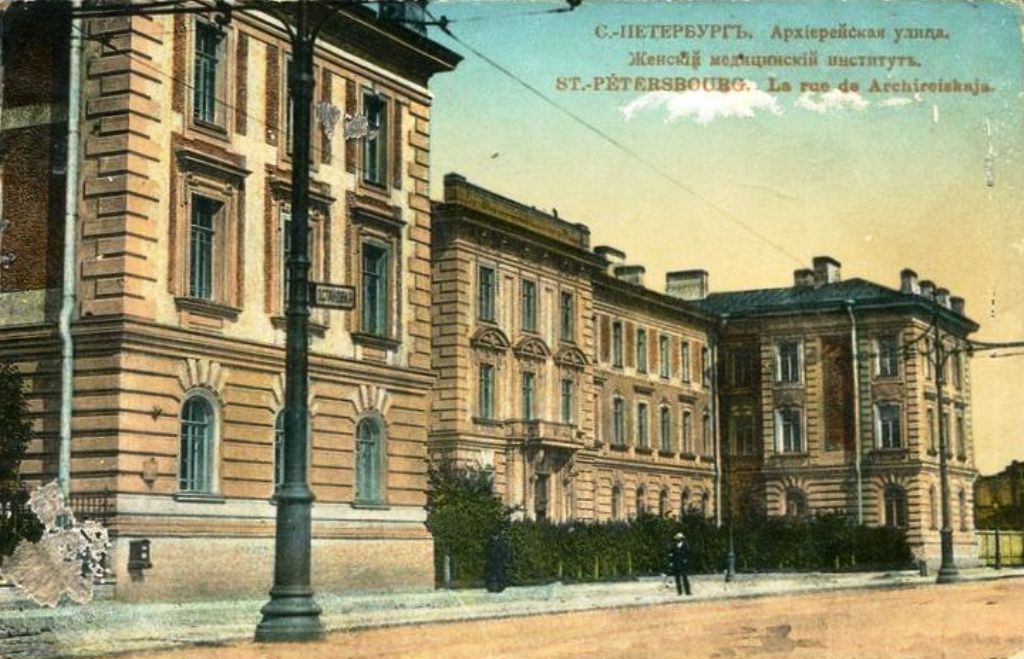
PHOTO: Women’s Medical Institute, St. Petersburg

Donations to various charitable purposes from Nicholas II ‘s “own funds” were significant. The emperor, according to the tradition established in the Imperial family, supported the activities of the Red Cross. In July 1896. 400 rubles were transferred to the Committee for the Care of Sisters of the Red Cross on behalf of Nicholas II. In 1896, he supported the idea of ​​opening a women’s medical institute in St. Petersburg, and ordered the allocation of 65 thousand rubles from the funds of the Cabinet of His Imperial Majesty. for the purchase of a plot of land for the construction of a hostel for students from other cities .[ 3 ] Quite often, the Tsar acted anonymously. In 1901 he ordered to transfer 50 rubles to the editorial office of the Russian Invalid magazine – as a donation from an “unknown person”.

Throughout his reign, the Tsar generously supported the construction of new churches from his personal funds. An impressive amount from the personal budget of Nicholas II was donated for the construction of the Orthodox church of St. Mary Magdalene in Darmstadt, home of his wife Alexandra Feodorovna. In 1898-1899 194,732 rubles were spent on the construction of this church, and an additional 23 thousand rubles for the decoration of the interiors.  Another major donation by Nicholas II was associated with the canonization of Seraphim of Sarov (1754-1833). For the Diveyevo Monastery, the Tsar allocated 44,424 rubles from his own funds in 1903. and an additional 11,434 rubles in 1904. Among other churches funded from the Tsar’s personal funds, the magnificent Feodorovsky Sovereign Cathedral in Tsarskoye Selo, consecrated in 1912, should be noted. In addition to the upper church, the cathedral had a lower church – the Cave in the name of St. Seraphim of Sarov. This cathedral was built with large funds provided by the Sovereign.[ 4 ] In 1913, the Tsar donated 1,000 rubles for the construction of an almshouse in memory of his personal confessor, Protopresbyter Father Ioann Yanyshev (1826-1910).

Emperor Nicholas II ‘s concern for the Russian Orthodox Church extended far beyond the borders of his Empire. Thanks to the sovereign’s generous donations, 17 new Russian churches were built in European cities, each distinguished by their own beauty. In 1898. he donated 5,000 rubles for the completion of the Russian Orthodox Cathedral of the Most Holy Trinity in Buenos Aires, Argentina. Orthodox churches in Greece, Bulgaria, Serbia, Romania, Montenegro, Turkey, Egypt, Syria, Libya, Palestine and the United States, all benefited from donations made by Nicholas II. The Tsar also paid for entire sets of silver vestments, icons and liturgical books, which were sent to the dioceses of Serbian, Greek, Bulgarian, Montenegrin, Antioch, Constantinople and Jerusalem Autocephalous Orthodox Churches, not to mention the generous subsidies for their maintenance and upkeep.

PHOTO: Feodorovsky Sovereign Cathedral, Tsarskoye Selo

The Tsar’s spiritual activity was inextricably linked with charity, guardianship, caring for the poor and the needy. Compassion and heartfelt concern were characteristic of all members of the Imperial Family. Many hospitals, orphanages and schools for the blind were dependent on Imperial philanthropy.

Nicholas II also donated significant sums to support education, science and art. In the period from 1896 to 1913. he provided assistance to various educational institutions in the amount of 66,157 gold rubles. From  the beginning of his reign, the Tsar donated 2 million rubles annually to support Russian art. Thanks to the personal financial support of Emperor Nicholas II, the Russian Museum of His Imperial Majesty Alexander III [renamed the State Russian Museum in 1917], the country’s first state museum of Russian fine arts, was opened in St. Petersburg in 1895. The State Memorial Museum of A.V. Suvorov – the first memorial museum in Russia – was also founded by Nicholas II. The Tsar’s personal funds supported the Academy of Arts, three theaters in St. Petersburg and two in Moscow, the imperial ballet and students of the ballet school.

In 1900, the tsar, using his own money, built the People’s House in St. Petersburg, a leisure and cultural centre built with the intention of making art and cultural appreciation available to the working classes of the Imperial capital. A colossal building, it featured an opera house with 7,000 seats, a theater hall with 1,500 seats, concert halls where the best orchestras and the best artists performed. The People’s House had a library, a reading room and an amusement park. The entrance fee to the People’s House was purely symbolic (10 kopecks).
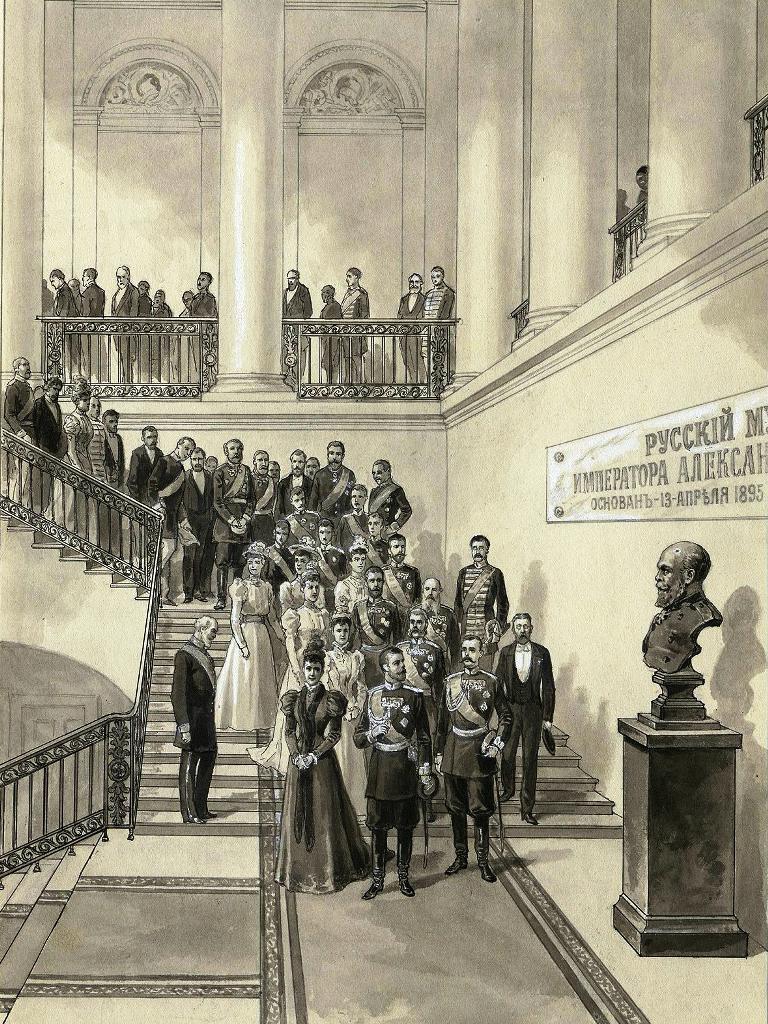
PHOTO: Nicholas and Alexandra attend the opening of the Russian Museum
of His Imperial Majesty Alexander III in St. Petersburg on 17th March, 1898

The Emperor, being an excellent athlete, supported projects related to the development of sports in Russia . In 1911, the tsar allocated 5 thousand rubles to the Bogatyr Physical Education Society from his own funds.

Nicholas II continued the traditional donations of his father Alexander III for the arrangement of charity trees and annually allocated several hundred rubles “for a Christmas tree for poor children”… In 1913, the Romanov Committee, a state-run charitable institution under the patronage of the Emperor, was organized “to provide charity to the orphans of the rural state”. The committee allocated 500,000 rubles for 1914; 5,000 given personally by the Emperor. In 1913, the All-Russian Guardianship for the Protection of Motherhood and Infancy was established by a personalized imperial decree, with the goal of reducing infant mortality in Russia, setting up shelters for mothers and children, Russia’s first dairy kitchens, children’s hospitals, maternity hospitals, etc. The Tsar allocated capital in the amount of one million ten thousand rubles for the establishment of the “Guardianship”, donated by St. Petersburg and Moscow private commercial banks at his disposal in commemoration of the 300th anniversary of the House of Romanov (1613-1913).

The Emperor often traveled across Russia. For example, there are memories of his visit to the Bryansk province in 1915. While visiting the families of workers of a mechanical plant in the village of Bezhitsa, Nicholas II left expensive gifts. The master, who greeted him with the traditional bread and salt, was presented with a gold watch. The Emperor also gave money to the children of workers who met him at the Bryansk plant.

According to the memoirs of Anatoly Alexandrovich Mordvinov (1870-1940), aide-de-camp to Nicholas II: “His kindness was not of a superficial quality, did not show itself outwardly and did not diminish from countless disappointments. He helped as much as he could, out of his own funds, without thinking about the amount requested, including people to whom, I knew, he was personally not disposed”.
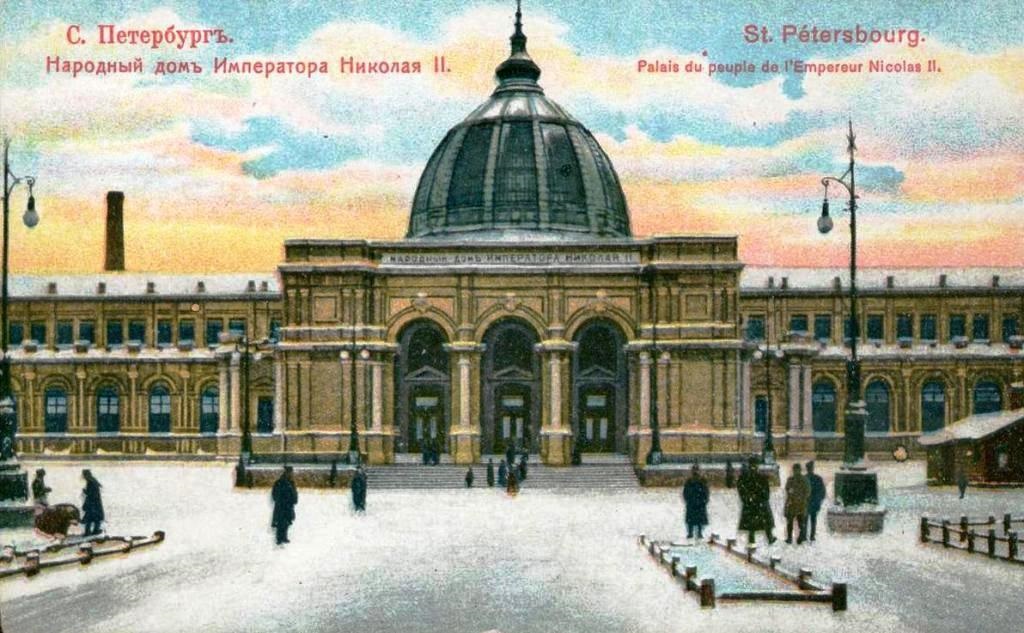
PHOTO: the People’s House of Nicholas II, St. Petersburg

The Bolsheviks created the myth that Nicholas II and his family lived in decadent luxury, that the Tsar and his family spent lavish sums of money on their own needs, although in fact they lived rather modestly in their residences at Tsarskoye Selo [Alexander Palace] and Peterhof [Lower Dacha]. Nicholas II was thrifty and modest in his personal habits, tastes and dress. Colonel Eugene Stepanovich Kobylinsky (1875-1927) said: “He was very modest in his needs. I saw him at Tsarskoye Selo wearing worn-out trousers and boots.” To support this or that charity, the Tsar was often forced to curb his own personal expenses. Sometimes he would tell members of his family to live modestly for 2 or 3 months. Nicholas II donated so much that he sometimes had to ask for an advance from the amount that was annually assigned him by the Cabinet of His Imperial Majesty.

Prince Dmitry Dmitrievich Obolensky (1844-1931) recalled: “In my Tula estate, the village of Shakhovskoye, a stone church was being built, and on the occasion of the war there was a hitch in the construction. And so, thanks to the generosity of the Tsar, it was possible to complete the construction, and in 1915, during the consecration of this church by the Tula Archbishop Parthenius, to proclaim many years for the beloved Monarch.[ 5 ]

Once, when the Tsar and his family stopped at one of the railway stations, a local official turned to him, complaining that his small salary was not enough for his large family. The generous Tsar promised that he would give him 30 rubles a month, and Tsesarevich Alexei said that he would add another 40 from his own funds.

Mrs. O.P. Ollengren , the headmistress of the Vasileostrovskaya Women’s Gymnasium, said that often in the evenings the Tsar invited her to his study and, despite being very busy and tired, asked to present him with lists of the most needy children who were under her care. The sums that the Emperor donated from his personal funds were sometimes very large. Once Mrs. Ollengren dared to say that the sum was too much, that he could not find enough for everyone, to which the Emperor firmly answered: “The Tsar must provide for everyone.” At the end of the audience, always in a whisper, he asked her “not to say a word to anyone” about his help.
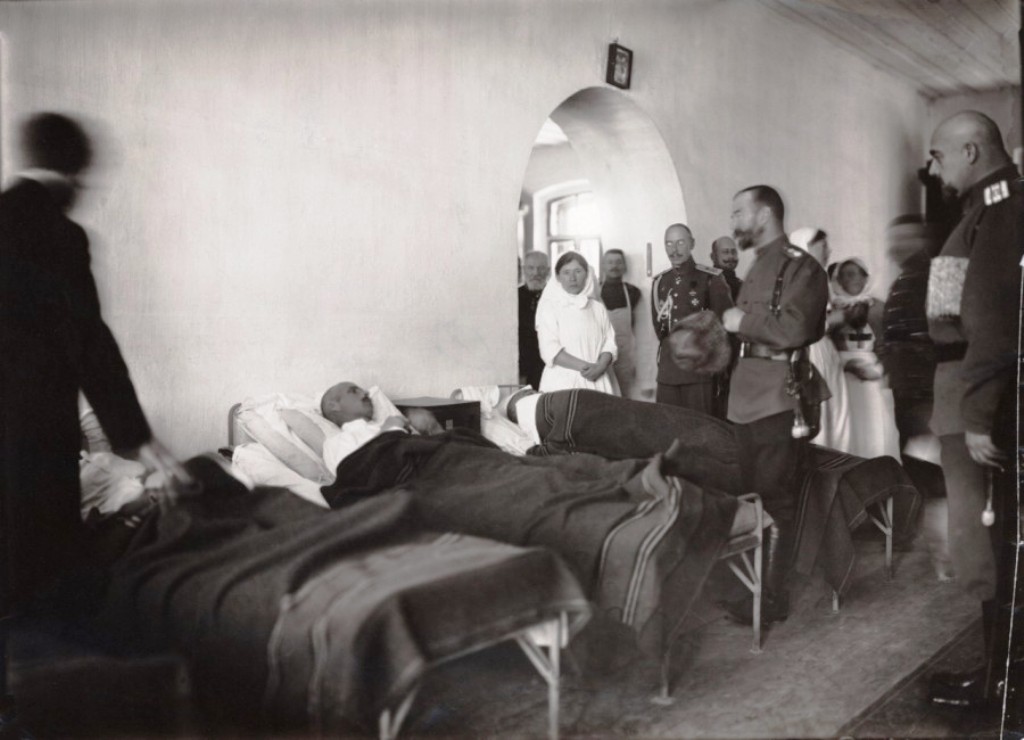
PHOTO: Nicholas II visiting wounded Russian soldiers. 1914

At the beginning of the First World War, Emperor Nicholas II, donated 200 million rubles for the needs of the army, to help the wounded, the crippled and their families. During the war, the expenses of Nicholas II provided funds for medical equipment to numerous hospitals and institutions, and increased many times over. In 1916 and 1917. for these purposes the Emperor spent 427,763 and 431,583 rubles, respectively .[ 6 ] The donation on behalf of the Emperor and his wife to the Charity Committee of the Grand Duchess Tatiana Nikolaevna “for providing temporary assistance to victims of hostilities” amounted to 425 thousand rubles. From his personal funds, the tsar donated 100 thousand rubles to the International Committee of the Red Cross in Geneva to help Russian prisoners of war who were in concentration camps of those nations at war with Russia.

As a result of all the expenses associated with the war, the treasury was empty. In March 1917, an audit by the Provisional Government revealed that the former tsar, instead of the supposed millions, had only 908 thousand rubles in his account.

As Grand Duke Alexander Mikhailovich recalled: “Looking back at the life that the Imperial Family led, I must admit that this way of life could not be compared with the life of the wealthy tycoons of the capital. I doubt whether the kings of steel, cars or oil would have been content with such a modest yacht that belonged to the Tsar. And I am convinced that not a single head of any large enterprise would have retired from business as poor as the Tsar was on the day of his abdication.”

Yes, the tsar became financially impoverished, but until the last minute of his life he remained a highly spiritual person, devoted to the Orthodox faith, the Fatherland and his people. In 2000, by the decision of the Holy Synod of the Russian Orthodox Church, he and his family were glorified in the rank of holy royal passion-bearers in the host of new martyrs and confessors of Russia.

It is impossible to list all the acts of mercy and charity of Holy Tsar Nicholas II, but let his selfless acts of charity serve as an example for the new Russian capitalists and for all of us Orthodox Christians.
CLICK on the IMAGE above or LINK below to watch the VIDEO
‘Nicholas II: The Last Orthodox Tsar of Russia with Paul Gilbert

NOTES

[ 1 ] Prince Dmitry Obolensky. Emperor Nicholas II and his reign (1894-1917). “Tsar and Russia”, publishing house “Otchiy Dom”, M., 2017, p. 163.

[ 2 ] I.L. Solonevich. The myth of Nicholas II. “Tsar and Russia”, M., 2017, p. 493.

[ 3 ] A. Sokolov, I. Zimin. Charity of the Romanov family. Х1Х – the beginning of the XX century. Everyday life of the Russian imperial court. M., St. Petersburg. Tsentropolygraph. Russian Troika – St. Petersburg. 2015. – URL: https://www.litmir.me/br/?b=266759&p=1 .

[ 4 ] E.E. Alferyev. Emperor Nicholas II as a man of strong will. Holy Trinity Monastery, Jordanville, 1983. Reprint. edition 1991, p. 80.

[ 5 ] Prince Dmitry Obolensky. Emperor Nicholas II and his reign. Decree. cit., p. 164.

[ 6 ] A. Sokolov, I. Zimin. Decree. op. – URL: https://www.litmir.me/br/?b=266759&p=1 .

© Paul Gilbert. 12 December 2020
Recreation of Furniture for the Mauve (Lilac) Boudoir in the Alexander Palace

This is the second article about the recreation of the Mauve (Lilac) Boudoir in the Alexander Palace. Click HERE to read the first article The history and restoration of the Mauve (Lilac) Boudoir in the Alexander Palace, published on 4th November 2020 – PG

NOTE: all photos © Tsarskoye Selo State Museum-Reserve

***

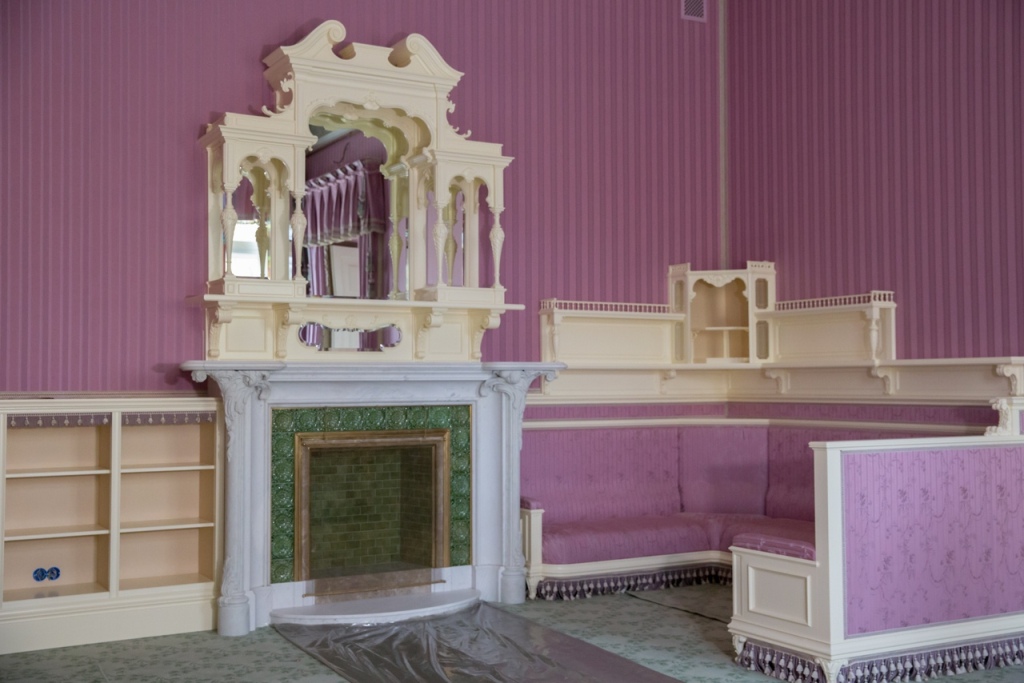
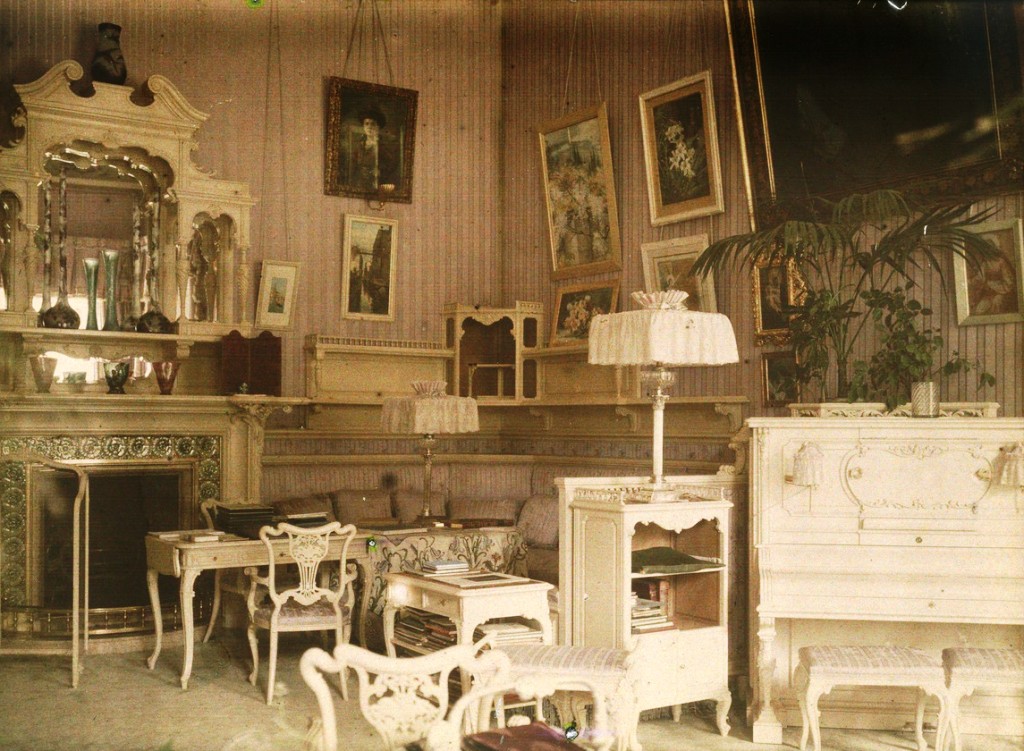
Empress Alexandra Feodorovna’s Mauve (Lilac) Boudoir was a favourite room for the Imperial family and their guests. It was in this room that the Empress, often together with Nicholas II came to relax, read books, played music, make handicrafts on the couch, and drank tea at a round table. In winter, the room was decorated with fragrant bouquets of white lilacs, grown in the imperial greenhouses at Tsarskoye Selo. The decoration of the Mauve Boudoir, which was part of the Empress’s private chambers, was completed in a short time, in just two and a half months in 1895.

According to documents and drawings, approved by the Empress herself, the F. Melzer & Co. in London, England produced a set of furniture, which consisted of a built-in sofa, built-in shelves and a set of two plateaus (jardinieres) for plants, etc.

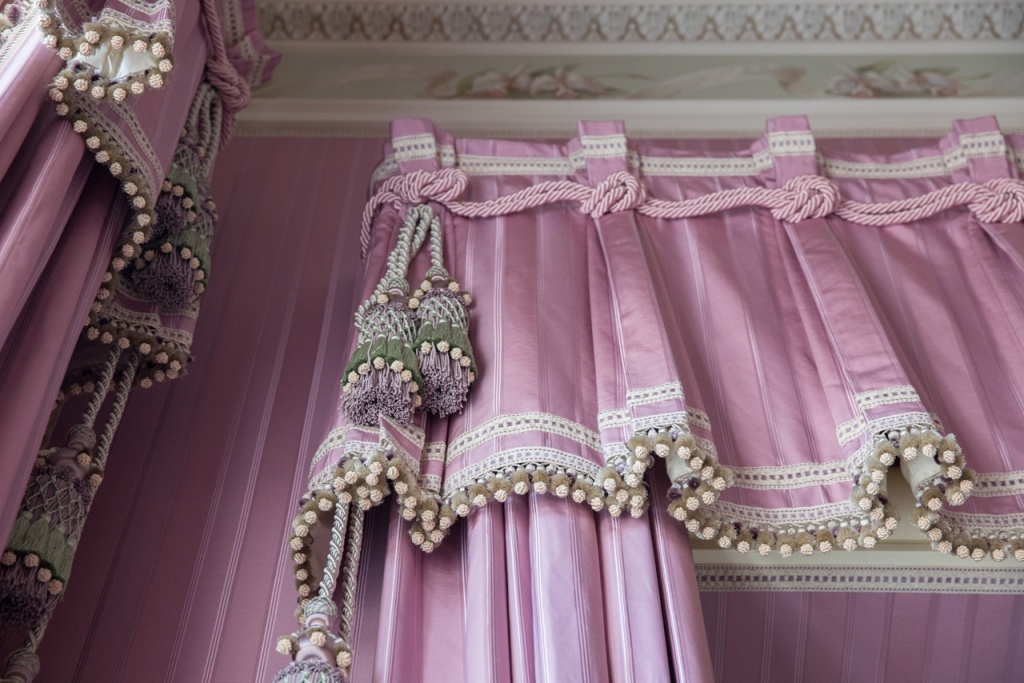
PHOTOS: details depicting the current look of the recreated Mauve (Lilac) Boudoir

Sadly, almost all of the furniture items in this room were destroyed during the Great Patriotic War (1941-45). Employees of the Scientific Fund Department of the Museum-Reserve did a lot of research and preparatory work, discovered archival documents and photographs that were used for the recreation of the furniture for the Mauve Boudoir.

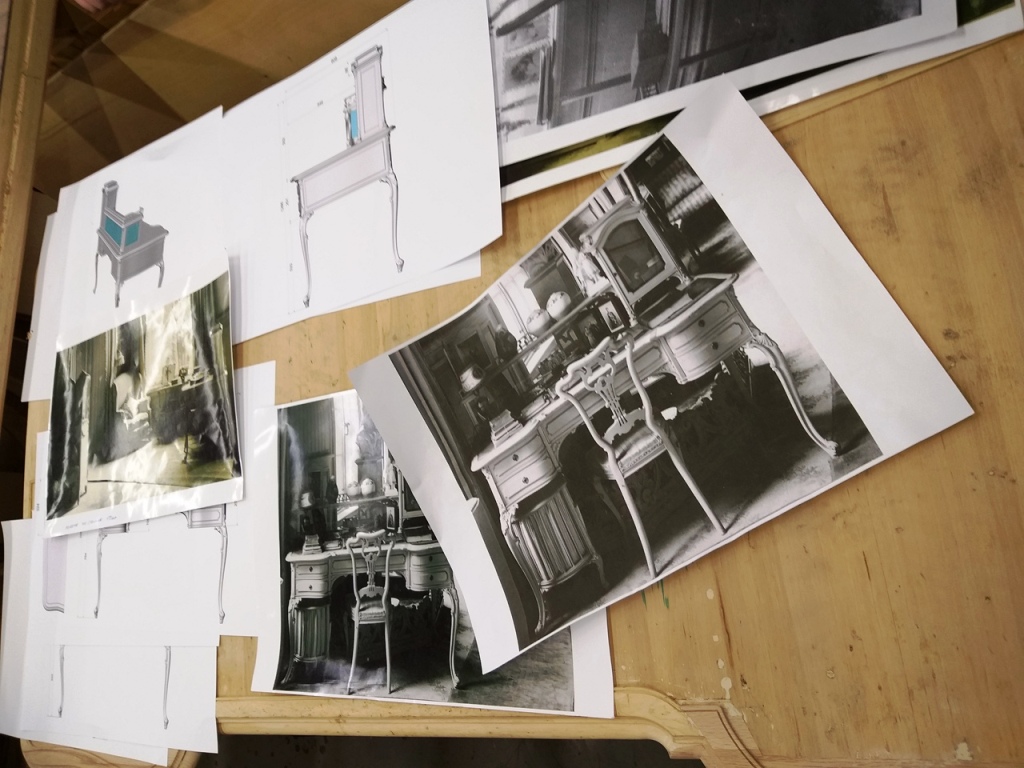
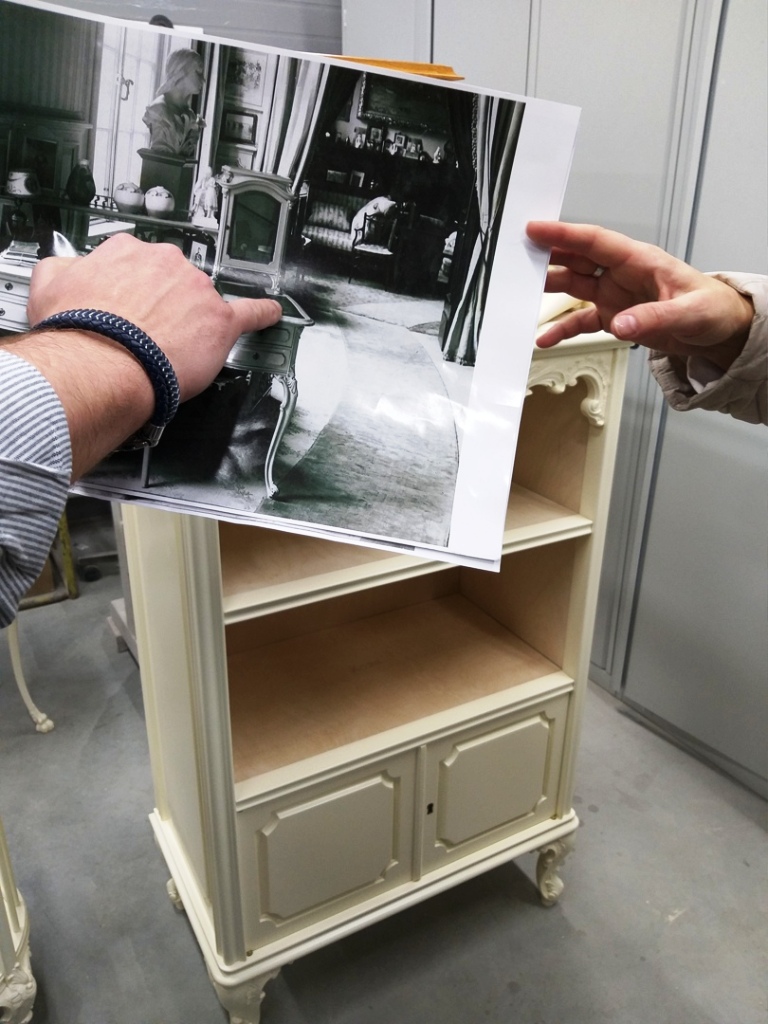
In photographs preserved in the Collection of the Tsarskoye Selo State Museum and in photographs from the albums of the historical collection of the Alexander Palace (now stored in the State Archives of the Russian Federation in Moscow), allowed experts to view individual pieces of furniture items in the Mauve Boudoir from different angles, thus making it possible to recreate exact copies of the structural elements and decoration details for the room.

The matter of painting panels, doors and cabinet furniture required a separate study. In the colour scheme of the panels, two shades were used, this can be seen in colour autochromes and is confirmed by archival details from the workshops. The recipe found in the archive, indicating the materials of painting and their proportional ratios, helped restorers to define a modern analogue and apply it when painting the furniture of the Mauve Boidoir in two tones, says Anna Tarkhanova, senior researcher at the Museum-Reserve, who took an active part in the work on the reconstruction of the interior.

PHOTOS: experts review historic photos and drawings for the
recreation of the furniture for the Mauve (Lilac) Drawing Room

The only original item to survive from the Empress’s study was a writing-table, which entered the collection of the museum-reserve in 1999, also helped in solving this issue. During the Great Patriotic War, the table had not been evacuated. It was found in a deplorable state after the war in the Alexander Park by the former curator of the Alexander Palace, Anatoly Mikhailovich Kuchumov (1912-1993). In 2018, restorers conducted test clearing of the paint layer of the table, determined the initial colour of its finish and, on the basis of this, made a decision on the colour scheme of the panels, built-in furniture and doors of the Mauve Boudoir. In 2020, the masters of the Tsarskoye Selo Amber Workshop restored the table and recreated the lost details, based on photographs and archival descriptions.

The work on the recreation of the upholstered and cabinet furniture of the Mauve Boudoir was also carried out by specialists from the Tsarskoye Selo Amber Workshop (director Boris Igdalov) in accordance with the design developed in 2019-2020 by the Studio 44 Architectural Bureau in St. Petersburg.

For the upholstery of the furniture set, fabrics, cords, fringes and tassels were recreated according to historical samples that are kept in the Tsarskoye Selo and Pavlovsk Museum-Reserves. When restoring fabrics, the technologists were guided by the design approved by the museum-reserve and the Renaissance workshops for the restoration of ancient monuments based on materials presented by the museum. The analysis of the fibers of the fabric, the type of threads, their colour and the style of weaving the fabric, as well as the fabrication itself, was carried out by specialists of the famous Italian firm RUBELLI. The trim items were made at the English company Tassel & Trim and the Polish company Re Kon Art. The process of ordering, manufacturing and delivery of these elements for the rooms’ decor was supervised by Janusz Szymanyak, director of the Renaissance Workshops for the Restoration of Antiquities.

PHOTO: colour autochrome of the Mauve (Lilac) Boudoir, taken in 1917

***

The Mauve Boudoir is one of 15 interiors situated in the eastern wing of the palace, scheduled to open in 2021. Among the other interiors are the New Study of Nicholas II, Moorish Bathroom of Nicholas II, Working Study of Nicholas II, Reception Room of Nicholas II, Pallisander (Rosewood) Living Room, Mauve (Lilac) Boudoir, Alexandra’s Corner Reception Room, the Imperial Bedroom, among others.

In the future, the Alexander Palace will become a memorial museum of the Romanov family – from Catherine the Great to Nicholas II, showcasing the private, domestic life of the Russian monarchs who used the palace as an official residence. The eastern wing of the palace will be known as the Museum of the Russian Imperial Family. The multi-museum complex, which includes the Western wing is scheduled for completion no earlier than 2024.

***

Dear Reader: If you enjoy all my updates on the restoration of the Alexander Palace, then please help support my research by making a donation in US or Canadian dollars – donations can be made by GoFundMe, PayPal, credit card, personal check or money order. Click HERE to make a donation or click HERE to buy one of my Nicholas II calendars – the net proceeds help fund my work. Thank you for your consideration – PG

© Paul Gilbert. 9 December 2020
 

The History and Restoration of the Working Study of Nicholas II in the Alexander Palace

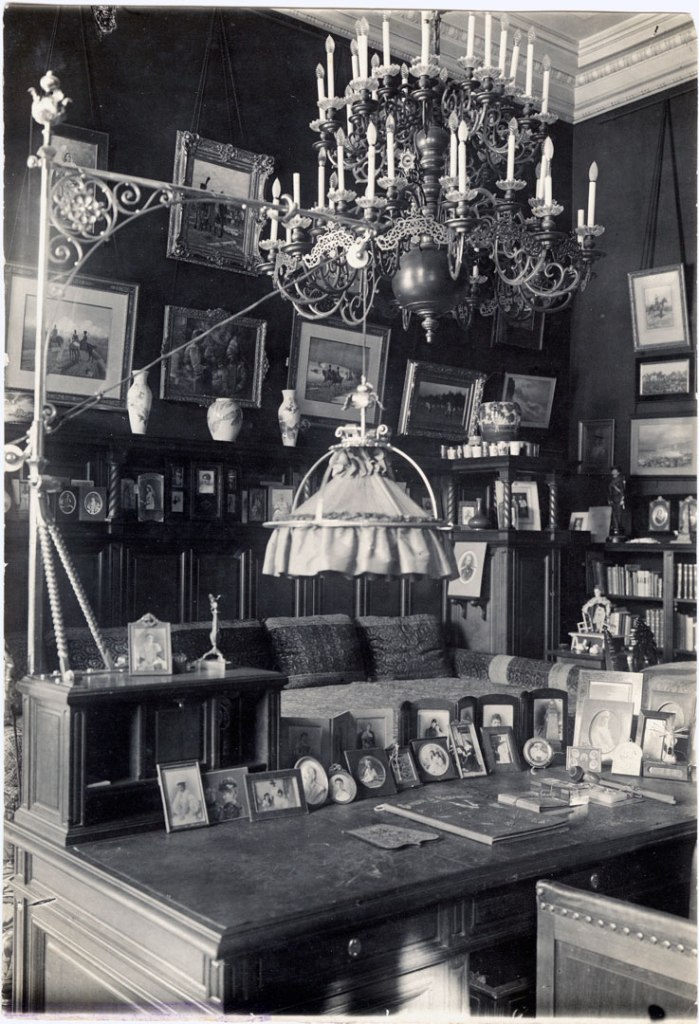
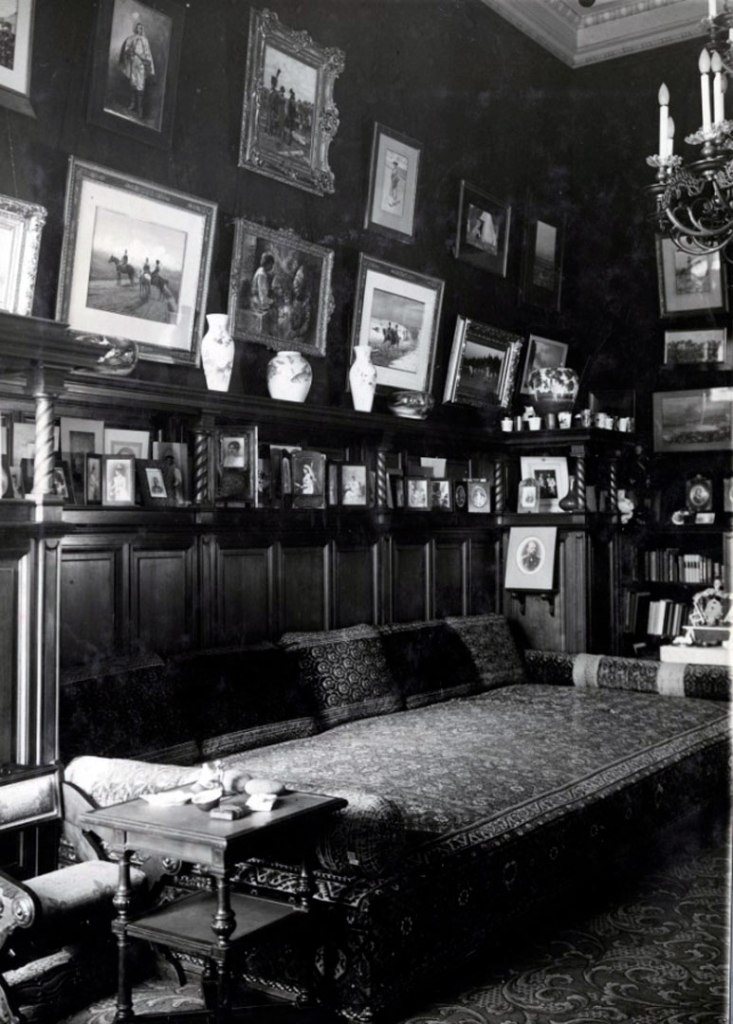
PHOTO: view of the Working Study of Nicholas II, as it looked in 1917

The Working Study of Emperor Nicholas II was decorated in 1896-1897, by Roman Meltzer (1860-1943) and furniture master Karl Grinberg. Grinberg was invited to repair the existing furniture from the mid-1870s. He had previously performed work on the decoration of the apartments of the daughter of Emperor Alexander II (1818-1881) Grand Duchess Maria Alexandrovna (1853-1920) and her husband the Alfred, Duke of Saxe-Coburg and Gotha (Duke of Edinburgh, 1844-1900).

The interior was decorated in the English style, with the upper walls painted a dark red and walnut panels on the bottom. The furniture was also made of walnut and upholstered in green morocco leather. One side of the room was occupied by a large ottoman (a copy of the one in the study of Emperor Alexander III), upholstered with a Persian carpet, as well as an L-shaped writing desk. Above it, a lamp was attached to a special rod, which easily rose and fell to the desired height. Next to the table was an Italian Savonarola armchair, decorated with carvings and upholstered in brown leather.

As the name implies, this business-style room was intended for work – here the Emperor read papers, including numerous correspondence, received foreign ministers and dignitaries and listened to reports.

PHOTOS: views of the Working Study of Nicholas II, as it looked in 1917


The interior was decorated with vases, mantel clocks, jubilee and souvenir glasses, miniature watercolours and photographs of the Imperial family and their relatives. Since Nicholas II loved to smoke, the Study was also filled with objects for smoking – pipes, cigarette cases, lighters, and ashtrays.

The Working Study featured special built-in cupboards with shelves which held about one thousand books from the Emperor’s library. Among these were biographies and memoirs, Russian and military history, as well as politics and religion, as well as albums, magazines, manuscripts and brochures.

Between 1918-1930s, the Study along with the other private apartments of the Imperial family was part of the museum, created by the Bolsheviks, unfortunately, it was completely lost during the Great Patriotic War (1941-45).

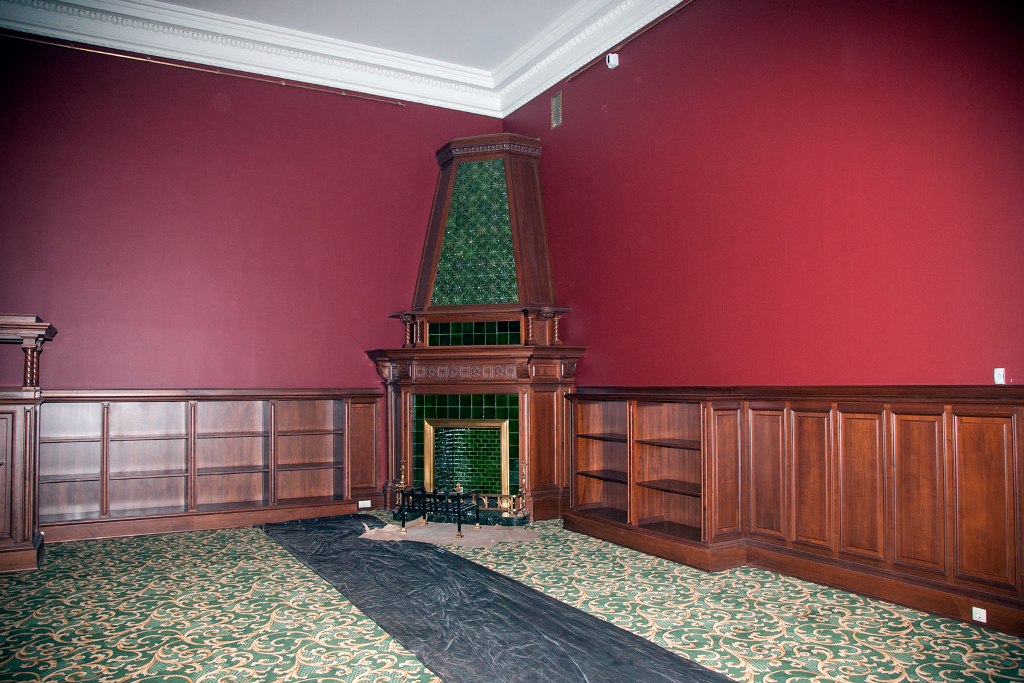
PHOTO: the current look of the recreated Working Study of Nicholas II

The recreated interior features wood paneling, built-in furniture and a carpet. The curtains were restored according to the samples preserved in the museum’s funds. Thanks to the pieces of tiles found in the pool of the Emperor’s Moorish Bathroom, it was possible to accurately restore the finish of the fireplace. The recreation of items of furniture will include an ottoman, a desk with a a lamp, and armchairs. Paintings and mantel clocks preserved in the funds of the Pavlovsk Museum-Reserve will be returned to the Alexander Palace to decorate the study.

Click HERE to read my article Ottoman recreated for Working Study of Emperor Nicholas II in the Alexander Palace, published on 28th June 2023.

***

The Working Study of Nicholas II is one of 15 interiors situated in the eastern wing of the palace, scheduled to open in 2021. Among the other interiors are the New Study of Nicholas II, Moorish Bathroom of Nicholas II, Reception Room of Nicholas II, Pallisander (Rosewood) Living Room, Mauve (Lilac) Boudoir, Maple Drawing Room, Alexandra’s Corner Reception Room, the Imperial Bedroom, among others.

In the future, the Alexander Palace will become a memorial museum of the Romanov family – from Catherine the Great to Nicholas II, showcasing the private, domestic life of the Russian monarchs who used the palace as an official residence. The eastern wing of the palace will be known as the Museum of the Russian Imperial Family. The multi-museum complex, which includes the Western wing is scheduled for completion no earlier than 2024.

© Paul Gilbert. 25 November 2020
Those Who Served the Tsar: Prince Vladimir Nikolayevich Orlov (1868-1927)

PHOTO: Emperor Nicholas II and Prince Vladimir Orlov

This is the first in a series of biographical essays about the men who served Emperor Nicholas II between 1894 to 1917, researched primarily from Russian sources by Independent Researcher Paul Gilbert

Prince Vladimir Nikolayevich Orlov was born in Brussels, Belgium on 13th January 1869 (O.S. 31st December 1868). He was one of two sons born to Prince Nikolai Alekseevich Orlov (1827-1885) and Princess Ekaterina Nikolaevna Trubetskaya (1840-1875). Vladimir had one brother Prince Alexei Nikolaevich Orlov (1867-1916),

Vladimir’s father served as adjutant general, cavalry general, and diplomat in Brussels, Paris and Berlin, as well as a military writer. His great grandfather was Count Fyodor Grigorievich Orlov (1741-1796), who along with his brothers Counts Alexis and Grigory Orlov, took part in a coup which placed Catherine the Great on the Russian throne in 1762.

In 1887 Vladimir entered the junior special class of the Corps of Pages in St. Petersburg, from which he graduated in 1889 as a cornet in the Life Guards Horse Regiment. He held numerous distinguished ranks during his life, including Lieutenant (1893), Staff Captain (1899), Captain (1901), Colonel (1904), Major-General (1909, enrolled in the suite), and Lieutenant-General (1915).

In 1900 Orlov participated in the Summer Olympics held in Paris, competing in equestrian sports: the four-in-hand competition which is a carriage driven by four horses, with the reins arranged so that one driver can control all four horses. Very little is known of the 1900 event, which had at least 28 carriages entered. The title was won by Belgian Georges Nagelmackers.

PHOTO: Emperor Nicholas II and Prince Vladimir Orlov

On 7th January 1901, he was appointed Assistant Chief, and he received his first post as Adjutant, thanks to the patronage of the Minister of the Imperial Court Baron Vladimir Borisovich Fredericks (1838-1927). It was on this date, that he entered the close circle of the emperor and empress. The prince recalls in his diary as follows: “While on duty, I often dined and had breakfast with the sovereign; at first it was very difficult for me, because I was terribly shy, but then little by little it began to pass”.

Orlov, who bore the nickname “Fat Orlov,” was an exceedingly rich man. He was a highly cultivated man, sarcastic, with a dry humour, and enjoyed great social prestige. He was “a witty and charming man with a great knowledge of the world, he was a typical representative of aristocratic culture and, in addition to his native language [Russian], he spoke English, French, German, Italian, Spanish and Serbian.”

For many years he was one of the most trusted people of Nicholas II. With no thought whatever for his personal career, he was devoted to the Tsar and to the cause of the Russian monarchy, devoted in the highest sense in which the word can be used.

Prince Vladimir Nikolayevich Orlov also served as one of Nicholas II’s closest advisors, and on 26th August 1906, he was appointed Chief of the Military Campaign Chancellery of His Imperial Majesty. a position he held until 1915. As the head of the military cabinet, Orlov was a keen technologist interested in military applications of the motor car. 

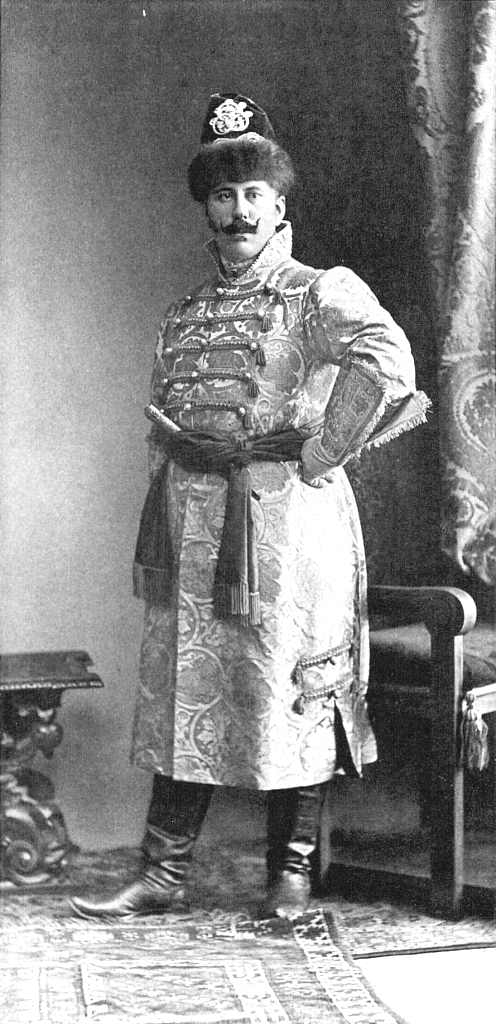
PHOTO: Orlov dressed as a 17th falconer for the
1903 Costume Ball in the Winter Palace

Prince Orlov married twice. His first wife Princess Olga Konstantinovna Beloselskaya-Belozerskaya (1872-1923), goddaughter of Princess E.P. Trubetskoy and Count P.P. Shuvalov, maid of honour, daughter of Prince K.E.Beloselsky-Belozersky and N. D. Skobeleva. In society, she was known as the first fashionista and the most elegant woman in St. Petersburg. In her salon, playing cards and dancing reigned. In 1917, their son Nikolai (1896-1961) married Princess of the Imperial Blood Nadezhda Petrovna (1898-1988), they had two daughters.

His second wife Countess Elizaveta Alexandrovna Luders-Weimarn (1883-1969).

It was Prince Orlov who seems to have integrated automobiles into the life of the Imperial Family. In 1904 he drove his own Delaunay-Belleville to the Alexander Palace at Tsarskoye Selo Then, as described by court official Alexander Mosolov (1854-1939), “Orlov placed his automobile at the Tsar’s disposal, and driving excursions became an almost daily diversion… After that, he never relinquished his role as chauffeur”.

“We never had a single accident on any of our excursions; of course, I was always extremely careful. I didn’t consider it appropriate for a subject to crush his Tsar,” said Orlov.

In the autumn of 1905 Nicholas himself decided to acquire some automobiles. “I can no longer impinge upon Orlov’s good will. Buy two or three cars, but let Orlov choose them. He knows better than any professional”.

As the Emperor’s collection of automobiles grew, the construction of Imperial Garages begun at Tsarskoye Selo, Peterhof, St. Petersburg (Winter Palace) and Livadia. On 18th February 1907, a fleet administration, with Prince Orlov at its head, was officially established within the Ministry of the Imperial Court.

Prince Orlov encouraged the Imperial Family’s interest in automobiles in every way he could. It was he who arranged for Tsesarevich Alexis to be presented with a small, two-seater Bébé Peugeot, which measured 2445 x 1140 mm. This little car had debuted at the Paris Auto Show in 1904.

The automobile trips became more frequent, which helped to bring Vladimir Nikolaevich closer to Nicholas II. They had long conversations, the emperor took an interest in the opinion of the prince. From that moment on, the family’s attitude toward the prince changed significantly. He became especially close. The Dowager Empress Maria Feodorovna affectionately called him “Vladi”.

PHOTO: Orlov chauffeuring Nicholas II and Alexandra Feodorovna
in a Delaunnay-Belleville, 1905

Subsequently, the role of chauffer was transferred to 25-year-old Adolphe Kégresse (1879-1943), a Frenchman with impeccable references specially assigned to this position by Orlov himself. This was done, and Orlov was entrusted with the organization of the Imperial Garage at Tsarskoye Selo.

Like many who served the Emperor, Orlov held a negative view on Rasputin. On 19th August 1915, after an unsuccessful attempt to discredit Rasputin in a newspaper, both he and Vladimir Dzhunkovsky (1865-1938), First Deputy Interior Minister, were discharged from their posts.

Upon learning of Orlov’s dismissal, the Empress Dowager Maria Feodorovna wrote to Grand Duke Andrei Vladimirovich: “This was not done by my dear boy. He is too kind to do such a thing. He loved both of them [Orlov and Dzhunkovsky] very much. No, this is her [Alexandra Feodorovna] doing. She alone is responsible.”

On 25th August 1915, Orlov was banished by the Tsar in 1915 to the Caucasus, where he served under the Viceroy Grand Duke Nicholas Nikolaevich (1856-1929).

On 16th November 1915, Orlov was appointed assistant of civil affairs of the Viceroy in the Caucasus. On 31st March 1917, he was dismissed from service due to illness with a uniform and a pension.

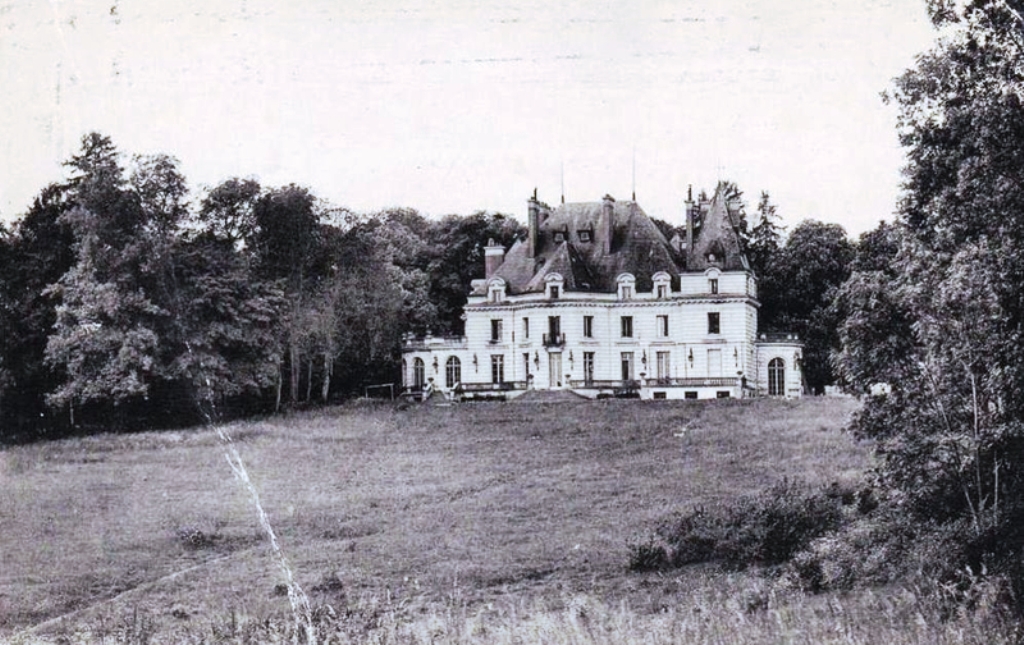
PHOTO: Chateau Belfontaine in Samois-sur-Seine, where Orlov lived in exile

After the October Revolution of 1917, Orlov lived at Tchair, the Crimean estate of Grand Duke Nicholas Nikolaevich. He followed members of the Imperial family into exile, settling in France, where he lived until the end of his days. Prince Vladimir Nikolayevich Orlov died on 29th August 1927 at his estate Chateau Belfontaine, situated near Paris. He was buried in the Samois-sur-Seine cemetery, Seine-et-Marne, Ile-de-France, France.

© Paul Gilbert. 1 December 2020