Nicholas II in the news – Winter 2023

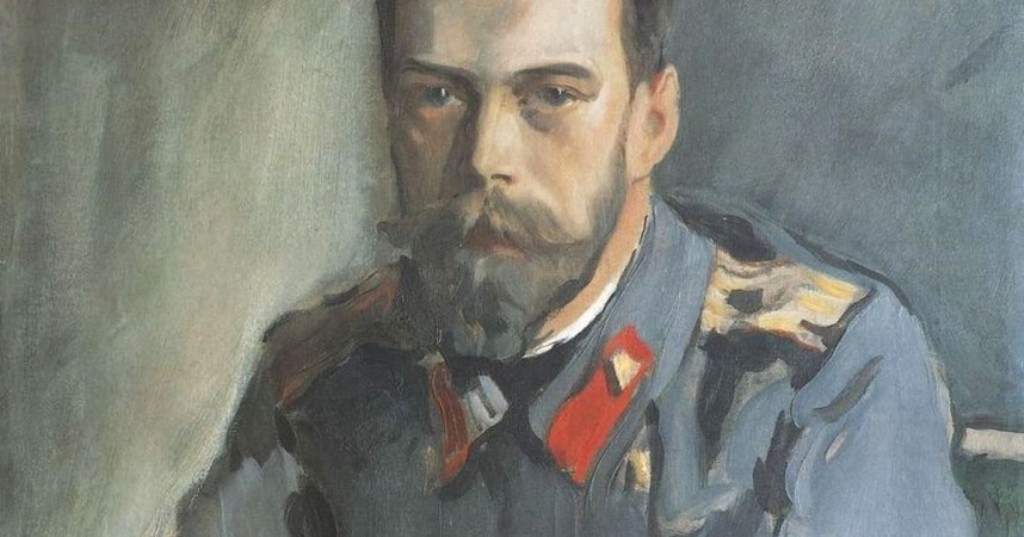
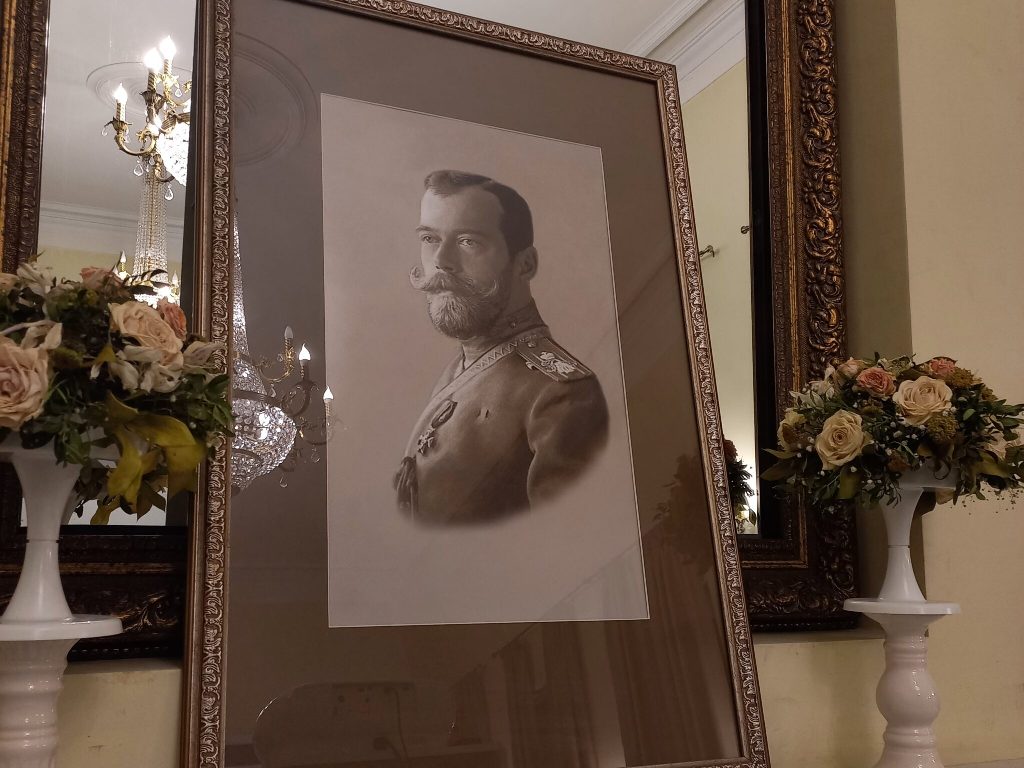
PHOTO: framed photograph of Emperor Nicholas II from the Collection of the Museum of Emperor Nicholas II in Moscow

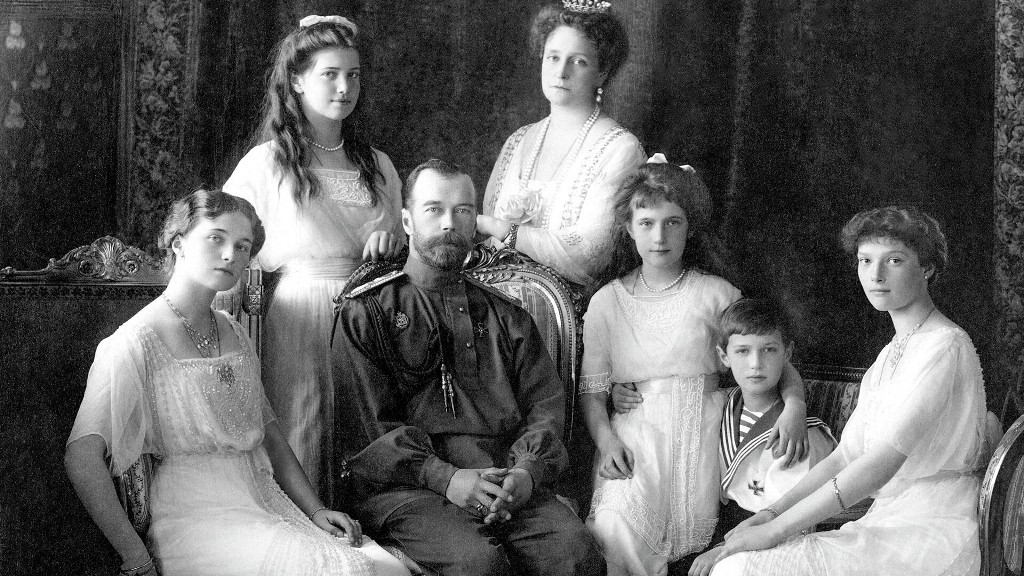
Russia’s last Emperor and Tsar continues to be the subject of news in Western media. For the benefit of those who do not follow me on my Facebook page, I am pleased to present the following 9 full length articles, news stories and videos published by American and British media services, in addition, are several articles about Nicholas II’s family and faithful retainers.

Below, are the articles published in January, February and March 2023. Click on the title [highlighted in red] and follow the link to read each respective article:

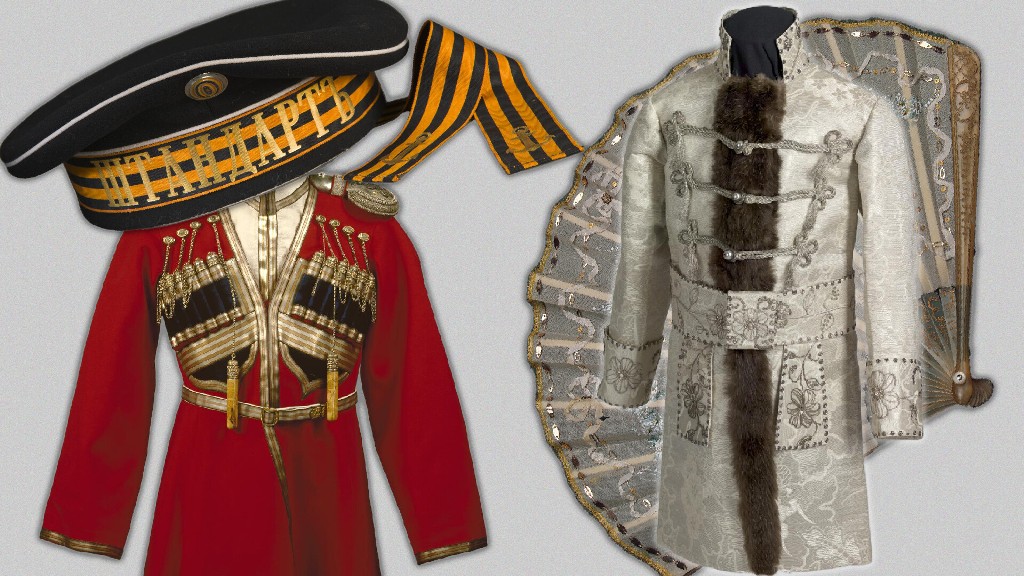
What did Nicholas II’s children wear? + 22 PHOTOS

The children of the last emperor were raised modestly and the same could be said about their wardrobe. The younger daughters sometimes wore the clothing of the older ones, while Alexei almost always wore a military uniform.

Source: Russia Beyond. 20 March 2023

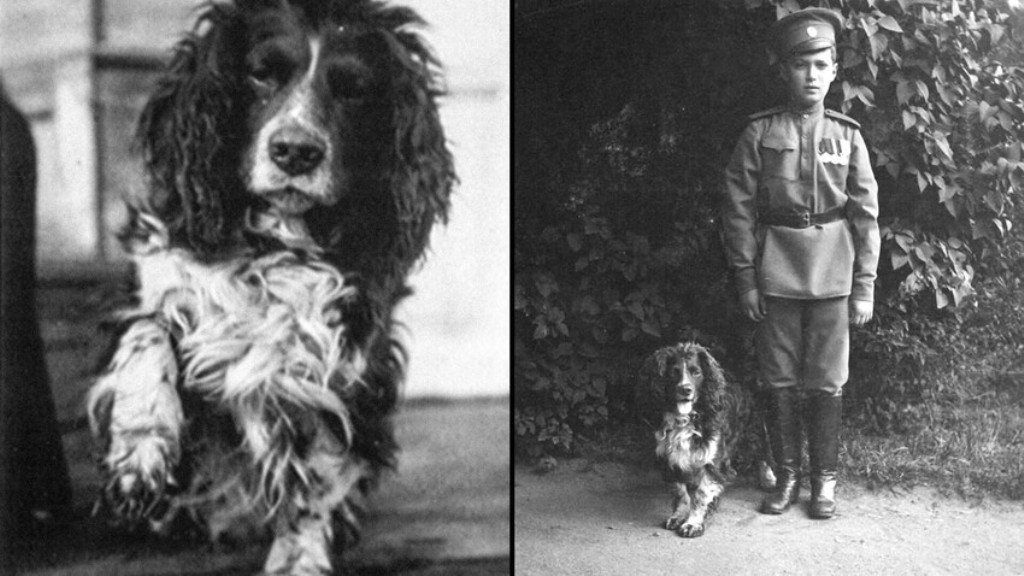
Joy, the last dog of the Romanovs + PHOTOS

This dog is the only one that survived the murders of the Imperial Family. Joy ended his days as a pet of Edward VIII’s riding instructor.

Source: Russia Beyond. 15 March 2023

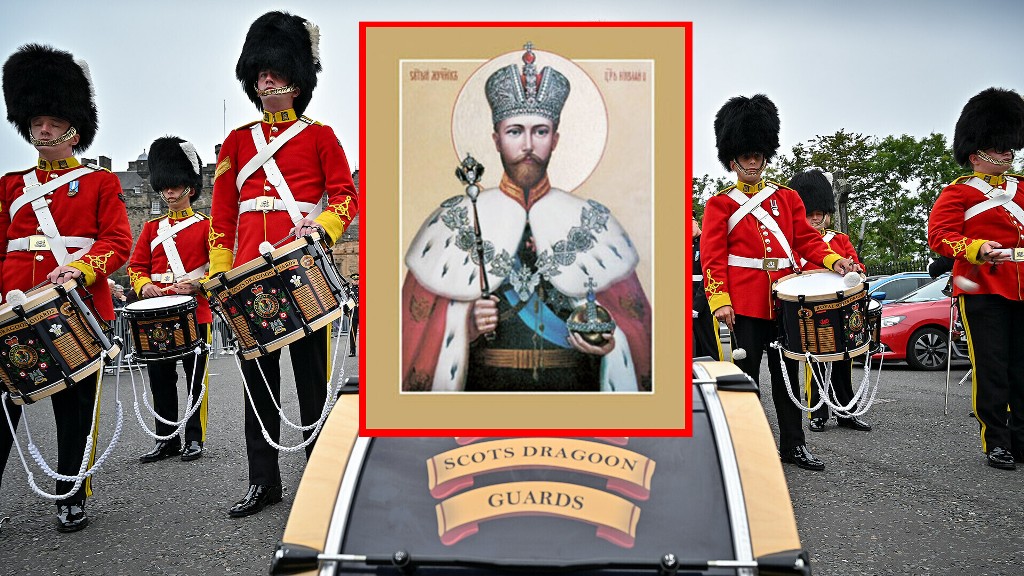
Why do the Royal Scots Dragoon Guards consider the Russian Tsar Nicholas II their guardian angel? + PHOTOS

An icon depicting the monarch hangs in the regiment headquarters in Edinburgh and accompanies it during military operations, while the band of this military unit plays the anthem of the Russian Empire, ‘God Save the Tsar!’, at ceremonial events. So, what is the connection between the Russian tsar and the elite British soldiers?

Source: Russia Beyond. 27 February 2023

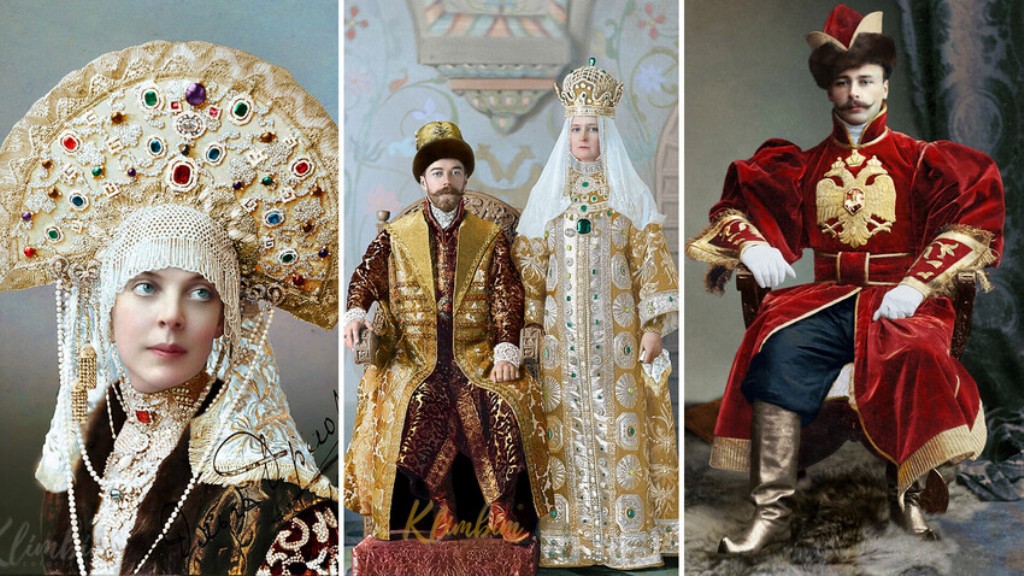
PHOTOS of the last ball hosted by the Romanov royal family + 17 PHOTOS

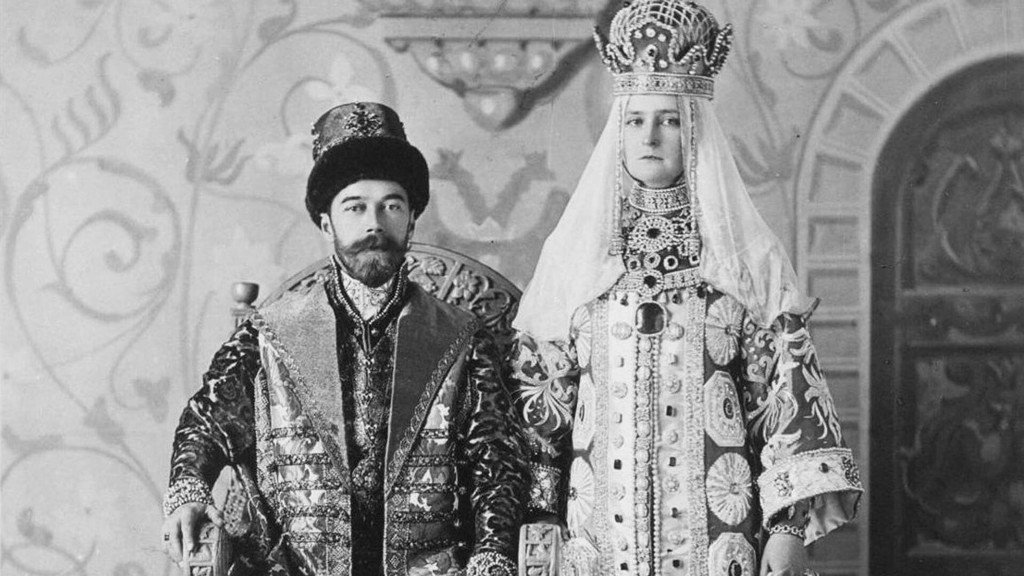
One hundred and twenty years ago, the Romanov royal dynasty hosted the most extravagant and eccentric costume ball in the history of the Russian Empire. It was also the last. This article features beautiful photos colourized by KLIMBIM.

Source: Russia Beyond. 24 February 2023

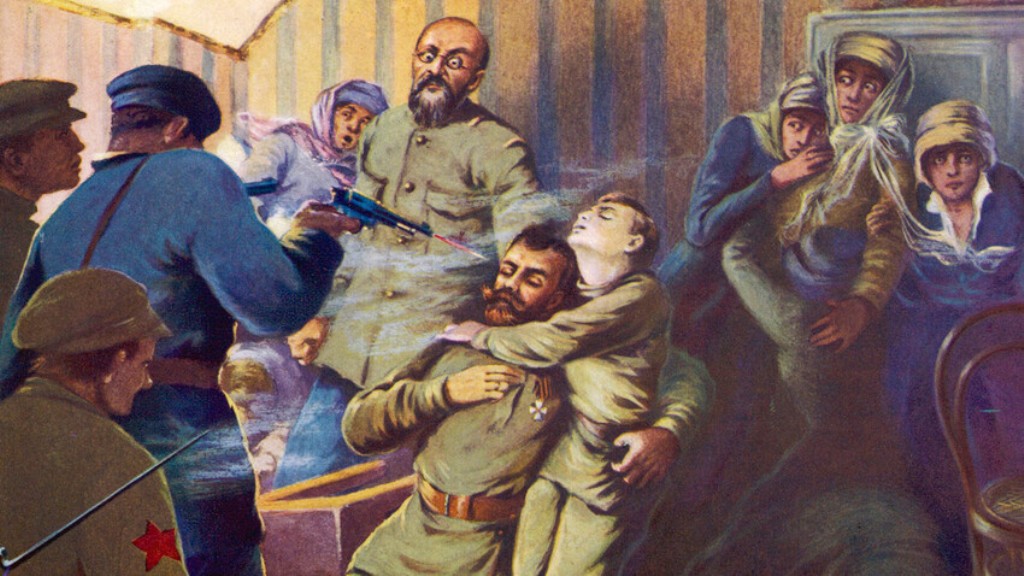
How tsar Nicholas II and his family were murdered + 11 PHOTOS

Tsar Nicholas II and his family were massacred on July 17, 1918, in Yekaterinburg. There was no formal trial and the Bolsheviks tried to cover up their gruesome crime.

Georgy Manaev writes in ‘Russia Beyond’ about the 10 most important things one should know about the murder of the Russian royal family.

Source: Russia Beyond. 21 February 2023

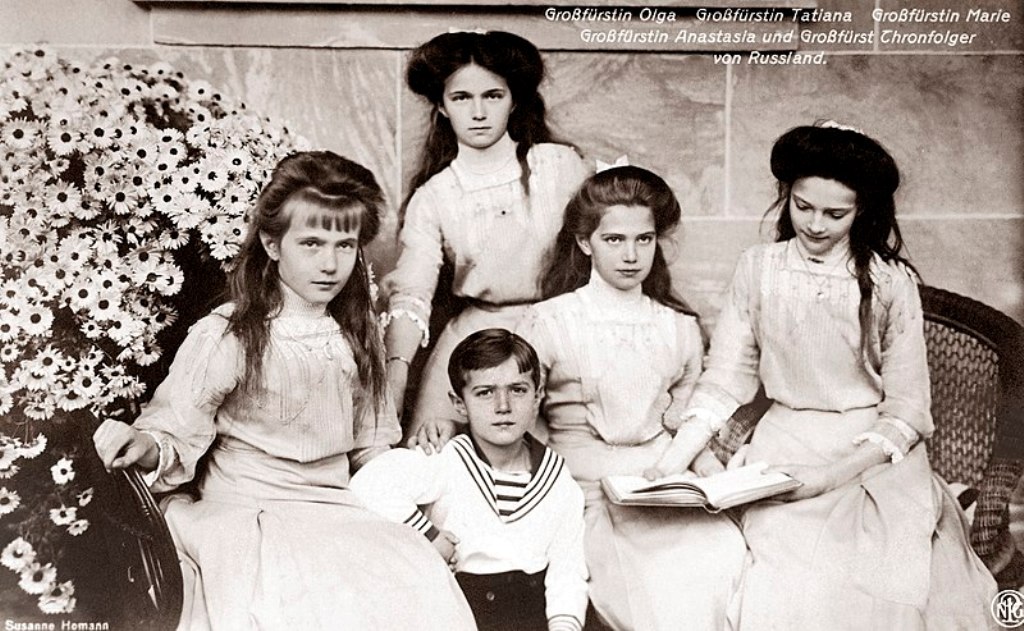
Tsar Nicholas II’s children: What we know about them + 34 PHOTOS

The last Russian tsar had five children. All of them were assassinated along with their father and mother in July 1918 and, later, canonized by the Russian Orthodox Church. This article features 34 PHOTOS, including many colourized by KLIMBIM.

Source: Russia Beyond. 7 February 2023

What Russia was like in 1913 + 34 VINTAGE PHOTOS!!

Take a look at Imperial Russia in 1913, the year which the Romanov Dynasty celebrated it’s 300th anniversary.

Source: Russia Beyond. 23 January 2023

The Last Russian Emperor: Archival Footage of Nicholas II, a Canonized Saint + VIDEO

I am pleased to see this article – based largely on an article I wrote – published today on the Global Orthodox web site. Thank you to the editors!

Source: Global Orthodox. 14 January 2023

What Russia was like in 1903 + 24 PHOTOS

MORE vintage photos of Imperial Russia! Let’s take a look at the absolutely stunning photos depicting the country that no longer exists – the life of the tsar, peasants, horse traffic and many more!

Source: Russia Beyond. 12 January 2023

***

For MORE articles, please refer to the following links:

Nicholas II in the news – Autumn 2022
7 articles published in October, November and December 2022

Nicholas II in the news – Summer 2022
12 articles published in July, August and September 2022

Nicholas II in the news – Spring 2022
7 articles published in April, May and June 2022

Nicholas II in the news – Winter 2022
6 articles published in January, February and March 2022

Paul Gilbert’s Romanov Bookshop on AMAZON – UPDATED with NEW titles!!

I have published more than 30 titles to date through AMAZON – featuring one of the largest selections of books on Nicholas II, the Romanov dynasty and the history of Imperial Russia.

Please CLICK on the BANNER or LINK above to review my current selection of titles in hardcover, paperback and ebook editions. Listings provide a full description for each title, pricing and a Look inside feature.

© Paul Gilbert. 31 March 2023

Russia after Putin: would he restore the monarchy?

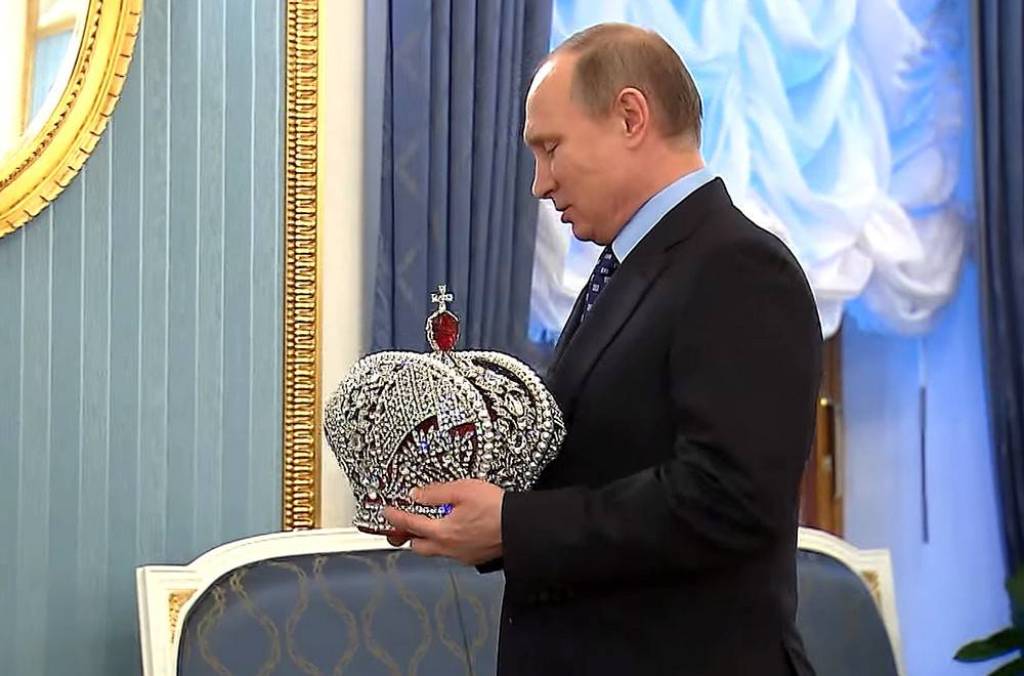
PHOTO: Russian president Vladimir Putin holding a replica of the of Imperial Crown of Russia

In the late 1960s, the aging Spanish dictator General Francisco Franco (1892-1975) decided to name a monarch to succeed him. In 1969, Franco formally nominated as his heir-apparent Prince Juan Carlos de Borbón [the grandson of King Alfonso XIII, the last king of Spain], who had been educated by him in Spain, with the new title of Prince of Spain. This designation came as a surprise to the Carlist pretender to the throne, Prince Xavier of Bourbon-Parma, as well as to Juan Carlos’s father, Juan de Borbón, the Count of Barcelona, who had a better claim to the throne, but whom Franco feared to be too liberal.

By 1973, Franco had surrendered the function of prime minister (Presidente del Gobierno), remaining only as head of state and commander in chief of the military.

Due to Franco’s declining health, Juan Carlos first began periodically acting as Spain’s head of state in the summer of 1974. Franco died in November of the following year and Juan Carlos became king on 22 November 1975, two days after Franco’s death, the first reigning monarch since 1931, although his exiled father did not formally renounce his claims to the throne in favor of his son until 1977.

Is it at all possible that a similar shift of power could occur in a post-Putin Russia? How popular is the idea of a restoration of the monarchy in Russia in the 21st century? Who are the contenders? Let’s take a closer look . . .

Russia after Putin

During the past year, Western media have fuelled speculation about President Vladimir Putin’s alleged declining health. Rumours of his physical well-being have been rife, with a range of theories from cancer to Parkinson’s. Some Western news outlets have even gone so far as to state that he will be dead by the end of 2024.

Given the current political situation between Russia and the West, coupled with stealth efforts to protect Putin, and a lack of reliable sources for these news reports, one must take them with a grain of salt, treating them as nothing more than Western propaganda.

Despite Western predictions of Russia’s pending economic collapse, the country appears to be adapting to sanctions imposed by the United States, Great Britain, and European Union. Growing demand for Russian energy imports has helped keep the country’s besieged economy afloat. China and India, Asia’s biggest and third-biggest economies, respectively, have been the biggest drivers of the trend. This includes crude oil, pipeline gas, liquefied natural gas and coal.

According to Fareed Zakaria: “Russia’s performance in the war has been poor, but it is doing better, especially at holding territory. Russia has also been able to stabilize its economy, which the IMF projects will do better this year than the UK’s or Germany’s. Russia is trading freely with such economic behemoths as China, and India, as well as neighbors like Turkey and Iran. Because of these countries and many more, outside of the advanced technology sector, it has access to all the goods and capital it lost through the Western boycott. There is now a huge world economy that does not include the West, and Russia can swim in those waters freely.”

In addition, the Russian ruble has gained against the dollar after collapsing immediately after the Ukraine invasion.

While Putin remains unpopular in the West, his popularity among his own people remains high. In January 2023, over 80 percent of Russians approved of activities of the Russian President Vladimir Putin. The popularity level saw an increase compared to September 2022, when it stood at 77 percent.

Contrary to Western media hype, President Vladimir Putin, now 70, looks remarkably healthy and shows no sign of stepping down any time soon . . . but, “what if” he decided to step down as president, “what if” he was forced from office or “what if” he died in office, who would succeed him? Would Putin repeat Franco’s historic decision, and restore the monarchy in modern day Russia?

Who are the contenders?

There are currently more than 50 Romanov descendants scattered around the world, however, only three of them are seeking to wear the Russian crown: the Spanish born Princess Maria Vladimirovna, her son Prince George Mikhailovich, and the German born Prince Karl Emich of Leiningen.

Princess Maria Vladimirovna (b. 1953)

PHOTO: Princess Maria Vladimirovna at St Isaac’s Cathedral, St Petersburg. September 2021

Princess Maria Vladimirovna Romanova was born in Madrid, Spain on 23rd December 1953, the only child of Prince Vladimir Kirillovich (1917-1992) and Princess Leonida Bagration-Mukhrani (1914-2010). She is a granddaughter of Grand Duke Kirill Vladimirovich (1876-1938) and Grand Duchess Victoria Feodorovna (1876-1936). Maria is a great-great-granddaughter in the male line of Emperor Alexander II (1818-1881).

Maria “Masha” Vladimirovna styles herself as a “Grand Duchess,” however, this is incorrect. The last grand duchess of Russia was Nicholas II’s younger sister Olga Alexandrovna, who died on 24th November 1960, in Toronto, Canada. Masha’s supporters style her as “Empress de Jure”.

On 23rd December 1969, Maria swore an oath of loyalty to her father, to Russia, and to uphold the Fundamental Laws of Russia which governed succession to the defunct throne. At the same time, her father issued a controversial decree recognising her as heiress presumptive and declaring that, in the event he predeceased other dynastic Romanov males, then Maria would become the “Curatrix of the Imperial Throne” until the death of the last male dynast. This has been viewed as an attempt by her father to ensure the succession remained in the Kirillovich branch of the Imperial Family, while the heads of the other branches of the Imperial Family, the Princes Vsevolod Ioannovich of the Konstantinovichi, Roman Petrovich of the Nikolaevichi and Prince Andrei Alexandrovich of the Mihailovichi declared that her father’s actions were illegal.

On 4th September 1976 (civil) in Dinard, France and at the Russian Orthodox Chapel in Madrid, Spain on 22nd September 1976 (religious), Maria married Prince Franz Wilhelm of Prussia [born 1943], of the defunct House of Hohenzollern. Franz Wilhelm is a great-grandson of Emperor Wilhelm II. Franz Wilhelm converted to the Eastern Orthodox faith prior to the wedding, taking the name Michael Pavlovich and receiving the title of Grand Duke of Russia from Maria’s father.

The couple separated in 1982, a year after the birth of their only child, George Mikhailovich. Following the divorce on 19th June 1985, Franz Wilhelm reverted to his Prussian name and style, and converted back to his Catholic faith.

Upon the death of her father on 21st April 1992, Maria “succeeded” him as head of the Russian Imperial Family, a move which was vehemently opposed by ALL the other living descendants of the Romanov family.

The Romanov Family Associations two successive presidents said of Maria’s claims: Prince Nicholas Romanovich, who maintained his own claims to dynastic status and to headship of the Romanov family, “Strictly applying the Pauline Laws as amended in 1911 to all marriages of Equal Rank, the situation is very clear. At the present time, not one of the Emperors or Grand Dukes of Russia has left living descendants with unchallengeable rights to the Throne of Russia,” and his younger brother, Prince Dimitri Romanovich, said of Maria’s assumption of titles, including “de jure Empress of all the Russias”, “It seems that there are no limits to this charade”.

Despite all the fuss over morganatic marriages within the Imperial Family – made by both herself and her father in the 20th and 21st centuries – in January 2021, Masha announced the morganatic engagement of her son to Rebecca Virginia Bettarini from Italy. Bettarini converted to Russian Orthodoxy and took the name Victoria Romanovna [named after Grand Duchess Victoria Feodorovna, wife of Grand Duke Kirill Vladimirovich]. Masha granted permission for the couple to marry. She decreed that Bettarini will have the title Princess, with the predicate “Her Serene Highness” and the right to use the surname Romanov.

It is important to emphasize, that Maria Vladimirovna never had or has any authority to hand out titles or awards as she is not and never has been a ruling monarch. Despite this, Maria actively, and completely illegally distributes orders, medals and even titles of the Russian Empire. While many orders and awards of the Russian Empire have been officially restored in the modern Russian Federation, an ordinary civilian, and not a representative of the state, distributes the same order in appearance and name to her supporters on behalf of the “Imperial House”.

Prince George Mikhailovich-Hohenzollern (b. 1981)

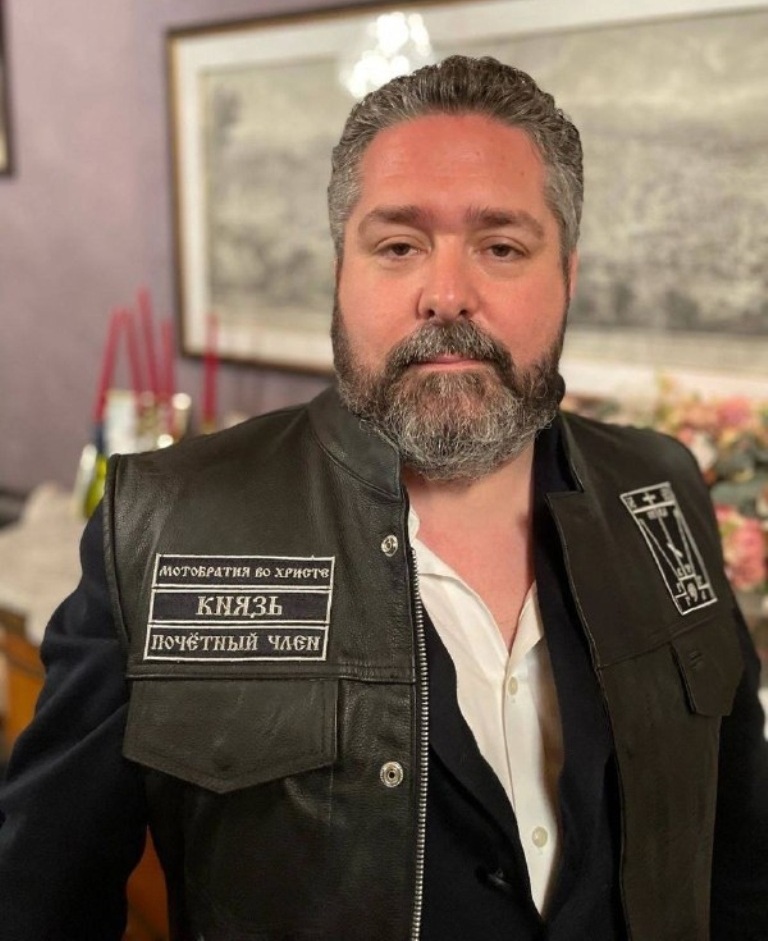
PHOTO: Gosha is an honourary member of the Brotherhood in Christ Motorcycle Association

Prince George “Gosha” Mikhailovich was born in Madrid, Spain on 13th March 1981, he is the only child of Princess Maria Vladimirovna and Prince Franz Wilhelm of Prussia.

Gosha styles himself as a “Grand Duke,” however, this is incorrect. The last grand duke of Russia was Grand Duke Andrei Vladimirovich, who died on 30th October 1956, in Paris, France. His mother attributes to him the title of Tsesarevich: heir apparent or presumptive in the Russian Empire, a title which no longer exists. 

As the son of a cadet member of the branch of the House of Hohenzollern which formerly ruled the German Empire and Kingdom of Prussia, Gosha is legitimately a German prince, and has much more rights to the German throne than that of Russia. His father, who stopped using his Russian title after his separation, has said of his son, “I have his German passport right here; I always carry it with me. It says he is Prince George of Prussia”.

In 2013, Gosha established the Russian Imperial Foundation, whose director he later married. In 2019, George moved to Moscow, he is the only Romanov descendant currently living in Russia. He is a successful and wealthy businessman, and while thousands of his countrymen are being sent home in body bags, George and Victoria live in the lap of luxury in their sumptuous home in Moscow.

Despite all the fuss over morganatic marriages within the Imperial Family – made by both herself and her father in the 20th and 21st centuries – in January 2021, Masha announced the morganatic engagement of her son to Rebecca Virginia Bettarini from Italy. Bettarini converted to Russian Orthodoxy and took the name Victoria Romanovna [named after Grand Duchess Victoria Feodorovna, wife of Grand Duke Kirill Vladimirovich]. Masha decreed that her future daughter-in-law would have the title of Princess, with the predicate “Her Serene Highness” and the right to use the surname Romanova

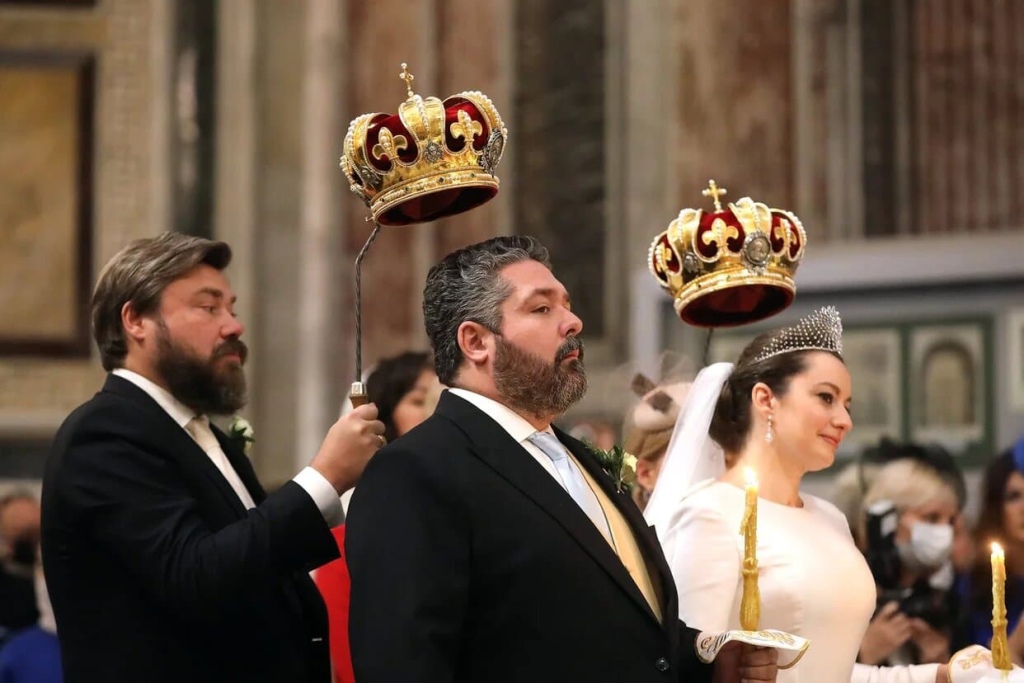
The couple married on 24th September 2021 in a civil ceremony in Moscow. The religious wedding took place on 1st October at Saint Isaac’s Cathedral in St Petersburg. The Russian and some Western media outlets hailed the event as both the Romanov “wedding of the century” and the “first Romanov to marry in Russia”, since the fall of the Romanov dynasty in 1917. Neither are correct. Around 1500 guests attended the lavish ceremony, including numerous members of various defunct royal houses of Europe. 

In May 2022, the couple announced that Princess Victoria was expecting their first child. On 21st October 2022, a son was born in Moscow. Once again, Masha issued yet another title: her first grandchild would be called “His Serene Highness Prince Alexander Georgievich Romanov”.

On 1st November 2022, the Romanov Family Association issued a statement claiming that the new Romanov baby “cannot rightfully be considered a member of the Russian Imperial Family”.

Prince Karl Emich of Leiningen (b. 1952)

The German-born 70-year-old Prince Karl Emich of Leiningen, has an even more ridiculous claim to the non-existent Russian throne. Prince Karl is a grandson of Grand Duchess Maria Kirillovna (1907–1951), eldest child of Grand Duke Kirill Vladimirovich, who claimed the Russian crown while in exile in 1924. He is a great-great-grandson of Emperor Alexander II of Russia and grandnephew of Grand Duke Vladimir Kirillovich – father of Princess Maria Vladimirovna.

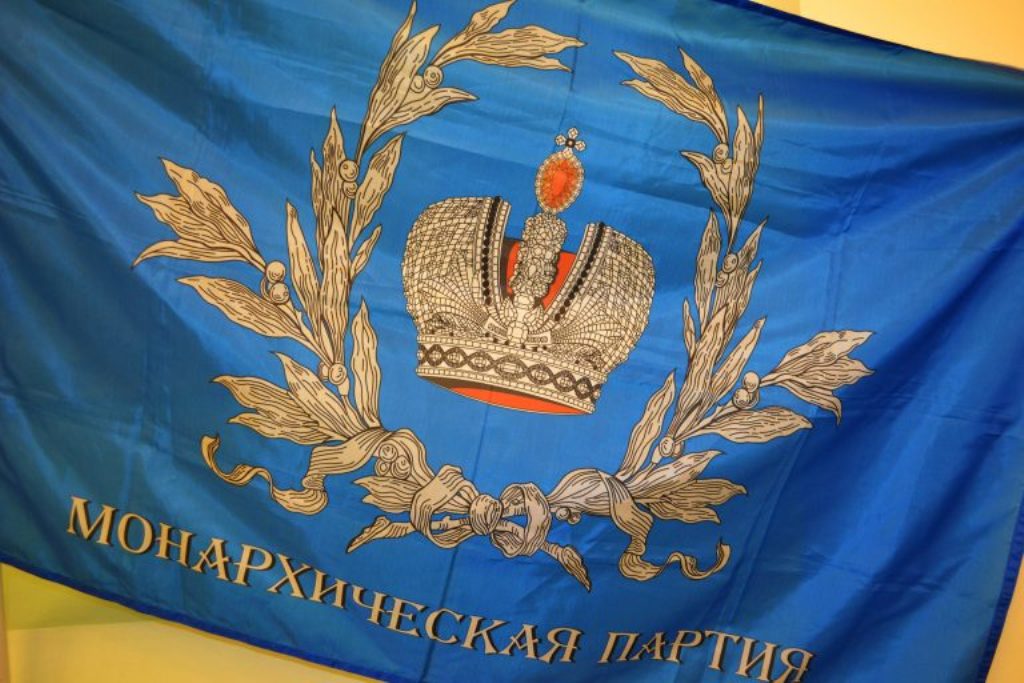
 In 2013, the Monarchist Party of Russia declared him the primary heir to the Russian throne upon his conversion from Lutheranism to Eastern Orthodox Christianity, and in 2014 announced the formation of the Imperial Throne, wherein Karl Emich had agreed to assume imperial dignity as Emperor Nicholas III.

Prince Karl married three times: He married Princess Margarita of Hohenlohe-Öhringen on 8 June 1984. Princess Margarita died in 1989 in a car accident. His second marriage took place on 24 May 1991, whereby he married morganatically Gabriele Renate Thyssen. The couple divorced in 1998. On 8 September 2007, Prince Karl married his third wife Countess Isabelle von und zu Egloffstein. On 12 April 2010, they had a son, Prince Emich of Leiningen. The family lives at Kunreuth castle in Bavaria.

Karl Emich and his supporters argue that the marriage of Maria Vladimirovna’s parents was in contravention of the Pauline Laws. They maintain that the House of Bragation-Mukhrani – to whom her mother was born – did not possess sovereign status and was not recognized as equal by Nicholas II for the purpose of dynastic marriages at the time of the union of Princess Tatiana Konstantinovna and Prince Constantine Bragation-Mukhransky in 1911, thirty seven years prior to that of Princess Leonida and Prince Vladimir Kirillovich. Therefore, as the next of kin to Vladimir (in the exclusion of his daughter), the Russian Monarchist Party recognises Karl Emich as the heir to the Russian throne, since he and his wife converted on 1st June 2013, from Lutheranism to Eastern Orthodoxy, enabling his accession. The couple received Orthodox names of Nikolai Kirillovich and Ekaterina Fyodorovna.

Russian Monarchist Groups

Russian Monarchist Party

The Russian Monarchist Party was established in 2012, by Russian businessman and politician Anton Alekseyevich Bakov (born 29 December 1965), and its current Chairman. It is the largest of numerous monarchist organizations founded since the fall of the Soviet Union in 1991, which supports a return of monarchy in Russia, ousted in 1917. In 2013 the Russian Monarchist Party declared German Prince Karl Emich of Leiningen as heir to the Russian throne.

In 2015 Bakov announced the Party’s plans to run for the upcoming 2016 Russian State Duma elections. In early 2016 in an interview with RBK news agency, he confirmed this intention and stated that Anastasia would again become the front person of the planned campaign, and he personally would not run. However, the party did not end up participating, and has since failed to garner much support for a restoration of monarchy in Russia.

In early 2016 Bakov announced the Monarchist Party plans to organize a public trial for Lenin and Stalin, accusing them of killing millions of Russians and thus significantly slowing down the normal evolution of society and state.

Konstantin Malofeev (b. 1974)

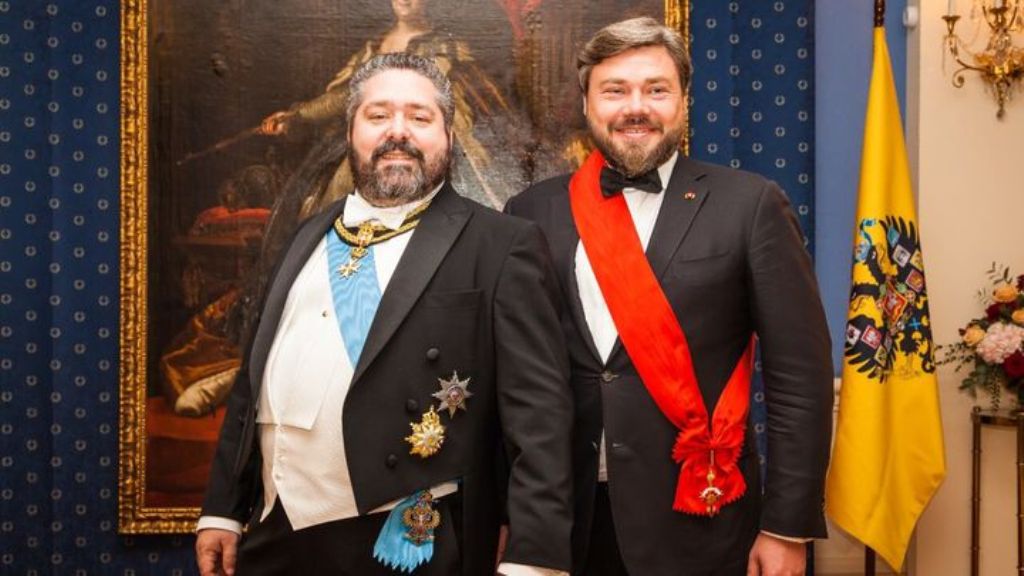
PHOTO: Russian oligarch Konstantin Malofeev (right) with his “good old friend” Prince George Mikhailovich (left)

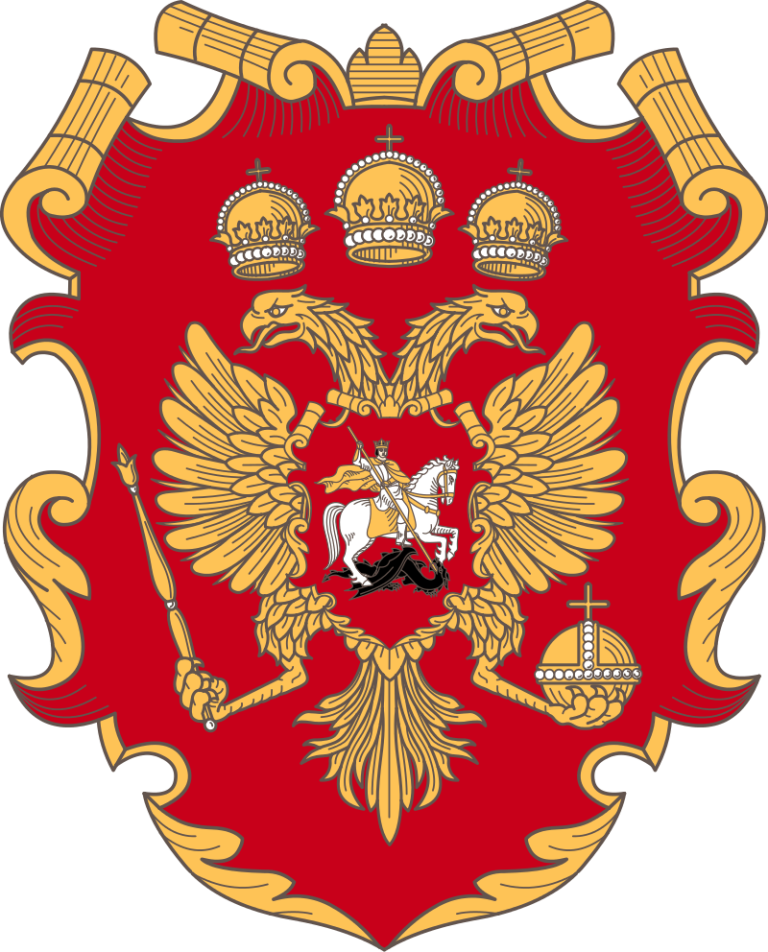
Konstantin Valeryevich Malofeev (b. 1974) is a Russian businessman and chairman of non-government pro-monarchism organisation Society for the Development of Russian Historical Education Double-Headed Eagle. He is chairman of the board of directors of the media group Tsargrad dedicated to Russian Orthodox Christianity and support of President Vladimir Putin.

The Orthodox billionaire and philanthropist Konstantin Malofeev, a long-time friend of Princess Maria Vladimirovna and her son Prince George Mikhailovich. Malofeev served as “Guest of Honour” at the wedding of his “good old friend” George Mikhailovich, and Rebecca Bettarini, held in St. Petersburg on 1st October 2021.

PHOTO: Malofeev attended the wedding of Prince George Mikhailovich-Hohenzollern and Rebecca Bettarini in St. Petersburg

Since 2014, Malofeev and his companies are designated to the lists of individuals sanctioned by the European Union, United States, and Canada, during the 2014 pro-Russian unrest in Ukraine, accusing Malofeev of trying to destabilize and financing separatism in Ukraine.

In September 2019, the Bulgarian government banned him from entering the country for ten years over an alleged spying conspiracy aimed at turning the country away from its pro-Western orientation and further toward Moscow. In April 2022, the United States Department of Justice indicted Malofeyev on the charge of evading IEEPA sanctions.

While all of Malofeev’s initiatives in Ukraine were, formally, privately organized and funded, intercepted phone calls between him and his lieutenants on the ground in Ukraine, as well as hacked email correspondence, showed that he closely coordinated his actions with the Kremlin, at times via the powerful Orthodox priest Bishop Tikhon whom Malofeev and Putin (in their own words) share as spiritual adviser; at other times via direct coordination between Malofeev and Putin’s advisers, but also via Malofeev’s close collaboration with the Kremlin-owned Russian Institute for Strategic Studies (RIIS), chaired by former KGB/SVR General Leonid Reshetnikov.

Zemsky Sobor

The Zemsky Sobor of 1613 was a meeting of representatives of the Estates of the realm of the Tsardom of Russia, held for the election of a Tsar after the expulsion of the Polish-Lithuanian Occupiers at the end of the Time of Troubles. It was opened on 16th January 1613 in the Assumption Cathedral of the Moscow Kremlin. On 3rd March 1613, the Sobor elected Mikhail Feodorovich Romanov (1596-1645) as Tsar, establishing the House of Romanov. The coronation of Michael I is widely considered to be the end of the time of troubles.

In modern times, the Zemsky Sobor called itself the Congress of White Monarchists. They met in Vladivostok in the summer of 1922, issuing a proclaimation for the restoration of the Romanov Dynasty on the Russian throne. It was the only attempt to restore the monarchy in Russia during the civil war.

On 23rd July 1922, the Zemsky Sobor of the Amur region of the Provisional Priamurye Government was convened in Vladivostok, by Mikhail Konstantinovich Diterikhs (1874-1937). Diterikhs was a general of the White Army in the Russian Far East, who convened the assembly four years after the murder of Emperor Nicholas II and his family. He issued a proclaimation for a new monarchy, naming Grand Duke Nikolai Nikolaevich [1856-1929] as the Tsar of Russia, with Patriarch Tikhon of Moscow [1865-1925] as the honourary chairman of the Zemsky Sobor. Neither Nikolai or Tikhon were present at the assembly, and the plan was cancelled when the region fell to the Bolsheviks two months later.

Does the monarchy have a future in Russia?

It is Maria and George’s claims which garner the most publicity. They are supported by the Legitimists – a small group of zealots – most of whom are American, and have no say whatsoever in the monarchist debate in modern day Russia. They work tirelessly to promote their agenda to any one who will listen to them.

Despite what the Legitimists claim on their blog and social media, neither Maria Vladimirovna nor her pompous arrogant son George Mikhailovich, are very popular in post-Soviet Russia. This prompted Maria Vladimirovna to utilize a public relations firm to make her son more familiar and “likeable” to the Russian people. Most Russians – including monarchists – dismiss their claims as “pretenders” to the non-existent Russian throne

It is interesting to note that Maria and her son George DO NOT recognize the Ekaterinburg Remains as those of Emperor Nicholas II and his family; nor did either one of them attended the Tsar’s interment in St Petersburg on 17th July 1998; both continue to “maintain good relations with Vladimir Putin”.

The idea of restoring monarchy in post-Soviet Russia is not popular with most Russians. In the summer of 2019, a poll conducted by REGNUM of some 35,000 Russian citizens showed that only 28% supported the idea of restoring the monarchy, more than half (52%) of which would NOT support placing a “Romanov” on the throne!

The latter is supported by the abbot of the Archangel Michael Monastery of the Alexander Diocese of the Russian Orthodox Church, Father Afanasy Selichev, who said: “If we carefully read the latest edition of the laws on succession to the throne, it becomes absolutely clear that the current Romanovs have no right to occupy the Russian throne.”

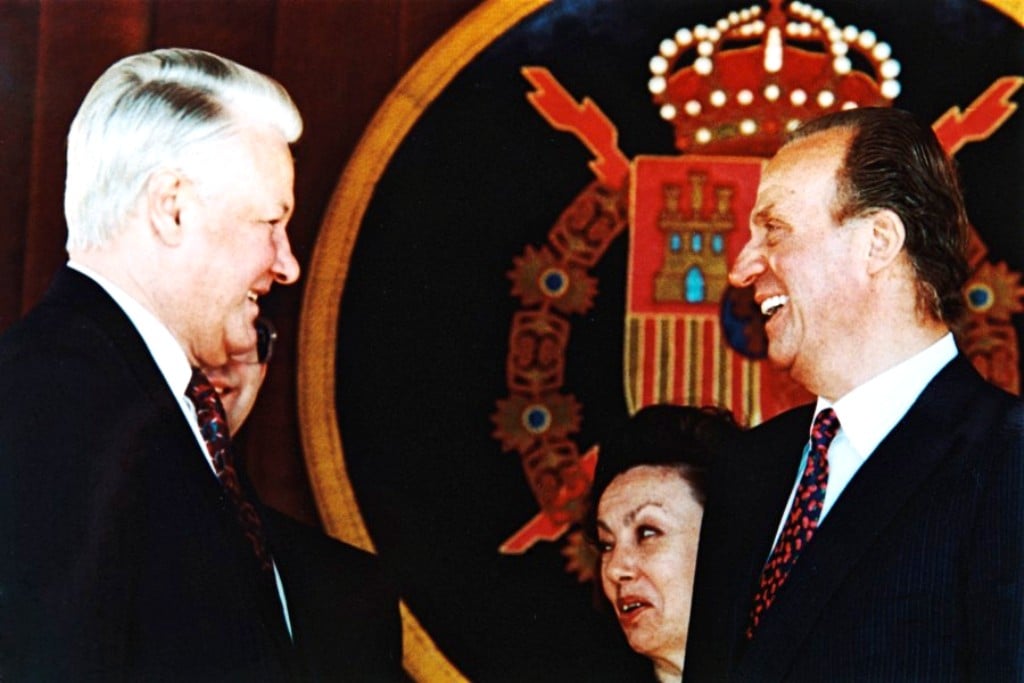
PHOTOS: former Russian president Boris Yeltsin with King Juan Carlos I
and Queen Sophia of Spain, during an official visit to Russia in 1997

In 1994, unconfirmed reports in the media suggested that Yeltsin also had plans to restore the monarchy in Russia. Such a plan would have put the Kirillovich branch of the Romanov dynasty on the throne. Thank God, Yeltsin was dissuaded from pursing the idea.

During his visit to Russia in 1997, King Juan Carlos I was asked by Russian president Boris Yeltsin what he thought about the possibility of restoring the monarchy in Russia. Juan Carlos replied the following:

′′Mr. President! I grew up in Spain, I know and love my people, I know the problems of my country and I feel entitled to speak on behalf of my people. As far as I know, none of the modern-day Romanovs have ever lived, nor been not born in Russia. They may love Russia, but they are detached from their roots. How can you run a foreign country?!”

And even if Russia opted to restore the monarchy, why would the Russian people want a European princess or prince to rule over them? A Zemsky Sobor would be the only logical option, whereby a new Tsar would be Russian born.

On a more personal note, while this author is a devout monarchist, I do not recognize any person as the claimant to the now defunct throne of Russia. I believe that the Russian monarchy ceased to exist upon the abdication of the Sovereign Emperor Nicholas II on 15th (O.S. 2nd) March 1917 and the murder of both the Tsar and his family on 17th July 1918.

If the monarchy is ever to be restored in 21st century Russia, it is up to the citizens of Russia to make that decision, no one else.

© Paul Gilbert. 23 March 2023
On this day – 22nd March 1917 – Nicholas II and family are placed under house arrest in the Alexander Palace

243c

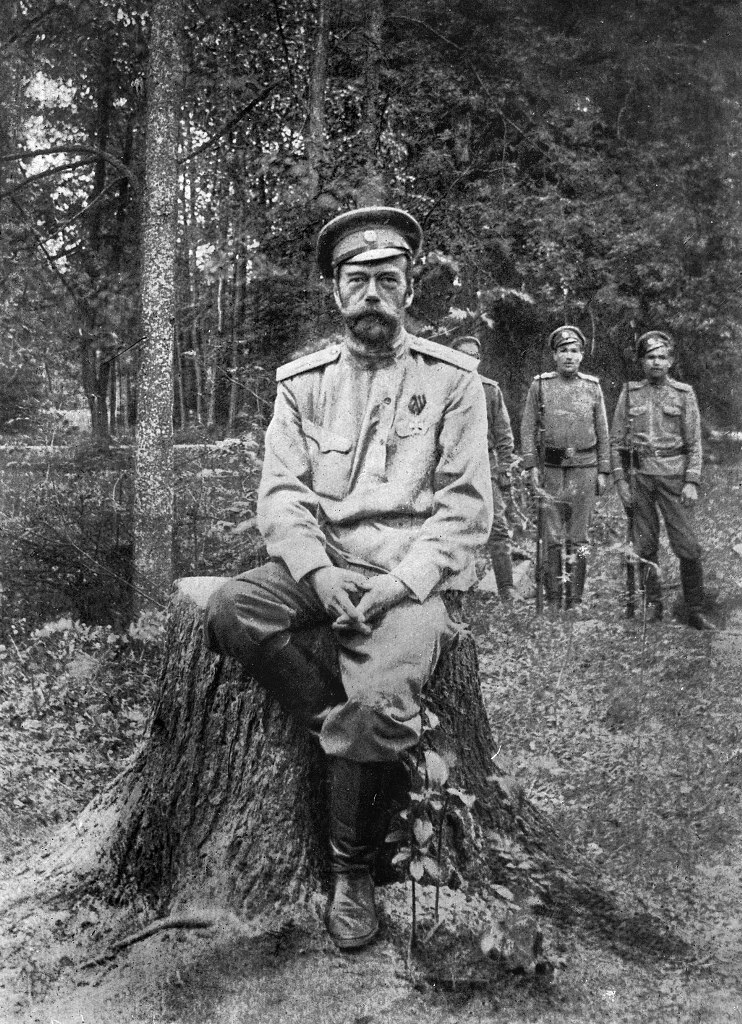
Iconic image of Emperor Nicholas II in the Alexander Park at Tsarskoye Selo

On this day – 22nd March (O.S. 9th March) 1917 – the Provisional Government decreed that Emperor Nicholas II, his wife and five children should be held under house arrest in the Alexander Palace at Tsarskoye Selo.

At eleven in the morning, the Imperial Train pulled into the Imperial Railway Pavilion at Tsarskoye Selo. Nicholas emerged wearing a Caucasian fur cap and soldier’s greatcoat. Behind him the members of his suite began to jump off the train – like rats abandoning a sinking ship – and run down the platform. Not looking back – they fled.

According to Count Paul Benckendorff (1853-1921), the Emperor’s motorcar arrived at the gate of the Alexander Palace and was stopped by the sentry, who summoned the Commandant. The Commandant went down the steps and asked in a loud voice who was there. The sentry cried out, ‘Nicholas Romanov’. ‘Let him pass,’ said the officer.

During his captivity, the Tsar was subject to constant harassment and humiliation from the soldiers – most of whom were thugs – stationed in and around the Alexander Palace.

According to Pierre Gilliard: “The Emperor accepted all these restraints with extraordinary serenity and moral grandeur. No word of reproach ever passed his lips.”

243d

Nicholas II and Alexandra Feodorovna sitting in the Alexander Park, June 1917

On Alexander Kerensky’s order, Nicholas and Alexandra were kept apart in the palace for a period of 18 days. They were permitted to see each other only during meals, and only in the presence of soldiers. It was during this time that Kerensky conducted an investigation of the Imperial couple’s documents and letters. He failed to find any evidence which would incriminate either of them.

Kerensky interviewed Alexandra regarding her involvement in state affairs and Rasputin’s involvement in them through his influence over her. She answered that as she and her spouse kept no secrets from each other, they often discussed politics and she naturally gave him advice to support him; as for Rasputin, he had been a true holy man of God, and his advice had been only in the interest of the good of Russia and the imperial family. After the interview, Kerensky told the Tsar that he believed that Alexandra had told him the truth and was not lying.

243b

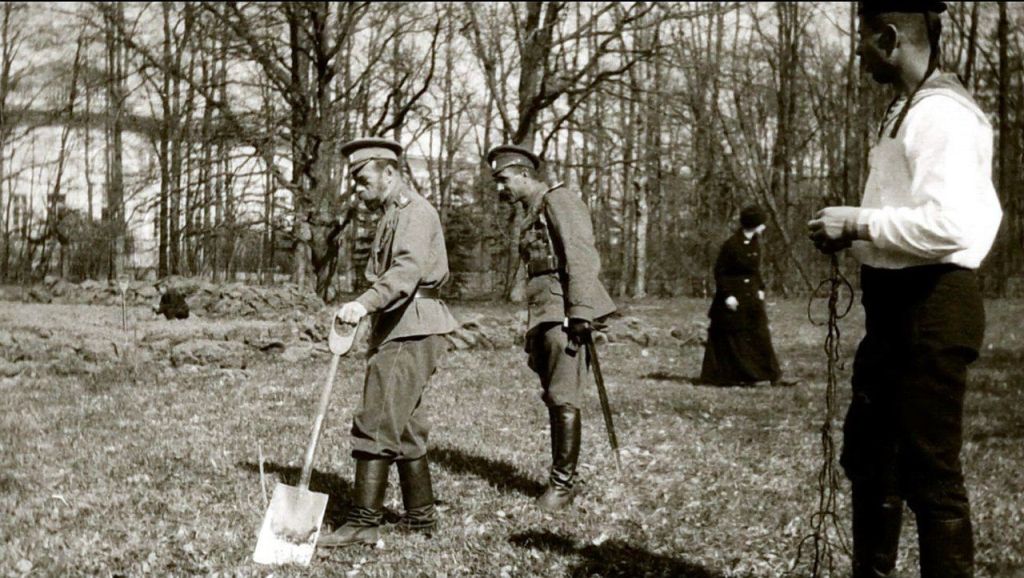
Nicholas II working in the vegetable garden behind the Alexander Palace in 1917

The Imperial Family had total privacy inside the palace, but walks in the grounds were strictly regulated. Members of their domestic staff were allowed to stay if they wished and culinary standards were maintained.

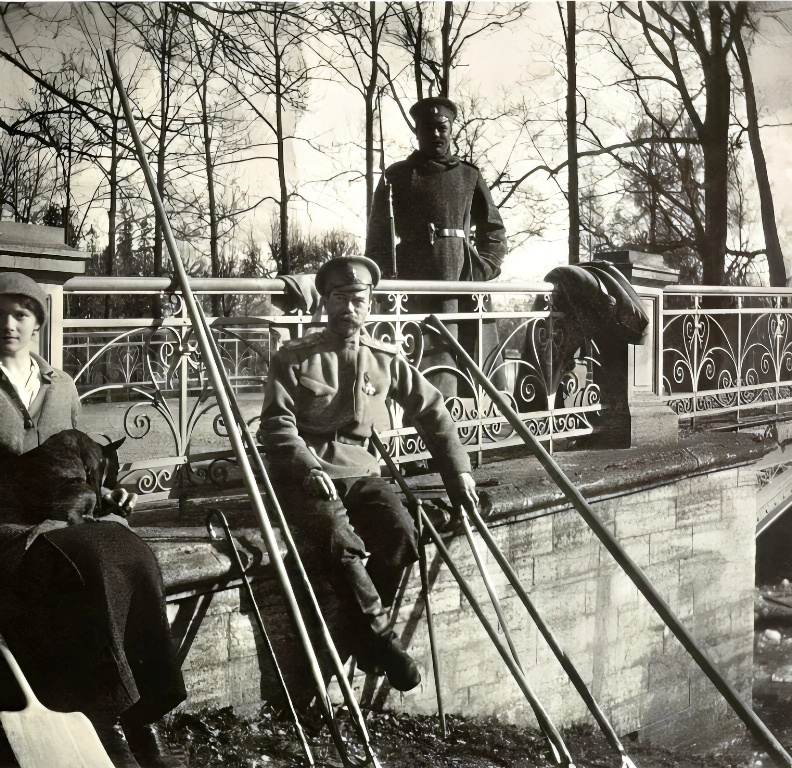
Even in the Alexander Park, their movements were restricted. The photo below, show the prisoners at the frontier of their domain. They were not permitted to cross the bridge which led them to the big park, to the outside world and freedom.

Colonel Eugene Kobylinsky was appointed to command the military garrison at Tsarskoye Selo, which increasingly had to be done through negotiation with the committees or soviets elected by the soldiers.

243a

Nicholas II and his family under guard in the Alexander Park, August 1917

The Imperial Family were held under house arrest until 14th (O.S. 1st) August 1917, it was on this day that Nicholas II and his family left the Alexander Palace for the last time. They exited from the Semicircular Hall of the palace, and travelled by car to the Alexandrovskaya Station where they were sent into exile to Tobolsk. 

For an eye witness account of Nicholas II and his family under house arrest in the Alexander Palace, please refer to the following book The Romanovs Under House Arrest: From the 1917 Diary of a Palace Priest, the memories of Archpriest Afanasy Belyaev, who served as priest and confessor to the Russian Imperial family.

© Paul Gilbert. 22 March 2023
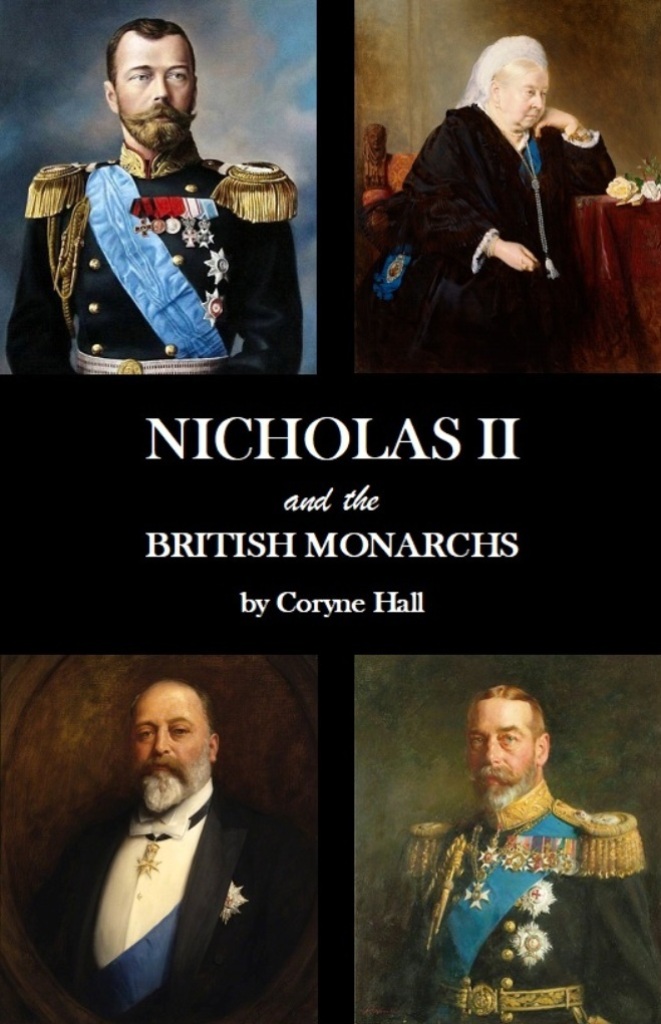
Nicholas II and the British Monarchs

*This title is available from AMAZON in the USA, UK, Canada, Australia,
France, Germany, Spain, Italy, Netherlands, Poland, Sweden and Japan

CLICK HERE TO ORDER THE PAPERBACK EDITION @ $20.00 USD

English. 164 pages, 36 black & white photos

Romanov historian and royal expert Coryne Hall writes about the relationships between Emperor Nicholas II with the three British monarchs who ruled during his 22-year reign.

The author has researched the relationships between Russia’s last Tsar with those of Queen Victoria – from 1894 to 1901; King Edward VII – from 1901 to 1910; and King George V – from 1910 to 1917. Her research is complemented with letters, diary entries and photographs.

The four essays presented in this volume were originally published in four successive issues of Sovereign, the semi-annual publication dedicated to the study of the life and reign of Emperor Nicholas II. They are presented here for the first time in one volume.

© Paul Gilbert. 19 March 2023
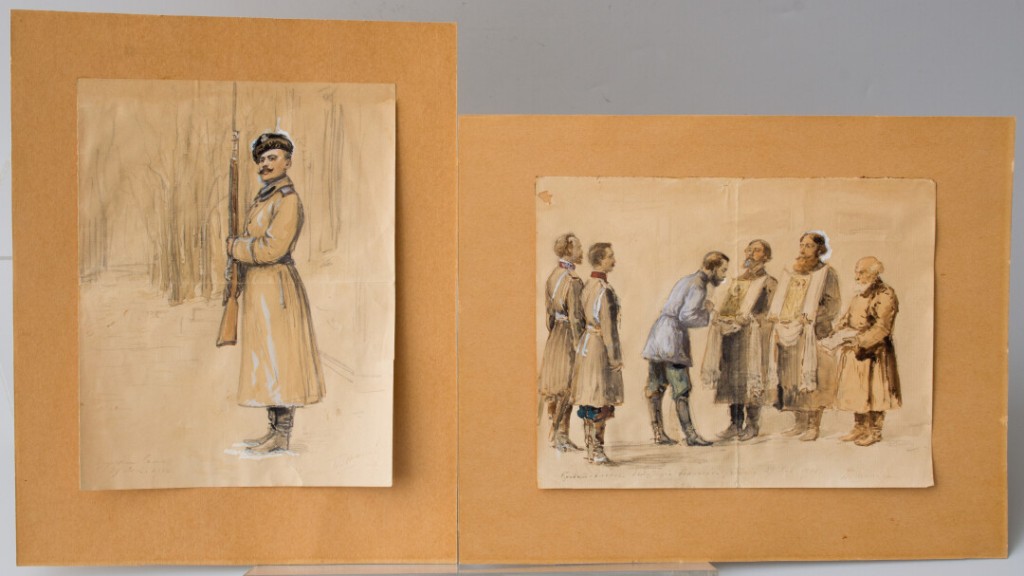
Watercolours by Pavel Shipov returned to Alexander Palace

Watercolours by Pavel Dmitrievich Shipov (1860-1919)
Photo © Tsarskoye Selo State Museum

A pair of watercolours by Pavel Shipov – believed to have been lost during the Great Patriotic War (1941-45), have been returned to the Tsarskoye Selo State Museum. Up until 1941, these works hung in the Working Study of Emperor Nicholas II in the Alexander Palace, which at the time was a museum[1].

During the Nazi occupation of Tsarskoye Selo (1941-44), the Alexander Palace was used as headquarters for the German military command. Following the Nazi retreat in 1944, many items from the palace were destroyed, lost of stolen[2].

The provenance of Shipov’s watercolors are confirmed by the inventory numbers on the works (A-2033, A-2035), which match those found in the inventory book of museum items of the Pushkin Palaces-Museums of 1940.

The watercolours were in the possession of Björn Kohler-Svendsen, who received them from Horst Kohler-Svendsen, a relative who was in the Pushkin [Tsarskoye Selo] during the Nazi occupation. It was during the German retreat from Pushkin, that Horst discovered the watercolours and took back them to Germany. The watercolours were presented to the Russian Embassy in Berlin, who subsequently arranged for them to be returned to Tsarskoye Selo.

Both watercolours are pasted on cardboard and edged into frames, while on the reverse side there are inscriptions written in German with a ballpoint pen.

The watercolor seen on the right in the above photo depicts the presentation of the deputation of the Vologda province to Emperor Nicholas II on 29th January 1910, which features three members of the deputation, two of whom are holding icons. In the center of the composition the Tsar is depicted, leaning forward to kiss the icon. Two officers are depicted standing behind the Tsar.

On the back of the frame, Horst wrote: “I brought this painting from the city of Pushkin near Leningrad. It was lying on the floor of the Alexander Palace when the palace was destroyed by grenade explosions. I survived, and brought it with me in 1941.”

The second watercolor seen on the left in the above photo depicts a private of the Life-Guards 4th The Imperial Family’s Rifle Regiment. The artist has signed his name P. Shipov in the lower right corner, and in the lower left corner is written Tsarskoye Selo / 29 Jan. 1910.

On the back of the frame, Horst wrote: “This picture fluttered in the wind when, in the winter of 1941, the Catherine/Alexander Palaces in Pushkin, Russia (Leningrad) was bombed and damaged. I picked it up, and brought it with me.”

Pavel Dmitrievich Shipov (1860-1919)

Pavel Dmitrievich Shipov (1860-1919) served as Lieutenant General in both the Russian-Japanese and First World Wars. On 21st February 1908, he was appointed Wing-Adjutant to the Retinue of His Imperial Majesty Emperor Nicholas II, with the post of commander of the regiment. 

He was also an artist, educated at the Imperial Academy of Arts in St. Petersburg. During the war, he specialized in military portraiture, making pencil sketches and watercolor portraits of soldiers and officers, observing them in battles and on leave.

Shipov was shot by the Bolsheviks on 23rd July 1919, although according to other sources he was shot in 1923.

These two watercolours now bring a total of five works by this artist in the collection of the Tsarskoye Selo State Museum. Both watercolors will be returned to their historical place in the Working Study of Nicholas II in the Alexander Palace.

NOTES and FURTHER READING:

[1] In June 1918, the Alexander Palace was established as a museum and opened to the public. It was closed in 1941.

[2] The fate of the contents of the Alexander Palace in the 20th century

© Paul Gilbert. 16 March 2023
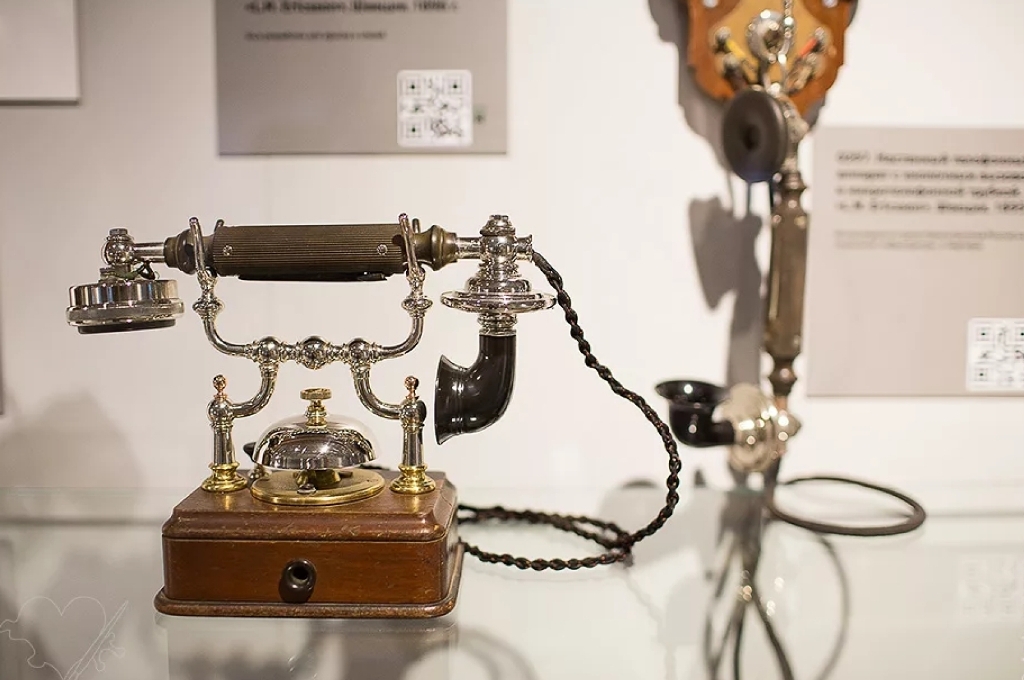
Nicholas II’s telephone sold at auction for $2 million USD

On Friday 10th March, a telephone belonging to Emperor Nicholas II was sold at a Sotheby’s auction. The Romanov Week auction featured more than 100 items belonging to members of the Russian Imperial Family.

The most expensive lot was a telephone belonging to Emperor Nicholas II, which sold for a staggering 2 million US dollars, almost five times over the estimate.

“It’s a unique device made in 1915 at the Russian-Baltic Wagon factory in Petrograd. The telephone was presented it to the Tsar during the First World War, who used it for communicating with the Empress at Tsarskoye Selo during his trips to General Headquarters (Stavka) at Mogilev,” said Sotheby’s representative Robert Jefferson.

Following the February 1917 Revolution the telephone was confiscated on the order of the Provisional Government and transferred to the custody of the chief of the Petrograd garrison.

Following the riots that swept the capital in July 1917, the telephone was later stolen during the Russian Civil War and smuggled to Europe.

NOTE: In 1896, the Swedish manufacturer of telecommunications equipment Ericsson, installed the first telephone for Emperor Nicholas II in the Grand Kremlin Palace in Moscow.

© Paul Gilbert. 11 March 2023
St Catherine’s Chapel: the final resting place of Nicholas II and his family

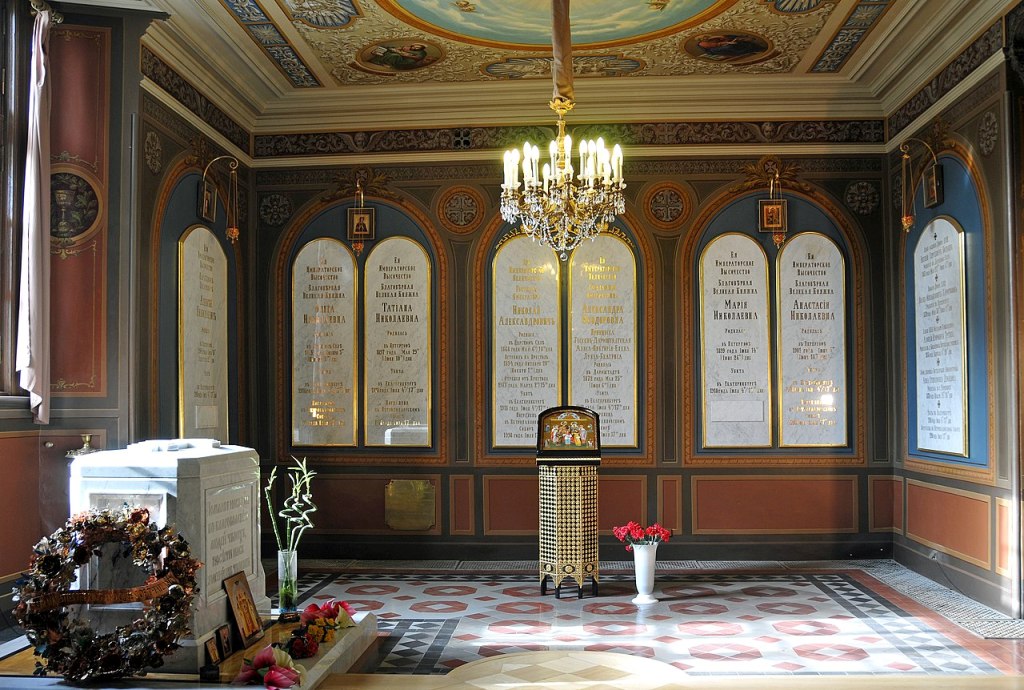
PHOTO: view of St. Catherine’s Chapel, the final resting place for Emperor Nicholas II and his family

The 18th century Chapel of the Holy Great Martyr Catherine (aka St. Catherine’s Chapel or Catherine Chapel) is situated in the southwestern part of the Saints Peter and Paul Cathedral in St. Petersburg. On 17th July 1998, it became the final burial place for Emperor Nicholas II, Empress Alexandra Feodorovna, three of their five children and four faithful retainers.

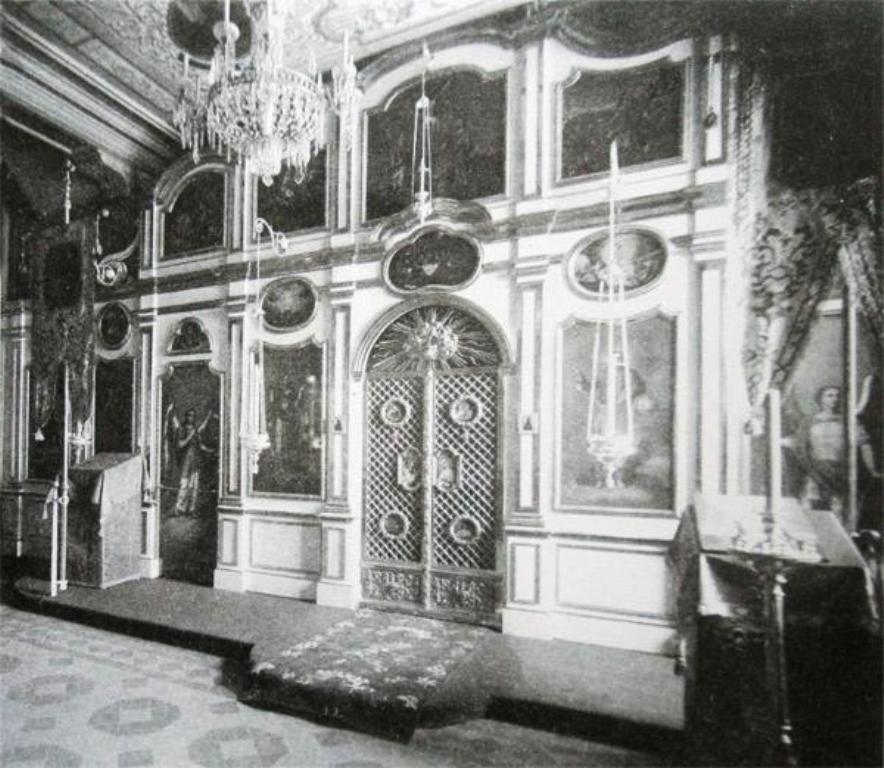
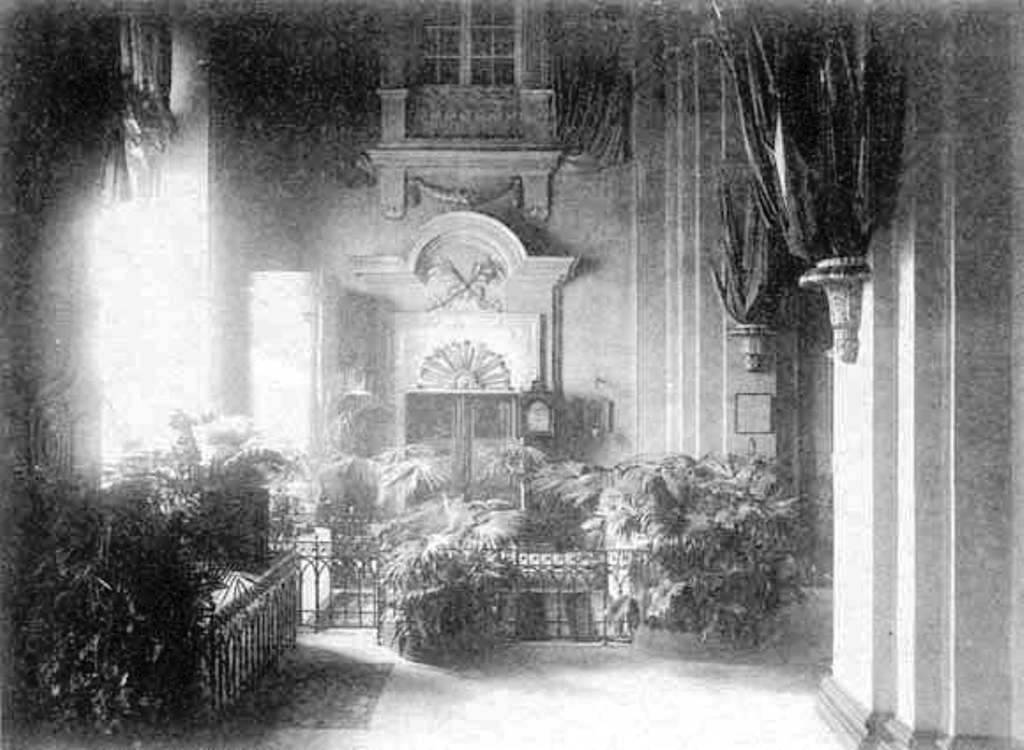
PHOTO: the iconostasis of St. Catherine’s Chapel in 1890

History

The Chapel of the Holy Great Martyr Catherine was arranged in the Saints Peter and Paul Cathedral at the end of the 18th century. During the restoration of the cathedral after the fire of 1756, an additional wall was erected inside the church hall, separating a small space in its western part. As a result, two new rooms were formed to the right and left of the main entrance. An iconostasis was installed, and on 24th November 1779, the altar was consecrated, in honour of the Holy Great Martyr Catherine – the patron saint of Empress Catherine II (1729-1796).

The chapel has a length of 8.1 meters (27 ft.), and a width of 6.3 meters (21 ft.), with one window and two doors facing directly into the cathedral. It was here in St. Catherine Chapel, that officials of the St. Petersburg Mint were sworn in. During Great Lent soldiers and officers of the garrison of the Peter and Paul Fortress and their families went for confession and took communion. On several occasions, funeral services were held here for the deceased minor grand-ducal children. The chapel operated as a church until the closure of the Saints Peter and Paul Cathedral by the Bolsheviks in 1919.

PHOTO: the eastern entrance to St. Catherine’s Chapel in 1890

The first burial in the chapel was that of Tsarina Marfa Matveevna (1664-1716), the widow of Tsar Feodor III Alekseevich (1661-1682). The funeral took place on 7th January 1716 in the presence of Tsar Peter I, the royal family, and members of the clergy. During the ceremony of transferring the body, a platform on the ice of the Neva was used for the first time. Since the funeral procession took place in the evening, torchbearers were placed on both sides of the path, adding solemnity to the mourning procession. A completely new element of the mourning ritual was the prohibition of mourners and ritual weeping, which had previously been an indispensable element in Russian funerary culture.

The burial of Marfa Matveevna was one of the first to be held in Saints Peter and Paul Cathedral. Her tomb is located at the western wall under the bell tower in the south-western part of the current St. Catherine Chapel. In 1732 the tombstone over her grave was removed and the grave was partially closed, to make room for the foundations of the furnaces which heated the Catherine Chapel.

In the 1860s a copper plaque with an epitaph was installed on the western wall above the grave, and restored in 1908. During the opening of the floor in the St. Catherine’s Chapel during the restoration in 1993, the crypt of Marfa Matveevna was discovered and examined by scientists, who confirmed that her grave had remained untouched.

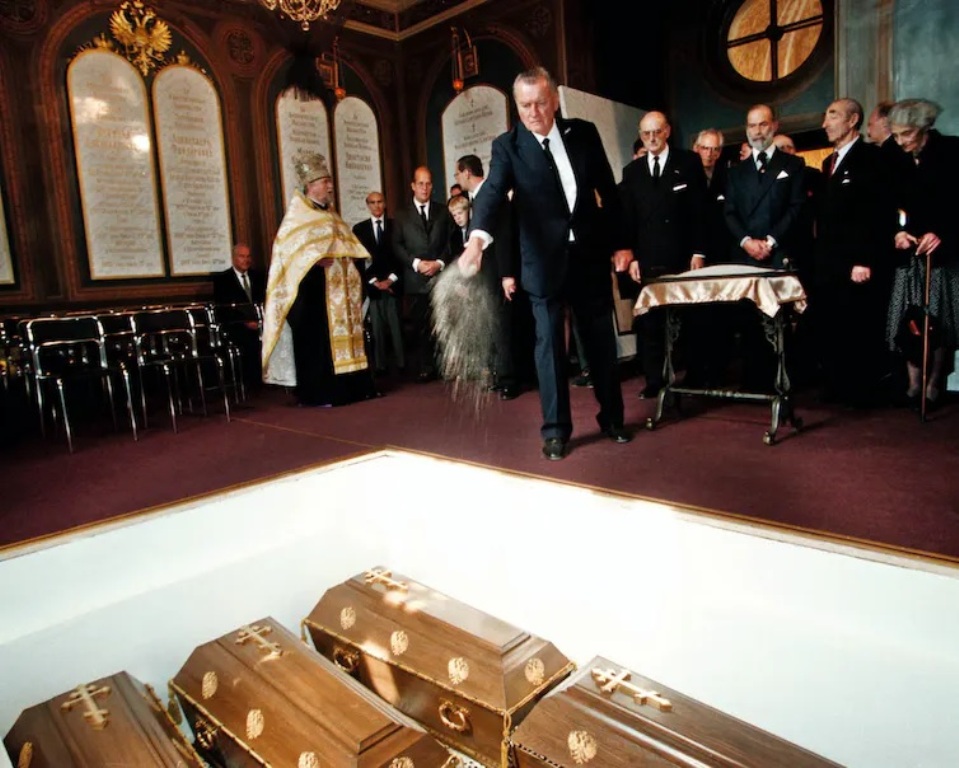
PHOTO: the Head of the Russian Imperial House Prince Nicholas Romanovich (1922-2014) throws a handful of earth into the grave

Burial of the remains of Emperor Nicholas II and his family

On 17th July 1998, the remains, according to the conclusion of the state commission, belonging to Emperor Nicholas II, Empress Alexandra Feodorovna, Grand Duchesses Olga, Tatiana and Anastasia Nikolaevna were buried in St. Catherine’s Chapel. Together with them were buried the family-physician Dr. Eugene. Botkin, the footman Alouis Troup, the cook I. M. Kharitonov, and the maid Anna Demidova. These remains were not recognized by the Moscow Patriarchate.

  • Please refer to the ‘Exhumation of the remains’ section below for information on the remains of Tsesarevich Alexei Nikolaevich and Grand Duchess Maria Nikolaevna

Before the burial, a complete reconstruction of the chapel was carried out. In 1997, specialists from the Restorer and Olko firms carried out the work, which included painting the walls and plafond of the chapel. A two-tiered crypt (depth 1 m 66 cm, length 2 m 70 cm, width 1 m 70 cm) was built near the only window in the southern part of the chapel. The seal-tight crypt was waterproofed, thus providing ideal conditions for the preservation of the remains.

On the lower tier are the coffins of the family’s four faithful retainers, and on the upper tier are the coffins of the Emperor, Empress and their three daughters. An openwork lattice divides the crypt into two parts. The coffins were made of Caucasian oak, their surface is covered with a wax-turpentine mixture. Inside, the coffins are upholstered with copper sheet, and on top – a cover of white velour on silk white cords. On the lid of the coffin of Emperor Nicholas II there is a cypress cross (grown in the garden of the Livadia Palace in Crimea) and a model of a sword based on a 1909 model. The rest of the coffins of members of the Imperial Family have lids decorated with bronze, gilded, crosses. The coffins of the servants are decorated with silver-plated eight-point Orthodox crosses. As the valet Aloysius Trupp was a Catholic, a four-point cross decorates his coffin. The side decoration of the coffins consisted of: a brass board engraved (on which the names, title, place of birth and place of death (according to the Julian calendar) and the date of burial are embossed), as well as double-headed eagles for the seven coffins of members of the Imperial Family. Each coffin was secured with brass (non-oxidizing) screws. Lead plates were laid in the lid and in the coffin itself along the perimeter at the place of their connection, making them airtight after closing the coffin.

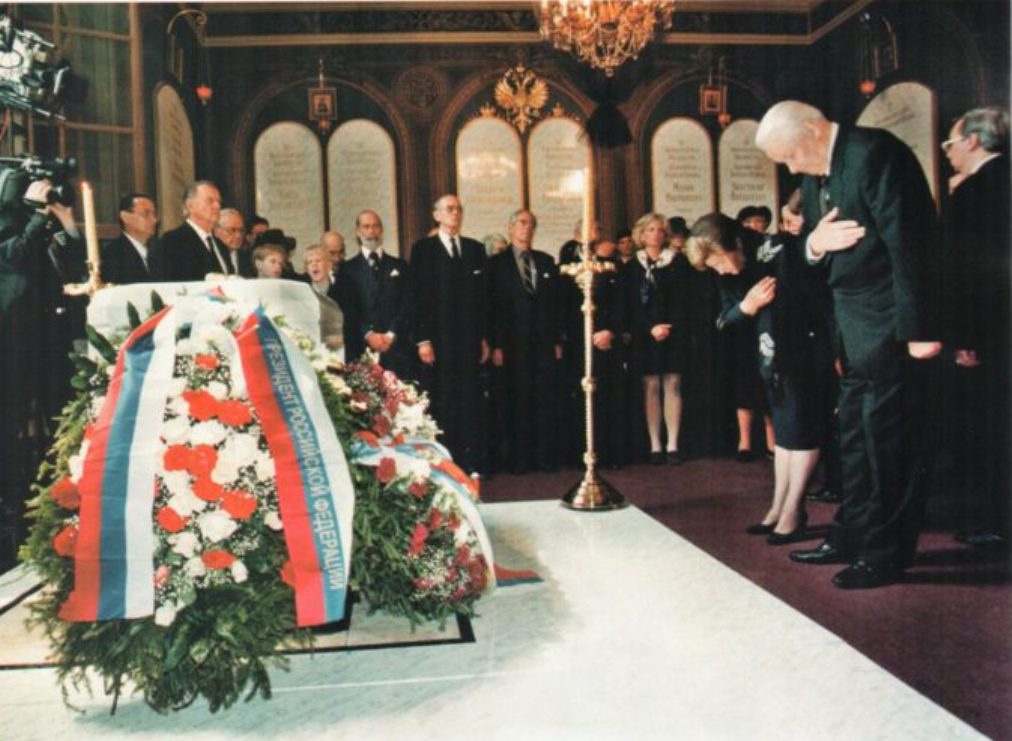
PHOTO: Russian president Boris Yeltsin (1931-2007) bows his head in front of the grave of the last Russian Emperor

The coffins were made in strict accordance with the historical traditions of the burial rites of Russian monarchs. After burial, the crypt was covered with reinforced concrete slabs, through the rings of which a steel chain closed on the lock was threaded. A temporary wooden tombstone was erected over the grave, and later replaced by a marble one. Memorial plaques with epitaphs were placed on the walls of the chapel. Later, the historical coating of the aisle, Mettlach tiles – was also restored.

At the present time, there are two crypts in the Catherine Chapel holding a total of 10 coffins:

  1. Tsaritsa Marfa Matveevna (buried on 7th January 1716)
  1. Emperor Nicholas II Alexandrovich (burial of remains on 17th July 1998)
  2. Empress Alexandra Feodorovna (burial of the remains on 17th July 1998)
  3. Grand Duchess Olga Nikolaevna (burial of the remains on 17th July 1998)
  4. Grand Duchess Tatiana Nikolaevna (burial of the remains on 17th July 1998)
  5. Grand Duchess Anastasia Nikolaevna (burial of the remains on 17th July 1998)
  6. family-physician Dr. Eugene Botkin (burial of remains on 17th July 1998)
  7. maid Anna Demidova (burial of remains on 17th July 1998)
  8. valet Aloysius Trupp (burial of remains on 17th July 1998)
  9. cook Ivan Kharitonov (burial of remains on 17th July 1998)

PHOTO: Members of the new ROC investigation inspect the Ekaterinburg remains

Exhumation of remains

In 2015 the Russian Orthodox Church announced that the investigation into the Ekaterinburg remains had been reopened. The investigation would include a new series of genetic studies, and a comprehensive review of the evidence accumulated since 1918 into the murders of the last Russian Imperial family. With the blessing of His Holiness Patriarch Kirill and at his request to the Investigative Committee a new team of experts was formed. A complex examination would be carried out for the first time – a historical, anthropological and genetic one – one in which the ROC would be involved in all aspects of the investigation.

As part of the resumption of the criminal case on the investigation of the death of the Imperial Family, the remains of Emperor Nicholas II and Empress Alexandra Feodorovna were exhumed on 23rd September 2015, in the Catherine Chapel at the request of the Russian Orthodox Church. About 20 people were present at the exhumation, which included representatives of the Investigative Committee, the Peter and Paul Fortress, the Russian Orthodox Church, and members of the government commission. Taking into account the position of the church, the investigative bodies allowed geneticists and anthropologists to work. After the removal of two concrete slabs from the crypt, the coffins of Emperor Nicholas II and Empress Alexandra Feodorovna were raised for prayer. During the procedure, samples were taken from their skulls and vertebrae. Upon completion, the remains were returned to their coffins, sealed and lowered back into the crypt.

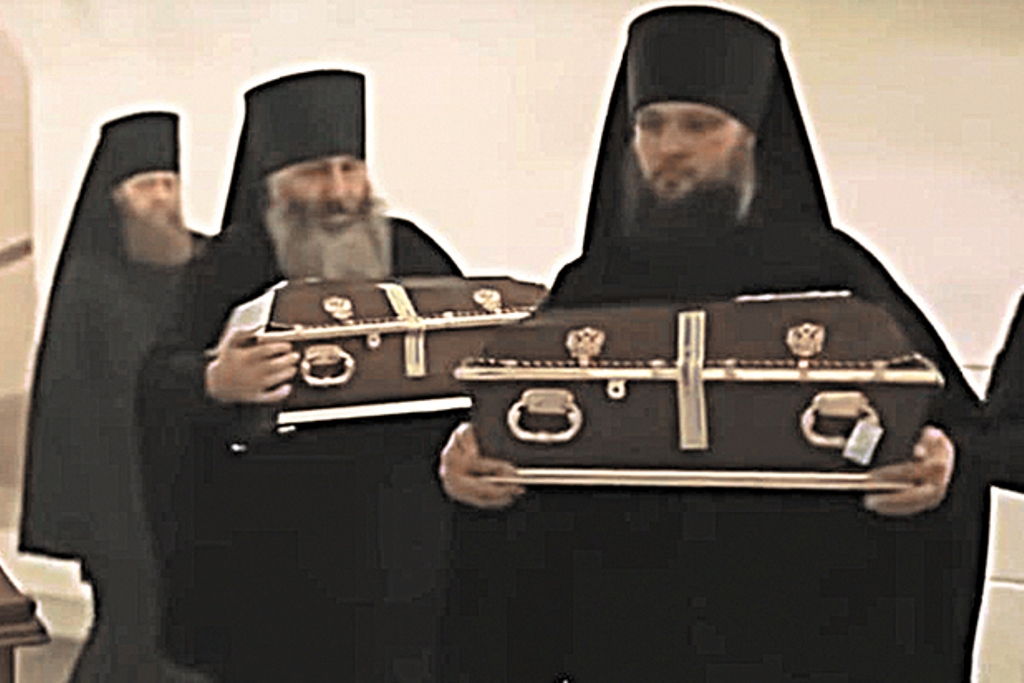
PHOTO: arks containing the remains of Tsesarevich Alexei Nikolaevich and Grand Duchess Maria Nikolaevna are carried to the Lower Church of the Transfiguration Cathedral of the Novospassky Monastery in Moscow in December 2015

In February 2016, a second exhumation took place, but this time all the remains. After taking samples, the remains were returned to their coffins, sealed and lowered back into the crypt and re-covered with slabs.

According to media reports at the time, the investigation should have been completed by the summer of 2017, after which the remains of Tsesarevich Alexei Nikolaevich and Grand Duchess Maria Nikolaevna would be buried with the rest of their family in the Catherine Chapel.

For years, the boxes containing 44 bone fragments of Alexei and Maria remained on dusty shelves in the Russian State Archives. On 24th December 2015, their remains were transferred to the Lower Church of the Transfiguration Cathedral at the Novospassky Monastery in Moscow, where they remain to this day.

In 2021, one unconfirmed report claimed that the remains of the last Imperial Family were no longer entombed in the Catherine Chapel of the Saints Peter and Paul Cathedral. According to the report when their remains were exhumed for further testing by the new ROC commission in 2016, they were never returned to the crypt, however, there is no evidence to support this claim.

The question of when Alexei and Maria’s remains will be buried with that of their family currently rests with the Bishops’ Council of the Russian Orthodox Church. The Council were set to meet in 2021, and then 2022 to discuss the Ekaterinburg Remains, however, this was delayed . . . indefinitely.

“Since the international situation continues to make it difficult for many members of the Bishops’ Council to arrive in Moscow [from foreign countries], a decision has been made to postpone the meeting indefinitely . . . ” the Synod’s resolution stated (Journal No. 66) dated 25th August 2022.

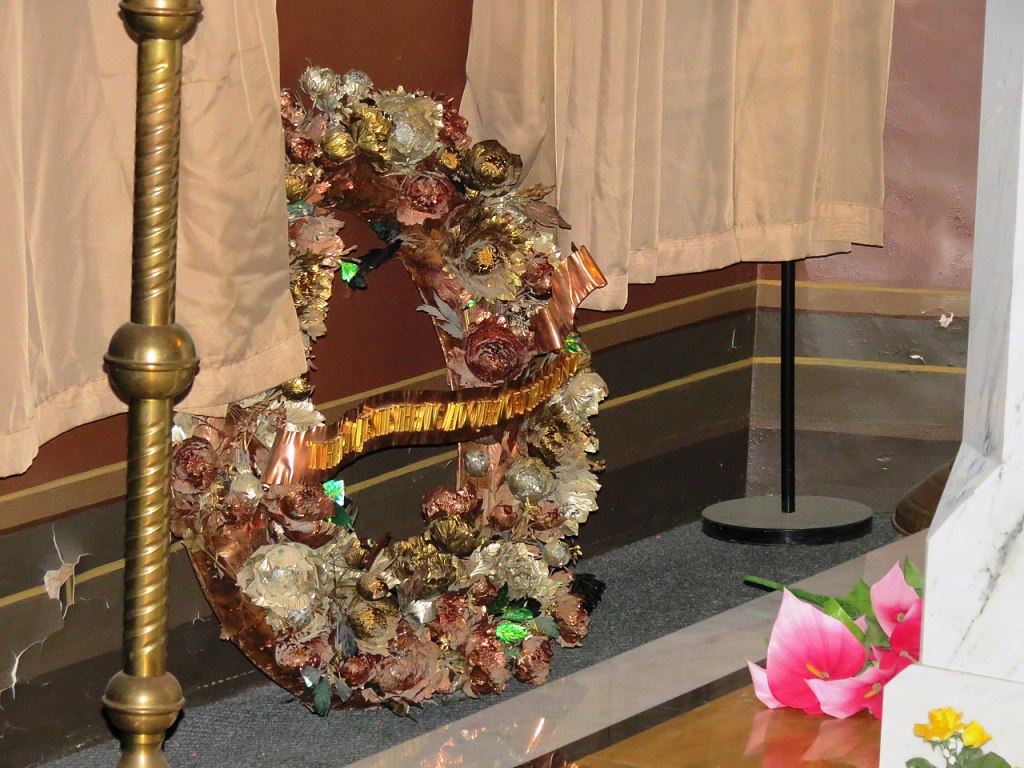
PHOTO: Queen Sirikit of Thailand’s Wreath

Offerings in St. Catherine’s chapel

In 2005, an icon of the Holy Royal Passion-Bearers was presented to the Catherine Chapel, made by the nuns of the Novo-Tikhvin Monastery in Ekaterinburg. In 2007, Queen Sirikit of Thailand paid an official visit to Russia on the occasion of the 110th anniversary of the establishment of diplomatic relations between Russia and Thailand. The official offering was a wreath, which can be seen today in the Catherine Chapel. On the tombstone there is also a charoite box with earth taken from the grave of Anna Vyrubova, who buried in the Orthodox cemetery in Helsinki.

© Paul Gilbert. 6 March 2023
Romanov archives of Charles Sydney Gibbes

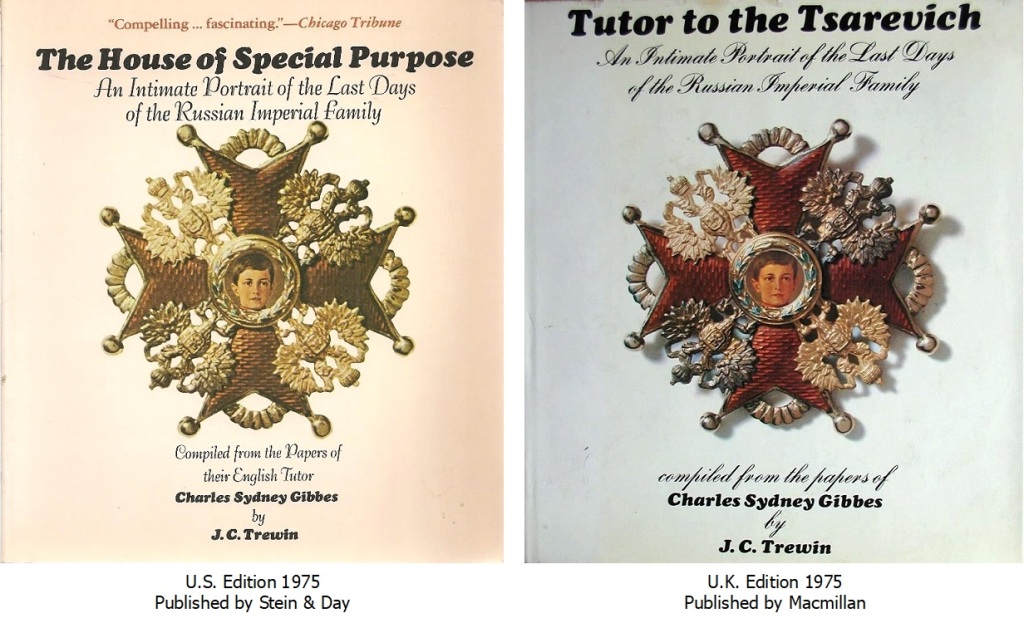
It has been almost 50 years since the publication of The House of Special Purpose by John Courtenay Trewin was published in 1975 by the US publisher Stein & Day. It was also published the same year in the UK by Macmillan, but under a different title Tutor to the Tsarevich.

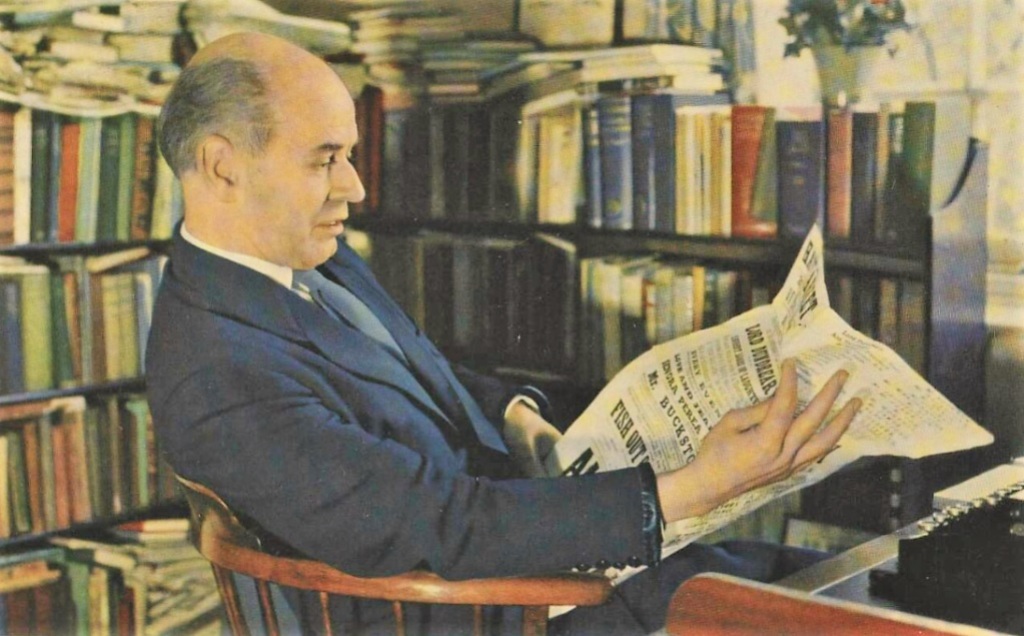
Trewin’s book is a collection of letters, journal entries, photographs and memorabilia diligently kept by the English tutor to the Russian Imperial Family – Charles Sydney Gibbes (1876-1963). Described as “An Intimate Portrait of The Last Days of the Russian Imperial Family compiled from the papers of their English Tutor” this carefully produced record is also an enchanting, touching glimpse into the private world of Emperor Nicholas II and his family.

Gibbes story really began on 9th June 1908, during a meeting of the Russian Imperial and British Royal families in Reval [today Tallinn, Estonia]. The historic meeting marked the first visit to Russia by a British monarch: King Edward VII. It was during this visit that the King remarked to Empress Alexandra Feodorovna that neither of her elder daughters possessed a very good English accent. This prompted the Empress to get an English tutor for the girls and shortly thereafter Charles Sydney Gibbes found himself, most unexpectedly, appointed English tutor to the Tsar’s children.

For ten years, from the autumn of 1908 until their deaths in July 1918, Charles Sydney Gibbes was a member of the household of Emperor Nicholas II and his family. During much of that period, Gibbes served as the English tutor to the Tsesarevich Alexei Nikolaevich, as well as teaching his sisters, the Grand Duchesses Olga, Tatiana, Maria and Anastasia Nikolaevna..

PHOTO: John Courtenay Trewin —photograph published in The Illustrated London News (London, England) of Saturday 11th January 1958

Gibbes became an intimate friend of the family, first in the Alexander Palace at Tsarskoye Selo, and then during the family’s exile to Tobolsk from August 1917 to April 1918. He followed them to Ekaterinburg, where he was separated from them before they were brutally murdered by the Ural Soviet in the early morning hours of 17th July 1918. Their death and martyrdom would have a profound effect on him, he honoured their memory until the end of his life

During his years spent with the Imperial Family, Gibbes kept notes and diaries recording the Tsesarevich’s illness, the books which the children read and the plays which they acted during their time in exile. He collected a mass of souvenirs, exercise books, menus, letters, sketches, official permits and other documents, from all of which British journalist, writer and drama critic John Courtenay Trewin (1908-1990) has constructed a fascinating and highly personal narrative. This book was written from Gibbes’ surviving archives of letters, photos and other memorabilia relating to the last Imperial family of Russia which are now kept in Oxford.

Gibbes managed to preserve it all throughout his extraordinary subsequent career, first as an Inspector of the Chinese Maritime Customs at Harbin and latterly as a priest, and finally as an archimandrite, in the Russian Orthodox Church in Oxford, where he left his remarkable collection to his adopted son George Gibbes[1], who provided the material for this fascinating book.

Gibbe’s depositions form an important part of the official reports on the fate of the Imperial family, but none of the rest of this material has been published before, nor even been consulted by writers on the subject.

PHOTO: Charles Sydney Gibbes collection of Russian possessions were left with his adopted son, George, in Oxford. In this photo we see George Gibbs at this home surrounded by photos of the Imperial Family.

A year after the regicide, Gibbes found himself at the “House of Special Purpose” [Ipatiev House] where the tragedy took place, and he was at the Four Brothers where he assisted Nikolai Sokolov in his investigation into the deaths of the Emperor and his family. He witnessed the recovery of numerous items from the mine, which belonged to members of the Imperial Family, and assisted in getting them safely out of Russia in a sealed blue box[2].

In addition, the collection of precious Romanov artifacts that Gibbes brought back with him from Russia – including an icon from the Tsaritsa, a pair of Nicholas II’s felt boots, the Tsesarevich’s pencil case and exercise books belonging to his sisters Maria and Anastasia, and the beautiful Italian Murano glass chandelier of red and white lilies that he retrieved from the Grand Duchesses’ room of the Ipatiev House in Ekaterinburg were later on display at his chapel dedicated to St Nicholas the Wonderworker in Oxford.

Following his death in 1963, Gibbes’ collection of Russian possessions were left to his adopted son, George, in Oxford, and George subsequently donated them to the museum at Luton Hoo[3]. A small chapel was built there to house the collection, consecrated by Metropolitan Anthony of Sourozh. The museum was later moved from Luton Hoo to the Wernher Collection in Greenwich. Sadly, the collection was sold and is now in the hands of a private collectior, including the Murano glass chandelier, which is now in the private collection of the Butters Family in England.

In 1986, George Gibbes, sold off two of the most important Romanov pieces in his father’s collection made by Fabergé: a pair of monogrammed cufflinks given to Gibbes by the tsar’s eldest daughter, Grand Duchess Olga Nikolaevna, and a miniature gold Easter egg pendant with a diamond in the A note, that belonged to Anastasia.  The latter was bought by film maker Steven Spielberg as a gift for his then wife, Amy Irving, when she finished filming at TV mini series in which she played the role of Grand Duchess Anastasia Nikolaevna.

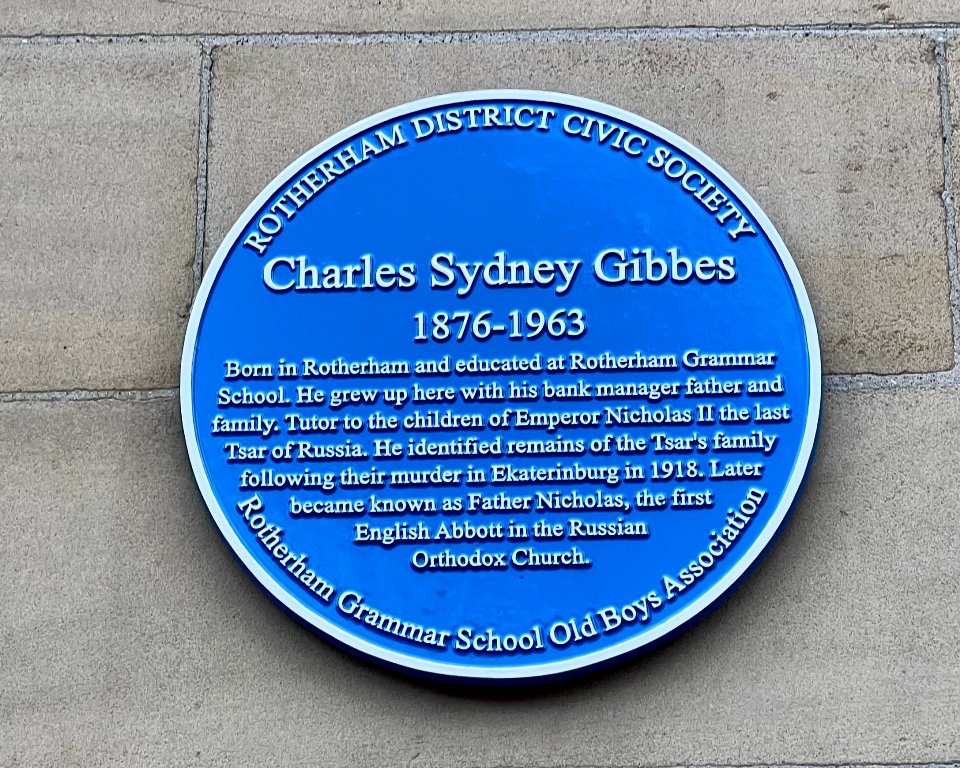
PHOTO: in 2022, a blue plaque was unveiled in Rotherman, which incorrectly notes that Gibbes “identified remains of the Tsar’s family following their murder in 1918”. As Trewin records in his book, Gibbes took part in Sokolov’s investigation and helped identify relics belonging to the Imperial Family found at the Four Brothers Mine, near Ekaterinburg, in 1919

Charles Sydney Gibbes died at St Pancras Hospital, London, on 24th March 1963. His open coffin was displayed in the cellar (or crypt) of Saint Nicholas House in Oxford before his funeral. He is buried in Headington cemetery, Oxford, Oxfordshire, England.

A blue plaque, unveiled in 2022, marks Gibbes’ father John’s workplace at the former Sheffield and Rotherham bank, where he worked as the manager, from 1870 until around 1901. The plaque was organised by The Rotherham District Civic Society, and funded by the Rotherham Grammar School Old Boys Association, where Charles Sydney Gibbes was educated.

Bernard Fletcher, of the Rotherham Civic Society said that the process had taken about 18 months, and that he is “relived and glad” the plaque is up to commemorate the life of Mr Gibbes.

In his speech during the plaque unveiling, Tim Mumford, president of the Rotherham Grammar School Old Boys Association paid tribute to Gibbes: “He was born here, he went to Grammar School, we think in the late 1880s, and left there about 1895.

NOTES:

[1] In 1922, during his stay in Harbin, China, Charles Sydney Gibbes met a 16-year-old orphan, Georges Paveliev [born 16th June 1906], whom he adopted. In the early 1990s, I had the pleasure of corresponding with George Gibbs in whose letters he shared numerous anecdotes about his father. The regular exchange of letters came to a stop, and it was only after making enquiries that I learn of George’s death on 11th May 1993.

[2] During his investigation, Sokolov discovered a number of personal items at the Four Brothers Mine, which belonged to the Imperial Family, including a severed finger believed to be that of the Empress. Today, the box is stored in the Russian Orthodox Church of Saint Job in Uccle, Brussels.

[3] On a personal note, I am very grateful that I had an opportunity to visit Luton Hoo in the 1990s, and had an opportunity to see with my own eyes the Gibbes collection. I was delighted, yet again, to see the Murano glass chandelier on display at The Last Tsar: Blood and Revolution exhibition in September 208 at the Science Museum in London, England – PG.

© Paul Gilbert. 5 March 2023

ROC preparing to build memorial church at Porosenkov Log

PHOTO: entrance to the Romanov Memorial at Porosenkov Log

According to Ilya Korovin, the director of the Ekaterinburg based Romanov Memorial Charitable Foundation the Russian Orthodox Church (ROC) is preparing the construction of an Orthodox church at Porosenkov Log, the site where the remains of Emperor Nicholas II and his family were discovered in two separate graves in 1991 and 2007 respectively.

If there is any truth to this disclosure, then it proves that the ROC have already unofficially[1] recognized the Ekaterinburg Remains as those of the Russian Imperial Family and their four retainers, however, the final decision on the official recognition of the Ekaterinburg Remains by the ROC will be made by the Bishops Council Bishops Council meet this summer.

Korovin claims that plans for the construction of the church is evidenced by a document in which Vasily Boyko-Veliky, the president of the St. Basil the Great Russian Educational Foundation, concluded an agreement in 2021 with the director of Geoincart Alexander Sokovnin to drill 40 wells on the territory of the Romanov Memorial. The illegal drilling was carried out, despite the fact that Porosenkov Log was recognized as an object of cultural heritage in 2014. “The terms of reference for the production of engineering and geological surveys indicate “new construction of a memorial church” on the territory of the Romanov Memorial,” said Korovin, who was successful in halting any further drilling and development.

According to Korovin, the Department of State Protection of Cultural Heritage Sites (UGOOKN) of the Sverdlovsk Region is preparing changes which will provide additional protection to the cultural heritage site on the Old Koptyakov Road near Ekaterinburg.

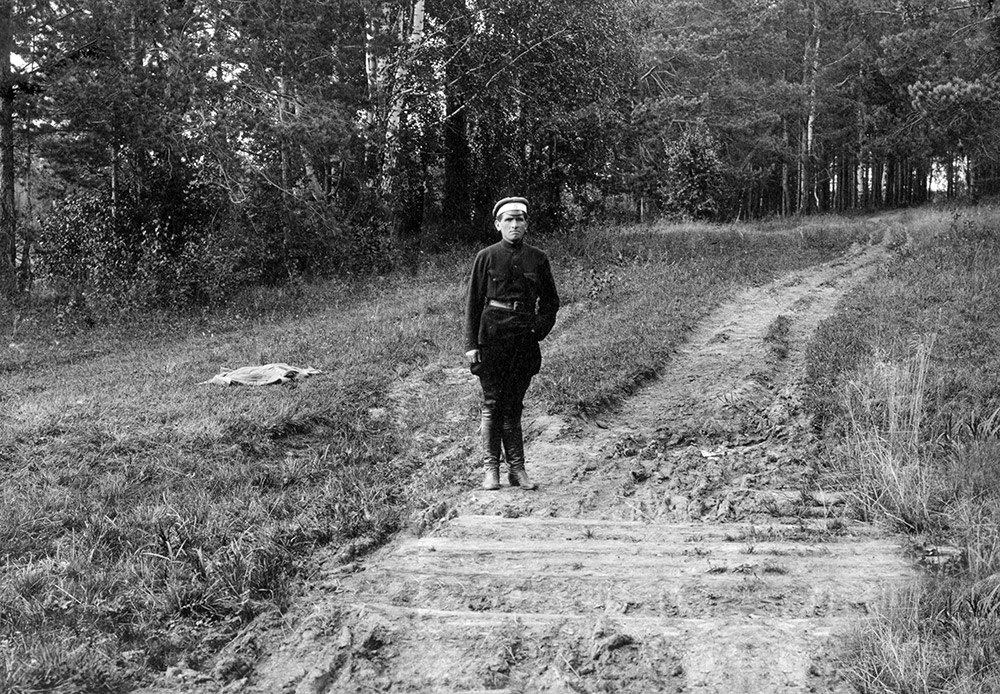
PHOTO: in the 1920s, the murderer Pyotr Zakharovich Yermakov returned to Porosenkov Log. On the reverse of this photo, he wrote: “I am standing on the grave of the Tsar”.

Alexey Shamratov, head of the department of legal and organizational work of the Regional State Educational Institution, however, claims that he was not aware of any preparation of changes to the subject of protection of the cultural heritage site. It is interesting to note that the press service of the Ekaterinburg Diocese declined comment on the matter.

A criminal case was initiated against Vasyl Boyko-Velikiy on suspicion of embezzlement of funds of the Credit Express Bank. In 2021, the Moscow City Court transferred him from jail to house arrest. In January 2023, Vasily Boyko-Velikiy declared bankruptcy.

Emperor Nicholas II and his family, together with four servants, were all shot by the Bolsheviks in the Ipatiev House Ekaterinburg on 17th July 1918. The regicides first tried to destroy the bodies at the Four Brothers Mine [Ganina Yama], then reburied them 3.8 km away at Porosenkov Log, where they were officially discovered in 1989. The remains of Tsesarevich Alexei and Grand Duchess Maria were found in 2007. The Romanov Memorial Foundation was established in 2021 with the aim of preserving the historic site.

The Moscow Patriarchate canonized Nicholas II and his family members in 2000. However, since the discovery of the remains, the ROC has not recognized their authenticity due to what they consider “a lack of evidence”. Despite this, in 2009, the Russian Orthodox Church received a land plot of 15 hectares in the area of Porosenkov Log from the Sverdlovsk regional government. There were plans to build a church complex – similar to the one at Ganina Yama – which included an Orthodox cemetery. However, in 2010, the charter court of the Sverdlovsk region ruled the decision on the allocation of the land illegal.

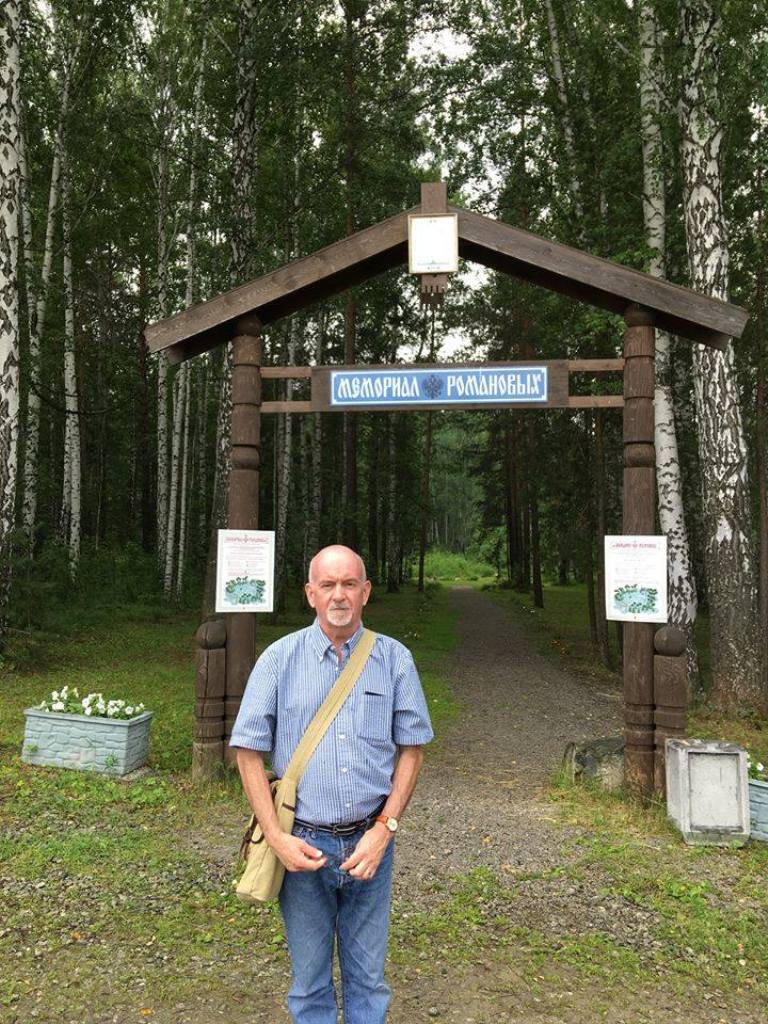
PHOTO: Paul Gilbert standing at the entrance to the Romanov Memorial in July 2018

NOTES:

[1] Ever since the discovery of the Ekaterinburg Remains, the Russian Orthodox Church refuses to accept DNA tests confirming their authenticity. The ROC maintains that the Bolsheviks put the burnt bodies of their 11 victims in a pit in a forest in the Urals region, where the ROC has built a large monastery complex: the Monastery of the Holy Royal Martyrs at Ganina Yama.

FURTHER READING:

104 years on, Orthodox Church still split over murdered tsar’s remains by Paul Gilbert 6th April 2021

The fate of Porosenkov Log and Ganina Yama by Paul Gilbert, 14th February 2022

Will the Bishops Council’s decision on the Ekaterinburg Remains cause a schism within the ROC? by Paul Gilbert, 20th September 2021

30th anniversary of the exhumation of the remains of Nicholas II and his family by Paul Gilbert, 7th July 2021

Bones of Contention: The Russian Orthodox Church and the Ekaterinburg Remains by Paul Gilbert, 23rd November 2021

© Paul Gilbert. 4 March 2023
Museum of Emperor Nicholas II in Moscow

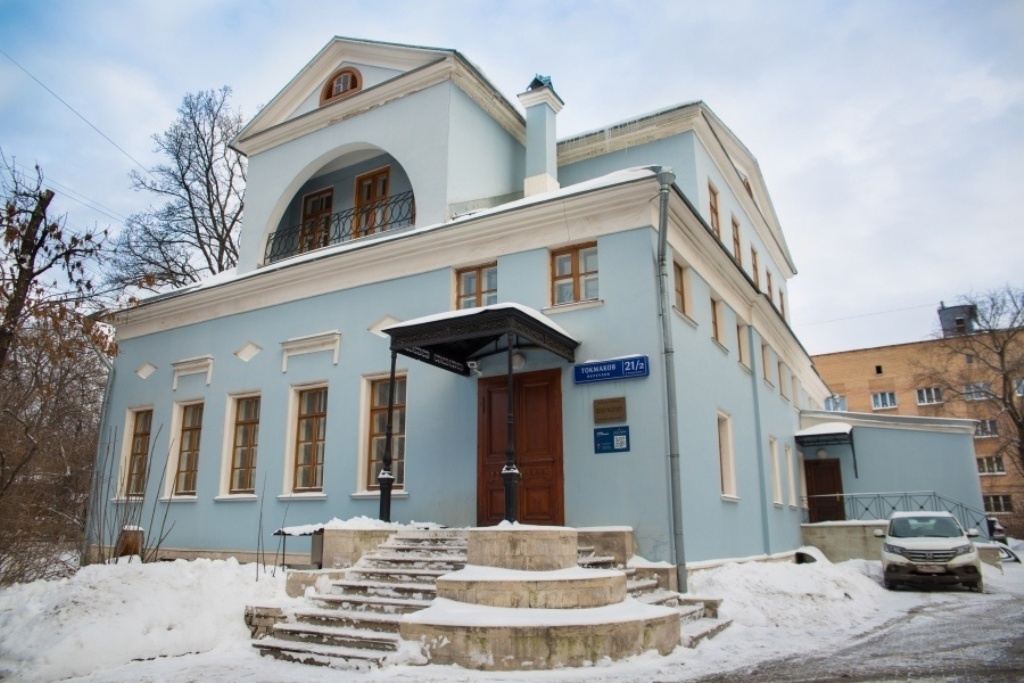
PHOTO: Museum of Emperor Nicholas II in Moscow

In the spring of 2008, art historian Alexander Vasilyevich Renzhin donated his collection dedicated to Emperor Nicholas II, as a gift to the Nikolo-Ugreshsky Monastery. It was during the 1990s that Renzhin began to collect bit by bit everything related to Emperor Nicholas II and his family. During that time, he managed to amass a collection of more than 3,000 items: postcards and photographs, books and portraits, personal belongings and household items – which reflect on the private lives of the Imperial Family and their tragic deaths in July 1918.

In 1913, Russia solemnly celebrated the 300th anniversary of the House of Romanov. Renjin’s collection features many unique items created for the anniversary. Among them is a carved decorative panel with portraits of Tsar Mikhail Feodorovich, Emperor Nicholas II, Empress Alexandra Feodorovna, and their son Tsesarevich Alexei Nikolaevich and the date 1613-1913. The scene of the election of Mikhail Feodorovich Romanov in 1613 is depicted on a woven woolen carpet made by the Zavidov carpet factory. Candy boxes produced for the anniversary by the Einem confectionery factory with portraits of the Romanovs have been preserved.
Of particular interest are coronation memorabilia: earthenware glasses and plates decorated with the coats of arms and monograms H II [Nicholas II] and AF [Alexandra Feodorovna], miraculously preserved fine crystal glasses with engravings and paintings, cups, plates and saucers from the service with the new coat of arms introduced in 1856.

VIDEO: click on the image above to watch a 3-minute video tour of the museum at the Nikolo-Ugreshsky Monastery, before it was closed in February 2021, and moved to its current location in central Moscow

This service, made at the Imperial Porcelain Factory in St. Petersburg in 1882 specifically for the coronation of Emperor Alexander III, consisted of 19 thousand pieces. For the coronation of Emperor Nicholas II, the service was repeated, consisting of 47 thousand pieces. According to tradition, the Imperial table for the coronation dinner was served with a gold service, bearing the coat of arms. The service was complemented by snow-white damask linen napkins with the personal coat of arms and monogram of Nicholas II. The most important part of Renzhin’s collection are icons of St. Nicholas the Wonderworker and St. Alexandra – the heavenly patrons of the Emperor and Empress – painted for the coronation in1896.

In 1896, some 300 icons were ordered from the famous workshop of Osip Chirikov, of which Nicholas II and Alexandra Feodorovna presented to the most honoured guests at the coronation celebrations in the Kremlin.

Of particular value are historic documents bearing autographs collected by Renzhin: the petition of the Empress Maria Feodorovna addressed to the Minister of War V.A. Sukhomlinov dated March 10, 1914 on the transfer of the building of the Main Directorate of Military Educational Institutions to the Museum of Old Petersburg; a note from Empress Alexandra Feodorovna to Adjutant General F.V. Dubasov and a prayer memorandum signed by her to a soldier walking on the battlefield. Numerous photographs, postcards, prints, books testify to life in peacetime and during the First World War.

In February 2021, the Museum of Emperor Nicholas II was forced to close its doors, due to the COVID-19 pandemic, and almost 9 million rubles (more than $13,000 USD) in arrears of rent.

A Russian businessman Konstantin Malofeev, and founder of the Tsargrad TV channel, came to the rescue by providing Renzhin’s rare collection with a new venue in which to display his collection. The Museum of Emperor Nicholas II re-opened in the Museum of Russian Art, the former manor house of Nikolai Eremeevich Struisky (1749-1796) – situated in Moscow’s historical district – on 10th February 2021.

The Museum of Emperor Nicholas II is open daily to visitors.

© Paul Gilbert. 1 March 2023