Ekaterinburg Hosts Public Forum for the Preservation of the Heritage of Emperor Nicholas II

VIDEO of the entire Forum (in Russian only) – duration 2 hours, 20 minutes

NOTE: All of the articles pertaining to Nicholas II and his family which were originally published in my Royal Russia News blog, have been moved to this Nicholas II blog. This article was originally posted on 20 May 2018 in my Royal Russia News blog – PG

On 18th May 2018, on the eve of the 150th anniversary of the birth of the last Russian emperor, a public forum was held in Ekaterinburg to preserve the heritage of Tsar Nicholas II.

Scientists, historians and authors, along with representatives of the public, gathered to discuss the urgent issues of preserving the historical memory of the sovereign, including recognizing the merit of Nicholas II for the development of the Russian state and an assessment of the murder of the Tsar’s family committed a hundred years ago.
180a

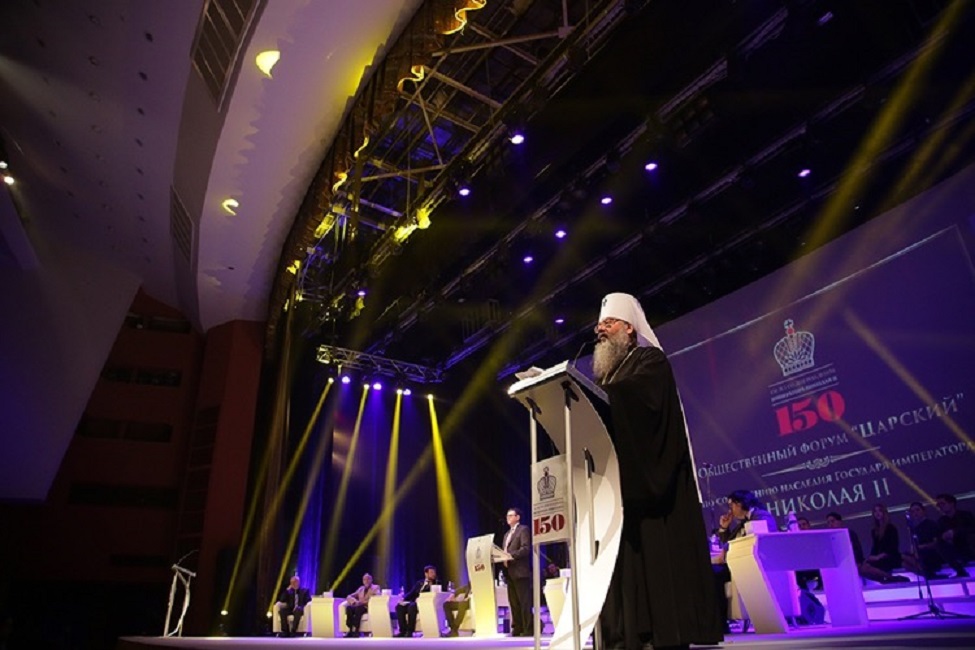
Metropolitan Kirill of Ekaterinburg and Verkhoturye

Opening the forum was Metropolitan Kirill of Ekaterinburg and Verkhoturye, who noted that Ekaterinburg “has become a symbol of the tragedy of the Tsar’s family and, together with her, our Motherland.”

“Since these tragic events, which took place 100 years ago, tragedy befell Russia and it’s people. It is here, on the 150th anniversary of the birth of Emperor Nicholas Alexandrovich, that our holy cause is to gather and reflect on what the Russian Empire was during his reign, what was good about our great country, and what should we take from the past, what lessons, what edifications should we learn for our own lives” – said His Eminence.

The special guest of the forum – the Chairman of the Double-Headed Eagle Society the media group Tsargrad Konstantin Valerievich Malofeev, noted “the triumph of the reign of Emperor Nicholas II, is unparalleled in the thousand-year history of Russia.

“During the history of the Russian Empire, it was the most powerful, the largest, the happiest during the reign of Nicholas II. We should not forget this, and our forum is dedicated to this, which we, the society of historical enlightenment Double-Headed Eagle Society, proudly hold together with the Ekaterinburg Metropolis where our local branch is working under the guidance of Metropolitan Kirill.”
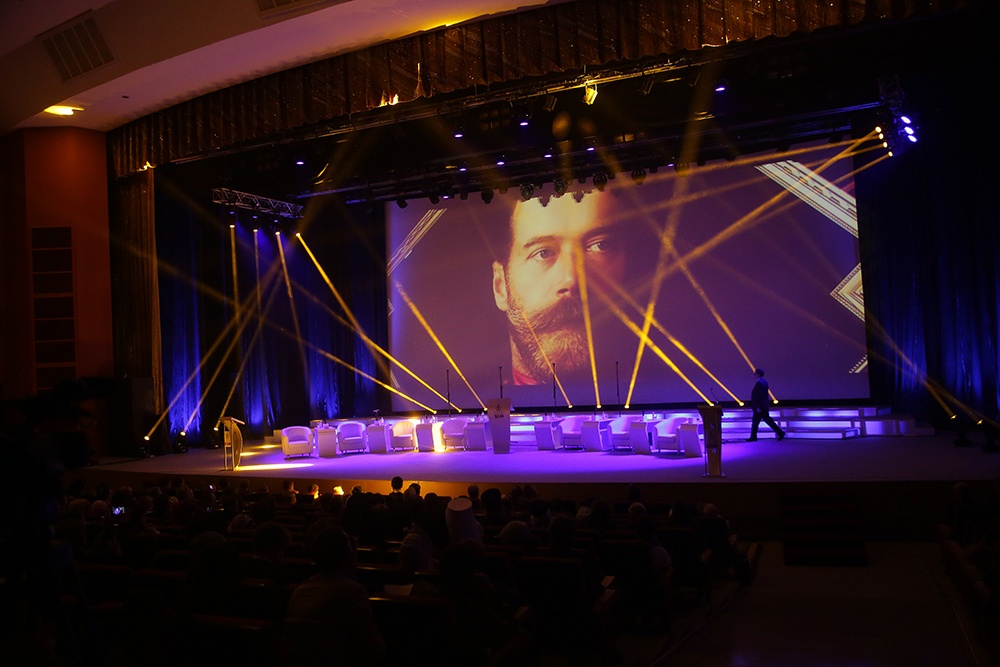
180b

The stage is set for the Nicholas II Forum, held at the Cosmos Theater, Ekaterinburg

The forum was also attended by Bishop Evgeny of Nizhny Tagil and Nevyansky, Bishop of Serov and Krasnoturinsky Alexy, Minister of Education of the Sverdlovsk Region Yury Biktuganov, First Deputy Minister of Culture of the Sverdlovsk Region Vladimir Manturov, as well as representatives of the Double-Headed Eagle Society, the World Russian People’s Council, the Imperial Palestinian Orthodox Society, arriving from various regions of Russia.

Historians, philosophers, theologians, public figures from Russia (among them also experts from Moscow and St. Petersburg), Serbia and Bulgaria discussed issues related to the restoration and preservation of the historical memory of Nicholas II.

Within the framework of the forum, experts assessed the era of the reign of the last Russian emperor as a time, providing great breakthroughs in the development of the state and creating the foundations of socio-economic, including technological development for decades to come. Experts came to the conclusion that Nicholas II was one of the most effective Russian rulers and issued a number of initiatives to perpetuate the memory of Emperor Nikolai Aleksandrovich as an outstanding statesman.
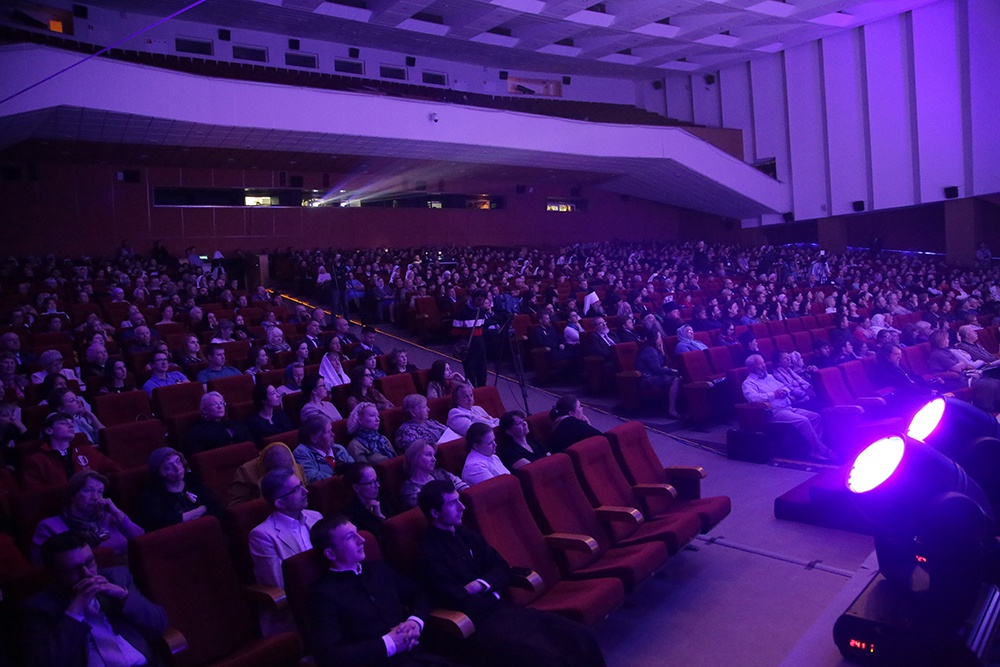
180c

More than 2,000 people attended the Nicholas II Forum on 18th May

Among the proposals included in the final document of the forum is the need for a large-scale federal information and enlightenment campaign on Russia’s achievements in the era of Nicholas II, the development of textbooks and other scientific and educational literature on the basis of reliable scientific information on era, the state order for quality works of art in various fields of culture and art; importance of historical archival research and public dialogue among the scientific community and citizens interested in history; installation in the cities and towns of Russia monuments to the sovereign – an initiative put forward by a member of the Regional Public Chamber, chairman of the Ural branch of the Union of Russian Paratroopers Yevgeny Teterin.

An important topic of the forum was the discussion of the need for public evaluation of the murder of the Imperial Family and their faithful servants, which occurred a century ago in the Ipatiev House in Ekaterinburg. The tragedy of 1918, crowned with the feat of the Holy Royal Passion-Bearers, has not yet been properly evaluated at the state level.

The experts of the forum supported the initiative of Moscow colleagues – participants of a recent round-table hosted by the Parliamentary Newspaper (Парламентская газета) where representatives of the Russian Orthodox Church, State Duma deputies, jurists and political scientists condemned the murder of the Tsar’s family as an unacceptable and unjustifiable crime.
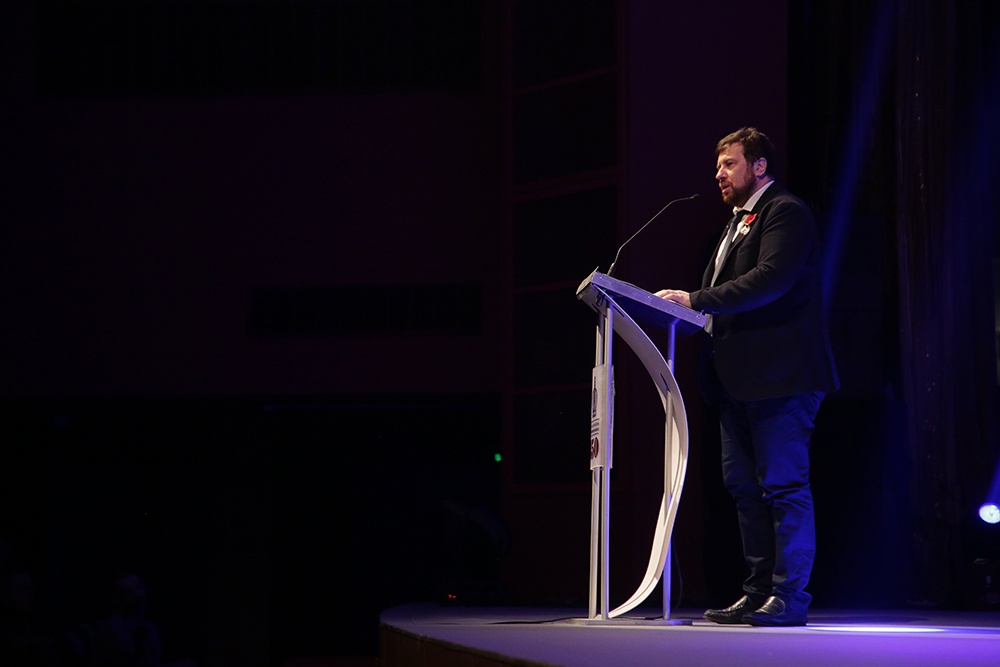
180d

Russia’s leading expert on Nicholas II, historian and author Pyotr Valentinovich Multatuli

During the forum on May 18, in Ekaterinburg, experts presented their views on the sovereign and the era at the forum by:

– Pyotr Valentinovich Multatuli, Russia’s leading expert on the life and reign of Nicholas II, candidate of historical sciences, member of the Council of the Society for the Development of Russian Historical Education of the Double-Headed Eagle Society, and regular commentator of the television channel “Tsargrad”;

– Vladimir Mikhailovich Lavrov, Doctor of Historical Sciences, Member of the Council of the Russian Historical Education Development Society of the Double-Headed Eagle Society, Academician of the Russian Academy of Natural Sciences, Chief Researcher of the Institute of Russian History of the Russian Academy of Sciences;

– Konstantin Valerievich Malofeev, chairman of the Society for the Development of Russian Historical Education of the Double-Headed Eagle Society.

– Yegor Stanislavovich Kholmogorov, publicist, blogger, editor-in-chief of the Russian Observer and New Chronicles sites, author and presenter of the 100 books website;

– Nikola Tanasich, teacher of the Faculty of Philosophy, Belgrade State University;

– Georgi Dimov, Doctor of Science, Senior Researcher of the Bulgarian Academy of Sciences;

– Dmitry Borisovich Grishin, chairman of the Sergievsky Memorial Society (Moscow).

Other participants of the forum were Vladislav Nikolayevich Mayorov, military journalist, expert on the history of Nicholas II and author of the “Royal Calendar”; Vladimir Ilyich Bolshakov, Doctor of Philosophy, Vice-Rector for Research of the Russian Academy of Painting, Sculpture and Architecture Ilya Glazunov (Moscow), as well as members of the Urals Association in Moscow and other experts.
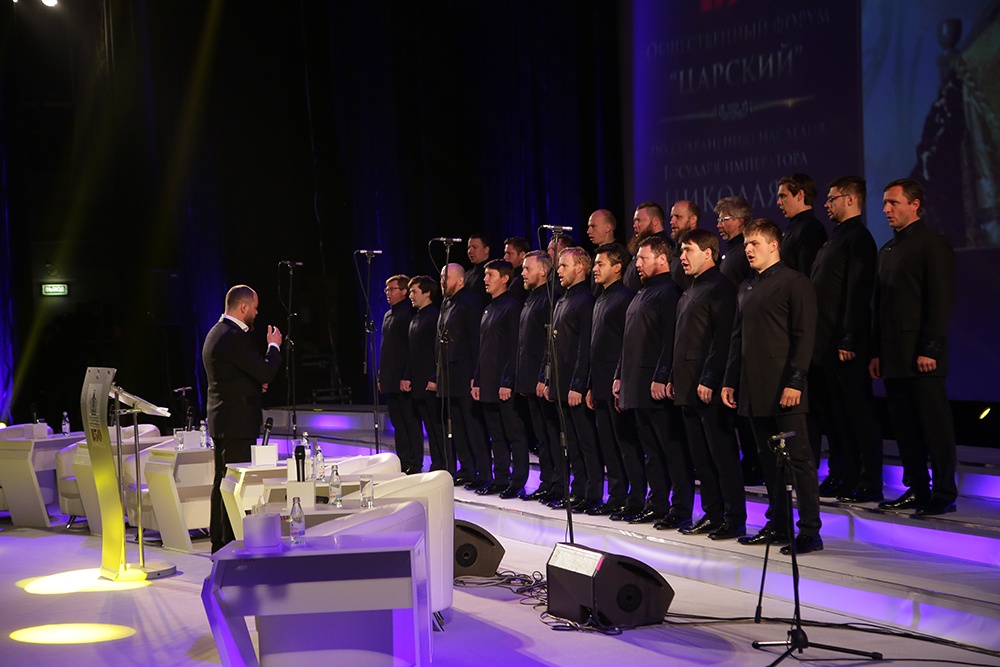
180e

The Sretensky Monastery Choir

The Forum came to close with the singing of God, Save the Tsar and Glory! and A Life for the Tsar, performed by the Sretensky Monastery Choir – please take a moment to watch/listen at the end of the video posted at the top of this post – PG.

The Forum on the preservation of the historical heritage of the Emperor Nicholas II was held in the Kosmos Theater in Ekaterinburg. More than 2,000 people participated in the historic Forum. The event, which became a significant public event, was covered by the leading federal and regional media and was broadcast by the Orthodox television channel Soyuz to 82 countries with a multi-million audience.

© Paul Gilbert. 10 December 2019
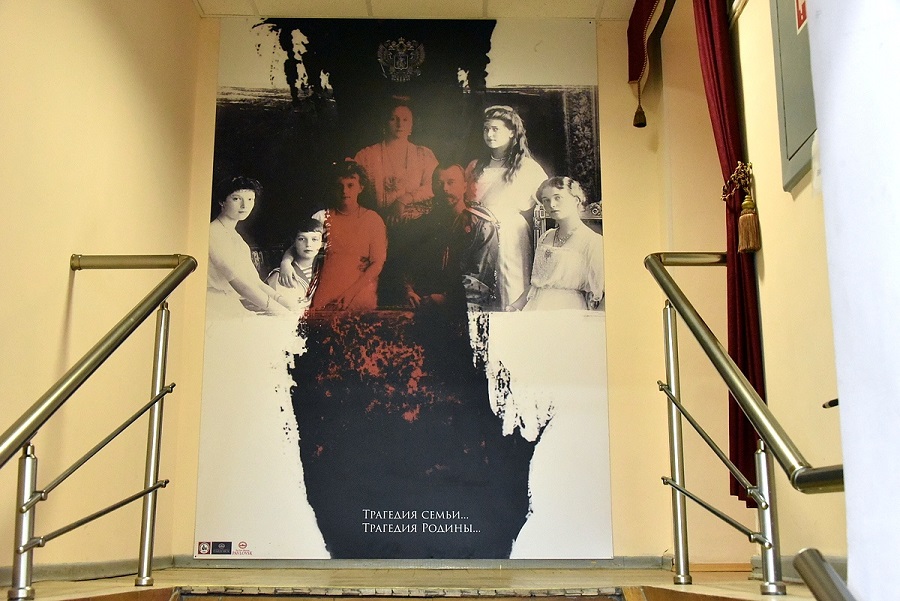
Exhibition: ‘The Tragedy of the Family … The Tragedy of the Motherland’ in Ekaterinburg

175a

NOTE: All of the articles pertaining to Nicholas II and his family which were originally published in my Royal Russia News blog, have been moved to this Nicholas II blog. This article was originally posted on 6 June 2018 in my Royal Russia News blog – PG

The following exhibition ran from 5th June to 23rd September 2018

The exhibition project The Tragedy of the Family … The Tragedy of the Motherland, dedicated to the Romanov family, opened on 5th June 2018 in the Ural city of Ekaterinburg.

The venue for the exhibition is the Poklevsky-Kozell House – a branch of the Sverdlovsk Regional Museum. The exhibit is a joint historical and art project with the Pavlovsk State Museum-Reserve, and the Elisavetinsky-Sergievskoe Enlightenment Society.

175f

175i

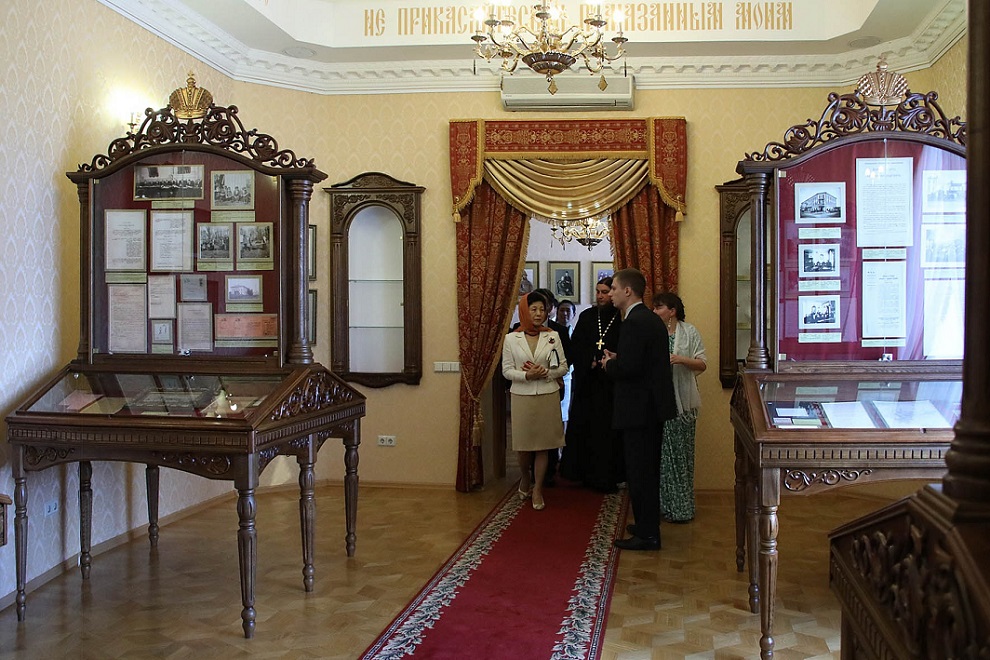
Visitors to the exhibition can acquaint themselves with the private life of members of the Imperial family in the palaces of St. Petersburg, Tsarskoye Selo, Peterhof and Pavlovsk. The exhibition presents more than 150 unique items, including examples of fine and applied art, watercolours and amateur photographs, lovely trinkets from private collections and priceless gifts to the emperor, the Empress and their children.

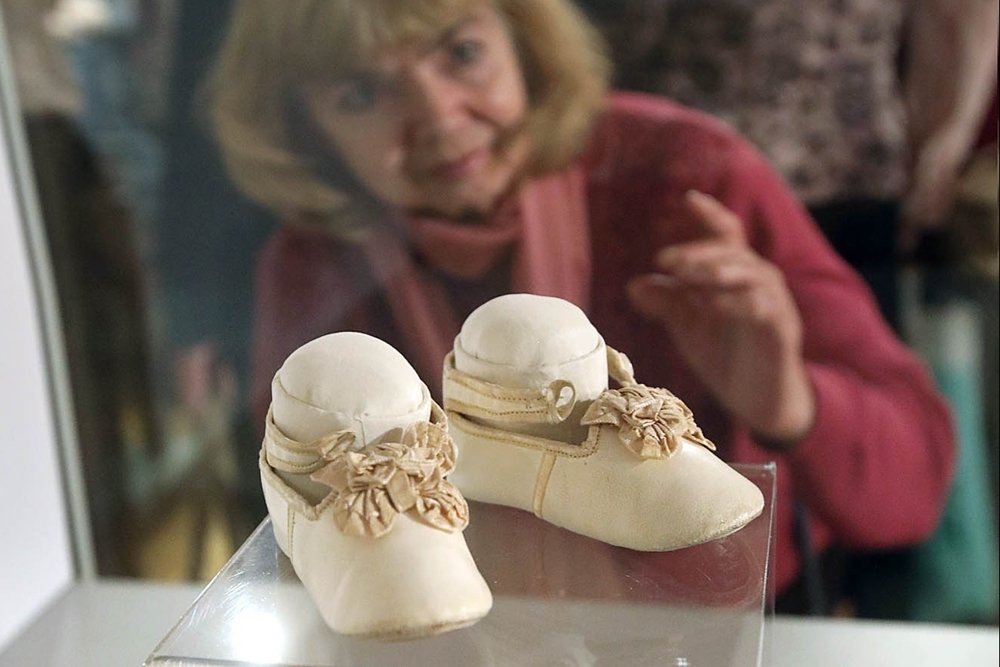
For the first time in the Urals, numerous well-executed original photographs taken by court photographers are exhibited: a portrait of a young Tsesarevich Alexei, ordered by the Empress herself. The photograph in an elegant frame, accompanied Alexandra Feodorovna from Tsarskoye Selo first to Tobolsk, then to Ekaterinburg, and now stored in the collection of the Pavlovsk State Museum-Reserve. Also among the exhibits are the beautifully preserved children’s shoes of Grand Duchess Olga Nikolaevna and a house dress of the last empress, in which only the closest people saw her; two silver cigarette case of Nicholas II, one of which he had with him during his internment in the Ipatiev House. Also on display – for the first time – is a unique, rare banner with the Romanov emblem, made for the 200 year anniversary celebrations of 1913.

175p

The exhibition The Tragedy of the Family … The Tragedy of the Motherland ran from 5th June to 23rd September 2018, in the Poklevsky-Kozell House in Ekaterinburg.

© Paul Gilbert. 9 December 2019

Princess Hisako Takamado visits Church on the Blood in Ekaterinburg

172a

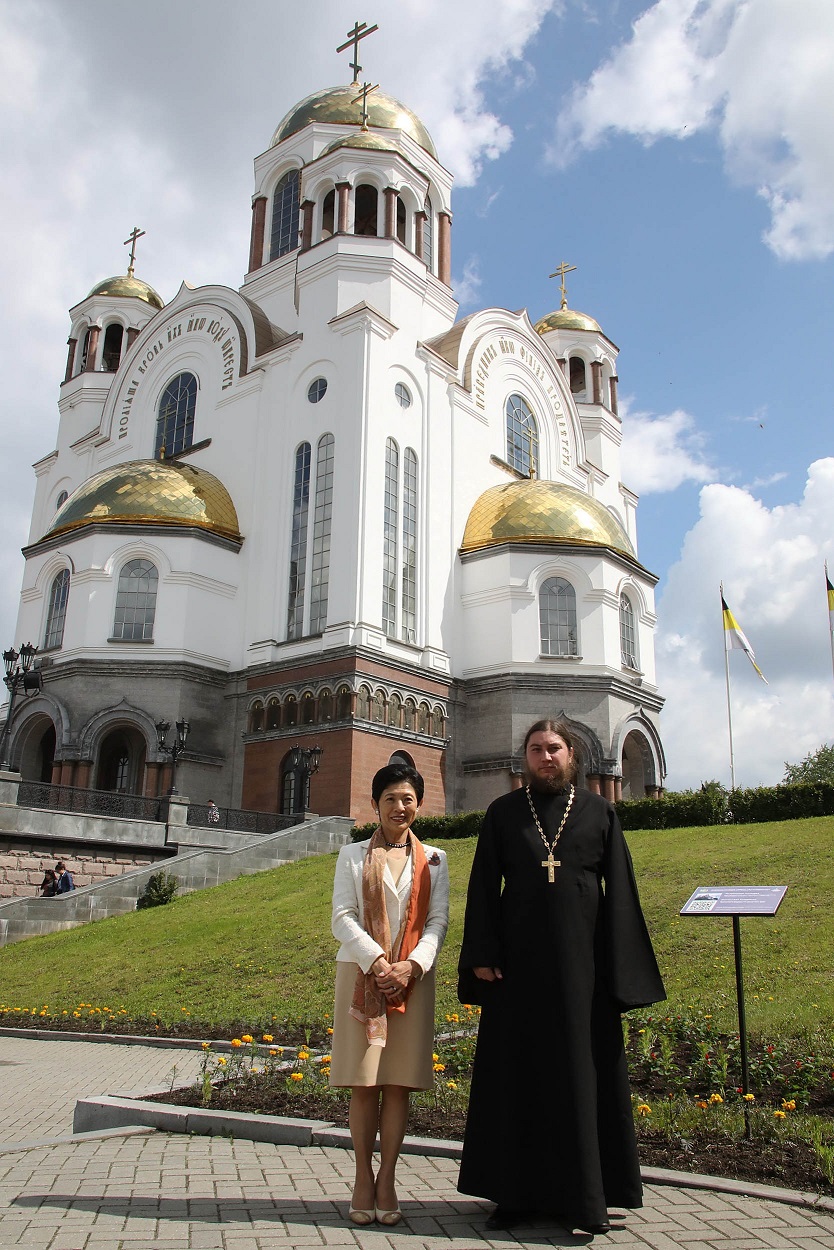
Princess Hisako Takamado standing outside the Church on the Blood, Ekaterinburg

NOTE: All of the articles pertaining to Nicholas II and his family which were originally published in my Royal Russia News blog, have been moved to this Nicholas II blog. This article was originally posted on 23 June 2018 in my Royal Russia News blog – PG

On 23rd June 2018, Japanese *Princess Hisako Takamado visited the Church on the Blood and the Tsarsky Spiritual and Educational Center during her official visit to Ekaterinburg. She is the first member of Japan’s Imperial family to visit Russia since 1916, the Kyodo news agency reported.

172b

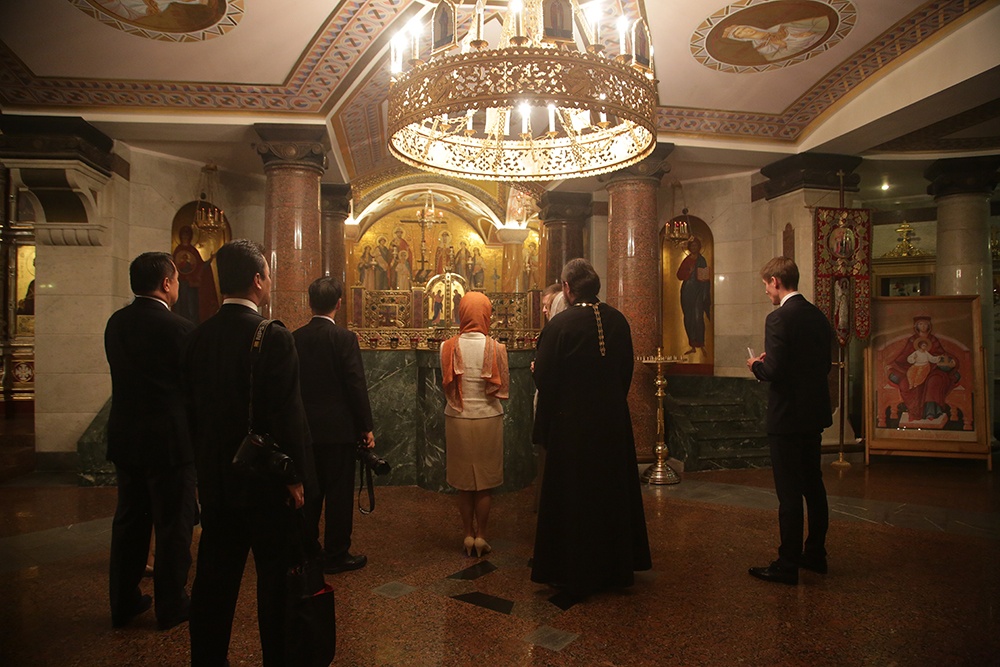
Princess Hisako was shown the renewed Imperial Room in the Lower Church

Her Highness was given a tour of the church, where she was told the story of the Imperial family’s last days in the city in 1918. Princess Hisako was shown the renewed Imperial Room in the Lower Church – altar chapel in honour of the Holy Royal Passion-Bearers, built on the site of the room where Emperor Nicholas II and his family were all murdered on the night of 16/17 July 1918. Special attention was drawn to the unique mosaic panel in the central part of the altar, depicting the Holy Royal Passion-Bearers and their faithful retainers who suffered with them: Emperor Nikolai Alexandrovich, Empress Alexandra Feodorovna, Tsesarevich Alexei, Grand Duchesses Olga, Tatyana, Maria, Anastasia, Saint Eugene Botkin, Alexei Trupp, Ivan Kharitonov, and Anna Demidova. The altar is adorned to the memorable date of the century of the feat of the Royal Family with the blessing of Metropolitan Kirill of Ekaterinburg and Verkhoturye.

172c

Her Highness visited the upper church in the name of All Saints in the Russian Land

After viewing the exhibition dedicated to the Holy Royal Passion-Bearers and the Alapaevsk martyrs – Saint Grand Duchess Elizabeth Feodorovna and the nun Varvara, Her Highness visited the upper church in the name of All Saints in the Russian Land. Here Princess Hisako, delighted with decoration of the cathedral, took up her camera, taking pictures of the vault and frescoes, on which the scenes of the life of the Passion-Bearer Tsar and his family are depicted.

172d

Princess Hisako inside the Patriarchal Compound

Her Highness and her entourage then visited the Patriarchal Compound on the opposite side of the courtyard. Here, she visited the Tsarsky Spiritual and Educational Center, the Museum of the Holy Royal Martyrs, the Church of St. Nicholas the Wonderworker, the exhibition of the Ural artists Alexei Efremov and Alexander Remezov. Her Highness also took great interest in the legendary grand piano of Empress Alexandra Feodorovna, which she took with her when the Imperial family had gone into exile.

172e

Princess Hisako visits the Church of St. Nicholas the Wonderworker

At the end of the visit, Her Highness signed the Visitors’ Book, thanking her hosts for the inspirational journey through Russian history and noting the great importance of the preservation of the heritage of churches in the Urals.

Upon leaving the Patriarchal Compound, the Japanese princess thanked the representatives of the Ekaterinburg Diocese for their warm welcome, and speaking in Russian with special cordiality, she said: “This is a special place.”

172f

Her Highness visits the Museum of the Holy Royal Martyrs

Princess Hisako Takamado of Japan arrived in the Ural capital on 22nd June. During her stay, she plans to attend a FIFA match between Japan and Senegal, which will be held on 24th June.

*Born on 10 July 1953, Princess Hisako Takamado is a member of the Japanese Imperial Family as the widow of Norihito, Prince Takamado (1954-2002). Prince Takamado was the third son of Takahito, Prince Mikasa and Yuriko, Princess Mikasa. He was a first cousin of Emperor Akihito, and was seventh in line to the Chrysanthemum Throne.

172g

Princess Hisako stops to take a photo after leaving the Patriarchal Compound

© Paul Gilbert. 8 December 2019

More than 100,000 participate in Liturgy, all-night procession for 100th anniversary of Holy Royal Martyrs

168a

View of the Church on the Blood on the night of 16/17 2018

NOTE: All of the articles pertaining to Nicholas II and his family which were originally published in my Royal Russia News blog, have been moved to this Nicholas II blog. This article was originally posted on 25 July 2018 in my Royal Russia News blog – PG

In 2018, the Russian Orthodox Church celebrated the centenary of the martyrdom of the last Imperial family of Russia with numerous events held throughout Russia, with the celebrations culminating in a Patriarchal Divine Liturgy in Ekaterinburg and all-night cross procession in their honor.

On the night of 16/17 July 2018, more than 100,000 Orthodox Christians, monarchists, among others gathered in Ekaterinburg for the liturgical celebrations. The faithful came from all corners of Russia and around the world, including Azerbaijan, Australia, Austria, Belarus, Bulgaria, Canada, Great Britain, Germany, Kazakhstan, Kyrgyzstan, China, Lithuania, Moldova, Netherlands, New Zealand, Serbia, USA, Tajikistan, Turkmenistan, Uzbekistan, Ukraine, France, Estonia, South Korea, and Japan.

The first Tsar’s Days procession took place in 1992, with the participation of but a few dozen faithful.

The event began with the Divine Liturgy celebrated on the square in front of the Church on the Blood in Ekaterinburg, built on the site where the Ipatiev House once stood, where the family was murdered. The service was headed by His Holiness Patriarch Kirill with more than 35 hierarchs and multiple clergy concelebrating.

The entire service was broadcast live on the Orthodox TV station “Union:”

A special platform was erected for the Liturgy in front of the gates of the lower church, where the “Imperial Room” is located—a chapel in honor of the Royal Martyrs, built on specific site of their martyrdom.

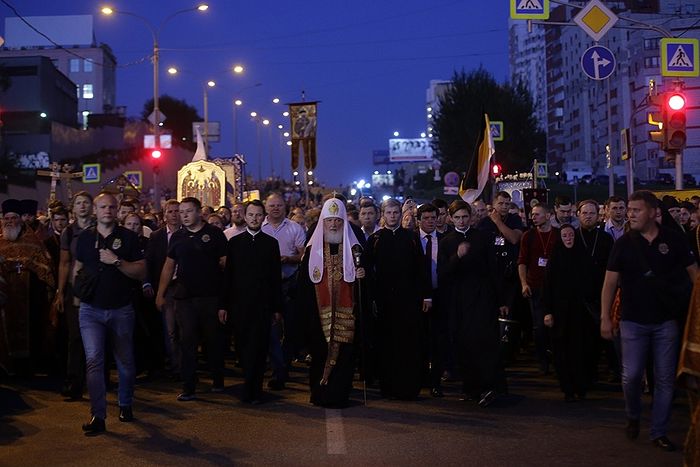
Following the Liturgy, the patriarch led the traditional Royal Cross Procession from the place of martyrdom of the holy Royal Martyrs and their servants to the Monastery of the Holy Royal Martyrs at Ganina Yama ravine, covering a distance of 21 km (13 miles).

168e

His Holiness leads the Cross Procession to Ganina Yama

168f

The Cross Procession nears the Monastery of the Holy Royal Martyrs at Ganina Yama

According to law enforcement agencies, more than 100,000 took part in the procession.

According to tradition, the faithful carried banners and icons in the procession, including a 6.5-ft. icon of the Tsar-Martyr, painted in 2017 for the Church of the “Reigning” Icon of the Mother of God at Ganina Yama. Together with the kiot, the icon weighs 330 lbs. A special bier on wheels was made to move the heavy icon.

The procession was also accompanied by 25 mobile groups from an Orthodox charity service, consisting of clergy, representatives of the Dormition Orthodox Brotherhood of Ekaterinburg, sisters of mercy, and volunteers, who provided assistance to those who could not walk the entire route of the procession. Field kitchens and tests were also set up at the Monastery of the Holy Royal Martyrs for the pilgrims to rest.

His Holiness and the procession arrived at the monastery in the morning, where the patriarch served a moleben to the Royal Martyrs in front of the memorial cross erected at Mine #7, where the bodies of the Royal Martyrs were abused and disposed of. His Holiness Patriarch Alexei II (1929-2008) thus referred to Ganina Yama as “a living antimens, permeated with particles of the burnt holy relics.”

168g

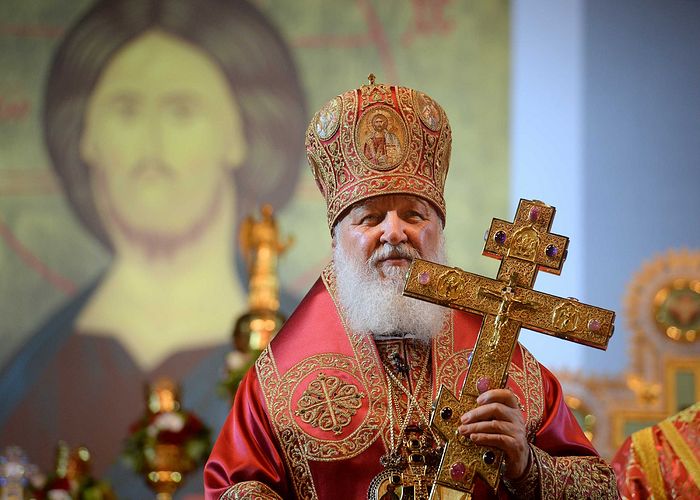
His Holiness Patriarch Kirill of Moscow and All Russia

His Holiness then addressed the sea of faithful with a primatial word:

In the name of the Father and of the Son and of the Holy Spirit!

Your Beatitude Metropolitan Onuphry of Kiev and All Ukraine! Fellow archpastors! Dear brothers and sisters, gathered in a multitude this night before the place where one hundred years ago was committed a terrible crime—wholly innocent people, who had committed their lives to the service of their Motherland, were killed by the evil will of man!

This atrocity still chafes our conscience, still causes us to mentally return to that time and try to understand what happened to our country and to our people. Where did this insanity, this attack come from? Looking from a distance of one hundred years, even if we want to we cannot see all the nuances of the national life of our people, which fade from memory and are missed by even the most penetrating gaze. But such crimes, as were committed here, cannot be accidental. Something stood behind this crime; behind it is the collective guilt of our people, a turn in the historical life of Holy Rus’, which led the people into a heavy, terrible impasse.

What happened to our people? After all, the country was covered with churches and monasteries, an absolute majority of the people were baptized, and the churches were filled with people. Why did it happen? Why did the murderers squeeze the trigger, without trembling at what they were doing? It means not everything was favorable. It means the sunlight reflected in the gilded domes was not always refracted into human hearts to strengthen faith in the Lord in them. And we know how over the course of at least 200 years preceding the tragedy of the Ipatiev House some changes occurred in the people’s consciousness that gradually but steadily led many to a departure from God, neglect of the commandments, and a loss of spiritual connection with the Church and the centuries-old spiritual tradition.

Why did this happen to our people? Why did they at some point become like a train whose engineer didn’t calculate its speed and heads into a steep turn, rushing towards an imminent catastrophe? When did we as people start this turn? We entered when alien thoughts, alien ideals, and an alien worldview, formed under the influence of philosophical and political theories, having nothing in common either with Christianity or our national tradition and culture, began to be perceived by the intelligentsia and aristocracy and even part of the clergy as advanced thoughts by which it was possible to change the people’s lives for the better.

Indeed, the idea of changing the life of the people for the better arises whenever there is a plan to abruptly change the course of history. We know that the worst and bloodiest revolutions have always occurred in view of people’s aspirations for a better life. The leaders of these revolutions instilled in the people that there is no other way to make life better—only by blood, only through death, only through the destruction of the existing way of life. And at some point, having abandoned their spiritual birthright, having lost their true connection with the Church and God, the intelligentsia, aristocracy, and even, as I have already said, part of the clergy were darkened in mind and infected with the thought of the need to drastically change the course of our national history and to try to build as quickly as possible a world where justice reigns, where there is no bygone separation according to material indicators, where people live peacefully and happily. As a result, many of those captured by this idea reach the point of committing crimes.

A question arises: “Is it possible through crime, through blood, through violence, and through the destruction of holy sites to build a happy life?” History clearly testifies: It is impossible! And, perhaps, the first and most important lesson that we should learn today from the tragedy of a century ago is that no promises of a happy life, no hope for help from outside, from some supposedly more educated and advanced people should seduce our people. We must remember the tragedy of the past. We must develop an immunity to any call to attain to human happiness through the destruction of that which is.

Hardly did anyone who called for the destruction of the people’s lives destroy their own lives, renouncing their own wellbeing. But with what fury they proposed to do it to everyone! And the people absorbed this lie; and the crowning act of departure from the most sacred and valuable that they had was the hideous execution of the Royal Family—innocent people who had not violated the law. And what kind of law could we even be talking about if it was necessary to kill the Tsar and his family to build a happy life? We know that nothing turned out well, and taught by bitter experience, we must build a robust rejection of any ideas and any leaders who propose to strive for some obscure “happy future” through the destruction of the life of the people, our traditions, and our faith.

Today, gathered here in such a great number, we remember the tragedy of the Ipatiev House. We have lifted up prayers to the Lord, we have prayed to the Emperor and Passion-Bearer Nicholas and those who suffered with him, that they would pray in Heaven for our earthly Fatherland and for our people and strengthen the Orthodox faith in every subsequent generation of Russians; that faithfulness to God and love for the Fatherland would accompany the lives of the youth and subsequent generations, and that no tragedy of this kind would ever happen again in our land.

May the Lord preserve our Russian land and the Russian people who today live in various countries; and although they are called by various names, are the same people who came out of the Kievan baptismal font, and passing though the most severe historical circumstances, have retained the Orthodox faith until today. May God’s blessing be upon our people, upon our Fatherland, and upon our martyric Russian Orthodox Church. May the life of our people be transfigured by the prayers of the New Martyrs and Confessors of the Russian Church—without any upheavals or blood, but upon the firm foundation of faith and hope that God is with us! May the Lord save us all by the prayers of the holy Royal Passion-Bearers and all the New Martyrs!

Amen.

© Paul Gilbert. 8 December 2019
‘Point of No Return’ – Ekaterinburg Street Art in Memory of the Russian Imperial Family

166a

NOTE: All of the articles pertaining to Nicholas II and his family which were originally published in my Royal Russia News blog, have been moved to this Nicholas II blog. This article was originally posted on 26 July 2018 in my Royal Russia News blog – PG

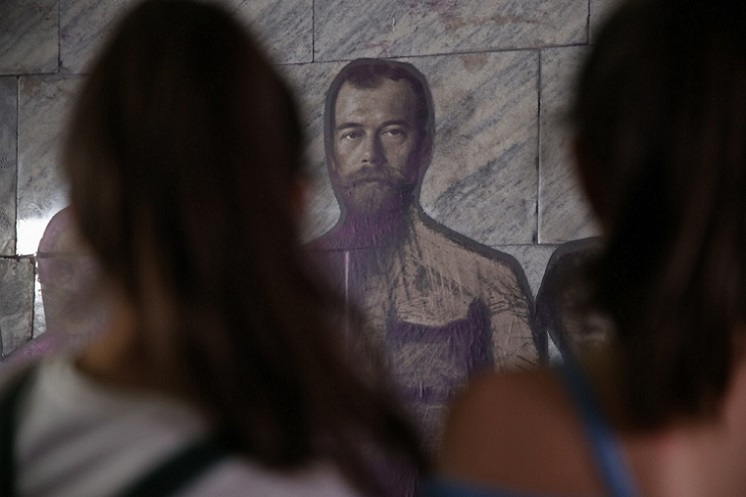
Unique street art in memory of the Russian Imperial Family has been created in an underground passage in the center of Ekaterinburg. The work entitled “Point of no return” depicts two groups of people on opposite walls of the passage.

On one side are depicted: Emperor Nicholas II, his wife Empress Alexandra Feodorovna, their five children, and four faithful retainers – all of whom were murdered on the night of 16/17 July 1918 in the basement of the Ipatiev House in Ekaterinburg.

166b

On the other side the murderers: the Ural Chekists and the guard of the “House of Special Purpose”, the participants in the murders of the Romanovs. Between the two images on the floor is a red circle – Точка невозврата (Point of no return), standing on which, one gets a sense of being in the line of fire.

The appearance of the street art is timed to the 100th anniversary of the deaths of the Imperial Family in Ekaterinburg. The underground passage is located in close proximity to the Church on the Blood, built on the site of the Ipatiev House.

166c

The executor of the work was the GREAT Advertising Group (St. Petersburg), and the ZNAK Information Agency.

“The idea belongs to the GREAT Advertising Group. We liked it, and immediately accepted it. This work is a desire to recall the tragedy of the shooting in the basement of the Ipatiev House, which included the murder of innocent children and servants. It became a symbol of the tragedy of all Russia, a great tragedy of the twentieth century. This shooting really became a ‘point of no return’ for Russia. We believe it is important that a person can feel this point, literally stand on it, even for a moment,” said Dmitry Kolezev, deputy editor-in-chief of Znak.com.

“We wanted to create something without any gadgets and technologies, something with simple and affordable means, which would allow people to get a sense of what it must have felt to face the murderers. To try to literally immerse yourself in a tragic moment, to become a part of it, to stand between the defenseless Imperial family and their murderers with revolvers,” said the creators from the GREAT Advertising Group.

166d

Sadly, the work was only temporary for the 100th anniversary marking the regicide – the artwork was not done with paint, but with a film, making it easy to remove, and leaving the transition walls clean.

© Paul Gilbert. 7 December 2019

Russian Orthodox Church in Dispute Over Porosenkov Log

159a

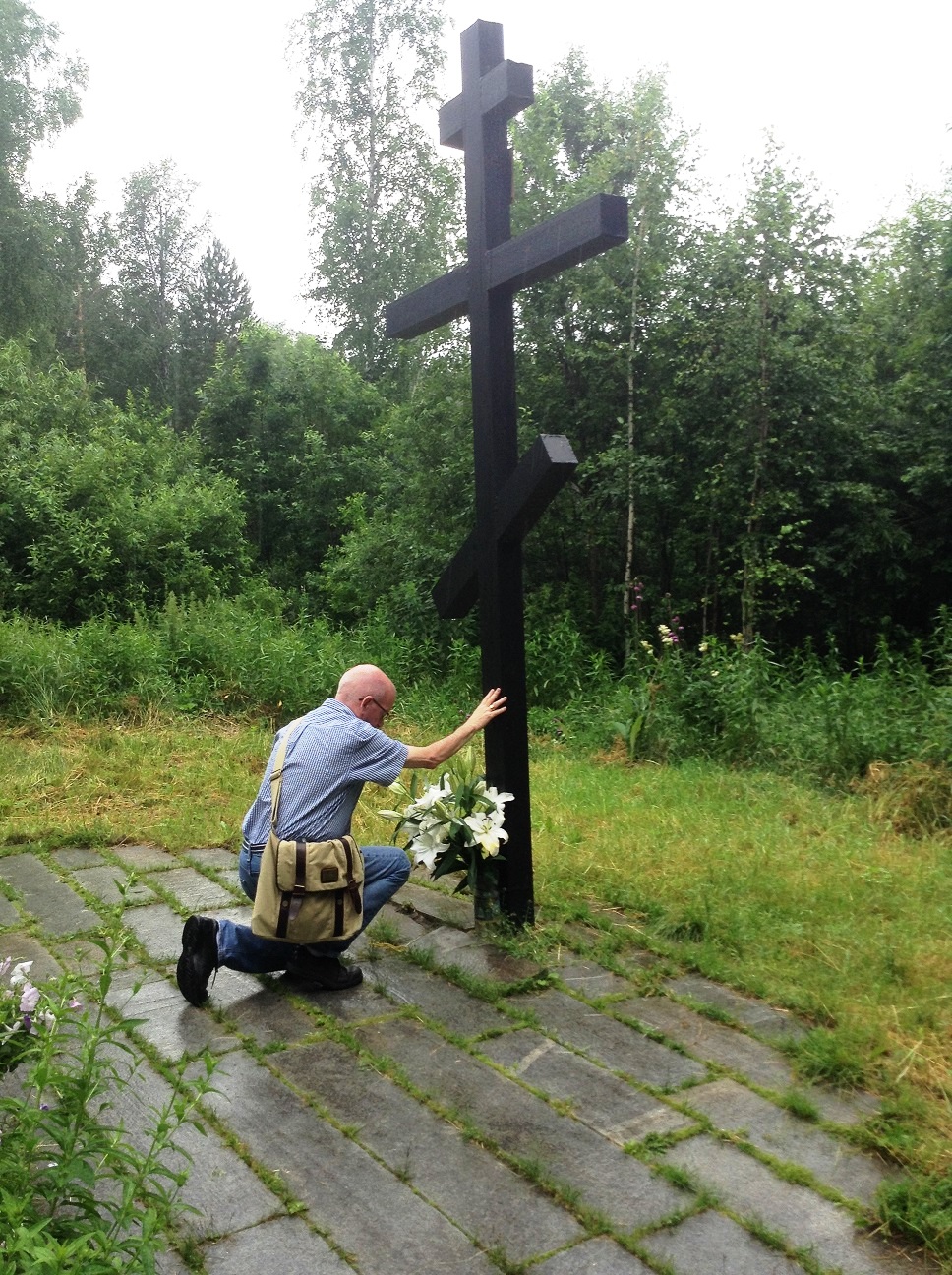
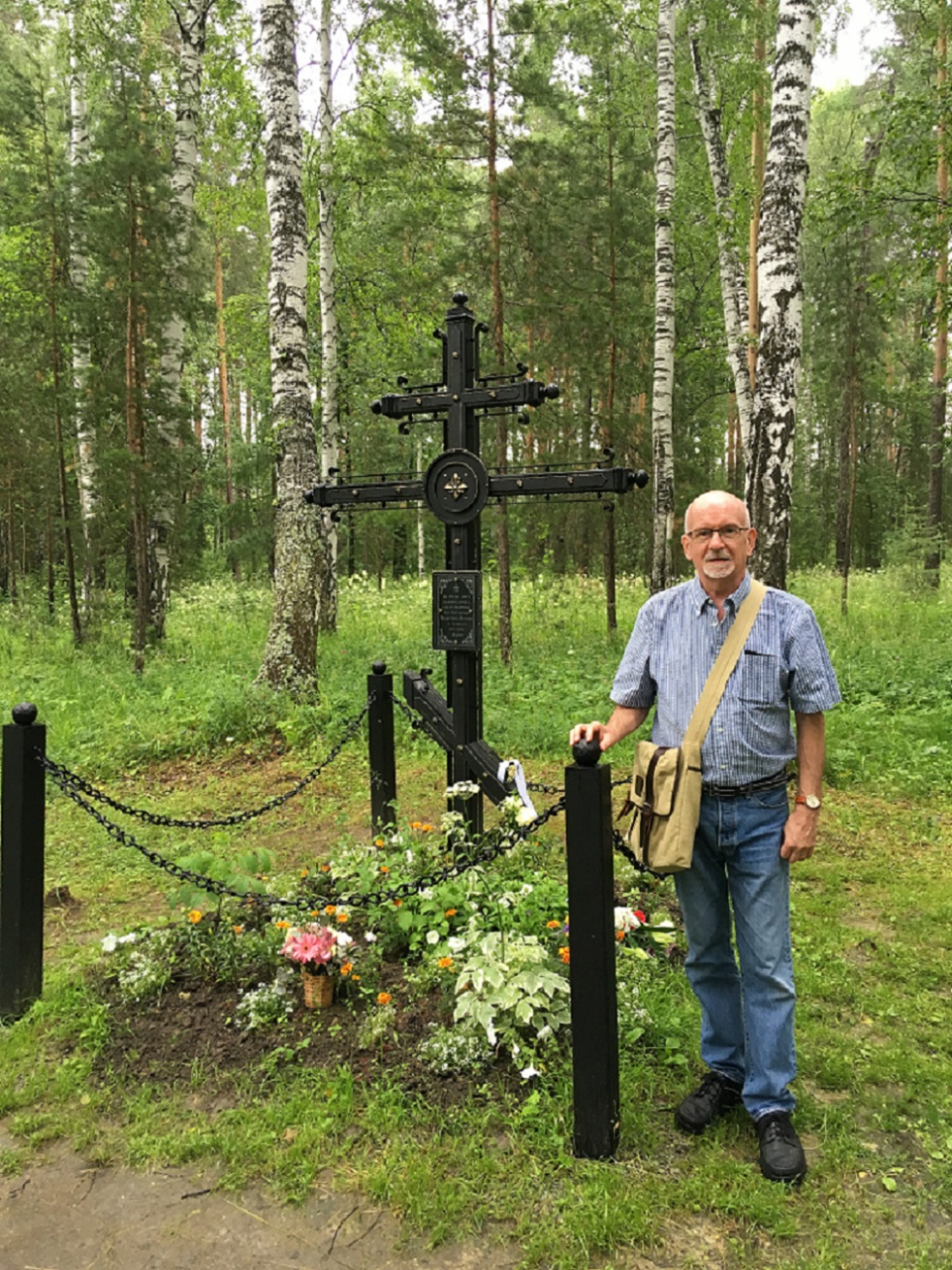
At Porosenkov Log, during my visit to Ekaterinburg, July 2018

Back in March 2016, I reported that Metropolitan Kirill of Yekaterinburg and Verkhoturye had made a request to the Sverdlovsk regional government to transfer the land in and around Porosenkov Log (3.7 hectares) to the Ekaterinburg Diocese. The territory is simultaneously claimed by the Sverdlovsk Regional Museum of Local History in Ekaterinburg. My report was followed up by a second article on the dispute in July 2017 (see links below for both articles – PG).

Since the events marking the 100th anniversary of the death and martyrdom of Emperor Nicholas II and his family last month, the subject is again making headlines in the Urals media.

According to a document signed by the head of the regional forestry department Oleg Sandakov, as early as 2016, Metropolitan Kirill of Yekaterinburg and Verkhoturye made a request to the regional government to transfer Porosenkov Log to the diocese “for gratuitous urgent use for religious activities.” Scans of the relevant documents (see below) were published last week on the Memorial of the Romanovs Facebook page.

In June 2014, a request was made to recognize Porosenkov Log as a cultural heritage site. Then, the regional ministry of culture planned to transfer the Romanov Memorial site to the Sverdlovsk Museum of Local History. The official opening of the memorial was planned to coincide with the 100th anniversary of the deaths and martyrdom of the Holy Royal Martyrs in July 2018.

In 2016, however, the Ekaterinburg Diocese began to interfere with the plans. In February of the same year, Metropolitan Kirill of Ekaterinburg and Verkhoturye sent an appeal to the Governor of the Sverdlovsk Region Evgeny Kuyvashev, in which he asked to declare invalid the document on the transfer of the site to the museum. The governor granted the Metropolitan’s appeal, with the regional ministry of culture subsequently putting the project on hold.

“Due to the historical and spiritual significance of the territory, and in order to avoid any disagreements between secular and religious parties, an official note was sent to the governor of the Sverdlovsk region on the expediency of organizing a discussion on the development of the territory as a cultural heritage site with all interested parties,” said the head of the regional department of forestry Oleg Sandakov.

159d

At the second grave where the remains of Alexei and Maria where discovered in 2007

On the eve of the Tsar’s Days held in Ekaterinburg last month, the Russian Investigative Committee confirmed that genetic examinations on the remains found at Porosenkov Log belong to the murdered Imperial family. It was hoped that Patriarch Kirill would officially recognize the remains during his visit to Ekaterinburg, however, this did not happen. An estimated 100,000 people took part in the pilgrimage from the Church on the Blood to the Monastery of the Holy Royal Martyrs at Ganina Yama, where once again the final prayer service was held, which is still considered by the ROC to be the final burial place of the bodies of the royal martyrs. Porosenkov Log was not included in the pilgrimage.

Despite the fact that the authenticity of the “royal remains” has not been recognized by the ROC, the Ekaterinburg Diocese is unlikely to back away from its plans. It can not be ruled out that the dispute over the site will be put on hold until the time when the church changes its position.

It is believed that not “if” but “when” the Moscow Patriarchate officially recognize the “Ekaterinburg remains”, that a new monastery in honour of the Holy Royal Martyrs, similar to the one situated 3.8 km down the road at Ganina Yama, will be constructed at Porosenkov Log.

© Paul Gilbert. 5 November 2019
Film: Assassin of the Tsar

155a

Watch ‘The Assassin of the Tsar’

Click on the image above to watch the English version
of the film in it’s entirety. Duration: 1 hour, 40 mins.

The Assassin of the Tsar is a 1991 Soviet drama film, starring the English actor Malcolm McDowell and the Soviet/Russian actor Oleg Yankovsky (1944-2009). It was entered into the 1991 Cannes Film Festival. There are two versions. One is filmed in English which later was dubbed over the Russian actors, and one in Russian.

Timofyev (Malcolm McDowell) is a patient in an asylum who claims to be the man who assassinated Tsar Alexander II in 1881, and his grandson Tsar Nicholas II in 1918. Doctor Smirnov (Oleg Yankovsky) decides to apply a peculiar therapeutic method on him, but things go in an unexpected way.

A good portion of the film depicts the last days of the Russian Imperial Family in Ekaterinburg, largely narrated by Timofyev’s voice-over from the perspective of Yakov Yurovsky, the chief guard and ultimately executioner of the family. In the scenes, Yurovsky is impersonated by Timofyev (McDowell) and Tsar Nicholas II by Dr. Smirnov (Yankovsky). Other members of the family function merely as background, with few or no lines.

PHOTOS: Soviet/Russian actor Oleg Yankovsky as Tsar Nicholas II; the
Imperial family in Crimea; and Malcolm McDowell as Yakov Yurovsky

The cast includes:

Oleg Yankovsky — Dr.Smirnov / Tsar Nicholas II
Malcolm McDowell — Timofyev / Yakov Yurovsky
Armen Dzhigarkhanyan — Alexander Yegorovich, Smirnov’s superior
Olga Antonova — Empress Alexandra
Dariya Majorova — Olga Nikolaevna
Evgeniya Kryukova — Tatiana Nikolaevna
Alyona Teremizova — Maria Nikolaevna
Olga Borisova — Anastasia Nikolaevna
Aleksei Logunov — Alexei Nikolaevich
Yury Belyayev — Alexander II of Russia
Anastasiya Nemolyaeva — nurse
Anzhelika Ptashuk — Marina, Smirnov’s mate

Of particular interest in this film are the recreation of the facade and the haunting interiors of the Ipatiev House, where the Imperial family where all murdered on the night of 16/17 July 1918, by a Bolshevik firing squad.

PHOTOS: The facade and interiors of the Ipatiev House were recreated for this film

© Paul Gilbert. 5 November 2019

Old Ekaterinburg through the lens of Prokudin-Gorsky

152a

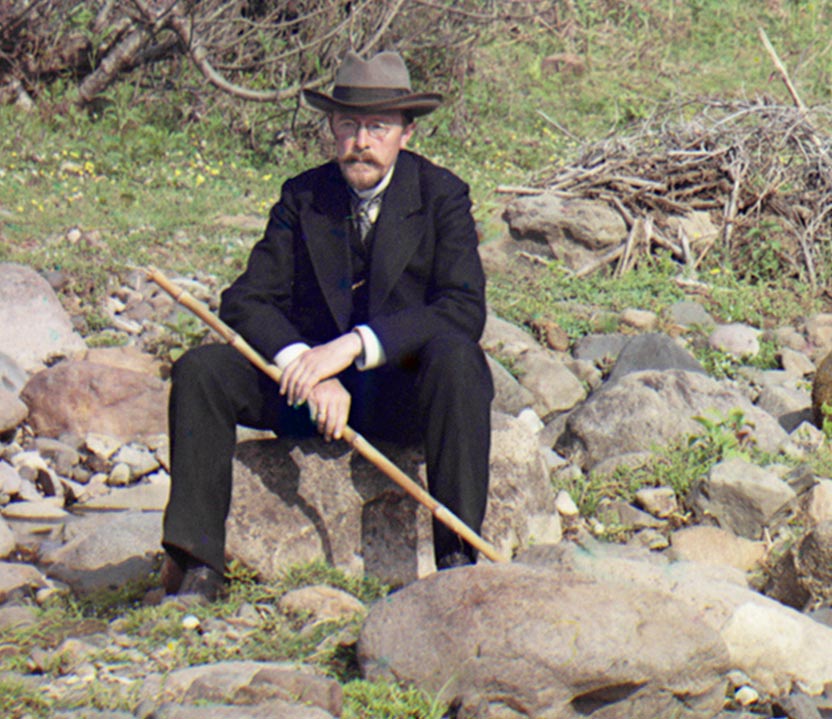
Sergey Mikhaylovich Prokudin-Gorsky, self-portrait 1912

NOTE: All of the articles pertaining to Nicholas II and his family which were originally published in my Royal Russia News blog, have been moved to this Nicholas II blog. This article was originally posted on 5 September 2018 in my Royal Russia News blog – PG

I have had the pleasure of visiting the Ural city of Ekaterinburg on three occasions over the past six years: 2012, 2016, and most recently in July 2018. Out of all the Russian cities which I have visited since 1986, Ekaterinburg has become my favourite.

It is a city rich in history, and the setting for one of the darkest pages in 20th century Russian history: the final days and murder of Russia’s last tsar Nicholas II and his family in the Ipatiev House on the night of 16/17 July 1918.

Sadly, the city is overlooked by most visitors to Russia. It is seldom included in group tours, relying mainly on foreigners travelling on the Trans-Siberian Express. Many of them stay for only one or two nights, which really is not enough time to explore and appreciate what Ekaterinburg has to offer. Having said this, however, Ekaterinburg is becoming increasingly popular with Chinese tourists, and the FIFA World Cup matches held in the city in June 2018 have helped spread the word to foreigners, that Ekaterinburg is indeed worth visiting.

As a devout book collector, I have always been on the hunt for pictorials, which offer vintage photographs of what life was like in Russia before the 1917 Revolution. During my most recent visit to Ekaterinburg, my book hunting skills produced a couple of gems to add to my personal home/office library.

152b

Дом Ипатьева: летописная хроника в документах и фотографиях

Дом Ипатьева: летописная хроника в документах и фотографиях (Ipatiev House. Documentary and Photographic Annals. 1877-1977) by photojournalist and historian Vitaly Shytov. Published in 2013 in a hard cover edition in Chelyabinsk by the Auto-Count Publishing House, the book features more than 700 pages and more than 1,000 photographs. Only available in Russian. Shytov has dedicated 40 years of study to the tragic history of the Ipatiev House in Ekaterinburg. There were only 500 copies printed, and it remains the the most comprehensive study of the Ipatiev House to date. Sadly, Shytov’s research has been virtually ignored by Western historians, who have written on the last days of the Imperial family in the ‘House of Special Purpose’.

152c

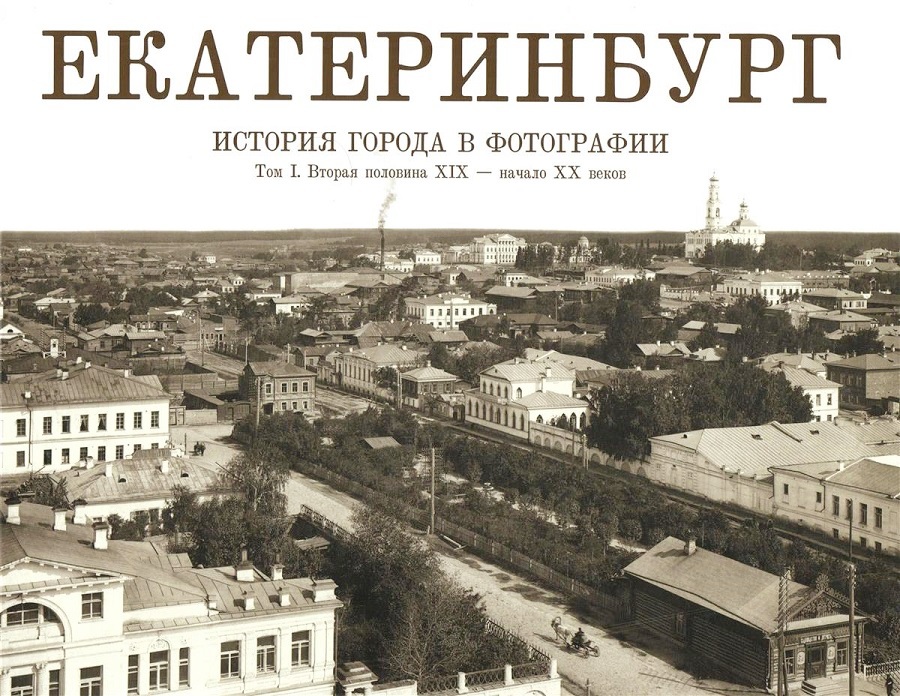
Екатеринбург: История города в фотографии

Екатеринбург: История города в фотографии. Том 1: Вторая половина XIX – начало XX веков (Ekaterinburg: History of the City in Photographs. Volume I. Second half of 19th – early 20th century) by A.V. Berkovich and O. A. Bukharkina. Second edition published in 2015 by the Ekaterinburg City Administration. Published in a hardcover edition, the book features 208 pages, and more than 200 vintage photographs. Despite the Cyrillic text on the book’s cover, the contents are in both Russian and English.

The latter presents a very different view of Ekaterinburg, in that it presents for the first time, a selection of historic photos from the most famous photographer of old Ekaterinburg Veniamin Leontiyevich Metenkov (1857-1933).

152d

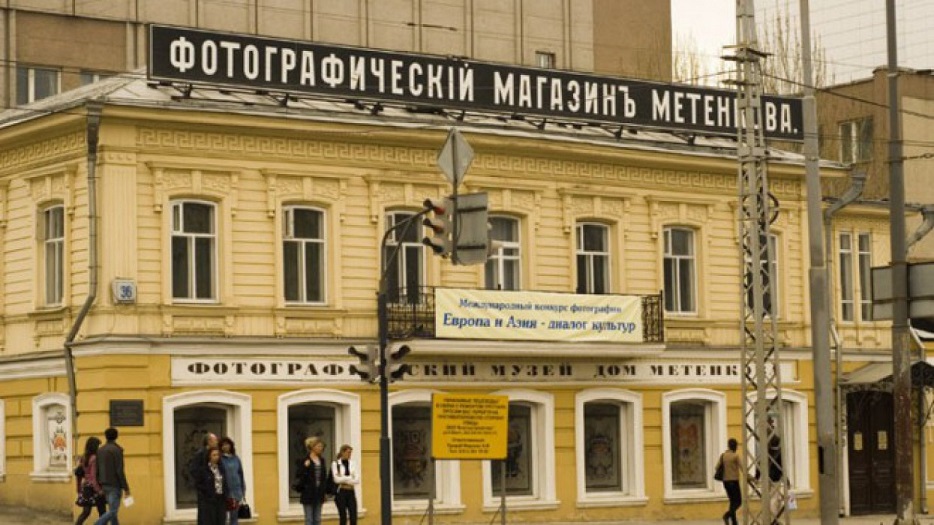
The Metenkov House and Photographic Museum is situated near the Church on the Blood in Ekaterinburg

Sadly, the Revolution destroyed the photography business which Metenkov created. He died in obscurity in 1933, his name forgotten for more than half a century. After the fall of the Soviet Union in the early 1990s, the house where Metenkov lived and worked was turned into a museum named after him. Until recently Metenkov’s archive was believed to be lost, however, a persistent search for the photographers’ legacy yielded the discovery of more than 200 negatives in the funds of the Sverdlovsk Oblast State Archive.

Another noteworthy Ekaterinburg photographer was the city doctor Vladimir Alexandrovich Paduchev (1859-1919). The Paduchev family archive of more than 500 negatives focus on the private world of the city middle class, taken during the first decade of the 20th century. The collection lay hidden in an old barn for more than a century, before their discovery.

ALL colour photographs below are courtesy of the Ekaterinburg City Administration

The unique photographic view of Pre-Revolutionary Russia and Ekaterinburg, however, belong to the pioneer of colour photography Sergey Mikhaylovich Prokudin-Gorsky (1863-1944).

His photos of Russia’s nature and monuments earned him invitations to show his work to the Grand Duke Mikhail Alexandrovich and the Dowager Empress Maria Feodorovna in 1908, and to Tsar Nicholas II and his family in 1909. The Tsar enjoyed the demonstration, and, with his blessing, Prokudin-Gorsky got the permission and funding to document Russia in colour. In the course of ten years, he was to make a collection of 10,000 photos.

Using a railroad-car darkroom provided by Tsar Nicholas II, Prokudin-Gorsky traveled the Russian Empire from 1905 to 1915, using his three-image colour photography to record its many aspects. He arrived in Ekaterinburg in 1909, where he gave lectures and visited Veniamin Metenkov at his home. Metenkov accompanied Prokudin-Gorsky on his trips in and around the city, suggesting interesting locations to be photographed.

Prokudin-Gorskii left Russia in 1918, after the Russian Revolution, and eventually settled in Paris, where he died in 1944. While some of his negatives were lost, Library of Congress purchased a collection of more than 2,600 images from the photographer’s sons in 1948.

All three photographers are represented in this handsome volume. Their legacies transcend a century, allowing the reader to look back to a unique and beautiful city, far removed from the ancient Russian capital of Moscow, and the glittering Imperial capital of St. Petersburg. These images document daily life in the Ural city, which has changed beyond recognition, many historic landmarks lost forever, and only the photographs preserve the flow of a lost world.

***

Why Ekaterinburg is my favourite Russian city

O have visited Ekaterinburg three times during the past decade: 2012, 2016 and 2018. It is a city which I have fallen in love with for many reasons. It is filled with history, as well as many architectural monuments associated the Tsarist period, including cathedrals, churches, mansions and museums.

People often ask me “Why, Ekaterinburg?” as opposed to the former Imperial capital of St. Petersburg, especially given that “Ekaterinburg has such a dark history.”

Once a bastion of Bolshevism, Ekaterinburg has slowly shed its status as the “capital of atheism”. Since the fall of the Soviet Union in 1991, the Urals has experienced a revival of faith, with Ekaterinburg as the center of Orthodox Russia in the region.

It is important to add, that Ekaterinburg has done more to honour Nicholas II and his family than any other city in Russia. Thanks to my visits to Ekaterinburg in 2012, 2016 and 2018, it is a city which I have grown to admire and love.

© Paul Gilbert. 4 November 2019

Captured on Film by U.S. Cameramen – The Romanov Murder Scene (1918)

NOTE: All of the articles pertaining to Nicholas II and his family which were originally published in my Royal Russia News blog, have been moved to this Nicholas II blog. This article was originally posted on the First World War in Film web site by Ron van Dooperen. It was reposted on 12 September 2018 in my Royal Russia News blog – PG

In December 1918, a photographic team of the U.S. Signal Corps led by Captain Howard Kingsmore arrived in Yekaterinburg, Russia, where they filmed inside the house where Tsar Nicholas II and his family was brutally murdered. Against all odds, we recently found Kingsmore’s personal story on this photographic assignment, as well as part of these historic films.

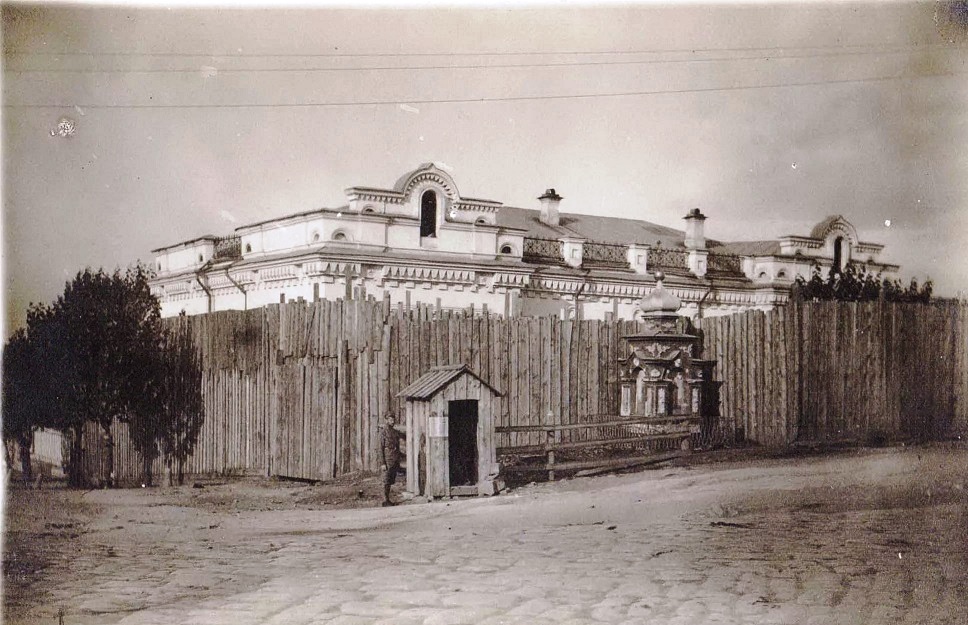
The execution of the last Russian Tsar and his family hardly needs an introduction. After the Bolsheviks had taken over power the Romanov family was moved to a so-called ‘House of Special Purpose’ in Yekaterinburg. The Imperial family was kept in strict isolation within the walls of a sinister heavily guarded building that was surrounded by a palisade. The Bolsheviks initially wanted to put the Tsar on trial, but in the summer of 1918 anti-Communist forces were at the gates of Yekaterinburg, and the Reds feared their captives would fall into enemy hands. As a result, death to the Romanovs was declared. Tsar Nicholas II, his wife Tsarina Alexandra and their five children Olga, Tatiana, Maria, Anastasia, and Alexei were shot, bayoneted and clubbed to death on the night of 16-17 July 1918. Their bodies were disposed of in a most gruesome manner.

The Cameramen

Howard P. Kingsmore was the photographic officer of a U.S. Signal Corps camera team that recorded the operations of the American Expeditionary Army in Siberia. Born in 1886, Kingsmore started his photographic work for the Philadelphia Inquirer, covering the burial of President McKinley, the coal strikes of 1901-1902 and the 50th anniversary of the Civil War battle of Gettysburg. Around 1907 Kingsmore became chief photographer for the Philadelphia Evening Ledger. For this newspaper he covered the civil war in Mexico, as well as the Punitive Expedition by General Pershing into that country in 1916. When the United States entered World War I he applied for a commission in the U.S. Signal Corps as a photographic officer. He was commissioned as a Lieutenant in September 1917, appears to have made mostly training pictures while he was in America and in Augustus 1918 was promoted to Captain, when a photographic section was set up for the Siberian Expedition. After the First World War Kingsmore became a cameraman for Fox News.

150a

The Ipatiev House in Ekaterinburg. 1918

Interview with Kevin Brownlow

Judging from the production file of the films that were made by Kingsmore and his camera team, they filmed across Siberia between November 1918 and February 1919, covering various operations by the Expeditionary Force that was trying to push the Red Army out of Russia. We have described this Signal Corps footage from Russia in more detail in a previous weblog. Five men were selected for this photographic team, including two movie camera operators. One of Kingsmore’s men, Philip Tannura, was interviewed by Kevin Brownlow for his book The War, the West and the Wilderness. Tannura was among Kingsmore’s cinematographers and in the interview with Brownlow Tannura mentioned how he accompanied Kingsmore while they visited the place where the Tsar and his family were executed. “We couldn’t find out whether they had actually been killed or not”, Tannura said. “We photographed all the rooms.”

Kingsmore said he boarded a Red Cross freight train in Vladivostok in November 1918. The trip across Siberia took about nine weeks. The accommodation on the train was of a most primitive nature. The American cameramen traveled in box cars that were originally built for cattle. Arriving in Yekaterinburg, the cameramen found the city controlled by Czech forces. These had taken Yekaterinburg shortly after the Tsar and his family were murdered. Kingsmore was told the Romanovs were subjected to many indignities by the Communist soldiers who guarded them. It should be noted here that at the moment when Kingsmore and Tannura arrived in Yekaterinburg an official investigation was still being carried out on the mysterious disappearance of the Imperial family. As far as the Kremlin was concerned, they had simply vanished into thin air and the Communists denied any allegation they had killed the Romanovs.

Photographic Evidence of the Romanov Execution

Kingsmore’s and Tannura’s pictures indicate this was a fabricated lie. One of their still photographs shows the cellar where the Romanovs were executed. Bullets were dug out of the wall by the Bolsheviks to destroy evidence of the crime, but the holes still remained and were clearly visible. Their pictures also demonstrate how the Tsar’s children had to sleep on the floor, as well as the search by the investigating committee for further proofs of the execution. Kingsmore also appears to have talked with eye witnesses. One told him the Romanovs were on their knees begging for mercy while they were executed in the basement of the house.

Part of the footage that was shot at Yekaterinburg has been retrieved and identified by the authors in the film collection of the National Archives in Washington, D.C. These scenes were probably taken by Tannura and show an exterior of the Czech military headquarters, the house the Romanovs lived in, as well as shots of the Czarina’s room and the room that was occupied by the Tsar’s daughters. We edited these historic scenes into a short clip that has been posted on our YouTube channel.

Click HERE to read the newspaper article In the House Where Romanoffs Were Put to Death, published in the Grand Forks Herald on 6 June 1919

© Ron van Dopperen. 3 December 2019

Monument to Four Faithful Subjects of Nicholas II to be Established in Ekaterinburg

NOTE: All of the articles pertaining to Nicholas II and his family which were originally published in my Royal Russia News blog, have been moved to this Nicholas II blog. This article was originally published on 9 November 2018 in my Royal Russia News blog – PG

A monument to four faithful subjects who followed Emperor Nicholas II and his family into exile in 1917, and later murdered by the Bolsheviks will be established on the grounds of the Novo-Tikhvinsky Convent in Ekaterinburg.

Craftsmen from the Glyptica-Stone Company in St. Petersburg are currently working on a stone stele monument, which will depict life-sized images of the four loyal subjects of the Imperial family.

Adjutant General Ilya Leonidovich Tatishchev (1858-1918), Marshall of the Imperial Court Prince Vasiliy Aleksandrovich Dolgorukov (1868-1918), sailor Klimentiy Grigorievich Nagorny (1887-1918) and boatswain Ivan Dmitrievich Sednev (1881-1918). All of them were buried in the territory of the Novo-Tikhvinsky Convent.

Now the place of their burial is unknown. All the graves at the convent cemetery were destroyed during the Soviet years. But for the sake of preserving historical memory, with the blessing of Metropolitan Kirill of Yekaterinburg and Verkhoturye, a stele will be installed on the territory of the monastery to these selfless noble people, said a spokesperson for the Novo-Tikhvinsky Convent.

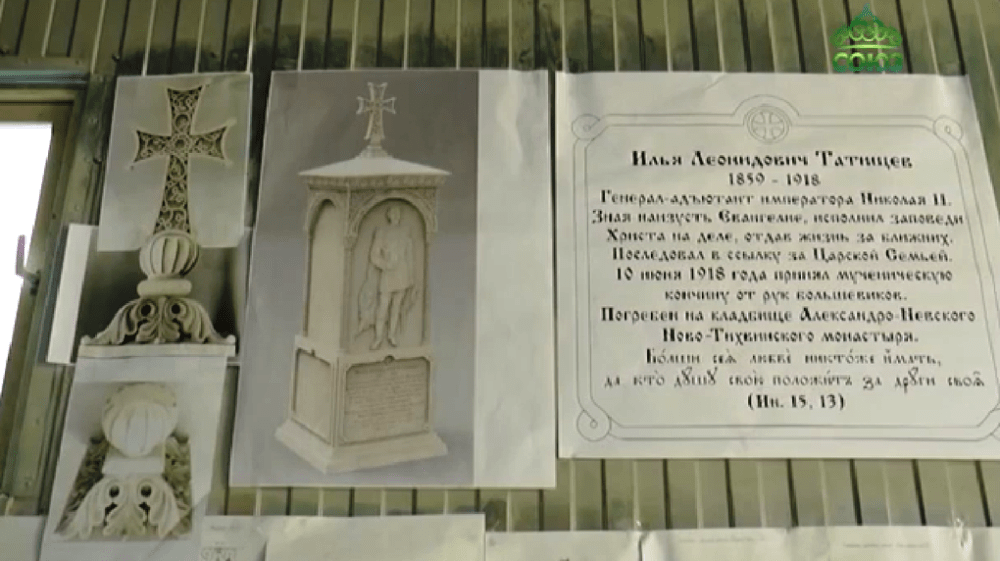
139

Adjutant General Ilya Leonidovich Tatishchev is one of four subjects depicted in the monument

The manufacture of the 4-meter monument, designed to perpetuate the memory of the martyrdom of the Royal Passion-bearers, was ordered by the Alexander Nevsky Novo-Tikhvin Convent in Ekaterinburg.

“It is a great honour that we received such an order, such an opportunity, ” said Mikhail Sergeyevich Parfentiev, general director of the Glyptica-Stone Company. – This is a piece of Russia’s history.

As Mikhail Sergeevich notes, this project is a great responsibility for all participants in the process.

Among the images of the subjects of Nicholas II, who voluntarily followed the sovereign into exile, first to Tobolsk, and then Ekaterinburg, the sculptors portray Adjutant-General Ilya Leonidovich Tatishchevas- a man full of nobility and love for his neighbors, who loved the Gospel and knew it by heart.

The figure of Tatishchev, is depicted holding the gospel in his hands. He received this as a gift from his mother and carried it with him throughout his life.

The monument of the four loyal Imperial subjects, will take place next year, on the territory of the Alexander Nevsky Novo-Tikhvinsky Convent. Thus, this monument will remind people for centuries of the martyrdom of the saints of the Royal Martyrs and their loyal subjects.

A Divine Liturgy was performed in Ekaterinburg on 10th June 2018 for General Ilya Leonidovich Tatishchev and Prince Vasili Alexandrovich Dolgorukov. Tatishchev and Dolgorukov were canonized by the Russian Orthodox Church Outside Russia (ROCOR) in October 1981. Click HERE to read more.

A Divine Liturgy was performed in Ekaterinburg on 28th June 2018 for Ivan Dmitriyevich Sednev and Klimenty Grigorievich Nagorny. Nagorny and Sednev were canonized by the Russian Orthodox Church Outside Russia (ROCOR) on 14 November 1981. 

They were listed among 52 confidants of the Imperial family, who were rehabilitated by the Prosecutor General’s Office of the Russian Federation on 16 October 2009, as victims of political repression.

© Paul Gilbert. 30 November 2019