New monument to Nicholas II to be installed in the Urals

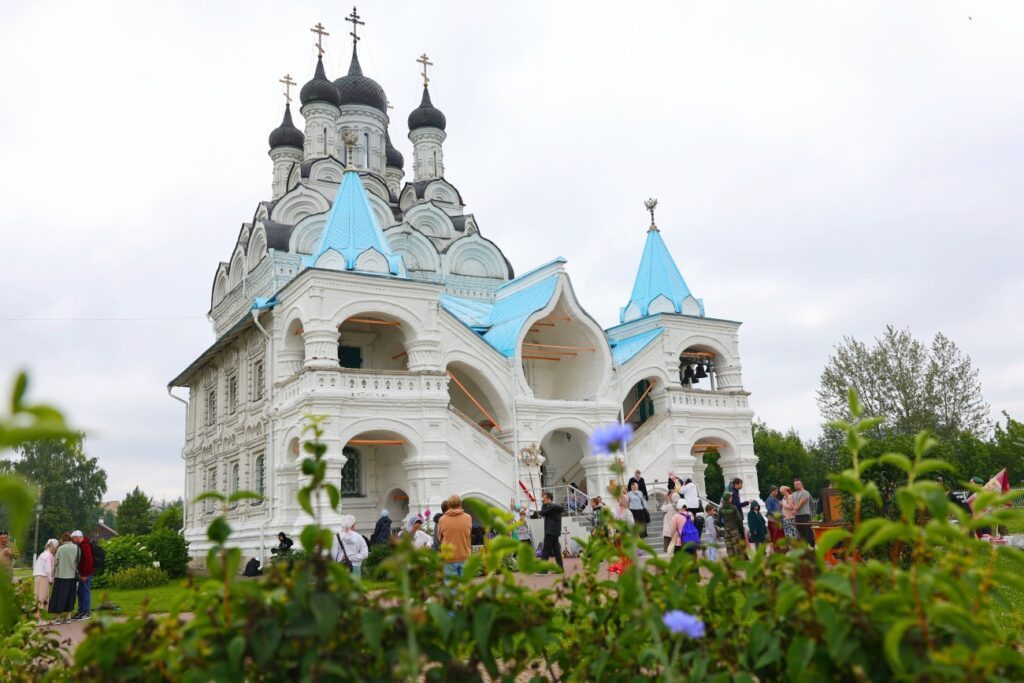
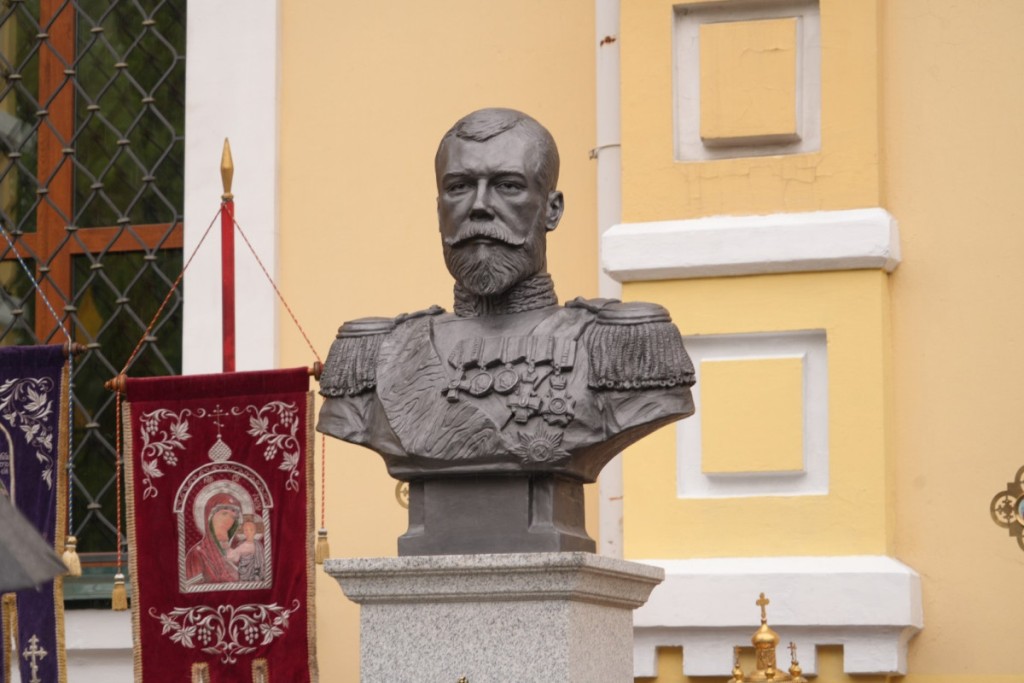
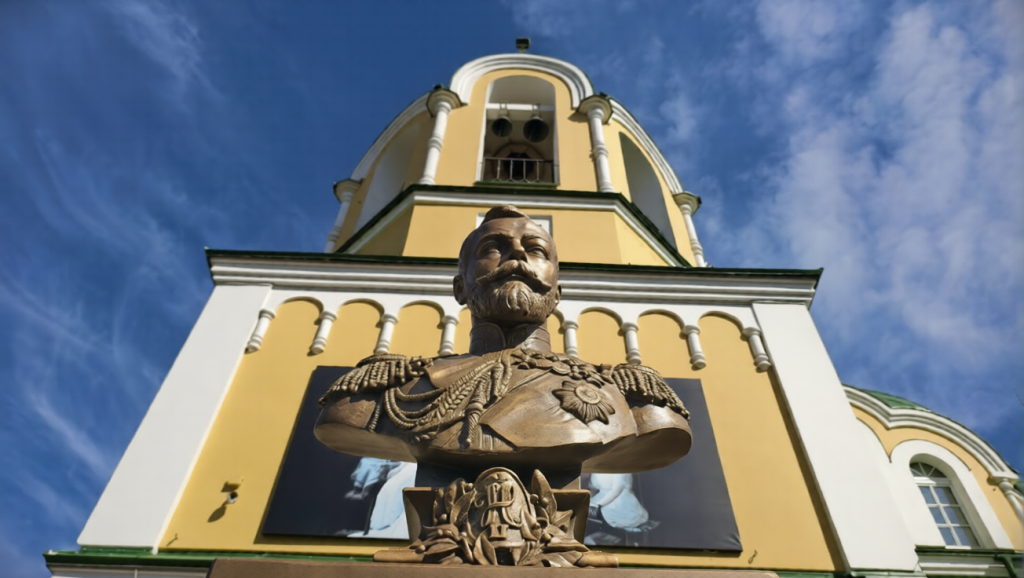
PHOTO: the Cathedral of St. Nicholas the Wonderworker in Verkhneuralsk

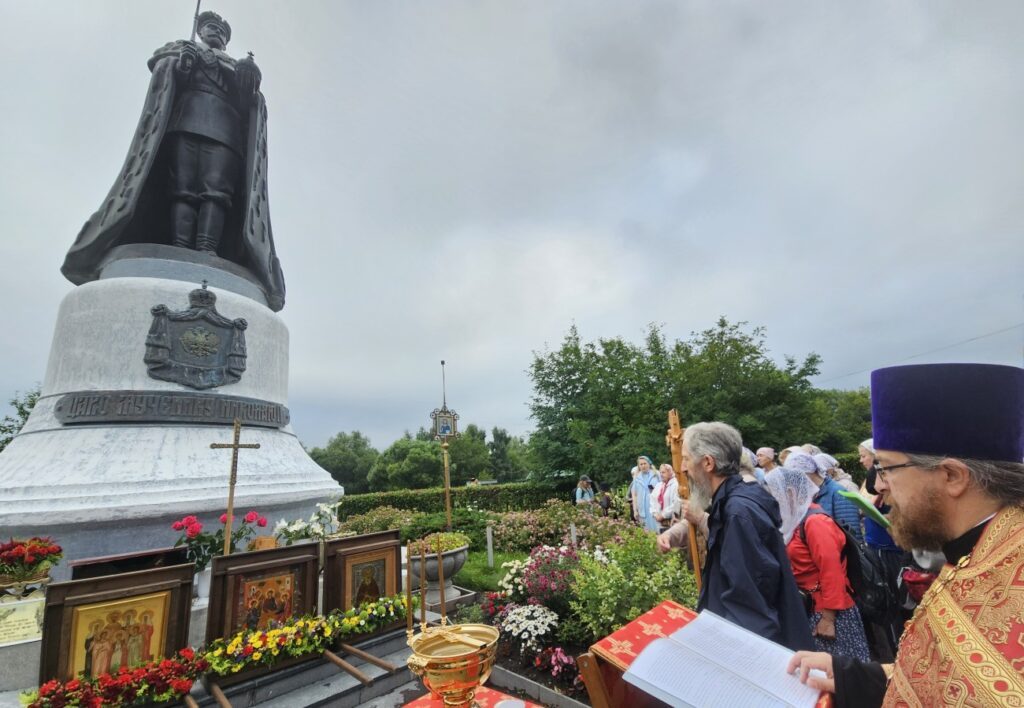
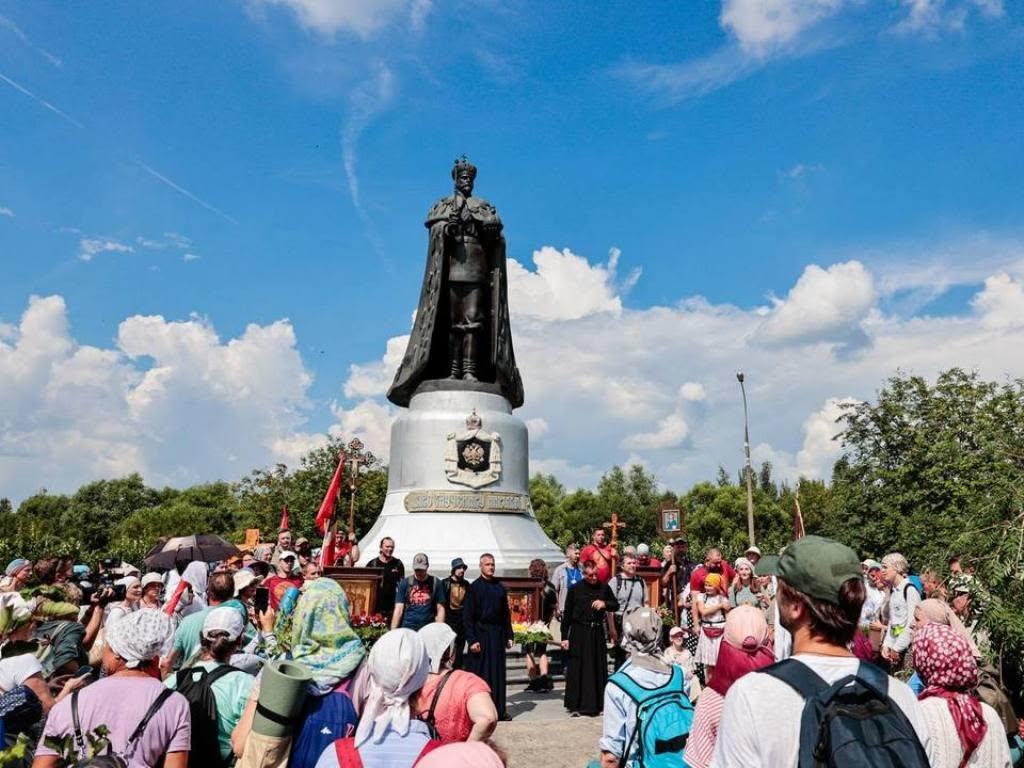
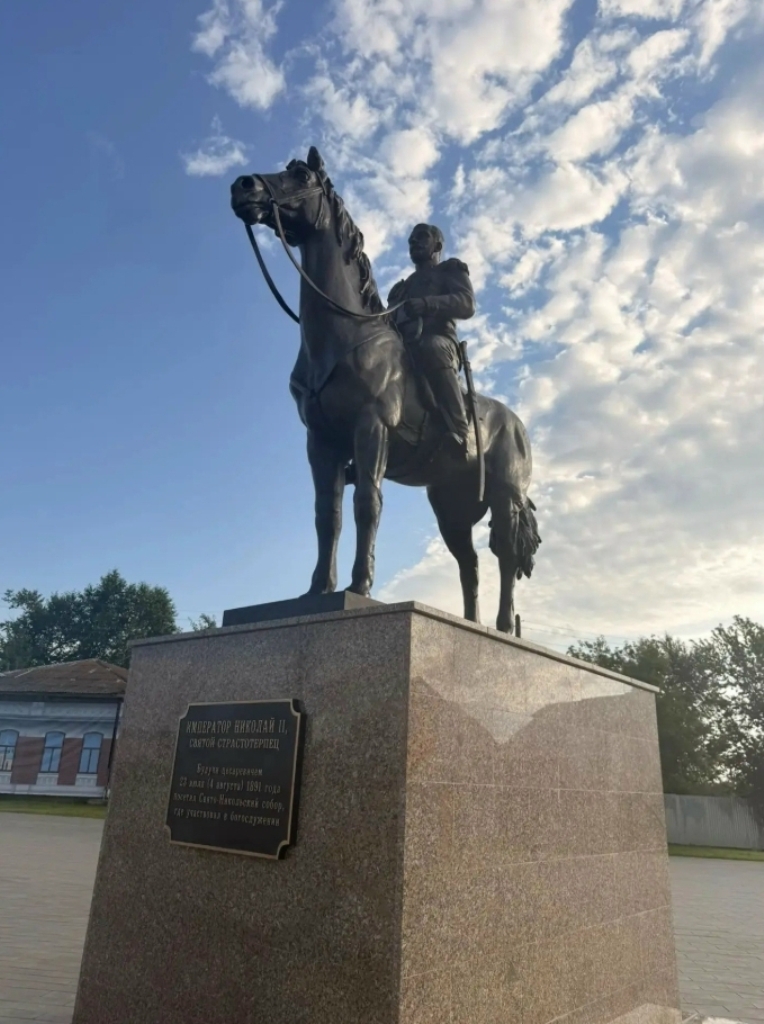
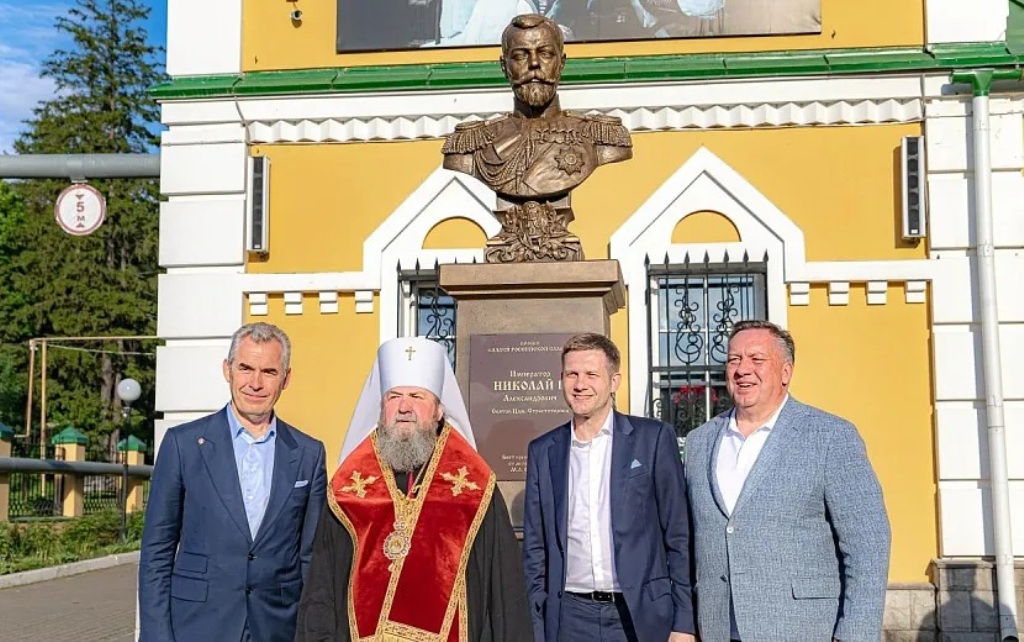
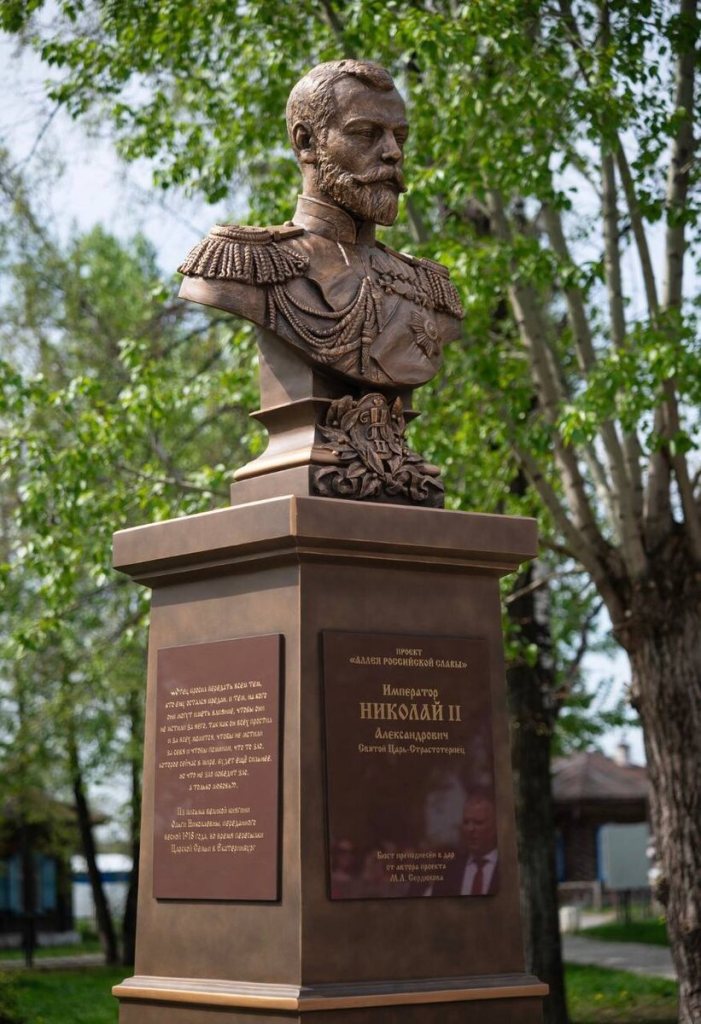
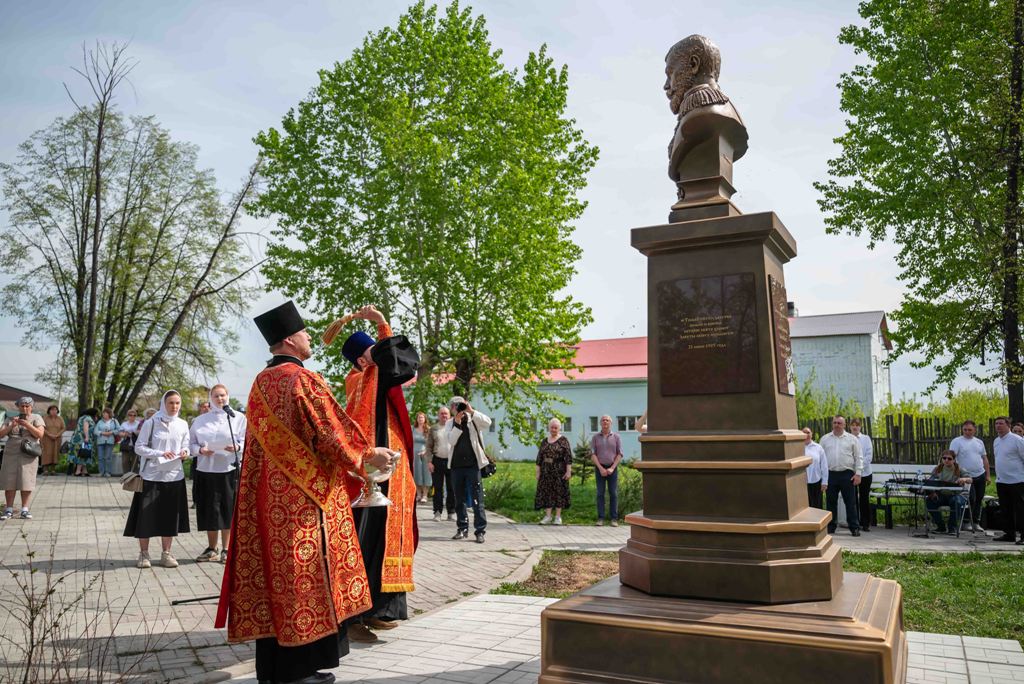
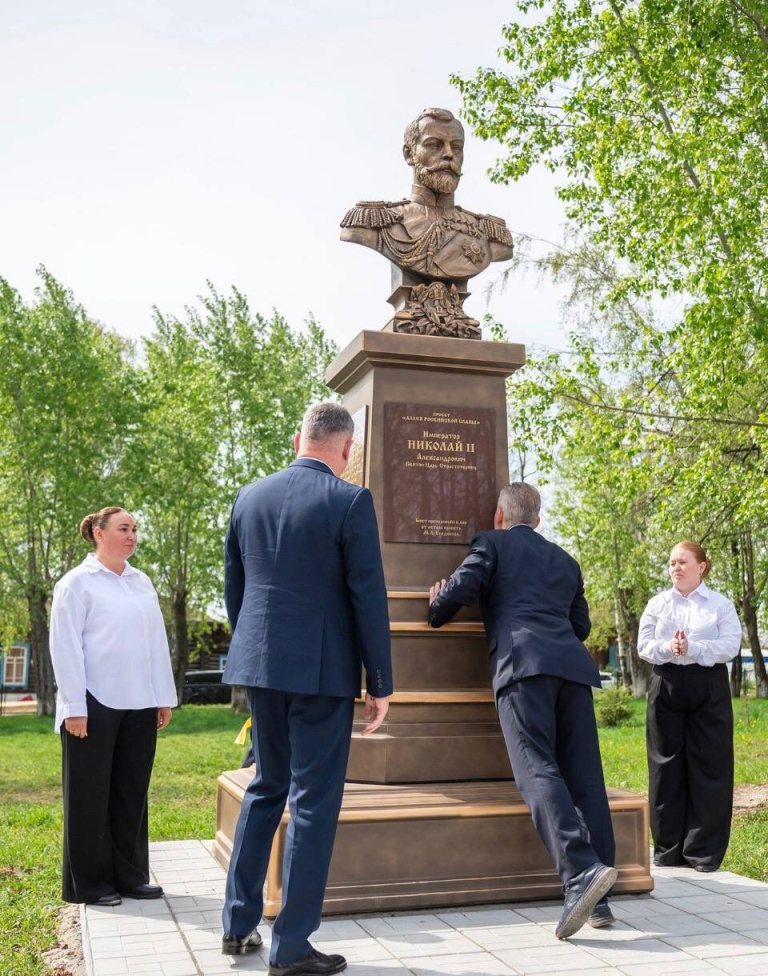
A new equestrian monument to Emperor Nicholas II will be installed and consecrated later this year, in the Ural city of Verkhneuralsk. The city is located on the left bank of the Ural River, 230 km south of Chelyabinsk and 450 km south of Ekaterinburg.

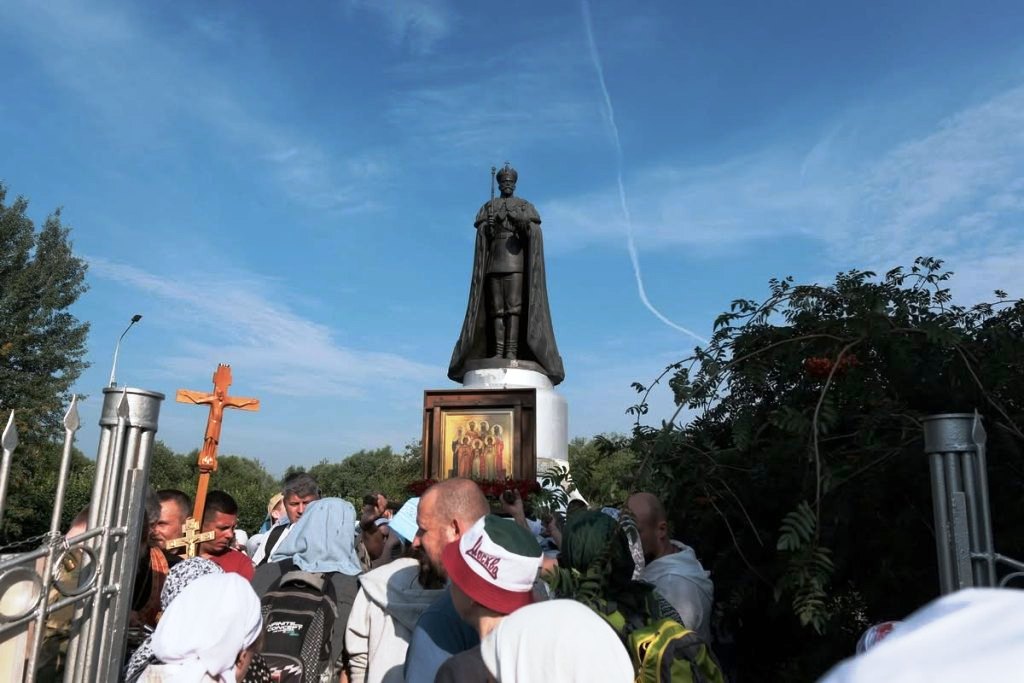
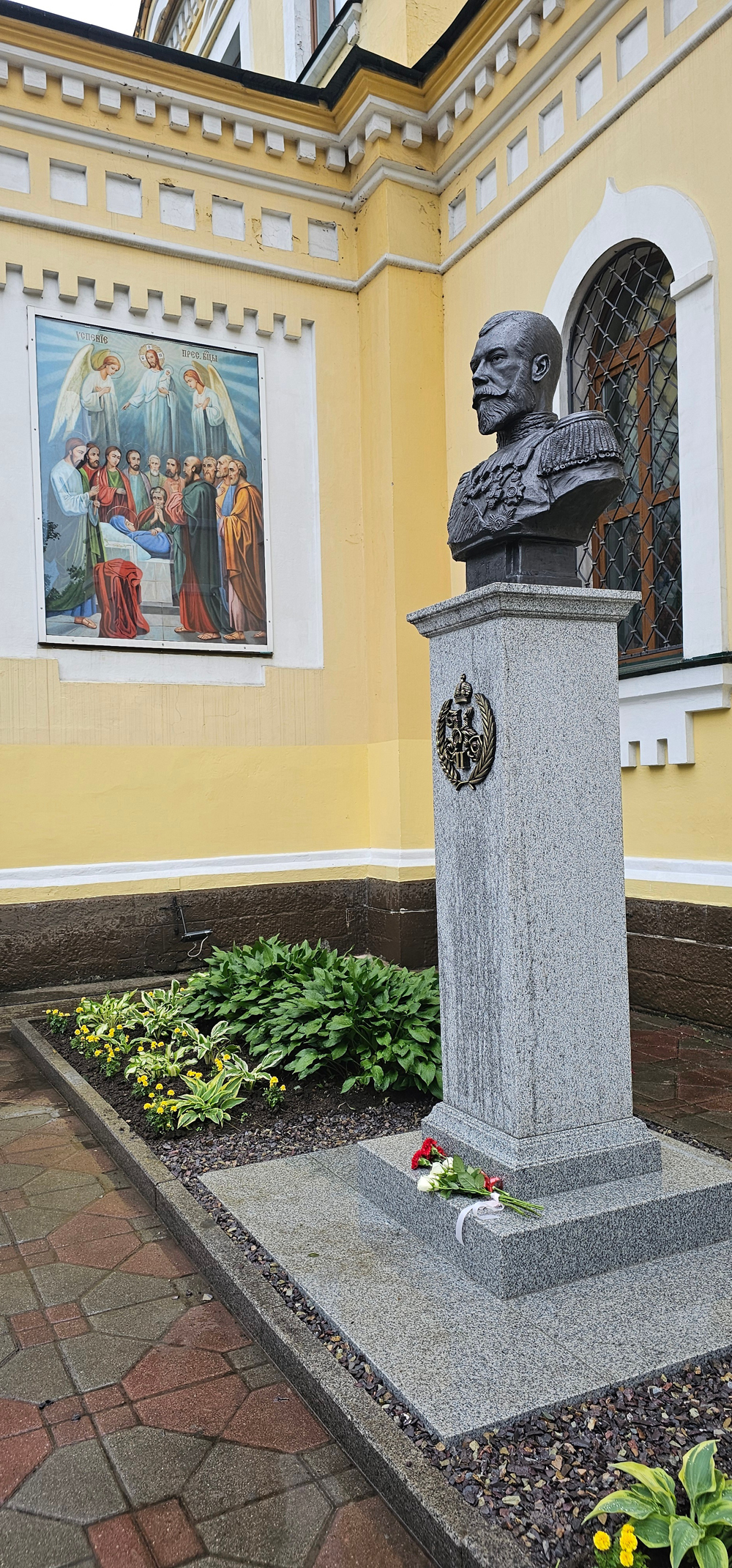
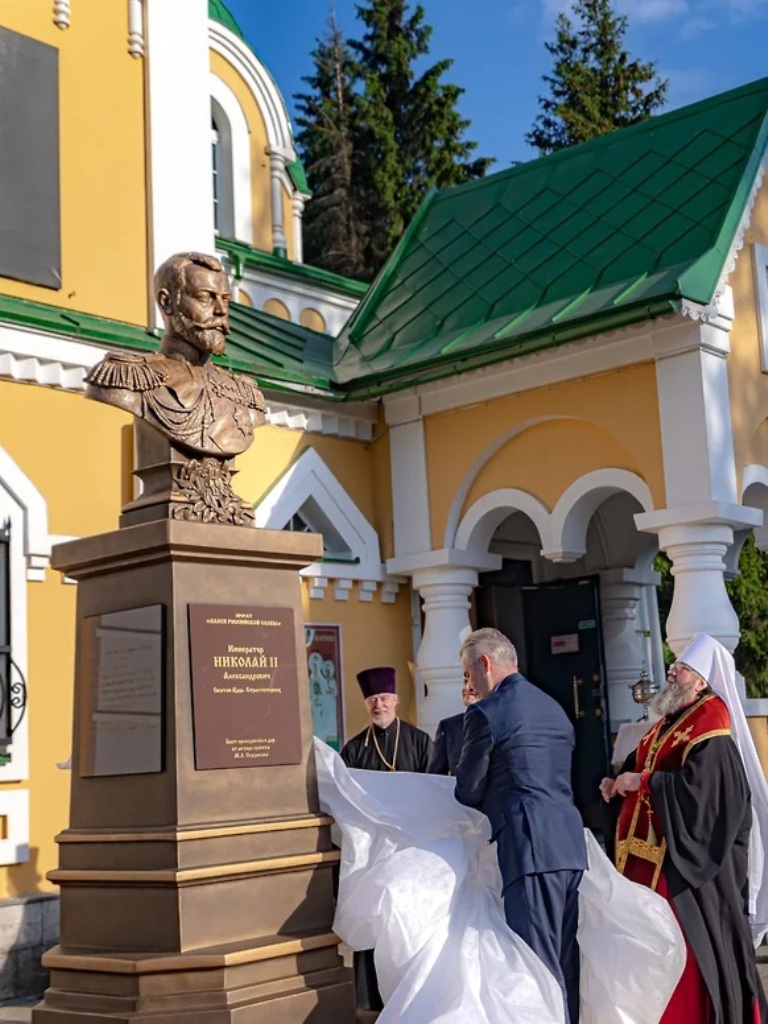
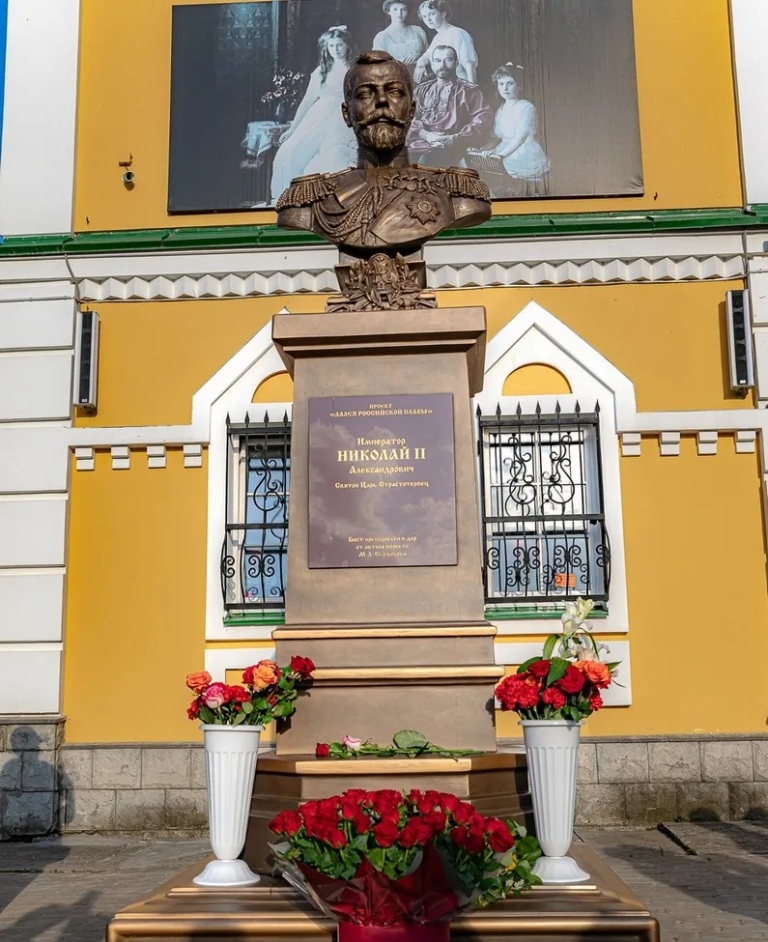
The monument will be installed in front of the Cathedral of St. Nicholas the Wonderworker – the only Orthodox church in Verkhneuralsk which survived the years of Soviet power. The grounds around the church are currently being developed. The monument will be installed and consecrated here upon completion of the landscaping and gardens.

PHOTO: a plaque marks the visit of Tsesarevich and Grand Duke Nicholas Alexandrovich [future Emperor Nicholas II] to the Cathedral of St. Nicholas the Wonderworker in Verkhneuralsk, on 4th August (O.S. 23rd July) 1891.

The monument is in memory of Nicholas II’s visit to Verkhneuralsk on 4th August (O.S. 23rd July) 1891, during a trip across the Russian Empire following his Eastern Journey. The Eastern Journey (1890-1891) of Tsesearvich Nicholas Alexandrovich took him to Egypt, India, Ceylon, Siam, China, and Japan – where an assassination attempt was made on his life. The total length of the journey exceeded 51,000 kilometres, including 15,000 km of railway and 22,000 km of sea routes.

The Cathedral of St. Nicholas the Wonderworker was built in the Russian-Byzantine Style in 1870, and consecrated on 5th May 1875. The money for it’s construction was allocated by a local merchant Nikolai Petrovich Rytov (1818-1879), cost 6100 rubles. The church was erected according to the project of the famous Russian architect Konstantin Ton (1794-1881), who challenged classicism and established the Russian Style, which included outstanding palace and church architecture.

PHOTO: the grounds around the Cathedral of St. Nicholas the Wonderworker are currently being developed. The monument to Nicholas II, will be installed and consecrated here upon completion of the landscaping and gardens.

The northern altar of this cathedral – in the name of the Intercession of the Most Holy Theotokos – was built on benevolent donations in memory of the salvation of Tsesarevich Nicholas Alexandrovich, following an assassination attempt on his life in Otsu, Japan. The altar was consecrated on 18th November 1897.

In the 1930s, the church was closed and used as a grain warehouse, reopened in 1942. In the early 20th century, there were 7 Orthodox churches in Verkhneuralsk, however the Cathedral of St. Nicholas the Wonderworker, is the only one to have survived the years of Soviet power, the rest were destroyed.

It is interesting to note that in 1904, Emperor Nicholas II visited a number of Ural cities including Verkhneuralsk. He was accompanied by his brother Grand Duke Mikhail Alexandrovich.

© Paul Gilbert. 7 May 2025

Obituary: Zurab Konstantinovich Tsereteli (1934-2025)

PHOTO: Zurab Tsereteli standing in front of his sculptoral composition ‘Night at the Ipatiev House’, depicting Nicholas II and his family, at the Zurab Tsereteli Art Gallery in Moscow see photo at the end of this post for a full view

On Tuesday, 22nd April 2025, the famous Russian-Georgian sculptor and President of the Russian Academy of Arts Zurab Konstantinovich Tsereteli died in Moscow, after a lengthy illness, at the age of 91. The cause of death was cardiac arrest.

Tsereteli was born in Tbilisi (Georgia) on 4th January 1934. He studied at Tbilisi State Academy of Arts, graduating in 1958. The same year, he married Inessa Alexandrovna Andronikashvili  (1937-1998), a princess from a noble Georgian family that claimed patrilineal descent from Byzantine Emperor Andronikos I Komnenos (1118-1185).

The sculptor has been the president of the Russian Academy of Arts since 1997. Tsereteli is known for his works not only within Russia, but in many countries around the world. Among them are monuments to Nikolai Gogol (Rome, 2002), St. Nicholas the Wonderworker (Bari, Italy, 2003), Pope John Paul II (Ploermel, France, 2006), “The Three Musketeers” (Condom, France, 2010), monument to Marina Tsvetaeva (Saint-Gilles Croix de Vi, France, 2012), the Apostle Paul (Veria, Greece, 2013), a monument to Nicholas II (Republika Srpska, 2014), “The Birth of the New World” (Arecibo, Puerto Rico, 2016) and others. In 2018, Tsereteli donated a monument to the poet Alexander Griboyedov to the Russian Drama Theater named after A.S. Griboyedov in Tbilisi.

PHOTO: the ‘Alley of Rulers’ in Moscow, features bust-monuments of Russia’s political leaders and emperors, including Nicholas II

In Russia, some of Zurab Tsereteli’s most famous works are “Night at the Ipatiev House” (Moscow, 2007), Princess Olga (Pskov, 2003), “Wives of the Decembrists, The Gates of Destiny” (Moscow, 2008), among many others. On 31st May 2024, a magnificent equestrian monument to Emperor Alexander III was unveiled and consecrated in the city of Kemerovo, the capital of Kuzbass, situated in Western Siberia.

In 1997, by order of the Moscow government, a 98-meter monument to Peter the Great was opened at the western confluence of the Moskva River and the Vodootvodny Canal in central Moscow. The then mayor Yuri Luzhkov (1936-2019) criticized the monument for it’s “gigantism and bad taste”. There were protests demanding the dismantling of the sculpture. In 2008, the monument was included in the list of the ugliest man-made structures in the world.

On 1st October 2024, the ‘Alley of the Rulers of Russia’ opened at Boldino, the former estate of the outstanding statesman and historian Vasily Nikitich Tatishchev (1686-1750), near Moscow. This sculptural composition by Zurab Tsereteli consists of 43 busts of historical figures who have led Russia over its more than 1,000 year history – from Prince Rurik to the Romanovs to the first President of the Russian Federation Boris Yeltsin.

PHOTO: Zurab Tsereteli at the unveiling of his bust-monument to Nicholas II, in Banja Luka, the capital of the Republika Srpska (Bosnia and Herzegovina), on 21st June 2014

Tsereteli was the Founder of the Moscow Museum of Modern Art (1995), the Zurab Tsereteli Art Gallery (2000) and the Museum of Modern Art in Tbilisi (Georgia, 2012). He is the author of more than 5 thousand works of painting, graphics, sculpture, frescoes and mosaics, however, he gained the greatest fame as a sculptor-monumentalist. In 1995–2000, he participated in the reconstruction of the Cathedral of Christ the Saviour in Moscow.

According to the sculptor’s grandson Vasily Tsereteli, a farewell to Tsereteli, will be held on 23rd April, in the Cathedral of Christ the Saviour in Moscow. Tsereteli will be buried on Sunday, 27th April, in the Mtatsminda Pantheon of Writers and Public Figures in Tbilisi, Georgia where his wife rests.

PHOTO: Zurab Tsereteli’s ‘Night at the Ipatiev House’ (2007), depicting Emperor Nicholas II and his family, at the Zurab Tsereteli Art Gallery in Moscow

In a statement issued by Maria Zakharova, a representative of the Russian Foreign Ministry: Zurab Konstantinovich Tsereteli will be remembered as a world-renowned artist and sculptor, a public figure who knew “neither borders nor obstacles in strengthening peace and supporting creativity.

“He will live on, not only in our hearts, but also through his works: in stained glass windows and enamels decorating foreign missions, and in monuments and sculptures installed in different parts of the world,” she added.

Memory Eternal! Вечная Память!

© Paul Gilbert. 22 April 2025

A joint monument to Nicholas II, Lenin and Yeltsin to be erected in Russia

PHOTO: Emperor Nicholas II, Bolshevik leader Vladimir Lenin
and Russian president Boris Yeltsin

This year – 2025 – marks the 155th anniversary of the birth of Vladimir Lenin, the 35th anniversary of the election of Boris Yeltsin as Chairman of the Supreme Soviet of the RSFSR and the 25th anniversary of the glorification of Tsar Nicholas II as a saint. In recognition of these three historical figures a joint monument entitled “The Great Three” will be erected in St. Petersburg.

The sculptors will create a bronze monument depicting the life-size figures of Nicholas II, Lenin and Yeltsin, which will be installed on the coast of the Gulf of Finland, opposite the flags of the Russian Empire, the USSR and the Russian Federation. They will be depicted holding each other by the shoulders and proudly looking towards the state symbols of the three eras.

The installation of the monument is supported by the Ministry of Culture, the Communist Party of the Russian Federation, the Russian Orthodox Church and the Yeltsin Center in Ekaterinburg. It is their hope that the monument will contribute to reconciliation in society and will become a symbol of the continuity of Russia’s national history.

Reconciliation is a noble ideal but Lenin’s hand on the last Tsar’s shoulder is somewhat disturbing. One simply cannot “reconcile” with the man who ordered the murder of Nicholas II and his family. The very idea of a monument depicting the Bolshevik leader standing next to the Tsar, with his hand on the Tsar’s shoulder is simply wrong!

The date and location of the installation of “The Great Three” monument has yet to be announced.

© Paul Gilbert. 20 March 2025

New monument and museum dedicated to the Imperial Family opened in Dno

Click HERE to watch a VIDEO of the unveiling and consecration of the monument, followed by a tour of the new museum dedicated to Nicholas II and his family, located in the Church of the Holy Royal Passion-Bearers in Dno. Duration: 2 minutes, 30 seconds

***

On 26th December 2024, a new monument to Emperor Nicholas II and his family was installed and consecrated on the grounds of the Church of the Holy Royal Passion-Bearers in the Russian city of Dno, situated 114 km from Pskov. In addition, a museum dedicated to the Imperial Family was officially opened and consecrated.

A Divine Liturgy was conducted in the new Church of the Holy Royal Passion-Bearers (constructed in 2023) by Metropolitan Matthew of Pskov and Porkhov.

The sculptural composition was made by Moscow sculptor Vladimir Gennadievich Ivanov [b. 1983], and took one year to complete. According to him, the bronze monument weighs three and a half tons, and stands almost four and a half meters [almost 15 feet] in height. Each of the seven members of the Imperial Family is depicted holding a cross.

Following the liturgy, a new monument of Emperor Nicholas II and his family was unveiled and consecrated on the grounds of the church. In addition, a museum dedicated to the history of the life of the Imperial Family [see photo below] was officially opened and consecrated. The museum is located in the basement of the church – which can be seen in the video at the top of this post. Admission is FREE to all.

Recall that the Dno railway station became the penultimate point of the Imperial Train, which was transporting the Tsar to Petrograd on 14th (O.S. 1st) March 1917. From here, Nicholas II was forced to Pskov, where the following day, he signed his abdication from the throne. As Bishop Matthew noted during the opening of the museum in the basement of the church, “these events became a turning point in the history of the country”.

Recall that earlier this month a mural of the pre-war railway station at Dno was recreated on the building of the museum and exhibition center in Dno. The mural was created In memory of Emperor Nicholas II’s historic stop at Dno in March 1917, the day before he abdicated the throne.

© Paul Gilbert. 27 December 2024

***

Paul Gilbert’s Romanov Bookshop on AMAZON

I have published nearly 50 titles to date through AMAZON – featuring one of the largest selections of books on Nicholas II, the Romanov dynasty and the history of Imperial Russia.

Please CLICK on the BANNER or LINK above to review my current selection of titles in hardcover, paperback and ebook editions. Listings provide a full description for each title, pricing and a Look inside feature.

Bas-relief of Tsar-Martyr Nicholas II installed in Moscow

On 1st November 2024 – a monument to Grand Duke Sergei Alexandrovich (1857-1905) and Grand Duchess Elizabeth Feodorovna (1864–1918) was unveiled and consecrated on the square near the Tretyakovskaya metro station in Moscow.

The installation of the monument is timed to the 160th anniversary of the birth of Grand Duchess Elizabeth Feodorovna, born Princess Elisabeth of Hesse and by Rhine.

The sculptural composition was designed by the artist Georgy Frangulyan. The grand ducal couple are represented on the day of their wedding on 16th (O.S. 3rd) June 1884.

Behind the two bronze figures are four granite steles, one of which features a bas-relief depicting Emperor Nicholas II – seen in the photo above.

© Paul Gilbert. 16 November 2024

Church of the Holy Royal Passion-Bearers consecrated near Khabarovsk

PHOTO: Church of the Holy Royal Passion-Bearers

On 4th November 2024, the Church of the Holy Royal Passion-Bearers was consecrated, in the Petropavlovsky (Peter and Paul) Convent – located 60 km from the city of Khabarovsk.

The new Russian Orthodox church is dedicated to the Holy Royal Passion-Bearers[1] – Emperor Nicholas II, Empress Alexandra Feodorovna, their five children and the family’s four faithful retainers, all of whom died a martyr’s death following their brutal murder by the Bolsheviks in Ekaterinburg, on the night of 16/17 July 1918.

The church was consecrated by Metropolitan Artemy of Khabarovsk and the Amur Region. The church is a metochion[2] of the Petropavlovsky (Peter and Paul) Convent.

A two-tiered iconostasis was installed, made by Moscow craftsmen, in which a lot of gold leaf was used. The icons were painted by the sisters of the convent, as was the painting for the altar. The main icon in the iconostasis is a unique mosaic icon of the Imperial Family, also handmade by the nuns. Their work was highly praised by specialists of the All-Russian Art and Research Conservation Center, which is considered to be Russia’s foremost authority in the field of the restoration of historical and art monuments.

Construction of the six-domed Church of the Holy Royal Passion-Bearers began in 2018, and was financed thanks to donations of parishioners and local patrons.

PHOTO: the iconostasis features a mosaic icon of the Holy Royal Martyrs (sedond from right)

“From this day on, its doors will be open to everyone who asks for mutual love and respect in the family, raising children in faith and piety, overcoming life’s adversities with firm hope in God,” said Nikolai Shevtsov, Chairman of the Legislative Duma of the Khabarovsk Region. “Let the Church of the Holy Royal Passion-Bearers become such a place for Khabarovsk residents and guests of the capital,” he added.

In this church, many new and original elements have been created, which are not found in the Far East regions of the Russian Federation, in particular, bronze doors ordered from central Russia. The floor in the church is decorated with original mosaics of the Byzantine style. This monastic metochion is the first in the Khabarovsk Region. The abbess of the church is nun Antonia.

A monument of Nicholas II and his family was installed on the grounds of the church. It was made by the Moscow sculptor Vladimir Lepeshov, a member of the Union of Artists of Moscow and Russia, combining seven busts of members of the family of the last Russian Emperor Nicholas II.

PHOTO: monument to Nicholas II and his family, installed on the grounds of the church

NOTES:

[1] On 1st November 1981, the Imperial Family were canonized as new martyrs by the Russian Orthodox Church Outside Russia (ROCOR).

On 20th August 2000, the the Imperial Family were canonized as passion-bearers by the Moscow Patriarchate.

Passion-bearers are people who face death with resignation, in a Christ-like manner, as distinguished from martyrs, the latter historically killed for their faith. Proponents cited the piety of the Tsar and his family and reports that the Tsarina and her eldest daughter Olga prayed and attempted to make the sign of the cross immediately before they died.

Despite their official designation as “passion-bearers” by the Moscow Patriarchate, they are nevertheless spoken of as “saints” in Orthodox publications, icons, and in popular veneration by the people.

[2] A metochion is an ecclesiastical embassy church within Eastern Orthodox tradition.

© Paul Gilbert. 8 November 2024

America’s first bust of Nicholas II was installed in New York City in 2018

163

PHOTO: this bust is considered the most faithful
to the likeness of Emperor Nicholas II

NOTE: this article was originally published on 7 December 2019,
it was revised and updated on 4th October 2024 – PG

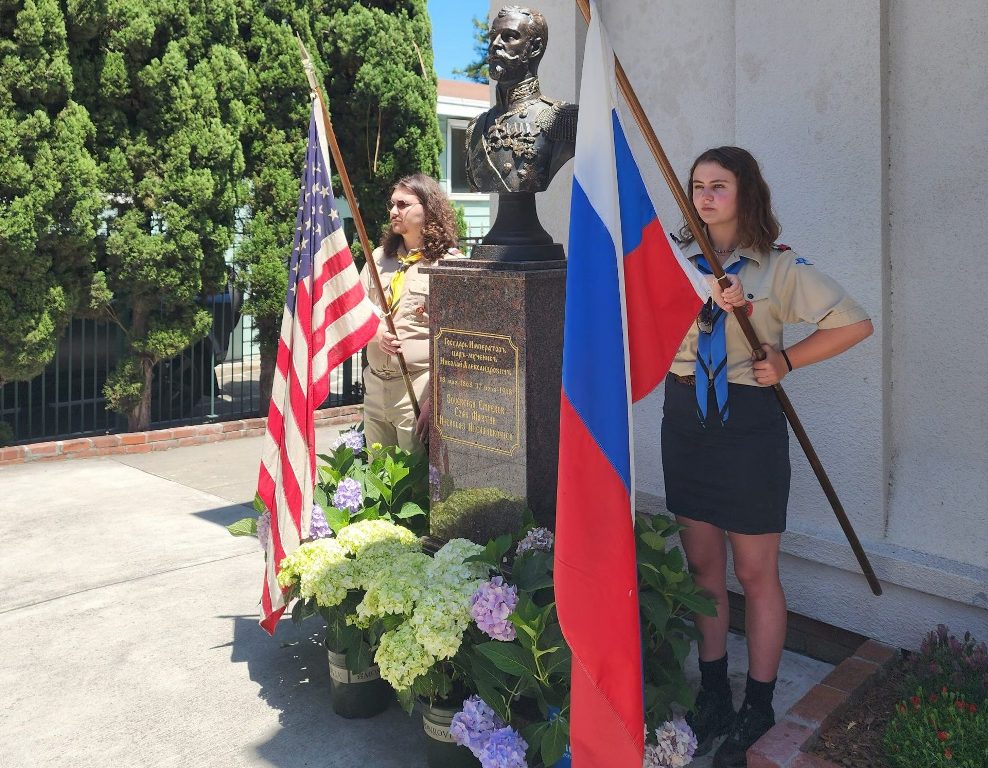
On 17th July 2018, the feast day of the Holy Royal Passion-bearers, a bust of Tsar-Martyr Nicholas II, was installed and consecrated in the Synodal Cathedral of Our Lady of the Sign in New York City. The bronze bust is considered to be the most faithful to the likeness of Emperor Nicholas II.

The bust was donated to the Russian Orthodox Church Outside Russia (ROCOR) by the head of the Foundation “Under the Protection of the Mother of God” Eugene (Evgeny) Korolev, with the organizational participation of the head of the Military Orthodox Mission, Igor Smykov.

Attending the divine services were parishioners and faithful of various parishes, representatives of the Romanov family, and Cossack delegates.ners and faithful of various parishes, representatives of the Romanov family, and Cossack delegates.

Upon completion of the service, Fr. Tikhon read aloud Metropolitan Hilarion’s Epistle on the occasion of the 100th anniversary of the martyrdom of the holy and right-believing Royal Passion-bearers: Emperor Nicholas II, Empress Alexandra Feodorovna, Tsesarevich Alexei, and Grand Duchesses Olga, Tatian, Maria and Anastasia.

His Eminence and the clergy served a short moleben [service of intercession] before icons of the Royal Passion-bearers and other holy relics housed at the Synodal cathedral: a reliquary with the right hand of the Holy Nun-Martyrs Elizabeth and Barbara.

Metropolitan Hilarion then thanked all those who prayerfully honored this day with their presence, and gave the floor to the general director of the Russian National Creative Workshop “Art-Project,” LLC, and the International Foundation for Mutual Development & Strengthening of Spiritual Unity and the Religious & Historical Values of Russian Orthodoxy in the Homeland & Abroad “Under the Protection of the Theotokos,” Eugene (Evgeny) Korolev. It was these organizations that presented the cathedral a gift: a bust of the Tsar-Martyr Nicholas II.


CLICK on the above image to watch a VIDEO of the consecration of the bust.
DURATION: 3 minutes, 30 seconds. LANGUAGE: Russian

“This image was first made before the revolution, out of stone. During Perestroika in the Soviet Union, vandals desecrated it,” Korolev explained. “After the fall of the USSR, in 1993, the bust was brought from Crimea to Moscow, to the workshop of Russian national artist Vyacheslav Klykov. They created a mold of the bust and poured it in bronze. Unfortunately, we do not know the identity of the original artist who created this marvelous work. But we do know that this monument is considered the most faithful to the likeness of Emperor Nicholas II. I would like to offer my respect to Vyacheslav Mikhailovich Klykov (1938-2006) for granting new life to this work of art.

“In Russia they are currently celebrating the ‘Tsar’s Days,’ and I think the most important thing for us is to learn lessons from this tragedy and never repeat them.”

Korolev congratulated everyone on the occasion of the feast, and presented Metropolitan Hilarion with a dove prepared in the workshop, as well as pouches with soil from the holy sites of Yekaterinburg, where Emperor Nicholas II, Empress Alexandra, and their children were held captive, and where they were all murdered.

For his work with the Cossacks, Eugene Korolev presented Fr. Tikhon with the Order of Emperor Nicholas the Second.

Flanked by clergy, the First Hierarch proceeded to the entrance to the cathedral, where the bust of the Tsar-Passionbearer Nicholas II had been installed, and blessed it. The festivities concluded with a banquet in the cathedral hall.

PHOTO: Metropolitan Hilarion (1948-2022) of Eastern America and New York, talks
with members of the media in the Synodal Cathedral of the Sign in New York City.

© Eastern American Diocese | Russian Orthodox Church Outside Russia. Originally published 7 December 2019 and Updated on 4 October 2024

Bust-monuments of Nicholas and Alexamdra unveiled in Irkutsk

PHOTO: close up view of the bronze busts of Emperor Nicholas II and Empress Alexandra Feodorovna in the courtyard of St. Michael’s Archangel Kharlampievsky Church, Irkutsk

On 15th September 2024, a pair of bust-monuments of Emperor Nicholas II and Empress Alexandra Feodorovna were installed in the Siberian city of Irkutsk.

The monuments were installed in the courtyard of St. Michael’s Archangel Kharlampievsky Church, one of the oldest churches in the city. It was here in 1904, that the future Admiral Alexander Vasilyevich Kolchak (1874-1920) married Sofia Omirova (1876-1956).

The organizer of the installation of the busts is Irkutsk resident Mikhail Vladimirovich Arsentyev. The bust of Nicholas II, is based on the original – or what was left of it – which was found in the Crimea. It was restored by the famous Russian sculptor Vyacheslav Mikhailovich Klykov (1938-2006), who restored the parts which had been broken off by Bolshevik vandals following the October 1917 Revolution. It is believed that the original bust was made from life, around 1905.

he sculptor of the current busts of Nicholas II and Alexandra Feodorovna is the modern master Pavel Zhuravlev. Both busts are made of bronze, each weighing 100 kg, they were cast in a workshop in Moscow, where Vyacheslav Klykov worked during his lifetime.

PHOTO: Metropolitan Maximilian of Irkutsk and Angarsk performed the act of consecration of the bust-monuments in the courtyard of St. Michael’s Archangel Kharlampievsky Church, Irkutsk

Before the unveiling of the monuments, a Divine Liturgy was performed in the church, by three bishops (in the photo above from left to right): Bishop Alexy of Sitka and Alaska, Metropolitan Maximilian of Irkutsk and Angarsk and Bishop Konstantin of Bratsk and Ust-Ilimsk. Divine services were conducted in four languages: Church Slavonic, Greek, English and Aleut, which emphasized the atmosphere of unity of peoples.

The act of consecration of the busts was performed in the courtyard of the church by Metropolitan Maximilian of Irkutsk and Angarsk. It must be noted that there are few monuments to holy people in Irkutsk, and these bust-monuments of the Holy Royal Martyrs is one of the ways to teach residents and guests of the city about the last Russian tsar and his family.

PHOTO: view of the bronze bust-monuments of Emperor Nicholas II and Empress Alexandra Feodorovna in the courtyard of St. Michael’s Archangel Kharlampievsky Church, Irkutsk

© Paul Gilbert. 27 September 2024

Léopold Bernstam’s busts of Nicholas and Alexandra (1895)

PHOTO: Biscuit Porcelain Busts of Emperor Nicholas II and Empress Alexandra Feodorovna. by the famous Russian sculptor Leopold Adolfovich Bernstam (1859-1939). From the Collection of the State Russian Museum in St. Petesburg.

Leopold Adolfovich Bernstam was born to a Jewish family in Riga, on 20th April 1859. At the age of 13, he studied under the famous Danish-Russian sculptor David Ivanovich Jensen (1816-1902). The following year, at the age of 14, Bernstam entered the Imperial Academy of Fine Arts in St. Petersburg, where he earned several awards.

From 1885 he lived in Paris where he worked as a sculptor at the Grévin Museum. He is credited with being the author of some 300 sculptures in his lifetime, including at least 5 monuments to Emperor Peter I of Russia.

In the early 1880s he temporarily moved to Russia, where he made about 30 busts of celebrated Russians, including authors, playwright and composers. In 1885 he settled in Paris, often returning to St. Petersburg. 

PHOTO: Leopold Adolfovich Bernstam (1859-1939)

In 1895 Léopold Bernstam received a commission to create portrait busts of members of the Imperial Family. Among them was the new Tsar and Tsarina, who were crowned in Moscow in May 1896.

In his diary, dated 20th September and 21st, 1895, Nicholas II wrote: “… after breakfast spent more than an hour sitting for Bernstam…” and on 21st September: “sat for the sculptor again”.

At the beginning of 1896, Bernstrom was invited to Tsarskoye Selo, where he completed busts of several members of the Tsar’s family in less than three weeks. Among them were a pair of marble busts depicting the August Couple, which served as excellent models for mass-produced copies, which were installed in the lobbies or foyers of all government buildings, as well as educational charitable institutes, hospitals, etc.

Bernstam’s last work in St Petersburg was a bust of Emperor Alexander III, which was installed in 1914, in the garden of the Russian Museum of His Imperial Majesty Alexander III [renamed State Russian Museum]. It was removed in 1918. 

Leopold Adolfovich Bernstam died at the age of 79, on 22nd January 1939, in Menton (France), a town located on the Mediterranean Sea at the Franco-Italian border.

© Paul Gilbert. 5 June 2024

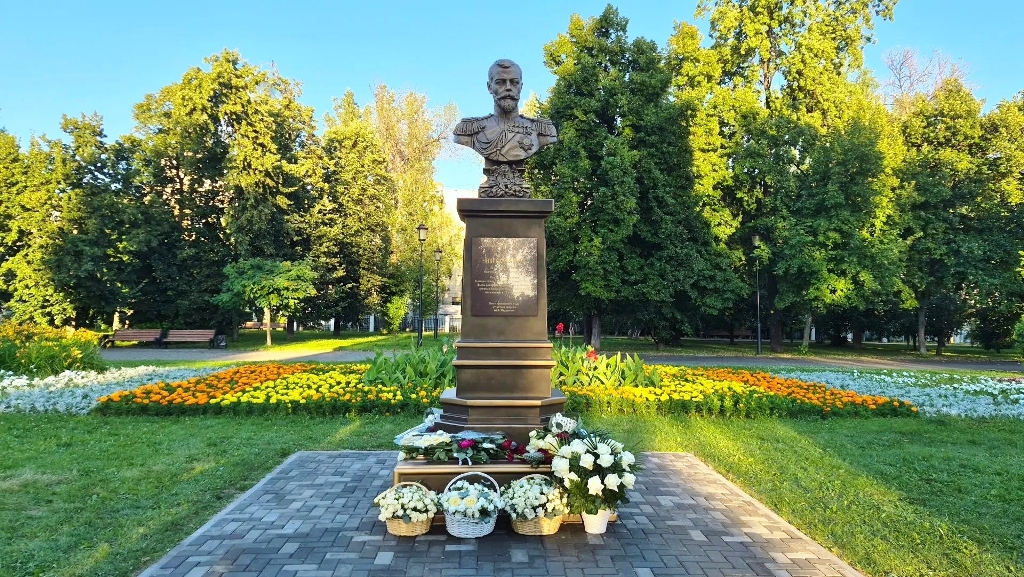
New bust-monument to Nicholas II installed in Volgograd region

On 18th May, the eve of the 156th anniversary of the birth of Emperor Nicholas II, a new bust-monument to Russia’s last Tsar, was installed and consecrated on the grounds of the Orthodox Cultural Center in the village of Zaplavnoye, Leninsky district, Volgograd region.

The solemn ceremony was attended by the founder and head of the Volga-Rast group of companies Igor Vitalievich Kapitanov, philanthropist Andrey Yurievich Morozkin, First Vice President of Gazprombank JSC, as well as guests from Moscow, Saratov, Voronezh and Lubansk.

The opening ceremony began with a solemn parade, led by cadets dressed in ceremonial uniforms. Pupils of the Cadet Corps, along with local high school students and toddlers of the Orthodox Kindergarten, followed behind the cadets through the square, which was decorated with Russian flags.

The bust-monument was consecrated by the rector of the St. Nicholas Church in the village of Zaplavnoye, Hieromonk Nikita (Sergeev).

The installation of the bust-monument to Emperor Nicholas II was made possible by the All-Russian Alley of Russian Glory Project, the purpose of which is to perpetuate the memory of notable Russians who glorified the Fatherland and the Orthodox faith.

***

NOTE: since the fall of the Soviet Union in 1991, more than 100 monuments, busts and memorial plaques to Emperor Nicholas II have been installed in cities, towns and villages across the Russian Federation. In addition, are a number of churches dedicated to him.

© Paul Gilbert. 22 May 2024