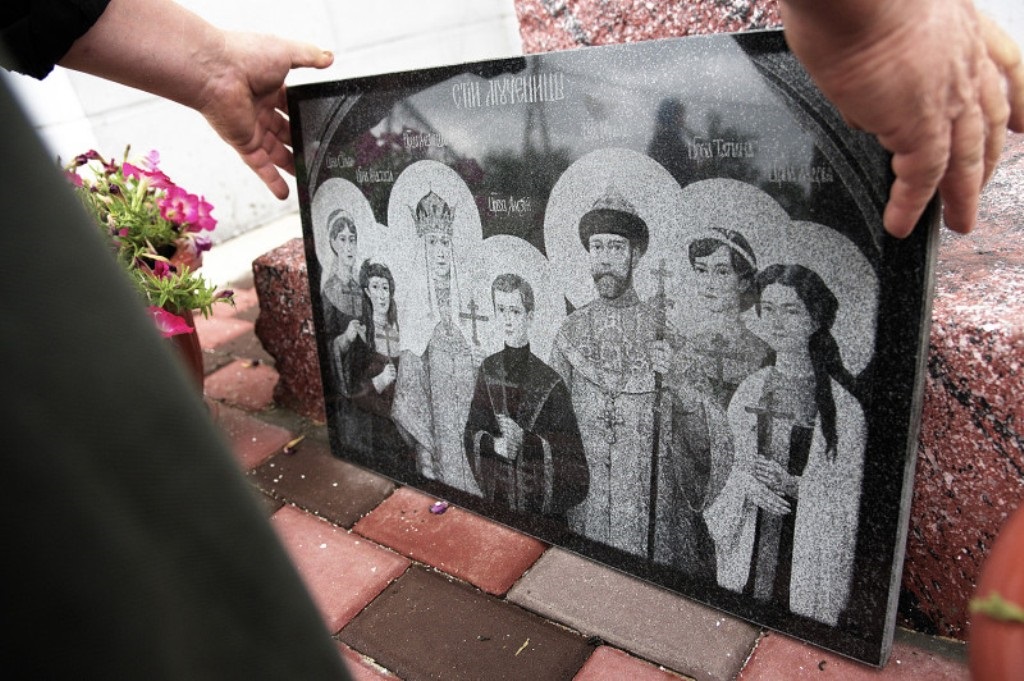
Historical Society Memorial Plaque with Nicholas II Established in St Petersburg

195a

On 18th March 2018, the unveiling of a memorial plaque dedicated to the 110th anniversary of the creation of the Imperial Russian Military Historical Society (RVIO) was held in St Petersburg. The plaque was installed on the building of the Museum of Artillery, Engineering Troops and Signal Corps.

The opening ceremony was attended by the leadership of the Russian Military Historical Society, the delegation of RVIO branches from 68 regions of the country, as well as representatives of the Russian Defense Ministry.

For the first time in the last 100 years a commemorative plaque with a portrait and signature of Emperor Nicholas II was established in St. Petersburg, who in 1907 received the title of Honorary Chairman of the Russian Military Historical Society. From 1907 to 1917, the former Artillery Historical Museum (now the Museum of Artillery, Engineer and Signal Corps of the Ministry of Defense of Russia), housed the Council, the Chancellery and the repository of the main fund of the Imperial Russian Military Historical Society.

“Over the past five years, the Russian Military Historical Society has established more than 200 memorials and plaques. But this memorial plaque is special to us, because it emphasizes the connection of times between those people who created the society, and those who continue these traditions today,” – said Vladislav Kononov, Executive Director of RVIO.

195b

The opening ceremony was also attended by the descendants of the military dynasty of Skalon. In 1907, Major-General Dmitry Antonovich Skalon (1840-1919) was elected Chairman of the Council of the Imperial Russian Military Historical Society.

The plaque was designed by the Adviser to the Chairman of the Russian Military Historical Society Rostislav Medinsky, sculptor Denis Stritovich and the artist Timur Yurchenko .

The composition of the plaque features two inscriptions of Emperor Nicholas II, who in 1907 personally approved the Charter of the organization: “I agree. I highly approve of the establishment of this Society.” Later, Nicholas II accepted the title of Honorary Chairman of the Russian Military Historical Society, granting it the right to be called the Imperial Society: “Deeply sympathizing with the aims of the Society, I readily accept the Honour of its Honorary Chairman, and I salute him with the name “IMPERIAL”.

It is interesting to note that the Imperial Russian Military Historical Society, was one of the four Imperial Societies, along with the Russian Geographical Society, the Russian Historical Society and the Orthodox Palestine Society – created by the Decree of Emperor Nicholas II in 1907. All four societies ceased their activities after the 1917 Revolution.

© Paul Gilbert. 13 December 2019

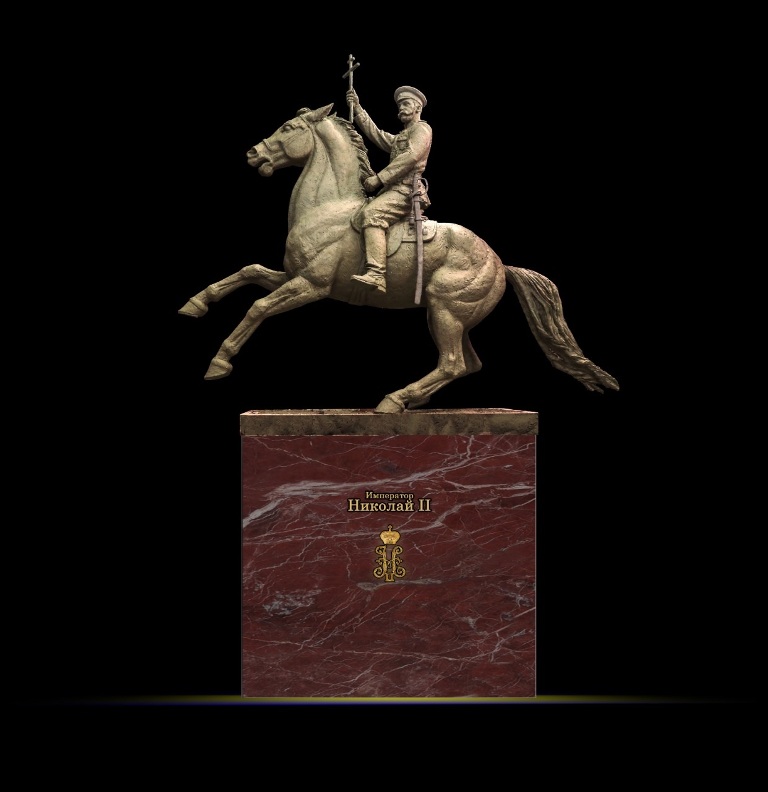
Duma Deputy Proposes Monument to Nicholas II for Central Moscow

183a

NOTE: All of the articles pertaining to Nicholas II and his family which were originally published in my Royal Russia News blog, have been moved to this Nicholas II blog. This article was originally posted on 19 May 2018 in my Royal Russia News blog – PG

The first deputy chairman of the Duma Committee for Public Associations and Religious Organizations, Ivan Sukharev, has prepared a request to Moscow mayor Sergey Sobyanin for permission to establish a life-size monument to Nicholas II in the center of the Russian capital.

Sukharev believes that perpetuating the memory of the last Russian emperor will help restore historical justice. The parliamentarian noted that a monument was installed in the center of Belgrade in November 2014, while in central Moscow there is not even a memorial plaque [Note: this is not entirely correct, please see my list of monuments to Nicholas II in Moscow and surrounding region at the bottom of this article – PG].

In turn, the Moscow Monumental Art Commission announced that they are ready to consider the proposal to install a monument to Nicholas II in Moscow, if the artist of the initiative can prepare the necessary documents for the Commission to evaluate.

Meanwhile, the head of the Commission on Culture and Mass Communications, Yevgeny Gerasimov believes that a monument to Nicholas II should be established in St. Petersburg instead of Moscow.

“I do not see any significant place in Moscow for this monument, from my point of view, it might be possible to establish it in St. Petersburg,” Gerasimov told RIA Novosti. He noted that the Moscow City Duma had not yet applied for the installation of the monument to Nicholas II in the capital.

Nikolai Svanidze, member of the commission of the Human Rights Council under the President of the Russian Federation for Freedom of Information and Journalists’ Rights, publicist and journalist, also supports the initiative to establish a monument to the last Russian emperor, but noted that it would be more logical to do this in St. Petersburg.

“Nicholas II had no ties to Moscow, but to the capital St. Petersburg. Nicholas II and Moscow are bound only by the Khodynka Field. This is the tragic connection between the two.” Svanidze, however, agrees that Nicholas II, deserves a monument in his honour, even despite the controversy which haunts his reign.

Meanwhile, the monuments has already angered the leaders of radical left-wing groups, such as the Left Front and Yabloko, who spoke out against the idea of ​​perpetuating the memory of the last tsar, who make the absurd comparison towards sympathizers of Nicholas II as “Nazi collaborators”.

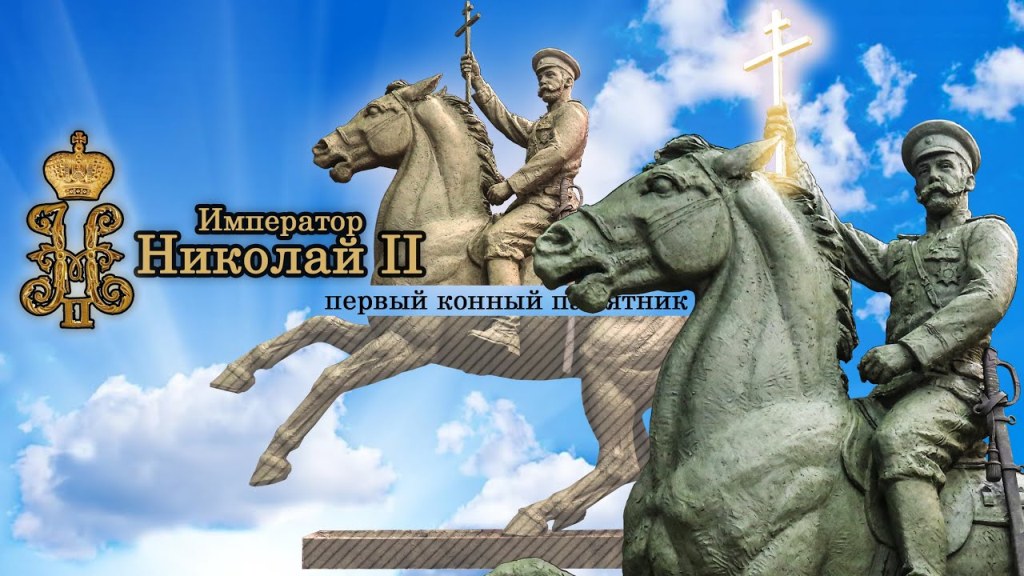
There are currently four outstanding monuments to Nicholas II in the Moscow region, they include a magnificent equestrian monument to Nicholas II on the Frunze Embankment (center); another at the Novospassky Monastery (below); and two monuments established in suburban Moscow: at Mytishchi in the north (top left) and Podolsk in the south (top right). There are also a number of busts to Nicholas II: the Petrovsky Palace, the Church of the Outpouring of the Holy Spirit at the former Lazarev Cemetery, the Church of St. Nicolas, Saint Nicholas Berlyukovsky Monastery, situated on the outskirts of Avdotyino, and the Armenian Center in Moscow.

183e

© Paul Gilbert. 11 December 2019

Russia Marks 150th Anniversary of Nicholas II’s Birth

NOTE: All of the articles pertaining to Nicholas II and his family which were originally published in my Royal Russia News blog, have been moved to this Nicholas II blog. This article was originally posted on 21 May 2018 in my Royal Russia News blog – PG

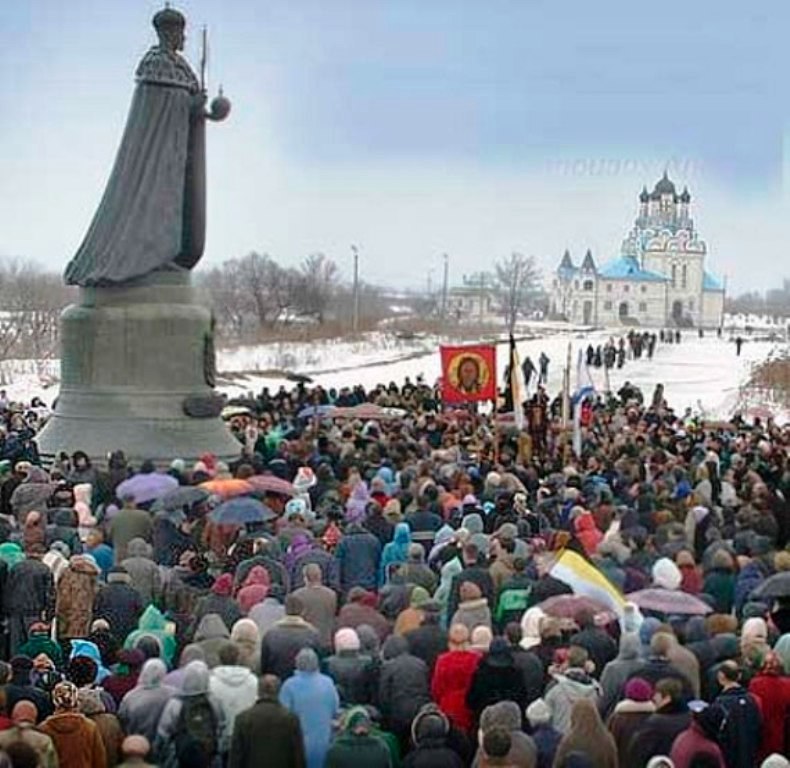
On 19th May 2018, members of the All-Russian public movement “National Idea of ​​Russia” and the Kuban Cossacks laid flowers at the monument to Emperor Nicholas II in the village of Taininskoye (Mytishchi), which is situated about 19 km northeast of Moscow.

Like the fate of the Sovereign, the monument has a tragic history, being blown up twice by extremists. However, the monuments’ scupltor Vyacheslav Mikhailovich Klykov (1938-2006) restored it each time.

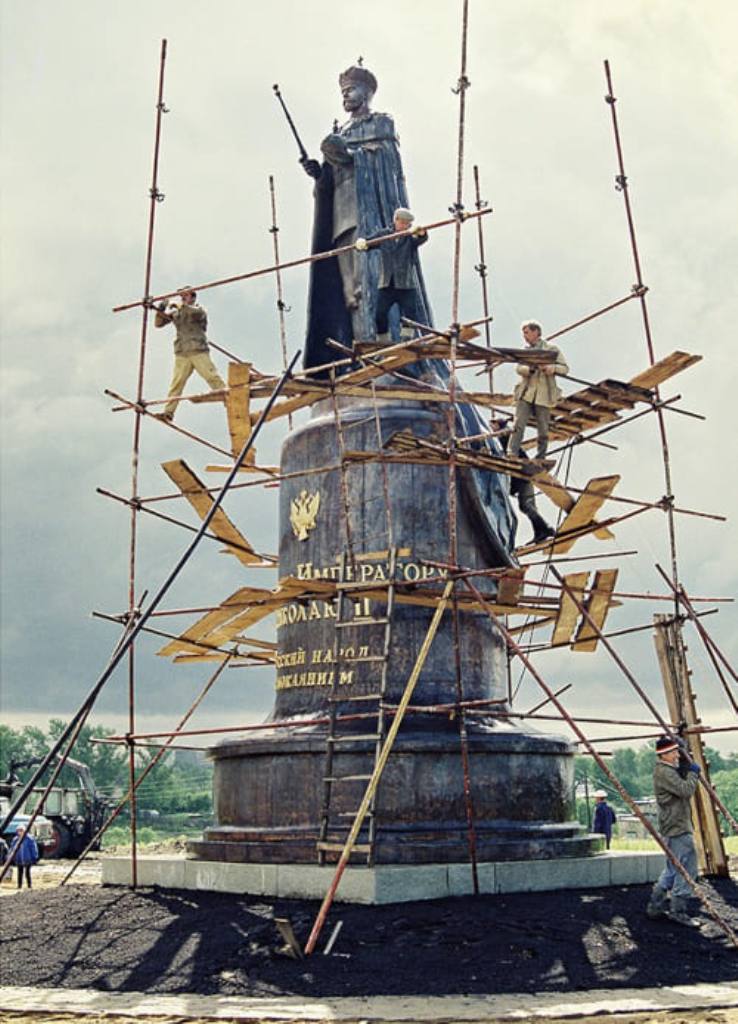
The monument to Emperor Nicholas II was installed in the suburban village of Taininskoye, on the site of the royal road in May 1996.

The opening of the monument was timed to coincide with the 100th anniversary of the coronation of the last Russian Tsar (held in Moscow on 26 May (O.S. 14 May) 1896. This is one of several monuments to Nicholas II in Moscow and region. The inscription on the monument read: “To the Emperor Nicholas II from the Russian people with repentance”.

Sadly, it did not stand for long: on 1st April 1997, the monument was blown up by the left-wing extremists of the group “Revolutionary Military Council”. Their reason, was their opposition to the removal of Lenin’s corpse from the mausoleum in Red Square.

In November 1998, the monument was restored, however, in the winter of the same year it was again blown up.

Then the sculptor of the monument Vyacheslav Klykov created for the third time a new copper monument, which was unveiled in August 2000. The crowned emperor stands proudly, dressed in an ermine mantle, holding a scepter in one hand, mantel in the other. The sculpture represents him at his highest triumph – his ascension to the Russian throne.

After the second explosion, Klykov donated money from his own pocket to help finance the restoration of his monument to Nicholas II.

He noted at the unveiling: “If in days gone by, the Russian people could not protect their tsar, now, believe me, we can do it.”

The ceremony was timed to coincide with the day of the canonization of the Imperial family by the Moscow Patriarchate on 15 August 2000.

Since the fall of 2004, believers from all over the Russian Land have been drawn to the village of Taininskoye. And the appeal of the Russian people “To the Russian Emperor Nicholas II Russian people with repentance”, seemingly destroyed along with the first monument, turned out to be prophetic! The explosion, which was to erase the very idea of ​​repentance before the Emperor Nicholas II, could not change the Providence of God.

So on 19th May 2018, many Orthodox Christians and monarchists came to the monument to pray, lay flowers, unfurl Tsarist-era flags, all in preparation for the procession. The Kuban Cossacks brought with them the Cossack penitential icon of the holy martyr Tsar Nicholas.

Thanks to the talented Russian sculptor Vyacheslav Mikhailovich Klykov, we have the opportunity to honor the memory of the Emperor. Forgive us, Sovereign!

179d

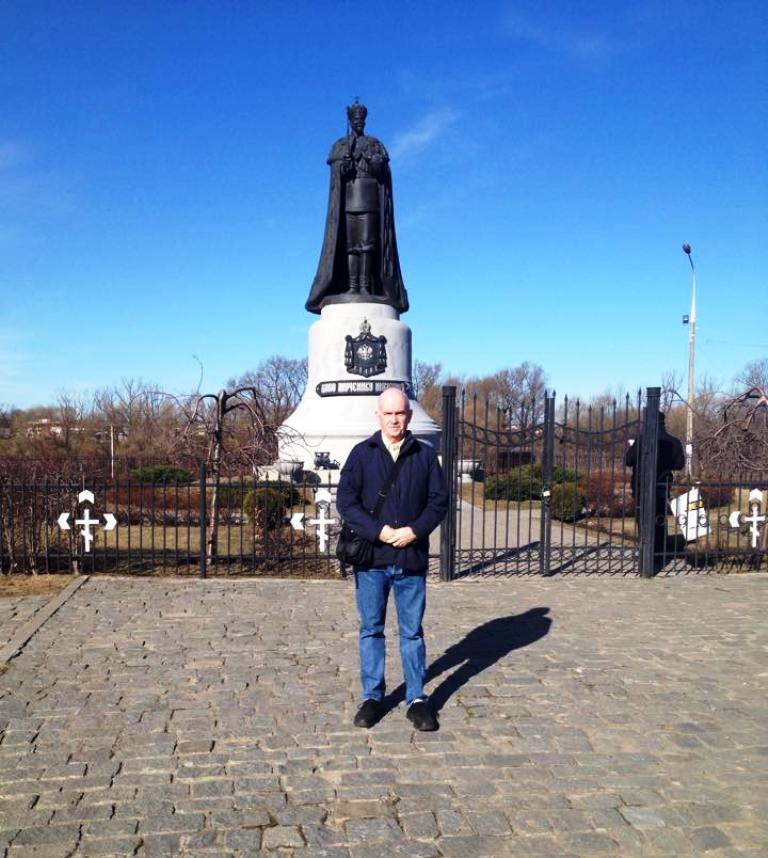
Paul Gilbert visiting the monument to Emperor Nicholas II
in the village of Taininskoye (Mytishchi) in March 2015

© Paul Gilbert. 10 December 2019

Church in Montenegro Marks Centenary of Romanovs’ Deaths

178a

PHOTO: Memorial to the Holy Royal Martyrs in the Monastery of Dajbabe in Montenegro

The Serbian Orthodox Church in Montenegro and devotees of Romanov dynasty have marked the anniversary of the murder of Nicholas II and Russia’s imperial family.

The Serbian Orthodox Church in Montenegro has commemorated the centenary of the killing of the Russian imperial family at Ekaterinburg with numerous events held under the slogan “The Romanov Family – 100 years of Holiness”.

Ending on Wednesday, the church held four days of masses for the Romanov family across the country, organized roundtables, exhibitions and book promotions while hosting the Russian Church and state officials.

In the monastery of Dajbabe, near the capital, Podgorica, the Serbian Church also erected a memorial (see photo above) to the Russian imperial family who were murdered by the Bolsheviks one year after the revolution that ended 300 years of Romanov rule.

Russia’s last tsar and his family were shot on the night of 16/17 July 1918. Besides Nicholas II, they killed the Empress Alexandra and all their children, Alexei, Olga, Tatyana, Maria and Anastasia.

The Russian Church canonized the imperial family in 2000 and their remnants are now held in the Peter and Paul Cathedral in St. Petersburg. The Serbian Church also considers the martyred Romanovs as “saints“.

The Serbian Orthodox Church said on Wednesday that people in Montenegro should never forget their gratitude to the Tsars.

“Without the help of Russia, there would have been no liberation of our people from Ottoman slavery… We are aware of this, and with the great gratitude we remember the great love of the Russian people and the Russian tsar for Montenegro,” Joanikije, the Bishop of Budimlike-Niksic, said.

The masses and other events were attended by delegates of the Patriarch of Alexandria, Theodore, Moscow Patriarch Kiril, representatives of the Orthodox Palestinian Society, Russian scholars, academics and former state officials from Moscow.

The Serbian Orthodox Church’s senior bishop in Montenegro, Amfilohije, said that the murder of the imperial family had been a great crime.

“They killed the emperor and the empress, and even though the emperor had given up power to save his people, they killed their children … You can imagine what a crime that was,” Amfilohije said.

The Russian and Serbian Orthodox Church in Montenegro cherish close relations dating back to the 19th century, during the rule of the Montenegrin prince-bishop, Njegos.

© Paul Gilbert. 9 December 2019

Memorial Plaque Marks Tsar’s Brief 1918 Stay in the Omsk Region

176a

NOTE: All of the articles pertaining to Nicholas II and his family which were originally published in my Royal Russia News blog, have been moved to this Nicholas II blog. This article was originally posted on 5 June 2018 in my Royal Russia News blog – PG

On 28th April, a bronze plaque was unveiled at the Lubinskaya railway station (situated on the Omsk-Ishim-Tyumen Line in Siberia), marking the brief stay of Emperor Nicholas II and members of his family and entourage on the same date a century before.

In the spring of 1918, the Bolsheviks had ordered that the Imperial Family be taken from Tobolsk. Due to the illness of the children, the move was made in two stages. The first included Emperor Nicholas II, along with members of his family and entourage, who made their way from Tobolsk to Tyumen, where they boarded a train originally headed towards Ekaterinburg. Accompanying them was the Commissar of the Central Executive Committee Vasily Yakovlev. It was during the journey, however, that Yakovlev unexpectedly changed the route and quickly ordered the train in the opposite direction to Omsk. Why he changed the route is still a mystery, one which historians continue to debate to this day.

The Tsar’s train almost reached Omsk, stopping at Lubinskaya station. Laying ahead was Kulomzinskaya station, from which it was impossible to turn to the railway line leading to Chelyabinsk, bypassing Ekaterinburg. Kulomzinskaya was blocked by a special revolutionary detachment. The train could not go any further, so Yakovlev went to negotiate with the Omsk Revolutionary Committee.

176b

Meanwhile, Nicholas II and members of his family and entourage spent the next several hours in the train at Lubinskaya Station. At Omsk, Yakovlev received an order from Yakov Sverdlov in Moscow ordering him to proceed to Ekaterinburg. The last hope of salvation had disappeared.

On the bronze memorial is written: “On April 28, 1918, Lubinskaya Station for a few hours became a modest haven for the Holy Royal prisoners: Emperor Nicholas II, Empress Alexandra Feodorovna, Grand Duchess Maria and their faithful servants: the physician Evgeny Botkin, Hofmarshal Prince Vasili Alexandrovich Dolgorukov , non-commissioned officer Ivan Dmitrievich Sednev and maid Anna Demidova.”

The solemn ceremony was part of the city’s Imperial Days in Omsk. The memorial plaque was consecrated by His Eminence Theodosius, Bishop of Isilkul and Russko-Polyansky.

© Paul Gilbert. 9 December 2019

Monument to the Holy Royal Passion-Bearers in Godenovo

174a

PHOTO © Екатеринбургская Епархия

NOTE: All of the articles pertaining to Nicholas II and his family which were originally published in my Royal Russia News blog, have been moved to this Nicholas II blog. This article was originally posted on 11 June 2018 in my Royal Russia News blog – PG

On 11th June 2018, a new monument of the Royal Passion-Bearer – Tsar Nicholas II and his August family, was established and consecrated in the courtyard of the Pereslavlskiy Nikolskiy Convent in the village of Godenovo – situated 140 km NE of Moscow.

The initiative to install monuments to Tsar Nicholas II in Russian cities and towns was made by the participants of the Forum for the Preservation of the Heritage of Emperor Nicholas II, which was held on 18th May in Ekaterinburg. Experts and forum participants supported the initiative, put forward by member of the Regional Public Chamber, chairman of the Ural branch of the Union of Russian Paratroopers Yevgeny Teterin. The initiative received the blessing of Metropolitan Kirill of Ekaterinburg and Verkhoturye.

174b

PHOTO © Екатеринбургская Епархия

The Monument to the Royal Passion-Bearers in the village of Godenovo, was established on the initiative of Abbess of Eustolia (Afonina) of the Pereslavlskiy Nikolskiy Convent, with the blessing of Bishop of Pereslavl and Uglich Theodore.

The monument represents a picture of Russian history in which the August family led by Nicholas II – the last Emperor and Tsar of the Russian Empire – ascended on a pedestal under a precious crown that embraced Russia, and his children, whose faces are designed to embody the best ideals of the Motherland during their times.

174c

PHOTO © Екатеринбургская Епархия

The Tsar’s Alley – situated behind the monument – of the Pereslavlskiy Nikolskiy Convent, was decorated with 26 banners depicting photographs and biographies of the Holy Royal Passion-Bearers.

© Paul Gilbert. 9 December 2019

Serbs celebrate Royal Martyrs with Liturgy and procession in Belgrade

NOTE: All of the articles pertaining to Nicholas II and his family which were originally published in my Royal Russia News blog, have been moved to this Nicholas II blog. This article was originally posted on 29 July 2018 in my Royal Russia News blog – PG

Tsar Nicholas II was “one of the greatest rulers and tsars of Russia in his moral and spiritual qualities,” the Serbian patriarch said.

While 100,000 Orthodox faithful gathered in Ekaterinburg on the night of 16/17 July 2018 to honor the 100th anniversary of the Royal Martyrs, they were honored with another Divine Liturgy and procession in Belgrade the following morning.

During the events, His Holiness Patriarch Irinej of Serbia praised Tsar Nicholas as one of the greatest Russian rulers, of high moral and spiritual character.

The day began with the Hierarchical Divine Liturgy in the courtyard of the Russian Church of the Holy Trinity in Belgrade, after which a festive procession passed through the capital city’s central streets.

The procession was announced in all Belgrade churches last Sunday, and according to police estimates, the procession gathered about 10,000 faithful, including clergy, representatives of Russian-Serbian friendship organizations, and citizens of Serbia and Russia participated in the march. As the procession moved past the Serbian Parliament building, the choir sang “God Save the Tsar.”

165a

Serbs gather in Belgrade to honour Nicholas II

The procession came to an end at Belgrade’s monument to the slain Russian Tsar, where Pat. Irinej celebrated a festive moleben and addressed the gathered faithful, in which he referred to the Tsar-Martyr’s Orthodox character.

“All his life, he was accompanied by distrust, slander, and underestimation of his personality. And this happened, if we look at the time when tsarist Russia had numerous enemies, as it does now,” the Serbian primate said. In his words, the entire Romanov family behaved in a “deeply Christian manner” to the very end.

“No one knows what would have happened with Serbia and the Serbian people if he had not entered into the First World War,” the patriarch also added.

Then wreaths were laid at the monument to Tsar Nicholas II, with the participation of representations from the Russian embassy, Serbian politicians, priests, and public figures.

165b

Monument to Emperor Nicholas II in Belgrade

The monument to Tsar Nicholas was unveiled in November 2014 by His Holiness Patriarch Kirill and former President Tomislav Nikolic. On the pedestal is quoted in Russian and Serbian Tsar Nicholas’ telegram to King Alexander of Serbia, saying, “All my efforts will be directed towards maintaining the dignity of Serbia… In any case, Russia will not remain indifferent to Serbia’s fate.”

© Paul Gilbert. 7 December 2019

Monument to Nicholas II in Archedinskaya

164

NOTE: All of the articles pertaining to Nicholas II and his family which were originally published in my Royal Russia News blog, have been moved to this Nicholas II blog. This article was originally posted on 2 August 2018 in my Royal Russia News blog – PG

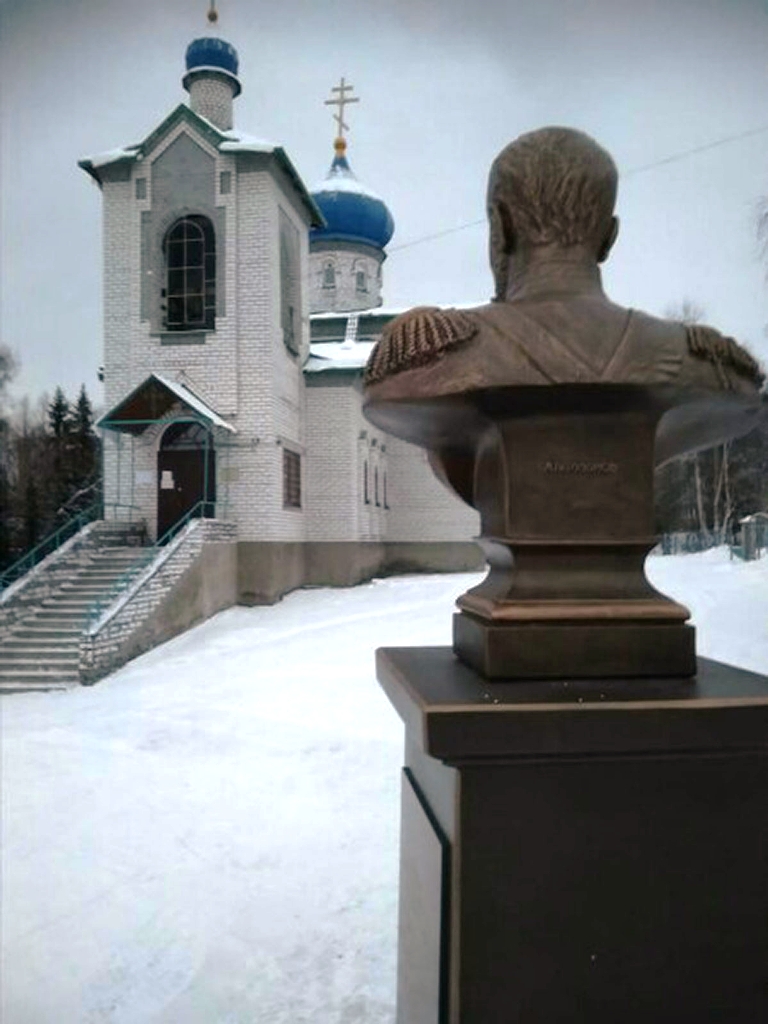
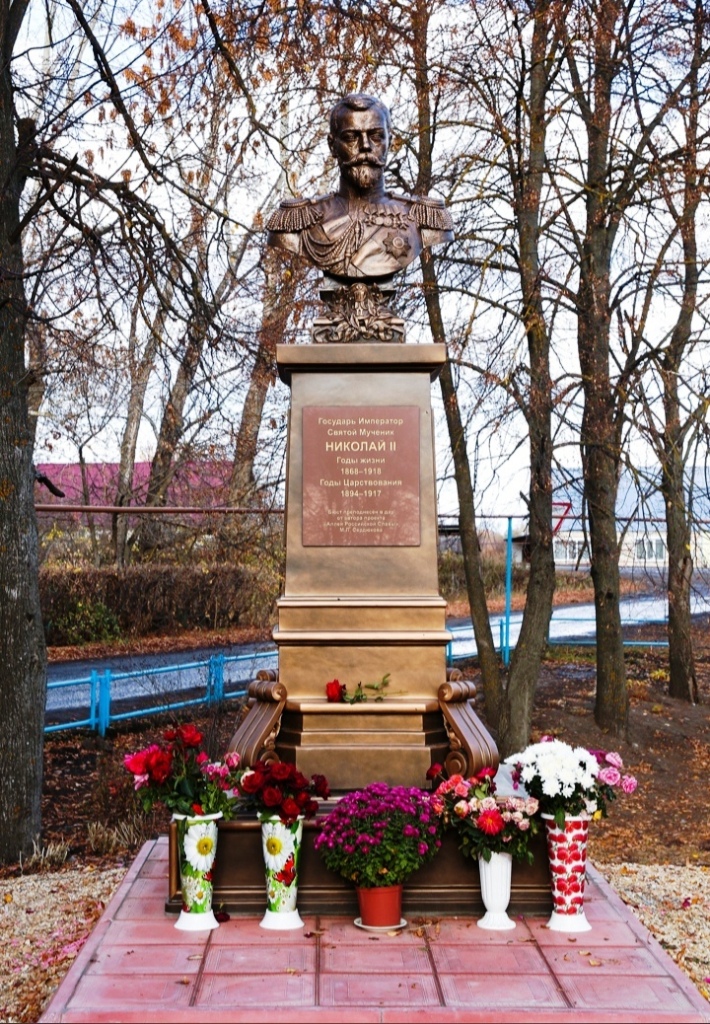
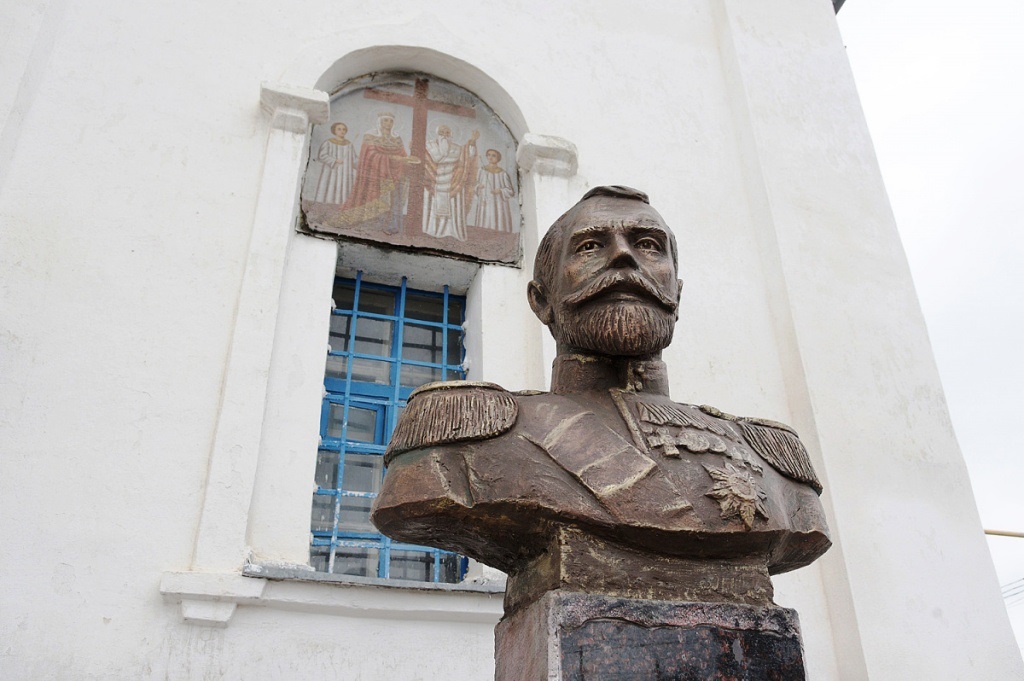
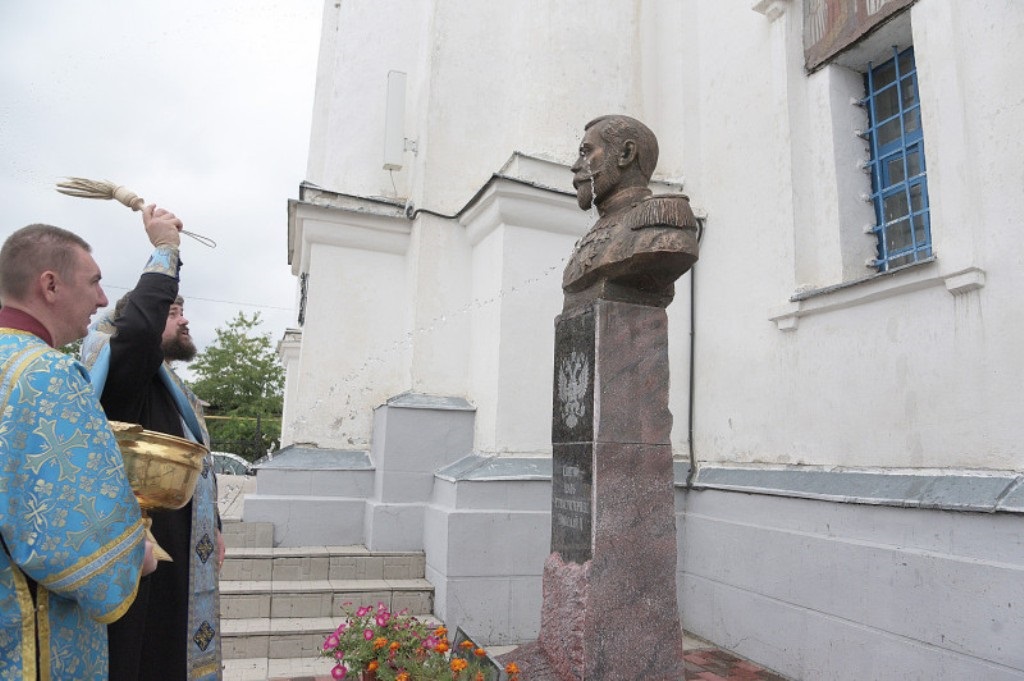
On 17th July 17 2018, on the day marking the 100th anniversary of the murder of the Imperial Family, a bust of Emperor Nicholas II was was established on the grounds of the Church of the Assumption of the Most-Holy Mother of God in the Russian village of Archedinskaya, situated in the Volgorad region. The bronze bust is a copy of an original work by the famous Russian sculptor Vyacheslav Mikhailovich Klykov (1939-2006).

A capsule containing earth from the mines at Ganina Yama and Alapaevsk – where the Bolsheviks attempted to dispose of the bodies of the murdered members of the Imperial family – was placed inside the bust of the Emperor. The bottle of Holy water for consecration was brought from the Church on the Blood of Ekaterinburg. A honourary guard made up of members of the Don Cossacks participated in the event.

After the Divine Liturgy, the consecration of the monument was performed by the Bishop of Uryupinsk and Novoanninsky Elisha.

The bust of the Emperor was made according to a project of the Russian sculptor Vyacheslav Mikhailovich Klykov, who died in 2006. Copies of his sculptures of Nicholas II have been are installed in Mytishchi, Vladivostok, Simferopol, Russia, and Melbourne, Australia.

© Paul Gilbert. 7 December 2019

Memorial Cross to the Holy Royal Martyrs in London

157

NOTE: All of the articles pertaining to Nicholas II and his family which were originally published in my Royal Russia News blog, have been moved to this Nicholas II blog. This article was originally posted on 22 August 2018 in my Royal Russia News blog – PG

On 13th July 2018, the day after the Feast of the Holy Apostles Sts Peter and Paul, a new memorial Cross to the Holy Royal Martyrs was erected on the grounds of the Diocesan Cathedral of the Mother of God and the Royal Martyrs in London.

The memorial Cross, which has been commissioned to mark the centenary of the martyrdom of the Imperial Family, was carved of red granite by special commission of the parish. The lower Altar of the Cathedral is dedicated to the honour of the Holy Royal Martyrs, and it seemed fitting to the faithful of the community to pay homage to the holy intercessors by erecting a Cross in their honour, to serve as a perpetual monument to the God-pleasing lives of these saints.

The initial erecting of the Cross will be followed by landscaping of the nearby territory to accommodate the new monument, which will be formally blessed on the day of the Cathedral’s full consecration on the Feast of the Nativity of the Theotokos, 21st September 2018.

The Divine Liturgy for the Feast of the Holy Royal Martyrs took place at the London Cathedral at 9.00 a.m. on Tuesday, 17th July 2018 (n.s.), served in the Lower Church. It was celebrated by His Grace Bishop Irenei together with clergy of the Cathedral, Diocese, and guests from the surrounding areas. The new memorial Cross was visited as part of the Cross Procession of the Altar Feast.

© Diocese of Great Britain and Ireland (ROCOR). 5 November 2019

Nicholas II memorial plaque in Nikolsk-Ussuriysk

NOTE: All of the articles pertaining to Nicholas II and his family which were originally published in my Royal Russia News blog, have been moved to this Nicholas II blog. This article was originally posted on 27 August 2018 in my Royal Russia News blog – PG

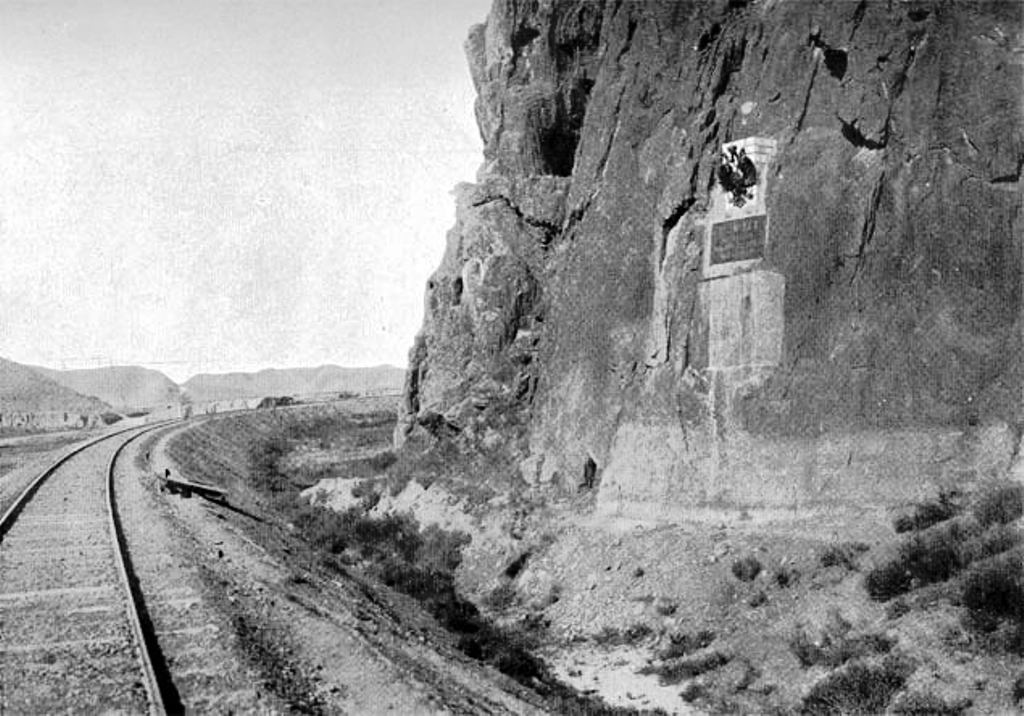
On 17th July 2018 a memorial plaque in honour of Tsesarevich and Grand Duke Nicholas Alexandrovich (future Emperor Nicholas II) was unveiled on the northern facade of the Church of the Intercession of the Holy Virgin in the Far-eastern Russian city of Nikolsk-Ussuriysk.

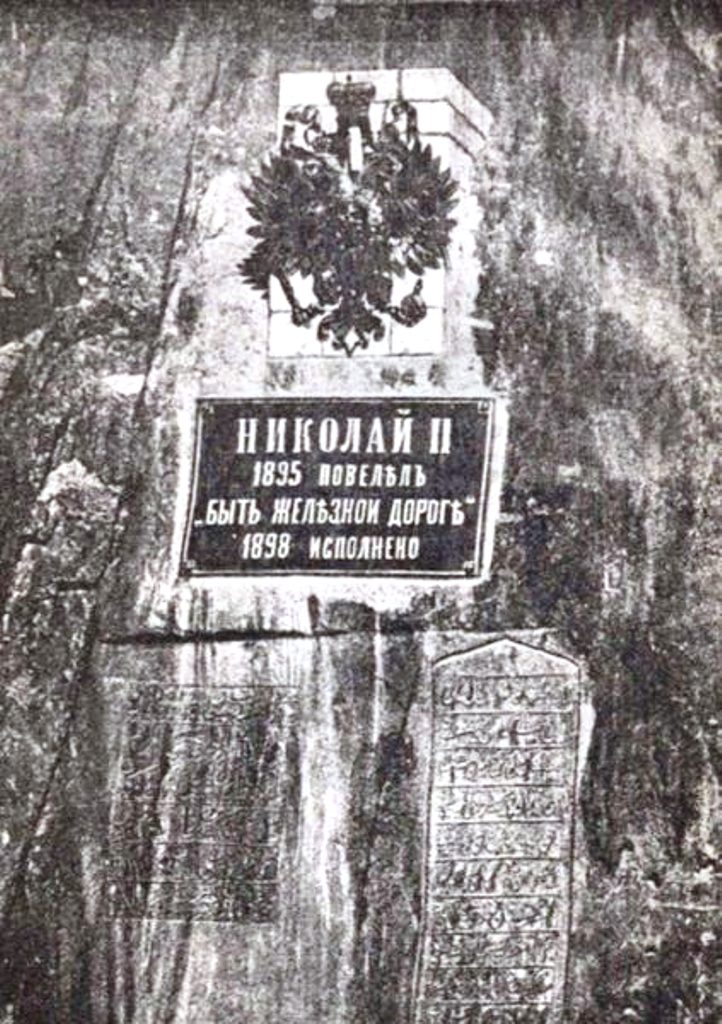
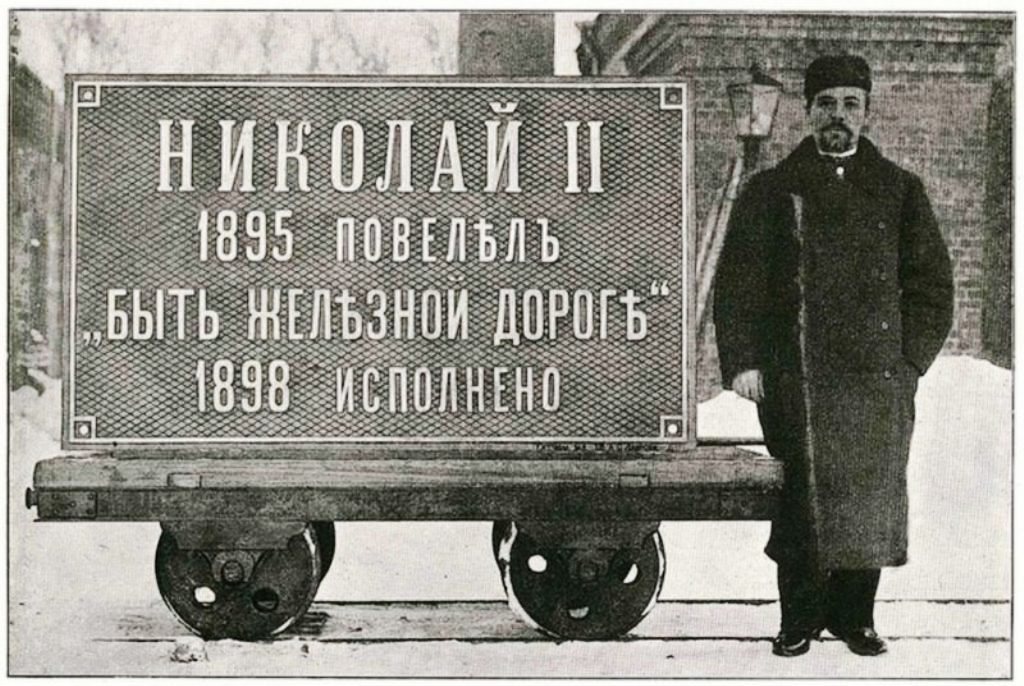
The memorial plaque was established in honour of the August visit of Nicholas Alexandrovich on 3-4 June 1891, as part of his Eastern Journey, and the construction of the Ussuri section of the Trans-Siberian Railway. The memorial also marks the 120th anniversary of the granting of the status of the city with the name Nikolsk-Ussuriysk on 16th April 1898, by the will of the Sovereign Emperor Nicholas II to Nikolsky, and, subsequently – the city coat of arms.

The work on the preparation of the memorial plaque was initiated by a group of historians, parishioners and residents of the city. The project was agreed and approved, with the blessing of Metropolitan Veniamin of Vladivostok and Primorye.

Associate Professor of the Far Eastern Federal University Yaroslav Popov, who headed the group, said that exactly at this place, in the wooden St. Nicholas Church (Nikolsk-Suifunsky), the Tsesarevich Nicholas Alexandrovich prayed during his visit in 1891. After the Liturgy, the Tsesarevich addressed the soldiers of the Nikolsk fortress, Russian residents and settlers, representatives of local peoples, Chinese and Korean diasporas, thanking everyone for their warm welcome.

The Divine Liturgy held on 17th July 2018 was attended by the mayor of Ussuriysk, Evgeny Evgenevich Korzh and the head of the Ussuriisk urban district Nikolai Nikolayevich Rud. After the consecration of the memorial sign, the choir of the parishioners of the church performed the hymn of the Russian Empire “God Save the Tsar”.

This was followed by the reading of the poems of the famous Russian poet Sergei Sergeivich Bekhteev (1879-1954), who escaped Russia after the Revolution. Bekhteev’s poems are full of love for the Motherland, the monarchy and the Holy Royal Martyrs. Countess Anastasia Hendrikova managed to pass five of Bekhteev’s poems to the Tsar’s family during their house arrest in Tobolsk. Emperor Nicholas II, was so moved by Bekhteev’s poem “God Save the Tsar”, that he shed a tear and asked to convey his gratitude to the poet for sharing his loyal feelings.

© Paul Gilbert. 5 November 2019