Taininskoye: the site of Russia’s greatest monument to Nicholas II
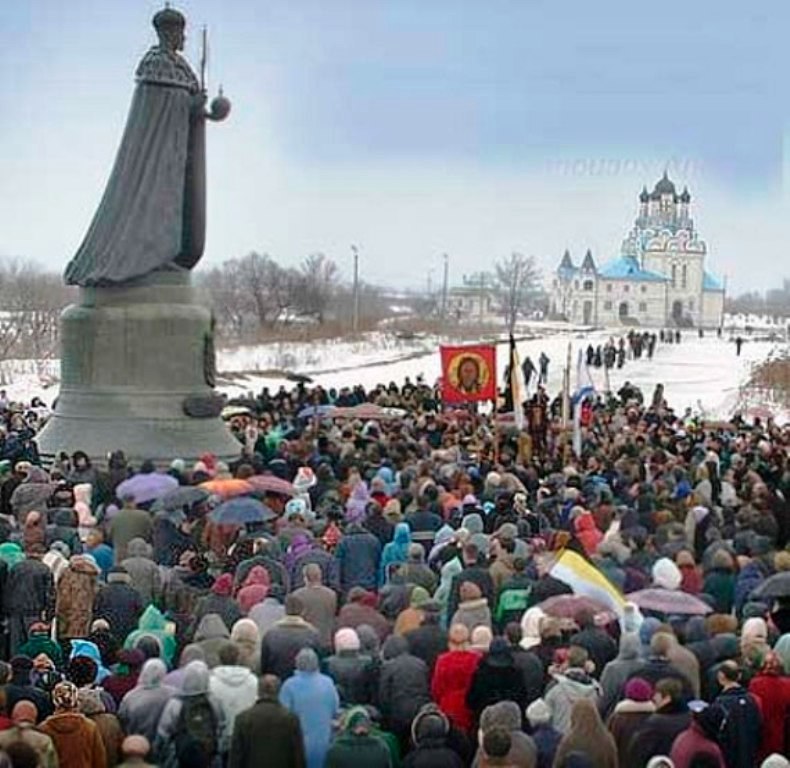
PHOTO: Klykov’s first monument to Nicholas II was consecrated 26th May 1996
in the former village of Taininskoye, situated 19 km northeast of Moscow

Like his father, Nicholas II preferred Russia’s old capital to that of Peter the Great’s new modern capital. According to French historian Marc Ferro: “Nicholas II preferred Moscow to St. Petersburg because the old city embodied the past, whereas St. Petersburg represented modernity, the Enlightenment and atheism.”

During his reign, Nicholas expressed the desire to spend Holy Week in the former Russian capital, and it was here, during the coronation festivities in 1896 and the Romanov Tercentennary in 1913, Moscow’s fervent greeting to their Tsar confirmed his feeling for the city.

Today, Moscow is home to at least a dozen monuments and busts to Russia’s last emperor and tsar. Among them are five large-scale monuments, including (1) the monument established in September 2016 at the Moscow State Transport University; (2) the monument established in October 2013 to Tsar Mikhail Feodorovich and Emperor Nicholas II in the Novospassky Monastery; (3) the monument established in 1998 on the grounds of the Church of the Royal Passion-Bearers in the Pleshcheevo estate (in Podolsk); and (4) the magnificent equestrian monument to Nicholas II, established on the grounds of the Ministry of Defense on the Frunze Embankment. In addition, are a number of bust-monuments established at various locations in and around Moscow.
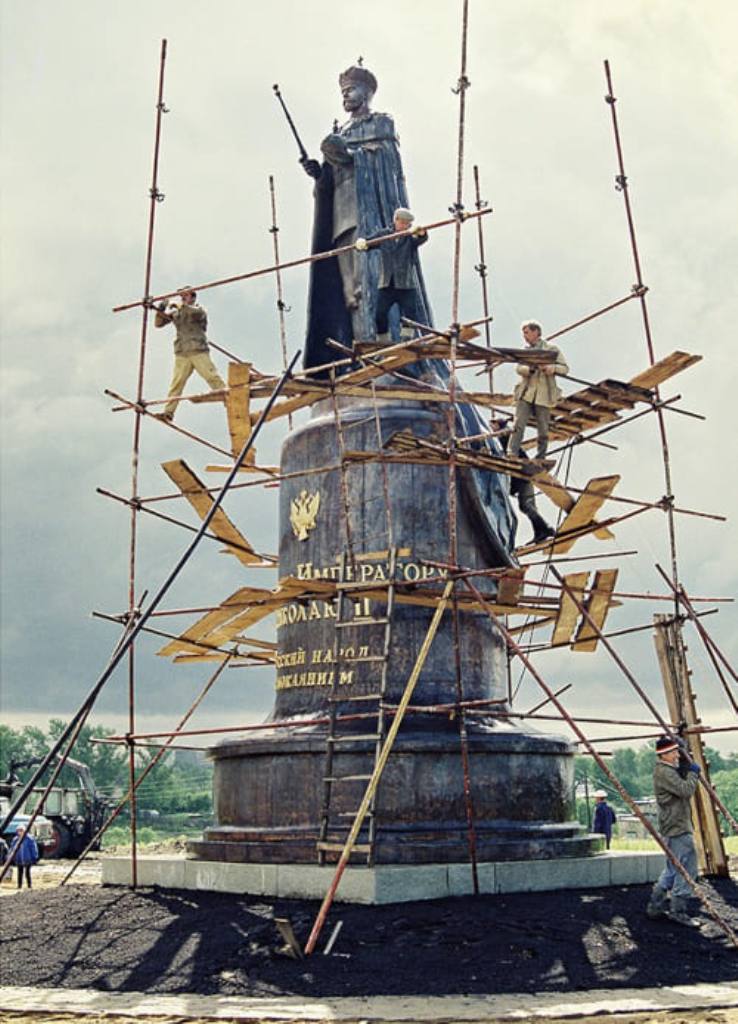
PHOTO: Klykov’s first monument to Nicholas II nearing completion in 1996

The finest and most impressive full-scale monument to Nicholas II has to be the one erected in the former village of Taininskoye [the village was incorporated in the Mytishchi district of the Moscow region in 1961], situated 19 km northeast of Moscow.

Like the fate of the Sovereign, the monument has a tragic history, having been the target of extremists in 1997. However, the monuments’ sculptor Vyacheslav Mikhailovich Klykov (1938-2006) replaced it in 2000.

According to the sculptor’s son Andrey Klykov, the monument was supposed to be erected on Borovitsky Hill in central Moscow. The project had the support of Yuri Luzhkov, who served as mayor at the time. Members of the city’s Communist party were outraged at the idea, so the project was pulled.

Klykov was offered another site in Mytishchi, near the site of a former royal traveling palace [built in 1749 for Empress Elizabeth Petrovna, it was destroyed by fire in 1823]. The site was situated near the 11th century Church of the Annunciation of the Holy Mother of God [built in 1675-1677]. As it turned out, due to the smaller number of approvals and red tape, the monument was easier to install on the church grounds, and had the support of the diocese.

PHOTO: the sculptor Vyacheslav Klykov stands in front of his monument
to Nicholas II, destroyed on 1st April 1997 by left-wing extremists

The opening of the monument was timed to coincide with the 100th anniversary of the coronation of the last Russian Tsar (held in Moscow on 26 May (O.S. 14 May) 1896.

On the morning of 1st April 1997, at 05:25 am, the monument was blown up by members of the left-wing extremist organization Revvoensovet [named after the Revolutionary Military Council of 1918]. Their reason, was their opposition to a proposal to remove Lenin’s corpse from the mausoleum in Red Square.

On 31st August 2006, The Moscow City Court found Igor Gubkin, a member of the Revvoensovet (RVS) extremist group, guilty of organizing and committing a number of explosions in Moscow, and sentenced to 19 years in prison.

After the explosion, Klykov, a staunch monarchist, donated his personal money from the fee he had been paid for the monument to General Zhukov [erected in Moscow in 1995]. When asked why, Klykov replied sternly: “If at one time the Russian people could not protect their tsar, now, believe me, we will do it!”

The monument that we see today in the village of Tayninskoye, was installed on 20th August 2000 on the site of the first monument. The erection of the second monument was timed to coincide with the canonization of the Tsar [the Moscow Patriarchate canonized Nicholas II on 20 August 2000].

Klykov forged his new monument from copper. The Emperor stands proudly, dressed in ermine robes, holding a sceptre and orb. The sculpture reflects the moment of his greatest triumph – his accession to the throne. The inscription on the monument read: “To the Emperor Nicholas II from the Russian people with repentance”.

The monument has become a popular place of pilgrimage for Russian monarchists and nationalists, who believe that only “repentance for the murder of Tsar Nicholas II will lead to the salvation of Holy Russia”

On 19th May 2018, members of the All-Russian public movement “National Idea of ​​Russia” and the Kuban Cossacks laid flowers at the monument to Emperor Nicholas II in the village of Taininskoye (Mytishchi). The event marked the 150th anniversary of the birth of Nicholas II, on 19th (O.S. 6th) May 1868, in the Alexander Palace at Tsarskoye Selo.

PHOTO: Klykov’s second monument to Nicholas II was cast
in bronze, it was opened on the same site in August 2000

Klykov was determined not to be threatened or bullied by thugs and radicals. Thanks to his efforts and determination, Orthodox Christians, monarchists and adherents to Russia’s last monarch, today have the opportunity to honour the memory of the Tsar, to offer flowers and prayers, but also to reflect on the life and reign of Russia’s much slandered Sovereign.
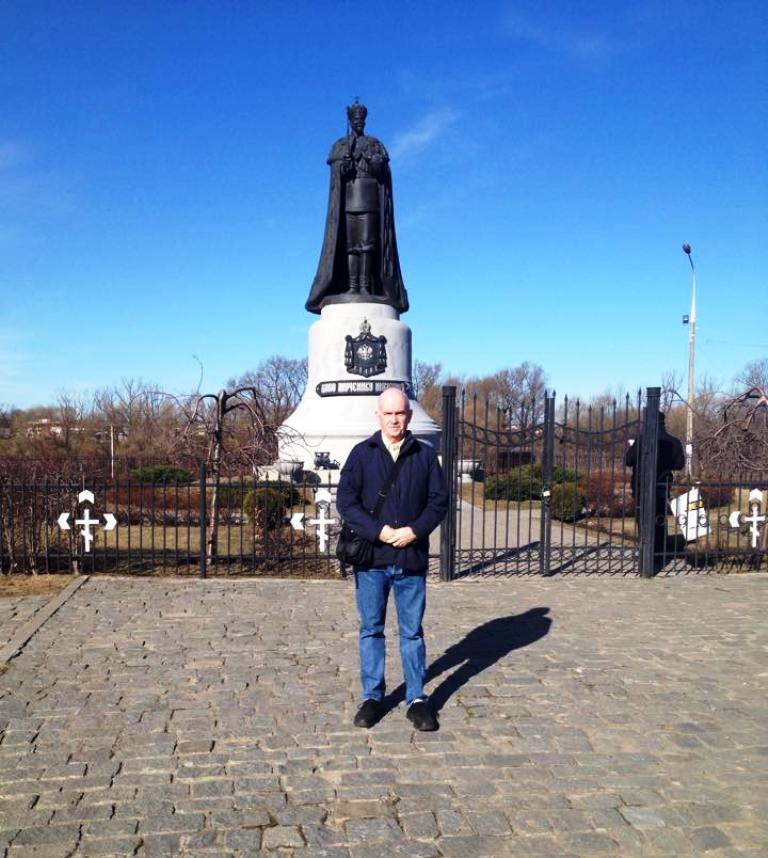
Nicholas II researcher Paul Gilbert at the monument to Nicholas II
at Taininskoye, during his visit to Moscow on 15th March 2015 

“To His Majesty Emperor Nicholas II, the Russian people with repentance”
Duration: 2 minutes with hauntingly beautiful music audio.
CLICK ON THE IMAGE ABOVE TO WATCH VIDEO

On 19th May 2018, members of the National Idea of Russia Movement and the Kuban Cossacks laid flowers at the monument to Nicholas II in the former village of Taininskoye (Mytishchi) near Moscow.

***
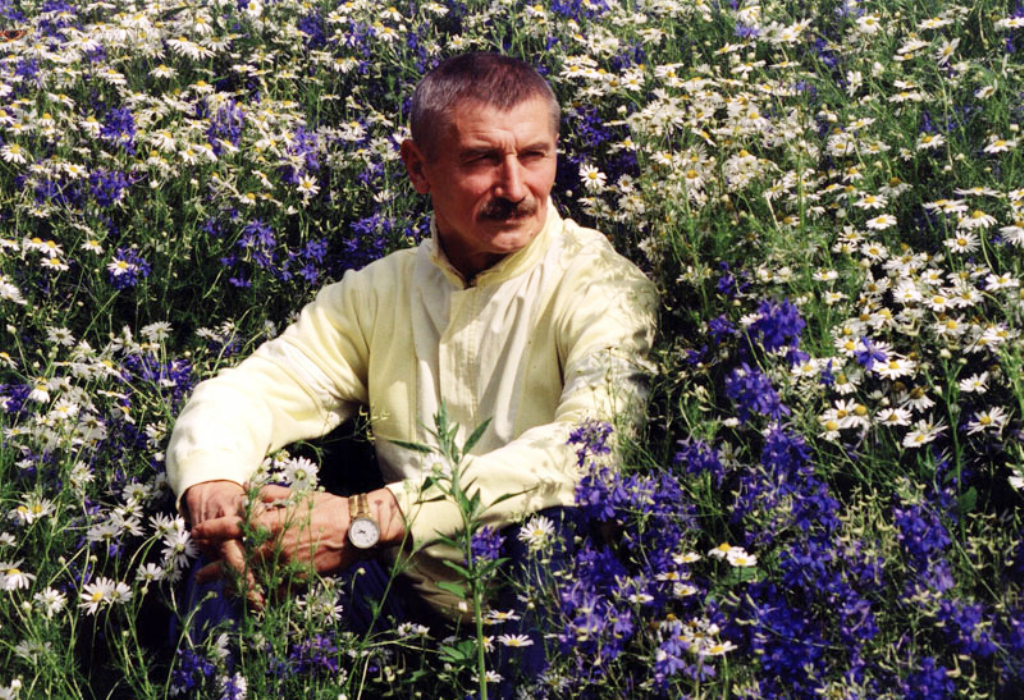
PHOTO: Vyacheslav Mikhailovich Klykov (1938-2006)

Vyacheslav Mikhailovich Klykov was born on 19th October 1939, in the village of Marmyzhi, Kursk Region.

In the second half of the 1980s, Klykov’s work focused on Orthodox-patriotic themes. During his life, he created more than two hundred monuments: memorial plaques and crosses. In addition, he created numerous works for other cities across Russia, but also in Ukraine, Greece and Italy.

One of his greatest works was a monument to St. Sergius of Radonezh, inspired by the painting by MV Nesterov “Vision to the youth Bartholomew”. The monument was installed on 29th May 1988, in the village of Gorodok (Radonezh) near the Trinity-Sergius Lavra. He also created a monument to Grand Duchess Elizabeth Feodorovna in the Martha-Mariinsky Convent in Moscow.

Vyacheslav Klykov died on 2nd June 2006 in Moscow. He was buried in his native village.

Memory Eternal! Вечная Память!

© Paul Gilbert. 13 April 2021
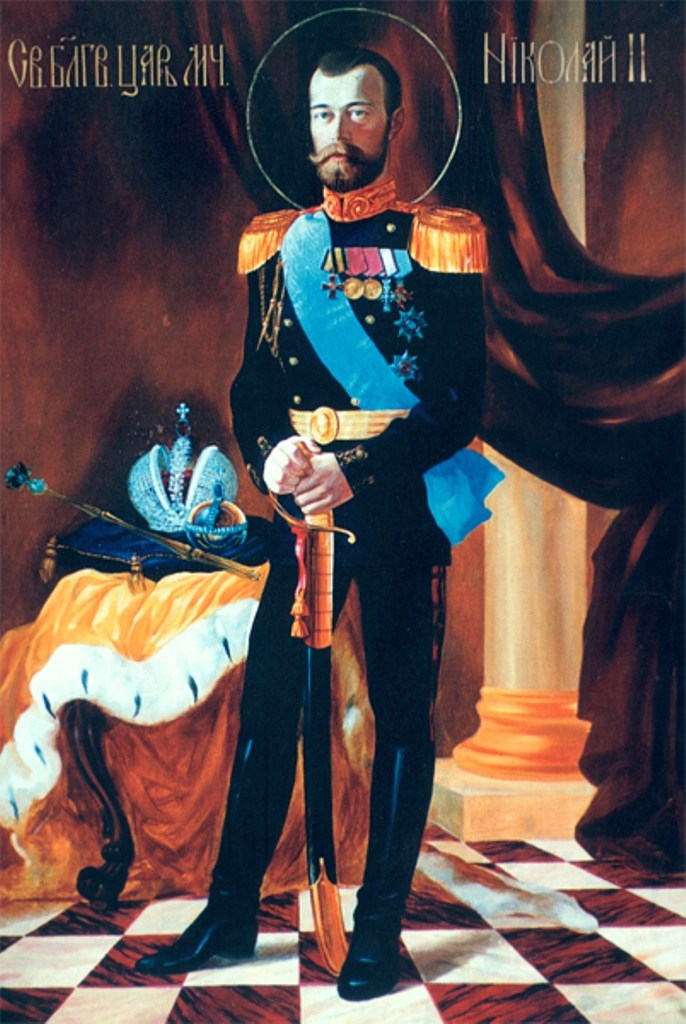
Ceremonial portrait of Nicholas II found in Mogilev, now a holy icon


PHOTO: Ceremonial portrait of Nicholas II. Artist and year unknown.

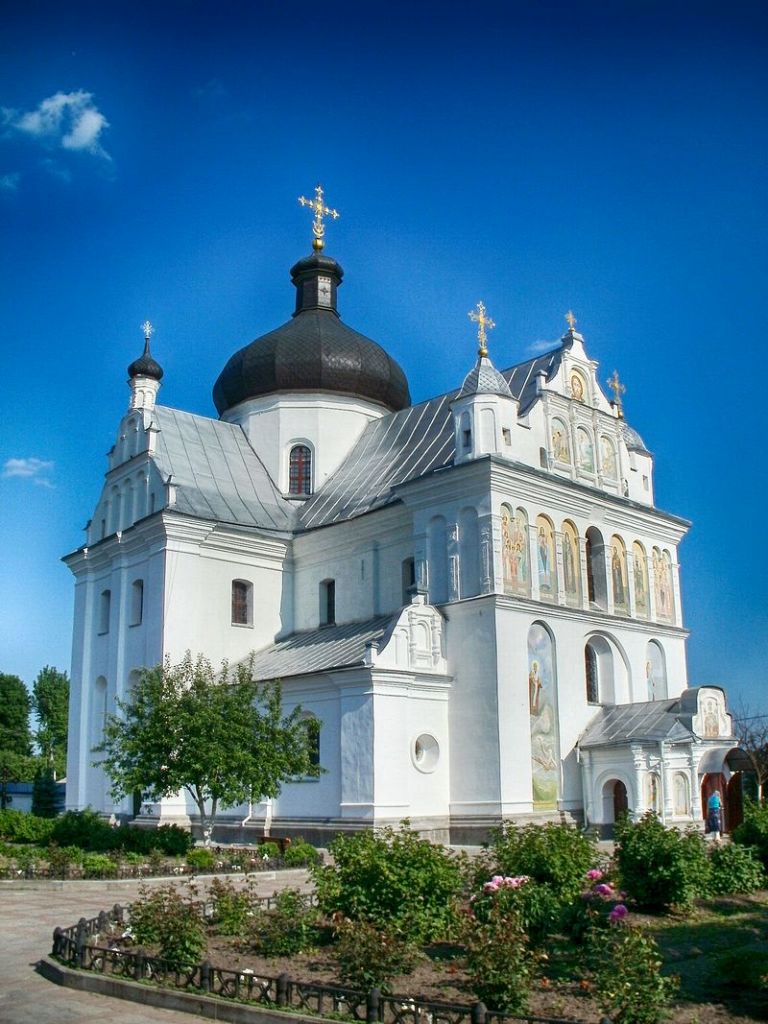
This year marks 30 years since the revival of the St. Nicholas Monastery in Mogilev. This Orthodox monastery is one of the oldest – the first mentions of the monastery appears in the annals of 1522 – and most famous spiritual centers in eastern Belarus, its history is closely connected with Emperor Nicholas II.

The pearl of the monastery is a unique wooden carved iconostasis, made in a special technique of Belarusian carving of the 17th century. Only three such iconostases have survived in the world: in the Novodevichy Convent in Moscow, in the Assumption Cathedral in Smolensk and in the St. Nicholas Monastery in Mogilev. The first abbess of the revived monastery, Abbess Evgenia Voloshchuk and her sisters worked hard during the restoration of the St. Nicholas Monastery.

Difficult fate

St. Nicholas Convent operated from 1637 to 1719, and then was transformed into a male monastery, which existed until 1754. Later, the St. Nicholas Cathedral became the parish church.

Like all Orthodox places of worship, the monastery shared a similar fate – during the years of persecution of the Russian Orthodox Church during the Soviet years, the church’s icons and other contents were confiscated, the iconostasis was destroyed. In 1934, with the death of the priest Mikhail Pleshchinsky, St. Nicholas Cathedral was closed. In 1937, the Mogilev diocese ceased to exist.

In 1937, St. Nicholas Cathedral was used as a transit prison (closed in 1941). In 1991, during the restoration of the monastery, numerous human remains were discovered – most likely victims of Stalinist repressions.

It was not until 1989, that the Mogilev Diocese was restored. It was at this time, that the reigning archbishop of Mogilev and Mstislavsky Maxim (Krokha) began the revival of the St. Nicholas Monastery.

On 28th March 1991, the St. Onufrievsky Church was consecrated. On 18th June of the same year, the monastery was visited by His Holiness Patriarch Alexy II (1929-2008) of Moscow and All Russia.


PHOTO: St. Nicholas Cathedral, St. Nicholas Monastery in Mogilev

Monastery and the Romanov family

The history of the monastery is closely connected with the last Tsar and his family. Between 1915-1917, the headquarters of the Supreme Commander-in-Chief of the Russian Armed Forces was located in Mogilev. During that time, Nicholas II and his family often attended Divine Liturgies held in St. Nicholas Cathedral.

During the canonization by the Russian Orthodox Church of the New Martyrs and Confessors of Russia of the 20th century in the summer of 2000, a ceremonial portrait of the emperor was miraculously found in the niche of an old wall of one of the houses in Mogilev. Local Orthodox Christians, believing the discovery as a miracle and turned the portrait into an icon, transferring it to the St. Nicholas Cathedral.

The icon hangs today, on the left side-altar of the church consecrated in memory of the Holy Royal Martyrs. A five-ruble gold coin is also attached to the icon, which was once presented to the boy Simeon Khalipov by Emperor Nicholas II during a visit to the monastery.

© Paul Gilbert. 28 March 2021

ROC Metropolitan blames Nicholas II for February 1917 Revolution

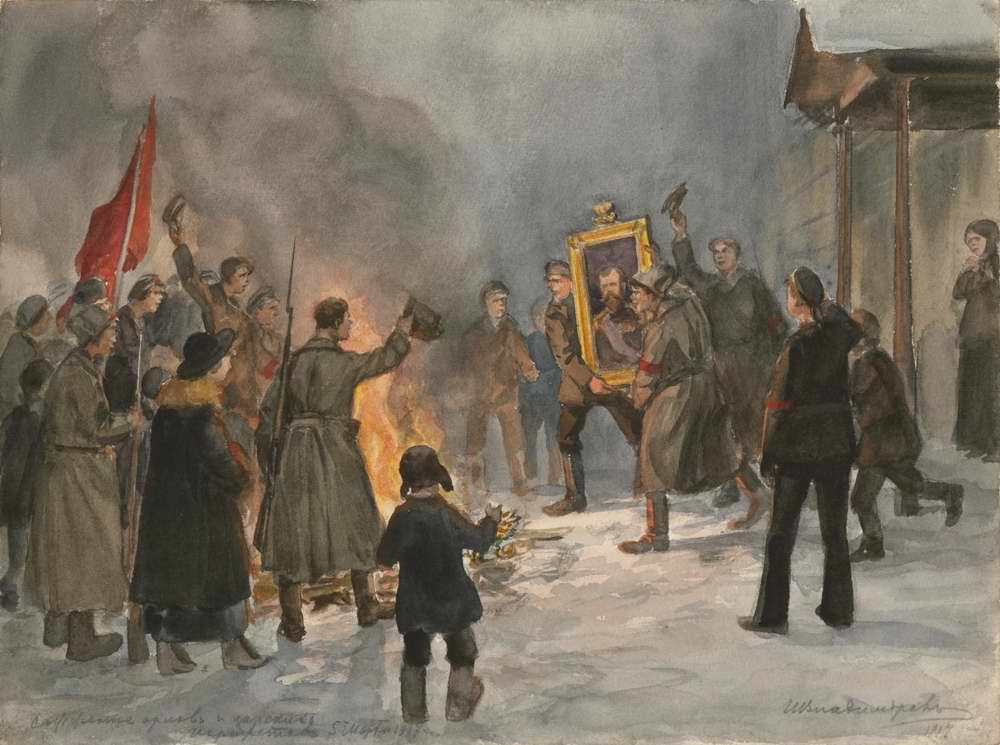
PHOTO: Revolutionaries burning a portrait of Nicholas II on 5th March 1917
Artist: Ivan Alekseevich Vladimirov (1869-1947)

On 23rd February (O.S.) 1917, workers unrest and mass demonstrations began in the capital of the Russian Empire, Petrograd. Thus began the February Revolution, which brought an end to the monarchy and lead the country into chaos.

On 2nd March (O.S.) 1917, Russia’s last emperor Nicholas II, betrayed by the elites, members of his inner circle, generals and even members of his own family abdicated the throne. Although historians continue to argue about the authenticity of the renunciation manifesto, it was then, at the Pskov railway station, that the Imperial Family’s journey to Golgotha ​​began.

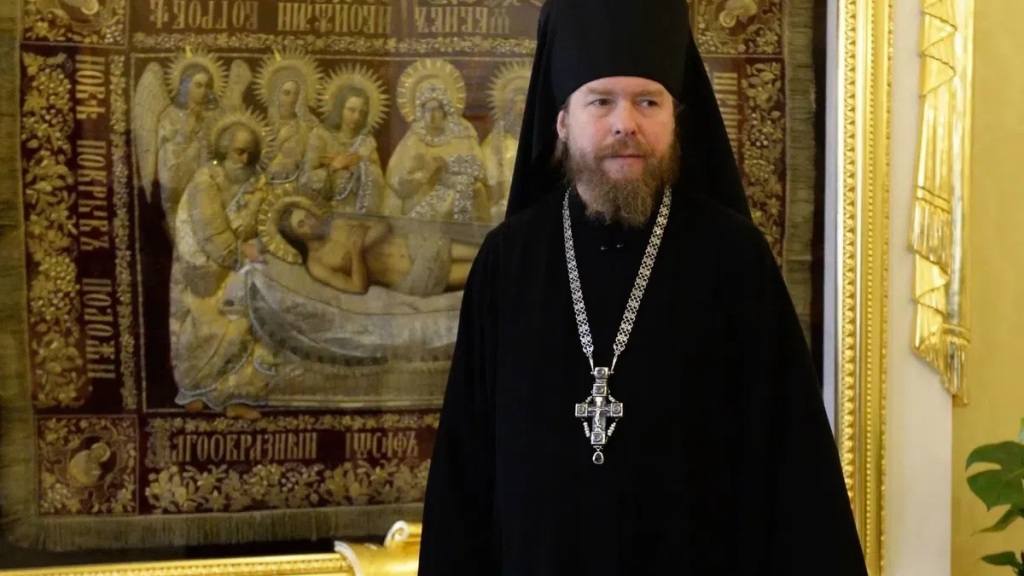
On the recent 104th anniversary of the events which proved fatal for Russia, Metropolitan of Pskov Tikhon (Shevkunov)¹ talked about the drama and lies of the Russian Revolution during a discussion on the YouTube channel “Seraphim”.

Metropolitan Tikhon said that the last Russian emperor Nicholas II was responsible for the February Revolution of 1917, since he was the supreme ruler of the country and failed to discern the impending threat.

“The first person is always to blame for the troubles that befall the country. Always!” – said Tikhon. He explained that Nicholas II was glorified in the person of the saints in a special way – as a passion-bearer², in connection with the tragic circumstances of the deaths of the Imperial family.

At the same time, Tikhon recalled an article by Winston Churchill (1874-1965) in the Illustrated Sunday Herald about the revolutionary events in Russia, where the British politician spoke positively about Nicholas II and emphasized the inevitability of the victory of the Russian Empire in World War I, if not for the revolutionary events.

PHOTO: Metropolitan of Pskov Tikhon (Shevkunov)

“Nicholas II was one of the most successful and yet one of the most tragic leaders of our state,” said Metropolitan Tikhon, referring to the rapid growth of the empire’s population, the economic and industrial boom during the reign of the last emperor. “This is evidence of his caring for the Russian people and the ever-increasing standard of living,” he added.

According to Metropolitan Tikhon, during his 22 year reign, although he was a decent and even selfless person, Nicholas II “bored” Russian society, and “could not see the terrible situation which was developing”. He went on to say that “the aristocratic and noble monarchy,” played a fatal role in the fate of the Russian Empire.

NOTES

¹ Tikhon is the Metropolitan of Pskov and Porkhov and Bishop of the Russian Orthodox Church. He is often referred as the personal confessor of Russian President Vladimir Putin.

² Nicholas II was glorified as a saint by the ROCOR in 1981, and as a passion-bearer by the Moscow Patriarchate in 2000

© Paul Gilbert. 23 March 2021

***

Dear Reader

If you enjoy my articles, news stories and translations, then please help support my research by making a donation in US or Canadian dollars to my project The Truth About Nicholas II – please note that donations can be made by GoFundMePayPal, credit cardpersonal check or money order. Thank you for your consideration – PG

Filming the Coronation of Emperor Nicholas II in 1896

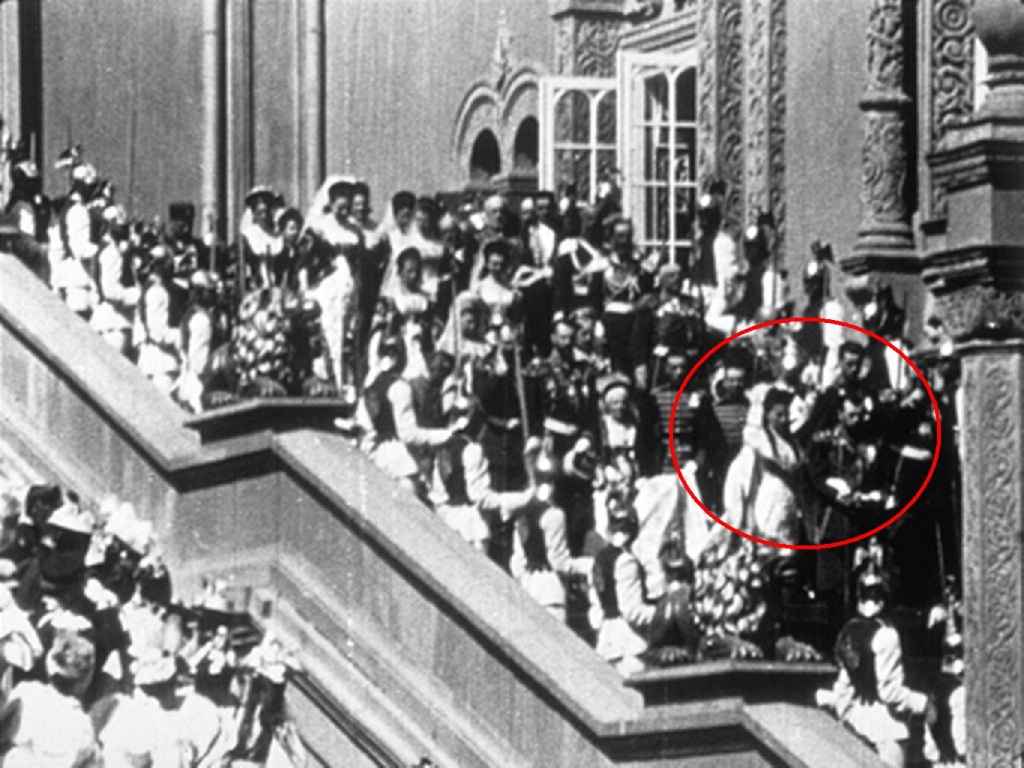
PHOTO: still from the Lumiere Bros. film documenting the 1896 Coronation.
Emperor Nicholas II, Empress Alexandra Feodorova and their retinue
are seen slowly descending the Red Staircase of the Moscow Kremlin

The Russian State Archive of Film and Photo Documents RGAKFD is the world’s largest and oldest public repository of audiovisual documents. In 2019, the archive celebrated its 100th anniversary.

To date, it holds more than 45,000 titles of film documents, more than one and a half million original photographic documents from 1850 to the present: these include daguerreotypes, ferrotypes, and albums, including those belonging to the Imperial Family, and negatives on glass and film, and modern digital photographic images.

The existing collection of film documents of pre-revolutionary Russia, stored in the RGAKFD, was formed from newsreel-documentary materials requisitioned by the Soviet authorities during the nationalization of the film industry from the warehouses of film factories and film companies.

In total, the archive currently contains about 960 pre-revolutionary newsreels, including the first full-length documentary-film made in Russia – the Coronation of Emperor Nicholas II in 1896.

PHOTO: Lumiere Brothers: Auguste (1862-1954) and Louis (1864-1948)

In May 1896, French cameramen from the Lumiere Brothers (Paris) company arrived in Moscow, to film the coronation ceremony of Emperor Nicholas II. On 5th May 1896, the Moscow newspaper Новости дня [News of the Day] wrote: “among the correspondents who have arrived in the city is Camille Cerf for the coronation of Nicholas II. Sent to Moscow on behalf of Louis Lumière, he is armed with a very interesting device – a cinematograph … He will film the entire solemn procession of the route on a special moving belt, on which the pictures will, however, be so microscopic that only after enlarging them can they can be seen. But, in any case, all parts of the tuple and all of its moments will be reproduced in this way with documentary accuracy.” The coronation celebrations in the Kremlin were captured in great detail.

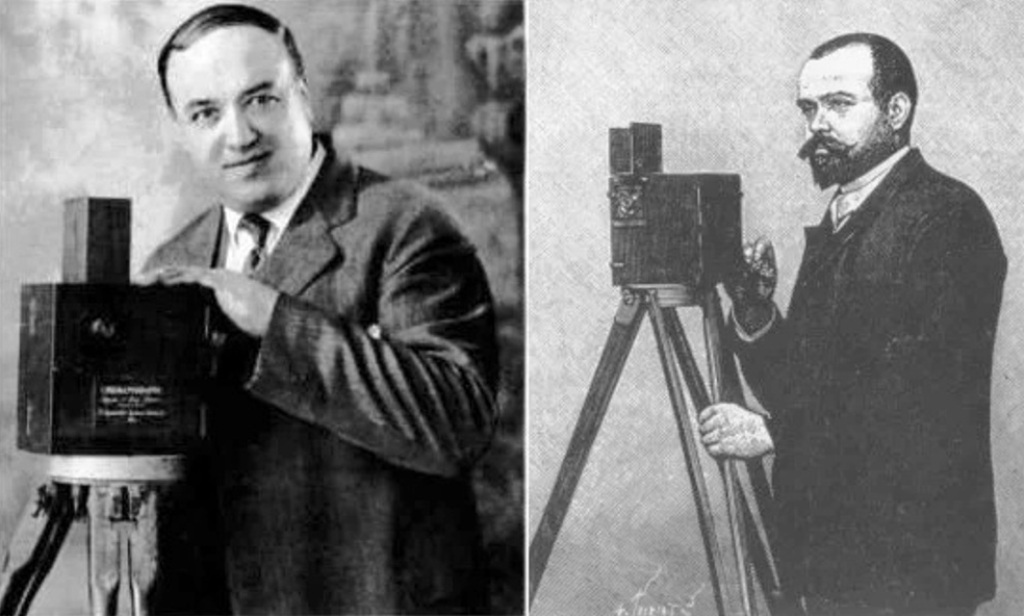
PHOTO: cinematographers Charles Moisson and Francis Dublier

The “Lumiere Brothers Cinematography” catalogue, released in France for the 100th anniversary of cinema, names four cameramen who filmed “The Coronation of Emperor Nicholas II” – Francis Dubliet, Camille Cerf, Charles Moisson and Alexandre Promio.

PHOTO: Belgian cinematographer Camille Cerf (1862-1936)

A copy of the film of the coronation celebrations was presented by Lumiere to Emperor Nicholas II and, apparently, met with his approval. In any case, it laid the foundation for a special kind of pre-revolutionary Russian newsreel, the so-called “Tsarist Chronicle”, which was filmed in Russia systematically from 1896 to 1917, mainly by Russian cameramen, for distribution to the growing commercial cinema network across the Russian Empire.

The Lumiere Bros. film The Coronation of Emperor Nicholas II was filmed in 35 mm, duration 1 hour 33 min. The video below shows only 1 minute and 40 seconds of it. More than a decade ago, a Ukrainian historian announced plans to restore the entire film. Sadly, he was unable to acquire funding for this important historical project.

The following is a list of the highlights of the video:

1. NDP 1.4m “Coronation of Sovereign Emperor Nicholas II Alexandrovich” May 14, 1896

2. Common. 10.1 m On the streets of Moscow, ceremonial gilded carriages, accompanied by their retinue, pass. In the first carriage sits Empress Alexandra Feodorovna, (removed from the building of the Historical Museum). Cinematographer Francis DOUBLIER . CL No. 1329.

3. Common. 4.8m Emperor Nicholas II and Empress Alexandra Feodorovna, accompanied by the courtiers, walk up the stairs of the Red Porch, down to Ivanovskaya Square to the Assumption Cathedral, (filmed from the side of the Annunciation Cathedral from the height of the roof of the temporary stands).
Operator Charles MOISSON . CL No. 1330.

4. Common. 7.8 m Emperor Nicholas II and Empress Alexandra Feodorovna leave the Archangel Cathedral, join the solemn procession and under a canopy, accompanied by the courtiers, walk towards the porch of the Annunciation Cathedral. Cinematographer Francis DOUBLIER . CL No. 1331.

5. Wed 9.2 m The solemn procession goes towards the Annunciation Cathedral.
Cinematographer Francis DOUBLIER . CL No. 1331.

6. Common. 6.6m Representatives of various nationalities are passing by.
Operator Charles MOISSON . CL No. 1328.

7. Common. 5.1 m A carriage drives up to the porch of the house, dignitaries sit in it.
Operator Charles MOISSON . CL No. 1325.

8. Common. 2.9m The dignitaries sit in the carriage.
Operator Charles MOISSON . CL No. 1326.

***

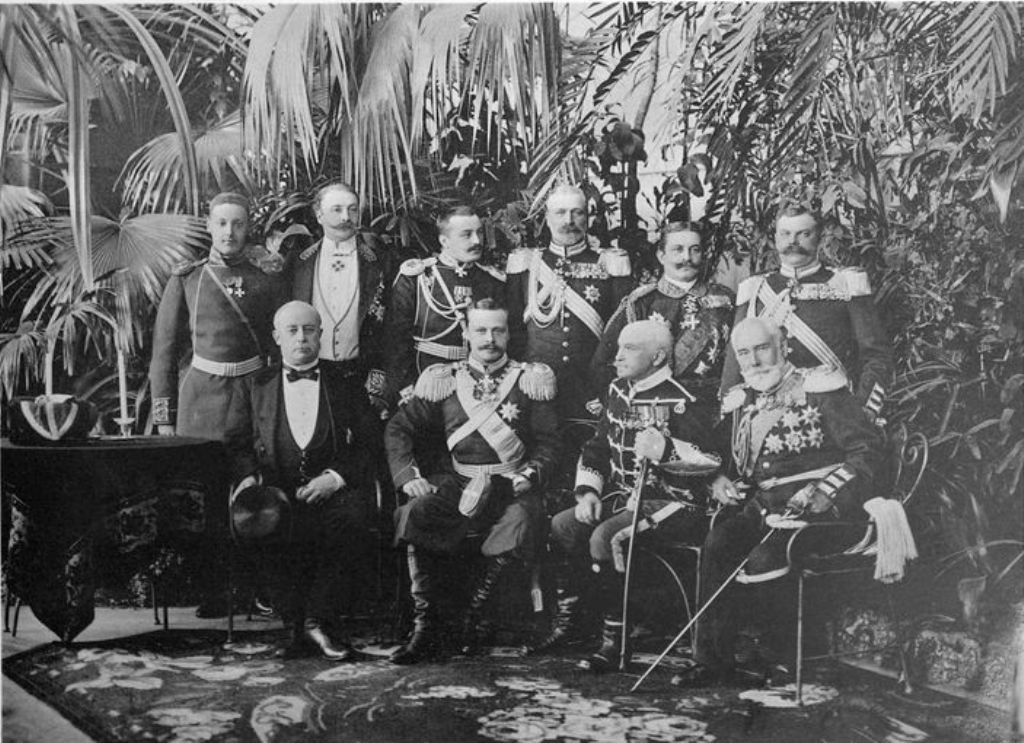
PHOTO: Ernest Louis, Grand Duke of Hesse (seated center) with members
of the Hessian delegation, who attended Nicholas II’s Coronation in May 1896

The Empress’s brother, Ernest Louis, Grand Duke of Hesse (1868-1937), who was present at the coronation ceremony, provides a vivid description of the event:

“The coronation in Moscow on May 26, 1896 was the most splendid ceremony I have ever seen. It was almost eastern in style and lasted 10 days. In Moscow, the cathedral was full of images of saints on a gold background, and all the priests were wore golden vestments, decorated with embroidery and precious stones. In all the ceremonies, there was a deep mystical meaning and Byzantine traditions. The Anointed Emperor and Empress became God’s Anointed ones. The emperor, like a priest, receives communion at the altar. After that, in front of the throne, he takes off the crown from his head, kneels down and prays aloud with a wonderful prayer for his people. Then they say a prayer for the emperor, and he rises, and at that moment he is the only non-kneeling person in the entire Russian Empire. The procession of people entering and leaving the cathedral passes along the elevation, which is at the level of the heads, standing around, so you can see everyone who takes part in the ceremony. The procession seems to consist only of people in full dress, everything glitters in gold and silver, the emperor and empress in gold and ermine robes stand under a huge canopy, all the grand duchesses are strewn with jewels. Everything happens as in a magical dream, because everything is illuminated by the bright radiance of the sun.”

© Paul Gilbert. 16 March 2021

Putin’s negative assessment of Nicholas II

Putin’s attitude to Nicholas II

During his presidency, Vladimir Putin has spoken negatively about Nicholas II on more than one occasion, describing his role as a ruler “erroneous” and “absurd”. Putin believes that Nicholas II ruled the country incorrectly, made many mistakes, which is why Russia lost the Russo-Japanese War (1904-05) and later lead Russia unprepared into the First World War. Putin further believes that during the war, Nicholas II personally made a number of errors of judgment and policy, which forced his highest ranking military officers to seek his removal from the throne by forcing the Tsar to abdicate. The main conspirators were mainly military leaders and self-serving politicians of the Duma.

Vladimir Putin has also publicly referred to Russia’s last tsar as “Bloody Nicholas” on more than one occasion. His negative attitude towards Nicholas II, however, does not reflect his assessment of other Russian monarchs, including the Emperors Peter I, Nicholas I, Alexander II, and Alexander III.

“Nicholas the Bloody”

A video has been circulating on YouTube for some years now, in which Putin is caught on camera making an insult towards Nicholas II. Entering his Kremlin office (probably on the day of his first inauguration on 7th May 2000), Putin responds to these words spoken by one of his aides: “From this roof [Grand Kremlin Palace], Nicholas II looked out over Moscow.”

“Well, he had nothing to do, so he ran across the roofs,” Russia’s new President remarked contemptuously.

During a meeting with members of construction teams in Sochi in the summer of 2011, Putin referred to the Tsar as “Nicholas the Bloody”. This epithet runs counter to both the position of the Russian Orthodox Church, which canonized Nicholas II on 20th August 2000, and with the ideology of the Russian authorities during the past 20 years.

Then, on 4th March 2014, during a press conference in Novo-Ogaryov on the events in Ukraine and the annexation of Crimea, Vladimir Putin once again, used the Soviet propaganda epithet “Nicholas the Bloody”. He was responding to a question by a journalist of the Interfax news agency, Putin said the following: “A simple Ukrainian citizen, a Ukrainian man suffered both under Nicholas the Bloody and under [Leonid] Kravchuk …”.

Then again, on 15th March 2014, the day marking the anniversary of the bloody February coup of 1917, in which Emperor Nicholas II  was forcibly removed from the throne, and who accepted a martyr’s crown on 17th July 1918, Putin during a press conference boorishly insulted the popularly revered Tsar-Martyr, referring to him as “Nicholas the Bloody”.

PHOTO: The inauguration of Russian President Vladimir Putin is held in the Andreevsky Hall of the Grand Kremlin Palace in Moscow. The thrones of Emperor Nicholas II, Empresses Alexandra Feodorovna and Maria Feodorovna, can be seen in the background.

Why is Putin negative about Nicholas II?

Vladimir Putin probably has a negative attitude towards Nicholas II, because he grew up in Soviet times, where, in principle, Nicholas II was presented as an unambiguously negative character, who refused to progress and generally failed any undertakings. It was during the Soviet years, that Russia’s last tsar was more often than not, referred to as “Bloody Nicholas” – old habits die hard.

During the Stalin era, documents and photographs which depicted the last tsar were seized and destroyed, as they were deemed as “ideologically harmful”. It was Joseph Stalin who ordered the Romanov archives closed and sealed. They were even off limits to historians, unless for propaganda purposes. Up until the fall of the Soviet Union in 1991, these private documents and photographs effectively lay untouched.

Russian historian Pyotr Multatuli notes: “Stalin forbade any mentioning of the hideous crime in Ekaterinburg, because he was well aware that it was working against his regime.

“Stalin, too, was building his empire, but it was an empire that did not have anything in common with the Russian Empire. Stalin’s empire did not pursue the interests of the Russian people. What was the nature of the Russian monarchy? There was God, the Tsar as the father of the people, and the people were his children, whom he loved, but whom he could also punish.”

Perhaps the key to unravelling Putin’s negative attitude towards Nicholas II lies in his words, spoken during a press conference on 22nd December 2010, when Putin served as Prime Minister of Russia under President Dmitry Medvedev:

“And, frankly speaking, he was not an important politician. Otherwise, the empire would have survived. Although this is not only his fault.”

Putin believes, that Nicholas II, as an autocrat, bears the main responsibility for what happened during his 22+ year reign, which resulted in the collapse of both the monarchy and the Russian Empire.

Putin is the only top Russian official who speaks out negatively against Nicholas II. The rest of the top officials, for example Prime Minister Dmitry Medvedev, and Russia’s former Minister of Culture Vladimir Medinsky, have both only spoken positively about the last Tsar.

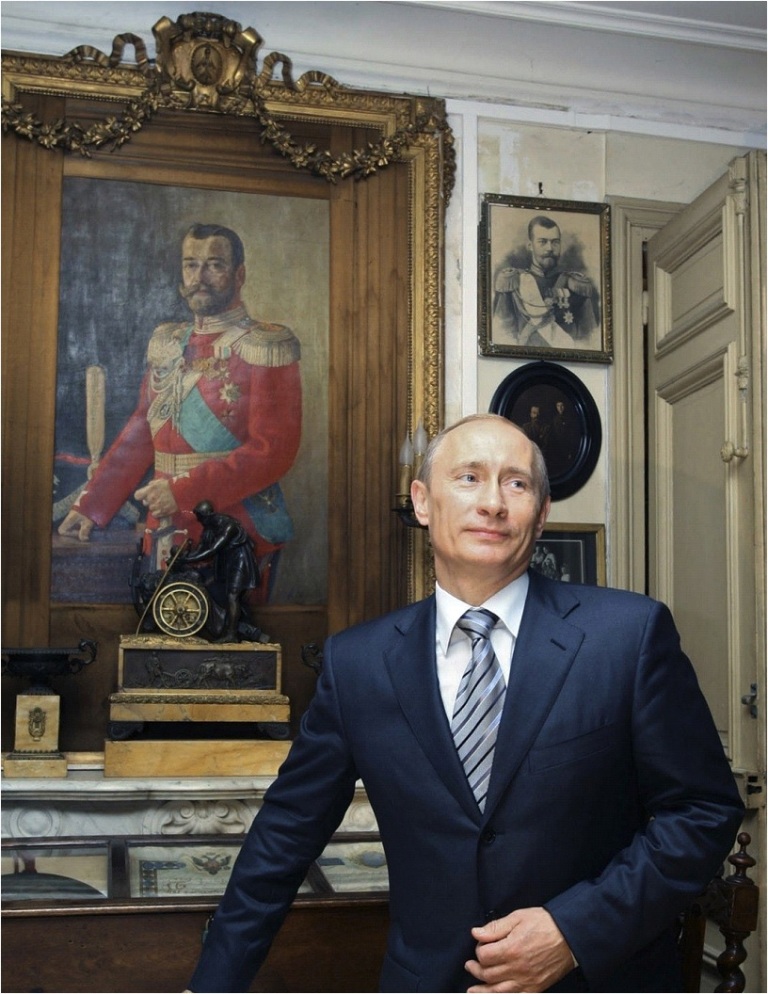
PHOTO: President Vladimir Putin posing in front of a portrait of Nicholas II, in the Museum of His Majesty’s Lifeguards Cossack Regiment in Courbevoie, France in 2008.

The Russian clergy evaluate Putin’s epithet

Putin’s criticisms of Nicholas II have offended both Orthodox Christians and monarchists over the years, however, Archpriest Valery Rozhnov of the Russian Orthodox Church Outside Russia (ROCOR), issued the following statement dated 7th March 2014:

“Since the words of the president in Russian political culture are often perceived as political truth, the phrase about the “Nicholas the Bloody” can have far-reaching consequences.

“As you know, the epithet was part of Soviet propaganda, which was based on many human lives during the reign of the last Russian emperor. However, after the collapse of the USSR, the rhetoric changed, and Nicholas II began to be presented as a victim of circumstances and a tragic figure. It was only when the Russian Orthodox Church canonized the tsar as a saint, that the authorities began to reassess Nicholas II. President Boris Yeltsin, for example, even participated in the burial of the tsar’s remains in the Peter and Paul Cathedral [17th July 1998].

“Through Putin’s words, Soviet rhetoric once again returned to official discourse. This can have serious consequences both for the Russian Orthodox Church and for Ekaterinburg, where Nicholas II became a figure of meaning. Ekaterinburg as a place of the execution of the royal family and a place of repentance for this crime has become a center of pilgrimage and tourism. There is a monument to the imperial family in the city; a church and a monastery were built in their honour. If Nicholas II is again declared “Bloody” and not saint, then this entire industry may be called into question.

“Whether the phrase dropped by Putin is yet another sign of the return of Soviet propaganda clichés, or is this just his personal opinion, which does not claim any ideological status, the position will become clear in the future. In particular, the rhetoric of Russian officials in relation to Nicholas II and tsarist Russia in general will be of particular interest, especially given the century since the beginning of the First World War.”

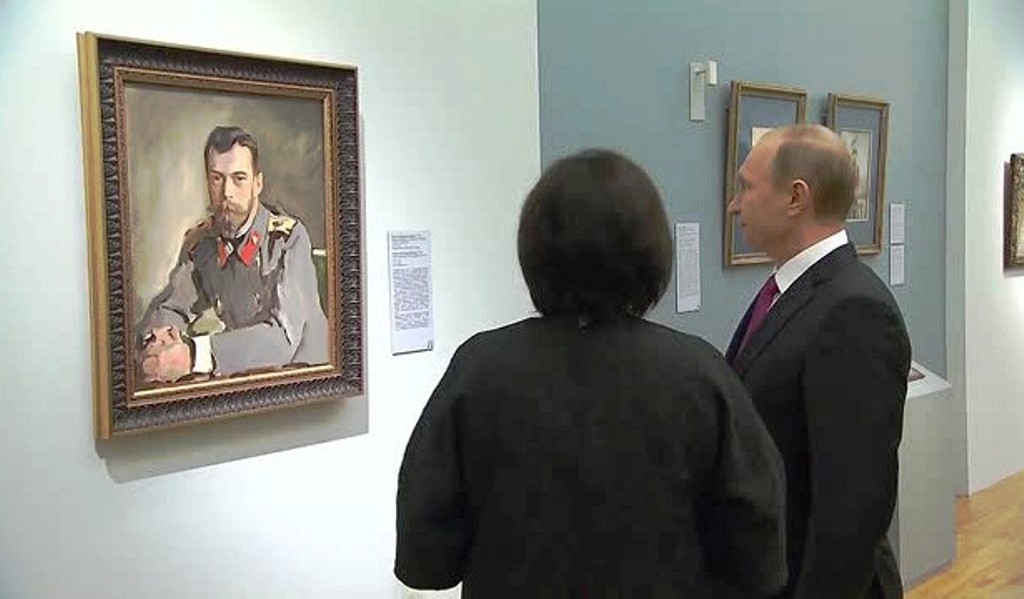
PHOTO: In 2016, Putin visited an exhibition dedicated to the 150th anniversary of the artist Valentin Serov, held at the State Tretyakov Gallery in Moscow. He was photographed admiring Serov’s iconic portrait of Emperor Nicholas II (1900).

Putin denounces Lenin for murder of Nicholas II

Since Putin’s rise to power, the head of the Russian Orthodox Church has proclaimed the last tsar, his wife and children, as saints, which was viewed with fear in a country where the Imperial family are still victims of a century of myths and lies, much of which are based on Bolshevik propaganda. In addition to canonization, the Church also decided to build a grand church on the site where the family was murdered in Ekaterinburg on 17th July 1918. In 2003, during a visit to the Urals, President Putin visited the Church on the Blood in Ekaterinburg.

Despite the negative comments made by Putin, he has also made a number of positive gestures regarding Nicholas II, which left many people surprised. During a state visit to France in 2008, Putin visited the Museum of His Majesty’s Lifeguards Cossack Regiment in Courbevoie, where he posed in front of a portrait of the tsar.

On 25th January 2016, while speaking at an inter-regional forum of the All-Russia People’s Front, Vladimir Putin denounced Bolshevik leader Vladimir Lenin, for “brutally executing Russia’s last Tsar along with all his family and servants”. Putin further criticized Lenin, accusing him of placing a “time bomb” under the state, and sharply denouncing brutal repressions by the Bolshevik government, murdering thousands of priests and innocent civilians.

In the weeks leasing up to the 100th anniversary of the death and martyrdom of Nicholas II, rumours in the Russian media speculated that Putin would attend the Patriarchal Liturgy, to be performed by His Holiness Patriarch Kirill on the night of 16/17 July 2018. Sadly, this was not to be, instead, he flew to Helsinki, where he met with US president Donald Trump. More than 100,000 people from across Russia and around the world descended on the Ural capital to honour the memory of the Holy Royal Martyrs.

Putin’s presence on the eve of the centenary, would have indeed been an historic event, one which perhaps would further seal post-Soviet Russia’s condemnation of the Bolsheviks for committing regicide, but also shedding the century of myths and lies, which perpetuated during the Soviet years.

Sadly, the 100th anniversary of the Romanovs’ deaths passed with little notice in Russia. The Russian government ignored the anniversary, as it surprisingly did the year before, when Russia marked the 100th anniversary of the 1917 October Revolution. No prominent state museums or venues hosted events to mark the anniversary. The few exhibitions and other events organized were tellingly modest.

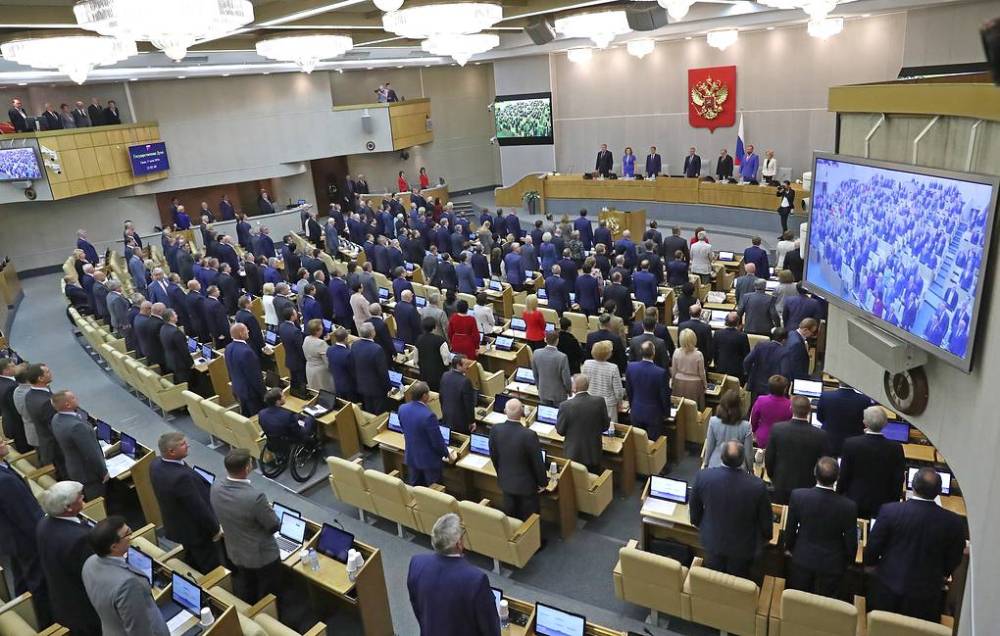
PHOTO: On 17th July 2019, members of the State Duma for the first time observed a minute of silence in memory of the last Russian emperor Nicholas II, and all those killed in the Civil War (1917-1922)

On a more positive note, on 17th July 2019 – Russia’s State Duma for the first time observed a minute of silence in memory of the last Russian emperor Nicholas II and all those killed in the Civil War. (1917-1922)

According to Duma Speaker Vyacheslav Volodin, “reconciliation begins when we all understand that this cannot be repeated and this is unacceptable.”

“Today we are making a proposal to honour the memory of the last Russian tsar, to honour the memory of the innocent victims – all those who died in the crucible of the Civil War,” the speaker addressed his colleagues, who after these words, rose from their seats.

It should come as no surprise that members of the Communist Party of the Russian Federation, did not comply with the moment of silence.

The fact that this is the first time in the history of Russia’s State Duma, that they honoured the memory of Nicholas II is truly unprecedented! The minute of silence was repeated in 2020 and will be repeated each year from hereon.

Also, in 2019, in an unprecedented move, the Russian media reported that President Putin had urged the Russian Orthodox Church to “reach a verdict soon” on the Ekaterinburg Remains.  

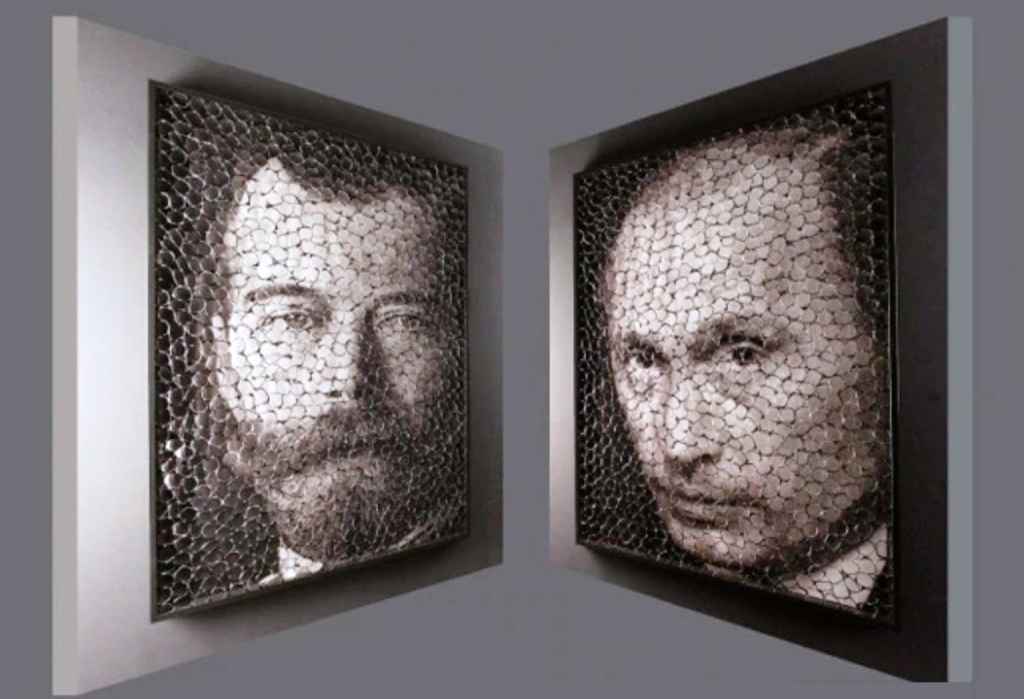
PHOTO: portraits of Nicholas II and Vladimir Putin, by the contemporary Georgian artist David Datuna

© Paul Gilbert. 15 March 2021

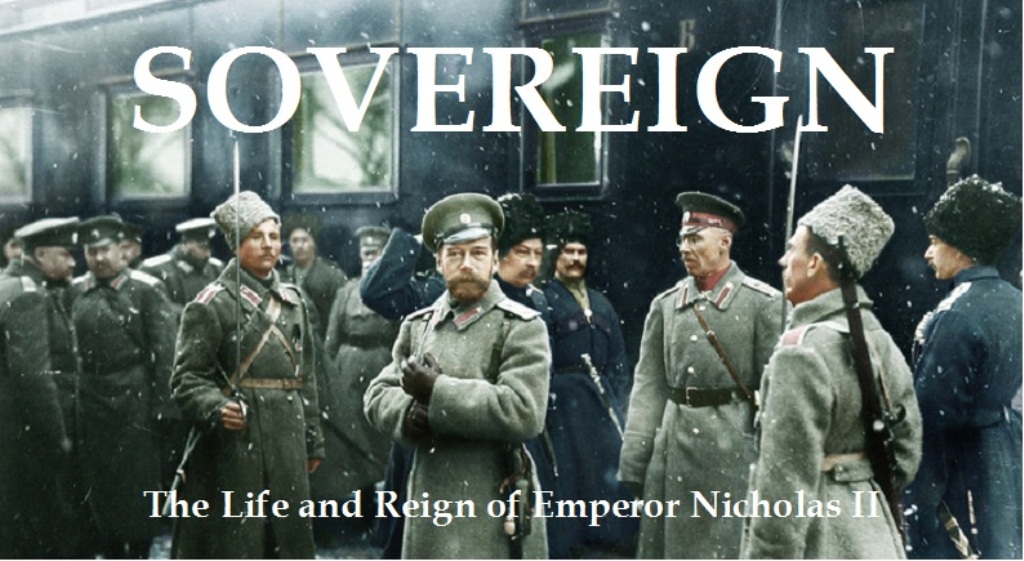
SOVEREIGN: The Life and Reign of Emperor Nicholas II

There are few monarchs in history about whom opinion has been more divided than the last emperor and tsar of Russia Nicholas II.

Myths about the “weak-willed”, “stupid”, “bloody” tsar, created on the basis of gossip, slanderous fabrications and Bolshevik propaganda in the early twentieth century, remain deeply rooted in the minds of both Westerners and the Russian people even to this day. Modern-day historians and biographers prefer to focus on Nicholas II’s failures, and seldom reflect on the many accomplishments he made during his reign. It was these very myths and lies, which compelled me to launch SOVEREIGN in 2015.

The articles featured in SOVEREIGN are not a rehash of everything which has been written about his life and reign over the past century. There are no conspiracy theories, nor does SOVEREIGN attempt to sweep history under the rug, or whitewash Russia’s last emperor and tsar.

Instead, SOVEREIGN features many first English language works by Russian historians and experts, based on new archival documents discovered since the fall of the Soviet Union in 1991.

Thanks to this new generation of post-Soviet historians, we can now review the life and reign of Russia’s last emperor and tsar through the research of Russian historians – their time has come! In their works, they successfully challenge and put to rest many of the lies and myths presented over the past century by their Western counterparts.

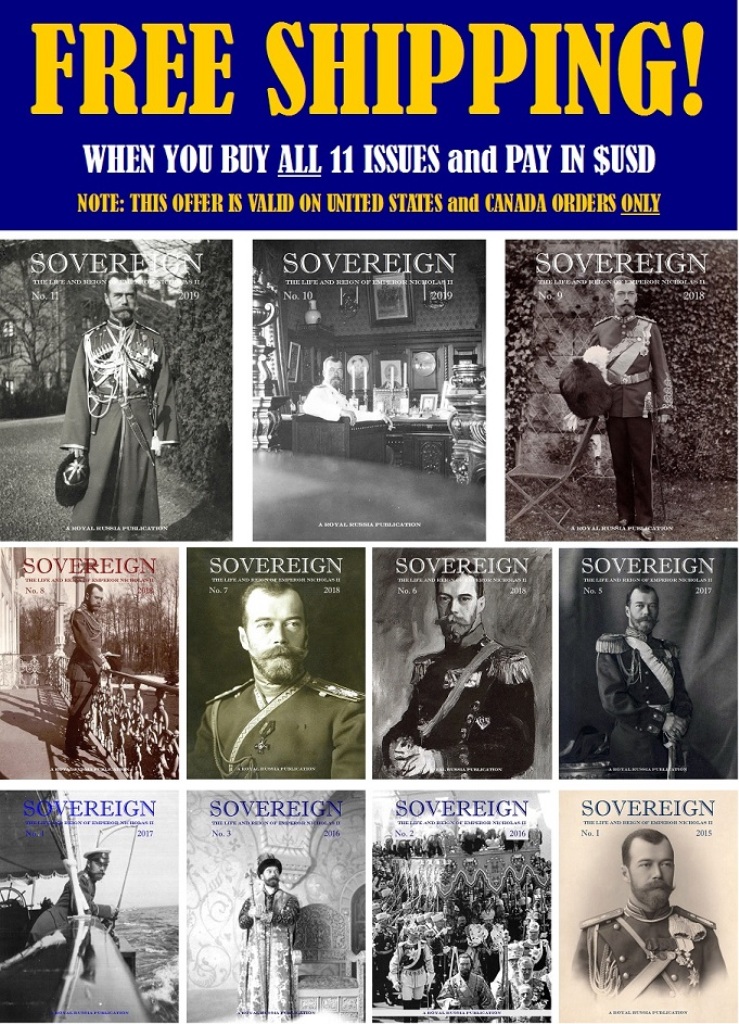
SOVEREIGN was launched in 2015, and has published a total of eleven issues. 

FREE SHIPPING when you buy ALL eleven issues
NOTE: This offer is valid on CANADA and US orders ONLY!
PRICE: $275.00 USD. PAY by CREDIT CARD or PAYPAL
*Payment can also be made by personal check or money order

Earlier this year, I announced that after 26 years, I would be retiring from publishing. I am now pleased to present the following SPECIAL OFFER on a complete set – 11 issues – of this unique publication.

Each issue features first English translations of articles, researched by Russian historians and experts, based on NEW documents from archival sources. The price of each issue is $25 + postage, so the savings on postage are substantial.

NOTE: I have a limited number of copies of issues No. 1, 7 and 9 left in stock, therefore, if you want to add a complete set of this publication to your personal library, this may be your last chance!

© Paul Gilbert. 14 March 2021

Museum of Emperor Nicholas II re-opens in Moscow

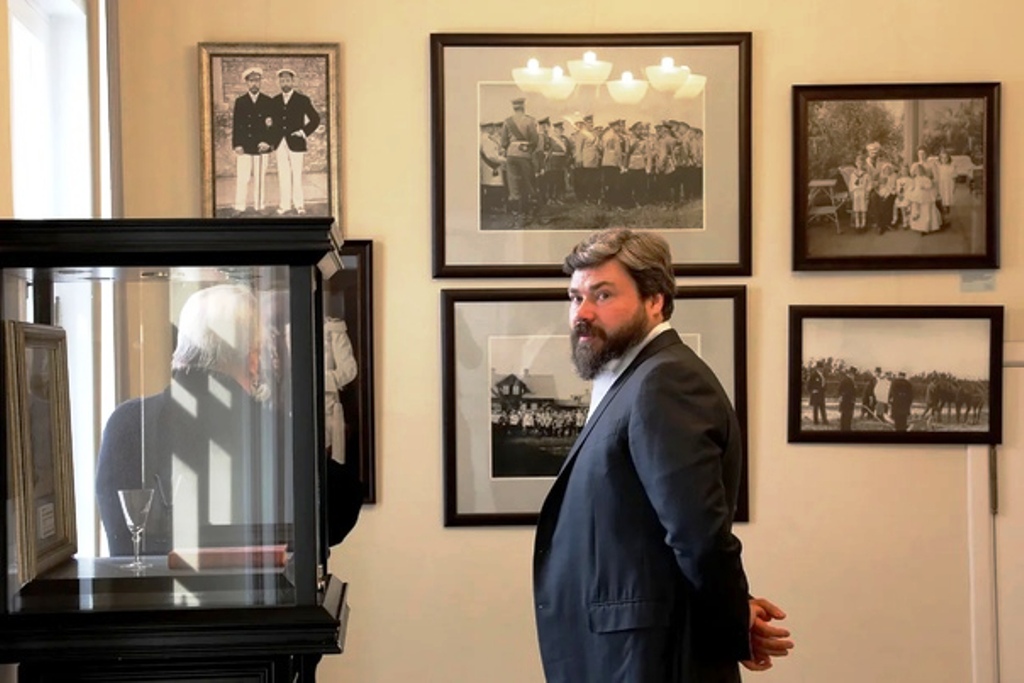
PHOTO: Konstantin Malofeev views the exhibits in the Museum of Emperor Nicholas II

On 16th February, I reported on my Facebook page, that the Museum of Emperor Nicholas II, situated in the center of Moscow, was closing. The little known was forced to close due to the COVID-19 pandemic, and almost 9 million rubles (more than $13,000 USD) in arrears of rent.

The museum – which was established in April 2018 – showcases the private collection of Alexander Vasilyevich Renzhin, who has amassed more than 3,000 authentic and memorial exhibits over the past 35 years, all of which belonged to Emperor Nicholas II and his family. It is indeed a unique and rate collection!

The Museum of Emperor Nicholas II was forced to close its doors permanently at the end of February.

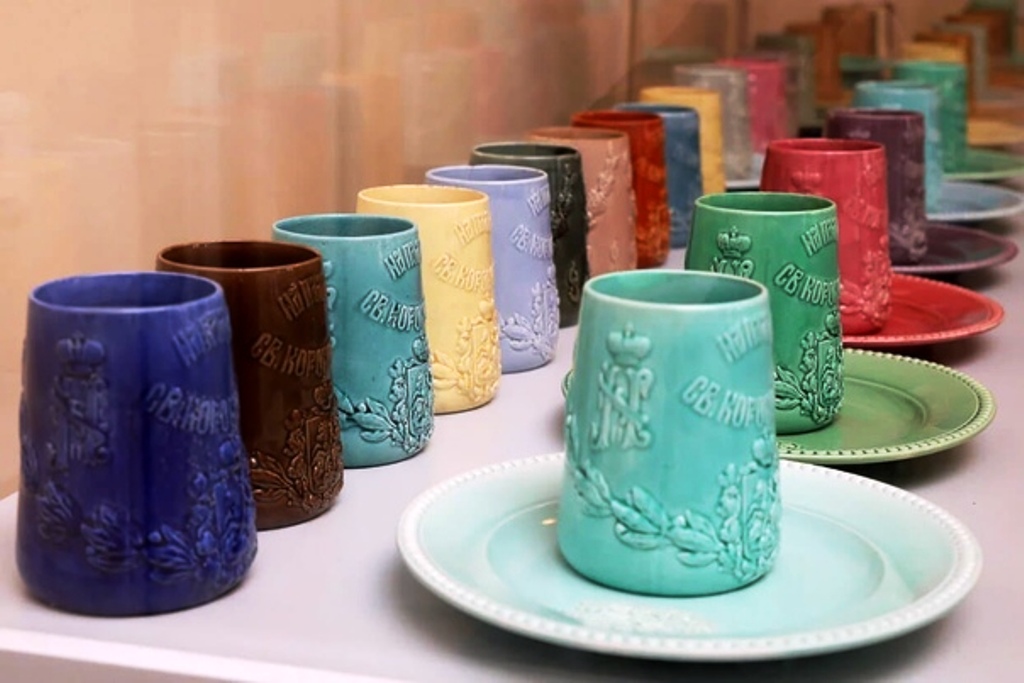
PHOTO: multi-collared saucers and cups presented during the Coronation of Nicholas II

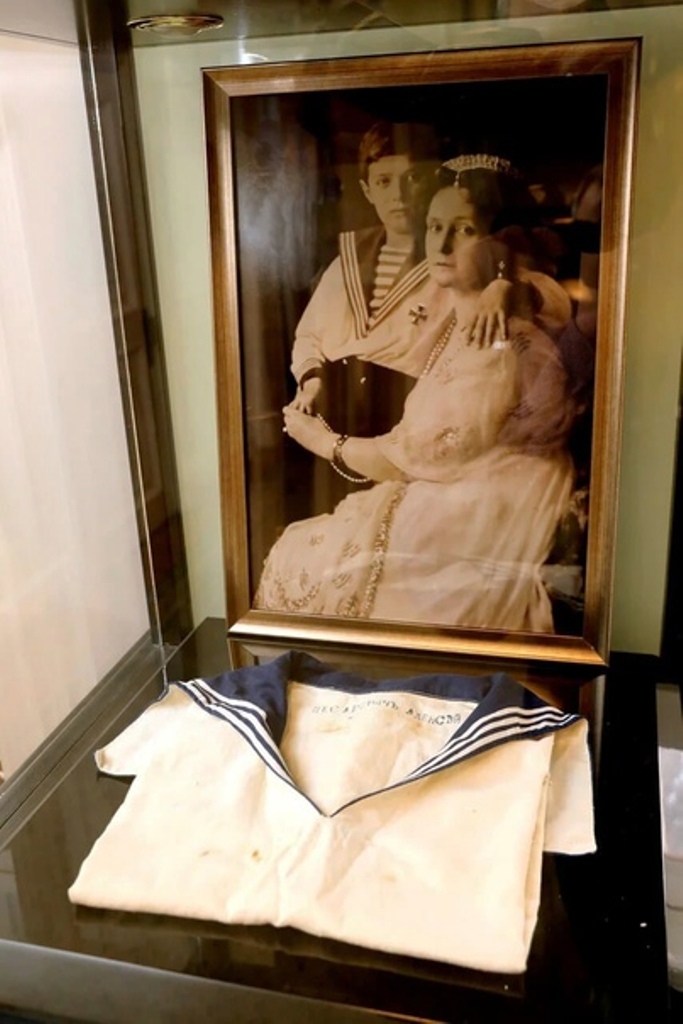
PHOTO: sailor’s suit worn by Tsesarevich Alexei Nikolaevich

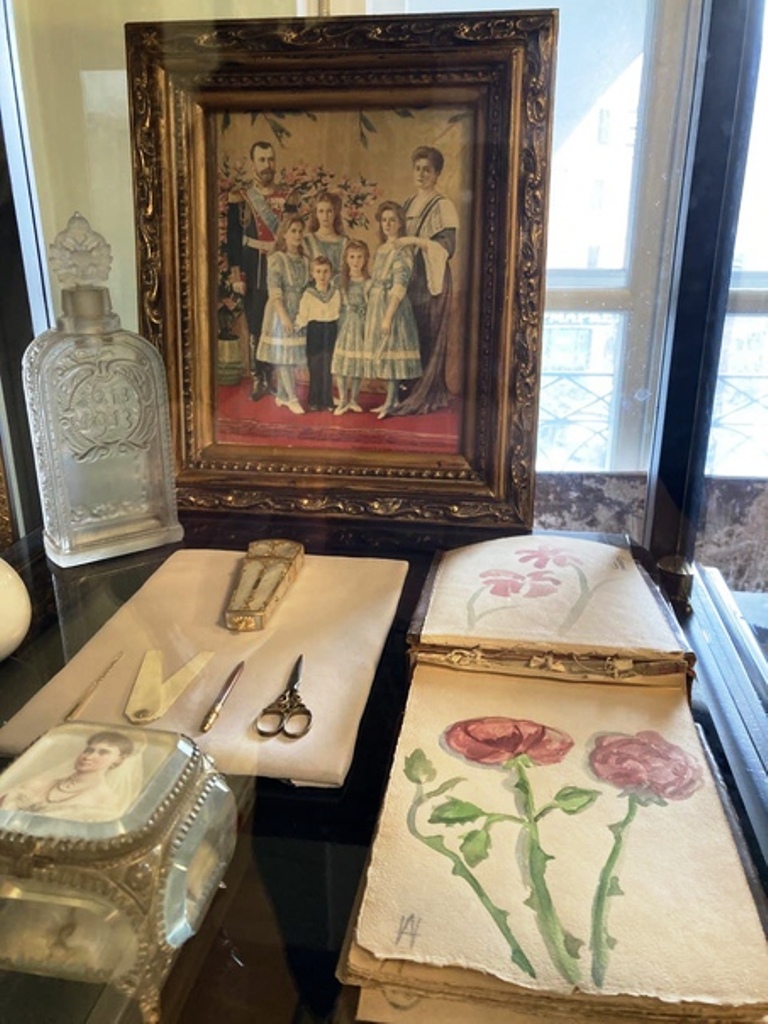
PHOTO: album with watercolours painted by Grand Duchess Anastasia Nikolaevna

Konstantin Malofeev, the founder of the Tsargrad TV channel, came to the rescue by providing Renzhin’s rare collection with a new venue in which to display his collection. The Museum of Emperor Nicholas II re-opened in the Museum of Russian Art, the former manor house of Nikolai Eremeevich Struisky (1749-1796) – situated in Moscow’s historical district – on 10th February 2021.

The museum showcases more than 3,000 rare exhibits, including a pearl tablecloth from the table of Nicholas II, multi-collared saucers and cups that were presented on the Khodynkha Field during the Coronation of Emperor Nicholas II in May 1896, a sailor’s suit worn by Tsesarevich Alexei Nikolaevich, an album with watercolour drawings, painted by Grand Duchess Anastasia Nikolaevna. Other items include a scarf embroidered by the Empress Alexandra Feodorovna herself, desk writing instruments belonging to Tsesarevich Alexei , and numerous personal belongings of Emperor Nicholas II – to name just a few!

“All items belonging to the Tsar’s family were carefully preserved by people” – said Konstantin Malofeev – “this shows the true popular reverence and love for the Tsar, even when he was under the absolute prohibition of godless power.”

© Paul Gilbert. 10 March 2021

Furniture recreated for the Corner Reception Room in the Alexander Palace

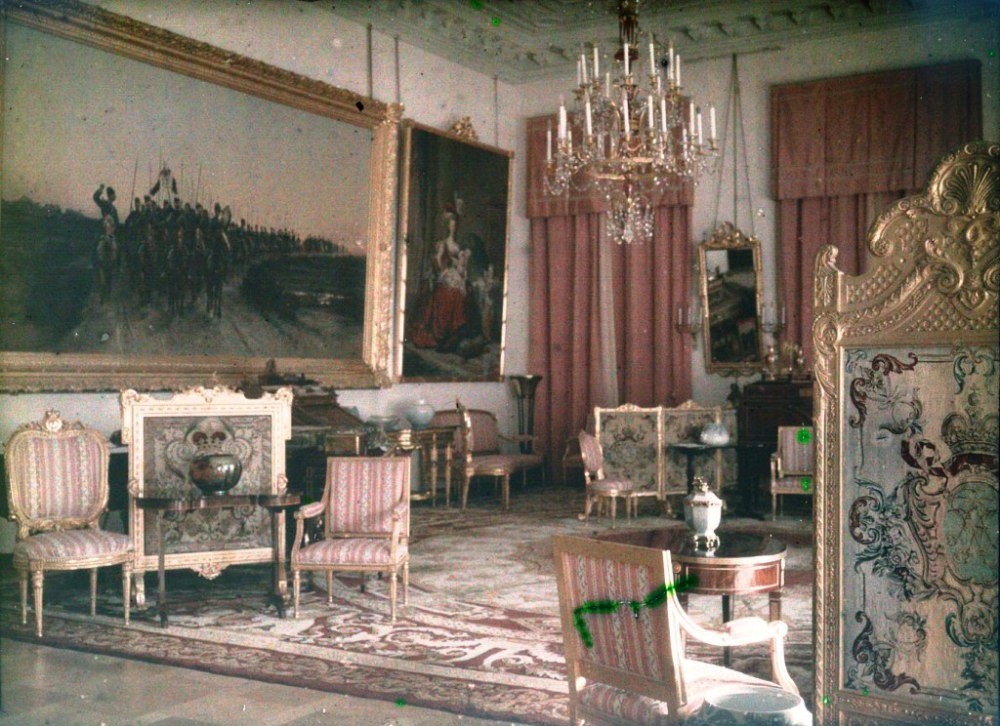
PHOTO: Colour autochrome of the Corner Reception Room, taken in 1917

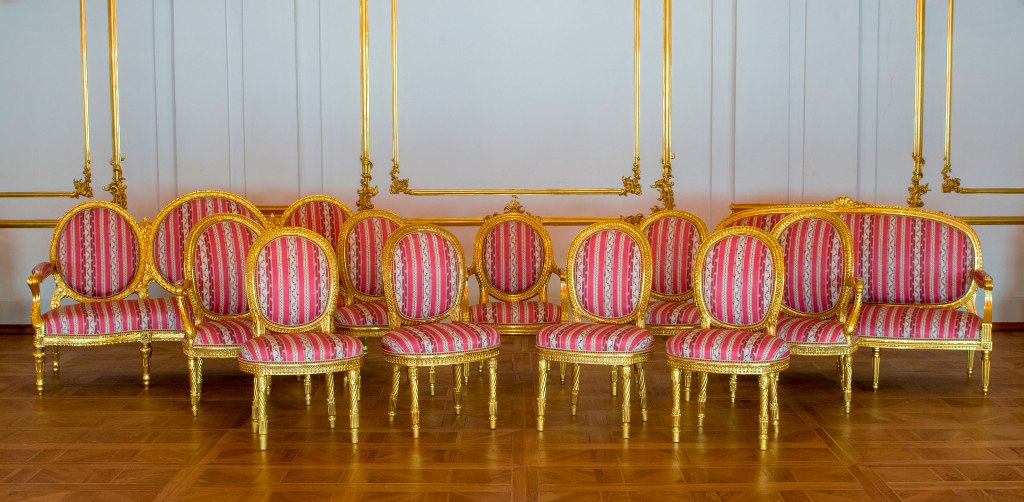
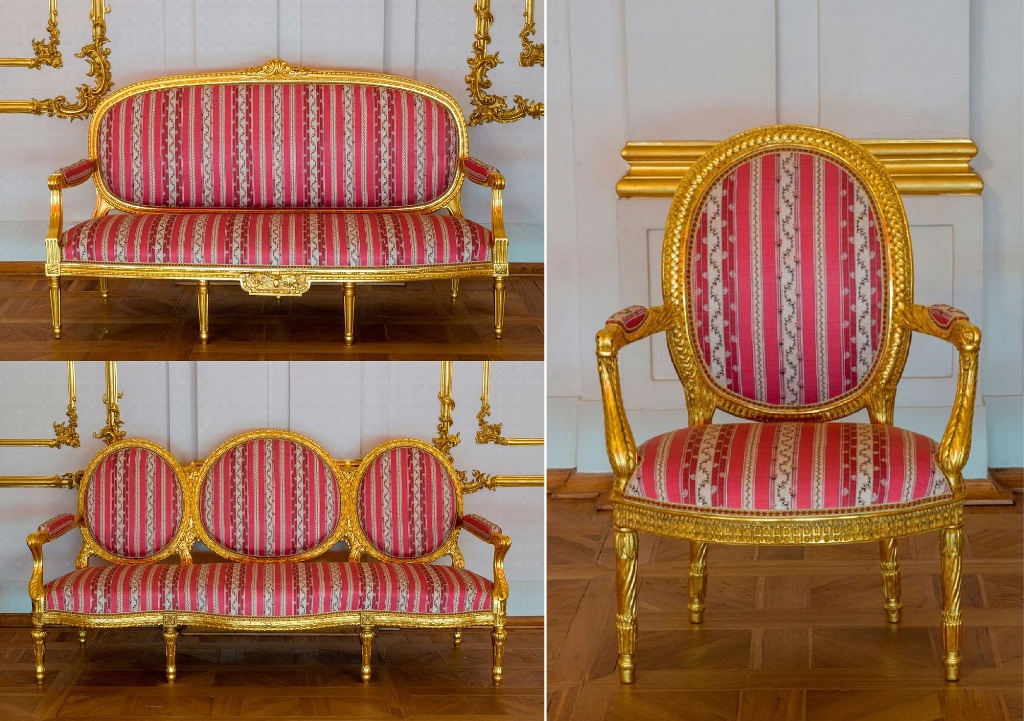
The restoration of the gilded furniture set (armchairs, chairs and sofas), which will decorate the Corner Reception Room of Empress Alexandra Feodorovna in the Alexander Palace has been completed.

The Corner Reception Room was originally connected to the Concert Hall by a door located along its central wall. In 1895, a fundamental restructuring of the eastern wing of the palace began, whereby the private apartments for Nicholas II and his family would be created. In 1902–1904, when the Maple Drawing Room and the New Study of Nicholas II were created on the site, the Corner Reception Room was connected to the corridor, becoming part of the personal imperial apartments, but at the same time retained its ceremonial function.

PHOTO: recreated chairs, armchairs and sofas for the Corner Reception Room

The furniture of the Corner Reception Room was almost completely lost during the Great Patriotic War (1941-45). For the new recreated interior set, the selected items were made in the classic style, since most of the gilded furniture that adorned this interior at the beginning of the 20th century – until 1941 – was executed in this style.

The set was restored by specialists from the Tsarskoye Selo Amber Workshop. The restored gilded chairs and armchairs with oval backs and seats were made in the 1770s. Before World War II, these items decorated interiors of the Catherine Palace, in the foyer of the Chinese Theater (in the Alexander Park) and in the White Hall of Gatchina Palace. Two sofas from the second half of the 19th century, also included in the furniture set, were transferred to the Tsarskoye Selo State Museum from the State Hermitage in 1959.

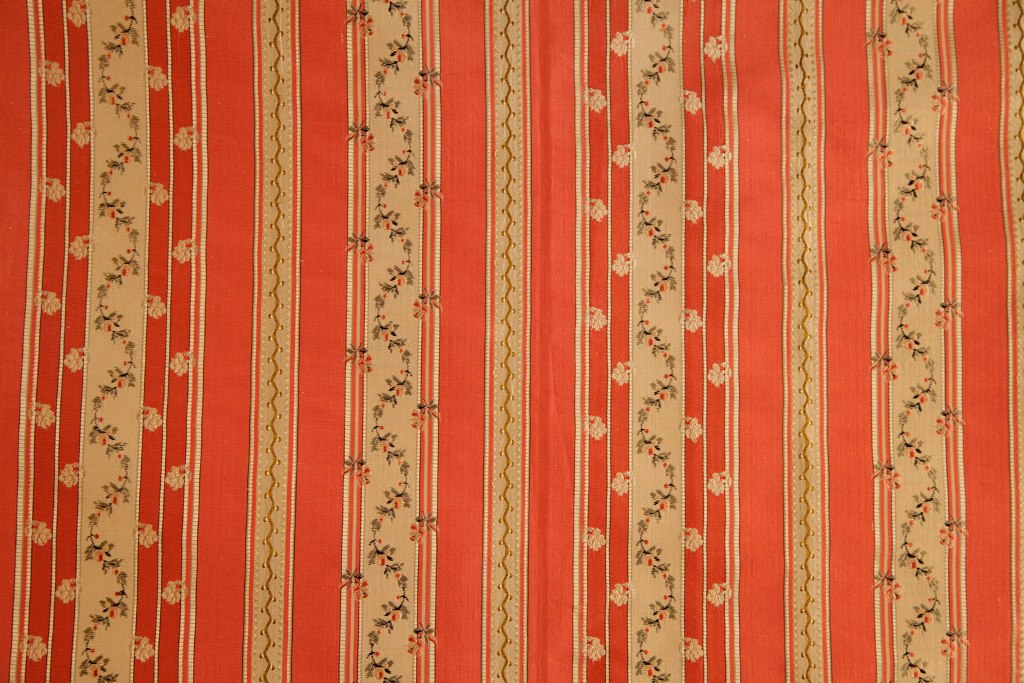
PHOTO: original upholstery sample for the furniture in the Corner Reception Room

In the process of restoration, the craftsmen removed all types of dirt, restored the gesso and gilding, recreated the lost carved details with the subsequent summing up of gesso, diverging and gilding, and upholstery works. In the seat cushion of one of the sofas, the craftsmen found fragments of the original  horsehair, used to fill it. Due to the fact that one of the fragments clearly reads the date – 1865, as well as the fact that the sofa was upholstered once, the object can be dated to that year.

The chairs, armchairs and sofas share the same stylistic unity, as well as the upholstery fabric. In the an old 1917 brochure which describes the Alexander Palace, the furniture of the Corner Reception Room is described: “Furniture of the Louis XVI style of the Russian slave. late 18th century, re-gilded and upholstered in silk. the work of the Sapozhnikov factory in Moscow. / In the style of striped fabrics of the era of Louis XVI.” A fragment of the original upholstery fabric for the furniture of the Corner Reception Room, made in 1903, which had been preserved in the collection of the Tsarskoye Selo State Museum, served as a model for recreating the upholstery fabric of the restored items. A pattern of alternating light stripes and stripes of various shades of pink with small ornaments of roses, flower garlands and wavy lines is clearly visible on the silk fabric.

PHOTO: recreated chairs, armchairs and sofas for the Corner Reception Room

NOTE: all photos © Tsarskoye Selo State Museum-Reserve

© Paul Gilbert. 3 March 2021

***

Fifteen interiors situated in the eastern wing of the palace, are now scheduled to open to visitors in 2021. Among the recreated interiors are the New Study of Nicholas II, Moorish Bathroom of Nicholas II, Working Study of Nicholas II, Reception Room of Nicholas II, Pallisander (Rosewood) Living Room, Mauve (Lilac) Boudoir, Maple Drawing Room, Alexandra’s Corner Reception Room, the Imperial Bedroom, among others.

In the future, the Alexander Palace will become a memorial museum of the Romanov family – from Catherine the Great to Nicholas II, showcasing the private, domestic life of the Russian monarchs who used the palace as an official residence. The eastern wing of the palace will be known as the Museum of the Russian Imperial Family. The multi-museum complex, which includes the Western wing is scheduled for completion no earlier than 2024.

***

Dear Reader: If you enjoy my articles on the history and restoration of the Alexander Palace, then please help support my research by making a donation in US or Canadian dollars to my project The Truth About Nicholas II – please note that donations can be made by GoFundMePayPal, credit cardpersonal check or money order. The net proceeds help fund my work, including research, translations, etc. Thank you for your consideration – PG

Elena Tretyakova’s gift to Nicholas II in 1911

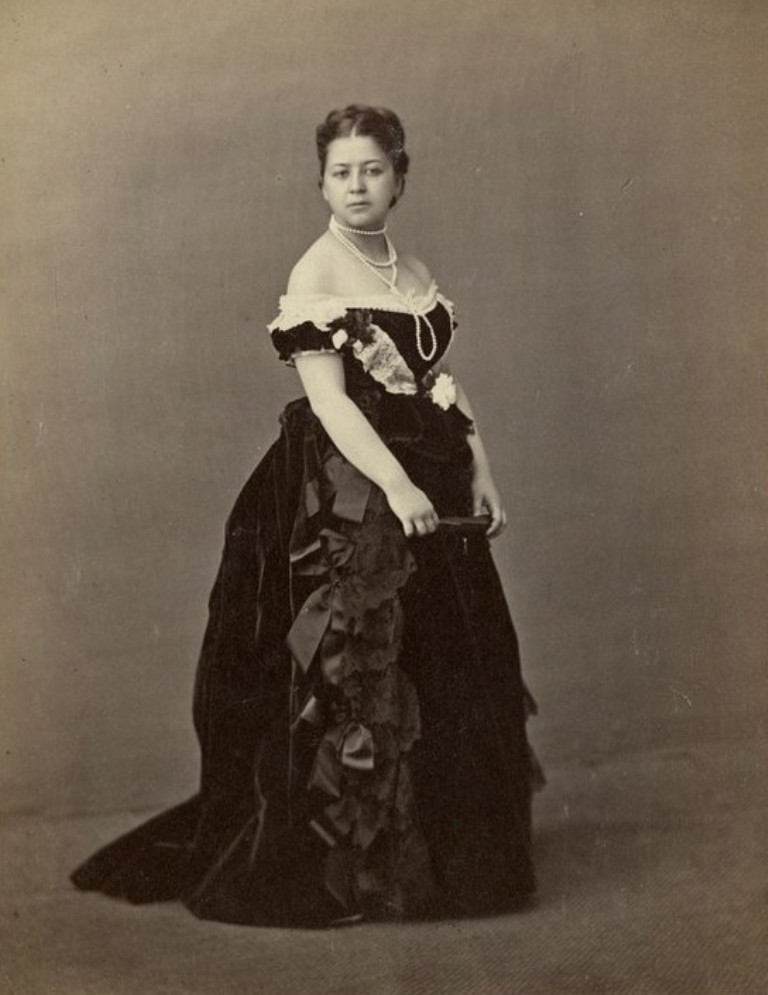
PHOTO: Elena Andreevna Tretyakova. Paris, 1875. 

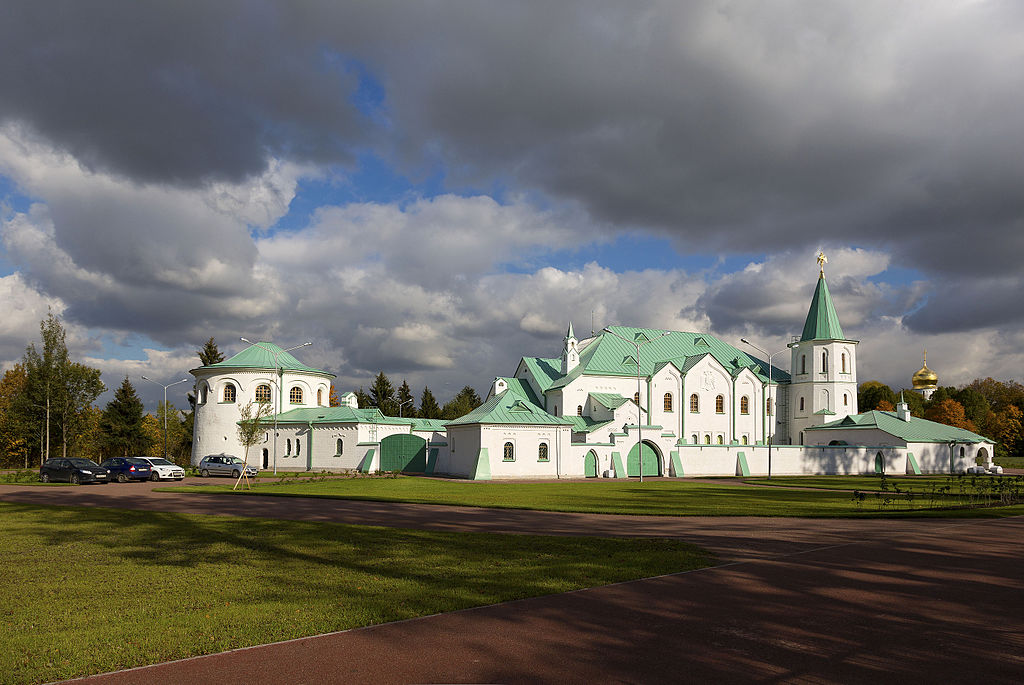
In 1911, the famous Russian collector and philanthropist Elena Andreevna Tretyakova (1846-after 1917) presented as a gift to Emperor Nicholas II: her vast collection of paintings, icons, weapons and historical documents which documented Russia’s military history from ancient times. In addition, she donated a significant amount for the construction of the Госуда́рева Ра́тная пала́та [Sovereign Military Chamber] at Tsarskoye Selo. Due to the outbreak of World War I in August 1914, the construction of the war museum was not completed. At the height of the First World War, and in anticipation of impending hard times, Elena Tretyakova wrote: “Probably, if not during my lifetime, then afterwards others will appreciate my idea and work.”

It would be another century before the Sovereign Military [aka Martial] Chamber would become a museum. The building was transferred to the Tsarskoye Selo State Museum-Preserve in 2010. Between 2011-2014. the building underwent restoration, at a cost of 292,000,000 rubles ($8 million USD). The building is now home to the ‘Russia in the Great War’ Museum, which was inaugurated on 4th August 2014 , marking the 100th anniversary of the beginning of World War One. The museum has been visited by more than 120 thousand people.

The Sovereign Military Chamber at Tsarskoye Selo is the first museum in Russia dedicated entirely to Russia’s participation in the First World War. The history of the museum has its roots in the era of Nicholas II. Today, the museum is a rich repository of military uniforms, weapons, and items used in military life, as well as photographs and documents.

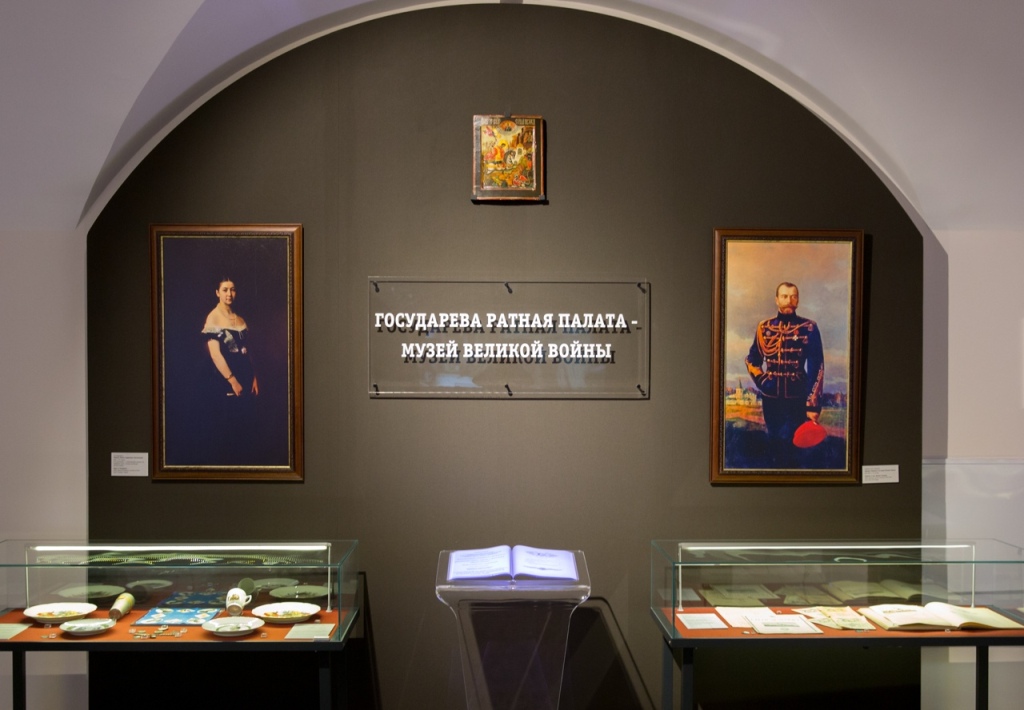
PHOTO: portraits of Elena Tretyakova and Nicholas II in the Sovereign Military Chamber

This year marks the 175th anniversary of the birth of Elena Andreevna Tretyakova (1846-after 1917). 

She was born on 26th February (O.S. 14th) February 1846 in Moscow in the family of the hereditary honorary merchant Andrei Matveyev. In 1868 she married Sergei Mikhailovich Tretyakov (1834-1892), brother of the founder of the Tretyakov Gallery in Moscow, Pavel Mikhailovich Tretyakov (1832-1898).

According to her contemporaries, Elena was “educated, and distinguished by her natural beauty, with beautiful curved shoulders, a pale, slightly puffy face, a heavy plait of hair on the back of her head and tiny hands, which she was very proud”. She dressed very luxuriously, ordered dresses from Paris and rented a large summer dacha in Peterhof for the summer. Her neighbour at Peterhof was the Russian pianist, conductor, and composer. Nikolai Grigoryevich Rubinstein (1835-1881), with whom she was in love (he died in her arms in 1881 in Paris). Every day she received guests at her home, where an exquisite choir of gypsies sang, which was then in great fashion. The Tretyakovs’ marriage was childless. After the death of her husband she lived in St. Petersburg. Elena Andreevna Tretyakova died after 1917, the exact date is unknown.

Elena Tretyakova’s idea came true more than a hundred years later. Today, her portrait hangs in the Sovereign Military Chamber at Tsarskoye Selo.

PHOTO: the restored Sovereign Martial Chamber at Tsarskoye Selo

© Paul Gilbert. 2 March 2021

The birth of the future Emperor Nicholas II in the Alexander Palace

PHOTO: the Blue Boudoir in the Alexander Palace, where Nicholas II was born

At 4 o’clock in the morning of 19th May (O.S. 6th May) 1868, Tsarevna Maria Feodorovna began having contractions. The future Empress Maria Feodorovna was about to give birth to her first child. Immediately, the midwife Mikhailova was summoned and instructed to rush to the nearby Catherine Palace, to inform Maria’s father-in-law Emperor Alexander II, that his grandchild’s entry into the world was imminent. The Emperor rushed to the Alexander Palace from his apartments located in the Zubov Wing of the palace, followed shortly thereafter by his wife, Empress Maria Alexandrovna.

At 12:50 p.m., Maria Feodorovna was taken into the bedroom [the Blue Boudoir, situated in the west wing of the palace – the interior has not survived], which had been specially prepared for the pending birth. Lying down on the sofa, she was surrounded by her father-in-law, Emperor Alexander II, her mother-in-law, Empress Maria Alexandrovna, and her husband, the Heir-Tsesarevich Alexander Alexandrovich [future Emperor Alexander III]. Her father-in-law and her husband kneeled on either side of the sofa, holding Maria Feodorovna’s hands when she gave birth – at 2.30 p.m. to her first child, a son – His Imperial Highness Grand Duke Nicholas Alexandrovich – the future Emperor Nicholas II.

PHOTO: Maria Feodorovna with her first son Nicholas Alexandrovich. 1868

The happy young father wrote in his diary that day: “At long last, the final minute arrived and all suffering ceased at once. God has sent us a son whom we named Nicholas. What a joy it is, it is impossible to imagine, I rushed to hug my darling wife, who at once cheered up and was terribly happy. I cried like a child, it was so pleasant and easy on my soul. I hugged dear Papa and Mama heartily.”

The happy parents decided to name their son in memory of Alexander’s brother Tsesarevich Nicholas Alexandrovich, who died from cerebro-spinal meningitis in 1865. Had he lived, he would have ascended the throne as Emperor Nicholas II.

Emperor Nicholas II was born on 19th May (O.S. 6th May) 1868, the day of St. Job of the Long Suffering.

FURTHER READING

19th December marks the name day of Nicholas II

© Paul Gilbert. 26 February 2021