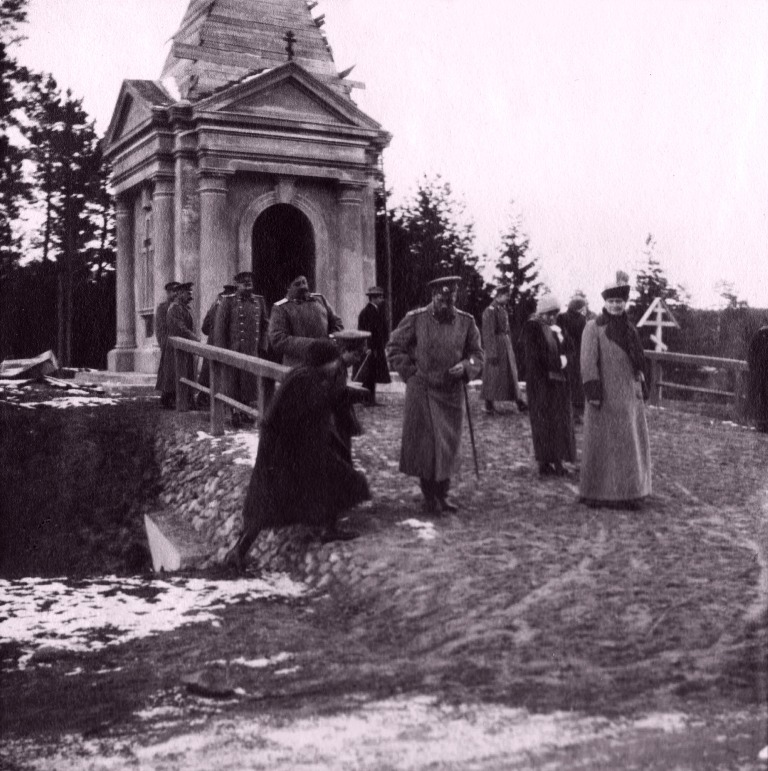
Nicholas II’s visit to the 1812 Memorial Chapel in Saltanovka, 1917

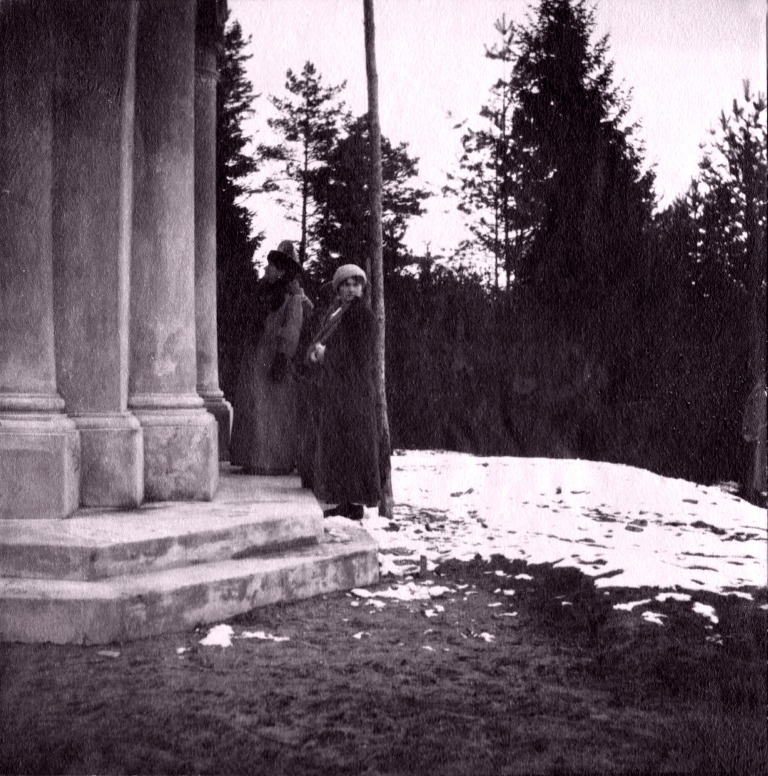
PHOTO: Emperor Nicholas II and his family visiting the Memorial Chapel, 1917. To the left of the Tsar is General Count Alexander Grabbe (1864-1947), who served as Major-General of His Imperial Majesty’s Own Convoy from 1914 to 1917, and Pierre Gilliard (1879-1962), can be seen between the two

NOTE: The three vintage photographs presented in this post, depict Emperor Nicholas II and his family visiting the Memorial Chapel in the village of Saltanovka, on 1st January 1917, just weeks before the Tsar’s abdication on 16th (O.S. 3rd) March 1917.

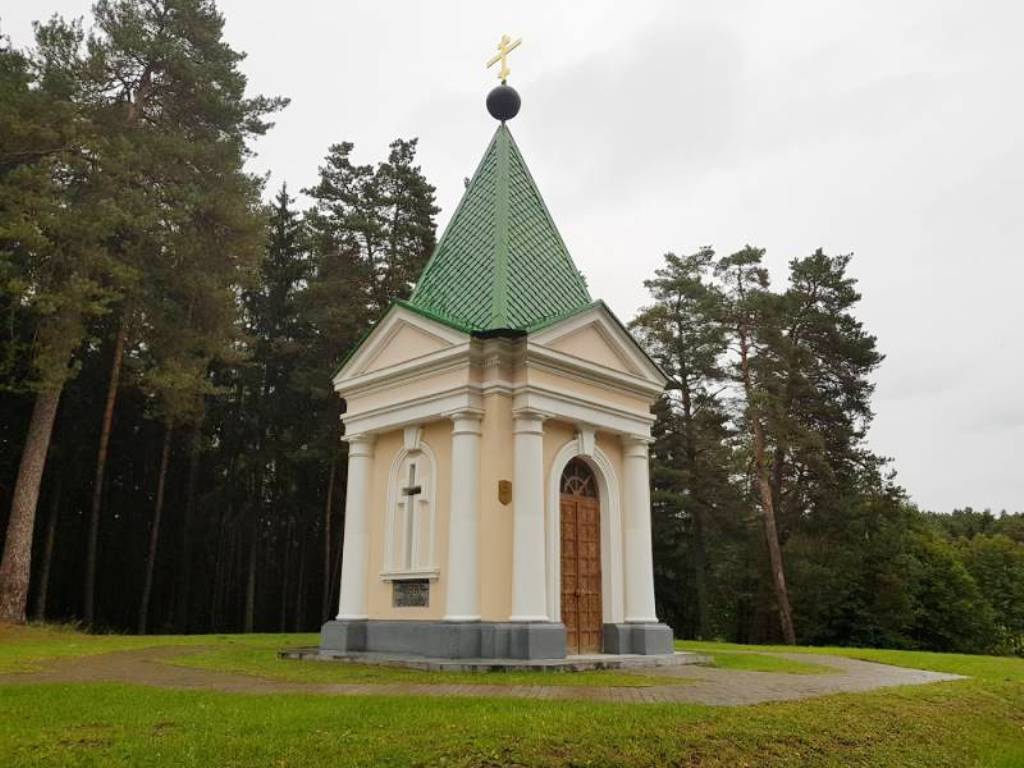
The Memorial Chapel was constructed in 1912, it is situated two kilometers north-west from the village of Saltanovka near Mogliev. It has survived to this day – see photo below.

The chapel was erected by the Tsarist government in 1912 to commemorate the 100th anniversary of the Battle of Saltanovka, during the Patriotic War of 1812. It was here, on 11th July 1812, that the battle took place between the Russian troops of Emperor Alexander I (1777-1825) the 7th corps under the command of Lieutenant General Nikolai Raevsky (1771-1829), and the French troops of Emperor Napoleon I (1769-1821) under the command of Marshal Luis-Nicolas Davout (1770-1823).

It was constructed in the Neoclassical style by the Russian architect Konstantin Alekseevich Mikhailov (1873-1927) and sculptor Pyotr Grigorievich Yatsyno, who carried out the artistic stucco decoration, memorial plaques and finishing works.

On the walls of the chapel are commemorative plaques listing the Russian regiments and divisions that took part in the battle. The ashes of Russian soldiers who died in the 1812 Battle of Saltanovka, lie within the walls of the chapel.

PHOTO: Empress Alexandra Feodorovna, Emperor Nicholas II, Grand Duchess Olga Nikolaevna and an unidentified officer

PHOTO: Empress Alexandra Feodorovna and Grand Duchess Olga Nikolaevna

***

PHOTO: The Memorial Chapel near the village of Saltanovka as it looks today

© Paul Gilbert. 15 June 2021

***

Dear Reader: If you enjoy my articles, news stories and translations, then please help support my research by making a donation in US or Canadian dollars to my project The Truth About Nicholas II – please note that donations can be made by GoFundMePayPal, credit cardpersonal check or money order. Thank you for your consideration – PG
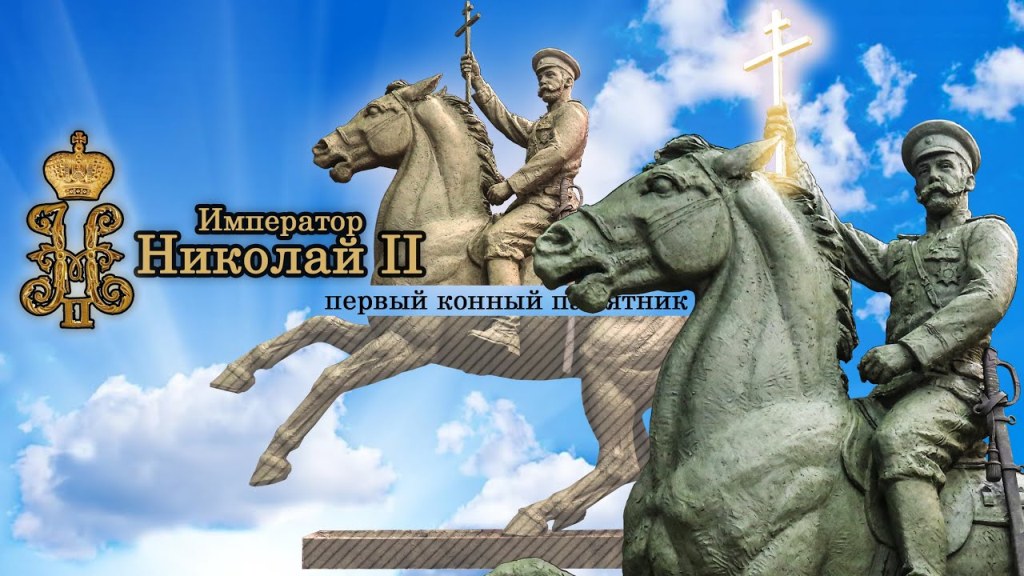
Russia’s second equestrian monument to Nicholas II to open on 17th July

At long last, Russian sculptor Irina Makarova’s magnificent equestrian monument to Emperor Nicholas II is to be erected on 17th July, on the grounds of the Church of the Holy Martyr Mikhail (Gusev) in Kulebaki of the Nizhny Novgorod region.

Russian media continually note that this is Russia’s first equestrian monument to Nicholas II, however, this is incorrect, Russia’s first equestrian monument to the Tsar was erected in Moscow in December 2014.

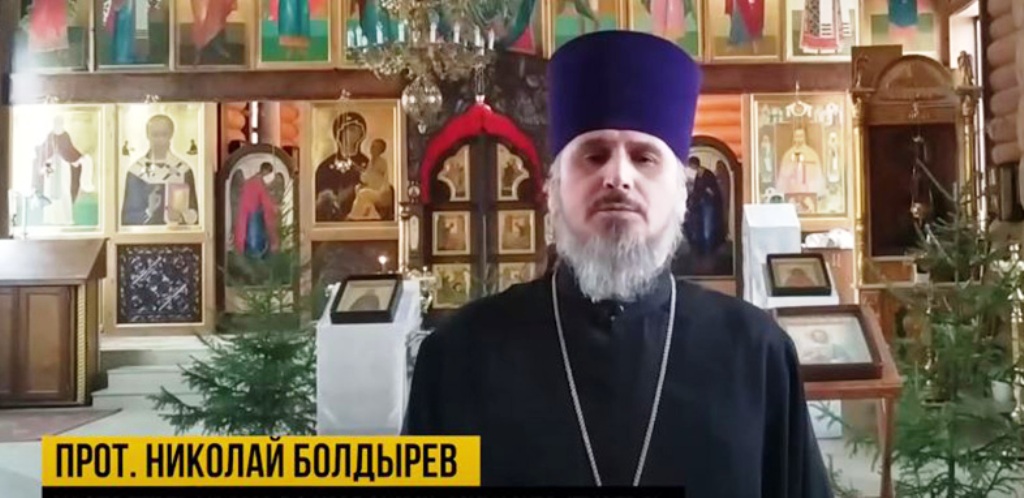
“The Russian people are entirely guilty for the death of the tsar,” said Archpriest Nikolai Boldyrev, who considers the monument a step of repentance “for the sins of the fathers.” He draws parallels between the last tsar and Christ, believing that a curse hangs over Russia, and calls for repentance.

The erection of the monument is timed to the date of the murders of the Imperial Family in Ekaterinburg by the Ural Soviet on the night of 16/17 July 1918. The opening and consecration of the monument will take place at the Church of the Holy Martyr Mikhail (Gusev). Deputies from the State Duma, Monarchist General Leonid Reshetnikov from the Double-Headed Eagle Society, the leader of the Nizhny Novgorod branch of the Russian Noble Assembly Olga Polyanskaya and other guests have been invited.

The rector of the Church of the Holy Martyr Mikhail (Gusev) Father Nikolai Boldyrev, speaking about the erection of the monument, draws parallels between the sacrifice of Christ and the death of Nicholas II:

“Our goal is to return historical memory, to reveal the true image of Tsar Nicholas, so that the Russian people may know who he was for us. He knew throughout his life that he would have to suffer. Three saints told him about that he would be a martyr and that his family would perish, and that all his nobles, military leaders would betray him” said Father Nikolai – “He died for us, for the Russian people, who betrayed him, to the Russian Golgotha. He forgave everyone who slandered him.”

PHOTO: Father Nikolai Boldyrev

Archpriest Nikolai Boldyrev also said that a curse lies on the Russian people and that they must repent for betraying the oath given to the Romanov dynasty at the Zemsky Sobor in 1613.

“The elders said that until you realize who Nicholas II was, Russia will not rise from its knees,” says Father Nikolai – “Sin hangs over us, we have become perjurers. If you have read the Bible, you know that children suffer for the sins of their parents until the third generation. All this is a curse. Grandfathers, perhaps, demolished churches, participated in persecutions. Saint John of Shanghai wrote that the Russian people were entirely guilty for the death of the tsar.”

A year ago, Father Nikolai Boldyrev gained fame because he was temporarily suspended for refusing to close churches during the COVID pandemic and wipe the communion spoons with alcohol.

Initially, the equestrian monument to Nicholas II was planned to be erected in 2020, however, a lack of funds delayed it by one year, Donations for the construction of the monument have been collected for several years. The cost of the monument is 5 million rubles [$70,000 USD].

The monument’s sculptor Irina Makarova, also created monuments to the Holy Royal Martyrs at the St. Seraphim-Diveyevo Convent in July 2017; the meeting of Nicholas II and Alexandra Feodorovna in Alushta, Crimea; and a monument to the Holy Royal Martyrs in Tyumen.

Click HERE to read my article Nicholas II Equestrian Monument Planned for the Russian city of Kulebaki + PHOTOS, originally published on 13th December 2019.

© Paul Gilbert. 15 June 2021

Independent Researcher Paul Gilbert announces 4 NEW publishing projects

Earlier this year, I announced that after more than 26 years as an independent publisher, that I had decided to retire from publishing. Over the course of the past six months, I have been reflecting on four important publishing projects, which remain unpublished. These are works which I began working on as early as 2018.

After careful reconsideration, I have decided to temporarily come out of retirement, in order to bring these four previously planned titles into publication.

Why? Since 2018, I had invested many hours of researching and writing for each respective title to simply abandon them. Each of the four titles falls in line with my personal mission to clear the name of Russia’s much slandered tsar Nicholas II, therefore, it is important for me to see each of these projects come to fruition.

It is my sincere hope, that these new titles will provide a more truthful understanding of the life and reign of Nicholas II, and a welcome alternative to all the negative literature published about his life and reign, particularly since the 1990s.

I have provided a brief summary of each title, including an image of their respective covers.

Please NOTE that at the time of writing this announcement, that I have no timeline for the completion of any of these publications, so for those of you who are interested in any of these titles, I do ask for your patience. It may take a year, it may take two years to complete all four projects. I can assure you, however, that I will publicize each new book as it becomes available, on my blog and Facebook page, as well as via my bi-weekly news updates.

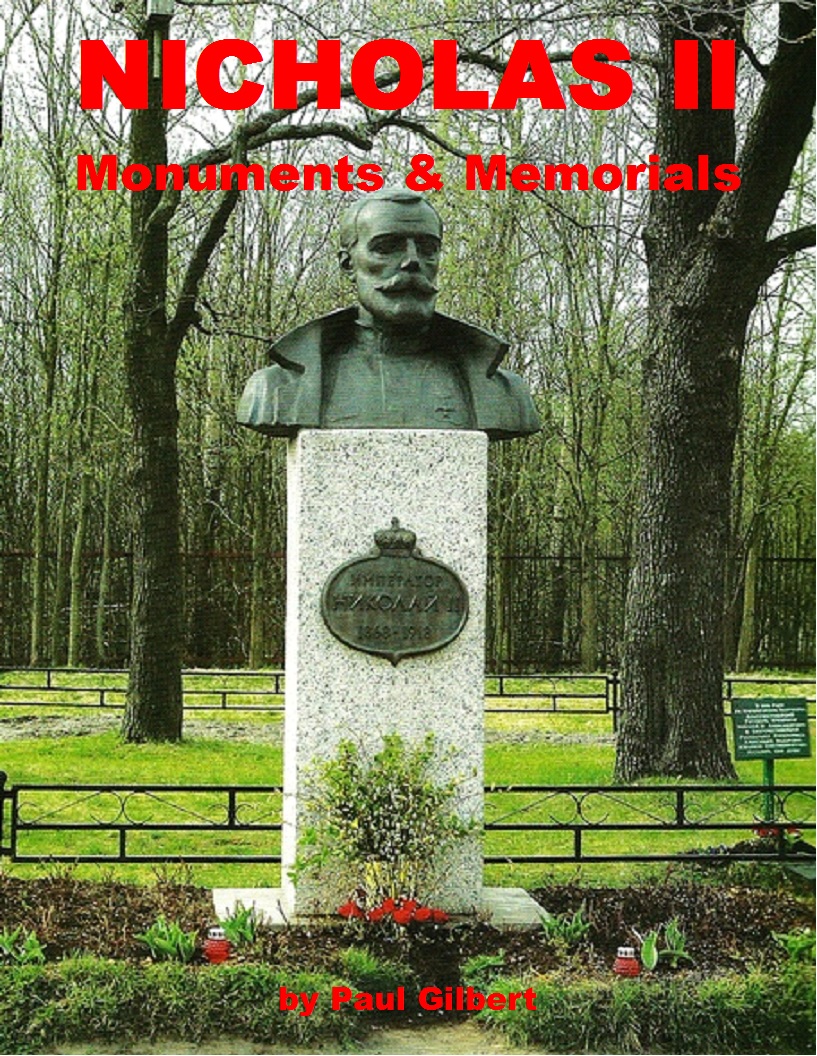
NICHOLAS II. MONUMENTS & MEMORIALS
by Paul Gilbert
ISBN: 978-1-927604-41-0

This richly illustrated title is the first book of its kind to be published on the subject. Nicholas II. Monuments & Memorials explores the nearly 100 monuments, busts and memorials established in Russia, since the fall of the Soviet Union in 1991.

Among them is the first bust-monument to the Tsar installed and consecrated on 17th July 1993 – the day marking the 75th anniversary of the murder of Nicholas II – on the grounds of the Feodorovsky Sovereign Cathedral, in Tsarskoye Selo to the most recent, a magnificent equestrian monument installed on the grounds of the Church of the Holy Martyr Michael (Gusev), lin the city of Kulebaki, Nizhny Novgorod region.

In addition, the book explores a series of Triumphal Arches constructed in a number of cities across Siberia, to mark the visit of Tsesarevich Nicholas Alexandrovich (future Emperor Nicholas II), following his Eastern Journey (1890-91); and the memorials to Nicholas II established in Europe following the exodus of White émigrés who fled Bolshevik Russia after October 1917.

This book is a companion volume to Nicholas II. Portraits, published in 2019.

TRAITOR TO THE TSAR!
GRAND DUKE KIRILL VLADIMIROVICH and NICHOLAS II
by Paul Gilbert
ISBN: 978-1-927604-54-0

In June 1917, Grand Duke Kirill was the first Romanov to flee Russia. Not only was his departure “illegal”, as Kirill was still in active duty as a rear admiral in active military service in a country at war, he had abandoned his honour and dignity in the process.

Grand Duke Kirill, was clearly a man who lacked a moral compass. In this book I discuss his entering into an incestuous marriage with his paternal first cousin and a divorcee, Princess Victoria Melita of Saxe-Coburg and Gotha in 1905, defying both Nicholas II by not obtaining his consent prior, and the Russian Orthodox Church.

But it was Kirill’s traitorous act during the February Revolution of 1917, in which he is most famous. It was in Petrograd, that Kirill marched to the Tauride Palace at the head of the Garde Equipage (Marine Guard) to swear allegiance to the Russian Provisional Government, wearing a red band on his uniform. He then authorized the flying of a red flag over his palace on Glinka Street in Petrograd.

In 1922, Kirill declared himself “the guardian of the throne”, and in1924, pompously proclaimed himself “Emperor-in-Exile”. Further, I explore Kirill and Victoria’s alleged Nazi affiliations during their years in exile, as well as Kirill’s shameful infidelity.

This work is the first of its kind to thoroughly examine the treachery of Grand Duke Kirill towards Nicholas II. It is based primarily on documents from Russian archival and media sources, many of which will be new to the English reader.

NICHOLAS II IN POST SOVIET RUSSIA
by Paul Gilbert
ISBN: 978-1-927604-53-3

The image of Nicholas II, whom historians have criticized as an ineffective leader – and who was demonised by Soviet ideology – has been undergoing a renaissance in post-Soviet Russia.

Since the fall of the Soviet Union in 1991, a series of significant events have taken place which have helped Russia re-evaluate the life and reign of the country’s last emperor Nicholas II.

These include the discovery of his remains in Ekaterinburg in 1991, his interment in St Petersburg 1998, his canonization by the Moscow Patriarchate in 2000, his rehabilitation in 2008, the status of his remains by the ROC, and of the centenary marking his death and martyrdom in 2018.

Among the other topics explored in this book, are the results of polls taken in Russia, whereby the populace have reevaluated their assessment of Nicholas II’s reign in a more popular light. In addition, this book explores the long-held theory that Lenin ordered the murder of the Tsar, as well as Russian president Vladimir Putin’s assessment of Russia’s much slandered Tsar, and the fact that the Russian State Archives still hold documents on the Ekaterinburg regicide, which to this day remain sealed and off limits to researchers.

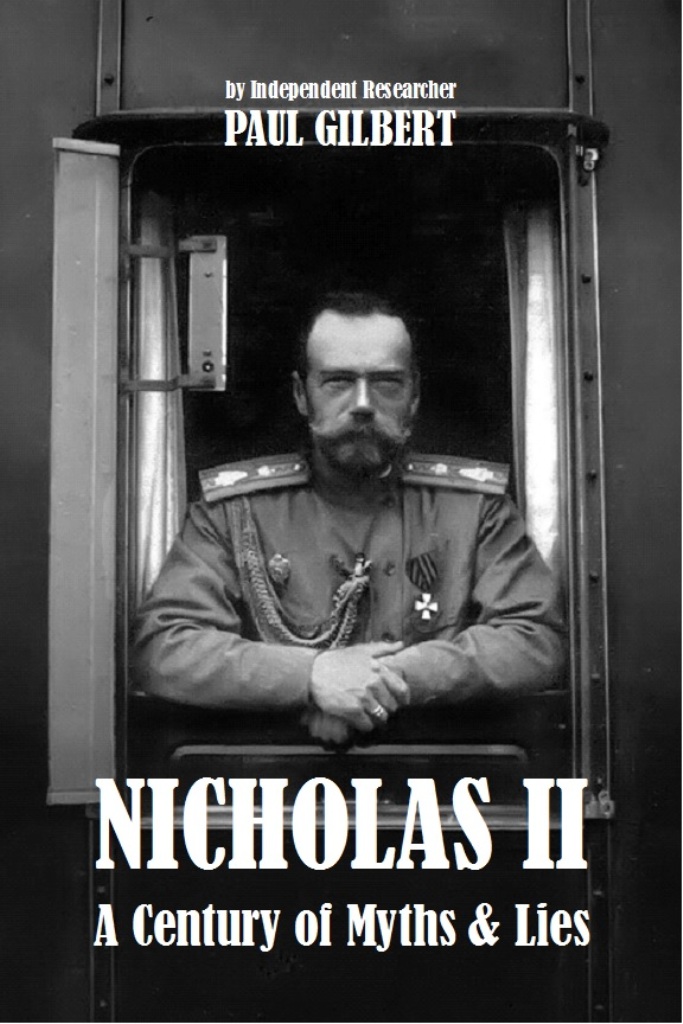
NICHOLAS II. A CENTURY OF MYTHS AND LIES
by Paul Gilbert
ISBN: 978-1-927604-35-9

For more than a century, many myths and lies about the reign of Nicholas II have endured to the present day. For more than 70 years, the Bolsheviks and later the Soviets were perfectly content to allow these negative myths to stand. The Soviet government’s philosophy to avoid or revolutionize many facts pertaining to Imperial history, including the adoption of extreme censorship, affected what was permitted to be published inside the Soviet Union and thus helped the Bolshevik regime to discredit the last Russian Emperor.

Soviet historians portrayed the Tsar as indecisive, weak-willed, incompetent, and out of touch with the modern world. Their assessment is based on slanderous fabrications, particularly during the early 20th century, which are still deeply rooted in the minds of both Westerners and the Russian people even to this day.  

Sadly, it is these same myths and lies which many modern day historians and biographers cling to in their biographies and studies of Nicholas II. It seems that rather then challenge the old myths by researching new documents in Russian archives, they prefer instead to keep up with popular thought rather than attempt to dispel a legend. This is not the sign of a good historian.

Nicholas II. A Century of Myths and Lies explores 25 of the most popular myths, for example: “that Nicholas II was weak and indecisive” or “that Nicholas II was indifferent to the Khodynka Tragedy” or “that Nicholas II was influenced by Rasputin” or “that Nicholas II was to blame for Bloody Sunday” or “that Nicholas II was wrong in assuming command of the Russian Armed Forces during WWI” or “that Nicholas II’s death was met with indifference by the Russian people” . . . plus, 19 other myths.

© Paul Gilbert. 14 June 2021

Grand Duke Kirill Vladimirovich renounced his rights to the Russian throne in 1917

PHOTO: Grand Dukes Kirill Vladimirovich and Nicholas Mikhailovich

Grand Duke Nicholas Mikhailovich (1859-1918), who was known affectionately within the Imperial Family as “Uncle Bimbo” was the eldest son of Grand Duke Michael Nikolaevich and Grand Duchess Olga Fedorovna, a first cousin of Emperor Alexander III, and a great uncle of Emperor Nicholas II.

“Bimbo” was considered a troublemaker and a radical free-thinker. He was the most vocal and radical opponent of Nicholas II from among the grand dukes. In 1916-17, he openly opposed the course pursued by the tsar and his government. He was also involved in the plot to murder Grigory Rasputin.

Worried about the various actions carried out by the Russian government, Nicholas Mikhailovich addressed a letter to the Tsar in which he advised him to deprive his wife of all power. Horrified by the actions of the government of the time, “Bimbo” publicly denounced them. After so much criticism, Nicholas II ended up losing patience and exiled the Grand Duke to his estate Grushevka, which he fulfilled on 1st January 1917.

He returned to Petrograd two months later on 1st March 1917, following the outbreak of the February Revolution. He gladly accepted the revolutionary events and recognized the authority of the new Provisional Government.

Following the February 1917 Revolution, the Grand Duke approached the then Minister of Justice of the Provisional Government Alexander Kerensky, with an idea to persuade the grand dukes to voluntarily surrender their annual allowances, their lands and their rights to the throne.

On 9th March 1917, he wrote the following letter to Kerensky:

“As of today I have received consent to renounce the throne and to surrender specific lands from the Grand Dukes Kirill Vladimirovich (easily), from Dmitry Konstantinovich (with difficulty) and from the Princes Gabriel and Igor Konstantinovich. I also sent a telegram to my brother Alexander to convince Paul Alexandrovich, my brother George, who lives with Mikhail Alexandrovich in Gatchina, and my brother Sergei, who is in Mogilev.

The whereabouts of Nicholas and Peter Nikolaevich, Boris Vladimirovich and Prince Konstantin Konstantinovich are unknown.”

This important letter confirms that Grand Duke Kirill “willingly” renounced his rights to the throne, without a struggle!!

In June 1917, Grand Duke Kirill fled Russia with his pregnant wife and their two daughters to Finland. His departure was “illegal”, as Kirill was still in active duty, serving as a rear admiral in active military service in a country at war, thus abandoning his honour and dignity.

It is interesting to add, that the Kirillovich were the only branch of the Imperial Family who managed to escape the Bolsheviks, without losing any family members.

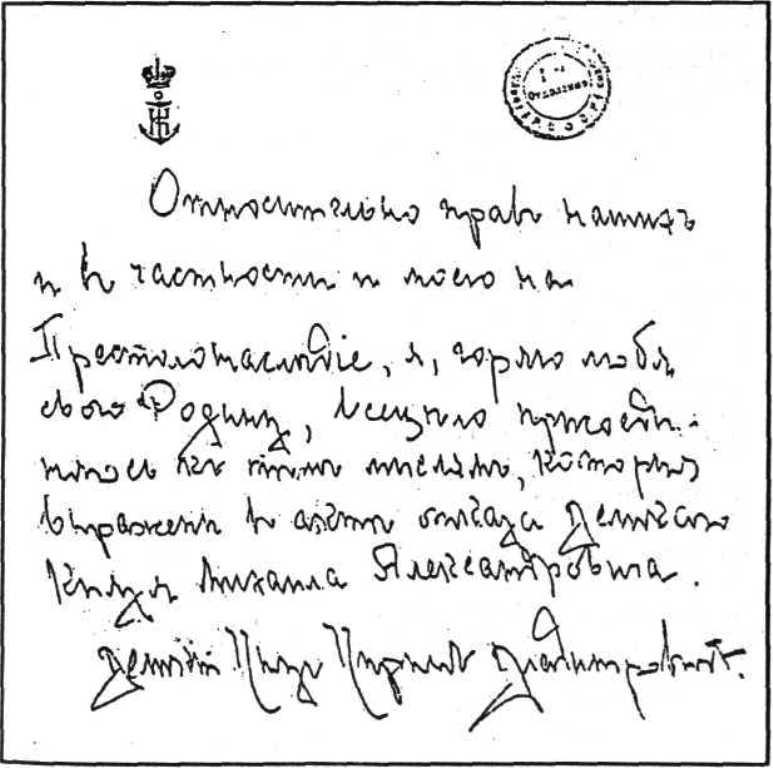
PHOTO: Grand Duke Kirill’s renouncement of his rights to the throne, signed in 1917

In addition, and also never mentioned by the “Legitimists” is Grand Duke Kirill’s post-February written statement,[1] in which he renounces his rights to the throne:

“Regarding our rights, and in particular mine, to the succession to the throne, I, passionately loving my Motherland, fully subscribe to the thoughts expressed in the act of refusal of the Grand Duke Mikhail Alexandrovich.”[2]

Following Kirill’s death in 1938, his son and “heir” Vladimir Kirillovich denied the existence of this document, and yet here it is, preserved in the Russian States Archives of the Russian Federation (GARF) in Moscow.

This evidence further proves that Grand Duke Kirill Vladimirovich’s descendants: his son Prince Vladimir Kirillovich; his granddaughter Maria Vladimirovna and her son George Mikhailovich, have NO claim to the non-existent Russian throne.

[1] GARF, f. 601, op. 1, unit xp. 1263, l. 3.

[2] Kirill was referring to Grand Duke Michael’s declaration: “. . . I have taken the firm decision to assume the supreme power only if and when our great people, having elected by universal suffrage a Constituent Assembly to determine the form of government and lay down the fundamental law of the new Russian State, invest me with such power. . . .”

© Paul Gilbert. 14 June 2021

FOR SALE: The correspondence of Nicholas II and Alexandra Feodorovna, 1914-1917

I am pleased to offer two editions of the correspondence of Nicholas II and Alexandra Feodorovna from my personal library.

Between 24th April 1914 to 7th March 1917, Emperor Nicholas II and his wife Empress Alexandra Feodorovna exchanged nearly 1,700 letters . The original correspondence has survived to this day and kept in the Novo-Romanovsky Archives of the State Archives of the Russian Federation (GARF) in Moscow.

Their letters – all of which were written in English – reveal the enormous love the couple shared against the backdrop of a bloody war and the approaching end of the Russian Empire. In addition, Alexandra offers extensive commentary on hospitals and the wounded (she was a volunteer nurse). Nicholas II reports on the military and the war effort. The growing influence of Rasputin is also thoroughly documented in these texts. The reader sees in detail the crises that led to the Russian Revolution of 1917 and the collapse of the tsarist regime.

This historically Important correspondence will serve as a valuable resource for all students of late Imperial Russia and World War I, and essential for those interested in the last Emperor and Empress of Russia.

PLEASE NOTE THAT THIS IS AN AUCTION SALE: I am offering each edition to the highest bidder. I have set the bidding price of each at $150 USD. I invite those of you who are interested to send me a private e-mail [royalrussia@yahoo.com], quoting your highest offer. Please ensure that you also note the item number (noted below). The winners will be notified by e-mail on Sunday, 20th June 2021.

Item No. 0576 – THE NICKY-SUNNY CORRESPONDENCE 1914-1917

This edition includes two volumes in one: The Letters of the Tsar to the Tsaritsa 1914-1917 and The Letters of the Tsaritsa to the Tsar 1914-1916. Published by Academic International Press in 1970, it is a reprint of the original English edition, published in 1923.

Volume I includes an introduction by C. T. Hagberg Wright. Notes by C. E. Vulliamy; Volume II includes a 38-page introduction by Sir Bernard Pares (1867-1949).

Pares was a noted English historian and diplomat. During the First World War, he worked for the Foreign Ministry in Petrograd, Russia, where he reported political events back to London. He returned to London as professor of Russian history. He is best known for his numerous books on Russia,

Hard cover edition. 802 pages. Index. Size: 6-1/2″ x 9″ x 2″.

CONDITION: Near mint!

Opening bids start at $150.00 USD

AUCTION SALE: I am offering each edition to the highest bidder. I have set the bidding price of each at $150 USD. I invite those of you who are interested to send me a private e-mail [royalrussia@yahoo.com], quoting your highest offer. Please ensure that you also note the item number. The winners will be notified by e-mail on Sunday, 20th June 2021. *Shipping, handling and insurance are not included in the price.

Item No. 0577 – THE LETTERS OF THE TSAR TO THE TSARITSA 1914-1917 and THE LETTERS OF THE TSARITSA TO THE TSAR 1914-1916 – 2 Volume Set

Volume I: The Letters of the Tsar to the Tsaritsa 1914-1917

Includes an introduction by Ivan Bydzan. Illustrations. Index. Size: 6″ x 8-3/4″ x 1″. 324 pages. Hard cover.

Volume II: The Letters of the Tsaritsa to the Tsar 1914-1916

Includes an introduction by Ivan Bydzan. Illustrations. Index. Size: 6″ x 8-3/4″ x 1-1/2″. 462 pages. Hard cover.

This 2-volume edition was published by the Hoover Institute Press of Stanford University in 1973, it is a reprint of the original English edition, published in 1923.

each volume contains inscription on inside title page and embossed book mark. Both copies are in excellent condition with solid binding.

Opening bids start at $150.00 USD for this 2-volume set

AUCTION SALE: I am offering each edition to the highest bidder. I have set the bidding price of each at $150 USD. I invite those of you who are interested to send me a private e-mail [royalrussia@yahoo.com], quoting your highest offer. Please ensure that you also note the item number. The winners will be notified by e-mail on Sunday, 20th June 2021. * Shipping, handling and insurance are not included in the price.

© Paul Gilbert. 12 June 2021

Faithful to the End: Anna Stepanovna Demidova (1878-1918)

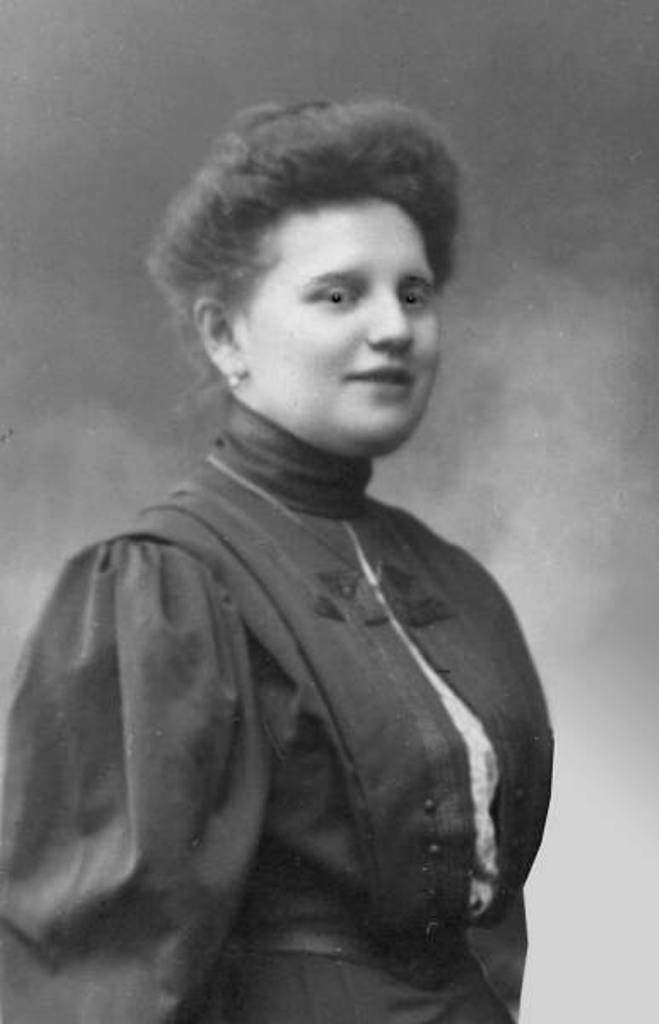
PHOTO: Anna Stepanovna Demidova (1878-1918)

On 27th (O.S. 14th) January 1878, Anna Stepanovna Demidova, a loyal subject of the Russian Imperial family was born into the bourgeois family of Stepan Aleksandrovich Demidov and Maria Efimovna Demidova in Cherepovets, situated in Vologda Oblast, Russia.

Her father was a well-off merchant in Cherepovets, where he also served on the Cherepovets City Duma. The Demidov family made a significant contribution to the development of Cherepovets, its improvement and prosperity.

Anna had four brothers Alexander, Nikolai, Stepan, Sergei and two sisters Apollinaria and Elizabeth, all of whom received an excellent education. For the first two years, Anna Demidova studied at the John the Baptist Leushinsky Monastery, founded by the famous Abbess Taisia, the spiritual daughter of St. Righteous John of Kronstadt.

After graduating from this preparatory school, Anna continued her education for the next six years at the Teachers’ School for Women, a higher educational institution at the same monastery. Abbess Taisia ​​prepared a curriculum for her pupils, which included such subjects as religion, Russian literature, foreign languages, arithmetic, history, natural science, and music. In addition, lessons were conducted in painting, needlework and icon writing [in the Orthodox Christian tradition, icons are said to be written, not painted].

The abbess paid great attention to instilling high moral qualities in her students: deep faith, diligence, striving for good, a sense of responsibility and duty. Her methods prepared Anna’s for her future. After graduating with honours in 1898, Anna Demidova received a certificate of home teacher.

PHOTO: record of the birth of Anna Demidova in the birth register of the Cathedral of the Resurrection in Cherepovets

It should also be mentioned, that it was at this school that Anna’s handicrafts earned her first prize at exhibitions. According to a family legend, Empress Alexandra Feodorovna became interested in Anna’s needlework during a visit to the exhibition of handicrafts at the Leushinsky Monastery in Yaroslavl. The Empress was completely delighted with Anna’s handicradts, since she herself was engaged in needlework. Wishing to meet her, the Empress, after a conversation with the Anna, offered her a place of chambermaid at her Court at Tsarskoye Selo. Officially, Anna Demidova was enrolled on 13th January 1898 and “… assigned to the rooms of H.I.M. Sovereign Empress Alexandra Feodorovna.”

In accordance with her program for the following day, the Empress herself made a list of things which she planned to wear the next day. The chambermaids carefully prepared her clothes. Anna’s duties as chambermaid included caring for the Empress’s wardrobe, which consisted of several dozen oak and ash wardrobes, filled with dresses and accessories. Anna even had an electric iron at her disposal – one of the technical wonders of the time!

In 1901, Anna received an offer to teach embroidery, knitting and other needlework to her four daughters: Grand Duchesses Olga, Tatiana, Maria and Anastasia.

The Empress selected Anna not only for her inherent skill, but also for her high moral qualities. She believed that “above all knowledge a person should have a clear conscience and live a righteous life.” Anna fully met these requirements. In addition, Anna was educated, elegant, knew several foreign languages, and played the piano.

Anna Demidova or “Nyuta,” as the Imperial Family called her, was described in adulthood as a “tall, statuesque blonde” and “of a singularly timid and shrinking disposition.” For her many years of devoted service to the Imperial Family, Anna Demidova was granted hereditary nobility.

Those employed at the Alexander Palace all received a rather decent salary. In addition, they could invite family and relatives to visit, who were accommodated in the Tsarskoye Selo Lyceum nearby. This allowed Anna’s sister Elizabeth – for whom she was especially close – to live near her for several years. Despite the many privileges enjoyed by the servants of the Imperial Court, there was one – an essential condition – that all chambermaids had to remain maidens [unmarried].

Thus, the Imperial Family became Anna’s family. “Nyuta” was devoted to all the Tsar’s children, but she had special, maternal feelings for the youngest, Grand Duchess Anastasia, and she reciprocated her. There is even a postcard with the image of the Mother of God that Anastasia sent her from Paris in 1906: “Dear Nyuta! I congratulate you on the holidays and wish you to spend as much fun as possible. Although I write a little late, it’s better late than never.”

PHOTO: Anna Stepanovna Demidova (1878-1918)

Following the February revolutionary events of 1917, before going into exile with the Imperial Family, Anna sent some of her personal belongings to her sister Elizabeth in Cherepovets, which included albums with photographs that are to today kept in the personal archive of her grand-niece Nina Alekseevna Demidova.

In August 1917, Anna along with other faithful servants, followed the Tsar and his family into exile to Tobolsk, and then to Ekaterinburg. It was during this time, that the chambermaid began to keep a diary:

“Thursday, 3rd August. After a long while, I slept well for the first time. For the last two weeks, when I learned that they were going to send us “somewhere”, I lived nervously, slept little, worried about the unknown and where they would send us. It was a difficult time. Only on our way did we learn that we are “on our way to the far north”, and to think – “Tobolsk”, my heart aches. Today, at one of the stops (of course, we did not get off), someone at the station asked our carriage conductor: “Who is travelling?” The conductor replied gravely: “American Mission”, as the train read “American Red Cross Mission”. “And why is nobody getting off the train?” “Because everyone is very sick and barely alive.”

Anna was bitter to see what awaited them at their place of exile. “Oh God! The house is almost empty, no chairs, tables, washbasins, no bed, etc. The window frames have not been exposed since summer and are dirty, there is rubbish everywhere, the walls are filthy. In short, the house was not prepared at all. Now the cleaning is underway … “

In Ekaterinburg, “Nyuta” helped the Empress send letters to her family and friends and taught the grand duchesses needlework, which boiled down to darning and mending bed linen.

On 15th January 1918, Anna Demidova officially ceased to be listed in the service of the Imperial Family. She repeatedly had the opportunity to leave the Imperial Family, but each time, neglecting her well-being, Anna remained faithful to her human and Christian duty. However, she was not alien to the feeling of fear. Once she confessed to the English tutor Charles Sydney Gibbes: “I am so afraid of the Bolsheviks, Mr. Gibbes. I don’t know what they will do with us.”

The last months and days of Anna Demidova passed in an atmosphere of incessant humiliation and bullying. On the night of 16/17 July 1918, Anna Stepanovna Demidova was shot in the basement of the Ipatiev house in Ekaterinburg together with the Imperial Family and three other faithful servants. Anna’s death was cruel and violent: one of the killers counted the wounds on her body – there were 32 of them.

On the fateful night of 16th July 1918, Anna Stepanovna was awakened by Dr. Botkin and told her about the threat of an attack on the house. She, in turn, woke up the grand duchesses. Despite Yurovsky’s warning not to take any things with them, the prisoners nevertheless took various little things – in case of a “possible journey”. Anna Demidova carried two large pillows down to a room located in the basement of the Ipatiev House. She placed one behind the back of the sick Tsesarevich, who was seated on a chair. The second pillow [filled with precious family gems] remained clutched to her chest.

According to the memoirs of a participant in the regicide of Mikhail Aleksandrovich Medvedev (1891-1964): “The veil of smoke and dust was thinning. Yakov Mikhailovich [Yurovsky] invited [Pyotr Zakharovich] Ermakov and me, as representatives of the Cheka and the Red Army, to witness the death of each member of the Imperial Family. Suddenly, from the right corner of the room, a woman screamed: “Thank God! God saved me!”

“Staggering, the surviving chambermaid rises: she had shielded herself with a pillow, in the fluff of which bullets were stuck. The Latvians have already fired all their cartridges, then two of them with rifles charged at her and bayoneted the maid.”

Another participant in the regicide, Alexey Georgievich Kabanov (1890-1972), also describes the death of Anna Stepanovna with even more gruesome details: “The chambermaid was still alive on the floor. When I ran into the execution room, I shouted to stop firing immediately, and finish those still alive with bayonets. <…> One of my comrades began to thrust the bayonet of his American Winchester rifle into the chambermaid, but the blunt blade did not pierce her chest, and she grabbed the bayonet with both hands and began to scream … “

According to other testimonies, Anna Demidova “kept running back and forth across the room shielding herself with pillows,” . . . “rushing along the left wall,” which is why bullet marks are visible in different parts of this wall and even in the jamb of the front door.

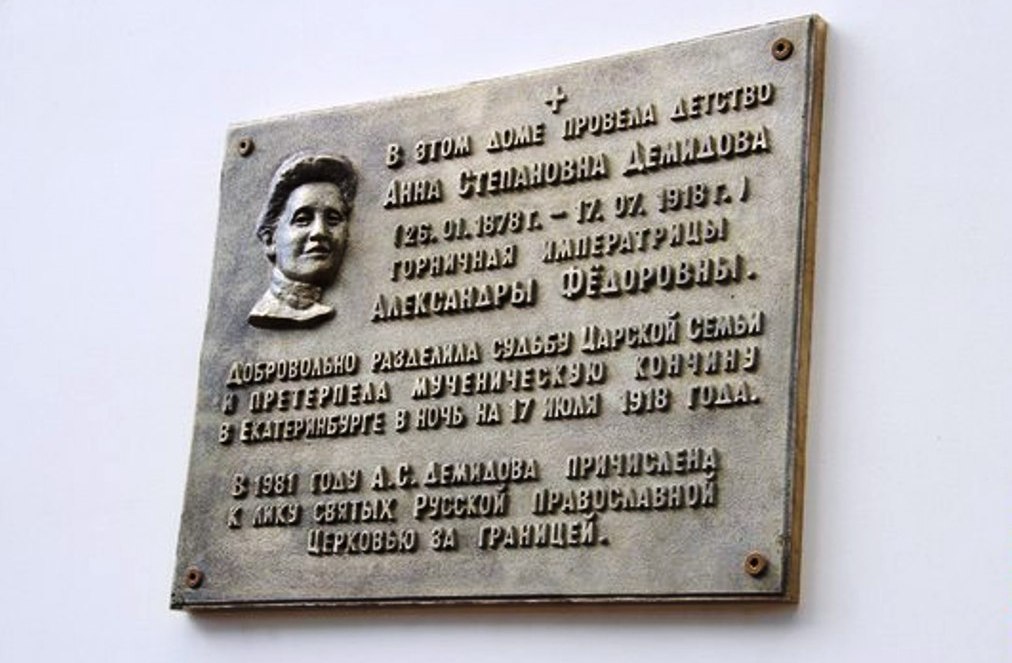
PHOTO: on 17th July 2013, Archbishop Maximilian of Vologda and Veliky Ustyug consecrated a memorial plaque (below) installed on the house where Anna Demidova was born in Cherepovets

On 1st November 1981, Anna Stepanovna Demidova, was canonized by the Russian Orthodox Church Outside Russia (ROCOR), along with Nicholas II and his family, as well as the three other servants.

At the time of this writing, the Russian Orthodox Church of the Moscow Patriarchate, has not yet canonized Anna Demidova.

On 17th July 1998, Anna Demidova’s grand-niece, Natalia Demidova, attended the burial ceremony for the remains of the Imperial Family and their servants in the Peter and Paul Cathedral in St. Petersburg.

On 16th October 2009, the Prosecutor General’s Office of the Russian Federation made a decision on the rehabilitation of 52 close associates of the Imperial Family who had been subjected to repression, including Anna Demidova.

In March 2012, the Cherepovets newspaper «Речь» announced the planned perpetuation of the memory of Anna Demidova, by the installation of a memorial plaque on the house in which she spent her childhood and youth (Sovetsky Prospect, 31 – former Voskresensky Prospect).

The memorial plaque was installed on 17th July 2013, the text of the memorial [translated from Russian] reads:

Here Anna Stepanovna Demidova was born and spent her childhood. The maid of the last Russian Empress Alexandra Feodorovna remained faithful to her convictions, voluntarily stayed with the family of Nicholas II and suffered a martyr’s death along with them on July 17, 1918 in Yekaterinburg. Canonized by the Russian Orthodox Church Abroad in 1981“.

The rite of consecration was performed by Archbishop Maximilian of Vologda and Veliky Ustyug. In his speech, Vladyka spoke of the need to remain faithful to God, the Motherland, and duty in difficult times. “Faithful in small things, faithful in great things,” Vladyka quoted Abba Dorotheos and noted that there were many people who betrayed the Emperor. Anna Stepanovna Demidova was one of the few who exemplified loyalty.

On 14th September 2013, by the decree of Archbishop Maximilian of Vologda and Veliky Ustyug, the Sunday school of the Church of the Nativity of Christ was named in honour of Anna Stepanovna Demidova.

Holy Royal Martyrs, pray to God for us!
Святы Царственные мученики, молите Бога о нас!

© Paul Gilbert. 10 June 2021

Chronology of Events in the Life and Reign of Emperor Nicholas II

I have prepared the following chronology of more than 170 events in the life and reign of Emperor Nicholas II from his birth in 1868 to his death and martyrdom in 1918. In addition, I have also included more than a dozen links to articles, which will provide the reader with additional information and photographs.

The dates noted are those according to the Old Style Julian Calendar, which was used in the Russian Empire up until 1918, when the New Style Gregorian Calendar used in the West was implemented. Please note that the New Style Gregorian Calendar is now 13 days ahead of the Old Style Julian Calendar: for example May 6th Old Style = 19th May New Style – PG

Tsarevich or Tsesarevich?

Tsesarevich” is often confused with “tsarevich“, which is a distinct word with a different meaning: Tsarevich was the title for any son of a tsar, including sons of non-Russian rulers accorded that title, e.g. Crimea, Siberia, Georgia. Normally, there was only one tsesarevich at a time (an exception was Grand Duke Constantine Pavlovich, who was accorded the title until death, even though law gave it to his nephew), and the title was used exclusively in Russia.

The title came to be used invariably in tandem with the formal style “Heir or Successor” (Russian: Наследник, romanized: Naslednik), as in “His Imperial Highness the Heir Tsesarevich and Grand Duke”. The wife of the Tsesarevich was the Tsesarevna (Russian: Цесаревна).

Each Emperor’s eldest son bore the title until 1894, when Nicholas II conferred it on his brother Grand Duke George Alexandrovich, with the stipulation that his entitlement to it would terminate upon the birth of a son to Nicholas, who was then betrothed to Princess Alix of Hesse [Empress Alexandra Feodorovna 1872-1918]. When George died in 1899, Nicholas did not confer the title upon his oldest surviving brother Michael Alexandrovich, although Nicholas’s only son would not be born for another five years. That son, Alexei Nikolaevich (1904–1918), became the Russian Empire’s last tsesarevich.

1868

May 6 – the birth of Grand Duke Nicholas Alexandrovich in the Alexander Palace at Tsarskoye Selo.

May 20 (Spirit Day) – the baptism of the Grand Duke in the Church of the Resurrection of Christ in the Catherine Palace at Tsarskoye Selo.

1871

April 27 – the birth of Nicholas’s brother, Grand Duke George Alexandrovich (1871-1899).

1875

March 25 – birth of Nicholas’s sister, Grand Duchess Xenia Alexandrovna (1875-1960).

December 6 – Nicholas Alexsandrovich was promoted to the rank of ensign.

1877

General G.G. Danilovich (1825-1906) was appointed tutor of the Grand Duke.

1878

November 22 – the birth of Nicholas’s brother, Grand Duke Mikhail Alexandrovich (1878-1918).

1881

March 1 – assassination of Emperor Alexander II in St. Petersburg.

March 2 – Grand Duke Nicholas Alexandrovich is declared heir to the throne with the assignment of the title “Tsesarevich” and the appointment of the ataman of the Cossack troops.

March 13 – Tsesarevich – Chancellor of the Alexander University in Finland.

July – the Tsesarevich and his father, Emperor Alexander III visit Moscow.

1882

January 1 – Tsesarevich Nicholas Alexandrovich begins to keep a diary.

June 1 – the birth of Nicholas’s sister, Grand Duchess Olga Alexandrovna (1882-1960).

1883

May – participation of the Tsesarevich in the coronation celebrations in Moscow of his father, Emperor Alexander III.

1884

May 6 – the ceremony of majority, Nicholas Aleksandrovich’s acceptance of the oath and entry into active service.

August 30 – the Tsesarevich received the rank of lieutenant.

1887

August 30 – the tsesarevich received the rank of staff captain.

1888

June – August – takes command of His Majesty of the Preobrazhensky Life Guards Regiment.

October 17 – the crash of the Imperial Train, carrying Emperor Alexander III and members of his family, including Tsesarevich NicholasAlexandrovich, near the Borki station of the Kursk-Kharkov-Azov railway.

1889

January – the first acquaintance at a court ball in St. Petersburg with Princess Alix Viktoria Helene Luise Beatrix of Hesse and by Rhine, the future Empress Alexandra Feodorovna.

May 6 – the Tsesarevich was appointed aide-de-camp, a member of the State Council and the Committee of Ministers, the highest governmental body of the Russian Empire.

1890

March – Nicholas makes the acquaintance with the prima ballerina Matilda Maria Feliksovna Kschessinskaya (1872-1971).

1890

October 23 to August 4 1891 – Nicholas Alexandrovich took part to the Far East: Egypt, India, Ceylon, Siam, China, and Japan. The total length of the journey exceeded 51,000 kilometres, including 15,000 km of railway and 22,000 km of sea routes.

1891

1891, March 17 – the highest rescript to the Tsesarevich for the opening of the Ussuri section of the Trans Siberian Railway.

April 21 – the Tsesarevich received the rank of captain.

April 29 – an attempt on the life of the Tsesarevich, committed by policeman Sanzo Tsuda in the Japanese city of Otsu.

November 17 – Nicholas Alexandrovich was appointed chairman of the Special Relief Committee for helping those in need in areas affected by crop failure during the Russian Famine, for which Nicholas raised 5 million rubles.

1892

April – August – his service in His Majesty’s 1st Battery of the Guards Horse-Artillery Brigade.

August 6 – promoted to the rank of colonel.

1893

January 2 – the Tsesarevich was appointed commander of the 1st battalion of the Preobrazhensky Life Guards Regiment.

January 14 – the Tsesarevich was appointed chairman of the Siberian Railway Committee (held office until December 15, 1905).

March 5 – the highest rescript to the Tsesarevich for chairing the Special Committee for helping those in need in areas affected by crop failure.

1894

April 8 – the engagement of the Tsesarevich and Princess Alix Viktoria Helene Luise Beatrix of Hesse and by Rhine.

June – July – Visit to Great Britain, meeting with his future bride.

July – celebrations associated with the marriage of the Tsesarevich’s sister – Grand Duchess Xenia Alexandrovna and Grand Duke Alexander Mikhailovich (1866-1933).

September – worsening of the illness of Emperor Alexander III, the Imperial Family move to Livadia in Crimea.

October 10 – arrival of the bride Princess Alix of Hesse at Livadia.

October 20 – death of Emperor Alexander III, Tsesarevich Nicholas Alexandrovich’s accession to the throne as Emperor Nicholas II.

October 21 – the swearing-in of the new emperor of the first ranks of the court; anointing the bride of the emperor and naming her “the faithful Grand Duchess Alexandra Feodorovna”.

November 7 – the funeral of Emperor Alexander III in the Peter and Paul Cathedral of the Peter and Paul Fortress in St. Petersburg.

November 14 – wedding of Emperor Nicholas II and Alexandra Feodorovna in the Great Church of the Winter Palace – the home church of the Imperial Family.

1895

January 17 – Nicholas II delivered a speech in the Nicholas Hall of the Winter Palace in response to the loyal address prepared by the Tver Zemstvo. Statement of political continuity.

November 3 – the birth of Nicholas II’s first child, a daughter, Grand Duchess Olga Nikolaevna (1895-1918).

1896

May 14 – Coronation of Emperor Nicholas II in Moscow.

May 18 – Khodynka tragedy, which resulted in an estimated 1,389 people being trampled to death, and an additional 1300 injured .

August 15-17 – Nicholas II makes his first official visit to the Emperor of Austria-Hungary Franz Joseph (1830-1916) in Vienna.

August 24-26 – the first meeting of Nicholas II as the All-Russian Emperor with the German Emperor Wilhelm II (1859-1941).

September 23–27 – official visit by Nicholas II and Alexandra Feodorovna to France.

1897

January 28 – the first and only census carried out in the Russian Empire. The data processing took 8 years using Hollerith card machines.

April 15-16 – official visit to St. Petersburg by the Emperor of Austria-Hungary Franz Joseph. Conclusion of an agreement to maintain the existing situation in the Balkans.

May 29 – the birth of Nicholas II’s second child, a daughter, Grand Duchess Tatiana Nikolaevna (1897-1918).

July 26-30 – official return visit to Russia of German Emperor Wilhelm II.

11-14 August – an official return visit to Russia by French President Felix Faure (1841-1899).

19-22 August – Nicholas II and Alexandra Feodorovna’s visit to Warsaw.

August 29 – Emperor Nicholas II issues a decree that initiated the implementation of the reform of the gold monetary circulation in Russia.

1898

August – Nicholas II’s proposes a conference to discuss putting a limit to the growth of armaments among the Great Powers in an effort to preserve world peace, an effort which culminated in the famous Hague Peace Conference in 1899.

March 15 – Russia’s occupation of the Liaodong Peninsula.

1899

February 3 – Nicholas II signed the Manifesto on Finland and published the “Basic Provisions on the Drafting, Consideration and Publication of Laws Issued for the Empire with the Inclusion of the Grand Duchy of Finland.”

May 18 – the beginning of the work of the peace conference in The Hague, initiated by Nicholas II. The issues of arms limitation and ensuring a lasting peace were discussed at the conference; representatives of 26 countries took part in its work.

June 14 – the birth of Nicholas II’s third daughter, Grand Duchess Maria Nikolaevna (1899-1918).

June 28 – death of the heir to the throne, the younger brother of Nicholas II, Tsesarevich George Alexandrovich.

1900

June 12 – decree abolishing the exile to Siberia for settlement.

July – August – participation of Russian troops in the suppression of the Boxer Uprising in China. Russia’s occupation of all of Manchuria – from the border of the empire to the Liaodong Peninsula.

End of October – November – Emperor Nicholas II contracts typhoid fever during his stay in Livadia, Crimea. His recovery lasted six months.

1901

February 14 – the assassination of the Minister of Public Education Nicholas Pavlovich Bogolepov (1846-1901).

June 5 – the birth of Nicholas II’s fourth daughter, Grand Duchess Anastasia Nikolaevna (1901-1918).

July – marriage of the Tsar’s sister Grand Duchess Olga Nikolaevna and Duke Peter Alexander of Oldenburg (1868-1924) – the marriage was dissolved in September 1916.

September 20 – meeting and acquaintance of Nicholas II and Alexandra Feodorovna with Nizier Anthelme Philippe (1849-1905) a reputed healer and miracle worker. Philippe enjoyed a brief influence over the imperial couple, until he was exposed as a charlatan in 1903 and was expelled from Russia.

1902

April 2 – assassination of the Minister of Internal Affairs Dmitry Sergeyevich Sipyagin (1853-1902)

1903

February 26 – Manifesto “On the plans for improving the state order.”

March 12 – Issue of the law on the abolition of mutual guarantee.

July 17-20 – participation of Nicholas II and other members of the Russian Imperial Family in the celebrations of the canonization of the Monk Seraphim of Sarov (1759-1833).

1904

January 27 – an attack by Japanese destroyers of a Russian squadron stationed in the outer roadstead of Port Arthur; the beginning of the Russo-Japanese War.

March 31 – the death of the commander of the Pacific Fleet, Vice Admiral Stepan Osipovich Makarov (1848-1904)

June 3 – assassination of the Governor-General of the Grand Duchy of Finland Nikolay Ivanovich Bobrikov (1839-1904)

July 15 – the assassination of the Minister of the Interior Vyacheslav Konstantinovich von Plehve (1846-1904)

July 30 – the birth of Nicholas II’s fifth child, a son, heir to the throne Tsesarevich and Grand Duke Alexei Nikolaevich (1904-1918).

August 25 – Prince Pyotr Dmitrievich Svyatopolk-Mirsky (1857-1914), is appointed Minister of Internal Affairs; an attempt to establish a “trusting” relationship with society.

December 12 – signing by Nicholas II of the decree “On the plans for the improvement of state order.”

1905

January 6 – during the annual Blessing of the Waters made on the Neva River opposite the Jordan entrance to the Winter Palace), one of the batteries “saluted” the tsar with a battle shot.

January 9 – Bloody Sunday in St. Petersburg. The beginning of the First Russian Revolution.

January 19 – reception in Tsarskoe Selo by Nicholas II of the deputation of workers from metropolitan and suburban plants and factories. The tsar allocated 50 thousand rubles from his own funds to help the family members of those killed and wounded on January 9.

February 4 – the murder in Moscow of the Tsar’s uncle, Grand Duke Sergei Alexandrovich (1857-1905).

February 18 – rescript of Nicholas II addressed to the Minister of Internal Affairs Alexander Grigorievich Bulygin (1851-1919) on the development of measures to involve the population in the discussion of legislative assumptions. Spring – the growth of agrarian unrest in a number of central provinces of the empire.

May 14-15 – the Battle of Tsushima, the death of the Russian squadron.

April 17 – the signing of the Manifesto “On the approval of the principles of religious tolerance.”

June 14-24 – uprising on the battleship “Prince Potemkin-Tavrichesky” of the Black Sea Fleet.

July 10-11 – meeting of Emperors Nicholas II and Wilhelm II in the Finnish skerries (in the Bjorke roadstead) and the signing of the Bjork Treaty, according to which the parties were to provide each other with support in the event of an attack on them in Europe. The treaty was renounced shortly afterwards by Nicholas II as inconsistent with the interests of relations between Russia and France.

July 18-26 – Peterhof meetings chaired by Nicholas II and dedicated to the development of the State Duma.

August 6 – signing of the Manifesto on the establishment of the State Duma (“Bulyginskaya Duma”).

August 23 – the conclusion of the Portsmouth Treaty, which put an end to the Russo-Japanese War. The price of peace was: the loss of the southern part of Sakhalin Island by Russia, the concession to Japan of the lease of the Liaodong Peninsula with the fortresses of Port Arthur and Dalny, the recognition of Japanese interests in Korea and the payment of money to Japan for the Russian prisoners of war.

October 17 – signing of the Manifesto “On the improvement of the state order”. The beginning of a new era – the era of the “Duma monarchy”.

October 22 – Publication of the Manifesto, suspending all laws, starting with the Manifesto on February 3, 1899, contested by the Finnish Sejm.

October 24 – 1906 – Chairman of the Council of Ministers Count Sergei Yulyevich Witte (1849-1915) appointed Russia’s First Prime Minister, a post he held until April 22 1906.

November 1 – the acquaintance of Nicholas II and Alexandra Feodorovna with the Siberian strannik [wanderer] Grigori Yefimovich Rasputin (1869-1916).

December 5, 7, 11 – A special meeting chaired by the tsar to discuss the new electoral law.

December 9-19 – armed uprising in Moscow. December 12 – publication of the tsarist decree with amendments to the regulations on elections to the State Duma.

December 23 – Nicholas II received the deputation of the Union of the Russian People and accepted badges for himself and for his son Tsesarevich Alexei Nikolaevich of membership in the RNC.

1906

March 8 – December 15 – the work of the Pre-Council Presence of the Orthodox Russian Church.

April 22 – Ivan Logginovich Goremykin (1839-1917) appointed Russia’s second prime minister.

April 23 – the approval of the new edition of the “Basic State Laws” of the Russian Empire, which formalized the existence of autocratic power in conjunction with the State Duma.

April 27 – the beginning of the work of the First State Duma; speech of Nicholas II to the deputies in the St. George Throne Hall of the Winter Palace.

July 8 – the resignation of Goremykin and the appointment of Pyotr Arkadyevich Stolypin (1862-1911) as Russia’s third prime minister.

August 12 – an attempt on Stolypin’s life (explosion at his dacha on the Aptekarsky Island of St. Petersburg).

October 5 – the abolition of legal restrictions for persons of the peasant class.

November 9 – the signing of a decree on the allocation of peasants from the community with the receipt of land as personal property; the beginning of the Stolypin agrarian reform.

1907

February 20 – the opening of the Second State Duma.

March 10 – death of Konstantin Petrovich Pobedonostsev (1827-1907), teacher and political mentor of Nicholas II.

April 25 – Nicholas II’s refusal to convene “in the near future” a Local Council of the Russian Orthodox Church.

June 3 – Manifesto on the dissolution of the Duma and on the introduction of a new electoral law; the final suppression of the First Russian Revolution.

July 21 – meeting of Emperors Nicholas II and Wilhelm II at the roadstead in Swinemunde.

August 18 – signing in St. Petersburg of a convention with Great Britain on the affairs of Persia, Afghanistan and Tibet. The actual inclusion of Russia in the Entente.

November 1 – the beginning of the work of the Third State Duma.

1908

May 28 – Nicholas II accepted the rank of Admiral of the British Fleet.

1909

June 6 – meeting of Emperors Nicholas II and Wilhelm II in the Finnish skerries.

June 26-27 – participation of the tsar in the celebrations dedicated to the 200th anniversary of the Battle of Poltava; his meetings “with the common people.”

July – August – trips of Nicholas II to France and England. Attendance at naval parades; meeting with King Edward VII of Great Britain.

October – meeting with the King Victor Emmanuel III of Italy (1869-1947) in Racconigi (the residence of the Royal House of Savoy near Turin).

1911

September 1 – an attempt on the life of the Chairman of the Council of Ministers P. A. Stolypin in Kiev.

September 9 – 1914, January 30 – Count Vladimir Nikolayevich Kokovtsov (1853-1943) appointed as Russia’s fourth Prime Minister, a post he held until 1914.

1912

May – participation of Nicholas II in the opening of a monument to Emperor Alexander III in front of the Cathedral of Christ the Savior in Moscow.

June – meeting of Nicholas II with Wilhelm II in the Baltic port.

August 25-26 – participation of Nicholas II in the celebrations dedicated to the 100th anniversary of the Battle of Borodino.

October – the illness of Tsarevich Alexei Nikolaevich.

October 30 – without the tsar’s consent, his brother Grand Duke Mikhail Alexandrovich marriedNatalia Brasova (1880-1952) in a Serbian Orthodox Church in Vienna. Mikhail was removed from the imperial succession, and exiled from Russia in disgrace.

November 15 – the beginning of the work of the Fourth State Duma.

1913

February – celebrations marking the 300th anniversary of the reign of the Romanov dynasty are held throughout the Russian Empire.

May 9-11 – meetings between German Emperor Wilhelm II and King George V of Great Britain are held in Berlin.

May – journey of Nicholas II and Alexandra Feodorovna across Russia to partake in the celebrations marking the Tercentenary of the Romanov Dynasty.

September 25 – October 28 – hearing of the Menahem Mendel Beilis (1874-1934) case in a Kiev court.

1914

January 30 – 1916, January 20 – Ivan Logginovich Goremykin (1839-1917) was again appointed Prime Minister of Russsia, a position he held until February 1916.

July 7-10 – the official visit of the President of France R. Poincaré (1860-1934) to St. Petersburg.

July 19 – Appointment of Grand Duke Nikolai Nikolaevich (1856-1929) as Supreme Commander-in-Chief of the Russian Imperial Army, a post he held until August 1915.

July 20 – Manifesto on the beginning of the war with Germany.

July 26 – Russia declared war on Austria-Hungary.

September 29 – death of Prince of the Imperial Blood Oleg Konstantinovich (1892-1914), who died of wounds suffered in battle against the Germans during World War One.

August 4 – September 2 – The East Prussian operation of the Russian army, which ended in its complete defeat.

September 15 – October 26 – The Warsaw-Ivangorod operation, which ended in success for the Russian troops.

October 29 – November 12 – Lodz operation, which did not allow German troops to gain a strategic advantage on the Eastern Front.

October is the beginning of successful military operations of Russian troops against Turkey.

1915

April 9-11 – Nicholas II’s visit to Galicia, taken from Austria-Hungary.

May – August – the retreat of Russian troops from the previously captured Galicia, as well as from Poland and Lithuania, the loss of part of the territories of Latvia and Belarus.

June – July – resignations of “unpopular ministers”: Minister of War Vladimir Aleksandrovich Sukhomlinov (1848-1926); Minister of Justice Ivan Grigorievich Scheglovitov (1861-1918); Minister of Internal Affairs Nikolai Alexandrovich Maklakov (1871-1918) and Chief Prosecutor of the Holy Synod Vladimir Karlovich Sabler (1845-1929).

August 23 – Nicholas II assumed the duties of the Supreme Commander-in-Chief of the Russian Imperial Army, and the appointment of Grand Duke Nikolai Nikolaevich as governor to the Caucasus.

August – creation of the Progressive Bloc in the State Duma.

October 25 – Nicholas II accepted the Order of St. George 4th Class, in connection with his visit to soldiers at the Front on 12th and 13th October.

1916

January 20 – Boris Vladimirovich Stürmer (1848-1917) appointed Chairman of the Council of Ministers.

February 16 – Nicholas II presented with the insignia of Field Marshal of the British Army.

May 22 – July 31 – the offensive of the Russian troops on the Southwestern Front, the Brusilov breakthrough.

Summer – autumn – revolt in Central Asia.

September 16 – Alexander Dmitrievich Protopopov (1866-1918) appointed head of the Ministry of Internal Affairs.

November 10 – Alexander Fyodorovitch Trepov (1862-1928) appointed Prime Minister of the Russian Empire, a position he held until January 9 1917.

November 26 and 30 – the strengthening of “His Majesty’s opposition”: for the first time in the history of Russia, the State Council and the Congress of the United Nobility joined the demand of the State Duma deputies to eliminate the influence of “dark irresponsible forces” and create a government ready to rely on the majority in both chambers.

December 27 – Prince Nikolai Dmitriyevich Golitsyn (1850-1925) is appointed Russia’s last prime minister, a position he held until his government resigned after the outbreak of the February Revolution.

November 5 – the wedding of Nicholas II’s sister, Grand Duchess Olga Alexandrovna, and Captain Nikolai Alexandrovich Kulikovsky (1881-1958). As a result of marrying a commoner, Grand Duchess Olga’s descendants from her marriage to Nikolai were excluded from succession to the Russian throne.

Night of 16/17 December – Grigory Rasputin was murdered in St. Petersburg, by a group of conservative noblemen who opposed his influence over Alexandra and Nicholas.

December 21 – Nicholas II and Alexandra Feodorovna attend the funeral of Grigory Rasputin in Tsarskoye Selo.

1917

February 23 – the beginning of riots in Petrograd.

February 28 – the adoption by the Provisional Committee of the State Duma of the final decision on the need for the tsar to abdicate in favor of the heir to the throne under the regency of Grand Duke Mikhail Alexandrovich; the beginning of the arrests of the tsarist ministers; departure of Nicholas II from Headquarters to Petrograd.

March 1 – the arrival of the Imperial Train to Pskov.

March 2 – unsuccessful attempts of the tsar to find a compromise with the State Duma; receiving telegrams from front commanders; the signing of the Manifesto on the abdication of the throne for himself and for Tsesarevich Alexei Nikolaevich in favor of his brother – Grand Duke Mikhail Alexandrovich.

March 3 – the refusal of the Grand Duke Mikhail Alexandrovich to accept the throne.

March 3–8 – stay of Nicholas II at Stavka [Headquarters] in Mogilev; last meeting with mother.

March 6 – the Provisional Government (under pressure from the executive committee of the Petrograd Soviet of Workers ‘and Soldiers’ Deputies) adopted a decision to arrest Nicholas II.

March 9 – arrival of Nicholas II at Tsarskoye Selo.

March 9 – July 31 – Nicholas II and his family placed under house arrest in the Alexander Palace at Tsarskoye Selo.

August 1 – Nicholas II, his family and servants leave the Alexander Palace for the last time, they are sent into exile to Tobolsk in Siberia.

August 6 – arrival in Tobolsk and placed under house arrest in the Governor’s Mansion, renamed the “House of Freedom” by the Bolsheviks.

1918

April – the new Bolshevik order bans the wearing of epaulettes by the former emperor.

April 30 – Nicholas II, Alexandra Feodorovna and their daughter Maria are transferred Ekaterinburg, where they are placed under house arrest in the Ipatiev House, renamed the “House of Special Purpose” by the Bolsheviks.

On the night of June 12-13 – the murder of Grand Duke Mikhail Alexandrovich in Perm.

On the night of July 16/17 – the murder of Nicholas II, Alexandra Feodorovna, their children and servants in the basement of the Ipatiev House.

NOTE: this chronology will be updated with additional dates, events and links – PG

© Paul Gilbert. 7 June 2021

Dear Reader

If you enjoy my articles, news stories and translations, then please help support my research by making a donation in US or Canadian dollars to my project The Truth About Nicholas II – please note that donations can be made by GoFundMePayPal, credit cardpersonal check or money order. Thank you for your consideration – PG

Pilgrimage Center at Ganina Yama

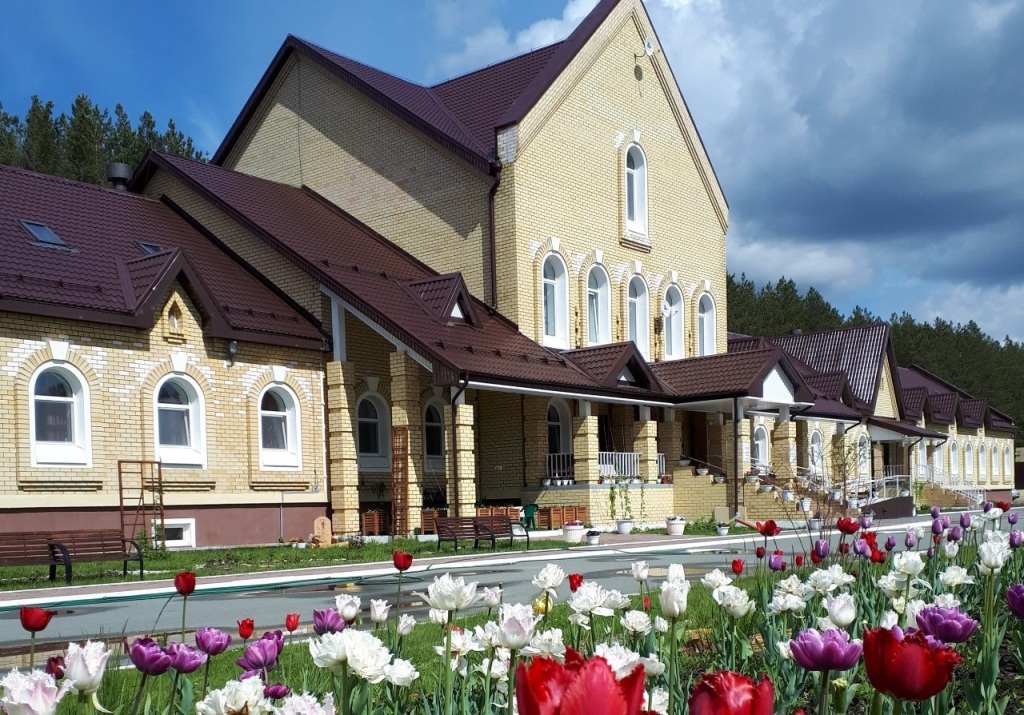
PHOTO: Pilgrimage Center at Ganina Yama

If you are planning a visit to Ekaterinburg, you may want to consider avoiding the hustle and bustle of the city, and spend a few days at the Diocesan Pilgrimage Center at Ganina Yama, which is located in a lush pine forest 25 km from Ekaterinburg.

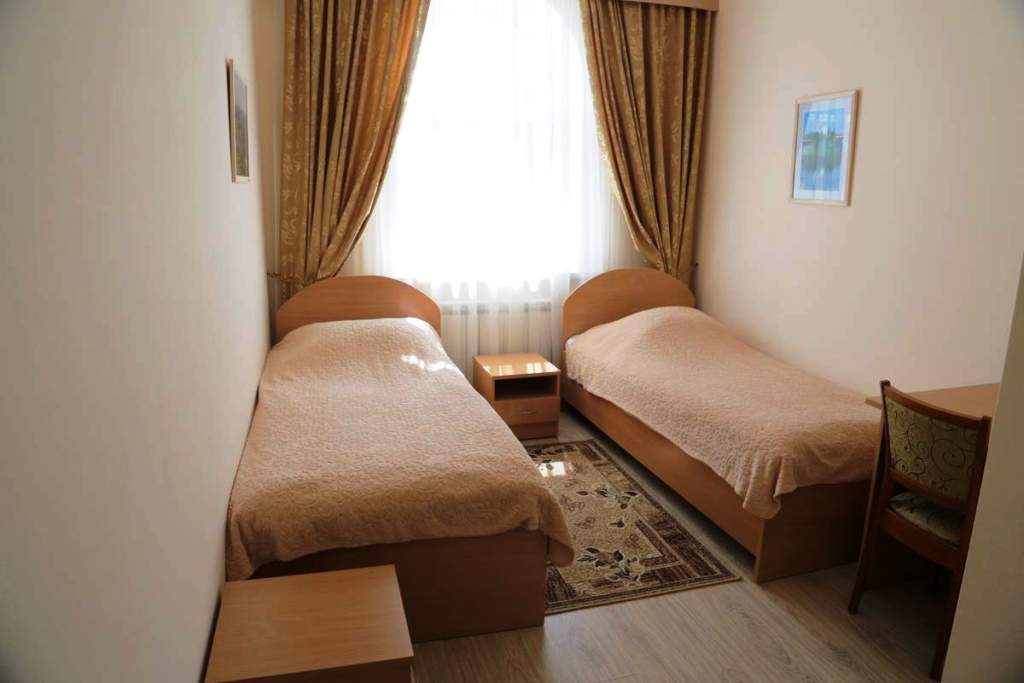
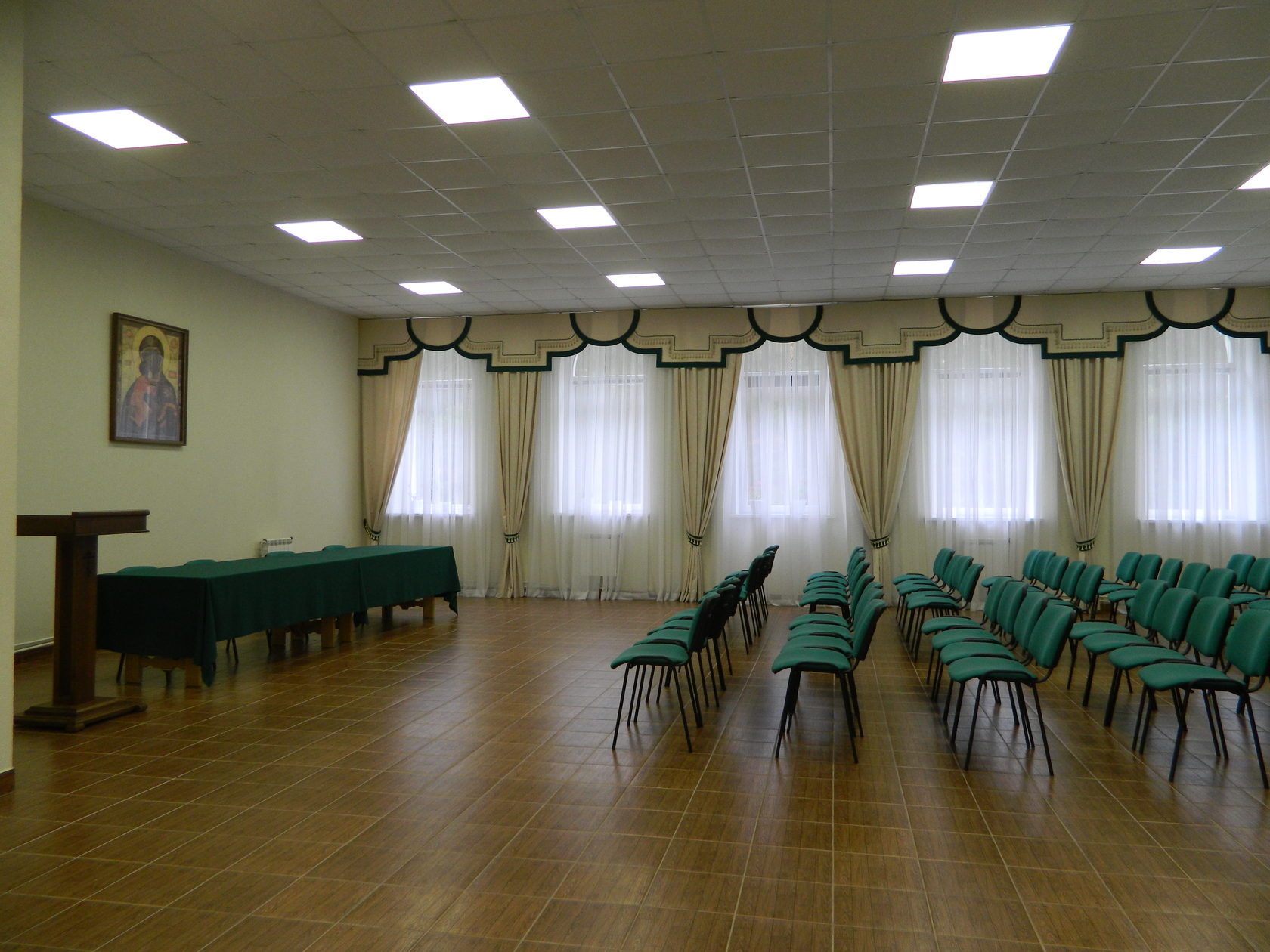
Opened in November 2013, near the Monastery of the Holy Royal Martyrs, the Pilgrimage Center provides accommodation for 180 people and meals in the refectory [dining hall] for 80 people with a varied menu. It is an ideal place to stay for pilgrims who wish to visit the places associated with the last days of Emperor Nicholas II and his family. In addition, the center provides a conference hall for 200 people – perhaps, an ideal venue for a future Nicholas II Conference? – among other amenities.

PHOTO: accommodation for 180 people in comfortable and affordable rooms

PHOTO: the refectory seats 80 people with a varied menu and three meals a day

Ekaterinburg resident Lydia Rostova, reflects on her stay at the pilgrimage center: “the rooms were both comfortable and affordable – starting at 500 rubles [$7 USD] per night. Three meals a day are organized in the center – breakfast 80 rubles [$1 USD], lunch 150 rubles [$2 USD], dinner 100 rubles [$1.40 USD]. At first I thought that I would not have to have supper, because the refectory is open until 20:00, and the evening service at the monastery ends later. But the question was easily resolved: if necessary, supper is left and warmed up. The food is tasty and varied.”

PHOTO: the center provides a conference hall seating 200 people

It is convenient place to stay for its proximity to the Monastery of the Holy Royal Martyrs or Porosenkov Log, to attend divine services, and to honour the memory of the Imperial Family. In addition, pilgrims can arrange visits to Ekaterinburg and Alapaevsk, or a pilgrimage to the Sredneuralsky Women’s Monastery in honour of the icon of the Mother of God, which is situated 7 km away from the center. You can also book a transfer to/from Koltsovo Airport for 700 rubles [$10 USD].

The Diocesan Pilgrimage Center at Ganina Yama prides itself in the tradition of Abrahamic hospitality to all pilgrims and visitors. Click HERE to visit their web site [Russian only].

© Paul Gilbert. 3 June 2021

Grand Duke Kirill’s act of treason against Emperor Nicholas II

PHOTO: Grand Duke Kirill Vladimirovich (1876-1938)

It is a well known fact, that under the command of Grand Duke Kirill Vladimirovich (1876-1938), the Marine of the Guard, the most loyal and elite troops of the Alexander Palace, had marched to the Tauride Palace to declare their allegiance to the Provisional Government. At the Tauride Palace, two revolutionary organs had formed under one roof in a single day: the Provisional Committee of the State Duma and the Executive Committee of the Petrograd Soviet of Workers Deputies.

In the Winter 2017 issue of Royal Russia, I published my 18-page interview with Princess Maria Vladimirovna [1], which consisted of 20 questions, one of which addressed her grandfather’s [Grand Duke Kirill Vladimirovich] alleged betrayal of Emperor Nicholas II. Prior to the interview, I was required to submit my questions to one of her legal advisors, who expressed doubt that she would answer this question, BUT she did!

PG: “Your grandfather, Kirill Vladimirovich, was accused of disloyalty and treason against Emperor Nicholas II. His detractors claim that in 1917, he swore allegiance to the new Provisional Government and that he wore a red armband on his uniform, even though he firmly denied these accusations in his memoirs [2]. Can you comment on these accusations?

MV: “Slander has always been one of the most effective weapons of the unprincipled politician.

“There are no authoritative witnesses or reliable evidence of any of the alleged actions some claim my grandfather took during the Revolution.

“My grandfather and his uncle, Grand Duke Paul Alexandrovich, in February and March 1917. . . that they together strove “with all their strength and in every way possible to preserve Nicky [that is, Emperor Nicholas II] on the throne.”

“Neither my grandfather nor Grand Duke Paul Alexandrovich served the Provisional Government. They resigned their official positions and offices after the illegal arrest of the Imperial Family [3].

“This fiction about the “red armband” and other slanderous claims began to spread only after my grandfather assumed the responsibilities that he legally inherited for the fate of the dynasty in exile [4].”

Vladimir Nikolaevich Voeikov, writes in his memoirs [5]:

The sailors in the Marine of the Guard, which at that time formed part of the security troops [for the Alexander Palace, where Empress Alexandra Feodorovna and her five children were in residence], began to evaporate. In the end, only officers remained, and the deserting sailors headed off to Petrograd to their barracks, where on the morning of March 2 they held a meeting to which they invited their commander, who at that time was Grand Duke Kirill Vladimirovich.

The grand duke explained to the sailors the import of the events taking place. The result of his explanation was not the return of the deserting sailors to fulfill their duty but a decision to replace their highly esteemed banner with a red rag, under which the Marine of the Guard followed their commander into the State Duma.

Grand Duke Kirill Vladimirovich with his tsarist monogram on his epaulettes and a red ribbon on his shoulders, appeared on March 1, at four-fifteen in the afternoon, at the State Duma, where he reported to Duma Chairman M.V. Rodzianko. “I have the honour of appearing before Your Excellency, I am at your disposal, as is the entire nation. I wish Russia only good.” Then he stated that the Marine of the Guard was at the complete disposal of the State Duma . . . In reply, M.V. Rodzianko expressed confidence that the Marine of the Guard would help them deal with their enemy (but he didn’t explain which one).

Inside the State Duma, the grand duke was received quite graciously, since even before his arrival at the commandant’s office in the Tauride Palace it was generally known that he had sent notes to the heads of the units of the Tsarskoye Selo garrison announcing:

“I and the Marine of the Guard entrusted to me have fully allied ourselves with the new government. I am certain that you, too, and the unit entrusted to you will also ally yourselves with us.”

“Commander of the Marine of the Guard, His Highness, Rear Admiral Kirill.”

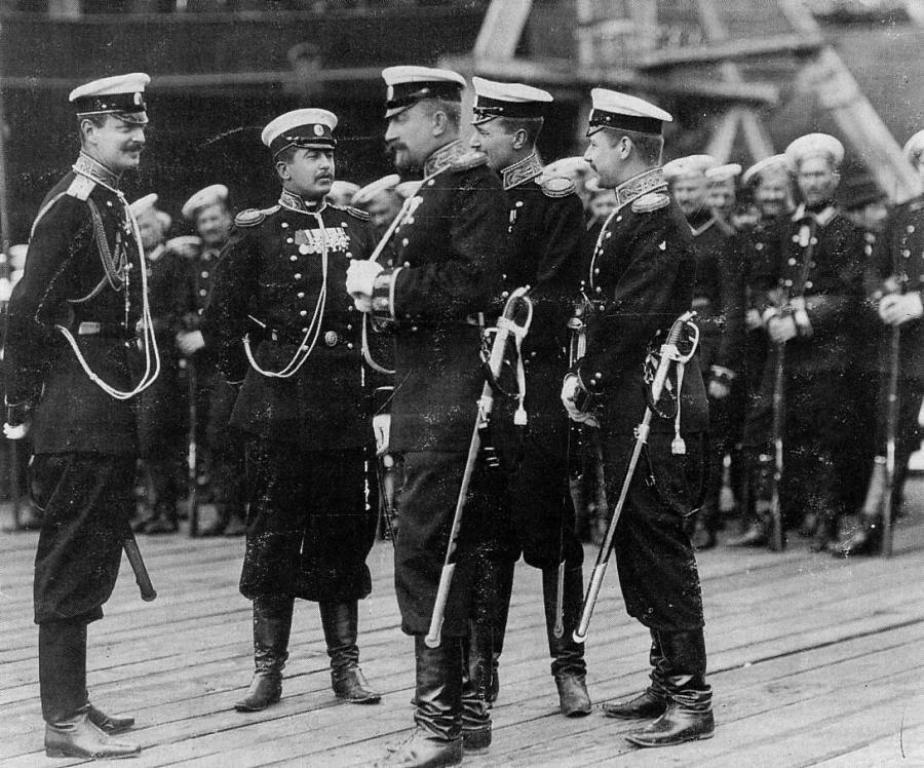
PHOTO: Grand Duke Kirill (left) with officers and sailors of the Guards crew

Following the October 1917 Revolution, no member of the Romanov family living in exile made any claim to the title of heir to the throne of the Russian Empire; rather, they shared the view once expressed by the Dowager Empress Maria Feodorovna and Grand Duke Nicholas Nikolaevich, that the final arbiter of whether there is a monarchy in Russia, and who would reign, must be the Russian people.

The Association of the Family of the Romanovs found themselves in conflict with the fifth branch of the Romanov family, the Vladimiroviches. The source of the conflict goes back to the 1920s, when Grand Duke Kirill Vladimirovich, who illegally [3] left Russia in mid-1917, declared himself the “guardian of the Russian throne” on August 8, 1922 and “Emperor of All the Russias” on September 13, 1924, thereby causing not merely a scandal, but a schism in monarchist circles of the Russian emigration. Opposing him were the most active members of the emigration, who had retreated from Russia with weapons in hand and who had united around the former supreme commander, Grand Duke Nicholas Nikolaevich. They accused Kirill Vladimirovich of abandoning his honour and dignity. The Dowager Empress Maria Feodorovna, her daugthers Grand Duchesses Xenia and Olga Alexandrovna, among other Romanov family members also opposed Grand Duke Kirill. Grand Duke Peter Nikolaevich supported his brother Nicholas, as did others. Eventually, the Association of the Family of the Romanovs was formed, which opposes the claims of the Vladimiroviches to this day. Nearly a century has passed, and yet no end to the schism is in sight.

The issue of the Vladimiroviches is ambiguous and multi-layered. According to Emperor Paul I’s “establishment,” when an emperor dies and his brother and his son also die in short order, the eldest of his male cousins becomes the heir to the throne. Indeed, the eldest male cousin of Nicholas II was Kirill Vladimirovich. Had this happened during ordinary times, and had the eldest cousin been someone other than Kirill Vladimirovich, he would have been recognized as heir to the throne without objections. However, in 1924 there was neither empire nor throne, and it was not appropriate to demand an “automatic” succession without taking into account the opinions of the empire’s defenders.

On March 1, 1917, before the emperor’s abdication, Grand Duke Kirill Vladimirovich was one of the first Russian officers to commit an act of betrayal to his oath of loyalty and to his dynastic duty. While commanding the Marine of the Guard, which was responsible for guarding the Imperial Family at Tsarskoye Selo, Kirill Vladimirovich marched them into Petrograd to declare their allegiance to the Duma. If this does not qualify as treason, then his emigration in June 1917 when he was a rear admiral in active military service in a country at war cannot be called anything but desertion. It is not difficult to understand why military men may have refused to recognize a man of such high “valour” as their monarch.

NOTES:

[1] Maria Vladimirovna is a Princess, not a Grand Duchess. The last grand duchess of Russia was Nicholas II’s younger sister Olga Alexandrovna, who died on 24th November 1960, in Toronto, Canada

[2] My Life in Russia’s Service – Then and Now, London: Selwyn & Blount, published posthumously in 1939

[3] In June 1917, Grand Duke Kirill was the first Romanov to flee Russia with his pregnant wife and their two children. Not only was his departure “illegal”, Kirill who was serving as a rear admiral in active military service in a country at war, had thus abandoned his honour and dignity. It is interesting to add, that the Kirillovich were the only branch of the Imperial Family who managed to escape the Bolsheviks, without losing any family members.

[4] Please refer to: The Russian Imperial House ended with the murder of Nicholas II

***

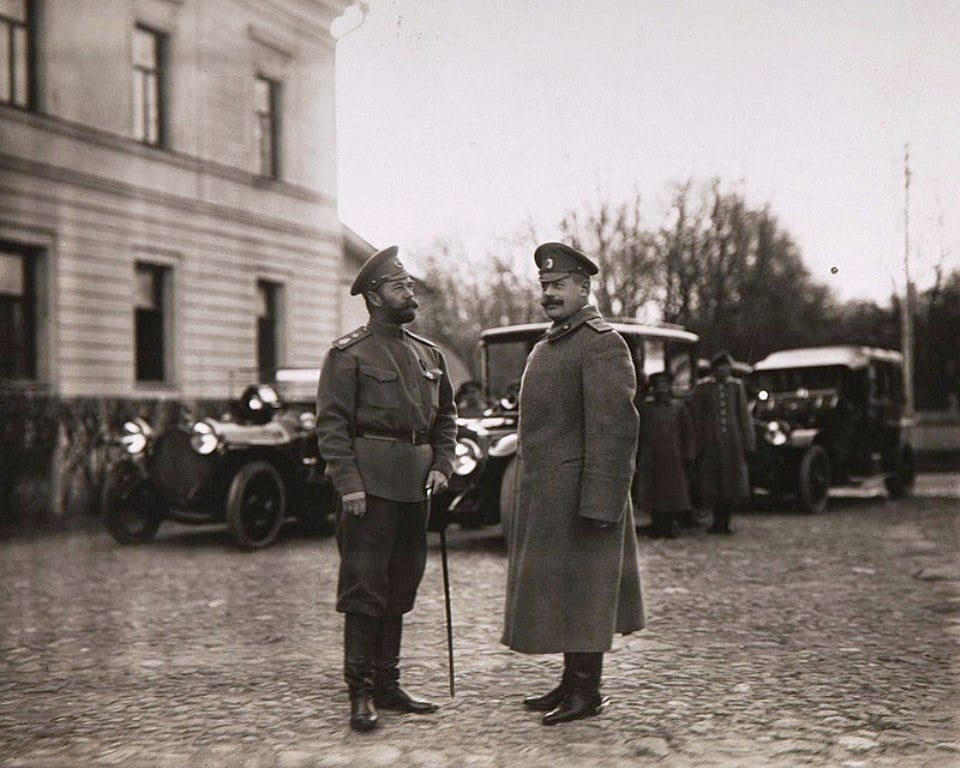
PHOTO: Emperor Nicholas II and Major General Vladimir Nikolaevich Voeikov at the Headquarters of the Commander-in-Chief in Mogilev. c. 1915

[5] Vladimir Nikolaevich Voeikov (1868-1947) was a member of His Imperial Majesty’s Retinue, and served as Palace Commandant from 1913 to 1917. During his years in exile, Voeikov wrote his memoirs “С царём и без царя: Воспоминания последнего дворцового коменданта» (With and Without a Tsar: Memories of the Last Palace Commandant”, published in in Helsinki in Russian in 1936.

© Paul Gilbert. 26 May 2021

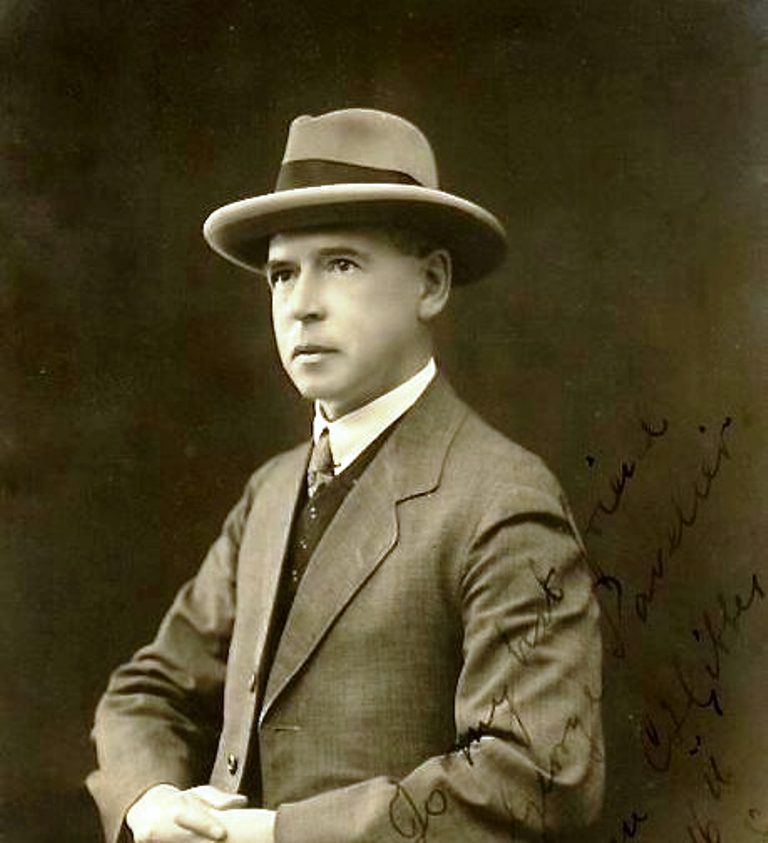
Charles Sydney Gibbes (1876-1963)

PHOTO: Charles Sydney Gibbes

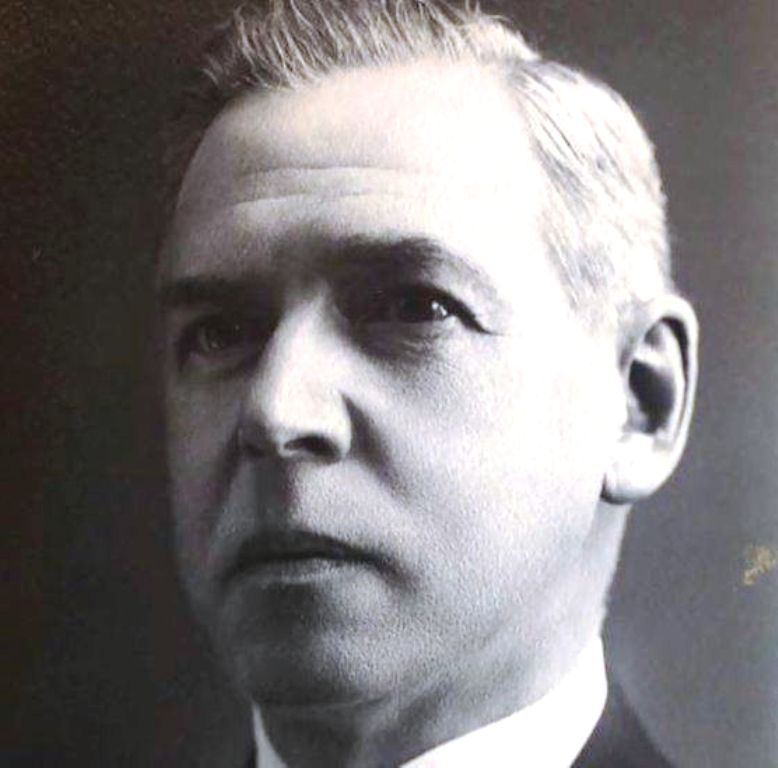
This article [sourced from Wikipedia] is a general introduction to Charles Sydney Gibbes (19 January 1876 – 24 March 1963). Gibbes was a British academic who from 1908 to 1917 served as the English tutor to the children of Emperor Nicholas II. When Nicholas abdicated the throne in March 1917 Gibbes voluntarily accompanied the Imperial family into exile to the Siberian city of Tobolsk. After the family was murdered in 1918 Gibbes returned to the United Kingdom and eventually became an Orthodox monk, adopting the name of Nicholas in commemoration of Nicholas II. He died in 1963, and is buried at Headington cemetery, Oxford, Oxfordshire, England.

There is little which is new that I could write about Gibbes, therefore, to compliment this article, I have provided a list of books and articles written about Gibbes which I trust will provide readers with a much more comprehensive understanding of one of the most devoted and beloved persons associated with the Russian Imperial Family – PG
***

BIOGRAPHY

Charles Sydney Gibbes was born in Rotherham, Yorkshire, England on 19 January 1876. He was the youngest surviving son of John Gibbs, a bank manager, and Mary Ann Elizabeth Fisher, the daughter of a watchmaker. Whilst at the University of Cambridge, Charles Sydney added the ‘e’ to the spelling of his own name. He entered upon theological studies in Cambridge and Salisbury in preparation for holy orders but realised that he had no religious vocation. Sydney is described as: severe, stiff, self-restrained, imperturbable, quiet, gentlemanly, cultured, pleasant, practical, brave, loyal, honourable, reliable, impeccably clean, with high character, of good sense and with agreeable manners. He could also be stubborn, use corporal punishment freely, that he could be very awkward with others, and he is recorded as having quite a temper, at least in his younger years.

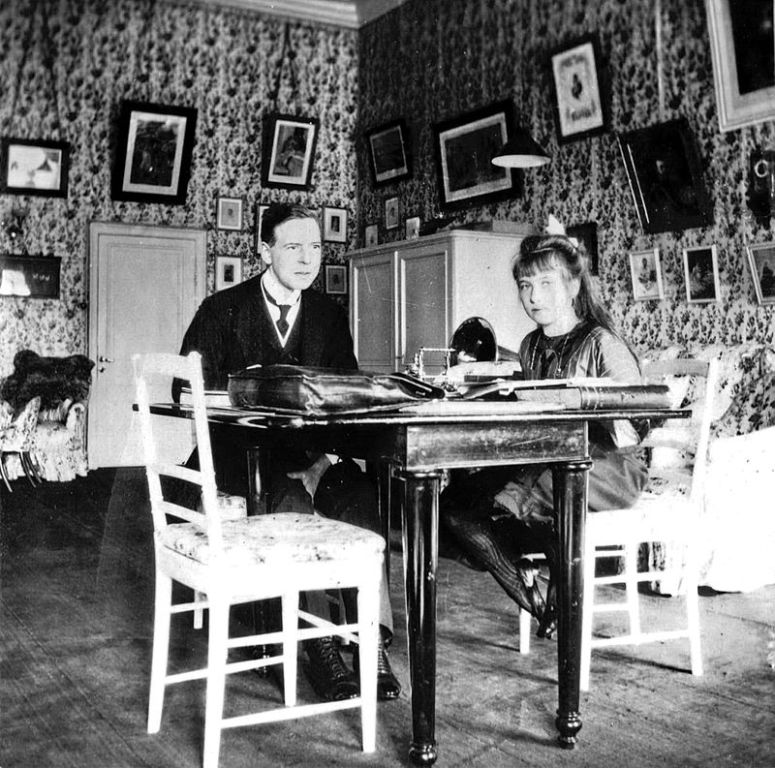
Having some talent at languages, he decided to teach English abroad. In 1901 he went to Saint Petersburg, Russia, as tutor to the Shidlovsky family and then the Soukanoff family. He was then appointed to the staff of the Imperial School of Law, and by 1907 he was qualified as vice-president and committee member of the Saint Petersburg Guild of English Teachers. He came to the attention of the Empress Alexandra and in 1908 was invited as a tutor to improve the accents of the Grand Duchesses Olga and Tatiana; and subsequently Maria and Anastasia. In 1913 he became tutor to Tsesarevich Alexei. The children referred to him as Sydney Ivanovich.

PHOTO: Gibbes with Grand Duchess Anastasia Nikolaevna. 1910

Gibbes’ career as court tutor continued until the February Revolution of 1917, after which the Imperial family was imprisoned in the Alexander Palace in Tsarskoye Selo. He was in St Petersburg at the time, and immediately after returning to Tsarskoye Selo was forbidden from seeing the Imperial Family. He was only allowed to recover his possessions after the Imperial Family had been sent into exile to Tobolsk in Siberia. Gibbes voluntarily followed the family, arriving in the village in October 1917 shortly before the Provisional Government fell to the Bolsheviks. In May 1918 the Imperial family was moved to the Ipatiev House in Ekaterinburg, and neither Gibbes, French tutor Pierre Gilliard, nor most other servants were allowed to enter. A number of servants stayed in the railway carriage which had brought them to the city.

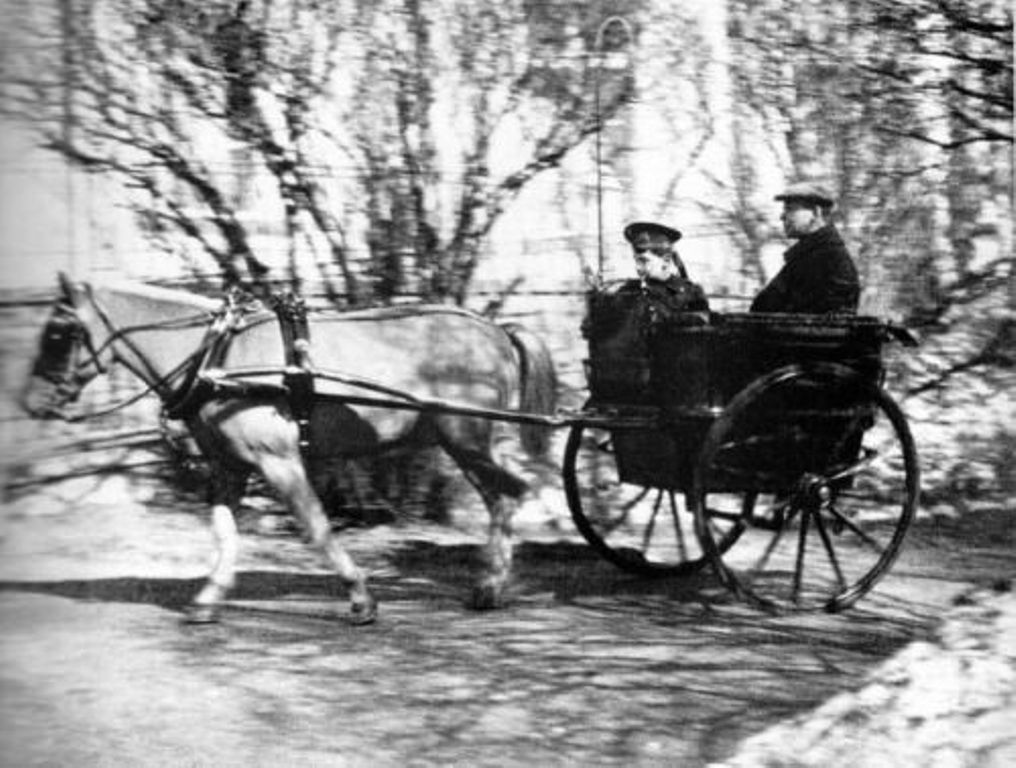
PHOTO: Gibbes with Tsesarevich Alexei Nikolaevich. Alexander Park, spring 1914

This carriage became part of a refugee train on 3rd June and the tutors were in Tyumen but returned to Ekaterinburg after the murder of the Imperial family on the night of 16/17 July 1918 and the fall of the city to the White Army on 25th July. Gibbes and Gilliard were early visitors to the scene of the regicide at the Ipatiev House and were both involved in the subsequent enquiries carried out by Ivan Alexandrovich Sergeiev and later by Nicholas Alexievich Sokolov.

As the Bolsheviks took Perm and closed in on Ekaterinburg, enquiries were abandoned and Gibbes and Gilliard left for Omsk. Gibbes was appointed as a secretary to the British High Commission in Siberia in January 1919, retreating eastwards as Siberia was captured by the Red Army. He was briefly employed at the British Embassy in Beijing and then became an assistant in the Chinese Maritime Customs in Manchuria.

There was a large White Russian refugee community in Harbin and it was there in 1922 that he met an orphan, Georges Paveliev, whom he adopted. He established George in 1934 on a fruit farm at Stourmouth House in East Stourmouth in Kent.

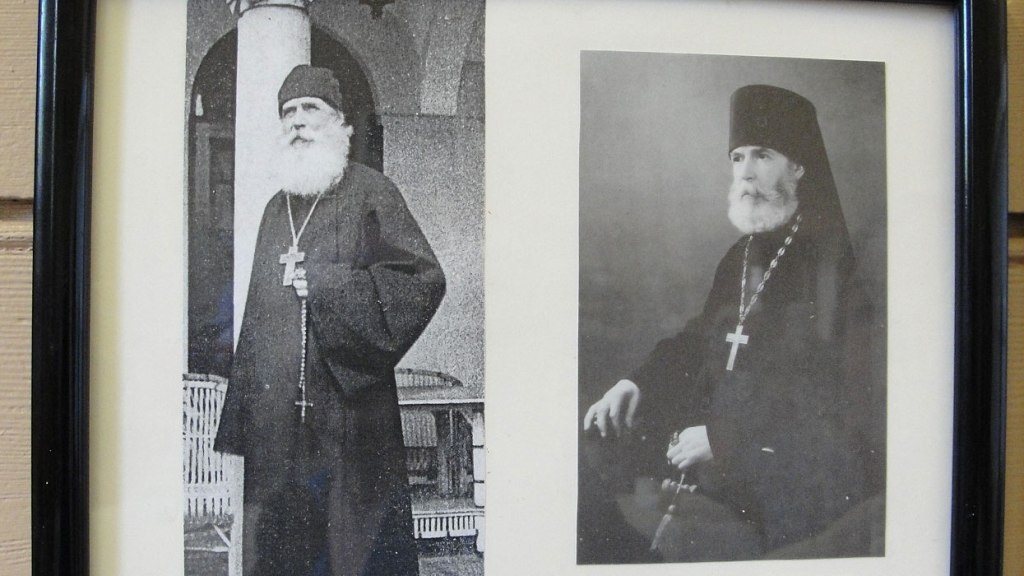
PHOTO: images of Father Nicholas. St. John’s Orthodox Church, Colchester, England

RETURN TO ENGLAND AND CONVERSION TO ORTHODOXY

Gibbes returned to England in 1928 and enrolled as an ordinand at St Stephen’s House, Oxford, but again decided that ordination in the Church of England was not to be his vocation.

In Harbin, China on 25th April 1934 he was received into the Orthodox church by Archbishop Nestor (Anisimov) of Kamchatka and Petropavlovsk who was there in exile. Gibbes took the baptismal name of Alexei in honour of the former Tsesarevich. He was tonsured a monk on 15th December, ordained deacon on 19th December and priest on 23rd December, taking the name Nicholas in honour of the former Tsar. In March 1935 he became an Abbot. He again returned to England in 1937 and was established in a parish in London.

At the time of the Blitz he moved to Oxford where in 1941 he established an Orthodox chapel in Bartlemas. In 1949 he bought a house at 4 Marston Street, subsequently known as the Saint Nicholas House. The house was built circa 1890 by a charity founded to distribute free medicine to the poor. During the war the building became the central ‘Air Raid Protection’ telephone exchange and there is still a ‘bomb proof’ concrete partition between the ground and first floor. Gibbes kept a chapel dedicated to St Nicholas the Wonderworker within the property. This chapel was home to several icons and mementos of the Imperial family which he brought with him from Yekaterinburg, including a chandelier from the Ipatiev House. The house was divided into flats in the 1960s, and the chapel was converted into a flat in the late 1980s.

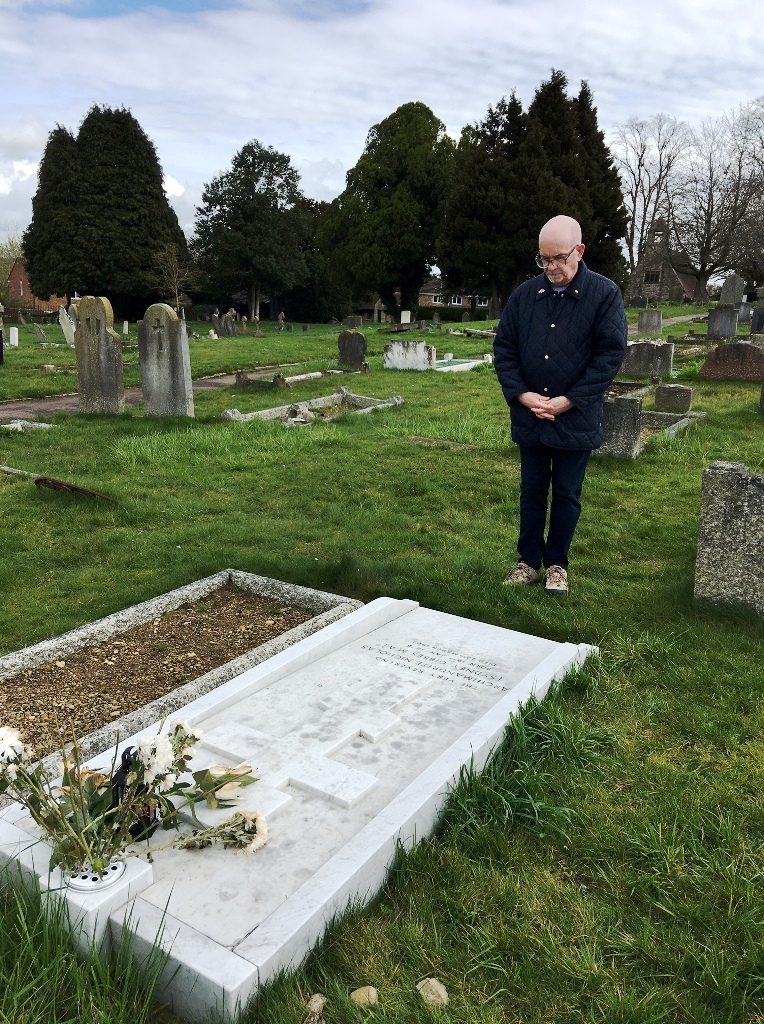
PHOTO: Paul Gilbert standing at the grave of Charles Sydney Gibbes
(later Father Nikolai), Headington Cemetery, Oxford, England. April 2023
.

DEATH

Gibbes died at St Pancras Hospital, London, on 24 March 1963. His open coffin was displayed in the cellar (or crypt) of Saint Nicholas House before his funeral. He is buried in Headington cemetery, Oxford, Oxfordshire, England.

His collection of Russian possessions were left with his adopted son, George, in Oxford, and George subsequently donated them to the museum at Luton Hoo. A small chapel was built there to house these memorabilia, consecrated by Metropolitan Anthony of Sourozh. The museum has been moved from Luton Hoo and is now a part of the Wernher Collection in Greenwich.

PHOTO: Charles Sydney Gibbes (1876-1963)

LEARN MORE ABOUT CHARLES SYDNEY GIBBES

It was generally believed that Gibbes did not write his memoirs, however, it is now known that among the documents stored in his archive, housed at the University of Leeds Special Collections, is his typescript Ten Years with the Russian Imperial Family (unpublished). I regret that I do not know the number of pages, nor can I confirm if it was ever completed.

In addtition, there is a vast collection of books and articles written about Gibbes, for which I have provided links below:

Archimandrite Nicholas Gibbes: From the Russian Orthodox Church in Exile to the Moscow Patriarchate by Nicholas Mabin

Fr. Nicholas Gibbes: The first English disciple of Tsar Nicholas II and the first English priest of the ROCOR by Archpriest Andrew Phillips

From Romanov tutor to Orthodox missionary: The life of Charles Gibbes by Alexandra Kulikova

The Last Days of Sydney Gibbes, English Tutor to the Tsarevich by Helen Rappaport

Russian Revolution: The tutor who witnessed the downfall of the Romanovs

BOOKS

Benagh, Christine (2000) An Englishman in the Court of the Tsar. Ben Lomond, California: Conciliar Press.

Trewin, J. C. (1975) Tutor to the Tsarecvich – An Intimate Portrait of the Last Days of the Russian Imperial Family compiled from the papers of Charles Sydney Gibbes. London: Macmillan

Welch, Frances (2005) The Romanovs & Mr Gibbes: The Story of the Englishman Who Taught the Children of the Last Tsar. UK: Short Books

VIDEOS

The English Tutor Who Became a Monk. The Last Years of Sydney Gibbes narrated by Helen Rappaport [Duration: 18 min., 20 sec.]

The Winter of 1962/3 was one of the coldest ever experienced in Britain. At St Pancras Hospital in London, the death rate was very high. Fifty-five years later there is one death that still sticks in the mind of nurse Anne Scupholme. His name was Charles Sydney Gibbes, but since 1934, when he had taken his vows as a Russian Orthodox priest, he had been known as Father Nicholas. He had been English tutor to the five children of Russia’s last Tsar and Tsaritsa, and during that time had developed a very close relationship with the young tsesarevich, Alexei.

© Paul Gilbert. 23 May 2021