Nicholas II and the Boer War
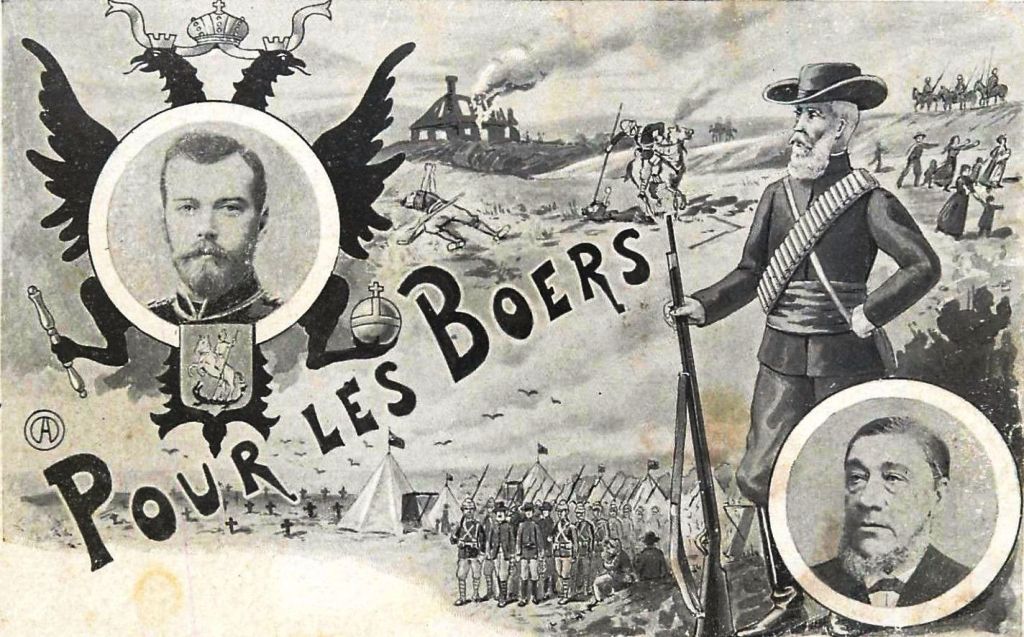
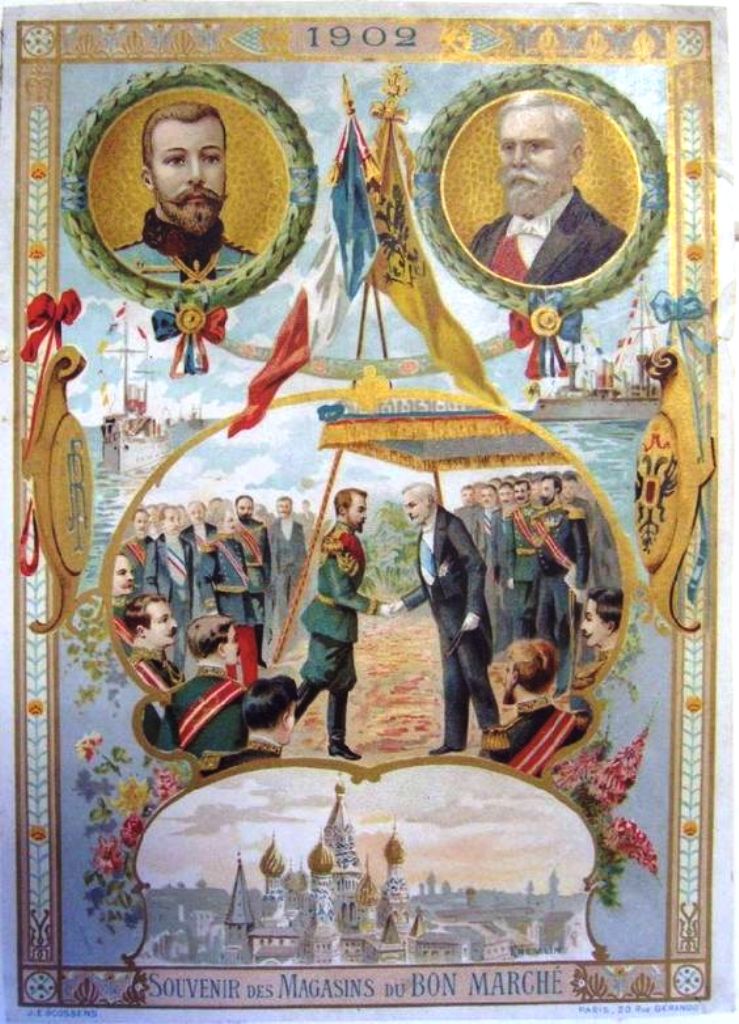
PHOTO: Postcard depicting Transvaal President Paul Kruger and Tsar Nicholas II of Russia

I am wholly preoccupied with the war between England and the Transvaal,” Nicholas II wrote to his sister Grand Duchess Xenia Alexandrovna at the outbreak of the Boer War. “Every day I read the news in the British newspapers from the first to the last line . . . I cannot conceal my joy at . . . yesterday’s news that during General White’s sally two full British battalions and a mountain battery were captured by the Boers!”

Britain’s hold on South Africa was significant for the Russians partly because the route to India lay via the Cape, and as Governors of the Cape were only too aware, Russia had its own designs on India. In 1896, President Paul Kruger (1825-1904), sent the Russian émigré financier Benzion Aaron to represent the Transvaal at Nicholas’s coronation in Moscow, which led Russia to establishing diplomatic relations with the Transvaal.

Nicholas was, in fact, quite carried away. ‘You know, my dear,’ he told his sister Xenia Alexandrovna, ‘that I am not arrogant, but it is pleasant for me to know that I and I only possess the ultimate means of deciding the course of the war in South Africa. It is very simple – just a telegraphic order to all the troops in Turkestan to mobilize and advance towards the [Indian] frontier. Not even the strongest fleet in the world can keep us from striking England at this her most vulnerable point.’ Such was Nicholas’s ‘dearest dream’ but it came to nothing.

For their part the British made some effort to accommodate Russia. On 31st August 1899 London agreed to accept a Russian consul in Bombay, thus for the first time permitting official access to India which the British had preserved so carefully from Russian influence.

Xenia replied from Ai-Todor [Crimea] on 11th October 1899: “We are terribly interested in the war in the Transvaal, and are right behind the Boers and wish them every success in the war. I think there can be no one (except the English!) who isn’t on their side!.”

The Boer War found Nicholas and his mother the Dowager Empress Maria Feodorovna taking different sides.

In a letter written to her son from Bernstorff Palace [Denmark] on 7th November, 1899, Maria writes: “We are following the news of the war in the Transvaal with great interest here. It does seem more than surprising that the English had so little information about the Boers being so well prepared for war: for a long time ago, four years, they ordered 150,000 rifles of the best pattern from Krupps, and many guns as well. The losses of the English are terrible, and the position they’re in is most depressing. What a terrible deathroll! How awful it all is! I am sure there is not one family in England which has not lost one or several of its members. What a sad place it must be now! And what sorrow for poor Queen Granny at the end of her days!”

Nicholas replied from the Alexander Palace [Tsarskoye Selo] on 9th November, 1899: “The Anglo-Boer War interests me terribly; I wish all possible success to those poor people in this unequal and unjust war. Almost unbelievable sympathy is shown all over Europe to the Boers, even ordinary folk take the greatest interest in their fate.”

The enthusiasm of the Russian public for the Boer cause knew no constraints. Books, articles, poems, plays and pamphlets about the Boers poured out, orchestras played ‘Transvaal, Transvaal, My Country’ over and over again, money was collected and sent, prayers were offered up in church for a speedy victory against the British and pictures of the Boers were everywhere.

Russian conservatives were pro-Boer not only for the usual nationalist, anti-British reasons but because they thought the Boers were like the best sort of Russians – conservative, rural, Christian folk resisting the invasion of their land by foreign (especially Jewish) capitalists. ‘The deep historical meaning of this war,’ wrote one conservative Moscow paper, ‘is that faith, patriotism . . . the patriarchal family, primordial tribal unity, iron discipline and the complete lack of so-called modern civilization have . . . become such an invincible force that even the seemingly invincible British have begun to tremble.’ 

PHOTO: Russian Boer general Lt Col Yevgeny Maximov
on his return from the Anglo-Boer War

Several hundred Russians – including some Russian aristocrats and two medical units – came out to fight for the Boers. One of the most famous was ‘the Russian Boer General’, Lt-Col. Yevgeny Maximov (1849-1904), who seems to have had such extraordinary influence with Kruger and his generals that he is thought to have arrived in South Africa on a secret mission from the Russian Government. And even after Kruger was exiled to Holland after the war, he remained in touch with Maximov, thanking him for his bravery. Maximov was the real thing: a professional soldier, a wonderful horseman, an almost miraculously good shot (on one occasion he shot a springbok at 800 metres from a moving train) – the sort of man who fought on despite his wounds when most of his unit had been wiped out. (He returned from that engagement a hero and was personally thanked by Smuts.) Like most of the Russians, he left via Mozambique once it became clear that the Boer cause was lost.

On 22nd May 1901, Nicholas wrote to King Edward VII of Great Britain: “Pray forgive me for writing to you upon a very delicate subject, which I have been thinking over for months, but my conscience obliges me at last to speak openly. It is about the South African war and what I say is only said as by your loving nephew.

“You remember of course at the time when war broke out what a strong feeling of animosity against England arose throughout the world. In Russia the indignation of the people was similar to that of the other countries. I received addresses, letters, telegrams, etc. in masses begging me to interfere, even by adopting strong measures. But my principle is not to meddle in other people’s affairs: especially as it did not concern my country.

“Nevertheless all this weighed morally upon me. I often wanted to write to dear Grandmama [Queen Victoria] to ask her quite privately whether there was any possibility of stopping the war in South Africa. Yet I never wrote to her fearing to hurt her and always hoping that it would soon cease.

“When Misha [Grand Duke Mikhail Alexandrovich] went to England this winter I thought of giving him a letter to you upon the same subject: but I found it better to wait and not to trouble you in those days of great sorrow [death of Queen Victoria on 22nd January 1901]. In a few months it will be two years that fighting continues in South Africa—and with what results?

“A small people are defending their country, a part of their land is devastated, their families flocked together in camps, their farms burnt. Of course in war such things have always happened and will happen, but in this case, forgive the expression, it looks more like a war of extermination. So sad to think that it is Christians fighting against each other!

“How many thousands of gallant young Englishmen have already perished out there! Does not your kind heart yearn to put an end to this bloodshed? Such an act would be universally hailed with joy.”
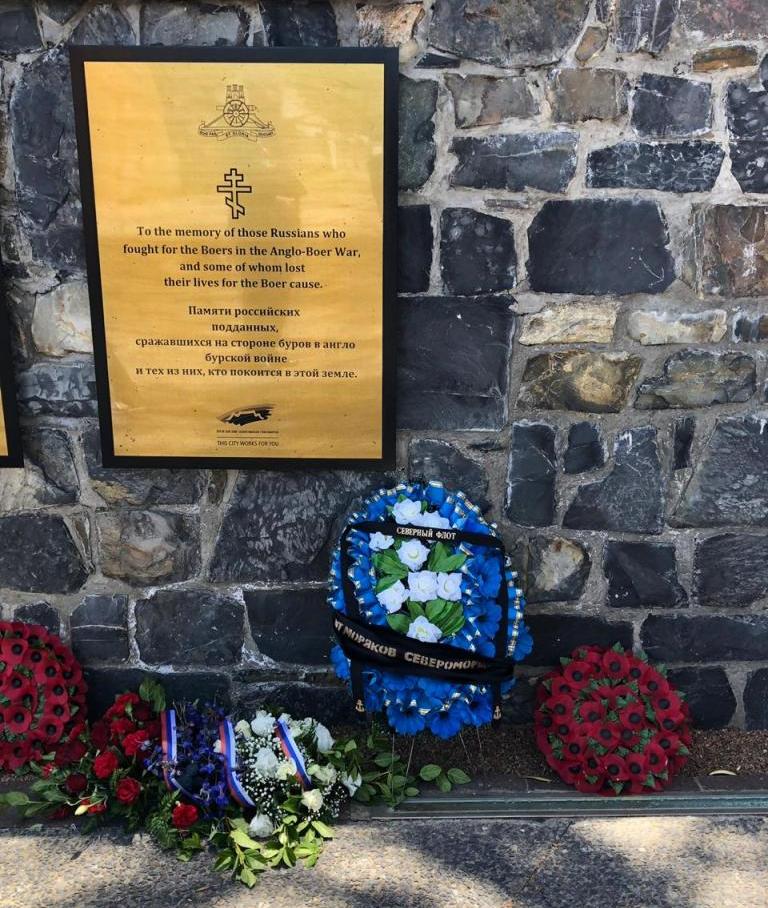
On 26th November 2019, a plaque (above) commemorating the sacrifice of more than 270 Russians who fought with the Boers in the Anglo-Boer War against the British was unveiled at the Green Point Common Memorial at Fort Wynyard [Cape Town, South Africa]. The event was attended by Russian Ambassador to South Africa Ilya Rogachev and members of the Russian Navy who were participating in military exercises in the region.

Rogachev, along with members of the Cape’s Russian community and military veterans, laid wreaths at the plaque in memory of the Russian lives lost in the war that stretched from 1899 to 1902.

© Paul Gilbert. 16 September 2020
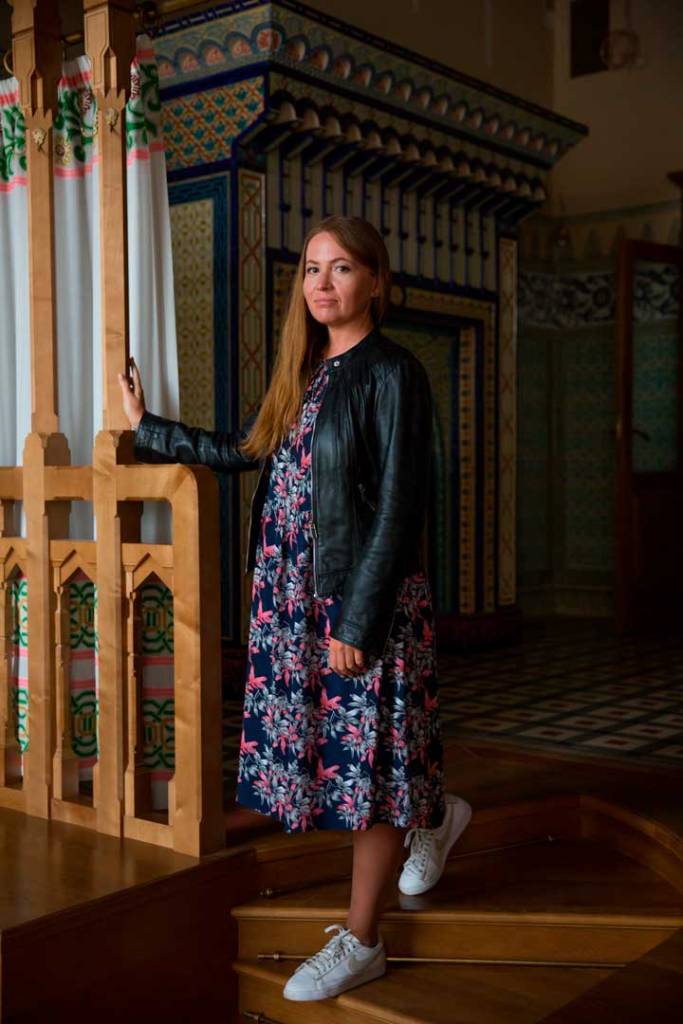
“As if the door had just closed behind them” – Anastasia Timina on the restoration of the Alexander Palace

PHOTO: Studio 44 architect-restorer Anastasia Timina

Any museum restoration and reconstruction requires the expertise of specialists: researchers, curators, architects and designers. In particular is the restoration of the iconic Alexander Palace at Tsarskoye Selo, which began in the autumn of 2015 and is not expected to be completed no earlier than 2022.

Anastasia Timina, an architect-restorer of the Studio 44 architectural bureau, a graduate of the Stieglitz Academy, and leading architect of the Alexander Palace restoration project.

What is the difference between an architect and an architect-restorer?

The work of an architect mainly affects modern buildings and structures, but we are dealing with history, with monuments of cultural significance which need to be preserved, reconstructed and at the same time treated with the utmost care. This involves certain restrictions and additional responsibilities.

The architects of our bureau are developing a project for the reconstruction of the Alexander Palace as a multi-museum complex for modern use, filling it with modern engineering networks and communications. The main task of the bureau’s restoration department is to reconstruct the interiors of the private rooms of Emperor Nicholas II and Empress Alexandra Feodorovna and to restore their historic interiors.

The restoration of the lost interiors is almost complete. At the moment, our department is engaged in the design of free-standing pieces of furniture for the restored interiors of the Alexander Palace based on historical photographs, descriptions and surviving samples. Fortunately, a table from the Mauve Boudoir and a chair from the Imperial Bedroom have survived, which have become standards for the manufacture of other items.

How long have you been working on the project to recreate the interiors of the Alexander Palace?

My participation began in 2014 from the stage of a detailed design. At that time I came to Studio 44 from the oldest design and restoration organization in St. Petersburg – Lenproektrestavratsiya.

The project for the reconstruction of eight interiors, which I was assigned to work on, included detailed drawings for wall decoration, built-in wall furniture, as well as sketches for the recreation of curtains for window and doorways.

The development of design documentation is divided into several stages: first, a draft design is created, showing the development of a general view and the main concept, followed by a detailed design – this is the most detailed documentation, including types of products, fragments, details, nodes at a scale of 1:1, specifications taking into account the volume and nature of the materials used.

In 2013, a draft design was completed, but having studied all the iconographic material in detail, I came to the conclusion that the working documentation required significant changes. I worked as part of a large team of architects-restorers, under the leadership of Oleg Arnoldovich Kuzevanov – the chief architect of the restoration project of the Alexander Palace. From 2016 to the present, I have been supervising the recreation of the interiors.

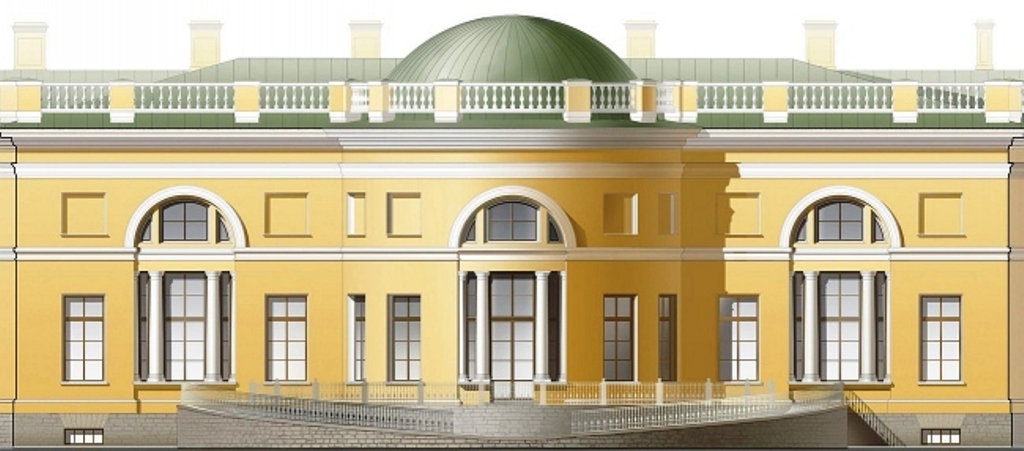
PHOTO: The eastern wing of the palace (highlighted on the left)
will become the Museum of the Russian Imperial Family

It is clear that this is a very complicated process. What is the most difficult task?

The most difficult task is to recreate an interior “from scratch”, to work on the project only on the basis of black and white historical photographs, often of poor quality. In the pictures, only part of the room can be seen, a complex angle is taken, there are no frontal views of the walls and interior details. Based on these images, it is necessary to understand how the space in the photograph is distorted, and to calculate the real dimensions and proportions of the projected objects. In such work, any genuine detail that has survived to our time helps, for example, fragments of fabrics. Having measured the size of the rapport and the details of the drawing, we can scale the photo and calculate the dimensions of the interior details surrounding the fabric.

Of course, we would be happy to have more historical photographs at our disposal, but we try to use all available interior images. For example, to a non-specialist, the image of the Empress against the background of a fragment of a chair (possibly out of focus), a table or curtains will seem useless from a restoration point of view, but we can visualize the necessary detail that is hidden in photographs of the interior. Even if a photo is blurry, of poor quality, and seems useless, it can, oddly enough, also be of invaluable design help. By the way, in our work we are also utilizing items from the Alexander Palace, which have been kept in the Pavlovsk Palace Museum-Reserve since the 1950s.

When restoring lost interiors, there is nothing more important than complete information and a large number of historical images in order to achieve maximum authenticity. Therefore, when new details (photos, inventories) and even small details appear, it is necessary to correct the project. We do this all the time.

What discoveries and interesting finds took place during the restoration work?

The most significant discovery is the original pieces of interior decoration found under the flooring of the Moorish Bathroom of Nicholas II.

This is a very complex interior full of different elements, including Metlakh tiles on the floor, a tiled fireplace and tiles covering the walls and sides of the pool. In this interior, there are more than 40 different types of tiles that do not repeat in pattern, relief, and most importantly, in colour. But neither the inventory nor the archival data gave us a detailed idea of ​​the colour scheme of the interior. All historical photographs are black and white, the only assistant was a watercolour by the architect Bezverkhny. During the construction work, when opening the floors of the first floor, genuine fragments of ceramic tiles and Metlakh tiles, marble were found in the layers of construction dust. A large bathing pool was also found with preserved tiles and two steps leading to the pool. Until this moment, we had no idea it had survived.

This discovery in September 2016 was a real miracle for us. We have revised and supplemented the project documentation, we have already restored the missing fragments of the tile pattern from historical photographs. In addition, small fragments of ceramic tiles for the fireplace facings in the Working Study of Nicholas II and the Maple Drawing Room were also found.

The second significant discovery concerns the found fragments of alfrey painting. During the clearing of the Soviet plaster layer, a historical plaster layer was discovered on the lime mortar with traces of tempera painting. A picturesque frieze ran along three sides of the Moorish Bathroom, but, unfortunately, only small, but still very valuable fragments of it have survived, as they display to us the true color scheme – both for the frieze and for the smoothly painted wall. Fragments of the murals on the walls of the lobby of the eastern wing were also found.

A very valuable find – a fragment of a historical plaster layer with a plastered “rose” molding that once adorned the walls and the archway, found during the opening of the historic opening connecting the mezzanines of the Empress’s Maple Drawing Room and the New Study of Nicholas II. This allowed us to restore the stucco decoration, and the true color of the walls.

Is the restoration of interior decoration carried out using traditional materials or with the help of modern technologies?

The problem is precisely how to achieve historical similarity using modern technologies.

Of course, when restoring interiors, traditional materials are used – precious woods (walnut, rosewood, maple, oak), lime mortar plaster, oak parquet flooring, etc. Ceramic tiles are made by hand and in ovens. In the preserved interiors (the New Study and the Reception Room of Nicholas II), restoration work is carried out in compliance with the restoration methods.

The situation is more complicated in the restored interiors. More than a hundred years have passed, technologies have greatly advance, but, unfortunately, the skill of manual labor has almost been lost, finishing materials (varnishes, enamels, glazes) have changed significantly, wooden carved parts are made on CNC machines, only slightly modified by hand.

The Alexander Palace is the favorite home of the last Russian emperor Nicholas II and his family, a place with a special energy. Do you feel a special responsibility?

The responsibility is colossal. It is quite clear that this is not a private, closed residence, but a museum, in which thousands of visitors will want to visit. I wanted to create a unique atmosphere for the presence of representatives of the Imperial family, to convey the spirit of a lost era. As if the door had just closed behind them.

The first eight interiors are now scheduled to open at the end of 2020.

© Paul Gilbert. 9 September 2020

Nicholas II and “Aunt Miechen”

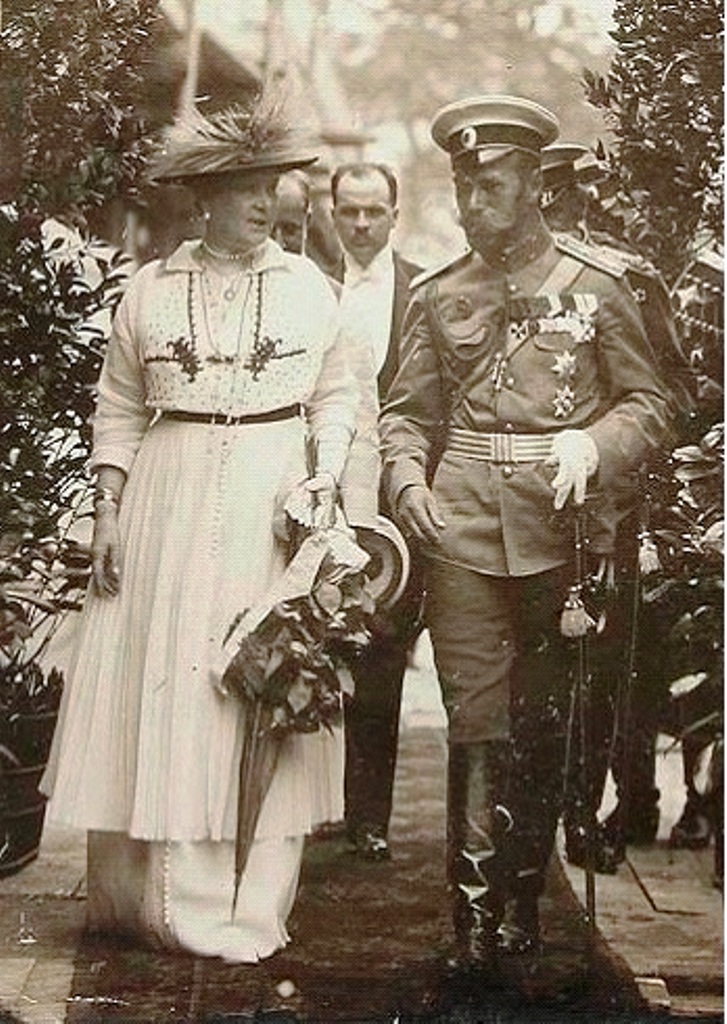
PHOTO: Nicholas II with Aunt Miechen (Maria Pavlovna)

On 6th September 1920 – Grand Duchess Maria Pavlovna died in France. She was the last Romanov to leave Russia and the first Romanov to die in exile.

Grand Duchess Maria Pavlovna the Elder (née Duchess Marie Alexandrine Elisabeth Eleonore of Mecklenburg-Schwerin;), was born in Ludwigslust Palace on 14 May 1854,

On 29 August (O.S. 16 August) 1874, Duchess Marie married Grand Duke Vladimir Alexandrovich (1847-1909) in St. Petersburg. The couple had 5 children: Grand Duke Alexander (1875-1877), Grand Duke Kirill (1876-1938), Grand Duke Boris (1877-1943), Grand Duke Andrei (1879-1956), Grand Duchess Elena, Princess of Greece and Denmark (1882-1957).

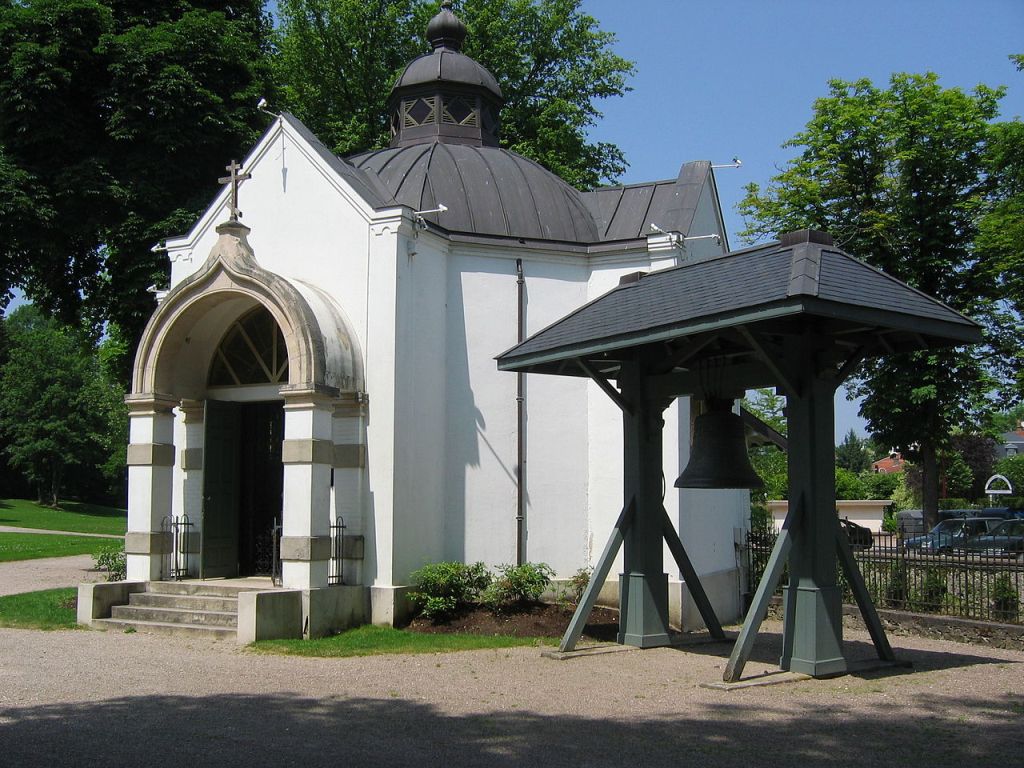
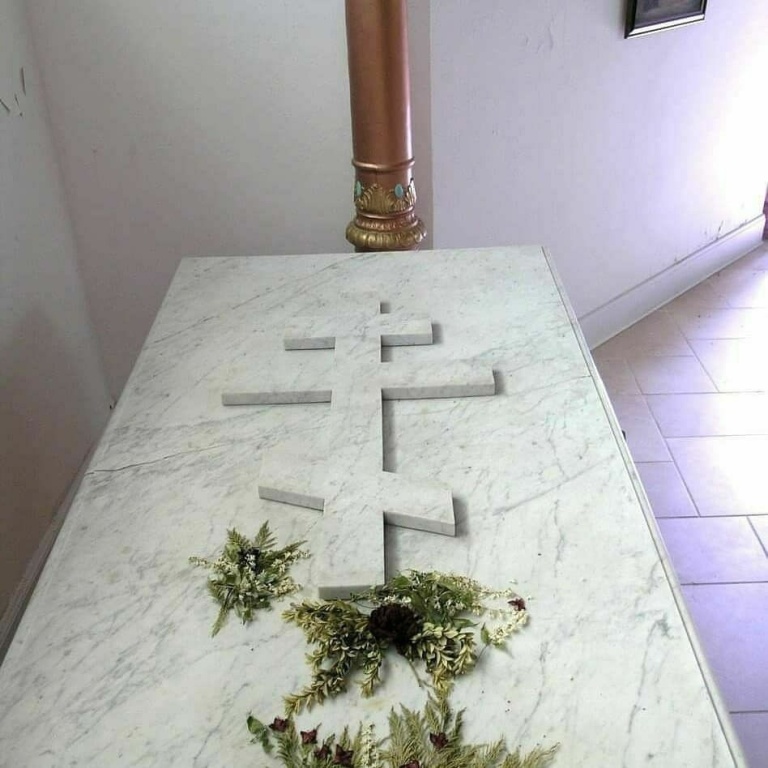
PHOTO: chapel in France, where Grand Duchess Maria Pavlovna was buried in 1920

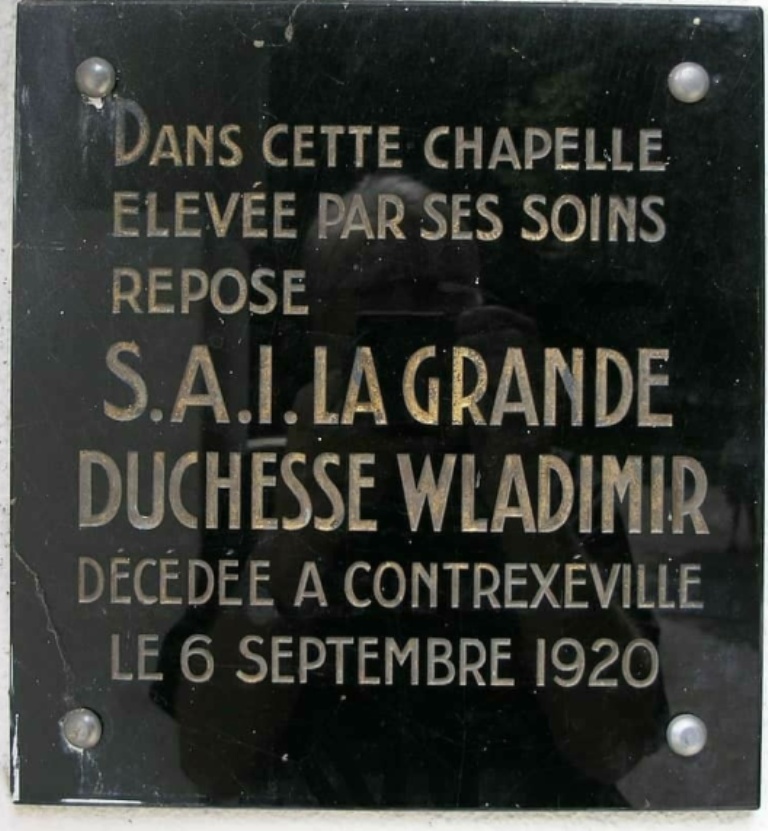
PHOTO: the tomb of Grand Duchess Maria Pavlovna (1854-1920)

Grand Duchess Maria Pavlovna escaped Russia in late February 1920, she died on 6th September 1920 at Contrexeville, a town in France, poised on the Vosges river where she had been a regular before the fall of the Russian Empire. She is buried in the Orthodox chapel that she had built there before the revolution. year.

Grand Duchess Maria Pavlovna the Elder is the great-grandmother of Princess Maria Vladimirovna [b. 1953], one of the current pretenders to the non-existant Russian throne. I note the following from the official web site of the current Russian Imperial House:

“She was critical of some aspects of the official political course, but she always retained her loyalty and love for Emperor Nicholas II and Empress Alexandra Feodorovna. She was subjected to slanderous persecution by the court intriguers, who sought to sow discord within the Imperial Family.”

What utter nonsense!!

Following her marriage to Grand Duke Vladimir Alexandrovich in 1874, Maria Pavlovna became a prominent hostess in St Petersburg, she was known as the “grandest of the grand duchesses.” Socially ambitious, the German born Maria Pavlovna saw herself as the “Second Empress” holding her own “Court” at the sumptuous Vladimir Palace, situated on the Palace Embankment on the Neva River in Sr. Petersburg. 

Known as “Miechen” within the Romanov family, she was well known for her acid tongue and spiteful demeanour, responsible for spreading much malicious gossip about both Emperor Nicholas and his wife Empress Alexandra Feodorovna.

She was also very crafty, she remained Lutheran throughout most of her marriage, but it was not until April 1908, that she adopted Holy Orthodoxy, believing it would give her son Grand Duke Kirill Vladimirovich a better chance at the throne.

The power hungry Grand Duchess Maria Pavlovna had an open rivalry with both her sister-in-law the Empress Maria Feodorovna (wife of Emperor Alexander III) and Empress Alexandra Feodorovna (wife of Emperor Nicholas II), the latter of which Maria Pavlovna was notorious for plotting against and spreading malicious gossip at her “powerful Court” which tended to influence all of St. Petersburg’s high society.

The treachery and deceit which emanated from the Vladimir Palace was not restricted to the senior grand ducal couple, but also to their eldest son Grand Duke Kirill Vladimirovich and his wife Grand Duchess Victoria Feodorovna [aka “Ducky”]. Maria Pavlovna along with her sons were even plotting to overthrow Nicholas II, and have Alexandra sent to a convent. [please refer to video, link provided at the end of this post].

It is widely speculated that along with her sons, Maria Pavlovna contemplated a coup against the Emperor in the winter of 1916–17, that would force the Tsar’s abdication and replacement by his son Tsesarevich Alexei, with her son, Grand Duke Kirill or Grand Duke Nicholas Nikolaevich, as regent.

During the February Revolution of 1917, Kirill marched to the Tauride Palace at the head of the Garde Equipage (Marine Guard) to swear allegiance to the new Provisional Government, wearing a red band on his uniform. He then authorized the flying of a red flag over his palace on Glinka Street in Petrograd. It is probable that he had hoped that by ingratiating himself with the Provisional Government he would be declared regent or tsar after Nicholas II was forced to abdicate.

“All around me I see treason, cowardice and deceit” – Emperor Nicholas II

Please take a few moments to listen to my interview ‘The Conspiracy Against Nicholas II,’ on YouTube, in which I talk about the members of the Imperial family who were plotting against Nicholas II, including the Grand Dukes Nicholas Nikolaevich and Nicholas Mikhailovich, and the Vladimirovich branch of the family, led by the power hungry Grand Duchess Maria Pavlovna.

© Paul Gilbert. 6 September 2020
The fate of the royal servants Anastasia Hendrikova and Ekaterina Schneider

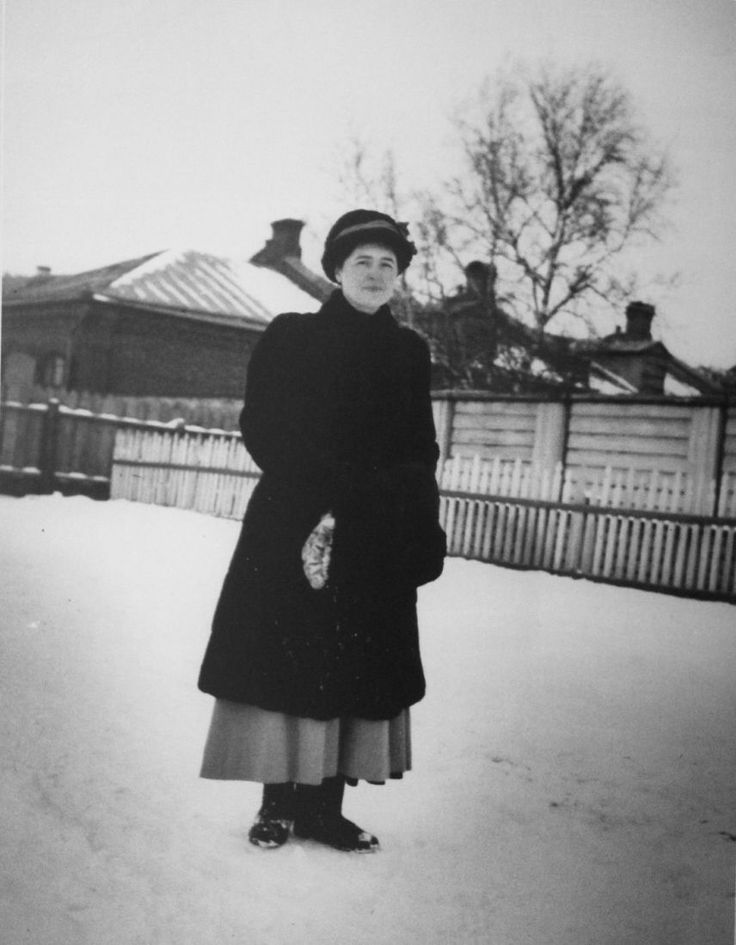
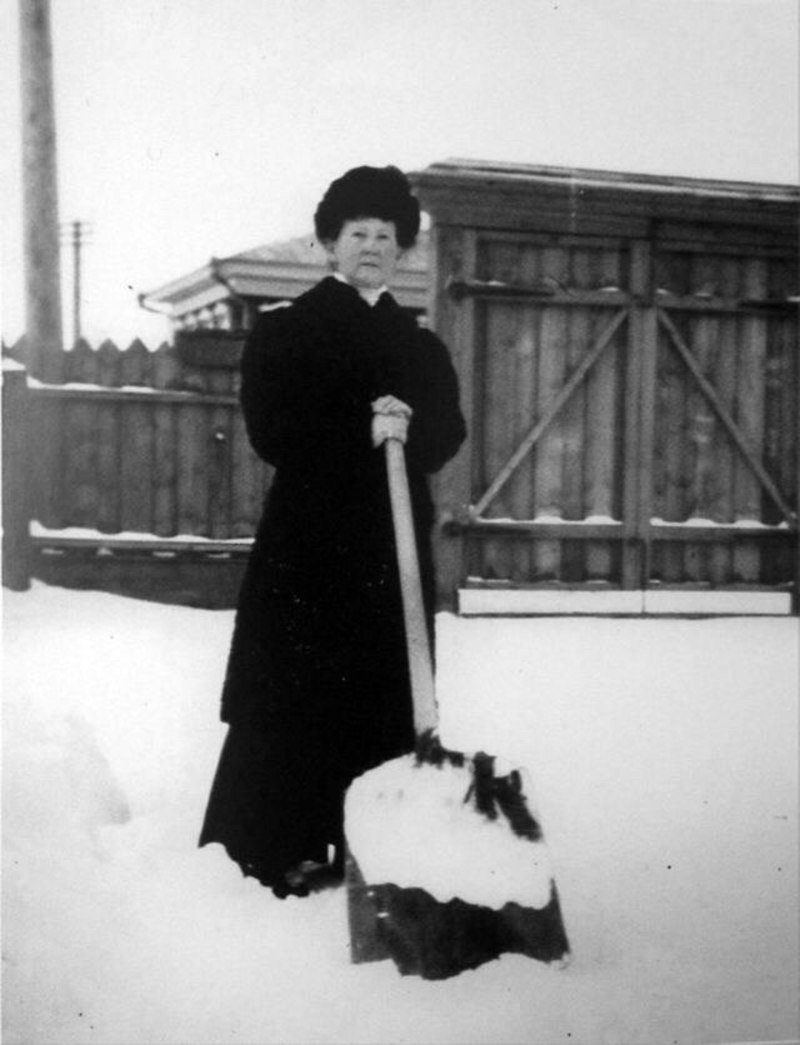
PHOTO: Ekaterina Schneider and Anastasia Hendrikova

On this day –  4th September (O.S. 22nd August) 1918 – two faithful retainers, who followed the Imperial family into exile, Countess Anastasia Vasilievna Hendrikova (1888-1918), maid of honour to the Empress Alexandra Feodorovna and Ekaterina Adolfovna Schneider (1856-1918), were both murdered by the Bolsheviks in Perm.

PHOTO: Anastasia Hendrikova under house arrest in Tobolsk 1917-18

Countess Anastasia Vasilievna Hendrikova (1888-1918)

Countess Anastasia Vasilievna Hendrikova was born on 6th July (O.S. 23rd June) 1888. Although she was born to the nobility, she was very simple in her way of life from early youth, she dressed very modestly, even old-fashioned and, unlike most noble girls, never participated in balls and entertainments. She was distinguished by her deep piety, nobility, selflessness and in the most difficult circumstances retained her faith in God.

In 1910, Countess Hendrikova became the personal maid of honour to Empress Alexandra Feodorovna. Nicknamed “Nastenka,” the Empress, the Grand Duchesses, and the courtiers loved her for her kindness, affability, meekness, simplicity and openness in communication.

In February 1917, Countess Hendrikova, at the insistence of the Empress, went to a seriously ill Sister of Mercy in Kislovodsk, but when she arrived there she learned that the Emperor had abdicated the throne. Anastasia Vasilyevna hurried back to Tsarskoye Selo. It is known that at that time the majority of courtiers and servants, under different pretexts, took leave of the Tsar’s family, basically everyone cared only about their own well-being. Anastasia Vasilyevna could have remained in Kislovodsk where she would have been safe, but she, unlike the other courtiers, overcame all obstacles and returned to the Imperial family. A few hours after she arrived at the Alexander Palace, the former Imperial residence became a prison for all who voluntarily wished to remain in it. That evening, she wrote in her diary: “Thank God, I managed to arrive on time to be with them.” Her presence was a great support for the royal prisoners. Always happy, meek, smiling, she cheered everyone up.

“Poor, Anastasia Vasilievna,” S.N. Smirnov wrote in his memoirs about Hendrikova, “I remember the sweet smile of this young girl, her friendliness, her funny walk …”

PHOTO: Ekaterina Schneider under house arrest in Tobolsk 1917-18

Ekaterina Adolfovna Schneider (1856-1918)

Ekaterina Adolfovna Schneider was born on 20 January 1856, in St Petersburg to a Baltic Germanfamily, she was also the niece of the former imperial physician Dr. Hirsch. From the day of her birth, she lived with her parents in an apartment on Liteiny Prospect in the Imperial capital.

Known as “Trina,” a courtier remembered her as “infinitely sweet tempered and good hearted.” Schneider was also primly Victorian. She once refused to permit the four grand duchesses to put on a play because it contained the word “stockings.”

In 1884, she was hired to teach the Russian language to the Grand Duchess Elizabeth Feodorovna, the wife of Grand Duke Sergei Alexandrovich. Apparently, Ms Schneider managed to find a common language with her student, earning herself a good reputation. After the engagement in 1894 of the heir-Tsesarevich Nicholas Alexandrovich to Princess Alix of Hesse-Darmstadt, Schneider was summoned to London to teach the Russian language to the bride. Alix’s studies with Schneider continued for several years. In a letter dated 4th February 1895 to her older sister Princess Victoria of Battenberg, Alexandra Feodorovna wrote that “Schneiderlein” (as she called her teacher) lived in the Winter Palace, and that “the other day she turned 38 or 39. She comes every morning, and we study hard. She also reads to me an hour before dinner.”

Schneider did her job well: most of the Empress’s contemporaries who regularly communicated with her often complemented the Empress on her command of the Russian language. In addition, Schneider was able to make friends with her student, and they were connected for life. Even after her services as teacher were no longer required, she became the Empress’s confidante and lived in the Alexander Palace at Tsarskoye Selo.

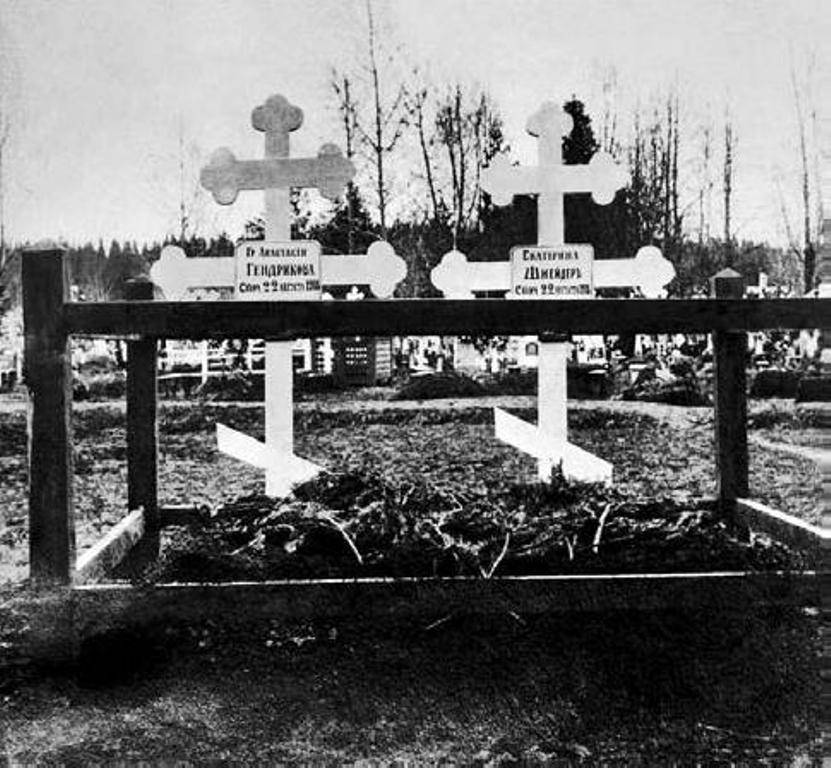
PHOTO: Graves of Anastasia Hendrikova and Ekaterina Schneider;
later destroyed by the Bolsheviks

Faithful to the End

On 1st August 1917, Anastasia Hendrikova and Ekaterina Schneider followed the Tsar’s family into exile to Tobolsk. Before leaving, Hendrikova wrote in her diary: “I can not leave here without thanking God for that wonderful peace and power that He sent me and supported me for all these almost five months of arrest. I close my eyes, give myself completely, without questions or murmurings into the hands of God with confidence and love. “

In May 1918 Anastasia Hendrikova and Ekaterina Schneider arrived in Ekaterinburg with four of the Tsar’s children, however, they were not admitted to the Ipatiev House, but were instead transferred to a Perm prison. They, prayed fervently and tried to remain cheerful, although both were exhausted by the illnesses and burdens of imprisonment.

On the night of 4th September 1918, Anastasia Hendrikova and Ekaterina Schneider were awakened and taken with a group of prisoners outside the city where they were killed. According to the Whites investigation at the time, they were both shot at point blank range followed by a strong blow to the back of the head. Only a few months later, after the arrival of the White Army, the bodies of the dead were discovered, and they were buried in the cemetery in Perm.

The bodies of Hendrikova and Schneider were recovered by the Whites in May 1919, and were reburied in the Yegoshikha Cemetery. However, their graves were later destroyed when the Bolsheviks regained control of the city.

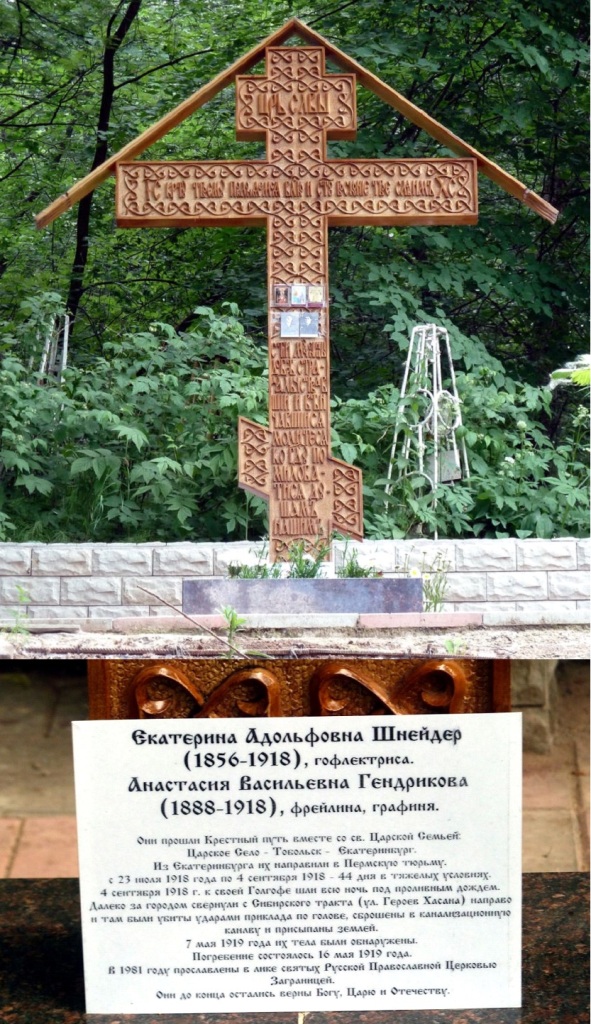
PHOTO: Memorial cross to Countess Hendrikova and Ekaterina Schneider
in the Yegoshikha Cemetery, Perm

In October 2012, thanks to the efforts of a group of parishioners from churches in the city, and with the blessing of the Metropolitan of Perm and Solikamsky Methodius, a new cross was erected at the site where their remains were believed to have initially been buried.

A memorial service with prayer is performed for Hendrikova and Schneider, every year on 4th September, at the burial site in the Yegoshikha Cemetery, which is situated near the Church of the Assumption of the Blessed Virgin Mary in Perm.

PHOTO: Church of the Assumption of the Blessed Virgin Mary in Perm

Canonization

In October 1981, both Hendrikova and Schneider were canonized by the Russian Orthodox Church Outside of Russia (ROCOR). Schneider was canonized in spite of the fact she was a Lutheran, however, she has not been canonized by the Moscow Patriarchate due to her faith.

On 16th October 2009, the General Prosecutor’s Office of the Russian Federation decided to rehabilitate 52 persons of the Imperial family and their retainers who had been subjected to repression, including Hendrikova and Scheider.

***

CLICK on the LINKS below to read UPDATES on the identification and burial of Hendrikhova and Scheider’s remains near Perm in May/June 2024:

Remains of 2 faithdul retainers to the Imperial Family discovered near Perm
30th May 2024

Memorial Litarny and monument for Anastasia Hendrikova and Ekaterina Schneider in Perm
14th June 2024

© Paul Gilbert. 4 September 2020

Bust of Nicholas II established in Kalach

0305a

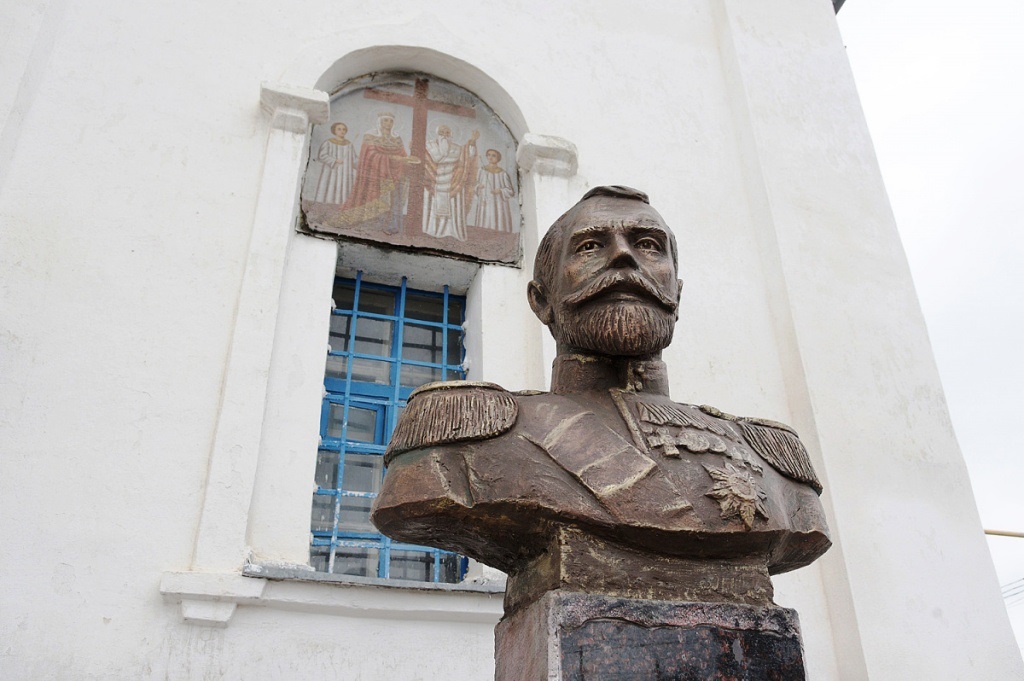
Bust monument to Emperor Nicholas II by local sculptor Viktor Grishchenko

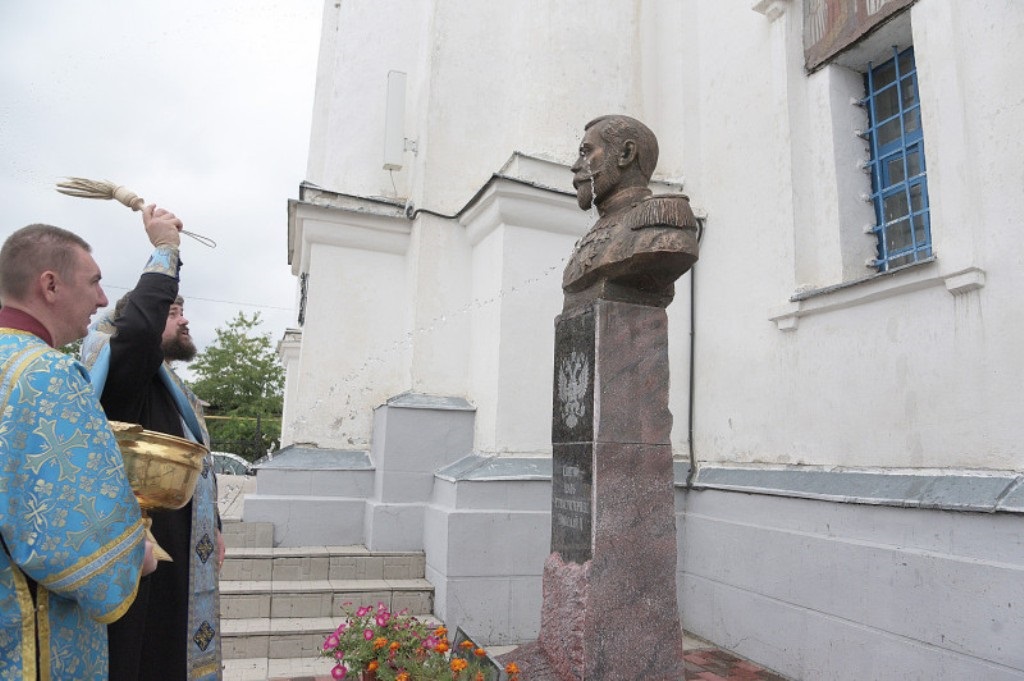
On Saturday, 29th August, 2020, a new bust monument to Emperor Nicholas II was unveiled and consecrated on the grounds of the Church of the Ascension of the Lord in the town of Kalach, Voronezh region. According to local historian Pavel Popov, this is the only monument to the emperor in the region.

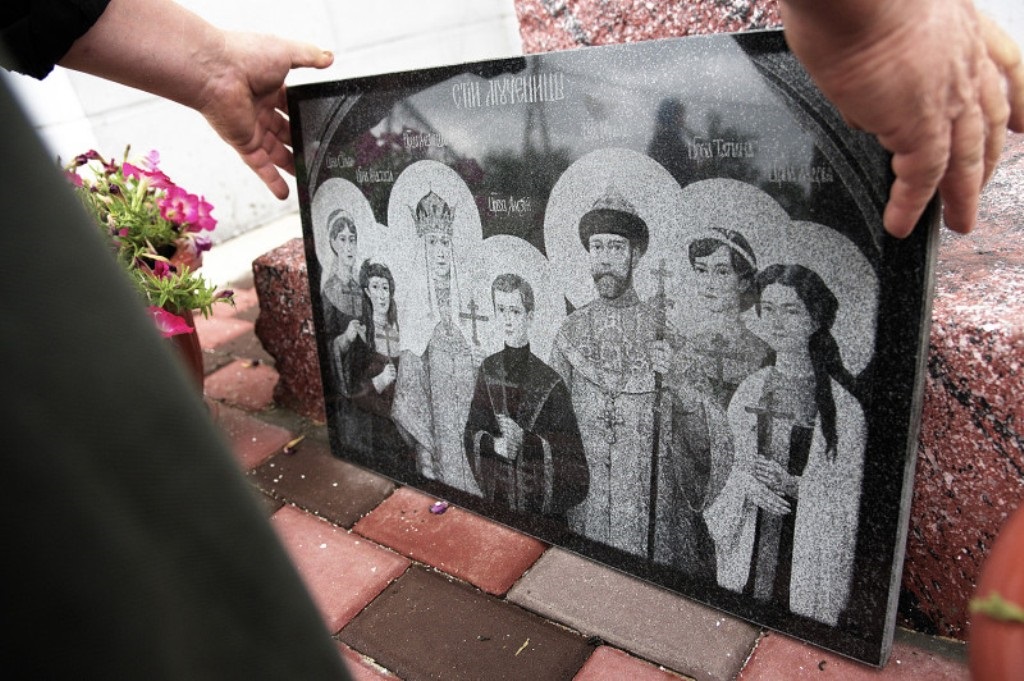
In addition to the monument made by local sculptor Viktor Grishchenko, a granite icon depicting the Holy Royal Martyrs was also consecrated, to be mounted on the monument at a later date.

0305b

Archpriest Evgeniy Bey consecrates the bust monument to Emperor Nicholas II

0305c

Granite icon depicting the Holy Royal Martyrs 

© Paul Gilbert. 2 September 2020
Nicholas II Calendar 2021

0304

LIMITED PRINTING OF ONLY 200 COPIES!

I am pleased to offer copies of my 2021 calendar, dedicated to Emperor, Tsar and Saint Nicholas II, with a limited printing of only 200 copies!

Each month features an iconic full-page black and white photograph of Russia’s last monarch, printed on quality glossy stock.

Nearly 70 major holidays in the United States, Canada, Great Britain, Australia and Russia are featured, with room to write in your own special dates and events.

Also featured, are the birth dates of members of Nicholas II, Alexandra Feodorovna, and their five children, as well as important dates in the reign of Russia’s last tsar.

ALL net proceeds from the sale of each calendar will go into my research, including the cost of translating articles and news from Russian archival and media sources.

The price of each calendar is $10 + postage (rates are noted on the order page, link below). I can ship to any country by Canada Post

NOTE: the postage rates quoted are for SINGLE copies ONLY! If you want to order more than one calendar, then please contact me by email at royalrussia@yahoo.com

Payment can be made securely online with a credit card or PayPal or by personal check, money order or cash – click HERE to download and print a mail order form

Thank you for your support of my research and dedication to clearing the name of Russia’s much slandered tsar

© Paul Gilbert. 1 September 2020
Audio recording of the voice of Nicholas II

0303

This is a recording of a solemn speech made by Nicholas II in French, delivered in honour of the arrival of French President Emile Loubet in St. Petersburg on 8th May, 1902.

The year of 1901 noted in the video is incorrect. Also, the watercolours shown in the video document the visit of Emperor Nicholas II and Empress Alexandra Feodorovna to France in 1901.

NOTE: Nicholas II was fluent in 4 languages: Russian, English, French, and German

The text of Nicholas II’s speech was published in the ‘Полном собрании речей императора 1894-1906 / Complete Collection of the Emperor’s Speeches 1894-1906’. The speech was also published in the Russian newspaper ‘Vestnik’ in 1902.

French text:

“Monsieur le Prèsident, Mes troupes dont Vous venez de voir le dèfilè sont heureuses d’avoir pu rendre les honneurs au Chef hautement estime de l’Etat ami et alliè. Les vives sympathies qui animent l’armèe russe a l’ègard de la belle armèe française Vous sont connues. Elles constituent une rèelle fraternitè d’armes que Nous pouvons constater avec d’autant plus de satisfaction que cette force imposante n ‘ est point destinèe à appuyer des visèes agressives, mais bien au contraire à affermir le maintien de la paix gènèrale et à sauvegarder le respect des principes èlevès qui assurent le bien-ètre et favorisent le progrès des nations. Je lève Mon verre à prospèritè et à la gloire de la brave armès française.”

English translation:

“Mr. President, My troops paraded before you, happy to have the opportunity to pay tribute to the highly respected Head of a friendly and allied state. You know the sincere disposition towards the excellent French army that reigns in the Russian army. Our armies are a true brothers in arms, which we can celebrate with all the more satisfaction, that this imposing force is in no way intended to support aggressive aspirations, but, on the contrary, to strengthen the maintenance of universal peace and preserve those lofty principles which promote progress and ensure the prosperity of nations. I raise My glass to the glory and prosperity of the brave French army.”

NOTE: This speech is in two parts. The first speech is the voice of Nicholas II. The second part most likely belongs to the French President, who turns to the Tsar and wishes power and prosperity of the great Russian army.

© Paul Gilbert. 25 August 2020

“A cross of gold” for Russia

0302

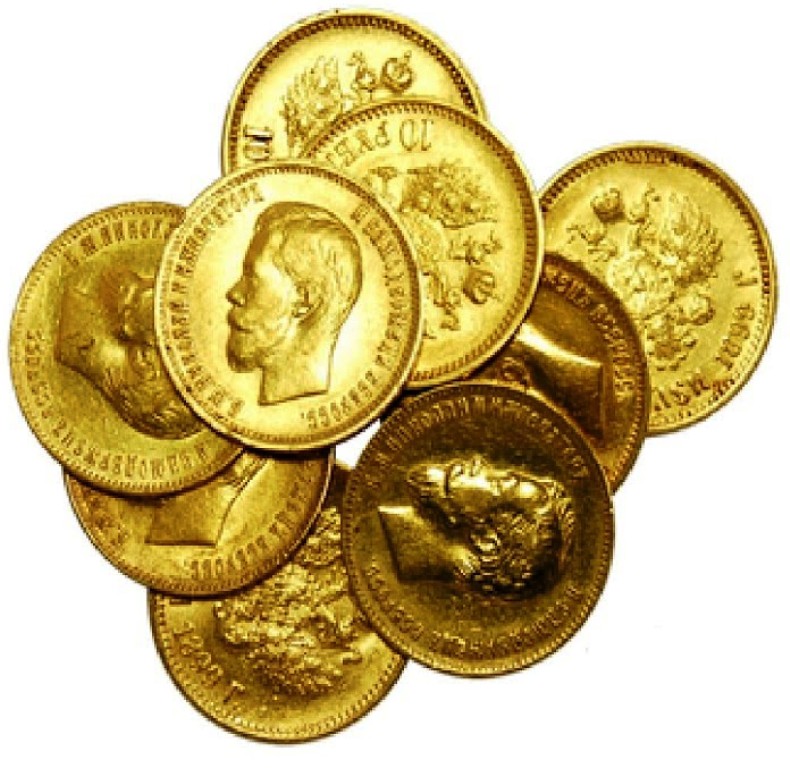
In 1896, Emperor Nicholas II ordered a major currency reform to place the Russian ruble on the gold standard. This resulted in increased investment activity and an increase in the inflow of foreign capital. It was one of the many achievements during his 22-year reign as Emperor of the Russian Empire.

Russia had not enjoyed a stable currency since the Crimean War (1853-1856) when the government suspended the redemption of paper notes for gold and silver. The [international] exchange rate of the credit or paper ruble fell considerably during the Russo-Turkish War of 1877-78.

The instability of Russia’s currency stemmed from its lack of any precise correlation with foreign currencies [based on the gold standard]. This instability created a serious obstacle to 19th century Russian commercial and capital transaction. Not only did Russians have to pay higher prices for foreign goods, fluctuations of exchange complicated the Russian export trade. 

Ivan Alekseyevich Vyshnedgradsky (1832-1895), who served as Russia’s Minister of Finance from 1886-92, began the process of accumulating a gold reserve in order to stabilize the ruble. His successor Sergei Yulyevich Witte (1849-1915), who served as Minister of Finance from 1892-1903, accelerated this policy of accumulation, partly by using foreign loans to obtain gold. 

0302c

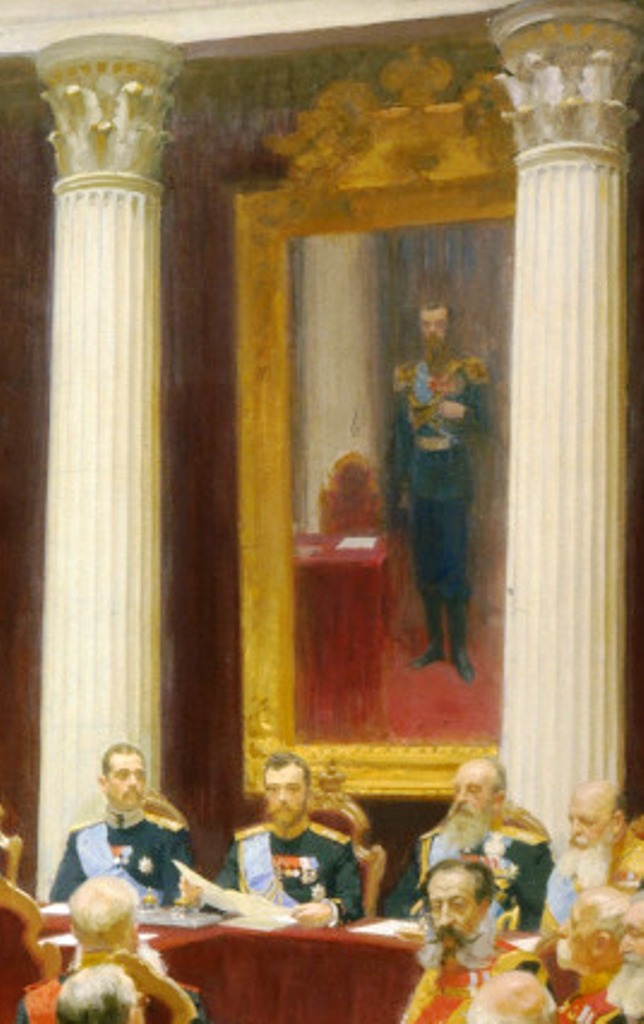
PHOTO: Emperor Nicholas II presides over a meeting
of the State Council of the Russian Empire

While some acknowledged the virtues of the gold standard, they maintained nevertheless that it could not survive in Russia. The country was too poor, they said, and eventually all the gold would end up abroad. 

Under the terms of the monetary reform the new gold ruble, which was to become the basic monetary unit, was made to equal 1.50 old rubles. The gold reserve of the State Bank stood at 1,200,000,000 [1.2 billion] rubles [in new currency].

The struggle against the monetary reform did not cease, nonetheless, and indeed it took the most unexpected turns. During Nicholas II’s visit to Paris, for example, the French premier, Méline, tried to persuade the tsar that a gold currency would be harmful to Russia. Count Montebello, the French ambassador, pursued this line by submitting to the emperor, two detailed memoranda on the question.

Yet Nicholas II remained steadfast in his attitude toward the reform. He forwarded the French notes to Witte with the notation: “Enclosed are the memoranda which have been sent to me; I have not read them–you can keep them!” Finally on 2 January 1897 the Emperor convened a special session of the State Council at which he himself presided. The council decided at this meeting to proceed with the implementation of the reform. The Emperor’s ukaz of 3 January 1897 ordered the beginning of a new gold coinage in which the old Imperials [ten ruble gold coins] would be replaced by coins of the same weight and purity, but stamped “15 Rubles” instead of 10. 

The monetary reform entered Russian life without any fanfare and, contrary to the warnings of its opponents, without creating any tremors in the economy. For two years already the rate had remained stable. The speculation in rubles had ceased. The state had been selling gold at the rate of 1 ruble 50 kopecks for each ruble in gold, and the exchange of paper rubles for gold at the same rate was no novelty. Gold did not flow abroad, nor was any significant amount of it hidden away. Russia meanwhile stabilized its international financial position by painlessly moving on the gold standard, which by then most of the great powers had adopted. [Japan followed Russia’s example in March 1897.] The timing of the reform was fortuitous. Adoption of the gold standard followed four years of bumper crops (1893-96). 

0302b

PHOTO: Sergei Witte (1849-1915) served as Russia’s Minister of Finance from 1892-1903

Towards the end of 1897 the government decided to produce new gold coins in values of 10 and 5 rubles. Over the next fifteen years and for the first time since the introduction of paper currently [except for the brief period between the devaluation of 1842 and the Crimean War], Russia enjoyed the normal circulation of gold currency.

Some of the most prominent European economists–the Germans Adolph Wagner and William Lexis and the Englishman George Viscount Goschen–unanimously recognized the timeliness and success of the Russian monetary reform. Indeed, confronted by the inertia of Russian opinion and by foreign interests hostile to stabilization, the currency reform probably would have failed except for the intervention of the Emperor who compelled an end to the dispute by forcefully expressing his will at the meeting of the finance committee on 2 January 1897.

Witte recorded in his memoirs that “in the end I had only one force behind me, but it was a power stronger than all the rest–that was the confidence of the Emperor. And therefore I repeat that Russia owes its metallic gold currency exclusively to Emperor Nicholas II.”

This article has been sourced from Last Tsar. The Autocracy, 1894-1900, by Prince Sergei Oldenburg, it has been abridged and edited by Paul Gilbert

© Paul Gilbert. 24 August 2020

The myth of Nicholas II’s indifference to the Khodynka tragedy

0298a

More than a century after his death and martyrdom, a number of tragic events continue to haunt the legacy of Russia’s last tsar. It was the Khodynka tragedy, in which thousands were killed or injured during a stampede, that would haunt Nicholas II throughout his 22-year reign.

On the morning of 31st May [O.S. 18th May] 1896, over half a million revelers had gathered on the Khodynka Field in Moscow for ceremonies marking the Coronation of Emperor Nicholas II.

Organizers had set up 150 stalls to distribute 400 thousand free gifts to the people, a souvenir of the historic event.

The gift included a commemorative enamelled metal cup, bearing the cyphers of Nicholas II and Alexandra Feodorovna 1896 and the Imperial Crown on one side, the Imperial coat of arms on the reverse.

The cup was distributed along with a variety of food presents, which included a 400 gram loaf of bread; 200 gram sausage stick; Vyazemsky gingerbread; a small bag full of sweets, nuts, and dried fruits.

Everything was tied in a bright calico commemorative scarf, on which the portraits of the imperial couple were printed on one side, and a view of the Kremlin on the reverse.

Sadly, the day began in tragedy. Rumours began to spread among the people that there was not enough beer or pretzels for everybody, and that the enamel cups contained a gold coin. A police force of 1,800 men failed to maintain civil order, and a catastrophic crowd crush and panic resulted in an estimated 1,389 people being trampled to death, and an additional 1300 injured, in what has become known as the Khodynka Tragedy.

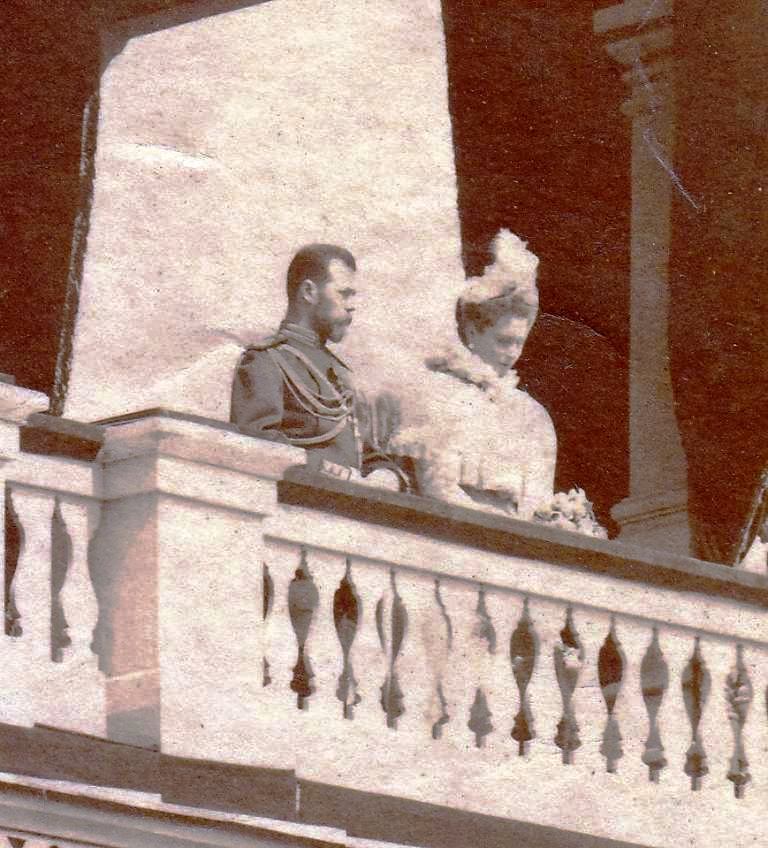
Despite the tragedy, the program of festivities continued as planned elsewhere on the Khodynka field, with many people unaware of the tragedy that had taken place. The Emperor and Empress made a brief appearance in front of the crowds on the balcony of the Tsar’s Pavilion in the middle of the field around 2 p.m. By that time the traces of the incident had been cleaned up. The couple were clearly shaken by the news.

0298d

PHOTO: The Emperor and Empress on the balcony of the Tsar’s Pavilion in the middle of the Khodynka Field

It was the Emperor’s attendance at a grand ball held on the evening of the tragedy, however, which planted a seed of gross misunderstanding and ridicule, one which Nicholas is criticized to this very day. I would like to take a closer look at this . . . 

The ball was hosted by the French ambassador Gustave Lannes de Montebello (1838-1907), in Moscow. The French spared no expense in the extravagant preparations for the ball. The ball in part marked the recently signed Franco-Russian alliance.

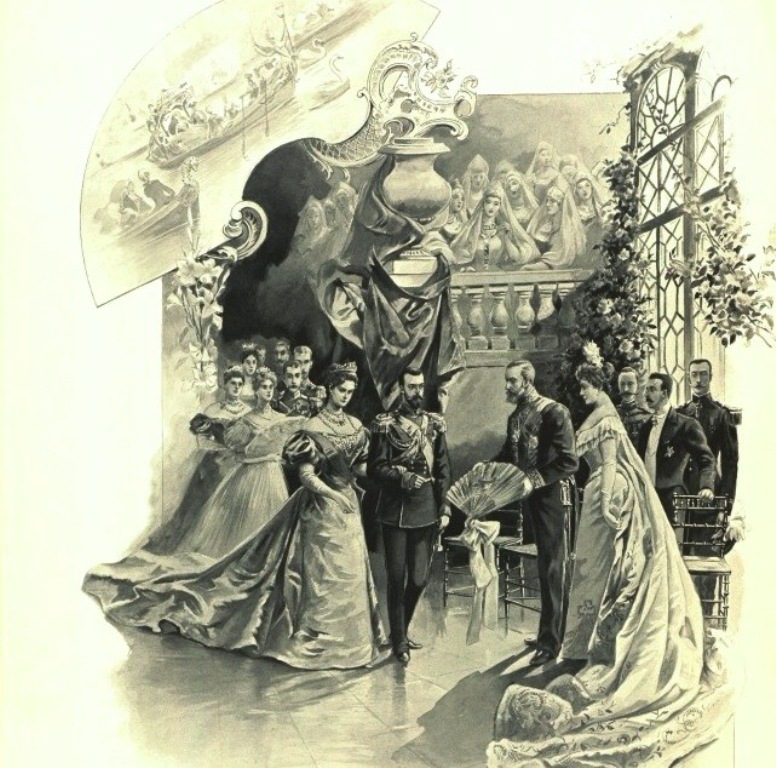
For the arrival of Their Majesties, foreign princes, princesses, members of the Imperial Family, representatives of the foreign diplomatic corps, court officials gathered in the halls of the embassy. For hours this mass paraded through the halls. The excitement was everywhere. Their Majesties were greeted by the French ambassador and his wife at the entrance and remained at the embassy until 2 am.

The tsars’ sister Grand Duchess Olga Alexandra wrote: “The French government had gone to immense expense and trouble to arrange the ball. Tapestries and plate were brought from Versailles and Fontainebleau and 100,000 roses from the south of France.

“Other guests shared their descriptions: “some of the rooms had been converted into winter gardens” . . . “in one room a fountain lit up with colourful electric lights”. 

The grand ball at the French ambassador’s party ended with a fine dinner. During the ball, the ladies were offered luxurious fans and bouquets of flowers brought from France. In general, the ball was wonderful; full of animation, luxury, extraordinary brilliance, it left an indelible impression on many.

During the ball, an orchestra played and a choir of Russian singers in luxurious Russian costumes sang. The wide hospitality of the French embassy was extended to all guests.

An open buffet, champagne, fine French wines, a magnificent dinner, flowers for guests – everything was there. The tables in the Tsar’s rooms especially stood out – among the luxurious silver there were literally mountains of fragrant flowers.

0298b

PHOTO: Nicholas and Alexandra are greeted by the French ambassador and his wife

It was clear that the newly crowned Emperor and Empress did not want to attend the ball. Some historians believe that Nicholas was bullied by his uncles, urging him to attend. Because of the extravagant preparation for the ball, caused in part by France’s delight at the recently signed alliance with Russia, the failure of Nicholas and Alexandra to attend would have been a great slight.

According to the Countess Maria Eduardovna Kleinmichel (1846-1931), “in view of the terrible expense, the French ambassador begged the Imperial couple to attend, He urged the Emperor to agree to at least attending the reception, even if for a short while. The Tsar looked all haggard and pale as a white sheet. The Imperial couple walked in silence through the halls, bowing to those who had assembled. Then they went into the ambassador’s drawing-room, and shortly thereafter departed. The French were in despair, but they seem to have realized that their demands after such a tragedy, one which shook the Emperor and Empresses so deeply, were simply impossible.” 

Grand Duchess Olga Alexandra also noted: “I know for a fact that neither of them wanted to go. It was done under great pressure from his advisers . . . Nicky’s ministers insisted that he must go as a gesture of friendship to France.”

Count Sergei Witte, who served as Prime Minister under Nicholas II recalled that Nicholas “looked sick” and was “obviously depressed”.

“I know that both Nicky and Alicky spent the whole of that day in visiting one hospital after another,” wrote Grand Duchess Olga Alexandrovna.

Nicholas allotted some 90 thousand rubles to the victims families out of his own personal funds, and not the states. He ordered that a thousand bottles of port and Madeira were to be sent to hospitals for the wounded, and the sovereign himself visited the wounded in the hospitals and attended the funeral service for the dead. Further, all orphans received a pension until they were of age.

In their book A Life for the Tsar, co-authors Greg King (1964-2025) and Janet Ashton wrote: “They [Nicholas and Alexandra] visited the wounded in Moscow’s hospitals, and Nicholas announced that he would compensate the victims . . . yet the visits were mechanical and the pledge of financial aid went largely unfulfilled.” What is interesting to note is that their 189-page book, contains no less than 1,349 citations, yet there is no citation for their claim that Nicholas reneged on his promise to compensate victims. This in itself suggests that such a claim is based on rumour and not fact.

The Emperor’s kindness and empathy towards the victims and their families has been widely documented by numerous historians, both Western and Russian. The claim by King and Ashton that the “pledge of financial aid went largely unfulfilled”, simply goes against the personal character and deeply pious Orthodox beliefs of Nicholas II.

When asked if Nicholas II showed indifference to the victims of the Khodynka tragedy, Professor M.V. Lomonosov, who serves as associate professor of the history faculty of Moscow State University said:

“Here it is necessary to clearly separate the two matters. On one hand we have a situation related to human relationships, issues of empathy, compassion and mercy. On the other hand, there are issues of diplomacy and diplomatic protocol. And in this situation, they overlap one another.

“There was an official reception with the French ambassador, and it was necessary to demonstrate good relations with France. It was quite obvious that if Nicholas II for any reason ignored this event, then it would have a negative impact on Russian-French relations. As you know, his attendance at the ball was purely official.

“The  reception was not an entertainment event as such. It was political. There are things which need to be done, despite the fact that a tragic event overshadowed it.

“By attending, Nicholas II fulfilled his duties and Russia received a certain European political resonance.”

0298c

PHOTO: Emperor Nicholas II at the bedside of a victim injured during the Khodynka tragedy

That evening Nicholas briefly noted the event in his diary: “Up until now, thank God, everything went perfectly. The crowd spending the night on the Khodynka meadow, in anticipation in the distribution of the food and mugs, broke through the barrier and there was a terrible crush, during which it is terrible to say about 1300 people trampled!!”

His lack of emotion or empathy in this entry for the victims does not reflect his private feelings. His detractors often cite this in their negative assessment of his reign. [for more on Nicholas II’s diaries, please refer to my article Nicholas II’s Diaries 1894-1918.]

Whatever the Emperor’s private feelings, the Khodynka tragedy created a number of negative images and impressions which would colour all later views of Nicholas, his government and his reign. The first such image was that of a young monarch dancing at a fabulous ball on the evening of a day when hundreds of his subjects had lost their lives as a result of the incompetence of his own government.

“The image was unfair,” notes Russian historian Dominic Lieven. Not for the last time, however, the Emperor’s self-control exposed him in temperamental Russian eyes to accusations of heartlessness and indifference.

Sadly, Nicholas and his government never erased the image which Khodynka implanted in the public mind.

© Paul Gilbert. 23 August 2020

The Romanov Family Photo Albums at Yale University

Today, August 19th marks World Photography Day – a perfect day to present the following article on the Romanov Family Albums stored in the collections of the Beinecke Rare Book Library at Yale University in New Haven, Connecticut

The first Kodak camera was gifted to the Tsesarevna Grand Duchess Maria Feodorovna (future Empress Maria Feodorovna) in the late 1860s, when she took a serious interest in photography.

Her passion later became one of the favourite pastimes of her son Emperor Nicholas II and his family, who were often seen carrying Kodak Brownie Box cameras. They snapped thousands of images, pasted them in albums, many of which have survived to this day.

The family’s passion for photography was also shared by close friends, the most popular being Anna Aleksandrovna Vyrubova (1884-1964), the best friend and confidante of Empress Alexandra Feodorovna,

Anna was an avid photographer, one who captured the private day-to-day lives of Russian’s last tsar and his family on camera. During her years at the Russian Court, she diligently preserved her photograph collection into large handsome sturdy albums, bound in textured leather—green, blue, and brown.

In her memoirs, Vyrubova wrote that she and Alexandra pasted the photos onto the pages together. Often, the tsar himself—a notoriously fastidious man—stood over the two women, supervising them as they worked. “He could not endure the sight of the least drop of glue on the table,” wrote Vyrubova.

0299b

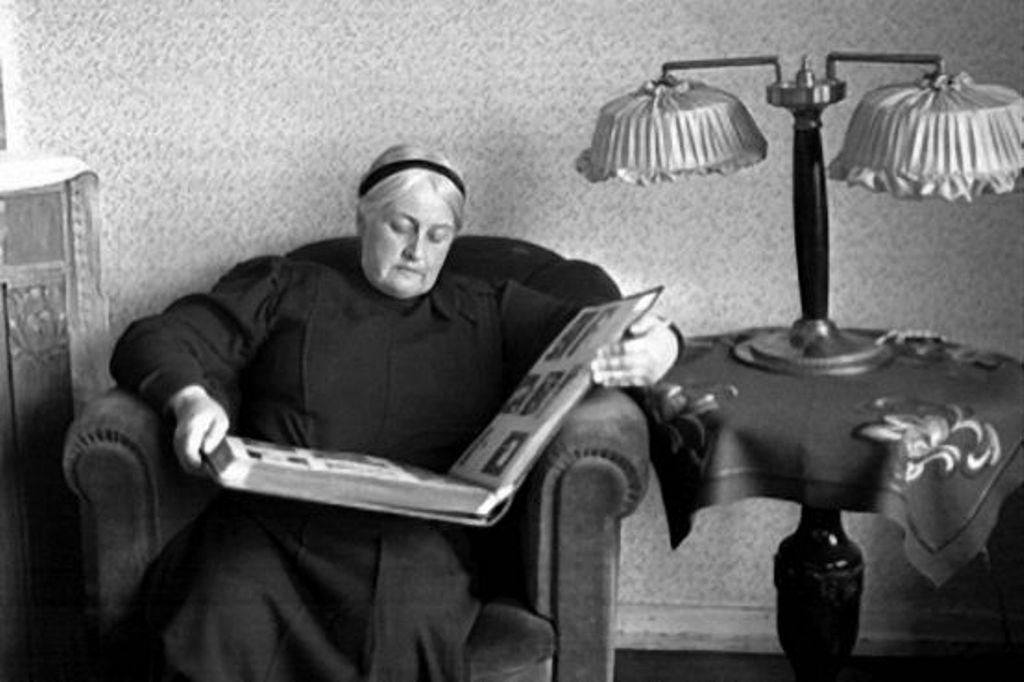
Anna in old age and in exile, reliving memories of the Imperial family before the Revolution

Six of the *seven personal photo albums of Anna Vyrubova are today kept at Yale University in New Haven, Connecticut. The albums contain about three thousand (!) photographs of the everyday life of Emperor Nicholas II and his family.

[*Anna presented Album No. 1 to Queen Louise, who bequeathed it to Prince Ludwig. This album is now stored in Darmstadt – PG]

When Anna fled Bolshevik Russia in 1920, the albums were one of the few things she took with her into exile to Finland. In 1937, Robert D. Brewster, then a student at Yale University, visited Anna to learn more about the family of the last Emperor. In his article The Golden Hours of the Romanovs, published in the Summer 2003 issue of the Yale Alumni Magazine, writer Tim Townsend explains Brewster’s interest in the subject began after seeing the 1932 film Rasputin and the Empress.

Life in exile was not good for Anna,  her health was poor, she lived in very cramped conditions, she had no income, and she was even denied citizenship. As a result, Brewster persuaded Anna to sell him the albums, as well as 35 letters written by her from prisons of the Provisional and Bolshevik governments. In 1951, Brewster donated the albums and letters to his alma mater.

The albums were transferred to the Beinecke Rare Book and Manuscript Library, where they were catalogued and remained there until 1966, almost unknown to anyone. It was not until the autumn of 1966, when the Pulitzer laureate Robert K. Massie, was finishing his now classic bestseller Nicholas and Alexandra, that brought him to Yale and discover the now famous photograph collection.

Click HERE to view ALL 6 Romanov Family Albums stored in the collections of the Beinecke Rare Book and Manuscript Library at Yale University in New Haven, Connecticut. Note; click on each album to open and view the photographs.

147c

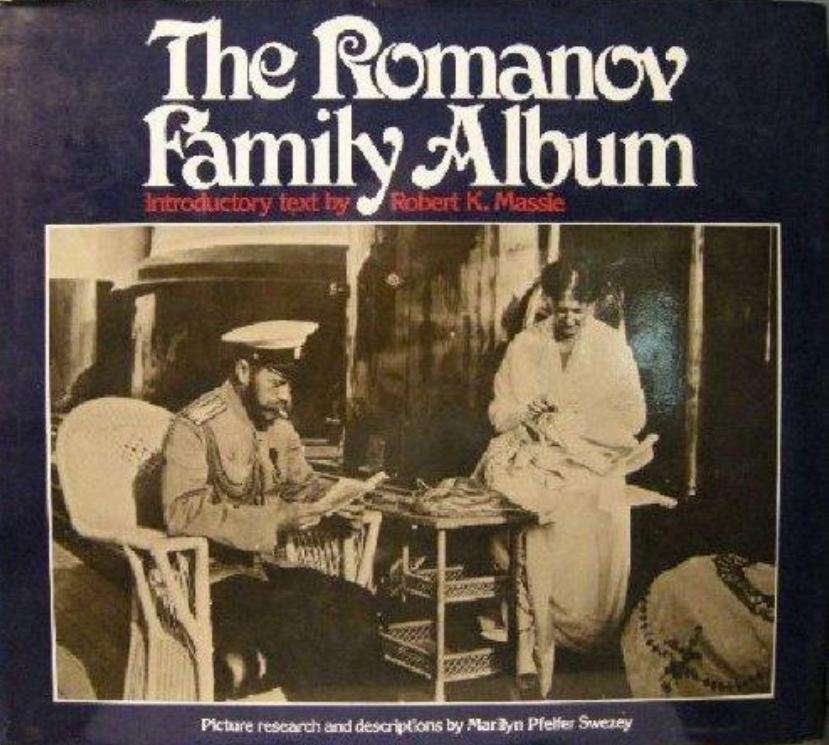
Robert K. Massie (1929-2019)  wrote the introductory text for the book The Romanov Family Album (published by Vendome Press in 1982), explaining how he discovered the Romanov albums and of their immense historic value:

“I see wonderful things!” – exclaimed British archaeologist Howard Carter, when he first poked his head into Tutankhamun’s tomb and there, by the light of a flickering candle, glimpsed the glitter of golden objects that had slept for thirty centuries. Something of the same thing came over me the first time I saw the collection of Romanov photographs from which the present series has been selected.

My wife and I found them almost by accident. In the autum of 1966, I was nearing the end of three years work on Nicholas and Alexandra. Suzanne, long involved with the research and editing, had taken complete charge of the search for illustrations, scouring commercial film libraries and seeking individual pictures in private hands. At the time, she was also writing about ballet and had become a friend of Evgenia Lekhovich, the director of the School of American Ballet. Evgenia and her husband Dmitry both were interested in our attempt to recreate the life of the last Russian Imperial family, and Evgenia suggested that I might like to meet a Russian friend of their, Sergei Taneyev, who lived in New York. Taneyev was the brother of Anna Vyrubova, the intimate friend and confidante of the Empress Alexandra. Perhaps, Evgenia suggested, he could add something to the story his sister told in her book Memories of the Russian Court [published by Macmillan in 1923 – PG]. I was eager, but Mr. Taneyev, it developed, was not; he had apparently tired of being identified as “Anna Vyrubova’s brother”. But he did say to Evgenia Lekhovich: “Tell Mr. Massie that Yale University has some of my sister’s things.”

I reacted casually to these words. After telephoning New Haven, where a charming research librarian named Marjorie Wynne, confirmed that Yale did, have certain materials catalogued as “Romanov Memorabilia”. I arranged to go and take a quick look on Saturday morning before attending a football game. I had been writing myself into exhaustion; an afternoon in the fresh air seemed a healthy prescription.

And so, on an October morning in 1966, Suzanne and I walked into Yale’s Beinecke Rare Book and Manuscript Library. We met Miss Wynne and filled out the required forms. Soon, from behind closed doors, a small, rolling table was wheeled in, laden with six fat albums in cloth and leather, all peeling and cracking at the edges. We opened the first album. Here were photographs of an Edwardian family in the lighter moments of life. But, incredibly, they were not just any Edwardian family; they were the Russian Imperial family, which a few years later would be obliterated in the revolution, along with so much of the life and culture of Old Russia. Turning the pages, we found hundreds of pictures, collectively confirming the millions of words that I had read about the life of this couple and her children. It was an extraordinary collection: the most complete set of intimate photographs of the imperial family to survive the holocaust of the revolution. Not only had most images of this kind been lost, scattered or confiscated during the revolution itself, but afterwards there were stories of attempts by Soviet agents to locate, remove, and destroy from all public and commercial archives any photographs depicting the last tsar and his family as normal human beings, whose faces and activities might arouse a shred of interest or sympathy.

But here they were, like Tutankhamen’s treasure, miraculously surviving. We have them today because of an unusual set of circumstances. The years when these pictures were taken coincided with the first days of the age of popular photography. The capturing of images on a light-sensitive surface was half a century old by the turn of the 20th century, but it was during the pre-war years of the Edwardian era that amateurs began regularly to take informal pictures – we call them snapshots – of family and friends, on guard and off. Kings and Queens, no less than nobleman and middleclass folk, issued the command: “Look this way! Now hold very still!” pointing their Brownies at each other.

Nicholas II had an especially keen interest in photography. [see my article Nicholas II: The Amateur Photographer – PG] It was he who commissioned the extraordinary collection of color photographs of the Russian Empire by Sergei Prokudin-Gorskii, a collection that has recently been published. Traveling for six years across the expanse of Russia, Prokudin-Gorsii took pictures of rivers, lakes and forests, of simple wooden churches and thick-walled fortress monasteries, of muddy village streets and everyday peasant life, of canals, locks and bridges, and brought them back so that the Emperor could see his Empire. Naturally, like most monarchs of the day, Nicholas II also employed official court photographers who recorded the ceremonial scenes of pomp and flourish which went with the specialized work of royalty. In addition, however – and this is where we today are extremely fortunate – Nicholas kept some of these photographers on assignment even when he and his family were off-duty; now the cameraman’s task was to capture moments of intimate family life. And so the shutters clicked while the Emperor went rowing, finished a set of tennis, or strolled off into the woods in search of mushrooms. They recorded the Empress knitting on her yacht or wading barefoot along a rock-strewn beach. They caught the little Tsarevich Alexei playing soldier and teasing his kittens. Sometimes, the cameras were in fact, held by royal hands – several of the pictures in this book were taken by Empress Alexandra herself.

Once the films had been processed, duplicate prints were delivered to the Imperial apartments. There, after dinner, the family hugely enjoyed settling down to an evening of pasting pictures into green leather albums stamped in gold with the Imperial monograph. After 1907, the Empress’ closest friend Anna Vyrubova, joined this intimate circle. She too had copies of the prints, and she arranged and captioned them in her own albums.

© Paul Gilbert. 19 August 2020