The History and Restoration of the Imperial Bedchamber in the Alexander Palace

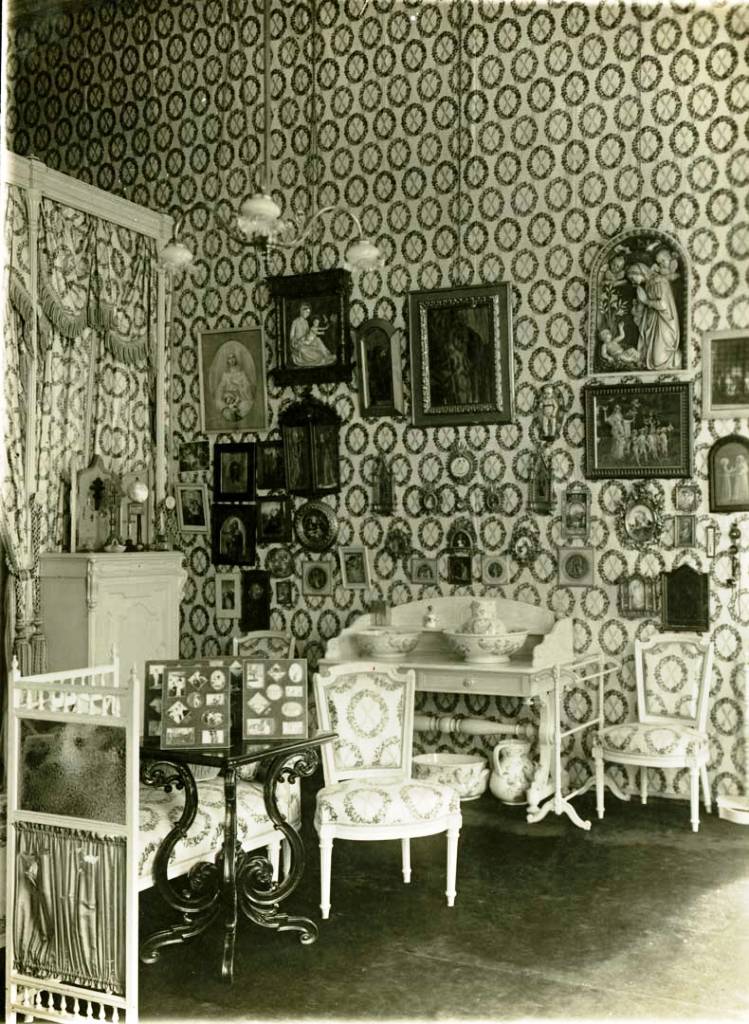
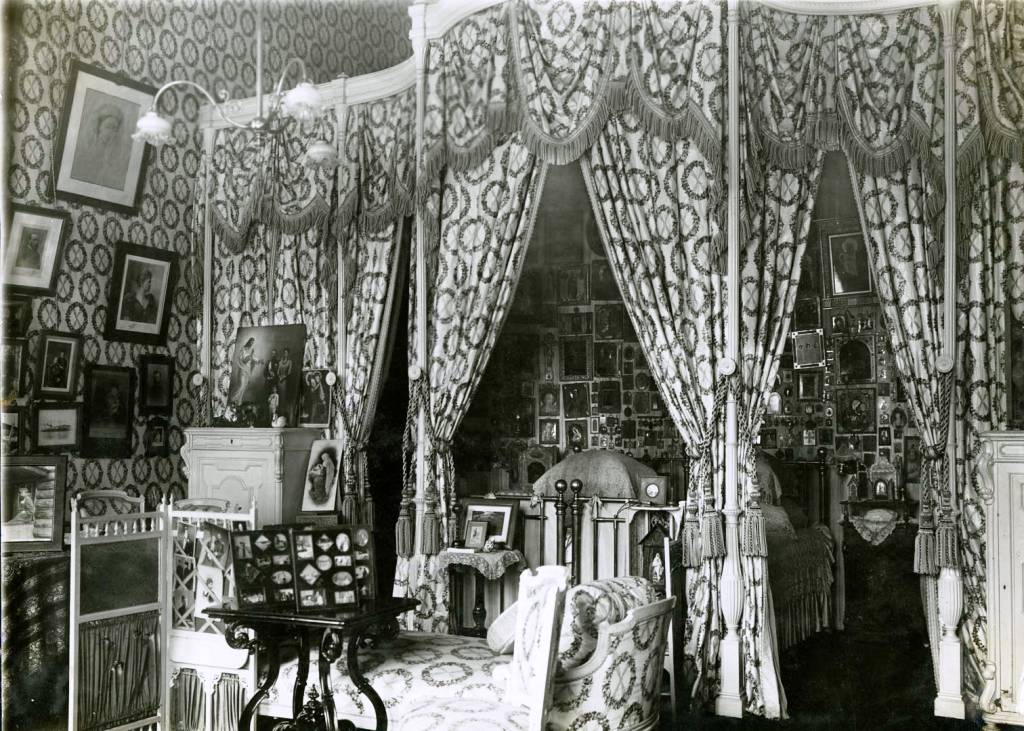
PHOTO: the Imperial Bedroom as it looked in the 1930s

The Imperial Bedroom or Bedchamber was among one of the first apartments prepared for the arrival of the Imperial couple to the Alexander Palace.

Nicholas was very fond of their new home at Tsarskoye Selo, On first seeing the newly decorated apartments in September 1895 he wrote to his mother:

“our mood . . . changed to utter delight when we settled ourselves into these marvellous rooms: sometimes we simply sit in silence wherever we happen to be and admire the walls, the fireplaces, the furniture… .”

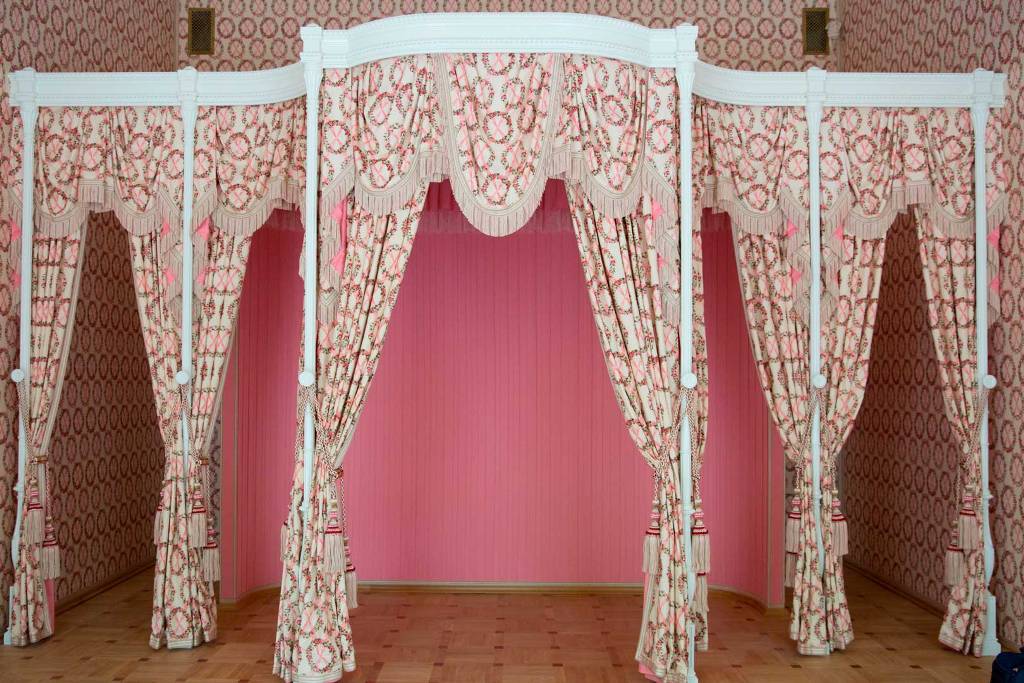
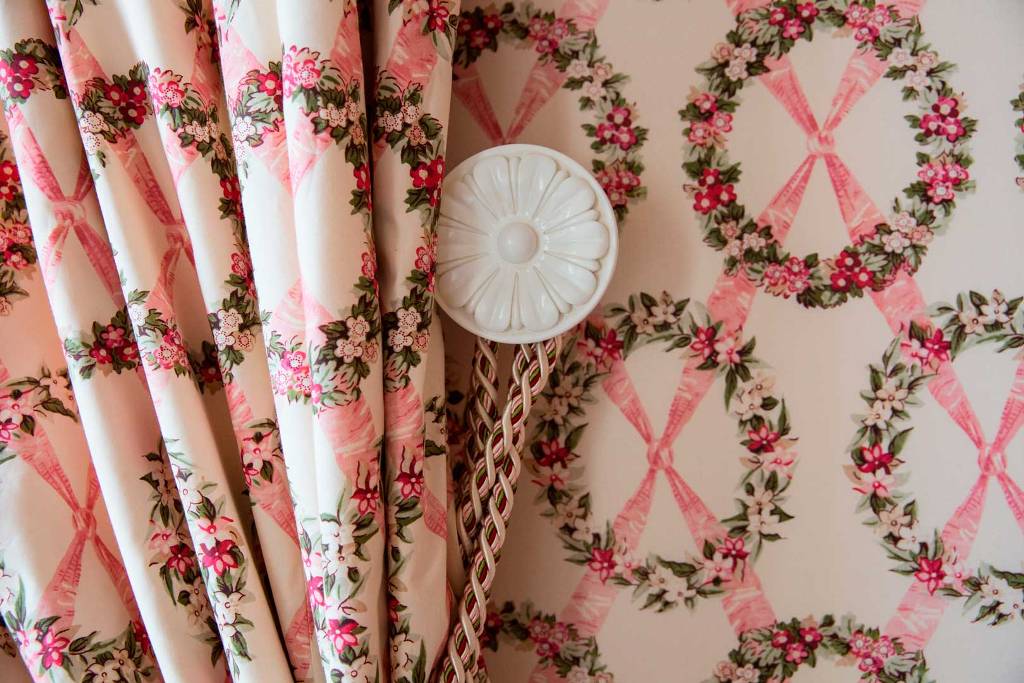
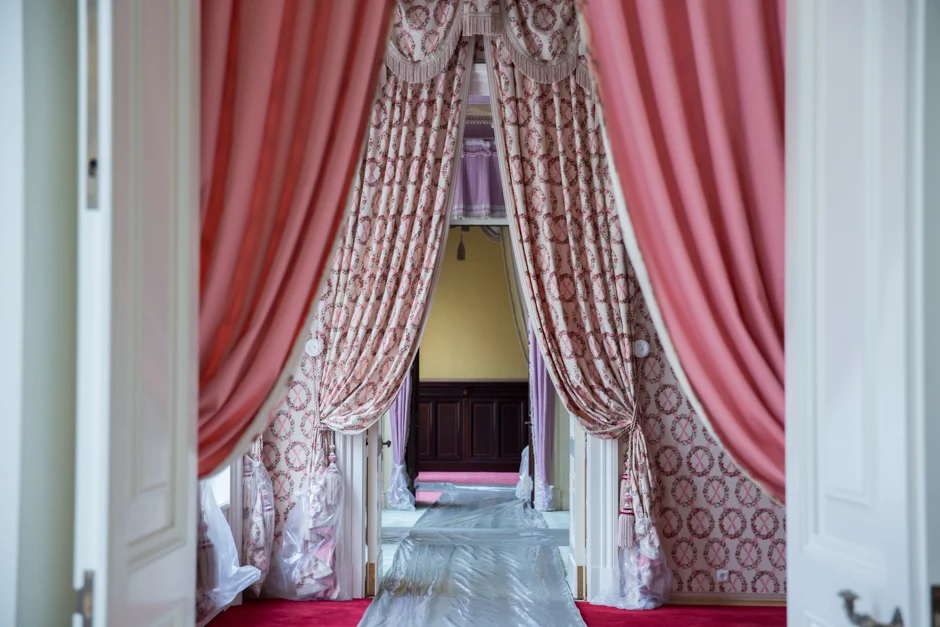
Between 1894-1895, the bedchamber was redesigned from the bedroom furnished for the wedding in 1874 of Grand Duchess Maria Alexandrovna (daughter of Alexander II) to Prince Alfred, Duke of Edinburgh. The interior was renovated according to the project of Roman Melzer. The furniture, which had been preserved from the previous decoration, was repainted in white and covered with an English chintz pattern in the form of wreaths of small pink flowers and ribbons. The same fabric was used to make the drapes and alcove curtains for the room.

To carry out the finishing work, the furniture manufacturer Karl Greenberg was invited, who had designed the interior for the Duke and Duchess of Edinburgh. In addition, Greenberg designed the dressing room adjacent to the Bedchamber and the Empress’s small Dressing Room.

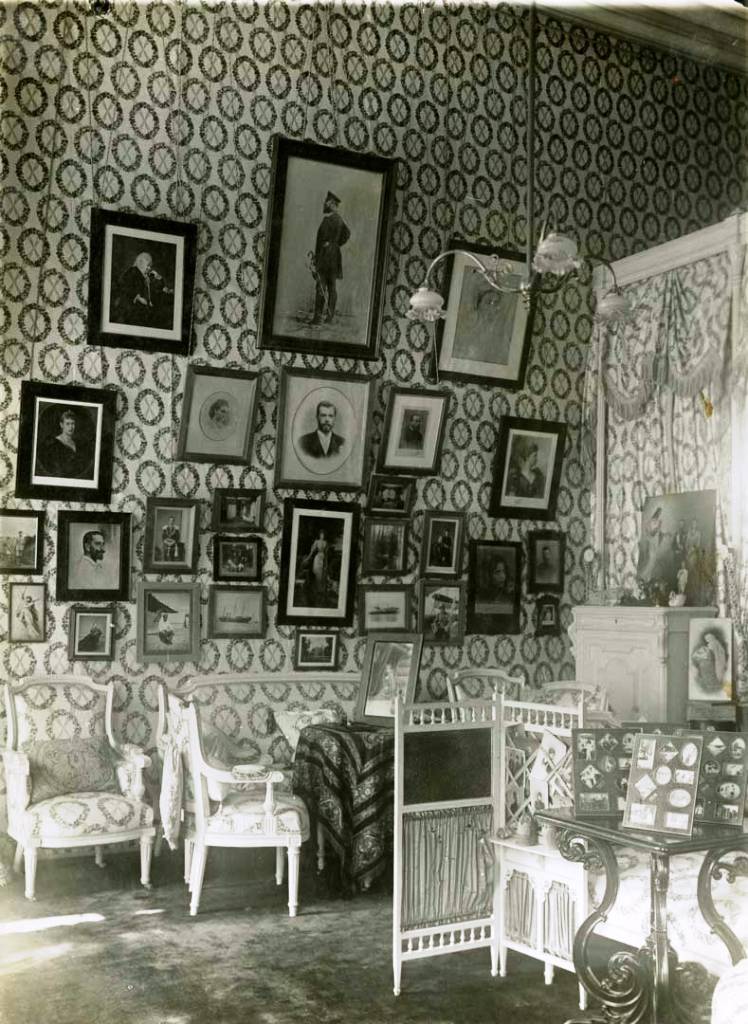
PHOTO: the Imperial Bedroom as it looked in the 1930s

Gradually, in the autumn of 1895, the furniture began to be replaced. In 1897, the double walnut bed was replaced by two gilded copper beds made by the Moscow firm Tyapunov and Son.

In September 1901, “a thick raspberry velvet carpet which covered the entire floor,” was purchased for the Bedchamber from the merchants Korovins, suppliers of the Imperial Court, for the sum of 747 rubles 50 kopecks.

As can be seen in photographs from the early 20th century, the alcove wall was filled with icons. Over the years, the number of icons steadily increased, many of them gifted to the Imperial family. Among them were many unique images: an icon made by craftsmen on a cut of a tree, or an icon depicting Christ blessing Nicholas II, Alexandra Feodorovna and Tsesarevich Alexei with the inscription: “The Lord Himself blesses and has mercy on them.” Unfortunately, many of these icons were lost: having been sold in the 1930s or disappeared during the war and occupation of the palace by the Nazis. The museum funds preserved the icon “St. Nicholas the Wonderworker”, presented to Nicholas II on the day of his coronation by the abbess of the Seraphim-Ponetaevsky monastery in the Nizhny Novgorod province, as well as two icons presented to Empress Alexandra Feodorovna, among several others.

After the completion of the current restoration work, several hundred icons will once again appear in the alcove of the Bedchamber interior. Unfortunately, due to the numerous losses of the original icons which once hung here, the historic recreation of this collection will never be fully restored.

During the Great Patriotic War, the interior of the Bedchamber was seriously damaged. The alcove had collapsed, the wall decorations and the furniture were all lost. Only one chair survived, which is now in the collection of the Pavlovsk State Museum-Reserve.

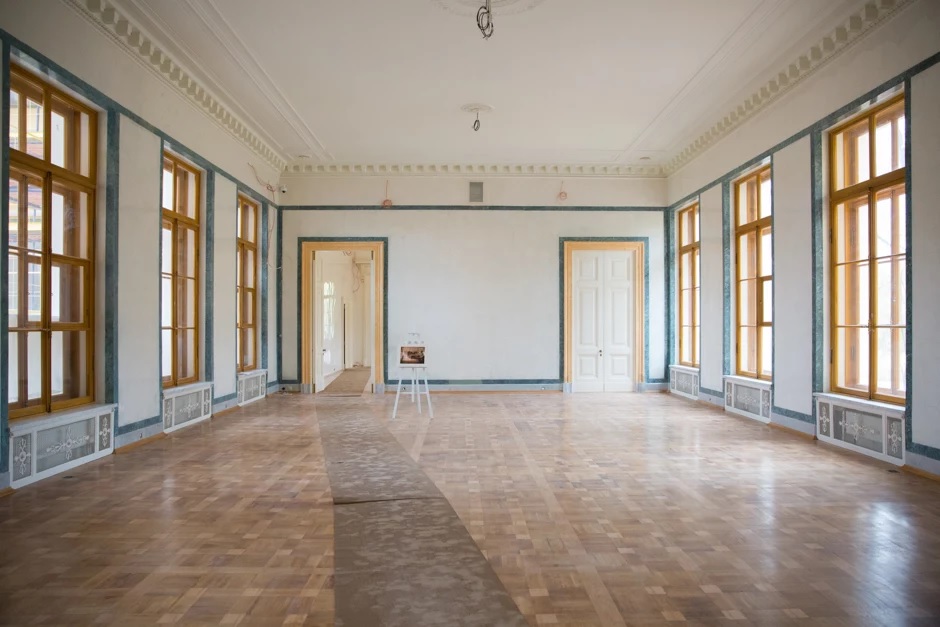
PHOTO: the Imperial Bedroom as it looks today

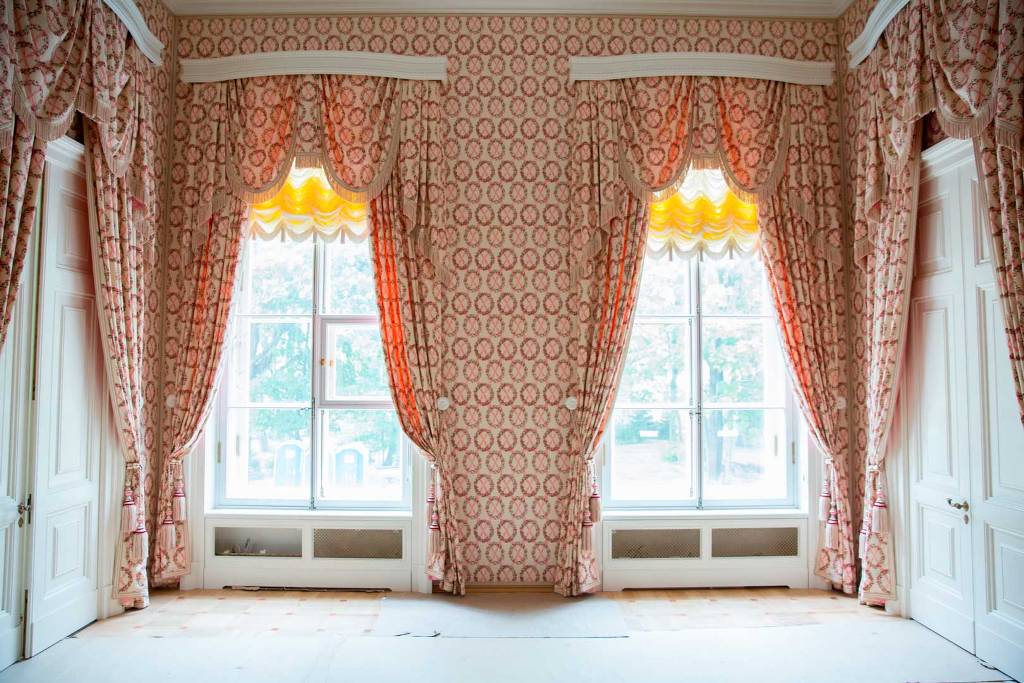
Reliable reconstruction of the original historic look of the Bedchamber, structural elements and furniture finishing details became possible thanks to preserved historical photographs from the collections of the Tsarskoye Selo State Museum Reserve, the Pavlovsk State Museum-Reserve, the Central State Archive of Film and Photo Documents (St. Petersburg) and the State Archive of the Russian Federation  (Moscow). In these pictures, the interior is presented from different angles. Fragments of chintz and silk twill from the collection from the museum collection, as well as the one chair from the Bedchamber, have been miraculously been preserved, thus becoming invaluable resources for the reconstruction of furniture.

PHOTO: the Imperial Bedroom as it looks today

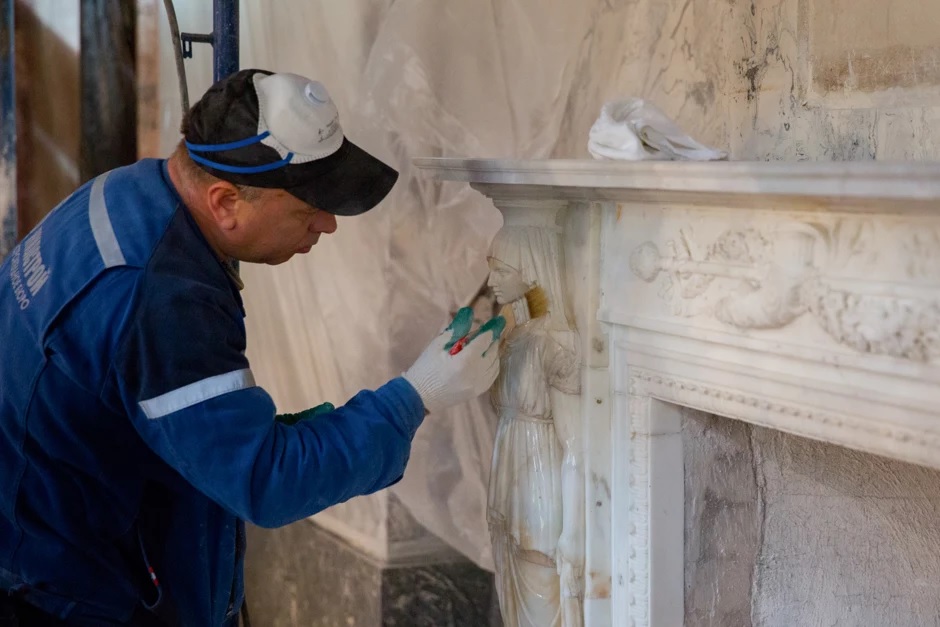
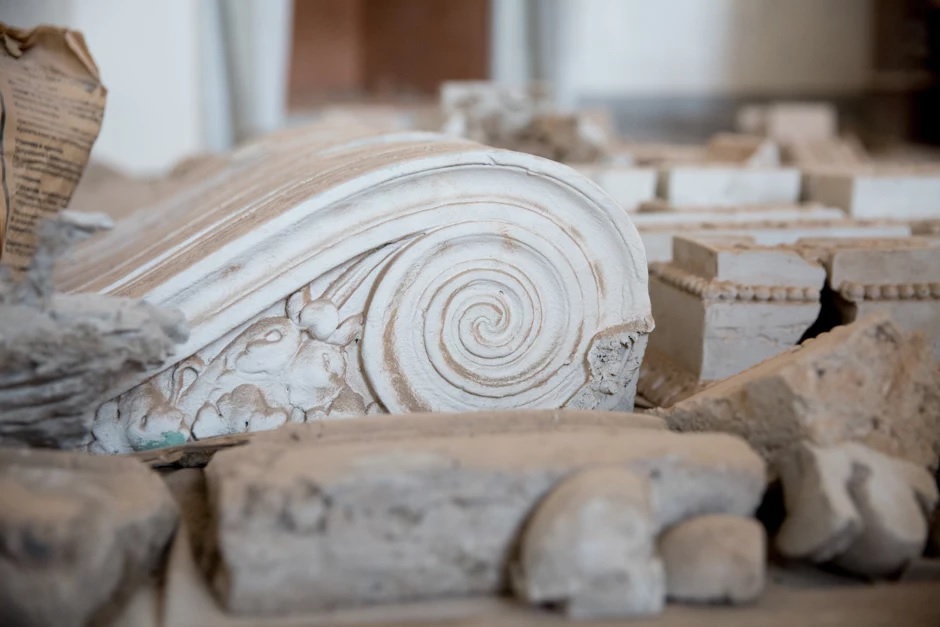
Since the beginning of the restoration work in the Bedchamber, in addition to architectural elements (alcove, frieze), fabrics on the walls, carpeting, curtains have all been recreated. The project for the production of furniture for this interior has already been completed and work will soon begin on the production of items for the Bedchamber on the Empress’s half of the room.

PHOTO: detail of the Imperial Bedroom as it looks today

***

The Imperial Bedroom of Nicholas II is now one of 15 interiors in the eastern wing of the palace, scheduled to open in 2021. Among the other interiors are the Moorish Bathroom of Nicholas II, Working Study of Nicholas II, Reception Room of Nicholas II, Pallisander (Rosewood) Living Room, Mauve (Lilac) Boudoir, Alexandra’s Corner Reception Room, and the New Study of Nicholas II.

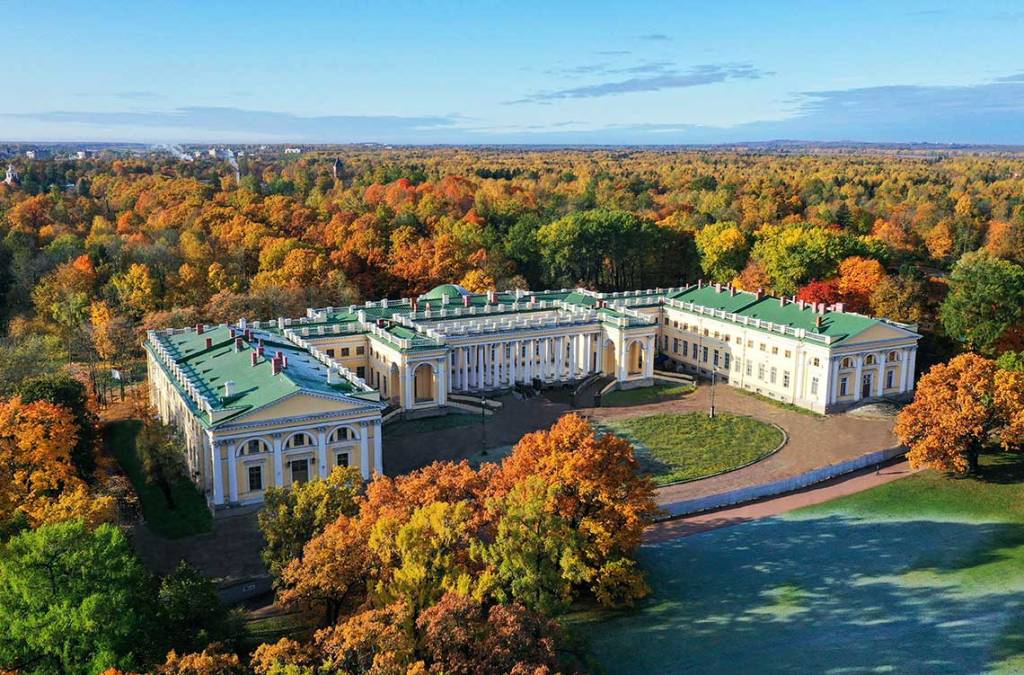
In the future, the Alexander Palace will become a memorial museum of the Romanov family – from Catherine the Great to Nicholas II, showcasing the private, domestic life of the Russian monarchs who used the palace as an official residence. The eastern wing of the palace will be known as the Museum of the Russian Imperial Family. The multi-museum complex, which includes the Western wing is scheduled for completion no earlier than 2024.

© Paul Gilbert. 14 October 2020

Nicholas II through Serbian Eyes

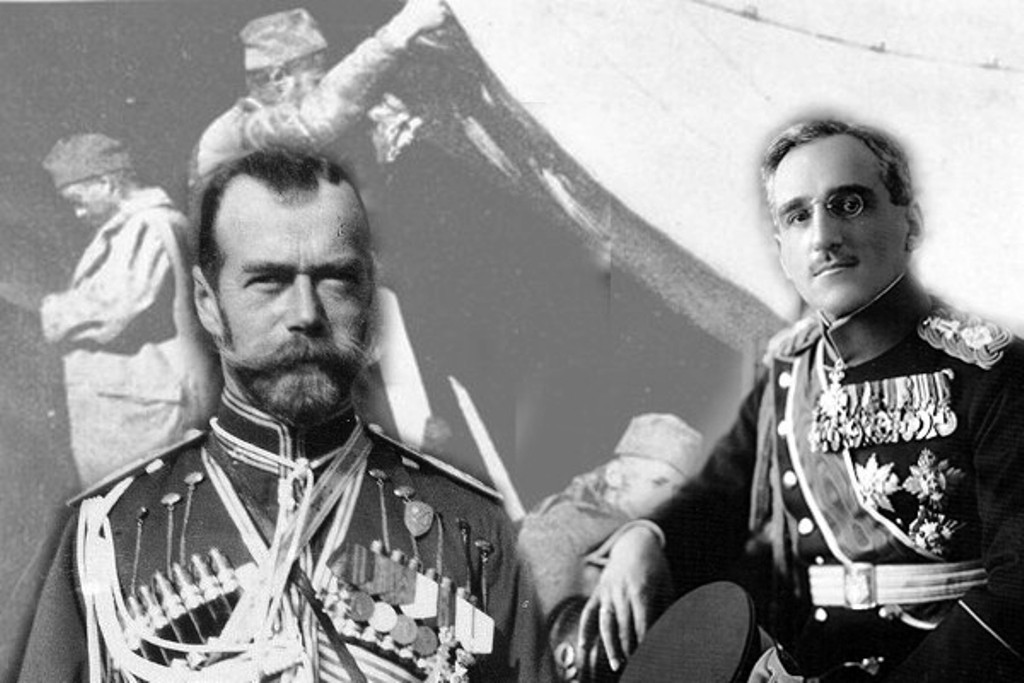
PHOTO: Emperor Nicholas II and Crown Prince Alexander Karadjordjevic of Serbia

There was an interesting legend in the Serbian army between the First and Second world wars. It was said that every year, on the anniversary of the murder of the Imperial family, the Russian emperor appeared in the Orthodox Cathedral in Belgrade and prayed for the Serbian people in front of the icon of St. Sava. He then walked to the General Staff Building to check on the state of the Royal Serbian Army.

But, what relation did Nicholas II have with the Serbian army? Moreover, those behind the legend were not Russian emigrants, but in fact Serbian officers. In order to answer this question, it is necessary to understand what role Nicholas II played in the fate of this small Balkan state.

At the beginning of the 20th century, Serbia found itself in a very difficult position. The country’s fight for liberation from Ottoman rule in 1804 was short lived for the long-suffering region. The struggle for the redistribution of borders began. Only Russia provided consistent diplomatic support to Serbia during both Balkan Wars in 1912 and 1913 respectively. Nicholas II was praised and criticized for his foreign policy in the region. Lieutenant General Evgeny.Ivanovich Martynov (1864-1937), for example, wrote that Russia “sacrificed the blood and money of the Russian people in order to make it as easy as possible for the Greeks, Bulgarians, Serbs and others, our Orthodox brethren”. A certain courage was required from the emperor even then, in order not only to cast aside all possible doubts about the unity of the Slavs, but also proved himself to be a real ally of the Serbs. .

In some respects, the Balkan Wars were a pre-warning to the First World War. In the summer of 1914, Nicholas II knew firmly what position to take when the very existence of the Serbian state was under threat.

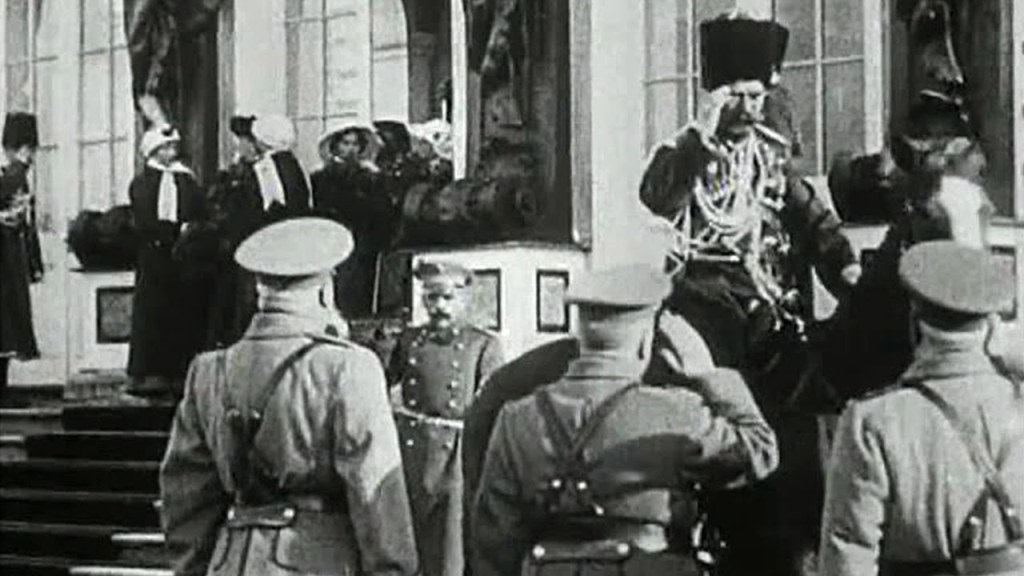
PHOTO: Emperor Nicholas II greets Serbian generals at Tsarskoye Selo

On 11th July 1914, at the same time as the Austrian ultimatum, Nicholas II received a telegram from Crown Prince Alexander Karadjordjevic of Serbia (1888-1934): “We cannot defend ourselves. Therefore, we pray Your Majesty to help us as soon as possible … We firmly hope that this appeal will find a response in your Slavic and noble heart.” The answer came three days later: “As long as there is the slightest hope of avoiding bloodshed,” wrote the emperor, “all our efforts should be directed towards this goal. If, contrary to our sincere desires, we do not succeed in this, Your Highness can be sure that in no case will Russia remain indifferent to the fate of Serbia.”

On the 15th of July, enemy artillery was already shelling Belgrade. Russia mobilized and Austria had to transfer forces to the Eastern Front. Alexander Karadjordjevic then telegraphed the Russian emperor:

“The hard times cannot but seal the bonds of deep affection that Serbia is connected with the Holy Slavic Russia, and feelings of eternal gratitude for the help and protection of Your Majesty will be sacredly kept in the hearts of all Serbs.”

In the fall of 1915, when the Serbian army, surrounded by the Austrians, Germans and Bulgarians, was forced to retreat through Albania to the Adriatic coast, Nicholas II again came to the rescure. The German command had already announced that the Serbian army no longer existed. Despite the efforts of the Russian ambassador in Rome, however, the Italians had no intention of allowing the Serbs to linger on their territory.

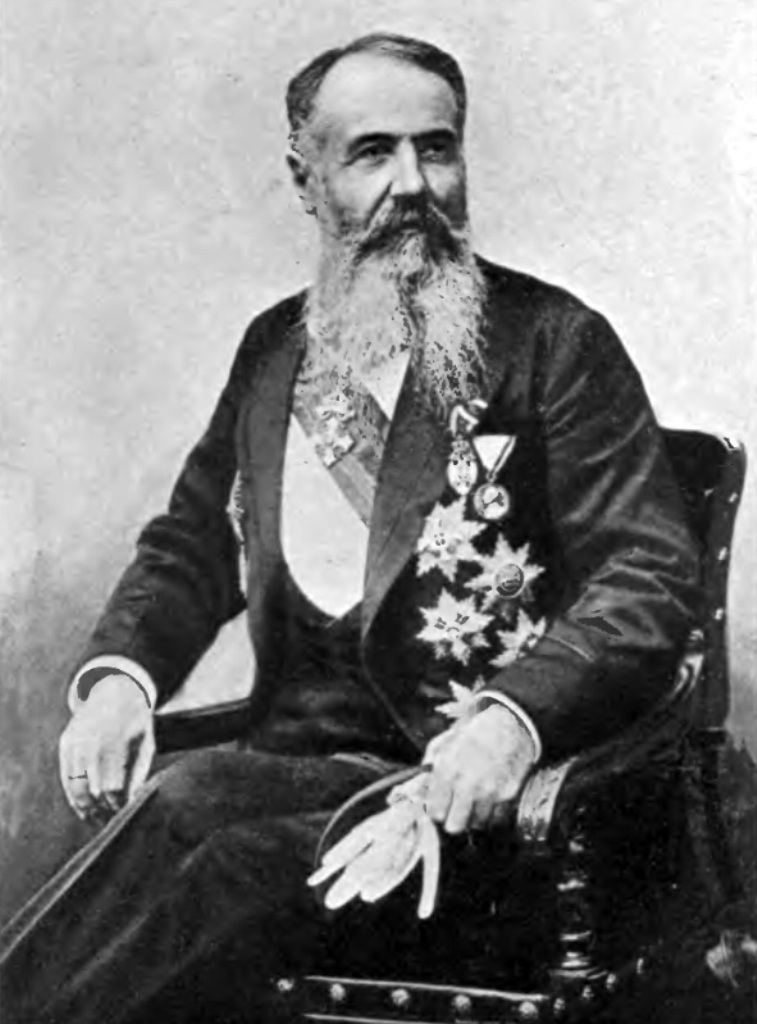
PHOTO: Chairman of the Ministerial Council of the Kingdom of Serbia, Nikola Pasic 

Then the chairman of the ministerial council of the Kingdom of Serbia, Nikola Pasic (1845-1926), sent an appeal for help to the Russian emperor. Nicholas II received it on 18th January and on the same day sent telegrams to the King of Great Britain and the President of France. The telegrams stated that if the Serbian army is not saved, Russia has the right to consider itself free from allied obligations. The Italians had to allow the Serbs to enter Vlora. And ten days later, the French began to evacuate Serbian soldiers and officers to the island of Corfu by ships.

But during the First World War there was also a “Special Purpose Expedition”, which was engaged in “the passage and escort of military cargo to Serbia,” and the “River Mine Operations Command”, and a great deal of assistance to Serbian refugees. Not to mention the fact that the Eastern Front pulled back at least half of the troops of the Triple Alliance.

But when on 18th October 1918, the Serbian army victoriously entered Belgrade, not only did the Russian Empire no longer exist, but neither did the monarchy: Emperor Nicholas II and his family having been murdered by the Ural Soviet on 17th July in Ekaterinburg.

The Serbs are not only just grateful to Nicholas II for the assistance he provided in their struggle for freedom and independence. The very idea of ​​the canonization of Nicholas Alexandrovich Romanov and the construction of a church in memory of the martyred emperor arose in Serbia much earlier than anywhere else – already in the 1920s.

In the minds of the Serbian people, Nicholas II is a figure as sublime and epic as the legendary Prince Lazar. Saint Lazarus of Kosovo chose the Kingdom of Heaven, giving his life and earthly crown for it. Nicholas II entered the world war to support the brotherly Serbian people. This act cost him his life, and the imperial crown, but opened the Gates of the Heavenly Kingdom for him.

How can we not recall the gift received by Nicholas II on behalf of all Serbs on the day of his coronation in May 1896. It was an old cross found in the Kosovo field. The Serbian philanthropist Draginya Petrovic who bought it, wrote to the emperor: “May the Sun of Truth shine on the Serbs, thanks to the help and participation of the Russian Monarch – the First Slav. I kneel at the throne of Your Imperial Majesty, bestowing this holy sign out of great love for the Tsar of All Russia, the defender of the Serbian people as well.”

Emperor Nicholas II did not disappoint the hopes and expectations of the Orthodox world.

Almost a quarter of a century after the start of the First World War, St. Nicholas of Serbia wrote: “The debt that Russia obliged the Serbian people in 1914 is so enormous that neither centuries nor generations can repay it. This is a debt of love, which blindfolded goes to death, saving its neighbour … Will we ever dare to forget that the Russian Tsar with his children and millions of his brothers went to death for the truth of the Serbian people? Do we dare to keep silent before Heaven and Earth that our freedom and statehood cost Russia more than we do? .. Russians in our days have repeated the Kosovo drama. If Tsar Nicholas had adhered to the earthly kingdom, the kingdom of selfish motives and petty calculations, he would, in all likelihood, still sit on his throne in Petrograd today. But he clung to the kingdom of heaven, to the Kingdom of heavenly sacrifices and gospel morality; because of this, he lost his head, and his children, and millions of his brethren. Another Lazarus and another Kosovo! This new Kosovo epic reveals a new moral wealth of the Slavs. If someone in the world is capable and should understand this, then the Serbs can and must understand it. “

And the Serbs understood.

In the twenties of the last century, the Holy Synod of the SOC began to collect facts testifying to the holiness of the murdered emperor. This decision was made after Nicholas II appeared in a dream to a Serbian woman in 1925. Two of her sons were killed during the World War, and the third went missing. The holy tsar consoled his mother, saying that her third child was in Russia. Indeed, after a few months, the soldier finally returned home.

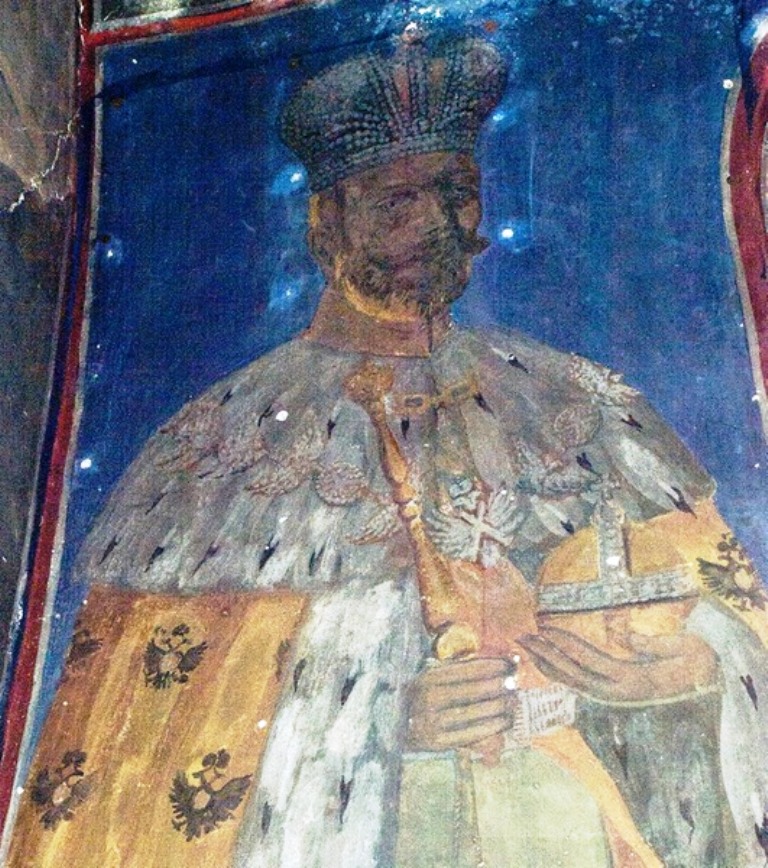
PHOTO: frescoe depicting the image of Tsar-Martyr Nicholas II by Stepan Kolesnikov

On 11th August 1927, newspapers in Belgrade reported a miracle witnessed by the Russian artist Stepan Fedorovich Kolesnikov (1879-1955). He was invited to paint the frescoes in a new church in the ancient Serbian monastery of St. Naum. The master depicted the faces of fourteen saints, while leaving the fifteenth empty. Kolesnikov returned to the church at dusk, he unexpectedly saw that at the very place where he was supposed to draw another saint, the face of Nicholas II appeared. Kolesnikov had had several conversations with the Emperor at exhibitions and remembered his face well. But the vision was so vivid that that night Stepan Fedorovich seemed to be working from nature. Having finished the fresco, he wrote below: “All-Russian Emperor Nicholas II, who accepted the martyr’s crown for the prosperity and happiness of the Slavs.” A few days later, the commander of the Bitolsky military district, General Rostich, arrived at the monastery. For a long time he stood in silence in front of the fresco of the Russian emperor, and then quietly said to Kolesnikov: “For us, Serbs, he will be the greatest and most revered of all saints.”

In 1930, a telegram from the inhabitants of Leskovets to the Holy Synod was published, in which they asked to canonize the Russian emperor as a saint. Already in 1936, at the opening of the memorial church of the Tsar-Martyr in Brussels, long before the official canonization of the Russian monarch and his family, Metropolitan Dositei of Zagreb (the future hieromartyr) announced that the Serbian church venerated Nicholas II as a saint.

In the city of Pancevo in 1934, the construction of a monument to Nicholas II was underway, but it was never completed. A memorial plaque was erected in the Alexander Nevsky Church in Belgrade with the inscription: “To the great Slavic martyrs Tsar Nicholas II and King Alexander I”. And in the heart of the Serbian capital, Vrachara Street was dedicated to Tsar Nicholas II, but after the war, most of it was renamed Mackenzie Street.

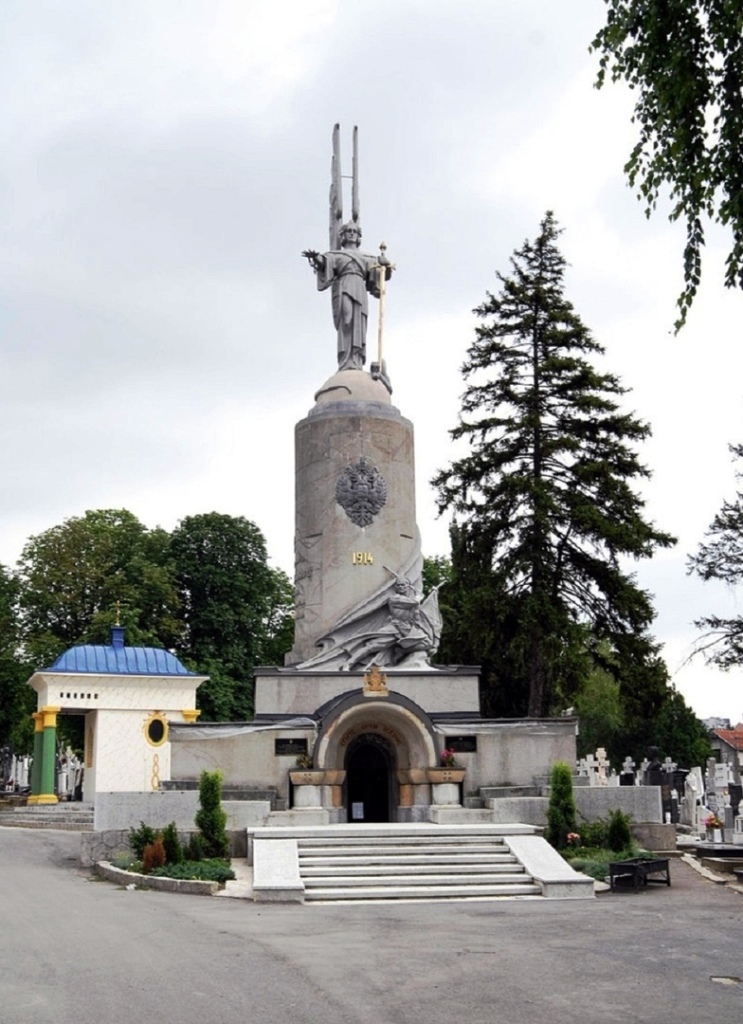
PHOTO: the Monument to Russian Glory dedicated to Emperor Nicholas II and 2,000,000 Russian soldiers of the First World War, in the Russian Necropolis, situated at the New Cemetery in Belgrade

In 1935, the Monument to Russian Glory by the sculptor Roman Verkhovsky and architect Valery Stashevsky was established in the Russian Necropolis, situated at the New Cemetery in Belgrade. Funds for the monument were donated by Russian emigrants who lived in Yugoslavia. The monument is a monolithic column crowned with the Archangel Michael bearing a sword, and at the foot of the monument above the door of the ossuary is a statue of a wounded Russian soldier. The monument is installed on the roof of the Iver Chapel, where the remains of Russian soldiers who died on the Thessaloniki front during the First World War are interred.

The Monument to Russian Glory, which is dedicated to Emperor Nicholas II and the two million soldiers of the Russian Imperial Army who lost their lives during the Great War (1914-18), and the Iver Chapel were ceremoniously unveiled on 24th May 1935, and finally completed and consecrated on 12th January 1936. One of the inscriptions on the monument reads:

Eternal memory to Emperor Nicholas II and 2,000,000 Russian soldiers of the Great War

Back in 1922, Nikola Pasic opened a savings account, in which he deposited 650 thousand dinars to help fund a monument to Nicholas II. “In the event of my death, I ask you to transfer the money from this account to the chairman of the People’s Assembly, so that the Assembly would use it to erect a monument to the Russian Tsar Nikolai as a sign of gratitude from the Serbian people,” wrote the prominent politician. Nikola Pasic died in 1926, but his will was not carried out. By 1944, there were already 1.8 million dinars in the account, however, these savings were lost after the Second World War.

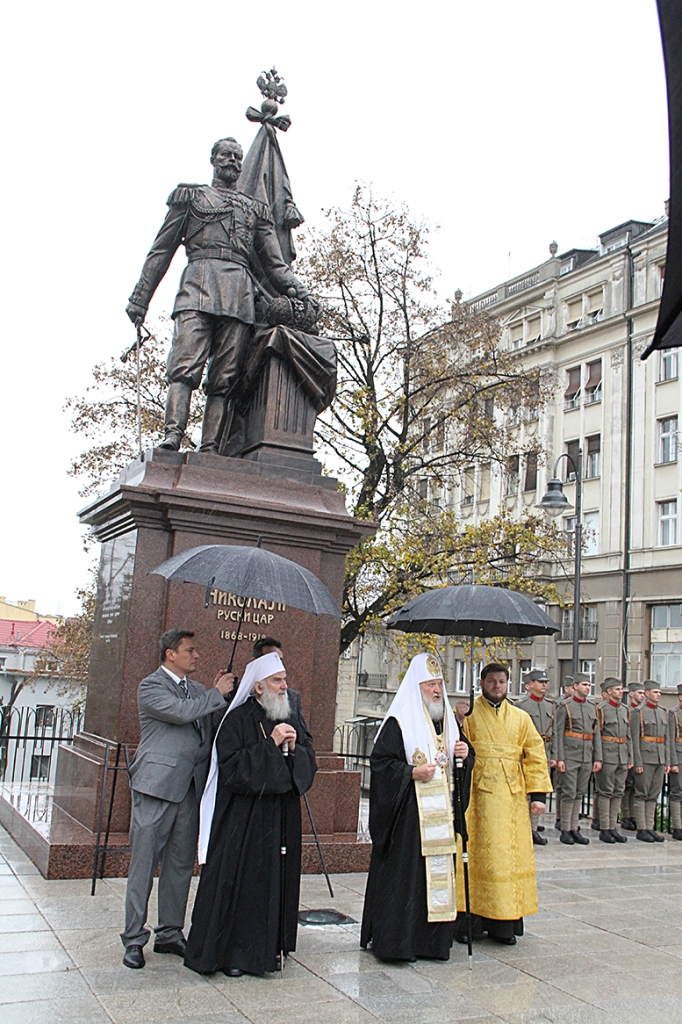
PHOTO: On 16th November 2014, His Holiness Patriarch Kirill of Moscow and All Russia conducted the rite of blessing of a monument dedicated to the Holy Tsar Nicholas, in the presence of His Holiness Patriarch Irinej of Serbia.

Nearly a century would pass before Nikola Pasic’s hopes were finally fulfilled. On 16th November 2014, a bronze monument to Nicholas II was solemnly opened and consecrated in Belgrade. It was a gift from the Russian Military Historical Society and the Russian Federation to Serbia. It was installed in Alexandrov Park, not far from where the embassy of the Russian Empire was located at the beginning of the last century.

The 7.5-meter (25 ft.) high monument – out of which 3.5 m (11 ft) the monument itself.- was created by sculptors Andrey Kovalchuk and Gennady Pravotorov. The monument weighs 40 tons. On the sides of the granite pedestal, in Russian and Serbian, the following words are inscribed from the telegram of Emperor Nicholas II to the future King of Yugoslavia Alexander I:

All my efforts will be directed to preserving the dignity of Serbia and in any case, Russia will not be indifferent to the fate of Serbia” 

Holy Tsar Martyr Nicholas II kept his word.

© Paul Gilbert. 13 October 2020

The Bolshevik sale of the Romanov jewels

PHOTO: the Russian Crown Jewels, confiscated by the Bolsheviks

There is no greater example of such a large-scale criminal sale in history, than that of the jewels of the Russian Imperial Court – perhaps, the finest collection in the world. The Bolsheviks inherited an impressive legacy, and wasted little time in profiting from the sale of many pieces to eager buyers in the West during the 1920s.

Interesting testimonies have survived to this day about how the jewels were sorted and catalogued, and how the fate of these historically important treasures was determined. They are today preserved in the RGASPI (Russian State Archive of Social and Political History) in Moscow.

PHOTO: early 20th century view of the Gokhran building in Nastasinsky Lane in Moscow. Gokhran was created in 1920, in the first post-revolutionary years, the Gokhran collected jewels from the Romanovs, the Armoury, the Russian Orthodox Church, as well as valuables confiscated from private individuals. Many of these items were sold abroad.

Gokhran

The Bolsheviks made their first attempt to sell the Romanov jewels in May 1918. Then, in New York, customs officers detained two visitors with jewels (worth 350 thousand rubles) that belonged to Grand Duchess Olga Alexandrovna (1882-1960), the youngest daughter of Emperor Alexander III.

The following year, the founding congress of the Third Communist International was held in Moscow. From that time, the agents of the Communist International (Comintern) regularly exported gold jewellery and precious stones from Moscow. At first, there was practically no control over the agents, so many items were stolen rather than helping to “finance a world revolution”.

In order to stop this “lawlessness”, in February 1920, “Gokhran was created to centralize, store and account for all values ​​confiscated by the RSFSR, consisting of gold, platinum, silver bullion, diamonds, coloured precious stones and pearls”. The famine that began in the summer of 1921 forced the Bolsheviks to look for funds to buy bread. In addition, Poland had to be paid off. According to the Riga Peace Treaty of 1921, the western lands of Ukraine and Belarus were withdrawn to Poland, in addition to this, the Bolsheviks pledged to pay Poland 30 million gold rubles within a year.

Here they remembered the crown jewels that were kept in the basements of the Armoury (they were brought here from Petrograd at the beginning of the First World War, without inventories, and in 1917 jewels from the “Imperial palaces” were added). Crown values ​​were forbidden to give, change or sell by the decree of Peter I, issued in 1719. For almost 200 years, the Imperial Treasury was only replenished. Needless to say, the Bolsheviks ignored the autocrat’s Imperial decrees. The Politburo of the Central Committee of the CPSU outlined a program for the implementation of the so-called “Romanov Jewels”. At first, the Bolsheviks only planned to sell the treasure, but in the end they decided to sell the jewels abroad for hard currency. Before the sale, the treasures had to be sorted and evaluated. Gokhran, however, lacked the specialists to carry out such a task. Back in 1921, after thefts were discovered, three appraisers were shot, while many were imprisoned. Therefore, the Deputy People’s Commissar for Finance Krasnoshchekov in Petrograd reached an agreement with former experts and jewellers from Faberge: Franz, Kotler, Maseev, Mekhov, Utkin, and Bock. They started to work for Gokhran, and began to sort and evaluate the Romanovs jewels.
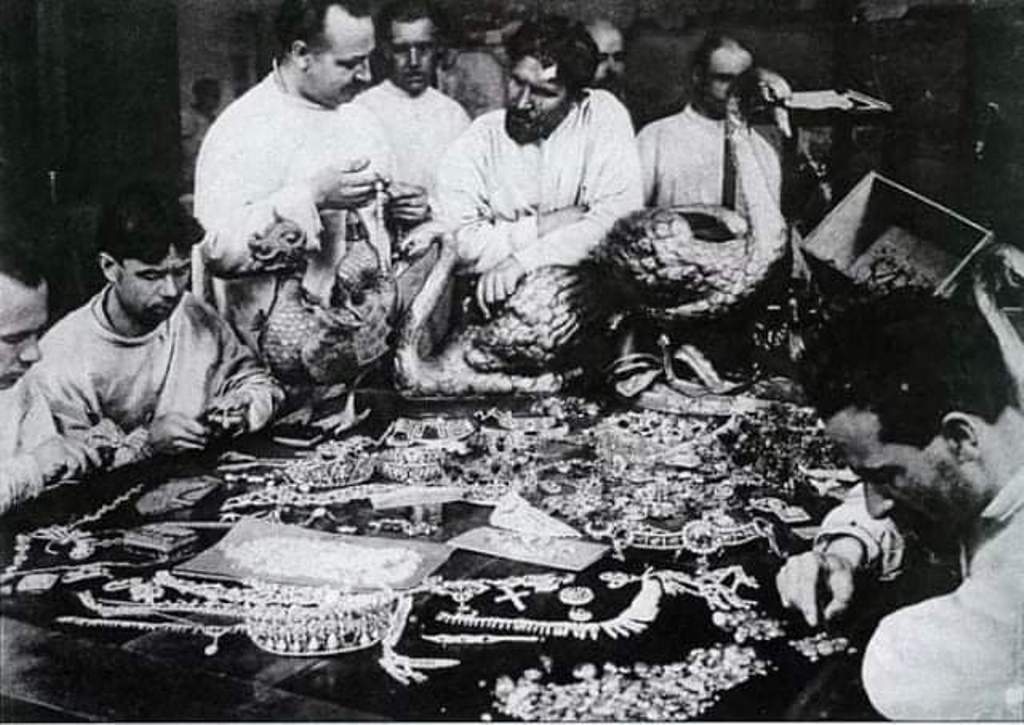
PHOTO: appraisers sort and catalogue the Romanov jewels and other items

The boxes of the “former tsarina”

On 8th March 1922, boxes marked with the “property of the “former tsarina” (the Dowager Empress Maria Feodorovna) were opened in the Armoury Chamber of the Moscow Kremlin. Two commissions were in charge of jewels: the first in the Armoury was responsible for sorting and creating an inventory; while the second sorted and evaluated them at Gokhran.

“In warm fur coats with raised collars, we walked through the frozen rooms of the Armoury,” later recalled a member of the commission, Academician Fersman. – “They brought boxes, there were five of them, among them a heavy iron chest, tied, with large wax seals. Everything was whole. An experienced locksmith easily, without a key, opened an unpretentious, very bad lock. Inside there were jewels of the former Russian Court, each one hastily wrapped in tissue paper. With our hands freezing from the cold, we took out one sparkling gem after another. There were no inventories found among the jewels.”

The following day, Kotler and Franz (both “serious jewellers,” according to Trotsky), said that “if there was a buyer for these valuables, then the estimate would be 458,700,000 gold rubles”. And this, in addition to the coronation treasures, which lay in two separate boxes and were estimated “at more than 7 million gold rubles.” The jewels were examined hastily, within an hour and a half, without a detailed determination of the quality of the stones. The Bolsheviks questioned how much the gems would sell for if they were sold as a separate commodity (they feared a scandal in Europe that could arise in connection with the sale of the crown jewels), experts estimated the amount of 162 million 625 thousand gold rubles.

The members of the commission were amazed. Truly beautiful jewels that belonged to the House of the Romanovs … For example, a diamond necklace with a sapphire cost 3 million rubles, diamond pendants 5 million. The amounts are impressive. Especially when you consider how much these treasures are worth now. For instance, the Faberge “Lilies of the Valley” Easter Egg, which in 1898 Nicholas II presented to his wife Alexandra Feodorovna, cost 6,700 rubles. A little more than a century later, it sold for $10-12 million USD at Sotheby’s, acquired by Viktor Vekselberg and now on display at the Faberge Museum in St. Petersburg.

As a result of such an optimistic assessment, the treasures were quickly (note, again without making inventories) from the Armoury to the Gokhran building in Nastasinsky Lane in Moscow. In the boxes from the palace of Dowager Empress Maria Feodorovna, in addition to the empress’s jewels, rare works of jewellery were kept. Only a few of these items later ended up in Soviet museums, while the rest were sold cheaply to foreigners …
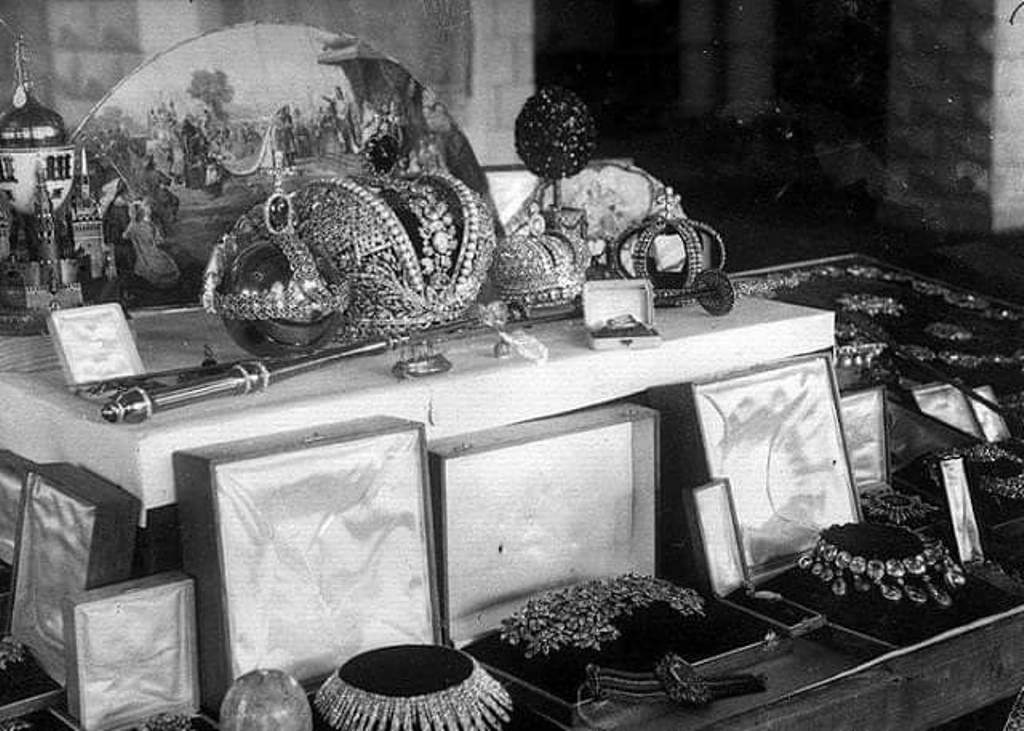
PHOTO: the Imperial Crown of Russia can be seen on the table among 2 Faberge eggs

Poles – the best diamonds

By mid-May, the sorting and appraisal of the crown jewels of the Empresses Maria Feodorovna and Alexandra Feodorovna in Gokhran had been completed. The items of the “former House of Romanov” were divided into three categories, taking into account, first of all, the value of the stones, the artistry of the work and the historical significance of the item. The first category – the inviolable fund – included 366 items valued at 654,935,000 rubles, of which the coronation regalia decorated with selected diamonds and pearls was valued at 375 million rubles. As reported to Leon Trotsky, Deputy Special Commissioner of the Council of People’s Commissars (Council of People’s Commissars) for the registration and concentration of the values ​​Georgy Bazilevich wrote, “when selling these items abroad, the receipt of 300,000,000 rubles is guaranteed.” Products of the second category, which had historical and artistic value, were estimated at 7,382,200 rubles.

At the end of his work, Deputy Chairman of the Council of People’s Commissars and the Council of Labor and Defence Alexei Rykov asked Faberge and Fersman if it was possible to realize coronation values ​​in the foreign market. They answered: it is possible, although there should be no rush. But the Bolsheviks were in a hurry to sell these pieces for the much coveted foreign currency they hoped to gain from such a sale.

In 1922, emeralds from Gokhran were sold in London and Amsterdam under the guise of those mined in the Urals. A year later, Gokhran pearls and diamonds were brought to Amsterdam. In the years following, the Bolsheviks continued to quietly sell diamonds and pearls from Gokhran in Paris.

As for the debt to the Poles, they decided to repay it with jewels. Bazilevich sent Trotsky a memo marked “Top Secret”, which provides a brief estimate of the value of the former “House of Romanov and valuables handed to Poland under the Riga Treaty”:

“In the preparation of of the Bolshevik debt to be paid to Poland the finest diamonds, pearls and coloured stones were selected. In addition to the stones, Gokhran selected gold items, including chains, rings, cigarette cases, bags, etc. in the amount of 2.728.589 rubles … “.
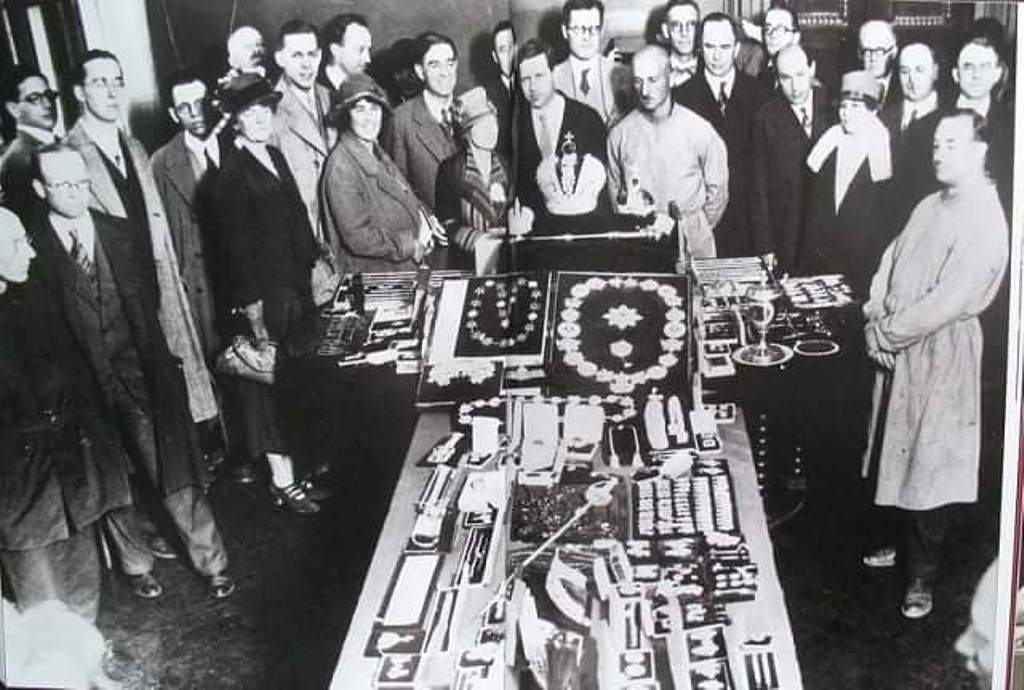
PHOTO: the Romanov jewels on display in Moscow, 1920s

Wholesale export

The apogee of the work of the Gokhran experts was the appearance in 1925-1926 of four issues of the illustrated catalogue “The Diamond Fund of the USSR”. The publication was translated into English, French and German in order to attract foreign buyers and was distributed in Europe.

As a result, “art connoisseur” Norman Weiss was not long in coming. He purchased items from the Diamond Fund in bulk, weighing 9.644 kilograms. The masterpieces of Russian jewellery art cost him 50 thousand pounds! In 1927, the resourceful merchant held an auction in London “Jewels of the Russian State”. The imperial wedding crown, a diamond diadem, and the jewels of Empress Catherine II “floated away” from him.

While the crown jewels were being sold in London, the head of the Armoury Chamber Dmitry Ivanov (he also participated in the cataloguing of the Romanov jewels in 1922) begged the officials to return the museum items sold by Gokhran. His efforts, however, were in vain. At the beginning of 1930, Ivanov became aware of the upcoming seizures of items from Russian museums to be sold abroad. Ivanov could no longer tolerate the theft and sale of Russia’s treasures, and ended up committing suicide.

In 1932, the Romanov treasures bought by Armand Hammer could be purchased at American department stores. Later, he opened an antique shop, which sold Easter eggs that belonged to the empresses, icons in jewelled frames of Nicholas II and Alexandra Feodorovna, a Fabergé cigarette case commissioned by Maria Feodorovna, her notebook embossed with her monogram and an Imperial crown, among many other items.

Of the 773 items of the Diamond Fund, 569 were sold in the 1920s – 1930s. These Romanov treasures were stolen from the Russian Imperial Family by the Bolsheviks, and bought up by greedy, materialistic buyers in the West. It is hardly possible to find in history an example of such a large-scale and criminal sale.
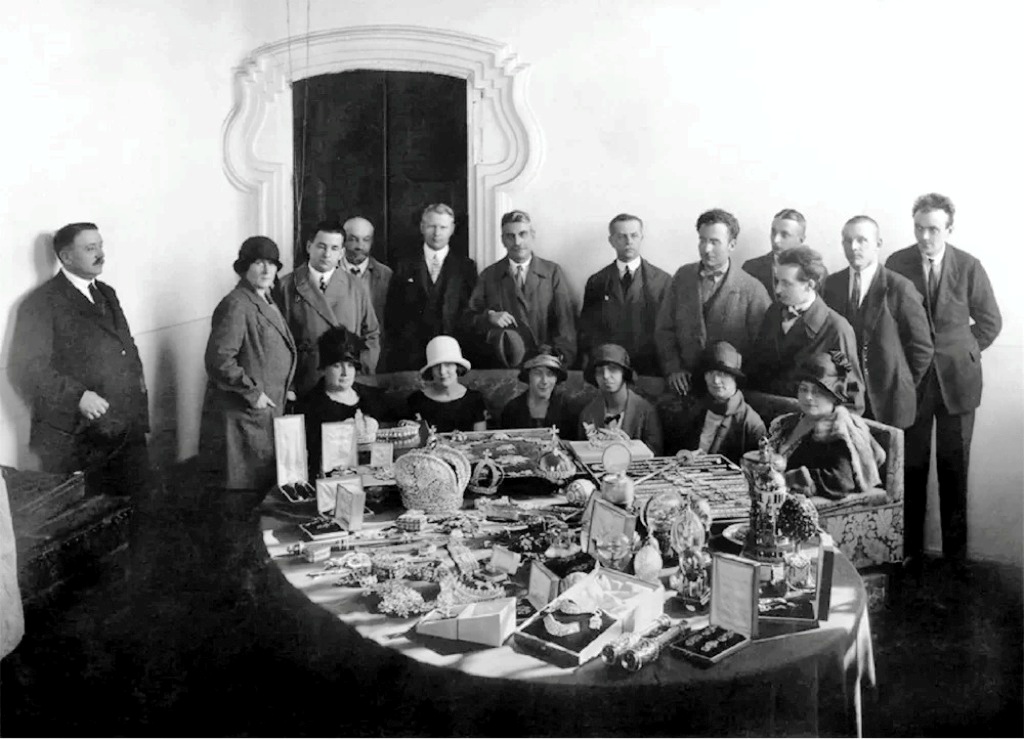
jewels

PHOTO: the Romanov jewels on display in Moscow, 1920s

***

Further reading: I highly recommend History’s Greatest Heist: The Looting of Russia by the Bolsheviks by Sean McMeekin. Published by Yale University Press in 2009

© Paul Gilbert. 9 October 2020

532

Click HERE or on the photo above, to order your copy of RUSSIA’S TREASURE OF DIAMONDS AND PRECIOUS STONES, available from AMAZON in hard cover and paperback editions
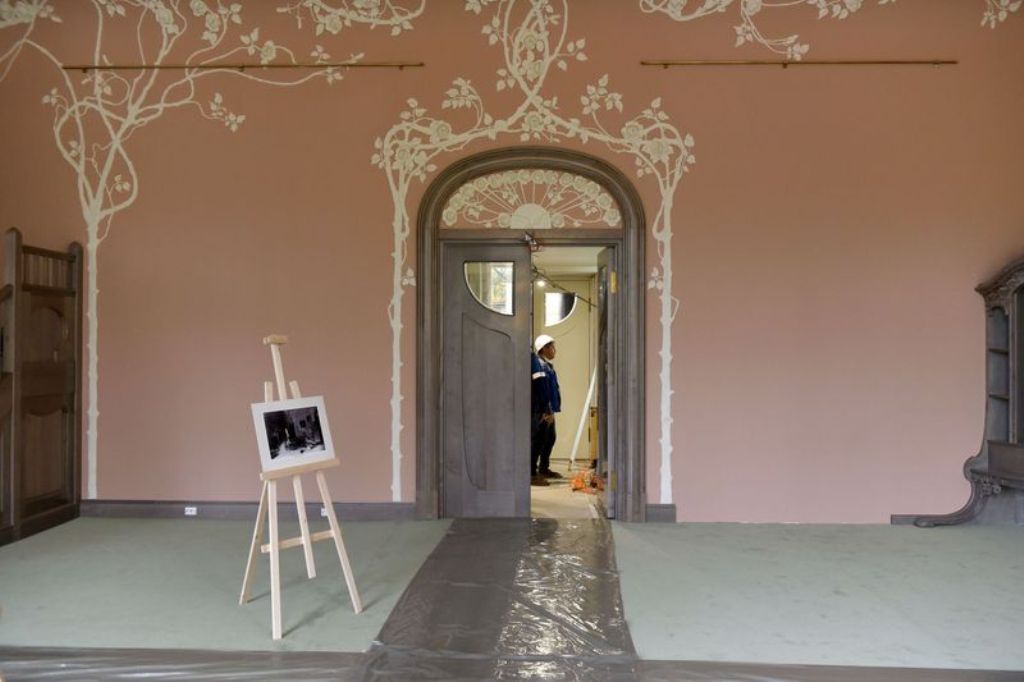
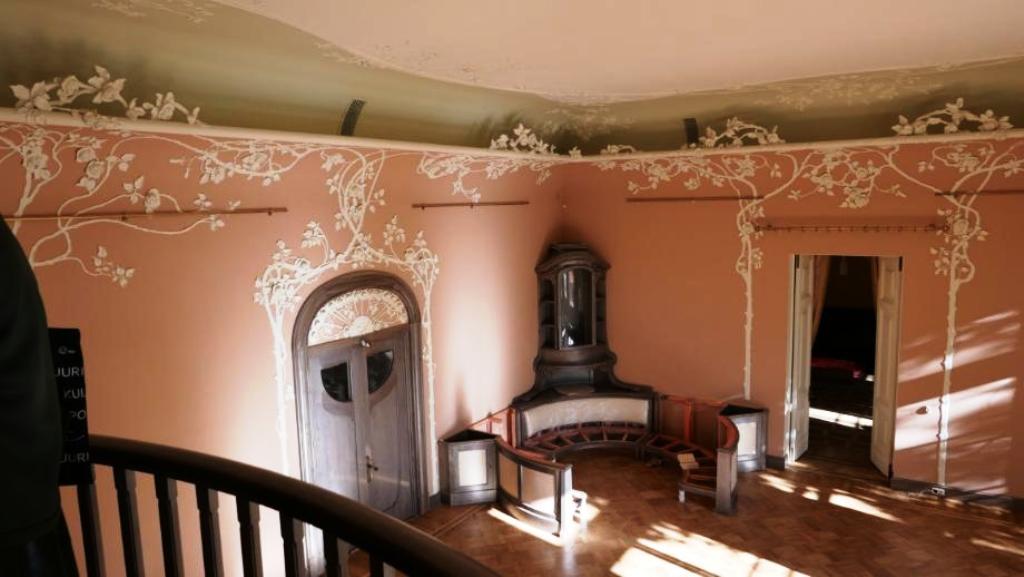
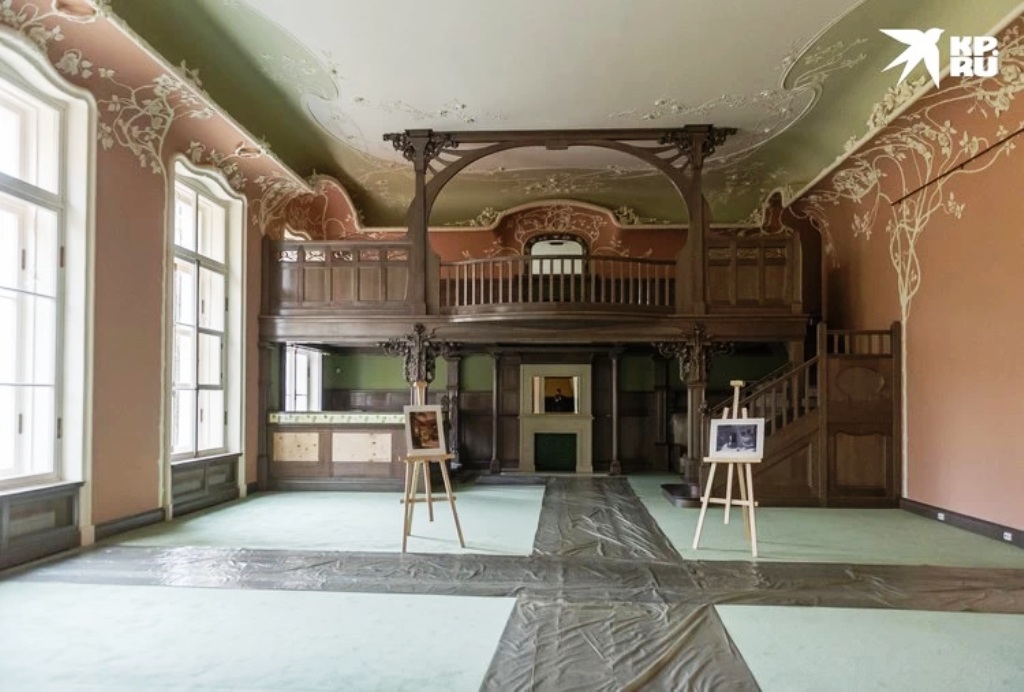
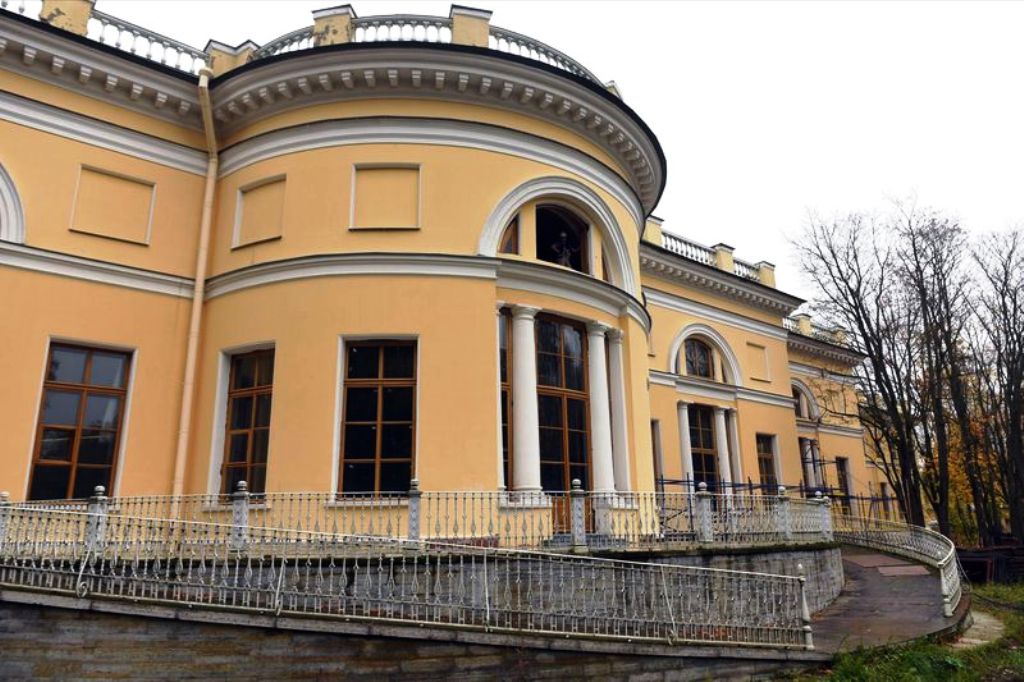
Russian media provide a first look at the progress of the recreation of the historic interiors in the Alexander Palace

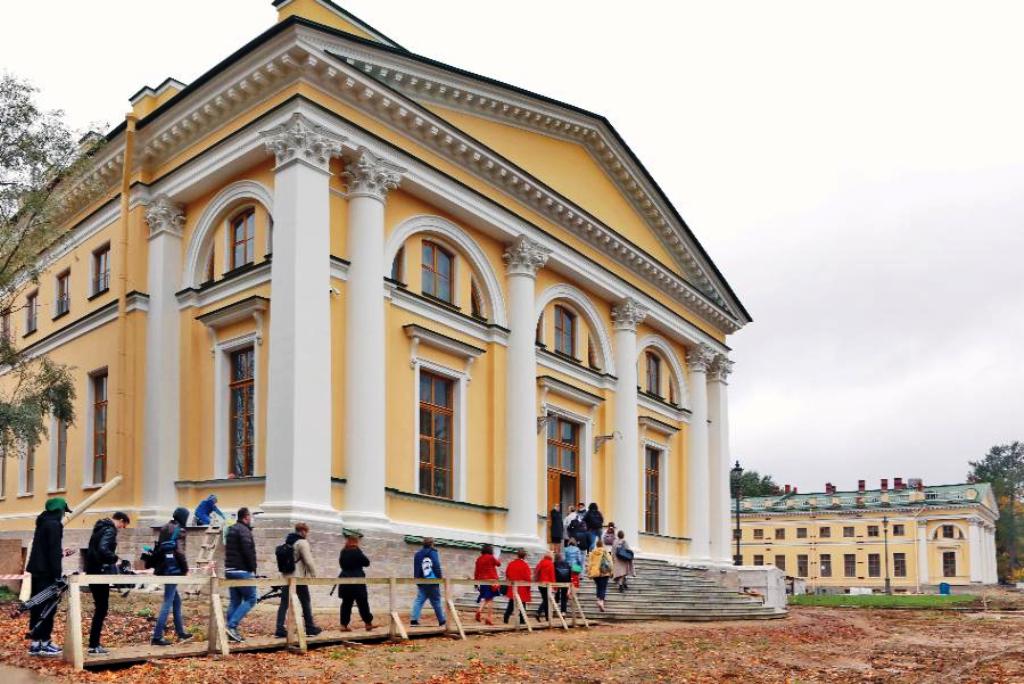
On 7th October, the Tsarskoye Selo State Museum Reserve invited Petersburg journalists to the Alexander Palace, where they were shown the progress of the restoration and recreation of the historic interiors of the last residence of Emperor Nicholas II and his family.

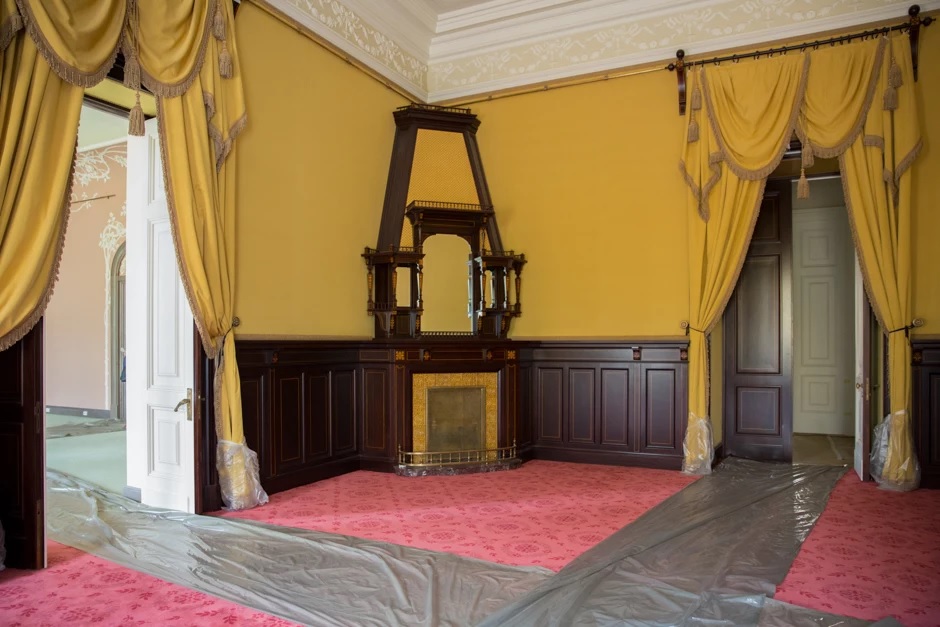
Ongoing restoration works have been carried out since 2012, and the palace was closed in the autumn of 2015 to embark on the large-scale recreation of the private apartments of Nicholas II and Alexandra Feodorovna in the eastern wing of the palace.

The project was developed by Nikita Yavein’s Studio-44. The restorers relied on amateur photographs taken by members of the Imperial family, autochromes from 1917, and design drawings to recreate the interiors.

In addition, the Tsarskoye Selo and Pavlovsk State Museums had stored original samples of fabrics, which were used to recreate the decoration of some interiors – Chintz (waxed cotton fabric with a printed pattern) in the bedroom, silk in the Lilac office, reps (a cotton or silk fabric formed by weaves) in the Rosewood living room, etc.

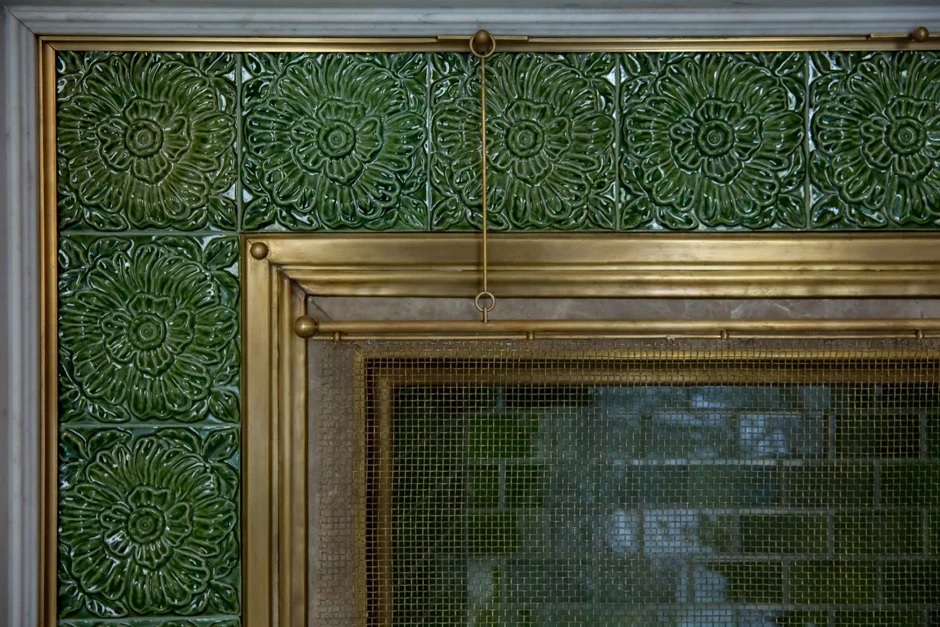
During the restoration, elements of the historical interior decoration were preserved, including oak wall panels, coffered wooden shades and ceramic tiles.

NOTE: the following images are from different Russian media sources, and are not in any particular order. They are presented to give you an idea of the tremendous amount of work and dedication which has gone into the recreation of these historic interiors, thus breathing new life into the Alexander Palace – PG 

On 7th October 2020, the Tsarskoye Selo State Museum Reserve (GMZ) announced that the opening of the Alexander Palace – originally scheduled for December 2020 – would be further delayed. A press release from the GMZ reported that a total of 15 rooms will now open to the public in 2021, in the Museum of the Russian Imperial Family located in the eastern wing of the palace.

© Paul Gilbert. 8 October 2020

Delays . . . delays . . . and more delays with the opening of the Alexander Palace

It may come as no surprise to any one that the opening of the Alexander Palace at Tsarskoye Selo has been delayed yet again.

Eight of the reconstructed private rooms of Nicholas II and Alexandra Feodorovna, were due to open in December of this year, however, the opening date of the palace has been further extended..

According to Russian media sources, a total of 15 rooms will now open to the public in 2021, in the Museum of the Russian Imperial Family located in the eastern wing of the palace

“At the moment, the Alexander Palace is our everything. Everything is aimed at its early completion. We have divided the restoration into two stages in order to open the most important rooms to visitors. Fifteen historic interiors of Nicholas II. and his family six months from now,” – said Olga Taratynova, Director of the Tsarskoye Selo State Museum Reserve.

According to Taratynova, the cost of the work is 2.7 billion rubles. Currently, 1.7 billion have been spent. The balance will go to the second stage of the restoration project.

“The second stage will take another three years. Thus, we will open the entire western wing of the palace,” she added.

© Paul Gilbert. 7 October 2020

Appeal launched to return the name of Nicholas II to the Severnaya Zemlya archipelago

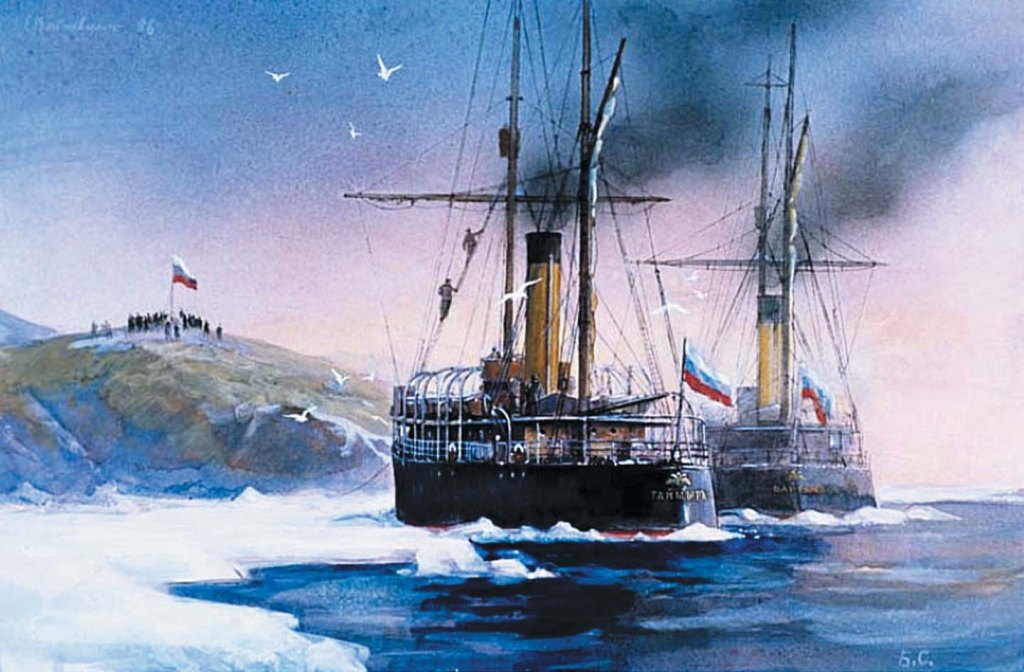
PHOTO: The Taimyr and Vaygach near the Land of Emperor Nicholas II (Severnaya Zemlya)
Artist: Evgeny Valerianovich Voishvillo (1907-1993)

The archipelago was discovered on 4th September 1913. In 1914 it was named Emperor Nicholas II Land, one of the islands was named in honour of Tsesarevich Alexei Nikolaevich.

On 1st October, a letter was sent to the authorities of the Krasnoyarsk Territory with a proposal to return the historic name of Nicholas II to the Severnaya Zemlya (Bolshevik name) archipelago situated in the Russian high Arctic. It lies off Siberia’s Taymyr Peninsula, separated from the mainland by the Vilkitsky Strait. This archipelago separates two marginal seas of the Arctic Ocean, the Kara Sea in the west and the Laptev Sea in the east.

Among the signatories are the explorer and traveler Fyodor Konyukhov; Irina Tikhomirova, the granddaughter of Boris Vilkitsky who discovered the islands; State Duma deputy from the Krasnoyarsk Territory Viktor Zubarev, among others.

The archipelago was not put on the map until the 1913–1915 Arctic Ocean Hydrographic Expedition of the icebreakers Taimyr and Vaygach. The chief organizer and first captain of the Vaygach was Aleksandr Vasiliyevich Kolchak (1874-1920) of the Imperial Russian Navy. The expedition was privately financed and launched in 1910, being led by Boris Andreyevich Vilkitsky (1885-1961) on behalf of the Russian Hydrographic Service. This venture accomplished its goal of exploring the uncharted areas of the continental side of the Northern Sea Route in what was seen as the culmination of the Great Northern Expedition, an ambitious enterprise initially conceived by emperor Peter I the Great in order to map the whole of the northern coast of Russia to the east.

On 4th September 1913 (O.S. 22 August 1913), members of Vilkitsky’s expedition landed on what is now known as Cape Berg on October Revolution Island. They raised the Imperial Russian flag on the shore and named the new territory Tayvay Land, after the first syllable of their icebreakers’ names. During the days that followed Vilkitsky’s expedition charted parts of the Laptev Sea coast of what they believed to be a single island. Barely six months later in early 1914, by order of the Secretary of the Imperial Navy, the new discovery was renamed Emperor Nicholas II Land, in honour of the ruling emperor Nicholas II.

In 1926, the Presidium of the Central Executive Committee of the USSR renamed the archipelago renamed Severnaya Zemlya (Northern Land), and the Tsesarevich Alexei Nikolaevich Island was renamed Maly Taimyr.

Severnaya Zemlya comprises four major islands – October Revolution, Bolshevik, Komsomolets, and Pioneer – and around 70 smaller islands, covering a total area of about 37,000 km2 (14,300 sq mi).

With regard to the current appeal, Zubarev noted: “Such a letter has been addressed to the head and parliament of the region. We hope that state authorities the regions will accept our arguments and take measures to restore historical justice”.

© Paul Gilbert. 3 October 2020

The History and Restoration of the Reception Room of Nicholas II in the Alexander Palace

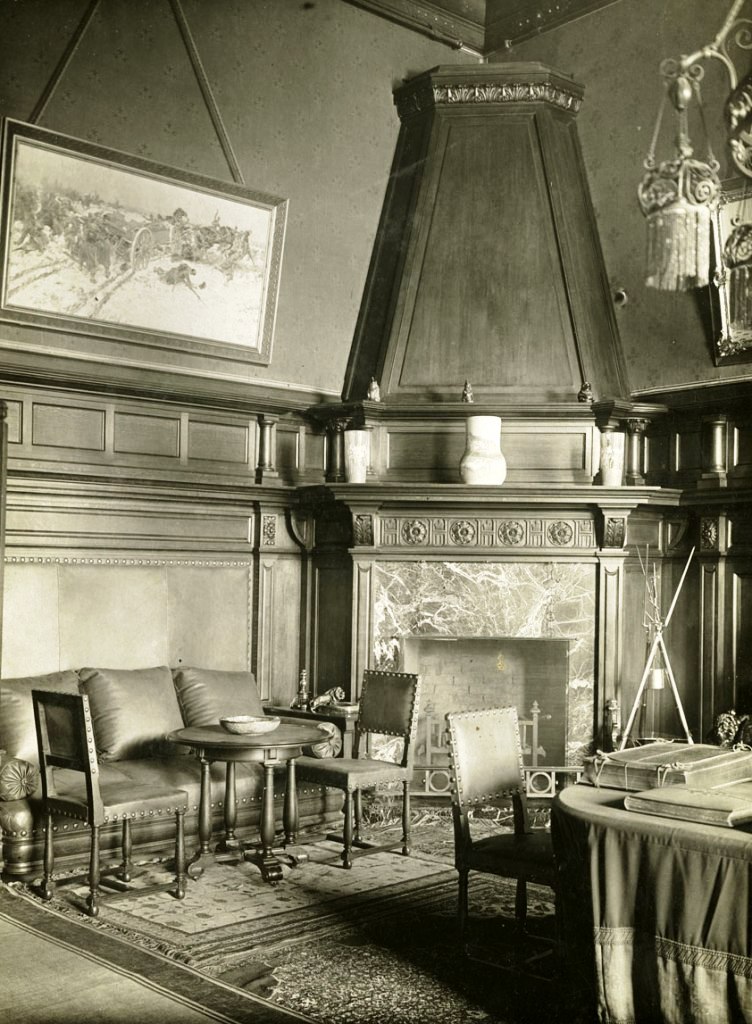
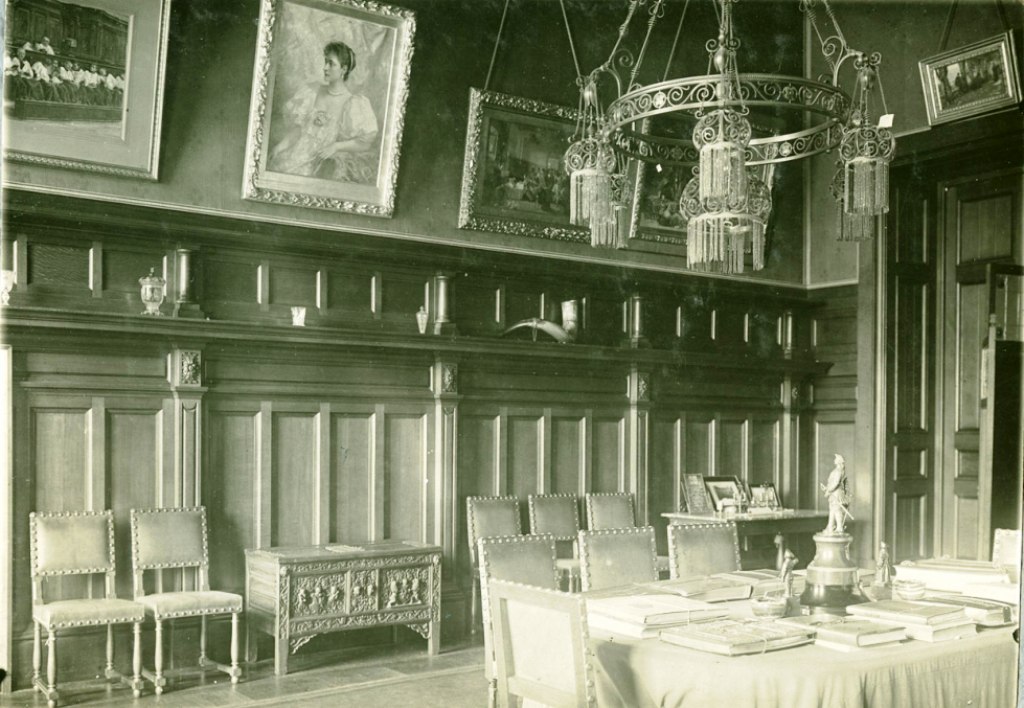
PHOTO: the Reception Room of Nicholas II as it looked in the 1930s

The Alexander Palace served as the home and official residence of Russia’s last emperor from 1894 to the summer of 1917. By the end of 1894, in the eastern wing of the palace, work was alreay underway on finishing the apartments for the young imperial couple, who had married on 27th November (O.S. 14th November). This part of the building was divided by a corridor into two enfilades: the rooms of Nicholas II, facing the courtyard, and the rooms of Alexandra Feodorovna, with windows to the park.

The first room in the Emperor’s half was the Dining Room (later the Reception Room). The renovation of this interior was carried out in 1895-1896 by architect Roman Feodorovich Meltser (1860-1943). For the wall decoration, a “high panel around the room with a seasoned shelf” was installed, above the panels, the walls were covered with printed fabric. On the ceiling there is a “wooden plafond” with a cornice. The interior decoration features a corner fireplace of oak wood, trimmed with dark green marble. The architect decorated the upper part of the two windows with square cathedral (stained-glass) glass.

PHOTO: the Reception Room of Nicholas II as it looked in the 1930s

The furniture was made by F. Meltzer & Co., which included a sofa with two folding tables, a round table for drinking tea, a dining table and 24 chairs, a serving table, and a table “for snacks”. The set of furniture included a fireplace screen, covered with fabric, decorated with mirrored glass with a facet in the upper part.

Subsequently, this room, preceding the Emperor’s Working Study, was used as a Reception Room. Despite the change in the purpose of the interior, its furnishings remained almost unchanged until 1917. Only a few items were added, giving the room a more businesslike character.

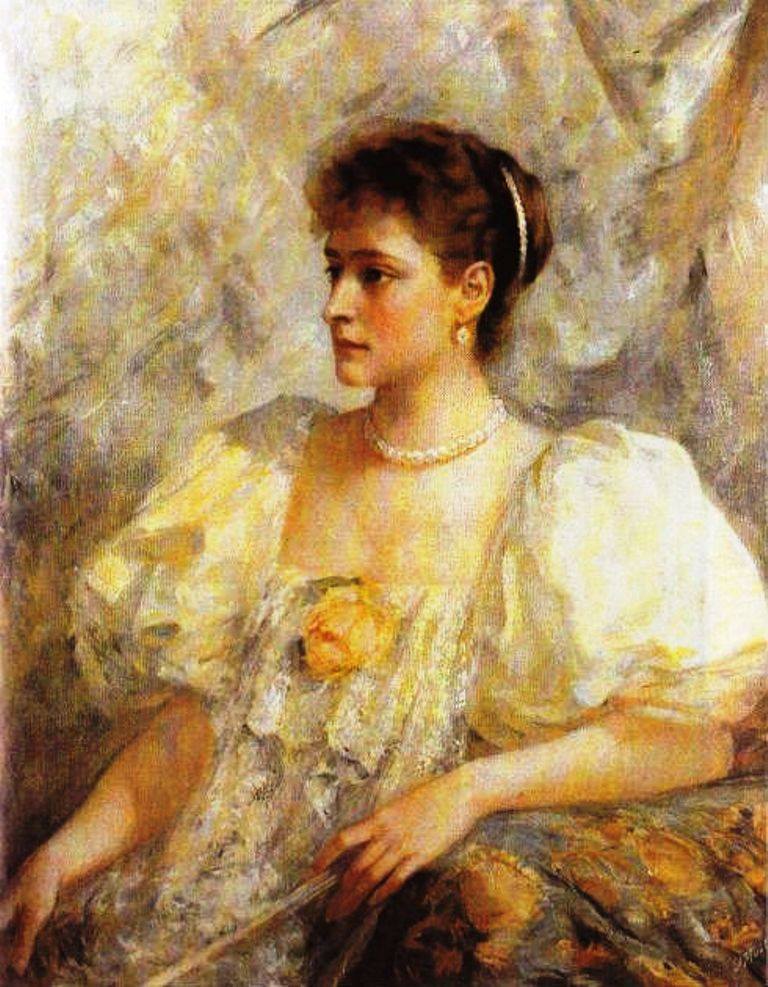
PHOTO: This lovely portrait of the Empress Alexandra Feodorovna (1896) by A. Muller-Norden, which originally hung in the Reception Room of the Alexander Palace (seen in the 2nd photo), is currently in the collection of the Pavlovsk State Museum.

It is just one of more than 5,000 items moved to Pavlovsk in 1951. The return of the items to the Alexander Palace remains a bone of contention between the two palace-museums. Click HERE to read my article Controversy over portrait of Empress Alexandra Fedorovna in Pavlovsk, published on 20th August 2019.

Unlike many interiors of the Alexander Palace, the decoration of the Reception Room practically remained intact during the Great Patriotic War (1941-45), which greatly facilitated the current restoration work in this room. Here are preserved wall and ceiling panels, a fireplace and a chandelier, which was installed by Melzer in 1899 and cost 2,275 rubles. Sadly, the furniture, curtains, and cathedral glass windows were all lost.

The interior was restored in the 1950s. In 1997, the exhibition “Memories in the Alexander Palace” opened in the eastern wing of the palace, the museum designated the room as the Reception Room. The room contained corresponding furniture of the late 19th – early 20th centuries from the museum’s collection: two tables, oak chairs, a chest, and a carpet. Memorial items were also exhibited in the Reception Room – in their historical places there was a chandelier and a model of the monument to Peter I by Ivan Schroeder.

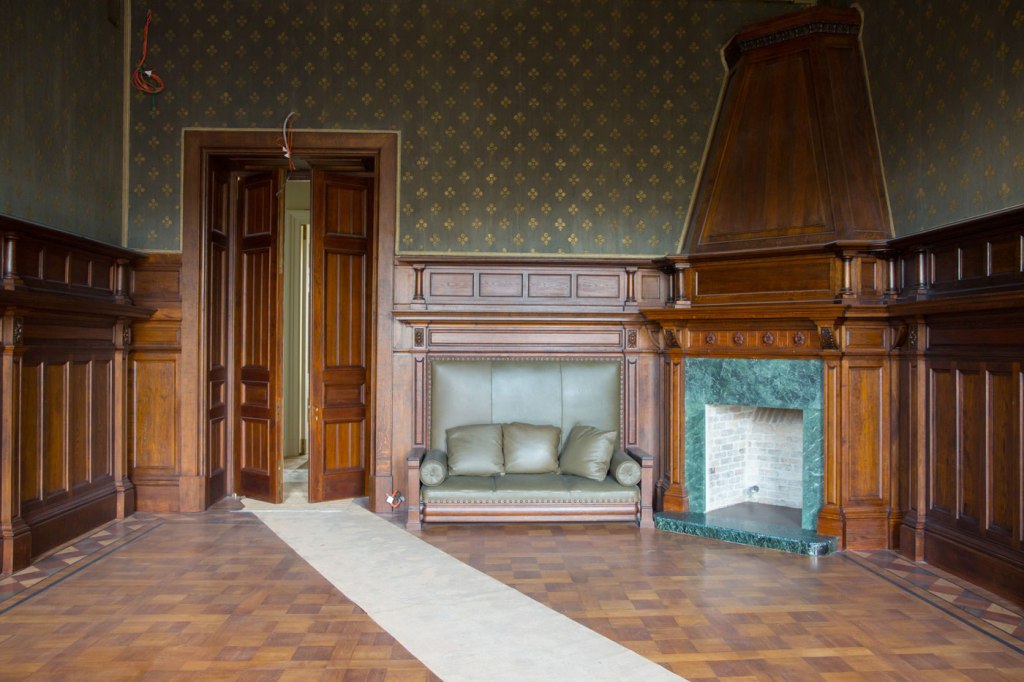
PHOTO: the Reception Room of Nicholas II as it looks

In the course of recent restoration work in the Reception Room, the oak walls and ceiling decoration, fabric on the walls, parquet and a fireplace have been beautifully preserved. In the process of working with the fireplace, it was discovered that the monogram preserved on the frieze differs from that recorded in historical photographs. These inaccuracies have been corrected.

During the restoration, the fabrics from the walls were dismantled and sent to the restoration workshops, where a method of dry cleaning of the fabric with its subsequent conservation was developed.

PHOTO: the Reception Room of Nicholas II as it looks today

From the surviving photographs, a built-in sofa upholstered in olive leather, a fireplace grate and an openwork metal mesh of the fireplace insert have been recreated. The restoration of the historic chandelier, the only surviving piece of the Reception Room interior, has also been completed.

At present, work continues on the design based on historical photographs of some pieces of furniture: an oak table and chairs are being made for the sofa, as well as a lattice-stand for banners; the elbows of the sofa will be supplemented with folding table shelves. Subsequently, there are also plans to recreate the stained glass in the Reception Room windows.

***

The Reception Room of Nicholas II is one of eight interiors to open in the eastern wing of the palace, scheduled to open in December 2020. The other interiors include: the Moorish Bathroom of Nicholas II, Working Study of Nicholas II, Pallisander (Rosewood) Living Room, Mauve (Lilac) Boudoir, Imperial Bedroom, Alexandra’s Corner Reception Room, and the New Study of Nicholas II.

In the future, the Alexander Palace will become a memorial museum of the Romanov family – from Catherine the Great to Nicholas II, showcasing the private, domestic life of the Russian monarchs who used the palace as an official residence. The eastern wing of the palace will be known as the Museum of the Russian Imperial Family. The multi-museum complex is scheduled for completion no earlier than 2022.

© Paul Gilbert. 2 October 2020

Then they repented of slandering the Tsar …

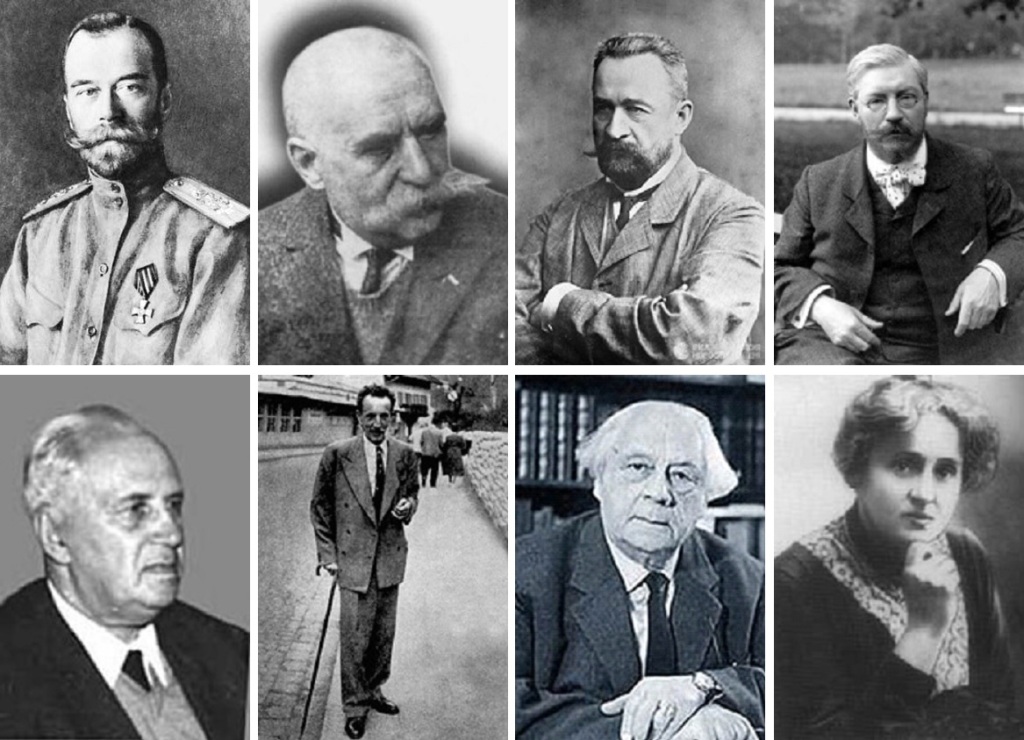
Historians and media sources continue to rehash revolutionary myths and slander about the Emperor Nicholas II. Meanwhile, many former revolutionaries and liberals who slandered the Tsar repented in the years which followed the 1917 Revolution.

With the exception of Fondaminsky, who died at Auschwitz in 1942, the men and women featured in this article – all of whom supported the overthrow of Nicholas II and the monarchy in Russia – died in exile.

Ivan Fedorovich Nazhvin (1874-1940)

Author of numerous novels in which he denounced the monarchical state system

“In the days of my youth, the role of a “conscious personality” and “struggle for the people” was demanded from every young man. At that time, not only representatives of the bourgeoisie, like me – we all know the names of the Ryabushinskys, Tretyakovs, Konovalovs, Savva Morozov, etc. – joined the ranks of these – alas! personalities, but also aristocrats, like Prince. P.A. Kropotkin, Count Leo Tolstoy, princes Shakhovsky, Khilkov, Chertkov, Chicherin, etc….

The red stupor grew by leaps and bounds; while the Russian man demanded for himself “the sky in diamonds”. I also suffered from this social disease. I also wanted the sky in republican and socialist diamonds. Entering public life as a writer, I did not hesitate, of course, that only the “leaders”, can steer Russia’s affairs, and everything that is alien to us is subject to anathema and must be thrown into the historical rubbish heap … The first revolution of 1905 cooled my revolutionary aspirations, and the second in 1917 completely extinguished them forever. But I was still possessed by the “old regime” and I looked upon its leaders with much dislike. To my great regret, Tsar Nicholas II was among them.

When I began to examine Russia’s past for my novels, I became more and more convinced that the Tsar was not at all “stupid or weak-willed”. He was “stupid” only because he did not share our delusions, and we imagined him to be “weak-willed” because he did not possess our main and serious vice – over self-confidence (“we know everything”), but on the contrary, he was infinitely modest. My frequent conversations with L.D. Korsakov, who observed the Tsar’s life at close hand, finally convinced me that we, “social activists”, were impassable mules and that we are responsible for the death of the unfortunate Imperial family, who had been persecuted by all of us.

I dedicated a whole volume to this terrible tragedy. But someday it will be published in our time of troubles! And death does not wait: I am already 65; and therefore, without postponing matters, I consider it my duty of conscience to repent of my gross and cruel social error now: it was not the Tsar who was to blame before us, but we before him, who suffered for us.

We suffered severely for our mistake, but still there is no suffering with which we could completely atone for our criminal frivolity and wash away the blood of our victims, the poor Emperor and his loved ones from our hands and souls.

I very much ask my readers, if they come across in my volumes harsh reviews about the deceased Tsar, Tsarina and their loved ones, to interpret these my sins in the light of this letter to “everyone”: I am guilty of this terrible mistake and am ready to atone for it again and again.”

25th April 1939

(Quoted from: “Sentinel”. 1951. No. 304; “Bulletin of the Temple-Monument”. 1981. No. 241)

Ilya Isidorovich Bunakov-Fondaminsky (1880-1942)

One of the leaders of the terrorist organization of the Socialist Revolutionaries

Moscow statehood rested not on strength and not on subjugation by the power of the people, but on the loyalty and love of the people for the bearer of power. Western republics rest on popular recognition. But no republic in the world has been so unconditionally recognized by its people as the autocratic monarchy. The left-wing parties portrayed tsarist power, as the Bolsheviks are now portrayed. They assured us that “despotism” led Russia to decline. I, an old militant terrorist, say now, after the lapse of time – it was a lie! No power can last for centuries based on fear. Autocracy is not violence, its basis is love for kings. After all, Russia is a state of the East. The monarchy was a theocracy. The Tsar is God’s Anointed One. And there were never any uprisings against the Tsar. Not during the Muscovy period, but also the imperial period – the Tsar was almost God.”

(From the speeches at the meetings of the newspaper “Days”, the society “Green Lamp” and the socialist immigrants in Paris in 1927-1929 – Quoted from: “The Two-Headed Eagle”. 1929. No. 25. S. 1186.)

***

Let us conclude this collection with the confessions of several prominent “Februaryists” for their anti-monarchist revolution. Their words refute the popular opinion of liberal democrats that the Bolsheviks “distorted the gains of progressive freedom-loving February.”
Sergei Petrovich Melgunov (1879-1956)

Member of the Organizing Committee of the People’s Socialist Party, appointed by the Provisional Government Commissioner for the survey of archives and the development of political affairs

“After everything that has now been published in recent years, the assessment of ​​Nicholas II has to be changed. Undoubtedly, the idea of ​​the completely exclusive political influence of the “Friend” [Rasputin] is also greatly exaggerated. The right-wing public menacingly instilled that tsarist power would be shaken and that Russia, torn apart by party strife, would perish. Alas! so far, this has largely turned out to be right, just as the Narodnoye resident [L.A. Tikhomirov] was right, after he wrote in his diary: “The monarchy is heading towards destruction, and without the monarchy an inevitable slaughter lasting 10 years will follow.”

No element can justify those who, in a revolutionary storm, have undertaken to navigate the state ship. At first, they all, consciously or unconsciously, indulged the elements and fanned the flames of the great bloodless revolution. The disorganized coup, not organized victory.”

(Melgunov S. On the way to the palace coup. Paris. 1931. S. 61-63, 225).

Prince Georgy Yevgenyevich Lvov (1861-1925)

First Minister-Chairman of the Provisional Government

Until the very end he [Lvov] blamed himself for everything: “After all, it was I who made the revolution, I killed the tsar and everyone … all because of me” … he said in Paris to his childhood friend Ekaterina Mikhailovna Lopatina-Yeltsova. ”

(Quoted from: Stepun F. The Past and the Unfulfilled. New York. 1956. Vol. II. P. 32).

Pavel Nikolaevich Milyukov (1859-1943)¹

Leader of the Cadet Party, Minister of the First Provisional Government

After his removal from the Provisional Government in the spring of 1917, he said in an address to his associates:

“In response to your questions, how I look at the revolution we have accomplished, I want to say that what happened, we certainly did not want. We believed that power would be concentrated and remain in the hands of the first cabinet, that we would stop the enormous devastation in the army quickly, if not with our own hands, then with the hands of the allies, we would achieve victory over Germany, we would pay for the overthrow of the tsar with only some delay in this victory. We must confess that some, even from our own party, pointed out to us the possibility of what happened next. Of course, we must acknowledge that the moral responsibility lies with us.

You know that we made a firm decision to use the war to carry out a coup soon after the start of the war, you also know that our army had to go on the offensive, the results of which would fundamentally stop all hints of discontent and cause an explosion of patriotism in the country and jubilation. You understand now why I hesitated at the last minute to give my consent to the coup, you also understand what my inner state should be like at the present time. History will curse the leaders of the so-called proletarians, but it will also curse us, who caused the storm.

What to do now, you ask. I don’t know, that is, inside we all know that the salvation of Russia lies in the return of the monarchy, we know that all the events of the last two months clearly prove that the people were not able to accept freedom, that the mass of the population, not participating in rallies and congresses, were disposed to the monarchy, and that many, many who voted for a republic did so out of fear. All this is clear, but we cannot admit it. Recognition is the collapse of the whole business, our whole life, the collapse of the entire worldview, of which we are representatives.”

(Quoted from: PN Milyukov’s letter of repentance // Russian Resurrection. Paris. 1955. April 17, p. 3).

Fyodor Avgustovich Stepun (1884-1965)

After the February Revolution, he was the head of the Political Directorate of the War Ministry

In his later memoirs, he describes how he, along with other revolutionaries, was placed in the rooms of the Grand Palace: “My soul was vague and unwell: I was ashamed being in the royal chambers, as if I had robbed someone and did not know how to hide stolen goods in order to forget about the theft … ” Whose fault before Russia is harder – ours, the people of “February”, or the Bolshevik – a difficult question … “.

(Stepun F. The Past and the Unfulfilled. New York. 1956. T. II. S. 154, 7).

Ariadna Vladimirovna Tyrkova-Williams (1869-1962)

One of the organizers of the Cadet Party, participant in the February Revolution

“When the crown fell, many noticed with amazement that it ended, the central vault of Russian statehood was supported on it. The cadets were unable to fill the devastation.”

(Quoted from: “Grani”. 1980. No. 130. P. 118).

Click HERE to read my article The myth that Nicholas II’s death was met with indifference by the Russian people, published on 19th June 2020

© Paul Gilbert. 24 September 2020

¹ On 1st November 1 1916, liberal politician and the leader of the Constitutional Democratic Party (known as the Kadets) in the Russian Provisional Government, Pavel Nikolayevich Milyukov delivered the famous speech in the State Duma, which, according to many historians, launched the dramatic process of the revolutionary demolition of the government in force at that time.

Judicial reforms of Emperor Nicholas II

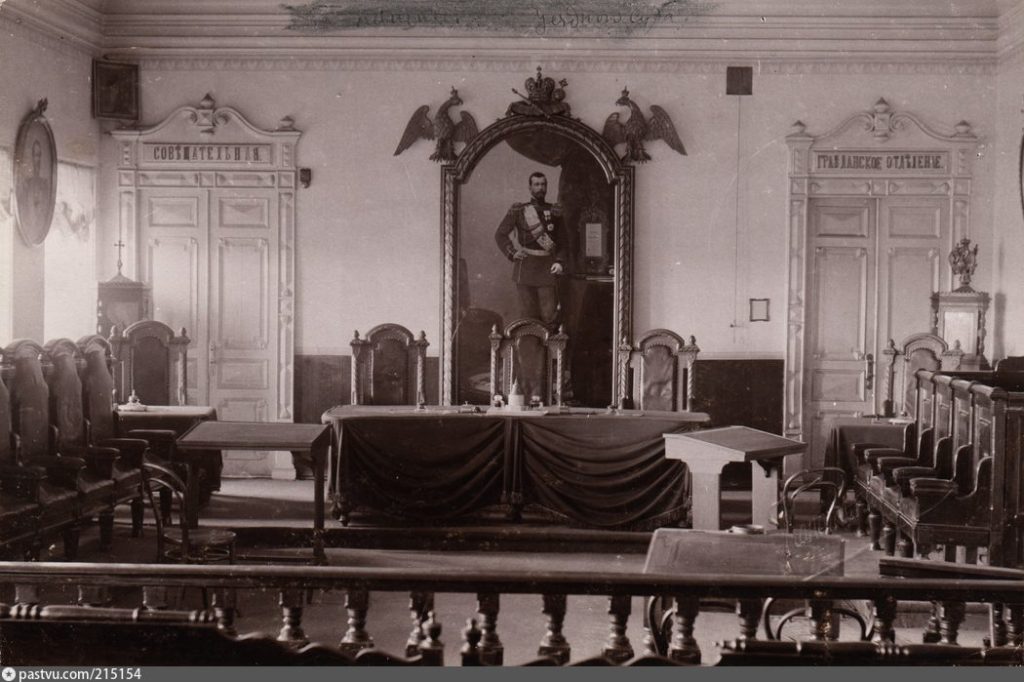
PHOTO: Portrait of Nicholas II hangs in the District Court Hall.
Tver province, Kashinsky district. 1909-1911

As noted by Russian historian Sergei Viktorovich Kulikov: “It fell to Nicholas II to complete, as in the case of the agrarian reform, the judicial reforms of Alexander II.”

Indeed, judicial reform was the most liberal of all the great reforms of Emperor Alexander II. However, its implementation stretched over 35 years, during which the judicial statutes were adapted to the existing state and political system of the Russian Empire. Siberia was one of the last regions to which the judicial statutes of 1864 were extended. In December 1895, noted in a report of the Minister of Justice Nikolai Valerianovich Muravyov (1850-1908) Nicholas II wrote: “God grant that Siberia in two years will receive much-needed justice, on a par with the rest of Russia.”
By the middle of 1899, the Tsar’s wish was fulfilled: Judicial regulations were introduced in the Arkhangelsk and Vologda provinces, in the Steppe and Trans-Caspian regions, in Siberia and Turkestan. Thus, by the beginning of the 20th century. The judicial reforms were firmly established throughout the Empire. On 1st July, 1899, in a rescript addressed to Muravyov, the Sovereign pointed out: “Upon my accession to the throne, I paid special attention to the need to expand the scope of the Judicial Charters of Emperor Alexander II, so that in all, even the most remote areas of Russia, there would be speedy and impartial justice for all people. Today, within the Russian Empire there is no longer a locality which does not enjoy the benefits of the eternal principles of truth, mercy and equality of all before the law inherent in these Statutes.”
Nicholas II also contributed to the gradual humanization of the penitentiary system. In 1895 he transferred the Main Prison Administration from the Ministry of Internal Affairs to the jurisdiction of the Ministry of Justice. The Emperor especially thanked the Head of the Main Prison Administration Alexander Petrovich Salomon (1855-1908) “for the humane treatment” to students who participated in student riots in St. Petersburg and subsequently arrested. On 10th June, 1900, the Tsar abolished exile to Siberia, and between 1903-04, he abolished corporal punishment.

On 22nd March, 1903, the Tsar approved a new Criminal Code, which was considered one of the most advanced in the world. The new Criminal Code had been spearheaded by the outstanding Russian lawyer, criminologist and statesman Nikolai Stepanovich Tagantsev (1843-1923), who had been appointed a member of the Commission for the development of a new Criminal Code under the Ministry of Justice.

The Code provided a definition of a criminal act, a classification of the severity of a crime; for the first time in Russian legislation, the concept of age-related insanity, necessary defence, and attempt to commit a crime was introduced. The death penalty could not be applied to persons under 21 years of age or over 70 years of age. Also, the legislator introduced a ban on holding public office for persons sentenced to hard labour, exile or imprisonment in a correctional house. Juvenile convicts, from 14 to 17 years old, were held in general prisons, but separately from adults. Criminal punishment was introduced not only for a woman who had an abortion, but also for the doctor who performed it. Crimes against the Faith and the Church (blasphemy, sacrilege, being in dangerous heretical sects, etc.) were especially distinguished.

The implementation of the Criminal Code was put into effect gradually, and was interrupted for a year during the revolution of 1905-1907. In the personalized Supreme Decree of 22nd March, 1903, it stated the following: “We are firmly convinced that this law, delimiting the area of ​​what is forbidden and what is permitted and counteracting criminal encroachments, will serve to maintain civil order and to strengthen the sense of legality among the people, which should be the permanent leader of everyone both in the circle of his personal activities, and in the aggregate composition of estates and societies.”

© Paul Gilbert. 22 September 2020

The History and Restoration of Nicholas II’s Moorish Bathroom in the Alexander Palace

The Moorish Bathroom of Nicholas II as it looked in the 1930s

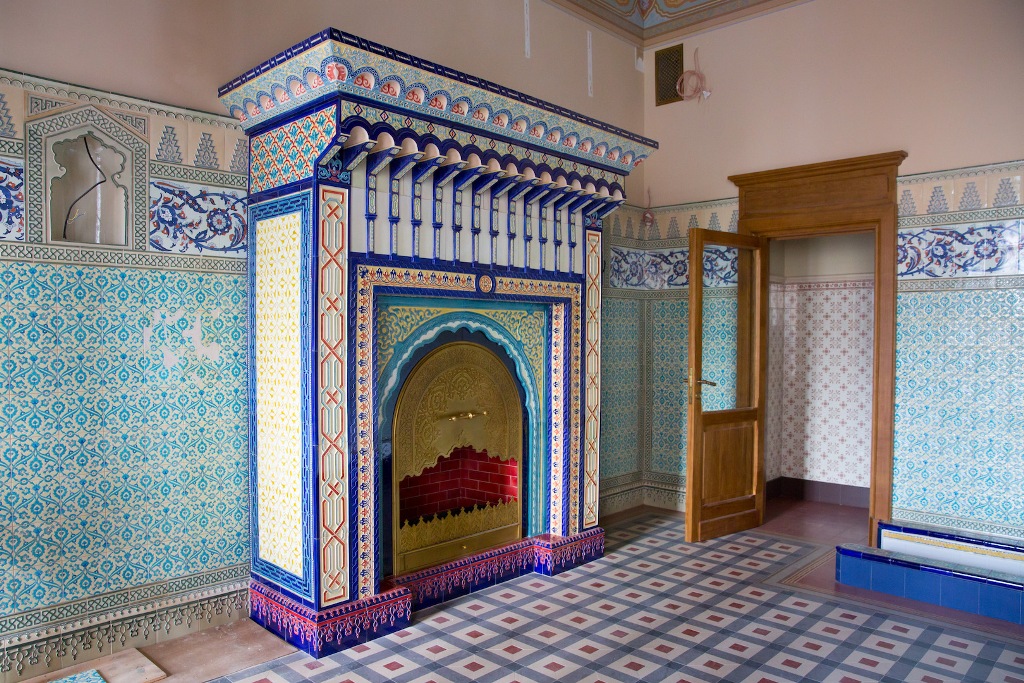
The Tsarskoye Selo State Museum Reserve have announced that the restoration of the Moorish Bathroom – one of the most unique interiors in the private apartments of Nicholas II in the Alexander Palace – is nearing completion.

The Moorish (also called the Emperor’s Toilet, Basseinaya) acquired its original appearance in 1896-1897 when the interior was redesigned by the Russian architect Count Nikolai Ivanovich de Rochefort (1846-1905). The most famous project of Count Rochefort is the Bialowieza Palace, an imperial hunting residence, built in Poland between 1889-1894. His innovative interior included a bathroom with a small bathing pool, which served as a model for designing the Moorish Bathroom for Nicholas II in the Alexander Palace.

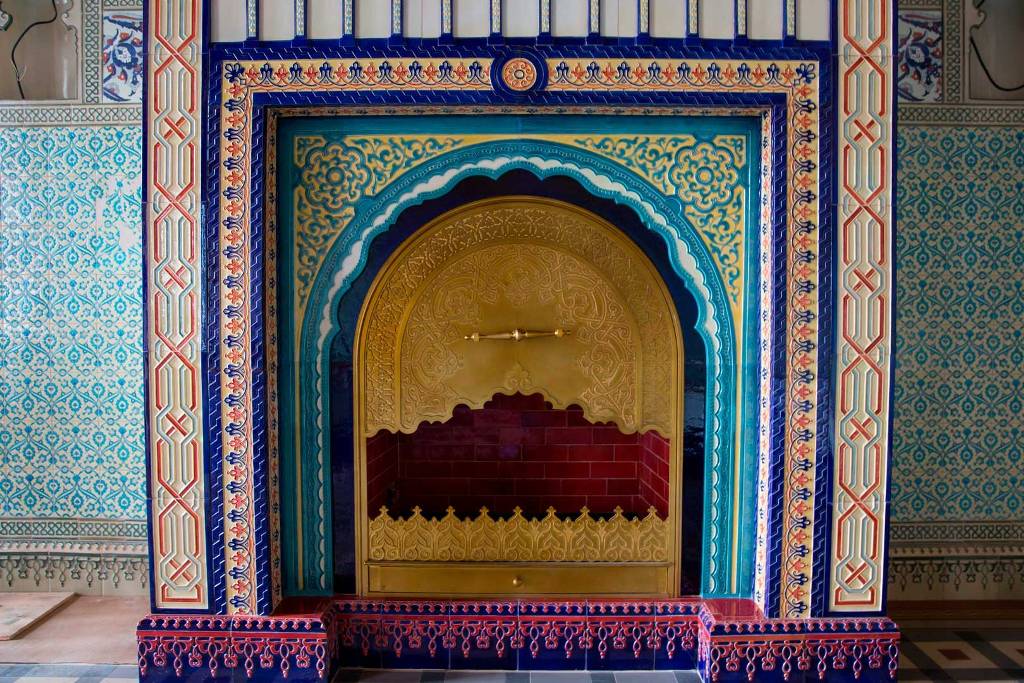
The interior harmoniously combined bright oriental-style tiles that adorned the fireplace and walls around the pool, metlakh tiles, which were used for the floor in front of the pool, a coffered ceiling, an openwork maple partition and a Japanese reed mat on the walls. The floor was covered with a colourful carpet. Masters of the Meltzer Trading House made the furniture for the bathroom, which included a sofa upholstered in leather, with pillows and bolsters, two types of Oriental style stools, a table with a trellis, a washbasin on the underframe, a horizontal bar for gymnastic exercises, and stands for walking sticks and hunting rifles.

The main part of the Moorish Bathroom was a bathing pool that could hold 7 thousand buckets of water, and lined with white tiles, which gave the second name to the interior – Basseinaya. Its design in the Alexander Palace featured Charcot shower jets for massage.

For the functioning of the pool, the architect created a complex engineering system, it consisted of water and waste pipes, a water-heating boiler with accessories, three water tanks located in a special room on the ground floor of the palace, located directly under the Basseinaya.

There was also a toilet located outside the door at the edge of the corridor wall.

The Moorish Bathroom’s interior decoration was lost during the Great Patriotic War (1941-45). In the summer of 1997, a permanent exhibition was opened in the eastern wing of the palace dedicated to the imperial family. The former bathroom was used as an exhibition space with parquet floors, painted walls and a white ceiling. Therefore, the restoration of the Moorish Bathroom began practically from scratch.

Photo © Tsarskoye Selo State Museum Reserve

In 2017, when dismantling the room, craftsmen discovered the Tsar’s bathing pool under the floor, and in it – a significant number of fragments of ceramic wall tiles, Metlakh tiles, belonging not only to the decoration of the Moorish, but also to other interiors of the residential half of the palace. The fragments provided restorers with the colour schemes of the interior decoration, which were reconstructed from black and white photographs taken in the 1930s. Thanks to this remarkable discovery, the restorers were able to recreate the wall cladding of the with the utmost precision.

Several fragments of the original tiles have been incorporated in the reconstructed Moorish Bathroom’s decoration; while the bathing pool and the steps leading into it have retained some of their historic tiling.

Also found during the restoration, several small fragments of the original frieze were revealed, which made it possible to clarify the colour scheme of the decorative painting, the drawing of which was determined from the black and white pre-war photographs.

In 2018–2019, the architectural elements of the interior decoration were recreated: wooden wall panels and ceiling cladding, wall tiles, a Moorish-style fireplace with decorative niches (they originally contained Faberge lamps, which were transferred to the Russian Museum in 1956), and a carved partition. The decoration of the toilet room has also been recreated. Curtains and a large carpet were made according to the historical documents and photos.

Thanks to the assistance of the Japanese Consulate General in St. Petersburg, an original mat similar to the one that adorned the walls of the Moorish Bathroom will soon be purchased in Japan.

At the moment, on the basis of existing museum inventory descriptions of 1938-1940, the design of non-preserved pieces of furniture and plumbing equipment (taps and mechanisms for introducing water into the pool) is currently underway.

Photo © Tsarskoye Selo State Museum Reserve


Photo © Tsarskoye Selo State Museum Reserve


Photo © Tsarskoye Selo State Museum Reserve


Photo © Tsarskoye Selo State Museum Reserve

Click HERE to read my article Reconstruction of Nicholas II’s bathroom in the Alexander Palace + 13 PHOTOS, published on 16th June 2019

* * *

The Moorish Bathroom of Nicholas II is one of eight interiors to open in the eastern wing of the palace, scheduled to open in December 2020. The other interiors include: the Reception of Nicholas II, Working Study of Nicholas II, Pallisander (Rosewood) Living Room, Mauve (Lilac) Boudoir, Imperial Bedroom, Alexandra’s Corner Reception Room, and the New Study of Nicholas II.

In the future, the Alexander Palace will become a memorial museum of the Romanov family – from Catherine the Great to Nicholas II, showcasing the private, domestic life of the Russian monarchs who used the palace as an official residence. The eastern wing of the palace will be known as the Museum of the Russian Imperial Family. The multi-museum complex is scheduled for completion no earlier than 2022.

© 16 September 2020. Paul Gilbert