More than 100,000 participate in Liturgy, all-night procession for 100th anniversary of Holy Royal Martyrs

168a

View of the Church on the Blood on the night of 16/17 2018

NOTE: All of the articles pertaining to Nicholas II and his family which were originally published in my Royal Russia News blog, have been moved to this Nicholas II blog. This article was originally posted on 25 July 2018 in my Royal Russia News blog – PG

In 2018, the Russian Orthodox Church celebrated the centenary of the martyrdom of the last Imperial family of Russia with numerous events held throughout Russia, with the celebrations culminating in a Patriarchal Divine Liturgy in Ekaterinburg and all-night cross procession in their honor.

On the night of 16/17 July 2018, more than 100,000 Orthodox Christians, monarchists, among others gathered in Ekaterinburg for the liturgical celebrations. The faithful came from all corners of Russia and around the world, including Azerbaijan, Australia, Austria, Belarus, Bulgaria, Canada, Great Britain, Germany, Kazakhstan, Kyrgyzstan, China, Lithuania, Moldova, Netherlands, New Zealand, Serbia, USA, Tajikistan, Turkmenistan, Uzbekistan, Ukraine, France, Estonia, South Korea, and Japan.

The first Tsar’s Days procession took place in 1992, with the participation of but a few dozen faithful.

The event began with the Divine Liturgy celebrated on the square in front of the Church on the Blood in Ekaterinburg, built on the site where the Ipatiev House once stood, where the family was murdered. The service was headed by His Holiness Patriarch Kirill with more than 35 hierarchs and multiple clergy concelebrating.

The entire service was broadcast live on the Orthodox TV station “Union:”

A special platform was erected for the Liturgy in front of the gates of the lower church, where the “Imperial Room” is located—a chapel in honor of the Royal Martyrs, built on specific site of their martyrdom.

Following the Liturgy, the patriarch led the traditional Royal Cross Procession from the place of martyrdom of the holy Royal Martyrs and their servants to the Monastery of the Holy Royal Martyrs at Ganina Yama ravine, covering a distance of 21 km (13 miles).
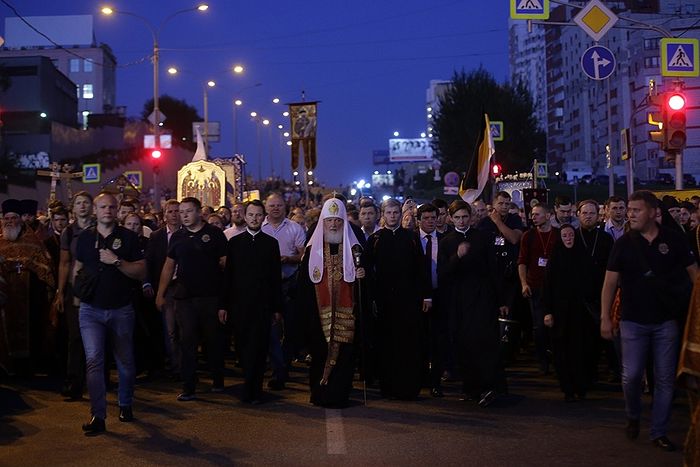
168e

His Holiness leads the Cross Procession to Ganina Yama

168f

The Cross Procession nears the Monastery of the Holy Royal Martyrs at Ganina Yama

According to law enforcement agencies, more than 100,000 took part in the procession.

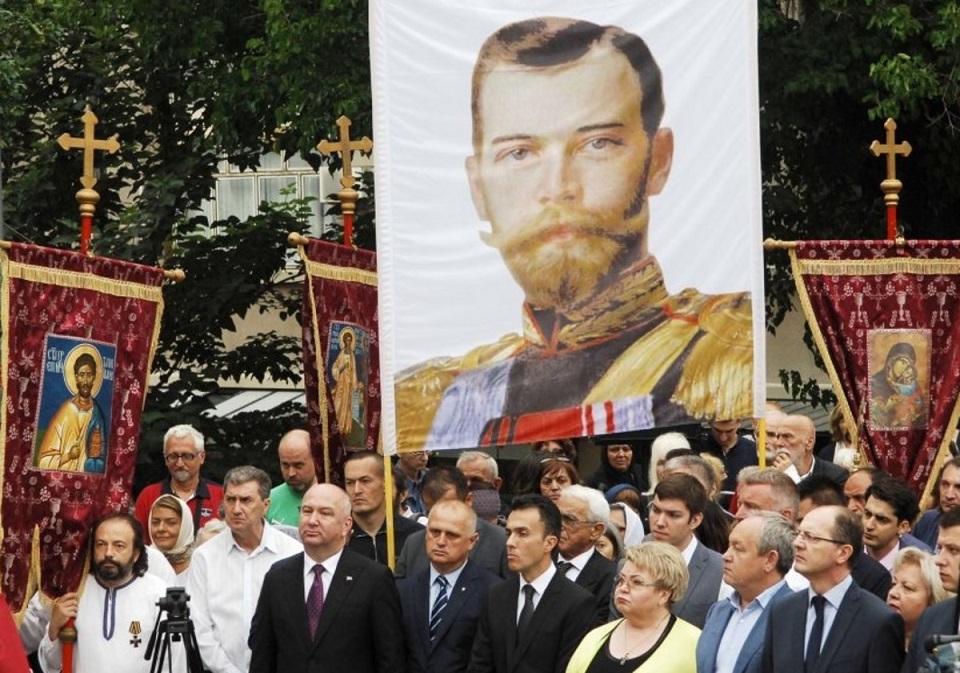
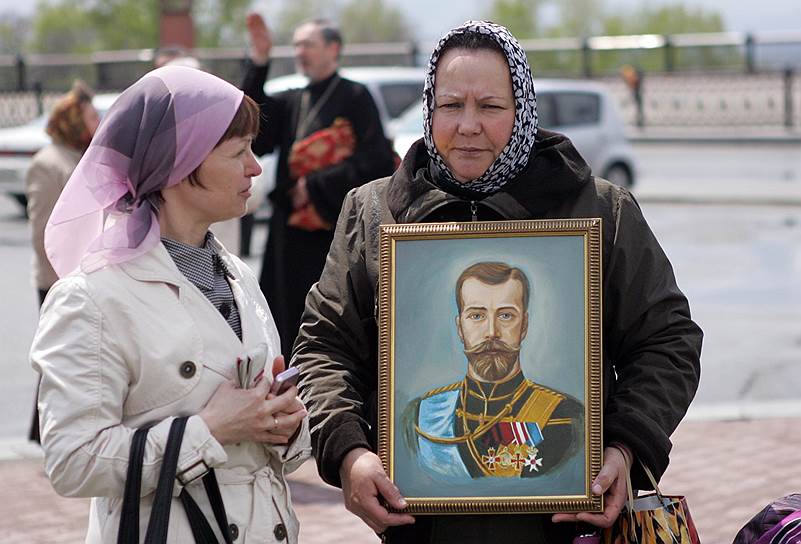
According to tradition, the faithful carried banners and icons in the procession, including a 6.5-ft. icon of the Tsar-Martyr, painted in 2017 for the Church of the “Reigning” Icon of the Mother of God at Ganina Yama. Together with the kiot, the icon weighs 330 lbs. A special bier on wheels was made to move the heavy icon.

The procession was also accompanied by 25 mobile groups from an Orthodox charity service, consisting of clergy, representatives of the Dormition Orthodox Brotherhood of Ekaterinburg, sisters of mercy, and volunteers, who provided assistance to those who could not walk the entire route of the procession. Field kitchens and tests were also set up at the Monastery of the Holy Royal Martyrs for the pilgrims to rest.

His Holiness and the procession arrived at the monastery in the morning, where the patriarch served a moleben to the Royal Martyrs in front of the memorial cross erected at Mine #7, where the bodies of the Royal Martyrs were abused and disposed of. His Holiness Patriarch Alexei II (1929-2008) thus referred to Ganina Yama as “a living antimens, permeated with particles of the burnt holy relics.”
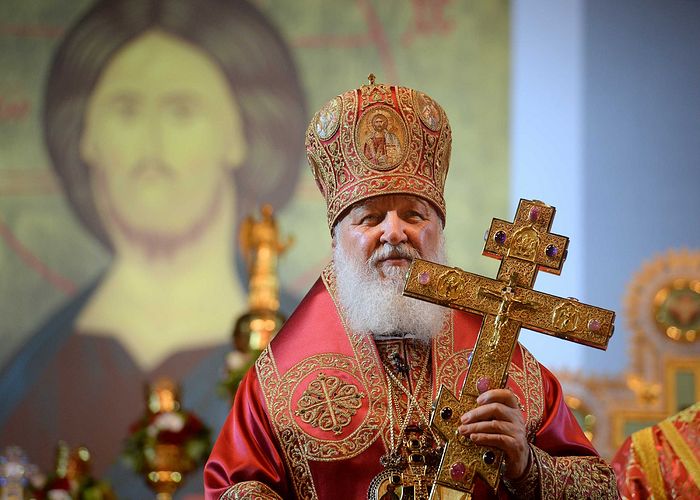
168g

His Holiness Patriarch Kirill of Moscow and All Russia

His Holiness then addressed the sea of faithful with a primatial word:

In the name of the Father and of the Son and of the Holy Spirit!

Your Beatitude Metropolitan Onuphry of Kiev and All Ukraine! Fellow archpastors! Dear brothers and sisters, gathered in a multitude this night before the place where one hundred years ago was committed a terrible crime—wholly innocent people, who had committed their lives to the service of their Motherland, were killed by the evil will of man!

This atrocity still chafes our conscience, still causes us to mentally return to that time and try to understand what happened to our country and to our people. Where did this insanity, this attack come from? Looking from a distance of one hundred years, even if we want to we cannot see all the nuances of the national life of our people, which fade from memory and are missed by even the most penetrating gaze. But such crimes, as were committed here, cannot be accidental. Something stood behind this crime; behind it is the collective guilt of our people, a turn in the historical life of Holy Rus’, which led the people into a heavy, terrible impasse.

What happened to our people? After all, the country was covered with churches and monasteries, an absolute majority of the people were baptized, and the churches were filled with people. Why did it happen? Why did the murderers squeeze the trigger, without trembling at what they were doing? It means not everything was favorable. It means the sunlight reflected in the gilded domes was not always refracted into human hearts to strengthen faith in the Lord in them. And we know how over the course of at least 200 years preceding the tragedy of the Ipatiev House some changes occurred in the people’s consciousness that gradually but steadily led many to a departure from God, neglect of the commandments, and a loss of spiritual connection with the Church and the centuries-old spiritual tradition.

Why did this happen to our people? Why did they at some point become like a train whose engineer didn’t calculate its speed and heads into a steep turn, rushing towards an imminent catastrophe? When did we as people start this turn? We entered when alien thoughts, alien ideals, and an alien worldview, formed under the influence of philosophical and political theories, having nothing in common either with Christianity or our national tradition and culture, began to be perceived by the intelligentsia and aristocracy and even part of the clergy as advanced thoughts by which it was possible to change the people’s lives for the better.

Indeed, the idea of changing the life of the people for the better arises whenever there is a plan to abruptly change the course of history. We know that the worst and bloodiest revolutions have always occurred in view of people’s aspirations for a better life. The leaders of these revolutions instilled in the people that there is no other way to make life better—only by blood, only through death, only through the destruction of the existing way of life. And at some point, having abandoned their spiritual birthright, having lost their true connection with the Church and God, the intelligentsia, aristocracy, and even, as I have already said, part of the clergy were darkened in mind and infected with the thought of the need to drastically change the course of our national history and to try to build as quickly as possible a world where justice reigns, where there is no bygone separation according to material indicators, where people live peacefully and happily. As a result, many of those captured by this idea reach the point of committing crimes.

A question arises: “Is it possible through crime, through blood, through violence, and through the destruction of holy sites to build a happy life?” History clearly testifies: It is impossible! And, perhaps, the first and most important lesson that we should learn today from the tragedy of a century ago is that no promises of a happy life, no hope for help from outside, from some supposedly more educated and advanced people should seduce our people. We must remember the tragedy of the past. We must develop an immunity to any call to attain to human happiness through the destruction of that which is.

Hardly did anyone who called for the destruction of the people’s lives destroy their own lives, renouncing their own wellbeing. But with what fury they proposed to do it to everyone! And the people absorbed this lie; and the crowning act of departure from the most sacred and valuable that they had was the hideous execution of the Royal Family—innocent people who had not violated the law. And what kind of law could we even be talking about if it was necessary to kill the Tsar and his family to build a happy life? We know that nothing turned out well, and taught by bitter experience, we must build a robust rejection of any ideas and any leaders who propose to strive for some obscure “happy future” through the destruction of the life of the people, our traditions, and our faith.

Today, gathered here in such a great number, we remember the tragedy of the Ipatiev House. We have lifted up prayers to the Lord, we have prayed to the Emperor and Passion-Bearer Nicholas and those who suffered with him, that they would pray in Heaven for our earthly Fatherland and for our people and strengthen the Orthodox faith in every subsequent generation of Russians; that faithfulness to God and love for the Fatherland would accompany the lives of the youth and subsequent generations, and that no tragedy of this kind would ever happen again in our land.

May the Lord preserve our Russian land and the Russian people who today live in various countries; and although they are called by various names, are the same people who came out of the Kievan baptismal font, and passing though the most severe historical circumstances, have retained the Orthodox faith until today. May God’s blessing be upon our people, upon our Fatherland, and upon our martyric Russian Orthodox Church. May the life of our people be transfigured by the prayers of the New Martyrs and Confessors of the Russian Church—without any upheavals or blood, but upon the firm foundation of faith and hope that God is with us! May the Lord save us all by the prayers of the holy Royal Passion-Bearers and all the New Martyrs!

Amen.

© Paul Gilbert. 8 December 2019
Poll reveals nearly 60% of Russians believe murder of Tsar’s family as an atrocity

167

NOTE: All of the articles pertaining to Nicholas II and his family which were originally published in my Royal Russia News blog, have been moved to this Nicholas II blog. This article was originally posted on 26 July 2018 in my Royal Russia News blog – PG

Most Russians believe the murder of the last Russian tsar, Nicholas II, and his family members in 1918 had no justification, describing it as a monstrous crime rather than an act of retribution, a poll conducted by the Russian Public Opinion Research Center ahead of the centenary of the murders of the Imperial family showed earlier this month.

“Most Russians (57%) believe that the murders of the Imperial family is a heinous unjustified crime (this number is bigger among people aged 35+ than among the younger generation aged between 18 and 34). Another 29% said the last Russian emperor paid too high a price for his mistakes. Nevertheless, young people believe that he had to be punished for them, with 46% among those aged between 18 and 24 more often expressing this point of view. Just 3% of those polled were certain that the Imperial family’s execution was the public’s just retribution for the emperor’s blunders,” the pollster said.

That said, Russians generally see Nicholas II in a positive light (43%). This viewpoint was expressed most often by people aged 45 (45-46%).

On the other hand, 22% tend to think of him negatively. Young people aged between 18 and 24 often said they disliked the last Russian emperor. However, 7% of the respondents stressed they were indifferent to Nicholas II, while 4% said they felt empathy for him.

“By now, the Soviet narrative, which claimed the murders of the Tsar’s family by their Bolshevik captors near Ekaterinburg during [Russia’s] Civil War was a necessary and fair act of revenge for the blunders and crimes committed by the Romanov family, has finally exhausted its credibility. Regardless of their political views and relations towards the tragic events that occurred a century ago, Russians consider that a crime, which has no justification whatsoever. Amid this sentiment, the last tsar, whatever his accomplishments or failures, is seen by today’s public as a nice person who deserves compassion, at the very least,” the pollster’s Director General Valery Fyodorov noted.

The survey was conducted by the Russian Public Opinion Research Center on July 11, 2018, with 1,600 people aged 18 and above interviewed over the phone. The margin of error does not exceed 2.5% with a probability of 95%.

© TASS News Agency / Paul Gilbert. 7 December 2019

‘Point of No Return’ – Ekaterinburg Street Art in Memory of the Russian Imperial Family

166a

NOTE: All of the articles pertaining to Nicholas II and his family which were originally published in my Royal Russia News blog, have been moved to this Nicholas II blog. This article was originally posted on 26 July 2018 in my Royal Russia News blog – PG

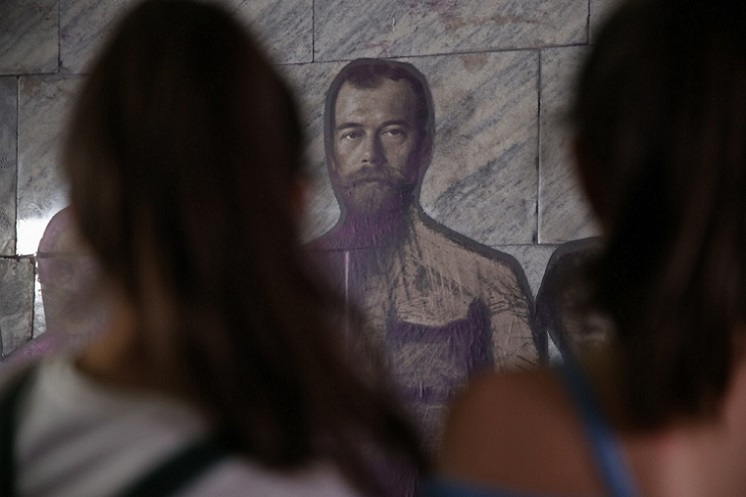
Unique street art in memory of the Russian Imperial Family has been created in an underground passage in the center of Ekaterinburg. The work entitled “Point of no return” depicts two groups of people on opposite walls of the passage.

On one side are depicted: Emperor Nicholas II, his wife Empress Alexandra Feodorovna, their five children, and four faithful retainers – all of whom were murdered on the night of 16/17 July 1918 in the basement of the Ipatiev House in Ekaterinburg.

166b

On the other side the murderers: the Ural Chekists and the guard of the “House of Special Purpose”, the participants in the murders of the Romanovs. Between the two images on the floor is a red circle – Точка невозврата (Point of no return), standing on which, one gets a sense of being in the line of fire.

The appearance of the street art is timed to the 100th anniversary of the deaths of the Imperial Family in Ekaterinburg. The underground passage is located in close proximity to the Church on the Blood, built on the site of the Ipatiev House.

166c

The executor of the work was the GREAT Advertising Group (St. Petersburg), and the ZNAK Information Agency.

“The idea belongs to the GREAT Advertising Group. We liked it, and immediately accepted it. This work is a desire to recall the tragedy of the shooting in the basement of the Ipatiev House, which included the murder of innocent children and servants. It became a symbol of the tragedy of all Russia, a great tragedy of the twentieth century. This shooting really became a ‘point of no return’ for Russia. We believe it is important that a person can feel this point, literally stand on it, even for a moment,” said Dmitry Kolezev, deputy editor-in-chief of Znak.com.

“We wanted to create something without any gadgets and technologies, something with simple and affordable means, which would allow people to get a sense of what it must have felt to face the murderers. To try to literally immerse yourself in a tragic moment, to become a part of it, to stand between the defenseless Imperial family and their murderers with revolvers,” said the creators from the GREAT Advertising Group.

166d

Sadly, the work was only temporary for the 100th anniversary marking the regicide – the artwork was not done with paint, but with a film, making it easy to remove, and leaving the transition walls clean.

© Paul Gilbert. 7 December 2019

Serbs celebrate Royal Martyrs with Liturgy and procession in Belgrade

NOTE: All of the articles pertaining to Nicholas II and his family which were originally published in my Royal Russia News blog, have been moved to this Nicholas II blog. This article was originally posted on 29 July 2018 in my Royal Russia News blog – PG

Tsar Nicholas II was “one of the greatest rulers and tsars of Russia in his moral and spiritual qualities,” the Serbian patriarch said.

While 100,000 Orthodox faithful gathered in Ekaterinburg on the night of 16/17 July 2018 to honor the 100th anniversary of the Royal Martyrs, they were honored with another Divine Liturgy and procession in Belgrade the following morning.

During the events, His Holiness Patriarch Irinej of Serbia praised Tsar Nicholas as one of the greatest Russian rulers, of high moral and spiritual character.

The day began with the Hierarchical Divine Liturgy in the courtyard of the Russian Church of the Holy Trinity in Belgrade, after which a festive procession passed through the capital city’s central streets.

The procession was announced in all Belgrade churches last Sunday, and according to police estimates, the procession gathered about 10,000 faithful, including clergy, representatives of Russian-Serbian friendship organizations, and citizens of Serbia and Russia participated in the march. As the procession moved past the Serbian Parliament building, the choir sang “God Save the Tsar.”

165a

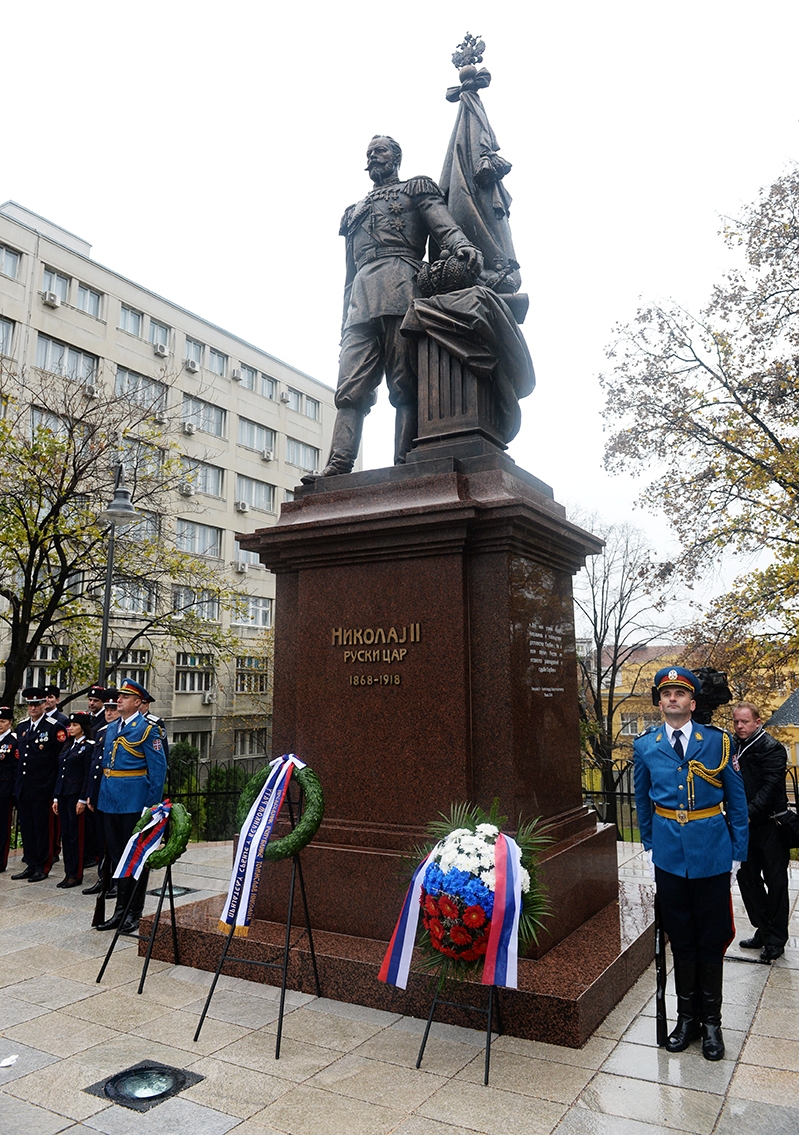
Serbs gather in Belgrade to honour Nicholas II

The procession came to an end at Belgrade’s monument to the slain Russian Tsar, where Pat. Irinej celebrated a festive moleben and addressed the gathered faithful, in which he referred to the Tsar-Martyr’s Orthodox character.

“All his life, he was accompanied by distrust, slander, and underestimation of his personality. And this happened, if we look at the time when tsarist Russia had numerous enemies, as it does now,” the Serbian primate said. In his words, the entire Romanov family behaved in a “deeply Christian manner” to the very end.

“No one knows what would have happened with Serbia and the Serbian people if he had not entered into the First World War,” the patriarch also added.

Then wreaths were laid at the monument to Tsar Nicholas II, with the participation of representations from the Russian embassy, Serbian politicians, priests, and public figures.

165b

Monument to Emperor Nicholas II in Belgrade

The monument to Tsar Nicholas was unveiled in November 2014 by His Holiness Patriarch Kirill and former President Tomislav Nikolic. On the pedestal is quoted in Russian and Serbian Tsar Nicholas’ telegram to King Alexander of Serbia, saying, “All my efforts will be directed towards maintaining the dignity of Serbia… In any case, Russia will not remain indifferent to Serbia’s fate.”

© Paul Gilbert. 7 December 2019

Monument to Nicholas II in Archedinskaya

164

NOTE: All of the articles pertaining to Nicholas II and his family which were originally published in my Royal Russia News blog, have been moved to this Nicholas II blog. This article was originally posted on 2 August 2018 in my Royal Russia News blog – PG

On 17th July 17 2018, on the day marking the 100th anniversary of the murder of the Imperial Family, a bust of Emperor Nicholas II was was established on the grounds of the Church of the Assumption of the Most-Holy Mother of God in the Russian village of Archedinskaya, situated in the Volgorad region. The bronze bust is a copy of an original work by the famous Russian sculptor Vyacheslav Mikhailovich Klykov (1939-2006).

A capsule containing earth from the mines at Ganina Yama and Alapaevsk – where the Bolsheviks attempted to dispose of the bodies of the murdered members of the Imperial family – was placed inside the bust of the Emperor. The bottle of Holy water for consecration was brought from the Church on the Blood of Ekaterinburg. A honourary guard made up of members of the Don Cossacks participated in the event.

After the Divine Liturgy, the consecration of the monument was performed by the Bishop of Uryupinsk and Novoanninsky Elisha.

The bust of the Emperor was made according to a project of the Russian sculptor Vyacheslav Mikhailovich Klykov, who died in 2006. Copies of his sculptures of Nicholas II have been are installed in Mytishchi, Vladivostok, Simferopol, Russia, and Melbourne, Australia.

© Paul Gilbert. 7 December 2019

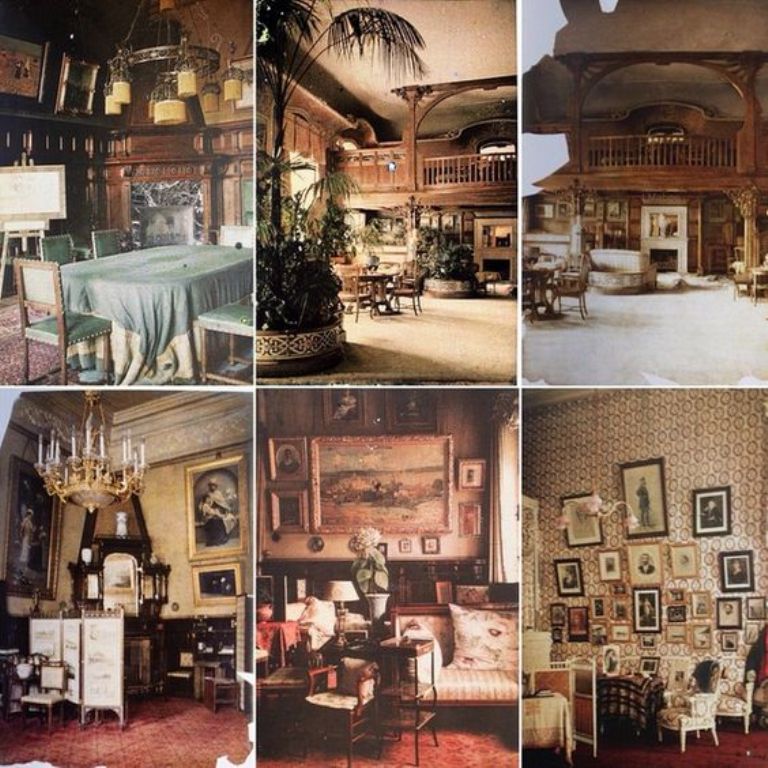
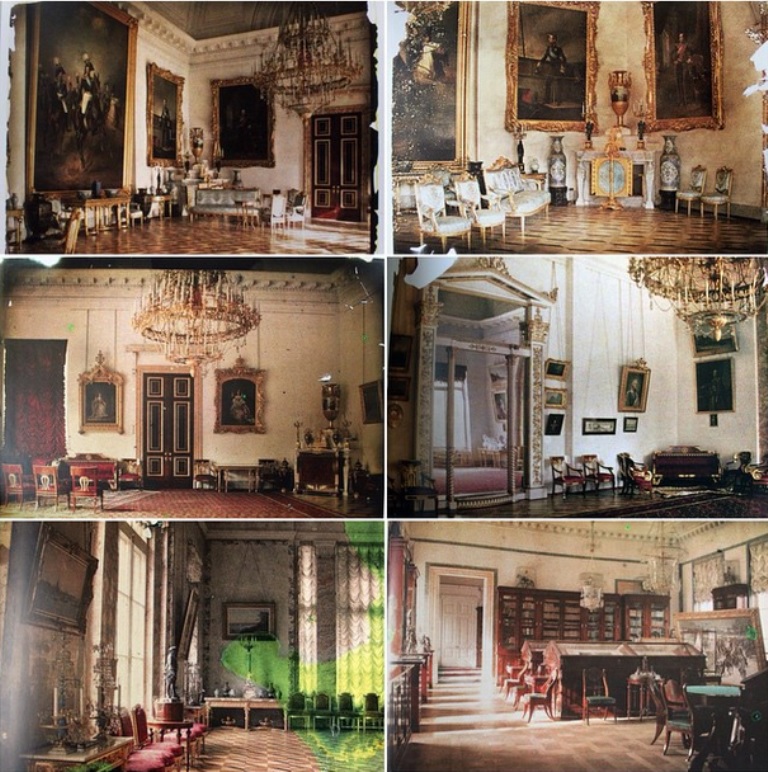
Colour Autochromes of the Alexander Palace in 1917 Presented in Kazan

162a

NOTE: All of the articles pertaining to Nicholas II and his family which were originally published in my Royal Russia News blog, have been moved to this Nicholas II blog. This article was originally posted on 8 August 2018 in my Royal Russia News blog – PG

The following exhibition ran from 17 July to 17 August 2018

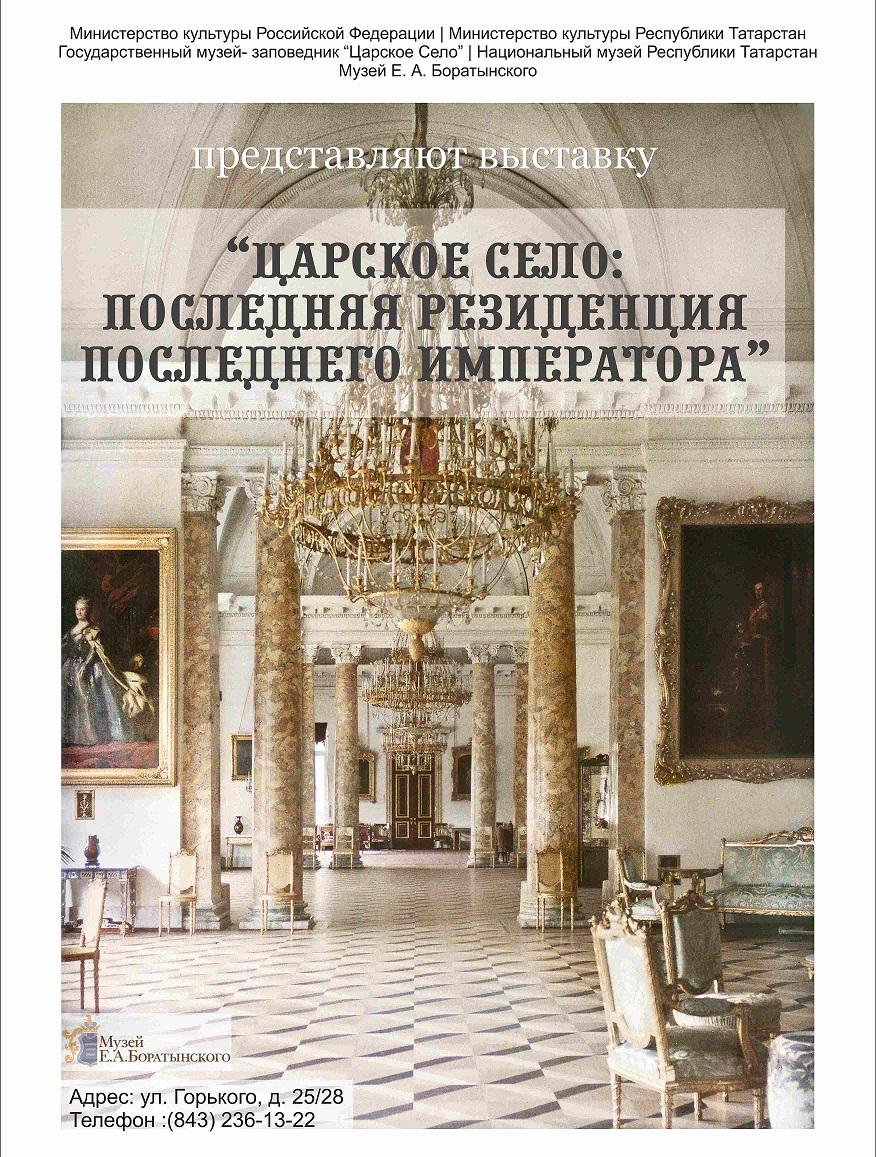
On 17th July, the exhibition Tsarskoye Selo: the Last Residence of the Last Emperor, opened in the E.A. Boratynsky Museum (a branch of the National Museum of the Republic of Tatarstan) in Kazan. The exhibition presents unique autochromes from the collection of the Tsarskoye Selo State Museum-Reserve. The exhibition is timed to mark the 100th anniversary of the murder of Russia’s last Imperial family in 1918.

The life of the last Russian Emperor Nicholas II is closely connected with Tsarskoye Selo: on 18th May (6th May in the old style) in 1868, he was born in the Alexander Palace. From 1905, Nicholas II made the palace his permanent residence, in which he spent the last 12 years of reign. After his abdication on 15th March [O.S. 2nd March] 1917, the Emperor spent the first months of his house arrest in the palace. On 1st August 1917, the Emperor and his family left the Alexander Palace for the last time, his family was sent into exile to Tobolsk.

Immediately after the departure of the imperial family, the Kunsthistorico-Historical Commission, headed by Georgy Lukomsky, began work in the Alexander Palace. Photographer Andrey Zeest took 140 colour autochromes of the palace interiors.

162b

Colour autochromes of the Alexander Palace taken in 1917
© Tsarskoye Selo State Museum Reserve

162c

The fate of this unique collection is interesting. In November 1918, 843 images from black and white negatives and 83 color transparencies (autochrome) were transferred to the Kopeyka Publishing House. The pictures were supposed to be transferred to the Detskoye Selo department of artistic property, however, the transfer never took place.

Now the collection of the Tsarskoye Selo State Museum-Reserve now consists of 93 autochromes, shot by Zeest in 1917. Thirty-three autochromes were acquired by the museum in 1968, from the heirs of a photographer, twelve – in 1958, from a British tourist from Oxford, England. In 2013, members of the Friends of the Tsarskoye Selo State Museum-Reserve Club Michael Piles and Mikhail Karisalov, financed the acquisition of another 48 autochromes at an auction in Paris.

The exhibition is complemented by documents relating to the links of Georgiy Lukomsky with Kazan, from the funds of the National Museum of the Republic of Tatarstan, and printed editions issued for the coronation of Nicholas II from the Kazem-bek family collection courtesy of the Department of Manuscripts and Rare Books of the Lobachevsky Libraries.

The exhibition Tsarskoye Selo: the Last Residence of the Last Emperor marks the beginning of cooperation between the National Museum of the Republic of Tatarstan and the Tsarskoye Selo State Museum-Reserve.

The exhibition Tsarskoye Selo: the Last Residence of the Last Emperor, ran from 17th July to 17th August 2018, in the E.A. Boratynsky Museum (a branch of the National Museum of the Republic of Tatarstan) in Kazan.

© Paul Gilbert. 6 December 2019

‘The Conspiracy Against Nicholas II’, with Paul Gilbert

CLICK ON THE IMAGE ABOVE TO WATCH VIDEO

The Conspiracy Against Nicholas II is a short seven minute interview with researcher Paul Gilbert, produced by the Monastery of St John the Forerunner Mesa Potamos in Cyprus.

Paul speaks about the Emperor’s abdication on 15th March [O.S. 2nd March] 1917, and the ‘treachery, cowardice and deceit’ which surrounded him.

He further discusses the main plots which aimed to overthrow Nicholas II from his throne, by his ministers, and even members of his own family. He then discusses some of the myths regarding Nicholas’ II alleged weakness as a ruler, and allegations that his death was met with indifference by the Russian people.

The video includes coloured pictures of the Romanovs and other historical figures, by acclaimed Russian colourist Olga Shirnina, from the forthcoming book The Romanov Royal Martyrs: What Silence Could Not Conceal, published in 2019.

The Conspiracy Against Nicholas II is the fifth of a special multi-episode tribute featuring exclusive interviews with Mesa Potamos Monastery research colleagues: Helen Azar, Helen Rappaport, Nicholas B.A. Nicholson and Paul Gilbert. Click HERE to view ALL six episodes.

memorial

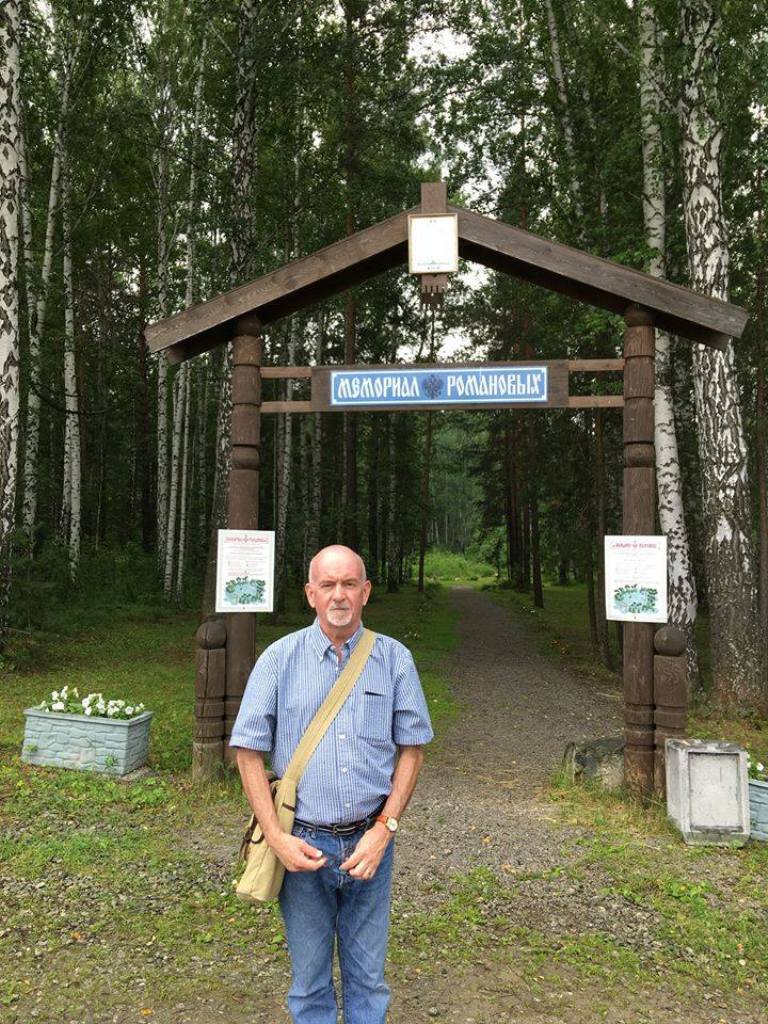
PHOTO: Paul Gilbert at the Romanov Memorial, Porosenkov Log. July 2018.

Paul Gilbert is an independent researcher specializing in the life, reign and era of Emperor Nicholas II, and who is dedicated to clearing the name of Russia’s much slandered Tsar through his news blog Nicholas II. Emperor. Tsar. Saint., his semi-annual journal Sovereign, and Conferences. The 1st International Nicholas II Conference was held on 27th October 2018, in St. John of Shanghai Church in Colchester, England.

© Paul Gilbert. 6 December 2019

Documentary: ‘Regicide. A Century of Investigation’

160

“We have shown all the stage of the investigation of the Royal Family’s murder” – Elena Chavchavadze on the new Russian language documentary, Цареубийство. Следствие длиною в век / Regicide. A Century of Investigation.

In 2015, a new investigation was launched into the murder of Tsar Nicholas II, Tsarina Alexandra, and their children and servants. This was instigated by the “Ekaterinburg remains”, which some are convinced are those of the Royal Martyrs. The Russian Orthodox Church has not yet come to a final conclusion, and the detective work goes on.

The new documentary, Regicide. A Century of Investigation, premiered in the evening of November 24, 2019, on the “Russia” TV channel. Its creator, Elena Nikolaevna Chavchavadze, talked to Yegor Andreev on what this film is about, how it was created and what revelations it has led to.

At the end of the interview, Chavchavadze is asked, “In conclusion, what would you wish to the viewers who will watch the film? How should they watch it? What should they get ready for?”

“Watch it without bias” – she replies – “If you feel your responsibility before God, then you shouldn’t pass any judgment before you are convinced of the truth yourself and hear the voice of the Church in this case. This is something we are waiting for, too.”

On a personal note, I would like to add that this is a very interesting interview, and a MUST for those of you who are following the ongoing investigation of the Ekaterinburg remains, and awaiting its conclusion by the Russian Orthodox Church – PG

Click HERE to read Yegor Andreev’s interview (in English) with documentary creator Elena Chavchavadze, translated from Russian by Dmitry Lapa, and published on the Pravoslavie.ru web site 5th December 2019.

You can watch the documentary Цареубийство. Следствие длиною в век / Regicide. A Century of Investigation by clicking on the image above. The video’s duration is 1 hour, 42 minutes and is in Russian only:

© Paul Gilbert. 6 December 2019

Russian Orthodox Church in Dispute Over Porosenkov Log

159a

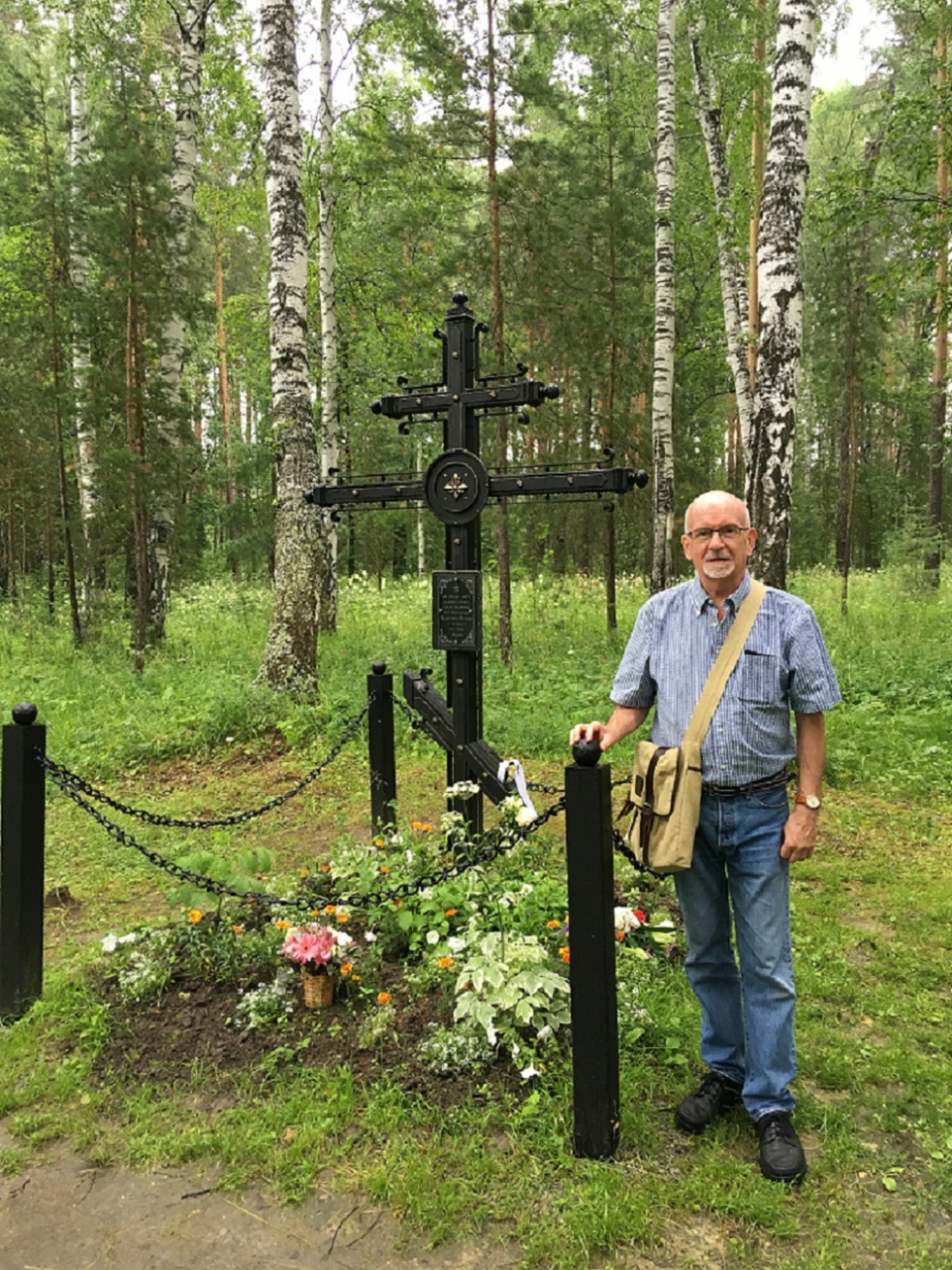
At Porosenkov Log, during my visit to Ekaterinburg, July 2018

Back in March 2016, I reported that Metropolitan Kirill of Yekaterinburg and Verkhoturye had made a request to the Sverdlovsk regional government to transfer the land in and around Porosenkov Log (3.7 hectares) to the Ekaterinburg Diocese. The territory is simultaneously claimed by the Sverdlovsk Regional Museum of Local History in Ekaterinburg. My report was followed up by a second article on the dispute in July 2017 (see links below for both articles – PG).

Since the events marking the 100th anniversary of the death and martyrdom of Emperor Nicholas II and his family last month, the subject is again making headlines in the Urals media.

According to a document signed by the head of the regional forestry department Oleg Sandakov, as early as 2016, Metropolitan Kirill of Yekaterinburg and Verkhoturye made a request to the regional government to transfer Porosenkov Log to the diocese “for gratuitous urgent use for religious activities.” Scans of the relevant documents (see below) were published last week on the Memorial of the Romanovs Facebook page.

In June 2014, a request was made to recognize Porosenkov Log as a cultural heritage site. Then, the regional ministry of culture planned to transfer the Romanov Memorial site to the Sverdlovsk Museum of Local History. The official opening of the memorial was planned to coincide with the 100th anniversary of the deaths and martyrdom of the Holy Royal Martyrs in July 2018.

In 2016, however, the Ekaterinburg Diocese began to interfere with the plans. In February of the same year, Metropolitan Kirill of Ekaterinburg and Verkhoturye sent an appeal to the Governor of the Sverdlovsk Region Evgeny Kuyvashev, in which he asked to declare invalid the document on the transfer of the site to the museum. The governor granted the Metropolitan’s appeal, with the regional ministry of culture subsequently putting the project on hold.

“Due to the historical and spiritual significance of the territory, and in order to avoid any disagreements between secular and religious parties, an official note was sent to the governor of the Sverdlovsk region on the expediency of organizing a discussion on the development of the territory as a cultural heritage site with all interested parties,” said the head of the regional department of forestry Oleg Sandakov.

159d

At the second grave where the remains of Alexei and Maria where discovered in 2007

On the eve of the Tsar’s Days held in Ekaterinburg last month, the Russian Investigative Committee confirmed that genetic examinations on the remains found at Porosenkov Log belong to the murdered Imperial family. It was hoped that Patriarch Kirill would officially recognize the remains during his visit to Ekaterinburg, however, this did not happen. An estimated 100,000 people took part in the pilgrimage from the Church on the Blood to the Monastery of the Holy Royal Martyrs at Ganina Yama, where once again the final prayer service was held, which is still considered by the ROC to be the final burial place of the bodies of the royal martyrs. Porosenkov Log was not included in the pilgrimage.

Despite the fact that the authenticity of the “royal remains” has not been recognized by the ROC, the Ekaterinburg Diocese is unlikely to back away from its plans. It can not be ruled out that the dispute over the site will be put on hold until the time when the church changes its position.

It is believed that not “if” but “when” the Moscow Patriarchate officially recognize the “Ekaterinburg remains”, that a new monastery in honour of the Holy Royal Martyrs, similar to the one situated 3.8 km down the road at Ganina Yama, will be constructed at Porosenkov Log.

© Paul Gilbert. 5 November 2019

Memorial Cross to the Holy Royal Martyrs in London

157

NOTE: All of the articles pertaining to Nicholas II and his family which were originally published in my Royal Russia News blog, have been moved to this Nicholas II blog. This article was originally posted on 22 August 2018 in my Royal Russia News blog – PG

On 13th July 2018, the day after the Feast of the Holy Apostles Sts Peter and Paul, a new memorial Cross to the Holy Royal Martyrs was erected on the grounds of the Diocesan Cathedral of the Mother of God and the Royal Martyrs in London.

The memorial Cross, which has been commissioned to mark the centenary of the martyrdom of the Imperial Family, was carved of red granite by special commission of the parish. The lower Altar of the Cathedral is dedicated to the honour of the Holy Royal Martyrs, and it seemed fitting to the faithful of the community to pay homage to the holy intercessors by erecting a Cross in their honour, to serve as a perpetual monument to the God-pleasing lives of these saints.

The initial erecting of the Cross will be followed by landscaping of the nearby territory to accommodate the new monument, which will be formally blessed on the day of the Cathedral’s full consecration on the Feast of the Nativity of the Theotokos, 21st September 2018.

The Divine Liturgy for the Feast of the Holy Royal Martyrs took place at the London Cathedral at 9.00 a.m. on Tuesday, 17th July 2018 (n.s.), served in the Lower Church. It was celebrated by His Grace Bishop Irenei together with clergy of the Cathedral, Diocese, and guests from the surrounding areas. The new memorial Cross was visited as part of the Cross Procession of the Altar Feast.

© Diocese of Great Britain and Ireland (ROCOR). 5 November 2019