New monument to Nicholas II unveiled in Samara

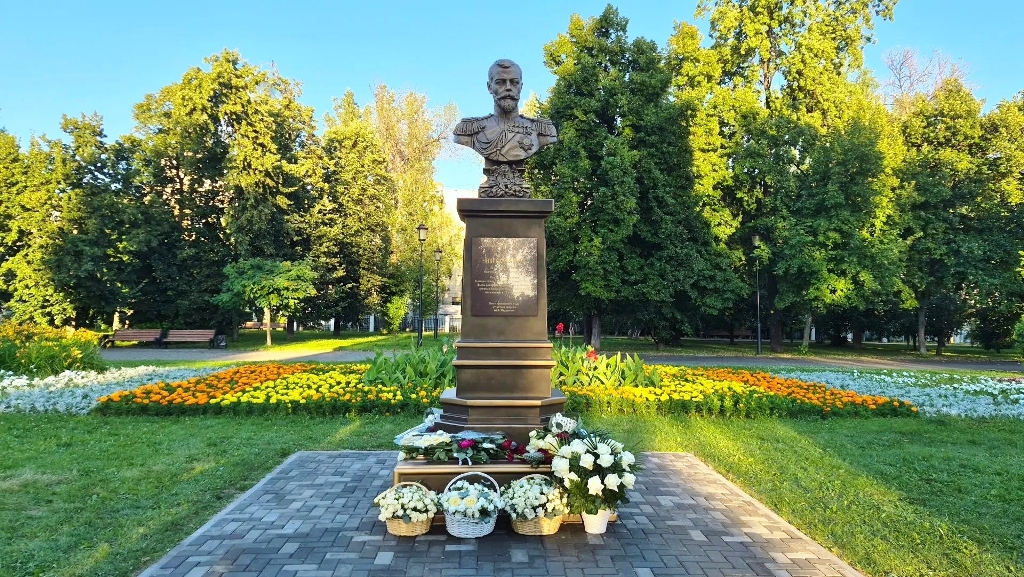
On 12th July 2026, on the day of the Feast of Saints Peter and Paul, a new bust-monument to Emperor Nicholas II was unveiled and consecrated in the Russian city of Samara. The marble bust of the Holy Tsar-Passion-Bearer on a granite pedestal were installed on Kuibyshev Square opposite the Samara Diocesan Administration.

The ceremony began with a Divine Liturgy, followed by the rite of consecration, which were performed by Metropolitan Theodosius of Samara and Novokuybyshevsk.

Prominent guests included Boris Korchevnikov, General Director of the Spas TV channel; TV presenter Pavel Astakhov; as well as Ekaterina Matveeva, Minister of Tourism of the Samara Region, and Tatyana Shestopalova, Head of the Department of Culture and Youth Policy of the Samara Administration.

Also present during the solemn ceremony were representatives of the Samara Provincial Noble Assembly, clergymen of the Samara Diocese, parishioners and local residents.

The opening of the monument to the Holy Passion-Bearer was timed to coincide with both the Feast of Saints Peter and Paul, and the day marking the 122nd anniversary of the Emperor’s visit to Samara on 12th July 1904. It was on this day, that Nicholas II prayed in the Cathedral of Christ the Saviour (demolished in 1930) and blessing the soldiers who went to the Russo-Japanese War.

Two plaques on the siders of the pedestal depict quotes from the Emperor: “To My spiritual gaze I clearly see a calm, healthy and strong Russia, faithful to its historical precepts, happy with the love of its grateful sons, proud of their selfless devotion to Our Throne” (1914) and “In Samara… he went on horseback to inspect the troops. Everyone introduced themselves perfectly… The order was exemplary” (1904).

© Paul Gilbert. 13 July 2026

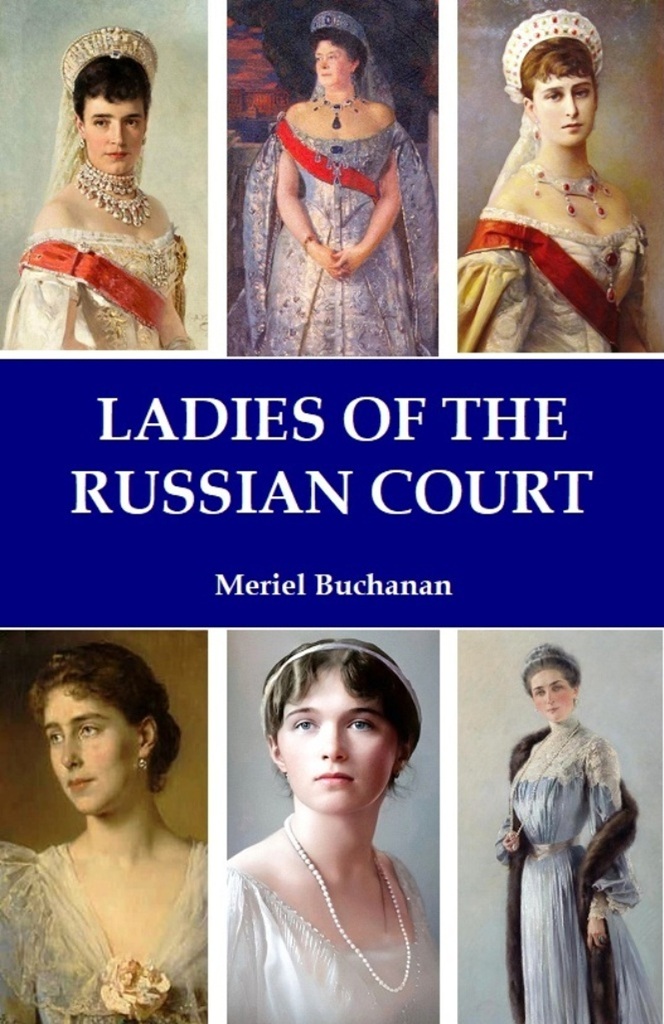
NEW BOOK – ‘Ladies of the Russian Court’

*You can order this title from most AMAZON outlets, including
the United States, United Kingdom, Ireland, Canada, Australia,
France, Germany, Spain, Italy, Netherlands, Belgium, Poland, Sweden,
Brazil, Mexico and Japan
*Note: prices are quoted in local currencies

CLICK HERE TO ORDER THE HARD COVER EDITION @ $20.00 USD

CLICK HERE TO ORDER THE PAPERBACK EDITION @ $15.00 USD

CLICK HERE TO ORDER THE EBOOK (KINDLE) EDITION @ $12.99 USD

English. Size: 8-1/2″ x 5-1/2″. 164 pages.

***

NOTE: this book was originally published in 2021. This NEW 2026 edition features a FULL-COLOUR cover and is available in a hard cover edition for the first time.

***

The stories which make up these six portraits are drawn from Meriel Buchanan’s own memories, stories of six remarkable women at the Russian Imperial Court, during the reign of Emperor Nicholas II.

In this gallery of portraits are included the Dowager Empress Marie Feodorovna, wife of Emperor Alexander III and mother of Emperor Nicholas II; the Grand Duchess Marie Pavlovna, the wife of Grand Duke Vladimir Alexandrovich; the Grand Duchess Elizabeth Feodorovna, the wife of the Grand Duke Sergei Alexandrovich and sister of Empress Alexandra Feodorovna; the Grand Duchess Victoria Feodorovna, the wife of the Grand Duke Cyril Vladimirovich; the Grand Duchess Olga Nicholaievna, eldest daughter of Emperor Nicholas II; and Princess Zenaide Yousoupoff, the mother of the  infamous Prince Felix Yousoupoff.

In dealing with these ladies of the Russian Court, the author evokes all the mystery, fascination, splendour, and elegance of Tsarist Russia. Ms Buchanan writes with a charm and ease most fitting to the characters she describes.

***

Meriel Buchanan (1886-1959) was the daughter of Sir George Buchanan (1854-1924), British Ambassador at St. Petersburg, from 1910 until the end of the Romanov Dynasty in 1917. She grew up in the Courts of Europe and Imperial Russia, amid the fading glories of an age now past.

© Paul Gilbert. 7 July 2026

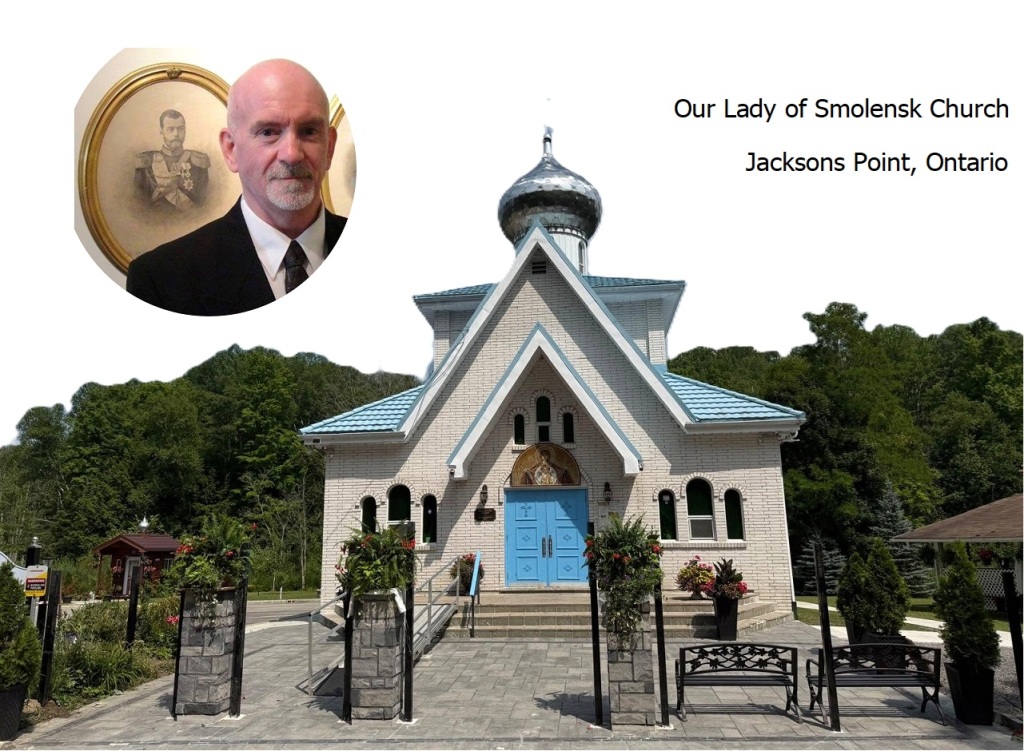
Our Lady of Smolensk Church in Jacksons Point extends invitation to Paul Gilbert

On Sunday, 12th July 2026, I will attend a Liturgy at Our Lady of Smolensk Church (ROCOR) in Jacksons Point, Ontario. Following the Divine Services, I have been invited to speak to parishioners. The topic of my discussion will be: “Myths and Lies About Russia’s Last Tsar.”

“Given your longstanding work as a Romanov historian and your dedication to preserving the memory of the Imperial Family and the New Martyrs of Russia, we believe your visit would be a great blessing and encouragement to our parish community,” wrote Greg Montana, on on behalf of Father Maxim (Abroskin).

After I had received the warm invite, I mentioned to Mr. Montana, that I was not Orthodox and did the invite still stand? His reply: “Yes, definitely the invitation still stands even though you are not yet Orthodox.”

It is interesting to note that Our Lady of Smolensk Church is home to the only chapel outside of Russia dedicated to the 100th anniversary of the martyrdom of the Holy Royal Martyrs. In the lower level of the main church, is an exhibit dedicated to the Holy Martyr Grand Duchess Elizabeth Feodorovna, who is the patron saint of the parish sisterhood.

Divine Services begin at 9:45 am. My lecture starts at 12:00 noon. If you live in the Greater Toronto area or in cottage country, you are welcome to attend, however, non-Orthodox visitors to the church are kindly reminded that this is a place of worship, and church etiquette is to be respected.

Our Lady of Smolensk Church (ROCOR) is situated in Jackson Point, Ontario, which is 86 km north of Toronto. The church is located at 5 Birch Rd, Jacksons Point, Ontario, ON L0E 1L0 Canada.

***

The Our Lady of Smolensk Orthodox Church in Jacksons Point, Ontario, was founded in 1957 and dedicated to the Smolensk Icon of the Mother of God. The church’s construction began with the laying of the foundation in 1958, and it was replaced by a stone church in 1981. The gleaming cupola and cross were added in 1983, and the community completed the memorial chapel dedicated to the Saint family of the last Russian Emperor in 1990.

© Paul Gilbert. 4 July 2026

The ‘Romanov Memorial’ at Pososenkov Log is under threat . . . again!

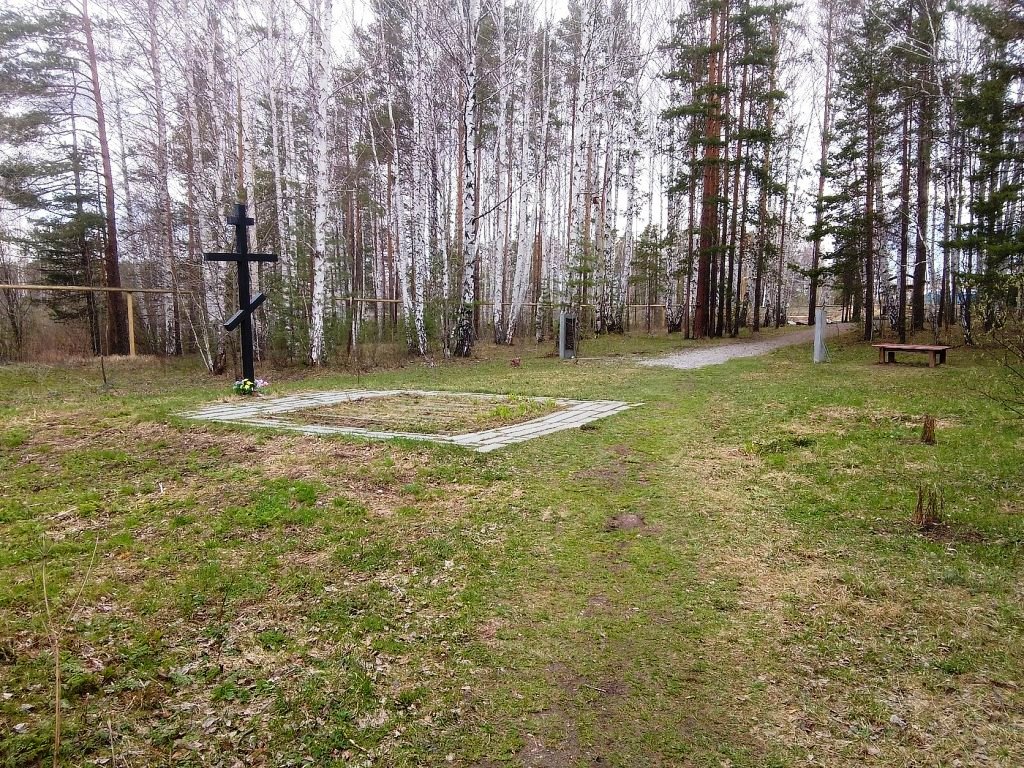
PHOTO: a large Orthodox cross marks the spot, where the remains of Nicholas II, Empress Alexandrovna, three of their five children and four faithful retainers were discovered in May 1979, and exhumed in 1991. The remains of Alexei and Maria were discovered in 2007, in a separate unmarked grave, situated about 60-70 meters from the main grave

Activists of the Romanov Memorial Foundation have sounded the alarm, that the territory near Porosenkov Log, is again under threat . . . yet again! Heavy machinery has been moved into the area, and trees are being felled near the Romanov Memorial, to make way for a new cemetery.

Ilya Korovin, the head of the Romanov Memorial Foundation fears that the development of the cemetery will affect the area near the memorial, where the remains of the Imperial Family and their four faithful retainers were discovered in two separate graves in 1979 (exhumed in 1991) and 2007 respectively.

According to the press service of the Foundation, in May 2026, representatives of the Ural Forest Group visited the Romanov Memorial. By order of the City Cemetery Service (MKU), clear cutting of the forest was approved on land near the memorial for the expansion of the city cemetery.

PHOTO: Trees are currently being felled near
the Romanov Memorial at Porosenkov Log

Korovin believes that the expansion of the cemetery threatens the existence of the Romanov graves in their original form. Activists of the Foundation are more concerned about the fact that, according to official documents, 70 hectares of land adjacent to Porosenkov Log have already been transferred to the Russian Orthodox Church – who have yet to recognize the Ekaterinburg Remains as those of the Imperial Family. This suggests that the ROC have plans to construct a large cathedral or another monastery, similar to that at Ganina Yama.

The Foundation has expressed concerns that construction work will irreversibly change the appearance of a cultural heritage site. The legal department of the Foundation regularly sends complaints to supervisory authorities and courts, demanding that they prohibit changing the boundaries of protected lands and stop any construction.

To date, the Romanov Memorial, aka Porosenkov Log, remains the only authentic place associated with the final days of the Imperial Family in Ekaterinburg. Recall that the Ipatiev House, where the Tsar and his family were murdered, along with their four faithful retainers was demolished in 1977.

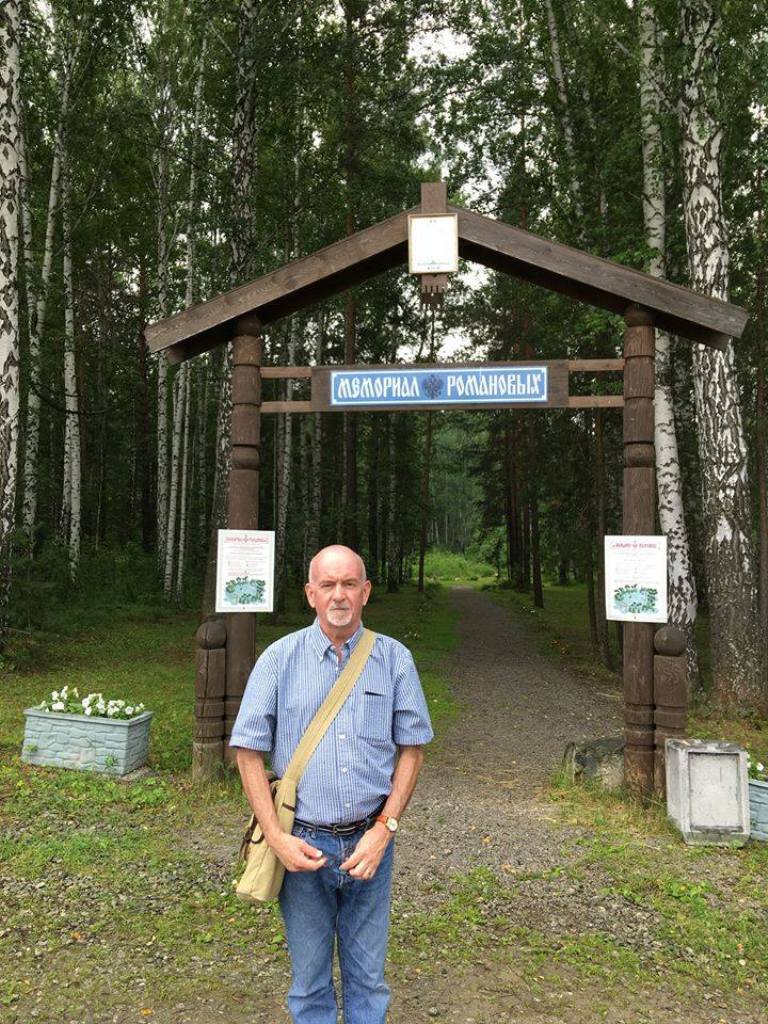
PHOTO: Paul Gilbert standing at the entrance to the Romanov Memorial in July 2018

“Over the years, we fought for the Romanov Memorial, and we maintained the grounds and the graves, and we will not abandon our cause, we will not give up! The Romanov Memorial should become a historical and cultural reserve in the interests of the whole country, it should be a collegial body on a completely different, new level. Under no circumstances, should the Memorial be monopolized by an institution, such as the Russian Orthodox Church, who will pour concrete here, build up there, dig here, cut down trees there. The Romanov Memorial must be preserved in its natural state, something which the Russian Orthodox Church has never been able to achieve at other sites connected with the last Tsar and his family, which have been transferred to them, and not only in Ekaterinburg,” said Ilya Korovin.

“Over the years, two sites have been created near Ekaterinburg: one, a religious site – the Monastery of the Holy Royal Passion-Bearers at Ganina Yama; the second, a historical site situated 5 kilometers away – the Romanov Memorial at Porosenkov Log.

Activists of the Romanov Memorial Foundation advocate that both the faithful and other visitors should be free to visit both Porosenkov Log and Ganina Yama, to pray, to pay their respects, and to reflect, without interfering with each other.

Social activists hope to expand the protected zone of Porosenkov Log and create a historical and cultural reserve. They are sure that this is the only way to preserve the graves of the Holy Royal Passion-Beaers.

*The Romanov Memorial Foundation

NOTE: the Romanov Memorial Foundation is a Russian-language site. If you do not read Russian, do not allow that to deter you from perusing the many interesting articles and photos on this very important news forum. Use your Google Translate to provide you with your respective language – PG

© Paul Gilbert. 3 July 2026
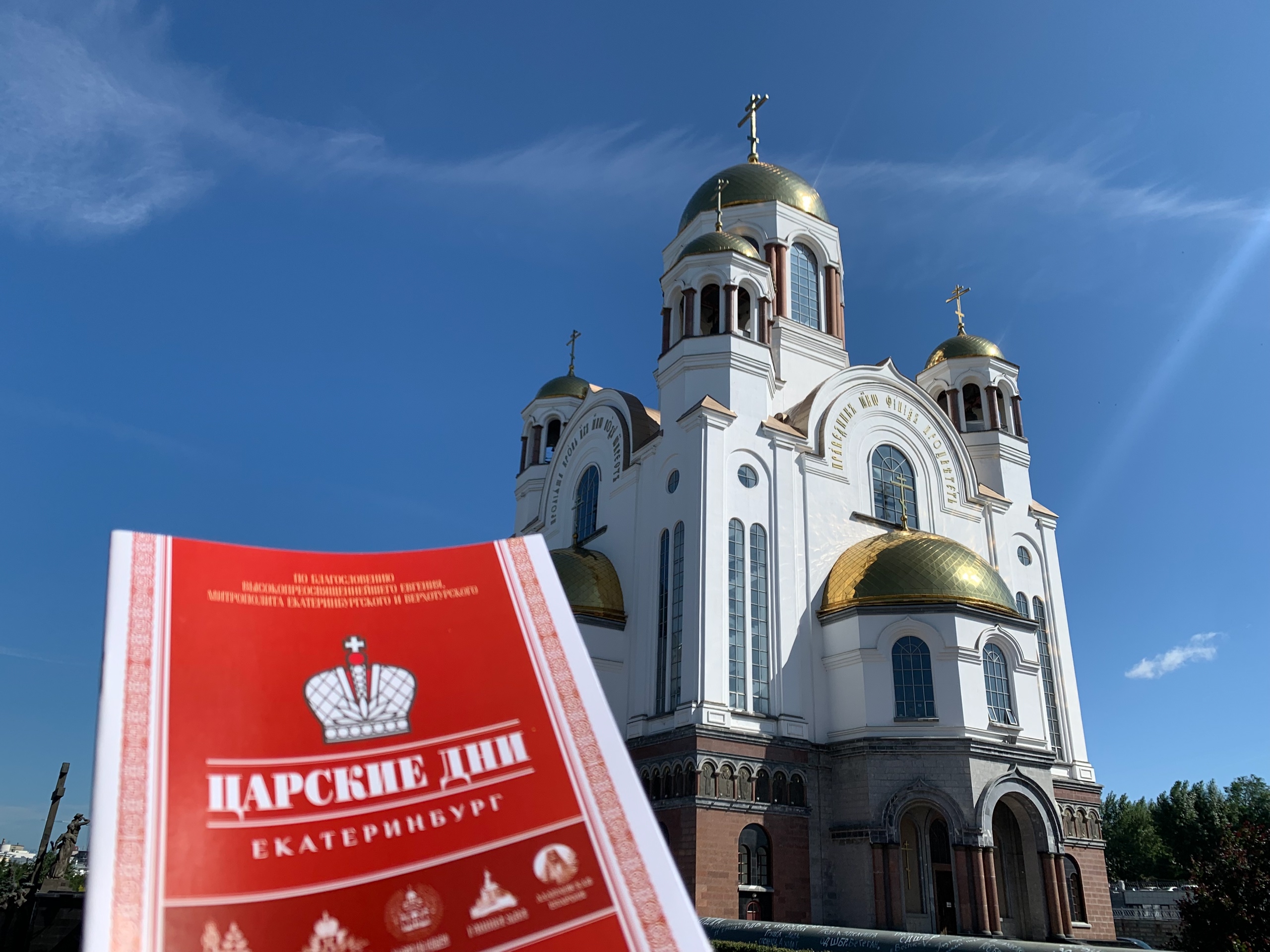
Ekaterinburg prepares for Tsar’s Days 2026

PHOTO: the Church on the Blood, Ekaterinburg

The Ekaterinburg Diocese are currently preparing for Tsar’s Days, which will be held in the Ural capital and in Alapaevsk from 11th to 21st July 2026.

This year marks the 108th anniversary of the death and martyrdom of Emperor Nicholas II, his family and their four faithful retainers on 17th July 1918. It also marks the 108th anniversary of the death and martyrdom of Grand Duchess Eliabeth Feodorovna and other Romanov family members in Alapaevsk on 18th July 1918.

Metropolitan Evgeny of Yekaterinburg and Verkhoturye noted the importance of the upcoming memorial events, which traditionally bring together tens of thousands of faithful from across Russia and abroad.

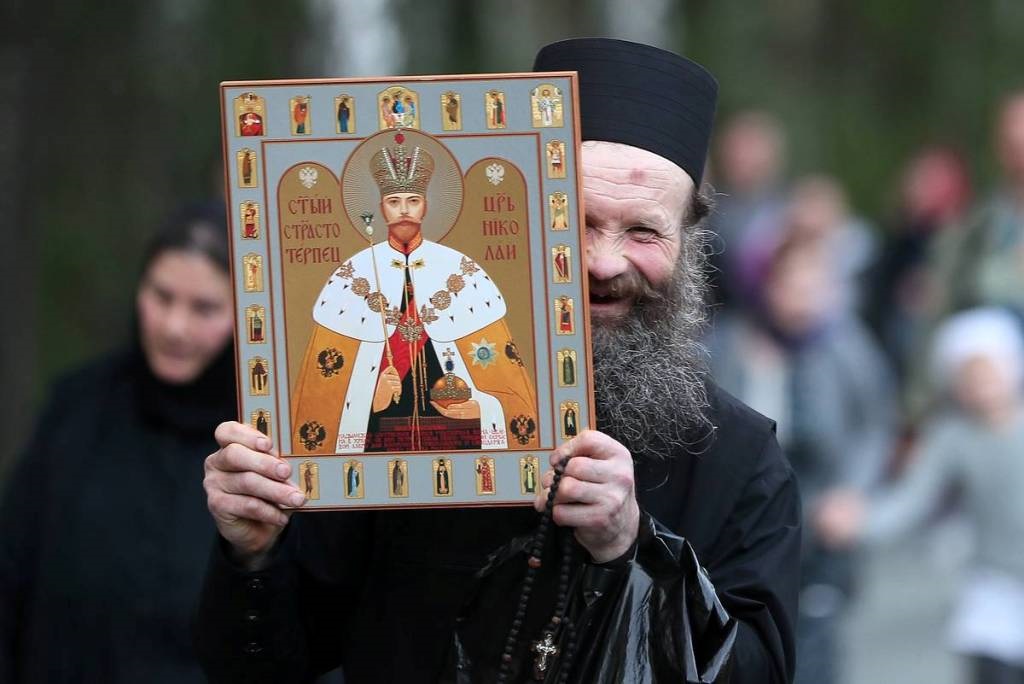
The central event of Tsar’s Days is the Divine Liturgy held on the night of 16/17 July, followed by a 21-km [13 miles] Cross Procession, from the Church on the Blood in central Ekaterinburg to the Monastery of the Holy Royal Passion-Bearers at Ganina Yama. for which “the whole of Russia gathers” in the Ural capital.

This years’ Tsar’s Days is part of the 25th International Festival of Orthodox Culture. Aside from divine services and religious processions, the festival will feature many events in honour of the Holy Royal Martyrs, including bell ringing, concerts and musical evenings, as well as exhibitions and conferences hosted by well-known historians, theologians and authors.

Preparations for the Tsar’s Days are being carried out by the Ekaterinburg Diocese with the support of the regional and city authorities.

Once again, Porosenkov Log will not included in this year’s Cross Procession. Porosenkov Log is where the remains of the Imperial Family were exhumed in two separate graves in 1991 and 2007 respectively. Due to the fact that the Moscow Patriachate does not yet recognize the Ekaterinburg Remains as those of the Imperial Family. Their official recognition rests with the Bishops’ Council of the Russian Orthodox Church.

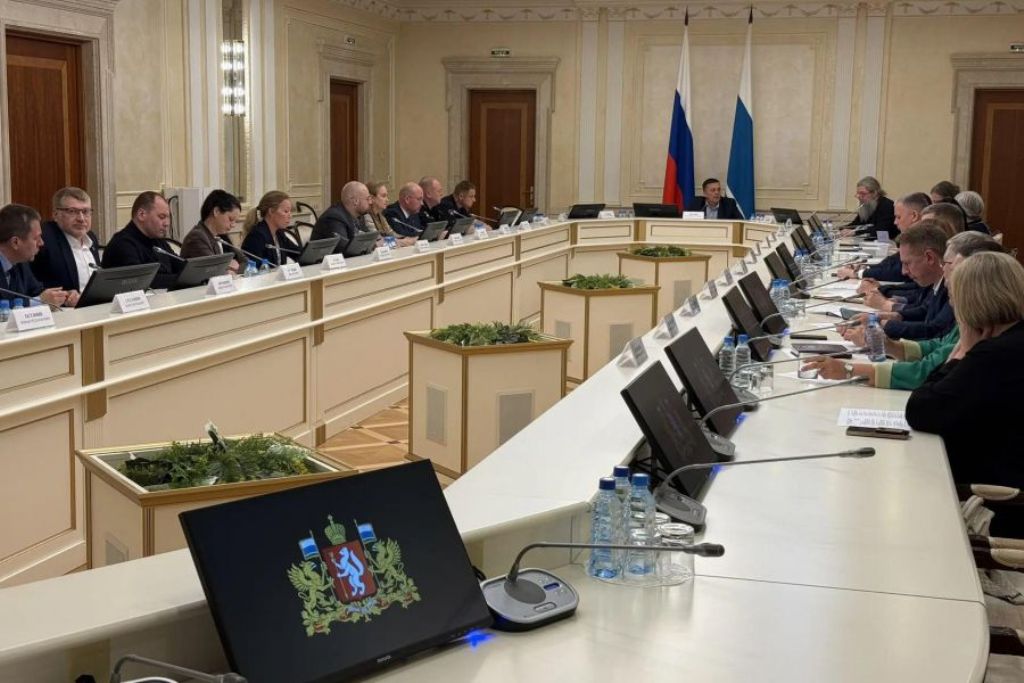
PHOTO: Vice-Governor of the Sverdlovsk Region Vasily Kozlov.

Sverdlovsk region makes preparations

On 30th June 2026, the organization of the festival was discussed at a working meeting chaired by the Vice-Governor of the Sverdlovsk Region Vasily Kozlov.

“For more than two decades, the “Tsar’s Days” have remained one of the largest spiritual events in the Middle Urals. The Government of the Sverdlovsk Region, together with the Yekaterinburg Diocese, local governments and relevant departments, is conducting comprehensive preparations so that all events are held at a high organizational level, and their participants feel comfortable and safe,” said Vasily Kozlov.

PHOTO: believers carry icons depicting the Holy Saint Tsar Nicholas II during the 21-km. Cross Procession from the Church on the Blood to Ganina Yama

The veneration of Nicholas II

The veneration of Nicholas II and his family actually began just days after their murder in July 1918. During the Soviet years, such activity would most certainly have been suppressed, forcing the faithful to honour the Holy Royal Passion-Beaers in secret.

After the fall of the Soviet Union in 1991, everything changed, when in 2000, some 300 faithful gathered at the sight of the Ipatiev House in Sverdlovsk [Ekaterinburg]. In 2002, the first Cross Procession in memory of the Holy Royal Martyrs was held in the Ural capitlal, attracting 3,000 faithful. The procession has been held every year since, the most important being in 2018, the year marking the 100th anniversary of the death and martyrdom of the Imperial Family.

FURTHER READING:

What is Tsar’s Days? + PHOTOS and VIDEO

“Ekaterinburg is my favorite Russian city” – Paul Gilbert + PHOTOS

© Paul Gilbert. 1 July 2026