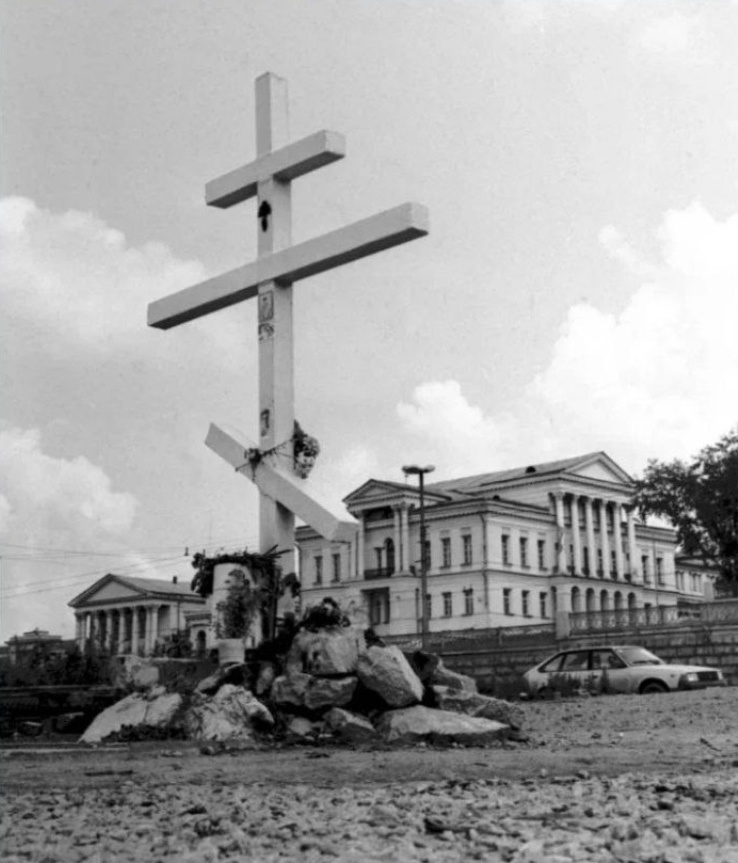
Cossack witnesses miraculous vision on the site of Ipatiev House in Ekaterinburg in 1990


PHOTO: a large metal Orthodox cross was installed
on the site of the Ipatiev House in 1990

In the autumn of 1990, a Cossack by the name of Vladimir claims to have witnessed a miraculous vision, during the installation of a large metal Orthodox cross, on the site where the Ipatiev House once stood – demolished on 22-23 September 1977.

Whether you are a believer or not, this is just one of many miracles reported since the regicide in Ekaterinburg in July 1918.

Here is Vladimir’s testimony . . .

“I want to tell you about the appearance (sign) at the moment of the installation of the cross on the site of the Ipatiev house, where the Tsar and his family were murdered.

On 5th October 1990, at about 11-12 noon , a metal cross was brought by truck, a hole was dug in advance for its installation, and crushed stone was brought.

The weather was gloomy. The entire sky was completely covered with dark clouds and it was snowing sparsely.

The cross was removed from the truck and placed on the ground, then installed in the hole, and one of the people present, a man named Alexei, stepped forward to see how the cross was installed and whether there was any deviation.

And suddenly, Alexei ran up toward the others present and yelled: “Look up!”

We all raised our heads at first trembling, and then fear passed through our bodies: above us, that is, directly above the cross, the sky parted, and from there a ray of light fell on the cross. The sun was not visible, and the hole in the clouds rotated to the right, and on the ground, that is, around the cross within a radius of 50-100 meters there was, as it were, an illumination from heaven by this bright beam of light, and on the ground a bright circle of light; and the snow did not fall within it.

All this lasted about 30-40 minutes, the time it took to install the cross and secured with concrete, then the hole in the clouds closed. The light disappeared. At the same time, up to 30 people were present, many of whom were non-believers at that time.

When we later asked the priest about this apparition, he replied that it was obviously a sign. Those of us non-beleivers present believed in God after this miracle.”

From the memoirs of a Cossack from the village of Kamenskaya,
Vladimir.

FURTHER READING:

The face of the Tsar-Martyr Nicholas II seen July 1919

“He will help you!” Stories of miraculous help of Tsar Nicholas II

My [Paul Gilbert] cancer journey and prayers for the intercession of Tsar-Martyr Nicholas II

© Paul Gilbert. 11 September 2024

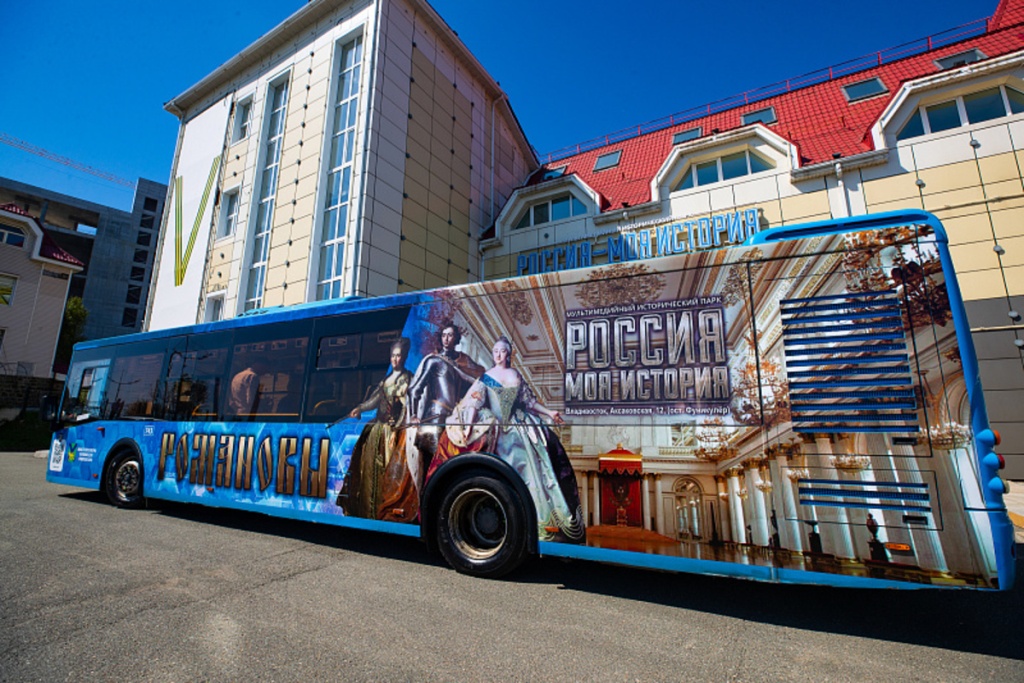
Vladivostock unveils bus dedicated to the Romanov dynasty

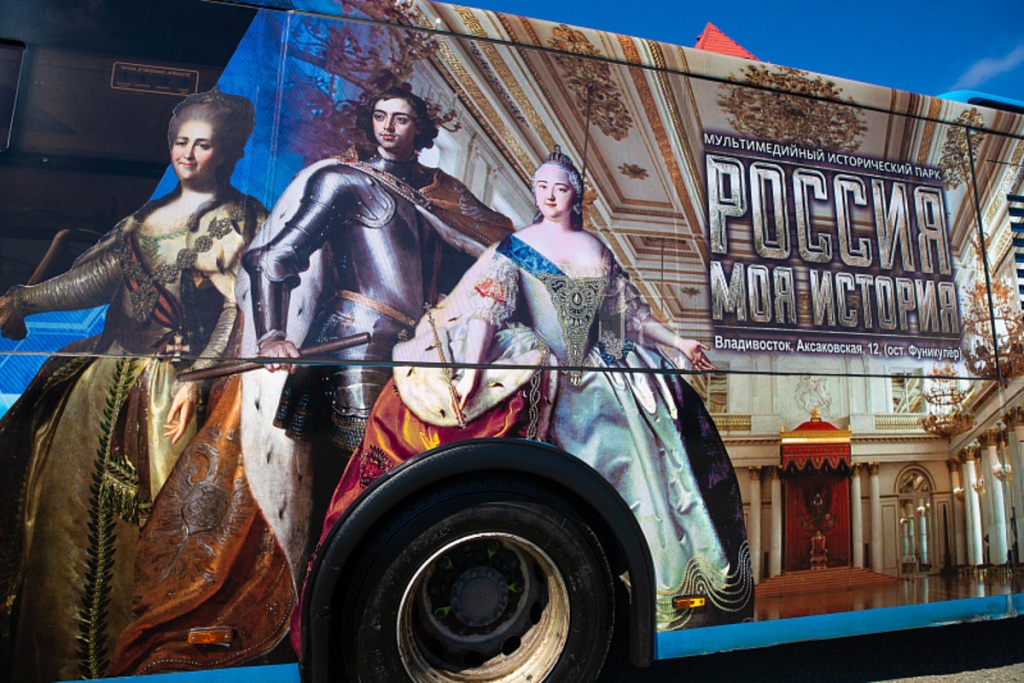
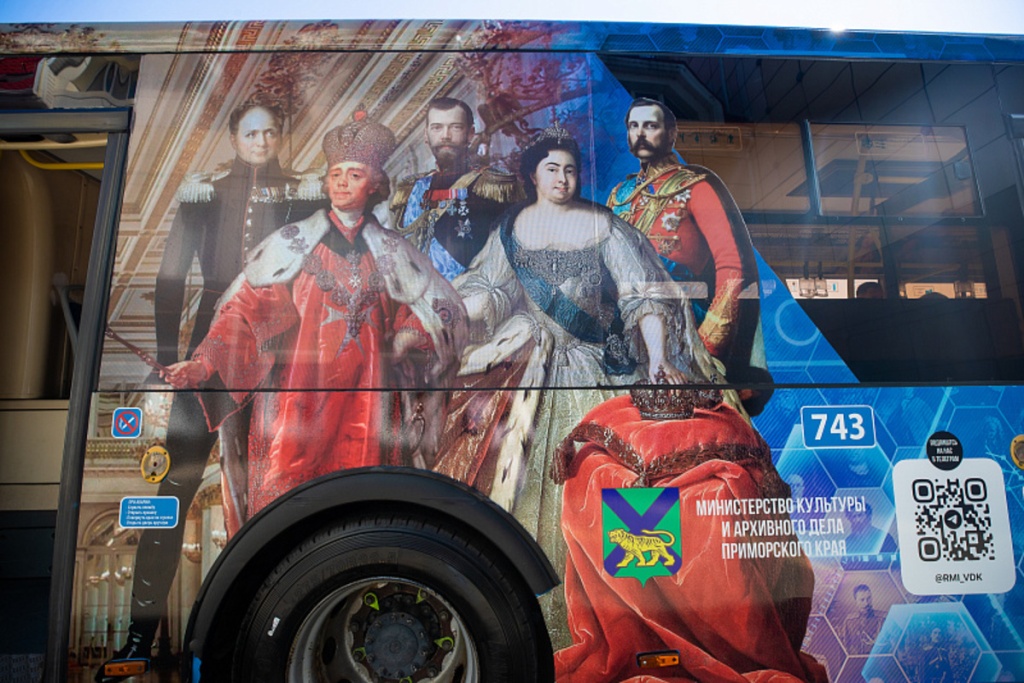
A new bus dedicated to the Romanov dynasty was unveiled this week in the Far Eastern Russian city of Vladivostok. Commuters can now learn about the Russian emperors and empresses from Peter I to Nicholas II, while they are going to work or school.

The outside of the bus depicts some of Russia’s most famous monarchs. For instance, depicted on the rear of the driver’s side of the bus are Empress Catherine II, Emperor Peter the Great and his daughter Empress Elizabeth. On the passenger side of the bus are Emperors Alexander I, Nicholas II, Alexander II, Paul I and empress Anna Ioannovna.

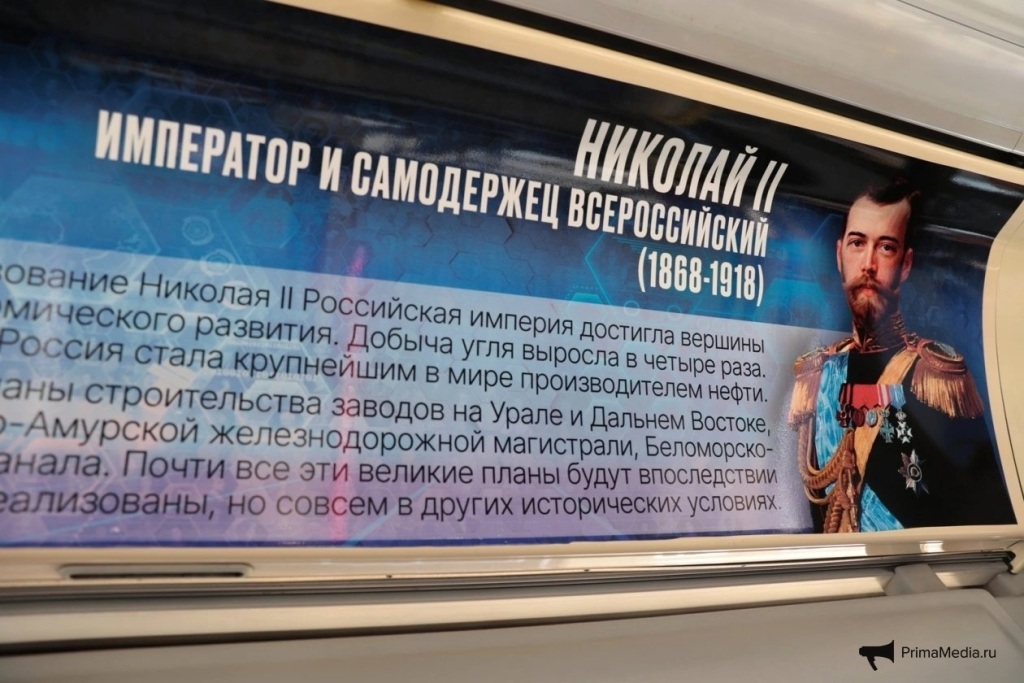
The interior of the bus features informative posters (see last photo on this post) which give commuters a brief summary of each respective emperor or empress.

“The appearance of such a recognizable bus attracts a lot of attention among both commuters and pedestrians with it’s impressive “Romanovs” inscription, reports IA Prima Media.

The bus which celebrates the Romanov dynasty, who ruled the Russian Empire for more than 300 years, is a joint project of the multimedia park Russia – My History and the municipal enterprise “VPOPAT No 1 with the support of the Ministry of Culture and Archival Affairs of the Primorsky Territory.

The historical materials placed on the bus are related to the Romanovs exhibition, which is presented in the multimedia park Russia – My History. The interior of the passenger bus is now a gallery of posters of Russian emperors – from Peter I to Nicholas II.

The idea of creating an educational route was iniated more than two years ago. In the last few years, similar buses have been unveiled in Vladivostock, which explore other historic events, including the 150th anniversary of Vladimir Klavdievich Arsenyev; the Khasan events; the Great Patriotic War; and the anniversary of the fire and rescue service. There are also plans to unveil a bus dedicated to another ruling Russian dynasty – the Rurik dynasty.

The new bus has been appointed to route No15 in Vladivostok. The choice of the route was for a reason. Route No15 is very long and runs from the center of Vladivostok to the Primorsky Oceanarium on Russian Island. Bus No 15 serves some of the largest universities in the city, so they are always full of young people.

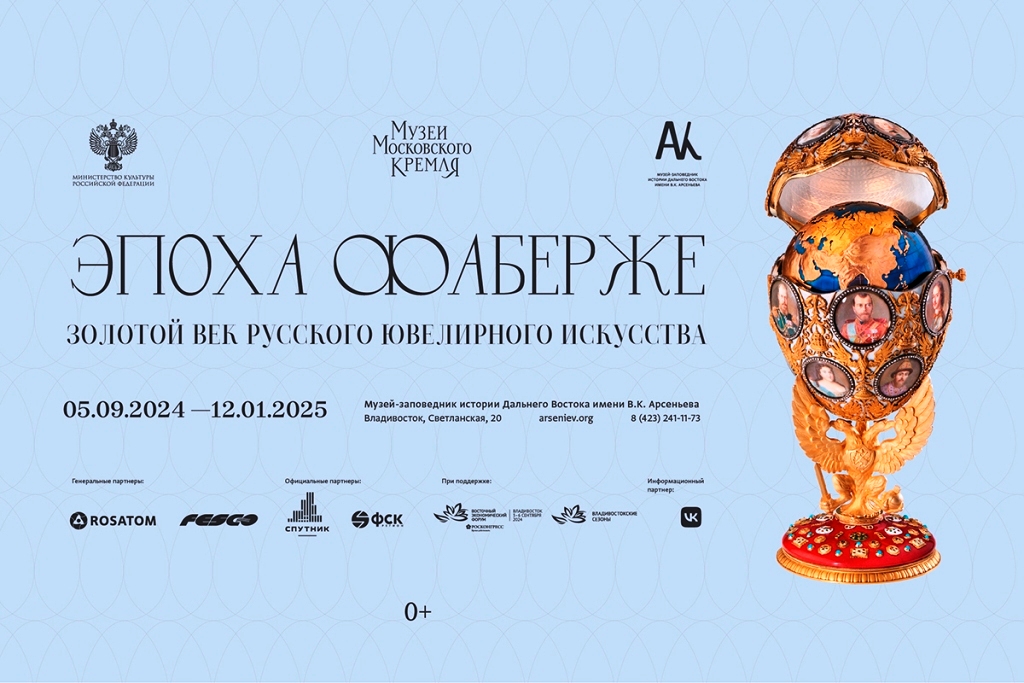
On 5th September 2024, a new exhibition The Age of Fabergé. The Golden Age of Russian Jewelry Art opened at the Arseniev Museum-Reserve of the History of the Far East, situated in Vladivostock.

© Paul Gilbert. 10 September 2024

Private Garden of the Alexander Palace to be restored

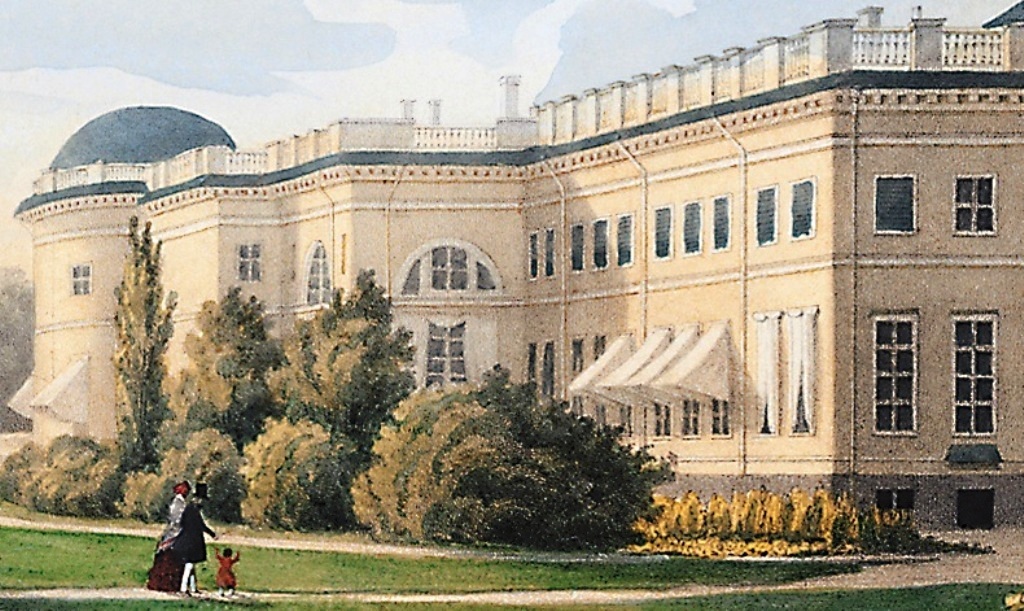
PHOTO: detail of the Alexander Palace and the Private Garden, from a lithograph (1845) by Johann Jacob Meyer. From the Collection of the Tsarskoye Selo State Museum

The restoration of the Alexander Palace at Tsarskoye Selo continues. Aside from the planned opening of the western wing of the palace next year, new projects include the restoration of the 18th century style Private Garden.

Experts who are now working on the recreation of the Private Garden fence, are reaching out to the public for help. The museum is appealing for photographs, preserved in home archives or im private collections of the fence and gates of the palace’s Private Garden, taken during the 1900s-1930s. The museum is especially interested in photos which show the lattice work of the fence.

The former Private Garden was situated on the corner of the eastern wing of the Alexander Palace. The Private Garden began with the creation of a small flower garden, which was fenced with a cast-iron fence with gates and wickets created according to a drawing by Giacomo Quarenghi (1744-1817), the famous Italian architect, who designed the Alexander Palace. In 1845-1846, the fence was replaced with a new one by Sebastian Cerfolio, whose original drawing of this lattice, among other documents on the manufacture of the fence, have been preserved in the archives of the Tsarskoye Selo State Museum.

In addition, several cast-iron elements of the lattice in the form of pine-cones have also been preserved in the archives. They are identical to those depicted in the drawing by Cerfolio. Photographs taken before the Great Patriotic War (1941-45) provide the most complete picture of what the fence looked like, and will allow experts to determine whether the fence underwent any changes since the middle of the 19th century.

If you have any photographs of the iron grille fence and gate of the Private Garden, taken during the 1900s-1930s, please send them by e-mail to the Tsarskoye Selo State Museum at the following email address: referent@tzar.ru

***

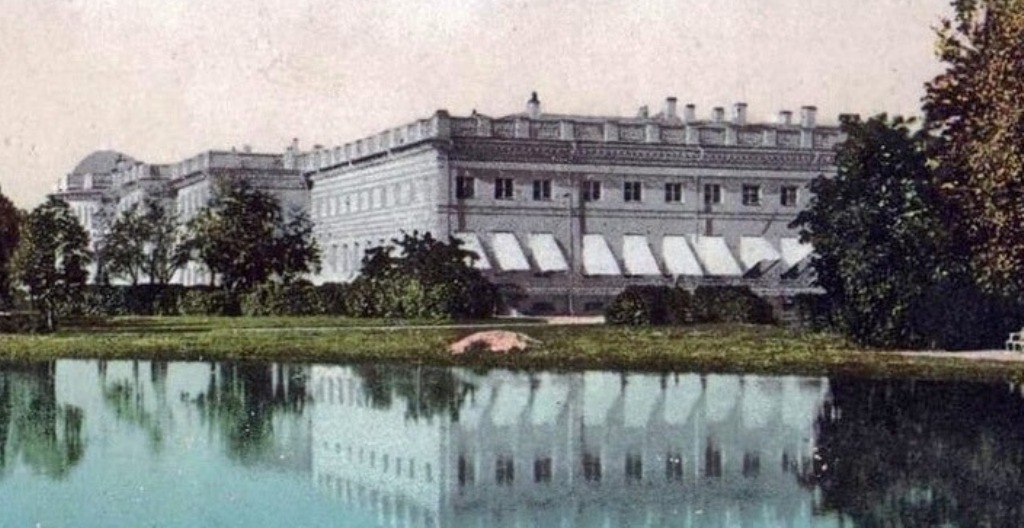
PHOTO: late 19th century postcard of the Alexander Palace
and the Empress’s balcony

During the reign of Emperor Nicholas II, the eastern wing of the Alexander Palace housed the Private Apartments of the Imperial Family. In 1895, the Emperor had the famous L-shaped iron grille balcony installed here for his wife Empress Alexandra Feodorovna, which was accessed via the Maple Drawing Room.

When completed, it wrapped around the corner of the palace, the same corner which is depicted in the colour lithograph above. Sadly, the balcony did not survive to the present day, it was was dismantled between 1947-49, by order of the palace’s new Soviet “caretakers”.

Despite the extensive restoration work on recreating the private apartments of Nicholas II and Alexandra Feodorovna, as they looked in the late 19th to early 20th centuries, the museum have no plans to recreate the Empress’s balcony, the reason being is that they want to preserve the palace’s original 18th century Neoclassical look – which many hail as “Quarenghi’s masterpiece”.

© Paul Gilbert. 9 September 2024

New Fabergé exhibition opens in Vladivostock

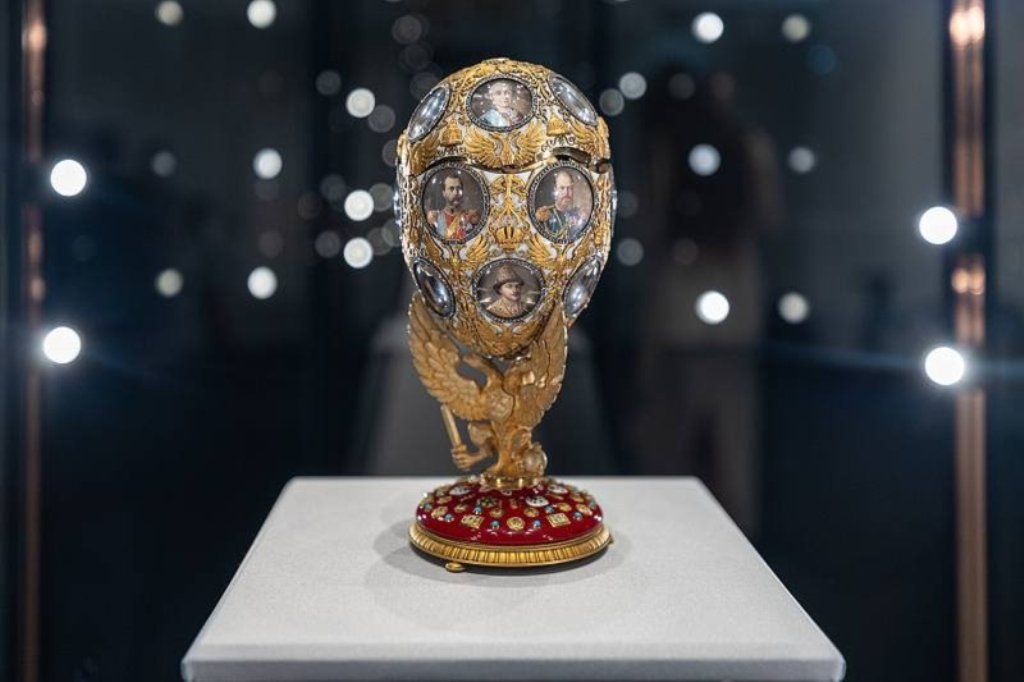
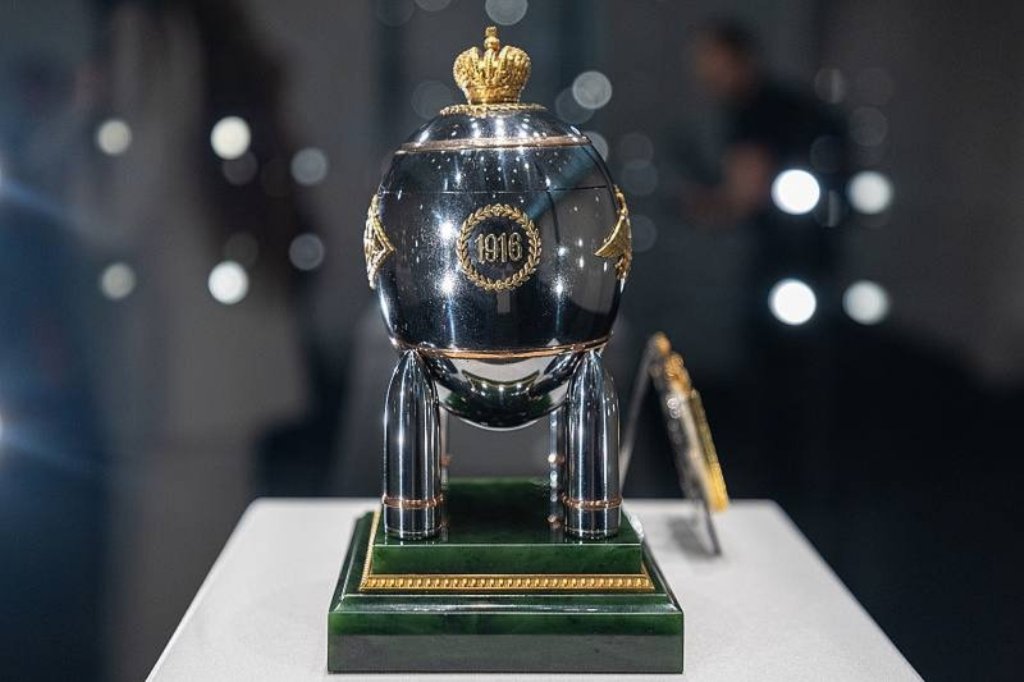
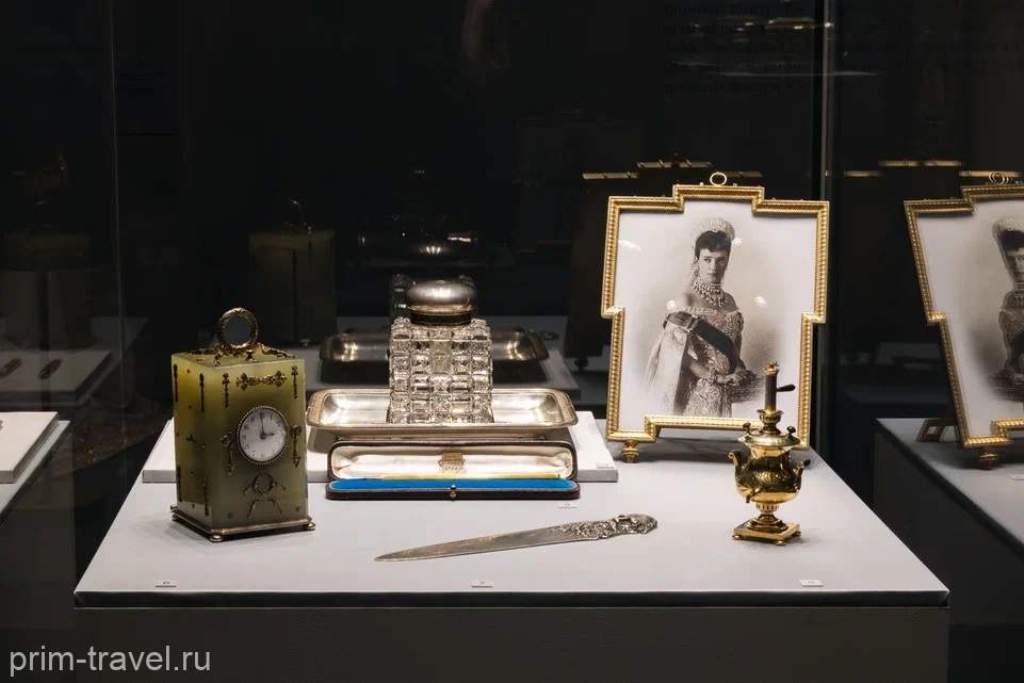
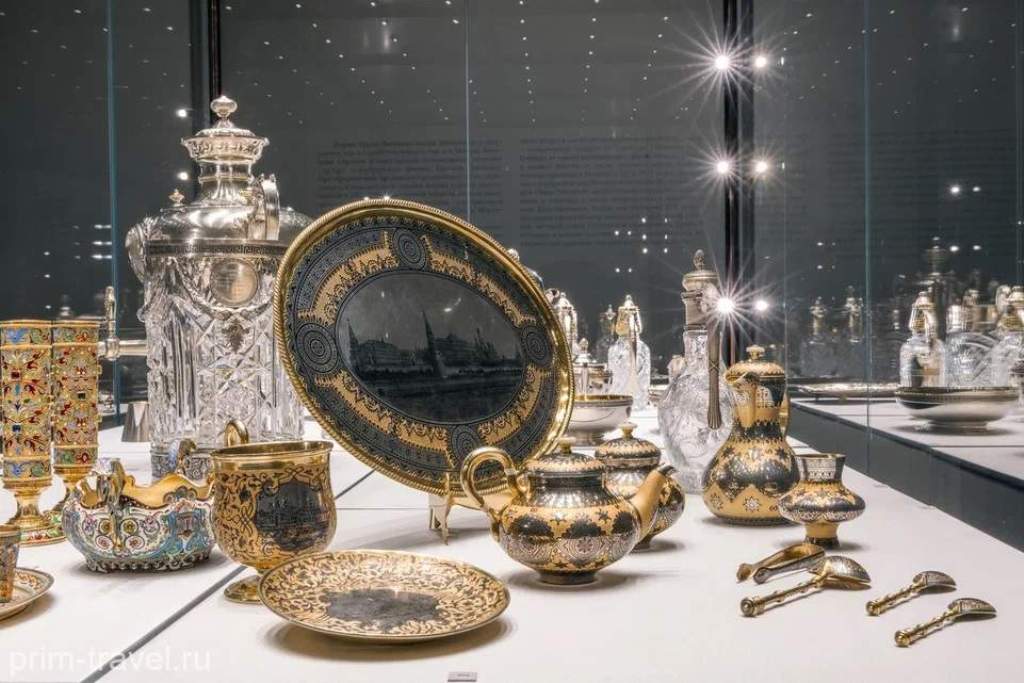
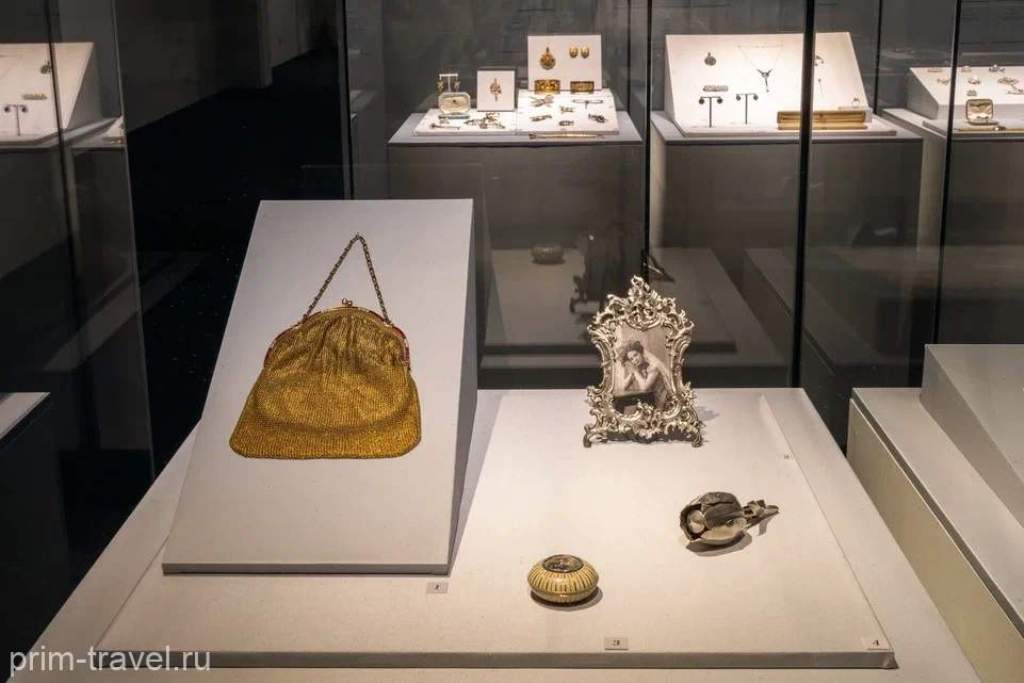
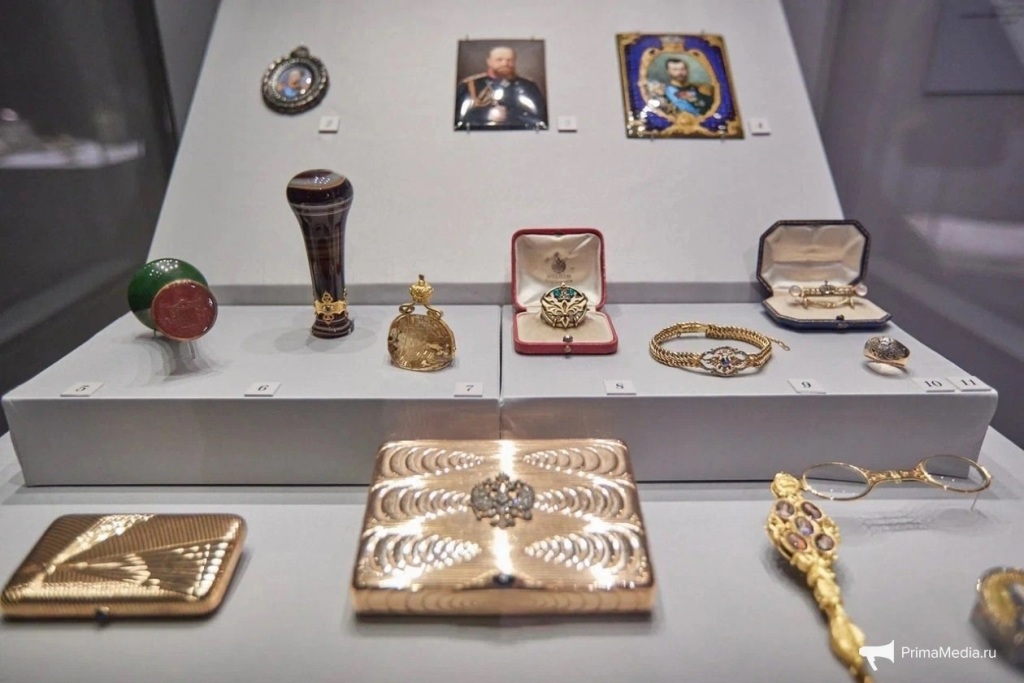
On 5th September 2024, a new exhibition The Age of Fabergé. The Golden Age of Russian Jewelry Art opened at the Arseniev Museum-Reserve of the History of the Far East, situated in Vladivostock. The exhibition is a joint project with the State Armoury Chamber Museum of the Moscow Kremlin.

Grandiose in terms of the number of valuable exhibits from the funds of the Moscow Kremlin Museums, the exhibition showcases about 300 items, including three Fabergé Imperial Easter Eggs commissioned by Emperor Nicholas II for his wife Empress Alexandra Feodorovna, for Easter in 1908, 1913 and 1916 respectively.

The Imperial Easter Eggs held in the Moscow Kremlin Museums are only ten Imperial Fabergé eggs that were not sold by the Bolsheviks in the 1920s, and are now held in the funds of the State Armoury Chamber Museum of the Moscow Kremlin. The Armoury Museum will be moving to a massive new museum complex, located on Red Square in 2024.

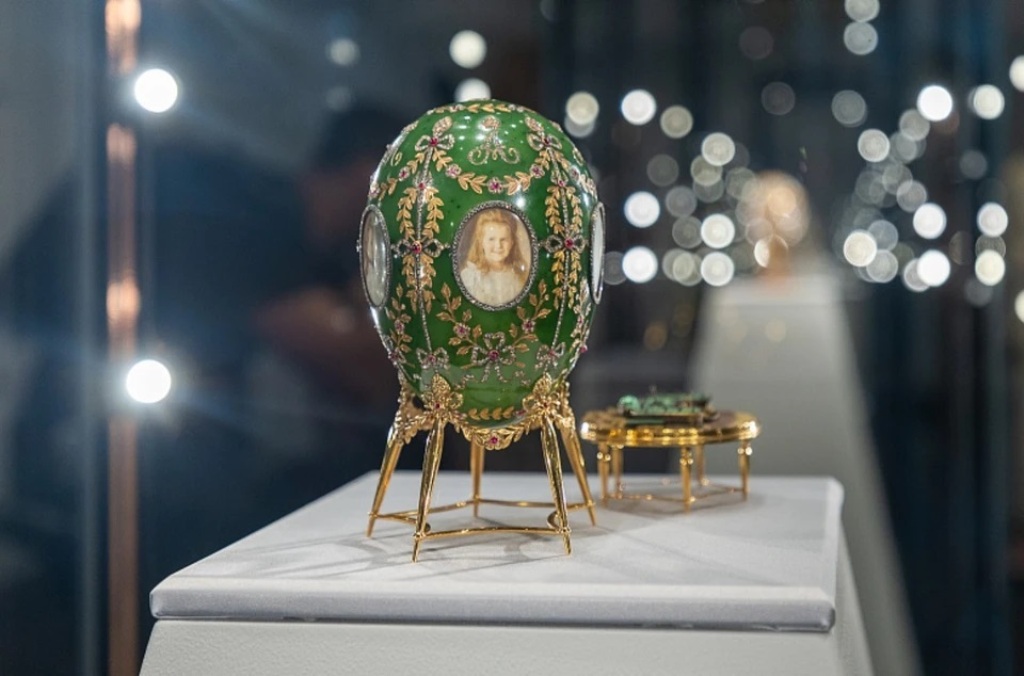
The famous Imperial Easter Eggs with intricate surprises, commissioned by Emperor Nicholas II, occupy a central place at the exhibition: the Alexander Palace Egg, gifted to Empress Alexandra Feodorovna (Easter 1908) ; the Romanov Tercentenary Egg, gifted to Empress Alexandra Feodorovna (Easter 1913); and the Steel Military Egg, gifted to Empress Alexandra Feodorovna (Easter 1916).

PHOTO: the Alexander Palace Egg (1908). Moscow Kremlin Museums

PHOTO: the Romanov Tercentenary egg (1913). Moscow Kremlin Museums

PHOTO: the Steel Military Egg (1916). Moscow Kremlin Museums

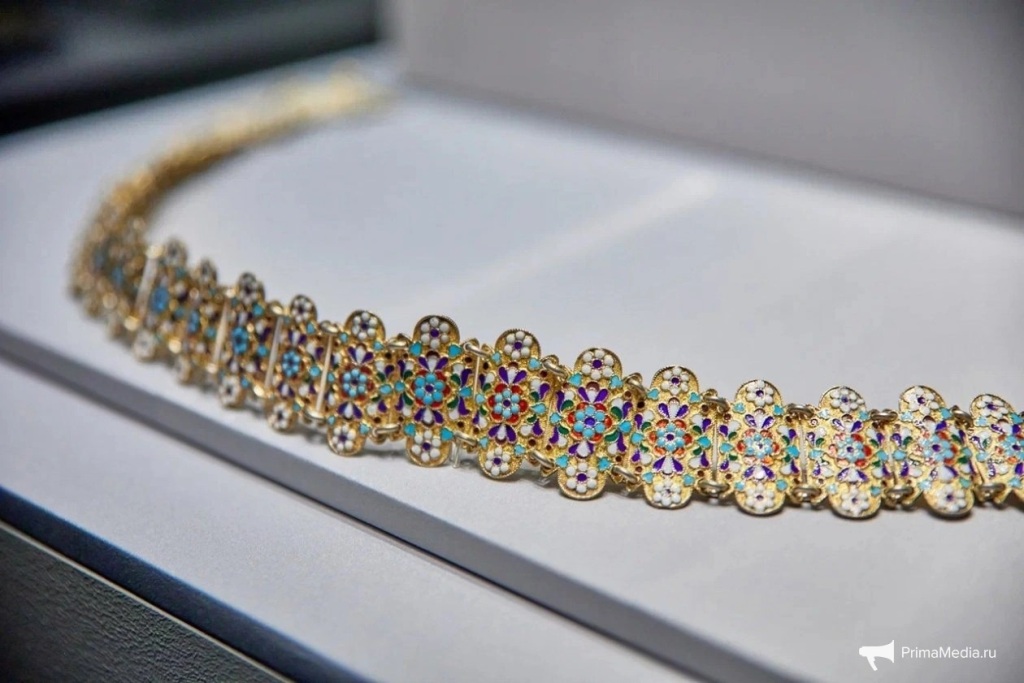
The exhibition showcases about 300 items, including masterpieces of the famous Russian firm of Carl Fabergé (1846-1920) as well as works of his contemporaries, including Suppliers of the Imperial Court I. Khlebnikov, P. Ovchinnikov, the Grachev brothers, F. Kechli, as well as other firms, factories, workshops and artels. The three Imperial Easter Eggs on display, were created by the chief jeweler of the Fabergé firm, Henrik Wigström (1862-1923).

In addition to exclusive and commissioned works, are gifts from the Guards to their august chiefs, seals with the coats of arms of members of the Romanov family, stone-cutting products of the Ekaterinburg Imperial Lapidary Factory bearing Imperial monograms, and precious church utensils for the Marfo-Mariinsky (Martha and Mary) Convent in Moscow, the abbess of which was Grand Duchess Elizabeth Feodorovna (1864-1918).

The Age of Fabergé. The Golden Age of Russian Jewelry Art exhibition runs until 12th January 2025 at the Arseniev Museum-Reserve of the History of the Far East in Vladivostock.

***

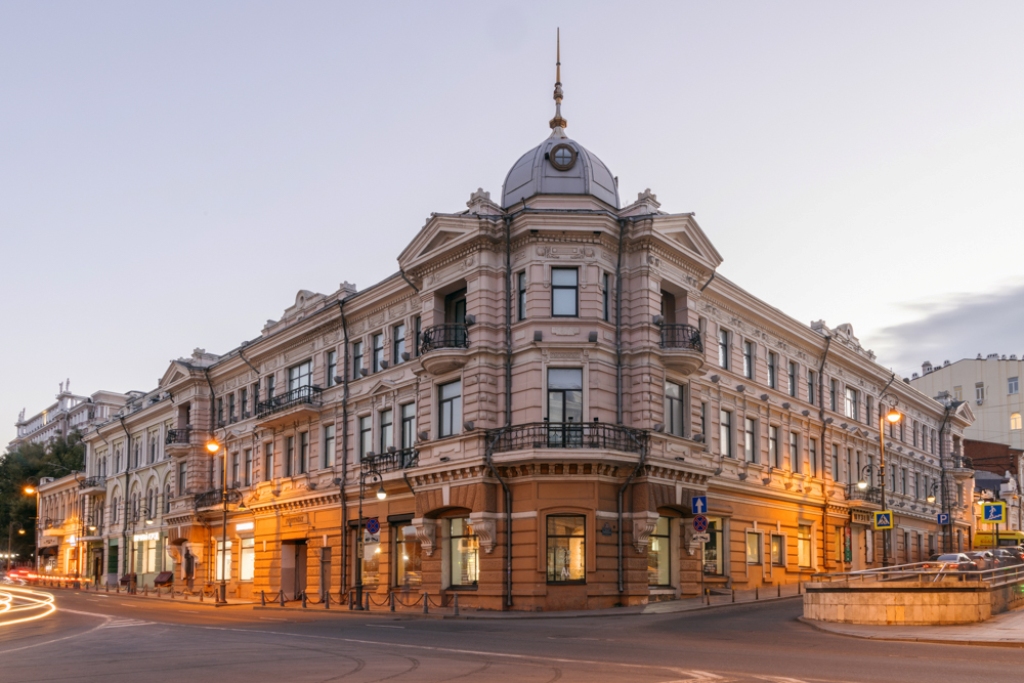
PHOTO: the Arseniev Museum-Reserve of the History of the Far East, situated in Vladivostock

The memorial house was built at the beginning of the 20th century. Vladimir Klavdievich Arsenyev (1872-1930) moved into apartment number 4 on the second floor in June 1929. He was a famous Russian traveler, geographer, ethnographer, local historian, writer, and explorer who made a significant contribution to the development of the Far East.

© Paul Gilbert. 5 September 2024

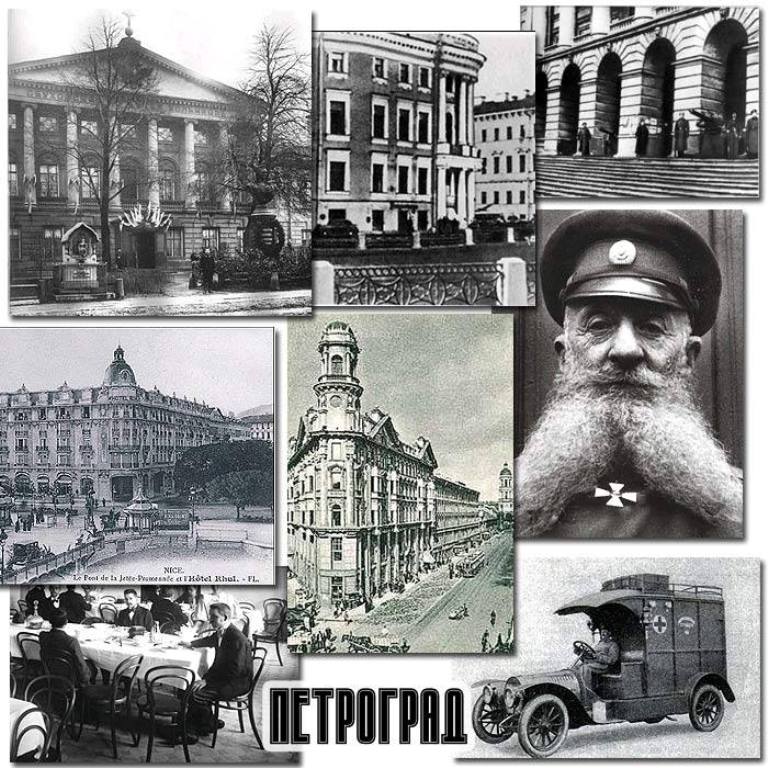
“We went to bed in St. Petersburg, and woke up in Petrograd!” 

On 31st (O.S. 18th) August 1914, St. Petersburg was renamed Petrograd, by decree of Emperor Nicholas II.

The following day, on 1st September 1914, the Highest Order of Emperor Nicholas II to the Governing Senate was published on renaming St. Petersburg to Petrograd. The decision on renaming the capital of the Russian Empire: Sankt Peterburg / St. Petersburg to Petrograd, meaning “Peter’s City”, was to remove the German sounding words “Sankt” and “Burg”. [ “Sankt-Peterburg,” was actually the Dutch-influenced name that Peter the Great gave the city in 1703].

The Emperor’s decree was just the beginning of a large-scale anti-German campaign that swept Russian society at the beginning of the First World War. Not without excesses: Russian nationalists vented their anger against German shops, restaurants and businesses, even the German embassy was not spared. Anti-German sentiment launched conspiracies, and many people were accused of being spies. The Empress Alexandra Feodorovna herself was even accused of being a German spy! The entire anti-German campaign that swept Russian society was of course further fuelled by the press.

It is believed that the initiator of the renaming of the city was the Minister of Land Management and Agriculture Alexander Vasilyevich Krivoshein (1857-1921). On 11th August 1914, he was received by Nicholas II and convinced the Emperor of the need to issue a decree renaming the capital.

The Russian poet Ivan Ivanovich Tkhorzhevsky (1878-1951), later wrote that Krivoshein himself told him: “Many attack him [the Sovereign] for renaming the city Petrograd. Rukhlov (Minister of Railways) allegedly said to him: ‘who are you, Your Majesty, to correct Peter the Great!,’ of which the Sovereign responded: ‘The Russian name is dearer to the Russian heart … “.

The Emperor received support of the renaming of the capital, from the head of the Ministry of Internal Affairs, Nikolai Alekseevich Maklakov (1871-1918), and the chief prosecutor of the Holy Synod, Vladimir Karlovich Sabler (1845-1929). It is interesting to note that with the outbreak of World War I, with Germany as Russia’s chief opponent, Vladimir Karlovich chose to replace his German sounding surname with his wife’s maiden name, Desyatovsky.

As the military historian Anton Antonovich Kersnovsky (1907-1944) noted, “yesterday’s cosmopolitans have suddenly turned into ardent nationalists. Fury against everything “German” became the dominant note. People who seemed to be quite reasonable, suddenly demanded that their surnames of German origin be changed into a Russian form.”

The very next day after Nicholas II’s decree, one St. Petersburg newspaper announced: “We went to bed in St. Petersburg, and woke up in Petrograd! .. The St. Petersburg period of our history with its German tinge has ended … Hooray, gentlemen! ..”

PHOTO: map of Petrograd. 1914

Their euphoria was echoed by Petrogradskie Vedomosti: “Somehow this name sounds much nicer to the Russian ear! In Petrograd … from now on a new era will shine, in which there will no longer be a place for German dominance which has affected St. Petersburg. Fortunately, it has outlived its time and place in our city’s history”.

It should be noted, that the idea of renaming of St. Petersburg was discussed back in the days of Empress Catherine II and Emperor Alexander I. Writers, in particular Gavril Derzhavin (1743-1816) and Alexander Pushkin (1799-1837), sometimes referred to St. Petersburg as “Petropole” in their works. In some decrees issued by Catherine II herself, the place of their publication was the “City of St. Peter”.

The Russkoye Slovo newspaper recalled that as early as the 1870s, Slavophiles began a movement in favor of renaming St. Petersburg to Petrograd: “Historical documents confirm that the Slavophiles tried to introduce the use of this name into all aspects of everyday life in the capital. For instance, in correspondence and in personal conversations, they completely avoided using the name Petersburg, and even on the envelopes of letters they wrote “Petrograd”, as a result of which misunderstandings often arose between the Slavophiles and representatives of the post office, who claimed that they could not guarantee the delivery of letters bearing the destination city as “Petrograd”. This movement, however, failed to have any real effect on changing the city’s name at the time.”

It was assumed that not only the capital would be renamed, but other Russian cities bearing German sounding names as well. They wanted to rename Ekaterinburg – Ekaterinograd, Orenburg – Orengrad. They also wanted to rename both Shlisselburg and Oranienbaum, among many others. These plans, however, did not materialize.

The renaming of St. Petersburg caused a mixed reaction in society. According to Tkhorzhevsky, “the city was renamed without consulting the city’s residents: it was as if St. Petersburg had been demoted.” Lawyer and writer Anatoly Fedorovich Koni (1844-1927) was also not happy: “The historical name associated with the founder of the city and borrowed from Holland, reminiscent of the “eternal worker on the throne [Peter the Great]”, was replaced under the influence of some patriotic whim by the meaningless name of Petrograd, in common with Elizavetgrad, Pavlograd and other similar,” he wrote . Even the mother of Nicholas II, the Dowager Empress Maria Feodorovna, sarcastically remarked on this occasion that, “Peterhof would soon be renamed Petrushkin Dvor”.

Kersnovsky even called the renaming of St. Petersburg as the “crown of stupidity”. He wrote: “the ignorance of our educated circles, from which the initiative came, was amazing. Tsar Peter I named the city “St. Petersburg”, which he founded in honor of his saint [St. Peter] – and on a Dutch, not a German model and, of course, did not think to name it after himself. St. Petersburg in Russian could be translated “Svyatopetrovsk”.

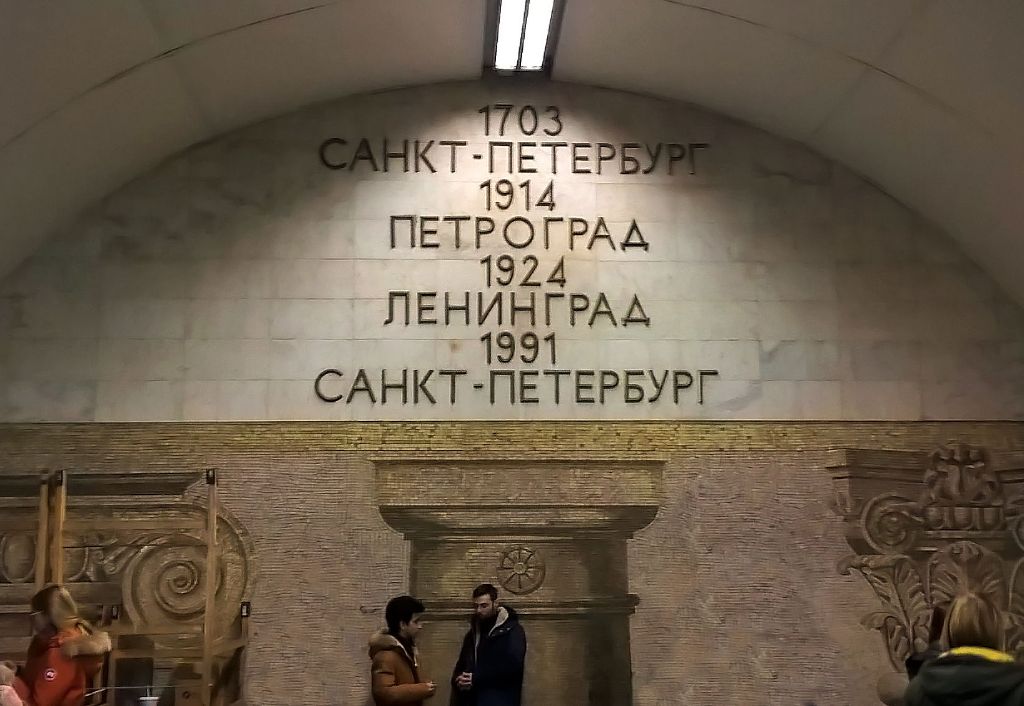
PHOTO: a Metro station in St. Petersburg reflects the city’s name changes

Petrograd was by no means to be the last change in the name of the great Russian city.

On 26th January 1924, five days after Bolshevik leader Vladimir Lenin’s death, Petrograd was renamed “Leningrad” – meaning “Lenin’s City – a name which the city retained for nearly 70 years.

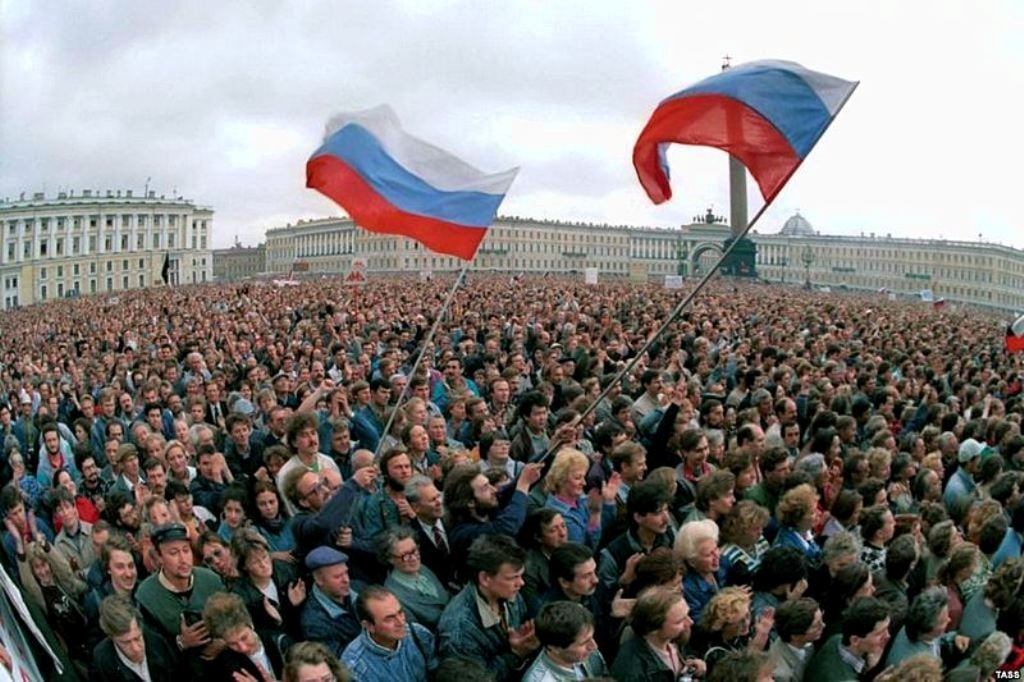
On 12th June 1991, only a few months before the dissolution of the USSR, voters supported restoring the city’s original appellation in a city-wide referendum, by a simple majority of votes (54%). Renaming the city Petrograd was not an option.

On 6th September 1991, the historic name, Saint Petersburg, was returned. Meanwhile, the oblast (district) whose administrative center is also in Saint Petersburg is still named Leningrad.

Since 1991 the Historic Centre of Saint Petersburg has been listed by UNESCO as a World Heritage Site. During that time, the historic centre of the city has undergone a monumental “facelift”, which included the restoration of hundreds of buildings dating from the 18th, 19th and early 20th centuries, transforming Saint Petersburg into one of the most beautiful cities in the world.

In June 2019, Russian politician and leader of the Liberal Democratic Party of Russia (LDPR) Vladimir Zhirinovsky (1946-2022), called for renaming St. Petersburg to its pre-revolutionary name “PETROGRAD”. Nothing, of course, ever came of his request.

***

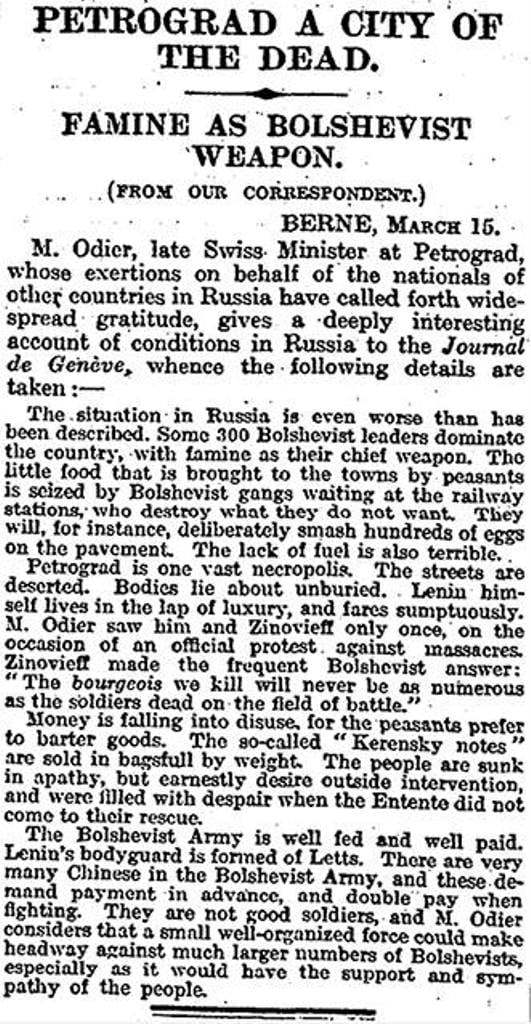
‘PETROGRAD A CITY OF THE DEAD. FAMINE AS BOLSHEVIST WEAPON’

Less than six months after the Bolsheviks seized power, a former Swiss diplomat reports on conditions in the Russian capital. On 17th March 1919, re wrote:

“The situation in Russia is even worse than has been described. Some 300 Bolshevist leaders dominate the country, with famine as their chief weapon.”

“Petrograd is one vast necropolis. Bodies lie about unburied, Lenin himself lives in the lap of luxury, and fares sumptuously.”

After reading this article, one can only speculate how many Russians then regretted supporting the overthrow of the Tsar, and embracing the revolution?

© Paul Gilbert. 1 September 2024

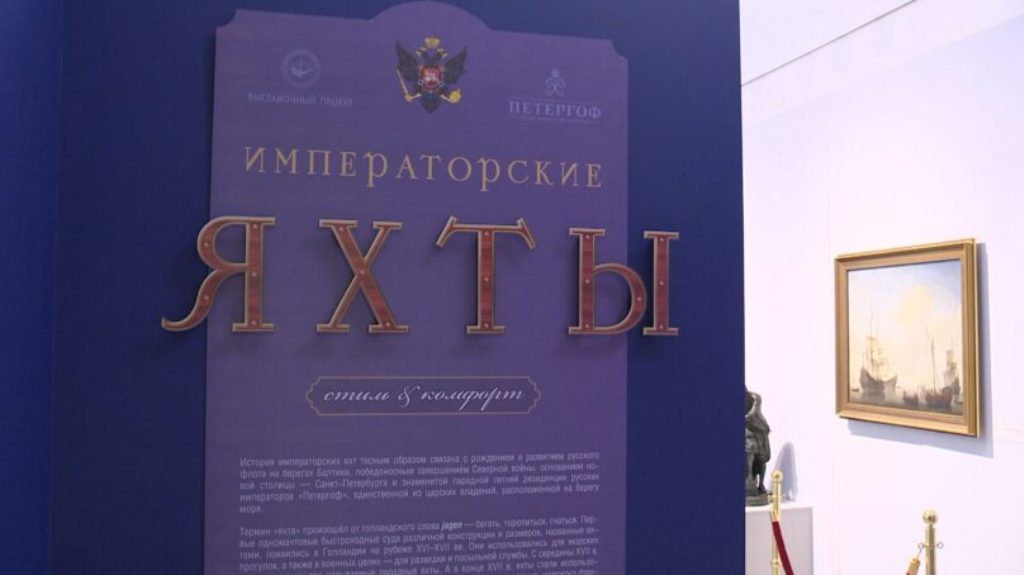
Imperial Yachts exhibition opens in Kaliningrad

On 31st August 2024, a new exhibition The Imperial Yachts opened at the Museum of the World Ocean in Kaliningrad. The exhibit is joint project with the Peterhof State Museum. The exhibition explores the history of the Imperial Yachts, and their role in the life of the Russian Imperial Court, from Peter the Great to Nicholas II.

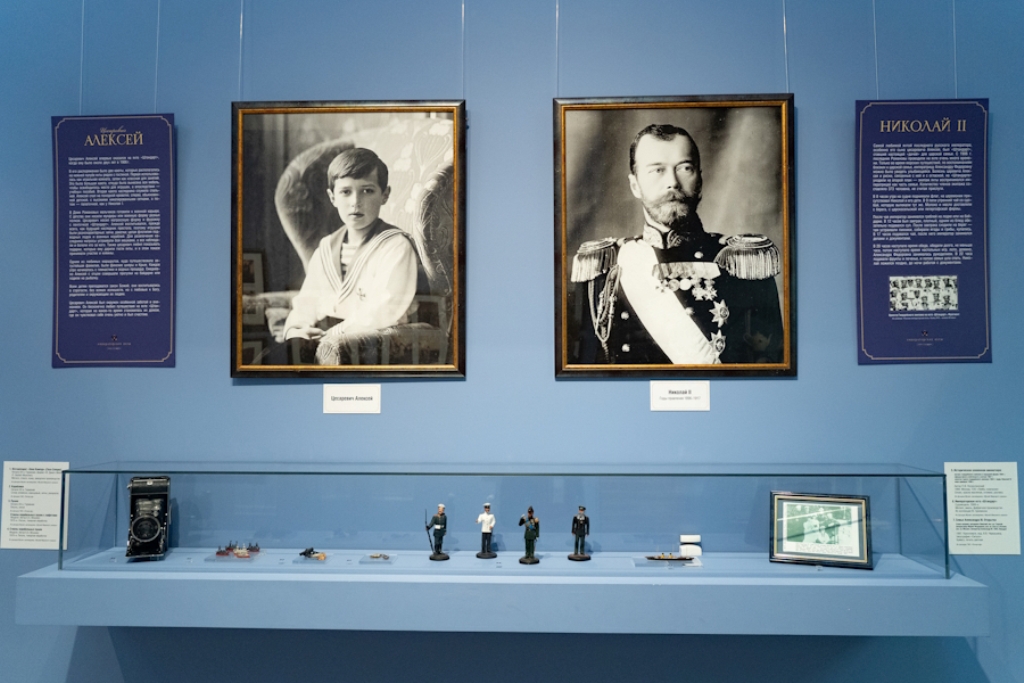
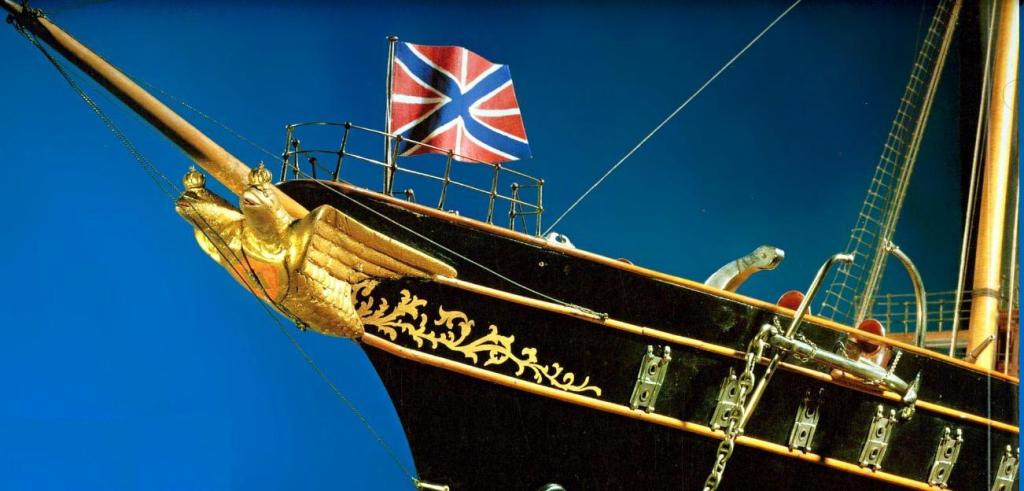
The Russian Imperial Yachts fell under the administration of the Naval Guards, founded in 1710, during the reign of Peter the Great. The Naval Guards conducted their service on the Imperial Yachts, and carried out regularl inspections of the vessels. In 1912, the Naval Guards also included Emperor Nicholas II, Dowager Empress Maria Feodorovna, Tsesatevich Alexei Nikolaevich, Grand Dukes Alexander and Nikolai Mikhailovich, Kirill Vladimirovich, Konstantin and Dmitri Konstantinovich.

During the 18th century, the Baltic Fleet already had more than 30 court and admiralty yachts. Some of them, for example, the yacht Happiness, impressed with their rich exterior décor and luxurious interior decoration. Over time, the design and appearance of Imperial Yachts change significantly. In the middle of the 19th century, during the reign of Emperors Nicholas I and Alexander II, elegant high-speed ships appeared, designed for better seaworthiness and increased comfort. Their interior decoration close ly resembled that of “floating palaces”.

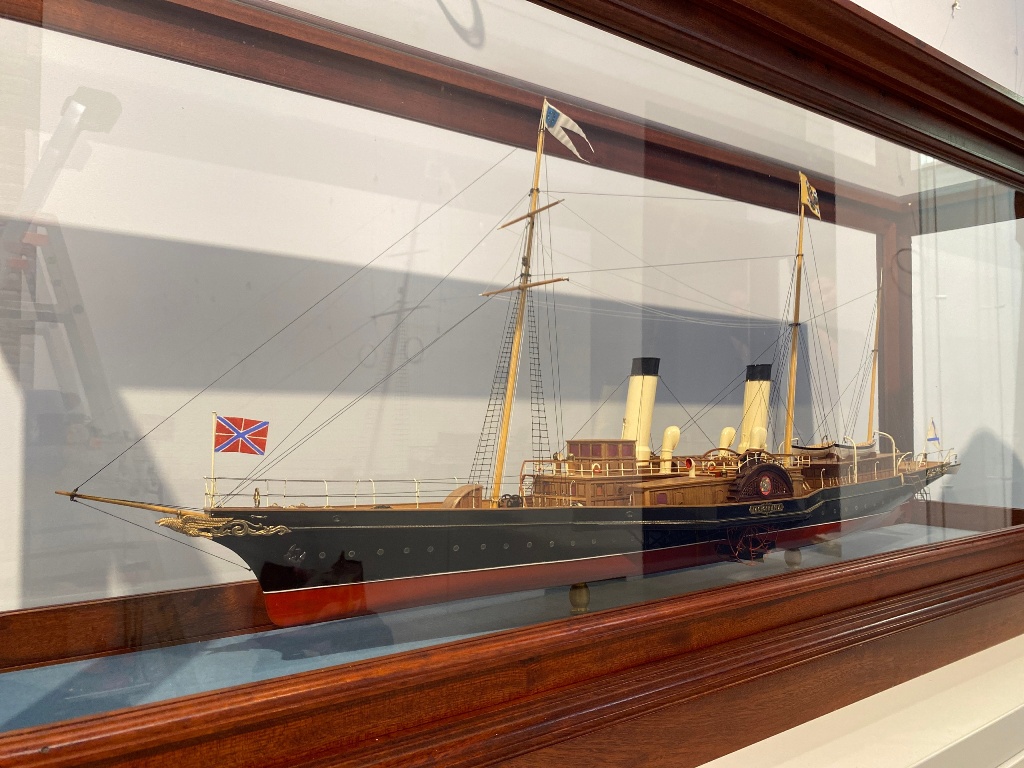
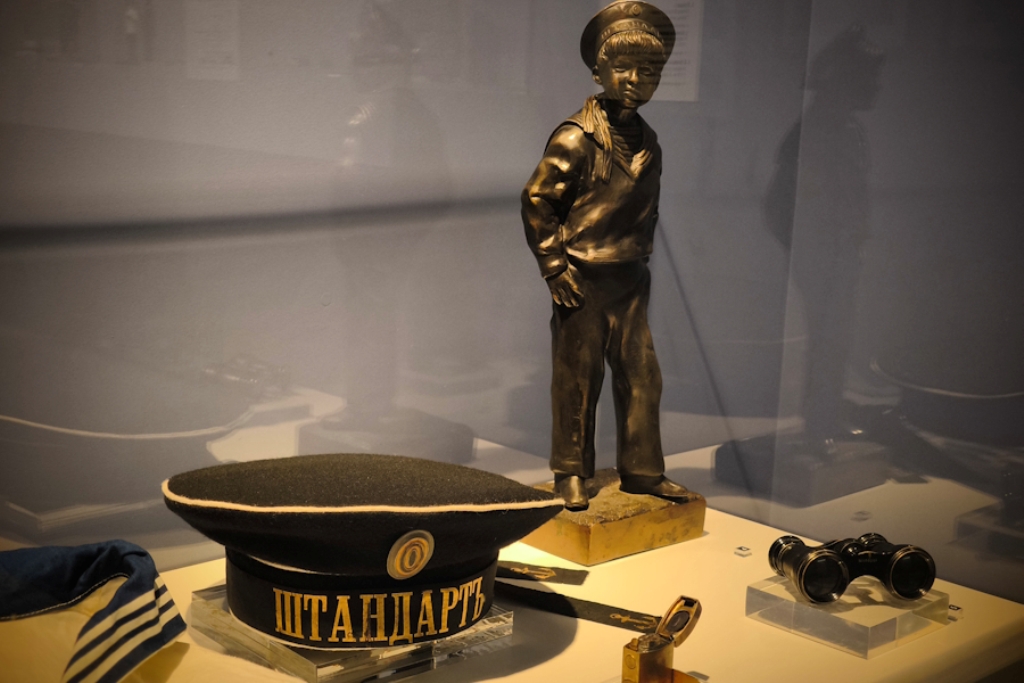
The exhibition introduces visitors to the construction and operation of the Shtandart / Standart, the favourite Imperial Yacht of Emperor Nicholas II. The Shtandart / Standart, was the largest ocean-going yacht in the world, with the most advanced engineering and naval technology of it’s time. Other Imperial Yachts included the Livadia, Tsarevna, Alexandria, Derzhava and Polar Star – the personal yacht of the Dowager Empress Maria Feodorovna. Both the Shtandart / Standart and the Polar Star had their own on-board chapels, in which members of the Imperial Family could attend services and pray while at sea.

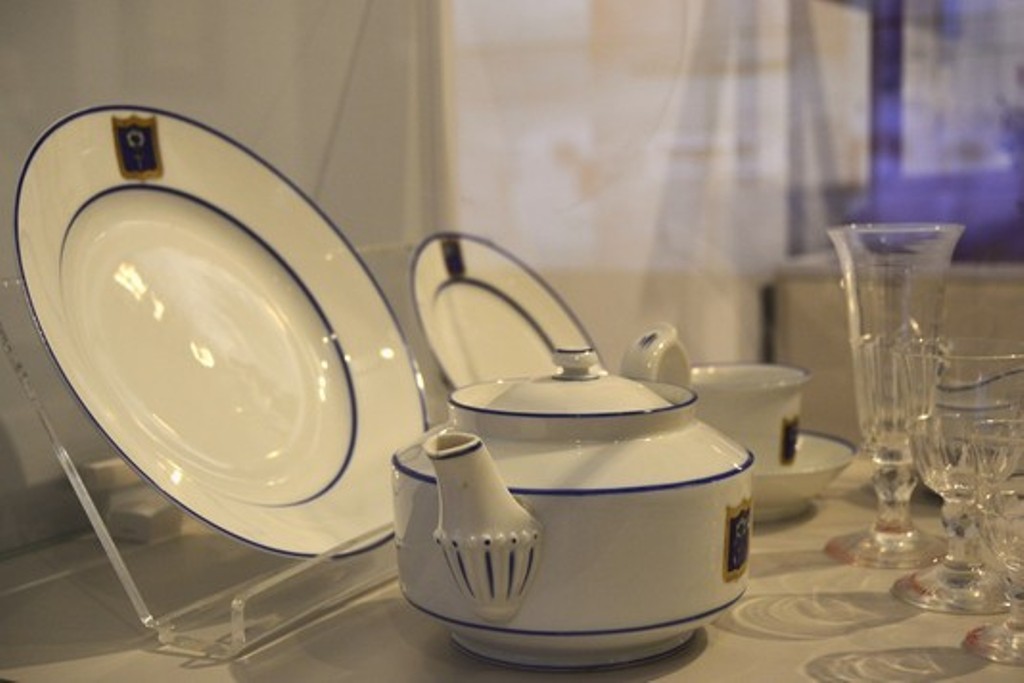
The exhibition features more than 100 items, including maritime paintings and graphic works, a unique collection of services – porcelain and glassware – made for the Imperial Yachts, as well as navigation and other maritime items used on board. The exhibition is further complemented by scale models of the Imperial Yachts, uniforms, clothing and personal items of members of the Imperial Family, books and photographs which reflect life on board these luxurious vessels and their respective sea voyages.

The Imperial Yachts exhibition runs until 25th November 2024 at the Museum of the World Ocean in Kaliningrad.

© Paul Gilbert. 31 August 2024

Grand Duke Kirill Vladimirovich supported the arrest of Nicholas II in 1917

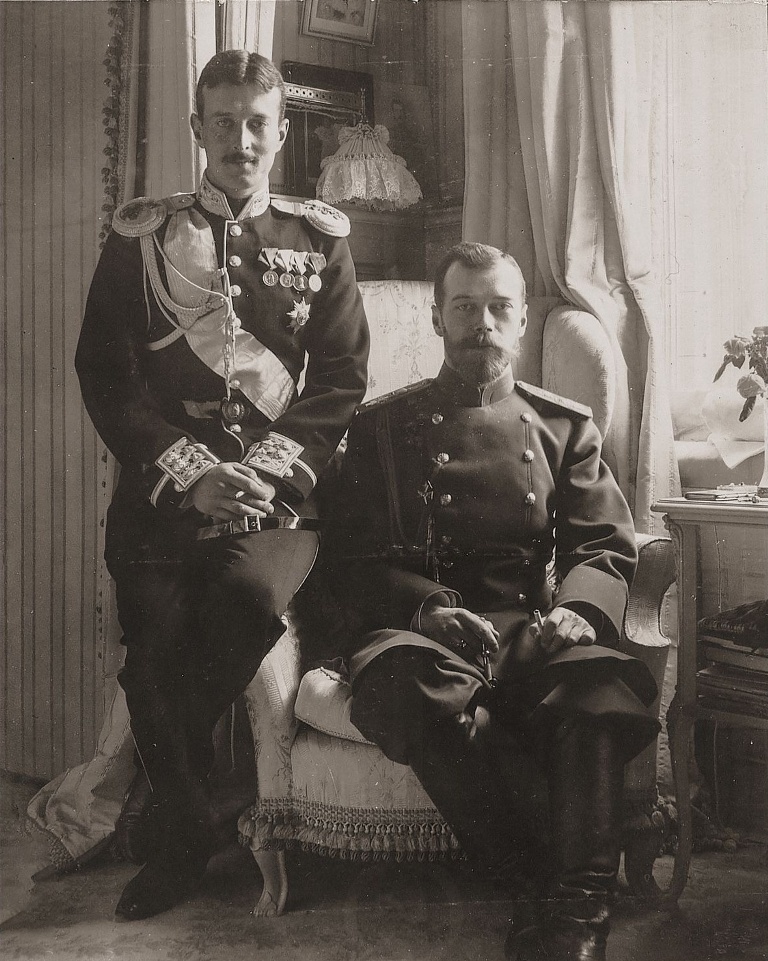
PHOTO: Grand Duke Kirill Vladimirovich and Emperor Nicholas II.
Mauve Boudoir in the Alexander Palace, Tsarskoye Selo. 1899

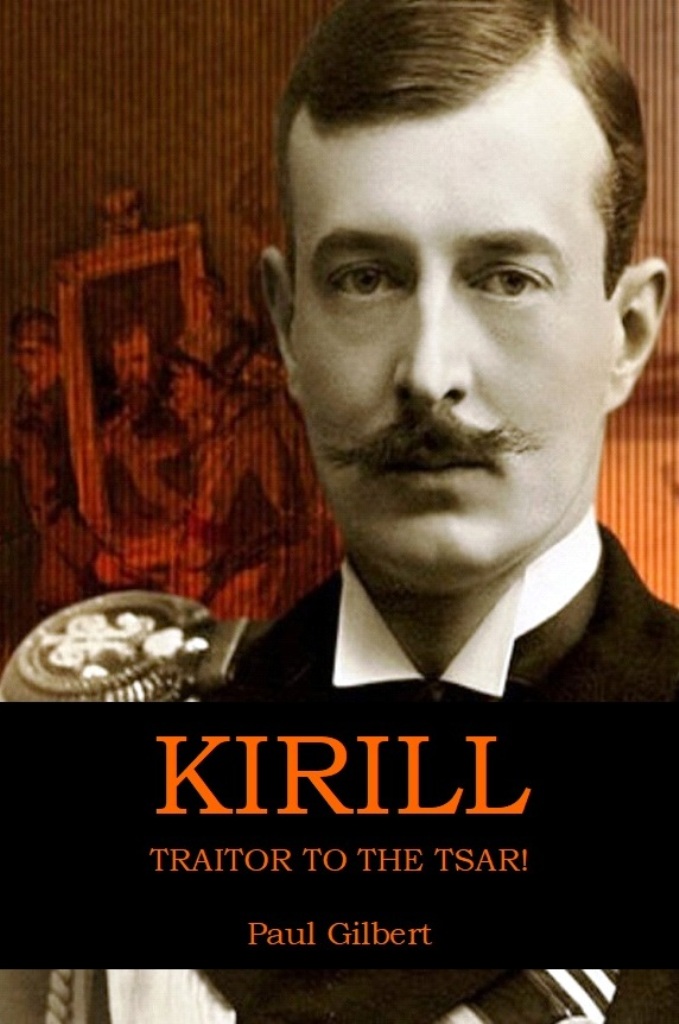
Please NOTE that parts of this article have been excerpted from my forthcoming book KIRILL: TRAITOR TO THE TSAR!, scheduled for publication in October 2025. Further details about this book can be found at the end of this article – PG.

***

The “treachery, cowardice and deceit” of Grand Duke Kirill Vladimirovich against Emperor Nicholas II knew no bounds. During my research of new documents from Russian archival and media sources, I came across evidence that shows the “Traitor Kirill” acknowledged in writing, his support of placing the Tsar under house arrest following the Tsar’s abdication in March 1917.

Who was Kirill Vladimirovich

During the reign of Russia’s last tsar, Kirill was one of several insignificant grand dukes. In the early 20th century, he was best known for barely surviving the sinking of the Russian battleship Petropavlovsk, during the Russo-Japanese War near Port Arthur in April 1904. Following his return to Russia, he was invalided out of the service suffering from burns, back injuries and shell shock.

Despite his injuries, in 1915 he was appointed Commander of the Naval Guards, and achieved the rank of rear admiral in the Russian Imperial Navy the following year.

Kirill Vladimirovich was a first cousin to Emperor Nicholas II, his father Grand Duke Vladimir Alexandrovich (1847-1909) was the younger brother of Nicholas’s father Emperor Alexander III (1845-1894), and the senior Grand Duke during the reign of his nephew, Emperor Nicholas II.

Kirill had two brothers: the Grand Dukes Boris and Andrei, and one sister the beautiful Grand Duchess Elena Pavlovna, who married Prince Nicholas of Greece and Denmark. Their third daughter Princess Marina of Greece is the mother of Prince Michael of Kent.

The Grand Duke stood third in line to the throne after Tsesarevich Alexei Nikolaevich and Grand Duke Mikhail Alexandrovich. Kirill Vladimirovich’s power hungry mother the Grand Duchess Maria Pavlovna, was well aware that her eldest son stood only a few heartbeats from becoming tsar.

“Emperor in exile”

Following the Tsar’s abdication in March1917 and the subsequent murder of the Imperial Family in July 1918, the monarchy in Russia ceased to exist. In June 1917, Grand Duke Kirill fled Russia with his pregnant wife and their two daughters to Finland. It is interesting to note that the Kirillovich were the only branch of the Imperial Family who managed to escape Bolshevik Russia, without losing any family members.

Although the Russian monarchy no longer existed after 1917, that did not deter Kirill from creating his very own “make believe Court” in exile, an action which his son Vladimir (1917-1992) carried on and again in 1992 by his granddaughter Maria (b. 1953), who today holds her own “make believe Court” from her luxurious Madrid apartment.

In 1922, Kirill proclaimed himself the “Guardian of the Russian throne”, and in 1924 – the “Emperor of All Russia”. Both ridiculous edicts were made despite the fact that neither the Russian Empire nor the monarchy no longer existed.

Given that Nicholas II, his son Alexei and the tsar’s brother Mikhail were all dead, had the Russian Empire endured, Kirill would now be next in line to the throne. But as the Laws of Succession to the Russian throne no longer held any legal validity in the new Bolshevik controlled Russia, any claims to the Russian throne in exile were now up for grabs.

Kirill’s only contender was his cousin the former Commander in Chief of the Russian Imperial Army Grand Duke Nikolai “Nikolasha” Nikolaevich, Jr., who was immensely popular, not only with Russian emigres, who never forgave Kirill for his unseemly behavior during the revolution, his premature recognition of the Provisional Government and for his act of treason against Emperor Nicholas II.

In addition, Kirill refused to recognize that the Dowager Empress Maria Feodorovna rightly held the position as the senior surviving member of the Imperial Family, and as such the Head of the Imperial Family in Exile. His utter disrespect for the mother of God’s Anointed was beyond reproach. Both the Dowager Empress and her daughters, the Grand Duchesses Xenia and Olga Alexandrovna vehemently opposed Kirill’s claims, as did other members of the Romanov family.

Maria Feodorovna’s opinion, perhaps, was best explained by the fact that until the end of her life she refused that her son and grandchildren were dead, and even forbade serving pannikhidas [Orthodox memorial service for the dead] for them. But other Russian exiles could have had more compelling reasons not to recognize Kirill Vladimirovich’s right to the Russian throne.

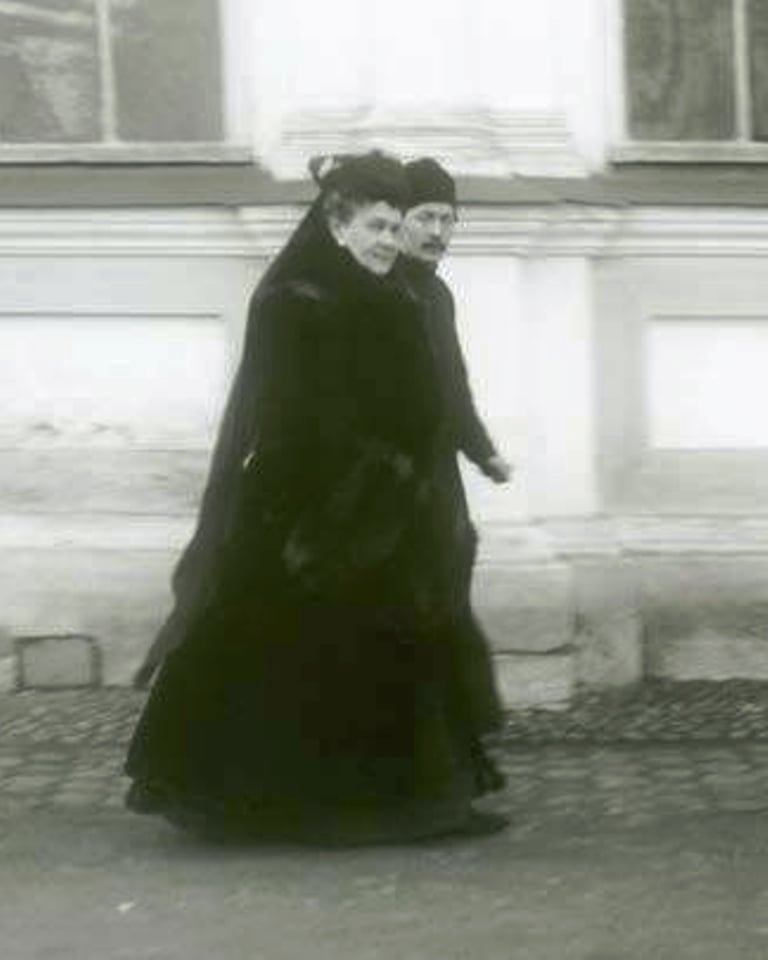
PHOTO: Grand Duchess Maria Pavlovna with Fyodor Morozov, St. Petersburg. 16th March 1910. Maria is dressed in black, still mourning the loss of her husband and Kirill’s father Vladimir the year before.

The apple doesn’t fall far from the tree

The German-born Grand Duchess Maria Pavlovna (née Duchess Marie Alexandrine Elisabeth Eleonore of Mecklenburg-Schwerin) was a large manly-looking woman with a hard cold face. According to the memoirs of her contemporaries, “Maria was a decisive, active and intelligent”. She stylized herself as the “First lady of St. Petersburg”. In the early 20th century, it was around her, and not around the Empress, that the social life of St. Petersburg revolved.

She held her own “Imperial Court” at her palace on the Palace Embankment overlooking the Neva River. Her receptions and balls became a watering hole for the capital’s liberal and left-wing thinking society, attracting such personalities as Grand Duke Nikolai Mikhailovich, an equally disagreeable figure as as his hostess.

The Grand Duchess did not hide her hostility to Alexandra Feodorovna nor Maria Feodorovna and actually opposed herself to the Imperial Family. It was thanks to Maria Pavlovna’s vicious instigation that the Emperor’s uncles and cousins: the grand dukes began, although not explicitly, to oppose the Emperor.

What Maria Pavlovna was thinking about when she entered into a confrontation with the Imperial Family is not known for certain. However, some Russian historians have specualated that Maria Pavlovna found out the truth about Alexei’s haemophilia, and that he could die at any time. She was also led to believe the Emperor’s brother, Grand Duke Mikhail Alexandrovich, was not eager to occupy the Russian throne. Therefore, opposing Alexandra Feodorovna and Nicholas II, Maria Pavlovna could well keep her son Kirill and his right to the Russian throne in mind.

The grand dukes bad relations with Nicholas II, became one of the most serious reasons for the fall of the monarchy in Russia. By creating a fronde and the grand dukes growing hostilities towards the Emperor, Maria Pavlovna, in fact, severed the Kirillovich branch from the rest of the Imperial Family. After the 1917 Revolution, the Grand Duchess stubbornly refused to leave Russia, still hoping to make her eldest son Kirill Vladimirovich the Tsar. It was not until February 1920, that Maria finally fled Russia and the approaching Bolsheviks, taking her jewels with her. She was the last Romanov to leave Russia, and the first to die in exile. She had made her way to France, however, unable to withstand the emotional turmoil, Maria Pavlovna died in September of the same year.

The betrayal of Kirill Vladimirovich

Perhaps Maria Pavlovna did not have such far-reaching plans for her son, but Kirill, however, did not show his best side.

During the February Revolution, the Grand Duke, betrayed not only Nicholas II, but also the monarchy itself. Putting on a red bow, Kirill led his Naval Guards to the State Duma in Petrograd, where he swore allegiance with the new Provisional Government, an action which many regarded as treason.

When in March 1917 the Provisional Government decided to put Emperor Nicholas II and his family under arrest, Kirill Vladimirovich fully supported this decision. The Grand Duke stated the following:

“Exceptional circumstances require exceptional measures. That is why the imprisonment of Nikolai and his wife is justified by the events taking place in Russia. Finally, the government apparently had enough reasons to decide on this measure. Be that as it may, it seems to me that none of us belonging to the family of the former Emperor should now remain in their posts.”

As is known, during the Revolution, many members of the Romanov dynasty were shot. Kirill Vladimirovich, thanks to his loyalty to the Provisional Government, managed to escape. The new authorities gave him permission to leave Russia for Finland.

Under no pretext can we admit to the throne those whose ancestors belonged to parties involved in the 1917 revolution in one way or another. Nor can we admit those whose ancestors, who betrayed Tsar Nicholas II. Nor can we ignore those whose ancestors openly supported the Nazis. Thus, without any reservations, the right to the succession to the throne of the Kirillovich branch should be excluded!

Any person who supports this branch of the Romanov dynasty, dishonours the memory of the murdered Holy Tsar Martyr Nicholas II.

© Paul Gilbert. 27 August 2024

***

Below, is the cover of my forthcoming book Kirill: Traitor to the Tsar, now scheduled for publication in Autumn 2025 . . . more than 200 pages, it will be available in hard cover, paperback and ebook editions! Watch for my ads in both Majesty and Russian Life magazines!

recapping on his track record
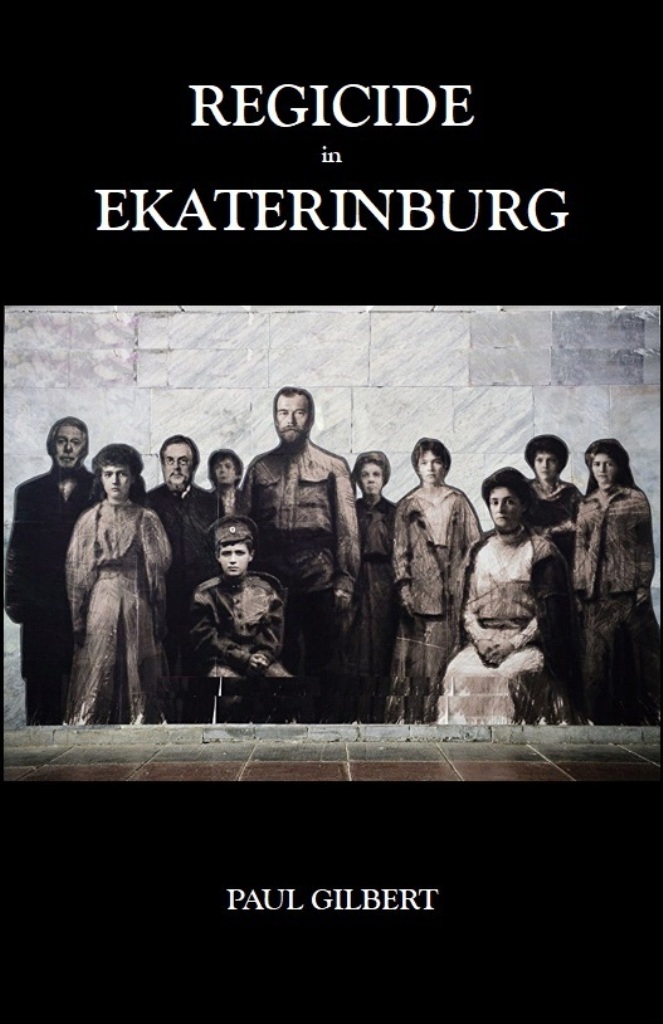
NEW BOOK – Regicide in Ekaterinburg

*You can order this title from most AMAZON outlets worldwide, including
the United States, United Kingdom, Canada, Australia,
France, Germany, Spain, Italy, Netherlands, Poland, Sweden and Japan
*Note: prices are quoted in local currencies

CLICK HERE TO ORDER THE PAPERBACK EDITION @ $20.00 USD

Language: English. 308 pages with 70 Black & White photos

regicide: the crime of killing a king or queen;
a person who is guilty of this crime

Touch not mine anointed
Psalm 105:15

This year marks the 106th anniversary of the regicide in Ekaterinburg: the execution of Russia’s last Imperial Family, a heinous crime committed on the morning of 17th July 1918. The murder of God’s anointed, his pious wife, their five precious children and their four faithful retainers, remains one of the darkest pages in 20th century Russian history.

This book presents fourteen studies on this tragic event, eleven of which are based on new documents sourced from Russian archival and media sources over the past decade.

The first part of this book features the complete and unabridged account of a British Intelligence officer and journalist, who was in Ekaterinburg in the summer of 1918. He was one of the first to investigate the regicide, even before that of Nicholas Sokolov’s famous, yet incomplete investigation in 1919. He goes on to write about meeting Yakov Yurovsky, and shares his impressions of the chief executioner of the last Tsar and his family.

The second part features two previously unpublished, first English translations. The first is about those who came to the aid of the Imperial Family during their captivity, including Princess Helen of Serbia and the nuns of the Novo-Tikhvin Monastery. In addition is the testimony of the priest, who perfumed the last sacred service for the Imperial Family, days before their murders.

The third part features eleven chapters which shed light on a number of topics, such as who were the eight faithful retainers who survived the regicide; why did Boris Yeltsin demolish the Ipatiev House in 1977; what about the executioners themselves—who were they, and what were their fates?; plus eight additional chapters.
***

On 1st September 2024, my new book ‘Regicide in Ekaterinburg‘ received it’s first AMAZON review, from a reader in the United States who gave it a 5-star rating! Thank you 🙂

© Paul Gilbert. 26 August 202

On this day Tsesarevich Alexei Nikolaevich was baptized at Peterhof

PHOTO: Tsesarevich and Grand Duke Alexei Nikolaevich (1904-1918)

On this day – 24th (O.S. 11th) August 1904, His Imperial Highness Naslednik Tsesarevich and Grand Duke Alexei Nikolayevich, was baptized in the Church of the Holy Apostles Peter and Paul, which is adjacent to the Grand Palace at Peterhof.

Nicholas II, on the day of the baptism of his son, wrote in his diary: “August 11. Wednesday. The significant day of the baptism of our dear son.”

Nicholas II and Alexandra Feodorovna decided that their first-born son ought to be named in honour of Saint Alexei of Moscow (1296–1378), who served as Metropolitan of Kiev and all Russia (from 1354). He was canonized by the Russian Orthodox Church in 1448 and is revered as one of the patron saints of Moscow. The claim that Alexei was named after the son of Russia’s first Tsar, Alexei Mikhailovich who reigned from 1645 until 1676) is incorrect.

In accordance to ancient Orthodox custom the parents of the infant were obliged to leave before the baptism ceremony could begin, and thus allowing the godparents to carry out their ceremonial function.

Alexei’s godparents included Dowager Empress Maria Feodorovna, Emperor Wilhelm II, King Edward VII, King Christian IX, Grand Duke of Hesse, Princess Victoria of Great Britain, Ernest Louis Grand Duke Alexei Alexandrovich, Grand Duchess Alexandra Iosifovna, and Grand Duke Mikhail Nikolaevich.

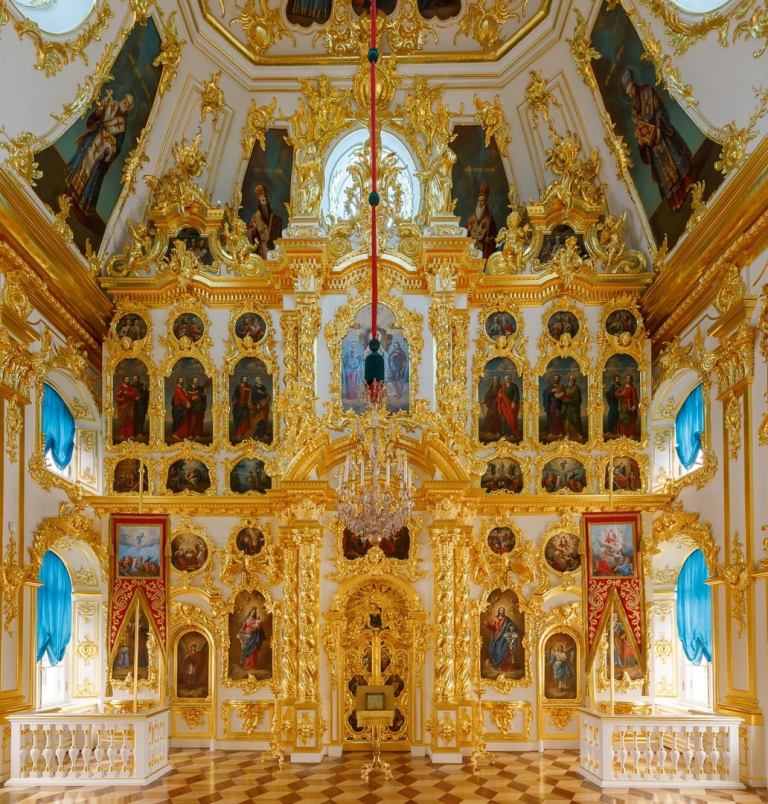
PHOTO: view of the iconostasis of the Church of the Holy Apostles Peter and Paul, adjacent to the Grand Palace, at Peterhof, as it looks today. It was here in this magnificent church, that Tsesarevich and Grand Duke Alexei Nikolaevich was baptized on 24th (O.S. 11th) August 1904

The baptism was performed by the confessor of the Imperial Family, Protopresbyter Ivan Yanishev (from 1883 until his death in 1910). The baby was carried to the font by the elderly Princess Maria Mikhailovna Golitzina (1834-1910), Mistress of the Robes. As a precaution, she had rubber soles put on her shoes to prevent her slipping and dropping him.

Countess Sophie Buxhoeveden (1883-1956) – lady in waiting to Empress Alexandra Feodorovna – recalled:

The baby lay on a pillow of cloth of gold, slung to the Princess’s shoulders by a broad gold band. He was covered with the heavy cloth-of-gold mantle, lined with ermine, worn by the heir to the crown. The mantle was supported on one side by Prince Alexander Sergeiovich Dolgorouky, the Grand Marshal of the Court, and on the other by Count [Paul] Benckendorff, as decreed by custom and wise precaution. The baby wept loudly, as might any ordinary baby when old Father Yanishev dipped him in the font. His four small sisters, in short Court dresses, gazed open-eyed at the ceremony, Olga Nicholaevna, then nine years old, being in the important position of one of the godmothers. According to Russian custom, the Emperor and Empress were not present at the baptism, but directly after the ceremony, the Emperor went to the church. Both he and the Empress always confessed to feeling very nervous on these occasions, for fear that the Princess might slip, or that Father Yanishev, who was very old, might drop the baby in the font.

In accordance with the statute of the Imperial Family, during the baptism ceremony, the newborn Grand Duke was conferred with five of the Russian Orders: St. Andrew the First-Called, St. Alexander Nevsky, St. Anna 1st Class, White Eagle, and St. Stanislaus 1st Class The august name of the Tsesarevich was entered in the lists of guards regiments and military units under the patronage of Emperor Nicholas II, Dowager Empress Maria Feodorovna and Empress Alexandra Feodorovna.

Please note that there were no photographs taken of the actual baptims ceremony, as photography was forbidden in Orthodox churches during baptisms, weddings, funerals, etc.

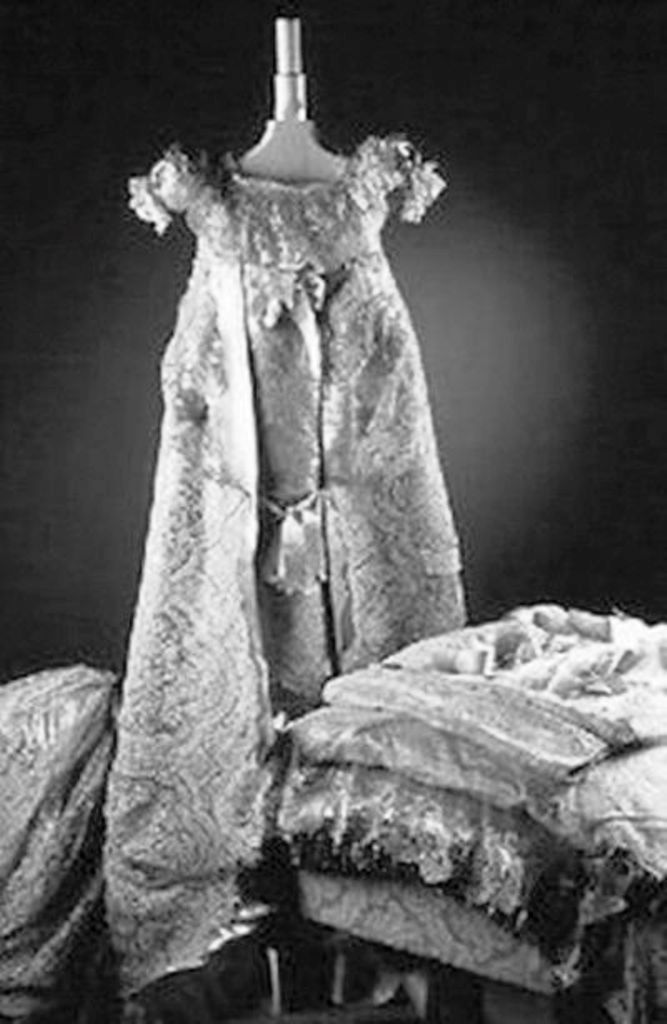
PHOTO: Tsesarevich Alexei Nikolaevich’s baptism shirt has surived to the present day, and is now on permanent display in the Church of the Holy Apostles Peter and Paul, which is adjacent to the Grand Palace at Peterhof

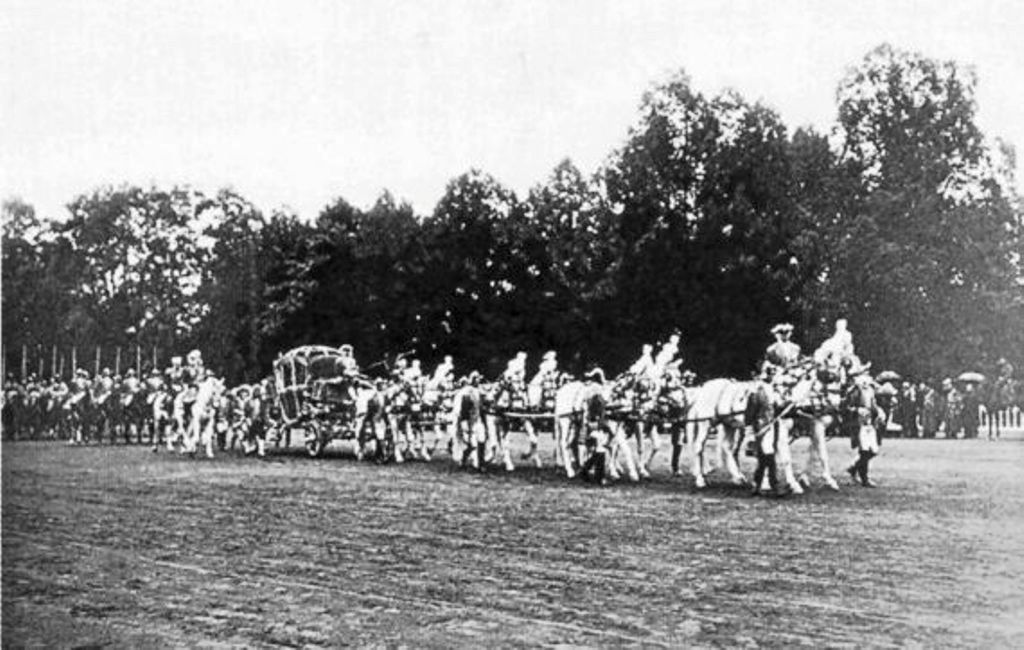
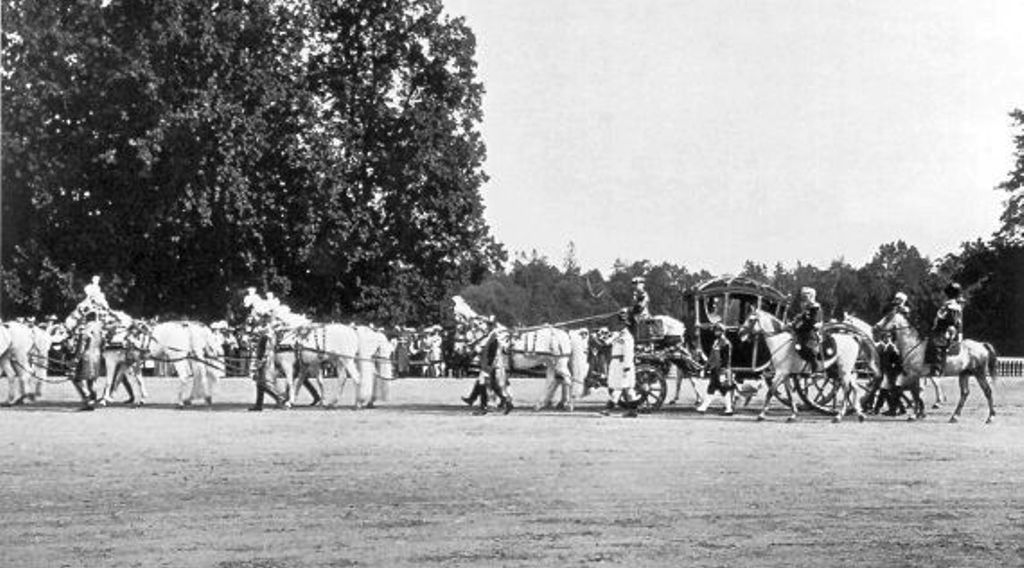
PHOTOS above and below: Gala procession on the day of the baptism of Tsesarevich Alexei Nikolaevich, who was transported in a gilded carriage pulled by 8 elegantly dressed white horses, from the Lower Dacha to the Grand Peterhof Palace, on 28th (O.S. 11th) August 1904

PHOTO: Dowager Empress Maria Feodorovna arrives at the Grand Peterhof Palace, for the baptism of her grandson Alexei, on 28th (O.S. 11th) August 1904

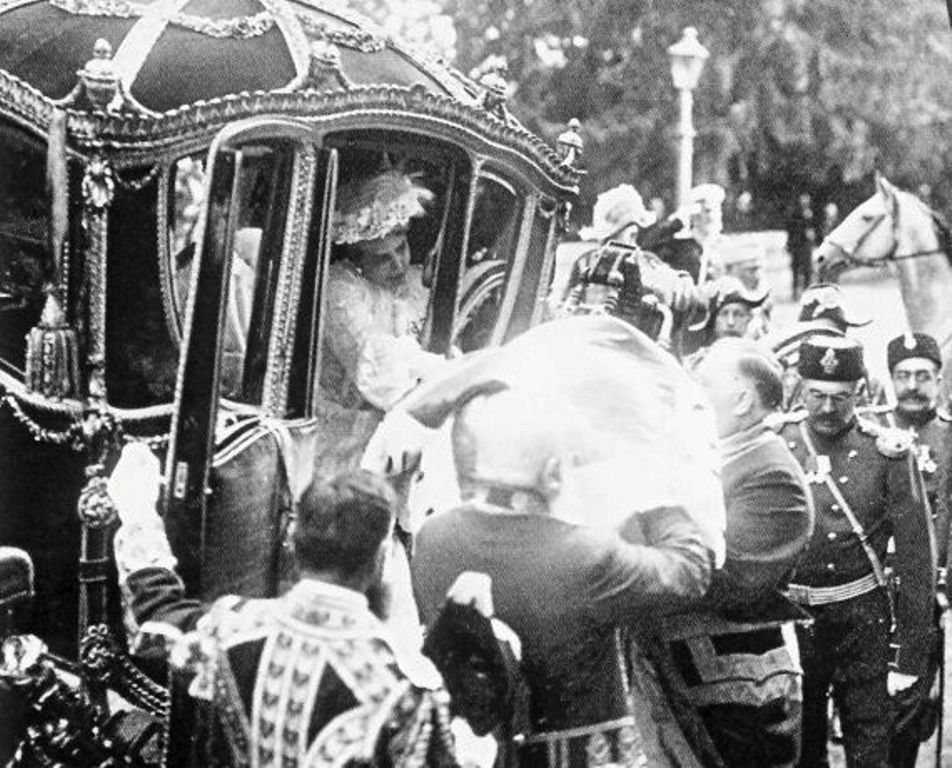
PHOTO: Empress Alexandra Feodorovna arrives at the Peterhof Palace, where Alexei is carefully taken in hand by officials, 28th (O.S. 11th) August 1904

Sadly, this joyous occasion was overshadowed by the fact that the proud parents were already aware that their son was afflicted with haemophilia. New evidence now proves that Alexei’s bleeding was noted the day following his birth.

© Paul Gilbert. 24 August 2024

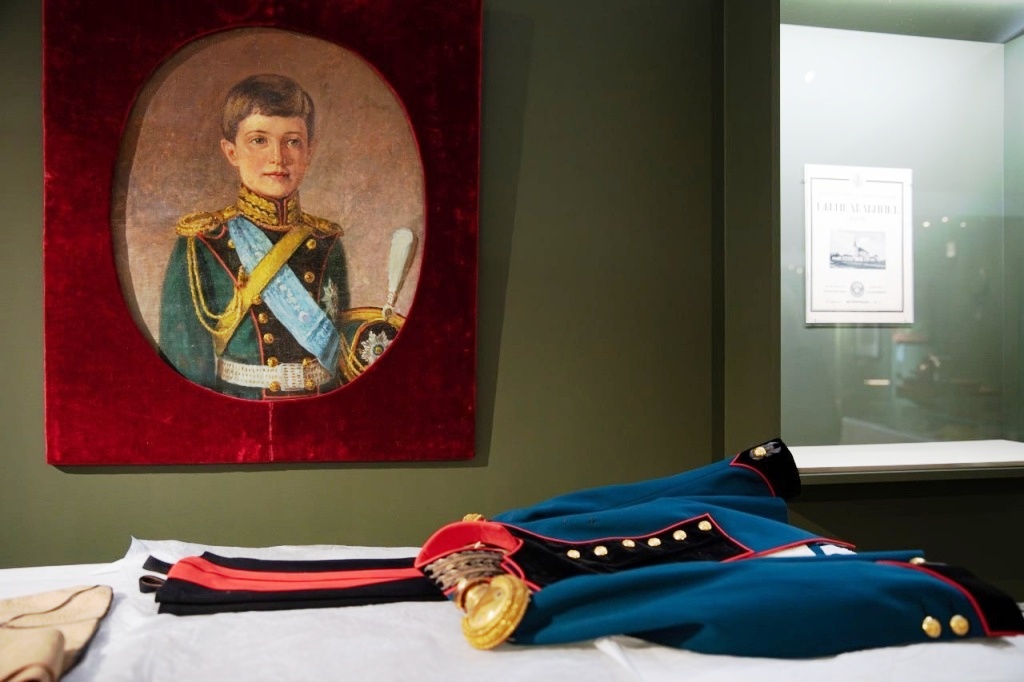
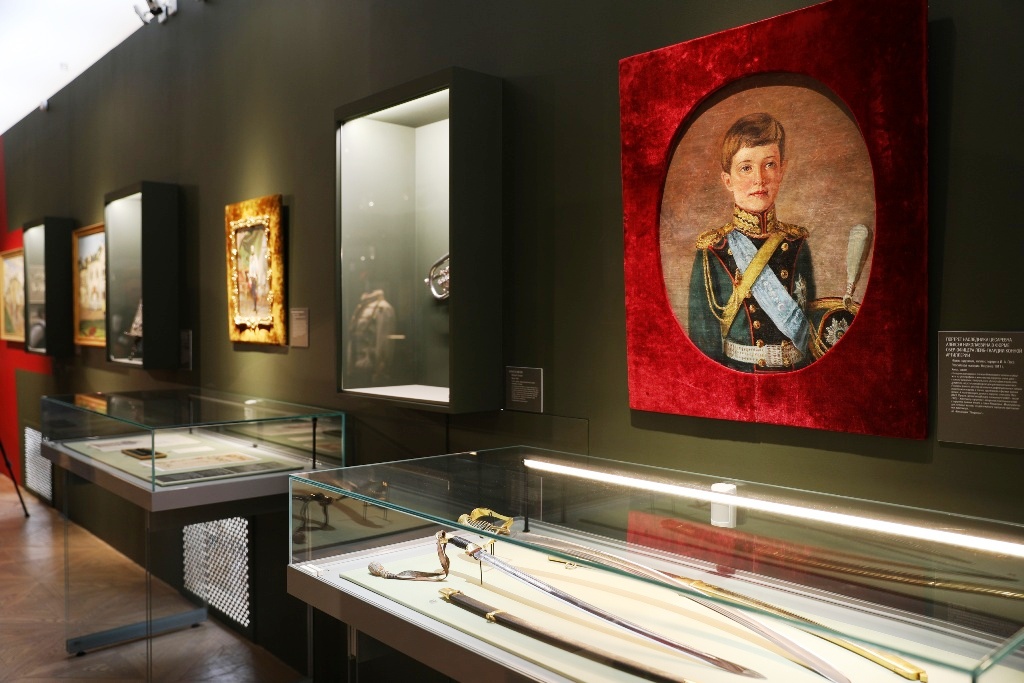
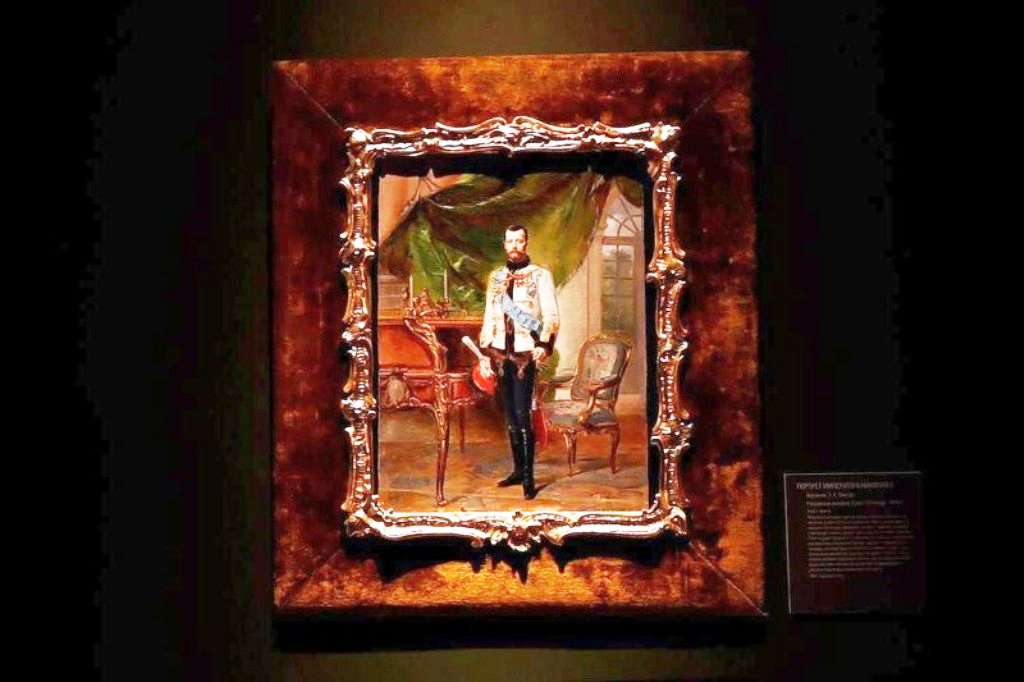
Nicholas II’s uniforms on display in Tula

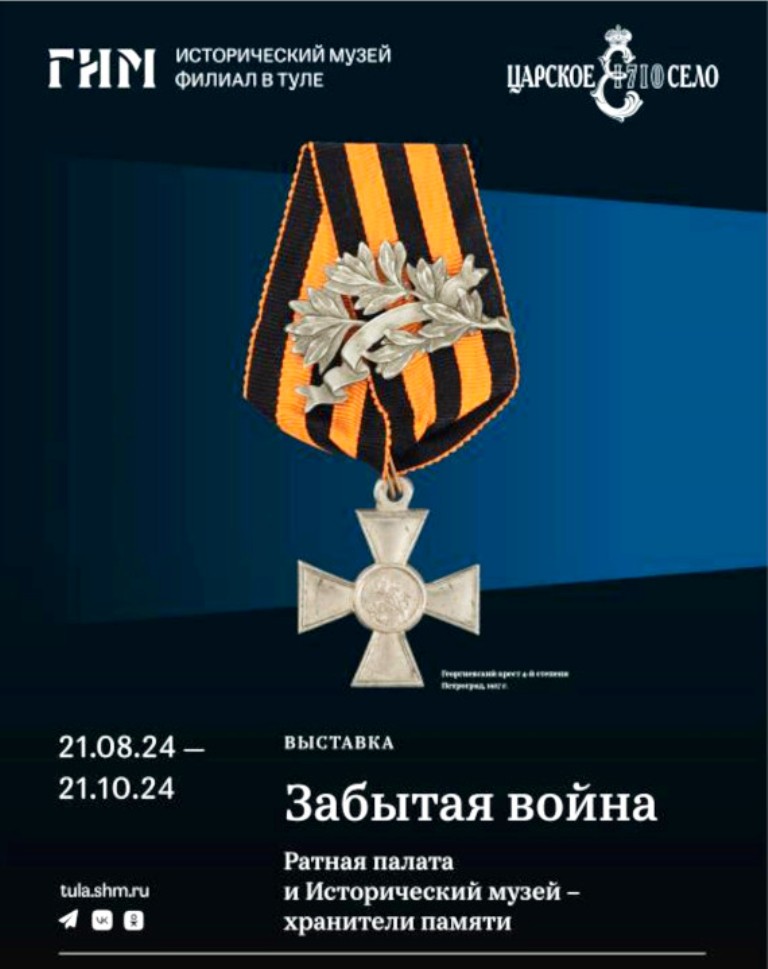
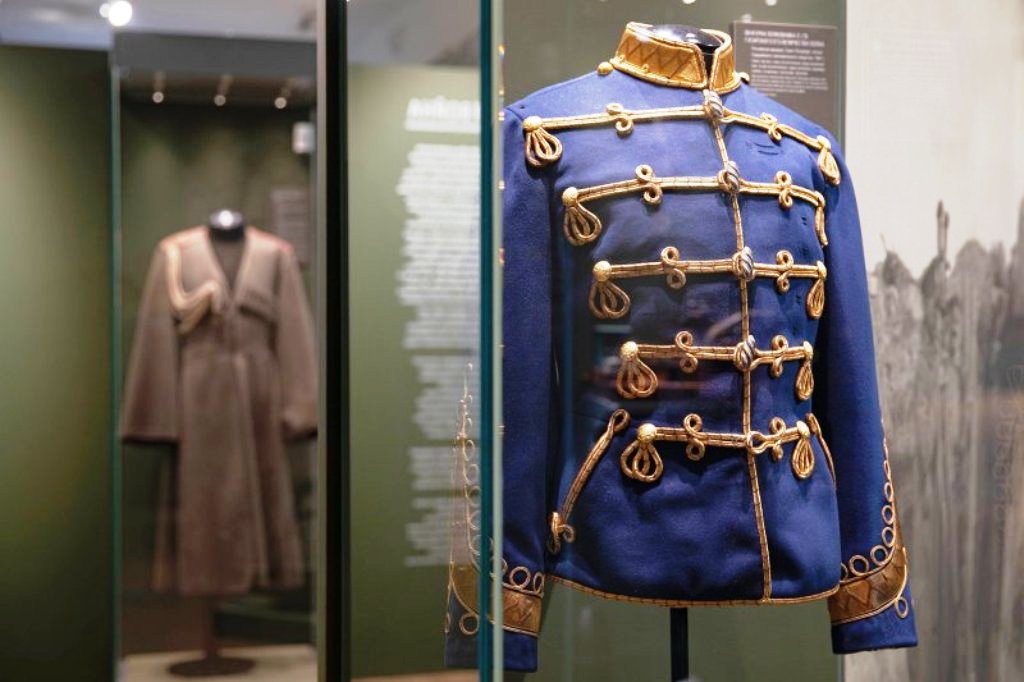
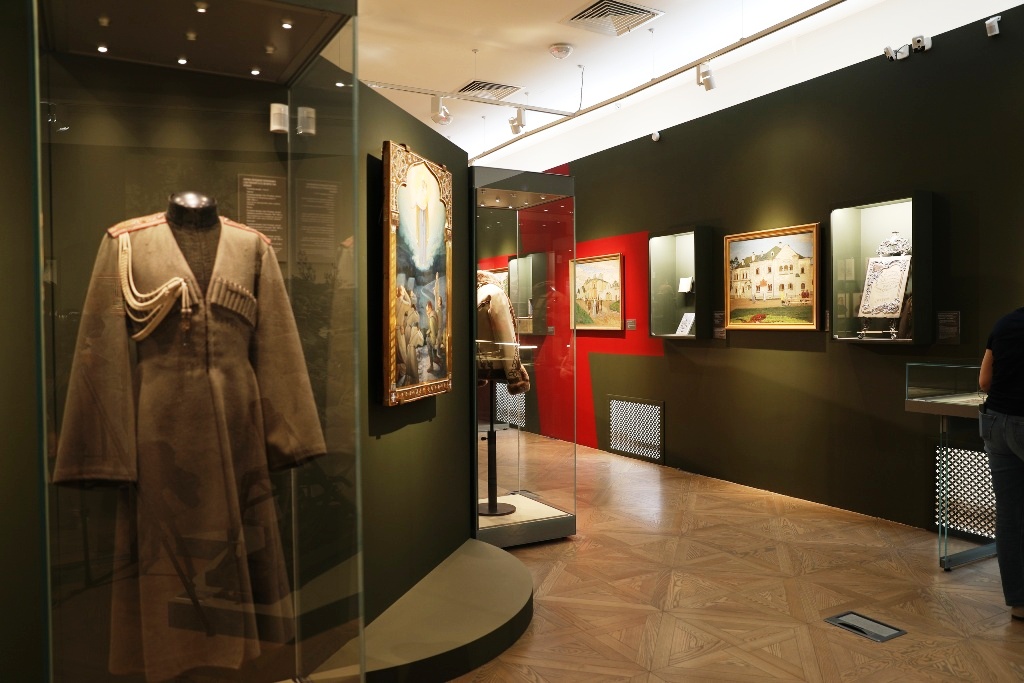
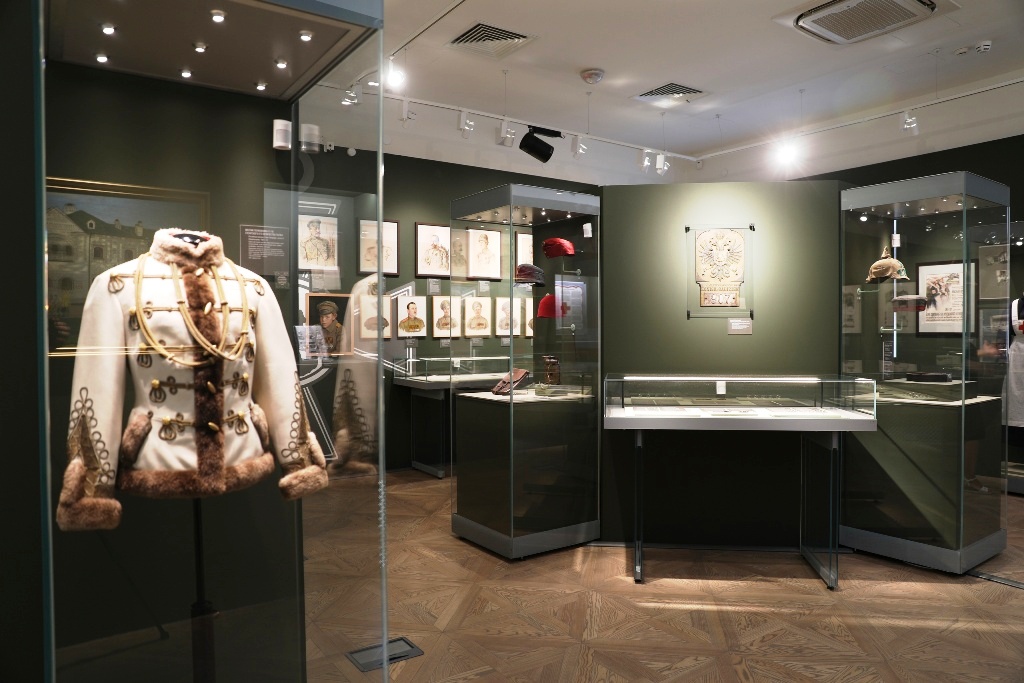
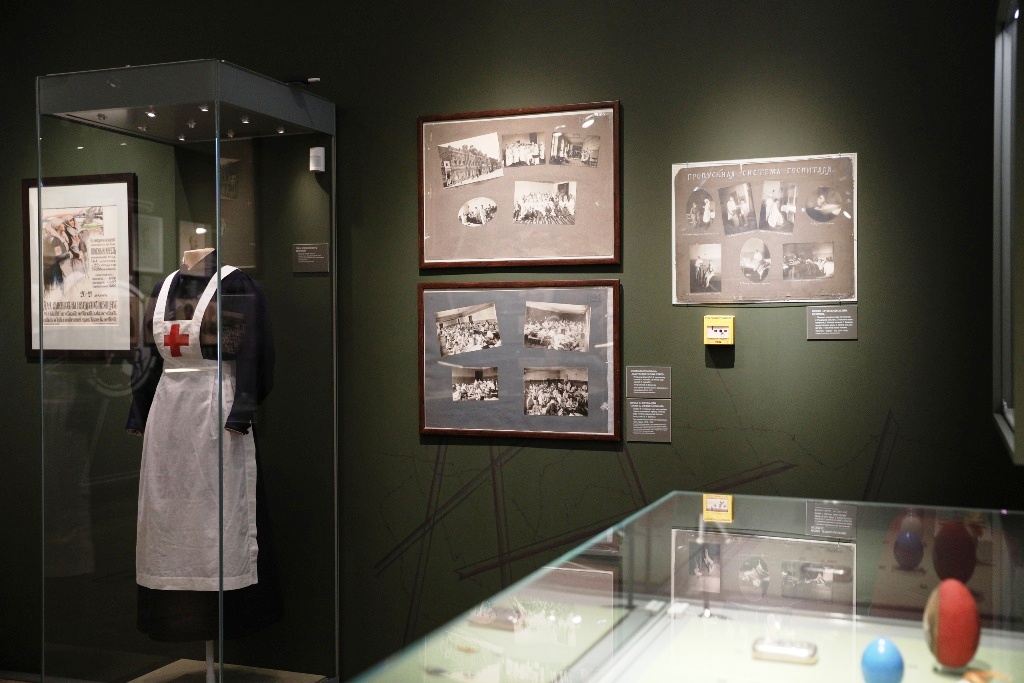
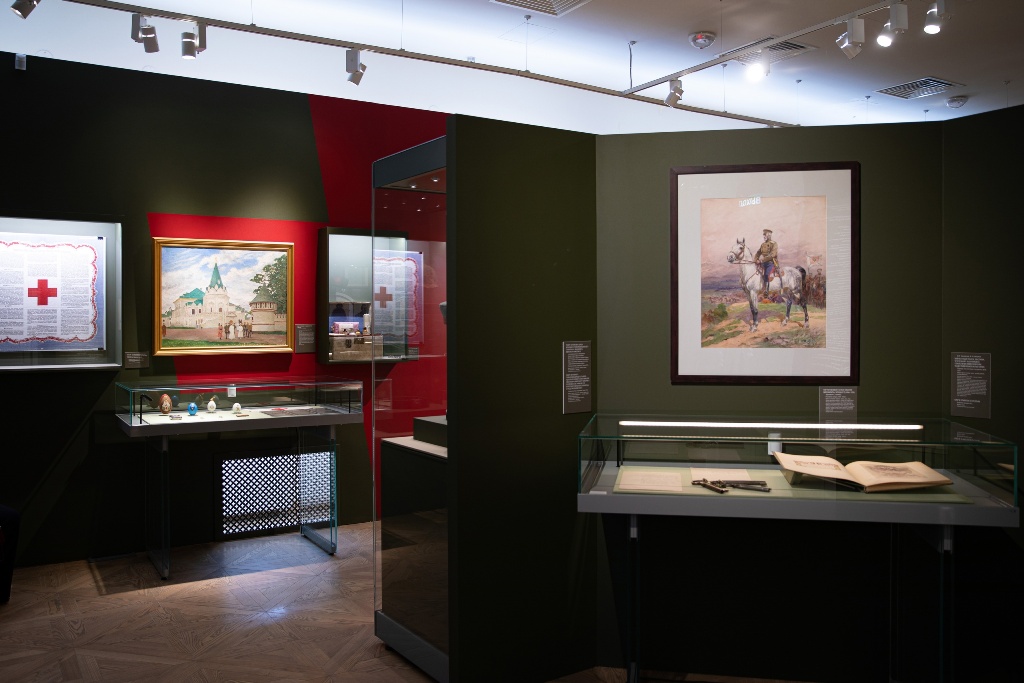
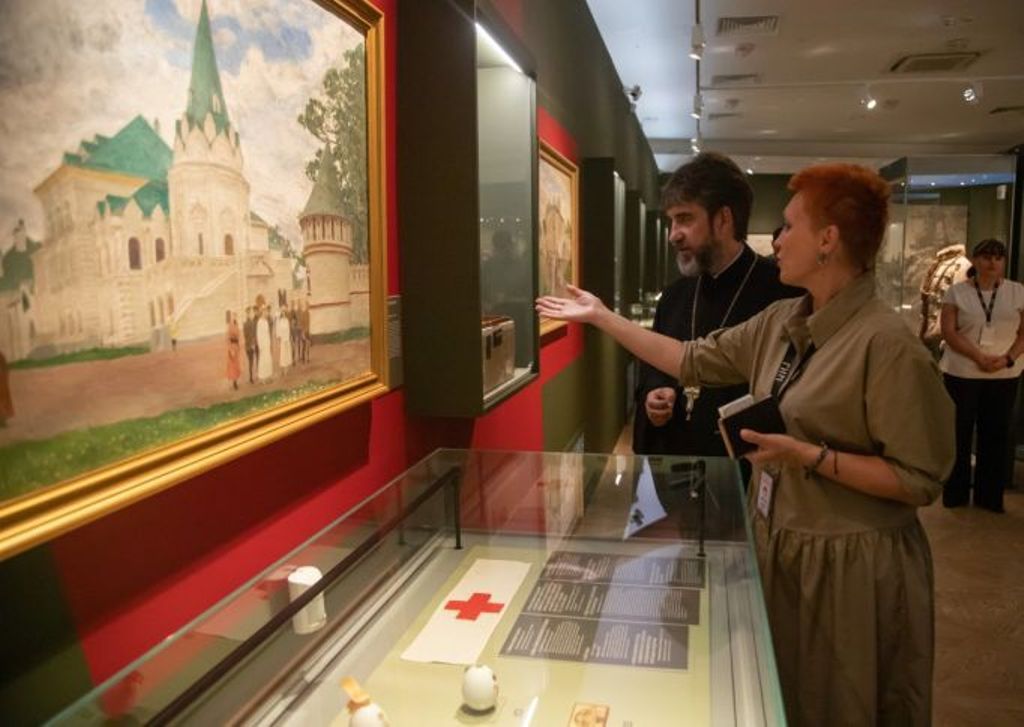
On 21st August 2024, a new exhibition The Forgotten War opened in Tula. The exhibition is dedicated to the 110th anniversary of the beginning of the First World War. The venue for the exhibit is the Tula branch of the State Historical Museum,

The exhibition is a joint project of the Tsarskoye Selo State Museum in Pushkin and the State Historical Museum in Moscow, showcasing about 200 items from the collections of the two museums.

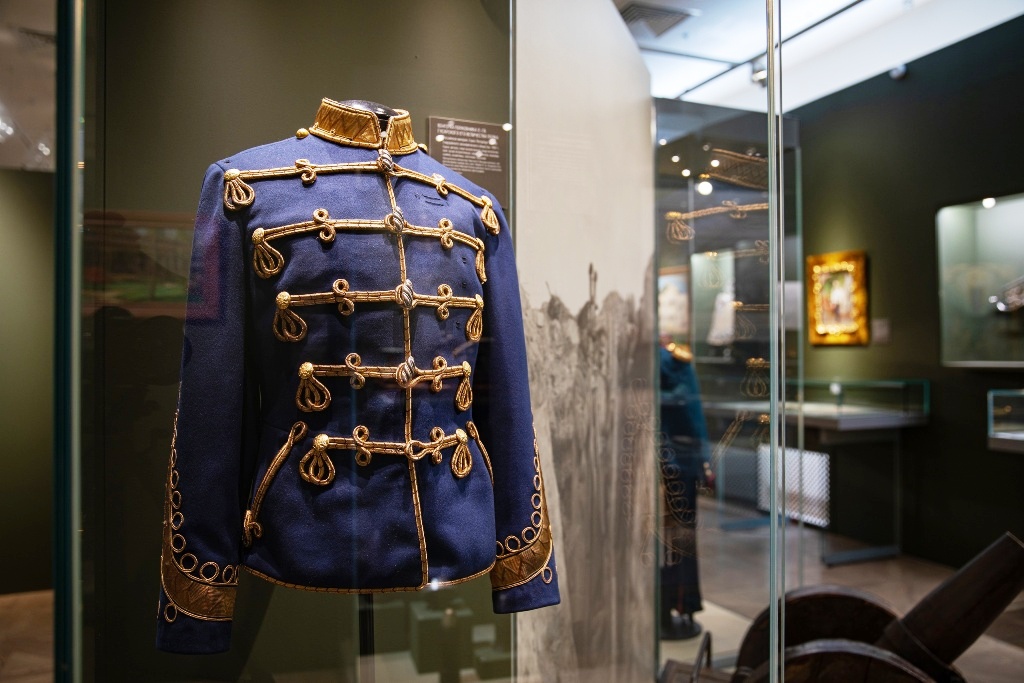
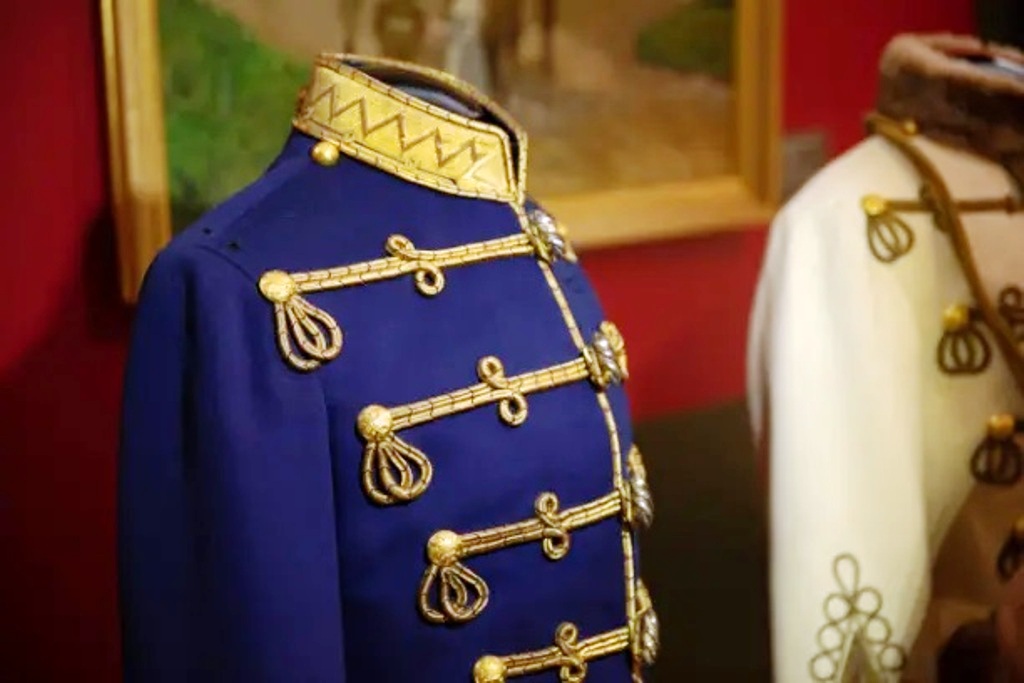
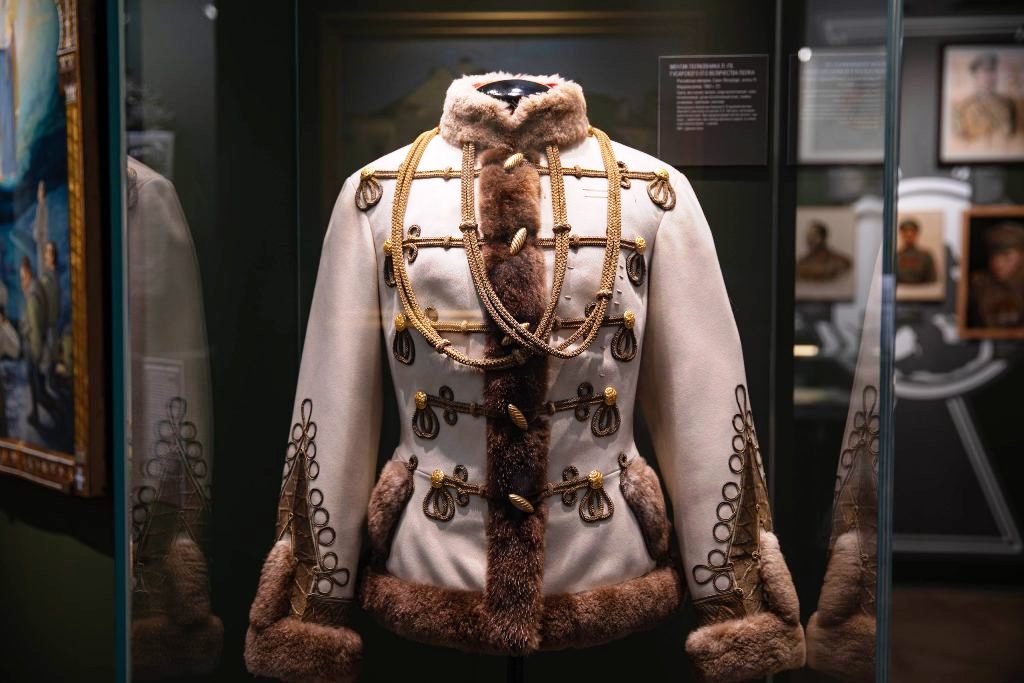
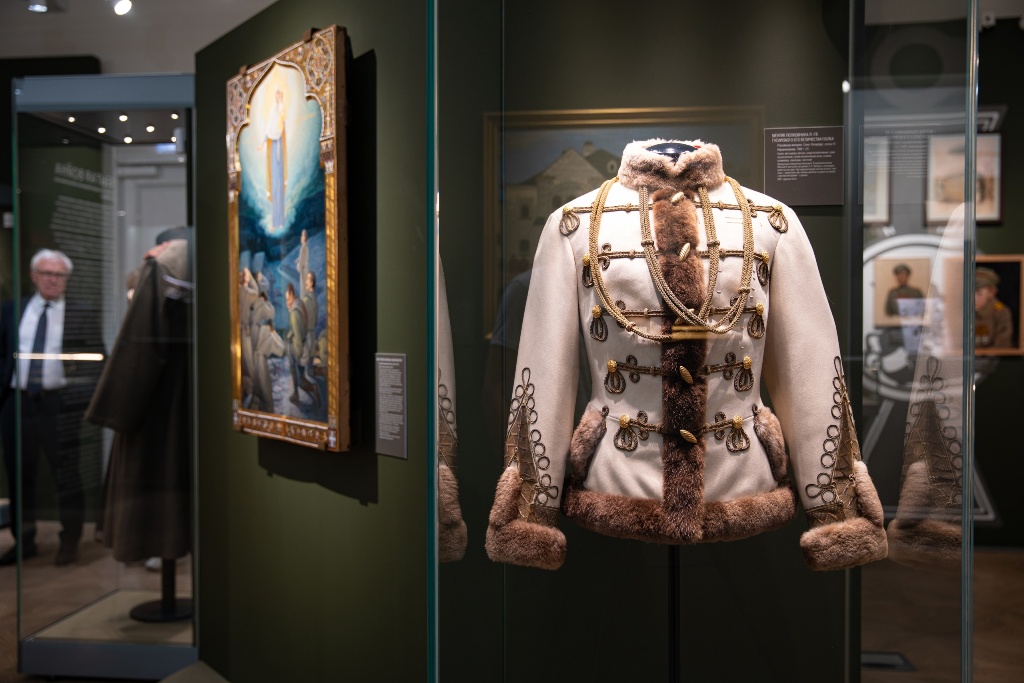
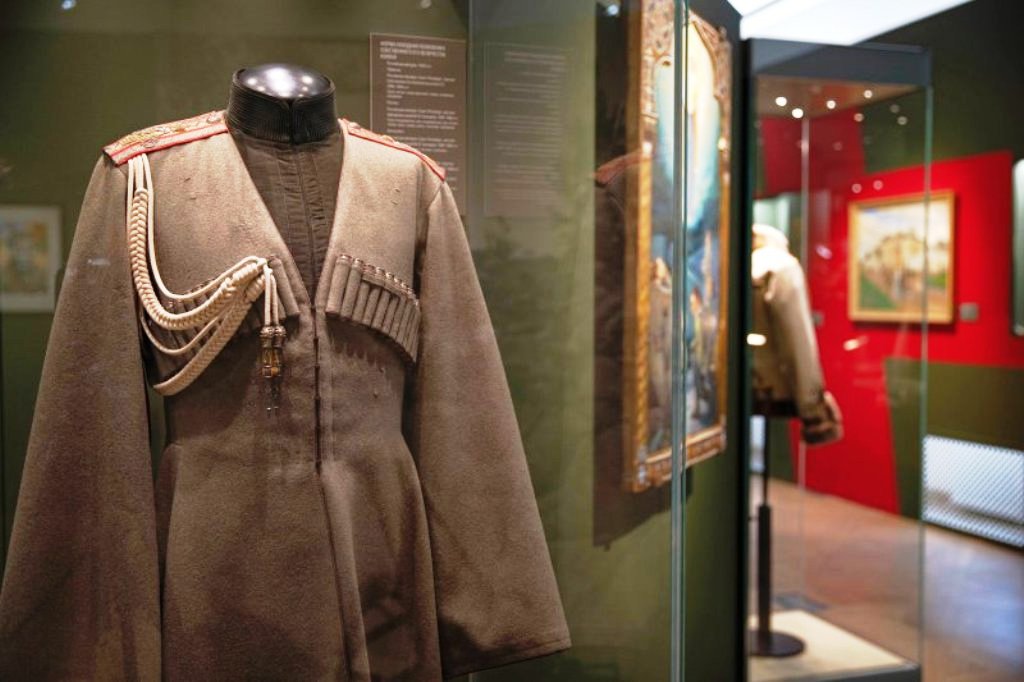
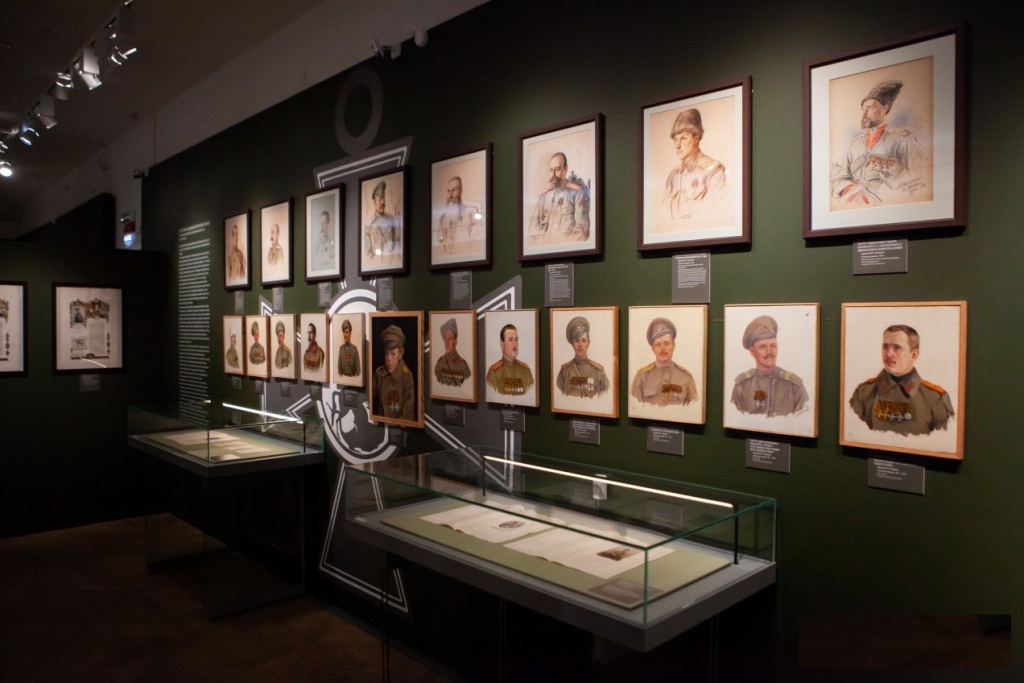
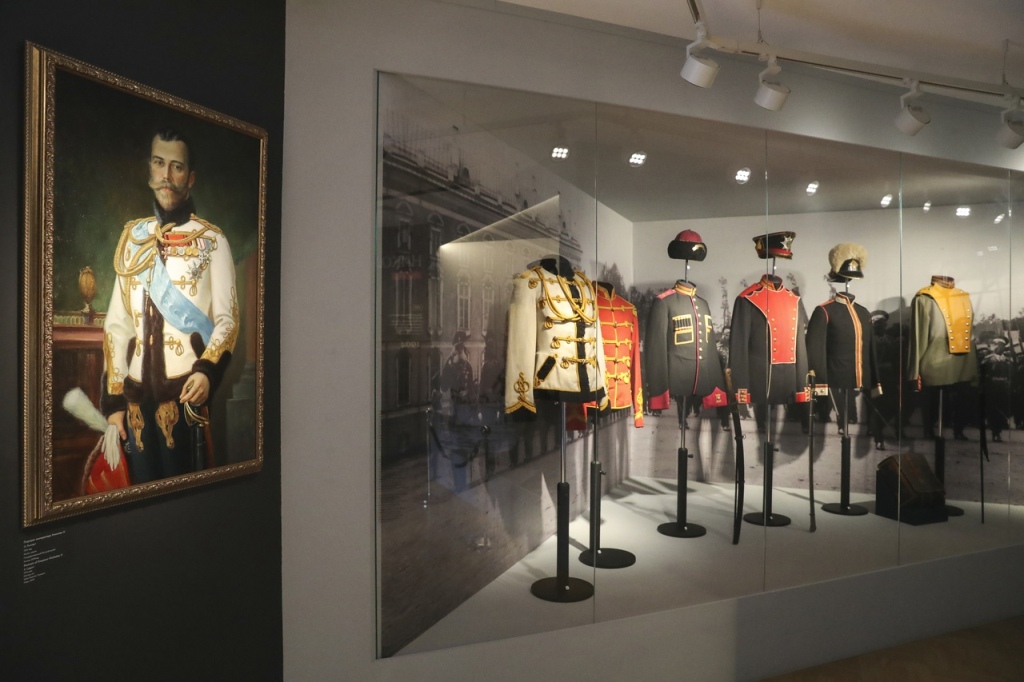
Of particular interest to visitors will be uniforms and portraits of Emperor Nicholas II and his son Tsesarevich Alexei Nikolaevich, on loan from the Sovereign’s Military [aka Military] Chamber in Tsarskoye Selo. Among the uniforms of Nicholas II is the Tsar’s cherkeska and beshmet of His Imperial Majesty’s Own Escort and pelisse of His Majestey’s Life-Guards Hussar Regiment. Other items on display include WWI vintage news reels, weapons, documents, photographs, awards and a tactile model of the Military Chamber.

The exhibition is divided into four sections: The War Image, The History of the Sovereign’s Military Chamber, The Imperial Family during WWI, and The St George’s Chevaliers Portraits.

The exhibition is designed to draw attention to the preservation of the historical memory of the military conflict, which for Russia has long been the “Forgotten War”. Recall that during the Soviet years, Russia’s contribution and sacrifices made during the First World War were neither discussed or commemorated. In destroying the tsars, the Bolshevik revolutionaries denounced the Great War as “imperialist”, thus robbing it of its potential for a popular legacy. It was not until 1st August 2013 that Russia marked Russian Soldiers’ World War I Remembrance Day for the first time.

The collections of the Sovereign’s Military Chamber – which includes the State Historical Museum on the First World War – are both part of the Tsarskoye Selo State Museum. The Sovereign’s Military Chamber was founded in May 1913.

Following the outbreak of hostilities in August 1914, it was decided to create a war museum, which included a gallery of portraits of the Knights of St. George among other exhibits. Some of the museum’s employees were sent to the Front. Subsequently, they returned with “trophies” which were added to the museum’s funds. Additional items were transferred from other museums and private collections, as well as items donated by the families of those who particpated in the Great War.

The dedicated employees of the Sovereign’s Military Chamber and the Historical Museum carefully preserved their collections even during the Soviet years. It is thanks to their efforts that this priceless collection of Russian World War One artifacts has been preserved to the present day.

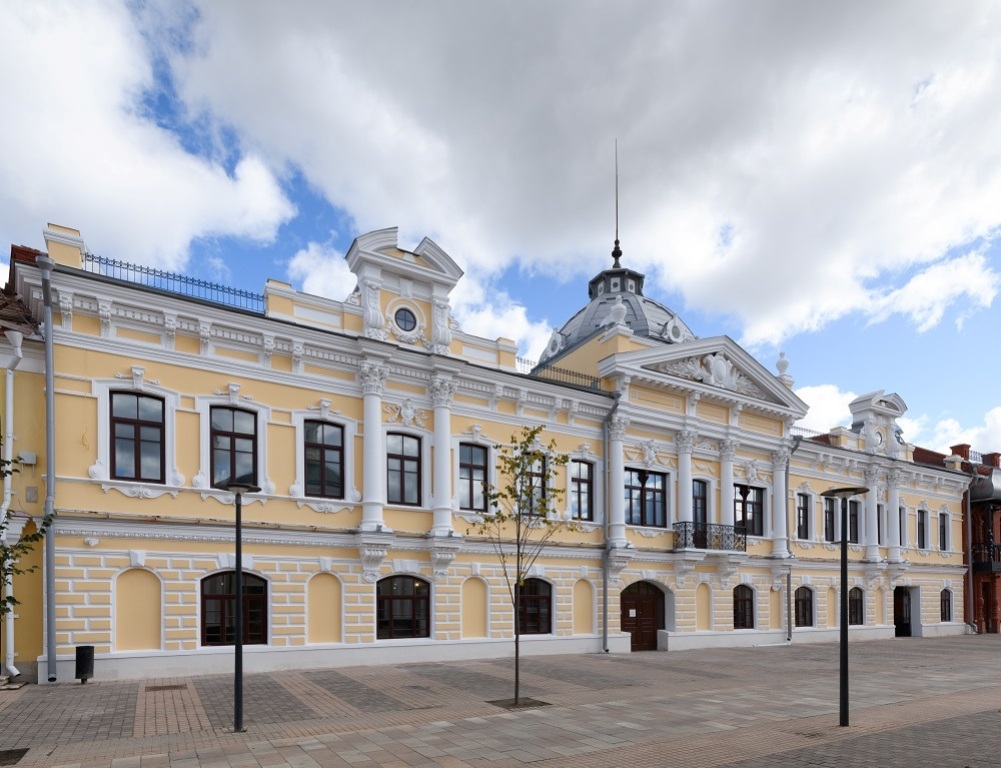
The exhibition The Forgotten War. The Military Chamber and the Historical Museum: Keepers of Memory runs until 21st October 2024, at the Historical Museum, which is housed in the the former mansion (above photo) of the merchant Belolipetsky family in Tula, located 193 kilometers (120 mi) south of Moscow.

***

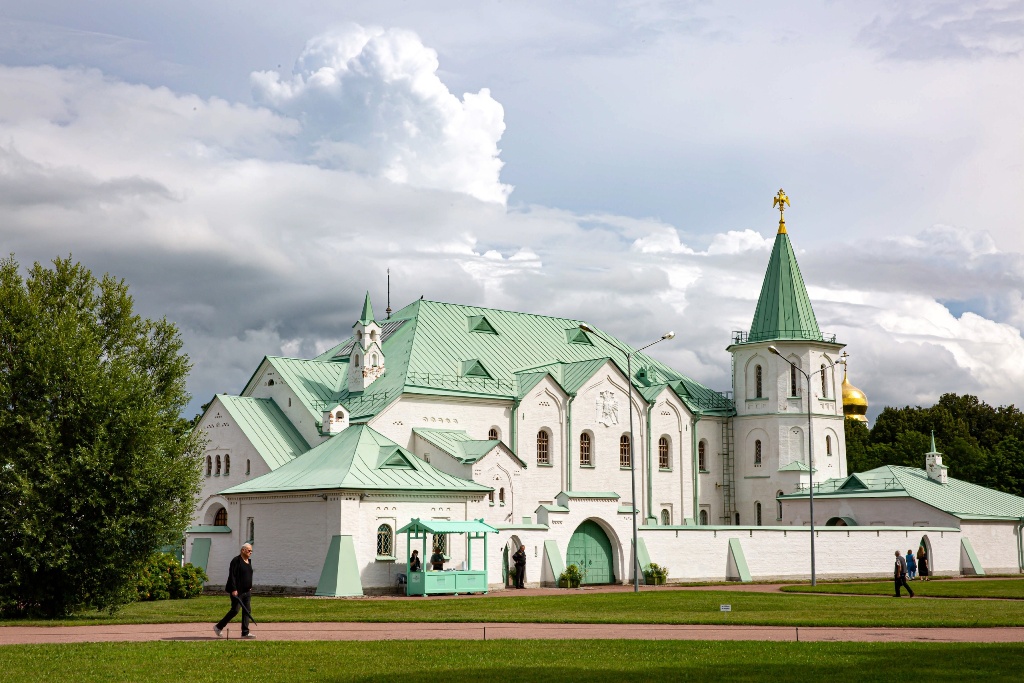
PHOTO: the Sovereign’s Military Chamber – which includes the State Historical Museum on the First World War – are both part of the Tsarskoye Selo Museum

PHOTO: Emperor Nicholas II’s uniforms on display in the Sovereign’s Military [aka Military] Chamber in Tsarskoye Selo. The uniforms were previously on display in the Alexander Palace, before the private apartments of Emperor Nicholas II and Empress Alexandra Feodorovna were recreated in the eastern wing of the palace between 2015 and 2021.

© Paul Gilbert. 21 August 2024