The Fate of the Ekaterinburg Remains

222a

NOTE: This article was originally published on 17th March 2016, it was updated twice since, on 4th January 2017 and 7th March 2020. It has been expanded and further updated on 18th June 2021, based on new information from Russian media sources. Please note that the opinions expressed in this article are my own based on my own research and do not reflect those of the Russian Orthodox Church.

For the record, regarding my personal position on the Ekaterinburg remains, I have now and always believed the remains discovered near Ekaterinburg in 1991 and 2007 respectively, are those of Emperor Nicholas II, his wife, their five children, and four faithful retainers. Further, not only did I attend their interment on 17th July 1998 in St. Petersburg, I have visited both Ganina Yama and Porosenkov Log on several occasions, where I have offered prayers and left flowers. Memory Eternal! Вечная Память! – PG

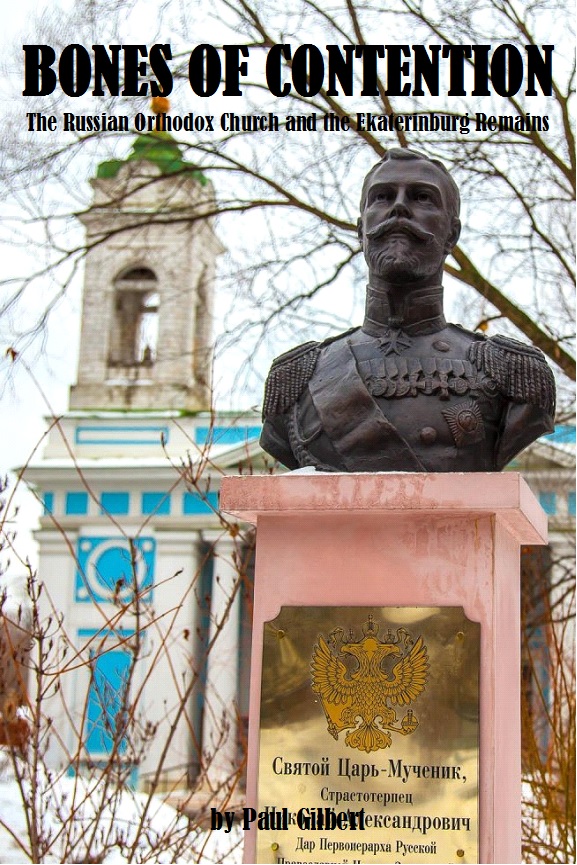
Bones of Contention

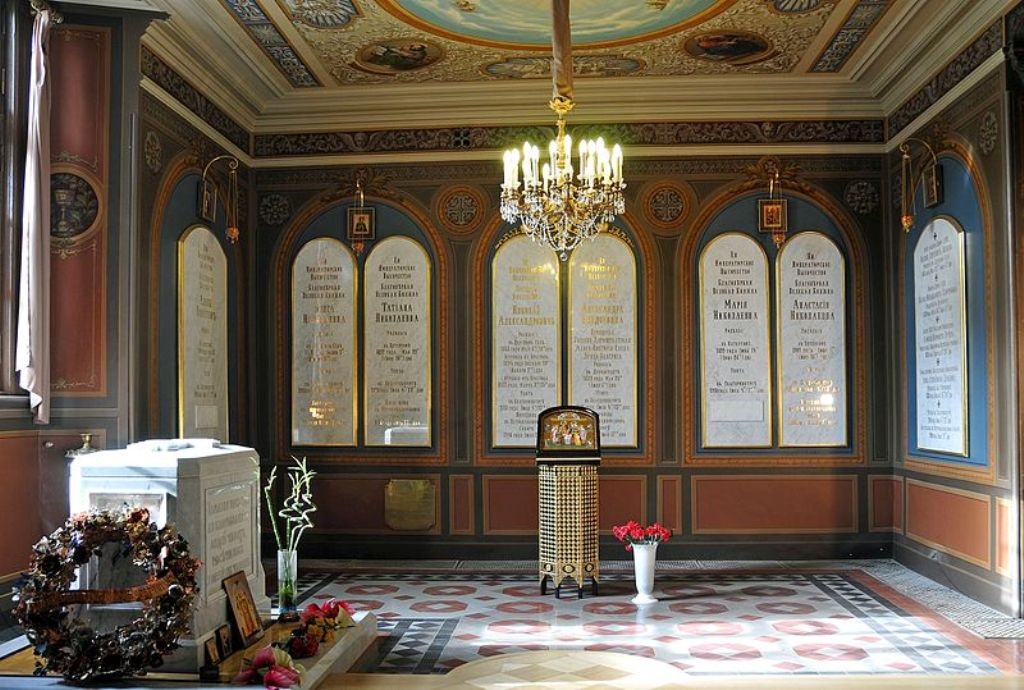
On 17th July 1998, the remains of Emperor Nicholas II, Empress Alexandra Feodorovna, three of their five children: Grand Duchesses Olga, Tatiana, Anastasia, and their four faithful retainers Dr. Eugene Botkin, Ivan Kharitonov, Alexei Trupp and Anna Demidova were interred in the Saint Catherine Chapel of the SS Peter and Paul Cathedral in St. Petersburg.

Not only was I both privileged and honoured to attend this historic event, I was also hopeful that the burial would bring some closure to what is considered one of the greatest tragedies of 20th century Russian history. Sadly, this was not to be.

The questions raised about the murders of the Russian Imperial family in 1918, the discovery of their remains in the vicinity of Ekaterinburg in 1991 and later those of Tsesarevich Alexei Nikolaevich and Grand Duchess Maria Nikolaevna in  2007, as well as the recognition or non-recognition of their authenticity, have been unsettling both Russian and Western society ever since.

As a result, many people looked to the Russian Orthodox Church (ROC) for its verdict on the Ekaterinburg remains. But expressing an objective view required the Church to conduct a thorough examination of their own, of the historical records as well as the investigation materials and the results of scientific inquiries.

Over the course of the last few years, I have published nearly 100 news stories and articles on the subject, which included many first English translations from Russian media sources. Since that time, I have received numerous emails and telephone calls from readers frustrated by the ROC’s position on the Ekaterinburg remains. I cannot stress enough, that I do not represent the Russian Orthodox Church or His Holiness Patriarch Kirill. I do, however, hope that the contents of this article will help provide some answers.
222b

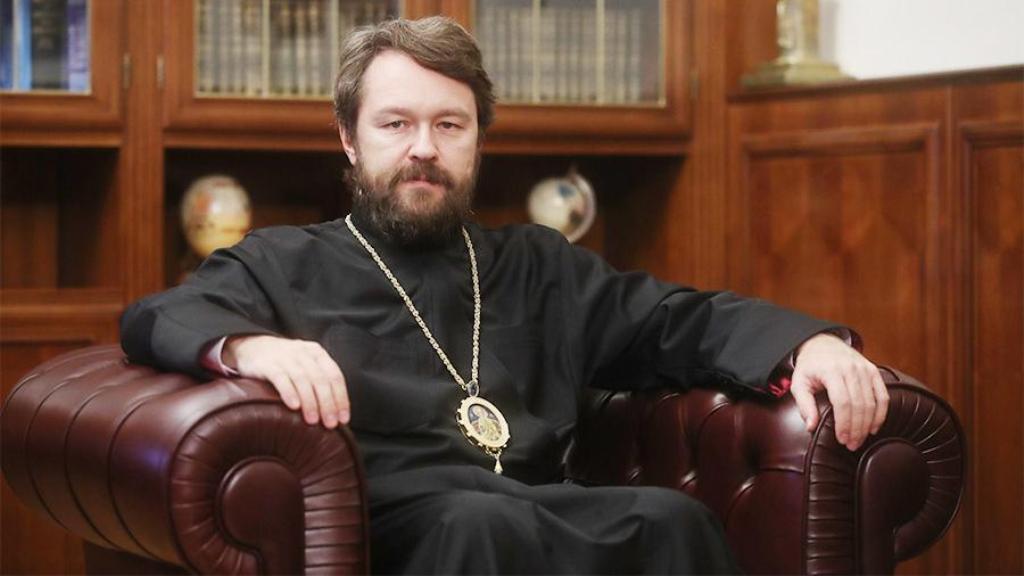
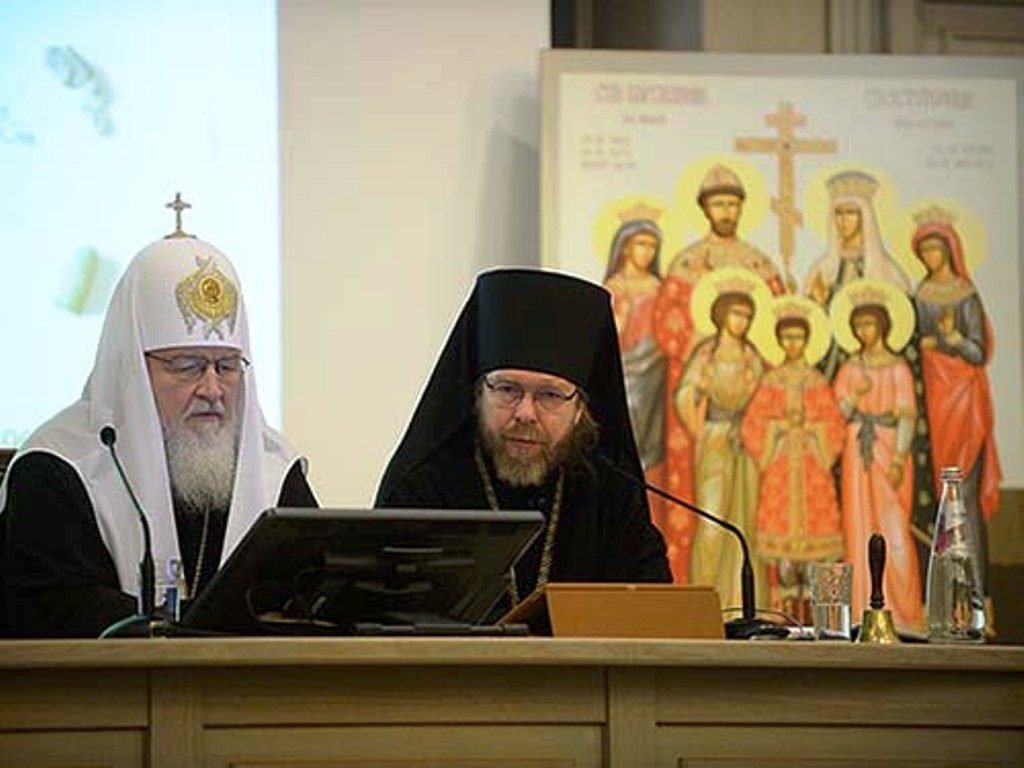
His Holiness Patriarch Kirill and Bishop Tikhon of Yegoryevsk

New Investigation

In September of 2015, I published an article on my Royal Russia News blog announcing that the investigation into the Ekaterinburg remains had been reopened by the Russian Orthodox Church. The investigation would include a new series of genetic studies, and a comprehensive review of the evidence accumulated since 1918 into the murders of the last Russian Imperial family. With the blessing of His Holiness Patriarch Kirill and at his request to the Investigative Committee a new team of experts was formed. A complex examination would be carried out for the first time – a historical, anthropological and genetic one – one in which the ROC would be involved in all aspects of the investigation.

It is important to note, that had the ROC been invited to participate in the original investigation and forensic tests carried out by Western experts in the early 1990s, that this new investigation might not have been necessary.

Many viewed the 1991 investigation as a propaganda tool by then president Boris Yeltsin (1931-2007), who was anxious to bring closure to the century-long mystery, thus gaining favour with Western nations.

More than 50 descendants of the Romanov dynasty arrived in Russia for the interment in the SS Peter and Paul Cathedral in St. Petersburg. The only descendants absent were Leonida Georgievna (1914-2010), her daughter Maria Vladimirovna (b. 1953) and her son George Mikhailovich (b. 1981), all of whom did not recognize the authenticity of the remains and declined to attend the reburial ceremony. 

In the face of skepticism, the late Patriarch Alexei II (1929-2008) was obliged to profess agnosticism over the identity of the bodies, as a way to avoid massive internal rifts within the church. 

Many Westerners believed that the ROC were obligated to accept the findings of the original Western led investigation, however, the Moscow Patriarchate were under no obligation to accept their findings, which they believe left a number of unanswered questions and concerns about the Ekaterinburg remains. The ROC wanted to confirm 100% that the remains were authentic, in order for them to be recognized as Holy Relics.

As Archpriest Oleg Mitrov points out in his essay The Investigation Into the Deaths of the Russian Royal Family and Persons of Their Entourage (first English translation published in Sovereign No. 2 Winter 2016, pg. 7-29), in the early 1990s, the Moscow Patriarchate had suggested “a temporary burial, then completing the investigation which, once it produced indisputable results, could stop all discord that this question created in society.” Their request fell on deaf ears, “the voice of our church wasn’t heard at the time,” added Mitrov.

More than 20 years of scientific testing, extensive theological debates, and the enormous public outcry for resolution on the issue failed to deter the Moscow Patriarchate’s decision to resolve the issue. In early January 2016, Bishop Tikhon of Yegoryevsk noted that the “examination of the Ekaterinburg remains may take several years.” This statement was later confirmed during the bishops’ council of the Russian Orthodox Church, when Patriarch Kirill of Moscow and All Russia announced at the opening ceremony that “the inquiry will last as long as is necessary in order to establish the truth”.

222c

Members of the new ROC investigation inspect the Ekaterinburg remains

Non Orthodox Christians must understand the position of the ROC on the matter of both relics and canonization. The Russian Legitimist web site correctly notes: “Any remains of the murdered Imperial Family are ipso facto religious relics, and therefore the internal procedures of the Russian Orthodox Church in completely satisfying itself of their genuineness must be followed. The Russian Orthodox Church wants to address any remaining doubts about the remains, given the fact that, once accepted by the Church as the remains of Emperor Nicholas II and his family, they will become relics venerated by the faithful.” 

It was hoped, that given the weight of evidence accumulated by experts in their respective fields since the early 1990s, that the Moscow Patriarchate would not dispute the remains recovered from the two burial sites in Ekaterinburg between 1979 and 2007 for much longer. A number of statements made in the Russian media offered some hope that they are moving in that direction:

“The re-examination of the criminal case is not an attempt to reconsider the evidence received earlier and established facts, but rather represents the necessity of additionally investigating the new facts, which was requested by the Russian Orthodox Church,” Russian Investigative Committee spokesman Vladimir Markin told the TASS News Agency (24 September, 2015).

Markin went on to say, “an interdepartmental working group for the study and burial of the remains of Tsesarevich Alexei and Grand Duchess Maria (discovered in 2007) gave its consent to conducting additional identification studies of the objects previously inaccessible for investigators.” To this end, the investigators exhumed the remains of Emperor Nicholas II and Empress Alexandra Feodorovna in the SS Peter and Paul Cathedral in St. Petersburg. Blood samples of Emperor Alexander II, Nicholas II’s grandfather who died in a terrorist act in 1881 and whose blood stains are found on his full-dress uniform, kept in the State Hermitage Museum, have also been taken. Additional DNA samples were extracted from Emperor Alexander III in November 2015, in a bid to conclusively answer questions about the fates of Nicholas II and his family.

Markin’s statements would suggest that the Moscow Patriarchate had already accepted the Ekaterinburg remains as authentic, although no official statement had been issued by the Church.

The Russian Orthodox Church also believed that it was necessary to continue the search for the remains of Nicholas II’s children. Only a small part of the remains of Tsesarevich Alexei and Grand Duchess Maria had been found [44 pieces of their bones had been discovered at the site], therefore, the search must be continued, said a spokesman for the Russian Orthodox Church. Some experts, however, believe that such a search would be in vain, and that given that any remaining bones would have been dug up and carried off by animals.

The investigation into the criminal case of the murder of the Imperial Family also included an examination of the remains found by Nikolai Sokolov in the 1920s and later transferred to St. Job’s Church in Brussels.

On 27th November 2017, the Sretensky Monastery and Seminary in Moscow hosted the conference “On the Murder of the Royal Family: New Evaluations and Materials. Discussion,” devoted to studying the results of the study of the Ekaterinburg remains.

In early 2018, the Russian media announced that Patriarch Kirill would be participating in the commemorative events marking the 100th anniversary of the Holy Royal Martyrs in Ekaterinburg in 2018. Many believed that Kirill’s attendance was significant, and fueled speculation that the Moscow Patriarchate was on the verge of officially recognizing the Ekaterinburg remains. Once again, this was not to be!

On the eve of the anniversary marking the regicide, the Investigation Committee announced that the remains were “authentic”. Despite the announcement, the ROC remained silent. The commemoration could have been a great and solemn moment of truth, a time to reflect on the passage from one era of Russia’s tragic history to another. Many (myself included) were hopeful that both the examination and investigation would conclude before the 2018 centenary.

Sadly, the 100th anniversary of the Romanovs’ deaths passed with little notice in Russia. The Russian government ignored the anniversary, as it surprisingly did the year before, when Russia marked the 100th anniversary of the 1917 October Revolution. None of the prominent state museums or venues hosted events to mark the anniversary. The few exhibitions and other events organized were tellingly modest.

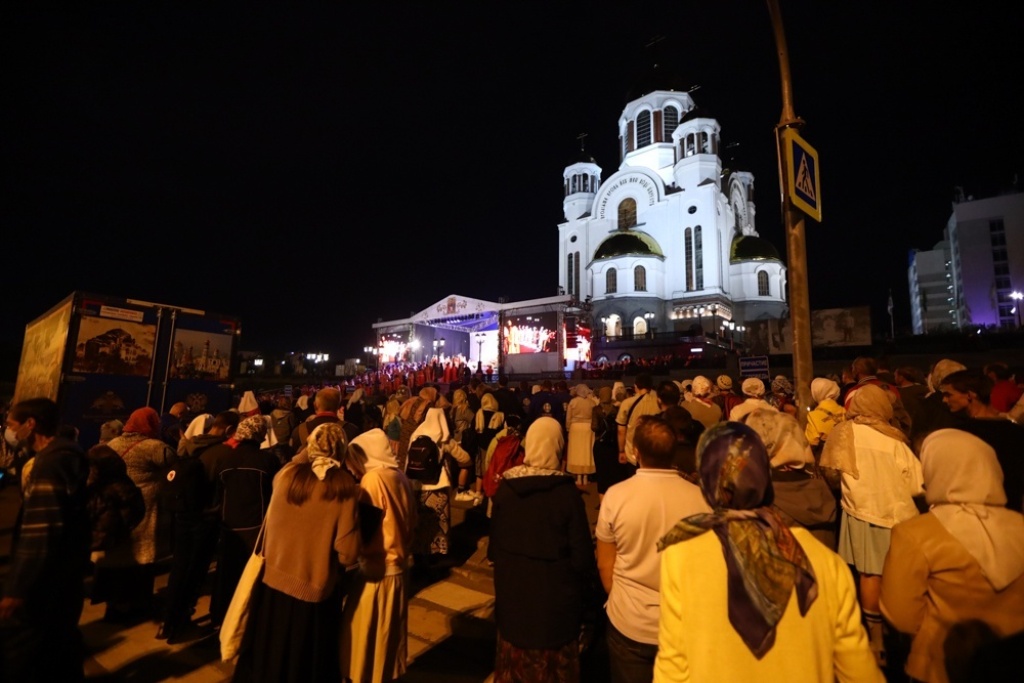
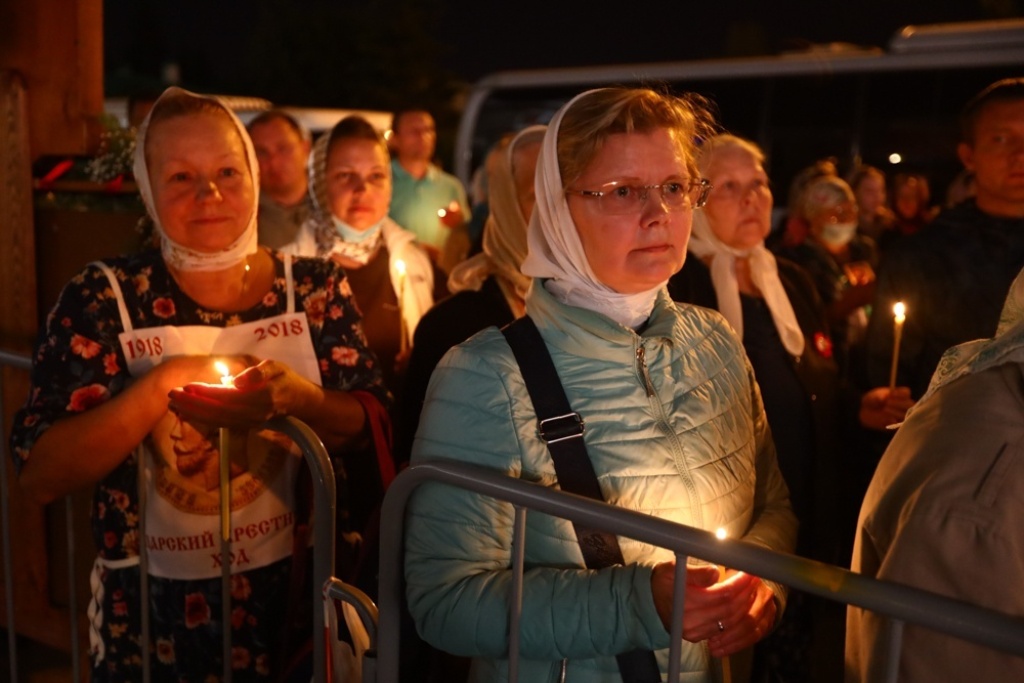
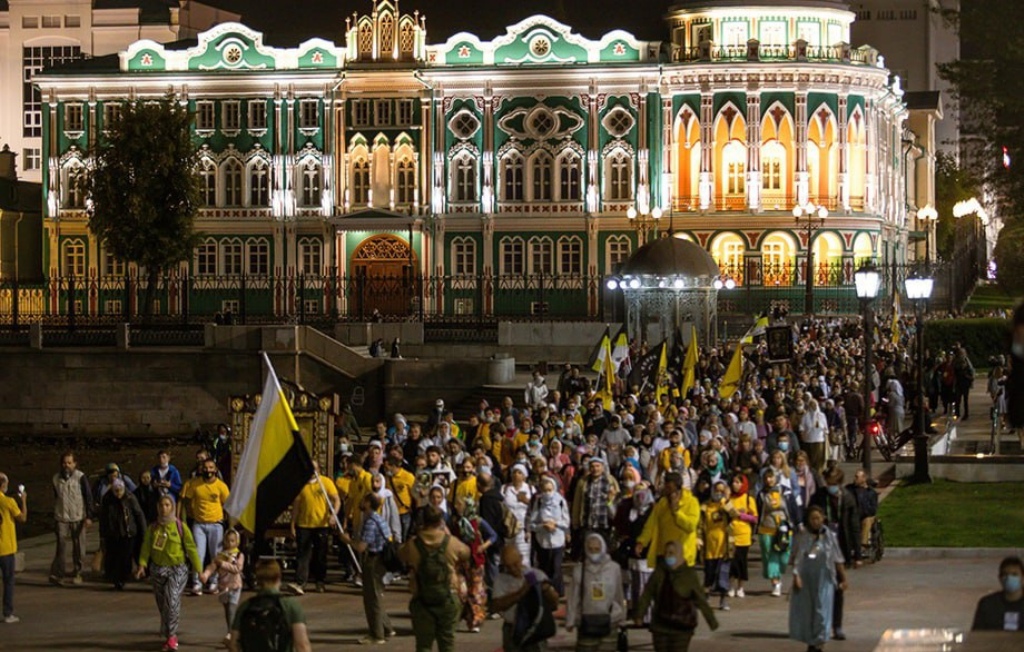
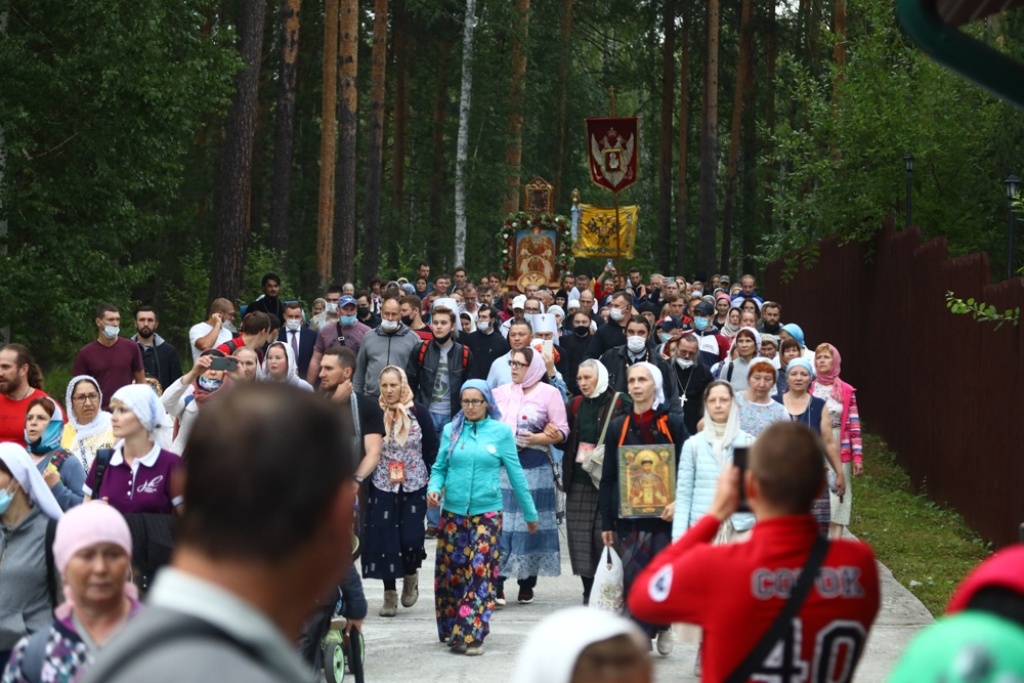
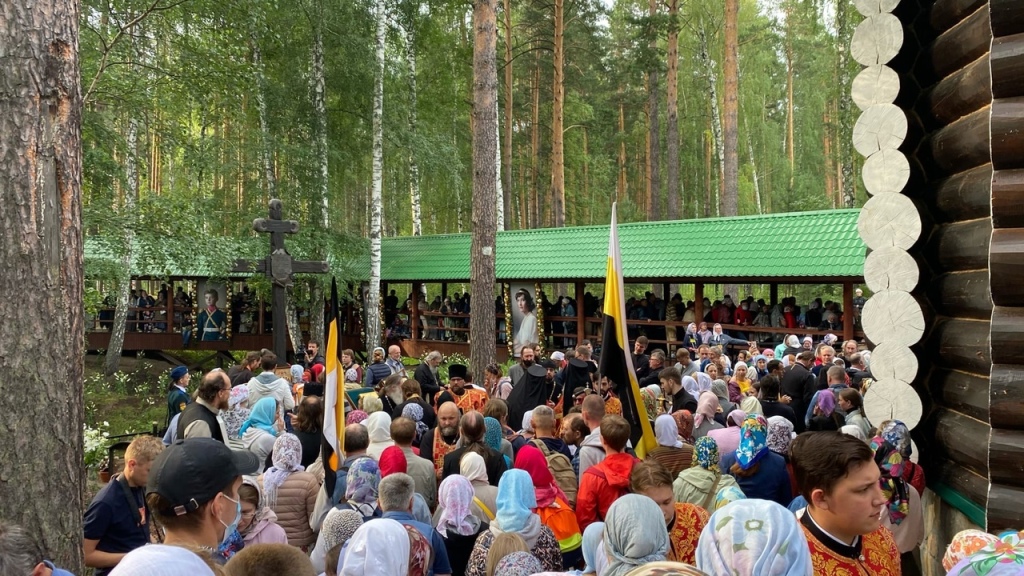
The most significant event, took place on the night of 16/17 July 2018, when more than 100,000 people from across Russia, and around the world gathered at the Church on the Blood in Ekaterinburg for the Patriarchal Liturgy, followed by a Cross Procession to the Monastery of the Holy Royal Martyrs at Ganina Yama, a journey of 21 km. Porosenkov Log, where the Imperial Family’s remains were discovered was not included in the Cross Procession.
222d

The tomb of the Imperial Family in the St. Catherine Chapel of the SS Peter and Paul Cathedral

The Fate of the Ekaterinburg Remains

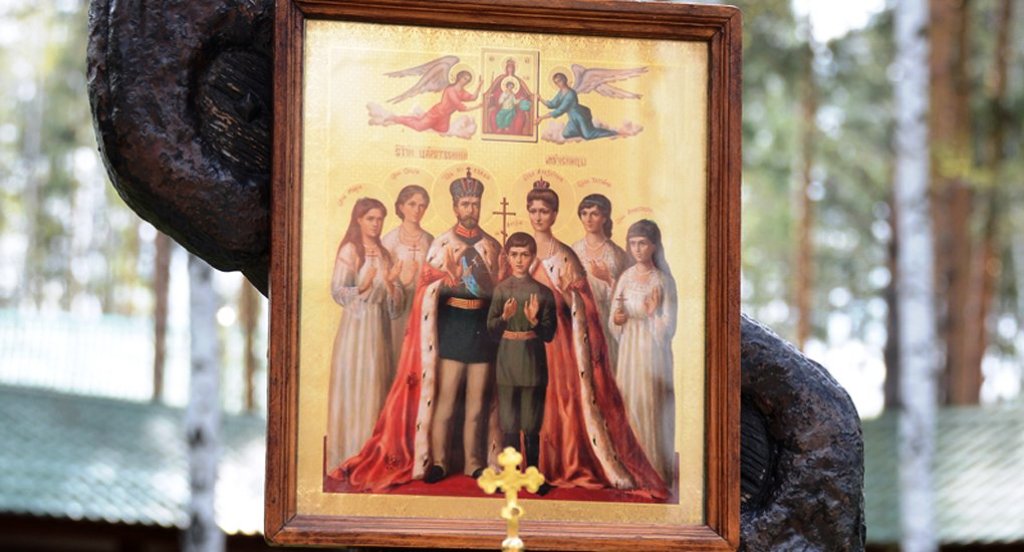
In the summer of 2000, the Moscow Patriarchate canonized Nicholas II, his wife, and five children as Royal Passion-Bearers. [Nicholas II, his wife, and five children were canonized as martyrs by the Russian Orthodox Church Outside Russia (ROCOR) in 1981] The ROC’s official recognition of the Ekaterinburg remains would result in an elaborate glorification ceremony headed by His Holiness Patriarch Kirill of Moscow and all Russia.

Many people continue to ask when the remains of Tsesarevich Alexei and his sister, Grand Duchess Maria will be interred with those of the rest of their family in the Saint Catherine Chapel of the Saints Peter and Paul Cathedral. The ROC’s recognition of the Ekaterinburg remains would make this highly unlikely for a number of reasons.

Both the Saint Catherine Chapel and the SS Peter and Paul Cathedral are currently museums under the administration of the State Museum of the History of St. Petersburg, in which visitors must pay an admission fee to gain entry to view the Romanov tombs as a tourist attraction. This is something that the ROC would vehemently oppose, and rightly so!

It seems highly likely that the remains of Emperor Nicholas II, Empress Alexandra, Grand Duchesses Olga, Tatiana, Maria, Anastasia, Tsesarevich Alexei, and their four faithful retainers would be reinterred in another church. It is quite possible that a new church would be constructed in their honour, one which would allow Orthodox Christians to enter freely to venerate the Holy relics. During the past few years, there has been some speculation in the Russian media that such a church would be constructed in Ekaterinburg – possibly Porosenkov Log, where their remains were originally discovered in 1991 and 2007 respectively.

It is interesting to add, that one unconfirmed report claims that the remains of the last Imperial Family are no longer entombed in the St. Catherine Chapel of the SS Peter and Paul Cathedral. According to the report when their remains were exhumed for further testing by the new ROC commission a few years back, they were never returned to the tomb. It is believed that the Ekaterinburg remains are now in the possession of the ROC, in the Novospassky Monastery in Moscow, where the remains of Tsesarevich Alexei and Grand Duchess Maria have been since 2015.

If there is any truth to this rumour, it only adds further speculation that the ROC have no plans to rebury the entire Imperial Family in the St. Catherine Chapel.

Should the ROC recognize the remains of the Imperial Family as Holy Relics, they cannot be returned to their tomb in St. Catherine’s Chapel, as relics cannot be returned to the earth. They must be placed in reliquaries above ground which allows the faithful to venerate them. This would be one very important reason why their remains would be interred in a new cathedral named in their honour.

It is important to add that by accepting the remains as authentic, the ROC will be forced to acknowledge that for more than 100 years, they were wrong. This in itself may be perceived by many as a great embarrassment and humiliation to the church.
222g

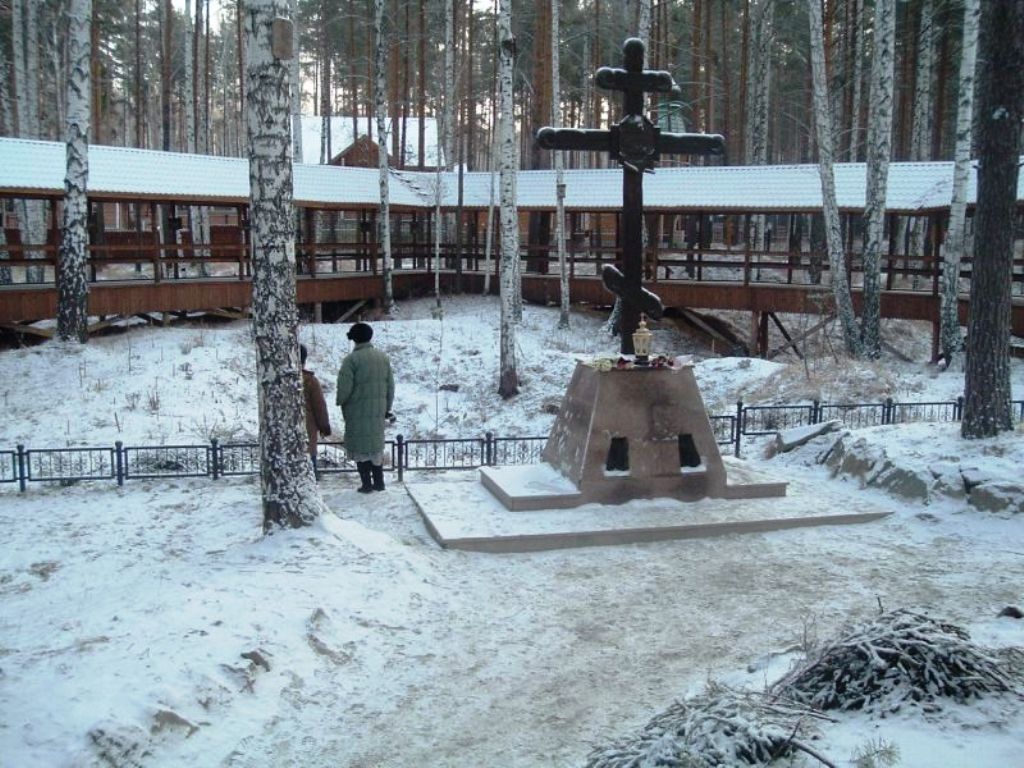
Ganina Yama

Will the Imperial Family be reinterred in Ekaterinburg?

A number of rumours have circulated in the Russian media over the past few years that once the ROC have officially recognized the remains, that all of the members of the Imperial Family will be interred in an existing or a new cathedral in or near Ekaterinburg.

For some, one option would be the Church on the Blood, built on the site of the former Ipatiev House, where the Imperial Family met their martyrdom. For others, another possible option would be a new cathedral constructed at Porosenkov Log, where the Imperial Family’s remains were discovered by two amateur archaeologists in 1978.

It is interesting to note that in March 2016, the Ministry of Culture of the Sverdlovsk Region reported that if the ROC requests the transfer of the territory in and around Porosyonkov Log (added to the cultural heritage list in 2014), would be designated as sacred land and transferred to the ROC, where a memorial and monastery, similar to that at Ganina Yama would be constructed. This in itself suggests that perhaps the ROC has already come to a decision on the authenticity of the remains, and were making preparations.

There is also the possibility that the reconstruction of St. Catherine’s Cathedral (timed to coincide with the 300th anniversary of the founding of Ekaterinburg in 2023) is being considered?

While some may scoff at the idea of interring the remains of the Imperial Family in Ekaterinburg, it seems only logical that their remains should be interred in the place in which they met their death and martyrdom on 17th July 1918 or the final resting place where their remains were recovered.

Once a bastion of Bolshevism, Ekaterinburg has slowly shed its status as the “capital of atheism”. Since the fall of the Soviet Union in 1991, the Urals have experienced a revival of faith, with Ekaterinburg at the the center of Orthodox Russia in the Urals. It should also be noted, that Ekaterinburg has done more to honour Nicholas II and his family than any other city in Russia.
222j

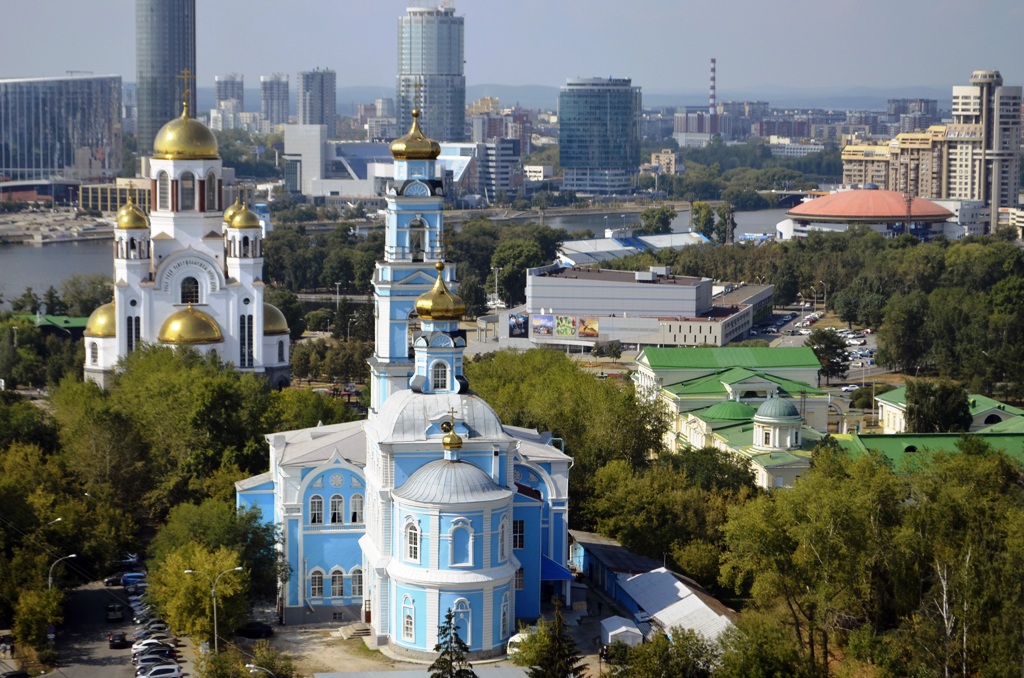
Aerial view of Ekaterinburg

“Ekaterinburg was the last capital of the Russian Empire”

The Ural city of Ekaterinburg occupies an important place in the modern spiritual life of Russia. This conclusion was reached by Russian historian Peter Multatuli following the results of the International Festival of Orthodox Culture Tsar’s Days 2019. The historian is recognized as one of Russia’s leading authorities on the life and reign of Nicholas II, having published numerous books, articles, and a popular public speaker.

“On a spiritual level, Ekaterinburg is the last capital of the Russian Empire, because the residence of the Sovereign was always considered the capital in Russia. Peter the Great never officially transferred the capital from Moscow to St. Petersburg, but since he lived there, it was the capital,” said Multatuli.

He noted that in 1918, for 78 days, Emperor Nicholas II and his family lived in Ekaterinburg, and that is why the Ural capital can be considered the last capital of the Russian Empire. [It is important to note that many historians – myself included – firmly believe that the Tsar’s signing of the instrument of abdication, his status as Tsar remained inviolate and unassailable – PG]

“Petrograd and Moscow to one degree or another welcomed his overthrow, and they bear a greater responsibility in this than any other Russian city. No matter what anyone says, it was Ekaterinburg that served as the last Imperial residence, which, according to God’s special plan, became the Royal Golgotha,” added Multatuli.

According to him, in the near future, Ekaterinburg will play a great role in the history of Russia, because “the city named after St. Catherine and becoming the Royal Golgotha ​​will be the city of Russian resurrection.”
222f

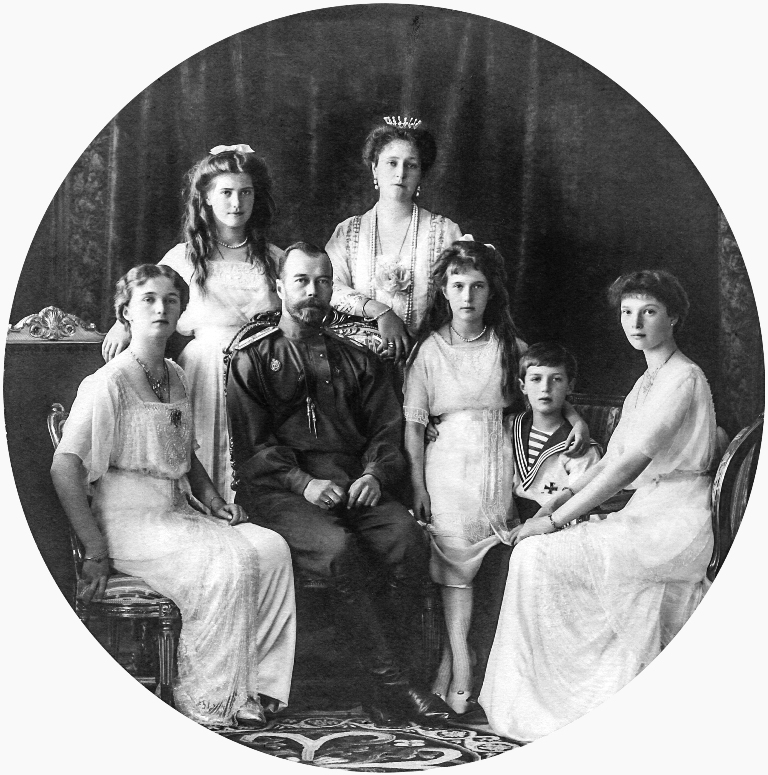
Святы Царственные мученики, молите Бога о нас! / Holy Royal Martyrs, pray to God for us!

The world awaits closure by the ROC

On 17th June 2021, the Holy Synod of the Russian Orthodox Church met at Danilov Monastery in Moscow under the chairmanship of His Holiness Patriarch Kirill. Among the many decisions made by the Synod, it was resolved to refer the results of the extensive examinations carried out on the remains in recent years to the upcoming Bishops’ Council of the Russian Orthodox Church, which will meet in Moscow in November of this year.

The Synod examined the report from His Eminence Metropolitan Tikhon of Pskov and Porkhov on the genetic examinations of the remains, as well as the information provided by the Investigative Committee of Russia on the various examinations (molecular-genetic, physical-chemical, trace evidence, ballistic, handwriting, historical-archival, soil science, forensic, anthropological studies, and more) appointed as part of the investigation of the criminal case of the murder of the Royal Family.

The experts have announced on more than one occasion that their examinations definitively prove that the remains belong to the Royal Martyrs. In an interview last July, senior investigator Marina Molodtsova repeated that the examinations have verified the authenticity of the remains, though investigations were continuing in order to “eliminate the slightest doubt.”

In accordance with the instructions of the Bishops’ Councils of 2016 and 2017, the Synod decided to publish information on the results of the examinations after their completion and to submit the results of the examinations for consideration by the next Bishops’ Council.

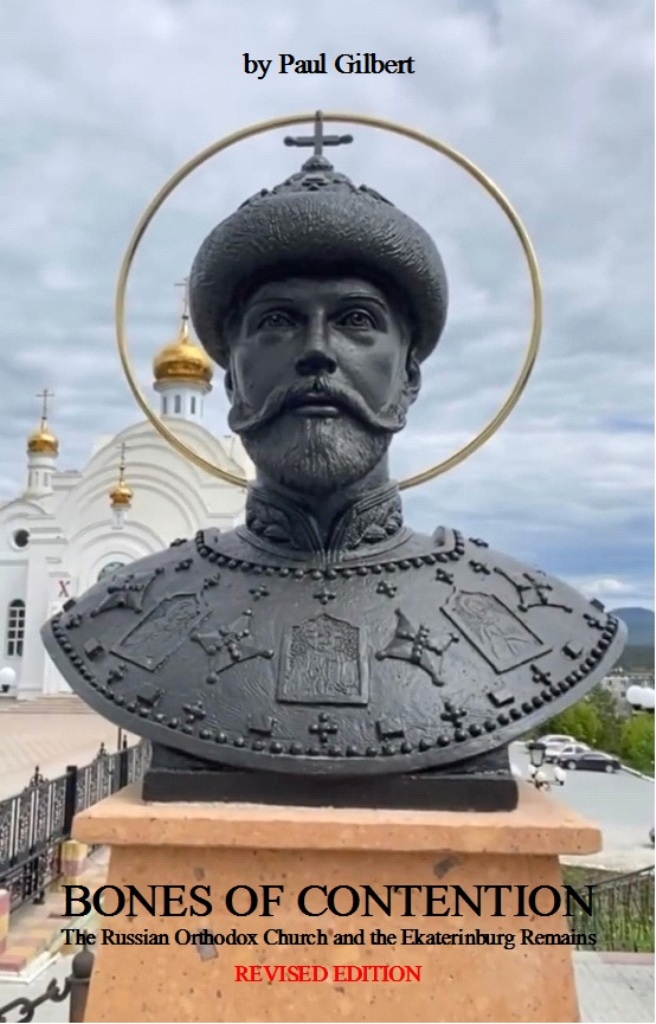
For more information about the this highly contentious issue, please refer to my book Bones of Contention: The Russian Orthodox Church and the Ekaterinburg Remains, published in 2020

© Paul Gilbert. 18 June 2021

Vandals destroy monument to Tsar’s family in Tatarstan

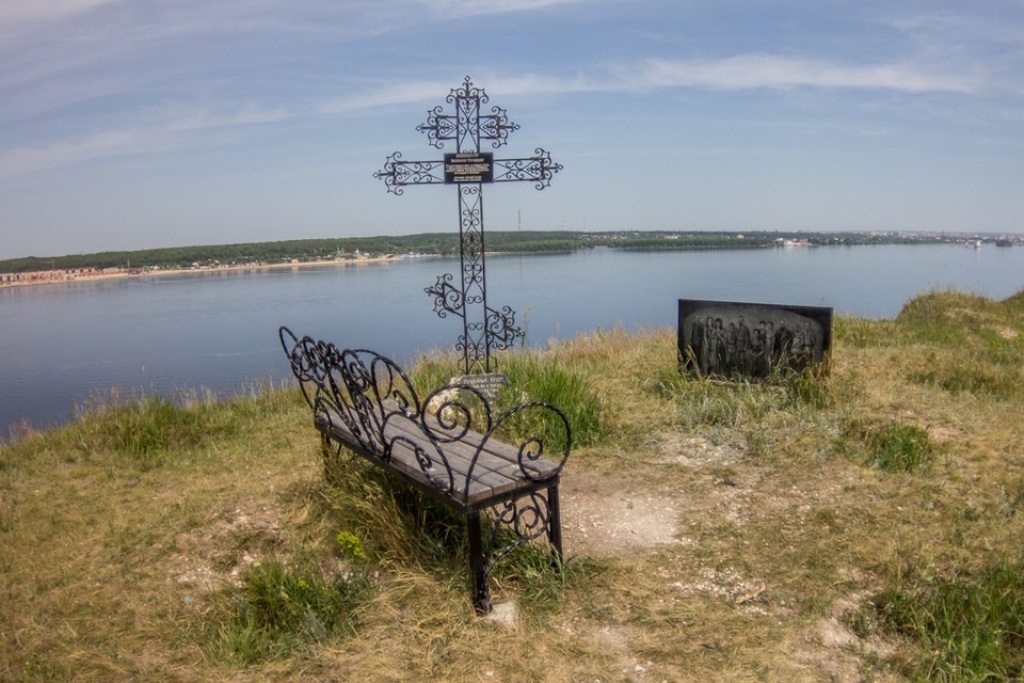
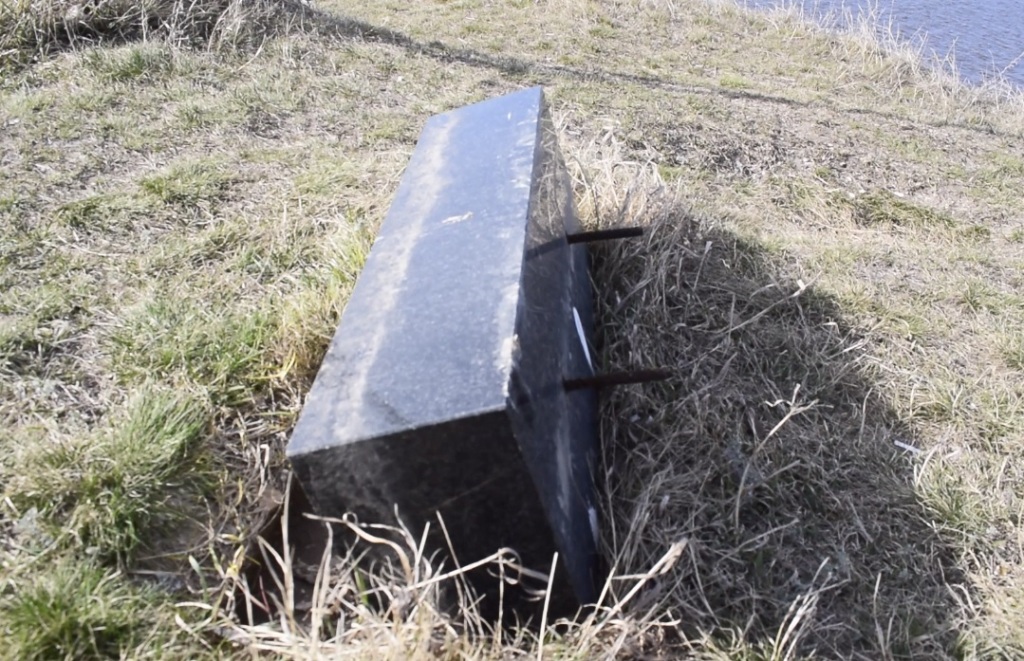
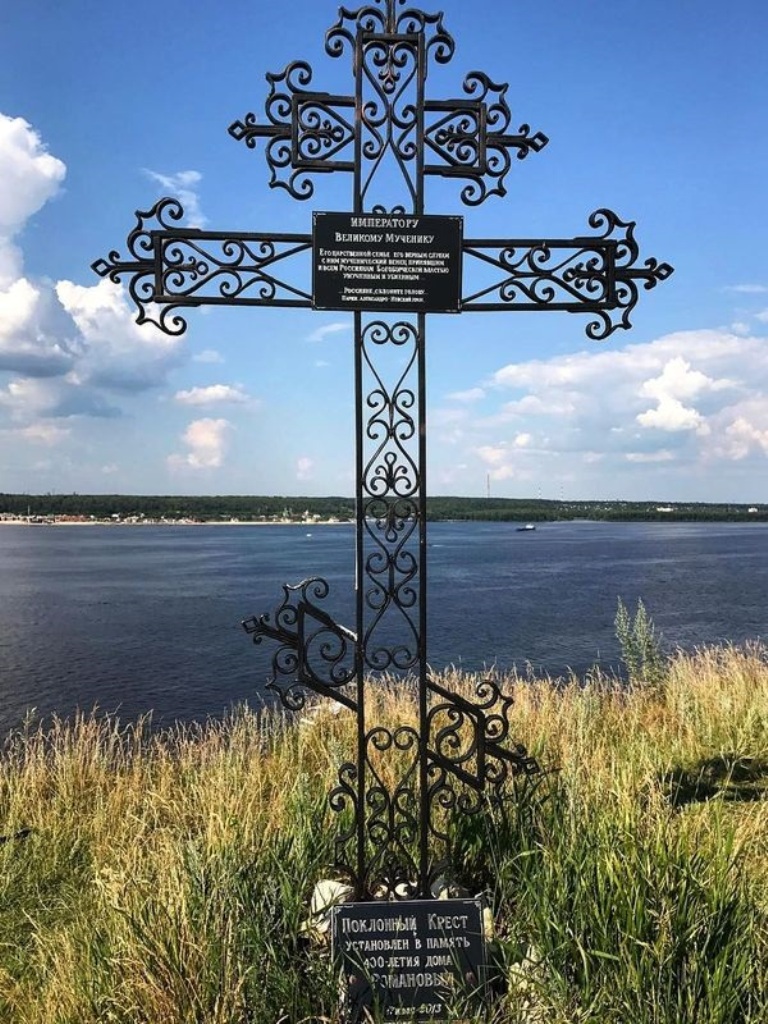
PHOTO: the memorial dedicated to the Holy Royal Martyrs situated on a cliff overlooking the Volga River, near the village of Pechishchi, consists of a Cross, a black-granite monument and a simple bench

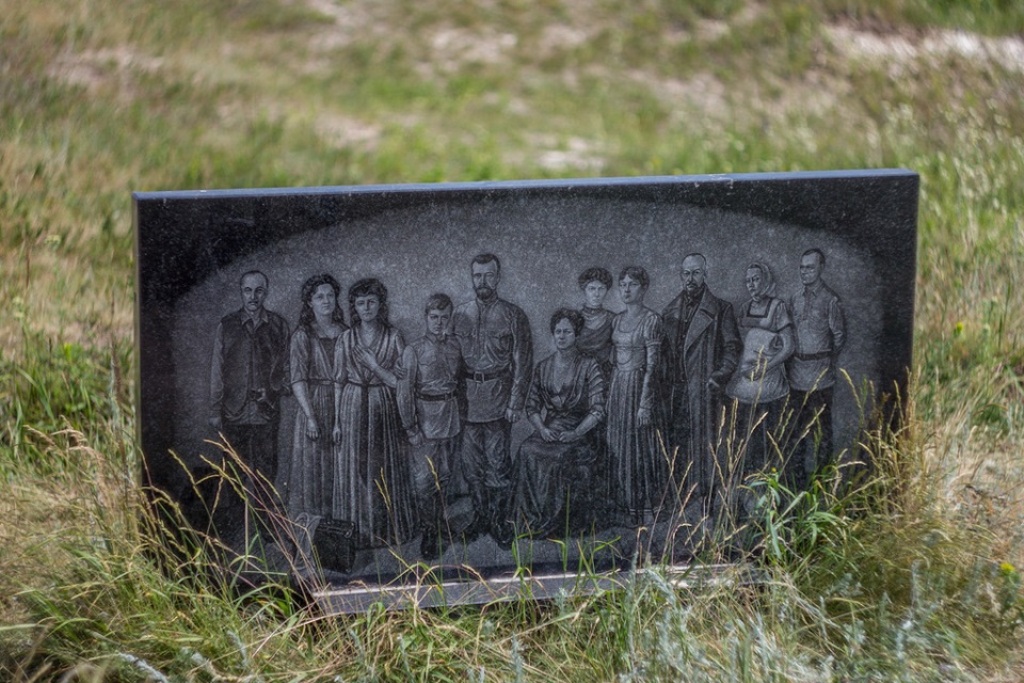
Vandals have destroyed a memorial dedicated to the Holy Royal Martyrs situated on a cliff overlooking the Volga River, near the village of Pechishchi, Verkhneuslonsky district of Tatarstan. The monument bearing the images of Nicholas II, Alexandra Feodorovna and their five children was knocked from its pedestal and thrown over the side of a cliff. The Orthodox Cross was untouched by the vandals.

The composition includes an iron veneration cross and black granite monument were erected on 17th July 2013, to mark the 400th anniversary of the Romanov dynasty, and to honour the memory of Nicholas II and his family, who were murdered in Ekaterinburg on 17th July 1918. A small bench was added, allowing visitors a place for solitude and reflection at the Holy Orthodox site.

PHOTOS: the black granite monument to the Holy Royal Martyrs – before (above) and after (below) Bolshevik sympathizers threw it over the nearby cliff

The plaque’s inscription on the Cross (below) reads:

“Императору великому мученику, его царственной семье, его верным слугам, с ним мученический венец принявшим, и всем россиянам, богоборческой властью умученным и убиенным. Россияне, склоните головы. Париж, Александро-Невский храм”.

“To the great martyr Emperor, his royal family, his loyal servants, who accepted the martyr’s crown with him, and to all Russians tortured and slain by the godless power. Russians, bow your heads. Alexander Nevsky Cathedral, Paris.”

Who the vandals are and how they managed to throw the multi-ton slab over the cliff remains unknown. although local officials claim those responsible would have needed heavy equipment to carry out their act of vandalism.

During the last decade, a number of monuments to Russia’s last emperor and tsar have been the target of vandals – mostly Bolshevik radicals.

“Father, forgive them, for they know not what they are doing.”

© Paul Gilbert. 22 April 2021

First iconostasis in Russia dedicated to the Tsar’s family

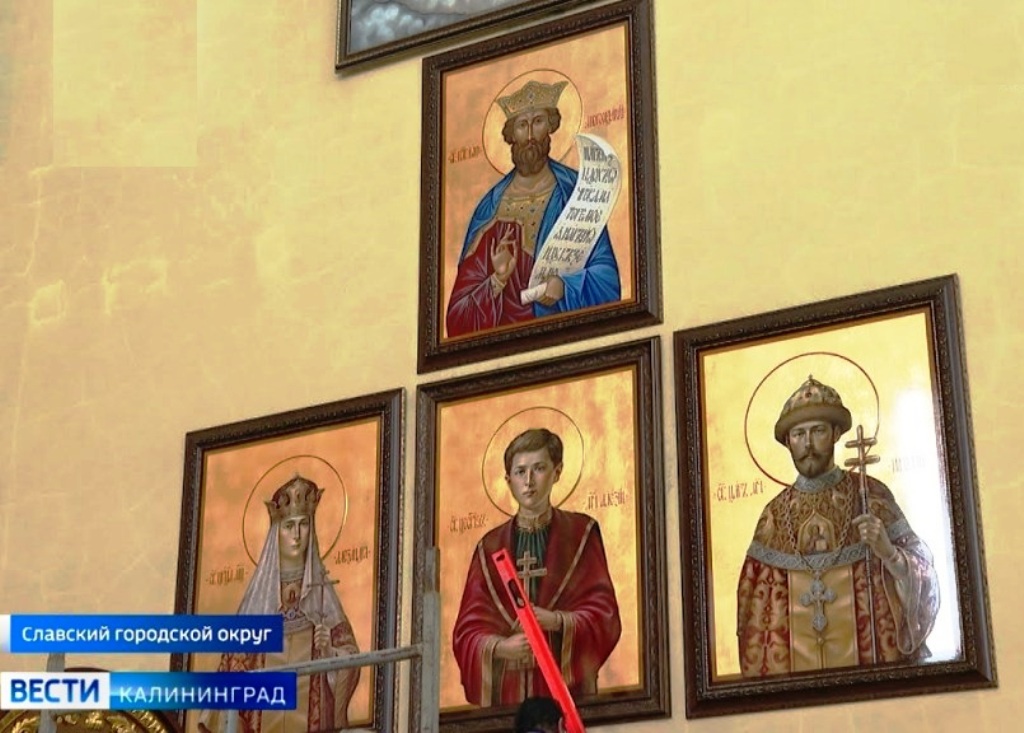
PHOTO: Russia’s first iconostasis to the Holy Royal Martyrs
© Вести / Vesti News Agency

The first iconostasis in Russia dedicated to the Holy Royal Martyrs is being erected in the church of the St. Elisabeth Convent in the village of Priozerye, situated 120 km from Kaliningrad.

Within the walls of the church of the convent, preparations are underway for the installation of an icon depicting Tsesarevich Alexei Nikolaevich. A prayer is said as the image takes its place in the iconostasis.

The convent is dedicated to the Holy Royal Martyr Grand Duchess Elizabeth Feodorovna, but Tsar-Martyr Nicholas II and his family are especially revered in the convent.

PHOTO: Entrance to St. Elisabeth Convent ;
monument to Holy Royal Martyr Grand Duchess Elizabeth

Nun Anastasia, Sister of the St. Elizabeth Convent, spoke to the Vesti News Agency this week, and stated the following:

“The iconostasis that is installed in our convent is dedicated to the Imperial Family and all the royal martyrs. It is unique in its kind for the whole of Russia. There is no such iconostasis anywhere else in Russia, only in our church.

“Once completed, the iconostasis will be in the shape of a cross. The images are distinguished by a special subtlety of writing. The colours of the elements: red, blue and gold stand out. The works were specially made for the convent by an artist from Kaliningrad.

“The top of the iconostasis will feature an icon of the Archangel Michael, then the icon of the Alapaevsk Martyrs, then Job the Long-Suffering. In the center are Tsarina Alexandra, Tsesarevich Alexei, and Tsar Nicholas II.

Once assembled, this unique iconostasis will stand as tall as a three-story building. It will become one of the main decorations of the convent cathedral.

At the base of the royal iconostasis will be an icon of the Most Holy Theotokos Theodorova, patroness of the Romanov family.”

© Paul Gilbert. 14 February 2021

New Metropolitan of Ekaterinburg confirms: “ROC in no hurry to recognize Ekaterinburg remains”

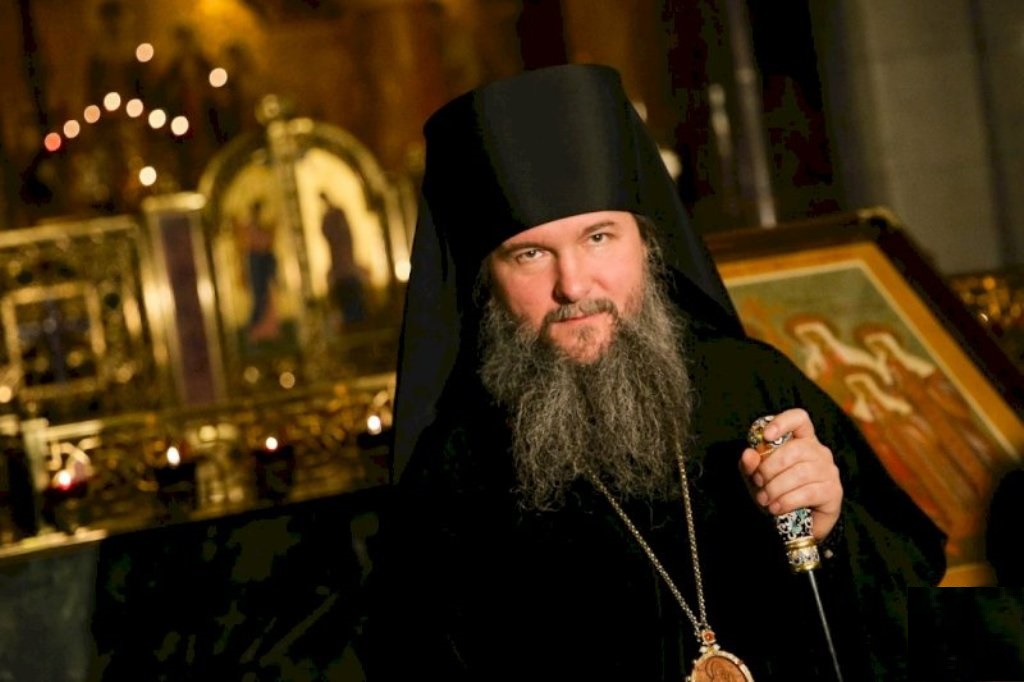
PHOTO: Bishop Evgeny of Ekaterinburg and Verkhotursky

According to Bishop Evgeny of Ekaterinburg and Verkhotursky the Russian Orthodox Church ( ROC ) will not rush to recognize the Ekaterinburg remains – those of Emperor Nicholas II and his family. The newly appointed metropolitan made the comments during a press conference held on Saturday, 12th December in Ekaterinburg. On 8th December 2020, by the decision of the Holy Synod, Vladyka Evgeny was appointed Metropolitan of the Ekaterinburg Diocese.

“I had an opportunity to communicate with those on the commission who investigated the remains … there are many arguments and evidence that these are indeed the remains of the Tsar and his family. But at the same time, there are still many questions that have not yet been answered. His Holiness Patriarch Kirill of Moscow and All Russia stated that the ROC is not in any hurry to complete their investigation by a certain date. We will wait for answers to these questions. This is not some kind of artifact … For us it is a matter of principle, these are holy passion-bearers, these are people who have played a significant role in the spiritual life of our people, and in the state, so the church is in no hurry, fulfilling the words of the holy patriarch,” added Vladyka Evgeny.

“The church will recognize the remains only if there is not an ounce of doubt. If doubts remain, then we will not rush, we will wait. We do not want to offend their memory by making hasty decisions,” he added.

In the summer of 2018, the official representative of the Investigative Committee, Svetlana Petrenko, said that a repeated comprehensive study confirmed the authenticity of the remains of Emperor Nicholas II and his family, who were shot on 17th July 1918 in Ekaterinburg.

Earlier, Evgeny Pchelov, associate professor of the Historical and Archival Institute of the Russian State Humanitarian University, who took part in the research, told journalists about the completion of the historical and archival examination, which, according to him, confirmed the authenticity of the “Ekaterinburg remains.” According to Pchelov, thanks to a comprehensive analysis of primary sources, it was possible to recreate a fairly complete picture of what happened in the days leading up to the deaths of the Imperial family, and the subsequent days which followed the brutal murder. He emphasized that some specific  questions remained unclear, but “the main picture was clarified.”

On 16th July 2018, the eve of the 100th anniversary marking the deaths of Nicholas II and his family, the Investigative Committee of the Russian Federation reported that since the resumption of the investigation in 2015, investigators carried out a wide range of new tests, including 37 different forensic examinations. In total, more than two thousand historical sources were analyzed.

The Investigative Committee stated that “on the basis of numerous expert examinations, the committee concluded that the remains belong to Nicholas II, his family and their four retainers.” At the same time, the committee noted that, “excluding the possibility of ambiguous interpretation of certain circumstances associated with the murders, other examinations necessary for the investigation shall continue.”

In addition, the investigation into the murder of Nicholas II and members of his family intends to identify all those involved in the execution and qualify their actions in accordance with the Criminal Code of the Russian Federation. This part of the investigation is extremely important! Should the *regicides be found guilty of their heinous crime, then lawmakers and historians will be forced to rewrite history. It is a well known fact that after the murders of the Tsar and his family, that many of the *murderers [Yurovsky, Ernakov, etc.] enjoyed a “celebrity” status among the Bolsheviks and revolutionaries. To now find them guilty of their crime a century later, this then clears the way for the names of streets, squares and buildings named in their “honour” of these criminals to be changed, and the removal of any monuments and memorials from the Russian landscape.

*For more information on the regicides, please read my article: The fate of the regicides who murdered Nicholas II and his family, published on 28th October 2020 – PG

Human remains, presumably belonging to the Imperial family, were found in July 1991 on the Old Koptyakovskaya road near Ekaterinburg. The remains of nine people were found in the grave. Forensic studies confirmed the identity of the remains as those of Nicholas II, his wife Alexandra, three of their five children and their four retainers.

In July 2007, during archaeological excavations south of the site of the first burial, the remains of two more people were found, presumably Tsesarevich Alexei and his sister Maria. Forensic studies concluded the identity of the remains as those of Alexei and Maria.

In 2000, the Moscow Patriarchate canonized Nicholas II and his family members as passion-bearers. After the opening of the burial near Yekaterinburg, the remains of members of the imperial family were buried in St. Catherine’s Chapel of the Peter and Paul Cathedral in St. Petersburg. However, the Church did not recognize these remains as genuine due to a lack of evidence. In the fall of 2015, the investigation into the death of the Imperial family was reopened.

Holy Royal Martyrs, pray to God for us!
Святы Царственные мученики, молите Бога о нас!

***

CLICK on the IMAGE above or the LINK below to order my book
‘Bones of Contention: The Russian Orthodox Church and the Ekaterinburg Remains’
Published 2020. 156 pages + 55 illustrations. Price: $20 + postage

© Paul Gilbert. 13 December 2020

Monastery of the Holy Royal Martyrs at Ganina Yama marks 20th anniversary

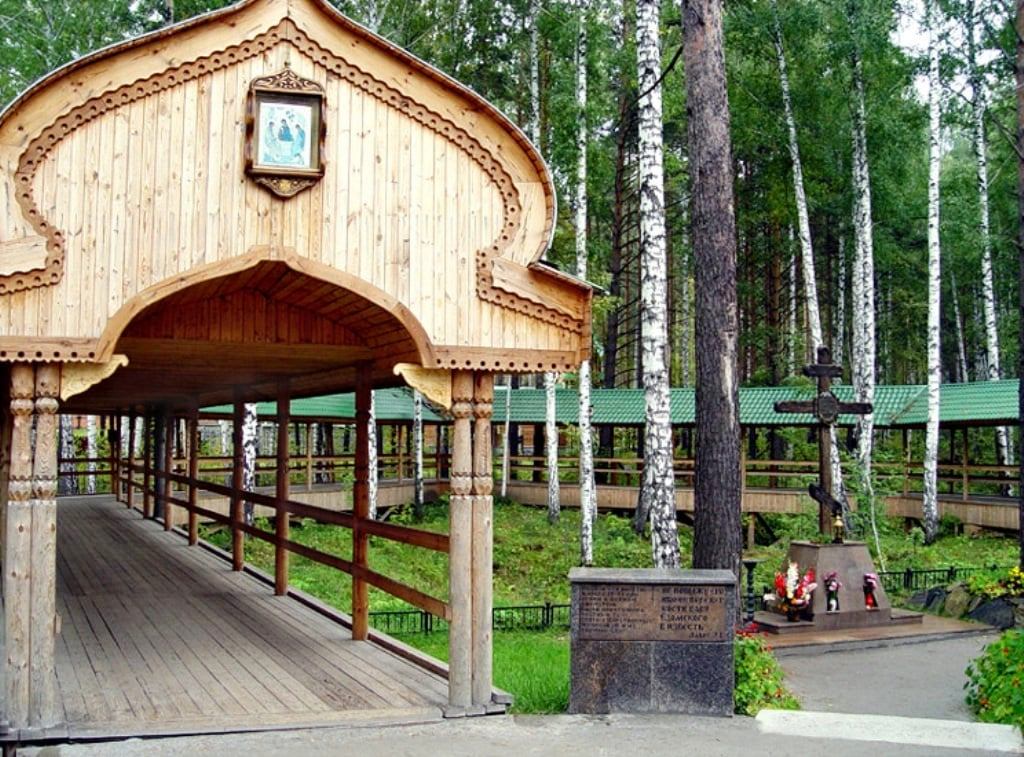
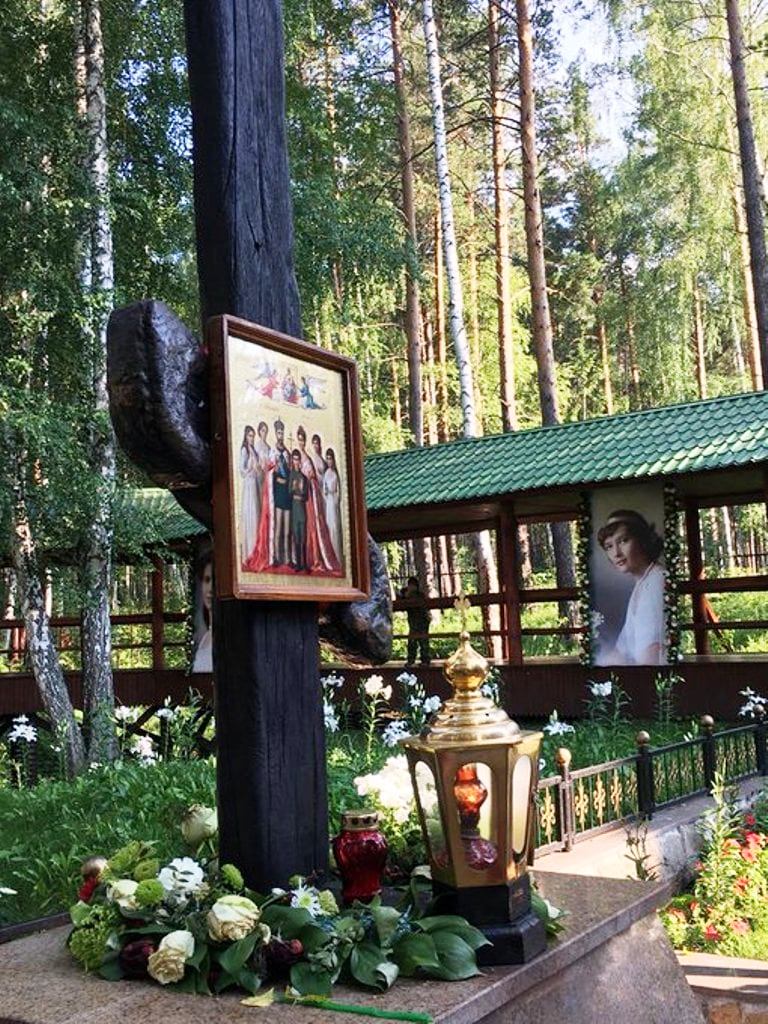
PHOTO: A wooden causeway has been built around the edge of the mine shaft, a tall cross marks the edge of the mine shaft where the remains of Nicholas II, his family and four faithful retainers were their killers first discarded after their brutal murder.

On Wednesday, 23rd September, a solemn Divine Liturgy was held at Ganina Yama on the occasion marking the 20th anniversary of the founding of the Monastery of the Holy Royal Martyrs.

With the financial assistance from the Ural Mining and Metallurgical Company, the Russian Orthodox Church constructed the Monastery at the site in 2001. Seven chapels were later constructed at the site, one for each member of the Imperial family. Each chapel is dedicated to a particular saint or relic.

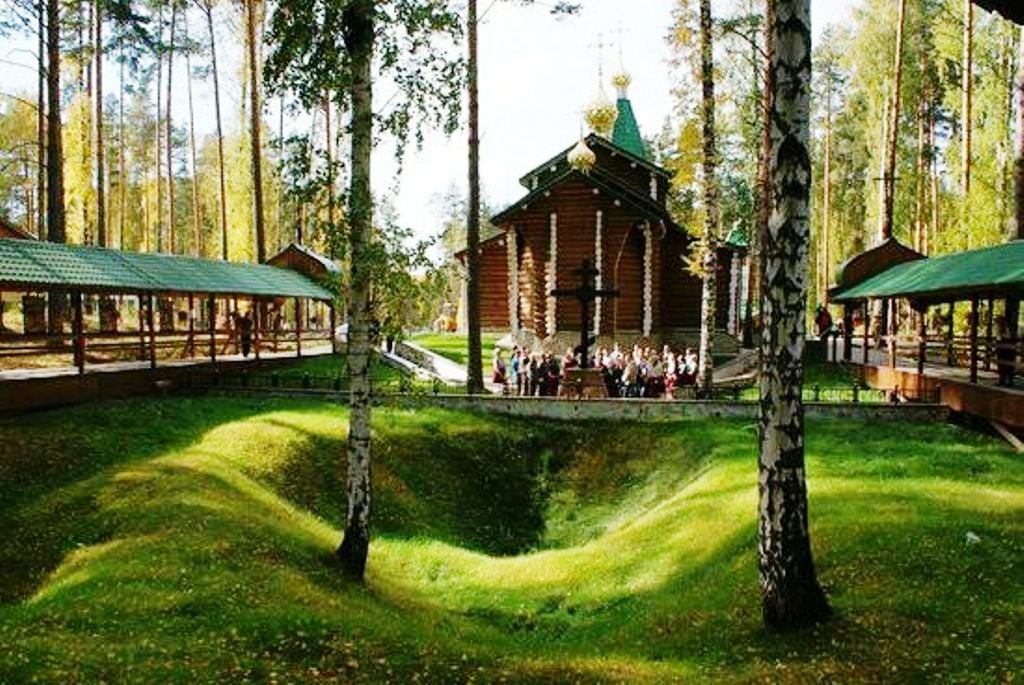
PHOTO: The Four Brothers mine (collapsed) is now visible as a depression in the ground. In July of each year, the former mine pit is covered with fragrant lily plants for the ceremony marking the regicide.

A tall cross marks the edge of the mine shaft – visible as a depression in the ground – where the remains of Nicholas II, his family and four faithful retainers were first discarded after their brutal murder in the basement of the Ipatiev House in Ekaterinburg.

The horrific crime that took place here at the Four Brothers mine near the village of Koptyaki – 15 km north from Ekaterinburg – was carried out in the early morning hours of 17th July 1918, when the men who took part in the regicide, threw the bodies of the Imperial family and their four retainers into the mine.

The murderers returned the following night, retrieved the remains, and reburied them in two separate graves at Porosenkov Log, situated about 3.8 km away.

Holy Royal Martyrs, pray to God for us!
Святы Царственные мученики, молите Бога о нас!

***

In honour of the 20th anniversary of the founding of the Monastery of the Holy Royal Martyrs, a video history of the monastery has been prepared. It consists of three parts and describes a chronology of events from the life of the monastery at Ganina Yama, between 1990 to 2020.

Part I: the period from 1990 to 2000 (Duration: 2 minutes, 25 seconds)

Part II: the period from 2000 to 2003 (Duration: 3 minutes)

Part III: the period from 2004 to 2020 (Duration: 4 minutes, 20 seconds)

© Paul Gilbert. 13 November 2020

Documentary – The Murder of the Romanovs: Facts and Myths

Daria Strizhova talks with Elena Chavchavadze about her new documentary. Please note that this video is only available in Russian (click on the image above to watch)

On July 19, the television channel Russia-1 showed the second film of “The Murder of the Romanovs” documentary project. This new Russian-language documentary sheds light on one of the most tragic pages in the history of the Russian state.

The first film, “Regicide: A Century-long Investigation” tells about the origins of the investigation into the murder of the Imperial Family. The second part, “Murder of the Romanovs: Facts and Myths” is the result of the painstaking research work by E. N. Chavchavadze and G. I. Ogurnaya—who together, introduce the viewer to unique archival documents.

—Elena Nikolaevna, tell us about the background of making these films dedicated to the Imperial Family. How did it all begin?

—Part of the code of honor for me and my family is to always seek the truth in everything. By the time we started working on the films on the murder of the Romanov Dynasty for the TV channel Russia, we had already filmed five episodes of the series, “Romanovs: A Royal Matter,” “War and Peace of Alexander I,” “Alexander III: Strong, Powerful.” The material itself showed us which direction to go next. And it was impossible to avoid the topic of regicide.

I was worried, realizing that the topic is too big. Let’s recall the words of Voykov who said: “The world will never find out what we did to them.” This poses a challenge to researchers. Is it possible to unravel this tragic mystery? But you know how it is: Fear has big eyes. As far as I know, a number of fundamental studies by anthropologists, criminologists, geneticists, graphologists, and other scientists are nearing completion. And we hope that the next film in the cycle will be dedicated to the results of this long-term work.

—Your film is called, “Murder of the Romanovs: Facts and Myths.” I’d like to dwell on this in more detail. What is a fact and what is a deliberately created myth? The film quotes Lenin’s words: “We don’t need to tell Joffe the truth (about the murder), so it will be easier for him to lie later.”

—We tried to clearly show the mechanism by which a myth turns into fact, and a fact becomes a myth and dissolves with time.

I must say that the plan of “blurring” the truth worked on a global level. All the Bolsheviks’ negotiations and diplomatic correspondence was constructed so as to divert suspicion away from the top of the Soviet leadership. This is a very thoughtful, masterly calculation. Only such a position would have allowed them to remain in power, as at that time they were entirely dependent upon Germany.

And how “interesting” the newspaper articles were! How well they were edited—again with an understanding of the colossal power of influence on the public consciousness! It’s in the papers, so it must be true.

When the investigator Sokolov managed, with much difficulty, through Prince Orlov’s agency in Russia, to get an agitation pamphlet talking about the murder of the Imperial Family while he was in France, he included it to the case. But this primitive article, intended for the proletariat, had been carefully edited by someone by then. We don’t know who the editor was, but probably it was Pokrovsky, a famous falsifier of history. But he was certainly a very astute man. But unfortunately, Sokolov took it all at face value. And today many people adhere to the theory that was presented in his book, because it was the only work on the topic of regicide at the time. And given that the book was created under certain conditions, under the pressure of the circumstances, and on the basis of such obviously unreliable documents, who will figure out the truth? The investigator Sokolov did a great job, and no one belittles the significance of his works for history. But, you know, the details settle everything.

—Unfortunately, the majority form their personal opinion not based on documents, not on the materials of the investigation, but on articles in the press and online. How many books have been written justifying this or that theory!

—And therefore, I think it’s necessary to dive into the archival material, to compare facts. Who was familiar with whom and when; where could this or that declaration have come from? Beginning my work on the film, the director G. Ogurnaya and I decided not to stick to any of the previously voiced theories. We simply did our work, during which connections and details started to emerge. Our films feature previously unknown documents that have only now become available—in particular, the note of Colonel Baftalovsky, which is of great interest. It is the testimony of the officers who were the first to arrive at Ganina Yama.

—There is an opinion, including from experts, that they could in no way have destroyed their bodies at Ganina Yama; and there are opposite statements as well. This is difficult to understand…

—Clothing and personal items were burned. Baftalovsky’s note is a very important testimony. Undoubtedly, the interest around this topic is so great that various people sprout up like mushrooms in the information space, clearly and colorfully expounding various theories. And amateur trackers—they are innumerable—sometimes write appalling nonsense. But people believe them, revere them, and look up to them. But there is another position, which was voiced by His Holiness Patriarch Kirill, and for us it is the only true and possible one: it is the path of painstaking work and conscientious scientific methods. I believe the truth will be voiced by the Russian Orthodox Church.

The first film—“Regicide: A Century-long Investigation”—is dedicated exclusively to the murder that was committed in the Ipatiev House. The second film—“Murder of the Romanovs: Facts and Myths,” which was aired thanks to the channel Russia-1 and the History of the Fatherland Foundation—covers a short period of time in the summer of 1918 and reveals a certain connection between three crimes. At first we had the idea of focusing more on each of the events and making an individual film for each—on Perm, Alapaevsk, and Ekaterinburg—and we could have gathered enough material for this. But, unfortunately, we were limited by screen time. So we tried to isolate the main points.

Even now you can find opinions among the researchers dealing with the Romanovs that, for example, Alapaevsk (the murder of the Grand Duchess Elizabeth) and Perm (the murder of Grand Duke Michael) were both the decision of the local Council of People’s Commissars. Gabriel Myasnikov, for example, wrote an entire book about this. But when we went to Perm and started talking with people who work in the archives with the originals, we were presented a completely different picture. We were fortunate enough to meet some wonderful archivists.

—You managed to convey their very conscientious attitude to the work: It’s not just an academic interest, but a deep personal experience.

—People work for decades with great love for their inconspicuous but extremely important work, not expecting any encouragement or reward. They know their topic incredibly well. As you have correctly noted, they perceive what happened as if it happened yesterday in front of their eyes. Just like us, they perceive these events very deeply, and I’m glad that our joint work on the film expands our circle of not only professional acquaintances, but also personal ones.

—The film provides a unique archival audio recording. How did you manage to get it?

—It’s a restored archival audio recording that was preserved as “top secret.” It just recently became available to researchers, and, indeed, it sheds light on many facts. Other materials are stored in the Russian state archive of socio-political history. Many storylines from this story were not included in the film. We would be happy to continue this work, but not before all the appointed examinations are finished. This is science, not the pursuit of spectacular sensations. Even if the resolution of the investigation doesn’t suit someone, or disappoints someone, or someone says: “No, it can’t be,” because some materials came from people who aren’t very religious, for example—it’s still an insufficient argument.

—How much only the information trail from Geliy Ryabov is worth…

—Geliy Ryabov became a believer in much thanks to what happened. He spoke with Archpriest Alexander Shargunov and passed on some of his findings to him. We filmed Fr. Alexander for “Regicide: A Century-long Investigation.” Ryabov’s second wife told us a lot. All the circumstances of his story turned out to be simpler and more logical, and in the end, everything really falls into place, like pieces of a puzzle.¹

The murder of Tsar Nicholas II is spoken of as a ritual act, but it would be more correct to speak of it as sacred; and I, as a researcher, cannot completely deny this. But to be fair, it should be said that when we were in New York, working with newspapers published before the revolutionary events of 1917, we came across cartoons in articles about Russia where the head of Emperor Nicholas II was drawn separately. Can be this be considered an argument for the theory about his decapitation? I don’t think so. Why would they have carried his head to Moscow, thus taking a completely unjustified risk, since random people could have witnessed it? And as you’ve probably already realized from the documents presented in our film, the last thing in the world Lenin and his cohorts wanted was to be connected with the murder of Emperor Nicholas—for political gain, of course. And these people knew how to appreciate benefits.

—In other words, the expression “sacred murder” has a symbolic meaning?

—The expression “sacred murder” is just not only in relation to the Sovereign Emperor Nicholas Alexandrovich, but first of all to Grand Duke Michael Alexandrovich, who in fact was the main contender for the Russian throne.

The reception of power was postponed until the Constituent Assembly was called. And if Kolchak had managed to win, no doubt the Constituent or National Assembly would have been called first. It’s quite likely that it would have called Michael Alexandrovich to head the state, because the dynasty was not interrupted. The Pavlovian Laws (the Act of Succession of 1797) provided that if someone leaves, then another member of the dynasty is placed on the throne by force of law, “so the state wouldn’t be without heirs, so the heir would be appointed by the law itself, so there wouldn’t be even the slightest doubt as to who is to inherit, so as to preserve the right of birth in the inheritance, without violating the rights of the natural heir, and to avoid difficulties in the transition from generation to generation.”

That’s why the murder of Grand Duke Michael Alexandrovich was first. The Bolsheviks weren’t sure of their position; they had to hurry. According to the documentary evidence, the greatest amount of disinformation was aimed at concealing the murder of Grand Duke Michael Alexandrovich.

As bitter as it is to realize, investigator Sokolov and other researchers paid very little attention to the investigation in Perm. The official story is that it was a disappearance. A man disappeared. He was there, and then he suddenly disappeared. There was a lot of evidence that he was seen here and there, then in Harbin, then somewhere else. The officers swore they caught a glimpse of him in the crowd—a mass psychosis, an unwillingness to accept the reality. If Michael Alexandrovich is alive—no matter where—it means they have hope. And Russia has hope. Do you get it? This is a very deep motive. And it is this motive that can cast doubt on all such evidence taken together.

When we put the three murders in a line, a lot of things became obvious. At that time, the English Consul Preston—who reported in London on what was happening—was in Ekaterinburg, along with a mass of representatives of international organizations, including the American, Finnish, and Swedish Red Cross. It was full of outside observers. The Brest Peace, which was treasonous to Russia, had already been concluded. The Germans were sitting in the Council of People’s Commissars—just like the Americans sat in our government under Chubais² a few decades later.

—There is the view that a “ticking time bomb” was placed under the edifice of the Russian state at this time. What do you think about this?

—I agree with this hypothesis. It’s no accident that the name “Union of Soviet Socialist Republics” doesn’t have the word “Russia” in it. An interesting fact: In August 1916 in Switzerland, there was a meeting of bankers from warring powers, including Germany, to which Russia was not invited.

Russia was to be divided into spheres of influence according to the principle of divide and conquer. This would have been impossible to do under the existing monarchy. Lenin was entrusted with ensuring that Russia lose the war. The plan was to have Russia leave the war through the revolution and, as a result, violate the agreements with its allies about how no one warring party should conclude a separate peace treaty. This would automatically exclude Russia from the list of future winners, which is what happened. A massive information attack to discredit Tsar Nicholas II was carried out throughout the entire world. When we were dealing with this historical period for the film “Revolution: A Trap for Russia” and were communicating with English researchers, they said that in England society was even more certain than in Russia that revolution was coming in Russia, that the Tsaritsa was a German spy, and that everything was controlled by Gregory Rasputin, and so on. That’s how the propaganda worked.

0291a

—One of the conclusions of your film is that the facts of the history are very malleable, and to establish the truth, we still have to reexamine and reevaluate our past. The question for modern man is: If this was done on such a scale and with such success, is it possible that the mechanism turning myths into facts is still active today?

—Of course. We see this in the example of our brothers in Ukraine, or if we look at what is happening in the United States right now. If we replace the word “proletariat” with “black,” we’ll get a traced copy of the events of a century ago in Russia. The scenery changes, but the rhetoric remains the same: “oppressors and the oppressed”—it’s nothing new.

There’s an expression: You have to accept your past, your successes, and your failures. It seems to me this is happening in Russia now. The best thing we can do is to accept the historical truth. It’s my Russia, and I accept its history as God gave it to us, to paraphrase Pushkin.

***

1. Together with Alexander Avdonin, in 1979, Ryabov discovered the remains that are believed to belong to the Royal Martyrs.—Trans.

2. A Russian politician and businessman who was responsible for privatization in Russia as an influential member of Boris Yeltsin’s administration in the early 1990s—Trans.

© Daria Strizhova / Pravoslavie.ru. Translated by Jesse Dominick. 27 July 2020

10,000 march in Royal Martyrs procession in Ekaterinburg

The Ekaterinburg Diocese of the Russian Orthodox Church hosted its annual Divine Liturgy and Cross Procession in honour of the Holy Royal Martyrs last night from the Church on the Blood in Ekaterinburg to the Monastery of the Holy Royal Passion-Bearers in Ganina Yama.

Some 10,000 Orthodox faithful joined in the Cross Procession this year, from the Church on the Blood to the Monastery of the Holy Royal Martyrs, built on the site where the remains of Nicholas II, his family and four retainers were first callously discarded, before they were later reburied at Porosenkov Log some 1.3 km away.

The size of the procession was significantly reduced this year due to the COVID-19 Pandemic. The local authorities had urged the faithful not to participate. In 2018, 100,000 participated in the Divine Liturgy and Cross Procession on the 100th anniversary of the Holy Royal Martyrs, and 60,000 in 2019.

svx9

svx5

svx7

svx10

svx1

svx4

svx6

svx8

The evening began with the Divine Liturgy celebrated on the square in front of the Church on the Blood by Metropolitan Kirill of Yekaterinburg and Verkhotursky , His Grace Bishop Methody of Kamensk, His Grace Bishop Evgeny of Nizhny Tagil, His Grace Bishop Alexei of Serov, and His Grace Bishop Leonid of Argentina and South America.

After the Divine Liturgy, the faithful began a 21-km Cross Procession, along the same route used to transport the murderers used to transport the bodies of the murdered Tsar Nicholas II and his family in 1918.

cross1

cross2

cross3

cross4

cross5

cross6

The procession was accompanied throughout by mobile groups from the Orthodox Mercy service, Tsar’s Days volunteers, representatives from the Nika charitable foundation, and Cossacks of the Orenburg Military Cossack Society, all of whom provided various means of assistance to the pilgrims.

Around 6:00 AM, the procession headed by Metropolitan Kirill of Yekaterinburg and Verkhotursky and the hierarchs and clergy reached the Monastery of the Holy Royal Martyrs, where the monks greeted the pilgrims with the ringing of the monastery bells.

cross7

Upon arrival, a moleben was served to the Holy Royal Martyrs and Metropolitan Kirill addressed the faithful:

“We pray and believe that the Lord, through the prayers of the Holy Royal Martyrs and Confessors of our Church, still preserves our land and covers it with His Heavenly covering. We hope that with God’s help we will lead an Orthodox Christian way of life and will take an example from righteous people, such as the Holy Royal Family and their faithful retainers, and all those who laid down their lives for our homeland and our Holy Church. Through their prayers, the Lord will forgive and have mercy on all of us by the prayers of the Most Holy Theotokos, the Holy Royal Martyrs, and all the saints who have pleased God from time immemorial.”

cross8

The Tsar’s Days celebrations continue tonight in Alapaevsk where the Grand Duchess Elizabeth Feodoron, the Nun Barbara, and Grand Duke Sergei Mikhailovich, the Princes of the Imperial Blood Ioann (John) Konstantinovich, Konstantin Konstantinovich, Igor Konstantinovich, and Prince Vladimir Pavlovich Paley, and Grand Duke Sergei’s secretary Fyodor Remez were martyred on July 18, 1918.

287

Святой Царь Мученик Николай, Моли Бога о Нас!
Holy Royal Martyr Nicholas II, Pray to God for Us!

© Paul Gilbert. 17 July 2020

The face of the Tsar-Martyr Nicholas II seen July 1919

0286

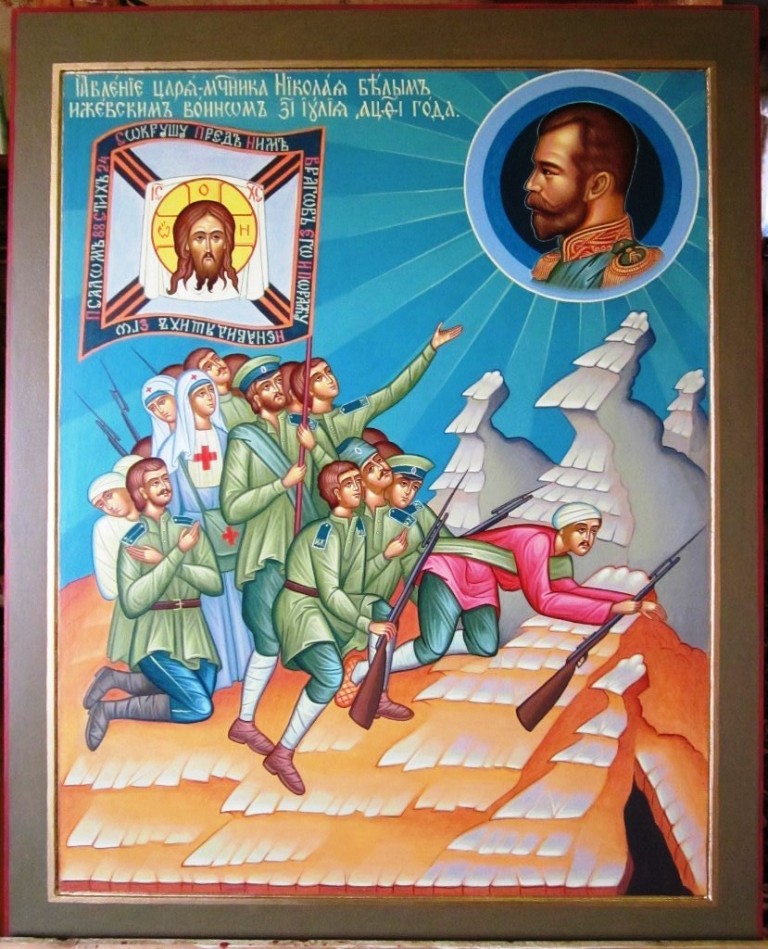
Did White Russian soldiers see a vision of Tsar-Martyr Nicholas II in July 1919?

According to the memoirs of the wife of the commander of the 1st Izhevsk Rifle Regiment – Vera Mikhailovna Mikhailova, who, along with her husband, were fleeing across Russia during the Civil War to the safety of the Far East, they did!

“It was a day impossible to forget,” wrote Vera Mikhailovna Mikhailova in her diary:

“During the month of July 1919 the heat was incredible, the humidity unbearable. Our 1st Izhevsk Regiment, made up of volunteers, mostly workers of the Izhevsk arms factory, were tormented by raids of partisan gangs and Bolshevik sympathizers. All the time it was necessary to fight back, to drive them back to drive them out of the area they occupied. This lasted for several days.

“Finally, after many days of fierce, bloody battles, our regiment was given a reprieve. The situation was terrible: it was no longer a brave military regiment, but a group of tortured, tired men, who were barely alive. Their tunic collars were unfastened, their belts loose and dangling, their legs weak. Many, shuffled their feet as they walked, raising dust along the way. Some held on to each other so as not to fall, others fell from sheer exhaustion. The heat was pestering, terrible, we were thirsty, our mouths dry, and not a drop of water to be had – all the reserves had run out.

“The sky is clear, blue, not a cloud to be seen. The sun burns mercilessly. Suddenly a loud piercing cry is heard:

“Look at the sky!” Everyone instantly woke up, stopped, raised their heavy heads, and the following vision appeared before them: a large white disk appeared in the sky, and on it appears the profile of the Sovereign Emperor Nicholas II, very clear and precise.

“Everyone froze at the sight of this wonderful phenomenon. Then, raising their hands to the sky, they began to desperately shout: “Tsar! Sovereign, Father Tsar!” … And then they knelt down and began to pray earnestly and ask: “Tsar … Sovereign … Father Tsar, help us, pray for us …” It is hard to say how long this vision lasted, but it seemed for a long time. Then gradually the vision began to turn pale and completely disappeared. It became the same blue sky, without a single cloud to be seen.

“Suddenly a command was heard: “Get up! Be strong! Attention! March!” Everyone immediately came to life and walked with a brisk military step. Faces were cheerful, joyful. Everything was forgotten: thirst, hunger, heat, fatigue. All the while their eyes were fixed on the sky and in a whisper they said: “He is here! … With us … He prays for us!”.

“When the excitement subsided, the men began asking questions: “What year is it?”. . . “Year? It is the nineteenth …” . . . “And what is the month and day?” . . . “July” . . . After continuous heavy battles the men had lost track of time. The rebirth of these men, tormented by heat, fatigue, thirst, barely alive – into a group of healthy, strong and vigorous combat soldiers, how can this be explained? How is this not fiction, a dream, or an hallucination! I myself was a witness to everything seen and heard.

“Maybe, and probably, there is still someone alive who saw and was present at this miracle, I ask them to respond and confirm. And to add, if that I forgot, missed. Please remind!

“Many decades have since passed. But every year in the month of July, I am nervous and terribly worried, as if all this happened yesterday. The whole vision of what happened clearly stands before my eyes, which have long been senile. And back then, in 1919 I was 23 years old …

“I personally am sure that this miraculous phenomenon and occurred precisely on July 17, when the Tsar seemed to say goodbye forever to his beloved troops.”

© Paul Gilbert. 12 July 2020

Icon of the Mother of God “Of the Three Hands”

0285

The Icon of the Mother of God “Of the Three Hands” is located
in the Upper Church of the Church on the Blood in Ekaterinburg

Today, 11th July, the feast of the Icon of the Mother of God “Of the Three Hands”, was celebrated in the Church on the Blood in Ekaterinburg. The icon belonged to the Tsar’s family, who venerated it during their imprisonment in the Ipatiev House in 1918. It remained in their possession until the very last minutes of their earthly life.

This image was found after the regicide in the Ipatiev House. It was later carried out of Russia by a member of the Kolchak army. The icon proceeded through China to the United States of America and Canada, and in the early 1920s, through the efforts of the officers devoted to the sovereign, it was transferred to the Dowager Empress Maria Feodorovna. The icon remained in the circle of the Romanov family, passing from generation to generation until 2003.

0285b

The Icon of the Mother of God “Of the Three Hands” which belonged to the Imperial Family

In July 2003, the wife of the emperor’s nephew Olga Nikolaevna Kulikovskaya (1926-2020) solemnly presented the Icon of the Mother of God “Of the Three Hands” to the Church on the Blood, built on the site of the murder of the Holy Royal Martyrs, and thus fulfilled the death wish of her husband Tikhon Nikolaevich Kulikovsky (1917-1993), who owned the family heirloom for many decades.

By the Providence of God it was arranged that the icon arrived on 10th July 2003 for the evening liturgy on the eve of the feast of the Icon of the Mother of God “Of the Three Hands”.

With the feast of the Icon of the Mother of God “Of the Three Hands” the Tsar’s Days officially begins. A Divine Liturgy will be performed this evening in the Church on the Blood by Metropolitan Kirill of Yekaterinburg and Verkhotursky. Beginning today, we will remember the final days and the last moments of the earthly life of the Holy Royal Martyrs.

© Paul Gilbert. 11 July 2020

Program for Royal Days 2020 in Ekaterinburg

0279e

The Church on the Blood, built on the site of the Ipatiev House in Ekaterinburg

The Moscow Patriarchate and the Ekaterinburg Diocese have confirmed that the Royal Days [aka Tsar’s or Imperial Days] will be held from July 12 to 20, 2020.

A series of memorable ceremonial events symbolizing the unity of the Russian people in their understanding of the history of the Fatherland, the ongoing rehabilitation of the good names of the emperor and his family, and the unification of the Church of Christ and traditional values. In light of the COVID-19 pandemic, all events will be held in compliance with all necessary safety and sanitary measures.

The main event will be held on the night of 16/17 July, when a Divine Liturgy will be performed at the Church on the Blood, where the lives of Emperor Nicholas II along with his family and four faithful servants tragically ended. The Divine Liturgy will be followed by a 21-km Cross procession to the Monastery of the Royal Martyrs at Ganina Yama.

On July 12th, the day marking the Feast of the Apostles Peter and Paul, the XIX Royal Days Festival of Orthodox Culture will begin.

0279g

Pilgrims gather outside the Church on the Blood on 16th July 2018

XIX Royal Days Festival of Orthodox Culture

The XIX Royal Days Festival of Orthodox Culture in the Ural capital, will feature several dozen religious and secular events of various formats honouring the memory of the Holy Royal Martyrs.

A cultural program has been planned, which includes cultural, historical, musical and educational events, museum and library exhibitions, concerts, lectures and meetings with Russian historians and writers.

The festival will be held in the conference hall and the Tsarsky Spiritual and Educational Center, located in of the Patriarchal Compound on the grounds of the Church on the Blood.

0279d

Pilgrim holds a portrait of Tsar-Martyr Nicholas II

The bell ringing festival “Evangelize, the Land of the Urals!” also opens on July 12th. A bell ringing concert will he held in the square in front of the Great Zlatoust Church, which features a magnificent bell tower. The concert will be attended by the ringer of the Ekaterinburg Metropolis, the choir of the Great Zlatoust Church; and poetry readings by priest Victor Yavich.

On the same day, July 12, an Open Gymnastics Championship will be held on the embankment of the city pond facing the Church on the Blood. The event is dedicated to Emperor Nicholas II – the founder of the Olympic movement in Russia.

0279a

Thousands gather outside the Church on the Blood on the night of 16/17 July

0279b

Thousands gather outside the Church on the Blood on the night of 16/17 July

0279c

Thousands gather outside the Church on the Blood on the night of 16/17 July

The main events of the Royal Days

The main events of the Royal Days will begin on July 15 when a Divine Liturgy will be performed in the Monastery of the Holy Royal Martyrs at Ganina Yama.

Then culminating events will be held on July 16 and 17.

On July 16, at 13:00, a small daytime procession will be held along the Ekaterinburg Way of Sorrow to mark the arrival of the Royal Martyrs in Ekaterinburg from Shartash Station (149 Kuybyshev St.) to the Church on the Blood (built on the site of the Ipatiev House) on 30th April 1918 [Nicholas II, Alexandra and their daughter Maria arrived, Olga, Tatiana, Anastasia and Alexei arrived several weeks later].

Then, at 15:00, Vespers will be held with the Akathist to the Holy Royal Martyrs in the Lower Church of the Church on the Blood,

At 16:30, an all-night vigil will begin on Ulitsa Tsarskaya, in front of the Church on the Blood.

At 17:00 there will be an all-night vigil in the Monastery of the Holy Royal Martyrs at Ganina Yama.

At 23:30 the main service of the Tsarist days – the night Divine Liturgy will commence in front of the Church on the Blood on  Ulitsa Tsarskaya. The service will end in the early hours of July 17, after which at 02:30 Metropolitan Kirill of Yekaterinburg and Verkhoturye will lead the Cross Procession from the Church on the Blood to the Monastery of the Holy Royal Martyrs – a journey of 21 km. This year’s procession is expected to attract tens of thousands of pilgrims from across Russia [As Russia’s borders are currently closed to foreigners, this year’s Tsar’s Days events will only be attended by Russian citizens]. Upon the arrival of the procession at Ganina Yama, a prayer service will be held for the Holy Royal Martyrs. 

The first Tsar’s Days was held in Ekaterinburg in 2001. In 2018, the year marking the 100th anniversary of the regicide in the Ural capital, attracted more than 100,000 Orthodox pilgrims, monarchists, among others from across Russia and around the world. In 2019, some 60,000 pilgrims took part.

0279f

Святы Царственные мученики, молите Бога о нас!

Royal days in Alapaevsk

The Royal Days will continue with the Remembrance Days of the Martyr Grand Duchess Elizabeth Feodorovna Romanova and the *Alapaevsk Martyrs, which will be held in Alapaevsk – 148 km northeast of Ekaterinburg.

On July 17 at 17:00 an all-night vigil will begin in the Monastery of the Holy New Martyrs and Confessors of the Russian Church in the city of Alapaevsk.

On July 18, at 00:00, the Divine Liturgy will be celebrated in the Holy Trinity Bishop’s Metochion of Alapaevsk, and at 02:30 a prayer service will be held with the singing of an Akathist to the Holy Martyrs Grand Duchess Elizabeth and Nun Varvara.

At 03:30 at the end of the Liturgy, a procession will begin from the Holy Trinity Bishop’s Compound in Alapaevsk to the School and further to the Monastery of the Holy New Martyrs and Confessors of the Russian Church, built on the site where the bodies of the *Alapaevsk Martyrs were dumped into the mine alive on the night of July 18, 1918.  At 05:30 and 09:00, two Divine Liturgies will be performed there.

*The Alapaevsk victims included: Grand Duchess Elizabeth Feodorovna, Grand Duke Sergei Mikhailovich, Princes of the Imperial Blood Ioann, Konstantine and Igor Konstantinovich, Prince Vladimir Paley (son of Grand Duke Paul Alexandrovich), and two faithful servants:sister of the Marfo-Mariinsky Convent Varvara (Yakovleva), and Fyodor Semyonovich (Mikhailovich) Remez, secretary of the Grand Duke Sergei Mikhailovich.

SOURCE: Ekaterinburg Diocese Press Release

© Paul Gilbert. 3 July 2020