Nicholas II’s love of bicycles and cycling

PHOTO: Nicholas II riding his American-made bicycle, purchased in July 1895, from the Pobeda Trading Company in St. Petersburg

One of the many physical pastimes of Russia’s last Tsar was cycling, an exercise which he enjoyed with all of his children. Even his son Alexei partook in this activity, on a specially made three wheel bicycle.

In the late 19th century members of the Russian Imperial Family showed great interest in two-wheeled vehicles and bicycles, including Russia’s last Tsar, who began to ride a bicycle while still a teenager. Vintage photographs show Nicholas II riding bicycles with his Danish and Greek relatives, and later on the grounds of the Alexander Palace at Tsarskoye Selo.

The first shop to offer bicycles in the Russian capital was the Pobeda Trading House, which was situated at 81 Morskaya Ulitsa (Street). In 1895, it received the status of a Supplier to the Imperial Court. It was here, in July 1895 that Nicholas II purchased for his own use a high-quality bicycle made by the American company Dayfon, at a cost of 253 rubles, a considerable sum at that time. The bicycle was equipped with a special seat, a lamp, a bell, and an air tube.

Surviving records of the Pobeda Trading House include invoices signed and paid by Nicholas II, which include delivery, cleaning and adjustment of his bicycle, as well as it’s upkeep and maintenance, in order to keep it in perfect order.

One invoice for 24 rubles, included: cleaning the bicycle, adjustments and delivery (10 rubles), a bicycle cover (8 rubles), a bicycle stand (5 rubles) and engine oil (1 rub.).

The following month, in August 1895, another invoice records that the Tsar paid for a new shift for changing gears for 10 rubles, a bicycle chain for 12 rubles and additional maintenance work for 5 rubles.

The shops accounts also indicate that the Tsar paid for a special weather-proof cover and storage for his bicycle stored during the winter months were also paid.

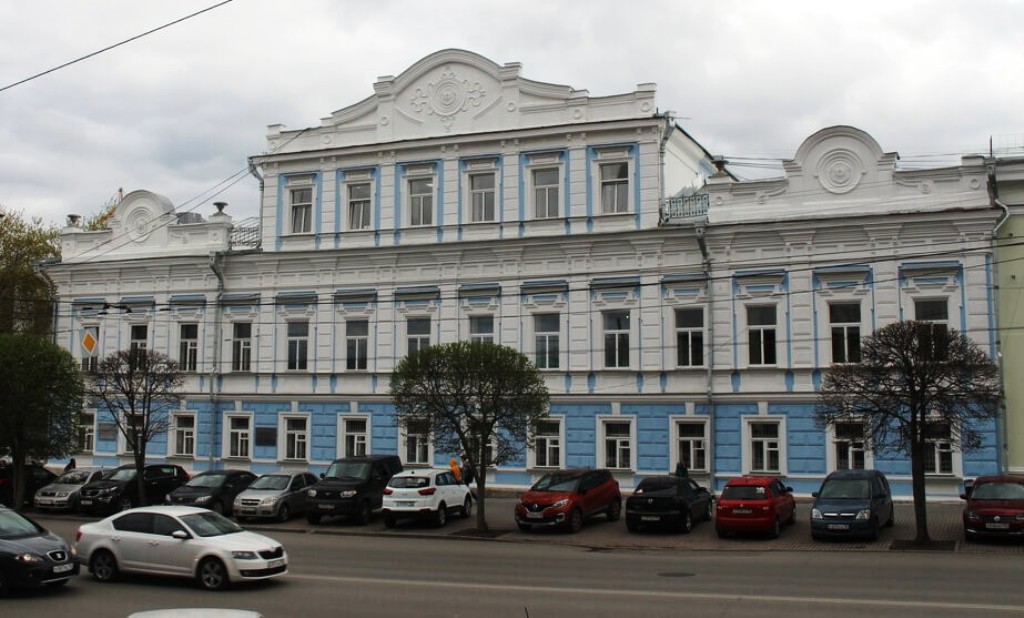
PHOTOS: view of the Pobeda Trading House at Morskaya Ulitsa (Street), 81 in St. Petersburg
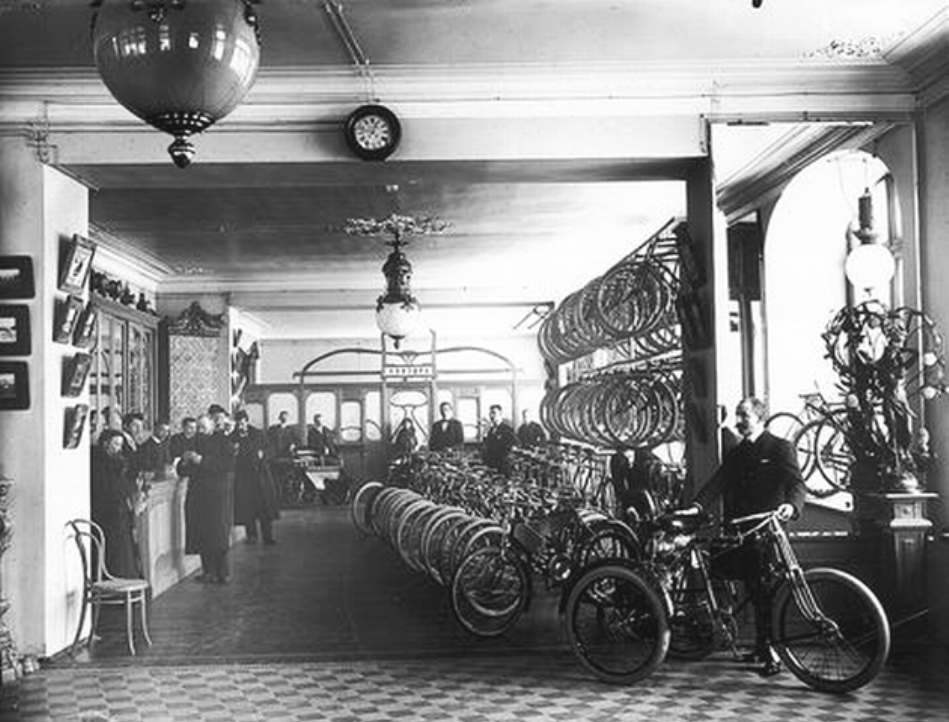
PHOTOS: view of the Pobeda Trading House – Supplier to the Imperial Court

On 31st December of that year, the Tsar decided to have his bicycle fully enamelled for 15 rubles, and the “full nickel plating of the bike” for an additional 30 rubles. Additional maintenance on the bicycle including “turning the hulls, checking the wheels, cleaning and assembly” for 8 rubles, the purchase of spare “pneumatic tires” for 45 rubles, another bicycle cover for 8 rubles. and a bicycle pump for 2 rubles. 50 kopecks.

Thus, by the end of 1895, Nicholas II had spent 381 rubles on his bicycle and spare parts. All these purchases, as well as after-sales service, were carried out in the Pobeda Trading House. The storage conditions for the Tsar’s expensive toy is also noteworthy – at the “end of the season”, the Tsar’s bicycle was packed by specialists in special covers and moved to the shop for repair and storage until the new season began in the spring.

In later years, Nicholas II ordered other models of bicycles for his wife and children, complete with special enameling and nickel plating. Among them was a two-seater, which he shared with his wife – this bicycle has survived to the present day, and is now in the Collection of the Peterhof State Museum.

The last bicycle bill was signed by “Citizen Romanov” – during his house arrest at the Alexander Palace – on 10th May 1917, when he bought rubber glue and “bicycle valves” for a modest 4 rubles 80 kopecks.
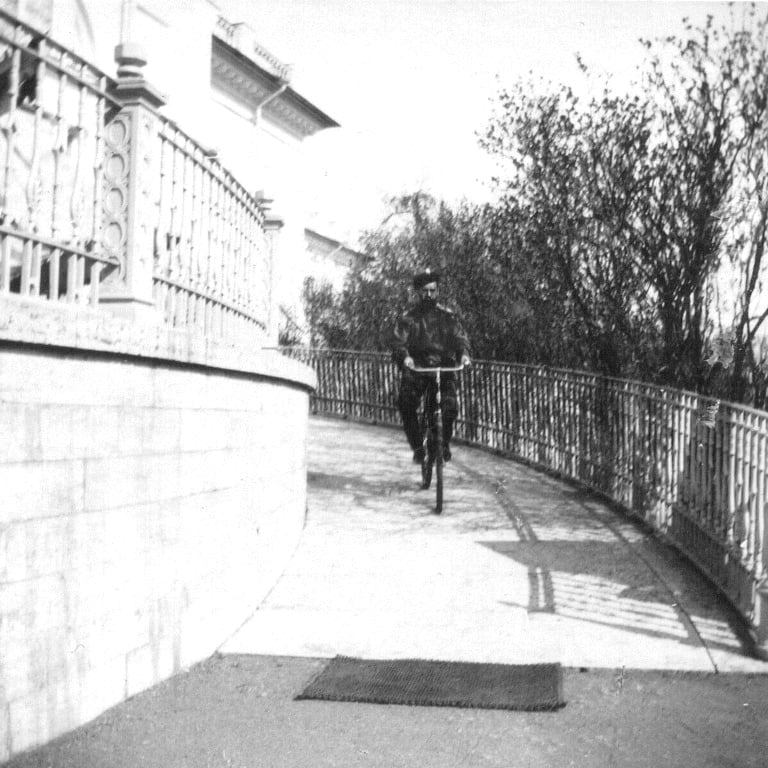
PHOTO: Nicholas II riding his bicycle on the grounds of the Alexander Palace, 1914
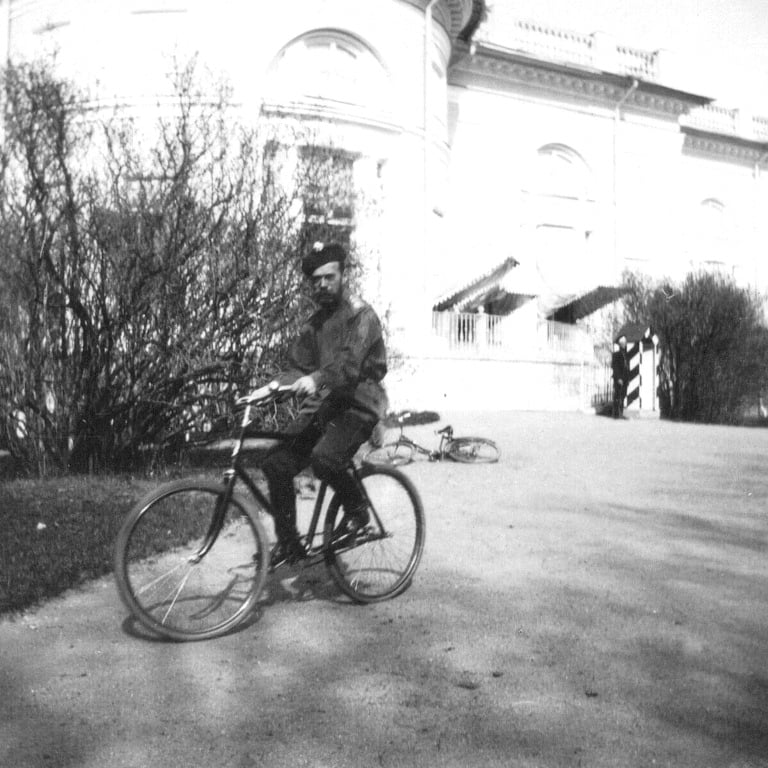
PHOTO: Nicholas II riding his bicycle on the grounds of the Alexander Palace, 1914
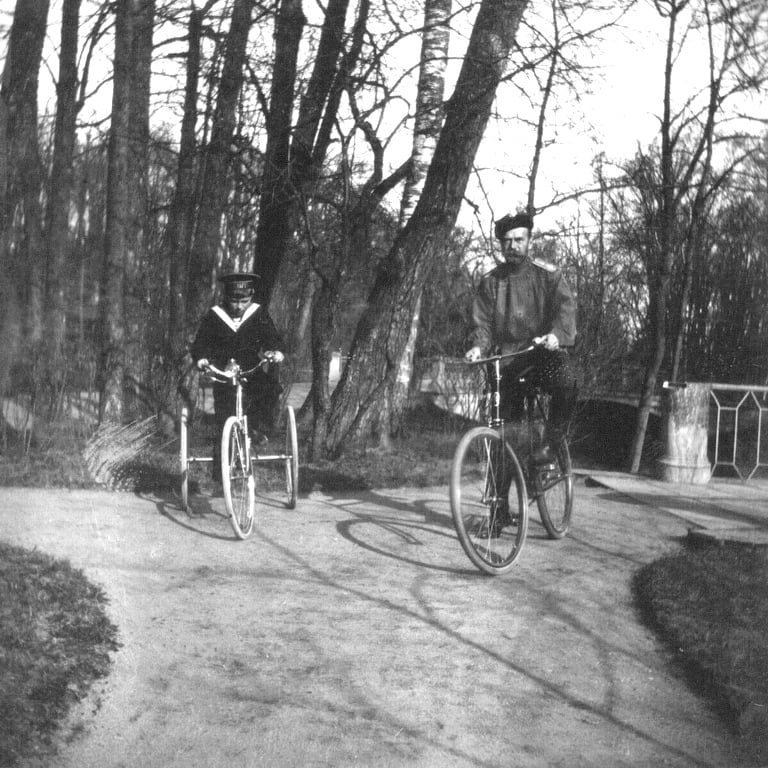
PHOTO: Nicholas II and his son Alexei riding their bicycles in the Alexander Park, 1914

The Tsar’s passion for bicycles and cycling was shared by his children. Each of them had their own bicycle, all of which were serviced by specialists of the Pobeda Trading House. The grand duchesses had girls bicycles of the same model, only different sizes, based according to their age and height. The grand duchesses bicycles had a special protector on the chain, which prevented the hems of their skirts from getting caught in the bike’s chain as they peddled.

Due to his illness [haemophila], Alexei had a special three-wheel bicycle made, which afforded him protection from falling and hurting himself, as any injury could prove fatal. His doctors also maintained the cycling would be a good exercise for his sore leg.

In 2004, the Peterhof Museum-Reserve opened an Imperial Bicycle Museum, which presents 12 rare bicycles, including those which belonged to the last three emperors: Alexander II, Alexander III and Nicholas II.

In 2013 Nicholas II’s bicycle was presented at an exhibition marking the 2014 Olympic Games in Sochi.

© Paul Gilbert. 12 July 2023
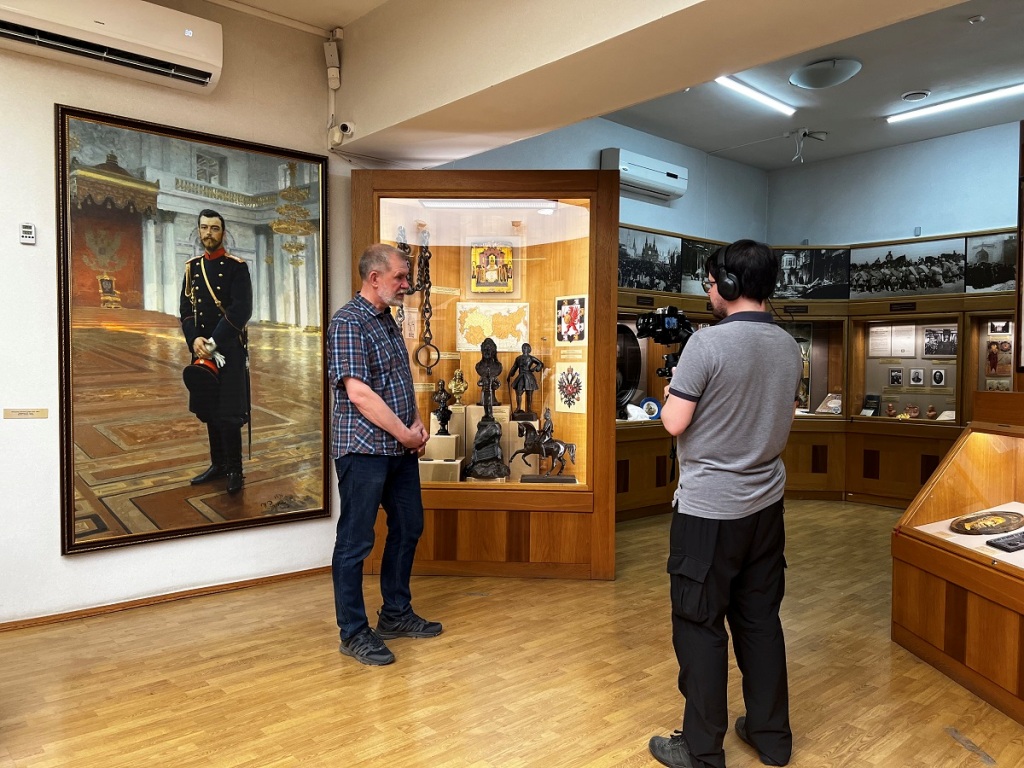
Romanov Memorial Hall to be moved to new location in Ekaterinburg

PHOTO: view of the Romanov Memorial Hall in the Museum of History and Archaeology of the Urals, a branch of the Sverdlovsk Regional Museum of Local Lore in Ekaterinburg

In the days leading up to this years Tsar’s Days events the Romanov Memorial Hall – which is currently located in the Museum of History and Archaeology of the Urals – will be moved to the Sverdlovsk Regional Museum of Local Lore in Ekaterinburg.

On 14th July 2023, the museum will present a new permanent exhibition “The Romanovs in the Urals” dedicated to the stay of Emperor Nicholas II and his family during their house arrest in the Ural city from April to July 1918.

According to the head of the public relations department of the museum Tatyana Mosunova, items from the museum’s funds, one way or another connected with the Imperial Family, will be exhibited. Among them is a unique sculpture of Alexander III by Kasli Foundries, the last time this figure was exhibited was more than a hundred years ago.

PHOTO: the former Poklevsky-Kozell mansion will be the new venue for the Romanov Memorial Hall in Ekaterinburg

According to Mosunova, the exhibition will be transferred to the 19th century Poklevsky-Kozell mansion on Malyshev Street. Local historians will help in creating an exhibition space, an agreement with the Ural State University based on the consultations of experts from the Museum of History and Archaeology of the Urals.

The General Director of the museum Alexander Emelyanov explained that the new exhibition will be extensive and will occupy five halls. The museum believes that the organization of the permanent exhibition will help both locals and visitors to the city to have a better understanding of the final days of Russia’s last Imperial Family in the Ural capital.

***

My Visit to the Romanov Memorial Hall in June 2016

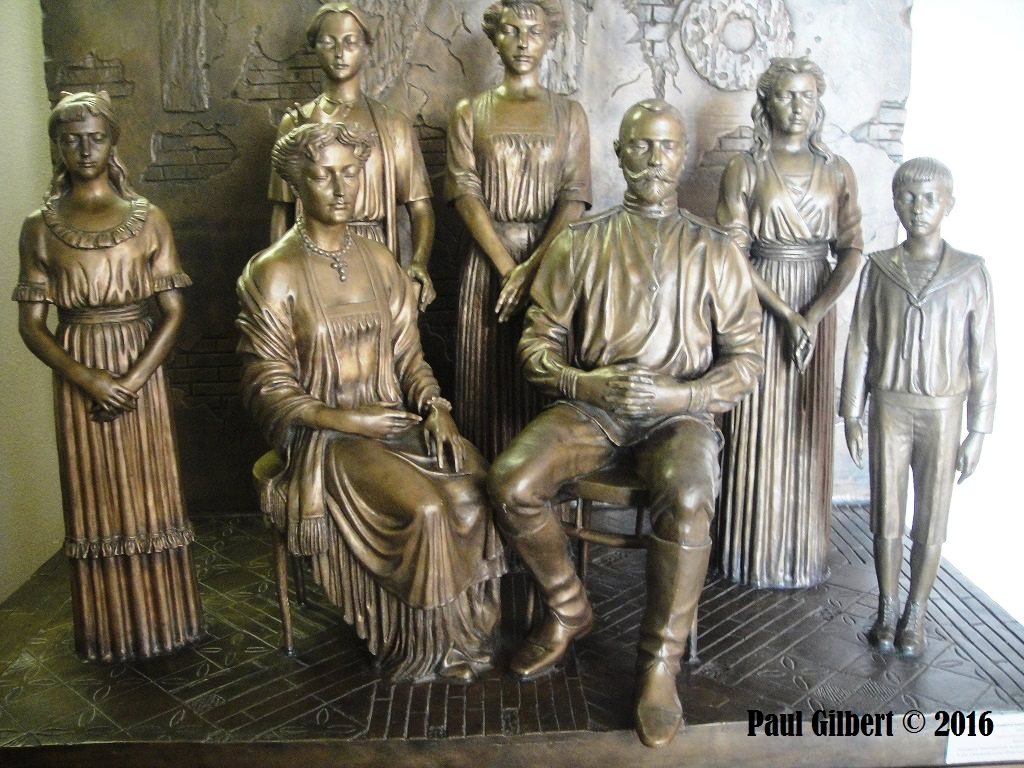
PHOTO: a miniature copy of Zurab Tsereteli’s sculpture, “Night at the Ipatiev House” greets visitors to the Romanov Memorial Hall

Situated at Ulitsa Lenina 69/10 is the Museum of History and Archaeology of the Urals, a branch of the Sverdlovsk Regional Museum. From the street, the museum resembles one of the hideous buildings from the Soviet era – but if you blink, you may miss it! Admission is 200 rubles, an additional fee is charged if you want to take photographs. One must climb a steep circular staircase to reach the Romanov Memorial Hall on the 4th floor. The ascent is definitely worth it!

A miniature copy of Zurab Tsereteli’s sculpture, “Night at the Ipatiev House” greets visitors at the entrance to the hall.

The Romanov Memorial Hall was opened in 2006. The exposition tells of the Romanov dynasty during the reign of Emperor Nicholas II (1894-1917), the tragic events of 17 July 1918 and secret burial of the remains of the royal family.

This is a very interesting museum, as it contains personal items of Nicholas II, his family and their retainers, discovered in the Ipatiev House by the White Army. It also contains many elements of decor, decoration and fittings salvaged from the Ipatiev House before its demolition in September 1977, notably the cast iron fireplace from the dining room, and the iron grille from the window of the murder room.

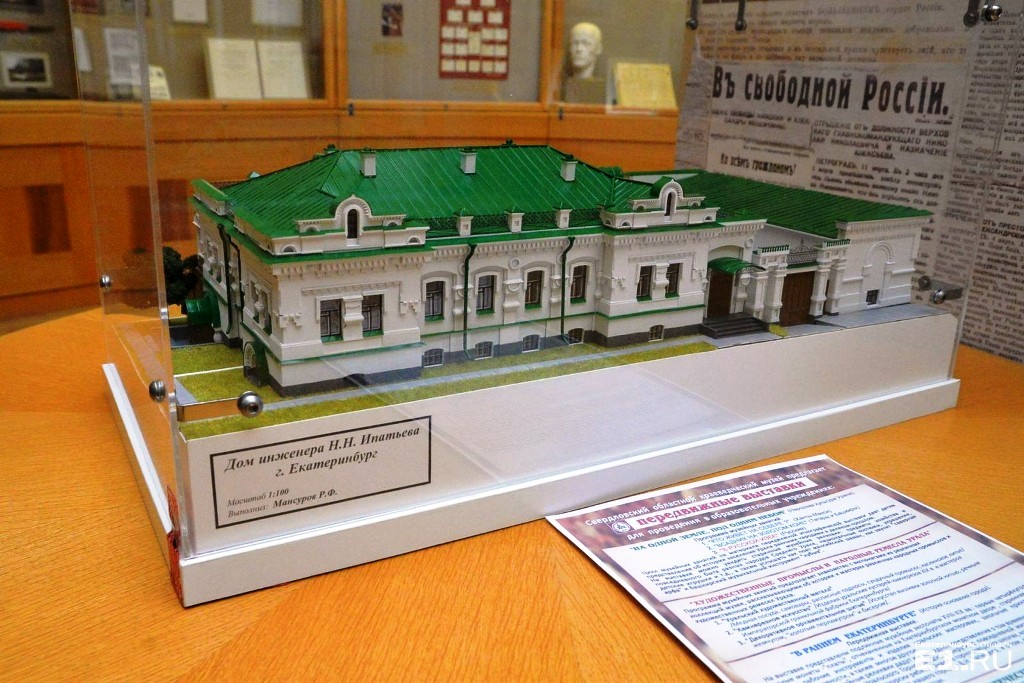
PHOTO: scale model of the Ipatiev House -renamed House of Special Purpose by the Bolsheviks – on permanent display in the ‘Romanov Memorial Hall’

Aside from the items from the Ipatiev House, are many additional exhibits of interest, including a scale model of the Ipatiev House; the reconstructed model of Nicholas II’s head by Russian forensic expert Dr. Sergei Nikitin; the Mauser pistol which belonged to the murderer Pyotr Ermakov; a portrait of Princess Louise of Hesse-Kassel (the future Queen of Denmark), maternal grandmother of Nicholas II, which formerly hung in the study of Emperor Alexander III in the Anichkov Palace in St. Petersburg.

The exposition further explores the history of the investigation of the murder case of the last of the Romanovs in the Urals, which lasted more than 100 years.

It is interesting to note that the hundreds of exhibits on display in the glass display cases in the Romanov Memorial Hall include descriptions in both Russian and English – a rarity in Russian museums.

A small adjacent room contains a photo exhibit dedicated to Grand Duke Mikhail Alexandrovich and his secretary Brian Johnston. Efforts to locate their remains near Perm are ongoing by the S.E.A.R.C.H. Foundation.

© Paul Gilbert. 11 July 2023
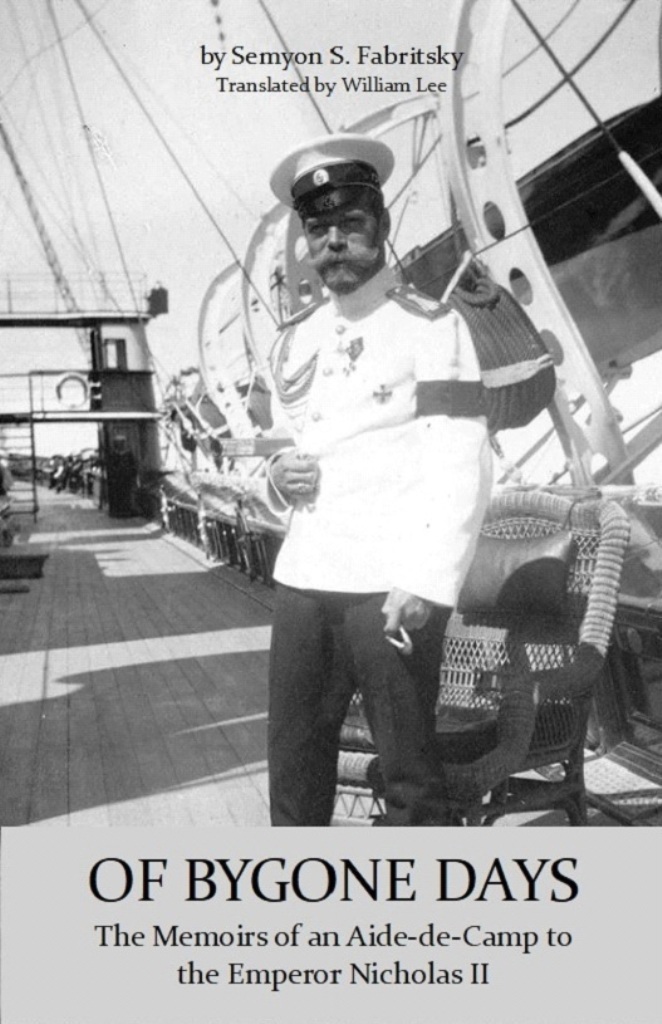
Of Bygone Days: The Memoirs of an Aide-de-Camp to the Emperor Nicholas II

*This title is available from AMAZON in the USA, UK, Canada, Australia,
France, Germany, Spain, Italy, Netherlands, Poland, Sweden and Japan
*Note: prices are quoted in local currencies

CLICK HERE TO ORDER THE PAPERBACK EDITION @ $20.00 USD

English. 214 pages, 10 black & white photos

First English translation with introduction and notes by William Lee

NOTE: The first Russian-lanaguage edition of Fabritsky’s memories was published in Berlin in 1926. The first English-language edition of Fabritsky’s memoirs was published in Canada in 2016. This title has been out of print for many years, so I am delighted to offer this new edition.

The time I spent with Their Majesties – over the course of many years and under varied circumstances – will always be the source of my most precious memories, and I am very happy to be able to share those memories now with a wide public. I hope at least to give an absolutely truthful account of what I saw and heard” – Semyon S. Fabritsky. 1926

Semyon Semyonovich Fabritsky (1874-1941) had a fascinating career during the twilight years of Imperial Russia. He began his naval career in the very first days of the reign of Emperor Nicholas II.

In 1909, Fabritsky was personally appointed Aide-de-Camp by the Emperor himself, a position he served with immense pride and devotion.

During his service to Nicholas II, Fabritsky earned both the trust and friendship of the Emperor. Through his often uninterrupted contact with Russia’s last sovereign and observing him at all hours and under a variety of conditions, Fabritsky was able to form a clear picture of Nicholas II and his family, through his own personal eye-witness observations.

He also served aboard the Imperial yachts, partaking in holidays with the Emperor and his family to the Crimea and the Finnish skerries. He shares interesting details and anecdotes about the Alexandria, Polar Star, and Standart.

This book will also be of great interest to any one with an interest to the Russian Imperial Yachts and the Russian Imperial Navy.

Fabritsky provides great insight to the treachery, cowardice, and deceit which prevailed every where. He acknowledges ministers and generals who were either unworthy of their posts or unfit for them. Sadly, it was these men who surrounded Nicholas II during his 22+ year reign, who contributed to the downfall of monarchy and the destruction of the Russian Empire in 1917.

©  Paul Gilbert. 4 July 2023
Zhanna Bichevskaya marks her 81st birthday

074

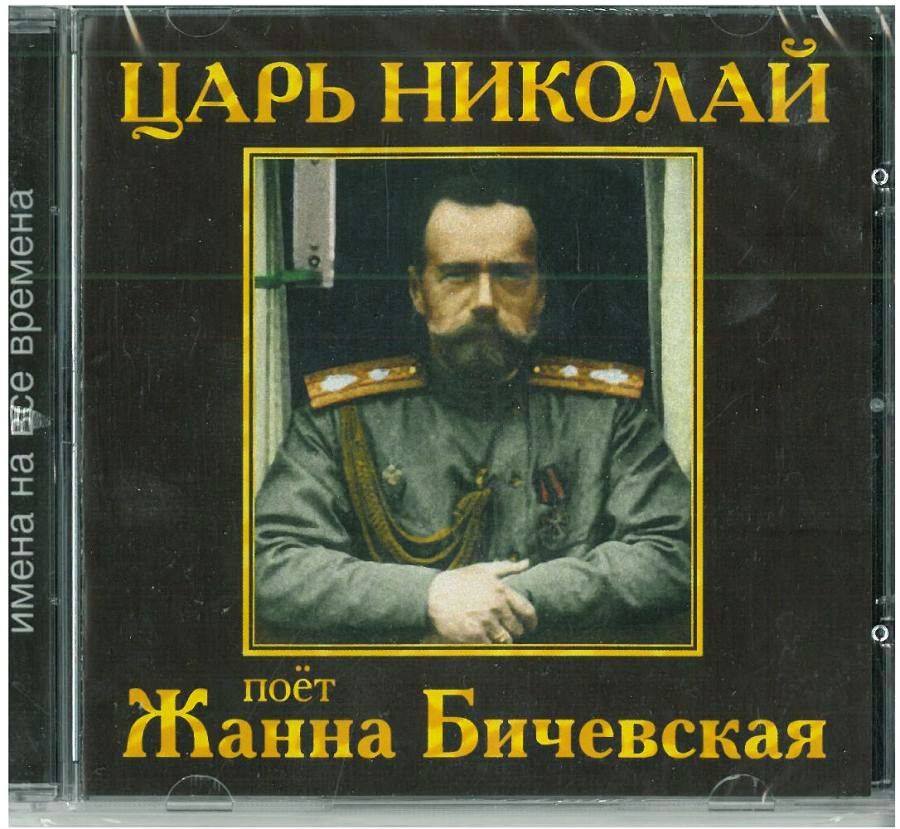
Cover of Zhanna Bichevskaya;s CD Царь Николай (Tsar Nikolai)

A very happy 81st birthday to Russian folk singer Zhanna Vladimirovna Bichevskaya, who was born in Moscow on 17th June 1944.

Известной певице Жанне Владимiровне Бичевской исполнилось 79 лет!!! Мы сердечно поздравляем её с Днём рождения!!!

074b

Zhanna graduated as a classical guitarist from a Moscow music school. She was a teacher of music in Zagorsk (Sergiev Posad). In the 1970s, Zhanna started to perform Russian folk songs and romances.

Zhanna refers to her bard-style singing as “Russian country-folk”. Her repertoire includes several hundred works – songs of spiritual and social content, Russian folk songs, romances, as well as songs based on poems of Russian poets of the Silver Age. Her records have sold millions of copies in more than 40 countries around the world. She has performed to sell out crowds at the prestigious Olympia Hall in Paris, on eight occasions. 

In the late 1980s and early 1990s, Zhanna Bichevskaya’s songs began to have more political, nationalist and spiritual themes, she is a staunch defender of the Holy Emperor Nicholas II and his family.

In 1999, Zhanna also became the host of her own show on Voice of Russia radio station. She was awarded People’s Artist of the RSFSR

CLICK on the links below to listen to two of her most haunting melodies:

[1] Царь Николай / Tsar Nikolai [Duration: 9 mins], which features vintage film footage of Russia’s last tsar:

[2] Святым Царственным мученикам / To the Holy Royal Martyrs [Duration: 7 mins., 34 sec.], which is much more a prayer than a song:

© Paul Gilbert. 17 June 2025

Ekaterinburg Diocese celebrates the 155th anniversary of the birth of Emperor Nicholas II

The anniversary of the birth of Russia’s last Tsar has been celebrated in the Ural capital of Ekaterinburg for many years.

On 19th May 2023, with the blessing of Metropolitan Evgeny of Yekaterinburg and Verkhoturye, a series of events will be held dedicated to the memory of the last Russian emperor, the Holy Tsar-Martyr Nicholas II.

On the morning of 19th May, a Divine Liturgy will be celebrated at 8:00 a.m., in the Church on the Blood, built on the site of the Ipatiev House, where the Imperial Family and their four faithful retainers met their deaths and martyrdom.

A liturgy will also be celebrated at the Monastery of the Holy Royal Martyrs in Ganina Yama, followed by a Cross Procession  celebrating the patronal feast day in the name of the Righteous Job the Long-Suffering [on whose feast day Nicholas was born].

In addition, Divine services in memory of the last Russian emperor will be held in many churches of the Ekaterinburg diocese, including the Cathedral of St. Alexander Nevsky at the Novo-Tikhvin Convent, whose history is closely connected with the last Tsar and his family.

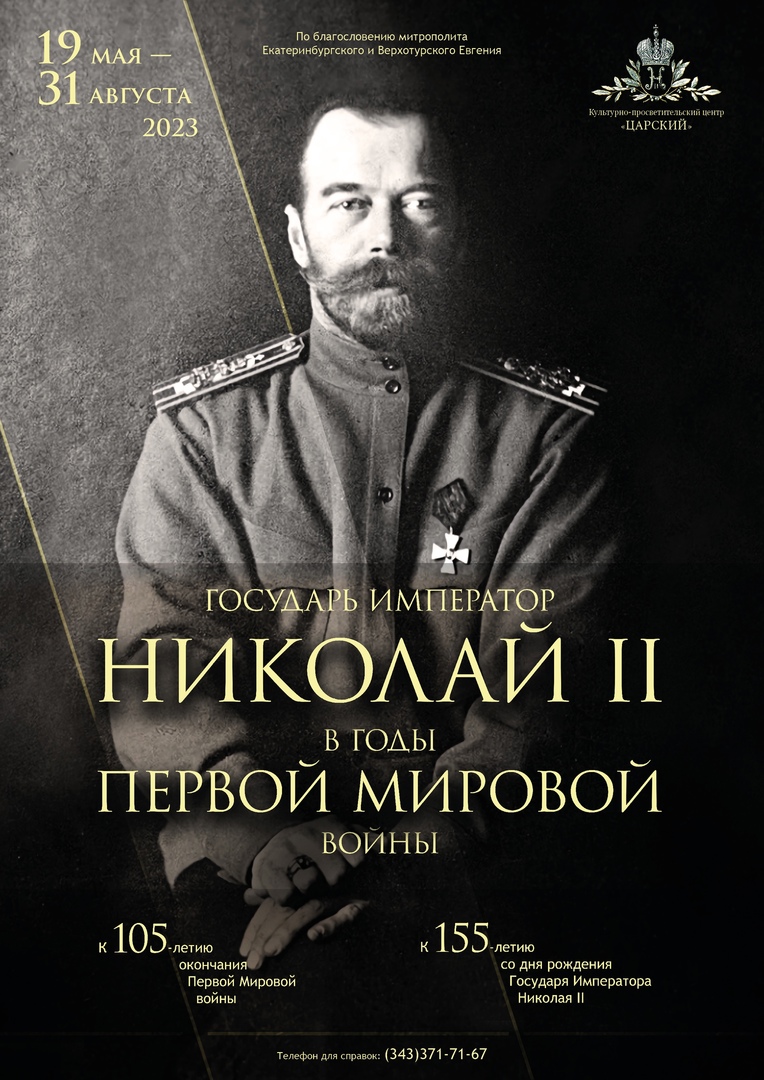
At 12:00 p.m., the Tsarsky Cultural and Educational Center [situated across the square from the Church on the Blood] will host the opening of Emperor Nicholas II During the First World War, an exhibition timed to coincide with the 155th anniversary of the birth of Nicholas II and the 105th anniversary of the end of the First World War. The exhibition runs until 31st August 2023.

At 1:30 p.m., a Liturgy will be performed in the Church of St. Nicholas the Wonderworker at the Ural State Mining University of Emperor Nicholas II, followed by a festive concert at 14:00 in the Tsar’s Hall of the USMU.

In addition, the Blue Line of Ekaterinburg will be launched. The route connects a dozen sights of the city, each of them, in one way or another are associated with the final days Nicholas II and his family during their house arrest in the Ural city, from April to July 1918.

© Paul Gilbert. 19 May 2023
Bikers hold rally in memory of Nicholas II

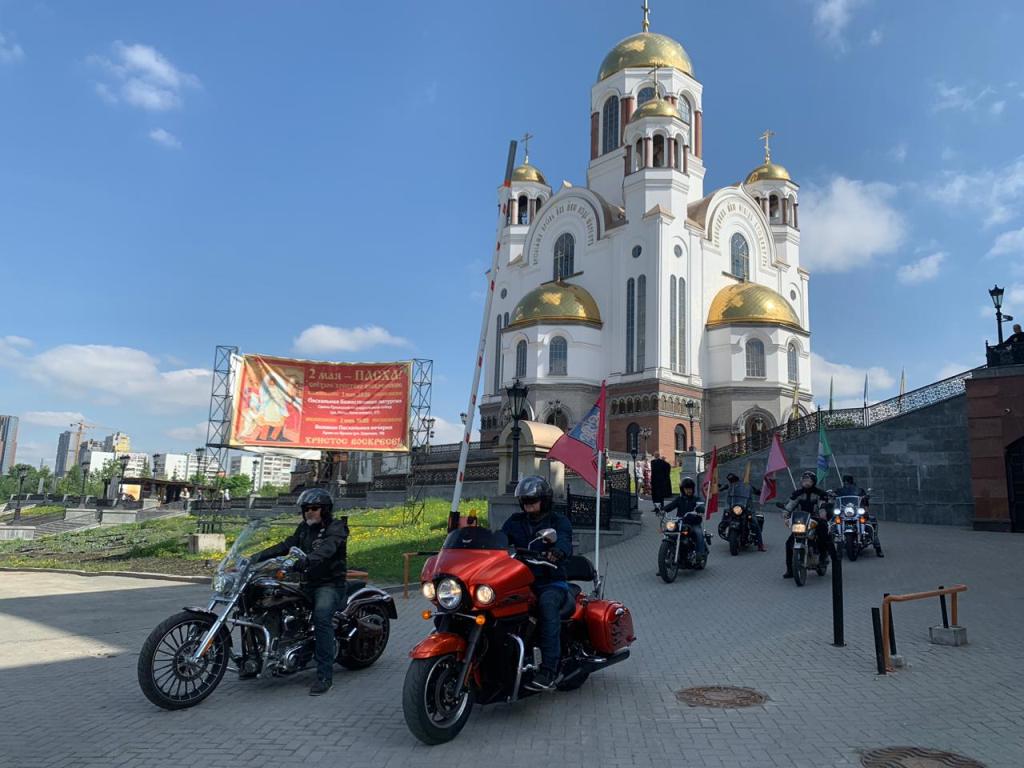
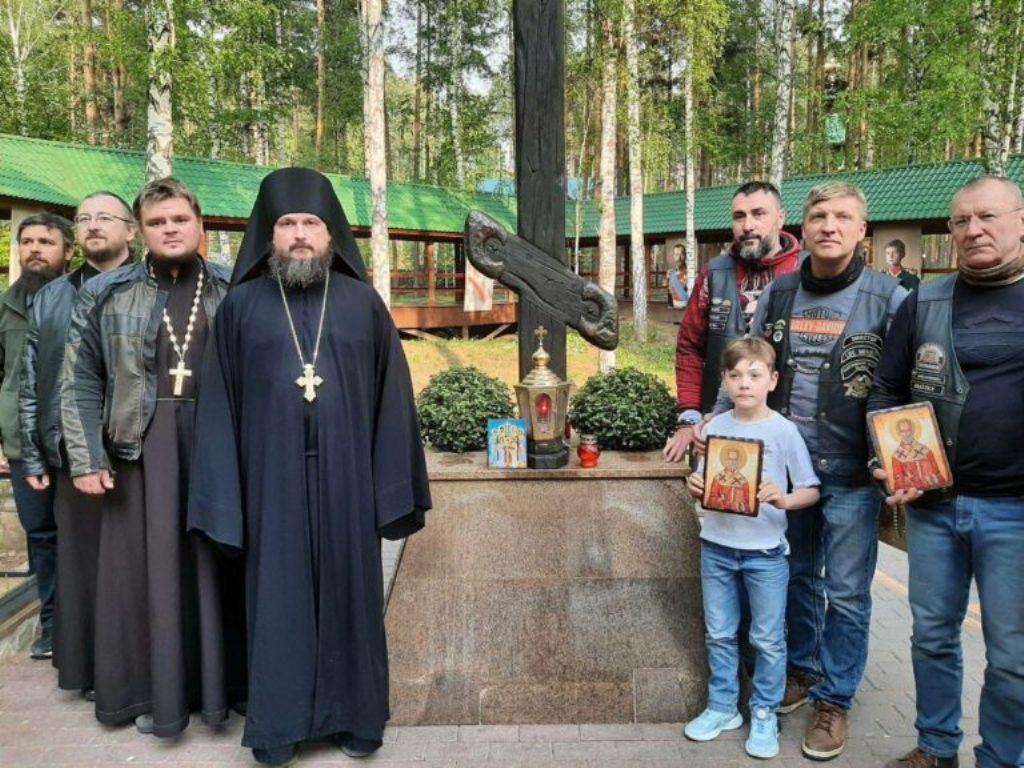
On 17th May, members of the Tyumen Motorcycle Club began a 6-day a motorcycle rally – “The Way of the Cross of the Tsar’s Family” – dedicated to Emperor Nicholas II. 

The small group of Harley Davidson enthusiasts began their rally on 17th May at the Abalak Znamenski Monastery (located 20 km east of Tobolsk) and finish at the Monastery of the Holy Royal Martyrs at Ganina Yama (near Ekaterinburg).

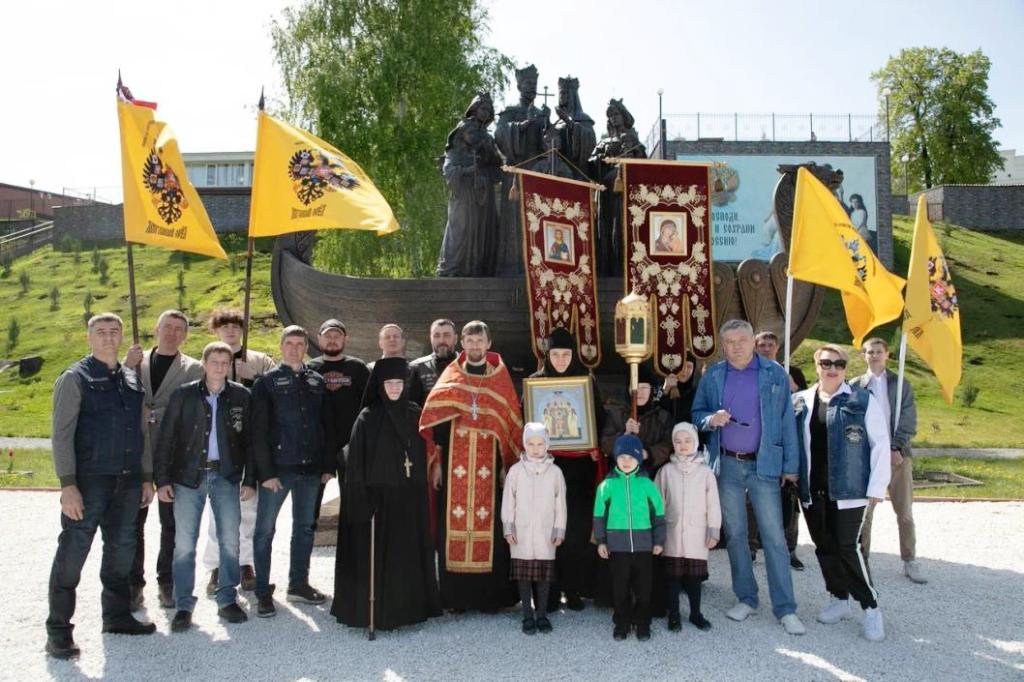
PHOTO: bikers at the monument to the Imperial Family in Tyumen

The route will pass along the route taken by the Emperor, his wife Alexandra and their daughter Grand Duchess Maria, when they were transferred from Tobolsk to Ekaterinburg in April 1918. The route was recreated by local historians from the diaries of Nicholas II and Alexandra Feodorovna, as well as archival documents.

Along the entire route, motorcyclists will ride with the flags of the club, the flag depicting the image of Nicholas II and the flag of Russia. The participants will also bring icons consecrated at the Abalak Znamenski Monastery with the face of St. Nicholas the Wonderworker and the Holy Royal Martyrs. The latter will be presented to the Monastery of the Holy Royal Martyrs in Ganina Yama.

PHOTO: bikers at the Monastery of the Holy Royal Martyrs at Ganina Yama

The entire 6-day route will cover some 2610 km, passing0 through Tobolsk, Tyumen, Omsk and Ekaterinburg. Bikers arrived in Tyumen on 18th May, where they made a stop at the city’s monument to the Imperial Family created by the Russian sculptor Irina Makarova, installed in June 2020.

The rally is timed to coincide with the 155th anniversary of the birth of Emperor Nicholas II on 19th May [O.S. 6th May] 1918, as well as the 105th anniversary of the death and martyrdom of the Imperial Family and their four faithful retainers on 18th July 1918.

© Paul Gilbert. 19 May 2023
Nicholas II. Family and Throne exhibition opens in Tula

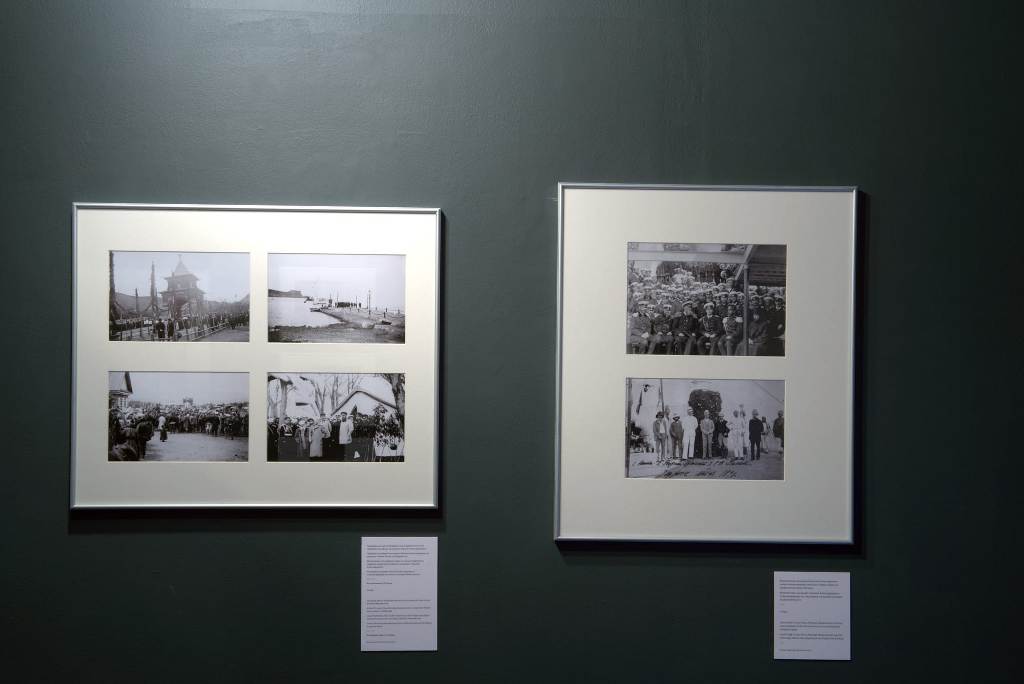
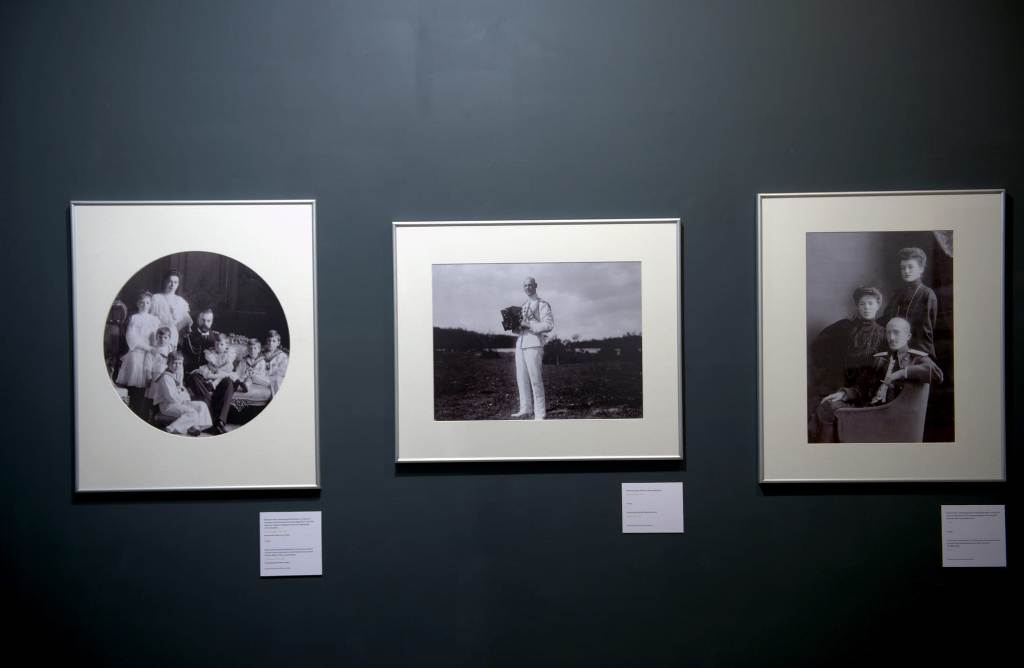
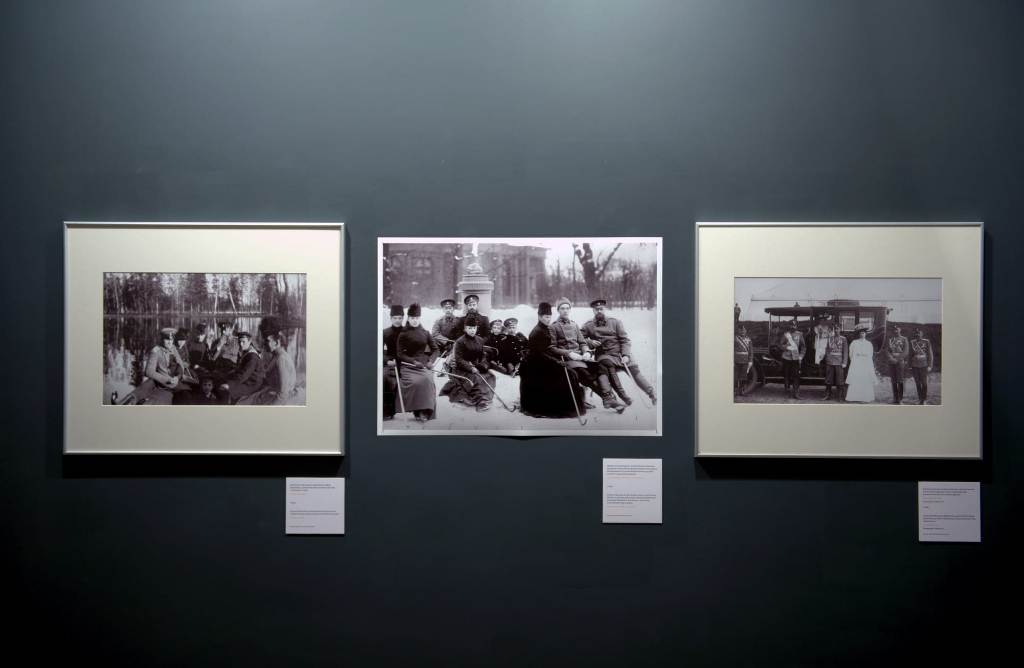
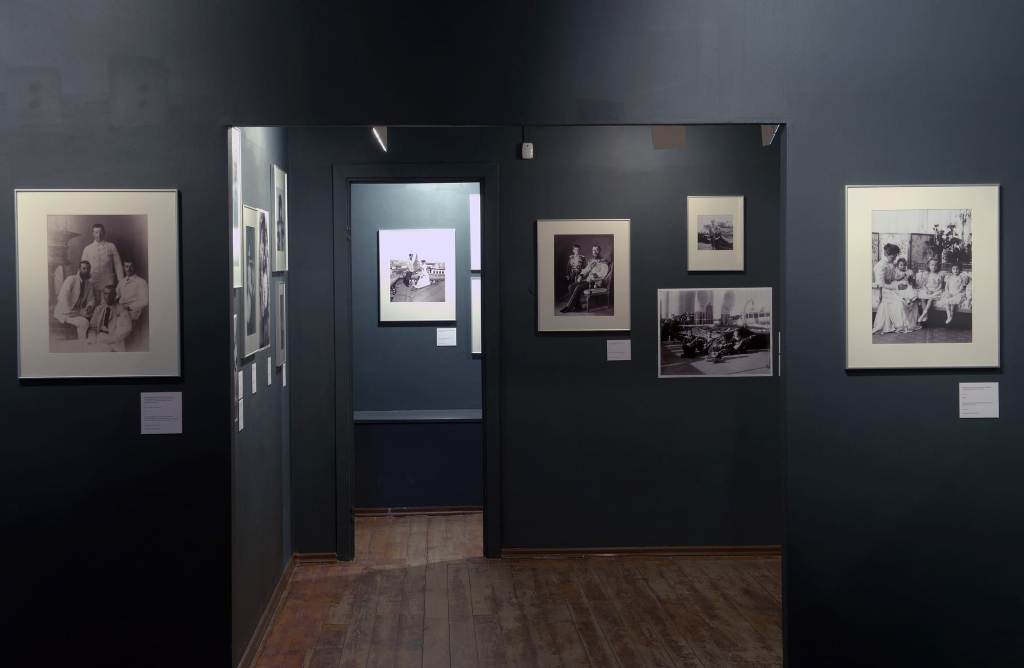
On Friday 21st April, a new exhibition “Nicholas II. Family and Throne”, opened in the Tula branch of the State Historical Museum.

The exhibit marks the 155th anniversary of the birth of Emperor Nicholas II on 19th May [O.S. 6th May] 1868 and the105th anniversary of the death and martyrdom [17th July 1918].

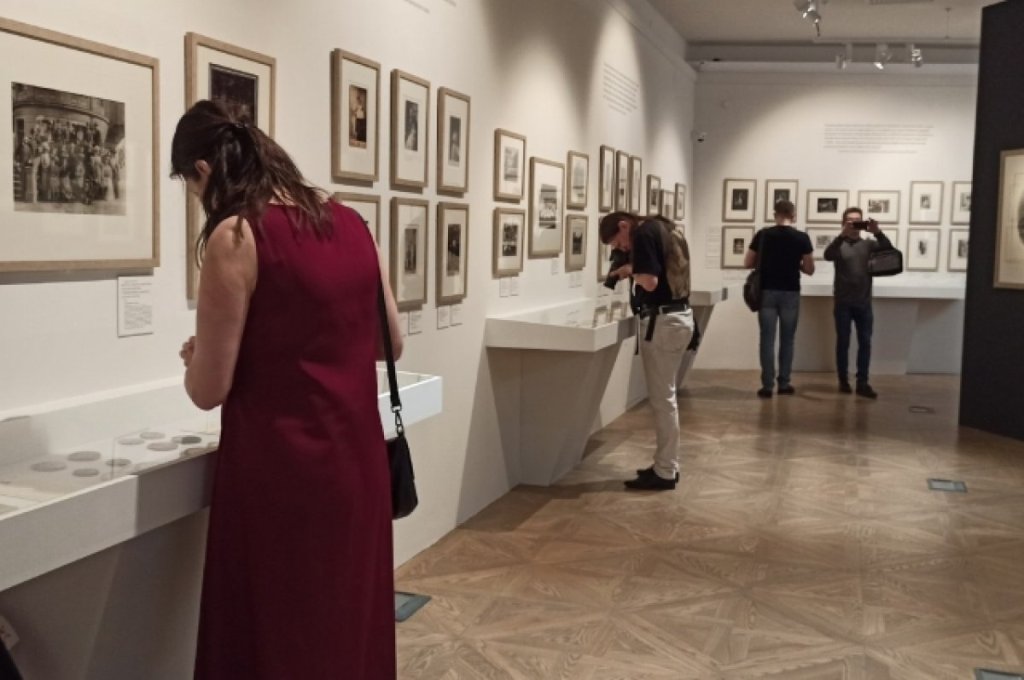
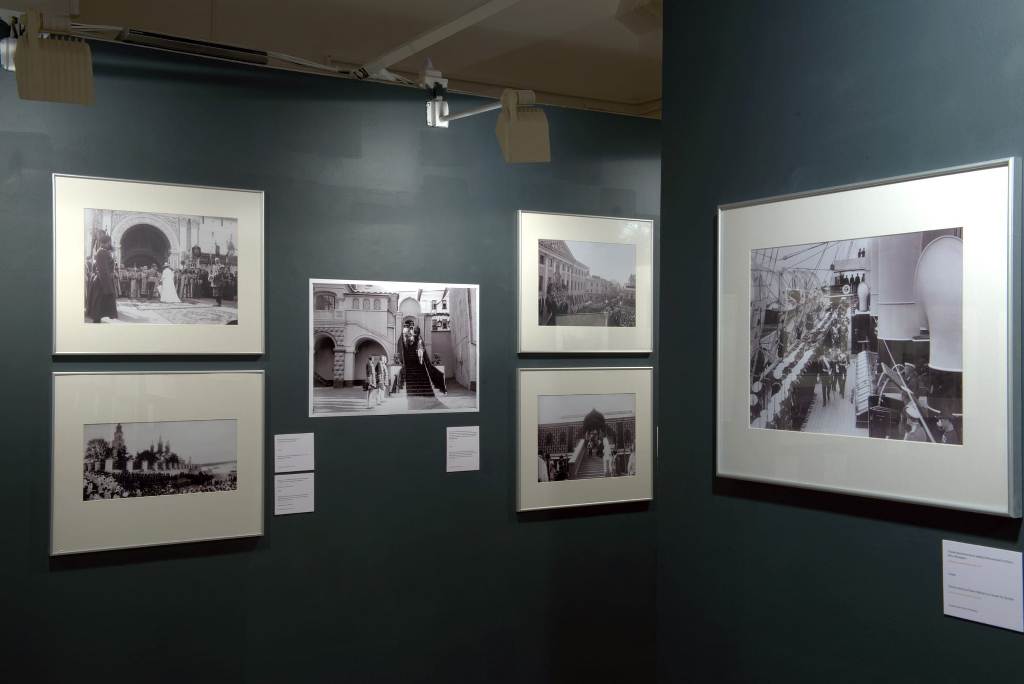
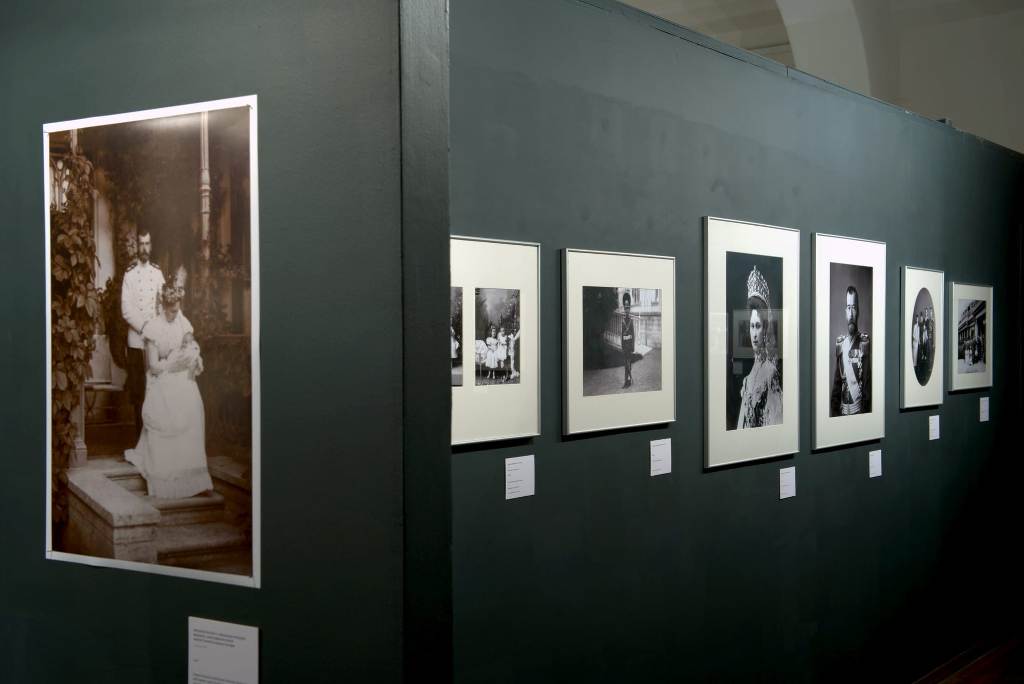
The exhibition will give visitors an opportunity to “look” at the life of the Russian ruler and his family through the impartial lens of the camera. The exposition is emphatically documentary: rare photographs from the collection of the State Historical Museum which depict the private life of the Russian monarch.

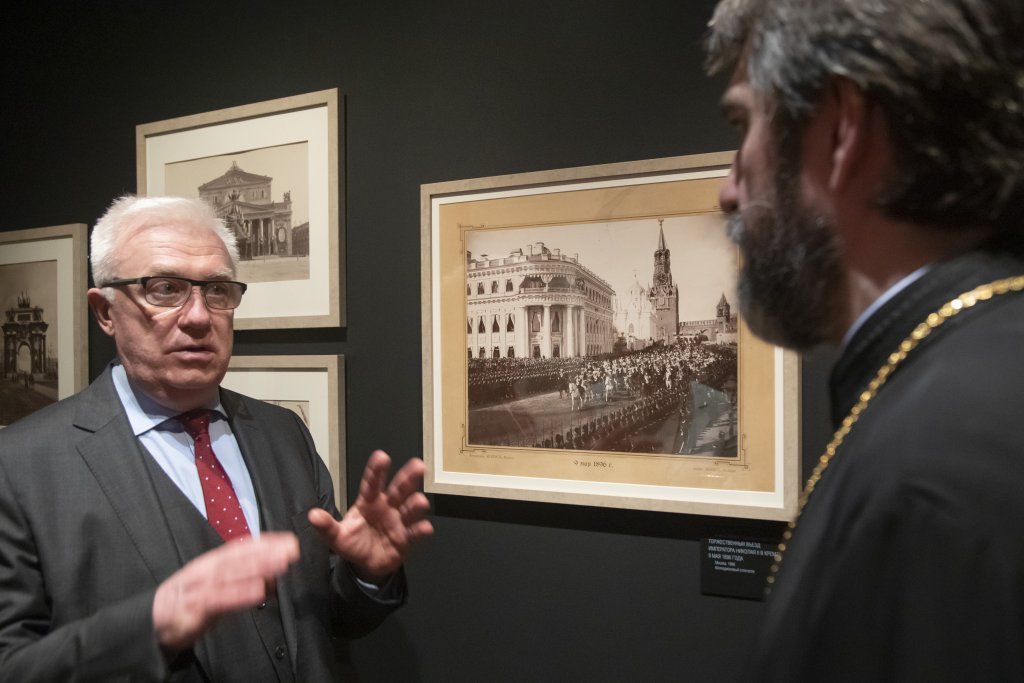
PHOTOS: the director of the State Historical Museum (Moscow) and curator of the exhibition Evgeny Lukyanov discusses watercolours (above) and photographs (below) depicting the Coronation of Emperor Nicholas II in Moscow, May 1896

The Emperor and members of his family were all avid photographers: they all had cameras and took pictures of each other, family events and their relatives. The Emperor was almost always accompanied by professional Court photographers who photographed the Emperor almost every day of his reign (among the most notable being “K. E. von Hahn and Co.” and its owner, and the Court photographer A. K. Yagelsky). The museum’s collection contains more than 750 photographs from the life of Nicholas II. A number of photographs come from the Tsar’s favourite residences: the Alexander Palace at Tsarskoye Selo, the Lower Dacha at Peterhof, and Livadia Palace in Crimea, depicting the private world of the Imperial Family.

The exhibit focuses on two topics: “Nicholas II as the head of the Russian Empire” and “Nicholas II as the head of the Imperial Family”.

The first – official – section shows photographs depicting the Emperor during meetings with foreign heads of state (King Edward VII of Great Britain, Emperor Wilhelm II of Germany, French Presidents Felix Faure and Armand Falier); celebrations on the occasion of the 200th anniversary of St. Petersburg and the 100th anniversary of the Patriotic War of 1812; parades, reviews and regimental holidays; consecration of churches and monuments; as well as during the Russo-Japanese War and the First World War. A significant place is given to the display of two major dynastic events – the coronation of Emperor Nicholas II (1896) and the celebration of the 300th anniversary of the House of Romanov (1913).

The second – family – section of the exhibition presents photographs related to the personal life of Emperor Nicholas II and Empress Alexandra Feodorovna. The central place is given to the August children – Grand Duchesses Olga, Tatiana, Maria, Anastasia and Tsesarevich Alexei. Of particular note in this section, are unique photographs depicting the stay of Emperor Nicholas II and his family in Livadia in 1911, 1912 and 1913 respectively.

In addition to the hundreds of photographs, are portraits of Nicholas II and Alexandra Feodorovna, watercolours depicting episodes from the life of the Imperial Family, drawings of Empress Alexandra Feodorovna, unique historical documents, including autographs of the last Romanovs, are all on display.

The exhibition also includes uniforms worn by Nicholas II and his son Tsesarevich Alexei, as well as precious orders presented to Nicholas II from the collection of the State Historical Museum in Moscow. “These precious orders from European and Asian countries, stored in the collection of the numismatics department of the museum, rarely leave the walls of the fund,” said Director Alexey Levykin.

The exhibition presents Russian Orders awarded to Nicholas II[1], in addition to those given by Great Britain, Prussia, France, Austria-Hungary, Japan, Thailand and other European and Asian countries[2]. Many orders are being exhibited for the first time.

“The orders were made of silver and gold and decorated with precious stones. Each exhibit outstanding craftsmanship, utilizing various jewelry techniques: gold embroidery, filigree, various types of enameling, engraving, and casting,” he added.

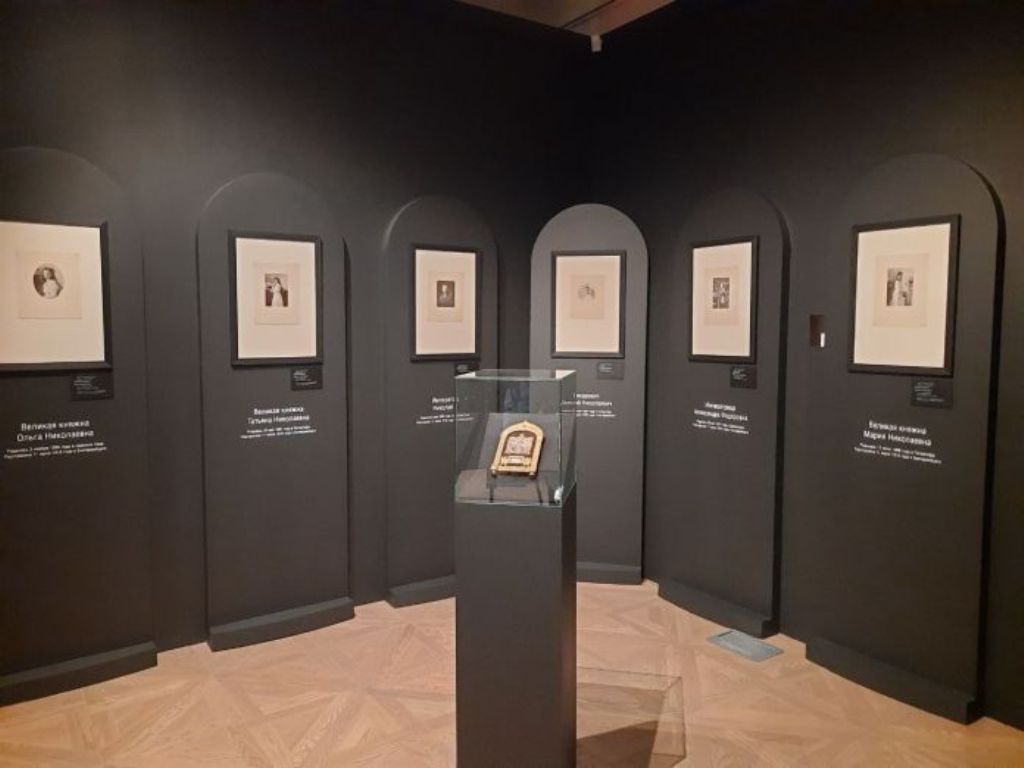
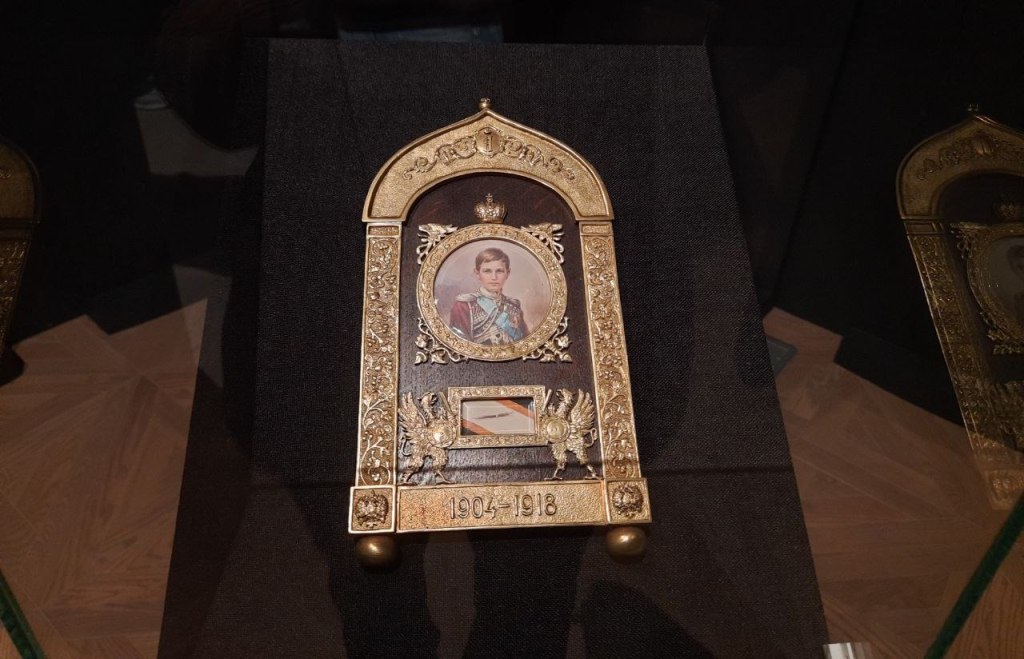
PHOTOS: memorial hall (above) to Emperor Nicholas II and his family. On display in the foreground is a reliquary frame with a portrait of Tsesarevich Alexei Nikolaevich and a lock of his hair (below).

The last hall of the exhibition resembles a basement or crypt, where there are seven stelae each depicting photographic portraits of Emperor Nicholas II, Empress Alexandra Feodorovna, and their five children, who were murdered in the Ipatiev House in Ekaterinburg on the night of 16/17 July 1918. In the center of this miniature memorial hall is a unique item – a reliquary frame with a portrait of Tsesarevich Alexei Nikolaevich and a lock of his hair.

The exhibition is supplemented by excerpts from the diary of Emperor Nicholas II and quotes from contemporaries who knew the Emperor and his family closely: Grand Duke Alexander Mikhailovich, Grand Duchess Olga Alexandrovna, the Swiss tutor Pierre Gilliard, Prince Felix Yusupov, French Ambassador to Russia Maurice Paléologue, Chief Hofmeisterina of the Imperial Court E.A. Naryshkina, Head of the Chancellery of the Ministry of the Imperial Court A.A. Mosolov, Minister of Foreign Affairs S.D. Sazonov, maid of honour of Empress Alexandra Feodorovna Anna Vyrubova.

The director of the Tula branch of the State Historical Museum notes: “Understanding all the inconsistency and ambiguity of the personality of Emperor Nicholas II, we do not presume to judge his role and place in the history of our country, but provide such an opportunity for visitors to the exhibition, who will be able to “look” at the life of the Russian monarch and his family through the lens of a camera. We hope that the exposition in the branch of the Historical Museum in Tula will be a worthy occasion to honour the memory of the last Russian sovereign, who was martyred more than a century ago.”

The State Historical Museum in Moscow, opened the first regional branch in Tula at the end of September 2020 as part of the celebration marking the 500th anniversary of the Tula Kremlin.

The “Nicholas II. Family and Throne” Exhibition runs until 11th September 2023 at the Tula branch of the State Historical Museum. A Russian-language illustrated catalogue has been prepared for the exhibition.
NOTES:

[1] Nicholas II was the recipient of 7 national honours

[2] Nicholas II was the recipient of 51 foreign honours from 35 countries, duchies, etc

©  Paul Gilbert. 22 April 2023
Odessa city council orders removal of icon of Tsar-Martyr Nicholas II

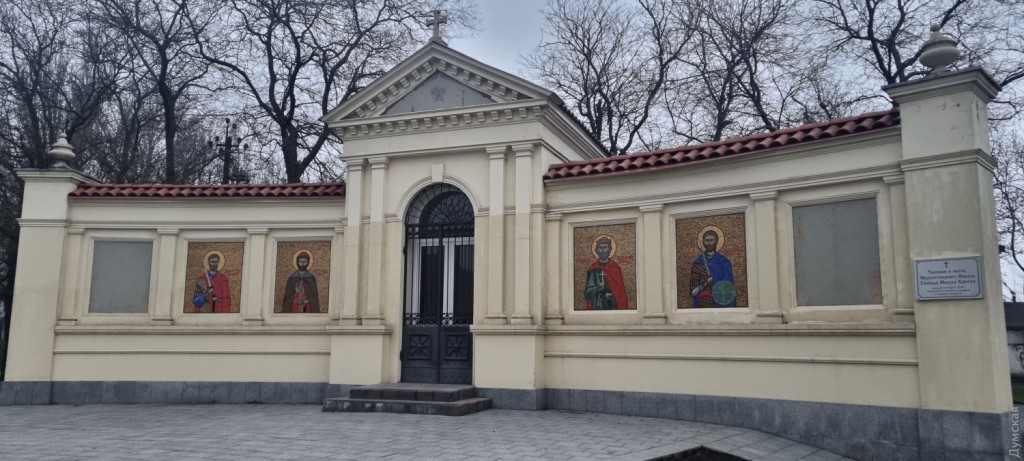
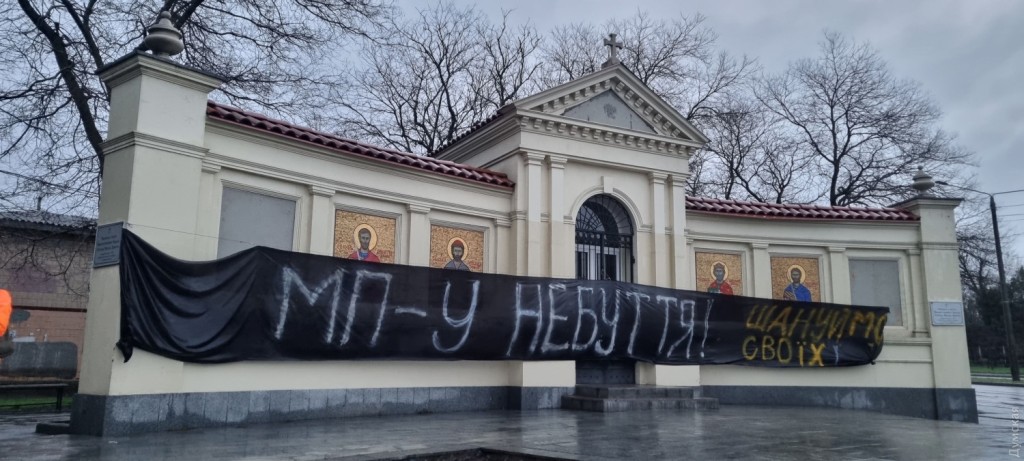
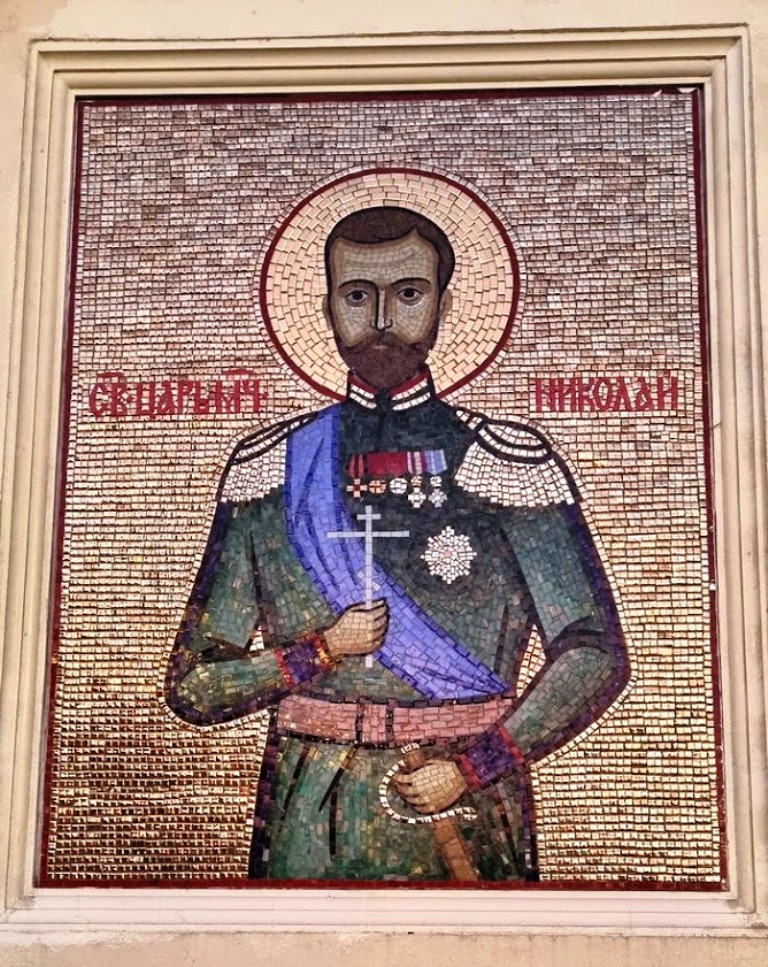
On Monday 3rd April, Ukrainian nationalists hung a large black banner denouncing the Moscow Patriarchate [photo above], across the facade of the Chapel in Honour of the Miraculous Image of the Lord Jesus Christ in Odessa. In addition, two icons depicting Fyodor Fyodorovich Ushakov (1745-1817) [1] and the Holy Tsar-Martyr Nicholas II were dismantled.

Up until recently a sculpture of the famous Russian general Alexander Suvorov (1730-1800) stood in front of the chapel. The sculpture is a copy of the historical original made in 1911. The current monument was opened in 2012.

Behind the monument is a semicircular wall depicting six mosaic icons of Orthodox saints.

On 30th November 2022, deputies of the Odessa City Council ordered that the monument to the “Founders of the City”, better known as the “Monument to Catherine II”[2], as well as the monument to Suvorov be dismantled. As a result, in December 2022, the monument to Catherine II was dismantled, and the monument to Suvorov was removed and transferred to the art museum in Odessa.

PHOTO: mosaic icon of the Holy Tsar-Martyr Nicholas II has been dismantled from the façade of the chapel – it’s whereabouts unknown

In addition, the deputies ordered the dismantling of the icons of Ushakov and Nicholas II, the latter of whom they referred to as “Nicholas the Bloody”.

Since Russia’s invasion of Ukraine in February 2022, Ukrainian authorities have been going to great lengths to destroy their Imperial Russian past. In July 2022, vandals destroyed a monument to Emperor Alexander III in the village of Pershotravneve, located in the Kharkiv region of Ukraine. The bust of the “Tsar-Peacemaker” was knocked to the ground, while the plaque, which included Putin’s name was also removed from the front of the pedestal. The bust-monument was erected in 2013 on the occasion of the 400th anniversary of the Romanov dynasty and the 125th anniversary of the Borki Train Disaster[3] in October 1888.

Heaven forbid that Crimea should ever fall into the hands of Ukraine again, where numerous monuments to Emperors Nicholas II and Alexander III would surely suffer the same fate, not to mention that of Livadia Palace.

PHOTO: the places where the icons of Ushakov (left) and Tsar-Martyr (right) originally hung are now empty

NOTES:

[1] Fyodor Fyodorovich Ushakov (1745-1817) served as commander of the Black Sea Fleet. On 7th August 2001 the Russian Orthodox Church glorified him as a Saint and declared him the patron of the Russian Navy. His relics are enshrined in Sanaksar Monastery, Temnikov, Russia.

[2] The original monument was installed in Odessa in 1900, dismantled by the Bolsheviks in 1920, and restored in 2007.

[3] On 29th October 1888, the Imperial Train carrying Tsar Alexander III and his family from Crimea to St Petersburg derailed at high speed at Borki.

© Paul Gilbert. 3 April 2023
Nicholas II in the news – Winter 2023
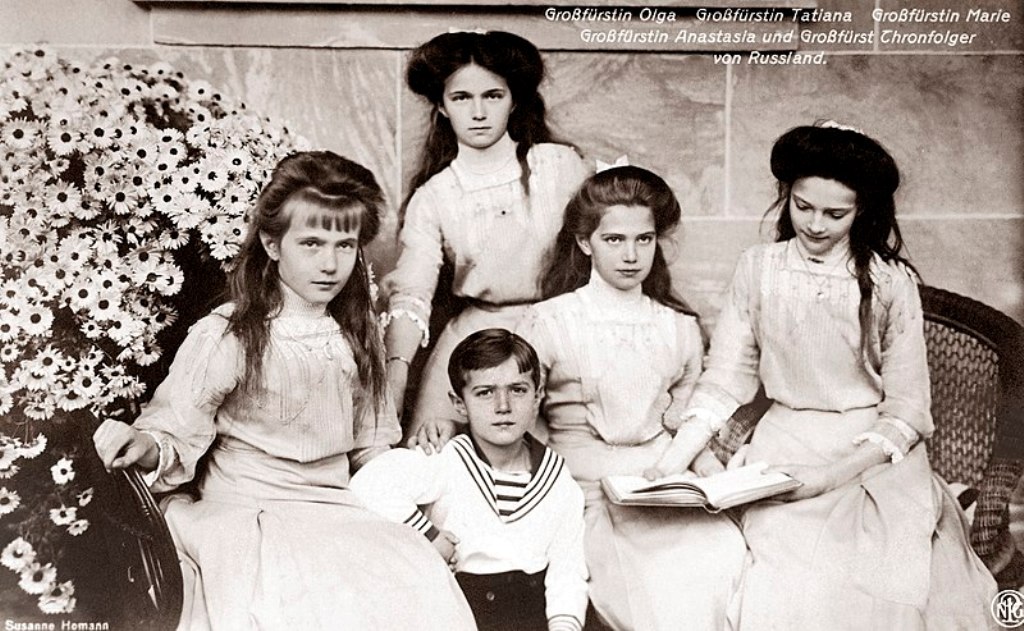
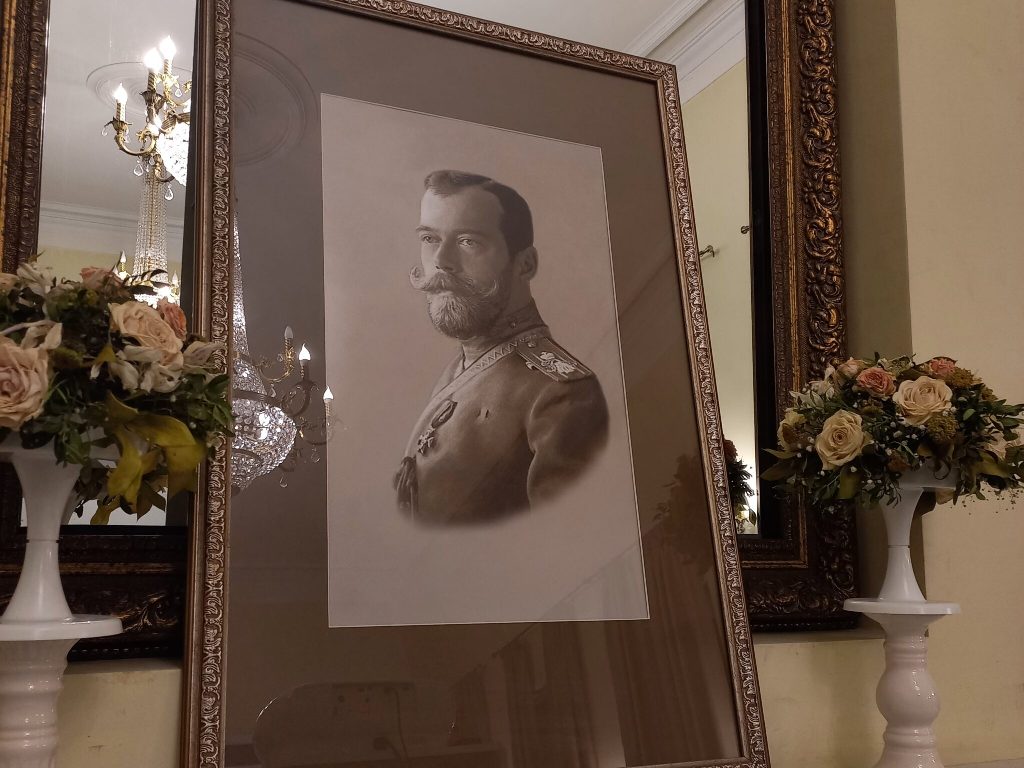
PHOTO: framed photograph of Emperor Nicholas II from the Collection of the Museum of Emperor Nicholas II in Moscow

Russia’s last Emperor and Tsar continues to be the subject of news in Western media. For the benefit of those who do not follow me on my Facebook page, I am pleased to present the following 9 full length articles, news stories and videos published by American and British media services, in addition, are several articles about Nicholas II’s family and faithful retainers.

Below, are the articles published in January, February and March 2023. Click on the title [highlighted in red] and follow the link to read each respective article:

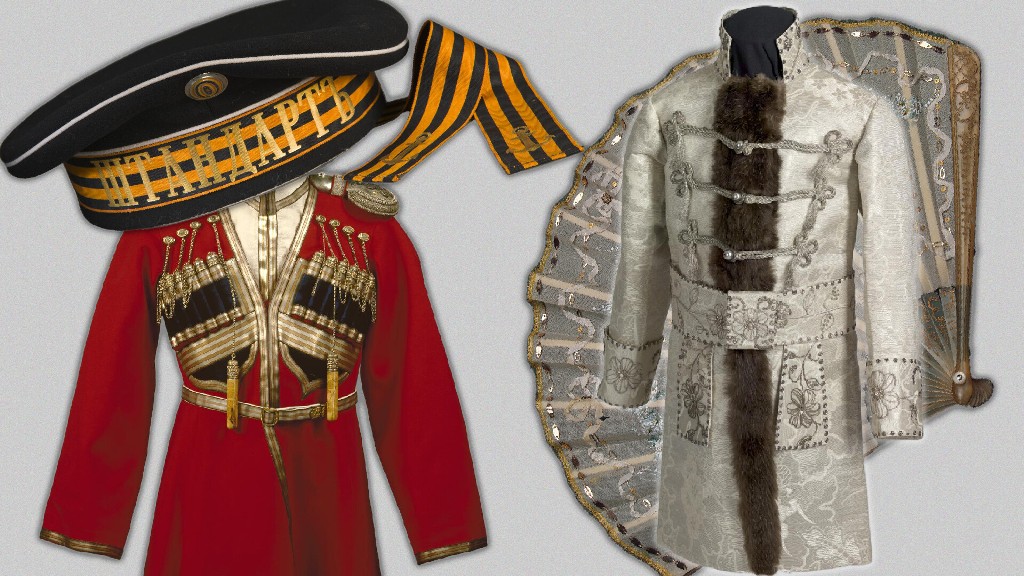
What did Nicholas II’s children wear? + 22 PHOTOS

The children of the last emperor were raised modestly and the same could be said about their wardrobe. The younger daughters sometimes wore the clothing of the older ones, while Alexei almost always wore a military uniform.

Source: Russia Beyond. 20 March 2023

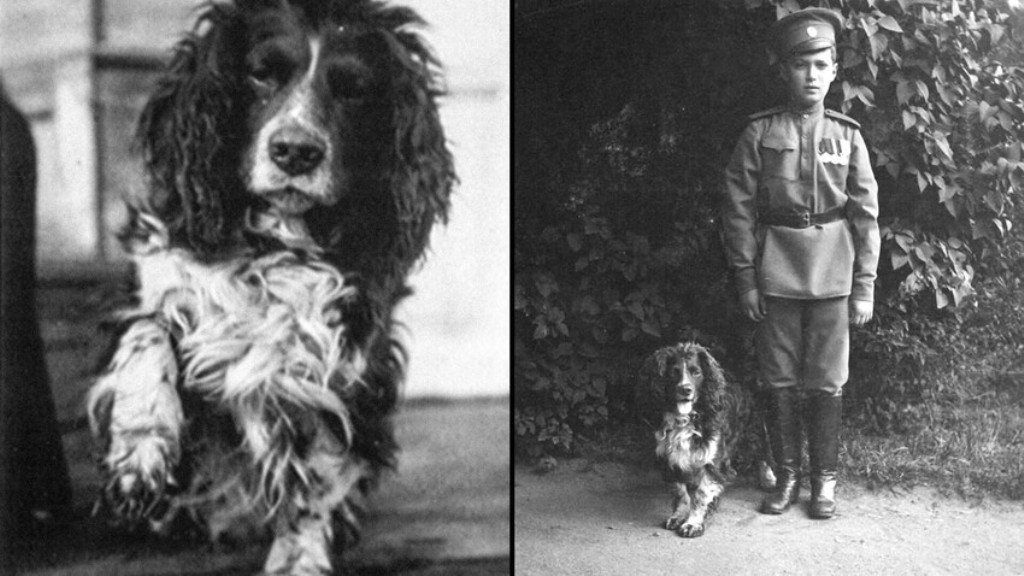
Joy, the last dog of the Romanovs + PHOTOS

This dog is the only one that survived the murders of the Imperial Family. Joy ended his days as a pet of Edward VIII’s riding instructor.

Source: Russia Beyond. 15 March 2023

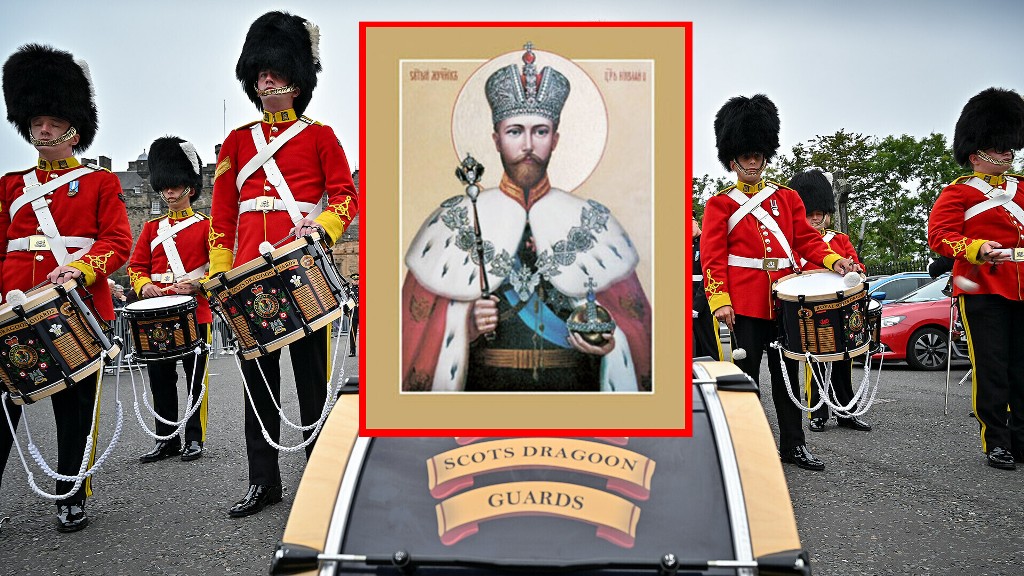
Why do the Royal Scots Dragoon Guards consider the Russian Tsar Nicholas II their guardian angel? + PHOTOS

An icon depicting the monarch hangs in the regiment headquarters in Edinburgh and accompanies it during military operations, while the band of this military unit plays the anthem of the Russian Empire, ‘God Save the Tsar!’, at ceremonial events. So, what is the connection between the Russian tsar and the elite British soldiers?

Source: Russia Beyond. 27 February 2023

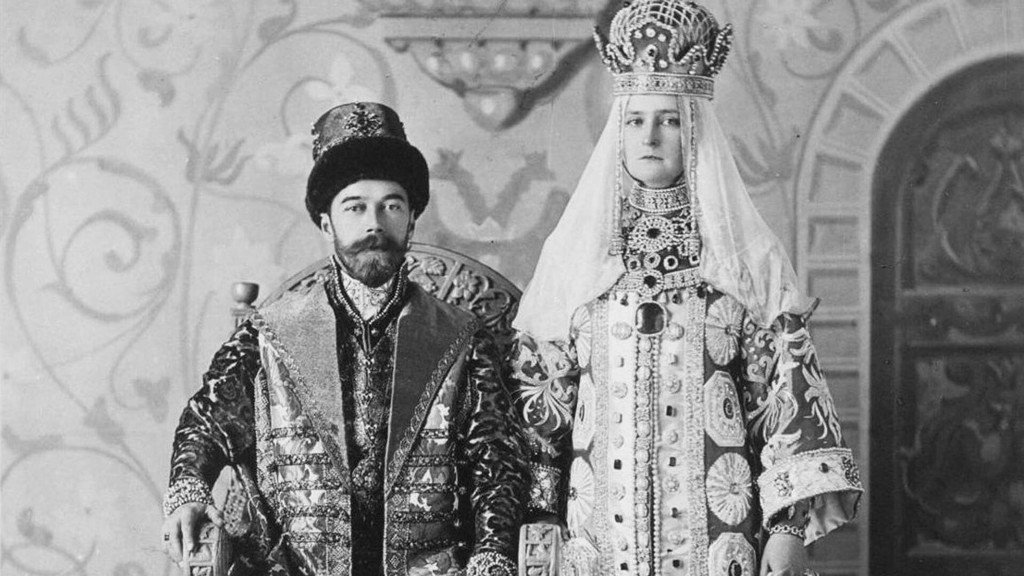
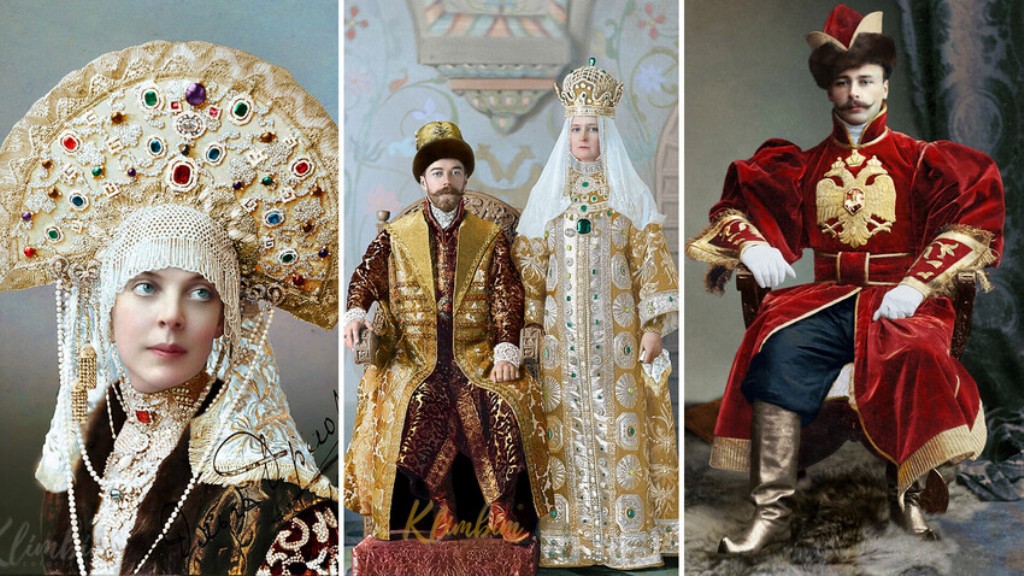
PHOTOS of the last ball hosted by the Romanov royal family + 17 PHOTOS

One hundred and twenty years ago, the Romanov royal dynasty hosted the most extravagant and eccentric costume ball in the history of the Russian Empire. It was also the last. This article features beautiful photos colourized by KLIMBIM.

Source: Russia Beyond. 24 February 2023

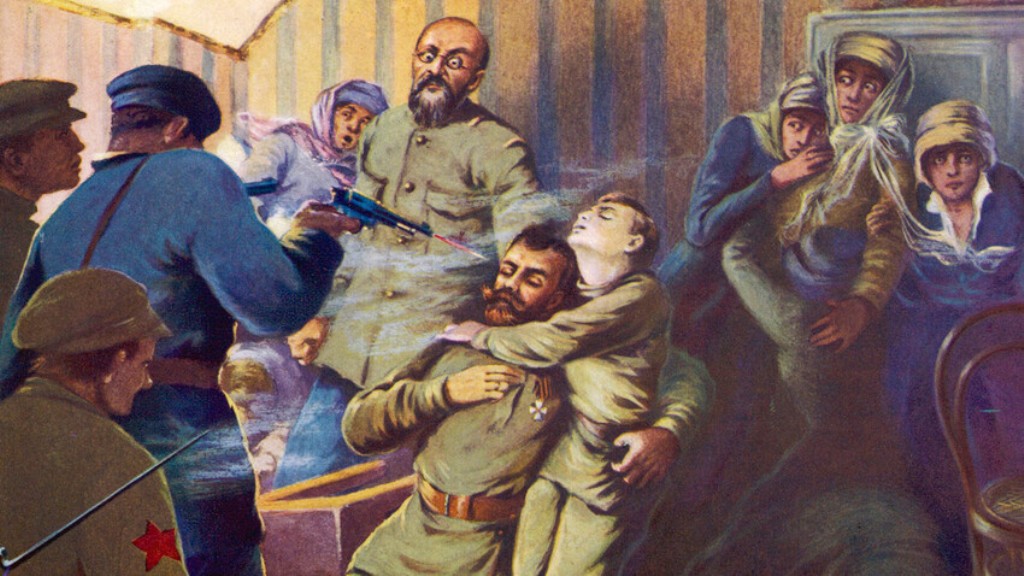
How tsar Nicholas II and his family were murdered + 11 PHOTOS

Tsar Nicholas II and his family were massacred on July 17, 1918, in Yekaterinburg. There was no formal trial and the Bolsheviks tried to cover up their gruesome crime.

Georgy Manaev writes in ‘Russia Beyond’ about the 10 most important things one should know about the murder of the Russian royal family.

Source: Russia Beyond. 21 February 2023

Tsar Nicholas II’s children: What we know about them + 34 PHOTOS

The last Russian tsar had five children. All of them were assassinated along with their father and mother in July 1918 and, later, canonized by the Russian Orthodox Church. This article features 34 PHOTOS, including many colourized by KLIMBIM.

Source: Russia Beyond. 7 February 2023

What Russia was like in 1913 + 34 VINTAGE PHOTOS!!

Take a look at Imperial Russia in 1913, the year which the Romanov Dynasty celebrated it’s 300th anniversary.

Source: Russia Beyond. 23 January 2023

The Last Russian Emperor: Archival Footage of Nicholas II, a Canonized Saint + VIDEO

I am pleased to see this article – based largely on an article I wrote – published today on the Global Orthodox web site. Thank you to the editors!

Source: Global Orthodox. 14 January 2023

What Russia was like in 1903 + 24 PHOTOS

MORE vintage photos of Imperial Russia! Let’s take a look at the absolutely stunning photos depicting the country that no longer exists – the life of the tsar, peasants, horse traffic and many more!

Source: Russia Beyond. 12 January 2023

***

For MORE articles, please refer to the following links:

Nicholas II in the news – Autumn 2022
7 articles published in October, November and December 2022

Nicholas II in the news – Summer 2022
12 articles published in July, August and September 2022

Nicholas II in the news – Spring 2022
7 articles published in April, May and June 2022

Nicholas II in the news – Winter 2022
6 articles published in January, February and March 2022

Paul Gilbert’s Romanov Bookshop on AMAZON – UPDATED with NEW titles!!

I have published more than 30 titles to date through AMAZON – featuring one of the largest selections of books on Nicholas II, the Romanov dynasty and the history of Imperial Russia.

Please CLICK on the BANNER or LINK above to review my current selection of titles in hardcover, paperback and ebook editions. Listings provide a full description for each title, pricing and a Look inside feature.

© Paul Gilbert. 31 March 2023

On this day – 22nd March 1917 – Nicholas II and family are placed under house arrest in the Alexander Palace

243c

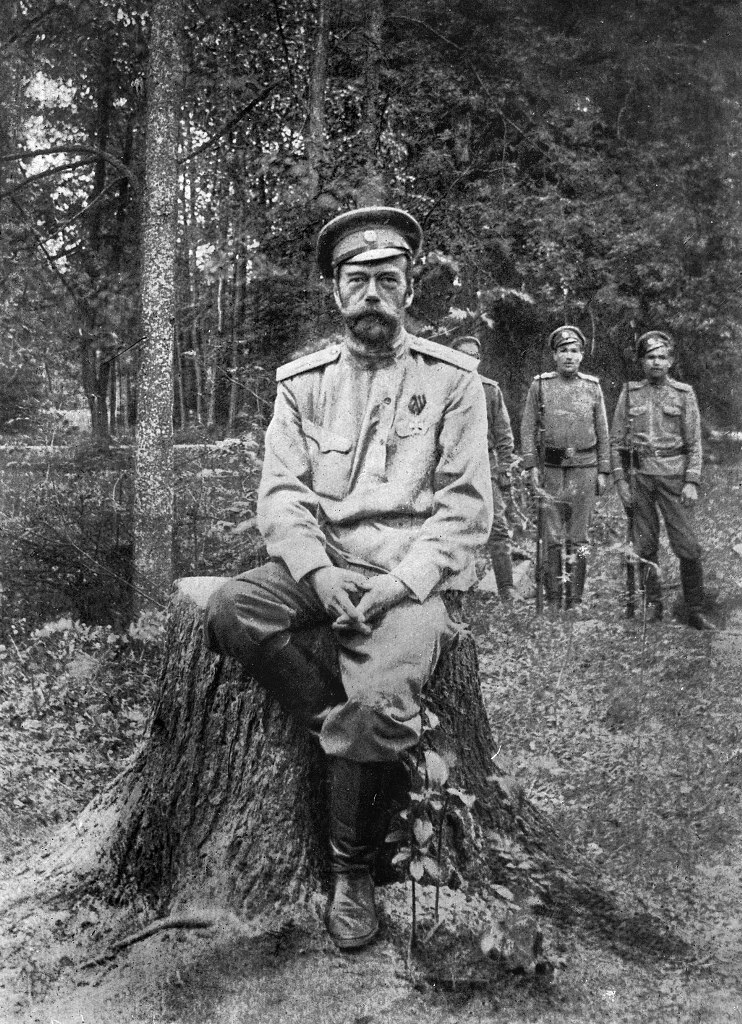
Iconic image of Emperor Nicholas II in the Alexander Park at Tsarskoye Selo

On this day – 22nd March (O.S. 9th March) 1917 – the Provisional Government decreed that Emperor Nicholas II, his wife and five children should be held under house arrest in the Alexander Palace at Tsarskoye Selo.

At eleven in the morning, the Imperial Train pulled into the Imperial Railway Pavilion at Tsarskoye Selo. Nicholas emerged wearing a Caucasian fur cap and soldier’s greatcoat. Behind him the members of his suite began to jump off the train – like rats abandoning a sinking ship – and run down the platform. Not looking back – they fled.

According to Count Paul Benckendorff (1853-1921), the Emperor’s motorcar arrived at the gate of the Alexander Palace and was stopped by the sentry, who summoned the Commandant. The Commandant went down the steps and asked in a loud voice who was there. The sentry cried out, ‘Nicholas Romanov’. ‘Let him pass,’ said the officer.

During his captivity, the Tsar was subject to constant harassment and humiliation from the soldiers – most of whom were thugs – stationed in and around the Alexander Palace.

According to Pierre Gilliard: “The Emperor accepted all these restraints with extraordinary serenity and moral grandeur. No word of reproach ever passed his lips.”

243d

Nicholas II and Alexandra Feodorovna sitting in the Alexander Park, June 1917

On Alexander Kerensky’s order, Nicholas and Alexandra were kept apart in the palace for a period of 18 days. They were permitted to see each other only during meals, and only in the presence of soldiers. It was during this time that Kerensky conducted an investigation of the Imperial couple’s documents and letters. He failed to find any evidence which would incriminate either of them.

Kerensky interviewed Alexandra regarding her involvement in state affairs and Rasputin’s involvement in them through his influence over her. She answered that as she and her spouse kept no secrets from each other, they often discussed politics and she naturally gave him advice to support him; as for Rasputin, he had been a true holy man of God, and his advice had been only in the interest of the good of Russia and the imperial family. After the interview, Kerensky told the Tsar that he believed that Alexandra had told him the truth and was not lying.

243b

Nicholas II working in the vegetable garden behind the Alexander Palace in 1917

The Imperial Family had total privacy inside the palace, but walks in the grounds were strictly regulated. Members of their domestic staff were allowed to stay if they wished and culinary standards were maintained.

Even in the Alexander Park, their movements were restricted. The photo below, show the prisoners at the frontier of their domain. They were not permitted to cross the bridge which led them to the big park, to the outside world and freedom.

Colonel Eugene Kobylinsky was appointed to command the military garrison at Tsarskoye Selo, which increasingly had to be done through negotiation with the committees or soviets elected by the soldiers.

243a

Nicholas II and his family under guard in the Alexander Park, August 1917

The Imperial Family were held under house arrest until 14th (O.S. 1st) August 1917, it was on this day that Nicholas II and his family left the Alexander Palace for the last time. They exited from the Semicircular Hall of the palace, and travelled by car to the Alexandrovskaya Station where they were sent into exile to Tobolsk. 

For an eye witness account of Nicholas II and his family under house arrest in the Alexander Palace, please refer to the following book The Romanovs Under House Arrest: From the 1917 Diary of a Palace Priest, the memories of Archpriest Afanasy Belyaev, who served as priest and confessor to the Russian Imperial family.

© Paul Gilbert. 22 March 2023