Pink Drawing Room of Empress Alexandra Feodorovna opens in the Livadia Palace
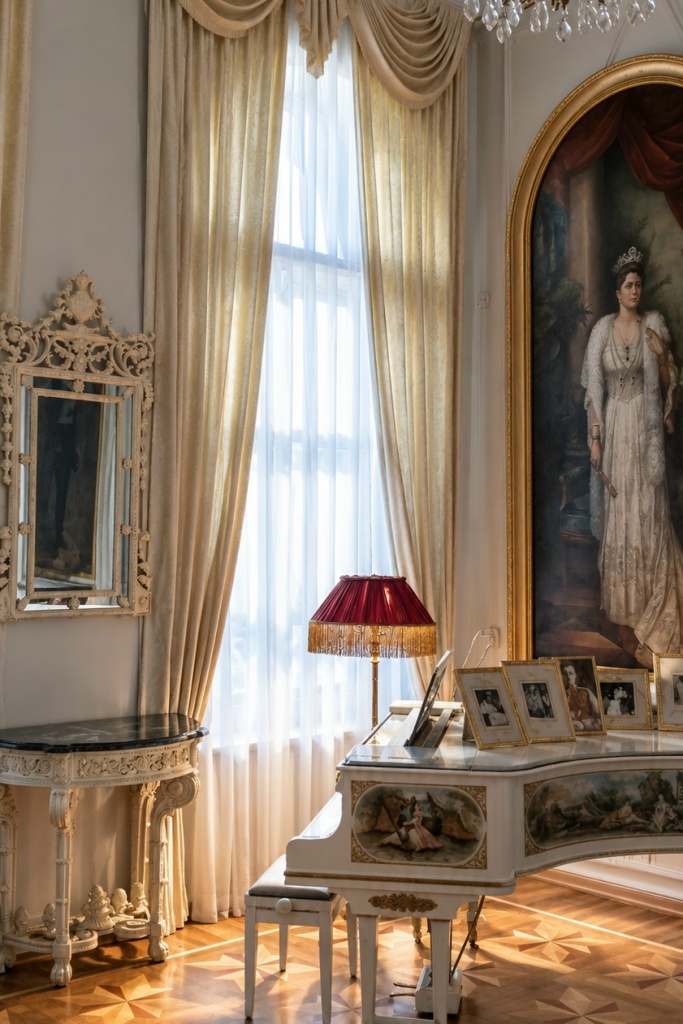
The Livadia Palace Museum has announced the opening of the Pink Drawing Room of Empress Alexandra Feodorovna. The room was designed by the famous Russian-Serbian architect Nikolai Petrovich Krasnov (1864-1939). The room was part of a suite of rooms for visiting guests and family members who came to stay at the Imperial Family’s imean residence.
The opening of the Pink Drawing Room is part of a large-scale restoration of the Livadia Palace and Park, announced in April of this year. Recall that on 26th June 2026, Nicholas II’s Italian Corridor was opened to visitors for the first time in 15 years. The museum also has plans to restore other interiors of the Imperial Family, including Nicholas II’s Study.
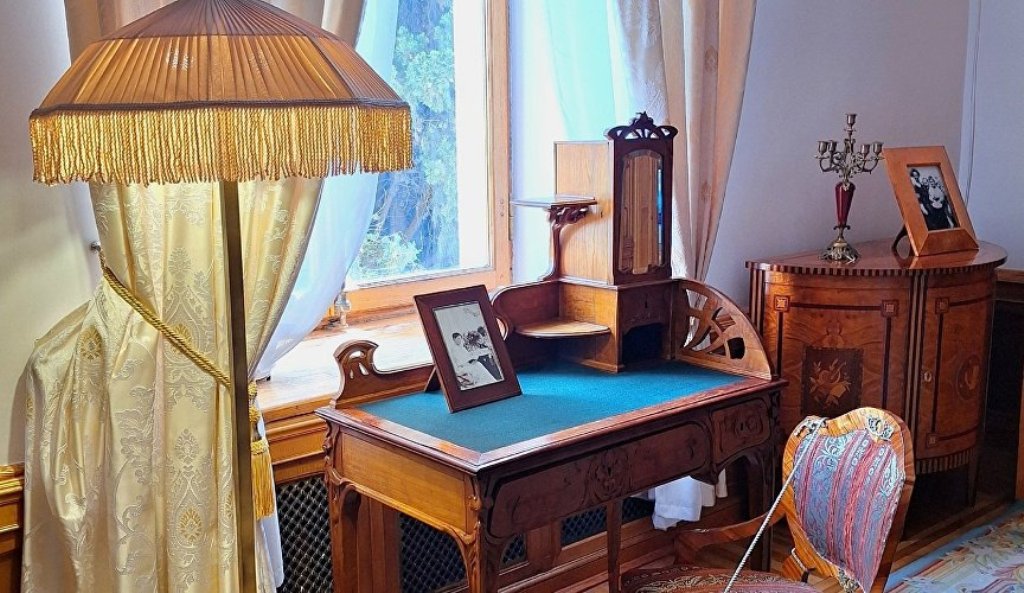
PHOTO: partial view of he Pink Drawing Room of Empress Alexandra Feodorovna
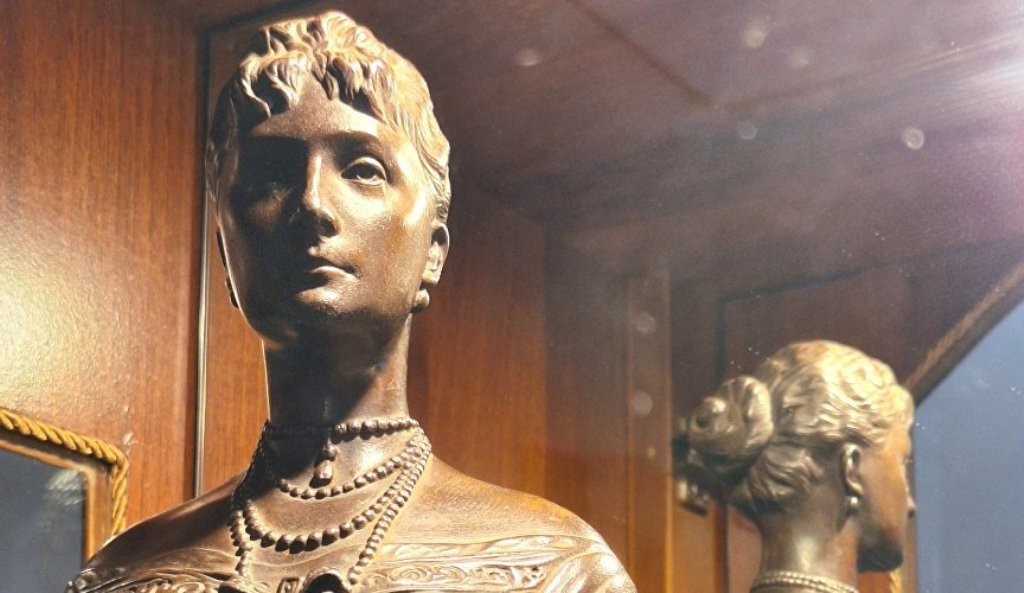
PHOTO: bust-profile of Empress Alexandra Feodorovna
“Everything in the Empress’s Pink Drawing Room is simple and at the same time exquisite: the interior was originally designed in the style of Louis XV and we have tried to replicate this. We have tried to present the warm and cozy interior of a large Russian, hospitable family. The room was conceived specifically for the comfort of members of the Imperial Family and other guests who were invited to Livadia by special invitation. Today this room reflects one of the most intimate and informal aspects of the life of the Imperial Family in Livadia,” said the Director of the Livadia Palace Museum Larysa Kovalchuk
The Pink Drawing Room is located next to the former guest bedroom. During the early 20th century, guests included Grand Duchess Olga Alexandrovna, sister of Emperor Nicholas II, who stayed here in 1913, and Grand Duchess Elizabeth Feodorovna, sister of Empress Alexandra Feodorovna and later abbess of the Martha and Mary Convent (Moscow), who stayed here in 1912.
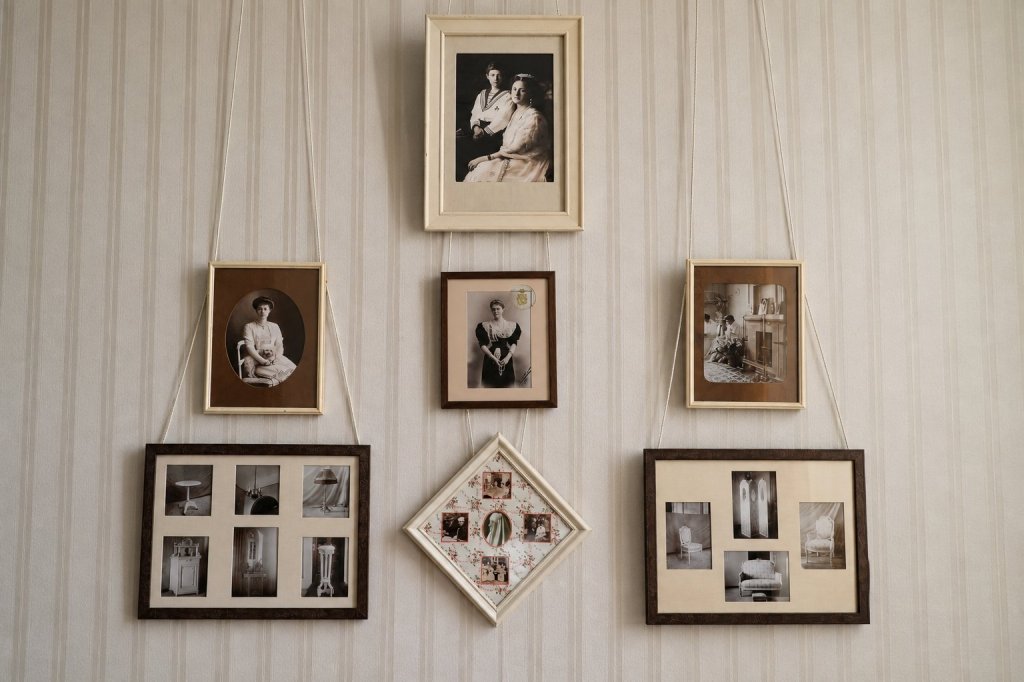
PHOTO: framed photographs of the Imperial Family
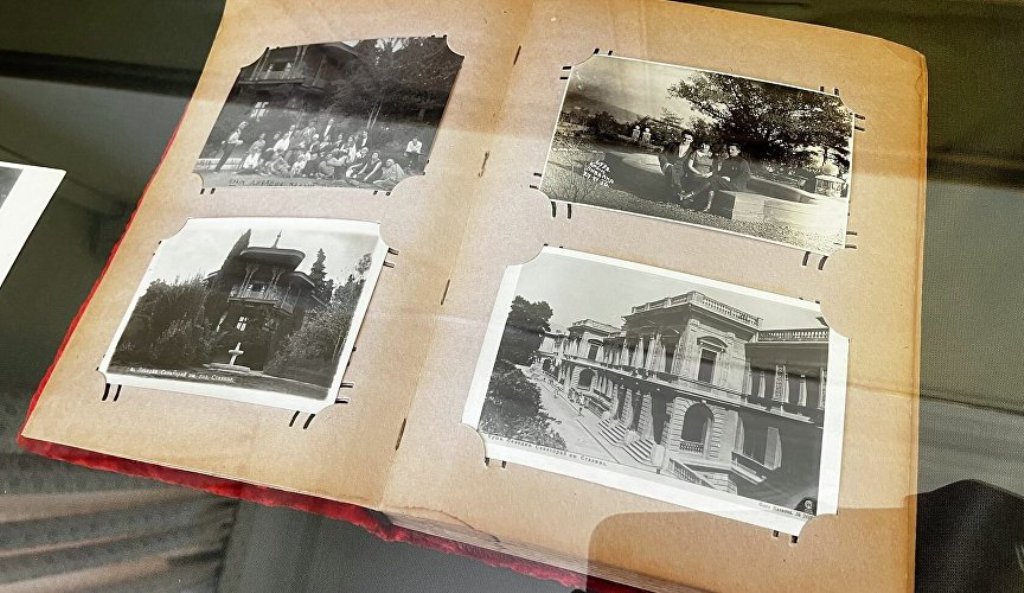
PHOTO: rare album with photos of Livadia Palace and Park during the 20th century
Other guests included Grand Duke of Hesse Ernst-Ludwig, the brother of the Empress, and the Grand Duke Dmitry Pavlovich, the son of Grand Duke Paul Alexandrovich, who stayed at Livadia in 1912 and 1914. Dmitry was a family favourite, both Nicholas II and Alexandra treated him like an adopted son. His fame in Russian society was so great that after the revolution, these guest rooms were named after him.
The interior of the Pink Drawing Room features framed family photographs and portraits. Among them are truly unique exhibits donated to the museum specifically for this interior: photographs of Grand Duke Dmitry Pavlovich in Livadia and on the eve of the First World War, an equestrian portrait and amateur photos of the Grand Duke from the collection of Russian historian Dmitry Matlin, who now serves as chairman of the Alexander II Historical Society in St. Petersburg.
In addition, visitors can see a unique autographed portrait of Grand Duchess Olga Alexandrovna, a photograph of Empress Alexandra Feodorovna with her son Tsesarevich Alexei, as well as numerous photographs of Grand Duchess Elizabeth Feodorovna, in some of which she appears in the vestments of a sister of mercy.
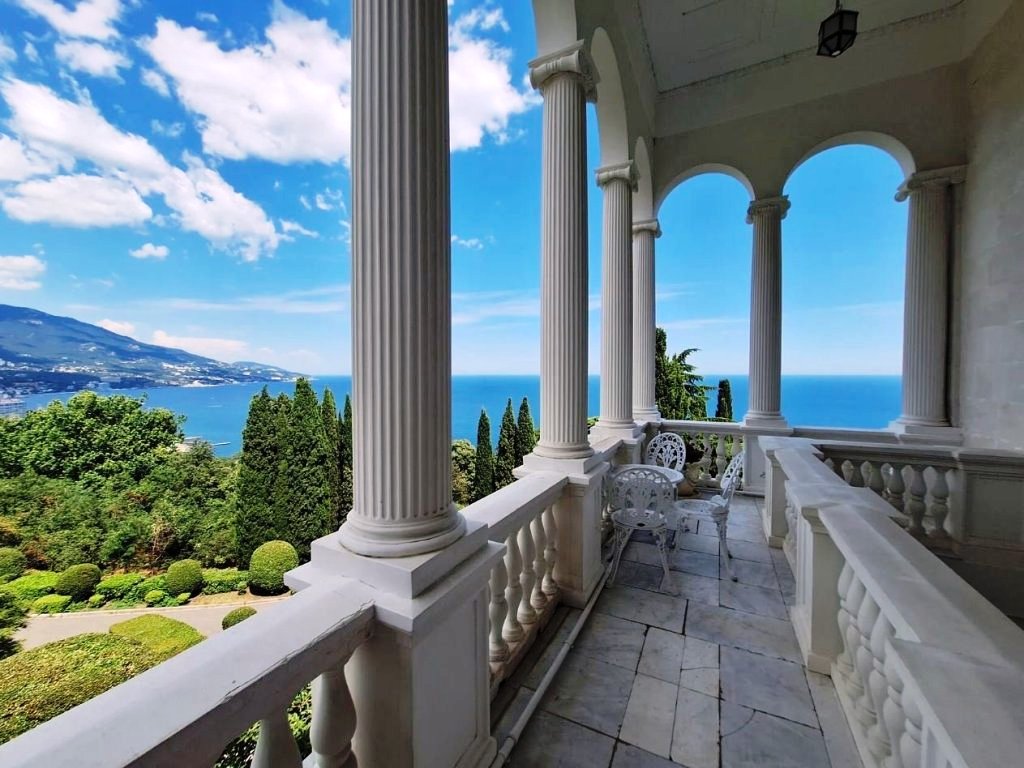
PHOTO: the Private Balcony of Empress Alexandra Feodorovna
The excursion route in the Livadia Palace now combines the Pink Drawing Room and the Private Balcony of Empress Alexandra Feodorovna, which was opened to visitors for the first time in July 2026. It is complemented by an audio guide created on the basis of the correspondence of the Imperial Family and the testimonies of Russian historians.
Earlier this year, the Livadia Palace-Museum released a new Russian-language guidebook for visitors. The 88-page book explores the history of the palace, it’s interiors and it’s Auguest residents.
Following the construction of the new White Palace at Livadia in 1911, Nicholas II and his family visited Livadia in the autumn of 1911 and 1913 and in the spring of 1912 and 1914, where they took up residence for several months at a time.
© Paul Gilbert. 4 October 2026


You must be logged in to post a comment.