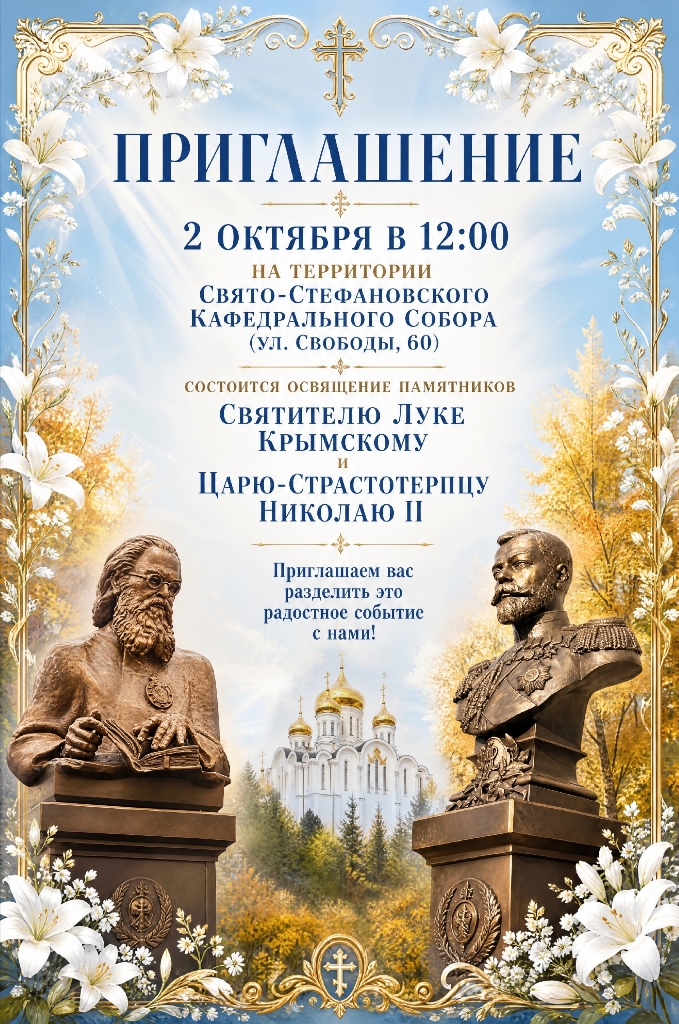
On 2nd October 2026, busts of Emperor Nicholas II and St. Luke of Crimea were unveiled and consecrated on the grounds of Saint Stephen of Perm Orthodox cathedral in Syktyvkar, the capital and largest city of the Komi Republic in Russia.
Nicholas II was the last Russian emperor. Together with his family, he accepted a martyr’s death. On 20th August 2000, the Moscow Patrichate glorified them as passion-bearers – those who accepted death with meekness and prayer, imitating Christ.
Luke of Crimea (in the world Valentin Voyno-Yasenetsky) was a Russian surgeon, spiritual writer, a bishop of the Russian Orthodox Church, and archbishop of Simferopol and Crimea from May 1946 until his death in 1961. He was a laureate of the Stalin Prize in medicine in 1946.
In 1958, writing after Stalin’s death, and under Nikita Khrushchev’s new wave of anti-religious persecution, Saint Luke stated “how arduous it has been to swim against the stormy current of antireligious propaganda, and how many sufferings it caused me, and continues to cause me to this day.”
He was canonized by the Russian Orthodox Church on 25th May 1996. Three days later, on 20th March 1996, his relics were transferred to the Cathedral of the Holy Trinity in Simferopol.
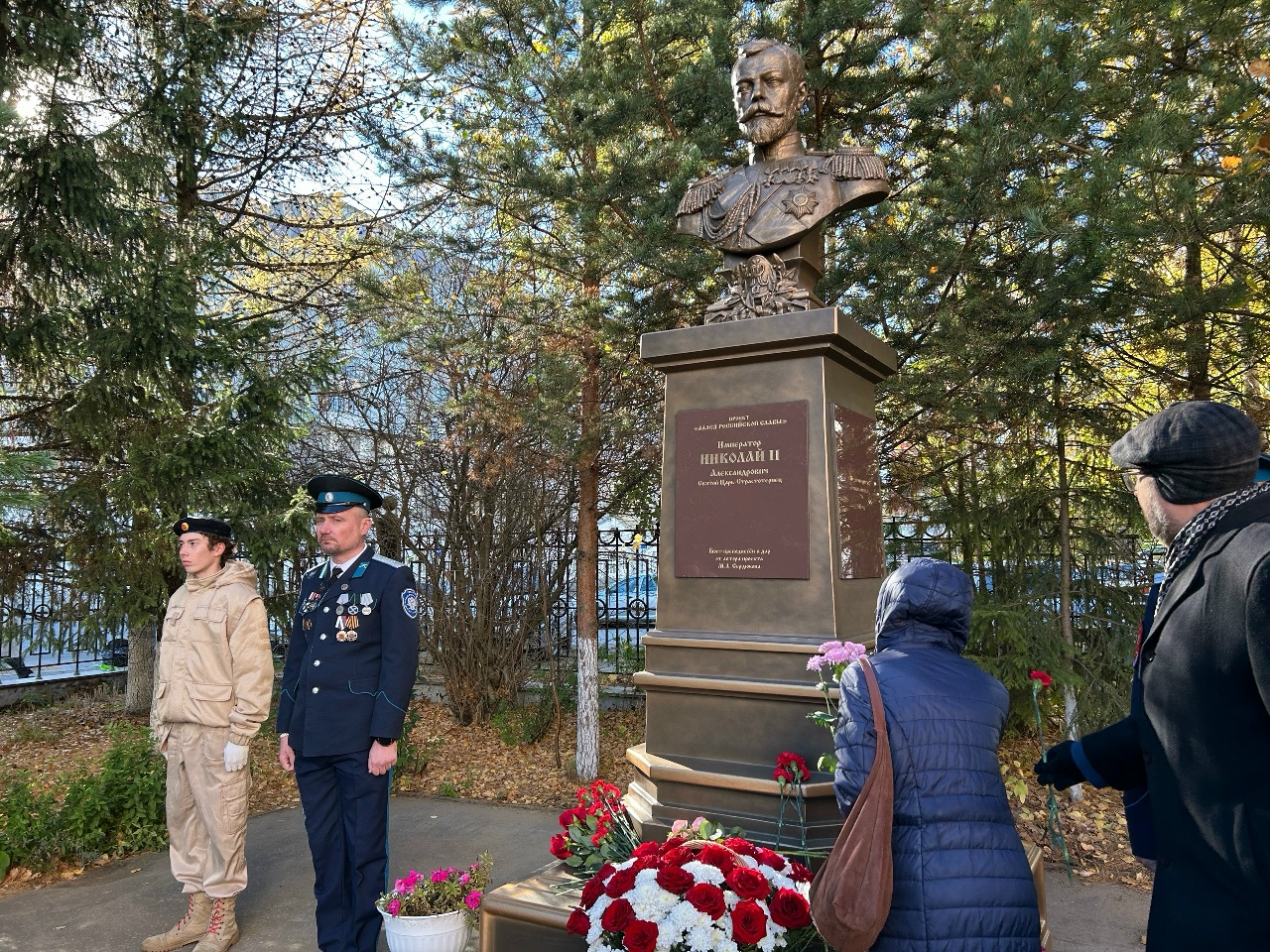
With the monument to Nicholas II, a different story, Pavel Astakhov noted. He first encountered this question in 1996, when he met a descendant of the Romanov dynasty, and was imbued with history of Russia’s last Tsar. The initiative to install the monument in Syktyvkar (among other cities) belongs to the general director of the SPAS TV channel Boris Korchevnikov.
Both monuments were installed on the grounds of Saint Stephen of Perm Orthodox cathedral. On the pedestal of St. Luke of Crimea there are inscribed two of his quotes: “I have admitted that I have no right to do what I like, and I am obliged to do what is useful for suffering people” and “I fell in love with suffering, which so amazingly cleanses the soul, because I really felt that the Lord Jesus Christ Himself was walking next to me and supporting my burden and my cross.”
The bust of Nicholas II also has two quotes inscribed on the pedestal: “It is not evil that will defeat evil, but only love” and “I have a firm and complete conviction that the fate of Russia, just like the fate of me and my family, is in the hands of God, Who has placed me in my position. Whatever happens, I bow to His will, believing that I have never had any other thought than to serve the country whose government He has entrusted to me.”
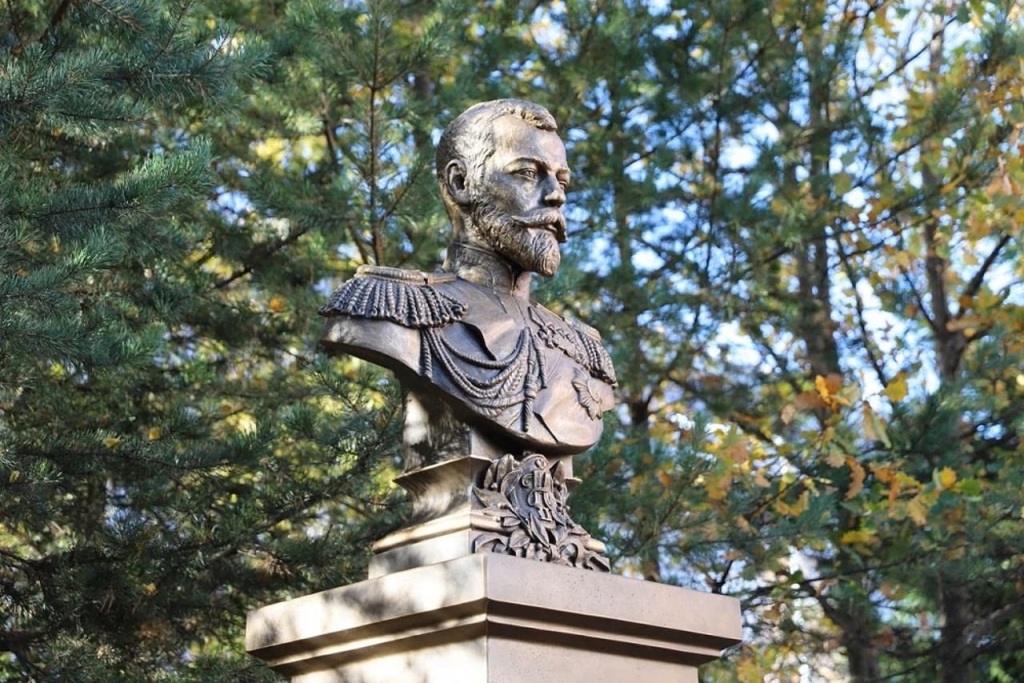
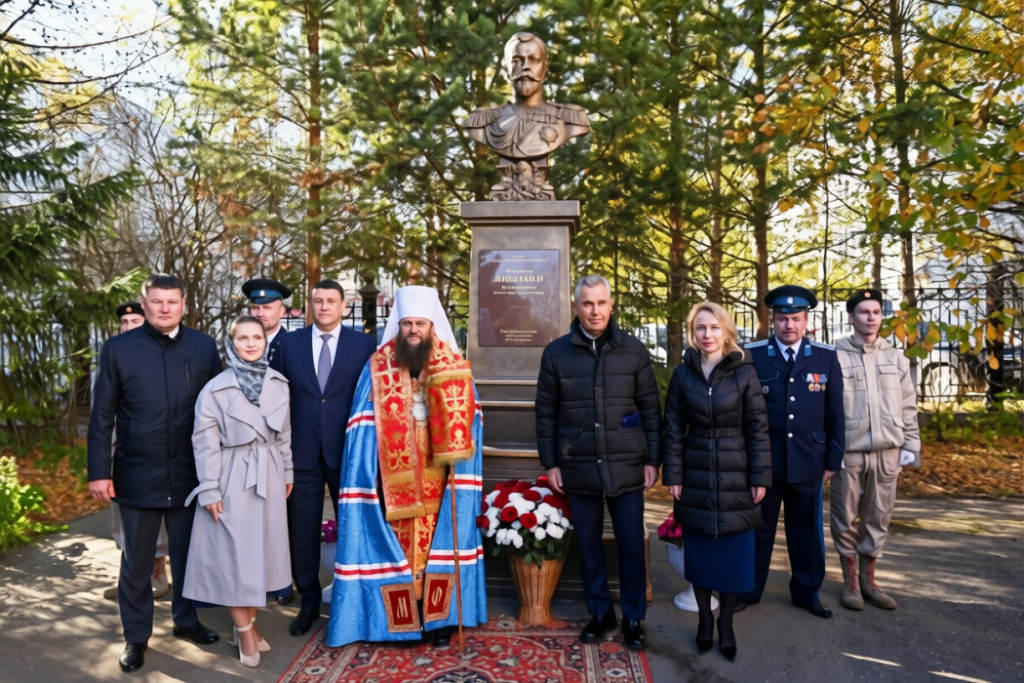
The bust-monuments were consecrated by Metropolitan Philip of Metropolitan of Syktyvkar and Komi-Zyryansk. He called their installation a “historic event.”
“These are two saints who worked and suffered during the revolution. We know the lives of these people. Emperor of the Russian Empire, who ruled the country for 22 years. Who, probably, loved the Orthodox faith more than anyone else,” the metropolitan commented.
After the opening ceremony, the participants in the work to perpetuate the memory of the saints were awarded by the church. Pavel Astakhov was awarded the Medal of the Syktyvkar Diocese of St. Stephen of Perm, III degree.
According to Pavel Astakhov, any city and region can join the work to immortalize the saints. Similar monuments have already been erected in other cities of Russia as part of the “Alley of Russian Glory” project, on the initiative of federal social activists and the SPAS TV channel.
The installation of the monment in Syktyvkar is the 16th monument of Russia’s last Tsar, to be installed in Russia this year. Since the fall of the Soviet Union in 1991, between 125 to 150 monuments, busts and memorial plaques have been installed in nearly 50 regions of the Russian Federation.
© Paul Gilbert. 3 October 2026


You must be logged in to post a comment.