Paul Gilbert Retires from Publishing

PHOTO: Paul Gilbert, Independent Publisher and Bookseller since 1994

All good things must come to an end. After more than 26 years as an independent publisher I have decided to retire. My publishing business officially closed on 31st December 2020. My decision was not an easy one, but one which I have been considering for some time now. While I had hoped to continue publishing for a few more years, circumstances beyond my control have forced me to do otherwise.

In anticipation of my retirement and plans to move back to England, I began downsizing my business back in 2016, when I turned 60. I stopped selling other publishers books, I ceased publishing books by new authors, I stopped importing books in bulk from Russia, then I closed down my Royal Russia web site, and focused on publications on the life and reign of Emperor Nicholas II. 

These measures, saw my annual sales slowly decrease, however, shrinking book sales during the last few years have resulted in my business operating in the red. Amazon had a huge impact on my sales (their discounting book prices and free shipping have helped put many independent booksellers out of business). Annual parcel rate increases by Canada Post (the most expensive in the world) to the United States and overseas have had a huge detrimental impact on book sales. The final nail, however, was the COVID-19 pandemic which further affected declining sales.

I regret to announce that the books and periodicals which I had planned to publish this year have been cancelled. This includes ALL future issues of ROYAL RUSSIA (No. 15 was the last issue published) or SOVEREIGN (No. 11 was the last issue published). The articles planned for publication in SOVEREIGN will instead be published on my blog NICHOLAS II. EMPEROR. TSAR. SAINT.

My ONLINE BOOKSHOP will remain open until all remaining stock has been sold. It is at this time that my bookshop will close permanently. 

I will dedicate my retirement to researching and writing articles for my Nicholas II blog, of which the number of views increased by nearly 100 percent over the previous year: 137,235 in 2020 compared to 70,429 in 2019. It is my blog that I will now devote my time and resources, because it is through this particular venue that I can reach a wider and growing readership. 

I will also continue to update my FACEBOOK page daily with news, photos and videos about Nicholas II, and the history of the Romanov dynasty and Imperial Russia. I have plans to offer lectures, conferences and other events dedicated to the life and reign of Russia’s last emperor and tsar.

I am very proud of what I accomplished over the last 26+ years. I published more than 100 titles, including new books; first English translations; reprints of Russian Royal classics in both hard cover and paperback editions, periodicals and calendars.

A heartfelt THANK YOU to each and every one of you who bought my books over the years, your patronage has been very much appreciated..

I believe that I am making the right decision and look forward to sharing my research with all of you for many more years to come. I pray that God will grant me many more years.

© Paul Gilbert. 3 January 2021
Nicholas II: TOP 10 articles of 2020


In 2020, the number of views on my blog Nicholas II. Emperor. Tsar. Saint increased by nearly 100 percent over the previous year: 137,235 in 2020 compared to 70,429 in 2019.

People from 178 countries around the world visited my Nicholas II blog in 2020, including places such as Bhutan, Iceland, Vatican City, Cuba and Mongolia.

My Nicholas II blog was most popular with people in the United States, United Kingdom, Canada, Australia, France, Italy, Russia, Brazil, Germany and Netherlands.

Below, is a list of the 10 most widely read articles and news stories of 2020:

[1] Audio recording of the voice of Nicholas II – posted 25th August 2020

[2] Obituary: Olga Nikolaevna Kulikovsky-Romanov (1926-2020) – posted 2nd May 2020

[3] Romanov Book of the Year for 2019: ‘The Romanov Royal Martyrs – posted 18th November 2019

[4] Russian media provide a first look at the progress of the recreation of the historic interiors in the Alexander Palace – posted 26th November 2019

[5]The Bolshevik sale of the Romanov jewels – posted 9th October 2020

[6] Nicholas II: the Tsar with the dragon tattoo – posted 16th March 2019

[7] “There are still many conjectures surrounding the death of Grand Duchess Elizabeth Feodorovna” – posted 16th August 2020

[8] Why was Russia’s senior investigator and forensic expert dismissed from the Ekaterinburg remains case? – posted 14th March 2020

[9] Nicholas II’s Diaries 1894-1918 – posted 23rd January 2020

[10] The myth that Nicholas II’s death was met with indifference by the Russian people – posted 19th June 2020

© Paul Gilbert. 1st January 2021

***

Dear Reader

If you find my articles, news stories and translations interesting, then please help support my research by making a donation in US or Canadian dollars to my project The Truth About Nicholas II – please note that donations can be made by GoFundMe, PayPal, credit card, personal check or money order. Thank you for your consideration – PG

Romanov Book of the Year for 2020: ‘Empress Alexandra’ by Melanie Clegg

Based on her comprehensive research from primary sources, ‘Empress Alexandra’ by Melanie Clegg is my personal choice for the Romanov Book of the Year for 2020 – Paul Gilbert

NOTE: This book is now available in the UK and North America, and can be ordered from your favourite bookseller. As a courtesy to those who have not yet read the book, I did not want to give anything away, or publish any spoilers, therefore, I have used material from the publishers web page and added my own additional comments and notes to this review – PG

* * *

My love of reading has helped me navigate, what turned out to be a rather dreadful year for most this year. There were several noteworthy Romanov titles published in 2020, however, it was ‘Empress Alexandra: The Special Relationship Between Russia’s Last Tsarina and Queen Victoria’ by Melanie Clegg which I enjoyed the most.

In her new book, British historian and author Melanie Clegg takes a fresh and intimate look at the close relationship that existed between the last Empress of Russia and her grandmother Queen Victoria.

The story begins with the birth of Alexandra’s mother Princess Alice, who was the third child of Queen Victoria and Prince Albert. Alice was betrothed to Prince Louis of Hesse and by Rhine shortly before her father’s death in 1861 and their wedding was described by her mother as ‘more of a funeral than a wedding’.

Alexandra was just six years old when her mother died of diphtheria in 1878 at which point both she and her elder sisters were taken immediately under the wing of their grandmother, Queen Victoria, who oversaw their education, cared for them and tried to arrange their future.

It was Victoria’s dearest wish that Alexandra should marry her first cousin Prince Albert Victor, Duke of Clarence, who was second in line to the British throne. However, Alexandra had already fallen in love with the Tsesarevich Nicholas Alexandrovich [future Emperor Nicholas II] of Russia – a match that horrified her formidable and Rusophobic grandmother.

Although Victoria was disappointed by Alexandra’s decision to marry Nicholas, the two continued to correspond until the end of her life in 1901.

What I enjoyed so much about this particular title is how the author captured the essence of Queen Victoria’s relationship with her granddaughter Princess Alix of Hesse, later Empress Alexandra Feodorovna, into one volume. The relationship between the two female rulers, who were so different in ability and personality but bound together by blood and genuine affection makes this a fascinating read!

Clegg intended this book to simply be a study of the relationship of Queen Victoria and her granddaughter, but after some reflection, she decided to begin with the birth of Alexandra’s mother Princess Alice, believing that her relationship with her mother shaped that between Victoria and Alexandra, and was highly relevant to the events that occurred later on.

The author draws from the vast collection of Queen Victoria’s letters and diaries from the Royal Archives (RAVIC/MAIN/QVJ), and Empress Alexandra Feodorovna’s letters edited by Sergei Mironenko and Andrei Maylunas.

Published by Pen and Sword Books (UK). Hard cover. 216 pages with more than 40 high quality black and white photographs from the Royal Collection Trust. 

***

My previous selections for Romanov Book of the Year include the following titles:

(2019) The Romanov Royal Martyrs: What Silence Could Not Conceal

(2018) The Race to Save the Romanovs: The Truth Behind the Secret Plans to Rescue the Russian Imperial Family by Helen Rappaport [*my review was lost after I closed down my Royal Russia blog, on 1st January 2020 – PG]

© Paul Gilbert. 31 December 2020

Gifts for the Restoration of the Alexander Palace

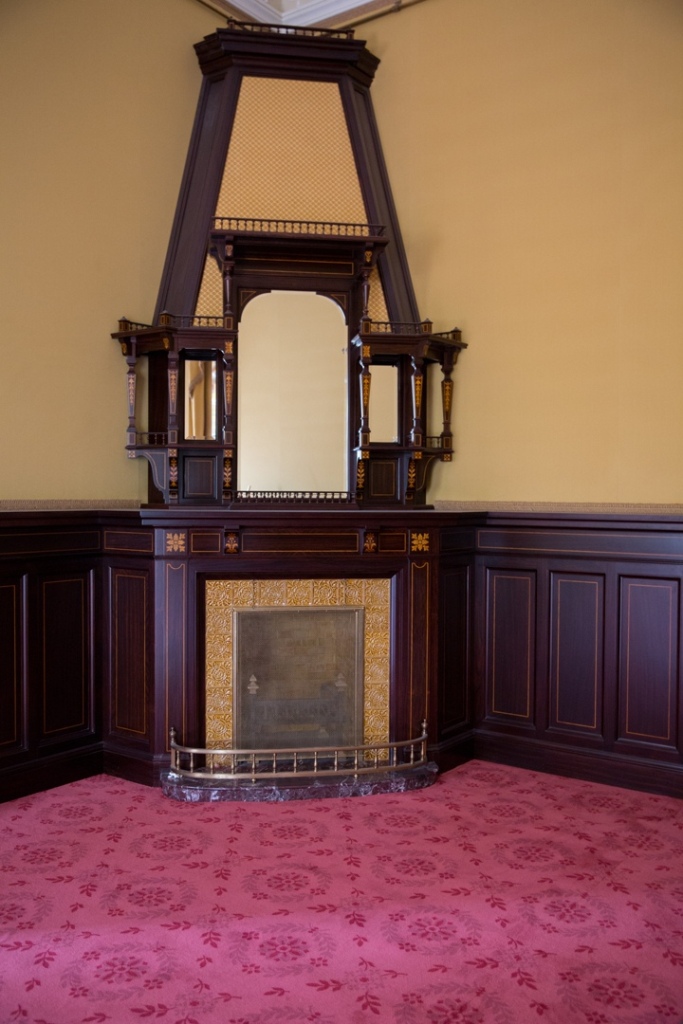
PHOTO: the purple Wilton carpet in the recreated Pallisander (Rosewood) Drawing Room

As the next stage of the restoration of the Alexander Palace comes to an end, it is important to recognize the generosity of individuals and businesses who have made gifts for the interiors of the former apartments of Nicholas II and Alexandra Feodorovna.

These gifts will be showcased in the recreated interiors of the Pallisander (Rosewood) Drawing Room and the Mauve (Lilac) Boudoir of Empress Alexandra Feodorovna, as well as the New Study of Emperor Nicholas II.

The making of carpets, drapes, cushions was a laborious and complex process associated which involved the careful study of historical samples preserved in the museum’s collection, which became analogs for the decoration of the historic interiors of the Alexander Palace.

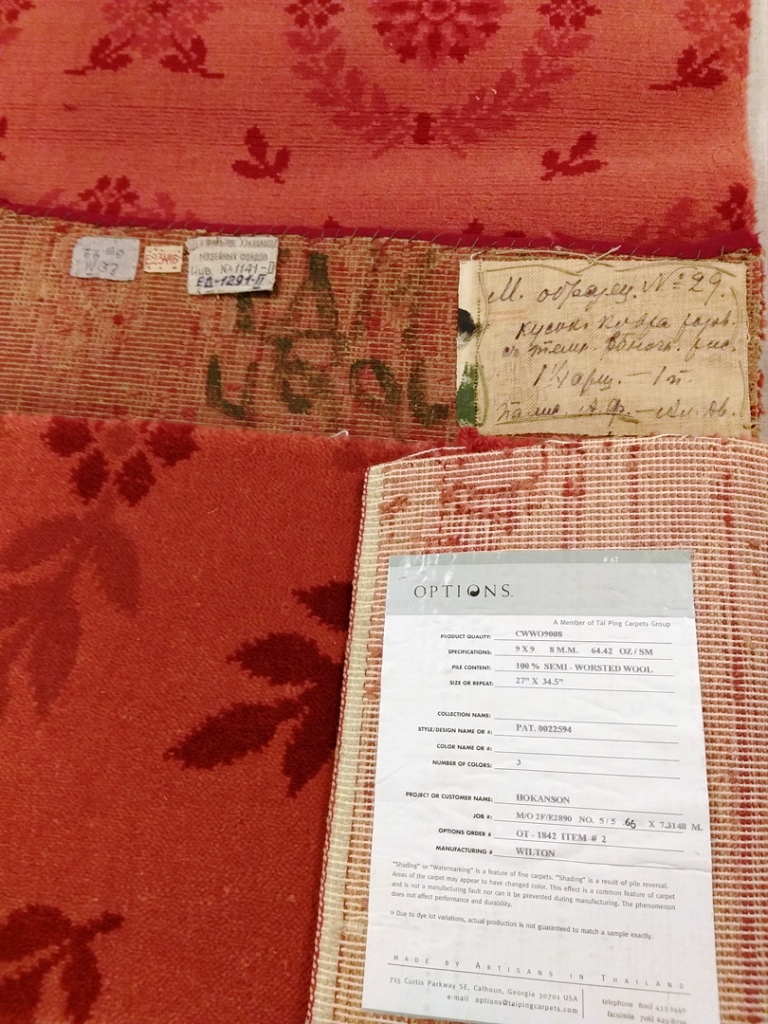
PHOTO: preserved carpet sample from Pallisander (Rosewood) Drawing Room

Larry Hokanson, a carpet designer in the United States, became the first donor who expressed a desire to participate in the recreation of the interior decoration of the Alexander Palace. Mr. Hokanson undertook to recreate the Wilton carpet for the Pallisander (Rosewood) Drawing Room, which was lost during the Great Patriotic War (1941-45), based on the historical sample preserved in the museum’s collection. This carpet, with a simple but delicate floral design over a purple background, featured a distinctive weave typical of vintage English handmade wool carpets. The Hokanson factory was able to replicate this sophisticated weaving technique, colour and pattern exactly. The magnificent replicated carpet was gifted to the museum in 2013, the year marking the 300th anniversary of St. Petersburg.

Up until now, this valuable gift has been kept in the museum’s funds, the purple Wilton carpet has now been laid in the recreated Pallisander (Rosewood) Drawing Room.

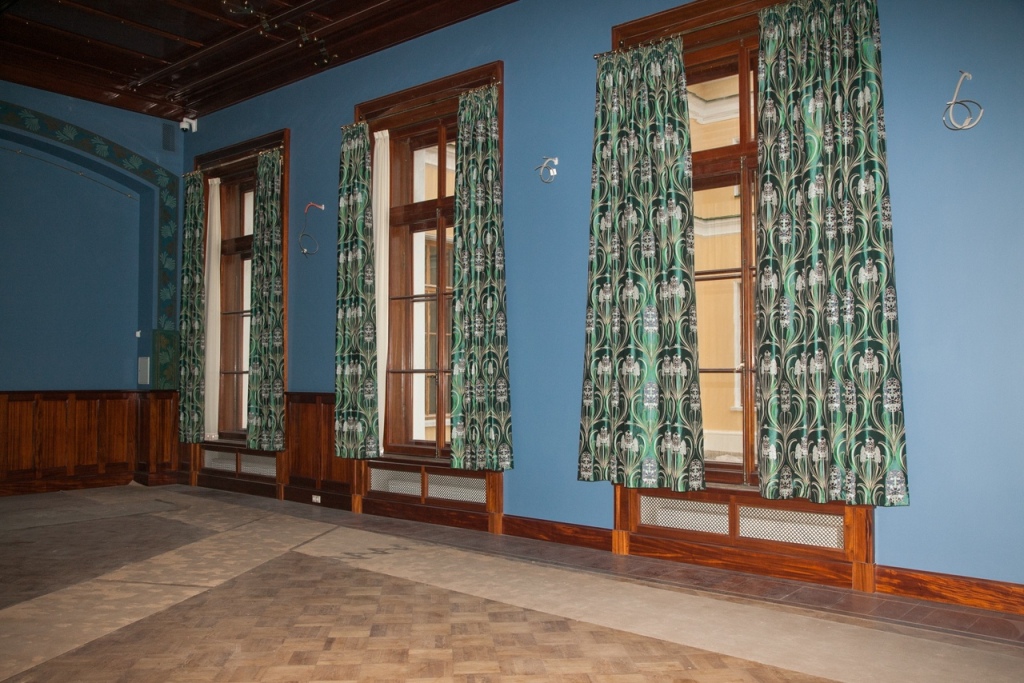
PHOTO: curtains recreated for the New Study of Nicholas II

In 2011, fabrics for the production of curtains for the New Study of Nicholas II were donated to the Alexander Palace, by the Swiss company Fabric Frontlain with the financial support of Tissura. Fabric with hyacinths were recreated from an historical sample preserved in the Tsarskoye Selo Collection.

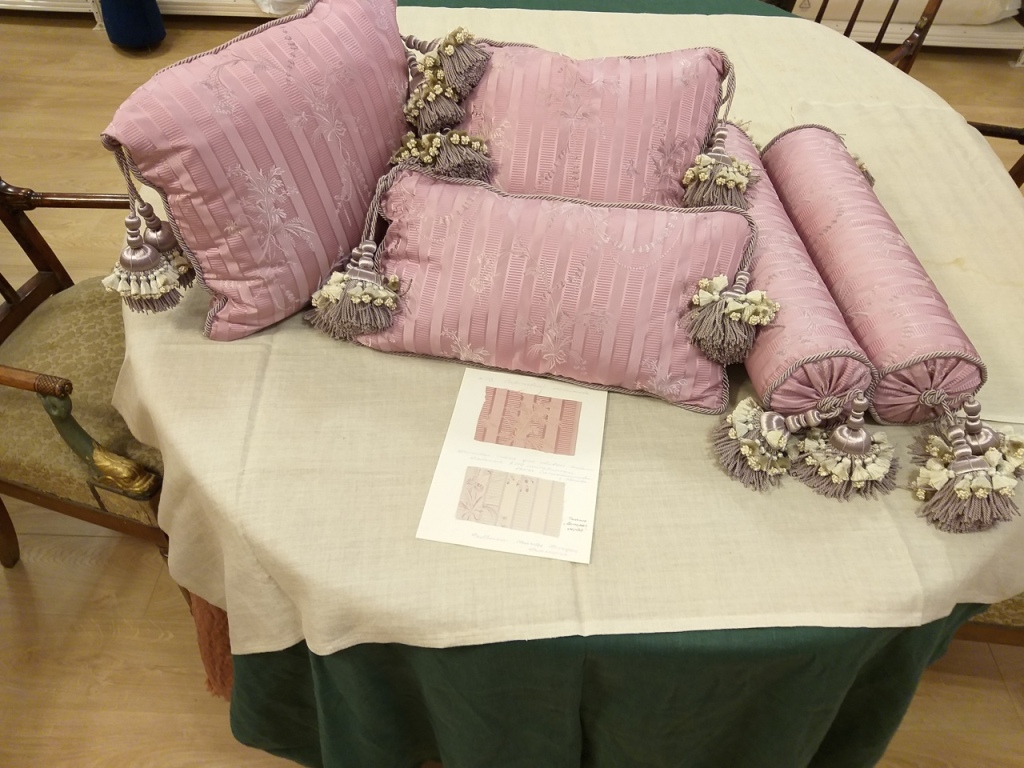
In 2020, Janusz Anzhey Szymaniak, General Director of the Renaissance Workshops for the Restoration of Antique Monuments, donated sets of pillows and cushions for sofas in the Mauve (Lilac) Boudoir, made at the St. Petersburg enterprise Le Lux. The fabric for these items was recreated according to the historical model preserved at the Italian factory Rubelli, and the intricately woven silk tassels at the Polish company Re Kon Art.

PHOTO: cushions and pillows recreated for the Mauve (Lilac) Drawing Room

In the outgoing year, work on the interior decoration of the Moorish Bathroom of Nicholas II continued in the Alexander Palace. Acquiring a reed mat for wall decoration turned out to be a difficult task. This special mat of traditional Japanese weaving not only decorated the walls of the interior, but also protected them from damage. The museum asked Tsutsui Akiyuki, Vice Consul of the Japanese Consulate General in St. Petersburg for cultural affairs, for help. Mr. Tsutsui was of great assistance in resolving the issue of acquiring a reed mat and is now in charge of the issue of its delivery from Japan to the Alexander Palace. Unfortunately, due to the COVID-19 pandemic, the mat can not be delivered within the originally planned timeframe.

NOTE: all photos © Tsarskoye Selo State Museum-Reserve

© Paul Gilbert. 23 December 2020

***

Fifteen interiors situated in the eastern wing of the palace, are now scheduled to open to visitors in 2021. Among the recreated interiors are the New Study of Nicholas II, Moorish Bathroom of Nicholas II, Working Study of Nicholas II, Reception Room of Nicholas II, Pallisander (Rosewood) Living Room, Mauve (Lilac) Boudoir, Alexandra’s Corner Reception Room, the Imperial Bedroom, among others.

In the future, the Alexander Palace will become a memorial museum of the Romanov family – from Catherine the Great to Nicholas II, showcasing the private, domestic life of the Russian monarchs who used the palace as an official residence. The eastern wing of the palace will be known as the Museum of the Russian Imperial Family. The multi-museum complex, which includes the Western wing is scheduled for completion no earlier than 2024.

***

Dear Reader: If you enjoy my updates on the restoration of the Alexander Palace, then please help support my research by making a donation in US or Canadian dollars – donations can be made by GoFundMe, PayPal, credit card, personal check or money order. Click HERE to make a donation – the net proceeds help fund my work, including research, translations, etc. Thank you for your consideration – PG

Nicholas II’s visit to Eriklik, Crimea in 1914

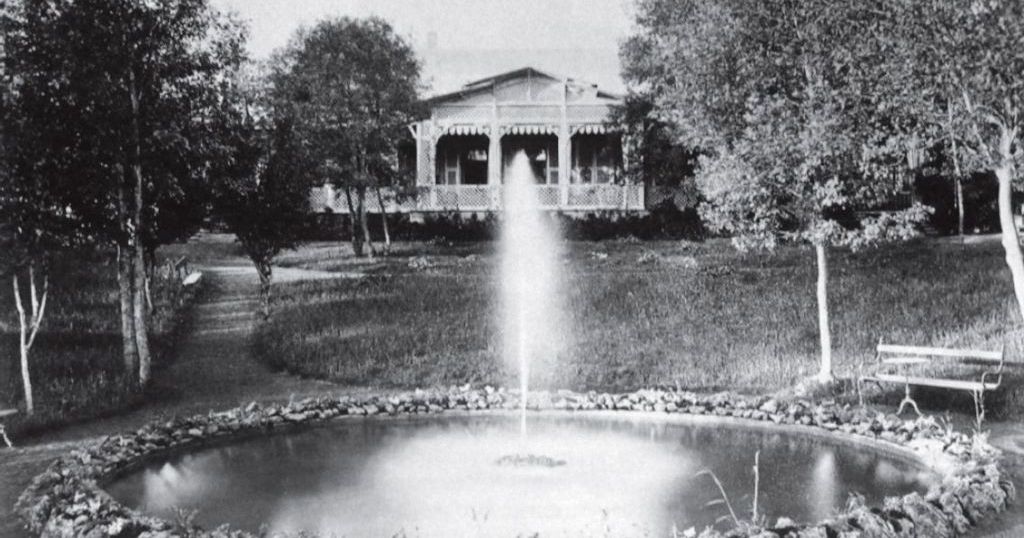
PHOTO: Eriklik, the dacha built for Empress Maria Alexandrovna near Livadia

Eriklik was the name of a dacha, built for Empress Maria Alexandrovna (1824-1880), wife of Emperor Alexander II (1818-1881), near Livadia in Crimea. The dacha was built on the advice of her physician Dr. Sergei Petrovich Botkin (1832-1889) [father of Dr. Eugene Botkin (1865-1918), who was murdered with Nicholas II and his family by the Bolsheviks on 17th July 1918] , who recommended that the Empress spend autumn and winter in the south, where the mountainous and coniferous air would benefit her declining health.

The construction of the dacha involved designer A.I. Rezanov and the famous architects A.G. Vincent , V.I.Sychugov, and was built between April-August 1872.

A beautiful park parterre with a system of paths and a round fountain were arranged in front of the dacha, the vegetation was cleared in order to maximize the panoramic view of the mountains and the Black Sea. The architectural complex was created by assimilating the nature of Crimea set against the symbolic views of the mountain landscape.

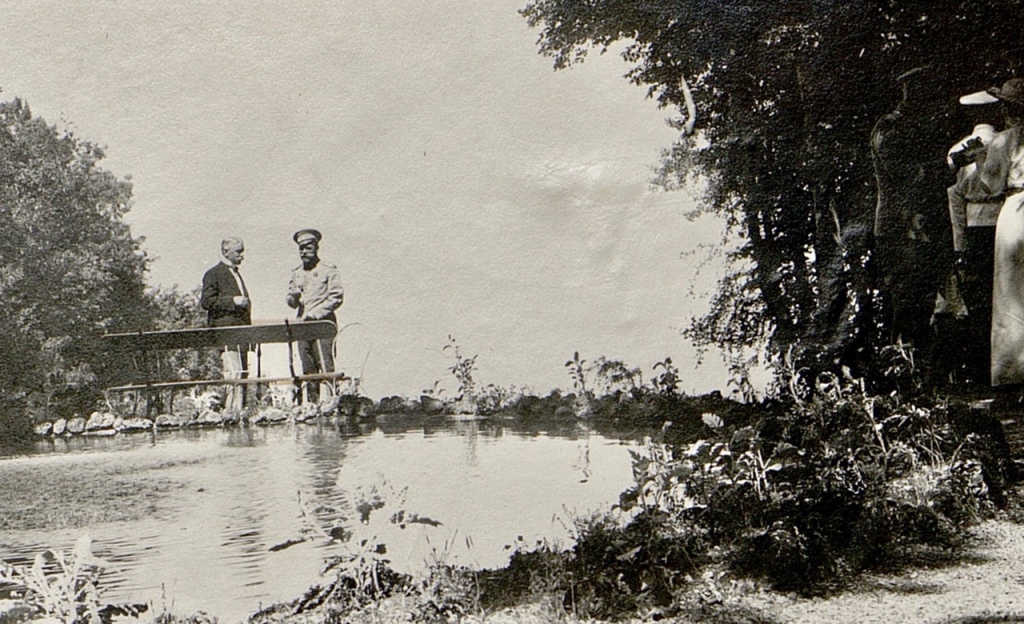
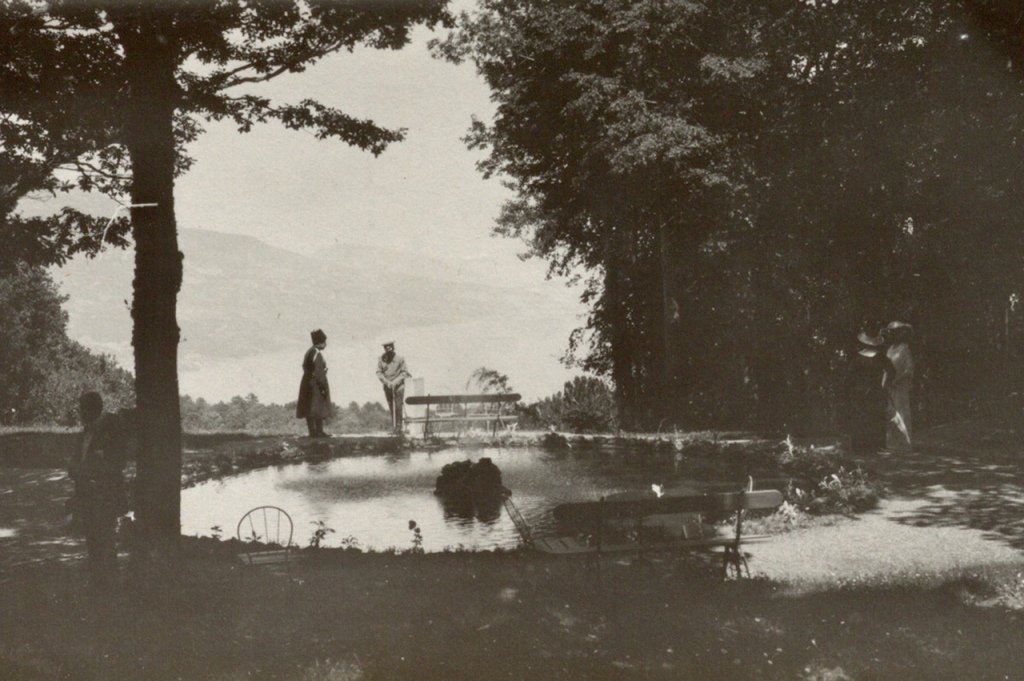
PHOTOS: Emperor Nicholas II at the fountain in the garden at Eriklik, 1914

The wooden one-story dacha, consisted of three wings, connected to each other and 8-10 rooms. The Empress’s rooms faced the most beautiful views, an adjoining room was reserved for the dining room, behind it were the rooms for Alexander II. The servants’ quarters were located behind the Empress’s rooms. The dacha had a wooden patio. The dacha also included a wooden veranda, a gazebo in the garden and several outbuildings.

After the death of Maria Alexandrovna, the palace remained empty. During their stays in Crimea, Nicholas II with his family, often visited Eriklik, where they enjoyed quiet walks and picnics.

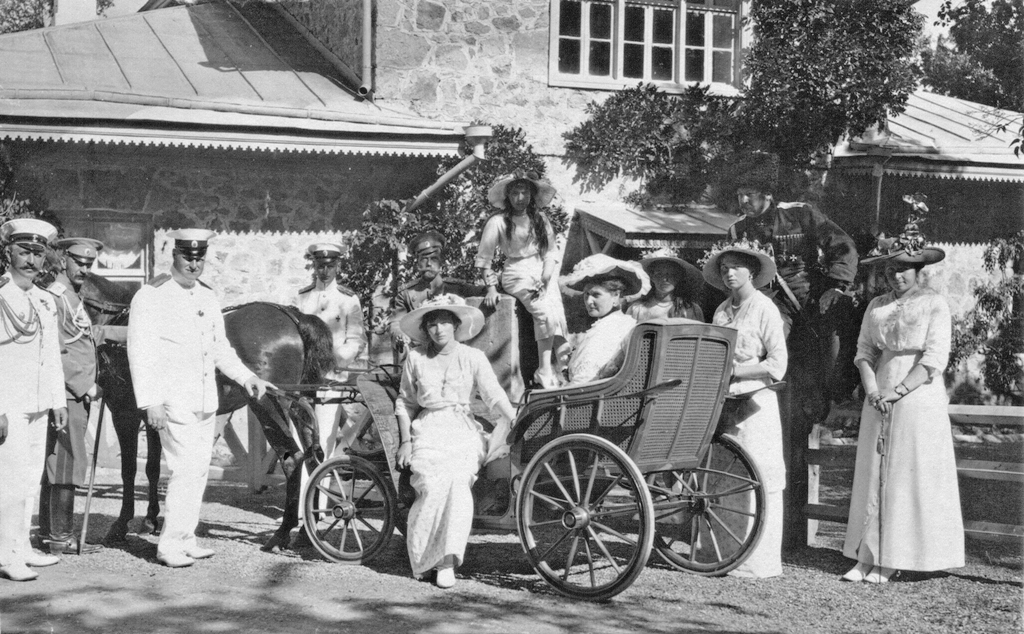
PHOTO: the Imperial Family  visits Eriklik in May 1914

On 28th May 1914, three days before leaving the Crimea, the Tsar’s family arrived in Eriklik for breakfast. They were joined by other members of the Russian Imperial family who were staying at their respective Crimean residences at Ai-Todor, Kharax and Kichkine, as well as officers of the Imperial Yacht Standart. After breakfast, everyone walked together and relaxed in the garden. Grand Duchess Olga Nikolaevna noted in her diary that the day was “warm and sunny”. It was to be their last journey to Crimea.

Following the 1917 Revolution, a health resort for tuberculosis patients was opened in the dacha. At the beginning of the 20th century, the wooden dacha fell into decay, and in the middle of the 20th century was demolished.

© Paul Gilbert. 23 December 2020

***

Dear Reader

If you found this article interesting, then please help support my research by making a donation in US or Canadian dollars to my project The Truth About Nicholas II – please note that donations can be made by GoFundMe, PayPal, credit card, personal check or money order. Thank you for your consideration – PG

New museum in Moscow to showcase Nicholas II’s automobiles


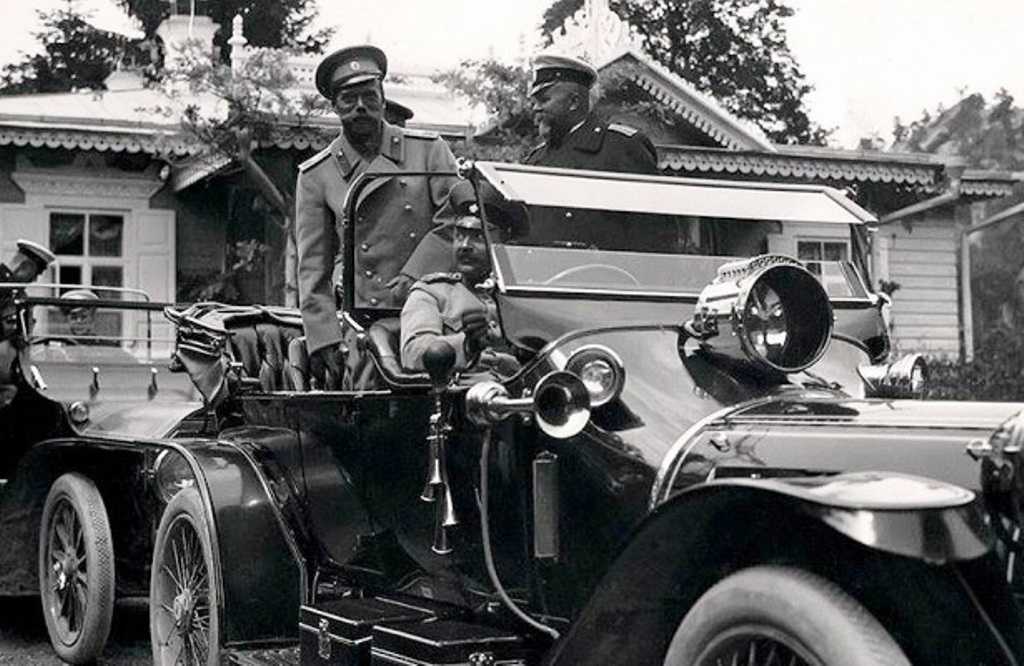
PHOTO: Nicholas II travelling in his French Delaunay-Belleville

Next year will mark the 100th anniversary of the Special Purpose Garage in Moscow. For its centenary, a multifunctional complex – the Special Purpose Garage Museum – will open in two pavilions at the All-Russian Exhibition Center (VDNKh) in Moscow.

Simulators and interactive exhibits are now being installed in Pavilion No. 54, where visitors can learn about the technical characteristics of automobiles and road safety. The main highlight of the new permanent museum will be in Pavilion No. 53, which will showcase historical automobiles of Soviet leaders, and more importantly those of Russia’s last emperor Nicholas II, who was a keen collector of fine automobiles.

Note: it is not known at this time, how many of Nicholas II’s autos will be on display, nor which automobiles will be on display. I will update this article when I have more details – PG.

The Special Purpose Garage Museum is scheduled to open in early 2021.

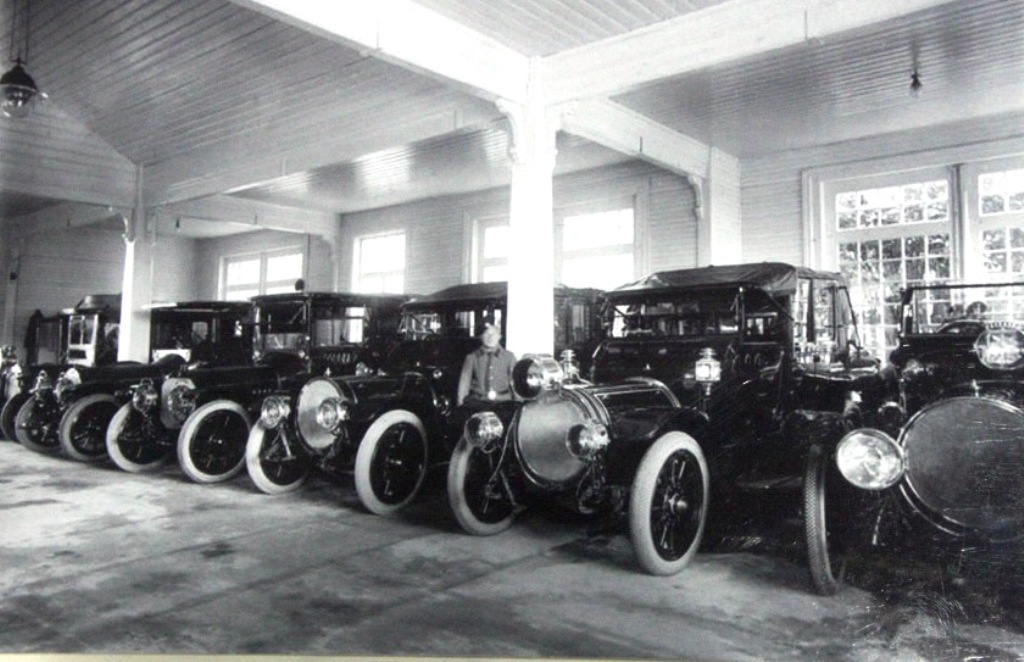
PHOTO: His Imperial Majesty’s Own Garage, Tsarskoye Selo

Facts about His Imperial Majesty’s Own Garage

* The “founding fathers” of His Imperial Majesty’s Own Garage were the Minister of the Imperial Court, Count Vladimir Fredericks (1838-1927), and the Adjutant Wing Prince Vladimir Orlov (1868-1927). The first automobile appeared in Tsarskoye Selo at the beginning of 1906: the French Delaunay-Belleville with a triple phaeton body, and soon complemented with four Mercedes.

* In mid-1906, the Imperial Driver School was opened at the garage. In fact, it was the first driving school in Russia. Empress Alexandra Feodorovna herself attached great importance to the uniforms worn by drivers and mechanics. She created sketches with her own hand, designing uniforms based on a footman’s livery adorned with gold cords.

* Drivers, mechanics and “soapmen” (car washers) did not appreciate being treated like lackeys and servants, but were forced to wear their uniforms. Their struggle continued, and in the end, the drivers won. In 1910, their new uniform – approved by the Emperor – resembled the uniforms of military officials: khaki colours, lace-up leather boots, leggings.

* Court chauffeurs in fur hats could easily be mistaken for senior officers and they were paid well. The senior driver received 2,600 rubles a year (for comparison: the annual salary of a university professor was 3,000 rubles), a third-class driver – 780 rubles a year.

* On March 2, 1917, Emperor Nicholas II signed his abdication. This ended the story of His Imperial Majesty’s Own Garage. All property of the imperial family passed into the disposal of the Provisional Government, including the garage. In addition to a change in management, the garage managed to avoid significant personnel changes.

* As a result of the October Revolution of 1917, the Autobase of the Provisional Government was nationalized and transferred to the disposal of the Bolsheviks. Lenin himself wasted little time in taking first pick from the Tsar’s collection of fine automobiles. His first trip in a Turcat-Méry automobile took place on 27th October 1917. Many employees of the Imperial Garage and the Autobase of the Provisional Government continued to work for the Bolsheviks.

***

Dear Reader

If you found this article interesting, then please help support my research by making a donation in US or Canadian dollars to my project The Truth About Nicholas II – please note that donations can be made by GoFundMe, PayPal, credit card, personal check or money order. Thank you for your consideration – PG

© Paul Gilbert. 22 December 2020

New monument to Nicholas II opens in Murmansk Region

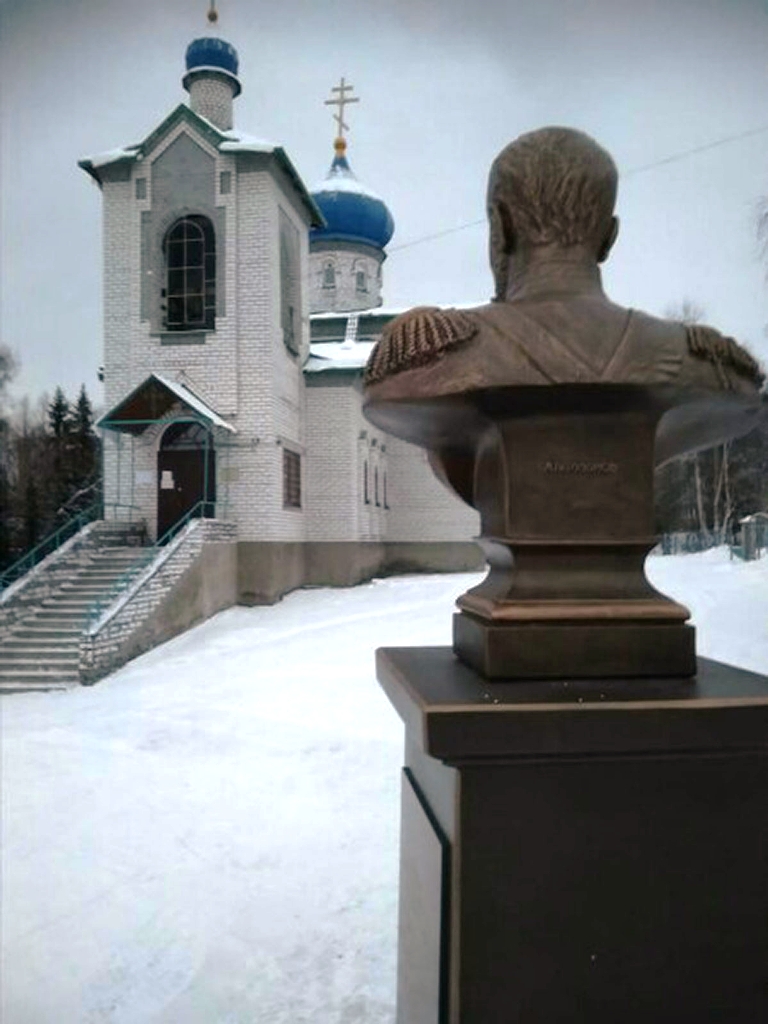
PHOTO: Monument to Nicholas II in the city of Kovdor, Murmansk Region

On 19th December 2020, a new monument-bust to Nicholas II was unveiled in the Murmansk region. The proposal to install the monument was approved only last week, after a vote by local residents with 512 participants in favour, and 38 against.

The bronze bust was established on the grounds of the Church of the Assumption of the Blessed Virgin Mary in the city of Kovdor, which is situated about 300 km south of Murmansk.

The bust weighs 300 kilograms, and the marble pedestal weighs about two tons, and is planned to be erected in early 2021.

The idea of ​​erecting the monument is that of members of the Tsar’s Cross Movement in June 2020. The local church parish raised the necessary funds for the pedestal, and the bronze bust itself was donated by the Alley of Russian Glory sculptural workshop situated in Kropotkin, Krasnodar Krai region.

The purpose of erecting the monument to the Tsar-Martyr is to emphasize the contribution of Nicholas II to the development of the Murmansk region in the early 20th century.

Nicholas II is the founder of the city of Romanov-on-Murman, which was renamed Murmansk by the Bolsheviks in April 1917. In June 2019, the local airport was renamed after the Emperor; and on 20th November 2020, a permanent photo exhibition dedicated to Nicholas II was opened in the terminal building of the airport.

PHOTO: Church of the Assumption of the Blessed Virgin Mary, Kovdor

***

Since the fall of the Soviet Union in 1991, more than 70 monuments, busts and memorials to Nicholas II have been established in more than 30 regions across Russia. Click HERE to review more than 30 of them in my Nicholas II Monuments category

© Paul Gilbert. 21 December 2020

VIDEO: ‘The Lost Life of Alexei Romanov’ with Jonathan Jackson

The Lost Life of Alexei Romanov’ is the latest in a series of videos produced by the Mesa Potamos Publications, publishers of ‘The Romanov Royal Martyrs: What Silence Could Not Conceal’ – my personal choice for Romanov Book of the Year in 2019.

Of particular note in this 38 minute English language video are the following images and newsreels:

Compare the image of Alexandra holding her newborn son at 1:39 with that of the haunting image at 4:46—what a shocking difference. Poor Alexandra looks tired, worn out both physically and emotionally from watching over and caring for her sick son. Click HERE to read my article “Judge Not Lest Ye Be Judged” – In Defence of Empress Alexandra Feodorovna, published on 20th July 2020.

The newsreel footage of the 5 children laughing and playing on the deck of the Imperial Yacht ‘Standart’ from 5:37 to 6:43 made me laugh and smile. Both, however, faded into sadness, knowing the horrific fate which awaits them.

At 11:00 we see the children marching around the well, situated in the Italian Courtyard at Livadia Palace in Crimea, carrying their flowered banners for the White Flower Day festivities, and each wearing a Kodak camera around their necks.

At 20:21 we see a mischievous Alexei throwing a snowball at his tutor Pierre Gilliard, only to turn around and realize that his prank has been caught on camera, forcing him to laugh and run off.

At 23:16 Jonathan Jackson reads a letter written by Alexei to his friend Nikolai Vladimirovich Derevenko nicknamed “Kolya” (1906-2003), which was discovered after the murders in the Ipatiev House. Alexei concludes the letter with the prophetic words “The END”. This is followed by a very moving interview many years later with Kolya.

The most poignant moment in the video, however, has to be at 25:58. We see Alexei seated in a motorcar with Minister of the Imperial Court Count Vladimir Frederiks (1838-1927). At 26:11, Alexei turns around smiles and nods at the camera. It is a most fitting ending.

Narrator Jonathan Jackson offers a heartfelt chat at the end. A devout Orthodox Christian, Jackson shares with viewers his love for the Holy Royal Martyrs. His words will reflect those of many viewers, regardless of their respective faith or beliefs.

Personally, I was profoundly moved by this video about Tsesarevich Alexei. The exceptional newsreel footage brings the heir to the throne to life. This combined with the black and white archival photographs, the astounding colourizations by Olga Shirnina, and narration by Jonathan Jackson make this one of the finest videos produced by the Mesa Potamos Publications to date.

Holy Royal Martyrs, pray to God for us!

This video is produced as part of the project for the book The Romanov Royal Martyrs, which is an impressive 512-page book, featuring nearly 200 black & white photographs, and a 56-page photo insert of more than 80 high-quality images, colorized by the acclaimed Russian artist Olga Shirnina (Klimbim) and appearing here in print for the first time. EXPLORE the book / ORDER the book.

© Paul Gilbert. 16 December 2020

Restoration of Lighting Fixtures for the Alexander Palace

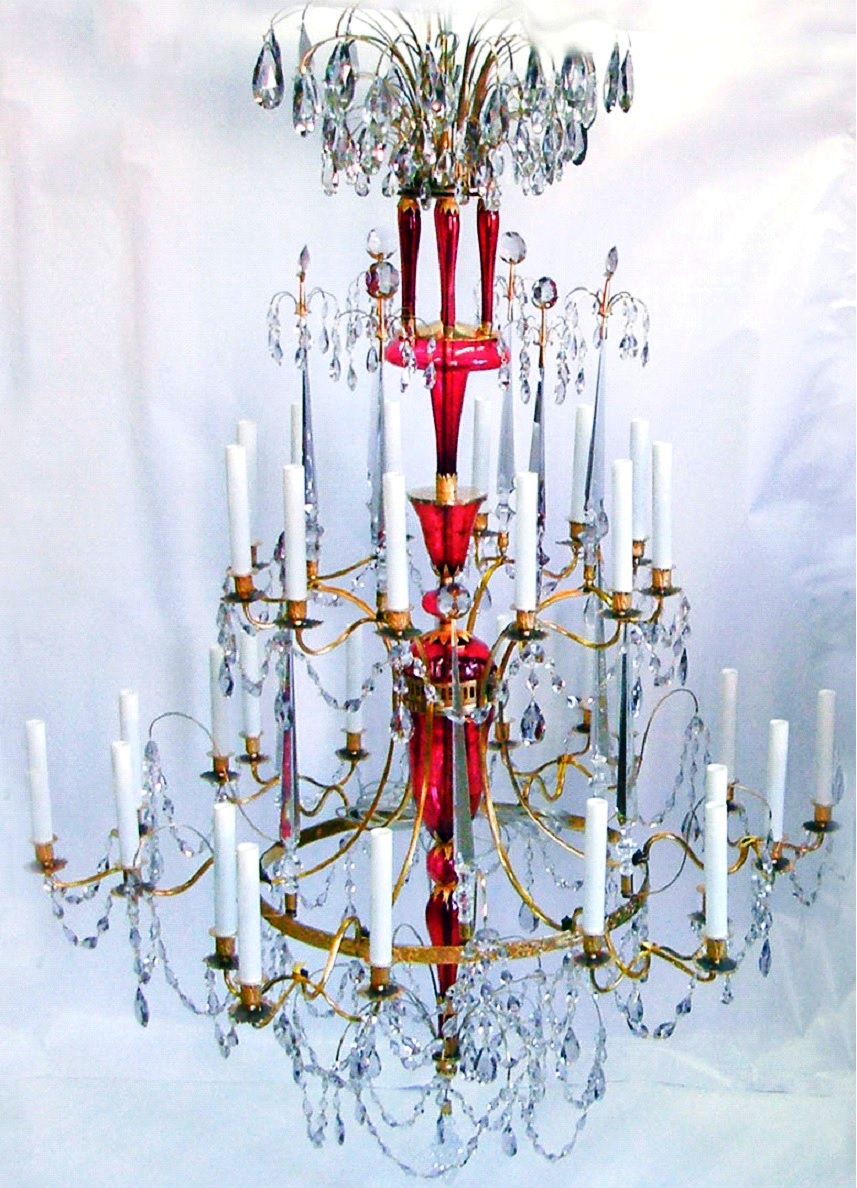
PHOTO: Chandelier for Empress Alexandra Feodorovna’s Corner Reception Room

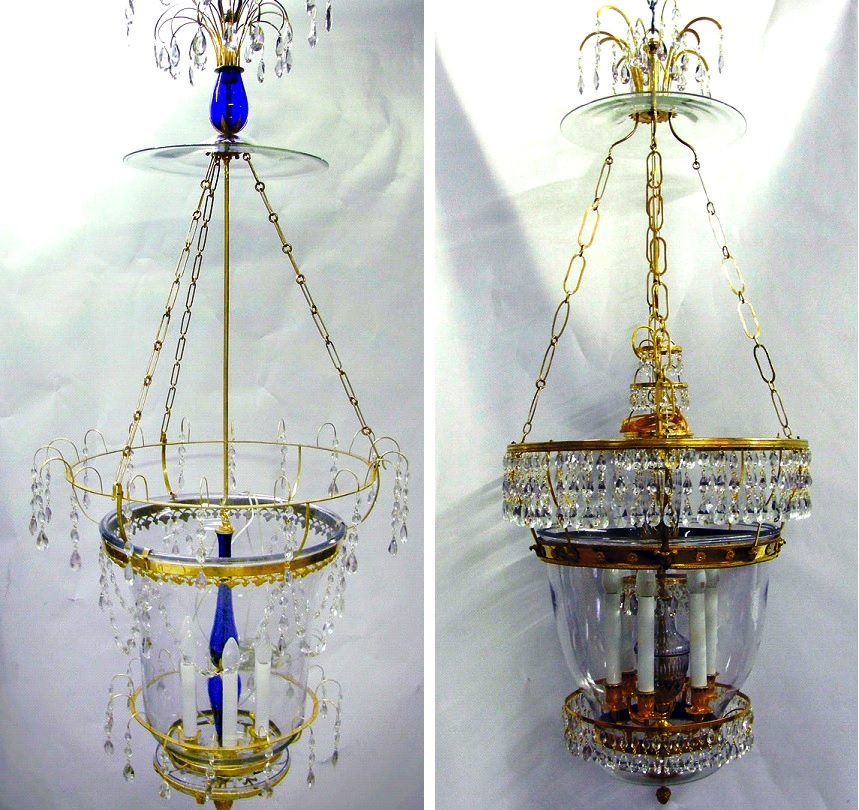
The restoration of two chandeliers and three lanterns for the Alexander Palace has been completed. They will decorate Empress Alexandra Feodorovna’s Corner Reception Room, as well as the Small and Large Libraries.

PHOTO: Colour autochrome of the Corner Reception Room, taken in 1917

In the Corner Reception Room, visitors will see a 30 candle chandelier made of ruby-coloured ​​glass, which had been preserved from the historical collection of the Alexander Palace, but kept in Pavlovsk. Originally, two identical chandeliers were located in the Concert Hall (demolished), a spacious two-story room designed by Giacomo Quarenghi (1744-1817) in the east wing of the palace. At the beginning of the 20th century, during the reconstruction of the hall, one of the chandeliers was moved to the Empress’s Corner Reception Room. The second chandelier was used to decorate the Mirror Study, which was part of the private apartments of Empress Catherine II, located in the Zubov Wing of the nearby Catherine Palace. After the completion of the restoration of the Alexander Palace, this elegant chandelier will be returned to take its original place. The deep ruby red colour of the glass elements of the chandelier perfectly match the soft pink tint of the imitation marble walls of the Corner Reception Room.

PHOTO: restored lighting fixtures for the Small and Large Libraries

For the Small Library, an eight candle chandelier has also been restored. It is decorated with glass vases-balusters, decorating the central rod, pyramids of cut crystal and a crowning cobalt vase with a fountain made of almond-shaped pendants.

An earlier type of pendant lamps, which were used in palace interiors, were lanterns, consisting of a conical body of glass in a mount of gilded bronze and a crystal set in the form of garlands with pendants. The candlestick was placed inside the flask; such lanterns reliably protected the oscillating flame from constant drafts.

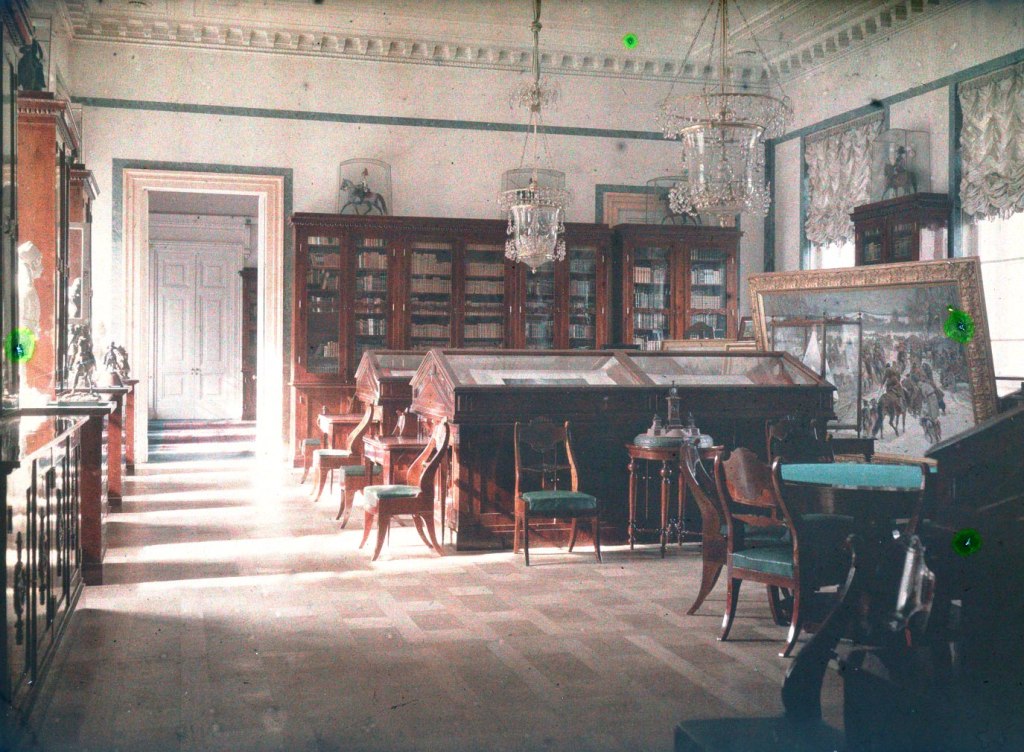
PHOTO: Colour autochrome of the Large Library, taken in 1917

From 1796 to 1941, the Large Library (originally the Dining Room) was lit by three large lanterns with six candles each (now used in the lobby of the Pavlovsk Palace). The Large Library of the Alexander Palace will be lit by three 18th century lanterns, one of which comes from the historical collection, the other two purchased.

During the restoration process, the craftsmen removed dirt from the lighting fixtures, carried out the restoration of the crystal pendant, recreated the lost parts from glass and bronze with subsequent galvanic gilding, and installed new electrical wiring.

The restorers also managed to almost completely recreate one of the lanterns using the existing analogue, adding an 18th century glass flask. The original piece is the only thing that has survived from a hanging or table lamp. For many years, the flask was kept in the museum’s funds, it was intended to be used for such a restoration.

The restoration work which lasted four months was carried out by the Yuzhakova Studio (St. Petersburg) with the participation of masters Alexei Gvozdev, Vyacheslav Gizimchuk and Dmitry Rosenthal.

NOTE: all photos © Tsarskoye Selo State Museum-Reserve

© Paul Gilbert. 16 November 2020

New Metropolitan of Ekaterinburg confirms: “ROC in no hurry to recognize Ekaterinburg remains”

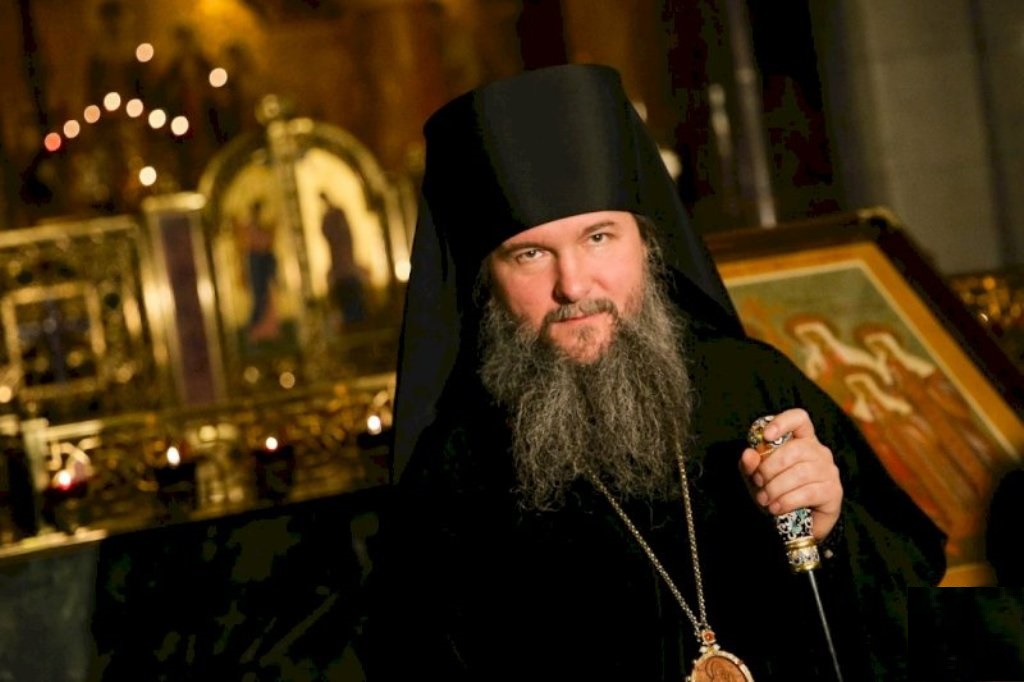
PHOTO: Bishop Evgeny of Ekaterinburg and Verkhotursky

According to Bishop Evgeny of Ekaterinburg and Verkhotursky the Russian Orthodox Church ( ROC ) will not rush to recognize the Ekaterinburg remains – those of Emperor Nicholas II and his family. The newly appointed metropolitan made the comments during a press conference held on Saturday, 12th December in Ekaterinburg. On 8th December 2020, by the decision of the Holy Synod, Vladyka Evgeny was appointed Metropolitan of the Ekaterinburg Diocese.

“I had an opportunity to communicate with those on the commission who investigated the remains … there are many arguments and evidence that these are indeed the remains of the Tsar and his family. But at the same time, there are still many questions that have not yet been answered. His Holiness Patriarch Kirill of Moscow and All Russia stated that the ROC is not in any hurry to complete their investigation by a certain date. We will wait for answers to these questions. This is not some kind of artifact … For us it is a matter of principle, these are holy passion-bearers, these are people who have played a significant role in the spiritual life of our people, and in the state, so the church is in no hurry, fulfilling the words of the holy patriarch,” added Vladyka Evgeny.

“The church will recognize the remains only if there is not an ounce of doubt. If doubts remain, then we will not rush, we will wait. We do not want to offend their memory by making hasty decisions,” he added.

In the summer of 2018, the official representative of the Investigative Committee, Svetlana Petrenko, said that a repeated comprehensive study confirmed the authenticity of the remains of Emperor Nicholas II and his family, who were shot on 17th July 1918 in Ekaterinburg.

Earlier, Evgeny Pchelov, associate professor of the Historical and Archival Institute of the Russian State Humanitarian University, who took part in the research, told journalists about the completion of the historical and archival examination, which, according to him, confirmed the authenticity of the “Ekaterinburg remains.” According to Pchelov, thanks to a comprehensive analysis of primary sources, it was possible to recreate a fairly complete picture of what happened in the days leading up to the deaths of the Imperial family, and the subsequent days which followed the brutal murder. He emphasized that some specific  questions remained unclear, but “the main picture was clarified.”

On 16th July 2018, the eve of the 100th anniversary marking the deaths of Nicholas II and his family, the Investigative Committee of the Russian Federation reported that since the resumption of the investigation in 2015, investigators carried out a wide range of new tests, including 37 different forensic examinations. In total, more than two thousand historical sources were analyzed.

The Investigative Committee stated that “on the basis of numerous expert examinations, the committee concluded that the remains belong to Nicholas II, his family and their four retainers.” At the same time, the committee noted that, “excluding the possibility of ambiguous interpretation of certain circumstances associated with the murders, other examinations necessary for the investigation shall continue.”

In addition, the investigation into the murder of Nicholas II and members of his family intends to identify all those involved in the execution and qualify their actions in accordance with the Criminal Code of the Russian Federation. This part of the investigation is extremely important! Should the *regicides be found guilty of their heinous crime, then lawmakers and historians will be forced to rewrite history. It is a well known fact that after the murders of the Tsar and his family, that many of the *murderers [Yurovsky, Ernakov, etc.] enjoyed a “celebrity” status among the Bolsheviks and revolutionaries. To now find them guilty of their crime a century later, this then clears the way for the names of streets, squares and buildings named in their “honour” of these criminals to be changed, and the removal of any monuments and memorials from the Russian landscape.

*For more information on the regicides, please read my article: The fate of the regicides who murdered Nicholas II and his family, published on 28th October 2020 – PG

Human remains, presumably belonging to the Imperial family, were found in July 1991 on the Old Koptyakovskaya road near Ekaterinburg. The remains of nine people were found in the grave. Forensic studies confirmed the identity of the remains as those of Nicholas II, his wife Alexandra, three of their five children and their four retainers.

In July 2007, during archaeological excavations south of the site of the first burial, the remains of two more people were found, presumably Tsesarevich Alexei and his sister Maria. Forensic studies concluded the identity of the remains as those of Alexei and Maria.

In 2000, the Moscow Patriarchate canonized Nicholas II and his family members as passion-bearers. After the opening of the burial near Yekaterinburg, the remains of members of the imperial family were buried in St. Catherine’s Chapel of the Peter and Paul Cathedral in St. Petersburg. However, the Church did not recognize these remains as genuine due to a lack of evidence. In the fall of 2015, the investigation into the death of the Imperial family was reopened.

Holy Royal Martyrs, pray to God for us!
Святы Царственные мученики, молите Бога о нас!

***

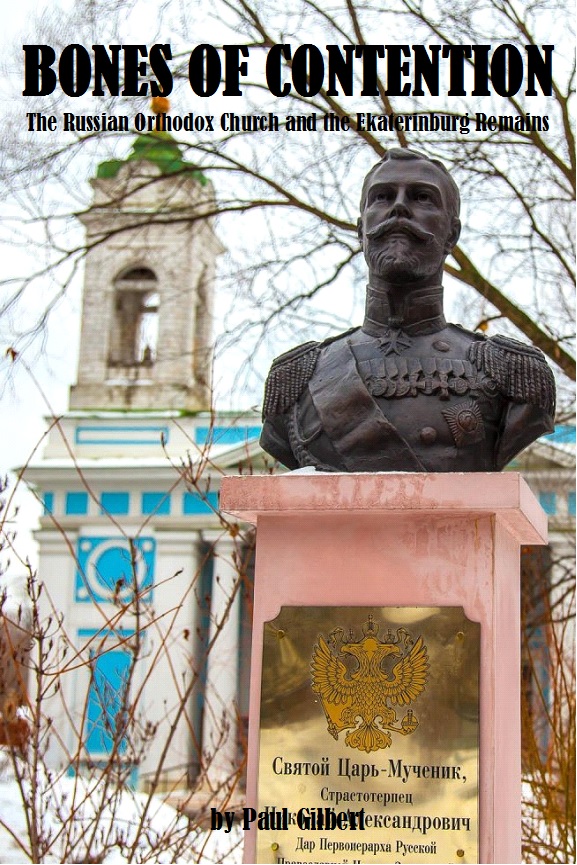
CLICK on the IMAGE above or the LINK below to order my book
‘Bones of Contention: The Russian Orthodox Church and the Ekaterinburg Remains’
Published 2020. 156 pages + 55 illustrations. Price: $20 + postage

© Paul Gilbert. 13 December 2020