Gifts for the Restoration of the Alexander Palace

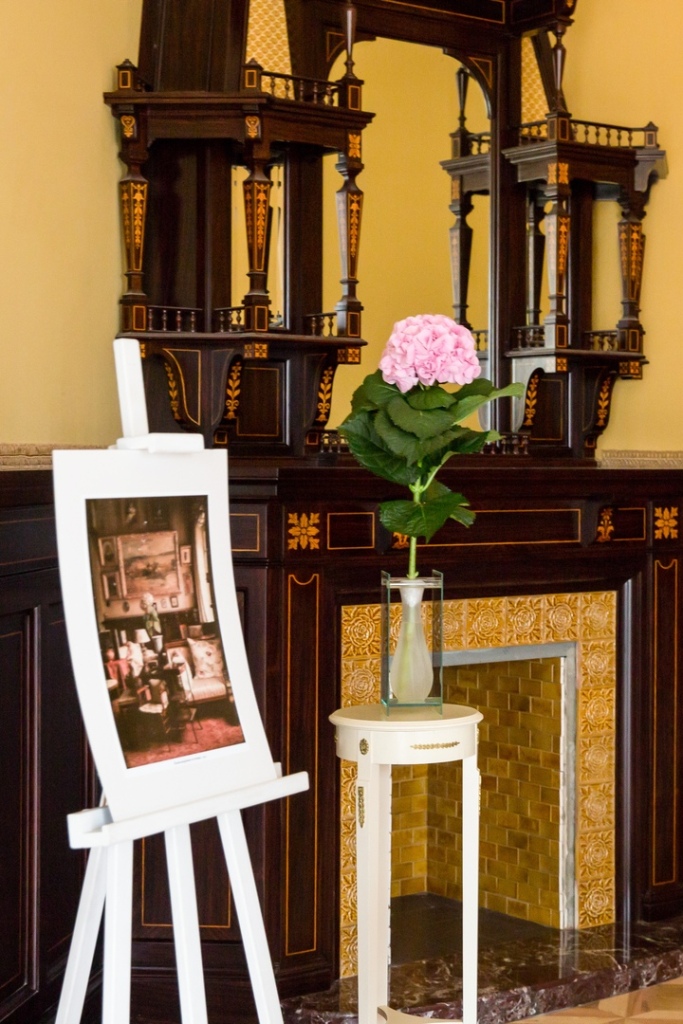
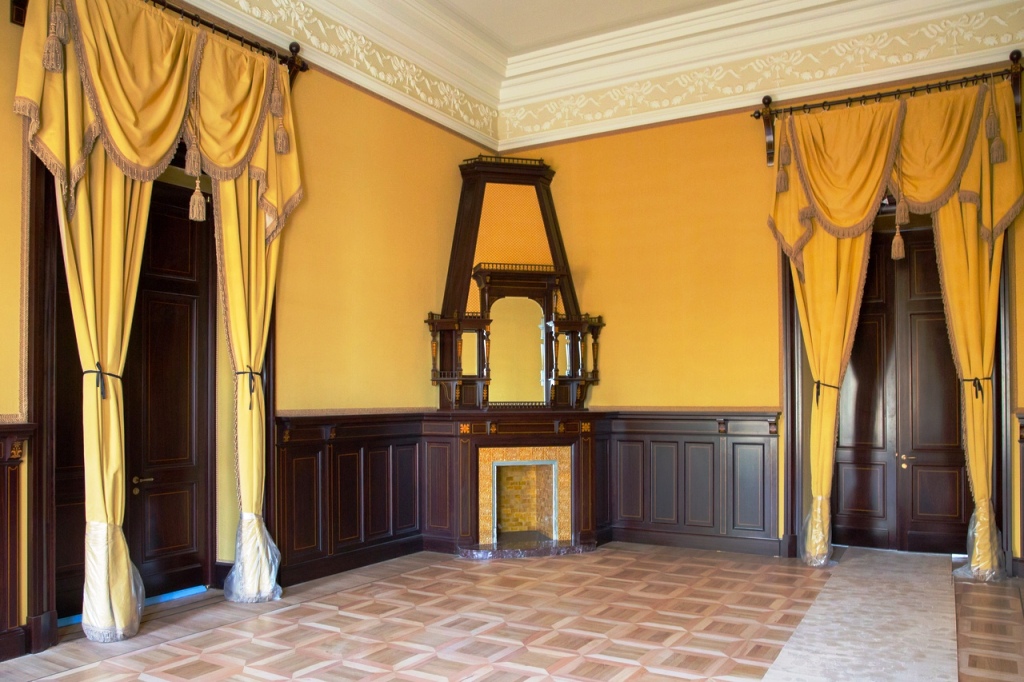
PHOTO: the purple Wilton carpet in the recreated Pallisander (Rosewood) Drawing Room

As the next stage of the restoration of the Alexander Palace comes to an end, it is important to recognize the generosity of individuals and businesses who have made gifts for the interiors of the former apartments of Nicholas II and Alexandra Feodorovna.

These gifts will be showcased in the recreated interiors of the Pallisander (Rosewood) Drawing Room and the Mauve (Lilac) Boudoir of Empress Alexandra Feodorovna, as well as the New Study of Emperor Nicholas II.

The making of carpets, drapes, cushions was a laborious and complex process associated which involved the careful study of historical samples preserved in the museum’s collection, which became analogs for the decoration of the historic interiors of the Alexander Palace.

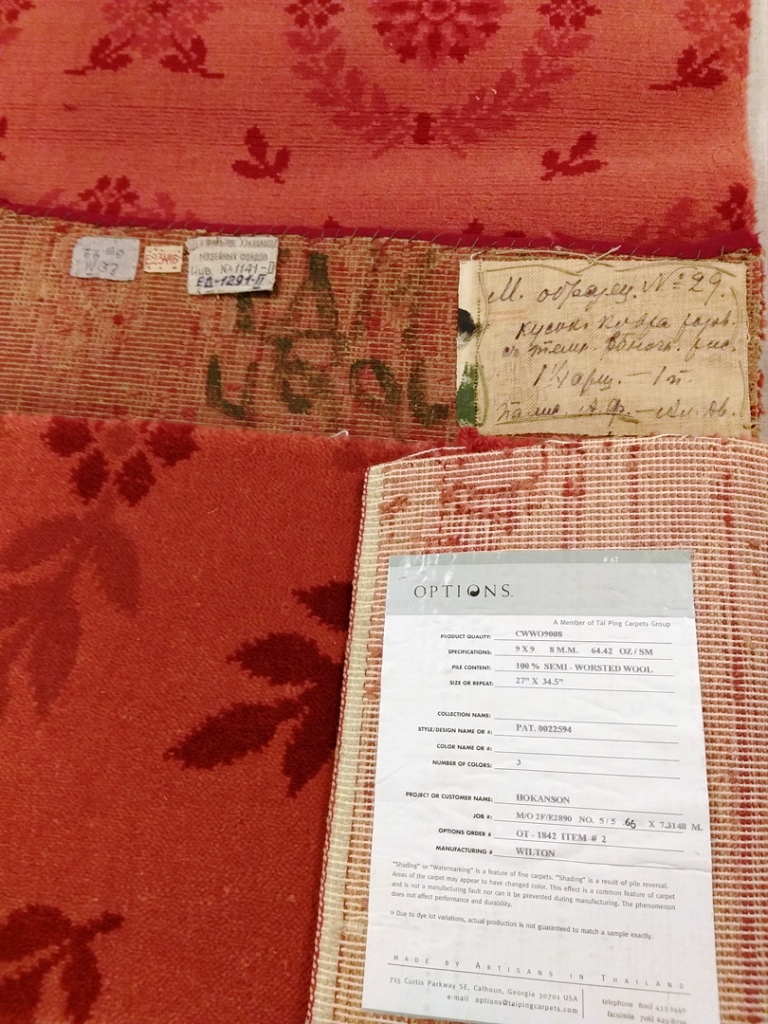
PHOTO: preserved carpet sample from Pallisander (Rosewood) Drawing Room

Larry Hokanson, a carpet designer in the United States, became the first donor who expressed a desire to participate in the recreation of the interior decoration of the Alexander Palace. Mr. Hokanson undertook to recreate the Wilton carpet for the Pallisander (Rosewood) Drawing Room, which was lost during the Great Patriotic War (1941-45), based on the historical sample preserved in the museum’s collection. This carpet, with a simple but delicate floral design over a purple background, featured a distinctive weave typical of vintage English handmade wool carpets. The Hokanson factory was able to replicate this sophisticated weaving technique, colour and pattern exactly. The magnificent replicated carpet was gifted to the museum in 2013, the year marking the 300th anniversary of St. Petersburg.

Up until now, this valuable gift has been kept in the museum’s funds, the purple Wilton carpet has now been laid in the recreated Pallisander (Rosewood) Drawing Room.

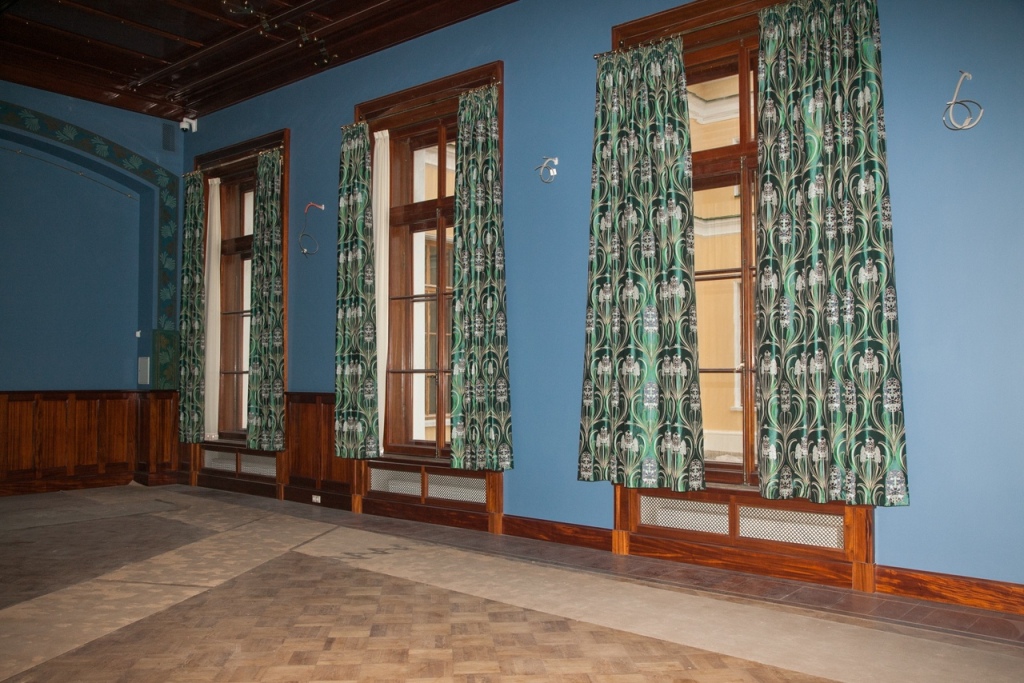
PHOTO: curtains recreated for the New Study of Nicholas II

In 2011, fabrics for the production of curtains for the New Study of Nicholas II were donated to the Alexander Palace, by the Swiss company Fabric Frontlain with the financial support of Tissura. Fabric with hyacinths were recreated from an historical sample preserved in the Tsarskoye Selo Collection.

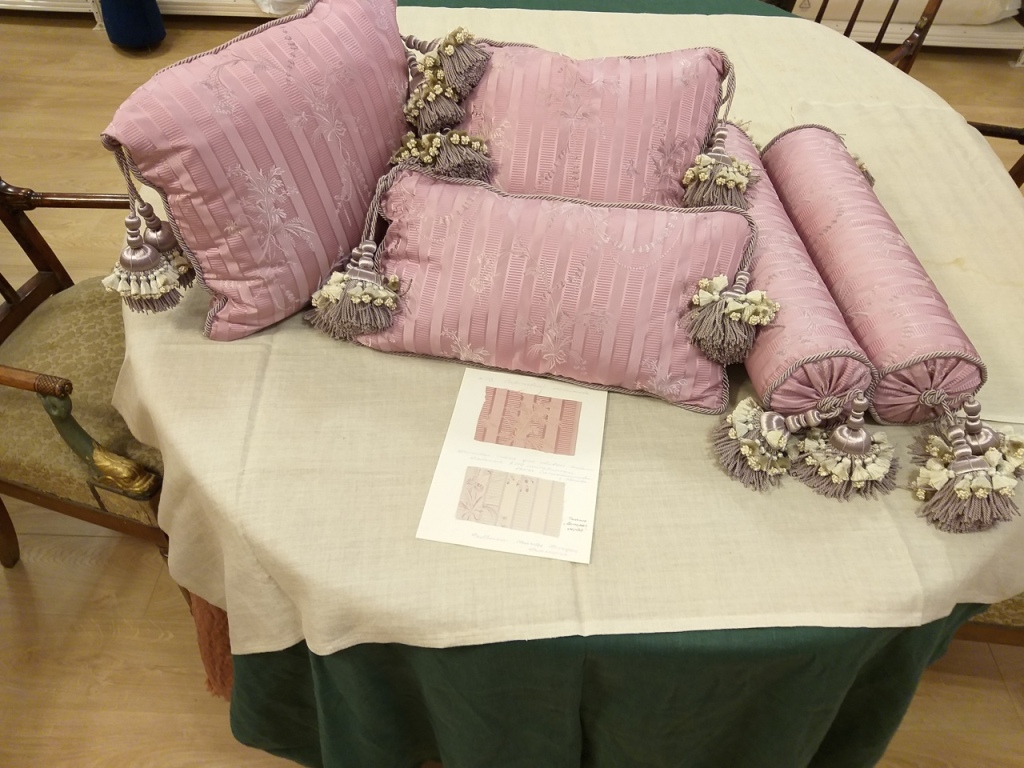
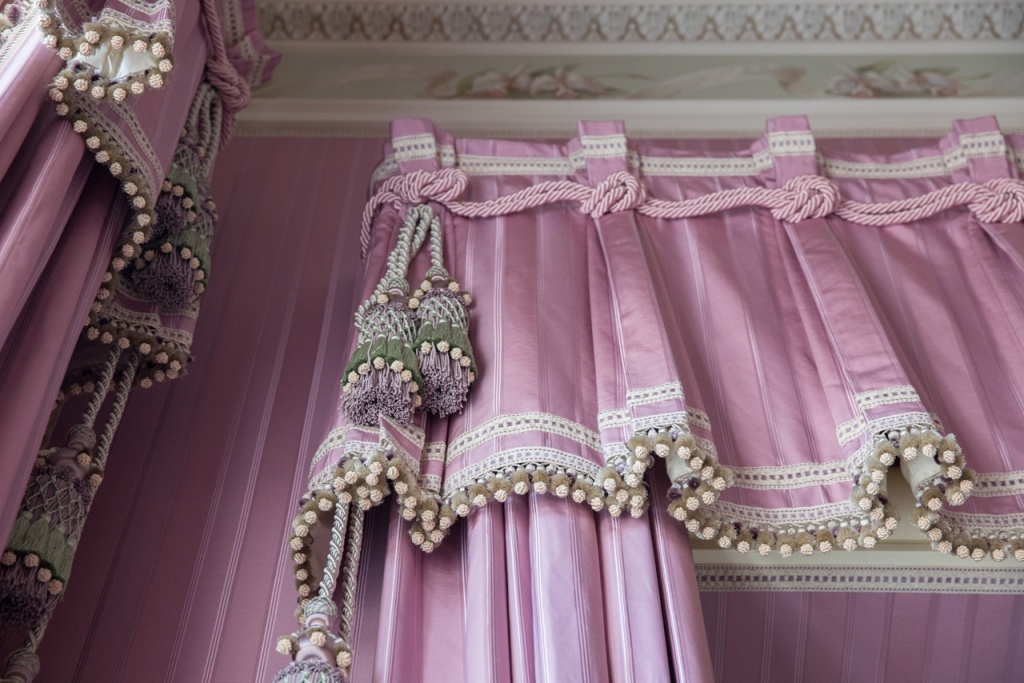
In 2020, Janusz Anzhey Szymaniak, General Director of the Renaissance Workshops for the Restoration of Antique Monuments, donated sets of pillows and cushions for sofas in the Mauve (Lilac) Boudoir, made at the St. Petersburg enterprise Le Lux. The fabric for these items was recreated according to the historical model preserved at the Italian factory Rubelli, and the intricately woven silk tassels at the Polish company Re Kon Art.

PHOTO: cushions and pillows recreated for the Mauve (Lilac) Drawing Room

In the outgoing year, work on the interior decoration of the Moorish Bathroom of Nicholas II continued in the Alexander Palace. Acquiring a reed mat for wall decoration turned out to be a difficult task. This special mat of traditional Japanese weaving not only decorated the walls of the interior, but also protected them from damage. The museum asked Tsutsui Akiyuki, Vice Consul of the Japanese Consulate General in St. Petersburg for cultural affairs, for help. Mr. Tsutsui was of great assistance in resolving the issue of acquiring a reed mat and is now in charge of the issue of its delivery from Japan to the Alexander Palace. Unfortunately, due to the COVID-19 pandemic, the mat can not be delivered within the originally planned timeframe.

NOTE: all photos © Tsarskoye Selo State Museum-Reserve

© Paul Gilbert. 23 December 2020

***

Fifteen interiors situated in the eastern wing of the palace, are now scheduled to open to visitors in 2021. Among the recreated interiors are the New Study of Nicholas II, Moorish Bathroom of Nicholas II, Working Study of Nicholas II, Reception Room of Nicholas II, Pallisander (Rosewood) Living Room, Mauve (Lilac) Boudoir, Alexandra’s Corner Reception Room, the Imperial Bedroom, among others.

In the future, the Alexander Palace will become a memorial museum of the Romanov family – from Catherine the Great to Nicholas II, showcasing the private, domestic life of the Russian monarchs who used the palace as an official residence. The eastern wing of the palace will be known as the Museum of the Russian Imperial Family. The multi-museum complex, which includes the Western wing is scheduled for completion no earlier than 2024.

***

Dear Reader: If you enjoy my updates on the restoration of the Alexander Palace, then please help support my research by making a donation in US or Canadian dollars – donations can be made by GoFundMe, PayPal, credit card, personal check or money order. Click HERE to make a donation – the net proceeds help fund my work, including research, translations, etc. Thank you for your consideration – PG

Restoration of Lighting Fixtures for the Alexander Palace

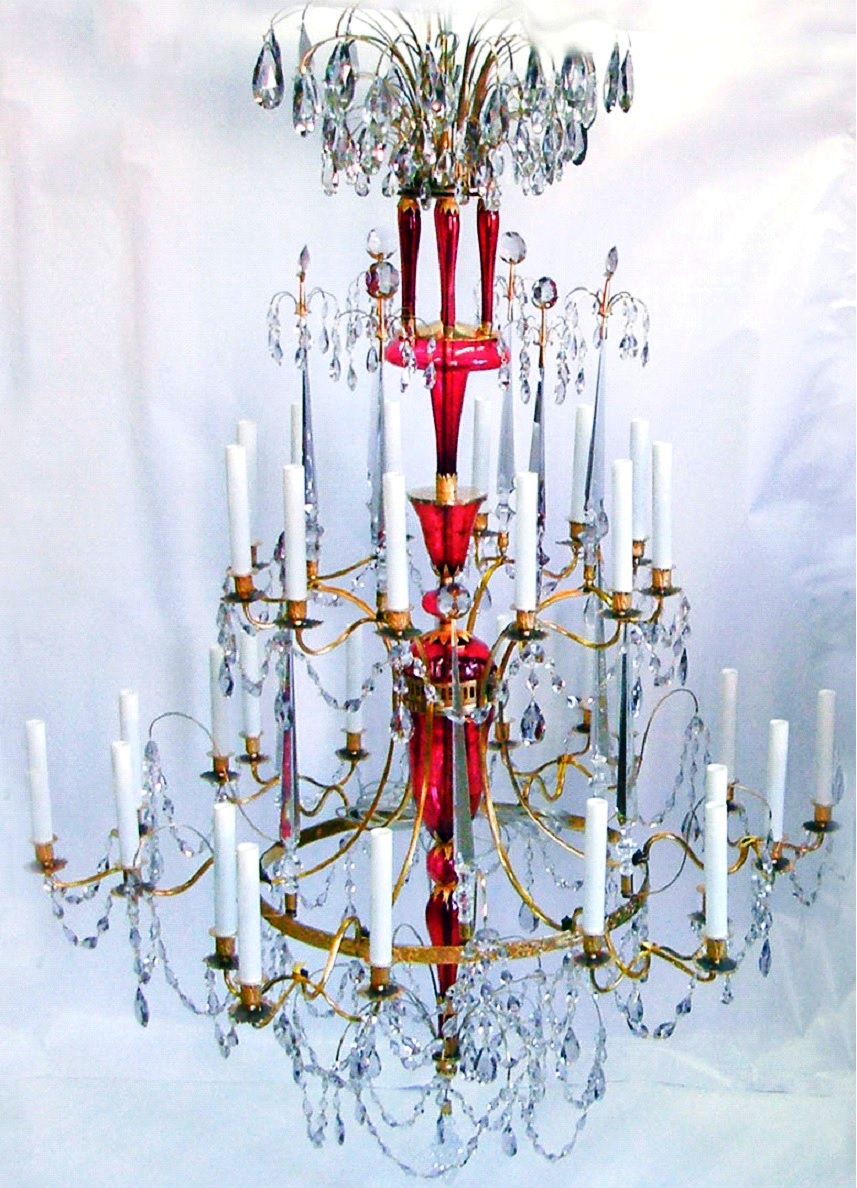
PHOTO: Chandelier for Empress Alexandra Feodorovna’s Corner Reception Room

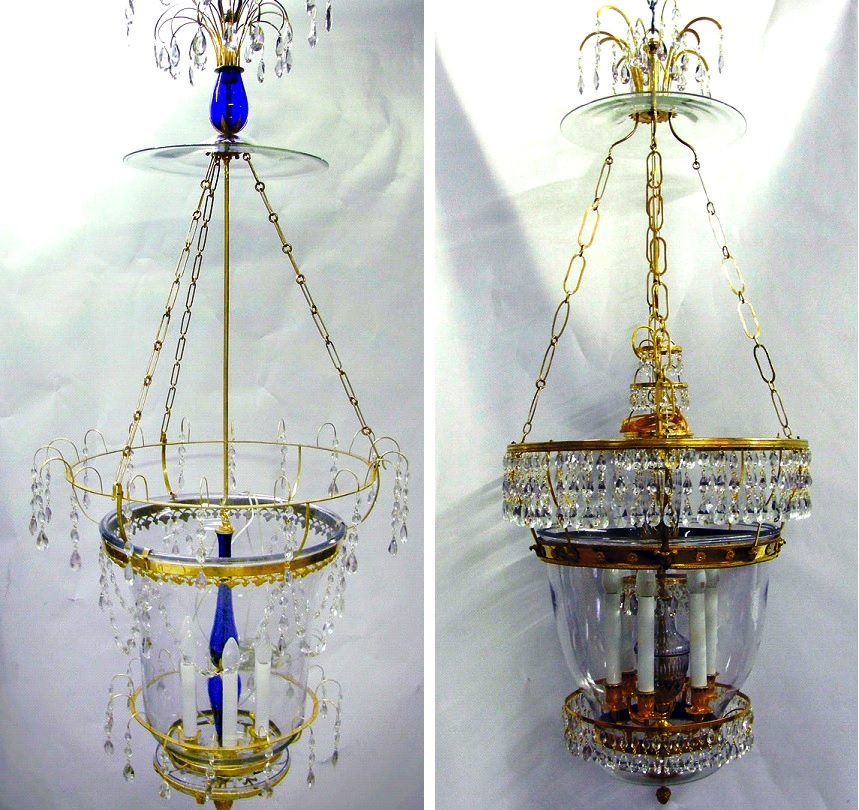
The restoration of two chandeliers and three lanterns for the Alexander Palace has been completed. They will decorate Empress Alexandra Feodorovna’s Corner Reception Room, as well as the Small and Large Libraries.

PHOTO: Colour autochrome of the Corner Reception Room, taken in 1917

In the Corner Reception Room, visitors will see a 30 candle chandelier made of ruby-coloured ​​glass, which had been preserved from the historical collection of the Alexander Palace, but kept in Pavlovsk. Originally, two identical chandeliers were located in the Concert Hall (demolished), a spacious two-story room designed by Giacomo Quarenghi (1744-1817) in the east wing of the palace. At the beginning of the 20th century, during the reconstruction of the hall, one of the chandeliers was moved to the Empress’s Corner Reception Room. The second chandelier was used to decorate the Mirror Study, which was part of the private apartments of Empress Catherine II, located in the Zubov Wing of the nearby Catherine Palace. After the completion of the restoration of the Alexander Palace, this elegant chandelier will be returned to take its original place. The deep ruby red colour of the glass elements of the chandelier perfectly match the soft pink tint of the imitation marble walls of the Corner Reception Room.

PHOTO: restored lighting fixtures for the Small and Large Libraries

For the Small Library, an eight candle chandelier has also been restored. It is decorated with glass vases-balusters, decorating the central rod, pyramids of cut crystal and a crowning cobalt vase with a fountain made of almond-shaped pendants.

An earlier type of pendant lamps, which were used in palace interiors, were lanterns, consisting of a conical body of glass in a mount of gilded bronze and a crystal set in the form of garlands with pendants. The candlestick was placed inside the flask; such lanterns reliably protected the oscillating flame from constant drafts.

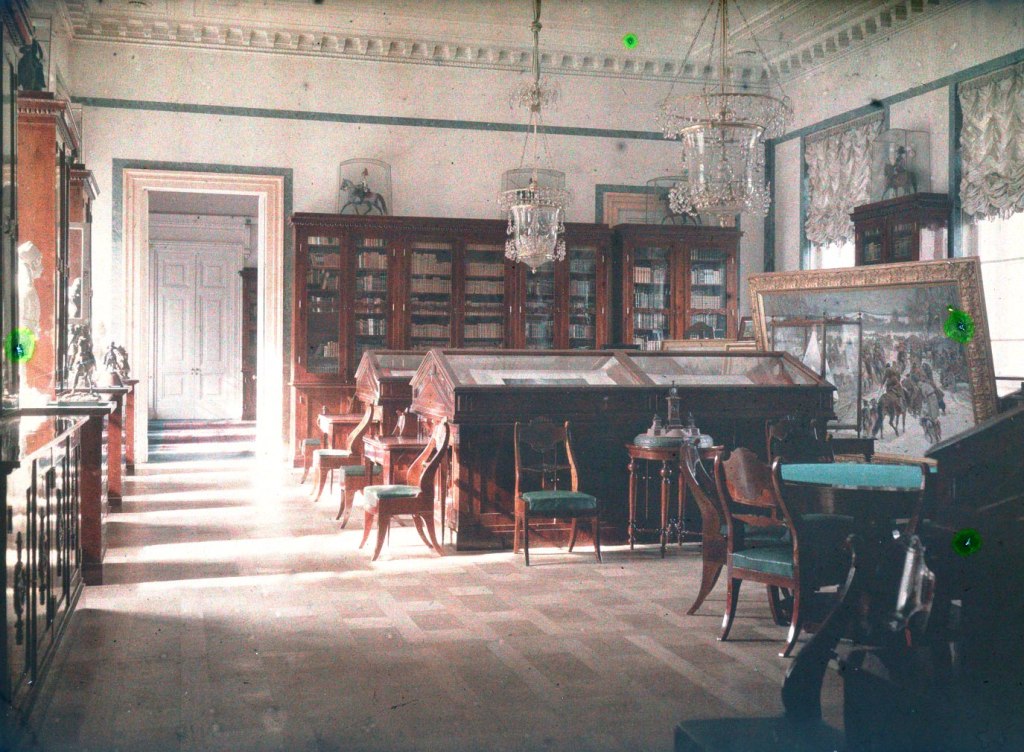
PHOTO: Colour autochrome of the Large Library, taken in 1917

From 1796 to 1941, the Large Library (originally the Dining Room) was lit by three large lanterns with six candles each (now used in the lobby of the Pavlovsk Palace). The Large Library of the Alexander Palace will be lit by three 18th century lanterns, one of which comes from the historical collection, the other two purchased.

During the restoration process, the craftsmen removed dirt from the lighting fixtures, carried out the restoration of the crystal pendant, recreated the lost parts from glass and bronze with subsequent galvanic gilding, and installed new electrical wiring.

The restorers also managed to almost completely recreate one of the lanterns using the existing analogue, adding an 18th century glass flask. The original piece is the only thing that has survived from a hanging or table lamp. For many years, the flask was kept in the museum’s funds, it was intended to be used for such a restoration.

The restoration work which lasted four months was carried out by the Yuzhakova Studio (St. Petersburg) with the participation of masters Alexei Gvozdev, Vyacheslav Gizimchuk and Dmitry Rosenthal.

NOTE: all photos © Tsarskoye Selo State Museum-Reserve

© Paul Gilbert. 16 November 2020

Recreation of Furniture for the Mauve (Lilac) Boudoir in the Alexander Palace

This is the second article about the recreation of the Mauve (Lilac) Boudoir in the Alexander Palace. Click HERE to read the first article The history and restoration of the Mauve (Lilac) Boudoir in the Alexander Palace, published on 4th November 2020 – PG

NOTE: all photos © Tsarskoye Selo State Museum-Reserve

***

Empress Alexandra Feodorovna’s Mauve (Lilac) Boudoir was a favourite room for the Imperial family and their guests. It was in this room that the Empress, often together with Nicholas II came to relax, read books, played music, make handicrafts on the couch, and drank tea at a round table. In winter, the room was decorated with fragrant bouquets of white lilacs, grown in the imperial greenhouses at Tsarskoye Selo. The decoration of the Mauve Boudoir, which was part of the Empress’s private chambers, was completed in a short time, in just two and a half months in 1895.

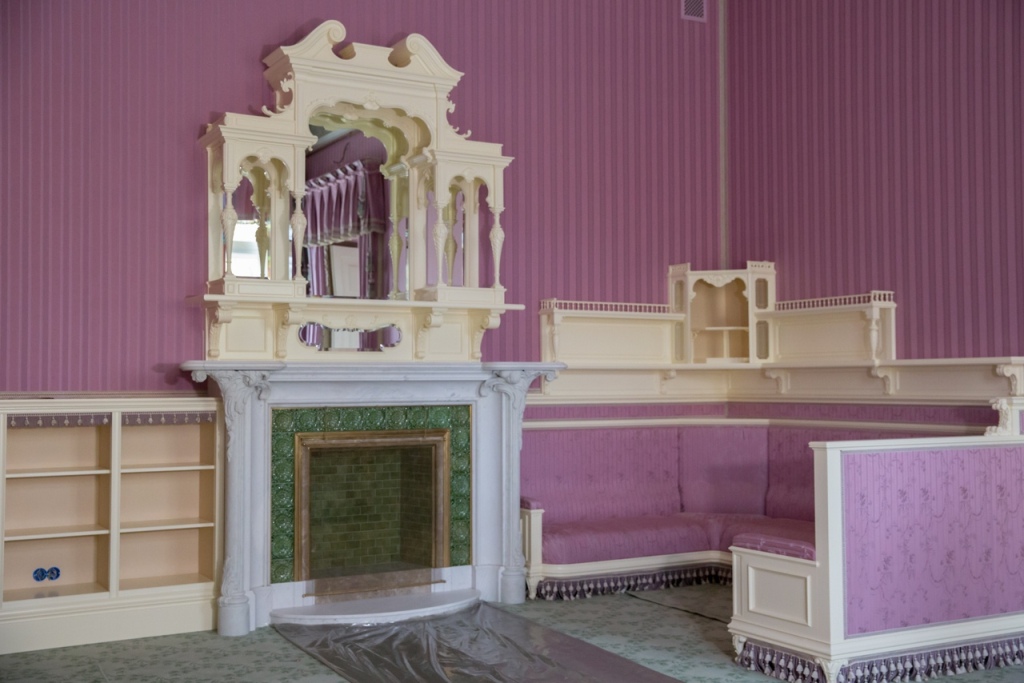
According to documents and drawings, approved by the Empress herself, the F. Melzer & Co. in London, England produced a set of furniture, which consisted of a built-in sofa, built-in shelves and a set of two plateaus (jardinieres) for plants, etc.

PHOTOS: details depicting the current look of the recreated Mauve (Lilac) Boudoir

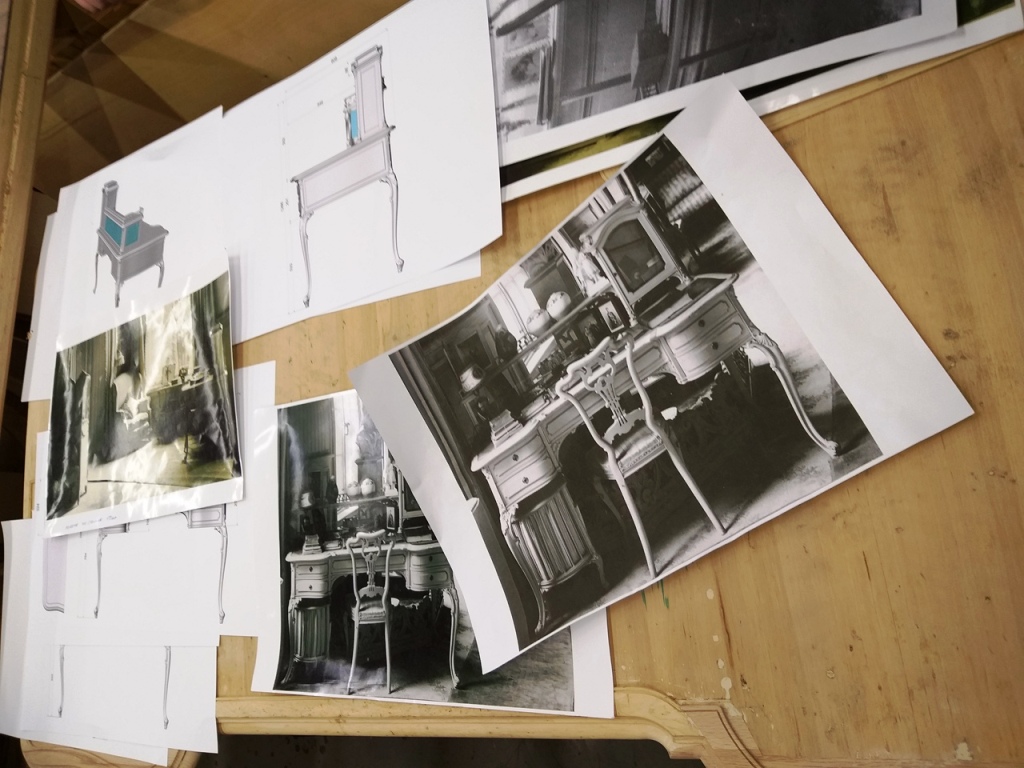
Sadly, almost all of the furniture items in this room were destroyed during the Great Patriotic War (1941-45). Employees of the Scientific Fund Department of the Museum-Reserve did a lot of research and preparatory work, discovered archival documents and photographs that were used for the recreation of the furniture for the Mauve Boudoir.

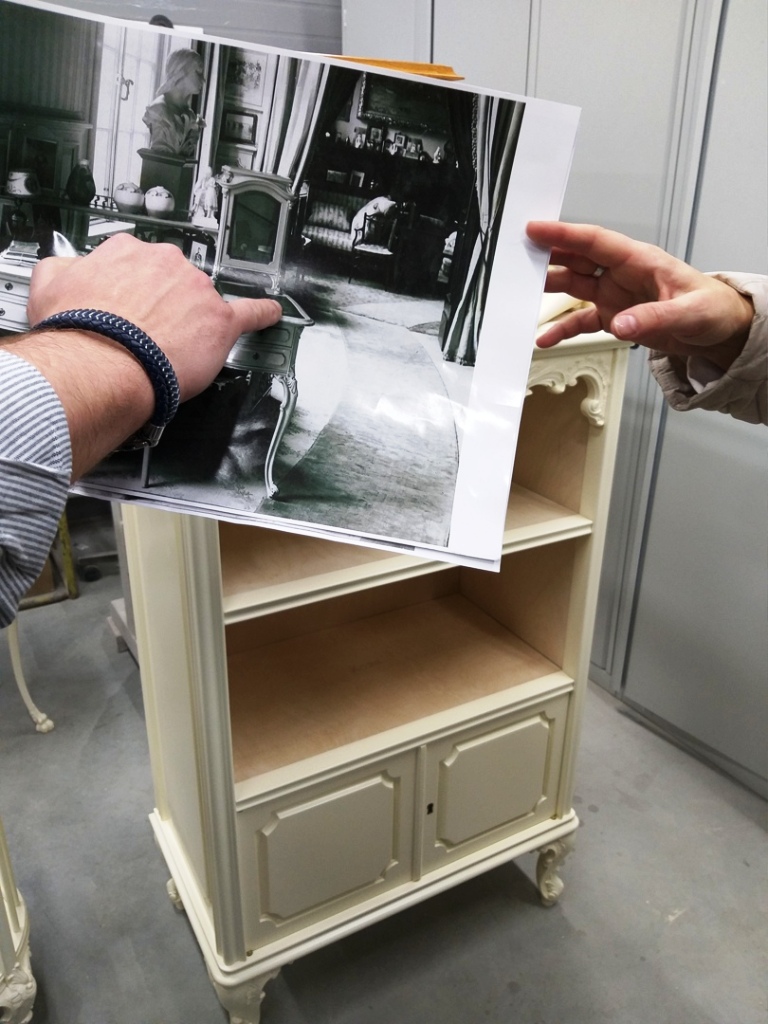
In photographs preserved in the Collection of the Tsarskoye Selo State Museum and in photographs from the albums of the historical collection of the Alexander Palace (now stored in the State Archives of the Russian Federation in Moscow), allowed experts to view individual pieces of furniture items in the Mauve Boudoir from different angles, thus making it possible to recreate exact copies of the structural elements and decoration details for the room.

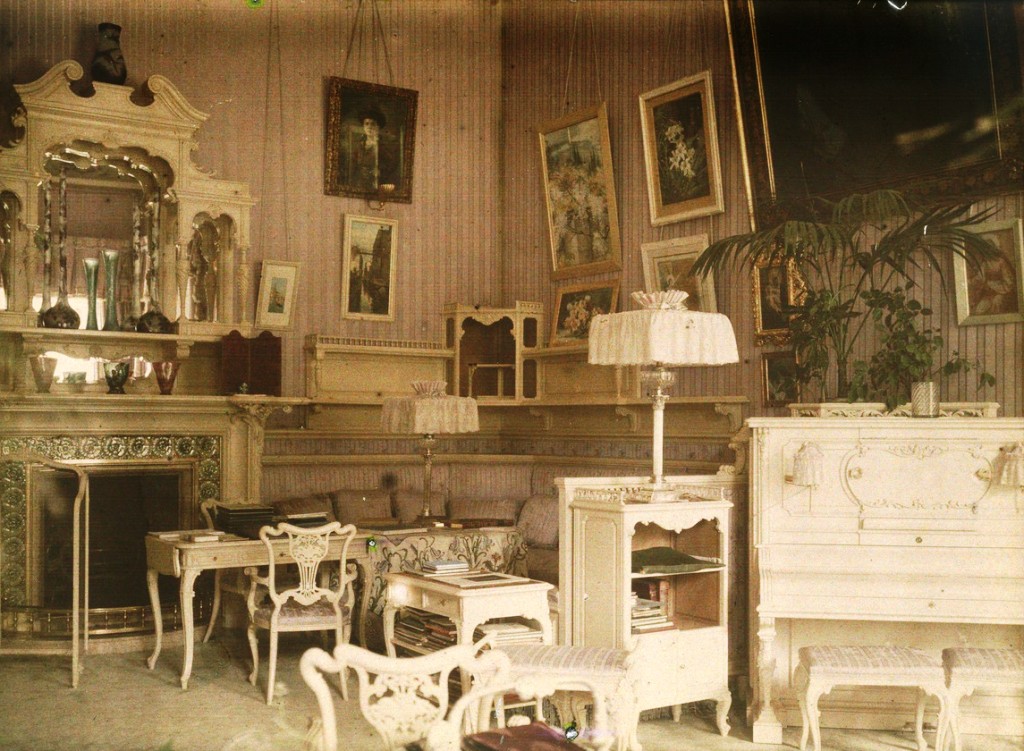
The matter of painting panels, doors and cabinet furniture required a separate study. In the colour scheme of the panels, two shades were used, this can be seen in colour autochromes and is confirmed by archival details from the workshops. The recipe found in the archive, indicating the materials of painting and their proportional ratios, helped restorers to define a modern analogue and apply it when painting the furniture of the Mauve Boidoir in two tones, says Anna Tarkhanova, senior researcher at the Museum-Reserve, who took an active part in the work on the reconstruction of the interior.

PHOTOS: experts review historic photos and drawings for the
recreation of the furniture for the Mauve (Lilac) Drawing Room

The only original item to survive from the Empress’s study was a writing-table, which entered the collection of the museum-reserve in 1999, also helped in solving this issue. During the Great Patriotic War, the table had not been evacuated. It was found in a deplorable state after the war in the Alexander Park by the former curator of the Alexander Palace, Anatoly Mikhailovich Kuchumov (1912-1993). In 2018, restorers conducted test clearing of the paint layer of the table, determined the initial colour of its finish and, on the basis of this, made a decision on the colour scheme of the panels, built-in furniture and doors of the Mauve Boudoir. In 2020, the masters of the Tsarskoye Selo Amber Workshop restored the table and recreated the lost details, based on photographs and archival descriptions.

The work on the recreation of the upholstered and cabinet furniture of the Mauve Boudoir was also carried out by specialists from the Tsarskoye Selo Amber Workshop (director Boris Igdalov) in accordance with the design developed in 2019-2020 by the Studio 44 Architectural Bureau in St. Petersburg.

For the upholstery of the furniture set, fabrics, cords, fringes and tassels were recreated according to historical samples that are kept in the Tsarskoye Selo and Pavlovsk Museum-Reserves. When restoring fabrics, the technologists were guided by the design approved by the museum-reserve and the Renaissance workshops for the restoration of ancient monuments based on materials presented by the museum. The analysis of the fibers of the fabric, the type of threads, their colour and the style of weaving the fabric, as well as the fabrication itself, was carried out by specialists of the famous Italian firm RUBELLI. The trim items were made at the English company Tassel & Trim and the Polish company Re Kon Art. The process of ordering, manufacturing and delivery of these elements for the rooms’ decor was supervised by Janusz Szymanyak, director of the Renaissance Workshops for the Restoration of Antiquities.

PHOTO: colour autochrome of the Mauve (Lilac) Boudoir, taken in 1917

***

The Mauve Boudoir is one of 15 interiors situated in the eastern wing of the palace, scheduled to open in 2021. Among the other interiors are the New Study of Nicholas II, Moorish Bathroom of Nicholas II, Working Study of Nicholas II, Reception Room of Nicholas II, Pallisander (Rosewood) Living Room, Mauve (Lilac) Boudoir, Alexandra’s Corner Reception Room, the Imperial Bedroom, among others.

In the future, the Alexander Palace will become a memorial museum of the Romanov family – from Catherine the Great to Nicholas II, showcasing the private, domestic life of the Russian monarchs who used the palace as an official residence. The eastern wing of the palace will be known as the Museum of the Russian Imperial Family. The multi-museum complex, which includes the Western wing is scheduled for completion no earlier than 2024.

***

Dear Reader: If you enjoy all my updates on the restoration of the Alexander Palace, then please help support my research by making a donation in US or Canadian dollars – donations can be made by GoFundMe, PayPal, credit card, personal check or money order. Click HERE to make a donation or click HERE to buy one of my Nicholas II calendars – the net proceeds help fund my work. Thank you for your consideration – PG

© Paul Gilbert. 9 December 2020


The History and Restoration of the Working Study of Nicholas II in the Alexander Palace
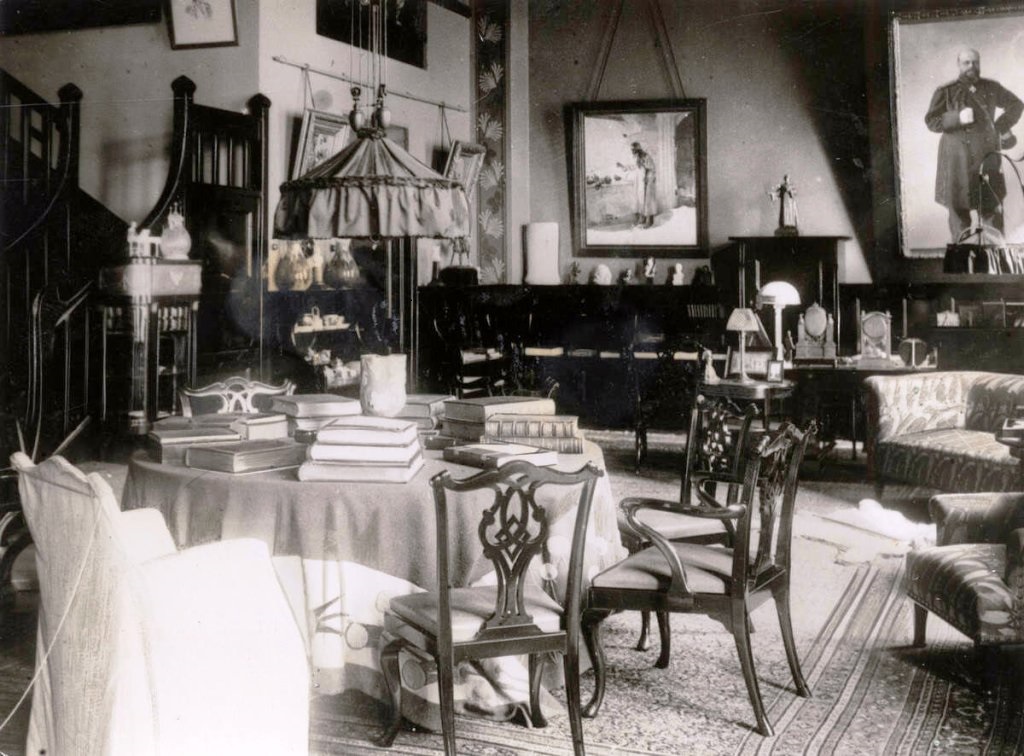
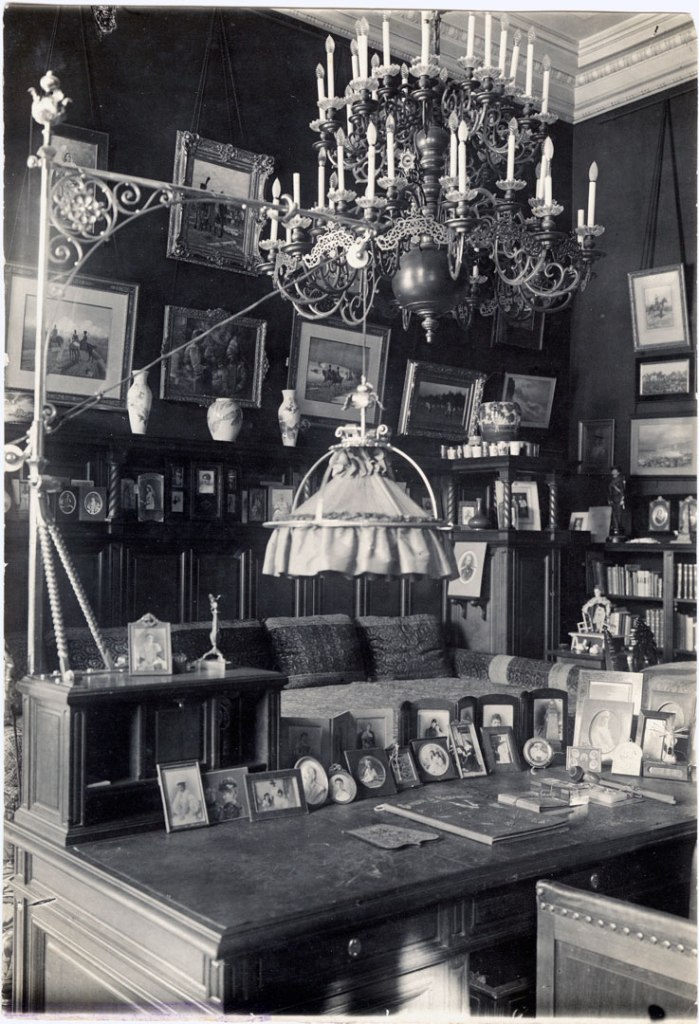
PHOTO: view of the Working Study of Nicholas II, as it looked in 1917

The Working Study of Emperor Nicholas II was decorated in 1896-1897, by Roman Meltzer (1860-1943) and furniture master Karl Grinberg. Grinberg was invited to repair the existing furniture from the mid-1870s. He had previously performed work on the decoration of the apartments of the daughter of Emperor Alexander II (1818-1881) Grand Duchess Maria Alexandrovna (1853-1920) and her husband the Alfred, Duke of Saxe-Coburg and Gotha (Duke of Edinburgh, 1844-1900).

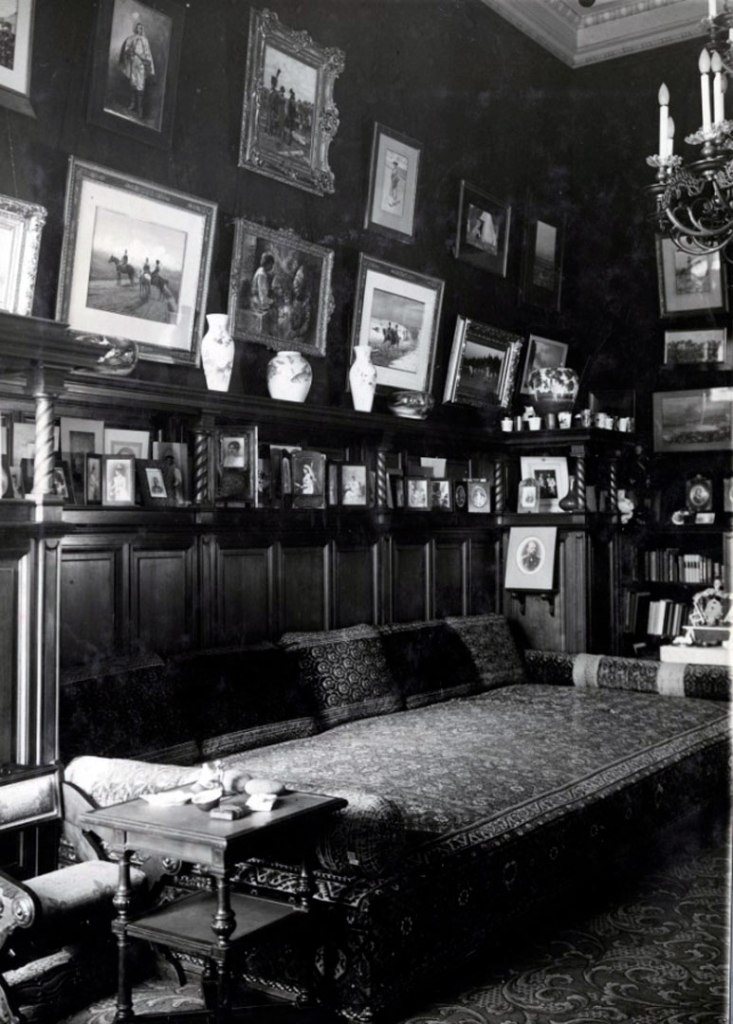
The interior was decorated in the English style, with the upper walls painted a dark red and walnut panels on the bottom. The furniture was also made of walnut and upholstered in green morocco leather. One side of the room was occupied by a large ottoman (a copy of the one in the study of Emperor Alexander III), upholstered with a Persian carpet, as well as an L-shaped writing desk. Above it, a lamp was attached to a special rod, which easily rose and fell to the desired height. Next to the table was an Italian Savonarola armchair, decorated with carvings and upholstered in brown leather.

As the name implies, this business-style room was intended for work – here the Emperor read papers, including numerous correspondence, received foreign ministers and dignitaries and listened to reports.

PHOTOS: views of the Working Study of Nicholas II, as it looked in 1917


The interior was decorated with vases, mantel clocks, jubilee and souvenir glasses, miniature watercolours and photographs of the Imperial family and their relatives. Since Nicholas II loved to smoke, the Study was also filled with objects for smoking – pipes, cigarette cases, lighters, and ashtrays.

The Working Study featured special built-in cupboards with shelves which held about one thousand books from the Emperor’s library. Among these were biographies and memoirs, Russian and military history, as well as politics and religion, as well as albums, magazines, manuscripts and brochures.

Between 1918-1930s, the Study along with the other private apartments of the Imperial family was part of the museum, created by the Bolsheviks, unfortunately, it was completely lost during the Great Patriotic War (1941-45).

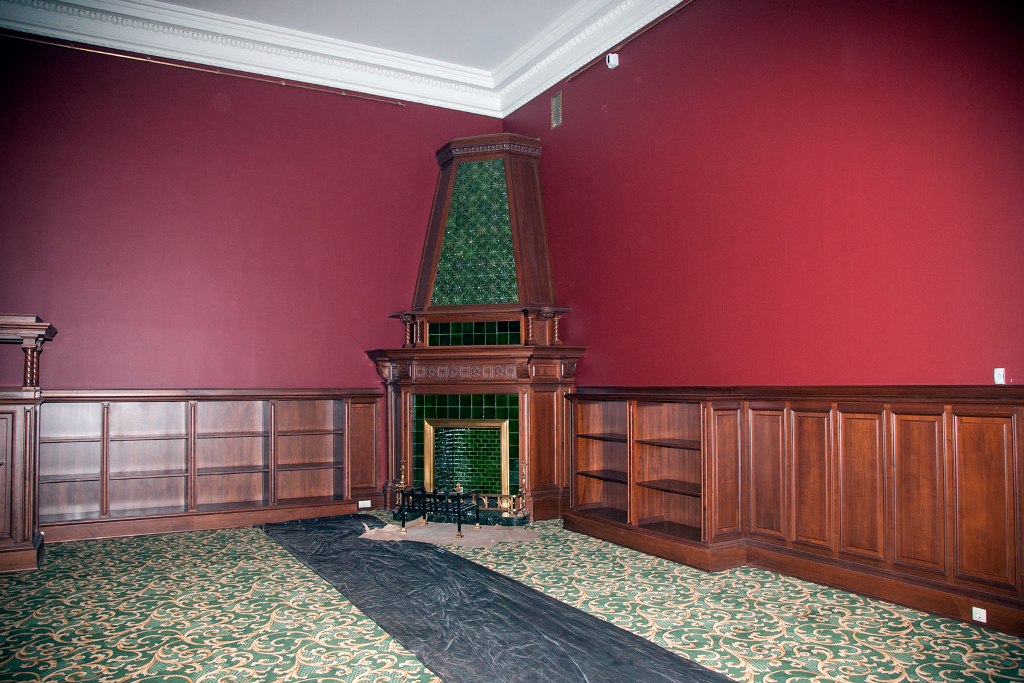
PHOTO: the current look of the recreated Working Study of Nicholas II

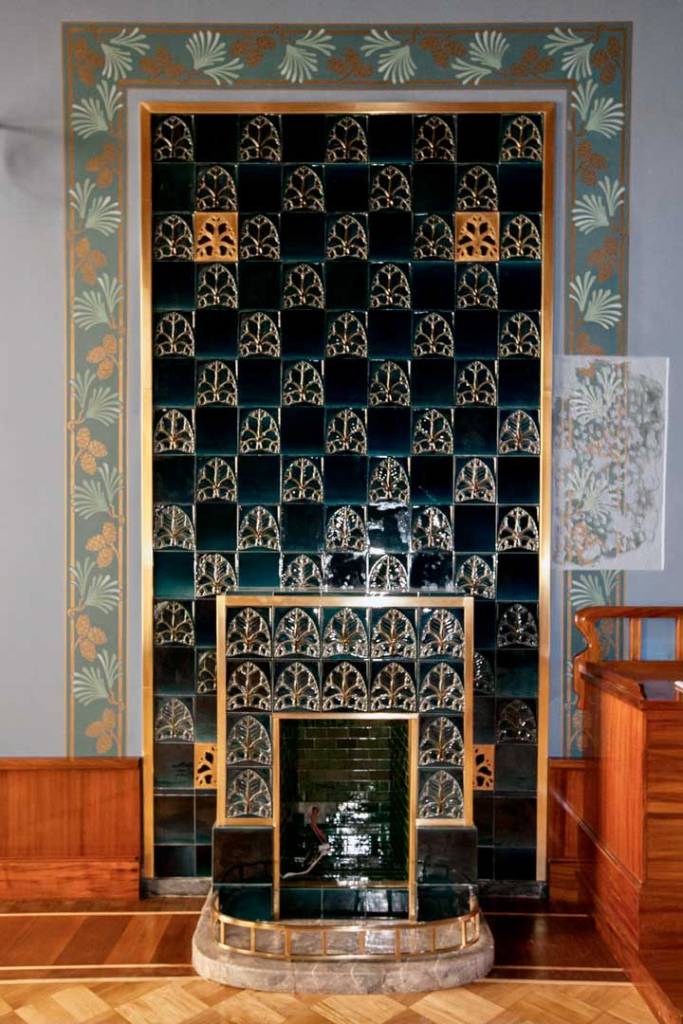
The recreated interior features wood paneling, built-in furniture and a carpet. The curtains were restored according to the samples preserved in the museum’s funds. Thanks to the pieces of tiles found in the pool of the Emperor’s Moorish Bathroom, it was possible to accurately restore the finish of the fireplace. The recreation of items of furniture will include an ottoman, a desk with a a lamp, and armchairs. Paintings and mantel clocks preserved in the funds of the Pavlovsk Museum-Reserve will be returned to the Alexander Palace to decorate the study.

Click HERE to read my article Ottoman recreated for Working Study of Emperor Nicholas II in the Alexander Palace, published on 28th June 2023.

***

The Working Study of Nicholas II is one of 15 interiors situated in the eastern wing of the palace, scheduled to open in 2021. Among the other interiors are the New Study of Nicholas II, Moorish Bathroom of Nicholas II, Reception Room of Nicholas II, Pallisander (Rosewood) Living Room, Mauve (Lilac) Boudoir, Maple Drawing Room, Alexandra’s Corner Reception Room, the Imperial Bedroom, among others.

In the future, the Alexander Palace will become a memorial museum of the Romanov family – from Catherine the Great to Nicholas II, showcasing the private, domestic life of the Russian monarchs who used the palace as an official residence. The eastern wing of the palace will be known as the Museum of the Russian Imperial Family. The multi-museum complex, which includes the Western wing is scheduled for completion no earlier than 2024.

© Paul Gilbert. 25 November 2020

The History and Restoration of the Maple Drawing Room in the Alexander Palace

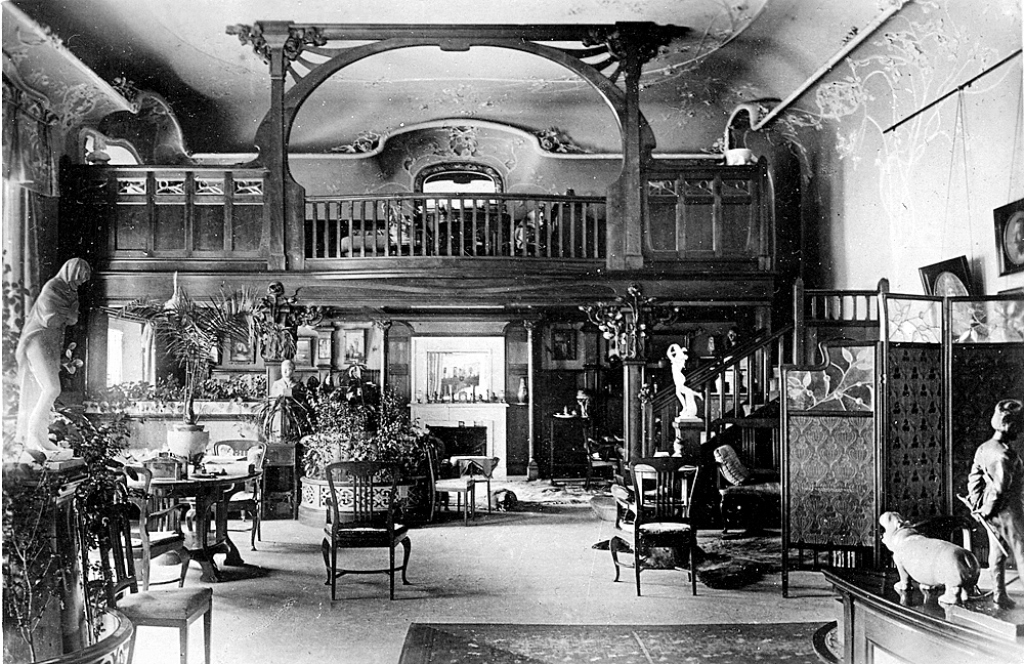
PHOTO: view of the Maple Drawing Room, as it looked in 1917

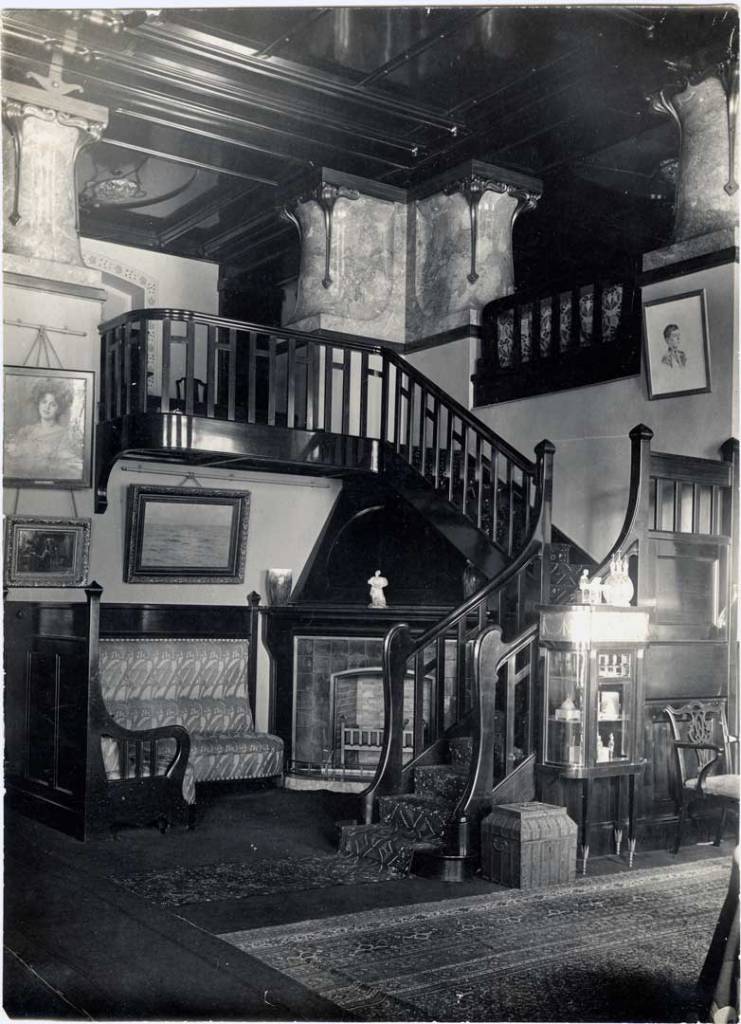
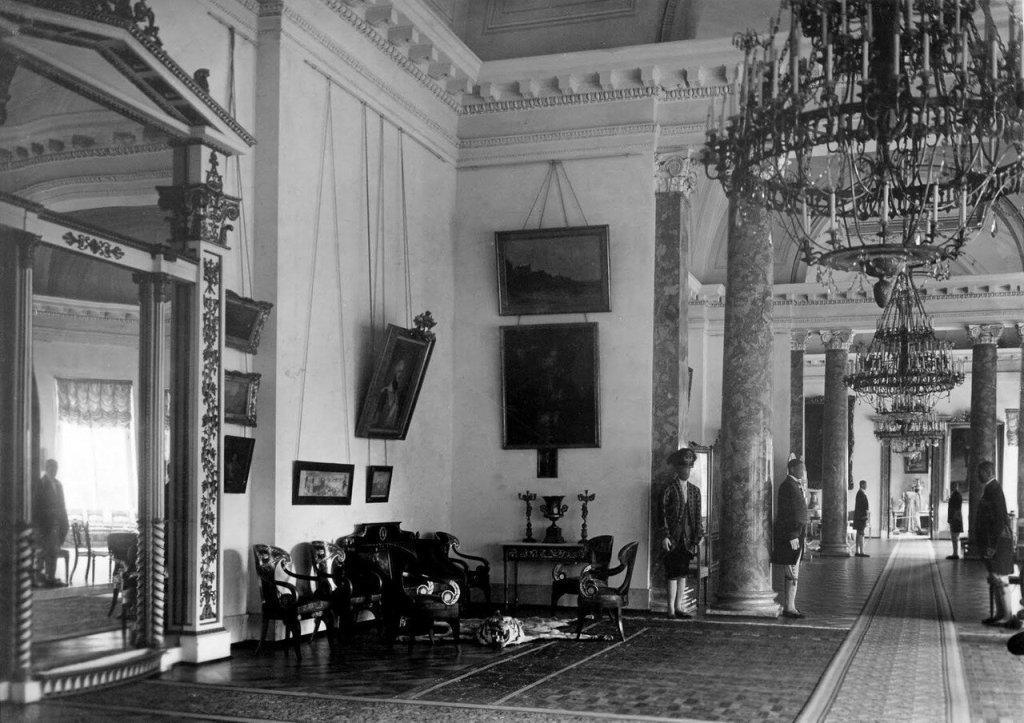
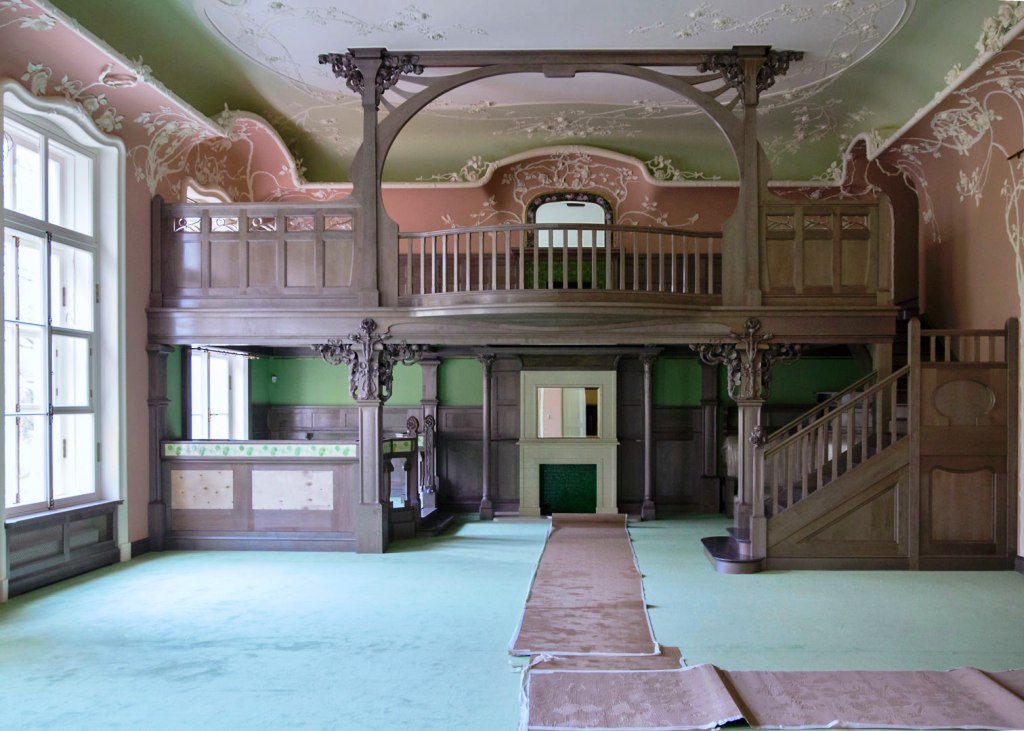
The Maple Drawing Room in the Alexander Palace is a vivid example of the Russian Art Nouveau Style. This interior, as well as the New Study of Nicholas II and the children’s rooms on the second floor, was created on the site of the former Concert Hall, built according to the design of Giacomo Quarenghi (1744-1817), which had not been used for its intended purpose for many years.

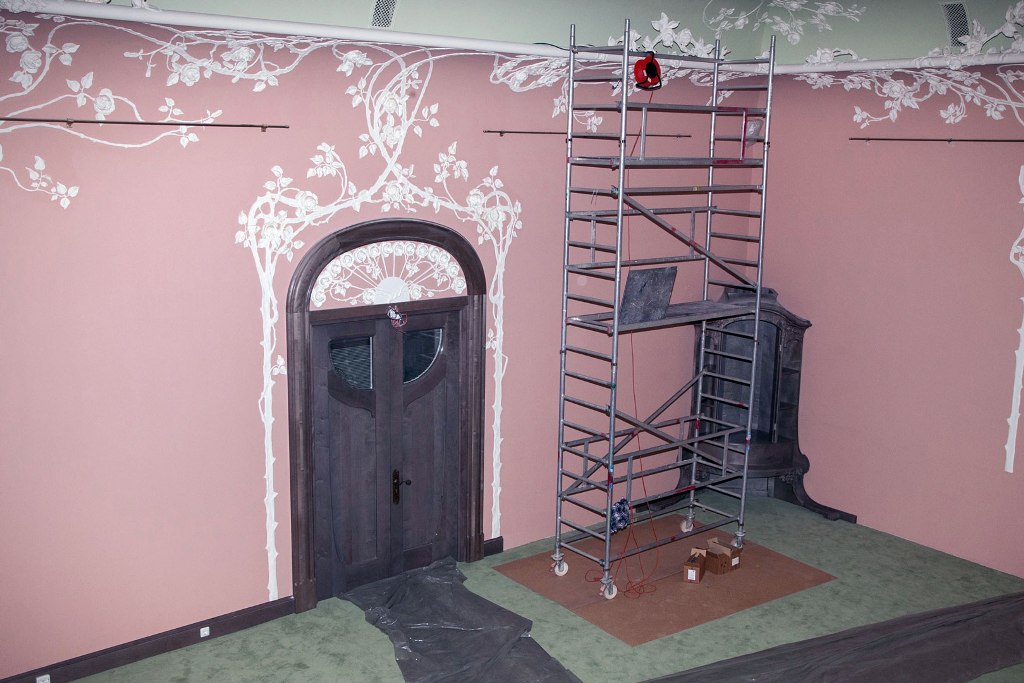
The works were carried out by the Meltzer brothers’ firm in 1902–1904. The walls were painted a warm pink colour and decorated with mouldings of rose stems, foliage and flowers unfolding along the upper walls and ceiling.

Roman Meltzer proposed an original solution for lighting the Maple Drawing Room: along the perimeter of the room, separating the walls from the ceiling plafond, there was a large cornice that masked about two hundred electrical lamps.

PHOTO: former Concert Hall before its demolition

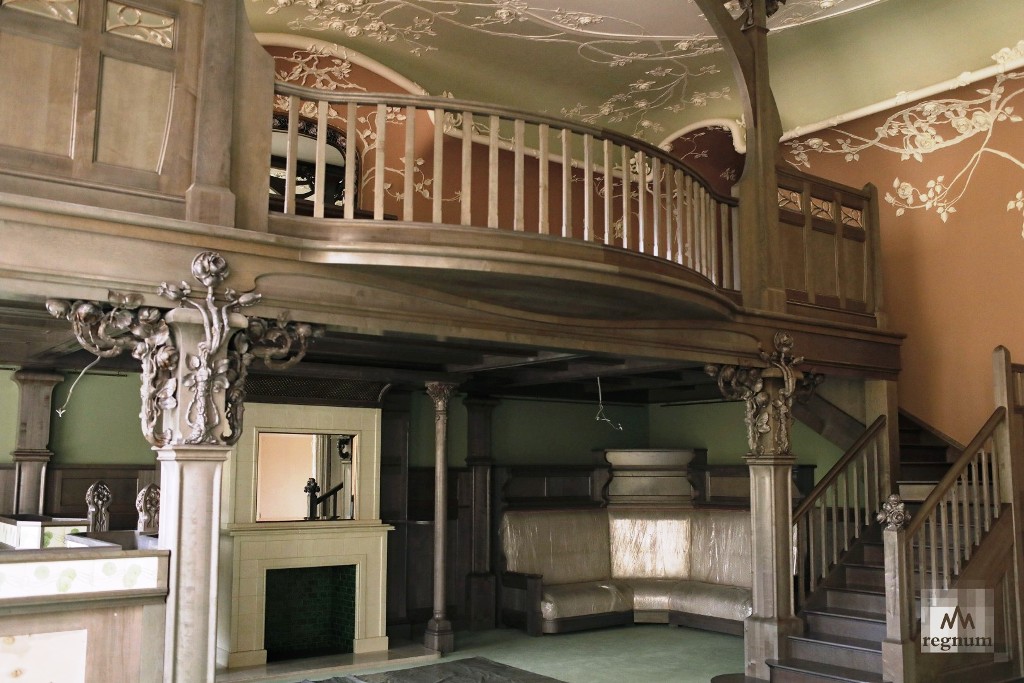
A mezzanine was installed which connected the room to the Emperor’s New Study. Its decoration was a “Tiffany style” mantel mirror in a metal frame with multi-coloured glass inserts featuring stylized roses.

The interior had several cozy corners where the Empress could do needlework, reading and painting. The children often played or did their homework in this room, the family often joined the Empress in this room at five o’clock for tea..

The Maple Drawing Room was decorated with a showcase, the walls and a door made of mirrored glass.  It contained Faberge’s Imperial Easter Eggs from the collection of Alexandra Feodorovna, as well as Italian Venetian glass vases.

The drawing room was always decorated with fresh flowers: tropical plants and palms were placed in tubs, cut flowers of different varieties from the garden and nursery were placed in vases year-round.

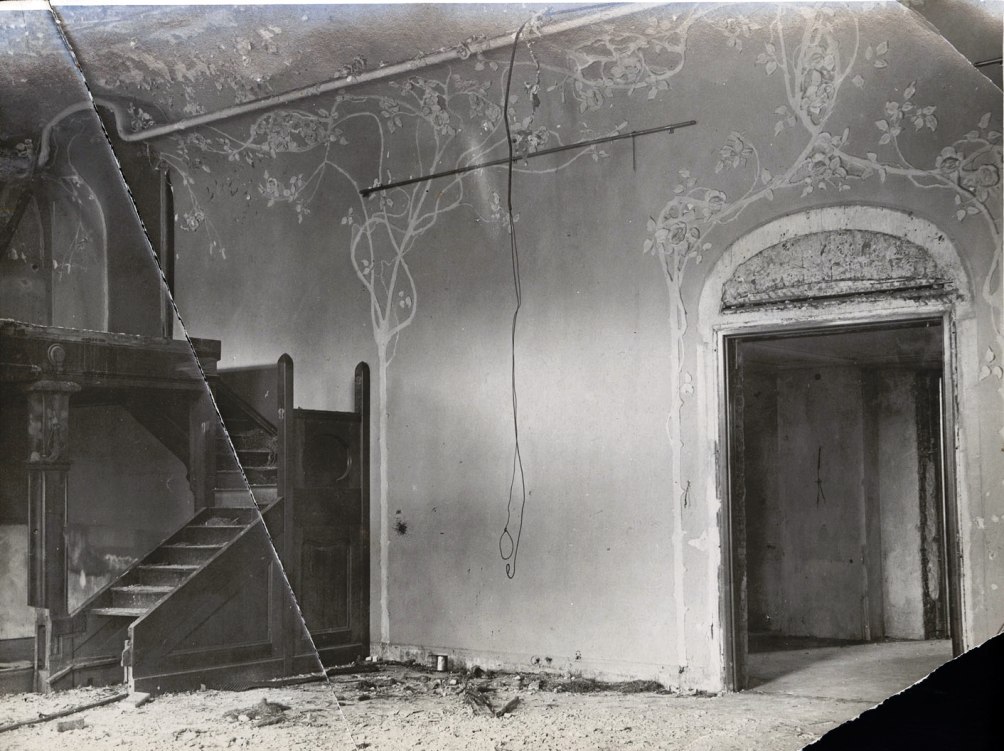
PHOTO: post-war view of the Maple Drawing Room

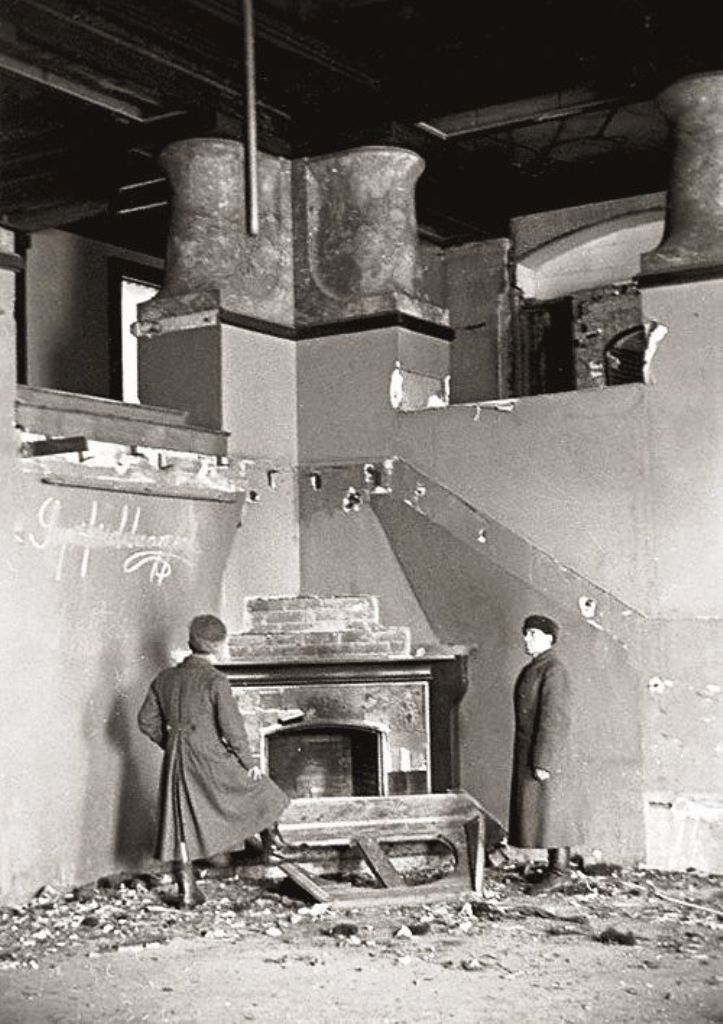
The interior decoration was significantly damaged during the Great Patriotic War (1941-45). In the post-war period, during the adaptation of the palace as the Pushkin Museum, some of the surviving elements of the Maple Drawing Room – including parts of the mezzanine and wall mouldings – were destroyed as objects of “no value”.

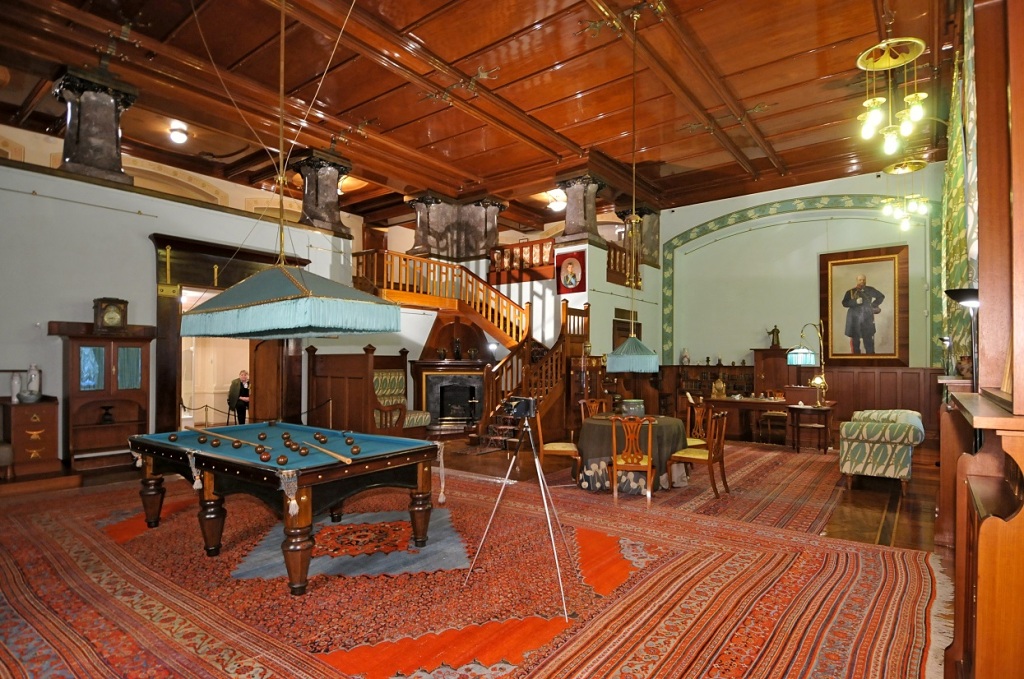
Researchers, architects, designers and restorers have carried out a large and complex work to recreate the stucco decoration of the room’s historic interior, including the carved mezzanine and built-in maple furniture, returning the interior to its original appearance.

PHOTOS: the current look of the recreated Maple Drawing Room

PHOTOS: the current look of the recreated Maple Drawing Room

The stucco decoration was recreated from surviving colour autochromes, vintage photographs and rare analogs, for example, the preserved decoration in the mansion of Heinrich Gilse van der Pals on Angliysky Prospekt in St. Petersburg, where the same decorative technique was used.

The mezzanine which originally connected the Maple Drawing Room to the Emperor’s New Study had been sealed off when the Alexander Palace reopened as a museum in the 1990s. During the current restoration process, when the walls were opened which connected the two rooms, a small fragment of the original decoration of the Maple Drawing Room was discovered, which assisted experts with regard to the original shade of pink and the design of the rose-stucco reliefs used in the original interior.

The unique lighting system used in the Maple Drawing Room will also be restored.

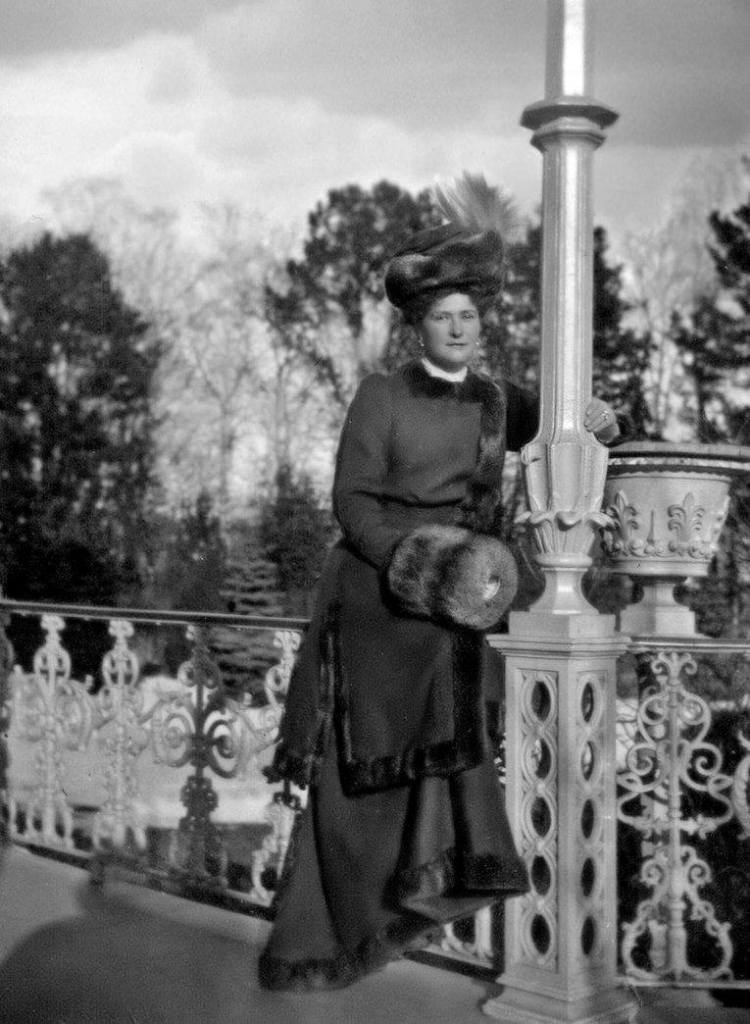
PHOTO: Empress Alexandra Feodorovna on the Alexander Palace balcony

It was from the Maple Drawing Room that Empress Alexandra could step out onto her iron balcony, through a door in one of the room’s large windows. The famous balcony was created in 1896 by the Court architect Silvio Amvrosievich Danini (1867-1942). The balcony was a favourite place for the Empress and her family year-round, even during the cold Russian winters. They often took their meals and teas here Heavy curtains were hung between the columns of the balcony to provide protection from sun or bad weather. It was here that many iconic photos of the Imperial Family were taken.

Sadly, the balcony did not survive to the present day, and despite the extensive restoration work carried out in the Alexander Palace, there are no plans to recreate the balcony at this time. Having said that, let us hope that if funding should be made possible, that the palace administration will reconsider such a project for the future.

***

The Maple Drawing Room is one of 15 interiors situated in the eastern wing of the palace, scheduled to open in 2021. Among the other interiors are the New Study of Nicholas II, Moorish Bathroom of Nicholas II, Working Study of Nicholas II, Reception Room of Nicholas II, Pallisander (Rosewood) Living Room, Mauve (Lilac) Boudoir, Alexandra’s Corner Reception Room, the Imperial Bedroom, among others.

In the future, the Alexander Palace will become a memorial museum of the Romanov family – from Catherine the Great to Nicholas II, showcasing the private, domestic life of the Russian monarchs who used the palace as an official residence. The eastern wing of the palace will be known as the Museum of the Russian Imperial Family. The multi-museum complex, which includes the Western wing is scheduled for completion no earlier than 2024.

© Paul Gilbert. 25 November 2020

Recreation of the textile decoration for the Imperial Bedroom in the Alexander Palace

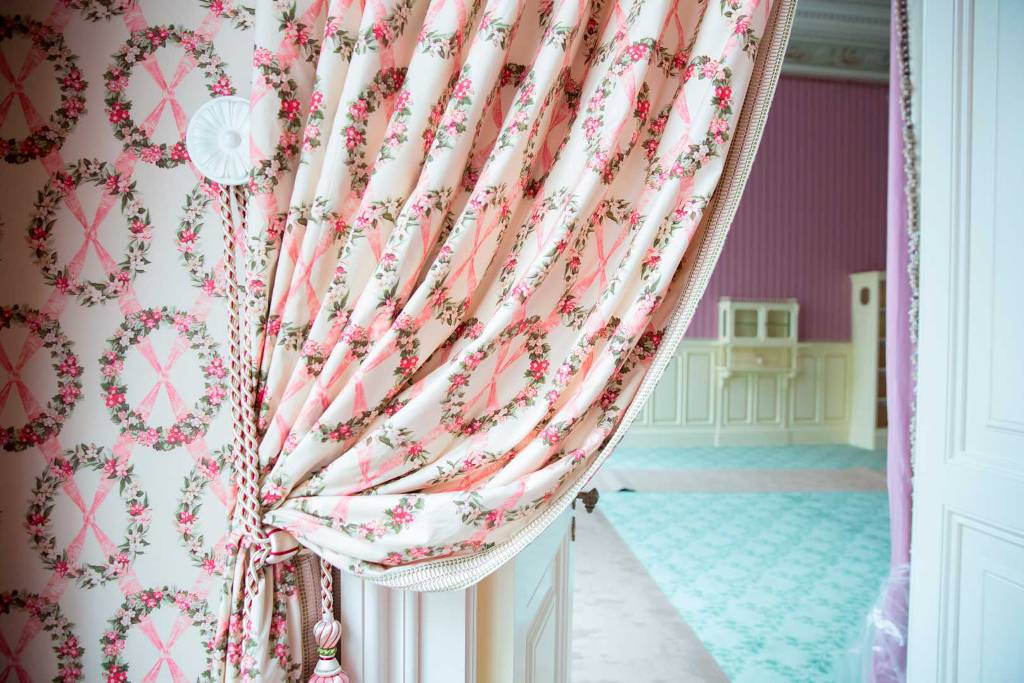
PHOTO: detail of the English chintz recreated for the Imperial Bedroom

This is the second of two articles on the Imperial Bedchamber, one of the personal rooms of Empress Alexandra Feodorovna situated in the eastern wing of the Alexander Palace. The first article The History and Restoration of the Imperial Bedchamber in the Alexander Palace, was published on 14th October 2020.

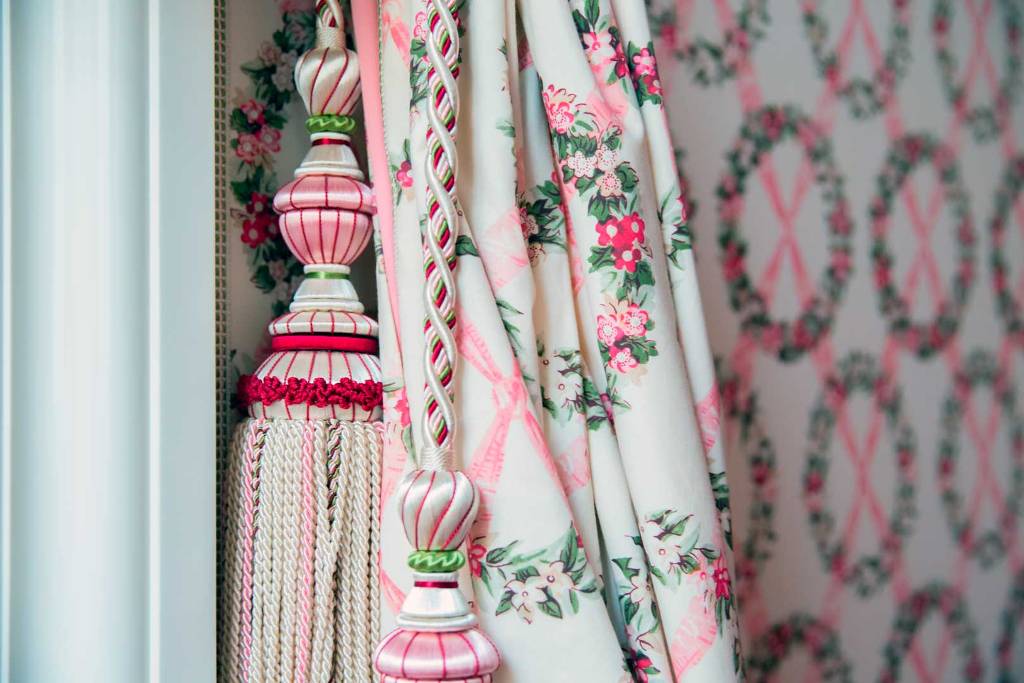
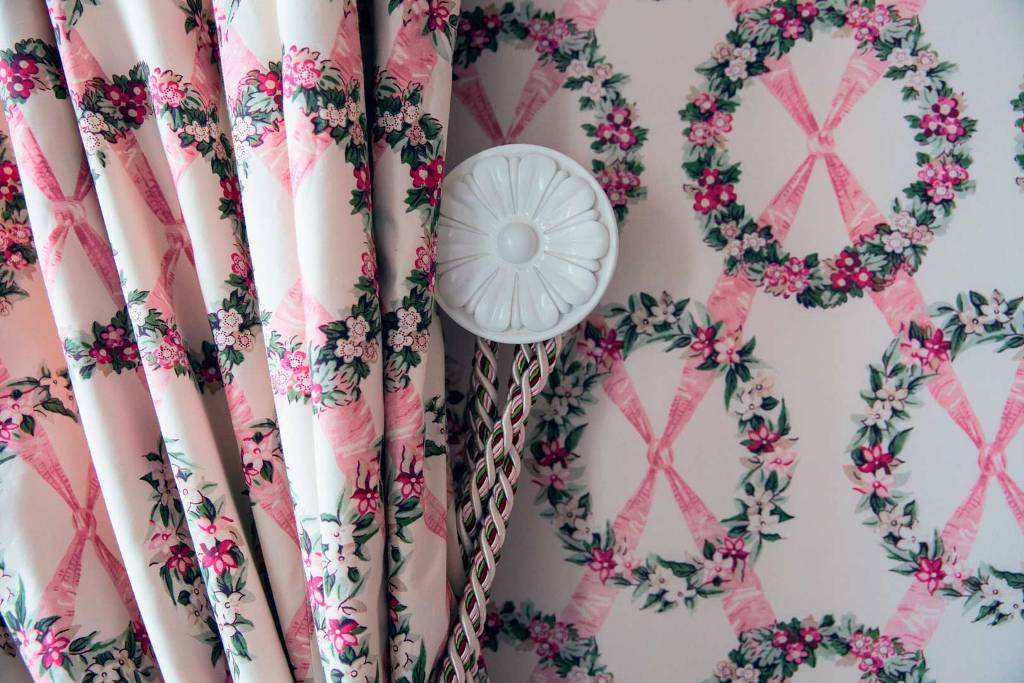
The decoration of this room is highlighted by the rich use of the same fabric: the walls and furniture are upholstered in an English chintz pattern in the form of wreaths of small pink flowers and ribbons, specially made by the English manufacturer Hindley. The same material was used to make the curtains for the windows and doors, as well as the alcove.

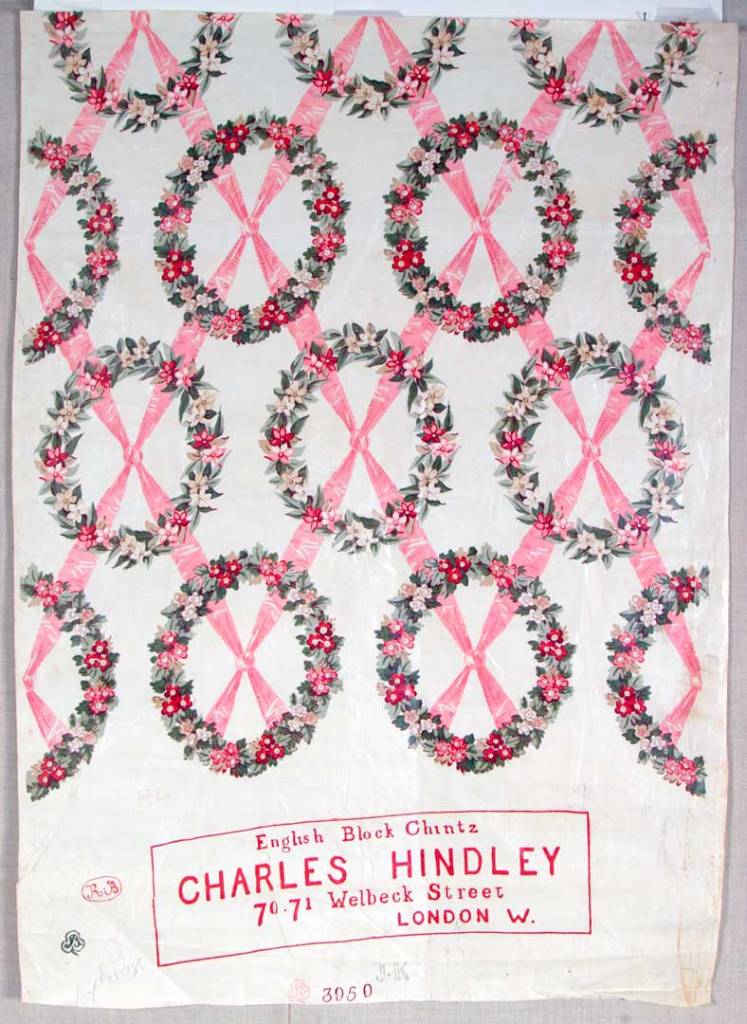
PHOTO: sample of the original pattern made by Charles Hindly & Sons

Charles Hindley & Sons had existed since the early 19th century. In 1909 the company filed for bankruptcy and was resold twice. The latest information about the Hindley manufactory dates back to 1921, when the company ceased to exist. Unfortunately, the museum’s hopes of finding a “historical” manufacturer for the fabric in Great Britain did not materialize.

Since the end of the 19th century, the term “chintz” has been used to describe a cotton decorative fabric in plain weave – usually with a large floral pattern and a glossy front side. This fabric was mainly suitable for interior decoration.

Chintz, along with unwaxed chintz, was used in the decoration of the Alexander Palace, notably for the interiors of the Imperial Bedchamber and Children’s Rooms, the latter of which were located on the second floor of the east wing of the palace.

PHOTO: detail of the English chintz recreated for the Imperial Bedroom

A sample of the original chintz, which was discovered in the funds of the Pavlovsk State Museum Reserve, served as a direct analogue for reproducing the pattern and texture of the fabric. It was important to achieve an exact match between the colour scheme and the degree of waxing.

The recreation of the textile decoration for the Imperial Bedchamber (draperies for the alcove, doors and windows) were based on this surviving sample. Thus, it became possible to reproduce the historic ambiance of the elements of the windows, doors and alcove thanks to the original drapery samples of the Imperial Bedchamber. In addition, when working on the drapery project, the craftsmen relied on numerous colour autochromes taken in 1917, as well as pre-war black and white photographs.

PHOTO: detail of the English chintz recreated for the Imperial Bedroom

To recreate the lining fabric and lace for decorating the walls and ceiling inside the alcove, as well as the trimmings, historical samples of the same time were used. When recreating the color scheme of trimmings and carpets, the main reference point was the color palette of the chintz. Fragments of historical carpets in the halls of the Alexander Palace served as an example of the degree of pile height and density of the structure of the carpet base.

The fabrics, trimmings and carpets were made by the specialists of Renaissance Workshops for the Restoration of Antiquities (St. Petersburg). The production and hanging of curtains, marquises and draperies for the alcove – by the master of the company “Le Lux” (St. Petersburg).

The work on the reconstruction of the fabric decoration for the Imperial Bedchamber – from the preliminary design to the implementation in the material – lasted more than two years.

PHOTO: colour autochrome of the Imperial Bedroom, taken in 1917

***

The Imperial Bedroom is now one of 15 interiors in the eastern wing of the palace, scheduled to open in 2021. Among the other interiors are the Moorish Bathroom of Nicholas II, Working Study of Nicholas II, Reception Room of Nicholas II, Pallisander (Rosewood) Living Room, Mauve (Lilac) Boudoir, Alexandra’s Corner Reception Room, and the New Study of Nicholas II, among others.

In the future, the Alexander Palace will become a memorial museum of the Romanov family – from Catherine the Great to Nicholas II, showcasing the private, domestic life of the Russian monarchs who used the palace as an official residence. The eastern wing of the palace will be known as the Museum of the Russian Imperial Family. The multi-museum complex, which includes the Western wing is scheduled for completion no earlier than 2024.

***

Dear Reader: If you enjoy all my updates on the restoration of the Alexander Palace, then please help support my research by making a donation in US or Canadian dollars – donations can be made by GoFundMe, PayPal, credit card, personal check or money order. Click HERE to make a donation. Thank you for your consideration – PG

© Paul Gilbert. 18 November 2020

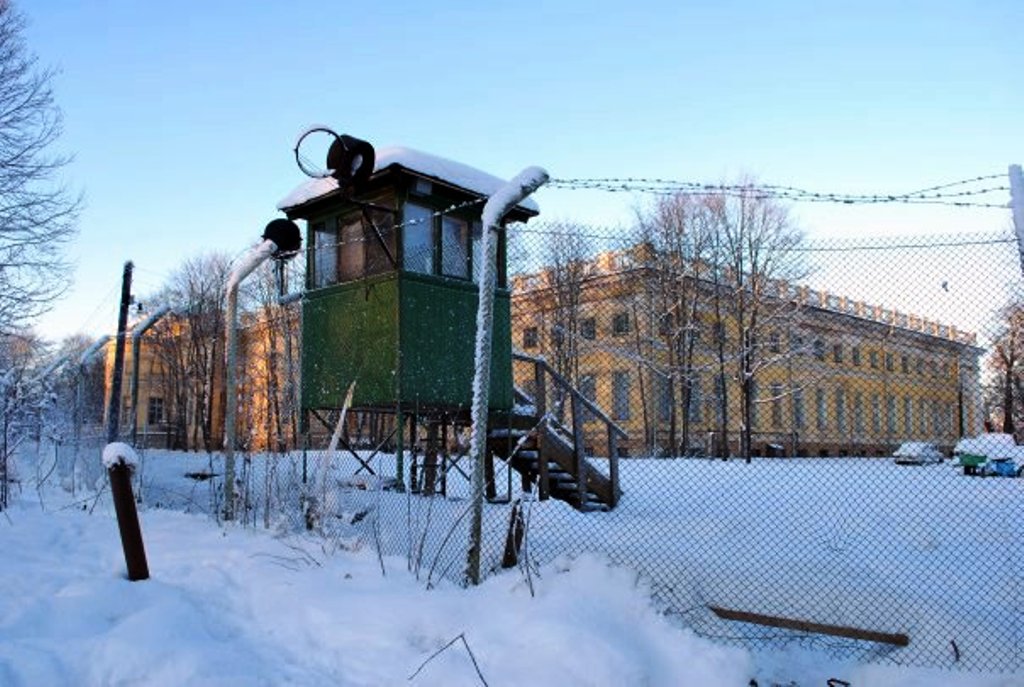
The Alexander Palace circa 1990

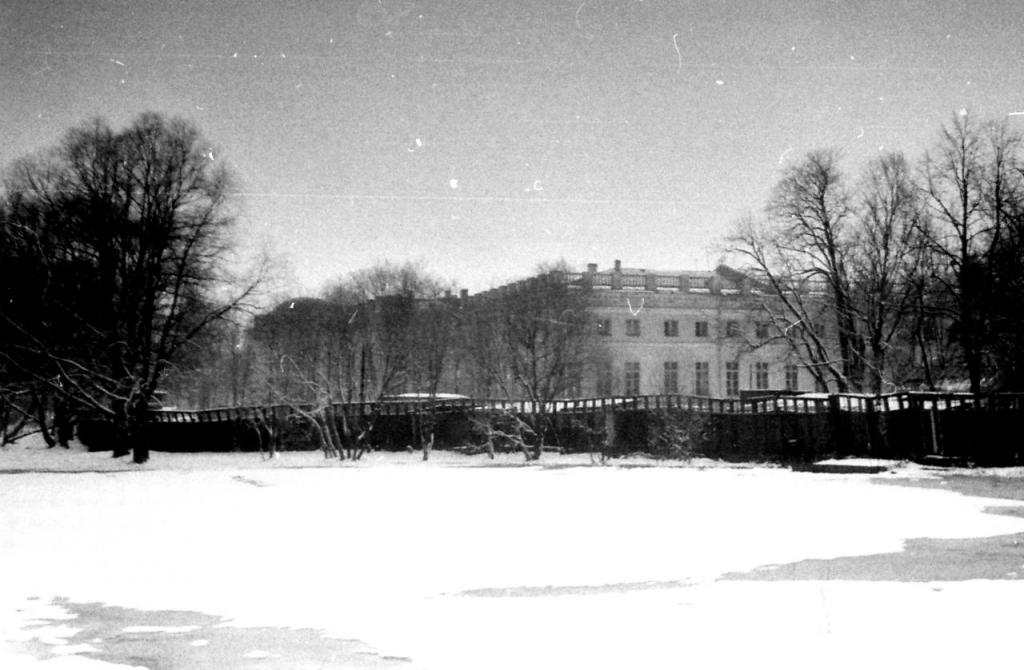
PHOTO: The Alexander Palace as it looked in the early 1990s

This photo reminds me of my visits to the Alexander Palace at Tsarskoye Selo in the 1990s, when the palace was surrounded by a security fence and watchtower, and off limits to visitors.

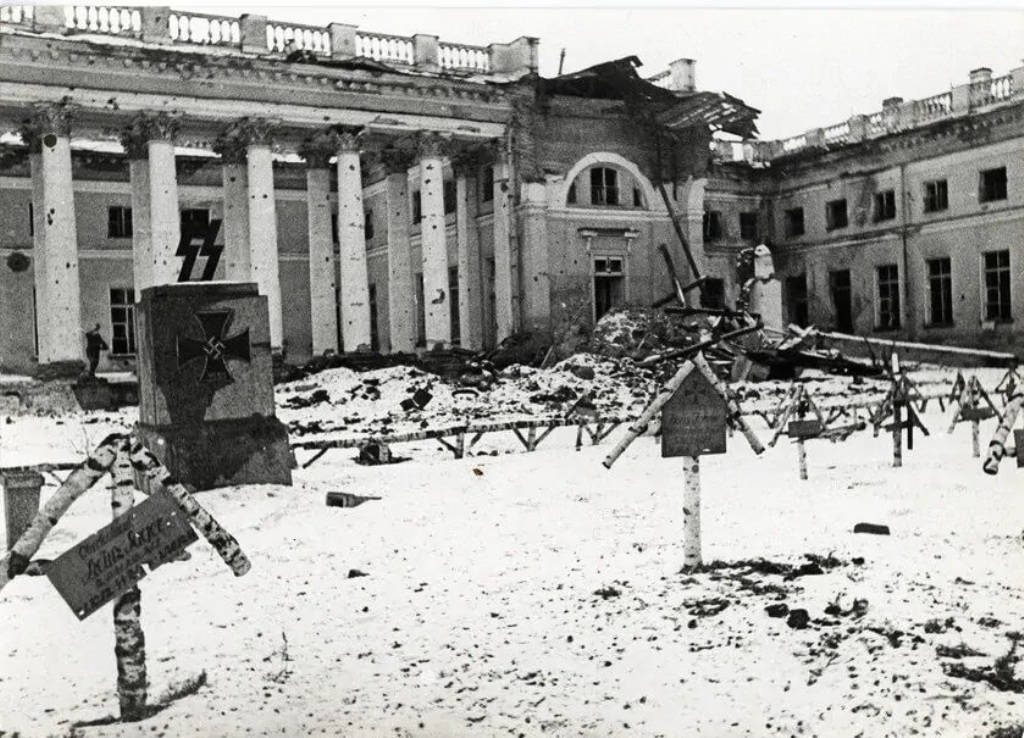
In 1951, by a government decree, the Alexander Palace was transferred to the Ministry of Defense. The Naval Department used the building as a top-secret, submarine tracking research institute of the Baltic Fleet. As a result, the former palace would be strictly off-limits to visitors for the next 45 years.

In 1996 the Alexander Palace was designated as one of the world’s 100 most endangered sites by the World Monuments Fund who issued a grant for the restoration of the palace. American Express donated $200,000 for urgent roof repair. This struck fear into the security-conscious Ministry of Defence, who feared that their top-secret facility might be bugged during the repairs.

In 1997, a permanent exhibition was created in the former apartments of Emperor Nicholas II and Empress Alexandra Feodorovna, located in the eastern wing of the palace. The remainder of the palace was still occupied by the Ministry of Defense and remained strictly off limits to both museum administration staff and visitors.

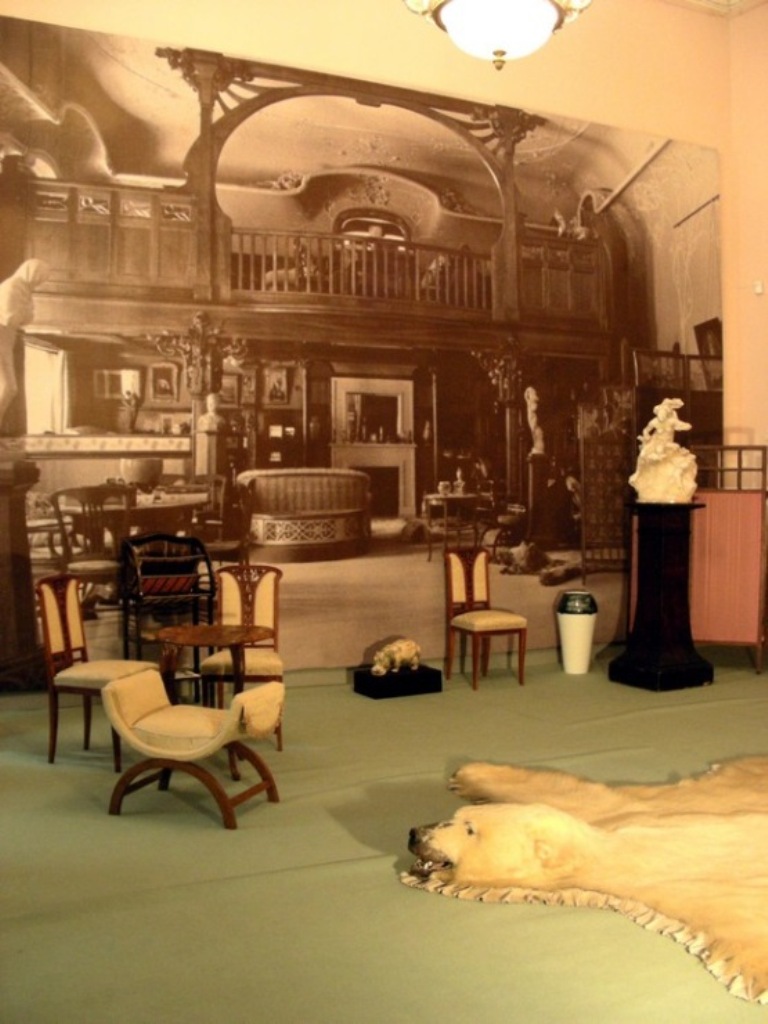
The exhibition Reminiscences in the Alexander Palace opened on 26th August 1997. The exhibition which consisted of twelve rooms did not attempt to recreate the palace’s historic appearance, instead featured furnishings and personal items set against the backdrop of an enormous historic photograph of the each respective room as it looked.

On 5th September 1997, I entered the Alexander Palace for the very first time. I was hosting my second tour to Russia, The World of Nicholas and Alexandra. My group which consisted of 18 persons from the United States and Canada had the honour of being one of the first groups of visitors to tour the Alexander Palace interiors since before the Great Patriotic War (1941-45), when the palace was a museum.

It was not until October 2009, according to the order of the Federal Property Management Agency, that the Alexander Palace was placed under the administration of the Tsarskoye Selo State Museum Reserve.

The Alexander Palace was closed in August 2015 for an extensive restoration, which included the reconstruction of the historic interiors of the private apartments of Nicholas II and Alexandra Feodorovna. The first 15 interiors located in the eastern wing of the palace are now scheduled to open in 2021.

In the future, the Alexander Palace will become a memorial museum of the Romanov family – from Catherine the Great to Nicholas II, showcasing the private, domestic life of the Russian monarchs who used the palace as an official residence. The eastern wing of the palace will be known as the Museum of the Russian Imperial Family. The multi-museum complex, which includes the Western wing is scheduled for completion no earlier than 2024.

© Paul Gilbert. 15 November 2020

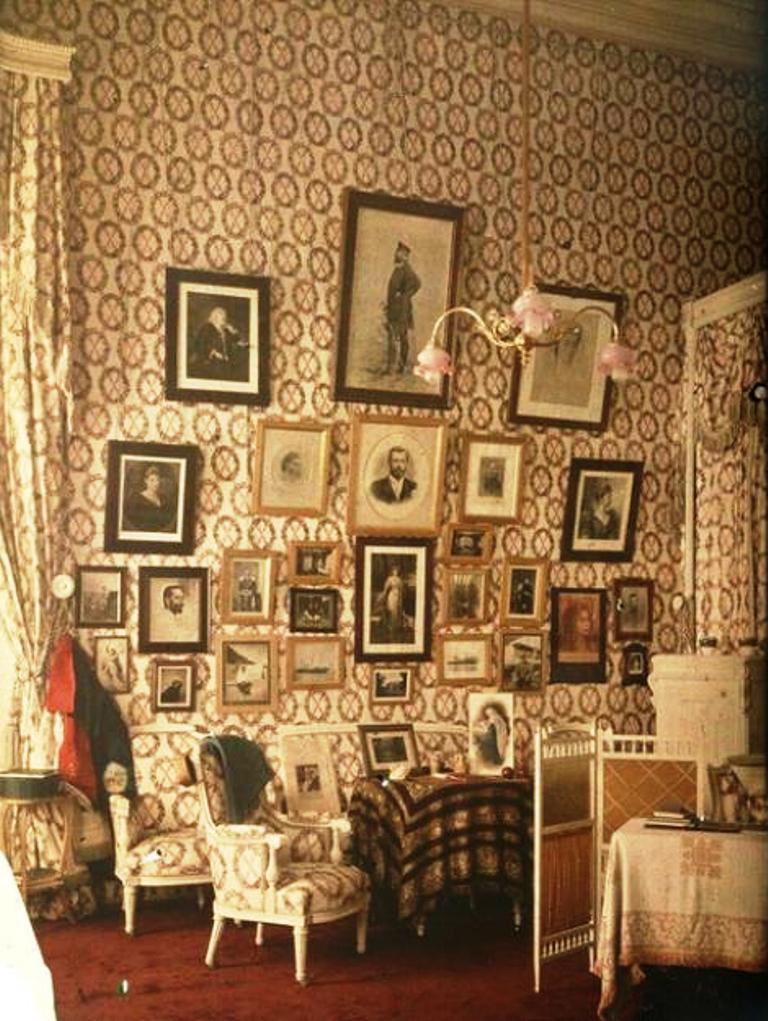
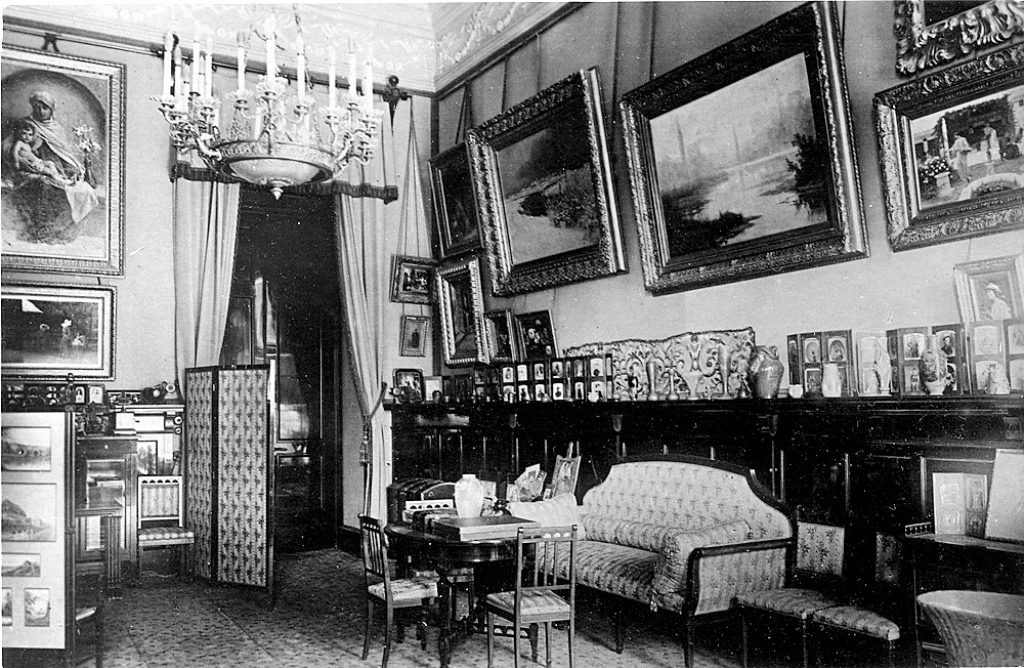
The history and restoration of the Pallisander (Rosewood) Drawing Room in the Alexander Palace

PHOTO: view of the Pallisander (Rosewood) Drawing Room, as it looked in 1917

Among the living quarters of Empress Alexandra Feodorovna located in the eastern wing of the Alexander Palace is the Pallisander or Rosewood Drawing Room. The room got its name from its elegant rosewood interiors. Rosewood is a valuable tropical tree species of the genus Dalbergia, which has a high density and rich colour range, which can vary from light brown with a pinkish tint to dark brown with purple veins. A characteristic feature of this particular tree is its extreme slow growth – a full-fledged mature trunk taking almost two hundred years to mature. Rosewood has high moisture and wear resistance, high decorative qualities, and lends itself well to mechanical processing. The wall panels, fireplace, cornices and furniture were made of this material for the interiors in the Empress’s living room.

The upper part of the walls of the interior was covered with a yellowish silk fabric without a pattern, which was specially ordered in France from the famous Charles Burger company. The work carried out by Roman Feodorovich Meltser’s (1860-1943) firm was completed in 1895.

PHOTO: view of the Pallisander (Rosewood) Drawing Room, as it looked in 1917

The shelves and tables in the living room, were filled with collectibles and memorabilia, among which were figurines and vases. In addition, the interior was decorated with family photographs, paintings and watercolours with views of Hesse-Darmstadt – the Empress’s homeland.

Books in German, English and French, arranged on shelves, were mainly classics of foreign literature. Among them – The Necklace of Princess Fiorimonde by Mary de Morgan, Miss Esperance and Mr. Wycherly by Lizzie Allan Parker, The Innocence of Father Brown by G. K. Chesterton, The Side Of the Angels: A Novel by Basil King, Rosalind in Arden by Henry Marriott-Watson, The Valley of Fear by Arthur Conan Doyle, The Antiquary by Sir Walter Scott, and Laocoon: An Essay on the Limits of Painting and Poetry by Gotthold Lessing.

Two telephones were installed in the Pallisander Drawing Room, one of which connected the palace with the Headquarters during the First World War.

Since the dining room in the Emperor’s half of the eastern wing of the Alexander Palace was converted to the Reception Room, family dinners were often served in the Pallisander Drawing Room.

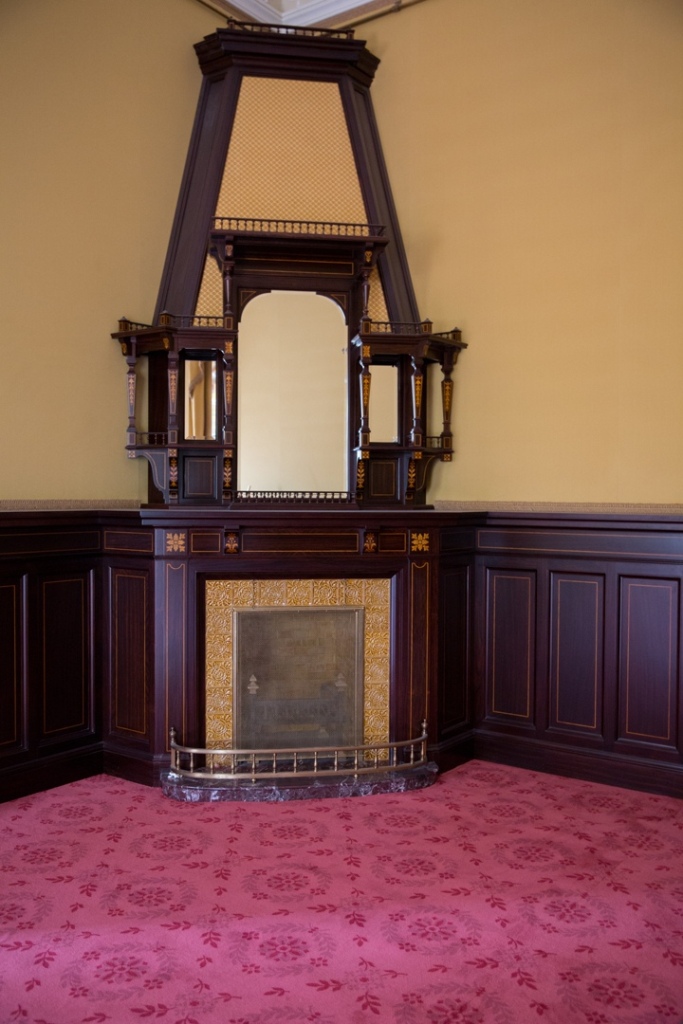
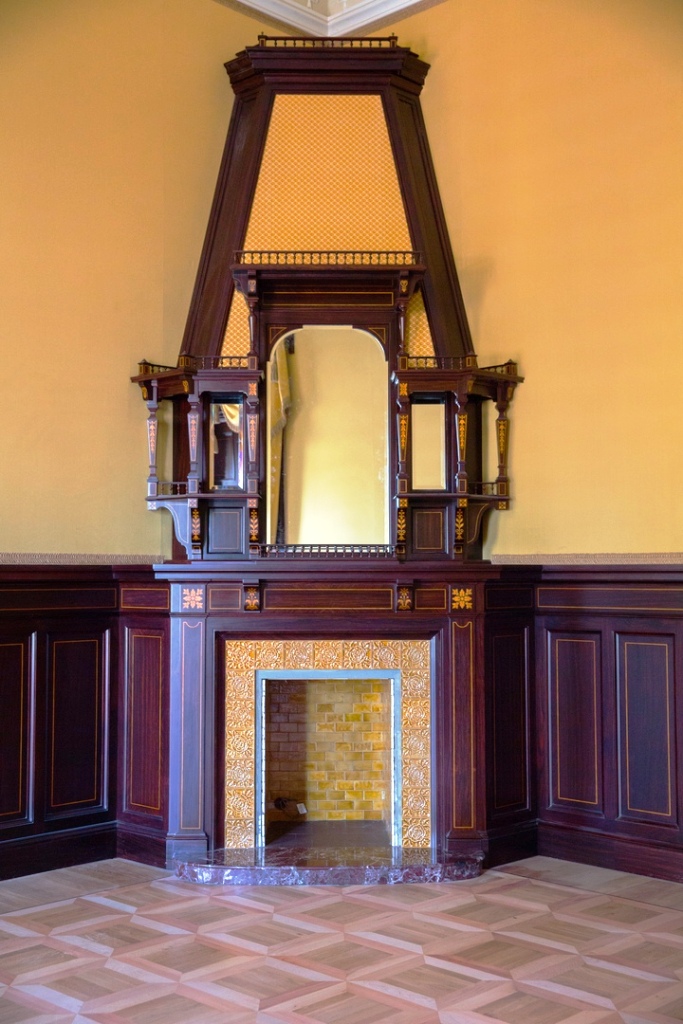
PHOTOS: detail of the Pallisander (Rosewood) Drawing Room fireplace

The recreation of the interior of the Pallisander Drawing Room is based on historical samples preserved in the palace-museum’s archives, including samples of wall fabric, curtains, and panels. The rosewood fireplace which once dominated the interior, decorated with bevelled mirrors has been recreated. Colour autochromes as well as vintage black and white photos also helped recreate the interiors.

During the restoration, a decision was made to recreate the frames for the paintings that were in this living room and preserved in the palace-museum collection. The difficulty in reconstructing these frames was that, like many frames in the palace, they were made according to individual orders of artists, and their sketches or drawings were not preserved, therefore, historical documents, photographs and descriptions were used to recreate them. Click HERE to read my article Original works of art will decorate recreated rooms in the Alexander Palace, published on 9th January 2020

PHOTO: the current look of the recreated Pallisander (Rosewood) Drawing Room

Work on the interiors of the Pallisander (Rosewood) Drawing Room continues. The production of a set of furniture for the living room will soon begin. The scientific staff of the museum are currently engaged in the search and selection of household items, porcelain, paintings, interior sculptures to replace those lost during the Great Patriotic War and the occupation.

***

The Pallisander (Rosewood) Drawing Room is now one of 15 interiors in the eastern wing of the palace, scheduled to open in 2021. Among the other interiors are the New Study of Nicholas II, Moorish Bathroom of Nicholas II, Working Study of Nicholas II, Reception Room of Nicholas II, Pallisander (Rosewood) Living Room, Mauve (Lilac) Boudoir, Alexandra’s Corner Reception Room, the Imperial Bedroom, among others.

In the future, the Alexander Palace will become a memorial museum of the Romanov family – from Catherine the Great to Nicholas II, showcasing the private, domestic life of the Russian monarchs who used the palace as an official residence. The eastern wing of the palace will be known as the Museum of the Russian Imperial Family. The multi-museum complex, which includes the Western wing is scheduled for completion no earlier than 2024.

***

Dear Reader: If you enjoy all my updates on the restoration of the Alexander Palace, then please help support my research by making a donation in US or Canadian dollars – donations can be made by GoFundMe, PayPal, credit card, personal check or money order. Click HERE to make a donation. Thank you for your consideration – PG

© Paul Gilbert. 11 November 2020
The history and restoration of the Mauve (Lilac) Boudoir in the Alexander Palace

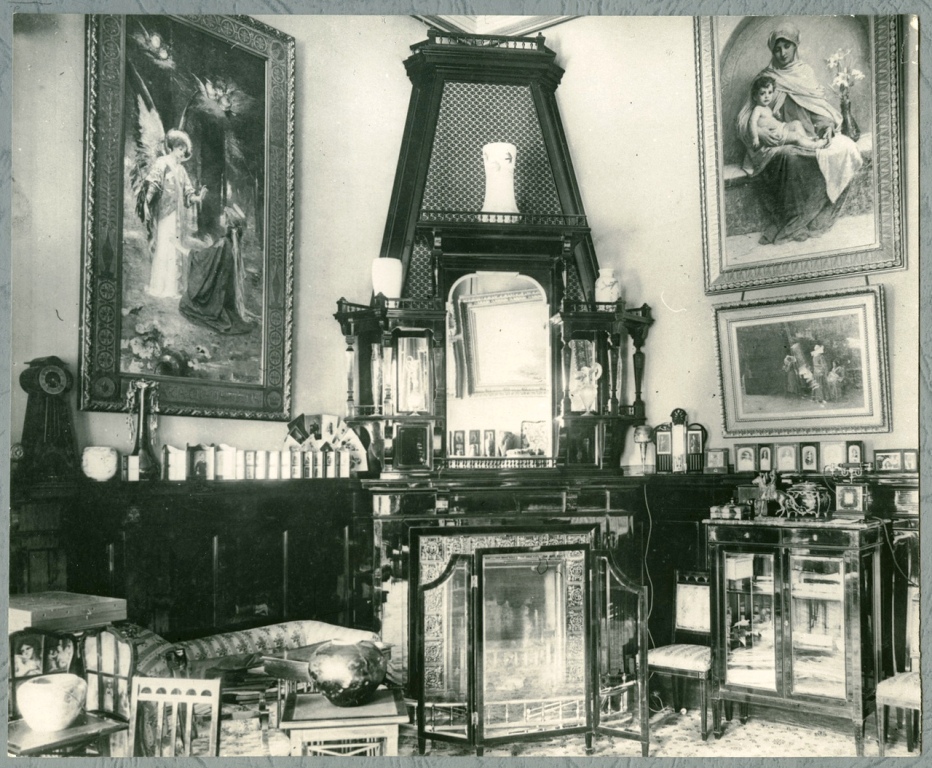
PHOTO: View of the Mauve (Lilac) Boudoir in the Alexander Palace, as it looked in 1917
Popillon’s painting “The Dream of the Virgin” can be seen hanging on the wall 

The favourite room of Empress Alexandra Feodorovna in the Alexander Palace was the Mauve (aka Lilac) Boudoir. This interior was designed by Roman Feodorovich Meltser (1860-1943). According to legend, the empress gave him a lilac branch, her favourite flower, so that the architect could choose the colour scheme for the decoration of the room.

As a result, the walls were upholstered in mauve silk and crowned with a frieze decorated with an iris styled pattern. An ornamental Louis XV style painting decorated the ceiling of the room.

PHOTOS: views of the Mauve (Liliac) Boudoir in the Alexander Palace, as it looked in 1917

The furniture and upright piano by J. Becker were been painted with ivory enamel paint. Some of the furniture items were included in the composition of the walls and fastened to the wall panels. On the shelves, cabinets and fireplace were glass vases, mainly produced by the workshop of Emile Gallé, porcelain figurines and handmade souvenirs presented as gifts to the Empress, as well as family photographs. The room was decorated year-round with fresh flowers from the gardens or hothouses at Tsarskoye Selo.

Alexandra Feodorovna spent a lot of time in the Mauve Boudoir: it was here that she rested, read, and carried out her correspondence. In the evening, the whole family gathered here. The cabinets contained books from the empress’s personal library, sheet music, drawing supplies, and board games.

Thus, at the beginning of the 20th century, the room personified the comfort of a home.

Like many other rooms in the Alexander Palace, the Mauve Boudoir suffered a sad fate – the decoration and the interior were lost during the Great Patriotic War (1941-45).

PHOTO: the current look of the Mauve (Lilac) Boudoir after an extensive restoration

PHOTO: Recreated doors of the Mauve (Lilac) Boudoir in the Alexander Palace

During the current restoration, fabric upholstery for the walls and curtains (fragments of fabric had been preserved in the Pavlovsk State Museum-Reserve), furniture, carpets, wood panels, a fireplace, and a picturesque frieze were recreated, based on historical samples, archival documents and photographs.

A huge amount of work has been done to recreate the doors: first, models were made, then the doors were recreated from wood.

The collection of the Alexander Palace Museum contains Alexandra’s writing table from the Mauve Boudoir, found in the park in a ruined state after the war. In 2018, test cleanings of a paint layer of the writing table were carried out, thanks to which the initial colour of the finishing of the entire interior was determined, as well as the colour scheme for the panels, built-in furniture and cabinet doors. The museum plans to restore Alexandra’s writing table to its original, thanks to descriptions and old photographs.

A painting (see first photo above in this article) by the French artist Edouard Jerome Popillon “The Dream of the Virgin” which once hung in the Mauve Boudoir will be returned to the Alexander Palace from the Pavlovsk Museum-Reserve, where it has been held for many decades. Upon the reopening of the palace next year, the painting will be on display in the room for visitors to enjoy.

PHOTO: Nicholas II and Alexandra Feodorovna seated in the corner of the Mauve Boudoir

***

The Mauve Boudoir is now one of 15 interiors in the eastern wing of the palace, scheduled to open in 2021. Among the other interiors are the New Study of Nicholas II, Moorish Bathroom of Nicholas II, Working Study of Nicholas II, Reception Room of Nicholas II, Pallisander (Rosewood) Living Room, Mauve (Lilac) Boudoir, Alexandra’s Corner Reception Room, the Imperial Bedroom, among others.

In the future, the Alexander Palace will become a memorial museum of the Romanov family – from Catherine the Great to Nicholas II, showcasing the private, domestic life of the Russian monarchs who used the palace as an official residence. The eastern wing of the palace will be known as the Museum of the Russian Imperial Family. The multi-museum complex, which includes the Western wing is scheduled for completion no earlier than 2024.

***

Dear Reader: If you enjoy all my updates on the restoration of the Alexander Palace, then please help support my research by making a donation in US or Canadian dollars – donations can be made by GoFundMe, PayPal, credit card, personal check or money order. Click HERE to make a donation. Thank you for your consideration – PG

© Paul Gilbert. 4 November 2020

The History and Restoration of the Imperial Bedchamber in the Alexander Palace

PHOTO: the Imperial Bedroom as it looked in the 1930s

The Imperial Bedroom or Bedchamber was among one of the first apartments prepared for the arrival of the Imperial couple to the Alexander Palace.

Nicholas was very fond of their new home at Tsarskoye Selo, On first seeing the newly decorated apartments in September 1895 he wrote to his mother:

“our mood . . . changed to utter delight when we settled ourselves into these marvellous rooms: sometimes we simply sit in silence wherever we happen to be and admire the walls, the fireplaces, the furniture… .”

Between 1894-1895, the bedchamber was redesigned from the bedroom furnished for the wedding in 1874 of Grand Duchess Maria Alexandrovna (daughter of Alexander II) to Prince Alfred, Duke of Edinburgh. The interior was renovated according to the project of Roman Melzer. The furniture, which had been preserved from the previous decoration, was repainted in white and covered with an English chintz pattern in the form of wreaths of small pink flowers and ribbons. The same fabric was used to make the drapes and alcove curtains for the room.

To carry out the finishing work, the furniture manufacturer Karl Greenberg was invited, who had designed the interior for the Duke and Duchess of Edinburgh. In addition, Greenberg designed the dressing room adjacent to the Bedchamber and the Empress’s small Dressing Room.

PHOTO: the Imperial Bedroom as it looked in the 1930s

Gradually, in the autumn of 1895, the furniture began to be replaced. In 1897, the double walnut bed was replaced by two gilded copper beds made by the Moscow firm Tyapunov and Son.

In September 1901, “a thick raspberry velvet carpet which covered the entire floor,” was purchased for the Bedchamber from the merchants Korovins, suppliers of the Imperial Court, for the sum of 747 rubles 50 kopecks.

As can be seen in photographs from the early 20th century, the alcove wall was filled with icons. Over the years, the number of icons steadily increased, many of them gifted to the Imperial family. Among them were many unique images: an icon made by craftsmen on a cut of a tree, or an icon depicting Christ blessing Nicholas II, Alexandra Feodorovna and Tsesarevich Alexei with the inscription: “The Lord Himself blesses and has mercy on them.” Unfortunately, many of these icons were lost: having been sold in the 1930s or disappeared during the war and occupation of the palace by the Nazis. The museum funds preserved the icon “St. Nicholas the Wonderworker”, presented to Nicholas II on the day of his coronation by the abbess of the Seraphim-Ponetaevsky monastery in the Nizhny Novgorod province, as well as two icons presented to Empress Alexandra Feodorovna, among several others.

After the completion of the current restoration work, several hundred icons will once again appear in the alcove of the Bedchamber interior. Unfortunately, due to the numerous losses of the original icons which once hung here, the historic recreation of this collection will never be fully restored.

During the Great Patriotic War, the interior of the Bedchamber was seriously damaged. The alcove had collapsed, the wall decorations and the furniture were all lost. Only one chair survived, which is now in the collection of the Pavlovsk State Museum-Reserve.

PHOTO: the Imperial Bedroom as it looks today

Reliable reconstruction of the original historic look of the Bedchamber, structural elements and furniture finishing details became possible thanks to preserved historical photographs from the collections of the Tsarskoye Selo State Museum Reserve, the Pavlovsk State Museum-Reserve, the Central State Archive of Film and Photo Documents (St. Petersburg) and the State Archive of the Russian Federation  (Moscow). In these pictures, the interior is presented from different angles. Fragments of chintz and silk twill from the collection from the museum collection, as well as the one chair from the Bedchamber, have been miraculously been preserved, thus becoming invaluable resources for the reconstruction of furniture.

PHOTO: the Imperial Bedroom as it looks today

Since the beginning of the restoration work in the Bedchamber, in addition to architectural elements (alcove, frieze), fabrics on the walls, carpeting, curtains have all been recreated. The project for the production of furniture for this interior has already been completed and work will soon begin on the production of items for the Bedchamber on the Empress’s half of the room.

PHOTO: detail of the Imperial Bedroom as it looks today

***

The Imperial Bedroom of Nicholas II is now one of 15 interiors in the eastern wing of the palace, scheduled to open in 2021. Among the other interiors are the Moorish Bathroom of Nicholas II, Working Study of Nicholas II, Reception Room of Nicholas II, Pallisander (Rosewood) Living Room, Mauve (Lilac) Boudoir, Alexandra’s Corner Reception Room, and the New Study of Nicholas II.

In the future, the Alexander Palace will become a memorial museum of the Romanov family – from Catherine the Great to Nicholas II, showcasing the private, domestic life of the Russian monarchs who used the palace as an official residence. The eastern wing of the palace will be known as the Museum of the Russian Imperial Family. The multi-museum complex, which includes the Western wing is scheduled for completion no earlier than 2024.

© Paul Gilbert. 14 October 2020