London Exhibit Features Unique Items on the Last Tsar

145a

The following exhibition ran from 21 September 2018 to 24 March 2019

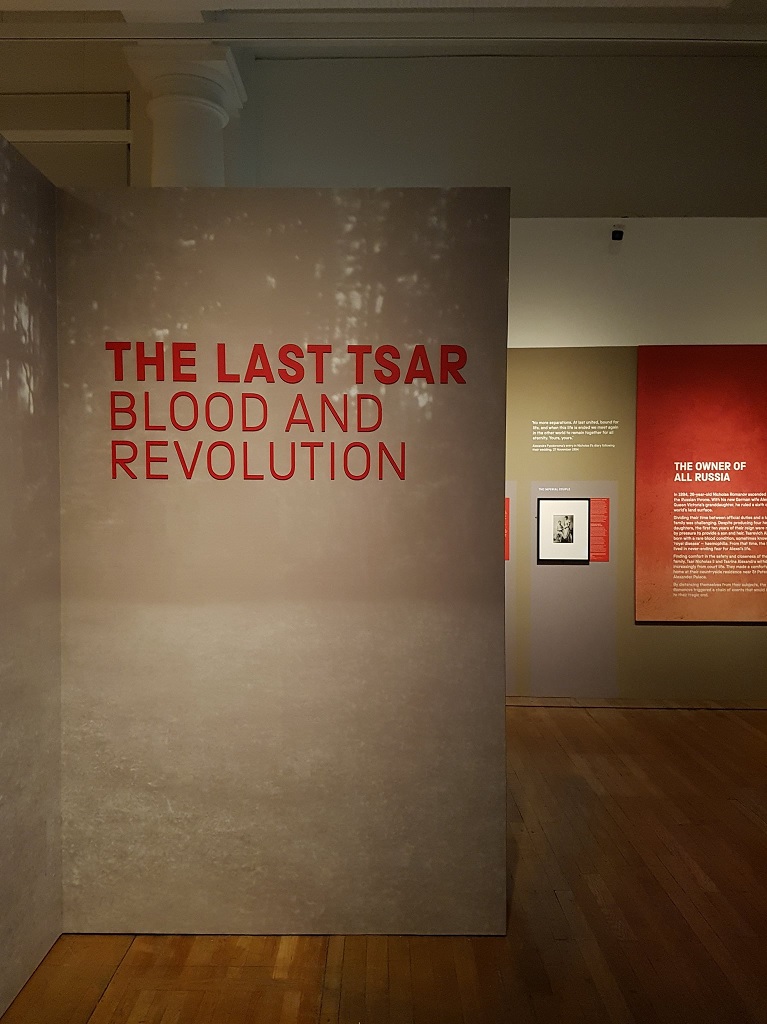
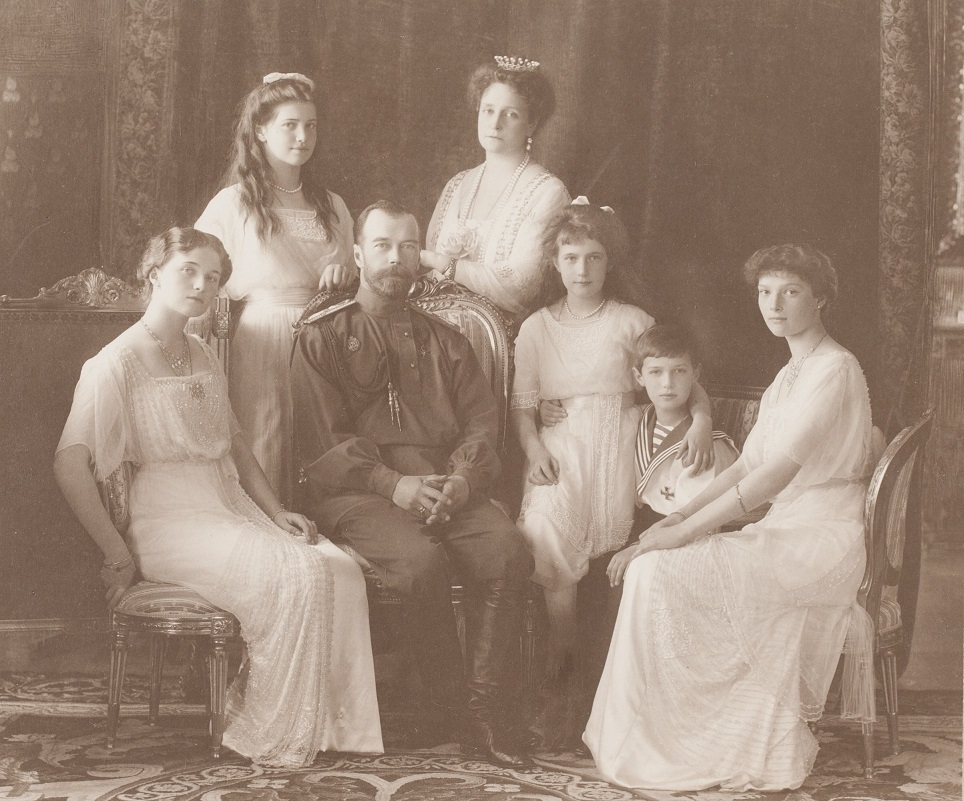
The Last Tsar: Blood and Revolution exhibition opened on Friday 21st September at the Science Museum in London, England. The exhibition marks 100 years since the death of Russia’s last ruler of the Romanov Family, Emperor Nicholas II (1868-1918).

The exhibition presents rare artefacts from collections in the United Kingdom, Russia, and the United States, including the family’s personal diaries, private possessions, such as the Empress Alexandra’s 1904 maternity dress, jewellery.

145b

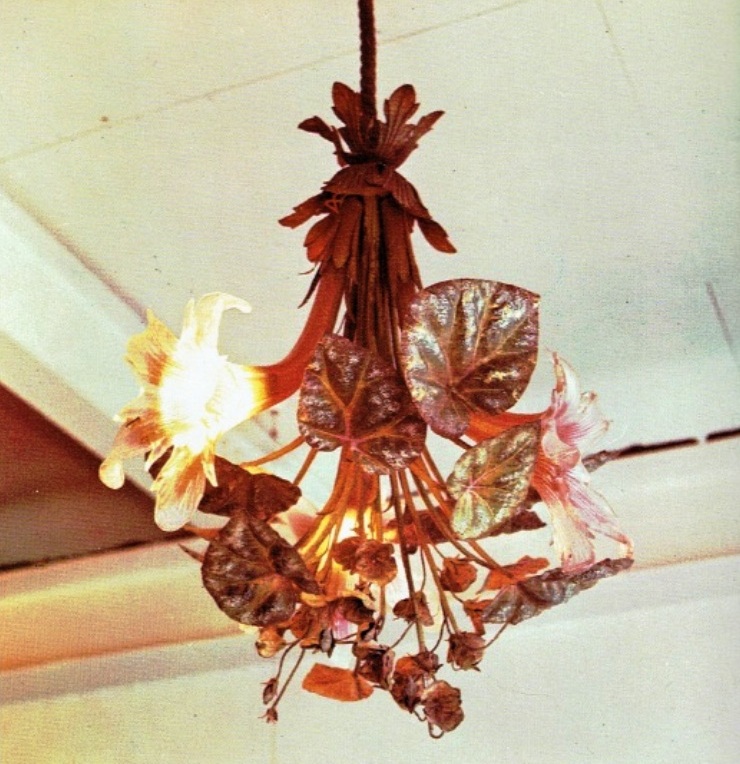
The glass chandelier from the Grand Duchesses bedroom in the Ipatiev House

Also on display is a Murano glass chandelier from the Grand Duchesses bedroom in the Ipatiev House. The chandelier was brought to England by the English tutor to the Tsesarevich Alexei Sydney Gibbes, where it was on display in Luton Hoo for many years. It is now in the private collection of the Butters Family in England.

145c

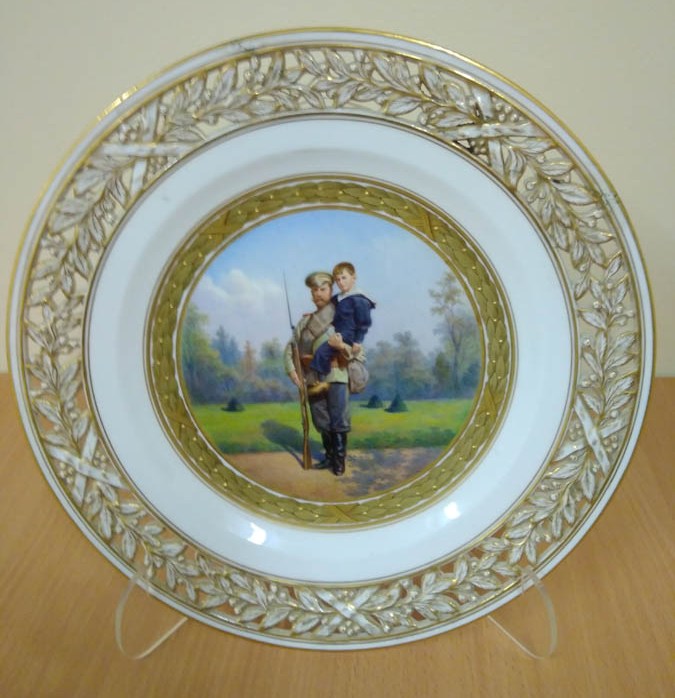
Meissen porcelain plate depicting Nicholas II and his son Alexei
Photo © Tsarskoye Selo State Museum-Reserve

145d

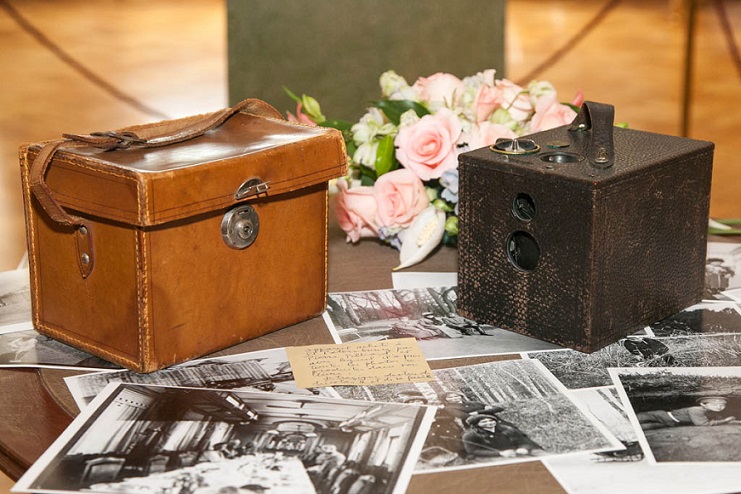
Pierre Gilliard’s Kodak Brownie Camera
Photo © Tsarskoye Selo State Museum-Reserve

The Tsarskoye Selo State Museum-Reserve have loaned 44 items from their collections, including portraits of Nicholas II and Alexandra Fedorovna, a cherkeska (ceremonial Circassian coat) – from the uniform of an officer of HM Own Convoy, a kokoshnik, and Pierre Gilliard’s Kodak Brownie camera.

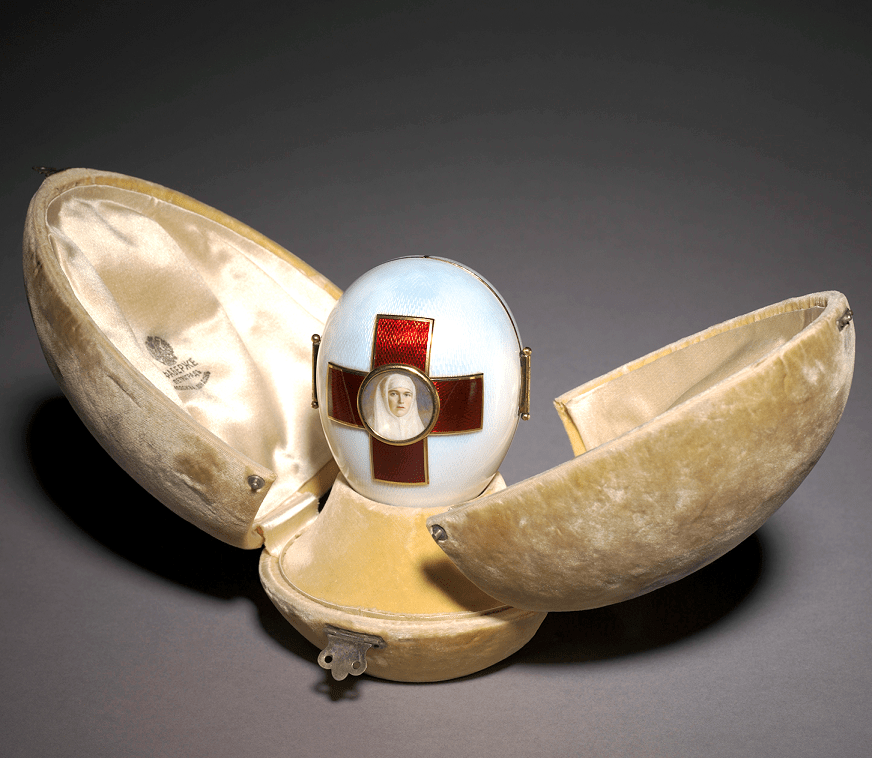
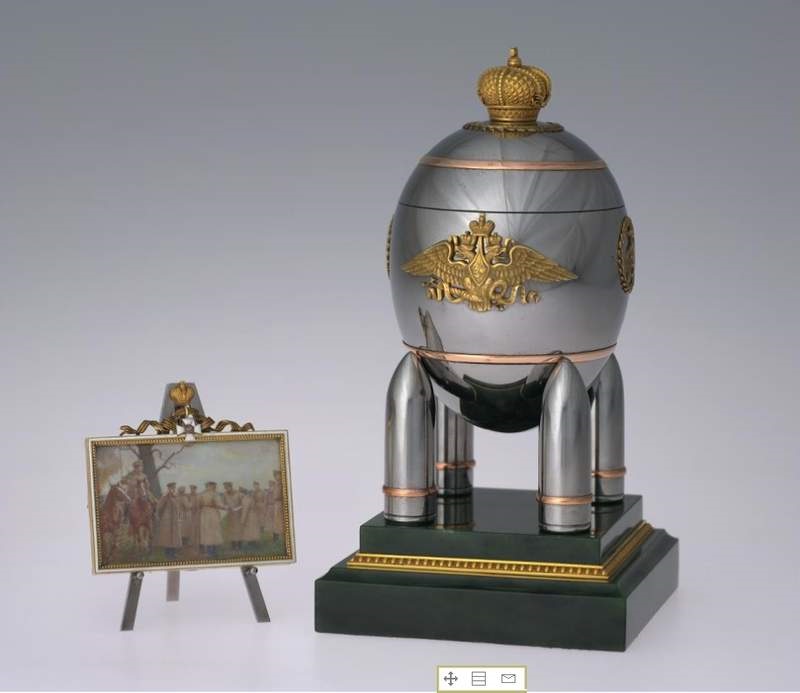
The exhibition also features two Fabergé Imperial Easter Eggs: the Red Cross Triptych Egg from 1915, honouring Empress Alexandra Feodorovna and her two eldest daughters, the Grand Duchesses Olga and Tatiana Nikolaevna, for their war efforts for the Red Cross; and the Steel Military Egg from 1916, sent to Alexandra by Nicholas when he was at the Russian front.

145e

Fabergé Red Cross Triptych Egg (1915)
Photo © Cleveland Museum of Art

145f

Fabergé Steel Military Egg (1916)
Photo © Kremlin Armoury Museum

Of particular note, are annotated photo albums created between 1908 and 1918 by Herbert Galloway Stewart (1866-1960), an English tutor who was invited by the Grand Duchess Ksenia Alexandrovna (1875-1960) to teach her son – Prince of the Imperial Blood Andrei Alexandrovich (1897-1981). The albums, which are now part of the Science Museum Group collection will be on display for the first time. These albums offer a fascinating glimpse into the lives of the Romanovs – from boating trips and picnics, to sledging in the snow-covered grounds of the Alexander Palace at Tsarskoye Selo.

The photographs were discovered by Natalia Sidlina, who found 22 albums packed inside a champagne crate from Harrods, in the archives of the Science and Media Museum in Bradford, England.

All Photos © Science Museum Group Collection

The exhibition retraces the lives of Nicholas II and Alexandra Feodorovna as they navigated their roles as autocratic rulers of Russia, while caring for their young son and heir, who was born with haemophilia B. The royal household faced a turbulent backdrop of social upheaval and war between 1900 and 1918, but we’ll be focusing on the significant influence of medicine on the private lives of the imperial family. Over 70 years after their sudden disappearance, advances in medicine and forensic science transformed the investigation into their fate and solved one of the greatest mysteries of the 20th century.

The exhibition consists of six sections: “Russia at the Turn of the Century”, “Deprivation of Liberty: Palaces and Prisoners”, “Doctors and Healers at Court”, “Sisterhood. The Empress and the Grand Duchesses”, “The Revolution and the Overthrow of the Romanov Dynasty”, and “The Investigation Which Lasted a Century”.

Explore the extraordinary lives and deaths of Tsar Nicholas II and his family and go behind the scenes to uncover the science behind one of the greatest mysteries of the 20th century in this FREE exhibition.

The Last Tsar: Blood and Revolution Exhibition ran from 21 September 2018 to 24 March 2019, at the Science Museum in London, England.

© Paul Gilbert. 2 December 2019

Exhibition: ‘Family Album’ in Kaluga

144a

NOTE: All of the articles pertaining to Nicholas II and his family which were originally published in my Royal Russia News blog, have been moved to this Nicholas II blog. This article was originally published on 25 September 2018 in my Royal Russia News blog – PG

The following exhibition ran from 15 September to 4 November 2018

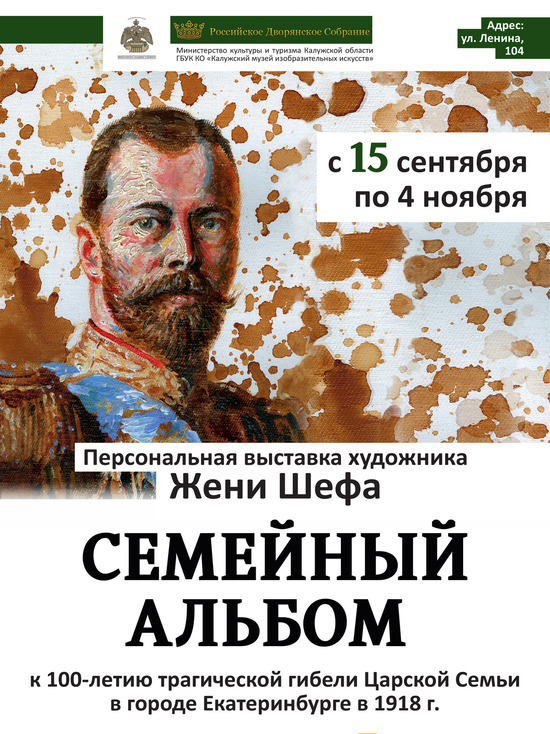
On September 15 a solo exhibition entitled Family Album opened at the Kaluga Museum of Fine Arts, presenting the works of the Honorary Academician of the Academy of Arts Evgeny Sheffer, known to the general public under the pseudonym ‘Zhenya Shef’.

The exhibition is dedicated to the centenary of the tragic death of Emperor Nicholas II and his family and the centennial anniversary of the Kaluga Museum of Fine Arts. The artist who now lives in Germany marked the terrible events that occurred in July 1918 in the basement of Ipatiev House in Ekaterinburg by a series of paintings.

His work presented in Kaluga – portraits of the Imperial family – were previously shown at the Venice Biennale in 2013, the year marking the 400th anniversary of the House of Romanov. The exhibition is organized by the Russian Noble Assembly with the support of the Ministry of Culture and Tourism of the Kaluga Region.

The chairman of the Kaluga branch of the Imperial Orthodox Palestine Society (IOPS) Vitaly Gorokhovatsky, opened the exhibition with a welcoming speech. He then awarded Honorary Deeds to the artist Evgeny Sheffer and the director of the Kaluga Museum of Fine Arts Natalia Marchenko for their excellent organization of the exhibition.

The opening ceremony was attended by the head of the Russian Nobility Assembly Oleg Shcherbachev, the head of the Department of Culture of the Kaluga diocese, priest Nikolai Zherzdev, the human rights commissioner for the Kaluga region Yuri Zelnikov , the president of the Russian Union of Philocratists Arsen Meltonyan among others.

In honour of the exhibition, the Russian postal service issued a special set of postcards featuring paintings presented at the exhibition. The artist took part to autograph them for guests at the exhibition.

The opening ceremony was followed by a concert, at which the Russian composer, pianist and violoncellist Victor Agranovich performed. His performance, a musical work was performed on the verses of Nina Kartasheva from the cantata Voices from the Skies, dedicated to the centenary of the tragic death of the Tsar’s family.

The Family Album Exhibition ran from November 4, at the Kaluga Museum of Fine Arts, and then in Novosibirsk, Tver and other Russian cities.

© Paul Gilbert. 2 December 2019

Summary of Nicholas II Conference in England – 27 October 2018

141a

Archpriest Andrew Phillips and Paul Gilbert, St. John of Shanghai Orthodox Church

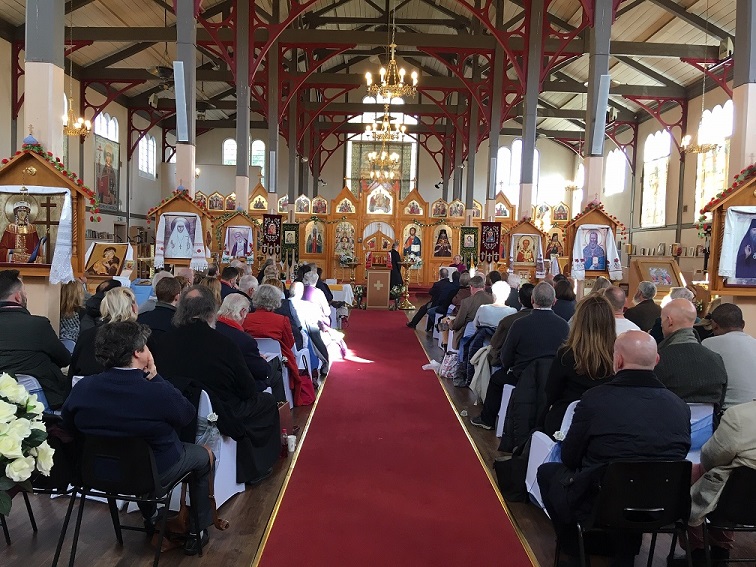
On Saturday 27th October, more than 100 people from 11 countries attended the 1st International Nicholas II. Emperor. Tsar. Saint. Conference in England.

The venue for the event was St. John of Shanghai Orthodox Church in Colchester, Essex, which is situated about an hour’s train journey from London. It was truly meaningful and appropriate that the conference should take place at the Church of St John of Shanghai, who did so much for the glorification of the Holy Royal Passion-Bearers.

This historic event brought people from no less than 11 countries: England, Wales, Ireland, the Netherlands, France, Denmark, Vatican City, Russia and from as far away as Canada, America and Australia.

141b

More than 100 people from 11 countries attended the Nicholas II Conference

Among the guests was Metropolitan Jonah (Paffhausen), who travelled from Washington, DC for the event. His Eminence is a retired American Orthodox bishop who served as the primate of the Orthodox Church in America (OCA) with the title The Most Blessed Archbishop of Washington, Metropolitan of All America and Canada from his election on November 12, 2008, until his resignation on July 7, 2012. Metropolitan Jonah was the first convert to the Orthodox faith to have been elected as the primate of the OCA.

On June 15, 2015, Metropolitan Jonah was released from the Orthodox Church in America in order for him to be accepted as a bishop of the Russian Orthodox Church Outside Russia.

Greetings for the conference and its attendees were received by letter from Vice-Chairman of the Department for External Relations of the Moscow Patriarchate Archimandrite Philaret; Head of the Russian Imperial House Her Imperial Highness Grand Duchess Maria Vladimirovna; and His eminence Archbishop Gregorios of Thyateira and Great Britain.

The conference featured 5 speakers, who presented 7 papers, some of which were dedicated to clearing the name of the much slandered tsar.

141c

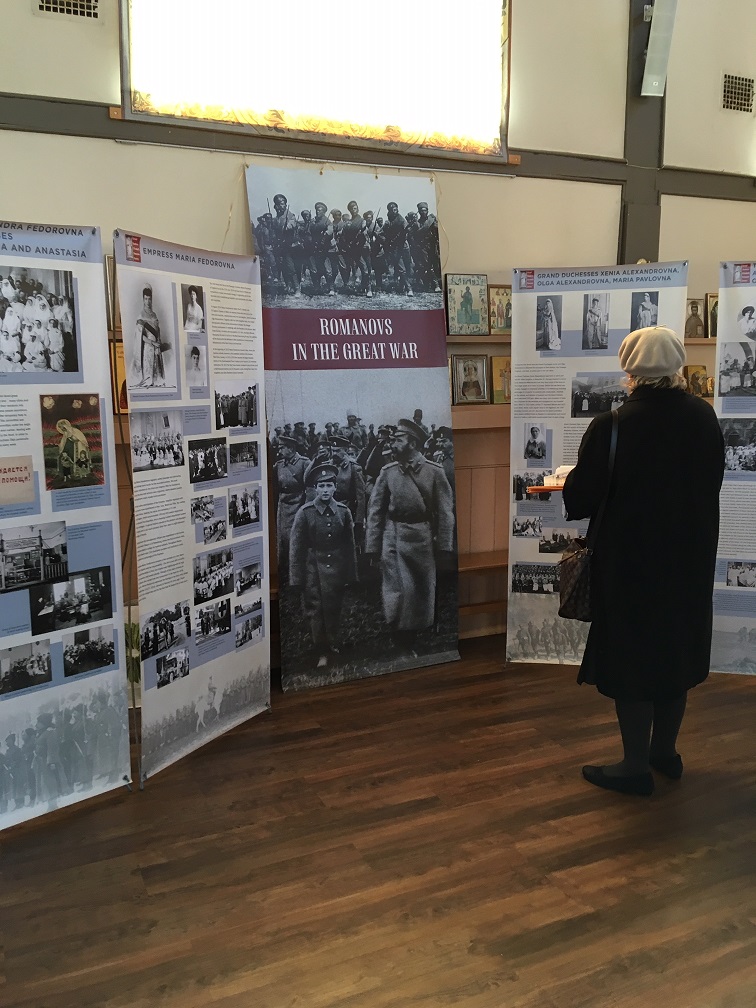
‘Romanovs During the First World War: Charity and Heroism’ exhibit

The Grand Duchess Elizabeth Romanov Society UK provided 10 exhibit banners from the society’s exhibition Romanovs During the First World War: Charity and Heroism. The exhibit featured photos, post cards and documents from the Russian archives and private collections. The exhibition was produced by GDER society, St Tichon’s Theological University, Moscow, and The Society of Card Collectors. All the information in English.

Holy Trinity Publications set up a table offering copies for sale of ‘The Romanovs’ Under House Arrest‘, co-authored by Marilyn Swezey, and ‘The Romanovs: Family of Faith and Charity‘, a children’s book by Maria Maximova.

Royal Russia Publications also set up a table offering copies of ALL current and back issues of ‘Sovereign: The Life and Reign of Emperor Nicholas II‘.

Special thanks to Father Andrew Phillips rector of St John of Shanghai Orthodox Church, for his enthusiasm and support of this event, and for the opportunity to use St John of Shanghai Church as the venue for this historic conference.

To my dearest friends Mike and Julia Carr, and David Clark for all their dedication and hard work in helping to set up the church and meeting hall, assisting with registration, book sales, lunch, teas and coffee, etc.

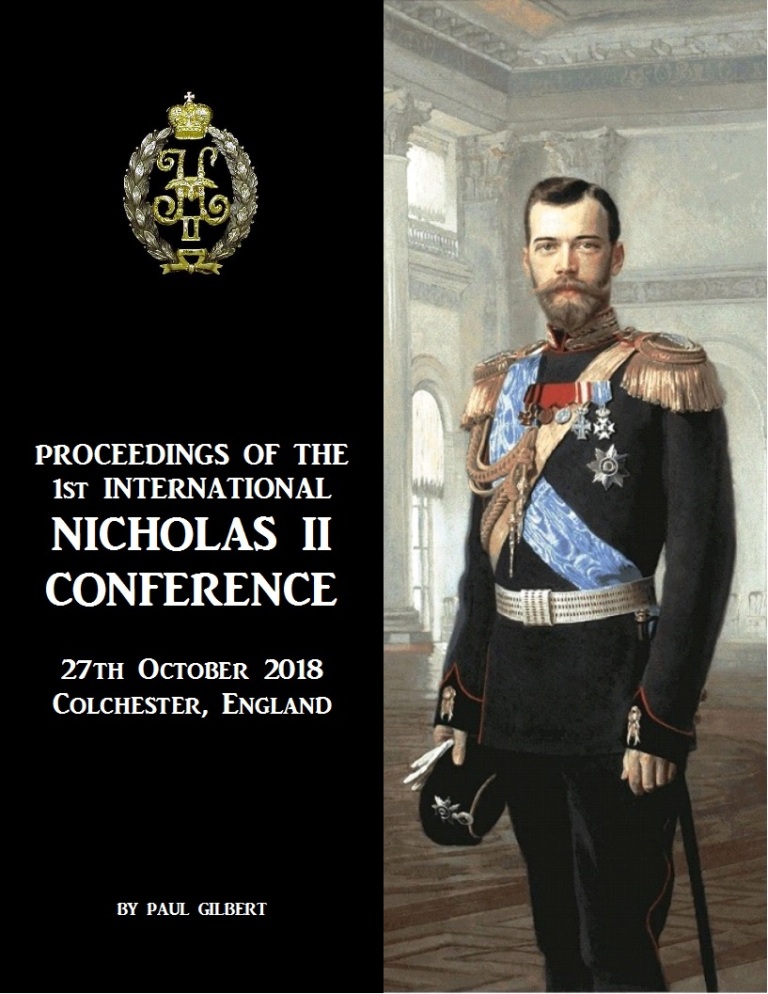
conference-cover

*This title is available from AMAZON in the USA, UK, Canada, Australia,
France, Germany, Spain, Italy, Netherlands, Poland, Sweden and Japan

CLICK HERE TO ORDER THE PAPERBACK EDITION @ $30.00 USD

CLICK HERE TO ORDER THE HARD COVER EDITION @ $40.00 USD

141e

© Paul Gilbert. 1 December 2019

Exhibition: ‘From the Imperial Wardrobe’

NOTE: All of the articles pertaining to Nicholas II and his family which were originally published in my Royal Russia News blog, have been moved to this Nicholas II blog. This article was originally published on 30 November 2018 in my Royal Russia News blog – PG

The following exhibition ran from 29 November 2018 to 28 February 2019

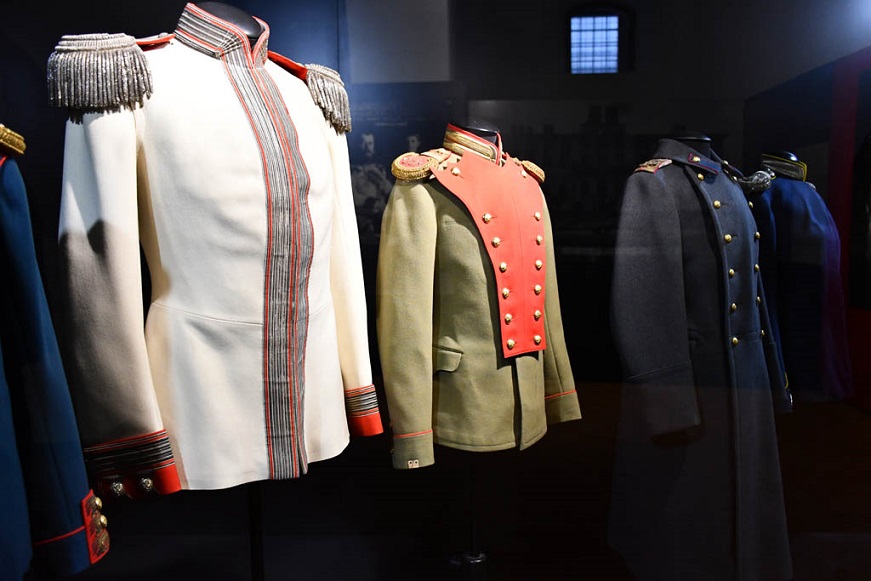
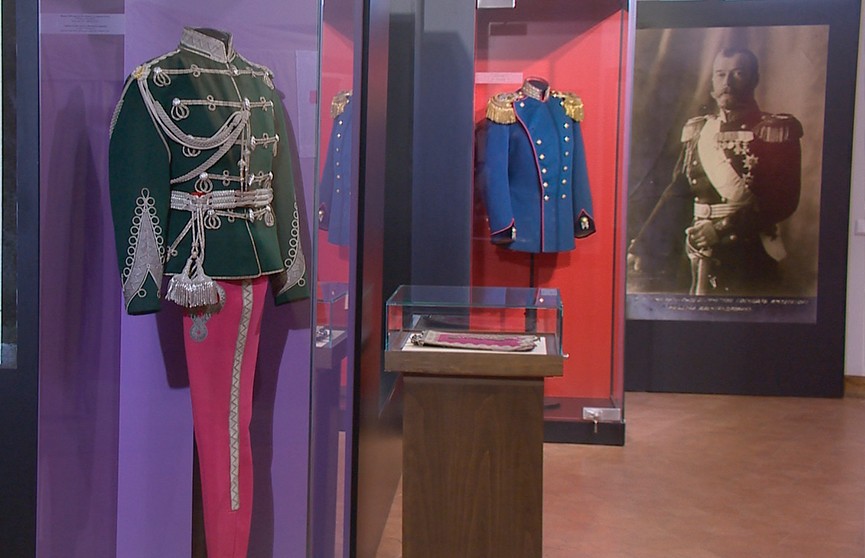
Military uniforms from the collection of the Tsarskoye Selo State Museum-Preserve are currently on display at a new exhibition From the Іmperial Wardrobe, in the Mir Castle Complex, a UNESCO World Heritage Site, situated 100 km from Minsk, Belarus.

The exhibition, which opened on 29th November is dedicated to the 100th anniversary of the end of the First World War. It is a joint international project of the Mir Castle Complex Museum, the Tsarskoye Selo State Museum-Preserve, the State Archives of the Russian Federation, the Grodno State Historical and Archaeological Museum, the Local Charitable Foundation “Brest Fortification” and the Lukskaya Secondary School.

The First World War changed the face of the Russian Empire, the way of life of people and families, including the imperial one. For a long time that war was in the shadow of the October Revolution, the Civil War and later the Great Patriotic War. The main purpose of the exhibition is to restore the historical memory of the war, drawing attention to the personality of Emperor Nicholas II and to military events related to Mir township and the surrounding villages.

138a

138b

The exhibition features a total of 39 military uniforms, including those belonging to Emperor Nicholas II and his son, Tsesarevich Alexei. After the tsar’s abdication, his uniforms survived the 1917 Revolution, and were preserved in the Alexander Palace. During the Great Patriotic War (1941-45), the uniforms were evacuated to Novosibirsk.

An interactive excursion has been prepared for the visitors, during which they will be able to learn about the features of uniforms and learn about the history of individual Life Guard regiments.

A separate unit presents weapons and military equipment from the First World War from the funds of Grodno State Historical and Archeological Museum, which are complemented by the items from the State Institution “Lukskaya secondary school” located on the territory of Korelichi district and on the basis of which the military-patriotic club “Vityaz” since 2001 has been operating.

An illustrative series of the exhibition is represented by photographs from the Tsarskoye Selo State Museum-Preserve, the collection of Major General Svity EI.V. Vladimir Fedorovich Dzhunkovsky State Archives of the Russian Federation, as well as photographs from the archive of local historian Leonid Kudin.

The thematic section on medical services during the First World War will be of particular interest. A military field hospital tent and medical instruments are on display at the exhibition thanks to the Local Charitable Foundation “Brest Fortification”.

The exhibition closed on 28 February 2019.

© Mir Castle / Tsarskoye Selo State Museum Preserve. 30 November 2019

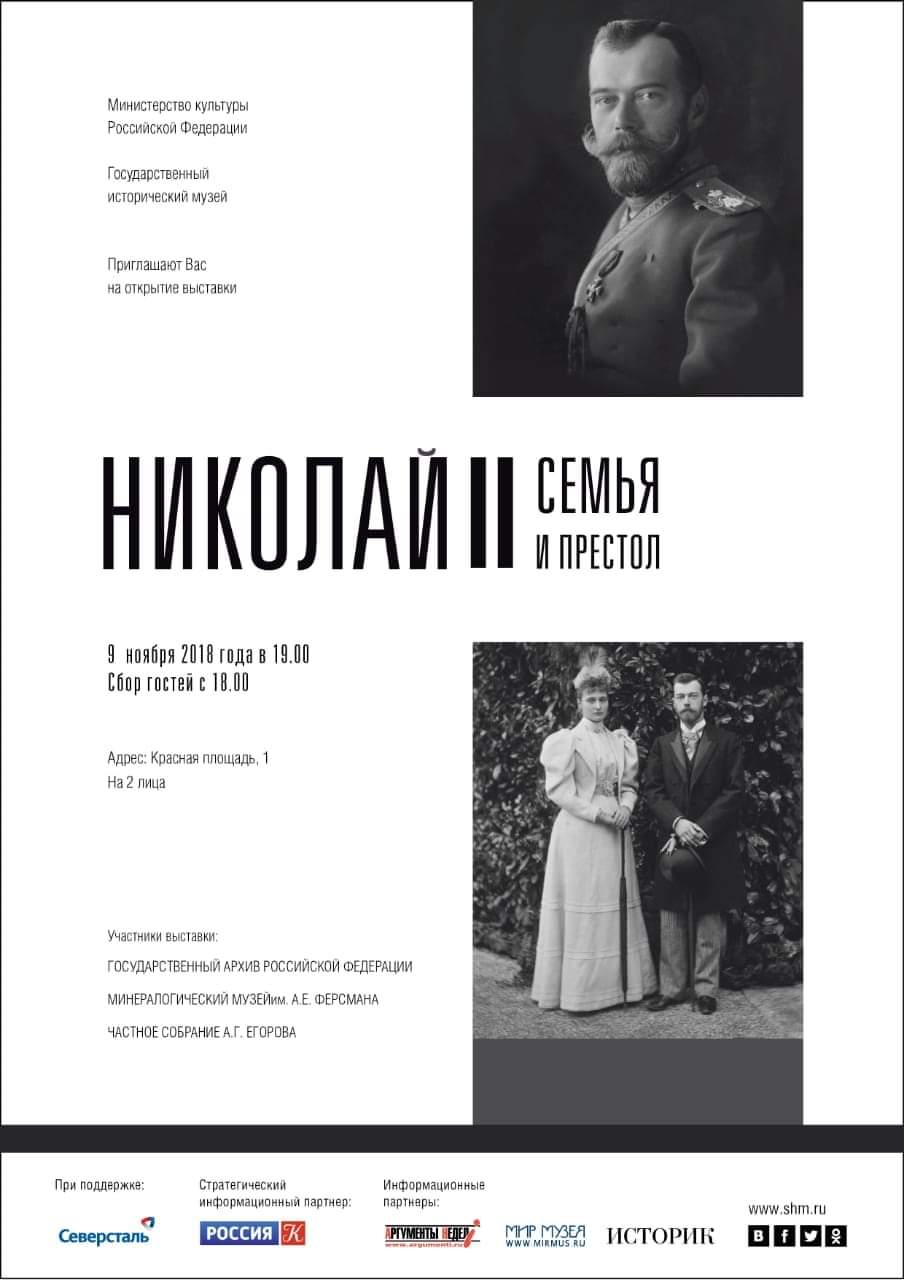
Exhibition: ‘Nicholas II. Family and Throne’

137a

NOTE: All of the articles pertaining to Nicholas II and his family which were originally published in my Royal Russia News blog, have been moved to this Nicholas II blog. This article was originally published on 6 December 2018 in my Royal Russia News blog – PG

The following exhibition ran from 10 November 2018 to 15 April 2019

The State Historical Museum is currently the venue for an exhibition on the reign and family life of Nicholas Alexandrovich Romanov – the history of the Imperial family in photographs, paintings, diaries, personal items and other rare artifacts.

A significant part of the 750 photographs in the exhibit are from the funds of various archives and museums in Russia – including the State Archive of the Russian Federation (GARF), which contains a vast and unique collection of photo albums of members of the Imperial family.

Timed to the 150th anniversary of the birth and the 100th anniversary of the death of the last Russian emperor Nicholas II, the exhibition allows all visitors interested in history to create their own impression of one of Russia’s most controversial and misunderstood historical figures, which includes a look at the life of the Russian monarch and his family.

Photography, which is the basis of the exhibition, is of great historical importance, often fragile, requiring careful handling and protection. The photos submitted for the exhibit are 100 – 150 years old, and a considerable part of the photos were restored by professionals for presentation to the public in this exhibition.

As is known, the emperor and his family members took a great interest in photography: they all had cameras and enthusiastically photographed each other and and those close to them. Nicholas II was usually accompanied by a professional photographers who recorded his 23-year reign almost daily (the main merit belonged to the court photographer AK K. Yagelsky to the owner of the KE von Gan and Kº studio). Many photos come from Tsarskoye Selo and Peterhof palaces, and reflect the day to day lives in their private apartments of the Alexander Palace and the Lower Dacha.

The exhibition is divided into sections: family, official and memorial. The first sections testify to the two “functions” of Nicholas II: the head of the family and the ruler of a vast empire. It shows about 300 photographs taken in the 1870s – mid 1910s by leading Russian and foreign photo masters (K. K. Bulla, S. L. Levitsky, A. I. Saveliev, F. P. Orlov, M. I. Gribov, A. A. Otsup, K. A. Fisher, Atelier “Boissonna and Eggler”, “K. E. von Gan and Co.”, “J. Russell & Sons”, “W. & D. Downey “). Autographs and letters of Nicholas II are also on display, documents include a manifesto on the birth of Grand Duke Nicholas Alexandrovich, a lunch menu on the occasion of the coming of age of Tsesarevich Nicholas Alexandrovich, and an announcement of the coronation of Emperor Nicholas II and Empress Alexandra Feodorovna.

The family section of the exhibition is divided into the following topics: “Grand Duke. Tsesarevich. Emperor”, “Niki and Alix”, “Tsar’s Children. OTMA”, “Tsar’s Children. Alexei”, “In the Family Circle. Tsarskoye Selo. Livadia. Finland. Poland “. Particular emphasis is placed on the figure of Tsearevich Alexei Nikolaevich, the only son of Nicholas II, and heir to the throne, whose tragic fate left an imprint on the life of the entire imperial family.

137m

The official section of the exhibition shows photographs of Nicholas II during meetings with the heads of foreign countries (British King Edward VII, German Emperor Wilhelm II, Siamese King Rama V, French Presidents Armand Falier and Felix Faure) during the celebrations marking the 200th anniversary St. Petersburg and the 100th anniversary of the Patriotic War of 1812, during the opening of grand monuments and the consecration of churches, the holding of regimental holidays and parades, as well as during the First World War.

Two of the most important dynastic events in which Nicholas II was most directly involved – the coronation (1896) and the 300th anniversary of the Romanovs’ house (1913), are also featured.

137n

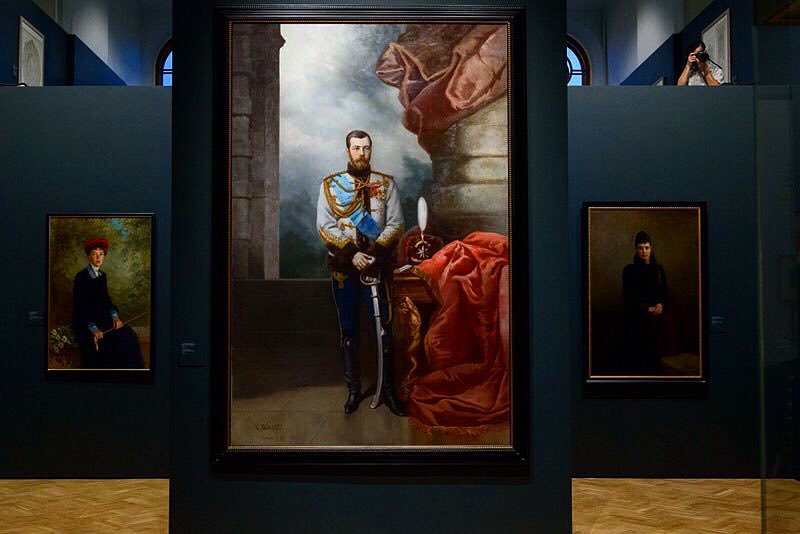
Ceremonial portrait of Nicholas II, by Léon Bakst, 1895

A large ceremonial portrait of Nicholas II, by the famous artist Léon Bakst (1895) in Paris is on display for the first time. The painting has never before been exhibited, and was specially restored for the exhibition. The exhibition also features pictorial portraits of Nicholas II and Alexandra Feodorovna by G.M. Manizer and A.V. Makovsky, and a series of watercolors by N.N. Karazin, N.S. Matveeva and A.I. Charlemagne.

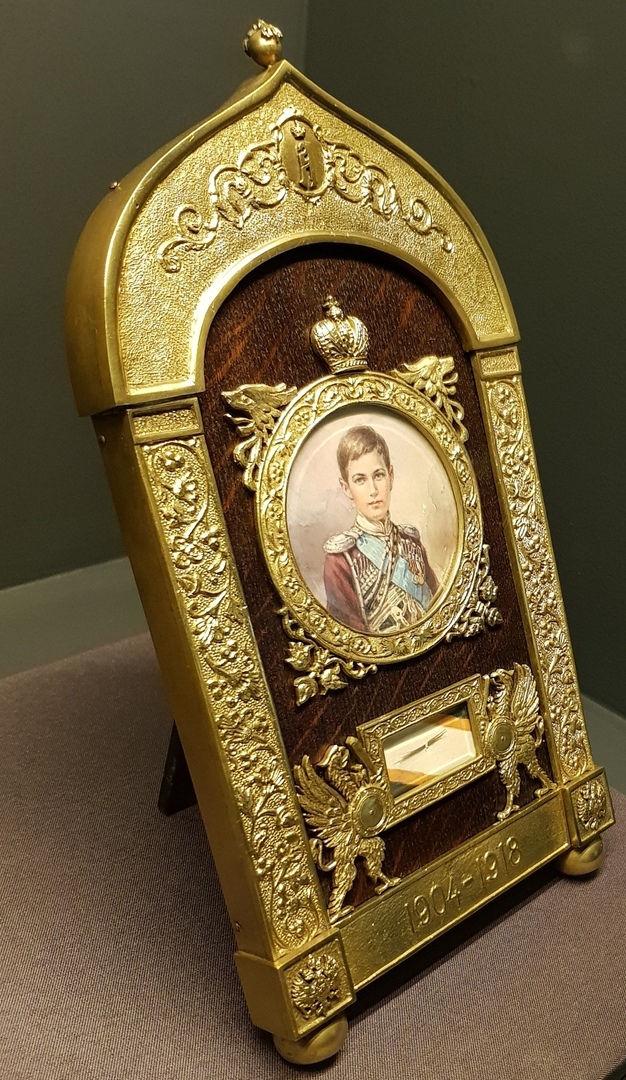
In addition to photos, the exhibition is filled with numerous items, both personal and memorial, associated with Nicholas II and his family – portraits, diaries, letters and more. For example, the uniforms of Nicholas II and Tsesarevich Alexei, the Imperial Constellation Easter Egg, made by Faberge for Alexandra Feodorovna Easter 1917, but not presented to the Empress, are shown a bronze frame with a watercolor portrait of Tsesarevich Alexei, a drawing, a watercolor portrait of Tsesarevich Alexei, and a drawing of Alexandra Feodorovna with their children.

One of the most unique artifacts on display is a curl of hair belonging to Tsesarevich Alexei, embedded in a watercolor portrait (see below), which was transferred during the post-war period to the Belgrade Museum in Serbia. In order to confirm its’ authenticity, the staff of the Historical Museum turned to the scientists of the N.I. Vavilova Institute of General Genetics, who confirmed a direct connection to the female line of Queen Victoria.

137o

Curl of hair belonging to Tsesarevich Alexei, embedded in a watercolor portrait

The exhibition is located in the renovated premises of the State Historical Museum, where there is also a small memorial hall with photographic portraits of members of the Romanov family and their personal belongings.

The end of the exhibition is a small hall, resembling a basement, where seven portraits are displayed of members of the Imperial family who were murdered in the basement of the Ipatiev House in Ekaterinburg on the night of July 16-17.

The exhibition Nicholas II. Family and Throne runs from 10 November 2018 to 15 April 2019 in the State Historical Museum in Moscow.

© Paul Gilbert @ Royal Russia. 30 November 2019

Photos from the ‘The Children’s World of the Family of Emperor Nicholas II’ Exhibition

128

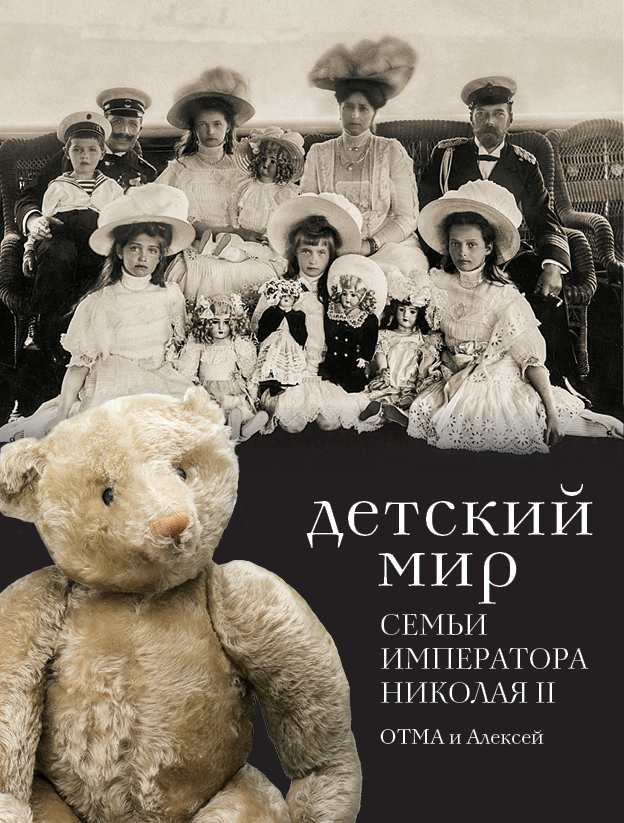
OTMAA: the children of Emperor Nicholas II and Empress Alexandra Feodorovna

The exhibition The Children’s World of the Family of Emperor Nicholas II. OTMA and Alexei opened in the Kolomenskoye Museum-Reserve in Moscow on 13th November 2019. This unique exhibit is a joint project of the State Hermitage Museum in St. Petersburg, the State Archive of the Russian Federation (GARF) and the Kolomenskoye State Museum Reserve in Moscow, which showcases the personal items – costumes, accessories, toys – that belonged to the children of Emperor Nicholas II. It is supplemented with exhibits from the collections of the Tsarskoye Selo State Museum Reserve, the Peterhof State Museum Reserve, and the Pereslavl Museum. The exhibition runs until 16th February 2020.

The following photos from the exhibition are courtesy of Dinara Gracheva and Православие.Ru

det1

Exhibition catalogue (in Russian only)

Click HERE to read my article Exhibition Catalogue: ‘The Children’s World of the Family of Emperor Nicholas II. OTMA and Alexei’, published on 25th September 2019

© Paul Gilbert. 22 November 2019

Exhibition: ‘Albert Edelfelt and Romanovs’ opens in St. Petersburg

125a

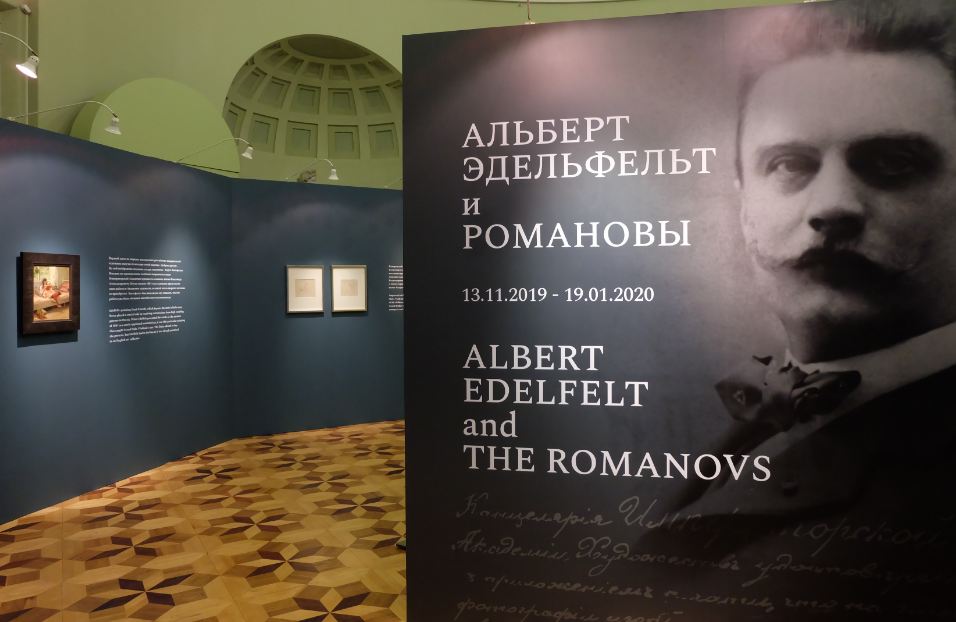
The exhibition ‘Albert Edelfelt and Romanovs’ is now on display in the Imperial Academy of Arts in St. Petersburg, and runs until 19th January 2020

On 14th November 2019, the director of the Institute of Finland in St. Petersburg Sani Kontula-Webb and the Consul General of Finland in St. Petersburg Anne Lammila opened the exhibition ‘Albert Edelfelt and Romanovs’ in the Imperial Academy of Arts in St. Petersburg.

The Institute of Finland in St. Petersburg, together with the Russian Academy of Arts, with the support of the Consulate General of Finland in St. Petersburg, organized the exhibition that will present Edelfelt’s work commissioned by the Russian Imperial Court. His works will be shown for the first time in the former Imperial capital in more than 130 years, including paintings that were previously considered lost.

Albert Gustaf Aristides Edelfelt (21 July 1854 – 18 August 1905) was a Finnish painter noted for his naturalistic style and Realist approach to art. He traveled to Italy, France, England (1878), Spain (1881), Sweden, Denmark and Russia. In 1877, the St. Petersburg Academy of Arts recognized him as an honorary associate, and in 1886 gave him the title of academician for his painting he Funeral of a Child’. He was recognized as a full member of the Imperial Academy of Arts in 1895.

He is known to have had good relations in Russia with the Imperial Family, serving as Court Painter for a period of 15 years. Grand Duke Vladimir Alexandrovich ordered the artist to paint a portrait of his sons Cyril and Boris, followed by a portrait of his youngest son Andrei. At that time, there was a tradition of dressing boys under 7 in dresses. It was believed that children at this age were pure and sinless, like angels and thus gender free. From the age of seven, children were dressed, accordingly in male or female clothes.

It is interesting to note, that in 2017, Edelfelt’s painting, depicting the sons of Grand Duke Vladimir Alexandrovich, was found in the Rybinsk City Museum in Russia. In Finland it was widely believed that the painting had been lost.

Grand Duke Vladimir Alexandrovich, brother of Emperor Alexander III, and his wife Grand Duchess Maria Pavlovna were very pleased with the artists’ work. So was the Empress Maria Feodorovna, who ordered Edelfelt to paint a double portrait of two of her children, 6-year-old Grand Duchess Xenia and 3-year-old Grand Duke Michael.

125d

Portrait of the Grand Duke Michael Alexandrovich and Grand Duchess Xenia Alexandrovna, 1882. Artist: A. Edelfelt (1854-1905)

Edelfelt was officially introduced to Empress Maria Feodorovna in December 1881. The empress invited the artist to live in Gatchina, where he began work on the portrait of her children in early January 1882.

Alexander III commissioned Edelfelt to paint a number of paintings which would decorate Gatchina Palace, and Anichkov Palace in St. Petersburg.

In 1895, the painter was invited to St. Petersburg for 2 weeks by the now widowed Dowager Empress Maria Feodorovna. The following year, Edelfelt received orders for portraits of the new emperor Nicholas II. Typically, such portraits were painted from photographs, but the artist really hoped that the emperor would personally agree to pose for him.

His wish came true. On 13th March 1896, he wrote to his mother: “Despite the fact that today is Friday the thirteenth, my day was happy because I completed the sketch and was able to visit the palace on time. I have already forgotten how luxurious and representative the Russian Court is. I was met by Grand Duke Alexander Mikhailovich, the husband of Grand Duchess Xenia, who said that the tsar would be arriving soon. I laid out my sketches in the billiard room and soon arrived the tsar, who was very natural and agreed to pose in the place I requested him to. He sat for an hour and, upon leaving, promised several sessions the following week.”
125g

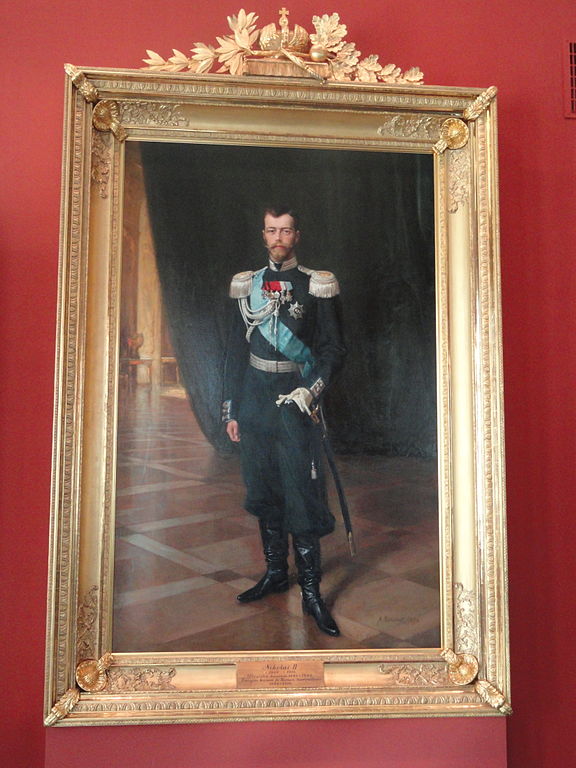
Portrait of Emperor Nicholas II. 1896. Arppeanum, Helsinki.
Artist: A. Edelfelt (1854-1905)

Albert Edelfelt was to paint the official portrait of the emperor in Peterhof, for the Imperial Library in Helsinki. The artist said that from their very first meeting, he was impressed by the natural friendliness of the young tsar. “He seems very European. He has his mother’s eyes, which I noted to him. He well remembers Gatchina and the way I painted there, all of my paintings belong to his parents . . .

“The tsar gave me a task (of course, regarding painting), which is the highest honour for me, but His Majesty asked me to keep it a secret. So, I won’t say a word about this. I can’t understand how this young and well-educated officer, who was sitting with me together in the billiard room, talking and smoking, could be the monarch of more than eighty million Russian people and the Grand Duke of Finland, etc. That he is the greatest monarch in the world.”

Edelfelt nevertheless revealed the secret in the next letter (March 28, 1896). “The fact is that the second portrait, which I am working on now, was ordered by the tsar himself. He only asks me not to tell who will receive it, so I won’t say yet. He really likes the portrait, and he enjoys looking at it.”

The whereabouts of this portrait remains unknown to this day, its description: “The portrait of Nicholas II (1896, approximately 75 × 55 cm), the emperor is depicted in a gray knee-length caftan, in the background there is a tapestry, which was made according to the drawings of Walter Crane. The emperor is depicted waist-high, in full size. The painting was presented as a gift to Empress Alexandra Feodorovna, who hung it in one of her rooms in the Alexander Palace in Tsarskoye Selo.”
125f

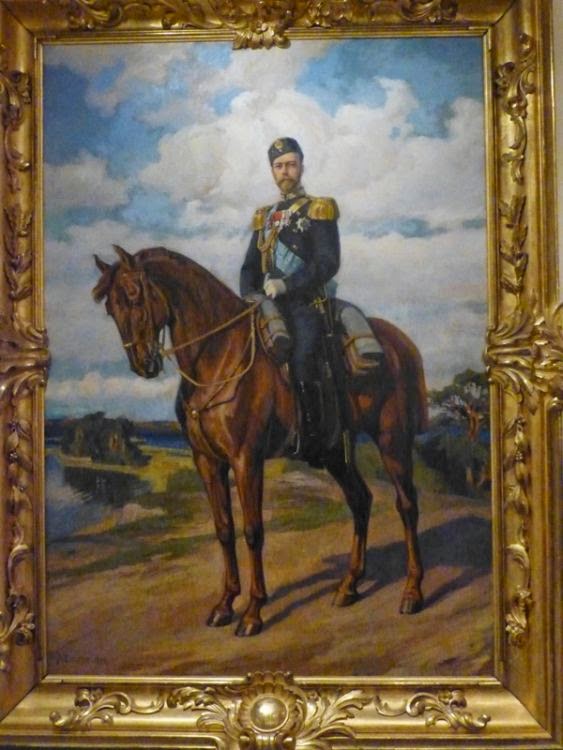
Equestrian portrait of Emperor Nicholas II. 1896. National Museum of Finland in Helsinki. Artist: A. Edelfelt (1854-1905)

Nicholas II liked Edelfelt’s sketch for a portrait intended for the University of Helsinki, and he invited the artist to come to Tsarskoye Selo to capture the interior. The emperor also invited Edelfelt to visit the Imperial stables to select a horse for a portrait of the tsar on horseback (for the Senate of Finland) in the uniform of a dragoon regiment.

This portrait, practically unknown in Russia, today hangs in the National Museum of Finland in Helsinki.
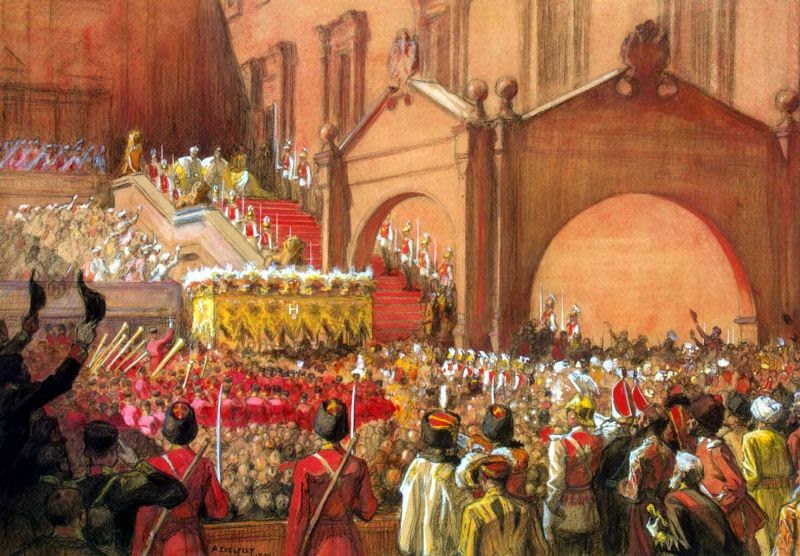
125e

Solemn procession of Emperor Nicholas II on the Red Porch. Coronation in Moscow, 14 May 1896.
Artist: A. Edelfelt (1854-1905)

In March 1896, Edelfelt received an invitation from the vice-president of the Academy of Arts, Count I. Tolstoy, to join the delegation of representatives of the Academy at the coronation of Nicholas II in Moscow on 14th May. Russian and foreign artists were invited to the ceremony, and various places in the Kremlin were allocated for them, from where they captured the historic event. Albert Edelfelt was outside the Cathedral and wrote the following coronation procession:

“When the tsar came close enough so that I could depict him (about 20-30 steps away from me), I must say that I felt some sympathy for him – the crown looked so big, so heavy: it was made of sparkling stones! The long mantle supported by the chamberlains also looked huge.

“The emperor himself looked a little pale and determined. Then I first understood what they mean when they talk about the weight of the crown. I was awakened by sympathy for him as a person, and at that moment I felt sorry for the young ruler, who now bore the whole great state on his shoulders. Gustav Mannerheim walked in front of the imperial canopy with a brilliant sabre and looked very noble and elegant – an excellent view! ”

Albert Gustaf Aristides Edelfelt died on 18th August 1905 in Borgo, Grand Duchy of Finland.

The exhibition ‘Albert Edelfelt and Romanovs’ is now on display in the Imperial Academy of Arts in St. Petersburg, and runs until 19th January 2020

© Paul Gilbert. 14 November 2019

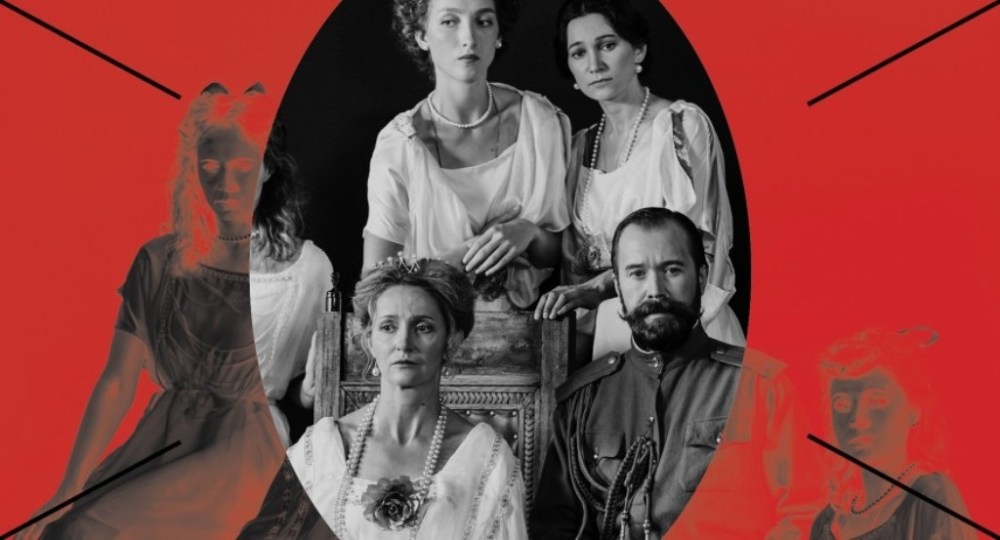
Multimedia play ‘I Killed the Tsar’ Opens in Moscow on 25th November

121

The multimedia play ‘I Killed the Tsar’, premieres on 25th November, at the Theater of Nations (театре Наций) in Moscow. The role of Nicholas II will be performed by People’s Artist of the Russian Federation Yevgeny Mironov, the role of Empress Alexandra Fedorovna by Alexandrvosky Theater actress Olga Belinskaya, and the role of Tsesarevich Alexei will be performed by 13-year-old actor Ivan Shchenin. In total, the production of ‘I Killed the Tsar’ involves 35 actors.

Using VR-technology, the play is an attempt to recount the events associated with the murder of Nicholas II and his family in Ekaterinburg in July 1918, based on irrefutable facts. The play is based on thousands of historical documents collected from the largest archives and museums in Russia. Materials for the play were provided by the State Archive of the Russian Federation, the Russian State Archive of Phonographic Documents, the Russian State Military Historical Archive, the St. Petersburg Branch of the Archive of the Russian Academy of Sciences, the State Central Museum of Contemporary History of Russia and the Museum of the History of Ekaterinburg.

Theater press secretary Maxim Andriyanov, noted that the creators of the play tell the story of the execution of the Imperial family not only from the victims of that terrible night, but also from those who executed the decision of the Ural Regional Council of workers, peasants and soldiers’ deputies. A significant part of the virtual performance is built on the biographies and testimonies of members of the firing squad.

According to the production’s director Mikhail Patlasov, every detail and every fact used in the performance is confirmed by archival documents. Due to the fact that there are so many documents, it is possible to focus not only on the Imperial family, but also on all participants in the execution, and to trace their fate, he noted.

“It is known that the family of Nicholas II was fond of photography, thousands of images have been preserved that allowed us to create a special optical scheme, a format to which vintage pictures can be turned into videos. With the help of VR glasses, viewers will get inside these photos, inside the story, where the “Tsesarevich Alexei will become the protagonist. It is his questions to the killers 100 years after the execution that will become the core on which the whole plot of the performance is strung,” Patlasov said.

The multimedia component is implemented with the use of virtual reality glasses and headphones.

After the premiere shows in Moscow, which will last until 8th December, the multimedia play ‘I Killed the Tsar’ will go on tour to Ekaterinburg, where it will be presented at the Yeltsin Center, and then the tour will continue on to Tobolsk.

© Paul Gilbert. 11 November 2019

Livadia Hosts Nicholas II Conference, 20-22 October 2019

114a

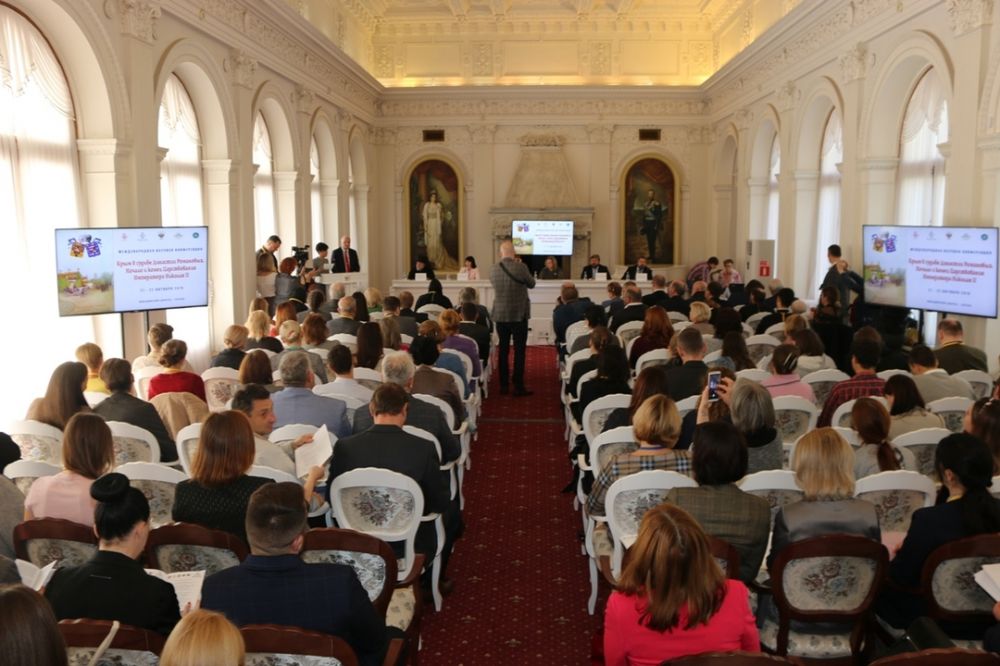
Earlier this week, Livadia Palace was the venue for the international conference ‘Crimea and the Fate of the Romanov Dynasty. The Beginning and End of the Reign of Emperor Nicholas II.’

114b

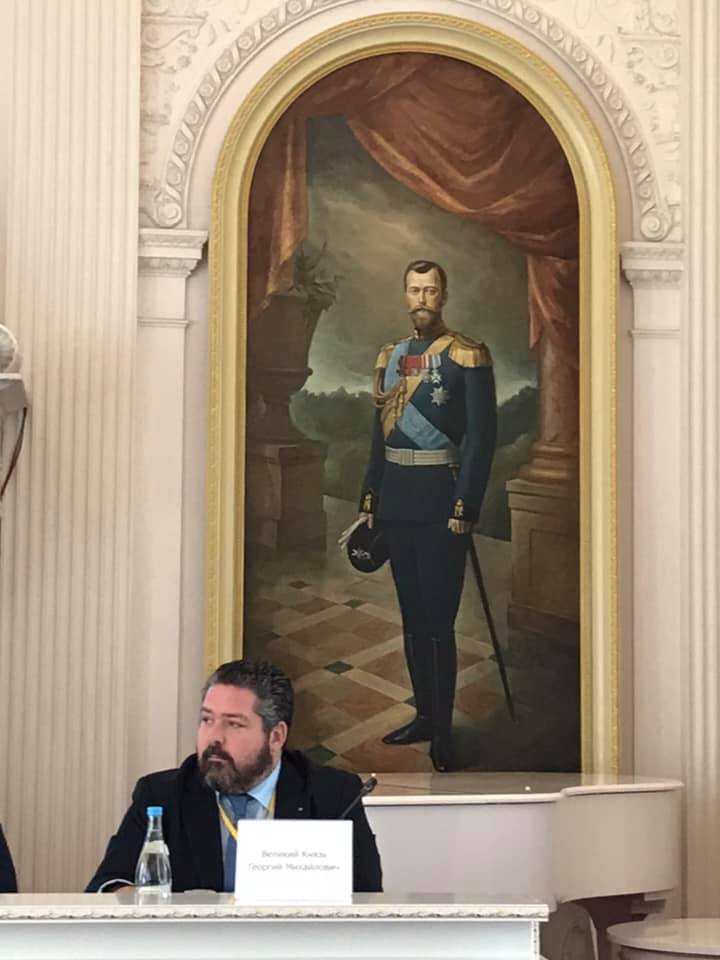
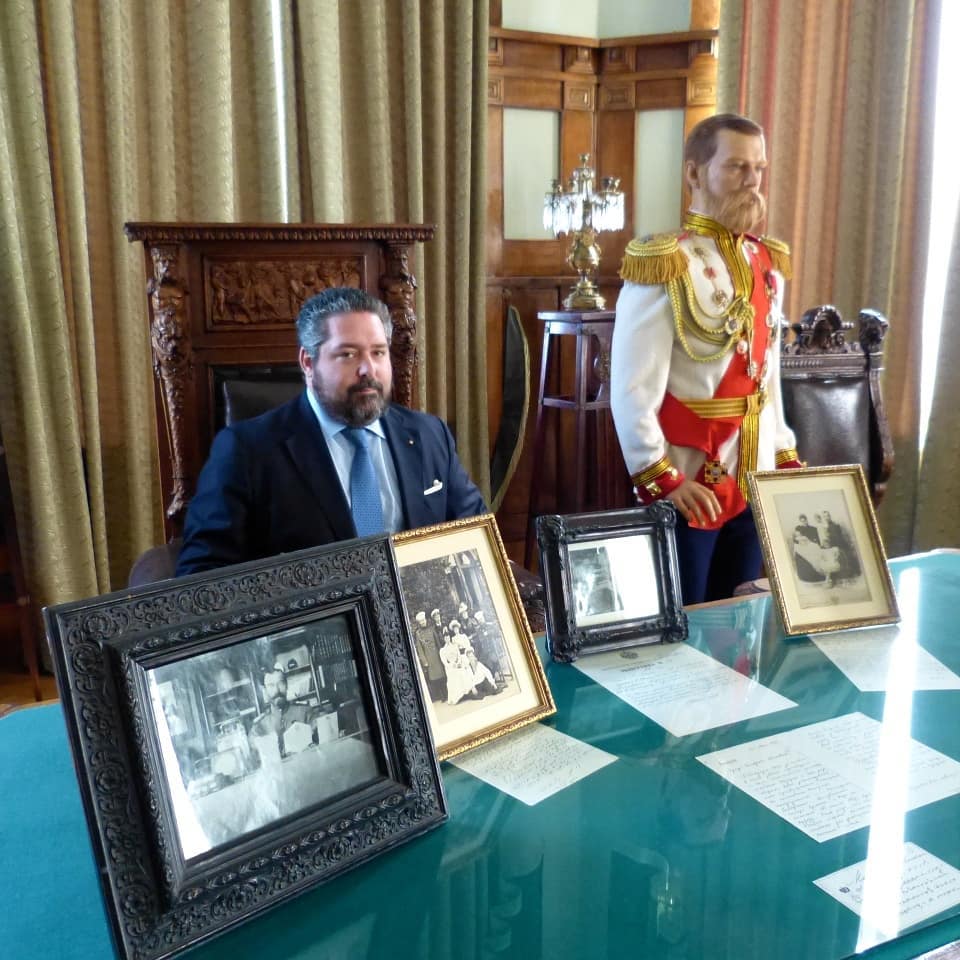
Prince George Mikhailovich seated under a portrait of Emperor Nicholas II

The conference was attended by leading Russian historians, publicists, archivists and writers. Several descendants of the Romanov dynasty were also present, including Prince George Mikhailovich.

The objective of the conference was to discuss the truth about the Tsar’s family and the and the achievements that Russia made during the reign of Nicholas II.

114c

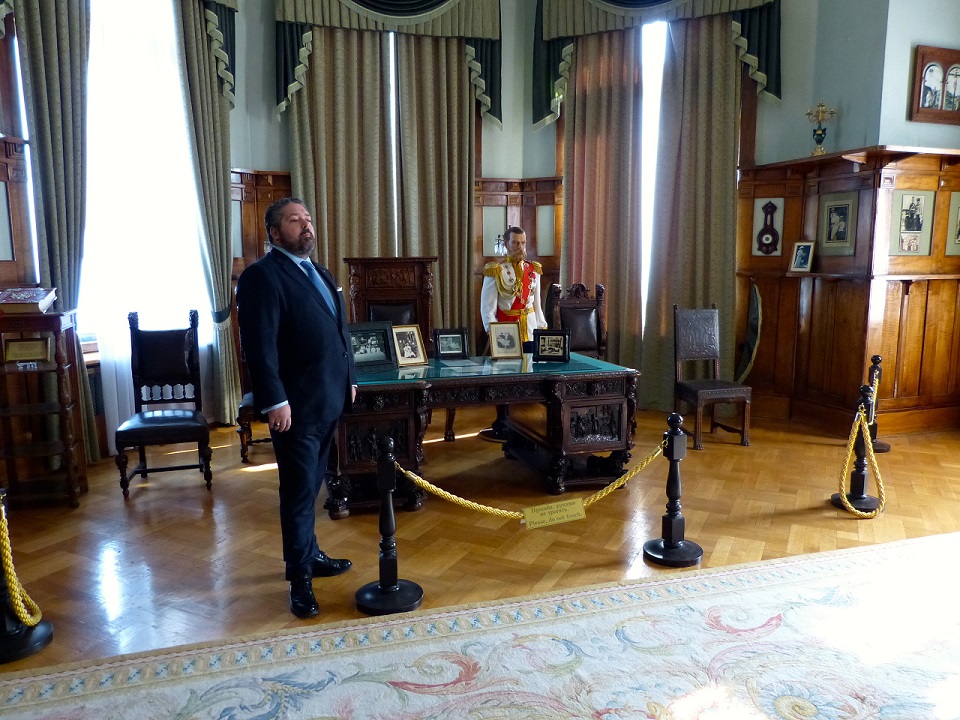
Prince George Mikhailovich in the Working Study of Nicholas II

The international conference was timed to the 125th anniversary of the accession to Orthodoxy of Princess Alix of Hesse-Darmstadt – the future Empress Alexandra Feodorovna and the 100th anniversary of the escape of members of the Russian Imperial House from Crimea.

114d

Prince George Mikhailovich seated at the desk of Nicholas II in the Tsar’s Working Study

In addition, this year marks 125 years since the death of Emperor Alexander III in Livadia. Crimea played a crucial role in the fate of the Romanovs, who played an important role in the development of the peninsula.

© Paul Gilbert. 24 October 2019
Rescuing the Romanovs: Crimea-Malta-Great Britain. 1919-2019

098

The Grand Duchess Elizabeth Romanov Society (UK) is hosting a conference dedicated to the Centenary of the British Operation in Crimea to Rescue the Dowager Empress Maria Feodorovna and other Members of the Romanov Family

The topic of the forthcoming Conference will appeal to anyone with an interest in the legacy of the Russian Imperial House in the 20th century and its relationship with the British Royal House.

It will be dedicated to the centenary of the departure from Crimea of the Dowager Empress and her daughter, Grand Duchess Xenia Alexandrovna, together with other prominent members of the Romanov family.

The past three years have seen centenaries of various tragic events associated with the Romanov dynasty. In 2017 historians faced difficult questions about the Russian revolution & the abdication of Tsar Nicholas. In 2018 we recalled the tragic end of the Tsar’s Family, of the Grand Duchess Elizabeth and other victims of the Bolshevik regime.

In 2019 we have remembered the Romanovs who were ruthlessly shot in St. Petersburg (a total of 18 representatives of the Romanov dynasty died), and those who managed to escape by leaving Russia.
The Conference in Oxford will be dedicated to the story of the Romanov family’s rescue, its exodus and finding refuge in a foreign land.

Our speakers will focus on Great Britain and its role in these events and on the British – Russian relationship. Tribute will be paid to the Tsar’s Family, Holy Martyr Grand Duchess Elizabeth and other members of the Romanov Imperial House who were savagely killed in Russia and who are venerated by Orthodox Christians as Holy Martyrs.

Tickets for the Conference are available from the Secretary of the Society, David Gilchrist djgilx@btinternet.com

Click Rescuing the Romanovs to download the full programme

© Grand Duchess Elizabeth Romanov Society. 30 August 2019