Colour Autochromes of the Alexander Palace in 1917 Presented in Kazan
162a

NOTE: All of the articles pertaining to Nicholas II and his family which were originally published in my Royal Russia News blog, have been moved to this Nicholas II blog. This article was originally posted on 8 August 2018 in my Royal Russia News blog – PG

The following exhibition ran from 17 July to 17 August 2018

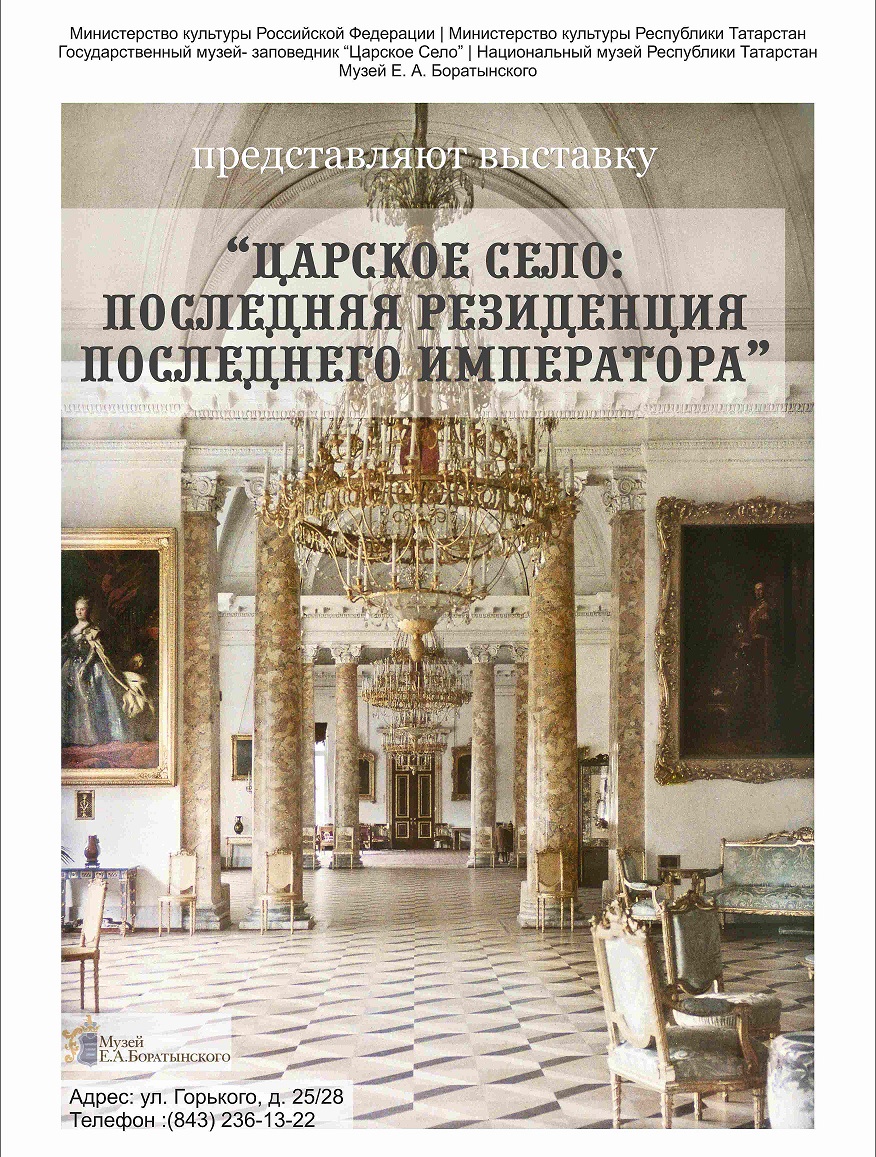
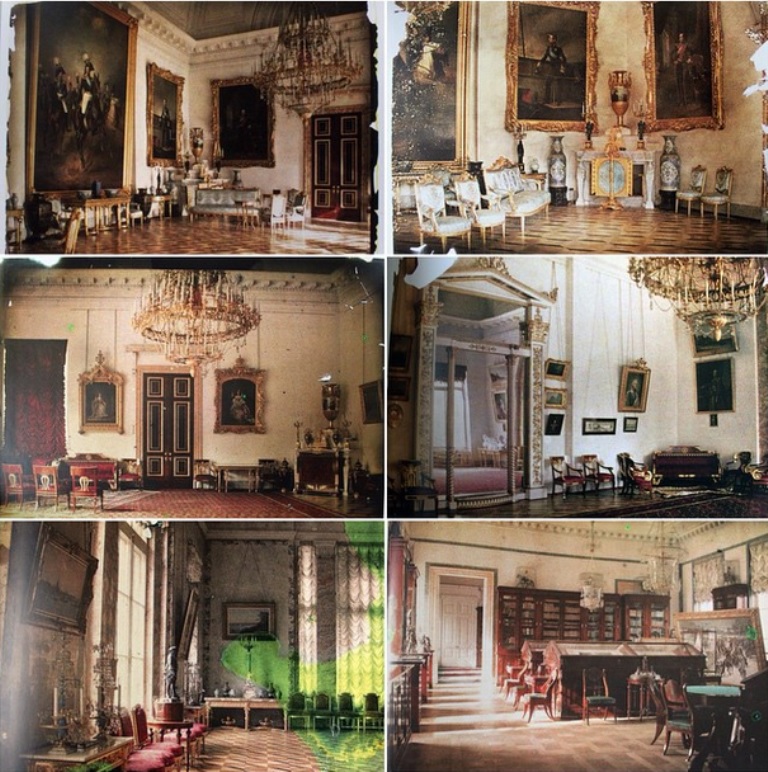
On 17th July, the exhibition Tsarskoye Selo: the Last Residence of the Last Emperor, opened in the E.A. Boratynsky Museum (a branch of the National Museum of the Republic of Tatarstan) in Kazan. The exhibition presents unique autochromes from the collection of the Tsarskoye Selo State Museum-Reserve. The exhibition is timed to mark the 100th anniversary of the murder of Russia’s last Imperial family in 1918.

The life of the last Russian Emperor Nicholas II is closely connected with Tsarskoye Selo: on 18th May (6th May in the old style) in 1868, he was born in the Alexander Palace. From 1905, Nicholas II made the palace his permanent residence, in which he spent the last 12 years of reign. After his abdication on 15th March [O.S. 2nd March] 1917, the Emperor spent the first months of his house arrest in the palace. On 1st August 1917, the Emperor and his family left the Alexander Palace for the last time, his family was sent into exile to Tobolsk.

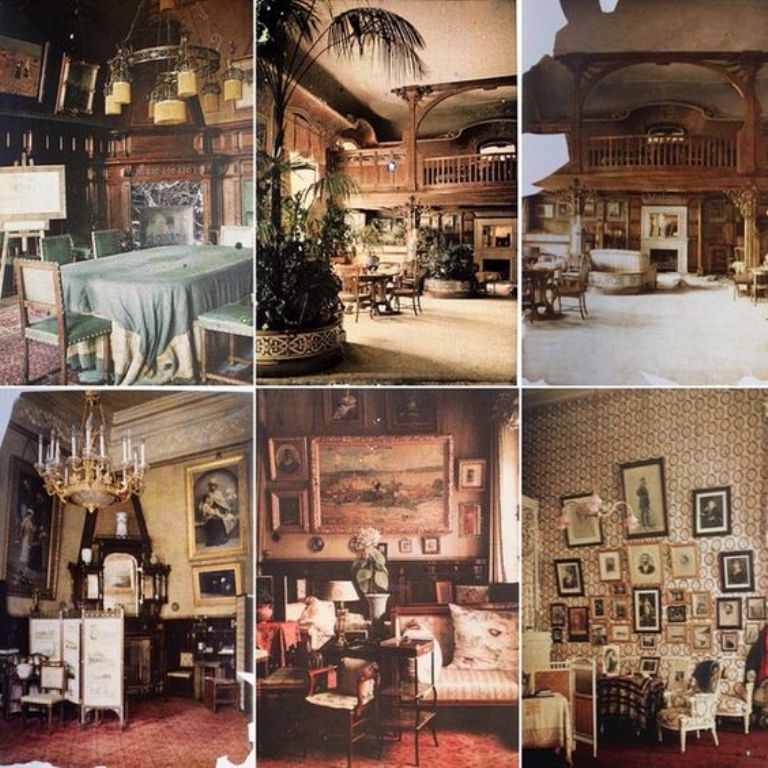
Immediately after the departure of the imperial family, the Kunsthistorico-Historical Commission, headed by Georgy Lukomsky, began work in the Alexander Palace. Photographer Andrey Zeest took 140 colour autochromes of the palace interiors.
162b

Colour autochromes of the Alexander Palace taken in 1917
© Tsarskoye Selo State Museum Reserve
162c

The fate of this unique collection is interesting. In November 1918, 843 images from black and white negatives and 83 color transparencies (autochrome) were transferred to the Kopeyka Publishing House. The pictures were supposed to be transferred to the Detskoye Selo department of artistic property, however, the transfer never took place.

Now the collection of the Tsarskoye Selo State Museum-Reserve now consists of 93 autochromes, shot by Zeest in 1917. Thirty-three autochromes were acquired by the museum in 1968, from the heirs of a photographer, twelve – in 1958, from a British tourist from Oxford, England. In 2013, members of the Friends of the Tsarskoye Selo State Museum-Reserve Club Michael Piles and Mikhail Karisalov, financed the acquisition of another 48 autochromes at an auction in Paris.

The exhibition is complemented by documents relating to the links of Georgiy Lukomsky with Kazan, from the funds of the National Museum of the Republic of Tatarstan, and printed editions issued for the coronation of Nicholas II from the Kazem-bek family collection courtesy of the Department of Manuscripts and Rare Books of the Lobachevsky Libraries.

The exhibition Tsarskoye Selo: the Last Residence of the Last Emperor marks the beginning of cooperation between the National Museum of the Republic of Tatarstan and the Tsarskoye Selo State Museum-Reserve.

The exhibition Tsarskoye Selo: the Last Residence of the Last Emperor, ran from 17th July to 17th August 2018, in the E.A. Boratynsky Museum (a branch of the National Museum of the Republic of Tatarstan) in Kazan.

© Paul Gilbert. 6 December 2019

Exhibition: ‘The Romanovs. Family Chronicles’ in Moscow

NOTE: All of the articles pertaining to Nicholas II and his family which were originally published in my Royal Russia News blog, have been moved to this Nicholas II blog. This article was originally posted on 12 September 2018 in my Royal Russia News blog – PG

The following exhibition ran from 14 September to 28 October 2018

Beginning 14th September 2018, the Tretyakov Gallery in Moscow will present unique materials from the archives of the Russian Imperial family. An exhibition of photo documents from the Gallery’s collections will showcase a previously unknown collection of photographs.

The Romanovs. Family Chronicles exhibition features photographs taken during the reign of Russia’s last three emperors – Alexander II (1855-1881), Alexander III (1881-1894) and Nicholas II (1894-1917) – the collection dating from the 1870s to 1914.

The exhibits were sent to the Tretyakov Gallery in 1932 from two former imperial residences: the Gatchina Palace, where the Empress Maria Feodorovna Dowager lived after the death of her husband Alexander III, and the Alexander Palace, the last residence of the family of Emperor Nicholas II.

From the middle of the 19th century, the Imperial families employed the services of court photographers for both official and leisure images, photographing them in the interiors of the Imperial palaces and country residences, at official receptions, on vacations, hunting trips, and other leisure activities. The “Kodak” camera was first used by the Grand Duchess Maria Feodorovna (future Empress Maria Feodorovna) in the 1860s, when she took a great personal interest in photography. Over time, her enthusiasm for photography was taken up by her son Nicholas II and his family. His wife Alexandra Feodorovna are often seen in leisure photographs with the famous Kodak Brownie camera in hand.

Various photos from the time of the Emperor Alexander III include: portraits of Grand Duchess Maria Feodorovna, Grand Duchess Xenia Alexandrovna, Prince George Maximilianovich, Duke of Leichtenberg (K. I. Bergamasco), Grand Duchess Olga Aleksandrovna (S. L. Levitsky). The Polish photographer Conrad Brandel recorded events and trips of Emperor Alexander III with his family to Poland: a military review in Brest, an inspection of the new station in Brest, Emperor Alexander III and Maria Feodorovna with a delegation of local residents or at a children’s choir performance.

A series of photos from the family album-boxes of Maria Feodorovna are also featured. These charming amateur photographs offer an intimate look at family time together: walks to the Finnish skerries on the Imperial yacht Tsarevna, picnics on the beach, and leisure time onboard the yacht. In the album there are 60 photographs-business cards. A small folding album contains nine photographs of the installation of the monument to Empress Catherine II by the sculptor M.M. Antokolsky in Vilna in 1904.

In the section dedicated to the family of Emperor Nicholas II, photographs include the exteriors and interiors of the Alexander Palace, views of the park and pavilions scattered throughout the parks in Tsarskoye Selo, as well as photos from “Yacht Zarnitsa” album.

These historic photo chronicles are represented mainly by beautifully bound albums, some of which are interesting examples of arts and crafts of the turn of the century. These albums were produced in a single copy, using precious metals on the occasion of significant events for the members of the imperial family.

The album “Medzhybozh” was presented to Grand Duchess Olga Alexandrovna, chief of the 12th Hussar Akhtyrsky Regiment, on the occasion of her visit to the headquarters in the Medzhibozh Castle on 11th December 1908. The album includes 30 photos documenting the anniversary visit: the chief of the regiment enters the castle, the review of the regiment, the squadron’s songwriters, the hunting team, a group of regimental officers among others.

The photo album, which belonged to the heir Tsesarevich Alexei Nikolaevich, contains 289 small-format photographs from 1909-1914, which depict trips made by the imperial family to Germany, the Finnish skerries and Crimea, and onboard the Imperial yacht Standart, among others.

The exposition also includes a unique series of 40 photos received as a gift in 2004, dedicated to the first official visit of Emperor Nicholas II, Empress Alexandra Feodorovna and Grand Duchess Olga Nikolaevna to France in 1896.

During the preparation of the exhibition, the staff of the scientific and reference department of photo-materials of the Tretyakov Gallery conducted research work to determine the names of the photographers and unknown persons in the photographs, dates and places. The results of the work are included in an exhibition catalogue published in the Russian language only.

The Romanovs. Family Chronicles exhibition ran from 14th September to 28th October 2018, in the New Tretyakov Gallery, Halls 80-82

© Paul Gilbert. 4 November 2019

Captured on Film by U.S. Cameramen – The Romanov Murder Scene (1918)

NOTE: All of the articles pertaining to Nicholas II and his family which were originally published in my Royal Russia News blog, have been moved to this Nicholas II blog. This article was originally posted on the First World War in Film web site by Ron van Dooperen. It was reposted on 12 September 2018 in my Royal Russia News blog – PG

In December 1918, a photographic team of the U.S. Signal Corps led by Captain Howard Kingsmore arrived in Yekaterinburg, Russia, where they filmed inside the house where Tsar Nicholas II and his family was brutally murdered. Against all odds, we recently found Kingsmore’s personal story on this photographic assignment, as well as part of these historic films.

The execution of the last Russian Tsar and his family hardly needs an introduction. After the Bolsheviks had taken over power the Romanov family was moved to a so-called ‘House of Special Purpose’ in Yekaterinburg. The Imperial family was kept in strict isolation within the walls of a sinister heavily guarded building that was surrounded by a palisade. The Bolsheviks initially wanted to put the Tsar on trial, but in the summer of 1918 anti-Communist forces were at the gates of Yekaterinburg, and the Reds feared their captives would fall into enemy hands. As a result, death to the Romanovs was declared. Tsar Nicholas II, his wife Tsarina Alexandra and their five children Olga, Tatiana, Maria, Anastasia, and Alexei were shot, bayoneted and clubbed to death on the night of 16-17 July 1918. Their bodies were disposed of in a most gruesome manner.

The Cameramen

Howard P. Kingsmore was the photographic officer of a U.S. Signal Corps camera team that recorded the operations of the American Expeditionary Army in Siberia. Born in 1886, Kingsmore started his photographic work for the Philadelphia Inquirer, covering the burial of President McKinley, the coal strikes of 1901-1902 and the 50th anniversary of the Civil War battle of Gettysburg. Around 1907 Kingsmore became chief photographer for the Philadelphia Evening Ledger. For this newspaper he covered the civil war in Mexico, as well as the Punitive Expedition by General Pershing into that country in 1916. When the United States entered World War I he applied for a commission in the U.S. Signal Corps as a photographic officer. He was commissioned as a Lieutenant in September 1917, appears to have made mostly training pictures while he was in America and in Augustus 1918 was promoted to Captain, when a photographic section was set up for the Siberian Expedition. After the First World War Kingsmore became a cameraman for Fox News.

150a

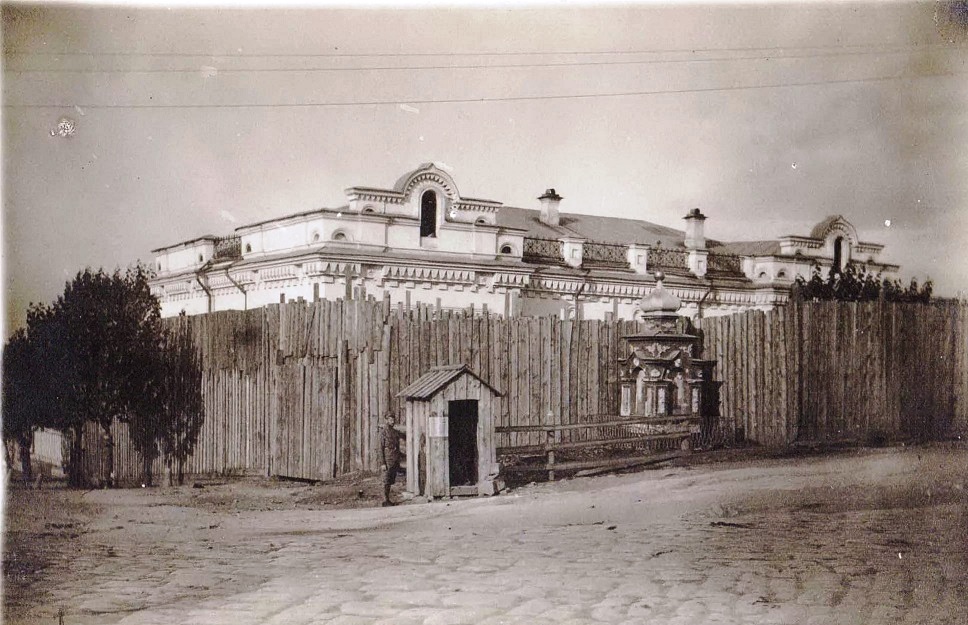
The Ipatiev House in Ekaterinburg. 1918

Interview with Kevin Brownlow

Judging from the production file of the films that were made by Kingsmore and his camera team, they filmed across Siberia between November 1918 and February 1919, covering various operations by the Expeditionary Force that was trying to push the Red Army out of Russia. We have described this Signal Corps footage from Russia in more detail in a previous weblog. Five men were selected for this photographic team, including two movie camera operators. One of Kingsmore’s men, Philip Tannura, was interviewed by Kevin Brownlow for his book The War, the West and the Wilderness. Tannura was among Kingsmore’s cinematographers and in the interview with Brownlow Tannura mentioned how he accompanied Kingsmore while they visited the place where the Tsar and his family were executed. “We couldn’t find out whether they had actually been killed or not”, Tannura said. “We photographed all the rooms.”

Kingsmore said he boarded a Red Cross freight train in Vladivostok in November 1918. The trip across Siberia took about nine weeks. The accommodation on the train was of a most primitive nature. The American cameramen traveled in box cars that were originally built for cattle. Arriving in Yekaterinburg, the cameramen found the city controlled by Czech forces. These had taken Yekaterinburg shortly after the Tsar and his family were murdered. Kingsmore was told the Romanovs were subjected to many indignities by the Communist soldiers who guarded them. It should be noted here that at the moment when Kingsmore and Tannura arrived in Yekaterinburg an official investigation was still being carried out on the mysterious disappearance of the Imperial family. As far as the Kremlin was concerned, they had simply vanished into thin air and the Communists denied any allegation they had killed the Romanovs.

Photographic Evidence of the Romanov Execution

Kingsmore’s and Tannura’s pictures indicate this was a fabricated lie. One of their still photographs shows the cellar where the Romanovs were executed. Bullets were dug out of the wall by the Bolsheviks to destroy evidence of the crime, but the holes still remained and were clearly visible. Their pictures also demonstrate how the Tsar’s children had to sleep on the floor, as well as the search by the investigating committee for further proofs of the execution. Kingsmore also appears to have talked with eye witnesses. One told him the Romanovs were on their knees begging for mercy while they were executed in the basement of the house.

Part of the footage that was shot at Yekaterinburg has been retrieved and identified by the authors in the film collection of the National Archives in Washington, D.C. These scenes were probably taken by Tannura and show an exterior of the Czech military headquarters, the house the Romanovs lived in, as well as shots of the Czarina’s room and the room that was occupied by the Tsar’s daughters. We edited these historic scenes into a short clip that has been posted on our YouTube channel.

Click HERE to read the newspaper article In the House Where Romanoffs Were Put to Death, published in the Grand Forks Herald on 6 June 1919

© Ron van Dopperen. 3 December 2019

Exhibition: In Memory of the Last Emperor. Relics of the Emigrant Museum in Belgrade

149a

NOTE: All of the articles pertaining to Nicholas II and his family which were originally published in my Royal Russia News blog, have been moved to this Nicholas II blog. This article was originally published on 13 September 2018 in my Royal Russia News blog – PG

The following exhibition ran from 12 July to 10 September 2018

The State Historical Museum in Moscow is currently hosting an exhibition dedicated to the memory of the last Russian Emperor Nicholas II. The exposition, which opened on 12th July, features a unique collection of items from the Museum of the Memory of Emperor Nicholas II, which was opened in the Russian House in Belgrade in 1936.

Many of the exhibits presented at the exhibition are being displayed for the first time to the public. These unique items connected to Nicholas II and his family members were collected Russian emigres who settled in Yugoslavia after the Revolution. The items entered the Historical Museum in 1947 – after Yugoslavia became a socialist nation. Visitors to the exhibition will be able to see dozens of artifacts that have never before left the Historical Museum.

149b

Copy of telegram from Queen Marie of Roumania on the news of Nicholas II’s abdication

The exposition includes letters from members of the Imperial family, diaries, rare photographs, newsreel footage – which reflect the ordinary everyday life of the Romanovs.

In one of the photographs, the four daughters of Nicholas II are depicted – the Grand Duchesses Olga, Tatiana, Maria, Anastasia. They often signed photos and letters – OTMA, an acronym based on the first letters of their respective names. This photo was presented to the Belgrade Museum by Pierre Gilliard, the tutor of the Tsesarevich Alexei Nikolaevich. In addition, among the exhibits – the academic plan for the Imperial children in 1916-1917, as well as letter from the Tsesarevich Alexei to his grandmother the Dowager Empress Maria Feodorovna, dated 16 April 1916, congratulating her on Easter.

The exhibition ran from 12 July to 10 September 2018 at the State Historical Museum in Moscow

© Paul Gilbert. 3 December 2019

London Exhibit Features Unique Items on the Last Tsar

145a

The following exhibition ran from 21 September 2018 to 24 March 2019

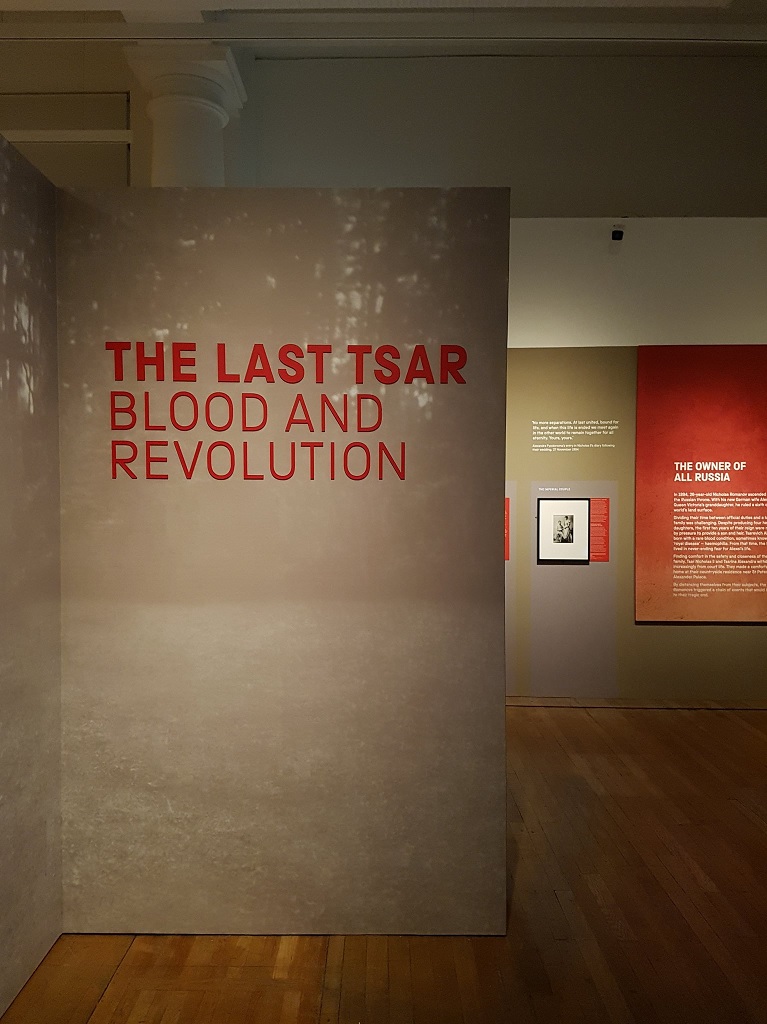
The Last Tsar: Blood and Revolution exhibition opened on Friday 21st September at the Science Museum in London, England. The exhibition marks 100 years since the death of Russia’s last ruler of the Romanov Family, Emperor Nicholas II (1868-1918).

The exhibition presents rare artefacts from collections in the United Kingdom, Russia, and the United States, including the family’s personal diaries, private possessions, such as the Empress Alexandra’s 1904 maternity dress, jewellery.

145b

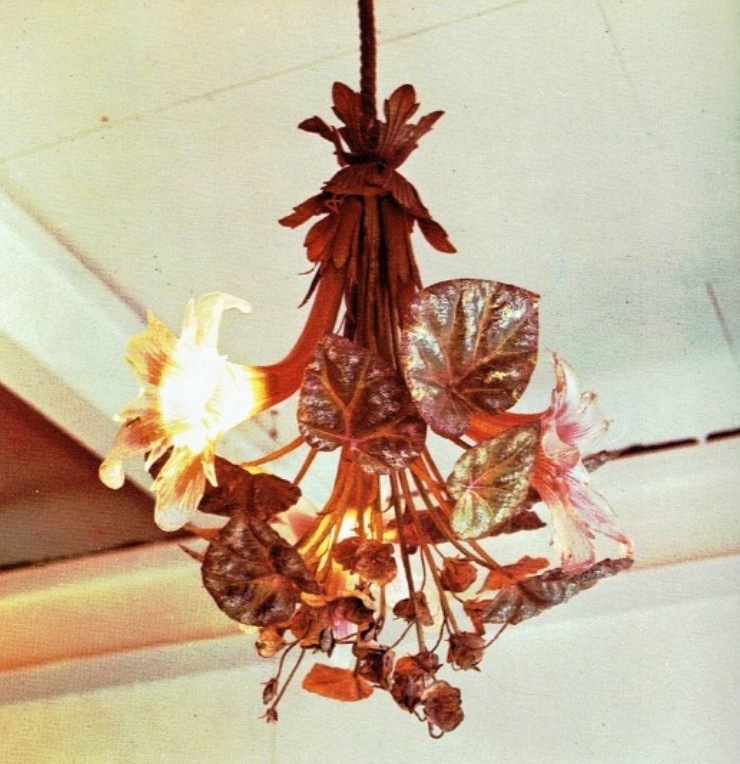
The glass chandelier from the Grand Duchesses bedroom in the Ipatiev House

Also on display is a Murano glass chandelier from the Grand Duchesses bedroom in the Ipatiev House. The chandelier was brought to England by the English tutor to the Tsesarevich Alexei Sydney Gibbes, where it was on display in Luton Hoo for many years. It is now in the private collection of the Butters Family in England.

145c

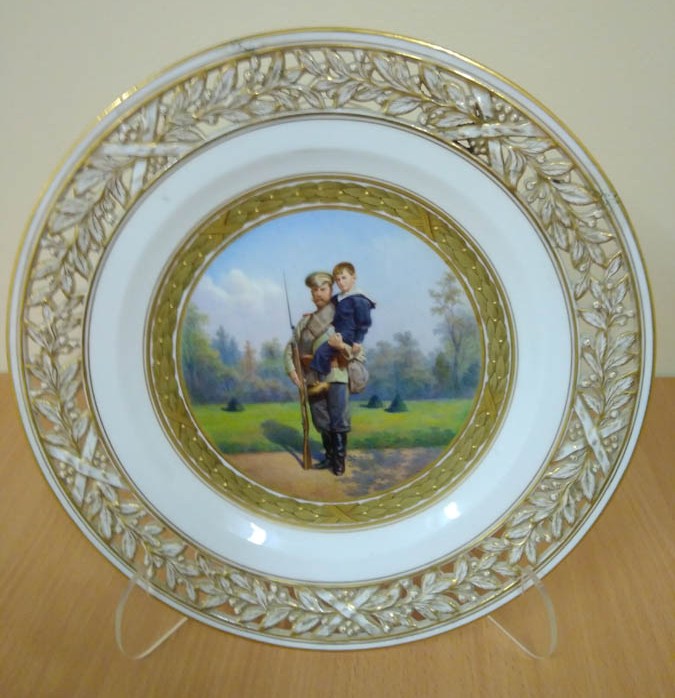
Meissen porcelain plate depicting Nicholas II and his son Alexei
Photo © Tsarskoye Selo State Museum-Reserve

145d

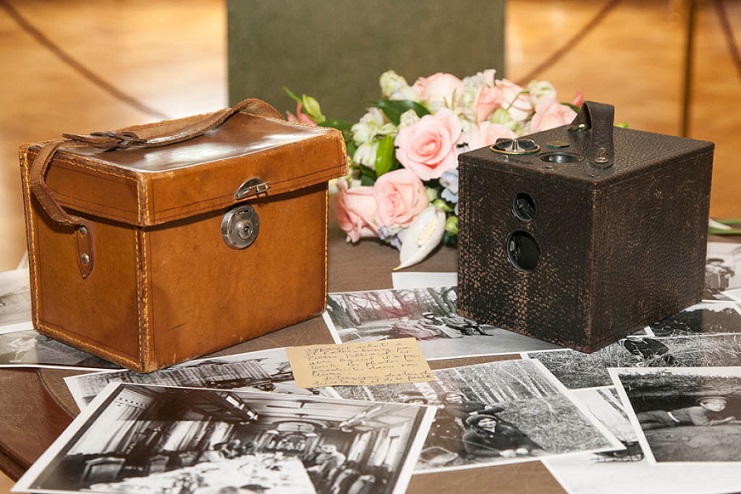
Pierre Gilliard’s Kodak Brownie Camera
Photo © Tsarskoye Selo State Museum-Reserve

The Tsarskoye Selo State Museum-Reserve have loaned 44 items from their collections, including portraits of Nicholas II and Alexandra Fedorovna, a cherkeska (ceremonial Circassian coat) – from the uniform of an officer of HM Own Convoy, a kokoshnik, and Pierre Gilliard’s Kodak Brownie camera.

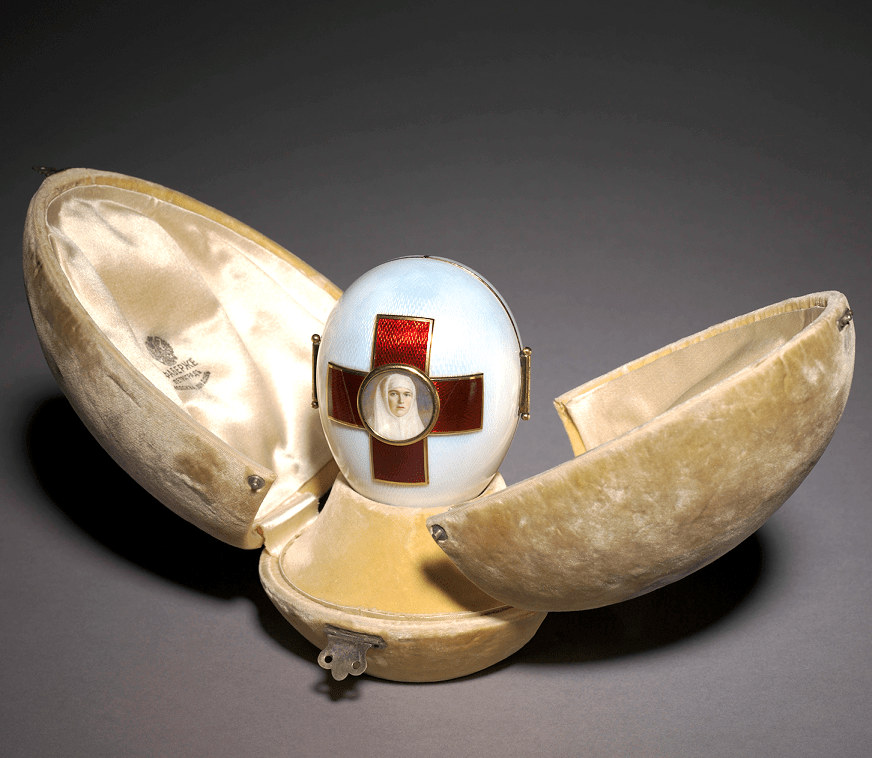
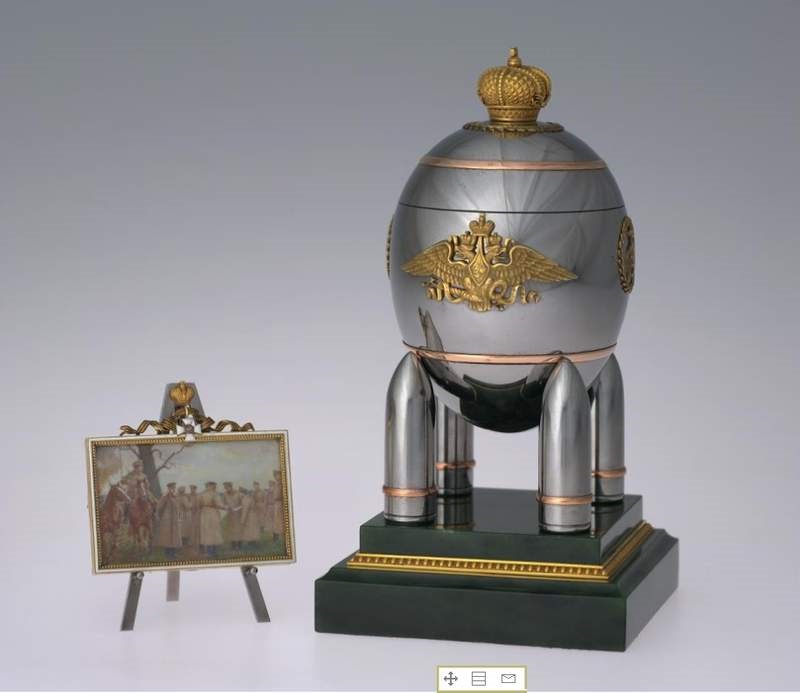
The exhibition also features two Fabergé Imperial Easter Eggs: the Red Cross Triptych Egg from 1915, honouring Empress Alexandra Feodorovna and her two eldest daughters, the Grand Duchesses Olga and Tatiana Nikolaevna, for their war efforts for the Red Cross; and the Steel Military Egg from 1916, sent to Alexandra by Nicholas when he was at the Russian front.

145e

Fabergé Red Cross Triptych Egg (1915)
Photo © Cleveland Museum of Art

145f

Fabergé Steel Military Egg (1916)
Photo © Kremlin Armoury Museum

Of particular note, are annotated photo albums created between 1908 and 1918 by Herbert Galloway Stewart (1866-1960), an English tutor who was invited by the Grand Duchess Ksenia Alexandrovna (1875-1960) to teach her son – Prince of the Imperial Blood Andrei Alexandrovich (1897-1981). The albums, which are now part of the Science Museum Group collection will be on display for the first time. These albums offer a fascinating glimpse into the lives of the Romanovs – from boating trips and picnics, to sledging in the snow-covered grounds of the Alexander Palace at Tsarskoye Selo.

The photographs were discovered by Natalia Sidlina, who found 22 albums packed inside a champagne crate from Harrods, in the archives of the Science and Media Museum in Bradford, England.

All Photos © Science Museum Group Collection

The exhibition retraces the lives of Nicholas II and Alexandra Feodorovna as they navigated their roles as autocratic rulers of Russia, while caring for their young son and heir, who was born with haemophilia B. The royal household faced a turbulent backdrop of social upheaval and war between 1900 and 1918, but we’ll be focusing on the significant influence of medicine on the private lives of the imperial family. Over 70 years after their sudden disappearance, advances in medicine and forensic science transformed the investigation into their fate and solved one of the greatest mysteries of the 20th century.

The exhibition consists of six sections: “Russia at the Turn of the Century”, “Deprivation of Liberty: Palaces and Prisoners”, “Doctors and Healers at Court”, “Sisterhood. The Empress and the Grand Duchesses”, “The Revolution and the Overthrow of the Romanov Dynasty”, and “The Investigation Which Lasted a Century”.

Explore the extraordinary lives and deaths of Tsar Nicholas II and his family and go behind the scenes to uncover the science behind one of the greatest mysteries of the 20th century in this FREE exhibition.

The Last Tsar: Blood and Revolution Exhibition ran from 21 September 2018 to 24 March 2019, at the Science Museum in London, England.

© Paul Gilbert. 2 December 2019
Exhibition: ‘Family Album’ in Kaluga

144a

NOTE: All of the articles pertaining to Nicholas II and his family which were originally published in my Royal Russia News blog, have been moved to this Nicholas II blog. This article was originally published on 25 September 2018 in my Royal Russia News blog – PG

The following exhibition ran from 15 September to 4 November 2018

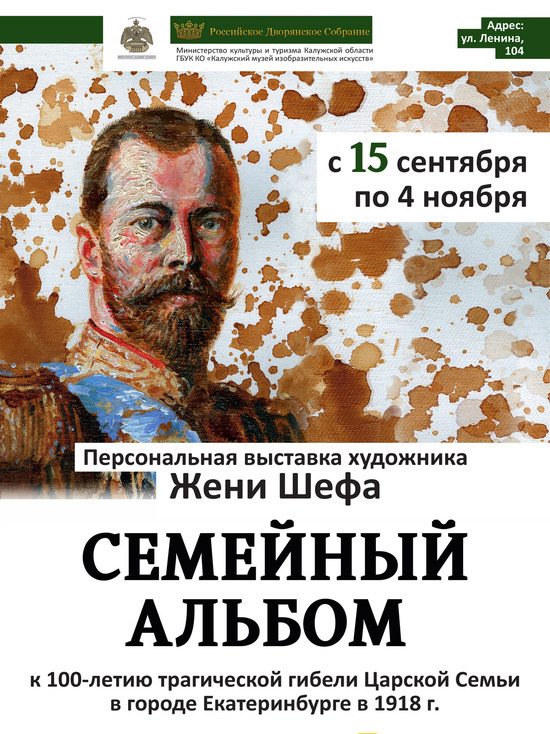
On September 15 a solo exhibition entitled Family Album opened at the Kaluga Museum of Fine Arts, presenting the works of the Honorary Academician of the Academy of Arts Evgeny Sheffer, known to the general public under the pseudonym ‘Zhenya Shef’.

The exhibition is dedicated to the centenary of the tragic death of Emperor Nicholas II and his family and the centennial anniversary of the Kaluga Museum of Fine Arts. The artist who now lives in Germany marked the terrible events that occurred in July 1918 in the basement of Ipatiev House in Ekaterinburg by a series of paintings.

His work presented in Kaluga – portraits of the Imperial family – were previously shown at the Venice Biennale in 2013, the year marking the 400th anniversary of the House of Romanov. The exhibition is organized by the Russian Noble Assembly with the support of the Ministry of Culture and Tourism of the Kaluga Region.

The chairman of the Kaluga branch of the Imperial Orthodox Palestine Society (IOPS) Vitaly Gorokhovatsky, opened the exhibition with a welcoming speech. He then awarded Honorary Deeds to the artist Evgeny Sheffer and the director of the Kaluga Museum of Fine Arts Natalia Marchenko for their excellent organization of the exhibition.

The opening ceremony was attended by the head of the Russian Nobility Assembly Oleg Shcherbachev, the head of the Department of Culture of the Kaluga diocese, priest Nikolai Zherzdev, the human rights commissioner for the Kaluga region Yuri Zelnikov , the president of the Russian Union of Philocratists Arsen Meltonyan among others.

In honour of the exhibition, the Russian postal service issued a special set of postcards featuring paintings presented at the exhibition. The artist took part to autograph them for guests at the exhibition.

The opening ceremony was followed by a concert, at which the Russian composer, pianist and violoncellist Victor Agranovich performed. His performance, a musical work was performed on the verses of Nina Kartasheva from the cantata Voices from the Skies, dedicated to the centenary of the tragic death of the Tsar’s family.

The Family Album Exhibition ran from November 4, at the Kaluga Museum of Fine Arts, and then in Novosibirsk, Tver and other Russian cities.

© Paul Gilbert. 2 December 2019

Summary of Nicholas II Conference in England – 27 October 2018

141a

Archpriest Andrew Phillips and Paul Gilbert, St. John of Shanghai Orthodox Church

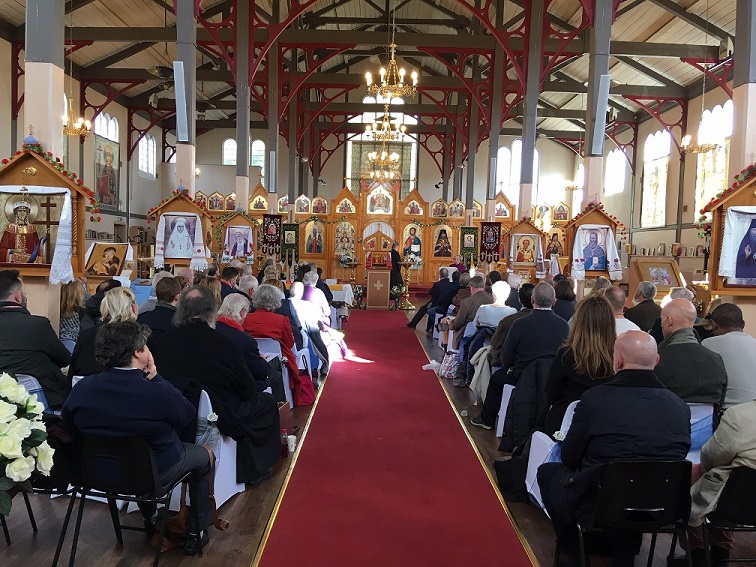
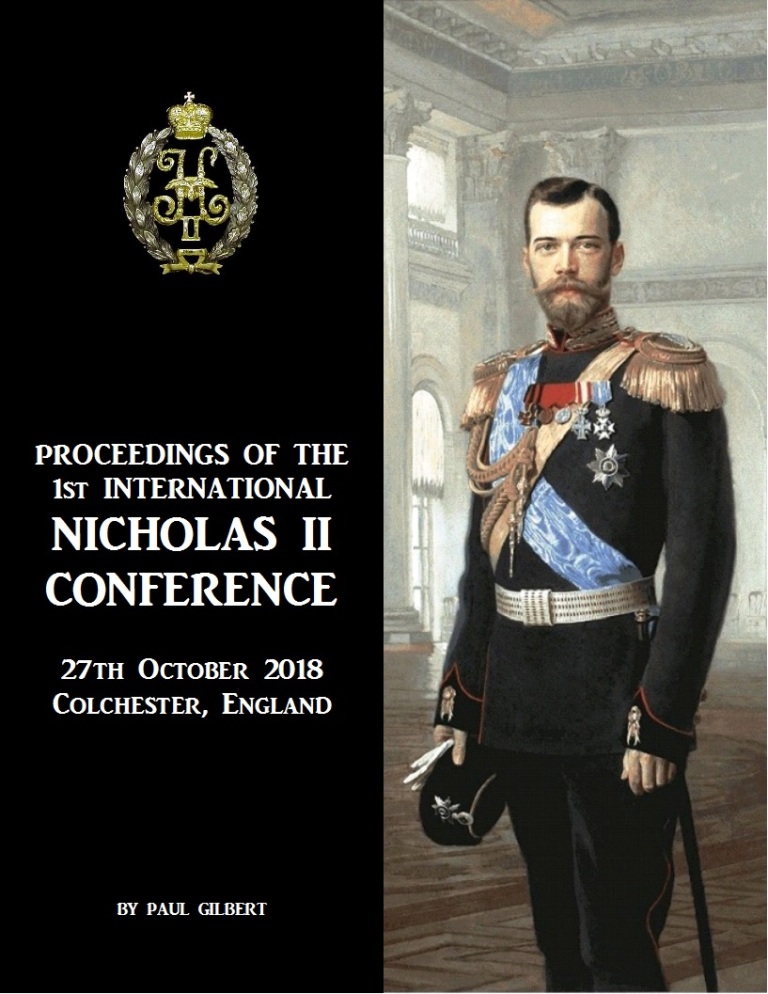
On Saturday 27th October, more than 100 people from 11 countries attended the 1st International Nicholas II. Emperor. Tsar. Saint. Conference in England.

The venue for the event was St. John of Shanghai Orthodox Church in Colchester, Essex, which is situated about an hour’s train journey from London. It was truly meaningful and appropriate that the conference should take place at the Church of St John of Shanghai, who did so much for the glorification of the Holy Royal Passion-Bearers.

This historic event brought people from no less than 11 countries: England, Wales, Ireland, the Netherlands, France, Denmark, Vatican City, Russia and from as far away as Canada, America and Australia.

141b

More than 100 people from 11 countries attended the Nicholas II Conference

Among the guests was Metropolitan Jonah (Paffhausen), who travelled from Washington, DC for the event. His Eminence is a retired American Orthodox bishop who served as the primate of the Orthodox Church in America (OCA) with the title The Most Blessed Archbishop of Washington, Metropolitan of All America and Canada from his election on November 12, 2008, until his resignation on July 7, 2012. Metropolitan Jonah was the first convert to the Orthodox faith to have been elected as the primate of the OCA.

On June 15, 2015, Metropolitan Jonah was released from the Orthodox Church in America in order for him to be accepted as a bishop of the Russian Orthodox Church Outside Russia.

Greetings for the conference and its attendees were received by letter from Vice-Chairman of the Department for External Relations of the Moscow Patriarchate Archimandrite Philaret; Head of the Russian Imperial House Her Imperial Highness Grand Duchess Maria Vladimirovna; and His eminence Archbishop Gregorios of Thyateira and Great Britain.

The conference featured 5 speakers, who presented 7 papers, some of which were dedicated to clearing the name of the much slandered tsar.

141c

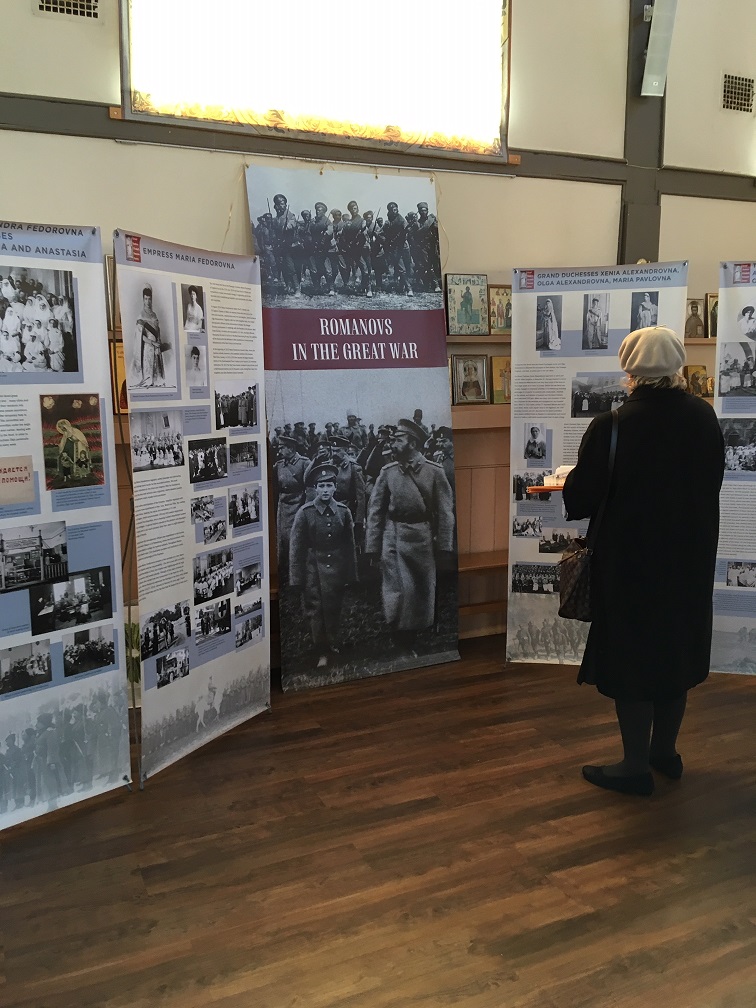
‘Romanovs During the First World War: Charity and Heroism’ exhibit

The Grand Duchess Elizabeth Romanov Society UK provided 10 exhibit banners from the society’s exhibition Romanovs During the First World War: Charity and Heroism. The exhibit featured photos, post cards and documents from the Russian archives and private collections. The exhibition was produced by GDER society, St Tichon’s Theological University, Moscow, and The Society of Card Collectors. All the information in English.

Holy Trinity Publications set up a table offering copies for sale of ‘The Romanovs’ Under House Arrest‘, co-authored by Marilyn Swezey, and ‘The Romanovs: Family of Faith and Charity‘, a children’s book by Maria Maximova.

Royal Russia Publications also set up a table offering copies of ALL current and back issues of ‘Sovereign: The Life and Reign of Emperor Nicholas II‘.

Special thanks to Father Andrew Phillips rector of St John of Shanghai Orthodox Church, for his enthusiasm and support of this event, and for the opportunity to use St John of Shanghai Church as the venue for this historic conference.

To my dearest friends Mike and Julia Carr, and David Clark for all their dedication and hard work in helping to set up the church and meeting hall, assisting with registration, book sales, lunch, teas and coffee, etc.

conference-cover

*This title is available from AMAZON in the USA, UK, Canada, Australia,
France, Germany, Spain, Italy, Netherlands, Poland, Sweden and Japan

CLICK HERE TO ORDER THE PAPERBACK EDITION @ $30.00 USD

CLICK HERE TO ORDER THE HARD COVER EDITION @ $40.00 USD

141e

© Paul Gilbert. 1 December 2019

Exhibition: ‘From the Imperial Wardrobe’

NOTE: All of the articles pertaining to Nicholas II and his family which were originally published in my Royal Russia News blog, have been moved to this Nicholas II blog. This article was originally published on 30 November 2018 in my Royal Russia News blog – PG

The following exhibition ran from 29 November 2018 to 28 February 2019

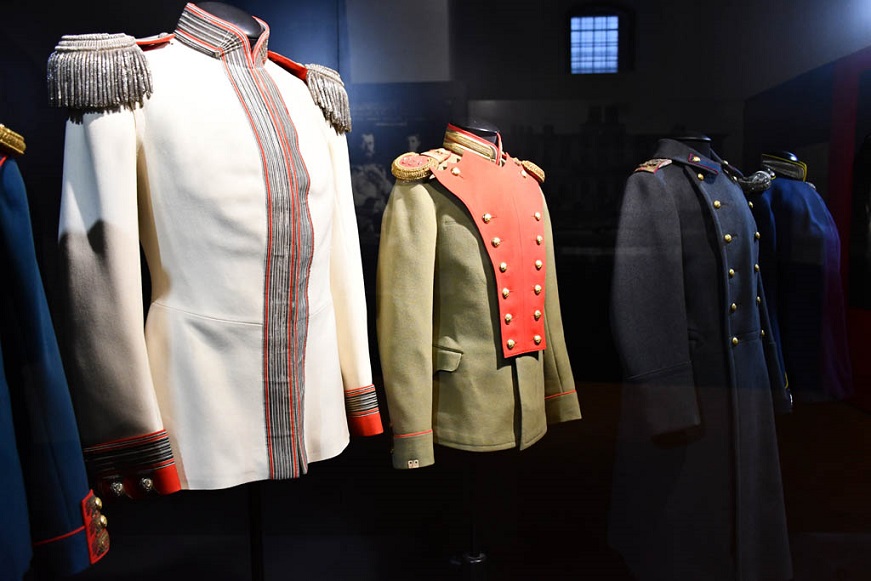
Military uniforms from the collection of the Tsarskoye Selo State Museum-Preserve are currently on display at a new exhibition From the Іmperial Wardrobe, in the Mir Castle Complex, a UNESCO World Heritage Site, situated 100 km from Minsk, Belarus.

The exhibition, which opened on 29th November is dedicated to the 100th anniversary of the end of the First World War. It is a joint international project of the Mir Castle Complex Museum, the Tsarskoye Selo State Museum-Preserve, the State Archives of the Russian Federation, the Grodno State Historical and Archaeological Museum, the Local Charitable Foundation “Brest Fortification” and the Lukskaya Secondary School.

The First World War changed the face of the Russian Empire, the way of life of people and families, including the imperial one. For a long time that war was in the shadow of the October Revolution, the Civil War and later the Great Patriotic War. The main purpose of the exhibition is to restore the historical memory of the war, drawing attention to the personality of Emperor Nicholas II and to military events related to Mir township and the surrounding villages.

138a

138b

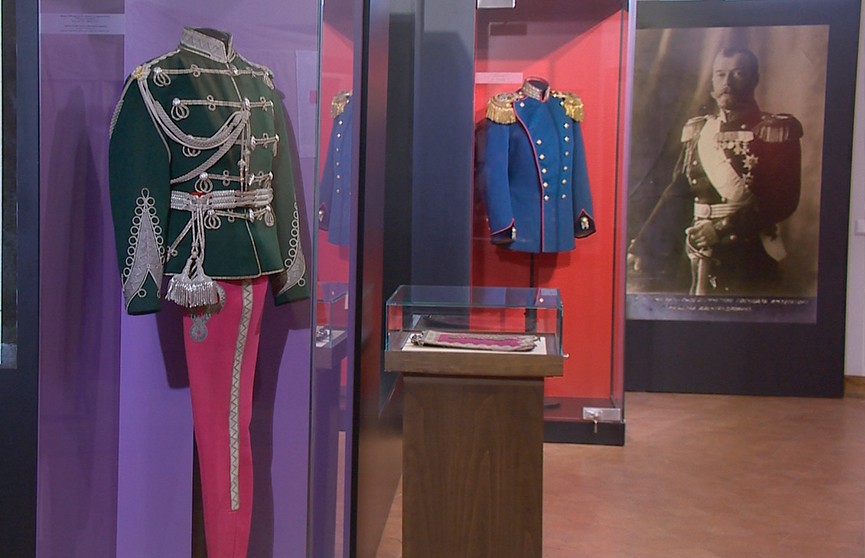
The exhibition features a total of 39 military uniforms, including those belonging to Emperor Nicholas II and his son, Tsesarevich Alexei. After the tsar’s abdication, his uniforms survived the 1917 Revolution, and were preserved in the Alexander Palace. During the Great Patriotic War (1941-45), the uniforms were evacuated to Novosibirsk.

An interactive excursion has been prepared for the visitors, during which they will be able to learn about the features of uniforms and learn about the history of individual Life Guard regiments.

A separate unit presents weapons and military equipment from the First World War from the funds of Grodno State Historical and Archeological Museum, which are complemented by the items from the State Institution “Lukskaya secondary school” located on the territory of Korelichi district and on the basis of which the military-patriotic club “Vityaz” since 2001 has been operating.

An illustrative series of the exhibition is represented by photographs from the Tsarskoye Selo State Museum-Preserve, the collection of Major General Svity EI.V. Vladimir Fedorovich Dzhunkovsky State Archives of the Russian Federation, as well as photographs from the archive of local historian Leonid Kudin.

The thematic section on medical services during the First World War will be of particular interest. A military field hospital tent and medical instruments are on display at the exhibition thanks to the Local Charitable Foundation “Brest Fortification”.

The exhibition closed on 28 February 2019.

© Mir Castle / Tsarskoye Selo State Museum Preserve. 30 November 2019

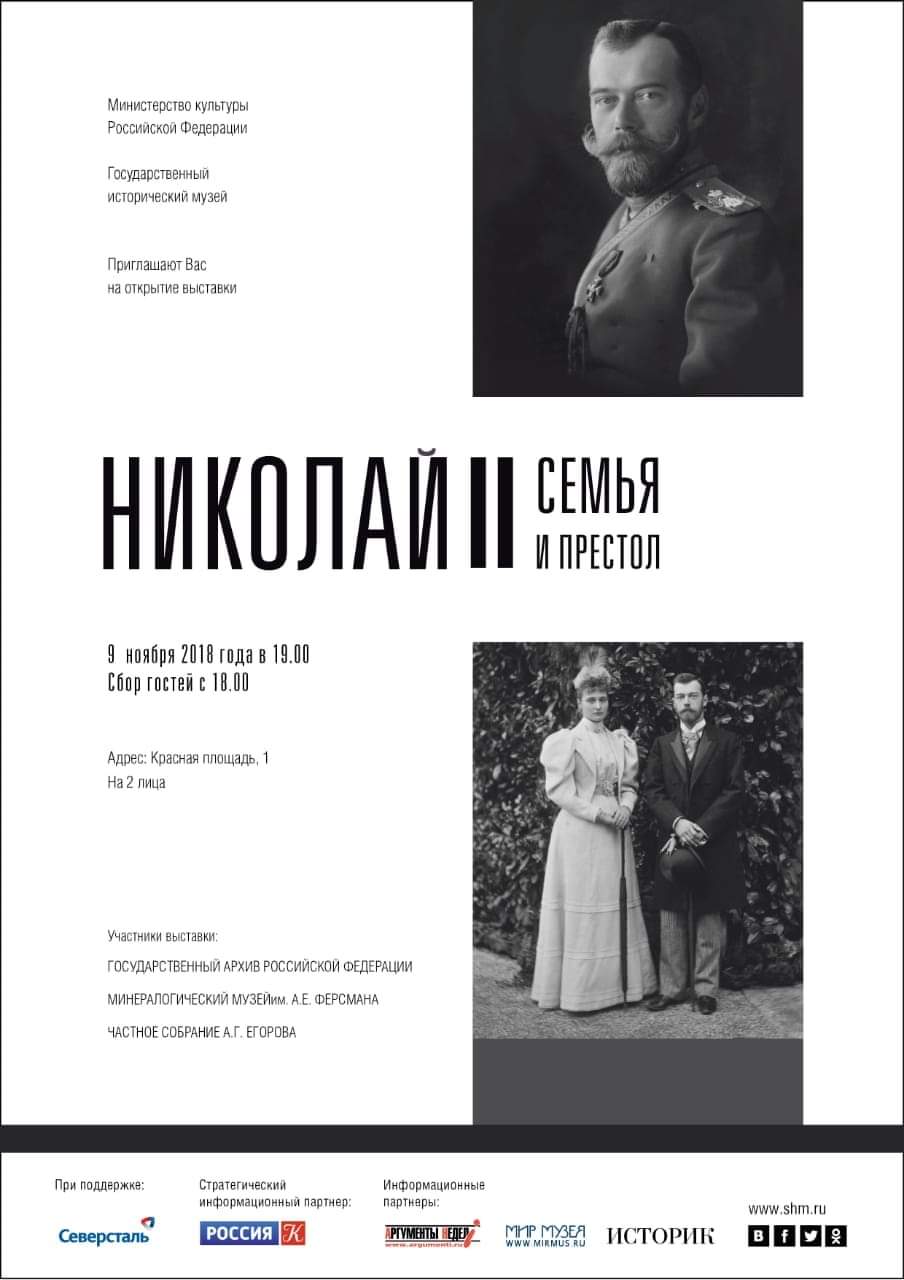
Exhibition: ‘Nicholas II. Family and Throne’

137a

NOTE: All of the articles pertaining to Nicholas II and his family which were originally published in my Royal Russia News blog, have been moved to this Nicholas II blog. This article was originally published on 6 December 2018 in my Royal Russia News blog – PG

The following exhibition ran from 10 November 2018 to 15 April 2019

The State Historical Museum is currently the venue for an exhibition on the reign and family life of Nicholas Alexandrovich Romanov – the history of the Imperial family in photographs, paintings, diaries, personal items and other rare artifacts.

A significant part of the 750 photographs in the exhibit are from the funds of various archives and museums in Russia – including the State Archive of the Russian Federation (GARF), which contains a vast and unique collection of photo albums of members of the Imperial family.

Timed to the 150th anniversary of the birth and the 100th anniversary of the death of the last Russian emperor Nicholas II, the exhibition allows all visitors interested in history to create their own impression of one of Russia’s most controversial and misunderstood historical figures, which includes a look at the life of the Russian monarch and his family.

Photography, which is the basis of the exhibition, is of great historical importance, often fragile, requiring careful handling and protection. The photos submitted for the exhibit are 100 – 150 years old, and a considerable part of the photos were restored by professionals for presentation to the public in this exhibition.

As is known, the emperor and his family members took a great interest in photography: they all had cameras and enthusiastically photographed each other and and those close to them. Nicholas II was usually accompanied by a professional photographers who recorded his 23-year reign almost daily (the main merit belonged to the court photographer AK K. Yagelsky to the owner of the KE von Gan and Kº studio). Many photos come from Tsarskoye Selo and Peterhof palaces, and reflect the day to day lives in their private apartments of the Alexander Palace and the Lower Dacha.

The exhibition is divided into sections: family, official and memorial. The first sections testify to the two “functions” of Nicholas II: the head of the family and the ruler of a vast empire. It shows about 300 photographs taken in the 1870s – mid 1910s by leading Russian and foreign photo masters (K. K. Bulla, S. L. Levitsky, A. I. Saveliev, F. P. Orlov, M. I. Gribov, A. A. Otsup, K. A. Fisher, Atelier “Boissonna and Eggler”, “K. E. von Gan and Co.”, “J. Russell & Sons”, “W. & D. Downey “). Autographs and letters of Nicholas II are also on display, documents include a manifesto on the birth of Grand Duke Nicholas Alexandrovich, a lunch menu on the occasion of the coming of age of Tsesarevich Nicholas Alexandrovich, and an announcement of the coronation of Emperor Nicholas II and Empress Alexandra Feodorovna.

The family section of the exhibition is divided into the following topics: “Grand Duke. Tsesarevich. Emperor”, “Niki and Alix”, “Tsar’s Children. OTMA”, “Tsar’s Children. Alexei”, “In the Family Circle. Tsarskoye Selo. Livadia. Finland. Poland “. Particular emphasis is placed on the figure of Tsearevich Alexei Nikolaevich, the only son of Nicholas II, and heir to the throne, whose tragic fate left an imprint on the life of the entire imperial family.

137m

The official section of the exhibition shows photographs of Nicholas II during meetings with the heads of foreign countries (British King Edward VII, German Emperor Wilhelm II, Siamese King Rama V, French Presidents Armand Falier and Felix Faure) during the celebrations marking the 200th anniversary St. Petersburg and the 100th anniversary of the Patriotic War of 1812, during the opening of grand monuments and the consecration of churches, the holding of regimental holidays and parades, as well as during the First World War.

Two of the most important dynastic events in which Nicholas II was most directly involved – the coronation (1896) and the 300th anniversary of the Romanovs’ house (1913), are also featured.

137n

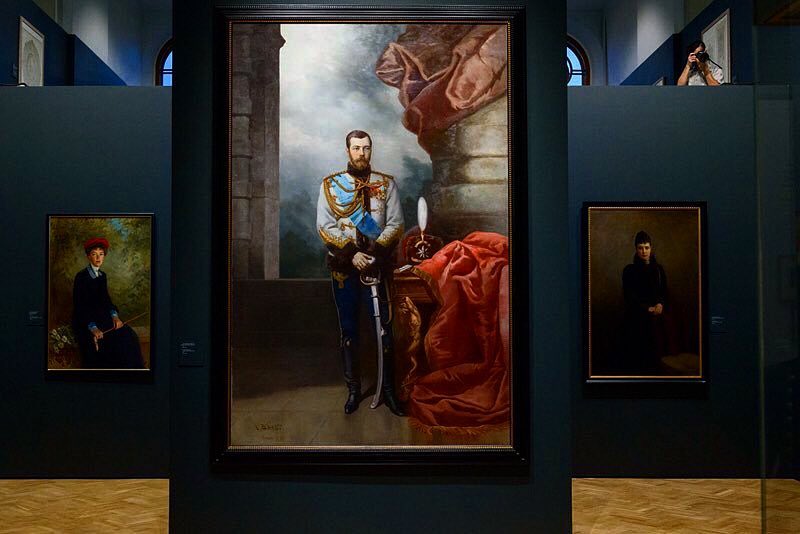
Ceremonial portrait of Nicholas II, by Léon Bakst, 1895

A large ceremonial portrait of Nicholas II, by the famous artist Léon Bakst (1895) in Paris is on display for the first time. The painting has never before been exhibited, and was specially restored for the exhibition. The exhibition also features pictorial portraits of Nicholas II and Alexandra Feodorovna by G.M. Manizer and A.V. Makovsky, and a series of watercolors by N.N. Karazin, N.S. Matveeva and A.I. Charlemagne.

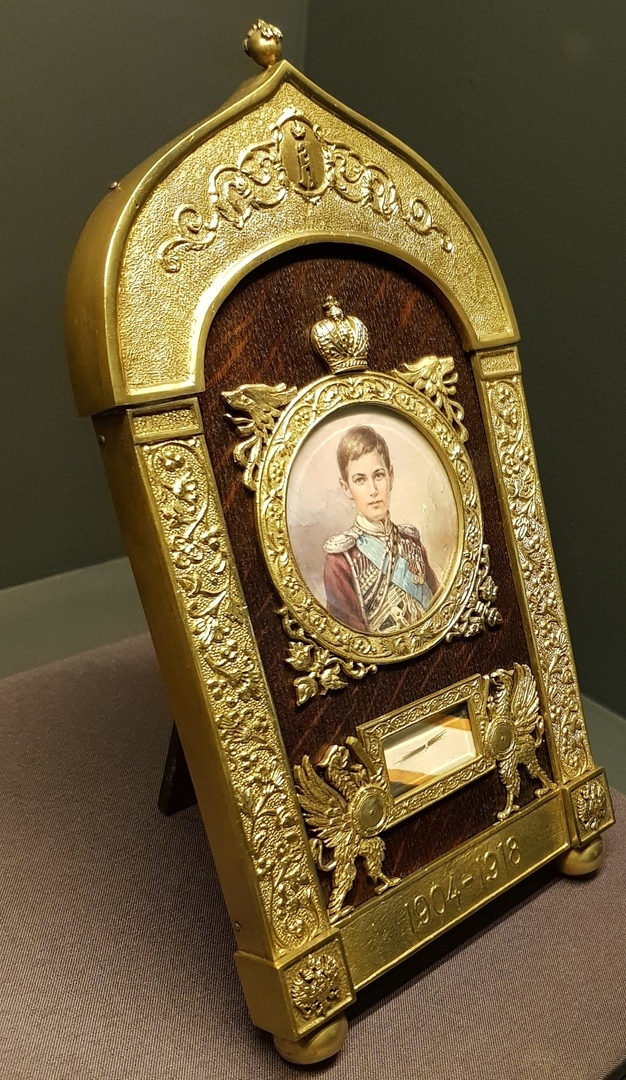
In addition to photos, the exhibition is filled with numerous items, both personal and memorial, associated with Nicholas II and his family – portraits, diaries, letters and more. For example, the uniforms of Nicholas II and Tsesarevich Alexei, the Imperial Constellation Easter Egg, made by Faberge for Alexandra Feodorovna Easter 1917, but not presented to the Empress, are shown a bronze frame with a watercolor portrait of Tsesarevich Alexei, a drawing, a watercolor portrait of Tsesarevich Alexei, and a drawing of Alexandra Feodorovna with their children.

One of the most unique artifacts on display is a curl of hair belonging to Tsesarevich Alexei, embedded in a watercolor portrait (see below), which was transferred during the post-war period to the Belgrade Museum in Serbia. In order to confirm its’ authenticity, the staff of the Historical Museum turned to the scientists of the N.I. Vavilova Institute of General Genetics, who confirmed a direct connection to the female line of Queen Victoria.

137o

Curl of hair belonging to Tsesarevich Alexei, embedded in a watercolor portrait

The exhibition is located in the renovated premises of the State Historical Museum, where there is also a small memorial hall with photographic portraits of members of the Romanov family and their personal belongings.

The end of the exhibition is a small hall, resembling a basement, where seven portraits are displayed of members of the Imperial family who were murdered in the basement of the Ipatiev House in Ekaterinburg on the night of July 16-17.

The exhibition Nicholas II. Family and Throne runs from 10 November 2018 to 15 April 2019 in the State Historical Museum in Moscow.

© Paul Gilbert @ Royal Russia. 30 November 2019

Photos from the ‘The Children’s World of the Family of Emperor Nicholas II’ Exhibition

128

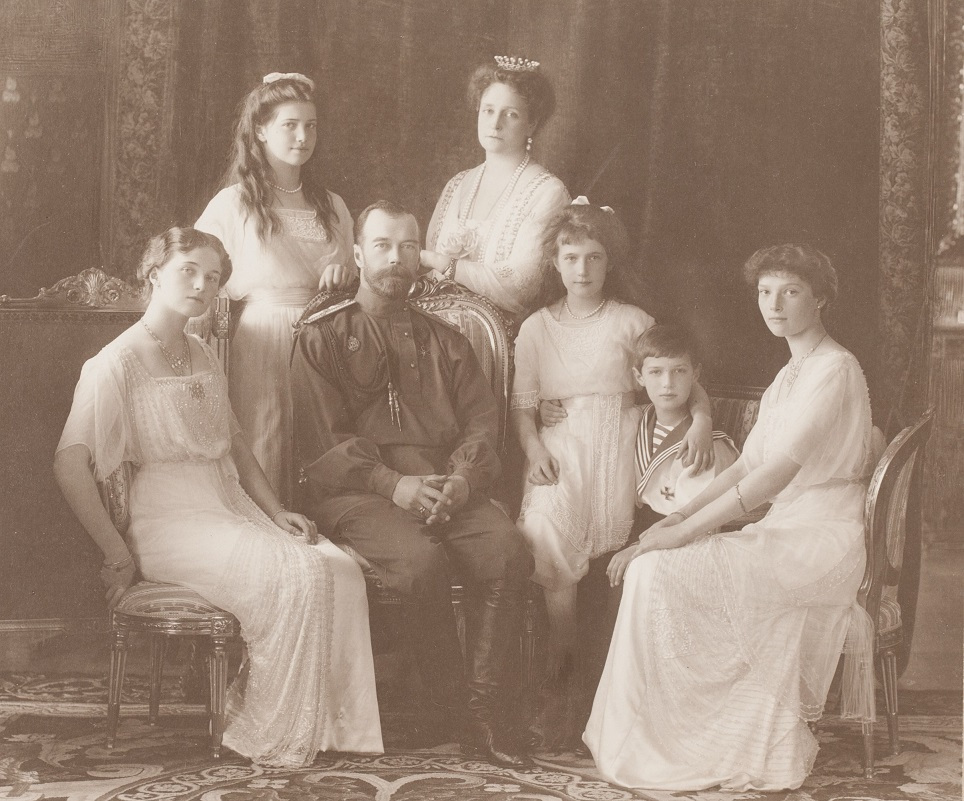
OTMAA: the children of Emperor Nicholas II and Empress Alexandra Feodorovna

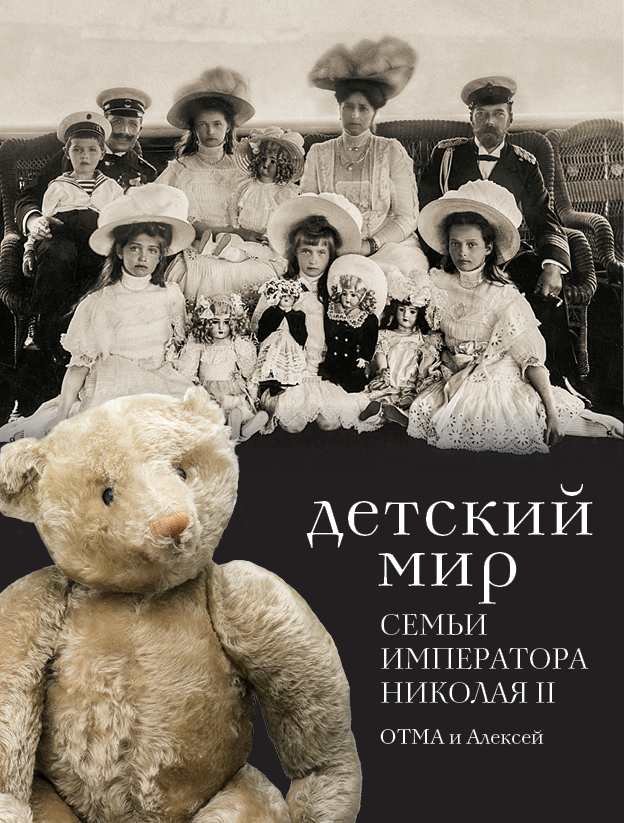
The exhibition The Children’s World of the Family of Emperor Nicholas II. OTMA and Alexei opened in the Kolomenskoye Museum-Reserve in Moscow on 13th November 2019. This unique exhibit is a joint project of the State Hermitage Museum in St. Petersburg, the State Archive of the Russian Federation (GARF) and the Kolomenskoye State Museum Reserve in Moscow, which showcases the personal items – costumes, accessories, toys – that belonged to the children of Emperor Nicholas II. It is supplemented with exhibits from the collections of the Tsarskoye Selo State Museum Reserve, the Peterhof State Museum Reserve, and the Pereslavl Museum. The exhibition runs until 16th February 2020.

The following photos from the exhibition are courtesy of Dinara Gracheva and Православие.Ru

det1

Exhibition catalogue (in Russian only)

Click HERE to read my article Exhibition Catalogue: ‘The Children’s World of the Family of Emperor Nicholas II. OTMA and Alexei’, published on 25th September 2019

© Paul Gilbert. 22 November 2019