Obituary: Zurab Konstantinovich Tsereteli (1934-2025)
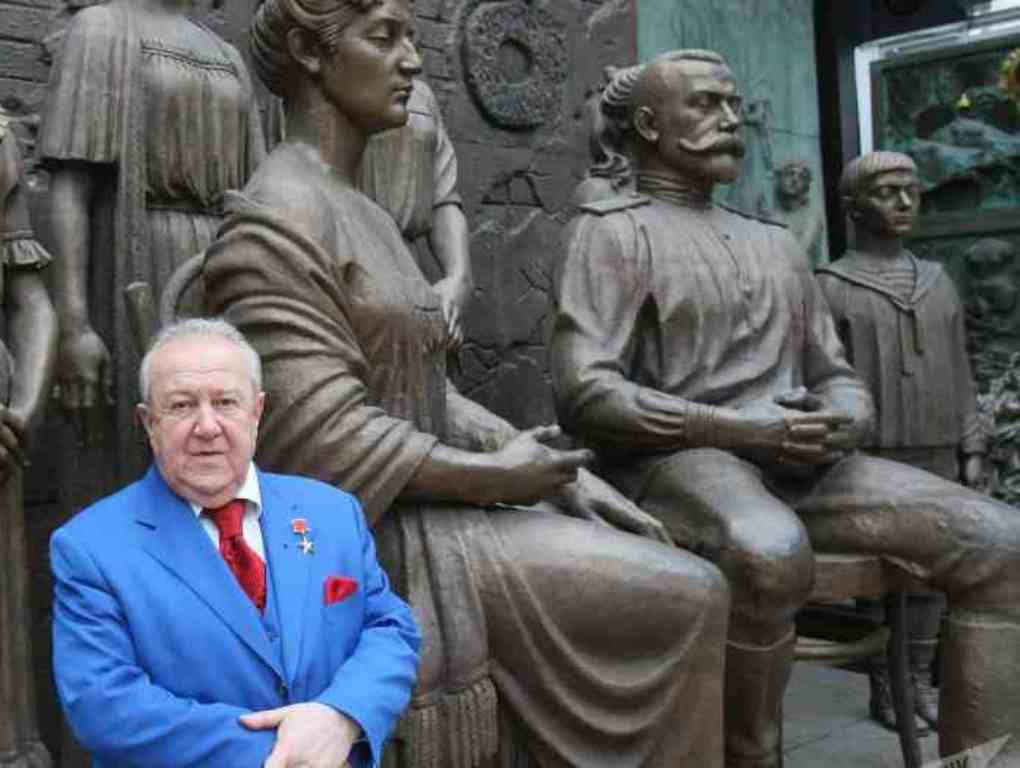
PHOTO: Zurab Tsereteli standing in front of his sculptoral composition ‘Night at the Ipatiev House’, depicting Nicholas II and his family, at the Zurab Tsereteli Art Gallery in Moscow – see photo at the end of this post for a full view

On Tuesday, 22nd April 2025, the famous Russian-Georgian sculptor and President of the Russian Academy of Arts Zurab Konstantinovich Tsereteli died in Moscow, after a lengthy illness, at the age of 91. The cause of death was cardiac arrest.

Tsereteli was born in Tbilisi (Georgia) on 4th January 1934. He studied at Tbilisi State Academy of Arts, graduating in 1958. The same year, he married Inessa Alexandrovna Andronikashvili  (1937-1998), a princess from a noble Georgian family that claimed patrilineal descent from Byzantine Emperor Andronikos I Komnenos (1118-1185).

The sculptor has been the president of the Russian Academy of Arts since 1997. Tsereteli is known for his works not only within Russia, but in many countries around the world. Among them are monuments to Nikolai Gogol (Rome, 2002), St. Nicholas the Wonderworker (Bari, Italy, 2003), Pope John Paul II (Ploermel, France, 2006), “The Three Musketeers” (Condom, France, 2010), monument to Marina Tsvetaeva (Saint-Gilles Croix de Vi, France, 2012), the Apostle Paul (Veria, Greece, 2013), a monument to Nicholas II (Republika Srpska, 2014), “The Birth of the New World” (Arecibo, Puerto Rico, 2016) and others. In 2018, Tsereteli donated a monument to the poet Alexander Griboyedov to the Russian Drama Theater named after A.S. Griboyedov in Tbilisi.
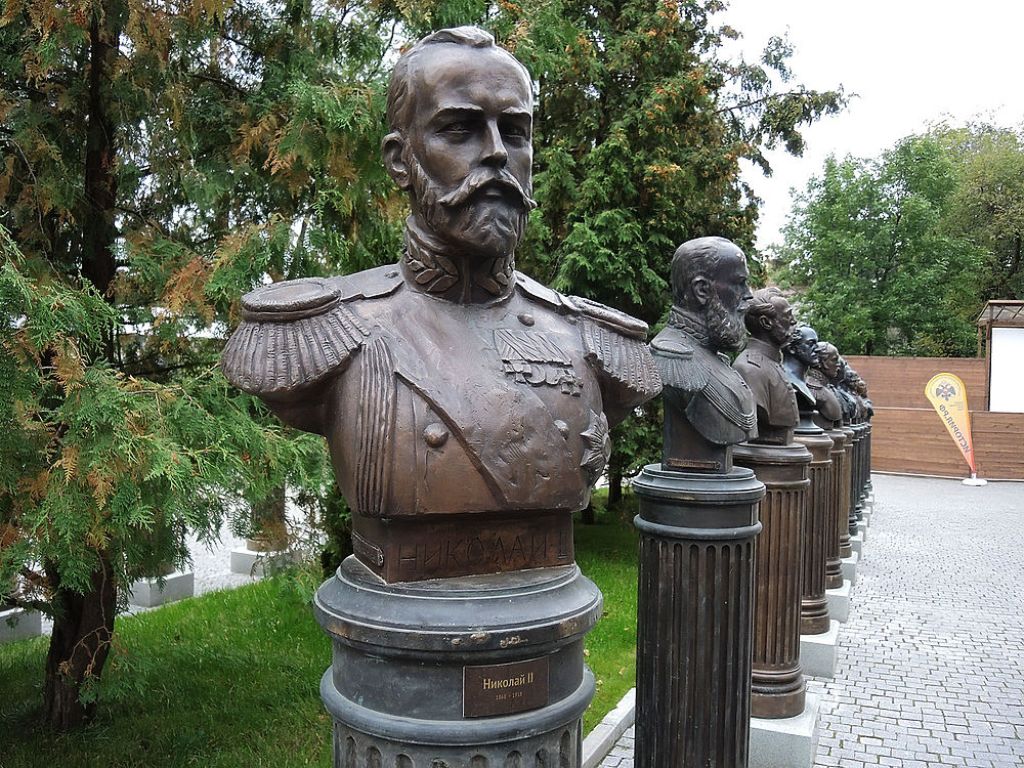
PHOTO: the ‘Alley of Rulers’ in Moscow, features bust-monuments of Russia’s political leaders and emperors, including Nicholas II

In Russia, some of Zurab Tsereteli’s most famous works are “Night at the Ipatiev House” (Moscow, 2007), Princess Olga (Pskov, 2003), “Wives of the Decembrists, The Gates of Destiny” (Moscow, 2008), among many others. On 31st May 2024, a magnificent equestrian monument to Emperor Alexander III was unveiled and consecrated in the city of Kemerovo, the capital of Kuzbass, situated in Western Siberia.

In 1997, by order of the Moscow government, a 98-meter monument to Peter the Great was opened at the western confluence of the Moskva River and the Vodootvodny Canal in central Moscow. The then mayor Yuri Luzhkov (1936-2019) criticized the monument for it’s “gigantism and bad taste”. There were protests demanding the dismantling of the sculpture. In 2008, the monument was included in the list of the ugliest man-made structures in the world.

On 1st October 2024, the ‘Alley of the Rulers of Russia’ opened at Boldino, the former estate of the outstanding statesman and historian Vasily Nikitich Tatishchev (1686-1750), near Moscow. This sculptural composition by Zurab Tsereteli consists of 43 busts of historical figures who have led Russia over its more than 1,000 year history – from Prince Rurik to the Romanovs to the first President of the Russian Federation Boris Yeltsin.
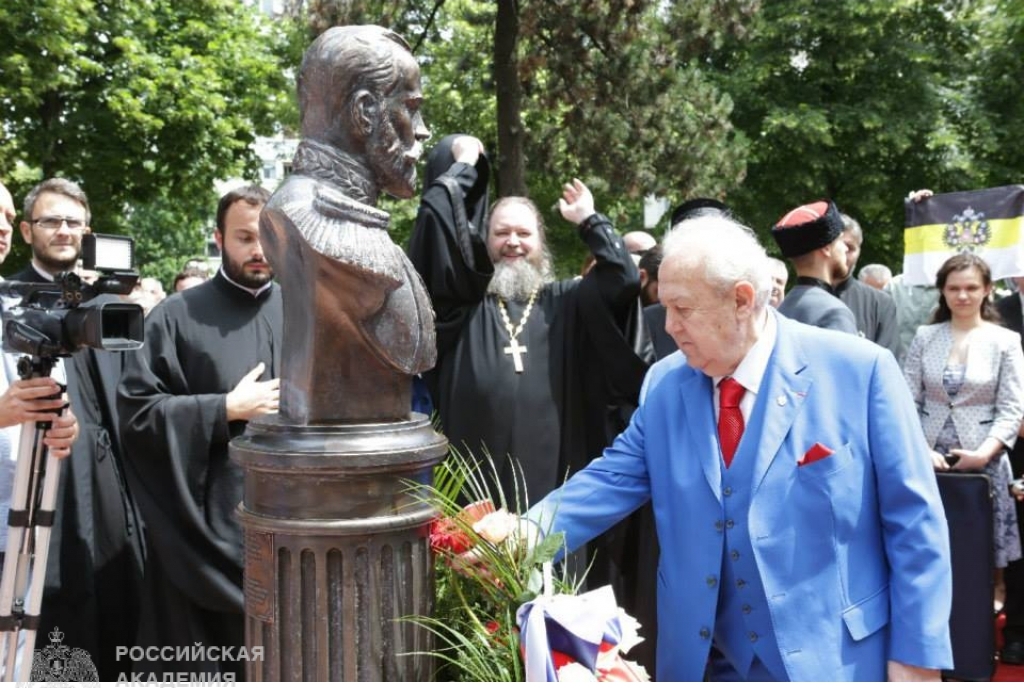
PHOTO: Zurab Tsereteli at the unveiling of his bust-monument to Nicholas II, in Banja Luka, the capital of the Republika Srpska (Bosnia and Herzegovina), on 21st June 2014

Tsereteli was the Founder of the Moscow Museum of Modern Art (1995), the Zurab Tsereteli Art Gallery (2000) and the Museum of Modern Art in Tbilisi (Georgia, 2012). He is the author of more than 5 thousand works of painting, graphics, sculpture, frescoes and mosaics, however, he gained the greatest fame as a sculptor-monumentalist. In 1995–2000, he participated in the reconstruction of the Cathedral of Christ the Saviour in Moscow.

According to the sculptor’s grandson Vasily Tsereteli, a farewell to Tsereteli, will be held on 23rd April, in the Cathedral of Christ the Saviour in Moscow. Tsereteli will be buried on Sunday, 27th April, in the Mtatsminda Pantheon of Writers and Public Figures in Tbilisi, Georgia where his wife rests.
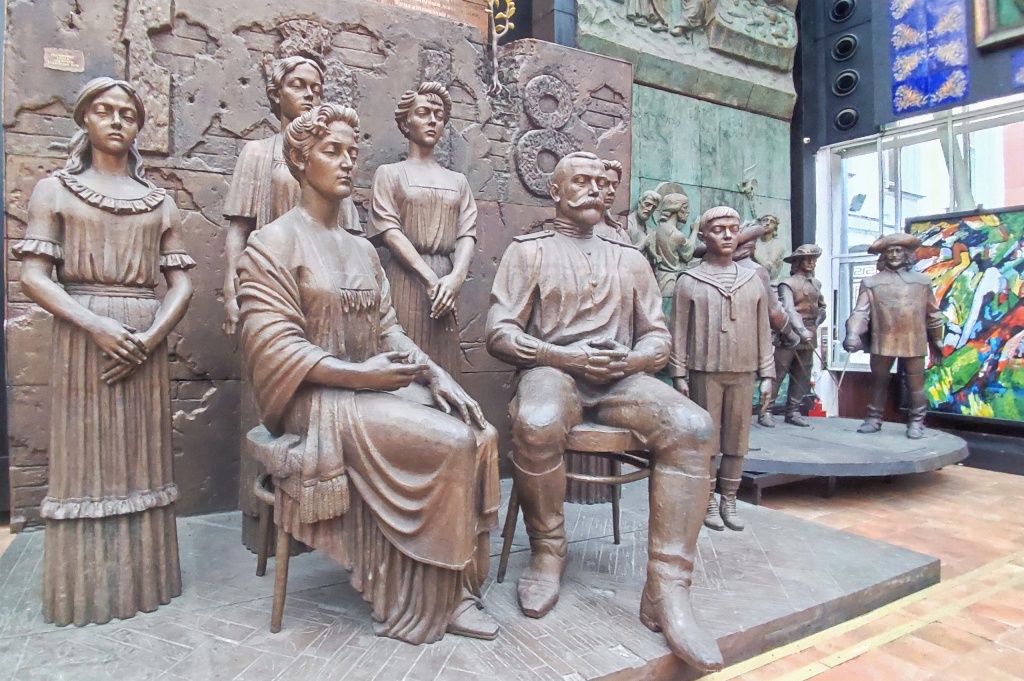
PHOTO: Zurab Tsereteli’s ‘Night at the Ipatiev House’ (2007), depicting Emperor Nicholas II and his family, at the Zurab Tsereteli Art Gallery in Moscow

In a statement issued by Maria Zakharova, a representative of the Russian Foreign Ministry: Zurab Konstantinovich Tsereteli will be remembered as a world-renowned artist and sculptor, a public figure who knew “neither borders nor obstacles in strengthening peace and supporting creativity.

“He will live on, not only in our hearts, but also through his works: in stained glass windows and enamels decorating foreign missions, and in monuments and sculptures installed in different parts of the world,” she added.

Memory Eternal! Вечная Память!

© Paul Gilbert. 22 April 2025
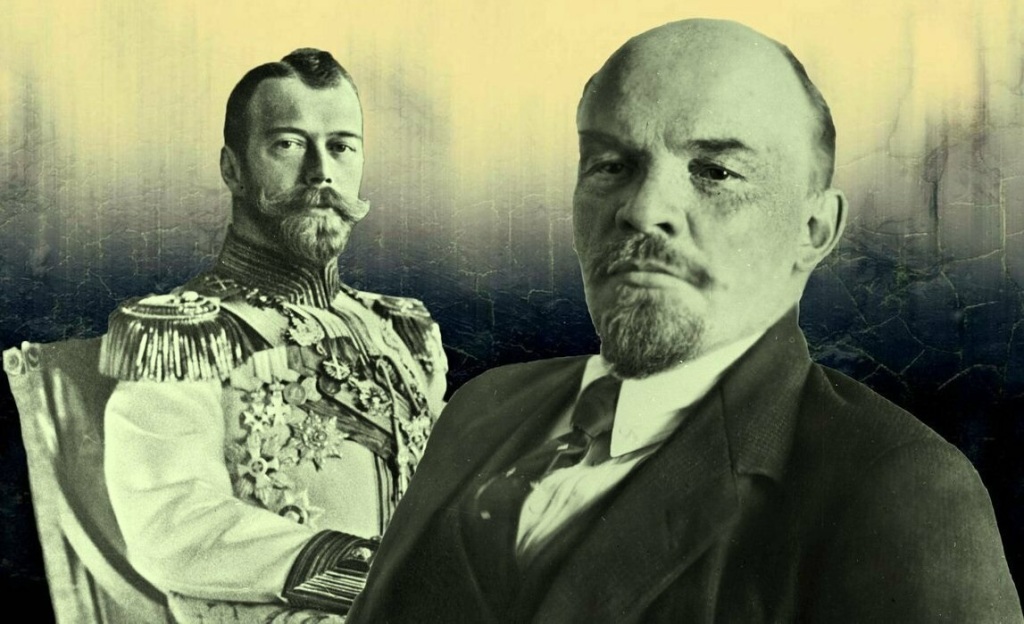
What were Lenin’s plans regarding Nicholas II’s fate?

DISCLAIMER: the following article is based on the research of Russian historian and author Peter Multatuli, and does not reflect the opinion of the administrator of this blog, it is published here for information purposes only. Please read my comments at the end of this article – PG

To this day, the question of whether the execution of Emperor Nicholas II and his family was carried out on Vladimir Ilyich Lenin’s order or not, remains the subject of ongoing debate. Some historians argue that the leader of the proletariat did not intend to kill the Tsar, and that the “liquidation” of Nicholas II, his wife and their children came as a complete surprise to the Bolshevik leader.

“Take under your protection!”

According to Peter Multatuli, author of the book Император Николай II. Мученик (2018) [Emperor Nicholas II. Martyr], Lenin took the house arrest of the Tsar for granted. At least, the minutes of the meeting of the Council of People’s Commissars chaired by Lenin on 2nd May 1918 testify to the fact that shortly after Nicholas II was transferred to Ekaterinburg. Lenin was in Moscow at that time, and persistent rumors spread around the capital, fueled by the press, that the Tsar had already been killed. Lenin ordered his closest assistant and secretary, Vladimir Dmitrievich Bonch-Bruyevich (1873-1955), to send a telegram to Ekaterinburg with a request to confirm or deny these rumours.

Without waiting for an answer, Lenin sent the commander of the North-Ural-Siberian Front, Reinhold Iosifovich Berzin (1888-1938), to the Ipatiev House to check. Berzin reported that as of 21st June, all members of the Imperial Family including the Tsar himself were alive, and that he considered the various speculations about their murder to be provocations. As Russian historian and author Yuri Alexandrovich Zhuk writes in his book Гибель Романовых (2009) [The Death of the Romanovs], Lenin in turn ordered Berzin to “take the entire Imperial Family under his protection and prevent any harm against them.” And finally, Vladimir Ilyich added that Berzin would be responsible for carrying out the execution of this order with his own life. History of course has confirmed that such an order was not carried out.

Lenin’s plans

For what purpose did Lenin care so much about the fate of the Tsar? Viktor Kozhemyako in his book Деза. Четвертая власть против СССР (2012) [Deza. The Fourth Estate Against the USSR] cites the words of Mikhail Medvedev-Kudrin (1891-1964), one of the participants in the murder of the Imperial Family, who claimed that the revolutionary Philip Goloshchekin (1876-1941) went to Moscow to see Yakov Sverdlov (1885-1919) – nicknamed “the Black Devil”. However, he failed to obtain permission from the All-Russian Central Executive Committee to kill the Tsar and his family. Allegedly, Sverdlov assured Goloshchekin that he had consulted Lenin on this matter, who insisted that Nicholas II and his wife should be transported to Moscow in order to conduct a show trial, to be covered in the press.

As further evidence that Lenin really intended to organize a show trial of the Tsar, we can cite the fact that in March 1917, that is, almost the day after the abdication of Nicholas II, on the initiative of Lenin, the Supreme Extraordinary Investigation Commission was created, whose duties included investigating the activities of the supreme representatives of the former regime. As E. Gromova and L. Gromov write in the publication “Ural Scaffold” with reference to Alexander Kerensky, the leader of the Provisional Government who appointed the “talented and energetic” investigator Vladimir Mikhailovich Rudnev, who was given a specific goal – to find evidence of treason in the actions of the Tsar and his wife. The “talented and energetic” investigator failed to find any such evidence.

Evidence of Lenin’s intentions

The fact that Lenin really planned a show trial is also supported by a telegram in which the leader of the proletariat assures one of the Copenhagen newspapers that the Tsar was alive, and the rumours of his death are nothing more than the “intrigues of the capitalist press”. In fact, Lenin benefited more from a show trial than from the murder. After all, as Anatoly G. Latyshev notes in his book Рассекреченный Ленин [Declassified Lenin], the mother of Nicholas II, Dowager Empress Maria Feodorovna, was a Danish princess, and his wife Alexandra Feodorovna, her four daughters and sister Grand Duchess Elizabeth Feodorovna were all considered German princesses. There was absolutely no need for Lenin to aggravate relations with Germany.

But the allegation that it was Lenin who ordered the execution of the Tsar and his family was spread by Trotsky. At least, this is the version that appears in Elena Prudnikova’s book Последняя тайна Романовых [The Last Secret of the Romanovs]. In the 1930s, Trotsky wrote in his diary that he learned about the execution when he arrived from the front. Allegedly, Trotsky asked Sverdlov who made such a decision, and he, in turn, replied: “Lenin.”

© Paul Gilbert. 21 April 2025

Nicholas II celebrates Pascha (Easter) 1914 and 1916 + VIDEO

Pascha (Easter) stands as the cornerstone of Orthodox Christian faith, marking the Resurrection of Jesus Christ. The Resurrection is so central to Orthodox Christianity that all elements of the faith revolve around it, making Pascha the most important and joyous celebration of the ecclesiastical year.

“Христос Воскресе / Christ is risen!” With these words, the hearts of all Orthodox Christians are filled with a feeling of ineffable joy and spiritual warmth. The same was true for the Russian Imperial Family, who are now a saints [Russian Orthodox Church Outside Russia] and Passion-Beaers [Moscow Patriarchate of the Russian Orthodox Church].

The Pascha of 1895 was the first for the newly wedded couple. Emperor Alexander III peacefully reposed in the autumn of 1894. His son, the twenty-six year-old Nicholas Alexandrovich, immediately ascended the Russian throne and married the German princess Alice of Hesse on 14th November of the same year. The young Emperor was on the threshold of a different life. A new page of Russian history was unfolding.

The Pascha of April 1918 was the last for the Tsar and his family, three months later, they were to meet their death and martyrdom.

In these two newsreels below, we see the Emperor and his family celebrating Pascha at their Crimean residence Livadia (1914) and at the Headquarters of the Supreme Commander-in-Chief of the Russian Armed Forces in Mogilev (1916) respectively.

VIDEO – duration: 1 minute, 23 seconds with musical background

The music in this newsreel is ‘Христос Воскресе из мертвых!’ Christ is Risen from the Dead!, the main hymn of the Paschal service, recorded in 1909-1912, Moscow. Composer: D. Bortnyansky. Performed by the choir of A. A. Arkhangelsky. Text: “Christ is risen from the dead, trampling down death by death, and giving life to those in the tombs”.

In this newsreel Emperor Nicholas II exchanges khristosovanie (greeting) with officers on the first day of Easter – 6th April 1914 – in the Italian courtyard of the Livadia Palace. The Grand Duchesses Olga, Tatiana, Maria and Anastasia Nikolaevna can be seen standing against the wall.

Every year on the first two days of Pascha, the August Couple exchanged khristosovanie with all the employees of their palace and other ranks who were nearby at that time, as well as with members of deputations from volost elders and Old Believers. The Tsar exchanged khristosovanie with the men, the Empress with the women. The Tsar would exchange the traditional three kisses on alternating cheeks with the men, and the men kissed the Tsarina’s hand, who in turn handed each officer and soldier a porcelain egg.

In 1914, on the first day of Easter, 6th April, the Imperial Family was congratulated by 525 officials, and on the second day, by 893. In 1916, on the first day of Easter, 10th April, some 754 employees, mainly from the Court Department, congratulated Her Majesty at Tsarskoye Selo. On the second day, the Empress was congratulated by 576 officials.

VIDEO – duration: 2 minutes, 59 seconds with musical background

The music in this newsreel is ‘Христос Воскресе из мертвых!’ Christ is Risen from the Dead!, the main hymn of the Paschal service. Performed by the Choir of the St. Vladimir Cathedral in Kiev. Composer Dmitry Stepanovich Bortnyansky . Date of recording: 1914.

The Last Pascha in the Russian Empire was celebrated in April 1916. Less than a year later the Tsar would abdicate the throne ending 300+ years of the Romanov dynasty.

In this newsreel Tsar Nicholas II exchanges khristosovanie (greeting) with His Imperial Majesty’s Own Convoy – the Cossack unit which served as the Tsar’s elite guard, at the Headquarters of the Supreme Commander-in-Chief on the occasion of the feast of Holy Easter. Following behind the Tsar is General Count Alexander Grabbe (1864-1947), who served as the last Commander of His Imperial Majesty’s Own Convoy from 1914 to 1917.

If you look closely, at 00:15 you can see one of the Court photographers readying his camera to photograph the occasion. And at 00:30 you can see standing behind the Tsar, the Minister of the Imperial Court Count Vladimir Frederiks [with his signature long white moustache] and General Vladimir Voeikov, who served as Palace Commandant. Once again, we see the Tsar exchange khristosovanie with the officers, and the traditional three kisses on alternating cheeks with each man. He then hands each officer a porcelain egg. At 2:00 we see the Tsar repeat the khristosovanie with the ranks of soldiers of a regiment. Look at the faces of some of the soldiers, some of who are in awe of seeing their Sovereign.

© Paul Gilbert. 20th April 2025

“I would have personally shot Nicholas II!” – Yuri Vyazemsky

During a recent interview, the popular Russian journalist Yuri Vyazemsky[1], a member of the Patriarchal Council for Culture[2], recipient of numerous church and state awards[3], said that he would have personally shot the Holy Tsar-Martyr Nicholas II.

Vyazemsky, made the shocking statement during an interview on Умницы и умники [Smart Girls and Smart Guys], the television program which Vyazemsky has hosted since 1992.

“The Anointed of God was shot. But I would have shot him myself!” he raged. “Of course, I would not touch his family, but the Tsar deserved to be shot. He destroyed the Fatherland. He was a terrible ruler. He took over a prosperous country and was responsible for the terrible revolution, and a terrible war. Nicholas II made a lot of mistakes,” Vyazemsky vented during the program.

Archimandrite Raphael (Karelin), a hesychast[4], theologian, spiritual writer, reacted angrily to Vyazemsky’s words.

“These spiritual successors of the executioner [Yakov] Yurovsky[5] and those who turned monasteries into prisons and gulags, desecrated the altars of churches, made public toilets out of altars, now want to desecrate with their own dirt – the Tsar and his family,” Raphael wrote about Vyazemsky and his supporters. “They spit in the soul of the people, being confident in their impunity, and considered themselves the new masters of the land. They did not ask the people what they wanted and instead dictated their will and forced their evil plans upon them, and they ignored the indignation and protests . . .”

Vyazemsky’s comments have outraged many Orthodox Christians and monarchists, who are demanding that Vyazemsky’s membership in the Patriarchal Council for Culture be revoked, and that he be stripped of his numerous church and state awards.

NOTES:

[1] Yuri Pavlovich Vyazemsky, born 5th June 1951 in Leningrad, is a Soviet and Russian writer, philosopher, and TV presenter. Candidate of Historical Sciences, Professor, Head of the Department of World Literature and Culture of the Faculty of International Journalism of the Moscow State Institute of International Relations (MGIMO) of the Ministry of Foreign Affairs of the Russian Federation. Honored Worker of Culture of the Russian Federation. 

[2] The Patriarchal Council for Culture is one of the synodal institutions of the Moscow Patriarchate of the Russian Orthodox Church. Founded in March 2010, the tasks of the Council include dialogue and interaction with state cultural institutions, creative unions, public associations of citizens working in the field of culture, and other similar organizations in the countries of the canonical space of the Moscow Patriarchate.

[3] On 5th June 2021, Vyazemsky was awarded the Order of Alexander Nevsky, a prestigious State Award of the Russian Federation “for his great contribution to the development of the media and many years of fruitful activity“.

[4] a member of a movement dedicated to contemplation, originating among the Orthodox monks of Mount Athos in the 14th century.

[5] The regicide and chief executioner of the Imperial Family Yakov Mikhailovich Yurovsky (real name and patronymic Yankel Khaimovich, 1878-1938).

© Paul Gilbert. 17 April 2025

Portrait of Nicholas II returned to Russia from America

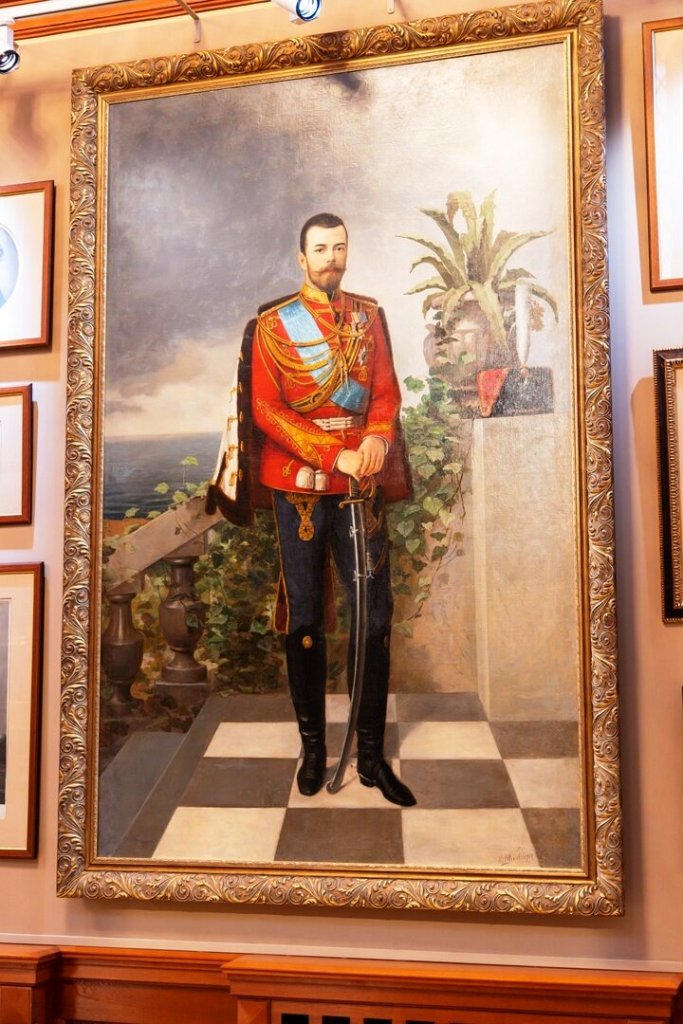
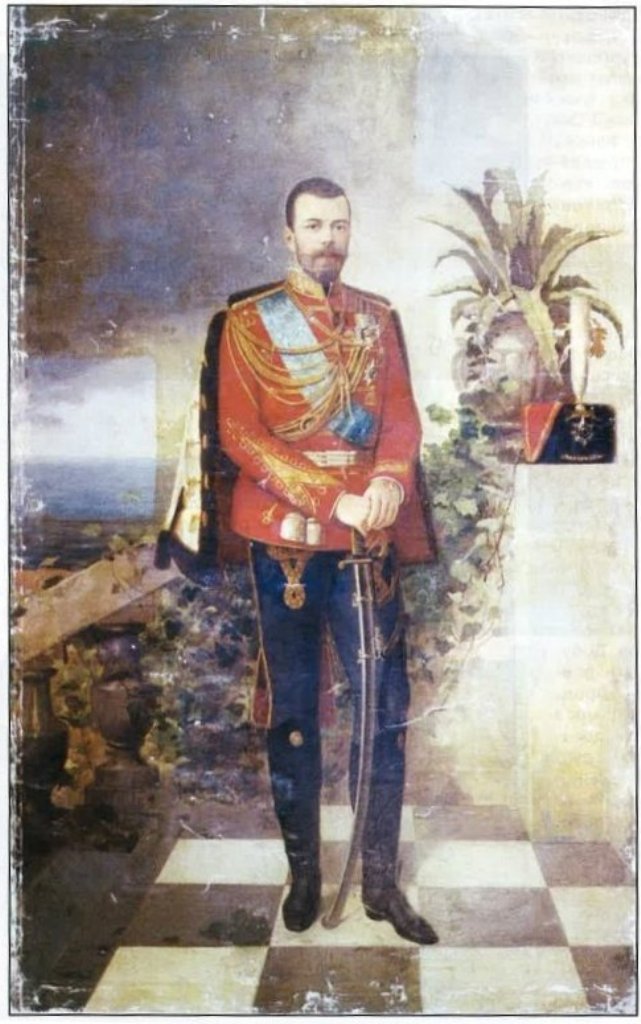
Portrait of Emperor Nicholas II, late 19th century.
Artist: Nikolai Schilder (1828 – 1898)
From the Collection of the Russian Cultural Foundation

After the Bolsheviks came to power in October 1917, Russia experienced a massive outflow of art objects from the collections of members of the nobility who were lucky enough to escape. Objects of historical heritage, paintings by outstanding artists, folios and entire archives were sent abroad. Priceless exhibits found their way into private collections, and replenished the museums of European countries or simply disappeared.

To save the cultural heritage that ended up outside Russia after 1917, White Russian officers founded the American Cultural and Educational Society ‘Rodina’ in Lakewood, New York, which existed until the 1980s. Among the carefully preserved items were paintings, books, letters, and awards. Hundreds of rare exhibits, became the basis of the collection of the largest museum in the entire Russian diaspora.

One of the founders of the Rodina Society, Vsevolod Pavlovich Stelletsky (1904-1982), recalled that the guest of honour at the opening of the Historical Museum of the Society was the last of the Romanov family, Her Highness Princess of the Imperial Blood Vera Konstantinovna (1906-2001), who left Russia at the age of 12. Examining the halls, the princess went to the department dedicated to the House of Romanov, with portraits of monarchs and their families, and stopped in front of a full-length portrait of Emperor Nicholas II and looked at it for a long time.

Schilder’s portrait of Emperor Nicholas II, before restoration.
From the Collection of the Russian Cultural Foundation

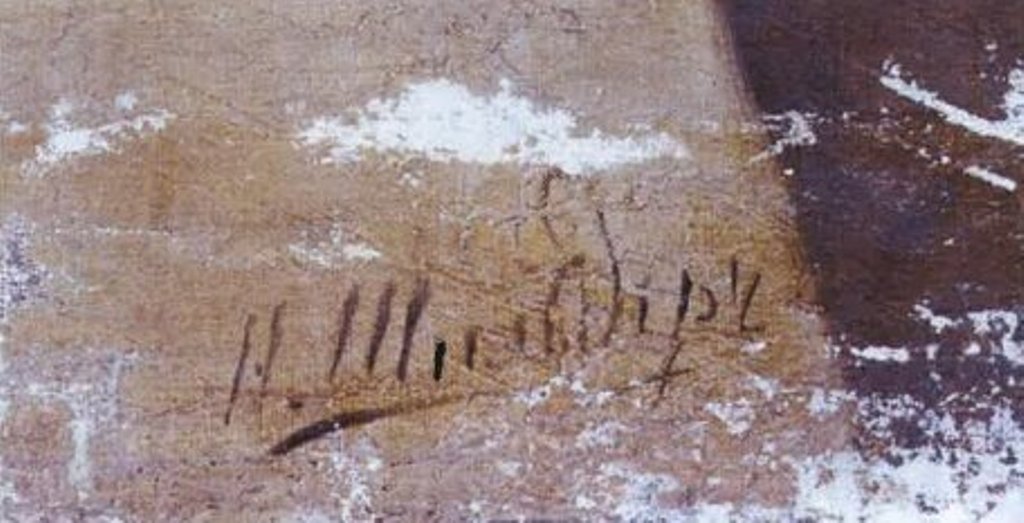
The artist’s signature N.G. Schilder, revealed in the process of restoration.
From the Collection of the Russian Cultural Foundation

“Where did you get this portrait from?” The princess said to Stelletsky, who accompanied her.

“This portrait,” he answered, “once hung in the Russian Consulate in New York, Your Highness, and it was given to us by an honourary member of the society, a donor, Prince Beloselsky-Belozersky.

“What a wonderful portrait. God willing, someday it will hang not in a museum, but in the St. George Hall in the Grand Kremlin Palace.

The princess continued to go around the halls dedicated to the Russian Imperial Army and Navy of the museum. When there was no one left in the museum, she once again turned to Stelletsky.

“I want to look at the portrait of the Emperor again,” the princess said decisively.

Approaching the portrait of Nicholas II, she gazed intently at the image of the Tsar in the uniform of His Majesty’s Life Guards Hussar Regiment, moving very close, she said convincingly:

“I wasn’t sure, but now I can definitely see that there is anguish in the Emperor’s gaze.“

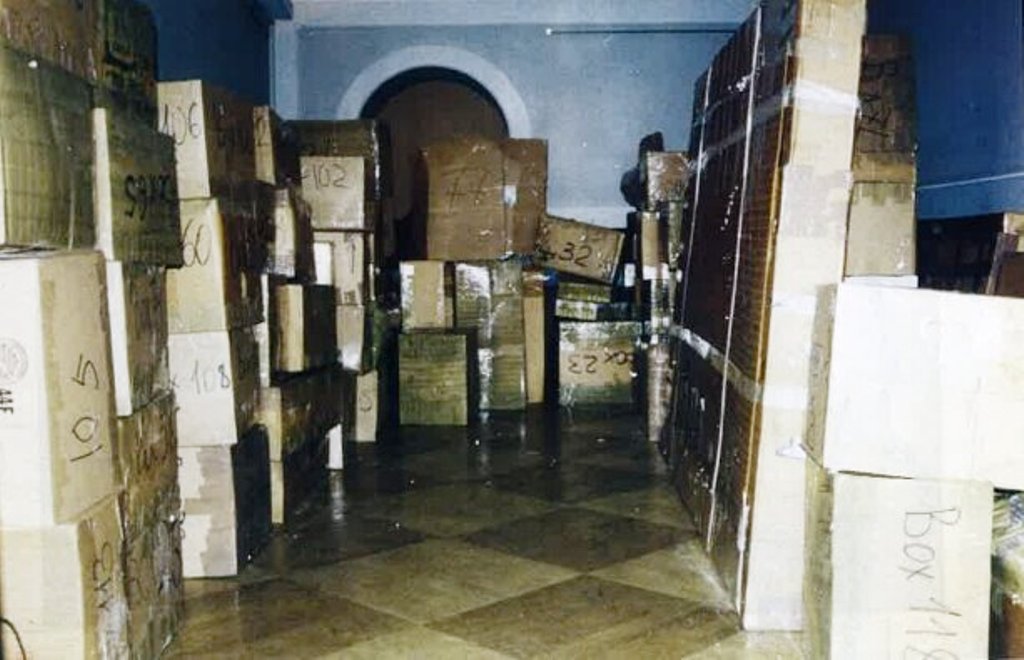
Boxes containing the precious cargo arrive in Russia from America, 1990s.
From the Collection of the Russian Cultural Foundation

In the 1990s, the collection began to return to Russia. This was the wish of all those who once preserved these unique items wanted. The exhibits of the museum were carefully packed and sent to Russia in several containers.

Between the autumn of 1994 to the Spring of 1995, about 40 thousand items were transferred to Moscow, which were received at two addresses: objects of military history – to the Central Museum of the Armed Forces, and objects of artistic value – to the Russian Cultural Foundation.

The portrait of Emperor Nicholas II now hangs in the Tapestry Hall of the Russian Cultural Foundation.

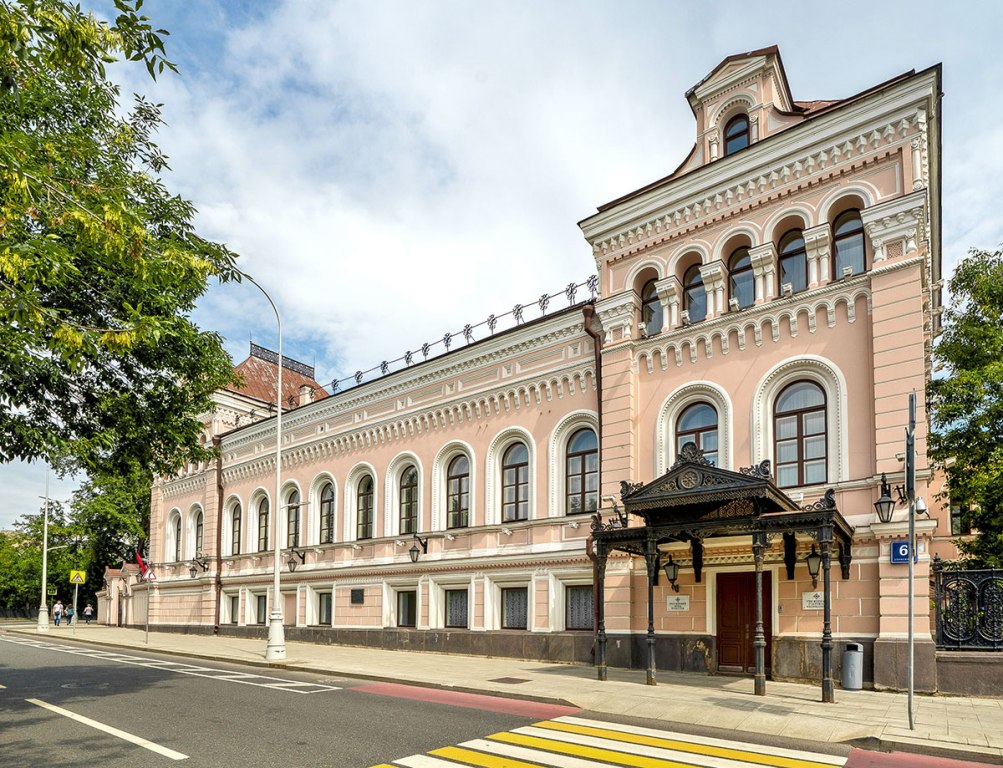
The Russian Cultural Foundation is located near the Kropotkinskaya Metro Station, on Gogolevsky Boulevard in Moscow. The Foundation and museum is housed in a Neo-Russian Style mansion – the former house of the Zamyatin-Tretyakov Estate – seen in the photo above.

© Paul Gilbert. 12 April 2025
Icon that belonged to Nicholas II donated to the Louvre

On Thursday, 10th April 2025, the Société des amis du Louvre [Society of Friends of the Louvre] in Paris announced that it had acquired and donated to the Louvre Museum, a triptych icon that belonged to Russia’s last Tsar.

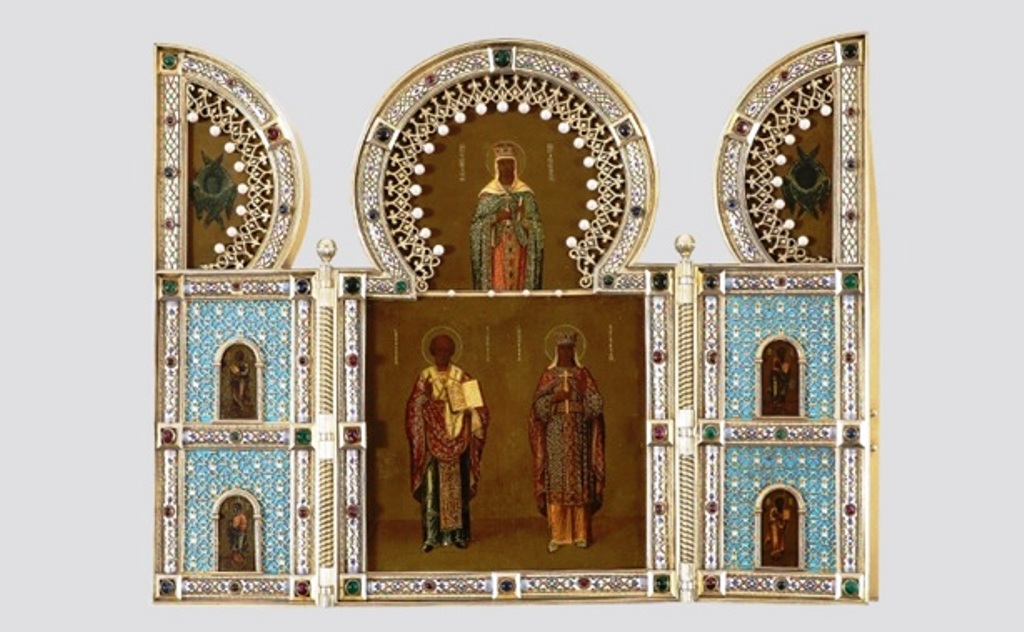
Created in 1895 by Mikhail Evlampievich Perkhin (1860-1903), a leading workmaster of the House of Fabergé, the icon and adorned with precious stones was presented by members of the Russian aristocracy to Emperor Nicholas II and Empress Alexandra Feodorovna on the occasion of the birth of their daughter and first child Grand Duchess Olga Nikolaevna [16th (O.S. 3rd) November 1895].

The 30 cm [12 in.] triptych icon was purchased for 2.2 million euros [$2.5 million USD]. It is made of various materials: Karelian birch, oil painting, gilded silver, gold with enamel, pearls, emerald, ruby and sapphires.

During the interwar period, the icon became part of the historical collection of the gallery A La Vieille Russie, based in Paris and then in New York, which had acquired it at the time of the sale of the Romanovs’ jewels and other precious objects by the Bolsheviks in the 1920s.

It has been exhibited only once, at the Victoria and Albert Museum in London in 1977, after which it was stored in the collection of the art dealer Leon Greenberg.

The Society of Friends of the Louvre decided to acquire and donate the icon to the museum “as part of a wider €4 million sponsorship programme aimed at supporting the museum’s major projects, including the creation of a new Department of Byzantine and Christian Oriental Arts”, which is scheduled to open in 2027.

“It will be one of the major works of the new department of the museum, because of its history and its creation by one of the most prestigious goldsmiths of the House of Fabergé, famous for his decorative eggs that marked the end of the Romanov reign,” said a spokesperson for the Louvre Museum

Based in Paris, France the Société des amis du Louvre is a voluntary association created in 1897 whose purpose is to purchase objects of artistic, archaeological or historical value for the museum. It is the largest private patron of the Louvre: today the Society has 67,000 members, , mostly in France, whose contributions and donations allow it to have an annual budget for the acquisition of works of art in the amount of about 3 million euros.

© Paul Gilbert. 11 April 2025
Nicholas II depicted in new painting dedicated to Kuzma Minin

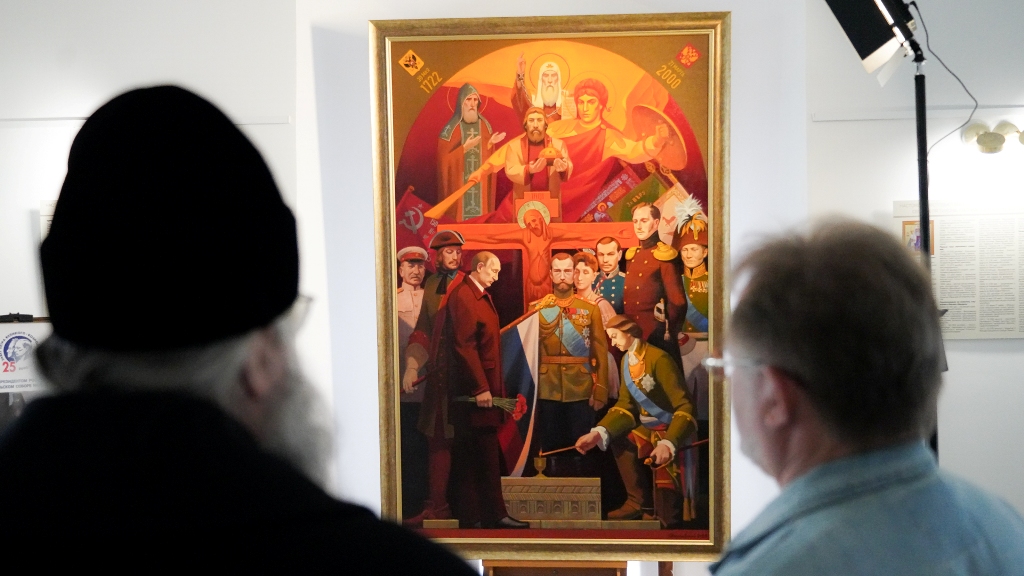
PHOTO: “The Testament of Peter the Great. Revival” by Sergei Malinovsky

On 1st April 2025, Metropolitan Georgy of Nizhny Novgorod and Arzamas attended the official unveiling cermony of the painting “The Testament of Peter the Great. Revival”, in the restored bell tower of the Transfiguration Cathedral situated of the Nizhny Novgorod Kremlin.

The head of the Nizhny Novgorod Metropolia was accompanied by the artist Sergei Viktorovich Malinovsky [b. 1959], who is a member of the Union of Artists of Russia.

The ceremony was dedicated to the 25th anniversary of the revival of the historical tradition established by Emperor Peter the Great of honouring the memory of Kuzma Minin (1570s-1615), a nobleman, who in 1612 headed the militia which liberated Moscow from foreign invaders.

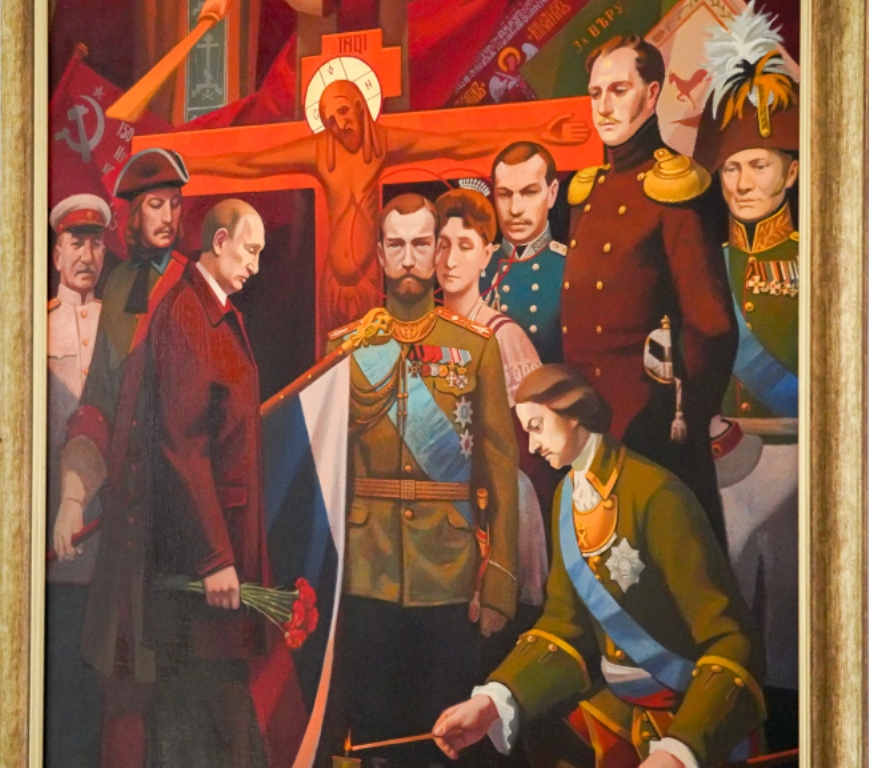
PHOTO: detail of “The Testament of Peter the Great. Revival” which depicts President Vladimir Putin, Emperor Nicholas II and Peter the Great, among others.

Sergei Malinovsky conducted a study of the activities of Peter the Great, bringing together the patriotic deeds of other Russian rulers, who honoured the memory of Kuzma Minin, the Russian national hero, who united the people and the government in the defense of the country and its historical memory.

The painting “The Testament of Peter the Great. Revival” was painted in oil on canvas, measuring 160 x 100 centimeters [5.3 ft. x 3.3 ft.].

In the foreground are Russian President Vladimir Putin and Emperor Peter the Great, who, kneeling, lights a candle on the tombstone of Kuzma Minin’s grave. Numerous other Russian historical leaders are also depicted.

In life, Emperor Nicholas I, Emperor Alexander III, Emperor Nicholas II and Empress Alexandra Feodorovna, all honored the memory of Kuzma Minin.

PHOTO: Metropolitan Georgy of Nizhny Novgorod and Arzamas (left) attends the unveiling ceremony of “The Testament of Peter the Great. Revival” by Sergei Malinovsky in the Nizhny Novgorod Kremlin

The canvas also contains the banners of the militia of 1612, 1812, 1855 and the Victory Banner of 1945. Above the crucifixion which includes a piece of the Cross of the Lord, donated by Prince Dmitry Pozharsky to the Transfiguration Monastery in the village of Pureh, the following are depicted in the golden heavenly light: Kuzma Minin, holding the cap of Monomakh, as a symbol of the people who did not allow the fall of Russian statehood; St. Sergius of Radonezh, who appeared three times in visions to Minin, calling him to podvig; the “initial man” of the Muscovite state of that time, representing the spiritual power, the Hieromartyr Patriarch Germogen, according to whose charters the first (Lyapunov-Ryazan) and second (Minin-Nizhny Novgorod) people’s militias were raised; Archangel Michael, the heavenly patron of Nizhny Novgorod.

© Paul Gilbert. 7 April 2025
Those Who Served the Tsar: Vladimir Nikolaevich Voeikov (1868-1947)

Portrait of Major General Vladimir Nikolaevich Voeikov (1913-14)
Artist: unknown. Private Collection.

Vladimir Nikolaevich Voeikov (1868-1947) was a member of His Imperial Majesty’s Retinue, and served as Palace Commandant from 1913 to 1917. He was one of the most trusted associates of Emperor Nicholas II.

Vladimir was born in Tsarskoye Selo on 15th (O.S. 2nd) August 1868, to the family of cavalry general Nikolai Vasilievich Voeikov (1832-1898) and Princess Varvara Vladimirovna Dolgorukova (1840-1909), daughter of the Moscow Governor-General Vladimir Andreevich Dolgorukov (1810-1891).

He was educated in the Corps of Pages, after which, on 7th August 1887, he was released as a cornet in the Chevalier Guard Regiment.

In 1894, he married Eugenia Vladimirovna Frederiks (1867-1950), a maid of honour at the Russian Imperial Court (1890); and the eldest daughter of the Minister of the Imperial Court Vladimir Fredericks (1838-1927). In society, everyone called her Nina. The couple had no children.

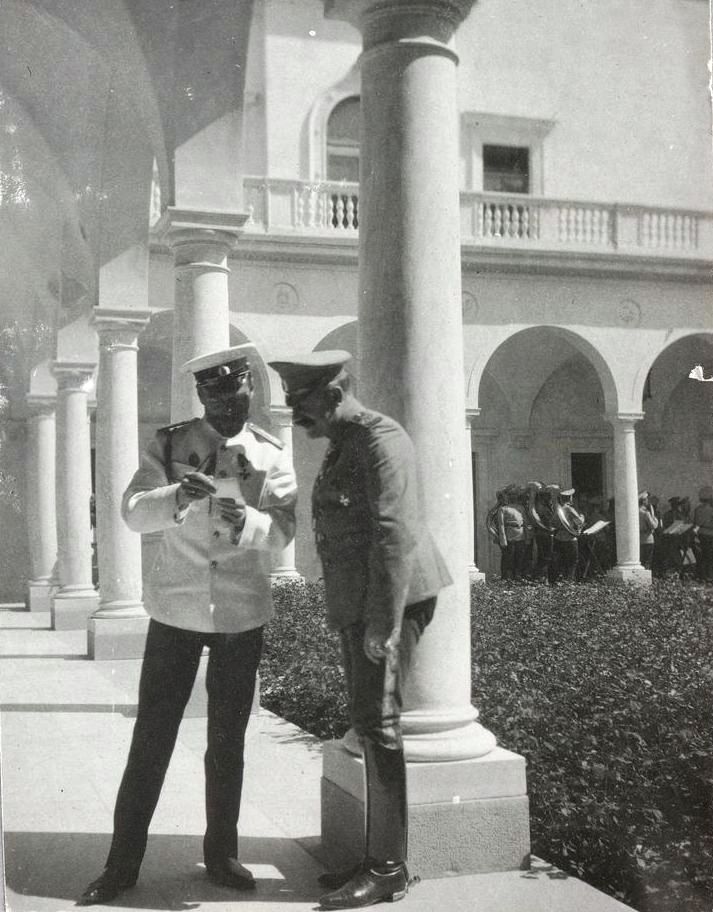
PHOTO: Minister of the Imperial Court Vladimir Fredericks (left), with his son-in-law Vladimir Voeikov (right), Livadia 1914

PHOTO: Emperor Nicholas II with Vladimir Voeikov. Livadia 1914

Vladimir Voeikov enjoyed a successful and prestigious career, in which he received numerous promotions. In August 1891, he was appointed lieutenant, from April 1898 as headquarters captain and from May 1901 he was promoted to the rank of captain. He served as squadron commander for 5 years and 1 month, then as head of the education school for 5 years and 6 months.

From November 1905, he served as assistant commander of the Chevalier Guard Regiment, and in December 1905, he was promoted to colonel. In 1906 he was appointed adjutant wing to His Imperial Majesty.

From August 1907, Vladimir served as Commander of His Majesty’s Life Guards Hussar Regiment. In December 1909, Emperor Nicholas II promoted him to the position of major general and enrollment in His Imperial Majesty’s retinue.

Upon the birth of the Tsesarevich Alexei Nikolaevich (1904-1918), Voeikov was named godfather to the Emperor’s only son and heir. In 1910 Vladimir began the construction of a summer residence for his godson, located on his estate, located in the Penza region.

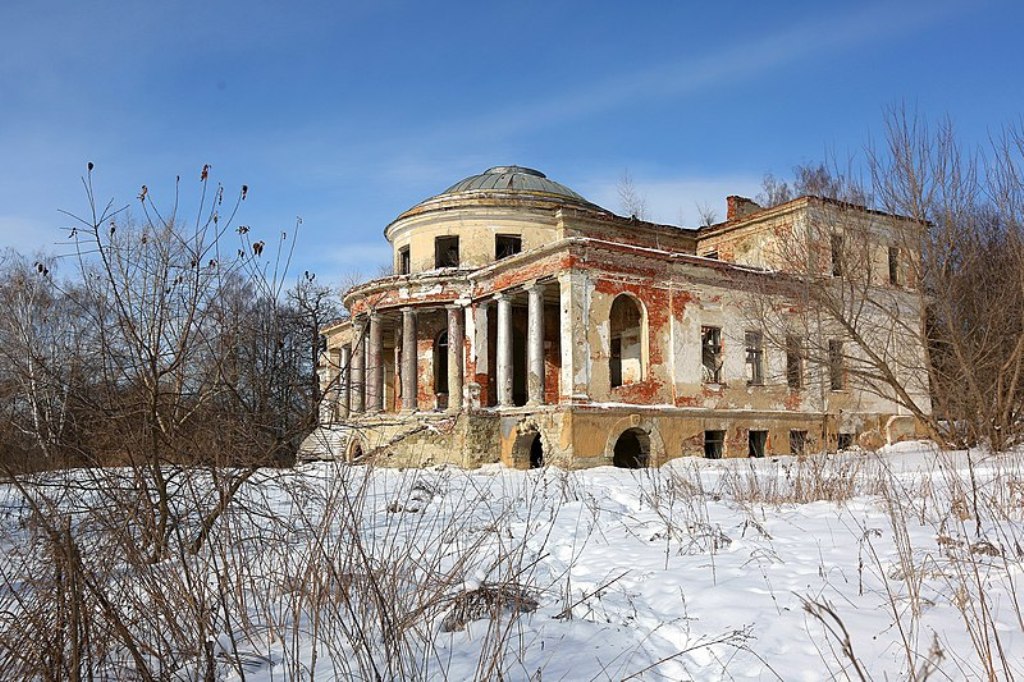
PHOTO: after decades of neglect by its Soviet caretakers, Vladimir Voeikov’s unfinished palace for his godson Tsesarevich Alexei Nikolaevich, today lies in ruins

The general plan of the estate initially consisted of three buildings (palace, a secondary building, and stables). The palace was designed in the style of an Italian villa, which included a park with rare trees and fountains. The palace consisted of two stories high, made in the neoclassical style, with a rotunda, surrounded by a balustrade and sloping stairs which led to the front entrance.

In 1917, the still unfinished palace was nationalized and placed at the disposal of the local Soviets, who used the building for a variety of purposes up until the fall of the Soviet Union in 1991. The building has survived to the present day, however, it is in a terrible state of disrepair, despite the fact that the palace is recognized as a monument of history and culture of regional significance.

After the formation of the Russian Olympic Committee in 1912, Vladimir Voikov was elected its honorary chairmanm on 24th December 1913.

In 1913, Voeikov founded a mineral water bottling plant on his Kuvaka estate in the Penza region, with an annual production of 100 thousand bottles of water. The Voeikov estate was located on the territory of the modern city of Kamenka (Penza region) . During the war, Vladimir won a contract for the supply of his mineral water to the front and to hospitals.

PHOTO: in happier times, Vladimir and his wife Eugenia, wearing 17th century dress for the Costume Ball, held in February 1903, at the Winter Palace, St. Petersburg

During the February Revolution, Vladimir was arrested, and held under arrest, first in the Tauride Palace, then in the Peter and Paul Fortress in Petrograd, where he was interrogated by the Extraordinary Investigative Commission of the Provisional Government. He was subsequently released, but in the summer of 1918, under the threat of arrest by the Bolsheviks, he hid in the hospital of St. Panteleimon for the mentally ill, from where he kept in touch with his relatives.

In September 1918, having learned about the arrest of his wife, he fled to the Crimea , from where he went into exile, first to Romania, and then to Finland, where he lived at Dr. Botkin’s dacha in Terijoki (Terijoki), now Zelenogorsk. After leaving Finland, Voeikov moved to Sweden. During his years in exile, Voeikov wrote his memoirs С царем и без царя / With the Tsar and Without the Tsar [see below], published in in Helsinki in Russian in 1936.

In June 1919, during the offensive of General N. N. Yudenich on Petrograd, Vladimir’s wife Eugenia was arrested and transported to Moscow. She was held in a concentration camp in the Ivanovsky Monastery. [situated in central Moscow, inside the Boulevard Ring, to the west of Kitai-gorod]. In 1925 she received permission to leave the USSR, whereupon she moved to Finland with her father and sister. From 1939 she lived with her husband in Helsinki. In 1946 they moved to Sweden and settled in Danderyd.

Vladimir Voeikov died on 8th October 1947, and was buried in a local cemetery in the town of Djursholm, situated in the suburbs of Stockholm. Eugenia died in 1950 and was buried next to her husband. Later, their remains were reburied at the Kauniainen City Cemetery, in the same grave of Count Vladimir Fredericks – who died in 1927.

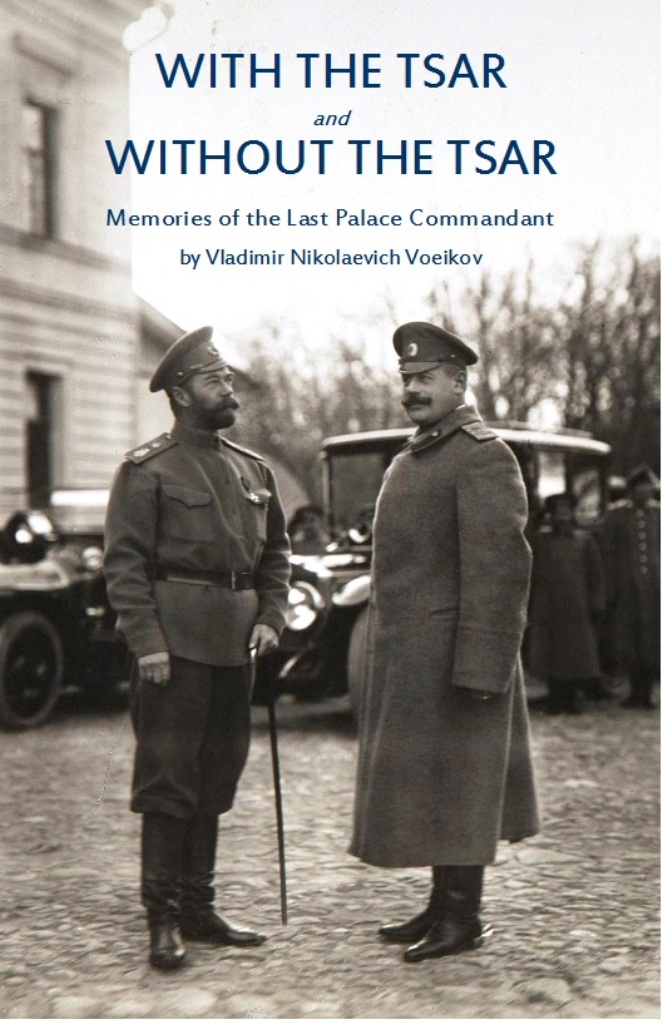
PHOTO: the proposed cover of the English translation, features this photo of Emperor Nicholas II and Vladimir Voeikov at the Stavka, the headquarters of the Russian Imperial Army, in Mogilev. 1915-1916

I am currently in the process of having WITH THE TSAR AND WITHOUT THE TSAR by Major General Vladimir Nikolaevich Voeikov (1868-1947), translated from Russian to English.

Originally published in Russian in 1936, this will be the first English translation of the sad but captivating story, about the man who, from 1913-1917, served as the last palace commandant to Emperor Nicholas II. Voeikov was the son-in-law of the Minister of the Imperial Court Vladimir Borisovich Frederiks (1838-1927). He was one of the few men at Court, who remained faithful to the Tsar.

His memoirs describe the events the February and October 1917 revolutions and their consequences for the Russian Empire and the Tsar; foreign policy intrigues and the chain of events that led to the First World War and Russia’s participation in it; Court vanity and envy; the private lives of the Tsar and his family at Peterhof, Tsarskoye Selo and Livadia; and Voeikov’s ordeals as he fled Bolshevik Russia.

Translations are very costly – this book is 330 pages – which is why I am reaching out to those who share an interest in the life and reign of Nicholas II.

Please consider making a donation to help fund the translation of Voeikov’s memoirs, a very important historical record on the life and reign of Russia’s much slandered Tsar.

CLICK HERE TO MAKE A DONATION

Thank you for your consideration

© Paul Gilbert. 4 April 2024 (Updated 4 April 2025)

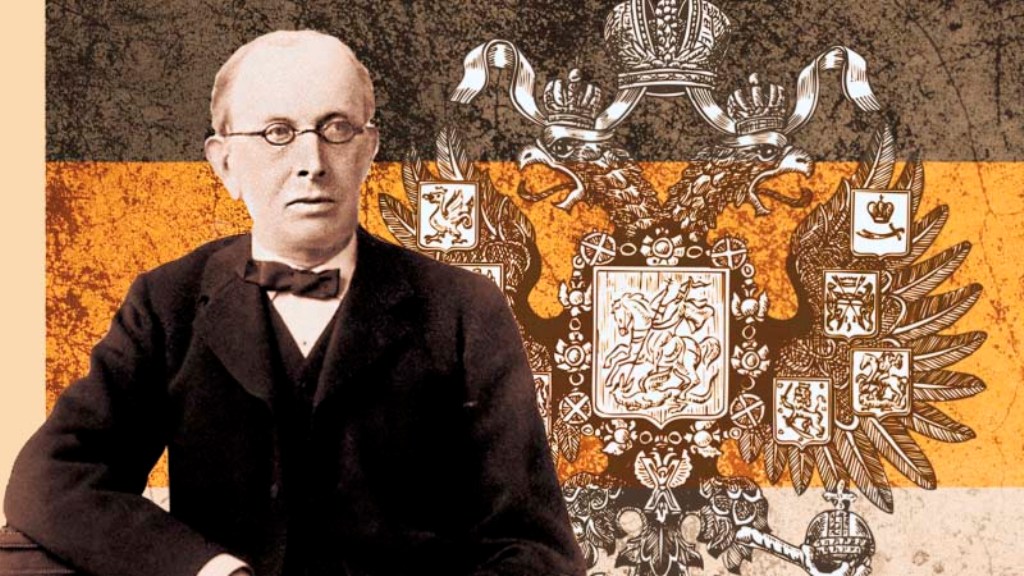
Konstantin Pobedonostsev: symbol of Russian monarchal absolutism

Konstantin Petrovich Pobedonostsev was born in Moscow on 30th (O.S. 18th) November 1827. He remains one of the most interesting, yet controversial persons from the life and reign of Emperor Nicholas II.

Pobedonostsev was a Russian jurist, statesman, and adviser to three Tsars: Alexander II, Alexander III and Nicholas II. Nicknamed the “Grand Inquisitor,” he came to be the symbol of Russian monarchal absolutism.

Pobedonostsev and Tsesarevich Alexander Alexandrovich [future Emperor Alexander III] remained very close for almost thirty years, through Alexander’s ascension as Tsar in 1881 and until his death in 1894.

During the reign of Alexander III he was one of the most influential men in the Russian Empire. He was the mastermind of Alexander III’s Manifesto of 29th April 1881, written about two months after the assassination of his father, Alexander II. ‘The Manifesto on Unshakeable Autocracy’ proclaimed that the absolute power of the Tsar was unshakable thus putting an end to Loris-Melikov’s endeavours to establish a representative body in the empire. The manifesto rejected the more liberal reforms of Alexander II (and some of his father’s ministers) in favor of “unshakable autocracy” which had been given to the tsars as a sacred duty from God. The document summed up Alexander’s counter reform policies, which were strongly influenced by Pobedonostsev.

PHOTO: Konstantin Pobedonostsev drinking tea in the garden of the Cottage Palace, the Peterhof residence of Dowager Empress Maria Feodorovna, July 1898

Pobedonostsev was the chief spokesman for reactionary positions. He was the “éminence grise” of imperial politics during the reign of Alexander III, holding the distinguished position of Chief Procurator of the Most Holy Synod, the non-clerical Russian official who supervised the Russian Orthodox Church [from 1880 to 1905].

In 1883, Emperor Alexander III appointed Konstantin Pobedonostsev, as chief tutor to his son and heir Nicholas Alexandrodovich [future Emperor Nicholas II].

Nicholas received a thorough training under the direction of the best teachers in Russia. Among his teachers, the one who exerted the greatest influence on him was undoubtedly the ultra-conservative Russian academic Konstantin Pobedonostsev, who was highly intelligent, widely read and very hardworking. Pobedonstsev believed that only the power and symbolism of an autocratic monarchy, advised by an elite of rational expert officials, could run the country effectively.

Pobedonostsev’s guidance and influence imbibed the principles of absolutism, dynasty, military greatness and the official religious tradition on the future Tsar. He constantly reminded Nicholas Alexandrovich that the Tsar was anointed by God and was a divinely inspired source of wisdom and order.

PHOTO: Emperor Nicholas II with Konstantin Pobedonostsev (far right). Empress Alexandra Feodorovna and Grand Duchess Olga Alexandrovna, both dressed in white (center) standing next to the Tsar. This photo was taken on the steps of the Cottage Palace, the Peterhof residence of Dowager Empress Maria Feodorovna, July 1898

Following the death of Alexander III on 1st November [O.S. 20 October] 1894, Pobedonostev remained an aide to Nicholas II, although he lost much of his influence. While the new Tsar adhered to his father’s Russification policy and even extending it to Finland, he generally disliked the idea of systematic religious persecution, and was not wholly averse to the partial emancipation of the Church from civil control.

In 1901, Nikolai Lagovski, a socialist, tried to assassinate Pobedonostsev, shooting through the window of Pobedonostsev’s office, but missing. Lagovski was sentenced to 6 years.

It was Pobedonostsev who ordered the excommunication of the great Russian writer Leo Tolstoy in 1901.

As the Chief Prosecutor of the Holy Synod – a position he held until 1905 – Pobedonostsev opposed the canonization of the Monk Seraphim of Sarov in 1903. Standing firm in his beliefs, Emperor Nicholas II ordered the canonization of Seraphim of Sarov.

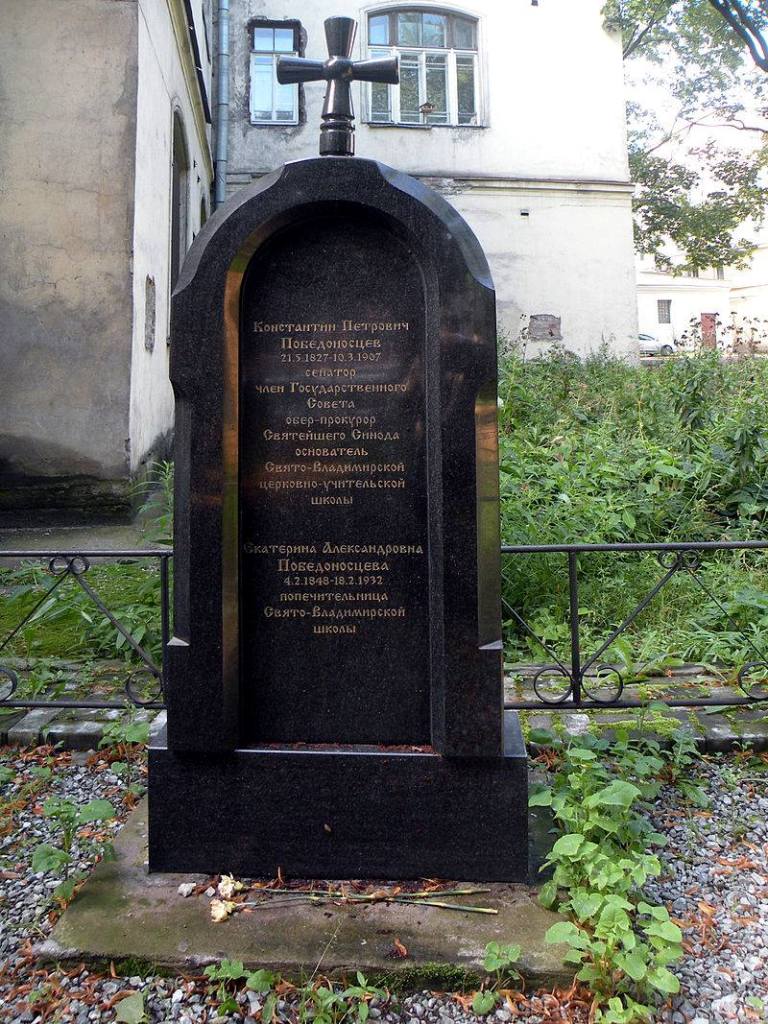
PHOTO: Konstantin Pobedonostsev’s grave, St. Vladimir Church in St. Petersburg

Konstatnin Pobedonostsev died in St. Petersburg on 23rd March (O.S. 10th March) 1907. He was survived by his wife Ekaterina Alexandrovna, née Engelhardt (1848-1932), and their adopted daughter Martha (1897-1964).

Pobedonostsev’s funeral took place on 26th March (O.S. 13th March) 1907 at the Novo-Devichsky Convent; members of the Imperial Family were not present. He was buried at St. Vladimir Church in St. Petersburg. The church has not survived, however, the grave has survived to the present day.

© Paul Gilbert. 14 December 2022 (Revised on 25th March 2025)

Nicholas II visiting Queen Victoria in 1896 + VIDEO

CLICK on the IMAGE above to watch the film-clip

The only known film-clip of Emperor Nicholas II and Empress Alexandra Feodorovna visiting Queen Victoria is available to view on YouTube. It is the earliest known film of the Tsar and Queen Victoria at Balmoral. The recording lasts only 1 minute and 10 seconds, but is of great historical value.

The film-clip featuring members of the British Royal Family and the Russian Imperial Family was shot on 3rd October 1896 at Balmoral Castle, a favourite residence of Queen Victoria in the Scottish Highlands. It was filmed by William Edward Downey (1829-1915) of W. & D. Downey Studios (London).

In the recording, Queen Victoria can be seen in an open carriage pulled by a pony. In her arms, the Queen holds her favorite Pomeranian “Turi”. The Queen is accompanied by numerous family members and relatives, including her granddaughter, Empress Alexandra Feodorovna [daughter of Princess Alice of Great Britain, later Grand Duchess if Hesse and by Rhine (1843-1878)], and her granddaughter’s husband, Emperor Nicholas II, dressed in a casual three-piece suit and a Homberg felt hat. The procession is completed by the Queen’s favorite, Abdul Karim (1863-1909), who served Her Majesty during the final fourteen years of her reign, gaining her maternal affection over that time.

William Downey showed the film to Queen Victoria at Windsor Castle on 23rd November 1896. For more than a century, the recording had been gathering dust in the archives, it was discovered and shown to the general public in 2013.

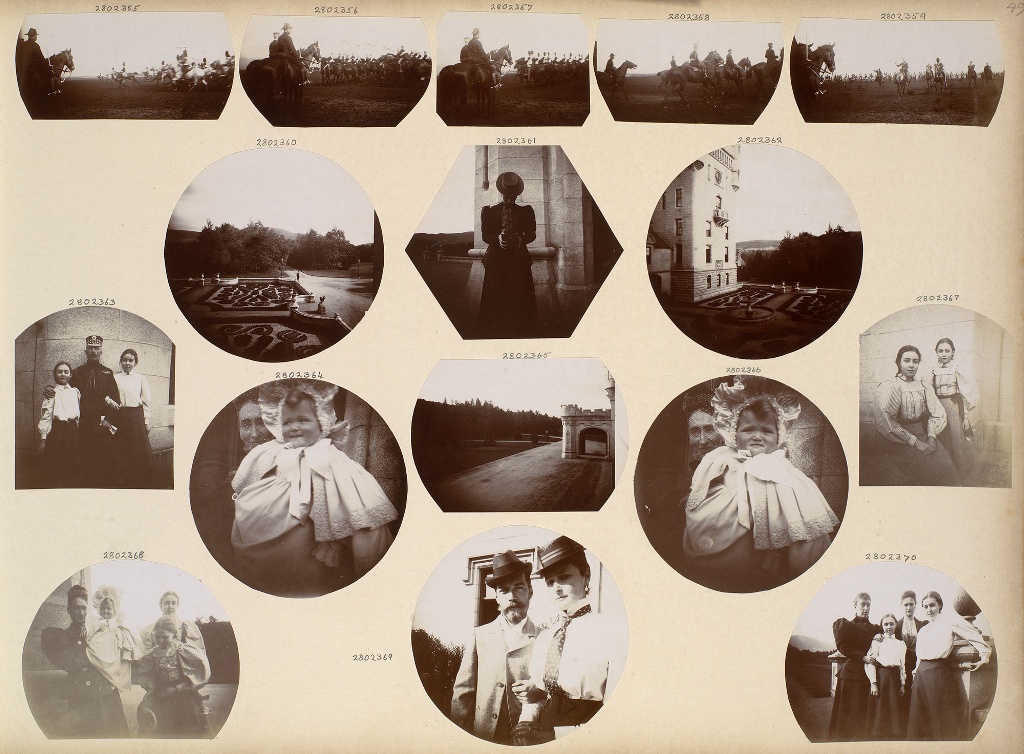
Pages from Princess Alexandra’s Photo Albums (1896)
CLICK on each image to enlarge and see photos in greater detail

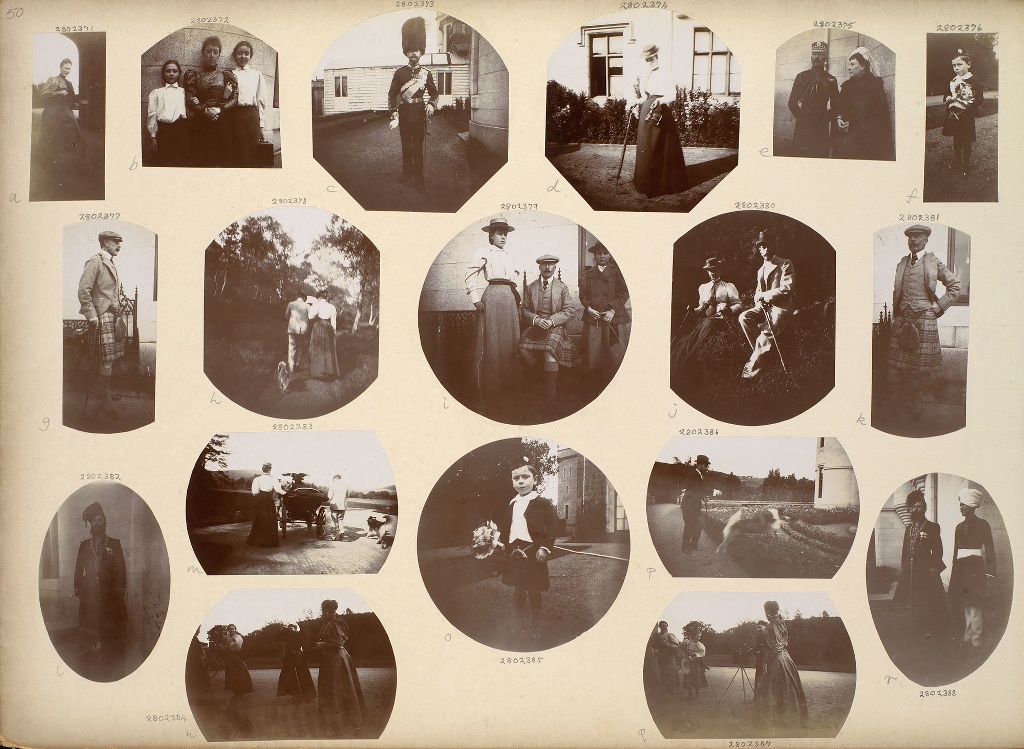
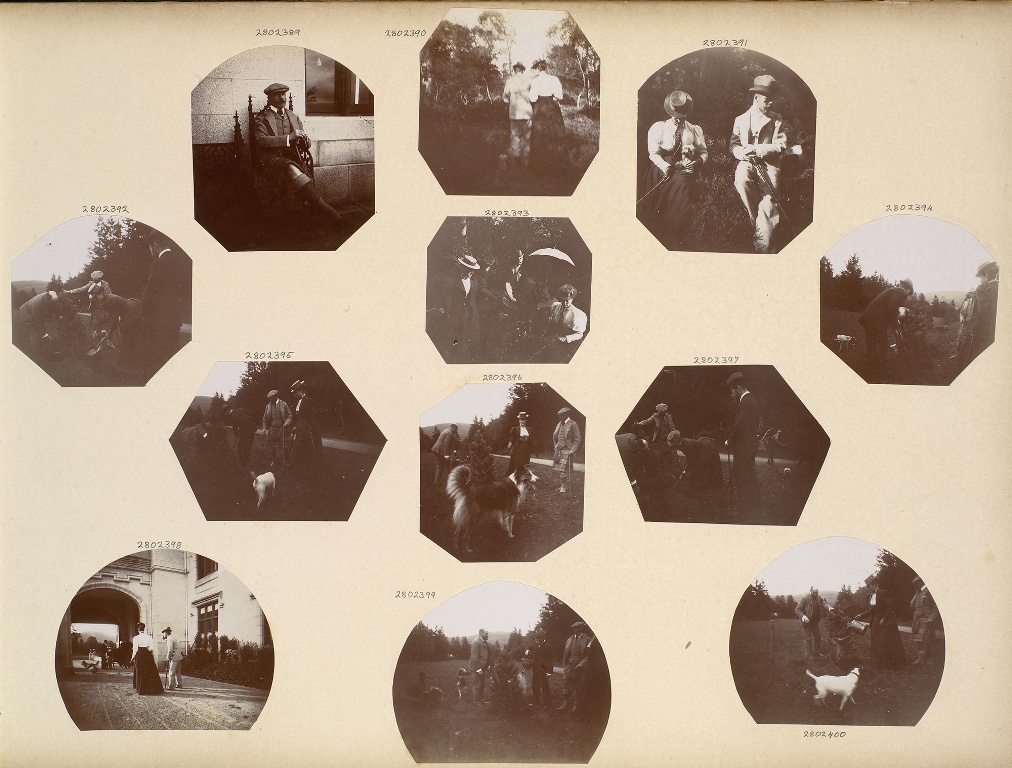
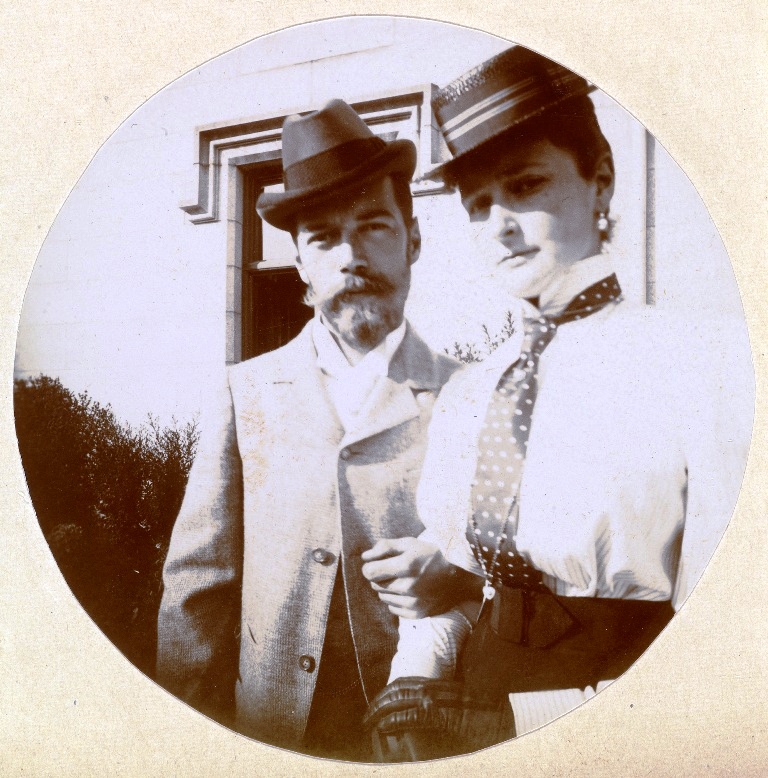
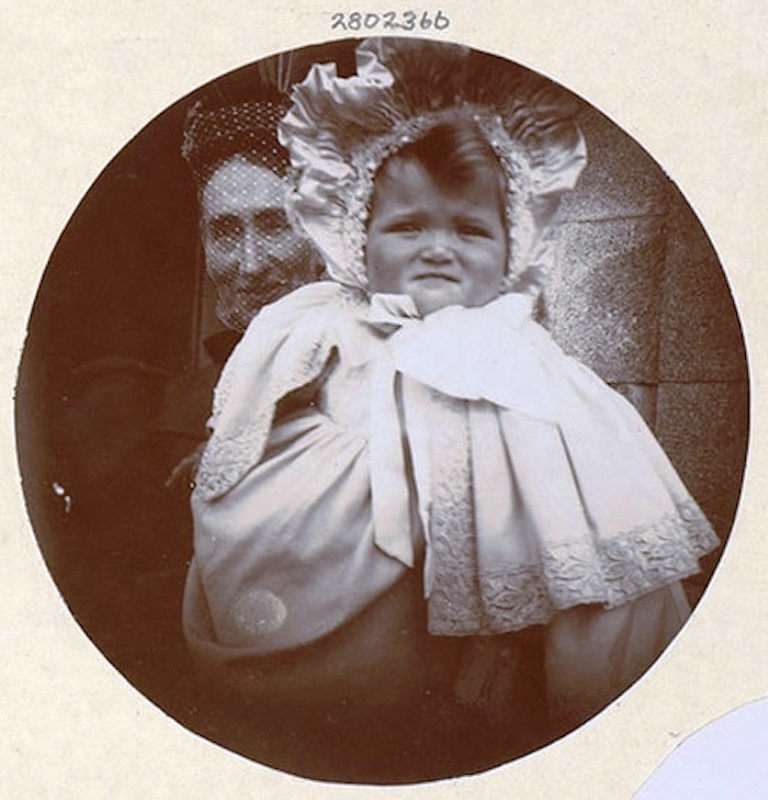
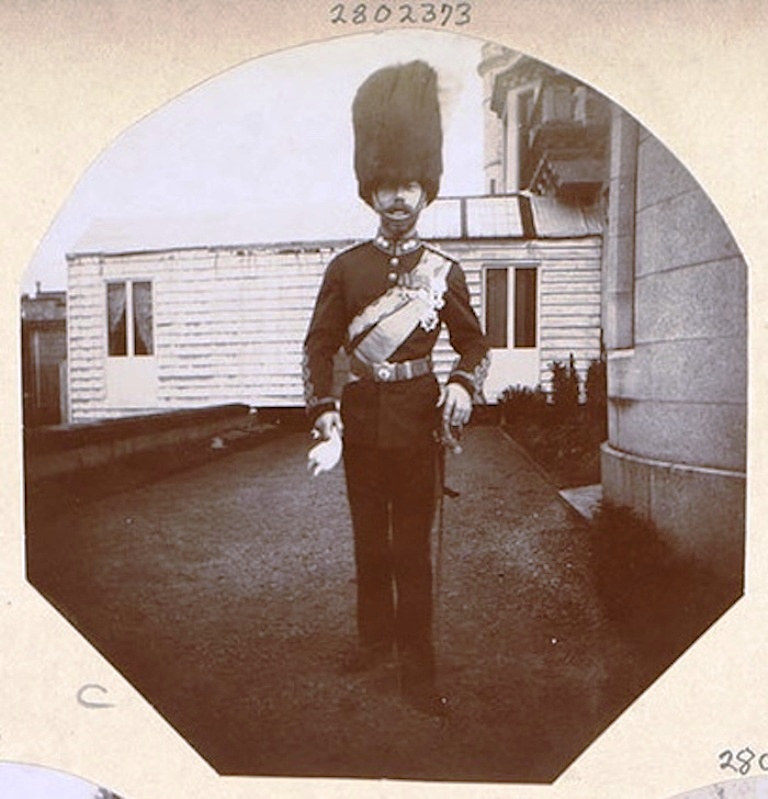
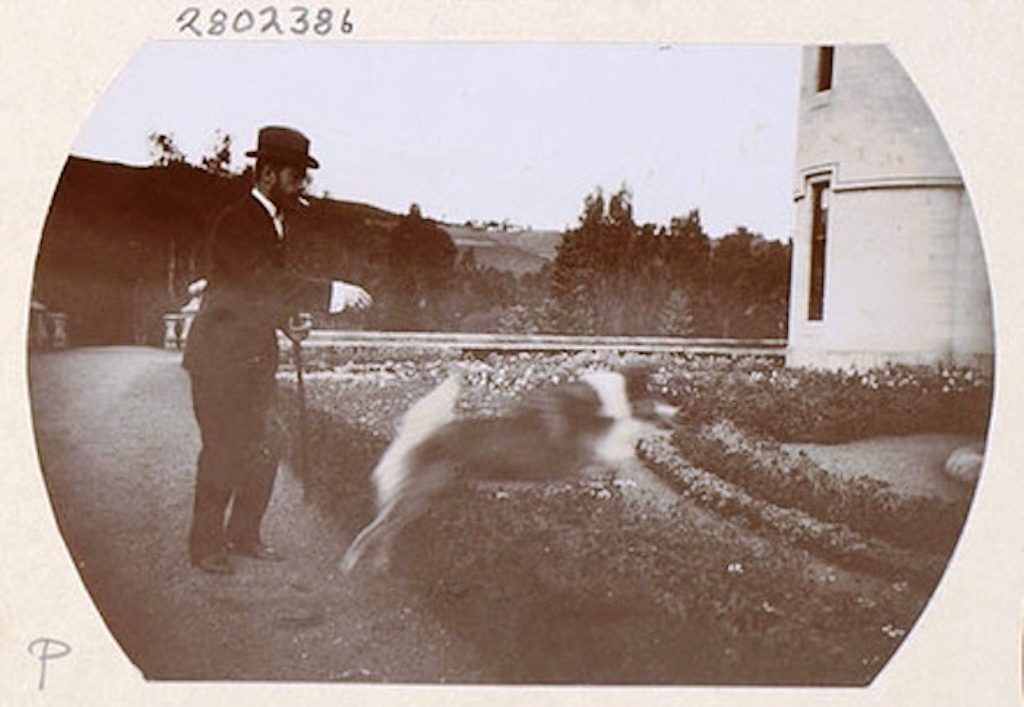
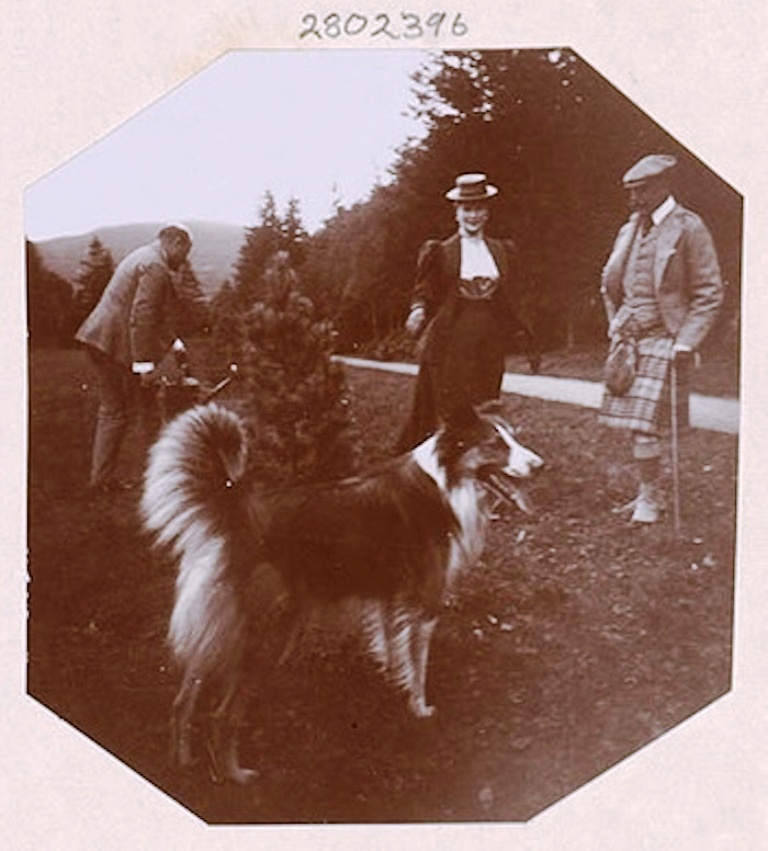
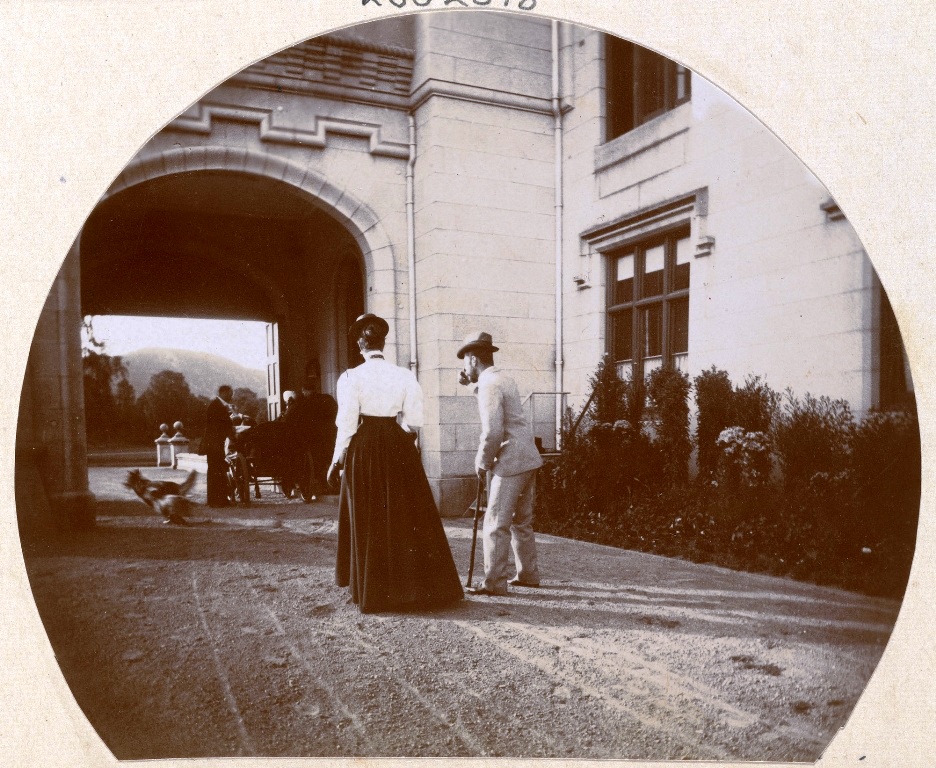
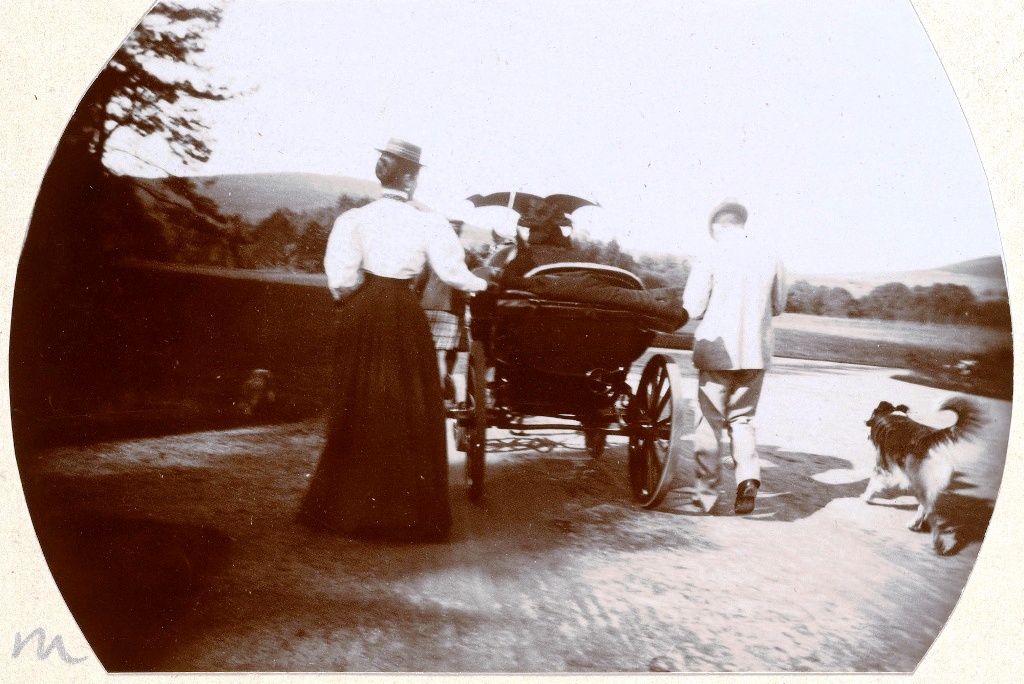
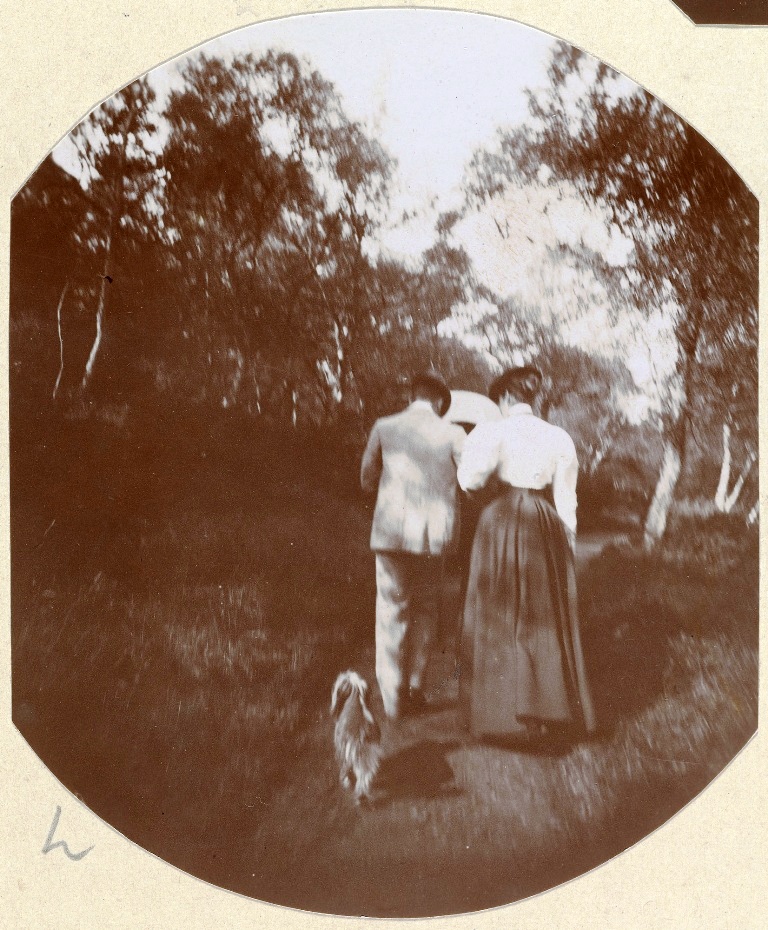
The Royal Foundation of Great Britain also published several pages from the album of Princess Alexandra of Wales [Alexandra of Denmark, 1844-1925] – the daughter-in-law of Queen Victoria and the maternal aunt of Nicholas II. Alexandra was fond of photography and made a detailed album on her nephew’s stay at Balmoral. The photos are round – this was the format produced by the first Kodak cameras.

In the pictures, we see the happy newlyweds and their newborn daughter Olga, about whom the queen said: “A beautiful child, and so big!”

Photos from Princess Alexandra’s Photo Albums (1896)
CLICK on each image to enlarge and see photos in greater detail

The Queen talked a lot with Nicholas II about politics, in particular, about the crisis in Turkey, where mass crimes against Armenians had taken place. Over a cup of tea, Nicholas II and Queen Victoria decided the fate of the Ottoman Sultan. And Alexandra Feodorovna told Granny Victoria about her new life in St. Petersburg and her worries about motherhood.

The Queen enjoyed watching the bathing of Olga, whom she described as “a cute fat baby, cheerful and full of life.” Newlyweds Nicholas and Alix walked with their dogs in Balmoral Park – without retinue and without worries. Another photo (see below) depicts Nicholas II in the uniform of Colonel-in-Chief of the 2nd Dragoons (Royal Scots Grays), bestowed upon him by Queen Victoria.

Photos from Princess Alexandra’s Photo Albums (1896)
CLICK on each image to enlarge and see photos in greater detail

They took photographs of each other in the courtyard of the castle. Alexandra Feodorovna also had her own camera, but her photos have not been preserved. But we can leaf through the diary of Nicholas II for their visit to Balmoral, in which the Tsar mainly describes his hunting excursions:

“At 9 1/2 we went on a round-up of the famous grouse [hazel grouse] in the mountains near Birkhall and Glenmuick. I killed only two of them, because shooting at these birds is very difficult. We had breakfast in the tent provided by the generosity of Lord Glenesk, where we drank tea in a large company after the hunt. We returned home at 7 1/2. I’m pretty tired of climbing mountains and standing for a long time on NoNo [numbers, i.e. designated positions] inside earthen towers!”

The day of 3rd October (O.S. 21st September) according to Nicholas’s diary was marked not only by a “whirling shooting”, but also by an important symbolic event. Nicholas and Alexander planted a pine tree each in Balmoral Park.

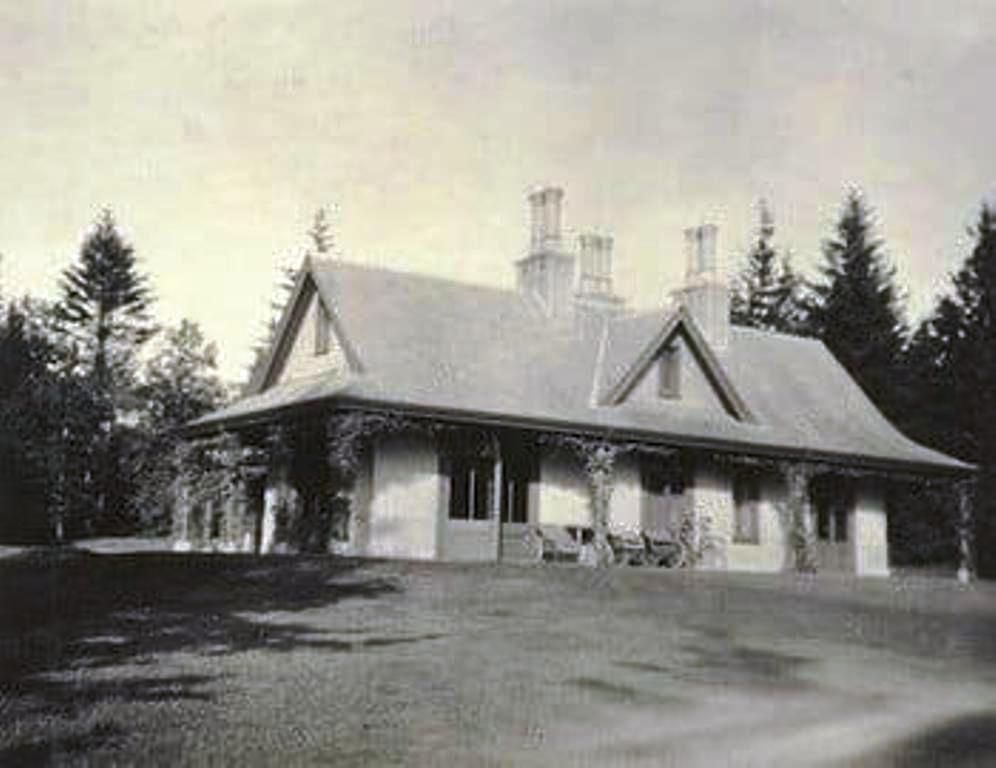
PHOTO: the Garden Cottage at Balmoral (1913)

The Emperor dug a hole with his own hands, covered the roots of the tree with earth and watered the pine tree. Since Balmoral has been carefully maintained and preserved over the years, it is safe to say that the pines more than likely have survived to the present day. There are no special plaques on the trunks, but the Queen wrote in her diary that Nicholas and Alexandra planted pine trees “not far from the Garden Cottage.”

© Paul Gilbert. 24 March 2025