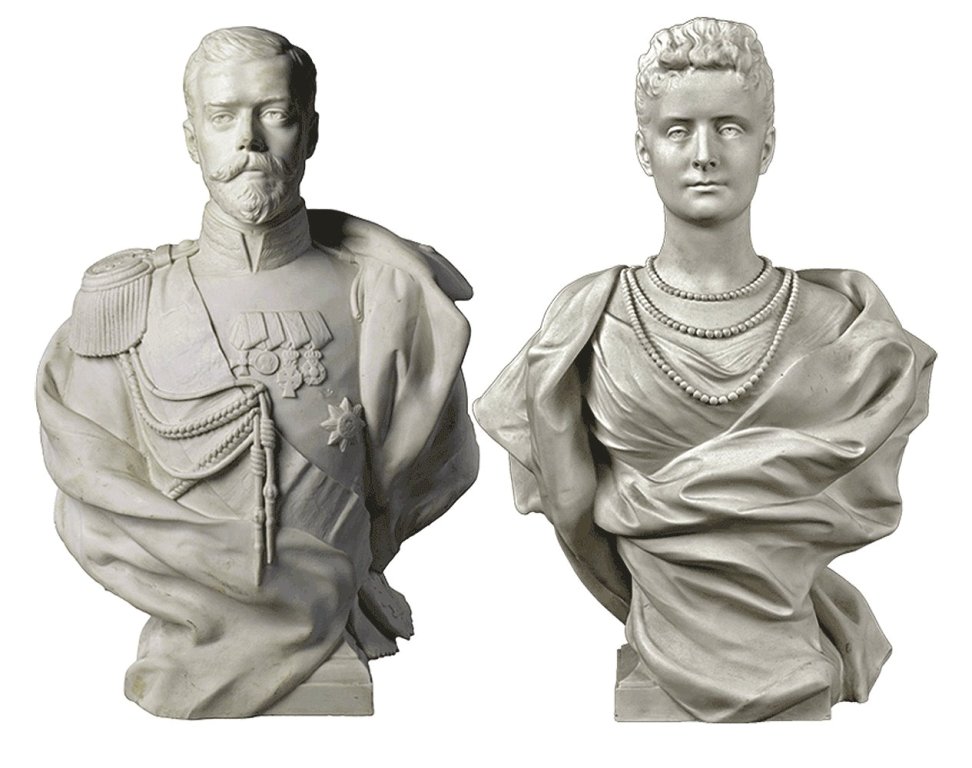
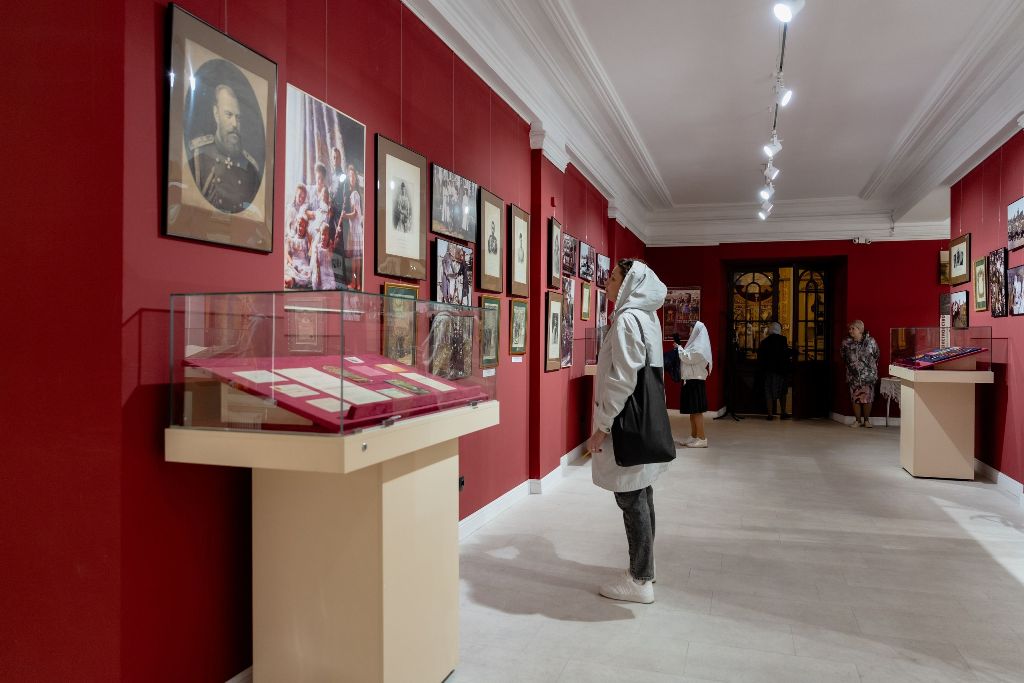
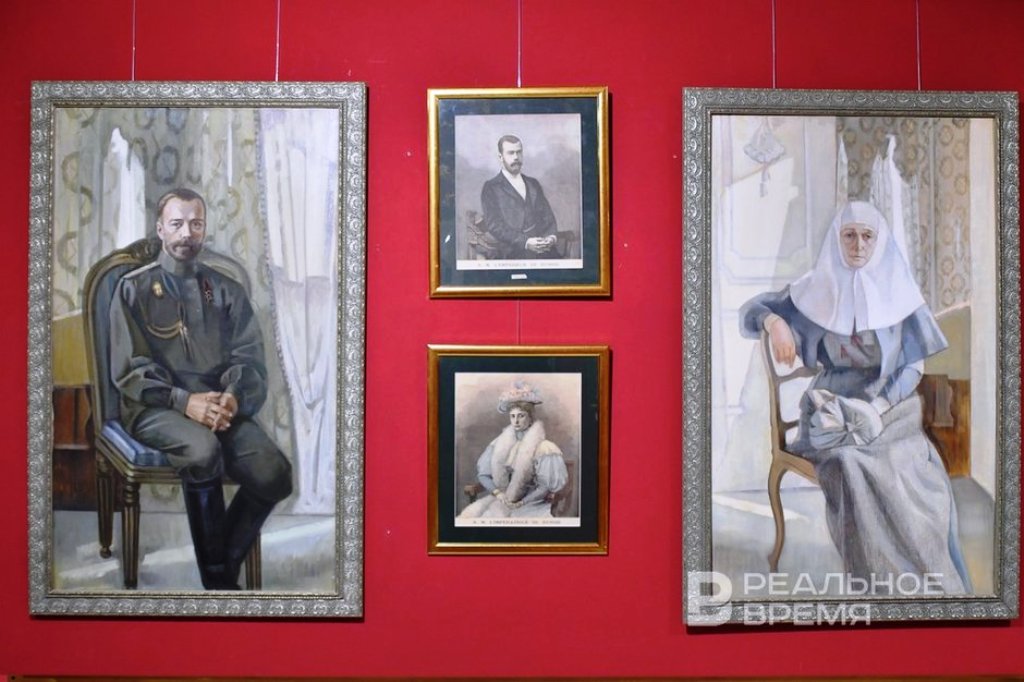
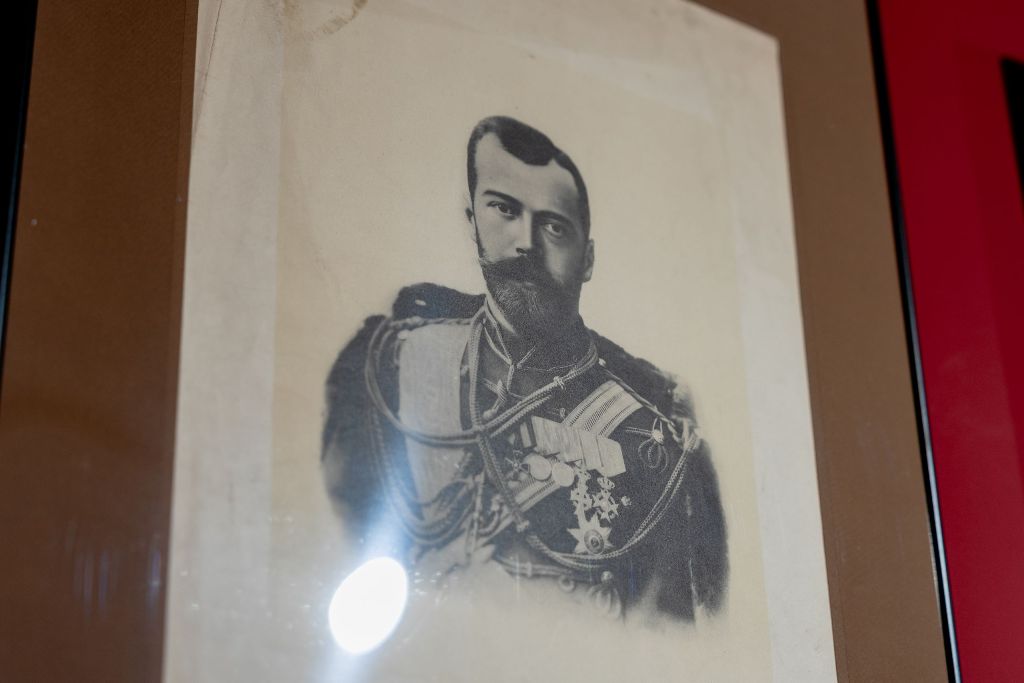
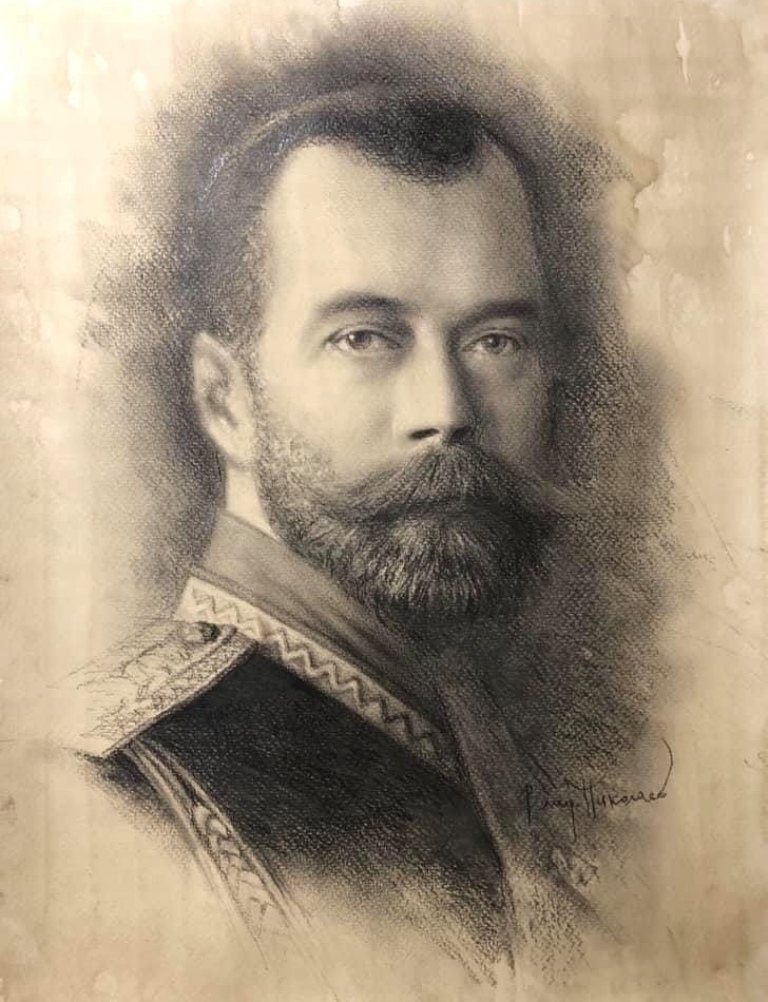
PHOTO: Portrait of Emperor Nicholas II, by Russian artist Vladimir Nikolaev
On this day – *19th (O.S. 6th) May 1868 – Emperor Nicholas II was born in the Alexander Palace at Tsarskoye Selo. * the New Style Gregorian calendar is now 13 days ahead of the Old Style Julian calendar.
On Sunday 19th May 2024, the Russian Orthodox Church marks the 156th anniversary of the birth of Tsesarevich and Grand Duke Nicholas Alexandrovich, who was born on the day of Job the Long-suffering.
In honour of this historic date, I am pleased to offer 18 books about the life and reign of Nicholas II. Each of them reflect my personal mission to clear the name of Russia’s much slandered Tsar. * This page will be updated as new titles become available.
Please note, the entire proceeds from the sale of each book, help fund my research, including the costly expense of translating documents from Russian archival and media sources.
Thank you for your interest and support of my work.
PAUL GILBERT (Retired)
***
BOOKS BY PAUL GILBERT
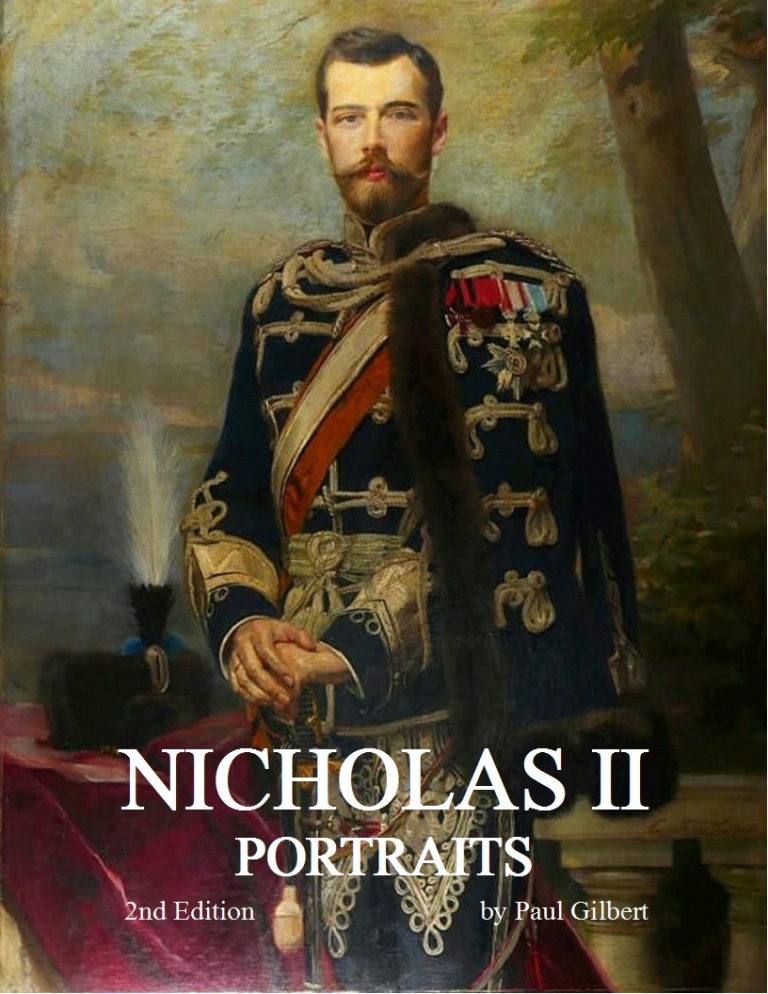
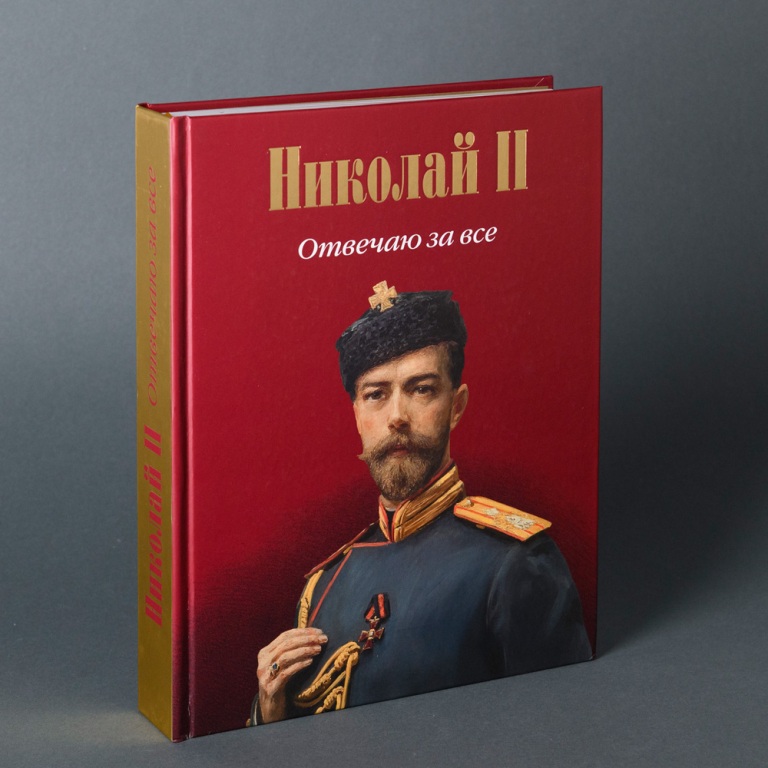
NICHOLAS II. PORTRAITS
by Paul Gilbert
CLICK ON THE LINK BELOW TO ORDER FROM AMAZON
HARD COVER EDITION – PRICE $50.00
PAPERBACK EDITION – PRICE $40.00
BOOK DESCRIPTION
Nicholas II. Portraits explores a century of portraits of Russia’s last emperor and tsar, through the eyes of pre-revolutionary and contemporary Russian, and foreign artists.
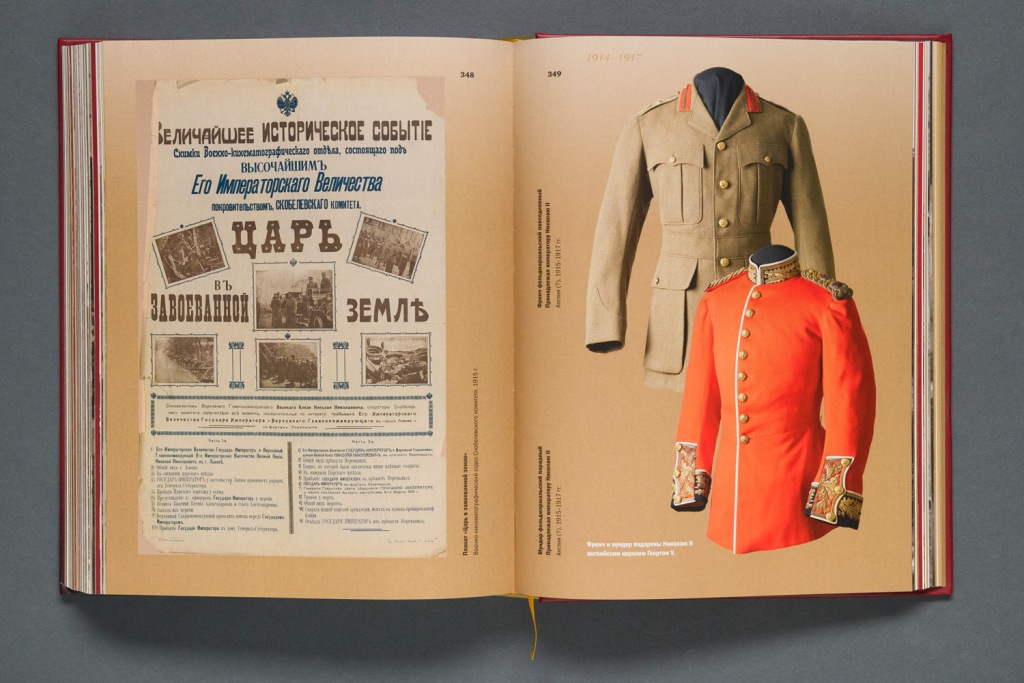
Originally published in 2019, with 140 pages with 175 black and white photos, this new expanded edition features more pages and more photographs: 180 pages + more than 200 photos, including 185 FULL COLOUR and 30 black & white! The colour photographs really bring the many ceremonial portraits of Nicholas II to life.
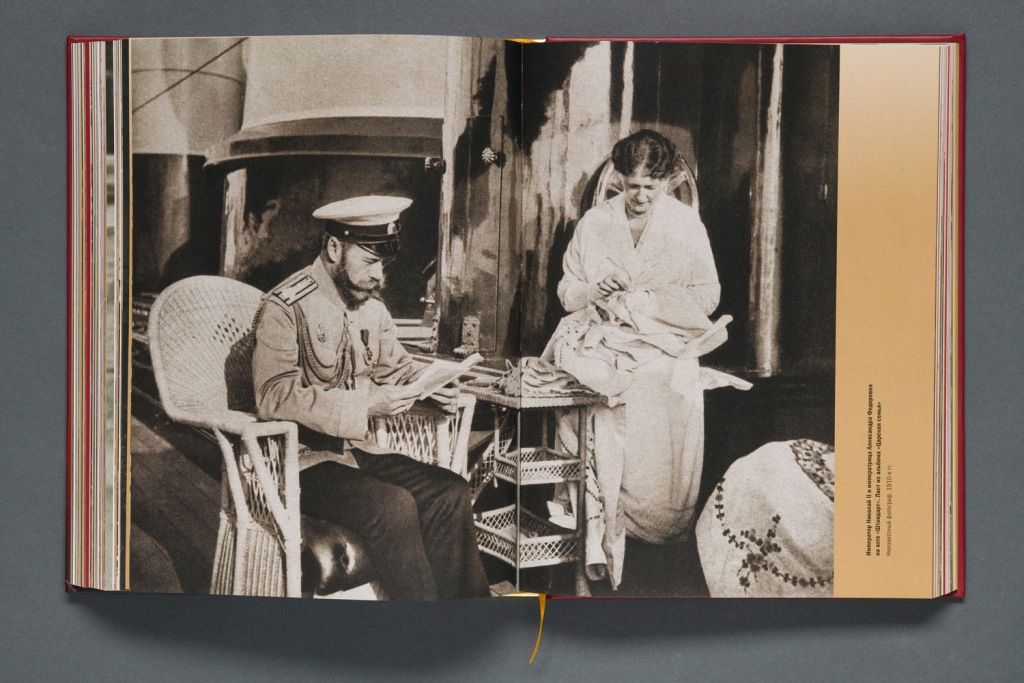
In addition, are many portraits painted during his reign by both Russian and foreign artists, as well as those by contemporary Russian artists. My book also features a small section of portraits of the Tsar with his family.
Large format 8-1/2″ x 11″ hard cover and paperback editions, with 178 pages + richly illustrated with more than 200 Colour and black & white photographs.
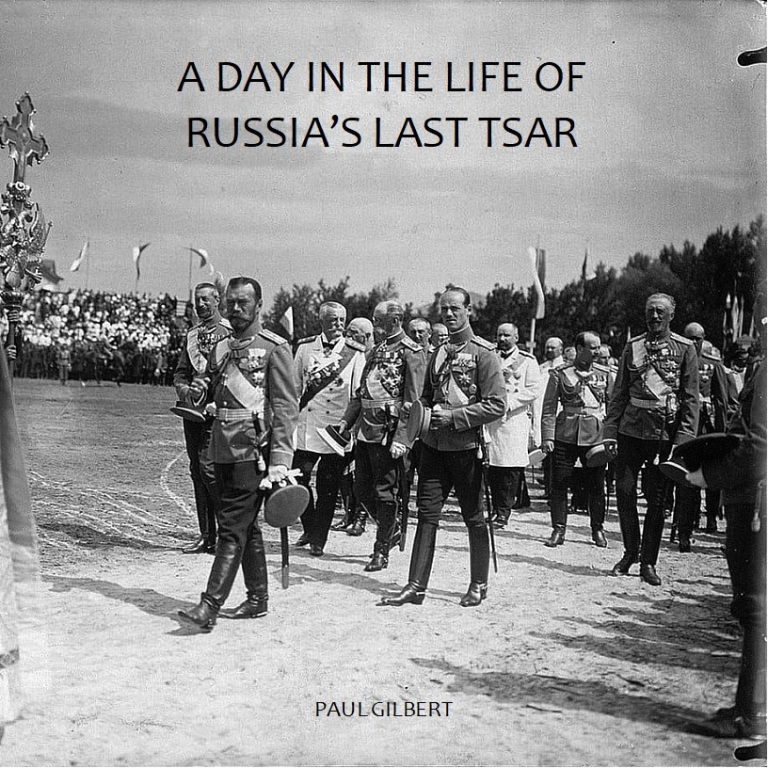
A DAY IN THE LIFE OF RUSSIA’S LAST TSAR
by Paul Gilbert
CLICK HERE TO ORDER THE PAPERBACK EDITION @ $25.00 USD
English. 242 pages with 225 black & white photos
Aside from his many duties as God’s anointed Emperor and Tsar of All the Russia’s, Nicholas II took on many other roles from one day to the next: a dutiful husband and loving father, a devoted son and brother, a friend, a sportsman, a diplomat, an ambassador, a dedicated military leader, a devout Orthodox Christian, among others.
This richly illustrated pictorial explores the day-to-day duties of Russia’s last monarch. It is divided into six sections: the Tsar and His Family; Sports, Leisure and Holidays; the Tsar and the Church; the Tsar and Russia; the War Years; and the Tsar Under House Arrest. Each section features full-size historic images which reflect his day to day duties and activities. In total, this unique album includes more than 200 photographs from the author’s private collection.
*The publication of this album is timed to coincide with the 155th anniversary of the birth of Emperor Nicholas II on 19th May [O.S. 6th May] 1868 and the 105th anniversary of the death and martyrdom [17th July 1918].
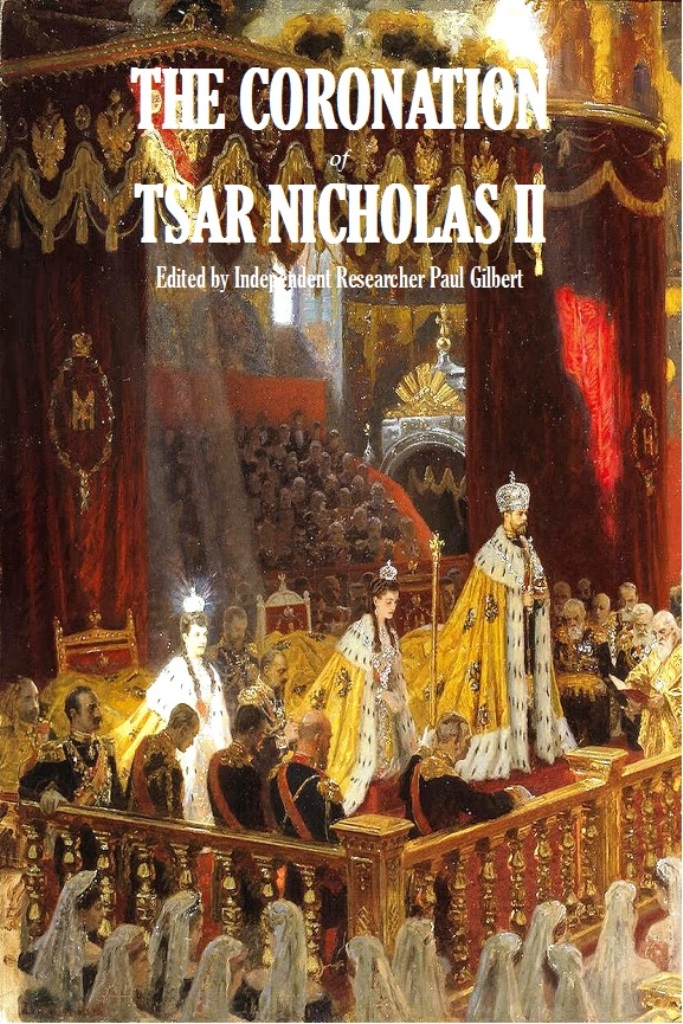
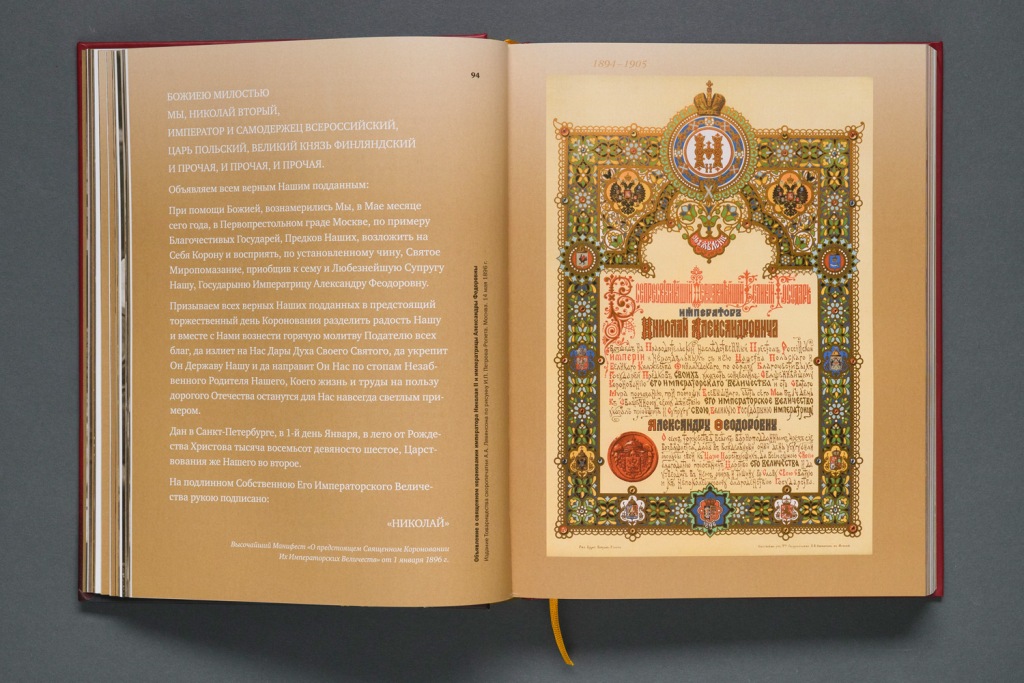
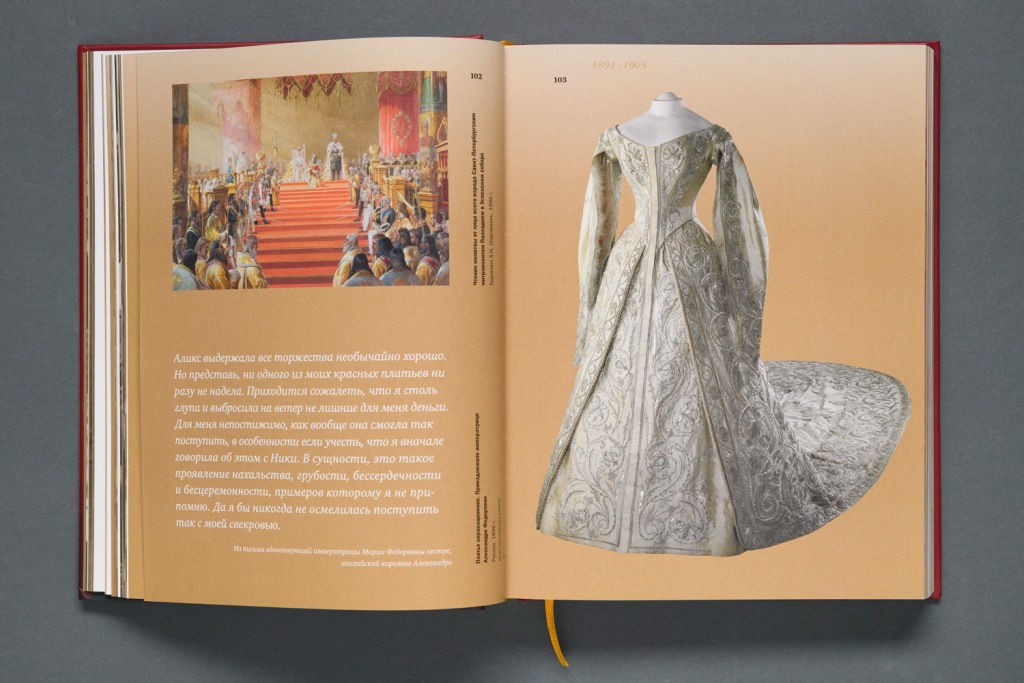
THE CORONATION OF TSAR NICHOLAS II
Compiled and Edited by Paul Gilbert
CLICK ON THE LINK BELOW TO ORDER FROM AMAZON
HARD COVER EDITION – PRICE $29.99
PAPERBACK EDITION – PRICE $18.99
BOOK DESCRIPTION
Six eyewitness accounts of the crowning of Russia’s last tsar with more than 200 rare vintage photographs & illustrations
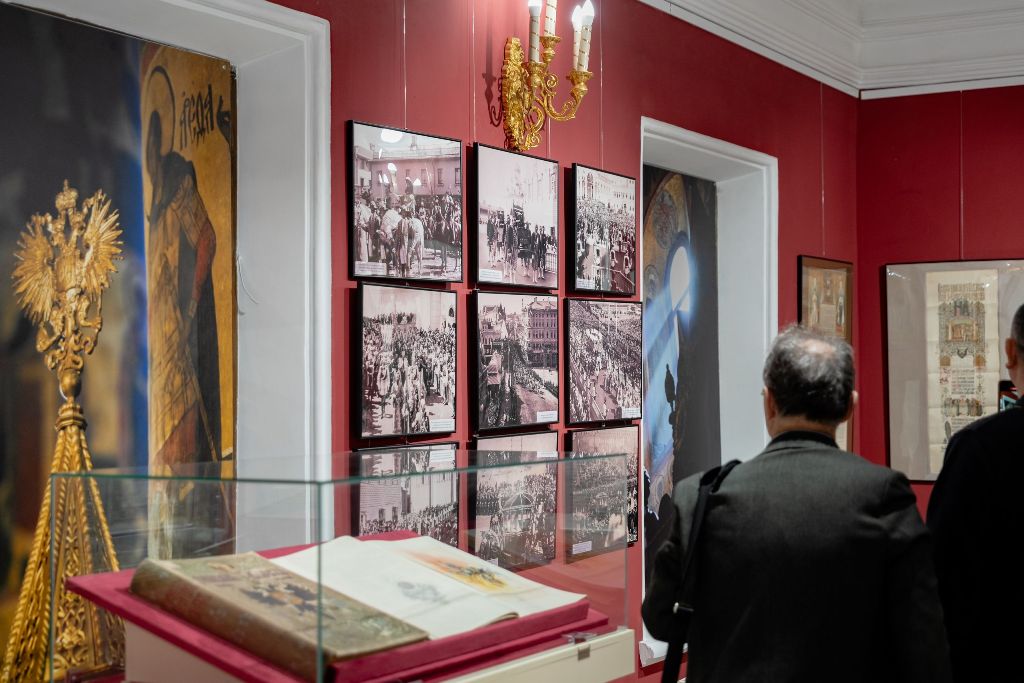
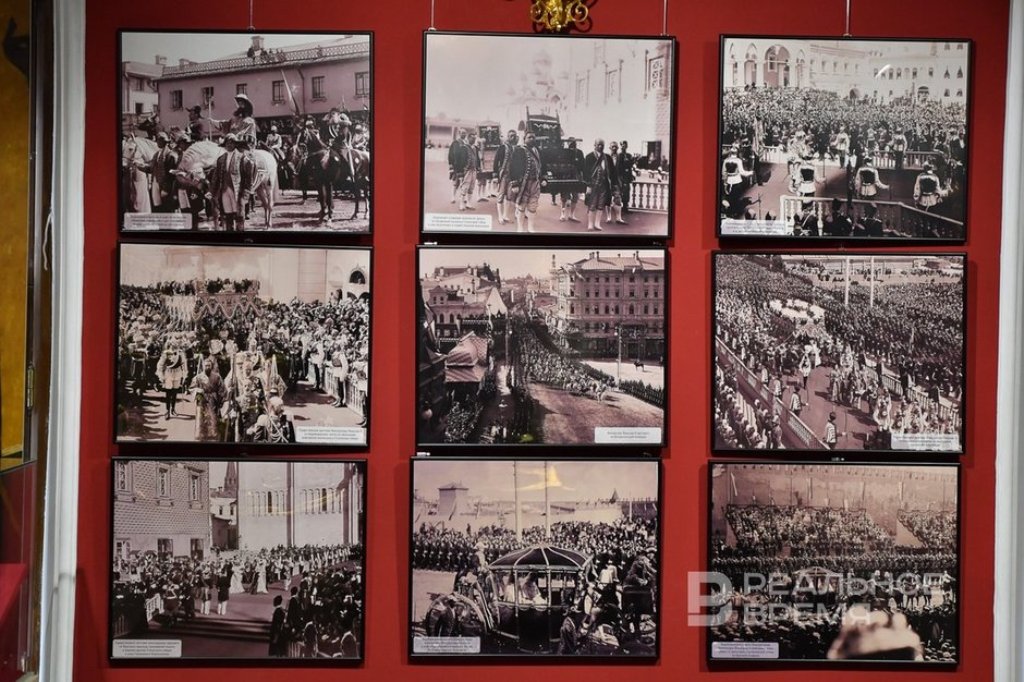
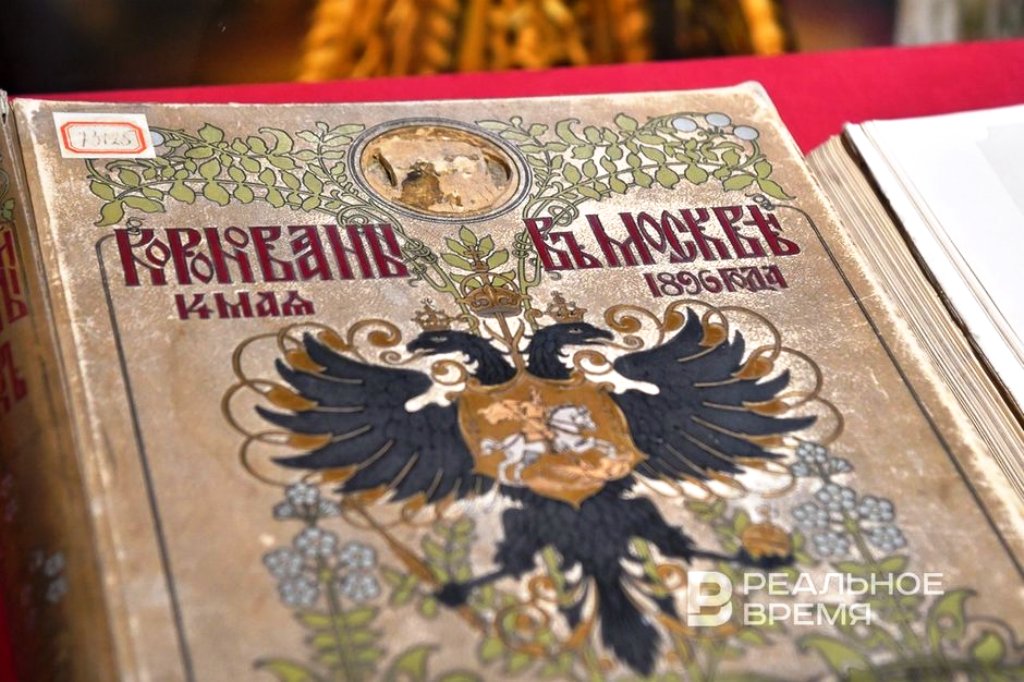
The pomp and pageantry surrounding the Coronation of Nicholas II is told through the eye-witness accounts of six people who attended this historic event at Moscow, held over a three week period from 6th (O.S.) to 26th (O.S.) May 1896.
Hard cover and paperback editions, with 456 pages + more than 200 black & white photographs
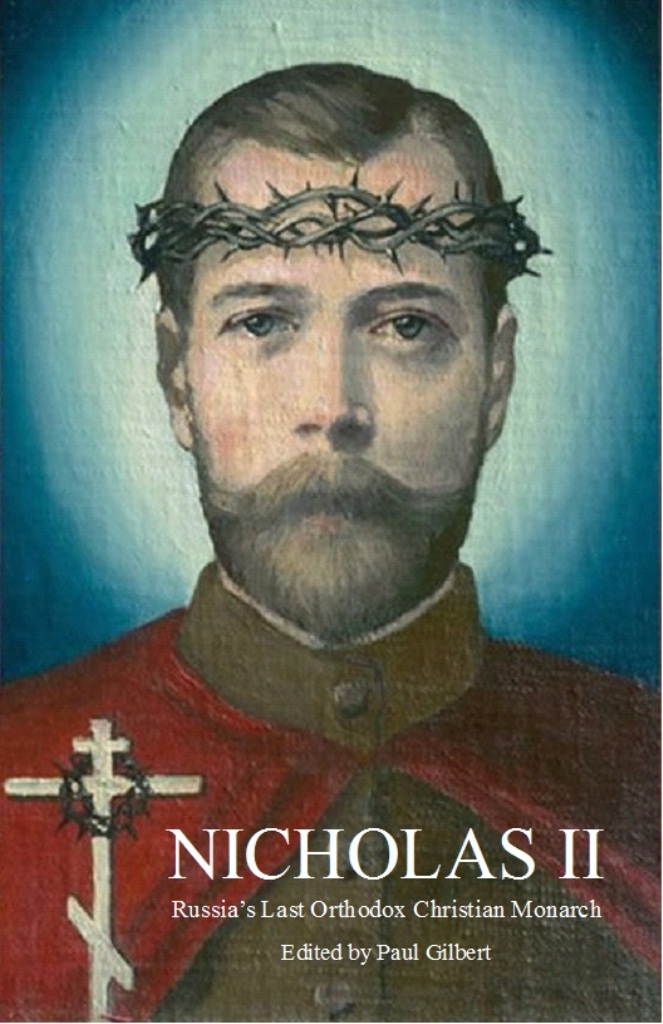
NICHOLAS II: RUSSIA’S LAST ORTHODOX CHRISTIAN MONARCH
Edited by Paul Gilbert
CLICK ON THE LINK BELOW TO ORDER FROM AMAZON
PAPERBACK EDITION – PRICE $9.99
E-BOOK EDITION – PRICE $9.99
BOOK DESCRIPTION
This book is not only for Orthodox and non-Orthodox persons, but for any one who shares an interest in the life, death, and martyrdom of the Holy Tsar-Martyr Nicholas II.
An illustrated Introduction by independent researcher Paul Gilbert explores the piety of Nicholas II, and his devotion to the Russian Orthodox Church, which reached its fullest development and power, during his 22-year reign.
This book further examines the trials and tribulations the Tsar endured, which later led to his canonization by the Russian Orthodox Church.
Paperback edition, with 134 pages + 23 black & white photographs
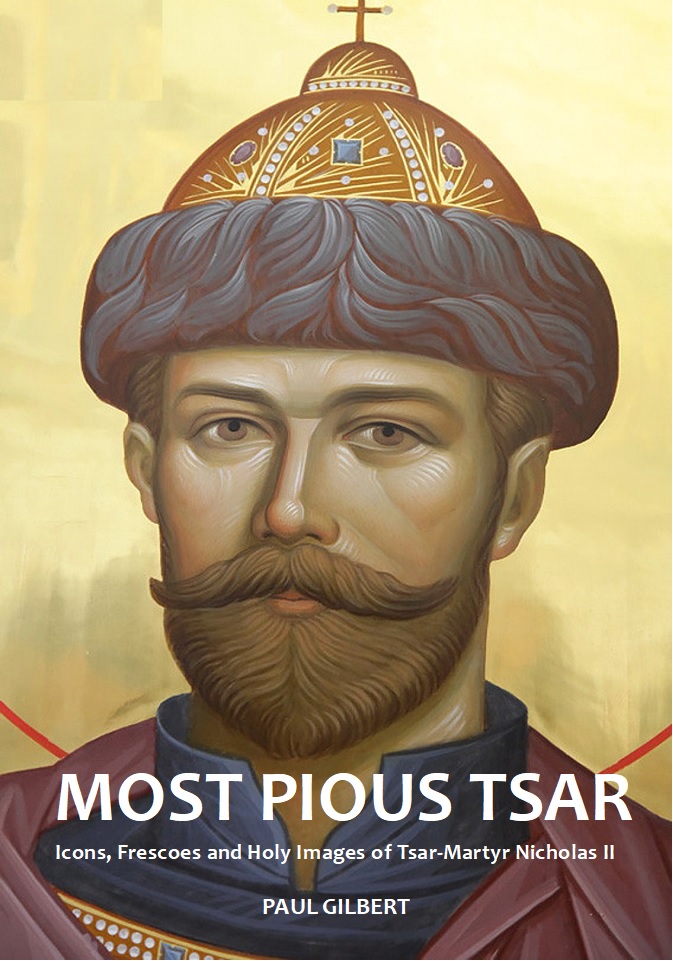
MOST PIOUS TSAR
Icons, Frescoes and Holy Images of Tsar-Martyr Nicholas II
by Paul Gilbert
CLICK HERE TO ORDER THE HARD COVER @ $50.00 USD
CLICK HERE TO ORDER THE PAPERBACK EDITION @ $40.00 USD
English. Large 7″ x 10″ format. 162 pages with 132 photos in FULL COLOUR
In 1938, Russia’s last tsar Nicholas II was canonized by the Serbian Orthodox Church. On 1st November 1981, he was canonized as a new martyr by the Russian Orthodox Church Outside Russia (ROCOR). On 20th August 2000, after 8 years of study, he was canonized as a passion bearer by the Moscow Patriarchate, although the people had already been venerating him as a saint for a long time, and this canonization was simply a confirmation of a fact that already existed by itself.
Since these historic dates, icons of Russia’s last Tsar have been installed in Orthodox churches across Russia and around the world. In addition home icons have been mass produced and sold for veneration by Orthodox Christians.
This book will not only appeal to Orthodox and non-Orthodox persons, but for any one who shares an interest in icons and iconography. This book also includes a Prayer and Akathist to the Holy Martyred Tsar. The highlight of this book, however, are the 130+ colour photographs of icons, frescoes and holy images depicting the Holy Royal Martyr Nicholas
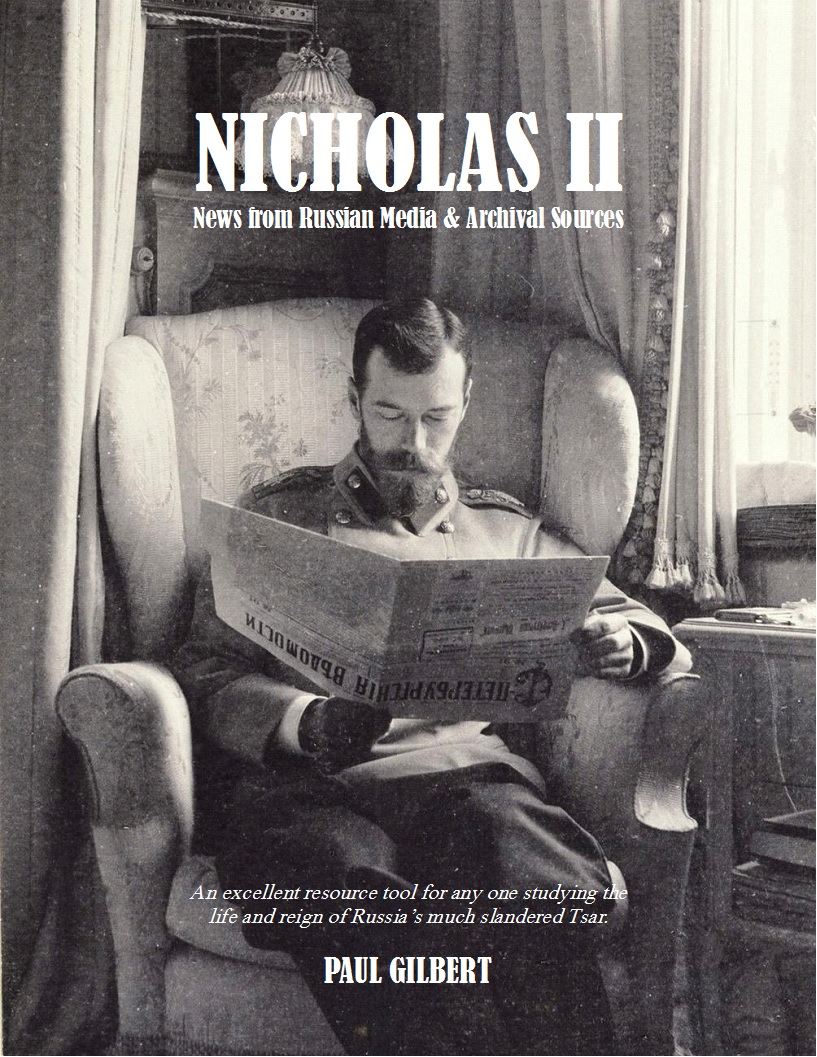
NICHOLAS II
News from Russian Media & Archival Sources
by Paul Gilbert
CLICK HERE TO ORDER THE PAPERBACK EDITION @ $20.00 USD
English. Large 8-1/2″ x 11″ format, 256 pages, 300+ black & white photos
In this book, you will find more than 130 articles and news stories about exhibitions, new monuments, portraits, polls on Nicholas II’s popularity in post-Soviet Russia, updates on the restoration of the Alexander Palace, events marking the 150th anniversary of the birth of Nicholas II and the 100th anniversary of his death and martyrdom, the Russian Orthodox Church and the Ekaterinburg remains and much more.
These articles and news stories were originally published in Sovereign (2015-2020) and Royal Russia (2011-2020). Both of these periodicals are no longer published, the back issues out of print, therefore, I am pleased to offer these important materials in one concise volume. They are complemented with more than 300 black and white photographs, many of which have never been published in any Western newspaper, magazine or book. Each article has been sourced from Russian media and archival sources, and translated into English.
While this collection of articles and news stories, may not appeal to every one, it will prove a valuable research tool for those studying the life and reign of Nicholas II, particularly as he is perceived in modern-day Russia.
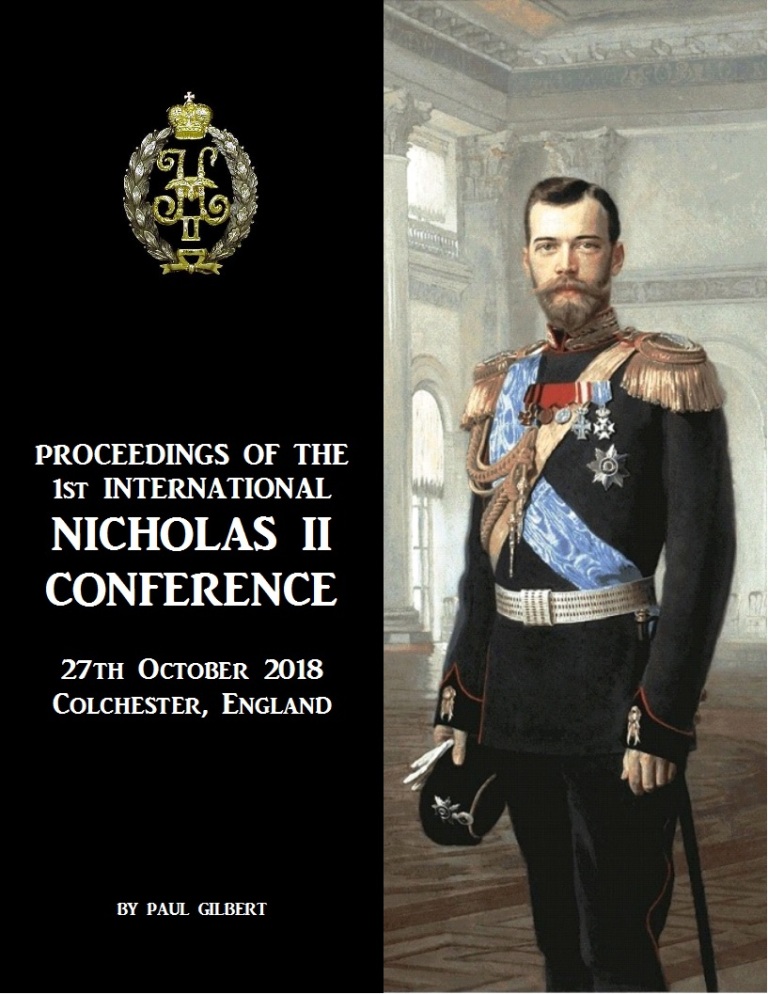
Proceedings of the 1st International Nicholas II Conference
by Paul Gilbert
CLICK HERE TO ORDER THE PAPERBACK EDITION @ $30.00 USD
CLICK HERE TO ORDER THE HARD COVER EDITION @ $40.00 USD
BOOK DESCRIPTION
In the autumn of 2018, people from nearly a dozen countries gathered in Colchester, England for a conference marking the 150th anniversary of the birth and the 100th anniversary of the death martyrdom of Russia’s last tsar Nicholas II.
Five speakers, including Paul Gilbert, Archpriest Andrew Philips (ROCOR), Nikolai Krasnov, authors Frances Welch and Marilyn Swezey presented seven papers on Nicholas II.
Topics included “A Century of Treason, Cowardice and Lies,” “Why Nicholas II is a Saint in the Russian Orthodox Church,” “Nicholas II and the Sacredness of a Monarchy,” “Nicholas II in Post-Soviet Russia,” and several more.
The original edition of these proceedings published in 2018 is now out of print. This new revised and updated edition of include three additional articles, plus a comprehensive bibliography featuring more than 100 English-language titles on the life, reign and era of Russia’s much slandered Tsar.
Large format 8-1/2″ x 11″ hard cover and paperback editions, 136 pages +50 COLOUR and black & white photos
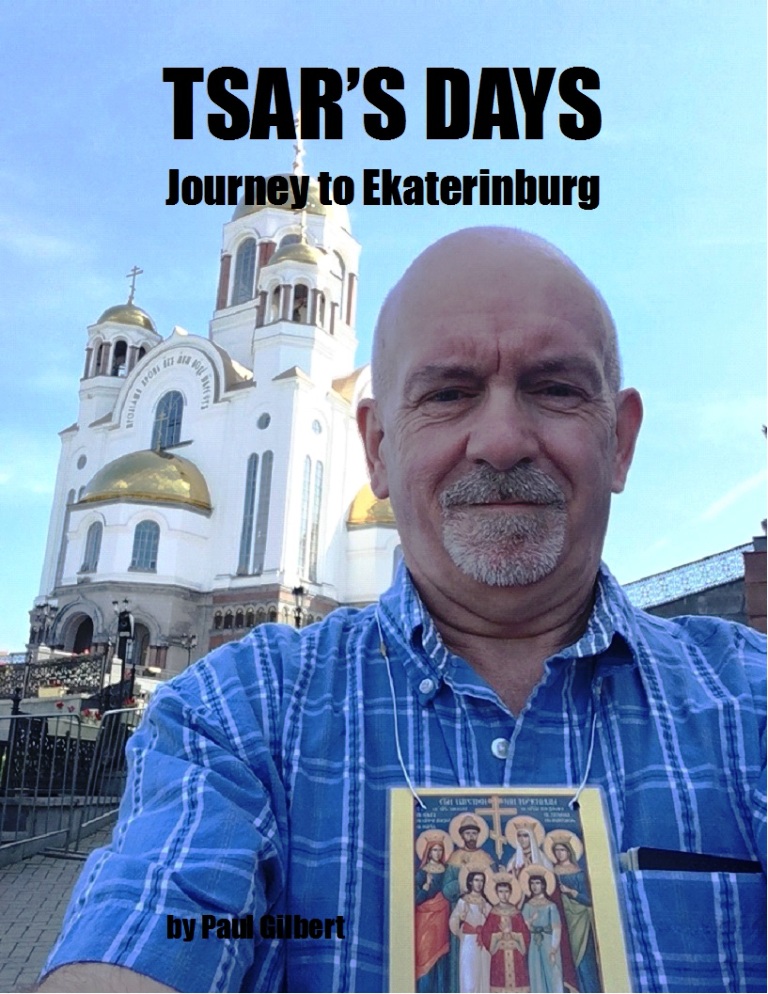
TSAR’S DAYS: JOURNEY TO EKATERINBURG
by Paul Gilbert
CLICK ON THE LINK BELOW TO ORDER FROM AMAZON
HARD COVER EDITION – PRICE $40.00
PAPERBACK EDITION – PRICE $25.00
BOOK DESCRIPTION
On 17th July 2018, independent researcher and writer Paul Gilbert travelled to Ekaterinburg, to take part in the events marking the 100th anniversary of the Tsar’s death and martyrdom.
In his own words and photographs, the author shares his experiences and impressions of this historic event, which include visits to the Church on the Blood, Ganina Yama, Porosenkov Log, the Patriarchal Liturgy, exhibitions, and much more.
Gilbert’s solemn journey to the Urals allowed him to experience history in the making, and to honour the memory of the Holy Royal Martyrs, a century after their death and martyrdom.
Large format 8-1/2″ x 11″ hard cover and paperback editions, 152 pages + 200 COLOUR PHOTOS, 65 of which were taken by the author.
SOVEREIGN No. 12 WINTER 2024
by Paul Gilbert
CLICK HERE TO ORDER THE PAPERBACK EDITION @ $20.00 USD
English. Large format 8-1/2″ x 11-1/2″. 130 pages. 114 Black & White photos
I am pleased to offer the first issue of my popular magazine Sovereign: The Life and Reign of Emperor Nicholas II, to be published in 5 years! Sovereign No. 12 – the Winter 2024 issue is now available through AMAZON outlets around the world.
The No. 12 issue, features 17 articles, and richly illustrated with more than 100 photographs, English text. The following articles have been reproduced from my blog, and presented in a printed format for the very first time:
[1] How Boris Yeltsin justified the demolition of the Ipatiev House
[2] Doomed to Resurrection: Is it Possible to Resurrect the Ipatiev House?
[3] The Fate of Nikolai Nikolaevich Ipatiev (1869-1938)
[4] Then they repented of slandering the Tsar . . .
[5] The myth of Nicholas II’s indifference to the Khodynka tragedy
[6] Nicholas II’s Private Apartments In the Winter Palace
[7] Nicholas II, the Union of the Russian People and the Black Hundreds
[8] Imperial Railway Pavilion at Tsarskoye Selo is being restored
[9] The ghost of Anna Anderson continues to haunt us
[10] Nicholas’s national education Project for Russia
[11] The Russian Imperial Award System 1894-1917
[12] How the Orthodox Church supported The overthrow of the monarchy
[13] “There are still many conjectures surrounding the death of Grand Duchess R+Elizabeth”
[14] Lost and found: Romanov family photo album found in Siberia
[15] The Charity of the Holy Tsar Nicholas II
[16] Russia’s last Tsar through Serbian eye
[17] Russia after Putin: Would he restore the monarchy?
NOTE: The No. 13 ussye of Sovereign is schdeduled for publication in July 2024
BOOKS BY OTHER AUTHORS
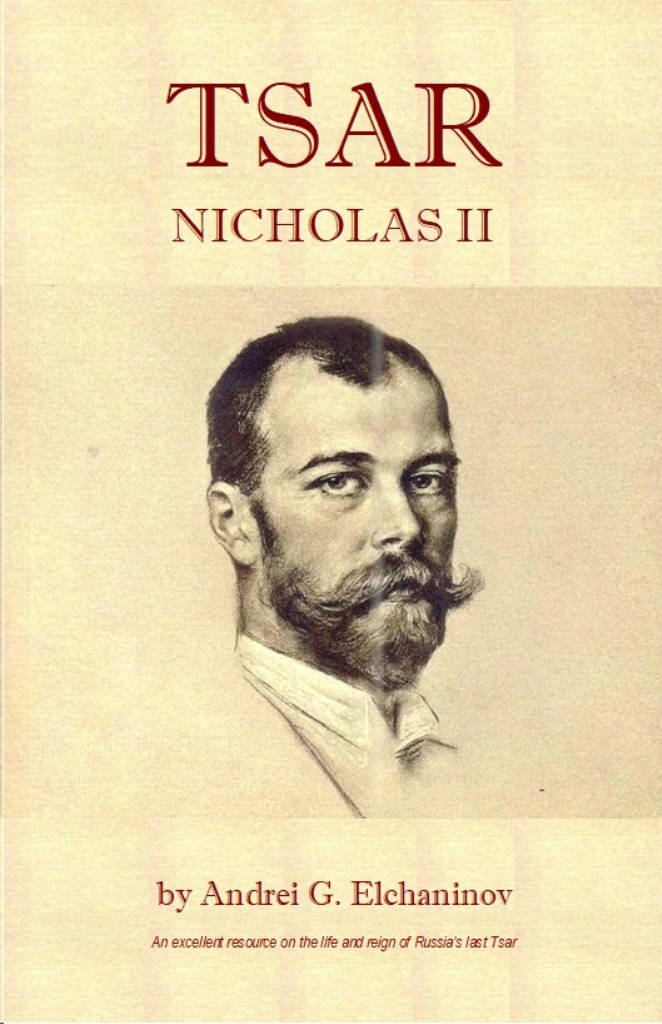
TSAR NICHOLAS II
by Andrei G. Elchaninov
CLICK HERE TO ORDER THE PAPERBACK EDITION @ $14.99 USD
English. 5-1/2″ x 8-1/2″ format. 194 pages with 25 photos
This authorized account of Emperor Nicholas II by Major-General Andrei Georgievich Elchaninov (1868-1918), is an unprecedented biography of a living tsar. It was originally published in 1913, to coincide with the 300th anniversary of the Romanov dynasty. The author served as a professor of military art in the General Staff Academy in St. Petersburg, he later served in the suite of Tsar Nicholas II.
Nicholas II reviewed and corrected the proofs himself in January 1913. He made changes to the text, and requested the removal of sentences describing the Tsesarevich Alexei’s illness.
Elchaninov gathered considerable material for the twelve chapters about Nicholas II’s personal life based on observations and impressions. The first chapters describe Russia’s last Tsar as a caring, devoted and loving husband and father. The remaining chapters focus on his relationship with his government, the church, the army, the Russian people, and the policies which he pursued during the first 18 years of his reign.
Written before the First World War and the 1917 Revolution. Elchaninov writes in glowing patriotic language portraying Nicholas II as an indefatigable “Imperial worker” in the service of Russia’s best interests and the “Sovereign father” of the Russian people.
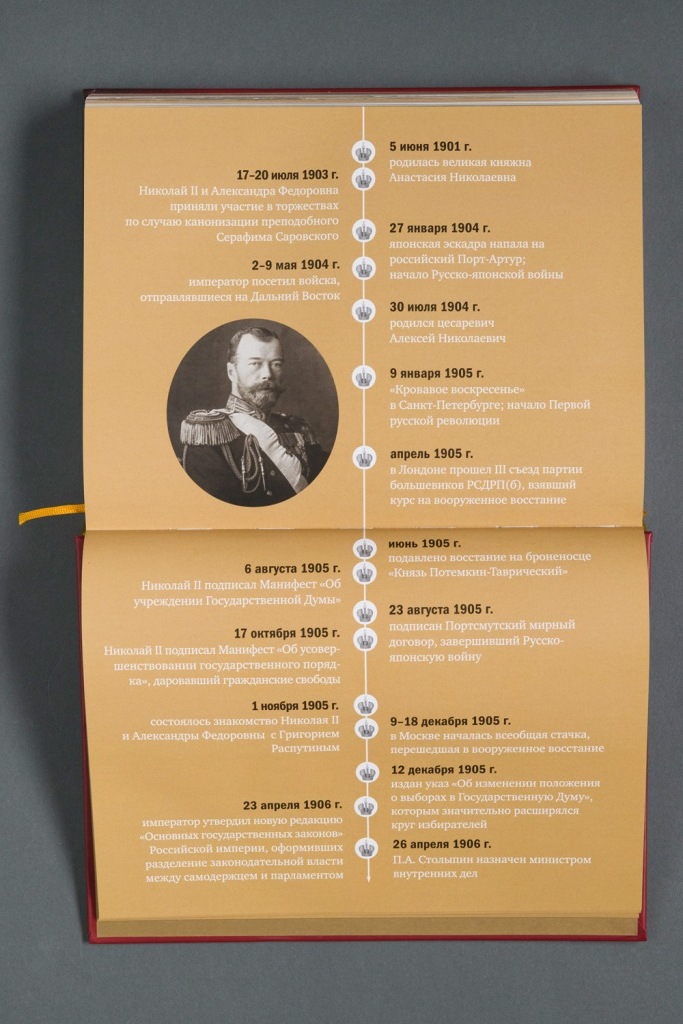
In addition to Elchaninov’s biography on the Tsar, this new edition features an expanded introduction by independent researcher Paul Gilbert, 25 black and white photographs, and three comprehensive appendices: a chronology of events during the reign of Nicholas II (1894-1917); 100 facts about Nicholas II and the many reforms he made during his reign, and a bibliography of more than 100 English language books written over the past century on Russia’s last Tsar.
This book is an excellent resource tool for any one interested in Russia’s last Tsar!
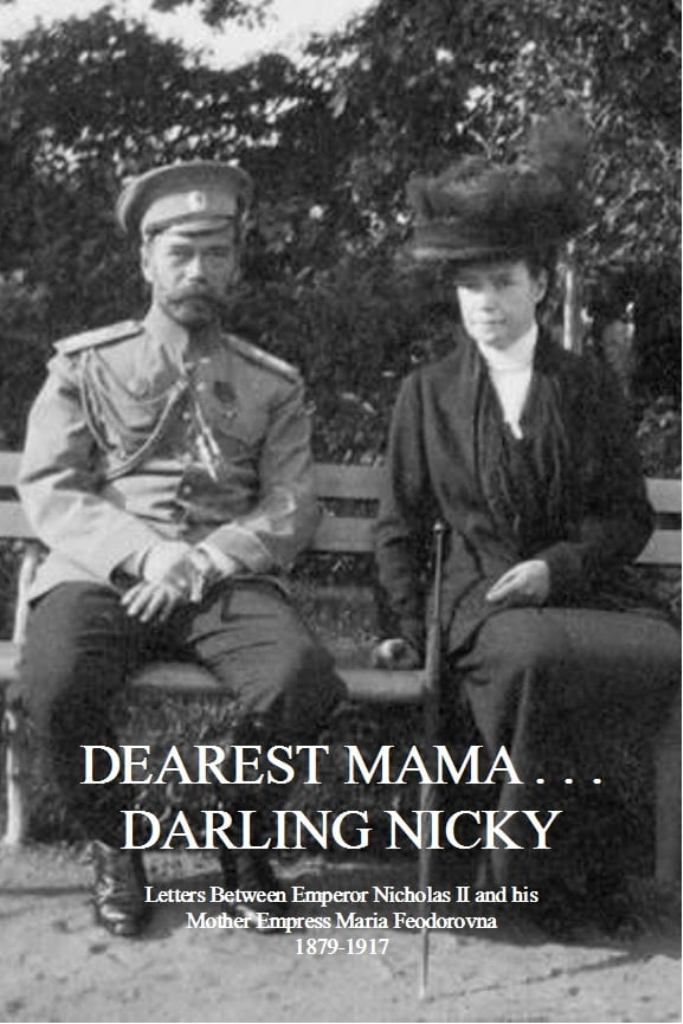
DEAREST MAMA . . . DARLING NICKY:
Letters Between Emperor Nicholas II and His Mother
Empress Maria Feodorovna 1879-1917
CLICK ON THE LINK BELOW TO ORDER FROM AMAZON
PAPERBACK EDITION – PRICE $13.99
BOOK DESCRIPTION
Written between the years 1879, when Nicky was a little boy, and 1917, after his abdication, this collection of more than 200 letters are a revelation of the personalities of the Emperor and his Empress mother. They were never part of the imperial archives but the cherished possession of both correspondents, carried with them wherever they went. At the outbreak of the revolution, the letters were confiscated by the Soviets.
Paperback edition. 246 pages.
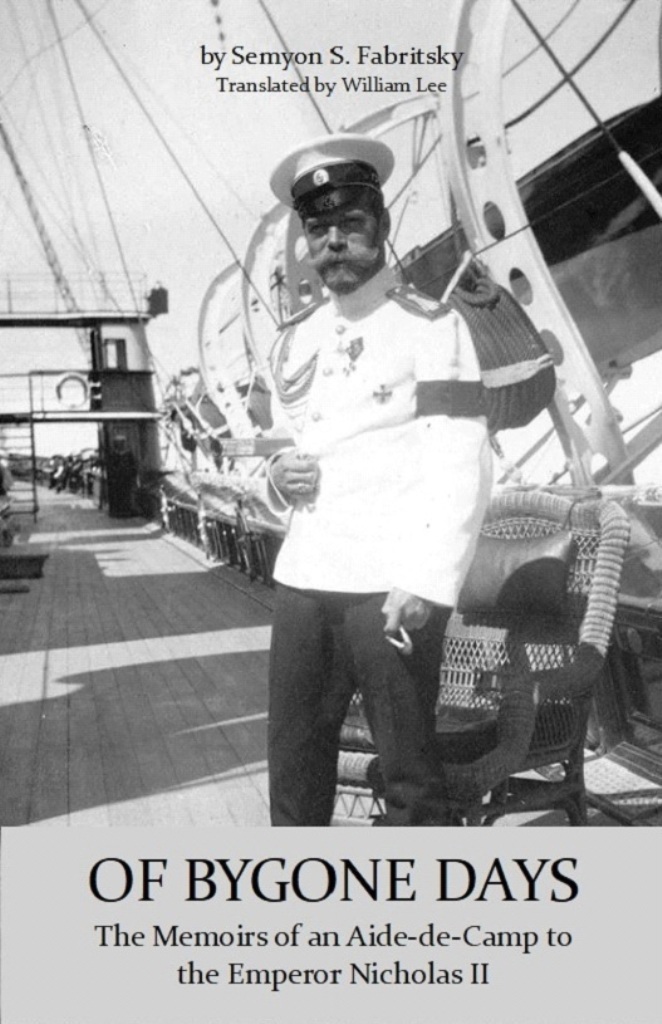
OF BYGONE DAYS
Letters Between Emperor Nicholas II and His Mother
The Memoirs of an Aide-de-Camp to
the Emperor Nichoas II
by Sergei S. Fabritsky
CLICK HERE TO ORDER THE PAPERBACK EDITION @ $20.00 USD
English. 214 pages, 10 black & white photos
First English translation with introduction and notes by William Lee
NOTE: The first Russian-lanaguage edition of Fabritsky’s memories was published in Berlin in 1926. The first English-language edition of Fabritsky’s memoirs was published in Canada in 2016. This title has been out of print for many years, so I am delighted to offer this new edition.
“The time I spent with Their Majesties – over the course of many years and under varied circumstances – will always be the source of my most precious memories, and I am very happy to be able to share those memories now with a wide public. I hope at least to give an absolutely truthful account of what I saw and heard” – Semyon S. Fabritsky. 1926
Semyon Semyonovich Fabritsky (1874-1941) had a fascinating career during the twilight years of Imperial Russia. He began his naval career in the very first days of the reign of Emperor Nicholas II.
In 1909, Fabritsky was personally appointed Aide-de-Camp by the Emperor himself, a position he served with immense pride and devotion.
During his service to Nicholas II, Fabritsky earned both the trust and friendship of the Emperor. Through his often uninterrupted contact with Russia’s last sovereign and observing him at all hours and under a variety of conditions, Fabritsky was able to form a clear picture of Nicholas II and his family, through his own personal eye-witness observations.
He also served aboard the Imperial yachts, partaking in holidays with the Emperor and his family to the Crimea and the Finnish skerries. He shares interesting details and anecdotes about the Alexandria, Polar Star, and Standart.
This book will also be of great interest to any one with an interest to the Russian Imperial Yachts and the Russian Imperial Navy.
Fabritsky provides great insight to the treachery, cowardice, and deceit which prevailed every where. He acknowledges ministers and generals who were either unworthy of their posts or unfit for them. Sadly, it was these men who surrounded Nicholas II during his 22+ year reign, who contributed to the downfall of monarchy and the destruction of the Russian Empire in 1917.
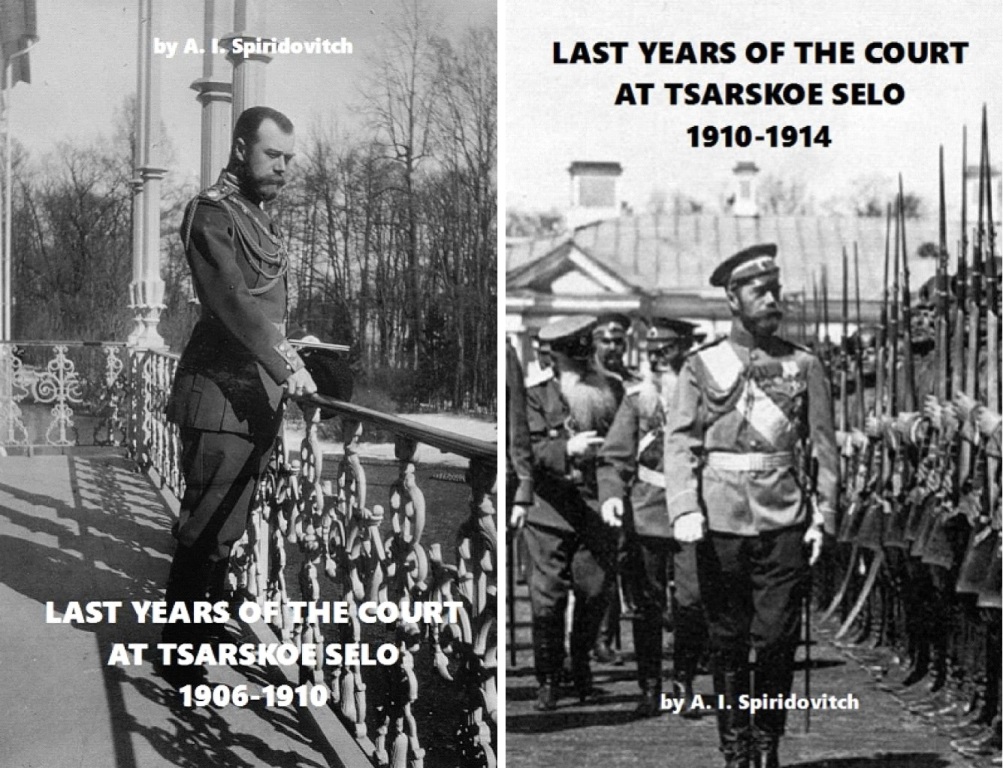
LAST YEARS OF THE COURT AT TSARSKOE SELO – 2 Volumes
by Alexander Spiridovitch
CLICK ON THE LINK BELOW TO ORDER FROM AMAZON
VOLUME I – 1906-1910. PAPERBACK EDITION – PRICE $18.99
VOLUME II – 1910-1914. PAPERBACK EDITION – PRICE $18.99
BOOK DESCRIPTION
Originally published in French in 1928, this is the FIRST ENGLISH LANGUAGE EDITION of both volumes – a MUST read for any one interested in the life and reign of Emperor Nicholas II.
Alexander Ivanovich Spiridovitch (1873-1952) was handpicked by Emperor Nicholas II to serve as his personal security chief from 1906-1916. He was also responsible for the security of the tsar’s residences.
Volume I – 1906-1910, with 458 pages + 59 black & white photographs
Volume II – 1910-1914, with 480 pages + 65 black & white photographs
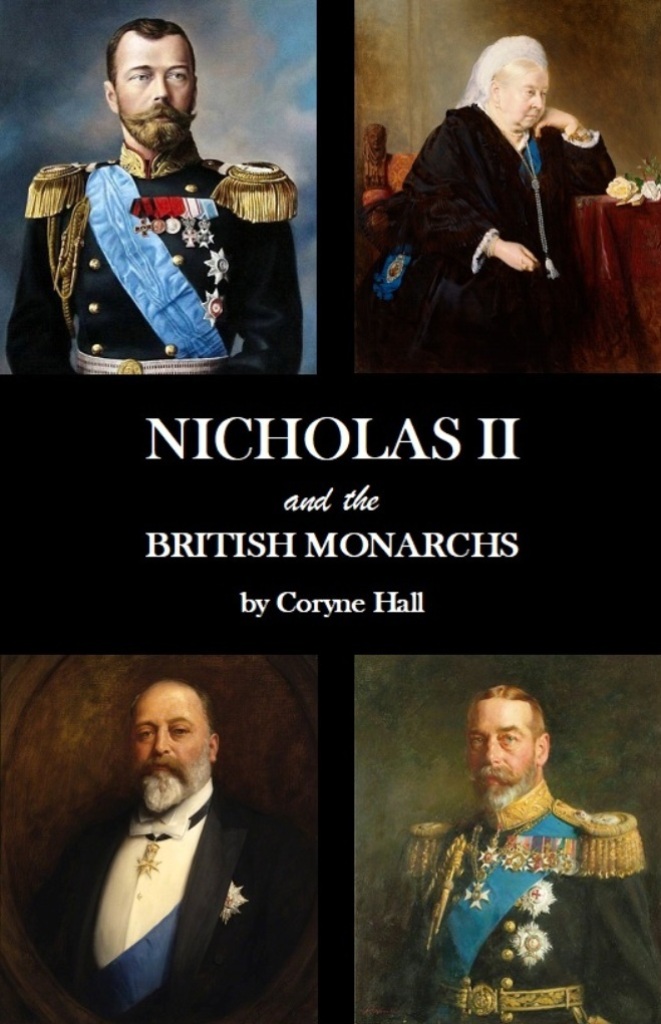
NICHOLAS II and the BRITISH MONARCHS
by Coryne Hall
CLICK HERE TO ORDER THE PAPERBACK EDITION @ $20.00 USD
English. 164 pages, 36 black & white photos
Romanov historian and royal expert Coryne Hall writes about the relationships between Emperor Nicholas II with the three British monarchs who ruled during his 22-year reign.
The author has researched the relationships between Russia’s last Tsar with those of Queen Victoria – from 1894 to 1901; King Edward VII – from 1901 to 1910; and King George V – from 1910 to 1917. Her research is complemented with letters, diary entries and photographs.
The four essays presented in this volume were originally published in four successive issues of Sovereign, the semi-annual publication dedicated to the study of the life and reign of Emperor Nicholas II. They are presented here for the first time in one volume.
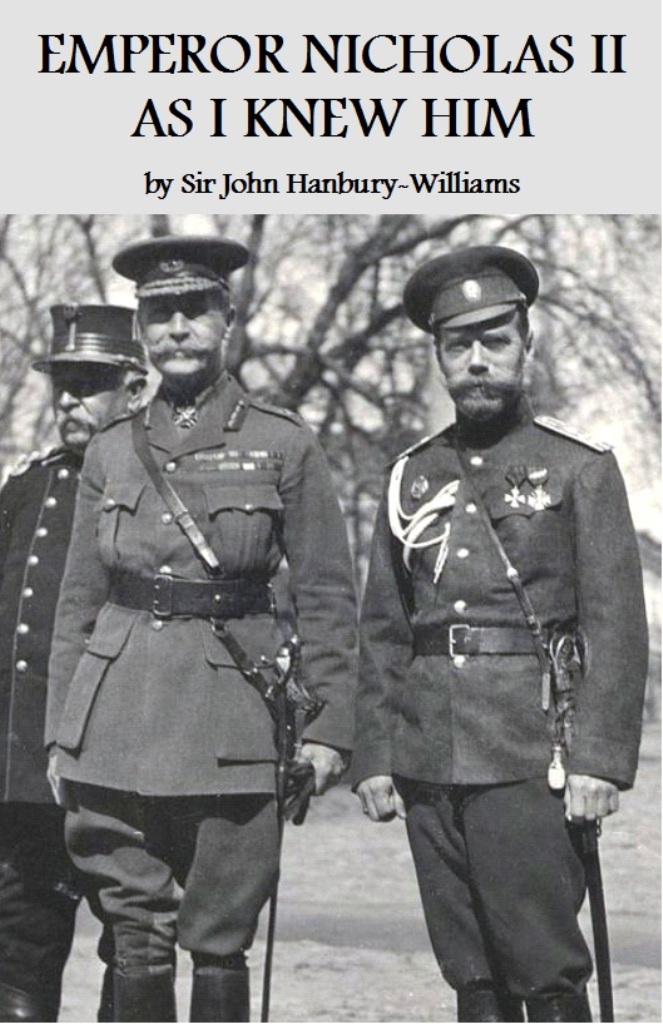
EMPEROR NICHOLAS II AS I KNEW HIM
by Sir John Hanbury Williams
CLICK ON THE LINK BELOW TO ORDER FROM AMAZON
PAPERBACK EDITION – PRICE $12.99
BOOK DESCRIPTION
In this compelling and intimate series of diary entries, originally published in 1922, Major-General Sir John Hanbury-Williams (1859-1946) depicts Nicholas II “not as history knows him, but as he knew him.”
Paperback edition. 196 pages.
MEMOIRS OF THE PAGES TO TSAR NICHOLAS II
by Dr. Thomas E. Berry
CLICK ON THE LINK BELOW TO ORDER FROM AMAZON
HARDCOVER EDITION – PRICE $22.99
PAPERBACK EDITION – PRICE $14.99
BOOK DESCRIPTION
The young men of the Corps des Pages, served Nicholas II and his family. This collection of 18 memoirs give eyewitness accounts of weddings, baptisms, Court functions and other events at the Imperial Court between 1894-1917. The last part of the book is devoted to the sad events of the Revolution and the end of the Corps des Pages.
Hardcover and Paperback editions. 258 pages
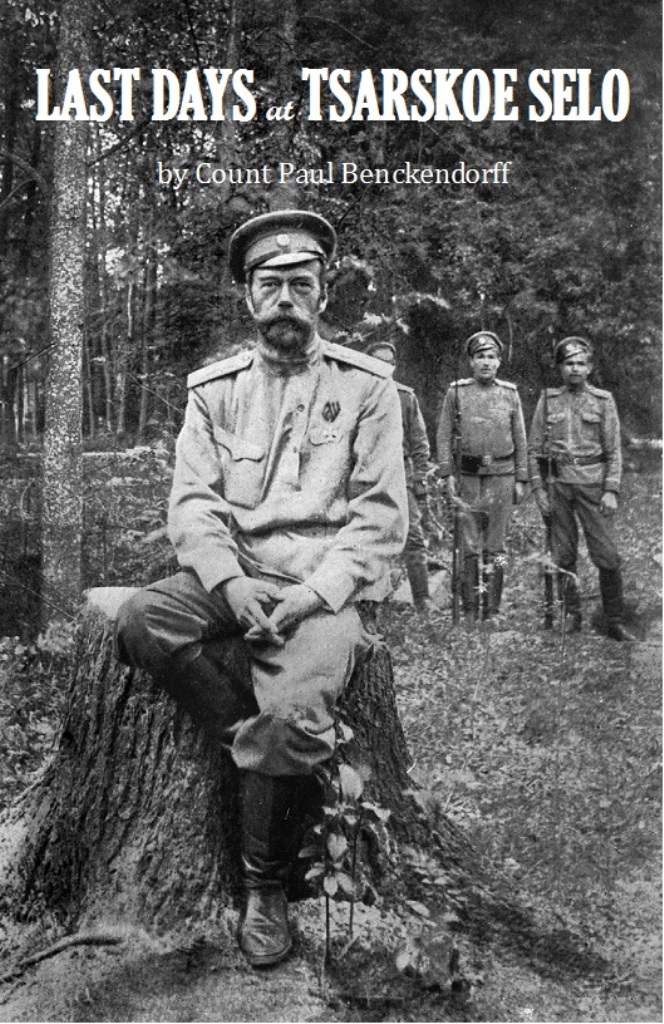
LAST DAYS AT TSARSKOE SELO
by Count Paul Benckendorff
CLICK ON THE LINK BELOW TO ORDER FROM AMAZON
E-BOOK EDITION – PRICE $9.99
PAPERBACK EDITION – PRICE $12.99
BOOK DESCRIPTION
Count Paul Benckendorff (1853-1921), belonged to the closest circle of Emperor Nicholas II. Following the collapse of the monarchy in 1917, Benkendorff and his wife shared the captivity of the Imperial Family at Tsarskoye Selo.
Benkendorff’s narrative provides a detailed eye-witness account of the Tsar’s abdication, his transfer to Tsarskoe Selo and his daily life in the Alexander Palace, where he was held under house arrest from February to August 1917.
Throughout his memoirs, Benckendorff characterizes Nicholas II and his wife Alexandra Feodorovna as courageous, gracious, and poised despite their obvious concern for their family.
Due to his age and poor health, Benckendorff was unable to follow the Emperor and his Imperial Family’s into exile to Tobolsk. One of the very few who were faithful, he parted with his Sovereign for the last time on 14th (O.S. 1st) August 1917.
Paperback and eBook editions. 168 pages + 40 black & white photographs
© Paul Gilbert. 19 May 2024












 Nicholas II
You must be logged in to post a comment.