Last church where Nicholas II prayed before his abdication will be restored
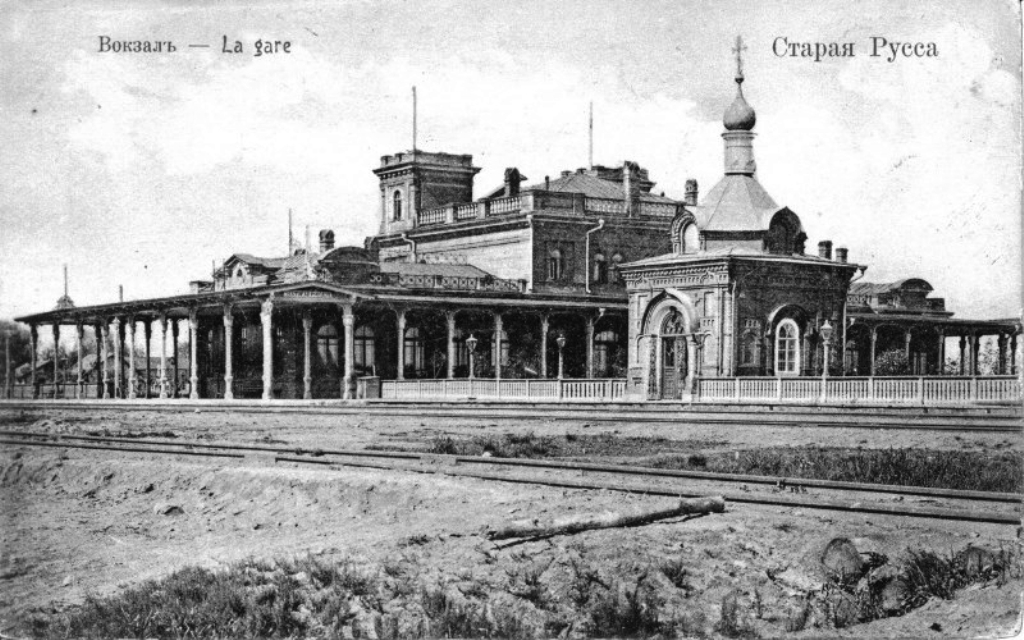
PHOTO: Chapel of St. Nicholas the Wonderworker in Staraya Russa

The Chapel of St. Nicholas the Wonderworker in Staraya Russa is inextricably linked with the Imperial Family, in particular, with Emperor Nicholas II, who travelled here in 1904 to bless troops of the Villmanstrand Infantry Regiment, before being sent to fight in the Russo-Japanese War.

Members of the Imperial Court often visited Staraya Russa, celebrated for its mineral springs used for baths, drinking, and inhalations, and medicinal silt mud of nearby lakes and artificial reservoirs.

In 2017, an unknown fact from the life of the last emperor of Russia, was discovered by the Novgorod ethnographer Leonid Kirillov. According to his research, it was on 14th March (O.S. 1 March) 1917, that Nicholas II spent a whole day at the station in Staraya Russa, visiting the station’s chapel. This was the last church in which the Tsar prayed before signing his abdication at Pskov on 15 March (O.S. 2 March) 1917. The last church in which he prayed as “Citizen Romanov” was the Church of the Annunciation of the Blessed Virgin in Tobolsk.

On the morning of 13 March (O.S. 28 February) 1917, the Imperial Trains left the Headquarters of the Commander-in-Chief at Mogilev The following day, the train on which the Emperor was returning to Tsarskoye Selo, was stopped at the Malaya Vishera station, and forced to reroute in order to avoid an encounter with a band of rebellious soldiers, to go in a roundabout way: travelling instead through Valdai and Staraya Russa to Pskov.

At the time, an eyewitness Alexander Rozbaum, wrote in the local newspaper about the Imperial Train stopping in Staraya Russa:

“The Tsar embarked from his carriage and walked along the platform for a long time. The day was calm and clear, the station was crowded with people. A group of nuns stood near the railway station chapel. The mood of the audience, was deeply sympathetic to the Tsar. People did not shout revolutionary slogans, but, taking off their caps, bowed to their sovereign. The Tsar stopped and talked with some of them and then, leaving his retinue outside the door, went to pray in the small station chapel. Who knows, perhaps it was at that very hour in the station chapel at Staraya Russa that he made the most important decision for himself – to relinquish power”.

The chapel was built in 1899, by the Ikolo-Kosinsky Monastery (closed in 1920) at the railway station with an additional house for the sisters. Both the train station and the Chapel of St. Nicholas the Wonderworker was completely destroyed during the Great Patriotic War (1941-44).

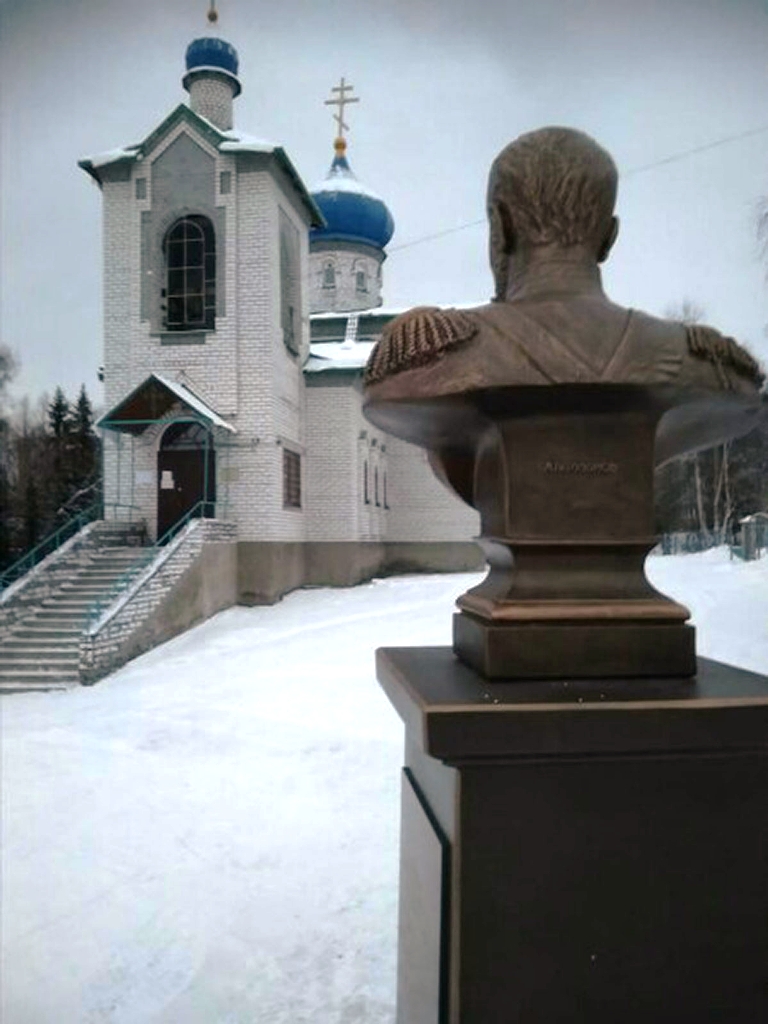
PHOTO: bust of Nicholas II by Belarusian sculptor Igor Golubev

In 2000, local entrepreneur Nikolai Shirokov at his own expense erected a new chapel, but at a different location – to the left of the station. Governor Andrei Nikitin supports the idea of ​​restoring the chapel to its original, and is working with the regional Ministry of Transport in an effort to get the Russian Railways involved in the project.

In addition, Belarusian sculptor Igor Golubev has proposed to erect a bronze bust of Nicholas II at the Staraya Russa railway station in memory of the “last place where Nicholas II prayed before his abdication”.
.
© Paul Gilbert. 21 January 2021
The favourite tunes of Nicholas II and his Family – Part 1

This video features a tune, which was apparently a favourite of Nicholas II and his Family. Click on the image above to listen to this haunting melody, performed by the popular Russian singer Valentina Ponomareva [Duration: 3 minutes, 28 seconds]

The romance “Утро туманное” (Misty Morning) is based on the poem by the famous Russian writer Ivan Sergeivich Turgenev (1818-1883), written in 1843. The music was composed by Erast Ageevich Abaza (1819-1855), a gifted amateur musician, guard officer, and hero of the Crimean War.

NOTE: the translation is not perfect, but it will give you the gist of the lyrics – ENJOY!

Misty morning, gray morning,

Sad fields, covered with snow,

Reluctantly remember the times of the past,

Remember the faces long forgotten.

You will remember the frequent passionate talks,

Glances so eagerly and tenderly caught,

First meetings, last meetings,

Favorite sounds of a quiet voice.

You will remember parting with a strange smile,

You will remember a lot of your dear distant past,

Listening to the ceaseless murmur of the wheels,

Looking thoughtfully into the wide sky.

Set against the background of this soulful performances are touching images, which reflect the love story of Nicholas Alexandrovich and Alexandra Feodorovna, the last Emperor and Empress of Russia. The romance is performed by the popular Russian singer Valentina Ponomareva. The video was created by Irina Koroteeva and Elena Illyina..

NOTE: Stay tuned for additional videos, featuring more favourite tunes of Nicholas II and his family – PG

© Paul Gilbert. 16 January 2021

Karelin’s Lost Portrait of the Imperial Family

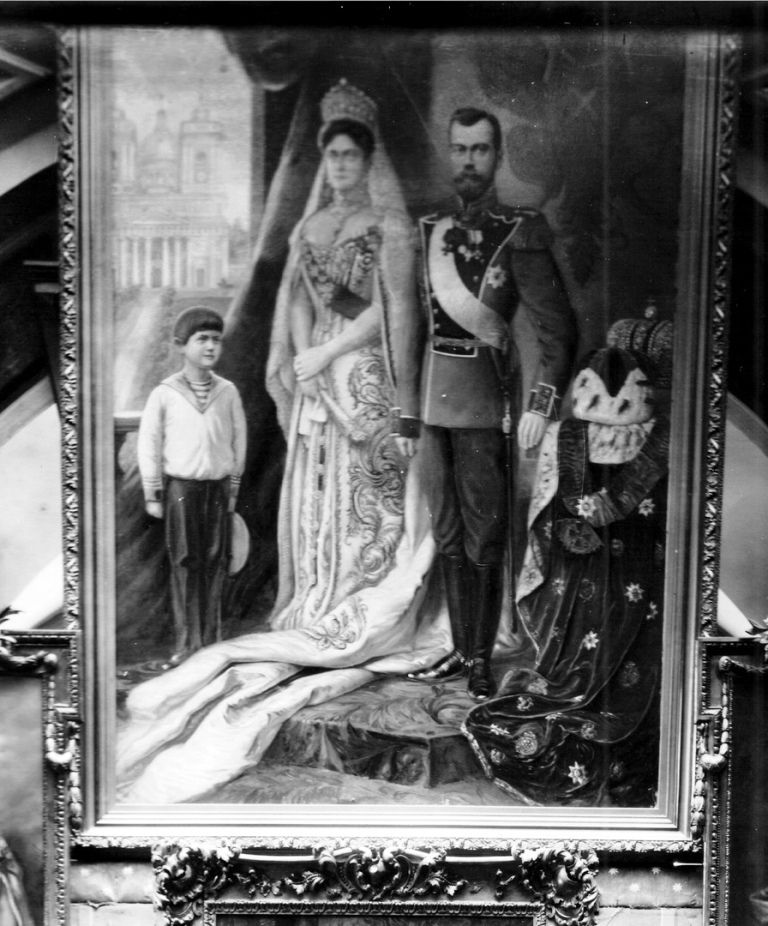
PHOTO: portrait of the Imperial Family (1910) by A. A. Karelin (1866-1928)

Up until the 1917 Revolution, the collection of the Ancient Depository [opened in 1910] of the Alexander Nevsky Lavra in St. Petersburg, included a portrait of the Imperial family. The portrait was painted in 1909, the year of the foundation of the new building of the Ancient Depository.

The portrait is quite unique. The Emperor and Empress are depicted in ceremonial robes with orders, standing next to the regalia of imperial power – the crown and ermine mantle, while Tsesarevich Alexei is dressed in a simple sailor’s uniform. The Trinity Cathedral of the Lavra is visible to the left in the background.

The artist was the famous Russian portrait painter of the late 19th-early 20th centuries, Andrey Andreevich Karelin (1866-1928), who, worked on orders from the Ministry of the Imperial Court. He painted historical and religious themes, portraits, and icons. He took part in the painting of the pavilion of the Nizhny Novgorod All-Russian Exhibition in 1896, in the creation of the interior decoration of the Church of the Resurrection of Christ in St. Petersburg, the Church of Alexander Nevsky and the Church of the Life Guards of the Ulan Regiment in Warsaw (1907), for the Church of the Resurrection of Christ (Saviour on Blood) in St. Petersburg, he created designs for 10 interior mosaics “Parable about poor Lazarus after death” and designs for an additional 9 mosaics of saints, martyrs, apostles and monks on pilasters.

PHOTO: Andrey Andreevich Karelin (1866-1928)

For the 300th anniversary of the Romanov dynasty in 1913, Karelin created a 10-meter canvas depicting the accession of Tsar Mikhail Feodorovich Romanov, for which he received personal nobility from Emperor Nicholas II.

The Ancient Depository of the Alexander Nevsky Lavra was closed in 1922 in the midst of a Bolshevik campaign to confiscate church property, which the monastery. All items of artistic value were transferred to the State Museum Fund, and then distributed among the museums of Russia. It is now known that Karelin’s portrait of the Imperial Family, was destroyed in 1937 by order of the People’s Commissariat for Internal Affairs (NKVD).

© Paul Gilbert. 16 January 2021

The fate of Nicholas II’s Imperial Train

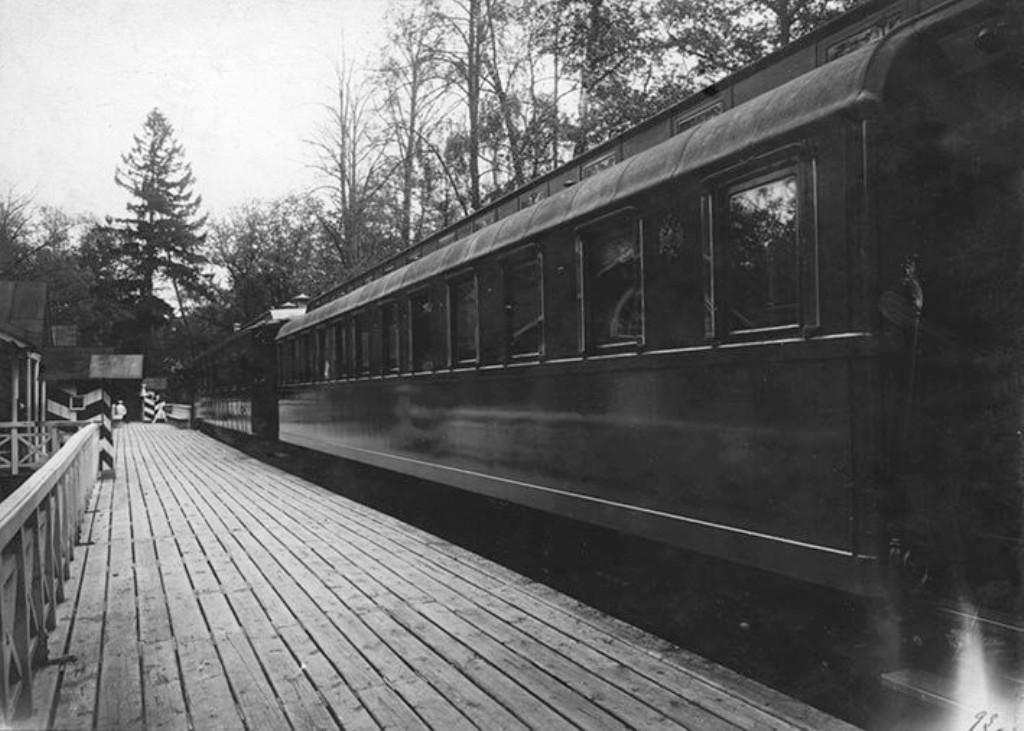
PHOTO: Two carriages of the Imperial Train on display in Alexandria Park, Peterhof. 1932
© Archive of the Peterhof State Museum-Reserve

In May 1917, the Imperial Train of Emperor Nicholas II was sealed and transferred to Moscow, where it remained mothballed on the side tracks for more than a decade.

In the fall of 1929, two railway carriages were slowly rolled along temporary tracks which were laid from the Novy Peterhof railway station through the Proletarsky (former Alexandria) Park in Peterhof, to a small clearing just south of the Cottage Palace, it was to be the final stop for the former Imperial Train of Emperor Nicholas II.

The history of the Imperial Train dates back to the 1890s. Construction on the first of two trains began in 1894 in the Alexandrovsky Mechanical Plant of the Nikolaev railway, and completed in February 1896. A few years later it was supplemented with three additional carriages manufactured in the St. Petersburg-Warsaw railway assembly workshops. By the early 1910s, the Imperial Train consisted of a total of eleven carriages.

Each of the carriages was painted dark blue with gold trim and gilded decorations in the form of the Imperial coats of arms mounted between the windows. The interiors featured panels, ceilings and furniture made of polished oak, walnut, white and gray beech, maple and Karelian birch. 

PHOTO: Workers move carriages to the Alexandria Park, Peterhof. 1929
© Archive of the Peterhof State Museum-Reserve

With the outbreak of World War I, the number of carriages was reduced to three, and the Imperial Train became a travelling residence for Nicholas II. Travelling back and forth between Tsarskoye Selo and General Headquarters at Mogilev, the train served as a military field office, equipped with telephone and telegraph communications. It was in the Salon Car of on this train that Emperor Nicholas II signed his signed his abdication on 2nd March 1917.

Subsequently, the former Tsar’s train was used by the ministers of the Provisional Government for several months. After the Bolsheviks came to power, the Imperial Train was used by the chairman of the Revolutionary Military Council Leon Trotsky (1879-1940).

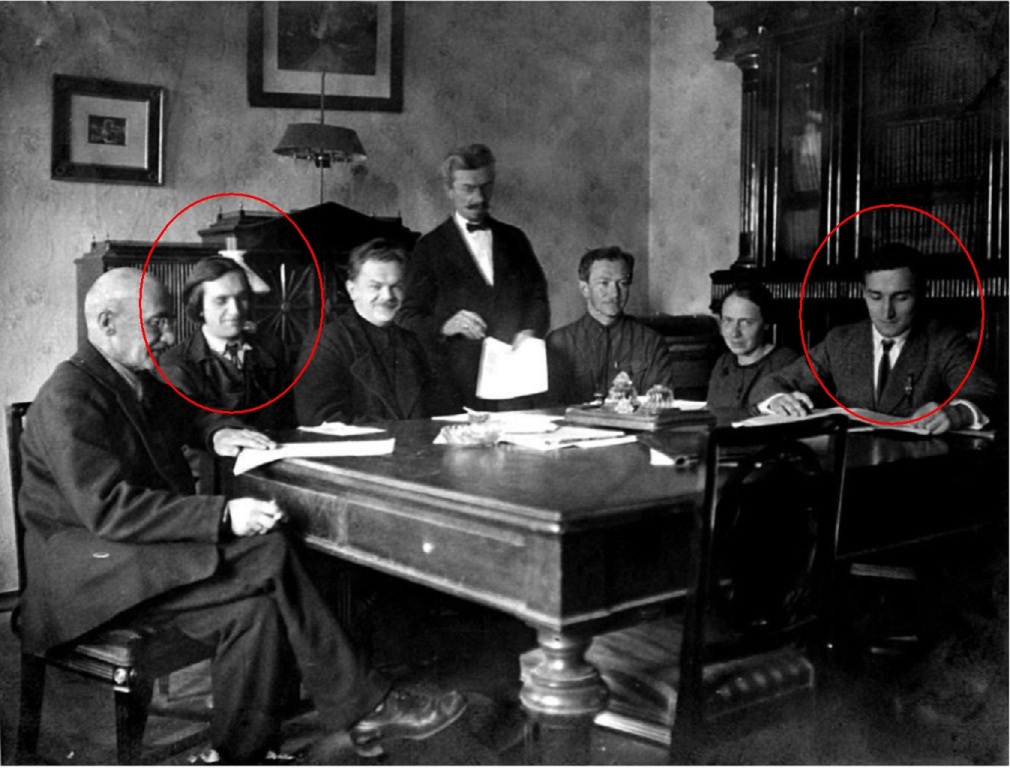
PHOTO: Semyon Geychenko (second from the left) and Anatoly Shemansky (far right)
© Archive of the Peterhof State Museum-Reserve

One can only speculate what the fate of the Imperial carriages would have been, had it not been for the efforts of two Peterhof museum workers, Semyon Geychenko and Anatoly Shemansky. It is largely thanks to their efforts, that two carriages from the Imperial Train were transferred from the People’s Commissariat of Railways to the Peterhof Museum in 1929.

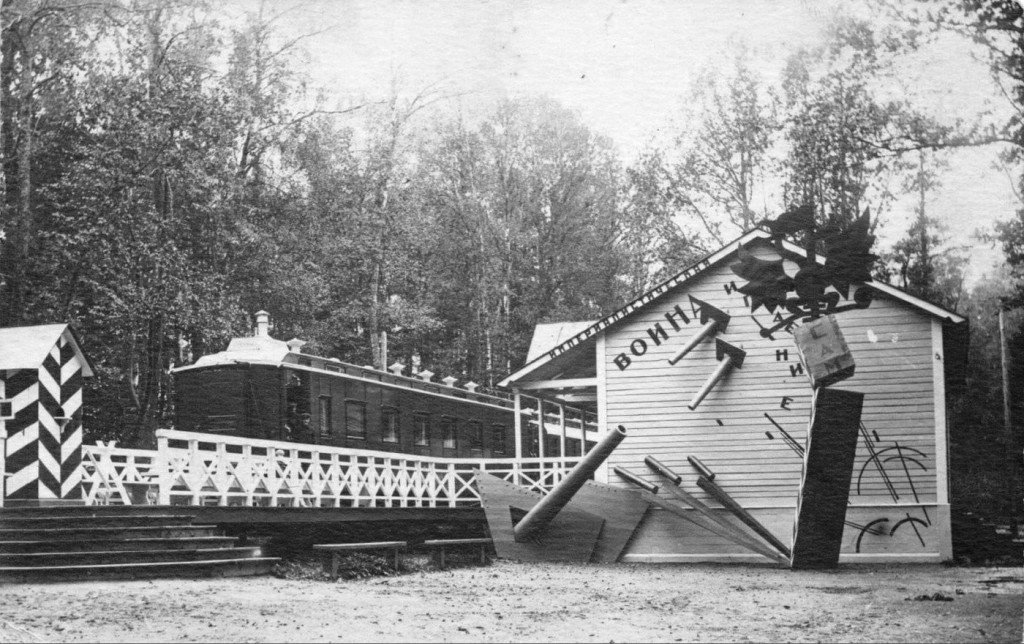
PHOTO: Carriages of the Imperial Train on display in Alexandria Park, Peterhof. 1930
© Archive of the Peterhof State Museum-Reserve

The following year, 1930, a permanent exhibition “The Carriages of the Former Tsarist Train” was opened in a small clearing just south of the Cottage Palace in the Proletarsky (Alexandria) Park. At the time of the opening of the exhibition, the interiors of the Tsar’s carriages had survived nearly intact. Near the carriages a platform and two wooden pavilions were built.

The pavilions housed the exposition “Imperialist War and the Fall of Autocracy,” which included four sections: “Causes of the World War”, “Russia in World War”, “The Collapse of Tsarism”, “The Final Journey of Nikolai Romanov from Tsarskoye Selo to Yekaterinburg.” The exhibit was supplemented with items from the Lower Dacha, the summer residence of Nicholas II and his family, located nearby on the shore of the Gulf of Finland.

The first carriage consisted of two parts: a dining room and a salon. In this car, the exhibition outlined the situation that had arisen before the February 1917 Revolution and the projects of the palace coup that preceded it. The dining car was used during the war for staff meetings with the Tsar’s participation.

The second carriage consisted of a maid’s compartment, the Empress’s bedroom, Nicholas II’s office and his valet’s compartment. The interior decoration, furnishings and decoration of the carriages resembled that of the Lower Dacha: Art Nouveau furniture made by Melzer’s firm, a comfortable leather cabinet, family photographs, and numerous icons in the bedroom.

PHOTO: The Imperial Train can be seen through the trees during the years of occupation
© Private Archive

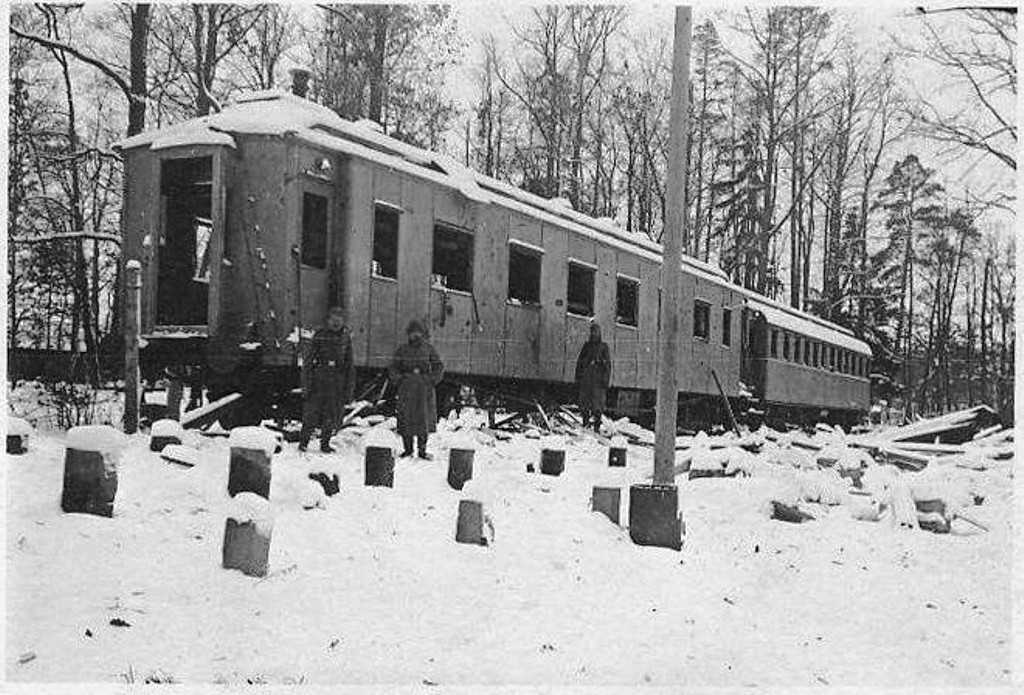
PHOTO: German soldiers stand at the gutted Imperial Train during the years of occupation
© Private Archive

Sadly, the fate of most of the luxurious carriages of the Imperial Train is a sad one, having been destroyed in a fire some time during the Russian Civil War (1917-1922).

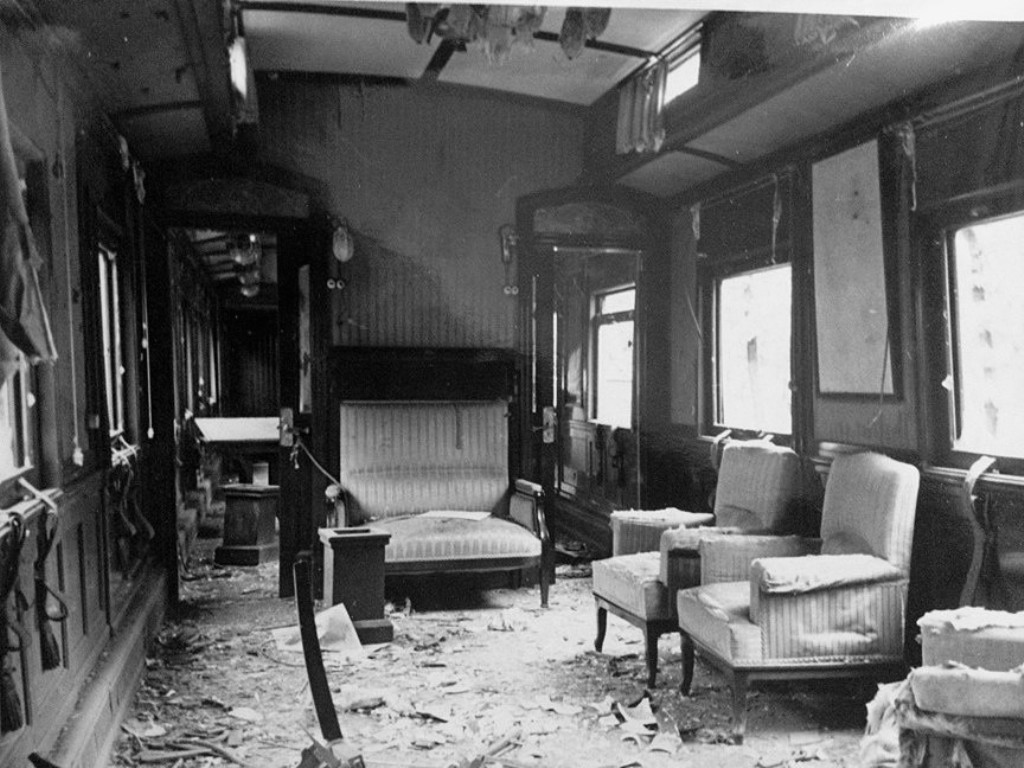
Equally sad, “The carriages of the Former Tsarist Train” exhibit at Peterhof was permanently closed in 1936. During the years of Nazi occupation of Peterhof (1941-44), the exhibition complex was virtually destroyed by the invaders: the platform and pavilions were destroyed, as well as the two remaining carriages and their historic interiors.

PHOTO: The salon of the Imperial Train, destroyed by the Nazis
© Archive of the Peterhof State Museum-Reserve

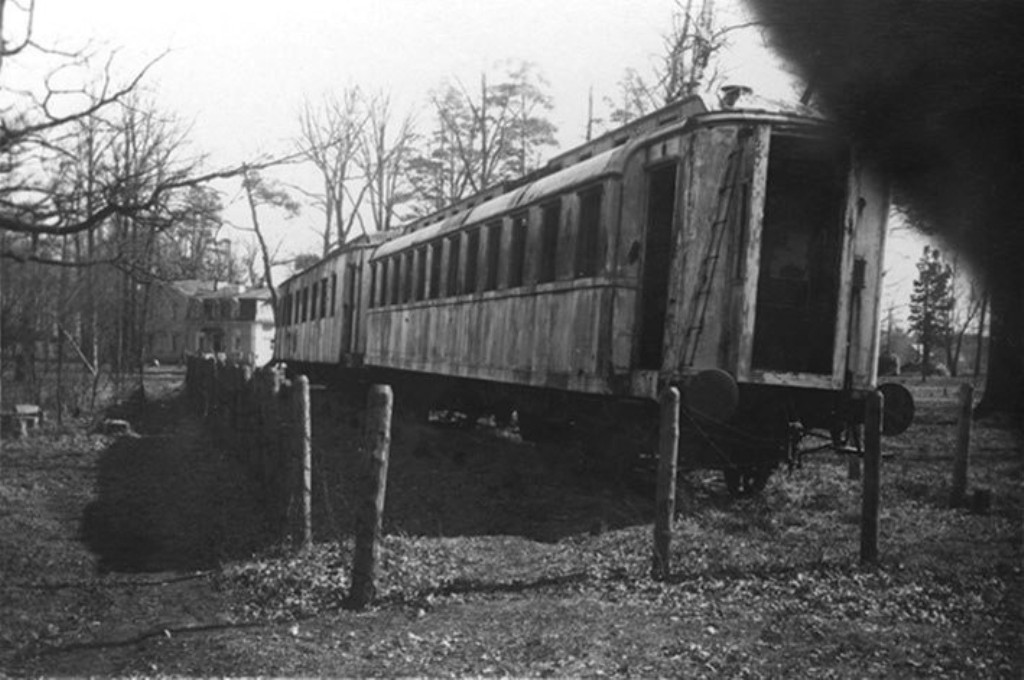
PHOTO: The sad state of the carriages of the Imperial Train as they looked in the 1950s
© Archive of the Peterhof State Museum-Reserve

In the first decade after the end of the Great Patriotic War, the question of the possibility of restoring the cars remained open. Nevertheless, the revival of the museum turned out to be unrealistic: on 18th February, 1954, a special commission of the October Railway ruled that due to the damage inflicted during the war years, the carriages of the Imperial Train  had become completely unserviceable and could not be restored.

In the summer of 1954, by order of the Department of Culture of the Executive Committee of the Leningrad City Council, the carriages were dismantled. Out of almost one thousand items and memorial items from the carriage interios, nearly all were destroyed or stolen. Today, only 55 items have been preserved in the funds of the Peterhof State Museum-Reserve, including writing utensils, furniture, and furnishings.

NOTE: I am currently preparing an article on the Imperial Train and its luxurious interiors. Stay tuned . . . PG

© Paul Gilbert. 12 January 2021

Nicholas II visits the Kiev-Pechersk Lavra, 1911

Duration: Duration: 5 minute, 11 seconds with musical background

On 29th August 1911, Emperor Nicholas II and his family, accompanied by Russian Prime Minister Pyotr Arkadyevich Stolypin (1862-1911), arrived in Kiev.

In the opening of this video we see the Imperial family and their entourage arriving at the Kiev-Pechersk Lavra on 30th August 1911, the feast day of St Alexander Nevsky.

At 0:45, the Emperor and his family visit the grave of the folk heroes Kochubey and Iskra, “who laid down their belly for the Faith, the Tsar and the Fatherland”.

At 2:15, the Imperial family follow behind Metropolitan Flavian of Kiev and Galicia, members of the clergy and the City Duma, during a Cross Procession to take part in the opening of a memorial to his grandfather, Emperor Alexander II (1818-1881).

Following behind is Russian Prime Minister Pyotr Arkadyevich Stolypin, who is seen at 2:21, wearing a white jacket. He was mortally shot the following day, on 1st September, during a performance of Rimsky-Korsakov’s The Tale of Tsar Saltan at the Kiev Opera House. In a letter to his mother, the Tsar told her that Stolypin had turned to him and made the sign of the cross in the air with his left hand. He was buried at the Kiev-Pechersk Lavra on 9th September 1911.

At 2:34, the tall, handsome figure of General Alexander Spiridovitch (1873-1952) passes directly in front of the camera. Spiridovitch served as the personal security chief for Nicholas II and his family from 1906-1916. He was also responsible for the security of the tsar’s residences.

In 1928, his memoirs Les Dernières années de la Cour de Tsarskoe Selo, were published in Paris. The first English translation Last Years of the Court at Tsarskoe Selo was published by Royal Russia in two volumes, in 2010 and 2017 respectfully: Volume I (1906-1910) and Volume II (1910-1914).

At 3:23, the Imperial family attend the opening and consecration of a memorial to his grandfather, Emperor Alexander II, where a moleben is performed.

At 4:05, the Imperial family depart in open horse-drawn carriages.

© Paul Gilbert. 7 January 2021

Nicholas II’s little known hunting dacha in Crimea

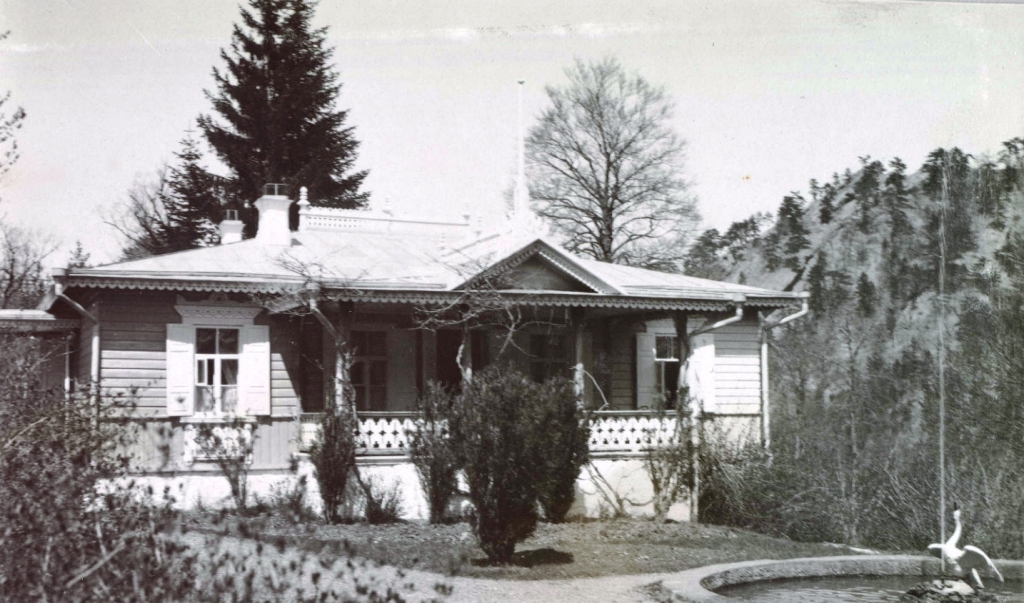
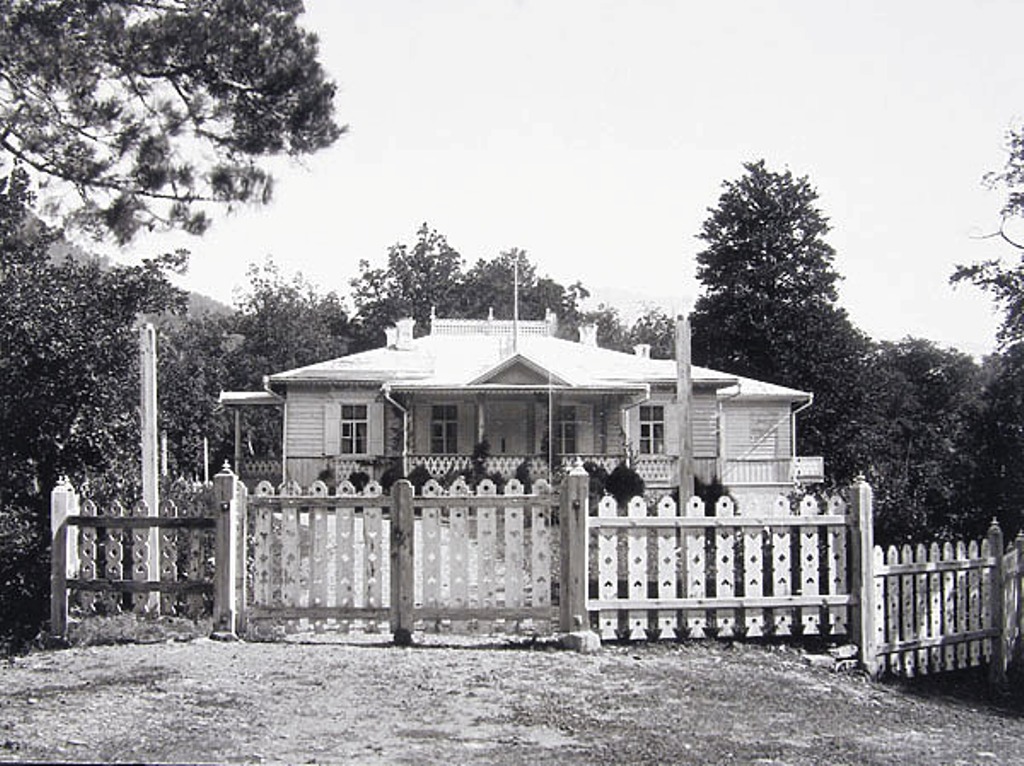
PHOTO: Beshuiskaya dacha, Nicholas II’s hunting lodge in Crimea

The beginning of His Majesty’s Own Hunt in the Crimean mountains was established by Emperor Alexander II (1818-1881) in the 1860s from the Nikitskaya dacha, situated in the Yuzhno-Berezhansky Forest, near Livadia. Subsequently, the Tsar’s Hunt in Crimea expanded, with two additional state forest dachas established in the Beshuisky and Ayan forest districts (Crown Lands).

From 14 to 18 October 1880, a hunt was organized for Tsesarevich Alexander Alexandrovich (future Emperor Alexander III) in the Beshuisky forest. It was this hunting trip which prompted the construction of the Beshuiskaya dacha, situated 60–70 yards from the Kosmo-Damianovsky Monastery. The hunting lodge was completed by September 1884. It is interesting to note, that not a single nail was used in it’s construction.

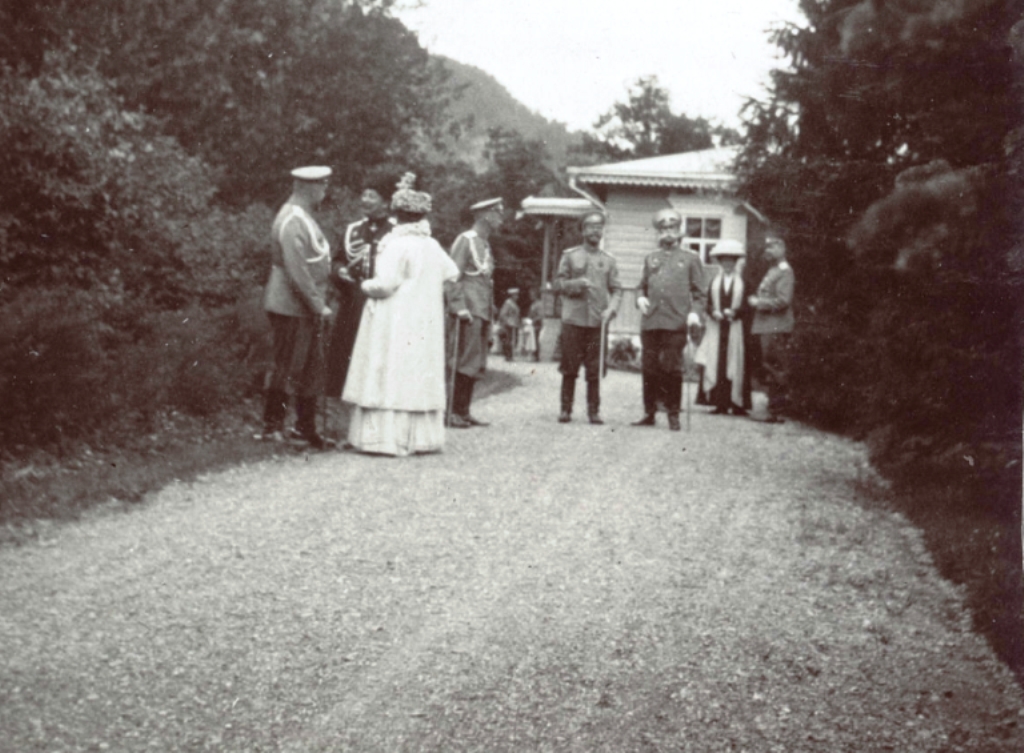
PHOTO: Nicholas II and Count Frederiks in front of Beshuiskaya dacha

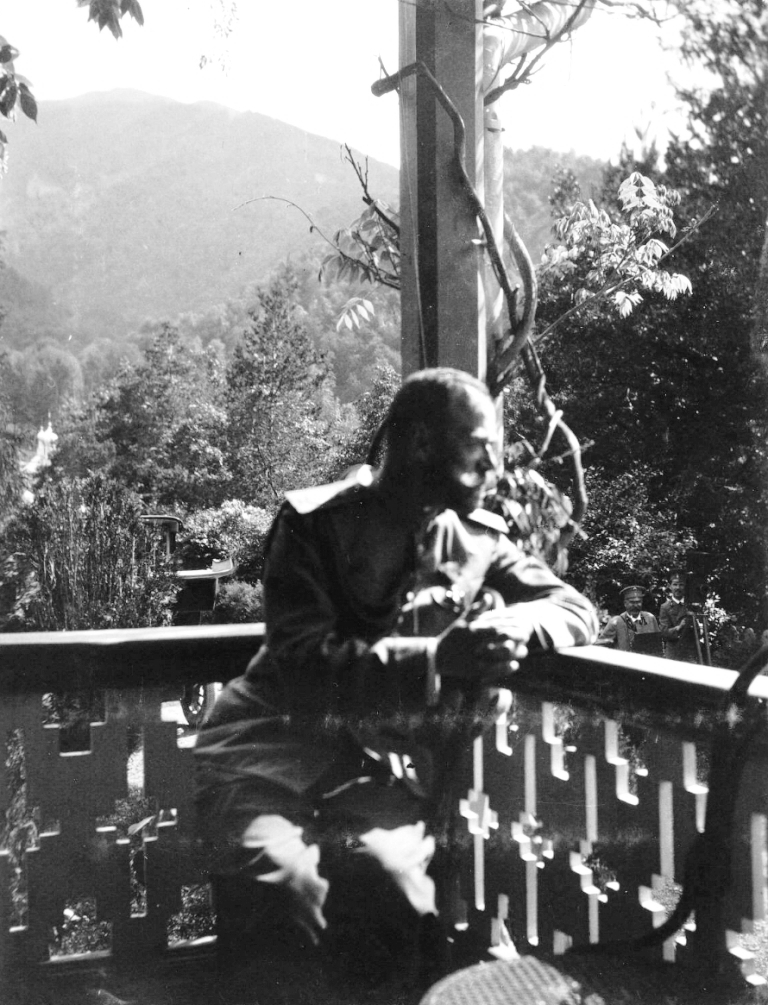
The Beshuiskaya dacha was a one-story wooden building on a stone foundation, and consisted of 8 rooms: a living room with an office, a bedroom, two servants’ rooms, a pantry and a bathroom. Following the example of his grandfather and father, Nicholas II came here repeatedly for hunting and to visit the monastery.

The most professional and promising employees from the tsar’s hunting estates at Spala, and later from Białowieża, were transferred to Crimea. In the fall of 1913, Edmund Vladislavovich Wagner was appointed Head of His Majesty’s Own Hunt in the Crimea. In total, the staff of His Majesty’s Own Hunt in 1913-1917, including the gamekeepers, consisted of thirty people.

PHOTO: Nicholas II relaxing on the balcony of Beshuiskaya dacha

Nicholas II records one of his Crimean hunts on 17th September 1913:

“… I got up at 3 o’clock and went hunting, and killed one deer . . . The weather was excellent and the day was very warm. I returned to the house by 9 o’clock. Drank tea with my daughters, who had been at the early Mass. We sat on the porch until 12 o’clock when they brought my deer. We had breakfast and left at exactly one o’clock to Livadia, where we arrived at 3.20 … “

During his last visit to the southern coast of Crimea in the spring of 1914, the emperor made several trips to Beshuiskaya, but these were not for hunting, but entertaining and hiking with his family, relatives, officers and members of his retinue.

Empress  Alexandra Feodorovna, hoping for a miracle, chose a healing spring at the Kosmo-Damianovsky Monastery, for the treatment of Tsesarevich Alexei, who suffered with hemophilia. However, the journey from Livadia to the monastery was rather long and burdensome.

By 1910, the Imperial Garage in Livadia was completed, the roads used by the Tsar had to be made suitable for his motorcars. That same year, construction began of the Romanov Highway, a mountain route which connected Upper Massandra with the Tsar’s hunting lodge and the nearby monastery. The road was completed in the fall of 1913, making it suitable for motor traffic.

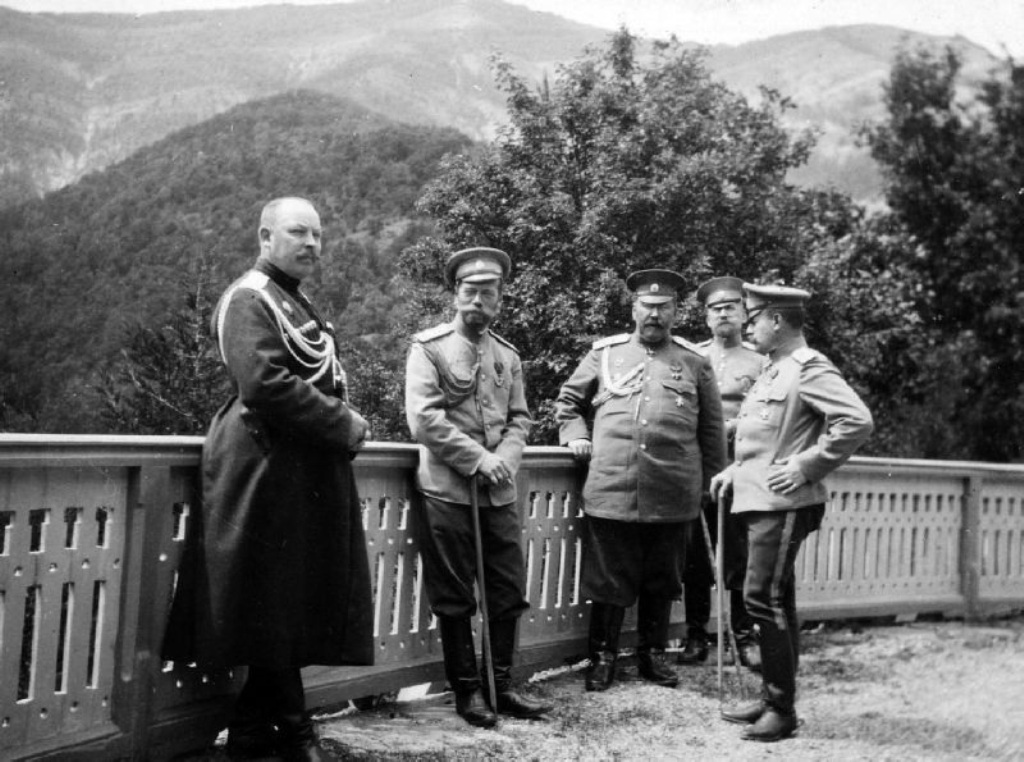
PHOTO: Count Alexander Grabbe, Emperor Nicholas II, Prince Vladimir Orlov,
unknown officer, and palace commandant Vladimir Voeikov

The advantages of the new highway reduced the distance between the Imperial residences by more than twenty kilometers. Thanks to this, the travel time was reduced: judging by the diary entries of Nicholas II, He usually got from Livadia to the Hunting Lodge in about three hours.

The date of 6th May 1914, turned out to be the last time that Emperor Nicholas II and his Family would drive along the scenic Romanov Road from Livadia to visit Beshuiskaya dacha, their hunting dacha in Crimea. Within a few short months, the outbreak of the First World War, their joyful happy days would forever remain in the past.

PHOTO: another view of Beshuiskaya dacha, Nicholas II’s hunting lodge in Crimea

© Paul Gilbert. 6 January 2021

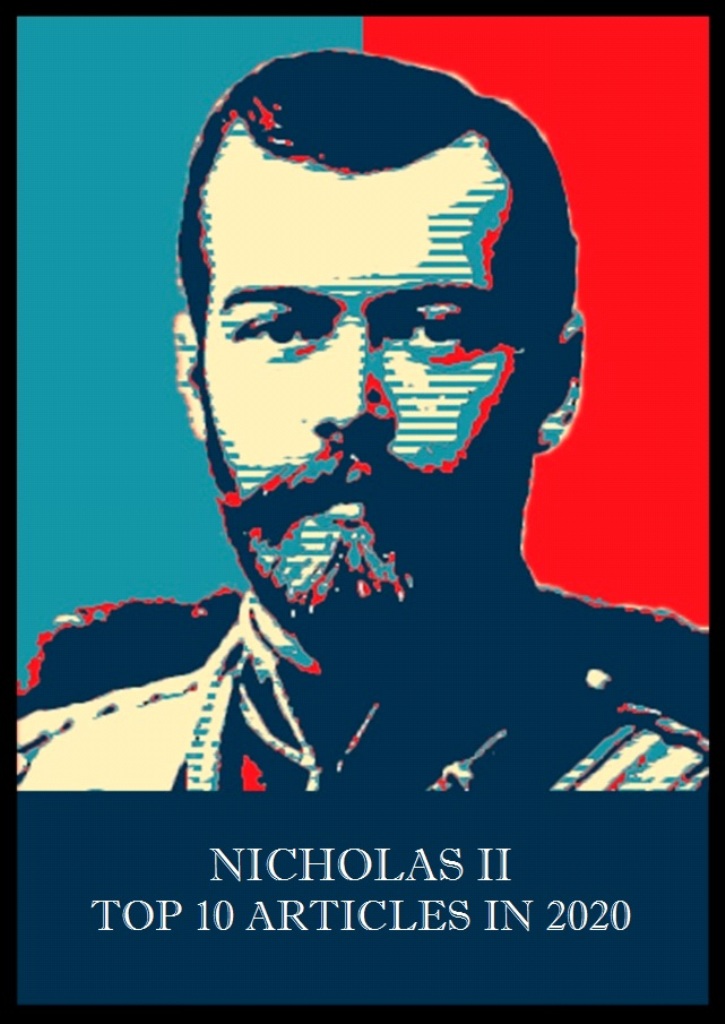
Nicholas II: TOP 10 articles of 2020


In 2020, the number of views on my blog Nicholas II. Emperor. Tsar. Saint increased by nearly 100 percent over the previous year: 137,235 in 2020 compared to 70,429 in 2019.

People from 178 countries around the world visited my Nicholas II blog in 2020, including places such as Bhutan, Iceland, Vatican City, Cuba and Mongolia.

My Nicholas II blog was most popular with people in the United States, United Kingdom, Canada, Australia, France, Italy, Russia, Brazil, Germany and Netherlands.

Below, is a list of the 10 most widely read articles and news stories of 2020:

[1] Audio recording of the voice of Nicholas II – posted 25th August 2020

[2] Obituary: Olga Nikolaevna Kulikovsky-Romanov (1926-2020) – posted 2nd May 2020

[3] Romanov Book of the Year for 2019: ‘The Romanov Royal Martyrs – posted 18th November 2019

[4] Russian media provide a first look at the progress of the recreation of the historic interiors in the Alexander Palace – posted 26th November 2019

[5]The Bolshevik sale of the Romanov jewels – posted 9th October 2020

[6] Nicholas II: the Tsar with the dragon tattoo – posted 16th March 2019

[7] “There are still many conjectures surrounding the death of Grand Duchess Elizabeth Feodorovna” – posted 16th August 2020

[8] Why was Russia’s senior investigator and forensic expert dismissed from the Ekaterinburg remains case? – posted 14th March 2020

[9] Nicholas II’s Diaries 1894-1918 – posted 23rd January 2020

[10] The myth that Nicholas II’s death was met with indifference by the Russian people – posted 19th June 2020

© Paul Gilbert. 1st January 2021

***

Dear Reader

If you find my articles, news stories and translations interesting, then please help support my research by making a donation in US or Canadian dollars to my project The Truth About Nicholas II – please note that donations can be made by GoFundMe, PayPal, credit card, personal check or money order. Thank you for your consideration – PG

Nicholas II’s visit to Eriklik, Crimea in 1914

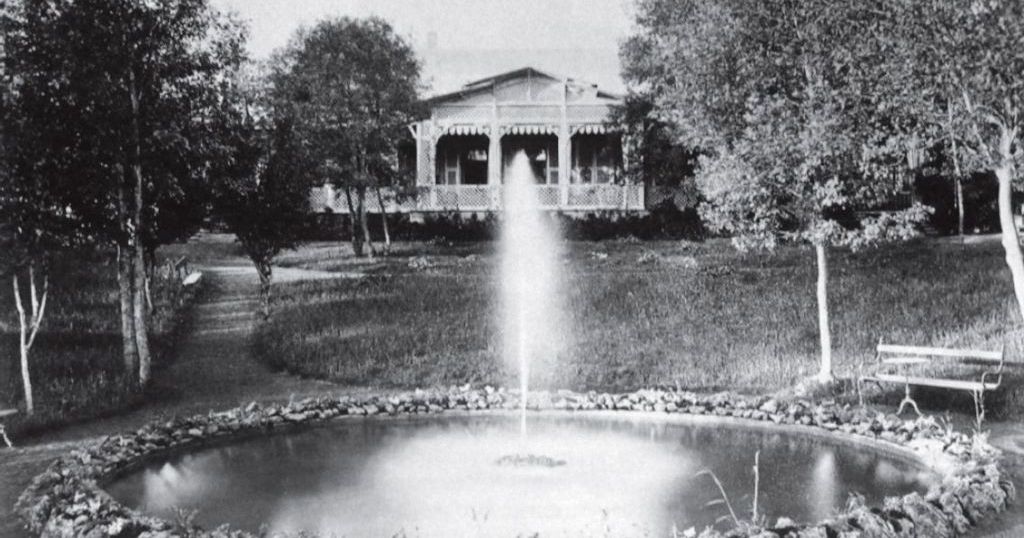
PHOTO: Eriklik, the dacha built for Empress Maria Alexandrovna near Livadia

Eriklik was the name of a dacha, built for Empress Maria Alexandrovna (1824-1880), wife of Emperor Alexander II (1818-1881), near Livadia in Crimea. The dacha was built on the advice of her physician Dr. Sergei Petrovich Botkin (1832-1889) [father of Dr. Eugene Botkin (1865-1918), who was murdered with Nicholas II and his family by the Bolsheviks on 17th July 1918] , who recommended that the Empress spend autumn and winter in the south, where the mountainous and coniferous air would benefit her declining health.

The construction of the dacha involved designer A.I. Rezanov and the famous architects A.G. Vincent , V.I.Sychugov, and was built between April-August 1872.

A beautiful park parterre with a system of paths and a round fountain were arranged in front of the dacha, the vegetation was cleared in order to maximize the panoramic view of the mountains and the Black Sea. The architectural complex was created by assimilating the nature of Crimea set against the symbolic views of the mountain landscape.

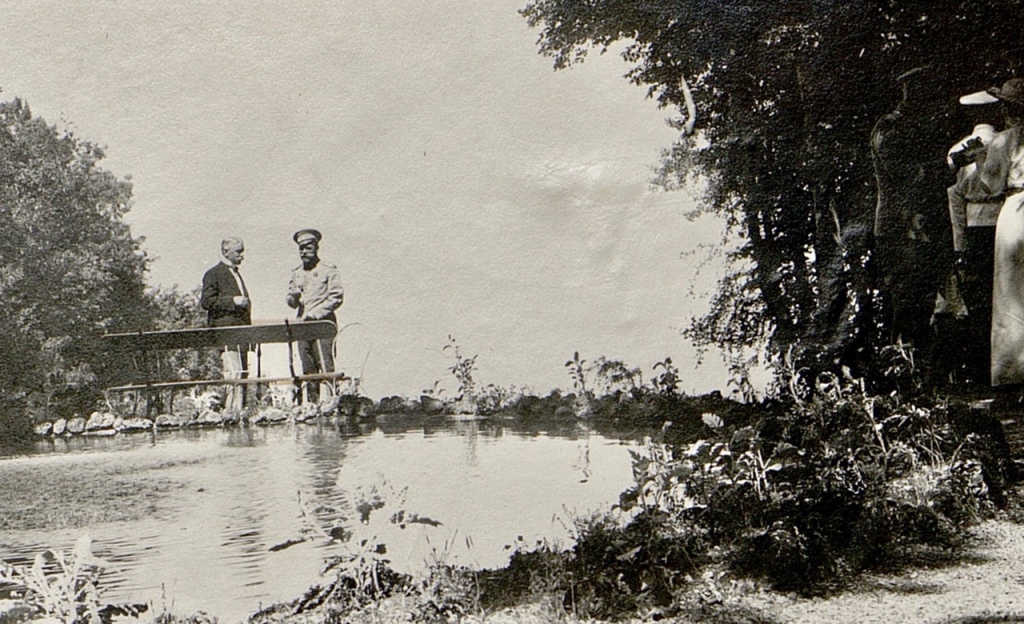
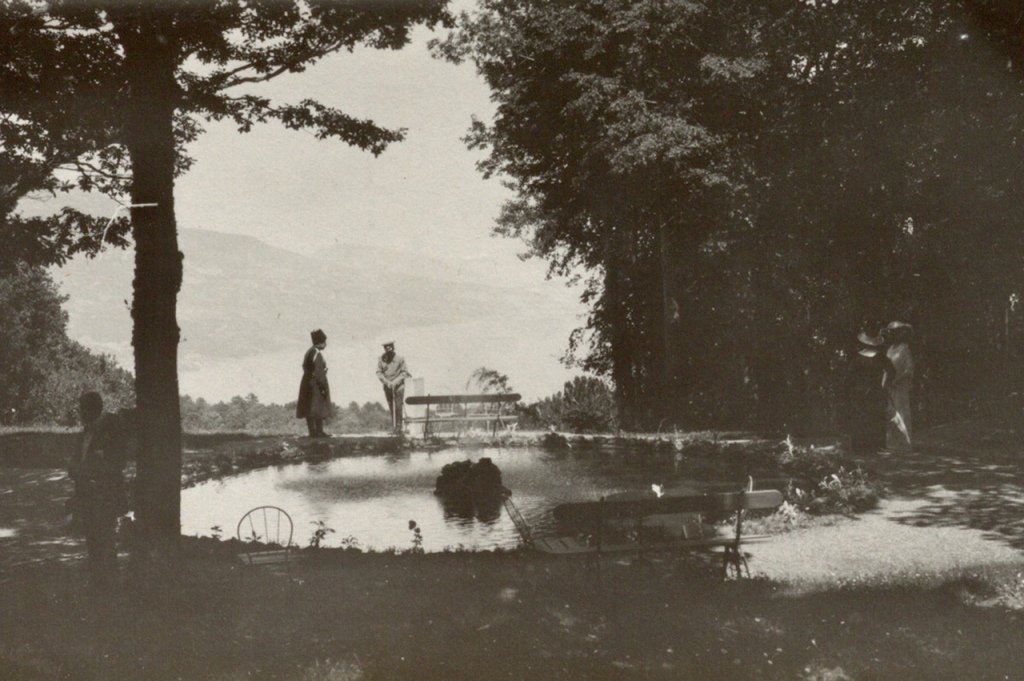
PHOTOS: Emperor Nicholas II at the fountain in the garden at Eriklik, 1914

The wooden one-story dacha, consisted of three wings, connected to each other and 8-10 rooms. The Empress’s rooms faced the most beautiful views, an adjoining room was reserved for the dining room, behind it were the rooms for Alexander II. The servants’ quarters were located behind the Empress’s rooms. The dacha had a wooden patio. The dacha also included a wooden veranda, a gazebo in the garden and several outbuildings.

After the death of Maria Alexandrovna, the palace remained empty. During their stays in Crimea, Nicholas II with his family, often visited Eriklik, where they enjoyed quiet walks and picnics.

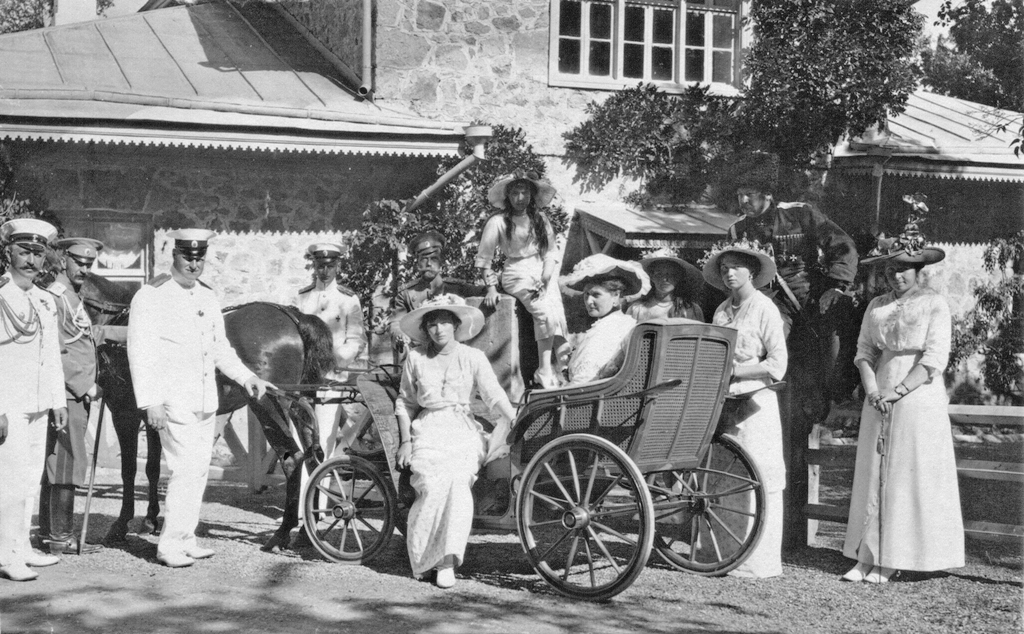
PHOTO: the Imperial Family  visits Eriklik in May 1914

On 28th May 1914, three days before leaving the Crimea, the Tsar’s family arrived in Eriklik for breakfast. They were joined by other members of the Russian Imperial family who were staying at their respective Crimean residences at Ai-Todor, Kharax and Kichkine, as well as officers of the Imperial Yacht Standart. After breakfast, everyone walked together and relaxed in the garden. Grand Duchess Olga Nikolaevna noted in her diary that the day was “warm and sunny”. It was to be their last journey to Crimea.

Following the 1917 Revolution, a health resort for tuberculosis patients was opened in the dacha. At the beginning of the 20th century, the wooden dacha fell into decay, and in the middle of the 20th century was demolished.

© Paul Gilbert. 23 December 2020

***

Dear Reader

If you found this article interesting, then please help support my research by making a donation in US or Canadian dollars to my project The Truth About Nicholas II – please note that donations can be made by GoFundMe, PayPal, credit card, personal check or money order. Thank you for your consideration – PG

New museum in Moscow to showcase Nicholas II’s automobiles


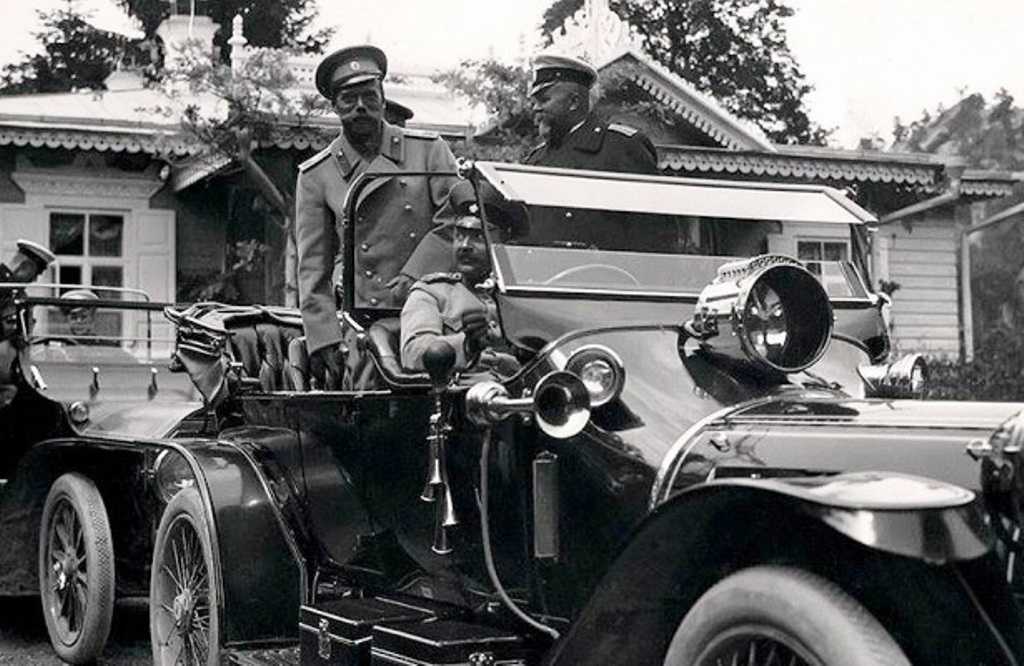
PHOTO: Nicholas II travelling in his French Delaunay-Belleville

Next year will mark the 100th anniversary of the Special Purpose Garage in Moscow. For its centenary, a multifunctional complex – the Special Purpose Garage Museum – will open in two pavilions at the All-Russian Exhibition Center (VDNKh) in Moscow.

Simulators and interactive exhibits are now being installed in Pavilion No. 54, where visitors can learn about the technical characteristics of automobiles and road safety. The main highlight of the new permanent museum will be in Pavilion No. 53, which will showcase historical automobiles of Soviet leaders, and more importantly those of Russia’s last emperor Nicholas II, who was a keen collector of fine automobiles.

Note: it is not known at this time, how many of Nicholas II’s autos will be on display, nor which automobiles will be on display. I will update this article when I have more details – PG.

The Special Purpose Garage Museum is scheduled to open in early 2021.

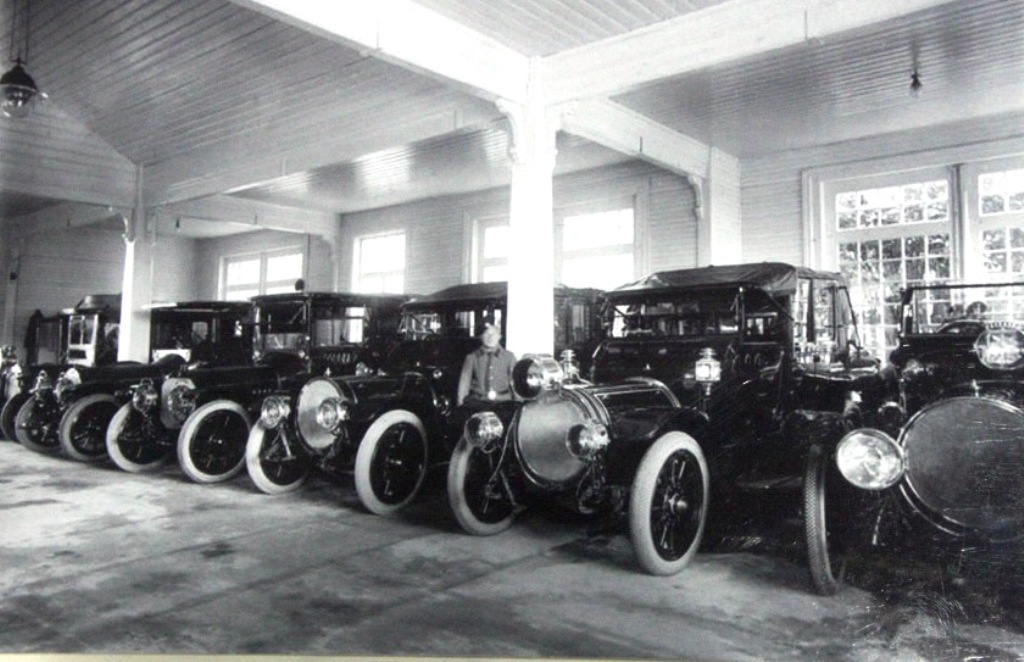
PHOTO: His Imperial Majesty’s Own Garage, Tsarskoye Selo

Facts about His Imperial Majesty’s Own Garage

* The “founding fathers” of His Imperial Majesty’s Own Garage were the Minister of the Imperial Court, Count Vladimir Fredericks (1838-1927), and the Adjutant Wing Prince Vladimir Orlov (1868-1927). The first automobile appeared in Tsarskoye Selo at the beginning of 1906: the French Delaunay-Belleville with a triple phaeton body, and soon complemented with four Mercedes.

* In mid-1906, the Imperial Driver School was opened at the garage. In fact, it was the first driving school in Russia. Empress Alexandra Feodorovna herself attached great importance to the uniforms worn by drivers and mechanics. She created sketches with her own hand, designing uniforms based on a footman’s livery adorned with gold cords.

* Drivers, mechanics and “soapmen” (car washers) did not appreciate being treated like lackeys and servants, but were forced to wear their uniforms. Their struggle continued, and in the end, the drivers won. In 1910, their new uniform – approved by the Emperor – resembled the uniforms of military officials: khaki colours, lace-up leather boots, leggings.

* Court chauffeurs in fur hats could easily be mistaken for senior officers and they were paid well. The senior driver received 2,600 rubles a year (for comparison: the annual salary of a university professor was 3,000 rubles), a third-class driver – 780 rubles a year.

* On March 2, 1917, Emperor Nicholas II signed his abdication. This ended the story of His Imperial Majesty’s Own Garage. All property of the imperial family passed into the disposal of the Provisional Government, including the garage. In addition to a change in management, the garage managed to avoid significant personnel changes.

* As a result of the October Revolution of 1917, the Autobase of the Provisional Government was nationalized and transferred to the disposal of the Bolsheviks. Lenin himself wasted little time in taking first pick from the Tsar’s collection of fine automobiles. His first trip in a Turcat-Méry automobile took place on 27th October 1917. Many employees of the Imperial Garage and the Autobase of the Provisional Government continued to work for the Bolsheviks.

***

Dear Reader

If you found this article interesting, then please help support my research by making a donation in US or Canadian dollars to my project The Truth About Nicholas II – please note that donations can be made by GoFundMe, PayPal, credit card, personal check or money order. Thank you for your consideration – PG

© Paul Gilbert. 22 December 2020

New monument to Nicholas II opens in Murmansk Region

PHOTO: Monument to Nicholas II in the city of Kovdor, Murmansk Region

On 19th December 2020, a new monument-bust to Nicholas II was unveiled in the Murmansk region. The proposal to install the monument was approved only last week, after a vote by local residents with 512 participants in favour, and 38 against.

The bronze bust was established on the grounds of the Church of the Assumption of the Blessed Virgin Mary in the city of Kovdor, which is situated about 300 km south of Murmansk.

The bust weighs 300 kilograms, and the marble pedestal weighs about two tons, and is planned to be erected in early 2021.

The idea of ​​erecting the monument is that of members of the Tsar’s Cross Movement in June 2020. The local church parish raised the necessary funds for the pedestal, and the bronze bust itself was donated by the Alley of Russian Glory sculptural workshop situated in Kropotkin, Krasnodar Krai region.

The purpose of erecting the monument to the Tsar-Martyr is to emphasize the contribution of Nicholas II to the development of the Murmansk region in the early 20th century.

Nicholas II is the founder of the city of Romanov-on-Murman, which was renamed Murmansk by the Bolsheviks in April 1917. In June 2019, the local airport was renamed after the Emperor; and on 20th November 2020, a permanent photo exhibition dedicated to Nicholas II was opened in the terminal building of the airport.

PHOTO: Church of the Assumption of the Blessed Virgin Mary, Kovdor

***

Since the fall of the Soviet Union in 1991, more than 70 monuments, busts and memorials to Nicholas II have been established in more than 30 regions across Russia. Click HERE to review more than 30 of them in my Nicholas II Monuments category

© Paul Gilbert. 21 December 2020